My passion is studying American history leading up to & including the Civil War. I particularly enjoy reading, transcribing & researching primary sources such as letters and diaries.
A watercolor of Enoch’s wife, Julia, based on a portrait of her painted by her brother. Circa 1834.
The following letter was written by 28 year-old Enoch Piper Sherman (1810-1843), the husband of Julia-Maria Hoit (1807-1884). The couple were married in 1832 and were the parents of three girls—Eliza (b. 1834), Sarah (b. 1837) and Susan (b. 1838) when this letter was written in October 1838. Enoch was the son of Anthony Sherman (1782-1813) and Sally Piper (1788-1820) of Gilmanton, New Hampshire. Julia-Maria was the daughter of New Hampshire State Legislator Daniel Holt (1778-1859) and Sarah Flanders (1785-1837). She was described as an independent and highly opinionated woman and was particularly critical of the fashion and diet of women in Boston about 1830. [Source: Hoit family papers, 1803-1918, University of Michigan, William L. Clements Library]
Enoch composed this letter in Urbana, Champaign County, Ohio, during his visit with his wife’s elder sister, Eliza Flanders (Hoit) Bean (1806-1893), who was married to Ira A. Bean (1797-1869). Eliza inscribes a note at the conclusion of Enoch’s correspondence. The letter offers a significant insight into the nature of early travel in Ohio, where the reliability of reaching one’s destination on time, or at all, was anything but certain.
Stampless letter postmarked Urbana, Ohio. Addressed to. Mrs. E. P. Sherman, Centre Sandwich, Strafford [county], New Hampshire
Urbana [Ohio] Sabbath, October 21st 1838
Dear Wife,
Your papers of the 7th & 9th come to hand yesterday for which am much obliged. I left here for Cincinnati a week yesterday. The weather was cold with a raw wind. Stopped at Springfield till Monday morning and then took a private coach for Dayton rather than ride in the night stage as there is no day time. Reached there at 3 p.m. The day was rather cold.
In 1838, a packet boat journey from Dayton to Cincinnati on the Miami and Erie Canal would have taken approximately 16.5 to 22 hours, based on a travel distance of roughly 66 miles and an average speed of 3-4 miles per hour. This journey took 20 hours.
Dayton is a smart place as you will see by referring to the Ohio Gazette. The next day at 8 a.m. left for Cincinnati [on the Miami & Erie Canal] in Packet Boat Ohio which was crowded with passengers among which were several ministers going to Cincinnati as the [Presbyterian] Synod met there. As much as I respect the clergy, I must say that I was quite vexed with some of them. They seemed to know nothing of the rules of traveling or if they did, they did not regard them at all or they might think they were a privileged class. What I most complained of that they were so confounded noisy during the night as some of them had to sit up they were continually talking which prevented many of the passengers from sleeping at all. I did not sleep half an hour all night—just into a nap while they were off the boat. As soon as they returned, they roused me up. I told them if they were as successful in keeping congregations awake when they were preaching to them as they had been that night in keeping many of the passengers from sleep, they would never be troubled with nappers.
Beaker marked by Nathan Lord Hazen (active 1830 –1851), Cincinnati, Ohio, presented at the 1838 Miami County Agricultural Society Fair, held in Miami County, Ohio. Engraved: “The / Miami Valley / Agricultural Society’s / Second best Premium / Awarded to E.B. Squires, / of Butler County O. / For his Black Boar, / Democrat. / 8 Months Old. / October, 1838.” Silver; height 3 ¾ inches.
We reached Cincinnati in the a.m. at 4 o’clock. I was somewhat fatigued. As I had no rest that day, I see but little of the city. Walked to the town of Brighton out one and a half or two miles from the city to see the stock that was there at the Miami Stock Society Show. 1 This society embraces the states of Ohio, Indiana & Kentucky. Their stock—all kinds—were the best I ever see & perhaps as good as in the world, so that day was spent without much knowledge of the city. The next day commenced raining in the morning & rained like a shower all day & I was cooped up in the house all day & that even at 7 o’clock I left for Urbana in the packet. I had taken some cold & the prospect was of continuation of rainy days & I could not flatter myself with the satisfaction of seeing the country about for several days & as far as I am somewhat anxious to get home, I had rather forego that pleasure.
I did not go into Kentucky. It was all out of the question to think of going to Louisville. The river is so low, there is but two boats that run from Cincinnati to Louisville, one of which goes every other day or at least there is only one boat in two days, and then one only very small one to carry passengers such at other seasons would not run at all & they now have their own prices. There is not boats go above Cincinnati. The city is said to be like a Eew England Sunday when compared with former times.
We reached Dayton on Friday at 3 p.m. & left at 4 for Springfield in the stage. The road was wet, bad and muddy. Reached Fairfield 2 & took supper & started again at 7 o’clock. It was a very dark, cloudy night. We had gone one mile when the coach & its contents was wrong side up in a ditch of two feet of water & mud without a bottom. There were 11 passengers & the driver, nine inside—I among the rest—but very fortunately none was much hurt but some were severely frightened. Their cries were bitter and [ ] to me. All hands counted & found none missing.
Due to the stage overturning on a muddy road one mile from Fairfield [now Fairborn], Ohio, “We were ten and a half hours going 24 miles” on the way to Springfield, Ohio.
The driver went to the first house & got a light. Some of the passengers went into the house & the rest stopped on the ground and with assistance of rails, we put the coach right side up. The lanterns [on the coach] were both destroyed & the driver went to town for more & returned with one so he borrowed one off the Dutchman when we stopped another & we all mounted our coach and started for Springfield at 10 where we arrived in safety at about 2.30 or 3 in the morning. I never rode in such fear before. The passengers would all get out at the bad places & walk. I walked several miles in the mud and water which is not a strange [thing] in Ohio. We were 10 and a half hours going 24 miles.
The staging of Ohio I cannot stand. I have made up my mind to ride no more in stages till I get into New England. I shall go home or a part of the way or horseback if it does take longer. My best way would be to go to Sandusky & take the Lake for Buffalo nut is now rather late & the weather is rough. I think I shall go to Pittsburgh & then take the canal & railroad for Philadelphia. I shall start for home in a few days, I trust. I have now been in the state 46 days which has been almost large enough to become acclimated.
I reached here [Urbana] yesterday, found brother & sister B[ean] & Miss W. in good health. I took a summer cold coming from Dayton & am somewhat ill today but my lungs are not affected in the least but my flesh is some in consequence of my exertions of Friday night. I wish you would send a paper to Philadelphia & at New York that I may have when I reach there. Father can write me at Boston if he should want any business done there. I will write again and let you know when I shall be there. Mr. Prescott started for home as week ago Friday by the way of the Lake. He sent a paper as soon as he arrived there [at the Lake] & another on Monday. So he had to wait there 48 hours for a boat. He will be at home this week, I suppose. I now wish I had gone with him but I acted as I thought best at the time. When he was here the first week I was constantly or nearly all the week in attendance of him as he was confined and after that I was contually with him & was prevented from traveling more than 10 or 12 miles. But as his object was to see [ ] farm & learn all its [ ] & was not disposed to take a house & [ ] to see the country.
22nd afternoon. I send a paper to Father & one to Mr. Henry today. There is now a prospect of an Indian Summer commenced & I anticipate good weather to go home. Say to Fsather the Whigs have given up this tate to the Loco’s [Democrats]. I stop & wait to finish the rest. Love to all. Kiss the little ones for me. Goodbye. — E. P. Sherman
[in another hand]
Dear Julia,
Your husband has politely offered me a corner of this sheet & I will try and fill it though I am over head and ears in business, having three weeks washing done today. I was very much gratified with your account of Wm. Henry’s friends & your trip to Conway. Should have liked vastly to have been one of the number. Am glad you like Anne. I love her already. Think I should lover her still more if I were acquainted with her. Hope someday to enjoy that pleasure. The presents to the children were splendid. I presume that A. & S. are married ere this. Regret that I cannot be a guest. My love to both with many prayers for their happiness & prosperity. Thank you for writing so particularly about [ ] friends & I hope this cake will keep good till I get a taste of it. They might jave sent me a bit by Mr. Sherman if they have been so disposed. I fear the dresses I have made will not fit as well as you would have made them. Your dress in particular I fear you will not like. I got Mrs. Roof, our best dress maker, to fit it to me but I am not pleased with it. Hope you will be able to wear it without the trouble of altering. I made it in haste or it would have been done better. Love to dear Father. Tell him I expect that visit he promised last year. Love to all friends. In haste. From your affectionate sister, — Eliza Kiss the children
I can hardly let Mr. Sherman go. We shall feel his loss so much. Hope soon to see him back again with you and the children.
1The Miami County Agricultural Society Fair was held in Miami county, Ohio in October 1838.
2Fairfield, Ohio, is now called Fairborn. It was formed by merging the towns of Fairfield and Osborn.
The identity of this soldier has not yet been learned. He was probably from a Massachusetts regiment and it may be that he was wounded in the leg at the Battle of Fredericksburg. The letter provides us with a great description of the Portsmouth Grove Hospital (later Lovell Hospital) in Rhode Island as it appeared in March 1863.
A watercolor of the Portsmouth Grove Hospital with the barracks on either side of the central building (partially hidden by the steamer).
T R A N S C R I P T I O N
Portsmouth Grove Hospital March 8, 1863
Dear Mother,
I received your letter yesterday and was glad to get it for it is three weeks since I had one from home. I am well and my leg is all healed up but is a little still yet. I cannot bear my weight on it. I have to walk on my toe with a cane. We have been all moved out of Ward 16—all but those that were in bed. I’m in [Ward] 27 now. It is a good ways from the mess hall and everything else.
They have got a great long walk built from 16 clear up to 28. It looks about like a rope walk. The wards are [ar]ranged in this way [sketch] and this is the walk between them. When you are at one end, when the doors are all shut, you can’t hardly see out of the other end.
[Ward] 27 is close to the river so we can look out of the windows and see the steamboat as it goes up and down and all other boats. There are vessels and schooners passing all the time.
It storms every other day. We had quite a snow storm yesterday—the most we have had this winter. I am acquainted with all that were in [Ward] 16. They were all able to go about but six who have not been able to sit up much for two months.
You wanted to know what we had to eat. One morning we have one slice of bread and some hash of some kind with coffee, and the next morning we get bread and a piece of boiled meat, and for dinner we have soup of some kind every day. And for supper, mush and molasses one night and apple sauce the next, & two potatoes and a piece of bread the next and tea every night. And mother, for dinner they keep us on just about half rations and we are hungry about all the time. I shall be glad when I get away from here where I can get enough to eat. I thinkUncle Sam must be failing very fast if he can’t give soldiers in the hospitals enough to eat.
Alexander Proudfit, Chaplain at Portsmouth Grove General Hospital
I expected that box last night but it did not come. Clarence got one last night. Today is Sunday but it storms so, I guess I shan’t go to meeting. The Chaplain’s name is Proudfit. The Library was opened week before last. We had a speech and music by the brass band. General Wool and his staff were here last Thursday and they had a great time. The guard all turned out and all that were able in the wards and formed in line. They had two little cannons and fired a salute when they came off the boat. All the doctors went down to the boat to meet him. They then marched up to headquarters and through one or two of the wards and mess hall and library and back to the boat. Music by the band.
I got that money but it is all gone now. And your picture. I was glad to see you and hope I shall see you all soon. That box we got was not marked paid but when I got the receipt, I carried it down to the office here and he sent it to the office in Newport but I have not got the money yet. I expect it this week.
This war is a money making concern and half the officers ought to be shot and I should like to help shoot them. I am glad Aunt Nancy has got started after a while. I had a letter from Alice the other day. She said they stopped there one day. I have a letter from Boston most every week and papers. We have plenty of papers and books to read now. It is most noon and I guess I won’t write any more till tomorrow.
You asked me why I did not answer Julie’s letter. I have not had one from her since I came here.
Monday, my box came this morning and I was glad to get it for I was pretty hungry. But I don’t think I shall go hungry much now for two or three months. And besides the box, I got the money. I paid for the other one. Tell Julie I will answer her letter soon. I have plenty of paper but no stamps. Give my love to all the folks and write again soon. Your affectionate son, — Grinyilleewaasaloolasso
Please excuse this writing for my pen is poor and I am in a hurry.
The following letter was written by Theodore Hervey Bartlett (1844-Aft1920), the son of William Bartlett (b. 1799) and Rebecca Howe (1803-1897) of Bolton, Massachusetts. Theodore enlisted in Co. I, 36th Massachusetts Infantry on 23 July 1862 at the same time and in the same company as his older brother, Henry Harrison Bartlett (1841-1921). He was discharged from the service on 8 June 1865 at the expiration of his term of enlistment.
Theodore wrote the letter from the Lovell General Hospital at Portsmouth Grove, Rhode Island, where he appears to have been convalescing from an illness of some kind. He does not indicate how he came to be sent there.
T R A N S C R I P T I O N
Addressed to Mrs. Rebecca Bartlett, Bolton, Massachusetts
Lovell General Hospital Portsmouth Grove, Rhode Island February 21, 1864
Ever dear mother,
I now take my pen and sit down in order to answer your kind letter which I received last eve with much pleasure. I also received a letter from [brother] Henry last eve. He is at Crab Orchard [Kentucky]. He wrote that he was well and weighed 154 lbs. He says he does not do any guard duty as he and two others are detailed to chop wood and nothing else. He says they are in the cemetery buildings and that they have good quarters and plenty of rations. I received a letter from [sister] Jane a few days ago. She says she has had a letter from [brother] Austin a short time since. He wrote that he was very unwell and was going into the hospital in a day or two. That is the latest news I have from him.
My health is pretty good but I have the cold sweats more or less and the headache now and then. I began to think that you was not going to write to me but it seems you did in course of time. You see this is the way I answer my letters. I am very much obliged for the sheet of paper that you sent me and if you did but know it, you have got the same sheet in your hand now.
There was one thing that I expected to find in your letter. That was some postage stamps. I told you in oarticular to send me 50 cents worth of stamps in your next letter and you said you would. But not a stamp did I find. I am all out of money, stamps, and paper. In the first place, it costs me most as much again as I expected to get back. If I had been treated as a soldier, I should of had money in my pocket now. And then again, I found that it would not do for me to put my best shirts and other things into the wash for fear they would not all come back and I get my clothes washed the best way I can and that is to hire it done. That I have done until now. I am out of anything to pay for washing so I put them into the wash and if they are stolen, then I may go without.
So I suppose you can see what I want the most. Now if you answer this letter, answer it so I can get it by next Saturday certain. Let that watch remain in my trunk until further orders.
There is no signs of my being paid off next pay day. No more this time. Give my love to all. Accept a share yourself. From your affectionate son, — T. H. Bartlett
This letter was written by Lemuel C. Sayles (1845-1898), the son of Stephen Sayles (1805-1867) and Susannah Douglass (1805-Aft1865) of Glocester, Providence county, Rhode Island. Lemuel enlisted in August 1862 in Co. C, 7th Rhode Island Infantry and then was transferred in September 1863 to the 19th Co., 2nd Battalion Veteran Reserve Corps. He mustered out of the VRC in September 1865. He was married in 1866 to Miss Mary J. Durfee but his life came to a tragic ending in 1898 when he was 54, a suicide death by hanging. [Source: Deaths Registered in the town of Burrillville, R. I. for the year ending 1898.]
Lemuel wrote this letter from the Lovell Hospital, a repurposed summer estate with 14 pavilions serving as temporary barracks. It was located in Portsmouth Grove, Rhode Island, and received its first patients in July 1862. In its years of operation, the hospital treated 10,593 patients with a mortality figure of 308. The dead were buried in a cemetery on the site. [Source: Rhode Island’s Civil War Hospitals, Frank Grzyb (2012)]
The hospital was disestablished on Aug. 28, 1865, according to the Rhode Island Historical Cemetery Commission website.
Portsmouth Grove Hospital (renamed Lovell) in Portmouth, Rhode Island. There were some small buildings part of the hospital behind the main building. See Lovell General Hospital.
Your kind letter was received today and I was very glad to hear from you and to learn you were well as this leaves me at present. It is now evening and it has been a very rainy day and is cloudy yet though it does not rain much just now. I thought as I have got through with me work for today, I would answer your letter tonight as I have to get letters from you so will try and be prompt in answering them. I got a letter from Emor Young today and he said that [Harlan] Alonzo Page & Col. Taft had got back with the regiment.
When I was up home, Gilbert Steer was enquiring of me about Henry [Steer]. I wrote to the regiment and found out by Mr. Lawton that he was in the 2nd Battalion Veteran Reserve Corps at Washington. I am sorry to hear that Grandmother has been sick but am glad she is better. Hope her health will continue to mend.
You need not worry about my reenlisting for I have only six months from tomorrow and then I mean to be a free man again. Emor wrote that they had just received news of the fall of Wilmington and they were firing a salute of one hundred shotted guns along our lines at the Johnnies to the pleasure of our men but not so delightful to the rebs, I guess. He says that the rebels were deserting very fast, average about 20, to our Brigade per day. Maybe Col. Taft will get his discharge the same way that Frank Potter did—with a bullet. 1
But I don’t think of much more to write so bidding you a kind good night & hoping to hear from you soon, I will sign my name as ever your affectionate brother. Accept much love, — L. C. Sayles
P. S. After you write to me, go to the post office every other night so as to get the letter I write.
1 Francis (“Frank”) W. Potter of Cranston served in Co. C, 7th Rhode Island Infantry until he was mortally wounded in action at Spottsylvania Court House on 13 May 1864. He died a week later.
The following letter was written by 39 year-old Lauretta H. Cutler (1826-1915), the daughter of Elijah Tisdale Cutler (1796-1860) and Editha Jones (1790-1834). In the 1860 US Census, Lauretta—an orphan—was residing with the Levi Warren Giddings family in Williamsfield, Ashtabula county, Ohio, and working as teacher. Later in life (1880), she married Rev. William Henry Hoisington (1813-1899).
During the Civil War, Lauretta volunteered as an Army Nurse and was pensioned for services. In a book entitled, “Our Army Nurses” by Mary Gardner Holland (1897), Lauretta claimed to have entered the service at Hospital No. 1 in Chattanooga, commissioned by James E. Yeatman, acting agent of Miss Dorothea Dix. She remained there in Hospitals No. 1 and No. 2 until released in June 1865—a total of thirteen months.
She wrote of her experience there: “During the first few weeks I worked in the kitchen, visiting the wards a little while each day; then I became a regular nurse. No. 1 Hospital was composed partly of framed buildings, formerly used as a hospital by Bragg; the remainder of tents. If my memory serves me well, its capacity was six hundred; and when I went there it was full of sick and wounded soldiers. Here it was that I first began to learn the lesson (that difficult lesson that all nurses had to learn) to govern, or, I would better say, battle against my feelings, and work with a will for the sufferers. I also learned how little I could do in comparison to what was needed to be done, and often I could do no more than give a kind look or word to show that I would do more if it were in my power. Alas ! how degradingly cheap is human life in time of war, when our fathers, husbands, brothers, and sons must deliberately kill each other, and call it a victory.”
Chattanooga, Tennessee, circa 1864 (Library of Congress)
T R A N S C R I P T I O N
Hospital No. 1 Chattanooga, Tennessee March 19th 1865
Dear Friend Louisa,
Did you forgive me for not answering your kind letter last summer? It come to me when I lay sick [with typhoid fever] a message of cheer. The only reason I have not answered it is that I do not write but little. My nerves are not very strong—my labor very taxing to the nerves. Subsequently, often at night, I do not feel like writing. Am obliged at times to fit myself for the unknown duties of tomorrow.
There is nothing particularly exciting here now. Gen. Thomas has just passed through with the 4th Corps, gone on to Knoxville. Detachments of the 20th & 14th Corps left here last week for Savannah, some 5,000 men. The boys that were at No. 2 Hospital, both as attendants & patients, have gone—that is, all that were able. I feel sure some of them will find Donne [?] I sincerely hope so. I have not heard from him for several weeks. It seems a long time to wait.
The Hospital train come in yesterday. I took a no. of patients to Nashville so that it almost seems lonesome this morning. But there are plenty left to keep me busy—several bad cases of pneumonia, 4 wounded men, all waiting patiently to be transferred to their own states. Two of them—one a captain, one a lieutenant from Ohio. His name is Huber.
I am going to distribute some housewives [sewing kits] and handkerchiefs this morning. If the good folks at the North would realize with what gratitude these things are received, they would feel doubly paid for all their troubles. Every article that finds its way the patients supplies a real want. I look after the flannel clothing, socks, &c., in fact, everything that comes through the different Commissions & Agencies. Also the delicacies on special diet. I have only about 20 cases now on special diet. I often wish I would have more of the good things from the North—especially milk. There is a great demand for that by those beginning to convalesce from fevers. Provisions [ ] when I could get none if I had money to buy it. There is some furnished by the Hospital but not bear enough. If I had some money from some of the said societies, I could use it to good advantage, just when it would do good.
Well, Louisa, how do you get along? You must feel lonely indeed. I cannot realize your mother is gone. How you must miss her. Are Moses’ children all with you? How and where is Ann’s? How is your father’s health? Is Daniel with you? I had a letter from E. B. lately and from Charlie. Both were well. I see my sheet is nearly full. It is time for me to go to my work.
Miss Dean has just come in with some [ ] blossoms. I will send you some. They are beautiful. Hoping to hear from you soon as convenient, I remain as ever your friend, –Lauretta
I have just written to Ohio to get 8 fit [ ] of dresses. Will you tell them she [ ]. I should need considerable [ ] Miss Dean suits me well yet. Also Miss Tuttle. 1
Lauretta H. (Cutler) Hoisington (1826-1915)
1 The following was found in a History & Genealogy of Captain Israel Jones (1902), page 262, in which Lauretta recalled: “In the meanwhile Sherman was marching on, and another hospital was necessary, which was called No. 2, and as soon as able I was assigned to it. I was agreeably surprised by finding here Miss Tuttle and Miss Dean, of Ashtabula county, Ohio, who were to be my comrades, and it was a happy meeting to us all.
“Special orders for food and drink for each patient were given by the surgeon, and in passing around to each with cheerful words, I learned the sanitary needs of each, which were supplied from the stores sent by the loved ones at home through the sanitary and aid societies.
“As time passed by Miss Tuttle, who had been a nurse since the battle of Antietam in 1862, was transferred to No. 1, and Miss Dean to the kitchen of No. 2. Many convalescents were furloughed and went home to vote for President Lincoln, and we made it a point to add to their comfort from the stores at our command. I remember one occasion when we gave each man a few grapes and a pocket handkerchief. The thanksgiving dinner came, and royally did Miss Dean superintend the feast. It was like an oasis in a desert; and the hearty response of the boys, ‘long may she live,’ was a worthy recompense, as it came from the hearts of suffering, but brave soldier boys.
The following letter was written by Alvin Parker Dutton (1845-1891), the son of Alexander Dutton (1809-1875) and Rebecca Gage (1807-1892) of Bilerica, Middlesex county, Massachusetts. He presumable sent the letter to Henry A. Dutton (1839-1903), the only brother living with him in his parents home in 1860. Alvin’s father was a blacksmith.
Alvin would have been 18 (or nearly 18) in February 1863 when he volunteered to serve in the 15th Independent Battery, Massachusetts Light Artillery. This battery was organized at Lowell and Fort Warren and two weeks later shipped to New Orleans for duty in the Western Theater.
Alvin wrote this letter in late February 1865. The battery had wintered in Memphis and in January 1865 moved to Kennersville, Louisiana and then to Greenville in mid February. They were then transported to Barrancas, Florida, where they were preparing for a march to Fort Blakely, Alabama, which began on 20 March 1865. They participated in the siege and storming of Fort Blakely in one of the last battles of the war.
T R A N S C R I P T I O N
Barrancas, Florida February 28, 1865
Dear Brother,
I take my pencil in hand to write you a few lines to let you know that I am well and hope these lines will find you the same. We have made quite a move since I wrote to you. I wrote a letter to you the 15th. The 20th we left Greenville for Lakeport. We got there about noon. We went on board the steamer Alice Vivian the next day [and] we sailed for Fort Morgan. We got there the 22nd. We had orders to go to Navy Cove. We laid there till the 26th and then sailed for Barrancas, Florida. That is about 5 miles from Pensacola.
We passed Ship Island. This country is very sandy and hot. The sand is white as snow—very hard walking. We should not stay here long. We are a going on a march. I think we shall march in the rear of Mobile. There is a large force here. We are not allowed but one suit of clothes and no meat. We have orders to take everything we want from the Rebs that we can get that is good to eat. There is plenty of Rebs a little ways from here. The cavalry goes out scouting most every day. They capture some Rebs most every time.
Reported photograph of some men in the 1st Florida Union Cavalry, Ft. Barrancas, 1865.
We are plenty busy now. I have been called away 5 times since I began to write this letter. We have been out to drill this forenoon. We have not been paid yet and can’t tell when we shall be. We was mustered yesterday. They owe us 6 months pay. I hope they will pay us soon so I can send some home. We have got to throw away a lot of things. I may send home a box of clothing and blankets. If I do, I will write a letter. I do not know when I shall write again. I can’t stop to write much more this time.
Give my best respects to all. Write soon. — Alvin P. Dutton
A post war image of Daniel Worthington (“Word”) Buttles (Ancestry.com)
The following letters were written by Daniel Worthington (“Word”) Buttles (1841-1929), the son of Benoni Buttles (1804-1856) and Emeline Ransdell (1812-1886) of Waterford, Racine county, Wisconsin. Daniel enlisted as a private on August 18th, 1862. That same day, he mustered into Co. I of the 28th Wisconsin. The regiment was organized at Camp Washburn in Milwaukee and mustered into service on October 14, 1862. He was mustered out with the regiment on August 23rd, 1865 at Brownsville, TX.
This collection includes 42 letters spanning 1862 to 1865, written from locations like Helena, DeValls Bluff, Pine Bluff, Little Rock, and Mobile Bay. They reveal personal insights, such as settling an estate during the war, suffering illness upon arrival in the South, and joy at troop progress. Battle details emerge as he corresponds with family members, highlighting his involvement in the defense of Helena on July 4th, 1863, and noting troop movements while still unwell. The content shifts during the Mobile Bay campaign to details of the sieges on Fort Blakley and Spanish Fort, including casualty estimates and the surrender of Mobile. Daniel’s entire military career can be traced through these letters, capturing the lesser-known campaigns of the Civil War in the Southwest.
Not sure of the location but this is labeled as the 28th Wisconsin Infantry (National Archives)
Letter 1
Addressed to Mrs. Emeline Buttles, Waterford, Racine county, Wisconsin
Mother, I just received another letter from you this evening and I was glad to hear that you were well but sorry to hear that the crops have failed so bad. But flour ain’t only half as high there as it is here but when you hain’t got anything but corn and meat, then you will think that it is hard times. That is all the folks have to live on here and not much of that. They have some flour off us as we have more than we can use but if we were on the march, we would not get any of it. But we have got to stay here this fall and winter of the rebs don’t drive us away. But sing a sassy song and go on rejoicing—that is the way. Never borrow trouble for it comes fast enough without making it. I think that we enlisted in just the right time for it will be one way or the other by the time that our time is out. We will be paid off this week. They say [the pay master] is here now. He come on this boat that brought the mail. No more. Good night. Write soon.
Letter 2
Helena, [Arkansas] December [January] 8, 1863
Dear Mother,
I now take my pen in hand to let you know how I am getting along. I am getting better than I was. I went out doors yesterday for the first time in twenty-five days. I have been so lame that I could not walk for I was so lame but I am getting better now I ain’t getting discouraged at all. I hope that you ain’t worrying about me for I have good care and I feel as if it was all for the best. I hope that these few lines will find you all in good health. There ain’t much news here. I should like to hear from you oftener that we do. I would write oftener than I do if I had time. Will try to write to you once in a week but we can’t—we have so much to do, But I han’t been so I could write lately. I got seven letters in two days. That was when we got back from Saint Charles. We have been knocked round every day most but we will stay here some time I guess.
We have been moved about two miles from the river for the river is so high that they was afraid that we would get over flowed so we moved, I want to have you write oftener [even[ if you don’t get one from me. write lots of news when you write.
Have you been down to Mister Whitmore’s yet? I hope the time ain’t far distant when we come home. It [won’t] last much longer. Trust in the Lord and we will get through with it. Mother, I don’t know of any more to write this time. I expect a letter every mail from home. Write son, This is from your dear son, — D. W. Butlles
Dear brother, here is a few lines to you to let you know that I han’t forgotten you, I am getting better fast [and] will be able to go to my company in a few days, I hope that you ain’t getting discouraged and think that I ain’t coming back for I think that I am and before a great many months roll round. I should like to have you write to me how the boys get along west and William Mosman and Mister Wilds.
We han’t got any pay yet and I don’t know when we will. You will get tired of waiting before I get it but when I do, you will get it. How does Mister Warner think of the times? Write soon. No more this time. This from your brother and friend, — D. W. Buttles (to Ezra Buttles)
David, how does the times do with you now-a-days? Do you shoot my rifle much now-a-days? I want to have you learn to shoot better than I can so when I come home that you can beat me. No more this time. Write to me. This from your brother. Girls, here is a few lines to you. Hit, I am sorry that you ain’t better than you be. I can’t write much to you but you must write every time the rest do. Write how all the young folks get along. Give my love to all that wish it. This from your brother.
Letter 3
Helena [Arkansas January 31st 1863
Dear mother,
I now take my pencil to write few lines to you. I have got the rheumatism very bad but I live in hopes to get better before long. I hope that these few lines will find you all well and doing well. I got a letter from you dated the 9th and another dated the nineteenth. Was glad to hear from home. I don’t get discouraged at all for I think that the war is most through with. The news is that there ain’t a going to be any more fighting for thirty. If that is so, there won’t be any more at all. They will settle it some way. They was going to take us down the river but we got orders to stay here. They have got enough troops to Vicksburg now—all that they can use. We will stay here for some time I guess. The officers say that we will be discharged between now and July next. I hope and pray that it may be so for there has been enough bloodshed now.
I could not find an image of Daniel in uniform but here is one of John Hodges who served with Daniel in the same company. (Wisconsin Historical Society)
There is a good many sick in camp now. We have very good care considering the place that we are in. Mother, I wish that you could send me some dried fruit and some butter and cheese if it would not cost too much. That money that I allotted to you, you can’t get it for it cost the government so much that they gave it up. It will come to me when we get paid off. They say that we will be paid off before long but there will something happen so that we won’t get it. But when we do get it, then I will send some home. When you write to me, write lots of news.
That blanket and pail is down to Whitmore’s I suppose. They said that they would fetch them up there. Mother, I don’t know of any more to write to you this time but don’t get discouraged for I will get home sometime.
This from your dear son, — D. W. Buttles
To his mother. Write soon and I will do the same.
Dear Brothers and Sisters, here is a few lines to you to let you know that I han’t forgotten you. I was glad to hear from you. We have got to stay here for a while. We don’t know how long. I am getting better now but it is hard work for me to move much. It will be some time before I can do any duty yet but I look on the bright side all of the time. I don’t get discouraged any, sick or well, for I think that the time is most at hand when we will be a soldier no longer. For a while anyway. I should like to hear some good news from down there when you write to me. You must write lots this time. You get more news there than we do here. I can’t write any more now for I am getting tired. I have got seven letters within ten days. Direct your letters the same. This from your brother to all of you that want to read it.
Letter 4
Fort Pickens, Memphis March 16th 1863
Dear Mother,
I now take my pen in hand to let you know that I am in the land of the living but I don’t get any better. They have sent me 90 miles towards home. I hain’t had a letter from anybody in 25 days nor I don’t think I will in some time to come. I hain’t heard from the regiment in some time but they are down the Yazoo Pass but the report is that they are very near Yazoo City. They said that they expected a fight before long but the report is that they have got back t Helena. But that is a camp rumor. I don’t think that they ain’t there nor I don’t think that they will be there till Vicksburg is ours.
They sent five of our company up here and the rest of them they left to Helena. But they won’t do anything with us till we can get our descriptive rolls and it will take some time. When we get them, then they will examine us and give us our discharge if they think we need it. If they think that they don’t, they will try to cure them. The surgeon on the boat that we came up on said that I had rheumatism and chronic disease and if that is so, they will discharge me. But we can’t tell anything in the army what they will do. I the army, they will do what they are a mind to.
I should like to know whether you got that money or not. I want you to answer this letter and then I don’t want you to write to me again till you get a letter to tell you where to write to as often as once a week to let you know where I am. I can’t write much this time but we will keep up a good courage and look for the best. My best respects to all that wish it. No more this time, Mother, but you will hear from me often. I have wrote five or six letters since I have heard from you. This from your dear son, — D. W. Buttles
To his kind mother.
Dear brothers and sisters, I must write a few lines to you to let you know that I han’t forgotten you but I han’t heard from you in so long that I should like to hear from you once more. I want you to keep up good courage for there is a good time coming yet but you must write lots of news to me this time for I think that will stay here long enough to get a letter from home. But there ain’t any news to write to you but you must all write to me. My love to all of you and hope you are all in good health. I want to know whether you have got a maid for old Bill yet. No more this time. This from your brother.
Direct your letter to D. W. Buttles, Memphis, Fort Pickens, Tennessee. Then it will come to me. If you put the regiment on, I won’t get it and if I leave here before it comes, then I won’t write as soon as possible.
Letter 5
Helena, Arkansas May 17, 1863
Dear Mother,
I now take my pen in hand to write to you once more. I just got a letter from you dated the 7th of May. I thought that I wasn’t going to get another letter from you but I got one at last, I am getting well fast and the war is moving fast and I think that I will get home sometime but if I have got to stay my time out in the army, give me health and then I can stand the test, I think.
I went out to Battalion drill yesterday for the first time for more than four months. I can get along now. I think that I will be tough as a buck the rest of the time. I hope that I will anyway. I think that I have had my share of sickness.
The regiment got back safe and sound with some prisoners and lots of horses and mules and covered carriages and [ ] of all kinds and [ ] and wagons. We have got to drill six hours in a day now and I think they will have to go out on another scout in a few days. If they go, I will go with them. I don’t get many letters lately for some reason or other. If they don’t want to write, I won’t have them to answer but I would like to [hear] from them. Mother, when you get a chance to get your picture and the girls and David’s picture, I want to have them all on one plate and send them to me for I want them the first time you can get them for me. I have got Ezra’s and he looks like home to me and I want the rest.
There ain’t much news to write for you get it before that I do. There ain’t any news from Vicksburg for they are most the conquerers of the city. In a few days it will be ours or we will have a great defeat in Richmond. Before the fight commenced there, they was offering 1500 dollars for a substitute. Now they are going to lose their Capitol and maybe the men of the southern army/ THat is the way the thing is going now-a-days. This war must close in two or three months and if it don’t, I won’t [be home] till next winter. But I think that it will be[end] on a short time.
I hope these few lines will find you well and doing well. It is the darkest time just before day and now it begins to be day. No more this time, Mother. Write often in word and number the letters so that I can tell if I get them all. — D. W. Buttles
Girls, I can’t find much to write to you. Be you well? I am getting along fine now and there ain’t much that I can find to write to you. But a few words is better than nothing so I will write a few to you.
Delia, are you going to school now? If you are, learn a good deal and keep up good courage and by and by we won’t have to write with our pens. We can talk to one another. Do you go down to Mister White’s now a visiting? I should like to be there and then I would go with you visiting. But I am here and am going to get out some time. Give my love to all and keep a good share yourself.
Mehitable, what are you doing now-a-days? I think that today you are going to Sunday School and tomorrow you are going to work and I wash you had my shirt to wash and then the thing would look nice, would it not? I guess that you would not growl because you had it to wash for it has been some time since you have had Word’s shirt to wash. You have forgot how Word’s shirt looks by this time. I want to have you keep well and enjoy yourself. Tell me how the young folks get along and what they are busying themselves about. No more this time. Write often to Word. — D. W. Buttles
Helena, Arkansas May 17, 1863
Dear Brother,
I once more take my pen in hand to pen a few lines to you for this is the only way that I can talk with you. I am getting well and hearty as a buck and hope this will find you the same. The war is going to end before long I think and then we won’t have to write to one another. We can come and see one another and talk more in one minute than we can write in on hour. But I will write some and you must do so. We will get along.
I suppose you think that there is something the matter but there ain’t. The reason that other letter is so long being wrote is that the mail was not going out so it will be some time getting one. But I mean to write once a week unless there is something in the way. Mart don’t write to me and Ezra Beardsley I wrote last to them. I would like to hear from them and Lige but they don’t answer my letters and I don’t write to them till they do to me. And when you write to me again, I wish you wold tell me about Misty Wilds and Mrs. and William Morrison and all the boys. You know you asked me about that house. If he don’t ask too much, you had better buy it and then get a woman and put in some of grain. My best respects to all the inquiring friends. — D. W. Buttles
David, what shall I tell you? There is a boat coming up the river and I hope they will fetch the news that Vicksburg is ours for certain. That will be the news before long, I think, for there is lots of troops gone down to help them. They say that we have got to stay here till Vicksburg is ours and I hope we will.
I wrote to [Ed] Crowder a long time ago and he han’t wrote to me. If he has, I han’t got it. Does Uncle’s folks get letters from him and how is he getting along? No more this time. Write often to me for I want to hear from you often. Here is a head of wheat from Arkansas and I want to have you keep it as long as you can.
Letter 6
Daniel’s sketches on the reverse side of his envelope datelined from Helena, Arkansas
Helena, Arkansas May 24, 1863
Dear Mother,
I once more take my pen in hand to let you know how that I am getting along. I am very well and hope that these few lines will find you the same. I got a letter from you that was dated the 11th of May and that is some time coming. I think you don’t write very often or else I don’t get them all. I have wrote to lots of the folks and I don’t get any answer from them and if they can’t answer them, they can’t get any more from me. I have wrote to Mart and to Liger and Ezra Beardsley.
We have got a new camping ground. We had orders to move yesterday but there was a Grand Review. The whole of the troops in Helena was there. There was five or six infantry [regiments] and three or four cavalry and artillery and we could not move so we had to move today and we have got a nice place. We have go to get out shakes to make our tent up here and make it cool and nice. We will have to stay here some time. I think they are getting encouraged for there is good news and that is that Vicksburg is ours for sure this time and tomorrow morning we are to have one hundred and fifty guns for the salute. That will make some noise when them big cannon go off that is in the fort. And they have took some more places that I can’t recollect their names. And I think in a few months we will be at home.
Keep up good courage for I will anyway [even] if we don’t get home in a long time for they must be whipped some way or else we will go down, We han’t got the report [on] how many prisoners we have taken but we will in a few days. There is six or seven hospital boats gone down to Vicksburg to get the sick and wounded. There must be a great many killed and wounded but we can’t gain the day unless we lose some men. But it is hard to lose our friends. But what is left to come home to their friends, they will think the more of them.
I went out on picket the other night for the first time since I left Milwaukee. It is nice but the mosquitoes, they bite very hard. The third post from me they got fired into but they did no injury to anyone.
When I write to you again, I hope there will be some more good news. Then I can write to you about a promotion in our company. I think Henry Vaughn ain’t going home with his father. His father will go home on this boat that this letter will go on, I think, and you can go down to Mister Whitmore’s and he can tell how the boys is and what a looking country it is here. I wrote a letter to Ed Crowder and Mister Vaughn is going to carry it for me. He sent his best respects to me in Mattie’s letter. I got them postage stamps that you sent me. They will come handy but you need not send any money for I have got some left yet and I can get trusted to the sutlers if I want to. But I hope that what I have got will stand me till I get paid off. I don’t know of any more to write to you today so goodbye for this time. Write to [your son] Word for he wants to hear from home often as possible. This from your dear son, — D. W. Buttles
To his kind mother.
Mahitable, here is a few lines to you once more. I hope that they will find you well and having lots of comfort for the rebels are losing ground all of the time and we are coming home in a few months. I wish that I could be there to go to Sabbath School with you today [instead of] helping move to our new camp. But there ain’t any Sunday in the army. If there is anything that they want to do, they keep us doing it all of the time. But if I can have my health, I can stand the test for a while. Yet there is lots of boats coming up from Vicksburg and more going down. It looks nice but this war is what is the matter. Marching one army to the other and then killing one another. That is the horror of horrors. May God spair us that we meet with one another on this earth for His name’s sake. Write often to me. No more this time. A few lines to Adelia and then I must write to the boys.
Adelia, how do you like to go to school? And I would like ot know who is teaching your school. Give my best respects to her and the rest of the folks and tell them we are happy. But when we get whipped, we don’t like it. But we han’t been in any battles yet. But they come very near it. Charley Storms, he says that the 22nd [Wisconsin] boys is exchanged and coming back but I hope they will not get taken again. No more this time. Write often. This from your brother, — D. W. Buttles
Dear brother, I once more try to write you a few more lines to you. Have you got that house yet? and got any grain in it yet? I want you to have breakfast ready when I come for we are coming in a short time, I think. Richmond has fallen at last and they have evacuated Haine’s Bluff and gone to some more better place. But they will get routed out. I don’t care where they go for we are going to whip them now we have commenced. This is the first time that they been in earnest, I think. Don’t get discouraged for there is a better time coming. Go sound the bugles. There will be some noise here tomorrow, you can bet. I wish you could be here a little while and you could see something.
Yesterday was the sight that we don’t see every day. The other day there was a sham fight. Three companies of cavalry and the battery. The cavalry, they took the battery. There was four men throwed off of cavalry men and two of them died of the fall. The horse stood the fire first rate bit it is hard to lose men’s lives for a little fun. But they want to practice so that when they are where the enemy is that they can fight and not run. I must quit writing for this time. How does all the folks get along across the marsh? No more this time. Write often. This from your brother, — D. W. Buttles
David, have you got that corn howed yet? or aint it but just come up? How many lambs have you got and how many calves have you got to take care of? Does things look as they used to when I was there and what is Dan Caldwell and Cily Wilds and the rest of the folks doing there. Ain’t much to write to you this time but you must write often to Word for that is the way that he can hear how you are getting along. It is very war, here now but it is going to be warmer before long. But never mind. We will come north by another summer, I think. Do all you can to help Ezra. No more this time. write often. This from [your brother] Word, the soldier boy.
1 In March 1863, a significant portion of the 22nd Wisconsin Infantry was captured by Confederate forces. Specifically, around 200 men were taken prisoner at the Battle of Thompson’s Station, Tennessee on March 5th. A larger group, approximately 500 soldiers including some from the 22nd Wisconsin, were captured at the Battle of Brentwood, Tennessee, on March 25th. These men were initially sent to Richmond, Virginia, but were later exchanged for Confederate prisoners.
Letter 7
Addressed to Ezra Buttles, Waterford, Racine county, Wisconsin
[Helena, Arkansas] July 27, 1863
Dear Brother,
I once more take my pen in hand to write a few more lines. I am sorry to say that your letter yesterday found me a little unwell. I had an attack of the fever but the doctor has got it stopped and I am weak and can’t think of much to write to you this time. There has lots of troops come here and now let the rebels come again. 1 I ain’t so sick but what I could take my gun and tickle some of them yet. There is lots of boys having the fever but they are doing duty.
[paper torn at top]…to help you and David cut the wheat and grass and have a nice time but it will be some time yet. But we will try and keep good courage and that will fetch us through.
We got paid off and I will send them in this letter. I can’t think of any more to write to you this time. I can’t write about that girl but she is left behind. Yet if they had got this place, she would come in. I hain’t got a letter from you any of times than once in ten or twelve days. No more this time. This from your brother, — D. W. Buttles
To Ezra Buttles. Write often. Give my respects to all. Cheer up David.
[paper torn at top]… I would write to you once more but I don’t know what to write but I must write something. I hope that these few lines will find you well and doing a good job drying fruit for I want some before long. Dry lots of pie plant [rhubarb] and everything you can. The Express comes here all the while. The other boys, they are getting boxes every day or two most. But I don’t want one till you can send some butter and it gets a little later. If you send one, don’t send a big one but one that will weigh about thirty pounds and that ain’t cost much and it will come in five or six days. So the boys boxes come. I have got more money and….send to much at a time. But you [have] no need to write to Madison for I told you that that was all gone up. I send home all the money that I can and I am going to keep enough in my pocket to do me till the next pay day.
you must excuse me for this time. Tell the girls that I can’t write to them now but I will before long. But I can’t write now. No more this time. This from your friend, — D. W. Buttles
Give my love to all. Write often.
1 This is a reference to the Battle of Helena which was fought on 4 July 1863.
Letter 8
DeValls Bluff, Arkansas September 24th 1863
Dear mother,
I received two letters from home this afternoon and was glad to get them [even] if they are a good while coming to me. They have been to the regiment some time and today our teamster came from the Rock [Little Rock] and fetched them. One is dated the 17th of August and the other is 30th of the same month. I han’t gone to the Rock yet but I am going the first chance I get. They are going to stay there this winter, I guess. It is a healthy place there. Old [Gen. Sterling] Price is left for somewhere and his army is all scattered and come into our lines. We han’t got anything to fight now. Our regiment did not see a skirmish at all. The cavalry drove them without the infantry. Them verses I think ain’t hard enough for I think he will get worse than that before long. I think that my courage grows better every day. We will whip them at Charleston in a short time and then Richmond will have to come. Then the rebellion will be at an end and maybe before that. I hope it will.
I don’t want you to send me any more stuff in a letter for I can buy it cheaper than you can send it. I will have to stop for this time for it is getting dark. Write often and I will do the same. Good night. Give my best respects to all. This from your dear son, — D. W. Buttles To his mother.
Morning of the 25th. Dear brother, I commence to finish my letter this morning. There was some boats came up last night but they say there ain’t any news at all now. There will be a big strike made before long, I think, They fetched an engine and six flat cars for this road. There ain’t any news more as I can find. There is some prospect of our going to Little Rock today on the cars. They have got two engines and some cars and things howl around here and Little Rock. They have got a good place and they are going to stick to it.
You wanted me to write whether that five dollars at Dan’s was mine or Dan’s. It is mine and Dan has got a book that tells which is his and which is mine, if he han’t lost it. And then you can tell what I got and if Dan wants it, let him have it and put it on the note. I think there will be enough to pay the note up. There ain’t but fifty dollars to pay on the note. I hope that I can come home in the spring and see to my own business but do the best you can. No more at this time. Write often, — Ezra Buttles
The boat is going this morning and I had to hurry.
Letter 9
Little Rock, Arkansas October 15, 1863
Dear Mother,
I once more take my pen in hand to inform you of my health once more. It is very good now. I think that this place agrees with me first rate but I don’t get mail like I wish that I could and we don’t get much news.
Archibald Dobbins, 1st Arkansas Cavalry. By January 1863, it was reported as an unattached command in the District of Arkansas.
There was a few Old Price men got in here the other day and [Archibald] Dobbins’ Cavalry and himself is prisoner of war, so they say. This army on this side of the river is gone up and there ain’t many of the guerrillas left neither. And the cars run every day to the Bluff [DeVall’s Bluff] and back. But the boats don’t run up the White River [to Pine Bluff] but once a week and sometimes twice adn then we get our mail. But it is a long time coming—14 and 18 days coming—and that is some time coming. But I get one once in a week generally. But this time it failed. But I thought that I must write [even] if I did not get one from home. But I can’t think if much to write. But I hope in a few months that I will be where I won’t have to write what I want to tell my folks. I can [just] talk to them and that will be a great pleasure to me if that time will soon come and this aw[ful] war will be done and no more bloodshed. What rejoicing will be then. No more this time. Give my best respects to all. Write soon. This from your dear son, — D. W. Buttles
To his mother, Eleline Buttles
Dear Brother, I once more take my pen in hand to let you know that I am well and hope these few lines will find you the same and all the rest of the family, and I hope that you are taking lots of comforts of life.
We are going to stay here all winter and we are going to have lumber to build out tents four feet from the ground and they will be warm and nice. But I suppose that you are having some cold spells of weather there now. I wish that I could be there for a while to hunt rabbits. I believe that I could go through the brush better than you can now and kill the most rabbits. I have got me a little dog now. He speaks five times and then he wants new breath in him. He is what will take the birds but I have to keep it sly or else there would be a fuss and the captain would have to keep it for me. No more of that now.
About money, here is ten dollars and in the next letter I will send ten more. And if Dan don’t want that note settled up, you can keep the money. I think that we will be paid off again in six or eight weeks again and then I can send some more. I want the thing to be satisfactory on both sides if I can and if it can’t be, then I will sell him and let someone have the money till I come back. I want you to look to it for me and you will get your pay for it.
How do you get along with your debts. Have you got most clear of them? Let me know. I would like to hear. No more this time. This from Word to Ezra Buttles, Esq.
Letter 10
Pine Bluff, Arkansas November 11th 1863
Dear Mother,
I once more take my pen in hand to inform you of my good health and to let you know where that I am and what is going on. We started last Saturday for the Bluff and we got and we got here yesterday. There was not any more came but our regiment and there was a large train came with us with ammunitions. There is two regiments of cavalry [5th Kansas Cavalry and 1st Indiana Cavalry] here and our regiment. I don’t know how long we will stay here but it is a nice place here. We can get everything we want here. The cavalry they had a hard fight here but they came out victorious and we are fetched here to do something but I don’t know what it is but I think we will have to stay here some time. And then when the river comes up, then I think that we will have to go on the Mississippi River. But we can’t tell where we will be two days at a time. We had not been back from the other scout but just one week and then we left for Pine Bluff. There is atrain going back in the morning and they will carry the mail to the Rock and when they come back, then we will get some mail. But it takes a long time to get a letter through. Will write often and you must do the same. Give my best respects to all. This from your son, — D. W. Buttles
To his mother, Emeline Buttles. May God bless us all.
Dear brother Ezra, I thought that you would like to hear from me once more and so I thought that I would write you a few lines to you and let you know that we are on the go most all the time but the chickens have to go too when we do and anything else we can get if we don’t get ourselves in a scrape. But we don’t have anything to do but go on extra duty for one or two days. But I han’t had any extra duty to do since I enlisted. But there is some hat does get [ ].
But we see some nice plantations and lots of darkies, mostly women, and we get once in a while a hoe cake and that is good for a change. But where we go we don’t see any rebs but that ain’t saying that we won’t run on some by and by. But I don’t want to see any.
I was down town this morning and there was two rebs that came in and fetched their guns and gave themselves up and them are the ones that we want. The cavalry made breastworks out of the cotton bails and let the rebs come into town most half way, then they gave them Hail Columbia. That is the way to do it.
We don’t get any news for we ain’t where we can get it. We are on the move so much. But when you write, write all the news. There is one sergeant out of every company gone recruiting and our Captain Addison O. Foot is gone from our company. You may see him but you stay to home unless you get drafted. No more this time. — D. W. Buttles
Letter 11
Pine Bluff, Arkansas December 1, 1863
Dear mother,
I thought I would write a few lines to you to let you know that I am well and hope that you are the same. I have been so busy helping to build barracks and the mail han’t been [running] and I did not write to you. We han’t any fight here yet and I don’t much think that we will. We are ready for them. If they want to come on, let them come. We have got the barracks most done and then we will have a nice place. It is pretty cold here part of the time.
There is some talk of our going back to Little Rock and another regiment coming in our place but I don’t hardly believe it. But Colonel [Samuel Allen] Rice is in command of our brigade and he is going to have us back there with the rest and I heard that he said that he was going to have us [go] to St. Louis in less than four months. I hope it is so but I can’t hardly believe it.
There is very good news come to us within a short time, It is in the papers and I will send it to you. The rebs have got whipped at last—some of them—and we have got 18,000 of their men. So is the report and I hope it is true.
I got a letter from Erastus. He is well and he says he weighs two hundred [pounds]. I think he ain’t very bad off and I guess that I will weigh about one hundred and sixty pounds and gaining every day. We are having good times here but it ain’t like home. I hope when I write to you again that I wil have more news to write. It is night and I am writing by a candle and in my lap and I don’t know as you can read it but you must excuse all poor writing and bad spelling. Good night. May God bless us all, Give my love to all. Write often. — D. W. Buttles
Dear brother, I thought I would write you a few lines to let you know that I think of you but I han’t much to write. We have been paid off but I dare not send any money for I am afraid that you won’t get it and I will take all the comfort with it that I can. The last twenty dollars I han’t heard from yet and it was the 15th of September I sent it in two letters, ten dollars in one letter and ten in another. When I get mail again, I hope o hear from it and I would like to hear how much I made from Old Pit that summer that I tended him, But I will be content till I do know. I will have to stop for this time. Good night. Write often and all the news and about the draft.
Letter 12
Pine Bluff, Arkansas December 13, 1863
Dear Mother,
I once more sit down to write you a few lines to you to let you know that I am well and hope these few lines will find you the same. We han’t got any mail last week but we expected one but it did not come. But it will be just as good when it does come.
I expect that the draft has touched some of the boys up there and it will seem hard to come but we have got our time most half gone and we think that we can stand it for the rest of the time and it won’t be half as hard to us it won’t seem.
But we have got some good news and I hope that they will keep on till they get the whole of that army. I think that the draft will scare them some and there will be lots of them that will pay their three hundred dollars. But the next draft will take them and they can’t pay their three hundred and they will have to come. But I think that the war will end in a short time for they are losing men all the time and we are gaining all the time. But we will have to lose next spring for their time is out but the most of them I think will enlist over for three years longer.
I would like to hear from our town to see who is drafted. We have heard from Spring Prairie and Troy and around it is picking them out that was so fast to enlist. They have got to pay or else come but I don’t want them to come and then get discharged and go home and then lie about the company as there has one done according to all accounts for the boys don’t like it much. But it will all be right when they come home, if they live that long.
We are having fine times now-a-days. There is once in a while a scare but they don’t last long. There is lots of citizens coming in and there is three [Union] regiments organized in Little Rock of Arkansas men and they keep fetching in the rebs most all the time. They are fortifying at Little Rock. They are making a large fort at the Rock and two or three small ones and batteries and breastworks and they will be fortified so that they will get it so that they can’t get the place if all the Southern Confederacy can’t take the place.
I should like to hear from Mister Wilds but next mail I will hear. I hope he is getting well. I will have to stop for this time. Give my best respects to all and write often and I will do the same. I expect that Henry Vaughn has been [there] and made you a visit. And now I think he will have to come to is regiment. I remain your son, — D. W. Buttles
to Emeline Buttles
Dear brother, I am well and hope that you are the same. I should like to be there with you Christmas and New Years. We would have some fun if there was some to be had, I think. Don’t you? You might think that we was having fun if you was here but it is getting to be old fun for us. The apples and cider is what I miss—and butter and milk. We can get milk for fifteen cents and twenty cents a quart. But the money don’t last long at that. But we will have some if it does cost money. But [when] the boys that is drafted comes, they will have a gay time for a while. But I hope that you are clear for they want you at home. But if you come, do the best that you can. Boots is from ten to fourteen dollars a pair but I got some from Uncle Sam but they ain’t so nice for a little over three dollars a pair.
I han’t got any news to write this time. I wish you a Happy New Years and a Happy Christmas. No more this time. This from your brother, — D. W. Buttles to Ezra Buttles
David, I wish that I could see you and the rest and go hunting with you and a Merry Christmas we would have for I han’t shot a gun as much as I would like to. We don’t shoot our guns much and when we do shoot them, we don’t shoot them at a mark. We have to all shoot at once and shoot across the river and it ain’t any fun. But wait with patience and we will have some fun by and bye.No more this time. Good night.
Dear sister Mehitable, I will write you a few lines to let you know that I han’t forgotten you. I should like to be there and go to meeting with you and have a sleigh ride and so on but I am here and we don’t have much cold weather here. But we have had …[ ] is as fat as a hog and tough. He han’t been sick since he left home. He is cooking for the wagon masters now. He was here last week and now he is gone to Little Rock and he will be through here in a short time with more rations for us. Tell Mary he is doing good for his country and he will be home by and by. No more this time. Write often all the news.
Adelia, here is a few lines to you but there ain’t much news in them I don’t think. I wish that there was something that I could write to you and have it news. Next time you write to me, tell me what you want me to write to you about. I can tell you that I am well and that is all that I can do. I am getting tired of writing. I want to see you all and then I can tell you all and it won’t bother me at all. But when I sit down to write, there is so much going on that I can’t do anything but I will do the best that I can. Good night. This from Word to Delia.
Letter 13
Pine Bluff, Arkansas January 16, 1864
Dear Mother,
I once more take my pen in hand to let you know that I am well and hope these few lines will find you the same and I hope that it will be the same for a long time to come. We still are having a long time of cold weather and now it is getting to be warmer and things are turning finely. They keep pitching into bushwhackers every day, most five and six in one day, and a short time ago they hung a spy in Little Rock and Hank Vaughn seen him hung. They would of pardoned him if he would of told all about the rebs but he would not. He would die first and so he did. He died for seceshdom. He was not but seventeen year old and they have got four more there but I don’t know whether they are going to hand them or not. But we will hear sometime. 1
Hank [Vaughn], he got to his sergeant last night. He looks fat and healthy. I han’t had a letter from home. I got some postage stamps in three letters and that is all that you have sent me I guess. Hank said that he would of been up to our house if it had not of been so muddy and he was sick the most of the time. I don’t know as i have got any more news to write this time but I think that they won’t all get married before I get home. I hope that Ezra won’t get drafted for I think he had ought to stay at home. But there ain’t much danger, I don’t think no more this time. I want to hear from you often. This from your son, — Worthington
Sister Adelia, I must answer your letter but I don’t know what to write to you but I would like to see you but I would like to see you all and have a good nice visit. But I don’t know when that will be but I hope not long. Don’t you? But a few days more and I will be in Uncle Sam’s service one year and a half, and the last half will be shorter than the first time. With me, one week don’t see like one day hardly. But you think that is a long time. I suppose it is hard to have to be obliged to stay so long in one place but we are getting used to it and we don’t think so much of it as we did. You must tell Jim Sharp and Louisa that I wrote the last letter to them and they must write if they want and if they don’t, tell them to let me know so I can cry and then they will write I think. And what do you think?
You will have to excuse me this time and then you must write often. Good night. This from Word. Tell Hit that I will write to her next time. Kiss her for me.
1 The spy was David Owen Dodd (1846-1864) who was hung on January 8, 1864.
Letter 14
Pine Bluff, Arkansas January 27th 1864
Dear Mother,
I once more take my pen in hand to let you know that I am well and hope these few lines will find you the same. I received your letter last night and was glad to hear from you and hear that you could not keep Ezra, but I don’t think that he will be drafted. But if he is, you must make the best of it that you can. But don’t get discouraged for I think that I will get home some time. But I don’t think that Ezra will have to go. But get him out if you can if he is drafted for I think that one is enough where there is but two and one is gone. And that is enough where there is no one to help them. But we can’t tell what is the best till we try and I guess that the rebs begin to think so too.
We have had a good many scares but they don’t amount to much and I don’t think they will keep going. Prisoners most every day and there is some of them enlisting in our regiment and I think that is a good sign, don’t you? There ain’t any news much, I don’t think, for I han’t heard of any that amounts to much. But I think that they are getting ready to make the last strike before long. But I can’t tell. But I hope it will be before long.
I got a letter from Harutha and Frank. They was well and so were the children. Frank thinks that he takes lots of comforts with the children and I hope that he does for he has had a hard time, I think. I would like to see them and if I live and they live, I will go and see them when I get back. My time is most half out and I think that the hardest is over. But we can’t tell. We don’t get scared but some might to hear the scares that we do. We don’t think nothing of being called out in the night and go out on picket to strengthen the picket line. But when we get there, there ain’t anything to be seen. There is some bushwhackers here but they are getting scarce for the Home Guard, they know how to catch them. No more this time. Write often. This from your son, 00 D. W. Buttles
To his mother, Emeline Buttles
Dear brother, I once more take my pen in hand to let you know that I am well and hope these few lines will find you the same. There ain’t any news to write but I thought that I must write something. I don’t like that you are drafted nor I don’t think that there will [be] any but there may be. I wrote to you what to do with that horse but I don’t know whether you will get the letter or not. But I hope that you will by the time that I write again. Maybe there will be more to write but there ain’t anything to write [now]. Henry is well and we have lots of fun. If you don’t believe it, you had ought to be here and see. No more this time. This from Word
To Ezra.
Letter 15
Pine Bluff, Arkansas February 4, 1864
Dear Mother,
I once more take my pen in hand to let you know how I am getting along. I am not as well as I might be but I think that I will be in a short time. I have got the ague again. I hant had but one shake and that is enough. I think if I had some quinine, I would soon get rid of it. I hope that this will find you well.
There ain’t any news to write and I won’t write much. I would like to see the young married folks but when I get home and that I can’t tell when. But I hope before one year and a half passes. But time will tell. I will have to stop. Tell Benedict’s folks that Chester is [alive] for Charley Stormes got a letter from him the other day and he said he was well. I would write to them but I ain’t well and beg excuse. I will write to the children next time. No more this time. This from Word to Mother.
Ezra, I would like to write a long letter but I can’t this time for I don’t feel like it and there ain’t anything to write. But I have got a little money for you if you want it and maybe I will send some more before long. But I shall keep enough for my own use. Give my respects to the folks and write as soon as you get this for I want to hear if it ain’t but a little. This from D. W. Buttles
to Ezra Buttles
Letter 16
Pine Bluff, Arkansas March 11, 1864
Dear Mother,
I once more take my pen in hand to let you know how that I am getting along. I can have the ague every day lately. I have had it regular once in two weeks and then I shake every day for three days, but it don’t make me feel bad long at a time.
I received your letter yesterday and it was dated the 22nd of February. I was glad to hear from home and hear that you were well as usual and I hope that you will keep well. I think that I will be through with the ague before long.
There ain’t much news to write but there is some. There was three deserters came in from Price’s Army. They were on dress parade that evening and after dark they started for Pine Bluff and they got here the next afternoon and they did not bring any news—only that there was an order read on dress parade that must not fire on the boats that was loaded with cotton that was going down the river. But the other night there was a lieutenant taken prisoner out here a mile. They was three bushwhackers but they are fetching in the bushwhackers every little while and when we get started on our summer campaign, then they will catch it or else we will if they don’t run off and I think they will run. But I can’t tell.
Well mother, about that quinine. You don’t want me to take too much. There ain’t any here for me to take now but here is a dollar and I want you to get it in quinine and send it to me for I think there would be [only] a slim chance for us [to get it]. Once in a while the doctor gets out and he can’t get it and it will come in play for me.
I would like to of been home when Caroline was there and had some fun with her. If there was any chance to get home on a furlough, I will come but I don’t make much of a calculation on it for I don’t think that it will do. I don’t grow poor any yet but I hear the gal is used up. No more this time. Give my respects to all. This from your son, — D. W. Buttles
To his mother.
Well Ezra, I will write to you a few more lines to let you know that I am around and am glad to hear that you are the same, I should like to be there when them auctions come off that I could bid on that one boot. I think that I could bid ore on that one boot than any other one. There is a good deal to be made out of that one boot. When I went anywhere, I would take the boot along with me. If I ever get home again, I will know how to play the cards a little better. I think when my three years is up, I am sure that I can—that is, if I stay in the army.
Ezra, I went to meeting last Sunday and it made me think of home. It was a Presbyterian meeting and he done very well for Southern States, I think. They had a melodeon and they sung first rate. I will try and go next Sunday if I ain’t on picket. 1
There is one more [thing to mention]. We are going to have a new set of guns—Springfield rifles.
No more this time. Give my best respects to all. This from your brother adn friend, — D. W. Buttles
To Ezra Buttles
1 The First Presbyterian Church was organized in Pine Bluff in 1858. Their first church was a frame building erected in 1861 at the corner of 4th and Chestnut Streets near the edge of town. “The church was painted white with a fence around it. There was a vestibule in the church and a gallery. The pews were rented annually for $25 or as much as you could pay. Families sat together. The young children were taught to sit quietly and to look at the minister and not turn their heads to see who came in. The church was dedicated on February 17, 1861.” Services were held in the church until September of 1863 when the building was taken by the Union army and used by the chaplains and soldiers. During the occupation, the building received considerable damage. The last Session minutes were dated August 30, 1863 and services were suspended on August 30, 1864 after the death of Mr. Boozer. Services resumed in the church with the ministry of the Rev. Evander McNair on October, 1866. The church was destroyed by fire in 1893. [Source: First Presbyterian Church, Pine Bluff.]
Letter 17
Pine Bluff, Arkansas April 17, 1864
Dear mother,
I once more take my pen in hand to write a few lines to let you know that I am well and hope these few lines will find you the same. I received a letter from you the 12th of April. It was dated March 28th and was glad to hear from home and I got a pair of socks with it and I received another pair of socks and they were good ones. The color son’t make them any poorer I don’t think.
I received another letter from you last night and it was dated 4rd of April and the quinine was in it. I want it in the time when I can’t get any anywhere else and have something that I want to use it. Then I will have it to use. I was glad to hear that you were well and it found me well and in good spirits. The thoughts of being discouraged don’t enter my mind for I think we have got a good position here and I think that I will live to get home but I may not. But I must think so whether I do or not. Time will tell. Tomorrow it will be 20 months and the time will be short now. It don’t look very long to me now but I hope it will end before my time is out.
I got a letter from Erastus. He said he is going home on a furlough. He has got to serve for three years more. He says that he hopes that when my time is out he thinks that he won’t have to enlist as a veteran. He thinks that they don’t want to settle with Lincoln but he thinks that they will have to and so do I for I think that he will be reelected this fall and so do I. But we can’t tell.
There ain’t any news to write this time. There is some bushwhacking done round here but it don’t amount to much. There was a boat stuck on a sand bar and there was a few sent up here to tell the news and they lay in a house and they killed two dead and wounded three more and two of them have died and the other one they think will die [too]. They were cavalry. We have to picket and load the trains for Steele’s Army and unload the boats when they come here. I don’t think that we will have to leave here this summer but we may.
I don’t know that I can think of anymore to write this time but I will write as often as I can think of anything to write. Give my best respects to all that wish it. It don’t hurt me much. I can’t write to the girls this time. Let them read this and it will do as well. Goodbye for this time. Write often. This from your dear son, — D. W. Buttles
To his mother, Emeline Buttles
Dear brother, I now take my pen in hand to write a few lines to let you know that I am well and hope these few lines will find you the same. I suppose that you are busy now putting in the grain for to feed Uncle James’ boys what you don’t want yourself. I wish that I was there to help you but I think that you will get along some ways. I don’t think that you will leave home for some time. There will be enough that will enlist so that you won’t be drafted. When you get time to find out what Dan is going to do with Old Pet this summer, I would like to have him earn his living and pay the interest on the money if he could. There is four months pay due us in a short time and there is some talk of our wages being raised to 18 dollars a month. I hope to get what few things we want but I will send home some when we get paid off. But we won’t get paid until we get four months pay. I would like to pay off the horse and get the note and then I would know how the thing was paid. I would like to know what he charges for keeping him. I begin to think that he will be all gone when I get home, if I ever do, and then I will have to start new. But I hope it won’t be so. I would like to have you look to it if you have time and write to me. There ain’t any news to write this time. Write often. No more this time. This from your brother and friend, — D. W. Buttles
To Ezra Buttles
Letter 18
Pine Bluff, Arkansas May 14, 1864
Dear mother,
I once more take my pen in hand to inform you that I am well and hope this will find you the same. I received your welcome letter this morning and was glad to hear that you were well and that Harriet has got home and the rest of the young folks that have been gone so long. Also also to hear that Erastus has got home. I don’t begrudge him of his happiness for his thirty days won’t last long and then he will have to come back for three years longer and that is more than I want to serve after my time is out. I would like to be there when they were there but I am here and I can’t get away from here yet a while.
We are working on fortifications now pretty hard. We think some that the Rebs will come here to clean us out but I don’t think that they will try. It is getting most too much works to fight over. They will lose a good many men if they do while they are getting the place. I think that they had rather attack small forces when they are in the swamps where they can corral the teams to fight them. But they will get their pay for it som of these times. I can’t tell how long, but before next winter I think. But there is lots of soldiers coming down here and then we will have more than they have and then we would have enough to hold the place and enough to guard the train, and then they would get whipped faster. It is going to take longer to whip them here than I thought it was but it can be done I think. I don’t get discouraged any yet nor I don’t think that I will. There is men enough in the North to clean them out if they are a mind to get them, but paying three hundred dollars and stay at home won’t whip them. But the Presidential election will help to settle the muss, I think. But I will have to let that part go and write about something else.
You will have to tell Frank and Harriet the best story that you can for me and tell them that they must write to me. Take good care of the little ones and help them to get along the best they can. I wish I was there to see them and the rest of the folks. I don’t like the place that Hita is working at. It is too hard a place and she had better get some other place if she wants to work out. It ain’t good for her health to work so hard and she must be careful as she will need a doctor and that won’t pay very well I don’t think. I would like o know what Frank is going to do this summer. I will have to stop for this time. Give my best respects to all. This from your son, — D. W. Buttles
To his mother, Emeline Buttles
Dear Brother, I once more take my pen in hand to let you know that I am well and hope these few lines will find you the same. We are having a busy time here now but it won’t last long, I don’t think. There ain’t much news to write but I must write something for I want to hear from home once in a week and if I don’t write, I can’t expect to hear from home. I received your letter this morning stating about Sam trading off Old Charley for two hundred acres of land and getting a warranty deed of the land and no encumbrances on it for the horse. I think that it had ought to be worth the horse if it is situated where you say. It is in such a nice place, it had ought to be worth the horse if it worth anything. And it will be the best thing that I can do, I think, if he can make a trade and get the deed in my name, that he had better let him go and have the thing fixed to the satisfaction of all. I won’t grumble. I want Dan satisfied as well as myself. I would like to get a letter from Dan himself. He has took care of the horse and makes the trade. I want to have him paid for it till he is satisfied. If I ever get back, I think that I can satisfy him some way if I can’t here. If he makes the trade, the deed will have to be recorded, I suppose, where the land is and [ ] will do that. I want the thing sure so that I won’t get wiped out of it all if it is a trade and I think that he will do it. If he does it all, he will do it right….
Write as soon as you can. This from your brother, — D. W. Buttles
To Ezra Buttles
Letter 19
Headquarters Co. I, 28th Regt. Wisconsin Volunteer. Pine Bluff, Arkansas May 28th 1864
Dear Mother,
I once more take my pen in hand to inform you of my health. It is good now-a-days and I am thankful for it and I hope that these few lines will find you the same. I received your last letter in due season from the time it was mailed. It got here in twelve days and that is quick for a letter to come here.
There ain’t much news to write but I hope that there will be lots of news before long. I have to write something but it is hard to think of what to write to fill up the sheet. But we will get through with writing in less than three years more. I will be glad when it comes and I think it will in a shirt time. I think that the home guards will do some good for they can garrison places and the old troops can take the field. But it will be a hard time. But I think that we will be the conquerers in the end and it will be a grand thing to have our country free once more and we can enjoy our home and friends once more.
I received those socks that you bought and sent to me but I thought that you would knit them and then send them. But I can wear them out, I reckon, and there is a right smart chance for our staying here for a while longer yet. But I think that we will have to go, but I don’t know when And we may not go at all. I hope that we may not go for we have got good quarters here and we might as well stay here as to let some other one stay here. We are having good times here now and I hope we will have as long as we have to stay in the service.
You said that you had sold Old Speck for thirty dollars. I think that you got a good price and you said that you got some groceries and you paid two dollars a pound for tea adn down here it is three dollars and a half. And you must have some coffee. I can’t drink much for we have had so much of it that I am sick of it, and you know that I like tea and I must have some. But we can sell our coffee for sixty cents a pound that is burnt and that is green. We can get a dollar a pound. Our squad have got a requisition and got it from the commissary and it cost a dollar and a half a pound. But I will have to stop for this time. Give my best respects to all. Write as soon as you get this. From your son, — D. W. Buttles
To his Mother. Write all new news.
Dear brother Ezra, I once more take my pen in hand to write you a few lines to let you know that I am well…[business content]
Letter 20
Headquarters of Co. Co. I, 28th Regt. Wisconsin Vol Infantry Pine Bluff, Arkansas June 7, 1864
Dear Mother,
I once more take my pen in hand to inform you of my health. It is good and I hope these few lines will find you the same. It has been three days since I received your welcome letter and I was glad to hear from home and I suppose that you are from me. I don’t hear from home as often as I wish that I could. I have tried three times to answer this last letter since I got it and the first day I was detailed for picket and the next day I was sleepy and then I could not write and then the next day we were sent to work on the breastworks and now this evening, tired as I am, I will write. But we are having easy times to what we generally are but the breastworks are a good deal of work. Now we are building some that will be hard to take and them are the kind to be behind in a fight. And I am willing to do my share and not find much fault but the first ones that we built, the rain spoilt them most and when we were building them we thought that we would have to use them before this time. But we han’t yet. And we will build some good ones now and let them stand. They will do till we get better ones ad we have got a [ ] fence beyond the breastworks about four rods and by the time they get over the fence, there will be some that will lay there to charge no more on our works.
I think that we will stay here all summer and think that the rebs will try us before the summer is out. We have been expecting to have an attack for a long time. For all I think, there ain’t any near now as I can hear but I hope that we will hear some good news from General Grant before long. It is getting to be rather warm weather here now but I feel as if that I could stand it better this summer than I did last. I would like to be home for a while now but there ain’t any use of talking about it for their ain’t any such thing as going home till our time is out and that ain’t but a little while. I suppose that Erastus has gone and left his deary. That would not suit me I don’t think. If I live to ever get home, I will stay more than thirty days. But we can’t tell so long before hand. I will have to stop for this time and you must give my best respects to all and write me a long letter and often as you can. Good night. God bless us all. This from your dear son, — D. W. Buttles
To his mother Emeline Buttles
Dear brother Ezra, once more I take my pen in hand this evening to write you a few more lines to let you know that I think of you once in a while. But there ain’t any news to write to you this time. But I must write something…I suppose that you are through of your busy time by this time of putting in your spring crops. I hope htat you will have good crops and that you will stay at home to enjoy them. I think that my time is getting along fast that I agreed to help Uncle Sam and there will be a good number of his boys that will die serving his country and there is some hard battles to be won and that before long I think those hundred days men. I think that they are tight if they want them for more than one hundred days. But I hope that they won’t and they want us so long I don’t think. But let the thing run/ We are content with our lot. I suppose you are with yours.
I am waiting with patience to hear that old Charley is traded off and to hear how well he done last summer. I should like to look round up there for a while now but I must look for the rebs. That is our business now and we do it right up to the handle. We have got a new set of guns—Springfield rifles. They are nice and they are a fine sight. The rebs will fare harder before them, I think. No more this time. This from Word to Ezra.
Dear sister Mahitable, I once more take my pen in hand to write you a few lines to let you know that I have not forgotten you. There ain’t any news to write but I am going to tell you how we live now days. We are having fine times for soldiers. We have got up a tent out behind the barracks and there is a squad of seven in it and we take turns in cooking. I wish that you could be here with us some times when we have our fancy meals. I can bake biscuits and cookies and pies and stew apples and cook beans and cake—anything that we have to cook. And Hank Vaughn, he is next best, I think, I think he will cook as well as I can. Hank is on picket tonight. He is well and full of fun.
I suppose that Henry Vaughn is satisfied now he is a soldier but it is too bad for him to leave Mary Jane. He is getting paid now for his past deeds food although for her. Do you hear from Mate now? How is she getting along? Give my best respects when you see her. Tell her that I am well and that I hope that I will live to get home for I want to see her. I will have to stop for to write for it is after roll call and time to go to bed. Tell Delia and David that I can’t write to them this time. Good night. This from Word to Mehitable. Write often and all the news. The end for this time.
Letter 21
Headquarters of Co. I, 28th Regt. Wisconsin Volunteers Pine Bluff, Arkansas June 11th 1864
Dear Mother,
I once more take my pen in hand to let you know that I am well and I hope these few lines will find you the same. I received your letter of the 22nd of last month and I was glad to hear that you was well and the rest but I don’t know that I can write any news tonight, but the news id good from General Grant and I hope that he will be successful and if he is, I think that it will be ended in a short time. There ain’t any news of our leaving here as I see now. There is reinforcements coming here. There is a few come today and more tomorrow and when they all come, we will have a very good force for this place. There is lots coming to Little Rock and Fort Smith so we will stand a very good show for our holding this river. I suppose that somebody will have to go sometime within two months to drive them into Texas but I hope it won’t be us. But if we have to go, we will, and we will do the best we can.
We are having too good times to stay here many months longer. I would like to be there for a few months now but it is out of the question. I would like to go up to Ezra’s little house and make Harriet a visit and lots of the rest of the folks round there but the time is getting shorter every day and the days don’t seem more than two ones long so you see that it passes quickly by, but it will depend on General Grant for the ending of the war—sooner the better—and that is the thoughts of most of the soldiers I think. I don’t know what to write to make it interesting to you. If I did, I would. There ain’t anything as I see but I must write something and I want you to do the same. I don’t get many letters now days and I don’t know what is the reason. I guess that I am losing all my friends, if I ever had any. I get one from home most every week but the rest is minus. But I can stand it if the rest can.
There was a bad accident in Co. D the other day. One of the company [named Melvin Justus Clark] was sick [and] rather weak and he went up to the edge of the bank of the river and he was weak and fainted or something and he fell over the wire that is stretched to keep them from running over the bank when it is dark and he broke his neck and died instantly. That is all that I can think of to write tonight so good night. Write often and all the news. Give my best respect to all. This from your son, — D. W. Buttles
To his mother, Emeline Buttles
Dear brother Ezra, I thought that I would pen a few lines to you this evening but I don’t know what it will be. I am well and I hope that these few lines will find you the same. I suppose that you have all of your crops in this spring that you will and now you will have a spell that you can rest if you want to. I would like to be there and go out with you and have a time of shooting chipmunks and gophers and such things for it has been some time since I have done such things as that. And it would be some fun now, I think, but it is rainy and muddy there as it has been for a few days back. We would not have a very good time. I guess that it rained most every day this month so far but we are having good times and we don’t mind it much. It don’t hurt the corn nor anything else that we plant but it won’t be so but about thirteen months longer and then we have now. I suppose that men and boys are scarce there now when the Hundred Days men are gone, but when the draft comes off next July of three hundred thousand that they will be more so. But let that go for this time and talk of something else.
I suppose that you have seen about Old Charley by this time. Horses are high, I think, up there now. Hank says that his brother has been offered for his colts that he had when we left there four hundred dollars. I think that they must be nice ones by this time. I would like to have Old Pet traded off for land or something…[business discussion].
This from Word to Ezra. Give my best respects to all that wish me happy dreams and a long life.
Letter 22
Pine Bluff, Arkansas July 8, 1864
Dear Mother,
I once more take my pen in hand to let you know that I am well and I hope these few lines will find you the same. I received your letter dated the 17 of June but I was sorry to hear that Harriet was so bad. But I hope that she will get better before long.
We are having good times here now. We are holding our position and that is all we do and that is enough, I think. And when we leave here, I hope that we will have enough to cut our way through anything that they have got on this side of the Mississippi River. We had bad luck the time Steele went to Camden, and if we start again, I hope that we will be successful. There ain’t any news to write but I don’t think that there will be anything done here till Grant gets the thing tight where he is and then we will have more troops sent here and then we can make a forward move. We spent our 4th [of July] in peaceable times. There was no excitement here. There was 34 guns fired and the Declaration [of Independence] was read to every regiment that was here. When the guns were fired, it made us think of Helena, you may bet, for they was big ones. But it were much better than a year ago when the balls were flying every which way. But I hope that we will hear some good news that past last forth but I don’t think that there will be[be] another fourth passed while this army last but there may be. I can’t tell nor anybody else. But we will trust in Providence and it will be all right in the end.
These Hundred Days’ Men I suppose they begin to think that they are a great ways from home but let them get down where we are and they will be some farther but they won’t see the times that we have I don’t think in one hundred days. I hope that they won’t but I would like to have them see a little fight so that they would know how it seems.
I suppose that you had a good time the 4th [of July]. I hope that you did but I can tell you that I han’t got but one birthday to pass in this enlistment. I will have to stop for this time. Good night. God bless us all. This from your son, — D. W. Buttles.
To his mother, Emeline Buttles.
Dear brother Ezra, I once more take my pen in hand to write a few lines to let you know that I am well and hopes these lines will find you the same. We are having jolly old times here and no pay yet but there is one coming on the next boat and we have go to sign the pay rolls in the morning and I think we will get paid off about next Monday. There ain’t no news to write but there were a few of our boys gobbled [up] today. They were out grazing their horses and they got taken in, horses and all. They will look out a little better after this, I think. They are some new ones. They will learn the longer they are in the service.
I suppose that you had a nice time the Fourth. I wish that I could of been there and helped to have the fun with you. We did not have much fun here. but the rebs they did not trouble us at all nor I don’t think that they will for we have got too much fortifications to suit them. We was on every day and night too when we went on guard or picket so you see we had all that we wanted to tend to. But we have got through now with the hard work. No more to write. I will write soon again. This from Word to Ezra. My best respects to all.
Dear sister Mehitable, I once more take my pen in hand to write you a few lines but there ain’t much to write. But Mother wrote that you was not very well. I am very sorry to hear that but you must keep up good grit and get over it. I am the toughest now that I ever was since I left home and I hope that I will keep so till I get out of this army and get home…
I can tell you now where Chester is now. He is in Little Rock and he has been sick and Charley Storms went up there on the boat as a guard and he see him. He is going to go home when he gets paid. Then Mary will be all right. But I will stop there and tell you what we had for supper. We had some pride cakes and tea and meat. They were sweetened and they was good and I made them and I think that we live very well. As long as we stay here, we can get along. Call in and get one if you don’t think they are good. I will have to stop for tonight for it is after taps and I have got to go to bed. Good night. This from Word to Mahitable. May God bless us all for His name sake.
Letter 23
Pine Bluff, Arkansas July 24, 1864
Dear Mother,
I once more sit down to write you a few more lines to let you know that I am well and I hope that this will find you the same. We have not had any mail in most three weeks and there won’t any come till the boat goes from here to Little Rock and back and it will start tomorrow—the talk is—and I thought that I would write a few lines if I could not get any. But there ain’t any news to write but when we get our mail I think we will get some.
We are still at work and I suppose we will have to work as long as we stay here and there is a prospect of or staying here for some time to come if the rebs don’t come here and drive us away from here. But we will stand s small fight first and it may not be so small as it might be.
If we had got our mail, there might be something to write but it did not come and I must write something. It will be good when it does come. I would like to be home for a while now but the coming back would be the worst so I think that the time won’t be very long till our time will be out. I think that we have had the warmest weather that we will have this season but it may be warm a good while yet. I think that this has been the warmest summer that I ever saw in my life but it may be warmer yet before fall. But I hope not.
There is a great many sick here but not many of the old troops. But the new ones take it awful this season. But there may more of the old ones be sick yet this summer. But I hope there won’t be as much sick as there has been. It stands a man in hand to have a little quinine with him for he don’t know when he will be taken with a fever. I han’t taken but one dose of mine since I got it but when a man wants anything that I have got, he is welcome to it. I am going to have more sent before a great while if I can get any money but there ain’t much prospect of getting any. But I will have to say good night. Bless you all. This from Word to his Mother. Give my best respects to all, Write often.
[Page devoted to sister Adelia and another to Brother Ezra; not transcribed. See scans.]
Letter 24
Addressed to Ezra Buttles, Waterford, Racine county, Wisconsin
Pine Bluff, Arkansas August 30th 1864
Dear Brother,
I once more take my pen in hand to inform you of my good health. It is good and I hope this will find you the same. I am to work in the shop yet and I think that I will for some time if I want to and I think that it is better for me. I get my regular night’s sleep but it is hard work when I have to shoe the mules. But they don’t want to be shod every day for when the shoe is put on once, it don’t get taken off till it is worn off or lost and then I put new ones on and that won’t come very often for I calculate to put them on to stay. I han’t had anything to do in some time for we can’t get any nails but I tinker at something, do some jobs for the boys and some othersm and get a little spending money. If your horses want shoeing, fetch them in and I will show them and won’t charge you nothing.
I got a letter from Erastus. He is well and he says that Kirby Smith is round there with 30,000 but they ain’t scared. I don’t see where they get all of hteir men for there is lots of them reported round here within forty or fifty miles but we don’t fear them—the rebs. They made a raid on Memphis and they went in town and the report was that they stayed in the city two hours but they soon got out of there for the forts begun to make it warm for them. The infantry that was there, they was out after the rebs and they got round them and then they come in. That is the report here. You will get the particulars there before we do here.
It has been a long time since I have got a letter from home but I will have to wait till the mail comes again. I will close. Give my best respects to all. This from your brother and friend, — D. W. Buttles
To his brother Ezra
David, here is a few lines to you. I don’t know what to write to you but that pistol that I found to Mount Elba, the main spring was broke and I made another one for it yesterday and now I wish it was to home. I think that I can send it by the captain and he will take it to where Hank lives and then you can get it…David, here is some watermelon seeds. Keep them and plant them in the spring.
Letter 25
Pine Bluff, Arkansas August 30, 1864
Dear mother,
I once more take my pen in hand to write a few lines. I am well and I hope these few lines will find you the same, I have not heard from you in a long time. Got one from you the 7th of August and I have not got any since. I received two from Harriet and she did not say anything about you nor any of the rest. I hope that the next mail that comes I will get one from home for it seems a long time. That mail that was burnt, I think I must of had four or five letters and now I don’t know whether to write to them or wait till they write to me. I don’t write but one letter to anyone and then if they don’t answer that, that is the last unless I think that it is lost and that ain’t very often. But we have lost one mail that we know. We lost by the rebs burning the boat. But I hope that we won’t lose any more mail.
There ain’t any war news to write but there is one thing sure, we han’t got a year longer to serve till we enlist over and I think that I will see home before I will enlist over again. I will tell you some news [and] that is that our captain will start fr the North on this boat a recruiting. Captain G. J. Smith. He lives in Troy Center. He will be around and you may see him. You have got his picture in the record as 1st Lieutenant and you will see him likely. You can go up there some day when he is there and then you can hear more than I can write. He will be around where the most of the friends of Company I. Before he comes back, I hope that you will see him and have a chat with him. I don’t know how long he will be gone from here but I think he will be gone three months or more.
I would like to of heard from the crops and things and what wool and all kinds of grain is worth but I will have to wait till I get a letter. I will have to stop for this time. Keep up good spirits. I don’t know what I will do for postage stamps for we can’t get any here. But they may fetch some the next mail. I hope they will for there ain’t any in the company hardly. No more this time. Write soon. This from your son, — D. W. Buttles
To his mother Emeline Buttles
Here is a record of discharged men in Co. I and one of the deceased and you can set them down in the record if you han’t [already].
Letter 26
Pine Bluff, Arkansas October 25, 1864
Dear mother,
I once more take my pen in hand to answer your letters, one dated the 4th and the other the 9th. I was glad to hear from you and hear that you was well. I han’t got a letter from home before in three weeks and I han’t wrote because I could not send one away. The river is so low that the boats won’t run now and the mail ain’t very regular but I am well and enjoying myself first rate and that is the way that I want you to do. I write as often as there is any way for the mail to go and that is as often as there is any use for there ain’t any use of writing… I am still in the shop and I don’t have much to do and I have plenty easy time but I don’t know how long I will stay there but I will employ myself as long as I do stay there.
There ain’t any news now. We keep fortifying all of the time. The longer the rebs stay away, the more works we build and the harder the place will be to be taken. I think that we could lick five to one here now but if they could get siege guns here they could give us a hard one but I believe that there is going to be a fort built here and then we will have some siege guns here and then we can play our part. But the rebs have left here and gone somewhere else and I don’t think that they will bother us this winter.
I begin to think that our time is getting short. It begins to look as if we would get home all right yet. One more cold winter and then the rest will be short. It ain’t anything to hire out for nine or ten months. That passes quick. I hope and pray that we may get home safe and this cruel war ended and I think that it will be ended. We are going to vote for Old Abraham a week from next Tuesday and that ain’t long. They have got Richmond pretty well cornered up and they will begin to think that they are whipped when that falls. If they don’t, I don’t know when they will. We are gaining all the time. Every fight now is a victory for us and that is encouraging, I think, and discouraging for them.
I will have to stop for this time. I got them caps that you sent but the boots han’t come yet. I would like to know how you sent them. If you sent them by Express, if I did not get them, they would have to pay for them. But I think that they are to Little Rock but the boats can’t run and they can’t send any Express here. I will get them when the boats can run, I think. I would like to be at home for a while but the time is short and we might as well keep cool till ew can come home. Goodbye for this time. Write soon. This from your son, — D. W. Buttles
To his mother.
[Page devoted to sister Mahitable and another to Brother Ezra; not transcribed. See scans.]
Letter 27
Pine Bluff, Arkansas November 1, 1864
Dear Mother,
I once more take my pen in hand to write a few lines to you to let you know that I am well and hope these few lines will find you the same. The mail is going out tomorrow and I must send a letter every mail if I can. We keep hearing good news from the Potomac and we are well pleased with the news and you hear the news before we do and there ain’t any use of my writing anything about it and to let you know how we feel about it. It keeps gaining for us and losing for them. I think that after election, there will be a great difference for there ain’t nothing surer that Abraham will be elected again and then the rebs will think that there ain’t any salvation for them any longer. They can’t stand it for three years more, I don’t think, I hope that Richmond will be ours before election and that will be death for them and then they can’t have much hope, I don’t think.
There ain’t any news to write—only it is rainy and nasty and I han’t got anything to do much and I can do anything that I am a mind to pretty much. I hope it will keep so all winter and then I think that I can stand most anything next summer and then I can come home and have a good time [even] if I have to enlist again after that. But I hope that there won’t be any need of anymore enlisting after my time is out. If there is, I shall begin to think that we can’t never whip them.
The last we heard that our forces were giving Old Price what he need in Missouri. I hope he won’t get a man out of there. I hope they will all get killed or taken prisoner before these ones gets away for they have raided around enough for so few men. But they have got into their own state and they will fight better there than they will out here in this part of the country. Things are fixed up here nice now and I hope that we won’t have a chance to use them.
I will have to close for this time. The most of the company are well now and the rest of them are improving fast. I hope that I will have more to write. Tell the rest that I can’t write to them this time for I han’t got time. Tell them all to write and then I will answer their letters if they will tell me what to write about. Give my best respects to all. This from your son, — D. W. Buttles
To his mother Emeline Buttles
Letter 28
Little Rock, Arkansas January 1, 1865
Dear mother,
I once more take the opportunity to write a few lines to you, first wishing you a happy new year. I hope that you will have a better time than I had. I was on picket and watched the old year out and the new year in. It was not a very cold night nor day. It was a pleasant day but I think that it must of been cold up there. We have spent three new years in the South. I think that the next new year that I spend will be at home, if I live.
There is an order that the troops that was called in ’62 that they will be mustered out at the date of muster and if that is so, that we will be at home in little over seven months more and that time is short. There is good news from Chattanooga. Our forces took fifteen thousand prisoners and one hundred and eight cannon and I don’t know how many stand of arms. If there is much more such fighting as that, I think that they will give up. The report is now round here that Jeff Davis is dead. I should rather think that it was a blind for him to get away but I will have to let that go.
You spoke about Chester giving you some money for a pistol and you would send it to me. You may send me five dollars and you may keep the rest and when we get paid off, I will send it back and more with it. We han’t been paid off in a long time and I bought a watch and so took the most of the money that I saved and I have got out. I could sell my watch but I can’t get near what it is worth and I don’t want to let it go. We have to buy bread and it ain’t very cheap here.
I am sorry that them boots did not come. Such boots as them here cost from 15 to 25 dollars and the [ ] boots don’t last more than two months and then we have to draw more and one such pair would last me more than a year here in the army. If you send it, send it as quick as you can and when I get paid off, I will send some more home. Give my best respects to all and write often and all the news. I hope that there will be lots of good news when I write again. This from your son, — D. W. Buttles
Letter 29
Little Rock, Arkansas January 10, 1865
Dear mother,
I once more take my pen in hand to write a few lines to let you know that I am well and I hope this will find you the same. There ain’t any news to write but I must write once in a while to let you know that I am well. All the news that I can tell is that I have heard from my box and it is in Helena and they sent me a line and I wrote back to them and told them to forward it to this place but I won’t have any money to pay the Express of the pay master don’t come or else you send me some. The talk is now that we will be paid off before long. I don’t see what the reason is that it did not come through. They said there was nothing due on the box. I think it will be here in a week or ten days but I will stop about that now.
I am sorry to hear that Harriet has so much trouble. I hope she will get well before long. The boys are all well that you know and they feel first rate. But they think that we have got to go to Texas yet but I hope that we won’t have to go. There is some that think we will stay and more that think that we will have to go on this spring campaign but it ain’t but a little more than seven months. I will have to stop for this time. Give my best respects to all that wish. Tell Harriet a good story for me. This from your son, — D. W. Buttles
[There is half a page devoted to a letter to his brother, not transcribed, of a personal nature. See scans.]
Letter 30
Little Rock, Arkansas January 18, 1865
Dear mother,
I once more take my pen in hand to write a few lines to let you know that I am well and I hope this will find you the same. There ain’t any news to write much. There has been a little fuss with the boats going up to Fort Smith but the rebs got licked out. There is three of our company on the boat as guards and when they get back, then we will know all about the fun. There ain’t much going on [here] but they are preparing to go on some expedition but I hope that we won’t have to go. I have seven months more tonight and then I have been in three years. But I don’t know but we will be where we can’t get home. But I hope that we will. I wish that there was some news to write but I can’t think of any now. I hope that Harriet is well enough to write to me and tell me how the little children are for I want to hear from the little ones. That box han’t got here yet but I expect it here this week and I hope that five dollars will get here soon so that I can buy some little things. I will have to stop for this time. This from your son, — D. W. Buttles
To his mother Emeline Buttles
Dear brother, I once more take my pen inn hand to write a few lines to let you know that I am well and I hope this will find you the same. We are on duty every day—one day on picket and the next day on breastworks and then after wood and the next day after lumber and then on picket and we don’t have any time hardly to wash our clothes. But I will get a better place soon according to all talk. I will be detailed in the shop again before long. But I don’t care whether I do get a detail or not. Mother said that Erastus’ wife was up there to see our folks….
This from your brother, — D. W. Buttles
To Ezra Buttles
Letter 31
Little Rock, Arkansas February 5, [1865]
Dear mother,
I once more take my pen in hand to write a few lines to let you know that I am well and I hope this will find you the same. We have been on two weeks scout and got back last night and we have had a muddy time. We went some days 9 miles and one only six miles in one day. We got orders to go and I did not have time to write a few words but I have got back and I am all right and I have carried my knapsack every day and my feet han’t got a sore spot on my feet but I wore shoes and my feet was wet all the time. But I went down town last night and I got my boots and they fit first rate but the box was broke open and the stuff was all out but two bags of fruit and I got them socks and that five dollars and it came in a good time for there ain’t any likes of our being paid off in some time. But I wish we was for we need it. But I don’t know where we will go yet. We have got orders to go to New Orleans. We will start this week but I can’t tell what day but I think that I will have time to write a few lines before we start. But I don’t want you to worry about me if you don’t get a letter from me in a long time for I will [write] every time that I get a chance.
I have got some bad news to write. Fayette Allen died the 24th of January. He was taken sick three or four days before we went and he died the second day after we left. He was a nice fellow but we can’t tell who is the next one but I am well and feel first rate. I think that I have had sickness enough to last till my time is out if it only ain’t in ten months. I will have to stop for this time. Give my best respects to all. From your son, — D. W. Buttles
Dear brother Ezra, I once more take my pen in hand to write a few lines to you but we have had hard tie of this march. But I stood it first rate and I am ready for another one. But this one is on a boat and carries [us] for some of the way. But when we get there, I think that we will have some flat footing to do. I think that we will be on the go now till our time is out but all that I ask is good health and I will stand it till my time is out. Nothing worries me now for I think what a nice time we will have when we get home. We went to Mount Elba and stayed there two days and the cavalry, they went to Camden within eight or nine and then they came back. There was forty-six prisoners in all. There was one cavalry man shot. That was all that was hurt in the whole outfit. I believe there was four thousand and five hundred in our whole command. No more this time. From Word to Ezra
Dear sister Hittie, I once more take my pen in hand to pen a few lines to you. I am well and hope this will find you the same. We have been on a big raid and we have just got back and now we have got to to to New Orleans and I cant tell when we will get back nor where we will go but I hope we will have good luck and I don’t want to have any of you to worry about me and do the best you can. I will write to you as often as I can. Goodbye for this time. This from Word to Hitta.
Dear sister Adelia…[similar message]
Letter 32
Algiers, Louisiana February 20, 1865
Dear Mother,
I once more take the opportunity to write a few lines to let you know that I am well and that we are going to leave here in the morning. We are going to Dolphin Island and we will start in the morning. It won’t take long to go there and we ain’t going to get paid off here but the pay master is going to go with us and pay us when we get there. I wrote in the other letter what we could [not] carry and we have put them in a box and sent them home. Sent them with Henry and Whitmer’s folks will get them and you can get them there. I have got an overcoat and one dress coat and one pair of pants and two under shirts and they ain’t very clean and I had not time to wash them. But you can clean them for me. I got a letter from home this morning and I was glad to hear from home but I am well and I hope this will find you the same. No more this time. This from your son, — D. W. Buttles to his mother, Emeline Buttles. Give my best respect to all that wish.
Ezra, I will write a few lines to you but I hope this will find you well and all right and that lame back dispensed with and the draft, I hope, that you won’t have any draft. But if you do get drafted, I hope you will make the best of it and take it easy and not worry about anything and you will be all right. And if you do get drafted, be careful what you eat so you won’t be sick. The time is getting shorter every day for me and the way we are now, it passes faster than ever. There ain’t much news as I hear so I will have to stop…. This from your brother, — D. W. Buttles
Letter 33
Fort Morgan Mobile Point, Alabama February 26, 1865
Dear mother,
I once more take my pen in hand to write a few lines to you to let you know that I am well and where I am, and I hope this will find you all well. We are still going farther and farther from home. Little did I think that we would come down here. I thought that if we went anywhere, it would be out into Texas or some parts off in that direction. But we are down here and we are within forty miles of Mobile and I expect that we will see some fighting before we get there. But we have got force enough to take the place without much fuss. At any rate, I hope we won’t have to begin now [that] our time is so near out. But I think that the war will end this spring. I could not tell how many troops there is here but there is the most that we was ever with and lots more coming.
We will stay here a week or more but I can’t tell how long but I hope we will have good luck to see the thing through with before our time is out. But there ain’t any hopes of our getting paid off till our time is out. But I wish that we would, but we can stand it till then if we can’t get any. But you will have to send me some stamps and then I can write to you. I have got enough yet but I don’t want to get out.
I can tell a little about the salt water now for we came across the Gulf of Mexico and there was lots of the boys seasick. It made me dizzy but I did not vomit. But I would of been better off, I think, if I could. It was pretty rough and it rained most of the time when we was coming. There ain’t any news to write but if I ever get home I can tell you more than I could write in a month. You can look on the map and you will see where we are or where we have been. By the time you get this, we will be in some other place. I will have to stop for this time. From your son, — D. W. Buttles
To his mother. Give my respect to all. Write often.
Dear brother Ezra, I once more take my pen in hand to write a few lines to you to let you know that I am well and I hope this will find you the same and at home enjoying yourself the best you know how for we are having pretty good times. But we are ddoing some traveling now days where we little thought of going. But I hope it is for the best and I hope we will keep going till it gets too warm and then I want to lay still. It is getting pretty war, and we don’t want but one shirt on. I don’t know how warm it will be here but I don’t want it much warmer. I don’t know where we are going next but I suppose we will move on to Mobile. But I hope we will have good luck to get through with it all right and come out whole. We are here now a few rods from Fort Morgan on the northeast side. It looks as if it was a hard place to take but it is ours now and I think that Mobile will before long.
The draft came off in New Orleans as well as it did up North but I hope that there won’t have to be another draft in this war. I hope that you was not drafted. No more this time. Give my best respect to all. This from your brother and friend, — D. W. Buttles
Dear sister Hita, I once more take my pen in hand…I think of you often but I don’t know what to write to you. But one thing I want is to have you keep mother from having the blues for that is the one thing she can do to get the blues…We have crossed the Gulf and it ain’t much a nice place to be when it is rough like it was when we came across. No more this time…
Dear Adelia. Here is a few lines to you…We are in a funny place just now. We are in a reserve corps detached from the 7th Army Corps. I don’t know how long we will stay here but I hope that you won’t worry about me nor none of the rest…Write often.
Letter 34
Fort Morgan Mobile Point, Alabama March 5, 1865
Dear mother,
I once more take my pen in hand to write a few lines to you to let you know that I am well and I hope this will find you the same. I have not heard from home in a long time and I don’t know how long it will be but I hope it won’t be long. There ain’t any news here but that Charleston is evacuated and that is all the news that I have heard in a long time. We are here on the sand and it looks like winter here all the time for the sand is white and it drifts like snow. We don’t know how long we will stay here. We don’t have much to do but now I think we will have to drill four hours every day—two hours in the morning and two in the afternoon. But I hope it won’t last long. But we might as well be doing that as to be laying round in the tents and doing nothing.
I hope that you are having good times for we expect to have when we get out of this. But I hope that the war will be ended by that time. I would like ot hear from home for the reason I would like to know how the draft was or whether they made up the quota without the draft. I hope that they did not have to draft but I hope that if there was any draft that it did not take Ezra for I don’t see how you could spare him now. But if he has to go, I think that you will get along for there is lots in the same fit. I hope that I will get some mail before I write again. I will have to stop for this time. Give my best respect to all. This from your son, — W. Buttles
To his mother, Emeline Buttles. Write often and all the news.
Dear brother Ezra, ….I think that they will be going to attack Mobile before a great while but I don’t think that there will be much of a fight there. I think it will be done mostly by the gunboats but I can’t tell so I will have to let it go and time will tell…
Dear sister Harriet, …Charleston is evacuated and Old Jeff he says that they must take it back or else they are gone up and I think that they be for they won’t get that back and they will lose more before long….
Letter 35
Mobile Point, Alabama March 12, 1865
Dear mother,
I once more take my pen inn hand to write a few lines to you to let you know that I am well and I hope this will find you the same. I have not heard from home since we left Algiers but I hope that I will soon and I hope that you will be well. There aint any news to write but there was heavy cannonading north of here all day and we could see the smoke. The gunboats was fighting a land battery up the bay. They took one transport, I believe, and that was all. I don’t know whether they took the battery or not and I think that I was as near as I would like to be. But there is a chance of our seeing some fighting before we get through with all of this.
I am not with the company now. I am detailed in the Pioneer Corps of the Division and Brigade. I was detailed for a blacksmith but I don’t know what they will have me do and I don’t care much for I think that I can stand it if my health keeps good. I don’t think it will be as hard where I am as it will be in the company but it will be lonesome till I get acquainted with the rest of the Corps. But I can go to the regiment once in a while and see the rest of the boys. We have turned our guns over and we won’t have to carry them, I don’t think, but they may issue an order for us to take them. But I hope not for we will have some work to do and the guns will be in the way. But in a fight, they would come handy. But I hope that we will get along without much fighting. There is some men out of twelve regiments in the Pioneer Corps. I hope that I will have some good news to write before long but I have got some more bad news to write and that is that Jim Murry [of Co. I] died the twelfth of last month at Little Rock. He was a good fellow to be with [even] if he was an Irishman. He was a fine fellow to be with. He thought a good deal about going home but he has gone to his long home. I will have to stop for this time, wishing you all well. Give my best respect to all. Write often. This from your son, — D. W. Buttles
Dear Brother Ezra, …I heard that there was no draft and so I think that you must be at home. But I am away down here in the wilderness. There ain’t much news to be got here until it gets to be an old thing. Hope we will get off of this point before a great while but we may get in a worse place if we leave here. But our time is going on. Everyday brings it one day nearer the end of our three years. It is some lonesome here but I will get over that after a little…
Brother David, I don’t hear from you very often…I would like to know what you have killed with my little rifle lately. I think that I will be pretty well armed when I get home. I have got a six-shooter now and I mean to bring it home with me and then we can make the rabbits and things suffer in the inter and the muskrats and mink and we will have lots of fun, won’t we….
Letter 36
Mobile, Alabama April 13, 1865
Dear mother,
I once more take the opportunity to pen a few lines to you to let you know that I am well and I hope this will find you the same. I received your letter of the 24th of March yesterday and it found me well but it did not find me at McIntosh Bluff for we had a ride on the rebel fleet. They were all surrendered to us and when they came down the river, we got on board and came to Mobile and we are here waiting for further orders. There was between 25 or 30 boats of the rebel fleet and two gunboats and all of the forces on this side of the Mississippi river has surrendered and the talk is now that we have got to go to Texas to fight old Kirby Smith. But I think that he will surrender before we will have to go. There is some rumor of his surrendering yesterday and the day before but we can’t tell anything of camp rumors. But I think that we will be mustered out before the 4th of July.
Next morning of 14th. Dear mother, I will now try and finish my letter. Yesterday after noon there was one of the boys in my squad that was sick and he wanted me to be with him and I could not finish it and now I will try to do it.
The news is this morning the papers state that all of our boys are going to be mustered out but a hundred and fifty thousand men and there is to be sixty thousand regulars and the rest are going to be colored troops. And I think we will get home in a short time but I shan’t worry if I don’t get home till my three years is up. But still I would like to get home in a short time for we don’t want to stay for we have never been home since we came south and if there is any to be mustered out, I think we had ought to be. There ain’t much going on but there will be in a short time. The citizens are getting permits to ship goods here as fast as they prove themselves to be loyal and that ain’t very hard work now, I don’t think. But this ain’t the place that I would like to be in unless there is better feelings than there is now among the Johnnies. They are fighting among themselves about old grudges but they think that the Yanks are not so bad fellows as they took them to be. But there is some hard looking fellows among them. But the most of them are dressed well and look clean.
I have got a paper that I bought yesterday and I will send it home for it came from Mobile and there is a little news in it. But I will have to stop for this time. But the next time that I write, I don’t know where I will be. But I will write often and you must do the same. Give my best respect to all. I was glad to hear that David had got well. Tell him that I can’t write to all every time that I write. Goodbye for this time. This from your son, — D. W. Buttles
To his mother, Emeline Buttles.
Dear brother Ezra, …I am staying in the City of Mobile guarding tools and we are having good times but I don’t know how long we will have to stay here. The Brigade is out of town three miles and also the rest of the Pioneer Corps and there is twelve of us here guarding the tools. But I begin to think that we will come home in a short time if we don’t have to go to Texas….
Letter 37
Whistler Station near Mobile, Alabama April 16, 1865
Dear mother,
I once more take my pen in hand to write a few lines to let you know that I am well and I hope this will find you the same. There is good news afloat now and I suppose that you have heard it before that you will get this, but we have a good time getting here and we have took three thousand and eight hundred prisoners and there were five hundred killed and wounded on the rebel side At Fort Spanish and Fort Blakely adn then we went back and went across the bay to Dog River Bar and then we went up into Mobile. It was surrendered to us and they spiked all of their cannon and cut the wheels and tongues and smashed everything they could and left. And now we are up to Whistler Railroad towards Columbus. We are fixing the railroad bridges that the rebs burnt going out but they did not destroy much. I don’t know how long we will stay here but the views round here is that we will stay here till we get ready to go North. But I can’t hardly believe it. I hope it is so and then we can come home in a short time. The rumor is here now that peace is declared and Jefferson Davis and Old Lee has surrendered their whole army and he has given his generals till the 1st of May to lay down their arms. And if they don’t, they will be dealt with as guerrillas and be dealt with accordingly. And I hope it is so for the war has been going on too long now for their own good. If they can’t fight behind such works as they had here to Mobile, they can’t fight at all.
I hope that the next letter that I write, that we will know for certain that peace is declared and then we can come home. All that I ask is good health and plenty to eat and then I think that I will get home all right. I don’t fear the bullets as much as I do sickness. I will have to stop for this time, wishing you all good luck and good news. Write often and give my best respect to all. This from your son, — D. W. Buttles
Dear brother Ezra, …There is great news afloat now and hope it is true. Old Lee and his whole army is captured and peace is declared is the whole talk round here and I begin to think it is so for the rebs won’t fight on such works as they have left and destroyed guns and everything. It is awful to think if they will leave all such works as these here. We won’t have anything to do and I begin to think we have done enough. But if they won’t quit now, they will quit as fast as we can march and catch them for we can do after a while.
We are fixing the railroads towards Columbus, Kentucky, and after we get it fixed, then if they want us to go home, we can have a ride there. Ain’t any more news to write now…
Dear sister Adelia, I can tell you lots of things and about torpedoes and about digging them up out of the road and all such things. But there ain’t much to write to you for I have wrote all that I can think of…I have four months and three days at the outside but I can stand it a few days after that…
Letter 38
McIntosh Bluff, Alabama May 2, 1865
Dear mother,
I once more take my pen in hand to write a few lines to you to let you know that I am well and in good spirits and I hope this will find you the same.
There is good news most every day but I was sorry to hear of our President being assassinated. This is a hard blow to us but I don’t think that it will prolong this war any longer for they always said that they would never come under him. But I think that they will have to come under his terms yet [even] if he is killed. But it is hard to lose our head man. But they are willing to quit and surrender their army. They have surrendered their biggest armies and they are still coming in every day. The Second Brigade started out from here this morning for a four days’s scout and they got out two miles from the picket lines and they met a flag of truce and they had to come back. The report is that there was an armistice for thirty days for them to surrender their armies and they did not want no more scouting through the country for General Dick Taylor and Gen. Canby are trying to come to some terms of peace and they wanted thirty days to do it in. But there is so many views and camp rumors that we can’t believe them all. But I know that the 2nd Brigade of the 3rd Division of the 13th Army Corps did come back for I seen them start this morning and I seen them come back. But I don’t know whether it was for that or not. I don’t know but there is something in this move, I think, or else there would be less said. About the armistice, I hope it may be true and this war come to a close and I think it will be before that my time is out. There is a good deal of talk about our coming home before the 4th of July next but we will keep up good spirits and we will come out all right in the end.
We are having a very good time here now but we don’t get much mail. But I am in hopes that we will get some the next boat that comes up….This from your son, — D. W. Buttles
Letter 39
Mobile, Alabama May 28, 1865
Dear mother,
I once more take my pen in hand to write a few lines to you to let you know that I am in good health. We are still in the woods near the City of Mobile and waiting for orders and I think that when I write again, that we will be in some other part of the globe and that will be the Mississippi River at New Orleans or some other port on the river. I can’t tell where but I think that I will be at home in six weeks if everything works as I think it will. I think that we are waiting for transportation and the news came here yesterday that Kirby Smith has surrendered the whole side of the Mississippi River and there ain’t anyone now to fight us unless that some foreign nation comes in and I don’t think that they will. If they want to, let them, but I think that they had better let us rest and then let them try us on if they want to and we will clean them out quicker than we have the South.
There ain’t anything going on but talk of going home and I think that we will. But the veterans, I think that they will have to stay for they will want them to garrison the towns till the South gets settled and that will be some time before they will quit quarreling among themselves. I don’t want to live in such a place as this is till they get some of the old grudges forgotten. I will have to stop for this time. I hope that I won’t have to write a great many more letters till i get home. Give my best to all. Write often and all the news. This from your son, — D. W. Buttles
To his mother, Emeline Buttles
Letter 40
Mobile, Alabama June 4, 1865
Dear Mother,
I once more take my pen in hand to write a few lines to you to let you know that I am well and I hope this will find you the same. I received your letter this morning and it got here in due season. I was glad to hear from you but I have not go any news to write to you.
The regiment left here last Friday and I don’t know where it is but I think it is in New Orleans. They started from here to go to Texas but the order was countermanded and I don’t know where they did go. But we think that they have gone to New Orleans. We han’t got any orders to go anywhere yet but O hope we will and to go home. That is where I want to go now. Nowhere else will won’t suit me and I think in my mind but I don’t know that we will be mustered out here for we are detached and I think that we might be mustered out here as well as to go to our regiments. If we don’t have to go to Texas, we might as well go home as well as to stay around here and do nothing.
We have got orders to fix a bridge in the morning but I won’t have anything to do about it for I have to see to the tools and that ain’t anything now for there ain’t anybody comes after them but the men in the [Pioneer] Corps and I can sleep nights and day times too—anything that I am a mind to. And I make it pay very well lately.
Tuesday I am going to go downtown and see if I can’t find Isadore’s man. Their regiment is here in town and I am going to see what kind of a man she has got and see how the folks are getting along up in that part of the country. I don’t know what else to write so I will bid you good bight. Write soon. This from your son, — D. W. Buttles
[Letter also includes two pages of remarks to brother Ezra and Sister Adelia, not transcribed. See scans.]
Letter 41
Clarksville, Texas July 30, 1865
Dear Mother,
I once more take the opportunity to write a few lines to you to let you know that I am well and in good spirits and I hope this will find you the same. There was an order read on dress parade the other night and it was that our time would not be out till the 13th of October next and we will be home and mustered out by that time according to all agreements and that ain’t but a few days, I don’t think. Two months and 13 days after today and that will pass off and we are a good ways from home and it will take most a month to go home from here. We are having easy times here and we don’t have anything to do and there ain’t much sickness here. But if we were away where we could not get the gulf breeze, there would be more or less sickness. But we are on the gulf shore where we can get the salt water breeze and it is nice. But I had rather be at home for all of that. But it ain’t long at the longest and we will put up with it and be content. All that I hate about it is crossing the gulf. That is the worst. But if it is as still when we go back as it was when I came here, I will be satisfied.
The regiment left Mobile two months tomorrow and there ain’t any of them sick now. Once in a while there is one of the boys that has the ague but that don’t last long. I think that we will be relieved from the [Pioneer] Corps tomorrow morning by what I can hear and I hope that we will for I had rather be with the company that to be where I am now. But I don’t have anything to do here and to the company they have to drill—or rather pretend to—two hours in the morning and have dress parade at night. But that don’t amount to much. I will have to stop for this time. We don’t get mail very often here but I will write once a week. Give my best to all that wish. My love to you and all the rest. From D. W. Buttles
[There are notes to sister Hittable and brother Ezra, not transcribed. See scans.]
Letter 42
Brownsville, Texas August 13, 1865
Dear mother,
I once more take my pen in hand to let you know that I am well and I hope this will find you the same. We are still in good spirits and are waiting for orders for us to go home but I don’t think that they will come very soon. But I hope it will come before long for after the 21st of this month, I think that there will be a good many that will refuse to do duty for they call their time out and I call mine out in four days more for I never took an oath to serve any longer than that and none of the rest and they don’t want to serve three years and two or three months more. And the war is ended and there ain’t anything to do and it is hard to keep us here for nothing. If there was use of us staying here, we would not growl but as they are going to keep us here, there will be muss, I think, after the 21st of this month. But I had rather there would not be for they will lose their pay. But I hope not for it is longer than we agreed to serve and it would be justice for us to be at home by the time that the regiment was full…
I hear d that we would start for home by the first of next month. I hope that we may…This from your son, — D. W. Buttles
The following letters were written by George Safford, Jr. (1842-1877), the son of George Safford (1794-1882) and Mahala Hutton (1763-1847) of Centre township, Lafayette county, Wisconsin. He wrote the letter to his younger brother, Albert Walter Safford (1844-1928) who was in Rockford, Illinois, at the time and later became a Congregational minister.
George enlisted in mid-August 1862 and was mustered in as a corporal in Co. B, 23rd Wisconsin Infantry. He mustered out of the regiment nearly three years later on 4 July 1865 at Mobile, Alabama.
Note: These letters are from the personal collection of Greg Herr and were made available for transcription and publication by express consent.
George Safford, “From George to Nannie M. Chamberlain” Taken when in service 1862. Photographed by A. D. Kytle, Main Street, Baton Rouge, La. (Greg Herr Collection)
Letter 1
Camp Bates, Kentucky [@ 6 miles from Cincinnati, OH) September 28, 1862
Dear Brother,
It is Sunday morning and I have most of the day to myself. We have just got through inspection of arms which is Sunday duty. That is all we have to do until 6 o’clock which is Dress Parade.
I wrote a letter to Father some time ago but have not any answer yet. I have not had but one letter since I left home. I went on picket duty the other day. We went out three miles where our post was to guard. We had a good time. We have to stay 24 hours and then another guard relieves us. I stood guard 4 hours while I was there at 11 o’clock at night. George Ray and myself went out scouting to see if there was anything wrong. We went out about half a mile and crawled around in the weeds and brush awhile but we did not see anything unusual so we returned to quarters. In the morning a couple of us went out and drawed a peck of sweet potatoes. We had them boiled for breakfast. I tell you, they went good with our hard crackers and meat. We filled our haversacks with sweet potatoes and peaches and started back for camp where we got about dinner time.
Yesterday wsa Grand Review. Our regiment with the 96th Ohio marched out of camp at nine o’clock in the morning. We marched down to New Post which is about five miles. There was 6 regiments out. The Commanding General was Major General Wright. It was quite a sight to see so many soldiers together.
I like soldiering very ewll so far. It is not very easy work any you can fit it. I have not been sick any yet and I hope I may not be. I wish you would write as soon as you get this. You have a better chance to write than I have so you can write a longer letter. I am sitting on the ground with my paper on a little box. You must excuse all mistakes and bad writing unless you see some very bad blunder, and then tell me of it. I will not write any more this time. I remain your affectionate brother, — George Safford
to Albert W. Safford
P. S. Direct to Cincinnati, 23rd Regiment Wisconsin Vols.
Letter 2
Addressed to Albert W. Safford, Rockford, Winnebago county, Illinois
Young’s Point February 26th 1863
Dear Brother,
I have just got back to camp again after an expedition up the river and found a letter from you again. Our Brigade was ordered to start up the river on the morning of the 14th with seven days rations, so all that was able to stand it out of our Brigade took the boats and started up the river and went up as far as a small town by the name of Greenville where we landed the 16th about ten o’clock in the morning, where we was all landed and got two days rations in our haversacks and started out after the Rebels which was reported to be within five or six miles from the river. So we started and it was a raining as hard as it could pur down. It rained all day that day and the mud was awful bad.
We got to a big plantation on Deer Creek about four o’clock and it was well supplied with chickens and honey and sweet potatoes and various other things which had to suffer. The Rebels had all left so we stayed there all night. Our company was detailed for picket that night so I did not get much rest that night. It rained all night and all the next day ad we had to march back to the boats where we arrived about five o’clock and you had better believe we was a muddy-looking [set of] fellows.
The next day we run up the river a piece further and landed on the Arkansas side and after sending out some cavalry scouts, they discovered a small part of rebels out about three miles from the boat. So our regiment and two pieces of artillery started out in pursuit of them. We was ordered to take nothing with us but our guns and ammunition for we expected to get back again before night. Well we marched on up the levy which made a pretty dry road for us and when we had got about four miles, we was surprised by a volley of musketry from the rebels which we quickly returned. They was in the canebrake so we could not get a fair sight at them but we squatted down behind the levy and give them seven or eight rounds apiece and a few shots from the cannons and they skedaddled as fast as they could and by that time the General had come up with the rest of the Brigade and we followed them up until dark when we come to a small branch that we had to cross on a ferry boat where there was several buildings. Here we stopped for the night. We had neither our coats, blankets or anything to eat for supper but there happened to be a nice lot of hogs running around which we pitched into pretty lively and made our supper and breakfast on fresh pork.
In the morning our cavalry brought in one piece of artillery which they captured from the Rebs. We did not follow them any farther for they was so far ahead we could not catch them. The next morning after ew had fired off all the houses around, we crossed the creek again and burned the boat and then started back to the boats again which we reached about sundown and I can tell you I relished my supper with a good will.
Well the next day we run down the river apiece stopping at every plantation we come to for forage for we had about run out of rations. We kept on down as far as Greenville where we landed again for we got wind of some more rebs out about three or four miles. So after them we started and thought we had them cornered once or twice and so we made a short cut and had to ford a creek where it was waist deep to us which went pretty tough. But we waded right through and then double quicked it for about half a mile but we did not see anything of the Rebels so we kept on after them. The Rebels had six pieces of artillery and they numbered about 300. We followed them all day and our cavalry captured ten of them. We came up to the same plantation where the chickens and sweet potatoes was plenty and the way the darkeys baked corn dodgers for us wasn’t slow. we had marched 15 miles from the river. We had good comfortable quarters to sleep in that night for the Negroes all have good warm shanties with a fireplace in them to live in so we built up a big fire and laid down on the floor and had a comfortable night’s rest.
The next day we marched back to the boats gain and laid there until the next day. About noon we started down the river again and we got down to camp about noon on the 27th which made 14 days we had been away from camp.
I am very glad to hear that you are getting along so well with your studies and you must be getting to be about the smartest chap in town. Well, I am glad to hear it. I hope you will make another dollar at the 1st opportunity. Nannie [Chamberlain] wanted to know whether I had got hers and [ ‘s] letter yet. I did and answered it the next day after I got them and I have written one to Father and one to you since I have got any from home. I do not see the reason why it takes so long for letters to reach home and to get them from home.
It has been so wet and muddy down here that it makes it very sickly. Our regiment does not number over 250 men able for duty. There is only about 25 men in our company fit for duty now. I have been able to do my duty so far and I hope I may as long as I remain in the army. We have lost two boys out of our company by sickness. They died in the hospital tent in camp. Their names was Taylor Beer and James Buss. Taylor lived in Wiota and Buss lived at Cottage Inns. They [page creased] the company. I suppose you have heard of the death of our captain [Charles M. Waring] before this letter will get there.
I commenced writing this letter yesterday and last night Mr. Woodbury got back to camp again. He give me a paper and letter from Father and sister and I was very glad to hear from home again. We have been mustered again today. It is the last day of February. I do not know when we will get any pay. It may be we will get some before long but it is rather doubtful. I think it is a shame to keep us out of our pay so long. There is six months wages due us now and I know Father stands in need of it as much as anyone. I can get along very well without money as long as I keep my health. I hope you will [get] along some way until I can send some money to help live on.
I do not know whether we will ever attack Vicksburg or not. The Rebels captured one of our gunboats the other day. The name of the boat was the Queen of the West. I think I have written a good long letter and I want you to answer it promptly. Tell Mary I will write to her soon. Give my love to all the folks. I must close for want of room. You need not send any more paper very soon for I can manage to get it here. No more at present. From your affectionate brother, — George Safford
Letter 3
Mississippi near Vicksburg May 27, 1863
Dear Brother
I expect by this time [you think] I have forgotten you but it is not so. I have so little chance to write that it is a hardship for me to write a letter. I have been in the field for nearly five weeks and we have been chasing the enemy up so close that I have had little time to write to anybody. I have been in two or three different battles and have come off with my scalp on as yet for which I am very thankful for it.
We marched from Port Gibson here which is about 50 miles from here. The Battle of Port Gibson was fought on May 1st but I was not with the regiment at that time but the 23rd [Wisconsin Infantry] was not engaged there. I joined the regiment in a few days after at a place called Iron Store Ford. It was on the Jackson Road. We marched about ten miles farther where we stopped again [at a place] called Big Sandy and we stopped at two or three other places along the road. There was quite a battle at Raymond but it was all over with before we got there. We camped there for the night and started out early the next morning.
Our regiment was in advance. We marched along very careful looking for the Rebs when about 12 o’clock we began to see some signs of the Rebs. The artillery was brought forward and took a position and we discovered the Rebs off at a distance and we gave them a few shots but they did not reply. Company E and B was deployed as skirmishers through the woods to hunt them out.
We had not advanced far before we met them but we could [not] get a very good sight of them for they would dodge behind a tree, fire, and then run. But we got some pretty good shots at them. We followed them up about a mile and then they come to the main force and then we withdrew. And then the rest of the Brigade came up and they shelled one another awhile and another Division came up and flanked them and drove them about a mile to our right. And we followed them up to the foot of a hill where the Rebs had a battery planted and ours come up and they played across at one another until dark and we was between the two batteries laying down.
That night we slept on our arms and early in the morning we started out after them but they had skedaddled in the night. We followed them up about fives miles farther to Black River Bridge where they made another stand but it didn’t take long to clean them out of that. We took a good many prisoners, [and] two or three batteries. Our brigade took 400 of them. It was Sunday aboit noon when the battle was over so we stacked arms and picked up all the Rebs’ guns we could find and piled them up and set fire to them and then we made our coffee and had our dinner and stayed there until the next day. And then we marched out within a mile and a half of where we now lay and camped over night and in the morning we moved up in front of the enemy breastworks and commenced operations. There was not much firing going on that day with small arms. It was mostly artillery. We charged across several hills where the grape and canister flew around us pretty lively but did not do much damage. We took our position in a ravine about five hundred yards in front of their works and laid there all night.
The next day our regiment was sent out in front to skirmish. We went out about nine o’clock in the morning and never come in until about ten at night. I never done as hard a day’s work before. We lost one killed and two wounded out of our company that day and we was relieved by another brigade. We fell back under cover and rested till morning.
The 22nd we made a charge on the fort and fought hard all day and was obliged to retire at night. 1 They are so strongly fortified that it seems impossible to take it by storm but we have got them penned in where they can’t get away and they will be glad to come to terms after a while. All we will have to do is to lay back and watch them and fortify and keep out cannons playing on them. Albert, I tell you this is soldiering in good earnest. Last night I was up all night a digging rifle pits. Our company is so small that we have to be on duty almost every night. We have lost two killed and four wounded so we have but 15 privates fit for duty.
I was over to see Al Chamberlain yesterday. His regiment is camped about a quarter of a mile from here. He is well and sends his best respects to all the folks. Mason told me he saw Edmund Pettit [14th Wisconsin] got his finger shot off. It is getting dark now so I will have to close. Write soon to your affectionate brother, — George Safford
To Albert Safford
1 On May 22, 1863, after a four-hour artillery bombardment, Union forces launched a three-pronged assault on the Vicksburg defenses. The 23rd Wisconsin, along with other units, attacked the north face of the 2nd Texas Lunette on Baldwin’s Ferry Road. While they managed to plant their colors close to the Confederate works, the attack was ultimately repulsed.
This letter was written by T. B. Rice, a Brooklyn grocer who obviously looked to capitalize on the Civil War in any way possible. I have not been able to learn much about him except that he kept a store at the corner of Hicks and Atlantic Streets in Brooklyn during the war.
T R A N S C R I P T I O N
Brooklyn [New York] December 3rd 1863
Friend John,
The Arago came in port yesterday & I was in hopes I should have a letter from you but none have come to hand. I shall expect to hear from you soon & shall rely on you & my friend Mr. Coryell to keep me posted up on matters in South Carolina. I have written you and Mr. Coryell once since you left here. Before I got my arrangements made to go to Hilton Head, I learned that the sale of December 1st was postponed indefinitely so that I shall not think of coming now until I hear from you or Mr. Coryell. If you secure me a position as we talked, I hope you will do so & I will come in at once. Do you think the January sale at Beaufort will be likely to be put over. Please let me hear from you often as man ybe convenient, giving me all the particulars.
I hear from Newbern every few days. Trade remains very dull there. But the government are shipping supplies there very largely which looks as though they designed to send more men there soon. Should this be the case, as a matter of course, trade will revive there & it may be an object to turn our attention in that direction. Now John, as you are on the ground, I hope you will put in your best licks and find a chance for yourself and your humble servant to make some money. You will find me on hand every time at the tap of the drum.
Things remain here much as when you left. We have had some hard fighting at Chattanooga and our army were victorious. The Potomac ARmy have fallen back towards Washington on their old camping grounds where they will probably encamp for the winter so that we need not expect much more from them before another spring. People here had began to hope that Gen. Meade would be able to rout Gen. Lee’s army before they went into winter quarters, but in this we are destined to be disappointed & the Lord only knows when this cruel war will be over.
Judd is here confined to his room [with] the neuralgia. Matters as between us are still unsettled. He makes no proposition nor gives me no statement & what he designs to do in the matter, I am unable to say. I think he cannot fail to understand my views & feelings on the matter. The other boys are here still. Jones expects to remain at C. M. & Co. another year, but I think I have given you all the news that will be likely to interst you so I will close up this epistle.
I shall be glad to hear from you by every steamer if you have time to write. I feel interested in knowing how things are progressing in the land of promise. Please remember me kindly to Mr. Coryell & hoping that you both will make a good pile & find a chance for me to make one by your side, I remain yours very truly, — T. B. Rice
P. S. I have just received a letter from Major Graves (formerly Lieut. Graves) & he informs me that Lieut. [Daniel] Folk of the 3rd New York Artillery is on Morris Island. If you see him, just collect his Bill and receipt him & send me the money. The amount is $6. Mr. Coryell has a list of the accounts against the other men in that vicinity. If you can aid him in collecting them, please do so. You can swear to the accounts if necessary as you drew them off from the books. Yours, — T. B. R.
The following letters and diaries were written by George Ellis of Warren, Massachusetts. He was married to Sarah Ann Smith on July 8, 1856. At the age of 25, he enlisted from Monson, Massachusetts, leaving behind his occupation as a fabric dyer in one of the town’s woolen mills. With a heavy heart, he bid farewell to his wife and three children as he took up the musket. Regrettably, the scant information we possess about George is derived from the widow’s pension application submitted by his wife.
George enlisted on 21 June 1861 at Springfield to serve three years in Co. E, 10th Massachusetts Infantry, driven no doubt by a deep sense of duty. He was killed in action on 12 May 1864 at Spottsylvania Court House while courageously carrying the colors, a testament to his bravery and commitment to his fellow soldiers and his country. The last words to his beloved wife, scribbled on a piece of paper ripped from a journal the evening before the fateful battle, were filled with reassurance: “Don’t worry for me for I shall come out all right,” a poignant reminder of his unwavering hope and the profound love he held for her amid the chaos of war.
Spottsylvania Court House, May 12, 1864, where George Ellis lost his life. “The Fourth Brigade, to which the 10th Massachusetts was attached” held the rifle pits captured by Hancock’s men early in the morning and the Rebels were “determined to retake at whatever cost, and for 23 continuous hours they were subjected to the most terrific fire of musketry. The tight of the 10th Massachusetts was close to the Rebel right, both fighting over the same works, only a few feet of space intervening. The Rebels charged repeatedlt on the position held by the 10th. Sometimes the fighting was so close that the muskets of the enemy were knocked aside, and in some instances wrenched from their hands….A heavy rain was falling all the time to add to the discomforts of the position, adn all day and all night the 10th was under a murderous fire. Probably there never was a battle where the bullets flew so thick.”
[Note: These letters and diaries are from the collection of Matt Snihur and were made available for transcription and publication on Spared & Shared by express consent.It should be noted that some letters have portions missing due to the removal of patriotic images, and attempts were made to reconstruct incomplete sentences, though not always successfully.]
Letter 1
Medford, Massachusetts July 21, 1861
Dear Wife,
As I am now at leisure, I write you a few lines. We had a good time on the trip from Springfield to Boston. It was 7 o’clock when we arrived in the city & then we had to march 5 or 6 miles to our camp. It was 10 o’clock & very dark when we got in. We had no provision made for us with the exception of our tents. No supper, no straw, no nothing but the bare ground to lay on. About 12 o’clock there came a very heavy shower. We were so tired & sleepy that we lay & took it. You can imagine my feelings but they were no worse than almost all the rest, I assure you.
We got up in the morning & took a view of our situation. All eyes was wandering in all directions. We stayed around on the [camp ground] until 10 o’clock when an enquiry [revealed that] there was no breakfast for [us but] they would give us some [dinner. Not] wishing to wait until noon, [to sit and] suffer, half of the regiment [passed the] guard and scattered in all directions. I went with the rest first to Medford and then to Boston. I saw many sights that I never saw before but what interested me most was Bunker Hill Monument. I went on the top of it.
They sent out officers after them and got most of them back before night. We have now got some wells dug and cooking stand up so we now fare as well as expected. Our situation is a very pleasant one. We are within one mile of Medford in sight of Boston, Charlestown, and many other places. The monument is in plain sight with the Stars and Stripes waving from its top. Our camp is very near the salt water [and it] comes up within 5 rods of our [camp. We] go into it swimming every [ ] day that much. All the fault [I can see] is our tents. They are about large [enough for] 6 men but there are 20 packed in and we have to lay spoon fashion. The Colonel [H. L. Eustis] says if we stay here long he will get some more.
In the tent that I am in, all but five are foreigners—some English, Irish, Scotch, & the rest I know not what they are. I have laughed myself faint to hear them jabber & see them perform. I never knew before what kind of people this world was composed of. We are visited daily by hundreds of spectators. There is another camp about one and a half miles from here. I have not seen it yet but they say it is a pretty hard set. This is said to be the best camp in the State. One thing is certain, we have got the best Colonel [Henry Shaw Briggs]. I have never heard him speak a cross word to a man.
The US Belt buckle worn by George Ellis while serving in Co. E, 10th Massachusetts Infantry.(Matt Snihur Collection)
We are now fully equipped for war. We have got some good [guns] and shall use them when we go [ ]. We are to go just as soon as [they] get a ship to carry us. I should [not] be at all surprised if we [leave in] one week.
I saw a large man of war in Boston that had just come from the South. It looked savage, I tell you. There has two small vessels passed within 100 rods of our camp since we have been here. They are curiosities to us country boys. The band is playing to call us out on drill. What would folks [have] said one year ago to see such a parade of men on Sunday. We know no Sabbath here. I saw Mrs. Green when we came through Palmer.
Ann, rest assured I think of you & children & shall know more fully how to prize a wife and family when I get home.
N. B. Be sure and write as soon as you get this. Direct to Medford, Massachusetts, 10th Mass. Regt., Co. E.
Ever yours, — George Ellis
Letter 2
Washington D. C. July 29, 1861
Dear wife,
I improve hte first opportunity I have in writing to you. Thursday morning, 25th inst., we pulled down our tents and at [ ] p.m. bid farewell to Old Medford. We went by rail to Boston [and] at 4 o’clock we went aboard the steamers, five companies on each boat, and the third boat took a part of our horses. I went on the Ben Deford and a fine boat it was too.
We let the two boats pass us the first night & then we had a race. We got ahead and took the lead and kept it until we arrived here. The first night out I felt first rate & slept first rate. But the next day I felt as though there was something in my stomach that did not belong there. But I laid on my back most of [the day which] kept me from vomiting [ ] voyage I felt as well [ ] but some of the boys [ ] all the way. I feel that [ ] not. There was many boys [and some] men which I saw looking [at their] girls and wives daguerreotypes & [from their] looks I guess they wished themselves back home. I am glad that I did not bring yours & children with me for it would have made me home sick to have seen them.
We were allowed on deck all the time & we saw many sights to attract our attention after we got out of sight of land, such as whales, swordfish, and porpoise, schools of Mackerel, &c. I had a revolver & enjoyed myself much shooting at them. We were out of sight of land two days and that is longer than I ever wish to be again. I shall never make a sailor, I’ll bet. I think I have seen all the salt water I ever wish to see.
[ ] pleasant voyage with the [ ] Saturday afternoon about 4 o’clock [ ] heavy shower. It rained [ ] wind blew a gale. I heard [someone] ask the Captain if he did not think we were in danger of being [capsized]. He laughed at them and told them [it was] nothing but a gentle breeze. [We saw] many suspicious looking sailing vessels on the way but by putting on a full head of steam, we soon left them far behind. We got stopped by a man-of-war in the Chesapeake Bay but as soon as we told them where we were going, they let us pass. It was a U. S. steamer looking for southern pirates.
In coming up the Potomac river, all the officers of the boat expected to be fired into every minute. We went within quarter of a mile of where the rebels had a battery two weeks ago. They have fired into several boats while coming up the river. The river is about three quarters of a mile wide.
We arrived in Washington Sunday p.m. 1 o’clock. We landed at the arsenal about one mile from the Capitol. I have not been to it yet but it is in plain sight. The City of Washington is not as large as I expected. Neither is Alexandria, All the cities are small and old. Every house on the Virginia side looks as though it had been built 100 years.
I am now writing under a tree close to the Potomac exactly opposite on the Virginia side—our troops are camped there—are one hundred and eighty thousand. As far as I can see up the river and down it is nothing but tents, tents, tents. At the last battle [Bull Run] our troops were driven back. They are now digging trenches so that if they have another engagement, they can have these for protection. The enemy is but 4 miles from their camp and we expect an engagement at any moment. Just below us is the bridge into Virginia which [ ] by the northern troops [ ] the right is the Washington Monument. It is not finished yet.
Ann, I can give you but a faint idea of all these things. Everything is so different from Old Massachusetts. When we arrived here it was the same as when we went to Medford. No preparations for us. We got our breakfast in the boat & had nothing served out to until the next day noon. They gave us $2.50 aboard the boat but it being Sunday, it was almost impossible to buy anything. What we did get, we had to pay ten times what it was worth. For just putting a piece of our own bread on top of their stove, they charge ten cents and for one pint of warm water with a little meal the same. It is now 5 o’clock and we are to march.
Tuesday morning 8 o’clock. We started from the Arsenal just after a heavy shower. The streets were knee deep with mud & it was awful hot. We marched two miles & come to a halt with a knapsack of 40 pounds weight on our backs, our clothing was wet through with sweat; many of them were so faint that they had to be carried. We made another halt in front of the President’s House, remained half an hour, and then marched to our camp. It was dark and oh heavens! how it did rain. But we got up our tents the best we could and some got under them & some did not. Some laid out in the rain but it did not get wet much because they were wet through with sweat.
This morning for breakfast we had a small piece of salt pork apiece. Myself and a half dozen others went out & got some wood, built a fire, took our pork on a stick and held it over the fire. I ate all that was allowed to me with a good stomach. It is not the government that is to blame for this. There is plenty of provisions here for us if our officers would get it for us. But as long as they can get all they want, it is all they care. I have just been down to a brook & washed myself. I shall take just as good care of my health as I can. There are some here that will not [survive] if they do not keep themselves cleaner. There is a slave plantation about 8 rods from where I am not writing.
The orders have now come to pull down our tents and go nearer the City of Washington. It is each man for himself & I guess the Devil will have us all before long. Ann, I am not sorry that I came. It is just what I expected. Write to me soon. Direct to Washington D. C., Massachusetts 10th Regt., Co. E. Give my respects to all, — George Ellis
Captain Frederick Barton and the NCO’s of Co. E, 10th Massachusetts Infantry pose with their Newfoundland mascot. This photo was taken at Camp Brightwood, Washington DC in August, 1861. (MOLLUS Collection – Volume 117, Page 6013)
Letter 3
Washington D. C. September 16, 1861
Dear wife,
Yours of the 12th inst. has just reached me. I am glad that you have got moved and are right smart. I was surprised to receive any money from you as we have been paid off and I have sent you $20 by Mr. Wilcox to Springfield and he will send it by Express from there to Warren. Write me when you receive it.
It was the happiest day this regiment ever saw when they were paid. Officers as well as privates could not get three cents to mail a letter or get a paper of tobacco. I hardly expected that I should get so hard up as to hunt around for old segar stubs to smoke but I did it two weeks ago. I reckon I shall keep a little money by me now for such necessities. Before the regiment were paid there was not a peddler that dare come on the ground. The boys arms had grown mighty long and their fingers pretty nimble. But now that we have money, they are plenty enough.
I have no news in particular to write. I see a Republican every week and see that you get the news in Massachusetts before we get it here. We have got our three forts nearly finished. 1 This regiment was at work on one of them when the fight was on the other side of the river. I could hear every discharge of cannon and almost see them. The Colonel told us as soon as we got the forts done we would try and give the Old 10th a chance. We work right smart I reckon on them now. I think there is but little prospect of this regiment ever being called into active service. It has the name of being the best regiment about here and in all probability we shall be kept here to guard the Capitol. It is my opinion that in two months from this date, those rebels will surrender. Two or three more good battles will teach them their folly. With the forces that we have and winter coming on, they cannot resist us. Wonder if Father still thinks this war will last three years?
This month is the sickliest in the year in this climate. Co. I (West Springfield) hae lost three. Co. C (Northampton) one four with a very short time. The hospitals are full. It is the Typhus fever that takes them off.
We had a funeral here day before yesterday. Buried him here on the camp ground. It would be odd for you to go to a funeral out in an open field and see each man armed with a rifle or sword with a brass band and a dozen drums. When he was lowered in the ground, the company fired three round of cartridges. You say that you have got dreadfully tanned and look old. If you could see my old face you would think tanned. The skin on it [is] as thick as on a person’s heel and I guess about as dirty.
My health is good. I presume after cool weather comes, the health of the regiment will be better. There is no use thinking of going home before spring so I keep it out of my mind as much as I can. But I would like to see that little devil Walter and hear him talk. I am glad if he is good to mind you and hope he will grow up to honor and respect his parents. It don’t hardly seem as though I were father or husband it has been so long since I have heard the names called.
Capt. Frederick Barton (1841-1908) of Co. E, 10th Mass Infantry
In regard to the time that I was sworn into the service, I have just been to Capt. [Frederick] Barton. He gave me the enclosed which you can show to certify the time. I have heard that you could receive pay from the State from the 21st of June. Father can find out how much you are entitled to draw and you put him up to it and see to it that he gets every cent of it for it won’t be amiss to have a few dollars laid aside to commence housekeeping again. As I said before, get all you can and I will be as saving as possible. And I dare say, we can commence in the spring in good shape.
This is the greatest country for works and bugs that I ever heard of. We have to sleep on the bare ground and the other night after one of the boys had lain down for the night, he felt something under his head. Thinking it was a rat, the boys got up to catch him. They all got around his knapsack to grab it when on raising it, there lay an Ader two and a half feet long. The other night a bug crawled into one of the boys ears while asleep. It set him crazy and took three or four men to hold him while they turned something in to kill it.
There has adozen or more had their fingers shot off. All have been shot in their hands. They are dreadful careless here and it is a wonder that half of us are not shot before this time. One of the boys got a finger shot off this afternoon. We think nothing of having a bullet shot through our tent. We have got so used to guns and firing that I don’t think the rebels would scare us much. I hope this regiment will have a little brush before we get home and see how we shall perform.
I suppose that you begin to have cool weather in Massachusetts by this time but it is hot enough here yet. We have not begun to think of fall yet. When it comes cold, we shall have to build barracks or move farther south. I have had my photograph taken but have not received it yet. I expect it soon and will send it to you. Keep up good cheer and be right smart and I will take care of myself I reckon. Time passes swiftly with me here and it will be but a short time before I shall be at home. Yours ever, — George
1 The 10th Massachusetts spent most of their time constructing Fort Massachusetts (later renamed Fort Stevens) which was near Camp Brightwood where they camped in the summer of 1861.
October 4 [1861]—Friday. I went on picket at the little store this side of Graves. I was sick in the night with the colic.
October 5—Returned from picket & stayed in my tent in the afternoon.
October 6—I did nothing but stay in my tent as it was Sunday.
October 14—Went on Grand Guard Duty near the fort.
October 15—Went to camp and did nothing till dress parade in the forenoon.
Letter 4
Camp Brightwood Washington D. C. October 23, 1861
Dear wife,
Yours of the 18th inst. came duly to hand. I sent you a view of this camp but it was disfigured by numbers and folding. I will send you another. Keep this choice and I will get it framed when I get home.
We have been under marching orders the past three days and it has rained all the time. Inside our tents it is all mud and our blankets and clothing are all wet. It makes it very unpleasant and unhealthy to have such weather as this. Every little skirmish over the river and we are put under marching orders for three or four days. We came very near going down the Potomac where the Rebels have attempted to blockade. There was fifteen steamers in readiness for this brigade but the government saw where they could use them to a better advantage. The Rebels have got a good place for miles on the river where they could sink every steamer that comes into Washington but they have not done any great damage as yet. It is my opinion they will get almightily troubled if they don’t keep away from the river. We must and will have that open.
It seems to me that McClellan is rather slow in his movements but there are a great many things to be taken into consideration. When I think it all over, I am forced to the conclusion that he knows better how to manage affairs than myself and I for one am willing to be guided by him. It is quite certain that this brigade will remain this side of the river. We may be called out to be away a few days at a time but this ground will be our home. If there is any hard fighting near by, we may see it. But if not, this regiment will have no great victories to brag over when we get home. I still hold to it that we shall see Massachusetts in the spring for I believe that before long McClellan is going to wade in—and deep too. There must be a great deal of fighting and some dreadful hard struggles next month. But how much better to be careful and thus save many valuable lives and be more sure of victory.
You tell me to keep up good courage. I am bound to do that, and to see it through if my services can render any assistance. I am sick of camp life and its rough usages, but still I feel as I always have felt, that it is my duty to be here. As regards the danger of a battlefield, I have no fear in the least. You may perhaps think that I have got reckless and careless but it is the hard usages, the many careless and dangerous positions we are placed in. But still we cherish the same affection for home and friends that we have always had.
If you can get some pictures taken on paper or leather so you can send in a letter, send them. Don’t try to be saving. Anything that will tend to comfort your wants, get them and make yourself as comfortable as you can under present circumstances. I shall probably get some more money the first of the month when I will send you some more. It is amusing as well as provoking to be cooped up 16 of us in a little tent in such weather as this. Sometimes they are all pleasant and laughing, and sometimes all mad and swearing. For a week past, the boys have been raising the very Devil. We have had several fights in camp and the boys have stole pretty much everything they could get their hands on including a barrel of ale from the sutler. He is a Jew and the boys are learning him Yankee tricks. The next letter I hope to hear that you are comfortable and everything as favorable as circumstances will permit. Yours ever, — George
[Editor’s Note: The following scrap of paper is undated but I’m going to presume that it was written at this time while the 10th Massachusetts was at Camp Brightwood. I will change its location chronologically if I discover later that it was written at a later date.]
Dear wife,
Yours of the 18th inst. has been received (p. m.). Here I sit in an old church eight miles from Washington on picket guard. We came out this morn and shall probably get back into camp sometime tomorrow. This is the farthest…..regular and it has also been used for a school house but the pickets have now taken it for their quarters. Notice was given that there would be a meeting here at 4 o’clock p. m. They had gathered from all quarters (as I supposed) to hear a prayer but they were disappointed for no minister came. The congregation consisted of four women…..them here. I would like to give you a faint idea of this old chapel [and] also an imperfect portrait of myself sitting in the pulpit writing on this sheet but it useless for me to attempt. Therefore I will not try.
Lt. [Wallace A.] Putnam is here with us. We had a chicken pie for dinner. He hired a nigger to make us a right smart one for $1.50. She sent it up this evening……quite a play with them and almost wished that I had one at home to play with. One thing is quite certain—if I were independently able—my business would be to run slaves into Canada. I dislike niggers as bad as anyone, but the more I see of slavery, the more I dislike it.
Monday morning. I have been up to a hotel (about two miles) this morn….
Letter 5
Norway Heights Camp Brightwood Washington D. C. January 13th [1862]
Dear wife,
Yours of the 10th instant came to hand. The pictures are in good shape. I am pleased with them, I assure you, We were paid off today and I will send you some money by express as soon as I get a chance to send it to the city (probably this week). I have got well but cannot having the horrors most of the time to see how this war is managed. I have written you a few of y ideas but cannot give you all until I see you. I do not know what this government is coming to. One thing is certain—something must soon turn the scale or we are ruined.
We were paid off in [ ] but they are at a [ ] per cent and it will [ ] for that has no special [ ] and that cannot [ ] demand notes. The inhabitants here are in worse shape than at the North for you have small Bank Notes and here it is a fine for a person to have a Note of smaller denomination than five dollars. These Treasury Notes are not a lawful tender, only for government trade, so you can see in what shape we are as far as money is concerned.
Again, we are no nearer the end of this trouble (comparatively speaking) than we were two months ago and every day is an unnecessary delay and so long as McClellan is nosed around by military officers, we must expect it.
[ ] a glance how [ ] used first all of our [ ] generals are receiving [ ] and it is not for [ ] to push forward and [ ] for they are getting the [ ] they cannot get elsewhere. Not only this, but half of them are in favor of slavery and will not do anything to injure that institution. Until Congress passes an act to abolish slavery, we might as well stop where we are. Again comes the Division and Brigade Generals who receive large pay. It is not for their interest to push forward for by so doing, they will soon cease drawing their salaries. And next there is 600 Colonels who are getting $218 per month. It is not for their benefit to close this up and throw themselves out of a job. And then the thousands of other officers who are now getting $[ ] month who at home [ ] them would get but [ .] Again there are hundreds [ ] friends hanging around [ ] to get a few more favors [ .]
Many a man is making a great fortune by getting government contracts and again we never can prosper so long as there is so many secession spies in our midst. The Rebels have communication with us every day and know all of our movements just as well as we do. They are caught almost every day at it. Some of them get no punishment whatever. Others get shot up and few days and then by taking an oath are let loose to go at it again. Such is the management of affairs. And who can blame a soldier for having the horrors. The boys swear that if [rest of letter missing]
MARCH 1862
March 7, 1862—Missed roll call & got excused by Lieutenant.
March 10—Left Camp Brightwood at 7 o’clock. It commenced raining. Went over Chain Bridge. Encamped with division on Prospect Hill. Laid on the ground. It rained in evening. Cleared off cold. Suffered some.
March 11—7 o’clock, cool but pleasant.
March 12—Wrote to wife. Received letter from wife. One of the Rhode Island Regiment killed. Our provisions came.
March 13—Wrote to Tom. Commenced raining in p.m.
March 14—Left Prospect Hill in morn and marched to Chain Bridge. Encamped. It rained all night.
March 15—Rained all forenoon. Started back to camp 7 o’clock p.m. Went by way of Georgetown. Rained hard. Mud knee deep. Had an awful time. Got into camp about midnight & soaking wet.
March 16—All the boys lame. Went over to [see] Uncle Ned.
March 17—Pleasant in morning. Went over to [see] Uncle Ned.
March 23—Sick. Green took my place [on Provost duty]. Very sick all night.
March 24—Sick. Excused from duty.
March 25—Wrote to wife. Marched just below toll gate. Was ordered back to camp at night. I went and stayed with Uncle Ned. Was sick.
March 26—Marched in morning. Stopped in street near Navy Yard. Embarked on boat 7 at night. Stayed there all night.
March 27—Started & went to Alexandria. Lots of boats here. Started down river at 11 o’clock. Was some sick but staid up on deck.
March 28—We are in Chesapeake Bay, Hampton Roads. Very pleasant. Arrived at Fortress Monroe 1 o’clock p.m. Run boat up to Hampton. Remained until 4 o’clock. Marched four miles and encamped. It commenced raining at dark & rained all night. I slept down in a swamp. Got wet through—this the 29th.
March 30—Got up in morn, cold & stiff. Some of the boys came down and we built up a hut. I wrote to my wife yesterday.
March 31—Felt better this morn. Sent letter to Harvey.
March 31—Captain Fred [Barton] took command of company.
APRIL 1862
April 1 [1862]—Was sick. Got excused from all duty by the doctor. Weather warm and pleasant.
April 2—Weather cool and cloudy. Felt better but got excused from duty by the doctor. Received a letter from wife and one from [ ]ville. It rained hard in the night.
April 3—Sun shone bright in morn.
April 4—Marched in morning at 8 o’clock. went near Newport News. Marched up the river. Stopped to rest at 1 o’clock. Rebels have been here. I found a secesh letter. John Dunn killed a hog. Marched on near Warwick and encamped in pine woods. I was very tired and sick.
April 5—Weather pleasant. Marched out of woods at 6 o’clock. Commenced raining. We now had a forced march. Stopped at 1 o’clock to rest. Marched on one mile and drew up in line of battle. Deployed two companies as skirmishers. In p.m., marched on again near a battery. They are now shelling it 5 o’clock near by. At dark we were ordered to Warwick Court House. Encamped at 10 o’clock. Our regiment went down into the swamp on picket guard.
“Warwick Court House consists of a small brick school house building, for the Courts, a little jail of less size & one other building, perhaps for a bank. There was one old, dilapidated wooden dwelling house nearby. This is what occupies one clearing. The interval lands in that vicinity are beautiful. The apple trees & peaches are in blossom, and the trees are leaving. As soon as the rains are over the ground gets settled. I expect it will be pleasant here…” — Oliver Otis Howard, April 24, 1862.
April 6—Very pleasant in morn. Our regiment went out to build bridges. Came back to jail at 4 o’clock and encamped all night.
April 7—Weather cool. Wrote to wife. Commenced raining in p.m. Gen. McClellan here this p.m. Very cold & rained like hell all night.
April 8—Very cold. Rained all day. The roads are almost impassable. We have nothing to eat. I hear a great deal of swearing. Cold rain all night.
April 9—Weather cold & rainy. Nothing for us to eat.
April 10—Was out on guard yesterday & today. Sun came out.
April 11—Wrote to Daniel Woodworth.
April 12—Warm & pleasant.
April 13—Warm & pleasant. I went off to a house and got six ears of corn. Boiled it. We had no breakfast or dinner.
April 14—Very warm. I wrote to Harvey. I was sick all day. Did not go on dress parade. Received letter from H.
April 15—Weather hot. Went on inspection at 4 o’clock. No music is allowed in any of the camps.
April 16—arched towards the batteries at 9 o’clock. At noon we hear the cannon nearby. Do not feel very well but am bound to go with regiment. Our company went on picket & I came back to camp sick.
April 17—The regiment left camp at 3 o’clock this morn. I did not go. Felt very faint and weak. Got my knapsack carried & went on and joined the company. Got there just at dark. Received a letter from wife. Was up all night on guard.
April 18—Warm & pleasant. Felt much better.
April 19—Went down and saw batteries. Wrote to wife. Felt well. Commenced raining at 4 o’clock. Were called into line of battle at 8 o’clock & stood all night. It rained all night.
April 20—It rains. Am cold and wet in a.m.
April 21—wrote to wife.
April 22—Wrote to Tom Keith. Skirmished in forenoon. Came back to Warwick in our old camp.
April 23—Received a letter from Mrs. Hen[ry] French died. Provision scarce today.
April 24—Worked on corduroy road. Co. E went out on picket.
April 25—Remained in camp. Wrote to father. Our company came in from picket tonight. Commenced raining tonight.
April 26—Rained all day.
April 27—Cloudy all day. Wrote to Harvey. New recruits came.
April 28—Out all day [working] on corduroy [roads]. Pleasant today. Received a letter from wife. Was called out in night. Stack arms.
April 29—Weather very hot. Co. E building corduroy road.
April 30—Weather cloudy & wet. Was on guard. Rhode Island Regiment broke [illegible].
April 31—Rained all day. Mustered this morning. Came off guard this morn.
MAY 1862
May 1 [1862]—Went out on back road on picket with J[ohn] Squires & [Albert] Witherell. Reported flag-of-truce. No firing this afternoon. Post No. 2.
May 2—I came in from picket, Wrote to wife. Received a paper.
May 3—Went over to river with Scott & Cad. Saw lots of rebels. Heavy firing from 4 o’clock all night. Mortars, I guess.
May 4—Sunday. All quiet this morn. 12 o’clock orders to fall in. We are all packed up. Orders countermanded. Reported evacuation. God damn shuck works. I wish the rebels all in hell. Wrote to Jack Morgan. Marched from 4 o’clock until 9 o’clock the whole line rebel batteries. Encamped in a plowed field. The enemy fled just before us destroying ammunition &c. Commenced raining at midnight. Got pretty thoroughly wet.
May 5—Marched at 7 o’clock. Raining. Mud knee deep all the way. Came near a fort. Line of battle. Got down just after surrendered. Saw 150 prisoners. Lots of wounded. Rained all night. A tough time. Rebs held a fort just ahead of us.
May 6—Sun shone warm. Went skirmishing. Saw lots & lots of dead rebs. Went to a fort evacuated last night. They are burying dead and carrying off the wounded this morning. At noon marched down to Fort Magruder & encamped. Went out on the battlefield in afternoon. Horrid. Terrible. Brought in lots of prisoners.
May 7—Went up to Williamsburg to get some tobacco. Streets full. Saw lots of wounded rebels. Very warm and pleasant today. Went out and saw them bury the 8th New Jersey [soldiers]. More prisoners.
The 8th New Jersey entered the battle with 889 men, and approximately 200 were either killed or wounded during the engagement. In the larger context of the battle, Union casualties were estimated at 2,283 (with 456 killed) and Confederate casualties at 1,560, according to the American Battlefield Trust.
May 8—Warm & pleasant today. Wrote to wife and Harvey. Received letter from Tom. Went around and saw the wounded. Orders to march at 3 o’clock with four days rations, Countermanded.
May 9—Called out at 4 o’clock. Marched at 6.30. Very hot. Where the Devil we are tonight, I don’t know. Encamped in a rye field. The road strewed with wagons and horses. The hardest march I ever had. Sick during the night.
May 10—Warm and pleasant. Marched at 7 o’clock. Encamped at 3 o’clock. Very pretty farms all along. Wrote to wife. [ ] all day.
May 11—Out on patrol all day. Saw the lancers. [Probably the 6th Pennsylvania Cavalry or Rush’s Lancers] Warm and pleasant. Boys remained in camp to rest. A great deal of cheering at night.
May 12—Warm & pleasant. Was out on patrol. Went over to a plantation. Lots of niggers. Very tired at night.
May 13—Warm and pleasant. Marching orders. Marched from 7 o’clock until 12.30 at night. New Kent Court House. Got but one hours sleep.
May 14—Commenced raining 10 o’clock. Our regiment went on outpost picket. Rained all the afternoon. Called in 5.30 a.m.. Now waiting. Went back & stayed with reserve. Rained all night.
May 15—Went out on picket. Rained all day. Went up and saw the enemy pickets. Retreated back midnight. Rained all night.
May 16—Signs of clearing off. Raining on picket at reveille. Rebs evacuated their position. We came back 1.5 miles. The division passed us at 9 o’clock. Got rations & marched on to the brigade.
May 17—Warm and pleasant. Felt rather lame & stiff. Twenty miles now from Richmond/ Received a letter from wife. Marched 6.5 [ ]east of main road. Went out skirmishing forenoon. At noon we went on to right. Encamped on a beautiful place.
May 18—Beautiful morning (Sunday). Wrote to wife. Dress parade.
May 19—Warm & pleasant. Rained from 8 until 12. Came up to the railroad & camped. Now ahead of the division. There is a bridge burned just above here so we stop over night. Signal Corps is here.
May 20—Warm & pleasant. Went out to a house on the main road on picket. Started 7 o’clock at night. Rained while we were out. Got into a house for shelter.
May 21—Rainy in morning. Left knapsacks. Went down near river. Was there when the flag went across. Went over on picket. Keyes came. Gen. McClellan came over. Received a letter from Springfield. Was relieved from guard & came back to regiment at 9 p.m.
May 22—Very hot in forenoon. A very heavy shower & hail in p.m. Wrote to Springfield. Pontoon bridges went along.
May 23—Pleasant this morning. Marched with all the division 2 o’clock. Encamped over night.
May 24—Rained all day. Marched down to support artillery. Drove the rebs. Came back.
May 25—Warm & pleasant. Feel like an old man. Marched at 10 o’clock. Stopped to rest where the fight was yesterday. All divisions here in field, 1.30 o’clock moed off to left. Regiment encamped. I went on picket at 4 o’clock. At dark, went down in swamp. Slept cold. Unwell all night.
May 26—On picket in swamp. Received a letter and paper from wife. Rained all night. Very wet.
May 27—Wet and cold. Sick. Came into camp. Sun came out in afternoon. Heavy firing. Musketry at night. Butcher Smith from Palmer Cavalry [Anderson Troop or 15th Pa. Cavalry].
May 28—Warm and pleasant. Our regiment out scouting. Shelled. Rained in afternoon.
May 29—Warm and pleasant in morn. Marched two miles at 7 o’clock. Co. E on picket. I went out on picket in p.m. Wrote to wife.
May 30—Warm and pleasant in a.m. Rained in p.m. Rebs drove in Casey’s pickets 4 and then tried to flank left. A good deal of firing left of me.
May 31—Very wet all night. Fight commenced just after noon. We pickets retreated back before dark. I did hear rifle all night.
JUNE 1862
June 1 [1862]—Came off pleasant. Our regiment in rifle pits at 7 o’clock. Battle commenced just ahead of us. Pretty hot work up there. 9 o’clock fighting stopped afternoon. Gave [Frank] Cadwell $10 to send home. Laid in the fort at night. Got dreadful [ ] at nothing.
June 2—Heavy firing on the right.
June 3—Moved into new pits. Went upon old camp.
[missing pages]
June 18—Sick. Chills all forenoon. Very lame & stiff. A battle at the right in p.m.
June 19—Firing all night. File firing this morn just through the swamp. Felt old. Weather warm. Another company came and relieved us. We went into camp. My head commenced to ache.
June 20—Sick all day [with] headache. Weather very hot. Bill Butterworth came to see me.
June 21—Sworn into service one year. Very hot. Letter wife. Sick headache all day.
June 22—Picket firing at 4 o’clock. A heavy skirmish before dark. Picket firing all night long. I did not sleep any. Sick. Sent to doctor this morn. Inspection this afternoon.
June 23—Felt a little better today. Had a good wash all over.
June 24—Very heavy rain last night. Marching orders this morn. Our pickets advanced. We expected a fight. All quiet.
June 25—Rained hard last night. Our brigade marched up the road. Musketry for two hours. Afternoon heavy artillery. They are at it hot up in front. Our regiment has been into it.
June 26—Our regiment digging rifle pits all night. Firing all night long. Our regiment came in this morn. Received a letter from wife. Wrote to wife. Afternoon firing on the right.
June 27—Firing all day. Heavy. Our regiment to Savage Station. Ordered back and over the railroad. I followed the regiment down to the station & came back to our old camp & stayed over night. Received a letter Springfield & Cadwell.
June 28—Don’t feel any better. George Porter, Lewis & Harris are here. Stayed here until 5 o’clock, then went to Savage Station. Found some of the boys. At 8 o’clck we were ordered to our regiment. Marched to near where we encamped when we crossed the Chickahominy. Did not sleep one wink all night.
June 29—Before light, marched & found regiment. Cavalry had a skirmish just as we got up. Co. E in front of regiment. I joined the regiment towards night. Ordered to march. Marched all night. Never suffered so much in all my life. Awful horrible time. We camped after light.
June 30—Warm & pleasant. But three-fourths mile of James River. Laid out in an open field all day. It is scorching hot. Just before night, our regiment too off knapsacks & went off, I don’t know where. The Captain left me to guard the knapsacks. Am sick.
JULY 1862
July 1 [1862]—Regiment has not got back 6 o’clock. It did not come back today. I laid on the knapsacks sick. The regiment has been in a fight [at Malvern Hill]. [Sgt.] Charles McFarlane is killed. Everybody is on the move. At night, teams all going down river.
July 2—Feel much better. The regiment came to knapsacks at light. Went down river to [Harrison’s] Landing. It commenced raining 6 o’clock morn. The whole army retreated. Such marching, raining, mud. We are all on one field close to the river. It has rained all day long. Oh! such a looking set of men. Mud and sposh. Mud & sposh.
July 3—Very cloudy but no rain. I have just been to the river. Full of vessels and steamers. General movement in all directions. Saw the 32nd Massachusetts. 4 o’clock we were ordered to move. Marched through oh such mud. Went until 9 o’clock, stopped in an open field. Was routed before daylight by picket [firing].
July 4—Warm & pleasant today. Received a letter and paper from wife. A good deal of firing all around. In the afternoon all brigades moved. Our company [too]. I went forward picket. I got up from midnight until light. Chopping to the left of us all night. Did not sleep scarcely any all night.
July 5—Warm & pleasant. Went over to a house foraging. The owner—a Major with the Rebs. Got some meal [for] hoe cakes. A regiment chopping all day. Got relieved by Co. G at 4 o’clock. Our camp moved into woods. Had a small drink of whiskey.
July 6—Routed up at light. Warm & pleasant. Marched around all days and got about one mile. Encamped in a swamp—a very low, mean place. Chopping all day and night up in front of us.
July 7—Routed up at light. [James L.] Scott & [Edward] Potter on fatigue all night. Wrote to wife. Received and answered a letter from [Frank] Cadwell. Very hot today. Went and worked on fort all night. Had a hard night of it.
July 8—Did not get relieved until 7 o’clock. Very hot today. Moved our tents in different position. Very sleepy all day. Washed in brook. Went over to a spring for water.
July 9—Wrote to Springfield. Very hot. Mustered at 5 o’clock p.m.
July 10—Very hot. Had a good wash. Raised our bed off of the ground. Went in search of Bill Butterworth to Kearney’s Division. Did not find him. Commenced raining at five o’clock. Rained all night. Promotion to corporal.
July 11—Rainy all day. Inspection of arms at 4 o’clock.
July 12—Warm & pleasant. Had the shakes last night. Was very sick all night. Very weak today & headache.
July 13—Received a letter from wife. Hot. Feel better today. Did not sleep but little at night.
July 14—Very hot. Had a good wash. Saw a lot of cavalry go out on advance. Feel much better today.
July 15—The hottest day yet. A very heavy shower at dark. Sent a letter home by Wm. Lewis. Inspection at 10 o’clock by Gen. Keyes.
July 16—Dreadful hot. Out to work on a fort all day. Alvy [Alvah] Phillips went home. Fatigue party got whiskey twice. A very heavy thunder shower 5 o’clock.
July 17—Received a letter from Father. Found water in the well. A heavy shower all night. Had a general cleaning of streets.
July 18—Received a letter from Emma Jones. Rained all day.
July 19—Received a letter from [Frank] Cadwell. Cloudy today. General Inspection by [ ] officer.
July 20—Sunday. Warm & pleasant. Received a paper from Springfield.
July 21—I received two papers. Was out on fatigue all day digging sinks and burying hides, &c. Received a letter from Springfield. A box of hospital supplies came.
July 22—Cloudy all day. Did not feel very well.
July 23—Our company went out with F, G, & H on advance picket. Commenced raining at 5 o’clock. My beat was at midnight. Cleared off.
July 24—All routed up at 4 o’clock. Relieved and went to camp at 10 o’clock. Very hot all day. Saw Austin Sholes.
July 25—Hot. Went to the river & washed. Got some molasses. Had some cakes. Received two letters yesterday. One from [ ] and one from Springfield. Also two papers.
July 26—Rained at 5 o’clock. Did not feel very well today.
July 27—Hot today. Inspection at 7 o’clock in morn. Saw Bryson from 15th Regiment. Our regiment went on picket at 5 o’clock.
July 28—Came into camp this morn. Received a letter from wife. Went on cattle guard near river. Had considerable work to do. Very tired at night.
July 29—Went to Landing three times. Went up to camp and drew rations. Got an order yesterday of 1.00 from Lt. on Bryant.
July 30—Very hot.
July 31—Went down to the river three times. Went up to regiment. All under marching orders.
AUGUST 1862
August 1 [1862]—Rained all night. Artillery firing at midnight. Our gunboats quelled them. Wrote to wife.
August 2—Butchered this morn. Received a letter from [Frank] Cadwell & [Tom] Keith & two papers from wife. Got paid off this morn $26. Wrote to Tom Keith.
August 3—Went to General Hospital to carry letters to Charles Hall. Came up by the side of the river. Was on guard last night. Rained most all day.
August 4—Went after cattle. Saw George Burroughs. Got some potatoes & onions.
August 5—Wrote to [Frank] Cadwell. Cannonading up in front. Our brigade went up there.
August 6—Went up to camp. Was on guard at night.
August 7—Troops came back. Got my pants and short washed.
August 8—Wrote letter to Springfield. Received paper.
August 9—Went up to camp. Scott came to see me.
August 10—Marching orders.
August 11—Killed one beef. Teams carrying knapsacks with teams to Landing all day. Went bathing twice today. Expect to march any moment. Drew two days rations.
August 12—Very hot this morning. Went down to landing with teams after rations.
August 13—Drew 8 days rations. Went up to camp in morn. Went carried knapsacks to landing. Wrote to wife. Received paper. Sent $20 to wife by Express.
August 14—Reported back to my company.
August 15—Cloudy and wet this morn. Orders to march. Great fun putting up in ages. Remained in camp all night.
August 16—Marched at 4 o’clock. Very dusty but cool. Marched until 7 o’clock and encamped. Felt first rate at night.
August 17—Cool last night. Routed at 3 o’clock. Marched at 6. Our division scouted towards the Chickahominy. No teams. Many good looking houses. Crossed river on pontoons just before dark. Very dusty. Have marched 20 miles today. Encamped just across the river. All very tired and dirty.
August 18—Up at light. Halted two hours near where slept. Marched through woods. Very slow in the forenoon. All the afternoon most double quick. Very dusty all the way. Came by Grist Mill and Hill. Encamped at 8 o’clock at night. Passed Williamsburg at 5 o’clock.
August 19—Tuesday. Up at light. Marched three miles. Waiting orders. Remained here all day. Troops passing us all day. A court martial in 36th. Stragglers.
August 20—Up at 3 o’clock. Marched at 4. Marched through Yorktown at 8 o’clock. A small & old place. Well fortified. Halted just through the village. Saw the old Revolutionary earthworks. Went on two miles in peach orchard & encamped all day and night. York River nearby. Went bathing. General muster at 6 o’clock. The boys catch crabs, clams and oysters. A beautiful view here of the bay.
August 21—Fished crabs. The boys brought in lots of hens and geese.
August 22—Detailed by Provost. Rained all the morning. Received a letter from wife and Tom [Keith]. Went out on duty to a house three miles. Arrested two colonels 36th arrested [?]
August 23—Slept under a work bench last night & feel first rate this morn. Wrote to wife and Father. Received a letter from wife. Went into camp for rations.
August 24—Rained all night. Slept under the house. Peck’s Division passed this morn. Cold and wet all day. Went to Provost Marshall with teamsters.
August 25—Cold and cloudy. Provost Marshall here. Slept in the house.
August 26—Warm and pleasant. Wrote to Tom Keith. Went hunting this morn. Killed a turkey buzzard. Went into Provost Marshall with two cavalry.
August 28—Rained all night. Cool and cloudy this morn. Ordered to our companies. Left Nottingham afternoon.
August 29—Marched at 7 o’clock a.m. Provost Marshall got rations at Yorktown. Went bathing in river. Went aboard boat just as dark. Remained out in river all night.
August 30—Have not moved this morn. Waiting orders. I feel a little seasick. Started at just 12 o’clock. Got into the Bay at 5 o’clock.
August 31—Sunday. Sailed all night. Rained all day. Passed Aquia Creek at 1 o’clock. Passed Mount Vernon at 6 o’clock. Also Fort Washington, Arrived at Alexandria at dark. Went past and stopped over night. River is full of boats.
SEPTEMBER 1862
September 1 [1862]—Hauled up to wharf and unloaded in forenoon. Marched almost to Fairfax Court House. Rained very hard all the way. Marched until 11 o’clock at night.
September 2—Came back to near Alexandria in forenoon. Marched upon hill. Waiting orders. went back near Alexandria. Started for Chain Bridge 2 o’clock. I marched to Georgetown [and then] fell out. Stopped overnight near Arlington.
September 3—Went on to Chain Bridge. Found regiment in forenoon. Drew rations from Ft. Ethan Allen. Encamped here over night.
September 4—I received letter from wife. Went bathing in Potomac. Dress parade in evening. The rest of the brigade came here.
September 5—Marched in afternoon. Crossed Chain Bridge and through Tenleytown. Encamped at 9 o’clock. Co. E went on picket. Very tired.
September 6—Marched at light. All very tired and lame. Very hot. Marched 6 miles and encamped over night.
September 7—Inspection at 8 o’clock. Got well rested up.
September 8—Wrote to wife. Received a letter from wife.
September 9—Marched at 8 o’clock. A forced march to Seneca Falls [on Maryland side of Potomac]. Halted near Potomac at 1 o’clock. Remained here all night.
September 10—Marched at 8 o’clock. A forced march to Poolesville [Maryland]. Halted at 3 o’clock p.m. Very tired. Went into village. Bought box mustard. An old dilapidated town. Regiment moved nearer [Monocracy] river at dark. Our company went on picket.
September 11—Stole sole potatoes. Boys killed a hog. Rained in afternoon. Rained all night.
September 12—Orders to join the regiment. Started at 7 o’clock. Went through Barnsville. Caught up with regiment. Was sent down to Provost. Got supper and breakfast at house. Firing all day ahead of us [by Stonewall Jackson attacking Harpers Ferry].
September 13—Saturday, Joined regiment at 7 o’clock and marched. Crossed a river. Halted on a hill at 11 o’clock. The prettiest scenery that I ever saw. Firing of artillery [heard.] Received a letter from Tom [Keith]. Moved into woods and remained all night.
September 14—Sunday. Marched at 6 o’clock. Went through Edwardstown. B&O Railroad here. Pretty town & pretty girls. Halted at Jefferson and got rations after dark. Then marched until 10 o’clock. Heavy firing all day long [at Crampton’s Pass of South Mountain]. Caught six prisoners [in] haystack. Got up with teams and artillery and stopped over night. South Mountain just ahead.
September 15—Artillery firing early. Drew three days rations. Regiment marched at 6 o’clock. Our company on ammunition guard. Went through Burkittsville. Saw prisoners & wounded. Halted on side hill three hours. Here the battle of yesterday. Lots of dead and wounded rebs. Went on over the hill. Halted. The regiments gone on. We halted. Remained under hill all night.
September 16—Remained here all day. Artillery firing all day. Marching orders all night. Remained all night, I on guard.
September 17—Started at 5 o’clock through Brownsville towards Harpers Ferry. Teams all in a move. Halted at 10 o’clock. Five miles from Harpers Ferry. Heavy artillery firing this morning [from Sharpsburg]. Went on to within 1.5 miles of Harpers Ferry. Ordered back same way through Brownsville, Rohrersville. Halted three hours. Brigade went ahead. We went in at 8 o’clock. Very dark. One team ran off a bridge. Halted at midnight. A battle [was] raging all day [at Sharpsburg]. Tired almost to death tonight.
September 18—Ordered on at 7 o’clock. Went near battle ground. Saw great many wounded. Saw McClellan on the road. Halted at 10 o’clock. Couch’s Division gone ahead. Recruits came. Con[stantine] Hebert joined us. Stopped over night at Keedysville. I went through the village. Saw a great many wounded. Heavy shower at 4 o’clock.
Keedysville, Maryland (Civil War Trails)
September 19—Artillery firing this morn. Got to Sharpsburg at 3 o’clock. Went over the battlefield. Dead horses by the hundreds. Terrible sights all along road. Went into the houses at Sharpsburg. Every house struck by shells. Help carry two dead rebs out. Got a razor and other things. Rebs left here last night. Encamped here over night.
“The field was strewn with everything that they needed and all anyone had to do was to walk about and help himself. But what an introduction to the embryo soldier that terrible field of Antietam must have been! Had he cherished any delusive fancy as to the romance of war, the rapidly swelling bodies of lately active, thinking men must have reduced him to the hardpan of solid facts with sickening haste.” [Regimental History, page 137]
September 20—Our brigade off at 1 o’clock. We started at 8 o’clock. Went fast and over the battlefield through Bakersville. Teams went up near reb pickets. Loaded teams with hay. Came back and through Fairplay. Went to cross roads. Saw lots of Penn. State Militia. Citizens have been to battlefield. Wrote to wife this morn. We started for division 9 o’clock p.m. Gave them 20 rounds of ammunition. Did not start back until light. Did not sleep any all night. Got back to cross roads at 8 o’clock.
September 21—Sunday, Smith’s and Slocum gone up to reinforce Couch. Hundreds of Pennsylvania State Militia gone down to battlefield. Went up near division. In p.m., ordered back near cross roads. Encamped over night.
September 22—I went to Hagerstown. Did not get any corn. Came back to cross roads at night. Division teams got up here. Got some preserves from Orderly. A present of a towel. Potter came here. Encamped here overnight.
September 23—Received a letter from wife. Moved about two miles this p. m. We camped near our regiment overnight.
September 24—Raining this morning. Unloaded ammunition into new teams and sent the old ones back to Washington. The regiment moved into the woods. We remained here overnight.
September 25—We moved about quarter mile. Mustered [for pay] by Colonel of 36th.
“The 25th was a significant day since then we mustered for pay, and pay certainly was needed. The men were in a woeful plight in the line of clothing. Many were shoeless and shirtless and the officers not much better.”
September 26—Sent for some new clothing. Troops have gone to drilling. Wrote to wife.
September 27—Saturday. Went with Skid off in country. Went up cutting corn in p.m. Some of the boys got pretty drunk. Received a letter from wife.
September 28—Wrote to Lo. Clark.
September 29—Teams were brigaded off. Boys stole lots of apples tonight.
September 30—On ground this morn. Went over to headquarters guard.
OCTOBER 1862
October 1 [1862]—Nothing of any importance.
October 2—Company returned back to regiment. Burial of one of the Artillery.
October 3—Inspection by President Lincoln. Saw him and Gen. McClellan. Strict orders read to us.
October 4—On division guard. Got 1.00 order on Bryan.
October 5—Came in from guard. 37th Massachusetts [Infantry] joined our Brigade.
October 6—Wrote to wife. Received a letter from her & [erased]
October 7—Wrote to [erased]
October 8—Regimental drill in afternoon.
October 9—Nothing of importance.
October 10—Went on guard. Received letter and paper from wife. Rained all night tonight. I was excused from guard.
October 11—Saturday. Came off guard this morn.
October 12—Sunday. Attended religious services. Saw Dwight Parsons in 37th Mass. Rained all night tonight. Weather very cool.
October 13—Cold and rainy. Gave Bidwell Palmer journal. Scott & Skid on guard todsay. Express boxes came tonight. Niggers had a little fight.
October 14—More Express [boxes] this morn.
October 15—Went on guard.
October 16—Came off guard. Got two dollars of tickets. Had a good time all afternoon. Boys had good time generally. Horrid cold night.
October 17—Felt rather blue all day.
October 18—Warm & pleasant. Marching orders 3 days ration. Marched at 6 o’clock p.m. until 2 o’clock [a.m.]. Encamped near Elias Spring. Went through Williamsport.
This image from Harper’s Weekly, November 8, 1862, shows troops passing under the Canal at Hancock. (Hancock Museum)
October 19—Sunday. Pleasant this morning. Marched at 7 o’clock up the Potomac. Halted at 5 o’clock near Hancock. Beautiful scenery along the river.
October 20—Very cold last night. Like to froze to death. Could not sleep. 36th [New York] boys on a drunk [all] afternoon. Went to the lock. Heavy stonework. Many of the boys went into town. Went on guard to Colonel’s headquarters. Marching orders at midnight.
October 21—Marched 1 o’clock this morn. Team overturned. A man killed. I marched until almost light. Lay down under a haystack. Scott [too]. Slept two hours and went on. Soon caught up with regiment. Halted near Fair View Inn. Those left in the old camp joined us. I feel mighty blue this morn. Rested until noon and moved. Went down the river. Baggage and rations came. Received a letter from wife & Clark. Received two papers from Springfield. Very cold & rained tonight.
October 22—Very cold & windy. Scott & Skid over the river on picket. Cavalry captured Reb picket. Fixed up bunk in good shape.
October 23—Marching orders at midnight. Left camp at light this morn. Went up on turnpike & halted. Headed toward Clear Spring. Went back into camp we left. Gave out four days rations. Expected to march in morn. On guard tonight.
October 24—Came off guard this morn. Wrote a letter to wife. Went over to 37th [Mass.] at night with Scott.
October 25—Done some washing today. Went over canal to the river.
October 26—Sunday. Very lonesome today. Received a letter from wife & [erased]. Rained all day. Very cold & disagreeable.
October 27—Marching orders. Left camp at 7 o’clock morn. Went up on [turn]pike, stacked arms. Marched to Indian Spring. Also to Clear Spring. Beautiful scenery at Fair View inn. Got to Williamsport at 4 o’clock p.m. Saw reb pickets just over river. Went just through town & encamped. Very cold. Came near freezing night.
October 28—Inspection and review. Went on guard at Gen. Deven’s Headquarters. Was sick all night.
October 29—Very pleasant today. Marching orders at noon. I went with brigade wagons. Encamped on old ground Downsville. Put up general’s tents. Got some whiskey.
“Some would have liked to know what the ten days’ trip had amounted to, above an object lesson of Washington county geography, with actual observation of the river fords at Williamsport, Cherry Run and Hancock and the excellent breaking in that the new 37th Massachusetts had. .The boys of the latter organization thought we were pacing them as a trial of their speed, but they found out that it was the regular step of the brigade and that they were coming on finely. Nothing could be more cordial than the relations between the two regiments, and well they might be, since we were from the same section of the state and did not Colonel Edwards get his first lessons among the men of the Tenth?” [Regimental history, page 145]
October 30—Got relieved from guard. Received letter from Tom [Keith]. Wrote to him. Marching orders. Give out rations. Was up almost all night.
October 31—Routed up at 3 o’clock. Marched at light down the river. Went through Bakersville. Also Keedysville & Rohrersville. Encamped just outside town.
NOVEMBER 1862
November 1 [1862]—Marched at light. Came over battlefield at South Mountain. Went through Burkittsville. Arrived at Berlin [6 miles below Harpers Ferry] in afternoon. A pontoon [bridge over the Potomac river] here. Also railroad and canal. Can hear artillery firing. [Probably the Battle of Unison in Louden county, Va.] Halted just below town by side of the river. Our company mustered to night. Received a letter from wife. Encamped on side hill.
November 2—Remained here on hill. Artillery firing most all day.
November 3—Marching orders. Marched at noon. One day’s rations. Went through Berlin. Crossed Potomac on pontoon [bridge]. Went through Lovettsville and several small towns. Halted over night 10 miles from Berlin.
November 4—Up before light. Marching orders. Marched at 8 o’clock, Went 15 miles. Artillery firing all day. A beautiful country all the way. Halted over night near Union. Shenandoah Valley just over mountain.
November 5—A pleasant morning. Marched 6 or 8 miles in round about course. Encamped near brook over night. Wet and rainy all night. Our regiment ordered on picket. Went out a ways and was ordered back.
“Well, we got rid of going on picket and it happened this way. There was a long fence near where we stopped for the night and soldiers always like to find a good dry fence, the rails’make such a beautiful fire to cook coffee by. Well, the Second Rhode Island and the 37th Massachusetts got into trouble over the fence and from words they came to blows and had quite a little time for a while. Our Regiment had just got started for picket when the General sent for us to come back and sent the Second Rhode Island instead to pay for fighting.” [Regimental History, page 147]
November 6—Marched at 7 o’clock. Boys rallied on secesh house and gots lots of hens, turkeys, &c. Encamped at night White Plains Station near the Manassas Gap Railroad. Boys rallied in sheep big time. Cars run for the first time.
“Camp was pitched at about 3.00 p. m. and just before dark, in searching for water, these inquisitive Yankees found a large flock of sheep in a cleared field, evidently placed there with the hope that they might escape the eyes of marauding soldiers. It was not to be, for the slaughter began at once. The smell of of blood soon brought other men to the scene and in a very brief time there was nothing of that flock left except their pelts. Though some of the men found a whiskey distillery near and others found certain hogs which were exceedingly tasty, and though the camp may have had some other designation, the prevalence of sheep while here forever fixed it in the memories of the boys themselves as “Camp Mutton.” Perhaps no such general carnival ever was participated in by officers as well as men. Though the irate owners hastened to headquarters to complain and though orders emanated thence to cease the slaughter, it was too late, for the work had been done. It is said that some companies of the Tenth had as many as ten sheep on the coals at one time; the odor thereof filled the air and a man coming over from the camp of the 37th, eating from a full leg of lamb, said that Colonel Edwards had ordered all of his men to grease their guns with mutton tallow. For the first time in three months a train of cars was run up from Alexandria.” [Regimental History, page 148]
November 7—Weather very cold. Commenced snowing. Boys got hold of sheep, hogs, &c. Rations mighty short. Wrote to wife. Snowed all day.
November 8—Weather pleasant. Snow melted today. Mighty hard up for rations. Wrote letter to [erased].
November 9—Marched with teams at 7 o’clock. Went to New Baltimore 6 miles. Encamped on Bull Run Mountains. Can see all God’s creation. A beautiful scenery of country.
November 10—Artillery firing below us. McClellan, Burnside and other generals and staff visited all the regiments.
November 11—The boys are very dissatisfied with the removal of Gen. McClellan.
November 12—Went over to [ ] Regt. Missed roll call at noon. Received two papers from wife.
November 13—Appointed as corporal.
November 14—Very pleasant today. Received a letter from Springfield.
November 15—Saturday. Went to Warrenton. Had a pass. Tried to find 34th. Got back at dress parade.
November 16—Sunday. Marched this morn at 9 o’clock. Encamped at Catlett’s Station in the Orange & Alexandria Railroad.
November 17—Marched at 7 o’clock morn. Came cross lots most of way. Marched about 15 miles. Encamped at 5 o’clock.
November 18—Marched before light. Came cross lots all the way. Marched about 12 miles. Encamped two miles from Stafford Court House. Now about 8 or 9 miles from Aquia Creek.
November 19—Rained all day. Went on as Corporal [of the guard] for the first time. Co. E got court martialed.
November 20—Came of guard in morn. Wrote to Tom Keith. Rained all day. Moved camp up on hill.
November 21—Received paper from wife. Drew rations. Half starved.
November 22—Cleared off this morn. All the regiment went on picket. Moved our position near night.
November 23—Wrote to wife. Weather came off pleasant. Relieved from picket at noon.
November 24—Very cold last night. Went on guard this noon on ammunition train.
November 25—Came off guard this noon. Battalion line at 3 o’clock. The Major [Parker] drilled the regiment. He got balked and dismissed the regiment. Called them out the 2nd line. Gave many wrong orders. Sent home some things by Palmer.
“For the 25th, there is a record of a battalion drill under Major Parker in the afternoon. For some reason matters became so involved that he was obliged to dismiss the exercise with the command, to the several company officers, to take charge of their respective bodies of men. All this, in sight of visitors from all over the brigade, was quite disheartening to many, but the men went off the field in so hilarious a mood that Colonel Eustis was attracted by the sound and, ascertaining the cause, ordered the companies out again and proceeded to put them through a course of drill in which there were no errors whatever. To the list of officers under arrest was added Lieut. Wallace A. Putnam of Company E, whose offense was in having refused to obey the order of the Colonel in regard to certain barefooted men. It appears that Lieutenant Putnam, then in command of the Company, on account of the lack of shoes had excused some of his men from drill; this coming to the ears of the Colonel, he ordered the Lieutenant to take the men and with them bring wood from a pile left by the Rebels, until he directed him to cease. Considering the command as an unreasonable one, under the circumstances, the officer flatly refused to obey and was at once placed under arrest.” [Regimental History, page 152]
November 26—Received a letter from wife. 1st Mass. Cavalry passed here. [William] Birnie from Springfield came [“with boxes of underclothing, etc. from the friends at home”]. Lt. [Wallace A.] Putnam put under arrest. Clough ordered to be broke by Colonel.
November 27—Thanksgiving. Weather pleasant. Received letter [erased]. Formed square & prayers today.
November 28—Birnie went home this morn.
November 29—[erased]
November 30—Sunday. Paid off $46.
DECEMBER 1862
December 1 [1862]—Started for the 36th <ass. at retreat. Laid in pine woods.
December 2—Saw 16th & 11th Connecticut, 36th & 21st Mass. Saw lots of old acquaintances. Got back to camp at 8 o’clock p.m.
December 3—Wrote to wife. Sent $10.
December 4—Marched at 8 o’clock. Came by Stafford Court House and across railroad. Encamped near Potomac Creek. Marched about 10 or 12 miles today.
December 5—Marched at light. Halted at noon in woods. Commenced raining. Ordered to move to a new camp. Went one mile. Commenced snowing. Snowed all night. Horrible cold.
December 6—Slept very cold last night. Moved my tent in better position. Snow did not go off today. Cold.
December 7—Sunday. Built fence around tents. Received letter and paper from wife.
December 8—Very cold.
December 9—Wrote a letter to wife. Buried one of Co. K.
December 10—Had a lot of rations given out. Orders to be in readiness to march.
December 11—Marched at 5 o’clock a.m. Arrived near Fredericksburg at 9 o’clock. Heard artillery all the way. Halted in bank of [Rappahannock] River below Fredericksburg. [2nd] Rhode Island charged across the [lower pontoon] bridge at 5 [p.m. as the sun was setting]. We followed close behind them. Went out a few rods & [formed] line of battle. 2nd Rhode Island [skirmish] picket, we behind them. I was on guard over houses. Got a belly full of delicacies.
December 12—Wednesday. Lots of other troops came over this morn. Picket firing early. Heavy artillery on right in morn. Rebs shelled us hard in afternoon. We moved up our batteries and silenced them and took position of the heights at dark.
December 13—Thursday. Cool and cloudy this morn. Hot artillery and rifle firing [on the] left. 10 o’clock, still hotter on the right. Lots of reinforcements came to us, Got shelled hard. Killed one [of the] 37th. Toward night went out to the left. Got the [damnation?] of all shelling. One of our boys got hurt. Also 7th. After dark came back to hospital. Very hard fighting both right and left almost all day.
This has been a terrible day to the Army of the Potomac. We (i. e., the army as a whole) have been fighting all day and have accomplished nothing, except to lose thousands of men killed, wounded and prisoners. General Sumner commanded on the right. His troops charged the works on Marye’s Heights four times, only to be driven back each time with fearful slaughter. General Franklin commanded on the left and part of his troops and General Meade’s Division from the center (commanded by Hooker) were fighting on the left. * * * About three o’clock in the afternoon, our brigade was sent down to the left to support some batteries there. The Rebels had a beautiful range on our batteries, both in front and left flank. Their shells burst over us, in front and all around us, and struck in the ground around without bursting. * * * About nine o’clock the firing ceased and our brigade fell back and got a good night’s rest. [Regimental History, page 158]
December 14—Got up at light. Moved down to [pontoon] bridges. Received a letter from Tom [Keith]. Laid here all day. Went to bed.
December 15—Routed up at 2 o’clock a.m. Marched up to front at 4. Took position in the road. All quiet until 3.30 p.m. Our battalion shelled. Small pines. The retreat back across commanded at dark. We marched towards the [pontoon] bridge at 10 o’clock. Went down to river and halted. A cavalry fired into our own regiment. Our regiment was the last across. Felt much better after we got over. Went down river 1 mile and laid down. The rain began to pour in torrents. Remained here half hour & up again, Marched up the hill through mud. Encamped in woods at light. Wet through and most tired to death. Laid down in mud to sleep.
December 16—Got up at noon, wet and cold. Received paper from wife. Felt mighty hard this p.m. Put up a tent. Went to bed early.
December 17—Feel rather blue this morn. Write to wife. Sent $5. Weather cold & snowed some.
December 18—Routed up before light. Charles Roberts here to see me. Packed up at 8 o’clock morn. Laid here until 4 o’clock afternoon. Marched two miles. Went on picket. Laid in pine woods over night.
December 19—Got up early. Weather pleasant. Got relieved at dark. Went out in open field. Halted. Got into camp about 9 o’clock.
December 20—Sunday. Taken sick with piles. Lt. Col. Parsons came back, Inspection and Dress Parade today.
December 22—Sick all day & night. Took a walk out to an old lady’s. Hired Hazelton to do washing.
December 23—Sick last night & all day.
December 24—Sick but felt better p.m. William Nelson here today.
December 25—Christmas. Went on guard. Albert Wheeler & Moore here.
December 26—Received letter from wife containing the news of the death of my much loved and respected friend, Tom Keith.
December 27—Nothing.
December 28—Sunday. Jack to see me.
December 29—On guard. Fatigue.
December 30—Jo Clark here. Sent some things to wife.
December 31—Played all day and half the night. This is the close of the old year. Goodbye. Farewell.
The 1863 Pocket Diary of George Ellis, Co. E. 10th Massachusetts
[In camp near White Oak Church]
January 1, 1863—Feel first rate this morn. Received box from this morn. No drill today. Wrote to wife. Received letter from Springfield. Ed Knight took command of company.
Friday 2—Played all day & half the night. Received paper from wife.
Saturday 3—No drill today,
Sunday, January 4, 1863—On guard but worked hard. Built our bunk over anew. Shub[ael] Winslow in with us. Very pleasant all night.
Monday 5—Came off guard at 10 a.m. Bought picture of Wheeler.
Tuesday 6—Went to the 36th Massachusetts & 11th and 16th Connecticut. Saw lots of old acquaintances. Went on river bank to City. [Corp.] Jesse Pricket went with me. Rained in afternoon.
Wednesday, January 7, 1863—Played with Monk [?]
Thursday 8—Very cold this morn.
Friday 9—Went on guard. The regiment out on picket.
Saturday, January 10, 1863. Came off guard this morn. received letter from wife. Wrote to her. Rained afternoon and night.
Sunday 11—On guard today. Sent paper to father.
Monday 12—Came off guard this morn. Regiment came off picket.
Tuesday, January 13, 1863—Nothing of importance.
Wednesday 14—Sent to New York for Harpers weekly.
Thursday 15—Sent diary home to wife.
Friday, January 16, 1863—Marching orders. Very cold tonight. Expect now to go on Monday.
Saturday 17—No drill today. Wrote to Springfield [erased]. Received letter and paper from wife.
Sunday 18—Jack here to see me. Two Northampton gents here. Very cold tonight.
Monday, January 19, 1863—[no entry]
Tuesday 20—Marched at noon. Crossed railroad above Falmouth. Encamped near dark in piece of woods. Rained all night. Almighty tired.
Wednesday 21—Rained all night. Marched before light. Awful going. Mud and rain. Halted near river 10 o’clock a.m. Moved p.m. new camp.
Thursday, January 22, 1863—Rained all night. Encamped on top hill. Packed up at 9 o’clock. Continued. Went over the river. Saw Rebs. Rain. Mud. Mud. Rained all night.
Friday 23—Routed up at 3 o’clock. Marched into open lot. Halted. Each company on piece of a battery. Started back for camp at 10 o’clock. I went to 36th [Mass] & 11th Conn. Got back 5 o’clock. Almost tired to death.
Saturday 24—Fixed up our bunk today. Feel pretty old and stiff.
Sunday, January 25, 1863—Received letter from wife. Wrote to her. Company inspection in morning.
Monday 26—General inspection of Brigade.
Tuesday 27—Stormed all day.
Wednesday, January 28, 1863—Rained all night. Snowed hard all day. Feel discouraged and homesick.
Thursday 29—Nothing of importance.
Friday 30—Snow went off some. Dreadful muddy.
Saturday, January 31, 1863—Got an axe.
FEBRUARY 1863
Sunday, February 1—Scott’s Father came here. Liked him very much.
Monday 2—[no entry]
Tuesday, February 3, 1863—Near froze. Stormy. Went up to citizen’s house eve. Chimney burnt out this eve.
Wednesday 4—Mr. Scott went home. Coldest night this year. Came near freezing.
Thursday 5—Cold. Snowed all day.
Friday, February 6, 1863—Rained all day.
Saturday 7—Built a new bunk. Worked hard all day.
Sunday 8—Went out on picket 9 o’clock. Left Wing as reserve. Very pleasant today.
Monday, February 9, 1863—Very pleasant. Went down on bank [Rappahannock] river. Rebs would not talk with us. Received paper from wife.
Tuesday 10—Went on the road as guard. Very warm and pleasant. Boys got tobacco & letter from Rebs.
Wednesday 11—Commenced snowing this morn. Came in to camp from picket. Rained all afternoon. Received letter from wife. Also one from Springfield.
Thursday, February 12, 1863—Washed clothes this morn. Wrote towife.
Friday 13—Wrote to Springfield.
Saturday 14—[no entry]
Sunday, February 15, 1863—Co. E on camp guard. Rained all day. Received letter from Cadwell.
Monday 16—Wrote to Mumford.
Tuesday 17—Snowed all day and night. Furloughed men got back.
Wednesday, February 18, 1863—Rained all day.
Thursday 19—Never so homesick as today. Have had the horrors. Stormed all day.
Friday 20—Feel pretty blue.
Saturday, February 21, 1863—Snowed all night.
Sunday 22—Washington’s Birthday. Artillery fired a salute. Snowed hard all day.
Tuesday, February 24, 1863—Received letter from wife. On detail for Dr. & Lt. Colonel.
Wednesday 25—Co. E on home guard. Received Palmer paper from home. Weather very pleasant. Wrote to wife. Rained some in night.
Thursday 26—Came off guard. Rained hard.
Friday, February 27, 1863—Went to Hooker’s Headquarters. Weather cloudy. Mud three feet deep. The [Observation] Balloon came here and came down near our camp.
Saturday 28—Mustered this morning.
MARCH 1863
Sunday, March 1 [1863]—Rained. Received letter from wife and Mumford.
Monday, March 2, 1863—Very warm and pleasant. Rained some tonight.
Tuesday 3—Showers today. General inspection 3 o’clock p.m.
Wednesday 4–[no entry]
Thursday, March 5, 1863—Received letter from Springfield.
Friday 6—Sent for my watch by Sgt. Kingsley.
Saturday 7—Boys went home on furloughs. Went out on picket. 9 o’clock. Rained most all day. Went on bank of river at dark. Stayed in a barn over night.
Sunday, March 8, 1863—Rained this morn. Talking all morn with rebs. Got relieved at 12 o’clock. went back. Received paper from wife. Stayed in woods over night. Rained hard in night.
Monday 9—Moved down near river 4 p.m. Very pleasant all day. Moved down to barn at dark.
Tuesday 10—Went back to brook before light. Snowed all forenoon. Got relieved at 10 o’clock a.m. Mighty tired.
Wednesday, March 11, 1863—Stragglers went on guard. Received letter from wife.
Thursday 12—Company E on guard.
Friday 13—Brigade drill afternoon. Cold & windy.
Saturday, March 14, 1863—General inspection afternoon. Received paper from wife.
Sunday 15—Inspection at 10 o’clock. Stormed all night.
Monday 16—Cold and snowy this morn. Visited Potter in the eve. Heard the long roll at 12.
Tuesday, March 17, 1863—Received letter from wife. Artillery firing in afternoon.
Wednesday 18—Wrote to wife. Battalion drill in afternoon. Furloughed men got back.
Thursday 19—Battalion drill afternoon. Received two papers. Visited Potter in eve.
Friday, March 20, 1863—Snow storm.
Saturday 21—Wrote to Sergt. Kingsley.
Sunday 22—Stormy. Co. E on guard.
Monday, March 23, 1863—Came off guard this morn.
Tuesday 24—[No entry]
The 7th Louisiana Infantry, part of Hay’s’ Louisiana Brigade, wore this distinctive uniform and were often called the “Louisiana Tigers.”
Wednesday 26—Half of regiment went on picket. I was on the river bank. 7th Louisiana [of Hays’ Brigade] on the other shore. Rained some in night.
Thursday, March 26, 1863—Got relieved at 10 o’clock by Co. F. Went back in hollow as reserve. Very cold. Snowed some.
Friday 27—Cool but pleasant.
Saturday 28—Rained very hard. Got relieved at 10 o’clock a.m. Received letter from Springfield.
Sunday, March 29, 1863—Very cold and windy.
Monday 30—Received letter from wife.
Tuesday 31—Snowed all night. Rained all day. Wrote to wife.
APRIL 1863
Wednesday, April 1, 1863—[no entry]
Thursday 2—Fast day. Inspected by [Major] Gen. [John] Newton.
Friday 3—Inspection by Jo. Hooker. Warm & pleasant.
Saturday, April 4, 1863—Cold & windy. Dress parade.
Sunday 5—Snowed & blew hard all night. Co. E on guard. Stormed.
Monday 6—Came off guard. Played ball afternoon. One of the 2nd Rhode Island buried. Received paper from wife. Received my watch.
Tuesday, April 7, 1863—Battalion drill morn. Ordered review by President countermanded.
Wednesday 8—Review by the President. Received a letter from wife.
Waud’s sketch of President Lincoln and Gen. Joe Hooker reviewing the ARmy of the Potomac at Falmouth on 8 April 1863.
Thursday 9—Inspection by Gen. [John] Newton. A lady visited with the general.
Friday, April 10, 1863—Wrote to wife & Mumford. On fatigue today. General muster by Col. [William H.] Browne.
Saturday 11—Visited Bent Barrett in morn. Scott & Foster on a pass. Received paper from wife. Division review by a Major General.
Sunday 12—Regiment out on picket. Stationed at the old mill. Rained all night.
Monday, April 13, 1863—Pleasant but cold. Pitched quoits all day. On guard tonight.
Tuesday 14—Warmest day this spring. Marching orders in camp. Received letter from wife. My post in cornfield. Night commenced raining 12 o’clock. Marching orders countermanded.
“The Tenth received orders on the 14th to be ready to advance on the following day with eight days’ rations in knapsack and haversack and with twenty extra rounds of cartridges. Up to this time the weather had been fine, the roads seemed settled and the men were pronounced in their admiration for the new Commander. But on the 15th the windows of heaven were opened and the floods descended. Our Regiment was just coming off picket and the men received a wetting, second to none in their lives. From one o’clock in the morning until late at night, the rain continued to fall and the ensuing mud warned Hooker to suspend his movement till dryer times. The late tour of duty on picket was near or on the old Washington farm, then held by the Fitz Hughs, all of whom except the wife, two daughters, and an eighteenyear old son were in the South, two sons in the army. They claimed to have inherited the plantation from General Washington. Our Massachusetts men were interested in learning that the apple orchard on the place was from a Boston nursery and a northern piano was a source of music in the parlor.” [Regimental History, page 176.]
Wednesday 15—Relieved by 1st. L. I. at 10 o’clock. Rained hard all day and night. Slept all afternoon. Got $2 order of sutler.
Thursday, April 16, 1863—Cloudy. Joe Hooker passed here. Col. [Henry L.] Eustis got back.
Friday 17—Visited Frank Winter in a.m.
Saturday 18—Very warm and pleasant. Match game of ball. Co. E beat Co. K & Co. F.
Sunday, April 19, 1863—Company E on guard. Warm & pleasant.
Monday 20—Great game ball. 36th [New York] and 10th [Massachusetts]. Draw game—20 apiece. Rained most all day.
“In the midst of so much warlike preparation it was a relief to find the boys of the Tenth and those of the 36th New York playing a game of baseball and all must have quit good natured, since the game itself was a draw.” [Regimental History, page 177]
Tuesday 21—Address by Gen. [Charles] Devens. Devens took leave of this Brigade. Weather cold and stormy. Received a letter from wife.
Wednesday, April 22, 1863—Wrote to wife. Expect certainly to march at daylight tomorrow morning. Inspection by brigade inspector.
Thursday 23—Rained all last night. Rained all day. Slept most of the day.
Friday 24—Rained all day. Received paper from wife.
Saturday, April 25, 1863—Pleasant. Signed pay rolls. Match game between 7th and 2nd.
Sunday 26—Brigade dress parade.
Monday 27—Got paid this morn $48.
Tuesday, April 28, 1863—Sent $40 to wife by Express. Broke camp and marched at 3 o’clock. Stayed over night near the [Rappahannock] River [“in a sheltered ravine”]. Rained and very foggy day and night.
Wednesday 29—Picket firing 4.30 [a.m.] We were routed up. Moved down in the road 7 o’clock. Stayed here all day. Saw troops [Brooks’s Division of the 6th Corps] cross [the river at Franklin’s Crossing]. Commenced raining at 4:30 p.m.
Thursday 30—Laid side road all day. Saw artillery duel just before dark. Bridges and troops shelled by rebs. A splendid sight from the hill.
MAY 1863
Friday, May 1, 1863—Laid still until 5 o’clock p.m. Formed line of battle on river. Moved to lower bridge after dark. Came back to old camp 9 o’clock p.m. Received letter from wife.
Saturday 2—Packed up at 7 o’clock morning. Commenced shelling on the left. Both sides kept it up for two hours. All [of the 1st Corps] returned back on left across the river. We moved to left early in morning. Crossed over pontoon [bridge] at 9 in the evening.
Sunday 3—In Fredericksburg at light. Moved a mile above. Got shelled. Heights taken before noon [principally by the 7th Massachusetts and the 36th New York]. The 10th [Massachusetts] engaged the enemy at 3 p.m. Relieved before dark by Col. Dare Devil [Henry L. Eustis]. We [were in the] 2nd line all night. All feel good.
Monday, May 4, 1863—Wrote to wife. Occasional artillery all day. Rebs got all of us surrounded and opened on us 2 hours before dark. We all got out at Banks Ford. Got safely over the river at 2 o’clock a.m.
“Casualties in Company E — Wounded, Corp. James Wm. Turner, ankle, slight; Charles M. Hall, breast and side, mortally; Edmond Dunphv, jaw, severe; Dwight E. Bassett, left arm, severe; James Walsh, leg, slight.”[page 188]
Tuesday 5—Routed up before light. Marched down river and rested. Hottest day this year. Drew rations. Heavy rain came on 5 p.m. Rained hard all night.
Wednesday 6—Rained all day and night.
Thursday, May 7, 1863—Rained all day and night.
Friday 8—Orders to pack up at 8 p’clock morn and marched all over God’s creation & encamped back of and half mile from old camp. Feel tired and blue. Bad news from all quarters.
Saturday 9—Received paper from wife. Wrote to wife.
Sunday, May 10, 1863—Inspection at 10 o’clock a.m. Dreadful hot today. Wrote to NY
Monday 11—Dreadful hot.
Tuesday 12—Dreadful hot.
Wednesday, May 13, 1863—Dreadful hot all day.
Thursday 14—Rained most all day. Received letter from wife. Furloughed men went home. Feel blue and homesick.
Friday 15—Inspection and dress parade. Went over to Corps Headquarters.
Saturday, May 16, 1863—Match game ball. 10th [Mass] & 62nd [NY]. Drew 7 days rations.
Sunday 17—Wrote to wife. Received a letter from wife. Very hot today. Inspection at 8 a.m.
Monday 18—[no entry]
Tuesday, May 19, 1863—Went out on picket. I was at Smoke Hill, our old camp. Went to my old bunk.
Wednesday 20—Very hot all day. Went out on post at 4 o’clock p.m.
Thursday 21—Dreadful hot all day. On post at midnight.
Friday, May 22, 1863—On post at 6 o’clock this morn. Came in from picket. Got into camp at noon. Dreadful not. Received letter from wife.
Saturday 23—Moved into a new camp. Hottest day this summer.
Sunday 24—Inspection this morn. Wrote to wife. Received two papers.
Monday, May 25, 1863—Put up a shade for bunks. Cool and cloudy. Worked hard all day.
Tuesday 26—[no entry]
Wednesday 27—Received letter from wife. Took a walk in evening.
Thursday, May 28, 1863—Went to Falmouth on a pass.
Friday 29—Wrote to Miles Miller.
Saturday 30—On guard today. Officers all on a bumb.
Sunday, May 31, 1863—Came off guard this morn. Regimental inspection. Wrote to wife.
JUNE 1863
Monday, June 1 [1863]—[no entry]
Tuesday 2—Brigade drill in afternoon.
Wednesday, June 3, 1863—Brigade drill in afternoon. Played ball in forenoon.
Thursday 4—Marching orders routed. Up at 3 o’clock. Packed up & stood in line 12 hours. Drill in afternoon. Saw the Governor of Indiana [Oliver P. Morton].
Friday 5—Our artillery [opened] on rebs at 4 p.m. Drove the rebs from rifle pits and 2nd Division crossed at 5 o’clock. Wrote to wife. All quiet all night. We kept packed up all night.
Saturday, June 6, 1863—Very hot. Left camp at 9 o’clock this morn & marched down to bank of [Rappahannock] River. But one division across all day & night. Siege guns threw a few shell across. Heavy shower at 5 o’clock in afternoon.
Sunday 7—Remained on flat all night. Cold and chilly all night. Went across the river after dark. Dug rifle pits until day light.
Monday 8—Came back across river at 4 o’clock. Laid on flat all day. Received letter from wife.
Tuesday, June 9, 1863—Wrote to wife. The rebs shelled us at 5 o’clock p.m. One of Co. G hit in breast. Laid quiet all night.
Wednesday 10—Very quiet all day. Went over the river at 5 o’clock p.m. Went to the front as skirmishers. One of Co. G shot through the leg. Rebs shot at us smartly.
Thursday 11—Got relieved from front at 7. Rebs shot while being relieved. Went down by rifle pit and rested. Received letter from wife. Laid on flat all night.
Friday, June 12, 1863—Moved down to the left in morn. Our position behind [a] stone house. Out in rifle pits all night.
Saturday 13—Got relieved at daylight. Went behind stone house. Wrote to Father. Crossed back over river at midnight. Rested up on the hill. Rained in torrents all the evening. 10th [Massachusetts] last regiment to cross. Not a shot fired.
Sunday 14—All troops got back safely. Marched up near old camp & from there to Stafford Court House. Marched again at 10 o’clock at night. Went all night long. Tired almost to death.
Monday, June 15, 1863—On the march at light this morn. Tremendous hot all day. arrived at Dumfries at noon. Encamped on a hill close to town.
“The day was terribly hot and the long stay in camp had unfitted the men for long and hurried marching, hence the amount of straggling was unusual and the footsore victims, when they did come up were pitiable objects. The hardships of that day are yet discussed by the survivors. Some have said that it was the most trying march of the Army of the Potomac. The ambulances were soon filled with men who were sunstruck or near it ; every available bit of shade was seized upon; nor wras the falling out confined to men from the ranks, since the fierce rays of the sun beat right through shoulder straps that, in some cases,, bore eagles upon them. The sight was appalling, but still the march was onward.” [Regimental history, page 201]
Tuesday 16—Routed up and marched at midnight. Halted at 7:30 in the morning. Halted at Wolf Run Ford [on the Occoquan] at 12 p.m. Arrived near Fairfax Station [18 miles from Alexandria at] 6 o’clock. Suffered much by heat & dust. Laid here all night.
Wednesday 17—Remained here all day. All the 36th New York arrested [claiming their 2-year enlistment period had expired]. Tremendous hot. I am sick.
Thursday, June 18, 1863—Up at 4 o’clock. Marched to Fairfax Court House. Arrived at Fairfax C. H. at 9 o’clock. Hottest day this year. Saw reb wounded & prisoners. Remained here all day and night. Rained most all night.
Friday 19—Received letter from wife.
Saturday 20—Laid quiet all day. Saw a lot of prisoners. Rained all day.
Sunday, June 21, 1863—Sworn into service two years [ago] today. Wrote to wife. Rained all day. Heavy artillery firing.
Letter 6
Fairfax Court House, Virginia June 21st 1863
Dear Wife,
I should have written to you several days ago but we have been on the skedaddle all the time and I have been quite unwell. We left our position on the Rappahannock one week ago last night and all of [us] got across the river safe and sound but it was by the providence of God as he caused it to be very dark and the rain to pour in torrents at the time. I think had it not been so, our loss would have been heavy. I felt greatly relieved when we left that slaughter pen, I assure you, and I hope & pray that we may never see those heights again. Were I at home with a map, I would show to you our zigzag rout that brought us here but I cannot tell you by writing.
I thought that I had seen hard and dusty marching before but I can say with truth that the past week has been the most tedious of my life. But I feel better now and we are having a rain which is doing much good.
As regards the rebs, their movements or ours, you know just as much about it as I do. I wish all the rebs would go into Maryland and Pennsylvania, yes, and into New York and then it would wake the North up to their duty. We (the 6th Corps) are now on the ground where the First Bull Run battle commenced. Two years of hardships and hard fighting and here we are, driven back to the very spot where we commenced. Ann, we are all discouraged out. Who can blame us? No other army but this would ever [have] borne up under repeated failures as we have. Gen. Hooker’s Headquarters are close to our camp. No one cheers him or care to see him around. Everyone speaks very disrespectful of him. How can we fight with any spirit much more to ever gain any victory with an incompetent General at our head. Were it not for you and my children, so help me God, I would desert this service even at the risk of my life. But the thoughts of the little ones at home and their dependence on me is all that restrains me.
Two years ago today this regiment was sworn into service and just one year from today, we are free. But it is a long time ahead. Very many will never see it and those that do will in all probability undergo everything but death. It makes me so mad to see how all the old troops are banged and jammed around while most of the new ones are laying in forts or doing Provost Duty in cities. Lots of regiments are going home now everyday who got $200 for coming out here who have never seen a rebel.
We are now 20 miles from Washington. Why don’t they send out the 34th Massachusetts and all the rest of those $200 men (who never saw a reb) into the field and let some of the old troops rest up? I saw George Burroughs day before yesterday but he had a lady with him so I dar not speak to him. If he had been alone, I should. I have not heard from Miles yet. Your letter of the 14th I have received. I send you back Mrs. Keith’s letter. Glad you sent it me. I supposed she had paid you that money. Please send me in a few dollars as soon as you receive this. Those stamps which you sent I got wet and they are spoiled. I hear sharp cannonading today. There is a battle raging and I am flad I am not there. I expect we shall catch it in a few days. Tell Flora and Walter that I think of them most of the time. Write often, Yours ever, — George
Monday 22—Moved our camp 10 rods. Received a letter from wife.
Tuesday 23—100 of us went to Fairfax Station. Went as guard for railroad trains. Arrived at Gainesville at noon. Enjoyed the ride much. Got back to camp at 7 o’clock. Have rode and traveled 60 miles.
Wednesday, June 24, 1863—Marched at 2 o’clock in afternoon. Arrived at Centerville at 5 o’clock. Encamped very near the town. Pleasant and healthy place here.
Thursday 25—The troops [Hays’s brigade of the 22nd Corps] that have been here all winter are going off this morn. We took one of their old camps. Got fixed up in good shape. Heavy cannonading at dark. Went to bed early. Rained.
Friday 26—Routed up & packed at 3 o’clock. Marched at 7 o’clock in the morn. Crossed the railroad at Herndon’s Station [on the Alexandria & Leesburg railroad]. Arrived at Dranesville 7 o’clock. We have been 20 or 25 miles.
Saturday, June 27, 1863—Routed and marched before light. Crossed Broad Run at 10 o’clock. Crossed the Potomac [on pontoon bridges] at 3 o’clock p.m. at or near Edward’s Ferry. Halted two miles from Poolesville.
Sunday 28—Packed up and marched at 3 o’clock. Went on the old rout through Poolesville. Arrived at Barnestown at 9 o’clock. Halted close to Sugar Loaf Mountain. Passed through Hyattsville 4 o’clock. Halted two miles beyond all night.
Monday 29—Routed up at 3 o’clock. Marched at 10 o’clock as rear guard [for the 6th Corps]. Crossed the Baltimore & Ohio Railroad twice. New Market and half dozen towns. Left the regiment—fell out at midnight. Marched 24 miles.
Tuesday, June 30, 1863—The 36th New York left us at Westminster. Caught up with the regiment at 6 o’clock. Got rations and marched at 7 o’clock. arrived at Westminster 1 o’clock. Pretty towns and country and girls. Reb cavalry here last night. Camp two miles from Manchester and one and a half from Germantown.
JULY 1863
Wednesday, July 1 [1863]—Wrote to wife. Rained most all night. Camped in the woods. Marched at 8:30 evening on the Baltimore & Gettysburg road. Marched all night long.
Thursday 2—Fell out at 3 o’clock this morn. With Provost Marshall guard all day. Got away and found regiment at dark. Laid in line of battle all night. Hard fighting most all afternoon.
Friday, July 3, 1863—Routed up at light. Marched all around 500 times. Acted as a reserve. Terrible artillery & musketry. I saw 5 flags & hundreds of prisoners.
Saturday 4—Routed up before light. Went out on front line battle. Skirmishing but just in front. At night our regiment on skirmish line. Rained hard all night.
Sunday 5—Got relieved at 7:30 o’clock. Rained. Rebs have evacuated. We start on in pursuit at 8 or 9. Came across the battlefield. Horrible. Came past reb hospitals. 6,000. Caught up to rebs. Halted all night. Rained.
Monday, July 6, 1863—Routed up at 3.30 o’clock. Marched half mile. Rested all day. Marched at 6 o’clock through Fairfield. Rested. Marched at 8 o’clock. Passed Emmittsburg [Maryland] at midnight. Halted one and a half mile beyond. Rained all night.
Tuesday 7—Up at light. Drew rations. Passed Stockton Furnace & other towns & went up mountain. Terrible hard march. Rested all night. Top [ ]. Rained all night.
Wednesday 8—Up at light. Wrote to wife. Marched to Middletown. Halted at 1.30 o’clock for rations. Cannonading in mountains. Remained at Middletown all night. Near starved.
Thursday, July 9, 1863—Marched at 7 o’clock this morn. Arrived at Boonsboro 11.30. Halted on top of hill near town. Received letter from Father. Laid here on hill all night.
Friday 10—Up at light. Marched through Boonsboro & five miles on pike to Hagerstown. Halted near Funkstown. Cavalry skirmish all day. Remained in clover all night.
Saturday 11—Received letter & paper from wife. Remained here in lit all day. Packed up to go on picket 6 p.m. Did not go. Remained here all night.
Sunday, July 12, 1863—Marched early in morning. Went through Funkstown. Halted just across river. Hottest day this year. Went on two miles. Joined 5th Corps. Rained. Senator Wilson here. Very sharp skirmish.
Monday 13—37th dug rifle pits all last night. Rains all night & now. Received letter from wife. Wrote to wife. Rained all day. Went on picket at 4 p.m. 46th Mass. came near here.
Letter 7
[Near Williamsport, Maryland] Monday morning, July 13th 1863
Dear wife,
Your letter of July 7th was received this morning. I was not surprised at all to hear of Augusta’s death for I have expected it for some time. I would like to write much concerning her death and give consolation to you and Father and Mother, but the firing of musketry is quite sharp—not more than a quarter of a mile in front of me ad I being in the 2nd line of battle, I know not how soon I shall be called upon. You know where she died and how she was buried, but thousands of soldiers have fallen that their parents know not of their last hours or their resting place. But I must write fast.
I was greatly surprised to hear from Lo[well] among the thousands of dead, wounded and prisoners of rebs I have expected to hear from or see Lowell. I know not why it was but I firmly believed that he was with them. You tell him for me now that he has got home if he don’t stay there, he is a damn fool. And if I ever see him or hear of him out of Massachusetts, I never will own him. Why has he never written home? Is he crazy? He is an odd chap to make the best of him.
But to my whereabouts and situation. I will send you a map I have marked with an “x” a few of the places that we have been at and near Williamsport “xxxxx” are where our corps now are. There are corps to the right and left of us and I have all reason to believe that all the rebs this side of the [Potomac] river are completely surrounded and a more demoralized set of beings never lived that the rebs are—hid in the woods, barns, and every place they could. And we have picked up hundreds and I think thousands. And when we catch up with them, they throw down their guns and run to us by the dozens.
The map that George enclosed with an “x” marking key points along the regiment’s route into Maryland and Pennsylvania to Gettysburg and then back to the Potomac River near Williamsport marked with “xxxxx” (their present location, under the orange diamond).
Yesterday I was on the advance. We drove them out of Funkstown and took our position where we now are. At noon yesterday a part of our troop left us at Funkstown and went up towards Hagerstown. I heard smart fighting but I guess with nothing but reb cavalry. After we got here yesterday afternoon, a part of my brigade went out on picket. They were going through a wheat field when up jumped a lot of rebs and gave them a volley, wounding nine. Our boys charged on them and 42 rebs and two or three officers threw down their guns and gave themselves up. This is about the way they have done all along their retreat. You have no idea of the prisoners and wagons we have taken. All of them this side of the river are in close quarters and I believe would gladly give themselves up if they dared. But a soldier cannot do as he pleases. It is just as their officers say and they may give us a desperate fight yet. If they do, we will give them Gettysburg No. 2 and cause them to cry as they there, “The old Army of the Potomac is after us, run boys run!”
We are all tired out and poor as sharks but we have good news to cheer us up. We have whipped them once and if it is a possible thing, we will annihilate Lee’s army before we get through with them. Vicksburg has fallen and if we are successful here, this rebellion is closed. We have suffered everything mortal man could for a month past but Old Lee must surrender or we will follow him and fight him so long as there is a dozen of us left.
Many of us have not seen our new commander (Meade) yet but all are satisfied with him. I have got so used to the boom of cannon and the bursting of shells and the buzz of bullets that I don’t care anything about them. I had just as leave be to the front as the rear, Occasionally there is a bullet comes buzzing near me as I am now writing, but I have no fear for no man dies until his time comes and mine is not coming yet for many years. Yours, &c. &c. — George
Tuesday 14 [1863]—Acted as a reserve all night. Rebs all gone this morn. All of us gone after them. Arrived at Williamsport 3 o’clock. Rebs have all got across the river. Remained here all night.
Wednesday, July 15, 1863—Up at light. Marched to Boonsboro. Camped just beyond town. It has been tremendous hot.
Thursday 16—Up at 3 o’clock. Took lead of corps. Arrived near Berlin 1 o’clock. Visited the 46th Massachusetts. Remained here all night. Rained all night.
Friday 17—Rained hard. Wrote to Father.
Saturday, July 18, 1863—Remained here all day and night.
Sunday 19—Marched at 7 o’clock morning. Went to Berlin & crossed on pontoons. On same road we ent before. Went 8 miles. Halted for night. Large barn burnt last night. It has been terrible hot today.
Monday 20—Wrote to wife. Marched this morn at 10 o’clock. Co. E rear guard for Brigade. Marched 8 or 9 miles. Halted over night. Boys rallied on sheep. Remained here all night.
Tuesday, July 21, 1863—Rested here all day & night. Officers went home after company inspection. Washed shirts &c. Very nice & cool day.
Wednesday 22—Marched at 1 o’clock afternoon. Went through Union. Halted near stone bridge and the gap in the mountains where we did last year.
Thursday 23—Marched early in the morn. Halted 2 hours at Rectortown. Stayed over night at Barber’s Crossroads. Got in at 10.30 o’clock night. Went 18 or 20 miles today.
Friday, July 24, 1863___Up at light. Marched without breakfast. went to Manassas Gap. Meade’s Headquarters & railroad. Rested here three hours. Hot, hot. Went back to Barbers Crossroads. Halted 9 o’clock on road too Warrenton. Been 18 or 20 miles.
Saturday 25—Up at light. Marched at 7 o’clock. Went through Orleans. Arrived 1 mile from Warrenton at 2 o’clock. Camped over night. It has been tremendous hot.
Sunday 26—Washed clothes & body. Went up on hill and took a view of Warrenton. Boys rallied on beef. Remained here all day and night. Inspection at 6 o’clock.
Warrenton, Virginia, during the Civil War.
Monday, July 27, 1863—On guard today on spring. Received two papers from wife. Rained some—day and night.
Tuesday 28—Relieved from guard this morn. Wrote to wife. Drew pants. Boys brought in lots of beef.
Wednesday 29—Letter from wife.
Thursday, July 30, 1863—Sick. Went to Dr. Excused.
Friday 31—Sick. Went to Doctor. Excused.
AUGUST 1863
Saturday, August 1 [1863]—Feel better today. Wrote to wife for a box. Went to large brook washing.
Sunday, August 2, 1863—It is tremendous hot. Moved camp quarter mile.
Monday 3—Fixed bunk up from ground.
Tuesday 4—A terrible rain in afternoon. Blew all tents flat to ground. Everything sopping wet.
Wednesday, August 5, 1863—Part of our regiment on patrol.
Thursday 6—Received a letter and paper from wife.
Friday 7—Wrote to wife. A detail out on patrol.
Saturday, August 8, 1863—Nothing.
Sunday 9—Nothing
Monday 10—Nothing
Tuesday, August 11, 1863—Nothing
Wednesday 12—Nothing
Thursday 13—Dress parade tonight.
Warrenton, Virginia
Friday, August 14, 1863—Wrote to wife. Went with Gid to Warrenton. Saw soldier in 6th Maine shot. [Probably Thomas Jewett, 5th Maine] Reported capture of Signal Corps. Got back to camp at 4 o’clock.
Saturday 15—Some of the brigades moved. Part of our regiment on patrol.
Sunday 16—[no entry]
Monday, August 17, 1863—Wrote to Father. Received letter from wife. God paid off $69.73. I [was] on guard for paymaster.
Tuesday 18—Went on picket, Signal Corps.
Wednesday 19—Went off in mountains scouting. Went on post at sundown. Took dinner at Gaskins.
Thursday, August 20, 1863—On post all day and night. Went down and washed.
Friday 21—Got relieved at 6 o’clock. Received letter from wife. Received paper from Springfield. Walter is badly hurt.
Saturday 22—Wrote to wife.
Sunday, August 23, 1863—Preaching this afternoon.
Monday 24—Sold pipe to Chase.
Tuesday 25—Very cold & rainy all night.
Wednesday, August 26, 1863—Gt my watch cleaned. Received two papers from wife.
Thursday 27—Went out on patrol. Took dinner at Mrs. Couches.
Friday 28—[no entry]
Saturday 29, 1863—Wrote to Father. Sent $20. Received letter from wife. Stofford.
Sunday 30—Brigade inspection at 10 o’clock. Brigade dress parade.
Monday 31—Wrote to Father. Sent $20. Mustered this morn.
Letter 8
Camp of 10th Massachusetts Vols. August 31, 1863
Dear Father,
Enclosed is $20. I also sent you 20 last Saturday and will send you 10 more in a few days. We have just received marching orders. Don’t know where to go. The guerrillas are among us here all the time and capture some of the boys every day. After taking all things valuable, they release them.
We have not received any conscripts yet. All that come to this army go to the other corps. I have received my box. Everything was good. Hoping you will receive this. I remain your son, — George Ellis
10th Reg. Mass. Vol. Co. E
SEPTEMBER 1863
Tuesday, September 1, 1863—[no entry]
Wednesday 2—Went out beyond picket. Got milk.
Thursday 3—Wrote to father & wife. Sent $10. Received letter from father, $5 and paper from Springfield.
Friday, September 4, 1863—Received a letter from Clark.
Saturday 5—[no entry]
Sunday 6—Reg’t inspection this morn. Received a letter from wife. Wrote to Clark.
Monday, September 7, 1863—Went outside picket for milk. Sent paper to Matilda.
Tuesday 8—[No entry]
Wednesday 9—[no entry]
Thursday, September 10, 1863—Went up to Warrenton.
Friday 11—[no entry]
Saturday 12—Foot race. Hazelton won. Heavy blow and rain in p.m.
Sunday, September 13, 1863—Inspection this morn. Sent a paper to father.
Monday 14—[no entry]
Tuesday 15—Wrote to A. J. Morgan. Broke camp and marched in p.m. Marched to near Sulphur Springs. Camped at 8 o’clock at night.
Wednesday, September 16, 1863—Marched at light. Went past the Springs. Nothing left there but a few houses. The large hotel was burnt. Waded the Rappahannock at noon. Camped on Stone House Mountain at 8 o’clock at night.
Thursday 17—Under arms before light. Received letter & photograph of wife. Commenced in afternoon and rained all night.
Friday 18—Heavy rain storm.
Saturday, September 19, 1863—Went out on picket. Sent $25 to father. My post near Nigger’s house. Had a chicken supper.
Sunday 20—Remained on picket. Went around lots some. Lived high. Plenty potatoes.
Monday 21—Remained on picket. Chased sheep all forenoon. Received letter from Clark.
Tuesday, September22, 1863—Went to citizens with coffee. got relieved from picket in p.m. Feel mighty lonesome in camp.
Wednesday 23—Very cold last night.
Thursday 24—[no entry]
Friday, September 25, 1863—Received letter from wife.
Saturday 26—Wrote to wife.
Sunday 27—[no entry]
Monday, September 28, 1863—Very pleasant today.
Tuesday 29—Went to Culpeper with Gid. Rode back with Bent.
Wednesday 30—[no entry]
OCTOBER 1863
Thursday, October 1, 1863—Had marching orders at dark. Packed up. Left camp at 11 at night. went direct to Culpeper. Marched all night. Took railroad towards Washington.
Friday 2—Arrived at Rappahannock Station at 9 o’clock today. Got breakfast & off at 11. Rained in torrents. Camped below Bealton Station at 3 o’clock. Rained in torrents. Left Wheaton’s Brigade at R [ ].
Saturday 3—Marched at 8 o’clock. Pleasant. Arrived at Catlett’s Station at noon. Left Shaler’s Brigade at Catlett’s. Arrived Bristoe Station at 5 o’clock. Went into camp here.
Sunday, October 4, 1863—Put me up a shanty. The cavalry all left. Went out on picket at noon.
Monday 5—Cold last night. Received a letter from wife.
Tuesday 6—Wrote to wife.
Wednesday, October 7, 1863—Come in from picket at 12. Received a letter from wife.
Thursday 8—Rained today.
Friday 9—[no entry]
Saturday, October 10, 1863—[no entry]
Sunday 11—Sent relics and papers to wife.
Monday 12—Had marching in evening. Have worked on tent all day. Had the toothache all night. Sent paper to Springfield. Sharp artillery near night.
Tuesday, October 13, 1863—Marched at 3 o’clock this ornate. Halted at Catlett’s Station 9 o’clock. Arrived at Warrenton Station noon. Laid here in lines of battle. Commenced to retreat at 3 o’clock p.m. Marched all night.
Wednesday 14—Regiment rested till 3:30 this morn. Got breakfast near Kettle Run. Arrived at Maassas a 10 o’clock. Arrived at Centreville at 4 o’clock. Camped here over night. Sharp artillery firing [ ].
Thursday 15—Marched at 9.30 o’clock. Camped near Chantilly. Hard fighting to left of us. Old man Barton came to see us. On guard tonight. Wet, rainy. Rations came up.
Friday, October 16, 1863—Boys are digging rifle pits.
Saturday 17—Received a letter from wife. Wrote to wife. Pleasant all day. Packed up at dark. Stood in line of battle 2 hours. 38th Massachusetts came to us today.
Sunday 18—Stood in line [of battle] two hours morn.
Monday, October 19, 1863—Tremendous shower at light. Marched at 7 o’clock morning. Arrived at Gainesville at 6 o’clock. Rebs dashed on our cavalry. Good deal of excitement at 8 o’clock. Rested quiet all night.
Tuesday 20—Left Gainesville at 8 o’clock. Passed through Buckland. Arrived at New Baltimore at 3. Went to my old bunk on hill. Left there at dark. Camped near Warrenton at 10.
Wednesday 21—Moved camp this morning. Laid here all night.
Thursday, October 22, 1863—Fixed my tent in good shape. Marched at noon all the Division. Camped on the 7th Mass. old ground. Went out on picket at dark. Post on the Salem Turnpike.
Friday 23—Received letter from wife. Commenced raining near night. Passed a most miserable night.
Saturday 24—Rained all day. Came in from picket at noon. had the toothache all night.
Sunday, October 25, 1863—Inspection this morn. 18 of Co. E went up in the woods at night. Had a big fire.
Monday 26—Put me up a stone chimney. Read two papers from wife. Wrote to wife.
Tuesday 27—[no entry]
Wednesday, October 28, 1863—[no entry]
Thursday 29—[no entry]
Friday 30—Received letter from wife.
Saturday, October 31, 1863—Rained today. Very cold & windy tonight.
NOVEMBER 1863
Sunday, November 1—Birthday today. 28 years old. Brigade inspection. Wrote to Jo Clark.
Monday 2—[no entry]
Tuesday, November 8, 1863—Wrote to wife.
Wednesday 4—Sick today.
Thursday 5—Received letter and paper from wife. Sick all night.
Friday, November 6, 1863—Very windy today. Two of the 4th Vermont here.
Saturday 7—Marched this morn at light. Arrived at near Rappahannock Station 3 o’clock. Formed in 2nd line of battle. Supported two or three batteries. Moved to the right 4.30 o’clock. Had a good view of the charge. [See Second Battle of Rappahannock Station] Laid here all night. Lame and sick.
Sunday 8—Moved to left before light. Halted and got breakfast. Very lame and sore this morn. Troops crossed the river. Went up to railroad bridge and crossed at 2 p.m. Camped in the forts commanding road. Laid here all night.
Monday, November 9, 1863—Co. E on picket at 11 o’clock. Packed up things in afternoon. Went back across the river. Went up to fort & rifle pits today. Went down to Kellys Ford. Laid here all night.
Tuesday 10—Laid here all day. Got some rations here. Feel pretty sick today.
Wednesday 11—Received letter from Jack Morgan.
Thursday, November 12, 1863—Left Kelly’s Ford. Went up to Rappahannock Station. Crossed over the river. Went down four or five miles. Camped near the 3rd Corps.
Friday 13—Wrote to wife. Went over to Corps Headquarters.
Saturday 14—Heavy rain this eve.
Sunday, November 15, 1863—Our troops crossed the Rapidan. Rained hard all night. Cleared off at 10 o’clock.
Monday 16—Brigade inspection 10 o’clock.
Tuesday 17—[no entry]
Wednesday, November 18, 1863—Received letter from wife & Clark.
Thursday 19—[no entry]
Friday 20—Inspection by Russian officers.
Saturday, November 21, 1863—[no entry]
Sunday 22—[no entry]
Monday 23—Got paid off in morning. Wrote & sent $5 to wife. All the regiment drunk all last night and today. Express came today.
Tuesday, November 24, 1863—[no entry]
Wednesday 25—[no entry]
Thursday 26—Marched early morning. Sinner of two hard tack. Teams troubled us. Hitch hike all the evening. Crossed Rapidan at 10 o’clock. Camped near river bank.
Friday, November 27, 1863—Routed up at light. Cold. Guarded the [Germanna] ford all day. Moved in woods near night. Heavy battle two miles from us. [See Battle of Mine Run] Artillery firing until late eve. Camped in woods all night.
Saturday 28—Marched at 2 o’clock this morn. All the corps went down river. Halted for breakfast 8 o’clock. Skirmishing in front of us. Rebs took a position ona bluff. Enemy held us here all day.
Sunday 29—Mount Hope Church. Marched to rear at light. Went clear round on the left flank. Halted at a church near railroad. Cavalry skirmishing front of us. Rebs in our rear shelling train. Firing all around us. Camped 7 o’clock.
Monday, November 30, 1863—Got up before light. Rebs have made a stand in front. Sharp artillery right at 10. Our boys skirmishing. Relieved by 2nd Corps after dark. Rebs shelled us before dark. Never came nearer a fight than today.
DECEMBER 1863
Tuesday, December 1, 1863—Got up this morn near Gov. Warren’s Headquarters. Laid here all day. Very cold. Went out on picket at dark/ 2nd Corps commenced retreating. I was on post from 9 to 12.
Wednesday 2—Left the picket line at 2 o’clock in the morn. Came as rear guard to Rapidan. Crossed at 10 o’clock at Ely Ford. Halted near river for dinner. Marched again at noon. Halted at 7 o’clock. 27 miles today.
Thursday, December 3, 1863—Marched this morn to old camp. All of [us] very still and tired. Bunked on the ground we left.
Friday 4—Received a letter from wife. On guard tonight.
Saturday 5—Wrote to wife. Sent $5. Received letter and two papers from wife. Very cold at night.
Sunday, December 6, 1863—Dreadful cold today.
Monday 7—Wrote to Jo. Clark.
Tuesday 8—Brought logs for a house.
Wednesday, December 9, 1863—[no entry]
Thursday 10—[no entry]
Friday 11—Commenced building a bunk.
Saturday, December 12, 1863—Worked in bunk all day.
Sunday 13—Finished up the bunk. Rained very hard last night.
Monday 14—Received letter from wife.
Tuesday, December 15, 1863—Wrote to wife. Corps review by Russian officers.
Wednesday 16—[no entry]
Thursday 17—Rained all day.
Friday, December 18, 1863—Two soldiers executed. I went and saw them. One of them was not shot dead. Belonged to 2nd and 5th Vermont.
Letter 9
[Partial letter describing the military execution by firing squad of two Union soldiers in the VI Corps. This execution took place on 18 December 1863. The soldiers executed were George E. Blowers of the 2nd Vermont and John Tague of the 5th Vermont. Both of them had been found guilty of desertion.]
…and all of them belonged to the 6th Corps. It is rather tough to dig a man’s grave, sit his coffin near it, and then sit him on it and march a squad of soldiers up to within 10 yards and fire a volley of bullets. I will tell you how this was conducted.
It was out in an open field. They rode on their coffins to the grave, got out and stood erect until their sentences were read. One of them took off his hat, threw it upon the ground very spiteful acted mad. They then knelt upon their coffins. One [George Blowers] appeared much affected and cried but the other [John Tague] was firm and unmoved. A sergeant went up and pinned a badge over the heart of the one that was crying as a mark to shoot at but when he stepped [up] to pin it on the other, he took it and dine it himself. 24 men were then marched in front. Ready! Aim! Fire! The one that was crying fell of his coffin after being shot and cried out so he could be heard by all present, “Oh dear me!” He then put up his hand motioning for them not to shoot him again.
The other one patted his hand on his heart when ready to be shot, the same as to say shoot me, God damn you, and I believe he thought it [but] he did not say it. He was spunky and gritty, I tell you, but he died quick. The other one, I don’t know whether he died of the effects of the bullets or whether the Dr. bled him to death. I saw enough of such shameful actions and went away utterly disgusted. They were not blindfolded nor neither were their hands tied. It is not right to shoot men but I say shoot them in a proper way and not murder them. I long to get home so I can tell you all about such things which I have seen. 1 Yours ever, — George
1 Here’s another description of the execution: “Meanwhile, over in the camp of the 2nd Division, 6th Corps, a dual execution occurred, this one for Private John Tague and Private George Blowers. As always, the division assigned to carry out the killings formed up in a three-sided box facing the graves. The soldiers who observed the execution stood at “order arms” for about one hour until two ambulances drove onto the site, bearing the condemned men and their coffins. One of the soldiers in line, Private Wilbur Fisk, wrote, “It seemed as if some horrible tragedy in a theater were about to be enacted, rather than a real preparation for an execution.” The most alarming thing about it was the behavior of John Tague, who, as the orders of execution were being read, threw his hat onto the ground in bold defiance. Two chaplains stepped to the sides of Tague and Blowers, bade them kneel, and delivered a prayer. After that, the sergeant of the guard conducted them to their coffins and made them kneel again. He put two massive rings around their necks which suspended targets on their chests. (By now, authorities had realized that the firing squads needed to be coaxed into taking a kill shot.) Strangely, this execution contained no reserve. That is, no one expected the prisoners to live beyond the first volley. Two platoons of men faced each prisoner, and the prisoners were not blindfolded. Private Fisk recorded the final moments:
Blowers had been sick, his head slightly drooped as if oppressed with a terrible sense of the fate he was about to meet. He had requested that he might see his brother in Co. A, but his brother was not there. He had no heart to see the execution, and had been excused from coming. Tague was firm and erect till the last moment, and when the order was given to fire, he fell like dead weight, his face resting on the ground, and his feet still remaining on the coffin. Blowers fell at the same time. He exclaimed, “O dear me!” struggled for a moment, and was dead. Immediately our attention was called away by the loud orders of our commanding officers, and we marched in columns around the spot where the bodies of the two men were lying just as they fell. God grant that another such punishment may never be needed in the Potomac Army.
This was Private Fisk’s first execution. Like many who witnessed such tragic scenes, he never forgot what he saw:
I never was obliged to witness a sight like that before, and I sincerely hope a long time may intervene before I am thus called upon again. . . . These men were made examples, and executed in the presence of the Division, to deter others from the same crime. Alas, that it should be necessary! Such terrible scenes can only blunt men’s finer sensibilities and burden them the more; and Heaven knows that the influences of a soldier’s life are hardening enough already. . . . I have seen men shot down by scores and hundreds in the field of battle, and have stood within arm’s reach of comrades that were shot dead; but I believe I never have witnessed that from which any soul shrunk with such horror, as to see those two soldiers shot dead in cold blood at the iron decree of military law.” [Tales from the army of the Potomac (Blog).
Saturday 19—Received letter from Jo. Clark. Received two papers from wife. Bought picture of Hazelton. Done washing. Very cold.
Sunday 20—Inspection in morn. Wrote to wife.
Monday, December 21, 1863—Fixed the chimney. Very cold.
Tuesday 22—[no entry]
Wednesday 23—Very cold all day. Snowed last night.
Thursday, December 24, 1863—Very cold.
Friday 25—Sent paper to wife.
Saturday 26—Monk got canteen. W. went to Corps Headquarters in eve.
Sunday, December 27, 1863—5th Vermont went home. On fatigue duty. Cold and stormy. Received letter from wife. Wrote letter to Jo Clark
Monday 28—Rained hard all night. Wrote to wife. Sent paper to Tilly.
Tuesday 29—Wrote to A. J. Morgan. Received diary from wife. Old Veterans sworn in.
Wednesday, December 30, 1863—Very pleasant today.
Thursday 31—Rained hard all day. Mud, mud 3 feet deep. Officers and men all drunk this eve. A perfect hell here. Resolved this night that whiskey shall never make a fool of me and that I will be temperate and steady in all time to come as I have been the past 14 months. I am utterly disgusted. If whiskey is allowed in this army one year longer, it will be ruined.
Letter 10
Camp 10th Regt. Mass. Vols. April 18, 1864
Dear Wife,
Yours of the 13th inst. was received this evening. I will answer on receipt of all your letters as I have of late. We are having a few days of fine weather but the mountains are covered with snow yet. You have no idea what a beautiful scenery it is. I have looked at them so much that they appear as natural to me as the mountains at home. Every day that is pleasant I wander off in some high piece of ground and gaze all around the country. It makes me feel sad many times but it is the best way that I can pass off the time. I feel very uneasy much of the time. Two months appears a much longer time to me now than eight did last year. I thought when I got to be a 9-month’s man, my time was almost [gone], but it looks long to [me] now, I assure you.
We had a review today by Gen. Grant. It was the first time that I have ever seen him and I like his looks much better than I expected. He rode through our camp this afternoon but no one cheered him. Let Little Mac ride through any camp and the boys would hullo so they could be heard for miles. I have a McClellan Badge which I will send in this. I wish you to keep it as a keep sake. It is my opinion that Grant will find a little smarter general in Lee than he has ever had to deal with before. If the Rebs stand and fight us here, we have got to have twice as many men as they have or it is no use. They have chosen their own positions across the Rapidan and are at work there every day as busy as bees building earth works. They have all the advantage of us. But I hope we shall be successful. But by so being, many a Father and near relative must lay low.
In one week (and perhaps less) you will hear of lively times here. All the surplus baggage has been sent to Washington and everything indicates a movement in a few days. I saw but one lady today—the wife of some big general, I presume. All citizens have been sent off and we are all soldiers here now. Women and citizens have always been a curse to us and I am glad they are gone. I shall carry a pretty light knapsack when we march, I tell you. I don’t intend to worry myself with a big load as I have heretofore. Scott wore my overcoat home on furlough and left it at his Father’s so I can get that when I come home. He showed me a letter that his Father wrote giving his opinion of his marriage. The old man thought the boy little knew of the responsibilities of married life and by what he wrote of war widows, I reckon he has had something to do with them himself. I will tell you the whole story when I get home.
Oh Ann, how I long to tell you of my adventures—where I have been—what I have seen, &c. &c. I know they will interest you. Oh what a comfort we will take together. If some of these Vets who get married don’t wish themselves in hell before three years are out, then I’ll lose my guess. What a fool a man is to leave a wife that he loves. Some of them have told me this already. One of the boys gave me a picture of a wife dreaming of her absent husband. It is a most beautiful representation and never have I seen anything that reminded me of home as that does. Were I not hard-hearted, I know it would bring tears in my eyes. As it is, it makes me feel very sad every time I look at it, so I think that I will send it to you.
In this patriotic print, a northern woman at home dreams of her husband leading a battle charge, waving a large U.S. flag. A companion print to The Soldier’s Dream of Home, the image stresses home front support for the war with a poem at the bottom that reads: “Ever of him who at his country’s call, / Went forth to war in freedom’s sacred name, / She thinks in waking hours: and dreams are all, / Filled with his image, on the field of fame. / She sees her hero foremost in the fight, / Bearing the glorious banner of the free; / Triumphing o’er the traitors boasted might, / Then home returning crowned with victory.”
Here this sheet is written over and I have not answered one word of your letter but I will not write another sheet for the envelope will be too full. Tell Flora that I will answer hers in my next to you. Thank you for the postage stamps. To regards your photograph, I think it a very very poor one. You cannot want anything of it. I can see some of your features in it but your dress looks most miserable. Good night. Yours ever, — George
Letter 11
Near Spottsylvania Court House Wednesday, 2 o’clock, May 11th 1864 1
Dear wife,
I am all right yet. 124 killed & wounded in this regiment & 16 missing.
Bill Skidmore 2 hit in the head but will not die. Don’t worry for me for I shall come out all right.
Fighting is going on now. Keep up good spirits. I will write again in a few days. — George Ellis
1The regimental history informs us that May 11th was spent mostly by Grant’s army in preparing for another battle, There was reconnoitering of positions and attendant skirmishing, more or less, along the whole line. The 10th Massachusetts was relieved on the picket, which “was at the same time the skirmish line, early in the morning, moved to the left and took position that had previously been occupied by General Wheaton, and lay in this position all day. The afternoon was rainy, and the night that followed was dark and dismal, the clouds were thick, and the rain still fell. Preparation had been going on all day and into the night for the battle of the morrow.”
2 William J. Skidmore was listed among the casualties of the 10th Massachusetts during the period of May 5th to May 11th, 1864. His wound was “scalp, slight.”


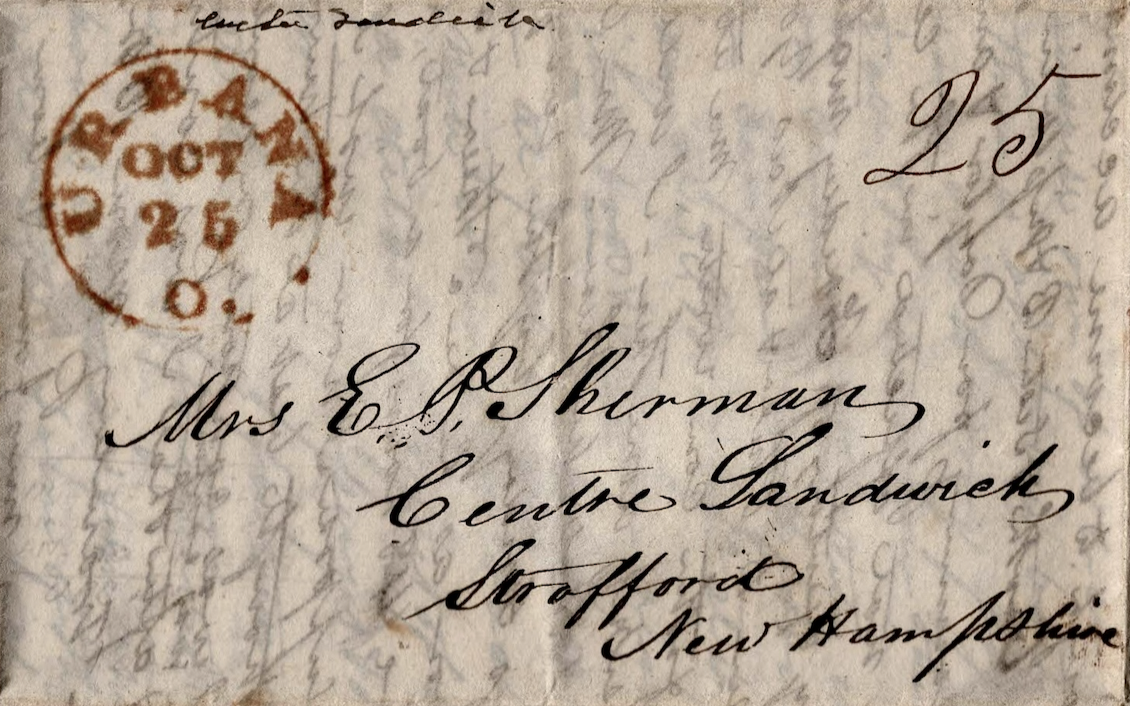
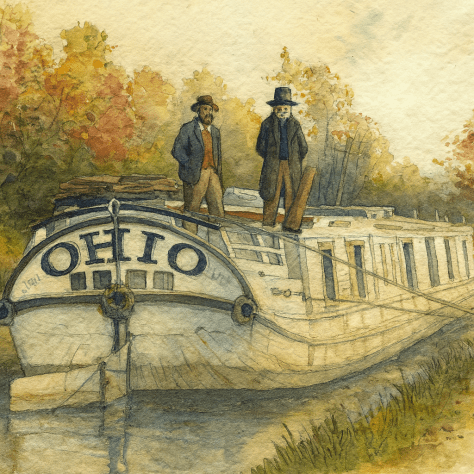


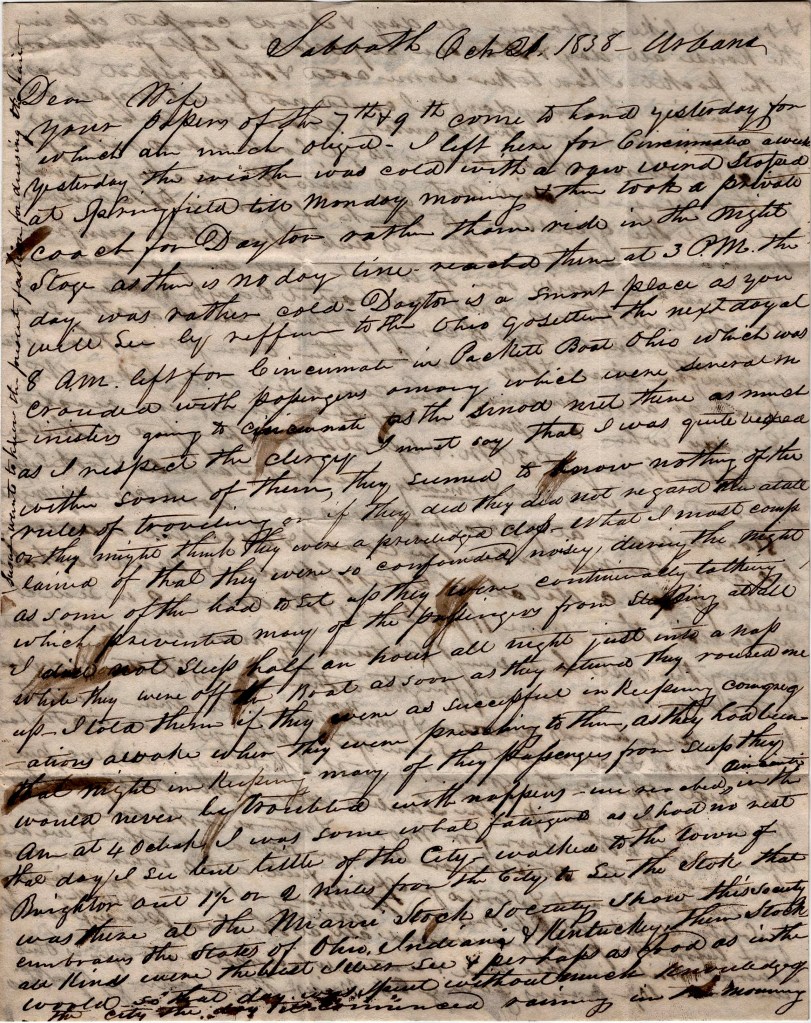
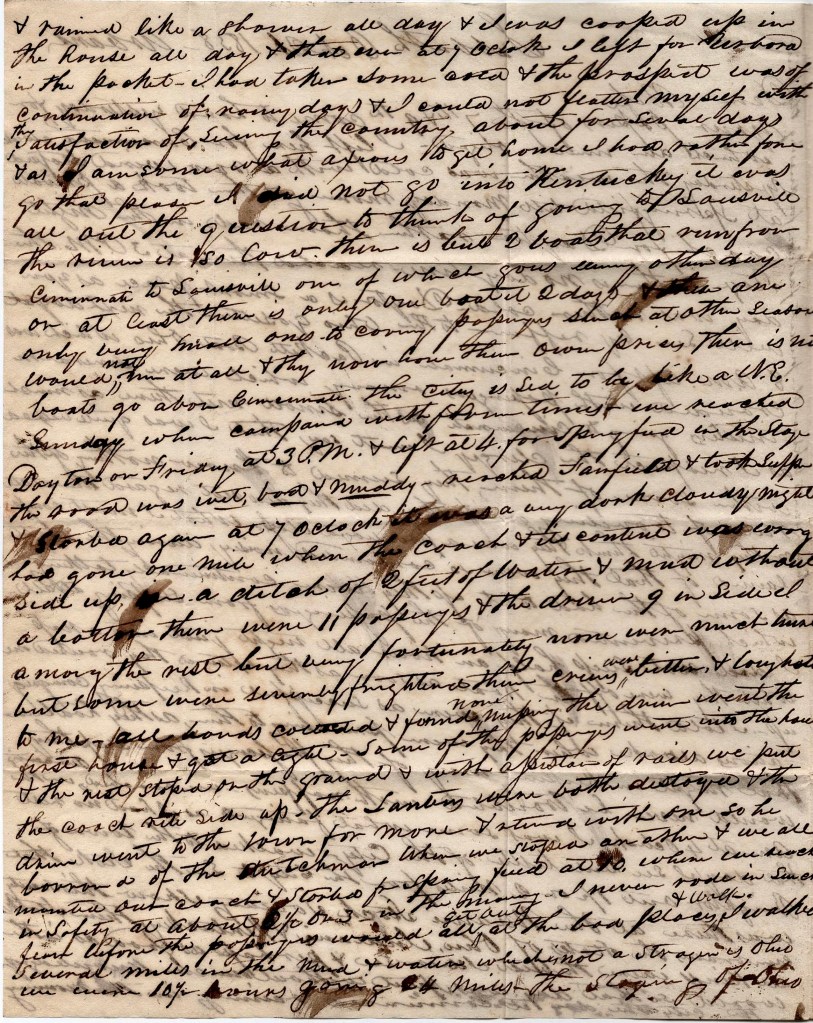
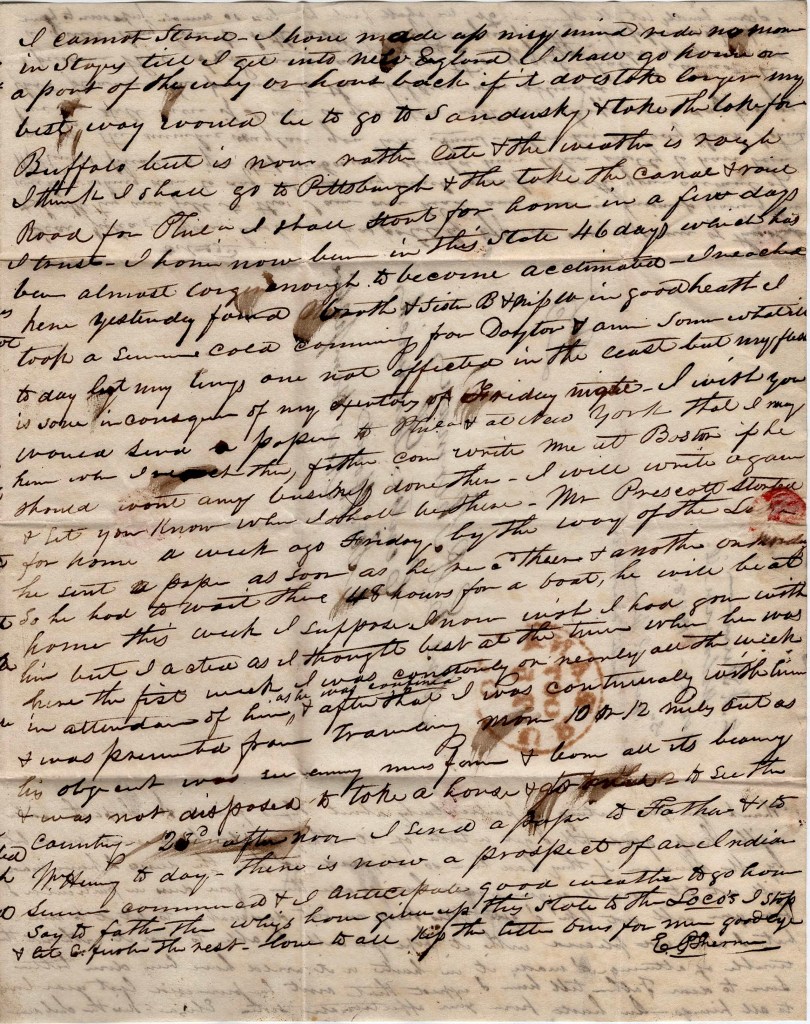
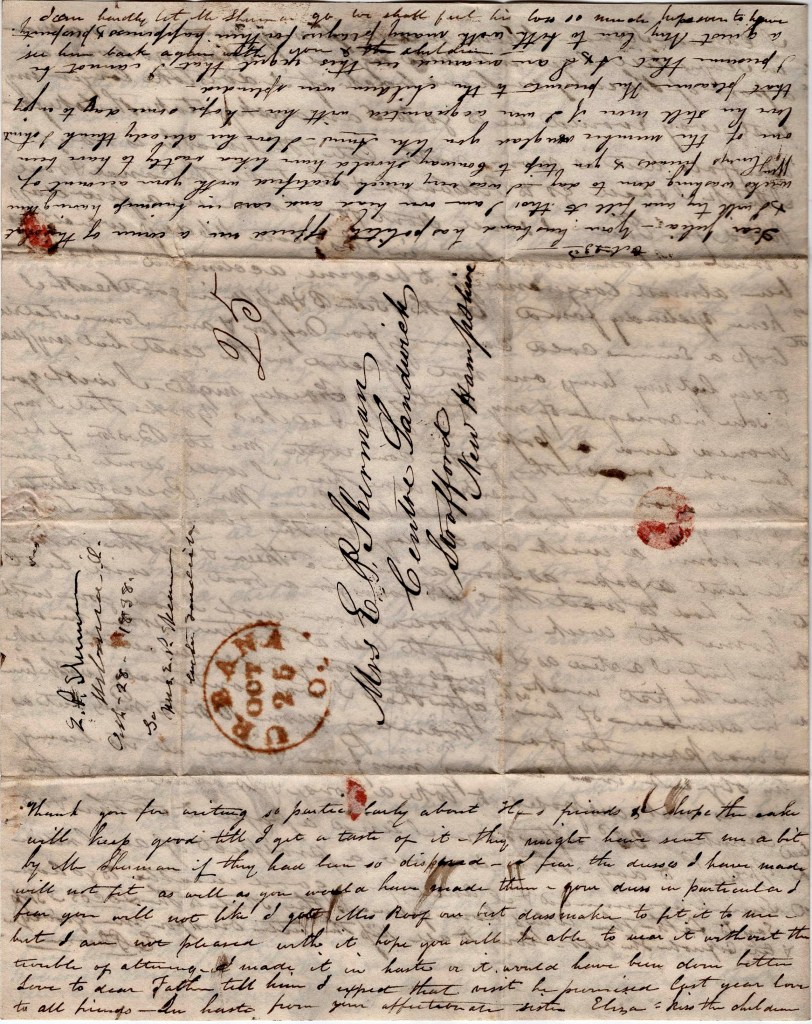


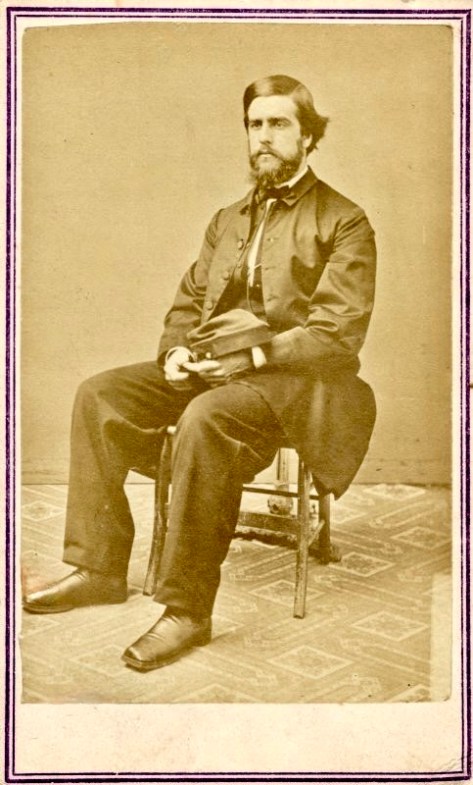
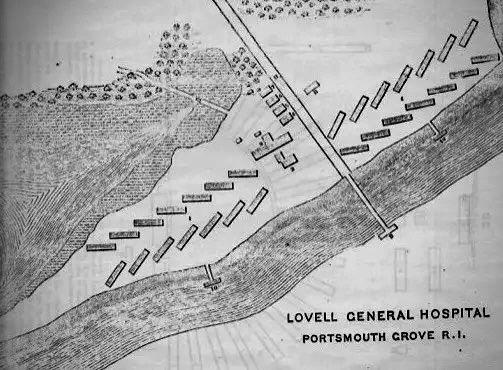
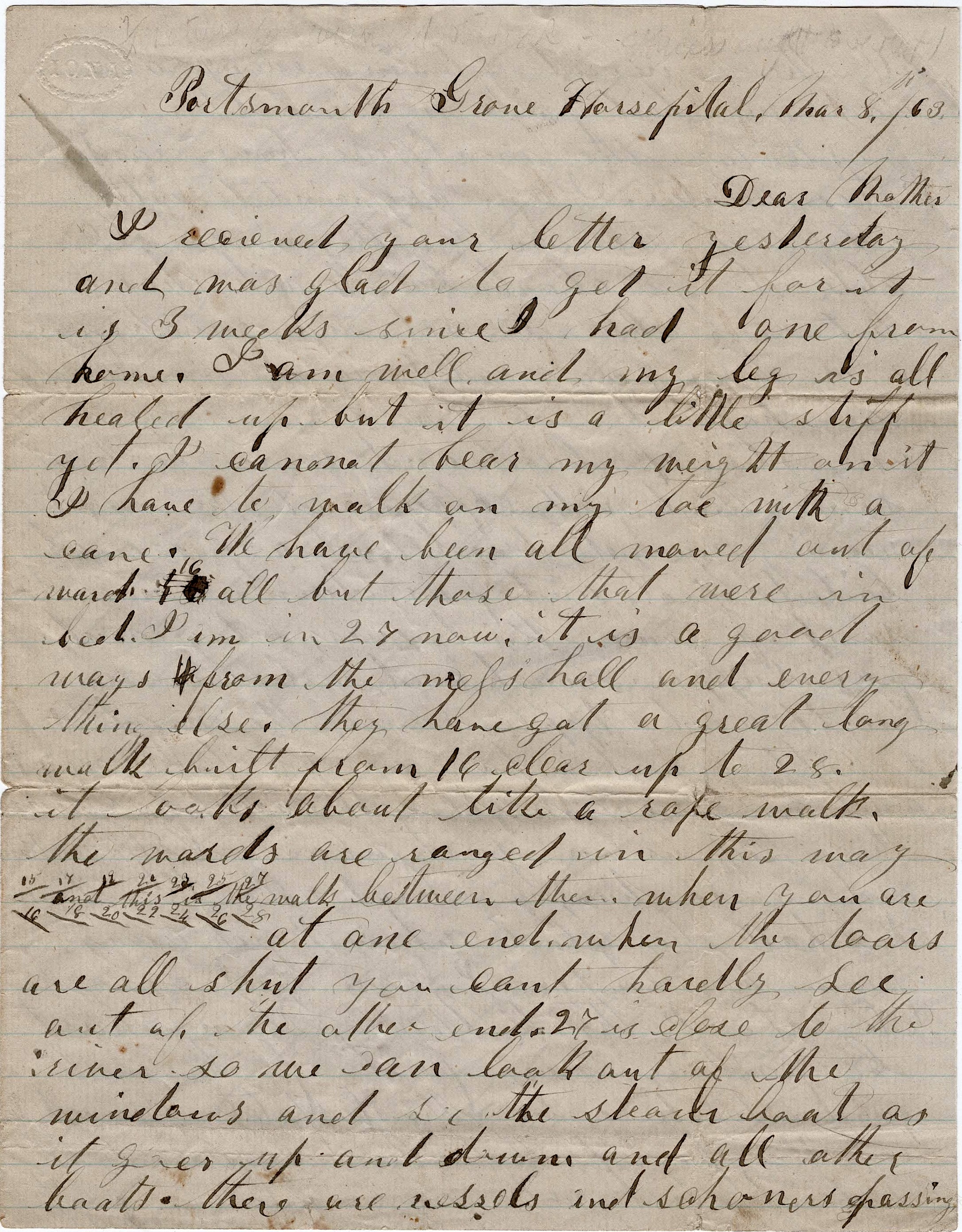
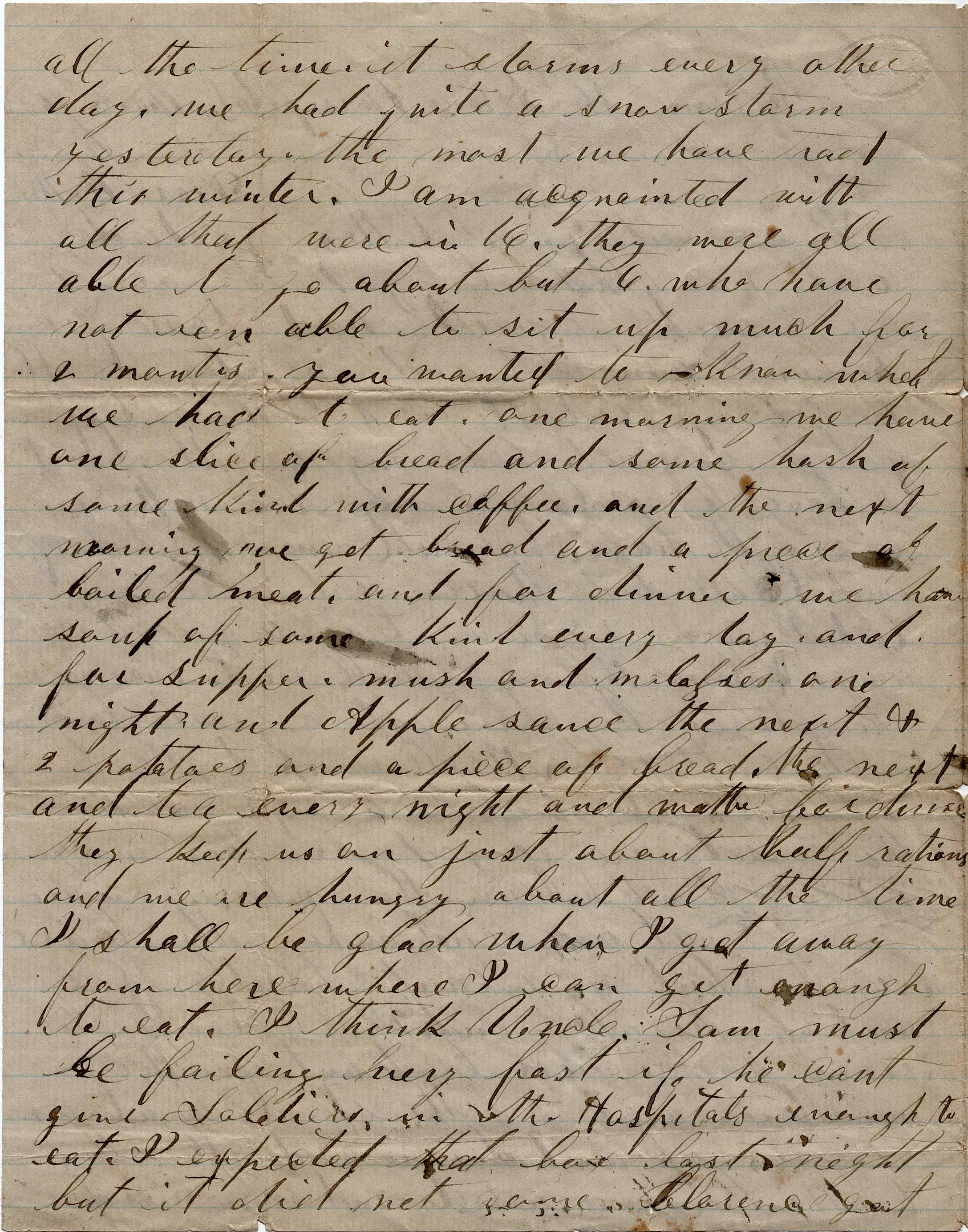
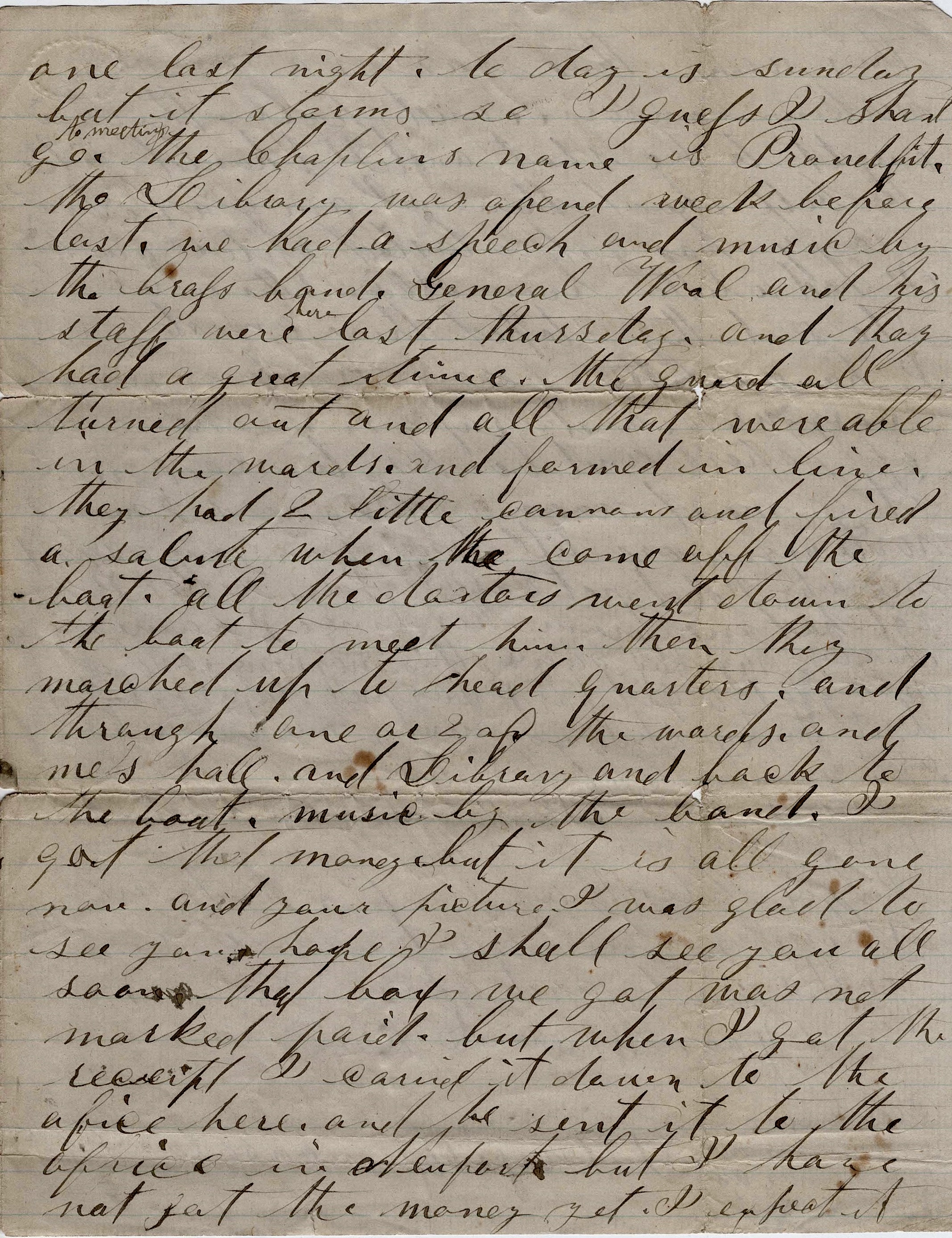
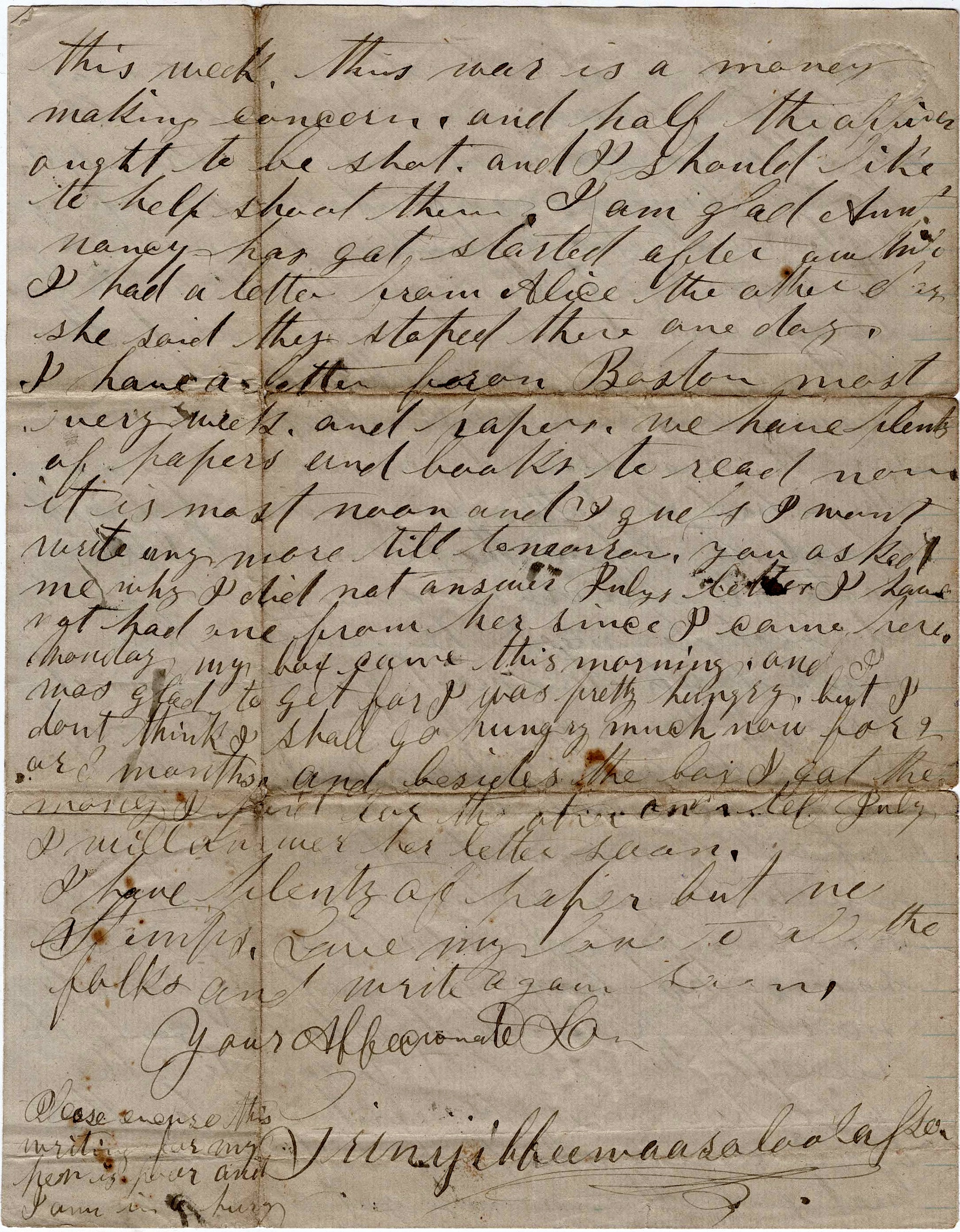
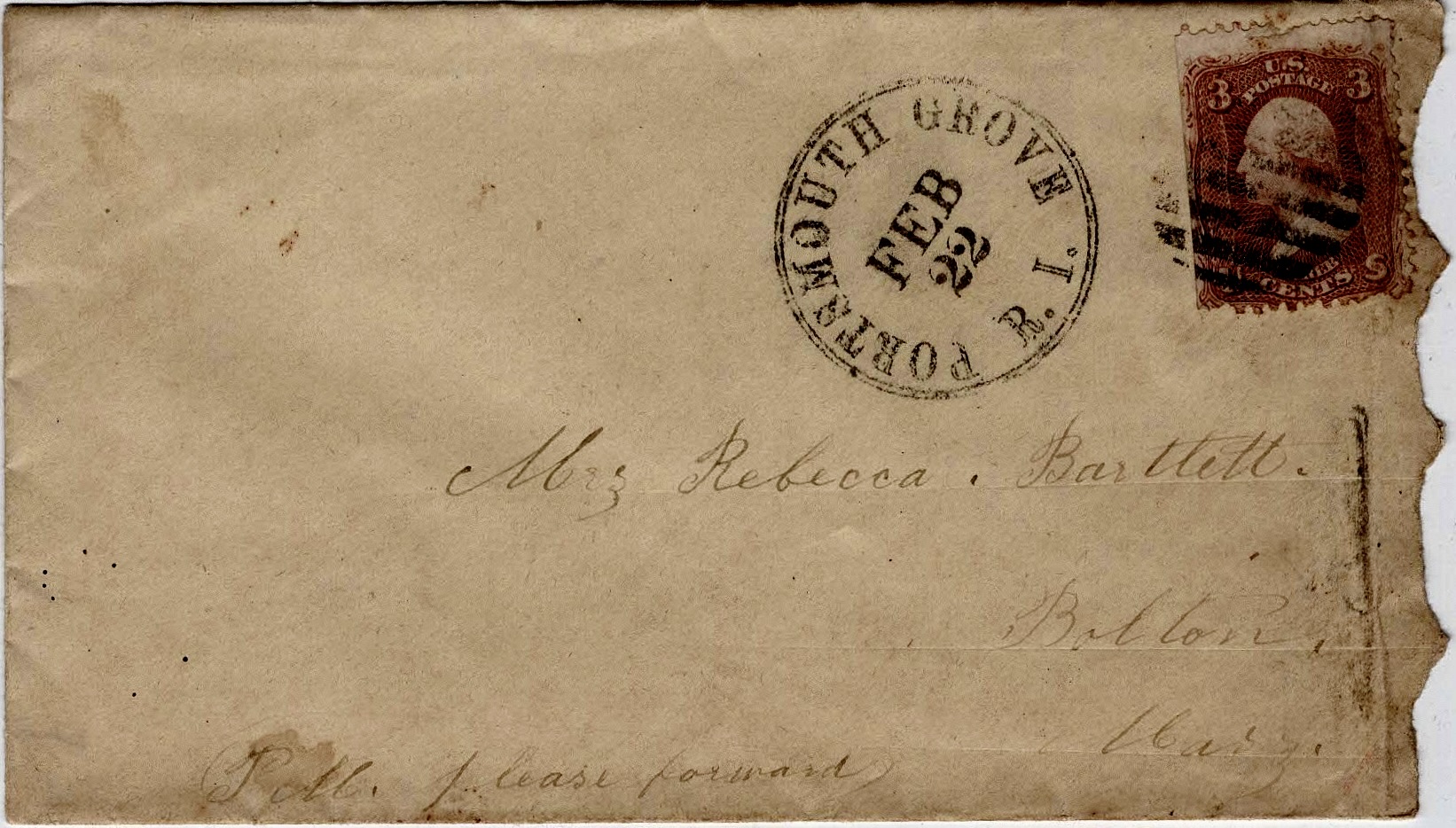
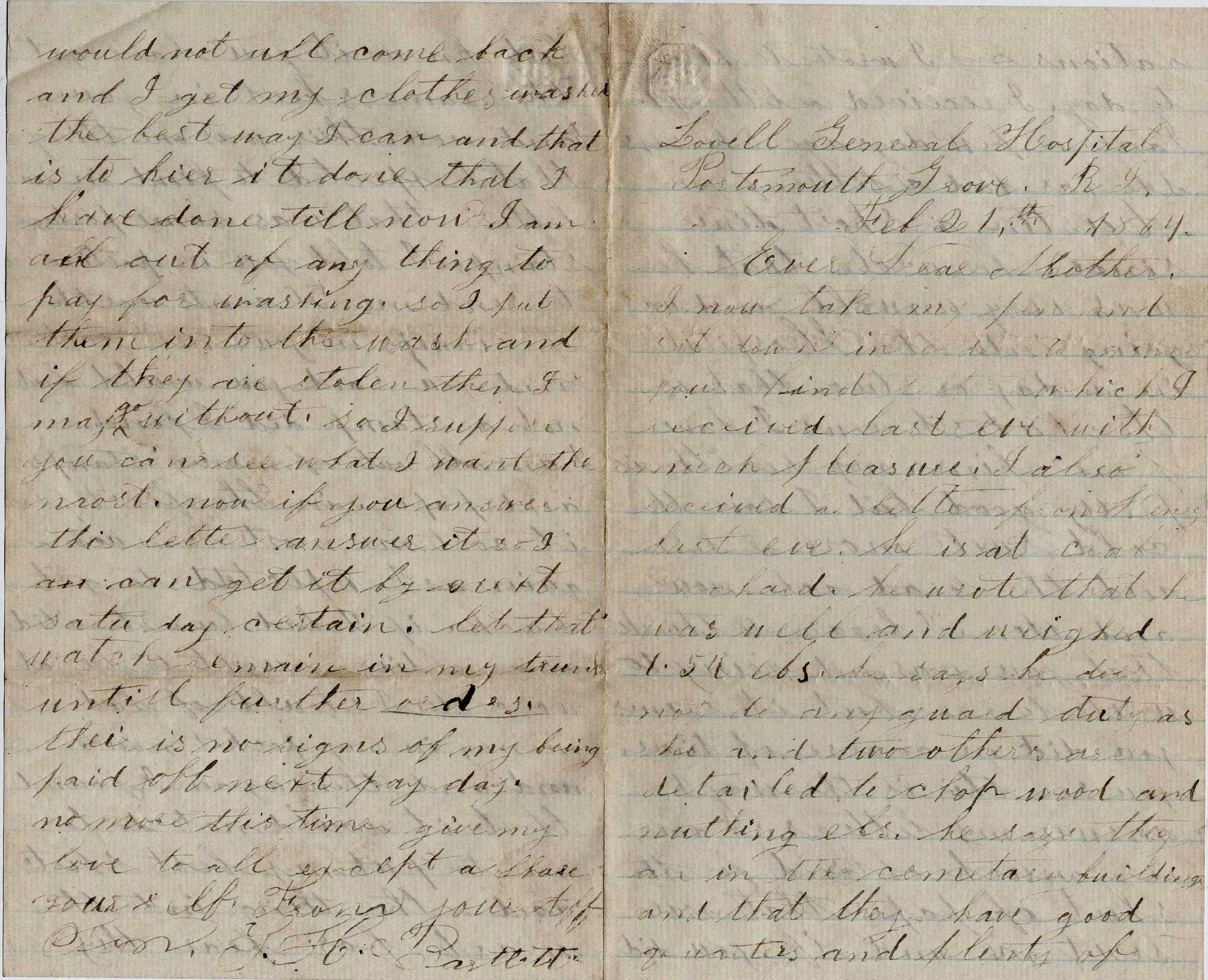


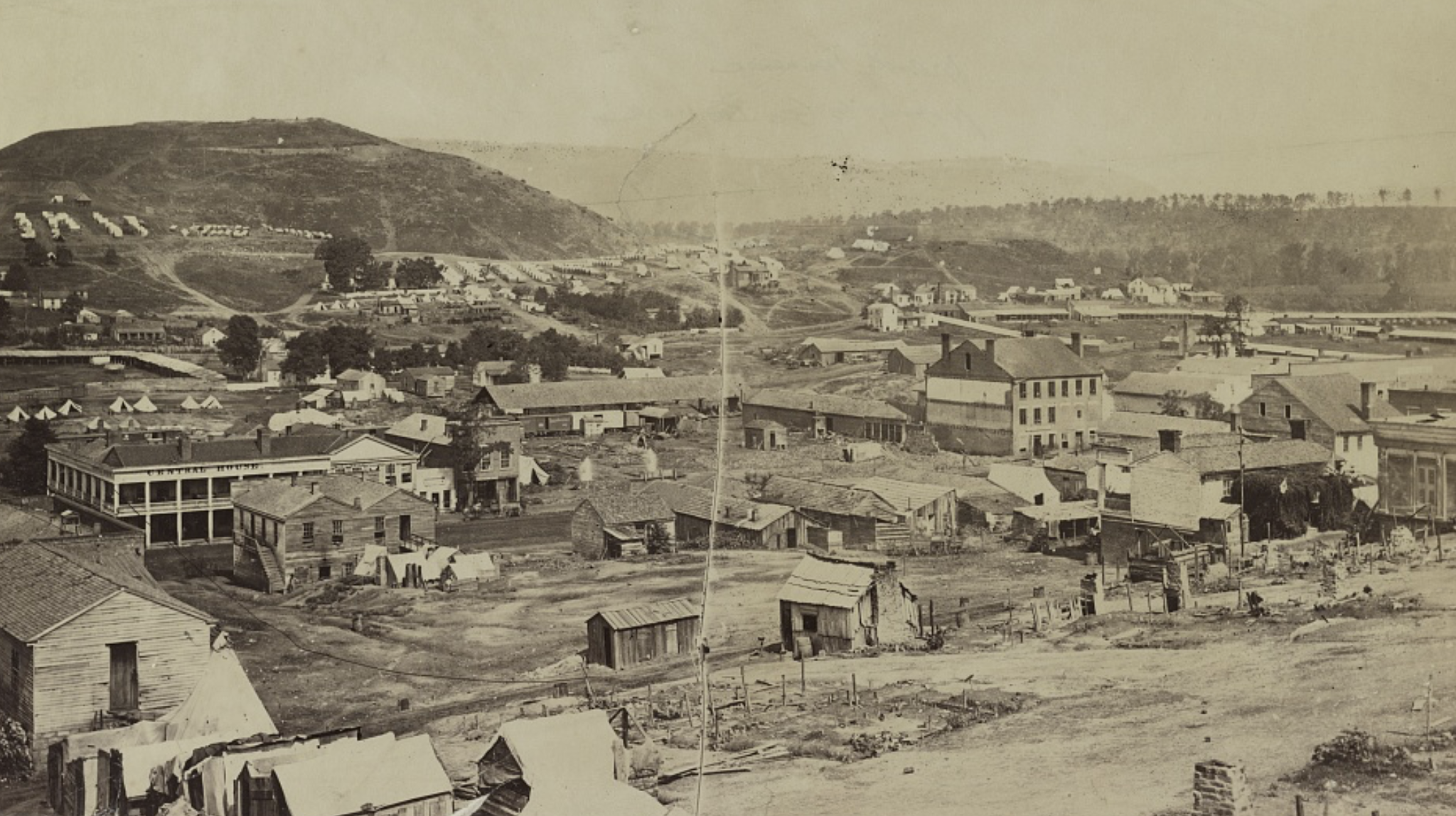
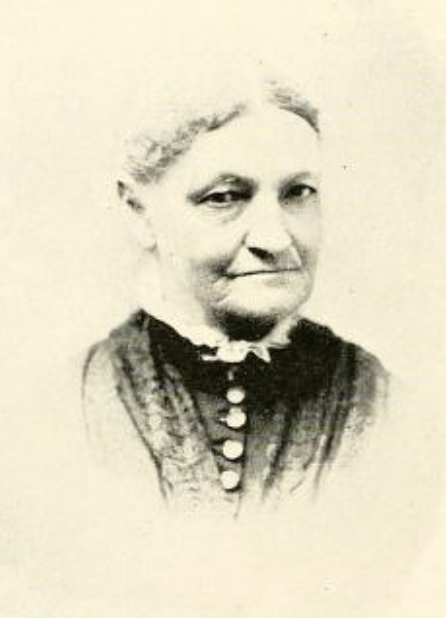

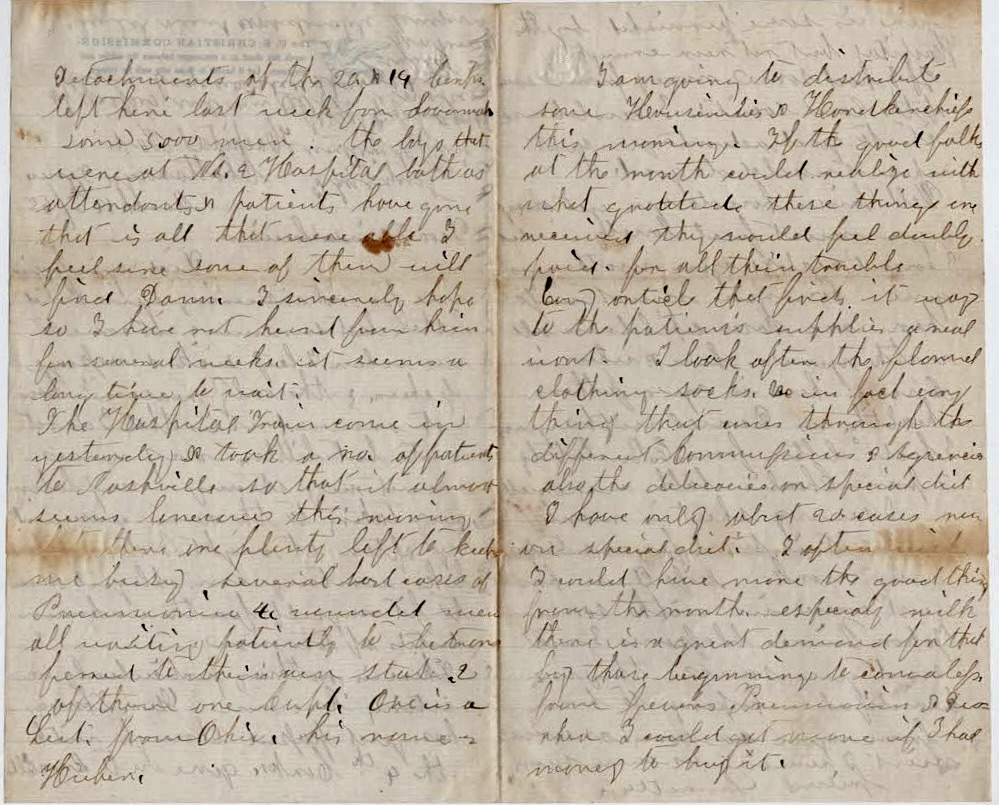


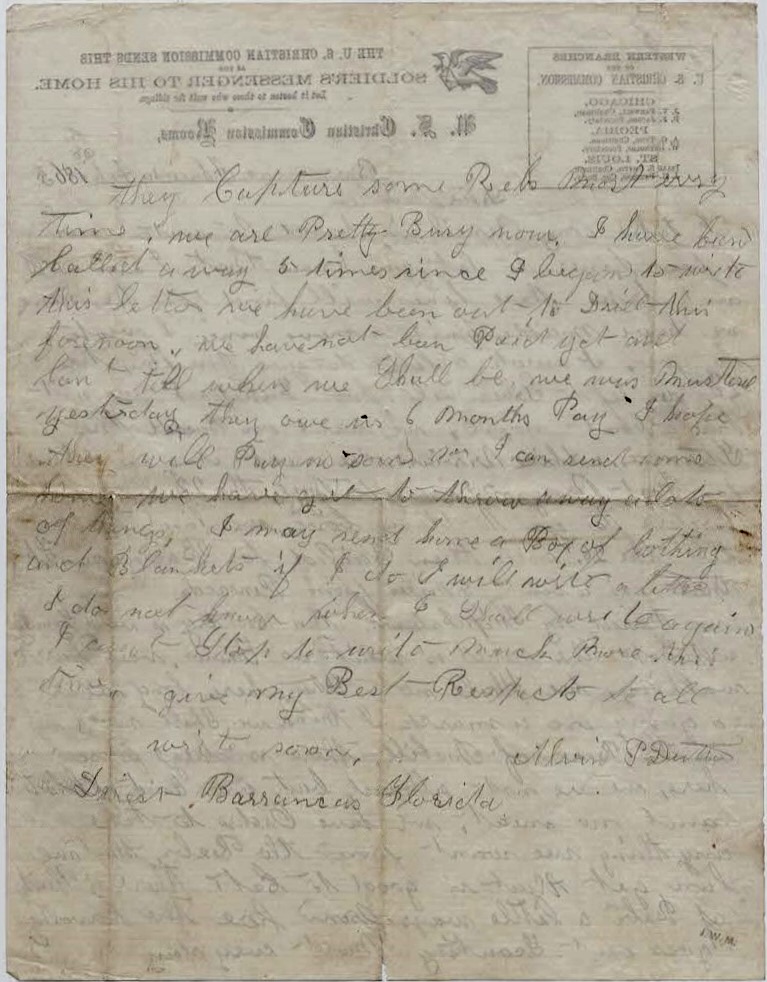

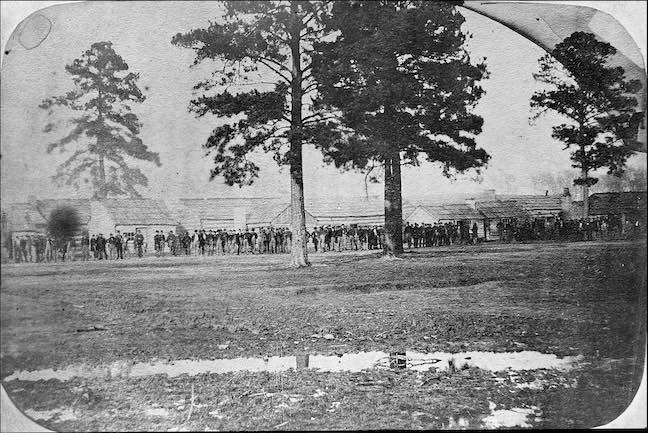
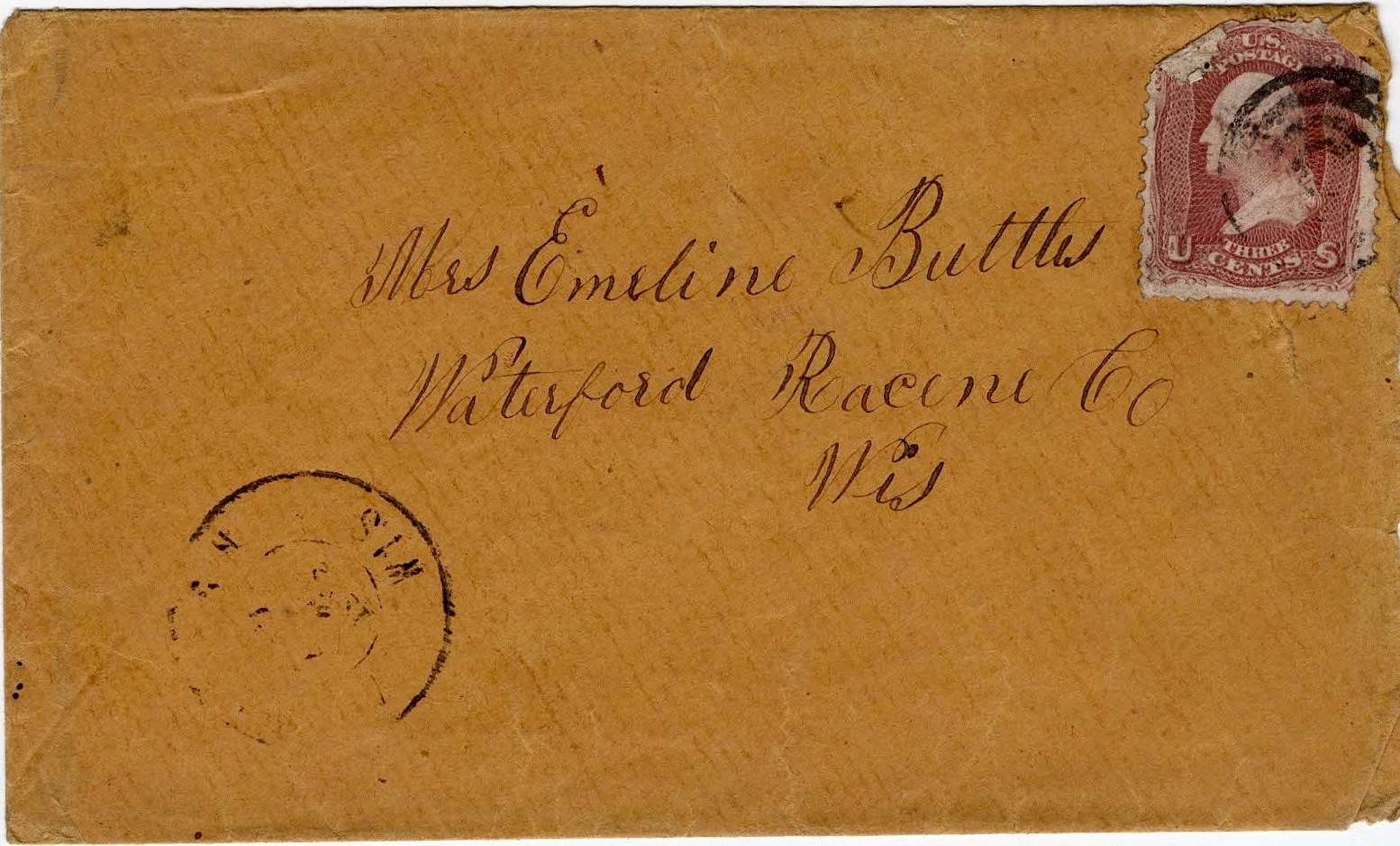

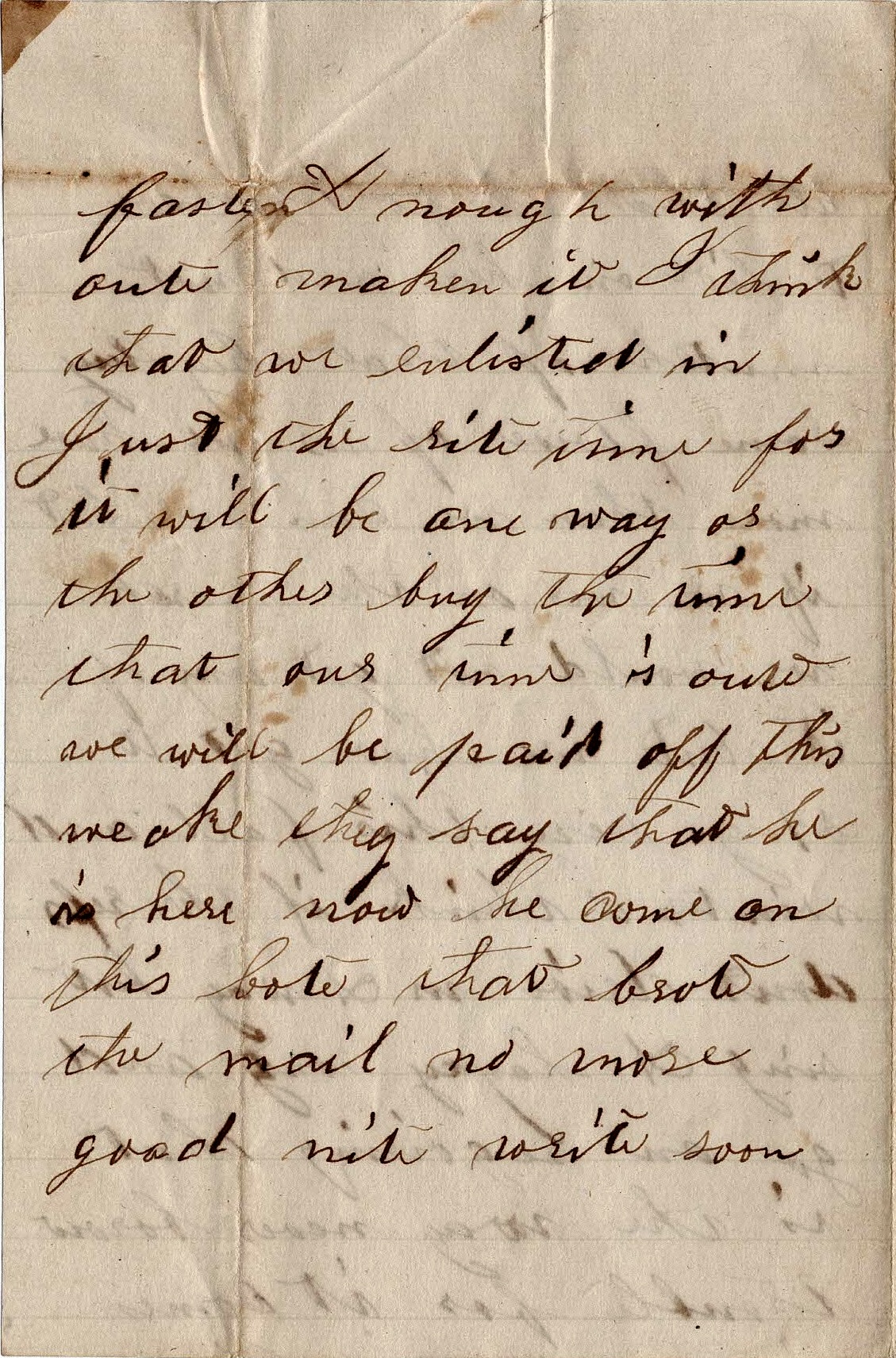

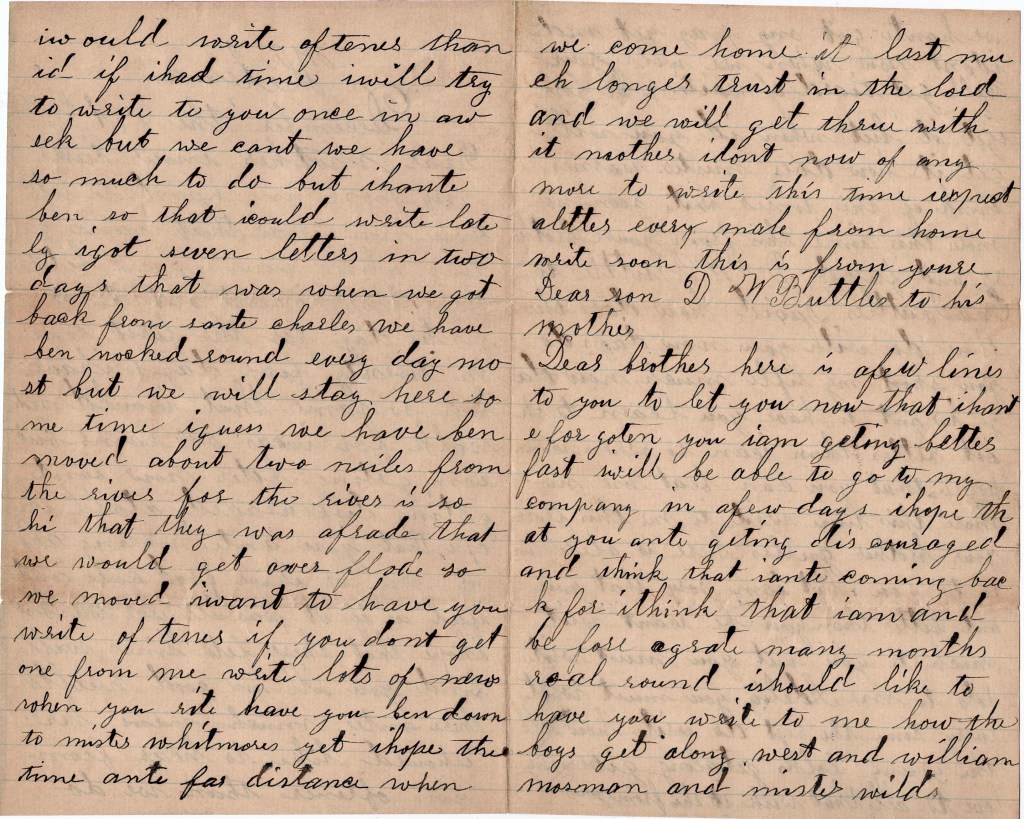

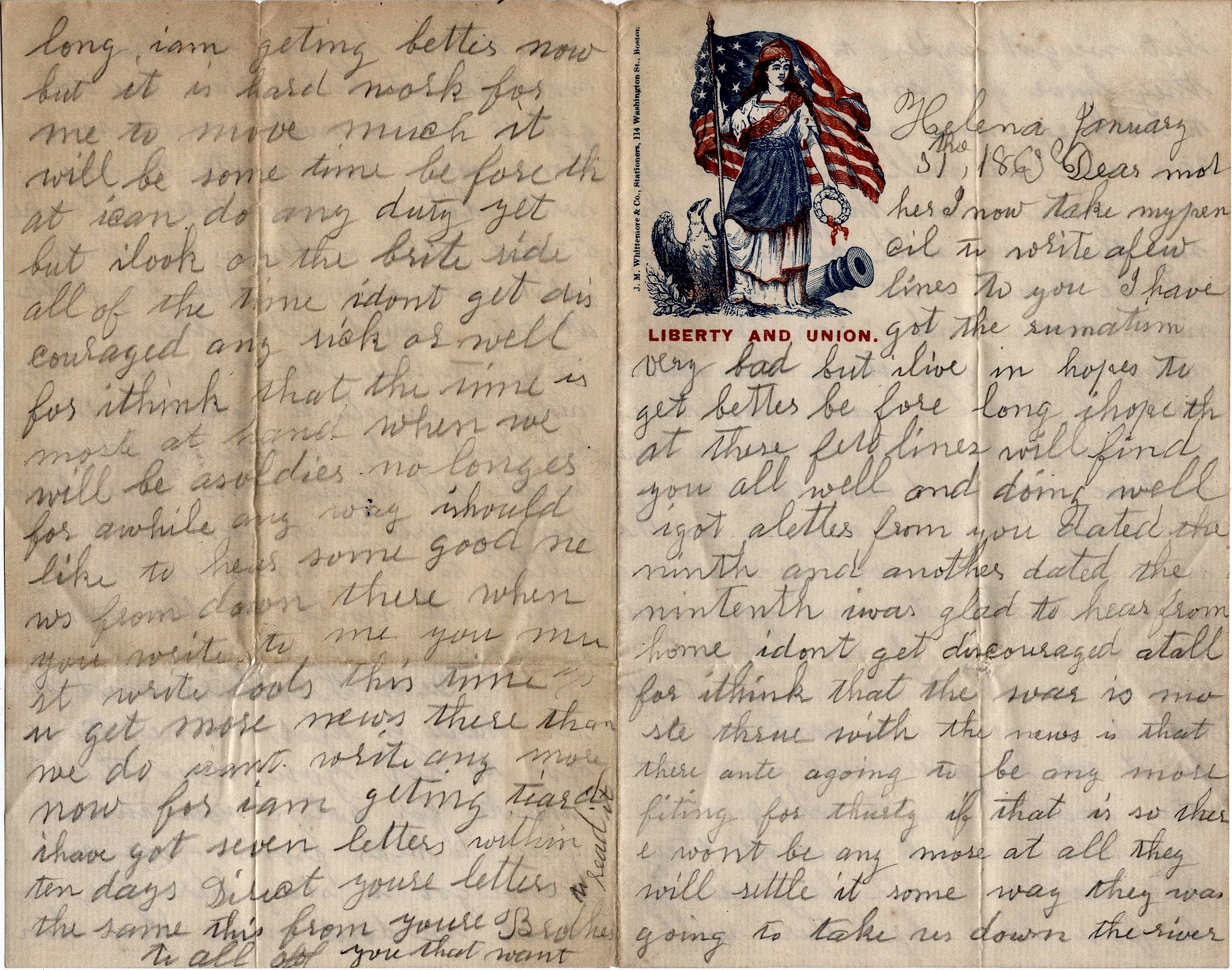
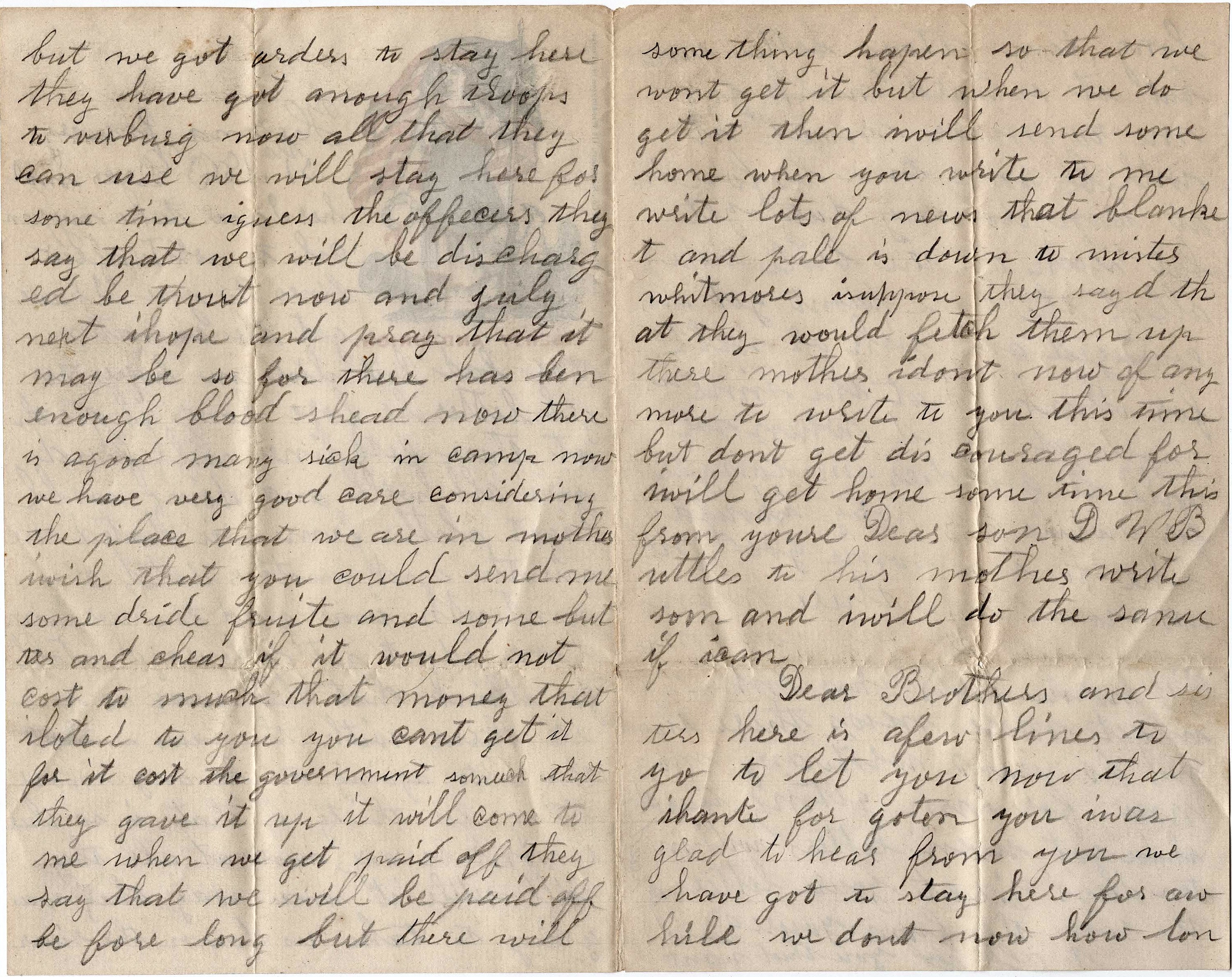

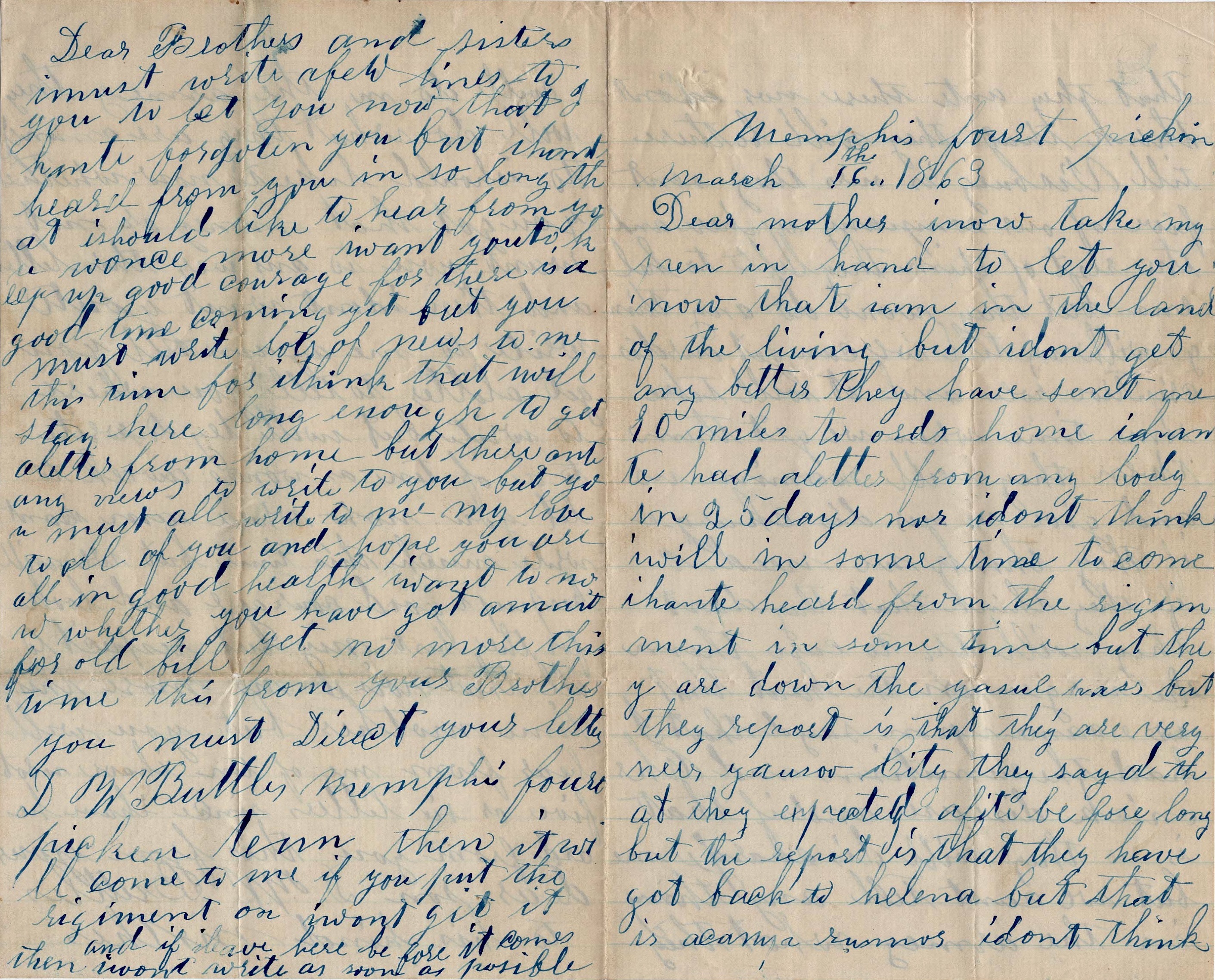


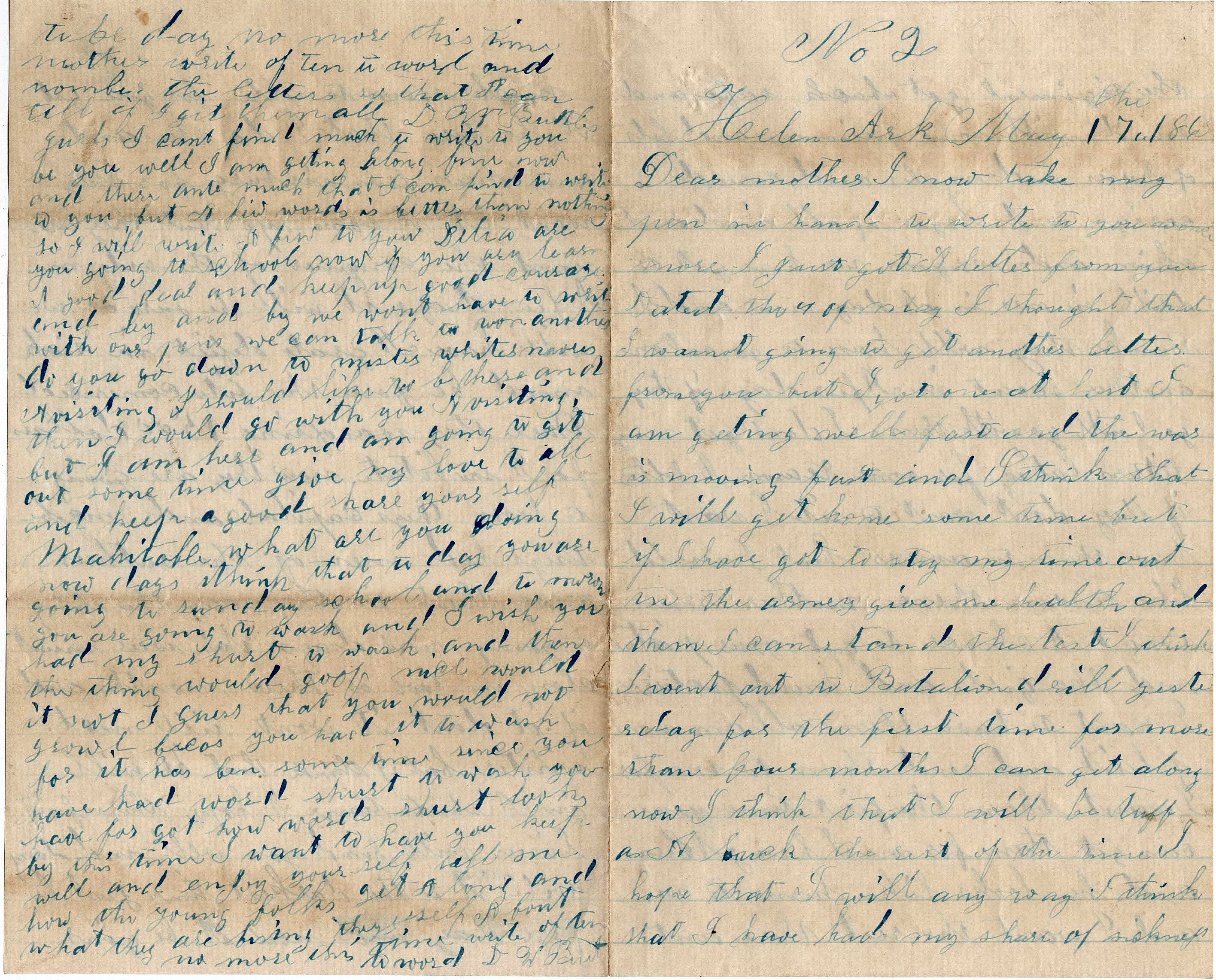


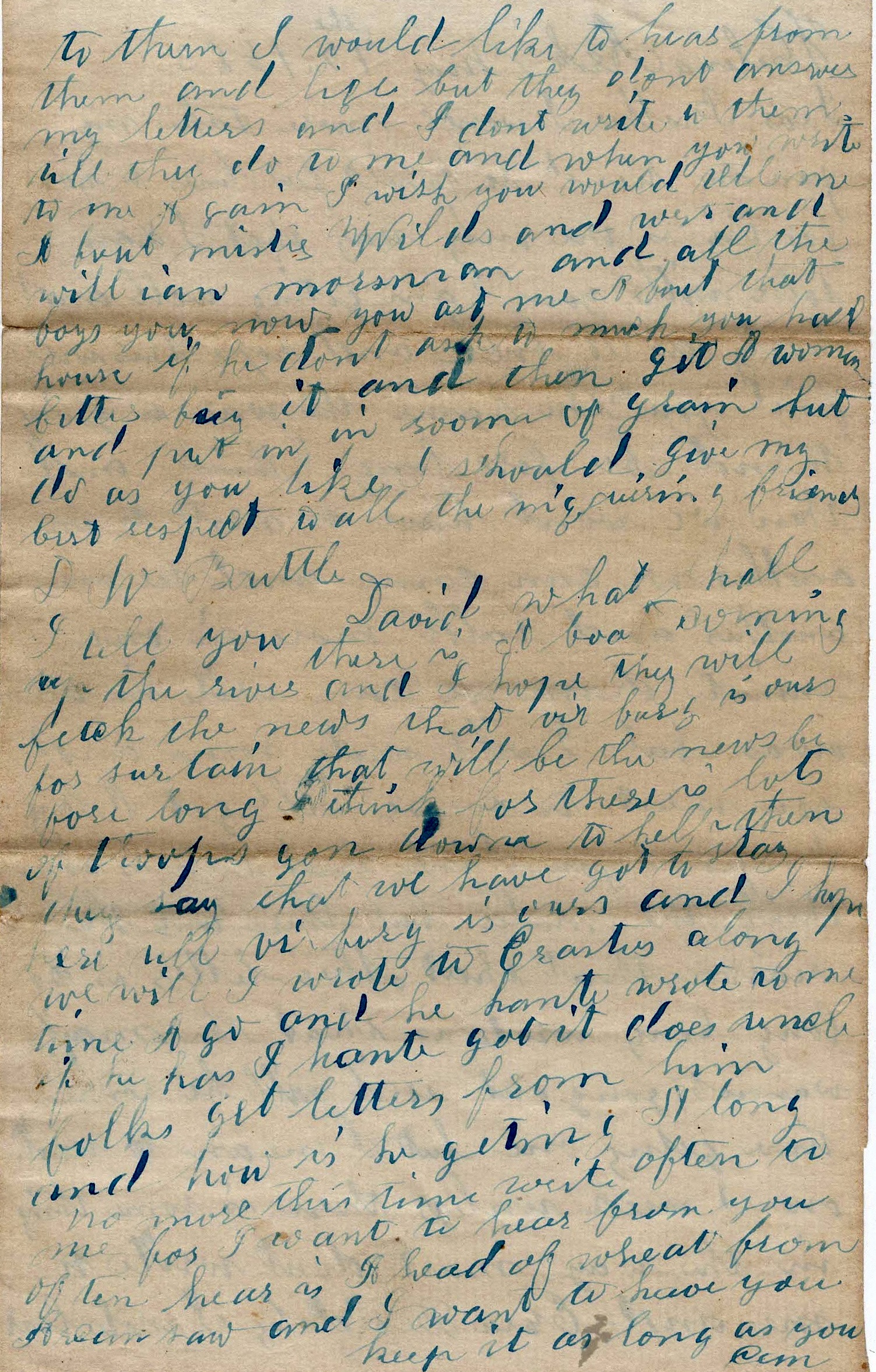
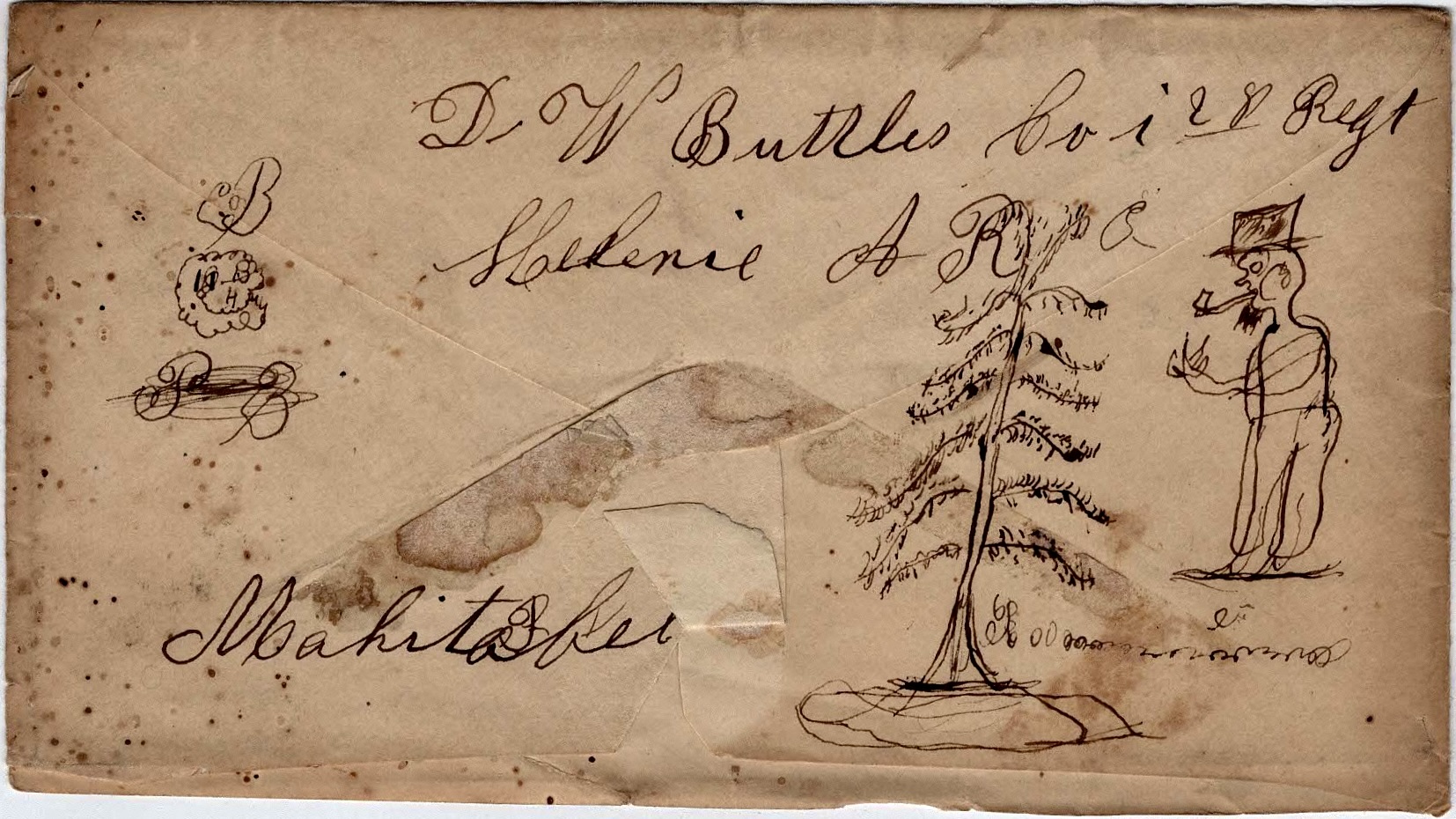
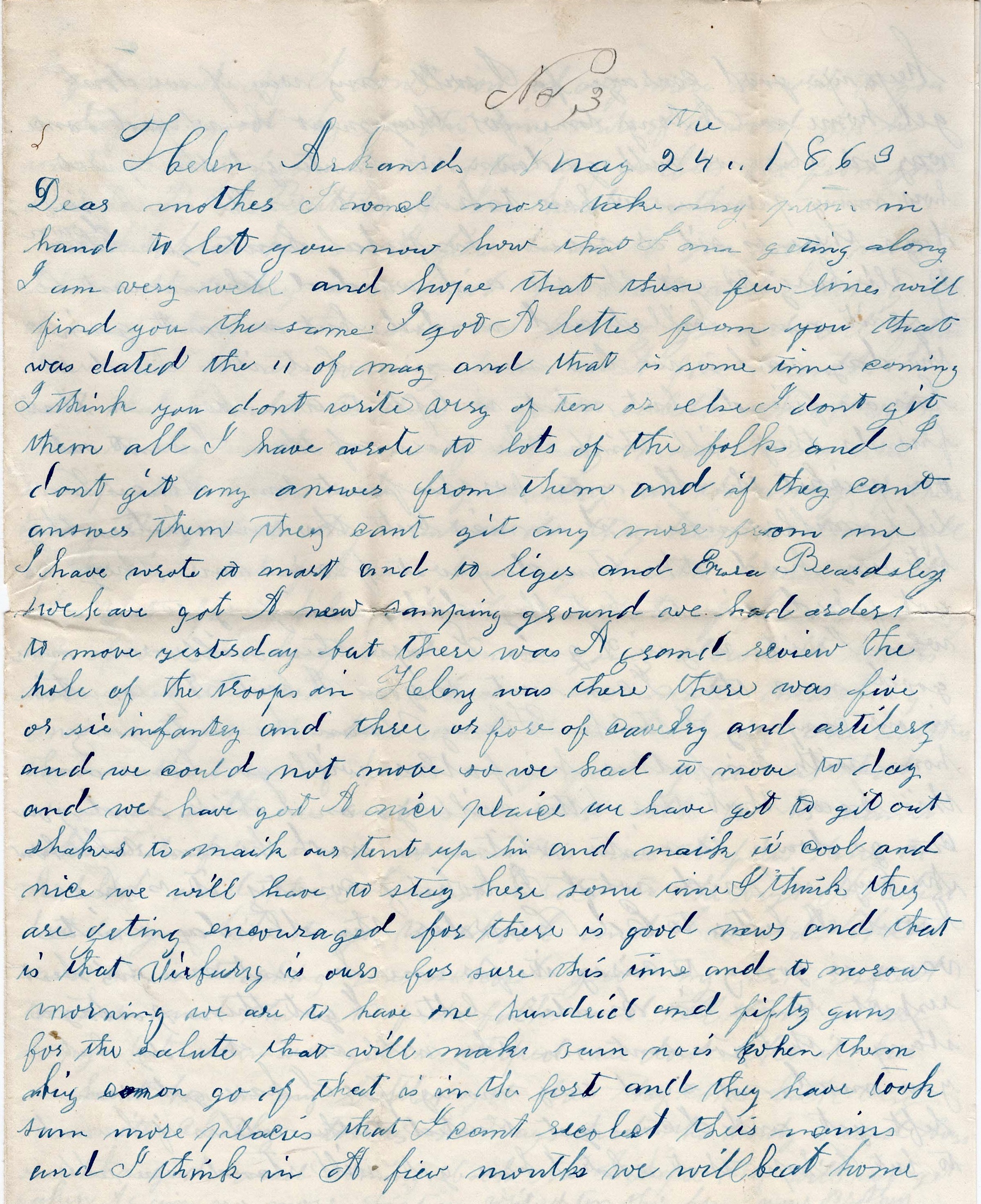
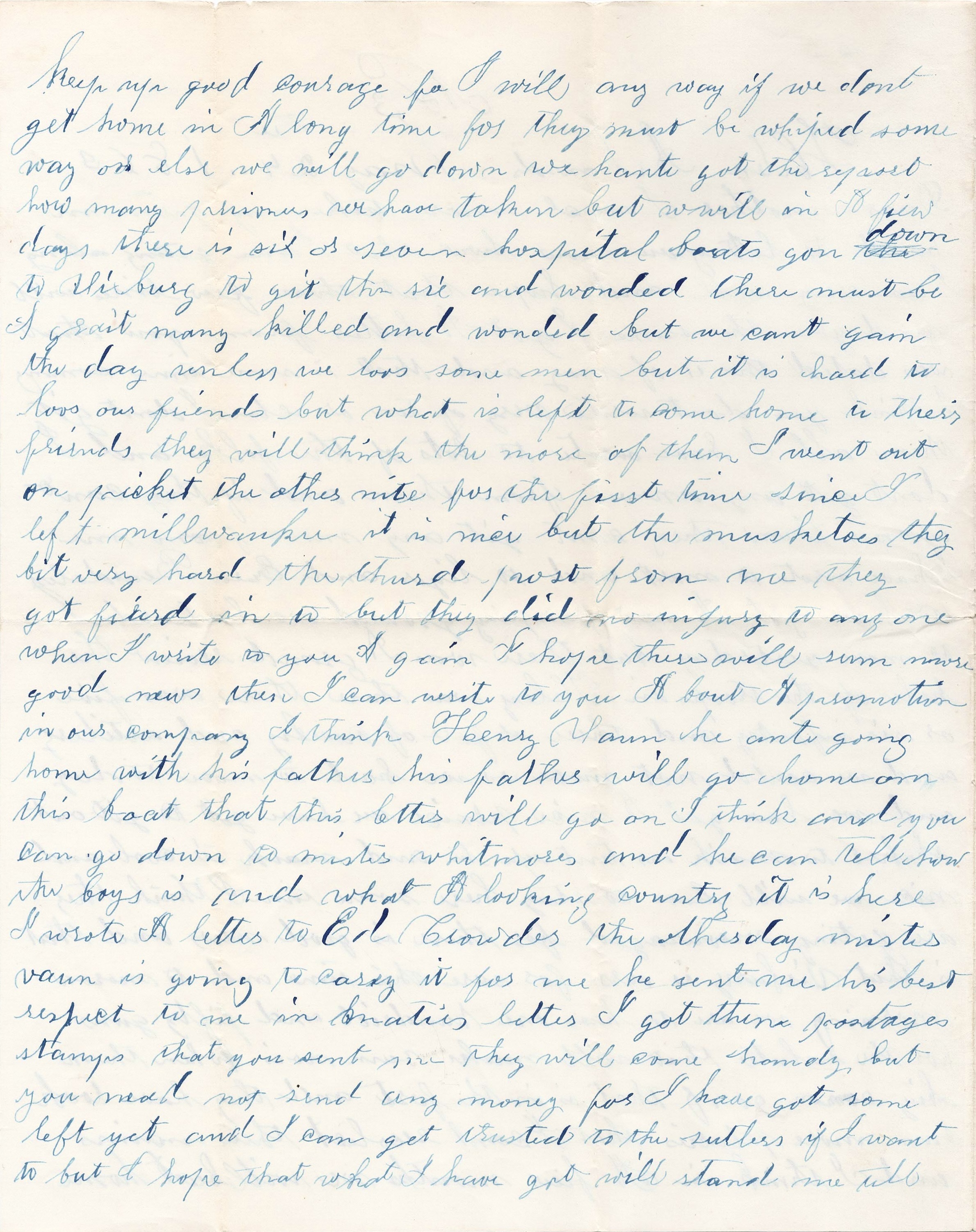
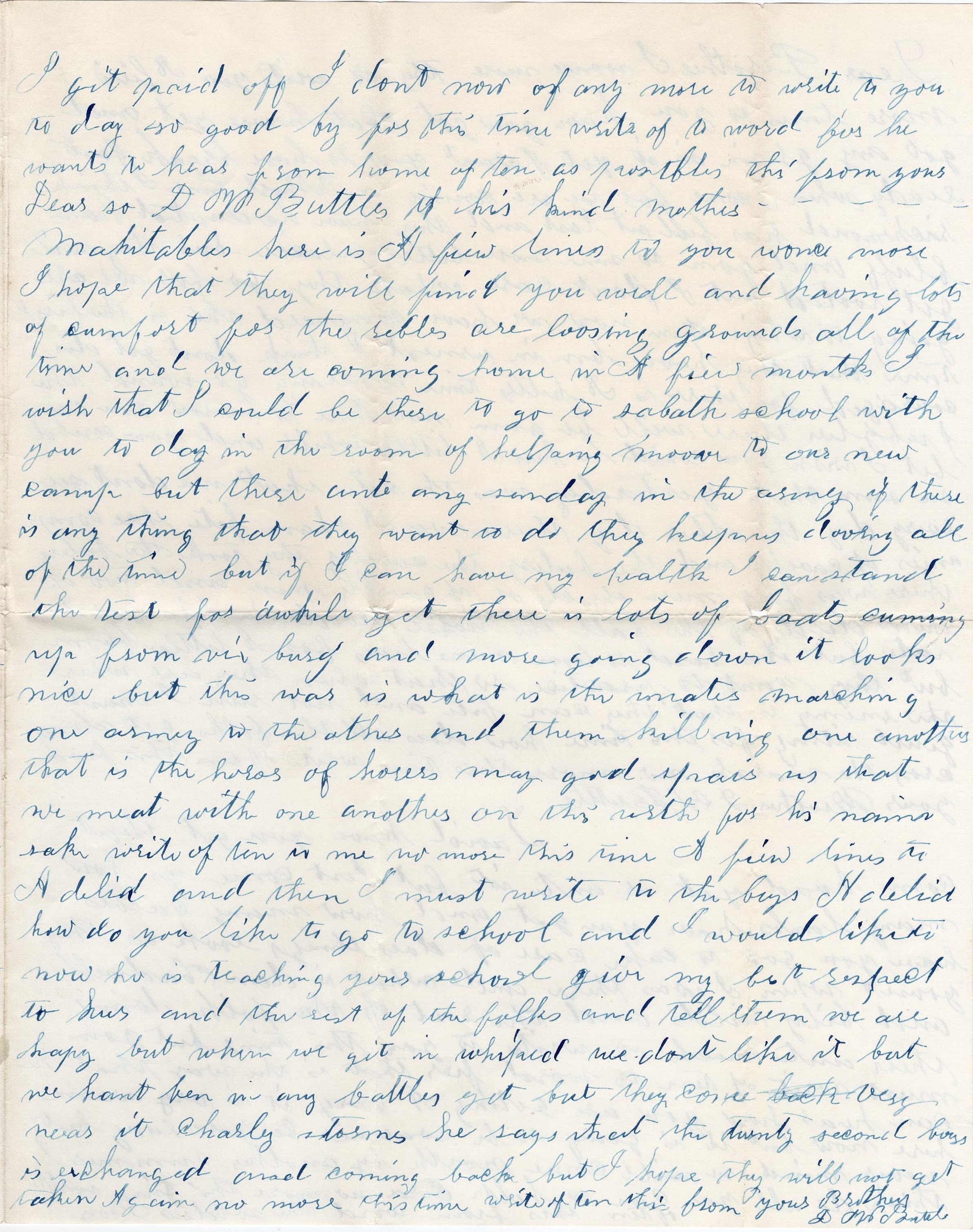

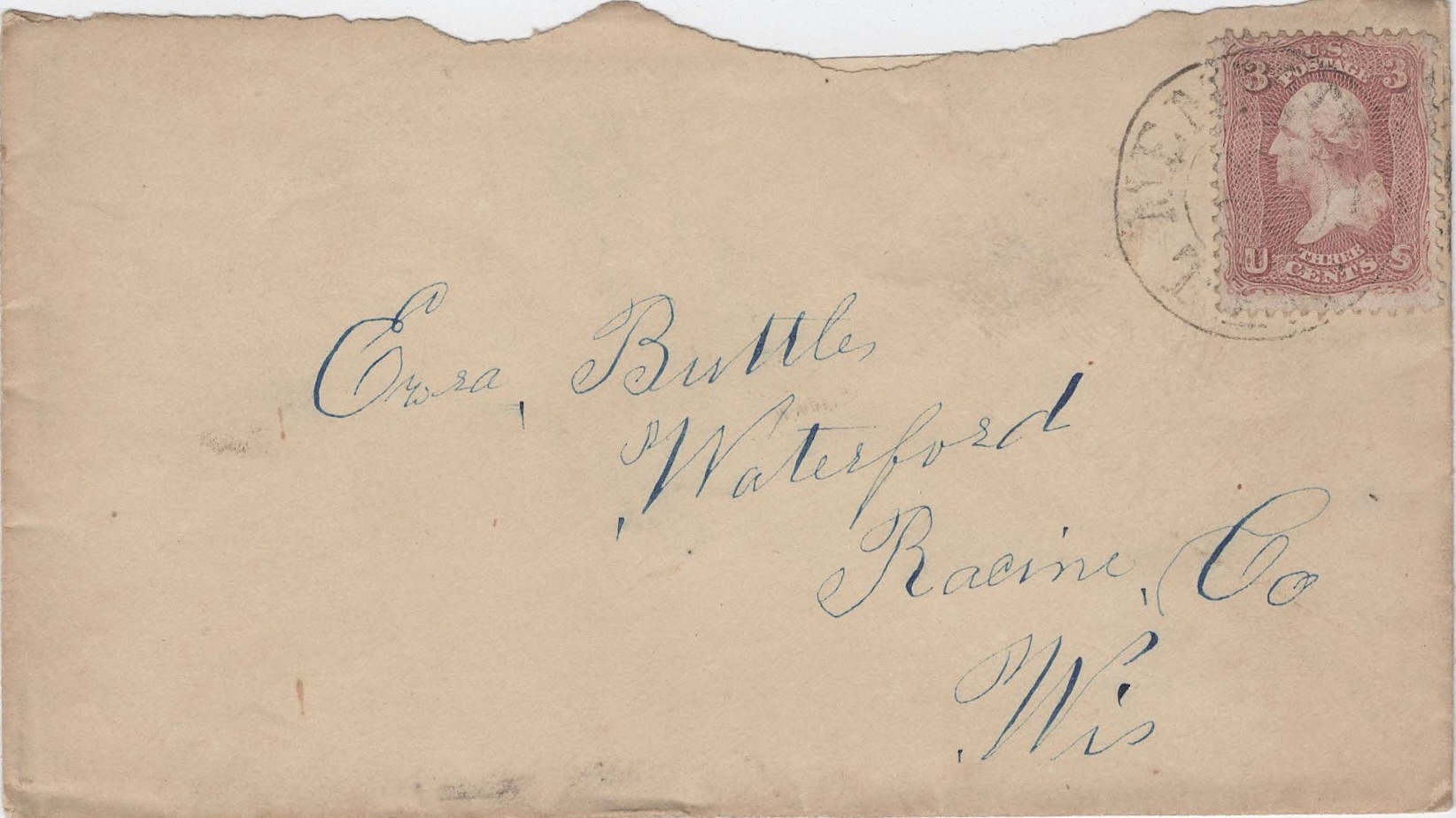
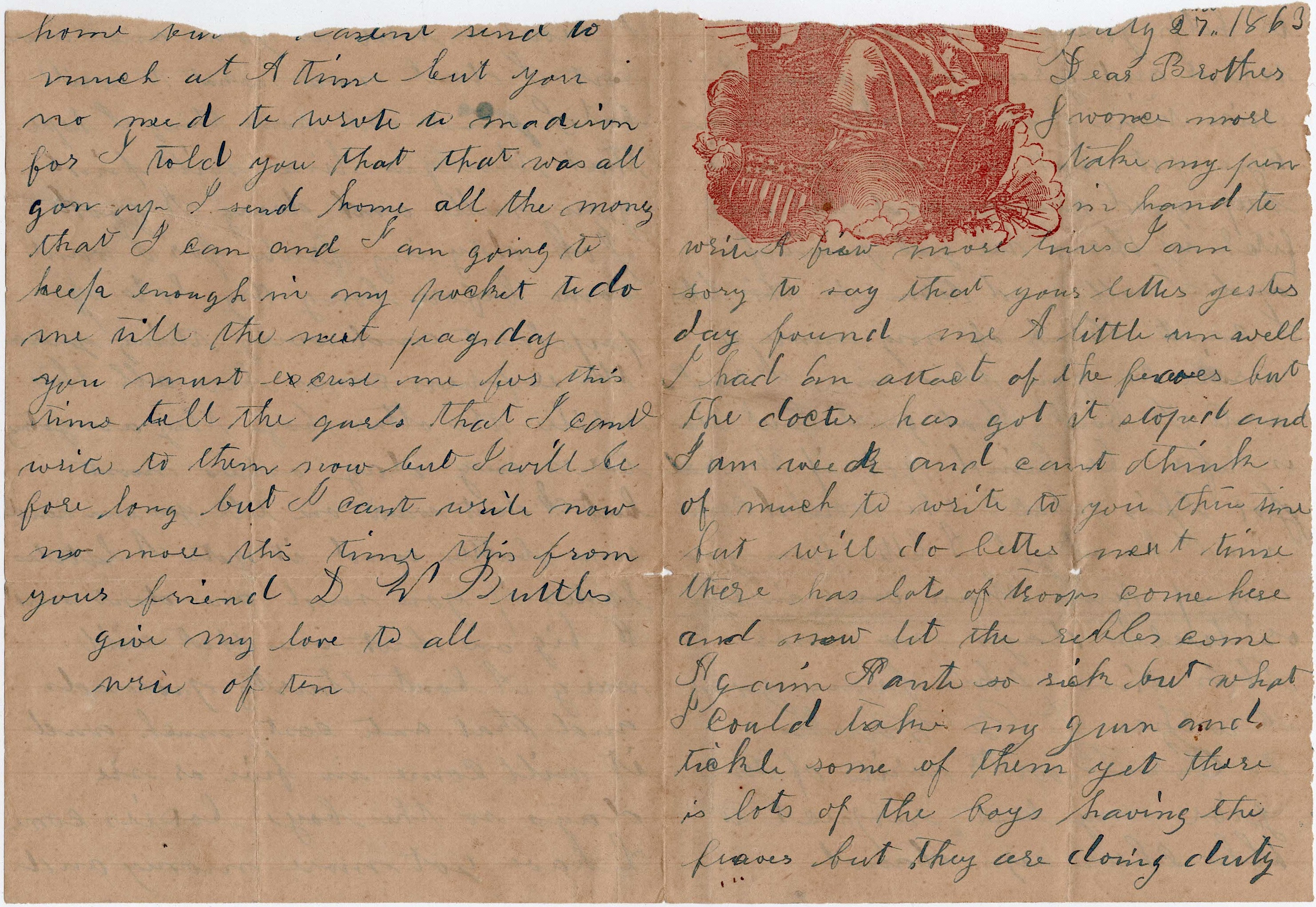
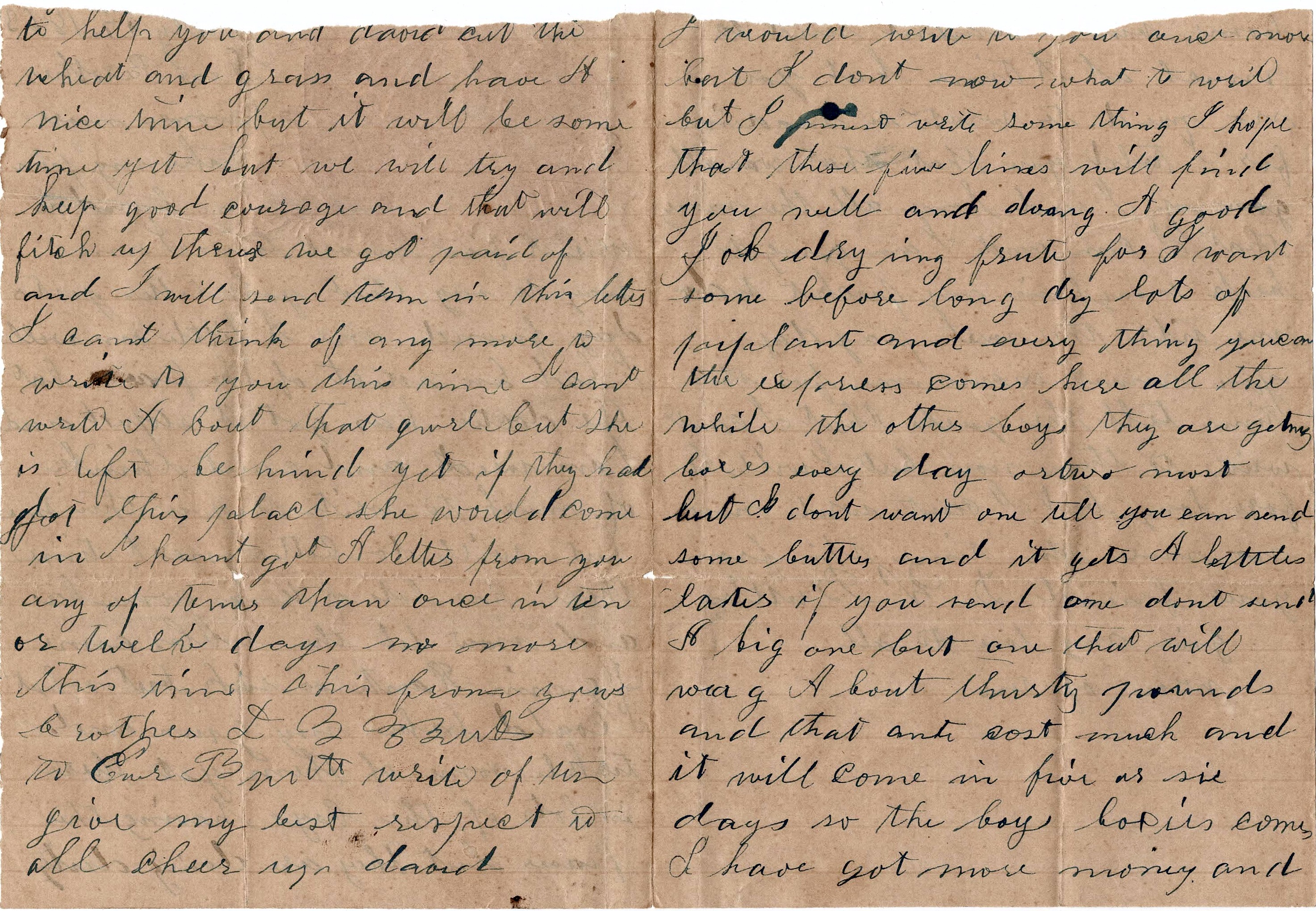
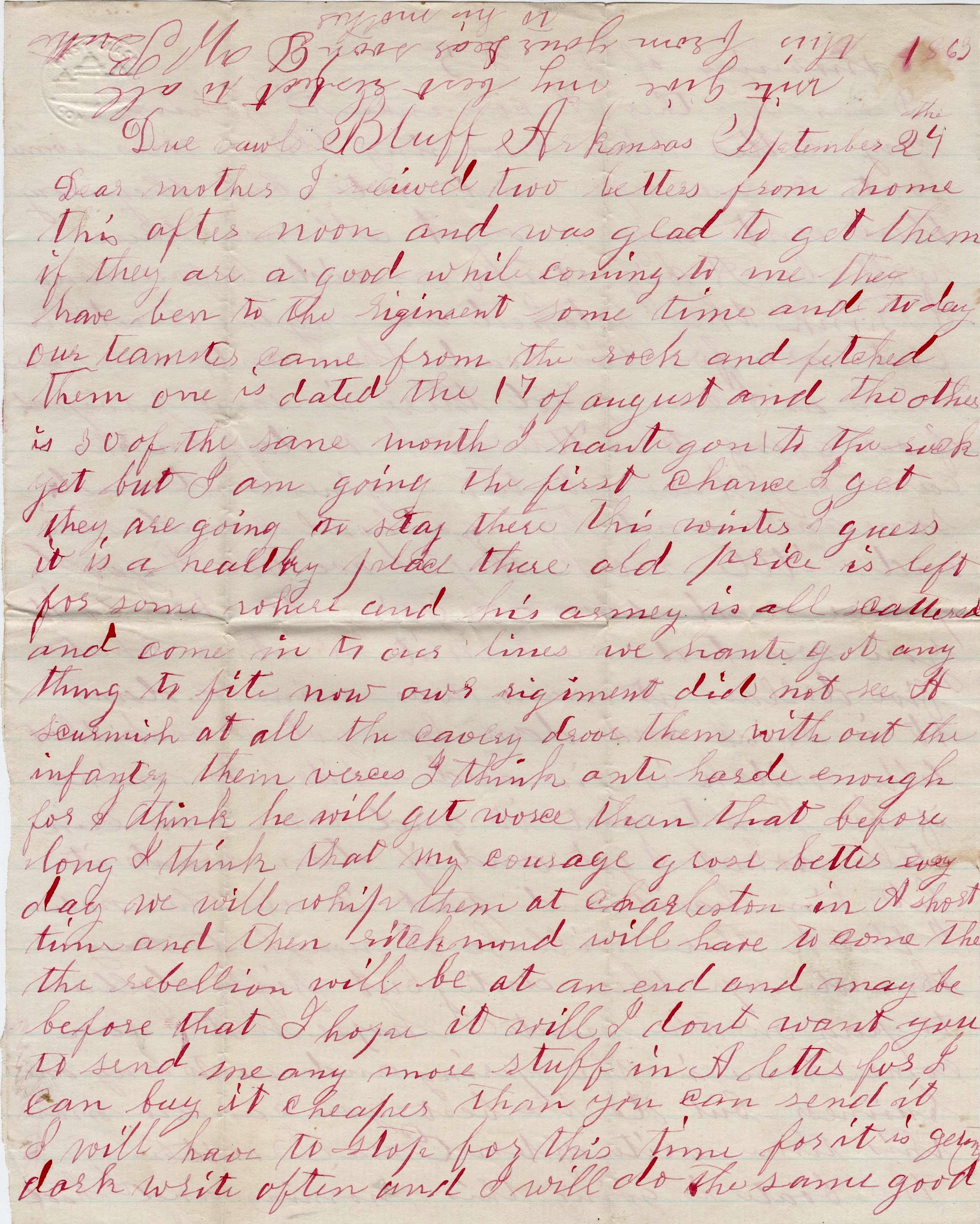
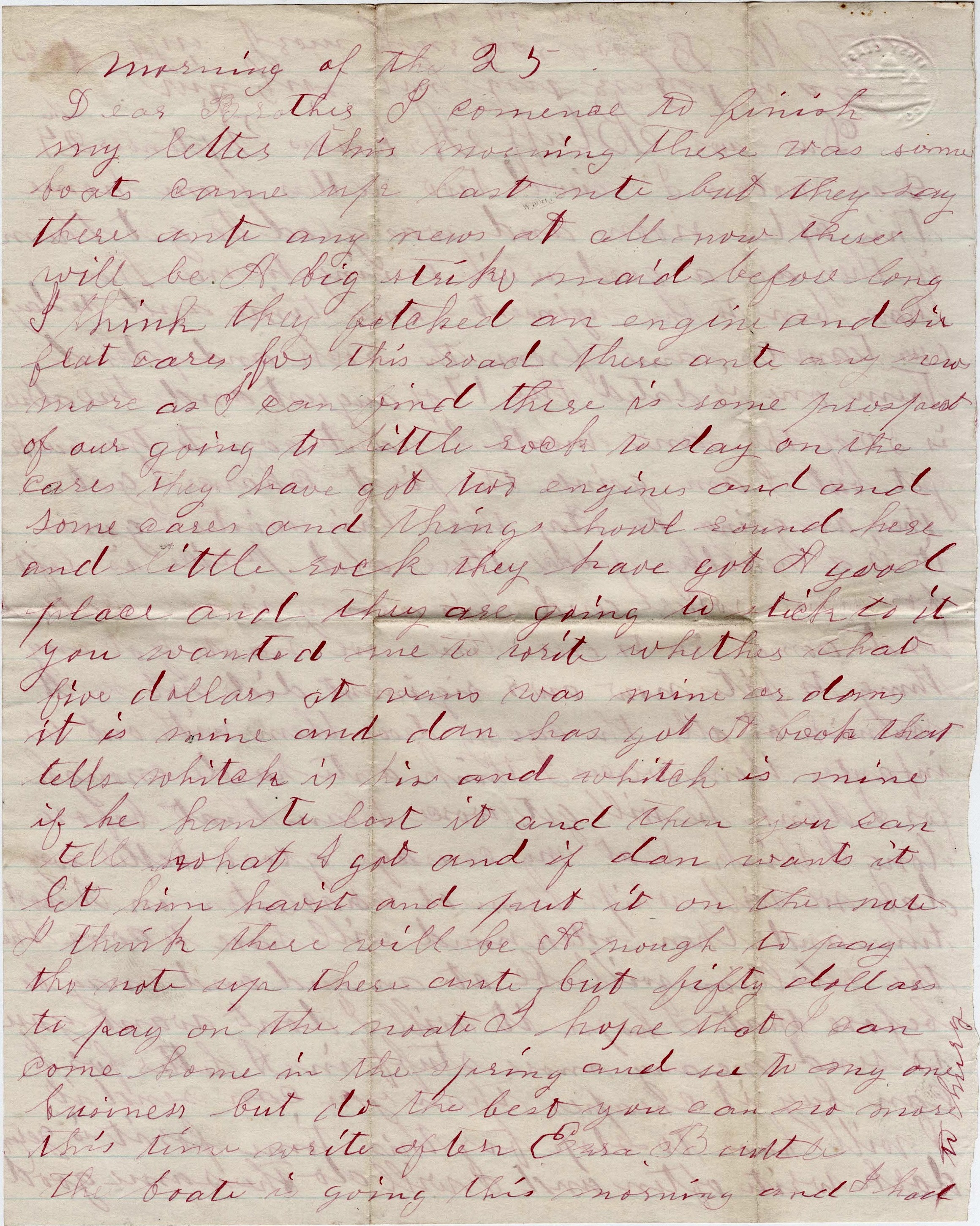


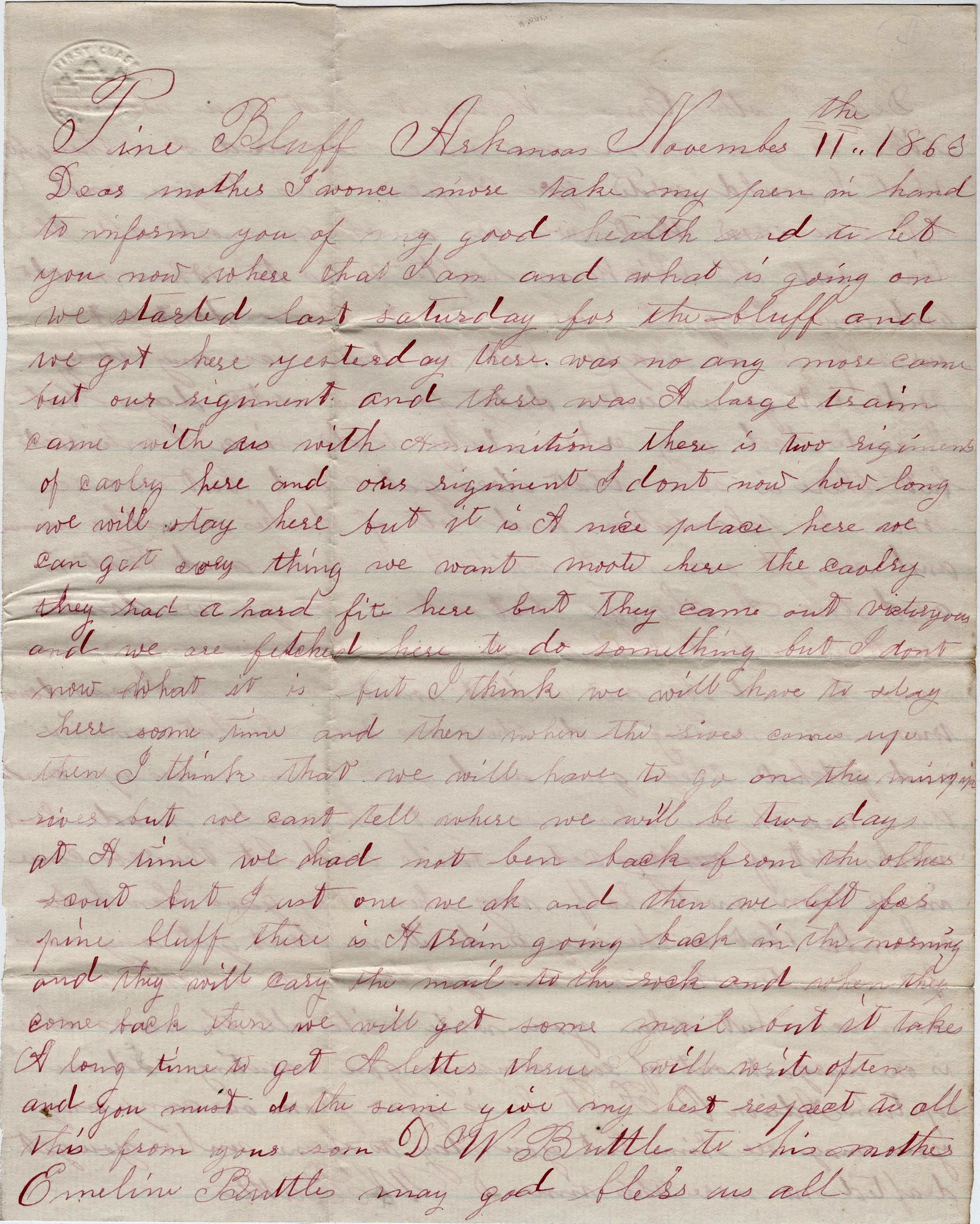


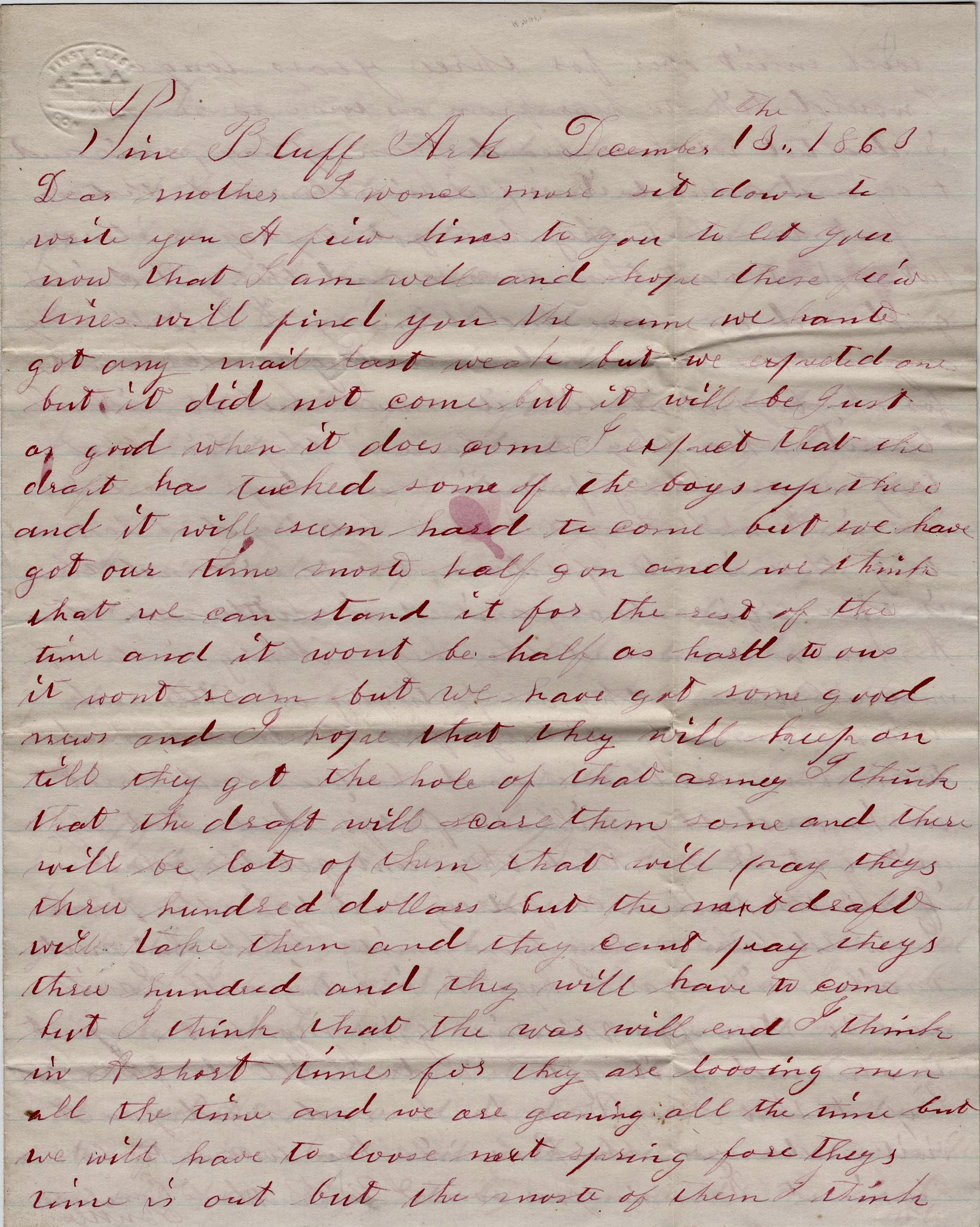
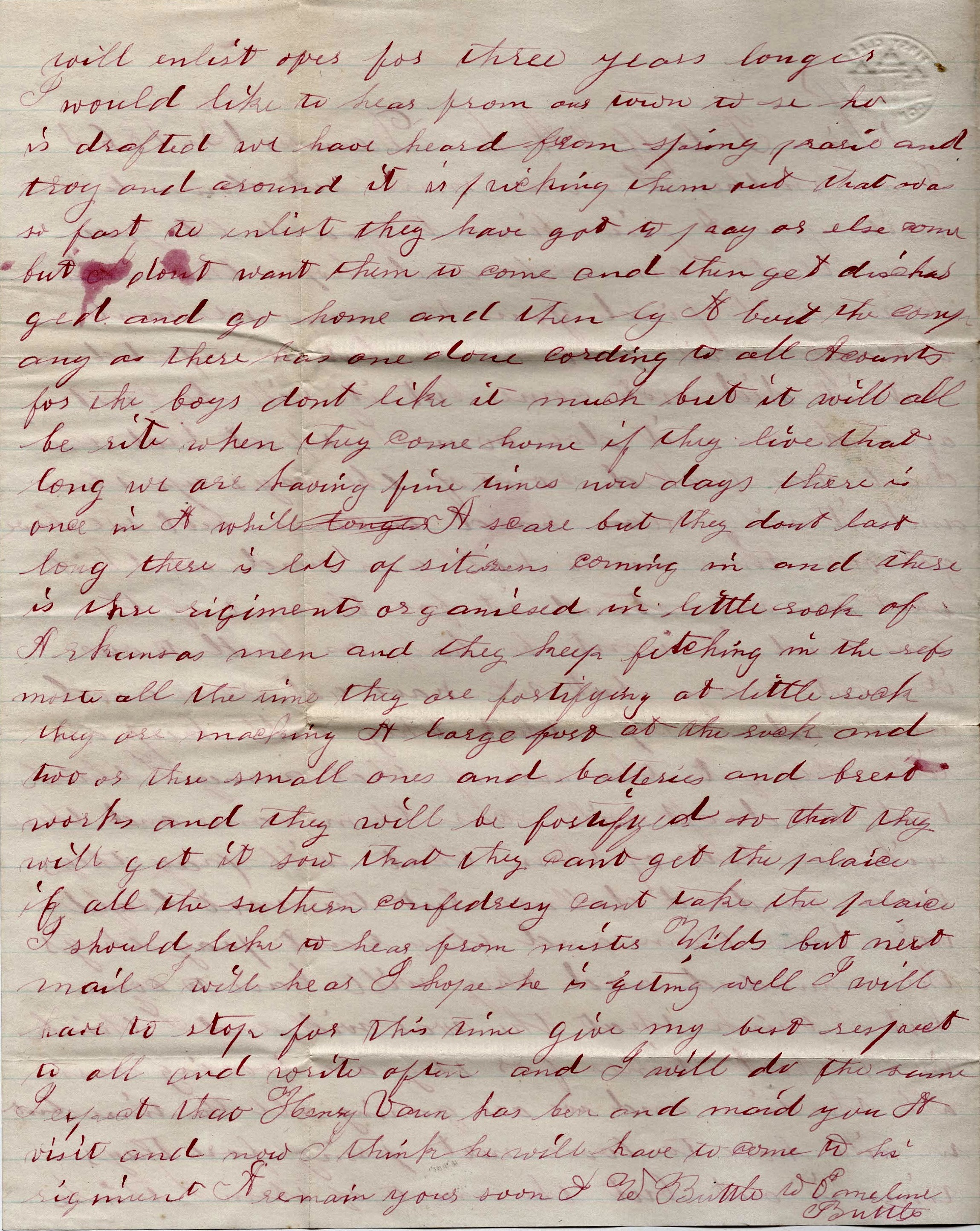


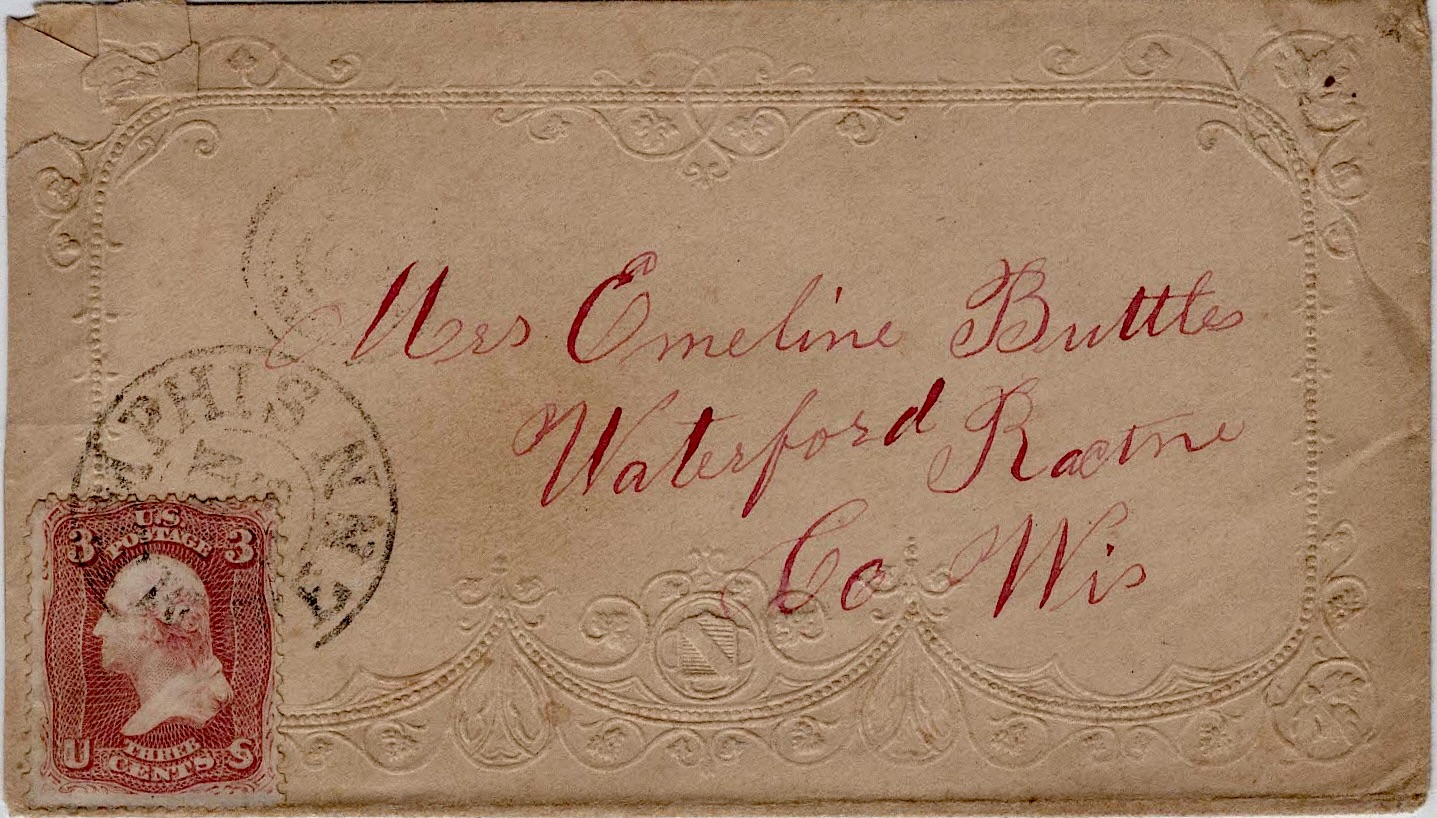
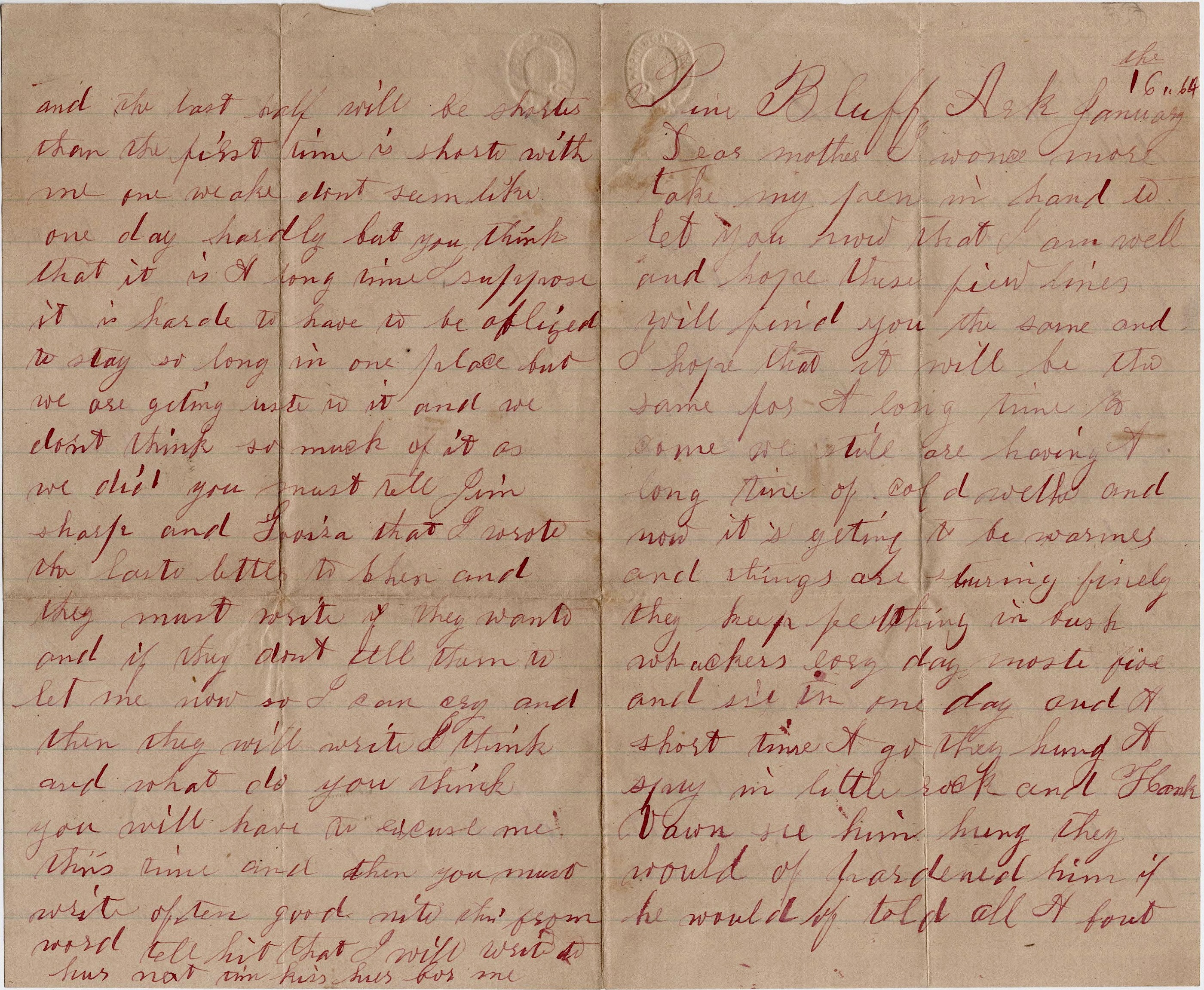
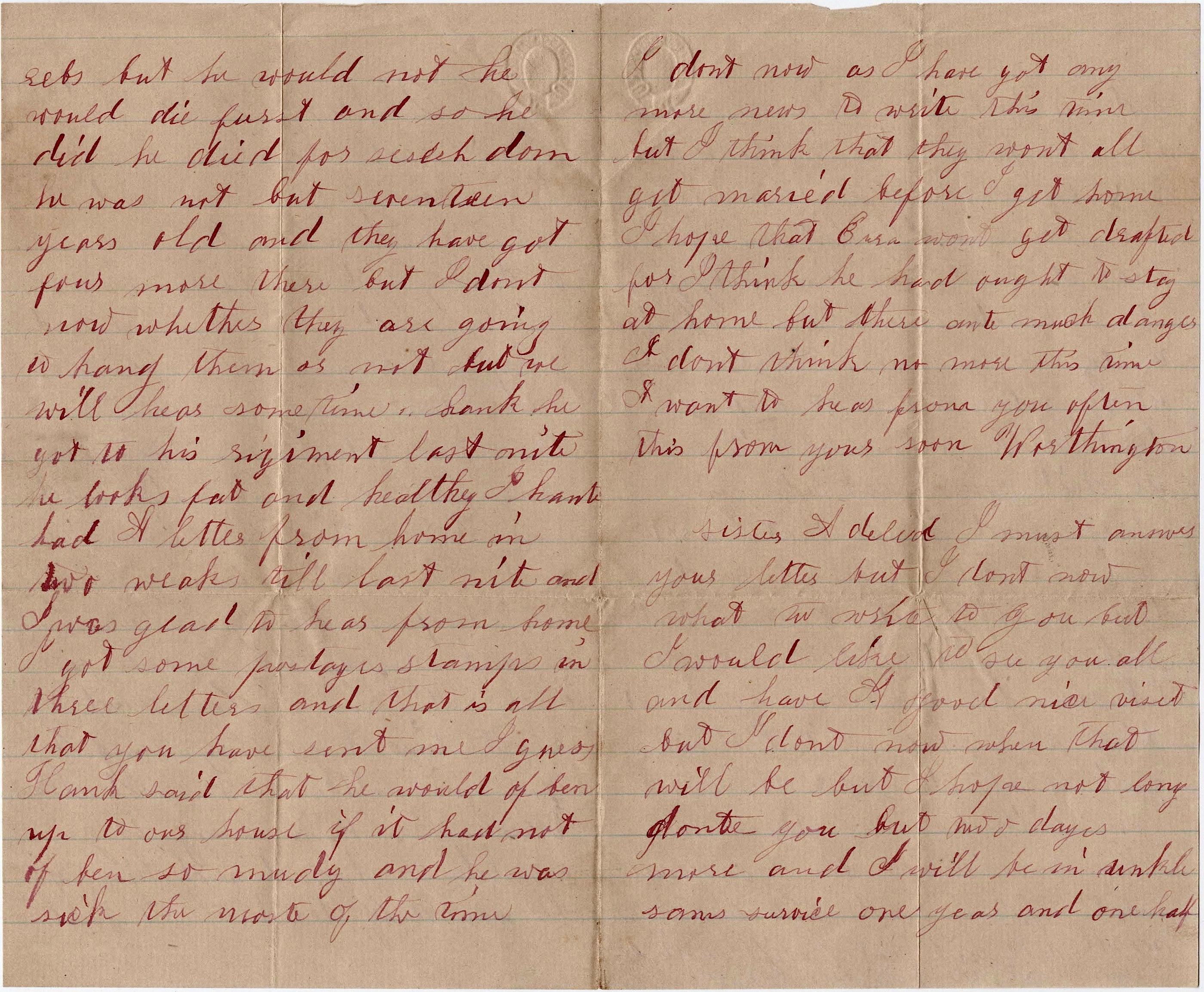
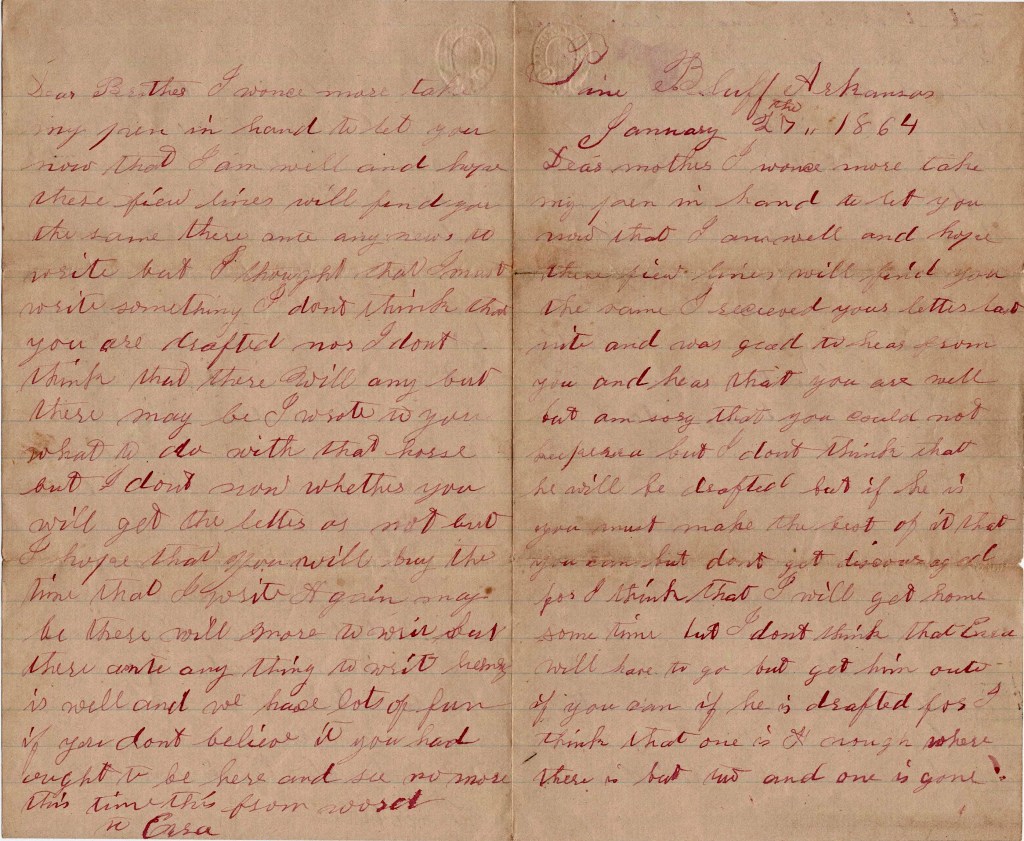

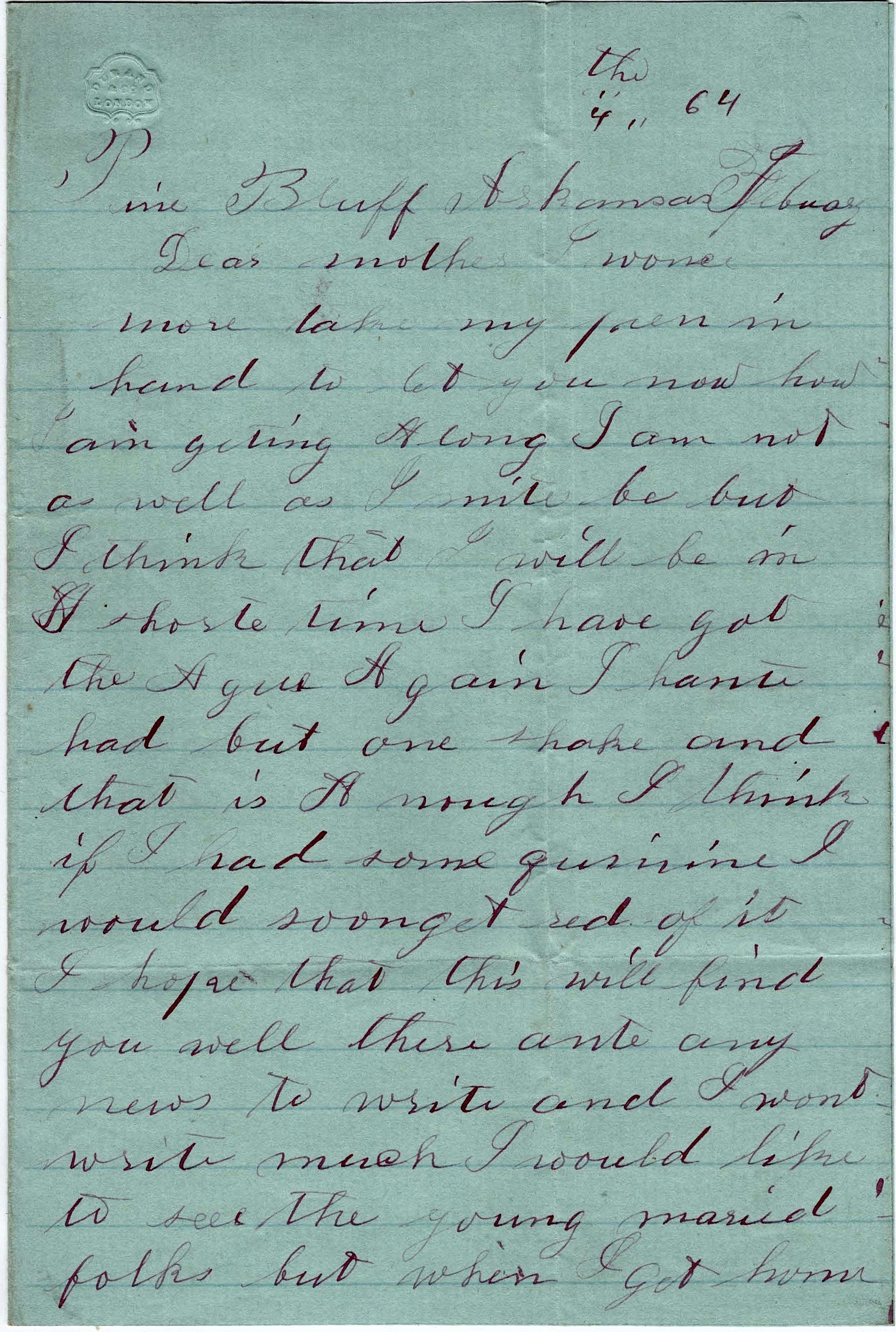







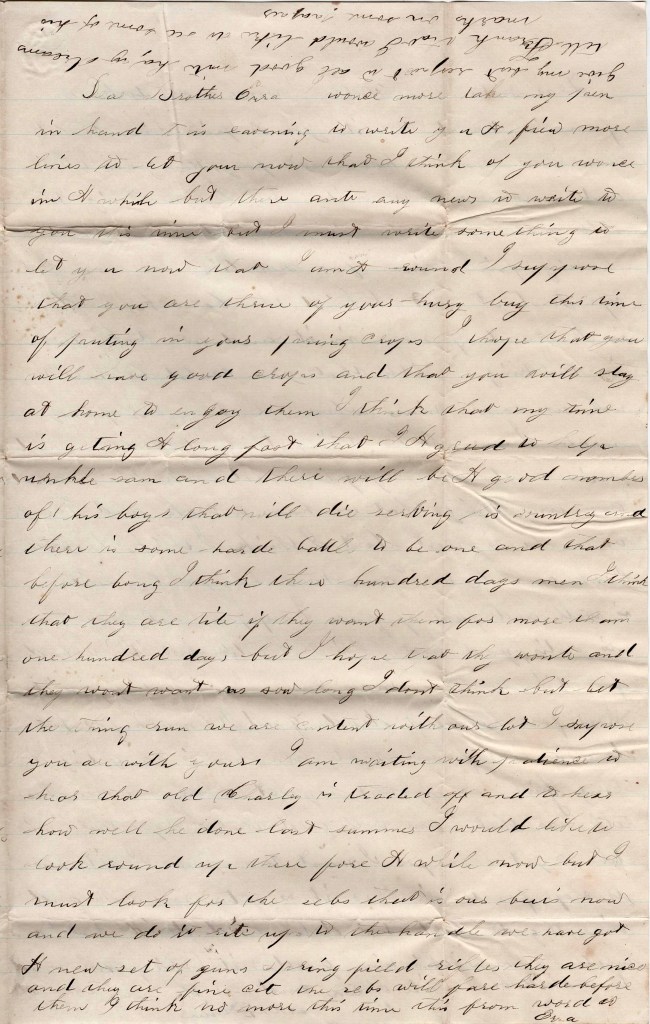

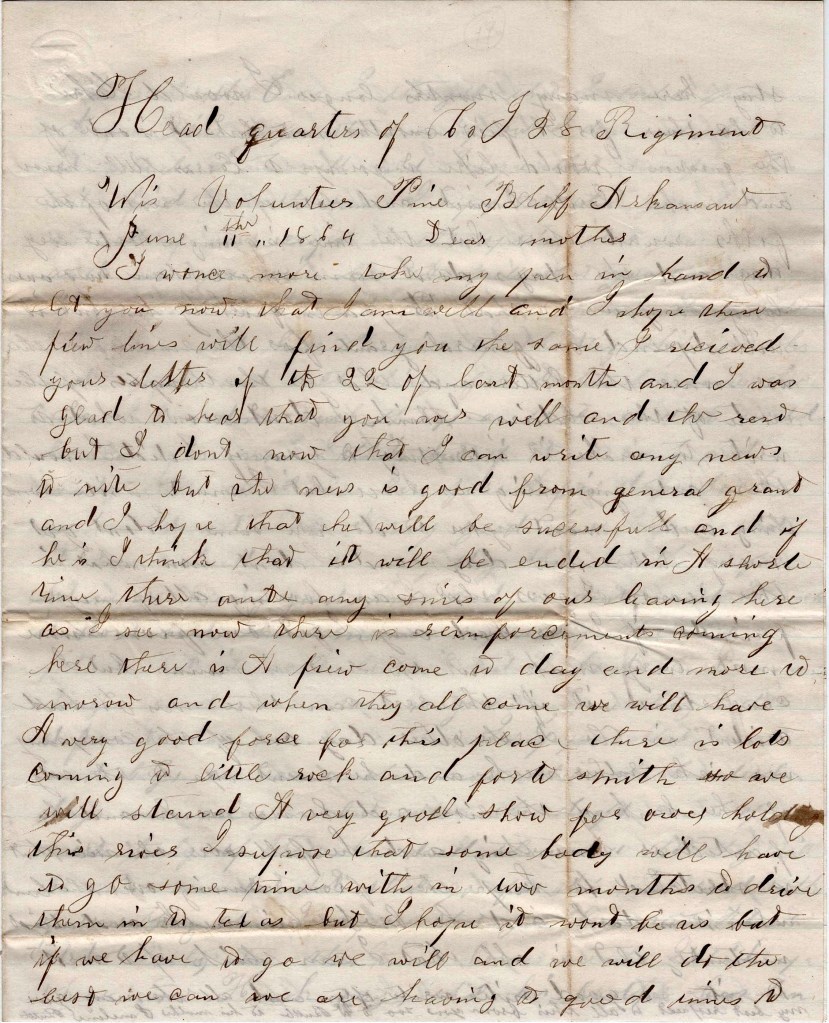
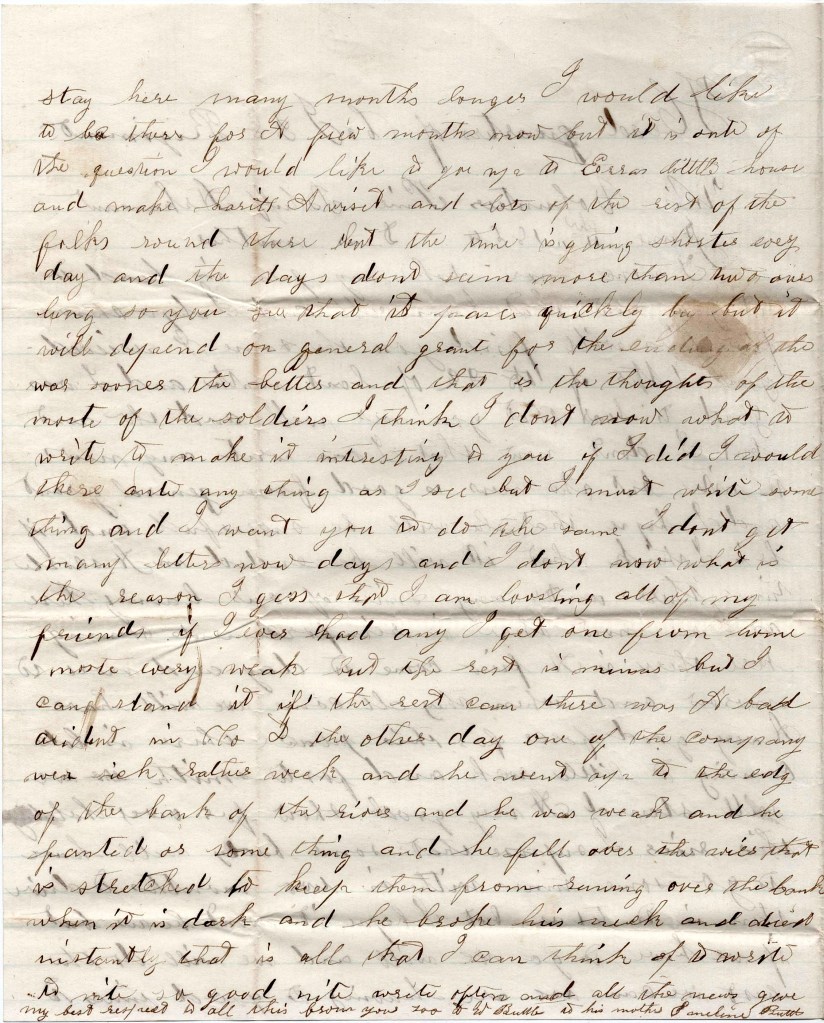


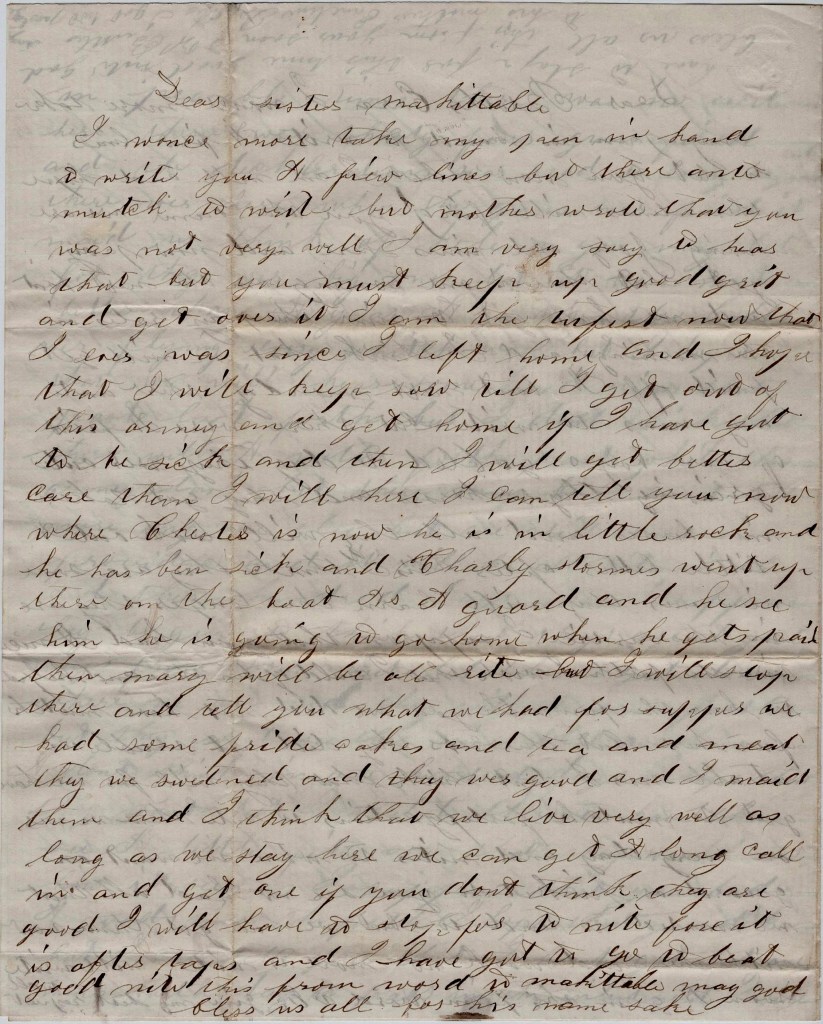
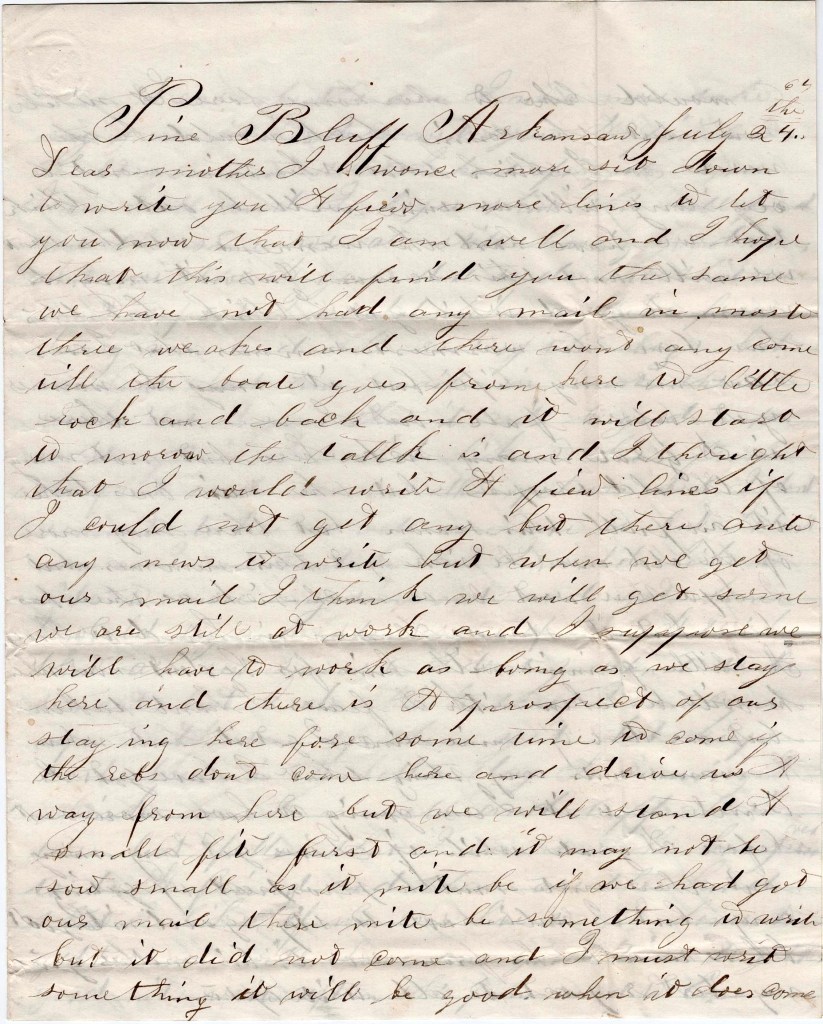

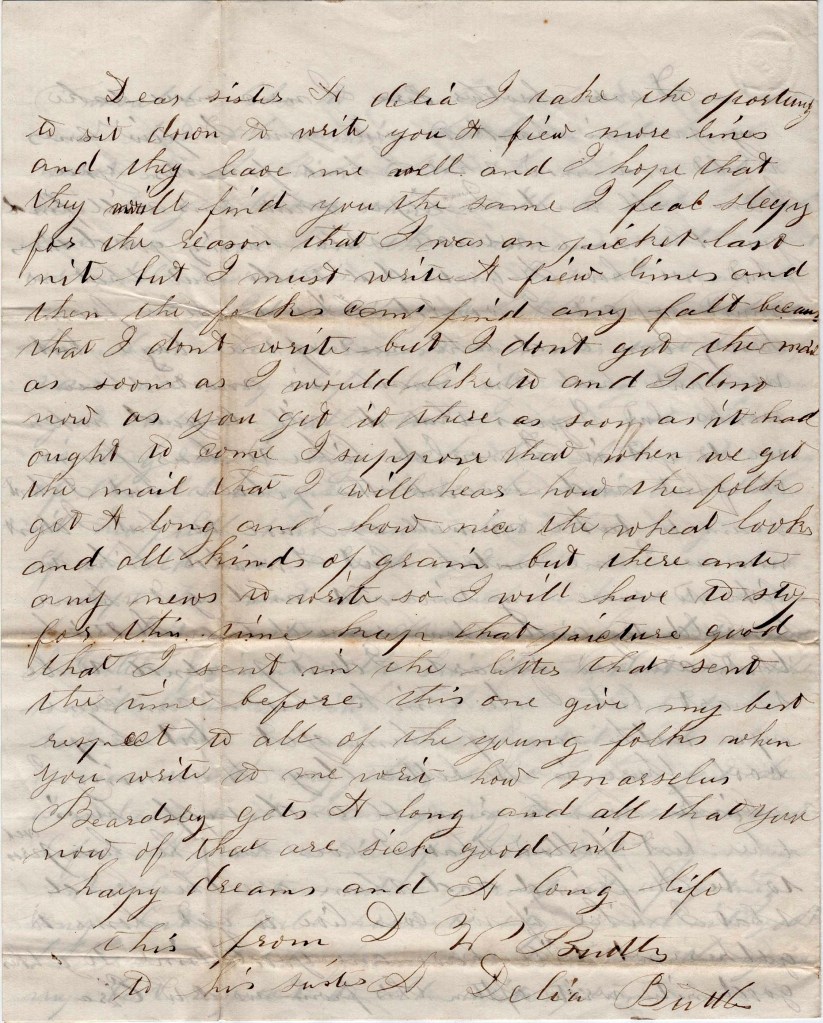
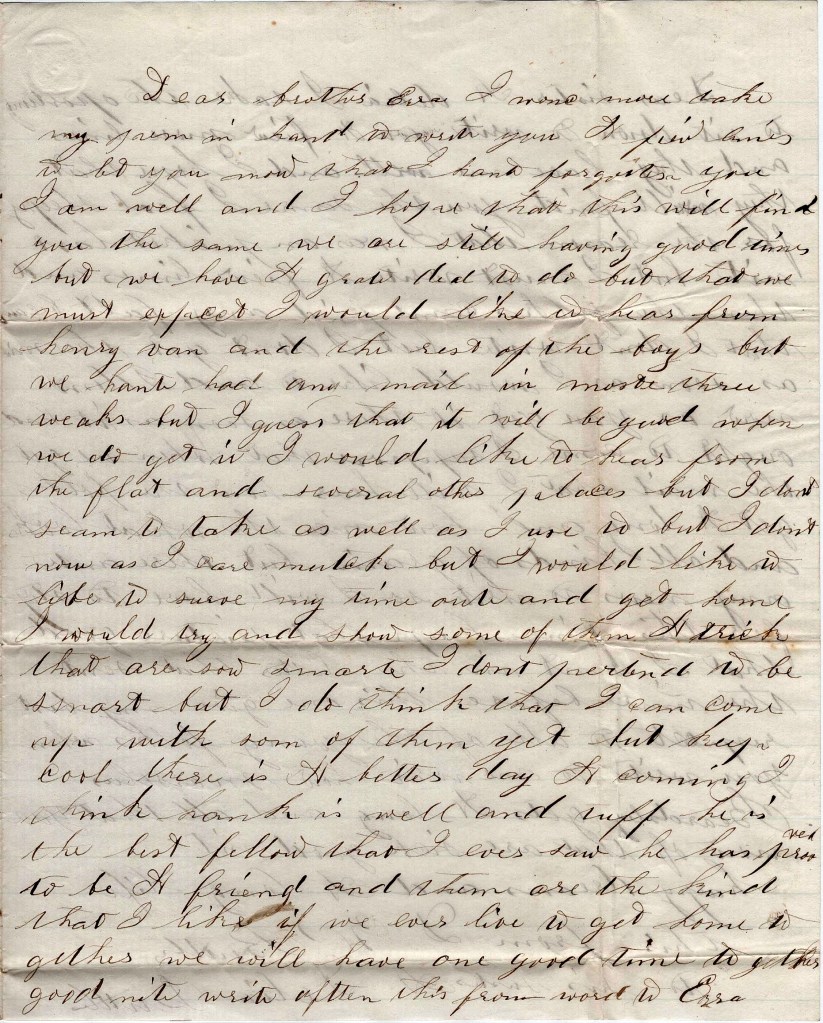

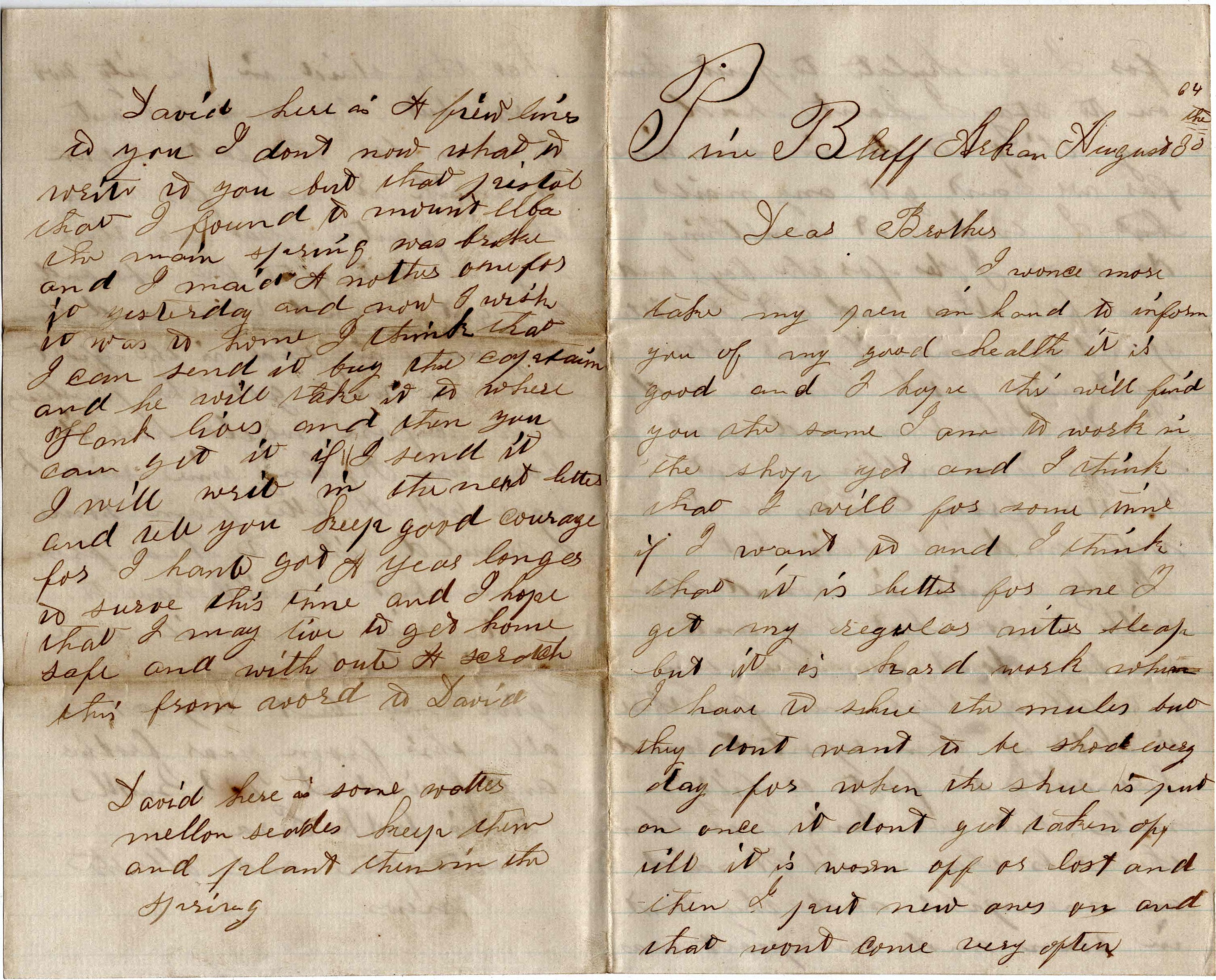


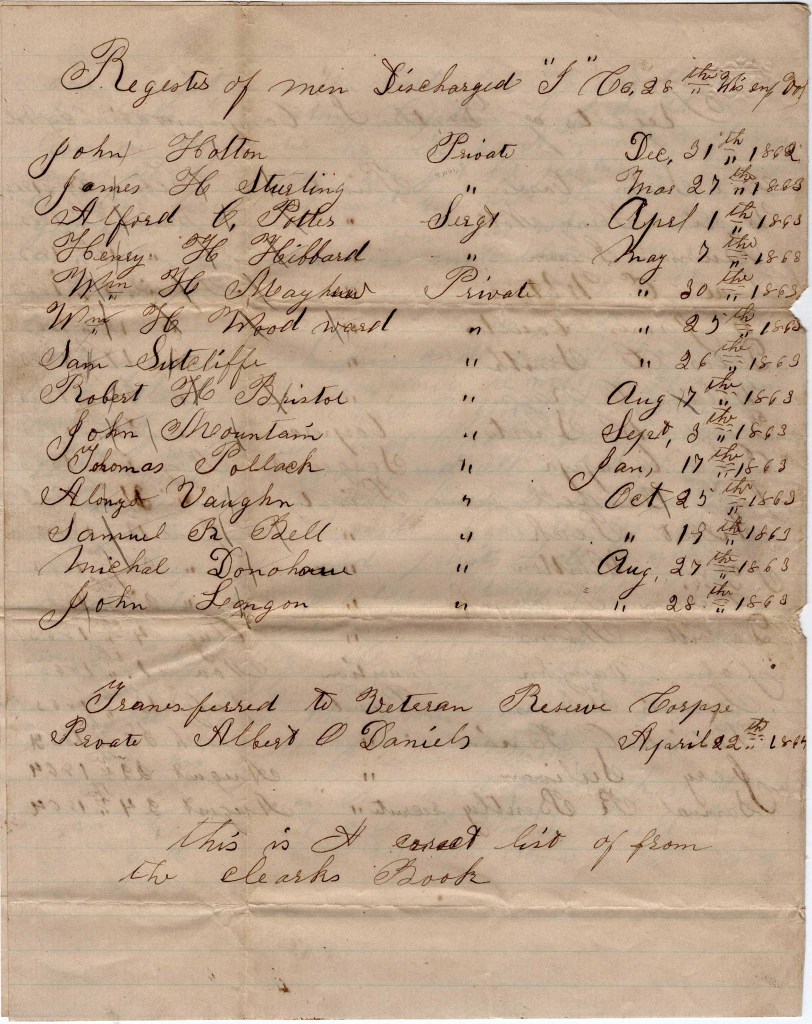


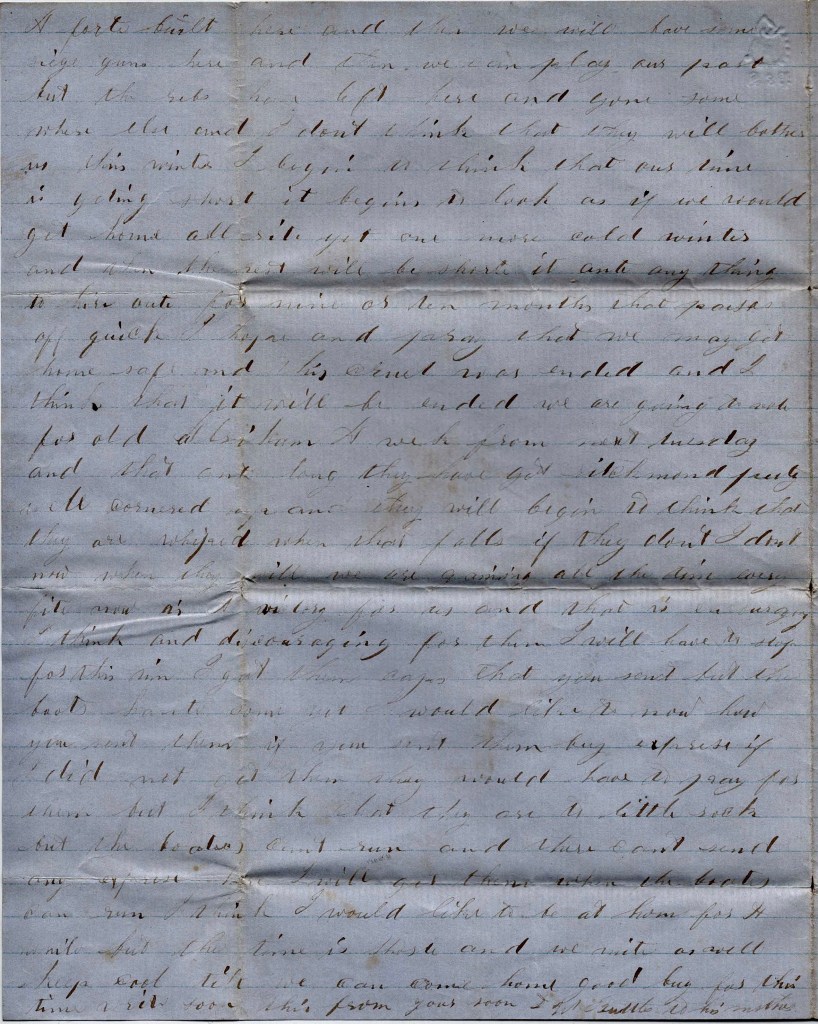

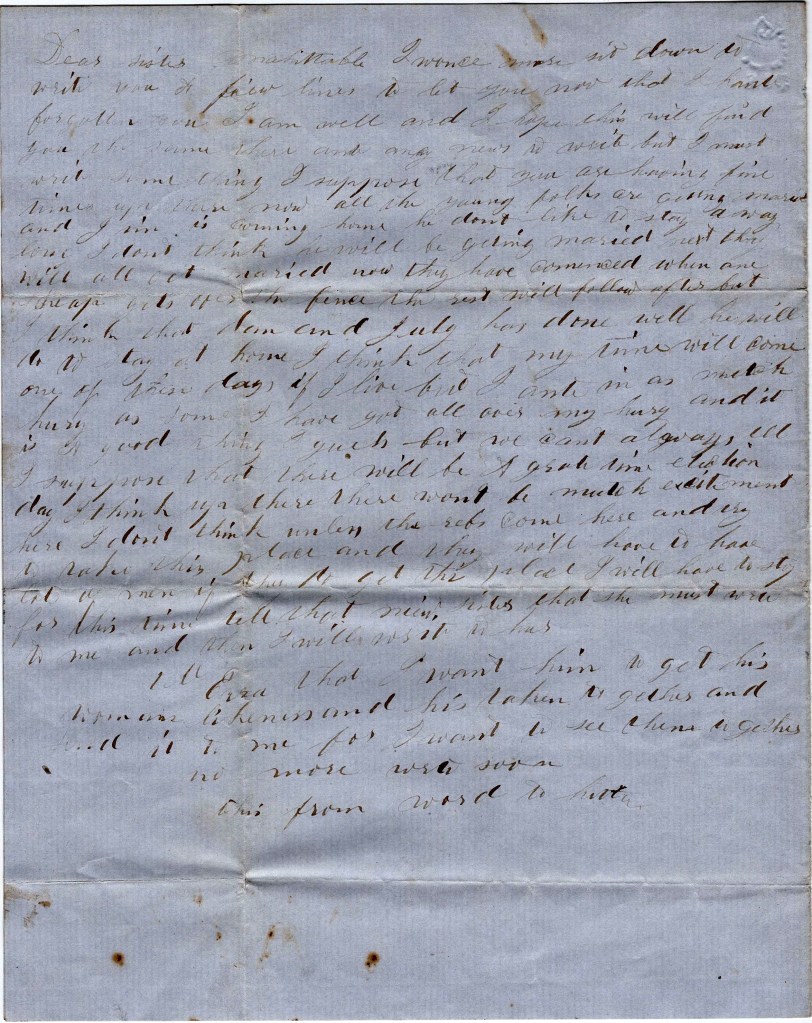

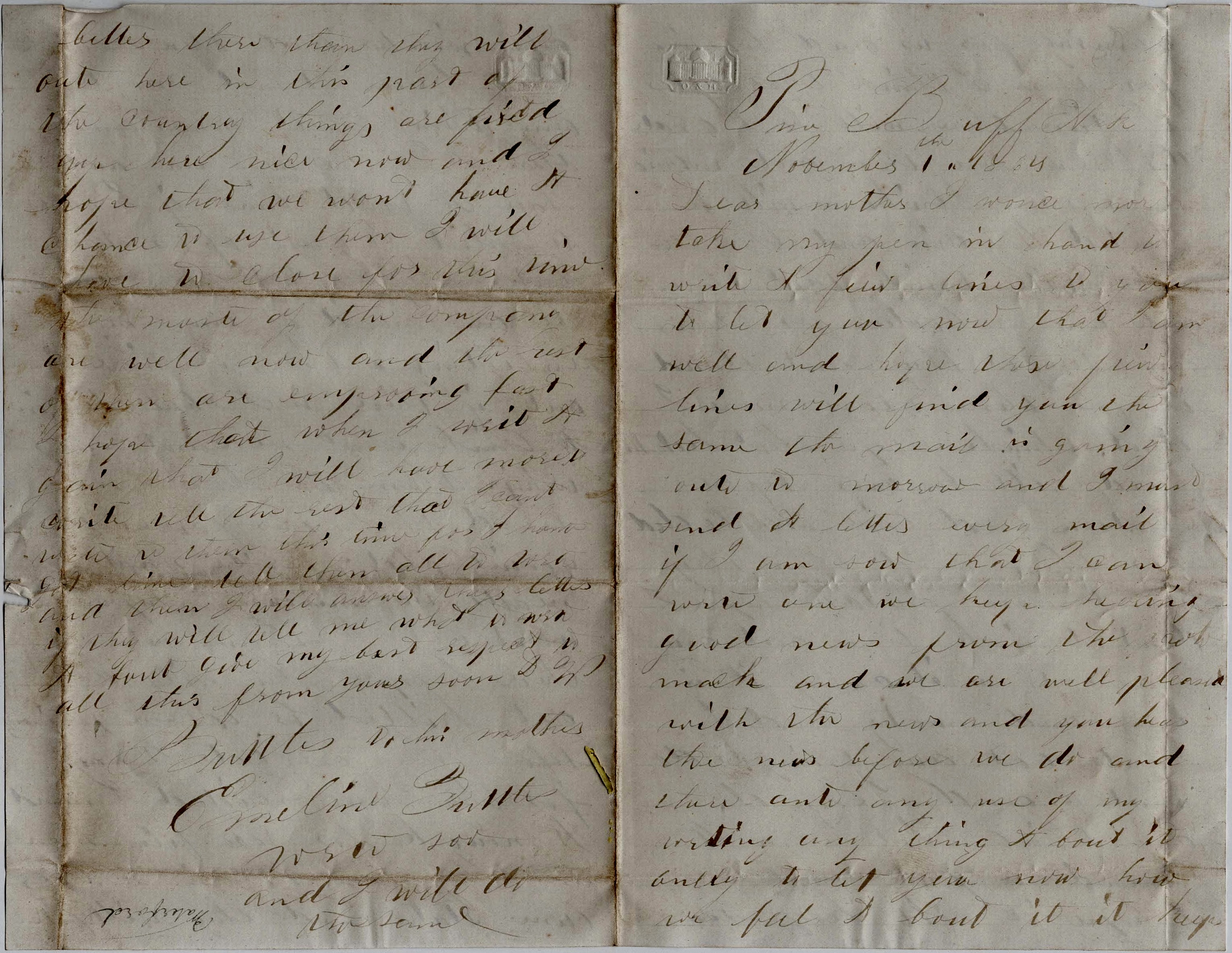
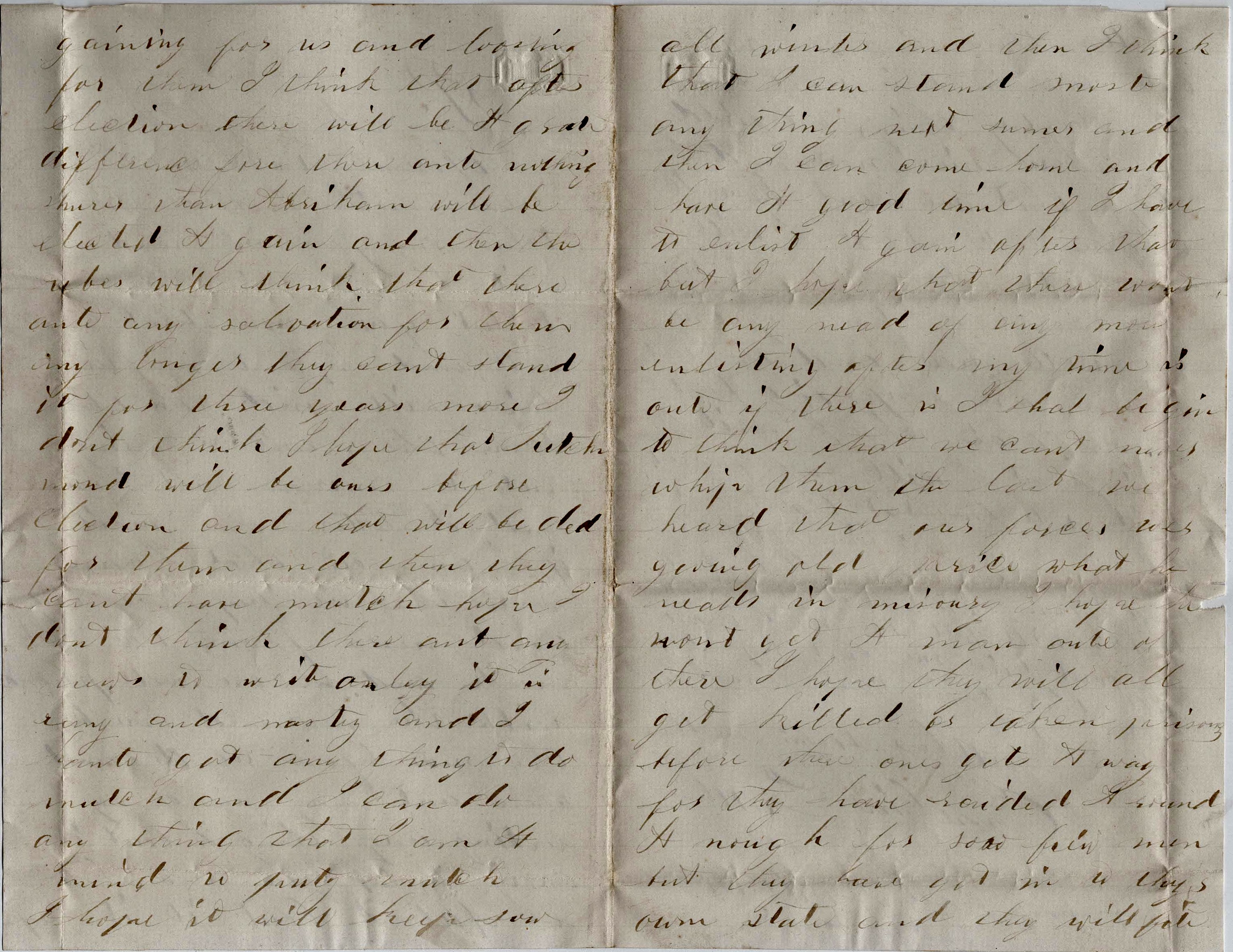


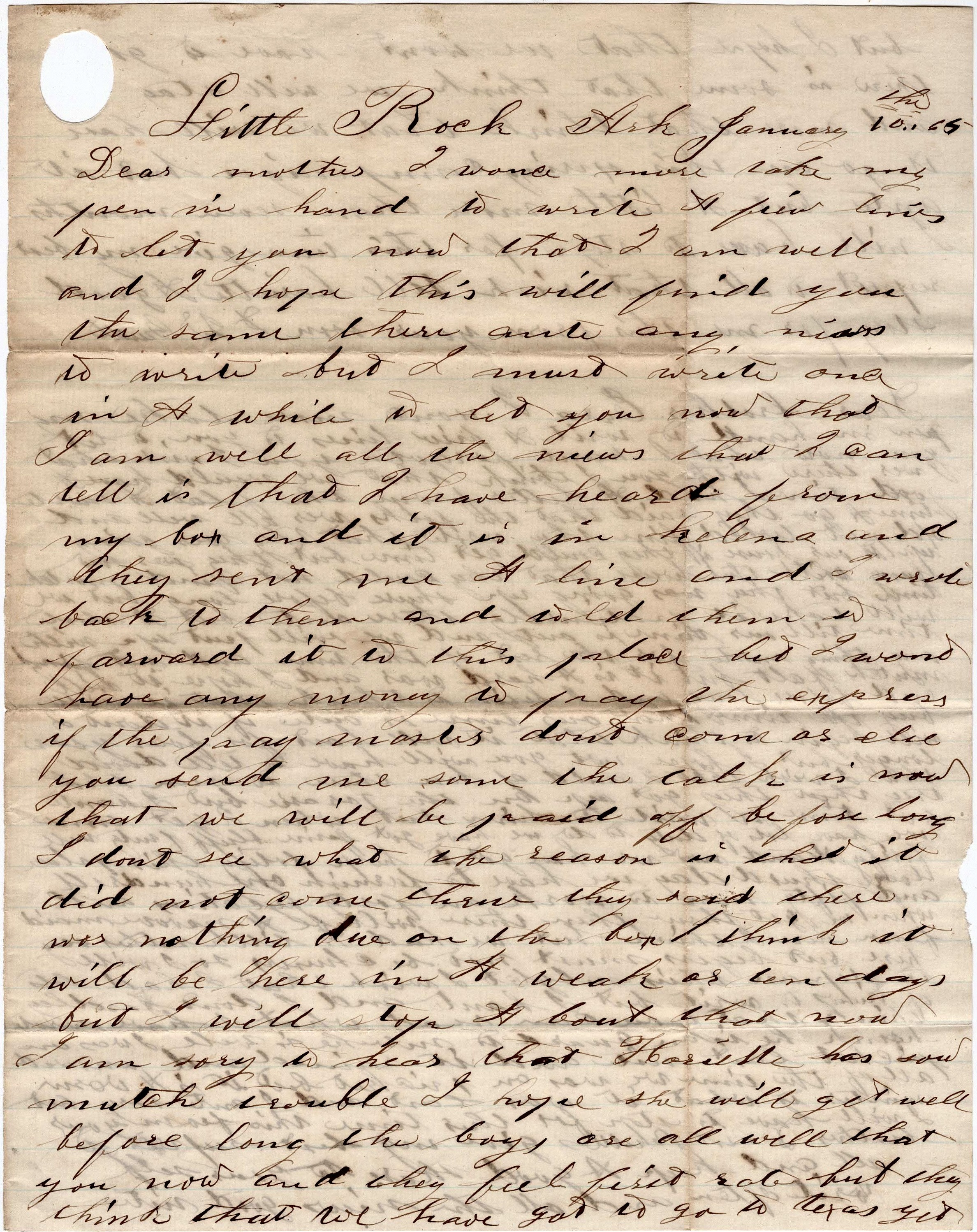
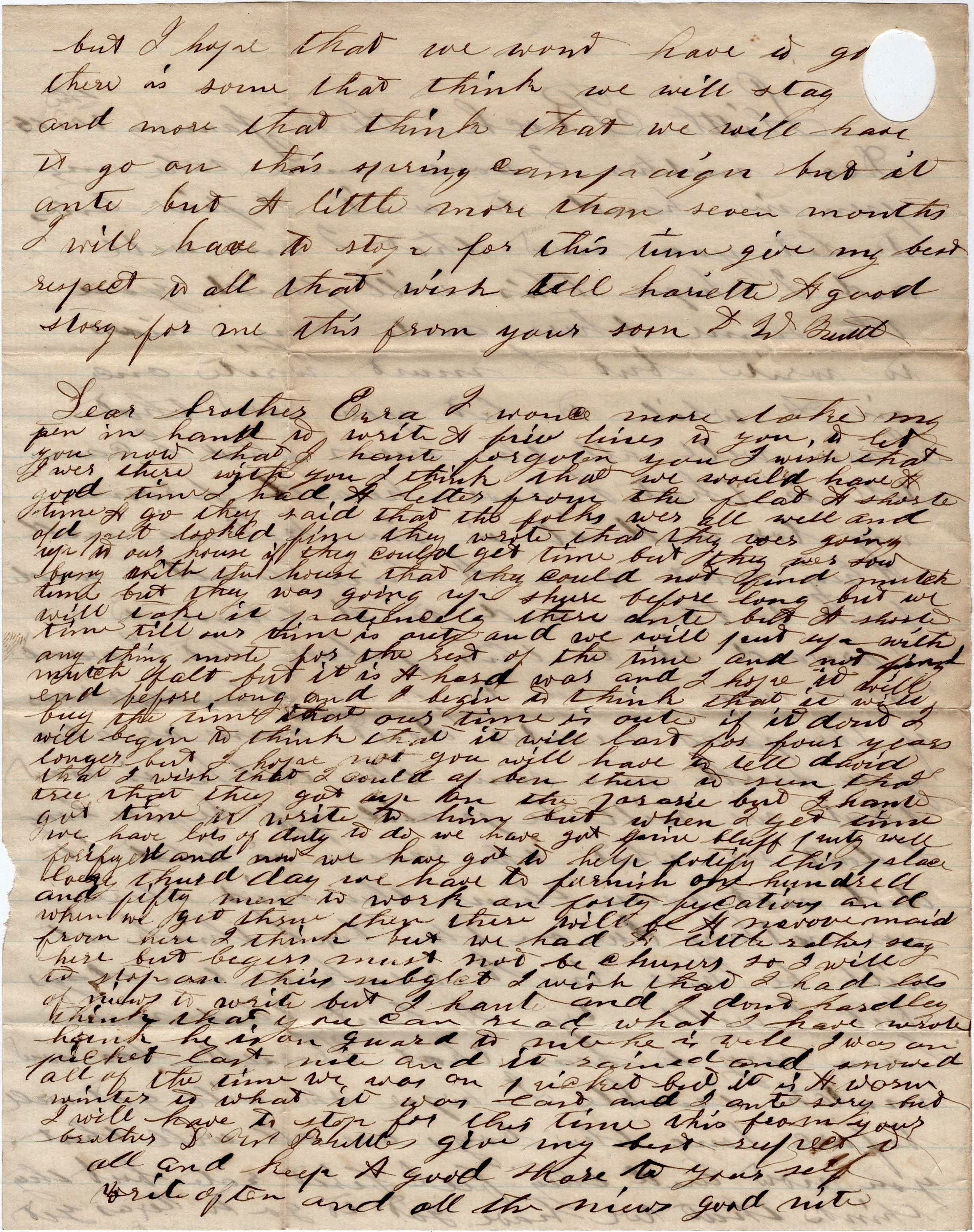


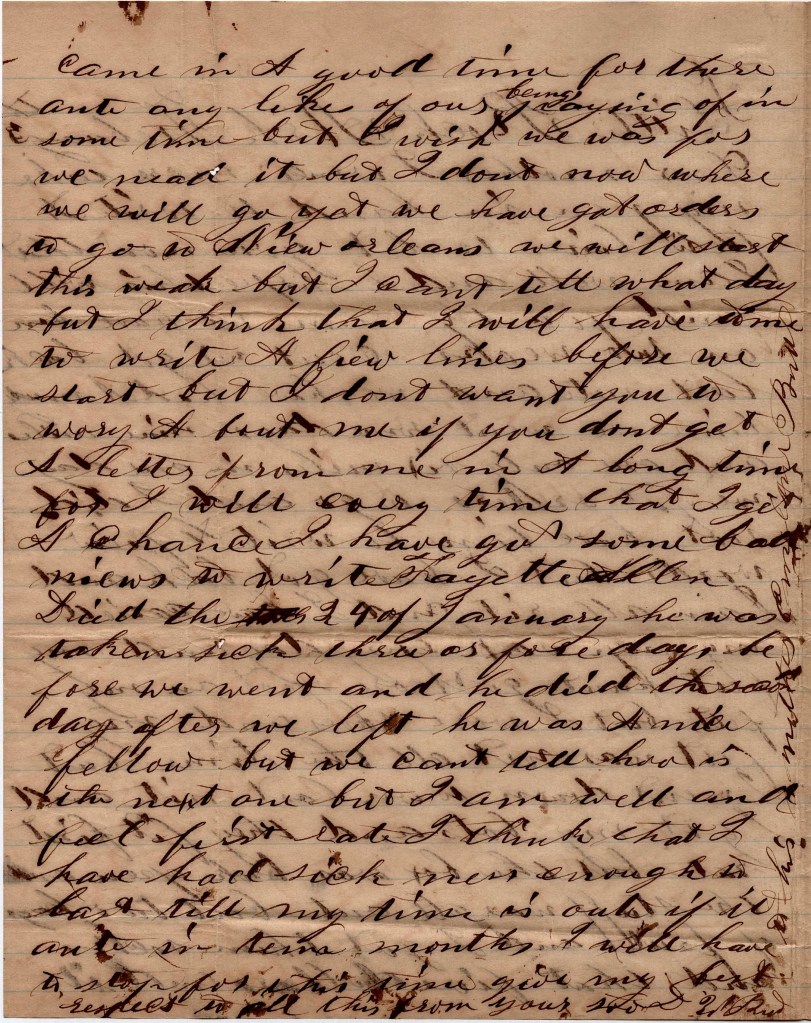


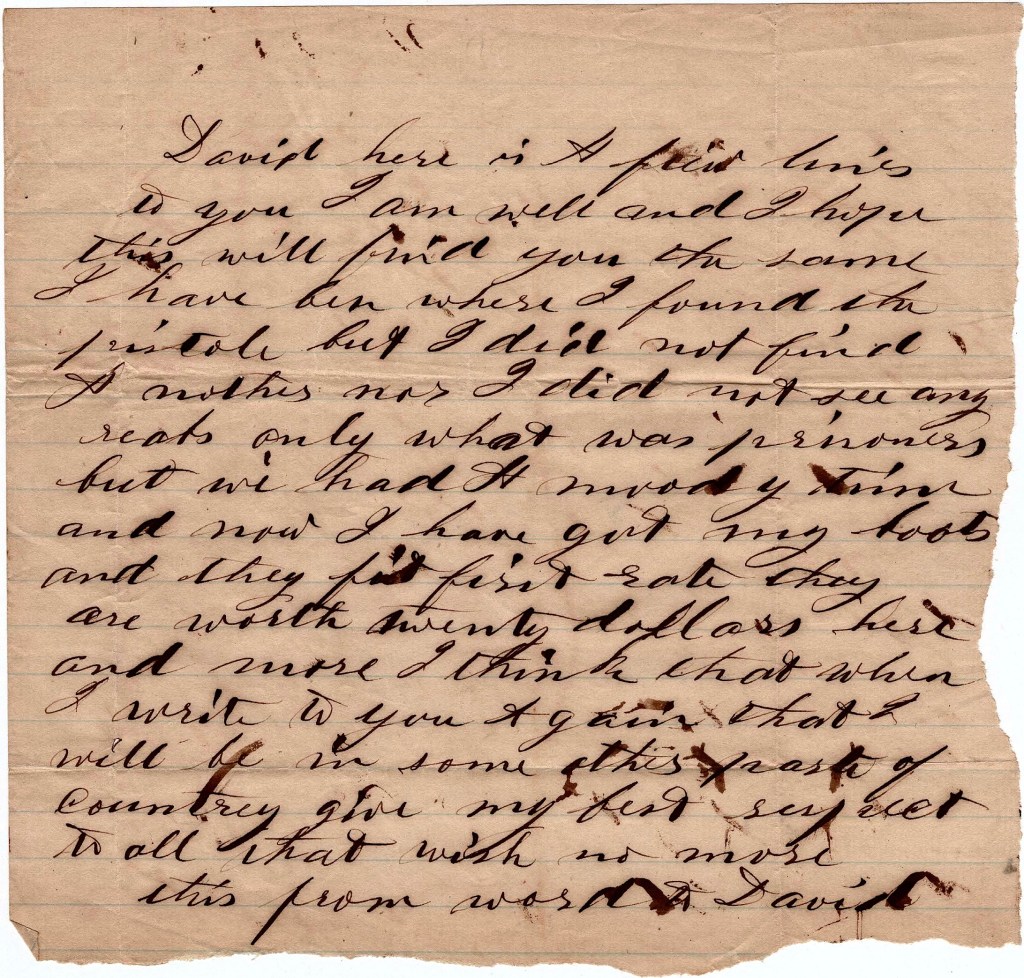
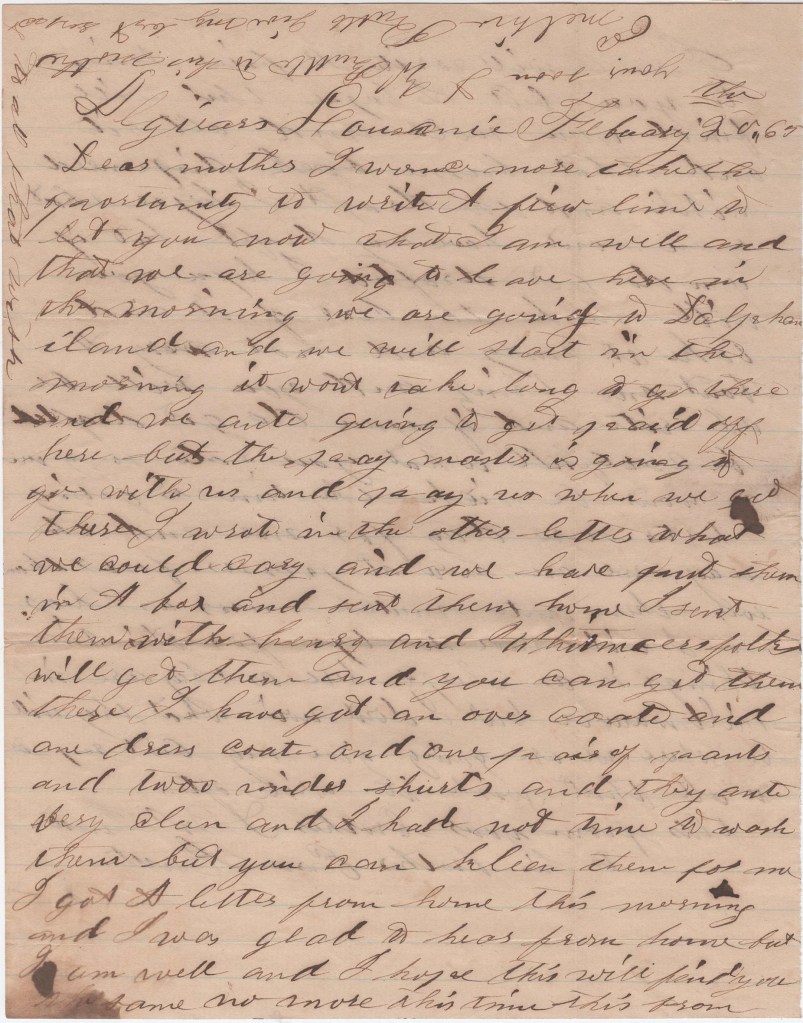
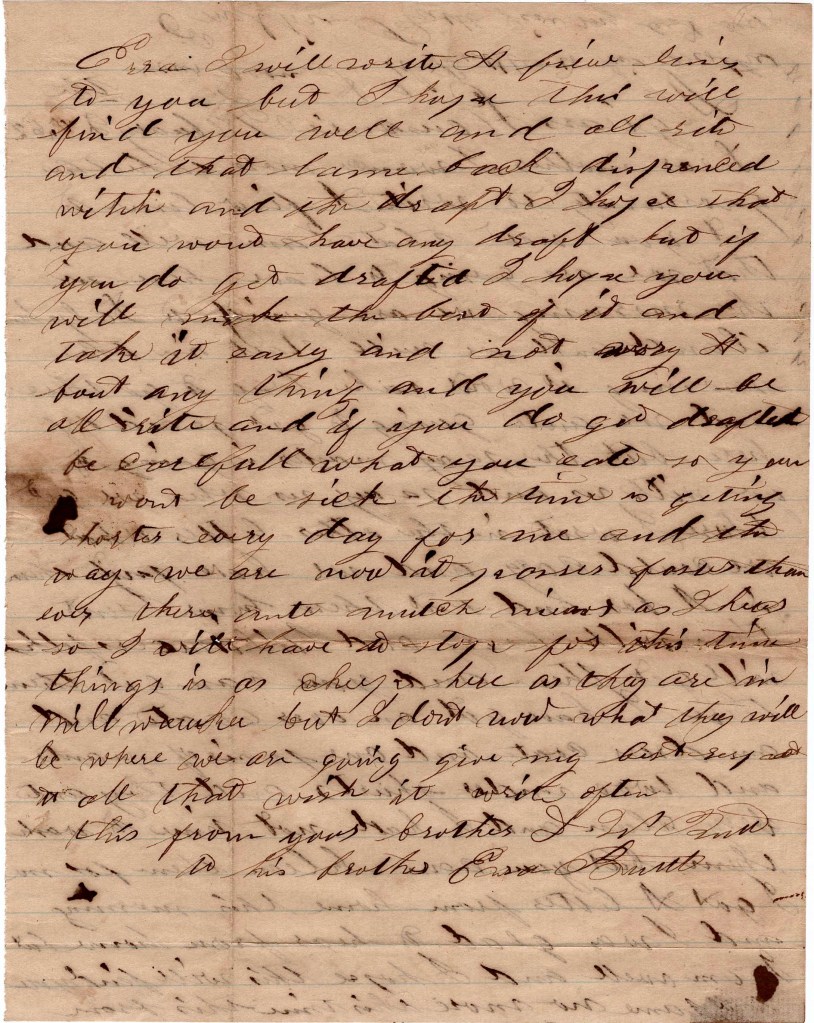
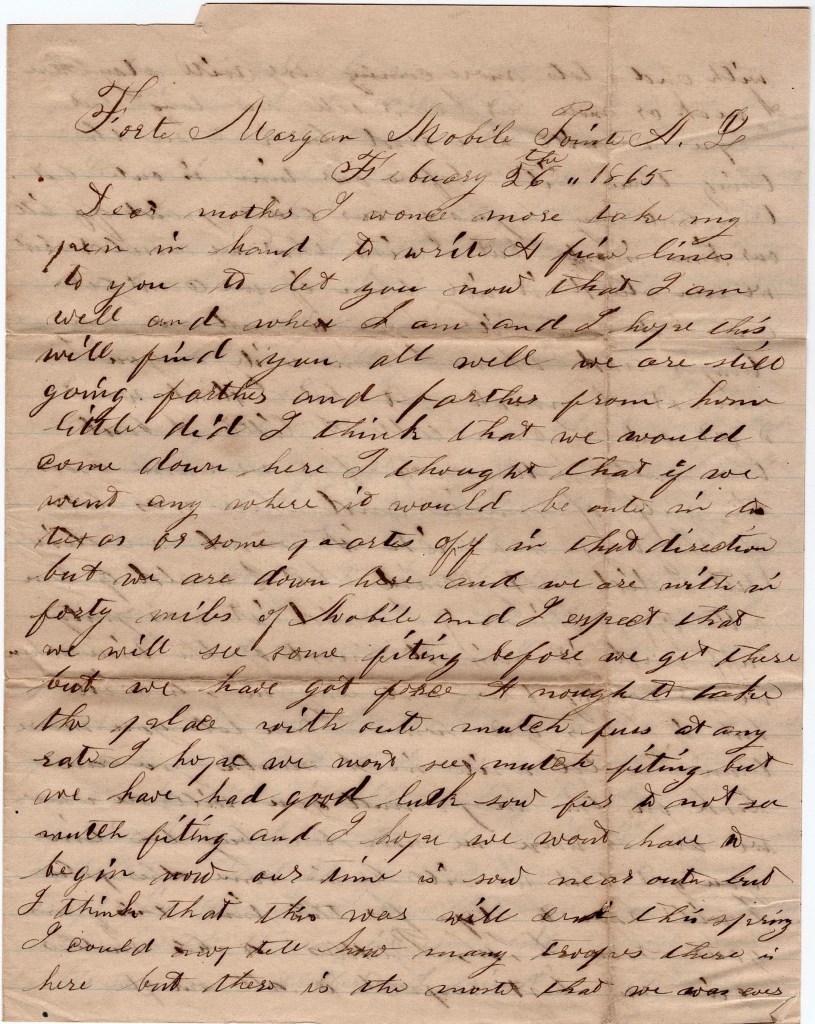

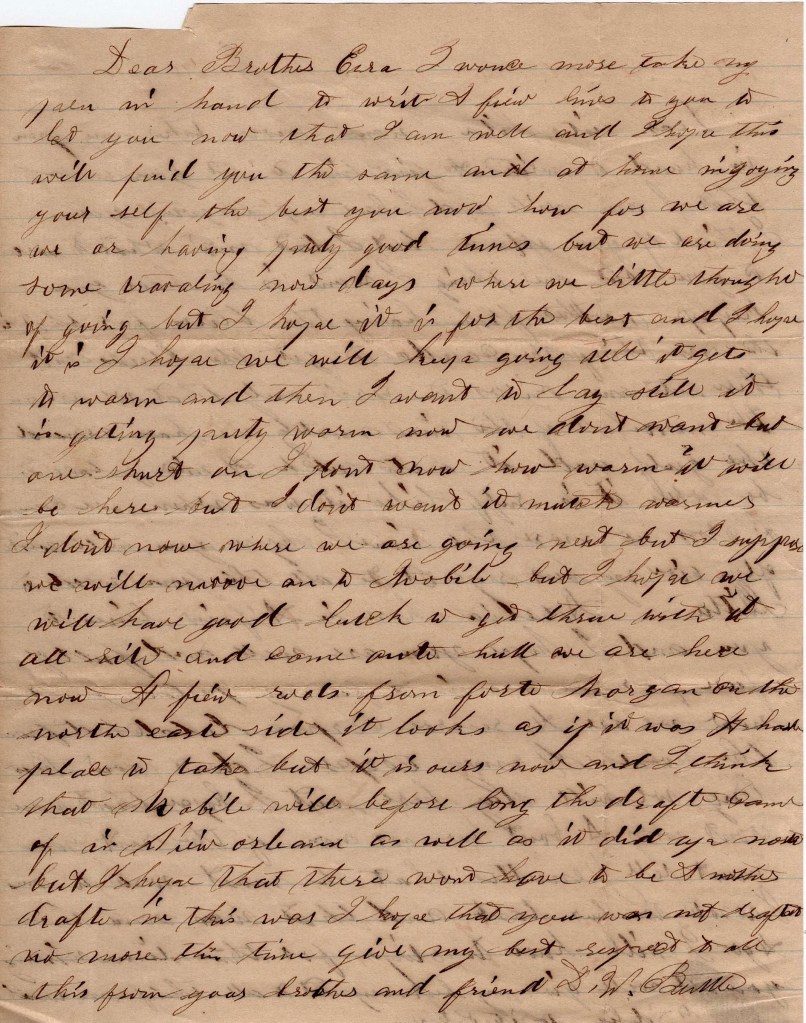

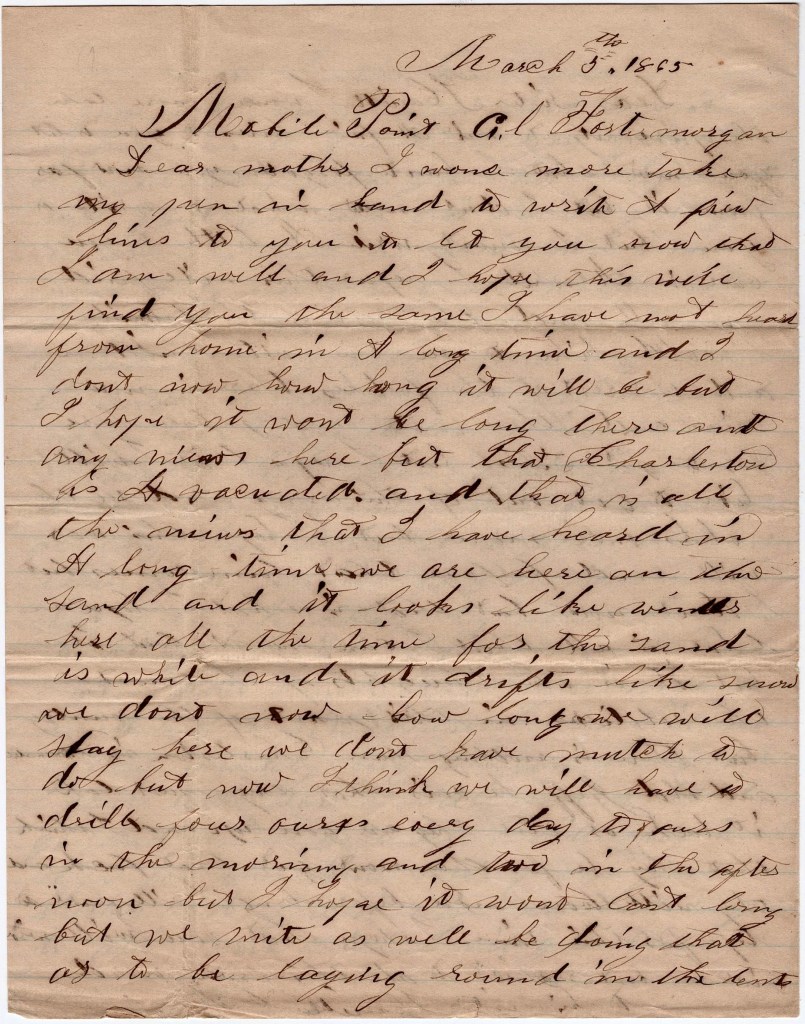
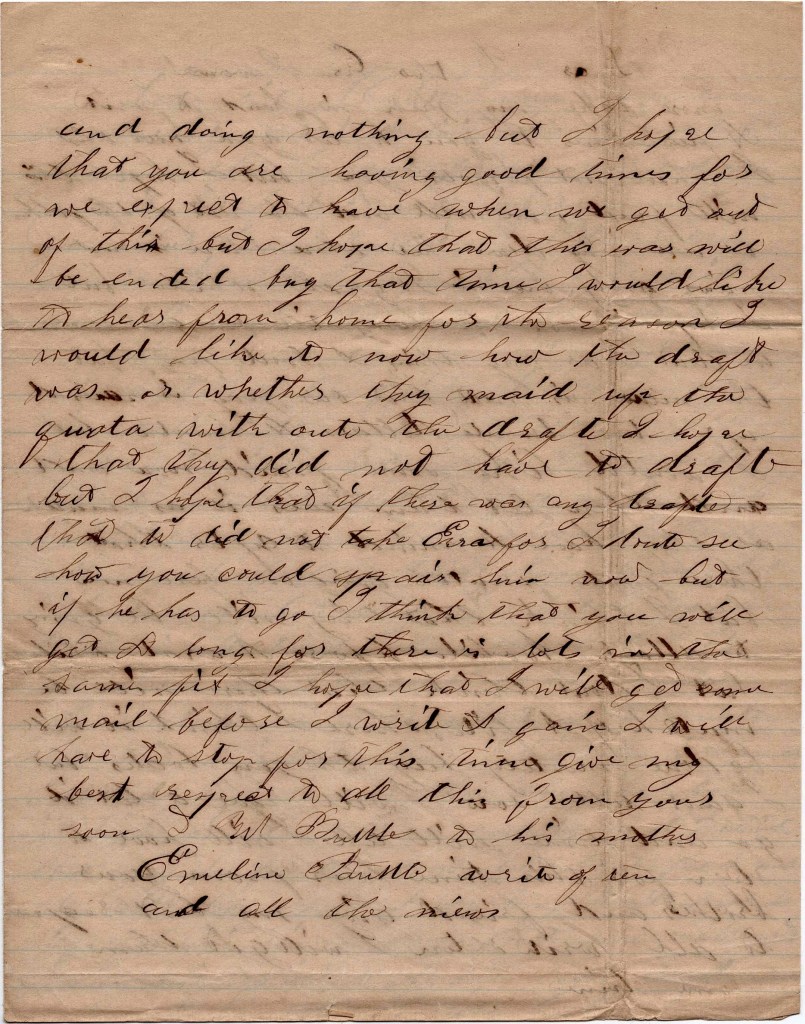
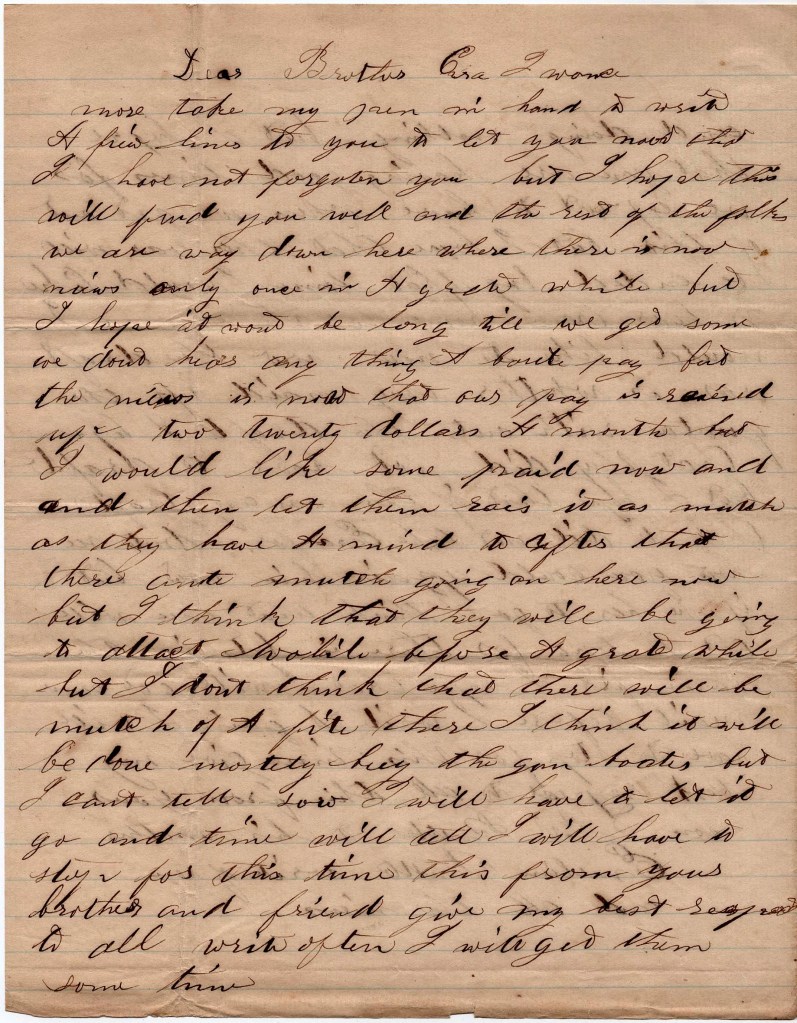


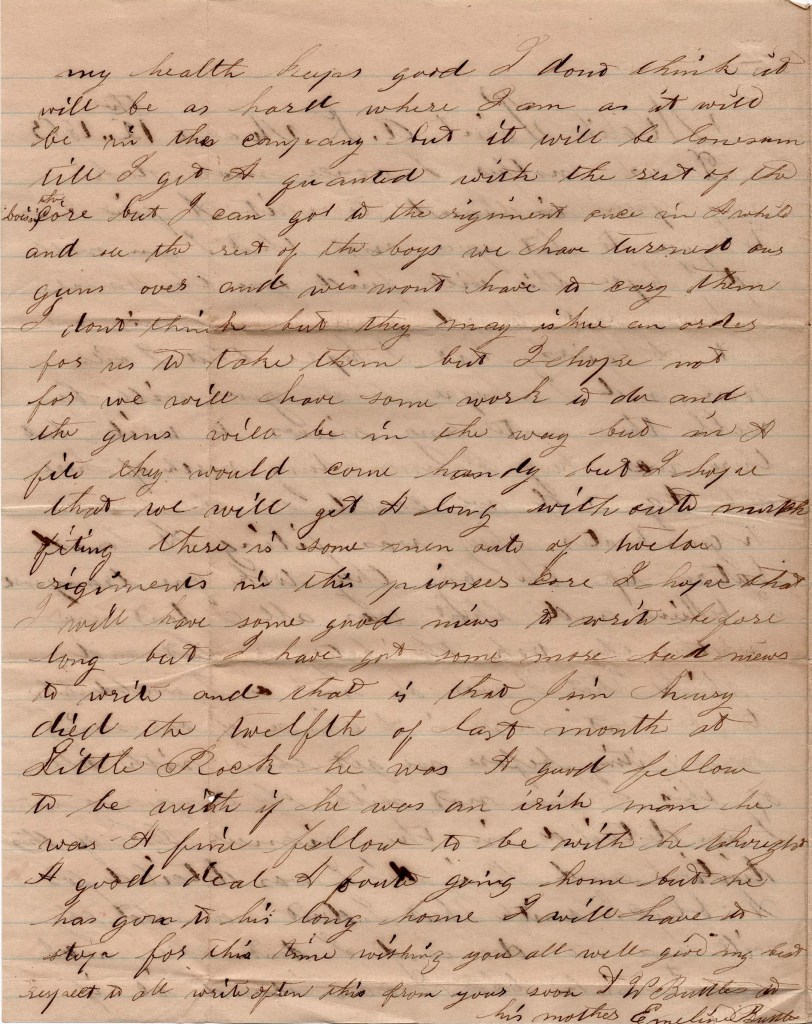
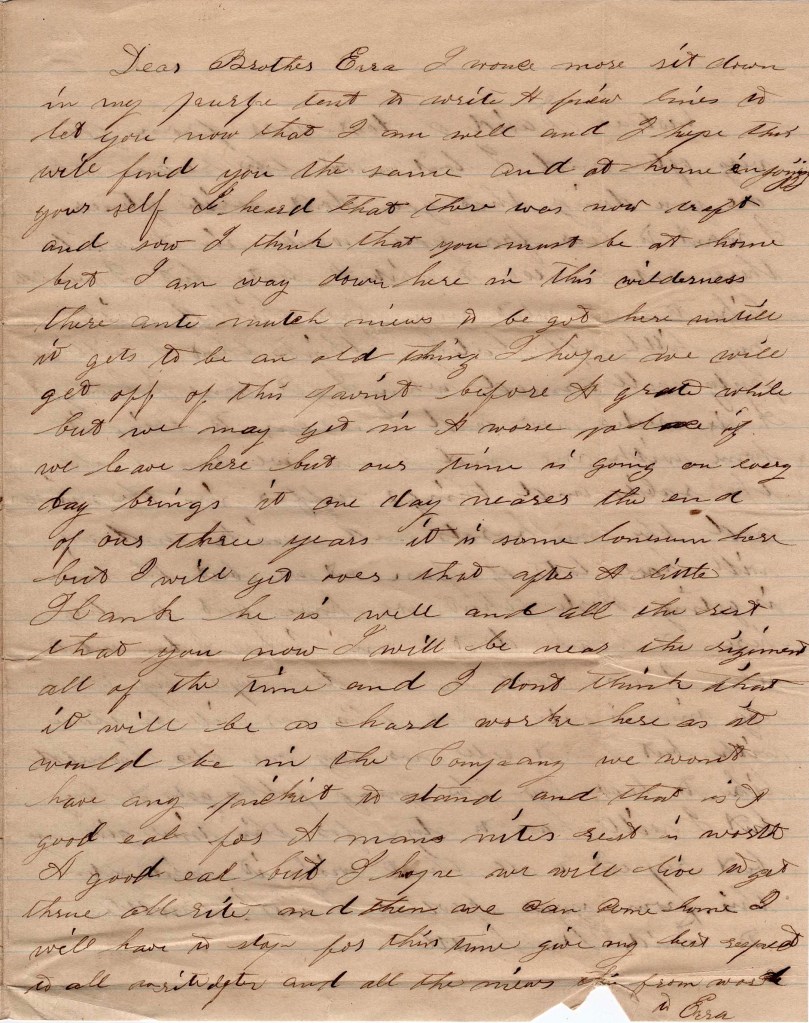


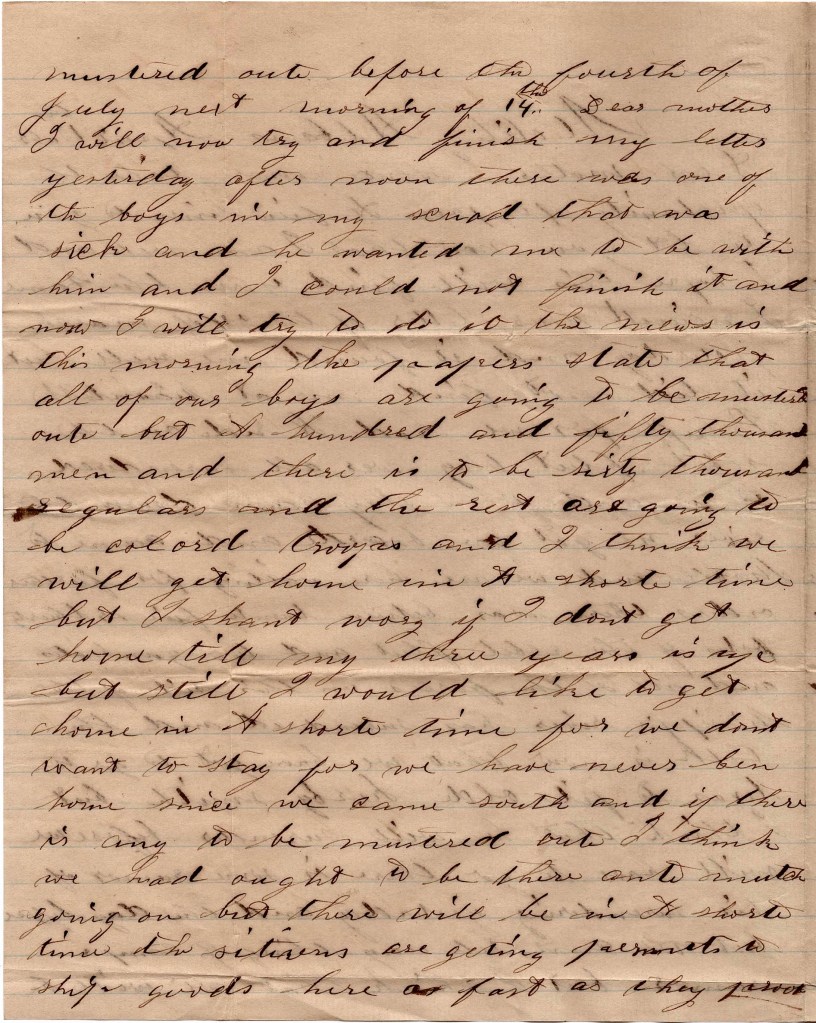
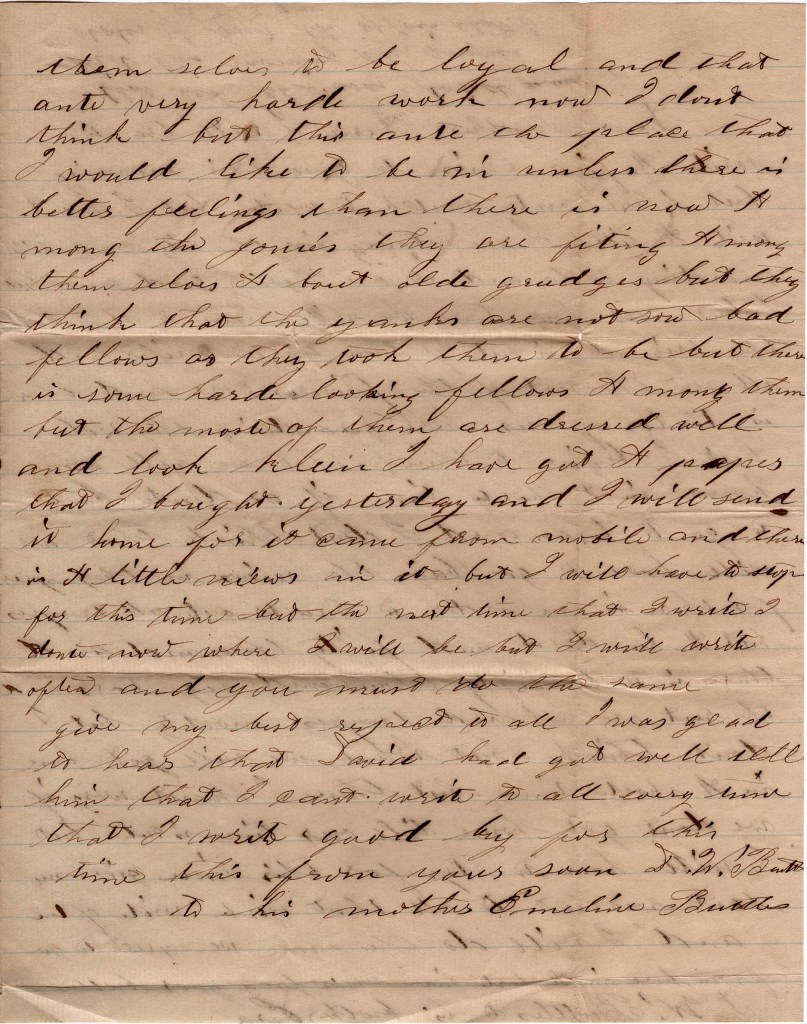


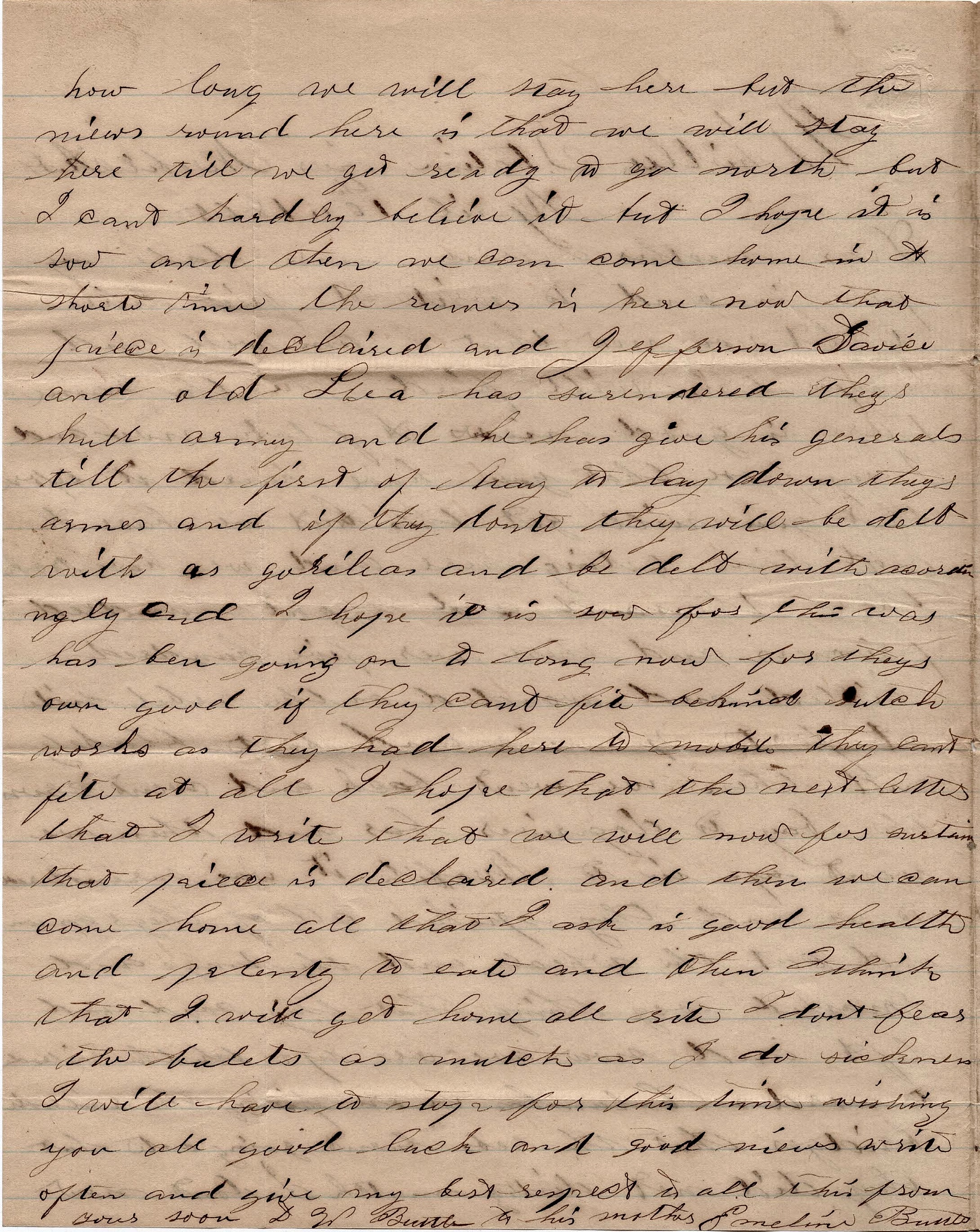
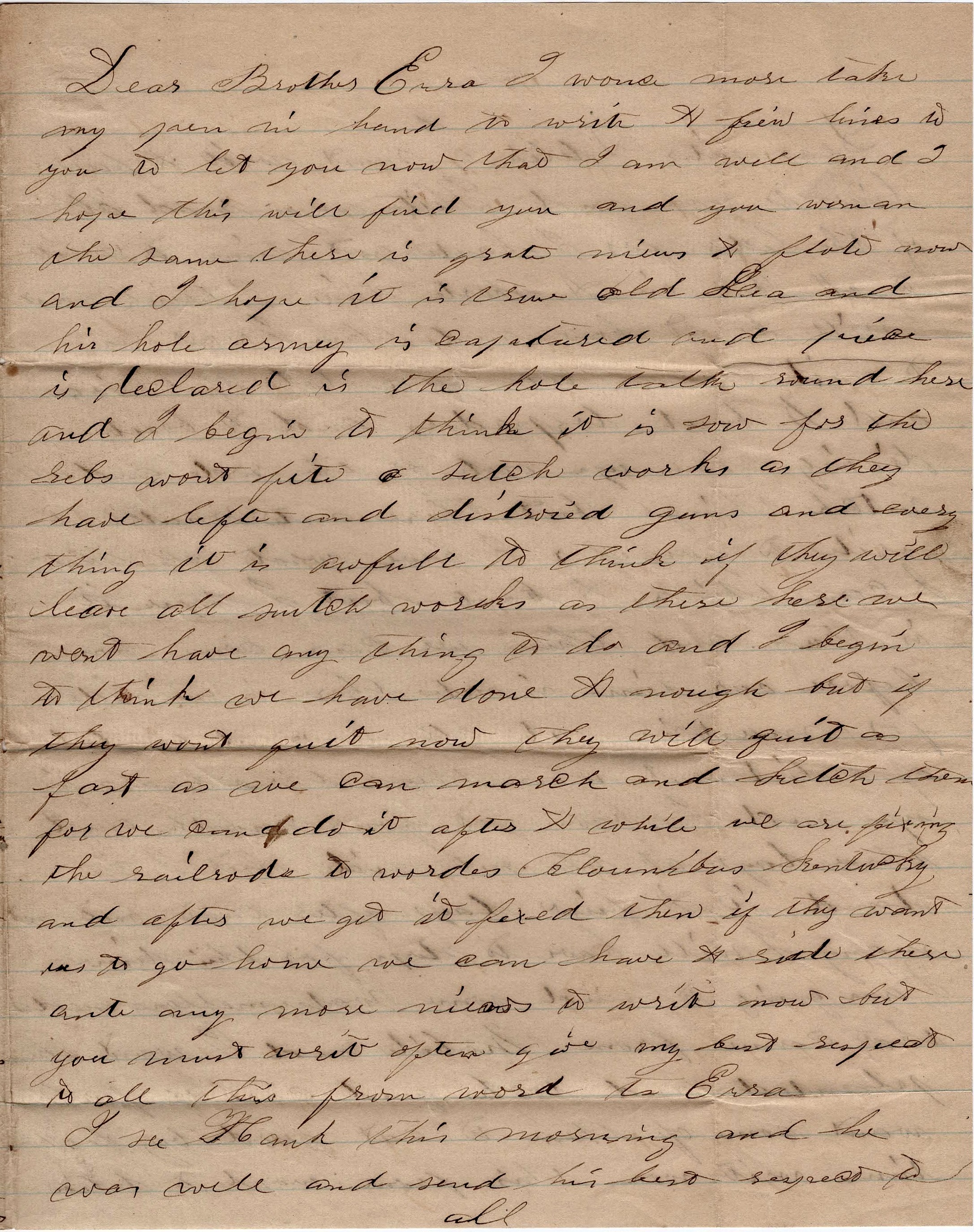
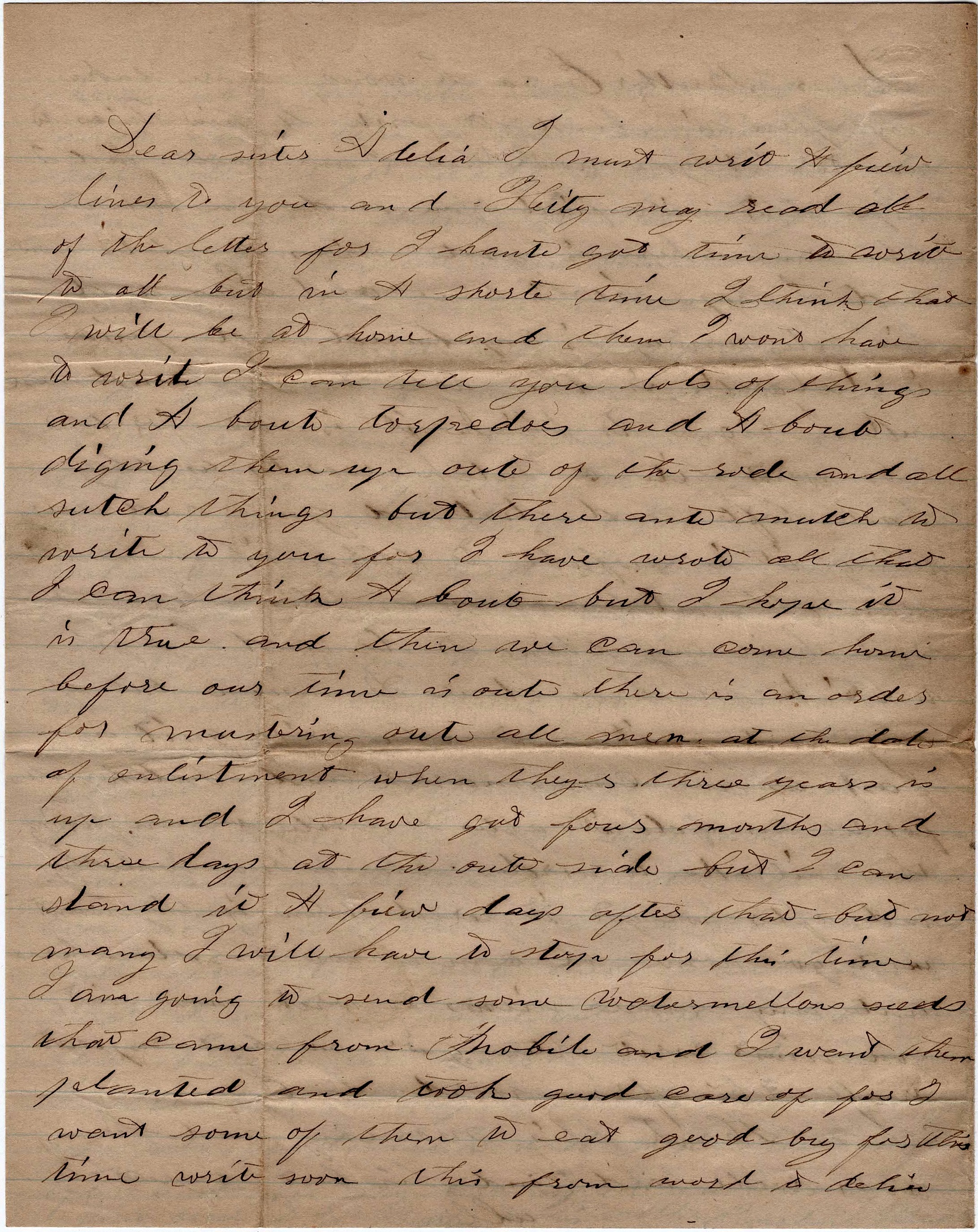
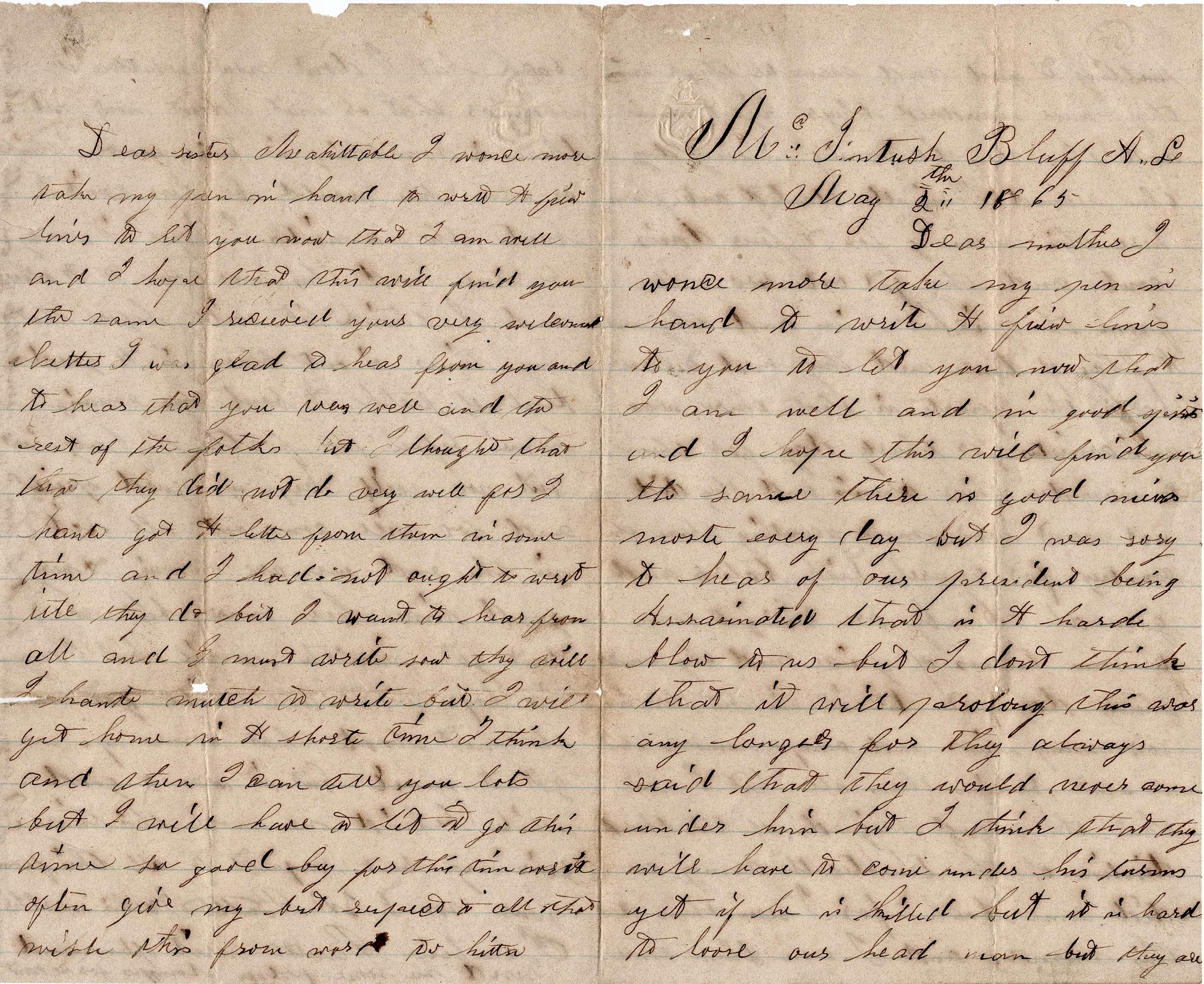
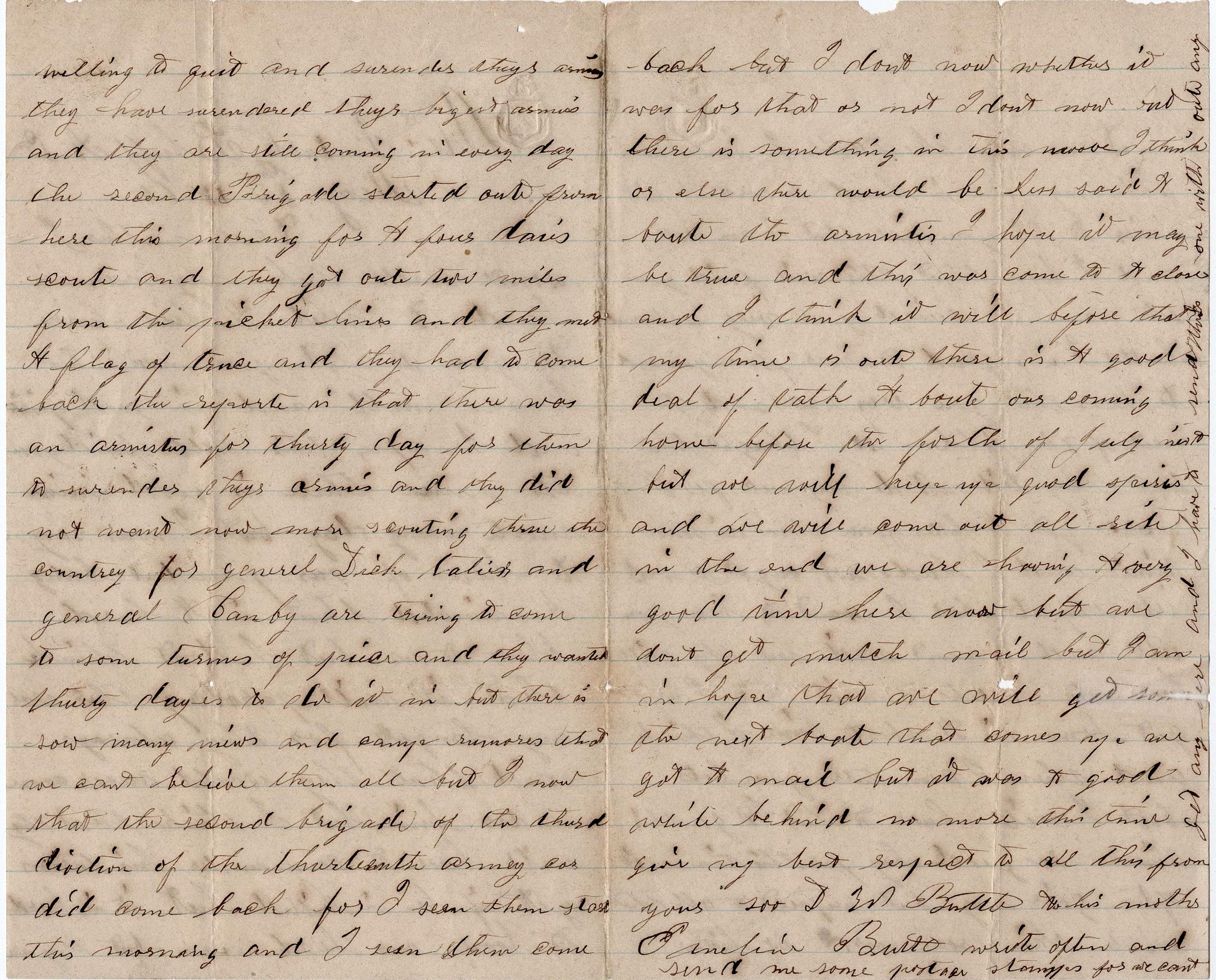
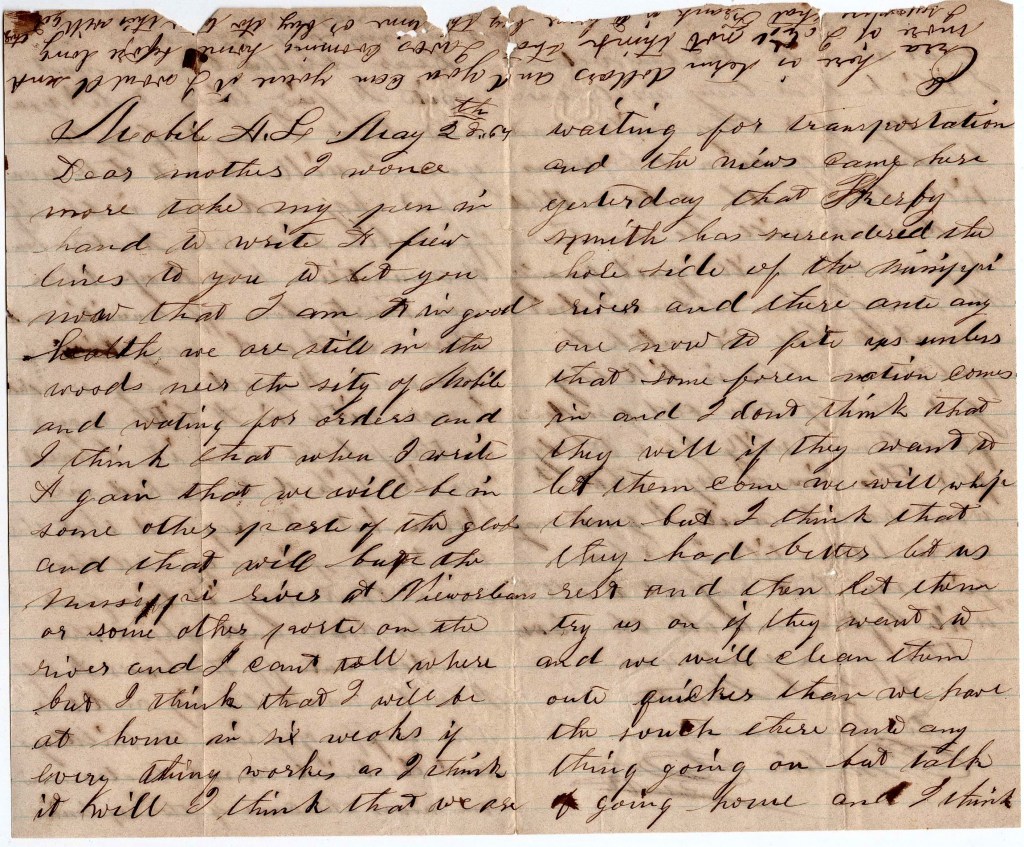

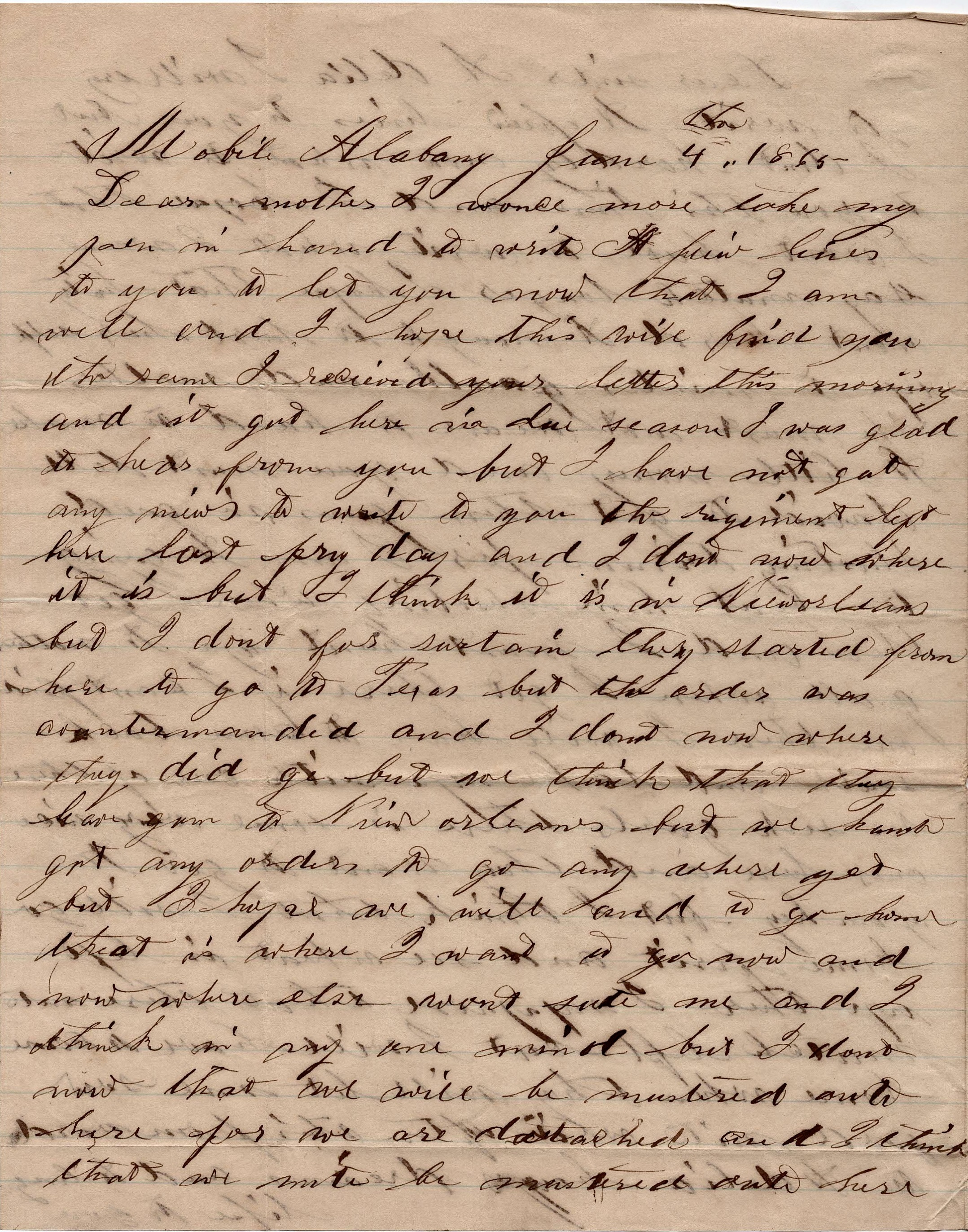


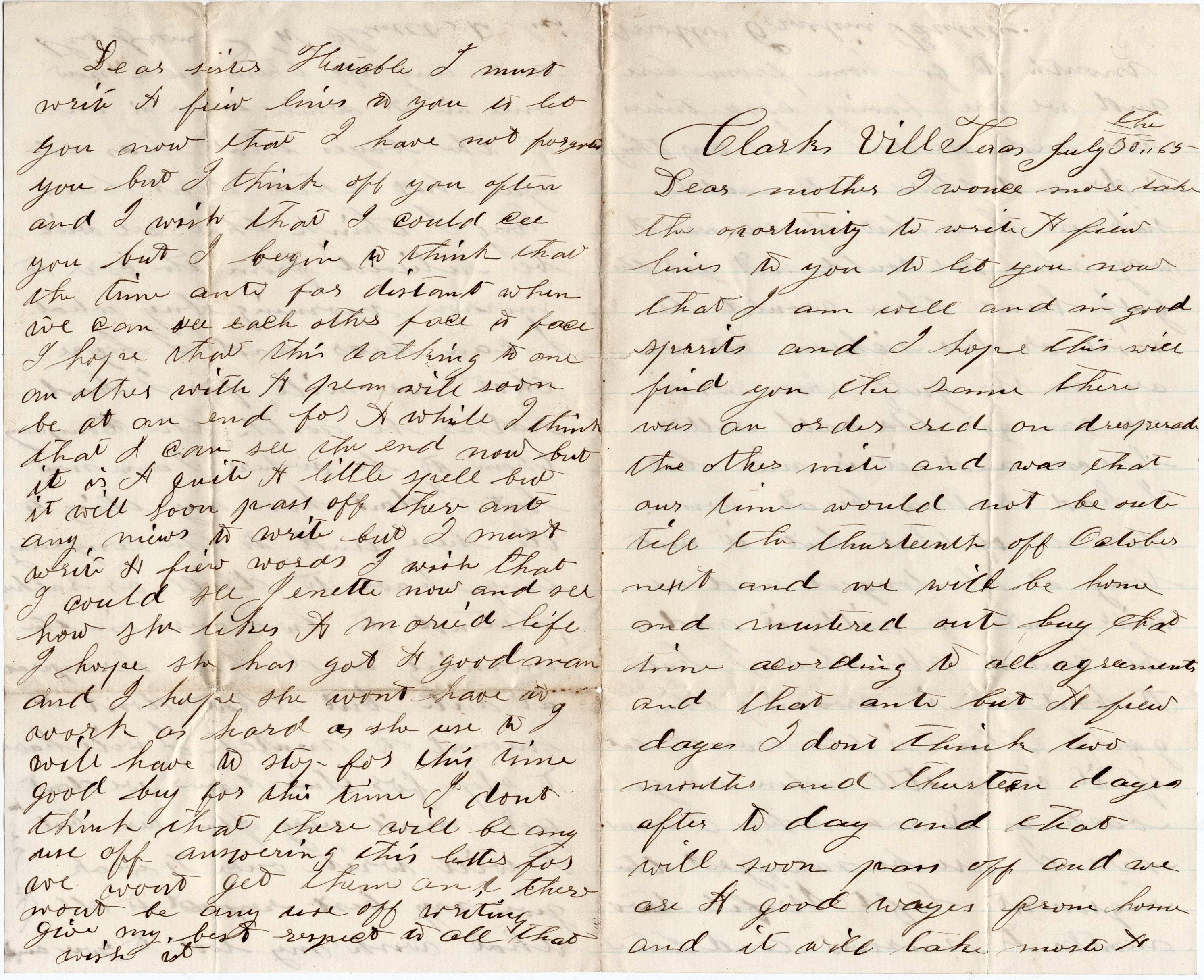

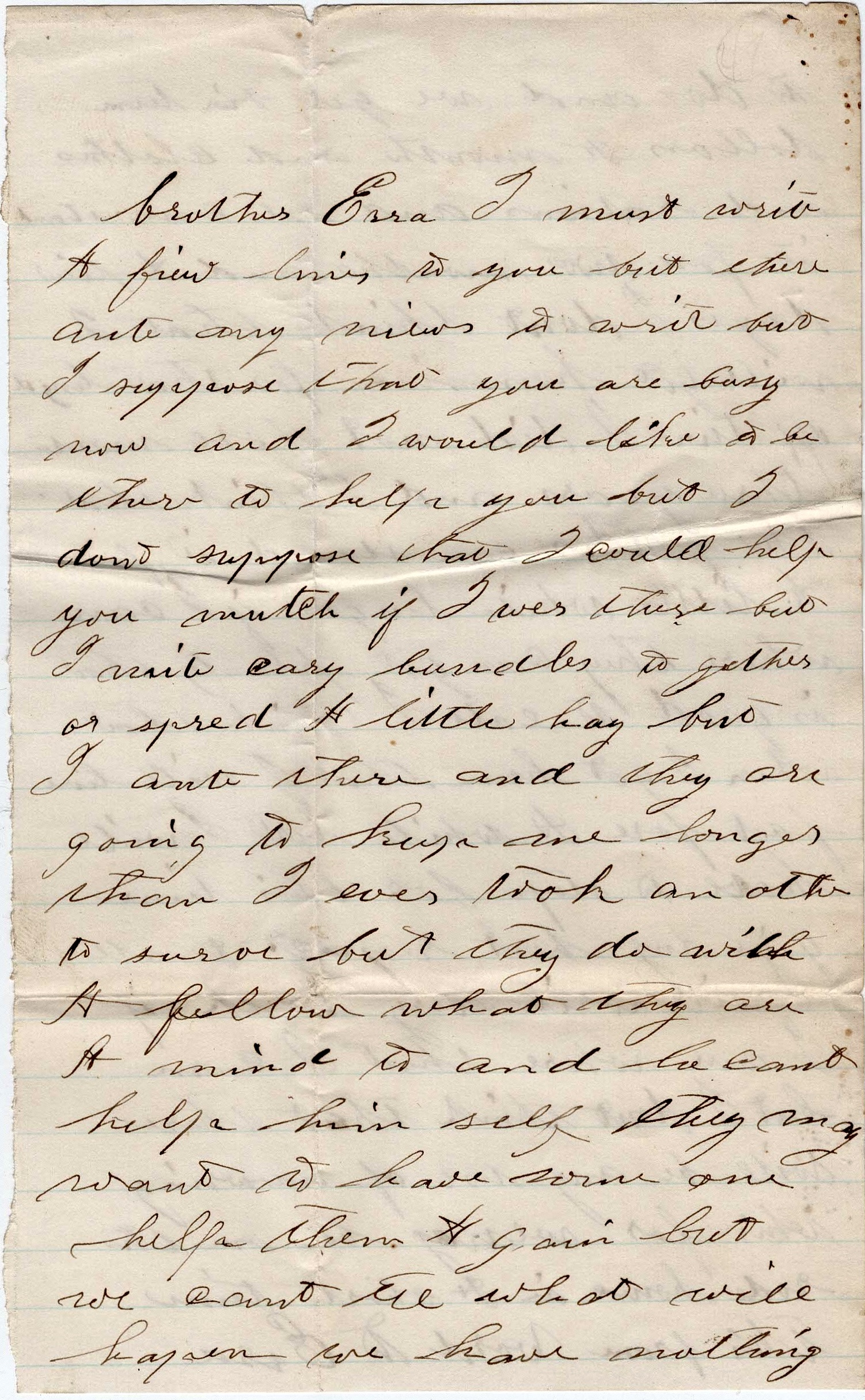
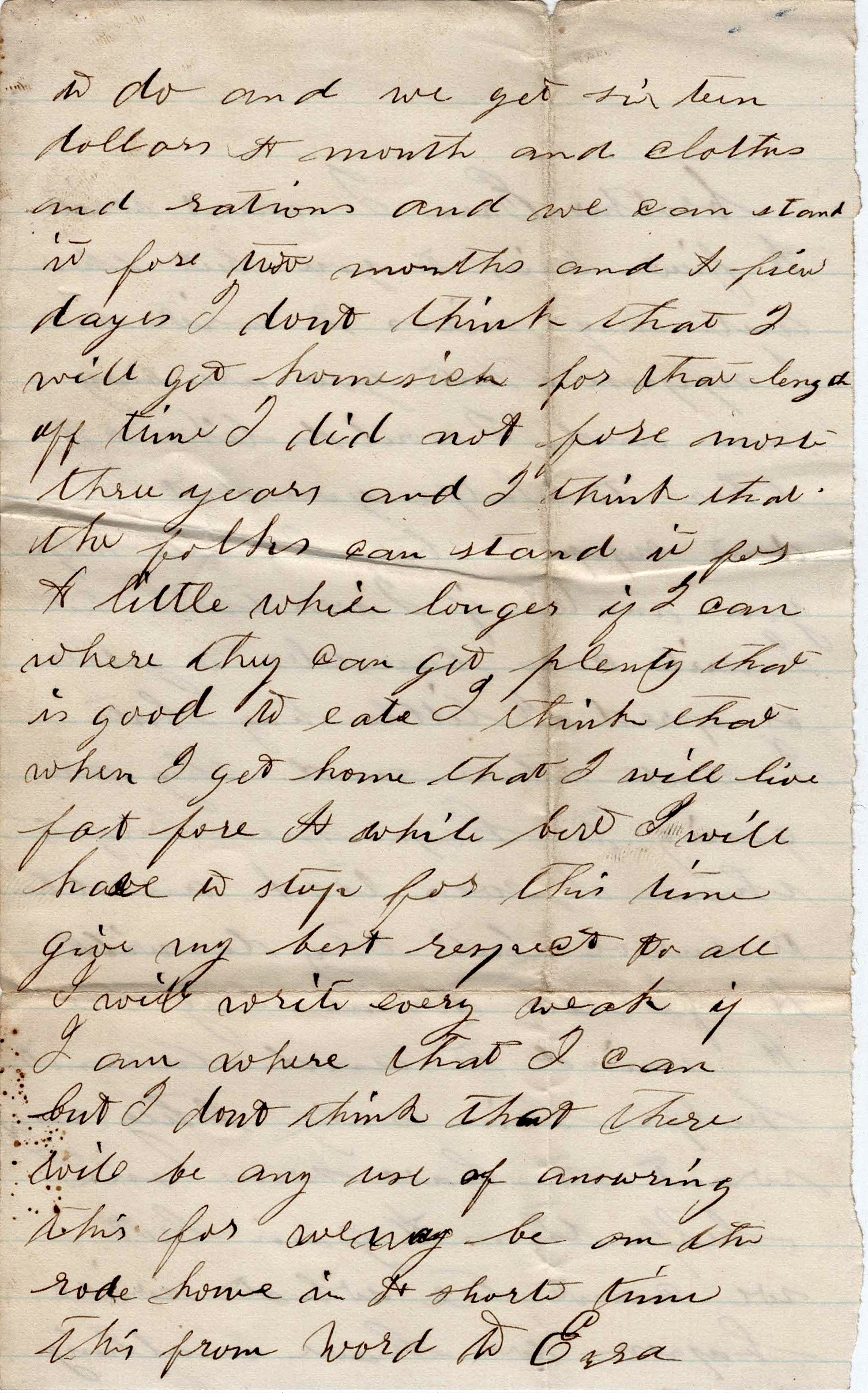

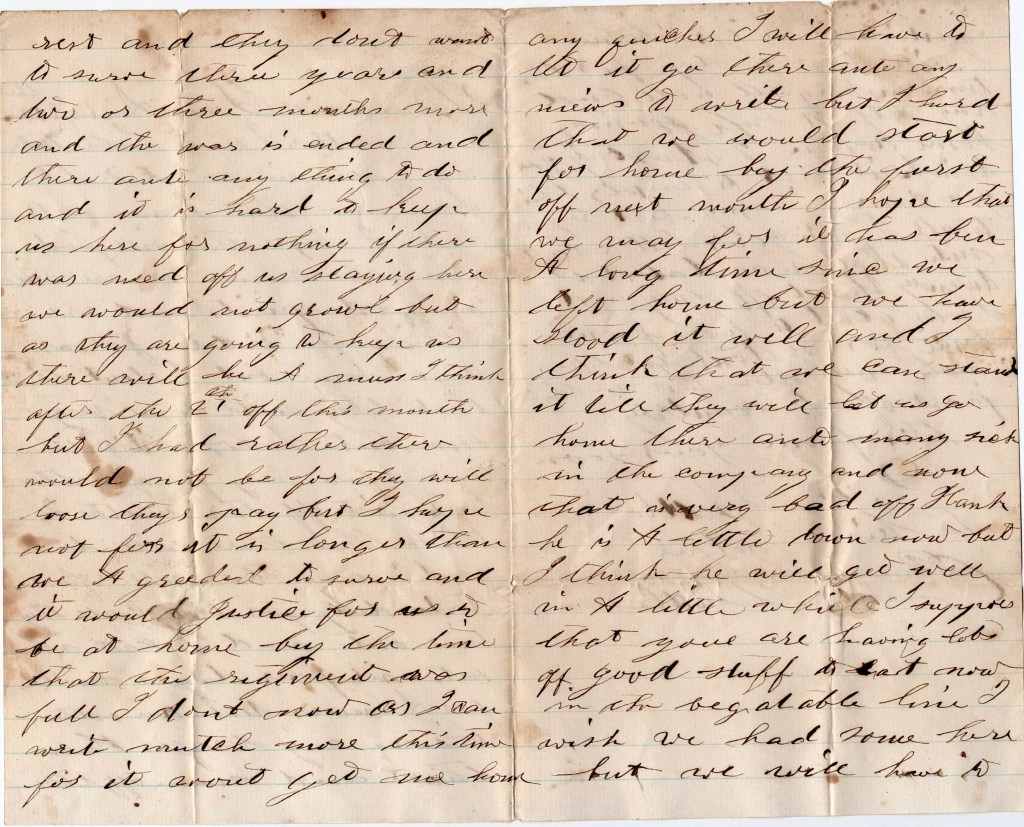

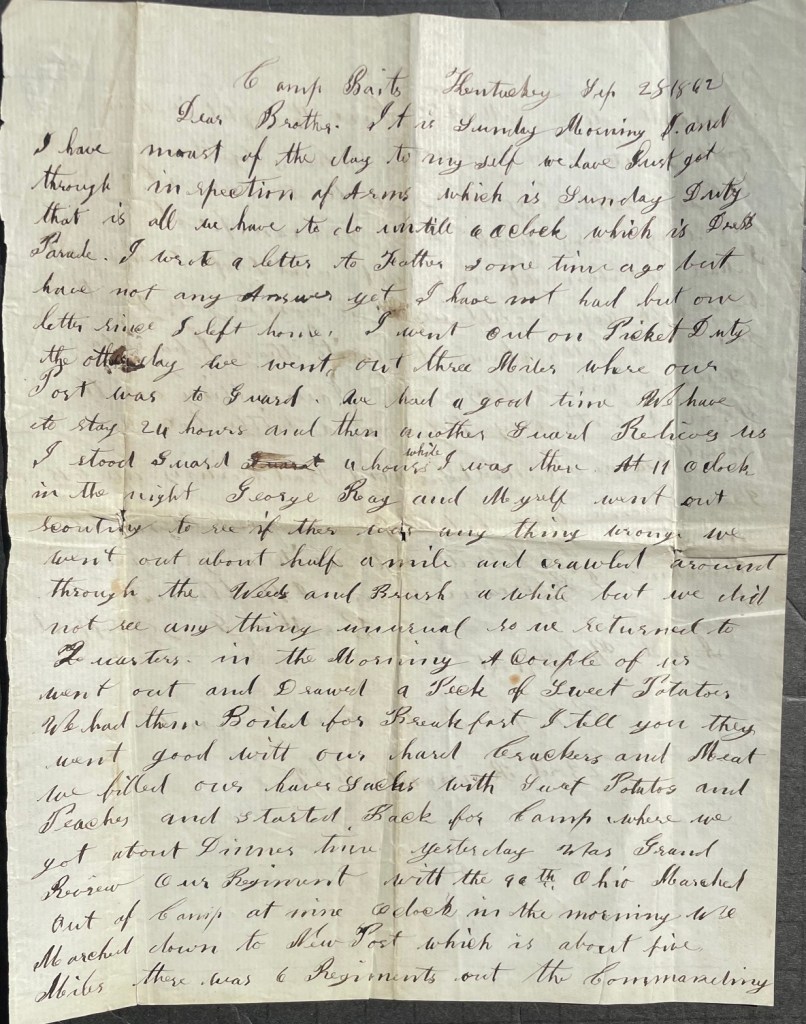





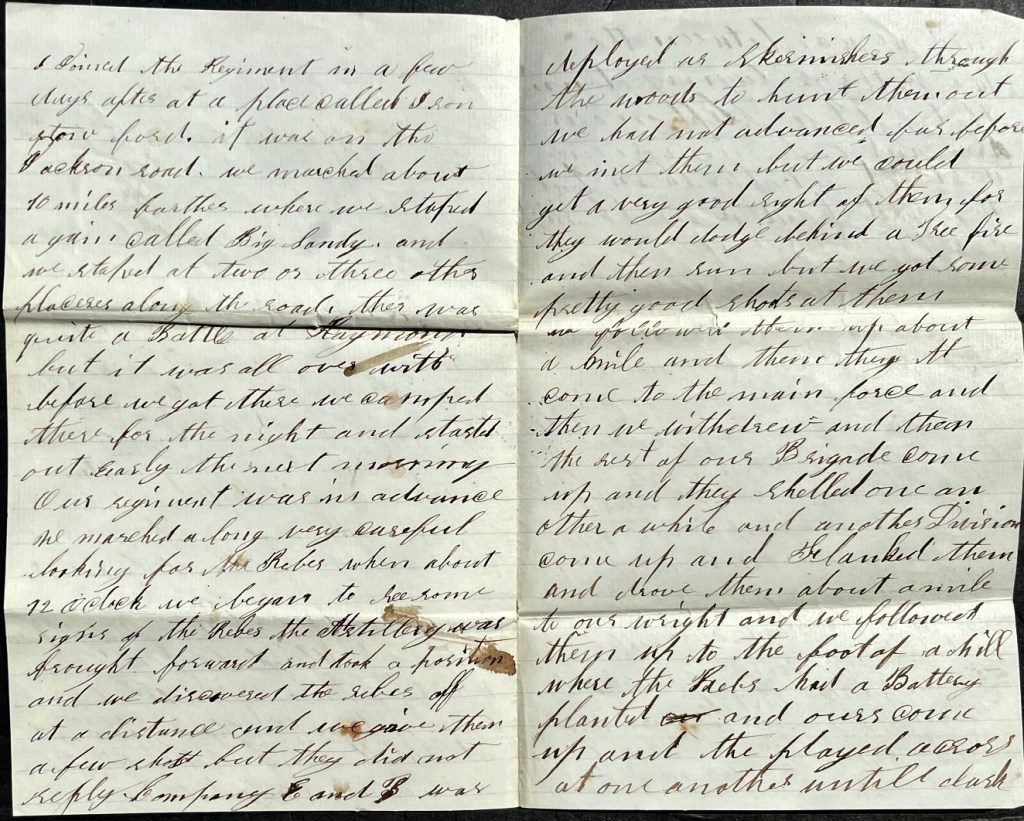
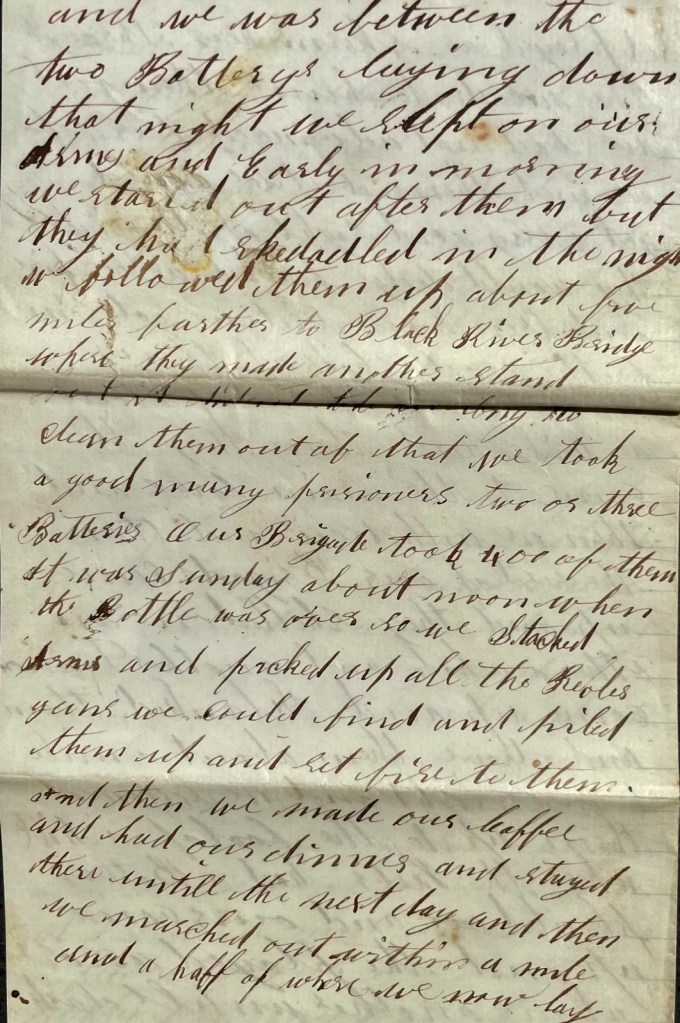
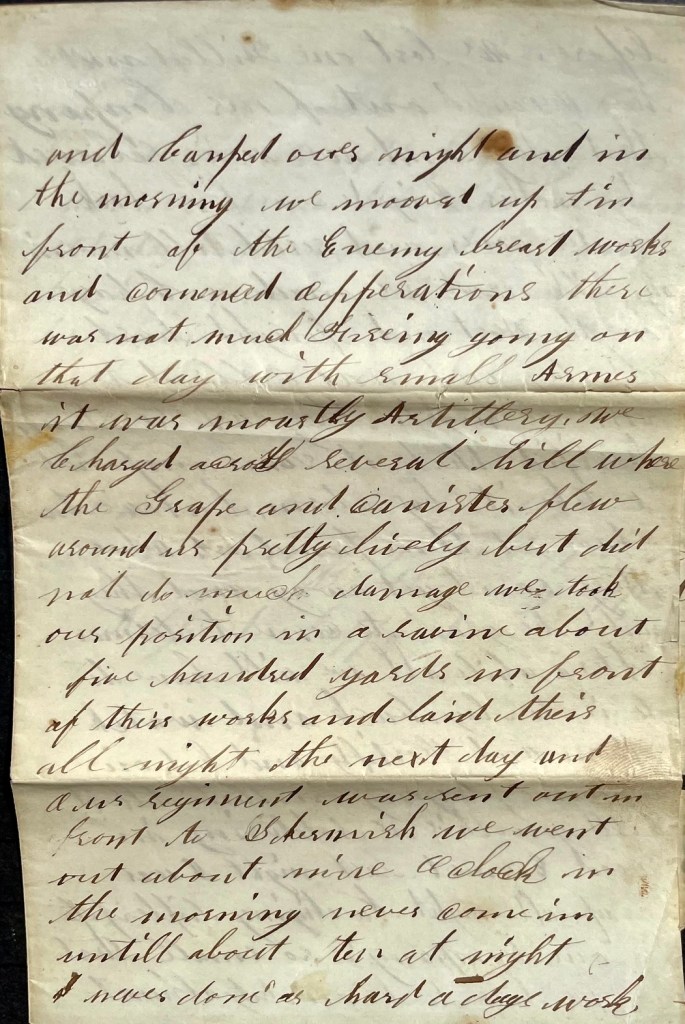






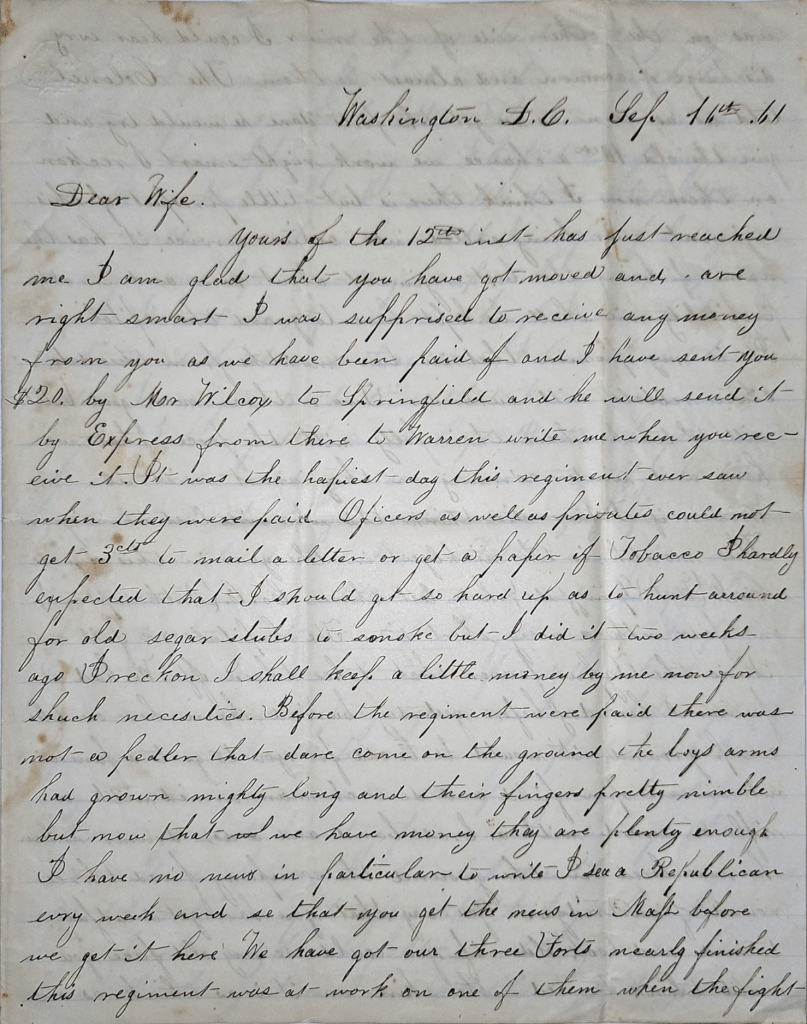


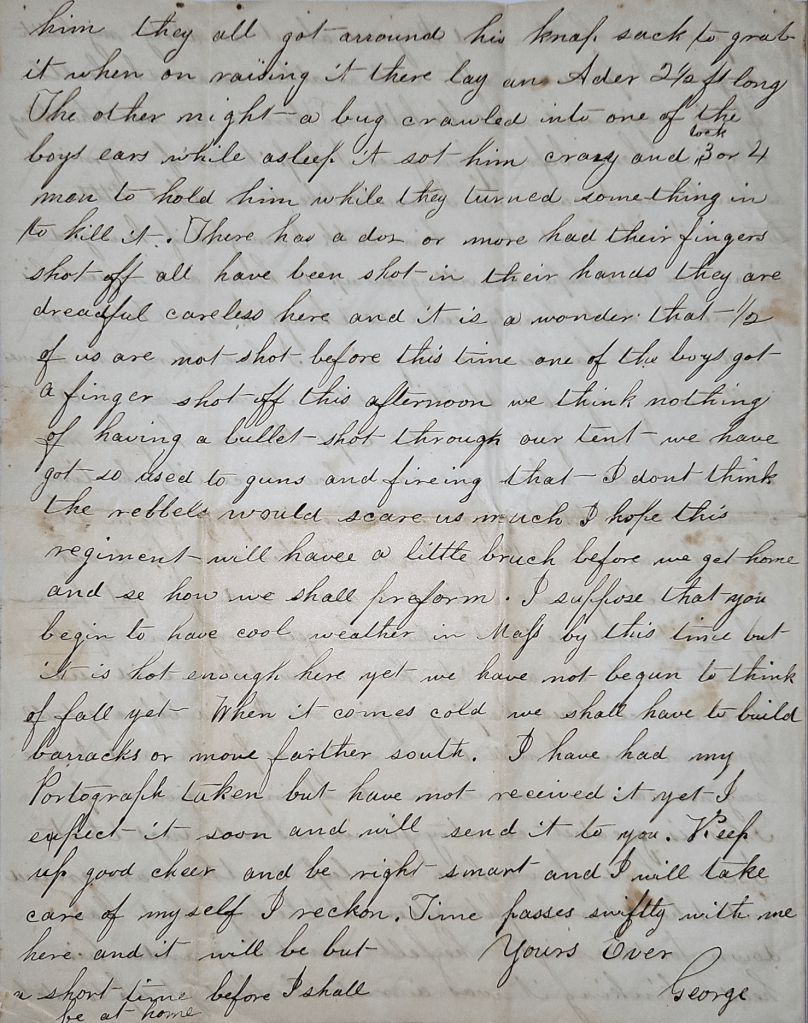
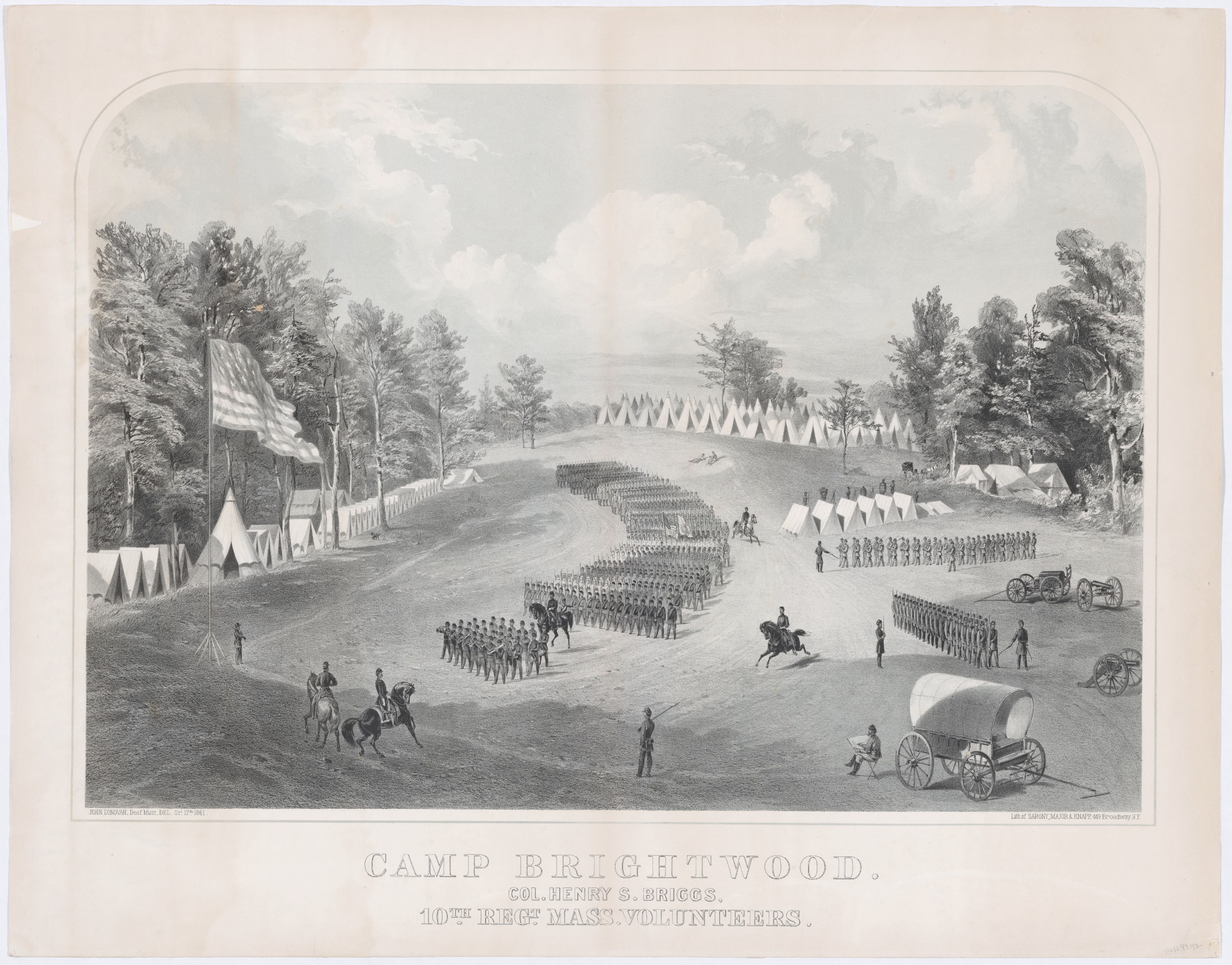
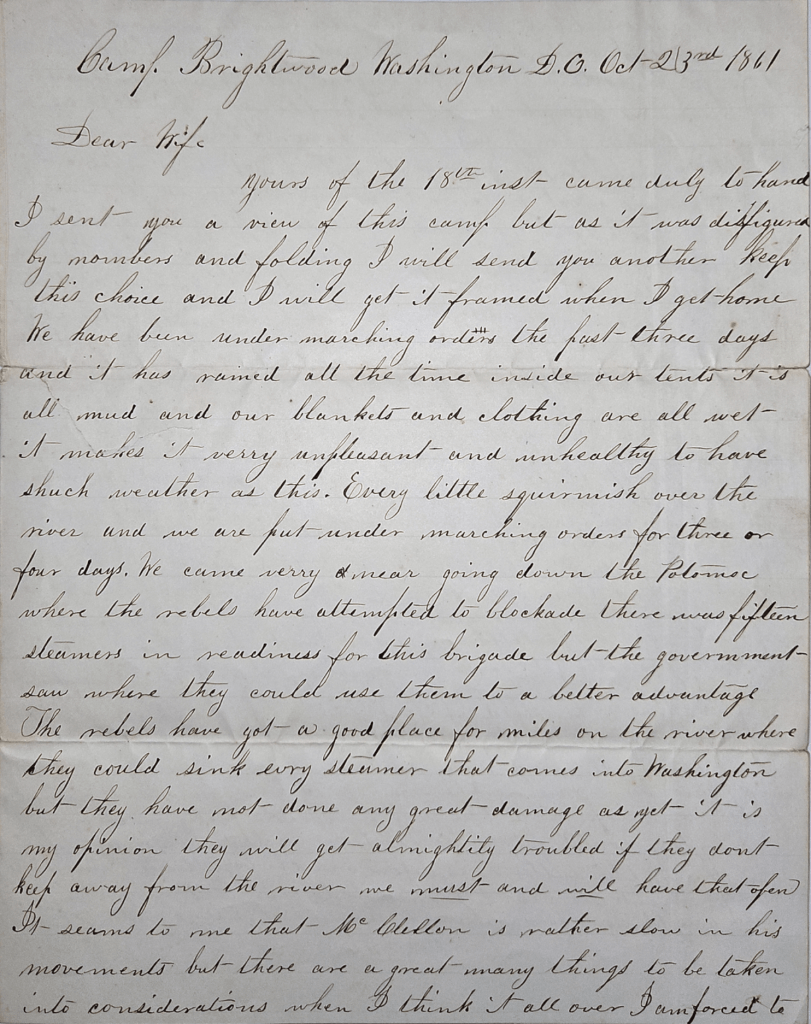




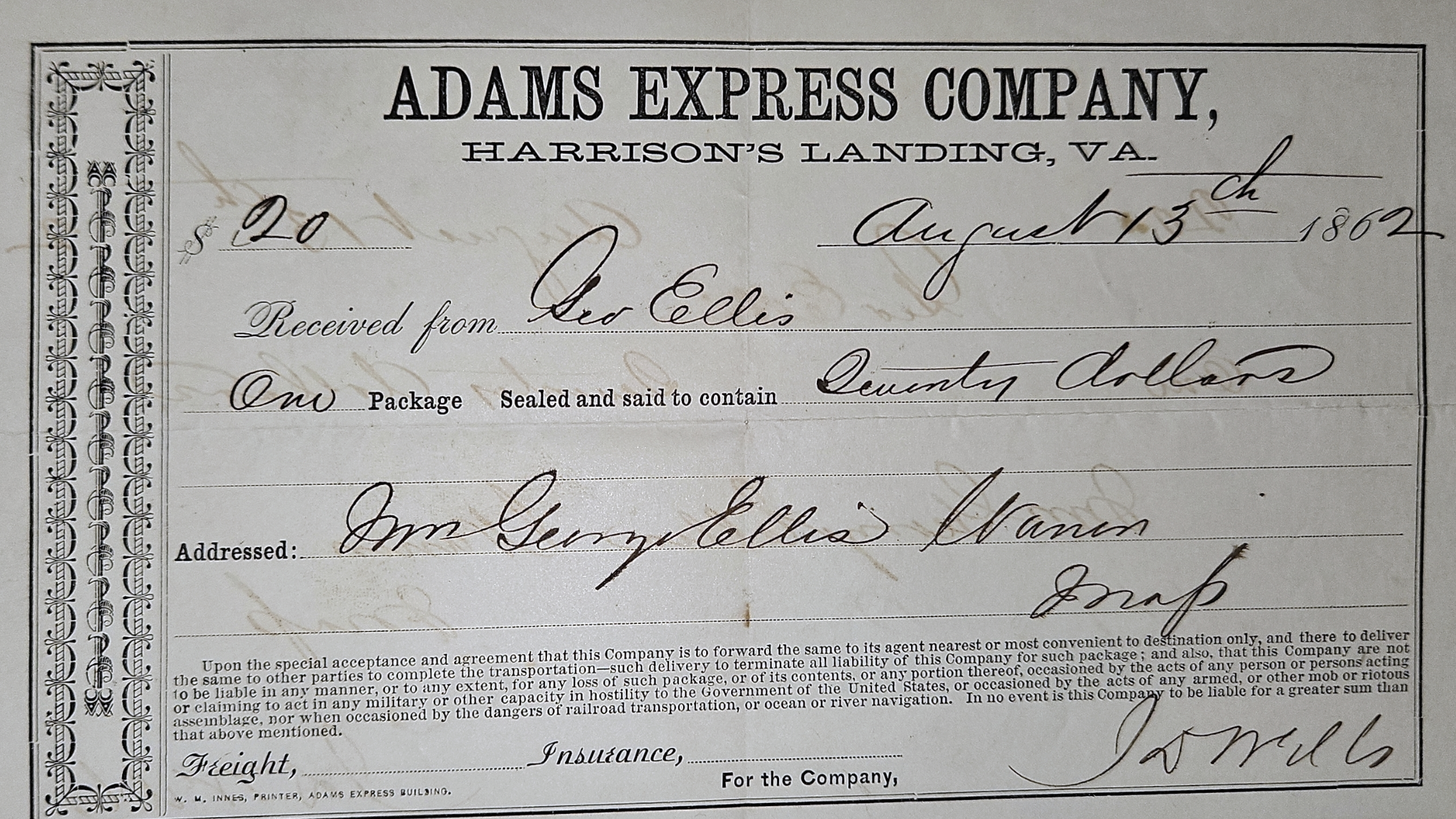


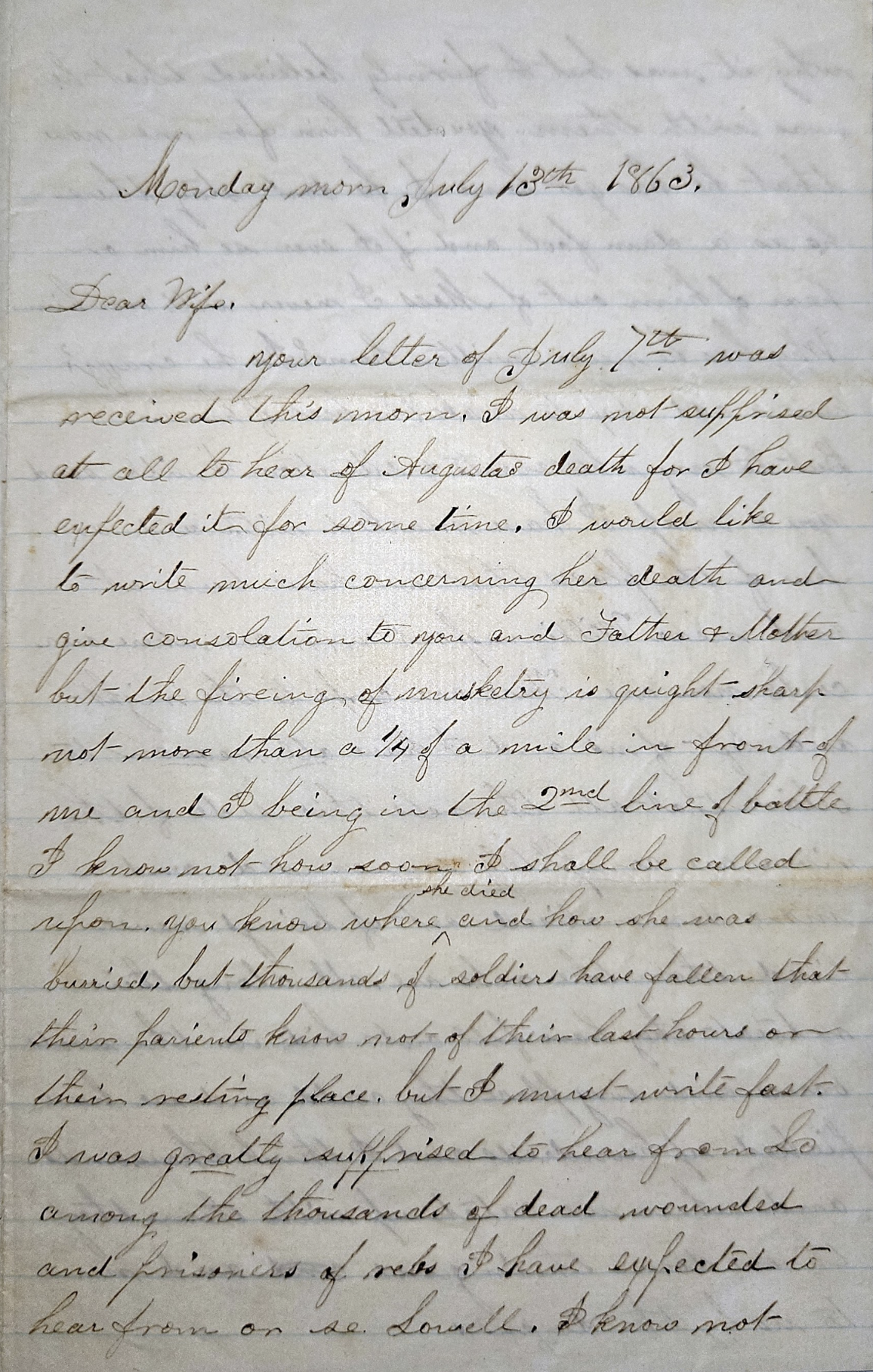

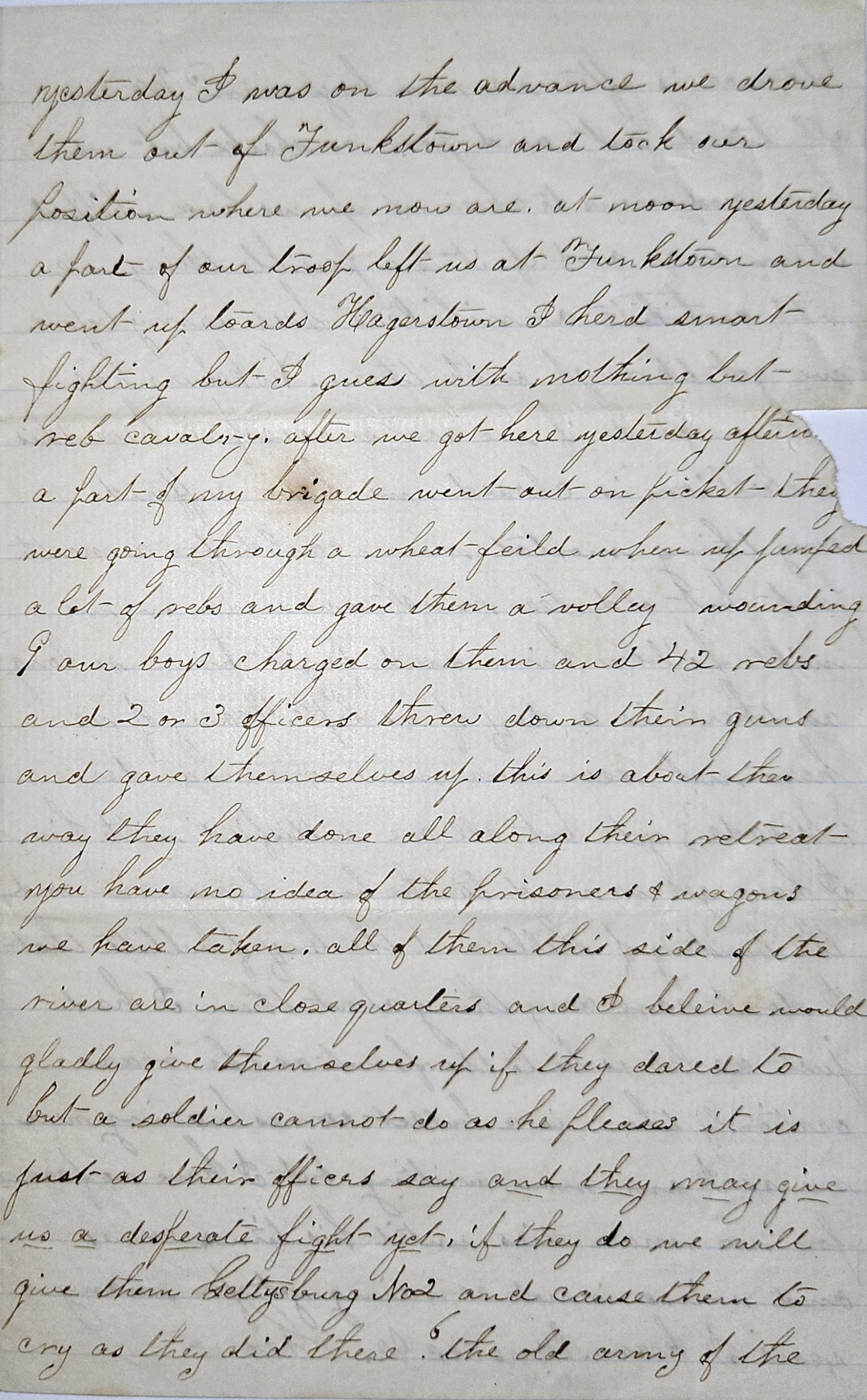
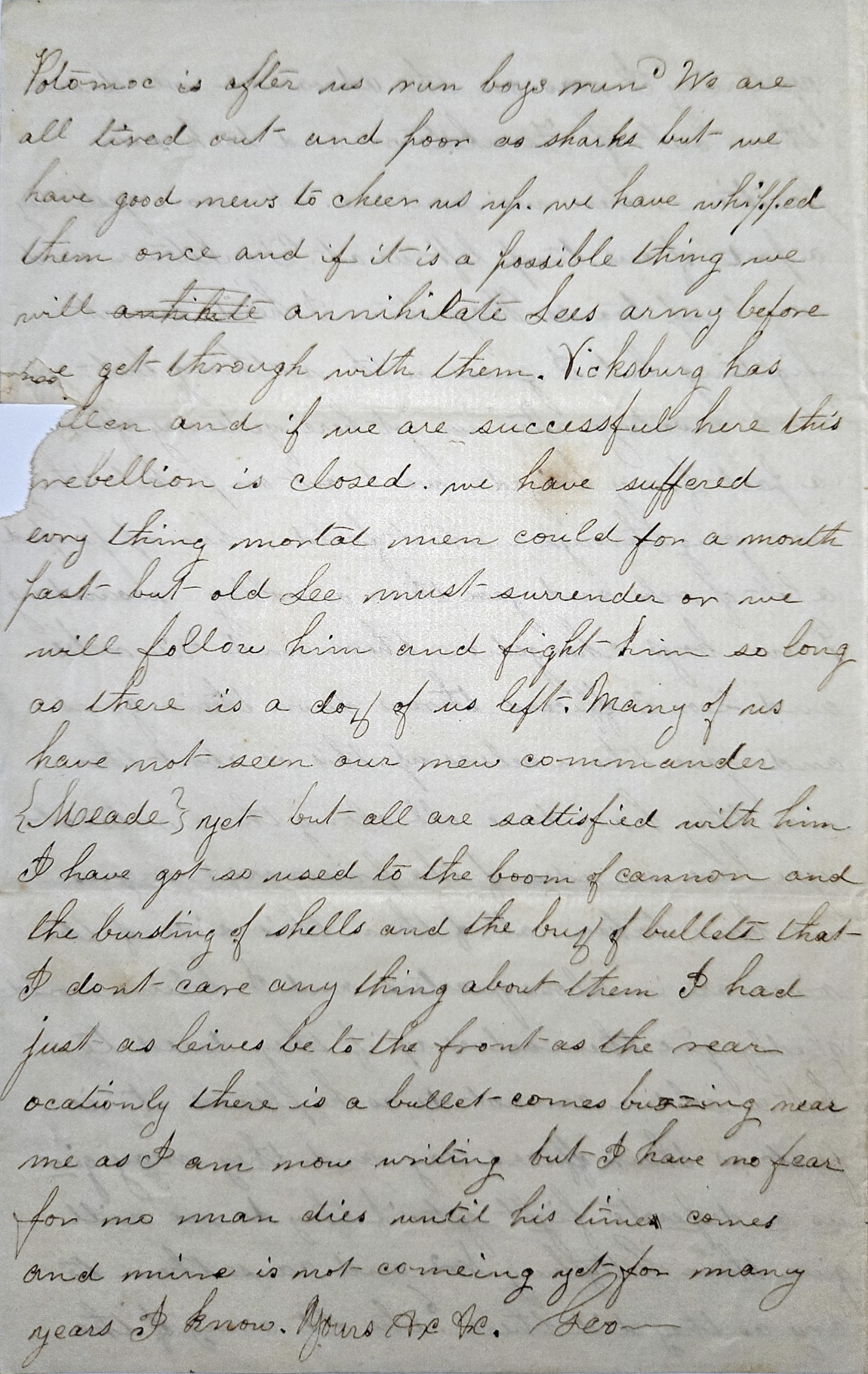


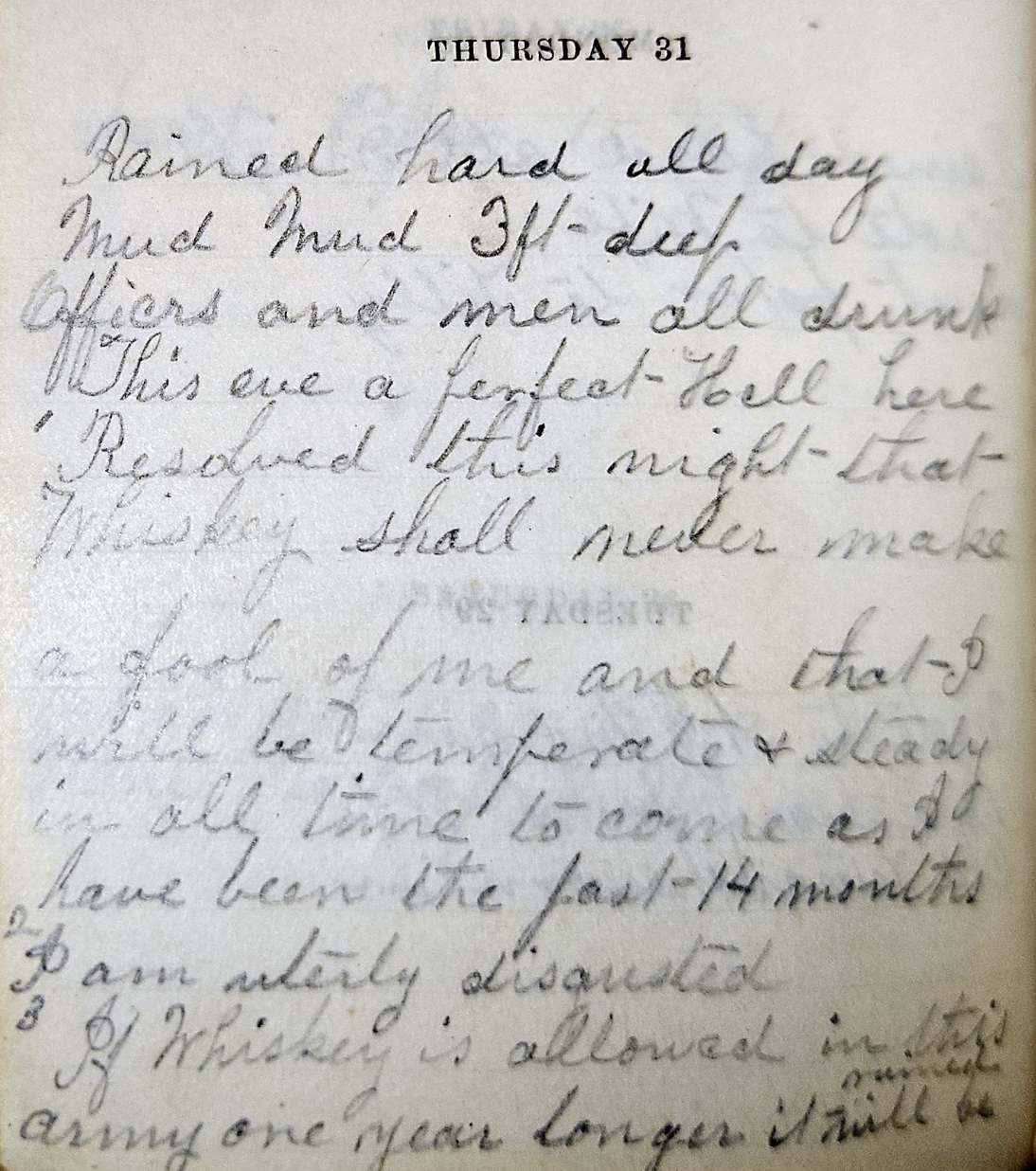
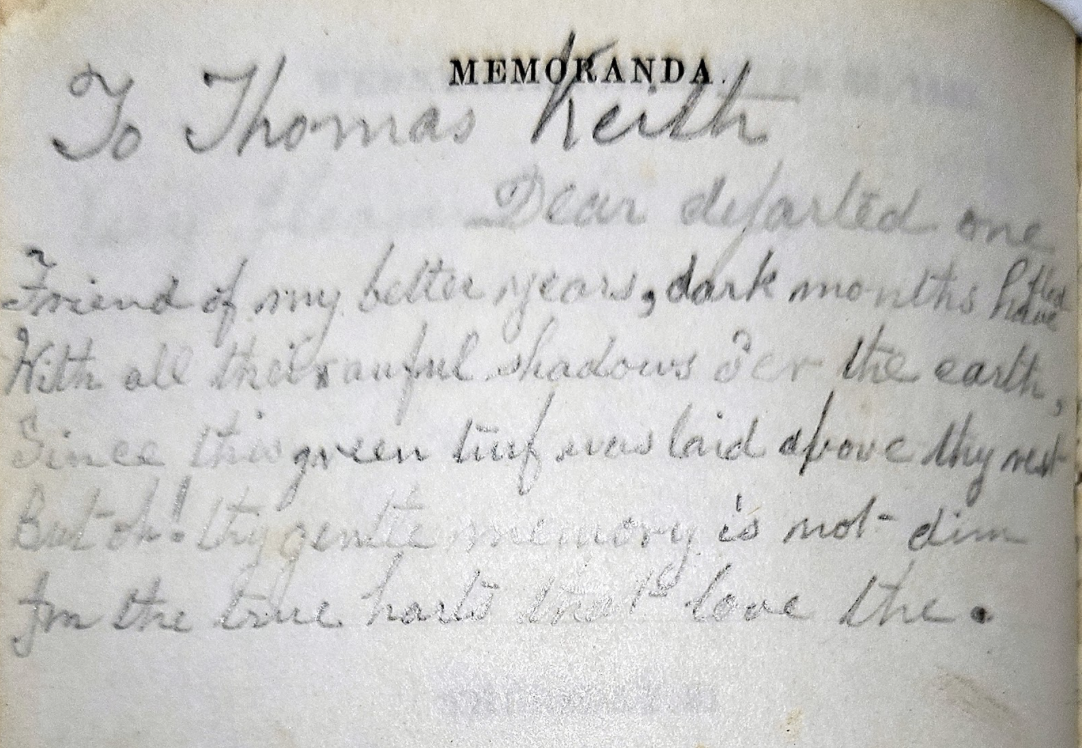


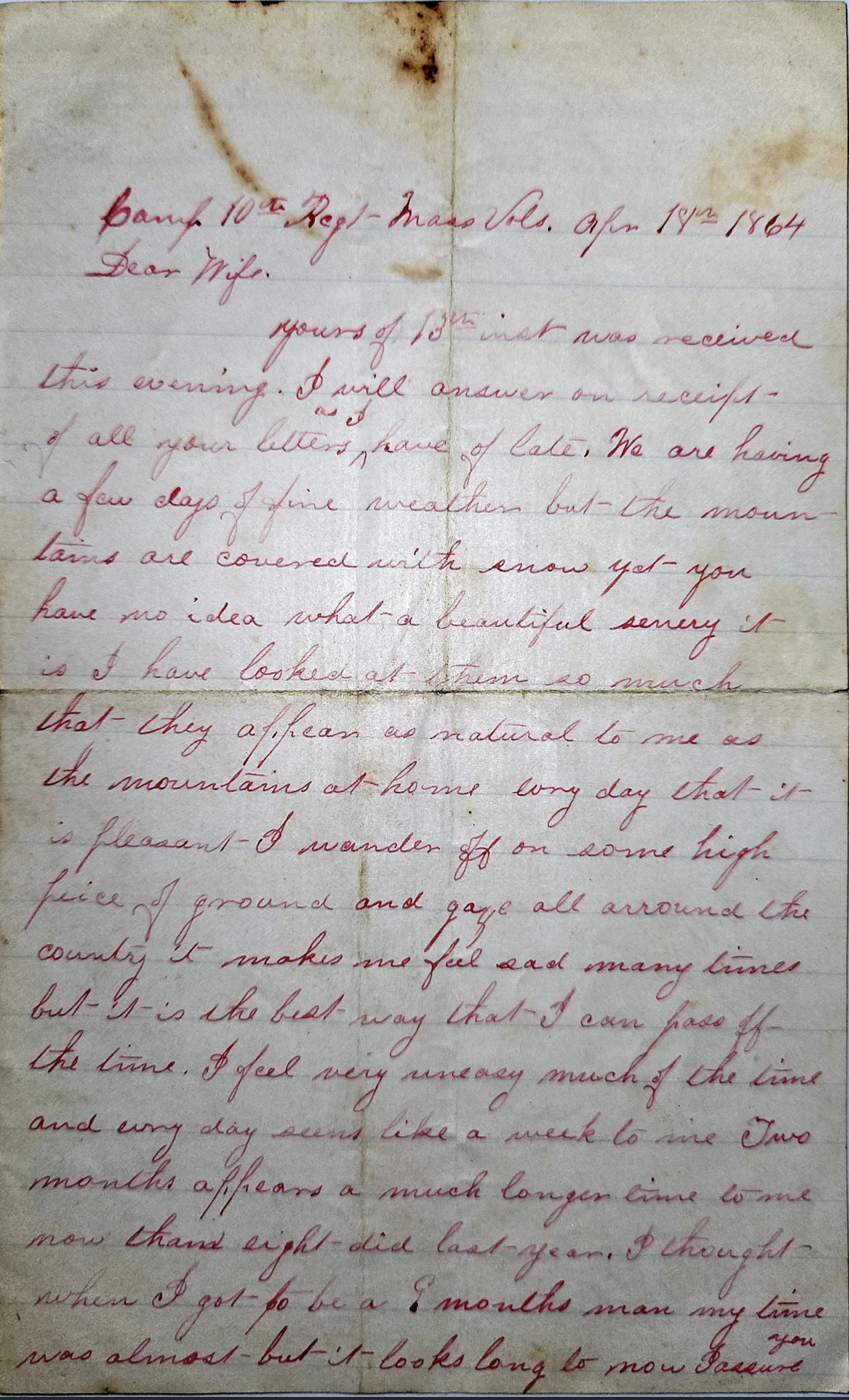


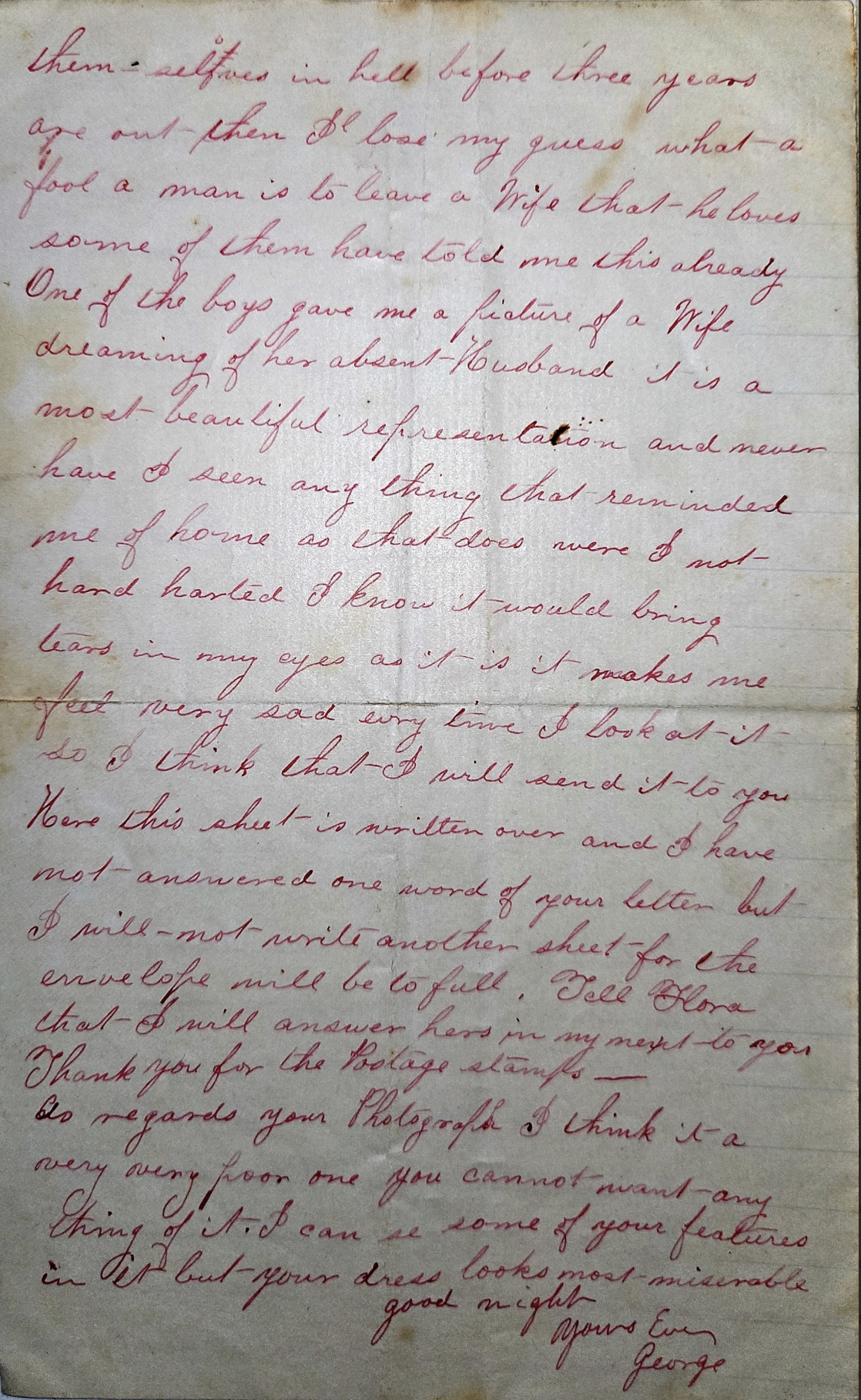


 Spared & Shared 23