My passion is studying American history leading up to & including the Civil War. I particularly enjoy reading, transcribing & researching primary sources such as letters and diaries.
I could not find an image of John but here is a CDV of Edwin Augustus Hall who served in Co. A, 23rd Massachusetts Infantry (Ancestry.com)
The following letter was written by John Knight Dustin (1843-1909), the son of John K. Dustin (1815-1898) and Angeline S. Heath (1816-1857) of Lanesville, Massachusetts. John enlisted on 20 September 1861 in Co. C, 23rd Massachusetts Infantry. Just previous to his enlistment, he was working as a clerk in Gloucester. He remained in the regiment his full term of three years, mustering out on 26 September 1864. After he left the service, he returned to Gloucester, married Lucy Low Davis (1847-1916), and settled into a life of book-keeping.
In this letter, John informs his father that Burnside’s return to command in North Carolina would be welcome. He also summarizes the New Year’s Day (1864) Emancipation celebration dinner given by the “colored Citizens” and the speeches in support of the reelection of “Old Abe.”
T R A N S C R I P T I O N
Addressed to Mr. John K. Dustin, Lanesville, Massachusetts
Hammond General Hospital 1 Beaufort, North Carolina January 6, 1864
Dear Father,
I received your kind letter this afternoon and now proceed to answer. You can’t tell, Father, how cheering letters are—especially from home. I hardly know what a soldier would do without a letter once in a while. They seem to be the connecting link between we here and at home.
Of that money, I paid the freight and insurance here $1.25 as you will see by this receipt which I forward to you in this letter. They will I think refund the money—are bound to I believe.
I think it was a good sign that you were all well, you’re all being out coasting Christas. Am happy to know it was so.
I received a letter from Aunt Laura today. She writes that I always seem more than a nephew to her and seems to be pleased by my letters to her. I shall certainly try to merit her good opinion of me and will answer her letter tonight as I am acting as Officer of the Guard at the hospital—somewhat different from my regimental style of guard duty. You have a good idea of how that was done, I suppose. Now here I am in the ward room [with] a nice coal fire writing letters. Oh! here comes the sentry. Officer, a man without a pass, where does he belong? Just up the street here, was going home. All right, let him pass on. See how nice. Never leave the ward room—only every three hours to post a new guard. But, however, I don’t think I feel any greater man than when in the regiment, and only tank Providence that I got a good place when I most needed it.
Thomas seems to have had a hard time of it. His mother wrote an unconnected story of his sufferings seeming to feel much pride in his actions. Horace did marry one of the Eastman’s (Abby) and the day she wrote Horace and Henry were picking turkeys to send to you, That was the 20th.
Some talk of Burnside again commanding this Department. He would be warmly welcomed by all his old soldiers but still I hardly think it amounts to anything more than talk.
Everything is quiet here at present but rumors of an increase of force and an advance. Beaufort, however, is still quiet and probably will be, the only excitement being the enrollment order. One of the men of the hospital has ben at work for a fortnight now enrolling all—black and white—within the lines of this Sub District and there is talk of my relieving him tomorrow. As he is the Apothecary and much needed, the Dr. says I am the only one capable who can be spared to take his place.
The colored schools are seemingly doing well here. New Year’s Day they—Colored Citizens—gave a grand dinner, free to all in honor of the Emancipation Bill. Speeches were made and everything passed off in good style. The principle subject of their speeches was that McClellan was not the man for the next President and Old Abe should be reelected if their influence and votes would help the matter, and in that I heartily agree with them.
But Father, I must close. I haven’t written much because I hadn’t much to write and so excuse and give love and affection to all, and write soon again to your ever loving son, — John K.
1 Hammond Hospital was a Civil War hospital set up in the ransacked Atlantic Hotel in Beaufort, North Carolina. Union General John Gray Foster brought in nine Catholic nuns to provide nursing for “200 wounded and sick soldiers.” Source: Wagoner, M. (2020). Column: Beaufort’s Civil War hospital nursed soldiers back to health. Carolina Coast Online.
The following letter was written by Peter Renton Shepard (1839-1863) who enlisted in the US Marines on 2 May 1861 and served aboard the USS Susquehanna. When he enlisted he gave his birthplace as Canterbury, New Hampshire, and his residence as Boscawen. He further stated that he was single and was employed as a farmer. Muster records claim that Peter deserted from the service—which may be true—but cemetery records in Boscawen reveal that he died of “fever” on 25 September 1863 and his headstone informs us that he mustered into Co. E, 16th New Hampshire Vol. Infantry on 7 November 1862.
Peter was the son of John M. Shepard (1804-1874) and his wife Nancy (1807-1889) of Boscawen, New Hampshire.
The side-wheeled USS Susquehanna
T R A N S C R I P T I O N
U. S. Marine Barracks Washington, May 5th 1862
Dear Cousin,
Your letter was duly received and I was very happy to hear from you and to learn that Uncle, Aunt and Scott are well. I have been enlisted over a year but time has passed away so rapidly that it seems to be but a few days. I left Boston on the 3rd of last July for Hampton Roads. We arrived there on the 7th and while on our way up the beautiful Chesapeake the main shaft to one of the paddle wheels parted which compelled us to return back as far as Philadelphia to repair damages. There we remained until the 24th of August when we started again for the blockade.
On arriving at at the mouth of the Chesapeake we learned that the expedition which had been fitted up in that place for the purpose of capturing the rebel forts at Hatteras Inlet had left the day previous and left orders for us to join the fleet as soon as possible. All of us were in high spirits then at the prospect of having a brush with the rebels.
They are now flying from our victorious armies in every direction and we have now arrived at a point where we can look through the dark clouds that have surrounded us for the last year and behold in the distance bright visions of future glory for our Government and its institutions. Charles Ship and Jonathan’s son and George and James—Uncle Benjamin’s boys is in the sharpshooters. One of the boys was wounded last week by his side. There is nothing more to write about this time. I will close. Write again soon as convenient.
The following letter is a rare. It was written by Joseph Scott of Princeton, New Jersey—a 19 year-old free Black man who served in Co. D, 6th United States Colored Troops (USCT). His muster roll records inform us that he was 18 when he enlisted on 12 August 1863 at Philadelphia. He was describes as standing 5 feet 6 inches tall, brown eyes, dark hair and light complexion. It further informs us that he was born in Monmouth, New Jersey and was employed as a laborer. Census records reveal that Joseph was likely the son of Charles W. Scott (1820-1904) and Martha L. Byles (1820-1859). Charles was a mulatto who grew up in Upper Freehold, Monmouth county, and in the 1860 US Census he was enumerated near Allentown and employed as a 45 year-old butcher.
Joe entered the service as a private but he was promoted to corporal at the camp near Yorktown on 24 October 1863. Muster records also inform us that though Joe survived the war, he did not survive the service. He died on 26 September 1865 at Hicks U.S. General Hospital in Baltimore, Maryland of phithisis pulmonalis (tuberculosis). He was admitted on 24 September and died two days later. He was buried in Laurel Cemetery, Grave No. 226. 1
The letter was addressed to Henry E. Hale who I assume was Henry Ewing Hale (1840-1925), a young white man and an 1860 graduate of Princeton University. Why they would be correspondents, I can only conjecture though Hale may have maintained such communication in his capacity as secretary of the Princeton Standard and Trenton newspapers while he attended graduate school.
The following excerpts pertaining to the 6th USCT were lifted from Military Images Digital Magazine on June 2015, written by Candice Zollars:
“On Oct. 14, 1863, the 6th left Philadelphia for the Virginia coast and Fortress Monroe, where the regiment joined Gen. Benjamin F. Butler’s Army of the James. As the soldiers marched through the streets, one Philadelphia reporter stated, “They made a brilliant appearance.” The men and officers occupied the majority of their time on mundane tasks—performing fatigue and picket duty, guarding prisoners, tending horses, distributing rations and caring for the wounded. Nevertheless, one officer wrote with evident pride to a Philadelphia newspaper on Feb. 18, 1864, “Their clothes are dirtier and rustier, but the men stand more erect, and my regimental line, now, is almost motionless.”
“The regiment received its baptism under fire on June 15 when it participated in an assault on a section of Confederate earthworks near Petersburg. Capt. Harvey J. Covell of Company B described the fighting in a letter to his wife as “about as hot a place as I ever saw.” As Covell hid “behind a little tree a shell struck within a few feet and … exploded among us.” The men found that they could dodge the artillery fire “if it struck the ground before it reached us as it usually would.” One shell “exploded a few feet in front of me the balls and fragments flying all around me,” he wrote. Covell emerged unscathed from the engagement.
“On Sept. 29, the 6th participated in an assault on the Richmond defenses at New Market Heights. The regiment suffered heavy casualties—209 of 367 engaged, or a loss of 57 percent. Among the dead was Pvt. Hamilton, who had drawn a razor on Capt. McMurray in camp a few months earlier. The wounded included Capt. Robert B. Beath, who endured the amputation of his right leg. At one point during the fight, McMurray found Adjutant Charles V. York lying by a path in excruciating pain from a wound. McMurray took note of York’s position and continued on with his command.
“Maj. Gen. Butler praised the conduct of those in his command who fought at New Market Heights: “In the charge on the enemy’s works,” Butler noted, “better men were never better led, better officers never led better men. With hardly an exception, officers of colored troops have justified the care with which they have been selected.” He added, mindful of Northern critics of black soldiers in blue, “A few more such charges, and to command colored troops will be the post of honor in the American armies. The colored soldiers, by coolness, steadiness, and determined courage and dash, have silenced every cavil of the doubters of their soldierly capacity, and drawn tokens of admiration from their enemies.”
Emblem on regimental flag of the 6th USCT
Note: This letter is from the private collection of Greg Herr and was offered for transcription and publication on Spared & Shared by express consent.
T R A N S C R I P T I O N
Addressed Mr. Henry E. Hale, Princeton, New Jersey
Spring Hill [on Appomattox River 5 miles from Petersburg] June 7, 1864
I take this opportunity to write these few lines to you to let you know that I am well and hope these few lines will find you the same. We are quite busy here now working on forts now. 2 We are laying in sight of Petersburg. We can see the rebels working on the fort from where we are.
We had a skirmish fight with them. It commenced about 8 o’clock. It lasted all day. It was on last Tuesday. Five men of our regiment was wounded. No one killed. Some of the rebel deserters say that their loss was nine killed, forty wounded. There was several horses killed of the rebels. They threw a good many shells but they did not hurt much. They struck several tents in the fort but no one was in them and the picket line outside of the fort threw shells the other side of us.
No more at present. Corp. Joe Scott, 6th USCT, Co. D, Camp near City Point, Fortress Monroe, Va.
1 “Laurel Cemetery was incorporated in 1852 as Baltimore’s first nondenominational cemetery for African Americans. The location chosen was Belle Air Avenue (now Belair Road), on a hill long used as a burial ground for free and enslaved servants of local landowners. Laurel quickly became a popular place of burial for people across Black Baltimore’s socioeconomic spectrum, including the graves of 230 Black Civil War veterans, members of the United States Colored Troops (U.S.C.T.). After its creation, Laurel Cemetery was known as one of the most beautiful and prominent African American cemeteries in the city…. In the late 1800’s, annual parades and Memorial Day gatherings to honor and decorate the graves of the Black Civil War veterans occurred regularly at Laurel Cemetery, which was also the resting place of many prominent members of Baltimore’s African American population. Historical records show that in 1894, Frederick Douglass traveled to Laurel Cemetery to speak on the occasion of the unveiling of a monument honoring Bishop Daniel Alexander Payne, who served as the sixth Bishop of the African Methodist Episcopalian (A.M.E.) church, and was a founder and former president of Wilberforce University….The decline of Laurel Cemetery started in the early decades of the twentieth century. In 1911, the remains of the Civil War veterans were removed and reinterred at Loudon Park National Cemetery to accommodate the expansion of Belair Road.”
2 The fortification Joseph refers to came to be known as Redoubt Converse, intended for the protection of a pontoon bridge at that location.
Frederick Lang to William Skeen in 1861 in which he alludes to the ongoing crisis of the Union that was unfolding amidst the secession of southern states following Abraham Lincoln’s election.
T R A N S C R I P T I O N
Solitude, February 17th, 1861
Dear William,
Your scarcity of the 18th ultra came to hand and created quite a surprise. It was indeed a wonder that you wrote again. Do you know when you wrote to us last? I suppose not. But my letter records mention only one of January 12, 1858. That was the last, excepting the few lines you wrote to me of brother Charles’ letters. Well! no odds! it has come at last and so allow me before everything else to congratulate you on the happy increase of your family. You have as good fortune as we had—a boy first to keep up the name, then a gal to please the mother. I hope you are enjoying as good health as we are. My girl begins to talk quite smartly and is as lively as a cricket. I often wish you could come out to see where & how we live. Can you not make it come around to pay us as a visit before the family increases again??
The news of the death of so many persons known to us has been communicated by our Water Cure correspondents, but your information about Charles Steubgen has been welcome & painful—welcome because I heard nothing of him for a long time in spite of my endeavors to find out his whereabouts; painful because it shows a great lack of friendship, which I am nearly forced to call professed friendship, as nothing but death could excuse Charley’s long inexplicable silence. I wrote to Dr. Held, his brother-in-law in Saxon C. If he is a gentleman, he will answer my letter. What the result will be remains to be seen.
I hope you are at work again, although times have not revived much yet [and] I doubt their getting much better before the crisis is over! We are getting along very well. Farmers generally have the least to suffer in such matters—that is, independent farmers, but I cannot call myself quite that yet, although it goes as well as can be expected. We have enough of everything except money. If we had had enough of that, we could have come in to see you.
Where do you work at present? Out in Bayard town’s shovel factory yet? How do you prosper? Do you intend to spend all your life in the city, or have you a distant wish of becoming a farmer? Is brother Charles in the bakery yet, & boarding with you? Give him my regards and get him to write when you write again. Ernest will drop a few lines to him. Is he a Democrat or Republican? Write soon & much and get your wife to write some too. To say that you are a poor writer will not excuse you. You can write a good interesting letter if you wish to. But there is the rub; if you would spend as much time in writing to me as you do in reading the Ledger or Dispatch, we might keep up a regular correspondence. You probably say you would not know what to write if you would write often informing me of everyday occurrences. In fact, everything is interesting if it comes from distant & cherished friends!
We had a nice winter—plenty of good sleighing, and the ground was open for only a few days this week. Yesterday & today it is falling briskly with a good prospect for another sleighing. It is just the kind of weather I want for wheat. I like to see winter in the right time and be done with it at the end of March or beginning of April. I am in hopes of an early Spring. Hoping soon to hear from you & including my best and my earnest best regards to yourself, wife and brother Charley, I remain your ever sincere friend, — Fred. Lang
The following letter was written by James Perry Cowles (1830-1913) who enlisted on 7 November 1861 at the age of 31 as a bugler in Co. H, 10th New York Cavalry to serve three years. He was captured at Sulphur Springs, Virginia, on 12 October 1863; paroled prisoner, April 28, 1865; mustered out, July 1, 1865. at New York city.
James wrote the letter to his mother, Lois Ann (Browning) Cowles of Orwell, Bradford county, Pennsylvania.
T R A N S C R I P T I O N
Havre de Grace Camp Shields, Co. H April [May] 5, 1862
Dear Mother,
Your kind letter of April 29th was received Saturday and read by me with the greatest pleasure. I was extremely glad to hear of your good health and sincerely hope that it may continue. My health is as good as usual which is generally better than when I was at home. I have nothing to complain of in the way of living as our army provisions tastes as good as cakes, pies and puddings used to and I never have to hunt after my appetite as it always makes out to be around about meal time and doesn’t get lost, strayed, nor stolen.
There is twenty men in the squad which I am in. We draw our rations and live by ourselves. We dug a place in a bank and put a roof over it and closed up the front side in which is a door and window. This we use as a kitchen. For a dining room we put up a large round tent called the Sibley tent, so that a part of the tent reaches over the kitchen, from which we pass the dishes and grub through a hole in the ground to the tables which by close packing will accommodate all of us. There is a fine spring of good water which we have opened within 30 feet of our cook room. We have another tent of the same size as the first which is used for sleeping and sitting room. The tents are better than the barracks for they do not leak so much when it rains and can be well ventilated when it is hot by moving a bonnet on the top.
It was quarterly meeting at the Methodist Church here yesterday. They run the love feast on the ticket plan so that a soldier could not get in. I went to the 11 o’clock services and heard the Presiding Elder preach a first rate sermon. He was not afraid to put himself squarely on the side of the Union and the Government which is more than the regular preacher does as he has strong sympathies with the rebellion or is said to have, and I think with truth for he does not seem to like the northern soldiers much. There was not as many people to the church yesterday forenoon to hear the Elder as usually turns out on Sunday evenings to hear the resident preacher. His small congregation was not the result of any lack of talent on his part but probably comes from the secession tendencies of the people here.
I had a letter last week from Betsy & heard of your being in that neighborhood. Also that Grandpa and Grandma had got back to their house to live. Give them my love and tell that I shall come back to see them when the war is over which I think will be soon. Tell Miss Emma that I hope that her eyes will soon be well so that I can have a line from her which I shall be looking for. It is raining a fine shower and our supper is coming up so that I shall bring this to a close by sending my love to all and subscribe myself your most dutiful son, — J. P. Cowles
I could not find an image of Wallace but here is one of William A. Wood of Co. A, 2nd New York Cavalry (Jim Jezorski Collection)
The following letter was written by 24 year-old Wallace A. Bishop (1837-1862) of Co. D, 2nd New York Cavalry. He died of disease, November 28, 1862, near Warrrenton, Va. An obituary notice for him claims that “the deceased was a young man of fine talents and much promise; and in the summer of 1861 was a student in the law office of S. W. Kellogg in this place [Waterbury, CT]. Immediately after the battle of Bull Run, without waiting for a regiment to be formed in this State, he sought the first opportunity to give his services to his country, by volunteering with Captain, then Lieutenant, Marcus Coon in the squadron of Harris Light Cavalry, raised in this State under Major Mallory of Watertown. He did his duty as a patriot and a soldier in all places and won the praises of his officers by his strict performance of duty and devotion to his country’s cause. At the time Gen. Burnside marched from Warrenton to Fredericksburg in November last, Sergeant Bishop was left behind in a farm house, being too sick with fever to be removed. The rebels took possession of the place and from that time, his friends have been in utter ignorance in regard to his fate, yet hoping almost against hope that he might yet be restored to them, A short time since, his company made a foraging expedition to the place and on enquiry, found that he died suddenly after a partial recovery, and after being paroled by the rebels, at the house where he was left. The writer of this knew him well, and knew his generous and self-sacrificing traits of character; and it is no vain or unmeaning eulogy to say that one of the noblest young men from this neighborhood, who has fallen in the great struggle for a Nation’s life, was Wallace A. Bishop.”
Wallace was the son of William R. Bishop (1806-1883) and Augusta Maria Sheldon (1812-1897). Wallace had an older brother named Hobart H. Bishop (1836-1865) who also died in the war. He was a sergeant in Co. L, 1st Connecticut Cavalry. He died at his father’s house in Plymouth on New Year’s Day, 1865, after his release from Andersonville Prison where he had been confined many months which broke his health. The letter was probably written to Mary A. Bishop (1839-1906).
T R A N S C R I P T I O N
Camp Sussex Washington D. C. October 3rd 1861
My dear sister,
Your letter of the 27th ult. came last evening. It was the first letter I had received since leaving Scarsdale and the second since leaving home. To say I was rejoiced to get it would convey no adequate idea of the pleasure it gave. I have written ten times and think it rather saucy that four-fifth of my conversations should remain unanswered. Only three of the letters, two to Mother and one to you, were sent home. I am very sorry that the family letter miscarried. I have received a paper from Father for which I am greatly obliged. J. B.(I suppose it means Joel Blakeslee) has sent me a paper also. I wish you would thank him if you have an opportunity.
But I suppose you would like to hear of the camp. And to begin with I will give you the calls that you may have an idea approaching adequate of our daily duties and of the little time we have to devote to our correspondents and ourself. At 6 a.m. reveille, watering call 6.30, stable call 7, breakfast 7.30, guard mounting and sick call 8, drill no horse 9 to 12, watering 12.15 p.m. to 12.30, takes an hour, dinner 1 drill to horse 2 to 4, drill to sabre 4 to 5, retreat 5, watering 5.30, stable 6, supper 7, non-commissioned officers recitation 7.30, commissioned officers recitation 8.30, tattoo 9, taps or lights out 9.30. Add to this time taken after retreat for duty impossible to perform in it, appointed seasons and for fatigue work necessary to our comfort, and for housekeeping and for burnishing arms and for the thousand and one little things that spring up unexpectedly during every hour of duty free and you can see that a cavalry man’s place is no sinecure.
One squadron of the regiment has moved since I wrote you and there is talk of our following them shortly but we place no reliance upon it. they have gone, I believe, where they can combine instruction with experience but I apprehend that the proportions of the the former will be very large in the mixture. As no doubt you have inferred, I have my horse and with the exception of my revolver (here but not given), my arms. The former is medium sized handsome bay which on the trot, gallop, or run is a match for anything that sports legs. I call him Rocker and sit him so easily. My sabre is a light, keen blade and I think I shall become as adept in its [ ]. I can already handle it well.
I am living like a prince just now for in addition to Uncle Sam’s fodder, Charlie Lewis—one of my boys who has just received a box from home—permitted me with cake of various kinds, cheese, butter, pickles &c. ad infinitum and I occasionally go beyond the lines to get persimmons and grapes of which goodies there are quantities in the forest all around. I have just returned from one of these rambles (my nag is slightly distempered and I’m off drill) upon which I fell in with a slave who gave me a drink of whiskey—villainous stuff—and very much valuable information. After quite a talk I asked him how much his master paid for him and was so startled by the train of thought that the question evoked that I turned and told [ ] that it was for the first time such humiliation [ ] my life. He said he was born in the place [ ]… I can whip Old Rheumatism with both hands or any other man … Love to all, your affectionate brother, — Wallace A. Bishop
The following letter was written by Theodore Jones (1826-1868) of Summit county, Ohio, who informs us that he enlisted on 22 October 1861 in Co. H, 29th Ohio Vol. Infantry (OVI). He was married in June 1854 to Catherine Fritman. Muster rolls state he remained with the regiment until April 15, 1865 when he transferred into the Veteran Reserve Corps. There is a Theodore Jones who was buried in the Clinton Cemetery, Summit county, Ohio, whose death date was given sa 12 July 1868. A son lies by his side named Harry F. Jones but the marker is so worn it can’t be read.
Patriotic stationery, “Ohio, ever loyal to the Union and the Constitution.”
T R A N S C R I P T I O N
Camp Giddings, Jefferson, Ashtabula Co., Ohio December 20, 1861
Dear Brother,
As I have enlisted as a bold soldier in the United States army for the term of three years and have not heard from you in a long time, I thought I would now employ a few moments by writing to you with the expectation of receiving an answer immediately. I believe that since I last wrote to you, I have been married. I have now been married about five years. I have since had the sad misfortune of loosing a son who was 3 years and two months old. He was a noble child and loosing him was a hard task. I live in Clinton, Summit county, Ohio. I own a house and lot there and live very comfortably when I am at home.
But on the 22nd of October 1861 I enlisted at my country’s call to go a soldiering. I am in the 29th [Ohio] Regiment, Co. H, Col. [Lewis P.] Buckley. He is a splendid commander and has the best regiment in Ohio. He was Major of the 19th Ohio Regiment in the three months service and showed himself to be a good military man. We have been in this camp two months but are a going to leave here next Monday morning for Columbus, Ohio, where we expect to stay this winter, and from there expect to go into Kentucky and clean the Rebels out of that state.
I will now give you an idea of our maneuvers in camp, We live in round tents, 10 of us in a tent. We have plenty of good blankets, good victuals, and good clothes. We are all furnished with a good warm overcoat. We have to get up at six o’clock in the morning, get our breakfast at seven o’clock, drill from eight to half past ten, have Battalion drill from one till three, and dress parade from four to five o’clock. Then we have supper and pass the evening telling stories &c. At eight o’clock we have to go to bed. That is the way we pass the day—only when the weather is bad, then we lay in our tents and kick up our heels like young colts in their glory (or in nice clover).
Our regiment is well equipped and all we now ask is to go into active service and we will show them that the 29th is O. K. in the land. Since I came into camp, my wife gave birth to a young son which I have not yet seen and therefore cannot say much about him. Clinton is situated on the Tuscarawas River and has canal and railroad. It is a very flourishing place but a little dull at present. I have no more news that could be of any importance to you so I will close by asking you to answer soon. Direct your answer to Columbus, Ohio, Camp Chase, 29th Regt. Co H, care of Capt. [Jonas] Schoonover. Your affectionate brother, — T. Jones
This letter was written by 44 year-old Fisher A. Cleaveland (1819-1899) from East Freetown, Bristol County, Massuchusetts while he was serving with the 35th Regiment Massachusetts Volunteers, Co. I. Fisher was married to Jane Rounsevell (1825-1914) and the couple had three children—a boy and two girls. He wrote this letter to his 14 year-old son Henry (1849-1876).
I could not find an image of Fisher but here is one of William J. Wallace who served in the same company of the 35th Massachusetts, (Paul Butters Collection)
According to muster records, Fisher was a mechanic when he enlisted in the 35th Massachusetts on 16 August 1862 and was wounded in the fighting at Sharpsburg a month later. He recovered, however, and returned to his regiment to serve out his term of duty, mustering out on 9 June 1865. The 1890 Veteran’s Schedule informs us that Fisher lost his right index finger but does not tell us if it was the wound in received at the Battle of Antietam.
A large number of Cleaveland’s letters may be found at Duke University Libraries and made available on-line through the North Carolina Digital Heritage Center. The detailed letters describe work assignments, fortifications, the regiment’s locations, and troop movements. Cleaveland was located at various places during the time period covered by the letters, including Washington D.C., Virginia, and Maryland, 1862-1863; Vicksburg, Miss., summer 1863; Kentucky, fall 1863; Tennessee, (1863, Nov.-1864, March); Petersburg, Va., (1864, June-1865, Feb.); and Alexandria, Va., (1865, Apr.) He was part of the forces participating in the Battle of Antietam, the Vicksburg campaign, and the siege of Petersburg. The collection includes a tintype but it is of a much younger man than Fisher.
Other letters published on Spared & Shared by member of the 35th Massachusetts include:
Camp of the 2nd Brigade 35th [Mass.] Regiment near London, Kentucky October 6, 1863
To Henry,
Dear son, I thought that I would write a few lines to let you know that I was well hoping that I should get an answer from you when you receive this.
We started from Crab Orchard on our march October 2nd at 7.30 a.m. Stopped at Convalescent Camp one mile from town one hour for the convalescents to get ready. 150 of them went with us. Marched 11 miles and then encamped one mile from Mt. Vernon. Arrived at camp at 3 p.m. The road was very muddy and some pretty hard hills to climb. About 25 of the 35th of the provost guard acted as advance guard. The rest and the 51st provost as rear guard to pick up the stragglers. The advance guard was ordered to keep some 8 or 10 rods in advance and to let no one pass them.
The next day we acted as rear guard and so keep changing from [front] to rear every other day. The advance guard is commanded by a sergeant, the rear by a Lieutenant who commands the whole provost when in camp. We all expected to be sent back to our regiment when we were ordered to march but like this way better. Our teams did not get up until 8 the next morning and only those that carried the baggage. We struck tents and marched. Some 20 of us of the rear guard were ordered to town [Mount Vernon, KY] and a guard was stationed at every house and store and ordered not to let any soldier pass in. I was stationed at a store. Our brigade passed through at 9.30 a.m. We then marched in the rear. We marched 5 miles today and then encamped 3.5 miles from Mt. Vernon. Part of the road was about as bad as I ever saw for half a mile. As we went down the mountain, it was about as rocky as any road I ever saw. The ledge ran across the road and the wheels would have to drop [ ] feet perpendicular where there was no large rock, the road full of loose stones so that [if] you were not very careful how you stepped, you would fall and almost as steep as Pine Hill.
There was a large spring near our camp. The water was very cool and good as any that I ever saw. It came out under a rock in a stream some 10 inches in diameter. There was a cave [Pine Hill Cave] close by the springs. Some of the soldiers went 20 [ ] rods into it. I went into the mouth. The first part was as large on the floor as our house and about 12 feet high to the top, There were two holes some 5 feet in diameter about 5 feet from the floor. After you had passed in, they were high enough to stand up in some 8 rods but you had to have a candle to see, I did not go in as I had no light. The rest of our teams came up here.
We struck our tents Sunday at 7.30 a.m. Marched 11 miles and encamped near Rock Castle Creek. The road for 6 miles was very good for this country. We then crossed Wildcat Creek. We then had to climb the mountains. It was then up hill and down, the last 4 miles as bad a road for a team as I ever saw. We started the next morning at 7.30 a.m., crossed Rock Castle Creek, and then had to climb a mountain for half an hour mile. It was as steep as Pine Hill. The regiment had to halt before they got to the top as we were all out of wind.
After we had got to the top, there was some tall marching. We were two hours and 40 minutes from camp to camp, 8 miles, and stopping but once. After we got up the mountain in 7.5 miles each man carrying some 55 pounds weight and pretty hilly at that, the rear guard was some 15 minutes longer as we had to stop for stragglers. We may stop here another day as we expect to have to stop until the batteries come up. The 11th New Hampshire is encamped here three miles from London. We expect they will go on with us. The houses on average between the towns are some half a mile apart. We have not received any mail since the 1st of October but expect one tonight.
I suppose that you are a setting traps now for rabbits and partridges. The last are very plenty out here. So are quails, pigeons, and grey squirrels and god many coons and deer. Almost all the land is covered with wood back from the road. I went some 4 miles in them yesterday after chestnuts and walnuts but did not find any as the squrrels and hogs had eat them up. I saw white oaks four feet in diameter without a limb for 75 feet or more. There are several kinds of white and black oak, chestnut, maple, basswood, sycamore, elm, black walnut, and butternuts in the woods and on the tops the mountain, two kinds oof hard pine. One that looks like ours at home. The other the needles or leaves are not more than one third as long. There is also some four hemlocks. I found Sunday on the side of the mountain Noble Liverwort a growing and as plenty as at home. Also checkerberries—the first that I have seen since I left Virginia.
Almost all the houses are built of logs, hewed on the outside and inside. The spaces filled with clay. The corners locked together. The chimney built of stone and on the outside. Some have two, one at each end. Most of the houses have but 2 rooms. I suppose that you go to school now. I want you should try to learn all that you can and not contract any bad habits such as drinking beer or cider, smoking or chewing tobacco, or using bad language. And try to speak and write correctly as all of these will be of use to you in after life. If you could see the drinking, chewing, smoking and swearing in the army, you would be so disgusted that you would wish to do either. I wish that you would try to save your Mother all [the] labor that you can. As I wrote a long letter, I must now close so goodbye for the present from your father, — Fisher A. Cleaveland
The following letter was written by Sgt. Alfred Marson of Co. C, 24th Ohio Volunteer. Infantry (OVI). Alfred was killed in the Battle of Stones River on 31 December 31, 1862, some six weeks after he datelined this letter from Silver Spring, Tennessee. It’s a business letter so little is revealed about the regiment though it’s the first time I have seen a soldier’s letter used as proof of a transaction and as a receipt for payment. The letter includes a revenue stamp to make it official as a legal transaction.
The 24th Ohio suffered heavily at the Battle of Stones River. They were part of Colonel William Grose’s Brigade and spent the afternoon and evening of December 30th supporting two batteries of the 4th US Artillery. The next day they entered the cotton field where they fought throughout the day until they ran low on ammunition, retreated to the Nashville Pike, and eventually in desperation counterattacked with the bayonet. Many of the regiments non-commissioned officers fell mortally wounded in this advance. Unfortunately for Alfred, few surviving records spell his surname correctly.
T R A N S C R I P T I O N
Camp at Silver Spring, Tennessee November 18, 1862
Mr. Rice Harper, Esq. Dear sir,
As I have not had the pleasure of hearing from you for a longtime and having a little business to transact, I thought I would write you a few lines.
I enclose you $25 which I wish you to have placed to my credit with Messrs. Barney, Hubbard & Durbin of your city, taking a certificate therefore which you will please keep for me. You will remember to have done the same thing for me a little over a year ago on the occasion of your visit to Cheat Mountain, Virginia.
Since I had the pleasure of meeting you personally, my health has been reasonably good considering the exigencies of the service of which the 24th Ohio has certainly borne a full share and I hope at the expiration of my term of service to call upon you and render my thanks for your numerous favors in behalf of the soldier.
You will pardon my writing with a lead pencil as it is the only available stock at present.
As I shall be much pleased with a reply, I enclose you some P.O. currency and would esteem it a favor if you would send me a statement of my bank account, and a few P. O. stamps. Believe me yours very truly, — Alfred Marson, Co. C, 24th Ohio Infantry
[written in another hand]
Answered & postage stamps sent, December 5, 1862 — R. H.
This man is said to have been killed at the Battle of Stone River in Tennessee. So says John H. Fordick
The State of Ohio, Erie county.
I, Mary Collop (late Mary Marson), being duly sworn on my oath depose and say that I am the Mother of the late Alfred Marson who was killed at the Battle of Stone River in Tennessee and I also state that the said Alfred, my son, was an unmarried man at the time of his death and that he died interstate leaving no children as I verily believe. I also at this time acknowledge the receipt of Rice Harper of the sum of fifty dollars money left in his hands for safe keeping by my son Alfred before his disease. Sandusky, August 28th 1865. — Mary Collop
Subscribed and sworn to before me this 28th day of August, 1865 — T. N. Barker, J. D.
The following diary was kept by Lester Everette Braley (1837-1872) while serving as a private in Rifle Company A, 1st Connecticut Infantry—a three-months regiment in 1861—under the command of Capt. Joseph R. Hawley. The 1st Connecticut had two rifle companies that were armed with state-issued Sharps rifles while the other infantry units carried old smoothbore muskets. His tour of duty was from 22 April 1861 to 31 July 1861. During this time the regiment traveled to the Nation’s Capitol and garrisoned Fort Corcoran, attached to Mansfield’s Department of Washington. In June, they were assigned to Keye’s 1st Brigade, Tyler’s Division, McDowell’s Army of Northern Virginia and advanced on Vienna and Falls Church where they pulled picked duty. In mid-June they advanced on Manassas, taking up occupancy at Fairfax Court House until participating in the Battle of Bull Run. A good summary of the regiment’s history can be found on the Connecticut Military Department website.
In January 1862, Lester reenlisted and was commissioned a Captain in Co. G (the “Lyon Rifles”), 12th Connecticut Infantry. He mustered out of the 12th Connecticut in December 1864 and took charge of the Conscript Camp in New Haven. He was also the proprietor of a tobacco shop on State Street. By 1870 he was residing in Kankakee, Illinois, where the census recorded him as a “merchant” and public records show he served as postmaster. I suspect he was a tobacconist there as well for he did business in Honduras and, in fact, died while in Central America. A mortuary notice published on 18 October 1872 in the Morning Journal and Courier (New Haven) claims that Lester died of heart disease in Honduras on 12 August 1872.
Lester was the son of Amos Braley (1803-1839) and Emilia Rathburn (1809-1892) of Willimantic, Windham county, Connecticut. He was married in December 1861 to Mary Armina Storrs (1843-1927).
Note: This diary is in the private collection of Reuben Kates and was made available for transcription and publication on Spared & Shared by express consent.
The 1st Connecticut mustering on the green in New Haven in April 1861. Notice that the uniforms aren’t even all the same; some companies wore blue, others gray.
T R A N S C R I P T I O N
Wednesday, April 17, 1861—Run for the Adams Express Company from Hartford, Conn. to Waterbury 1-012 a.m. and back 3.35 p.m. to Hartford. Enlisted with a Volunteer Rifle Comp. that was commenced last evening. Evening, there was a large Union meeting at Town Hall after which they filled up the roll and we were accepted by Adjutant Gen. Williams. Appointed George S. Burnham, Capt., J. R. Hawley 1st Lieutenant, & A. W. Drake 2nd Lieutenant.
Thursday, April 18, 1861—Run Express as yesterday. City Hall appointed as headquarters. Night as usual. Stayed at American House. [Brother] George came up from Willimantic to see me and stayed all night. Drilled in the evening at City Hall. Received our rifles (Sharps breech loading).
Friday, April 19, [1861]—Got leave of absence and went home by 6.16 a.m. [and] stayed till 9 a.m. Went to Monson, Mass. and stayed till 2 p.m. and returned home. Mary [Storrs] went down with me to Willimantic where I bid her with Mother, George and Phebe goodbye. Returned to headquarters. Drilled at City Hall in the evening and night stayed at the American House. The company is ordered to rendezvous at New Haven tomorrow. Evening, called on Mr. and Mrs. Dwight Hardy. Ella H. and Hattie Minard are stopping there.
Saturday, April 20th—Company met at City Hall at 6 o’clock and drilled in the facings with the rifles we received last night—-Sharps rifles with saber bayonets were presented to us last evening by the citizens of Hartford. Marched around to Central Row and with the Light Guard, marched to the depot where we all took the train at 8 o’clock for New Haven. Arriving at New Haven, we marched immediately to the State House where we received our place in the regiment. We being the first company accepted, we received the place of honor—the extreme right, and the company named Rifle Co. A, 1st Connecticut Regiment.
Alumni Hall on the campus of Yale College was the scene of National news in January 1860 when Southern students raised a secession flag over the building.
Marched to our appointed quarters, the splendid building back of Yale College called Alumni Hall where we were drilled and dismissed by turns all day. [In] a.m. called on Mr. Jno. [Dutton] Candee [a lawyer who resided at No. 1 Broad Street] with letter of introduction from Mr. Storrs, Noon & Co., marched to the Union House and took dinner. Supper at 6 p.m.. Drilled in the hall till 10 and marched to the Union House to sleep but a squad of us were again called out to escort Ira Wright’s Company of Volunteers from Hartford to their headquarters on Chapel Street after which we returned and retired. Eve, received letters from Mother, George & Mary, one containing Mother’s picture.
Sunday, April 21st 1861—Marched after breakfast to Alumni Hall, drilled awhile, then marched to Dr. [Leonard] Bacon’s Church where after singing, the 60th Psalm, 1st verse & 20th Psalm, 1st verse, Congregational Psalm Book, the Dr. preached a sermon for the occasion from Psalm 20, 1st verse. Evening, wrote letters to Mother, George, and Mary. Night, stayed at the Union House.
Monday, April 22nd 1861—Received a beautiful Navy size revolver through W. W. Jacobs who came to camp with Mrs. McGlaflin from Wm. F. Baldwin and other friends in Willimantic, Ct. Drilled by spells all day. Our Captain George S. Burnham promoted to Lt. Col. of the regiment. On guard from 10 p.m. to 12 and slept in the Hall.
Tuesday, April 23rd—Drilled by flanks and in the Manuals. Had an election of officers in which were appointed commissioned Capt. Jos. R. Hawley; 1st Lieut., Albert W. Drake; 2nd Lieut., Dan’l G. Francis; [and] Non-commissioned [officers] 1st Sergt., H. A. Whittaker; 2nd Sergt., Jno. W. Crane; 2nd Sergt., Edw. H. Chipman; 3rd Sergt., Dan’l Whittaker; 1st Corporal, H. Riley; 2nd Corporal, G. M. Coit; 3rd Corporal, Edw. W. Whittaker; and 4th Corporal, N. E. Kinsman. Night, stayed at Hotel on Pattee Street.
Wednesday, April 24th. At 10 o’clock we were reviewed and examined by Col. Loomis and every man accepted. Prepared for encampment. Mary called at the Hall in the evening with Mr. Jno. D. Candee and his sister. Got leave of absence and went home with them to spend the night. Spent my last evening for the present at least with Mary.
Thursday, April 25, 1861—Stated at Mr. Candee’s till 8 o’clock a.m. with Mary when had to go to our Barracks at Alumni Hall. Drilled in the morning and afternoon. Thirty of us went to the beautiful field near the Hospital and pitched our tents [west of town]. We of course taking our place on the extreme right—the place of honor. Squads from other companies pitched their tents and the whole regiment encamped in the evening in the following order from the right.
Rifle Co. A, Capt. J. R. Hawley from Hartford Rifle Co. B, Capt. John Speidal, Bridgeport Infantry Co. A, Capt. Jno. C. Comstock, Hartford Infantry Co. B, Capt. Ira Wright, Hartford Infantry Co. C, Capt, Levi H. Hillman, Windsor Locks Infantry Co. D, Capt. Coon, Waterbury Infantry Co. E, Capt. E. E. Wildman, Danbury Infantry Co. F, Capt. Theo Byxbee, Meridian Infantry Co. G, Capt. Fred W. Hunt, N. Britain Infantry Co. H. Capt. Richard Fitzgibbons, Bridgeport
Rain fell all night but did not wet through the tent. All the men cold and shivering through the night.
Friday, April 26th—All the fellows got up looking about used up but as the sun got up and they got warmed by a smart drill in double quicktime, they felt better and shook off the colds they caught last night sleeping on the ground and under single blankets. Was on guard from 8 to 10 a.m. Mary came to camp with J. D. Candee. Got excused for a while but Mary had to leave in half an hour to take the train home so I bid her goodbye on the camp ground and went back to drill. Received our overcoats. Received our uniforms Wednesday—Rifle Uniforms—and all were presents from citizens of Hartford. Received a Colts Army Revolver from Wm. F. Baldwin and other friends of Willimantic.
Saturday, April 27, 1861—Was on guard from 12 to 4 p.m. Went late to dinner. Called on Rifle Company A, Norwich, 2nd Regiment, at Alumni Hall. Got late and had to run the guard as they would not let me on. Meet lots of old acquaintances from all parts of the state. Today Frank Blish, C. H. & R. Davison were in camp. Told me they were getting up a regiment in Windham County to enlist for 7 years or to be discharged as soon as the present difficulties were settled and that brother George had enlisted with them.
Sunday, April 28, 1861—In the morning formed in line of battle with the whole regiment when the field officer appointments were read to us. Colonel Daniel Tyler, Lt. Colonel George S. Burnham, Major [John L.] Chatfield, Quartermaster Justin Hodge, Surgeon Sterne, Asst. Surgeon Dibble, Chaplain [blank]
Got leave of absence in the morning. Called on Infantry Co. A, 2nd Regiment quartered at Russell’s School and found several acquaintances. Also in the New London Company. Attended Dr. Cleveland’s Church (Congregational) where we listed to a sermon preached for the occasion. Returning, got caught in a shower and the rain fell the rest of the day and night with a wind that threatened to level every tent. Took breakfast at the Union House which finished our boarding there and took our rations in camp. Rations very slim. At two o’clock had pork and beans. At 4 soup. At 5 piece of bread & at 6 a cup of coffee. A part of Co. D run the guard and went to town to get their supper. Godfrey, Putnam and Neale of Waterbury called. Commenced taking our rations in camp.
Monday, April 29, 1861. Rations poor and slim.
[No entries from 29 April thru May 3, 1861]
Saturday [May 4, 1861] Got furlough till Monday and went to Willimantic. George and Phebe came home by accident & Mary came down from Monson. Went via Plainville and Hartford.
Sunday [May 5, 1861] Morning attended Congregation Church, Rev. S. G. Willard. [In] p.m., Baptist, Rev. E. Bentley. Received lots of calls.
Monday [May 6, 1861] Returned to New Haven. Stopped in Hartford two hours and made several calls. Commenced raining before we got to New Haven and continued all night. The tents leaked and soaked us all through. Received orders to be ready to march at half an hours notice. Packed our knapsacks, got our canteens &c. ready. No drill.
Tuesday [May 7, 1861] Drilled the regular six hours. Wrote to Mother and Mary.
Wednesday [May 8, 1861] Steamer Bienville arrived in the harbor to take the 1st Regiment they say to Washington. Had a regimental parade and were presented with our color by Ex Gov. Carlin. Mr. Peck of Russell’s school presented each one of our company with a havelock.
Thursday, May 9, 1861—Drilled with knapsacks on. At half past two, regiment formed and had a parade till 4 o’clock when it marched to the end of long wharf and embarked on the Bienville. Was on guard at the camp and had opportunity to see a great number of friends. Left New Haven and went east at 11 o’clock p.m.
Friday, May 10 [1861]—Went on deck at 5 o’clock. Were in sight of land but left it behind at 6.30 sailing southwest. All the troops in excellent spirits and nearly all on deck. Beautiful weather since we started. ocean as smooth as a pond. Only half a dozen cases of sea sickness yet. 9 o’clock steamer Cahawba came into New Haven last night to take the 2nd Regiment but has not been in sight since we left. 12 o’clockm a few more have been seasick. About two hours ago passed a Dutch ship bound north. 2 o’clock p.m. commenced raining and continued till in the evening. Course southwest yet. At 8 o’clock [a.m.] took breakfast. 2 p.m. dinner and supper.
Saturday, May 11, 1861—Got up and went on deck at 3 o’clock. Pleasant and starlight. Course still southwest. Considerable of a ground swell and ship pitching a great deal. May have stopped every hour or two through the night to take soundings. At 8 o’clock, passed an American ship (probably whaler) bound south. Saluted her which was answered. Saw Smith’s Island on the starboard bow. Appears to be about 25 miles long. Half past 8, came in sight of Cape Henry and changed the course to west. 9.30 a.m. came within three-quarters mile of light house on Cape Henry and turned directly north. Found a great number of armed vessels—propellor ships, brigs, schooners, carrying the federal flag guarding the mouth of Chesapeake Bay. 11 o’clock changed course to the west, passed under the bows of the Scotia of Baltimore, armed and well manned. Kept a northwest course. 3 o’clock have been on guard at the bunks for the last hour. The bunks are 6 feet square and accommodate 4 each, three tiers and four rows the length of the ship on the freight deck where we all sleep except the officers who sleep in the staterooms. There are thieves on board somewhere and knapsacks have been overhauled and robbed so today a guard has been kept by each company.
Just passed close to the steamship Columbia bound southwest. 3.15 p.m., just entered the Potomac river nearly straight on the Virginia side. On Msaryland side a long narrow tract of land—very low—runs far down in the bay at the end of which is a beautiful grove all leafed out and looking like summer and the atmosphere seems like it too. 5 p.m. have just passed an island about 5 miles long at the end appears to be the mouth of a small river and on the west side of the river on a low cape a small light house. Appear to be about three miles from Virginia and one and a half from Maryland. 6.30 p.m., our company just had dinner—beef steak, sea bread and pickles. 8 o’clock for the last hour and a half have run slowly. The river has been somewhat crooked and sometimes have run close in shore. The last hour they have been sounding and found the water from 4 to 6 fathoms and have now come to anchor in the middle of the river.
At the mouth of the Chesapeake Bay found many armed vessels guarding the entrance and have occasionally met them since. A great many sea sick last night but since entering the Bay the water has been smooth as glass and all the soldiers have got well and are feeling very lively and noisy. Our company is put on guard for the night and my watch was on the starboard wheelhouse from 10 p.m. till 1 morning. Hardly a ripple on the water. Large number sleep on deck.
Sunday, May 12, 1861—Got up at 5 o’clock and went on deck. Said we had been sailing an hour. River takes quite a bend from west to north about 30 miles from Washington. Just past on the Virginia shore the outlet of a river or a bay running back among the hills. A Revenue Cutter hailed us and has now gone down the river to find the Catawba with the 2nd Conn. Regiment. Steamer Philadelphia, armed, gone down. The water in the river is very muddy, as if there was a freshet. Beautiful morning but little cold. 7.30 [a.m.], took breakfast. At 8, passed Mt. Vernon. Flag lowered to half mast and bell tolled. Beautiful place at the head of a cover probably mile long. River not over mile wide. 8.30 passed Fort Washington on Maryland side. Good protection for the river but looks as if it could be easily taken from the east side. Soldiers draw up on the walls and saluted us which we answered.
At 9, passed Alexandria. Cheered and were cheered by a man-of-war that lay before the town, her guns pointing threateningly at it. Two traitor flags and 1 Pelican flag waved from staffs in the town but one secession flag was struck on our approach. The town appears to be poorly built and but little beauty to it. The wharves were lines with men but there was no cheering. Washington in sight six miles ahead. Run up within a mile of the Arsenal and anchored. 9.15 a.m., most of the men on deck looking at the surrounding country. Washington directly ahead. Georgetown on the larboard bow. Alexandria on the larboard quarter, and a splendid plantation with negroes fishing a quarter of a mile on the starboard.
After anchoring, Col. Tyler went ashore and reported our arrival to Gen. Scott. The General inquired about our arms and equipments and on learning the situation, replied “Thank God there is one regiment completely ready to take the field.”
A little past 12 the steamer Baltimore came out from the Navy Yard and as she came opposite us, President Lincoln stepped forward from his suite and lifted his hat to us—nearly every man being on deck. Three cheers were given which almost lifted the boat from the water. They continued down the river nearly to Alexandria and turned back. As they came alongside again, the band played and the soldiers cheered till they were out of hearing.
[Editor’s Note: The Lincoln Log, A Daily Chronology of the Life of Abraham Lincoln, states that on Sunday, May 12, 1861, “Sec. Seward, Thurlow Weed, and President Abraham Lincoln leave Navy Yard about 10 A.M. for three-hour cruise on Potomac.” Source: Extracts from Dahlgren Diary, John G. Nicolay Papers, Library of Congress, Washington D. C.]
The Bienville immediately weighed anchor and sailed to the Arsenal where we disembarked and marched into the Arsenal and dismissed. It has buildings on three sides: on the South—barracks and officers houses; East—store houses for gun carriages, ammunition, and war accoutrements; North—U. S. Penitentiary; West—Potomac river. The yard is about 40 x 80 rods and well filled with shade trees. On east side are about 500 cannon of different sizes, both army and navy.
The steamer Bienville unloading the Rhode Island artillery at the Washington Arsenal three weeks earlier. on 25 April 1861.
Took dinner on board the Bienville about 3 o’clock but could get no supper. Went on board and slept at night. Hon. Gideon Welles, Secy. of the Navy and Mr. Faxon of Hartford called on us in p.m. and brought Hartford papers of May 9th & 10th inst.
Monday, May 13, 1861—15 men were detailed from each company to go and pitch tents. Went with our company. Took breakfast on board at 5 o’clock. Started at 6 up 4 1/2 St. through Pennsylvania Avenue up 7th Street. Turned east and went some distance into the field overlooking Washington about 2 or 2.5 miles north of the Capitol and 4 or 4.5 miles from the Arsenal. Marched the entire distance without my hat. One man from Infantry Co. A gave out from heat. Pitched our tents on a sidehill covered with spruce and gum trees. Soil clayey and not very fertile. Got our tents pitched about 9 o’clock and rested the rest of the day. At noon a party of us went to the plantation of John E. Smith about a quarter of a mile northwest and bought milk, buttermilk, and bread of the slaves with which we made a good dinner. 2 o’clock the regiment arrived in camp, well tired. About 35 gave out on the march from carrying so much weight and under the scorching heat of the sun. There are said to be 35,000 Federal troops in the city, 5,000 in Alexandria. Night rained. Was called out to go on guard at midnight. Did not go on till 3 in the morning. Slept on the ground till then. Got wet through.
Tuesday, May 14, 1861—Was relieved from guard at 9 o’clock and went out under the cedars and slept till 3 o’clock p.m. Got supper (2 crackers and coffee) at 4.30 and went on Dress Parade at 5 p.m. Rumor in camp that we are going to march to Alexandria, Va., and encamp next Friday. Wrote Mary. 2nd Regiment arrived. Marched through our camp and pitched theres north of us.
Wednesday, May 15, 1861—Breakfast at 6. Crackers and coffee. Drilled about half the day as Battalion and Regiment. Camp full of Negroes peddling fruit, food, ice cream, and lemon-aid. Charged bayonets on a number that asked exorbitant prices and drove them from the field which had the effect of greatly reducing the price. Milk fell from 17 cents to 8 cents per quart. John Nichols of our company lost the forefinger of his left hand by the premature discharge of his revolver. Had dinner as 12. Three ounces of salt beef and crackers. Supper at 5. Crackers and coffee. Dress Parade at 6 p.m. and got permit to be off till 9.30 with C. E. McGlaflin. Walked down to the Capitol two and a half miles. Went about the grounds and up Pennsylvania Avenue. Returned well tired from so long a walk after the days drill.
The city is full of soldiers. Although nine-tenths of them were at their barracks, more than half of those on the street were soldiers. The city is under martial law—no one allowed to be in the streets after 10 o’clock without a pass. At Dress Parade, the order from the Commander-in-Chief were read which was to remain encamped here till further orders and at the alarm of three guns and the ringing of the bells, to form in line of battle and be ready to march to any point where we are wanted. The Colonel’s orders were also read which are hereafter to be the regulations of “Camp Buckingham” whether situated here or elsewhere.
4.30 a.m. get up. 5.15 roll call. 5.30 tattoo, 8 breakfast, 9 mount guard, 9.30 to 11.30 drill, 12M dinner, 1 to 3 p.m. drill, 4 to 5.30 drill, 5.30 supper, 6 Dress Parade, 9 roll call, 9.30 extinguish lights, be in bed, and stop all noise. Camp named Buckingham.
Thursday, May 16, 1861—Breakfast of crackers and coffee. Dinner salt beef that we could not eat and crackers, Supper bread and coffee. Ely appointed commissary and says we shall have plenty to eat and good. And we all think it is time. Morning quite cool but warmer mid day.
Friday, May 17, 1861—Quite cool all day. Went through the regular routine. At dress parade, we were reviewed by Hon. Gideon Wells, Secretary of the Navy, and some military men with their ladies were present. Beef steak, baked [bread] and coffee for breakfast, Salt beef soup and bread [for] dinner, Beef steak liver, bread and coffee for supper. Every man for the 1st time since encamping in satisfied with his rations and peddlers of provisions have not been much patronized. 1600 men sent away with sealed orders—supposed to go and destroy some fortifications thrown up by secessionists on the Potomac river.
“Camp Buckingham, 1st Connecticut Regiment, Washington, D. C., 17th May,’61 – We are still in camp on this beautiful Cedar Hill, about 1 1/2 or 3 miles north of the centre of the city. The 2d Connecticut Regiment is on the next hill northwest, and not over 35 or 45 rods from us.” — Hartford Daily Courant (Hartford, Hartford County, Connecticut), 22 May, 1861 – Letter from Camp
Camp of the 2nd Connecticut Regiment in a grove on the north side of the city. Their encampment was “not over 35 or 40 rods” of the 1st Connecticut Infantry. Alfred Waud sketch, May 1861.
Saturday, May 18, 1861—[In] a.m., did not drill. The Major got the regiment to “play pick up stones” on the parade ground by going through the manual of loading. At “load” each one picked up a stone and “fire” threw it as far ahead as possible. “By companies, fire!” each company in succession. “Front Rank, Fire!” each front man would do his best. “Rear Rank, Fire!” and a volley would pour from the rear. “Fire at will!” and there was a perfect shower of stones till the whole parade [ground] was cleared except a few rods on each side which 10 men of Infantry Co. A had to work on from 4 o’clock till night for breaking their promise of returning to camp at the time appointed on their leave of absence.
[In] p.m., our company went on a target excursion. We had a target of the size of a man and placed it at 141 yards. Fired 420 shots altogether and put 142 balls through it. The 1st two each man fired singly without rest. The 3rd at rest and 4 times the whole company loaded, aimed & fired as the orders came from the Captain. My 1st and 3rd shots took effect but of course could not tell whose shots did hit when we fired by company. We went east of the camp by the cemetery into a hollow and fired towards a side hill. Had a very fine time. Eve with Charlie McGlaflin. Went down 7th Street to the Patent Office & Exchange Office through F, 8th, E. 9th Streets & Pennsylvania Ave. to Treasury Building and to the White House. Could not get [into] it for being so late but went about the grounds. Returned up New York Avenue (which seems deserted) to 7th Street and back to camp.
Capt. Ira Wright’s sword taken from him for continual drunkenness and striking one of his men. Received telegram from W. H. K. Godfrey, operator Am. Telegraph Co. , Waterbury, and answered it.
Sunday, May 19, 1861—Got up as usual at 4.30 a.m. Roll call at 5 and lot of us detailed for fatigue duty. Cleared off the camp all the rubbish and straw of which we made a bonfire. Arms inspects at 9 o’clock. All the companies congregated under the gum tree front of Co. D and listed to religious exercises. Text 30 Psalms, 50. Dress Parade at 5 o’clock at which a member of Congress, some officers of the regular service, and a great many of the 2nd [Conn.] Regiment were present. The orders for the regulation of Camp Buckingham were changed by which we drill 3 hours less.
Reveille at 4.30 at which all get up. 4.45 roll call. 5.30 to 6.30 drill. 8 doctor’s call. 9 mount guard. 9.30 to 11.30 drill. 12M dinner. 3.30 to 5.30 p.m. drill, 6 Dress Parade. 9.30 roll call. 9.45 douse lights.
After Dress Parade 12 of us got leave of absence till 9.30 p.m. When Capt. Hawley went to get the pass signed by the Adjutant, he asked if he would let so many go at a time as we all wished to go very much. Adj. Bacon said yes and as many more as wanted to go from our company so the list was filled up to 20. Went over to the 2nd [Conn.] Regiment. Saw J. Shepard and jno. Bishop of New London, Jesse Lord [of] Hartford, Jno. Tingley of Norwich, and a number other old friends.
At night four of the New York Zouaves run their guard, went to Alexandria and took down the Secession flag that has been floating there lately and brought it back to their camp, Rained all night. Water leaked into the tent and run under the edges making the inside all mud nearly as bad as the outside. The soil about here is all clay which makes a more ankle deep and slippery as ice.
Monday, May 20, 1861—Went on guard at 9 o’clock. Was on the 1st Relief. Twenty-three of each relief and three reliefs. Was on from 9 to 11 a.m., 3 to 7 p.m., and 9 to 11 at night. Had got 11 men in the guard tent for trying to “run guard” and other misdemeanors. Wrote W. H. K. Godfrey, Waterbury, Conn. Received letters from Mother, George, and Mary and Hartford Press postmarked Hartford, Capt. Ira Wright of Infantry Co. B, “resigned.” Rained all day and night. Was wet through all the while.
The incomplete Washington Monument surrounded by a cattle yard during the Civil War. It was sometimes referred to as the “Beef Depot Monument.”
Tuesday, May 21, 1861—Was on guard from 3 to 5 a.m. Were relieved at 9 o’clock. Got leave of absence till 3 p.m. Went through the Patent Office and to the White House. Went into the East Room, Green Room, and about the grounds. Then to the Treasury Building and to Washington Monument situated at the bend of the Potomac RIver enclosed in a large field which will at some time be made into a park but which is now used as a pen for some 600 head of cattle soon to be eaten by the soldiers quartered in the city. Those that see the cattle will get a file immediately and sharpen their teeth.
Went from the Monument to the Smithsonian Institute which contained relics of historical interest. Stuffed animals and birds in infinite numbers and varieties, “shells of the ocean,” snakes and fish preserved in alcohol, eggs of different birds, samples of the works of different nations, all kinds of nautical instruments, machinery of every description, steam electric &c., picture gallery containing pictures of 500 Indian chiefs and warriors, &c. &c. The building is situated on high ground west of the Capitol and overlooks all the public buildings, most of the city, Georgetown, Alexandria, and the Potomac River and from which one may learn more about the city in a few minutes than by walking about the city a whole day. It is a great contrast from Northern and Eastern cities. It has a much larger proportion of Irish and Negroes, hardly a handsome building except the Government buildings, and the Hotels (Willard’s, National, &c.), no business and some streets almost deserted even by pedestrians. Houses [are] generally one and a half stories high, seldom one over two. Pennsylvania Avenue [is] the only paved street. All the streets are wide and have wide sidewalks. They run to the four points of the compass and diagonally. The plan and location is extremely good but the building of it [is] a failure.
Beef steak, bread and coffee for supper. Warm and pleasant again. By night all the mud made by two days rain was dried up. Struck our tent. Leveled the ground. Put in a lot of cedar boughs and pitched it again so no water can get under the edge and now have a good “floor.”
Friedrich Hetzel of Rifle Co. B was accidentally shot on the breast by a comrade. The ball struck him in the thigh and glanced up near the shoulder and was removed. Expected to recover.
The zouave uniform of the 14th New York Regiment. This soldier believed to be Alonzo F. Thompson of Co. C. (LOC)
Wednesday, May 22, 1861—Very warm. 14th New York Regiment went into camp just back of us. Zouaves—red pants and blue waistcoats. 3 or 4,000 secession troops marched onto Alexandria to control the election of that city for secession. At sundown, Gen. Mansfield and staff visited our camp.
Thursday, May 23, 1861—A Pennsylvania Regiment encamped a little east of us by Glenwood Cemetery and a little north of the Rhode Island Regiment. [In] p.m., went with Rifle Co. B and Co. H to show them where to fire at target. Received orders to be ready to strike tents and march in 15 minutes notice.
Friday, May 24, 1861—Was cook’s mate. Our old one discharged and p.m. another took his place. 3rd Regiment Conn. Volunteers marched through camp and pitched their tents a few rods north of us. Two Ohio regiments encamped quarter of a mile south of us. Early in the morning 6,000 Federal troops occupied Alexandria, part by crossing the railroad bridge and the rest carried down in steamers and men-of-war. They surprised and captured an artillery company with horses, ammunition, guns, &c. Col. Ellsworth with one or two of his Zouaves went into a hotel to take down a Secession flag and was shot through the breast by the proprietor, Jas. Jackson, who is the same man that cut off an ear from the corpse of John Brown after he was hung.
4 o’clock p.m., four men from each company were ordered to Georgetown and wait further orders. From our company were sergeants [John W.] Crane and [Daniel] Whittaker, privates [Joseph] Perkins and [Adolph] Lakoppidan. They returned at 8 o’clock but were again ordered away at 10 o’clock p.m. 5,000 more troops were thrown into Alexandria. By the resignation of Capt. Ira Wright, Infantry Co. B, new officer are promoted or appointed. Chapman, 1st Sergt. promoted to Captain. 2nd Lieutenant promoted to 1st Lieut. and George M. Coit (corporal) of our company appointed 2nd Lieutenant.
Food begins to be plenty but the beef tastes so strong of garlic that no one can eat it.
Saturday, May 25, 1861—Exciting news all day. Rumors of fighting at Harper’s Ferry, Alexandria, and Sewall’s Point. Received letters from Mother, Phebe and George. At 1.15 o’clock p.m. received orders to march on Alexandria and 15 minutes after the whole regiment was in line to march, knapsacks packed and fully armed and equipped, left the guard behind to pack up and strike the tents. The men marched as cheerfully as if going to an election parade. Marched down 7th Street through Pennsylvania Avenue and between the Smithsonian Institute and Washington Monument to Long Bridge where we met a regiment returning. But Col. Tyler, wishing to not disappoint us if possible, rode across the bridge where he received orders to return. The men again formed into platoons and after casting a few wishful glances across the Potomac, turned back towards the old camp to which we marched without a single halt and when we got onto the Parade ground, took a double quick time to our streets. The discipline is telling well on the muscle and power of endurance for in the whole 7 miles march, not a man fell out of the ranks although it was as hot and we carried as much weight as when we marched from the Arsenal to camp 4.5 miles at which time 35 fell out. On the return march, the field officers and our captain were continually asking us if we wished to rest but the answer was always “no.”
Daniel Tyler as Brigadier General. He commanded the 1st Division at Bull Run.Lester praised him as a “true gentleman and soldier” on 25 May and then on 31 May he called him the exact opposite.
Col. [Daniel] Tyler is a true gentleman and soldier. He is a rigid disciplinarian but at the same time never demands more of his men than is necessary for their health and comfort and is always watching and working for their welfare. Lt.-Col. [George S.] Burnham is a hard master. Maj. [John L.] Chatfield is a “second Col. Tyler” only when off duty is more sociable with the men, treating all like gentlemen and is not less respected than was Col. Ellsworth by his Zouaves. Surgeon Sterne has also the respect of all for his constant watchfulness for the health of his men and his patience and care for the sick. On the march today, he was along the whole line giving advice and relieving those of their knapsacks that were unable by previous sickness or other causes to carry them.
Quartermaster [Justin] “Hodge” should be “Hog” instead. He is a disgusting creature and is so considered by rank and file. On the march, he gave more orders than the field officers when they were not in hearing but found there was as much notice taken of them as there was of the blowing of the wind.
All the captains except Capt. [John Chenevard] Comstock of Infantry Co. A are held in respect by their men and are deserving of it. Our Capt. [Joseph R.] Hawley is always patient to listen to complaints and remove the cause if possible. Lieut. [Albert W.] Drake’s disposition was all shown in today’s march which is a fair sample—boasting of what “I” can do—hoping that half the regiment would be killed because they were so cheerful while marching. [He] drove a man out of the line who was passing in front of the platoons giving us lemons. Some men were drinking water and he “hoped it would kill them.” Snubbing Lt. [Daniel G.] Francis who is a fine fellow. Capt. Comstock is of a similar disposition and disliked by his own men and the whole regiment.
In the evening Col. Tyler told the officers that he was proud of his regiment, that we stood the march like old soldiers, and that he marched us the 3.5 miles back without a halt to see how many would fall out on the way and was surprised to find there was none.
Sunday, May 26, 1861—Inspection of arms and equipments from 10 a.m. to 12M. Religious services under the gun tree from of Co, F at 4 p.m. Wrote to Lyman A. Ely and George, Hartford, Conn. Cold night. Garlic meat yet. Too strong to eat.
Monday, May 27, 1861—Went on guard at 9 a.m. on the 3rd relief which brought sentry duties from 1 to 3 p.m. and 7 to 9. Wrote to Mary. The 3rd Connecticut Regiment formed into a Brigade. A number of regiments ordered into Virginia. [In] a.m., showery. Night cool. At Dress Parade Brigade Order No. 1 was read—nothing special. Caspt. Fitzgibbons’ cook detected in stealing meat and set to work digging stumps and all other fatigue duty that could be found. Since the rations have come near the standard army quantity, he has sold all but the amount that they used to get. We have got meat today that does not taste of garlic. Was on guard from 1 to 3 and 7 to 9 a.m. when we were relieved. Our company & Infantry Co. A went out on a field southwest of camp near 7th Street and practiced in the skirmish drill. At Dress Parade a photograph was taken and Special Order No. 2 read which promotes our Col. Daniel Tyler to Brigadier General and Quartermaster Hodge to Brigadier Quartermaster, appointing LeRoy Upson Acting Assistant Adjutant, taking away our baggage train of 60 horses and 30 wagons and making a Brigade train of it & ordering a Sergeant and 12 men from each regiment alternately as regimental guard and for the 2d and 3d Regiments to drill from 5.30 to 6.30 a.m., 9.30 to 11.30 a.m., 1 to 3 p.m., and 4 to 6. Other orders to remain through the day but cool at night. Strawberries and cherries begin to be plenty. “Lt. Col.” now “Col.” Burnham has been writing to Hartford that the rations are abundant and good, lying reports to the contrary notwithstanding. He must mean the officer’s rations such as they get at 7th Street Park Hotel or “The Dutchman’s” for we would not like to say that he told a willful lie about ours.
Wednesday, May 29, 1861—Practiced skirmishing same as yesterday. At Dress Parade Order No. 3 was read which promotes Lt. Col. Burnham to Colonel, Major Chatfield to Lt. Colonel, Capt. Speidel of Rifle Co. B to Major. Major Seidel is a man of commanding appearance. German by birth and has been in service before coming here. As Captain he has won the esteem of all and the promotion is considered the best that could be made. In Rifle Co. B, the promotions are 1st Lieutenant to Captain, 2nd Lieutenant to 1st Lieutenant. Was amused to see a party of Zouave skirmishers deploy on a cow and milk her.
Thursday, May 30, 1861—Practiced regular light infantry drill again. Flank column & line movements, charging bayonets on cavalry & infantry, and artillery, dropping to let the fire go over, again charging, &c. Strawberries and cherries are coming into market in large quantities. Retail price for the best 10 [ ] of which is said to be the highest market price here.
Friday, May 31, 1861—Friday is said to be an unlucky day. It certainly has been for us. We have lost the popular man and pride of the regiment—Lt. Col. Chatfield—by his promotion to Colonel of the 3rd [Conn.] Regiment. There is a dreadful disaffection in came and cause enough too. The poor and insufficient quantity while ungentlemanly and well fed officers are writing home that rations are abundant and good. Connecticut voted $10 bounty in addition to our regular pay after we had enlisted which of course would be very acceptable, but Brigadier Gen. Tyler who has received the money intended for us has paid the officers and refuses to pay us. Most of the men are out of money, having spent it all for extra food which they really needed and now can get no more for they are too proud of the name the regiment has obtained and their state to steal certain “philanthropic” relief committees in Connecticut promised to support the families of volunteers that depended on them for support are now trying to repudiate their promise by saying they will not pay those families anything unless the volunteers will sign drafts to the amount of their wages payable to T. M. Allyn, Hartford, who is to act as commissary dealing out bread and meat as it is needed and making those families dependent on him for their daily bread, as if they did not know how to use money. This is the climax of insults and the proposition indignantly rejected. We all know what it is to have money squeezed through a commissary’s hands. It is not believed they will do differently than what they promised—if they do—woe unto them when Connecticut Volunteers return.
The longer we stay the more familiar we become with the characters of the men who are in command. Brigadier Gen. Tyler is no gentleman or soldier. If he was, he would not strike abuse or swear at men who cannot answer or strike back without being severely punished or shot. He would probably be a good commander on a battlefield but he is a real “Old Fogy.” Before leaving New Haven, he took the rifles away from all the companies except ours and Infantry Co. A and gave them instead the minnie musket because that was the poorest that the state owned but a good rifle for a muzzle loading. He would have taken ours but that we made it too hot for him to do it. These two companies are armed with Sharps breech-loading rifle which with practice we might learn to fire from 20 to 30 times a minute, yet he will not allow us even blank cartridges to practice with. All the practice that has been allowed us since enlisting is one afternoon’s [target] practice for each company. These two companies have saber bayonets which are intended to be used in a thrust like the English bayonets with which the other companies are furnished and also as a saber in the hand or at the end of a rifle, in the latter manner a most formidable weapon and one that an enemy dreads to meet. Yet the General refuses to let us grind them but to keep them bright and polished with an edge and eighth of an inch thick just as they came from the Ames Manufacturing Company, Chicopee Falls, and are no more than a match for the common bayonet. Our enemies are placing their principal reliance on their bayonets and are drilling in the use of them all the while, yet we have not been learned a single movement except the position to stand to charge against cavalry. We expect soon to be in a battle where we will need all the skill that practice could teach but we must fight as the instinct of self preservation teaches us to do at the instant. In looking back, it seems like a long continued regimental training in times of peace. Going through the same evolutions day by day, sometimes for two weeks and no drilling in those things that need the practice most to make us feel confidence in ourselves in the time of trial. It sometimes seems as if the General was either a fool or ______
Col. Burnham is no soldier or gentleman [either]. Very profane to the men and is despised by all. There are a great many threats which the greater portion deplore that Gen. Tyler or Col. Burnham will never leave a battlefield alive. There is a transparent partiality shown in the appointment of officers by the General and in the treatment of the privates. I am just as much disaffected as anyone—not with the U. S. service nor sorry that I have come to defend my country against rebels and traitors, but sorry that the 1st Regt. Connecticut Volunteers cannot have field officers worthy their station. Those that are not satisfied to live well themselves but see that their men are not swindled out of their dues by a commissary. If it were possible, I should leave this and fight under some other State banner than Connecticut. The citizens of Hartford generously uniformed the three companies from that place being no expense to the Government which allows us the price for a new suit instead by army regulations and our commander gets it for us yet when these get worn out as some already are we find there is nothing credited to us but that the clothes we get cost higher than they do elsewhere and he price is to be take from our pay.
June 1, 1861—Col. Chatfield went over to the 3rd [Conn.] Regiment to take command but Lt. Col. Brady would not give up the command and was put under arrest. The first company sent over could not arrest him for his men rallied around him and kept them off with their bayonets. Then a detachment of three companies was sent over and succeeded. At 6 p.m., a thunder shower came up which lasted till 9. At the 9.30 roll call, we were ordered to have knapsacks ready to march. At 12.30 were called out to put a day’s rations in our canteens and be ready for the long roll which beat at 12.50 and at 1 o’clock we were in line and marching without music and silently as possible. The rain last night has made the clay into mud ankle deep in which we had to wade for about 3/4 of a mile when we came to the sidewalk on 7th Street and changed into 4 ranks in which manner we marched the rest of the way. The streets least traveled were chosen—left 7th Street, down L to 8th, through 8th to New York Avenue, which we travelled to 12th and immediately to Long Bridge which we crossed. Kept south on the Alexandria Road for about a mile, then turned northwest. Moon arose about this time so we could see a little of the surrounding country. Marched northwest over Arlington Heights for about a mile, turned into a road running southwest for a little distance, then into a lane which curved around considerable but the general course of which was southwest.
Roach’s Mills, sketch by Alfred Waud (LOC)
Arrived after a march of 9 miles and 5.5 from Washington at a place called Roach’s Mill, Virginia, 2.5 miles back of Alexandria on the Alexandria & Leesburg Railroad. Here we found the 12th New York Regt. who had come over to protect it till we arrived. Their dress was red and blue, loose pants and leggins. Regular Zouave. A splendid Regiment. Well educated, large and muscular [men], not one under 5 feet 7 inches. They had no camp equipage and made the buildings their barracks except some who had built arbors and wigwams to sleep in. They made us some excellent coffee which they brought us but that was all they had or we should have had as good a breakfast from them. Feeling somewhat tired, I lay down on the wet ground to rest a while but the next thing awoke hearing a band play and the scorching sun was pouring in my face and found it to be 8 o’clock.
Members of the 12th New York Infantry in their early war uniforms—“red and blue, loose pants and leggins.”
The 12th [New York] had formed and was starting back to Washington. Till 10 o’clock, looked about the grounds. Found the brick mill which had been built for a cotton mill and had proved a failure to be firm and solid as if it had not been built many years but the machinery was all removed, the windows all out, and a picture of desolation. The boarding houses east are in the same condition but the one west has been kept up for the slaves to live in. There is a grist mill north of the old one which is yet in use and sugar cane mill to the west. A quarter of a mile east are a few families of whites who live in shanties of the Southern style. The chimney is built first and if it draws, the house is built by the side of it. The soil is quite fertile and but few cedars grow, but regular northern trees such as chestnut, oak, walnut, and maple. Have not seen any clay since leaving the heights north of Washington but soon as we reached this side of the Potomac the soil is either sand or loam. Through the grounds run two good sized streams in which we can take any kind of a bath, some places 5 or 6 feet deep. Other places wide and shallow. By the mill we can take a shower bath or stand where the water pours in a large stream. There are two streams of as pure and cool water as was ever seen—one by the mill and the other south of the railroad which E & W. One terminus of the railroad is Alexandria but no trains have run over it since federal troops entered Virginia. To make it so that no trains surprise us, we have taken up the rails a short distance west of here and hid them and picket guards have been sent out in all directions besides the regular guard.
The owner of the Mills and Plantation has been arrested and a secession flag taken down from the slave house but he has been released on taking the Oath of Allegiance. The views from the hill south of the track takes in part of the Potomac River and Alexandria. At 10 o’clock we were called out to cut trees for an encampment on the side hill beyond the plain across thew railroad track. At 2 o’clock the baggage train arrived but the tents of four companies—ours included—did not arrive. Those that came pitched them on the plain below the side hill which made all our work in cutting trees useless. We that had no tents took the arbor and wigwams built by the 12th [New York] and made them thicker while some built new ones under which we had an excellent night’s rest. We had no drill or dress parade. Camp named Mansfield. By some blunder, the picket guard was called in [and] there was none out all night.
Monday, June 3, 1861—Lay and rested on our arbor all the forenoon. Wrote George. All the complaint and impatience constantly heard in Camp Buckingham is forgotten and every man well pleased to find they can be of actual service to our country soon. Late p.m. our tents arrived. During the day the other tents were ordered to be moved to where we cut out the woods and we of course pitched ours on a line with the others but no one can see the theory of it for there are all kinds of vermin and insects on the ground—a number of moccasin, copperhead, and other kind of snakes have been killed about the tents. Mosquitoes, flies, horseflies, wood ticks, spiders of all sizes—some two inches long, and bugs of all kinds & sizes, box turtles, and so forth. Picket guards were out all night and we had special orders to sleep on our arms.
In the middle of the night the picket guard was fired on but the scamps were out of sight before the regiment was called to arms and each man furnished with enough cartridges and caps besides what he had to make out 50 rounds. We can say for once that the rations are good and abundant although the meals came late. Breakfast at 11 a.m.—corned beef, bread and coffee; dinner 5 p.m.—beef steak and bread; supper the same with coffee at 10 p.m. to eat which we got special leave to sit up after roll call. No drill or dress parade today. Received letters from George and Mary. Roll call at 9 p.m. instead of 9.30.
Our scouts brought in a dressed “Secession pig” which was cooked and served out, No drill or dress parade. [Edwin] Westover who was discharged for being physically incapable to do duty was again taken into the ranks.
Tuesday, June 4, 1861—Showery. Breakfast of salt beef and bread. Wrote letters to Mary and E. W. Parsons, Hartford. At 12 o’clock two men from each company were sent out as scouts and videttes. At 6 p.m.. three men from each company—from ours 1st Sergeant [John W.] Crane & William Wetherell, 2nd Sergeant [Edward H.] Chipman, [Charles T.] Weld & [Alfred] Fuller. Major Speidel went out with them and three miles southeast discovered what they thought to be a secession camp. The Major left Capt. Coon with a party of men to reconnoiter and returned. Soon after, orders came to cook two days rations and if Capt. Coon did not return by 9 p.m. for the regiment to follow and find him, and be ready to march anyway. Hope the rations will be better than they were today for they have come back on us since yesterday. Breakfast salt beef, bread and coffee, dinner soup and bread, supper coffee and sour bread. Too unpalatable to eat.
The first scouts returned about 7 p.m. and by 8 were all in except those who went at 6 o’clock who are to be gone all night. Pickets are constantly kept near the house of Capt. Powell who is in the secession army hoping to catch him coming home some night. Sergeant Crane reports the country to be quiet as a wilderness. No one is traveling the roads except occasionally a scout and he has to show a pass to every picket guard who are scattered all over the country. Even people are not allowed to drive a team off their yard and suspected persons who have leave to drive their cows to and from pasture are followed and if they go by the limits, are arrested. He found a cavalry company two miles below and a Michigan Regiment south of that. The suspected camp proved to be a Federal one which went out yesterday.
Rained all night and made the ground in the tent wet and damp. Got but a broken rest. Major Speidel received Lt. Col’s commission by Lt. Col. Chatfield’s promotion.
Wednesday, June 5, 1861—Was detailed for guard to relieve either pickets or sentries, but after standing in the rain till the ceremony of mounting guard was performed and pitching a new guard tent about 18 x 12 feet, were relieved “till called for” which did not occur and very thankfully too. Although soaked through, it was more comfortable sitting in a tent than standing sentry in a rainstorm. Wrote H. Minard, Waterbury. Received a letter from Mother and George. No drill yet. Rained all night. The tent leaked and all the beds and blankets thoroughly soaked.
Thursday, June 6, 1861—Showery through the day. No drill. One of the pickets who is stationed near Lieut. Hunter’ was discovered by Mrs. Hunter who came out with a loaded revolver and after a long tirade of abuse to the Union government troops—the Connecticut Regiment in particular—and avowing her secession principles said she was good for any one northern hireling as he would find to his sorrow if he did not leave. The picket listened with dilated eyes as if frightened near to death till she had finished when he walked up to her as quietly as if to a child & wrenching the revolver from her grasp and cooly picked off the caps, threw it to her feet and told her if she was seen out doors again, she would go to the camp guard tent.
Friday, June 7, 1861—In the morning when taking out the beds (empty bed ticks) and blankets to dry which had been soaked for a day or two by the protracted storm, we found three unexpected bedfellows who knew enough to “come in when it rained.” They consisted of two copperhead snakes and one lizard about six inches long. Went on picket at 9 a.m. This regiment is farther advanced than any in Virginia and consequently have to keep close guard. North of us a company of cavalry are acting as pickets. Our lines extend two miles west of camp and turns three miles to the south, back of Alexandria where the Michigan pickets meet ours. Through the day the guard is divided into three reliefs, one man being on a post at a time but at night, three men are on each relief and at the end of two hours watch, wake another. My hours were 1 to 3 and 7 to 9 p.m.
Through this day when not at my post, went scouting on the Alexandria & Fairfax Court House road. Nearly every one is for the Union although before the advance of Federal troops the whole country was almost entirely for secession. Quite a number however have fled leaving their “defenseless wives and children” to the mercies of “the hordes of thieves, robbers and murderers that Lincoln has thrown onto our soil to devastate and ruin” so says the Richmond Examiner. Have not yet heard of any very wicked deeds yet of these “outcasts.” The picket at the road took prisoners. A young fellow who tried to get inside the lines without a pass and sent him to the reserve guard tent. A mile to the west of the reserve is a house which is supposed to be where Lieut. Hunter of the secession forces at Harper’s Ferry gets information respecting our movements, numbers, positions, &c. A picket is now constantly kept in the vicinity to try to capture him or some other spy. Every person has a pass signed by Marshall Lefferts at Alexandria in which the bearer take the Oath of Allegiance and accepts the provision that if found aiding or assisting the enemy that he shall suffer death.
About noon while scouting stopped a man who was riding by who said anything but good things about the pickets and scouts. Said he had been ever since morning getting so far from Alexandria and if we were as thick the rest of the way, he would have to give up his days trip or take a week for it. Stopped also a load of 6 niggers, every one of which had a pass. Have had opportunity to see something of southern life as seen in a comparatively free part of Virginia. The niggers have quite easy times but are not trusted at any distance from home. The free negroes and poor whites are indolent, and get along with as little labor as possible. Found them everywhere lying in the shade with weeds growing in the potato and cornfields. Th land is fertile and well adapted to agriculture as was demonstrated by one deserted place on my route. It was a pretty neatly painted two story farm house with porticos surrounded by shade trees, fruit trees, and large garden. Fences well kept and land more fertile & better cared for than any in the neighborhood. On inquiry, found the owner was a New York farmer who had been here a few years but since the trouble here he had been put in prison for his loyalty to the old flag—one of which he kept floating over his house.
There was the regular drill & dress parade at camp again today. Drill hours 5.30 to 6.30 and 9.30 to 11.30 a.m. , 2.30 to 5.30 p.m.. Dress parade at 6. At Parade, orders were read throwing out the 2d and 3d Connecticut Regiments from the command of Col. Tyler, breaking up of the 1st Connecticut Brigade, and forming instead the 1st Connecticut Regiment and 8th & 25th New York Regts. into the 2nd U. S. Brigade. Very warm.
Saturday, June 8, 1861. Regular drill and dress parade. The young fellow trapped yesterday has proved himself to be a spy by answering all the questions that Yankees could ask and has been sent to Alexandria for Court Martial. Rebel song and pass found on him.
Sunday, June 9, 1861—No religious service through the day. Received letters from George and Mary, Mary says they are “all goig to Honduras in November if I will go.” I shall go of course if it is my firtune to return from this campaign alive and with whole limbs for it has for a long been a pet idea to try my fortune in the sunny and pleasant country. Col. Burnham was positively drunk in dress parade. Everyone noticed it. At such times, he is very abusive and will curse and swear at officers, guides, and privates. Robert W. Huntington of this company is commissioned 1st Lieutenant in the Marines & Charles C. Weld 1st Lieutenant in some other division of the regular army.
Monday, June 10, 1861—Received a letter from George containing a letter from P[hilip] W. Hudson [of Manchester], Infantry Co. A, to the Hartford Courant full of misstatements about our rations, numbers in the regiment, and particularly our company which he considers his company’s rival. In it he calls us the “right material” and then ridicules the idea of our company containing such. Showed the letter to Capt. Hawley and then read it to the company. It was a lot of the maddest men ever seen and all kinds of plans were formed for Mr. P. W. Hudson and numbers of his company who had read the letter came over to us to assure us on the disgust to the writer that the letter had caused and that no member sympathized with him.
About this time we were called out to raise the flag on the parade when we gave 9 cheers for the colors and returned to our street. Called for three cheers for the right material which were given. When the Capt. advised us to say no more about it for he was a little more mad than any of us and would cause the young man to retract his words in the same paper. P. M. Hudson came over to ask Capt. Hawley’s pardon and sent a man to ask ours with a promise to deny his own words in the same paper that his article was published in. Had no drill but worked hard in clearing out the whole ground of leaves, cutting stumps lebel with the ground, trimming out the underbrush for a short distance about the camp and burning it. At 5 o’clock Gov. Buckingham of Connecticut reviewed us and we never had a drill nearer perfect or a dress parade better.
Brigade Orders No. 4 Tattoo and roll call at 4.45 a.m., doctor’s call at 6.30, picket and camp guard mounting 7.30. Drill 5.30 to 6.30. 2nd 8.30 to 10.30 a.m., 3rd, 4.30 to 6.30 p.m. Dress parade 7 p.m. Roll call 9. Extinguish light 9.15. Stewart of Co. E arrested and put in guard tent for getting up a petition for the removal of Col. Burnham to present to Gov. Buckingham. Cause—profanity and drunkenness. Stewart, however, outflanked Col. Burnham by calling the Governor up to him as he was passing and explained his case to him when Gov. Buckingham ordered his release. How Col. Burnham felt may be imagined. Gen. Tyler told Stewart he wished he had been informed of it instead of the Governor but I knew where his only hope lay and showed a cunning all through it that deserves a promotion. It is strange how Col. Burnham can be tolerated even by the General and it is said he informed him a day or two ago that he must either give up his commission or liquor.
After review and Dress Parade, Governor Buckingham came into our street, shook hands, laughed and chatted with us and appeared as if he had again met dear friends from whom he had bee long separated.
Tuesday, June 11, 1861—Wrote Mary. Received a letter from Alfred P. Howes, Utica, N. York. We are realizing more every day the bad arrangement and selection of camp ground. When we occupied the ground at the mills vacated by the 12th New York Regiment, we were within a stone’s throw of two beautiful springs, clear and cool, and between the “Four Mile Run” and another squally stream which empties into it. In the two streams by natures beautiful arrangement of cascades and impediments we could when we chose enjoy all the forms of bathing—swimming, shallow water shower bath or a “pour.” Now, however, we cannot go outside of the guard even for a pail of drinking water without a pass.
We have found a new spring at a little farther distance that the mills to the northwest of us which is possibly more clear and cool than the others. The water boils out of the ground in a large stream and would supply a village like Willimantic with all the water they would need. The Regiment bring away daily from 800 to 1,000 gallons daily which is but a small portion of the yield, At noon we went to carry the picket guard’s dinner and while eating it, took a stroll to the west of a mile or two. It seems odd to see two men start out with rifles on their shoulders to get a pail of water.
Wednesday, June 12th 1861—Received a letter from W. H. K. Godrey, Waterbury. Reports of three regiments marching onto a masked battery of the secessionists near Old Point Comfort and the loss of 40 killed and 100 wounded. Wrote George and Mary. Workmen have been up and laid down the rails on the bridge and have gone on to put up some temporary bridges burned by U. S. troops to prevent the carryin of secession troops near our lines. The Government are now going to open the road for the conveyance of their own troops and re-establish the telegraph line. Was cook’s mate and had quite an easy time. Straw arrived for beds which is a sign of a short stay. Always comes just before moving.
Thursday, June 13, 1861—Went on guard at 7.30 p.m. Was sentry from 12M to 2 p.m. and 6 to 8 p.m. Capt. Hawley, officer of the day. Received letters from George and Mary. When the train carrying the retreating secession troops passed over the roads, the Union men burned the bridges to prevent others going off so easily. None others went, however, but it prevented their running off the last train there was on this end of the road. The workmen have out up the bridges to Arlington Mills and today an engineer & fireman from a Pennsylvania Regiment went up and brought down the train which consisted of a Mason Engine (Taunton, Mass.) named Clarke. One baggage, one passenger car on which we see that this is the Alexandria, Loudon, & Hampshire Railroad— and three platform cars.
Friday, June 14, 1861—On guard from midnight till 2 p.m. and 6 to 8 morning when we were relieved. Instead of sleeping, run the guard with [George W.] Cheney and by invitation went over to an old negro’s to pick strawberries. Found the old fellow living alone in a log hut. Said he had a wife and nine children—all slaves. Not finding the berries very thick, we went northwest to find some. Once we came in sight of two cavalry pickets but by taking a circuit of half a mile, got around them and went on about a mile farther when we came to a large field in which a dozen negroes were picking them for market. We filled our 10 quart pail and ate probably two quarts more, each of us, for which they charged us 50 cents (3.5 cents per quart).
Our company had a supper of them that relished. Returned to camp the same way but met with no further adventures. Wrote brother George. Harpers Ferry was yesterday evacuated by the secession troops who took the last opportunity for every chance of retreat except to Manassas Junction was cut off and that would be in three days more. The bridges, houses, and what provision they could not carry were burned. Their troops have also retreated from Fairfax Court House. A large number was seen by the Michigan pickets but is supposed to be only a scouting party.
Saturday, June 15, 1861—In the morning our arms and ammunition were inspected and we were excused from drill with the understanding that we should pitch the 2nd Regiment’s tents and fix their streets soon as they arrive as they are expected today and would be nearly exhausted, At 9 o’clock three men were called for and all expecting it was for a scouting party, nearly every man volunteered. They were not much pleased—those that were accepted—to learn soon after that they were to go out and set telegraph poles and string the wire. At 10 o’clock, 7 men from each company were picked from those who first volunteered making one company of 70 men with Capt. Byxbee in command. No one knew our destination but we were sure of being a scouting party for we took a day’s rations in the canteens and took our blankets. Soon after the train came up and well pleased, we marched down and got aboard. We passed over five temporary bridges within three miles of camp that the workmen had just built and had not dared to go any farther. We proceeded three miles farther to a bridge near Maj. Nutt’s plantation. Here the workmen put up a temporary bridge which occupied 1.5 hours during which time we were scouting about within a mile. Got our dinner at the Major’s for which he would take no compensation but invited us to visit his strawberry bed which we did. We found the engineer and fireman to be members of a Pennsylvania Regiment who had been taken out to serve the U. S. in their old occupation.
This newspaper clipping was found among Lester’s personal papers. It suggests that he likely sent letters to the editor of a home newspaper for publication.
We proceeded about a mile farther and found another burned bridge which they replaced by a temporary one, during which time went over to Dr. Bowen’s—a splendid place surrounded by apple and peach trees and a splendid garden in the rear. The Dr. had deserted the place and negroes who gave us an invitation to help ourselves to cherries, strawberries, blackberries, and flowers for said one, “Massa Bowen won’t be back to get any dese yere.—indeed he won’t, de good Lord knows.” We also went to the plantation of Mr. French, a northern and Union man who also gave us an invitation to go into his strawberry field. Gen. Tyler and Lt. Col. Speidel accompanies us and while waiting went up to Falls Church with a body guard. He learned that it was 6 miles to Fairfax Court House and that their picket guard had been stationed here till within three days. That there was a great many Union men about here who had not dared till lately to express their opinions. After the bridge was finished, we proceed to Falls Church Station where the track was torn up and switches brken. Three platform cars on the side tracks. After putting down some rails with which we were supplied, the 12 that had Sharps rifles, Co. A and ours, were stationed on the platform car ahead of the engine. We proceeded three miles farther when we saw two of the enemy’s pickets, stopped the train, scoured the woods and searched a house but found nothing of them. A branch track leaves the road at that point to the southwest. Proceeded to Vienna and stopped where they told us that there was an encampment of 3,000 secessionists two miles to the west. Could not get any water from the tank because the lead pipe had been taken up to run into bullets. A very few people were glad to see us but most of them appeared frightened and left the first opportunity. We were not kept out all night as we expected but returned taking with us the three cars at Falls Church Station. On return, found letters from George, Mother, and Mary, and H. Minard, Waterbury, and box from George containing dried beef, apples, oranges, cigars, &c. The company finished their supper well from the cake.
Sunday, June 16, 1861—At 11 o’clock, 40 men were taken from each company and provided with one days rations, marched aboard the train. We went again to Vienna 17 miles from camp without any incidents. We proceeded from there till a mile or two beyond. Three couplings broke. One was chained with the only chain on board and the others tied with ropes but not being safe, Gen. Tyler said we should not proceed further without everything being secure. Gen. Tyler expected we should be cut off for before starting he said that anyone who was capable to today’s duty was able to do anything. We returned to Vienna but could not find a single coupling so we returned to camp. When about two miles from Vienna, George H. Bugbey of Co. A was shot through the left shoulder and received a very bad wound but not considered fatal. The villain who fired on the train was partly concealed till he fired and then fled into the woods. The train was stopped soon as possible and the different companies deployed to take a circuit of a mile with orders to bring in everyone they saw. In from 15 to 25 minutes, they returned, one bringing in a lot of niggers, one two pretty girls, both terribly frightened, one and old negress and her children, and Co. B brought in two men—Wm. J. Walker and George Mills. Some of the men recognized Walker as the one who fired on the train. Soon after Lt. Col. Speidel came in and looking through the prisoners, walked around Walker and confronted him with, “You are the man that shot Bugbey.” He trembled badly while being bound and marched on board the train. He is a villainous looking man about 5 feet 9 inches high, black chin whiskers, one eye, and a regular surly hang-dog look. Mills and a negress were also taken on board the train as witnesses and all were sent to Alexandria for court martial.
Arriving at Arlington Mills, we found a regiment of infantry and company of Texas Rangers who had heard that a park of artillery had started from Fairfax with a body of infantry 1100 strong to capture us and that other troops were ready to march to our assistance and that a Union man had just arrived stating we had been attacked and when he left were just going into action. Have hardly seen a Sunday which appeared loke one since leaving New Haven. Every Saturday night or Sunday we have been on a march and the only thing that reminds us of it today is the absence of all work and the best suit that everyone wears.
Monday, June 17, 1861—Received orders to go up the railroad as we expected but p.m. had orders to march to Long Bridge (4.5 miles) for review. Started a little past 2 o’clock and on arriving were marched to a large field west of the bridge and after the guard was stationed, were dismissed for a short time during which a park of artillery, a cavalry company, the 1st, 2nd, and 3rd New Jersey & 8th and 25th New York Regiments arrived. The New Jersey regiments were formed into the 1st Brigade U. S. Volunteers and all the rest the 2nd Brigade. After forming we were reviewed by Secretary Cameron, Gen. McDowell, and other military gentlemen. Col. Burnham was drunk and very insolent to his officers and men during the review. While every other Colonel had his horse off the field and stood by their regiment, he sat on his horse leaning on the pommel of the saddle and kept us at shoulder arms the whole time we were standing in line and on the review march (an hour and a half). After the review, we returned to camp, arriving at 9.30 p.m. when we learned that it was true about troops and artillery trying to intercept us yesterday. The 2nd Connecticut Regt. arrived in the morning and encamped on the side hill west of us. The Ohio en had gone up the railroad in our place and were fired upon by a masked battery and 11 killed and a number wounded. They were near the branch track beyond Falls Church. The Ohio men were taken by surprise and losing all presence of mind, hid away under the cars while the enemy poured down grape shot on them. They were saved from further loss by Col. McCook who gave the order in his clear sonorous voice, “To the right and left, rally on the reserve!” and the rebels thinking they were to be attacked by that “reserve” retreated a short distance in which time the Colonel drew off his men and retreated to near Falls Church.
Tuesday, June 18, 1861—About 12 o’clock morning we were called out bythe long roll and also the 2nd [Conn.] Regiment, and after forming into line got aboard three trains that were waiting for us. The trains had been shipped from Washington yesterday. The engines are coal burners and the very stoutest build (Virginia and Mississippi) and with most of the cars taken from the Pennsylvania Railroad. After getting aboard the train, they run about half a mile and waited further orders. At 3 o’clock we started and went near Falls Church where we met the Ohio boys with their dead and wounded. They were as sad looking lot of fellows as was ever seen. Some of them were looking down on the ground and hardly noticed our arrival and all took it in an indifferent matter of fact manner. We left the train here and as we formed into line, Gen. Tyler said, “Now men, I know you will do credit to yourselves and the Old State.” After an injunction to keep quiet, the 1st Regiment started up the hill to the west. We stopped at nearly every house to make inquiries and after marching two miles to the summit of the hill, were told that a body of secessionists has passed about two hours before toward…It was doubted, however, and the right wing was posted a quarter of a mile towards Falls Church at the brow of the hill and the left wing at the crossing of the Alexandria and Vienna & the Georgetown and Fairfax roads. Pickets were immediately thrown out on the Fairfax road three miles to Falls Church and on to a hill overlooking the whole country. Mr. Galpin, formerly of Woodbury, Ct., and Mr. Taylor of Maine came over to camp and told us who were Union and who were secession people and pickets were immediately posted around every secession house in the neighborhood.
The negroes all live in log cabins and some of the whites but there is more thrift than about the last camp. Lt. Tompkins company of cavalry were soon after with us and at noon two pieces of the 8th Regt. Artillery were with us and planted one piece near us commanding the Fairfax road and the other Fall Church road. The Texan Rangers were scouting all day. Also Lt. Col. Speidel and other officers. Our position is excellent and the scenery grand. About noon a large body of men were seen through a spy glass to the west but as the scouts have not seen them, it is supposed it was a retreating foe.
Col. George S, Burnam was not universally loved by his men. He was accused of drunkenness and of being disrespectful to his subordinates by some of his men.
[In] p.m., the 2nd [Conn.] Regiment came up and took a position near ours. The three Ohio regiments at the railroad and it was said the 69th a little south of them. The only ration we have had was some sour and moldy bread sent from the old camp which relished well. At night we built wigwams of fence rails and bows to sleep in. Ours was large and we invited Lieut. Bailey of the cavalry who came over on a visit from Washington. Did not sleep much for Lieut. B. was kicking me in his sleep all night and had not the manners to wake up when I kicked back. In the morning it was cold and damp. Capt. Hawley said it was the first time he ever slept outdoors in a house. Gen. Tyler’s duty was to be in both regiments alike but he has been with or near us all the while implying that he could not trust Col. Burnham and we are thankful he does. Even Old Fogy as he is, we are all ready to follow when he leads, feeling safe in his sound judgment & discretion although we know nothing of our destination. From the position taken, it looks as if he was expecting an attack from the rebels. Our position can be maintained against large odds. There is going soon to be some quick and decisive movements soon is certain.


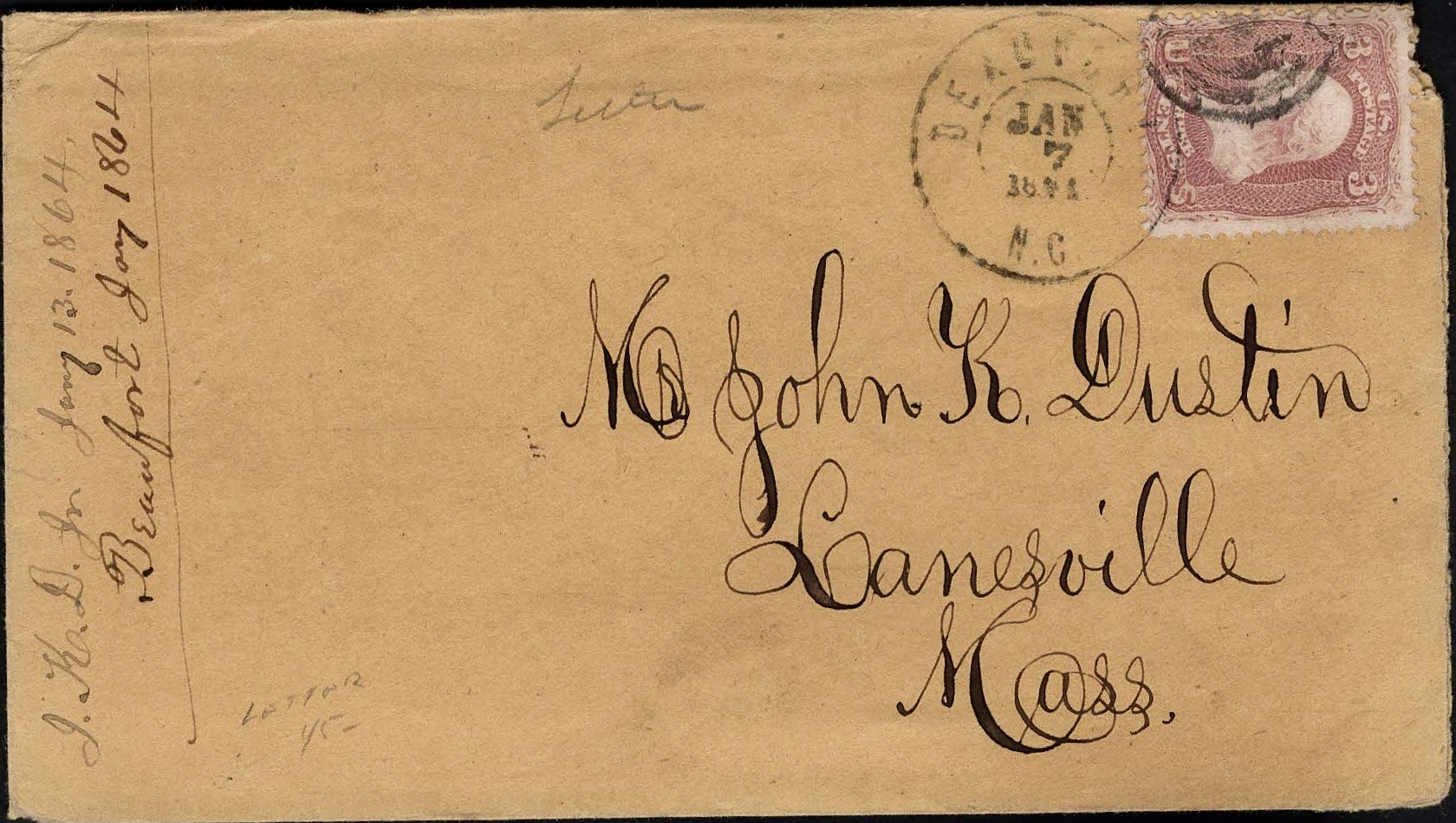
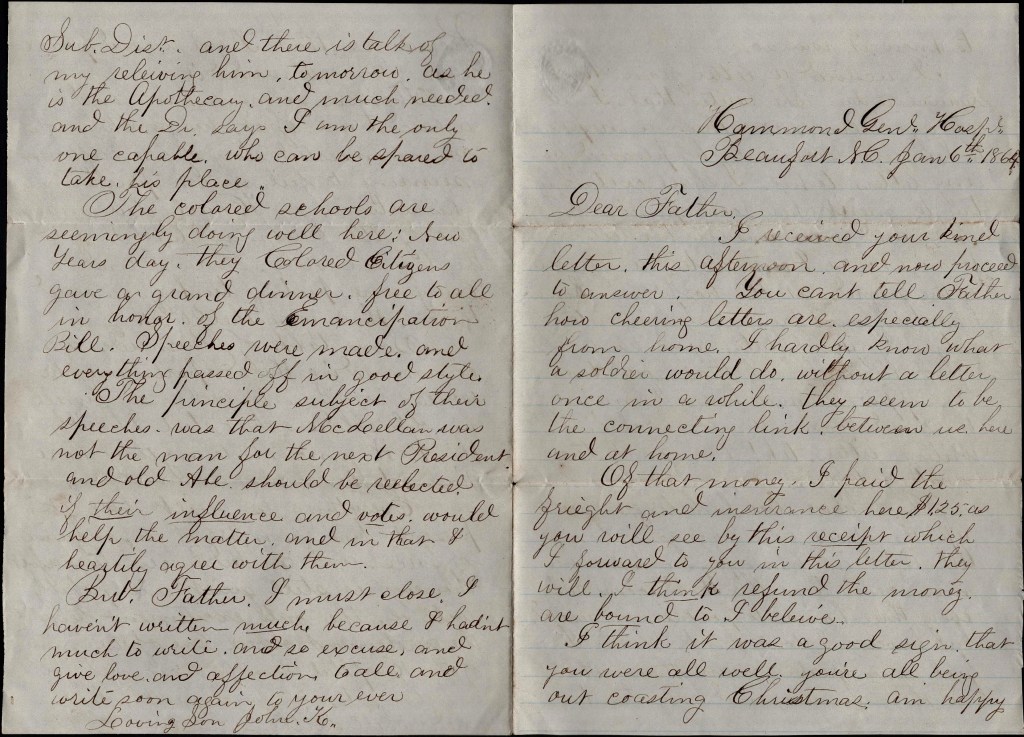
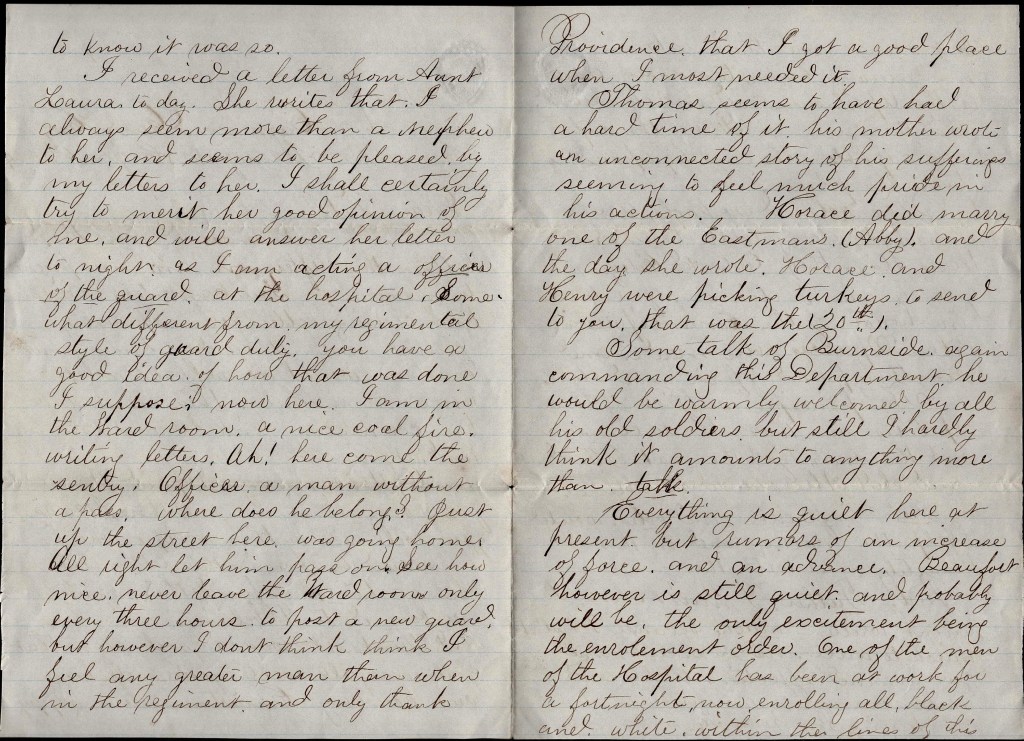

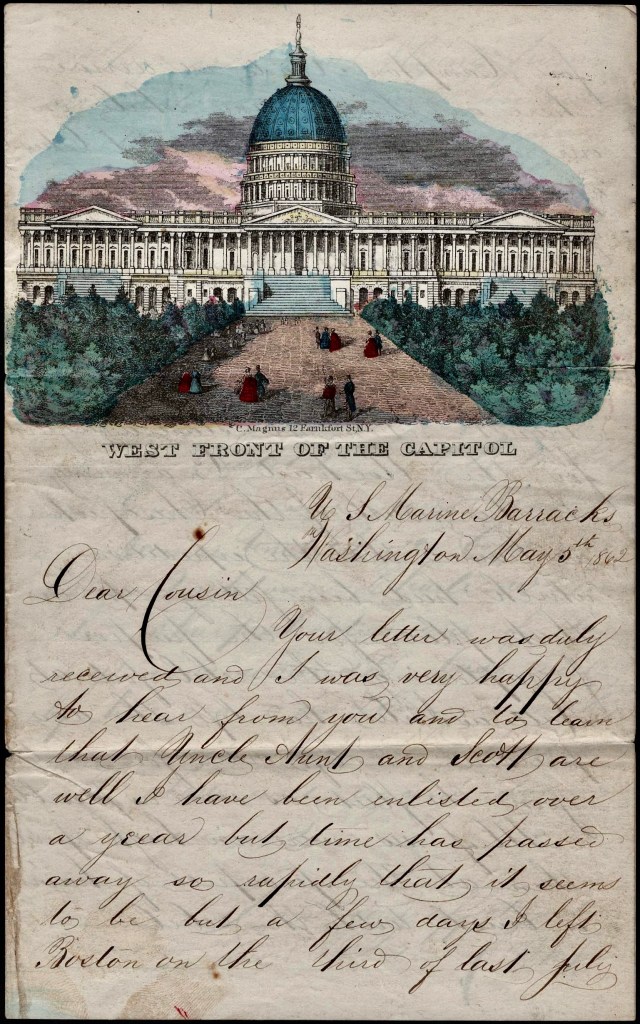
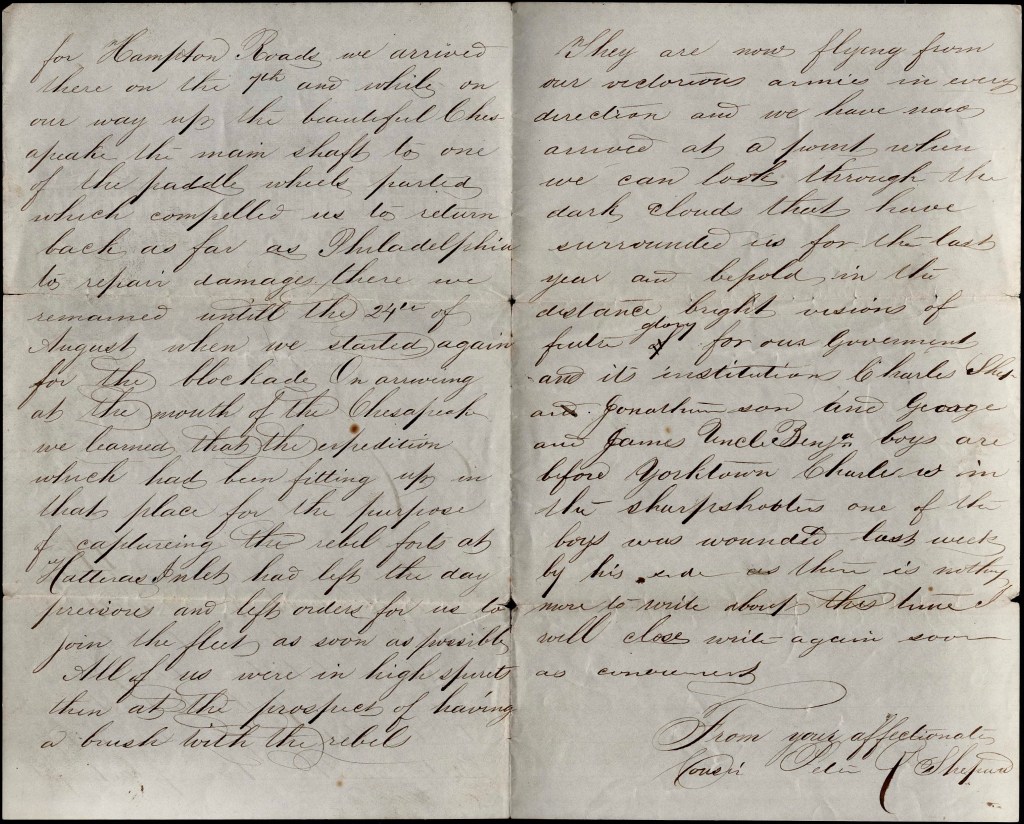
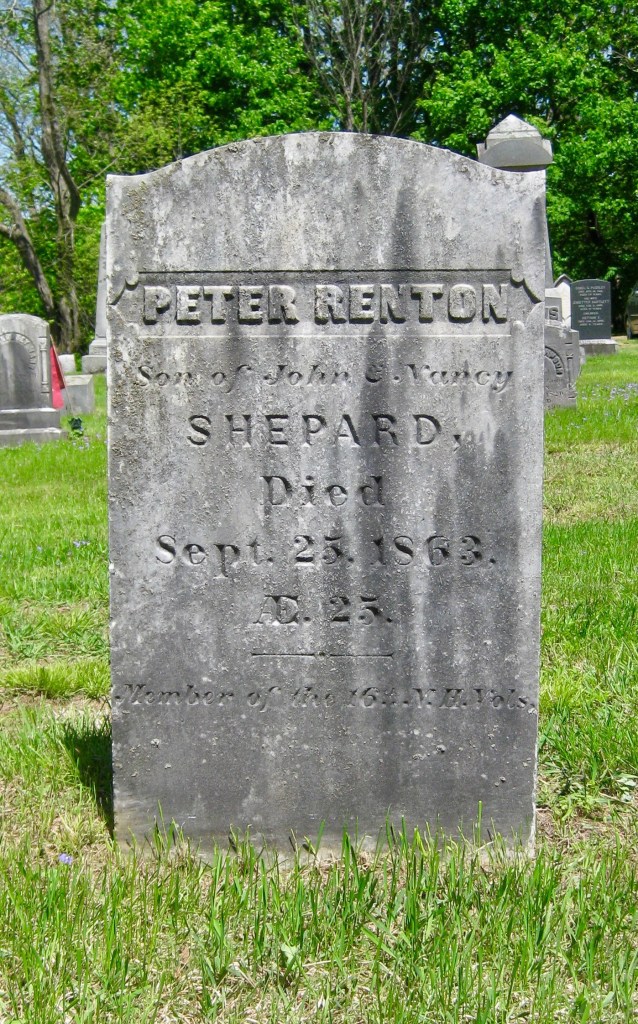


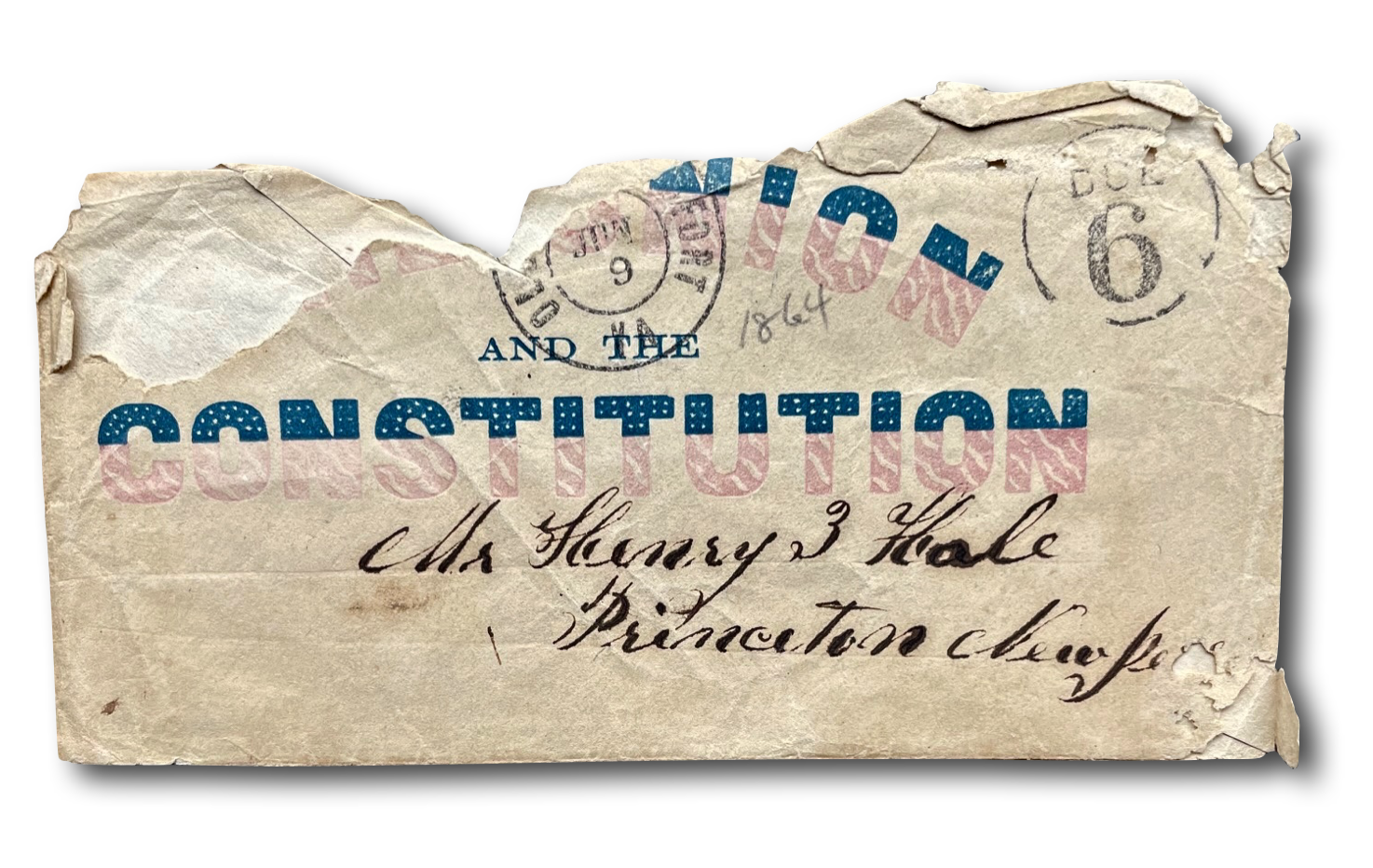
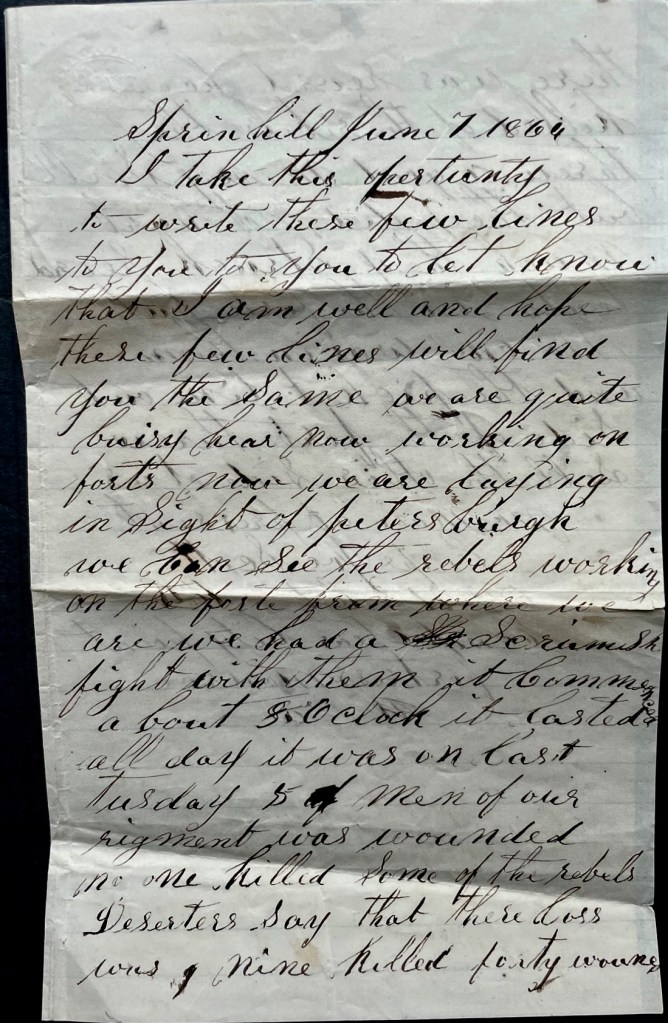
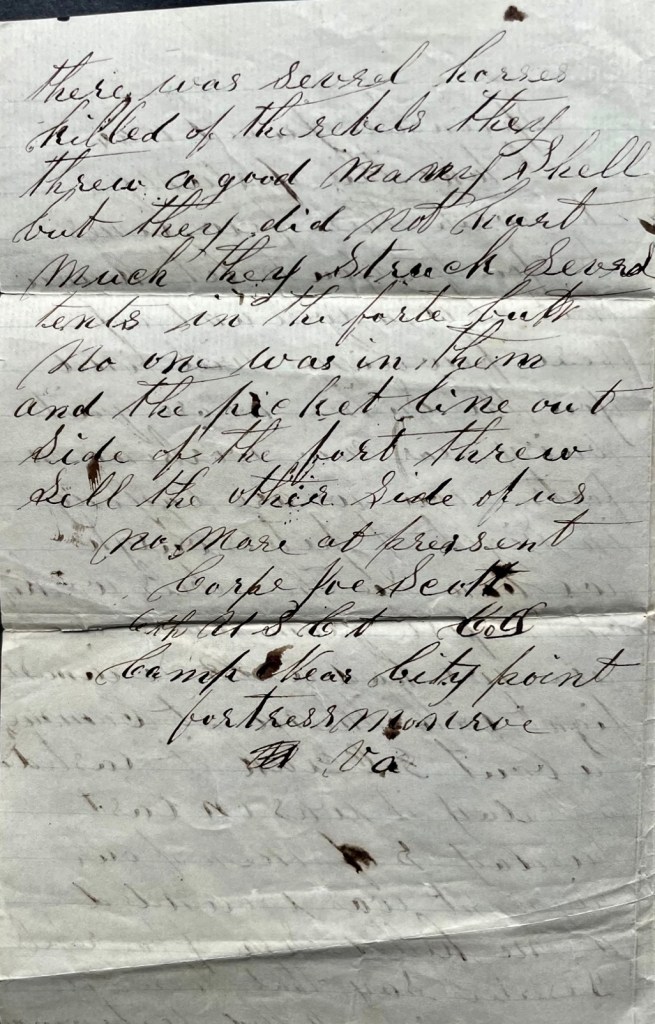

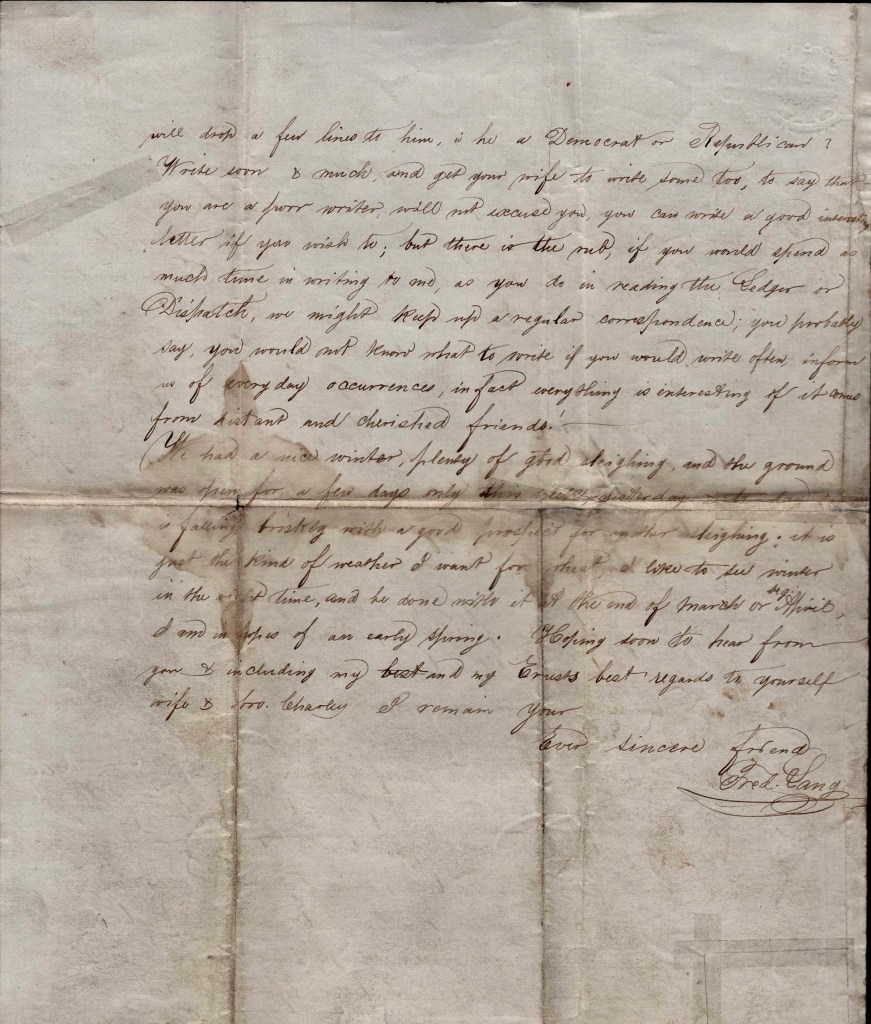

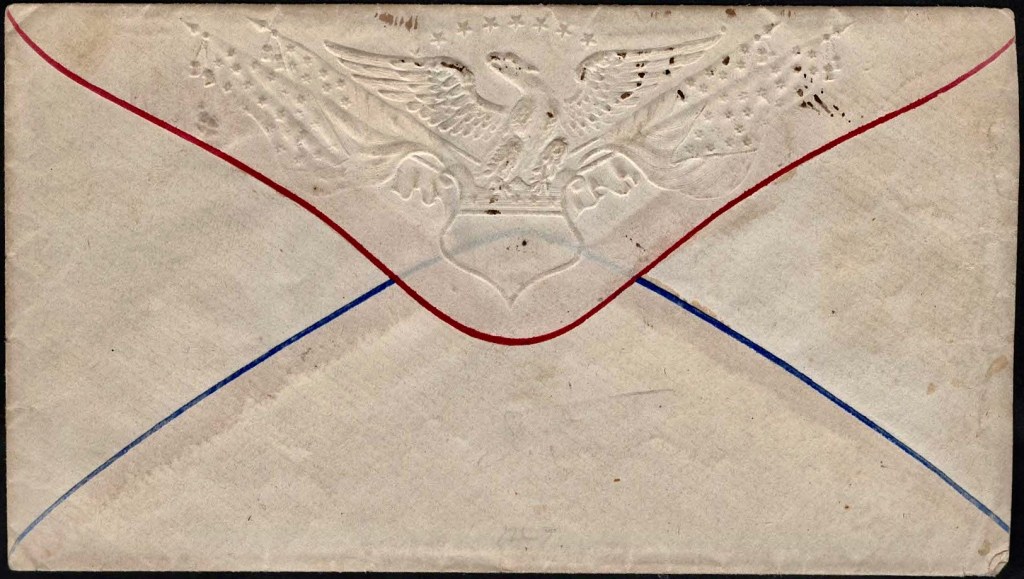

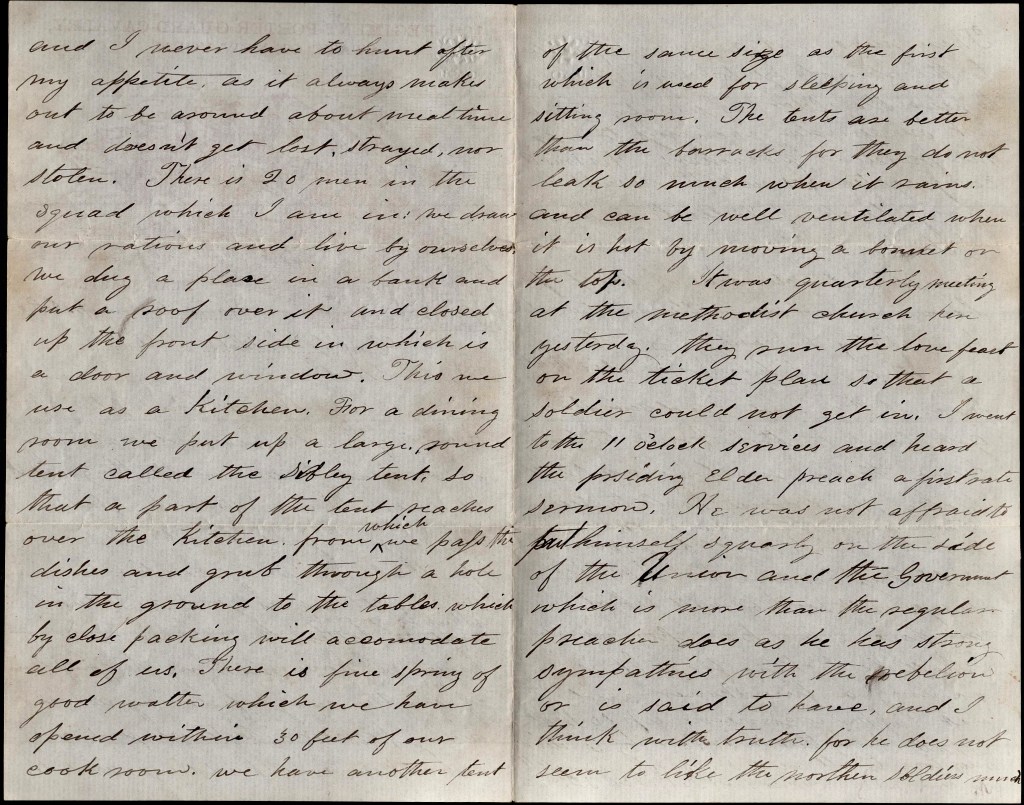
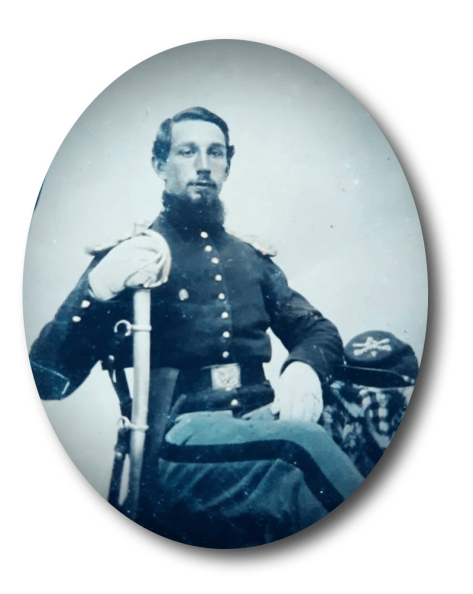


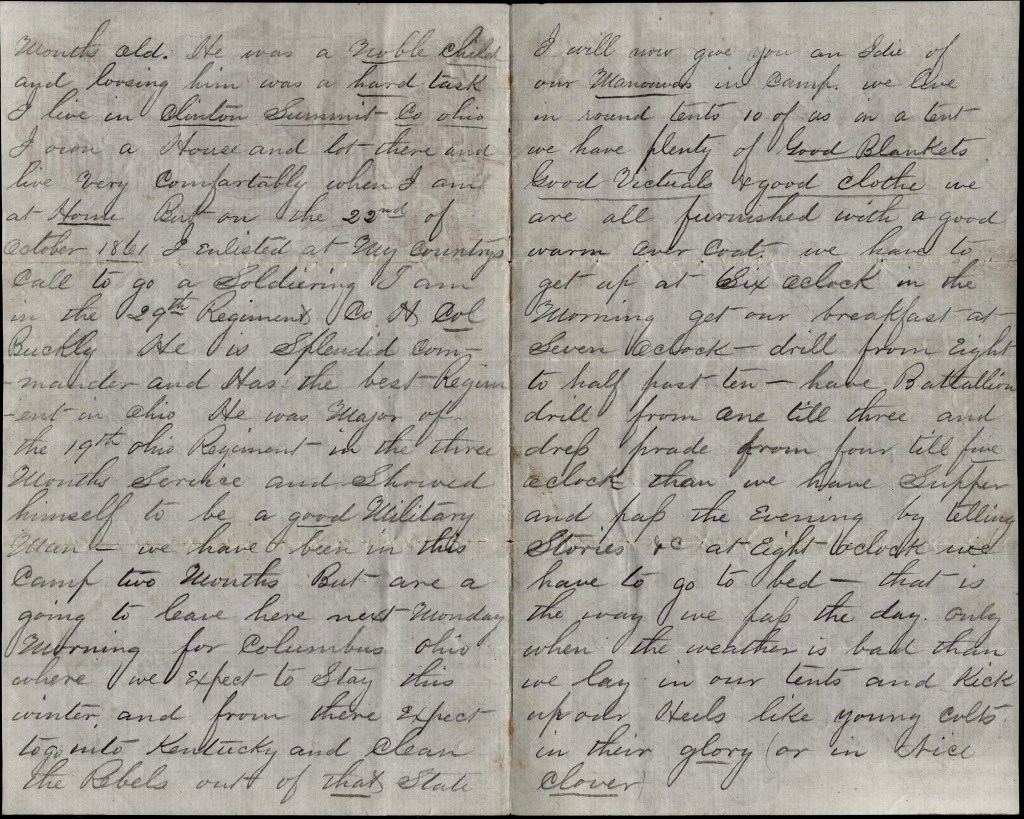
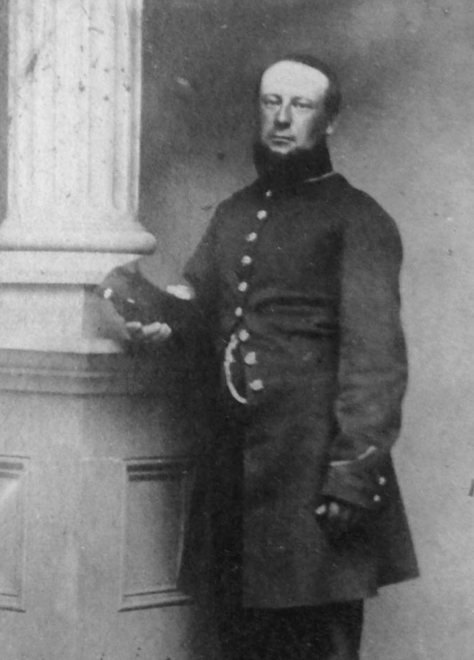
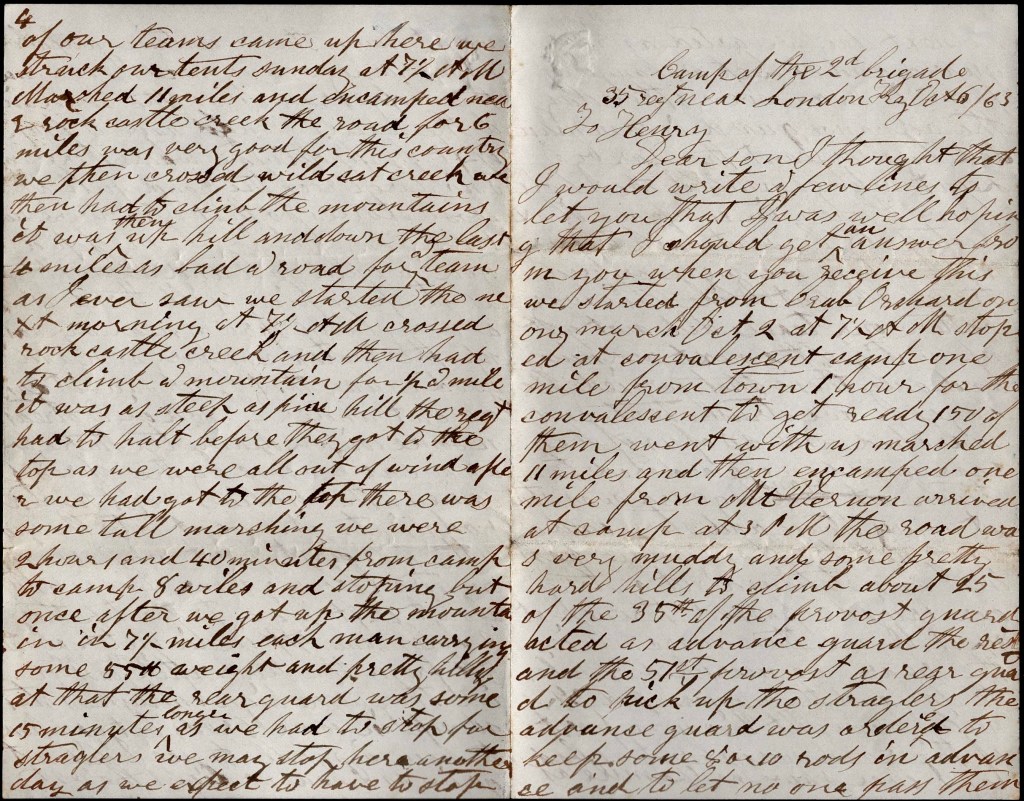
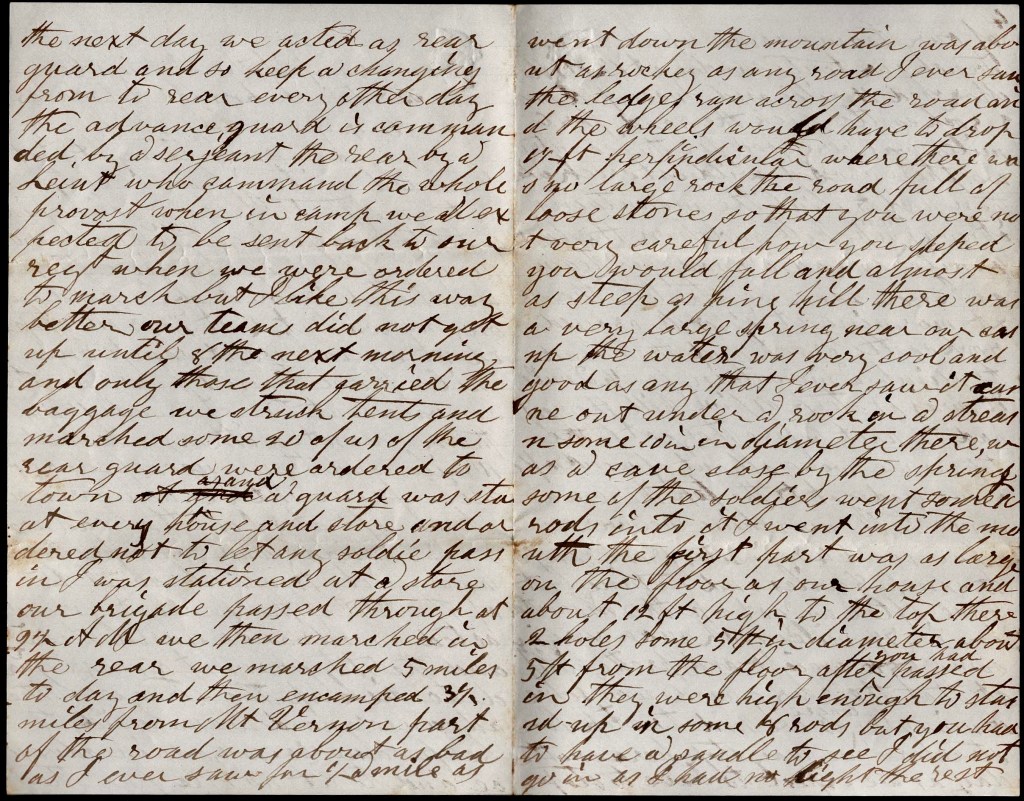
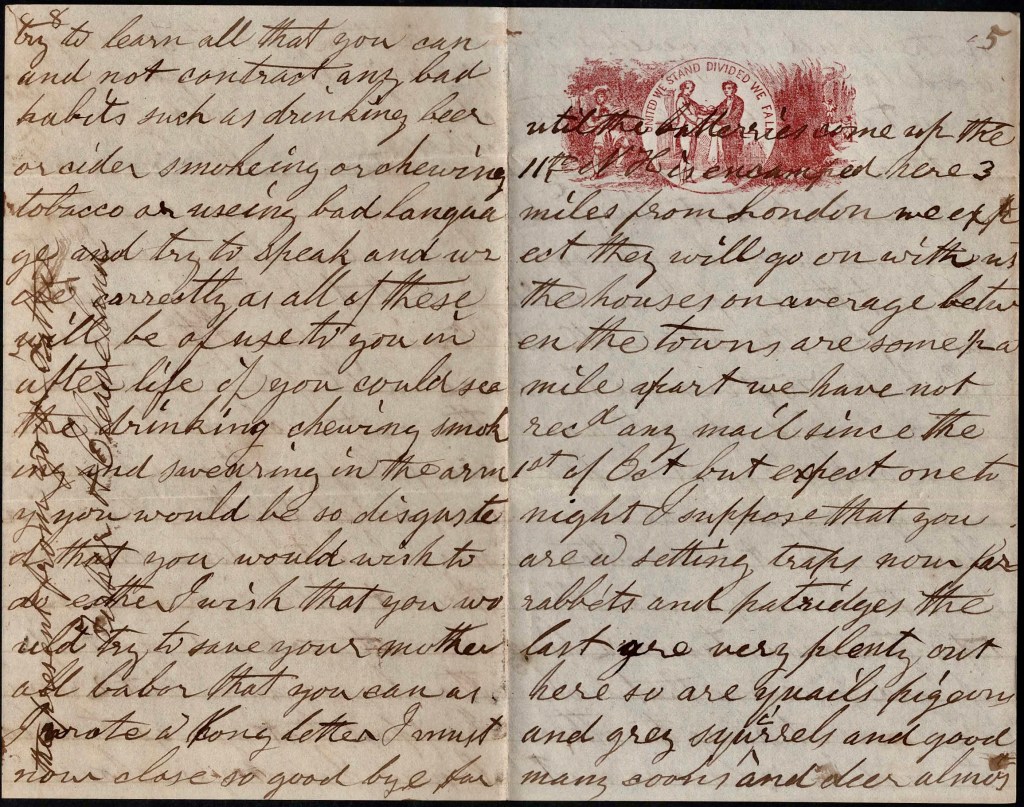
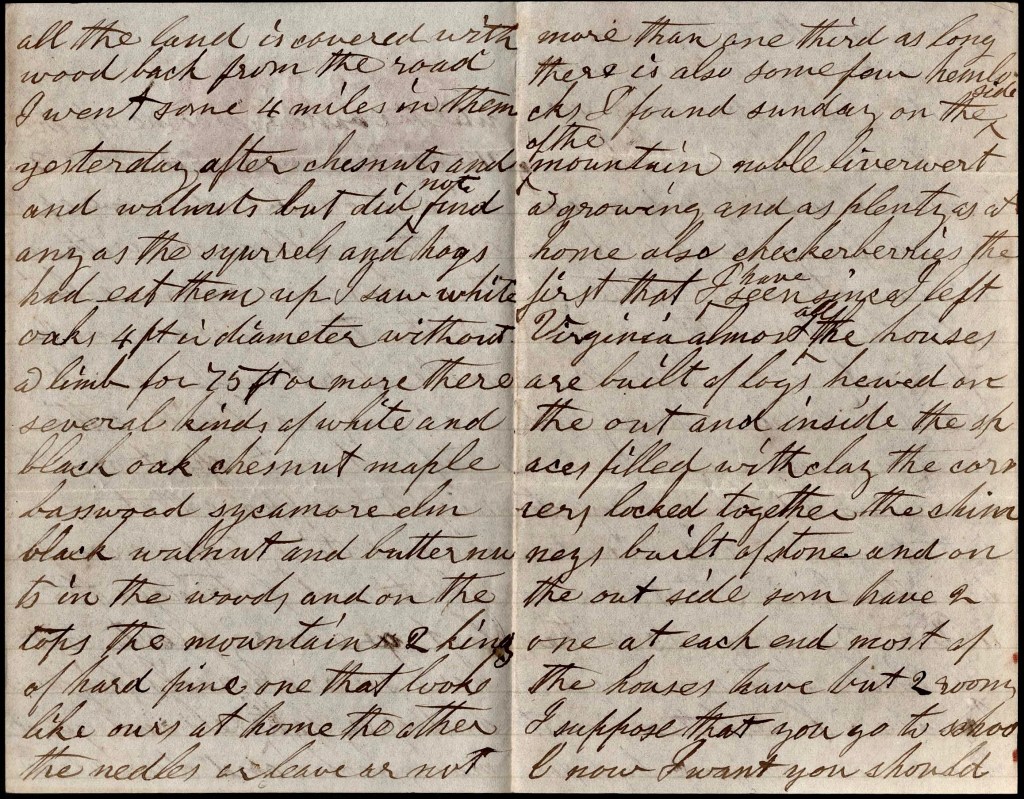
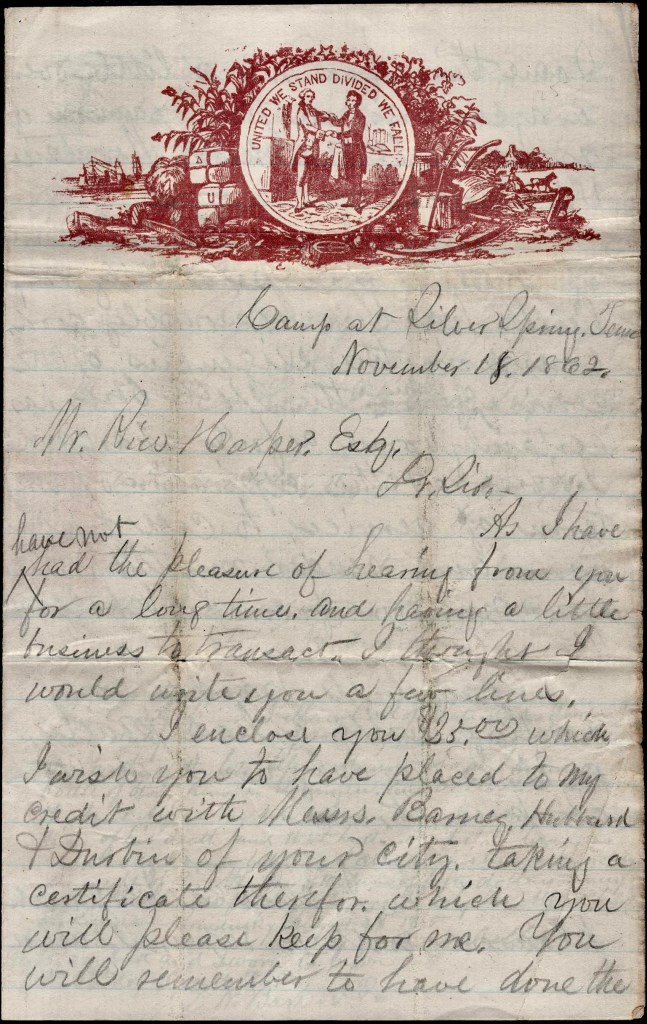

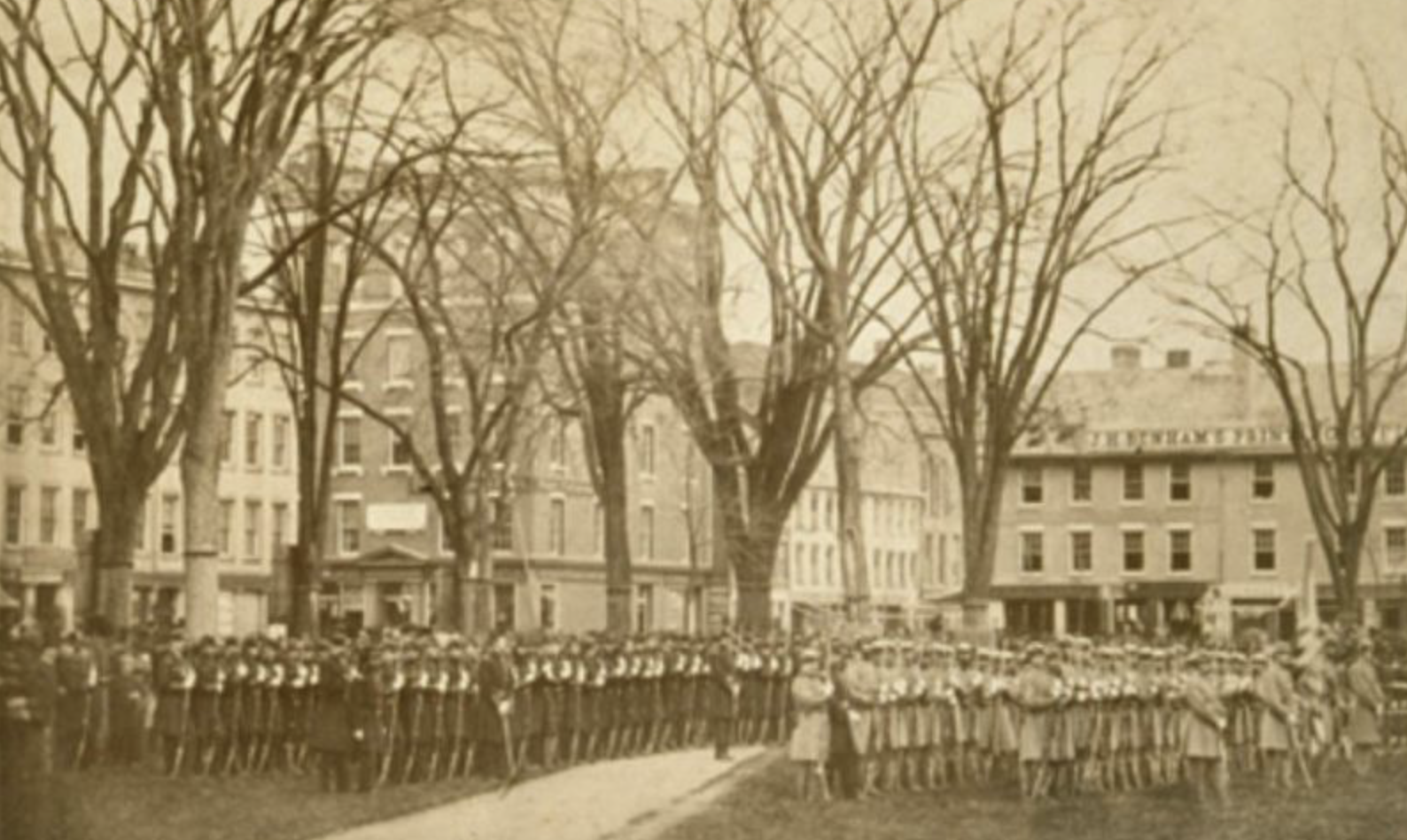
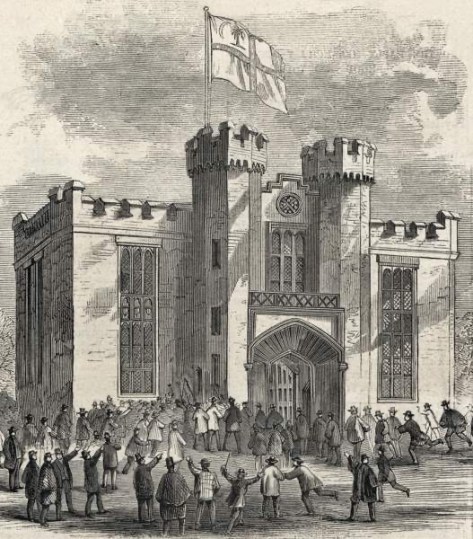
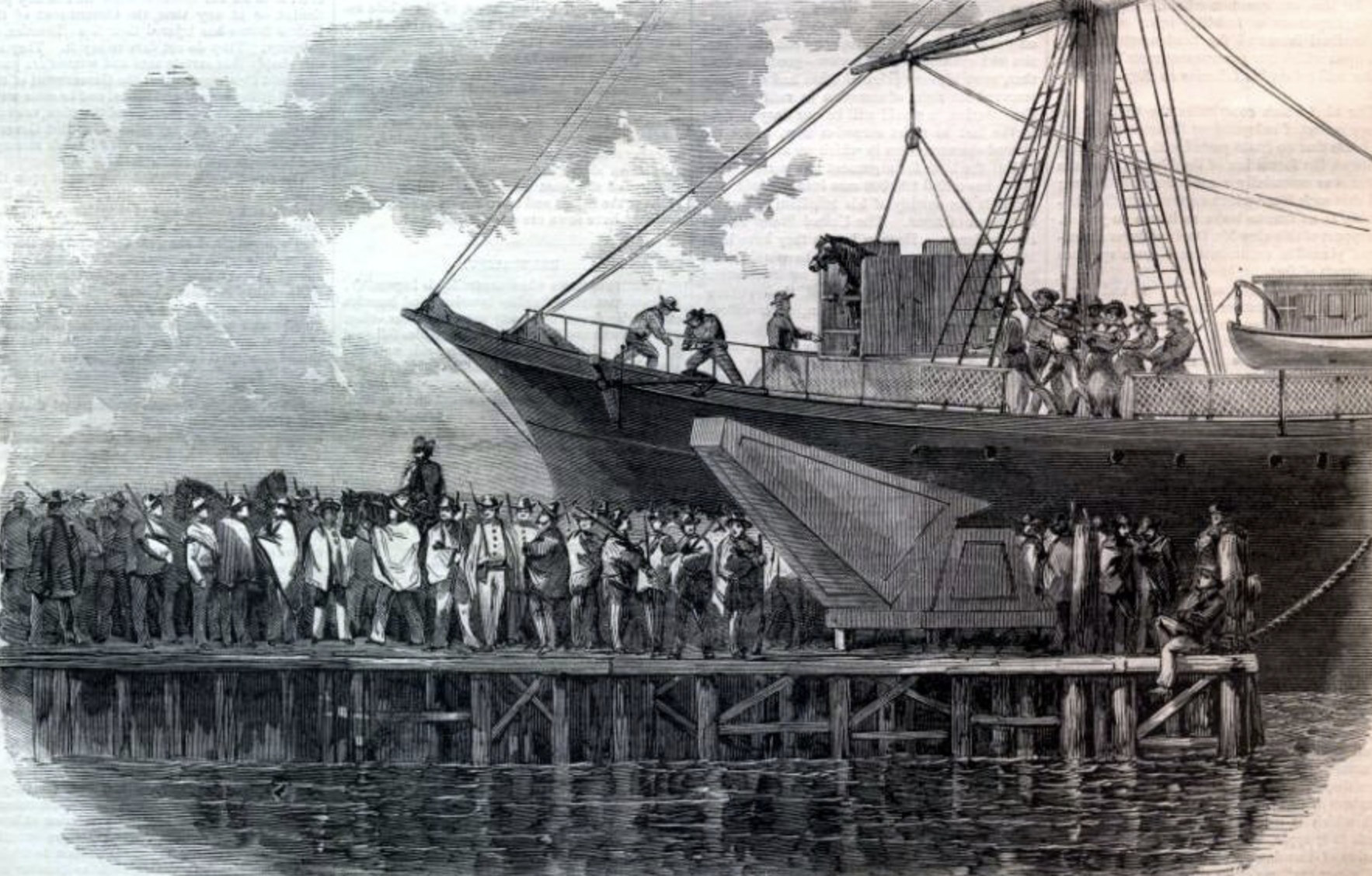
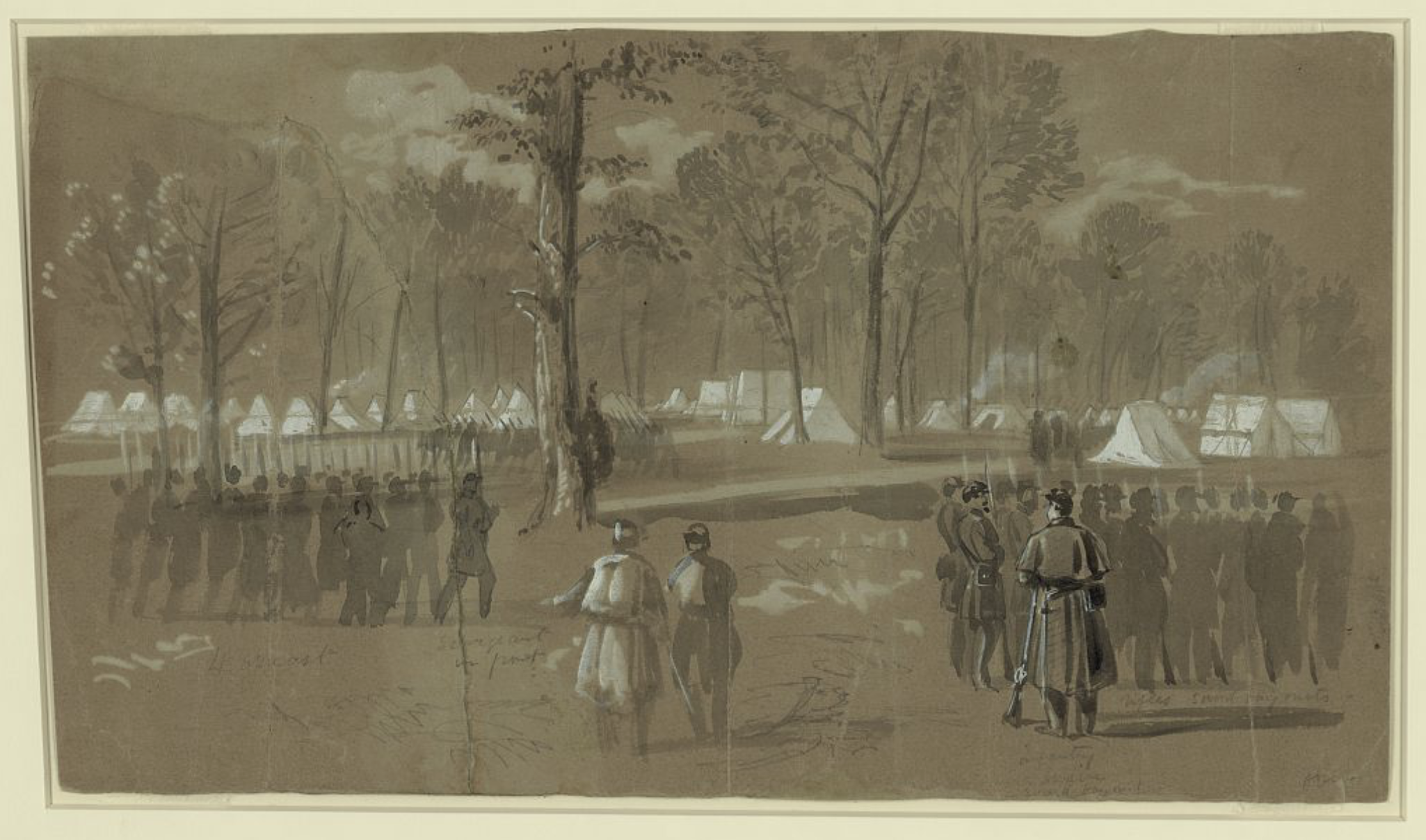
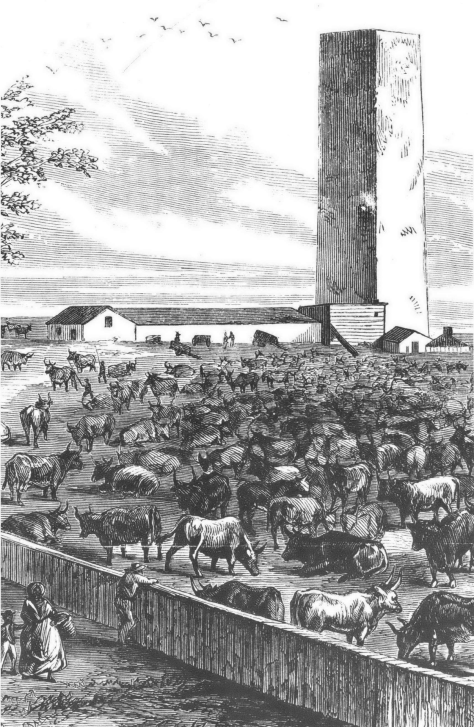
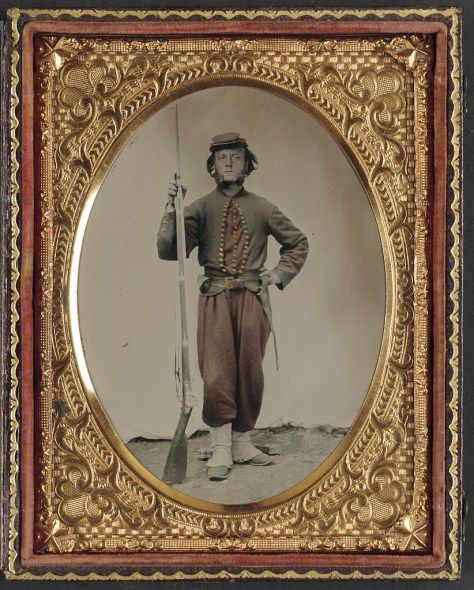
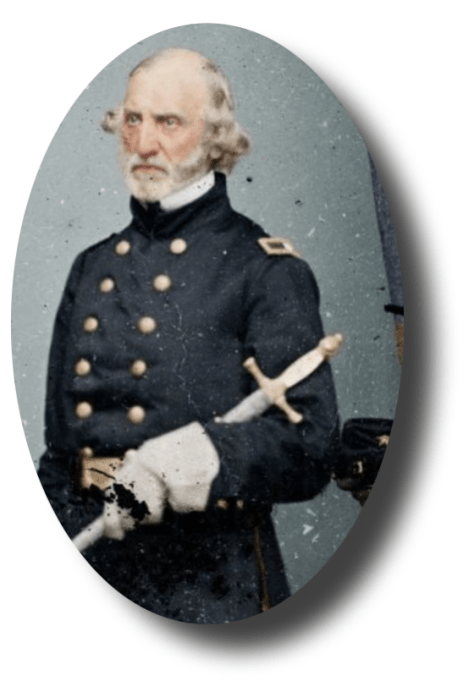
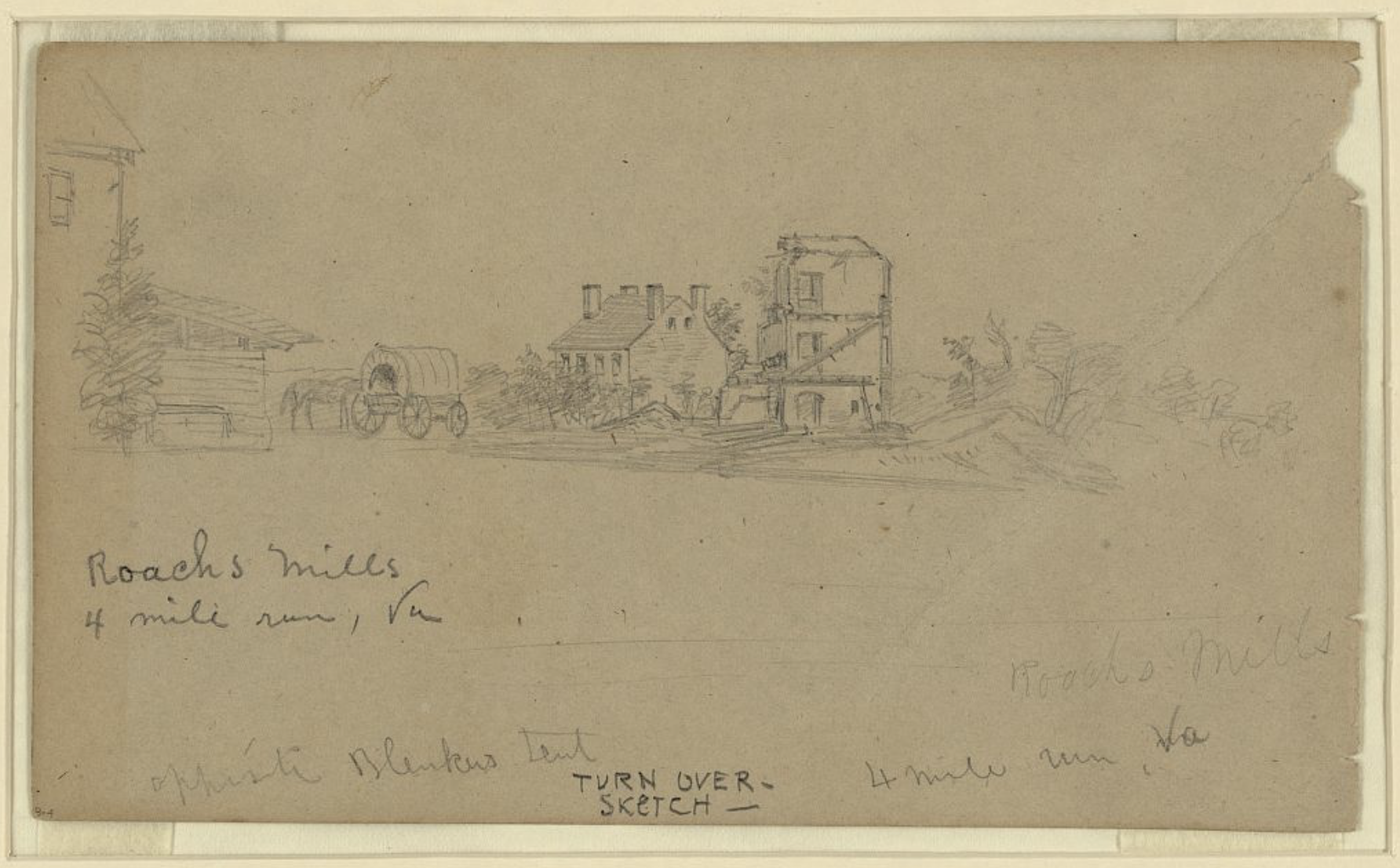
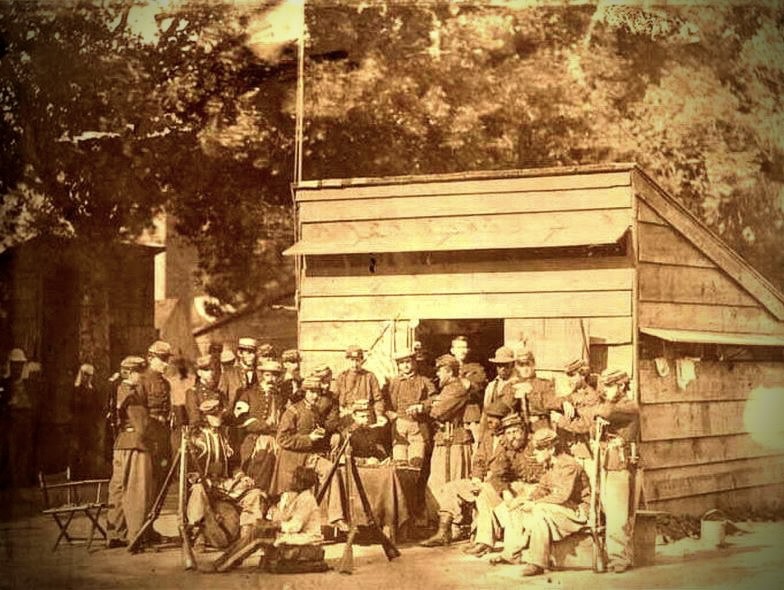
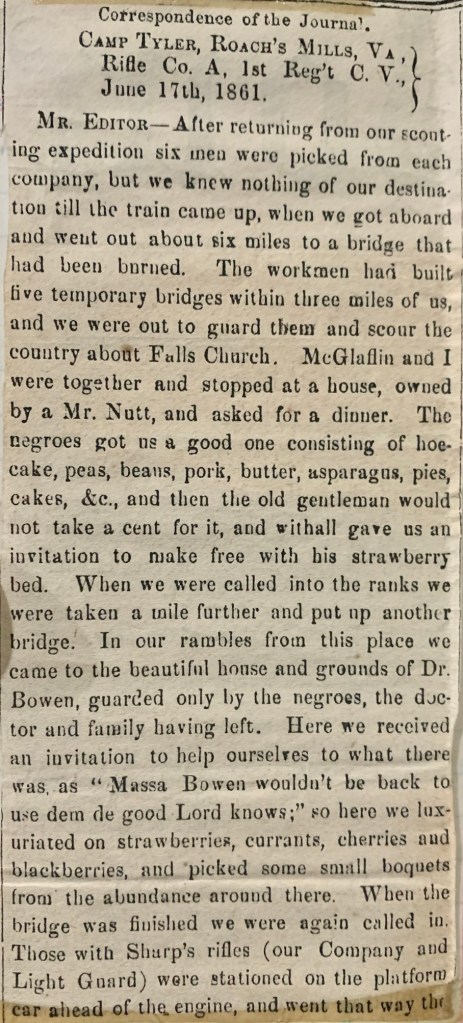
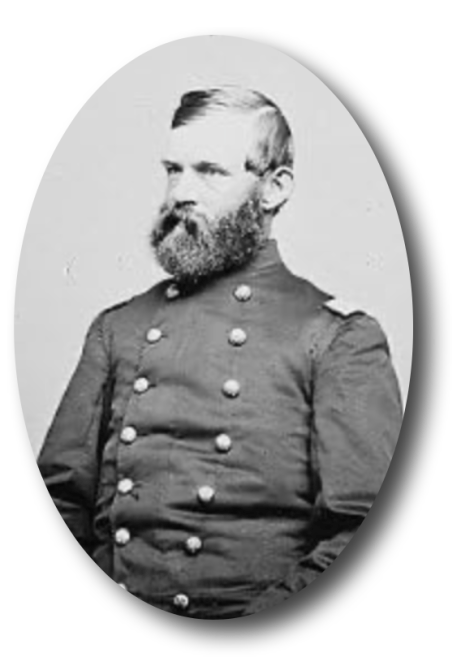
 Spared & Shared 23