My passion is studying American history leading up to & including the Civil War. I particularly enjoy reading, transcribing & researching primary sources such as letters and diaries.
I could not find an image of Josiah but here is one of Marcus M. Collis of Co. H, 21st Massachusetts Infantry (Al & Claudia Niemiec Collection)
The following letter was written by Josiah T. Towne (1826-1862), the son of Joshua Towne (1773-1844) and Mary Chadwick (1788-1865) of Jaffrey, Cheshire county, New Hampshire. Joshua was married to Sibbell L. Boardman (1826-1899) in 1849 and the couple had four daughters (Clara, Alice, Sara, and Alma) born between 1850 and 1856. He left his home and his family in Winchendon in mid-August 1861 to enlist in Co. G, 21st Massachusetts Infantry. He never returned. He died of typhoid fever at Camp Andrew in New Bern, North Carolina, on 27 April 1862. The 2nd Lieutenant attributed Josiah’s death due to exposure on board the steamer Northerner and at the Battle of New Bern in mid-March 1862.
T R A N S C R I P T I O N
Annapolis, [Maryland] October 7, 1861
Dear Sibbell & children,
I have not received a letter from you since I wrote you but I will begin a letter and finish it as soon as I get time. I am usually well though rather tired out, being on guard duty so much. I have a pretty good appetite adn eat my usual allowance.
We are having a little more excitement here now. There is an expedition a going to start from here for the Southern coast. There is a brigade of five regiments here now. They came from Washington here. They consist of the New Hampshire 3rd, Maine 8th, and the New York 46th, 47th, and 48th. There are nearly five thousand of them. I see several in the New Hampshire 3rd that I know from Fisherville, New Hampshire. They played in the band. It seemed good, I till you, to see somebody that I know. One man I [saw] boarded at Hoffman’s at the same time that I did. It seems like home to see some of our New England friends and we expect to see of one New England [ ] here. We expect the 15th Regiment, 22nd and 25th Regiment. There were over 20 of Winchendon [Mass.] in that regiment, and the 22nd is Wilson’s Regiment, and the 25th is now encamped in Worcester where we came from, so if all the stories [are] true, I shall see Winchendon Boys by the wholesale. This Division will consist of some fifteen thousand men and will, I think, be commanded by Gen. Butler. But still, I may be mistaken.
It is very warm weather here now—about as warm I think as it was in New England in July. We have not received our pay yet but expect it tomorrow. The boys are troubled with the shorts [shits?] here as well as myself, but I have got along well enough as we have lived decently well of late and have as much as we want to eat most of the time, But I for one am satisfied as I did not expect as good victuals as I get at home with some exceptions. We have food that is good and enough of it. How do you do, and. the children? How are they? Do they mill paper as much as they did? And yourself? You must be very lonesome—especially in the evening to sit all alone. If I could stay nights at home with you and our dear children, I should be satisfied. There is such a noise here—especially tonight. That is enough to make a man mad. Have your good neighbors taken any more of your squashes? Perhaps they will be taking some of our cabbages though I hope not. How does our potatoes turn out? Have you got anybody to dig them yet?
Herbert [E. Weston] is unwell and is at the hospital. I must go up and see him before I finish this. We are kept here pretty close. I have not been into the City since I have been here—only when I marched in with the company. I will leave this for tonight so goodbye. Kiss the girls for me. Have them say their prayers.
October 8th. As I was coming in from guard duty at one o’clock today, your letter was handed to me and as I have about an hour to spare, I will finish this letter. It is the greatest pleasure I can have to receive and read your kind and affectionate letters. It is with pleasure that I hear that you are all well. You say it seems a long time since I left home. I don’t deny it and I feel for you, dear Sibbell. You don’t have the excitement that I have to kill time, but still the time seems long to me [too]. But I have not forgotten the time when I left my home. It was hard to control my emotions at that time and I know it was for you. Also, when the time seems long to you, you must remember that my affections are all at home with you. and our children. I will accept of the money you sent me though if I get my [pay] this week, I shan’t need it. One of our companies have got their uniform coats and pants and I think we shall get ours this week so I don’t think we shall have to buy much extra clothing.
It rained last night here and it is cold enough to wear a great coat and mittens. Yesterday it was as hot as July. I thank you for the money you sent me and I will try and keep it against time of need. Herbert [Weston] is some better today. He sends a few lines home to his folks. After all, I think my health is as good as they will average. I can’t write any more now. I send the children a kiss if they can find it. My love to you all. From your affectionate husband, — J. T. Towne
The following letter was written by Lewis Longden Long (1826-1889), the youngest child of William Calvert Long (1783-1861) and Mary Armstrong (1783-1861) of Priceburg, Monroe county, Pennsylvania. Lewis married Catherine Peters (1832-1856) and after her death, took Catherine’s younger sister, Elizabeth Peters (1842-1915) as his second wife.
Lewis made his living as a Monroe county farmer before and after his time in the service. He was mustered into Co. C, 176th Pennsylvania Infantry as a sergeant in November 1862 and was discharged in August 1863 after nine months service.
T R A N S C R I P T I O N
Addressed to Mr. Lewis Long, Analomink, Monroe county, Pa.
Camp Suffolk, Virginia Thursday, December 4, 1862
My Dear beloved wife,
This will inform you that I am well at present and hope you are all the same. Well, Libbie, we struck tents at camp Philadelphia at 2 o’clock p.m. and arrived at depot at 4 p.m. and left for Baltimore at 5 o’clock p.m. arrived at Baltimore at 2 o’clock p.m. [We] took breakfast at 3 o’clock and left at 7 o’clock for Washington. Arrived at Washington at 11 o’clock a.m. and stayed overnight. Took the boat at 3 o’clock p.m. and arrived at Point Lookout at 8 o’clock. Cast anchor and laid on deck all night. 6 o’clock a.m., left for Fortress Monroe and arrived at Ft. Monroe at 8 p.m. Cast anchor and laid on deck all night. Left for Norfolk at 11 o’clock. Arrived at Norfolk at 3 o’clock. Took cars for Suffolk. Arrived at Suffolk at 11 o’clock and slept in cars all night. In the morning we marched into camp and found twenty-five thousand solders there. They was very glad to see us come. They say we are good for Richmond. We are 60 miles from Richmond.
This is a nice place—about the size of Stroudsburg [PA]. It is nice and warm here. It looks like May does up there.
We are in the Left Wing of Burnside’s army. There is plenty of Rebels here. Some of the boys went out yesterday and captured a rebel battery and some prisoners and brought them into camp.
I am sitting on the ground and holding my paper on my lap so you must excuse this poor writing. I do not expect you will get this very soon. You must write as soon as you get this. We are within 20 miles of the Rebel’s camp. We are five hundred miles from home. I hope you are all well. I do not think I can come home before my time’s out. I will write soon and tell you all about the boys. I will try and write better. We come down the Potomac. I will have to stop for this time so good night and may God bless you. my dear wife.
I could not find an image of Frederick but here is a tintype of Hiram Fellows who served in Co. K, 8th OVI. He was killed in 1864. (Photo Sleuth)
The following letter was written by Frederick E. Nichols, Jr. (1838-1862), the son of German emigrant Frederick Nichols, Sr. (1792-1854) and Catherine [ ] (1800-1874) of Bucyrus, Crawford county, Ohio. Frederick was mustered into Co. C, 8th Ohio Volunteer Infantry (OVI) as a drummer on 22 June 1861. The muster rolls indicate that he was later reclassified as a private, turning in his drumsticks for a rifle. Frederick was gravely wounded in the Battle of Antietam on 17 September 1862 and died a week later. The attack by the 8th OVI on the Sunken Road was ultimately successful but it cost the regiment almost half of the men in the ranks—162 men in killed and wounded.
This letter was written to his sister Sarah (1835-1865 who was married to Samuel Couts in 1858. Their son born in 1864 was named after his late uncle.
This letter is housed in the Records of the Pension Bureau in Washington D. C. It was brought to my attention by Kathi Donatucci who discovered it while researching material for a book and suggested posting it on Spared & Shared. The book she says she will never finish draws its title from this letter, which is: “Plenty of Biscuit and Cold Slaw.”
T R A N S C R I P T I O N
Camp at Harrison’s Landing June the 30th 1862
Dear Sister Sade,
I received your letter a few days ago and had many opportunities of answering it but on account of the warm weather and the only reason why I am so lazy I neglected to answer it until today. I am in good health and when these few lines reaches you I hope they may find you in the same enjoyment. I feel relieved since I found that mother had got that money. I was anxious to know what had become of it. We are a going to be paid again some of these days and then I will send her some more money by letter.
I was over to see Henry yesterday. I let him read your letters. He said he would write to you and give you a short history of the different engagements fought on the Peninsula before we arrived here. I suppose you have heard of them ere long before this time, so it is not worth while mentioning them. He said if Jim Stevenson would tell him that nobody but damn fools and cowards would go to war, that he would kick his hinder parts. He has given Jim’s girl a name. He calls her miss (heavily crossed out—looks like Jenny ass maybe). He thinks he ought to get married because he needs a wife very bad. I think so too.
Sade, the corps which Henry is in is under marching orders so I think there is pretty good prospect of leaving just now. Sade, if you will make me a couple of Calico shirts and send them to me, I will pay you for them. The reason why I want calico shirts, they are easier to wash and I have to be my own wash woman. I will send you the money to buy the stuff in my next letter. You can do them up in a small box and send them. Sade, I have no money now but as soon as I get paid which I think will be this week, I will then have my miniature taken if I can find an artist in these diggings.
Well, I will have to close for this time. Please give my respects to every body you see and in particular to Miss Wagner. No more at present. I am ever your brother, — Fred
Sade, if I should be so fortunate as to get out of this predicament, I want you to prepare plenty of biscuit and cold slaw. Sade, send me a postage stamp or two the next time and as soon as I get payed off, I will send for another dollar’s worth.
The following letters were written by Elijah J. Williams (1822-1864), the son of Thomas Williams (1776-1856) and Talitha Rust (1780-1856) of Williamstown, Orange county, Vermont.
I could not find an image of Elijah in uniform but here is one of another member of the regiment wearing the Vermont Brigade Badge.
He moved to Barton in 1859 following the death of his eleven-year-old daughter in Williamstown, Vermont. He found employment as a painter in a chair factory on Water Street. He and his wife Susan Deborah (Stimson) Williams (1828-1901) lived in a tenement house on High Street with their two children Elthia and Melbourne. In mid-August 1862, forty-year-old Elijah Williams enlisted into the army and became a member of Co. D, 6th Vermont Regiment. His enrollment records inform us that he had stood six feet tall and had dark hair and black eyes. Muster rolls reveal he was always present for duty and for his reliability, he was promoted to corporal in February 1864. Sadly, he was wounded in the thigh on May 5, 1864 as they defended the Orange Plank Road in the first day’s fighting of the Battle of the Wilderness. In his official report, Col. Lewis Grant who led the Vermont Brigade wrote of the day’s fighting: “Darkness came on and the firing ceased. One engaged in that terrible conflict may well pause to reflect upon the horrors of that night. Officers and men lay down to rest amid the groans of the wounded and dying and the dead bodies of their comrades as they were brought to the rear. One thousand brave officers and men of the Vermont Brigade fell on that bloody field.”
Elijah’s wound was so severe that he died four days later in a Fredericksburg hospital. He was buried somewhere in Virginia but a cenotaph memorializes him in his hometown of Williamstown, Vermont. His wife Susan eventually remarried in Barton in the spring of 1870 to Abner W. Lyman (1830-1916). She died in Haverhill, New Hampshire in 1901. [Source: Dan Taylor]
These letters are from the personal collection of Les Kaufman who graciously offered them for transcription and publication on Spared & Shared by express consent.
Letter 1
Burlington [Vermont] September 21, 1862
My dear wife & children,
I take this opportunity to pen you a few lines to inform you that I am well and in good spirits. You will not send any letters until you hear from me to know where to send it. My trunk will be sent by express paid by government. I was examined yesterday. The Old Doctor said I was sound as a nut. I got my uniform yesterday. Probably be mustered in tomorrow and start Tuesday noon for Washington. We will not get our guns till we get to Washington.
I send two apples, two lemons. Divide them between you. I had to take them to get a bill changed. If Em gets my cap crocheted, send it in a letter to Washington. I wish you was hear. We are in camp on the Marine Hospital grounds. We camp in tents. We are old soldiers. We are about two miles from town. We arrived at camp about ten o’clock the same day I left Greensboro. I stopped at Montpelier one hour and a half. Went to see Charles & wife. She was gone from home. Charles thinks of enlisting in the nine months men as drummer. We have a fine view of the lake. Pleasant here & good times. Plenty to eat, to drink, & wear. You will get the trunk the first of the week. Have Jim go to the Express Office the first of this week. You will have your money then.
Write. You let me hear from you. Then I will write soon. Yours in haste. Goodbye one and all. Goodbye. — E. J. Williams
Letter 2
Washington D. C. October 4, 1862
Dear wife,
I am well. I have not much news to write. I have got back to Washington. We laid in Alexandria until yesterday. Was ordered to march. I expect we are agoin’ to our regiment. I haven’t seen Cone yet. I have forgot the number. When you write, send me his cord. Give my love to all enquiring friends. Elthea, I suppose, helps her mother do the housework. I [suppose] Melbourne brings in the wood & Elle eats the apples.
I do not think there will be much more fighting if any. Camp rumor says there is 15 Rebel Commissioners in Washington treating for peace. Things move slow. There is some 50,000 troops in & about Alexandria yesterday—probably for old regiments.
Direct all your letters until further orders to Co. D, 6th Vermont Vols., Washington D. C.
I am in hopes of hearing from you soon. The letters, in any, directed to Alexandria will be sent to me. Write. Kiss the babies. So goodbye. Love to all. Yours as ever, — E. J. Williams
Letter 3
Camp near Hagerstown, Maryland October 11, 1862
Dear wife & children,
I take my pen in hand to write you a few lines. I left Greensboro September 19th for Burlington eat supper 10 p.m. Camped on the ground in the Marine Hospital yard some two miles from Burlington Village in sight of Fort Kent York State, Shelburne Bay, Vermont. 20th Examined & uniformed.
21st Sunday.
22nd Mustered into service of the United States & signed the pay roll. Mustered in by Major Austin.
23rd Received Pat State, pay $9.80, Bounty $25, United States $13, Premium $4, making in all $51.80. On guard first time 4 hours.
September 24th. Started for seat of war. Left Burlington about 10 a.m. Stopped at Vergens, Middlebury. Brandon & Rutland, Vermont. Arrived at Troy, New York, same day at half past 5 p.m. The depot at Troy was burnt last summer. It burnt over 70 acres. We were marched to the Female Seminary grounds to wait for the boat to take us to New York City. The proprietor of the Seminary gave us a treat in peaches, crackers, and cheese. Carried on board the boat Francis Cadd. We went on board about sunset. Set sail about 9 p.m. got on a sand bar. Laid on about two hours. Arrived at New York City on the 25th, 11 o’clock a.m. Marched to the City Park, stopped about two hours, marched through Broadway some two miles. Turned on to another street to the wharf. Went on board the Richard Stockton for Amboy, New Jersey. Went on board the ferry boat. Arrived at Philadelphia 12 o’clock midnight. Marched to the Soldiers’ Home and had a splendid supper got up by the ladies (God bless them). Then marched to the Baltimore Depot at half past 2. Camped on the Depot floor. Started from Philadelphia in the cars at half past 5 a.m.
September 26th, arrived at Baltimore at dusk. Took supper. Slept in the depot.
September 27th, took breakfast & started for Washington. Arrived at Washington 6 o’clock p.m. when we went to supper at Washington at the Soldiers’ Retreat. It was enough to sicken a hog. Fare consisted of one slice of bread [and] one slice of pork alive with maggots. It had been put on until the maggots carried it off. Coffee in pails looks like dish water—hot and no dippers to dip it out. There was some 300 soldiers standing around the tables and not over two dozen dippers for the whole to drink out of.
When we arrived at Camden we went on board the ferry boat cars and engines 16 cars, 8 on a side. Engine in the center with about 500 persons on board crossed from Camden to Havre de Grace. Thence to Baltimore. It is a fine country from Burlington, Vermont, to Pennsylvania through the whole state up to Delaware line. Some fine farms in Delaware but you can tell the difference in the Free States. The farms are well cultivated, buildings looks neat & tidy, painted up in good shape. Front yards. There were some fine farms in New Jersey. The people were very enthusiastic all along from Burlington, Vermont, to Delaware line.
After you get into the State of Delaware, you get into the first slave state. You can see the difference in their farms. Free labor produces neatness, work for the mechanic, and comfort to all, whilst slavery shows shiftlessness, houses white-washed, fences whitewashed, old rubbish about their doors. The poor White are not so comfortable as the Black. I have not much sympathy for the niggers. There is no Union about them. I will fight for my country but not for the nigger. There is waste land enough along the railroad from Delaware to Alexandria run up to brushes for every poor man in Vermont a good farm of 100 acres each, level land worn out, then left and run up to bushes until there is trees some 5 or 6 inches through. Then they cut it down, clear it off, plant & sow as long as they can raise anything. Then let it run up to bushes, weeds, or anything else it chose to. It takes a great deal of labor and manure to raise a crop. I have never seen so poor land as about Alexandria—Sacred Soil—so hard and full of little cobble stones as almost impossible to plow. I saw an old negro taking up fence posts to keep our troops from getting them to burn. He had to take a pick to dig the dirt from around the posts before he could pry them over.
After we got breakfast at that most splendid hog pen, I went up to the Capitol of these United States. It is a large pile of stone. It is not finished yet. I did not go in. Visitors are not allowed in for it is used for a hospital. I looked in and saw couches all around the entrance room. The Capitol grounds are littered all over with stone & rubbish but back of the building is a fountain and handsome shady walks. The City itself is very well built. I did not have time to run about much as we had to fall in & march to the wharf and go on board the ferry boat for Alexandria, Virginia. It is some 12 miles south of Washington down the Potomac, opposite side from Washington. It was Sunday 28th. We arrived at Alexandria about 4 p.m., marched some two miles to Post Hospital near Alexandria, Virginia, camp for new recruits. We passed the Marshall House where Ellsworth was killed. Alexandria is a dirty place. Houses look like some hog pens. The doors look as if they would like Suky with her scrubbing rag and soap. I should think they used them to cut up their hogs on. Windows smashed up. Oh! you do not realize the distribution of war buildings burnt, bridges blown up & burnt.
Fort Ellsworth commands the City. About half a mile back of our camp at Post Hospital is a cemetery with a vault. It was owned by a Rebel officer & all the surrounding land. Two fine houses nearby, one in the cemetery ground—or was, it was enclosed with a picket fence enclosing 30 acres in a beautiful grove of oak, walnut, and chestnut. There is many beautiful monuments on the grounds, one raised by the ladies of Alexandria in respect to the firemen killed in discharge of duty, 7 in number, buried in one vault & such is the fate of war. More than 20 acres of this grove on the cemetery ground. The fence most all torn down and burnt. Tombs opened in search of arms. Horses tied to grave lot fences. Hundreds of acres of lands run to waste. Families forsaking home and their all to tender mercies of a ruthless foe.
The Rebel officer who owns the grounds I spoke about was killed and put in the vault. It is a tomb with a stone front on a side hill bricked up and arched over head. It will hold some 24 coffins set on iron bars. There was eight in the vault when I was there. This officer was put in an iron casket & placed in a wood box. The screws were all removed but one. This cover could be removed to enable you to turn a iron cover from a glass in the casket. I took a match and lit it and saw the corpse. The iron door was blown open in search of arms. They found some 15,000 stands of arms hid by the Rebels and the door has been open ever since. His widow has left and gone to Boston.
We left camp near Alexandria October 3rd, went on board a towboat, went to Washington to that beautiful Soldiers’ Retreat. Stayed all night. Next morning, October 4th, had a fight. One man stabbed another. He died next morning. The other court martialed & sentenced to be shot on the 5th at 3 p.m. After dinner we went on board the cars for our regiment’s 39 car loads. Rode all night. One man named Curtis got sleep in the top of the cars and rolled off and killed.
October 5, arrived at Frederick Junction. Crossed the Monocacy on a trestle bridge built where the Rebels blew up an iron bridge. Cost some 30,000. It is three miles from Frederick City. Here we arrived at the Rebel’s last battle ground—that is, on the 5 Day’s Fight. Towards night we arrived at Harpers Ferry where John Brown was taken. It was burnt by the Rebels about one year ago & held by our forces until given up by Col. Miles—that arch traitor. We went about 2 and a half miles from Harpers Ferry and camped at the foot of Maryland Heights. Stayed the 6th. I went onto the Heights and could see hundreds of miles each way all through the Shenandoah Valley where Banks retreated back and is now held by the Rebels. Col. Miles surrendered to the Rebels when he could have held it—so the inhabitants told me. He was shot by one of his own men as he was lowering the flag, not as the papers say by a piece of shell from the enemy. He sold the army 8 to 12,000 who could [have] held the place against 5 times that number.
McDowell is another traitor, so called. He is not in command now. General Sumner’s Corps occupies the heights in Virginia—some 60,000 men. I went on Maryland Heights with a Lieutenant of the 73rd New York. Saw five graves—South Carolinians. Three bodies were thrown over the rocks and burnt. The Lieutenant dug up from the bones one foot burnt off at the ankle bone. The flesh burnt off but left the cords so as to keep the bones together. He put it on a stick and brought it into camp.
October 7th. Last evening some 300 more men came in. This morning took up. the line of march. Marched some 15 miles. Encamped on a small creek some three miles north of Sharpsburg. We stopped at Sharpsburg some three hours. It showed the effects of shot & shell. One building, the whole front, was completely riddled with canister from a shell bursting in front of the house. The holes are about as big as 1 inch auger hole. Another had shell strike in the back side making a hole as large as 7 inch stove pipe & dropped in the room but did not burst. If it had, it would stove it to flitters. Another struck in the corner of the jet, stove up the jetting & brick on the gable end. Lots of others were more or less shattered. Two were burnt by the shells. Sharpsburg includes the battle ground of Antietam. All of those places mentioned includes the Great Battle of Antietam some six miles in length by two miles wide. We came by a schoolhouse. Well you take a skimmer, then think of one as large as the front of the house you live in. It was completely riddled. I could mention a thousand of similar ones but it would take a week.
We started on the 8th [and] marched about three miles to Franklin’s Headquarters. Stayed all night. Next day until 4 p.m., [then] took up the line of [march] to join our regiments which reached about 10 p.m
October 9th & camped on the ground. Next morning went to our several regiments into tents. Nothing worth mentioning on the 10th. We have had no rain since September 24th until last night, the 11th. We had an alarm. All the Brigade turned out but the 6th Regiment. It was on City Guard. We are encamped one mile from Hagerstown on the south side of the City. I have not been to the city. Am going this afternoon. The alarm I spoke of was a Rebel raid. They crossed at Dam No. 5, went into Pennsylvania in the outside of our lines to Chambersburg, destroyed some of our stores with the Depot, thence onto the Baltimore & Ohio Railroad, thence through our lines to Nolan’s Ferry, back over the Potomac with but little loss. The circuit they took was about 112 miles. They took back from 8 to 1,000 horses taken from the farmers in Pennsylvania. The horses were loaded with shoes and clothing taken at Chambersburg 25 miles from Hagerstown. The 2nd and 5th Vermont Regiments are at Chambersburg. The 3rd & 4th [Vermont] have come back.
Give my love to Mr. Simonds & wife. Mr. Bennett & Family, Mr. Pond & wife, & all the rest. I have received one letter dated October 7th. Tell Em I have not had a chance to get my regimentals taken yet. Save your money as much as you can for I may not get paid for two months to come. I hope you will go to Williamstown. Then the allotment I will make to you. I wished I had made it to you, then you could get a [sewing] machine. Kiss the babies for me. I will write to the children next time. So goodbye. Yours ever, — E. J. Williams
Letter 4
Camp near Williamsport, Maryland October 31, 1862
My ever dear wife & children,
I received your letter & was glad to hear that you was all well. Tell Elle he may get all the apples he can eat if Mama has taken away his tity—naughty Ma Ma. Tell Elthea I am glad to hear of her good resolves. Hope by God’s blessing she will endeavor to help her little brother’s as well. Mother be kind one towards each other.
I am well. We have moved six miles from Hagerstown the 28th. I expect to move tomorrow—some says to Boonsville, some to Dam No. 4. All I know there is a large movement of troops.
You must give up your sewing machine until we are paid. We were mustered out two months today. Perhaps we shall not get our pay for two months to come. We are mustered every two months—pay day is once every two months. They have not paid the old soldiers for four months. They probably will be paid by the 15th November. If they don’t get but two months pay, we new recruits will have to wait until they get their last two months pay. When we are paid, probably you will be able to pay part. You said you could get some money. I presume Lewis might hire $50 of Hunt & pay him in the course of six months. See Lewis and find out his mind. It is my wish for you to have a machine. I will find out by Cone by the time I get answers from this. Put the cap in a large envelope. Send it along. Direct as heretofore. My love to all. Yours ever, — E. J. Williams
Letter 5
Camp on the march in Virginia November 5, 1862
Ever dear wife & children.
I sneak a few moments to pencil you a few lines. We are on the march. We broke camp at Hagerstown October 30th. Been on the advance ever since to the front. The advance have engaged the Rebels in front. They are falling back. They commenced Saturday. We got near enough to hear the cannon Sunday. Our whole Corps are in motion. We arrived yesterday at the battlefield of Sunday. We crossed the Potomac Monday into Virginia, in the heart of Rebeldom. We came up & passed Couch’s Division. I am in Smith’s Division, Franklin’s Corps. We are up with Hooker’s Corps. In all now on the move in our Section is some 100,000 men—infantry, cavalry, and artillery. It is not those engaging the enemy. What forces are fighting now, I do not know—probably some 70,000 men.
I hope we shall keep on the advance down to South Carolina. I like to hear the cannon. It sounds better to me than the best music. The rebs must leave, I think. We probably will not go into winter quarters but march into the Southern states—that is, if we can.
You wrote that Solsbury was [a] terrible crank. I did not agree to pay him until I got my second pay. You was not obliged to pay him. You take care of yourself & children. One thing I want you to do is this. Have you got 4.50 from the selectmen, 1.63 from Charles Smith? Do you get your house rent paid? If not, do you put yourself to Williamstown and save your $48 a year? That will get you a sewing machine. I will write to Cone as I told you I would. Don’t be down-hearted. All will come out well. I don’t want you to stay at Barton & pay house rent. Go to Williamstown. Lewis will take care of you as long as he has money. You can take care of the money as well as he can. Make up your mind and let me know in your next letter.
I am in a hurry. Tell Elthea I received her letter as I have not time but will write her again & send her and Melle a ring. Yours ever, — E. J. Williams
Letter 6
Camp in the field near White Plain Station November 8th 1862
Dear wife and children,
I thought I would write you a few lines to let you know that my health is tip top—only tired marching. We marched seven days since I left Hagerstown up to here. We are the rear reserve. The forces in front have succeeded in driving the enemy back. We cannot move any faster than the front. We may stay here a week or move today. I heard firing in front this morning. It snowed yesterday here in Virginia. It was a fine country we came through—a rank secesh inhabits. Most of the buildings are made of stone. There is some fine buildings. Most of the buildings, the chimneys are built on the outside like the French in Canada.
Tis pretty hard fare these army rations—hard bread. Butter is 40 cents per pound, cheese 30 cents. The Boys are a going to send home for butter and cheese. I have bought some soft bread & two pounds of cheese, now and then a pie. We have not known soft bread only one week. The rest of our bread is hard bread about 3 inches square, mixred up and dried by steam. I tell you, it is hard living. Twelve of those are all that is allowed for one day. We have one table spoonful of sugar for one day. Coffee to correspond. Our day’s ration of meat for one day is about as much as Elthea would eat at one meal.
I want you to have Lewis get me a rubber coat. The government does not furnish rubber blankets. The soldiers have to buy. They cost about $4. A rubber coat only cost $5 and are worth two blankets. The blanket [only] covers the shoulders and when on guard with your gun, your coat sleeves and front of your pants will get wet. I was out on guard one day and night in a drenching rain. The Boys let me have a blanket but on a march they would want their own. We have to use our overcoats to sleep in nights. There are a good many of the Boys that have got rubber blankets are sending home for coats. It is not so pleasant to march all day in a rainstorm and camp on the ground at night in your wet clothes is not so comfortable as a good warm bed.
Edwin Grey & Fred Kimball of Glover are a going to send home for a box as soon as we know we are a going to stop. We are a going to send together. It will cost no more for 100 pounds than 25. Tell Lewis to get me a rubber coat and pair of good buckskin gloves. Yarn gloves are of but little account handling a gun. It soon wears them out. I want him to get them so when the Boys send, they will be in readiness to send. If you could get some 6 lbs. cheese, I should like a taste, but I can get along without it. Lewis can go out and see Fred Kimball’s and have him let him know when he gets an order from the Boys to send their box. Edwin Gray’s wife’s father—Mr. Sanborne—lives in the village in Dwi__ll’s house. I send you, Elthea and Melle each a ring I have made by odd jobs out of bones. Tell Elle to eat all the apples he can get. I shall write to the children next time. Papa love to them and all the rest. Yours ever, — E. J. Williams
Letter 7
Camp near Falmouth, Virginia December 10th 1862
Dear wife and children,
I take this opportunity to let you know that I am well except a cough which troubles me nights.
I received on the 4th two letters—your last and the one you wrote to Hagerstown. We started on the advance in half an hour after getting it. Did not have time to write you before. We were paid off yesterday so there will be $11 in the Treasury on the allotment the first of January. There will be $22 if we are paid the way they pay us. We are mustered out every two months. Our pay is due every two months.
I sent home two testaments by Elias Commer of Glover and a pipe bowl I made out of Laurel root. I want you to write me if you have to pay rent or the State? If you have to pay it out of your money in the spring you had better go to Williamstown. Write if you have got 4.50 from the selectmen, $5 from the Society, $1.62 from Charles Smith. Write me one letter all the particulars. You give my love to all enquiring friends.
We have orders to move. Expected to advance this morning. May start in one hour. Don’t know. We are some four miles from the Rappahannock. We are a going to cross. If the Rebs try to stop us, we shall give them Jesse. You will hear some stirring times before long. Yours ever, — E. J. Williams
Letter 8
Camp near White Oak Church, Virginia [Sunday] January 25th 1862
My ever dear wife & children,
I take my pen in hand to write you a few lines. I am well but pretty tired. We went out on a reconnoitering expedition. We were ordered to be in readiness to march last Monday. Did not go until Tuesday morning [January 20th]. We packed up and started about 10 a.m., marched from 12 to 20 miles, camped for the night with orders to make no loud noises or build large fires. Next day in the afternoon, packed up and marched some 3 miles, stacked arms, unslung knapsacks, cartridge boxes & turned mules.
Tuesday the ground was frozen hard enough to move heavy artillery but in the course of the night it commenced raining and the mud was two feet deep in the road made by so many teams, the wheels cutting down to the hubs. We worked until dark helping up pontoon bridges by ropes hitched onto each side of the bridge boat, some 15 men on each side of the road with six mules on the tung, & the way we pulled was a caution through mud some two miles and it rained all the time. Then in the dark went back to camp where we stayed the night before, all wet and tired, I assure you. [We] put up our tents, built fires and it was 2 o’clock before I got dried and the mud rubbed off. Some went to bed in their clothes, wet and muddy. We laid in camp next day. Rained some. Friday we started back to our old camping ground, supported batteries on the road. Arrived in camp about 3 p.m. all tuckered out.
Tell Elthea to send me a paper every two weeks if she can spare a few pennies, only one cent postage.
Lewis Clark is dead. His father was with him & carried his body home. Chester went home with him. I am so tired now I can hardly write. Clark Wilson of Williamstown wounded at the same time & had his leg amputated is dead.
I suppose Melbourne will be out sugaring after school. Then Ellsworth will have to bring in the wood and milk the cow & feed the pig whilst Elthea feeds the hens, washes the dishes, and sweeps the house whilst her Mother rests herself. Give my love to all.
I received the letter you wrote after Lewis was up to your house with the one I wrote him but have not received any since. I have not received any postage stamps yet. I had to borrow one. Send me some soon for I can’t borrow any more. It is hard work to get them. Is Lewis getting the box started? If not, it is not best to send it for I want to sell part of the cheese & don’t want to sell so much as I should have to if we were a going to march. I suppose he was not a going to wait until he writes and gets an answer back. I am expecting one from you both every mail.
I must close so goodbye loved ones. Yours ever, — E. J. Williams
Letter 9
Camp near White Oak Church, Virginia February 10, 1863
Dear wife & children,
I take this opportunity to write you a few lines to let you know that I am well and in camp. I received yours of January 25th. Will say I have not got my box yet but suppose it is at the Landing but the roads are so bad that they have as much as they can do to get provisions for man and beast. But if the roads improve in a few days, we shall get our Express boxes.
You wrote that you wanted to know what my Captain’s name [was]. It was Oscar A. Hale, nephew of Mr. Currior at the village but he is Major of the 6th. 1st Lieutenant Davis of Brownington is in command [now] & I hope will be Captain. Lt. Dwinnell was promoted to Adjutant, then Captain of Co. C. Lt. Davis married Stewart’s daughter of Brownington. Lewis probably knows Stewarts and Davis.
Perhaps before you hear from me again, I shall be gone from my company to Washington or some other good place. It has been snowing and raining for the past week but since Saturday it has been very fine weather, growing warmer until today it is as warm as June in Vermont. There is no news of importance—only Gen. Smith, our Corps commander, is transferred to the 9th Corps and ordered to report to Fortress Monroe. I am glad it was not the 6th Corps ordered there. This is the Corps the Vermont Brigade belongs to.
I must close for I have got to go out on review at half past 1 p.m. and the mail goes out at 2. Keep up good courage, Susan. That is the way to have good health. Tell Lewis to have my boots made on No. 8 instead of 9, pretty high on the instep. Have the irons on the heels made of steel and a strip across the toes. Have them put on after the boots are dried. If he gets them made by the 1st of April, it will be soon enough. Then do them up and if he cannot get a chance to send them by anyone, put them on board the Express and put them through.
My love to all. So goodbye. Yours ever, — E. J. Williams
Letter 10
Camp near Belle Plain Landing February 15, 1863
Dear wife and children.
It is the last sheet & a half of paper I have. I thought when I wrote Lewis it was the last sheet but found two and a half more so you will not get another letter until I get my box. They have not brought any Express up from the Landing yet. Probably will in a few days as the mud is getting dried up. I went out on picket last Wednesday & came back to camp Friday. The rest of the Boys did not get in till Saturday. There has one Corps left the Army of the Potomac & gone South. It was the 9th Army Corps. I belong to the 6th Army Corps, Army of the Potomac.
We have got up a bakery in our Brigade so we shall have soft bread. We have not got it in operation yet. Will this week. We have drawn soft bread two times brought from the Landing. It is very good bread. I should try & get into the Bakery only I am afraid it will cut me off from a better berth & a permanent one when an opening occurs. It may be some time & it may be in a week. The Bakery will last only as long as the Brigade stops in camp.
Keep up good courage. Look to your health & then when spring opens, take out your little ones and have a good walk up in Lewis’s sugar place. Don’t confine yourself to your house but stir out of doors. Be cheerful and look after the babies. Get Mr. Simons to fit a stem in that pipe bowl so it will look better. And I send you an axe cut out of a splinter from an Oak broken by a cannon shell on Maryland Heights where that traitor Miles surrendered some 14,000 men and let the Rebs out when we got them cornered at Antietam. I picked it up when I was on the Heights on our way to Hagerstown & wanted to save a piece so I made an axe. You can keep them and think how I spend my time when off duty & not reading. I am making a couple of slides for neck ties to draw the ends through instead of tying. Perhaps I may get a chance to send them home. I think they look better than tied in a knot.
I meant to had you put in a gimlet & a file but forgot it in my last order. Now while I think of it, have Lewis get a small fish line and send it in a letter with a good hook or two & can get me some fish to eat. Give my love to Lewis & family, Mr. & Mrs. Sions, Mr. Bennett’s Family..
Have you heard from Williamstown? I must write as soon as get some paper & stamps. You forgot the stamps. If you get the letters & don’t have to pay, I don’t care about them, but if you have to pay the postage, you have Lewis get me some. I am in hopes they will pay us soon. Probably not until after we are mustered in for pay. Then there will be four months pay due. I suppose little Ellsworth is smart. Tell him that the birds are making their nests out here in Virginia. It is raining some today but is clearing off. In about four weeks they will be working on their farms in Virginia.
I suppose Melbourne will take one of Lewis’s sugar places so you will not have to buy any next year. Well Elthea, I suppose, has taken a school for next summer—probably the big school at the village. Well. Susan, you will have to stay home & feed the tukeys and pig when Elle is milking the old cow. I wish you had your cow up there & I could pop in and see you there all together. Well, God does all things well & in His own time. Perhaps it may be so. What? A Papa meeting? But it will not be so happy as when we meet in Heaven. Have your house set in order, dear Susan, and be in readiness to go at the bridegroom’s coming with your lamp trimmed and burning. Be watchful, hoping and trusting in Him who alone can calm the raging billows & bid the wind to still. Put your trust in God. Give him your heart & not borrow so much trouble & you will feel better than you will to fret so much. All that is lacking is confidence in God. He is able & willing to help you if you will come to Him. Happy is he who endureth to the end.
Kiss the babies for me. With much love. Yours ever, — E. J. Williams
Letter 11
Camp near White Oak Church, Va. April 10th 1863
Ever dear wife and children,
It is the greatest pleasure to pen a few thoughts. This is a great age we live in. How mindful God is of us to put it in the minds of men to invent the art of writing, to put characters on paper conveying our thoughts to distant parts of the world. God is good. In Him may we put our trust. He faileth us not. Let us obey Him and bow [in] submission to His will.
I had a letter from Joseph’s family. Mary wrote it. She said Joseph was writing to Little Joseph. She said Betseney was a going to keeping house next week. That will be this present week.
I don’t have anything of interest to write. We are in our old camp & all quiet in front of our lines. It is cold & backward—sleety, rain, wind most of the time North.
We had a Grand Review yesterday at Gen. Sickles’ Headquarters some six miles from our camp. We formed line on parade ground quarter to eight & went to Sickles’ Headquarters, formed a line for review at 11 a.m. There was three lines, one Division in a line. The three Divisions formed one Corps—the 6th Army Corps.
At 12 M, 21 cannon were fired or 21 shots—the President’s salute. We were then reviewed by his Hon. Abram Lincoln, President of our United States. He is a fine looking old gentleman. He rode in front of his staff, bare headed. Then we formed in columns & passed in review by the President and staff. Then started for home. Arrived at 2 o’clock, hungry and tired almost to death. So much for seeing the Elephant. It was in sight of the Rebs entrenchments. They had to look on and grin and bear it but could not help themselves for we were out of reach of their guns.
There was two more Corps to review after we got through. They were paraded some three quarters of a mile to our left. I wish you could have been there. It was a splendid sight. 1
Today we were mustered in to ascertain the number of men wanted to fill up our regiments to 1,000 men. Our Captain put in for 41 men to fill up our company. So you see that I enlisted [at] the right time. Now I am not a drafted or conscript man. They have to come anyway. Give my love to all for I have no more news. I will close.
The balloon is up most every day.
Kiss the babies for me. Yours ever, — E. J. Williams
1 The Lincoln Log reports that President Lincoln reviewed the “I, VII, and IX Corps at noon” at Falmouth, Virginia. Elijah’s letter makes it clear this information in erroneous however. The source of this inaccurate information was the [Washington] Evening Star of 10 April 1863. This was actually the 2ndconsecutive day that Lincoln had reviewed the troops of four infantry Corps—some 60,000 men. Journalist Noah Brooks witnessed the scene and recalled, “[I]t was a splendid sight to witness their grand martial array as they wound over hills and rolling ground, coming from miles around . . . The President expressed himself as delighted with the appearance of the soldiery . . . It was noticeable that the President merely touched his hat in return salute to the officers, but uncovered to the men in the ranks.”
Letter 12
Camp near White Oak Church Sunday, May 31st 1863
My dear wife & children,
I received your letter of date May 24th last evening. I have sent you two or three letters since I came back this side of the river & sent 2 dollars in one of them. The next time you write, put in some pens as I. am almost out. Corporal Stickney & Private Williams were excused from all duty for one week for their cleanliness & fine appearance on inspection this morning (one week’s grace).
There was a cavalry expedition this side of the Rappahannock this week [by] the 8th Illinois [Cavalry]. They broke up a smugglin’ band below our lines, bringing off some 800 Negroes, 300 fine horses, as many mules, several fine oxen, several fine carriages, and 12,000 lbs. bacon destined for the Rebels. But we can save them the trouble by eating it ourselves. The Rebs are up to some trick. Deserters says they are a going to cross over and make us a visit. It will be a sweet welcome if they do attempt it. They say there is one company of the 11th Vermont of Heavy Artillery at Falmouth. If I. can get a pass, I will go down & see them.
I wish you good luck in cultivating your garden & hope your health will improve by the exercise. Give my love to all. enquiring friends. Mr. & Mrs. Bennet & family. Write where is Simonds in St. Johnsbury East, West, Center, or Depot Village. I will write him as soon as I know where to send to. I suppose Hubbard has all the work now. It was lucky I enlisted before I got run ashore by Hubbard. If I live to get out of this war, I never shall settle in Vermont. It is a fine country in some parts of the South. Let it be settled by Yanks. I don’t mean in Virginia. Vermont is preferable—that is, to some parts of it.
Our Brigade was out on picket. I went out two days to carry provision to our Boys out of our company & run across a fine lot of ripe strawberries. They are very large & were nice. Fruit of all kinds are in abundance. It will not be long before cherries will be ripe. Peach trees hang full. Apples in plenty. It is very hot. I hope it will rain soon.
I hope you will get this before you send the boots for I wrote for a pair of suspenders. I forgot to tell you that I lost mu haversack & canteen over the river. I put on my knapsack first and when we rose up to charge, they slipped round forward and I slipped them over my head & dropped them on the ground so the Rebels have got my knife & fork, spoon, sugar, tea, and fill, and a handsome slide almost finished. According to Rebel Official Reports, we—the 6th Veront—killed 280, took prisoners 400, and over this was in our charge Monday p.m. It was Hays’ Brigade composed of 1st North Carolina Regiment, 6th, 7th, and 9th Louisiana Regiments according to their own account, 3,200 men & lost 680 men in killed & prisoners besides their wounded. They say in taking back the Heights it was a dear business to them.
All is quiet along the front. Kiss the babies for me. Now goodbye, dear ones. Yours ever, — E. J. Williams
Letter 13
Camp on the field near Fredericksburg [Sunday] June 7th 1863
My ever dear wife and children.
By God’s will, I am spared to pen you a few lines to let you know that I am well. We had orders to march Friday. Started about noon & crossed over Friday night and camped in the Rebel’s rifle pits. Saturday morning [6 June] went on to skirmish line. We had pretty smart firing for awhile, but all. quieted down except on the road to our left where our picket crosses a road. The Rebels got behind some bushes & killed four and wounded 13—two of our company. One ball struck my knapsack. I think they got as many hurt. They carried away five in front of our company. One officer, John Nason, shot. He fell from his horse. Whether he was killed, I don’t know. I gave them ten balls and two were carried off from the direction I fired. Others fired as well as myself. It was a long range to fire—some half to three quarters of a mile.
Our batteries on Stafford Heights made two splendid shots. The Rebels formed a line some one and a half miles in front of our skirmish line & some three miles from the battery. The shells burst in their ranks & made them scamper in fine style. We were relieved last night & fell back to the rear. I don’t think there will be a battle—only a feint to draw their attention & hold them from reinforcing other points for there is only our Corps here. 1
Give my love to all. 5th Vermont Regiment charged across & took 132 prisoners. Kiss the babies. Now goodbye. Yours ever, — E. J. Williams
1 The fighting at Fredericksburg on 6 June 1863 involved a reconnaissance by Union forces under General John Sedgwick, probing Confederate positions near the Rappahannock River. This action, part of the larger Gettysburg Campaign, was a small skirmish known as the Battle of Franklin’s Crossing or Deep Run. The Union probe was repulsed by Confederate troops under Gen. A. P. Hill’s 3rd Corps who were left to cover Lee’s exodus from the area as he stole a march northward on the Union army.
Letter 14
Camp on Stafford Hills June 10th 1863
Ever dear wife & children,
I take this opportunity to pen a few lines. We were relieved by another Division in the 6th Corps & recrossed the river. We are encamped on Stafford Hills opposite Fredericksburg. We crossed Monday night. The Rebels opened their batteries for the first time last night or evening near sunset. They fired some 20 guns. They killed two men by the bursting shells. By our advance, it has drawn the Rebs back. They were on a move for some place to us not known. We are now throwing up a line of earthworks & two forts now completed for their speakers. I am confident Gen. Lee can’t drive us out if his batteries are on the Heights.
You spoke of getting my money. Is it allotted money or the 2 dollars I sent? There is $22 or more for you on the way. My overcoat you had better take and make Melbourne a winter suit. It will be better than to keep it and let the moths eat it up for when I get back, I shall want one more in style & it will save you $7 & if you wanted to sell it, you could not get $4 & it will make him this fall a good warm suit & not much waste & I think you had better do it.
The morning we left camp, Henry Martin came to my tent and brought me a pair of Feetings from Betseney. He went home on a furlough since the Battle of Fredericksburg. They were all well. I hope you will go to W. in the fall. Give my love to all.
I was glad to receive a letter from Elthea. May she grow in grace & virtue choosing the good part, that ensure her a crown of Glory. Dear children, continue to be good to your Mother so when I come home, I shall hear good reports. Above all, love your Bibles. Read a portion every day & ask God to give you an understanding heart to understand its teaching & pray to Him for that crown of Glory, by the forgiveness of your sins and exceptions of your souls, cleansed by the blood of your Savior, Jesus Christ, who suffered on the cross and died that you might live. It is the prayer of your Father.
Be sure and have Lewis get the $4.50 for my board due me when I was at home. It belongs to me & I will have it. I shall not send home for anything more for it seems that I am taking it out of your scanty stores. I am in hopes that I shall save enough out of my year’s clothing [allowance] to pay you what the coat cost. I should have lost it entirely if I had kept it for it is peeling off. Nothing more so goodbye one and all. Yours ever, — E. J. Williams
Letter 15
Camp near the Battleground Gettysburg, Pennsylvania July 5, 1863
Dear Wife & Children,
By God’s Providence, I am spared whilst thousands are laying around me—the dead, dying, and wounded. Our Brigade has not been in the hottest of the fight. It lays on the extreme left. we went from Bristol Station 23 on picket about 5 miles from the station. Orders came on the 25th to march at 4 p.m. to join the Brigade back to Centerville. Camped there about two in the morning. After marching some 12 miles in the night before, started in the morning 26th at 4 a.m., passed the 2nd Vermont Brigade for Edwards Ferry on the Potomac River near Poolsville, Maryland. Arrived on the 27th where the 10th Vermont Regiment encamped last winter but moved the day before we got there so I did not see Joseph. The 2nd Vermont Brigade passed us here to join Gen. Reynolds’ Corps.
We started the 28th for Pennsylvania. Arrived on the battle ground July 2nd after a long, tedious march. The last three days we marched night and day, some 90 miles. The 2nd we started two miles from Manchester, Maryland, about half past 12 at night & arrived on the battle ground about 5 p.m., marching some 35 miles. The 1st of July, Gen. Reynolds was killed. There was three days fighting [?]. We took some 6 to 8,000 prisoners. It was a hotly contested battle. We have drove them back. Gen. Longstreet & Hill—Rebels—are reported killed. We are ordered to be in readiness to move. So goodbye. Yours ever, — E. J. Williams
Letter 16
Camp on the advance near the enemy’s front at Funkstown, MD July 12th 1863
My ever dear wife & children,
It is God’s will that I am spared to pen these few lines to you. We have been following Lee’s army ever since the 5th. Our army is following them close. How it will end, God only knows. His will, not ours, be done. My prayer is that in God’s strength we may annihilate the Rebel army & put an end to this accursed Rebellion.
The 6th [Vermont] Regiment was deployed as skirmishers on the right flank on the 10th as we marched from Middletown marching some 8 miles, our cavalry skirmishing in front, & held the enemy until their ammunition was all gone. Then our Brigade went to the front at noon and relieved them. The Rebels advanced their lines about 4 p.m. in force after a heavy cannonading. We (Co. D) posted in a woods & had a good position behind large oaks. They poured in the shell & grape most splendidly, the shells bursting over our heads & fragments of shells, canister, and limbs of trees falling all around us for some 30 minutes. When it ceased, then came three regiments of infantry with flying colors and charged on our lines of skirmishers. Then we peppered them & the way. they run was a caution to all Copperheads.
I will write all the particulars in the next as we may move any minute. We were relieved yesterday & am now encamped to the rear. We had two killed & wounded on the 10th in Co. D—Sergt. Abbott of North Troy, brother to Lucinda’s husband, [and] George Patridge of Glover killed, both shot through the head. McGuyer of Albany wounded in the arm. Strange to say, no one was hurt in our regiment with shells. Total killed in the 6th [Vermont] Regiment, [killed] 4, wounded 18, lost 22.
Some firing whilst I am writing. No more. Love to all. So goodbye dear one. Yours ever in Christ. With God’s blessings on your heads until eternal life. Now & forever. — E. J. Williams
Letter 17
Camp on Tompkins Square, New York 1 [Tuesday] August 25th 1863
Dear wife and children,
I take this opportunity to write you. We broke camp at Alexandria Monday eve—the 17th, marched to Pier No. 1, [and] went on board the next morning steamship Illinois. [We] had a good run until about 9 p.m. [when we] was run into by a small schooner & smashed up one of the wheel rims & had to anchor for the night to fix the wheels. Started next morning & landed in New York City Friday afternoon. Probably we shall stay some time.
If you have not sent the boots, I want them sent to New york. I want you to send them to the Vermont 1st Brigade, 6th Regiment, in care of Col. T. A. Grant, Commanding Brigade.
Give my love to all. enquiring friends. Tell the babies for me.
I have been down to the dock to bathe this morning. There is several large gunboats on the stalks a building—one to be launched next Saturday [August 29th]. I mean to see it if I can. 2
They are drafting here. We lost one man overboard the first night out in our company. Hollis [S.] Sanborn. Probably killed under the wheel. 3
All is quiet as far as I know. Lt. Martin has got back. He was wounded at Funkstown. Saw Betsenay all well. I have no news to write so goodbye. From yours ever, — E. J. Williams
Direct your letter to N. Y. City if you write immediately.
1 The square, first known as Clinton, was mapped in 1833 and renamed by the State legislature for former governor Daniel D. Tompkins (1774-1825). The City acquired Tompkins Square by condemnation in 1834. Swampland was filled, graded, and landscaped between 1835 and 1850. Gas lights were installed in the park in 1849. In 1851 a large fountain (later removed) was built in the park by the Croton Aqueduct Department, and the park was fenced in 1858. By 1860 the park had taken on a more attractive appearance. Trees had been planted around the edges and flagstone paths provided pleasant walkways that directed circulation around the square. The city planted shrubbery and flowers and built a central fountain. Iron fences were installed to protect the planting from horses, pigs, goats, and small children.Unfortunately, the encampment by Civil War soldiers posted in the park during the 1863 draft riots destroyed much of the landscaping. The area around the square, know as the Dry-Dock neighborhood, was a center for New York’s shipbuilding industry before the Civil War.
2 This may have been the USS Miantonomoh, a double turreted ironclad monitor built for the US Navy in the Brooklyn Navy Yard. Newspaper accounts confirm it was launched on Saturday, 15 August 1863, however.
3 Hollis Smith Sanborn (1839-1863) of Canada enlisted in Co. D, 6th Vermont Infantry on 4 October 1861. He died of an accidental drowning on the night of 18 August, 1863. A record in his pension file states that Hollis was “washed overboard” in the collision on Chesapeake Bay described by Elijah. The location of the collision was off Smith Point Lighthouse. The schooner was loaded with marble and the impact so severe that it jarred the Illinois.
Letter 18
Camp Tompkins Square, New York September 4, 1863
Dear wife & children,
We are still i the city. Yesterday we were paid two months, $26. We were paid in full. Why, I do not know. As I have a chance to send this package to Barton by Mr. Stiles of Albany, it is my rations & as I draw cooked rations, I thought it would last you some time. I wish I could send you all that is thrown away.
We are having a hard time doing guard duty. [We are] on duty every other day. I had rather be on the front.
I have not received a letter from you since we crossed the Potomac the middle of July.
You will receive in this $20 & write as soon as received. I have written for my boots to be sent to New York City, 1st Vermont Brigade, 6th Regiment Vermont Vol., Camp on Tompkins Square.
Give my love to all enquiring friends, if any there be. There is no news of importance. It has been fine weather since we left the Army of the Potomac. Be sure and write for I shall be anxious to know if the package & money arrives safe. I suppose you have all the green stuff you want from your garden. I have had two years boiled corn & paid four cents.
As I am in a hurry, I will bid you all goodbye. Yours ever, — E. J. Williams
Letter 19
Camp near Rappahannock Station November 25th 1863
Dear wife & children,
I take this opportunity to inform you of my health is good. We had orders to move yesterday morning at 6 a.m. [but] it commenced raining in the night and was countermanded 48 hours, so we move (if weather permits) early tomorrow morning. Where to, time will tell. I think towards Richmond. the campaign will be short as it is getting late in the season. It seems the rebels are falling back.
I send you $1.50 cents. I was in hopes they would pay us before now. Kiss the babies for me. Love to all. I will write soon again. Yours ever, — E. J. Williams
Letter 20
Camp near Brandy Station December 20th 1863
Ever dear wife & children.
I received your letter yesterday. Was glad to hear from you. Probably you will get the one I sent you the other day. We were paid off and I sent you some more money. I wrote to Elthea & sent her $1. I sent her 35 cents before. She said she had 140 cents & sent me two postage stamps, I will supply her with money so you. can keep all I send you. I don’t want the money so don’t fret. Tell Lewis to see the Express agent and if he can’t find them, get the pay and send another pair boxed up and directed to Capt. M. Warner Davis, Co. D, 6th Vermont Vol. & put in a piece of cheese if you have a chance. Don’t start the box before the first of January but if they get the boots, I don’t want a box. They can find them by that time & get them to me. If not by the first of January, get a new pair made and send if not ordered otherwise.
I wrote to Swing today and forgot to tell him that I had been in some hard places, but the hardest place that I have been in was last Friday. Our Division was called out to witness the execution of two men—deserters. One was from the 2nd Vermont, the other 5th Vermont Volunteers. They knelt down on the top of their coffins and shot by 24 soldiers, 12 shots to a man. They fell forward on their faces dead. One of them sprung to his feet exclaiming, “Oh dear me!” and fell on his face dead. The other never stirred. There was 5 shot in the different Divisions. Such is war. Tell Lewis if he comes out and deserts, he may know what his end will be. 1
If you send a box, put in some paper & pens. I have only ten sheets left. Giver my love to all. I want you to go up to Twiny’s the first of sleighing. Tell me how Old Granny Flander gets along and when Sophia Skinner is going to be married, and Marsha. I heard Sophia was a going to be married to that student [but] I can’t think of his name. I think Elthea had better come home by the time winter school is done if not before. Do you hear from Florenda? If I knew where to direct, I would write her. I am a going to write Betseney and Mary this week if possible.
I don’t think we shall stay a great while for wood is getting scarce. I have got a good shanty built up of boards and ends, except a door & fire place built in Old Virginia style on the outside of the house. I can sit by my fire, cook my meat and make my coffee, & when it storms, keep dry and warm. Such men as I the captain says ought to [be] soldiers that will fix up things so nice and comfortable. They had inspections of quarters today by the Major and Doctor. My tent was the only one they went into. It is not decided yet about reenlisting yet. Shall know before the first of January. I don’t think of any more so goodbye & kiss the babies… Yours ever, — E. J. Williams
1 The two Vermont soldiers executed on 18 December 1863 were George E. Blowers of the 2nd Vermont and John Tague of the 5th Vermont. The blog “Tales from the Army of the Potomac” carried a description of the executions:
“Meanwhile, over in the camp of the 2nd Division, 6th Corps, a dual execution occurred, this one for Private John Tague and Private George Blowers. As always, the division assigned to carry out the killings formed up in a three-sided box facing the graves. The soldiers who observed the execution stood at “order arms” for about one hour until two ambulances drove onto the site, bearing the condemned men and their coffins. One of the soldiers in line, Private Wilbur Fisk, wrote, “It seemed as if some horrible tragedy in a theater were about to be enacted, rather than a real preparation for an execution.” The most alarming thing about it was the behavior of John Tague, who, as the orders of execution were being read, threw his hat onto the ground in bold defiance. Two chaplains stepped to the sides of Tague and Blowers, bade them kneel, and delivered a prayer. After that, the sergeant of the guard conducted them to their coffins and made them kneel again. He put two massive rings around their necks which suspended targets on their chests. (By now, authorities had realized that the firing squads needed to be coaxed into taking a kill shot.) Strangely, this execution contained no reserve. That is, no one expected the prisoners to live beyond the first volley. Two platoons of men faced each prisoner, and the prisoners were not blindfolded. Private Fisk recorded the final moments: “Blowers had been sick, his head slightly drooped as if oppressed with a terrible sense of the fate he was about to meet. He had requested that he might see his brother in Co. A, but his brother was not there. He had no heart to see the execution, and had been excused from coming. Tague was firm and erect till the last moment, and when the order was given to fire, he fell like dead weight, his face resting on the ground, and his feet still remaining on the coffin. Blowers fell at the same time. He exclaimed, “O dear me!” struggled for a moment, and was dead. Immediately our attention was called away by the loud orders of our commanding officers, and we marched in columns around the spot where the bodies of the two men were lying just as they fell. God grant that another such punishment may never be needed in the Potomac Army.”
This was Private Fisk’s first execution. Like many who witnessed such tragic scenes, he never forgot what he saw: “I never was obliged to witness a sight like that before, and I sincerely hope a long time may intervene before I am thus called upon again. . . . These men were made examples, and executed in the presence of the Division, to deter others from the same crime. Alas, that it should be necessary! Such terrible scenes can only blunt men’s finer sensibilities and burden them the more; and Heaven knows that the influences of a soldier’s life are hardening enough already. . . . I have seen men shot down by scores and hundreds in the field of battle, and have stood within arm’s reach of comrades that were shot dead; but I believe I never have witnessed that from which any soul shrunk with such horror, as to see those two soldiers shot dead in cold blood at the iron decree of military law.”
Letter 21
Camp near Brandy Station December 27th 1863
Eve dear wife & children,
I take this opportunity to pen you a few lines. I have not heard from my boots yet & if Lewis gets me another pair made, send them in a box & a few pounds of cheese, some paper and pens. I have got envelopes enough. One pair suspenders and one paper of carpet tacks—not very large size. If he can’t get pay for the boots sent. I don’t know as he had better get any more for it is taking things from you which you need & I can get along without them some way. Give my love to all.
Some of the old Boys are reenlisting & Lucien Sanborn has reenlisted & I send two balls from the Button Wood tree. Have them varnished & then they will always keep clean. If they get dirty, you can wash them. If you send another pair of boots, send them as soon as possible directed to Capt. M. Warner Davis, Co. D, 6th Regt. Vermont Vol., Washington D. C. Put them in a strong box.
There is no news of importance. All quiet on the front. Kiss the babies for me. I suppose Melle is a going to school and little man does the thrashing and chops the wood & brings in the water. Well goodbye, Susan and all. Yours ever, — E. J. Williams
Letter 22
Elijah’s “tent” or shanty at his Brandy Station winter encampment.
Camp near Brandy Station January 9th 1864
Dear wife & children,
I received a letter from you & Lewis. As to reenlisting, I have not been in the service by 10 months to reenlist. All that can reenlist that is in the service must have less than 15 months to serve before their present term of service expires. Next September, perhaps there will be a chance if this war is not closed. I hope by the blessings of God it will be. I for one do not wish to see anymore fighting, but if fighting is to be done, I for one am ready any time called upon.
There is no news. Everything is quiet on our front. Love to all. Kiss the babies & goodbye. Yours ever, — E. J. Williams
Write where Florenda is. My tent.
Letter 23
Camp near Brandy Station, Va. January 23rd 1864
Dear wife & children.
I take this opportunity to pen you a few lines to inform you that it is muddy. I went over to the 10th [Vermont] to see Joseph yesterday, some four miles from our camp. I saw Elvira’s husband, Perry Hopkins. Elvira has gone home to his Father’s. Mr. Simons lives in Rutland. The people in Williamstown are all well. Betseyney is keeping house for George Ainsworth. George is out in the army. I have not seen him yet. I have received no letters for some time.
We have built us a chapel & dedicated it last night. Text 1st Romans, 1st Chapter, 16th Verse. Music by the choir. One lady present. We have prayer meetings & bible class every Tuesday evening. Last Sunday I saw Judge french. I did see him but a few minutes. I was on Brigade guard & just got into camp as he left. If I had known it the night before, I should been glad to had a chat with him. He said Mace Kimball, Mark Nuter, Jerry Drew, and some others I don’t remember but I did not see them.
The weather has been very cold—not much snow. We have 26 recruits come in to our company since the Old Boys went home. All is quiet on the front.
Love to all. If Lewis has not got any more boots made, [tell him] not to for I have made up my mind not to have any. One pair is enough to lose as much as I can afford to lose. Keep the money & buy something for yourself and children. Kiss them for me. Yours respectfully. Ever, — E. J. Williams
Letter 24
Camp near Brandy Station, Virginia February 18th 1864
Dear wife & children,
I received your Christmas present & my boots. They were a perfect fit. I wish you had not sent the handkerchief for I don’t need it. If I have a chance to send it back, I shall, for fear of losing it. Keep it until I get home or give it to Melle. I think I shall have a chance the first of March to send them to Barton. How is the times at Concord & John’s family & how long are you a going to stop at Concord?
The new Boys are having the measles. One out of our company named Jones died today by taking cold. The doctor sent him back to his company before he ought to & of course no one is to blame. The doctor is a young fool. The surgeon, Dr. Phillips, went home. After he left, this fool sent Jones to his company & it has cost him his life. It is very healthy except the measles.
It is very cold, cutting west wind. It is sharp. It pierces one through. It snowed the other day but it is all gone & the ground is dry and frozen some.
I have written to Florenda & Lusia. Have not received any letters from Williamstown yet. I tell you one thing, I am a going to write to William this week if I don’t have to much duty to do. I have not been on guard for 15 days (up to yesterday). Come off duty this morning, same difference, then being on duty every 3rd day. We are clearing land for Uncle Sam. We have to go some two miles for our wood. The Boys have got some rot gut and are pretty noisy.
I hope to hear from you. soon. Kiss the babies for me. Love to John’s family. I expect to see some very nice painting from our daughter. I hope to see some soon.
We have prayer meetings every evening & I hope God has given us His blessing & many are enquiring the way to Heaven & hope they have obtained mercy in giving themself to Jesus who clenseth from all sin.
Write all the news. Capt. Davis is at home on furlough. Officers can go home or resign, & do about as they please but privates have to knuckle [down]. Capt. Dwinnell & Lt. Nye have been at home to Glover. They said they spoke about Sartwell running away & the people had not heard of it & they saw him drawing wood. I sasw Joseph the other day at my tent. They are all at Williamstown. Betseney was at his place. I am getting sleepy so good night. Yours ever, — Corp. E. J. Williams
Letter 25
Camp near Brandy Station, Va. March 4th 1864
Dear wife & children,
I received your letter of [ ] February 22. Would say that I have wrote you two letters since you. went to Concord. I have received my boots & they fit first rate. Sergeant Mason has reenlisted & [will] probably leave for home next week & I send a parcel by him. There is a buckle. I want you to take care of [it]. I expect it is silver. I found it whilst policing the company grounds. It was a buckle to a spur. The steel part was all rusty & the buckle as bright as it is now. Perhaps it was lost by some Rebel General, perhaps General Stuart as it was on the battle ground where Gen. Pleasanton [had his] cavalry fight Stuart’s cavalry last May—“the greatest Cavalry fight of the War.” I send back the handkerchief for you to keep as I would not like to lose it & I don’t need it.
I had a letter from Samantha. they are all well at Williamstown. The 6th Corps went out to support cavalry out on a reconnoissance up through Madison county to Charlottesville some 40 miles above where we went at Madison Court House, which is 30 miles from camp. We started last Saturday from camp & got back Wednesday night without the loss of a man, destroyed bridges, three large mills filled with grain, burned one cavalry camp, blew up six caissons, captured 50 prisoners, & 500 horses and brought in a lot of Negroes without losing a man. Had four wounded.
I wish you would get me a watch chain hook costing some ten cents. Brads or Steel, I don’t care which. Get a good stout serviceable one. Give my best regards to all and kiss the babies for me. I don’t know but Elthea will resent being called a baby. God’s blessing be with you all. So goodbye. Yours ever, — Corp. E. J. Williams
P. S. When I got into camp, I found Messrs, J, K. DRew, Thomas Baker, Matherson & Nelson from Barton. Mr. Baker said you should have that $4.50 board money.
Letter 26
Brandy Station, Virginia April 6th 1864
Dear wife & children,
I received your letter. Was glad to hear that you was back to your home. You must write me all about your visit to the East. The money paid to Mr. Nye was just as it should be. Lt. Nye paid me $10 on that receipt & saved the risk of Lewis sending it to me by mail. I was paid on the 4th & hope you will get it soon.
I hope you got my letter. I sent 50 cents to get me a watch chain hook but I have made two axe halves & let a man have them for one he said he paid a dollar for. So you can keep the money or let either have it for the one sent back. I have not been over to the Commissary Department yet. I had it of them. If they. do not take it back, I shall have to lose it.
There is no news of importance. It has rained for the last two days & for the most part of the last 15 days—either snowed or rained, high wind, and cold. Mr. Barnard of Williamstown preached in our chapel last Sabbath p.m. He is stationed in Reserved Artillery Corps about one mile from our camp. He is a going to stop six weeks. Been some three since he came. The people in Williamstown are about the same as when you left. Uncle John Palmer has had a very bad hand & [at] one time they thought it would have to be cut off. But was better & thought they could save it. Marshall’s wife was not as well when he left.
Martin Burnham has sold his farm and going West. Mrs. Carlton is dead. She died very sudden.
I saw A. A. Earle of Irasburg Monday. He said it was very sick in that vicinity. I am glad Elthea has some taste and talent. Hope she will improve. Kiss the babies for me. In the course of three to five weeks probably we shall be on the move. Give my love to all. So goodbye for this time. Yours ever, — E. J. Williams
Letter 27
Brandy Station, Virginia April 8th 1864
Dear wife & children,
I don’t feel very well. I thought I would not go to the prayer meeting & to pass away time, I would write you a few lines & send you the watch chain. I had with the watch, it is, pure silver, worth six dollars. I have braided a chain out of a fish line & answers as well. Keep this for Melbourne if I don’t come home.
Joseph was over from the 10th Vermont. They are in the 6th Corps & I hope they will come into our Brigade. The 3rd Corps is broken up & the 3rd Division is attached to the 6th Corps. Joseph Sanders came over from headquarters with him and I went over to the Reserve Battery with them to see Mr. Barnard but he was not at home. They thought he had gone over to the 10th Vermont. He starts for home in about two weeks. He preached at our chapel last Sabbath. Our chaplain is back with us again. The Rev’d A. Webster of Windsor, Vermont.
I want you to write as soon as you get this chain. Love to babies. All is quiet. Now and then a Johnny grayback comes in. Quite a lot came in yesterday. No more. So goodbye to you all. Yours ever, — E. J. Williams
Letter 28
Brandy Station, Virginia April 29th 1864
Friend Lewis, dear sir,
As we are preparing for an active and, I hope, successful termination of this war, and as life is uncertain, would say if [my] life is not spared to return to my family, I wish both homesteads & bounty land warrants may be located & taxes paid so as to give my children the benefit of its rise, and if they should live to settle on the same. You may not be surprised if our communications, cut off from Washington for three months, we are preparing to live without Washington & not starve up in the mountains of Virginia.
Everything indicates a speedy move before many days and when we do move, I think we shall not be able to get or send letters. Don’t let Susan know of my writing o you for the present. See how things develops.
I hope you will keep up Susan’s spirits for it will do no good to fret. I don’t. Since I have been promoted, I find duty a great deal less as I do not have to go on duty only about 1 day in 12, Before I had to be on duty as often as once in four days. All is quiet on the front. I remain yours respectfully, — Corp. E. J. Williams, Co. D, 6th Vermont Vol.
The following letter was written by Vernon Obadiah Wilcox (1836-1919), the son of John William Wilcox (1811-1904) and Sally E. Stowell (1810-1865). Vernon was 24 years old and still working on his father’s farm with his younger brother Allen in Plato, Kane county, Illinois when the census taker came knocking on the door in July 1860.
Vernon began his military service on 23 September 1861 when he enlisted as a sergeant in Smith’s Independent Cavalry. Dyer’s Unit History claims this unit was organized at Aurora as Co. B Cavalry, 36th Illinois Infantry. They were sent into Missouri in November 1861 and joined in Curtis’ Campaign against Price in Missouri and Arkansas in February and March 1862, including the Battle of Pea Ridge. He later transferred to the 15th Illinois Cavalry but was discharged from that regiment in July 1862 for disability. Muster rolls record his height as 5′ 7″ and claimed his hair was dark and eyes hazel.
T R A N S C R I P T I O N
December 11th 1861
Dear Parents, Brother & Sisters,
This opportunity I embrace to write you a few lines. Yours written the first and mailed the 5th came to me yesterday the 10th. It camp in camp the night before but I was out on a scout. Was glad to hear again from you. Would be glad if your healths were better but know that what you say about its being better to be sick at home than here but those from this regiment takes a good care as any of any sick as they could be expected to. For my part, my health is good. I wish you could see my face now and see how healthy I look. My weight today is 139 in light clothes—no overcoat or arms. In the summer before I enlisted, my weight was 126 or 127. This is doing well for Vernon. Allen, how much do you weigh?
Well, the watch came all right. I wish you to know how much it cost. This was answered in the last. Now I will tell you about the last scout and the weather, The latter first.
For a number of days the weather has been very fine—so warm that at night it did not freeze any. The 9th was so warm that the flies was around the horses and the tents after dress parade. On the 9th we fed our horses but before their grain was eaten, the Colonel called for a squad of men to go on a scout—twenty volunteers. I was asked to go for one so I stepped in line, ordered to saddle up, so I took my overcoat, arms and saddle and left the tent—that is, my home, to saddle and go. I knew not where, At dark, Lieutenant Durand and 21 men accompanied by 3 Missouri soldiers for guides. We left camp. Soon after I learned we were a going near where I had ben before. On we rode—night warm—could rife in night bare handed and hands warm. After riding some time we came to a house—stopped—the woman cried and sobbed and was very sick just then. Well we left him, went to a house nearby, got a man that went a ways for guide to the houses we wanted. We had the names of a few men to get. Soon we found one of them at home, took him and his gun. Went on in the same way until we had five men. Then we went to Capt. Dillon’s—a Union man—and fed our horses. Then came to camp. Got here at 8 in the morning. We had all the apples we wanted to eat as we went through an old settled country. Some of the men we took had large orchards. We had to search their premises so we had a chance to get apples. Our ride was about 40 miles.
Allen, you would think it quite a ride for one night. When we go into a house to take a man, the women would cry hard. You likely think this hard but I have got used to it and have not much sympathy for the things. But I am not lost to sympathy. The suffering of our soldiers touches me. When I read your letters and learn of your sickness, I cannot restrain the tears that course down my cheeks. The kind exhortations you give me causes me to weep, I believe that I have lived so that it will not disgrace you to call me your son, and by the grace of God, I will. live so as to meet you in heaven if we do not in this world. But I expect to live to go home.
There has been a good deal of talk about our being discharged. I have not made up my mind what the order I saw in the paper about will do with us. I most think we will have a chance to go home. If I get it, for your sake, I will go home. Just now C. Fowler came in and gave me a letter from you. Wellington was here today.
A joke for me. I thought I had written the paper over and was crossing in a few words to you but when I looked here was more to write. Maybe you cannot read the fine so I will write it over. C. Fowler brought me a letter. Wellington came here this morning. I got a pass, went out into town, had a good visit with him, came back. The company was preparing to accompany the regiment to C. The 13th Illinois went with them, maneuvered around there a while, then came back. I enjoy myself very well or should if it were not for home. I love home dearly. I wish that I could see you. If we stay here and you think best, and if I can get a furlough, I will go. Julius Pratt went home unwell. He will tell you all about me if you see him. G. Campbell has come here to his tent having been discharged from the hospital. There is none of our company there now. Well, the next news is about Smith, He does not succeed in gaining the command of the company. Neither will he. And if he is smart, he will let Co. B alone. A rascal must keep clear when once started. What the army ought to have is to be purged from such men. I wrote W. H. Morehouse a letter, Have you heard from it? Ask him if he has got it. Tell all the folks to write me.
E. Currier was here Sunday. He looks well—a little darker complexion than when he was at home. Excuse bad writing for the pen is worn out. I must buy another. From your son and brother, — V. O. Wilcox
Today bought a portfolio for 50 cts. Last night the ground got hard. Tonight is cold and pleasant.
The following letter was written by Richard F. Edwards of Co. I, 90th Pennsylvania Infantry, to his parents. It was datelined from Sharpsburg shortly after the devastating Battle of Antietam. It is unique for the sketches that have been drawn presumably by the author to illustrate some of the descriptions of dead and dying Confederate soldiers.
He recounts the fortitude and courage of his regiment: “Our Flag is full of bullet holes. The smoke of battle has soiled its snow white and crimson folds, but letters of gold will ‘ere we return record the actions of Thorofare Gap, Bull Run, East Mountain and Sharpsburg, through which the gallant old 90th has passed triumphantly and won golden opinions from all by its spartan courage. I am proud of my Regt., the National Guard both as the 19th and as the 90th. I wish that I had been in the Sharpsburg affair, for there will never in this war be another like it.” We learn from the letter that Richard was not actually in the battle himself but came to the field shortly afterward. He doesn’t state why he was not with the regiment. My hunch is that he was on detail with the baggage train or some such other duty.
Again I write to you. “le mors de September touche a sa fir” — the month of September touches its end as [ ] beautifully says in his “[ ] Errant.” All things herald the coming decay. The cornfields are withered stalks. The distant breath of winter reaches us; involuntarily we are shivering here. the leaves show a faint change. The orchards groan under their heavy burden of ruddy apples. The heat of summer has departed. We are invigorated by the cooling winds that tell us of the North. All things tell of appriaching winter.
We are poorly prepared for the coming season. The regiment is nearly bare of shoes and underclothing totally, destitute of blankets adn tents, and the poor fellows have little prospect of bettering their condition before the cold weather is upon them in its vigor. The men are covered with vermin and in a most pitiable condition. But our flag is full of bullet holes. The smoke of battle has soiled its snow white and crimson folds, but letters of gold will ere we return record the actions of Thoroughfare Gap, Bull’s Run, East Mountain, and Sharpsburg through which the gallant old 90th has passed triumphantly and won golden opinions from all by its Spartan courage.
I am proud of my regiment—the National Guard both as the 19th and as the 90th. I wish that I had been in the Sharpsburg affair for there will never in this war be another like it. Still I have seen all the horrors without positively being in the action. The dead and dying, Long lines of dead fallen where they stood marked the Rebel lines of battle—all positions—some kneeling—others on their hands and knes—some peacefully laying there on that bloody field as if on some rose strewn couch.
Sketches of Rebel soldiers cut down at the Battle of Antietam
We still remain at this stupid place. No sigs of the enemy. The daily thunder of cannon that for the past two weeks has been a familiar sound has ceased and all is quiet. We will move shortly it is expected to Harpers Ferry. I wish they would leave us there all winter but time will show.
There are two things I neglected to ask you to send in my last. One is very wicked I know but I can’t help it, must ask— 1—knife spoon and fork—my other one was stolen long since. 2—Penknife 3—! ! ! ! (just a small-l-l) box of cigars.
Please pay for all these things out of my money, if there is any left. And for mercy’s sake, do send me just a little change in a letter. But for goodness’ sake, don’t register it. I never can get it without a great deal of trouble when you do. It’s just as safe the other way (in small sums). I am still pretty busy—everything goes on smoothly and I am quite satisfied with my position. There is nothing more of interest to relate so I will close. My love to Aunt and Lizzie, and to the ladies. Regards to all enquiring. Write soon and direct as usual to your affectionate son, — R. F. Edwards
The following letter was written by Samuel Cony Haskell (1831-1911), the son of George Washington Haskell (1803-1855) and Eleanor Spratt (1801-1889) of China, Kennebec county, Maine. Samuel was married to Mary Jane Cole (1833-1933) prior to 1855 and the couple resided in the town of China at the time of the 1860 US Census. Samuel enlisted on 18 December 1863 as a private in Co. C, 30th Maine Infantry. He transferred later to Co. G and to Co. B. He was described as 5 foot 11 inches tall, with black hair, and dark eyes, He was honorably discharged on 20 August 1865 at Savannah, Georgia.
The 30th Maine was organized at Augusta, Maine, and not long after they were mustered into service in January 1864, they were sent to New Orleans for duty in Louisiana.
Writing to Mary in the midst of the Red River Campaign in late May 1864, Samuel complained: “We have had some hard fighting to get down red river. i hardly know what to write. i wrote all the news when we was in alexandria. i do not know how much of it you have got. we joind the regt the first day of this month. we have been fighting every few days since we came back. we have marched over a thousand miles since we left franklin [Louisiana]. there is about three hundred of us left yet but we are poor ragged and loussey. when we left franklin i wighed 168 lbs. yesterday i waid 140. we have been through enough to kill any man. i have seene the time that i would give a dollar for what i could eat out of our swill pail but i will not try to discribe it. if you knew what i have suffered you would not take much comfort. but they say our march is over for this summer but i am afraid it is not. we are in camp on the bank of the missippia river just below the mouth of red river with orders to be readdy to moove at an hours notice. we expect to take transports for port hudson or new orleans and there go into summer quarters. that is what they tell us. the weather is so hot that we cannot march much. we have had a number of men sun struck the past week. i have stood it well so far but if i was at home gain they could not higher me to inlist. i would not be hired to go through what i have again.” [Source: May 24, 1864 Letter by Samuel C. Haskell posted on Find-A-Grave]
T R A N S C R I P T I O N
Addressed to Mrs. Mary J. Haskell, Branch Mills, Palermo, Maine
Baltimore [Maryland] Wednesday morning, October 5, 1864
Dear Mary,
It is with pleasure I seat myself to write you a few lines to let you know that I am well and hope these few lines will find you and the children the same.
Well Mary, it is ten years tonight since we were married and in that time there has been a good many changes and we have both of us seen many a trial and hard time. It has always been our lot to work hard and it is different with us from what it was then for them we had no one but ourselves. Now we have quite a family to look after. But I have nothing to reflect on for you seem nearer to me than you did ten years ago although it has been my lot so far to be gone from you a great part of the time and that has made it hard for us both for I am never contented away from home, and it makes a great deal of hard work for you and you have always stood up under all of your troubles and trials without complaining. But I am in hopes that the time will come when this cruel war will be over and I can return to you and never to leave you again. If it was not for that hope, I believe that my courage would fail me although I am having a very easy time here now.
They sent away all that was fit to go to the front last Monday. They did not say anything to me about going and we have not had any new ones come in yet.
You had better not hire much work done this month. It is not impossible but what I shall be at home again this fall. We do not know who will be sent home nor when. Nor we shan’t till the order comes. I saw the order in the newspaper and it was to send home all soldiers that was not fit to go to the front. If I should come home, I could do the work and save hiring. I am very anxious to hear from your mother. I am in hopes to get a letter this morning when the mail comes up. I will finish this this afternoon.
I did not get any letter this morning so I will close this. This is the fifth letter I have sent to you since I came back here and three papers. I only got one from you yet. I drew me an overcoat last Monday. I want you to write as often as you can and send the paper. I want to see you and the children very much. I have no news to write so goodbye from your husband, — Samuel C. Haskell
The following letter was written by Thomas R. Petrie (1841-1923) of Fairfield, Herkimer county New York, who enlisted on 5 September 1862 when he was 21 years old to serve three years in Co. F, 152nd New York Infantry. He was quickly made a corporal and promoted to sergeant by April 1863 when this letter was penned from Suffolk, Virginia. He was later promoted to 1st Sergeant and was wounded in 1864.
The image included with the letter. My hunch is that this was NOT Thomas for several reasons. Thomas was quickly made a corporal and this soldier appears to be a private; he’s wearing what appears to be a state-issued jacket and these were not issued to the 152nd NY in the fall of 1862; the image is a photograph of an early war tintype so as to make copies. The oval scratches on the original tintype are visible.
When he enlisted, he was described as 5 foot 11 inch tall farmer with hazel eyes and brown hair. He was the son of Robert Petrie (1808-1873) and Margaret Harter (1816-1906) of Fairfield.
Images of this letter were provided to me for transcription by Michelene Johnson who informed me that her mother gave it to her many years ago. She thinks it was among several items purchased in an estate sale in Remsen, New York, back in the 1970’s. A photograph of a young Union soldier was with the letter but it is not labeled and she is uncertain if it was Thomas Petrie.
Headquarters 152nd Regiment N. Y. S. V. Suffolk, Virginia April 24th 1863
My dearest friend,
At last we have got into Dixie in earnest and thinking you would perhaps like to hear from your friend, I sit down to write a few lines. You have doubtless heard before this that we have left Washington Tuesday night very unceremoniously and started for parts unknown. We took the boat and away we went down the river. As we passed by the 121st, 34th, and the rest of the Boys at the front, there was great excitement and curiosity among us to know where we were bound for. But time was to answer our questions.
After sailing 18 hours we landed at Norfolk. There we stayed about 12 hours. Then we took the cars for Suffolk where we now are. The cars that we came on were nothing but wool cars—nothing but stakes up to the sides. Don’t you think we had a pleasant ride of 23 miles on those platform cars? And to make our pleasure complete, it rained almost all the way. It is about 250 miles from here to Washington. We have now got so far away from home that I hardly expect to ever get back again.
There is about 60,000 of our men around this city inside of the fortifications and there is a great many more expected soon. About 5 miles from our lines is the Rebel General Longstreet with about 40,000 men. He says that he is going to make this place too hot for the Yankees. He will have a fine time of it if he tries it. There is a great battle expected here soon.
Our general’s name is Peck. Our pickets and the Reb’s pickets are within shooting distance of each other. they exchange papers with each other once in awhile.
Now a word about the appearance of things here. The country does not suit me any better than it did at and around Washington for all everything in the line of agriculture is far advanced of your place. Peach trees are in full bloom and flower gardens are numerous and in all their beauty. But when you’ve said all that can be said of the country and productions, then turn and look at the inhabitants. In the first place, there is but a few of them here although it is quite a large city and those that are here look as if they were sent for.
Well, Git [Gertrude], I am sorry to say that this will be the last time that I shall be able to inform you as to H[amilton] I. Hailes’ health as he was left in Washington in the hospital. Will D. Morey was also left with him. He was suddenly taken sick a few days before we left.
Last night our company stayed in an old barn and we are there at present. Hank and I are well as ever, hoping this may find you the same. Believe me to be as ever your most true and sincere and devoted friend. With love unmeasurable, — Thomas R. Petrie
Write soon. I have not had a letter in it sent to me a long time. They are calling and I must stop writing. Remember me as your friend, — Thomas
Saturday morning, April 25, as I did not send this yesterday, I thought I would write a few lines more this morning. Yesterday we came very near having a little engagement with the Rebs. We were held back as reserve and the other regiments done the fighting. We for once heard the sound of battle and saw the effects thereof.
Give my love to all enquiring friends and write soon. Yours truly, — R. P. Please excuse all imperfections, blots and bad writing. I am writing upon my knee—the soldier’s desk.
The following letters were written by James William Craig (1825-1863), a native of New Brunswick, Canada, who emigrated to Mars Hill, Aroostook county, Maine in the late 1840s with his wife Nancy (Palmer) Craig (1827-1865). In the 1860 US Census, the couple were enumerated with their children in the same household as Chase Gilman.
According to muster rolls, James enlisted on 14 December 1861 to served in Co. E, 15th Maine Infantry. He died at the Barracks General Hospital in New Orleans on 16 December 1863 after two years of service. The surgeon attributed his death to chronic diarrhea.
Copies of the letters are being sent to me by Bryan White and I will add more of them as he sends them to me.
Camp Parapet Carrollton, Louisiana August the 17th 1862
Dear Wife and Children,
I now take my pen in hand to let you know that I am well at present and hope that these few lines will find you all the same. I am better now than I have been before since I was first taken sick. I feel thankful to the Lord that I am well again and I hope and trust that He will continue my health and return me safe home again to my family. I wrote a letter to you and one to Elizabeth not long ago. I hope you have got them. And I want you to write to me oftener than you have been in the habit of writing. Try and send me a letter once a fortnight between you and the Children.
Last winter I bought a coat and sent it home in Samual Gordon’s chest and he has died a few days ago and the coat is at his Mother’s 5 miles from Fort Fairfield on the road to Presque Isle at the foot of the Whitney Hill and I want you to send up there and get it. It is a fine broadcloth coat labeled J W. Craig, Mars Hill. It is likely that Mrs. Gordon will let you have it if she has not already sent it to you. Let me know the next time you write after you get this letter whether you have got it or not.
Let me know the next time you write what the people seem to think of the war and the drafting. For my part, I do not have any idea when it will be over. We are same expecting an attack here before long. We have been furnished with new guns—the Enfield rifles. They are a handsomer gun than the ones we had before. They was the Austrian rifle.
I feel a great deal better contented than I did before I got well and I feel thankful that I am well again. And I feel thankful too that God has kept me out of all vile sins and thanks be to his name I do not hanker after any of the lusts of the world and I hope that I will be kept in God’s care and be prepared for death—let it come when it will. I hope these few lines will find you all well and hearty as I am at present. My dear wife and children, Oh may the Lord bless and protect you. I hope and trust in God that we will live to see each other and be a comfort to each other in life yet through the great mercies of our Redeemer.
I have not room to write more at present so goodbye dear wife and children for this time. God bless you. — James W. Craig
The following letter was written by Corydon Venton Breese (1841-1938), the son of blacksmith Charles Pierson Breese (1808-1898) and Elizabeth Fletcher (1803-1876) of Breesport, Chemung county, New York.
According to muster rolls, Corydon enlisted as a private in Co. C of the 5th New York Heavy Artillery on 1 April 1862. In January 1863 he was transferred into the 5th US Artillery and remained with them until he was taken prisoner at Winchester, Virginia, and sent to Richmond until exchanged and discharged on 9 April 1865.
T R A N S C R I P T I O N
Camp Marshall Headquarters, Fort McHenry Co. C, 5th New York Heavy Artillery July 11, 1862
Mother,
I received your letter some time ago and have neglected to answer it until now for I have been in hopes of sending pictures along with it but I cannot get out only as my turn comes for a pass, which is once in about two weeks. I have also neglected sending you some papers. The reason is there is none comes in camp but the [Baltimore] Clipper which is good for nothing—only New York papers.
I am well and hearty as ever I was in my life and doing first rate. I am in hopes we will get paid before long. Then I will be able to send you some money.
I have been in the city of Baltimore twice since we have been here. The cavalry regiment which Sam Early and Ed Hammond is in is quartered about a mile from this fort at Patterson Park Hospital. It is in plain sight of us. I have been over to see them. Ed Hammon has been quite sick but is getting better. I have heard that George Van Dusen died and was sent home. Also of the death of Myron Humphrey.
I seen in a paper dated July 4th a list of sick and wounded soldiers sent to Fortress Monroe in which I seen the name of T. Breese of the 5th Michigan. I do not know as that is the regiment that Tuttle belongs to or not but guess it is him. He was wounded in the shoulder. Hiram Vandusen’s son is sick in the hospital here in Baltimore somewhere. Five recruits of Whitneys just came in. They brought butter for Westlake and Shoppee. I did not know any of them.
We had a good time the 4th [of July]. Had a good many spectators. We took a secesh prisoner last night.
Lots of wheat cut here. Corn is up chin high.
I just learned that the prisoner we took last night had a big bottle full of strychnine and the boys are threatening some rather hard things to him. They came in a bad place to practice any such thing as that. We are looking out for them on every side. We go in swimming twice a week in the Patapsco River. I suppose you have heard all the war news. There are four companies of the 19th New York Militia here. Must bring this to a close hoping these few scrawls will find you all well and doing well. I remain your affectionate son, — Corydon B. Brees


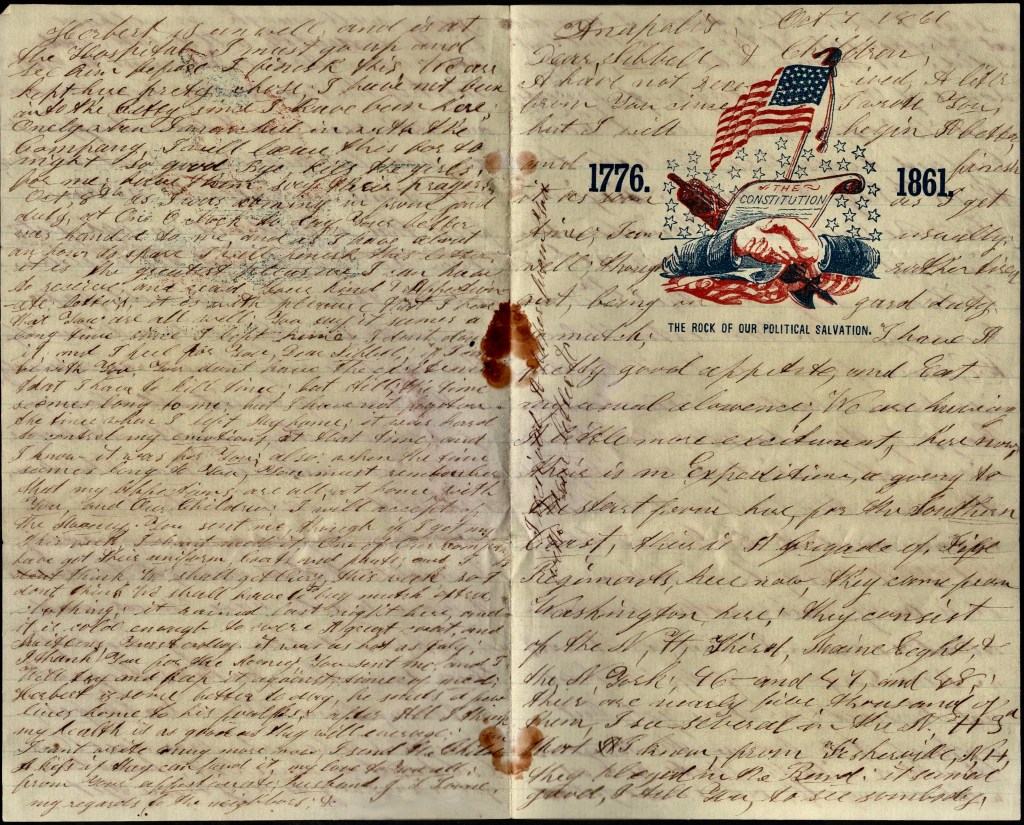
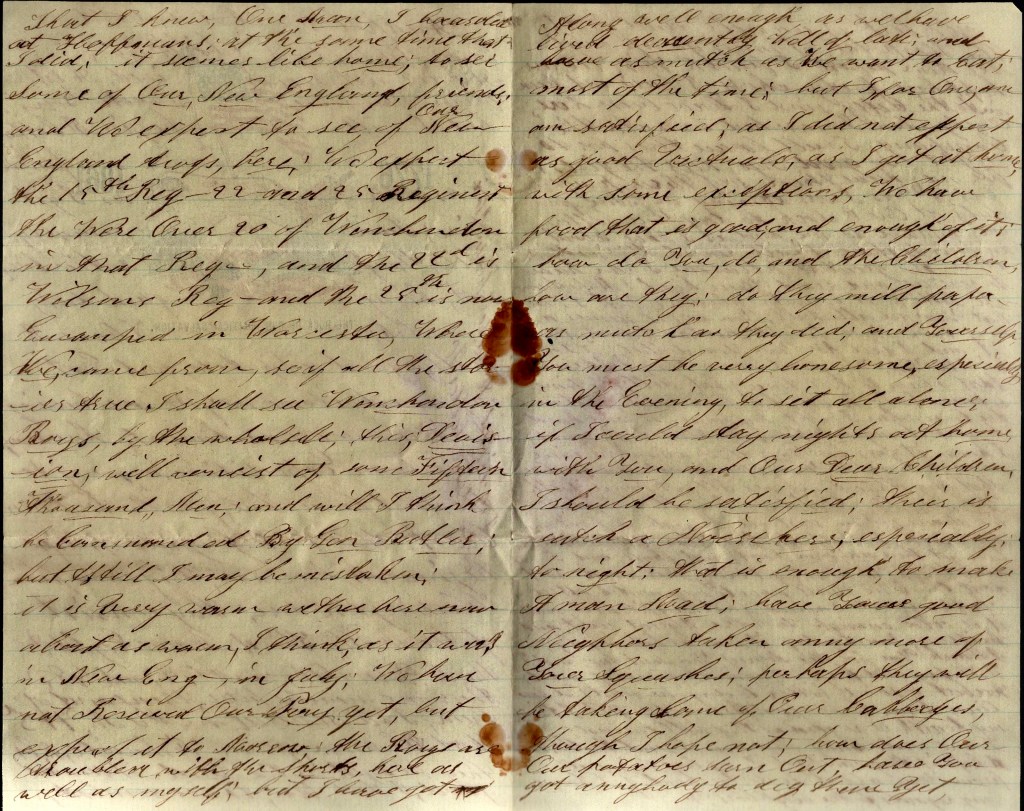

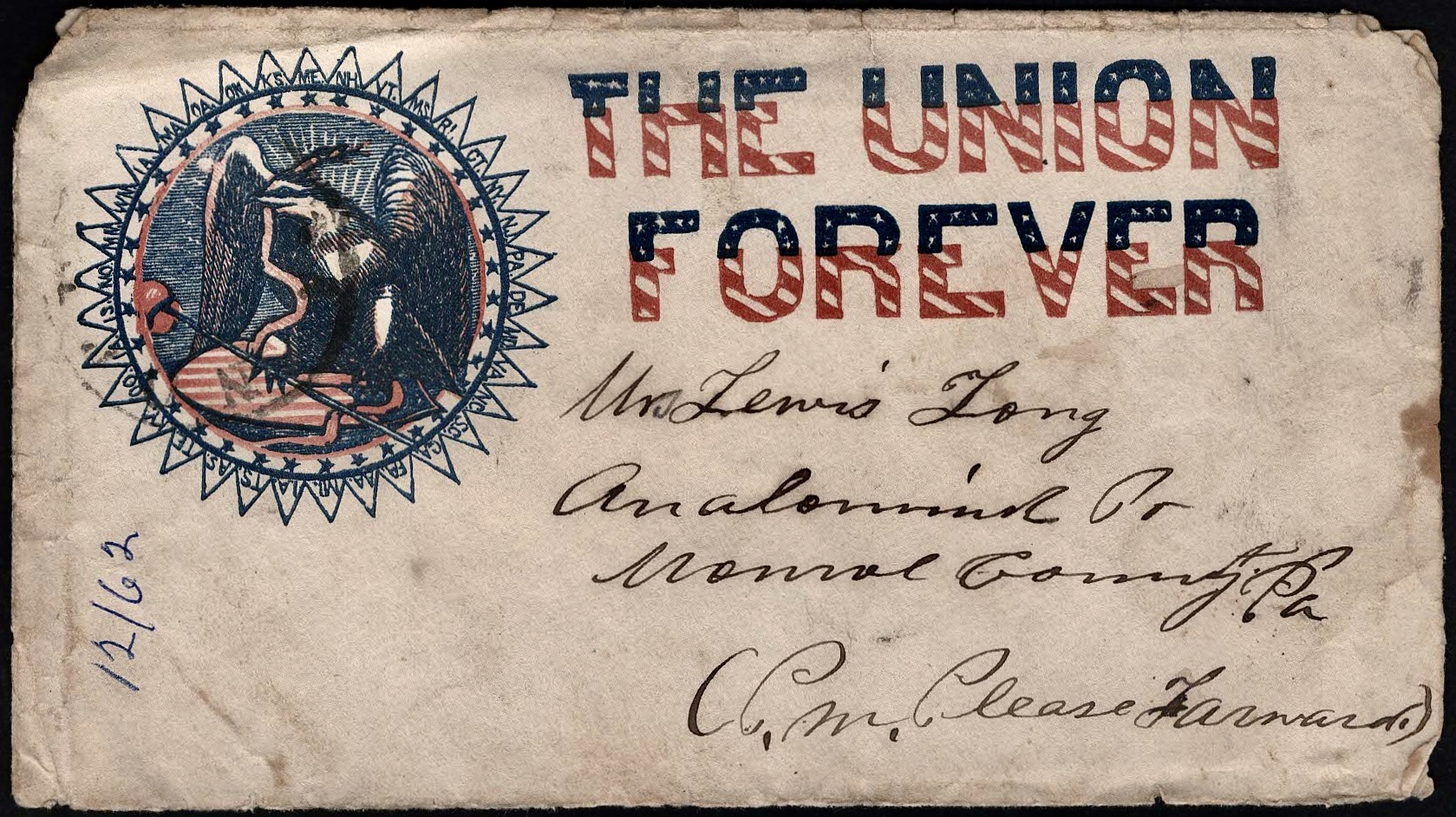
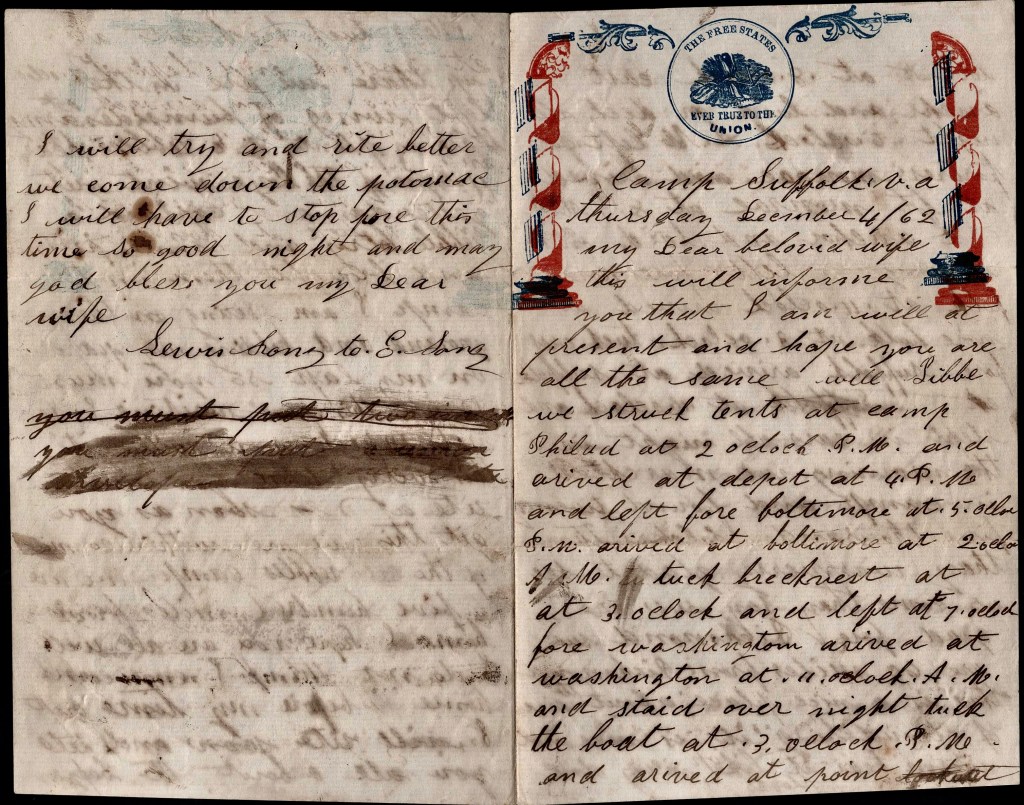

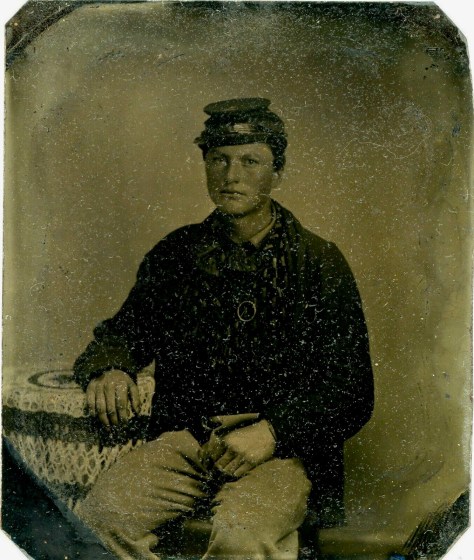
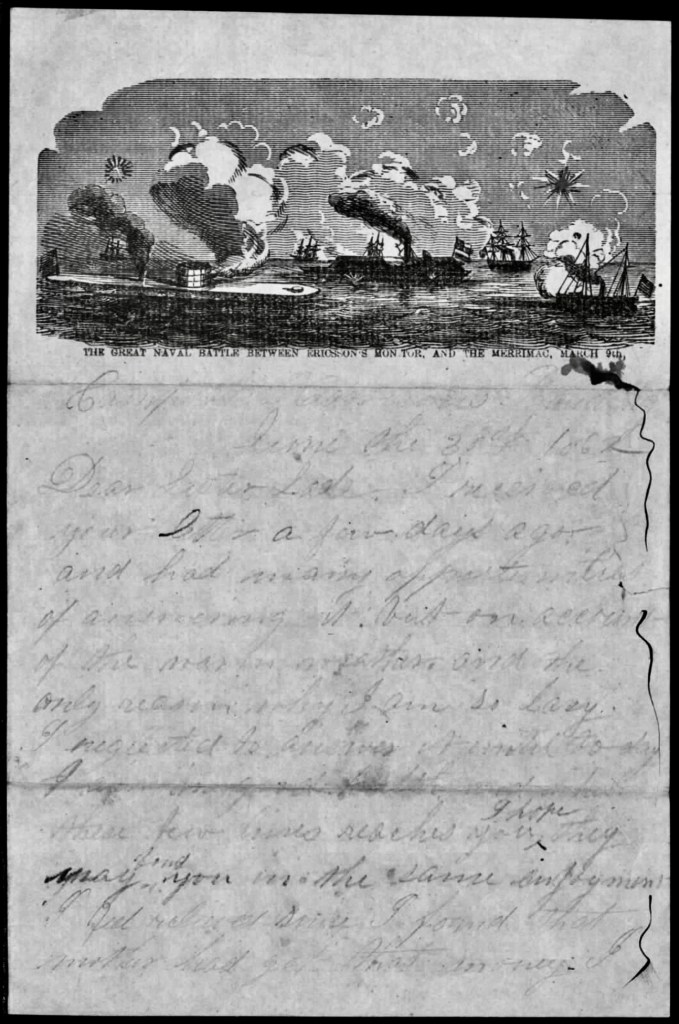
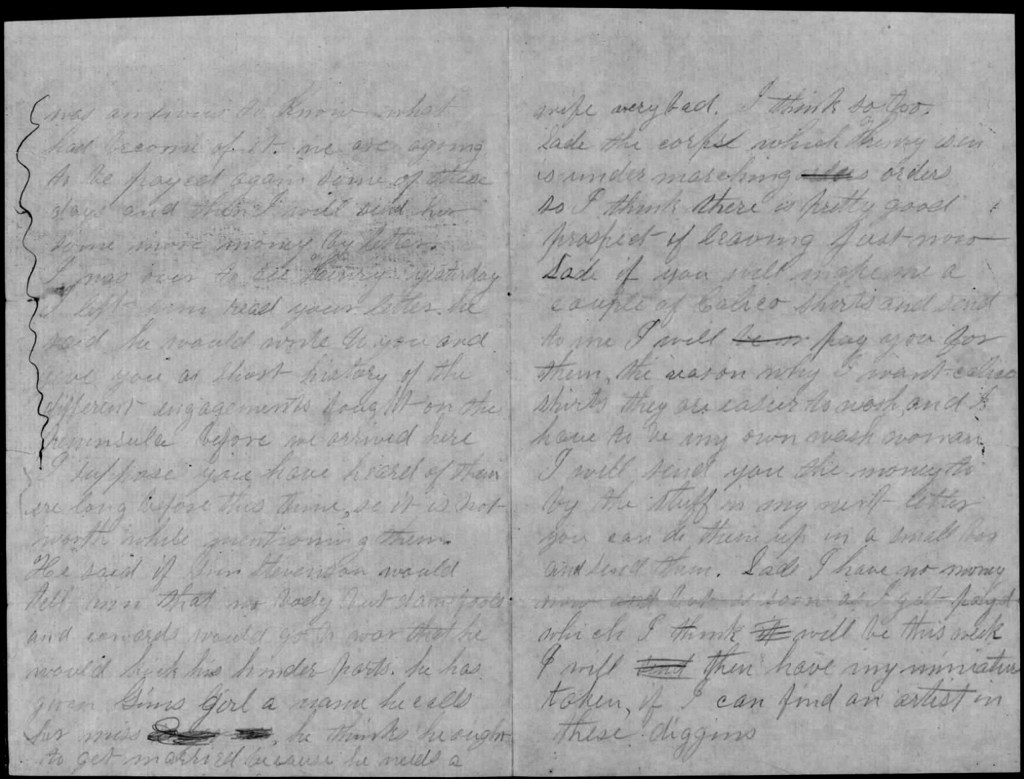
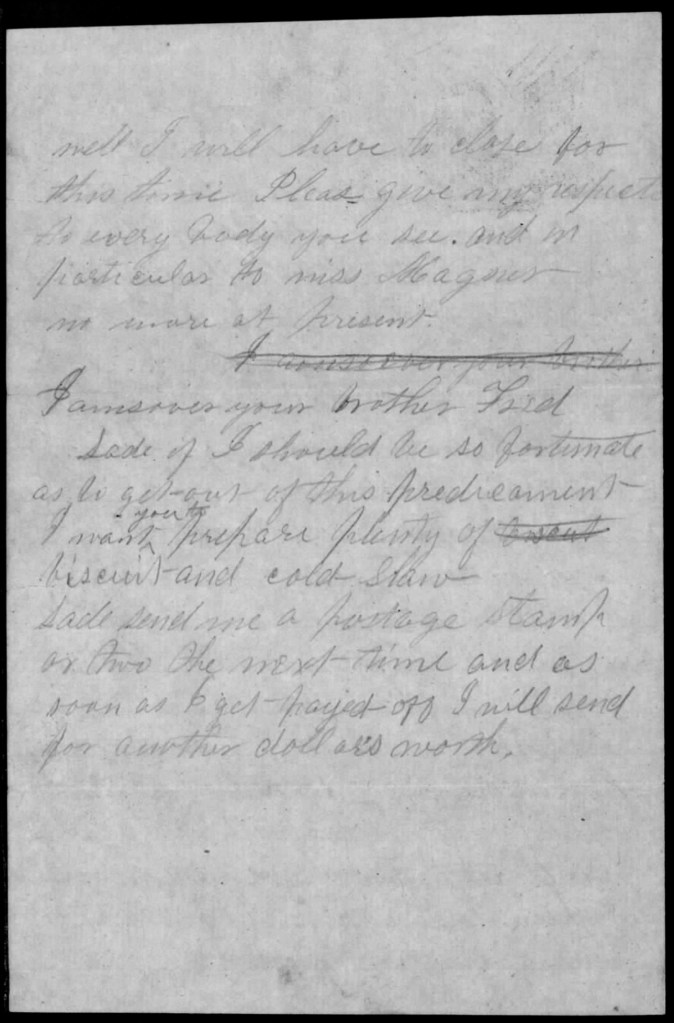
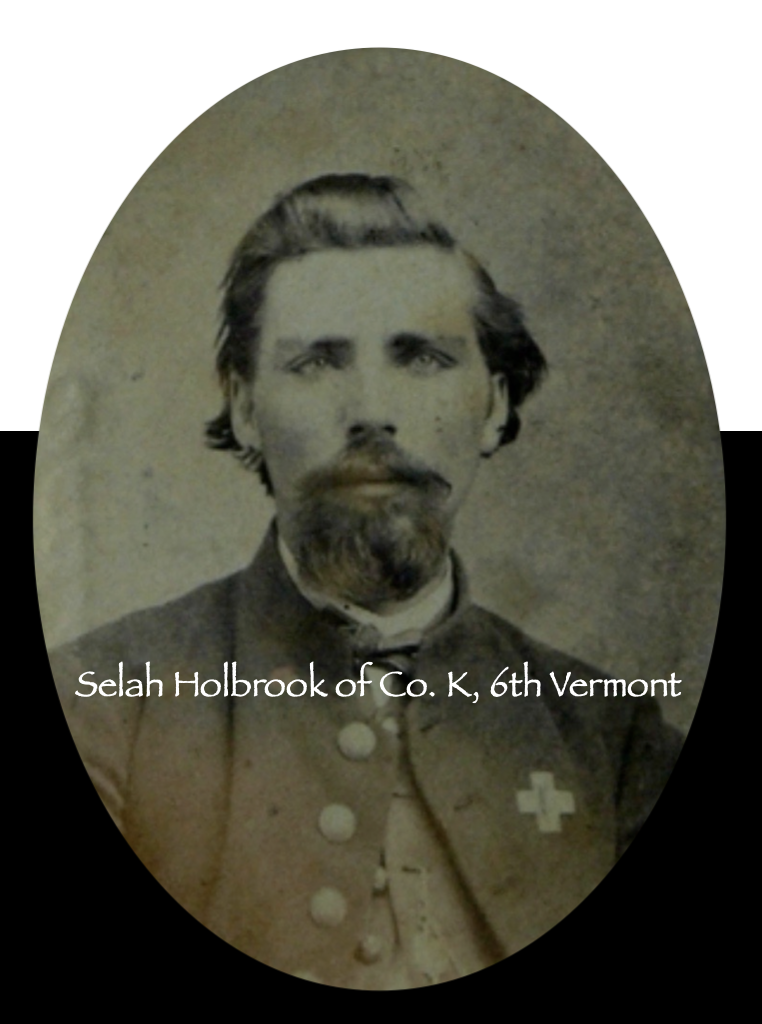
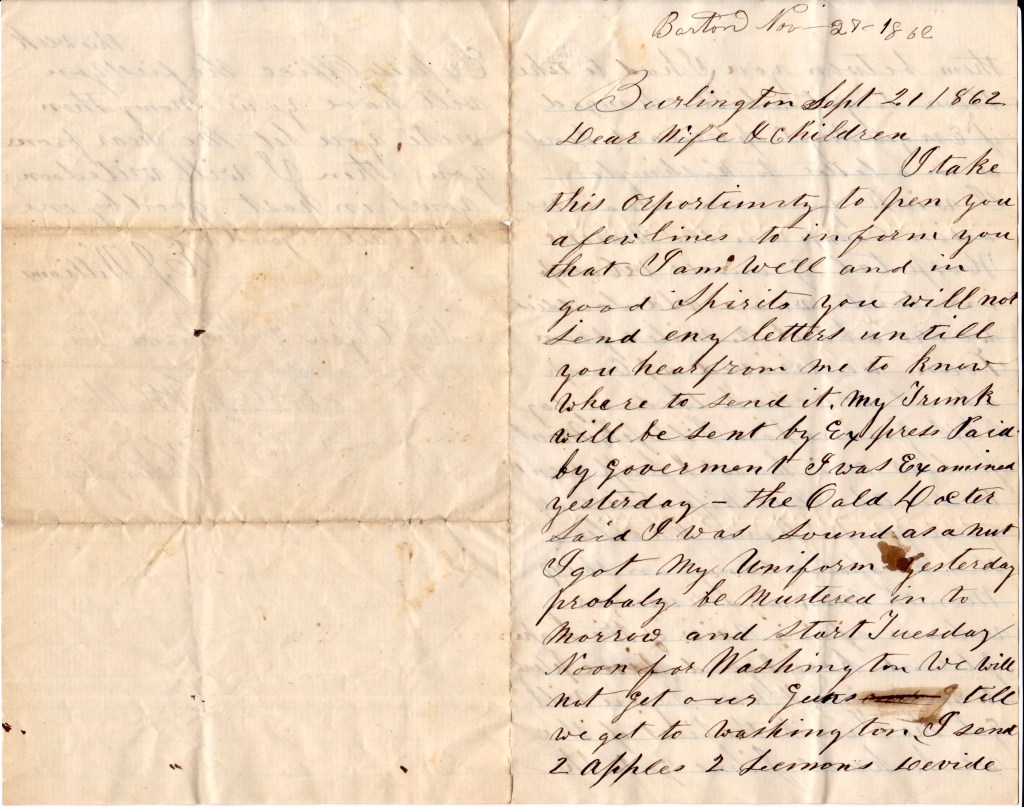


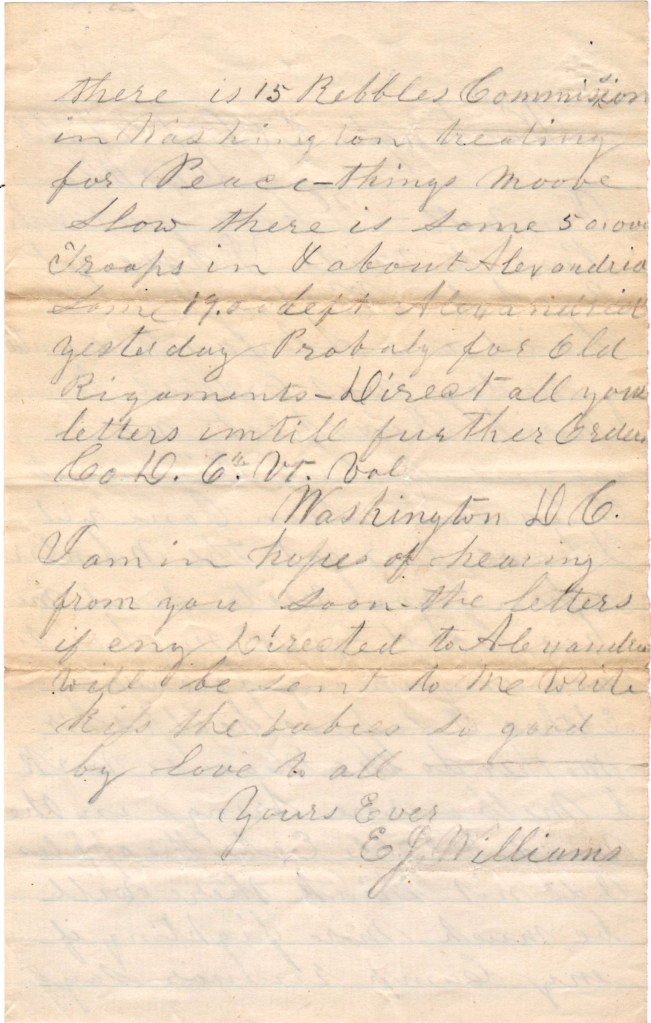


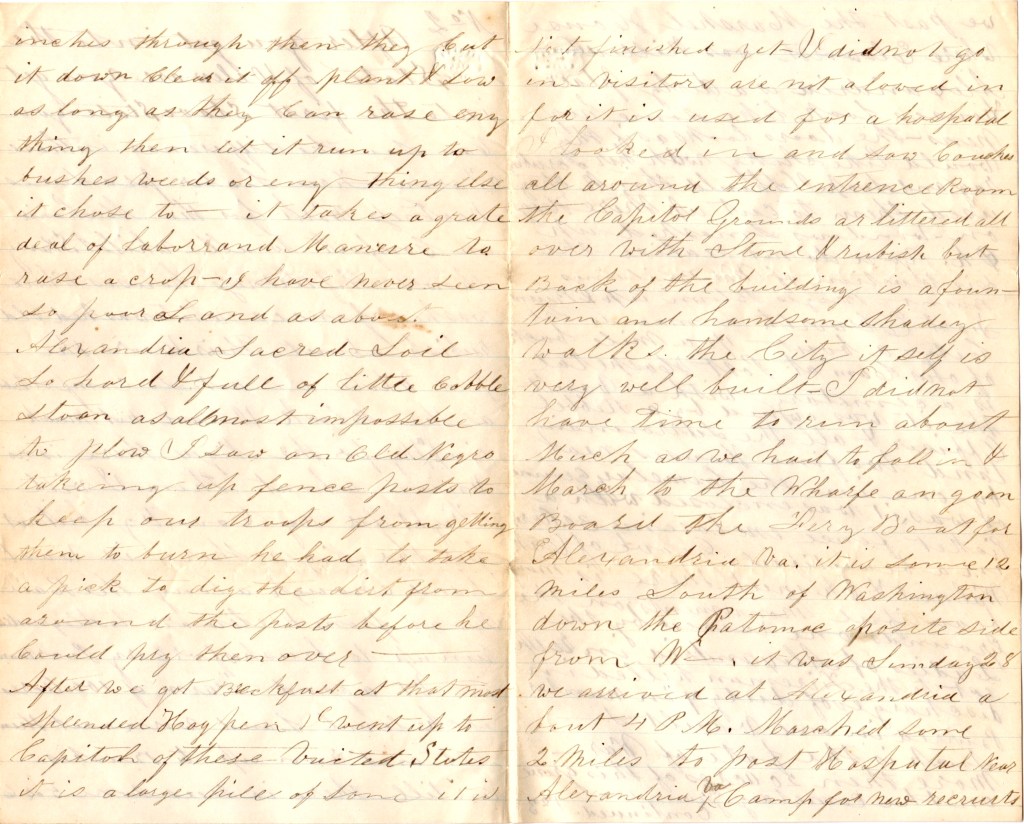


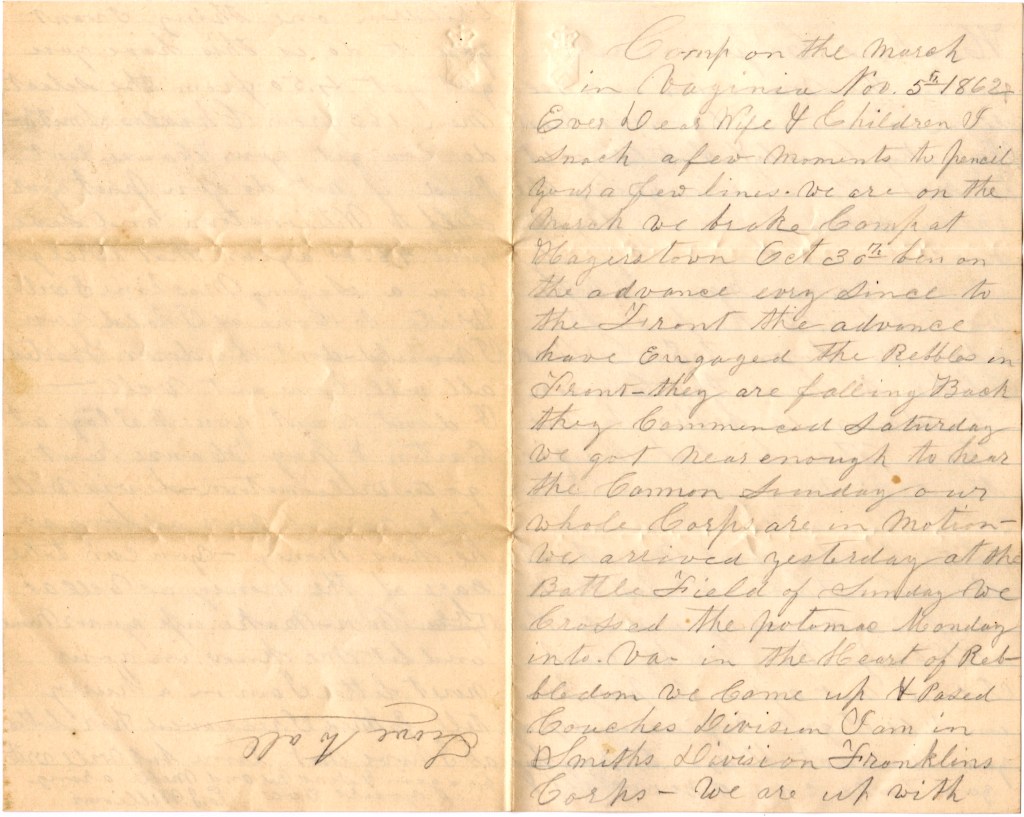
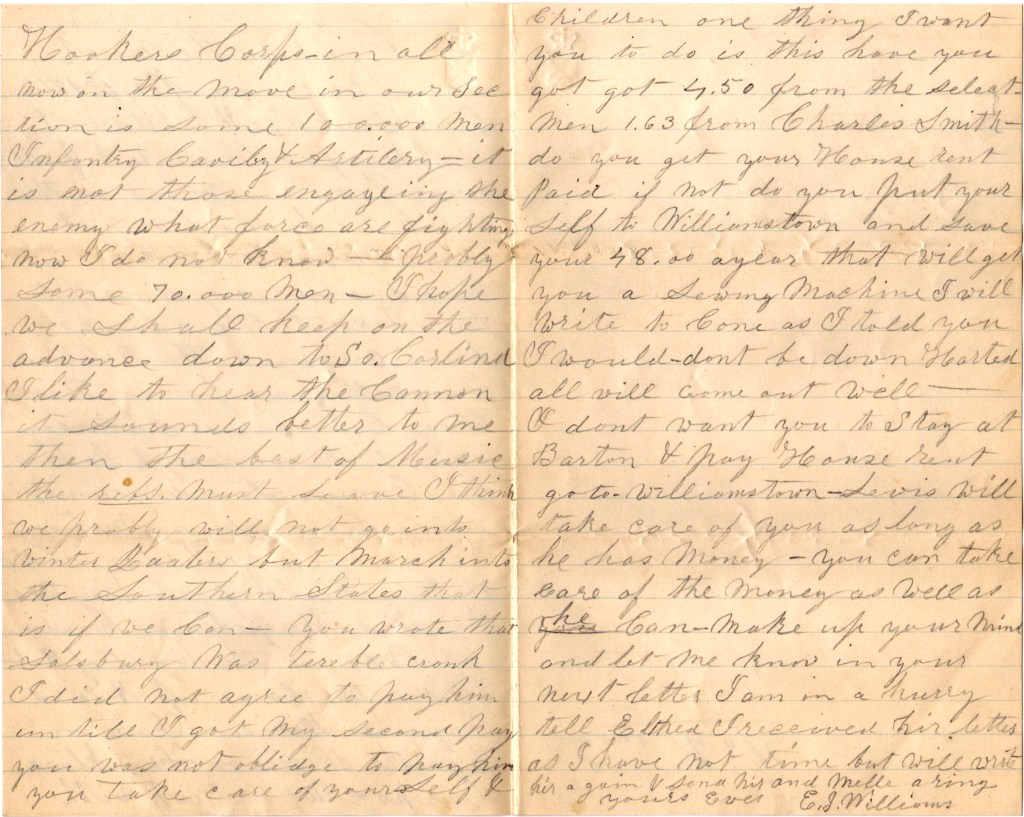
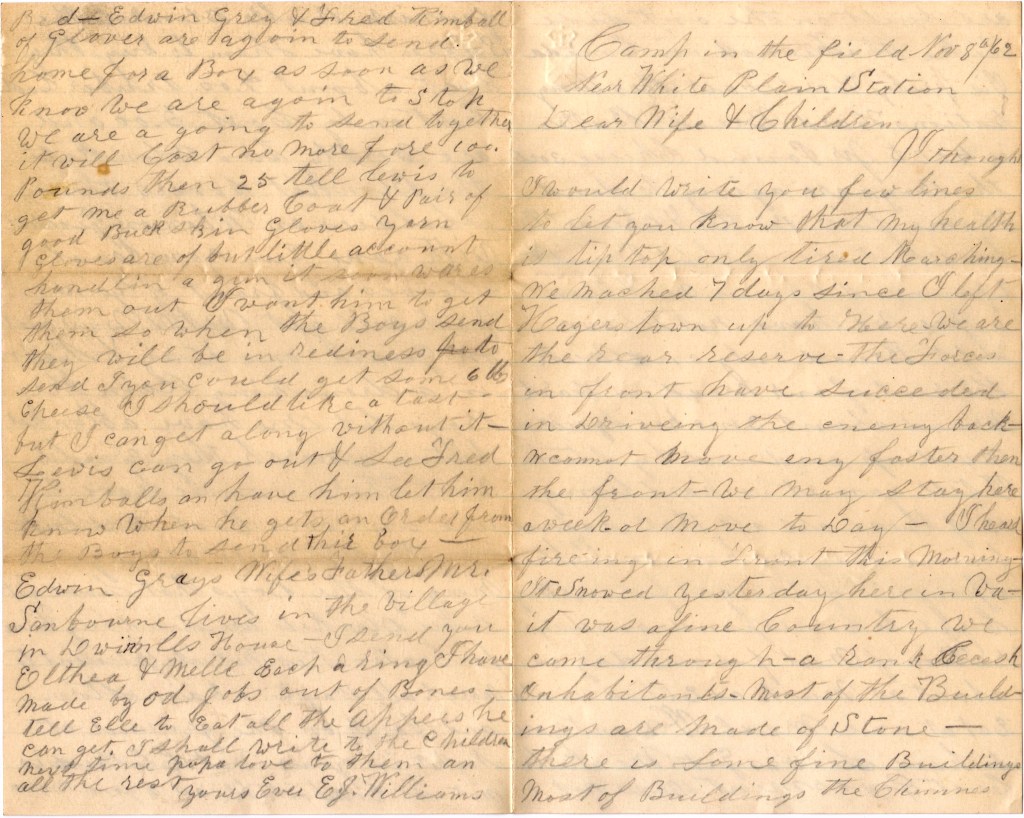
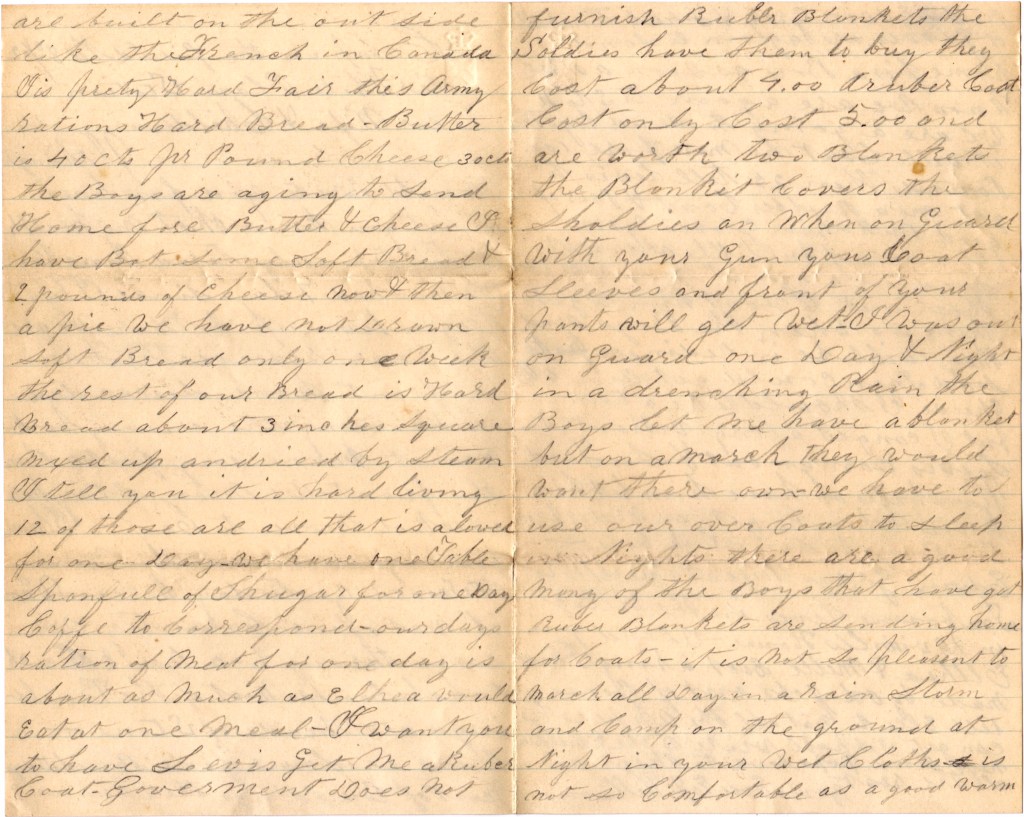

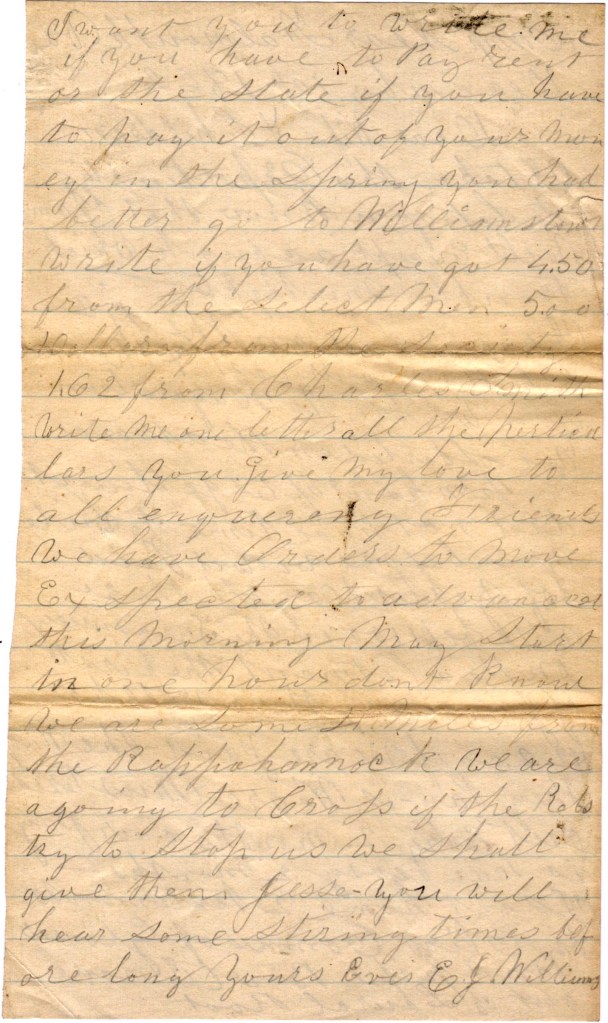


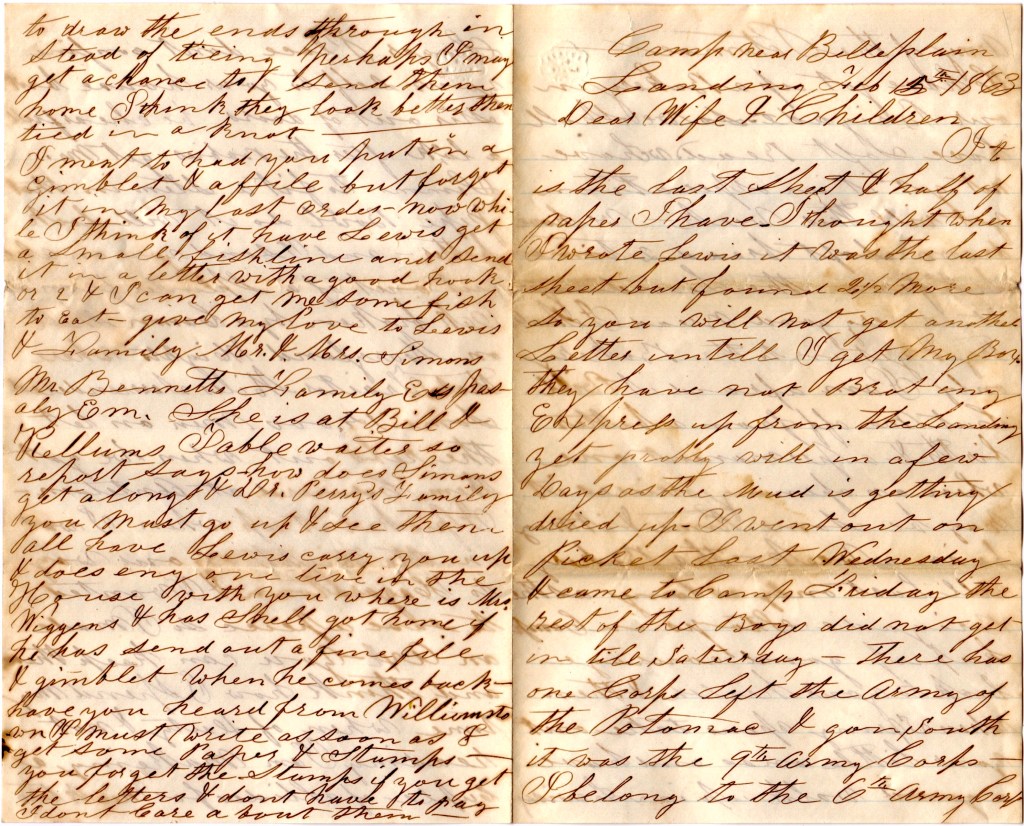
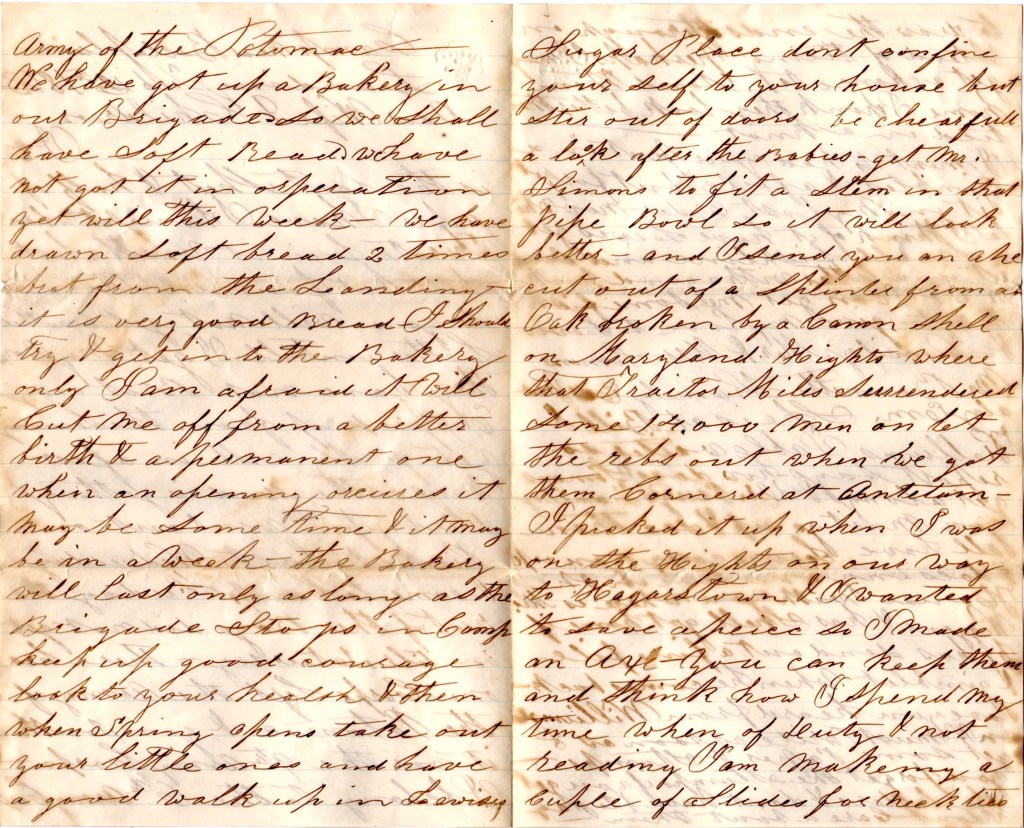


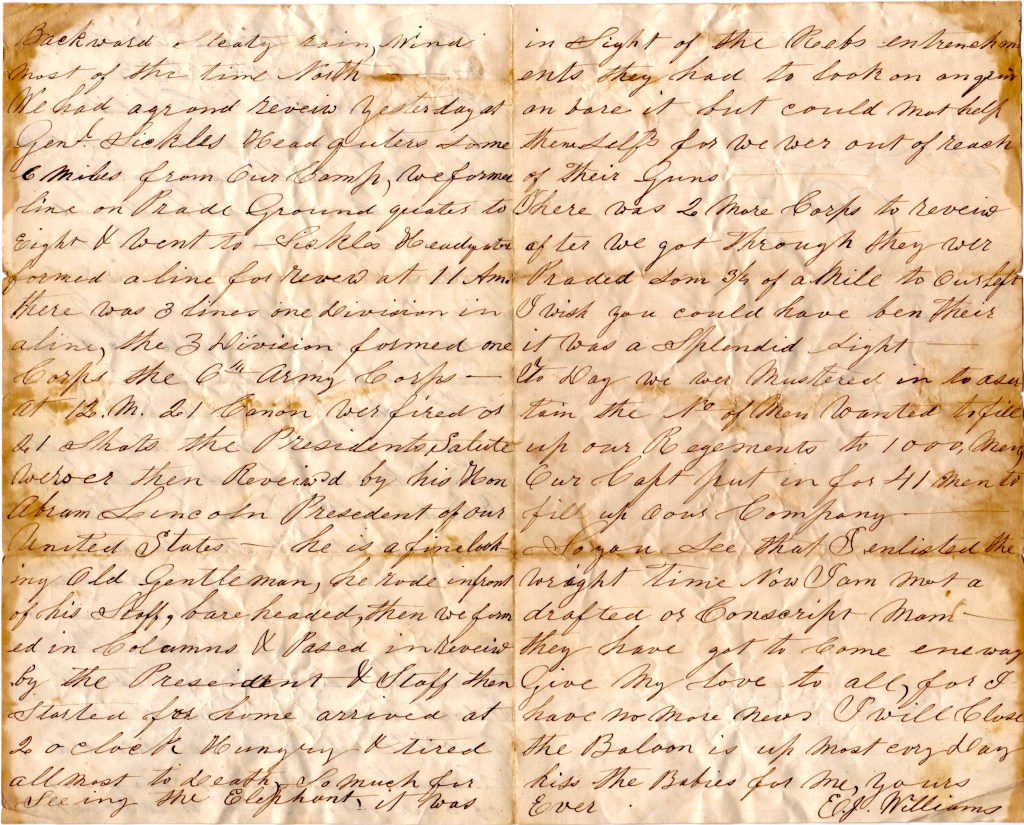
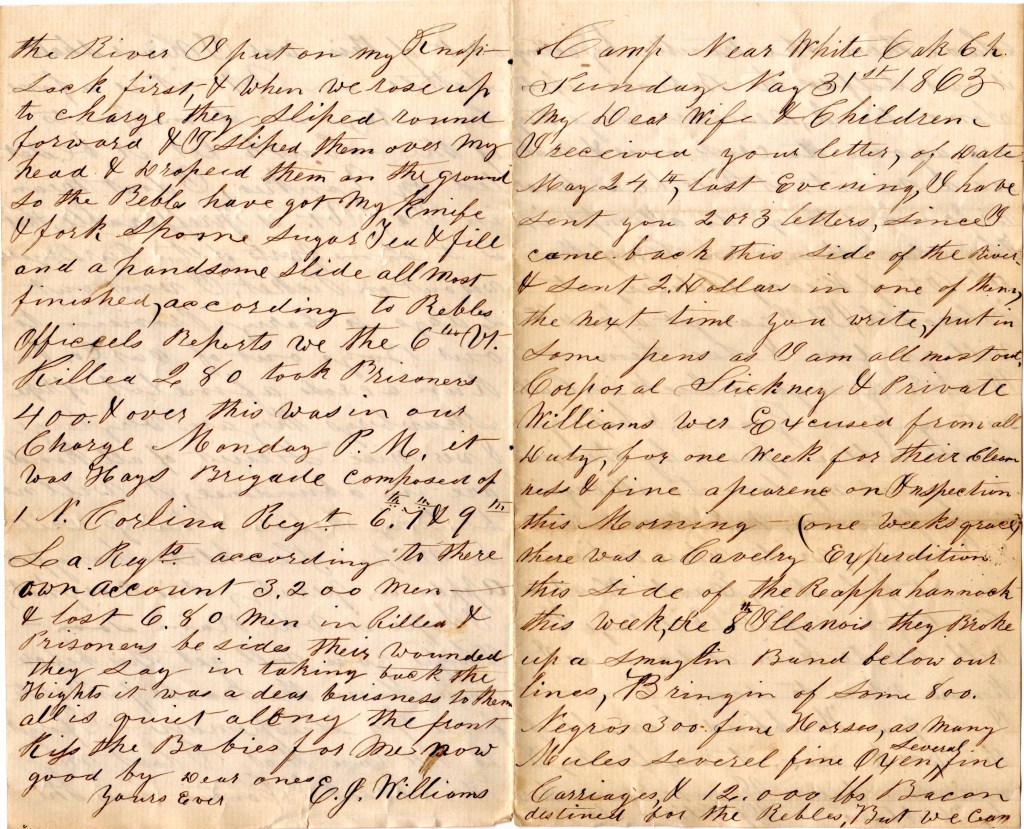
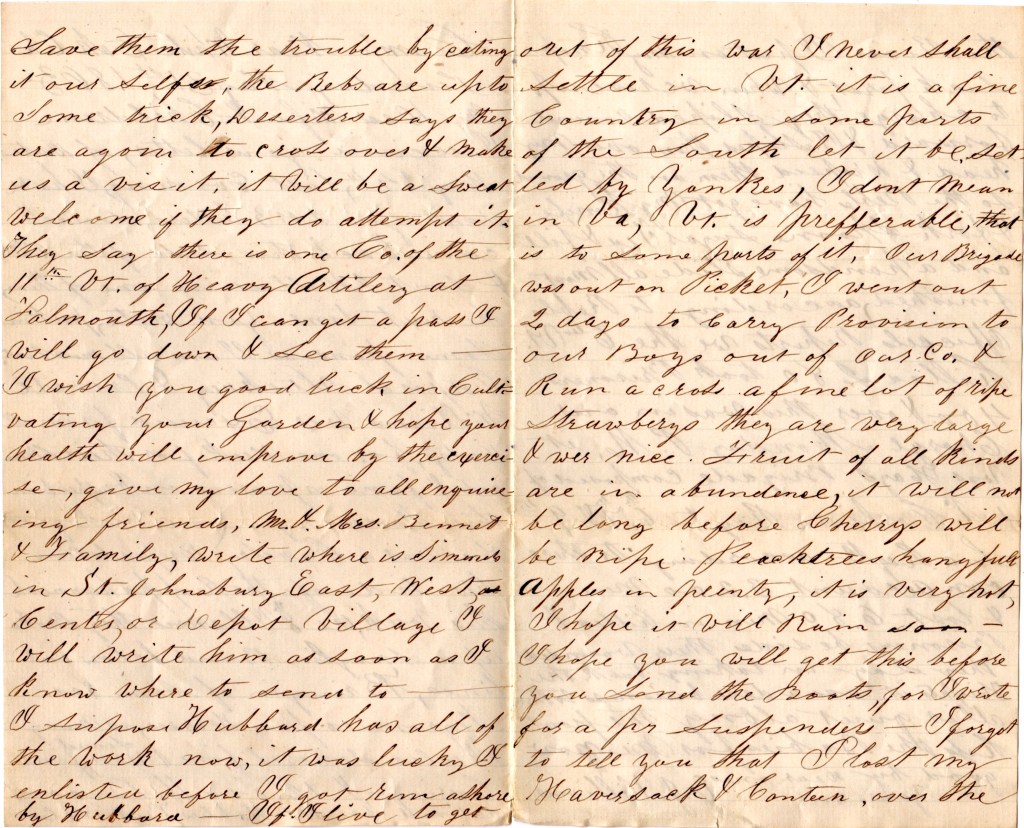

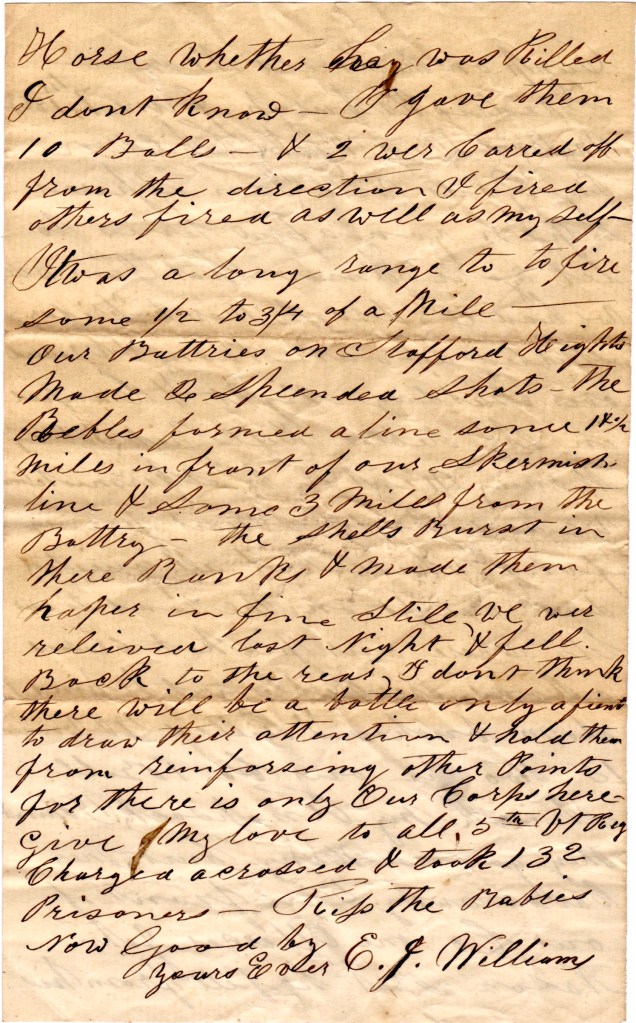
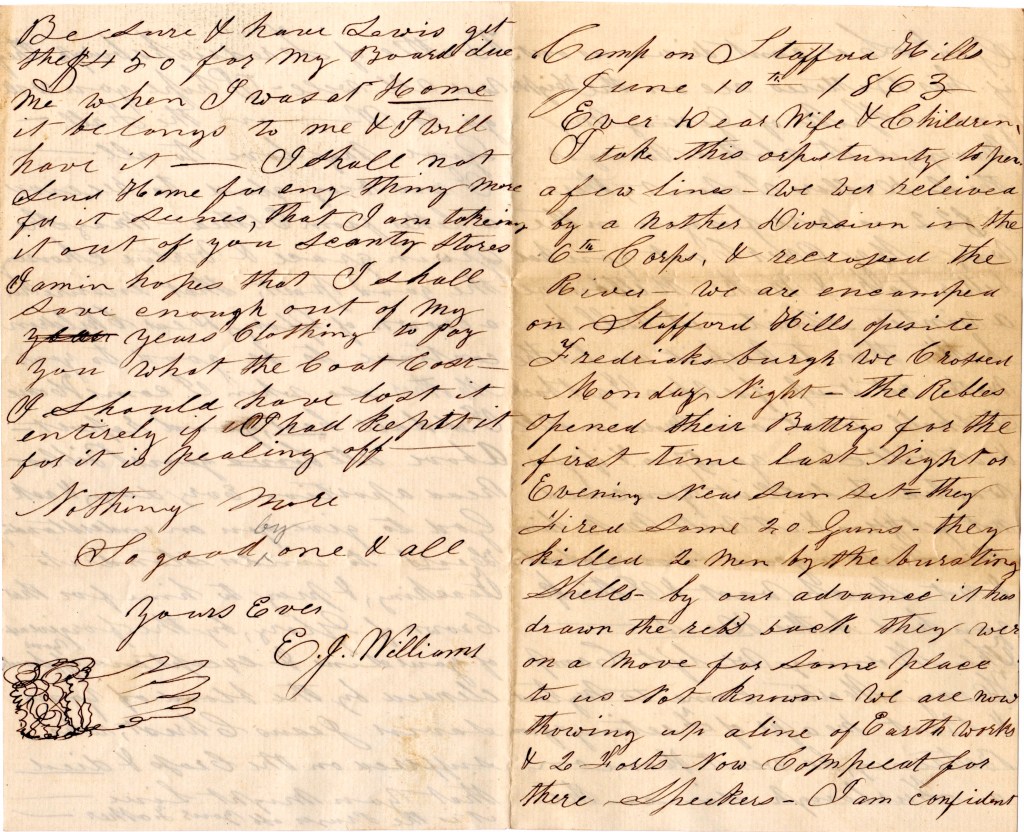
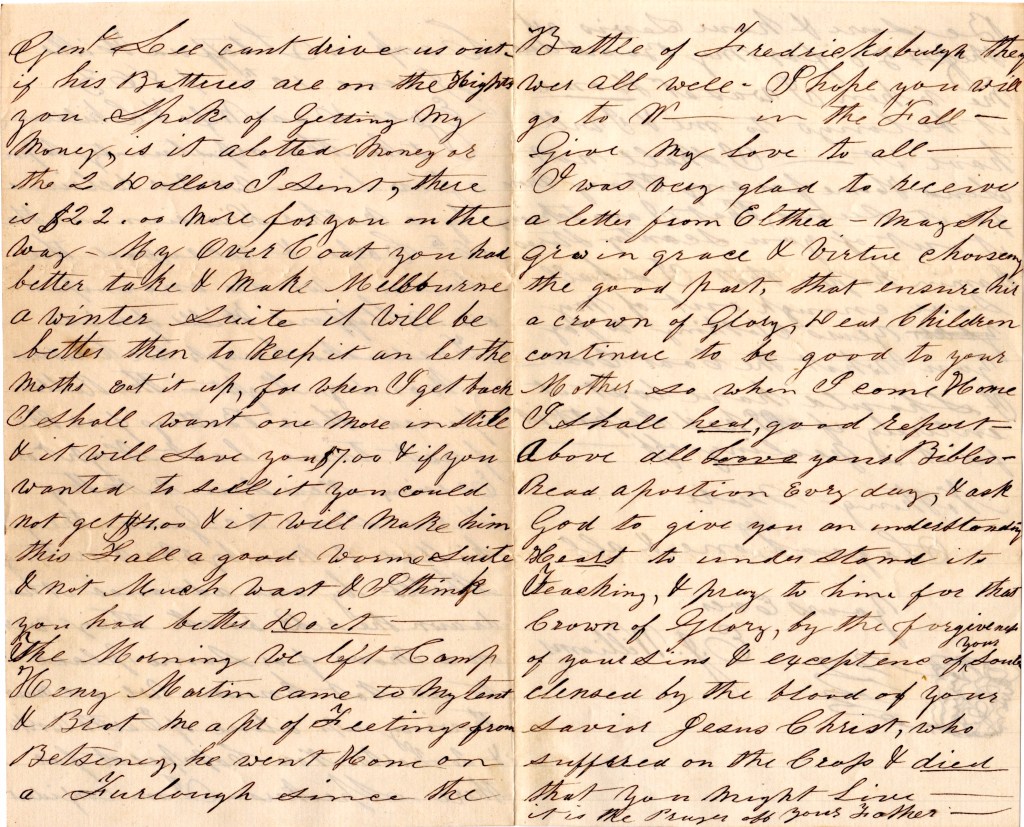


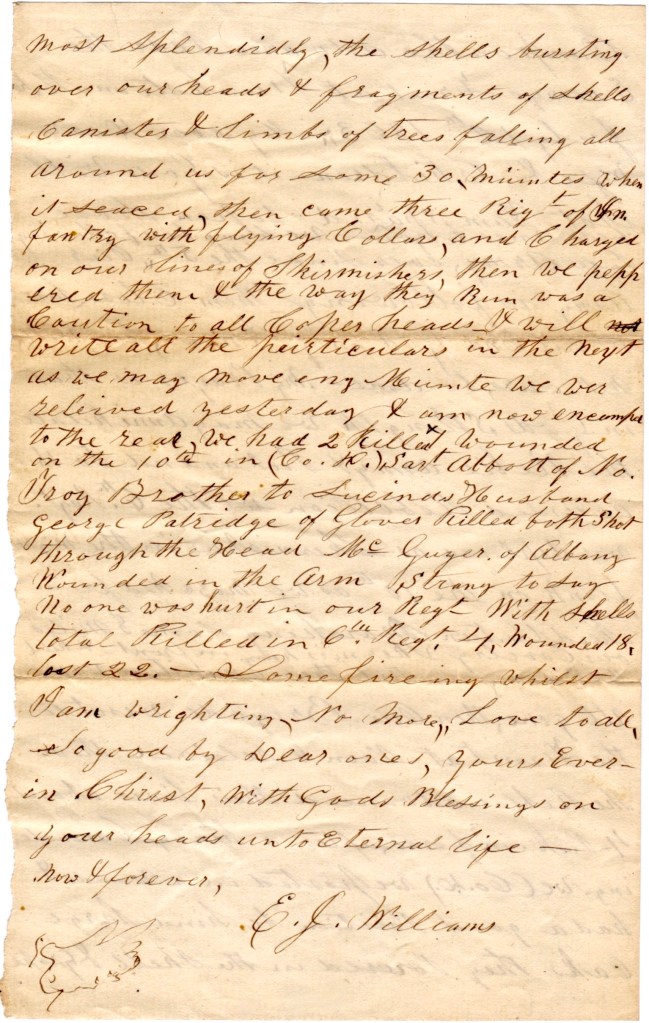

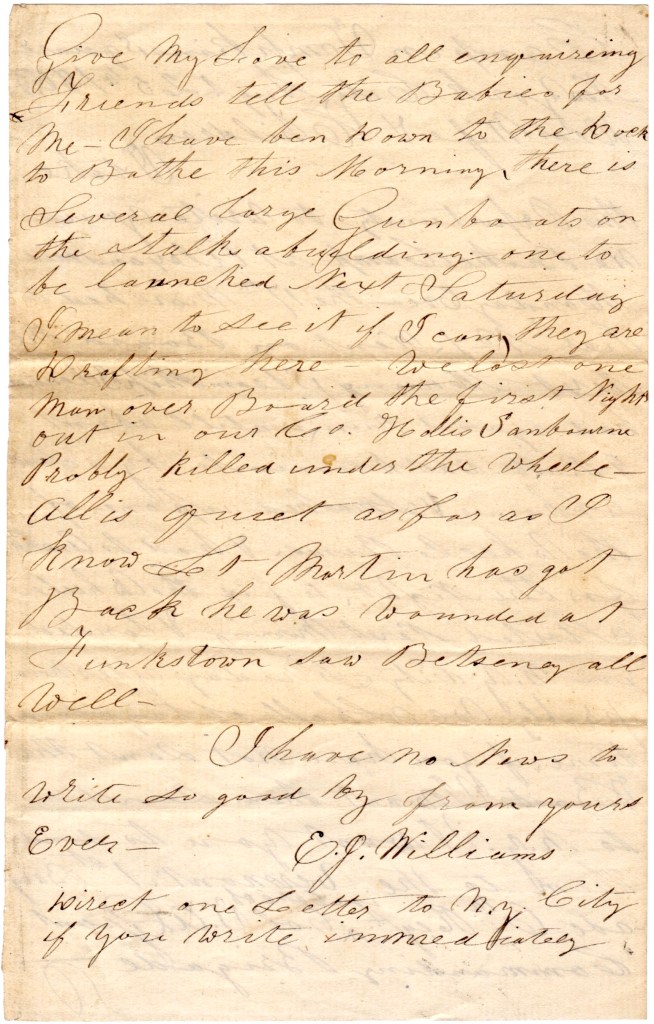
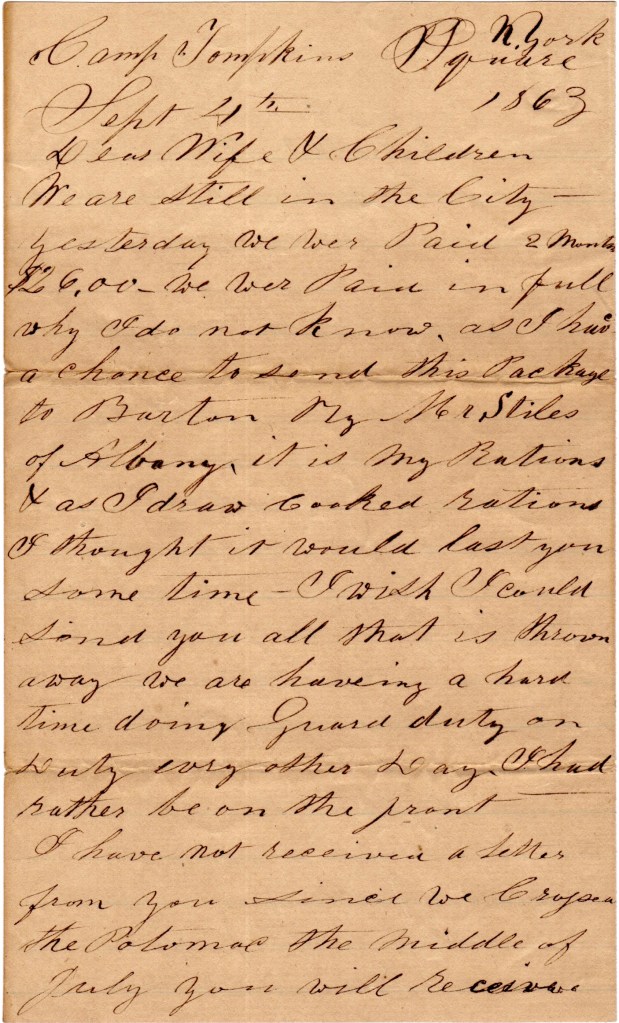
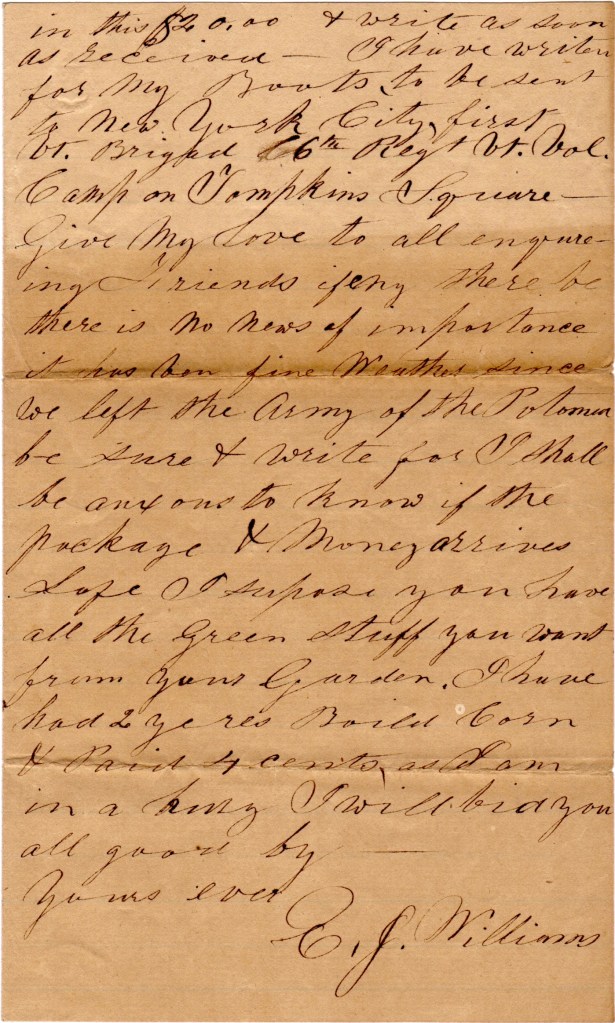
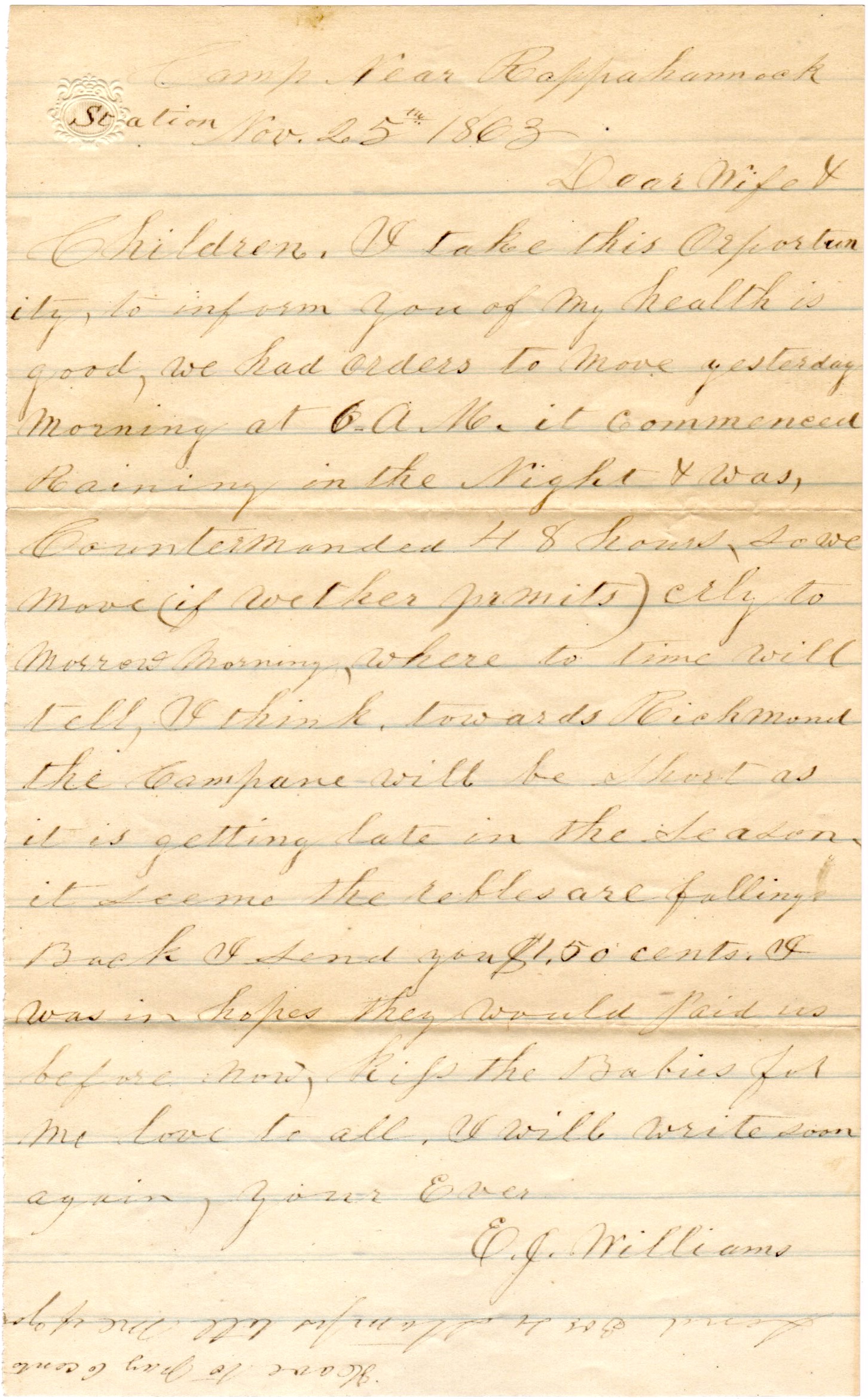

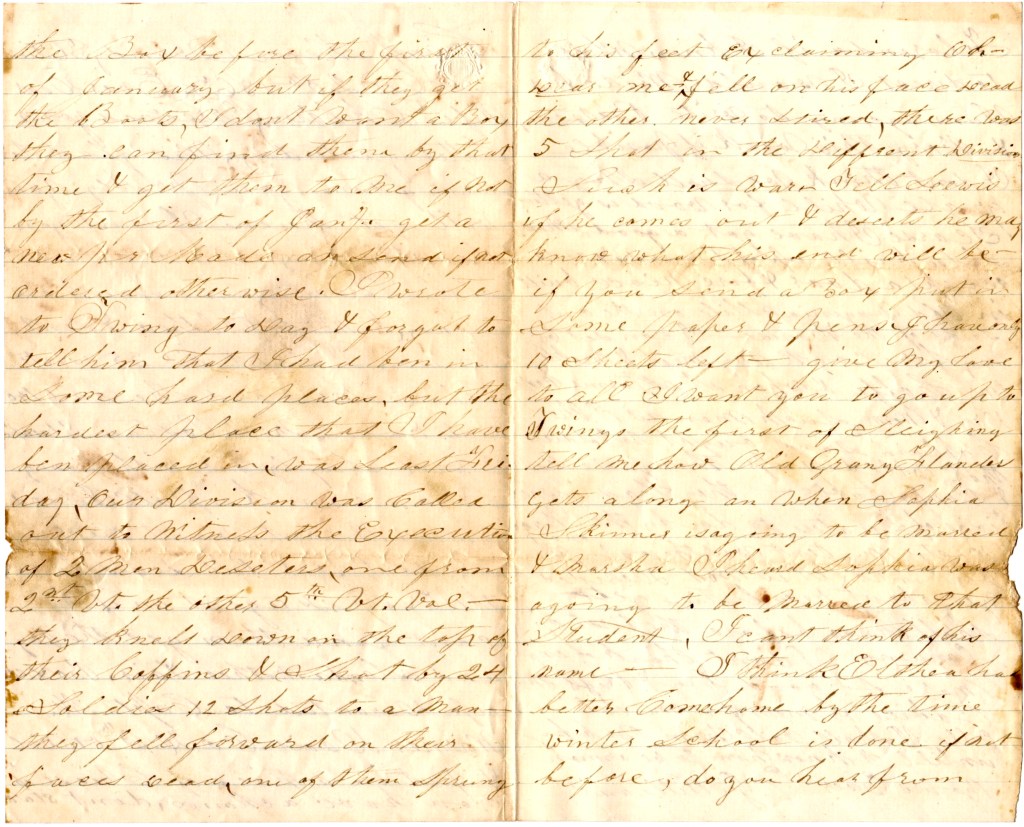


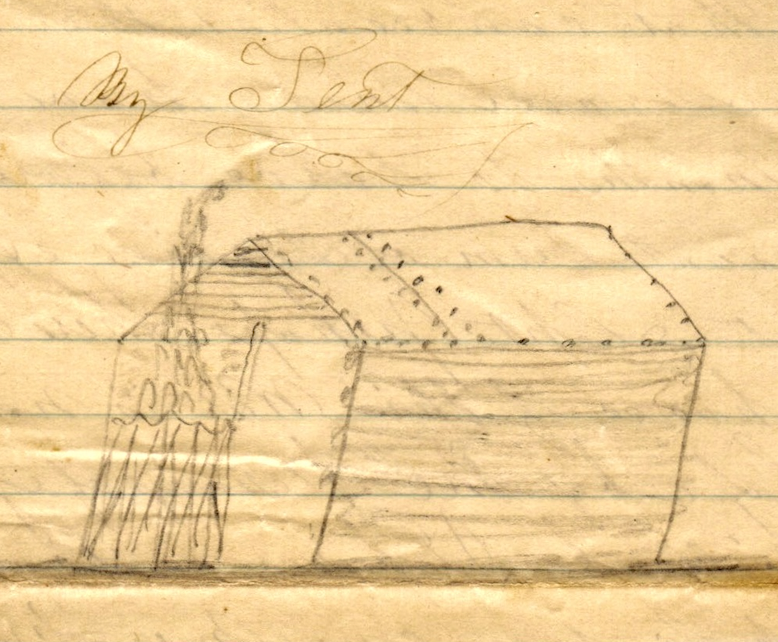

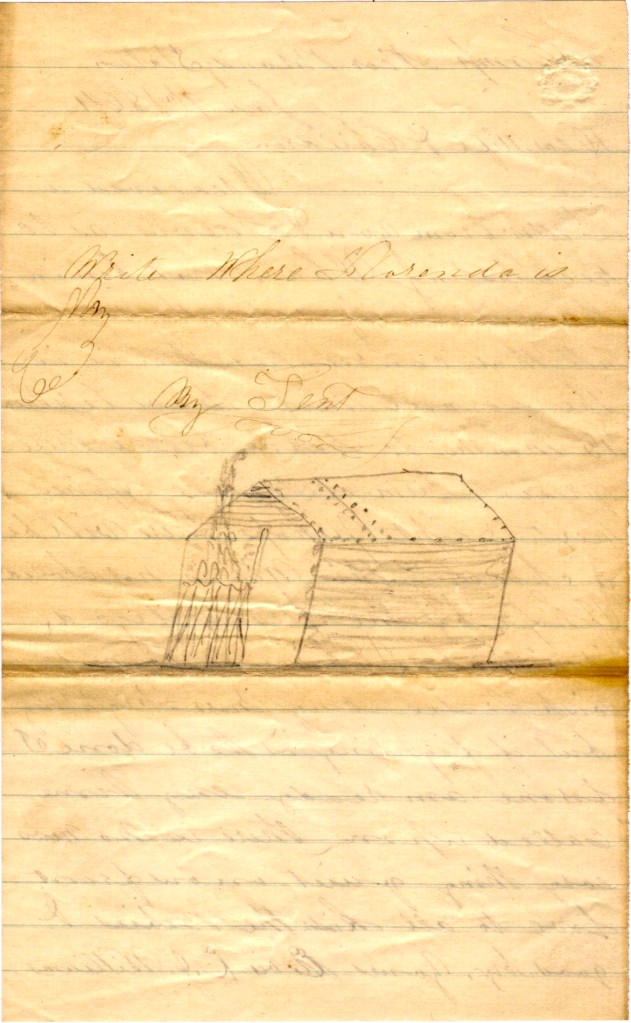
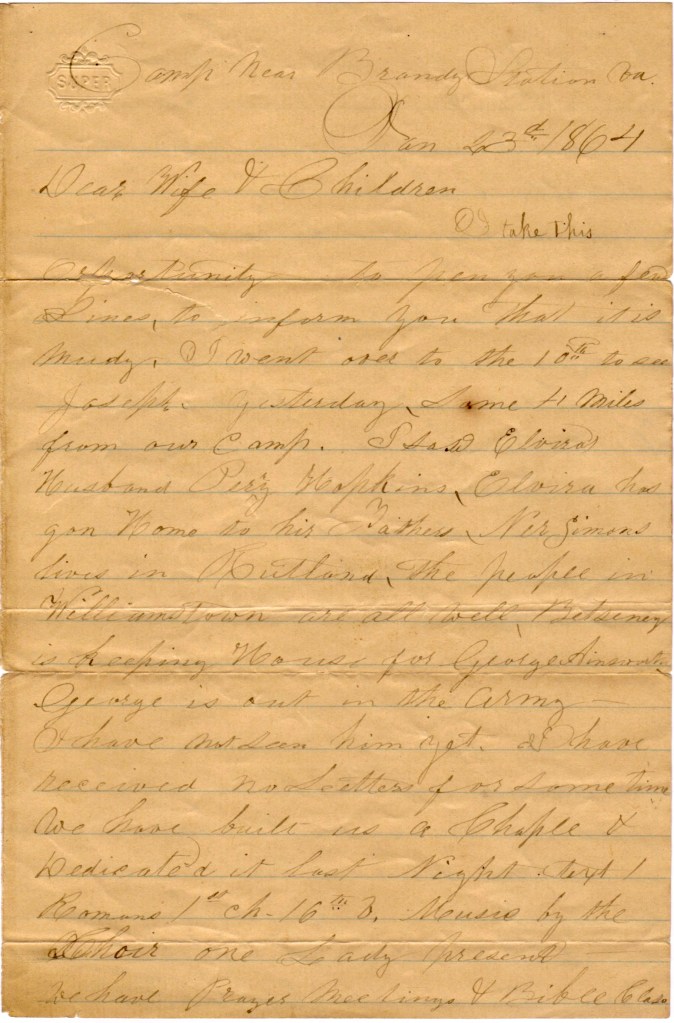

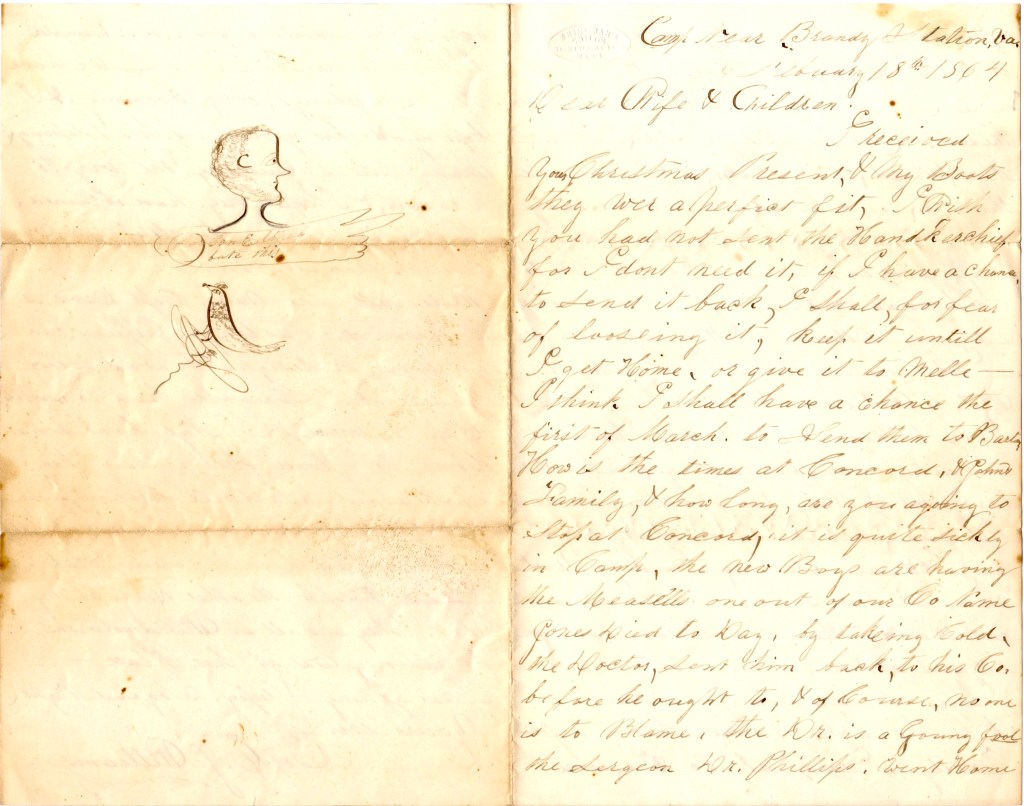

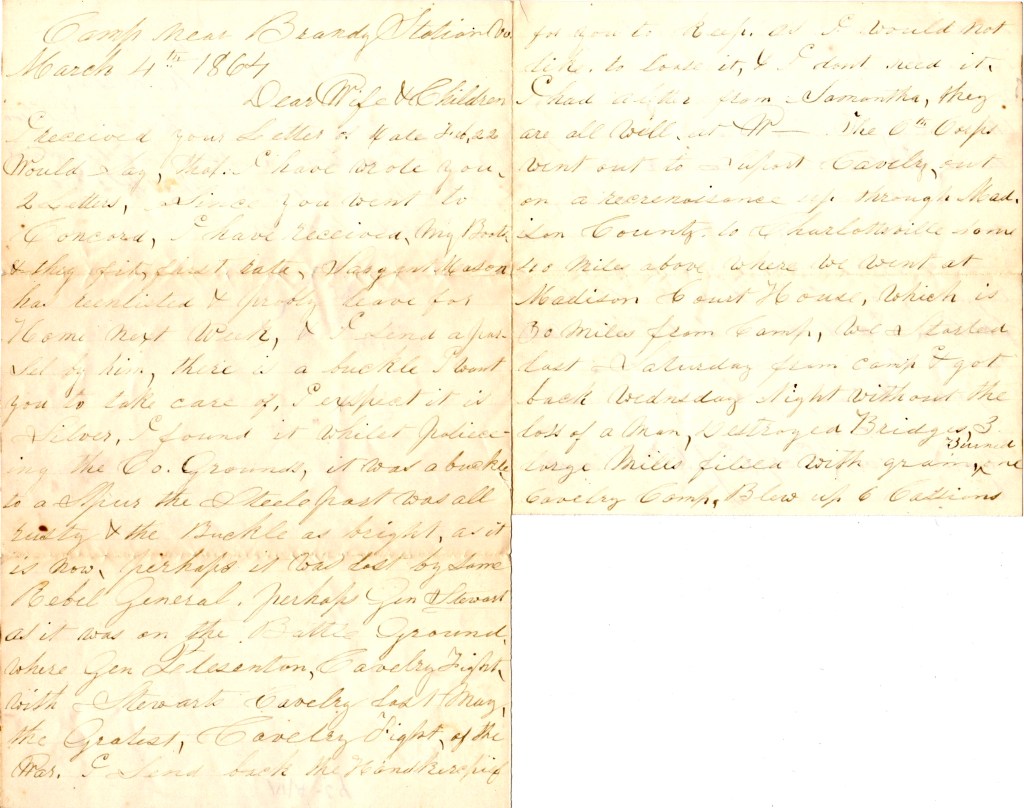


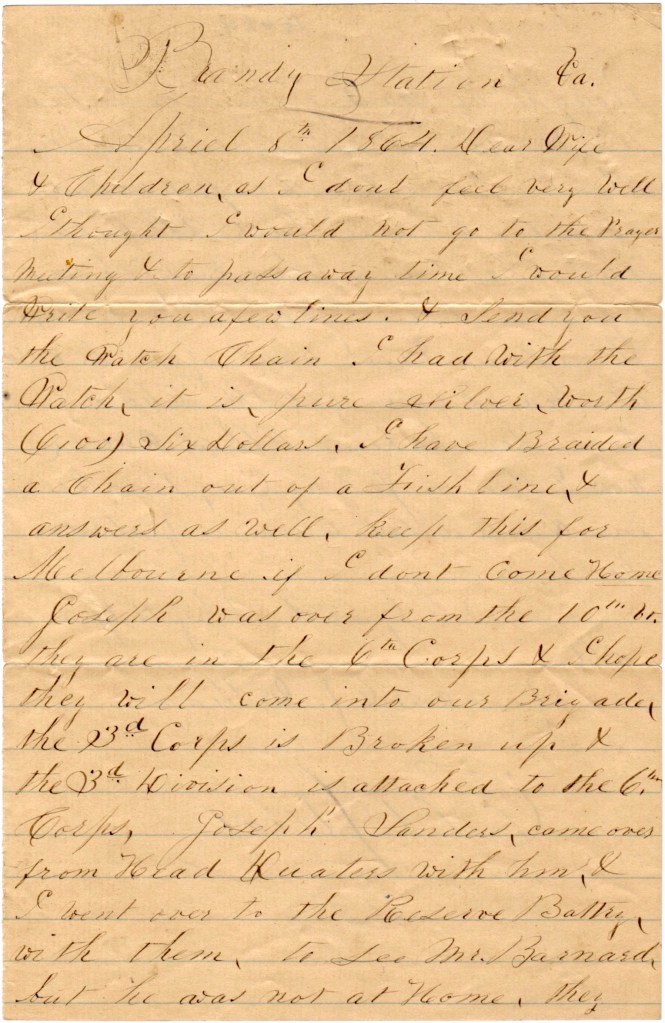


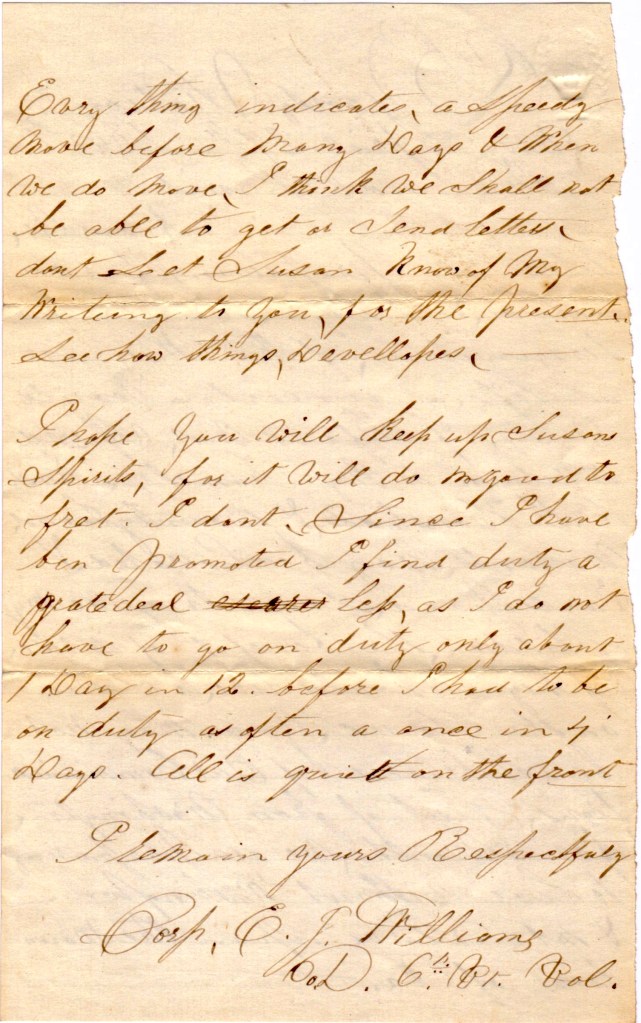



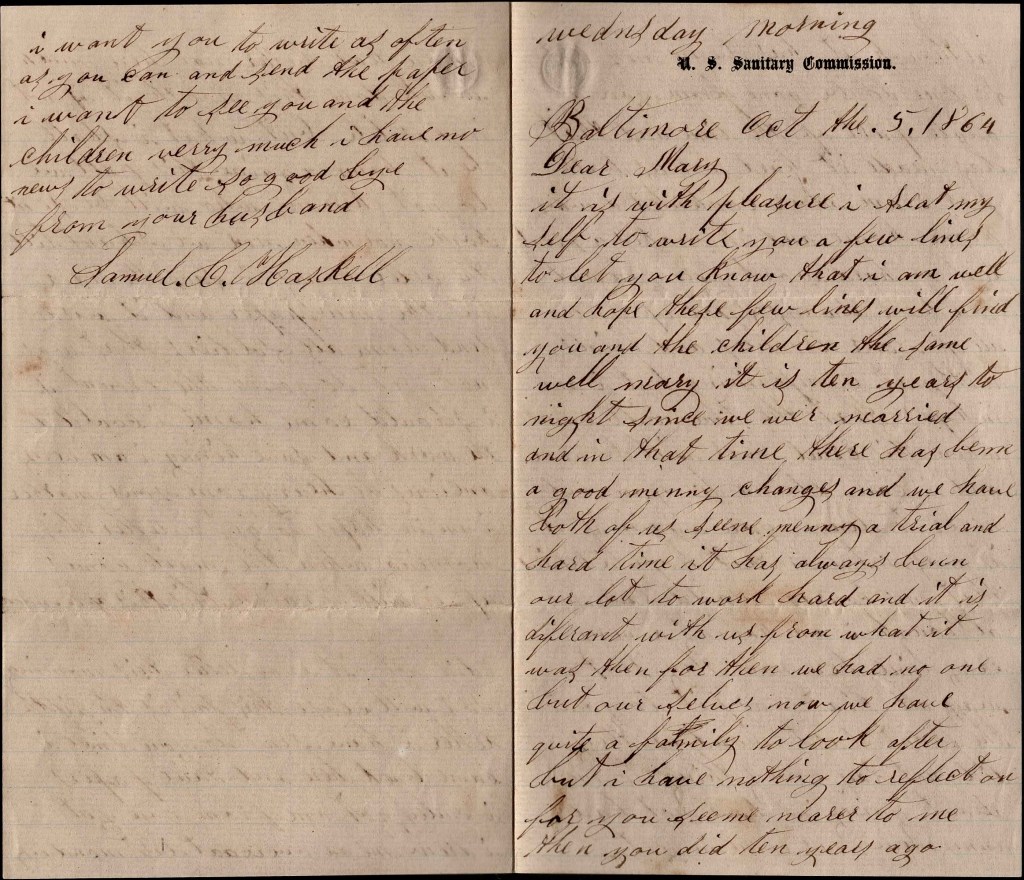
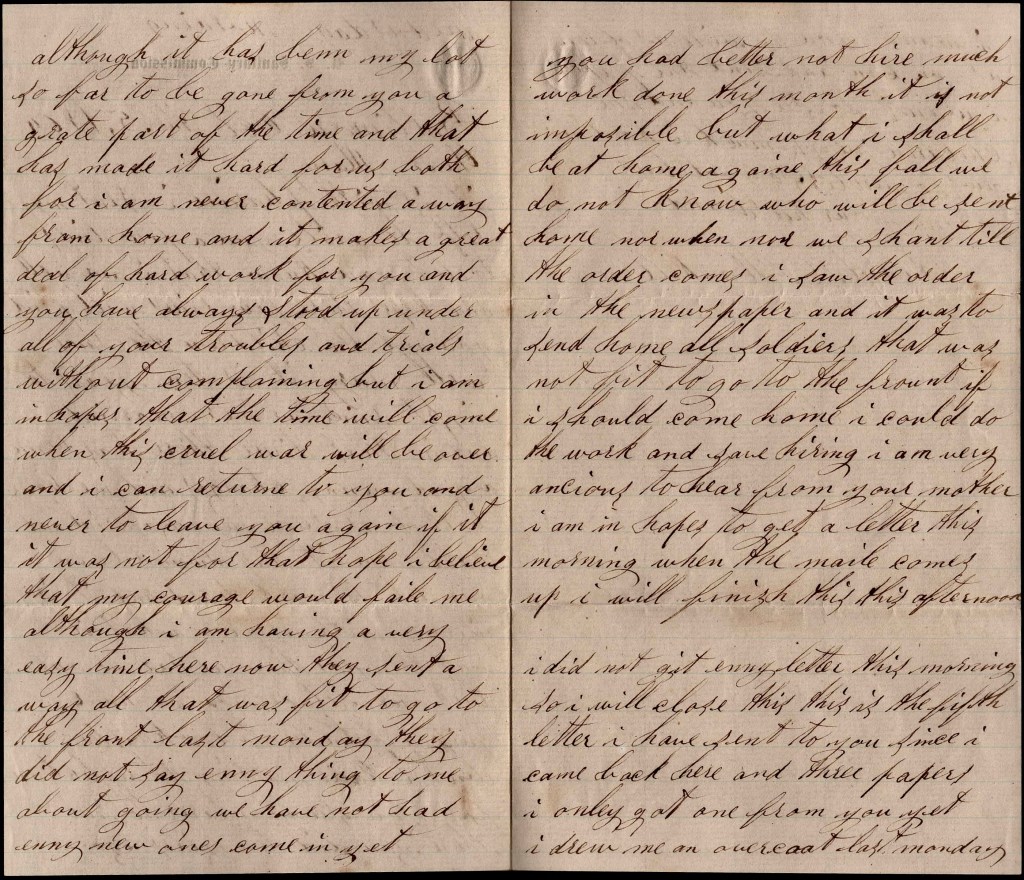


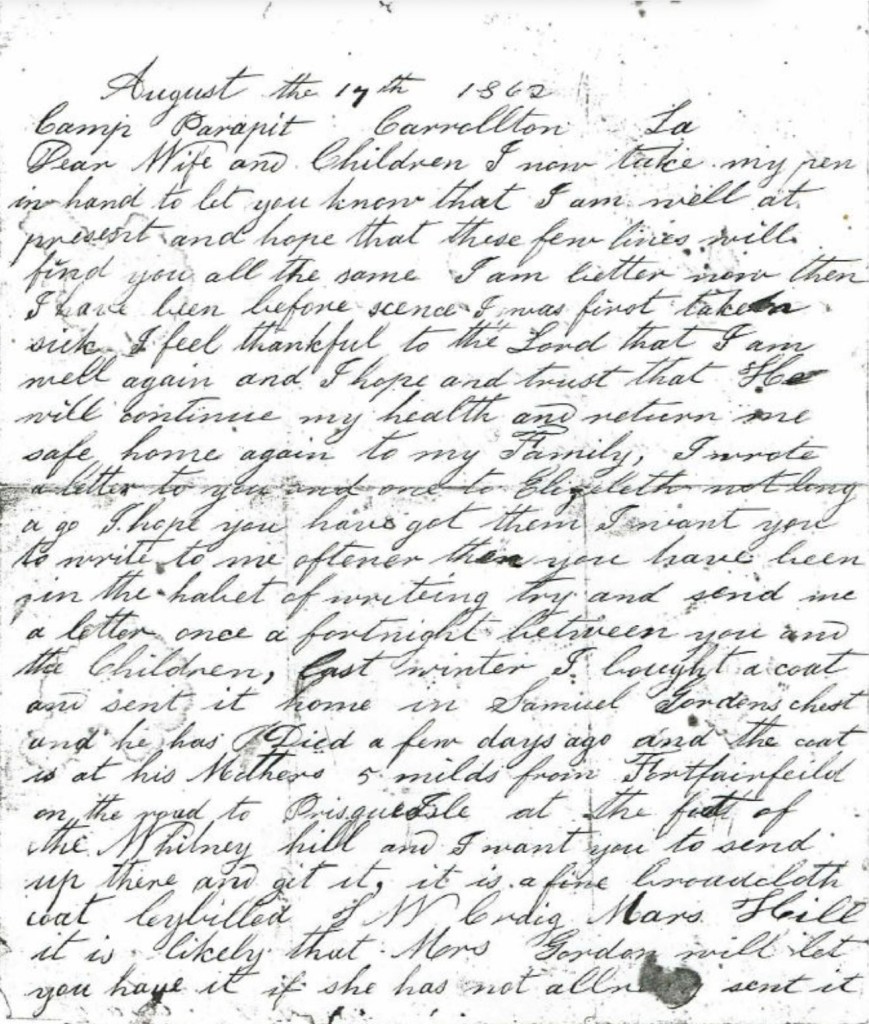

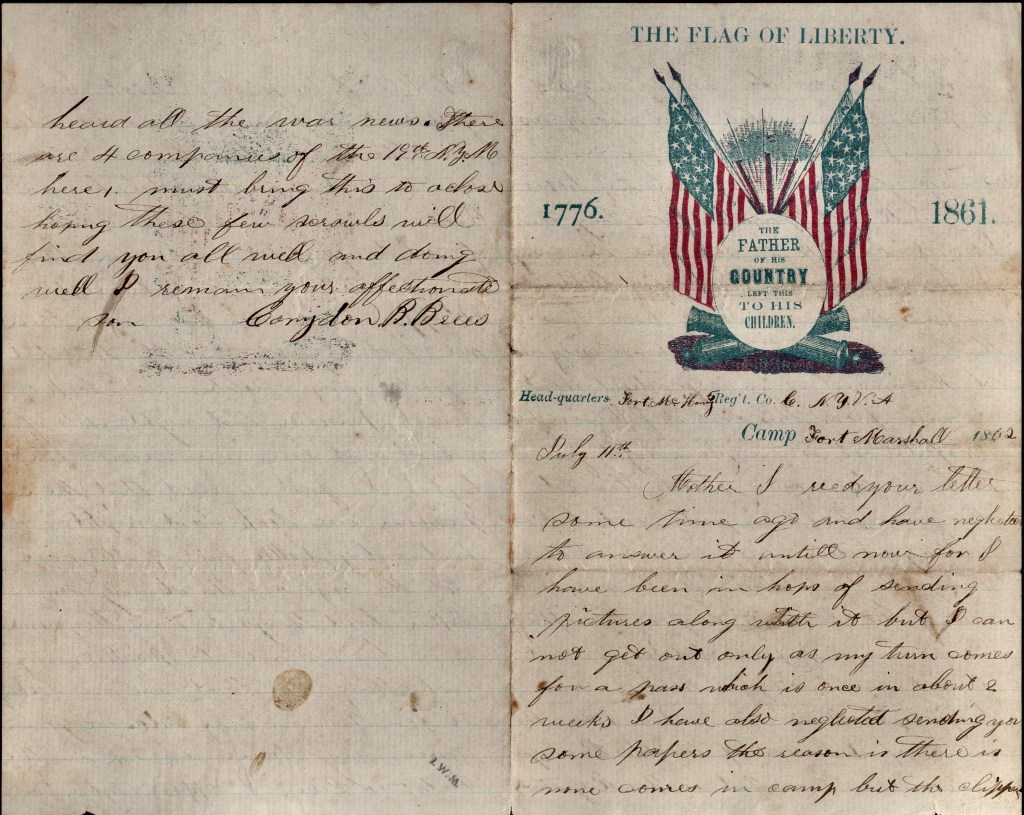
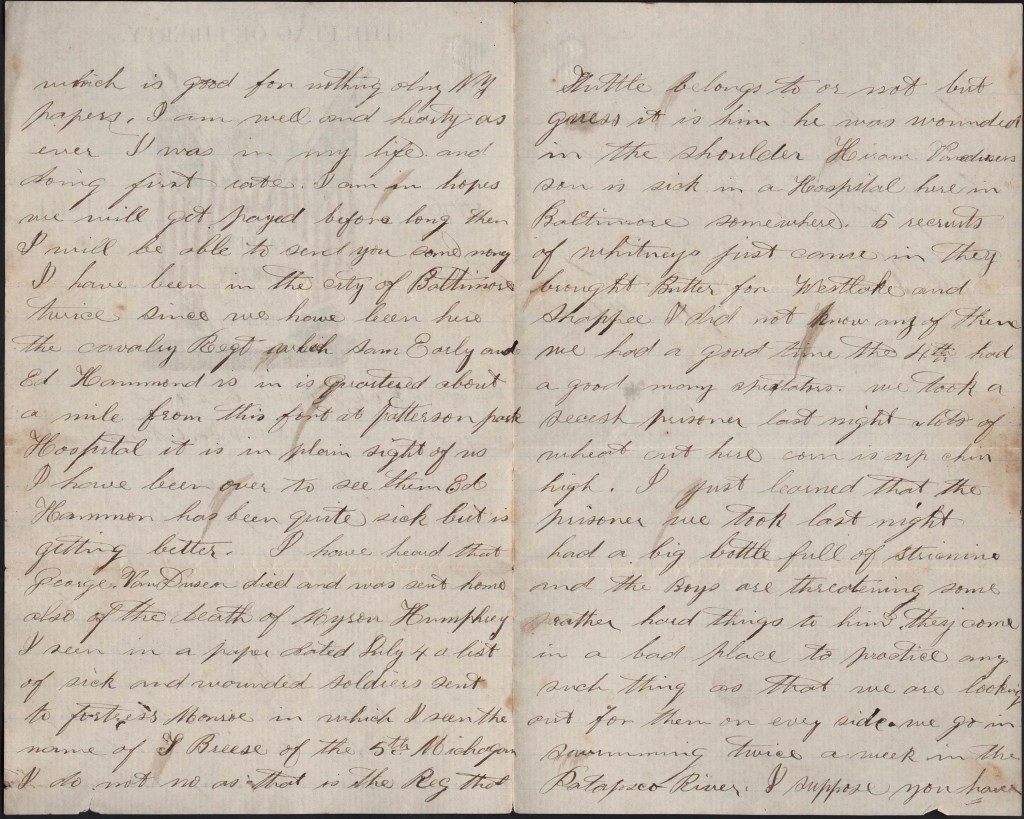
 Spared & Shared 23