My passion is studying American history leading up to & including the Civil War. I particularly enjoy reading, transcribing & researching primary sources such as letters and diaries.
The following letter was written by 18 year-old Winfield M. Perry of Co. M, 2nd New York Heavy Artillery. “Win” enlisted on 14 October 1861 at Utica, New York, mustering in as a corporal on 27 October 1861 to serve three years. Company M was sent to Washington D. C. where they were attached to Sturgis’ Command of the Military District.
I could not find an image of Winfield but here is a cdv of William Phelps McNeil of Co. H, 2nd New York Heavy Artillery
Win reenlisted in November 1863 and was appointed sergeant in mid-February 1864. He was wounded in the hip on 3 May 1864 at Pamunkey, Virginia, and discharged for disability on 8 June 1865.
Win’s reenlistment is surprising given that he became quickly disillusioned with being a soldier. Shortly after enlisting he wrote his mother, “I think this soldiering thing is about played out and if I ever get out of this I scarcely think my patriotism will let me enlist again.” He admitted to his mother that he had enlisted out of a sense of patriotism and duty. Later in the letter, Perry wrote about abolitionism, saying that, “I see by the papers that Abolitionism has met with a serious chech [sic] in the state of N.Y. by this fall’s elections as well as in other states. I do not suppose that the elections pleased father much but I suppose that is where we would differ for I think they are capitall [sic] ones.” Here was another Utica native against the idea of abolition. He was fighting to preserve the Union, and he did not appreciate the efforts of the abolitionists. In January 1863, Perry wrote, “I guess the Abolitionists of Trenton will begin to think of something else besides niggers and money when they see this war touch as near home as it has within the last month.” He was content with the defeat of the abolitionists and the way that the 1862 elections had gone, even though his county remained a hotbed of Republican sentiment. Perry also commented on soldiers who did not enlist as early in the war as he had. Those that enlisted later were known as “bounty men,” while the original soldiers referred to themselves as “old soldiers.” He wrote, “Mother you can not imagine what a feeling there is between the old soldiers and the bounty men as these new Reg’ts are formed [sic].” The letter closed with the story of a bounty man who was bragging about his bounty, only to be ferociously beaten by more than twelve men, “because he said he enlisted for the bounty and not to fight.”
Just over three weeks after his January 1863 letter, Winfield Perry wrote home and expressed his undeniable opinion about abolition and, more specifically, the Emancipation Proclamation. Perry’s rant was an opinion that was not solely his; there were certainly a number of men who felt the same way.
But mother this Regt will never fight one inch to free the negroes. There are men in this Regt that would sooner fight the President himself than fight to free the negroes. It was not what they came for. They came to war for the union and if this is to be turned into a political war or in other words Abolition, Nigger, war they will not fight at all [sic]. I think these appropriations of money that Congress are making for the Negro had better be turned toward paying the soldiers who have been without pay for eight months. Their families at home in the poor house Suffering Starving [sic] even for the want of it. I need not go outside of this Co to find such cases. One Mr. Stowe of South Trenton or near there has a wife and three children his wife sick and the children not much better [sic]. They had to go to the Poor-house or Starve. Negro first and White Man afterwards is the motto of our government at the present day. It would seem as if our Army had lost confidence in their Commanders. The Commanders even themselves at the way this war is being carried on, it would seem as if nothing had gone right since McClellan and Battle have been Superceded for freeing men I believe never lived [sic]. Now do not think I am turning toward the rebels, but mother I did not come down here to fight [for] Niggers, and the long and short of it is, I won’t.”
As the war was ending, Perry’s opinions on Abraham Lincoln, and his policies changed somewhat. After the Civil War ended in April 1865, Perry was was still in the Army. He had been wounded in June 1864, and he was still trying to recover. He was in a hospital in Alexandria, Virginia when the war ended, and when Lincoln was assassinated. A man who had been so vocally against Lincoln’s proclamation went to visit the President’s remains in the capitol building. He wrote his mother of this experience and stated, “Mother it was to [sic] bad that “honest old Abe” was not allowed to live to see peace proclaimed. I can say nothing against him now.” [Source: Abolitionists or Volunteers, Historical Memory and Oneida County during the American Civil War, by Barry J. Fitzgerald; based on the Winfield M. Perry Papers housed in the Oneida Historical Society Manuscript Division.]
Transcription
Patriotic letterhead, “The War for the Union.”
Mud Fort, Alexandria, Virginia January 28, 1862
Dear Mother,
I think I must write you again [even] if I have not had a letter. It does nothing but rain all the time and the mud is about ten feet deep or less. The boys this morning are all in an uproar about going to Port Royal but I don’t believe anything of the kind (my ink has given out and I cannot get any today so I must try a pencil).
Mother, you ought to come here and see the soldiers I saw 17 thousand in the field one day last week. The government can call together one hundred thousand men inside of an hour. But do not tell me anything about what a splendid place Virginia is. I had rather be hung in Old York than die a natural death in Virginia.
Willard Egleston is sick but not very. He is up and around but looks bad. All the rest of the boys are well. I was down to Alexandria Saturday and went in the Marshall House where Ellsworth was shot. The stairs and the floor where he fell is all cut away. They keep a guard over the house all the time. Alexandria is a place of about 6 or 8 thousand inhabitants. There are some splendid places that the secesh left all furnished finely used as saloons, hotels and gambling halls all in full blast—anything to make money out of the poor soldiers. I have known of soldiers going down to those places with from two or three months wages in their pockets, stay there not more than two hours, and come back without a cent. I believe there are more sharpers in and around Alexandria than in the City of Washington.
I saw Bill Dunn from Utica down here last week. There has been several here from Oneida county. Some of our boys are in quite a great stir about going away or are going home, Cape Vincent, Port Royal, Beaufort, and Fortress Monroe all in one day. Sometimes we will hear the rebels are making an advance and are expected to come in sight every minute, and then again they have all left Manassas and fled for Richmond. Such is all the time.
I saw Mary Saturday. She was well. So is Mr. Jones and as for myself, you may know I am always well. I saw Jimmy French last week and Jerome Frasier too. They are both well. I cannot write more this time. Goodbye, — Win
The following interesting letter was written by John Pattee, a Canadian by birth, who “came to Dakota Territory from Iowa in 1861. He had served as Iowa’s State Librarian (and State Auditor) for three years, from 1855 to 1858. Shortly after he left office, a second marriage made him the brother-in-law of Iowa Governor Samuel J. Kirkwood. (Perhaps he left the position in part to protect his new in-law from charges of nepotism, something honest politicians strive to avoid.) In early 1861, like thousands of his fellow Iowans, Pattee volunteered for service in the Civil War.
Courtesy of Iowa Civil War Images
He mustered into the Fourteenth Iowa Volunteer Infantry Regiment, and was named captain of Company A. Rather than being sent south to fight the Confederates, as expected, Pattee’s company was sent west, along with Companies B & C of the 14th, to relieve the regular army regiment then stationed at Fort Randall, Dakota Territory. (Many of the men were upset at losing the chance for glory in the big battles of the Civil War, but perhaps they changed their mind when the rest of the regiment was decimated in the Battle of Shiloh.) Pattee, as the senior captain, was given overall command of the battalion.
For the next three years, Pattee and his men would patrol the Dakota frontier and participate in significant actions during the Sully campaigns against the Sioux. (The three companies of the 14th Iowa Infantry would soon be re-designated as the 41st Iowa Infantry and later incorporated as Companies K, L, and M of the 7th Iowa Cavalry.) As the commanding officer in Dakota Territory, Pattee faced a number of challenges.
First, some wily Dakotans tried to usurp his command when “Major” Lyman showed up at Fort Randall and claimed the command for his own. Pattee was suspicious of Lyman’s commission (the papers bore an unusual number of erasures and changes), and refused to yield command. For this, he was placed under arrest and held for several months. Eventually, with the help of Governor Kirkwood and the Secretary of War, Lyman’s commission was proven false, and Pattee resumed command.
Pattee also faced some rebellion within the ranks when the captain of Company B—who thought he, not Pattee, should have been given command—fomented unrest among his men. Pattee effectively dealt with this by exiling Company B to the godforsaken post at Fort Pierre.
During the Sully campaign of 1863, Pattee stayed behind in Sioux City to command the department while Sully was in the field. In 1864, Pattee accompanied Sully on his campaign. In later columns, we’ll explore some of the pivotal events of these campaigns and their impact on central South Dakota.
In late 1864, Pattee led a small force from Sioux City up the Big Sioux in search of some remaining Dakota Sioux still causing problems in the area. Just south of present day Hawarden, IA, Pattee discovered the remains of two men killed by Indians earlier that year. The two had been hunting and trapping, and were likely killed for the large quantity of furs they had accumulated. One of the men, Mr. Tennis, was identified when soldiers found his wooden leg. The other man was Frederick Pattee, John’s brother. All John found of his brother was a boot with some foot bones still inside.
That night Pattee and his men camped near the mouth of a small creek flowing into the Big Sioux a few miles north of the site of the bodies. Some say the creek is called “Pattee Creek” in honor of John. I have to wonder, though, if a grieving John might not have named the creek in honor of his lost brother, Frederick.” [Source “From State Librarian to Dakota VIP“]
Pattee’s letter mentions John Blair Smith Todd, the cousin of Mary Todd Lincoln, who used his personal connections to seek political and military appointments for himself and friends in the Lincoln Administration.
[This letter is from the personal collection of Greg Herr and was offered for transcription and publication on Spared & Shared by express consent.]
Transcription
Fort Randall, Dakota Territory January 19th 1862
Dear Governor,
I scarcely know whether I had rather venture to write again or not. I have written once to you and once to Mrs. K. and have not received a line from either since we left home but I claim to be very charitable and I will attribute it to a want of time with you. I will try again.
J. B. S. Todd—the first delegate to Congress from Dakota Territory.
We were getting along very smoothly and nicely until news arrived that we was to be detached from the 14th Regiment and another Major appointed. This of course disturbed some a little, but none less than me, I assure you for I considered that matter definitely settled long ago. A petition would have been sent in long ago but I prevented it. But now a new contingency has arose. Two companies are being raised in this Territory and through the influence of J. B. S. Todd who was the sutler, a Mr. Lyman—a frontiersman with a squaw for a wife—has been appointed Major and is expected here in three days to take command of troops here. This man Todd is the man that rode in the cars with us to Davenport on the 13th of September last. He used to be sutler here and was arrested by the Commanding Officer and broke the arrest by running away and went to Washington and resigned his sutlership and because he was cousin to Mrs. Lincoln, got an appointment as Brigadier General. He never owned any part of the goods in the store here. They belonged to a man in St. Louis but he used some $4,000 in money & goods from the store to secure his election to Congress from this Territory. And is now, though a Democrat, able to wield some influence at Headquarters. He is quite influential here among half breeds which are quite numerous owing to the fact that he and many others like him have lived here some time.
There are men here in our companies that are acquainted with Major Leonard, lived by him for some time in Des Moines County, and when the news arrived today (in a letter from Will Kirkwood) that Major Leonard would probably be sent here, their men said, “For God’s sake, keep Major Leonard where he is and let us have the Mustang half-breed for our commander if he is from Dakota.” There is not men enough in the Territory to make up two companies and they are getting the balance from Iowa about Sioux City.
A letter or petition in regard to this matter will leave here by the same mail with this to you. I have not seen it but am told that the object of it is to ask of our companies are detached from the14th that we be allowed the same privilege that has been accorded to most of the troops from Iowa—that of electing our own officers. I will venture one more assertion that it will require but a word or two from you to Secretary Cameron in regard to the importance of this post and so forth to give us a Lieut. Colonel and thus outrank the Dakota halfbreed.
And now to conclude this subject, I will just say that had it not been that I have been almost driven by the many urgent entreaties of the officers of two companies and in view of the humiliation that the people of Dakota have sought to inflict upon us after our having come here to protect them, I would not thought of presenting my wishes or views upon this matter.
Very respectfully yours, — John Pattee
The family are very well and we are very thankful for the papers you have sent us and always glad to get letters from Des Moines. — J. P.
I send this to Mr. Pritchard because one of General Todd’s tools in Post Office here and I fear my letters are examined if addressed to distinguished persons.
The following 20 letters were sent to me by my friend Richard Weiner who purchased them recently. They were penned by Romanzo Alexander Coats, a flutist in Co. K of the 23rd Wisconsin Infantry. He informed me that as usual, some letters have better content than others, but in general, Romanzo had some facility with relating the experience of being a soldier. He says there is particularly nice content concerning his unit’s involvement in the Red River Campaign, particularly the Battle of Sabine Cross Roads (Letter 17).
Coats, whose father was a minister, went on after the war to become a Free Will Baptist Minister.
To read other letters by members of the 23rd Wisconsin previously published on Spared & Shared, see:
[Note: These letters are from the collection of Richard Weiner and were made available for transcription and publication on Spared & Shared by express consent.]
Letter 1
This lithograph of Camp Randall was taken from Bascom Hill looking southwest, circa 1864. According to the Wisconsin Historical Society, the railroad track seen in the image’s foreground runs along where University Avenue exists currently. (Wisconsin Historical Society)
Camp Randall, Wisconsin August 31st 1862
Dear Parents & Sister,
Although it is but a short time since I left home, yet thinking you would be anxious to know how I prosper in my career as a soldier, I gladly occupy these few moments in writing you. You will know by the date that I am far from the place where I last wrote you. Wednesday afternoon we were taken down to Mazo Manie by teams & got on the evening train going east & arrived in Madison about ten o’clock but did not have any supper until pretty near eleven when we had an excellent supper which we relished much, I tell you. But the coffee was so hot that it hardly cooled before we finished eating.
Herman and Lewis Gudmundsen of the 23rd Wisconsin proudly wearing their new uniforms in 1862 (Wisconsin Historical Society)
The next morning after breakfast we were marched into camp. I forgot to tell you we had to sleep on the platform around the depot because no other place had been provided. But that would have been well enough if they would have kept still, but some were rowing around all night. We have been in camp since. Yesterday we were mustered into service by Maj. R. S. Smith. The day before we were examined by the surgeon & about 12 were thrown out, among whom were the two Fessenden boys who had both enlisted. One had been in the 6th Regiment who owns that book you have. The other was only 16 years of age. Many felt very bad because they could not go. Byson Reynolds was on.
We are enjoying ourselves as well as could be expected under present circumstances. We have no tents but they are building barracks for us & will soon have them finished. I can be right down on a board & sleep soundly without any difficulty. We expect to get our uniforms tomorrow. Also $25.00 advance bounty. Part of the regiment have already received both. The uniform of the 23rd is a splendid one—a great deal better cloth & better made than that of any other regiment I have seen. The coat is cut like mine I now wear. The 20th Regiment was here when we came but went away yesterday morning for St. Louis. I saw Delos several times. Also J. Williams. Warner Hathaway is here yet but expects to start tomorrow morning. John Calkin is camped near us so that I see him often. We don’t know certainly whether we will get a furlough or not.
I must close. Our company is not lettered yet & you may wait until I write again.
Letter 2
Addressed to David N. Coats, Spring Green, Wisconsin
Camp Randall September 3, 1862
Dear Friends at Home,
Just after I commenced this, I was called out for dinner and will now finish it if possible. I am well and have been ever since I came here although many have been unwell, their illness caused by a change of diet and eating apples and one thing and another which are peddled around by the boys from town. We have received our uniforms excepting our shirts. I have one coat, cap, pair of shoes and pants, two pair drawers and stockings, an overcoat and blanket. Our regiment is furnished with better clothing than any other in or from the state. Our coats are as fine as broadcloth.
We have had new barracks erected for us as comfortable almost as a house. There are three rows of bunks, one above another each side of a partition running lengthwise of the house and then a space of about 6 feet wide, between the bunks and side of the building. There are eight bunks in each row and two sleep in each bunk so each building accommodates 98 persons. Alexander and I sleep together. We have not had a great deal to do yet—the regiment hardly being organized yet. The whole regiment received their arms day before yesterday and they are good ones too but I think they are partial not to give me one. I have not got any fife yet that will answer. I tried one this morning but it was not good for much. I shall have to furnish one myself I guess.
Our company has received the $25 advance bounty in treasury notes and expected to get the rest today and were marched up to headquarters for that purpose this afternoon but for some reason (a soldier never knows the why of anything, you know) did not get it but will probably tomorrow.
The prospect of getting a furlough is poor now. But few have been allowed to go yet and they the ones that have families to see to, many having enlisted expecting a 20-days furlough and left their business expecting to come back immediately. So you see the disadvantages of not being married. I don’t think there is.
Sept. 4th. Just as I wrote the last word preceding this date we were called into rank to march up to headquarters to get our month’s pay in advance which we did quite readily. Musicians only receive $12.00 per month so I have $37.00 in Treasure notes—just as good as gold. I wish I could come home to bring it for I don’t like to risk it in letters but if I can’t come, I shall send it in a few days.
We have got some first rate fellows in our band. The fife Major is a real good-natured fellow and a splendid player, I tell you. It is well for me that I enlisted as fifer if I take into consideration the difference in the respective duties of each. The men have been out drilling four hours this forenoon while I sat in a house in sight of them practicing. But sometimes I think I ought to be in the ranks while others less able are required to drill. The boys are in first rate spirits and have been since we have got regulated. Before that we had to sleep just where we could pick a place, but now everything goes off as orderly as could be wished.
Yesterday while passing along thru camp I met three women and the one next to me I thought I knew but she did not know me so I went on and happened to think it was Roana Wordworth. And then I went and spoke to her. She was quite surprised to see me here. They are well. I have been up to town once since we came into camp and staid an hour or two and have been out to the lake twice to bathe. We were glad of that for it’s a nice place and the water is warm. I wish you had time to come out here and see us as we are now. A great many folks are in the camp everyday to see the boys. If you could come out you would enjoy the visit first rate.
Our rations consist of bread, beef, potatoes, beans, rice, sugar, coffee, tea, and molasses twice a week. There are so many around talking that I cannot half write so please excuse all mistakes and poor writing and write immediately. I have spilled my ink and had to use a lead pencil. New—reliable news (for all kinds of rumors are afloat in camp) are mighty scarce here and I wish you would send me some papers.
Yours truly, — R. Coats, Madison, Wisconsin, Camp Randall, Company K, 23rd Regt., Wisconsin Volunteers, care of Capt. Frost
Letter 3
The 23rd Wisconsin Regiment left Madison on 15 September 1862 under orders to report at Cincinnati, Ohio. Arriving at Cincinnati on the 17th, they crossed the Ohio and joined the Brigade of Brig. Gen. Green Clay Smith which then held the extreme left of the Union line five miles above Newport, Kentucky.
Cincinnati, Ohio September 17, 1862
Dear Parents & Sister,
I have a very few moments to write to you in & thought I would improve them. We have just arrived here and I am well as usual—a great deal better than when I came. We rode two days and two nights without hardly stopping. We changed cars twice. I do not know where we will camp yet. We are now right in the street expecting to go over the river. I will write again soon. — R. Coats
Letter 4
Camp Bates September 20th 1862
I now have a little more time to write to you and will try and improve it and will begin by giving a little sketch of our journey here. We were called up last Monday morning in Camp Randall about 3 o’clock to prepare for starting but the trains did not arrive to us until nine o’ clock. Then we marched out of camp, the band ahead playing Jefferson & Liberty. We went in the same car that the Col. & the other officers were in, which was a very nice one. We played until we got underway out of town.
We had a great time between McFarland & Stoughton. The track had sunk about a week previous as much as ten feet & they had just got it toggled up but could not run over it with an engine and we pushed to it and then all the soldiers got out and walked around it & then they pushed the cars across where another engine hitched on and away we went. We turned off at Milton Junction onto the Chicago & Northwestern Railroad and went directly to Chicago. We passed through Janesville but could not see much of it. We saw some country between there & Chicago—the best we saw at all. We had some hot coffee & some of the hardest crackers I ever tried to eat before. I managed to eat one & that was enough. We did not stop until dark & then had to march two miles to another depot by gas light. I wish it had been in the daytime so we could see something o f it . We (the band) played all the way which took some wind. We got aboard of another train & the band had a car mostly to ourselves. We then had some good crackers & cheese & coffee or ice water but I guess the rest did not fare so well. The trains started about nine o’clock. l we rode all night & arrived in Toledo the next morning. We had some more hot coffee but very poor bread & beef.
There we had to change cars again & did not have enough cars to give one to the band so each one of us had to go with his company. I had to get into a 2nd class car without any cushions which was rather hard for us. We went within 25 miles o f Cleveland & then went almost back again to Columbus and got there just after dark. There we had our supper but without coffee. Had some water instead & some good cakes. We saw lots of fruit coming through Ohio but what a country—nothing but trees or woods & then a farm covered with stumps. But it was worse in Indiana for there was hardly nothing but woods, woods, and elms at that.
The cars stopped at one place in Ohio & I got out of the cars and went to an apple tree a little ways off where the owner gave me permission to get what I wanted & I got a lot of them. They tasted first rate. We staid in Columbus about an hour and then rode all night & got into Cincinnati about 8 o’clock the next morning. Then we left the cars for good a mile or so through the city & then halted right in the street and threw off our knapsacks, and after a little [rest], had a first rate breakfast furnished us by the citizens—good bread, ham, coffee, tomatoes, onions, apples peaches, cheese, and I ate it on a good table under shelter. We then had permission to run around town and staid until noon when we had as good a dinner as the breakfast was. There were plenty of peaches peddled around by the boys and women—great large ones for a penny and smaller ones for almost nothing. Here were nice large grapes for 5 cents a pint. I bought 3 cents worth and that was all I could eat.
I had quite a misfortune happen to me while here. My feet commenced to swell & became feverish & painful about 11 o’clock and in two hours I could hardly walk so when the regiment marched away, I was carried with the sick. The regiment was marched across the Ohio River into Kentucky about 3 miles and by that time it was dark. The regiment had to camp right out [in the open] without any tents or supper. I slept in a wagon which had a cloth cover.
The next morning we had our breakfast of bread & cheese and beef. My feet were not bad in the morning, yet I could hardly walk a rod. John had been on the sick list but was almost well & he took care of me. If he had not, I don’t know what I should have done. That morning the regiment marched 3 or 4 miles to our present camping ground & it was astonishing how many gave out in walking that little distance, but there are not a great many sick now. Alexander has not been very well but is getting better now.
We have a pleasant camp here but it is an awful rough country around here. There are a great many regiments around here guarding Cincinnati. The 21st and 24th Wisconsin are here. I have heard that the 11th is around here somewhere but I don’t know whether it is or not. I wish it was for there would be a chance of seeing the boys. We don’t know how near we are to the rebels. Some think they are within 5 or 6 miles & some think they are more than 20 miles. I think they will not trouble us while we are here at any rate. We have had very pleasant weather here thus far & it is lucky for us it has been for we have not yet our tents but expect them soon. We have good bread and meat and coffee & sugar & that is about all. The water we use we get out of the Ohio River about a mile distant but is rather poor.
Well I guess I’ve written a bout as much as you will wish to read. My feet are well now & I feel first rate. John is well. Give my love to all friends & write soon & often & send me some papers. Your affectionate son, — R. Coats, Co. K, 23’d Reg’t Wisconsin Vol.
Letter 5
Milliken Bend, Louisiana March 25th 1863
It is with pleasure I hereby acknowledge the receipt of your kind & affectionate letter of the 12th day before yesterday. I am happy to inform you of my good health & spirits & hope these few lines will find you all the same. I am glad you were so thoughtful to send me those stamps as I had sent away the last one I had the same day and although we plenty of money, not a postage stamp can we get here and I shall have to depend on you to furnish me & this currency is to purchase some with and send three or four at a time. Oh Father, if I were only permitted to receive thy counsels as it was my privilege to formerly, how precious it would seem for I do yearn for Christian society, for it is so dreary & lonesome here. When I view the course of life so many adopt in the army, so much profanity & immorality are exhibited, yet I don’t know as this is to be wondered at where so many are brought together, & then the absence of all social restrictions & under strict military laws so different in their moral & religious tendencies from our civil and liberal laws at home, that even old professors go astray & grow cold in their love to their Savior. But i do try to do my duty and live in His love & there seems to be a feeling of peace & security in thus trying in my feeble way to lead the life of a Christian. And how cheering the assurance that I am remembered in your prayers at home. And Father, I do know if I am permitted to return to you, we can live more happily & enjoy each others society much more.
I thank you for printing out the excellent passages of scriptures & hope it may be of true value to my soul. Oh how the importance of being a Christian has developed itself to my mind since I have made up my mind to find & love my Savior. I daily feel the need of His love & protecting care & pray to be strengthened in faith and acknowledge His ways in all my doings. You alway write such encouraging letters that it is a great comfort to receive them, and is, as it were, a beam of sunshine across my dreary pathway. But yet I don’t intend to convey the idea that ours is only a tedious and cheerless routine of duties for it is a life we are getting accustomed to & hence our difficulties are regarded as trifle and if it were not for such much sickness in our midst, the boys would be must more content & there would be less pining for the comforts of home.
The change of climate and water has had a terrible effect on the health of our boys and many is the one but for this might have still been with us in the full enjoyment of health. And where so many are sick, it is difficult to care for them properly. At best, it is poor treatment a soldier can expect in the army.
You generally speak hopefully of a speedy termination of this bloody strife. I did not know but you might speak so as an encouragement to us or it might be your sincere opinion in view of expected events. For our part, we think we have a mighty work to do yet before the South is conquered. It is just two years since the war was begun and then consider what we have gained and what we are to gain. I know we have drove them inch by inch in the West and gained many glorious victories but yet they seem as determined as ever. That statement mother sent me respecting the various successes of each party I received and it was a fair view of our affairs, but we look the matter right in the face and make up our minds to fight it out—long or short. Two months ago there was a good deal of talk about running, deserting, being taken prisoner and paroled, &c. &c., but now that is all over with and everone is bound to stick it out.
Often times when I get to thinking about home and its pleasant associations, I do wish I could be there. But generally speaking, I am about as cheerful & in as good spirits as any of them and much more fortunate than a great many, having an easy position as musician & enjoying such uniform good health. I am glad you had a good time at the quarterly meeting & I should like to have been with you. I would like to have heard Elder Miller preach first rate for I used to like him so well. How I wish he could have been our chaplain, for he would have been the right man in the right place. We are now without any and have no divine services at all.
It seems too bad to sell one of your horses to pay the debt as you have had them so long together and then you will be without any team. If you could pay for them by using the money I have sent you, would it not be best to use it? You can act your pleasure but you are perfectly welcome to use it. If you think best I suppose it would be best to let those people take the children if they would be kind to them as it must be a great task for you & mother to support and care for them these hard times. Yet I suppose it would be hard to part after being with you so long. I’m sure as little as I’ve been with them, I should miss them if I were to come home.
The weather is getting pretty warm in these parts this early & by a month to come I expect eggs will bake in the sun it will be so hot. Father, you wrote me a real good letter and I was very glad to get it. I received one from Susie & mother the same day I got yours & shall answer it in a day or two. John is quite smart now if it were not for that heartburn that troubles him so. Frank is well & so is Alex & most of the boys in our company. It is getting nearly bedtime & I shall have to bring this to a close. I have just been out to play tatoo. This morning I had to play all alone as the others were not very well. Give my love to all my friends & neighbors & ever remember your affectionate & truant son, — Romanzo Coats
Our overcoats have been drawn to the boats to go up river & I suppose you will have to go after it or send for it. It will go to L. V. Tabor in Prairie du Sac & your name is marked on it. Good night.
Letter 6
Holmes Plantation, Louisiana April 19, 1863
Dear Mother & Sister,
The morning after arriving here I wrote you a short note and having more leisure time today, I thought I could better improve it in no way than by having a sociable chat with you at home. I am well & hope these lines will find you all the same. Day before yesterday I was quite unwell with the sick headache but feel well today as usual. At first I did not know what ailed me—only I knew I had most awful headache which commenced in the morning & kept growing worse until in the afternoon when it was so bad I went up to the surgeons & he gave me a dose of castor oil & turpentine & excused me from the dress parade, much to the disappointment of the boys in the band for I was the main one they depended on. I felt a good deal batter in the afternoon and am well enough today. This was the first dose of medicine the doctors gave me & the first dress parade I had missed on account of being sick.
Well Mother, your predicted long letter did come sure enough & right glad was I to get it. The fellows think I’m the luckiest fellow in the company for getting letters & I think no one has been more thoughtful of the soldiers sons than you at home of me—at least none of them get so many letters & that is about as good an evidence we require of being remembered at home for nothing hardly will so animate the boys as to know the mail has come. Then there’s sure to be two or three for me & good long, long good ones too.
Dear! it was to bad we did not get those things that were sent to John & I feel if you had only said at first that it had been sent by express we might have had it long ago for we would have had to send an order to the express agent at Memphis and have it forwarded to us and then by the time we knew it was sent by express, we had to leave and come here so I don’t know where we will get it.
I don’t know as it will do to have too many chaps named after me as I could not remember them all in my will. I did write to Lucy Ann & I presume she has got it by this time. Too bad about Frank H, but don’t know as I could advise him in this matter. I guess you will think by my letters lately that I am not down hearted & in truth I am not for I never have felt more cheerful, hopeful or healthier than I have the last month or so—especially since we were paid off. By that we mean we have had good living. In fact it seems as though the boys are more encouraged and better spirits than any time since we left Kentucky. We are getting used to soldiering & only desire to whip the rebels soundly, restore the Union & (not slavery) but freedom. I guess you can tell pretty well how I feel by the way I talk for you were always a pretty good judge of humane nature & could not be very well deceived by me, at any rate.
Yes, mother, how thankful we ought to be to God for His kindness & mercy to us. I’m sure we could not have asked for more & I pray that it may be continued. Oh Mother, I’m so glad you feel so reconciled to our separation and apparently in such good spirits for it would grieve me exceedingly to know I should cause you unhappiness on account of my willfulness. Keep up your spirits. Don’t get to worrying & dream any of your ominous dreams & all will turn out all right in time. Only have patience and trust implicitly in God’s mercy. I knew the Harris you spoke of well and he had a pretty hard time before he got his discharge. As he said, I have to take the lead in the music and I don’t like it much either.
I did not think Abbie could scare you so easily as that about sending small things in a newspaper for most all the boys get things that way & to think of your being in prison—what a preposterous idea. But I suppose it is against the law and it is best to be on the safe side. Dear! Susie, how excessively flattering you are getting to be. I believe you have become so accustomed to such language in addressing or conversing with brother Frank that it has become a habit, hey? That makes me think about the story about Honey, or Sugar, but shaw! what am I t a l k i n g about. But please excuse me & I’ll turn over a “new leaf” & try to do better. Yes, I never could find out what it was & have about made up my mind I am only a common personage after all. I expect it was being praised so that made me think so. Isn’t that it? If I only had time I would praise you ever so much but I have got to finish this tonight so I can’t this time.
I am really glad Willie has made a start & I’m going to write him a letter one of these days & you must have him answer it too. I believe he could write a pretty good letter. I’m so glad Mary is getting better. I hope to see the day when we can have a good visit together. Well, are you going about “keeping house” in good earnest? Well you must be careful about breaking the dishes and tripping over the kettles or Frank will think you ought to have tin dishes as we do. How did you know that letter was from a dash, I never heard of him. I’ll have to see about that. I have seen the house. I think it quite a pretty one. Dear Susie, I know you will be happy if you only try to make others happy and let your happiness take care of itself.
The 29th Regiment came down the river two or three days ago & yesterday I heard they were a mile or so from here so I went up there and found King Buller and Joe King & had quite a talk with them. They say the most they have done is to guard cotton & they don’t like it much. I heard yesterday the C Battery had come down and in hopes to see the boys. Kinder curious how we come across the boys down this way, ain’t it. But it beats all how the troops are coming down the river, They are bound to make a sure thing of Vicksburg this time, I think sure. We are making great preparations for it at any rate. Part of Farragut’s fleet has come up and a night or two ago, eight or ten gunboats ran the blockade by Vicksburg and two or three transports and one was sunk. According to reports, the troops in Vicksburg and vicinity are pretty short of provisions and the plan seems to give it a regular siege.
We had quite a rain shower last night but today it is pleasant. Where we are camped now the ground is 8 to 12 inches high and the cover around here is fi v e or six inches high & we have a right smart of warm weather too. I saw some peaches on a tree as large as plums and trees look as green as in June at home. We are in the land of crocodiles but as yet I have not seen any. One of the boys found part of one’s hide & gave me a bit of it. John is well and in first rate spirits and appears almost like a new man. Franklin is well. Alex was not sick but was not strong enough to march. Isn’t it singular about our tent boys—only two left for duty; myself and Jefferson Daggett. Alex Thompson, Augustus Thomas, Wm. Jones, Charley Frim, George Partin, and Thomas Loysee & David Jones were left behind at the band unfit for duty. The rest are away in hospitals or dead. Well, I guess if I write much monger you will not be able to read it all for it gets poorer and poorer all the time. Give my love to all and ever remember your affectionate son and brother, — Romanzo
Letter 7
Smith’s Plantation, Louisiana April 25, 1863
Dear Friends at home,
Last evening after dress parade, our mail came in and letters from you, Mother & Susie dated the 12th and was glad indeed to receive it. We were then on Holmes’ Plantation and just after supper came the unexpected order to pack up and march. We hurriedly packed our things and about an hour after sundown we started. The roads were pretty bad and in some places a good deal muddy. The moon did not shine much and it was pretty dark but we jogged along the best we could and after marching 8 or 10 miles, came to a halt about midnight. We were tired enough and prepared to camp down. Our wagons did not come up but as we were going after some water, we came across some bales of cotton and the way the cotton walked was a caution.I got me a good arm full which made me a nice soft bed worth from 6 to 10 dollars—rather costly, but I don’t have to pay it.
What was our surprise to see two steamboats close by in the morning which had run the blockade past Vicksburg and had run up a bayou to us 6 or 8 miles from the river. They fared pretty hard coming down, I tell you. On one boat there were two shots through the pilot house, one through the smokestack from which a piece of iron flew & killed the pilot and then there were three or four shots through the engine room. They are to take the troops across the Mississippi to the mouth of the Black River. Part of our brigade went today and we may yet go tonight. I expect we are preparing to attack Vicksburg and perhaps before you get this, it may be ours.
It is getting very warm here now yet not very uncomfortable.I have not seen Leonard lately but the regiment is on ahead of us and I think I shall see him. I have not the time to write much of a letter now. I thank you very much for those stamps as I was entirely out and had to send some without any.
Susan, I think a good deal of that photograph you sent me and it looks so natural and lifelike. Frank looks just as he used to. John is well and myself too. I forgot to tell you before, I feel as well as I ever have in the army. I got a paper also from you last night. You must excuse this poor letter as I have not much time but thought I would write a few lines as I may not have time to write again for quite a spell. Remember me in your prayers and write soon to your affectionate son and brother. Franklin is well and will send his love. — Romanzo
Letter 8
Hospital Rear of Vicksburg Miss. Tuesday, June 23, 1863
Loved Mother,
I received your letter of the 11th inst. and perused it with my usual gratitude for I am indeed grateful that you write me so promptly & affectionately & if this is a poor method of conversing, it is the bearer of those messages of love & friendship treasures inestimable to us, cheering and enabling the heart to retain sacred those pleasant associations of bygone days and assurances of a loved remembrance even in this long separation.
I acknowledge the probability of a special providence in being unable to participate in our recent engagements. Yet it seemed that I ought to be with the boys and perform my duty as a true soldier. Yet, it may all be for the best. My ankle is not entirely well yet for it is painful to walk the distance of a mile or two as it is weak. I should have used that sweet oil you sent me but the bottle was broken that contained it and it was lost.
It was really too bad Lephe should have missed my letter. I addressed her long ago as I thought surely she had received it and I was waiting for an answer. Your motives for sympathizing with her were disinterested, I suppose, & Mary rejoiced at my misfortune. Should think she might be more affectionate than to exhibit such a spirit as that. I’ll —–. News indeed about Marion & Teresa. I will allow it will be a shock to Sylvester. Guess it is only a story. It would be just like Alex not to write home even if he were well for I used to almost drive him to make him write before. He generally writes home and waits for an answer before he writes again which would be sometimes over a month.
I did not write home between the 10th and the 25th as we were marching & fighting so much & [had] no opportunities for sending mails. I got a letter yesterday from Leonard and was happy indeed thus to learn directly from him of his partial recovery as I was very anxious about him. He wrote quite encouraging & I am in hopes he is much better. I have a real mind to scold you for talking so about your poor abilities in writing a letter for I think they are so good and kind. I can almost imagine you as invisible, talking to me. Father must find time to write to me soon or I shall have to talk to him. Yes, I think I could drink just about my hatful of that new milk you spoke about and that would be about as much as one cow gives. Most of those things were good but I could not keep them all. I sold a few dried apples & currants but they were just as thankfully received. I did not see anything of the cake at all—too bad. I get all your papers and love them dearly.
We were paid off a few days ago to the Ist of May but had to take all our money here. have sent $10 home by Mr. Paymaster.I am well as usual—only a little tired out by sitting up nights taking care of the wounded. I have t o sit up half the night and cannot get much sleep during the day, but it will not be so hard from now on for me as the poor fellow has died that I had to sit up with. Things go on about the old style around here but the Rebs acknowledge that they cannot hold out much longer. Theirs and our pickets stand within 2 or three rods of each other and by mutual agreement do not shoot but come right together and talk if their officers are not about.
I saw John yesterday. He has been a little unwell lately but said he was getting better. Franklin is a little unwell too but looks better. Mother, I am so glad that you are so hopeful and resigned in relation to our happy reunion and I pray for that day to hasten when our nation may be over from the yoke of civil war and our labors be blessed by the reign of peace. May our faith be strengthened to increase our love of God, the obeyment of His holy will. Remember me to all my friends and neighbors and please write to your affectionate boy, — Romanzo
I thank you for that tea but you need not send any more enough on hand. Yours in love, — R.
Letter 9
Front of Jackson, Mississippi Sunday, July 12, 1863
Dearest Relatives,
Again, by Gods Providence, I am permitted to address you, informing you of my good health and spirits. We received mail today—the first in a good while and received a letter from you, Father, and Susie on the date respectively June 25th and 22nd adn was very glad to get them and peruse them as usual with interest. You doubtless have heard ere this of the surrender of Vicksburg and today we hear of the surrender of Port Hudson. I wrote you on the 3d inst. the day the flag of truce came out and at 8 o’clock on the 4th, the white flag was hoisted on all the rebels’ forts, and then it was that our hearts were cheered by our final victory and expected immediately to march into town & take possession. But alas for human expectations, we found we were to march to Jackson & rout Johnston, but I was bound to see the town at any rate so I managed to elude the guard & went inside.
I wish I could minutely describe the appearance of the forts and town. I don’t see hardly how a rebel was left alive in there. There was hardly a house, tree, bush, or rock but what had been riddled or smashed and the houses near the fortifications looked like a nutmeg grater on a larger scale. I tell you I felt proud when I could walk along that town on which I had so often looked with longing eyes and behold our boats lying alongside the town and I took the opportunity of taking a good bath in the waters of the old Mississippi which I had not before seen since we crossed below Grand Gulf.
You probably know better than I how many prisoners & guns we took. I have seen no official statement out. I asked men plenty in town that day if it was ours. I don’t know what people in the North will think of the terms of surrender—that is, paroling the prisoners—yet I think it is well enough as they are as tired of fighting as we are and I don’t think their authorities will dare to force them until honorably discharged. They are considerably chagrined at their defeat—that is, most of them. Some were sulky, some mad, and some glad. Our boys rummaged the town considerably after getting in there but not as bad as I expected that they would.
The next morning, the 5th, we started for Jackson & came on by short marches to here. Yet it was quite fatiguing as the weather is so warm. But I get along first rate & feel as good as ever. It was a good thing I came away from the hospital when I did or I believe I should have been sick as I lost my appetite and got considerably poor.
We are here now at Jackson as we were at Vicksburg, camped close to it and throwing shells and bullets into it occasionally. I don’t know what force Johnston has here but they say they are mostly conscripts, picked up around the country, deficient of arms & ammunition. I hope we can soon rout him here & then have a rest for a spell for I think we have had a pretty heavy campaign for one army & done pretty good work too.
I still have faith in God and love to pray and read His word & I feel that He will protect and preserve me to return to you again where we can together offer Him our mingled prayers of gratitude & thankfulness. I know you always remember me in your prayers and may we all remain steadfastly in our faith and leave all to the Lord. John was not very well when we started from Vicksburg but he is much better now as marching has strengthened him up. He got a letter from you, Frank and Susie today. We left our knapsacks & took only our blankets so as to march easier so I have nothing very elegant to write on.
Keep up good courage at home and write to us often. Our boys are in good health and spirits and if we only get good letters from home we feel all right. Franklin was not well when we left Vicksburg and did not come with us. William Jones was wounded at Vicksburg and had his leg amputated so there are only J. Daggett and myself left of the S. Green tent. No more at present from your loving son and brother, — Romanzo C.
Letter 10
Vicksburg, Mississippi July 27, 1863
Beloved Mother,
Again with glad heart I improve this opportunity of writing you a few lines in answer to your excellent & affectionate letter written after your return from Quarterly Meeting which I received while on the march from Jackson to this place but had the misfortune to lose it. Too bad. But I had read it over twice and guess I can remember most of it. It was indeed a real good, long letter and I thought a good deal of it. In the first place, I’m sure you had fully sufficient reasons for not writing sooner & shan’t scold you a bit. I cannot expect you to write all the time & I think you do extremely well as you used to write so seldom and are making fine progress in the epistolary science. Flattering ain’t it. I cannot think of half what I wish to write because I lost that letter. It was just at night when I got it and I had a great time reading it. We had no candles and we had to read it by the firelight for I could not wait until morning.
Today it is Sunday and it is then that I think the most of home as I miss its privileges the more. But I try to bear it all cheerfully & succeed well generally. I am still well and healthy and hope you may be the same. I have just got another letter from you of the 12th with the rhubarb in it and I thank you very much as it is sometimes very hard to regulate the stomach.
I am glad you got the pictures.I knew you would like that one the best though I guess the features are not quite so distinct. Yet I thought you would like the position and appearance the best. But I guess I’m the “old plain sixpence” in them all. Yes, Mother, if I had only been there I would gladly have gone with you to meeting but I know you thought of and prayed for me and that is one comfort to me and hope I may always live worthy of your lively affection. You need not thank me so many times for that money for I’m sure they are worth more than a penny a piece for them and then I shall be your debtor. I did send that money by the paymaster and doubtless you have received it by now.
I was up to the 6th Battery today & W[ ] came back with me and I let him read your letter. He sends his love to you. He is not very well now and is not very tough, I guess. Albie looks first rate and I had a good visit with him today. He is just as sober as ever. Rollin is not very well either, yet is with the company. I guess I will leave the milk question alone until I come and then I will settle it (the question and milk both). You must not place too much confidence in my coming home but if we get up the river as we think we shall now, I shall try to get a furlough. I did write about sending Mary’s photograph but forgot to put it in both times. I think I am pretty well furnished in the medicine line at present & will not send any more orders.
We have moved down on the river bank now and gone into camp again in regular style—the first time since leaving Holmes Plantation a long time ago and it seems real good too. But yet I can sleep the soundest to spread down my rubber & put my blanket over me with my coat for a pillow. We have just had a fine shower of rain which was quite refreshing this warm weather. The other day while marching through town, the dust and heat was quite oppressive and then I had to play [my flute] which I had not done before of any account since crossing the river made it rather tough and I expect I shall have more to do now than I have had. While marching back from Jackson, I went with the wagon train and so got my things carried and took it pretty easy coming back as I had nothing to carry.
The more I see of this place and its defenses, the more I wonder at our achievement and the master mind that planned its capture. And then I think they are talking of taking him from us to the Army of the Potomac. That’s just the way. If we have a good western General, he is immediately transferred to that army, and then has to retire because he cannot be successful, trammeled as he is sure to be by the government there—Pope and Sigel, for example. General Grant is the pride of the army and to remove him would be to impair the usefulness of this army. What a series of successes there has been of late, though at the cost of many valuable lives and I hope these may be followed by the still more glorious achievement of a restored and peaceful Union.
While I think of it, I remember you spoke something of my letters being good enough to publish. Gracious, I should as soon think of jumping to the moon or taking a battery with a wooden gun as to think of such a thing, but guess after all you were only joking. Only I would say, don’t do so any more. I have read to the 22nd chapter of Elias and only a few chapters of Mark. Lately I have been so much engrossed by worldly cares that I have been too negligent in regard to reading my book faithfully, but will try to do better. I still love my Savior and put my trust in Him. He has been my most faithful friend and mau I ever remain true to Him.
I have done so little writing lately that I have got behind and having 10 or 12 letters to answer immediately and each one a scolding in it because I don’t write oftener. I have so much to do sometimes I can’t even wash my clothes. Don’t you pity me? But I will write home if I have to go without eating or sleeping. While out to Jackson we could not send mail as we did not have any writing material. Please accept them as they are in old envelopes.
I saw John a few moments ago and he is very well and good natured as ever. War don’t make any difference with him—just the same everywhere, ever ready to do his duty to both his country and God. You and father may have the secesh money if you want it. A negro let me have it. My well wishes to father, Frank and Susie, and hope to hear from you soon and often. Yours as an affectionate and only son, –Romanzo
Letter 11
Vicksburg, Mississippi Sunday, August 2nd 1863
My dear Father,
After a long silence I gladly improve this pleasant Sabbath morning in writing to you. I ought not to have delayed so long but for one reason and another I have kept delaying it until now, but this morning I thought I would answer your excellent letter. I received your excellent letter while on our campaign out to Jackson and it gave me a good deal of pleasure and it was such a good long one. I have almost forget how to write them and had to write short ones from necessity, but there’s nothing like trying. I still enjoy excellent health and spirits and hope you may have the same blessing.
A number of the boys are sick but not more than the usual number, I guess. Although the weather is so warm here. We have to take good care of ourselves or we have a good deal of sickness among us. After all our ardent desires to occupy this stronghold, it isn’t a place to reside in long as it has been occupied by troops so long and under peculiar circumstances that it is a filthy, unwholesome place, and I suppose our stay here will be rather short for we are under marching to go to Natchez as soon as transportation comes and our Army Corps is to keep the river clear between here and Port Hudson. I suppose it is a healthier place down there than it is here, yet I had strong hopes we would go back to Memphis. i suppose we will go in a day or two as Hovey’s Division is getting on today. Our corps comprises Gen. Osterhouse, Carr, Smith and Hovey’s divisions averaging perhaps 3500 men apiece, efficient men because there is always a great difference between the aggregate and efficient number of a regiment as ours, for instance, numbers between 150 and 200 men for duty and has over 600 sick and well here and in the hospital scattered from here to St. Louis.
It seems almost a strange kind of a life to go into a camp and adopt its usages again instead of the march and the line of battle to which we have been so long used since crossing the river as also the whiz of the bullet and the crashing of the shell so common before. We fared harder out to Jackson than we did for here the country was such that we could find protection easily behind the ridges and be in comparative security while there we were in almost all level country where they could have range on us all the time and it is a wonder to me that there was not more of us hurt. But they generally shot too high as the shells would go thrashing through the tree tops making everything rattle and I have had the pieces fly all around me when the shell would burst and the bullets whizzing through the air continually with that peculiar sound which sometimes startles the most daring. But it is with this as with other soldiers duties, nothing after we get used to it.
Letter 12
Camp 12 miles from Opelousas, Louisiana November 4, 1863
My Dearest Relatives,
Having only a few moments allowed me to write you a few lines, I hastily & gladly improve them to inform you that I am still alive & well although you will doubtless hear ere this of the terrible ordeal our regiment has just passed through, mourning the great loss of so many of our brave boys. I cannot write you in detail this time as I am now at the hospital taking care of the wounded & the mail will go out within a short time.
Yesterday about noon our Brigade—which was in advance of all troops about three miles quietly in camp—was suddenly attacked by a greatly superior force of Rebel infantry & cavalry and hardly before we could form a line & move out to meet them, they were around us on three sides, being flanked both right & left & of course it was beyond human endurance to stand in such a cross fire. And as our Brigade was ordered to fall back, they came on pell mell right into our camp where we had left everything & we were quickly forced to retreat. A few things were thrown into the wagons & they escaped just in time to save themselves.
Our regiment was cut up fearfully. We were a little less than 200 strong & lost 127 killed, wounded, & missing. Isn’t that terrible. Our whole Brigade was at a little over 1000 strong & they had a least six or eight thousand & came on us when so little expected. Before reinforcements could arrive, they had driven us a mile & then before they retreated took & destroyed most of our tents, clothing, &c. and robbed the killed & wounded & took a great many prisoners—about 100, I guess, from our regiment. Col. [Joshua J.] Guppey was wounded & taken prisoner, one captain killed, one missing, & several lieutenants. In our company, one sergeant was killed, one wounded, & two missing. One corporal wounded, one private killed, one mortally wounded, & three missing. One of the missing was Jeff Daggett who was out on picket & captured so that there are ten left in our company yet. I tell you, it was a a dreadful day for us. A great blame must rest on somebody in having us so far in front without any reinforcements any nearer but our boys did nobly & stood as long as they could.
The brigade, the 29 is in, came to our relief as soon as possible & checked them or they would have taken every one of us prisoners. The cavalry were following us right up & we could not escape them. They held our camp about an hour & then our reinforcements having arrived, they retired & by the kindness of Providence, I was spared although I had almost given up hopes of escaping as they were right around me. I’ll try to write soon again. Hoping to hear from you soon, I remain as ever your affectionate son, — Romanzo Coats
[to] Father, Mother, Sister, Brother
Letter 13
Berwick, Louisiana December 10th 1863
My Dear Respected Father,
I gladly embrace the opportunity to write a few lines so as you may [know] of our whereabouts & that I am still in excellent health & spirits & hope that this may find you all well.
You’ll observe that we have changed camp again by the commencement as we are back again to our old camp on Berwick Bay. It is now Thursday evening. Monday about ten o’clock, we received orders to be ready to march at one—pretty short notice—but we were ready & marched that day & part of the next two days & got in here about noon today & altogether had an easy march of it as it was good weather and we had our knapsacks carried, though it rained some Monday night but I had a pretty good shelter and did not get wet any. We expect to go on again from here tomorrow to New Orleans & what next after we get there, we have not definite idea, though of course there are rumors that we are going to Texas, Memphis & be mounted infantry, &c. but nothing positive. There are no troops with us—only our division. The 3rd Division &19th Army Corps. are still back at New Iberia & I don’t know whether they are coming back now or not.
We are having quite fine weather here for this season of the year as we have had but little cold weather or rain but l expect we’ll soon have enough of both.
We have lately heard of the brilliant success of our brave hero Gen. Grant & almost wish we could be with him again to share his victories as we think almost everything of him. I have not read the account of the fight [Lookout Mountain & Missionary Ridge] yet but hope to soon. I hope it may prove as great as we hear but I rather doubt it as rumor says he took 60 pieces of Artillery & 20,000 prisoners.
John is well & hearty & stood the march first-rate. Franklin is well also. I have not much news to right that will interest you though I wish you could travel through this country to see what a splendid rich country & but for this destructive war would be the most productive district in this state. Many of the plantations are partly cultivated this year but so we took possession they were abandoned leaving large quantities of sugar & cane not crushed & now many are carried on by the Government & I had the opportunity of seeing the operation of crushing the cane & making sugar which we was well worth seeing as it was on somewhat a more extensive scale than your little sugar mills up there & make eight or ten hogsheads a day.
Give my love to all the folks & please write to your affectionate son, — Romanzo Coats
Letter 14
Matagorda Bay, Texas Port Cavalla January 2nd 1864
Dear & Loved Mother,
Again in good health &enjoyment I am permitted to write you that you are still remembered by your soldier boy although you’ll think it a long time since I had last written—at last it does seem to me for we have just passed through one of those ever changeful scenes incident to our life & are now landed on the bleak and sandy shores of Texas. But still our hearts turn to the far loved homestead & distance only renders its association the more dear. And whatever the variations of life, the heart like the infallible magnet, invariably turns to its principal point of attraction—the loved homestead. Yet this life is not for more pleasure or gratification & if we only have Christ for our friend, He is ever with us in whatever land we are.
We did not leave Algiers until the morning of the 26th, therefore spent our Christmas there. But nothing uncommon occurred with us, only we did not have any drill. It was rather a cold, unpleasant day after all. The boat we got on was an ocean steamer, or propeller, & only had our regiment & a company of pioneers on & we all had good bunks on the lower deck which was much better than river boats we had been on before. We rode down the river that night pleasantly enough & in the morning we passed the forts near the mouth of the river—Forts Philips & Jackson—which are almost black with the large number of cannon they have as there in a line of them close together on each side for a long ways. It would not be well for any boat to try & run their blockade.
We soon came across the bar into the Gulf & it had commenced storming before we came into it & some of us began to feel sick enough as the vessel began to rock & pitch & it soon became manifest. The boys’ breakfast did not do them much good & they were heaving up in good style. I would not go below but staid on deck & determined not to be sick but it had to come at last & made me think of those terrible Lobelia emetics you used to give me. I soon got bravely over it though & after that day was not sick any more.
It rained all that day but cleared away just at night & I had a good night’s rest if I was on the sea. The next day was pleasant but the swell of the ocean rocked the ship worse than the day before. A good many of the boys were sick that day. We were out of sight of land all that day with nothing but the grand terrible ocean all around us. The next day, in the afternoon, we came in sight of land & soon came to the entrance of this bay but the water on the bar at its entrance was so shallow we could not go over & had to cast anchor outside & have smaller boats come & unload us and the old boat would rock like fury so that at times a person could not stand up at all & at noon when we were eating dinner, it upset our coffee & ourselves, producing a scene laughable enough.
That night (of the 30th) the wind rose from shore blowing almost a hurricane so that we could hardly walk the deck. It was most bitter cold to us too as it froze water on deck & so all that day we lay in sight of land & could not get off but the but the waves [did] not rock us as bad as the day before for we were close to shore & the wind was from there. The wind blew us all that day & night & till noon the next day, making us shiver if we were on deck a moment & we began to think we would have to spend our New Years aboard the DeMolay—the name of the boat.
But suddenly it became calm in the afternoon & a boat came out and & took us ashore just at dark & Oh! so cold. I thought I should most freeze. And then such a desolate scene that met our eyes as we came to land. Nothing but a plain of sand before our sight & the tents of the troops that had come before us. No timber or fuel in sight nor for miles away & we were almost freezing. We thought “Happy New Year” then sure enough, but it was far north by the side of a warm fire and dear friends.
When we got ashore, I shouldered my knapsack & without further ado, made for the camp of the 11th which I found was not far off although it was then after dark & soon found Leonard in his tent & he was kind enough to give me a welcome lodging three that night free of charge & so I made myself at home & soon were talking over old times pleasantly enough. He looks well & hearty as ever & I was glad enough to see him again. They have been here quite a long time. Jerome & Steven were both well as usual.
It was warmer the next morning & we soon pitched our tents again & we are now in damp in Texas. Wood has to be hauled six or eight miles but the water is pretty good—only a little sulphury. Most of the boys were glad enough to get ashore again as some had been sea sick all the time but I thought we had a “right smart” of a time & enjoyed it pretty well although we had pretty hard fare in the eating line as there was no chance for cooking—only making coffee—so we had only hard tack, uncooked bacon, though Ted and I bought us some good butter before we started which served us well. Franklin was sick most of the time & thought he would not make much of sailor. John was well. George Van Loan was the sickest in our company & many thought they would rather march the distance if they could, but I wouldn’t.
The first, second & our division are here now & part of the 3rd have come to the bar and when the rest of it comes, the 13th Army Corps will be in Texas instead of Memphis.
Mother, I am ever truest to God & love to read & obey His holy word the best I can though I often fall short of performing my duty, but I pray that I may be faithful & steadfast to the end. Keep up good courage for our time is nearly half out & then after 3 years service for my county, I think I can return conscious of having done my part. Yours in love forever, — Romanzo A. Coats
Letter 15
Port Covalla, Texas Feb 12th 1864
My Dear Mother,
How do you do today? I am very well indeed & have enjoyed excellent health since our arrival here—much better than I might expect. Although we must live on just what “Uncle Sam” provides for us, it is good, wholesome food & I believe is better than buying those little knick-knacks we would sometimes if they were brought around to us. We have first rate hard bread, salt pork or beef, beans, coffee, sugar &c. which we have got pretty well used to by this time. We have not had any soft bread since we came here as there is no flour that can be drawn for our use & I don’t know but it is just as well & healthier.
We have had nice splendid weather for the last three or four weeks—warm & pleasant without scarcely any storms. It seems as though Providence had favored the extension of this revival in this respect as in all the time they have been having meetings, over five weeks, it has not been so but that they held meetings & in the open air without any covering but the heavens & seated on the mother earth. There are now over 400 that have joined the band of Christians & probably over a hundred never before belonged to a church. Yet there does not seem to be much interest manifested in our regiment but a few belong to the band. None in our company but myself. I wish there were some.
Most of the 11th Regiment have reenlisted for three years & those that have not—50 or 60 in number—have been attached to our regiment. We have eight or more in our company. But Leonard [and] the Calkins boys have enlisted again. I did not think they would after serving so long. You would not let me go again, would you? The greatest inducement is the opportunity of getting a furlough to return home for a spell. I suppose they will soon be back there for a month or two.
John & Franklin are well. John stands it first rate since he came back to the regiment. I got a letter from Elvira a few days ago & she gave me quite a reprimand for being so negligent in writing to her. I felt rather bad about it—that she should think me rather ungrateful or distant as I always did value her correspondence highly. But none scarcely considers the difficulties to overcome in a punctual correspondence in the army. Have you not got that photograph I sent you from New Orleans yet?
I want to see home very much & sometimes I feel so heartsick at these deprivations, I hardly know what to do. Yet there is only one best way for us & that is to be patient & cheerful. I generally succeed. Our time is now half gone. If God is as merciful and kind to us, His poor mortals, may we not hope for a sweet reunion when we may enjoy life more sweetly? Remember to all my dear friends in affection, as well as spiritual contrition. Your ever loving son, — R. A. Coats.
Letter 16
Nachitoches [Louisiana] Sunday, April 3d 1864
My Dear Father
Again am I permitted to pen you a few lines & inform you of our safe arrival at the above mentioned place after a five days march from Alexandria where we were a week ago today. We left Alexandria a week ago tomorrow, the 28th ult. It was a rainy day & we had a muddy, tedious march which rather dissipated the romance of a soldier’s life—especially to our new recruits—yet we only made the best of it, the boys only making the more merriment so that a person could but laugh in spite of himself. It cleared off before night & we had good camp & bed for the night.
The next day we came into rough, hilly country covered mostly with pine timber & very poor land. Heretofore it had been level, rich country & had been extensively cultivated before the war on the culture of sugar & cotton but now it is mostly a deserted country.
The next two days march brought us to within a few miles of this place & yesterday morning we came close by town & went in camp & pitched our tents. I & another fellow went & got a lot of cotton to sleep on & just after getting all fixed up nicely there came an order for our regiment to go up in town & act as provost guard & we had to pull up & move about half a mile to this camp & where we may remain a few days.
From Alexandria we came ahead of the 19th Corps though now they have gone ahead of us. It was expected that the Rebels would try & give us a fight here but they skedaddled as usual though our cavalry captured three or four hundred prisoners & several pieces of artillery. We do not expect them to make any determined resistance till we get to Shreveport—about a hundred miles from here.
I got a letter from you & one from Mother at Alexandria & was very glad of them indeed & have not had any mail since. I do not know as I can send this today but I hope so. I am in good health & notwithstanding our long marching, feel as well as ever. Our soldiers are all very well on this expedition. This is quite an old town here, formerly settled by the French. All the cotton nearly along this route has been burned by order of the Rebel authorities to prevent its falling into our hands.
Monday, April 4th. We were again rejoiced once more by the receipt of another mail & I was particularly favored by getting six letters & was happy. One from Mother of an old date the 1st of February, written just before she left Mr Johnson’s. Also one from her of March 12—her birthday. Also got one from Susie, one from Mary Hoyt, & one from Albie & one from Lephe. I was very glad of them all indeed. Also of those Journals in our mail received at Alexandria. I read a letter from you and one from Mother dated, respectfully, March 24th & Mar 4th (how irregular our mails are). I would like to answer yours more at length as it was indeed an excellent letter in advise & counsel. I will soon try to answer more fully & write in reference to your request for me to the Journal.
Saturday evening we had a good meeting in an empty house close by camp & a real good one though there were not many in attendance. I find a love peace & joy in striving to live a Christian. There is not that dreariness about it that I had fancied. It is encouraging & pleasant even though we do have or trials & difficulties. I shall never forsake this good part, but pray I may daily increase in the love & knowledge of the Lord. Remember me to all my relatives & friend & as your affectionate son, — Romanzo A Coats
Letter 17
[An account of the Battle of Sabine Crossroads.]
Grand Ecore, Louisiana April 12, 1864
My beloved Mother,
Again through the mercies of a kind Providence am I permitted to inform you of my personal safety & good health, hoping this may find you as well though not as wearied for we have just passed it through one of the most trying es well as “terrible scenes” I might say that I have ever witnessed of which you will probably have learned before this & at present I cannot write particularly as I please. Yet please let it suffice for the present.
I last wrote you or Father at Natchitoches the 3rd & this is the first opportunity since. We left that place the morning of the 6th last Wednesday, our Corps taking the advance with only the cavalry ahead of us, leaving the 19th Corps to follow us & the 16th Corps—Gen. Smith’s forces—to follow them. That day we marched about 16 miles & camped right in the woods & the next day marched 18 miles and camped on Pleasant Hill, the cavalry having quite a severe fight just before evening and got pretty badly used as they ran into a kind of trap the rebs set for them by concealing their front line of men and showing themselves in their rear when our men charged upon them and lost pretty heavily.
Friday morning just our Brigade, having the four regiments—67th & 77th Illinois, 19th Kentucky, and ours with one battery (Nims of 6 guns; in all not numbering 2,000 men—were ordered up at 1 o’clock, ate our breakfast and were on the march by 8 o’clock to support the cavalry in their advance while the rest of the troops lay in camp till daylight. Our regiment was in advance. We marched on till 7 o’clock when we came to where the rebels were in line in the woods when our brigade passed all the cavalry but two regiments who dismounted and went just ahead of us as skirmishers and our regiment and the 67th [Illinois] formed in line of battle. We went on in this manner all the forenoon, getting pretty tired as we did not have much rest.
Finally we came to a large clear plantation on the side of a sloping hill facing us which we crossed & stopped just on the top as we discovered a large force in the woods ahead of us ready to receive us. Here our Brigade formed a line of battle and waited for our second brigade to come to our assistance as it was evident the rebels intended attacking us. It came up about 3 o’clock and formed on the right of ours. Our regiment was on the extreme left supporting four pieces of Nims Battery. We were anxiously wishing for the 3rd Division to come to our support as we had only one line of infantry and did not know what force there was to oppose us. But it did not come.
Soon we heard the rebels cheering and coming upon us with an overwhelming force of as much as twenty thousand against about five thousand of us. The firing on both sides became almost terrific—one continuous roar of musketry and the rapid boom, boom of our cannon. Our boys fought bravely, nobly and stood their ground while the rebels came on, on with irresistible power until they were almost to the very point of our bayonets. Then we were ordered to retreat. The line on our right broke before our regiment, leaving both the right and left flank of it exposed. Our Major then ordered us to retreat. I was right with the boys till then and we turned and ran as fast as possible across that field as much as a mile in width, all the time exposed to the fire of the enemy who were following us in good time and as fast as possible.
I ought to have mentioned that there was a support of cavalry in the rear of us which somewhat checked them as they drove us out. The cavalry could do nothing towards stopping them and they also soon turned and ran. And then it became one precipitate, disorderly retreat, each running for dear life, the rebels pouring in their galling fire among us, their bullets whizzing past our heads like hailstones and we were almost in as much danger of being killed by our own cavalry as being shot—and many were hurt that way.
Just as we came into the woods across the field, the 3rd Division came up on the double quick to our assistance but too late. Half an hour sooner they might have [helped] us but now we were in full retreat and it was a hard matter to rally even the remnant that were not disabled or taken prisoner. The 3rd DIvision formed as soon as possible and prepared to do their best to save this day, but the rebels, flushed with success, came steadily but surely on and it seemed that no power could hold them. They fought madly, recklessly, as they knew our inferior force & were confident of victory. They used no artillery and ours, as they advanced, would sweep down whole groups of them in a place, but the gaps would be filled by fresh men and on they would come.
A whole division in three lines of as much as six or seven thousand charged on just our regiment and the battery alone & as the pieces, charge after charge of grape and canister through their ranks, they still came on. At one time their flag was shot down right in front of us and they slightly wavered, but someone grasped it, waving it above his head, when they rallied around it and came on. Their line extended far beyond our left so that there was no force to oppose them at all but some cavalry which could do nothing towards checking their infantry. Those battery boys stood by their pieces like heroes and fired so rapidly that their guns got so hot. Their horses were partly killed and they had to leave pieces be captured by the enemy.
The 3rd Division could not hold them long and where was the 19th Corps all this time? They ought to have aided us four hours ago and still they had not come and if not all would be lost. the rebels were driving us all now and to make it more disastrous, our train had followed us closely as we were advancing and now we were driven back onto that, and being in the woods, our artillery and cavalry and ambulances could not pass it, could not be turned, and at this time everything seemed lost and our only hope relied on the assistance of the 19th Corps and it now was getting almost dark. We fought and marched hard all day from 1 o’clock in the morning, and all wearied out, but still we had to retreat and soon it became a general stampede of cavalry, riderless horses, mules, negroes crazy with fright, everyone fleeing for their lives.
Suddenly the music of a brass band struck our ears. Heaven be thanked. Success was at hand, the 19th Army Corps had at last arrived. Never did music sound as sweetly as that splendid band leading to our rescue. How it cheered our drooping spirits. Such cheers that were given in our joy were never given with such fervor before. The 19th formed their line three or four miles from the position we were driven from and soon were ready to receive the advancing rebels who were coming on whooping and cheering, all confident of complete victory. As they came, volley after volley from the 19th were poured into them & those taken said never before were they so surprised and so astonished as when they met the 19th. They had no knowledge of their presence till those volleys were poured into their midst. then they were checked.
It was now growing dark and our boys were scattered here, there, and everywhere. No company or regiment of our Corps were together and no one knew where to go or where to stop. While retreating, I found a cavalry horse all equipped without any rider and bestriding him, I went with the crowd. Finding a number of boys of our regiment late in the evening, we stopped together, built up a fire, and laid down to rest.
When first meeting the enemy in the morning, we left our knapsacks to be put on our wagons, but there were some blankets on my horse and I used them. I did not rest more than two or three hours when the whole forces and trains commenced retreating to Pleasant Hill. So we got up again and plodded on, marching till morning when we marched to Pleasant Hill, the place of our departure the morning before, having marched a distance of over thirty miles. Here were Gen. A. C. Smith’s forces who were hurrying to our assistance. Here the shattered regiments were reformed and matters somewhat more arranged.
The loss of our regiment was not as great as I at first supposed. I do not know it exact but not over 50 or 60. I think that our company was the most unfortunate as usual—one killed, one wounded, and seven missing. We do not know whether the missing are injured or not. As soon as we got organized again, our Corps were ordered back on the retreat to Natchitoches while Smith’s forces and the 19th Army Corps, which had fallen back to Pleasant Hill, remained to give battle to the rebels if they should advance. Although most tired out with so much marching, we marched back all that day and kept on all that night again with but short rests till after midnight, and then only had a rest of four hours when we had to get up and go on again. We are so tired and fatigued that we would fall asleep while marching along and I don’t know what I would have done but for my horse which I rode most of the way.
I ate the last I had the morning we retreated from Pleasant Hill and had only one small cracker which one of the boys gave me till the next morning and never did I relish a breakfast as I did that of crackers, coffee, and a bit of meat. We only marched Sunday till about noon and then our regiment was detailed to guard prisoners taken in the fight on Saturday, and then yesterday (Monday). We came on through to this place on Red River, four or five miles from Natichtoches.
The day we left Pleasant Hill, Saturday, Smith’s forces and the 19th Corps had by far the most severe battle and having sufficient forces and a competent general (Brig. Gen. A. C. Smith), repulsed the enemy and drove them from the field. As we were not there, I do not know the particulars and you will probably know more by the papers than I can tell you. Gen. Smith would take no part in the fight unless he had the whole command and although both Maj. Gen. Franklin and Banks were both there, they gave him the command and he won the day although it must have been hotly contested and since have fallen back to this place.
As I expect the expedition abandoned simply on account of carelessness or inefficiency of certain generals which I’m going to speak of plainly, and you may judge of its reasonableness or rather unreasonableness. In the first place, just our small Brigade was ordered so far in advance to attack the enemy whose force was not known, and then our train and the cavalry train were ordered right in to follow between us and the rest of the troops, here being a distance of four hours travel between our brigade and other troops and any other troops. Then, after driving their force which but retreated to decoy us after them (and of which we were confident all the time) seven or eight miles, our regiment though it ought to have been relieved by other troops as we were all tired out before the fight and even while fighting them, we were anxiously awaiting reinforcements. The 3rd Division & 19th Corps were going into camp 6 or 8 miles away, then after it was seen that we were overwhelmed, the 3rd Division was ordered up on the double quick and the 19th Corps drew two days rations and delayed two or three hours before they would come to our assistance. Is it to be wondered that we should be defeated under such management—or rather mismanagement> If only our two corps had been together and formed where out brigade was defeated, we could have checked, repulsed, and utterly defeated them, and now have beeb almost with Shreveport and the object of this expedition attained instead of being a repulsed and disappointed army.
Well, regret are of no avail now, but I do feel almost disheartened. We are so disgusted (you may think that a hard word but it is so) with such generalship that has been shown in this department that we have lost all confidence in our leaders here. I had great hopes that this expedition at least would be successful and it might have been but for such poor disposition of the troops with us. We had forces enough if they had only been judiciously employed. I did not intend writing so lengthy at first and yet have not said half I wish to. I do not know what is intended to be done next. Do not think me discouraged or disheartened—only several disappointed. I’ll try and write soon and interesting perhaps as such a letter as this may not be of much interest as of a different style. But excuse all for love of your soldier boy, — R. Coats
Franklin is by me and is safe. Gen. Ransom was badly wounded.
Letter 18
Grand Ecore, Louisiana April 20th 1864
Dear Dear Mother,
I sit down carefully to write a few lines in answer to your very good letter of the 21 ult. just after you have moved into the old home again. I think I must compliment you on your good improvement. I’m writing not by any means informing that you were not a good correspondent before, but have very much improved for you can write such long, interesting letters. I think all the world of them. You have really moved back to the old homestead again? How different from when were all there before–one of you children given away & the other lent. You hope to get him back sometime, don’t you? May a kind Providence permit it.
I am going to write to Uncle Charlie if I can have the opportunity for I know he likes to hear from the soldier boys. I don’t know what to say about that cry but I guess it is all right if you felt so much better after, isn’t it? I don’t know but you’d think by my last letter after so much trouble that I was a little down-hearted &I don’t know but I did write a little that way but we are getting to feel pretty well again. You must still have good spirits & not worry even if we do have it a little hard. I still have hope that it will all come out right. Perhaps this affair may not be so bad as we at first thought for the next days fight. I suppose the rebels were pretty badly defeated & lost a great many men but we had to fall back here for supplies.
I am in real good health & Iguess about as tough as most of the boys. I think I h a d been very fortunate about having such good health as but a few have enjoyed as good. I think a good deal of those shirts &things you sent me for they are just what I wished but I think the postage would not have been so much if the package been sealed. It ought [not] to have cost so much.
Some pretty good breastworks have been built here as I think the rebels will not dare to pay us a visit here. I had a real good letter from Susan last night &they were having great times with the 11th boys who had just got back. I am glad they have such good times for they have earned it or will certainly. We are having such uncommon cold weather here for this climate and season. Our two blankets hardly keep us comfortable some of these cool nights but I expect it will soon be warm enough to make it all up.
Mr. Hague that sometimes preached to us & took the lead in our prayer meetings was killed in the battle. We feel his loss very much. He was a real good man & seemed so earnestly engaged in his good work. I don’t know what we will do about them now but I mean to live right if we cannot have our regular meetings & try not to neglect my religious duties.
Mother, I have got entirely out of Postage stamps & wish you would buy me quite a number that I may have some ahead as that I will not send any not prepaid for it does not look well, does it. John is well & I expect about the best cook in the regiment. That is what his boys say. A person can live & learn most anywhere. Frank is well. How fortunate he has been in all our battles. He is a good soldier & a brave one too. We lost our shelter tents or they were thrown from the wagon so that they could get along with it better or the rebels would have got everything we had out it. I must close for this time. Yours in affection, — Romanzo A. Coats
Letter 19
Baton Rouge, Louisiana June 6th 1864
My loved & honored Father,
It seems a long time since I have written to you & I fear you’ll think me too negligent but I hope you will excuse me this time & I’ll try to do better in the future. I received your welcome letter of the 15th written at Sea Cross a short time ago and it seemed rather odd to hear from you in that part of the ate. I am glad you have encouraging success in your new business and I hope it may be profitable and pleasant to you. I suppose you have learned by this time most of the particulars concerning our late expedition and it will be unnecessary to enumerate the rather unpleasant details.
Gen. [John Alexander] McClernand came to us at Alexandria and took command of our [XIII] Corps and was greeted with the most enthusiastic cheers by his old Vicksburg heroes. But much to our regret, he was soon taken sick & very severely too & the last I heard of him he was hardly expected to recover. Gen. Banks was very unpopular with the army but whenever Gen. Smith rode along the lines the boys would give cheer after cheer for him & I see he has been rewarded for his meritorious conduct during our recent struggles by an additional star—now Maj. Gen. Andrew Jackson Smith. All honor to him, I say.
I hardly know when this letter will reach you as we hear the river is blockaded above here at Greenville but I guess it will be but a temporary obstruction. But it deprives us from hearing of the news from Gen. Grant which we are somewhat anxious to hear. I do so earnestly hope that he may be successful for there is so much at stake in the result of that terrible strife for the capture of Richmond. The last we heard, he was on the march again from the scene of a severe seven days fight. May Providence favor him with ultimate success.
We have had quite a pleasant time here although it is getting quite warm weather now making it somewhat uncomfortable in the middle of the day. The rest of those prisoners taken at Carrion Crow have just come to the regiment having been exchanged for those prisoners captured at the battle of Pleasant Hill April 9th. They have been in the Parole Camp at New Orleans ever since last December having had such an easy time of it. Col. Guppey has also returned to us. We have lately been joined by such a number of recruits from the state and now we have quite a respectable regiment, but the 11th [Wisconsin] boys in it have been ordered to the regiment. They number about 100.
The hardships & exposures of our late campaign are telling somewhat on the health of our boys—especially the recruits as quite a number are on the sick list but not very serious. We have considerable drilling to do now to remedy the demoralization we have lately experienced. I suppose our band had only two drummers left when we got here but now it is pretty well filled out and of course have our dress parades and in military style. Ours is the only division now here but we soon expect the 1st here and then we expect to go to Carrolton again.
Charlie Finn has come to the company again at last after an absence of more than a year. He looks well and hearty. I had a letter from Leonard a few days ago. His regiment is at Brashear. He thought the return to military life was somewhat tedious after enjoying the pleasure of a visit home. How true it is of what you wrote of the comfort of true religion. It is an inestimable treasure the more I strive to adopt its precepts yet, it is a source of regret that I cannot enjoy it. I would wish a circumstance from its hallowed influence & the enjoyment of religious society. Yet this only endears the heart to its worth. I hope Mother may come to you there for it seems more lonesome to me to think you separated. Please write. Your affectionate son, Romanzo
Letter 20
Morganza, Louisiana August 19th 1864
My loved & honored Father,
Your kind epistle of the 5 inst was yesterday received with much pleasure & it is a most agreeable task to employ these few moments in writing a few lines in reply. You must not expect much of a letter this time. There is such a dearth of any interesting news from this quarter that it is extremely dull with us.
That was a great story about the 23rd having been in a fight & the other still more absurd about the furloughs. I think that Bowers has a Machausen like style of story telling. Furloughs can only be granted in case of sickness.
I think there was quite an extravagant idea of cotton speculation connected with that Red River Expedition as subsequent events have pretty well proved. When we left Alexandria, one Division of the 19th Corps was left there together with our Corps supply wagon train & its guards. Also a good many of our regiment were with it & they were employed almost continually bringing cotton into Alexandria all the time we were away from there. They found immense quantities around there, yet a great portion was destroyed when we evacuated the place as the blockade of the river prevented its removal. It with a large portion of the town was burned. The expedition was dishonorable both in intention and results, the latter to be expected from the former.
Those papers did not come with the letters. They will probably come in the next mail. They are oftener delayed than letters. I would like the Star very much to read as there is no such paper taken by the company. Several take the Journal so I can read that. I wish you would send me the Star.
I still have excellent health, only my eyes are no better. They are not painful—only very weak, impairing my sight. There are eight cases of them in our company—rather unfortunate. John & Franklin are well & I am glad your health has improved as I was afraid you were unwell. I don’t know what I should do if you were ill & I could not come to you.
It is a rainy afternoon. We still have the most encouraging news from Sherman’s army. What a successful campaign he has had thus far & I think he will soon gain the prize of Atlanta which will surely prove a serious loss to the rebels. It is too bad Grant should have been unsuccessful in his charge at Petersburg. I’m afraid it will prove a serious drawback for his progress. It must have been some such a disaster as our famous charge on Vicksburg May 22d 1863. That was a terrible day.
We have more pleasant weather or at least more agreeable as these occasional showers make it cool &refreshing. It is too bad about having to pay that extra postage. I did not know before that it was so & can be more careful & send them without their being so heavy. I’m glad you told me. Of course I would not think you meant any such thing as that. This is rather a poor letter, yet please accept it as a slight token of the love of your affectionate son, — Romanzo
I still have stamps though not many. Please send 8 or 10 extra & then I’ll have them for a reserve. Yours in affection, — R. A. Coats
The following 8-page letter was penned by 48 year-old James Dempsey (1815-1888) of Knoxville, Knox county, Illinois. His parents were Jame Asen and Susannah (Piper) Dempsey of Chillicothe, Ohio. He was married to Virginia Amos Ferguson (1827-1910) in April 1844 and together they had at least twelve children. The letter appears to have been directed to July A. Dempsey but I believe this was meant for Julie Dempsey.
The letter vividly portrays the intricate dynamics of the internecine conflict unfolding on the home front in rural Illinois during a turbulent period in history. As citizens grappled with the divisive impact of partisan politics, the community found itself increasingly polarized. The aftermath of the Emancipation Proclamation further exacerbated tensions, as the Civil War dragged on, testing the nation’s endurance and stirring fervent expressions of patriotism.
Transcription
Knoxville, Illinois August 23, 1863
Dear Piece,
After absence of nine months, I now write you a few lines to tell you now about things in general. We are all well. The friends are all well as far as I know except Jane Brown who is very low and cannot last very long. Good health generally prevails throughout the country except some small children. We have had a very nice summer—the forepart cool and dry, but the past few last weeks has been very hot. Corn in some places is cut short but in our neighborhood it is pretty good. We have plenty of apples. We have sold about twenty dollars worth of early apples and we have a good many peaches and plenty to eat such as it is.
We hant not much to do at present so we go to see our friends now and then and to church two or three times on Sunday. But church matters here are getting to be regarded as of but little consequence when compared with secret meetings such as Union Leagues. The ladies of Orange have a secret meeting every week held at Wright Woolsey’s. They try to get all the little girls to join that they cab. They were after Salinda a great many times and I told her to tell them that I said she should not join no such doings so they have dried it up. I thought I would make them a little poetry to sing at their league but I have never give it to them yet. I may some day. I will give you a line or two.
It’s old Uncle Abe Puts de cars upon de track Takes away de white man Fetch de nigger back
Takes em down to Dixey Give em up to Jeff Or put dem in de prison And starve dem all to death
Fetch back de black man Feed him make him fat Because he loves de kinky head And hates de Democrat
And when de war is over De darkies all are free He will say you colored citizens You’ll surely vote for me
And when you go to de polls to vote And see old Sambo grin Den get away you white man And let de nigger in
Ye gals who go with us Stand up to the rack For don’t you know de colors are De red, blue, and black
The ladies have what they call the Soldiers Aid Society. They meet every two weeks to make clothes for the sich and wounded soldiers. They invited the Demoract ladies to meet with them and they did for awhile, but they got to insulting, throwing up Copperhead to them, and they don’t like to hear it so they have pretty much dissolved the partnership. Politics sometimes runs very high here—especially after a fiery speech is made on either side. Sometimes you would think there would be war right off. Then all calms down.
I will now give you a little account of a picnic we had not long since Father Abraham gave orders that we should all give thanks on the 6th day of August so friends Chase’s thought they would have a supper at their house and charge 25 cents per meal to be laid out for the soldier use. They invited the Democrats generally to unite with them but as they were to have all the control of the affair and have speakers to suit themselves, the Democrats modestly declined. Margaret Stephens asked Cornelius Dempsey if the Democrats might have the ground by the church and have a free dinner to which he gave his consent. Every exertion was made on both sides to see which side could beat. The Democrats got the promise of the band but they fell out amongst themselves and refused to go.
The day arrived and Cornelius went over to Chase’s in the morning and invited them all over to take dinner with us and said we would take supper with them and have no hard feelings but they were all stirred up like a hornet’s nest and would listen to no compromise. Cuffy was there—yes, Cuffy was there—and like old Mad Anthony, she promenaded the hill before Chase’s door pretty much all day, raging and charging about Copperheads. About ten o’clock the wagons began to roll in from Knoxville and Maquan, Gilson and every other direction but two went to the Democrat side to one that went to the other side. As the two and four-horse wagon loads came in with their flags of Stars and Stripes waving and drove in on our side, the others grew still madder. Several of the Republicans came over and ate with us—old Billy Clark for one—but when they went back [to Chase’s], they were called Copperheads and insulted so I think they made several Democrats that day.
Peter Lacy and his wife [Lucinda] and Adaline thought that they would go to both places but Peter was soon insulted and came to our side. Lucindy and Adaline went back and they would not let their children have a drink of water. Lucindy cried and her and Adaline called them Black Abolitionists and left. If they had any Republican in them, they lost it all and Peter and Cuffy fell out for the first time. We had a table a hundred yards long well filled with good things. After dinner we raised over fifty dollars for the soldiers. Little Flack then made a speech. Some of them made quite a blow about that as he has quit preaching. They say he has been too friendly with the sisters but old Tyler has been making speeches for them and that is no harm in him they think.
Excuse my awkwardness. This is the third page on this sheet. Tommy Godfrey and family are alright. If you were here and see them you would think it was old Tommy yet. Jacob P. is still living down in the brush and Jake has as many notions as ever but can’t keep in one notion long enough to go into any new speculation. Grandmother and Ann still lives near Cornelius and I don’t see as there has been much change in either of them since you left here. Your Uncle Cornelius’s girls are none of them married yet and no prospect of it as I know of.
There was a great Sabbath School Celebration at Galesburg a few days ago. Salinday went. They put the darkies ahead when they marched. Galesburg is growing black very fast with negroes. They all seem to know where their friends are and the white negroes and black negroes all go together. There are a great many strange things going on here at this time and you may not be surprised to hear of a young war in Illinois some of these days. Everything that can be carried on in secret meetings are held here almost every night. Companies are formed on both sides and in many places they are drilling. In Warren county, they are arming themselves and drilling on both sides. Nearly every Democrat carries what he calls a little peace maker belted to his side in the shape of a revolver. A few weeks ago I thought we would have war right away but I think things now looks a little more favorable for peace. This, I think, is all wrong and could be avoided if people had any sense and would mind their own business.
As far as myself, I don’t go to any of their secret meetings and mind my own business and I have no trouble. I was a going to write another sheet to your father but have not time this morning as I have to go to town soon. We had a hard frost last night that killed the corn blades and the vines and I fear the sorghum is gone up. I want you to send me a letter soon and let me know how you are getting along and whether the Knox Observer comes to you regular or not. I like old Illinois better than any other place I ever saw. Anthony Caldwell and Maston have returned home. They say the boys that are in the mines are coming home this fall.
— James Dempsey to July A. Dempsey
August the 30th. I have been so busy I have not had time to finish my letter. Jane Brown was buried day before yesterday. She died on the 27th. I was there when she departed about 8 o’clock at night. About 5 minutes before she died, while her friends were standing thick around her bed—mostly women, the old General, her father, came to see her and rushed into the room where she lay, pushing the women out of the way as he went. The manner in which he came scared the women until they shook like they had the ague. He wanted to be friendly but Mary would have nothing to say to him. He looks quite old and dejected.
John Brown is about grown and think there is a good deal of outcome in him. He has work pretty well this summer. So has Tom and I think the General was quite taken with their looks. Sint too is almost grown and quite a good looking girl.
I will now give you a description of our family. Salida is nearly as tall as her mother and weighs 106 pounds. She has not went to school as much as I have wanted her to do so I think I will send her to the Seminary this fall and winter. She will start perhaps next Wednesday, not because she can’t learn any more in the country but because I think they will keep her closer to it and make her learn. John has grown very fast. You would not know him. He can beat anything spelling that he has spelt with since he came here. He still has the apthisis yet almost as bad as ever. Pat has grown fast this summer and so has the doctor. Charley is still a little sprink but learns very fast at school. Tommy is the most promising of them all. He has a very big head, broad high forehead and looks like he might make a pretty smart man.
Your aunt weighs 160 pounds. She outweighs me. Your old school teacher Lib and Jerry is married at last. They have divided our old school district and are building a new school house. Weeks’ and Woodmans [?] has made some improvements on your old place this summer. Has worked very hard and has very poor health. He only weighs 155 pounds. He wants to sell, he says, but he asks 4,000 dollars for his place. Holloways are poor farmers and my old farm looks bad. Lige Beach looks just like always and is always glad to see me. Old Wester smokes as much as ever and so does Rolly. His wife Casey is not married yet.
Early in the summer of 1863, there were constant rumors circulating about a potential Confederate invasion of border states. In response, the war department established two new departments in June: the Department of the Monongahela and the Department of the Susquehanna, aimed at protecting the state from any such enemy movement. Governor Curtin called for volunteers to serve for the duration of the war or the pleasure of the president. Despite the looming threat, the reduced number of men available for military service hesitated to respond, slow to believe that their homes were truly in danger. On June 12, the governor announced that the requested troops could be mustered into the service of the United States for six months or for the duration of the existing emergency, as they themselves chose. Ultimately, eight regiments were mustered in for the “emergency” and became the 20th, 26th, 27th, 28th, 30th, 31st, and 33rd emergency regiments. Additional companies and organizations volunteered their services, and their need was soon recognized. [Source: Fold 3]
Among those volunteering for service to meet the threat of invasion was 26 year-old James “Clarence” Cresson of Whitemarsh, Montgomery county, Pennsylvania. Clarence was mustered into Co. D, 32nd Pennsylvania Volunteer Militia on 26 June 1863 and served until 1 August 1863—approximately five weeks during the “Emergency of 1863.” The following letter was penned by Clarence to his uncle describing his experience during the Gettysburg Campaign. The 32nd and 33rd Pennsylvania Volunteer Militia were sent to Carlisle along with Landis’s Philadelphia militia artillery battery, and a company of the 1st New York Cavalry under the command of William F. “Baldy” Smith, dispatched there by Darius Couch of the Department of the Susquehanna. Much of the letter recounts the Battle of Carlisle which was fought on 1 July 1863 between Stuart’s Confederate Cavalry and Smith force of militia volunteers.
Realizing that the town was only lightly defended by volunteer militia, Stuart ordered Maj. Gen. Fitzhugh Lee to bombard and capture the town if they did not surrender but Smith refused and the city was pounded for several hours by artillery. It was during this attack that Stuart learned of the fighting going on in Gettysburg which eventually caused him to disengage and join Lee’s main army but not before setting fire to the Carlisle Barracks and destroying a lumbar yard and gas works [see header image]. Casualties for both sides were minimal, with eight Confederate casualties, and one Federal killed and a dozen wounded.
[Note: This letter is from the private collection of Greg Herr and was transcribed and published on Spared & Shared by express consent.]
Transcription
Hagerstown, [Maryland] 7 Mo. 19th [19 June] 1863
Dear Uncle,
I thought thee might like to know what I am about, so I concluded to send thee a few lines. I suppose thee has heard before this of my enlistment. I left home three weeks ago last seventh day [Saturday] and joined Company D, 1st Regiment Gray Reserves. Our company is composed of some of the finest young men from the City and I have stood the service very well so far. Today, three weeks ago, we were drawn up in line of battle this side of the Susquehanna [river], expecting an attack every moment. We laid on our arms all night but in the morning the Rebs had retreated so we were allowed to return to camp where we remained until the following fourth day [Wednesday], when our Brigade (consisting of three thousand men under Gen. Brisbain) started for Carlisle. We had a very hard march of it, being loaded down with about sixty or seventy pounds of luggage per man. I stood the march very well with the exception of badly blistered feet. Many of our men gave out.
When we had arrived with five miles of Carlisle, and whilst we were just preparing for a few hours rest, a scout came dashing up to the Brigade with orders to move on immediately, at a double quick, as the enemy were supposed to be advancing on the town in a large force. So off we started and we traveled into the town as fast as possible. But when we got there, the Rebs had not made their appearance. The citizens had set out a very nice entertainment for us in the market house and had welcomed us with the most extravagant signs of pleasure at our arrival, and we were just preparing to do justice to their good things as we had not eaten anything during the day, when word came that the Rebs were upon us. We all rushed for our arms and the ladies rushed, screaching into their homes, and the first thing we knew was the flying of a cannon ball through the midst of us. Our boys behaved magnificently. Not one of the whole regiment shirked. Our battery returned the fire and we had warm work for about an hour. One poor fellow standing very close to me had his leg taken off and several others were badly wounded.
Fitzhugh Lee
Gen. Fitzhugh Lee commanded the Rebs and after having fired for some time, he sent in a flag of truce demanding the surrender of the place. But our general indignantly refused it so Lee gave us have an hour to remove the women & children, and then he commenced a terrific bombardment. We lay drawn up across the street for several hours expecting the cavalry to make a dash through the town, but the shot and grape began to fall so fast that our officers threw us into the houses and stationed us at the windows in such positions that we could command the streets in every direction, and if they had made a charge, we would have killed a great many of them.
A ball went right through the house where I was stationed. It was the most awful night I have ever experienced. We could see the enemy very plainly but they were too far off for musket range. They ceased firing about twelve o’clock and sent word that if we did not surrender before ten o’clock the next morning, they would blow us to the infernal regions.
Some buildings in Carlisle still bear the marks of the shelling of 1 July 1863
Early the next morning we were drawn up in line of battle and marched out of the town with the expectation of having a big fight, but the bird had flown and did not return to fulfill his demands. We remained in town until the fourth of the month when we marched through a most beautiful country over the mountains to a place called Funkstown, the Rebs being a few miles ahead of us all the time. It rained very hard and we forded streams and dragged through the mud as fast as we could. We had put all our clothing in wagons so as to make better time and unfortunately our company wagon with all we possessed, excepting the clothes on our backs, was washed away so we had to hard times, sleeping on the wet ground with no blankets or anything to cover us. And I think I never knew it to rain harder and I was very much astonished that I did not take cold.
We left Funkstown early the next day and marched to Waynesboro where we joined a part of the Army of the Potomac commanded by Gen. Sedgwick and were placed in his division. The following day two regiments of us were sent out in a reconnoissance of fifteen miles and destroyed a large quantity of grain and flour besides capturing some prisoners. The Rebs retired without offering fight and we have since heard that they were very much put out about it as they had a much larger force than we and might easily have driven us off.
We lay in Waynesboro several days and started for this place last second day [Monday]. When we arrived here, Lee’s army was all around us and we had skirmishing all night but lost only a few men. We were sure of a heavy fight the next day as both Meade’s and Lee’s armies were so close together but Lee was too quick for us, retiring in the night, leaving only a few skirmishers to keep up appearances whilst he crossed the Potomac at Williamsport, a distance of six miles.
Our army was very much disappointed that they did not capture Lee’s whole army. They were so sure of it. I saw the 11th Army Corps pass through here the next day. It was a sight worth seeing as I had never seen so many souls at any one time before. I am in hopes they will catch Lee yet before he gets across the Rappahannock.
I do not know what will be our next order but I should not be surprised if it was home again as the State is certainly out of danger for the present. I think I must close or I will tire thee out, but I could tell thee lots more. I am in hopes to see thee soon and then I will give thee a full description. I am in hopes thee has gotten well again before this. Jack Savey is down spending the day with us. Give my love [to] Aunt Martha and all the family. From your affectionate nephew, — J. C. Cresson
The following diary fragment and two letters written by 35 year-old Capt. John White (1829-1909), Quartermaster of the 5th Alabama Infantry. They are from the collection of Jason Politte who purchased them in the early 1990s from an antique store in Little Rock, Arkansas, and has graciously offered them for transcription and posting on Spared & Shared. They have never been previously published to his knowledge.
John White was the son of lawyer John White, Sr. (1778-1842) and Abigail Dickinson (17xx-1834) who migrated from Virginia to Tennessee, and from there to Northern Alabama in 1814. The Whites lived at Courtland, Lawrence county, Alabama, where John was born in 1829, and then relocated to Talladega county. John had two older brothers who had careers of distinction. Alexander was a member of the US Congress (in 1851) and later chief justice of the Supreme Court of Utah. He was made immortal by his “Bonnie Blue Flag” Speech. Another brother, Robert was a successful physician.
Kate Belle C. White (b. 1858) was Capt. White’s youngest daughter when he was held a prisoner of war. This image appears to date to 1864. She later married and relocated to Little Rock, Arkansas, where these letters and diary surfaced in an Antique Store.
It was here in the heartland of Alabama that John met and married Mary Jane Finley (1832-1874), the daughter of Alva and Sarah (Hall) Finley of Talladega. The couple were in enumerated in Talladega, Alabama, in the 1850 US Census; John practicing law like his father, having been admitted to the bar in 1849. Their oldest child, Sarah Alvena White (1849-1917) was born in Talladega. John and his family relocated to Cahaba, Dallas county, Alabama in 1858 and took their mail at the Moseley’s Grove post office. A second daughter named Kate Belle Champman White (1858-1942) was born in Dallas county. Undoubtedly there were other children born to the couple but these two may have been the only ones to survive childhood (a 9 year-old son named Charles appears in the 1860 census). After the war, John lived in Selma, and later Birmingham.
In early March 1862, John enlisted in the Confederate service at Cahaba as a private in Co. F, 5th Alabama Infantry. After about three months, he was promoted to captain and appointed as the quartermaster of the regiment. However, his service was interrupted when he was captured on 4 July 1863 during the retreat from Gettysburg. Subsequently, he was taken to Johnson’s Island, near Sandusky, Ohio, where he was held with other Confederate officers until 13 March 1865, when he was finally chosen for exchange. The two letters presented here were written in June 1864, after nearly a year of captivity. These are typical prisoner of war letters, limited to one page and subject to censorship review. Additionally, the diary fragment documents his journey from Johnson’s Island Prison back to Alabama via Point Lookout, Maryland, and City Point, Virginia, eventually arriving at Aikens Landing on the James River, where he was exchanged and granted a furlough to visit his family. The diary concludes before his arrival at home, as the reunion with his family was delayed due to the presence of Union troopers occupying Selma and the surrounding region, including Cahaba, where the raiders successfully liberated Union soldiers held in the prison there (see Wilson’s Raid and the Battle of Selma).
A brief obituary for Capt. White was posted in the Selma Times on 11 May 1909 which read in part: “Captain White was born at Courtland, Alabama, April 17, 1829. He served in both the War between the States, and the Mexican War (1st Alabama Regiment), gaining distinction in both hostilities. He was a lawyer by profession and until his retirement was accorded to be one of the leading legal exponents of the state. He was a member of the Episcopal church and of the masonic fraternity and was always held in high esteem among the citizens of Alabama…”
Letter 1
Johnson’s Island, Ohio June 8th 1864
My very dear wife,
Yours of the 8th May was received by last mail. It is the 1st that has reached me since 1st April. You seem in low spirits. This must not be, my love. It does much harm and no good. Though we have suffered and now suffer much, yet things may have been much worse. Let us look on the bright side, always trusting in God and hoping for happiness in future. Misfortune is not hard to bear when we once make up our minds to it. A cheerful spirit deprives us of half its sting. I speak thus because I grieve to see you unhappy.
I did not know that Finley was going to Mr. Mathew’s. What did you do about Alvena? I hope you did not send her to Richmond. I am sorry that Sadler has given you so much trouble. Well, possibly I may get home some day. Till then, it will be best to let him alone. Have you seen anything of R. R. Asbury, Lieut. in Morgan’s Regiment? 1 He left here on exchange some time ago, and promised to go by to see you. I hope that he did so. If you can possibly help it, do not stay in Cahaba during the summer. I am afraid of sickness. My best love to the children, Mr. M[athews] & Bob. I am glad Hall sold my horse. Goodbye. God bless & protect you. Most affectionately, — John White.
1 Reuben R. Asbury [Asberry] served as a 2nd Lieutenant in Co. F, 52st Alabama (Partison Rangers). He was from Talladega and was taken prisoner at Shelbyville, Tennessee, while riding with Col. Morgan on 27 June 1863. He was sent first to Louisville, to Columbus (OH), then Baltimore, and finally to Johnson’s Island. He was exchanged on 3 May 1864 at Point Lookout, Maryland.
Letter 2
Johnson’s Island, Ohio June 24, 1864
My very dear wife,
The mails come so seldom now from “Dixie” that we call ourselves fortunate if we hear once a month. Oh what would I give once more to know all of your feelings, thoughts, wants, desires, joys & sorrows. I often indulge my imagination in that direction, but I have been so long absent that any other old acquaintance could guess about as well as I. I think I have gotten about one third of your letters to me since the war began. This of course has given me but a poor idea of things.
My first year as a prisoner is nearly out. I little thought when I came here that I would remain so long. I have at least the consolation of knowing that I am one year nearer the end—whenever it may come. Our friends in Cal[ifornia] and Can[ada] were well when I last heard from them, excepting Joe Baldwin, Jr. who has been sick since last fall. He is at last getting well. 1 How are you getting on? Have you a plenty of rain? I am glad to learn that it is raining in Georgia and hope that it extends over the country. What are your prospects for “food and raiment” for the coming year? Are the children at school? Where is Alvena? I am well. Also Lt. Walker. Love to the dear children, Mr. Mathews, Portis and Craig and Bob. May a merciful God have you in his holy keeping. Yours most affectionately, — John White.
1 One of John White’s sister married Joseph J. Baldwin, the author of “Flush Times in Alabama and Mississippi” and “Party Leaders.” He later moved his family to California where he became a member of the California Supreme Court and died there during the Civil War.
Transcription of Diary
March 14th, 1865 — Left military prison at Johnson’s Island, Ohio, where I had been confined since 21st July, 1863 at 8 o’clock p.m., and reached Newark, Ohio, at midnight. [Remainder of this date’s entry is illegible.]
March 15th — Left Newark by Baltimore & Ohio railroad leaving for Wheeling Virginia. Passed through Zanesville, Ohio, at 9 in the evening. Struck the Ohio River at Bellaire, four miles below Wheeling at 3am [on the] 16th. Did not go to Wheeling but went directly down river (on railroad) towards Cumberland. The country through which we passed shows signs of the mountains and is not very rich.
March 16th — Left Bellaire on the Ohio four miles below Wheeling at five o’clock a.m. Traveled all day towards Cumberland, Maryland, making very slow time. The country is little else than mountains. This road (the Baltimore & Ohio) is a tremendous work. We have passed through six tunnels today, one of which is one-and-a-half miles in length. Night found us in the mountains.
March 17th — After passing Cheat Mountain which divides the waters of the Ohio from those of the Potomac, we came to and descended one of the branches of the latter to Cumberland, Maryland, where we arrived about 12 a.m. Here we learned that a bridge had been washed away below which has since detoured us. This is the place where Lt. McNeill captured Gens. Crook and [B. F.] Kelly.
March 18th — Left Cumberland at 10 am. Crossed the Potomac about ten miles below and traveling very slowly. Passed a tunnel 1,300 yards long 50 miles above Martinsburg.
March 19th — At daylight found ourselves at Martinsburg [West Virginia] —a place which I have not forgotten. 1 Left at sunup and got to Harpers Ferry at ten. This is a [mountainous?] ground [?] The passages through the mountains for the two rivers seems to have been cleared by the hand of Omnipotence. Left at 11. Reached Baltimore at sunset. Were marched straight on board of the Steamer Robert Morris. Were allowed no communication whatsoever with anyone. Brothers were not permitted to see their sisters. Left at 11 o’clock p.m. for Point Lookout.
1 The 5th Alabama passed through Martinsburg, West Virginia, on 14 June, 1863 enroute to Gettysburg. John S. Tucker of the 5th Alabama wrote in his diary: “Reached Martinsburg at sundown and drove the Yankees out in double quick time. Captured several pieces of artillery and a good many stores. Some of the women and children were delighted to see us though the town is rotten to the core.”
The steamer Robert Morris
March 20th — Reached Point Lookout at 11 o’clock a.m. and left at three pm. Passed Fortress Monroe about 9 p.m. and anchored six miles above for the night. The weather during our whole trek has been very fine and wonderfully different from Johnson’s Island.
March 21st — Started for City Point at daylight where we arrived at 1 p.m. Left at nine and reached Aiken’s Landing—alias Varina—at night when we anchored in the stream till morning.
Union POWs being exchanged for Confederate POWs at Aiken’s (Varina’s) Landing on the James River in 1865. (Harper’s Weekly)
March 22nd — At 10 a.m. marched across a neck of land to a point one mile from Varina where we were delivered to Col. [William H.] Hatch 2 at 7 p.m. and left for Richmond which we reached at 4. Stopped at American Hotel, board $50 per day. Took tea at Wm. H. Richardson’s. Got furlough for 30 days after supper.
2 Col. William Henry Hatch was one of the Confederate Agents of Exchange. He was arrested by Federal authorities after the cessation of hostilities and held in Libby Prison, accused of stealing from Union POWs.
March 23rd — Called to see General A[lexander] R. Lawton. He instructed me to leave a note stating that I had lost my place as QM of 5th Alabama and my address. He said that when my furlough was out I would be subject to orders but that I had better write him again then and await his orders at home. Left Richmond for home at 10 p.m. and drew pay to 2nd March.
March 24th — Have been ever since 6 p. m. 23rd coming from Richmond to this place, Danville, a distance of 140 miles. The railroads are in a most wretched condition. Here we are to stay till 9 a.m. in morning.
Saturday, March 25th. Sunday — Left Danville 9 a.m. and reached Greensboro, North Carolina, at 3 p.m., 45 miles. Here we learned that the train does not leave till tomorrow, 10 o’clock. Maj. Foster, Lt. Webster and others who left Richmond yesterday evening overtook us here. Went to see George B. Hall. The weather here is cold and windy.
March 26th Sunday — Left Greensboro at 11 am and reached Salisbury at 6 pm. 42 miles. Left in an hour and arrived at Charlotte at 2 a.m., 45 miles. Weather good.
Monday March 27th — Leaving Charlotte at 8 a.m., reached Blackstock [South Carolina], 50 miles and end of railroad at 2 p. m. From this place we had to walk. We made about 12 miles and slept at an old negro’s. Fairfield District. Weather clear.
Tuesday March 28th — Started at daylight. Walked three miles to breakfast and then made 17 miles by night, being five miles from Newberry where we are to take the cars for Abbeville. Weather cloudy and pleasant.
Wednesday March 29th — Made 5 miles to Newberry where we take cars, reaching Abbeville [ ] miles at 3 p.m. Drew rations and had them cooked. Started at sunset on foot for Washington, Georgia. Marched 9 miles through rain, mud, and darkness when we camped under a blanket tent.
Thursday March 30th — Left camp at daylight and at 5 miles overtook wagon train which took us to within 9 miles of Washington from which place we walked 7 1/2 miles and slept in a portico. It rained on us very hard early in the morning but blew off clear and cold about 10 a.m.
Friday March 31st — Got to Washington at sunup and left on cars at 8 and a half and went 18 miles to the Augusta & Atlanta Railroad. At Barnett 58 miles from Augusta and 113 from Atlanta by 11 a. m. Left for Covington—the end of track—at 11 1/2 a. m. Reached in 73 miles by sunset. Here we staid all night.
Saturday, May [should be April] 1st — From Covington to Atlanta it is 41 miles by railroad and 30 by the wagon road. I walked it starting at 6 am and getting to Atlanta at 4 a.m. next day. Weather fine.
Sunday April 2nd — Left Atlanta for West Point [Georgia] at 8 a.m. which we reached at 4 p.m. Left for Montgomery at 5 where we arrived at 4 a.m. Put up at Exchange.
Monday, April 3rd — Here I learned that the Yanks had taken Selma the evening before, thus cutting me off from home. Never was I so disappointed. Found Mrs. Clarke and a Mr. Alexander coming up to Jacksonville in an ambulance. As I could not get home, I determined to go with them to Talladega. Reached Lauchlen McCauley’s of Wetumpka. Stayed all night. He is well.
the 51st Alabama Cavalry.
Tuesday, April 4th — Hearing at Wetumpka that the Yanks were coming down from Talladega, I turned to the left from the plank road and spent the night at Mr. Frank Sims’ 17 miles from Wetumpka. I found him a very clever man.
Wednesday, April 5th — Did not leave Mr. Sims’ that evening when hearing that the reported [Wilson’s] raid was a [ ] we left to the plank road. Traveled 9 miles, stayed at Mr. Adam Heil’s. He an invalid. His wife a very disagreeable woman. 7 miles below Blackford’s [?] factory.
Thursday April 6th — Traveled 24 miles to Sylacauga where we spent the night. Saw Mr. Simpson and wife at factory. Very kind. Stayed the night with Dr. W. C. Patterson.
Friday April 7th. Rained all night and made the road so bad that I could not go any further with Mrs. Clarke so they left me.
[end of diary]
Capt. John White’s small, hand-stitched diary fragment. The first page is barely legible, the pencil markings being smudged. The remainder of the diary is far more legible.
I could not find an image of John Kinder but here is a tintype of James T. Small who served in Co. D, 131st Infantry, Ohio National Guard. (Sold by the Union Drummer Boy)
The following letters were written by 34 year-old John (“Jack”) Evans Kinder (1830-1877), a miller and the Mayor of Miamisburg, Montgomery county, Ohio, when he served in the 131st Ohio National Guard during the summer of 1864. John was the son of George Kinder (1799-1862) and Eliza Schnorf (1806-1882). He married first Martha J. Reece, but after her death in 1853, he took Elizabeth Ford Clark (1832-1911) as his second wife in 1855 and together they had several children: Anna (b. 1856), Charles (b. 1859), Mary (b. 1862), Sallie (b. 1864) and Bertha (b. 1867).
The 131st ONG was mustered into the service at Camp Chase in Columbus on May 14, 1864, as an Ohio National Guard unit. It was a part of the Hundred Days Regiments commissioned by Ohio Governor John Brough as rear guard troops in an effort to free up veteran regiments for front-line combat duty in an all-out effort to seize Richmond, Virginia, and hasten the end of the war. Its commander was Col. John G. Lowe.
On May 15, 1864, authorities dispatched the 131st to Baltimore, Maryland via the Central Ohio Railroad and the Baltimore and Ohio Railroad. Due to a washed-out bridge at Harper’s Ferry, West Virginia, the 131st experienced a delay at North Mountain. Upon reaching Baltimore, the regiment spent its term of service performing garrison duty at Forts Marshall, Federal Hill, and McHenry, including during Confederate General Jubal Early’s raid on Washington, DC during early July 1864. On August 19, 1864, the 131st departed for Camp Chase, traveling via Harrisburg, Pennsylvania and Pittsburgh, Pennsylvania. The regiment arrived at Camp Chase on August 21, 1864 and mustered out of service on August 25, 1864. The 131st Regiment lost two enlisted men by disease during its service, though others would succumb to complications of malaria in the years following. [Wikipedia]
John H. Patterson also served in the 131st Ohio National Guard unit. Three of his letters written on 19 July, 27 July, and 9 August, 1864, can be found at Out of the Box.
Letter 1
Camp Chase [Near Columbus, Ohio] Friday noon, May 13, 1864
Dear wife & children,
I take the present opportunity of writing to you. I am well and feel better than I have for a long time. Although we have had extra hard weather, I have not even got a cold. My appetite is like a horses. The life of a soldier agrees perfectly with me.
Our regiment is consolidated with the second, and will be the 131st. Col. [John G.] Lowe is our commander. I don’t know as yet what letter in the regiment we will be. I have not ascertained when we will leave here but it is likely we will go Saturday or Sunday as there is regiments leaving every day and 2 or 3 coming in every day. This camp is spread over twice the ground of Miamisburg. We get good rations and have plenty to eat. I have two blankets and sleep warm. I do not know where we will go to but Col. Lowe has so much political influence that he can have the pick of the places. I will write to you before we leave where you shall write to if we leave here I will send home to you some money as I have too much to carry and have no need of it.
Give my love to all, — J. E. Kinder
P. S. Tell Mrs. Miller, Miss Bell & Mrs. Lighty that their men are all well. In fact, the whole company is well. Israel Staley has a sore finger which is all the matter in the company. We have some deserters back yet in the brig which will be brought in like cattle. I saw some yesterday brought in with chains & ball to them.
J. E. K.
Letter 2
Camp Along the Baltimore & Ohio Rail Road 15 miles west of Harpers Ferry in old Virginia Thursday afternoon, 19th of May 1864
Dear Wife & children,
This being my dear little Amos’ birthday, I seat myself under a freight car and try to write to you on a cross tie but it is so ruff, I can’t do it very good.
We left Camp Chase last Sunday noon and marched into Columbus and at the Armory we got our guns. They are fine Enfield Rifles. We left Columbus Sunday evening at dark, passed Zanesville at daylight Monday morn. Got to Bellaire at noon, was ferried over the Ohio [river] and then took this road for Baltimore in the eve. We got this far yesterday morning and had to stop on account of the bridge over the Potomac at Harpers Ferry having washed away. The river was quite high. They have it almost repaired and we will leave perhaps tomorrow. There is a string of soldiers from here to the ferry. There is some twelve or fourteen regiments ahead of us and I don’t know how many behind, but it is as far as the eye can see.
We are quartered in the cars and cook outside. We are fixed up well for comfort & sleep comfortable. It is a beautiful country here—the Potomac close by us and mountains as far as the eye can see. I am very well and like it so far well. We have splendid water here.
I had quite a spell of toothache but it is now well. Took a dose of castor oil and I am now all O. K. I wish you to write to me to Baltimore as soon as you get this as we will be there. I sent you one hundred dollars from Camp Chase by Bill Lamb. If you see fit, you may pay Add Shuster or keep it yourself. His account is 105 dollars or 106. He has my note. I have plenty to carry with me.
I hope you will all keep well and trust in God for my safe return. Do the best you can and don’t deny yourself anything. The regimental officers are all acquainted with me and if I get sick or think I cannot stand it, they will let me go home. But I am now showing my will is a good as my profession. We have a splendid company of 83 men. We got some 15 from the Alexandersville company. Our rations are good. I sent my shawl home by John Bechtler from Columbus. I drew a good blanket. We get all the clothing we want. I don’t know what to write.
Anna, you will be a good girl. Charley you must be a good boy. Mary, you little dear, you must not forget your Pa. Laura you will be a good girl and mind what is told you and I will give you all nice presents when I come home. Dear wife, here is a kiss for you. I will write soon again. Yours, — J. E. Kinder
Direct your letters: J. E. Kinder, Company D, 131 Regiment, Ohio National Guard, Baltimore, Maryland
Letter 3
Fort McHenry [Baltimore, Maryland] Monday morning, May 23rd [1864]
Dearest wife & children,
I again embrace the present opportunity to write to you to let you know I am here & well. We were detained at North Mountain three days on account of the Harper’s Ferry Bridge being partly washed away. We left North Mountain Saturday at 4 p.m. and got to the Ferry just at dusk. It is one of the most romantic places I ever saw.
We got to Baltimore yesterday morning and marched out here yesterday afternoon. This is out of the city on the point in the Chesapeake Bay. The grounds inside of the outer wall is about as large as one half of Miamisburg with water nearly all around it. We are on high ground and it is very pleasant, there being a sea breeze all the time. We have a splendid view of the Bay with all its steamers & ships & boats of all kind. Also the city. The duties are guard duty, there being a good many prisoners here of all kinds. 1
I saw a Rebel hung this morning. He was a bad character and was a guerrilla up in Virginia & Maryland. His name was [Andrew] Leopold. I had a good view of it being about 30 feet from the gallows. But I will give you all the particulars when I get home.
We have good quarters here and I would like to be stationed here. I don’t know where we will be placed as there is three or four forts around here. The once across the Bay from us is Fort Marshall. Federal Hill is almost in the city. I see lots of persons I am acquainted with. The 7th Ohio National Guard from Cincinnati is here at the fort. I see Ed Stevens, John Seldon, and others. Ed is first rate. His quarters are right close to mine. Seldon is a 2nd Lieutenant.
Cincinnati illustrator Thee Jones made a drawing of scenes of life at Fort McHenry in July 1864 during the Civil War. NPS
This fort is one of the best we have. There is over a hundred cannon in it—some large enough to throw balls that I can’t lift. It is not an enclosed fort. The cannon are all outside on a kind of hill, there being two tiers.
I wrote to you from North Mountain on the 19th. When you write, let me know if you received it. If not, I will write part of the letter over as it was relative partly to business.
I am well fixed with plenty that a soldier should have to eat and can if I wish buy almost anything. The summer is further advanced here than at home. There is green peas, strawberries, &c. here in market, oysters and fish are cheaper than meat and plenty.
Baltimore is quite a city, I think bigger than Cincinnati, but being under military rule, I don’t think it is doing the business except in a military point of view. I will try and write often as we are now about fixed up. So goodbye for the present. Children be good and mind your mother.
From your dear husband and father, — John E. Kinder
Direct to Company D, 131st Regiment, Ohio National Guard, Baltimore, Md.
1 Fort McHenry was never attacked during the Civil War. Its most important role became that of a prison. The fort’s first major influx of prisoners of war came in the aftermath of the Battle of Antietam in September 1862, fought in the western part of Maryland. Fort McHenry soon became a much-needed space to house captured Confederate soldiers who were eventually transferred to larger facilities. Fort McHenry’s new role as a transition site for POWs was established and just about any Confederate POWs captured in the eastern theater of war would pass through the site at some point. The largest surge of captured Confederates came following the Battle of Gettysburg in July 1863 in which 6,957 prisoners were held at the fort at one time.
Letter 4
Fort McHenry Baltimore MD Thursday Eve, May 26th 1864
Dear Wife & Children,
I again write you a letter. This being the fourth one since I left home and as yet I have not heard from you but am looking every day for a letter. I am as yet quite well and doing first rate. We got to this place on last Sunday. I do not know how long we will be kept here but as there is several forts around Baltimore, I would not be surprised if we were kept here about our full time. The duties are garrison & guard duties. We practice on heavy artillery drill as well as Infantry. Our guard duties are at present pretty heavy. There is two or three prisons here and they contain all kinds of prisoners—some sesesh, some are deserters, and political prisoners. The Fancy Cincinnati Regiment commanded by Mayor Leen [Leonard] Harris is all here with two companies of our regiment. The other 8 companies are about two miles off; four are at Fort Federal Hill & four at Fort Marshall.
I am having easy times I think. I have been detailed by the commandants to act as Post Master for our two companies. I have to go to town every day with the mail & bring back all the mail for the boys. I am exempt from all guard and drill—in fact, I am nothing but Post Master. I have quite a walk of it, but in going I save all but one mile by taking the ferry & street cars at my own expense. I generally get my dinner in the city so I fair well. I have a pass from Gen. Morris which passes me in all the forts and get to see all the sights of the city & surroundings. I have been all over the city and up on the top of the Great Washington Monument where there is a splendid view. I will try and get a view of the city and send it to you so you can form a better idea how we are situated.
The Washington Monument in Baltimore with a splendid view of the city and harbor from the top. (Circa 1850)
We have some fine dress parades here and splendid music. Our quarters are very comfortable and clean. Philip Harmann & Philip Schwartztlrauber cook for our company. I am in the tent with Capt. [John] Rison, [Wm’] All. Mays, and Barn [Bambridge] Miller, [John] Pete Lease, George [S.] Hoff, & Nute [Newton] Catrow are next to us.
I have wrote to mother & George since I have been here. I will write to Uncle Jo and Rachel next. I will write to you again day after tomorrow on Sunday but hope to get a letter from you before then. I bought a Baltimore paper and mailed it to you this morning. I find the Eastern papers not as interesting as our Cincinnati ones and feel quite lost by not getting the Commercial. As for war news, we hear less of it than you do at home although it is all soldiering here. To tell the truth, a common soldier gets to find out very little and don’t know what he will be ordered to do or to go to ten minutes ahead. All he is required to know is to obey his officers. The company officers are just as bad off. They don’t know what they will be ordered to do.
But I must close by hoping this will find you by the blessings of God—all well and getting along satisfactory. I am gaining every day. Our company are all well and about. Tell all the enquiring friends I am well pleased with the business. Kiss the children for me and here is one for you. Yours truly, — John E. Kinder
Letter 5
Fort McHenry Baltimore, Maryland May 29th 1864
Dear Wife & Children,
Your letter of Wednesday night came to hand yesterday morning. I was exceeding glad to get it to know that you were all well. I am quite well and am having every comfort I need to go to the City every morning with the mail for our detachment and meet the Regimental Post Master at the post office and get our letters. The labor is not heavy. I walk about 6 miles a day. I am exempt from all guard & drill duty except Dress Parade at 6 o’clock in the evening but as that is a pretty thing, I would rather do it than not.
This is Sunday afternoon and it is a very fine day. I went to the city P. O. this forenoon and got back at 11 o’clock. After dinner I took a nap and then I took a walk around the fort, got a good drink of well water and sat down to write letters. I am glad to hear of our garden doing so well. The season here is about 1 month in advance of Ohio. The wheat is headed up well and cabbage in market. The fruit here is going to be plenty. Cherries will soon be in market. We have plenty of strawberry at 12 cents a quart. The peaches here as large already as almonds and if we are kept here, we will live well.
The Post Master Business is not a paying thing to me for I go to town every day and see so many good things to eat I will have some. Only two members of each company can get out of the fort each day so I am always accompanied in town. I go out and in without a pass. I have a general order from old Gen. Morris, the commander of the fort. On Saturday, [musician] Albert Blossom was to the city with me and we each got our first letter. Well we broke out side and on the grass, down we went and there we read & read over at least twice apiece. But I will change the subject.
I think you had better sell nearly all of that pickle meat and buy beef stake with the money as I will eat sufficient sow belly for the whole family. Let Mr. Smiff take it on. I am glad to think that the children still think of their absentPa. The garden I hope will soon commence yielding you some benefit. Tell me in your next how all my vines are doing—especially my little elephant. Also how the Pie Plant [rhubarb] is doing. I am sorry the Clark’s are disappointed in our visit but I guess as you will be kept at home all summer we will take a visit out there soon after I get home. I received a letter today from George. I wrote to him last Monday or Tuesday and got an answer.
I will close by sending my respect to all enquiring friends. I will write to Michael & Rachel yet this evening and then I will stop writing for a day or two. Dear children, be good to your mother and take good care of Little Mary. Dear wife & children, good bye. Yours truly, — J. E. Kinder
Letter 6
Fort McHenry Baltimore, Maryland Wednesday evening, June 1st 1864
Dearest wife & children,
I again write you a letter to let you know that I am still well and having good times considering the business I am at. I still carry mail and act as post master for our company. The other company of our regiment left here this morning and are stationed in the City doing patrol duty. The men are stationed in squads of 5–10–15–and 20 at a place guarding public property and arresting deserters & Butternuts &c. I do not know how long we will be kept here at Fort McHenry but I am satisfied we will not be likely to leave this neighborhood soon as it requires all the men hereabouts to do guard duty and man the forts.
I am extraordinary well pleased to get your letter this morning of Sunday the 29th. Also one from Mother of the same date. I also made about one half the company glad by getting them letters. It was about the first letters we had got. It was funny to see the boys run to me when they saw I had a good mail and of 40 letters, I delivered all in about 3 minutes.
I am sorry our pickle meat has spoiled as I expect to live on fat pork when I quit soldiering. We have plenty to eat and good. I get things every day in the City and four of us have an extra cook. I do the marketing. We had fresh shad for supper & breakfast. We have eels & all kinds of fish, oysters, and other water products. I saw plenty of cherries in market this morning. Also strawberries in abundance at 10 cents per quart. I am glad to hear the children are well and good and I hope they will not neglect their studies although it is vacation. Anna you must learn Charley and Charley you will learn Mary, and Mary will have to try and learn the little pigs to talk.
The health of our company is very good although it is very hot through the day. We have pleasant nights. The air is pure & generally a good breeze so we get along first rate. I generally get back by noon from the city and have nothing to do in the afternoon except Dress Parade which is at 6 p.m. and it lasts but half hour.
We have two of our company in the Post Hospital but they are not dangerously sick. One is Ream [Reamus] Anderson. The other is a substitute from Dayton named [Andrew D.] Jackson. The hospital here is very well arranged and as clean as a new pin. But I have about filled my half sheet and will close by sending my respects to all my friends and my love to you and the little dears. Your husband & father, — J. E. Kinder
I have received four letters since I left home as follows. Two from you, 1 from mother and 1 from George. Direct to J. E. Kinder, Company D, 131st Regt. O. N. G., Baltimore, Maryland
Letter 7
Fort McHenry Baltimore, Maryland June 2nd 1864
Dear Anna & Charley,
I have wrote several letters to Ma. I will now write one to you for I know you will be glad for Pa to write to you. Well, my little dears, I am very well and am seeing lots of pretty things in the City as I go there every morning. Anna, I see so many pretty dolls and other pretty things which I would like for you to have but I cannot send them to you but will try and bring you something when I get home. Charley, I wish I had you here awhile. There is so many pretty things to see and so many ships, brigs & schooners, and yachts and steam packets & propellers. You would like it. And you would laugh to see so many little niggers, some with hardly any clothes on, but they don’t get tanned any. The City is full of negroes—some slaves and others free. You can’t tell the difference except the slaves are the best dressed and cared for.
I like Baltimore very well and am not surprised at Uncle Nathan’s thinking so much of the place. The City is under the strict military rule and is kept as clean as a new pin. The streets are swept ad boxes set before the doors of the houses for folks to put all the trash & stuff in and wagons comes along and empties the boxes in the wagons and hauls it off away out of the City. There is a large water works on a big hill and pipes leading the water underground to the houses. They have hoes and put them to the water pipes and wash the sidewalks and streets clean. The streets are all laid with stone & the sidewalks with large flat stone & bricks.
There is a great many churches and the City is full of high steeples and monuments. The most of the churches are Catholic. There is a great many Catholics here also—lots of people from all countries—French, Italians, Spaniards, &c., but in parts of the city there is nothing but Negroes. I must not write all or I will have nothing to tell you when I come home.
Charley, you must be a good boy and try and learn to read good so you can read about the places your Pa has been. Anna, you must practice your writing so you can read my letters and write to me. You must get Ma to take you to Cassaday’s and let her show you on the map the road we came and the place we are at.
Laura, you must be good and I will not forget you. I always think of you too when I write. Take good care of the children & don’t worry Ma for she has enough to trouble her by me being away. Little Mary, you sweet little angel, I would like to have a kiss from your little lips today. Don’t forget Pa.
Dear Wife, I wrote you yesterday. I close this by wishing you all that a loving husband can think of. Be of good cheer. God rules for the best. Trust in Him for my safe return and don’t fret. Your loving husband & father, — J. E. Kinder
Address J. E. Kinder, Co. D, 131st Regt. O. N. G., Baltimore, Maryland
Letter 8
Fort McHenry Sunday, 1 p.m. June 5th 1864
This being Sunday afternoon and I have done my days work of going to the Post Office & had my dinner of coffee, bread and butter, beef stake & green peas. I feel that I cannot spend the afternoon better than to write to you. I have about read the dailies through. The Journal of Dayton is here of Thursday which is about the latest news we get. I got your letter of last Sunday the 29th on Wednesday morning. It takes two or three days for letters to get here and some are longer.
Well, we are still here. This is two weeks today since we got here & three since we left Camp Chase. The time seems long but it don’t go as slow as it did. This week has gone fast and I could not think it was Sunday until I got to the city. It is very quiet today as they don’t allow anything sold or any business house open. The streetcars and other cars are all stopped. The people are all dressed up and going or coming to church. It beats all places I ever saw for churches. There is several beautiful parks in the city and most of the streets are lined with shade trees and smooth broad pavements so crinoline has plenty of room (the people are extra well dressed & the ladies handsome but don’t take the least notice of soldiers unless they wear shoulder straps so you can feel easy on that point).
Well, I had just got this far when in walked Michael and you better believe I dropped the pen. I had no idea that he was here. My back was to the door. Well, I will now tell you what we done. He had hired a boat to bring him out and take him around be Bay so Capt. Rison, Michael and me to[ok him on a] visit around the fort here. He seems to think we are having a good time and in a fine place. After spending an hour looking around, he started back. I accompanied him out of the fort and went with him to Fort Marshall. We crossed the river and walked up. This is the first time I have been to Fort Marshall. It is on the opposite side of the river and I judge about 1.5 miles. I don’t like it so well as I do here on some accounts but others it is better. They are on a pretty high hill which overlooks the City & also the surrounding harbor and country and I suppose it very healthy. Lt. Col. Waltz is in command of it. It is a new fort adn made something like the Federal Hill Fort nearer the City. They have both been built since the war commenced. There is several more smaller ones also in the neighborhood.
Well Michael and I stayed with Col. Waltz about half an hour and returned to the boat along with Mr. Lowes, his neighbor. Michael let me out on the ferry wharf and I returned over to this side and he returned to his hotel—the Barnum’s City Hotel. I will take dinner with him tomorrow there. He will try and visit the fort here again before he goes home. If so, the boys will send letters by him as they think they will go sooner than by mail. I had a nice view today of the different ships and schooners as we moved about the harbor in our skiff. It is a pretty sight.
Well, my dear, I will now try and reply to your kind letter that Michael brought me which did me good. It was almost like being hime to be reading your letter & hearing Michael talking at the same time. I am glad to hear that the garden is doing fine and I hope you will not work in it yourself this hot weather but get Frank to do all the work. The garden will be valuable this fall. As gold goes up, so will everything else. I asked Michael if all my children were with you. He said I would have thought so if I had seen him house when he started to see the little ones as thick as bees.
I am sorry you sent me the money as I don’t need it a bit. I had some fifty dollars when I left and have 35 or 40 yet. I have lent Brewer five dollars and two others 1 each. I now spend more than I did on account of four of us having separate quarters, and a cook. We send to market for extras we want so we live as well as at home. I am perfectly satisfied here and doing service, as by us being here, we have sent the old soldiers to the front that were here. The 8th New York was here two years and were good soldiers and were in all the last fights under Grant. They met heavy losses and are quite distinguished. Their Colonel was killed and several of their other officers.
But I will close this and write again soon. My best love to all and a kiss for the little dears. Adieu sweet wife, — J. E. Kinder
Address as usual.
Letter 9
Fort McHenry Tuesday eve, June 7th 1864
Dear Wife & Children,
I again write you a short letter, more to let you know that I am well than anything else for I have nothing new to write about. I went to town yesterday morning. I met Michael at the hotel and he wished me to stay with him for dinner but I had a large lot of mail for the Boys and did not like to keep them awaiting. And another reason, I did not feel like eating an extra big meal and then coming down again. And another, I believe our fare is the best for health that can be had. I left Michael at 12 yesterday. I may not get to see him again but he can tell you how I fare and am situated.
I saw all the big men today at the Convention and I never saw a finer set of men. I hope they will do what is right.
I send by mail today a record of our regiment which you will be careful of in opening it as I wish to keep it for future remembrance. I will send you a paper occasionally from here. By it you can sometime see what our regiment is doing. We are the only company of our here now [at Fort McHenry] and are attached for the present to Col. Harris’s Regiment. They are good fellows and I find lots of them I know. Loder is with them as a substitute. I don’t think he is [worth] much. They had him in the guard house the other day. Our company officers are extra good to me and I live and fare with them. We still have Sam Lershert to cook for four of us.
I will now close by sending my love to you all. Good night and God bless you all is my prayer. — J. E. Kinder
Address as before.
Letter 10
Fort McHenry June 11th 1864
My Dear Little Pets, Anna, Charley, & Mary,
I take up my pen this evening to write you a letter. I wrote Ma one night before last and yesterday morning. I was glad to hear of your all being well and hope you will be when you get this. Anna, I often see little girls in the city that looks like you. I pass a large school house every day just as school is out at noon. The schools here let out at 11 o’clock and 5; take up at 8 and 1. Charley, every little boy I see that is your size, I call him Charley. Mary , all the little pets like you have nasty Black girls to take care of them and I know they don’t do it as well as Laura would.
I got a letter from Aunt Rachel Funk yesterday. She says she has done lots of farm work and has lots more to do. Tell Ma to sell the pups as soon as they will do to wean for what she can get. Don’t forget Philip Benner. Tell Charley Miller to write to me in English or Dutch and I will get Philip Harmon to read it for me.
I wrotet to Uncle Jo but as yet I have not received any answer. I would like to hear from the Mill and how they are getting along about the Dam. I would like to be there about a week to help fix it.
In your letter you did not tell me how our potatoes and corn looked. I expect they grow slow on account of the cold spells we have had. I have not heard from Michael since last Monday. I expect he has returned. He can give you all a good idea how I am doing better than I can inform you by letter. He will amuse you by his description of our quarters and the way we live. I fare as well as I wish to and I am well satisfied with our being here. It is better than any place I have seen. It is kept as clean as a pin and I am satisfied this has a great deal to do with the health of the soldiers. The seeping and cleaning is done all by the prisoners under guard.
There is a great many visitors here from Cincinnati. The friends of the Seventh. Our friends are few, this being the only company of our regiment here. We are hardly worth coming to see. We had some Dayton ladies for dinner. Capt. Turner’s wife was with them. I have visited all the noted places around here. I had the advantage of the rest. I can go in and out when I please, not having any duty to do except attend to the mail. All. Mays is the Company Clerk and also has easy times. I will finish this in the morning.
Sunday morning, June 12th. I add this post script to let you know that I am as usual having rested well and had my breakfast. There was an alarm on account of some deserters breaking out of the prison. The boys was out with guns in fast order. They catched all but one in a few minutes. One, I believe, got away.
But I must close by sending my love to all from your dear Pa. Kiss Ma and Mary for me. Yours truly, — John E. Kinder
Letter 11
Fort McHenry Monday Afternoon, June 13 [1864]
Dear Wife,
Having been to the City as usual and had my dinner & afternoon nap which I generally take, not having anything to do, I got up and took a walk around to see how the Boys are getting along. I find some reading, some writing, some sewing on buttons & rents in their clothes, and about half dozen fishing. We have plenty of amusement here to keep us up. You can form some idea of the life that is here when I tell you there is about one thousand men here [with]in call of me—none further off than from my house to Metherds. We have good music and singing of evenings and a regular concert one night a week. There is a chapel here and preaching twice every Sunday.
The only thing we miss here is ladies. There is a lot of them in the barracks—the wives of the soldiers who left before we came here for the front. Alas, some of them are already widows. The poor women only parted from them about two weeks before they got news of some of them being killed. This is a very comfortable place for ladies and if I was to be kept here regular, I would have you and the children here. But a soldier in times of war does not know at what hour he will be called on to move, and he cannot attend to his Family.
I have had no letter from you since last Friday and that was wrote on Sunday the 5th. I looked for one this morning but was disappointed. I feel like I was going to get one tomorrow. There is a picnic outside of the fort this afternoon. I believe I will go out and see what they do here and maybe I will be able to introduce something new when I get back to the B[ ]
Well, this is evening and I went out to the picnic but only stayed a few minutes. I was there long enough, however, to see that it was a hard affair. It was like some at Forest’s Grove, only more so. Most all the men were drunk & fighting and the woman being of the Fancy, they not much behind. I don’t want to see any more picnics here.
I will state I had a visitor this afternoon from Fort Federal Hill. It was Sidney D. Maxwell. He is in the Colonel’s Headquarters and has all the writing to do. I have found out that education is a great advantage to a person even in the army for there is always some person detailed for office orderly & other light work.
I enclose in this a laurel ring I made while on picket at North Mountain. It is a laurel root and I made it with my knife. I have two larger ones yet that I will bring home. I want to gather a good many relics and mementoes of the several places I will visit but the carrying part will prevent me from bringing large specimens.
I took the market basket along today. I paid 25 cents per lb. for ham stake, 50 cents pound for good butter and 20 cents for mutton chops & 25 cents for cheese. Vegetables and fish are cheaper—about the same as home for vegetables. There is plenty of everything here.
But I will close. Kiss the children for me and write often. From your fond husband, — J. E. Kinder
Letter 12
Fort McHenry Wednesday, June 15th 1864
My dearest wife & sweet little ones,
I received your letter of Sunday this morning and was well pleased for I had almost become discouraged. I do wish you would write about twice a week, say Sundays and Wednesday evenings, if you can, and oftener if anything happens. I will try and do that well if not better. I know I am a great deal better fixed than you for writing and could write every day but I have nothing new to write—the same old thing, all well, &c.
I am getting very hearty and black for this is a good place to tan one on account of the sun reflecting on the water. I am glad the children’s letter so pleased them and I will write to them again. I received the papers sent but you need not send any more as the Cincinnati Regiment here gets hundreds of them sooner than you can send them. I get to read them about two days old. Your will is good and I am thankful. I have good times and I am satisfied. I fish some and catch eels and bass. The fish are plenty here. Meat is high. Some things are cheaper & others dearer than at home. I would not advise you to go to Clark’s until I come home for I know I would enjoy the visit more than you and so you can wait for me to go with you.
I do not wish you to work the lot but get Frank to do it. Tell him I will settle with him when I come home. I am sorry to hear that it is so dry. I hope it may be yet a good season. I would like to have Rose here to catch rats for they are plenty enough here to keep her busy.
I have not as yet got a letter from Uncle Jo nor I don’t think he will so you can tell him I still feel interest in the business and would like to hear from the mill and hear about the dam.
I would like to hear from some of the gents about town—say for instance Book or Schnorf or Sumington but as yet I have not received any but from our own family. I will close this by saying that all the Boys are well and enjoying the life first rate. Give my respects to the neighbors and receive my love and best wishes yourself. Kiss the little dears for me. Your true and loving husband, — J. E. Kinder
Thursday morning 16th. All well. Tell the children and Laura to be good and smart, and try and make you as comfortable as possible. They must not eat green fruit and get sick for they cannot have Pa to attend to them. But I must close this and start for the P. O. Goodbye, — J. E. K.
Letter 13
Fort Federal Hill Baltimore, Maryland June 17, [1864]
My Dear Wife & children,
I take advantage of the present to let you know that we have moved to this place. We came here this morning early. It is about two miles from Fort McHenry, being in town or in the edge of it. We now have six companies of our regiment here, three at Fort Marshall, & one in the city doing Provost guard duty.
The duties here are different from at Fort McHenry, there being no prisoners here. The duties are transient—this being a camp of distribution. We are sent with prisoners & deserters & stragglers to different points—some to Washington, New York, Philadelphia, & Fortress Monroe, &c. I have not as yet ascertained what I will do now as there was another postmaster here and I am not wanted. The Colonel told me he would find something to suit me. I think I will get the place here as postmaster for the fort which will be a good situation. There being six companies, I will have a regular office. The distance is about three fourths of a mile to the P. Office. I will have to go twice a day. I will not have anything else to do. If I don’t get that, you may rest assured I will get something equally as good.
The company are all well pleased with the change. The quarters here are splendid. I still go with the Captain & All Mays. Barn Miller left us yesterday for Annapolis. He is appointed Judge Advocate on a court martial. I have no idea how long he will be kept away but should not be surprised if the full balance of our time. You can tell his wife but I suppose she is already informed.
We have a few sick in the company but none anyways bad. I guess by a couple of days all will be fit for duty. I will write again Sunday. I close by sending my love and a kiss to you and the little ones.
Your husband & father, —John E. Kinder
Letter 14
Fort Federal Hill Baltimore, Maryland June 20, 1864
Dear Wife,
I received your letter of Wednesday morning on Friday. I would now say that with the exception of one of your letters, I have received all in good time—some in two days and others in three. I am obliged to you for the papers but as I now have access to Headquarters whenever I please, I get to read all the Cincinnati & Dayton papers sooner than you can send them to me. You need not send me any stamps as I have them for sale. I buy them by the hundreds. You need not send me anything to eat as we do first rate in the eating line. This is the best market I ever saw and we can live as well as at home if we have the money. I still have plenty of that. I am satisfied to last the 100 days out. I have loaned some the Boys who were out but I will get it again.
I wish you would go a visiting more than you do. You will not be so lonesome and will learn more news so I will get some. I don’t get any gossip at all from you and I am afraid Mrs. Shaffer has not visited you. Can’t Mrs. B….tell you any news? I am satisfied the Burg is dry for I hear a great many letters read and they are all the same. The Captain received a lengthy one from Jack Zimmer but it contained nothing new.
We were sorry to hear of the loss of some of our Boys in Georgia but such is was and some will get hurt.
I would now say that I have received the appointment of Post Master of the Fort which is a good place. We have six companies here. I have to go to the P. O. at 9 a.m. and 5 p.m. It is about three-quarters of a mile from here. I like it here as well as Fort McHenry. All Mays and myself paid a visit to the old place yesterday to see the Boys we left behind at the hospital & on detached duty. We found the Boys in the hospital doing well. Three of them will be sent here today as fit for duty—namely Jerome Wertz, James Carroll, and Johnson. The last two are from Dayton and were substitutes. All the Burg Boys are well. We also called on the Cincinnati Boys that we became acquainted with. They were glad to see us. Among those were Ed Stevens, John Selden, and others.
Did you ever get my shawl of John Bechtler? I forget if you ever wrote that you did. I have not got anything to say about Heckers having the house until I hear from Shehan. I would rather they would leave it to Mrs. Clark as she is more interested than I am and closer to hear from.
I will close this by sending my love to all the friends and a kiss to the children and one for yourself. All well. Your husband, — J. E. Kinder
Direct to J. E. K., Co. D, 131st Regt. O. N. G., Baltimore, Maryland
Letter 15
Headquarters Fort Federal Hill June 24, 1864
My dear wife & children,
This is early Friday morning and as yet the Capt. & All is yet asleep. I thought I would write you a few lines to let you see that I am not only well but an early riser. I received your letter yesterday and also one from Charley Miller. I was glad to hear from you and the little ones. I think about you almost all the time and I hope that the time will swiftly pass so I can get to see you again. I am doing as well as possible. I have the mail to attend to for this fort. I have the mail for 6 companies and headquarters. Also for the transient soldiers as this is the Camp of Distribution. I have been favored by the whole of the Regimental Officers.
I rode the Surgeon’s horse to the P. O. yesterday and having plenty of extra time, I took a nice ride around the suburbs of the City. The other officers have tendered me the use of their horses whenever I wish to ride out.
I am glad to hear of your having a nice rain on Monday. I hope you may have a garden yet. I have been pretty busy this week helping All and the Capt. getting up the new set of company books and muster rolls. We are now working on the pay rolls.
Barn Miller is not with us. He is acting Judge Advocate on a court martial at Annapolis and I don’t expect he will get through before the end of our term. The rumors you hear respecting our being ordered away, you need place no confidence in because I am sure that we will stay here our full time and as for the ones who wrote home such stuff, they write every day and of course must write something, and as the truth has all been told, they have commenced on the other thing.
The health of our company is good. We have a few complaining but one of which is considered bad. His name is Nathan Weldy. Remus Anderson has been sick the longest but is fit for duty. He has had the chills and fever.
But as I have no news, I will close by sending my respects to Charley and all the rest of he neighbors. I will send my love to the children and tell them Pa loves them dearly although away off. All’s well. Goodbye. Yours most truly, — John E. Kinder
Letter 16
Headquarters Fort Federal Hill June 26 1864
Dear Wife & Children,
This is Sunday afternoon and as I am all alone, I thought I would pass away my time in writing to you. I will first state that I received your letter of last Sunday and also Charley Miller’s on Thursday. Was glad indeed to get two such interesting letters in one day. Charley’s gave me all the news from the mill & some political and other general news. Yours as usual was a good and true family letter. I will not try to write such long letters as you do for there is nothing of interest to you here. I see a great deal of life here as I visit the City twice a day but it is not of note worth writing so I will have something to amuse you and the little ones with my big stories when I get home.
This last week I saw a man—a layer and a good citizen—instantly killed by being run over by the cars. Also a large Italian Brig burn up close by the fort. She was loaded with 16 hundred barrels of coal oil. She caught fire at 10 o’clock in the morning and burnt all day and all night. The light at night was beautifully grand. The fire engines could not do any good. As the barrels exploded, the oil would come to the top of the water and burn. The wood was so saturated with the oil, water had no effect. The day it burned, it produced the largest and blackest smoke I ever saw. Something like fifty blacksmith shops combined. There was no air stirring and the smoke hung over the city like a cloud and I suppose people in the distance thought Baltimore was all being burnt.
Setting the River on Fire—A letter from Baltimore written on Saturday, says: “Our harbor has been on fire for the last 24 hours, literally on fire. The surface of the water for thousands of square yards has been a perfect flame, caused by the destruction of the Italian ship Juliana which took fire while lying at the wharf and loading with petroleum. She had on board one thousand eight hundred barrels and had to be towed over to the opposite side of the [ ] to save the surrounding property. As the barrels would burst, the oil spread over the water in a flame. Thousands assembled to witness the beautiful sight.” —Boston Daily Advertiser, 30 June 1864.
I will now here say that I received your letter of Wednesday eve and Thursday morning this morning. I went to the P. O. as usual but at a little earlier time. The office is only open on Sundays from 9 to 10 a.m. I generally start at 9 or 9¼ and get back at 11. Then at ½ past 4 & get back at 6. This is all I have to do but I have considerable mail to attend to. I am in a place that it requires care and expertness. Capt. Rison was sent to Washington yesterday in care of a detachments of stragglers. He will be back this evening.
Barn Miller came up from Annapolis to spend the Sunday with us. He likes the appointment. He was very well. I was glad to see him again. All Mays and him went out to Fort McHenry today to see the Cincinnati Boys and see if there was any letters or express matter there for us. I like this place better than I did Ft. McHenry on account of this being with our own Regiment and acquaintances. I am in comfortable quarters—better than those we had at McHenry. We have—that is, Capt., All, & me—a large room with four large windows and although it is very hot here, we have a good healthy breeze and at nights it is comfortable.
There was a lot of new wheat in the market last week. Since I wrote the above, we have been treated to a fine rain—the first we have had for two or three weeks. It was quite a storm. It was a great sight from up here. The dust was so thick in the City as to make it almost lost to sight. The wind blew a regular gale. The lightning was vivid and close. I thought of you and imagined how you will be fixed up in case of a thunder storm.
I will close this as it is after 4 and I must soon start to the P. O. I am glad to hear of your having a good shower and that the grapes are growing so well—especially the Little Elephant. Do you know where Uncle Jo Baird is? If so, write and I will write to him. The 100 days are beginning to get towards going down hill. The time is counted by the Boys and I often hear them telling how long yet. I have been more fortunate than some but none have been in any danger. I will say I have discarded undershirts but still wear drawers on account of my pants scratching my legs. I bought 1 white short for extra occasions and have bought a dozen paper collars. We get our washing done without any trouble. There is a lot of old Negoes that come around and take our clothes and bring them back clean. It only costs 5 cents a piece. I change often and keep quite clean. Boots blacked every day and look quite a fancy soldier for one of my age. But enough for the present. I am as well as ever and feel first rate. Kiss the children for Pa & the children must kiss you for me. Your loving husband and father, — J. E. Kinder
Letter 17
Fort Federal Hill Baltimore, Maryland June 29th 1864
My dear wife & sweet children,
I again write you that a short letter to let you know that I am well and getting along fine. I still have the post office for this fort which is about a good a place as I could ask. This is a very healthy location and our Boys are all well and getting used to the fare. Now we have none on sick list except Nute Catrow has a sore foot. Reme Anderson reported himself here fit for duty from the hospital at Ft. McHenry. I took a trip to our Boys at Locust Point yesterday between my mail times and had lots of fun fishing. I caught 8 fish in a short time and had them cooked for my dinner. There is 8 of our Boys there guarding some government warehouse containing oats and hay. It is about three-quarters of a mile from here and about half way to Ft. McHenry. We have 8 men at West Hospital guarding.
Our company have improved a great deal and is one of the best here. I have not done much drilling and no guard duty since we first arrived here. Still I can get along with any of them.
In your last you ask me about my tooth. I would say that it has not troubled me inn the least for over a month nor have I had any other complaints. I am very fortunate not even having had a cold but I attribute all to the care of which I take of myself. I will close this and start for the office as I have no news to write—only I am well. Your husband and father, — J. E. Kinder
I expect a letter this morning as the letters of Monday generally get here Wednesday.
Letter 18
Fort Federal Hill Friday evening, July 1st 1864
My dear Wife & Children,
I will now write to inform you of my good health and spirits. With regard to the way I am situated, I can not complain. I only wish to be with you and children. I am a great deal stronger and healthier than when I started and feel as though this trip will do me good. I received your letter of Sunday the 26th on Wednesday and was glad to hear from you but the tone of it was not comforting to me as you seem to be a little downcast on account of ill health. I had hoped you would have been spared from any ills or troubles in my absence.
The heat here is great but not oppressive on account of the general breeze and cool nights we have here. It never is so hot but that we have to use a blanket over us at night. I sleep first rate and feel well in the mornings. I can always eat a good breakfast.
We made a new arrangement this morning in regard to our boarding. We have gone in a mess of 8 and have a regular cook. The rations almost keep us as we sell enough to buy our extras. We have milk for our coffee. Also butter and other little fixings like peas, fish, cheese, &c. The Colonel told me yesterday if I wanted to go to Washington or other places, I could go at any time. I think All. and I will go down to Annapolis next Monday to visit Barn Miller as it will be the 4th and the court will not be held on that day.
There is no news here to write. The company are all well and everything goes fine. If you hear anything like rumors, don’t place the least importance for the camp is always full of such and they never turn out true. I am in a situation to find out all reliable news better than any of the company.
We are all getting to count the days and speculate about going home and what we will do &c. I hope none will be disappointed in the enjoyments they anticipate. The friends of the soldiers cannot send them anything more agreeable than letters. I love to get big mails to see the happy faces. I send a newspaper this morning to Anna & Charley which contains two new two cent pieces. I don’t know if any have as yet been circulated in the Burg. They are new here. I got them at the Post Office.
I hope you have had rain by this time. We have had two good rains this week. I saw a letter from Jo Githens. He is in the same regiment I think Uncle Jo Baird is. They have had some heavy marching. He wrote from Fayetteville, West Virginia. I think we were about the most fortunate of the 100 days men as we are in good quarters and can get the best of everything for money. The most of the company is about out of that but I believe we will get two months pay soon as we were mustered for pay yesterday. I will now close this dry epistle for I had nothing worthy of writing to commence with and it is hard to write a letter without material.
I am well and hope you will all get through the hot weather safe. I close by sending my best and dearest love to you and children. — J. E. Kinder
Letter 19
Fort Federal Hill, Baltimore Sunday eve, July 3d 1864
My dearest wife and sweet little ones,
I again write to you to let you know that I am well and in good spirits. I received your kind letter of Thursday yesterday. I got two the day before, one from D. Bookwalter and one from Mother. I have been quite fortunate in getting letters and cannot complain.
This has been a beautiful day. I got back from the Post Office at 10 this morning and Capt. Rison and me took a long walk out in the country. We got lots of dewberries and raspberries. In about a week, there will be plenty of huckleberries and blackberries here. We enjoyed the trip exceedingly. It reminded me of home—that is, the walk, but the country was altogether different. We went across the Patapsco in a boat and wandered along its banks. As we came back, we visited the celebrated [Ross] Winans Ship Yard and saw the peculiar cigar-shaped iron rams. They are the oddest looking crafts I ever saw and was worth a long walk to see. I do not think I would like to ride on one as they have no place to see out and when you are inside you can’t tell whether you are under the water or on top.
The cigar shaped vessels built by Ross Winans
All. Mays and I expected to go down tomorrow to Annapolis to spend the day with Barn Miller but as there is to be a big time here in this City, we have concluded to go some other time. We are situated in the best place we could be to see the fire works which is to be right close to us, just outside of the fort on the south side. We can have a splendid view from our windows. All the forts will fire a national salute at 12 tomorrow. All business will be suspended and I know from the arrangements made it will be a grand sight. I will only have one trip to make tomorrow as the Office will only be open 1 hour.
We had a fine Dress Parade this evening. There was a great many visitors here and are at this time. This is a great resort of Sundays for the City folks. Citizens are allowed to come in and out through the day at pleasure. We like it here first rate. The Boys could not be better fixed and if a man has to soldier, a regular barracks is the place he then can have anything he wants but a transient soldier can’t carry anything to make him comfortable.
You speak of my duties being heavy here. In that you are mistaken for I think them easy. The only thing is I have to be punctual to time. The reason I don’t write every day is I don’t have anything to write about that’s new and as it is very hot, I can’t get at it. I fix up a nice place and lay and read and sleep. I a m a good sleeper as usual, but I can’t sleep unless I can lay down. The health of the Boys is excellent. They are all getting acclimated and used to the weather here and the diet. I don’t hear anymore complain of anything.
I wish the Burg people could see us here. It would surprise them to see at what expense of money & labor the government has been to have things substantive and convenient for the men, and the protection of them in case of an attack. As you are afraid of the powder here, I will state that we have fore proof magazines built under ground & they are never opened except by men used to them, and in a salute only 1 load is taken out at a time. I will write the balance of this in the morning.
Monday morning, the 4th of July
Dear wife, I will finish my letter. This is a glorious morning and the City is all alive. The rising sun was greeted by the sound of hundreds of bells. I was up to enjoy it and I never expect to hear the like again. You cannot imagine the sounds produced. It was truly grand and while I write, it is nothing but one continuous sound of firing of pistols, guns, and shooting crackers. I suppose it is similar to the noise of a battle.
I am glad to hear our garden is doing some good for I am satisfied everything must cost lots of money, and I am doing very little here to provide for the coming winter as my wages will not amount to but little in proportion to our expenses. But I shall trust to God and try and be satisfied with what comes to hand. Tell little Charley I have learned lots of funny stories for to tell him when I get home and I can tell Anna. I will tell her how the little girls look and dress here this big City. I would like to have you all here to see the grand sight as I will get to see them. I want you to keep in good spirits as the time will soon go now as it is more than half passed.
I am contented and life the life, if it was not for being away from you and the little dears. My health is excellent and all goes well. But I will close by sending my respects to the neighbors and my love to you and children.
All. and the Capt. have gone to breakfast and I will be late. I will write soon again. Yours truly, — J. E. Kinder
Letter 20
Federal Hill July 7th 1864
My Dear Wife & Children,
I hasten to reply to your letter of the 3d & postscript of the 4th which was received yesterday, but firstly I will state what has transpired since my last of the morning of the 4th. Well on that day, All. and I went to the P. O. in the morning to see how the City looked. We found all business closed and houses trimmed up with flags &c. We came back at 11. At 12, the cannons being all loaded, the firing commenced—first at Ft. McHenry, as that is headquarters, then at Marshall, then at this place, then on board of the different gunboats & ships in the harbor. I tell you, it was a time. All the bells in the city were a ringing at the same time.
After dinner we took a nap. At three, All. & I went out to the great Druid Hill Park. It is the largest park in the United States, containing six hundred acres of land. There was over 25 thousand persons at it in the afternoon. We stayed there until near sundown, then come in the City & got a fine supper. Then started for the Fort. We got here just as the fire works commenced. We had a grand view. They were of all kinds and the City was all ablaze with them.
Well on Tuesday I carried mail and in the evening got to go to Washington. We took down some stragglers from here to go to their regiments. We got down there about 9 o’clock. We all got up early yesterday morning and visited the public buildings and also the White House. I saw old Abe & his boys. Went all through the property, then visited the Army & Navy department, then the Treasury Department, then the Smithsonian Institute, then the Post Office Department, then the Patent Office, then the different parks, then the great Capitol—the different rooms &c.
We started back for Baltimore at 3 p.m. [and] got here at 5 p.m. I could not begin to give you a description of what I saw as it would take a week to tell it, let alone writing it. Well on my arrival I found your letter on the mantle and I hardly took of my gun and accoutrements until I read it.
All. carried the mail for me yesterday. There is some little excitement here the last few days on account of a raid up the railroad and they are sending up troops to Harpers ferry fast. There was four regiments sent up from Washington day before yesterday. Some of our regiments were up there with a squad of stragglers. They went out Saturday evening and we thought they were taken prisoners, but they got back last night all safe. They were with Sigel two days on Maryland Heights. They report it something like a Morgan raid. I think it will turn out so and that they will not be able to get back again to Dixie. Gen. Wallace is out in person and is gathering quite a force. I will send you papers that will give you an idea of the situation better than I can write.
I will answer your letter tomorrow as I find I have not as yet noted its contents in this. I will close by saying I am in excellent health. Yours ever, — J. E. Kinder
My love to the children & a kiss.
Letter 21
Fort Federal Hill Friday, July 8 1864
Dear Wife & Children,
I again write to you to let you know that all is well. We are in the midst of considerable excitement as the Rebs are not far off, but we are prepared for them. There is quite a moving of troops here to the points out the city on the different roads & railroads. Yesterday and last night there was several large steamers came here with troops who are taking the cars this morning out the Harpers Ferry Road. We have all our cannons loaded and are ready for any attack. We are in hearing of the cannons of the fighting at Fredrick and other places. The troops here have all been sent out except those in the forts. We are busy practicing on heavy artillery and our boys done first rate. We are well protected and will give some of them fits when they are in range of our guns.
I see by the amount of troops a landing here that the Rebs must have a large force or they will be gobbled up. They have torn up the Baltimore & Ohio Road for 40 or fifty miles so our mails have to go by Harrisburg & Pittsburgh, so you may not be uneasy if you don’t get my letters regular. They may make a raid on this rout also. If so, our next chance will be by Philadelphia but I hope this will soon be over and things will soon be settled down again.
We are to be paid today for one month & 17 days which at 16 per month makes 20 dollars and 6 cents each private. I am well and feel first rate. The weather is very dry and hot here and if it don’t rain son, it will be very hard on the boys that have to march. I still go to the post office. The passes are suspended and I am about all the one that gets to go outside of the fort.
Did you get the paper I sent the children with the two new two cent pieces in it. I also send you other papers and will as long as this excitement lasts as they will give you more news than I have.
The boys are all well. They seem anxious for a little fight and may get it, but I think we in this fort will not be molested as the rebs have no heavy artillery. And as for Infantry & cavalry, they cannot get to us without being subject to a heavy fire of grape & canister. Also our infantry and hand grenades.
In regard to home matters, I hope George had a nice visit and would like to have seen him. I got a letter from Mother. She spoke about that——–what Rachel talked of. I have no objection and hope all will be for the best. But I will close by sending my love to you and the little dears. A kiss to you and them. Your husband, — J. E. Kinder
Letter 22
Fort Federal Hill Saturday Morning, July 9, 1864
My Dearest Wife & Sweet Little Children,
I again write to you knowing that you will hear by the papers that there is a raid here by the Rebs and of there being some danger. You naturally will be alarmed, but you may rest easy for I am satisfied the danger is over for them to meet with success in this department. There is lively times here and it looks like war to see the large steamers arriving with old troops, and landing them and to see them go out on the cars one train after another.
The newspapers don’t say anything about it but I can say that the arrangements here are complete to whip them out of the state. Also to get the most of them, if they have not already left. We are all kept ready for any emergency. The cannon are all kept well loaded with grape & canister. Also our rifles. We are not allowed passes out of the fort except me and I still go to the P. O. to get the news as usual.
Well, yesterday was pay day for our regiment. The privates got 25 dollars & six cents each. I enclose the 6 cents as a keepsake, being the first money I ever received of government for soldiering. They are new and came from the Treasury Department and have never changed hands.
I will make this short and write often. I am very well and in good spirits. I am beginning to count the days like the rest of the Boys. My love to you all and a kiss, — J. E. Kinder
Letter 23
[Fort] Federal Hill Sunday morning, 10 July [1864]
Dear wife & children.
I write to you again to let you know that all is well with me as yet and hope will remain so. We are in the midst of excitement owing to the news that Gen. Wallace was worsted in the fight yesterday and was retreating this way. All is activity and a general getting ready for what turns up.
I feel very calm and am willing to trust to the Great Almighty for my safe return to you knowing that whatever happens it will be for the best.
This may not get to you as soon as common or not at all as the enemy are making raids upon our railroads and telegraphs so I will not write much. As for the news, you will get it by telegraph in the papers sooner than I can send by mail. So I will close by sending my love to you and the children.
Your dear husband, — J. E. Kinder
Letter 24
Headquarters Co. D, 131st Regt. O. N. G. Fort Federal Hill, Baltimore, Md. Monday, 9 a.m. July 11th 1864
Dear wife & children,
I write you this hasty not to let you know I am still all right, well, and in good cheer. I have just returned from a long walk with Charley Allen to the Depot. He is on his road home. I expect you will hear from him of our situation before this reaches you. I am in a hurry as it is my time to go to the Post Office.
I will cut the latest news out of the morning papers and enclose in this. Excuse this writing as it is done in two minutes. Yours truly, — J. E. Kinder
P. S. The latest news the Rebs are retreating back over the Potomac. It is well for them as there is a strong force of Union troops arriving here. — Jack
Letter 25
Fort Federal Hill Tuesday morning, 12th July 64
My Dear Wife,
I received your letter of Thursday last yesterday and was glad to receive it. I don’t expect to get one as soon for the Rebs have sent out squads of cavalry & cut off our railroad communication to Harrisburg; also to Philadelphia. They burnt the bridges north & east of the City. Our mail now goes to Philadelphia by steamboat which will make it about one day longer to go. We will, I suppose, get our mails by that rout.
The excitement here is high. Our army is making preparation for an attack. They are just outside of the city and are throwing up fortifications & rifle pits. The citizens are arming themselves and going out by thousands. It is a good deal like when Kirby Smith invaded Kentucky & threatened Cincinnati. I have no Idea how this thing is going to end but hope for the best. We have now in the fort about 8 hundred men—about half old soldiers. The balance our men. Lieut. Col Finch of Cincinnati is in command. Col. Lowe is at Ft. Marshall.
The Boys are all well and are ready for the fight if it does come. I don’t believe that we will be attacked because we are strong enough to hold our position and the Rebs are not inclined to go in to a fight where we are fortified. The idea with them is to get plunder & supplies and run it off south. But I will close this. Yours truly, J. E. Kinder
Letter 26
Fort Federal Hill Wednesday morning, July 13 [1864]
My Dear Wife & Children,
I again write to you to let you know we are all safe & in good health & spirits. Although we are cut off from railroad communication with all places, we still have water left. Our troops & mails come from Philadelphia by steamboat.
The excitement here has been high but is down a little this morning. The heaviest part of the Rebel army is down towards Washington. We have only a few guerrillas north and west of us and they have about done all the damage they can do. There is a great many soldiers coming in this morning from Philadelphia & other places up north.
I see that Charley Allen was on the train that was captured Monday morning as he was starting home. I have not as yet heard from him and don’t know if he was robbed or not. He had a good deal of money with him, taking home for the Boys here. I hope he managed to conceal it so as to save the most of it. We did not receive any mails yesterday but expect one today by water. We still send the mails that way.
I will close by saying you need not be alarmed for me as the Rebs will not now try us as we have been reinforced and they know it for they have spies here in the city and are kept well posted. I will still write often as long as this excitement lasts. Goodbye. Your loving husband & father, — J. E. K.
Letter 27
Fort Federal Hill Thursday morning, July 14th 1864
Dear Wife & Children,
I know that there is at present great excitement at the North & I suppose at home in regard to the invasion of this state by a strong force of Rebs. Consequently I take advantage of every mail to let you know that I am well and thoughtful of your uneasiness in regard to my safety. I will state in this that although we were small in numbers here at the outset, we have now been reinforced and feel perfectly secure. We have at all times felt able to hold the forts notwithstanding the City might be taken. But the Rebels know of all our arrangements to receive them and have left the vicinity. The loss of men has not been great on either side but as the Rebs were the attacking party, they suffered the most. After making raids around this city and burning a few railroad bridges, they worked down toward Washington hoping to find it poorly guarded, but although there were but a small number of our soldiers, they were good ones and repulsed the attack handsomely.
The latest intelligence is that they are working themselves out of the state as they came in. The excitement is all over here and things will soon take their usual course. The cars came in last night from Washington and I expect in a day or two they will be running on the other roads. Our mails now go to Philadelphia by water but they are only kept back about a day longer. I have nothing more to write this morning, but remain your husband & father, — J. E. Kinder
Letter 28
Fort Federal Hill Friday, July 15th 1864
Dear Wife & Children,
I again write to you to inform you that I am well and that the great Rebel invasion is played out. The latest news is that they had crossed the Potomac on the retreat. I will now state that through all the excitement, I did not feel any alarm and predicted that the Rebs did not intend to fight where they could help it.
The great object was supplies for Richmond & Lee’s Army. They only fought Wallace at Fredrick & Monocracy to get him away from the Potomac in order to get their spoils safely over. The object of threatening this city & Washington was to get us to draw our men here & at the Capitol—that is ,for us to act on the defensive until their trains of captured cattle, horses & supplies were safely run off down the Shenandoah Valley. Then they would safely cross and follow in a consolidated body and keep us back which they could successfully do as they had a good strong force and we could not gather in time a sufficient number to overhaul them.
They were disappointed in getting the large train that they wanted—the one that Sigel was starting from Martinsburg for Hunter. It was first sent to Frederick and from there here. It now is safe under the guns of our three forts, between this & [Fort] McHenry. It was a grand sight to see it pass us. You can imagine it—say five miles of teams of six mules, all loaded. Also two thousand head of beef cattle. The government stores here in the city were all loaded on steamers & ships and sent out in the Bay for safety so if the Rebs did get in, they would get nothing but private property. No doubt but they have got a large amount of supplies through the country as they took everything they could find from friend & foe, but from their friends they paid well in greenbacks as they robbed Union men of all the money they had.
Their leader and most of the principal scouting portion of them were Marylanders and knew the roads well and the political status of all they visited. When I tell you that this state is very little over half Union, you will know that it is not much trouble for Rebs to go about. I am told that Baltimore has more men in the Rebel army than in the Union Army.
While I write this, I am hearing sweet music from a brigade band. We were serenaded last night by the band of one brigade and another came and are staying with us. They are the bands belonging to the troops that came here from the South to help us. I believe these soldiers are down after the Rebs about the Potomac. Our fort & the City has assumed its usual quietness and all goes on as usual.
I have learned a great deal from conversing with these men & officers from Grant’s Army in regard to the way things are and the prospects ahead, but as you are no politician and not a soldier, I cannot make it interesting enough to write it. But I can tell you all when I get home.
I expect a letter from you today but may be disappointed as our mails are yet a little out of gear….My dear wife, keep in good cheer and trust to God He will govern for the best. May His will be done. Your loving husband, — John E. Kinder
Letter 29
Fort Federal Hill Sunday, July 17 1864
My Dear Wife,
I take advantage of this quiet Sunday afternoon to write to you. I will first say that I am in excellent health & spirits and am passing my time very agreeable, there being but one thing that I long for and that is to be with you and the children. I am not to say homesick but I wish for the time to soon come that I may embrace you with the warmth of a true and loving husband, and to fondly kiss those little dears of ours with a Father’s loving kiss. Still I should not complain as I am not more than other men of whom thousands have left those dear to them without the same prospects of an early return. I as yet am not sorry I made the sacrifice of the comforts and pleasures of home to come here as I consider myself well paid for coming in the way of what I have learned & seen, not taking in account what I have benefited my country. I cannot tell as yet what time we will be home but am satisfied that it will not be far from the 20th day of August. It may be sooner (but I don’t thin kit will be later). Our place here I suppose will be filled by the 100 days men now being raised in Philadelphia and Massachusetts but it will be 2 or 3 weeks before they can be organized and brought here sufficiently drilled to take hold of these responsible places.
Our being frilled and under good discipline is what got us in here, for which we should be thankful. We are treated with respect by citizens & soldiers as our boys are all gentlemen and behave well to all. I suppose the people at home were somewhat excited about our situation last week as they could not get any telegraphic news from us for two or three days. I will reserve my description of events here until I get home as I can make a long story out of it. The raid is now over and everything is going on as usual with very little to show that anything out of the usual course had happened. I enclose you some views of the city for the children. They (4) are taken from Washington Monument. I have been on it twice. The view is fine. The view from Federal Hill here is also a fine one. I have a large colored lithograph of Federal Hill which I will bring home or send. I am using it for a sample as I am selling them to the regiment. I can make ten cents each by getting a hundred subscribers. They are like the little one I sent but large and painted.
The Boys are all in good health they are getting satisfied as the time grows shorter and are beginning to count the days and speculate on what they will do &c. when they get back to the Old Burg. We live very well now as we have a good cook. We have plenty of cucumbers, cabbage & tomatoes. Also pies. Our cook gets up first rate pies out of blackberries & huckleberries & green apples, &c. We have eight in our mess—Rison Mays, & me of our company; the other five are regimental officers. We have lots of fun at our meals and if you could see us you would be forced to laugh too.
I must close by sending you my dearest wife, all the love I have, for my sweet little dears the same. May God bless you all you all. Your absent husband and father, — J. E. Kinder
Letter 30
Fort Federal Hill Tuesday Evening, 19th July [1864]
Dear Wife,
I thought I would write you a few lines to let you know I am in excellent health and am doing the best I can to make the time pass fast with me. I am having as good times as I could wish for. The excitement here is all over and all is quiet and nothing to disturb the usual routine of our camp, or rather fort.
I receive your welcome letters regularly and they cheer me up. I am anxious to see you all and be at home again. This trip will satisfy my curiosity for travel for a long while and if I go a soldiering again, it will be because there is no way of getting out of it.
I will do soldiering for Ohio but will do it close to home. This was all done voluntarily and I am satisfied, but I am also satisfied to let others do as they please hereafter and I will do the same.
My love to the children and a sweet kiss for you and them. Your devoted husband, — J. E. Kinder
P. S. I thought a little letter better than none so excuse this. — Jack
Letter 31
Fort Federal Hill Sunday morning, July 24th 1864
My Dear Wife,
I now take pleasure in writing to you to let you know that I am all right and getting along first rate. I have been very busy this last week in going around to see all the sights. As our time is getting shorter, I want to put in the time as agreeable as I can. I went fishing on Thursday and out after blackberries & huckleberries on Friday. So you see, I have good times. I getback from the Post Office at half past ten and then I can go where I please so I get back here again at half past four.
I had a fine time out in the country and a fishing. The chaplain & sergeant & several of the officers went on last night. I volunteered to go on patrol. WE send out 60 or 70 men every night through the City to pick up stragglers—that is, soldiers without proper passes. We go to the theatres and shows, &c. I should have asked your pardon for not writing to you oftener the last week but I was on the go—or sleeping all the time or busy at something. I was glad to get your letter from Carlisle and to know you had a good long visit. I hope the little dears enjoyed the trip. I got your letter of Thursday yesterday and was also pleased to hear that you got home safe and found everything all right.
I am sorry the garden is drying up as I have not had very plenty of vegetables this season. In regard to our coming home, I think I was about right in the time I wrote. You may not expect us until about the 20th of August. It may be a few days more or less. If there is anything known, I get to hear it as I am at headquarters a good deal and keep posted. As regard to what any of the men write home, you need not pay much attention to as I will write to you as soon as any when we get orders to move.
I suppose Mr. Shuey and Lena will make a match. His son here spoke about it some time ago.
I got a letter from Mother some time ago about her expecting and am perfectly satisfied with what she does as I think she is capable of judging what is best for her. I want her to be happy and comfortable and if she succeeds, all will be well.
Well, Anna, I hope you think of your Pa. There is a little girl that lives close to the fort I see everyday. I think she is like you and is quite a favorite with us. I will soon be home to you again.
Charley, my boy, when I come home, we will have a good time going around to see the people. Mary, you little dear, I will play with you. My dearest wife, keep in good spirits. I will soon be home to you to stay. I am done soldiering. I close by sending my love to you all from your true and loving husband. – J. E. Kinder
Letter 32
Fort Federal Hill Tuesday Morning, July 26 1864
My dear Wife and Children,
I again write you a letter to inform you that I am in good Health. We are still at the Hill and getting along first rate. We pass the time very agreeable and are all getting anxious for our time to expire. I don’t suppose there ever was a regiment of soldiers that contained as many married men as this does, nor one that was as temperate considering we are at a large city that is full of all the iniquities and temptations that flesh is heir to.
The time is passing very fast although we still have some time yet to serve, they have decided that our 100 days count from the 14th of May. Consequently our times are not out until the 22d of August, and if they keep us here until that time, it will be near the last of the month before we get to our homes. But I hope we will not be detained so long as they are now receiving lots of 100 days men here from Pennsylvania and New York. They are just commenced coming in.
There is a rumor here this morning that the raiders are coming back again and are at Martinsburg on the Baltimore & Ohio Railroad. Our forces under Hunter are at Harpers Ferry. I suppose we will have another big scare. You need not be alarmed if you here that all communication is cut off here as 50 men can travel on horses at night and cut our telegraph; also burn a bridge &c. But as we have water communication, it will only keep our letters back about one day longer.
There is nothing new in regard to news or myself. Keep of good cheer and trust in God for my safe return. Although the time seems long, it will come. My love to you, dearest wife, and children. I close this and prepare for my trip to the Post Office. Gove my respects to all the neighbors. From you absent husband and father, — John E. Kinder
Letter 33
Fort Federal Hill July 28th 1864
My dear wife & children,
I again write to let you know that we are all well and having fine times. Yesterday morning we were agreeably disappointed by receiving two welcome visitors—Charley Allen & Fred Fox. It is the best thing we can have for a Ohioan to visit us. All the Boys flock around to hear them talk of home & things there about. Fred & Charley are messing with us and making it their home. Allen is going to his regiment today. Fox will stay with us about a week.
I and Al. Mays & a man from Co. C went out after blackberries yesterday. We had a fine time. Got about 5 gallons and also very tired. We are living very well having a good cook and plenty to eat. Nothing new to write—only that I did not get your Sunday’s letter as usual but expect it sure today.
My love to you and children. The time is going fast. I will soon be home. Keep in good cheer. Your husband and father, — J. E. Kinder
Letter 34
Fort Federal Hill July 28th 1864
My Dear Wife,
I wrote you a letter this morning & sent it by mail but as I have a chance to send this direct by All. Mays, I thought I would send it. I am sorry that All. has received such bad news from home as I will miss his company very much for we have been together ever since we have been here. The dispatch he received stated that his mother was quite bad and bordering on insanity, and that most of her grief was caused by the absence of her boys. It is hard to get a furlough here but by Capt. Rison & Col. Lowe’s influence, the Old Brigadier granted them furloughs for 10 days. I hope they may find things at home not so bad as represented which I think will be the case as none of the letters received today speak of it. All. has promised to call on you when he gets home and give you all the news, &c. He can tell you all what I have to do and how we live. I am sorry I cannot go home with him but I believe I would not like to come back again so I had better stany and finish out the time for good.
I will now say I received your letter of Sunday and Monday this forenoon and was sorry to hear of Mr. Sub’s afflictions. I hope God will spare our little dears to us, for I don’t know ow I could bear up under a severe loss. It is all for the best and let God’s will be done, not ours. I hope that I may be able to meet you all well and cheerful. You speak of your good Sunday dinner and wished I could have been there to eat with you. As far as the dinner went, I guess it don’t beat ours much. Today we had a large roast of beef, roasting ears, new potatoes, sugar house molasses, tomatoes sliced, blackberry pies, and rice pudding with other things. There, what do you think of that? I suppose you think I will not starve on that kind of diet. We now have ten in our mess—all good men. Our expense is not heavy as we draw our rations and have a mess fund for our cook to get the vegetables & extras with. All. & I was out yesterday and got about four gallons of berries. We had to walk about three miles in the country to get them but as it paid well, we did not regret getting a little tired.
The captain went to Washington today with 20 guards. He took a hundred stragglers down. Fred Fox and Charley Allen went down there today.
Well, little dears, I have nothing to write to you but that you will be good and mind Ma. Papa will soon be home to you again. Then we will have a big time. I will get the big carriage and two grays and take you down to Franklin and Aunt Rachel’s. My good dear wife, keep up your spirits. The time is growing short. Then all will be well. Laura, I suppose you are getting to be a great big girl. I hope you are good to the children & to Ma. I send my friends my good wishes and love to you all. Your absent husband, — J. E. Kinder.
Letter 35
Fort Federal Hill Sunday afternoon, July 31st [1864]
My Dear Wife & Children,
I again take advantage of the present opportunity to write you a letter. Firstly I will say that I am well and getting along as usual. There has been no change in affairs here as yet. With regard to the news, the excitement here is not near so great as it was during the other raid for the reason that we are stronger and better prepared, and that the rebs show no signs of visiting this locality.
The heat here is very great. Yesterday was by far the hottest day of the season and I for the first time suffered with it. Today it is very little different except we are having some little air stirring. As a general thing we have quite a breeze here but it now dry and hot. We suffer some from mosquitoes & bed bugs but as they don’t entirely disable and never kill, they are not much noticed. The captain and me had quite a time last night killing bed bugs. The floor looked this morning as though murder had been committed. Tonight we will keep a candle lit and one stand guard awhile the other sleeps. But I guess we will get through.
The health of our company is good. We have not one now in the hospital. Nute Catrow & Weldy & Reme Anderson are all about again but not fit for duty. The captain says they shall not try to go on duty anymore. I think we have the best record of health of any company in the service. The regiment has been remarkable healthy. Fred Dox is going to start home on Monday or Tuesday and I will send a letter by him. Fred has been all around and seems to enjoy his visit very much.
I will here say that I was disappointed by not getting your Thursday’s letter yesterday or today, as I have been getting them so regular. I could always count on them as sure, but I won’t blame you for I am sure the mails were at fault. I hope I will get one in the morning. The latest I have received was the one wrote a week ago today. I wonder now if you are not writing to me at this time.
As to our return home, I have nothing new on the subject and I see no reason to change my time which is between the 20th and 25th. As to the time when we will start from here is not yet known. I think they are commencing to get the things fixed for our relief. The 137th are to be sent from Ft. McHenry to Ft. Marshall tomorrow. Our men there are to come here. We will then have all but one company here. The 137th will start about 4 days sooner for home than us as they were swore in on the 10th and us on the 14th. The 29th from Zanesville is also ahead of us. It was swore in on the 9th. They are out in the outer fortifications. Also the 144th & 149th but I don’t know when the last two were cussed in, but I know they have had a hard time. They have been doing all sorts of guard & other duty and have also had severe loss in killed & wounded. They were in the Monocracy fight.
As soon as the 159th & 137th leave, we can then give you some idea when we will move. The camp will be full here after the companies get here from Ft. Marshall but we are fixed for them. This fort is fixed for a garrison of one thousand men and our full regiment does not number quite 900. The boys are all getting in good spirits and are all joyfully anticipating the happy reunions that await them in which I hope they may not be disappointed as all are worthy of a grand reception. Tis true we have done no fighting, but we have done all that we have had to do and done it well. It is the general talk throughout the city that our men have been more orderly and kept better order in the city than any troops that has ever been in these fortifications. But enough of this. I will close by sending my best regards to all the neighbors and my dearest love to you, my dear wife and sweet little children. Write regular as usual. Your absent husband & father, — John E. Kinder
Letter 36
Fort Federal Hill Monday evening, August 1, 1864
My Dear Wife and Darling Children,
Again your absent father husband and dearest of all addressed you a letter to let you know that he is well and thinking of you. I have an opportunity of sending you a letter by Mr. Fred Fox as he is going to start home tomorrow. He has had quite a visit here and I hope enjoyed himself. He has three brother-in-law here. Also his brother Dan, and he knew most all the regiment besides. You write as though you were afraid of me being picked up by the bushwhackers in my country excursions, but I assure you that I have not run the least risk and also that I have quit going out. The weather is so hot that I only do what I am compelled to—that is go to the post office.
This is another hot day and I have felt somewhat the effects of it, but I still feel very well and cannot complain. I suppose you would like to know my opinion of the draft. I will now say that I am done soldiering. I am satisfied I will be exempt. Also if I should not, that I would pay any price for a substitute. My family are dearer to me than my party as I am satisfied party has brought on this war and party keeps it up.
I received your letter of last Thursday this morning. Was glad to get it. Sorry to hear that Jack Simington’s wife was sick and pray that she still lives. I read part of your letter to her brother George. I am sorry to hear that it is sickly at home and hope we may be spared from afflictions as I am not with you to help & comfort you. But come what will, God is with you. Trust in Him and all will be well.
We had quite a time here this eve. The three companies of our regiment from Ft. Marshall came here. We are now all here and there is quite a good time in camp. The Boys are happy as they are thinking that soon they will see their wives and sweethearts. I am like the rest in good spirits to know that the time is getting short. I hope you keep in hood heart and keep lively for I would not rest if I thought you troubled yourself and were not happy.
August 2nd. Nothing new. The fort is all life now. Quite a crowd. Your loving husband and father, — J. E. Kinder
Letter 37
Headquarters Fort Federal Hill Thursday, August 4th 1864
My dear wife and children,
I again write to you to let you know that I am well and in good spirits although I am far from you and those I hold most dear. The time is getting short now that exists between me and you, my loved ones. But still long enough for great things to transpire. I hope I will be spared to meet you all and find you enjoying good health which seems a blessing when I think of the afflictions of our neighbors. Poor Mrs. Simington. It is hard to realize that she is dead. Also Bill Eagle. But such is the case and we must learn to know that the Lord ruleth and that all things are for the best. You write to me of a great deal of sickness and death. I suppose you will admit now that God is with us and protects us from sickness and death—the same as if we were at home. Still the winged angel of death has visited our regiment again. We lost one of our fellow soldiers last night. His name was Cornelius Young of Co. I. He came from Centreville but was a native of this state near Frederick. They have got a splendid coffin for him and will take his remains to his friends today.
This is the day set apart by the President for humiliation and prayer and there is preaching &c. here in the fort by the chaplain. It is like Sunday—nothing being done except what is really necessary. I was glad to hear that All got through safe and called to see you. I know it did you good to see one who had been so lately with me. I expect him back this week as his furlough will be out on Saturday. There is no much news here.
There was a large fire last night not far off from us which was a grand sight. It was a lumber yard and some small buildings. It commenced at 8 p.m. last eve and is not yet entirely out. They are still throwing water with one or two stream engines. I went past it in going and coming from the post office.
Our company is all here from Ft. Marshall and I have an assistant in carrying the mail. I go in the morning and he in the afternoon. He did carry for the other companies and the Colonel said as the time was so short that we both could act as post masters and not have it so hard.
There is no one of our company sick now in hospital and only three or four that is not fit for duty. The other companies are not quite as fortunate. As to going home, I have nothing new to write, as I don’t know anything that will change my mind as regards to time which is between the 20th and the 25th of this month. We have plenty of fine fruit here such as peaches, pears, apples, plums, watermelons and in fact, everything of good things. I am sorry you are not here to get some.
But I will close by saying I received a letter from Mother yesterday in which she tells me that she has concluded to change her name about the first of September. I also got a letter today from Michael. He write that they will move on the farm again in October. They are all well. I close by sending my respects to all my friends. My love to you and children. From your devoted husband and father, — J. E. Kinder
Letter 38
Fort Federal Hill Sunday afternoon, August 7th 1864
My dearest wife and sweet little children.
I again take up my pen to let you know that I am still through the blessings of our great heavenly Father, well and enjoying excellent health. The health of our regiment is good but all very anxious to get home. The news from home is very bad for a great many of our company, but thank God I am still left from the pains of hearing the saddest news. I feel for those here that have lost dear ones at home. The news you send in regard to the mill and Uncle Jo is bad but of a kind that will not trouble me as I cannot help it now. I am satisfied if you are all spared to me.
All. Mays and George arrived safe here yesterday eve. I was looking for them and also for your welcome letter. My dear wife, I appreciate your dear letters. I generally read them over two or three times and then save them. I have all that you have wrote me. I am very anxious to see you and hope that the time will soon pass for us to meet again. I feel for you in these sickly times knowing your nature to anticipate the worst but I hope God will give you strength to keep up through all your trials.
I understand from Mays that everything looks sad and gloomy in the burg, that politics and the draft are not spoken of. The people are all concerned in the health of the place. I hope that before this reaches you that there will be an improvement in the health.
There is no news to send from here. We are all being gathered together again and no passes allowed for the officers or men to go out of the fort unless on very urgent cases. Then the pass has to be sent to Fort McHenry and be approved by Gen. Morris. I and Antram, the late P. M. of Ft. Marshall, who is now here, are the only ones that can go to the city. We both carry the mail—I for the Headquarters and Camp Distribution, and he for the companies. I go in the morning and he in the afternoon. So I have it easy. The whole companies are having it better as there is so many here that guard duty is light now.
Our mess is broke up on account of our stove and room being taken to accommodate the three new companies from Ft. Marshall. We now eat with the balance of the company with what extras I bring out from town. We have plenty here and fruit and vegetables are very cheap. I would like to send some home to you but the cost of sending things 690 miles is heavy. Also the time would take so long that they would spoil. I got nice peaches for 30 cents per peck. Watermelons and muskmelons are cheap. Potatoes are large and sell at 75 to 100 per bushel. Tomatoes and other vegetables are cheaper than I ever knew them at home.
I have five dollars just left. I loaned to Ed Stevens. I will not however get it until we get to Camp Chase and paid off. So I will make the 5 do me until then. I will close by sending my dearest love to you all, — J. E. K.
Letter 39
Fort Federal Hill Thursday morning, August 11th 1864
My dear wife,
I received your letter of Sunday & Monday morning yesterday and in reply I will say that I am in my usual health and getting along as well as I possible could to be a soldier. I am getting very anxious to get home but I do not worry or feel homesick. As you know, that is my disposition. I look at things square and have made up my mind to be satisfied and also to take it as it comes. In regard to when we will be home, I still see nothing to change my opinion as to the time, which will be between the 20th and 25th, We do not yet know what day we will leave here but it will be in a short time. You mat write your letter of Sunday to this place. After that, direct to the 131st, Columbus, Ohio. I think we will start from here about the 16th or 17th. We go home by the Harrisburg route over the Pennsylvania Central Railroad. The Colonel asked Gen. Wallace as a favor to be sent that way which he granted.
The weather here is still warm and dry but we have splendid nights to sleep owing to the good breeze from off the Bay. The mosquitoes and bed bugs are somewhat blood thirty and are keeping us from sleeping too long at a time but I have, however, taken the advantage of them and take my afternoon nap which sometimes lasts from 1 to 5 so you see I get my sleep in two installments.
As regards to the report that they talk of keeping the men over the 5th of September, there is nothing in it. We expect the government to keep good faith with us and discharge us at the end of our 100 days. If all the 100 days men—and there is about 40 thousand from Ohio—feel as this regiment does, it would affect the election of Mr. Lincoln to detain us over our time. Also prevent the O.N. G. from ever rallying to the call again. You know the sacrifice our men are making and we are but a fair average. All of the regiments are composed of the best, reliable, and productive of our people.
I was sorry to hear of Laura’s having the flux but hhope she has recovered. You at home have had a serious visitation of disease. Here is is very healthy and I only wish I could have had my dear family here but the army is no place for woman as men are careless of speech adn actions, and also reckless at times.
I am sorry to hear of the deaths you wrote about and hope that we may be spared from affliction and troubles. But I must close by sending my love to you and children and hope this will find you all well. Your true and loving husband, — J. E. Kinder
P. S. As soon as we receive orders relative to our moving, I will write.
Letter 40
Fort Federal Hill Tuesday morning, Aug 16th [1864]
My Dear wife,
I suppose you were disappointed in not getting a letter from me any sooner so I will tell you how I have put in the time and where I have been.
Well, I got detailed on Saturday evening to go with a guard to Fortress Monroe which is one hundred & eighty miles down the Chesapeake Bay. We started on a large steamboat at 6 p.m. & got to Fortress Monroe at 8 a.m. Sunday. When we got there we was ordered to take our recruits to City Point, up the James River. We started up at 10 a.m. and got there at 5 p.m. We was then at the front. Gen. Grant’s Headquarters are there and it is the Great Military Point, being at the mouth of the Appomatox river. I was hardly off the boat until I could hear the booming of the cannon and noise of distant fighting. The first thing yesterday morning was the distant sound of cannon and roar of musketry. I rolled over in the tent and took another nap. I slept with the officers of the 148th Ohio N. G.—a regiment from Marietta. They treated us well; got us supper & breakfast. There is a great many soldiers there as it is the great point for shipping soldiers. Also large Hospitals for sick & wounded. I saw a place as large as half of the Burg covered with hospital tents and also thousands of horses, mules & cattle—and wagons. But my dear, I will not undertake to tell you in this what I saw. I would not have missed the trip for 50 dollars.
I got here this morning at 6 and found your letter of the11th which came to hand after I had started. I was glad to hear of you all being in good health. Also that the general health was getting better.
My Dear, I will now speak of our starting Home. As yet the time is not known but from general indications, I think we will start on Thursday or Friday. The 137th started yesterday and we are only 4 days behind them. You may write one letter to Columbus direct 131st. I will write again from here as soon as we are ordered to move. So I must close. My love to all. Your affectionate husband, — J. E. Kinder
Letter 41
Fort Federal Hill Thursday afternoon, August 18th [1864]
My dear wife & children,
I take pleasure in writing to you to let you know that I am well and busy getting ready to start home tomorrow morning.
We will get to Columbus about Sunday and will be home about Thursday or Friday. It will be owing to how long it will keep us to be mustered out and paid off. The Boys are all in good spirits and having lots of sport. I am still attending to the mail. I have not got your Sunday’s letter yet but expect it this evening. I will close and write again from Columbus. Yours, — J. E. Kinder
Letter 42
Columbus, Ohio Sunday noon, August 21st 1864
My dear wife,
We arrived here all well at 11 o’clock today. We are yet at the depot awaiting orders. I suppose we will be ordered out to Camp Chase this afternoon. We had a pleasant trip here. We were in Pittsburgh from 11 a.m. until 5 p.m. yesterday. We got a good start early Friday morning from Baltimore. We came by Harrisburg, Pa.
I can’t tell when we will be home. It may be three days yet but I am very thankful to be so near home, safe and sound. I did not receive your last letter. I will look for one here when the office opens. If you get this Monday eve, you can write Tuesday morning. Direct to 131st, Columbus, O.
All of Company D are here and well. Yours in haste, — J. E. Kinder
The following letter was sent to me for transcription by Cody Dillman who purchased it recently in an auction. It’s a highly unusual letter—if authentic—because it rather explicitly reveals an incestuous relationship between the author and the recipient of the letter, Miss Charity Parker, who we learn was his sister. The author only signed his name “Isaac” and we don’t know for certain whether he was a full-blooded brother or a step-brother. It’s possible that Isaac’s last name was not even Parker.
I began the search for the author’s identity by attempting to find a Charity Parker in Intercourse, Pennsylvania in the 1860s. I struck out. I looked for an Isaac Parker from Lancaster county who may have been a soldier in the Civil War and also struck out. Since the letter was datelined from “near Atlanta” I concluded it must have been written in 1864 and the number of Pennsylvania regiments serving in Sherman’s Atlanta Campaign were few in number—less than a dozen. I could not find an Isaac Parker and a Charles Potts (Isaac’s comrade) in any of these Pennsylvania regiments. Of course it’s also possible that they may have served in another state but I consider this unlikely.
I have only photographs of the letter and envelope to examine so I can’t conclude anything with certainly but my hunch is that the envelope is real and originally had only the name “Miss Charity Parker” written on it along with the “Courtesy of Rev. Hill” written in the margin. If the letter is fake, whoever wrote it most likely also wrote the “Intercourse, Lancaster county, Pennsylvania” on the envelope. The letter itself varies considerably in handwriting style and even the ink varies. I would not trust it to be genuine.
Having shared my research and thoughts with Cody, he encouraged me go ahead and publish the letter with the hope that someone may wish to pursue searching further for the identity of this soldier.
Transcription
Addressed to Miss Charity Parker, Intercourse, Lancaster county, Pennsylvania, Courtesy of Rev. Hill
Near Atlanta
My Darling Charity,
With haste this missive is written. The night has brought the parting from this life my dearest comrade, Chas. Potts. The surgeons could not amputate his most private of parts. Would that I could have given mine for this lad I loved so! You, my heart, would have made this sacrifice of the staff of life that has brought us so much joy. Yes, your golden cave must even now be warm and moist in anticipation of our next embrace. Be true for me my darling and once again—soon—we shall soar to the celestial planes of Eros together.
My officer calls us now to muster. Farewell my own true heart of hearts. You know not to read this most feelings of thoughts to Mother. All of my love always, your brother, — Isaac
This letter was written by Elizabeth Fullerton (1822-1899), a native of Country Antrim, Ireland, who married George B. Hill (1818-1895) on 29 May 1850 at Ballycastle, Ireland, and came to the United States shortly afterward. Elizabeth was the daughter of James Fullerton (1790-1841) and Marcella Stewart (1790-1864).
Elizabeth wrote the letter to Alexander Turney Stewart (1803-1876), an Irishman who moved to New York and made his multimillion-dollar fortune in the most extensive and lucrative dry goods store in the world. Stewart was born in Lisburn, Ulster, Ireland, and abandoned his original aspirations of becoming a Presbyterian minister to go to New York City in 1823. He spent a short time teaching before returning to Ireland to receive the money his grandfather had left him, purchase some Belfast linens and laces, and return to New York to open a store.
Stewart had extraordinary skill in business, and by 1848 he had built a large marble-fronted store on Broadway between Chambers Street and Reade Street, which was devoted to the wholesale branch of his business. In 1862 he built a new store covering an entire city block between Broadway and Fourth Avenue and between 9th and 10th streets. It was eight stories tall and attracted the wonder and business of upscale New York. Trainloads of wealthy customers from outlying cities came to shop. Stewart made most of his money through wholesaling and especially New York City real estate. He opened branches of the company in other parts of the world and owned several mills and factories. He had an annual income of US $1,843,637 in 1863 (equivalent to $35.8 million in 2023). His business success is estimated to have made him one of the twenty wealthiest people in history as of 2007, with a fortune equivalent to approximately US$90 billion in 2012.
Transcription
Mr. A. T. Stuart,
Dear sir—it is in compliance with a request from Mother that I now write you. She is living at a place called Walkmile Bally Castle, County Antrim, Ireland, about 40 miles from Belfast where you dispatched the brig Jessie Banfield loaded with corn & provisions for the suffering poor. She having seen this announcement in their weekly paper hopes that in you she has a lost nephew, or cousin, she having both of that name in this country, but with the early history of the former. Mother used to make her children more familiar, she having lived in her brother Alex’s house while going to school in Belfast where he was a merchant for some years, I do not recollect how many.
About the year 1811 he with his wife & two children Thomas and Mary Jane left Belfast for New York where they arrived safe, Mother having a letter from them shortly after. The next news she got of them was that her brother & his wife were both deadm leaving their children amongst strangers, On hearing this she wrote at once in hopes of getting them home again. Grandmother Stuart was then living & wished to have the children brought up in her care, but this was not to be for no letter that Mother or her wrote was ever answered so they concluded that someone had taken the children to raise who did not wish them to know their whereabouts.
All Mother’s brothers came to this country and are all dead but one. George who was a merchant in Danville, Kentucky, when we last heard from him. Grandmother lived with us after her last son came to this country. She died in 1826. Mother & one sister is all that is living of that family. Mother is now 70 years of age & Aunt Faris 5 years older. I am Mother’s fourth daughter. Was married in 1850 to George B. Hill, a second cousin of my own who had been in this country for nine years previous & had come home for a few months to visit his native land. He & I came to Illinois where we still live & have a comfortable home. George getting land enough for a large farm though we have none.
Now dear sir, you will excuse me this writing you when I tell you that Mother’s last words to me were “try to find out brother Alex’s children, They were as dear to me as you are.” Should you be her nephew, I will be glad to communicate the news to her not because you are rich & great but because of your benevolence & generosity towards your suffering countrymen for which you will, I trust, realize all the blessings contained in the 49 Psalm, 3 first verses. Please address me, Mrs. E. Hill, Iacusa, Christian county, Illinois. Should you ever visit Illinois, you will receive a hearty welcome from myself, your sincere friend, — E. Hill
The following letter was written by Comfort Heber Ruggles (1841-1908), the son of Martin Luther Ruggles (1803-1850) and Fidelia Webb (1808-1894) of Milan, Erie county, Ohio. Comfort wrote the letter to his younger sister, Emily Ruggles (1843-1933) but mention his brothers Chester (b. 1833) and Carlton (b. 1838) as well.
In November 1861, when he was twenty years old, Comfort enlisted in Co. K, 67th Ohio Volunteer Infantry. He was wounded on 10 May 1864 at Chester Station, Virginia, but survived the war and mustered out as a sergeant in Co. E in December 1865.
Not long after they were organized, equipped and drilled, the regiment was sent for duty at Paw Paw Tunnel and Great Cacapon Creek till March 10, 1862. It was while in winter camp on the Baltimore & Ohio Railroad that Comfort wrote this letter in late February 1862.
Transcription
Paw Paw, Virginia Sunday, February 23, 1862
Sister Emily,
I received your kind letter but not until Monday evening. When I got the letter, I opened it and commenced to read Carlton’s letter and read the first page and opened it to read the second [when] out fell yours upon the ground. I picked it up, looked to see who it was from. I soon found it was from you. It was nearly dark and by the time I had finished Carlton’s & Chester’s, it was so dark I could not see by day light to read yours so I went into the tent where a candle was lighted and then I read yours and was sorry to hear you had one of those troublesome boils or abscess upon your breast. I remember well the one which I had upon my side and I can sympathize with you in your pain. I hope, however, by the time this letter reaches you, you will be quite well. I am sorry, however, you trouble yourself so much about me.
I know how to appreciate sister’s affection but think not that I think not of home. I do think of home and am willing to lay down my life for my home and friends. I cannot think of going home so long as I have health and this rebellion lasts. When that is put down and peace restored, I shall then be willing to return home. Not until then. That time will, however, according to accounts, is near at hand. It is reported today that the rebels are leaving Winchester & Manassas. This report I heard since I finished Chester’s letter. I think it is time they were leaving for they are nearly surrounded and if they don’t look pretty sharp, we will have them. And if General Sanders will lead us on—that is, this division—-we will drive them from Winchester and McClellan drive them from Manassas.
We are encamped by the side of the Baltimore & Ohio Railroad and about 80 rods from the Paw Paw Tunnel. We got our stoves last Thursday and we are very comfortable now. They are two feet long and 10 inches in diameter. The weather here seems like Spring about the last of March. The mud, I think, in a short time [dry up]. Tell Carlton I will write to him soon as this side of the paper is not lined and I have rather an inconvenient place to write. I shall have to close. Please write soon. From your affectionate brother, — C. H. Ruggles
Direct to Cumberland, Maryland, Co. K, 67th Regiment, care of Lieut. J. Colton



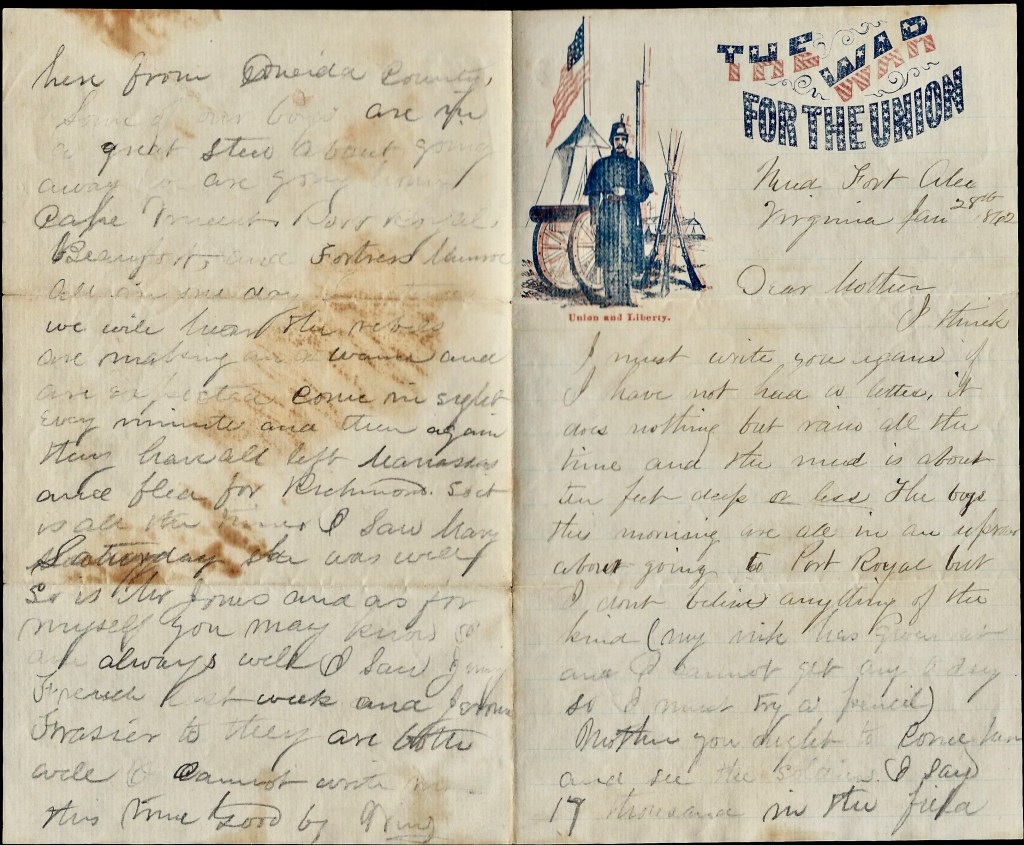
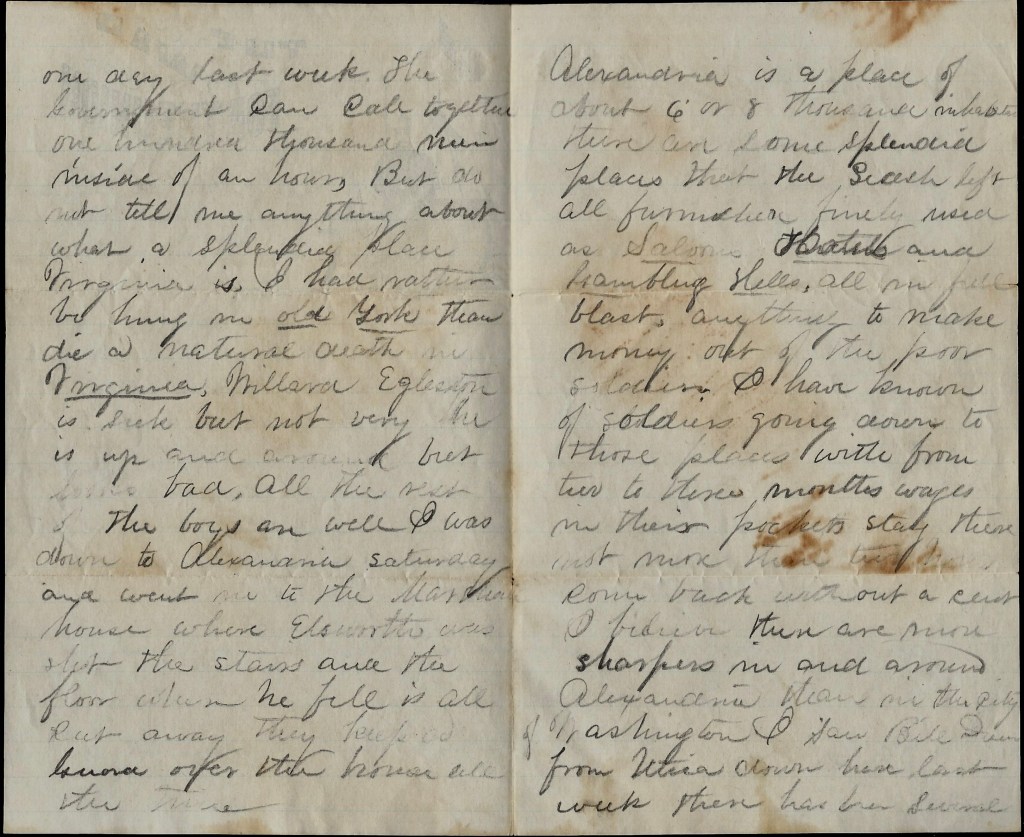


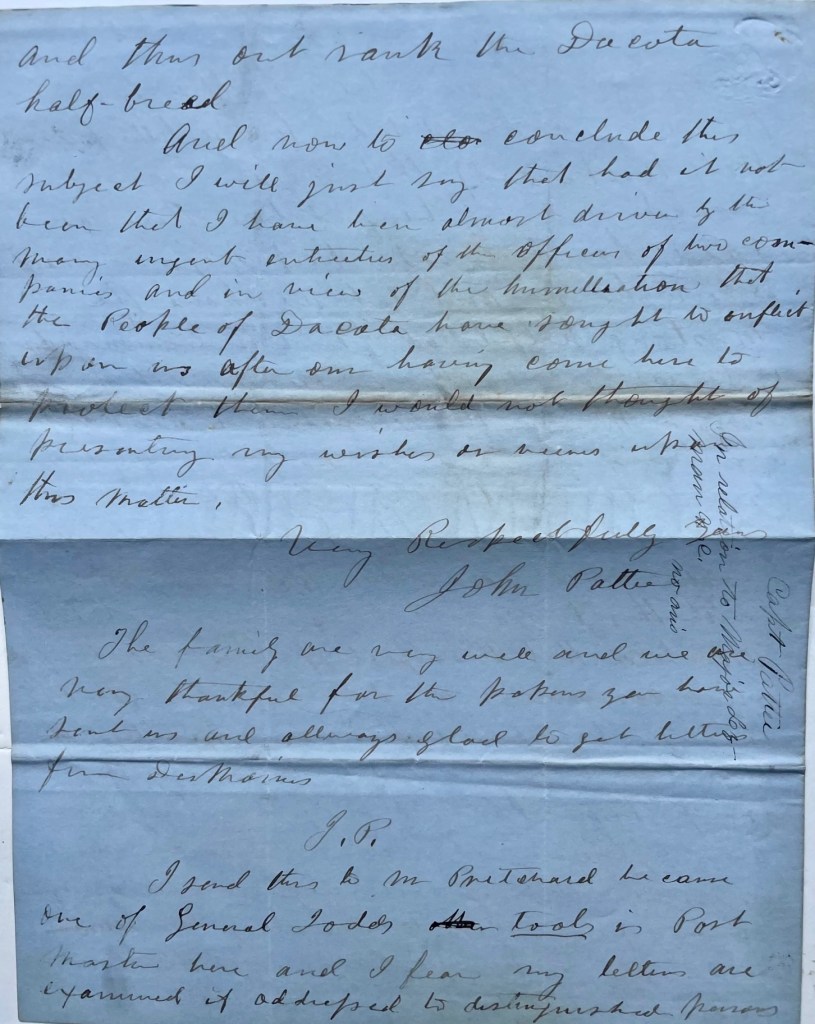


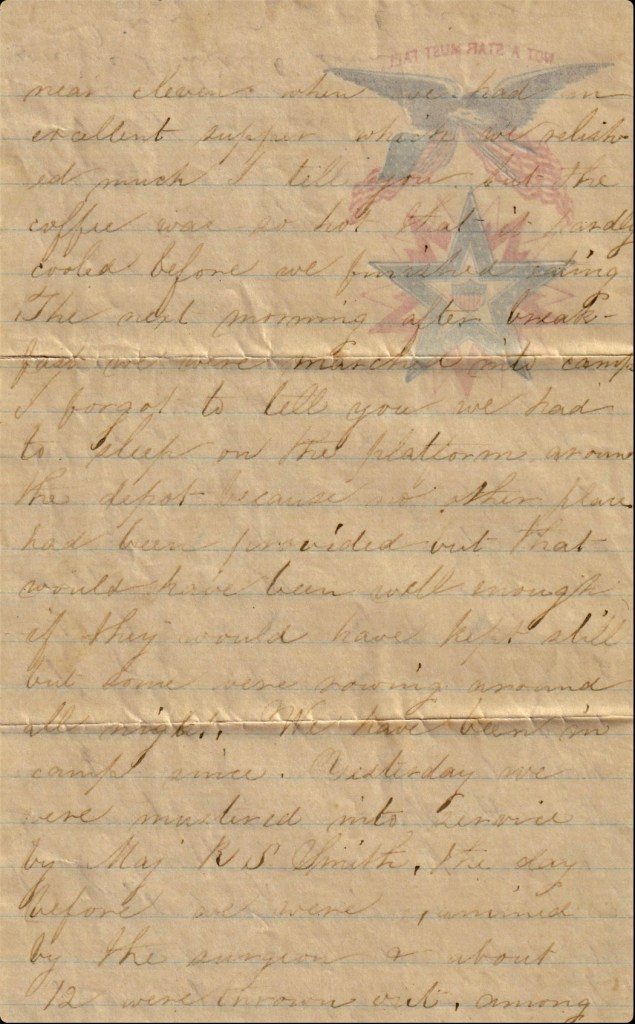


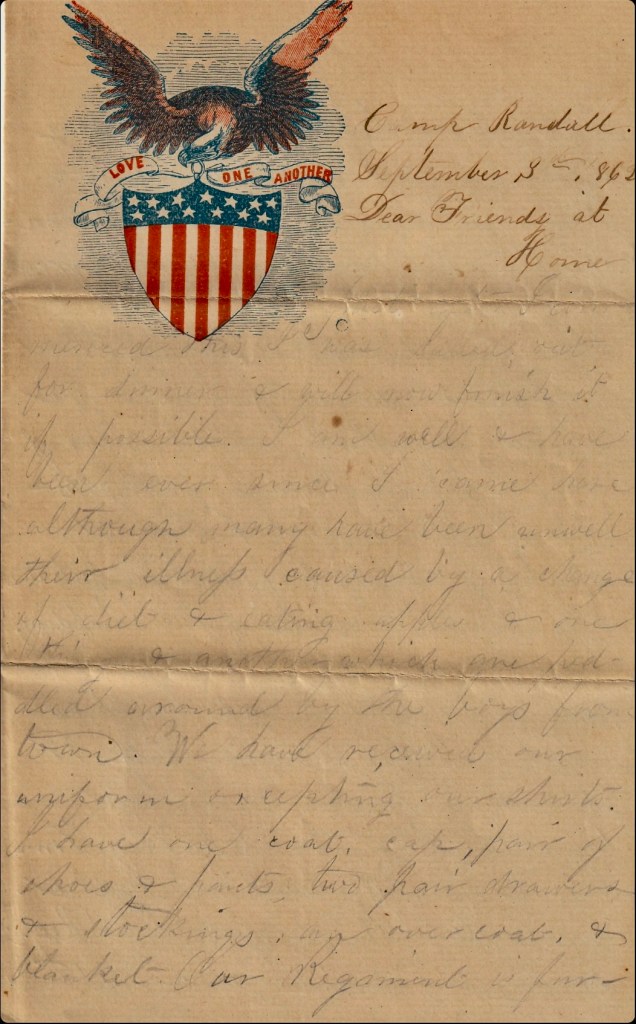


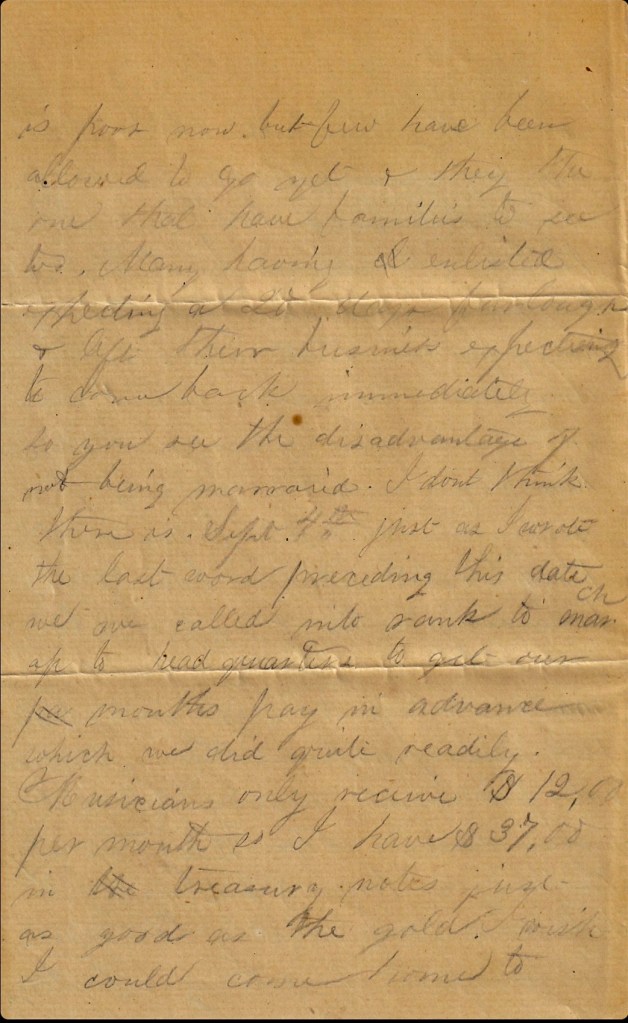

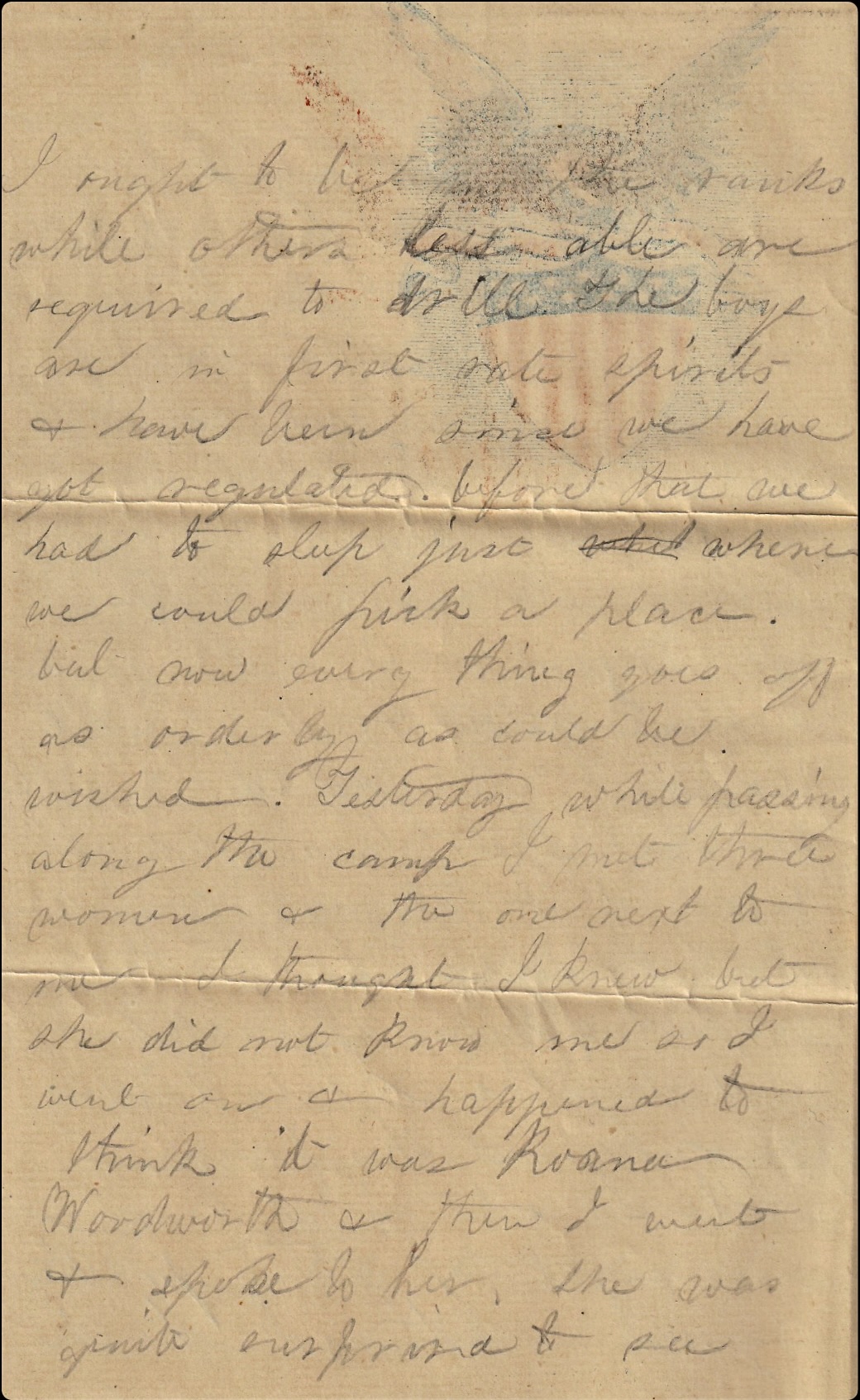


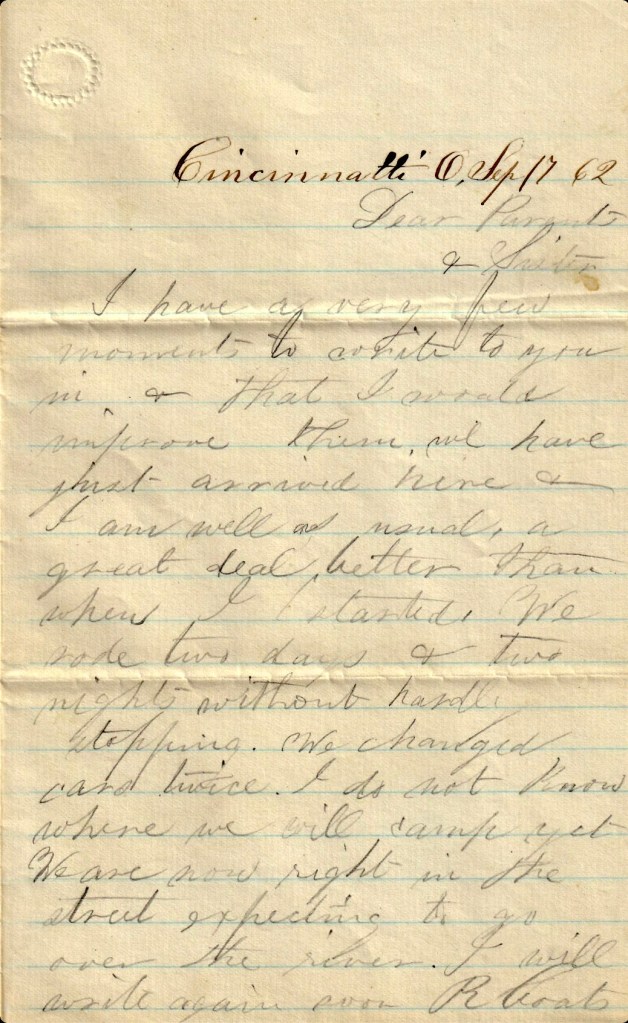

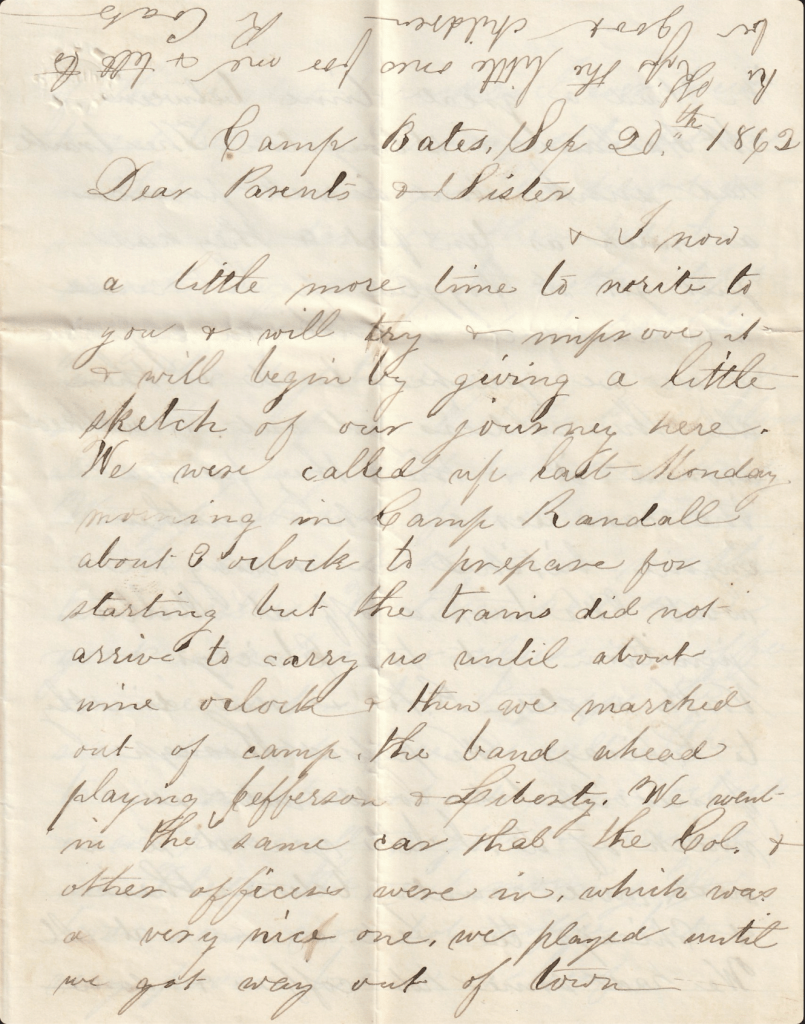

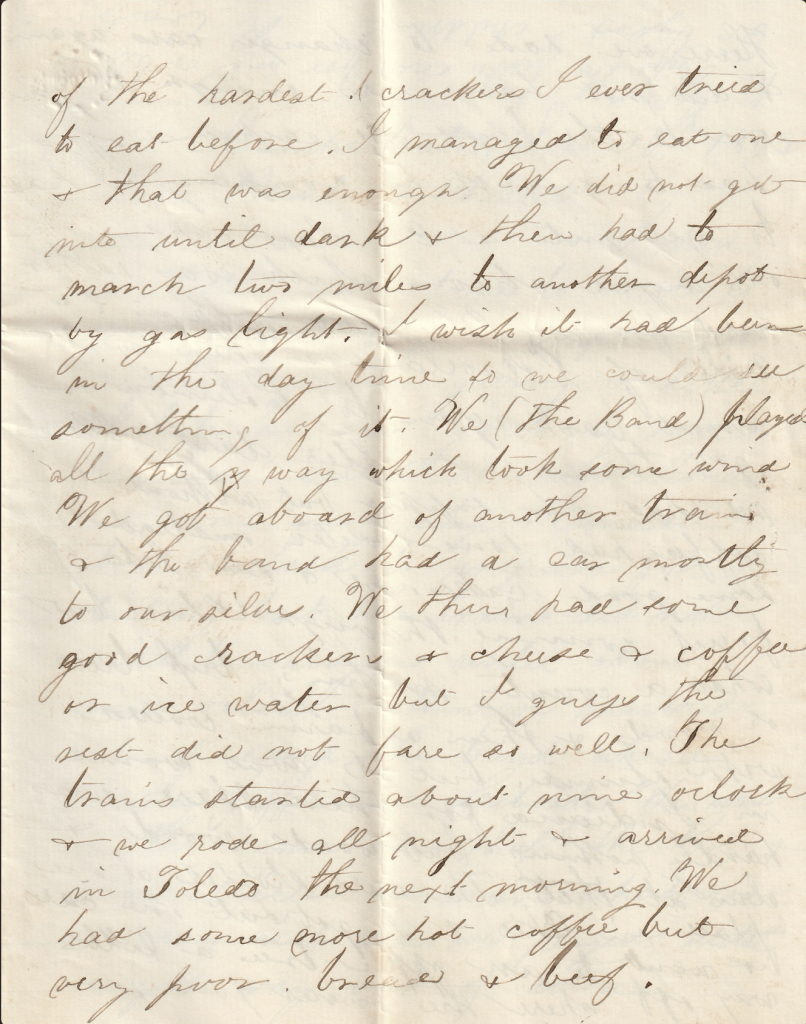


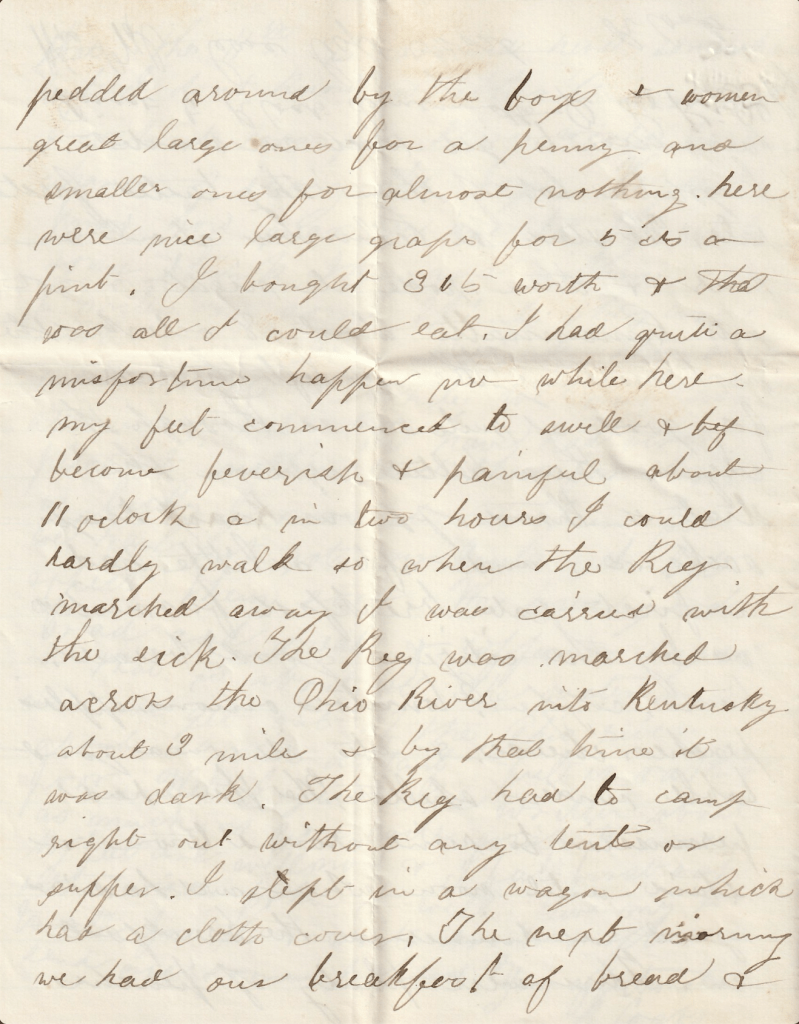


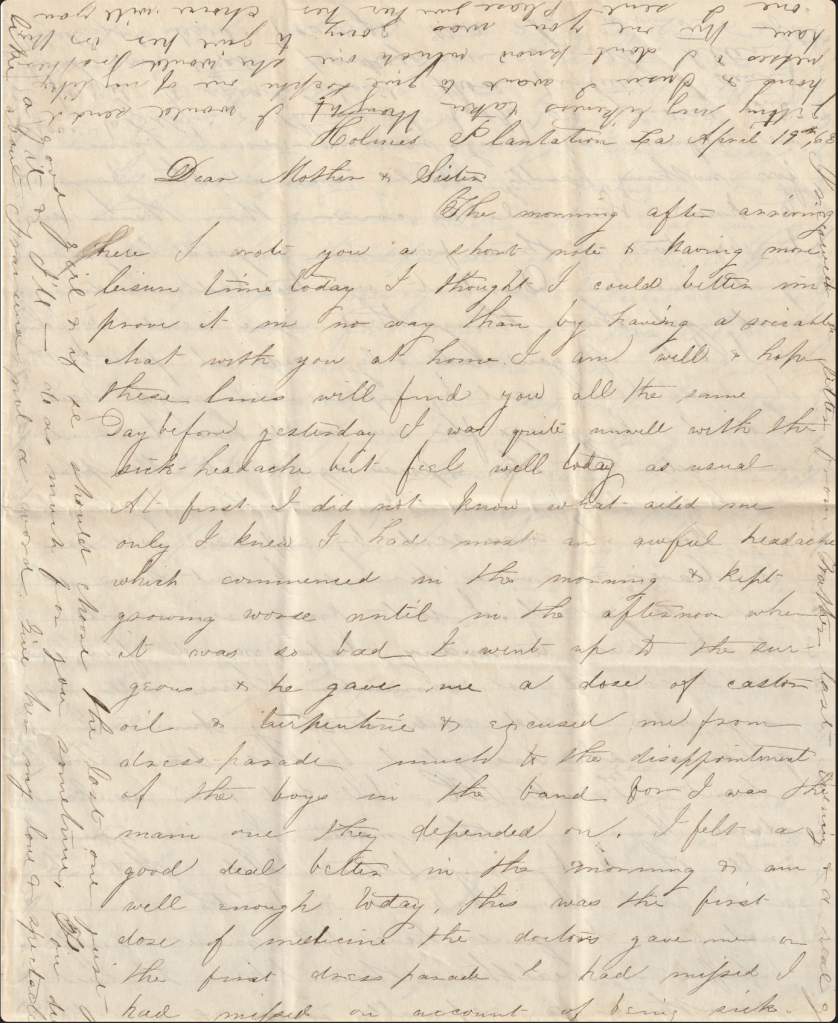

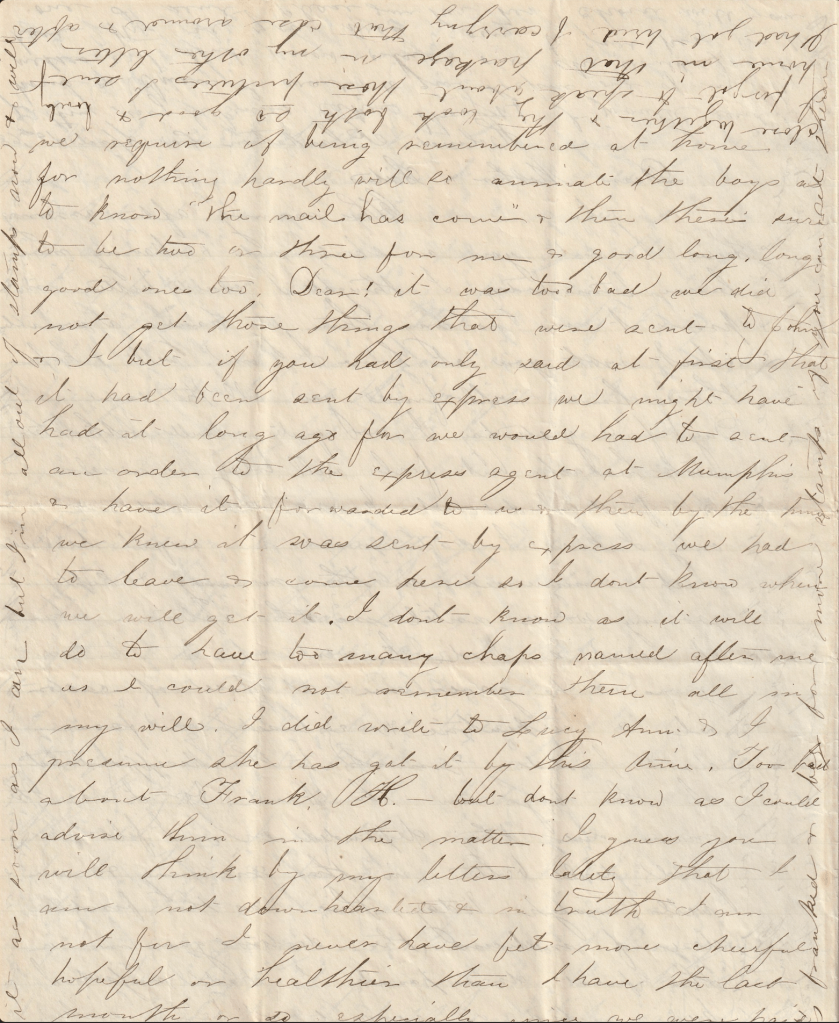
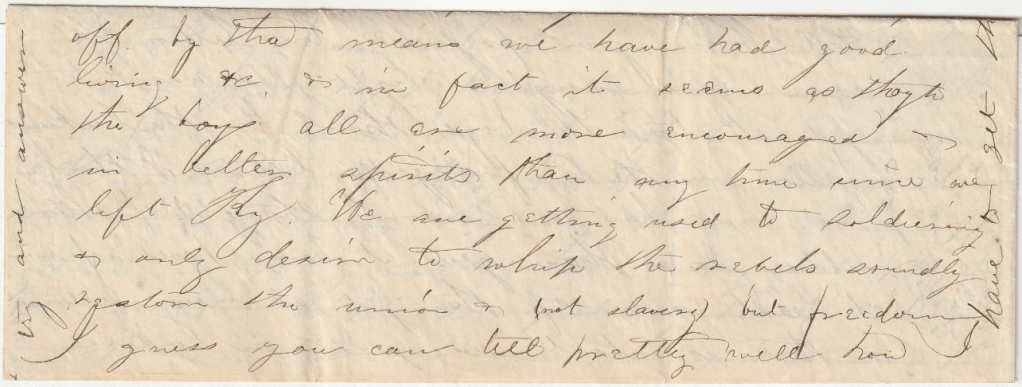

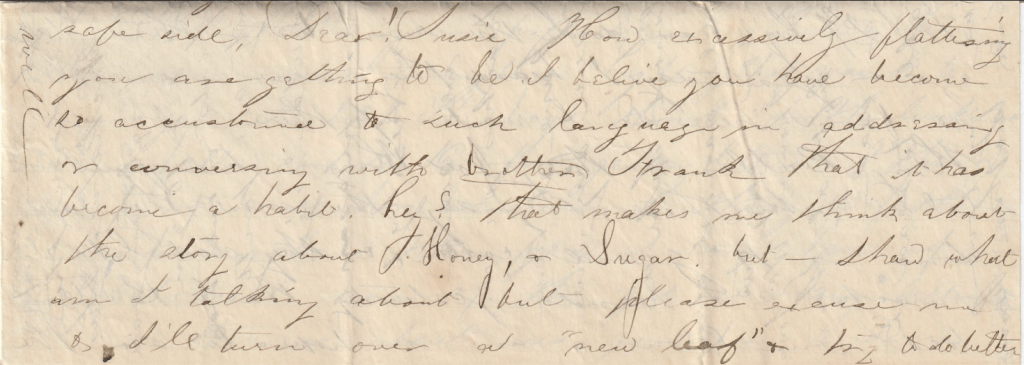


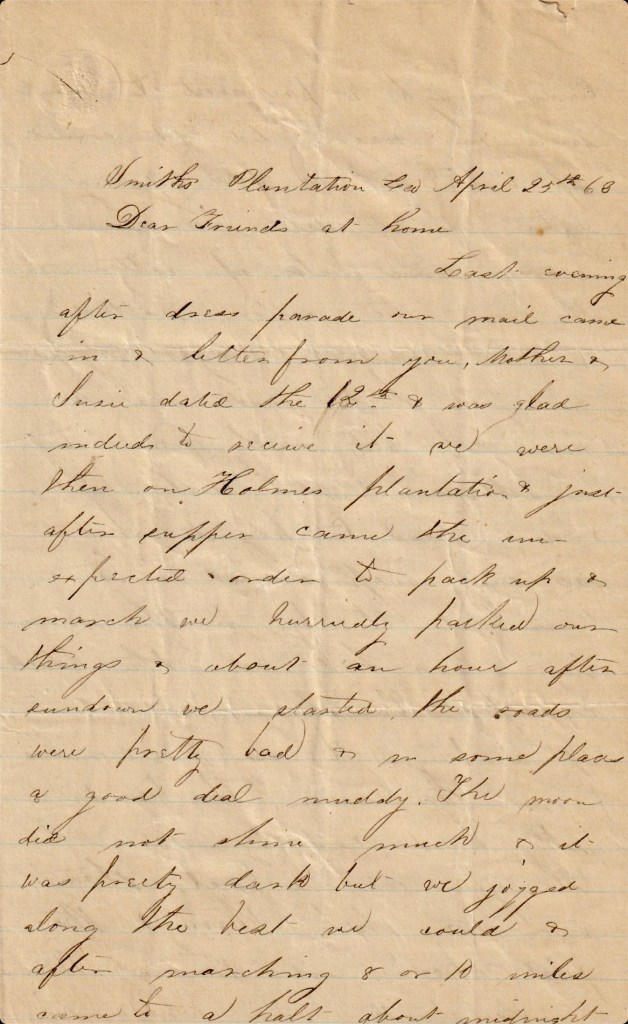

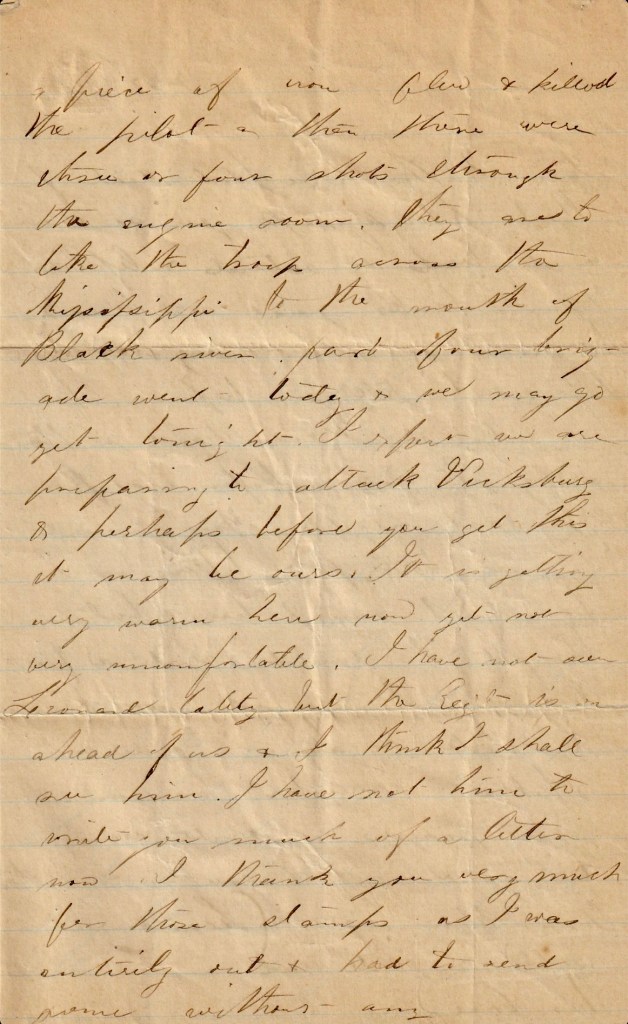
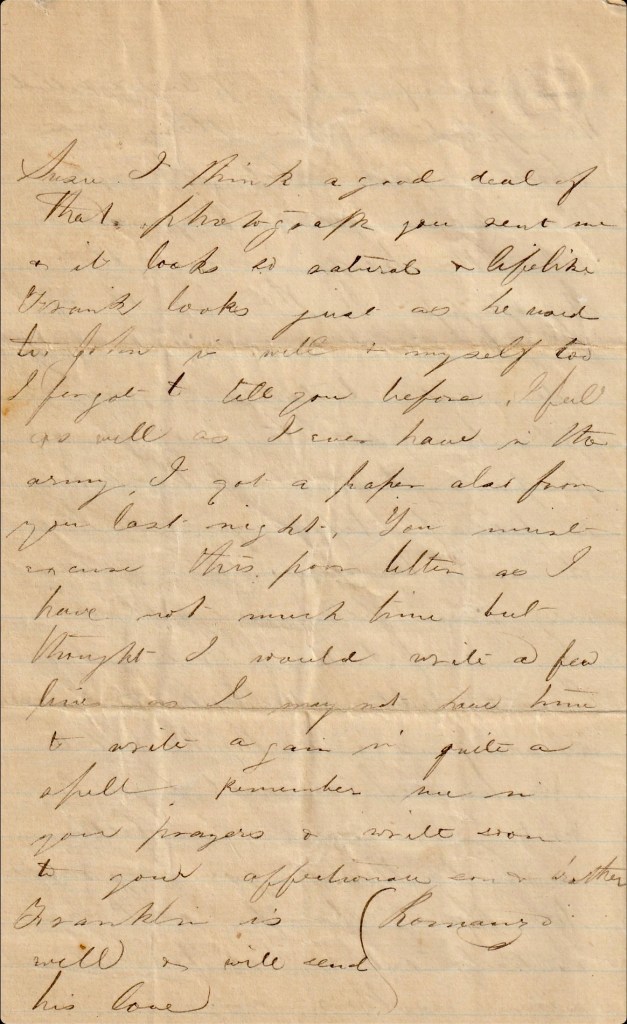

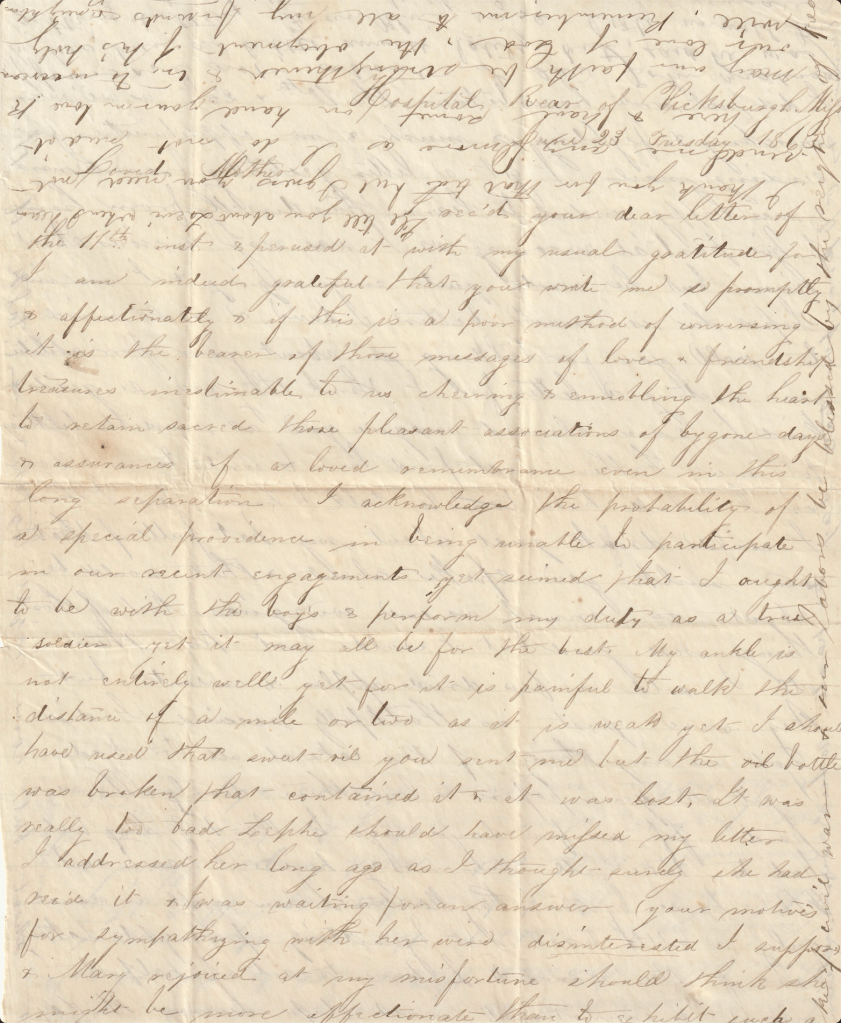


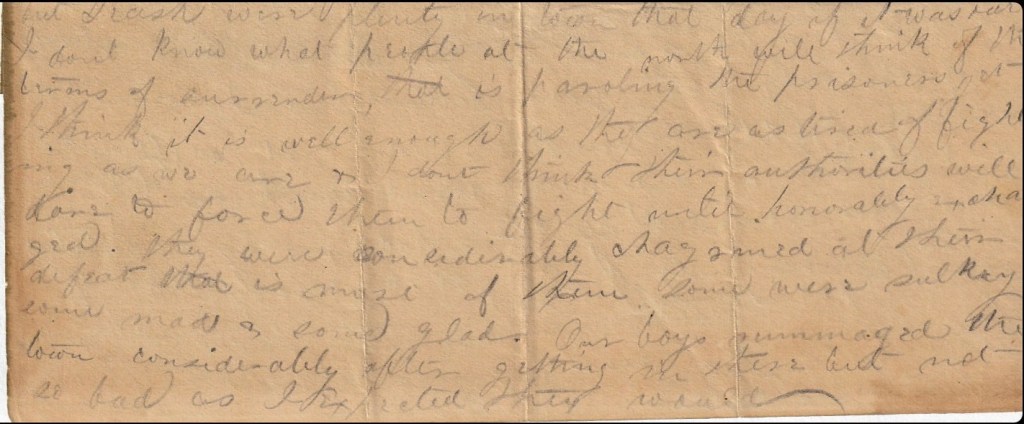

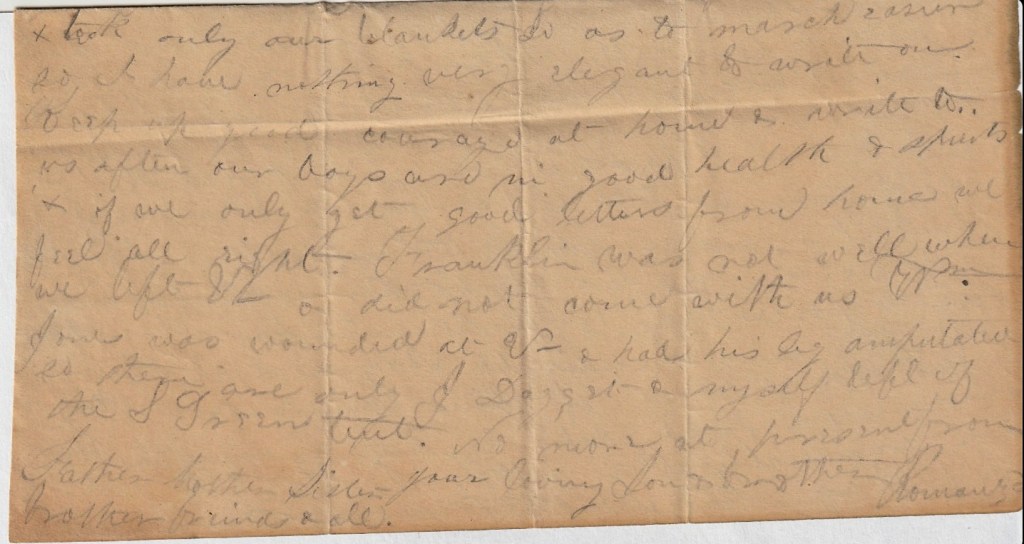

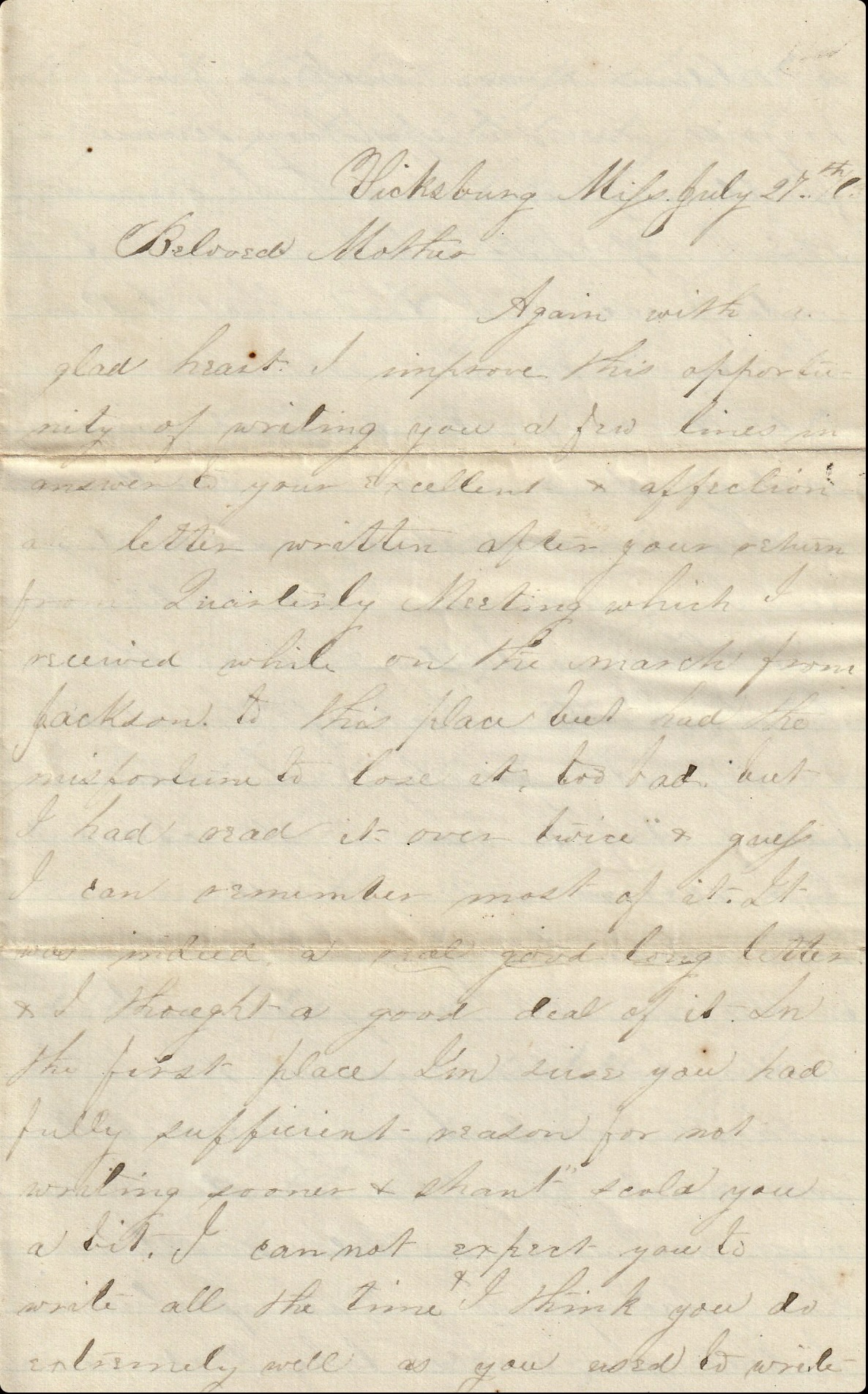


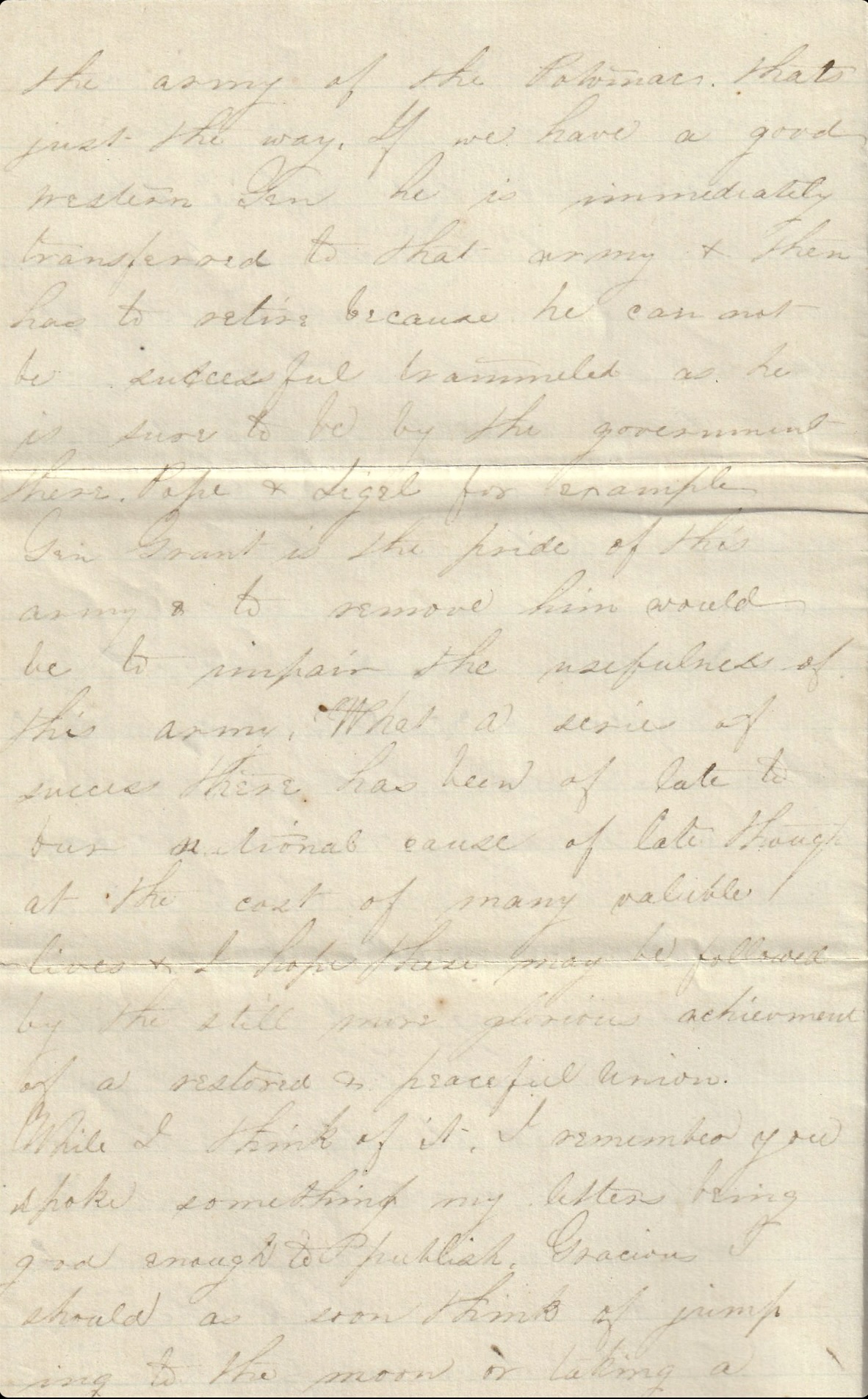


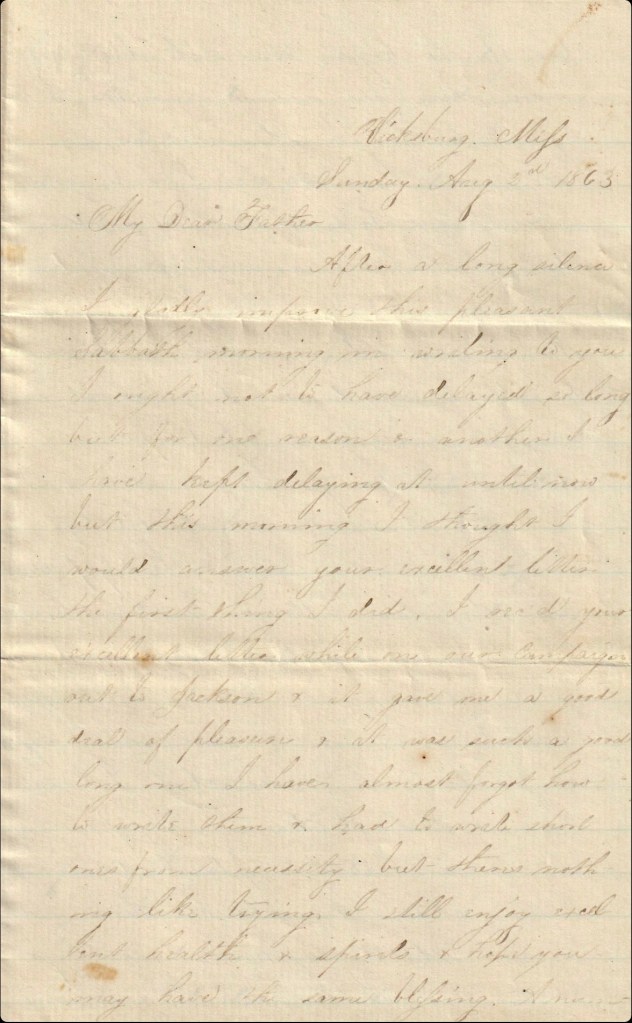
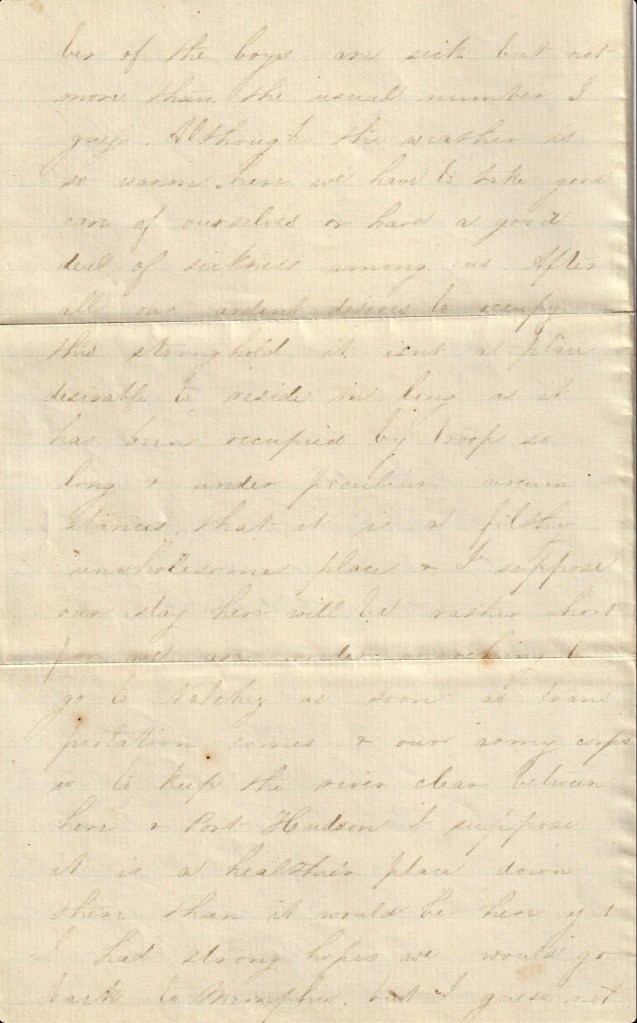


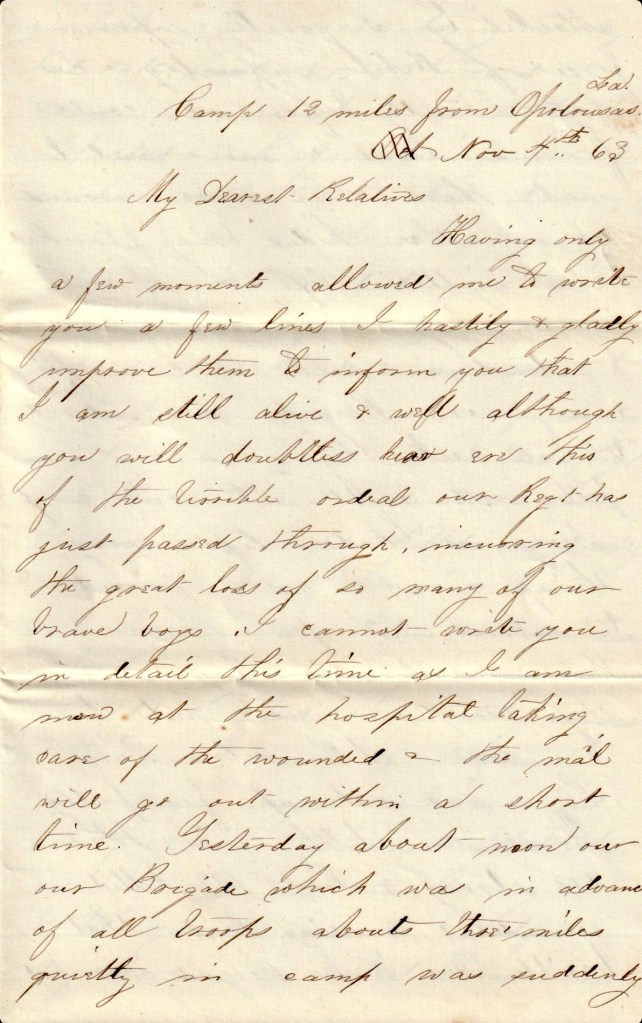

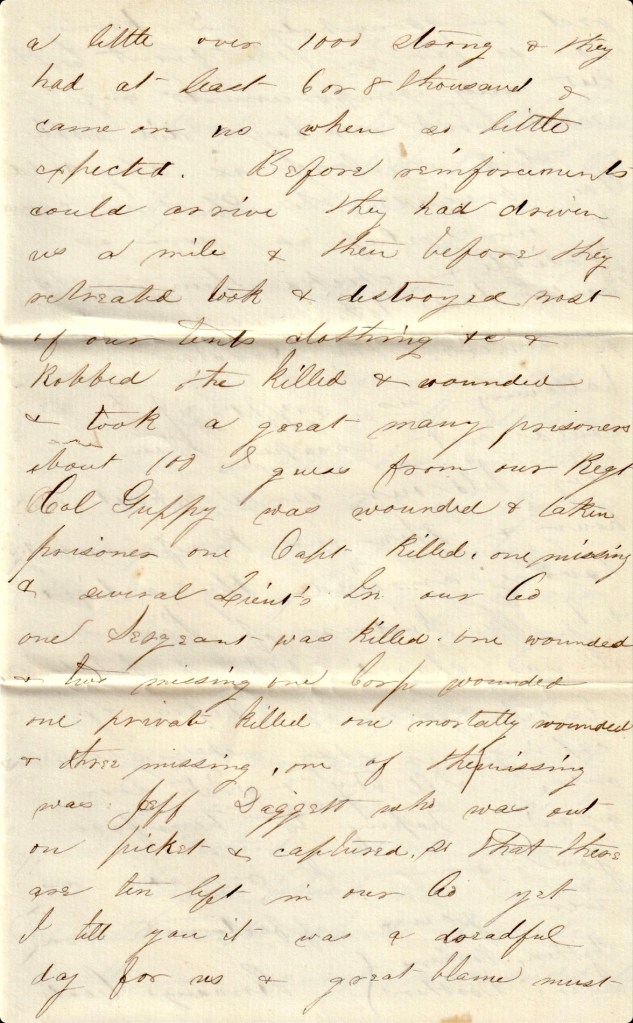


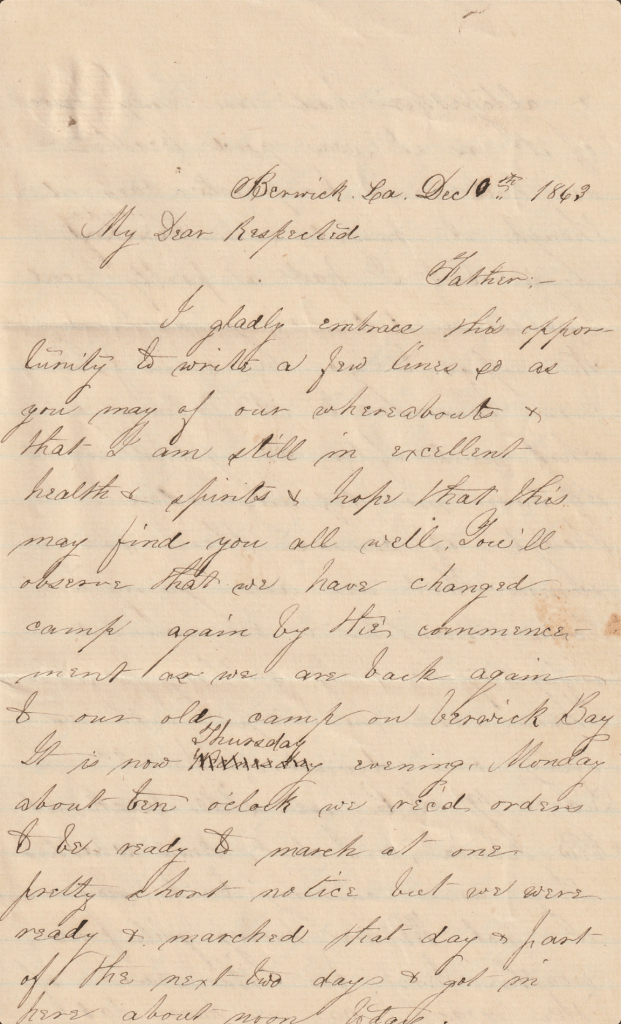
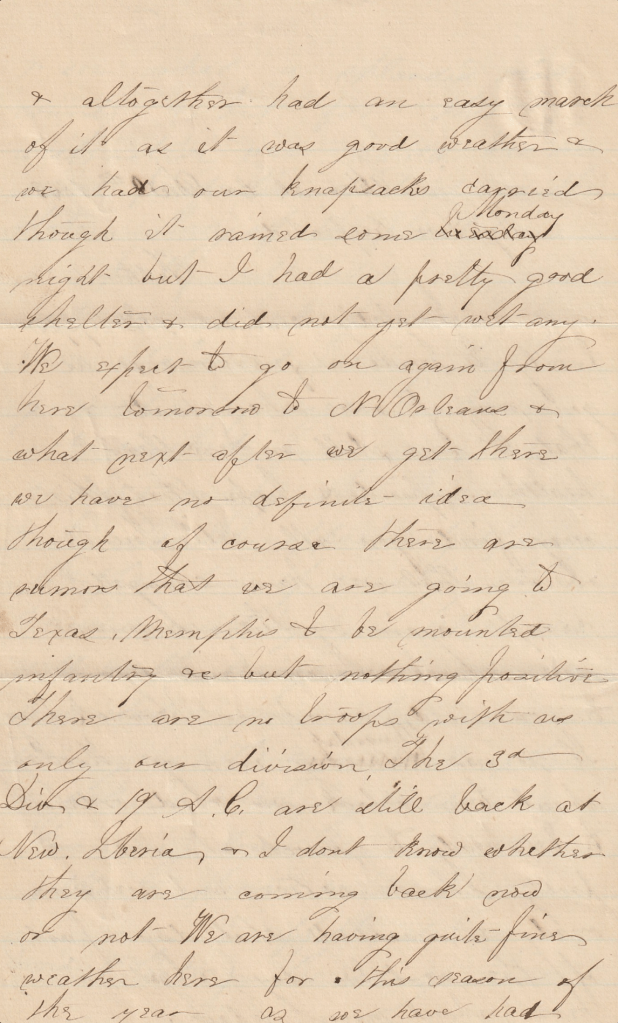


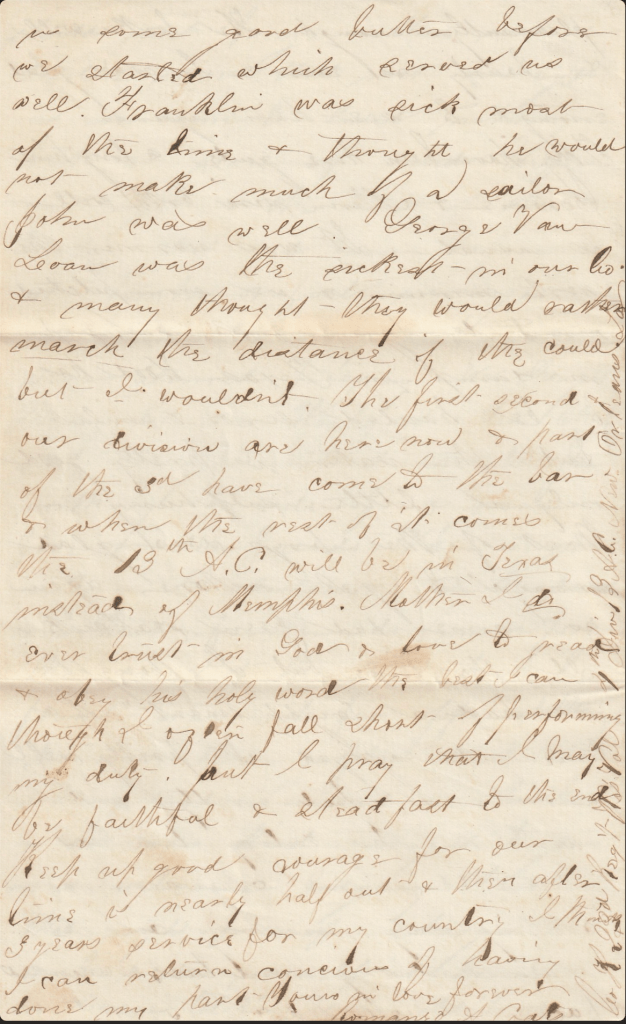

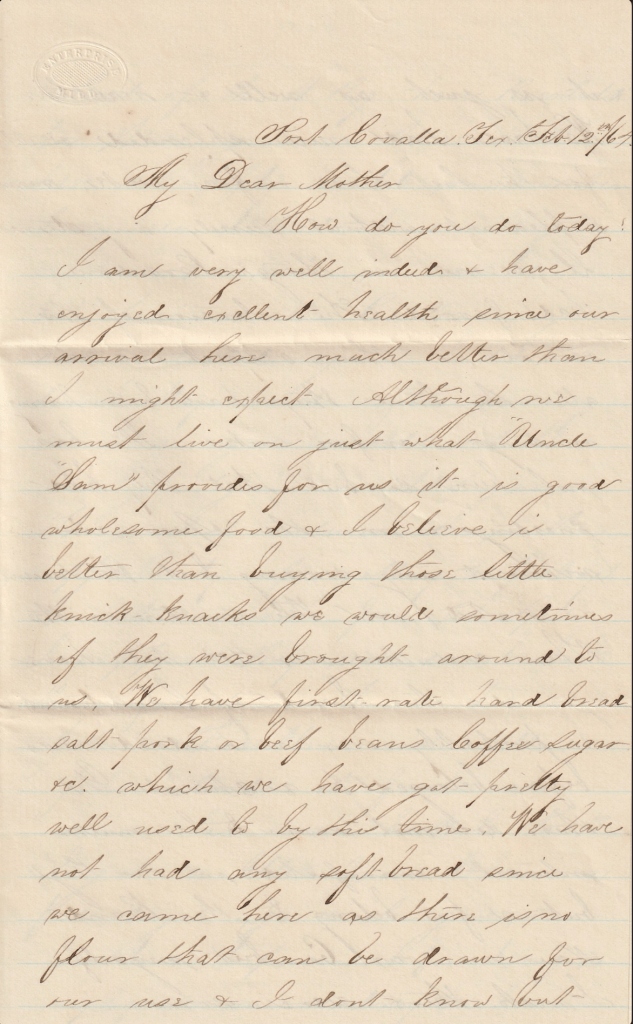


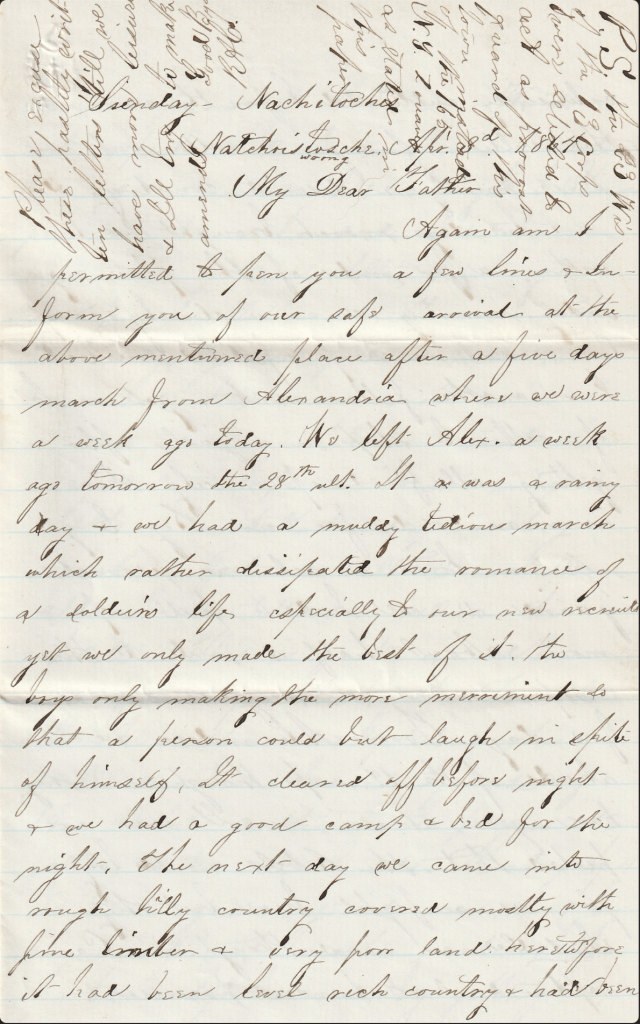
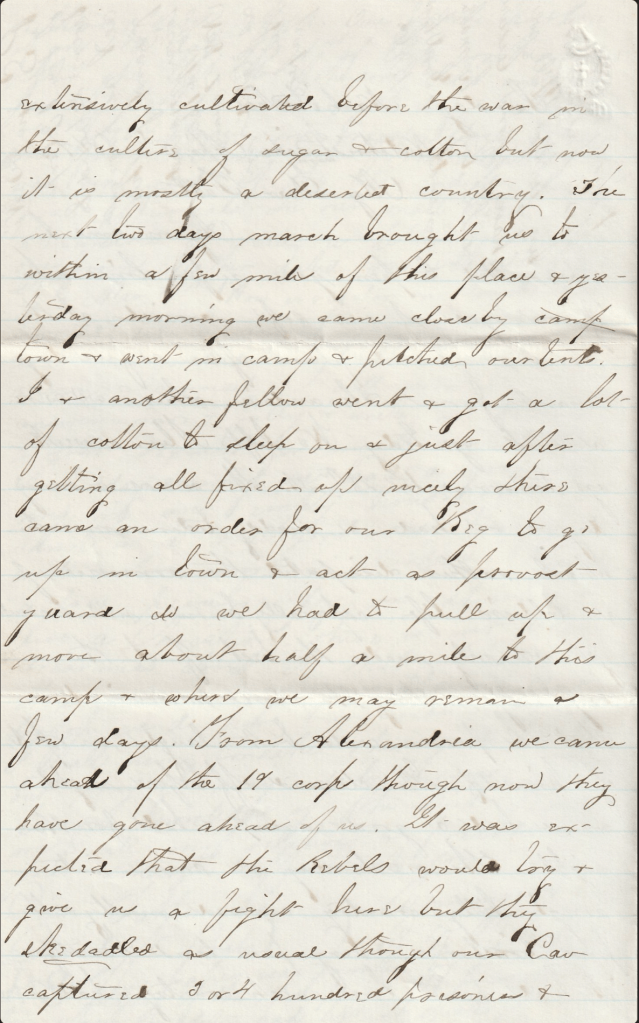


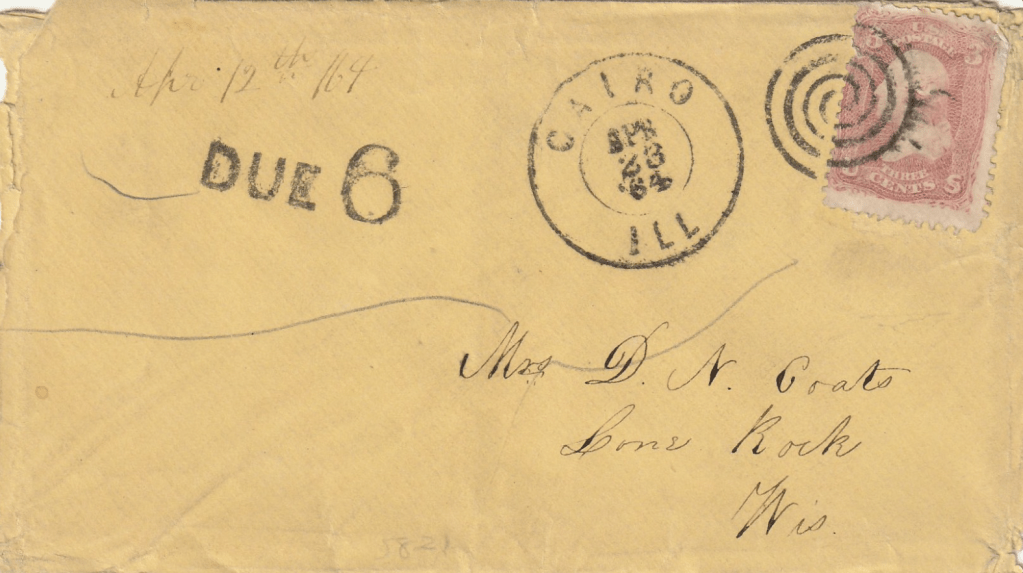


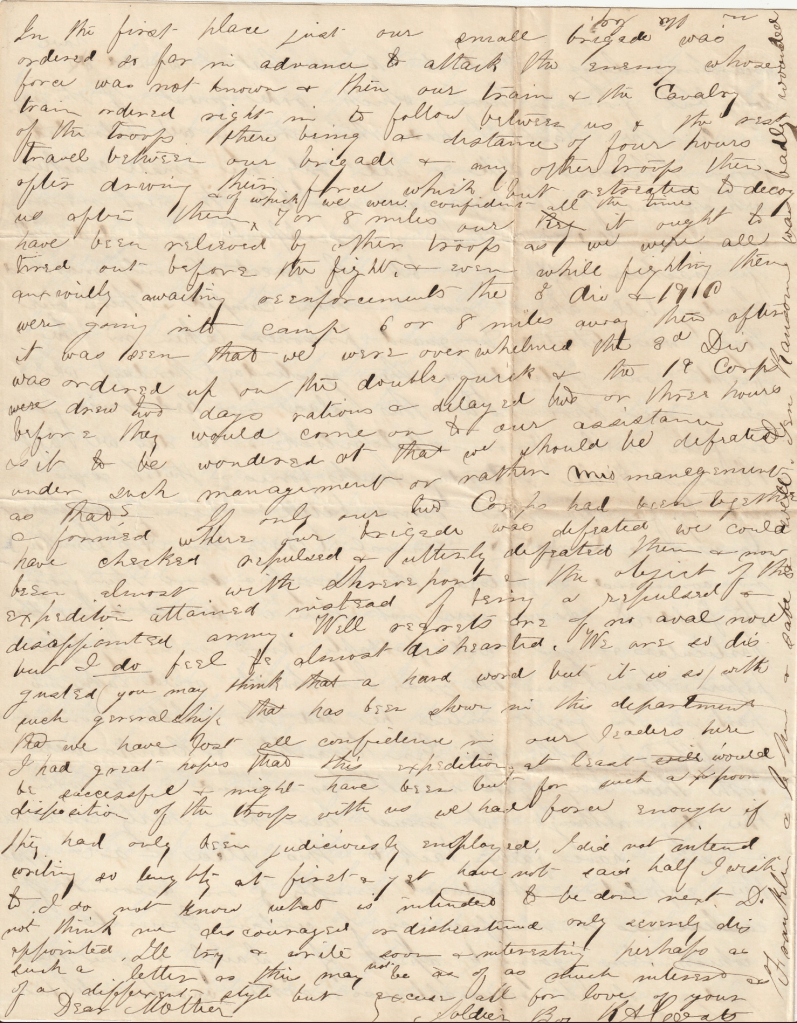

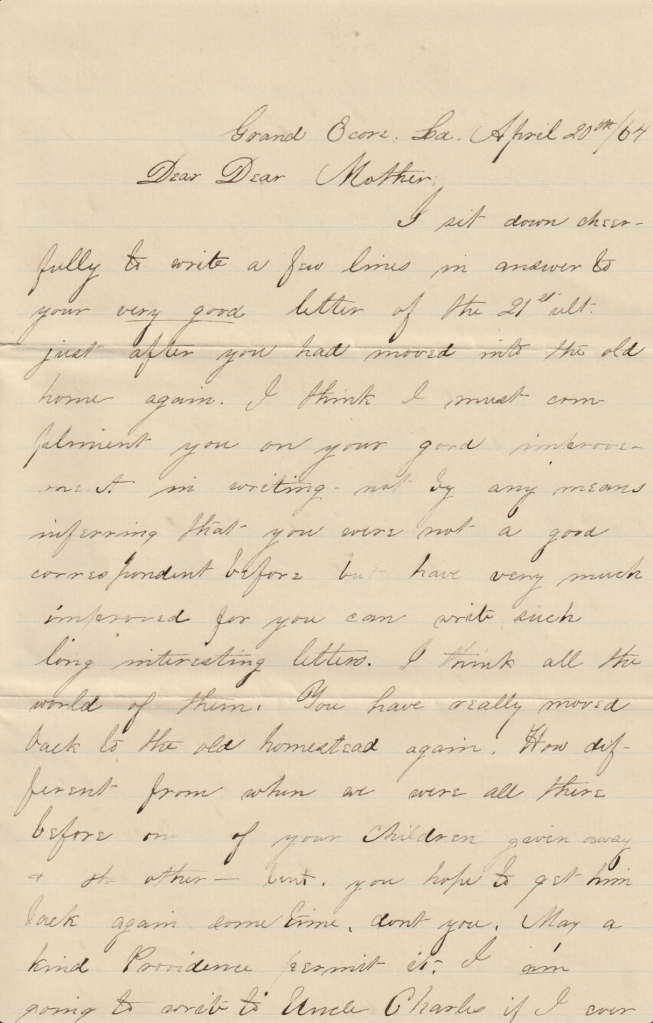
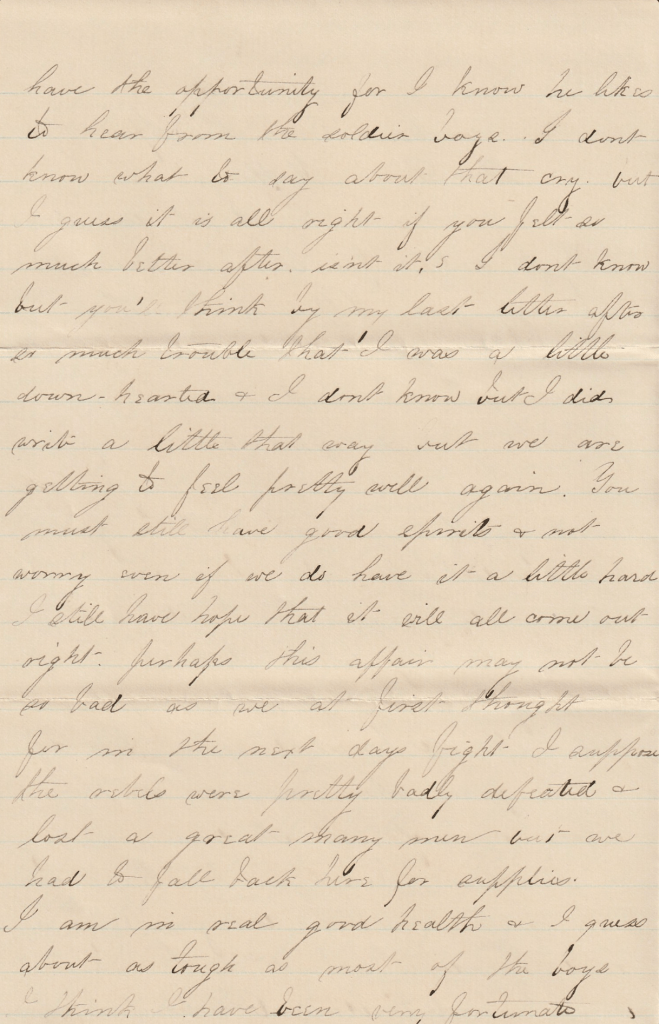

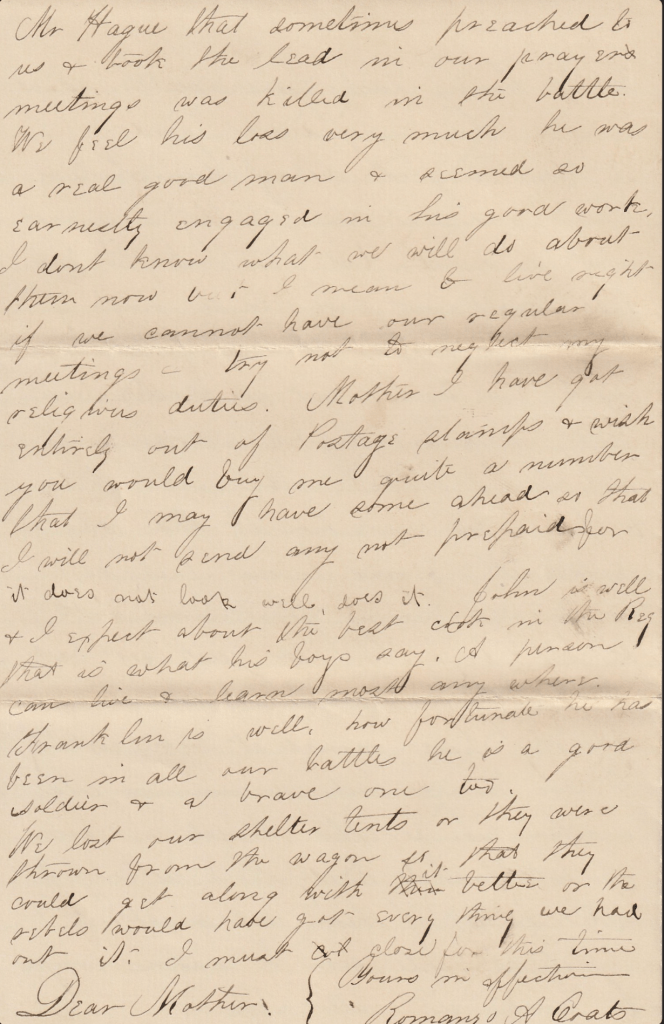


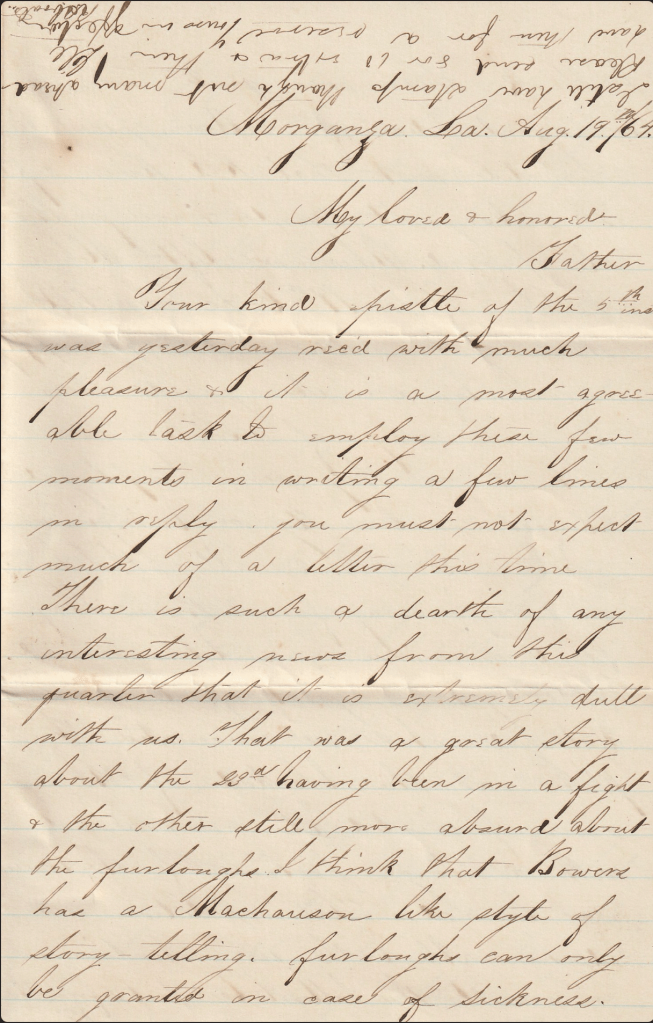
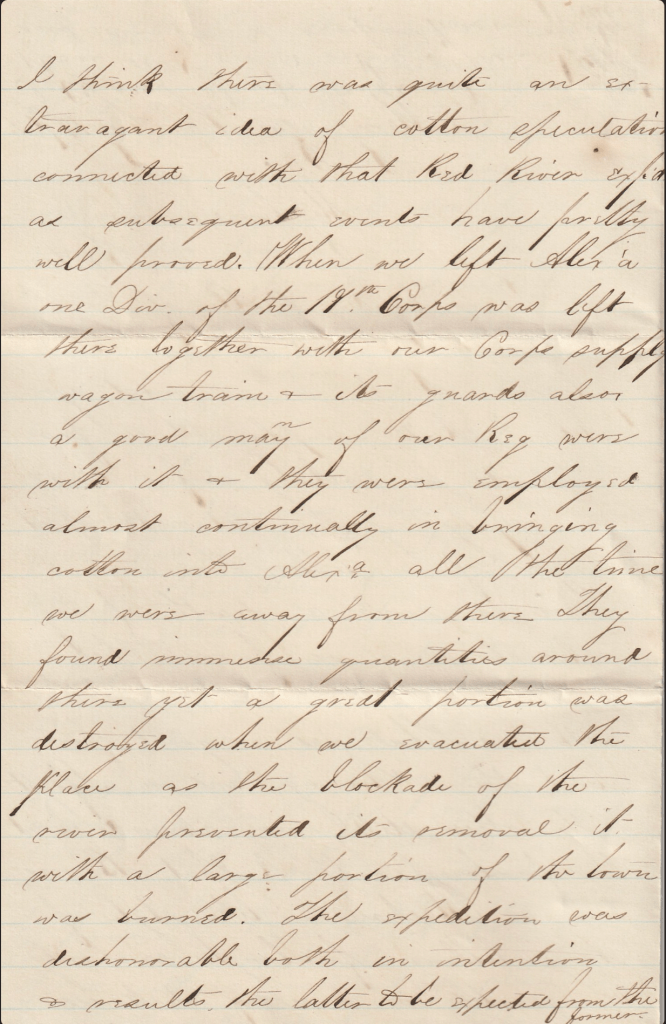


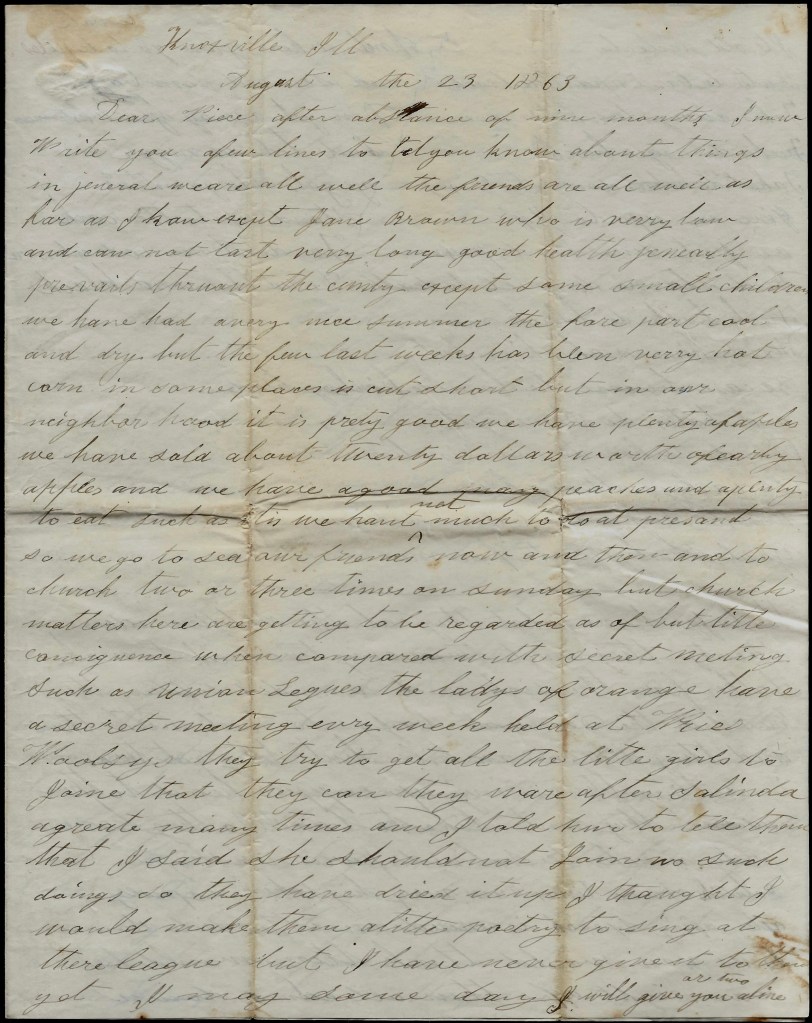
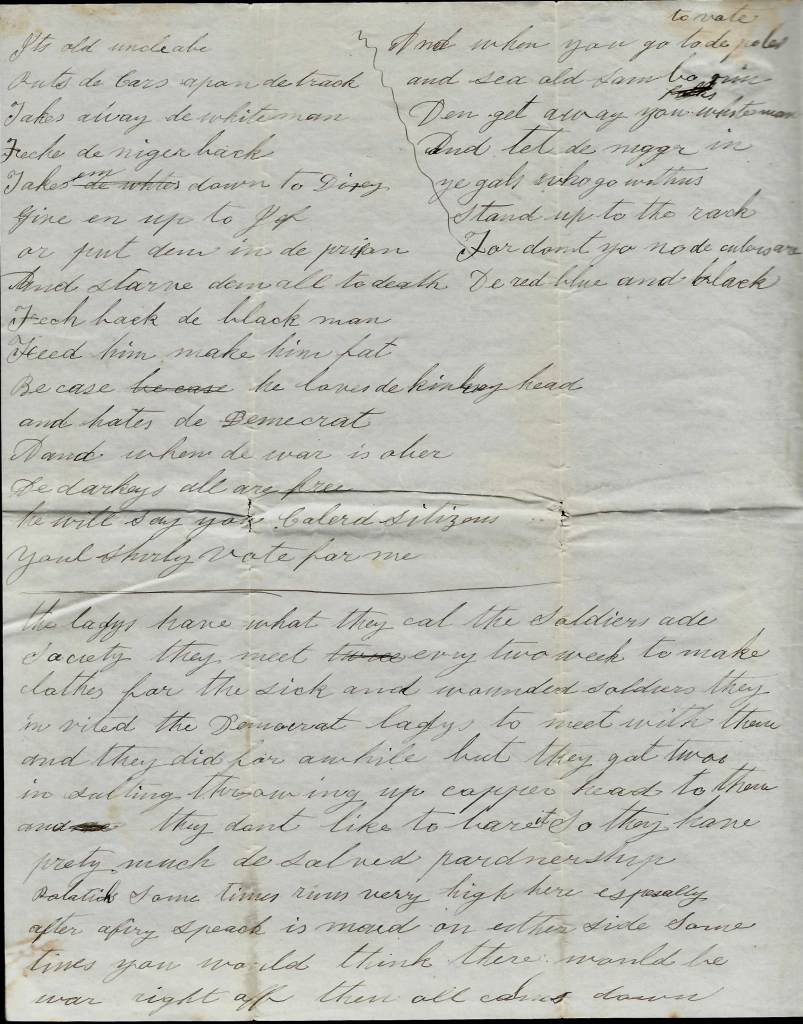


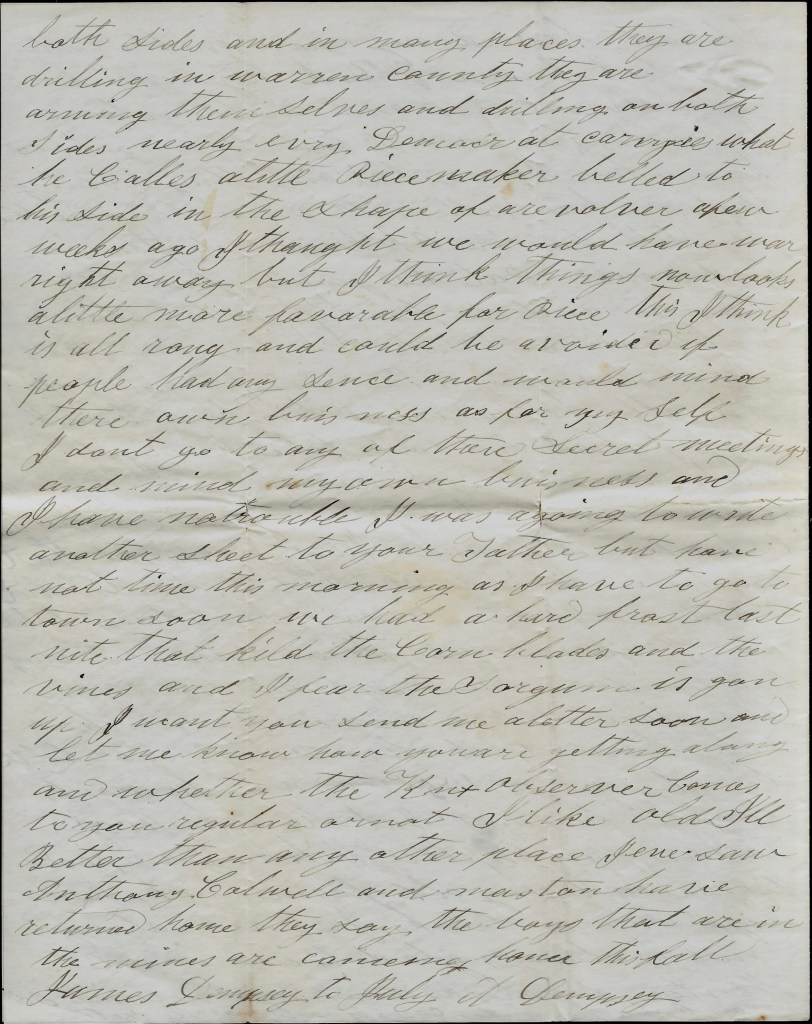






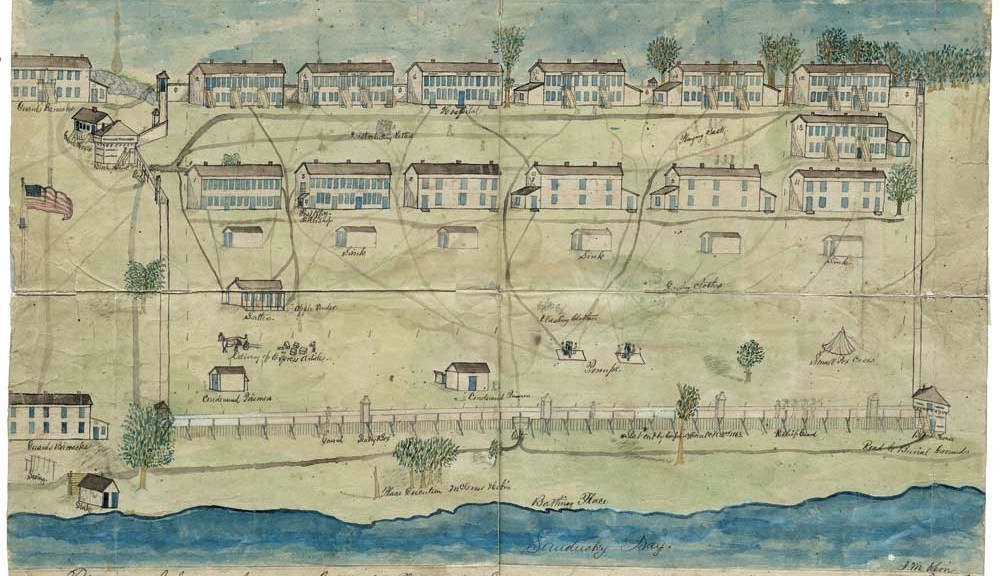
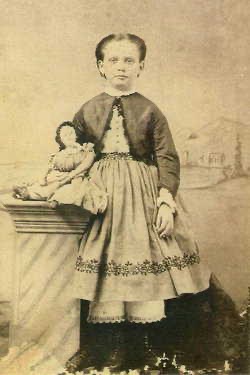
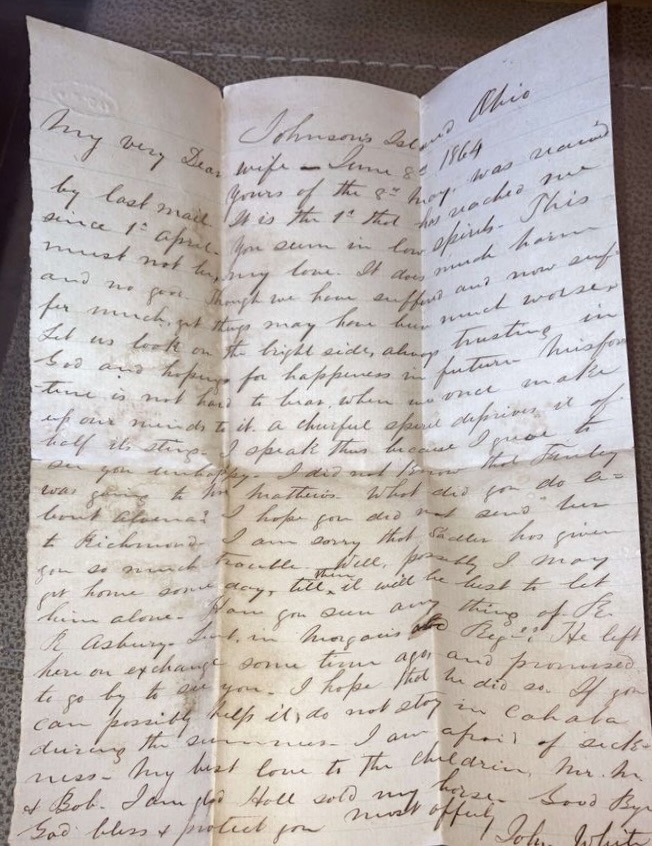
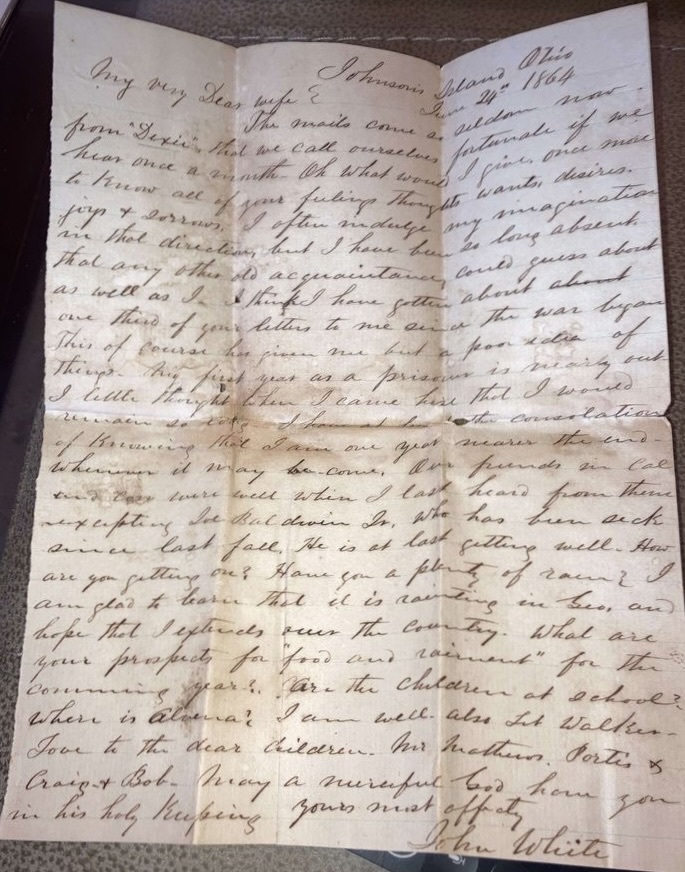
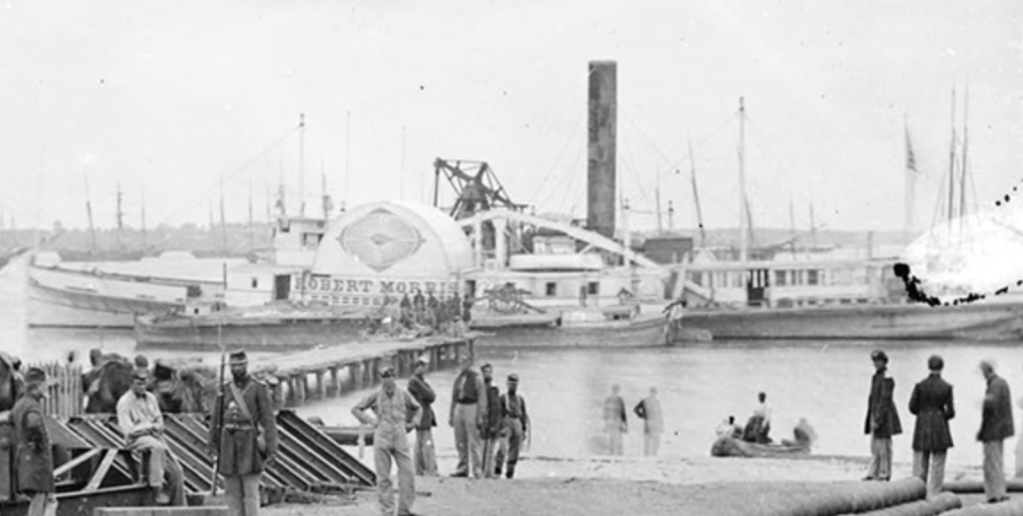
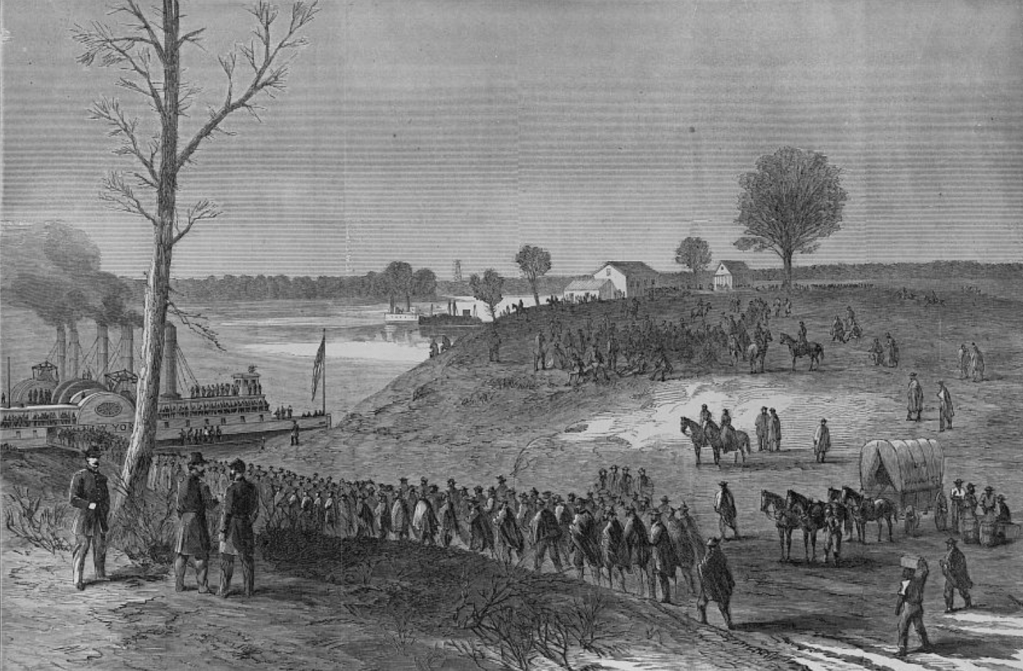
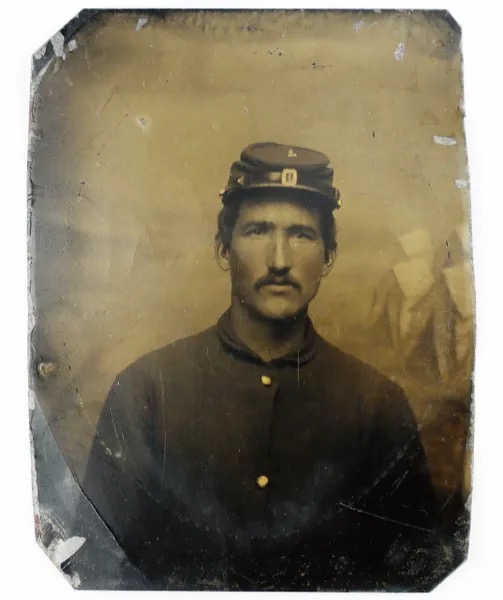
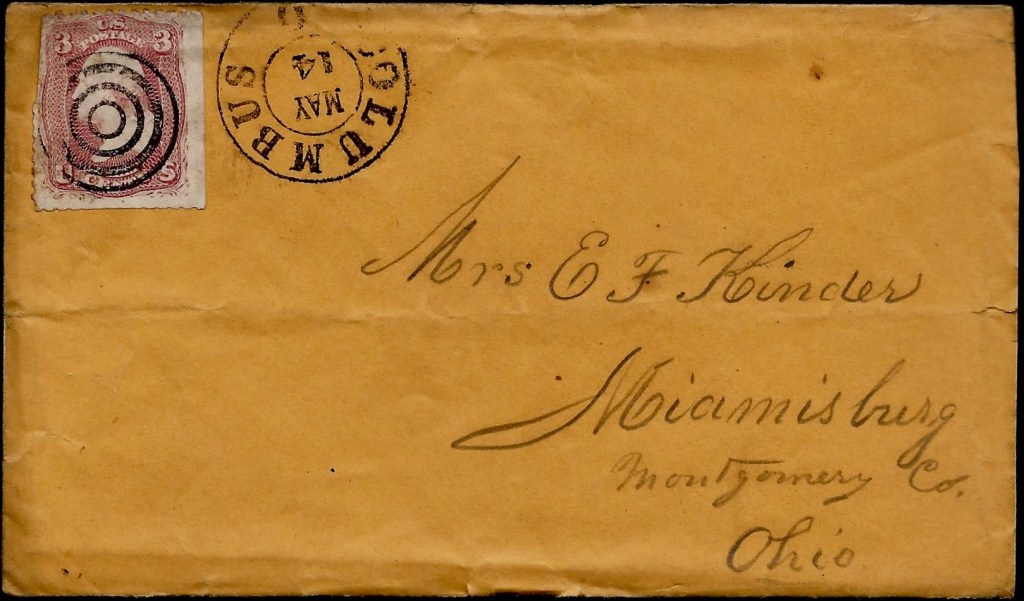
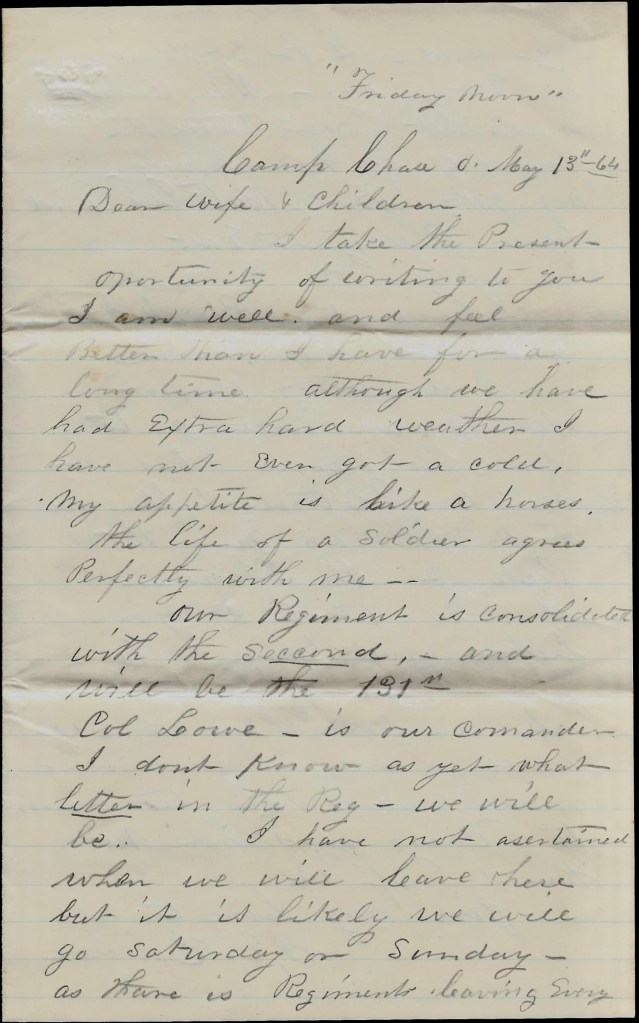

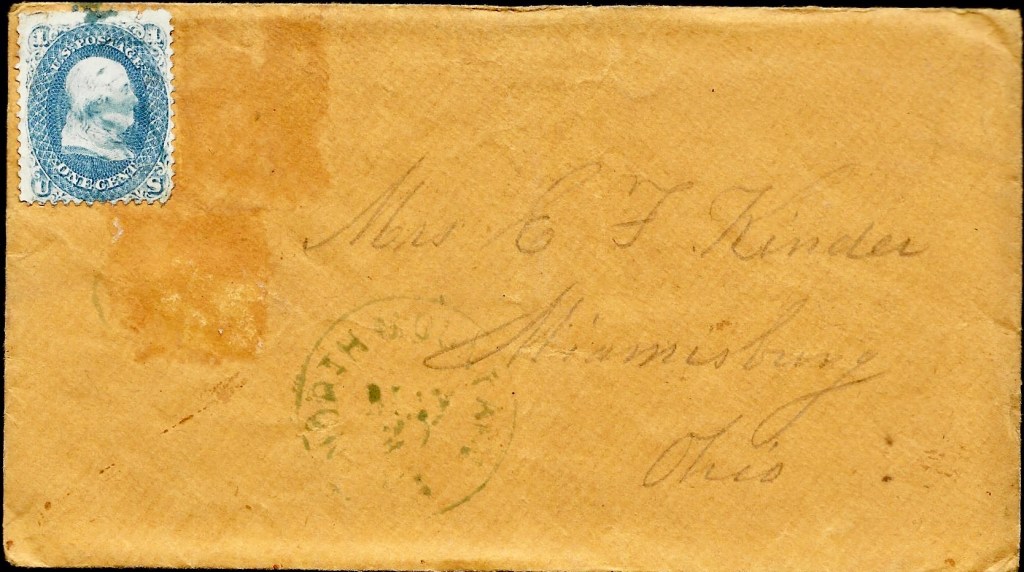
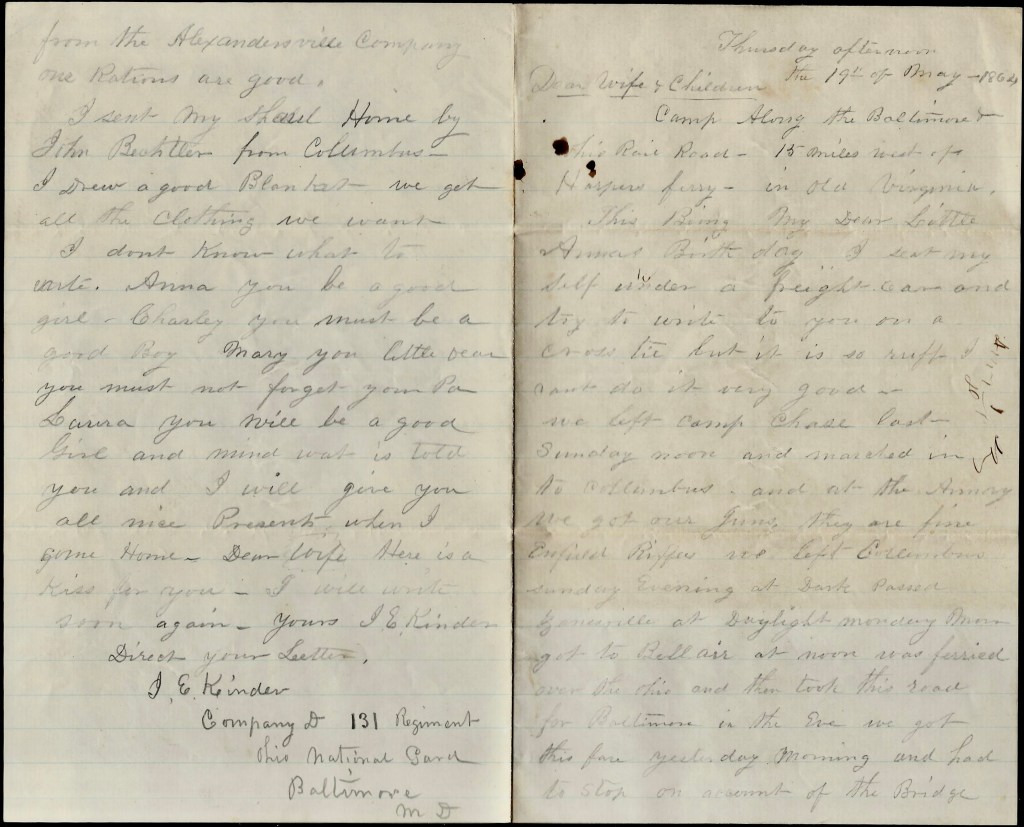



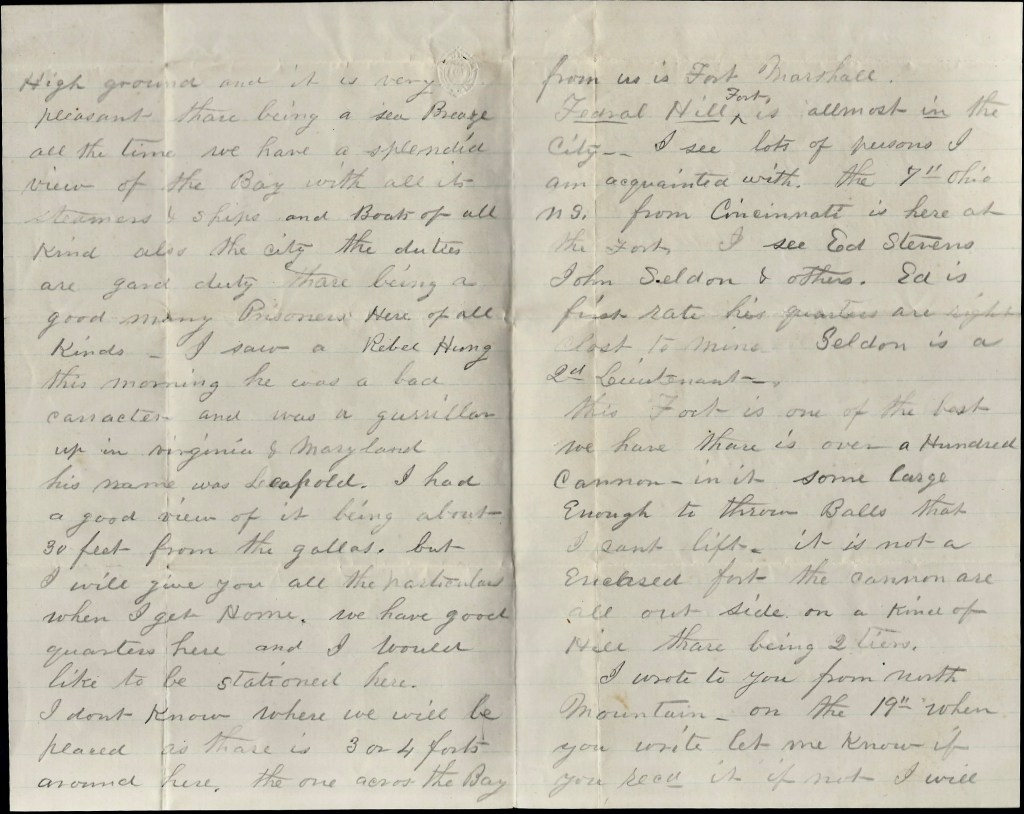


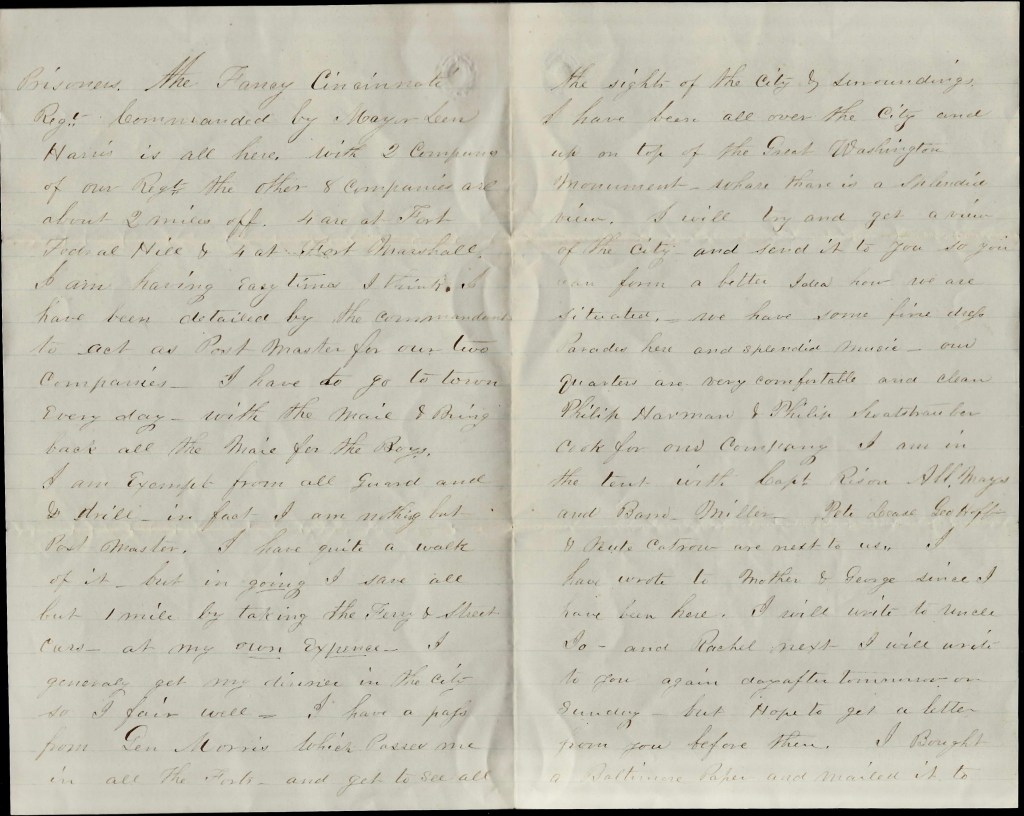


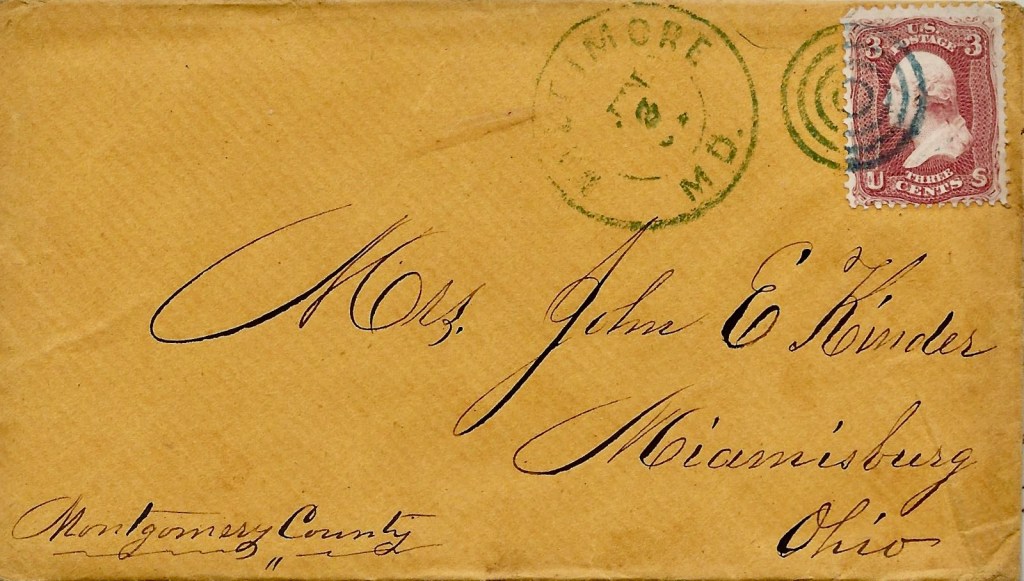

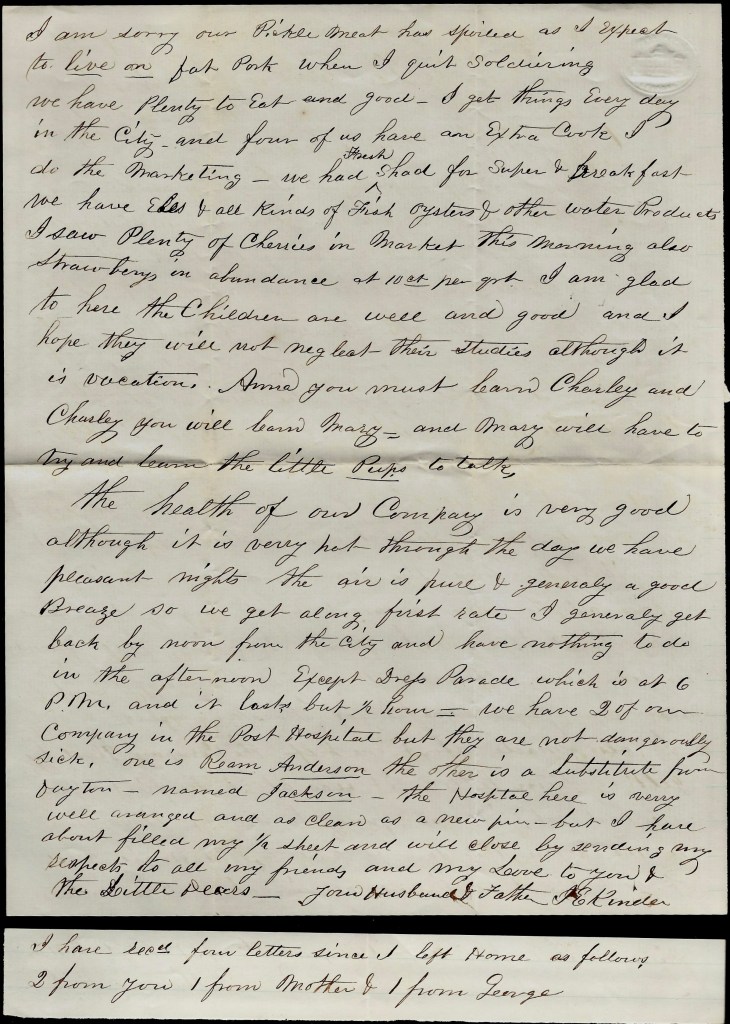


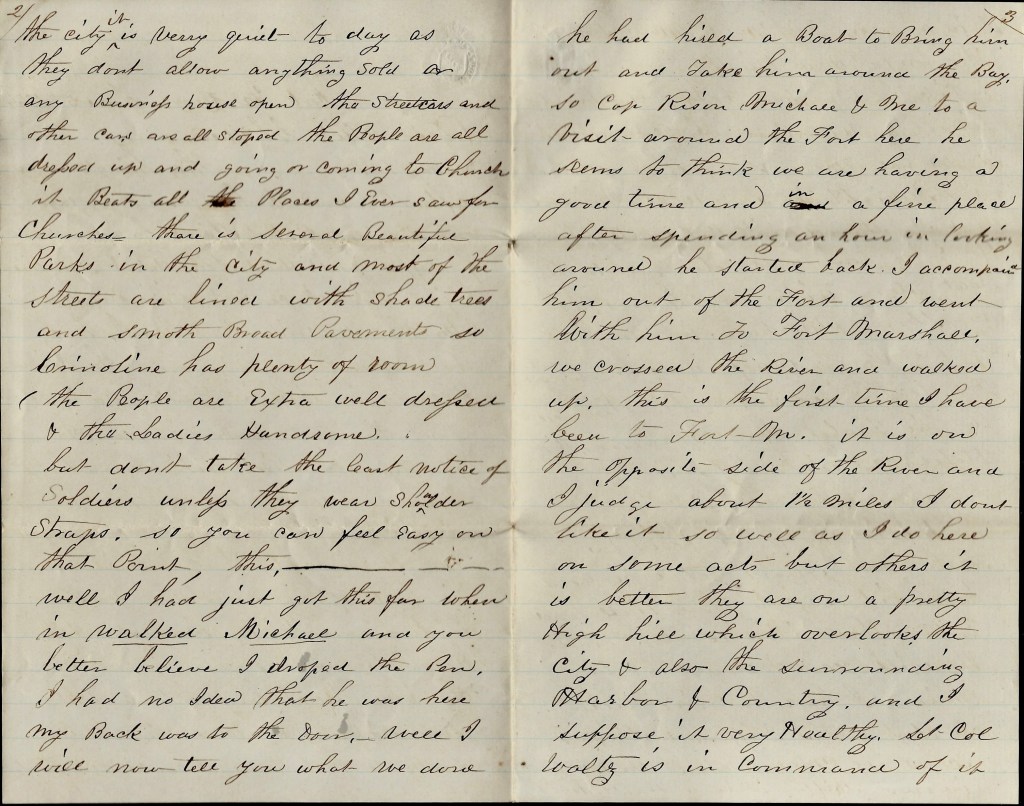

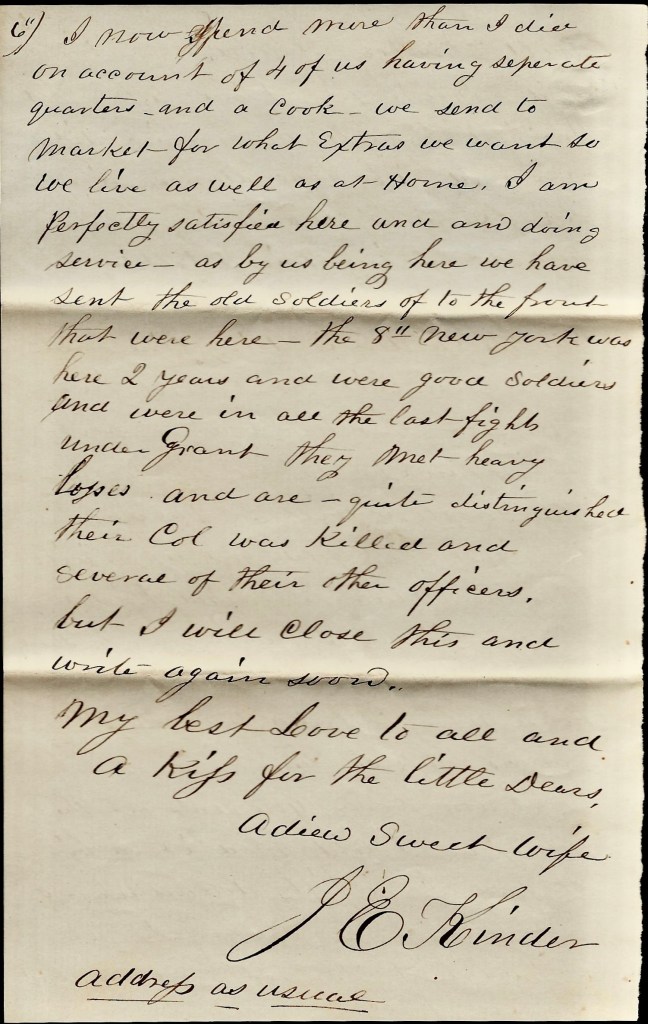


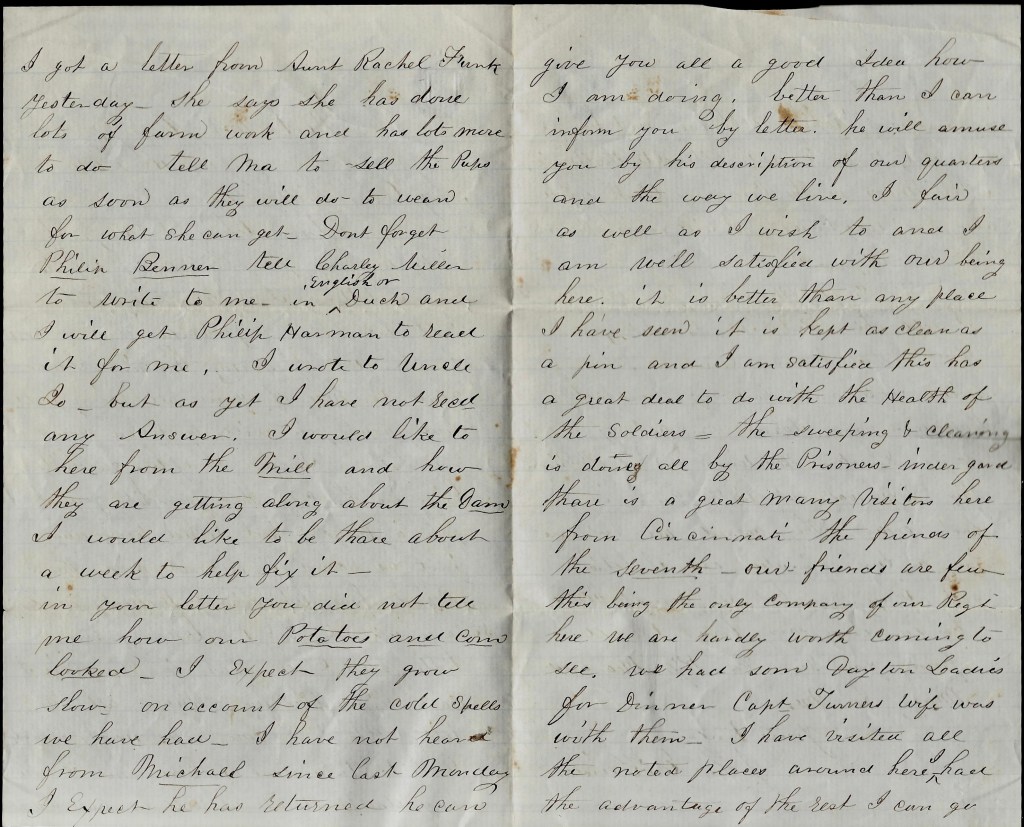


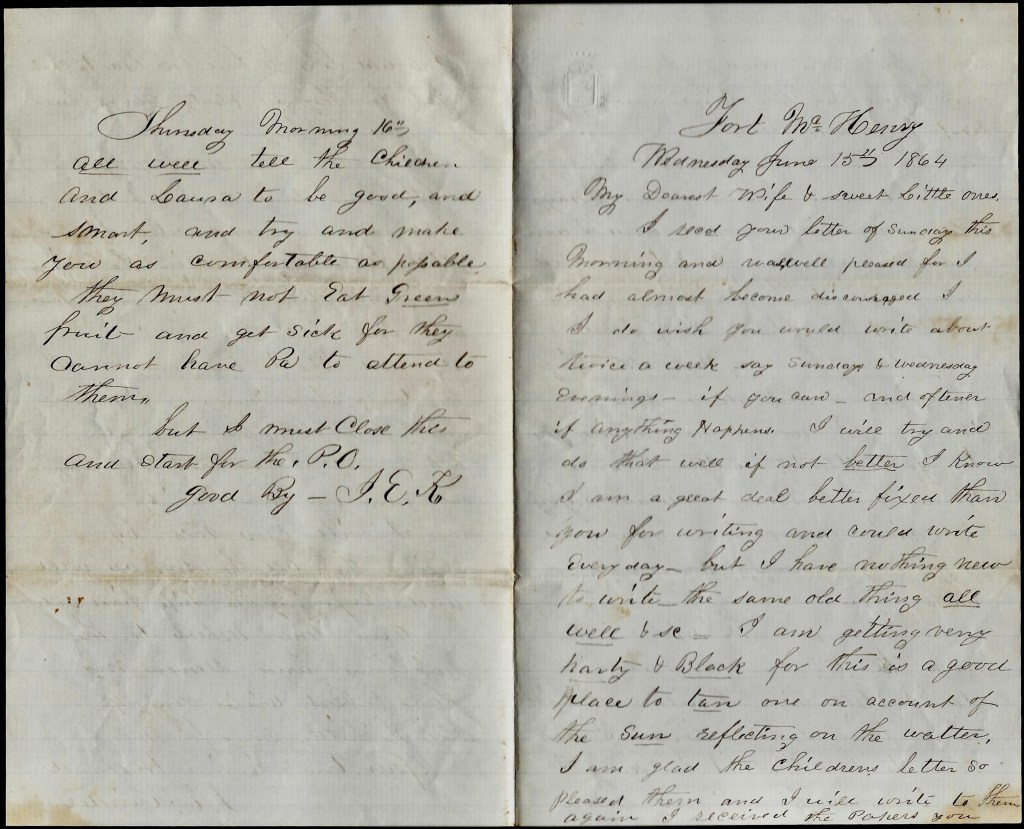

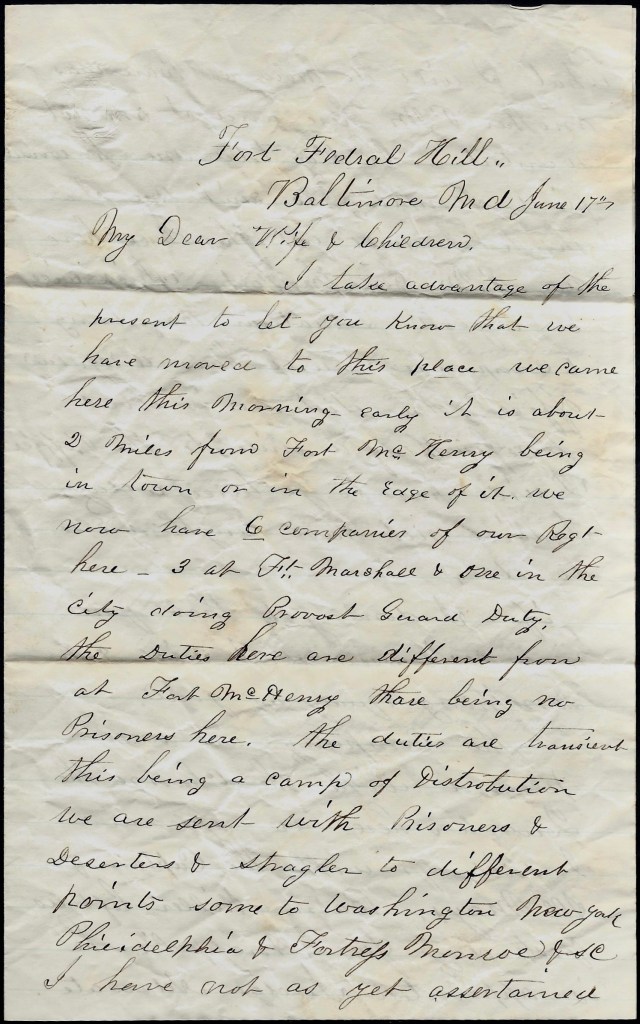
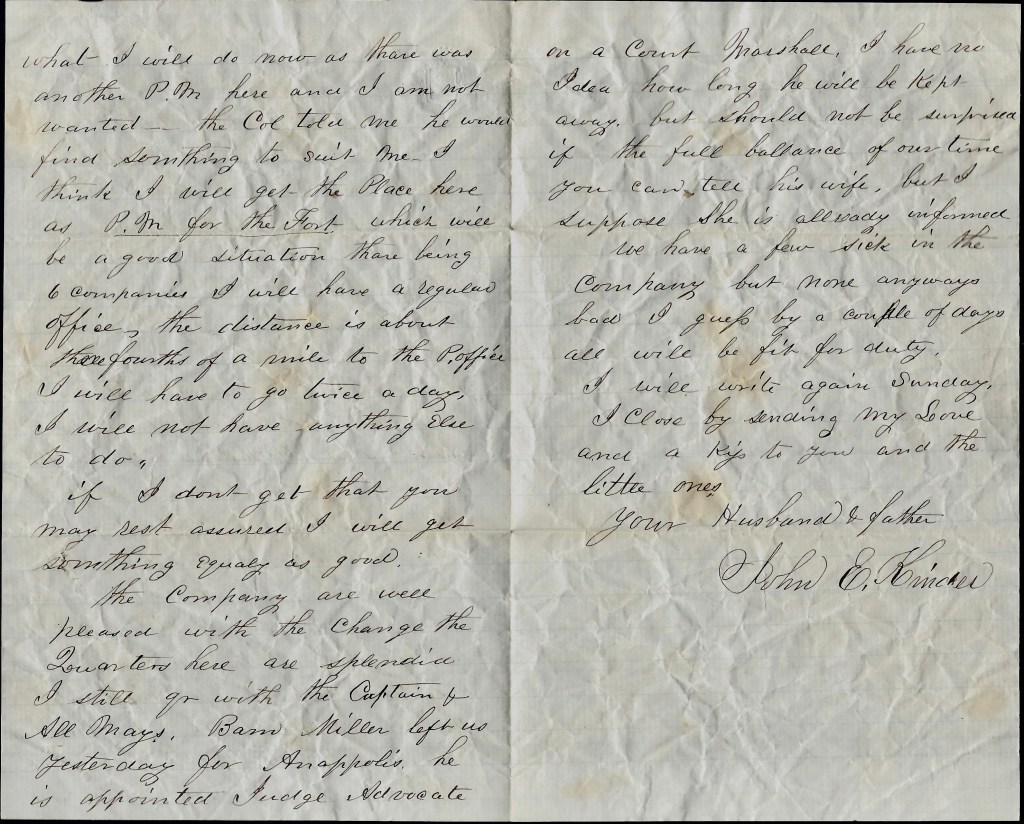
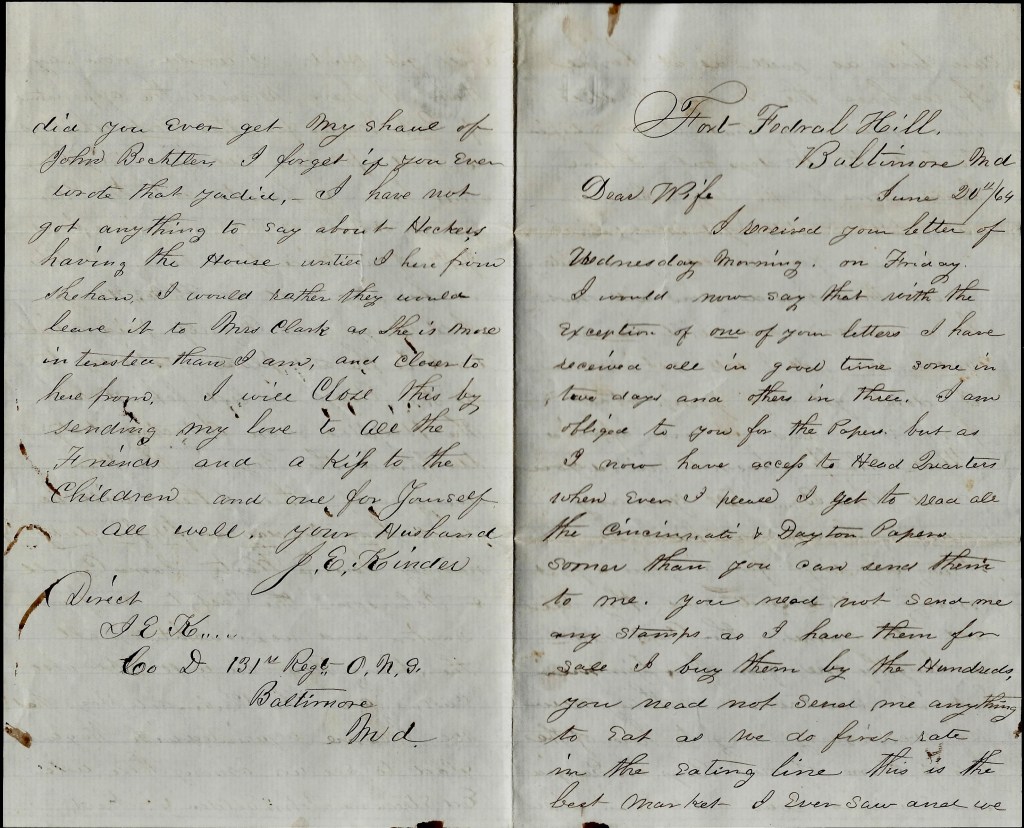
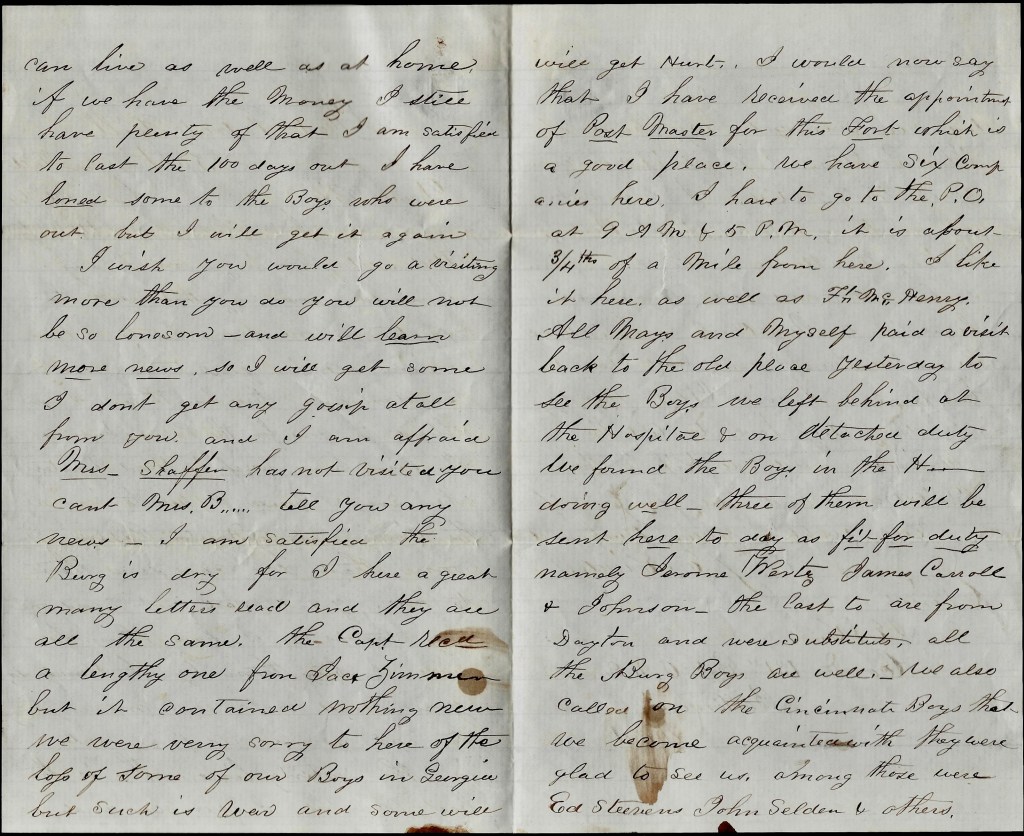
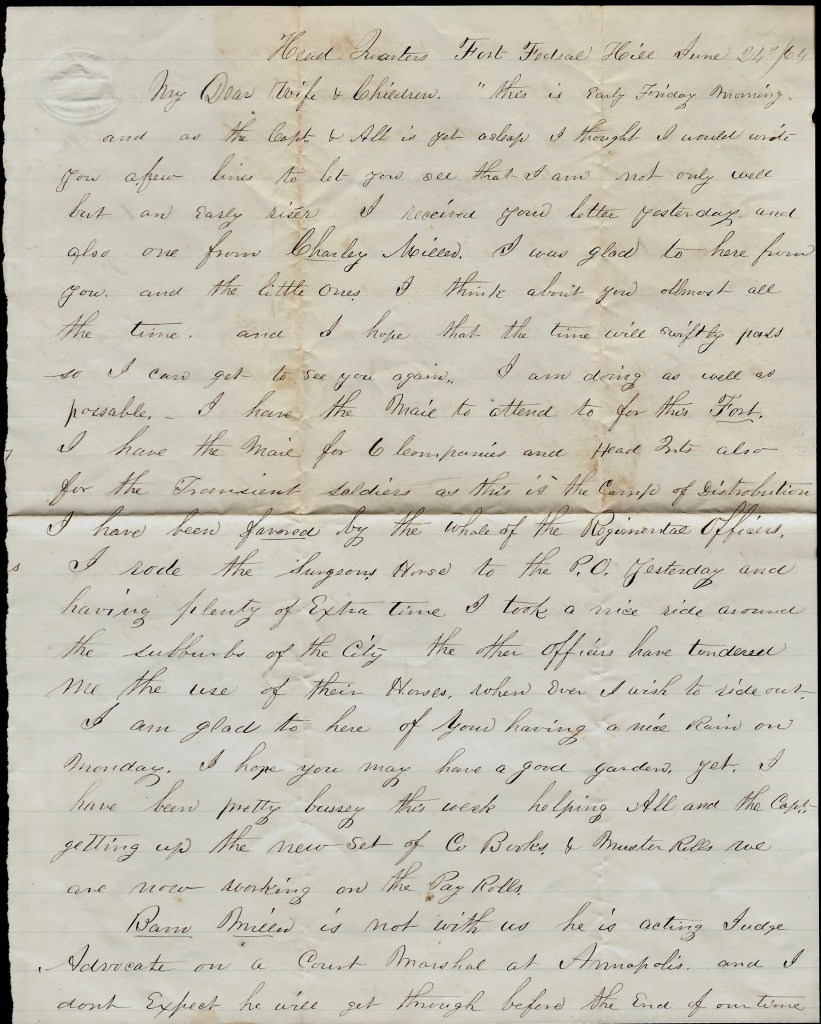

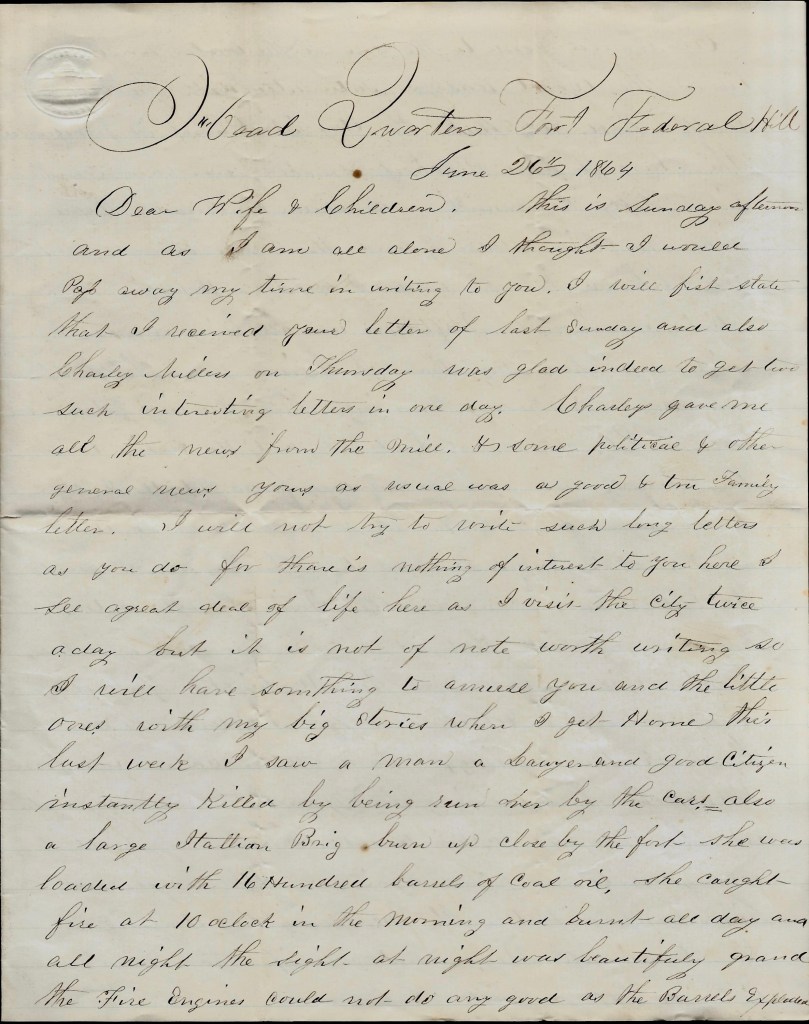



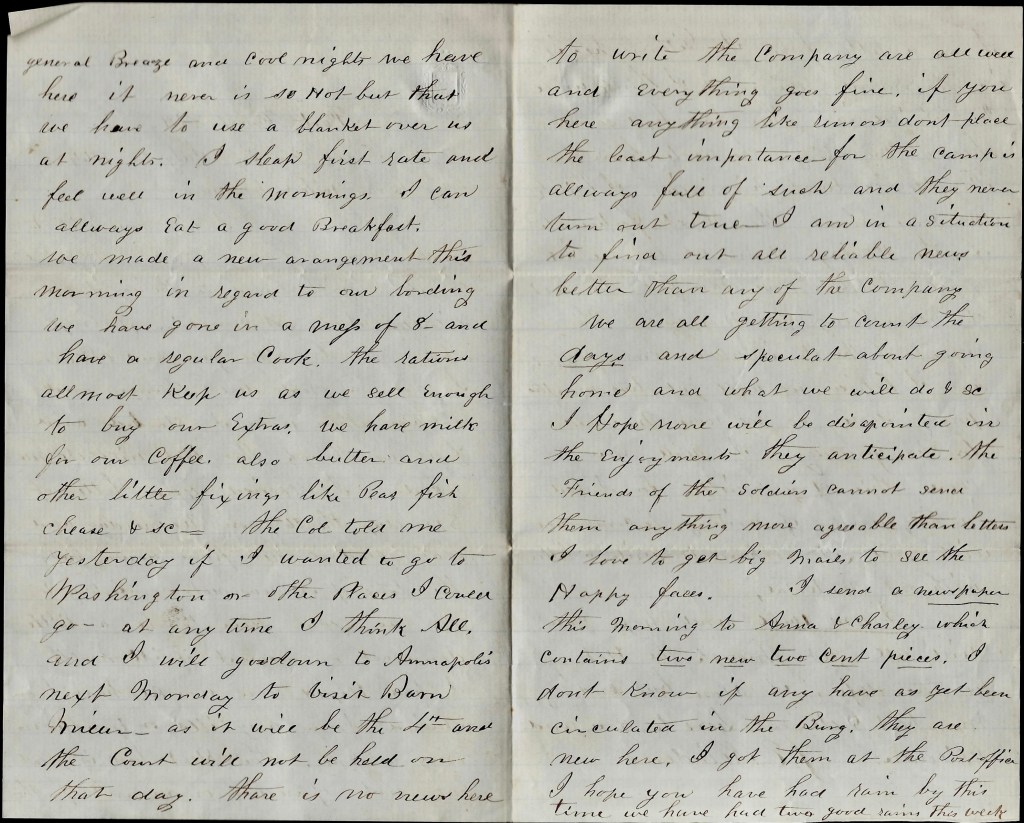
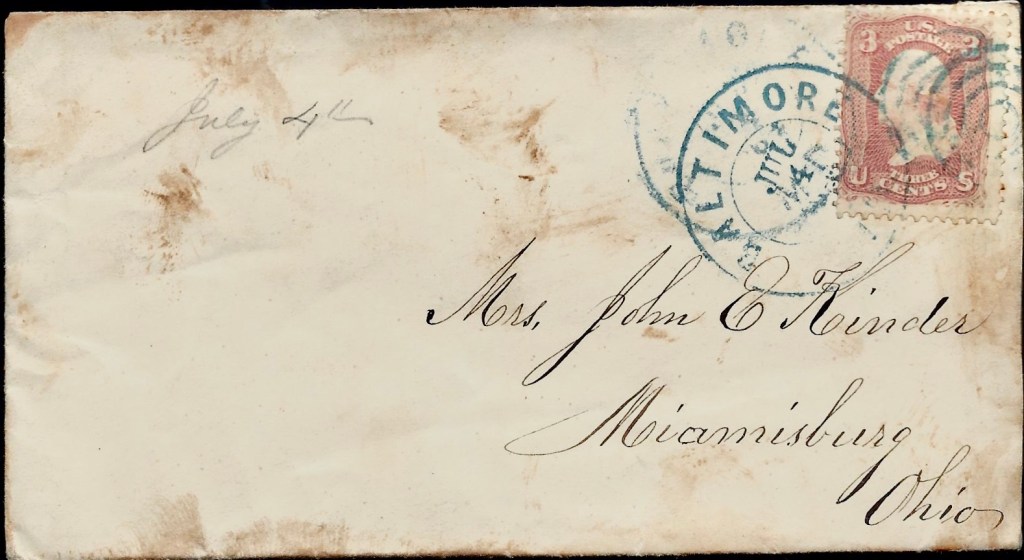

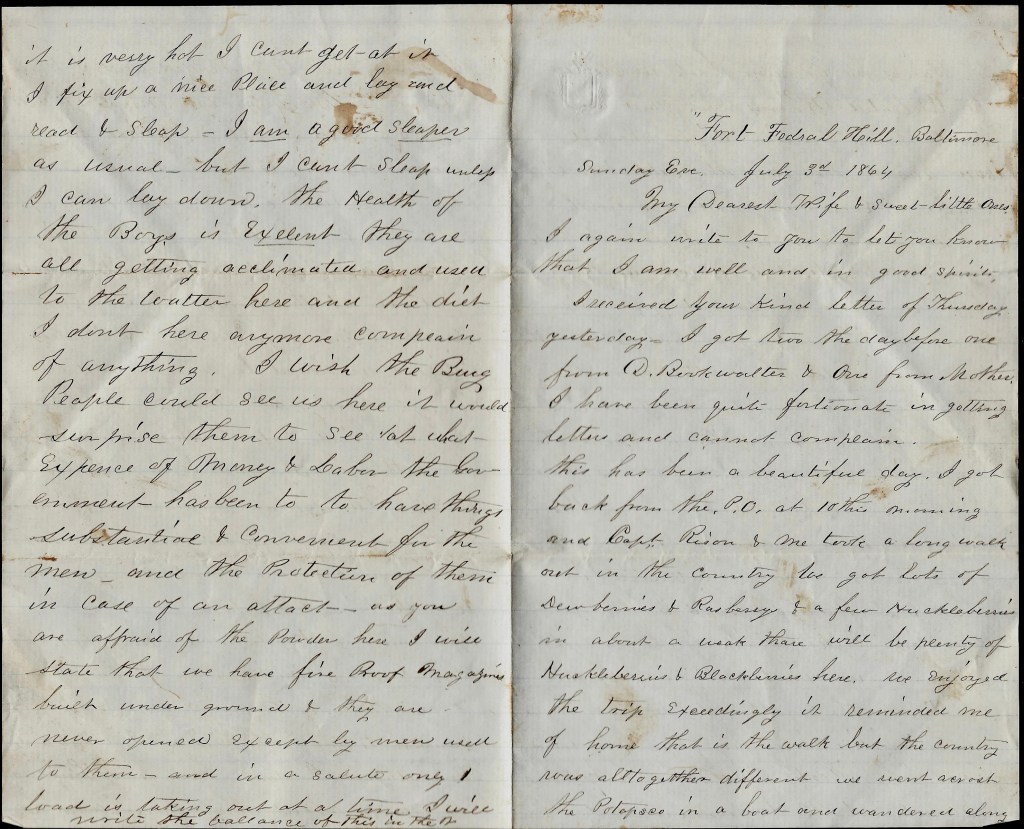
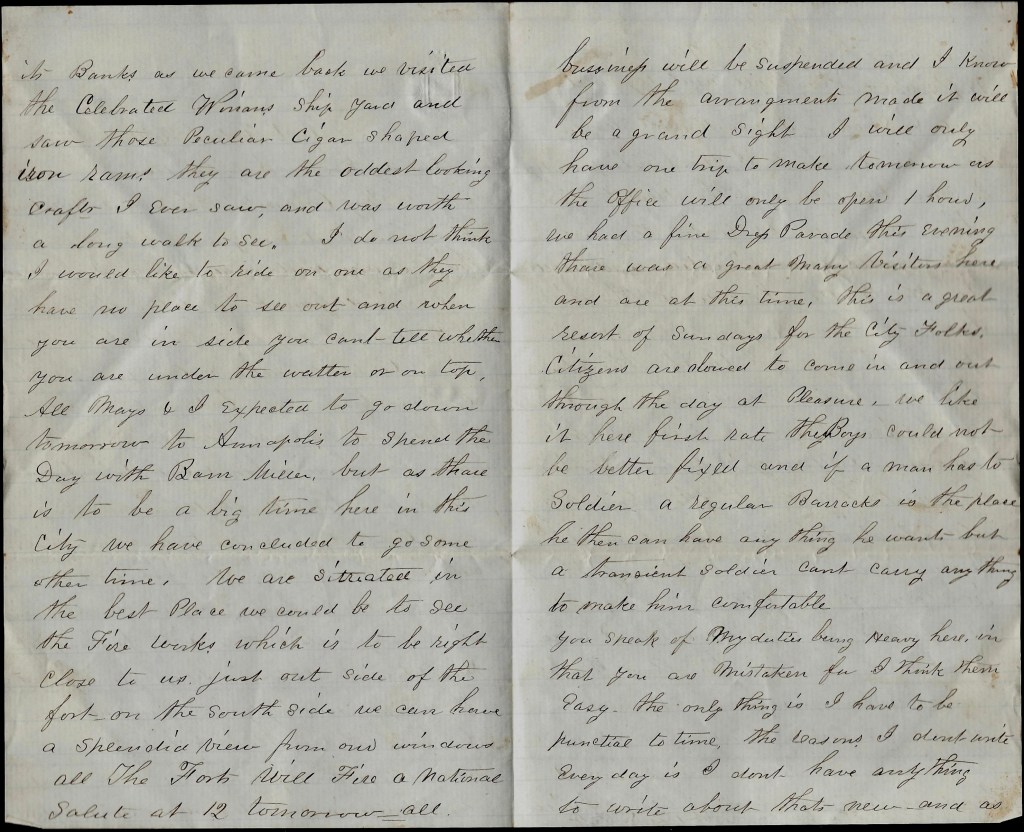

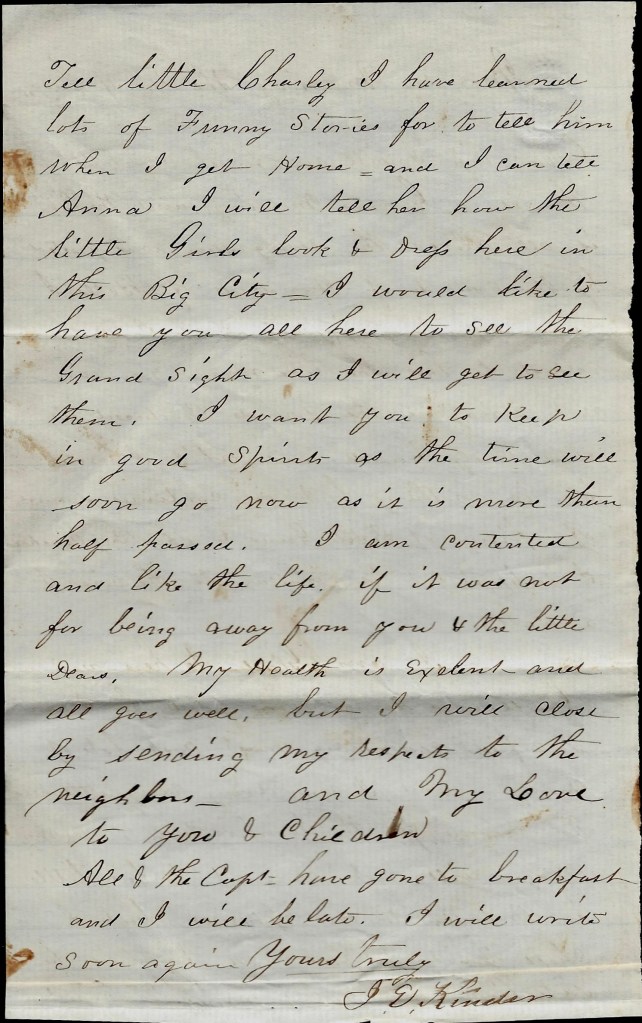




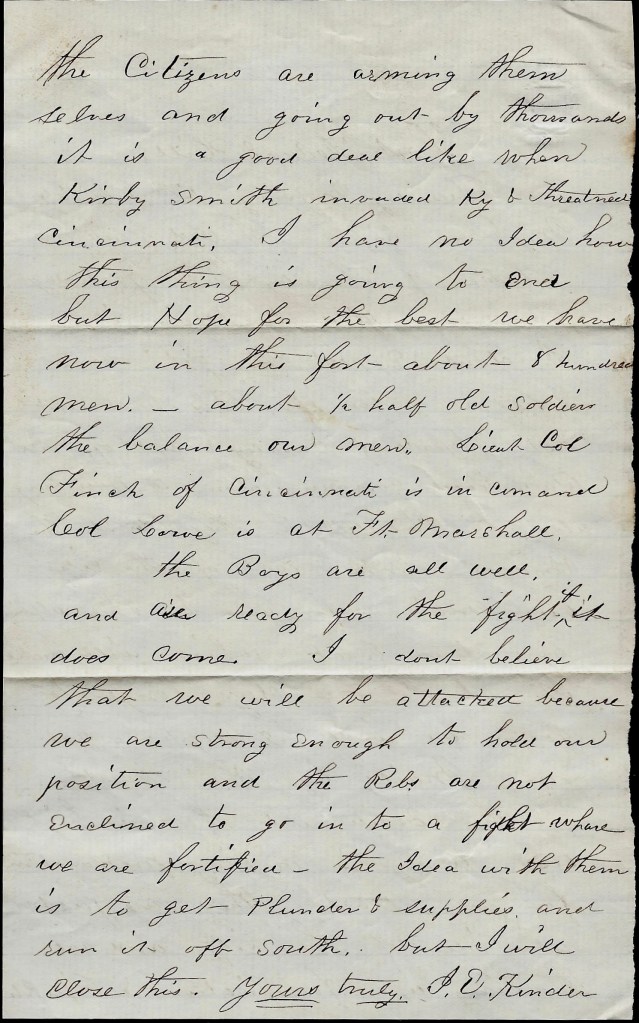


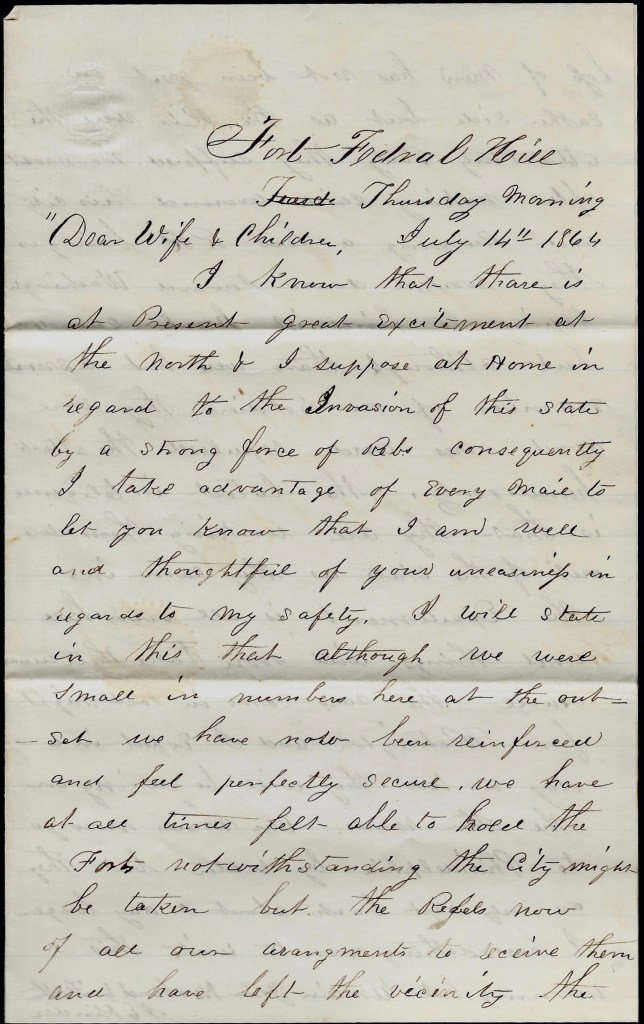

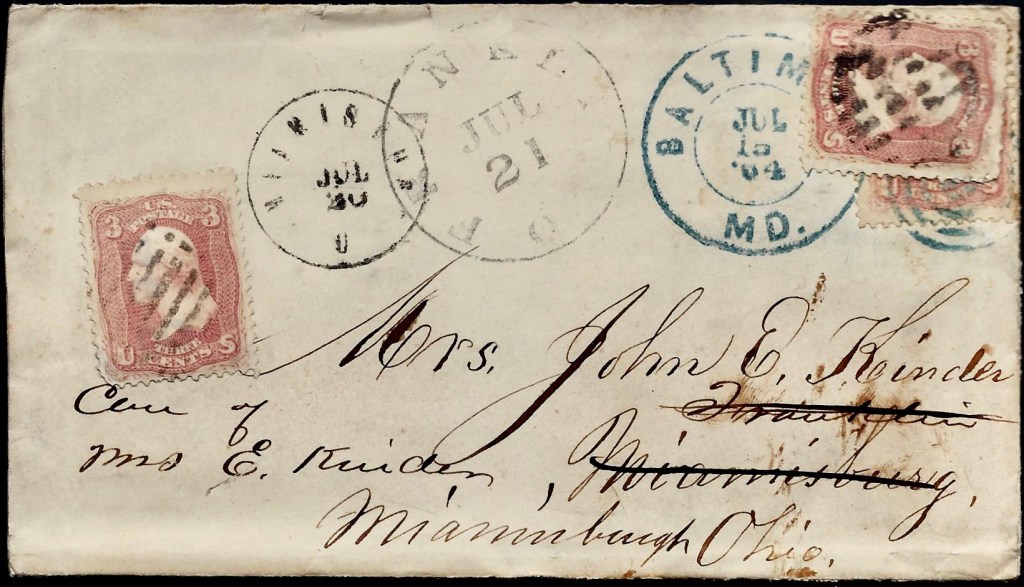
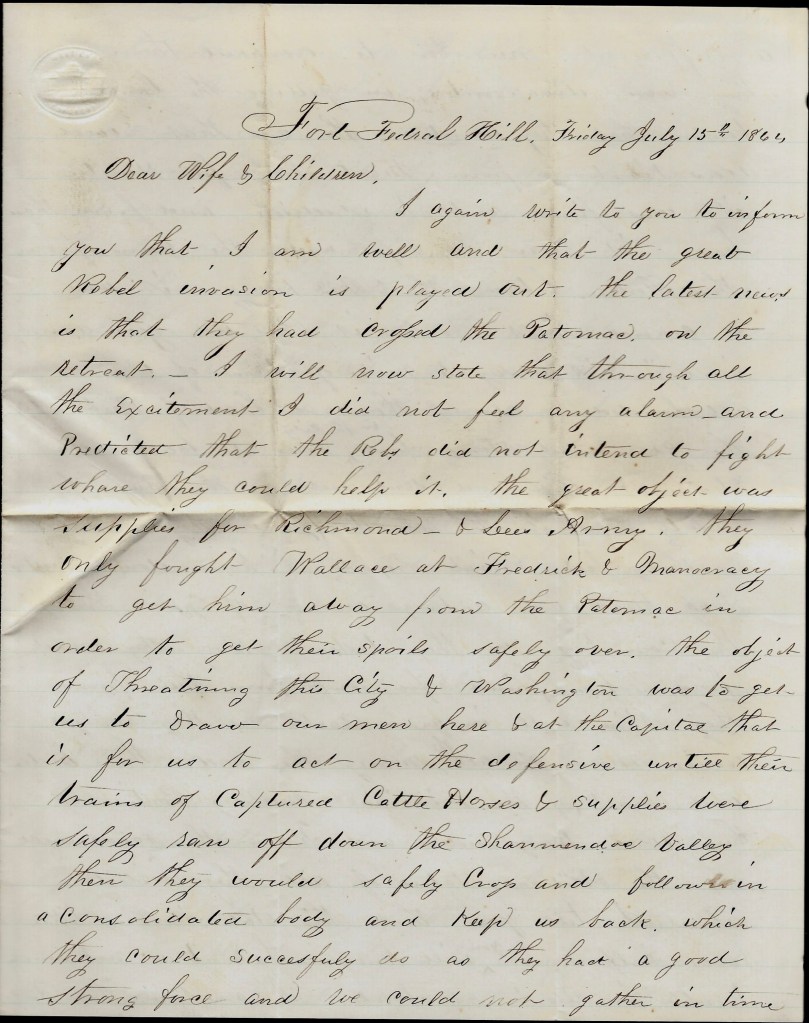
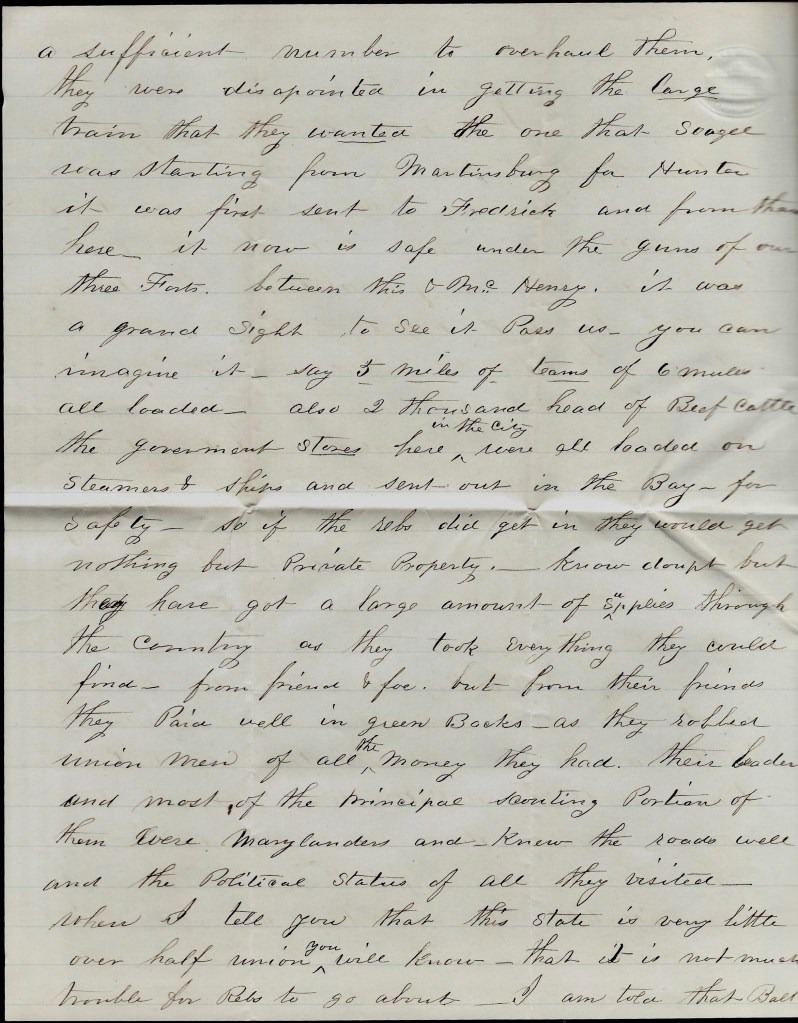
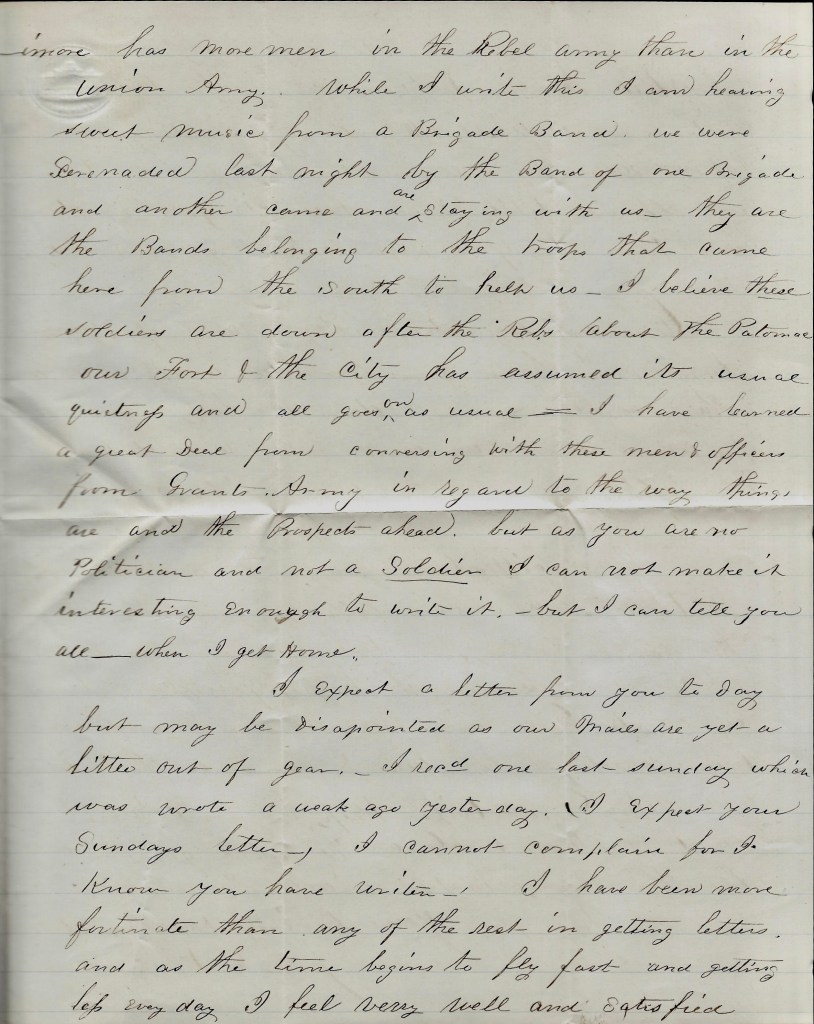




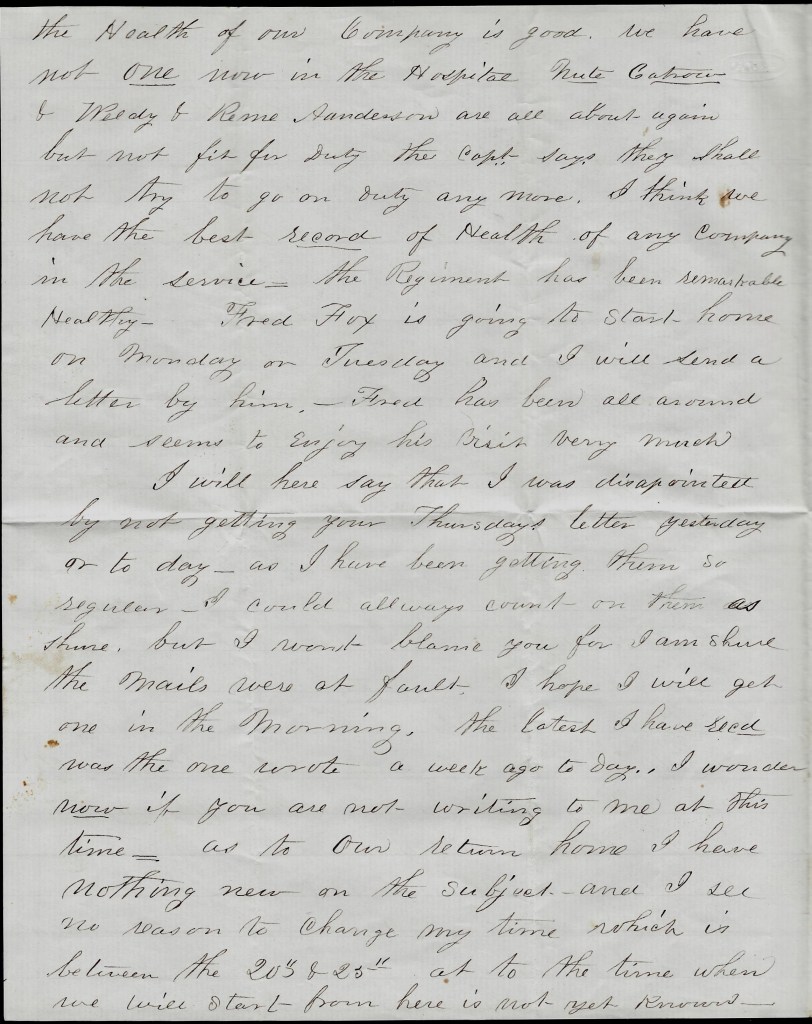
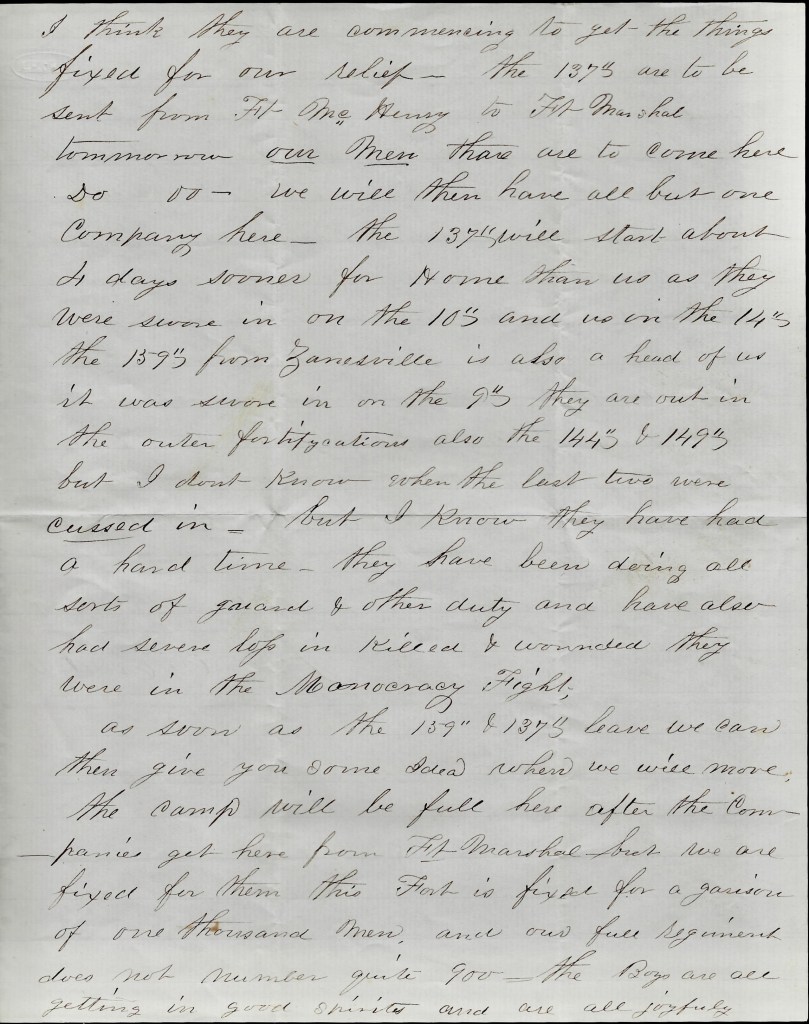
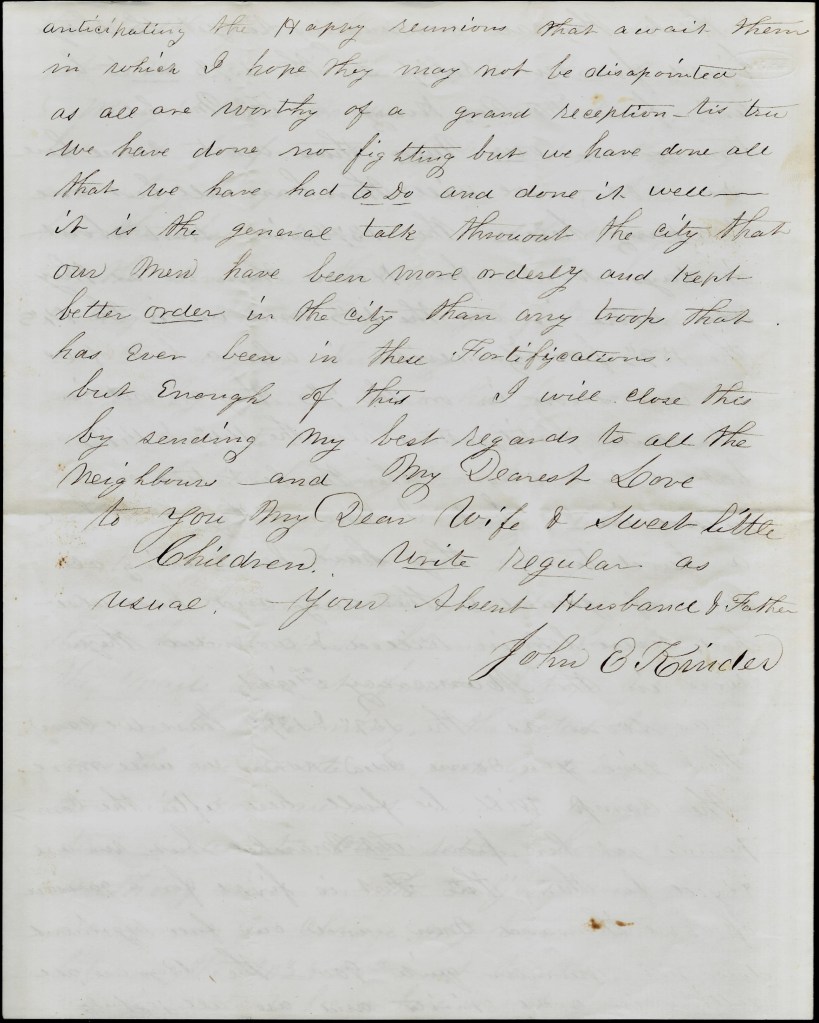

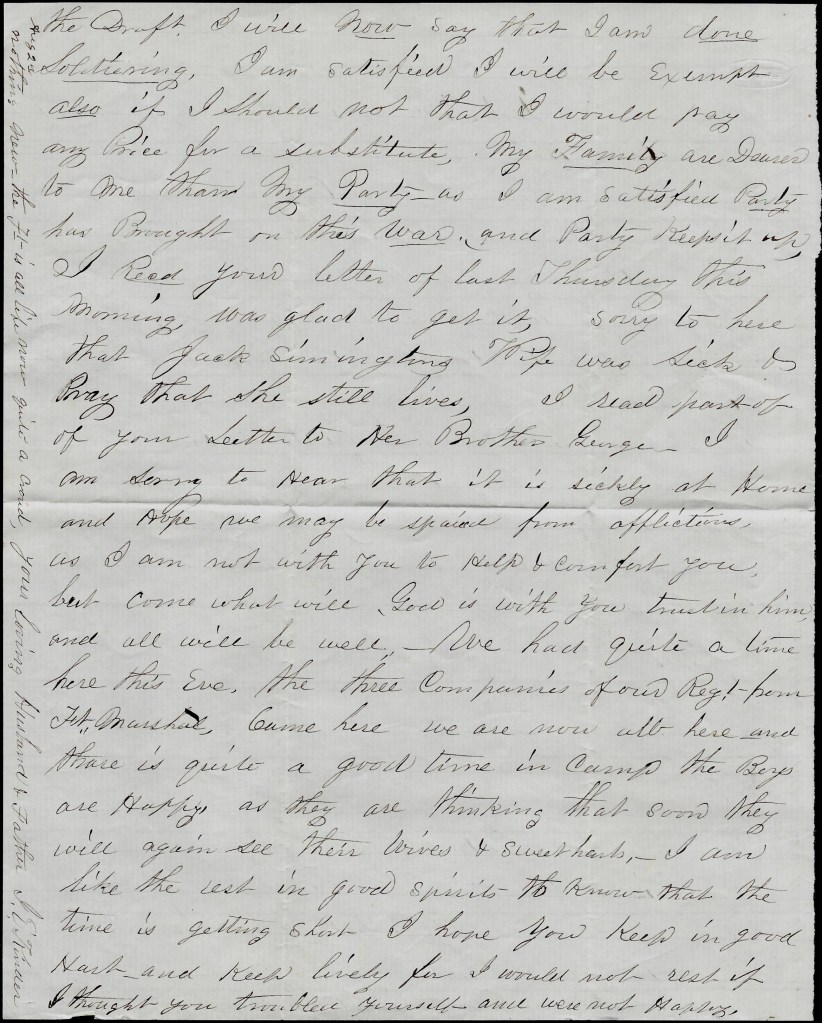










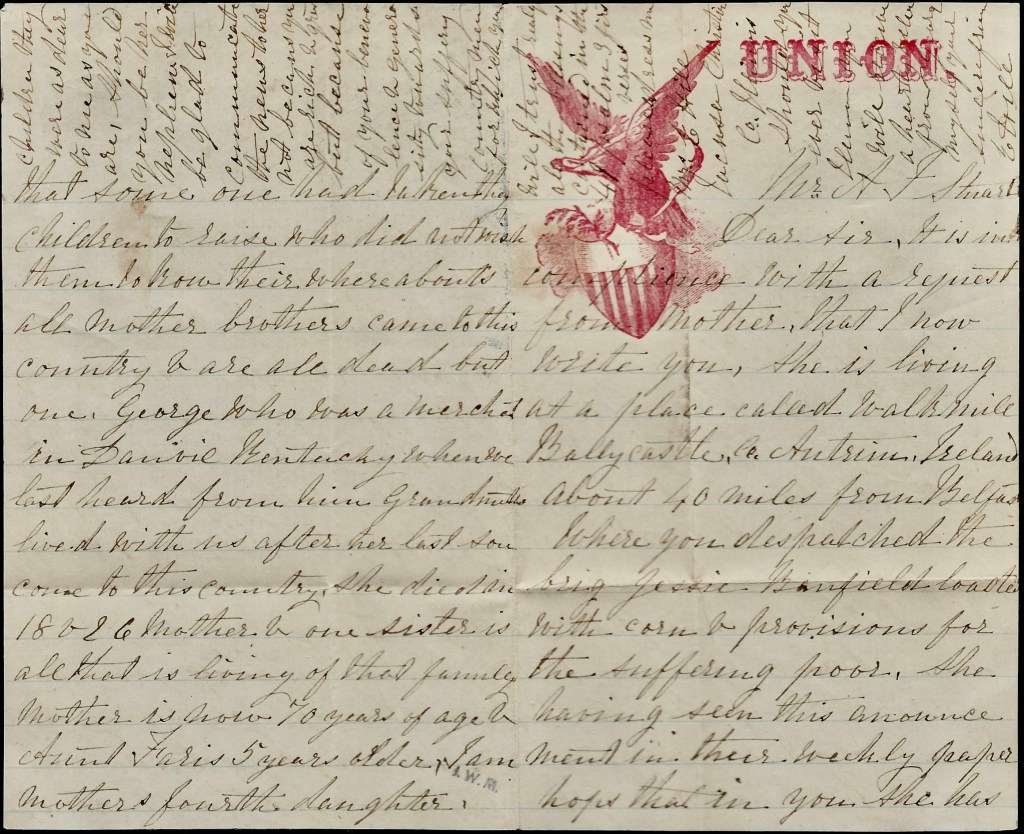
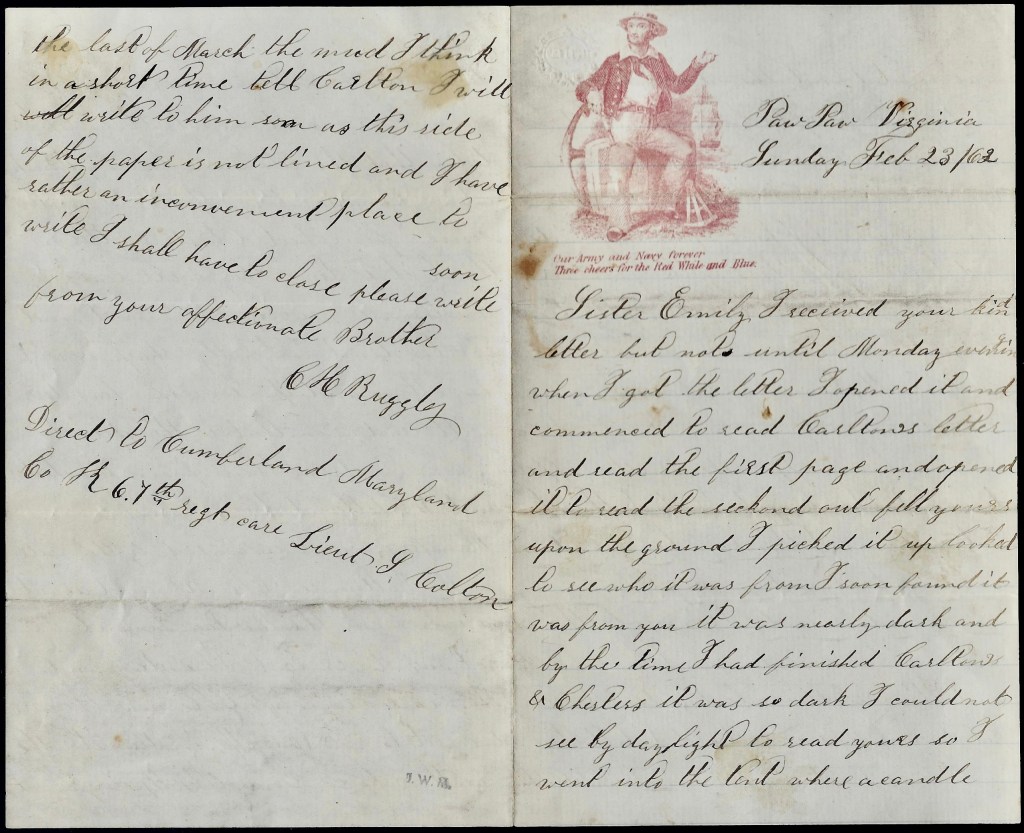
 Spared & Shared 23