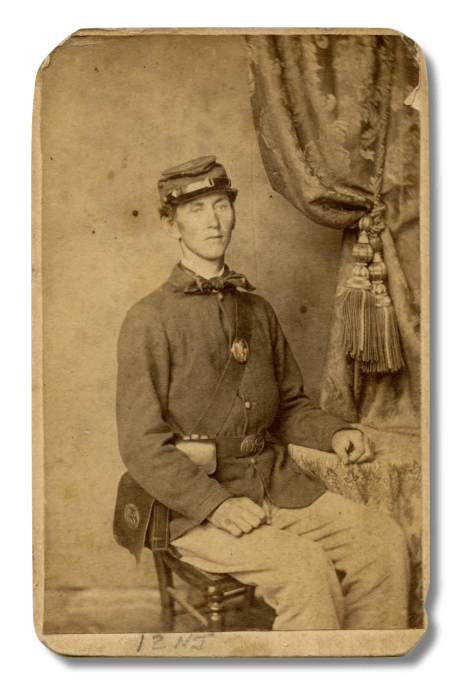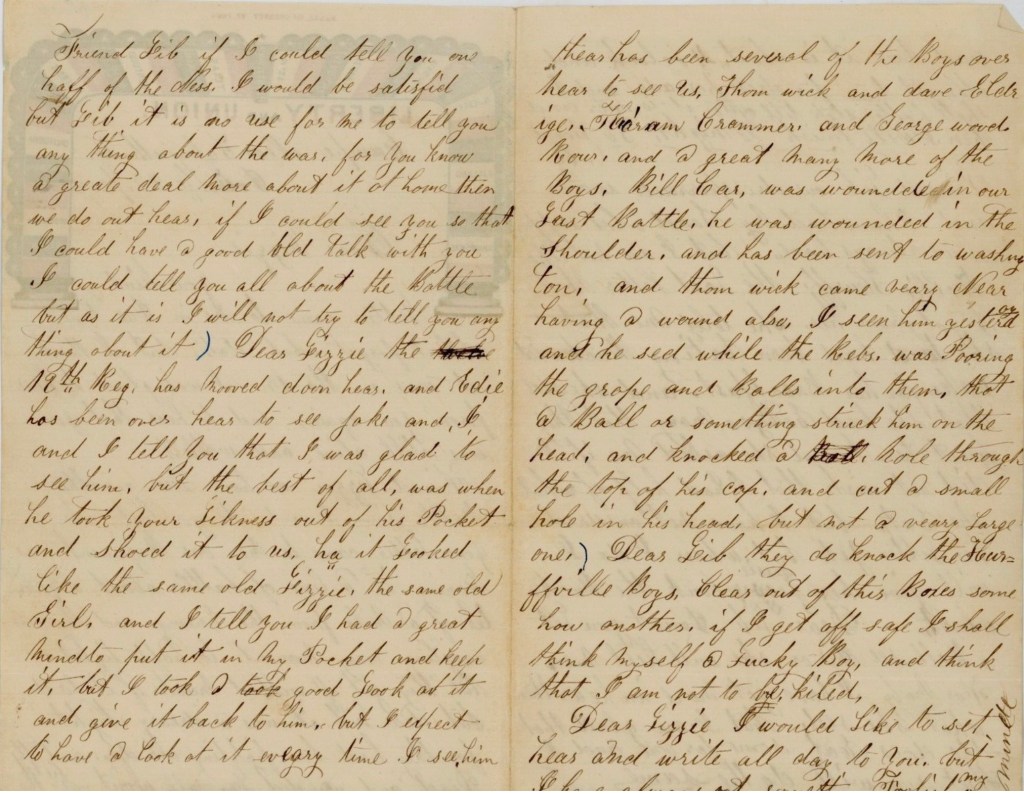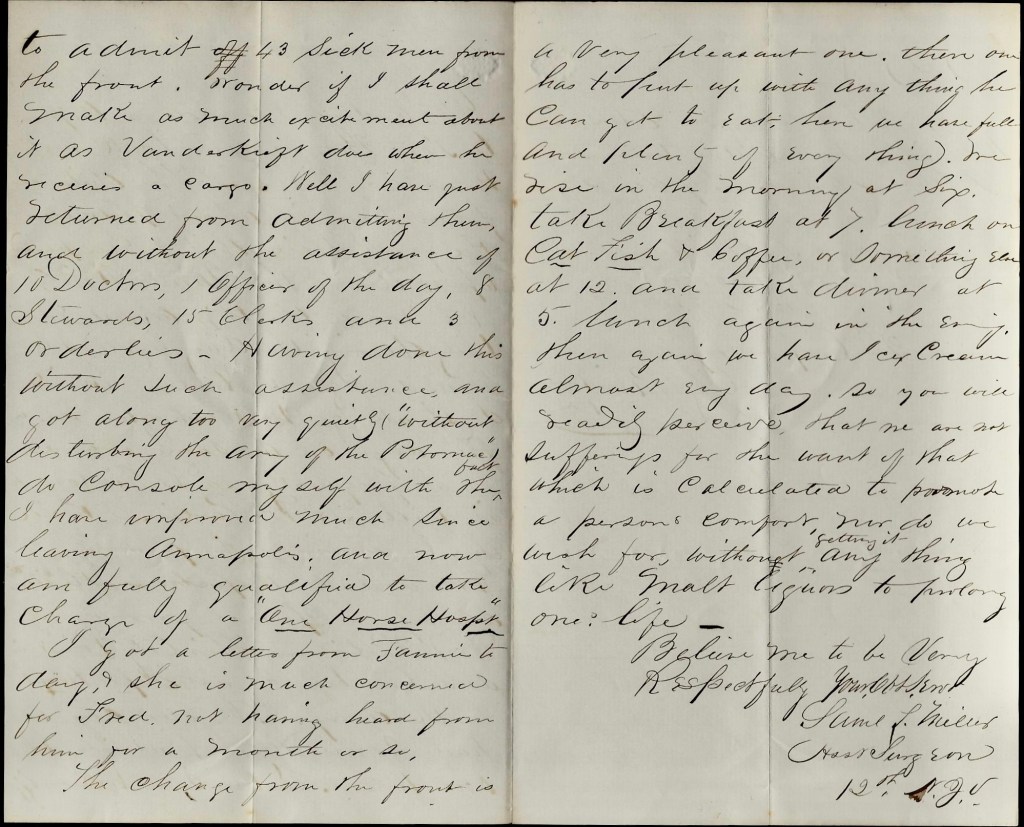
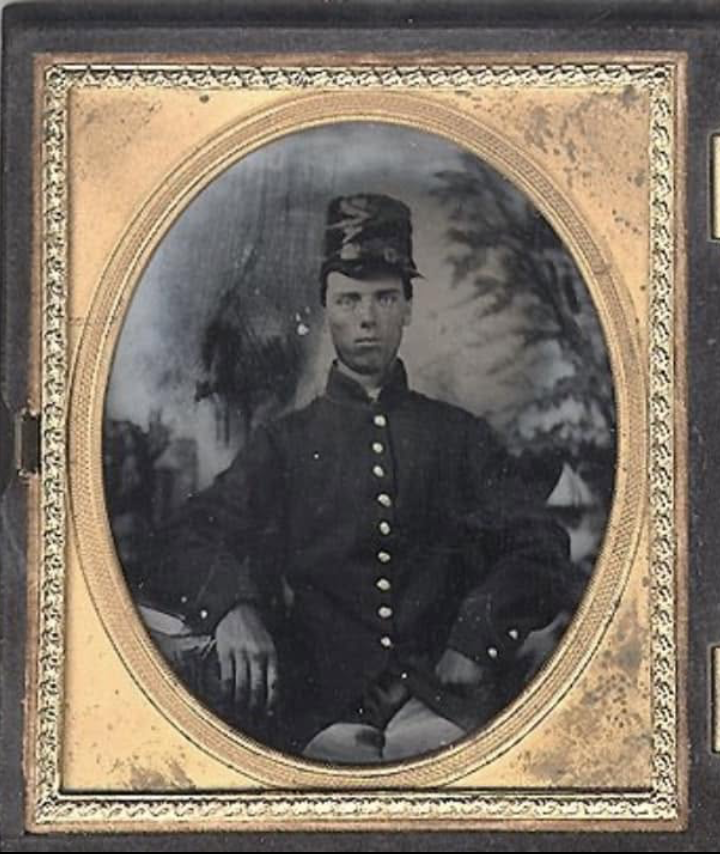
The following letters were written by Henry C. Derrickson (1845-1864), the son of Isaac Derrickson (18xx-1850) and Sarah [Moore?]. Isaac and Sarah were living in Marietta, Ohio when Isaac died in 1850.
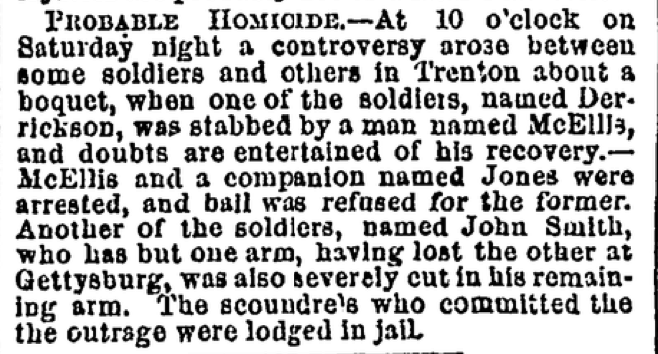
Henry enlisted in Co. G, 12th New Jersey Infantry on 12 August 1862, mustered in on 4 September 1862, and transferred to Co. 136, 2nd Battalion of the Veteran Reserve Corps (VRC) in March 1864. He died at the US Military Hospital in Trenton on 20 June 1864 “from the effects of stabs inflicted” (murdered) and was buried in the Odd Fellows Cemetery in Philadelphia. A surgeon named James B. Coleman filed an affidavit certifying that he attended Henry and stated that he died from the effects of a stab in the left lung received about two weeks previous to his death.” Another surgeon, A. M. Kelway,” claimed the attack took place on the night of June 9th, 1864 and that he lingered until the night of June 20th 1864. Henry was on detached service at the Provost Marshal’s office in Trenton at the time. According to the Pension file, Henry was “not to blame in any respect” for his death.He was “wantonly attacked in front of his rendezvous without any apparent provocation.”
In his letters, Henry frequently mentions his Uncle John and Aunt Hannah, presumably siblings. They were John Lavery (1818-1868) and Hannah Lavery (1825-1878). John was a dentist in Philadelphia.
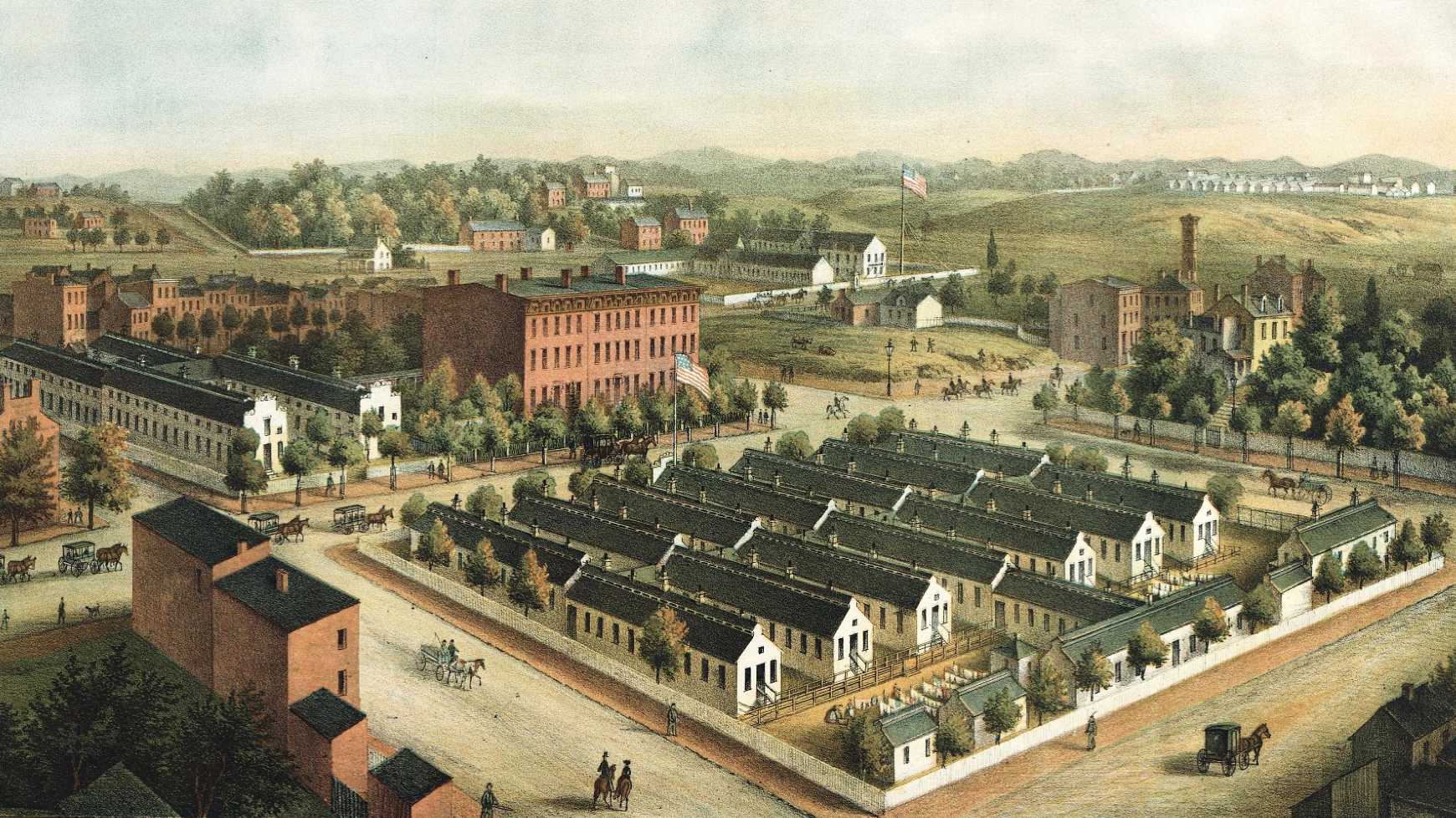
Letter 1
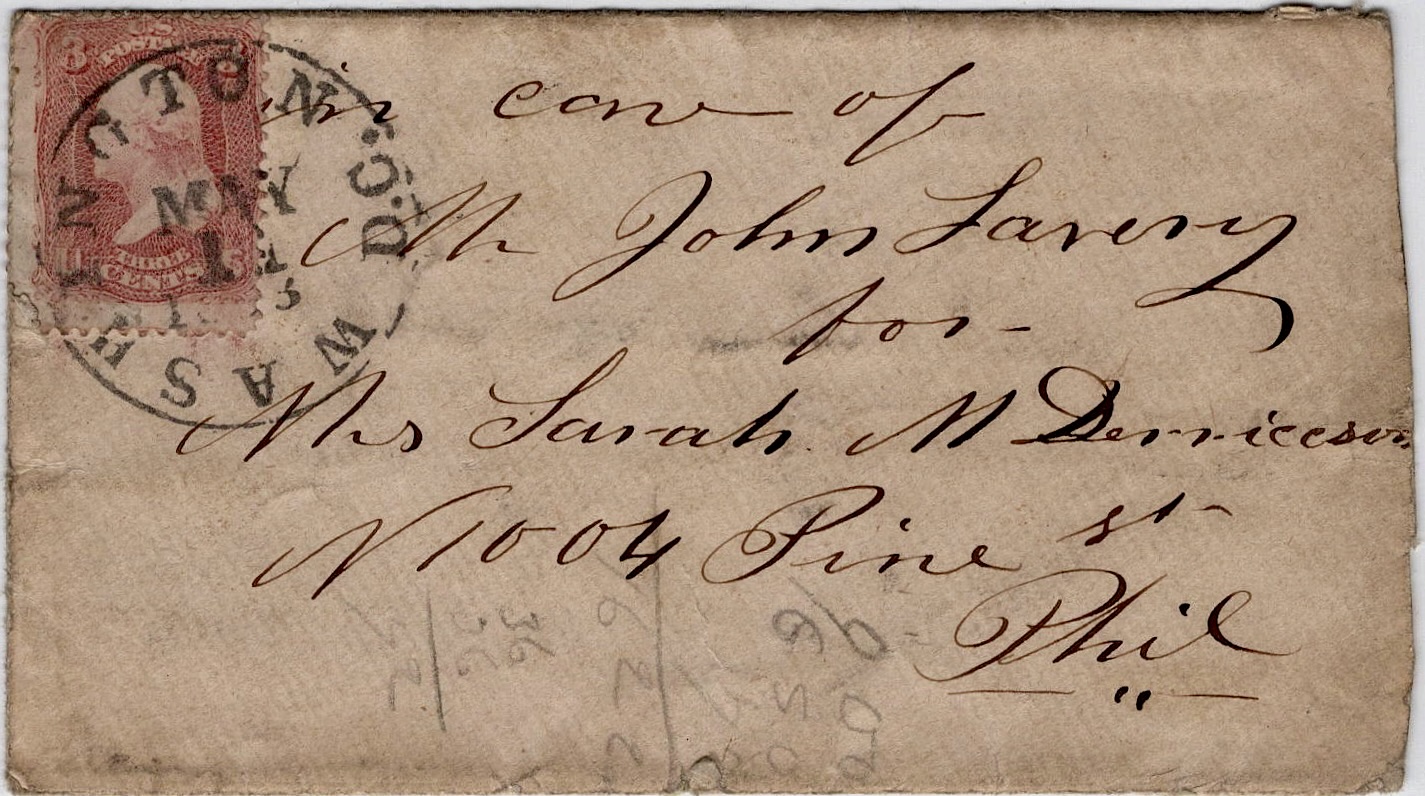
Stanton Hospital, Washington D. C.
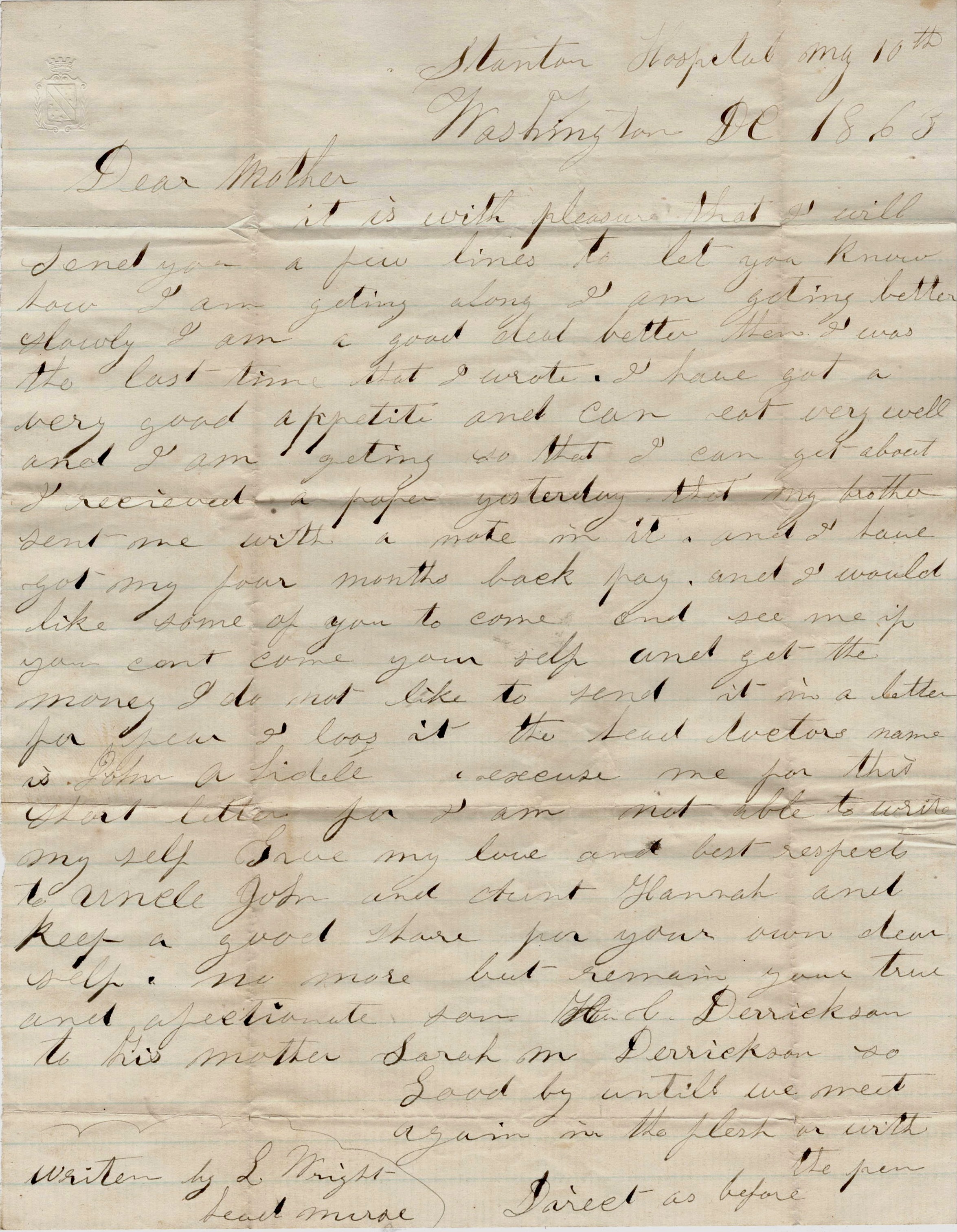
May 10th 1863
Dear Mother,
It is with pleasure that I will send you a few lines to let you know how I am getting along. I am getting better slowly. I am a good deal better than I was the last time that I wrote. I have got a very good appetite and can eat very well and I am getting so that I can get about.
I received a paper yesterday that my brother sent me with a note in it and I have got my four months back pay and I would like some of you to come and see me . If you can’t come yourself and get the money, I do not like to send it in a letter for fear I lose it. The head doctor’s name is John A. Lidell.
Excuse me for this short letter for I am not able to write myself. Give my love and best respects to Uncle John and Aunt Hannah and keep a good share for your own dear self. No more but remain your true and affectionate son, — H. C. Derrickson
So goodbye until we meet again in the flesh or with the pen. Direct as before.
Written by L. Wright, Head Nurse
Letter 2
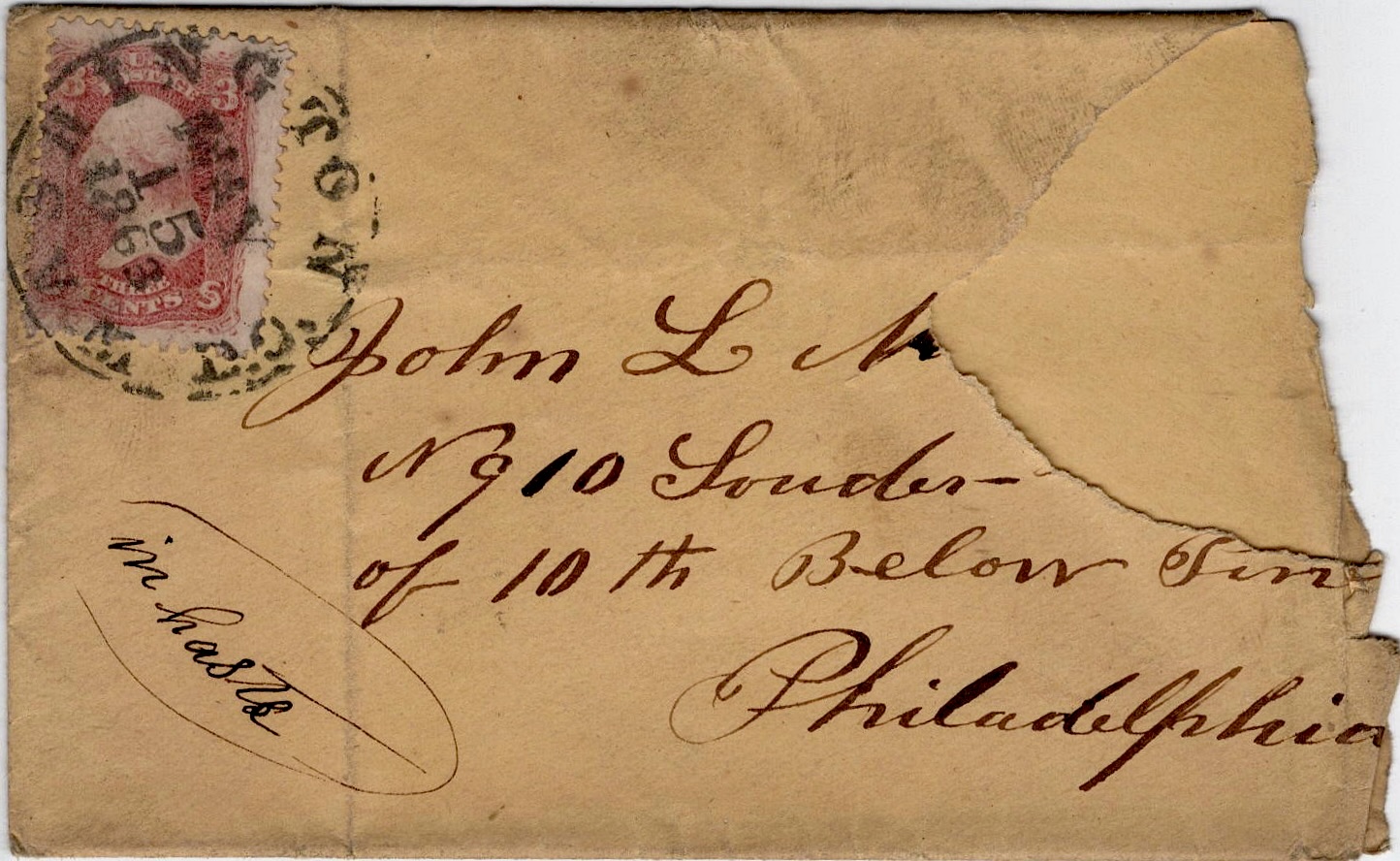
Stanton Hospital
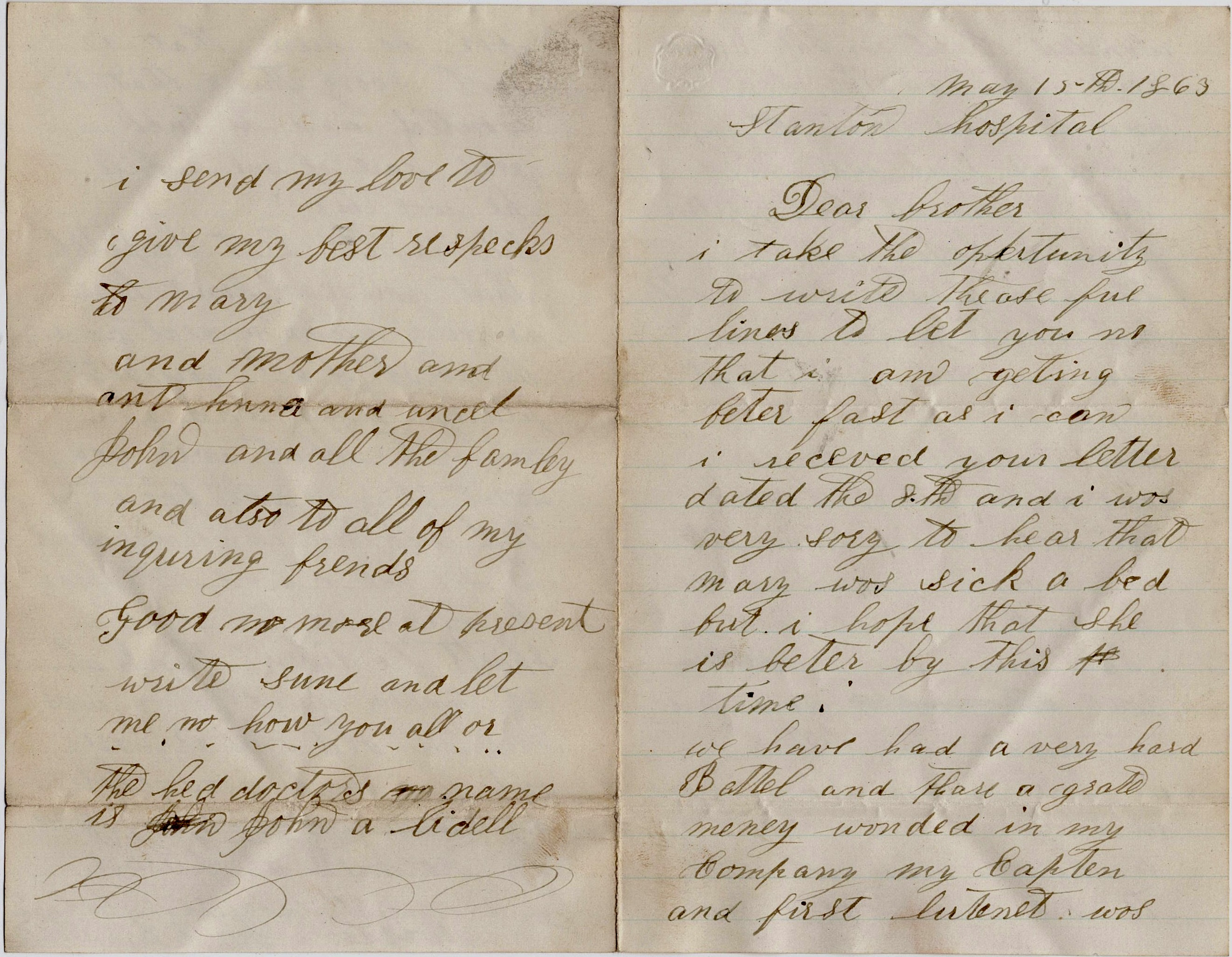
May 15th 1863
Dear brother,
I take the opportunity to write these few lines to let you know that I am getting better fast as I can. I received your letter dated the 8th and I was very sorry to hear that Mary was sick abed. But I hope that she is better by this time.
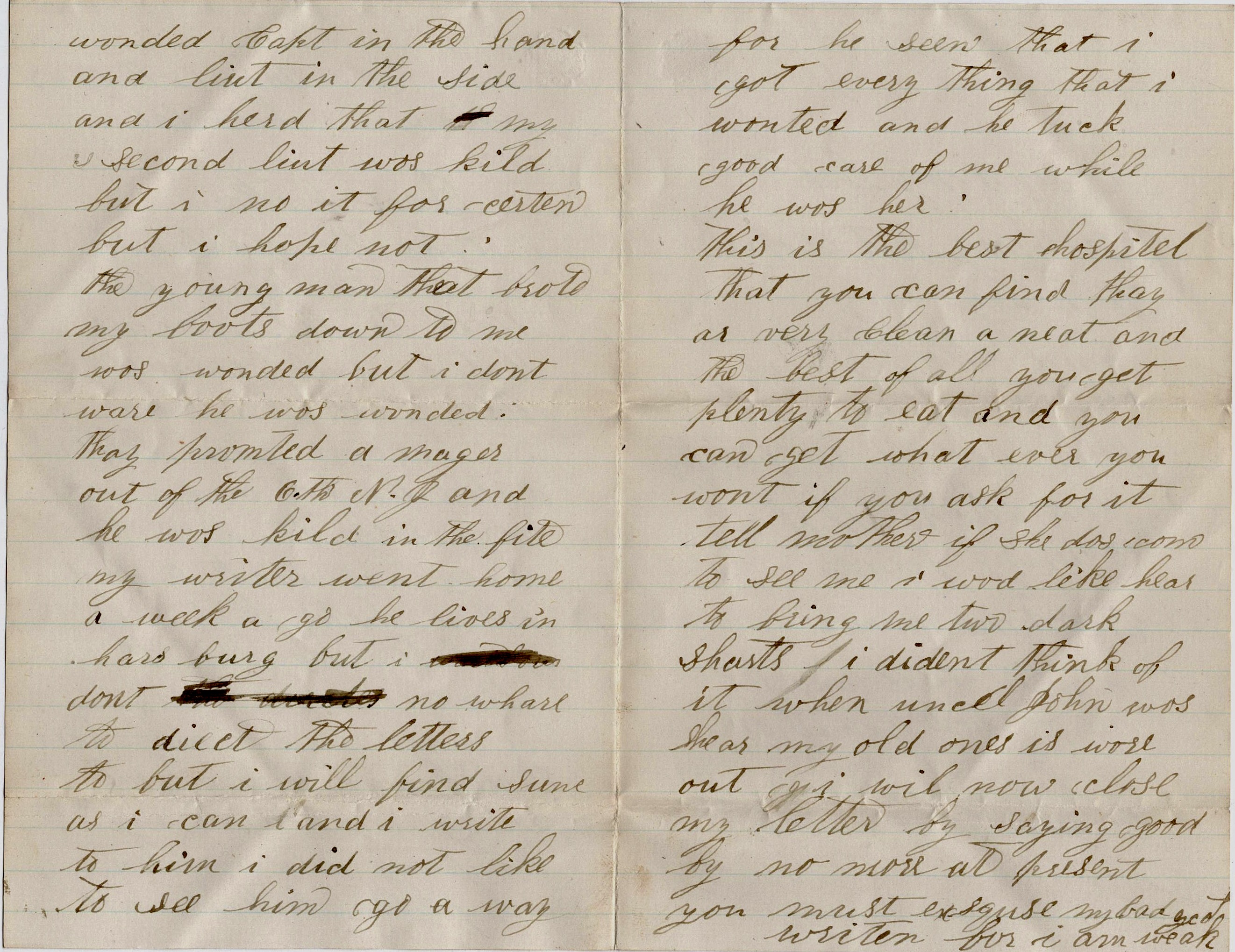
We had a very hard battle [at Chancellorsville] and there [were] a great many wounded in my company. My Captain and 1st Lieutenant was wounded—captain in the hand and lieutenant in the side. And I heard that my 2nd Lieutenant was killed but I [don’t] know it for certain. But I hope not.
The young man that brought my boots down to me was wounded but I don’t [know] where he was wounded. They promoted a Major out of the 6th New Jersey and he was killed in the fight.
My writer went home a week ago. He lives in Harrisburg but I don’t know where to direct the letters to but I will find as soon as I can and write to him. I did not like to see him go away for he seen that I got everything that I wanted and he took good care of me while he was here.
This is the best hospital that you can find. They are very clean and neat and the best of all, you get plenty to eat and you can get whatever you want if you ask for it. Tell mother if she does come to see me, I would like her to bring me two dark shirts. I didn’t think of it when Uncle John was here. My old ones is wore out.
I will now close my letter by saying goodbye. No more at present. You must excuse my bad writing for I am weak. I send my love to you. Give my best respects to Mary and Mother and Hanna and John and all the family and also to all of my enquiring friends. Good[bye]. No more at present. Write soon and let me know how you all are. The head doctor’s name is John A. Lidell
Letter 3
Washington
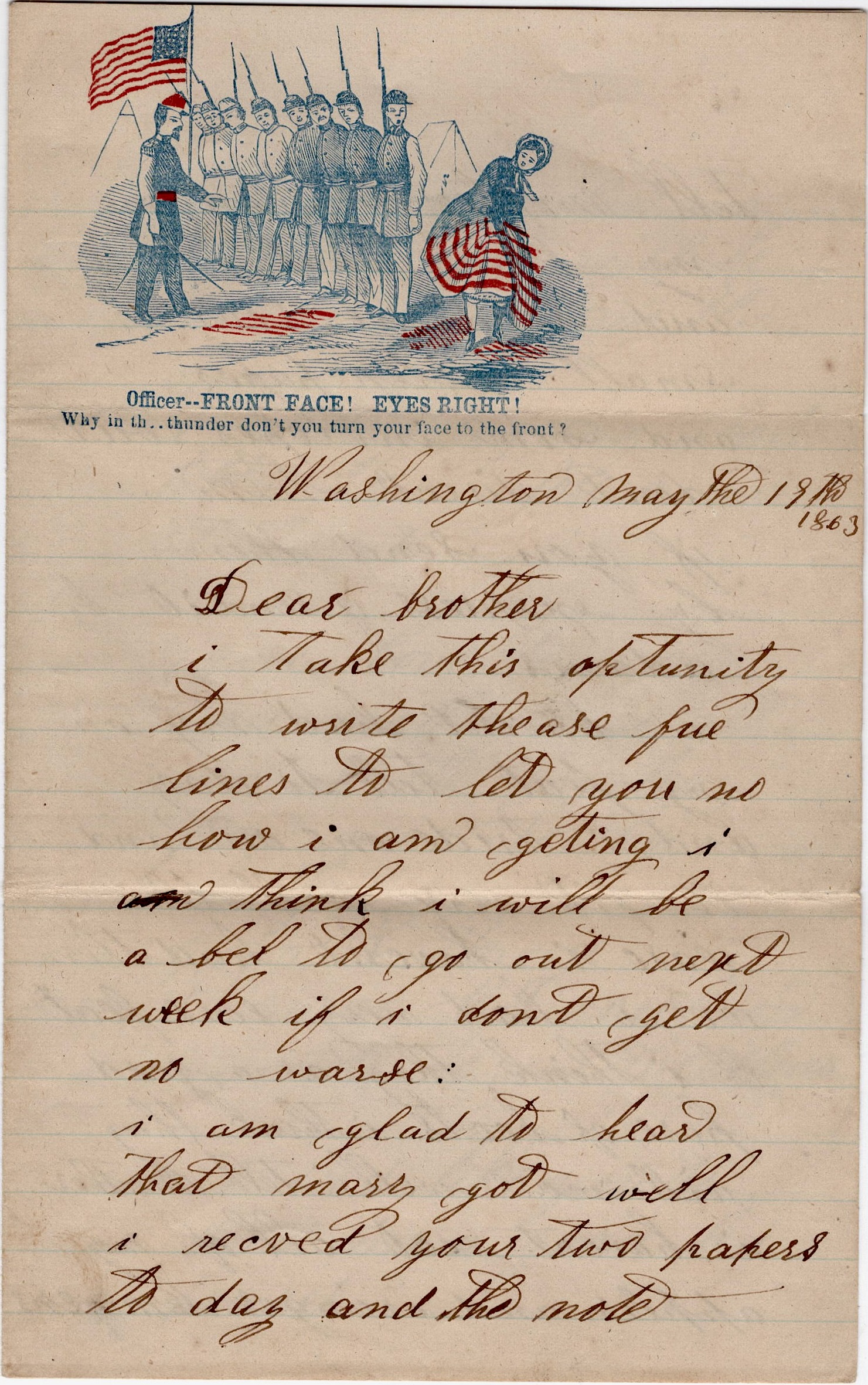
May 19th 1863
Dear Brother,
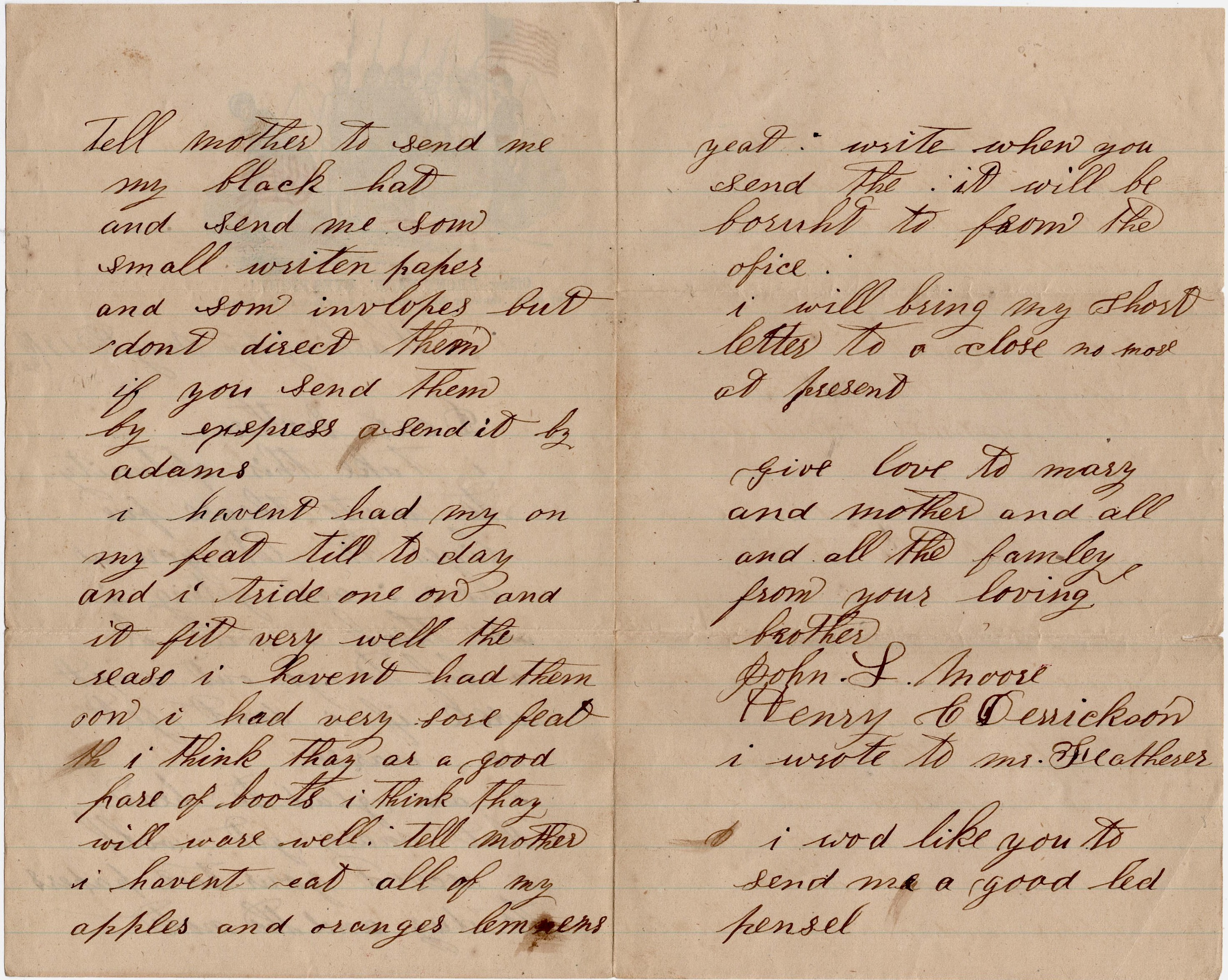
I take this opportunity to write these few lines to let you know how I am getting [along]. I think I will be able to go out next week if I don’t get no worse. I am glad to hear that Mary got well. I received your two papers today and the note. Tell Mother to send me my black hat and send me some small writing paper and some envelopes but don’t direct them. If you send them by express, send it by Adams [Express].
I haven’t had my [boots] on my feat till today and i tried one on and it fit very well. The reason I haven’t had them on, I had very sore feet. I think they are a good pair of boots. I think they will wear well. Tell Mother I haven’t eat all of my apples and oranges [and] lemons yet.
Write when you send the [hat]. It will be brought to [me] from the office. I will bring my short letter to a close. No more at present.
Give love to Mary and Mother and all the family. From your loving brother, –Henry C. Derrickson
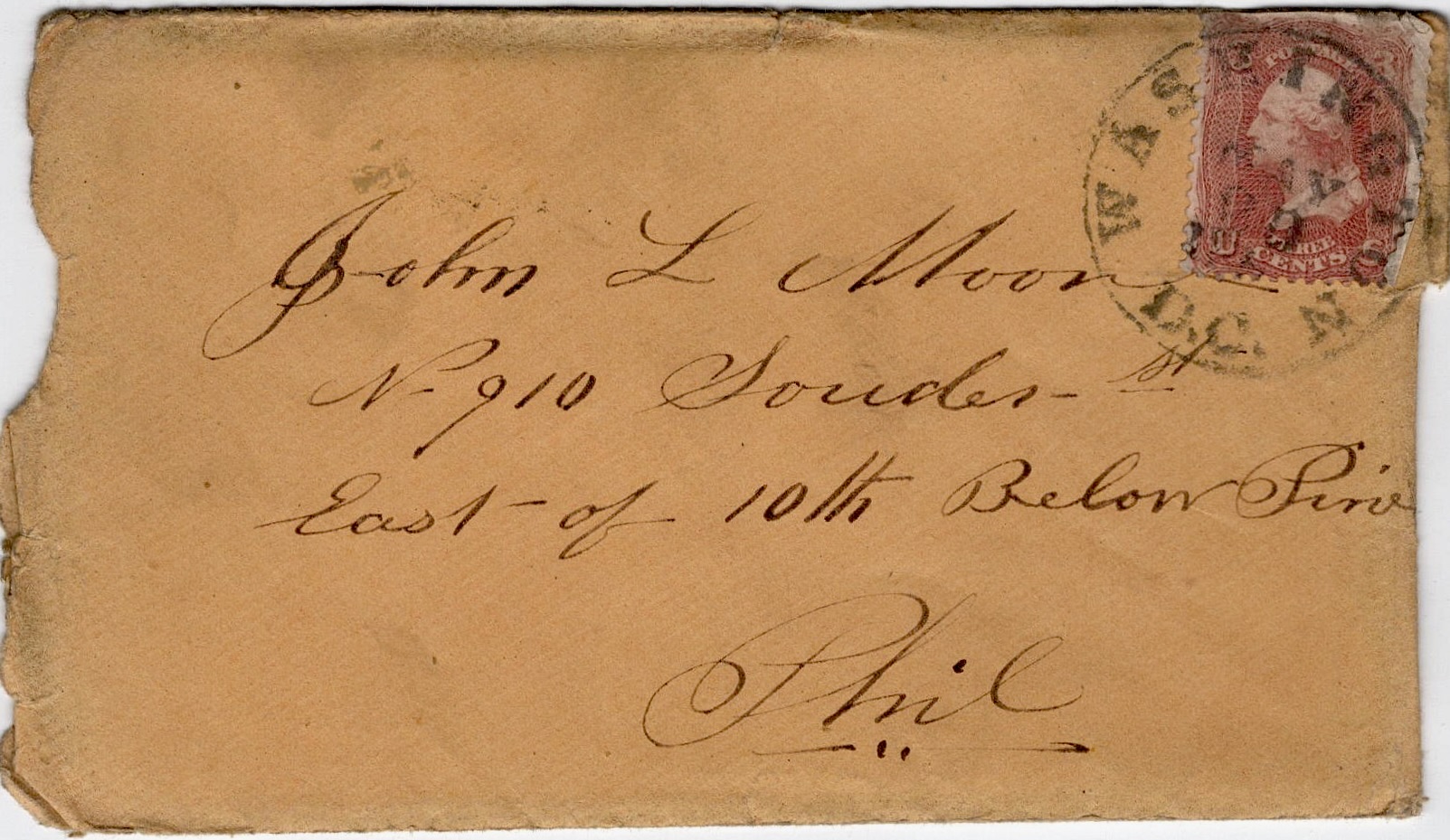
[To] John L. Moore
I wrote to Mr. Featherer
I would like you to send me a good pencil.
Letter 4
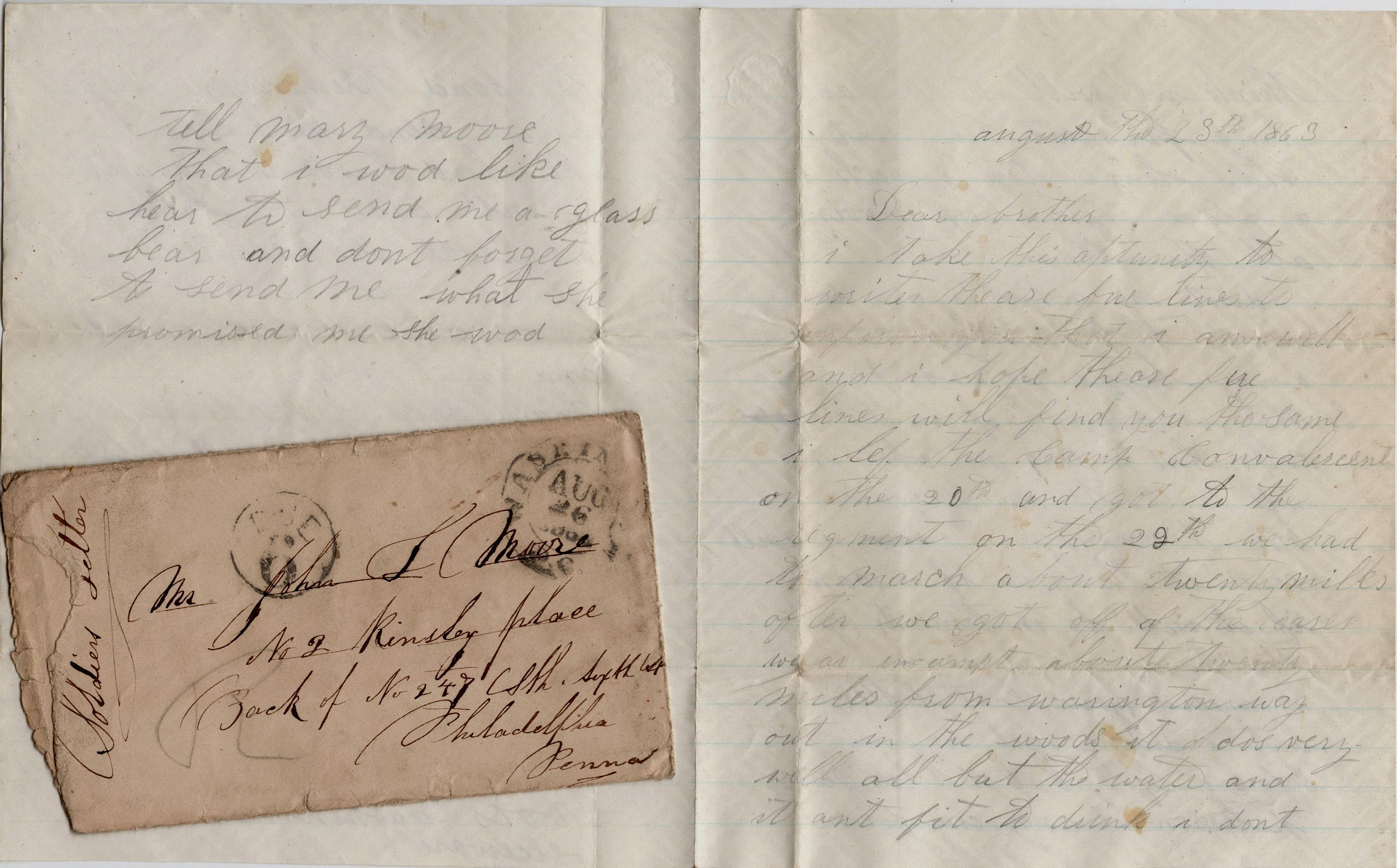
August 23, 1863
Dear brother,
I take this opportunity to write these few lines to inform you that I am well and I hope these few lines will find you the same.
I left the Camp Convalescent on the 20th and I got to the regiment on the 22nd. We had to march about twenty miles after we got off of the cars. We was encamped about twenty miles from Warrington, way out in the woods. It does very well—all but the water and it ain’t fit to drink. I don’t think we will stay here long for they don’t stay longer than a week in a place. They keep moving all the time.
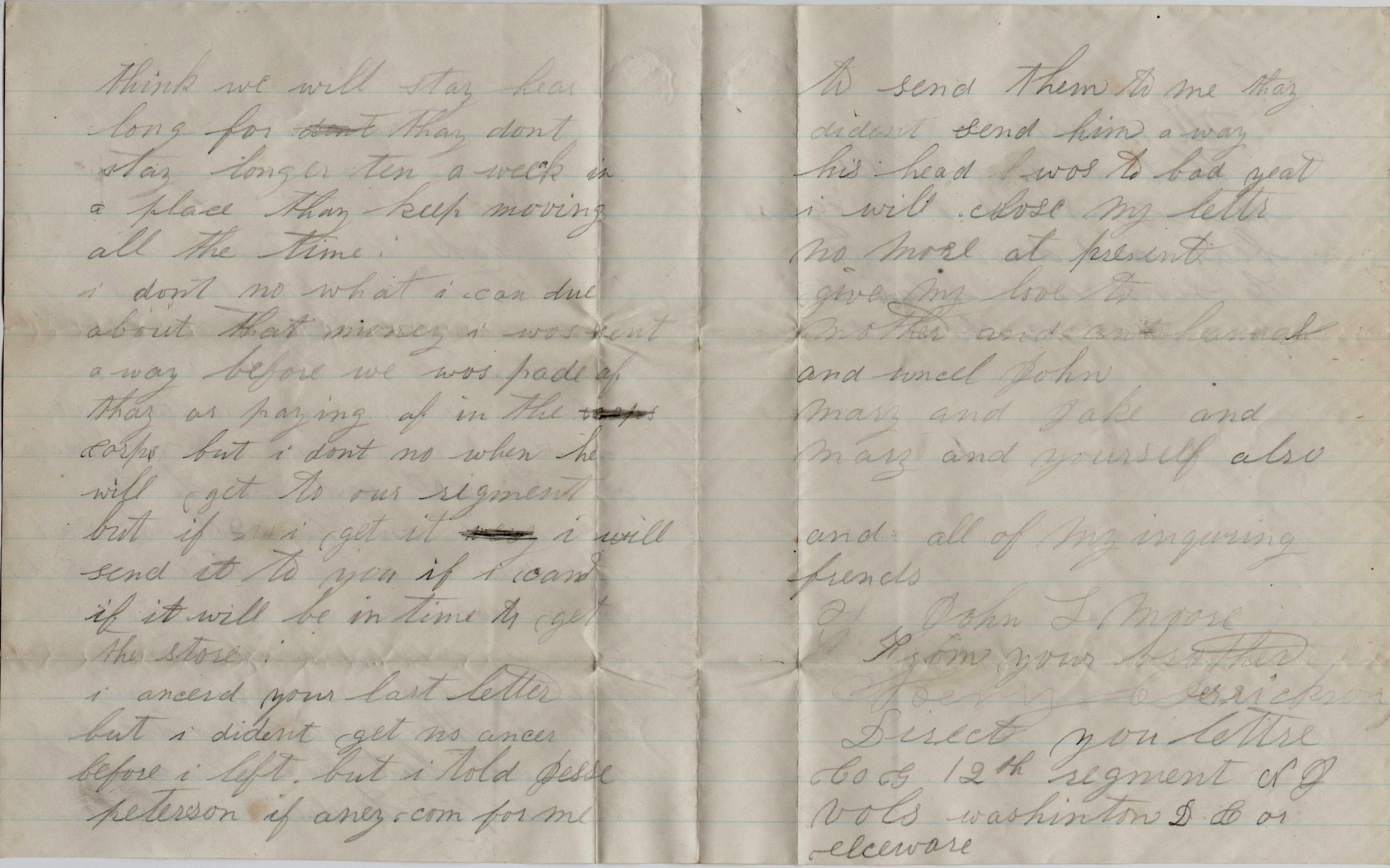
I don’t know what i can do about that money. I was sent away before we was paid off. They are paying off in the Corps but I don’t know when he will get to our regiment but if I can get it, I will send it to you if I can, if it will be in time to get the store.
I answered your last letter but I didn’t get no answer before I left. But I told Jesse Peterson if any come for me, to send them to me. They didn’t send him away—his head was too bad yet.
I will close my letter. No more at present. Give my love to Mother and Hanna and Uncle John, Mary and Jake and Mary and yourself also, and all of my inquiring friends. From your brother Henry C. Derrickson
To John L. Moore
Direct your letter to Co. G, 12th regiment, New Jersey Vols., Washington D. C. or elsewhere.
Tell Mary Moore that i would like her to send me a glass of beer, and don’t forget to send me what she promised me she would.
Letter 5
[Louden Mills near Rapidan River, Virginia]
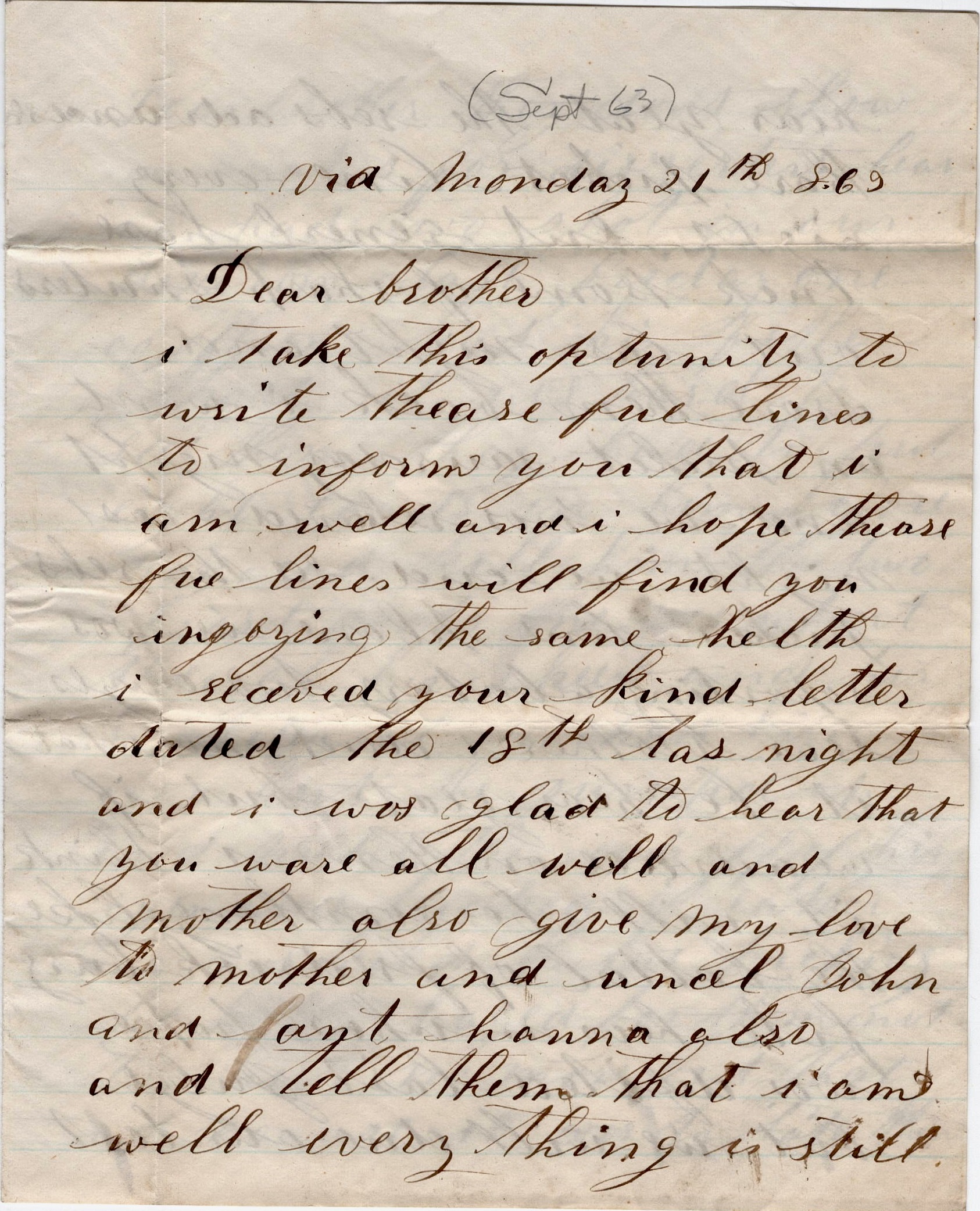
Monday 21st [September] 1863
Dear Brother,
I take this opportunity to write these few lines to inform you that i am well and I hope these few lines will find you enjoying the same health. I received your kind letter dated the 18th last night and I was glad to hear that you were all well and Mother and Uncle John and Aunt Hanna also. And tell them that I am well.
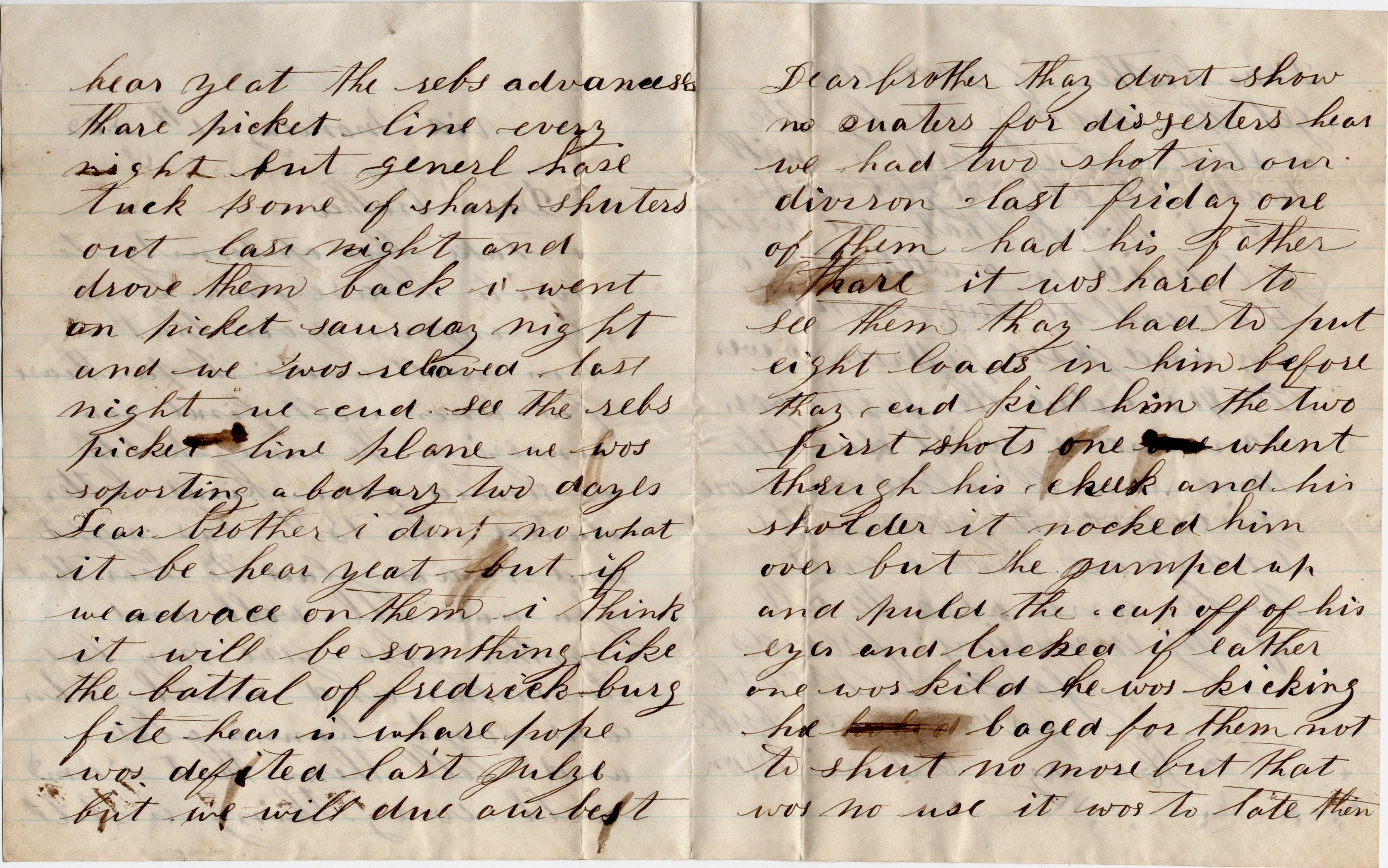
Everything is still here yet. The rebs advances their picket line every night but General Hays took some of [our] sharp shooters out last night and drove them back. I went on picket Saturday night and we was relieved last night. We could see the rebs’ picket line plain. We was supporting a battery [for] two days.
Dear brother, I don’t know what it [will] be here yet if we advance on them, I think it will be something like the Battle of Fredericksburg fight. Here is where Pope was defeated last July but we will do our best.
Dear brother, they don’t show no quarter for deserters here. We had two shot in our division last Friday. One of them had his father there. It was hard to see them. They had to put eight loads in him before they could kill him. The two first shots, one went through his cheek and his shoulder. It knocked him over but he jumped up and pulled the cap off of his eyes and looked it either one was killed. He was kicking. He begged for them not to shoot no more but that was no use. It was too late then. [unsigned] 1
1 The two deserters were Edward Elliott and George Layton of the 14th Connecticut. Edward was a 22 year-old draftee, and George was a 20 year-old substitute who sometimes used aliases such as George Joy or Charles Eastman. The 14th Connecticut was brigaded with the 12th New Jersey (2nd Brigade) of the 3rd Division in Hays’ 2nd Army Corps. A more graphic detail of the execution of these two men can be found in a letter written by Edward H. Wade of Co. F, 14th Connecticut, datelined from Louden Mills near Rapidan River, Virginia, on Sunday, September 20, 1863 (see Letter 3)—1863-64: Edward H. Wade to Ellen Nancy Wade.
Letter 6
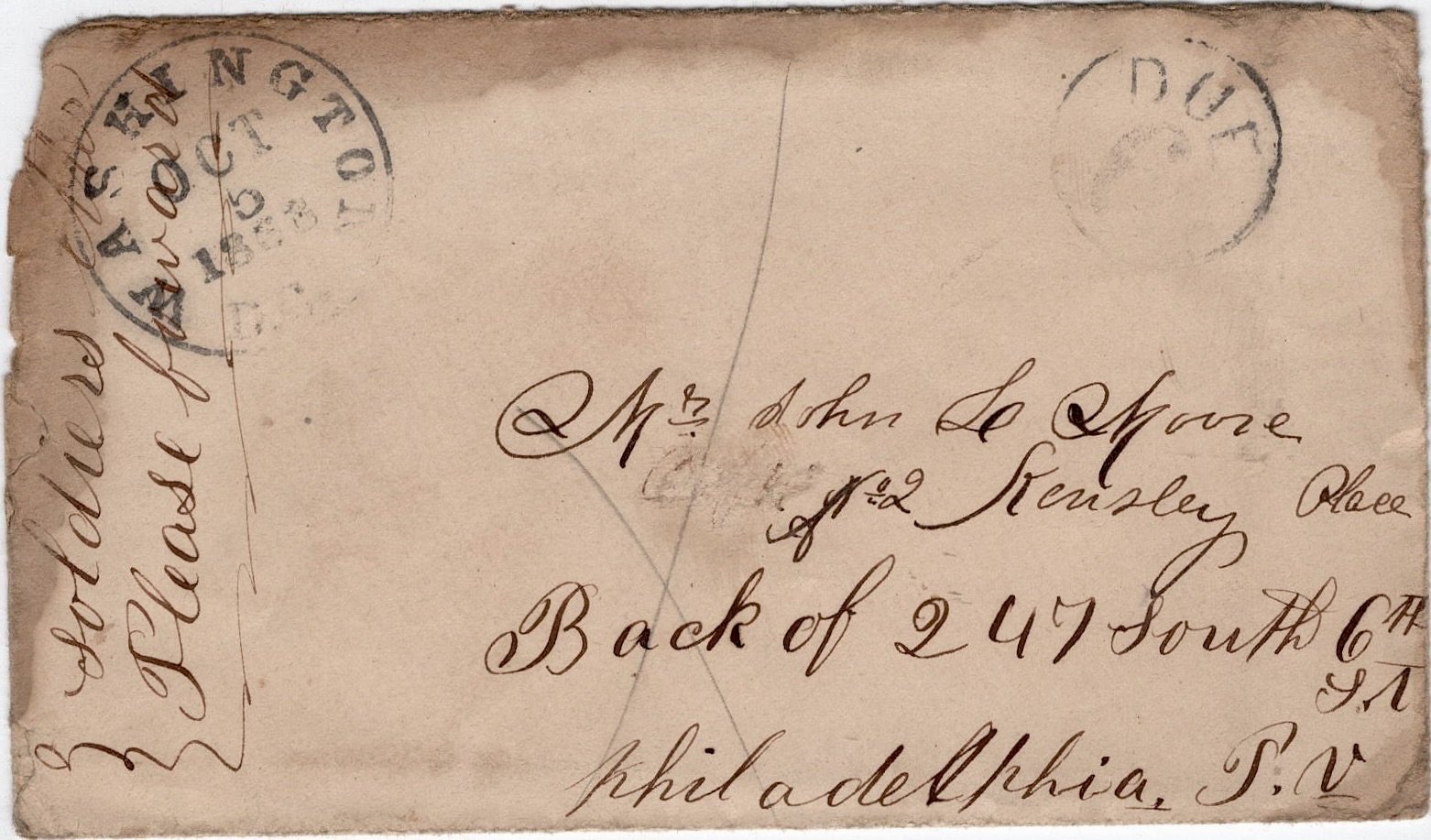
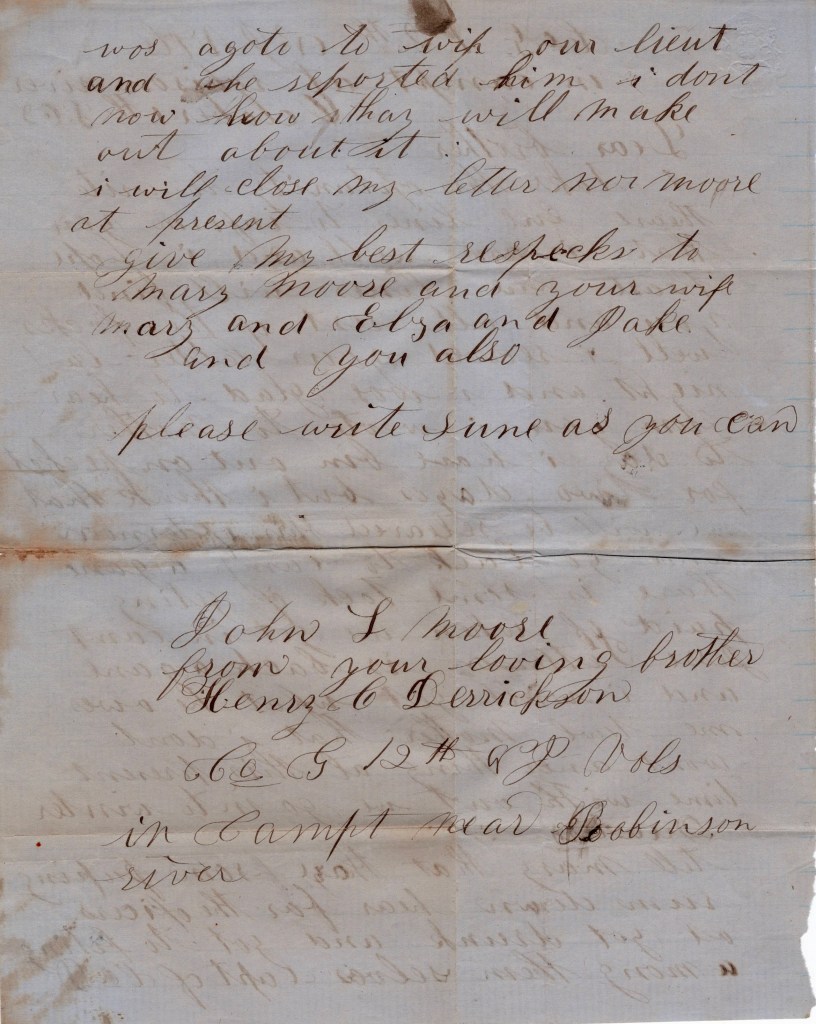
Co. G, 12th N. J. Vols., Encamped at Robison [Rapidan] River
October 1st 1863
Dear Brother,
I take this opportunity to write these few lines to inform you that I am well and I hope these few lines will find you and all the rest of the folks well. I received your letter last night and I was glad to hear from you. I wrote to Mother.
Today I have been out on picket for two days but I think that we will be relieved this afternoon and go back to camp again. There is some talk of getting paid off when we get in camp. Jesse Peterson is back again and I will get what he owes me. Tell Mother that I don’t want anything at this present time without we go into winter quarters.
Tell Mary that theres some jumping [?] rum down here for the officers all got drunk and got to fighting among themselves. The Captain of Co. D was a goin’ to whip our Lieutenant and he reported him. I don’t know how they will make out about it.
I will close my letter. No more at present. Give my best respects to Mary Moore and your wife Mary, and Eliza and Jake and you also. Please write soon as you can.
From your loving brother, — Henry C. Derrickson, Co. G, 12th N. J. Vols., in camp near Robinson [Rapidan] River
To John L. Moore
Letter 7
[Bull Run, Virginia]
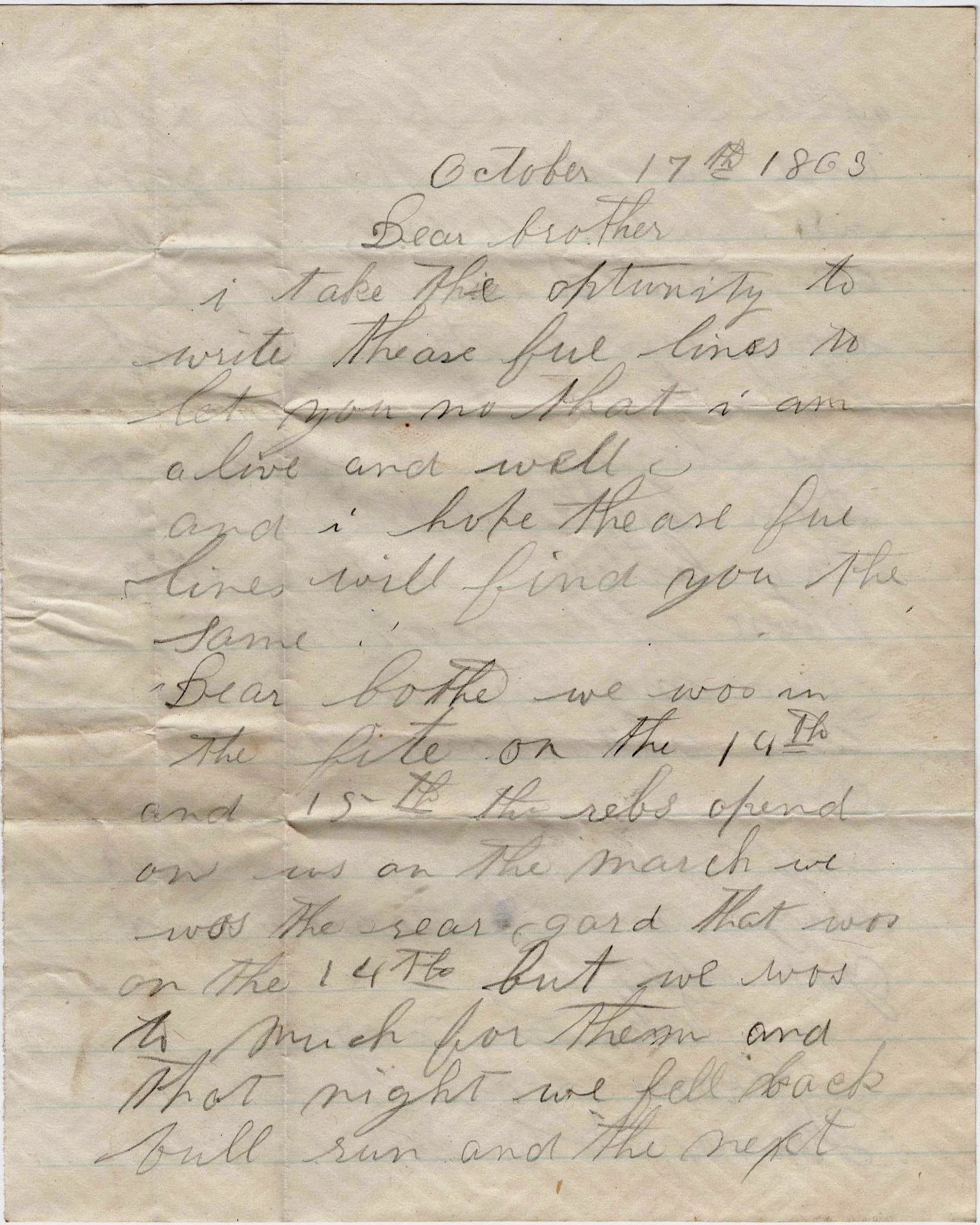
October 17th 1863
Dear brother,
I take the opportunity to write these few lines to let you know that I am alive and well and i hope these few lines will find you the same.
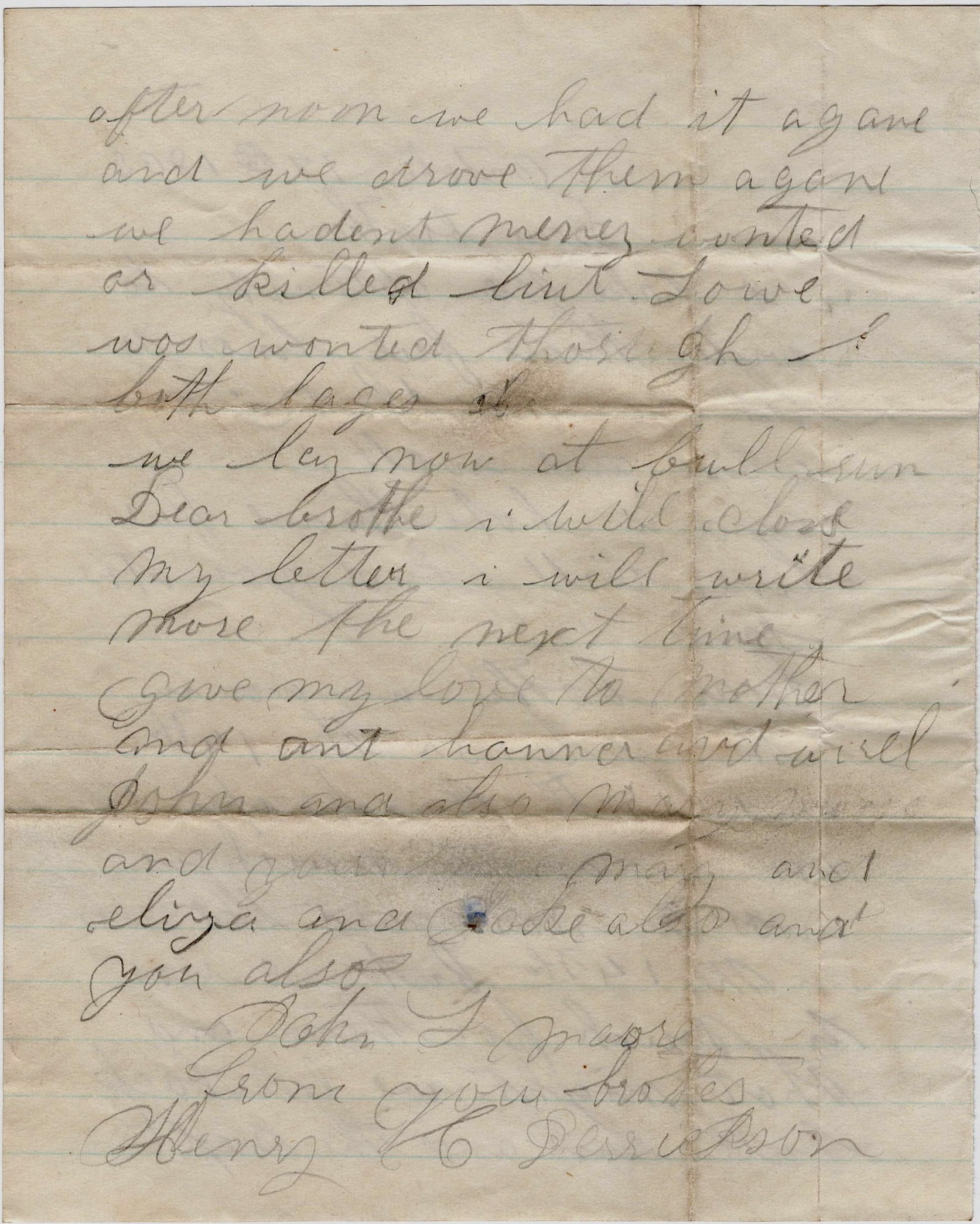
Dear brother, we were in the fight on the 14th and 15th [Bristoe Station]. The rebs opened on us on the march. We was the rear guard. That was on the 14th. But we was too much for them and that night we fell back to Bull Run and the next afternoon we had it again and we drove them again. We hadn’t many wounded or killed. Lieut. [James T.] Lowe was wounded through both legs. We lay now at Bull Run.
Dear brother, I will close my letter. I will write more the next time. Give my love to Mother and Aunt Hann and Uncle John and also Mary and your own Mary and Eliza and Jake and you also. From your brother, — Henry C. Derrickson
To John L. Moore
Letter 8
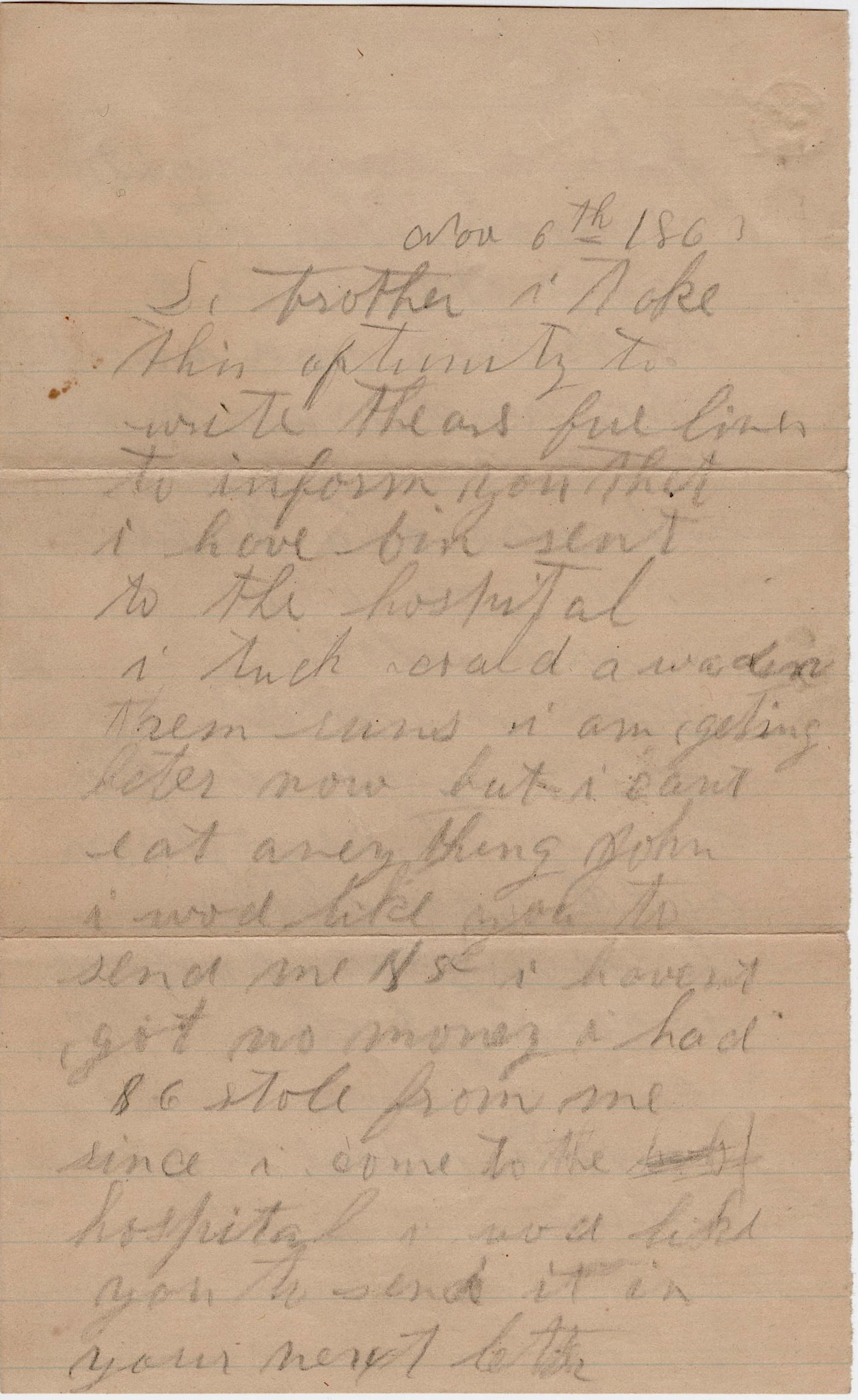
[Douglas Hospital, Washington D. C.]
November 6, 1863
Dear Brother,
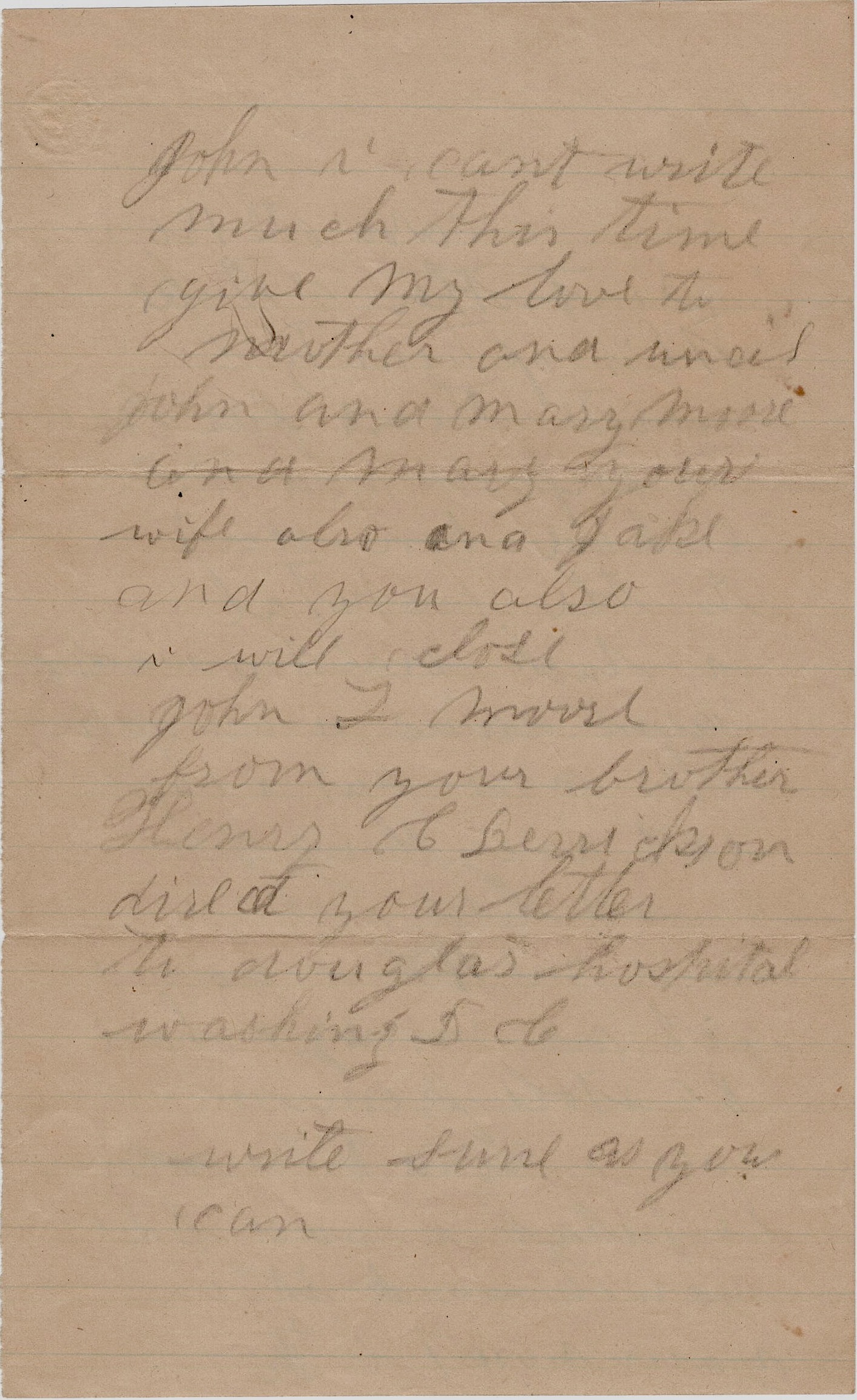
I take this opportunity to write these few lines to inform you that I have been sent to the hospital. I took a cold a wading those runs. I am getting better now but I can’t eat anything. John, I would like you to send me $5. I haven’t got no money. I had $6 stole from me since I come to the hospital. I would like you to send it in your next letter.
John, I can’t write much this time. Give my love to Mother and Uncle John and Mary Moore, and Mary, your wife also, and Jake and you also. I will close. From your brother, — Henry C. Derrickson
Direct your letter to Douglas Hospital, Washington D. C.
To John L. Moore
Write soon as you can.
Letter 9
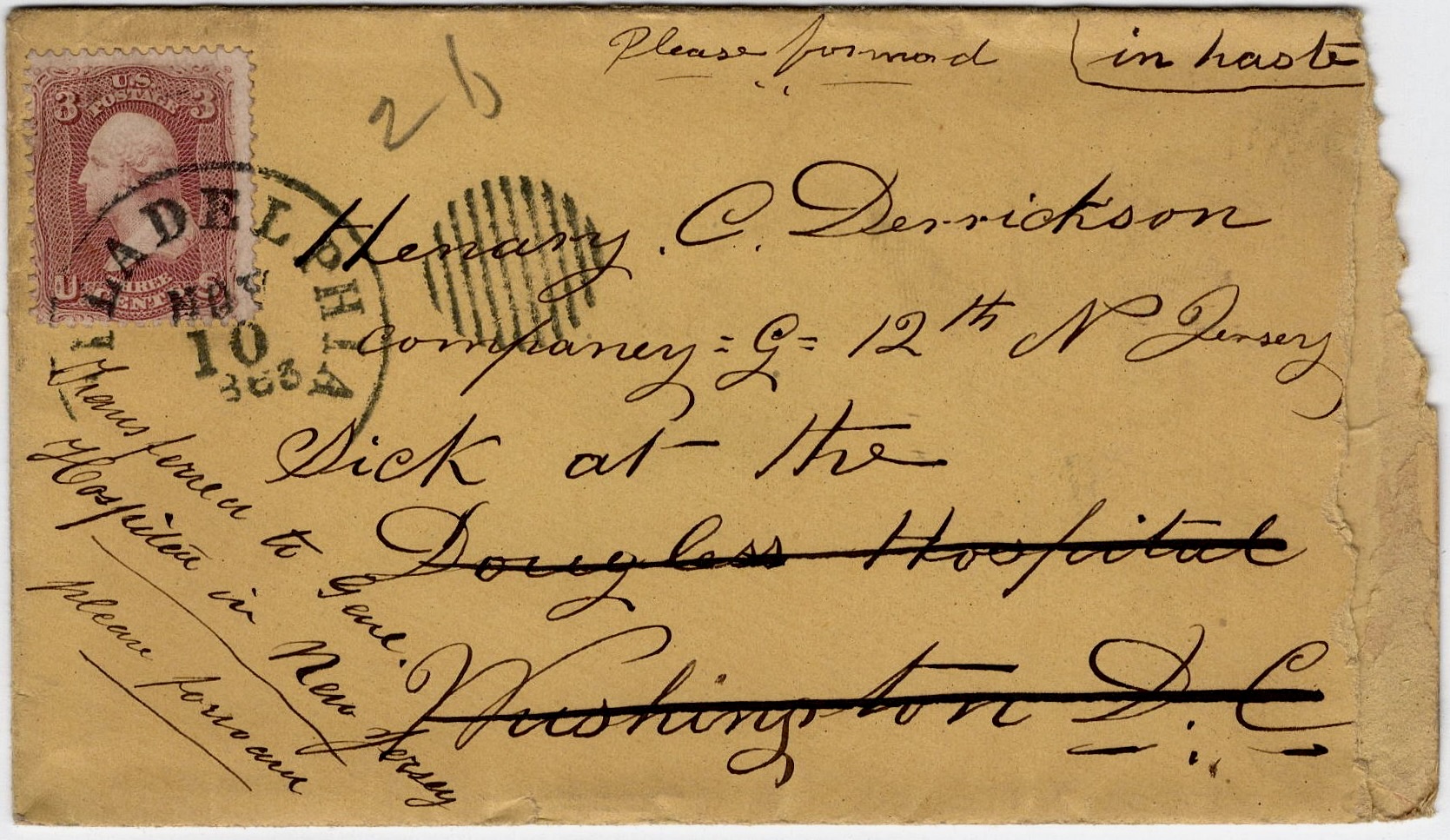
Philadelphia [Penn.]
Monday, November 9th 1863
My dear brother,
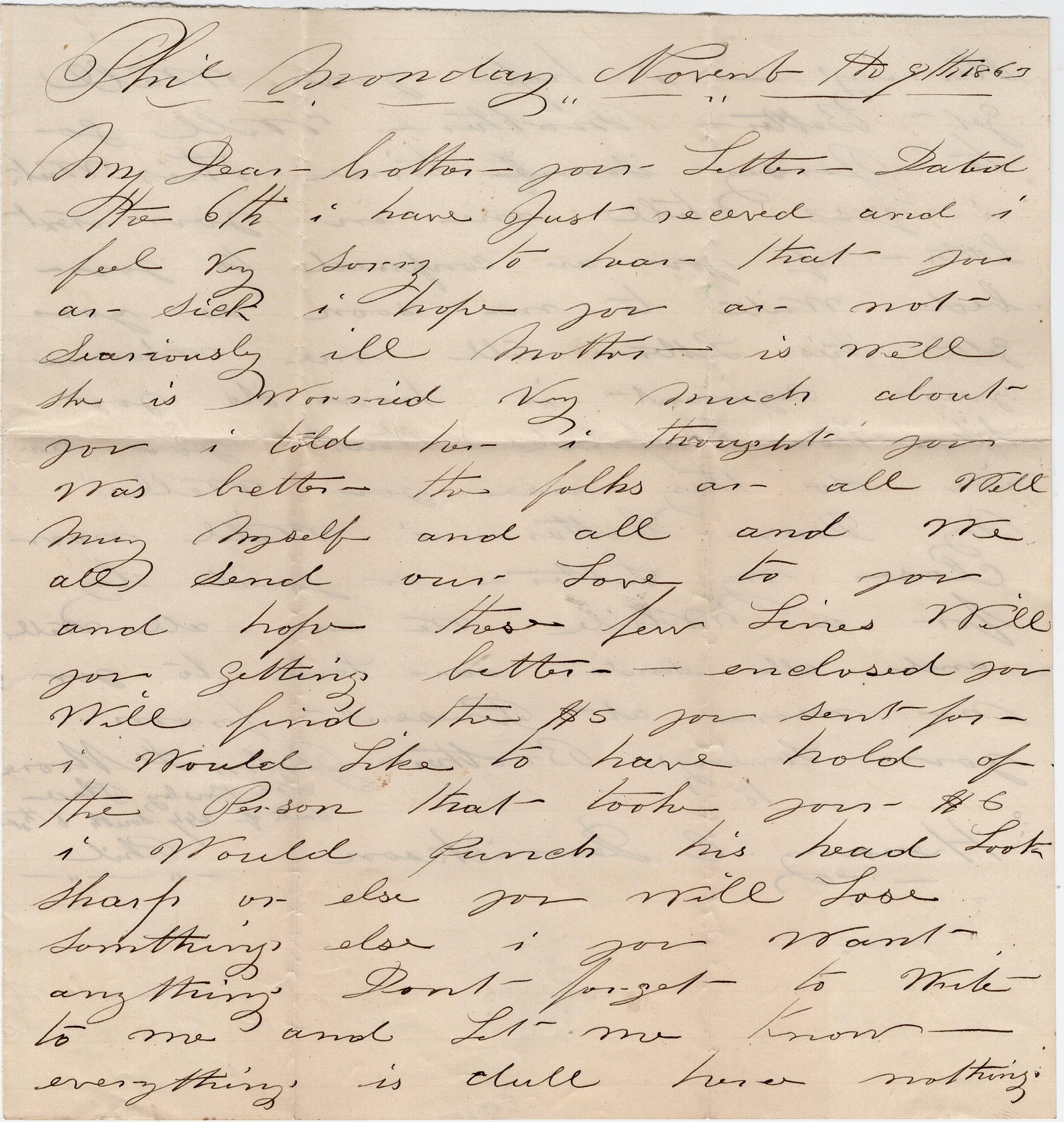
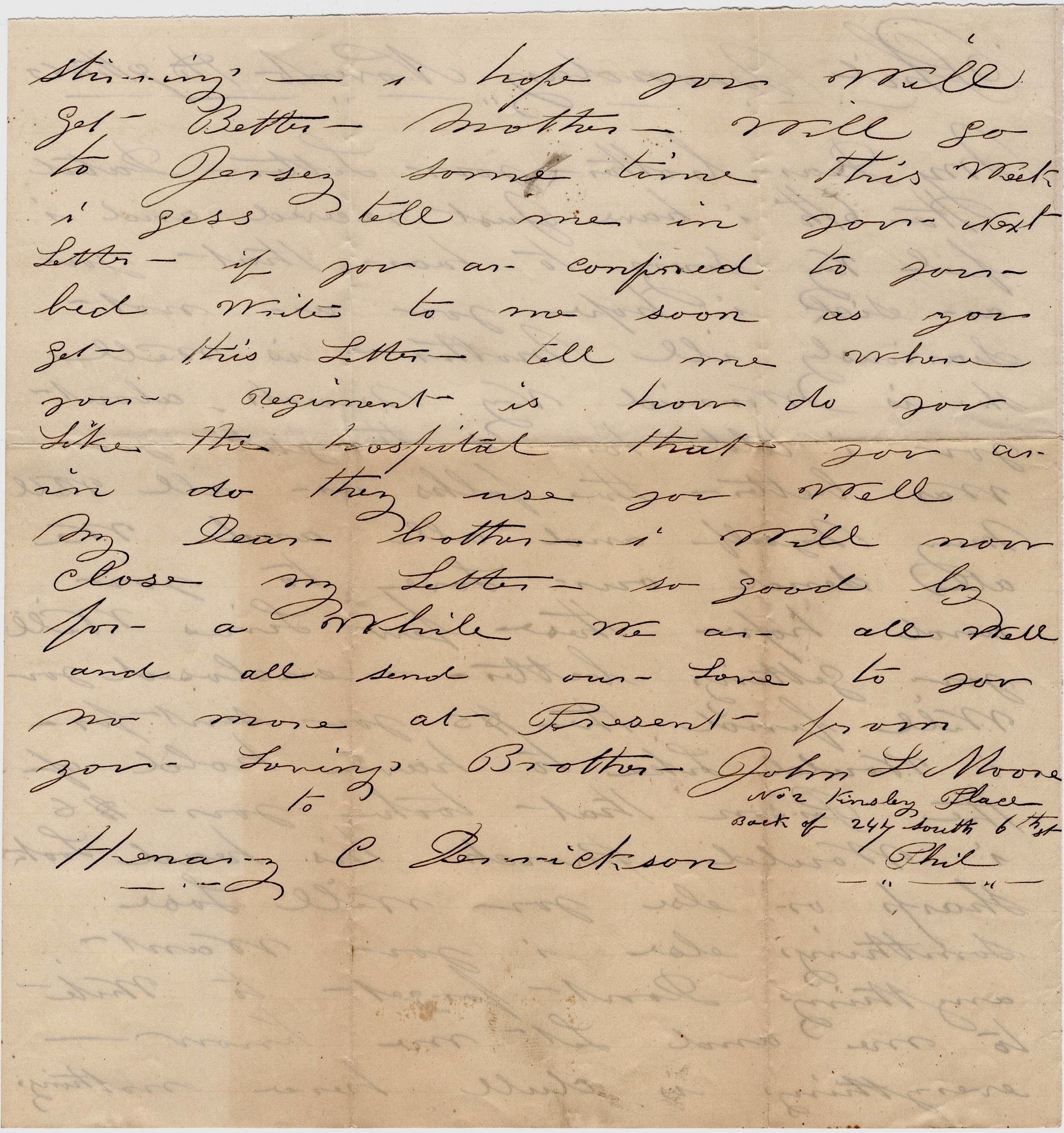
Your letter dated the 6th I have just received and I feel very sorry to hear that you are sick. I hope you are not seriously ill. Mother is well [but] she is worried very much about you. I told her I thought you was better. The folks are all well, Mary, myself, and all and we all send our love to you and hope these few lines will [find] you getting better.
Enclosed you will find the $5 you sent for. I would like to have hold of the person that took your $6. I would punch his head. Look sharp or else you will lose something else. If you want anything, don’t forget to write to me and let me know.
Everything is dull here. Nothing stirring. I hope you will get better. Mother will go to Jersey sometime this week, I guess. Tell me in your next letter if you are confined to your bed. Write to me soon as you get this letter. Tell me where your regiment is now. Do you likethe hospital that you are in? Do they use you well?
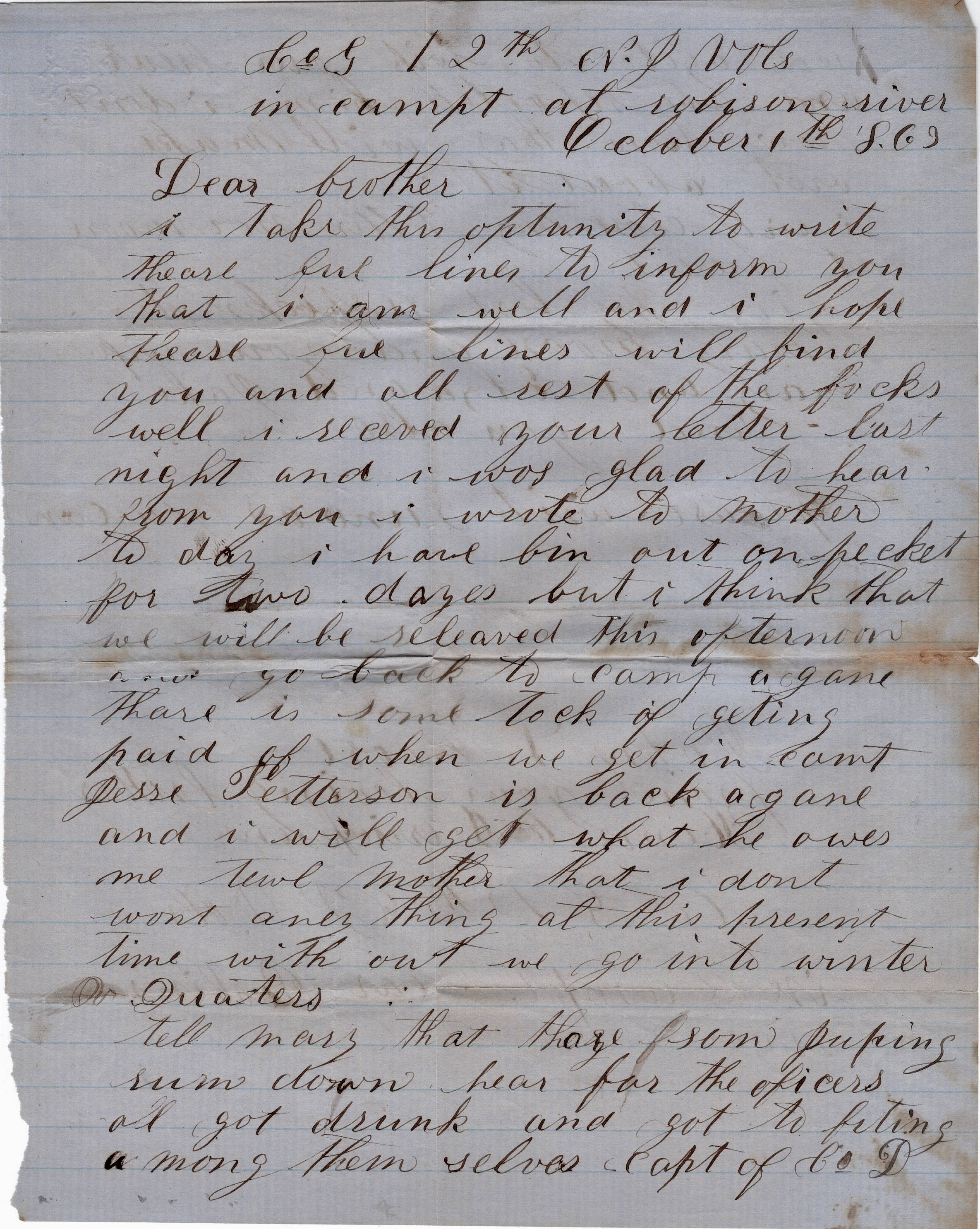
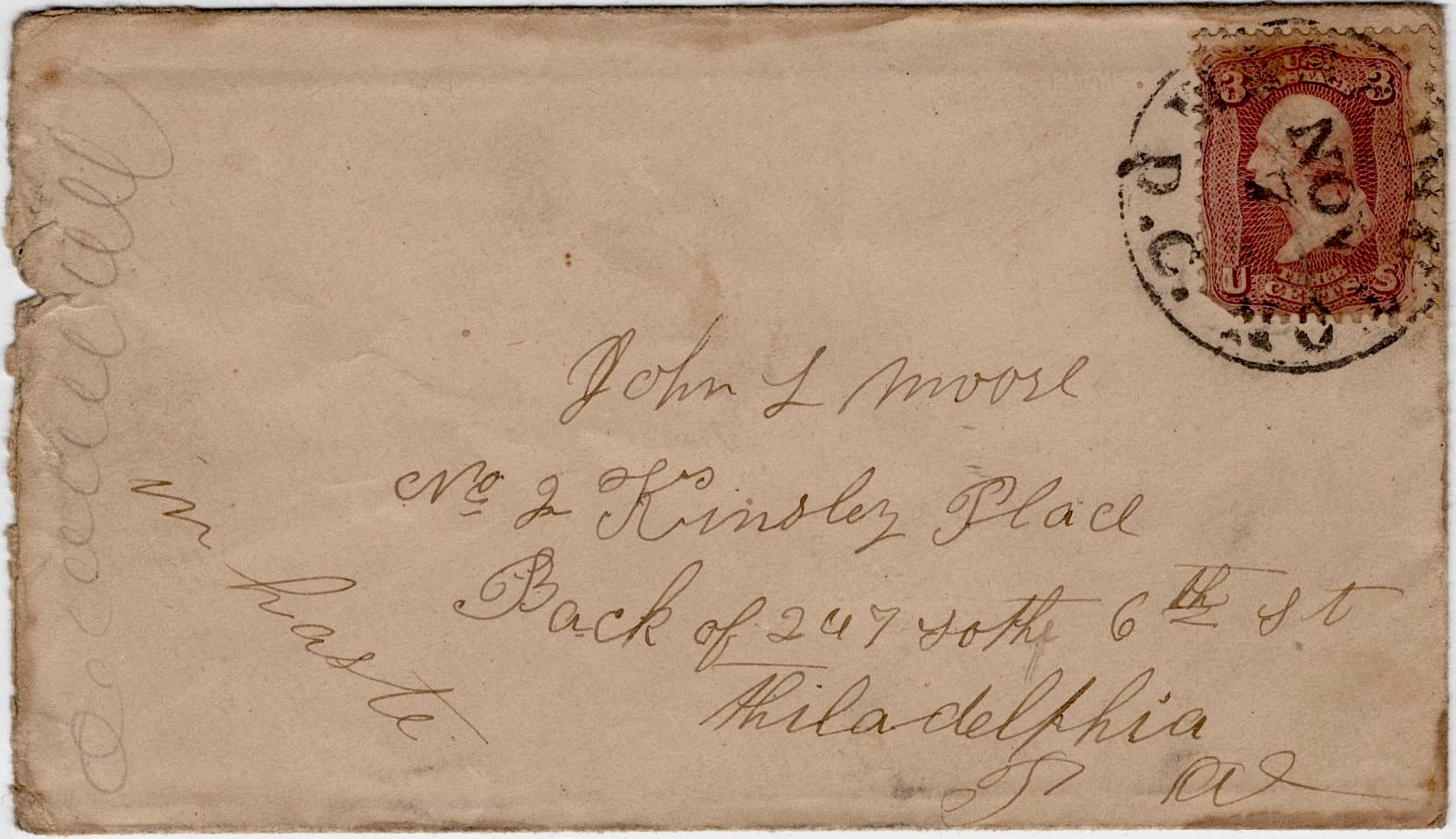
My dear brother, I will now close my letter so goodbye for a while. We are all well and all send our love to you. No more at present. From your loving brother, — John L. Moore, No. 2, Kinsley Place, back of 247 South 6th St., Philadelphia
To Henry C. Derrickson
Letter 10
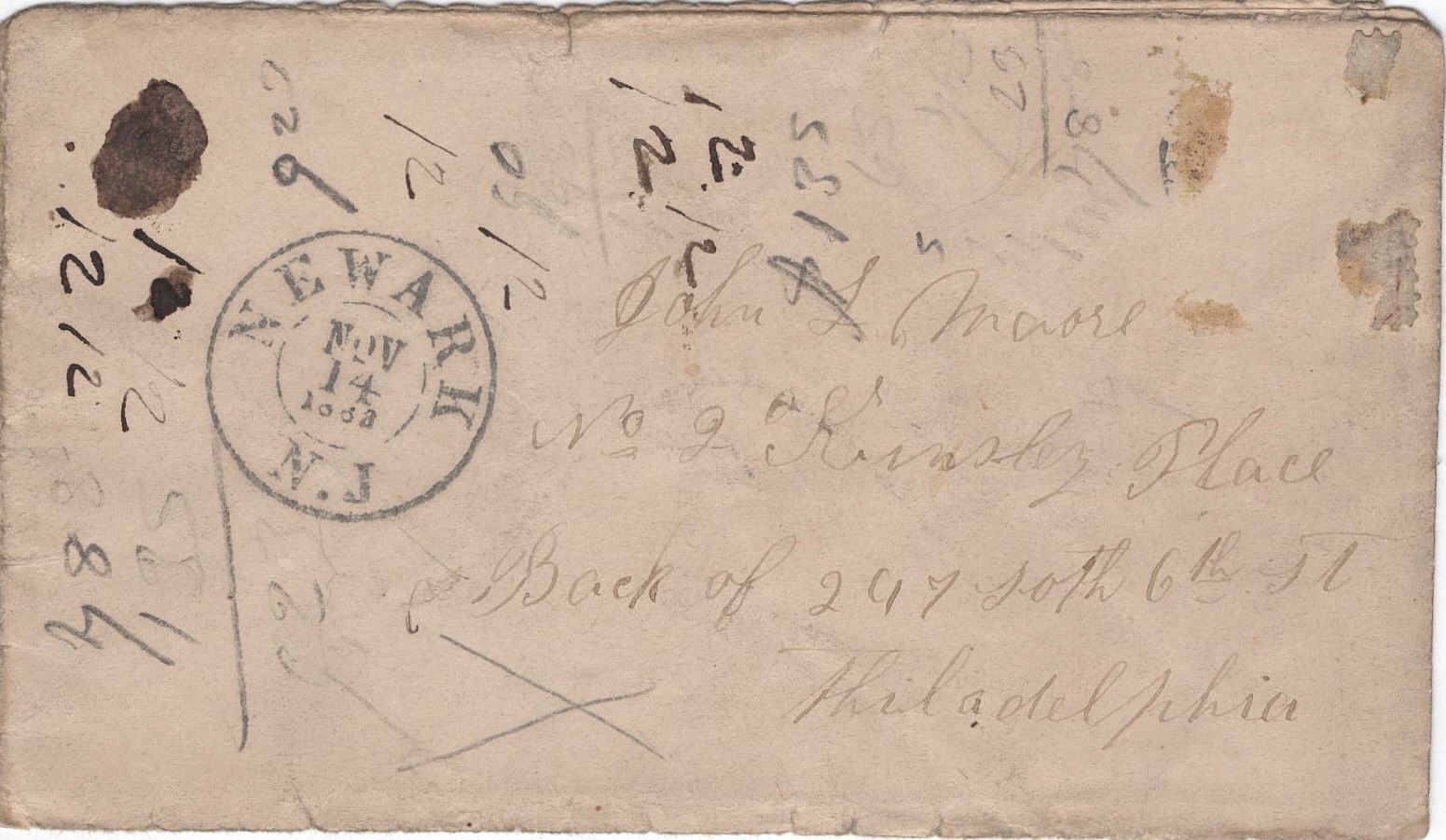
[Market Street Hospital, Newark, New Jersey]
November 12, 1863
Dear Brother.
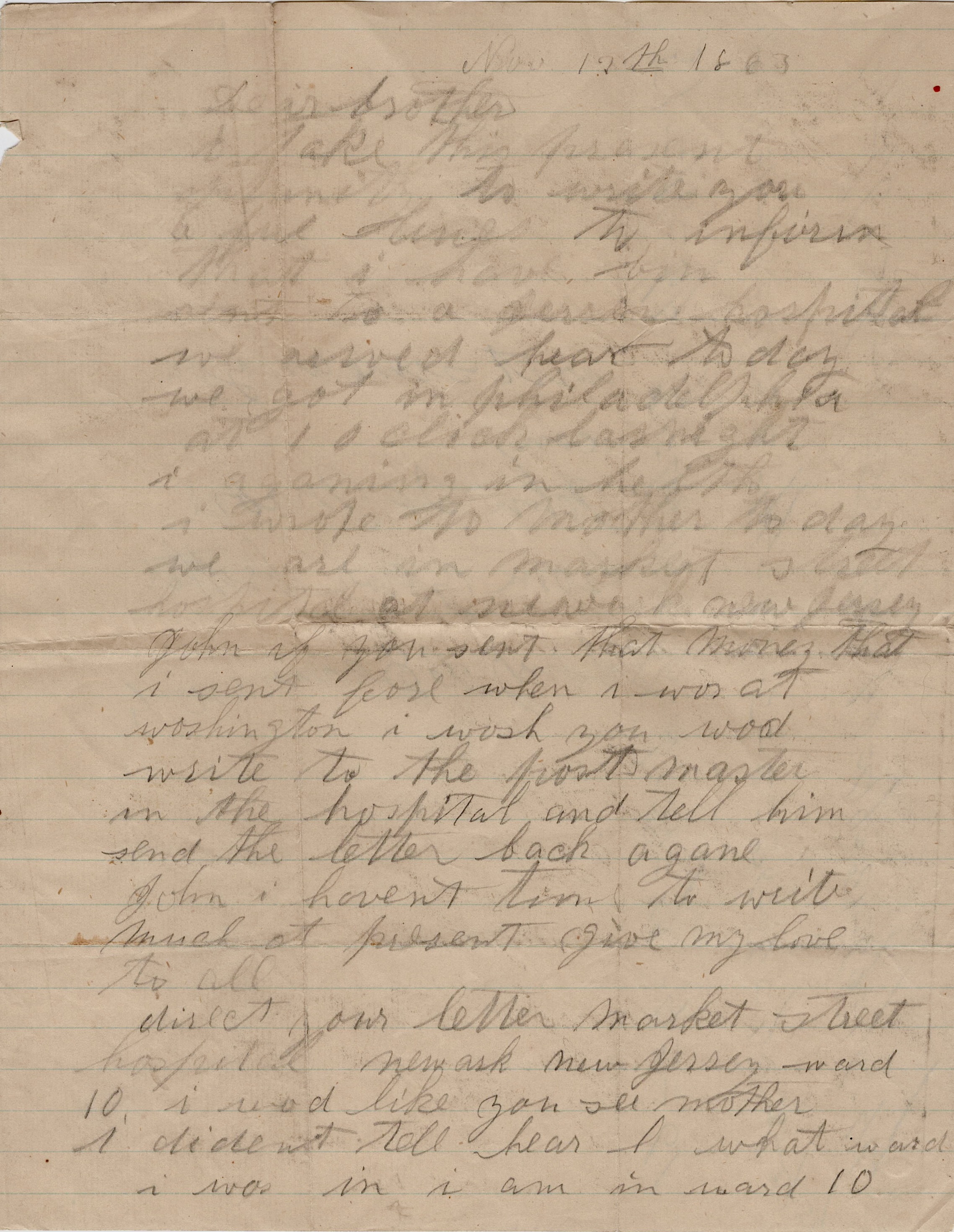
I take this present opportunity to write you a few lines to inform you that I have been sent to a Jersey hospital. We arrived here today. We got in Philadelphia at 1 o’clock last night. I’m gaining in health. I wrote to Mother today. We are in Market Street Hospital at Newark, New Jersey.
John, if you sent that money that I sent for when I was at Washington, I wish you would write to the post master in the hospital and tell him to send the letter back again. John, I haven’t time to write much at present. Give my love to all.
Direct your letter to Market Street Hospital, Newark, New Jersey, Ward 10. I would like you to see Mother. I didn’t tell her what Ward I was in. Write soon as you can. From your brother, — Henry C. Derrickson
To John L. Moore
Letter 11
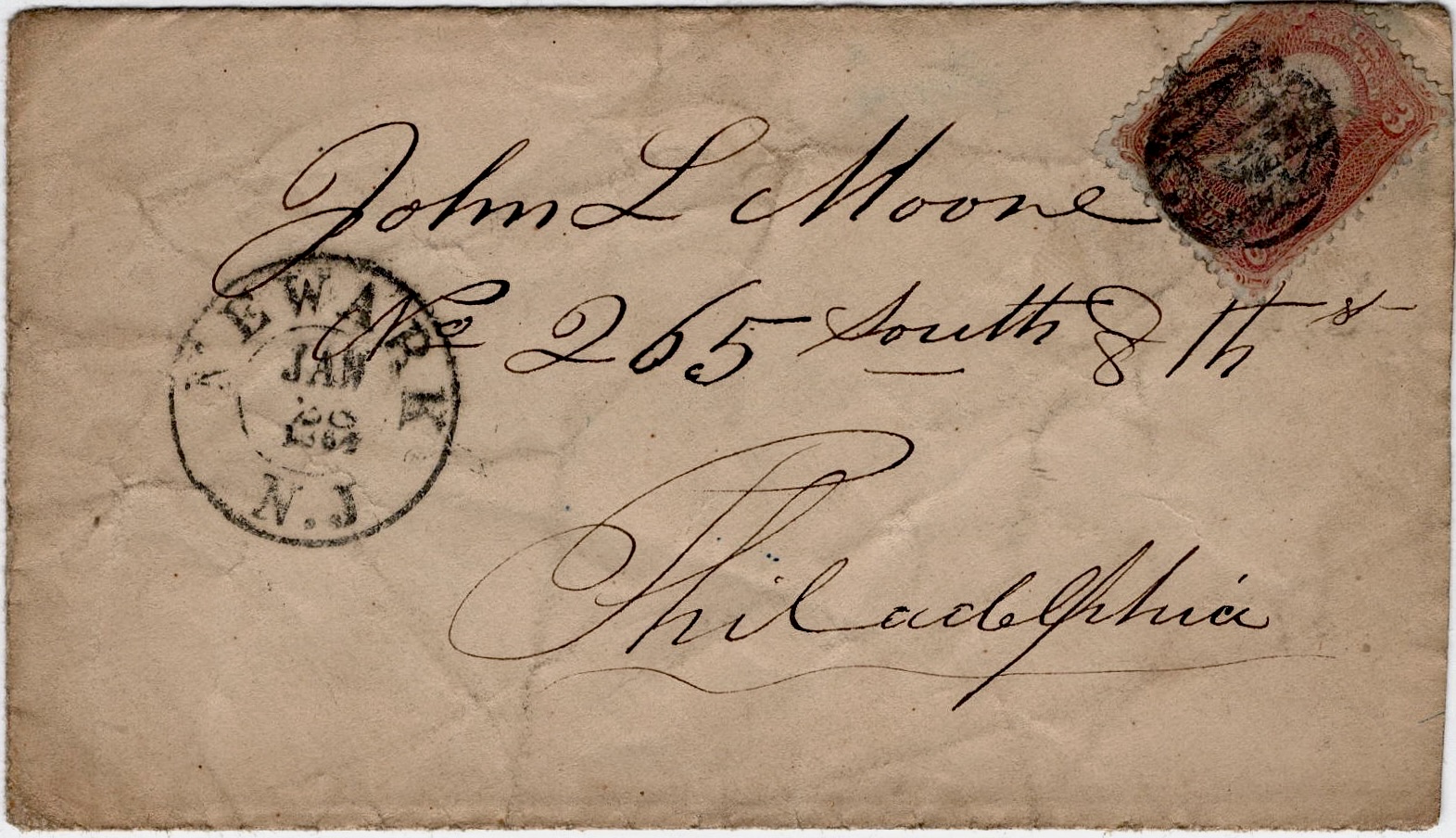
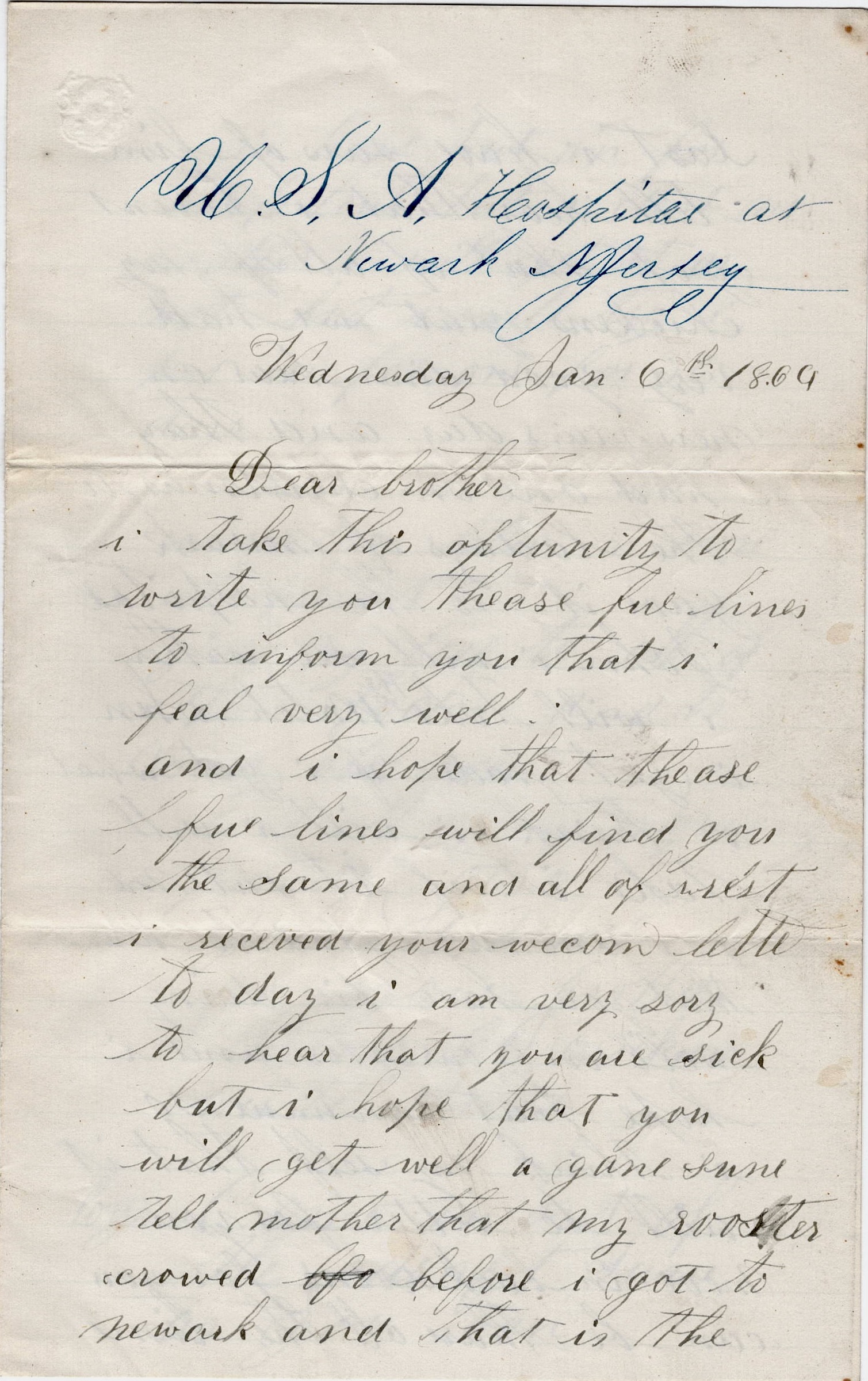
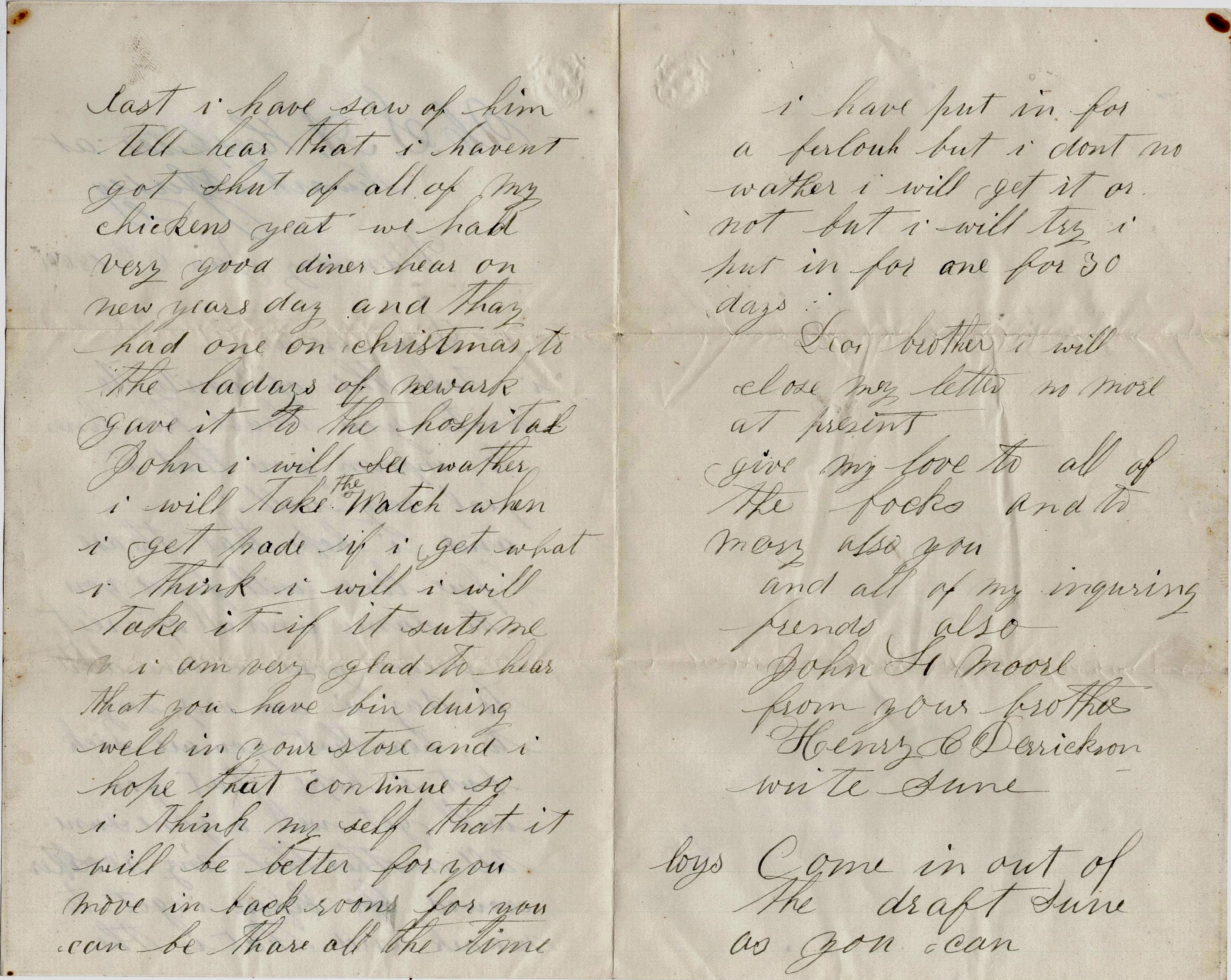
U. S. A. Hospital at Newark, New Jersey
Wednesday, January 6, 1864
Dear Brother,
I take this opportunity to write you these few lines to inform you that I feel very well and I hope that these few lines will find you the same and all of the rest. I received your welcome letter today. I am very sorry to hear that you are sick but I hope that you will get well again soon.
Tell Mother that my rooster crowed before I got to Newark and that is the last I have saw of him. Tell her that I haven’t got shut of all of my chickens yet.
We had a very good dinner here on New Years Day and they had one on Christmas too. The ladies of Newark gave it to the hospital.
John, I will see Mother. I will take the watch when I get paid if I get what I think I will. I will take it if it suits me. I am very glad to hear that you have been doing well in your store and I hope that continues so. I think myself that it will be better for you to move in back soon for you can be there all the time.
I have put in for a furlough but I don’t know whether I will get it or not but I will try. I put in for one for 30 days.
Dear brother, I will close my letter. No more at present. Give my love to all of the folks and to Mary. Also you and all of my enquiring friends also.
From your brother, — Henry C. Derrickson
To John L. Moore
Come in out of the draft soon as you can.
Letter 12
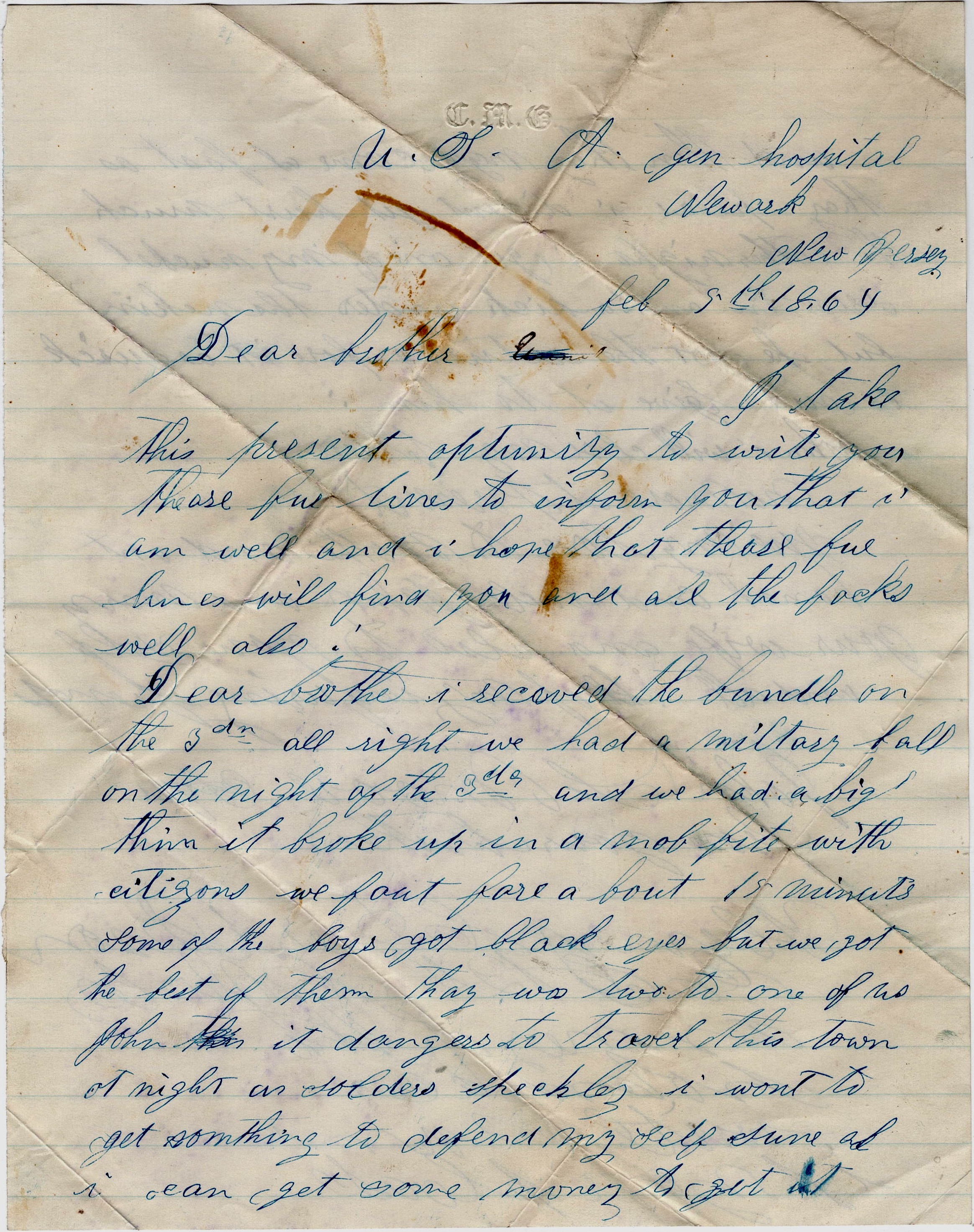
U. S. A. General Hospital, Newark, New Jersey
February 5, 1864
Dear brother,
I take this present opportunity to write you these few lines to inform you that I am well and I hope that these few lines will find you and all the folks well also.
Dear brother, I received the bundle on the 3rd all right. We had a military ball on the night of the 3rd and we had a big thing. It broke up in a mob fight with citizens. We fought for about 15 minutes. Some of the boys got black eyes but we got the best of them. They was two to one of us.
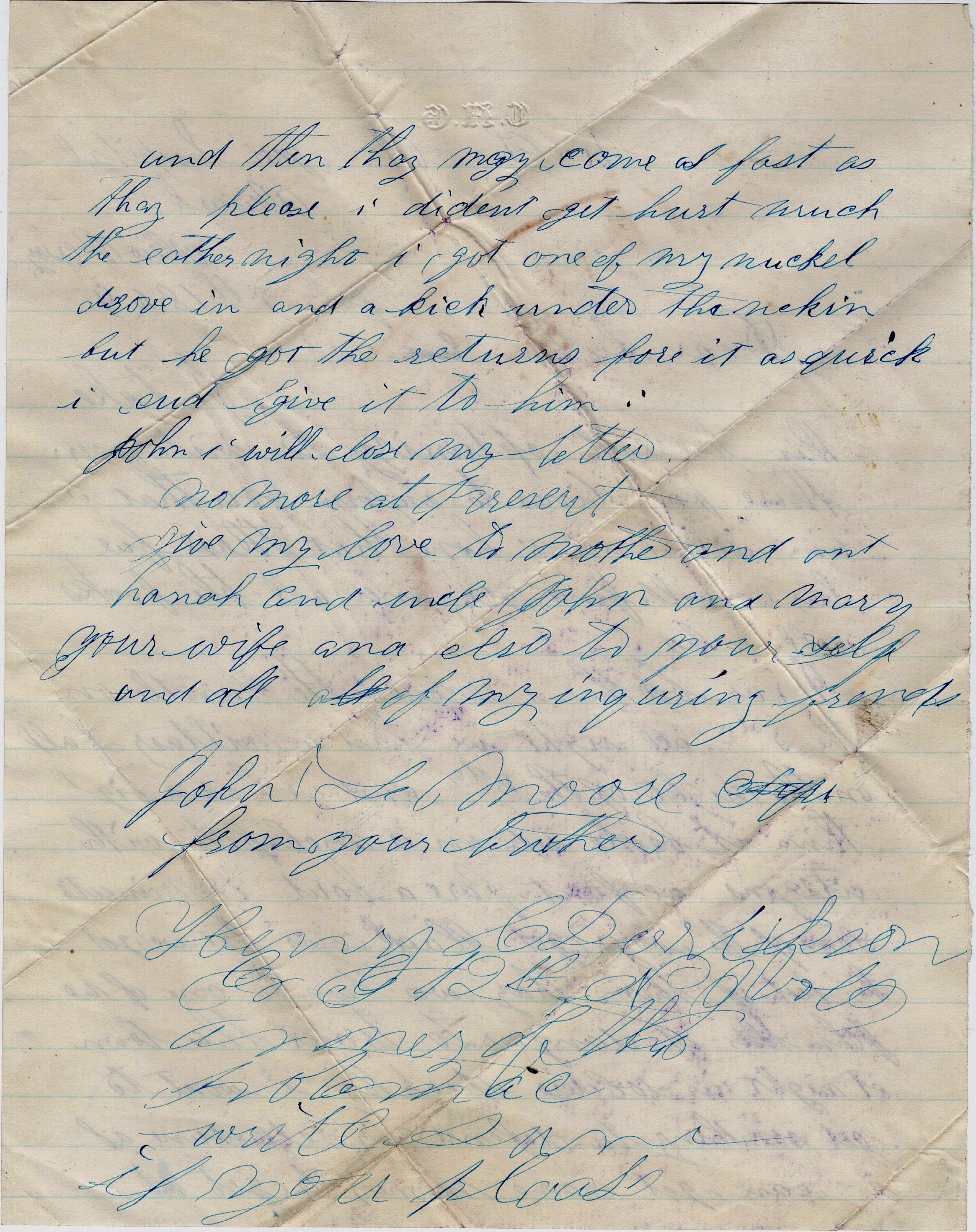
John, it is dangerous to travel this town at night as soldiers specially. I want to get something to defend myself soon as I can get some money to get it and then they may come as fast as they please. I didn’t get hurt much the other night. I got one of my knuckles drove in and a kick under the neck but he got the returns for it as quick [as I could] give it to him. 1
John, I will close my letter. No more at present. Give my love to Mother and Aunt Hanna and Uncle John, and Mary your wife also, and also to yourself and all of my enquiring friends.
From your brother, — Henry C. Derrickson
To John L. Moore. Write soon if you please.
1 Newark, New Jersey was home to strong anti-war sentiment, led locally by newspapers like the Newark Daily Journal, edited by Edward N. Fuller. Peace Democrats frequently criticized the Lincoln administration. Street-level brawls increased early in 1864 when veteran regiments returned home on furloughs.
Letter 13
Newark, New Jersey
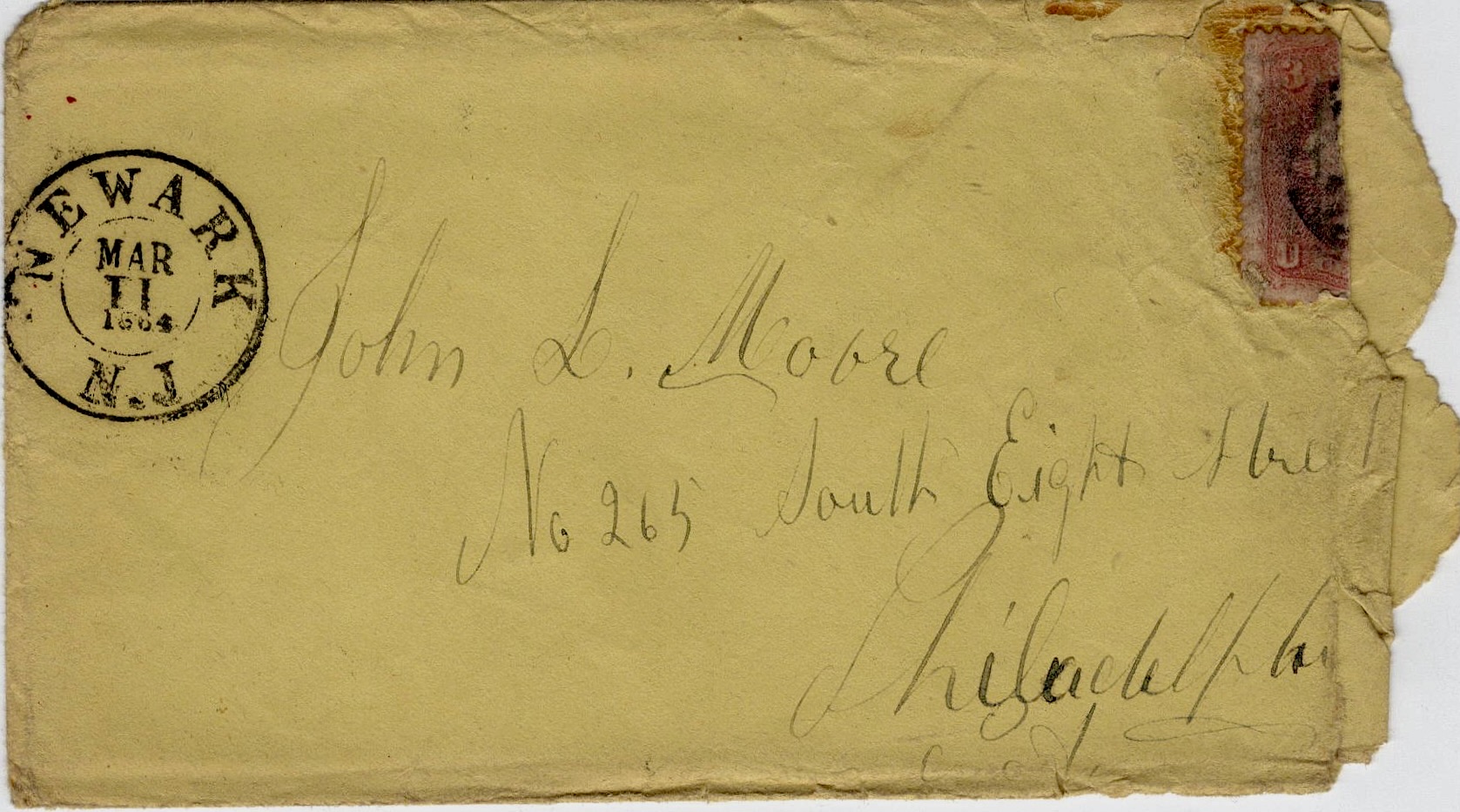
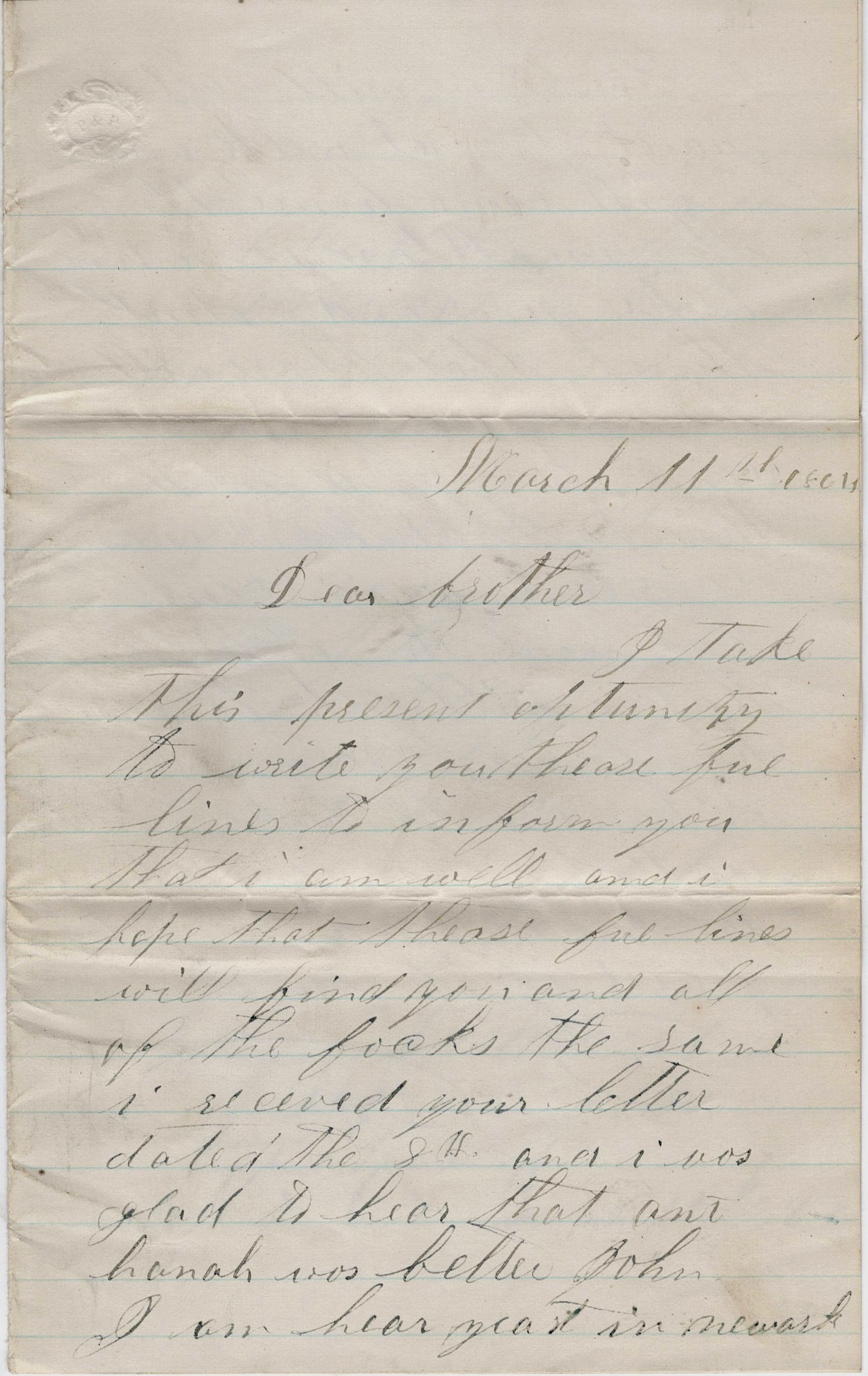
March 11, 1864
Dear brother,
I take this present opportunity to write you these few lines to inform you that I am well and I hope that these few lines will find you and all of the folks the same. I received your letter dated the 8th and I was glad to hear that Aunt Hanna was better.
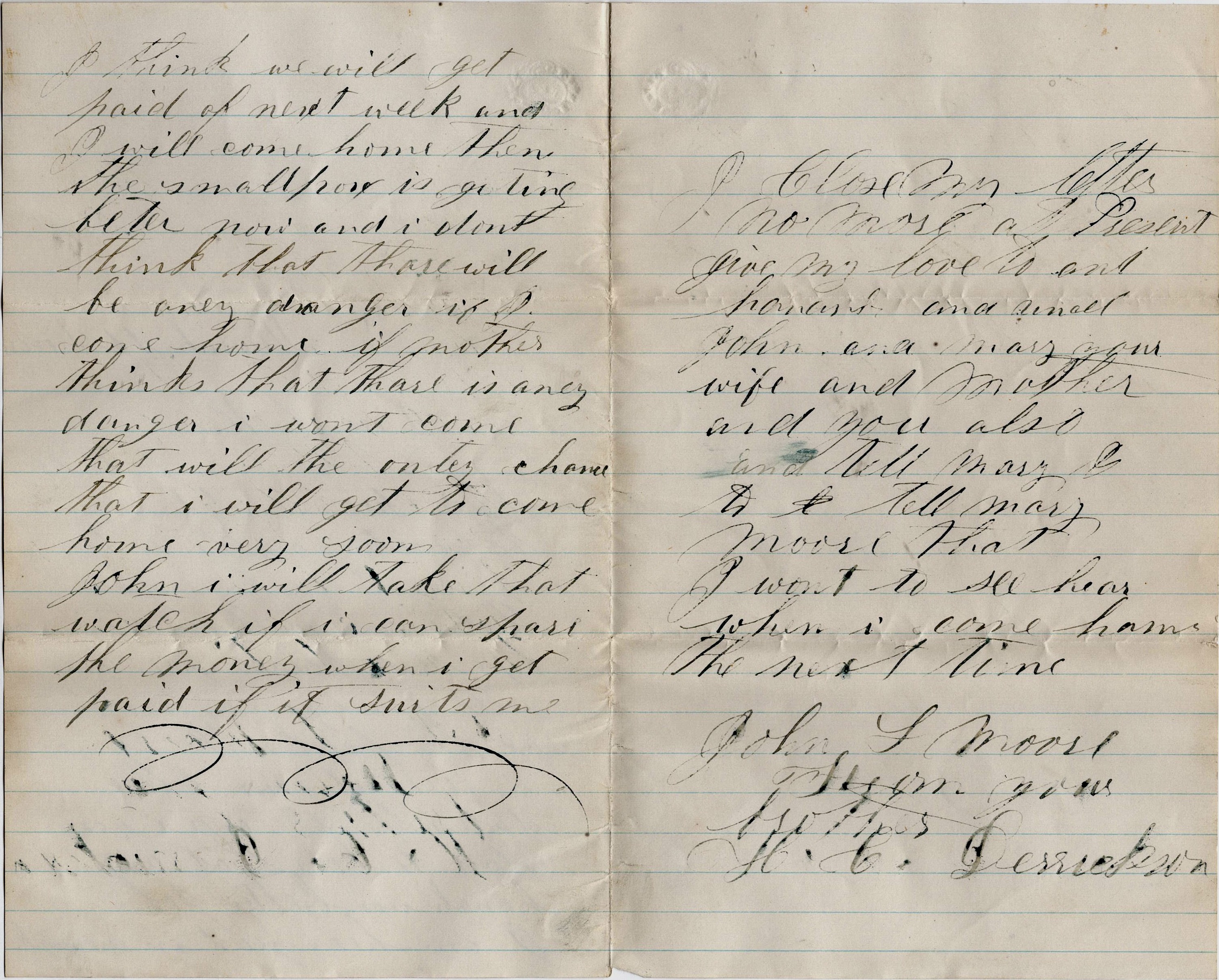
John, I am here yet in Newark. I think we will get paid off next week and I will come home then. The small pox is getting better now and I don’t think there will be any danger if I come home. If Mother thinks that there is any danger, I won’t come. That will be the only chance that I will get to come home very soon.
John, I will take that watch if you can spare the money when I get paid if it suits me.
I close my letter. No more at present. Give my love to Aunt Hanna and Uncle John and Mary your wife, and Mother and you also. And tell Mary Moore that I want to see her when I come home the next time.
From your brother, — H. C. Derrickson
To John L. Moore
Letter 14
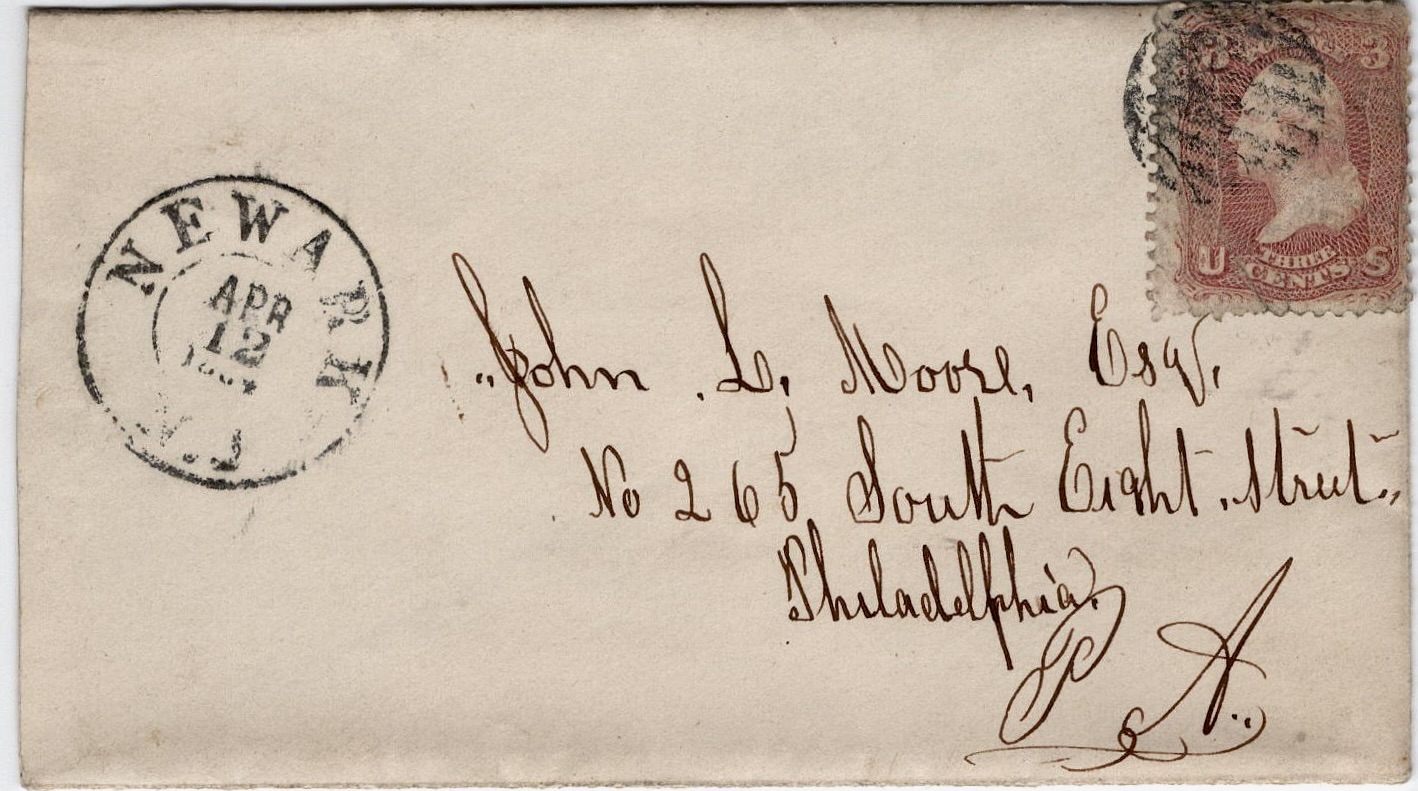
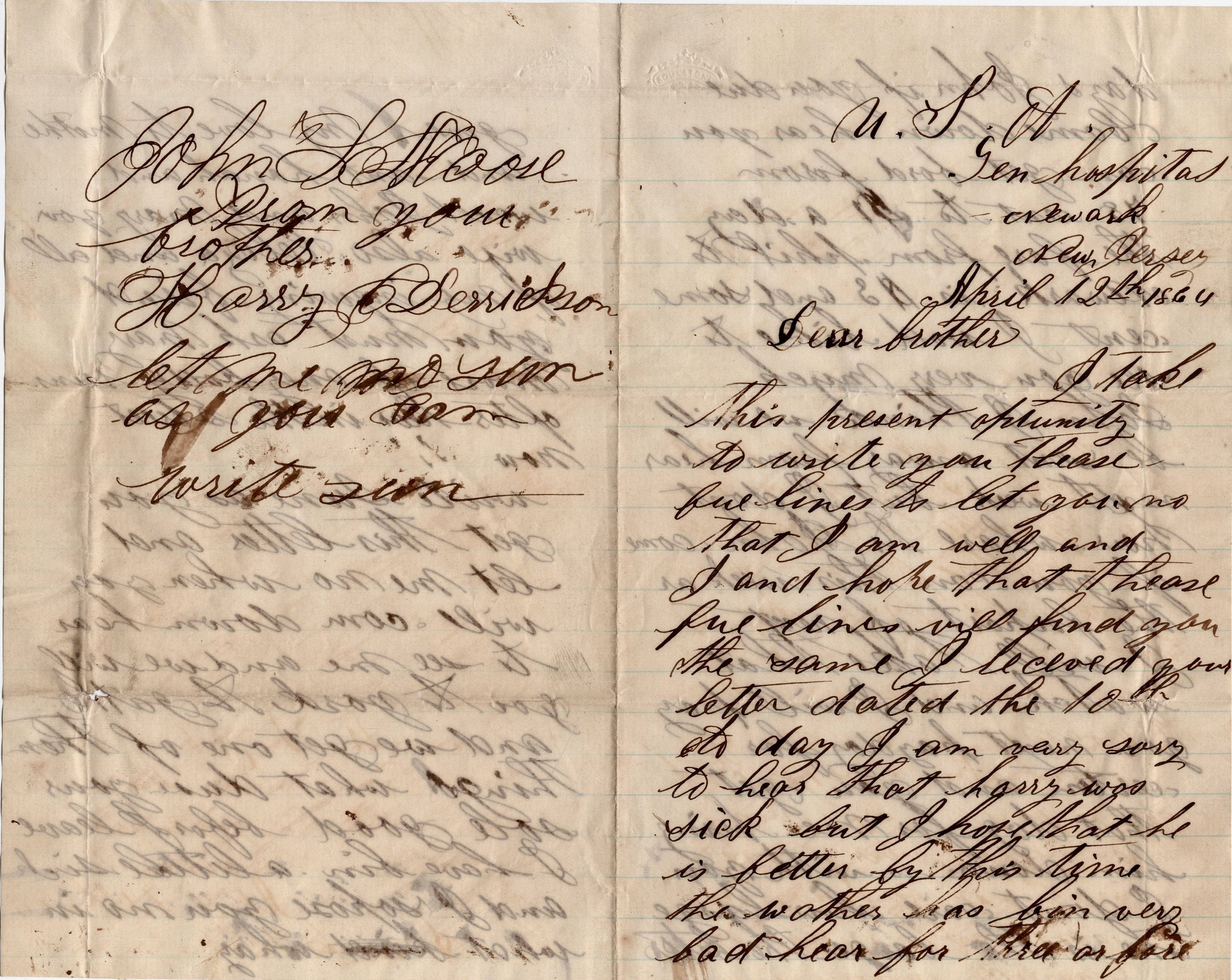
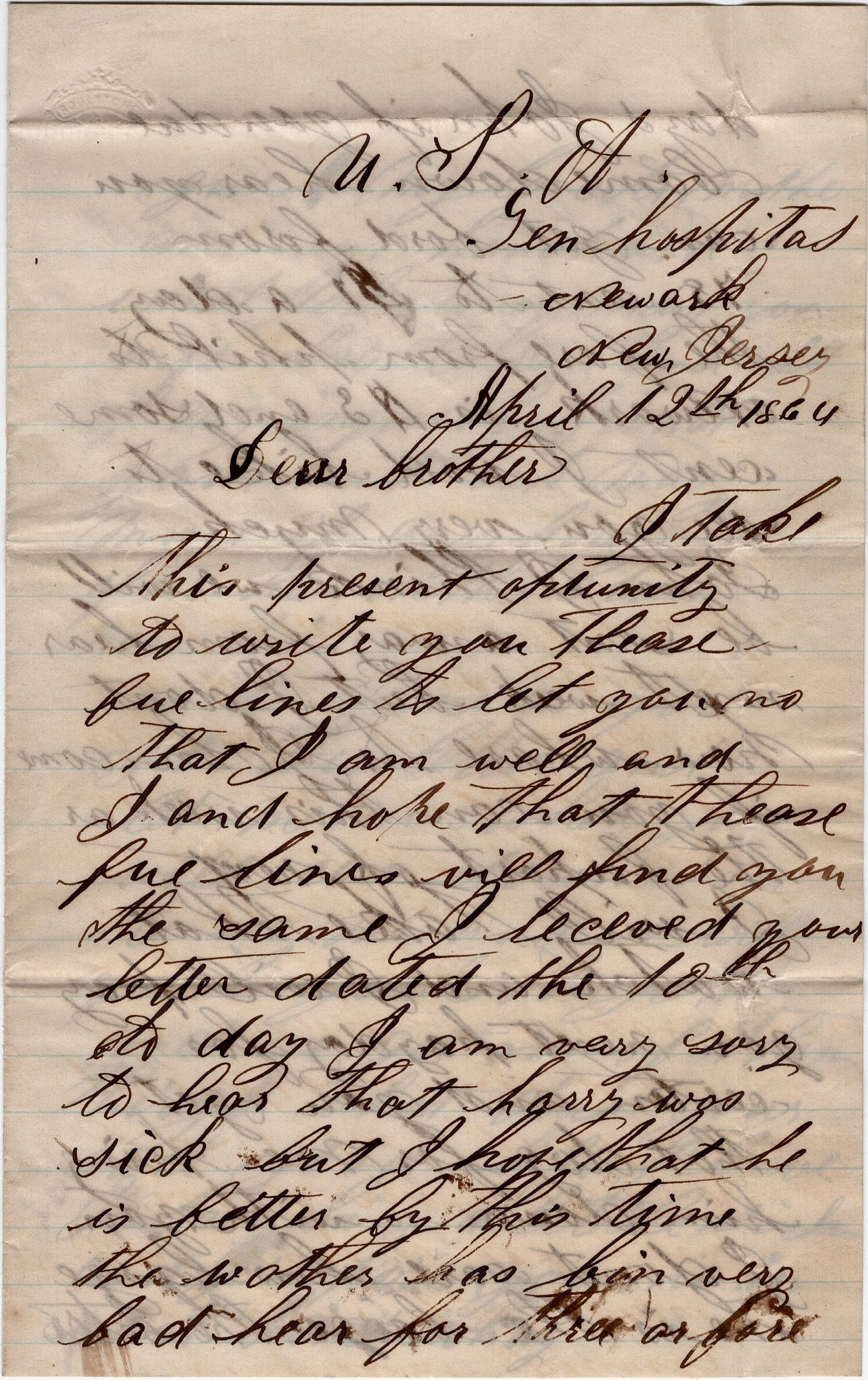
U. S. A. General Hospital, Newark, New Jersey
April 12th 1864
I take this present opportunity to write you these few lines to let you know that I am well and I hope that these few lines will find you the same. I received your letter dated the 10th today. I am very sorry to hear that Harry was sick but I hope that he is better by this time.
The weather has been very bad here for three or four days. John, if you do come down here, you can get board from 75 cents to $1 a day. The fare from Philadelphia to Newark is $3 and some cents. I would like to see you very much.
John, I think we will be sent away from here next week but I don’t know where to. John, come if you can this week or the forepart of next. I will take that watch and I will pay you next payday for certain and you get that dog for me. Bring him down with you. I don’t care how large he is. The larger the better.
Give my love to Mother and Aunt Hanna and Mary your wife. Also Eliza and all of my enquiring friends. You must ask Mary Moore id anybody runs after her in the street now.
Write soon as you get this letter and let me know when you will come down here to see me and we will go to [New] York together and we’ll get one of those things that does your soul good before I leave. I have been a little sick and I suppose you know in what way.
From your brother, — Harry C. Derrickson
To John L. Moore. Let me know soon as you can. Write soon.
Letter 15
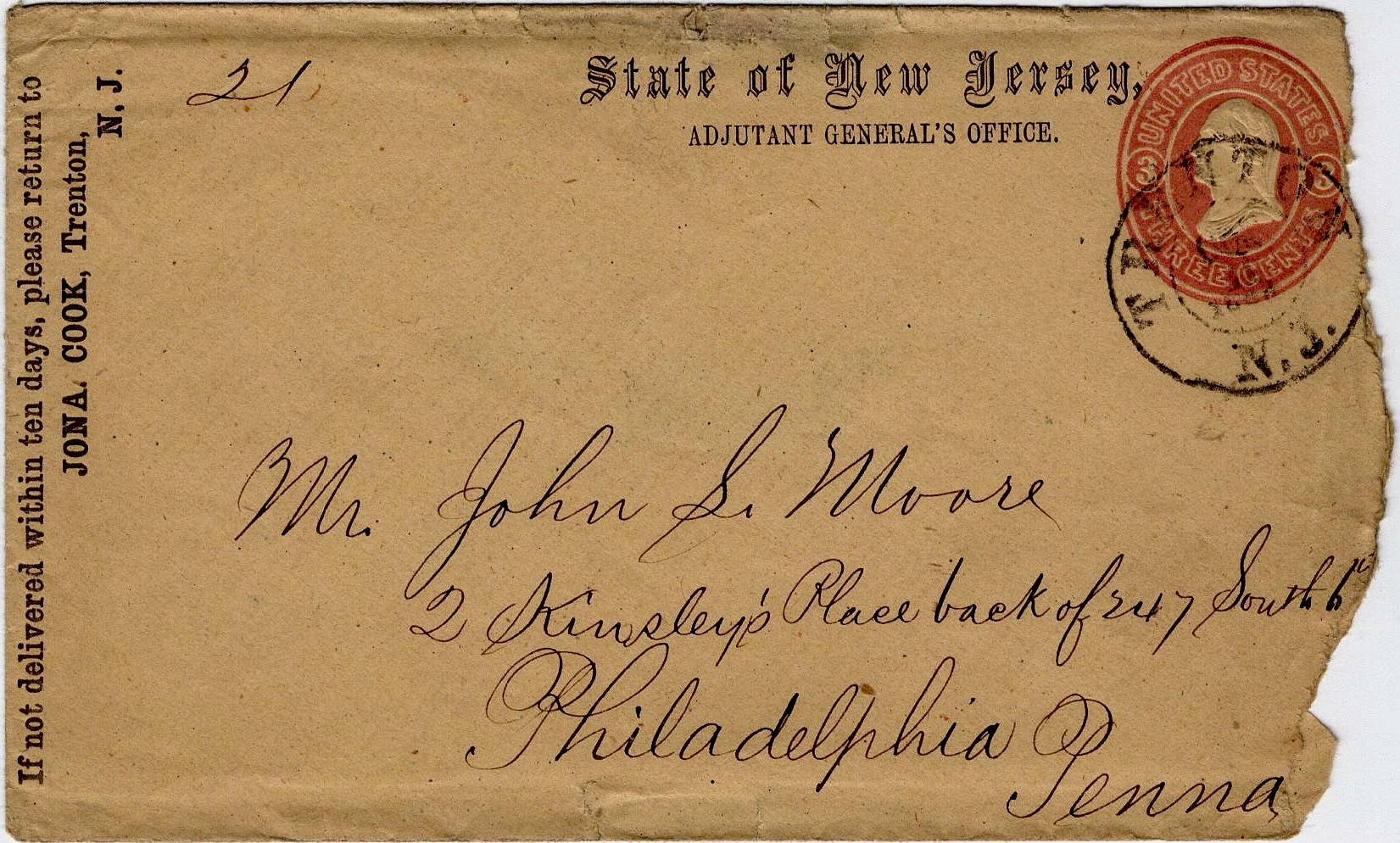
Trenton, New Jersey
July 4th 1864
Friend Moore,
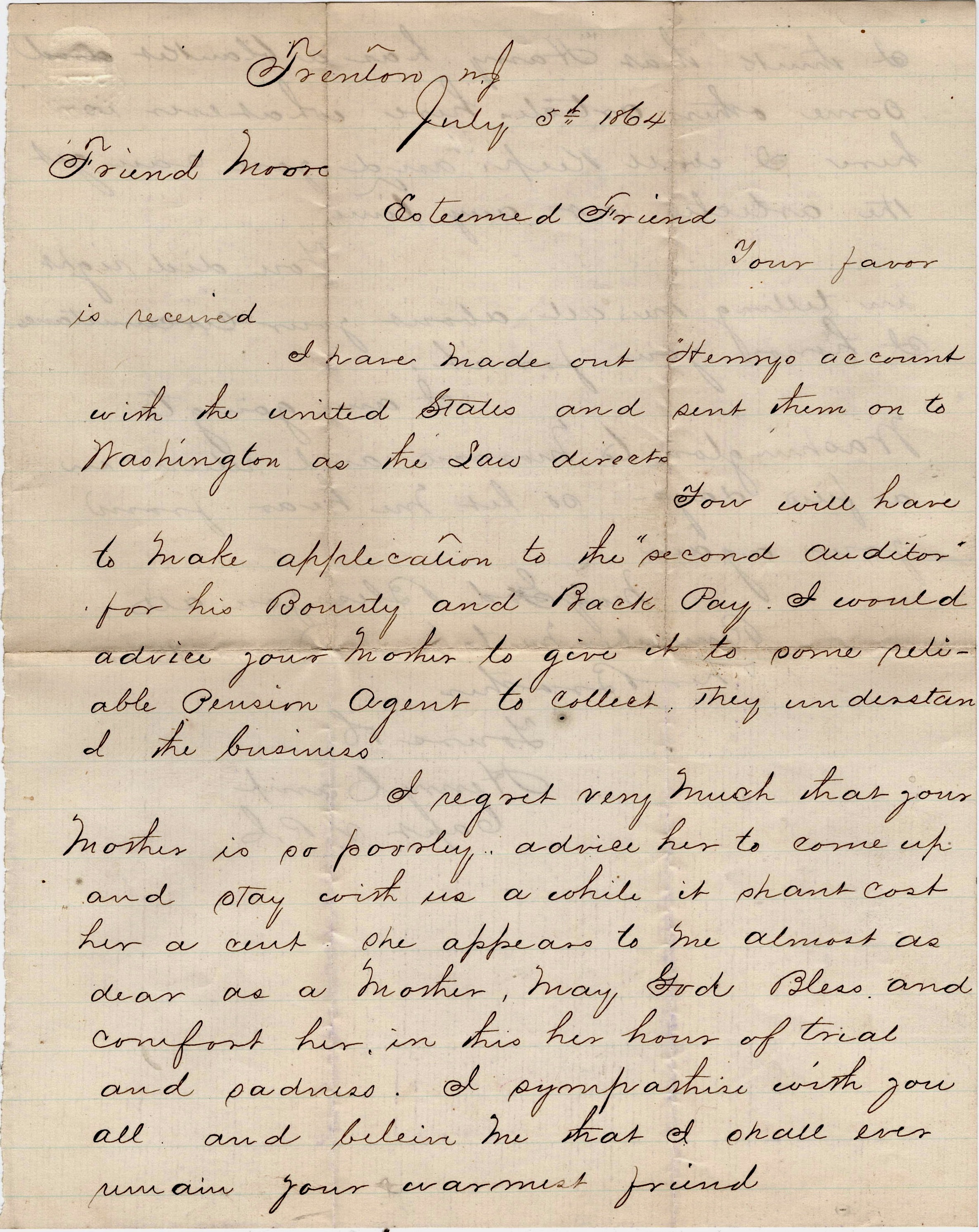
Esteemed friend, I have made out Henry’s account with the United States and sent them to Washington as the Law directs.
You will have to make application to the “second auditor” for his Bounty and Back Pay. I would advise your mother to give it to some reliable Pension Agent to collect. They understand the business.
I regret very much that your mother is so poorly. Advise her to come up and stay with us a while. It shan’t cost her a cent. She appears to me almost as dear as a mother. May God bless and comfort her in this her hour of trial and sadness. I sympathize with you all and believe me that I shall ever remain your warmest friend.
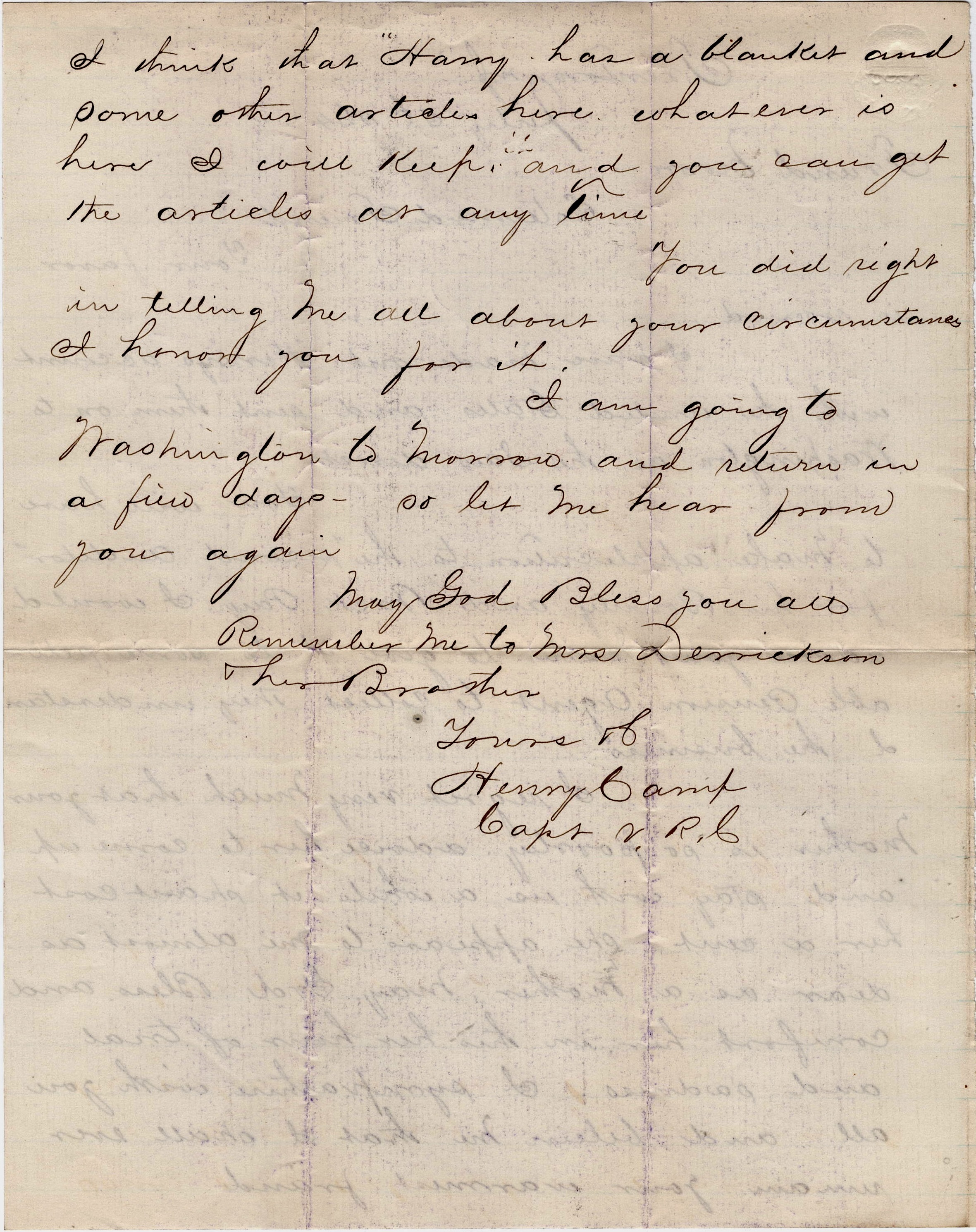
I think that Harry has a blanket and some other articles here. Whatever is her, I will keep and you can get the articles at any time.
You did right in telling me all about your circumstances. I honor you for it. I am going to Washington tomorrow and return in a few days. So let me hear from you again. May God bless you all. Remember me to Mrs. Derrickson & her brother.
Yours, &c. — Henry Camp, Capt. V. R. C.