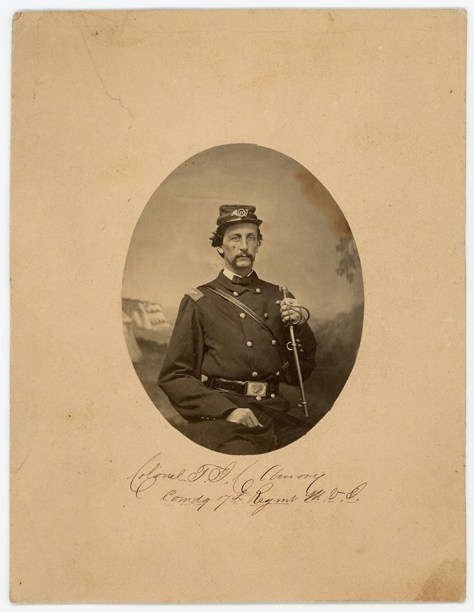
The following letters were written by John Quincy Adams Johnston (1836-1906)—known to his comrades as “Quince”—who served as 1st Sergeant in Co. A, 17th Massachusetts Infantry. He enlisted in May 1861 at Amesbury and was discharged for wounds on 10 September 1863. He was married to Lucy Stevens Moody in 1857 but she died a little over two years later in 1860.
Quince’s first letter describes the Goldsboro Expedition in December 1862. His 2nd letter concludes with a brief recap of the expedition made with other troops of the 18th Army Corps to the relief of the besieged garrison at Washington, North Carolina. When they engaged the enemy at Blount’s Creek on 9 April 1863, they found them strongly entrenched and finally withdrew and returned to New Bern.
Quince wrote the letters to his brother William Johnston who served in the US Navy during the Civil War.
Letter 1
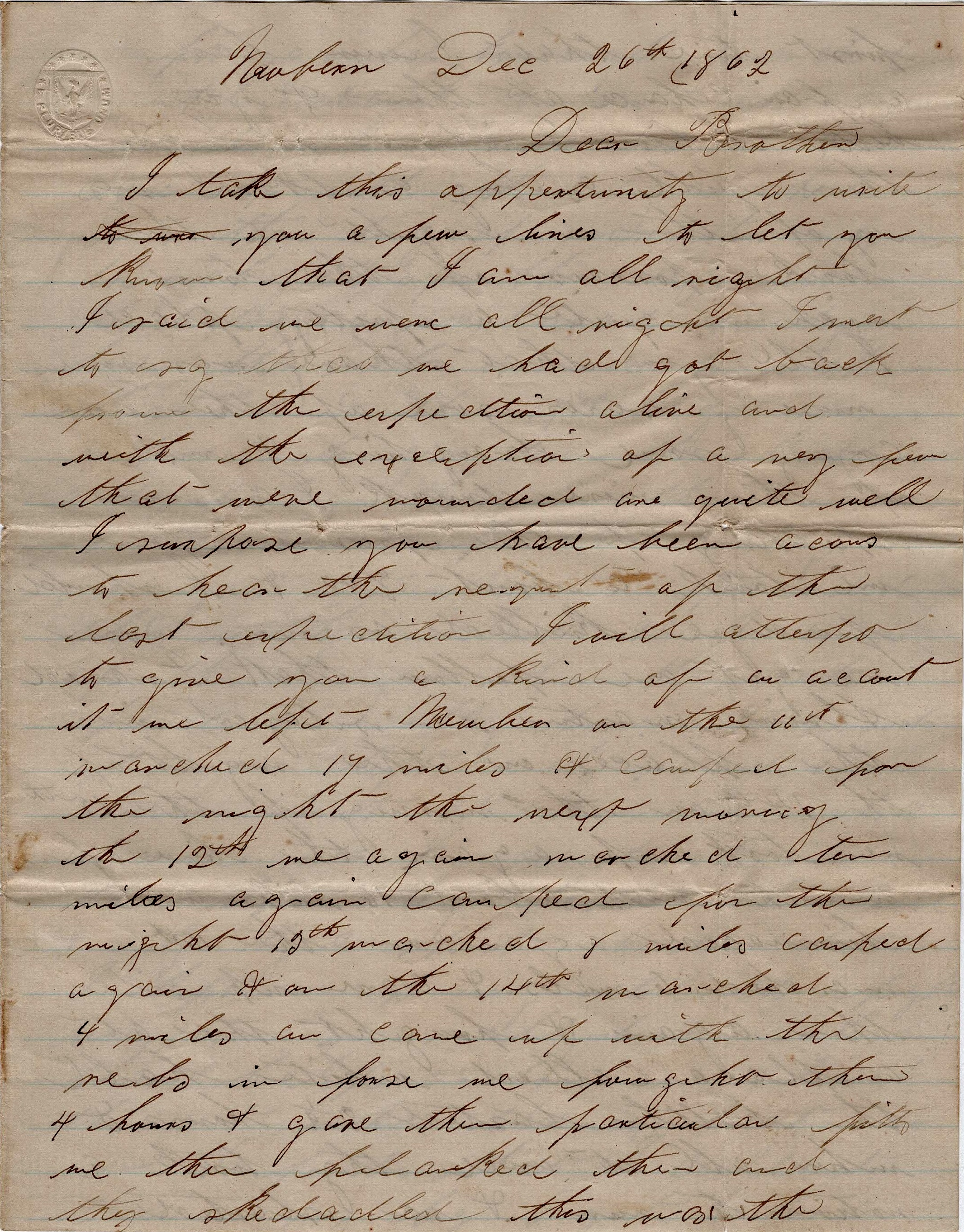
Newbern [North Carolina]
December 26, 1862
Dear Brother,
I take this opportunity to write you a few lines to let you know that I am all right. I said we were all right. I meant to say that we had got back from the expedition alive and with the exception of a very few that were wounded are quite well. I suppose you have been [ ] to hear the result of the last expedition. I will attempt to give you a kind of an account of it.
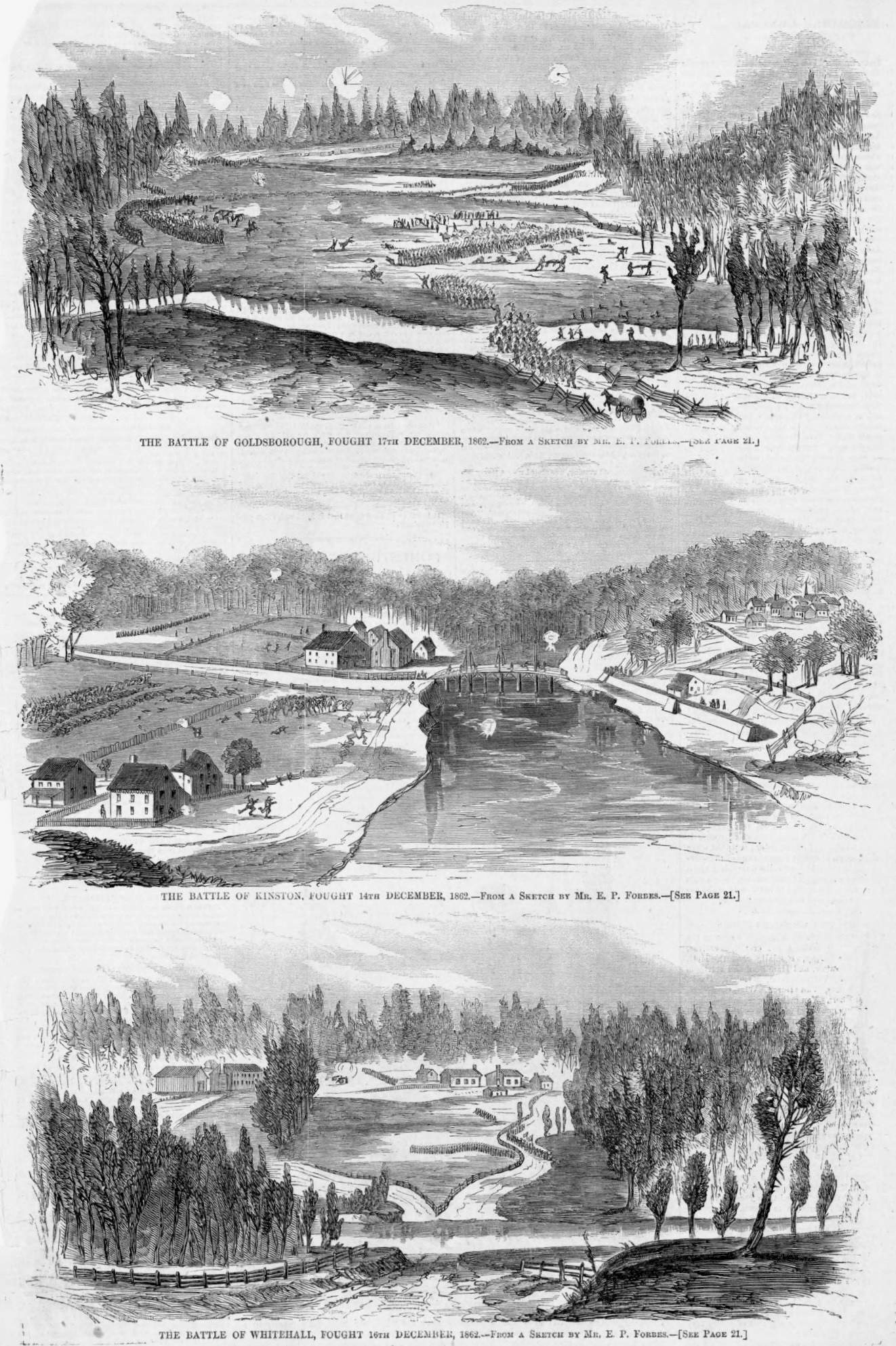
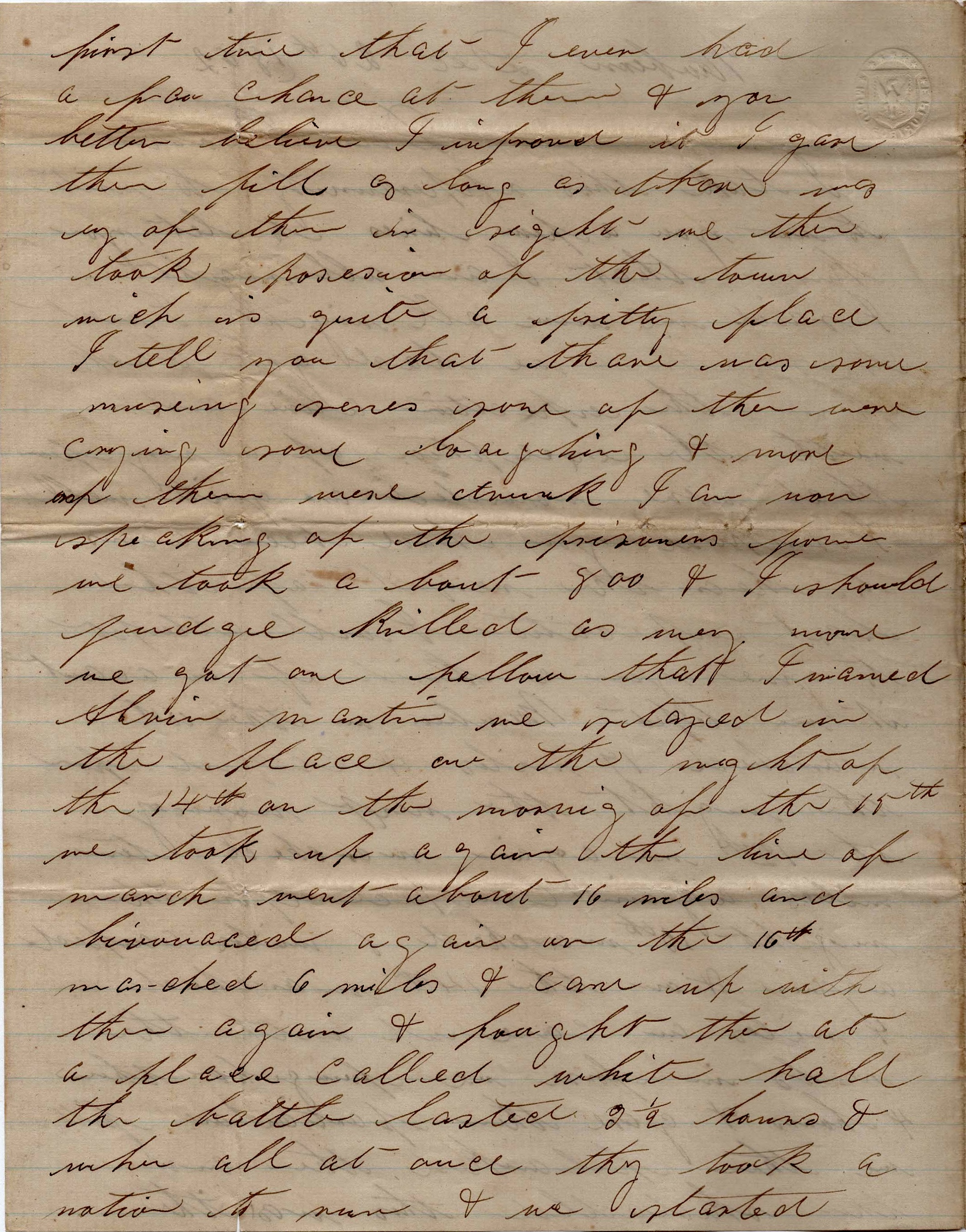
Weleft Newbern on the 11th, marched 17 miles & camped for the night. The next morning, the 12th, we again marched ten miles. Again camped for the night. 13th marched 8 miles and camped again On the 14th marched 4 miles and came up with the rebs in force. We fought them 4 hours & gave them particular fits. We then flanked them and they skedaddled. This was the first time that I ever had a fair chance at them & you better believe I improved it. I gave them pills as long as they was in sight. We then took possession of the town [Kinston, N. C.] which is quite a pretty place. I tell you that there was some amusing scenes. Some of them were crying, some laughing, and more of them were drunk. I am now speaking of the prisoners for we took about 800 and I should judge killed as many more. We got one fellow that I named Alvin Martin.
We stayed in the place on the night of the 14th and the morningof the 15th we took up again the line of march. Went about 16 miles and bivouacked again. On the 16th, marched 6 miles and came up with them again & fought them at a place called White Hall. The battle lasted two and a half hours and when all at once they took a notion to run and we started for Goldsboro. Marched until dark & went into camp.
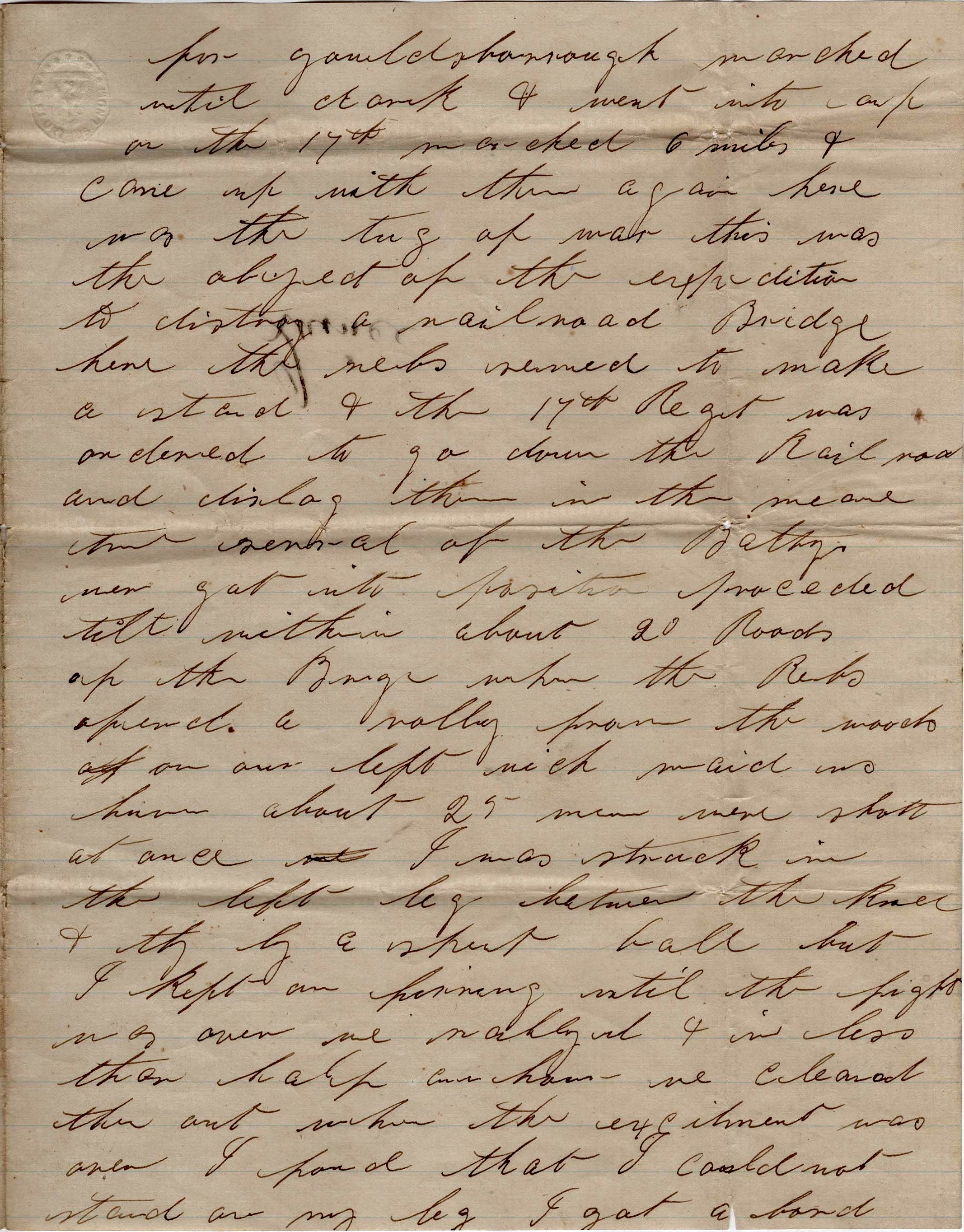
On the 17th, marched 6 miles & came up with them again. Here was the tug of war. This was the object of the expedition—to destroy a railroad bridge here. The rebs seemed to make a stand & the 17th [Mass.] Regiment was ordered to go down the railroad and dislodge them. In the meantime, several of the battery men got into position till within about 20 rods of the bridge where the rebs opened a volley from the works on the left which made us [ ]. About 25 men were shot at once. I was struck in the left leg between the knee and thigh by a spent ball but I kept on firing until the fight was over. We rallied & in less than half an hour we cleared them out. When the excitement was over, I found that I could not stand on my leg. I got a board [rest of letter is missing]
— Quince
Letter 2
Newbern [North Carolina]
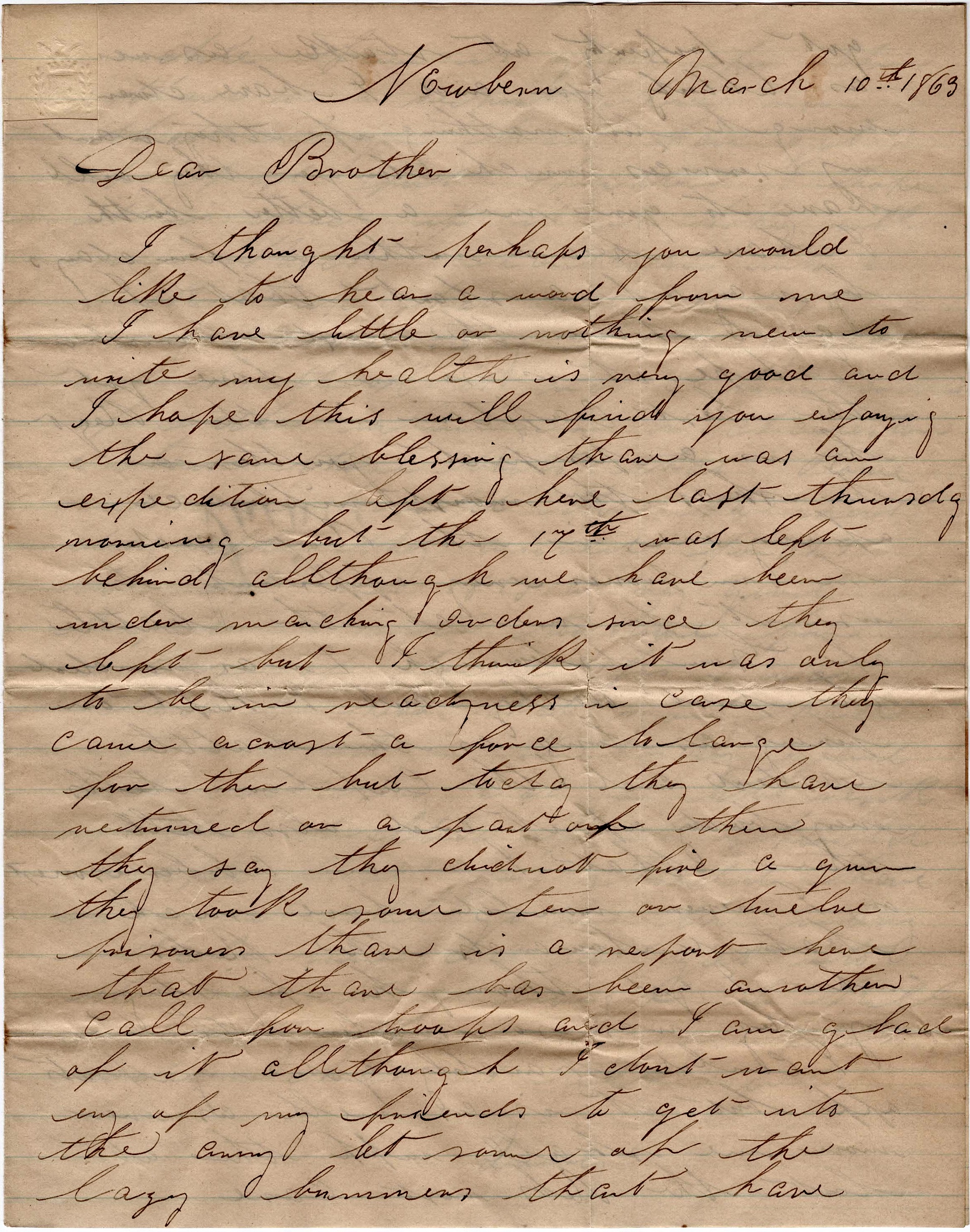
March 10th 1863
Dear Brother,
I thought perhaps you would like to hear a word from me. I have little or nothing new to write. My health is very good and I hope this will find you enjoying the same blessing.
There was an expedition left here last Thursday morning but the 17th was left behind although we have been under marching orders since they left. But I think it was only to be in readiness in case they came across a force too large for them. But today they have returned, or a part of them. They say they did not fire a gun. They took some ten or twelve prisoners.
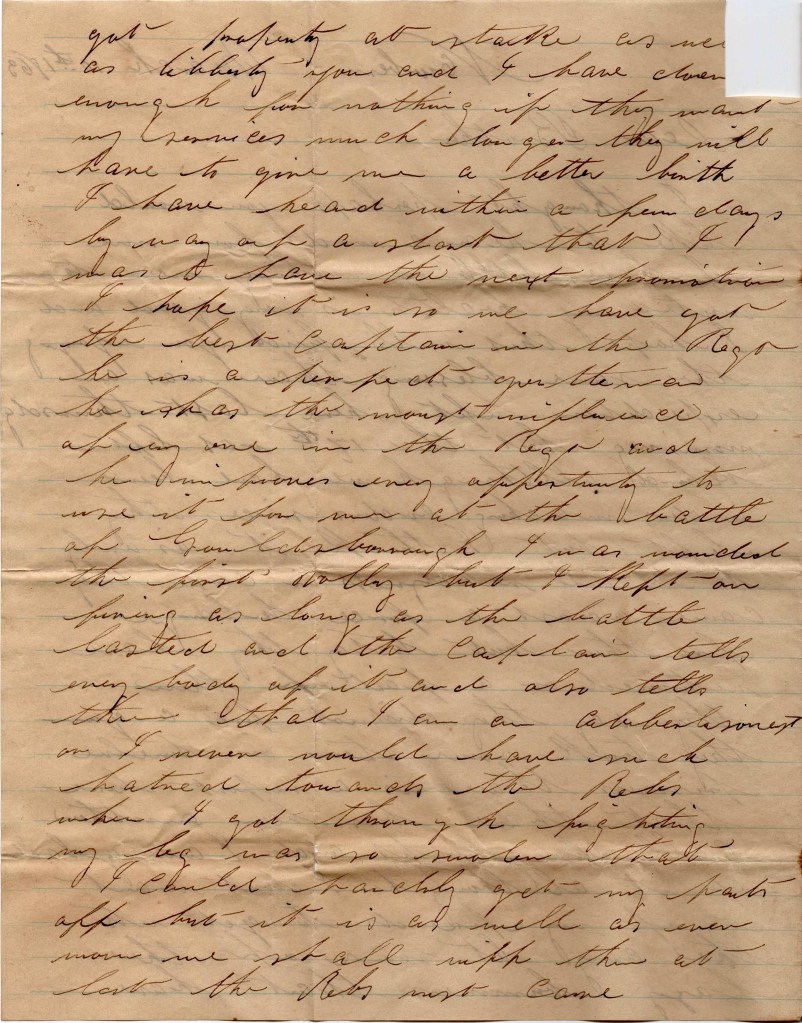
There is a report here that there has been another call for troops and I am glad of it although I don’t want any of my friends to get into the army. Let some of the lazy bummers that have got plenty at stake as well as liberty. You and I have dine enough for nothing. If they want my services as much longer, they will have to give me a better berth. I have heard within a few days by way of a [ ] that I was to have the next promotion. I hope it is so. We have got the best captain in the regiment. He is a perfect gentleman. He has the most influence of anyone in the regiment and he improves every opportunity to use it for [his] men. At the Battle of Goldsboro, I was wounded in the first volley but I kept on firing as long as the battle lasted and the captain tells everybody of it and also tells them that I am an abolitionist or I never would have such hatred towards the Rebs. When I got through fighting, my leg was so swollen that I could hardly get my pants off but it is as well as ever now. We shall whip them at last. The Rebs must come. Uncle Sam is good for them.
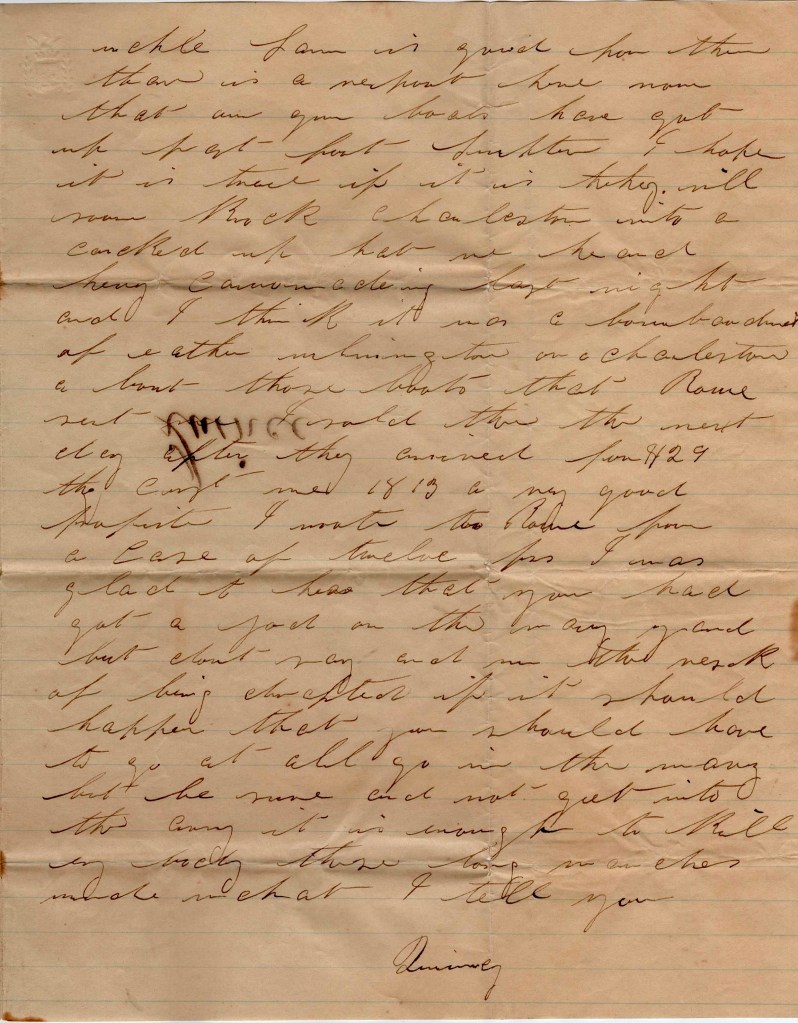
There is a report here now that our gunboats have got up past Fort Sumter. I hope it is true, If it is, they will soon break Charleston into a cocked up hat. We heard heavy cannonading last night and I think it was a bombardment of either Wilmington or Charleston.
About those boots that Rowe sent me, I sold them the next day after they arrived for $29. They cost me $18.13—a very good profit. I wrote to Rowe for a case of twelve pairs. I was glad to hear that you had got a job on the Navy Yard but don’t say in the next [letter] of being drafted. If it should happen that you should have to go at all, go in the Navy, but be sure and not get into the army. It is enough to kill anybody, these long marches made in [ ], I tell you. — Quincy
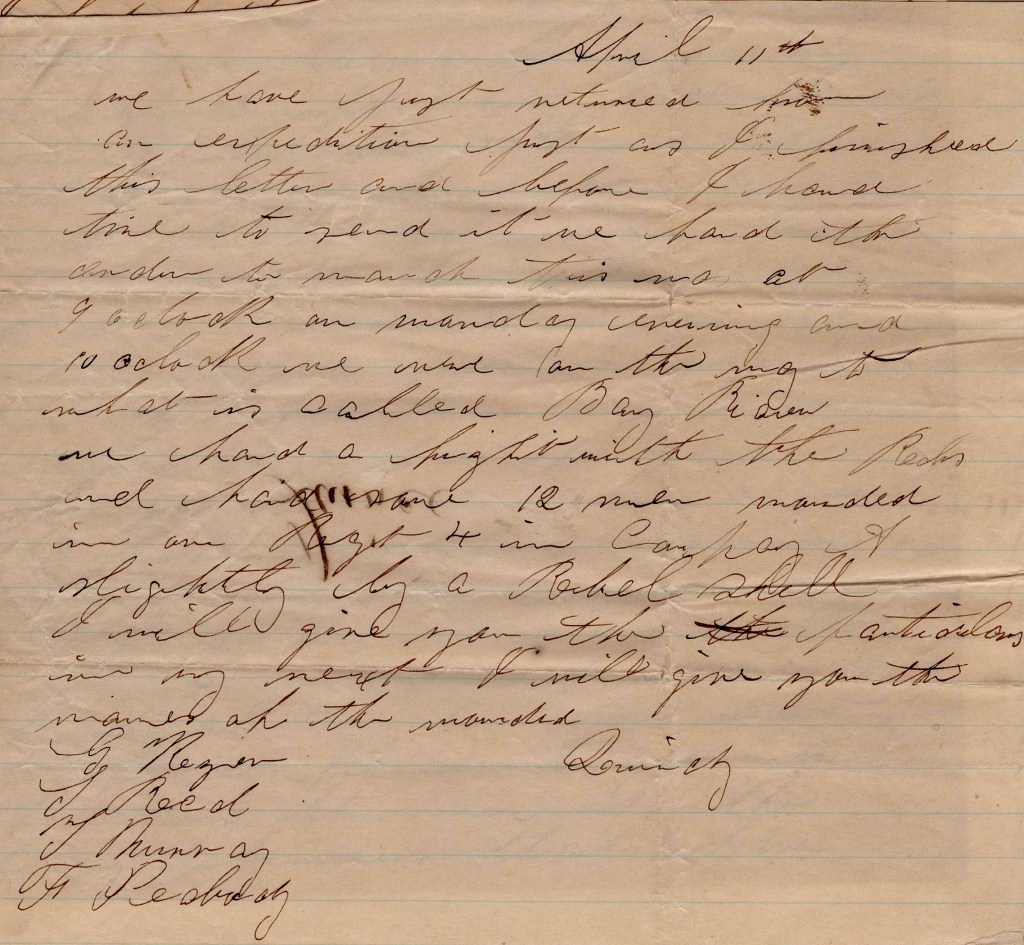
April 11th. We have just returned from an expedition just as I finished this letter and before I had time to send it. We had the order to march this way. At 9 o’clock on Monday evening and 10 o’clock we were on the way to what is called Bay [Blount’s Creek]. We had a fight with the Rebs and had some 12 men wounded in our regiment, four in Company A slightly by a rebel shell. I will give you the particulars in my next. I will give you the names of the wounded [on 9 April 1863]: G. Rezen, S. Reed, T[homas A.] Murray, F[rancis] Peabody
— Quincy