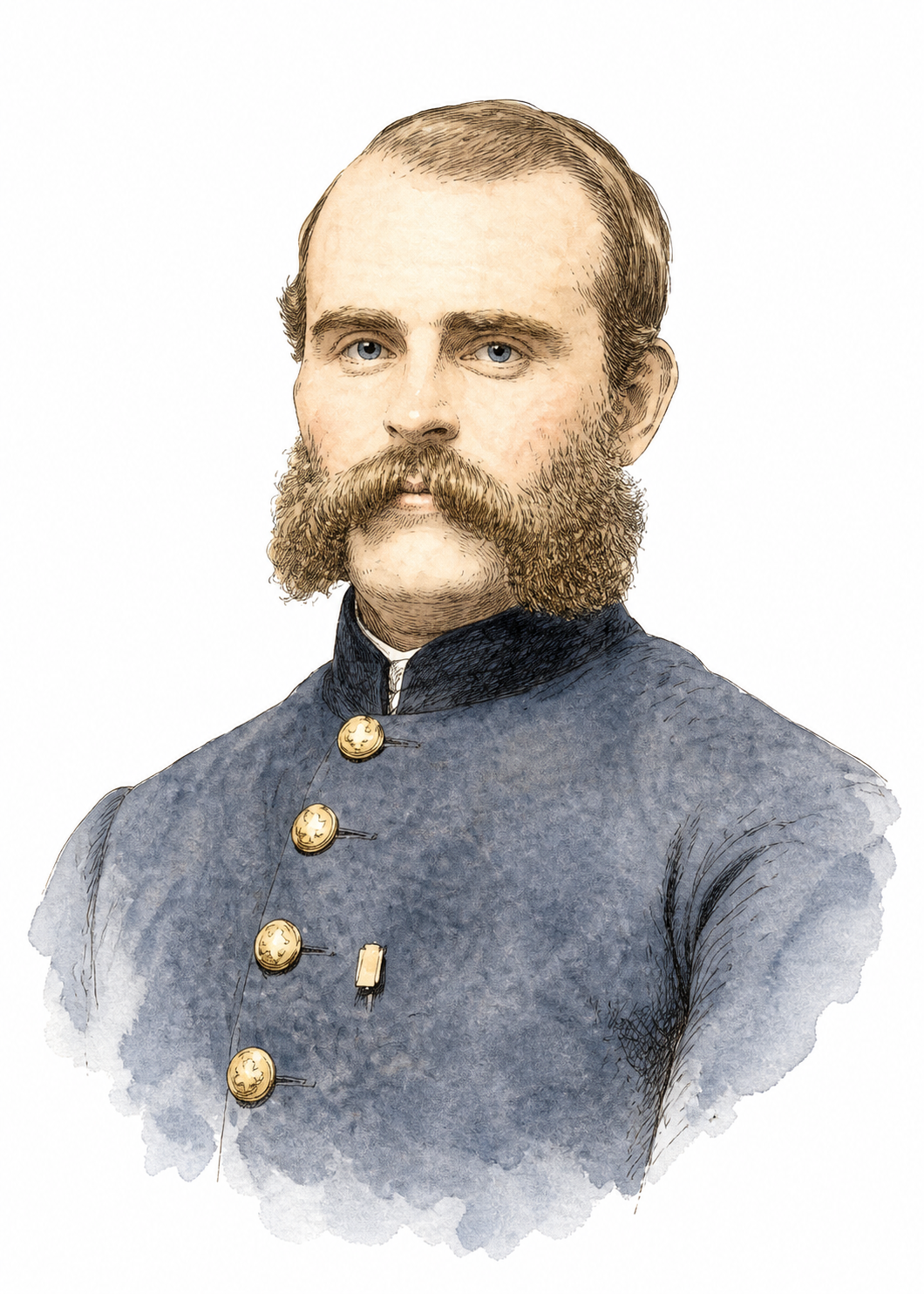
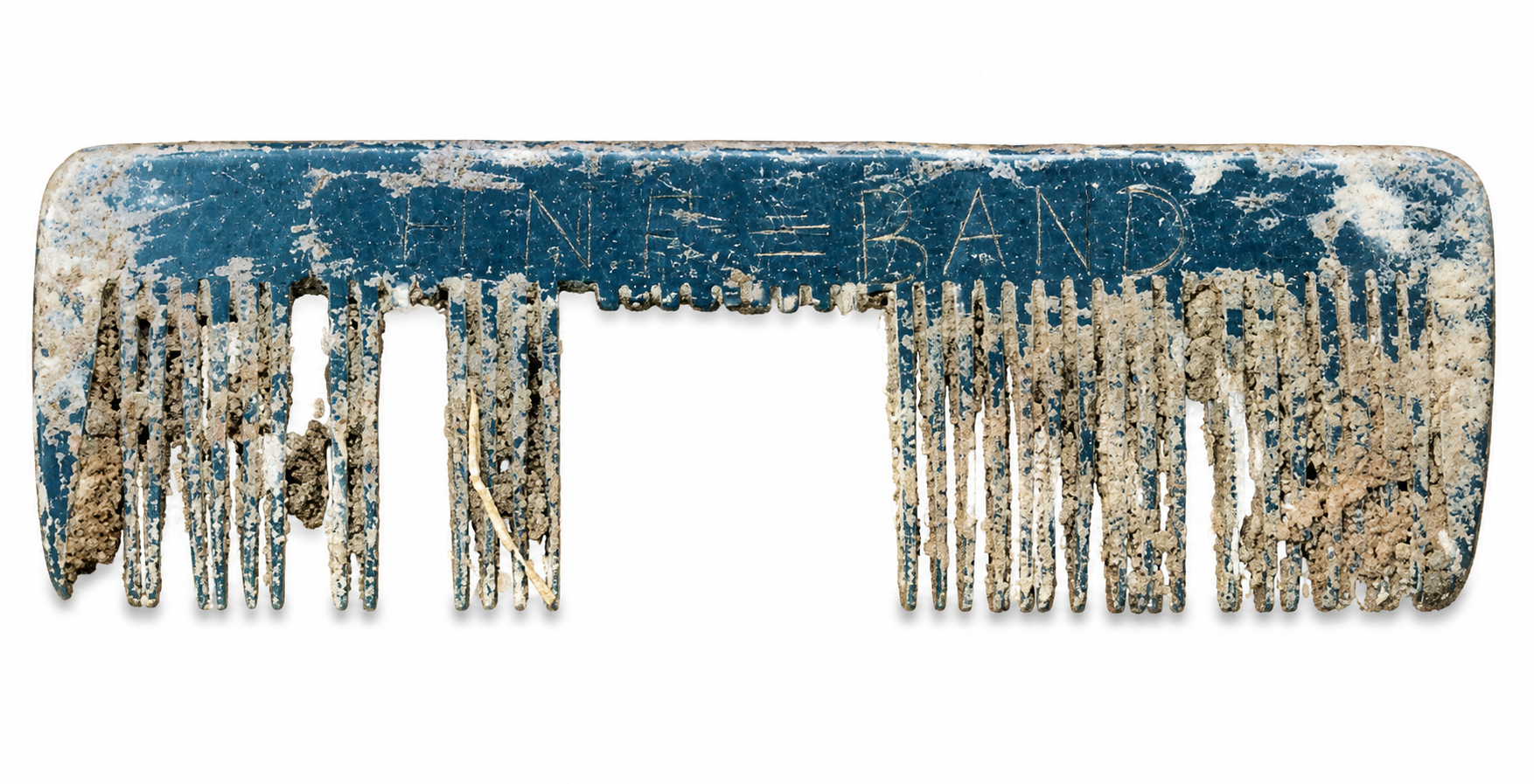
Henry Nathaniel Fairbanks (1838-1913) of Wayne, Kennebec county, Maine, wrote the following letters to his father while serving in Co. E of the 30th Maine. According to a biographical sketch newspaper clipping appearing on Find-A-Grave, Henry first served as a band member in the 3rd Maine Infantry. He then did home duty in the 44th Massachusetts at the time of the draft riots in Boston, and then enlisted as a sergeant in November 1863 at age 25. He participated in the Red River expedition where he was slightly wounded in the arm and later with Sheridan in the Shenandoah Valley. He was promoted to 2nd lieutenant on April 9, 1864 and was discharged on August 20, 1865.
I had previously encountered Henry N. Fairbanks of the 30th Maine while researching a letter pertaining to the 19th Texas Infantry Regiment. See 1862: Fanny Benners’ Speech to 19th Texas Infantry. That research yielded memoirs of the Red River Expedition of 1864 written by Henry.
Both of Henry’s letters were written in August 1864 when the 30th Maine Infantry was attached to the Army of the Shenandoah in Virginia and actively involved in Sheridan’s Shenandoah Valley Campaign. During this period, the regiment was heavily engaged in detached duty, which included securing supply trains and protecting stores as they moved through the region. Unfortunately the second letter is only partial and missing the signature page, but Henry mentions hearing the fighting on 21 August 1864 when Early and Anderson launched a converging attack on Sheridan’s army at Cameron’s Depot.
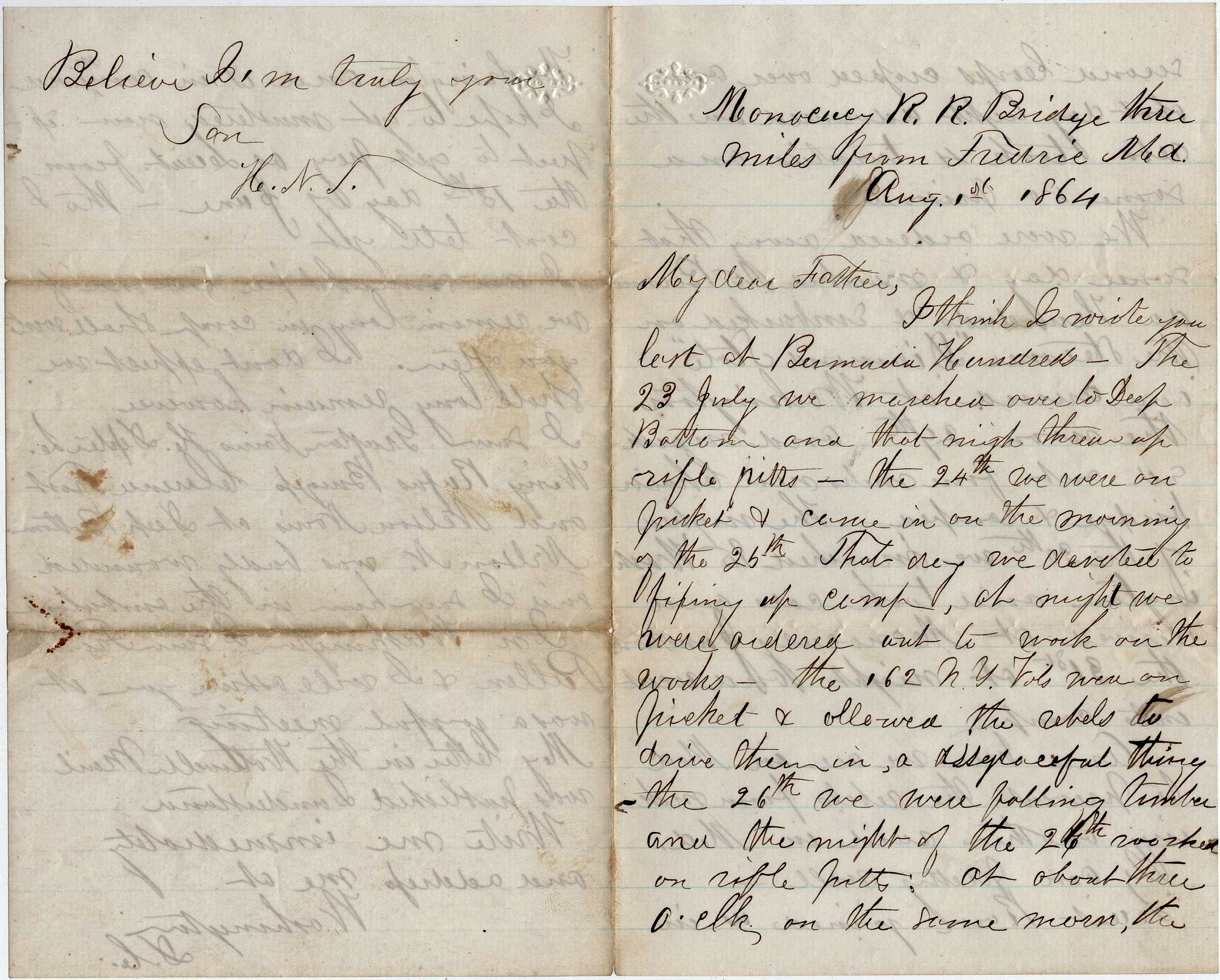
Letter 1
Monocacy Railroad Bridge
Three miles from Frederick, Maryland
August 1st 1864
My dear Father,
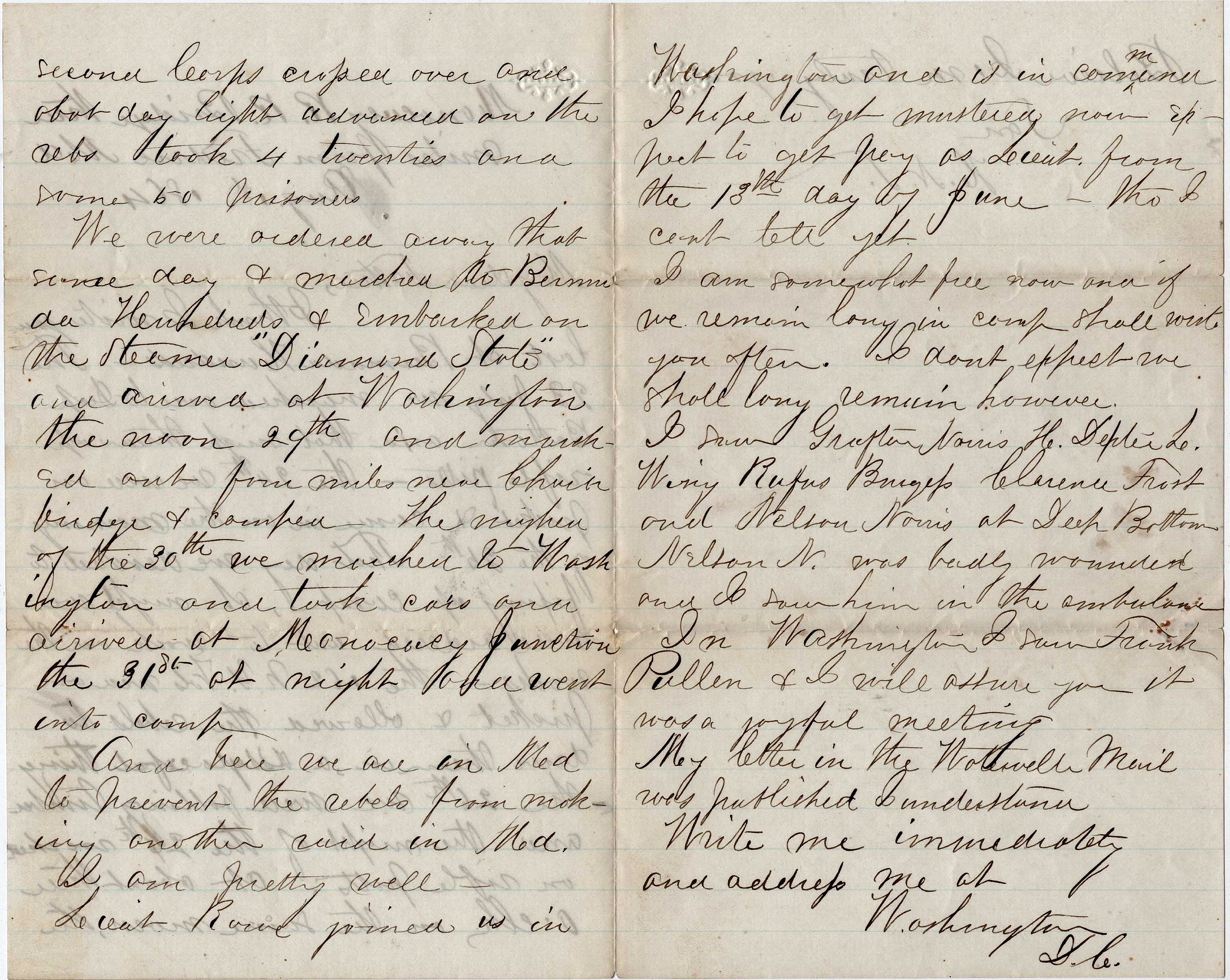
I think I wrote you last at Bermuda Hundred, The 23rd July we marched over to Deep Bottom and that night threw up rifle pits. The 24th we were on picket & cami in on the morning of the 25th. That day we devoted to fixing up camp. At night we were ordered out to work on the works. The 162nd New York Vols. were on picket & allowed the rebels to drive them in—a disgraceful thing. The 26th we were falling timber and the night of the 26th worked on rifle pits. At about 3 o’clock on the same morn, the Second Corps crossed over and about daylight advanced on the Rebs, took 4 twenties and some 50 prisoners.
We were ordered away that same day & marched to Bermuda Hundred & embarked on the steamer “Diamond State” and arrived at Washington the noon 29th and marched out four miles near Chain Bridge & camped. The night of the 30th we marched to Washington and took cars and arrived at Monocacy Junction the 31st at night and went into camp. And here we are in Maryland to prevent the rebels from making another rain in Maryland.
I am pretty well. Lieut. Rowe joined us in Washington and is in command. I hope to get mustered now. Expect to get pay as Lieutenant from the 13th day of June though I can’t tell yet. I am somewhat free now and if we remain long in camp, shall visit you often. I don’t expect we shall long remain, however.
I saw Grafton Norris H, Dexter L., We___ Rufus Burgess, Clarence Frost, and Nelson Norris at deep Bottom. Nelson Norris was badly wounded and I saw him in the ambulance. In Washington, I saw Frank Pullen & I will assure you it was a joyful meeting.
My letter in the Waterville Mail was published I understand. Write me immediately and address me at Washington D. C. Believe I ‘s truly your son, — H. N. F.
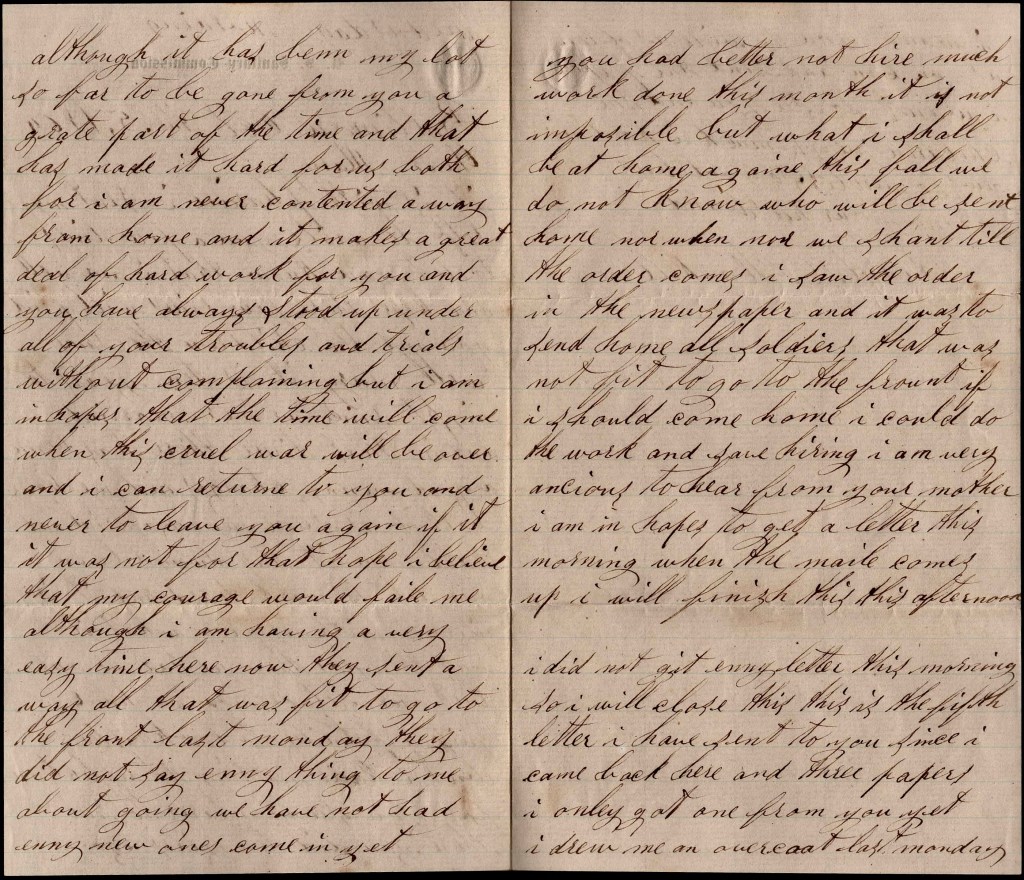
Letter 2
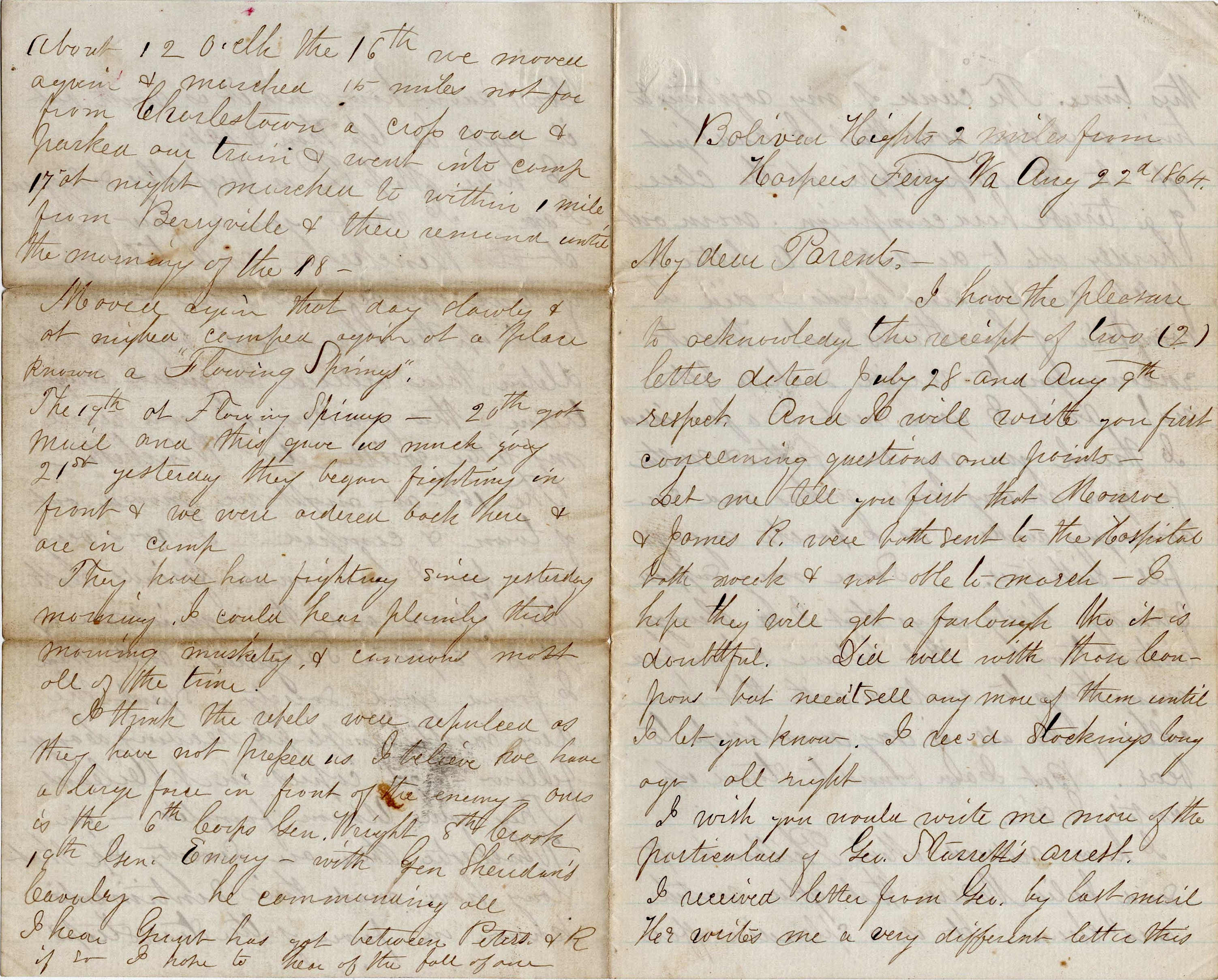
Bolivar Heights
2 Miles from Harpers Ferry, Va.
August 22, 1864
My dear Parents,
I have the pleasure to acknowledge the receipt of two letters dated July 28th and August 9th respectively. And I will write you first concerning questions and points.
Let me twoo you first that Morroe & James R. were both sent to the hospital, both weak and not able to march. I hope they will get a furlough though it is doubtful. Did well with those coupons but needn’t sell any more of them until I let you know. I received stockings long ago all right.
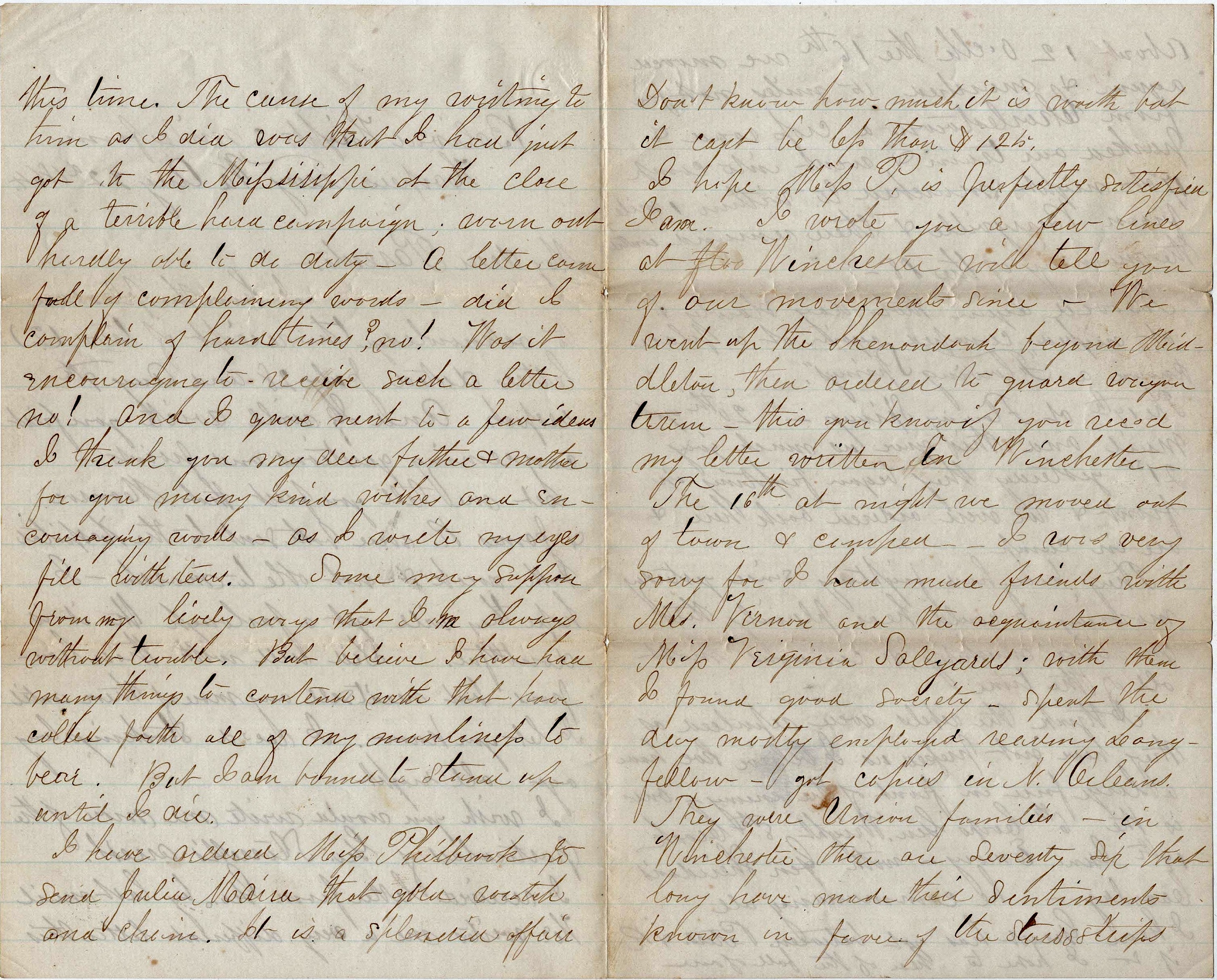
I wish you would write me more of the particulars of George Starrett’s arrest. I received a letter from George by last mail. He writes me a very different letter this time. The cause of my writing to him as I did was that I had just got to the Mississippi at the close of a terrible hard campaign; worn out [and] hardly able to do duty. A letter came full of complaining words—did I complain of hard times? No! Was it encouraging to receive such a letter? No! And I gave vent to a few ideas.
I thank you my dear father and mother for your many kind wishes and encouraging words. As I write, my eyes fill with tears. Some may suppose from my lively ways that I’m always without trouble. But believe I have had many things to contend with that have called forth all of my manliness to bear. But I am bound to stand up until I die.
I have ordered Miss Philbrook to send Julia Maira that gold watch and chain. It is a splendid affair. Don’t know how much it is worth but it can’t be less than $125. I hope Miss Philbrook is perfectly satisfied. I am. I wrote you a few lines at Winchester. Will tell you of our movements since.
We went up the Shenandoah beyond Middletown, then ordered to guard wagon train. This you know if you received my letter written in Winchester. The 16th at night, we moved out of town & camped. I was very sorry for I had made friends with Mrs. Vernon and the acquaintance of Miss Virginia Sallyards. With them I found good society. Spent the day mostly employed reading Longfellow. Got copies in New Orleans. They were Union families. In Winchester there are seventy-six that long have made their sentiments known in favor of the stars & stripes.
About 12 o’clock the 16th we moved again & marched 15 miles, not far from Charlestown, a cross road, and parked out train & went into camp. 17th at night we marched to within one mile from Berryville & there remained until the morning of the 18th.
Moved again that day slowly & at night camped again at a place known as “Flowing Springs.” The 19th at Flowing Springs. 20th got mail and this gave us much joy. 21st yesterday they began fighting in front and we were ordered back here & are in camp. They have had fighting since yesterday morning. I could hear plainly this morning musketry & cannons most all of the time.
I think the rebels were repulsed as they have not pressed us. I believe we have a large force in front of the enemy. One is the 6th Corps, Gen. Wright, 8th Crook, 19th Gen. Emory with Gen. Sheridan’s Cavalry—he commanding all. I hear Grant has got between Petersburg and Richmond. If so, I hope to hear of the fall of our [rest of letter missing]