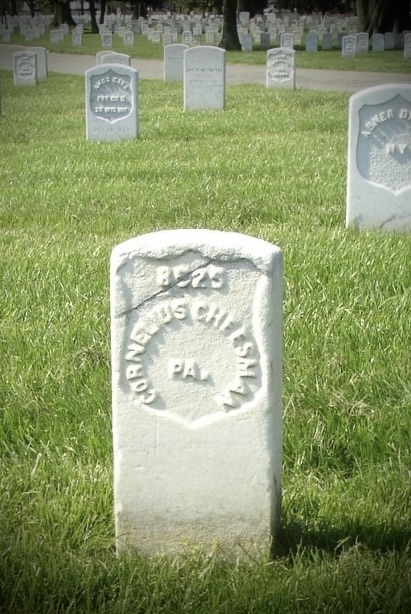
The following letter was written by Cornelius Cheeseman (1836-1864) of West Rushville, Fairfield county, Ohio. He wrote the letter while serving in Co. A, 83rd Pennsylvania Infantry. He mustered into the regiment on 15 January 1864 and he died of chromic diarrhea in Lincoln Hospital, Washington D. C. on 29 September 1864.
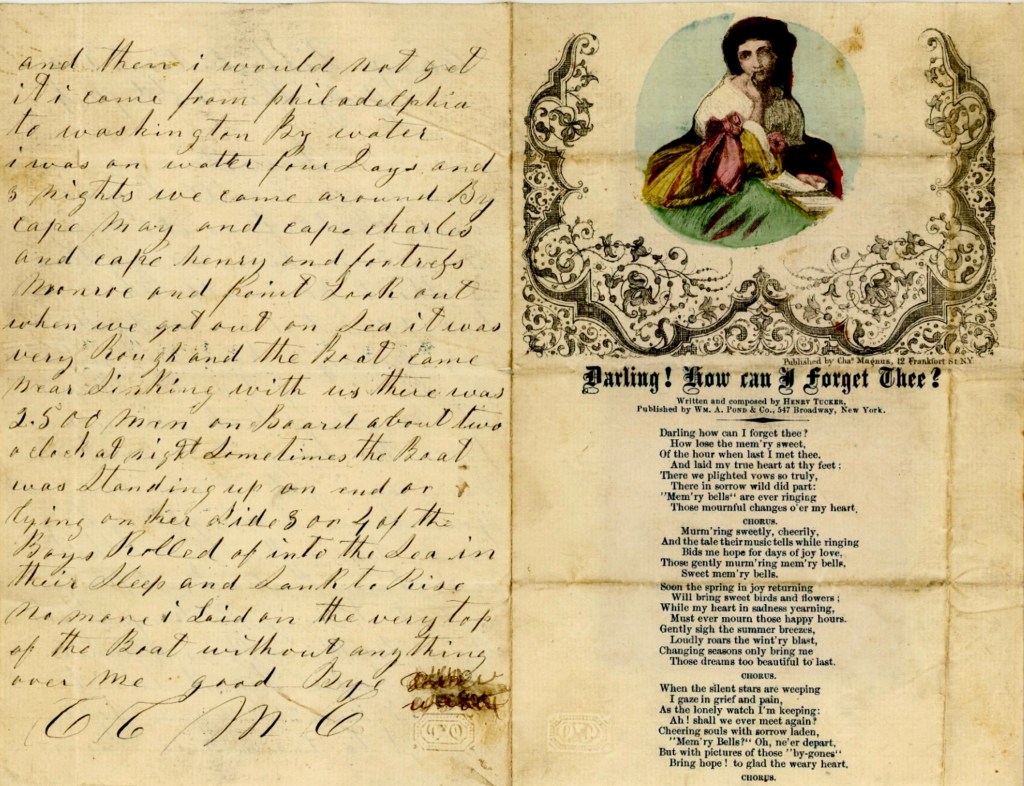
Cornelis wrote the letter to his wife, Margaret (Jenkins) Cheeseman, whom he wed in April 1857. In his correspondence, Cornelius expresses his intention to “come home this fall,” despite being in the midst of a three-year enlistment; notably, he does not mention pursuing a medical discharge. Furthermore, he urges her to “say nothing” about this matter, implying a potential intention to desert. This raises the possibility that such a plan may have been his objective from the outset, as he resided in Ohio while enlisting in a Pennsylvania regiment, possibly as a substitute or to secure a bounty.
T R A N S C R I P T I O N
Camp Distribution, Va. July 23rd 1864
Dearest one,
Once more I will try to write but it will only be a few lines as my time is short. You will be disappointed in not getting any money [but] I have not got my money yet as the raid in Maryland took us away from the hospital. Just as soon as I get it, I will send you come. I am going to come home this fall—that is certain. But I don’t know what time yet. Keep still. Say nothing. Then I will be safe. Don’t write till I write again for I expect to leave here soon and then I would not get it.
I came from Philadelphia to Washington by water. I was on water four days and three nights. We came around by Cape May and Cape Charles and Cape Henry and Fortress Monroe and Point Lookout. When we got out on sea, it was very rough and the boat came near sinking with us. There was 2500 men on board. About two o’clock at night, sometimes the boat was standing up on end or lying on her side. Three or four of the Boys rolled off into the sea in their sleep and sank to rise no more. I laid on the very top of the boat without anything over me. Goodbye, C. C. [to] M. C.
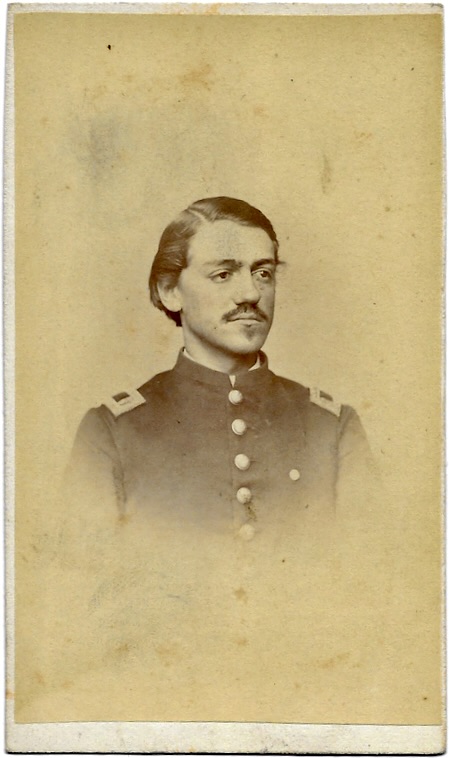
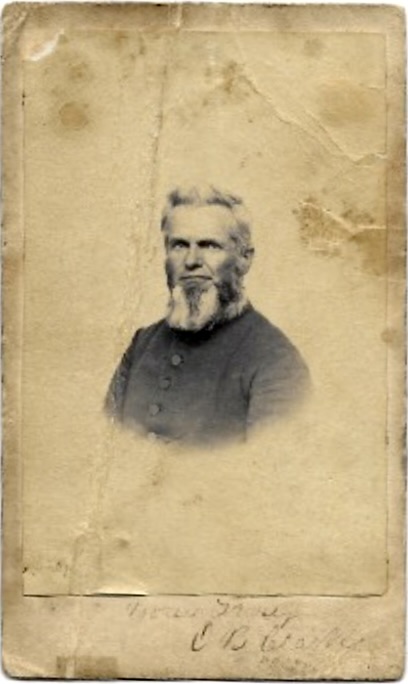
The following letter was written in two parts—the first by Lt. Daniel Webster Clark (1841-1932) and the 2nd by his father, Chaplain Orson Brewster Clark (1810-1885). Both father and son served in the 83rd Pennsylvania Infantry. In the 1860 US Census, they were enumerated in Tionesta, Venango county, Pennsylvania; Daniel working a miner and his father a Universalist Minister.
Daniel enlisted on 6 September 1861 and was commissioned a 2nd Lieutenant in Co. G, 83rd Pennsylvania. He was later promoted to 1st Lieutenant and Quartermaster of the regiment. On 20 May 1864, he was injured when he fell off his horse near the North Anna River. He mustered out on 28 June 1865. Daniel’s is the only signature by an officer among the “graffiti” signatures at the Blenheim House in Fairfax, Virginia. He signed his name there on 11 March 1862. [see Hagan History Center].
Orson was married in 1834 to Diadema Webster (1808-1894). Before turning to the ministry, he earned a living teaching select schools in Hornellsville, New York and Canisteo, New York. He was in the battles of Antietam, Fredericksburg, Chancellorsville, Gettysburg, Rappahanock, Kelly Fork, Preebles Station, Quaker Run, Five Forks, Wilderness Farm, Laurel Hill, Old Church, Cold Harbor. He was wounded at Mead’s Station.
Lt. Daniel Webster ClarkChaplain O. B. Clark
[Note: This letter is from the personal collection of James Campbell and was offered for transcription and publication on Spared & Shared by express consent.]
T R A N S C R I P T I O N
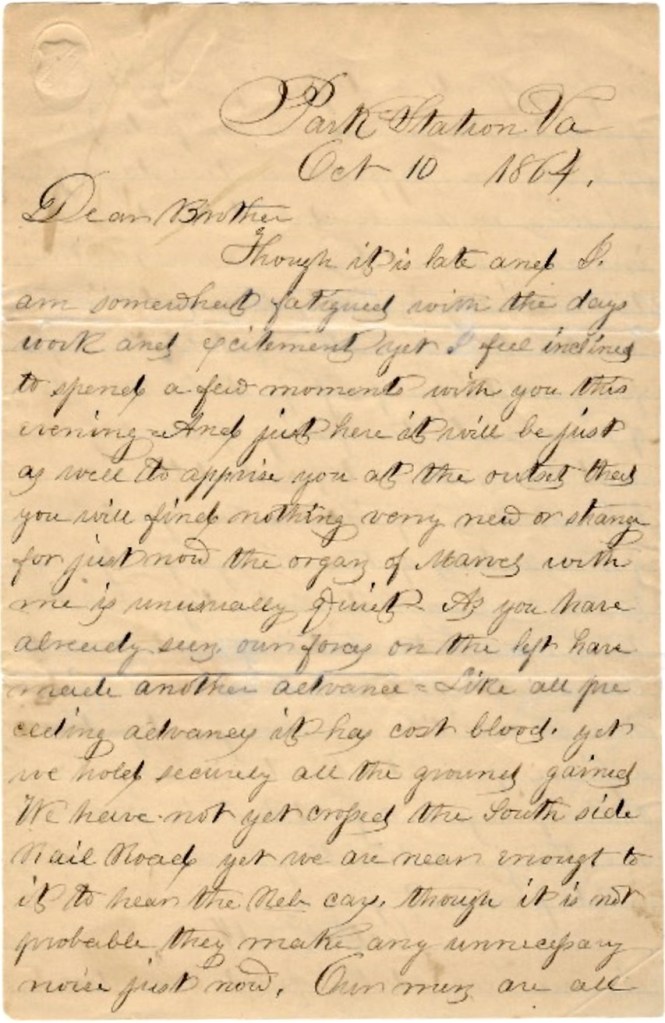
Park Station, Virginia October 10, 1864
Dear Brother,
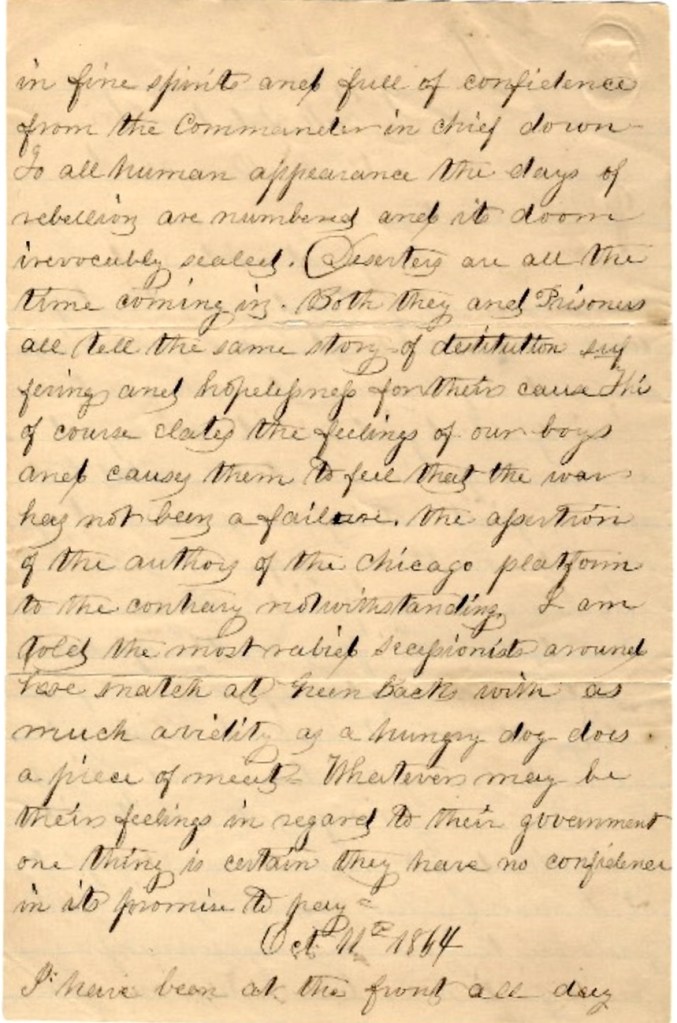
Though it is late and I am somewhat fatigued with the days work and excitement, yet I feel inclined to spend a few moments with you this evening, And just here it will be just as well to apprise you at the outset that you will find nothing very new or strange for just now the organ of marvel with me is unusually quiet. As you have already seen, our forces on the left have made another advance. Like all preceding advances, it has cost blood. Yet we hold securely all the ground gained. We have not yet crossed the South Side Railroad. Yet we are near enough to it to hear the Reb cars though it is not probable thy make any unnecessary noise just now. Our men are all in fine spirits and full of confidence from the Commander in Chief down to all human appearance. The days of rebellion are numbered and its doom irrevocably sealed.
Deserters are all the time coming in. Both they and prisoners tell the same story of destitution, suffering and hopefulness for their cause. This of course elates the feelings of our boys and causes them to feel that the war has not been a failure. The assertion of the authors of the [Democratic Party’s] Chicago Platform to the contrary notwithstanding. I am told the most rabid secessionists around here snatch at Green Backs with as much avidity as a hungry dog does a piece of meat. Whatever may be their feelings in regard to their government, one thing is certain—they have no confidence in its promise to pay.
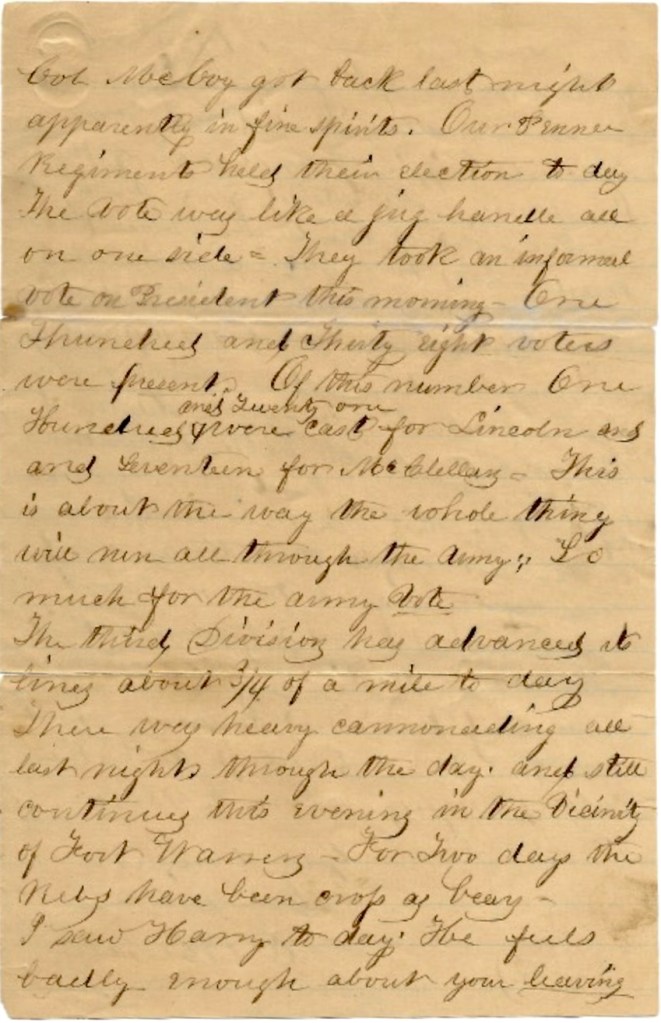
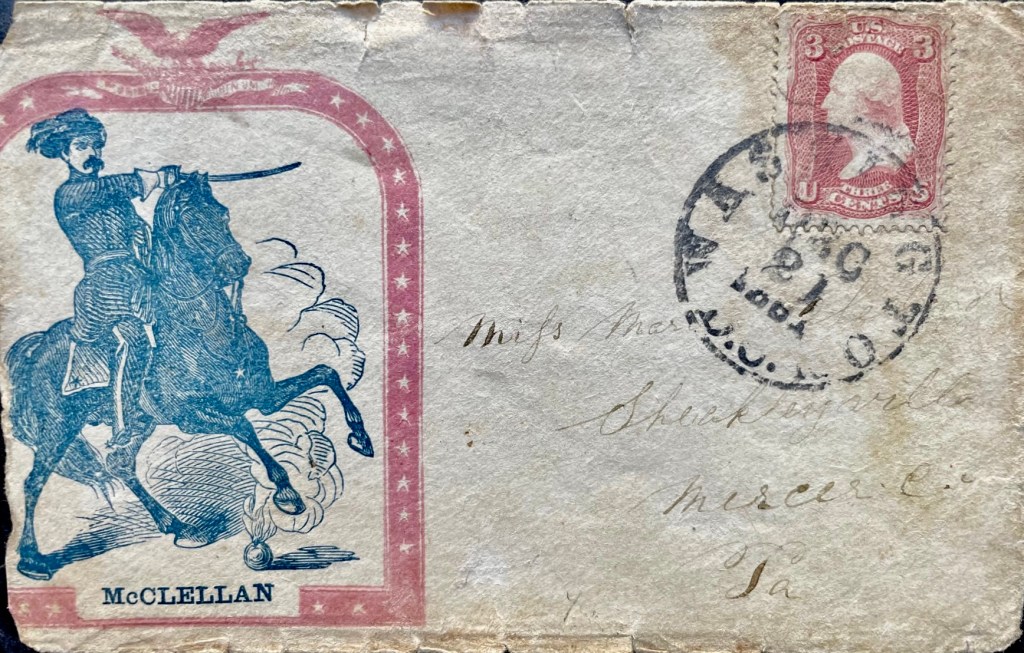
October 11, 1864. I have been at the front all day. Col. [DeWitt Clinton] McCoy 1 got back last night apparently in fine spirits. Our Pennsylvania regiments held their election today. The vote was like a jug handle—all on one side. They took an informal vote on President this morning. One hundred and thirty-eight voters were present. Of this number, one hundred and twenty-one were cast for Lincoln and seventeen for McClellan. This is about the way the whole thing will run all through the army. So much for the army vote.
“Our Pennsylvania regiments held their election today. The vote was like a jug handle—all on one side… So much for the army vote.”
— Chaplain O. B. Clark, 83rd Pennsylvania, 10 October 1864
The 3rd Division has advanced its lines about 3/4 of a mile today. There was heavy cannonading all last night, through the day, and still continues this evening in the vicinity of Fort Warren. For two days the Rebs have been cross as bears.
I saw Harry today. He feels badly enough about your leaving. They expected a great horse race today near the Yellow House 2 but for some reason it did not come off. General [Charles] Griffin’s gray was one of them.
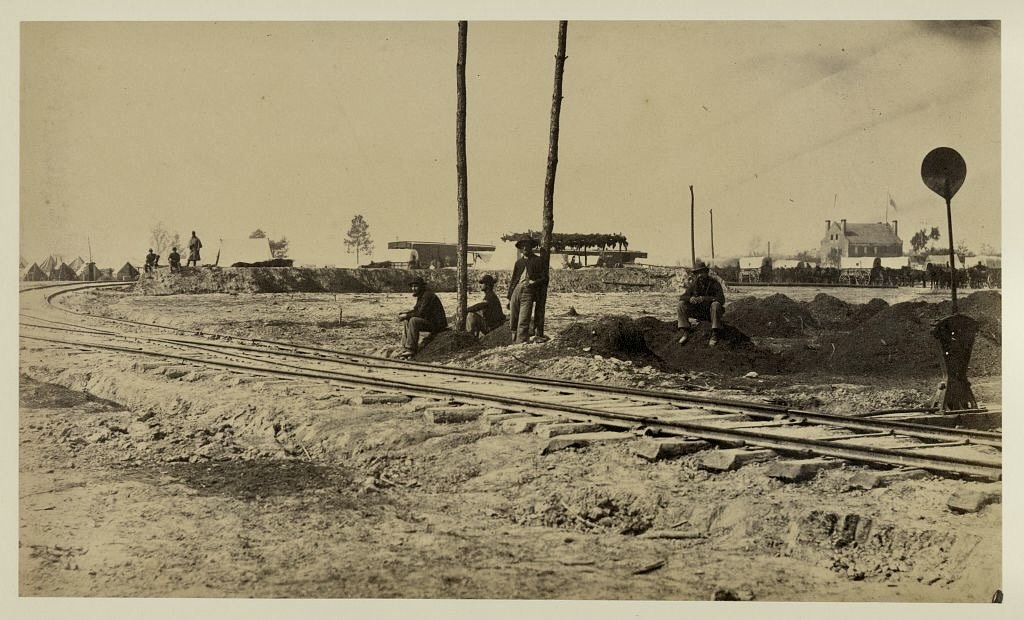
The Yellow House (Yellow Tavern) is seen in the distance at right.
Our lines now extend from the fork on the right of the Yellow House (Fort Wadsworth) to within a mile and a half of the South Side [Rail] Road. They cross the Vaughn Road; our left resting on the Plank Road running from Stono Creek to the Sout Side [rail] Road. We have a much better & healthier position than we had when you left. It is said the Rebs charged our center last night three times and were repulsed each time.
There, I have written enough for once I think. My health continues good. Tell Ma and Vernie not to worry about me for I am old enough to take care of myself. Love to Bill and all. Good night. Your Father, — O. B. Clark
Gen. Charles Griffin
(Write)
1 DeWitt Clinton McCoy (1824-1902) enlisted in the first year of the Civil War and was chosen captain of Company F., of the 83d Regiment of Pennsylvania Volunteers. In May 5, 1864, at the Battle of the Wilderness, owing to the loss of Colonel Woodward, he took command of the regiment as lieutenant colonel. His army record was a most excellent one and he received many times, deserved compliments from his superiors. He led a brilliant charge of the 83d at North Anna, May 23, 1864, which broke the Confederate Attack and saved the Federal lines. At Gaines’ Mill [on June 27, 1864], he received a severe wound. For years he absolutely refused to apply for a pension, but owing to failing health and advanced years, by special act of Congress at the last session he was placed upon the roll.
2 The “Yellow House” refers to the Globe Tavern which served as the Headquarters of the 6th Army Corps.
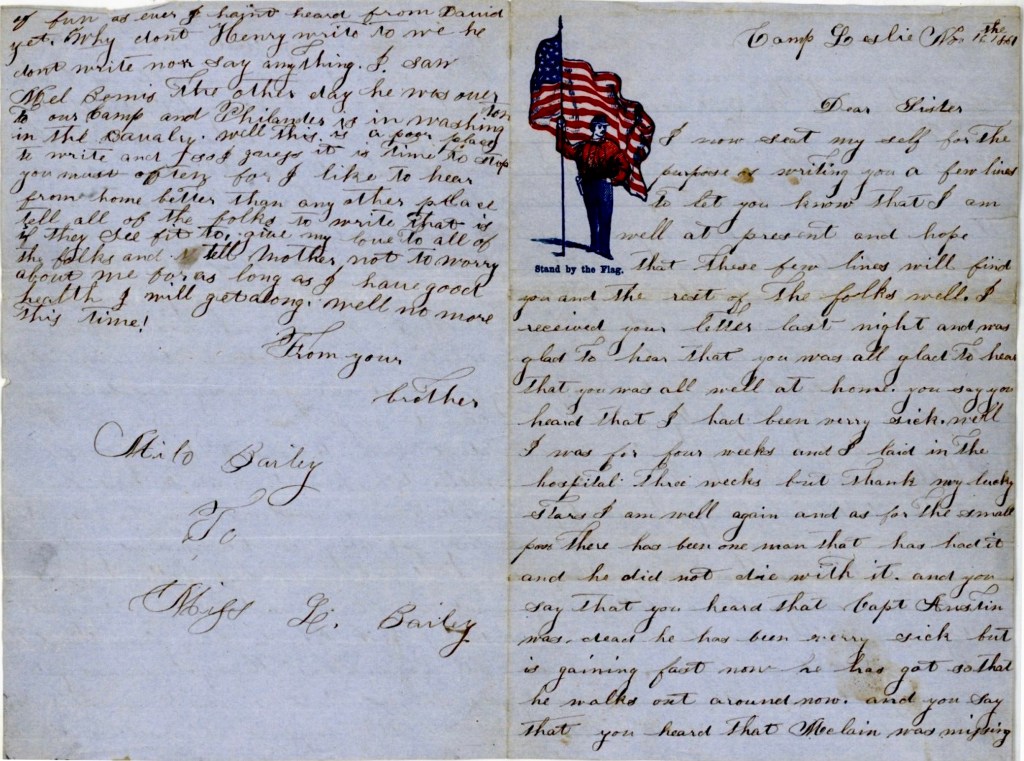
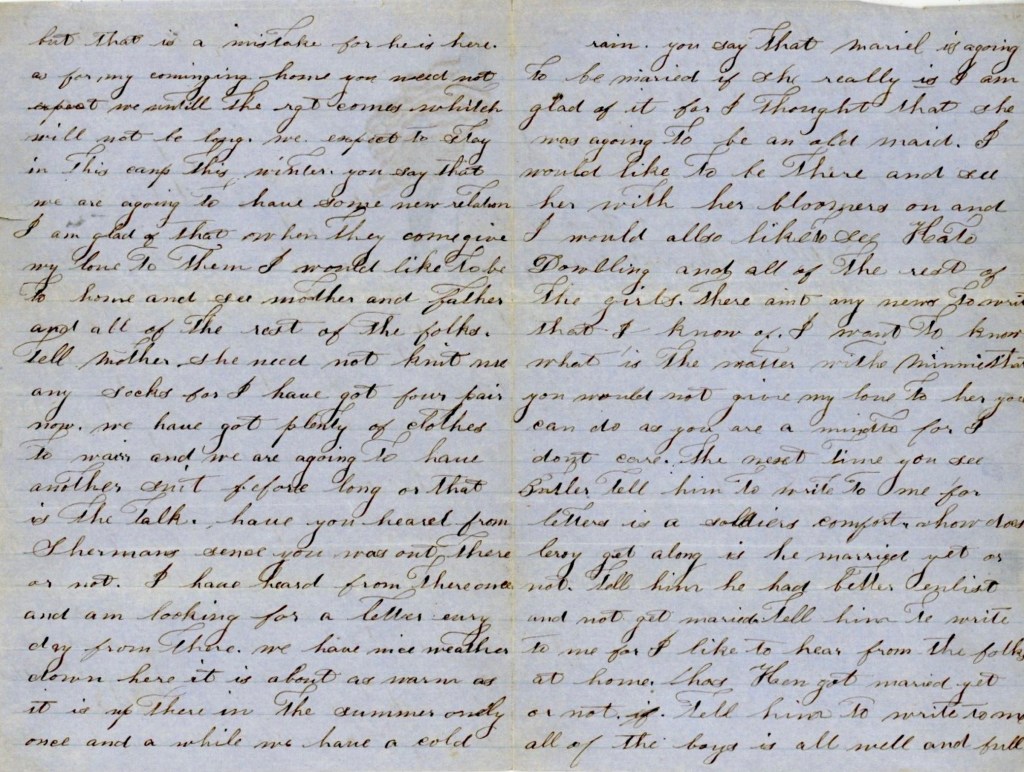
This letter was written by 16 year-old Milo Bailey (b. 1845) who enlisted as a private on 7 October 1861 At Wattsburg, Erie county, Pa. to serve in Co. K, 83rd Pennsylvania Infantry. Milo was wounded at the Battle of Gaines Mill on 27 June 1861 during the Peninsula Campaign and was discharged for wounds on 6 February 1863. He later reenlisted in February 1864 and was promoted to corporal of Co. B in March 1865. He mustered out of the regiment in late June 1865 as a veteran.
Transcription
Camp Leslie November 16th 1861
Dear Sister,
I now seat myself for the purpose of writing you a few lines to let you know that I am am well at present and hope that these few lines will find you and the rest of the folks well. I received your letter last night and was glad to hear that you was all well at home. you say you heard that I had been sick. Well I was for four weeks and I laid in the hospital three weeks but thank my lucky stars, I am well again and as for the small pox, there has been one man that has had it and he did not die with it.
And you say that you heard that Capt. [Thomas M.] Austin was dead. He has been very sick but is gaining fast now. He has got so that he walks out around now. And you say that you heard that McClain was missing but that is a mistake for he is here. As for my coming home, you need not expect me until the regiment comes which will not be long. We expect to stay in this camp this winter.
You say that we are agoing to have some new relation. I am glad of that. When they come, give my love to them. I would like to be to home and see mother and father and all of the rest of the folks. Tell mother she need not knit me any socks for I have got four pair now. We have got plenty of clothes to wear and we are agoing to have another suit before long—or that is the talk. Have you heard from Sherman since you was out there or not? I have heard from there once and am looking for a letter every day from there.
We have nice weather down here. It is about as warm as it is up there in the summer, only once and a while we have a cold rain. You say that Mariel is agoing to be married. If she really is, I am glad of it for I thought that she was agoing to be an old maid. I would like to be there and see her with her bloomers on and I would also like to see Kate Dowling and all of the rest of the girls. There ain’t any news to write that I know of. I want to know what is the matter with Minnie that you would not give my love to her. You can do as you are a mind to for I don’t care. The next time you see Butler, tell him to write to me for letters is a soldier’s comfort. How does Leroy get along? Is he married? Tell him to write to me for I like to hear from the folks at home…
All of the boys is all well and full of fun as ever. I hain’t heard from David yet. Why don’t Henry write to me? He don’t write nor say anything. I saw Mel Bemis the other day. He was over to our camp and Philander is in Washington in the cavalry. Well, this is a poor place to write and so I guess it is time to stop. You must [write] often for I like to hear from home better than any other place. Tell all of the folks to write—that is, if they see fit to. Give my love to all of the folks and tell mother not to worry about me for as long as I have good health, I will get along. Well not more this time!
The following letters were written by Arthur Kelty Cleeland (1844-1862), the son of John Cleeland (1811-1909) and Elizabeth (“Betsy”) Morrison of Portersville, Butler county, Pennsylvania
It was the 3rd of September, 1861, when 17 year-old Arthur enlisted as a private in Co. F, 83rd Pennsylvania Infantry. He died at Harrison’s Landing, Virginia, on 5 August 1862. His remains lie under grave no. 47 in Section of the Glendale National Cemetery.
“The 83rd Pennsylvania was officially organized in the late summer of 1861 after the Union defeat at the Battle of First Bull Run and was composed of men from northwestern Pennsylvania. The regiment arrived in Washington City on September 20, 1861, where they received their uniforms and old Harper’s Ferry firearms. On October 1, the regiment crossed the Long Bridge into Virginia, spent a few days at Arlington Heights, and then moved a few miles west to Hall’s Hill where they joined the Third Brigade of General Fitz-John Porter’s Division of the Army of the Potomac. New Springfield rifles replaced the old firearms. The 83rd trained and drilled for five and a half months at Hall’s Hill during the winter and early spring of 1861-1862.” (Source: Amos Judson, History of the 83rd Regiment Pennsylvania Volunteers, 1865).
The 83rd Pennsylvania was a participant in the Peninsula Campaign and fought in the Seven Days Battles, most notably at Gaines’ Mill on 27 June 1862 where they suffered significant casualties. Many men not suffering casualties fell ill during the campaign—one of whom was Arthur.
[Note: The following letters are from the personal collection of Greg Herr and were offered for transcription and publication on Spared & Shared by express consent.]
Letter 1
October 15, 1861
Dewar Parents,
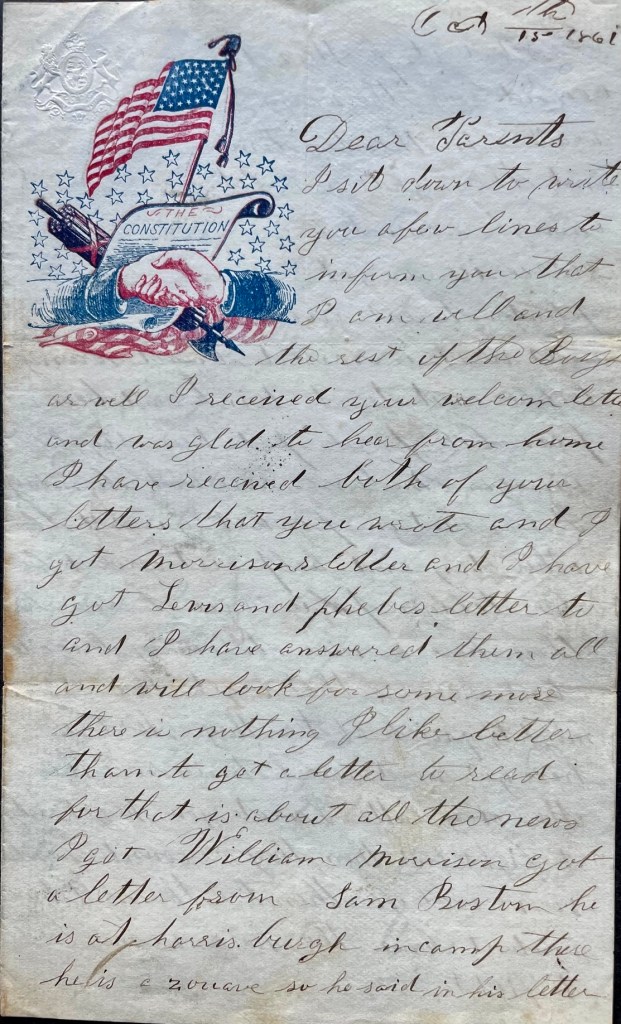
I sit down to write you a few lines to inform you that I am well and the rest of the boys are well. I received your welcome letter and was glad to hear from home. I have received both of your letters that you wrote and I got Morrison’s letter 1 and I have got Lewis and Phebe’s letter too and I have answered them all and will look for some more. There is nothing I like better than to get a letter to read for that is about all the news I get. William Morrison got a letter from Sam Boston. He is at Harrisburg in camp there. He is a Zouave, so he said in his letter.
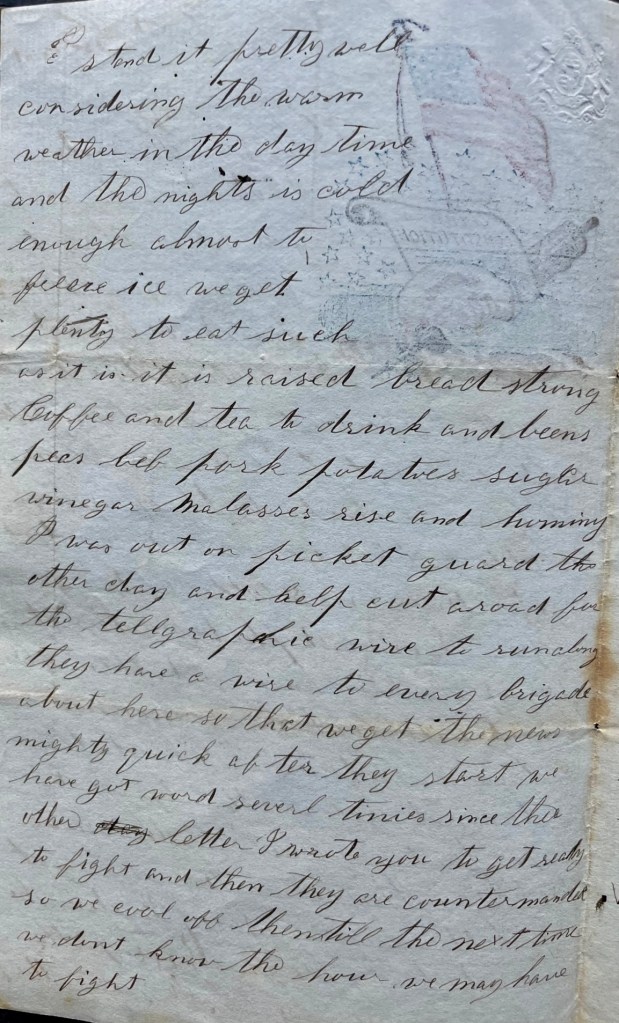
I stand it pretty well considering the warm weather in the day time and the nights is cold enough almost to freeze ice. We get plenty to eat, such as it is. It is raised bread, strong coffee and tea to drink, and beans, peas, beef, pork, potatoes, sugar, vinegar, molasses, rice, and hominy.
I was out on picket guard the other day and help cut a road for the telegraphic wire to run along. They have a wire to every brigade about here so that we get the news mighty quick after they start. We have got word several times since the other letter I wrote you to get ready to fight and then they are countermanded so we cool off then until the next time. We don’t know the hour we may have to fight.
Wm. Morrison Cleeland wearing his VRC Uniform
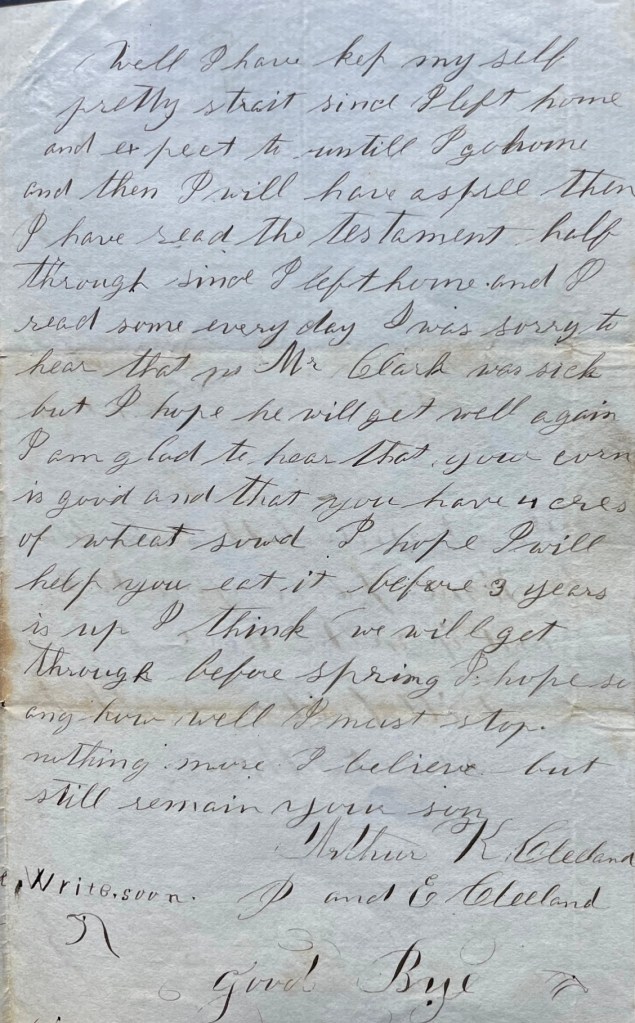
Well, I have kept myself pretty straight since I left home and expect to until I get home and then I will have a spree then. I have read the testament half through since I left home and I read some every day. I was sorry to hear that Mr. Clark was sick but I hope he will get well again. I am glad to hear that your corn is good and that you have 4 acres of wheat sowed. I hope I will help you eat it before three years is up. I think we will get through before spring. I hope so anyhow. Well, I must stop. Nothing more I believe but still remain your son, — Arthur K. Clelland
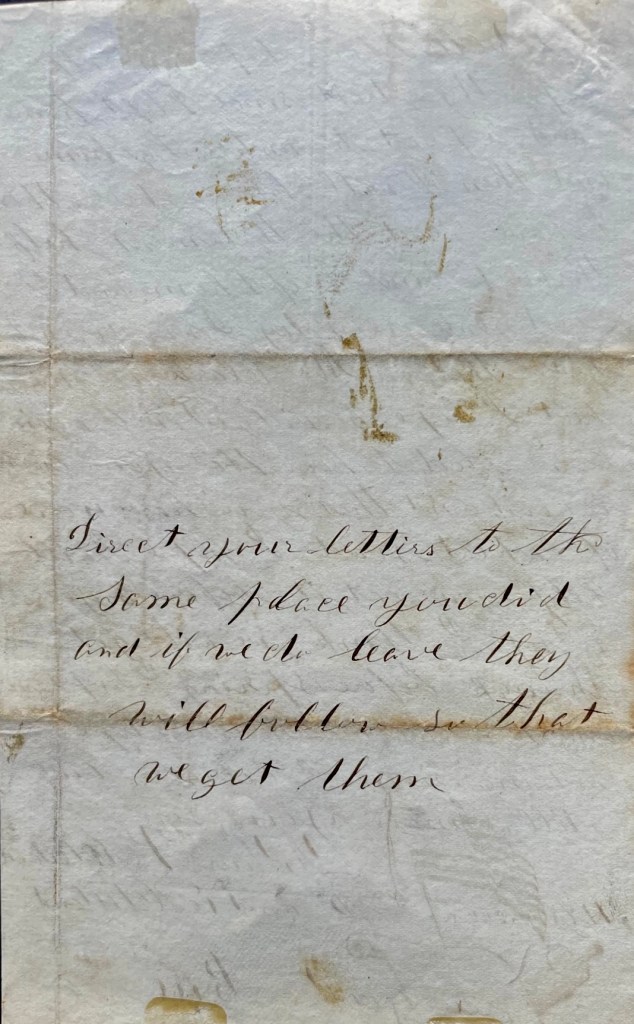
Write soon. Goodbye. Direct your letters to the same place you did and if we do leave, they will follow so that we get them.
[to] J. and E. Clelland
1 William Morrison Cleland (1838-1920) was Arthur’s older brother. He too served in the Union army—enlisting in Co. G, 155th Pennsylvania Infantry in August 1862. He was transferred to the VeteranReserve Corps in July 1863 after he injured his right foot leaping off a railroad car.[See William M. and Arthur K. Cleeland]
Letter 2
Dear sister,
I received your kind letter the 20th of this month which I perused with much pleasure. Well, Maria, here is the stars and stripes a little plainer that that flag of yours. You must try and raise better flag than that. Well, we are still here yet and how long we will stay, I don’t know. I am well and in good spirits and feel like fighting very much. The company was all measured the other day and I measured 6 feet and one inch. I stretched one inch and a half since I left home. Tell [brother] Morrison that I am the biggest man.
Well, that news about Fort Sumter being taken and Charleston being bombarded I guess is not so (but I wish it was). Yesterday we had a big review of about 75 thousand men of war besides about 25 thousand spectators. I tell you, it was a sight to see about 100 thousand all in one field of 6 or 7 hundred acres. Well, nothing more about that.
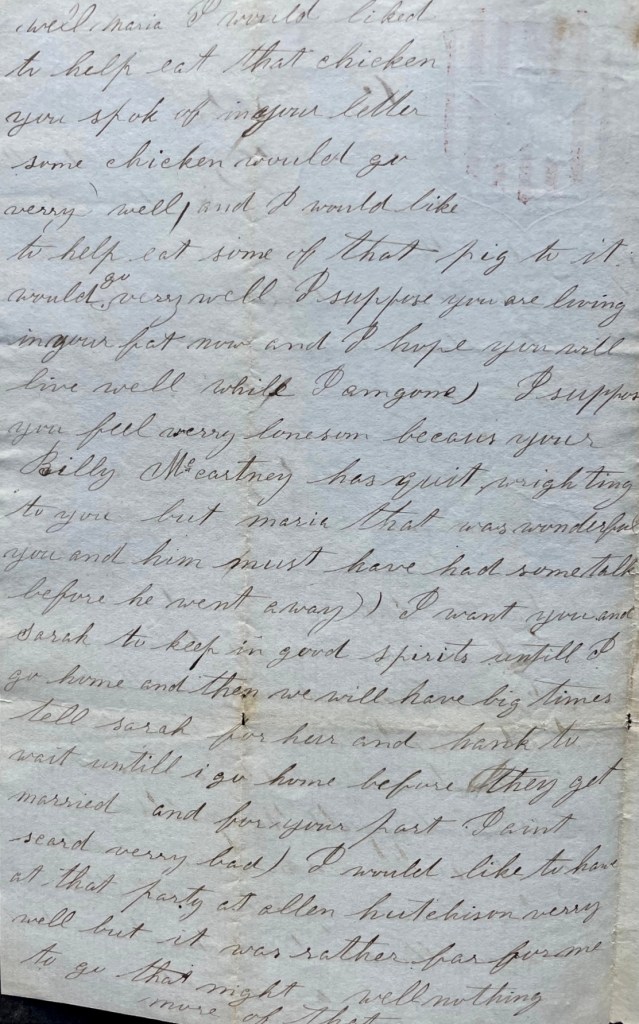
Well, Maria, I would liked to help eat that chicken you spoke of in your letter. Some chicken would go very well and I would like to help eat some of that pig to it would go very well. I suppose you are living in your fat now and I hope you will live well while I am gone. I suppose you feel very lonesome because your Billy McCartney has quit writing to you. But Maria, that was wonderful. You and him must have had some talk before he went away. I want you and Sarah to keep in good spirits until I go home and then we will have big times. Tell Sarah for her and Hank to wait until I go home before they get married and for your part, I ain’t scared very bad. I would like to have [been] at that party at Allen Hutchinson’s very well but it was rather far for me to go that night. Well, nothing more of that.
Well, [we] have not got our pay yet but expect to get it this week and we are to get a new suit of Zouave uniform this week and then we will be about right. When I get my money, I will get my picture taken and send it home to father and mother. I expect I will get it taken on copper plate and then I can send it in a letter and it won’t cost much.
That poetry you composed done very well considering who done it. Now I will write a few lines in poetry shape. This is the first verse.
Home again, home again From a foreign shore, And oh, it fills my sole with joy To meet my friends once more.
Here I dropped the parting tear To cross the ocean foam, But now I am once again with those Who kindly greet me home.
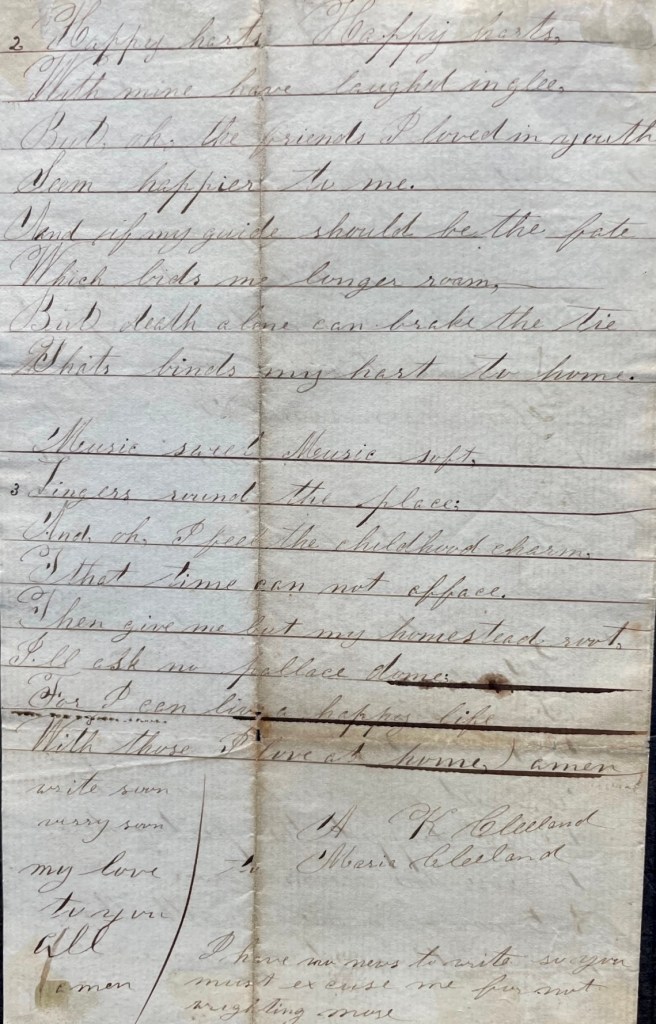
2. Happy hearts, happy hearts With mine have laughed in glee, But oh the friends I loved in youth Seem happier to me.
And if my guide should be the fate Which bids me longer roam, But death alone can break the tie That binds my heart to home.
3. Music sweet, music soft, Lingers round the place, And oh, I feel the childhood charm That time cannot efface. Then give me but my homestead root I’ll ask no palace dome, For I can live a happy life With those I love at home. Amen. 1
— A. K. Cleeland
[to] Maria Cleeland
Write soon. My love to you all. Amen. I have no news to write so you must excuse for not writing more.
1 “Home again, Home again, from a foreign shore” was a tune composed by Marshall Spring Pike (words & music) in 1850. It was published in Boston but dedicated to Lizzie C. Oakes of Charleston, S. C.—the city that Arthur was sorry to hear had not been bombarded.
Letter 3
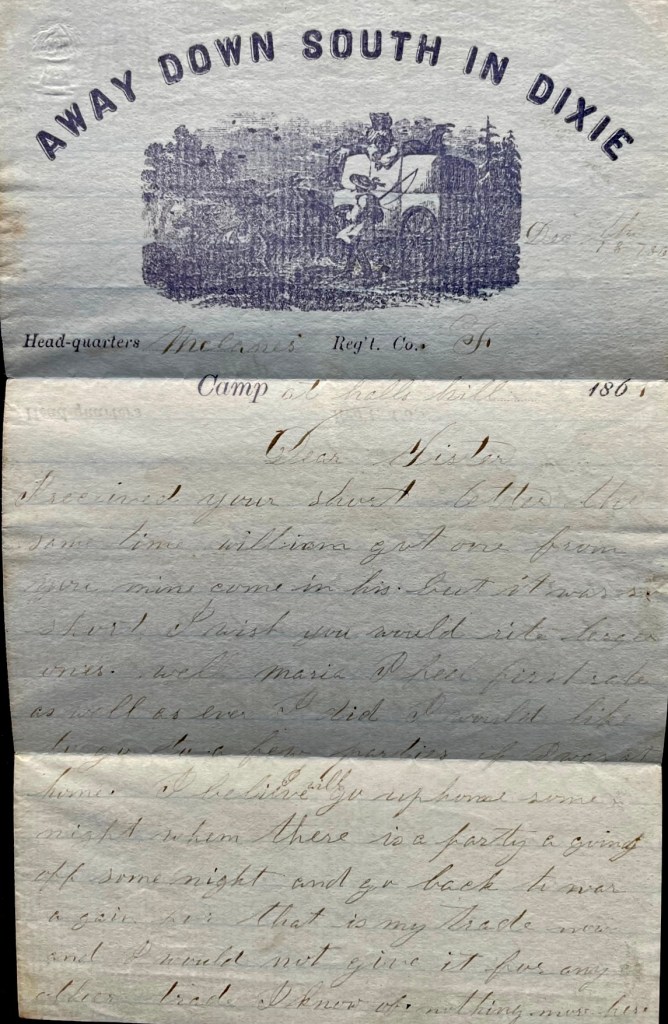
McLane’s Regiment Camp at Hall’s Hill December 18, 1861
Dear Sister,
I received your short letter the same time William got one from you. Mine come in his but it was so short I wish you would write larger ones. Well, Maria, I feel first rate as well as ever I did. I would like to go to a few parties if I was at home. I believe I will go up home some night when there is a party a going off some night and go back to war again for that is my trade now and I would not give it [up] for any other trade I know of. Nothing more here.
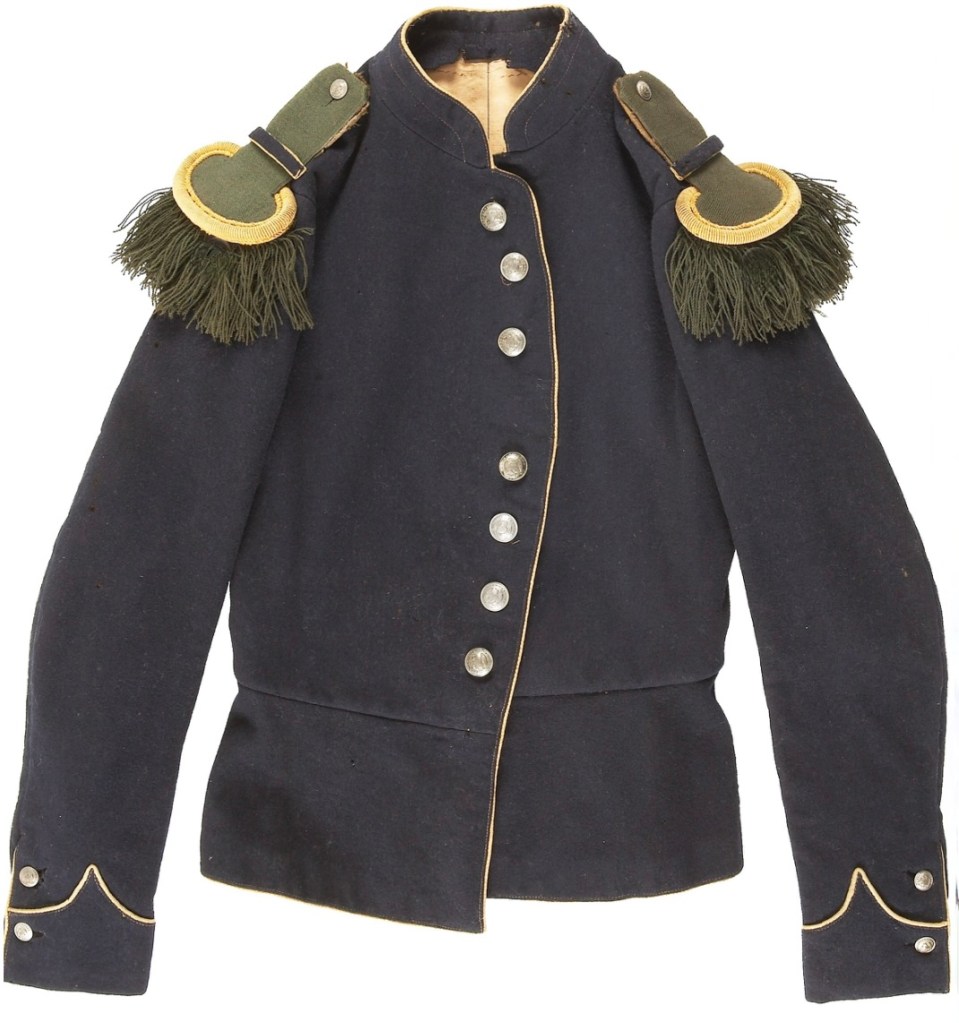
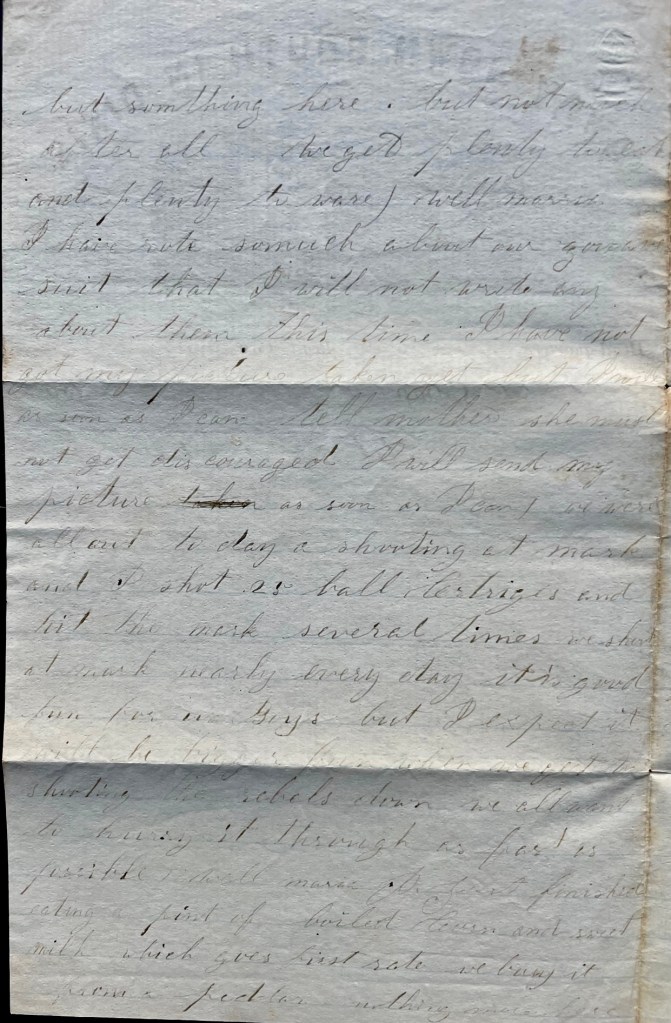
But something here—but not much after all. We get plenty to eat and plenty to wear. Well, Maria, I have wrote so much about our Zouave suit that I will not write any about them this time. I have not got my picture taken yet but I will as soon as I can. Yell mother she much not get discouraged. I will send my picture as soon as I can.
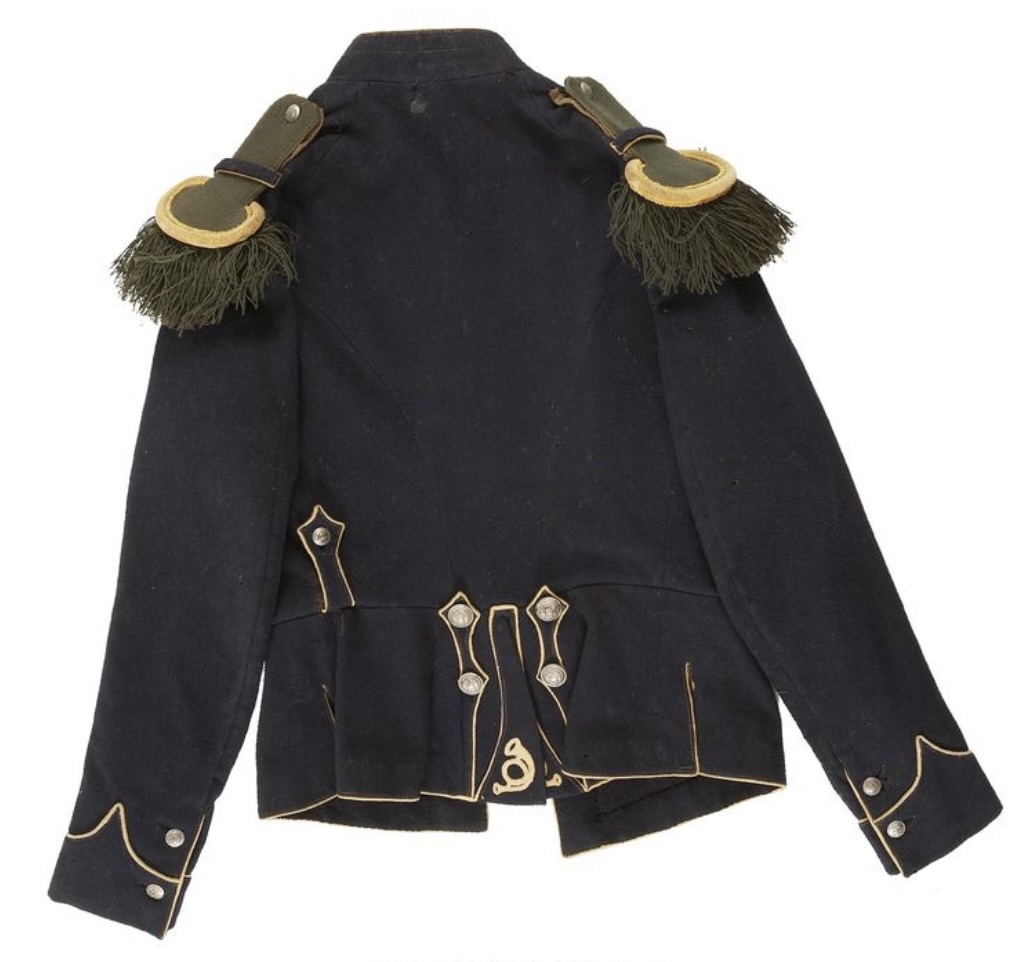
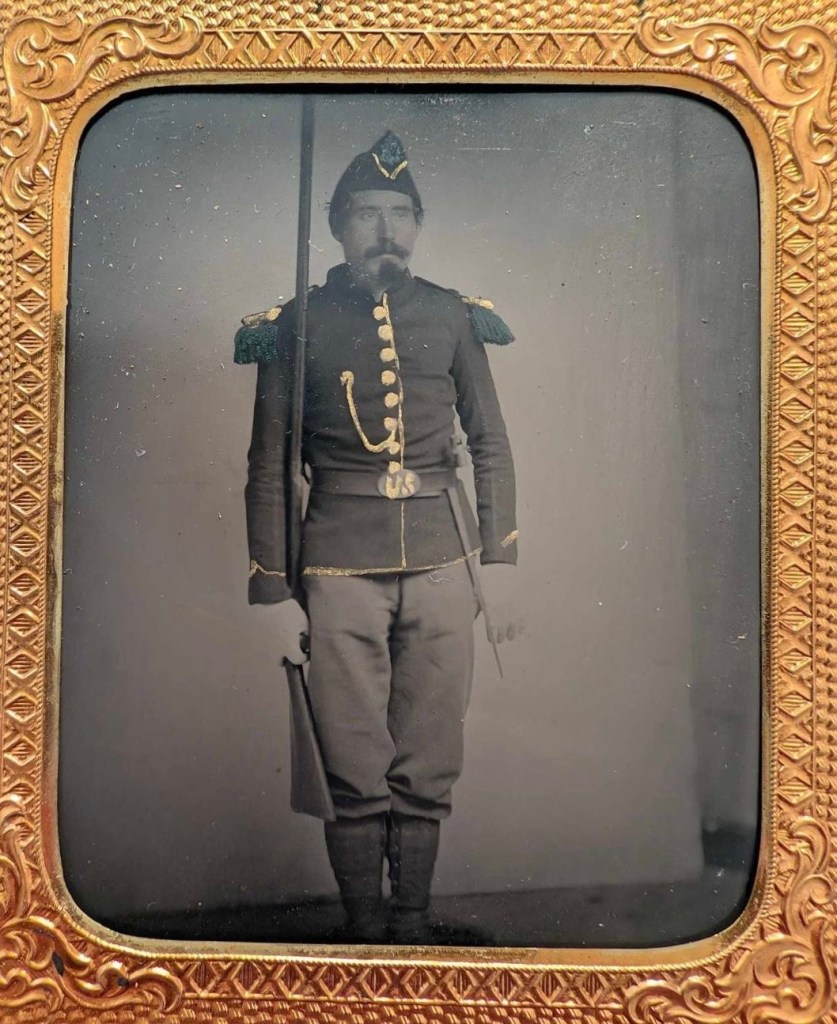
The French Chasseur Jacket issued to the 83rd Pennsylvania in 1861-62.
We were out all day a shooting at mark and I shot 25 ball cartridges and hit the mark several times. We shoot at marks nearly every day. It is good fun for us Boys but I expect it will be bigger fun when we get to shooting the rebels down. We all want to hurry it through as fast as possible.
Well, Maria, I just finished eating a pint of boiled corn and sweet milk which goes first rate. We buy it from a pedlar. Nothing more here.
But maybe I can write some more here. Well, Maria, I have shaved all my whiskers off but a few on the point of my chin and they are one inch long. The weather is very nice and warm. We have got a little stove in our tent and it keeps us all warm. I think we can winter here first rate.
Well, Maria, Bill Ayers is bothering me so that I can’t write and I just told him to wait until I got done writing and then I would pay him off but he is gone now and I will finish my letter. We are all Bad Boys in this tent and we are all well. Nothing more, I believe. But write soon and write a big letter. Now I have to drill. Goodbye. I remain your brotther, — A. K. Cleeland
[to] Maria Cleeland
Letter 4
Letterhead Image on Arthur’s Stationery
McLane’s Regiment Camp at Hall’s Hill December 23rd 1861
Dear Parents,
I take pleasure in writing you a few lines to let you know how I am getting along. I am well and hope these few lines will find you in the same state of health. The rest of the Perry boys is well at present.
Well, father, we had a big review the 21st of this month. We had our new suits on and it looked very well. There was about 12 thousand infantry and two thousand of cavalry and 3 or 4 thousand of artillery and all together made quite a show and one of our United States Senators presented to our regiment a new flag which was a nice one and he presented one to Colonel Black’s regiment. We was reviewed by Gen. McClellan. We marched in columns before him once in common time and once in double quick time. We have big times here.
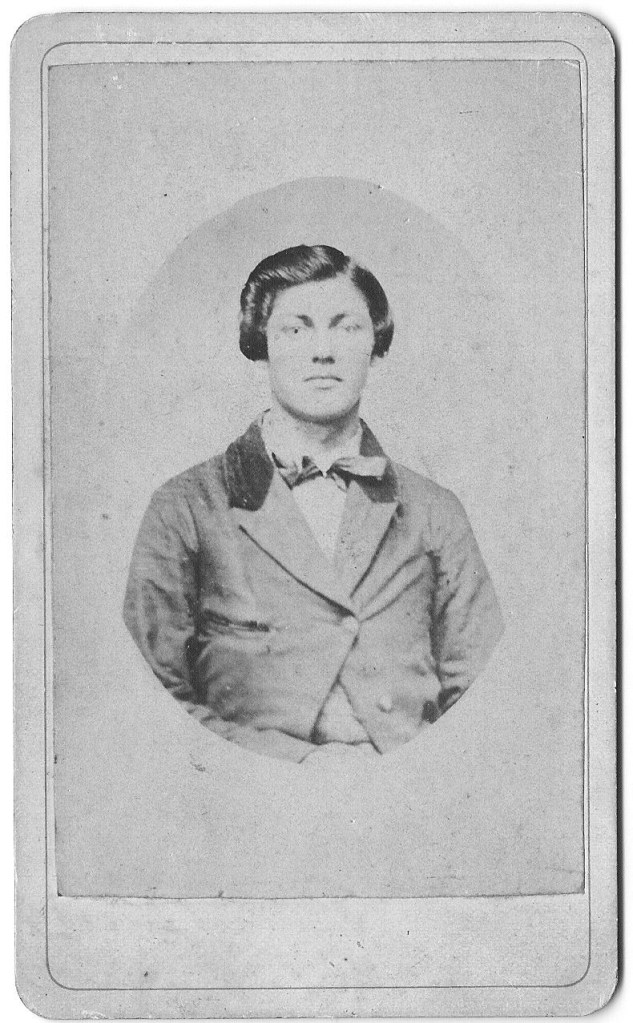
Well, mother, I have sent you my picture. It got it taken sitting. I thought it would look better for I seen some that was standing and they [were not very well taken so I got mine taken sitting. You will take notice to my whiskers on each corner of my chin. I have shaved off but a little on my chin. I did think they would not take but they did. You will see my hat and plume on my knee and my watch chain on my side and you will see fight in my eye, This is our dress coat and hat.
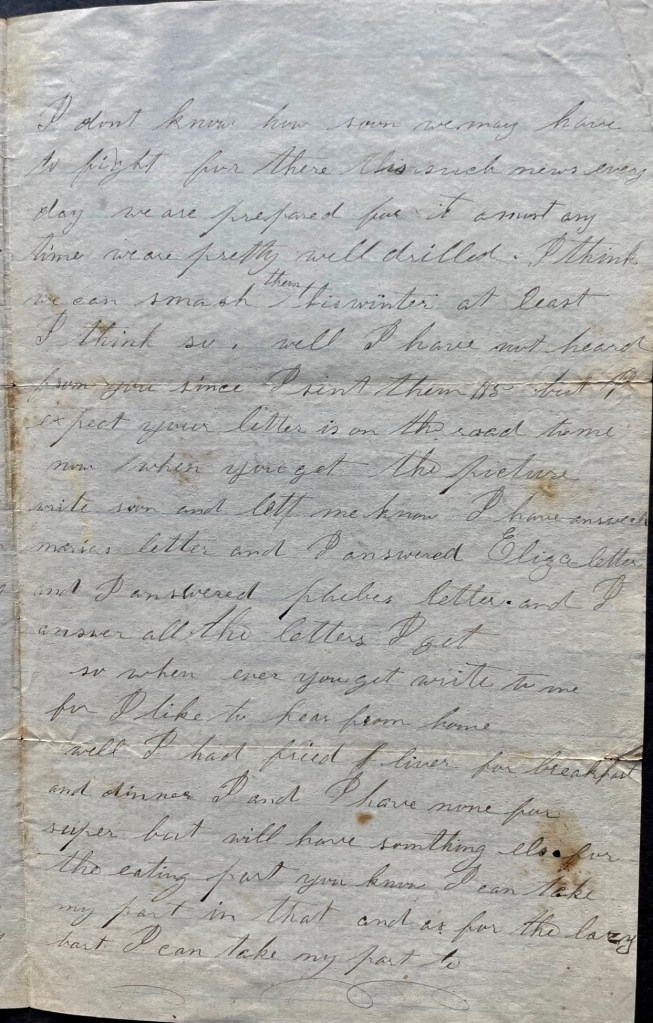
I do not know how soon we may have to fight for there is such news everyday. We are prepared for it amost any time. We are pretty well drilled. I think we can smash them this winter—at least I think so. Well, I have not heard from you since I sent them $5 but I expect your letter is on the road to me now. When you get the picture, write soon and let me know. I have answered Maria’s letter and I answered Eliza’s letter and I answered Phebe’s letter and I answer all the letters I get. So whenever you get [one], write to me for I like to hear from home.
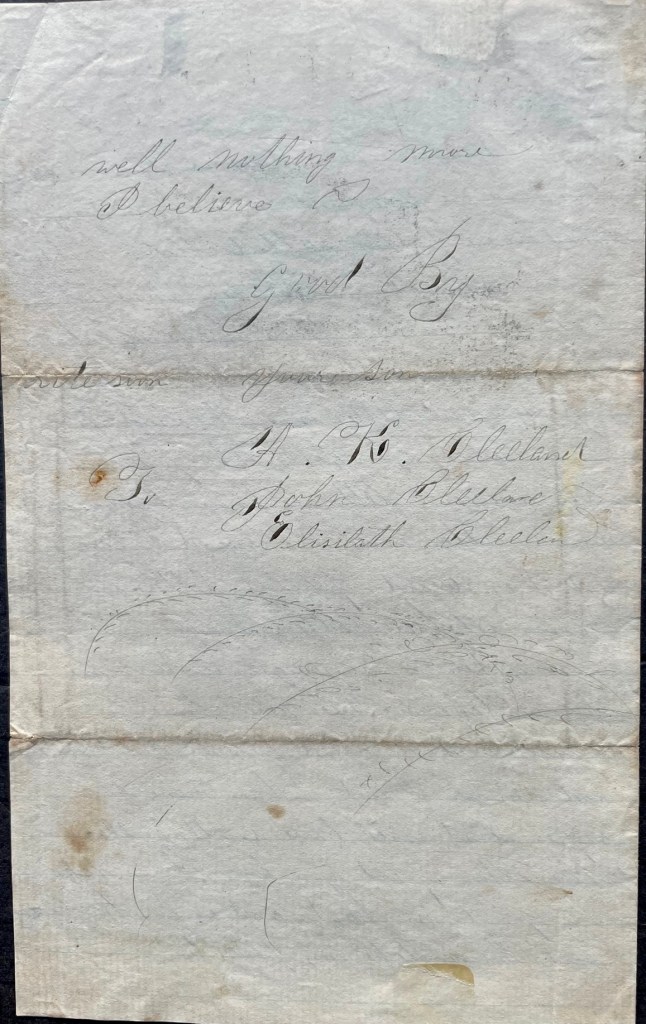
Well, I had fried liver for breakfast and dinner. I have none for supper but will have something else for the eating part. You know I can take my part in that and as for the lazy part, I can take my part too. Well, nothing more I believe. Goodbye. Your son, — A. K. Cleeland
To John Cleeland and Elizabeth Cleeland
An image of an unidentified member of the 83rd Pennsylvania wearing the French Chasseur Jacket (Doc Krausz Collection, shared on Civil War Faces)
Letter 5
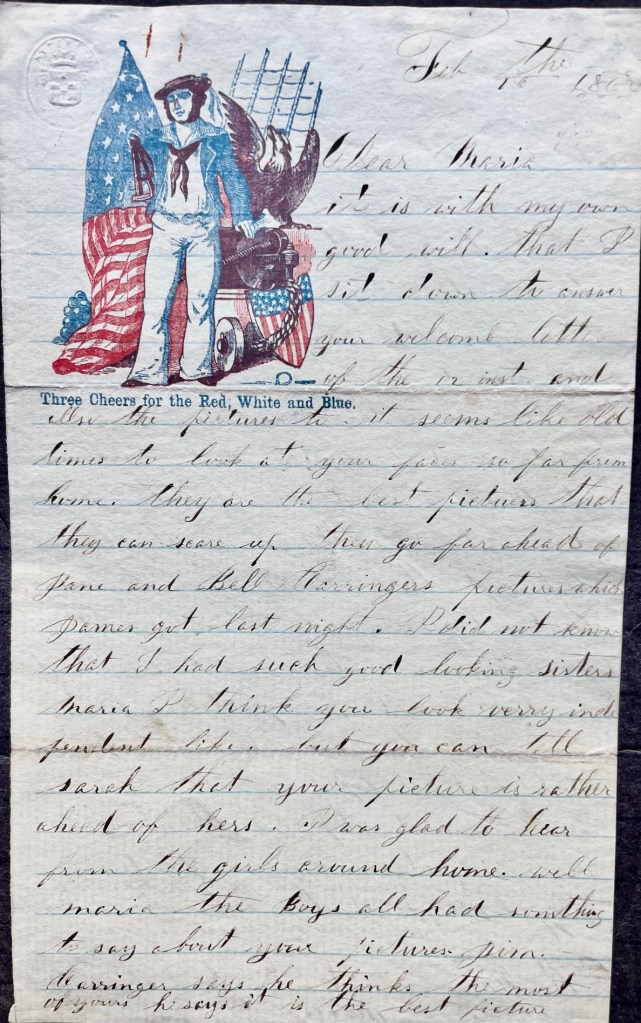
February 16th 1862
Dear Maria,
It is with my own good will that I sit down to answer your welcome letter of the 12th inst. and also the pictures too. It seems like old times to look at your faces so far from home. They are the best pictures that they can scare up. They go far ahead of Jane and Bell Carringer’s pictures which James got last night. I did not know that I had such good-looking sisters. Maria, I think you look very independent like. But you can tell Sarah that your picture is rather ahead of hers. I was glad to hear from the girls around home. Well, Maria, the Boys all had something to say about your picture. Jim Carringer says he thinks the most of yours. He says it is the best picture.
Well, I am well indeed. I fill first rate. I never had such good health before. I believe I could eat about a bushel of good things. The Boys is all well.
The weather is pretty cold today. I was on guard last night and I came off of guard this morning at 9 o’clock. Well, Maria, I have 7 letters to answer today and tomorrow and I will have [to] cut them off short by the tail. I will write Sarah a few lines on the other half sheet and then I will have to answer that letter Slemens wrote. It is an old buster. When you write, I want you to tell me how much your pictures cost. I was sorry to hear that Clinton was sick but I hope he will get better. Well, I must stop. I thank you very much for the picture. You must excuse me for not writing more for I will send two more home besdies this. Nothing more. I remain your brother, — A. K. Cleeland
The following letter was written by Orlando S. Kinnear (1843-1921) to his wife Helen Prudence Kinnear (1845-1919) of Erie, Erie county, Pennsylvania. When Orlando enlisted in February 1862, Co. I, 83rd Pennsylvania, he was described as standing 5′ 5″ tall, with black hair and grey eyes. Occupation? “Mason,” Orlando told the recruiter. Though wounded at Chancellorsville in May 1863, Orlando recovered and reenlisted in February 1864. He rose steadily in the ranks; promoted from corporal to sergeant and finally to 1st Sergeant before mustering out of the regiment in Co. C. In later years, Orlando resided in Erie and found employment as a machinist.
Orlando’s letter, penned in the heat of the 1864 political campaign, encapsulates the prevailing sentiment among the soldiers in the Army of the Potomac. A significant number of them passionately supported their former leader “Little Mack,” only to feel disillusioned by the Democratic Convention in Chicago. Many perceived the convention’s stance as a form of capitulation to the South, sparking intense debate and discontent among the troops.
“Compromise with the South, dedicated to the Chicago Convention” Harper’s Weekly
[Note: This letter is from the private collection of James Campbell and was transcribed and published on Spared & Shared by express consent.]
Transcription
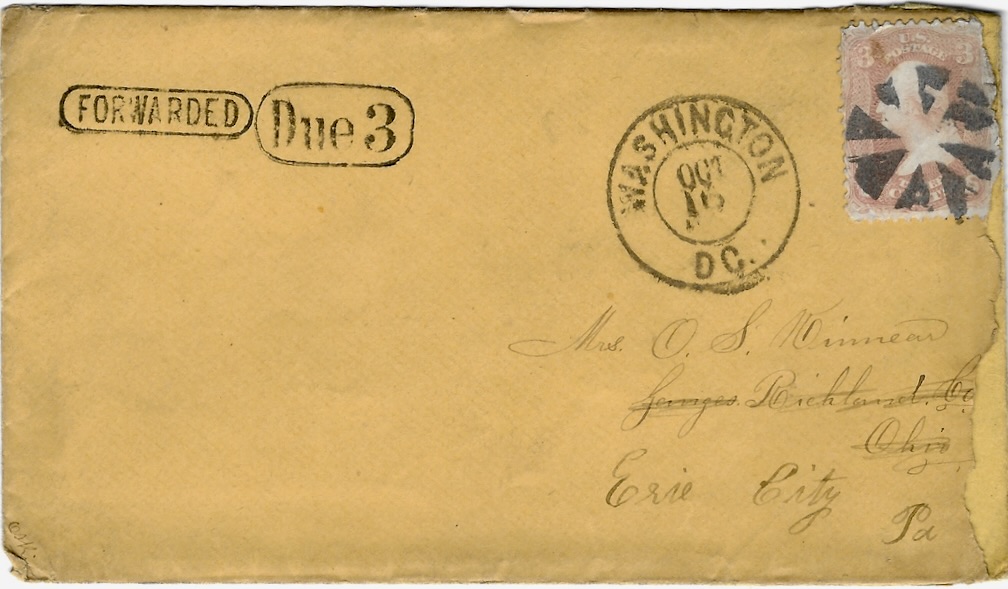
Addressed to Mrs. O. S. Kinnear, Erie City, Pa.
Camp of the 83rd Battalion P. V. V. Near Petersburg, Va. October 13th 1864
My Dear Wife,
I hasten to reply to your welcome letter bearing the date of October 5th which is now before me, It reached me the 11th but I have neglected writing until now which will make my reply seem a long time coming. This leave me well and I sincerely hope it may find you and not troubled with that tegeious [tedious] headache for I know how you suffer when you have it. O, Helen, if you was as healthy as I am, what would I give. As it is, you must be careful and not make yourself sick bu too much exercise. Enough of this—it is old and I have told you often but cannot help reminding you of it for I know you are not as careful as you should be, are you dear.
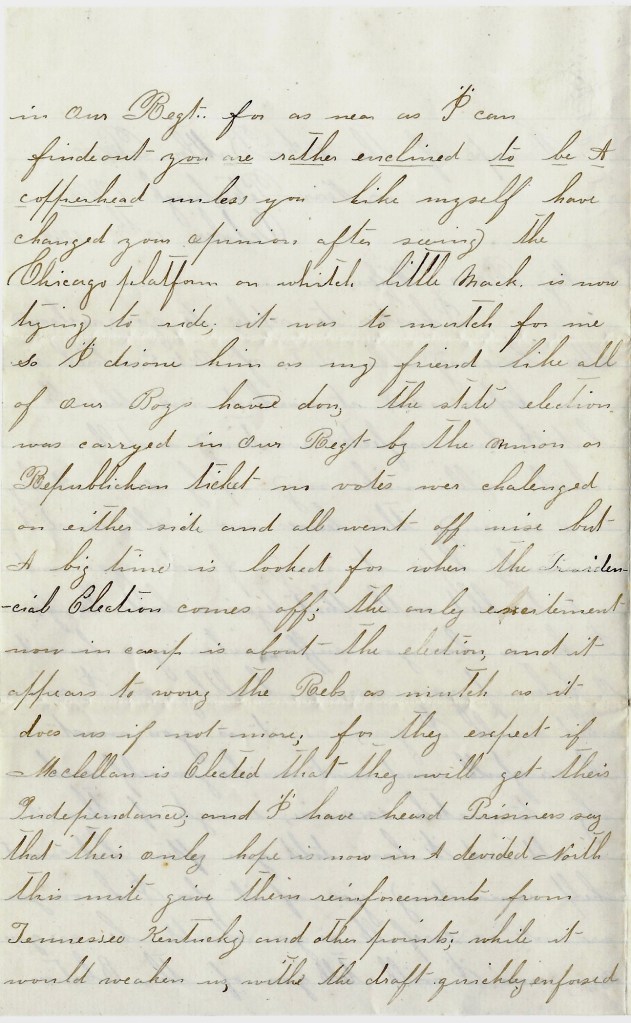
Now, I will tell you of the election in our regiment for as near as I can find out, you are rather inclined to be a copperhead unless you, like myself, have changed your opinions after seeing the Chicago platform on which Little Mack is now trying to ride. It was too much for me so I disown him as my friend like all of our Boys have done. The state election was carried in our regiment by the Union or Republican ticket. No votes were challenged on either side and all went off nice. But a big time is looked for when the Presidential Election comes off. The only excitement now in camp is about the election and it appears to worry the Rebs as much as it does us—if not more—for they expect if McClellan is elected, that they will get their independence. And I have heard prisoners say that their only hope is now in a divided North. This might give them reinforcements from Tennessee, Kentucky, and other points, while it would weaken us with the draft quickly enforced. They would become encouraged and fight ore desperate than ever. But I have little fear of this for I do not think the North has become so corrupt as all this comes to. If it has, the quicker I get out of this, the better and I do not think I would be alone in the getting out—out of this U. S. into some parts unknown to minié ball and solid shot that always find a person in Virginia, ad have followed Rebs to Pennsylvania.
I can see nothing of great importance going on here at the present time worth writing you about but can hear an occasional shell bursting somewhere in the vicinity of the 3rd Brigade and the report of a gun near Petersburg to let us know that the Rebs are still alive and occupy the desired City. But they get three for every one they throw at us. I think it must annoy the ladies some if there is any in the town, though they may be of good stuff and can stand fire. I hope they are, for I intend to make them a visit some of these days and should be very much disappointed if they were all shelled out. The Rebs say there is some gay ones there and they are wishing every day that the yanks would come and fetch them some coffee and sugar, This you see will save our greenbacks to buy rum when we get sick. I never get sick so my greenbacks will be of no use to me and I can send them all to you. Will not that be old gay, dear, to have the Rebs ask for peace and lay down their dirty rag?
The lines you sent me in print are nice but I have no recollection of writing them though I might have wrote them when I had one of them to upon my work. Nellie, I am going to vote for Honest Abe and I hope you will assure me in your next that you have forgotten Mack as a candidate for President or I shall consider you my little copperhead yet so you can send me that photo or have you cut them off again. O, if you have, I will do something that you will not want me to. Enclosed you will find a group of our officers. Gen. Warren is our Corps Commander. He is half Indian. Remember me to your sister and all the girls. Also yourself, accept my love and kind regards.
I remain as ever your affectionate husband, — O. S. Kinnear
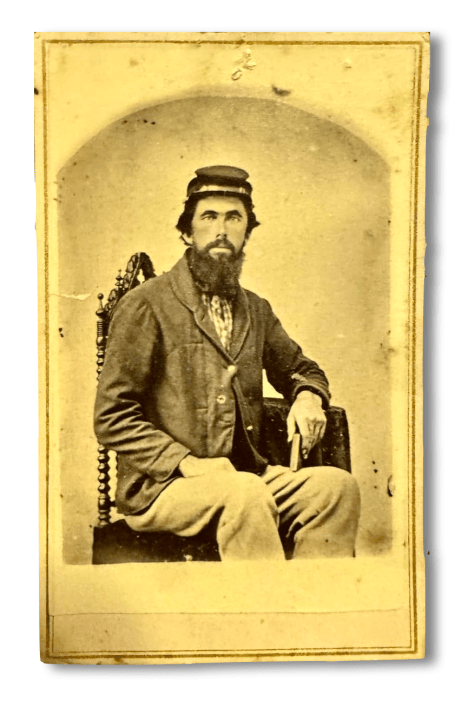
I could not find an image of Jacob but here is one of Albert C. Wentz who served in Co. F, 83rd Pennsylvania Infantry.
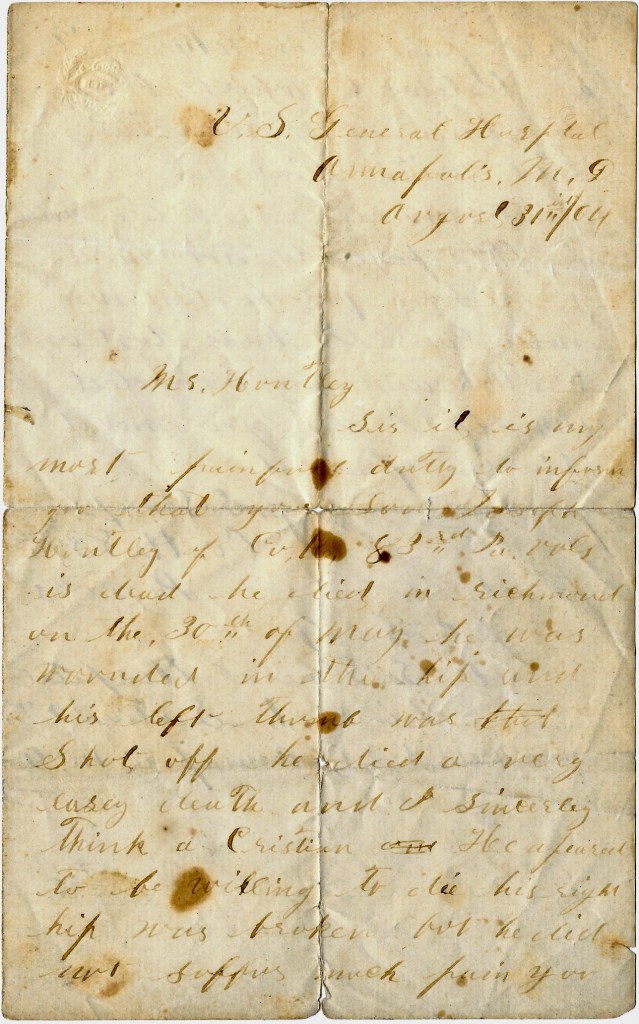
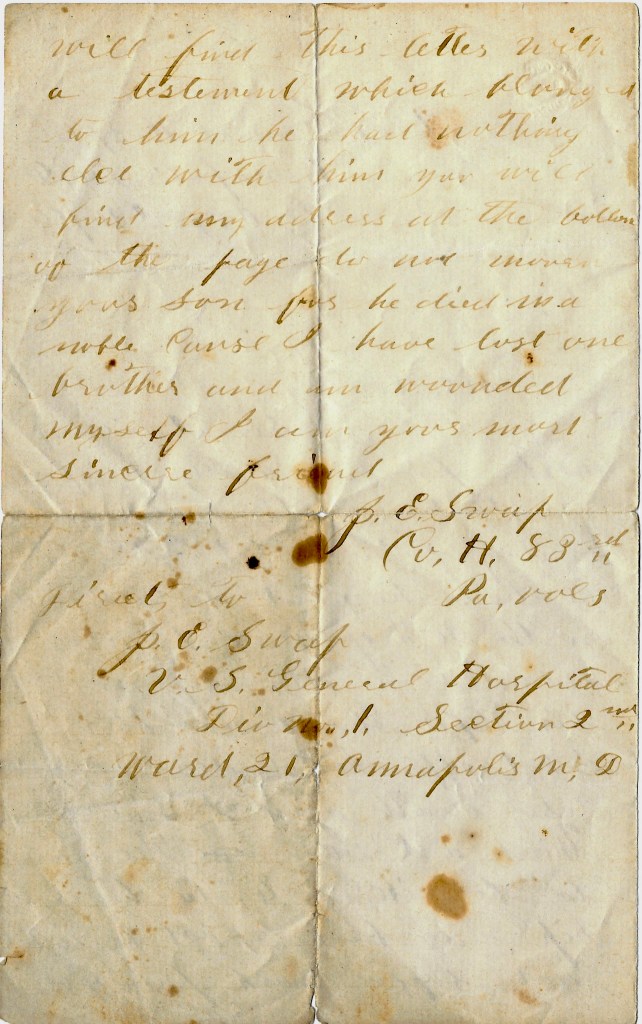
The following letter was written by Jacob E. Swap (1846-1925), the son of William Swap (1807-1881) and Amanda Karl (1805-1881) of Crawford county, Pennsylvania. Jacob was born in August 1846 and had only turned 15 years old when he enlisted as a private in Co. H, 83rd Pennsylvania Infantry. Jacob served completely through the war and entered the Wilderness Campaign as a seasoned veteran before he was 18. In the contest at Laurel Hill on 8 May 1864, Jacob was wounded five times and taken prisoner. He had been exchanged and was being treated for his wounds at the US General Hospital at Annapolis when he wrote this letter on 31 August 1864—three and a half months later. His bravery on the field earned him the Medal of Honor in 1897.
Jacob’s letter was written to the father of one of his comrades in the same regiment (different company) who died in Richmond on 30 May 1864. He named the deceased as “Joseph” Huntley but the soldier by that name was 38 years old and a draftee in Co. K when he entered the service in 1863 and he was definitely not wounded in the Battle of Laurel Hill. In fact, he was transferred to Co. F and mustered out with that company later in 1865. My hunch is that the soldier that Jacob meant was actually Corp. Joel Huntley of Crawford county who served in Co. K and was listed as having been “killed at Laurel Hill on 8 May 1864. More likely than not, Joel was wounded in that action and taken prison, like Jacob, and taken to Richmond where he died nearly three weeks after the battle. I’ve seen similar cases where there were discrepancies with the date and location of soldier’s deaths.
[Note: This letter is from the private collection of James Campbell and was transcribed and published on Spared & Shared by express consent.]
Transcription
U. S. General Hospital Annapolis, Maryland August 31st 1864
Mr. Huntley,
Sir, it is my most painful duty to inform you that your son Joseph Huntley of Co. K, 83rd PA Vols. is dead. He died in Richmond on the 30th of May. He was wounded in the hip and his left thumb was shot off. He died a very easy death and I sincerely think a Christian. He appeared to be willing to die.
His right hip was broken but he did not suffer much pain. You will find this letter with a testament which belonged to him. He had nothing else with him. You will find my address at the bottom of the page. Do not mourn your son for he died in a noble cause. I have lost one brother and am wounded myself. I am your most sincere friend. — J. E. Swap, Co. H. 83rd Pa. Vols.
Direct to J E. Swap, U. S. General Hospital, Div. No. 1, Section 2nd, Ward 21, Annapolis, Maryland
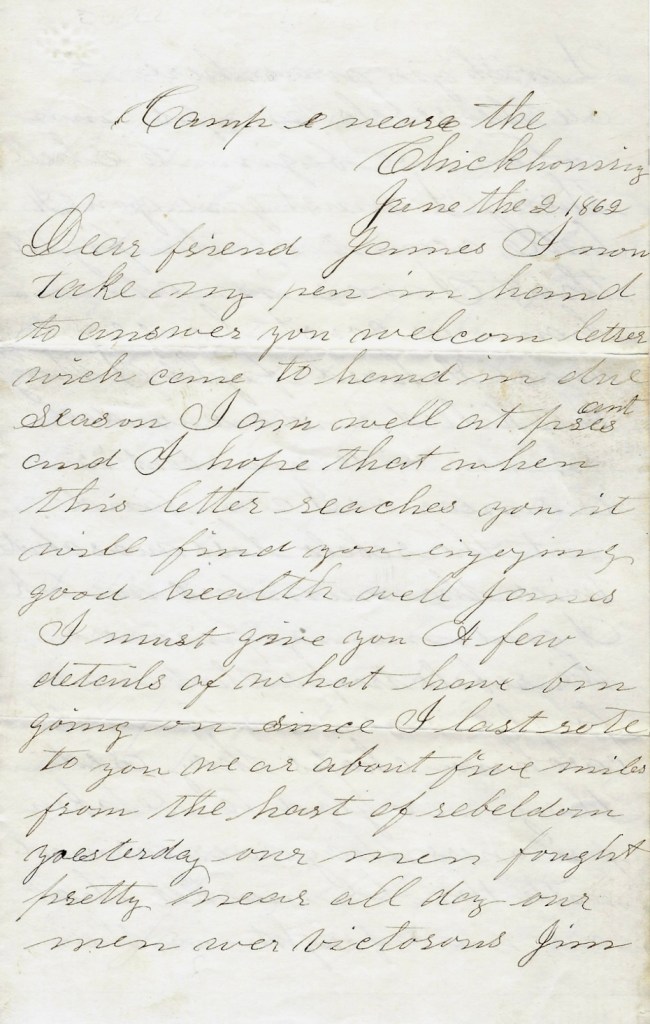
The following letter was written by Charles E. Pettis, a native of Vermont, who enlisted at Erie as a private in September 1861 to serve in Co. K, 83rd Pennsylvania Infantry. He was discharged for disability in mid-September 1862. His residence was given as Garland, Warren county, Pennsylvania.
Charles’ letter, dated 2 June 1862 during the Peninsula Campaign, makes reference to the recent fighting at Hanover Court House, where the 83rd Pennsylvania, part of Fitz John Porter’s V Corps, clashed with Branch’s North Carolinians. Being outnumbered three to one, the Confederates suffered a decisive defeat at Peake’s Crossing. The letter suggests that the victory was facilitated by the inferior weaponry and lack of enthusiasm among the North Carolinians.
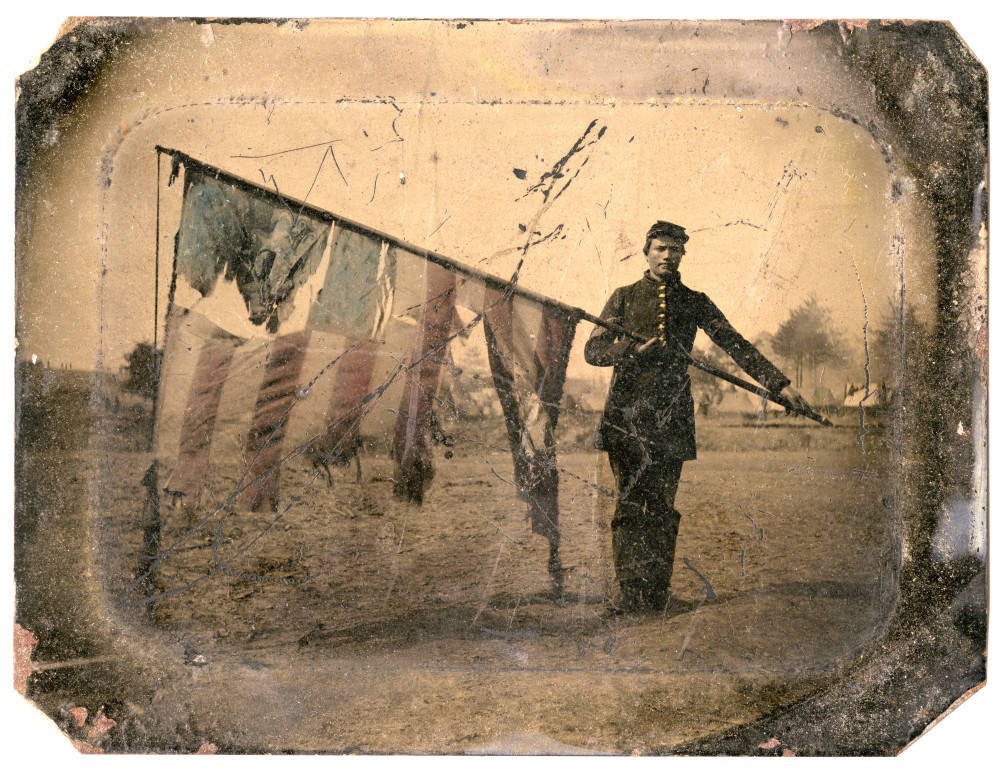
The original tintype of the 1st State Colors of the 83rd Pennsylvania Infantry with colorbearer Alexander Rodgers. The CDVs of the image were copy shots of this tintype. From the collection of Captain John Sell of the 83rd in the archives of CalState Northridge.
[Note: This letter is from the private collection of James Campbell and was offered for transcription and publication on Spared & Shared by express consent.]
Transcription
Camp near the Chickahominy June the 2, 1862
Dear Friend James,
I now take my pen in hand to answer your welcome letter which come to had in due season. I am well at present and I hope that when this letter reaches you it will find you enjoying good health. Well James, I must give you a few details of what have been going on since I last wrote to you. We are about five miles from the heart of rebeldom. Yesterday our men fought pretty near all day. Our men were victorious. 1
Jim, I wish you were here to see the rebel pimps run when we begin to shell them. I must give you a little account of the fight that I was in at Hanover Court House. It was a hard fight. I thought the killed and wounded on our side was about 75. As near as I can find out, the rebels loss was about twice the number. We took a good many prisoners. The rebel troops that we fought was mostly North Carolina chaps. They said they were glad to be taken prisoners. They were armed with the old musket that our men fought in the revolution. They were very poorly dressed and said they had not enough to eat.
While we was out there, we destroyed the rebels railroad bridge and tore their telegraph and we captured a large amount of tobacco and sugar. We killed a large supply of fresh meat. The weather is very warm here. Corn is about eight inches high. Winter wheat is all headed out. I think that before next Saturday that Richmond will be in our hands. I hope so.
Well James, I don’t know that I can give you any more news this time. You must write very soon. Yours truly, C. E. Pettis

















 Spared & Shared 23