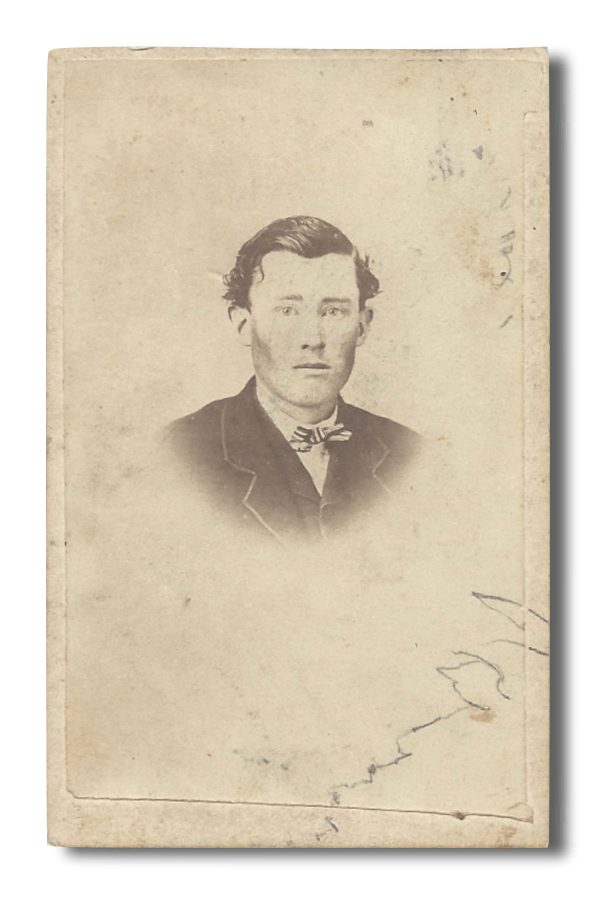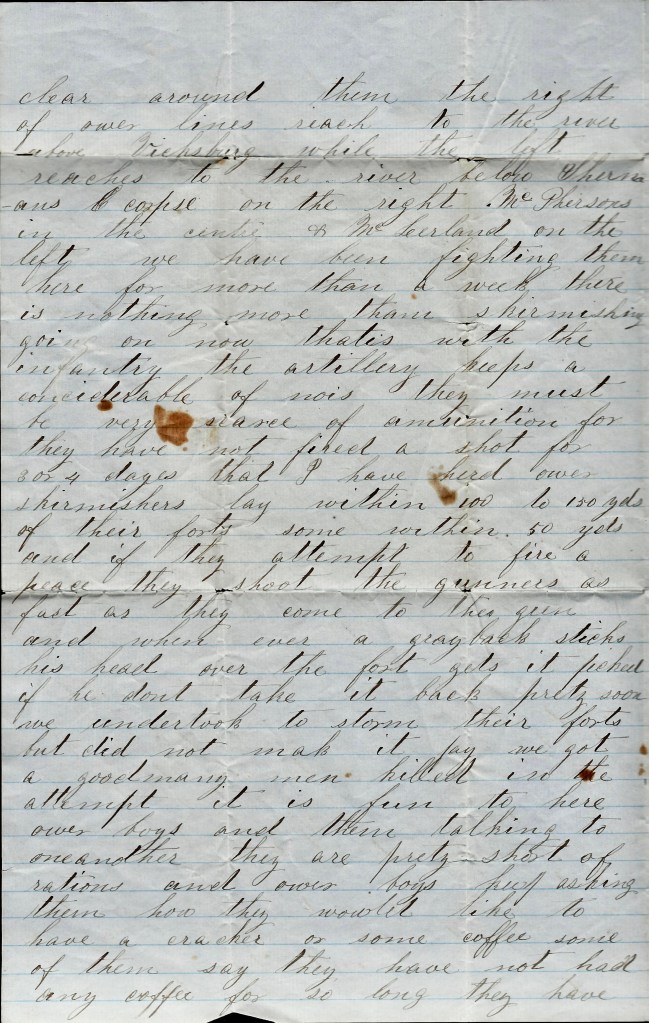
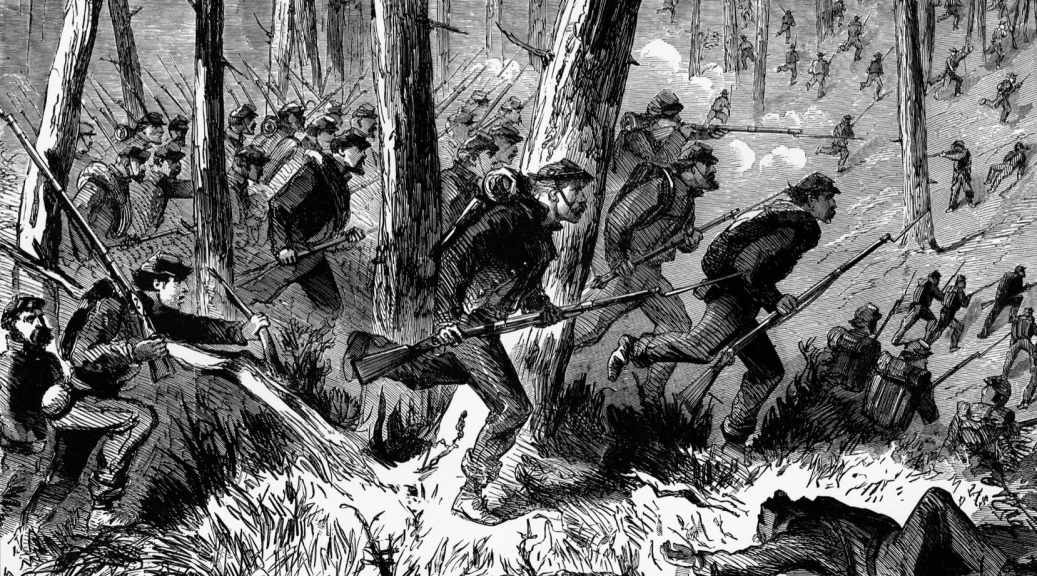
The following letters were written by Julius Hyde Keyes (1840-1893) to his parents, Sewell Keyes (1800-1883) and Marcia Hyde Prouty (1803-1881 of Watertown, Dodge county, Wisconsin, while he served in Co. B, 29th Wisconsin Infantry. He enlisted on 14 August 1862 and remained with his company until he was severely wounded in the Battle of Champion’s Hill on 16 May 1863 by a bullet to the head. From a field hospital he was transported to a hospital in St. Louis, Missouri.
“Corp. Julius H. Keyes of Co. B, 29th Regiment, reached this city last Tuesday. He was severely wounded in the battle of Champion’s Hill and for some weeks has been confined in the hospital at St. Louis.” [Source: Watertown Democrat, 23 October 1863]
Two years later, the bullet was finally extracted:
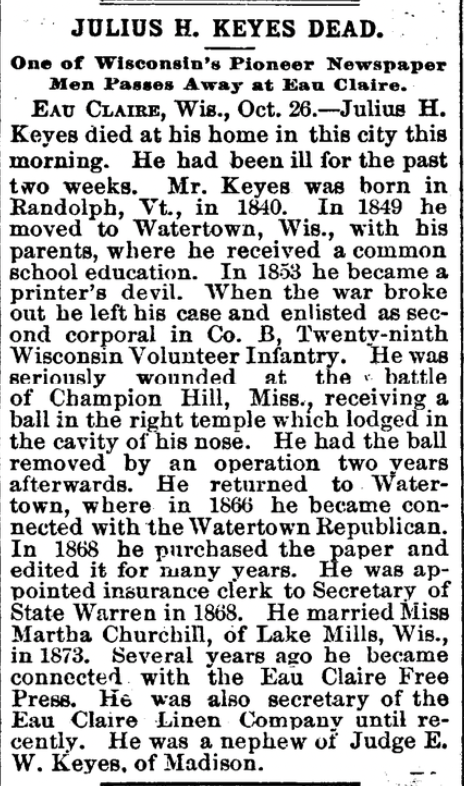
“On Tuesday last Dr. Brainard of Chicago, probably the most eminent surgeon in the west, performed a very skillful and successful operation on Julius H. Keyes of this city – extracting a minie ball from his head where he has carried it with much pain and suffering ever since the memorable battle of Champion Hills, two years ago the 16th of May. The ball entered the head near the right temple, destroyed the optical nerve in its course, pressed the eye outward, and embedded itself well up under the nose. It was removed by first being pressed into one of the nostrils and then drawn out. It was found to be an ounce ball, badly flattened out. At the time of receiving the wound he was a corporal in the 29th and belonged to the color guard – a post of honor and danger. The officers and men of the regiment who passed through that sanguinary battle with him will be rejoiced to learn of a prospect of the speedy recovery of their former comrade who fell, as all supposed, mortally wounded in their decimated ranks, where the fire was the hottest and raged the fiercest. On the eve of his departure for Chicago a number of liberal-hearted citizens, remembering with pride his gallantry in the field and the indomitable courage with which he has borne his sufferings, presented him with a purse of $50 as a slight testimonial of their appreciation of his services in fighting the battles of his country.” [Source: The Watertown Republican, June 1, 1865]
Letter 1
Camp near Helena, [Arkansas]
December 3d, 1862
Dear Friends,
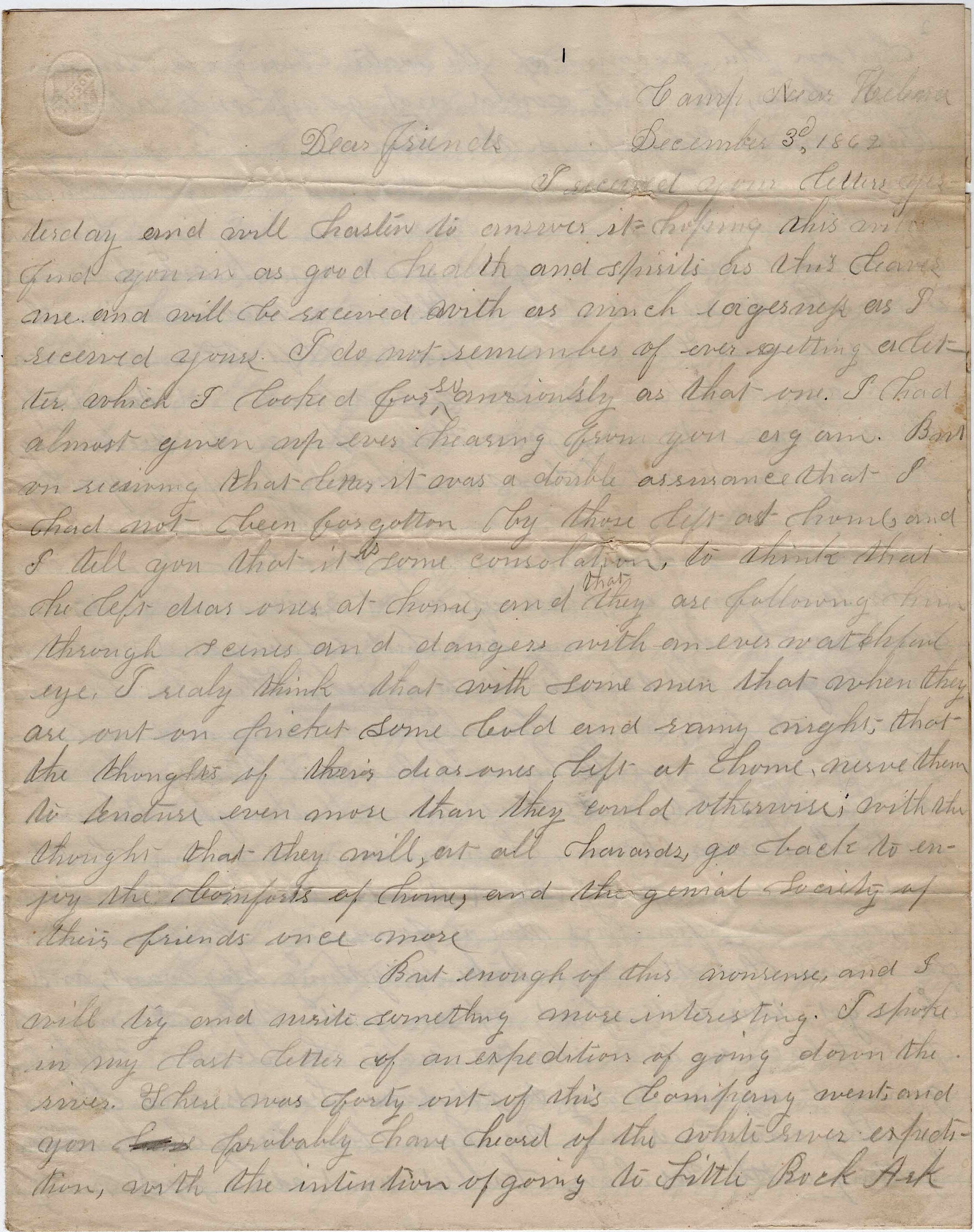
I received your letter yesterday and will hasten to answer it hoping this will find you in as good health and spirits as this leaves me and will be received with as much eagerness as I received yours. I do not remember of ever getting a letter which I looked for so anxiously as that one. I had almost given up ever hearing from you again. But on receiving that letter, it was a double assurance that I had not been forgotten by those left at home and I tell you that it is some consolation to think that he left dear ones at home, and that they are following him through scenes and dangers with an ever watchful eye. I really think that with some men that when they are out on picket some cold and rainy night, that the thoughts of their dear ones left at home, nerve them to endure even more than they could otherwise. With the thought that they will, at all hazards, go back to enjoy the comforts of home and the genial society of their friends once more.
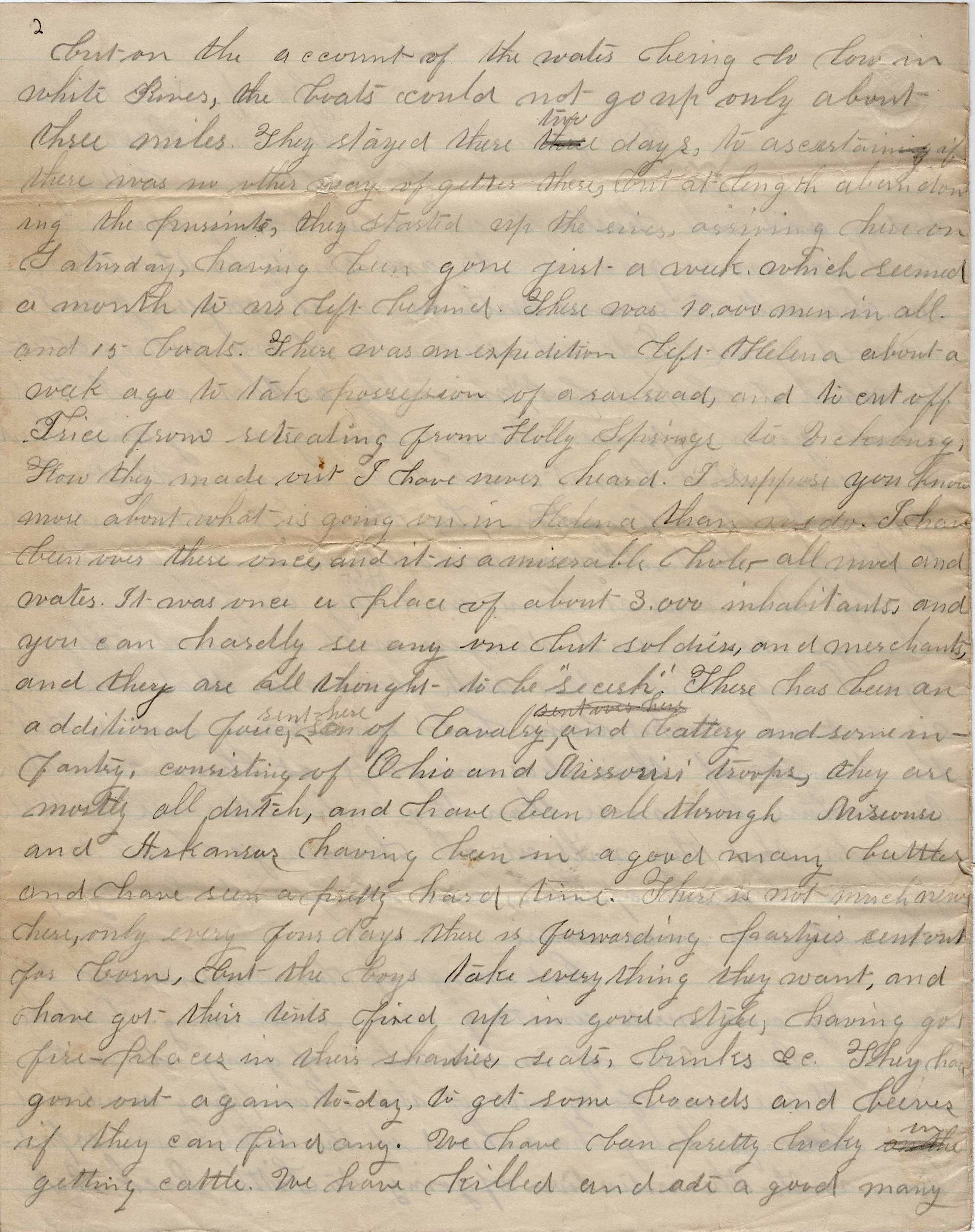
But enough of this nonsense, and I will try and write something more interesting. I spoke in my last letter of an expedition of going down the river. There was forty out of this company went and you probably have heard of the White River Expedition with the intention of going to Little Rock, Arkansas. But on the account of the water being so low in White River, the boats could not go up only about three miles. They stayed there two days to ascertain if there was no other way of getting there, but at length abandoning the pursuit, they started up the river, arriving here on Saturday, having been gone just a week which seemed a month to us left behind. There was 10,000 men in all and 15 boats.
There was an expedition left Helena about a week ago to take possession of a railroad and to cut off Price from retreating from Holly Springs to Vicksburg. How they made out, I have never heard. I suppose you know more about what is going on in Helena than we do. I have been over there once and it is a miserable hole—all mud and water. It was once a place of about 3,000 inhabitants and you can hardly see anyone but soldiers and merchants and they are all thought to be “secesh.” There has been an additional force sent here—some of cavalry and battery and some in infantry, consisting of Ohio and Missouri troops. They are mostly all dutch [German] and have been all through Missouri and Arkansas having been in a good many battles and have seen a pretty hard time.
There is not much news here—only every four days there is foraging parties sent out for corn. But the boys take everything they want and have got their tents fixed up in good style, having got fireplaces in their shanties, seats, bunks, &c. They have gone out again today to get some boards and beeves if they can find any. We have been pretty lucky in getting cattle. We have killed and ate a good many.
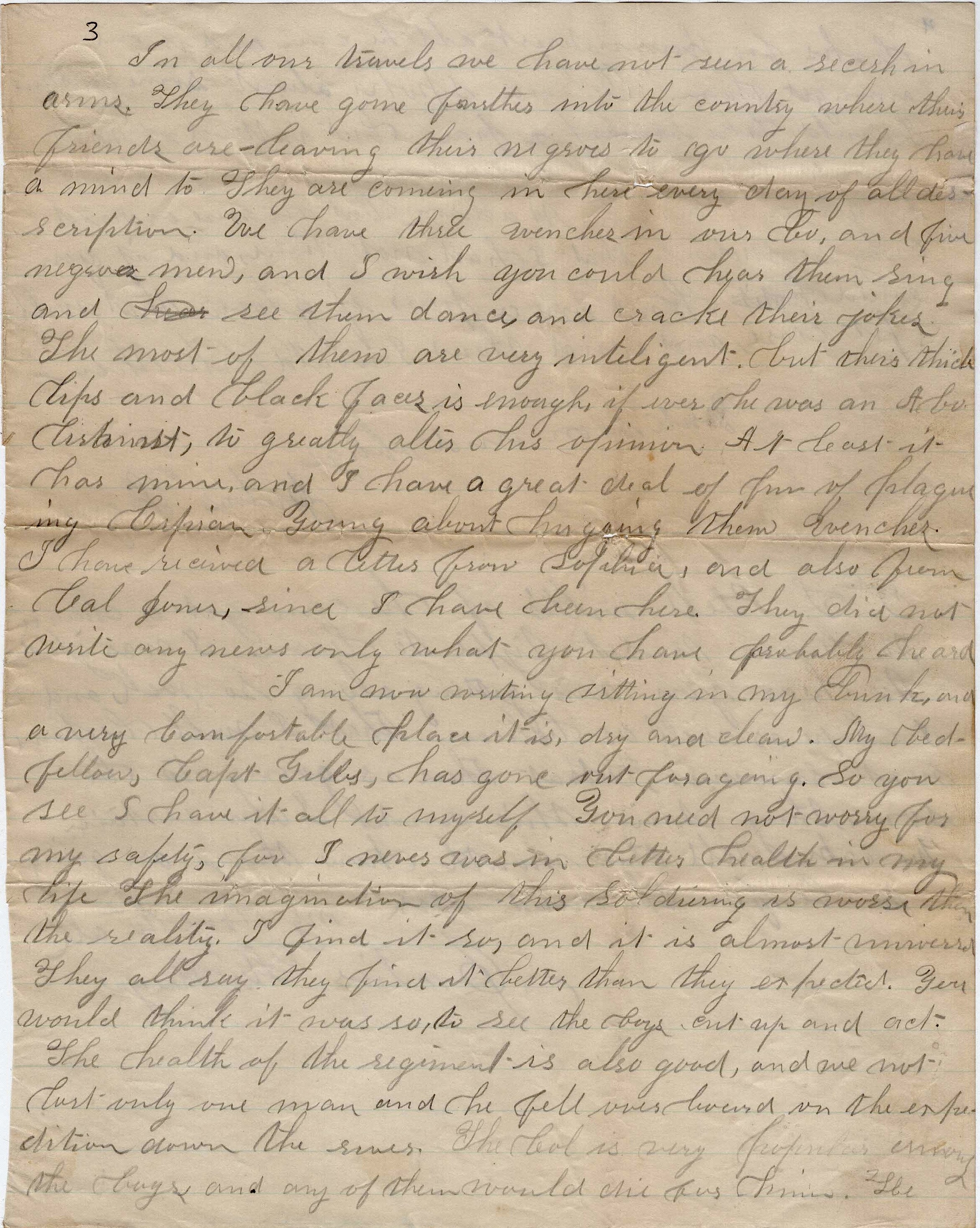
In all our travels we have not seen a secesh in arms. They have gone further into the country where their friends are, leaving their negroes to go where they have a mind to. They are coming in here every day of all description. We have three wenches in our company and five negro men and I wish you could hear them sing and see them dance and crack their jokes. The most of them are very intelligent but their thick lips and black faces is enough, if ever he was an abolitionist, to greatly alter his opinion. At least it has mine and I have a great deal of fun of plaguing Cyprian Young about hugging them wenches.
I have received a letter from Sophia and also from Cal Jones since I have been here. They did not write any news—only what you have probably heard.
I am now writing sitting in my bunk and a very comfortable place it is—dry and clean. My bedfellow, Capt. [Darius S.] Gibbs, has gone out foraging. So you see, I have it all to myself. You need not woryy for my safety for I never was in better health in my life. The imagination of this soldiering is worse than the reality. I find it so and it is almost universal. They all say they find it better than they expected. You would think it was so to see the boys cut up and act. The health of the regiment is also good and we’ve not lost [but] one man and he fell overboard on the expedition down the river. The Colonel is very popular among the boys and any of them would die for him. He looks for their interest all he can and is one amongst them.
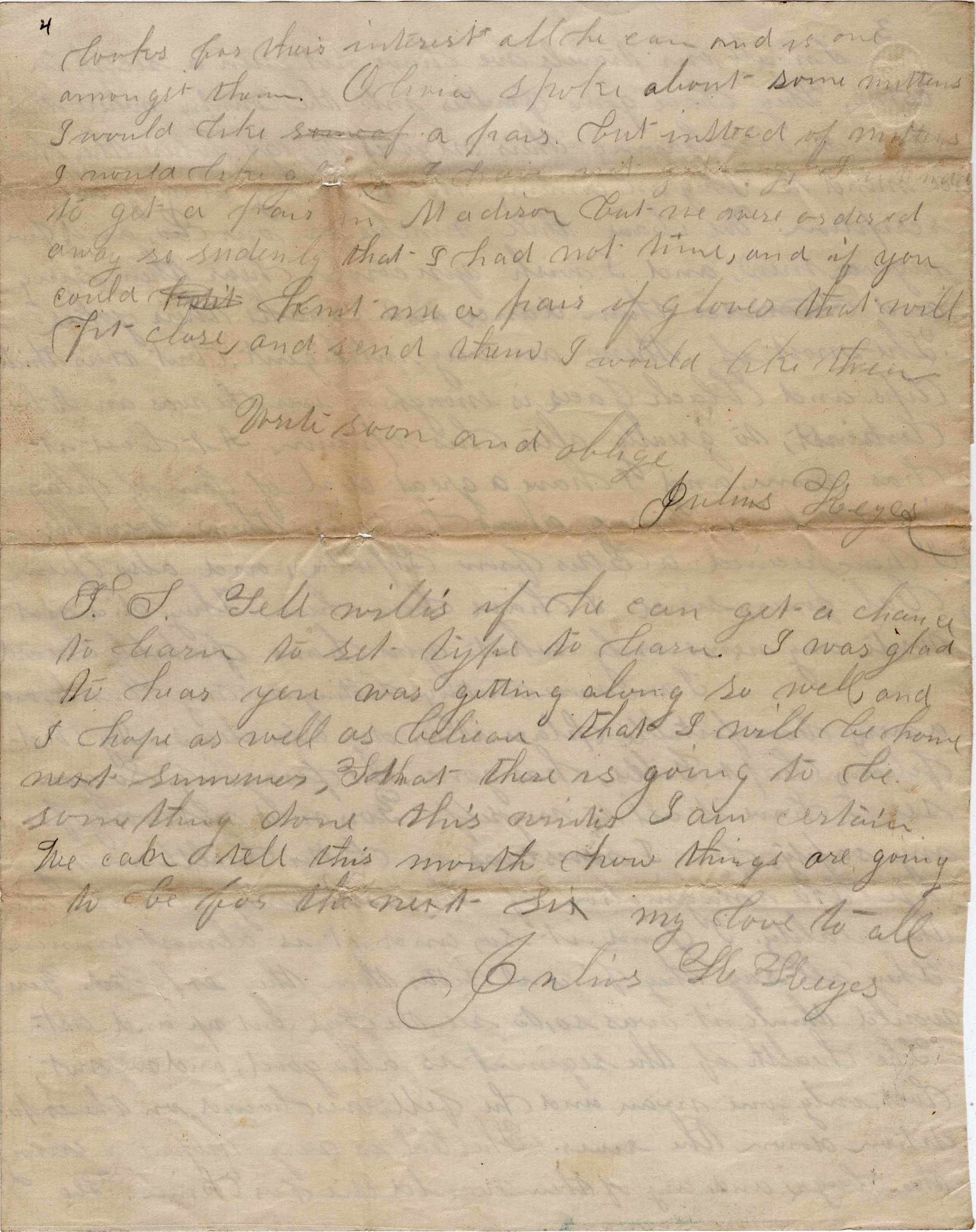
Olivia spoke about some mittens. I would like a pair but instead of mittens, I would like gloves. I have not got any. I was going to get a pair in Madison but we were ordered away so suddenly that I had not time, and if you could knit me a pair of gloves that will fit close, and send them. I would like them.
Write soon and oblige, — Julius Keyes
P. S. Tell Willis if he can get a chance to learn to set type to learn. I was glad to hear you was getting along so well and I hope as well as believe that I will be home next summer so that there is going to be something done this winter. I am certain. We can tell this month how things are going to be for the next six. My love to all. — Julius H. Keyes
Letter 2
Friar’s Point, Mississippi
December 26th 1862
Dear Friends,
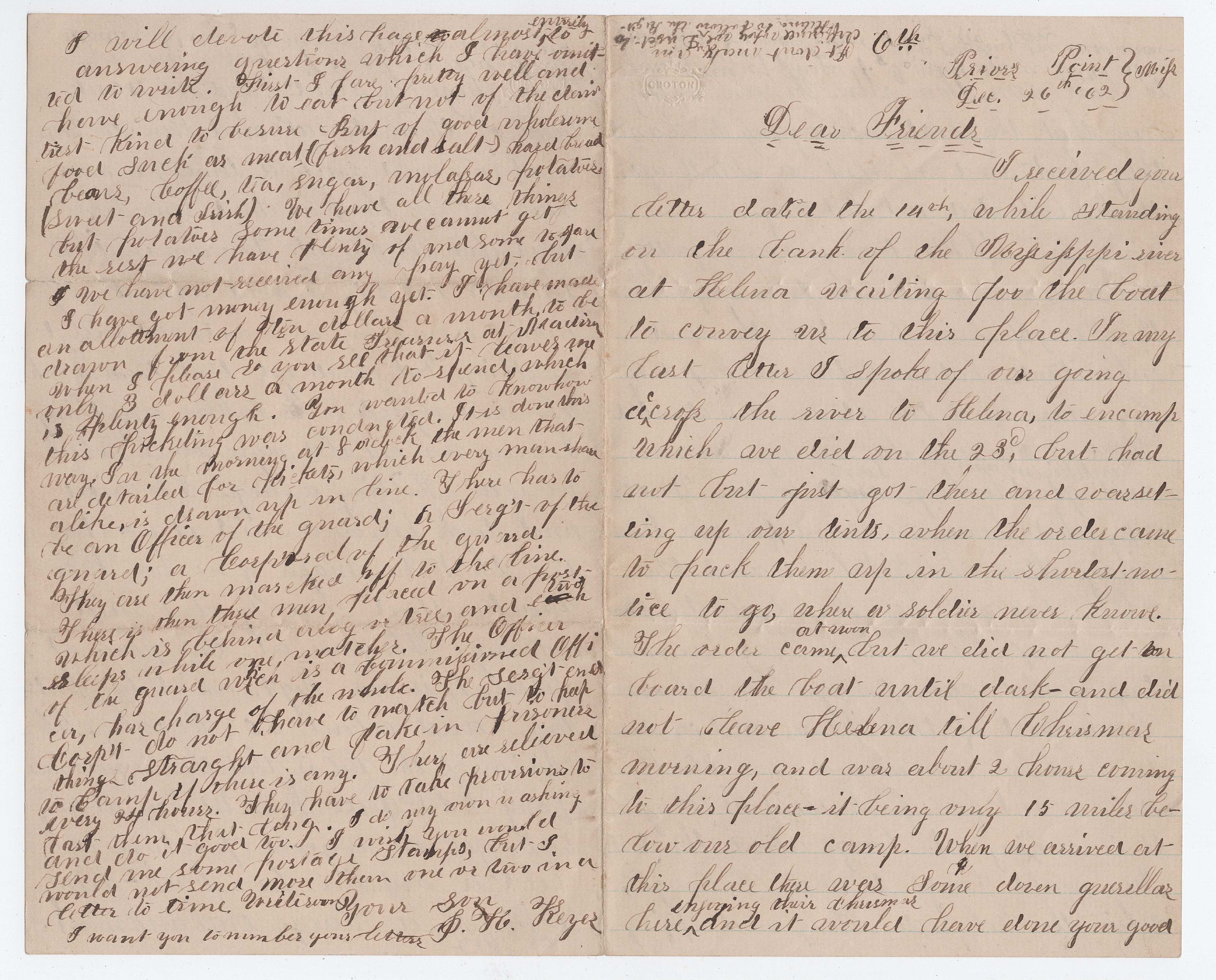
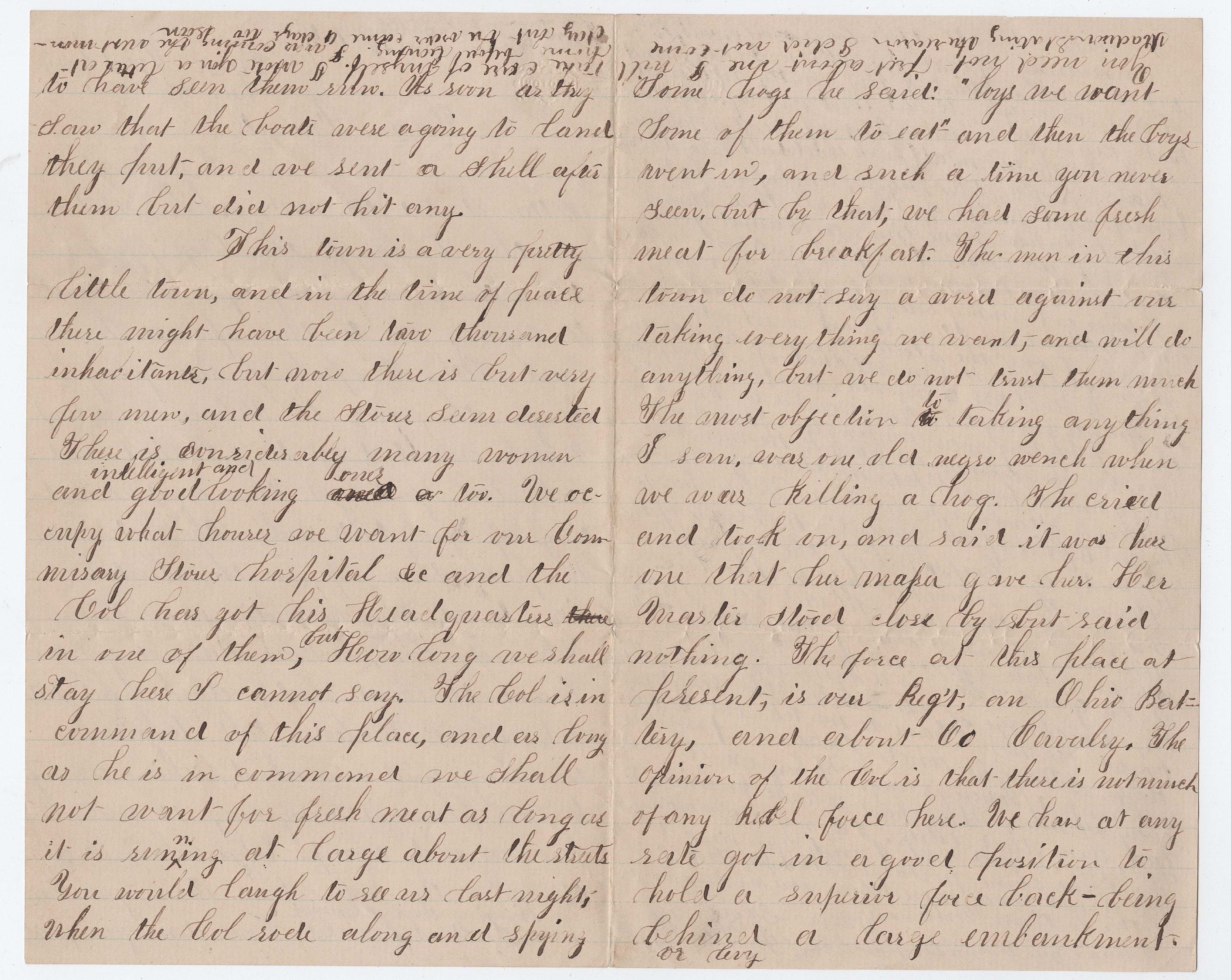
I received your letter dated the 14th while standing on the bank of th Mississippi river at Helena waiting for the boat to convey us to this place. In my last letter, I spoke of our going across the river to Helena to encamp which we did on the 23rd, but had not but just hot there and was setting up our tents when the order came to pack them up in the shortest notice to go where a soldier never knows. The order come at noon but we did not get on board the boat until dark and did not leave Helena till Christmas morning and was about two hours coming to this place, it being only 15 miles below our old camp.
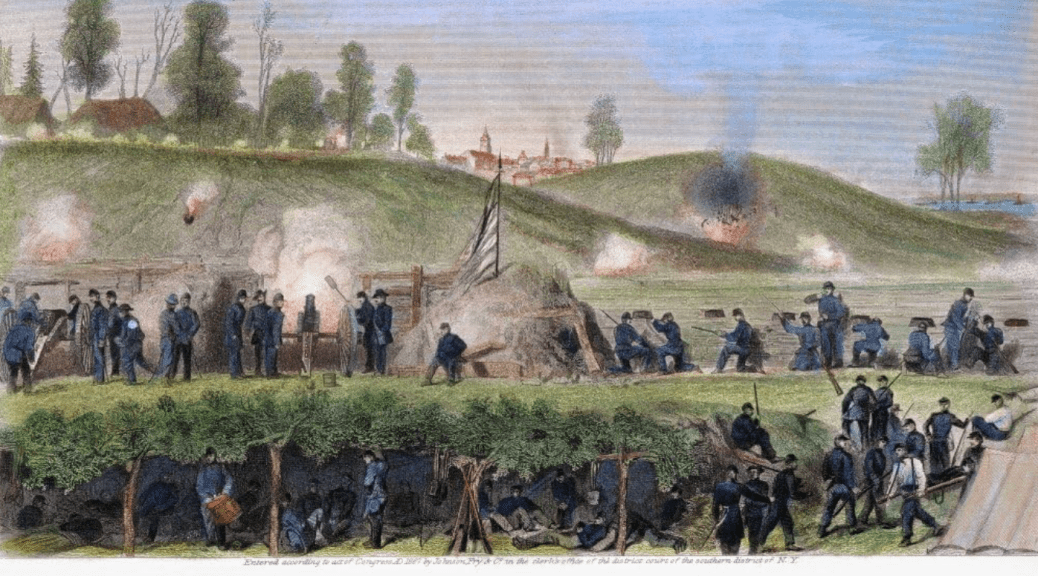
When we arrived at this place there was some dozen guerrillas here enjoying their Christmas and it would have done you good to have seen them run. As soon as they saw the boats were agoing to land, they put [out] and we sent a shell after them but did not hit any.
This town is a very pretty little town and in time of peace, there might have been two thousand inhabitants but now there is but very few men and the stores seem deserted. There is considerably many women and intelligent and good-looking ones too. We occupy what houses we want for our commissary store, hospital, &c. and the Colonel [Charles R. Gill] has got his headquarters in one of them. But how long we shall stay here, I cannot say. The Colonel is in command of this place and as long as he is in command, we shall not want for fresh meat as long as it is running at large about the streets. You would laugh to see us last night when the Colonel rode along and spying some hogs, he said, “Boys, we want some of them to eat,” and then the boys went in, and such a time you never seen. But by that, we had some fresh meat for breakfast. The men in this town do not say a word against our taking everything we want, and will do anything. But we do not trust them much. The most objection to taking anything I saw was an old negro wench when we was killing a hog. She cried and took on and said it was one that her massa had gave her. Her master stood close by but said nothing.
The force at this place at present is our regiment, an Ohio Battery, and about 60 cavalry. The opinion of the Colonel is that there is not much of any Rebel force here. We have, at any rate, got in a good position to hold a superior force back—being behind a large embankment or levee.
I will devote this page almost entirely to answering questions which I have omitted to write. First, I fare pretty well and have enough to eat but not of the daintiest kind to be sure.But of good, wholesome food such as meat (fresh and salt), hard bread, beans, coffee, tea, sugar, molasses, potatoes (sweet and Irish). We have all these things but potatoes sometimes we cannot get. The rest we have plenty of and some spare.
We have not received any pay yet but I have got money enough yet. I have made an allotment of ten dollars a month to be drawn from the State Treasurer at Madison when I please so you see that it leaves me only 3 dollars a month to spend which is plenty enough.
You wanted to know how this picketing was conducted. It is done this way. In the morning at 8 o’clock the men that are detailed for pickets—which every man shares alike—is drawn up in line. There has to be an officer of the guard, a sergeant of the guard, a corporal of the guard. They are then three men placed on a post which is behind a log or tree and two sleeps while one watches. The officer of the guard—which is a commissioned officer—has charge of the whole. The sergeant and corporal do not have to watch but to keep things straight and take in prisoners to camp if there is any. They are relieved every 24 hours. The have to take provisions to last them that long. I do my own washing and do it good too. I think you would send me some postage stamps but I would not send more than one or two in a letter at a time. Write soon. Your son, — J. H. Keyes
I want you to number your letters.
You need not fret about me. I will take care of myself. I wrote you a letter at Madison stating the reason I did not come home before leaving. I was coming the next Monday but the order came 4 days too soon.