The following letter was written by Henry Clark (1845-1893), the son of George Clark (1821-1896) and Rhoda Parks (1820-1852) of Clifton Park, Saratoga county, New York. When he was eighteen years old, Henry enlisted to serve a three year term beginning on 8 August 1862 in Co. H, 115th New York Infantry. He was among the thousands of troops surrendered by their commander at Harpers Ferry in September 1862, paroled, and sent to Chicago to await exchange. As regimental bands were disbanded by Congress in October 1862, Henry continued to serve in the Brigade Band. He mustered out with his regiment at Raleigh, North Carolina, on 17 June 1865.
At the time of this letter, datelined 4 January 1865, the Third Brigade consisted of Henry’s own 115th New York, 169th New York, 13th Indiana, 9th Maine, and 4th New Hampshire. Colonel Louis Bell of the 4th New Hampshire acted at Brigade commander.
In his letter Henry refers to his brigade having recently returned from their expedition to Fort Fisher, North Carolina, which proved a failure. Not long after having returned to Virginia, the Brigade returned to North Carolina and participated in the assault and capture of Fort Fisher on 15 January 1865.
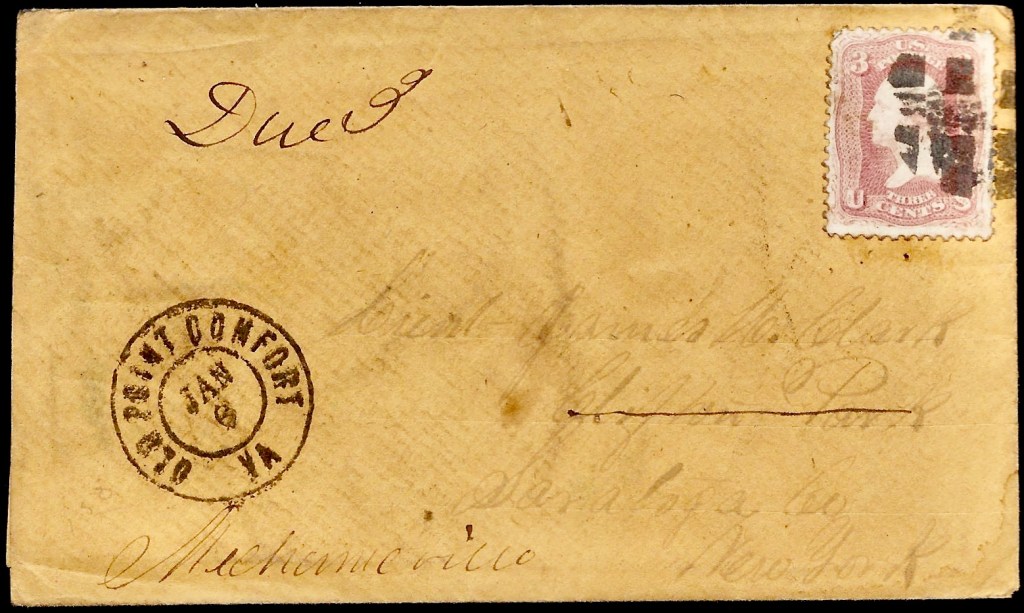
Henry wrote the letter to his cousin and former comrade, Lt. James H. Clark of Clifton Park who was wounded in action on 20 February 1864 at Olustee, Florida and was discharged for disability on 29 December 1864.
A typical Brigade Band during the American Civil War (Military Images)
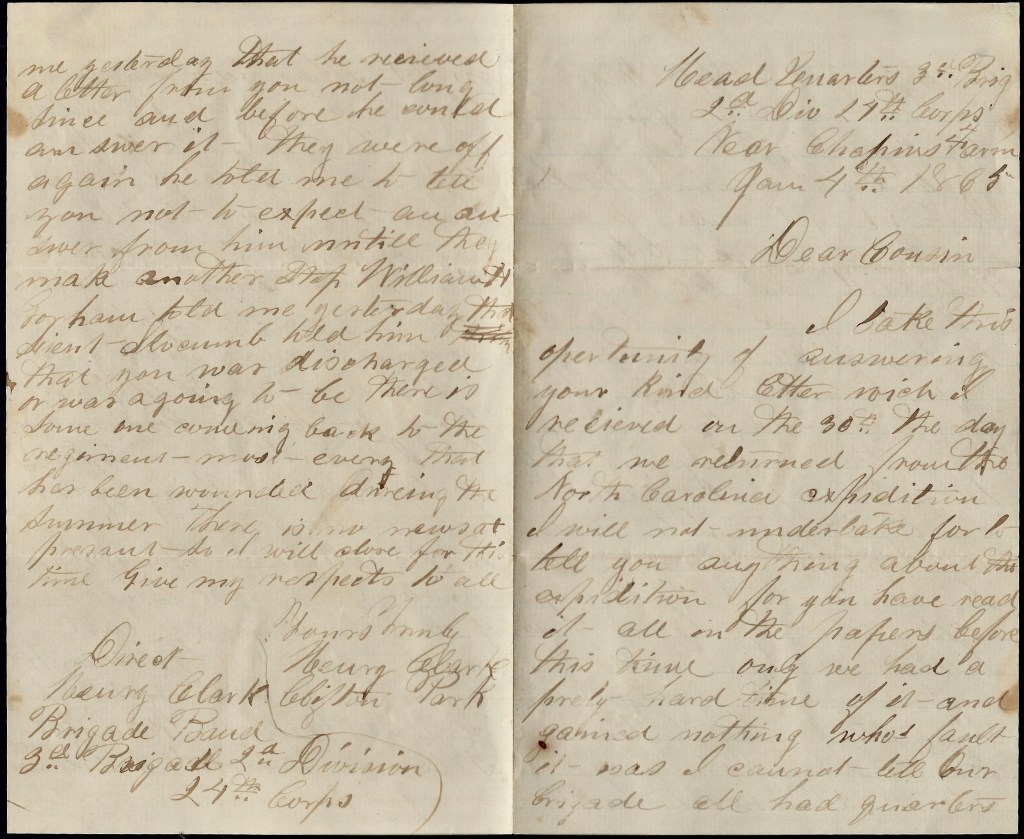
Transcription
Headquarters 3rd Brigade 2nd Division, 24th Corps Near Chapin’s Farm January 4th 1865
Dear Cousin,
I take this opportunity of answering your kind letter which I received on the 30th—the day that we returned from the North Carolina expedition. I will not undertake for to tell you anything about the expedition for you have read it all in the papers before this time, only we had a pretty hard time of it and gained nothing. Whose fault it was, I cannot tell.
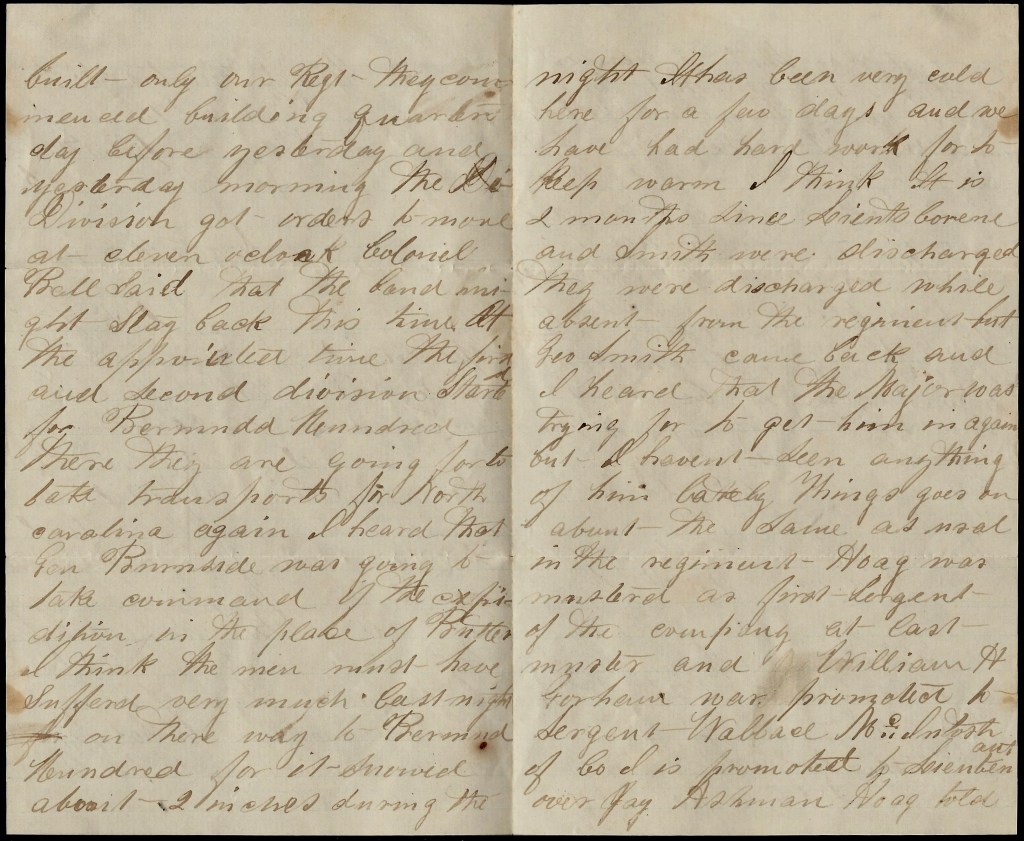
Our Brigade all had quarters built—only our Regiment. They commenced building quarters day before yesterday and yesterday morning the Division got orders to move at eleven o’clock. Colonel [Louis] Bell 1 said that the band might stay back this time. At the appointed time the fourth and Second Division started for Bermuda Hundred. There they are going for to take transports for North Carolina again. I heard that Gen. Burnside was going to take command of the expedition in the place of Butler. I think the men must have suffered very much last night on their way to Bermuda Hundred for it snowed about two inches during the night.
It has been very cold here for a few days and we have had hard work for to keep warm. I think it is two months since Lieuts. Corene and Smith were discharged while absent from the regiment but George Smith came back and I heard that the Major was trying for to get him in again but I haven’t seen anything of him lately.
Things go on about the same as usual in the regiment. [George T.] Hoag was mustered as 1st Sergeant of the company at last muster and William H. Gorham was promoted to Sergeant. Wallace McIntosh of Co. I is promoted to Lieutenant over Jay Ashman. Hoag told me yesterday that he received a letter from you not long since and before he could answer it, they were off again. He told me to tell you not to expect an answer from him until they make another stop.
William H. Gorham told me yesterday that Lieut. [Aaron C.] Slocumb told him that you was discharged or was a going to be. There is some one coming back to the regiment most every [day] that has been wounded during the summer. There is no news at present so I will close for this time. Give my respects to all.
Yours truly, — Henry Clark, Clifton Park
Direct to Henry Clark, Brigade Band, 3rd Brigade, 2nd Division, 24th Corps
1 Col. Louis Bell, commander of the 3rd Brigade, 2nd Division, 24th Army Corps, never made it to Fort Fisher in the assault. He fell with a bullet through his chest, at the head of his brigade, not far from the bridge leading to the river road sally port. The colonel later managed to ask if his wound was fatal. A surgeon gently confirmed that it likely was. “I thought as much,” admitted Bell. He was dead before sunrise, and the survivors of the Third Brigade were crushed by the loss of their popular commander.
The following letters were written by Addison Pool (1831-1868), the son of War of 1812 Veteran Abraham Howe Pool (1789-1860) and Rachel Tarr (1788-1872). Addison was married to Matilda Augusta White (1832-1883) and living in Ellsworth, Hancock county, Maine when the 1860 US Census was taken. At that time he was working as the register of deeds in his county. The couple had three children but the letter dated in November 1864 gives us a hint that it was a troubled marriage. A search of Maine newspapers informs us that Addison (“libelant”) sued his wife for “misbehavior” and prevailed, resulting in a divorce being decreed in October 1864.
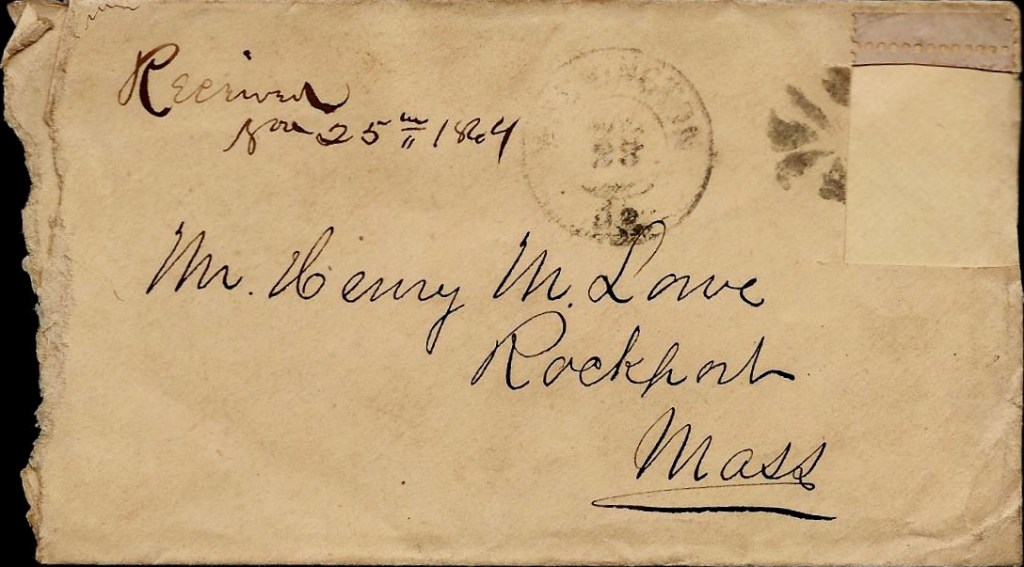
Addison wrote all four of these letters to his nephew, Henry Martin Lowe, who served with him aboard the US Gunboat Penobscot and the USS Steamer Southfield earlier in the war. Addison was the Assistant Paymaster, and Henry was the Paymaster Steward or Clerk. [See—1862-64: Henry Martin Lowe to his Family] Fortuitously, both Addison and Henry avoided possible injury or death when the steamer Southfield was rammed and sunk in the Roanoke river by the CSS Albemarle in April 1864. [See—1864: John J. Allen, Jr. to Henry Martin Lowe] Henry had resigned from the Navy just prior to that incident during the Battle of Plymouth, and Addison had made a trip to New Bern.
Later in 1864, Addison was assigned to the newly constructed USS Mahopac—a Canonicus-class monitor built for the Union Navy. The vessel was assigned to the James River Flotilla of the North Atlantic Blockading Squadron upon completion in September 1864. The ship spent most of her time stationed up the James River where she could support operations against Richmond and defend against sorties by the Confederate ironclads of the James River Squadron. She engaged Confederate artillery batteries during the year and later participated in both the first and second battles of Fort Fisher, defending the approaches to Wilmington, North Carolina, in December 1864-January 1865. Mahopac returned to the James River after the capture of Fort Fisher and remained there until Richmond was occupied in early April.
The Boston Semi-Weekly Advertiser of 28 September 1864 announced the commissioning of the USS Mahopac during the previous week giving the names of the following officers: Commander, William A. Parker; Lieutenant-Commander, James M. Pritchett; Assistant Surgeon, F. B. A. Lewis; Acting Assistant Paymaster, Addison Pool; Acting Master, C. K. Harris; Acting Ensigns, W. E. Jones and S. C. Halen; Engineers, Acting Chief, M. T. Cheevers; Acting First Assistants, Charles Dougherty and John Bloomsburg; Acting Third Assistants, J. G. Brown, Nelson Crossman, and Charles Enggresen.
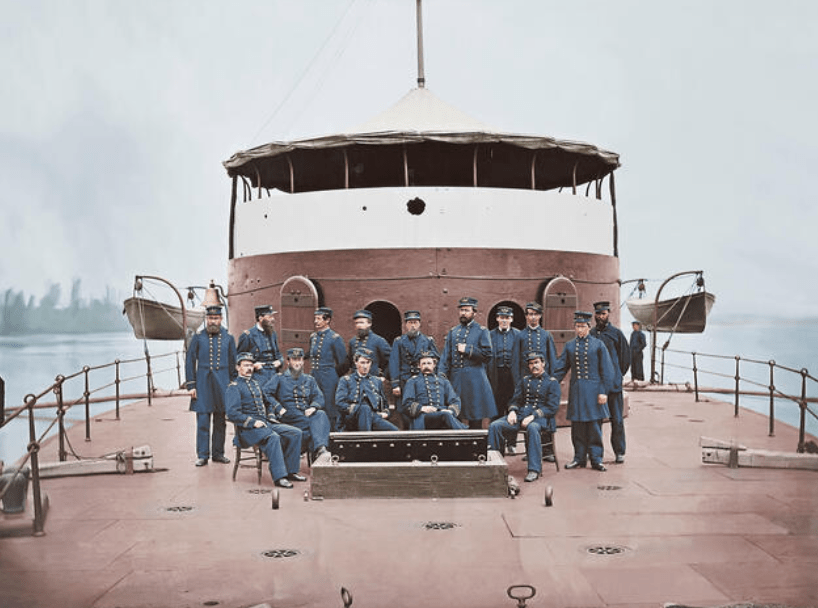
Most likely, Addison Pool is one of the five seated officers in the photograph below, who would have been the five highest ranking officers. Commander William A. Parker is the officer seated fourth from left. Those standing behind would be the Ensigns and Engineers.
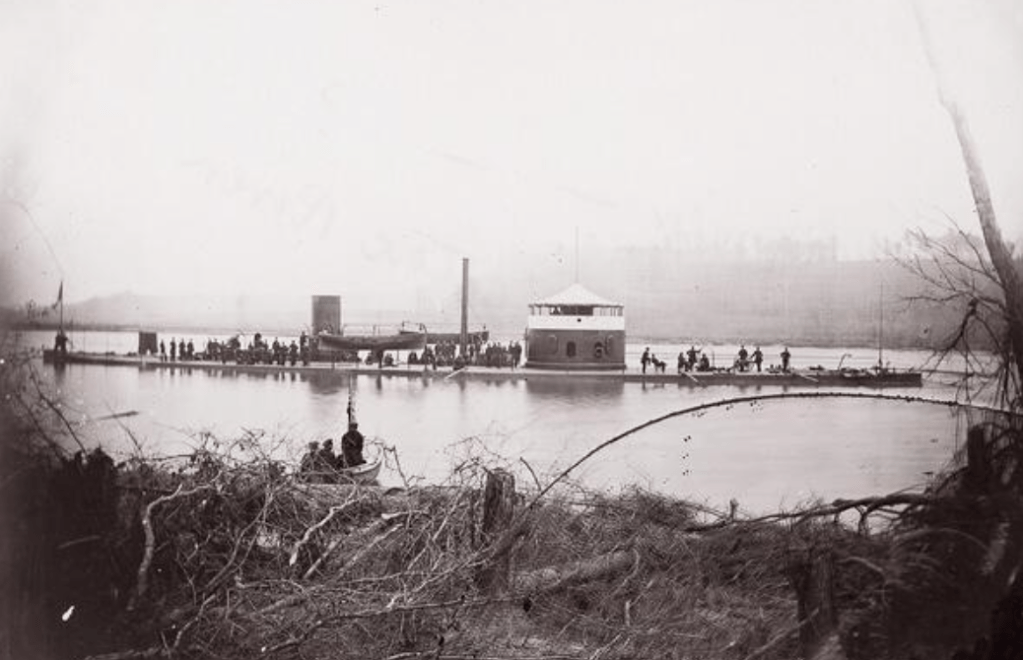
The monitor in “Mahopac” on the James River. The coffin-like hatch in the foreground was the only means of gaining entrance to the bowels of the vessel. Air holes can be seen as small grates in the deck planking. She had a crew of 92 men. Her first engagement was with Battery Dantzler in the James River. She was in the first line of the ironclads at Fort Fisher. Spring of 1865. A Brady photo.
Letter 1
[U.S.S.] Mahopac James River, Va. November 20th 1864
Dear Henry,
Yours of the 12th inst. was received today. I am pleased to hear that you did well in your voyage “down East” and hope your prospects for next year and your hopes of success may be more than realized. You speak of the $400 note. I have no immediate use for the money and had as leave you would renew it for 4 or 6 months as to pay it. As to the interest you speak of, I lent you the money without intending to take anything for its use. I enclose a draft on Rockport Bank for $100 and want your mother to use it for the children as they may need it—that is, to pay their board, &c.
That confounded suit has nearly stripped me, but thank God it is ended and the children are mine. No one can interfere with them now. I should like to see the little rascals for a while this p.m.
We have no immediate prospect of leaving James River. It is not improbable that we may remain here all winter. We are lying about 300 yards from Grant’s Headquarters and either he is aboard or we are there nearly every day.
Give my love to all and write me. Don’t expect any long letter from me. I have nothing to write about. I am as ever, — Addison Pool
[to] H. M. Lowe
November 20th. I have enclosed check for $100 but do not know as I have that amount in bank, but am quite certain I have. If not, deposit enough to make it up and draw it for your mother. Write me how my account stands at the bank. — A. P.
Letter 2
Near Fort Fisher Off Wilmington Bar January 17, 1865
Dear Henry,
How are you Fort Fisher? If you recollect about May 1st 1862 the old Penobscot steamed in and gave them their first shot. Then there was one gun in a small sand battery. Now there are about thirty-six heavy guns backed by the greatest earthwork on the coast. Then two vessels like the Penobscot could have silenced it in an hour. Not it took more than fifty ships and five ironclads five days to reduce it.
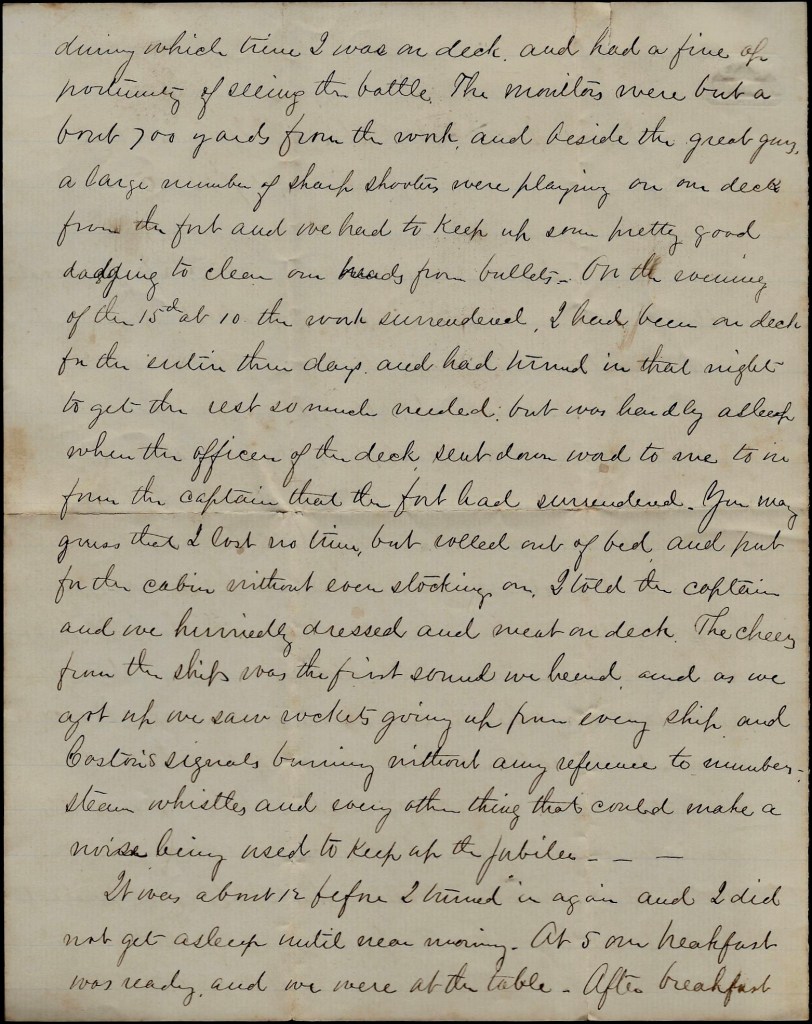
You will get fuller accounts of it through the papers than I can give you. Therefore, I’ll only give a few items that might not reach you in the public accounts. We commenced the action on the morning of the 13th. The fight that day being entirely carried on by the ironclads and continued by them up to a very late hour on the 14th when the other vessels—which had been protecting the landing of the troops—came up and the fight became general. We were fighting for three days during which time I was on deck and had a fine opportunity of seeing the battle. The monitors were but about 700 yards from the work and beside the great guns, a large number of sharp shooters were playing on the deck from the fort and we had to keep up some pretty good dodging to clear our heads from bullets.
On the evening of the 15th about 10, the work surrendered. I had been on deck for the entire three days and had turned in that night to get the rest so much needed, but was hardly asleep when the officer of the deck sent down word to me to inform the captain that the fort had surrendered. You may guess that I lost no time, but rolled out of bed and put for the cabin without even stockings on. I told the captain and we hurriedly dressed and went on deck. The cheers from the ship was the first sound we heard and as we got up, we saw rockets going up from every ship and Coston’s signals burning without any reference to number, steam whistles, and every other thing that could make a noise being used to keep up the jubilee.
Paymaster Robert Gillette of the USS Gettysburg was killed when the magazine exploded at Fort Fisher on 16 January 1865. His death is described in a great blog artcle by my friend John Banks in a piece he wrote in January 2020 entitled, A Death at Fort Fisher of a ‘young man of unusual promise.’
It was about 12 before I turned in again and I did not get asleep until near morning. At 5 our breakfast was ready and we were at the table. After breakfast we went on deck and took a good look at Federal Fort Fisher. At about 8 in the morning while our eyes were directed towards the fort, an explosion of the most terrific nature took place, and for a moment we thought the whole fort was in the air. But as it settled again, we saw that but a small part of the work was ruined. The doctor and myself were soon in a boat and on our way ashore. On landing we learned that the Fort had been mined and electric wires laid to the main magazine which had been blown up by the rebs after its surrender. By this terrible occurrence, we lost more men than in taking the fort. Never have I seen anything so horrible as the sight of those noble fellows who had been blown to atoms while flushed with the pride of recent victory. Six hundred men have lost their lives through the perfidy of a cowardly foe. Had Gen. Terry taken the same number from among his prisoners and butchered them, it would have been a fitting retaliation.
Later. 7 o’clock p.m. Since I wrote the foregoing, our destination has been changed. We have been ordered to Charleston. This is a great disappointment to us as on the first day of the fight we burst a XV-inch gun and felt certain that we should be ordered North to have it replaced. We had no warning of it but were ordered right away with just time enough to drop a line.
While ashore yesterday in Fort Fisher, I undertook to bring off some relics of the fight. I got a sword with a canvas scabbard, one good Springfield musket, and a good rifle (Enfield). I have besides these a musket captured up James River and expect to get lots of things at Charleston. I met Captain Tarr on the beach in front of the fort and just before shoving off, Tom Jones came up and spoke but I didn’t know him. I went up to the works and between two of the mounds. Saw a party burying a marine. I did not notice then but a young officer came up and spoke. It was Jus. Clitz.
I forgot to tell you the gunboats are in the [Cape Fear] river and the Osceola Capt. Clitz took the lead, being the first in. The enemy blew up Fort Coswell and evacuated it last night. The whole of the mouth of the river is in our possession. I don’t know how the people at home may view this thing but we think it the greatest victory of the war. Send in all the papers containing the account and those with the official reports of Admiral Porter & General Terry—more especially the Herald and Tribune.
Ben Butler is in a good place for himself and the government. I hope he’ll be kept there. The old rascal—he defeated us before.
I am well. Calvin is jolly and I’l write again if we take Charleston. We are getting off Frying Pan Shoal and the sea is making so.
With love to all, I’ll close. I am yours truly, — Addison
Letter 3
[USS] Mahopac James River, Va. March 12th 1865
Dear Henry,
Once more we have passed safely through a winter voyage of five days length. We left Charleston on Wednesday afternoon in a violent gale in company with the “Katskill“—the latter being in tow of the “Shenandoah” and we of the “Cambridge.” We parted company at the bar (Charleston) and we have not seen her since. She was not considered as good a vessel as this but we hope she may get in safe. I shall never unless compelled make another voyage, or attempt to make another, in a monitor. I have expressed my views of this so freely already as to make some trouble and I shall continue to do so—while they insist on their being sea-going vessels—even at the risk of dismissal. You will probably ask why I don’t try to get out of her. My answer is that each time we have finished a voyage—i.e., made a passage, we have though that it was the last and that easy times awaited us until our orders come and we were off in a jiffy. I would not have left her until after the fall of Wilmington for anything but that accomplished, I did not hanker for any more glory in her, and had I known that we should have been ordered about so much, I should have applied for detachment.
And now I am contented to stay in her in this river but if she is ever ordered South again (for a long distance) during the inclement season, I’ll not go willingly. I like her here better than most vessels and hope not to have occasion to leave her for some months. I only wish that Arrogant Fox and Frothy Porter were compelled to pick out “other spirits more evil than themselves” and that the whole lot of them should make a voyage together in one.
I am very desirous of hearing from home. Please write often and give me the views. I am too tired to write much more tonight. Don’t let any person see this except your father. I have expressed myself too strongly. But really, the Navy, as controlled by such men as Porter, is not the Navy of my idea.
I wrote Mr. Cunningham this morning and sent it ashore. None of us got ashore at the fort. Direct your letters to us in James River via Fortress Monroe. Give me a long letter or all of the news in a short one.
As ever, your—Addison Pool
[to] H. M. Lowe
Letter 4
The USS Mahopac in 1865
[USS] Mahopac March 28th 1865
Dear Henry,
Yours was received this morning. Also one from your father.
The money (600) I sent several days ago and I suppose you have received it before this. If you buy out Richard Tuft’s share, I will take it and send a good man to represent me this year, and if successful, will be there another year myself. There is a hundred or so dollars lying idle in Rockport Bank that I want your mother to draw, and if she don’t need it for the children, you can use it.
If you buy for me, I think I can manage in a month or two to send you the amount of purchase money without interfering with the money you now have of mine.
I’ve got my tail caught a little in the Petroleum trap, but not so bad as some. How are you Petroleum? It is possible that I may come down there a few days about May if the ship goes to Washington as we expect to do.
If you buy and Mr. Cunningham will represent my interest there this season, I should like to have him do so at any rate of pay which you may decide with him.
It is a great thing to have friends when you have your pockets picked. I wish you would start a paper for me. My love to all friends, I am as ever your obedient servant, — Addison Pool








 Spared & Shared 23