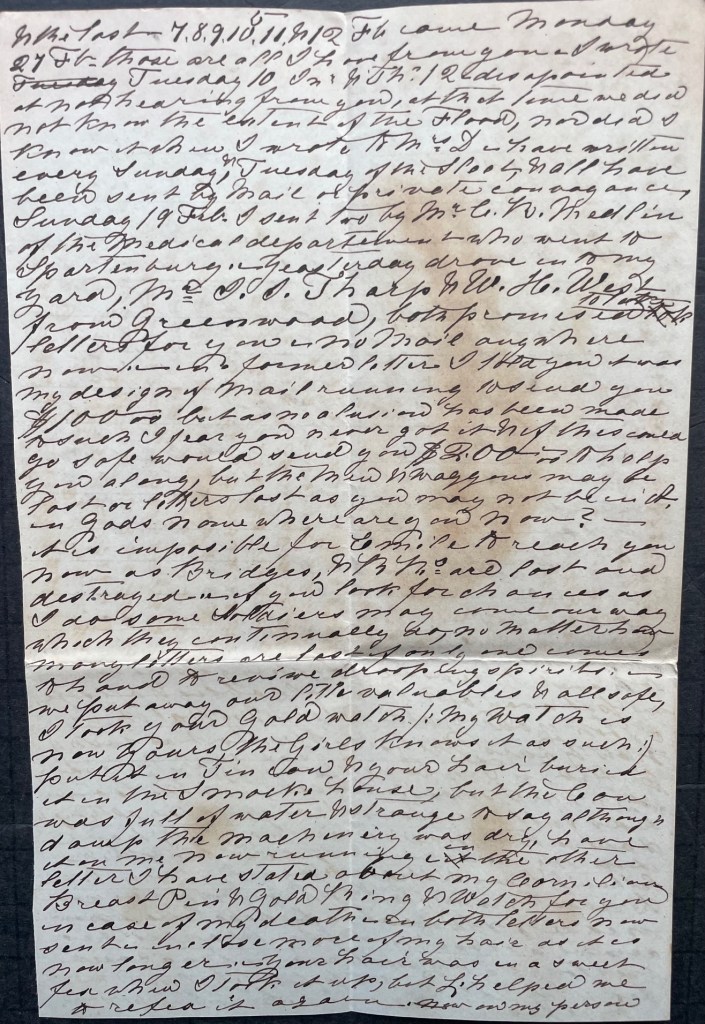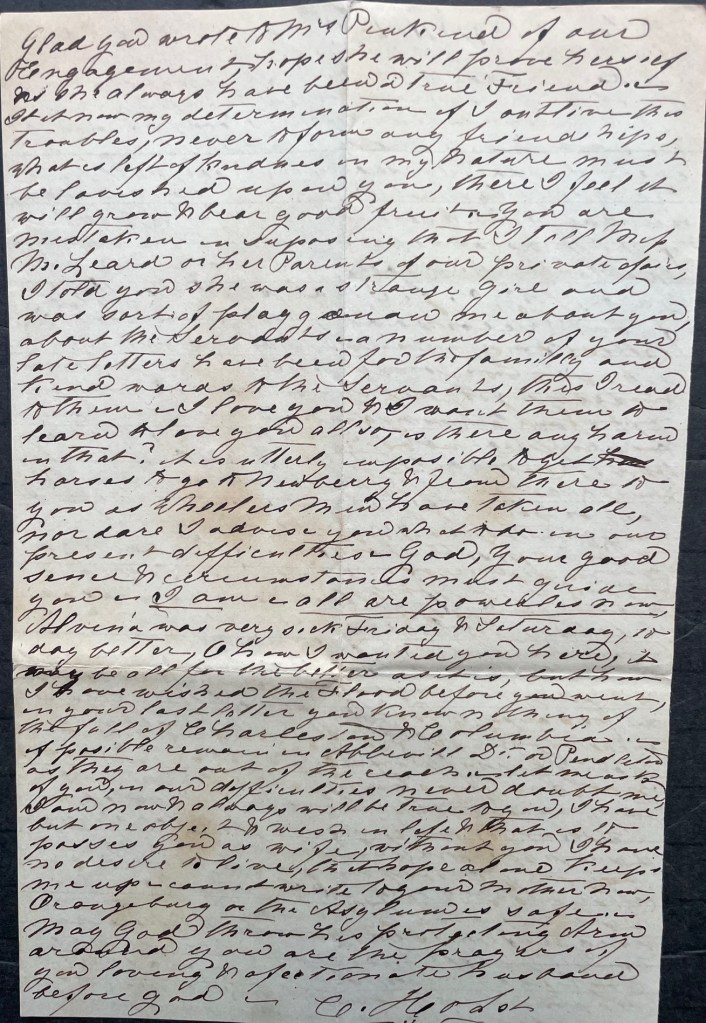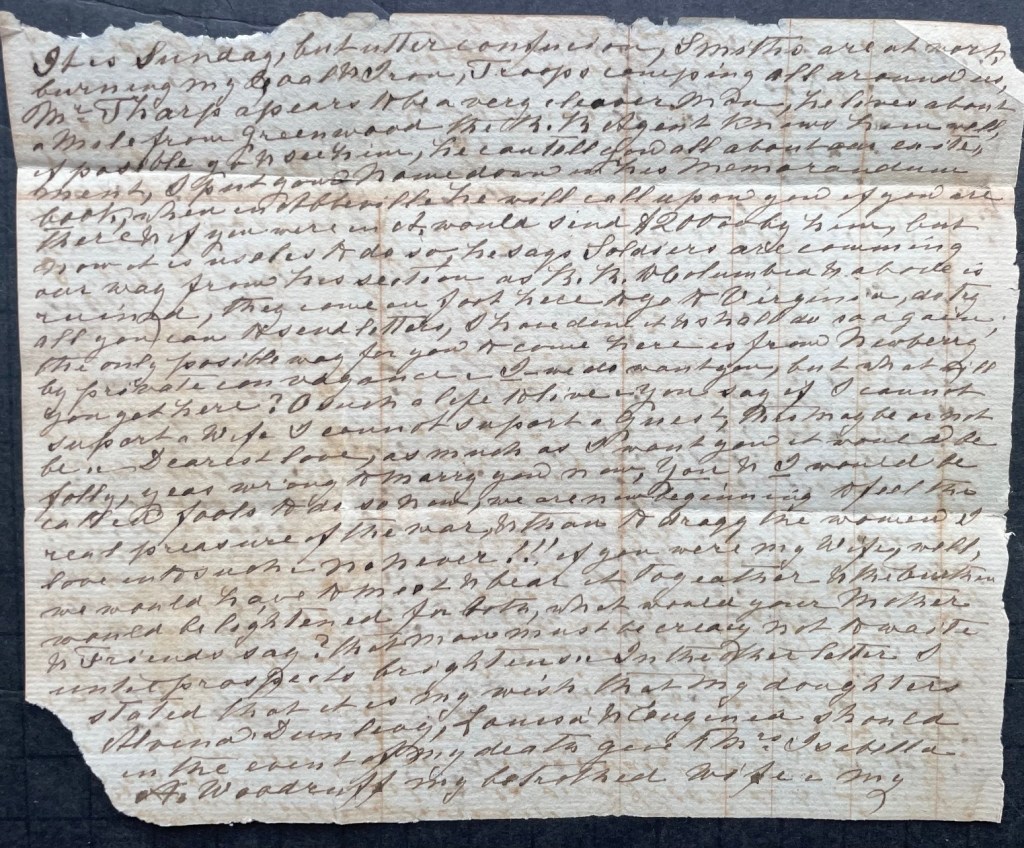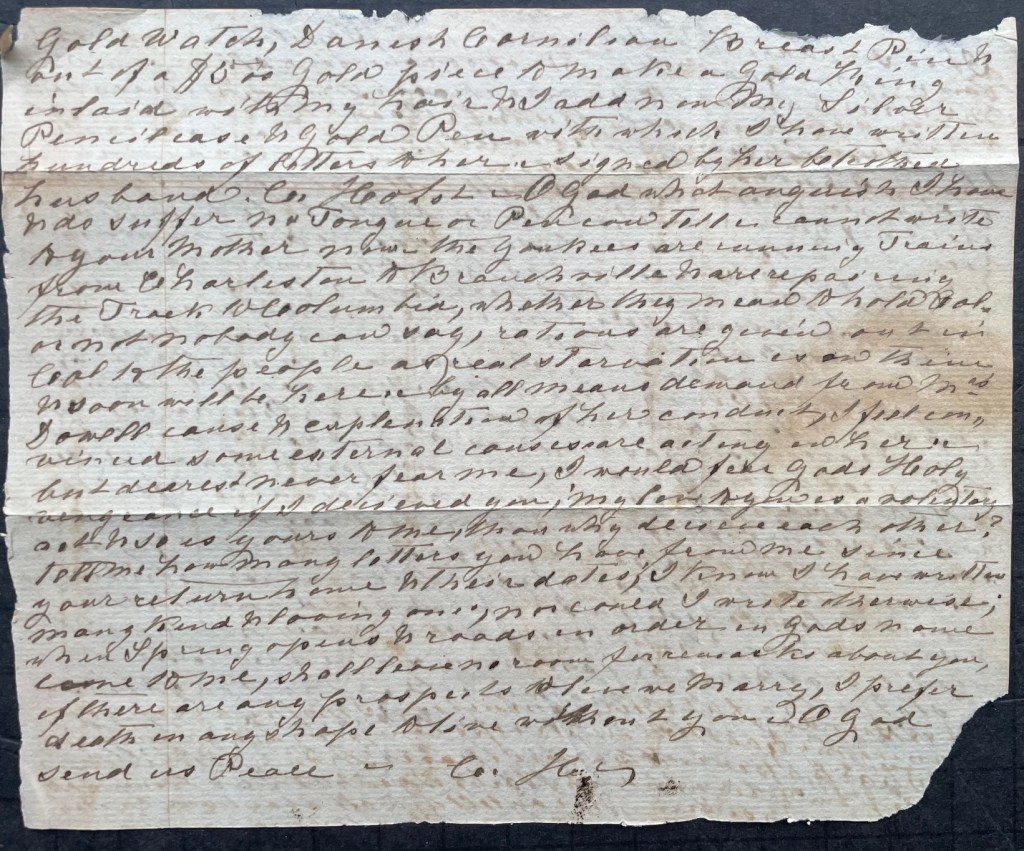
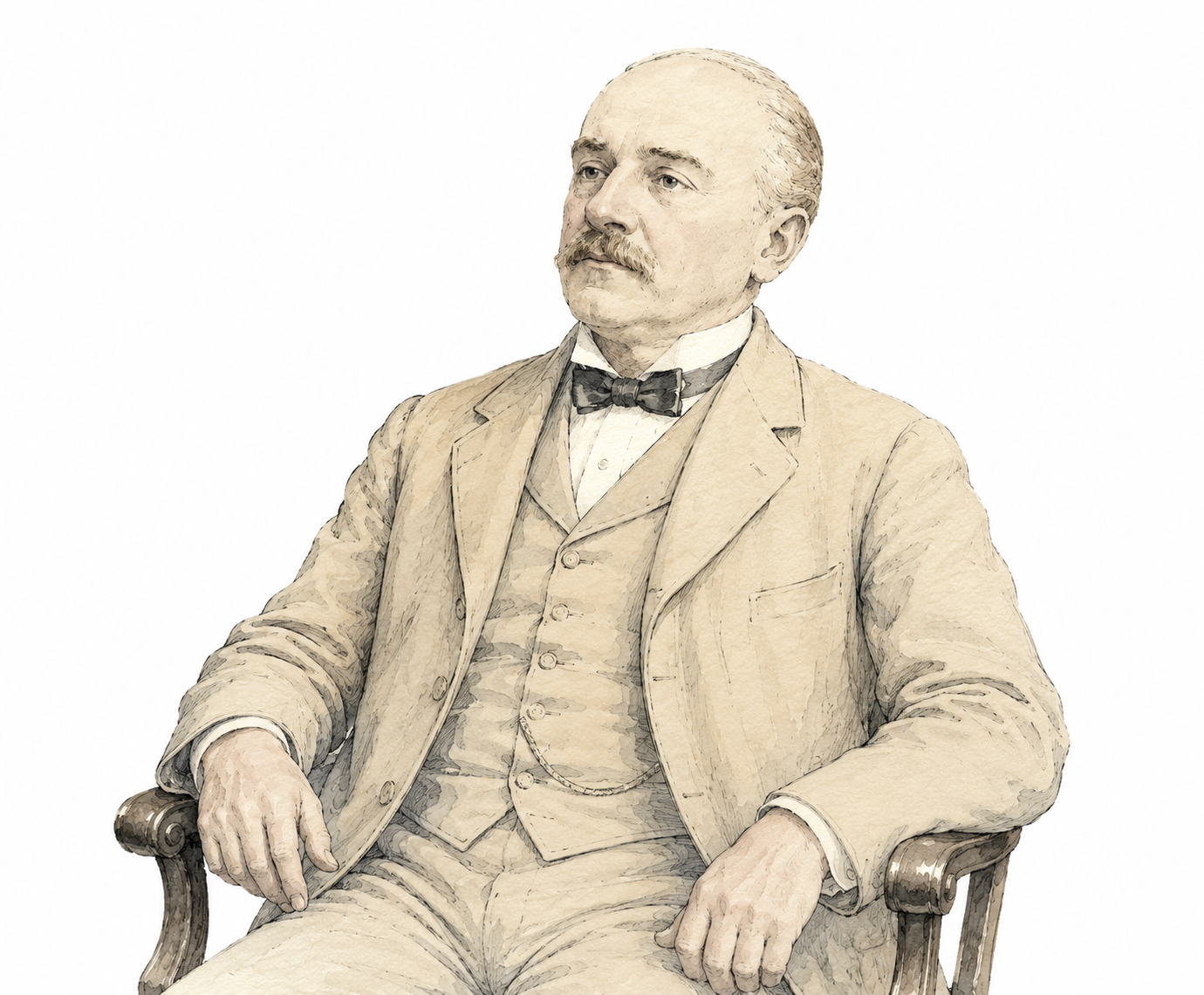
This lengthy letter was written by Charles Ferdinand Holst (1813-1871), a native of Copenhagen, Denmark, who first married Ida Eliza “Jennette” Chabert (1810-1863) in the German Lutheran Church in Philadelphia. Pa. in July 1833. By 1840, Charles had relocated to Chester, South Carolina, where he was employed as a Master Carriage Maker. His original home in Chester stood at 116 Pinckney Street. After his wife died in June 1863, he began a courtship with Mrs. Isabella Ann (Roberts) Woodruff, the widow of Theophilus Woodruff, who lived in Abbeville, South Carolina. I don’t know the date of their marriage but it no doubt occurred sometime between the date of this letter in 1865 and January 1866.
Charles had at least five children by his first wife—Alvenia Otelia (b. 1834), Ida Eugenia (b. 1848), Charles Emile (b. 1850), Oscar Ferdinand (b. 1852), and Augustus O. (b. 1857). With Isabella, Charles had two more children, Wilhelmina Morton (b. 1866), and Theodore Russell (b. 1869).
Charles’ letters speaks of the devastation in South Carolina caused not only by Sherman’s 1865 campaign through the Carolinas but by Confederate cavalry and infantry who were forced to live off the land and who, frankly, robbed and stole objects of value from their own citizens.
[My thanks to Nancy Fink for preparing a first draft of this transcription. The letter is from the collection of Gregg Herr and was made available for transcription and publication on Spared & Shared by express consent.]
T R A N S C R I P T I ON

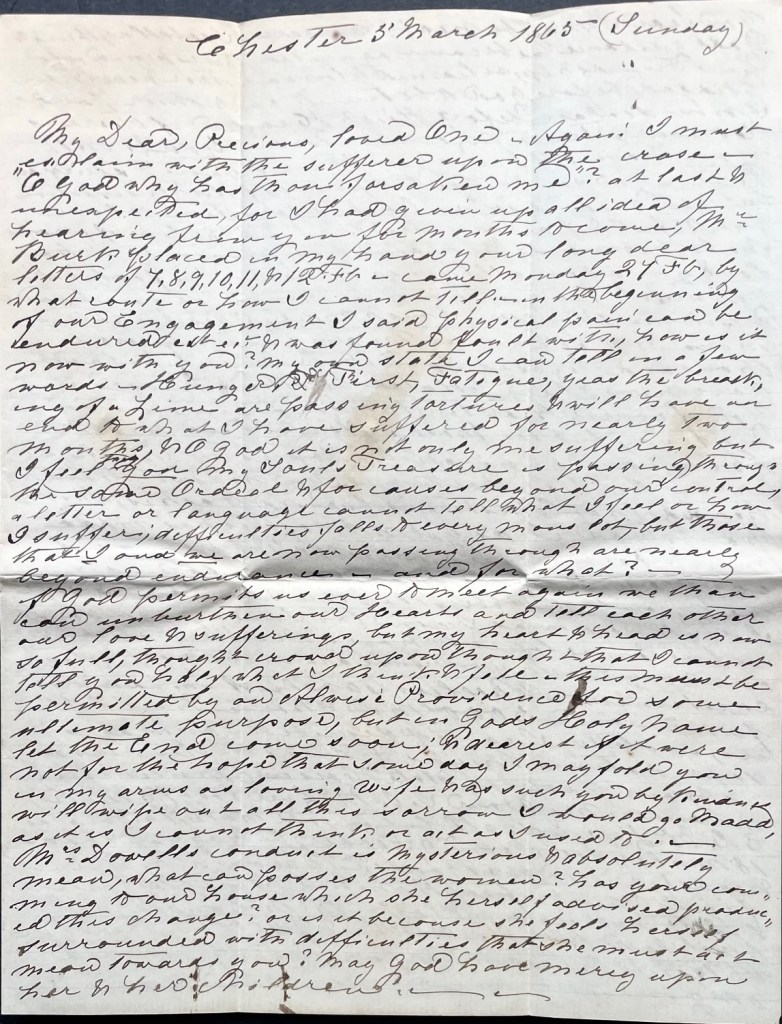
Chester [South Carolina]
5 March 1865 (Sunday)
My dear, previous loved one,
Again I must explain with the sufferer upon the cross, “O God, why has thou forsaken me?” At last and unexpected—for I had given up all idea of hearing from you for months to come—Mr. Burt placed in my hands your long dear letters of 7, 8, 9, 10, 11, and 12th February. Came Monday 27th February, by what route or how, I cannot tell. From the beginning of our engagement I said physical pain can be endured [ ] & was found fault with. How is it now with you? My own state I can tell in a few words—Hunger, Thirst, Fatigue… I have suffered for nearly two months & O God, it is not only me suffering but I feel for you, my soul’s treasure is passing through the same ordeal & for causes beyond our control. A letter or language cannot tell what I feel or how I suffer. Difficulties fall to every man’s lot, but those that I and we now pass through are nearly beyond endurance—and for what? If God permits us ever to meet again, we then can unburthen our hearts and tell each other our love & sufferings. But my heart and head is now so full—thought crowds upon thought that I cannot tell you half what I want. This must be permitted by an all-wise Providence for some purpose, but in God’s Holy name, let the end come soon.
My dearest, if it were not for the hope that some day I may fold you in my arms as loving wife and as such, you by kindness will wipe out all this sorrow, I would go mad. As it is, I cannot think or act as I used to.
McDowell’s conduct is mysterious & absolutely mean. What can possess the woman? Has your coming to our house which she herself advised produced this change? or is it because she fools herself surrounded with difficulties that she must act mean towards you? May God have mercy upon her and her children.
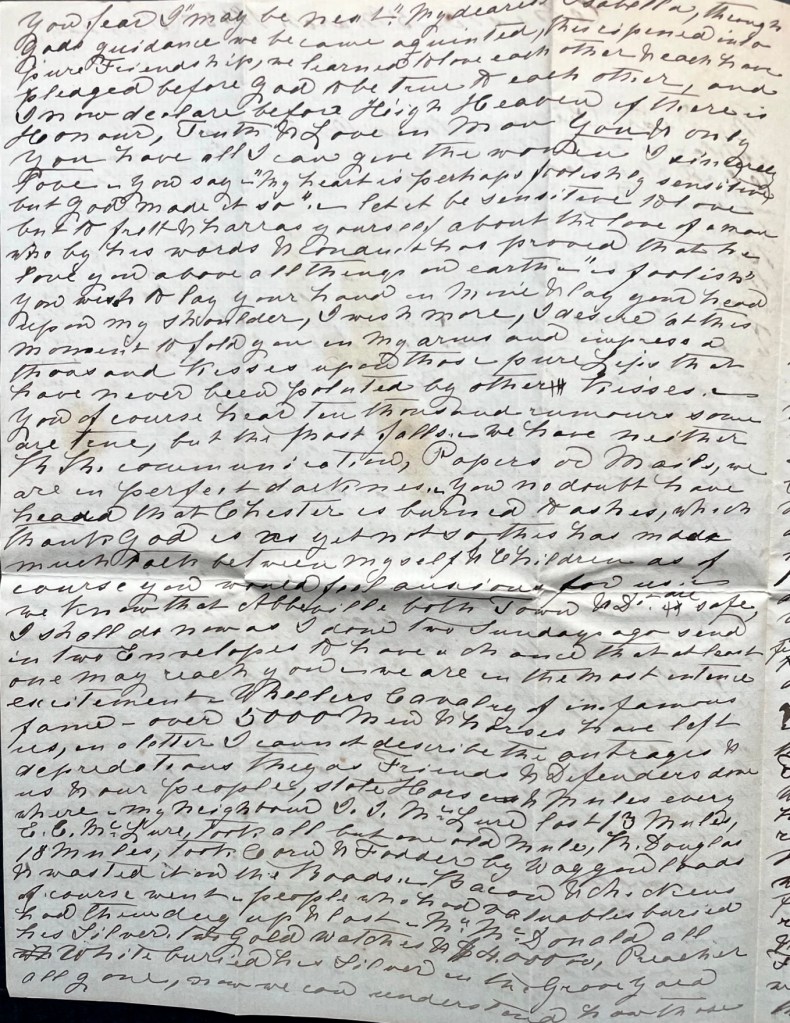
You fear I “may be next.” My dearest Isabella, through God’s guidance…we learned to love each other, and each have pledged before God to be true to each other, and I now declare before High Heaven if there is honor, truth, and love in man, you and only you have all I can give the women I sincerely love. You say, “My heart is perhaps foolishly sensitive but God made it so.” Let it be sensitive. Do not fret and harass yourself about the love of a man who by his words & conduct has proved that he loves you above all things on earth. You wish to place your hand in mine and press your head upon my shoulder. I wish it more. I desire at this moment to hold you in my arms and impress a thousand kisses upon those pure lips that have never been polluted by other kisses.
You of course hear ten thousand rumors—some are true, but the most false. We have neither railroad communication, papers or mails. We are in perfect darkness. You no doubt have heard that Chester is burned to ashes which, thank God, is as yet not so. This has made much talk between myself and children as of course you would feel anxious for us. We know that Abbeville, both town and depot are safe. I shall do now as I done two Sundays ago, send in two envelopes to have a chance that at least one may reach you.
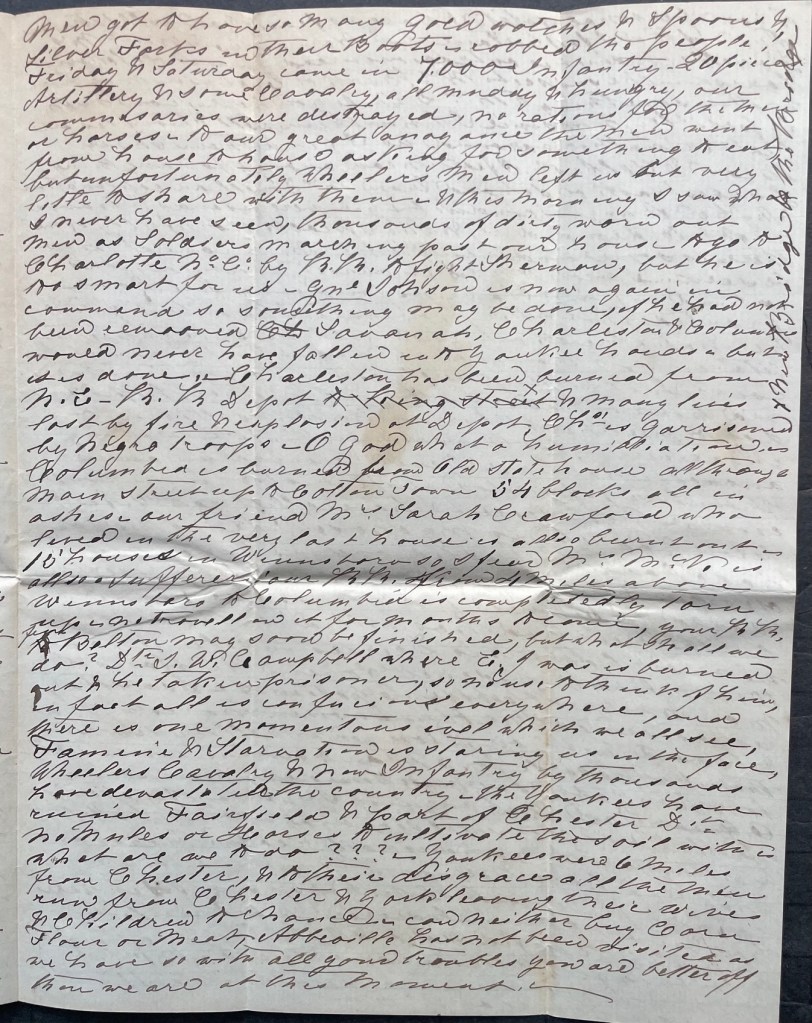
We are in the most intense excitement. [Joseph] Wheeler’s Cavalry of infamous fame—over 5,000 men & horses—have left us. In a letter I cannot describe the outrages & depredations they as Friends & Defenders done us & our people. [They] stole horses and mules everywhere. [In] my neighborhood, T. T. McLure lost 13 mules, E. C. McLure took all but one old mule, M. Douglas 18 mules, took corn and fodder by wagon loads and wasted it on the roads, Bacon & ch. News of course went [out and] people who had valuables buried had them dug up & lost. M. McDonald all his silver, two gold watches, and $4,000. Preacher White buried his silver in the graveyard—all gone. Now we can understand how those men got to have so many gold watches & spoons & silver forks in their boots—robbed the people!
Friday & Saturday came in 7,000 infantry, 20 pieces artillery, and some cavalry—all muddy and hungry. Our commissaries were destroyed—no rations for the men or horses. To our great annoyance, the men went from house to house asking for something to eat but unfortunately Wheeler’s men left us but very little to share with them. This morning I saw what I never have seen, thousands of dirty, worn out men as soldiers marching past our house to go to Charlotte, North Carolina by railroad to fight Sherman, but he is too smart for us. Gen. Johnston is now again in command so something may be done. If he had not been removed, Savannah, Charleston and Columbia would never have fallen into Yankee hands. But it is done. Charleston has been burned from North Carolina Railroad Depot & many lives lost by fire & explosion at Depot. Charleston is garrisoned by Negro troops. Oh God! What a humiliation.
Columbia is burned from Old Statehouse all through Main street to Cotton Town—54 blocks all in ashes. Our friend Mrs. Sarah Crawford who lived in the very last house is also burnt out. 15 houses in Winnsboro [are burned] so I fear Mrs. McN is also a sufferer. Our railroad from four miles above Winnsboro to Columbia is completely torn up. No travel on it for months to come. Your railroad from Belton may soon be finished but what shall we do? Dr. T. W. Campbell, where E. J. was, is burned out and he taken prisoner, so no use to think of him. In fact, all is confusion everywhere and there is one momentous evil which we all see—famine & starvation is staring us in the face. Wheeler’s Cavalry and now infantry by thousands have devastated the country. The Yankees have ruined Fairfield and part of Chester Dept. No mules or horses to cultivate the soil with. What are we to do?
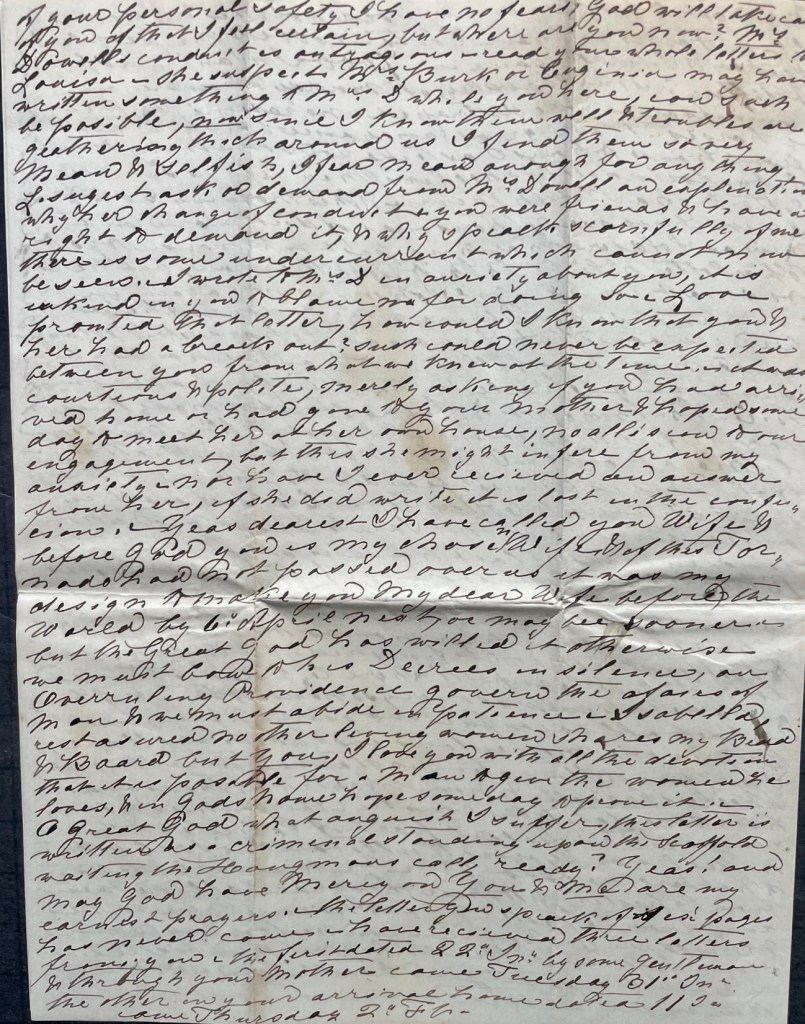
Yankees were six miles from Chester & York, and to their disgrace, all the men run from Chester & York leaving their wives and children to chance. [They] can neither buy ornaments, flour, or meat. Abbeville has not been visited as we have, so with all your troubles, you are better off than we are at this moment. Of your personal safety, I have no fears. God will take care of you—of that I am certain. But where are you now? McDowell’s conduct is outrageous….[more personal correspondence]
May God throw his protecting arms around you are the prayers of your loving and affectionate husband before God, — C. Holst
It is Sunday, but utter confusion. Smiths are at work burning my coal and iron. Troops camping all around. Mr. Thorp appears to be a very cleaver man. He lives about a mile from Greenwood. The railroad agent knows him well. If possible, you see him. He can tell you all about our establishment. I put your name down on his memorandum book. When in Abbeville, he will call upon you if you are there & if you are not, would send $200 by him, but now it us useless to do so. He says soldiers are coming our way from his section as railroad to Columbia and above is ruined. they come on foot here to go to Virginia.
Do try all you can to send letters. I have done it & shall do again. The only possible way for you to come here is from Newberry by private conveyance. We do want you, but what will you get here? O! such a life to live. You say if I cannot support a wife, I cannot support a guest. This may be or not be. Dearest love, as much as I want you, it would be folly—yea wrong. to marry you now. You and I would be fools to do so now. We are now beginning to feel the real pressure of the war and then to drag the woman I love into such—no never!!! If you were my wife, well we would have to meet and bear it together & the burthen would be lightened for both. What would your Mother and friends say? That man must be crazy not to wait until prospects brighten.
In the other letter I stated that it is my wish that my daughters Alvena Dunlevy, Louisa & Eugenia should in the event of my death give to Mrs. Isabella A. Woodruff, my betrothed wife, my gold watch, Danish Cornelian Breast Pin made out of a $5 gold piece to make a gold ring inlaid with my hair & I add now my silver Pen___ & Gold Pen with which I have written hundreds of letters to her, signed by her betrothed husband, C. Hobst. Oh God, what anguish I have & do suffer. No tongue or pen can tell. I cannot write to your mother now. The Yankees are running trains from Charleston to Branchville and are repairing the track to Columbia. Whether they mean to hold Columbia and the people as real starvation is on them & soon will be there….
…when spring opens and roads in order, in God’s name come to me, shall leave no room for remarks about you, if there are any prospects & we will marry. I prefer death in any shape to live without you. Oh God, send us peace. — C. H.