These letters were written by Meriwether “Jeff” Thompson (1826–1876), one of the more colorful Confederate commanders in the Trans-Mississippi theater. A native of Virginia who settled in St. Joseph, Missouri, Thompson worked as a surveyor, engineer, businessman, and served as mayor of St. Joseph before the war. He was married in 1848 to Emma Hayes, the daughter of a Baltimore artist. An ardent secessionist, he was elected brigadier general of the Missouri State Guard in 1861 and became famous for his operations in the swamps and river country of southeastern Missouri, earning the nickname “Swamp Fox of the Confederacy.” Although commonly styled a Confederate general, Thompson’s brigadier-general rank was actually in the Missouri State Guard; he never received that rank in the regular Confederate Army. His wartime service carried him through Missouri, Arkansas, Tennessee, and Louisiana, including a brief stint commanding Confederate river vessels.
Thompson was captured at Pocahontas, Arkansas, in August 1863 while attempting to raise a new command. After confinement in St. Louis and at Johnson’s Island, Ohio, he was transferred to Fort Delaware, the formidable Union prison on Pea Patch Island in the Delaware River. Thus, when he wrote this letter in March 1864, the once highly mobile “Swamp Fox” had been a prisoner for more than six months. At Fort Delaware he became a prominent figure among the Confederate officers, writing poetry and helping organize entertainments to relieve the monotony of captivity. He remained there until his exchange in August 1864, after which he returned to the field, commanded troops during Sterling Price’s Missouri campaign, and ultimately surrendered his command in Arkansas in May 1865. He died of tuberculosis in 1876—a disease he probably contracted while in prison. [Sources: Encyclopedia of Arkansas, Civil War on the western Border (KC Public Library)]
Thompson wrote the letters to his Baltimore relative, Jane Eliza (Brown) Bestor (1820-1885), the wife of John Rollin Bestor, Sr. (1813-1867). This Baltimore couple had twin sons who served in the Maryland Guard that became Co. B, 21st Virginia Infantry. Their letters have been transcribed and may be found at 1861-65: The Bestor Brothers of Baltimore.
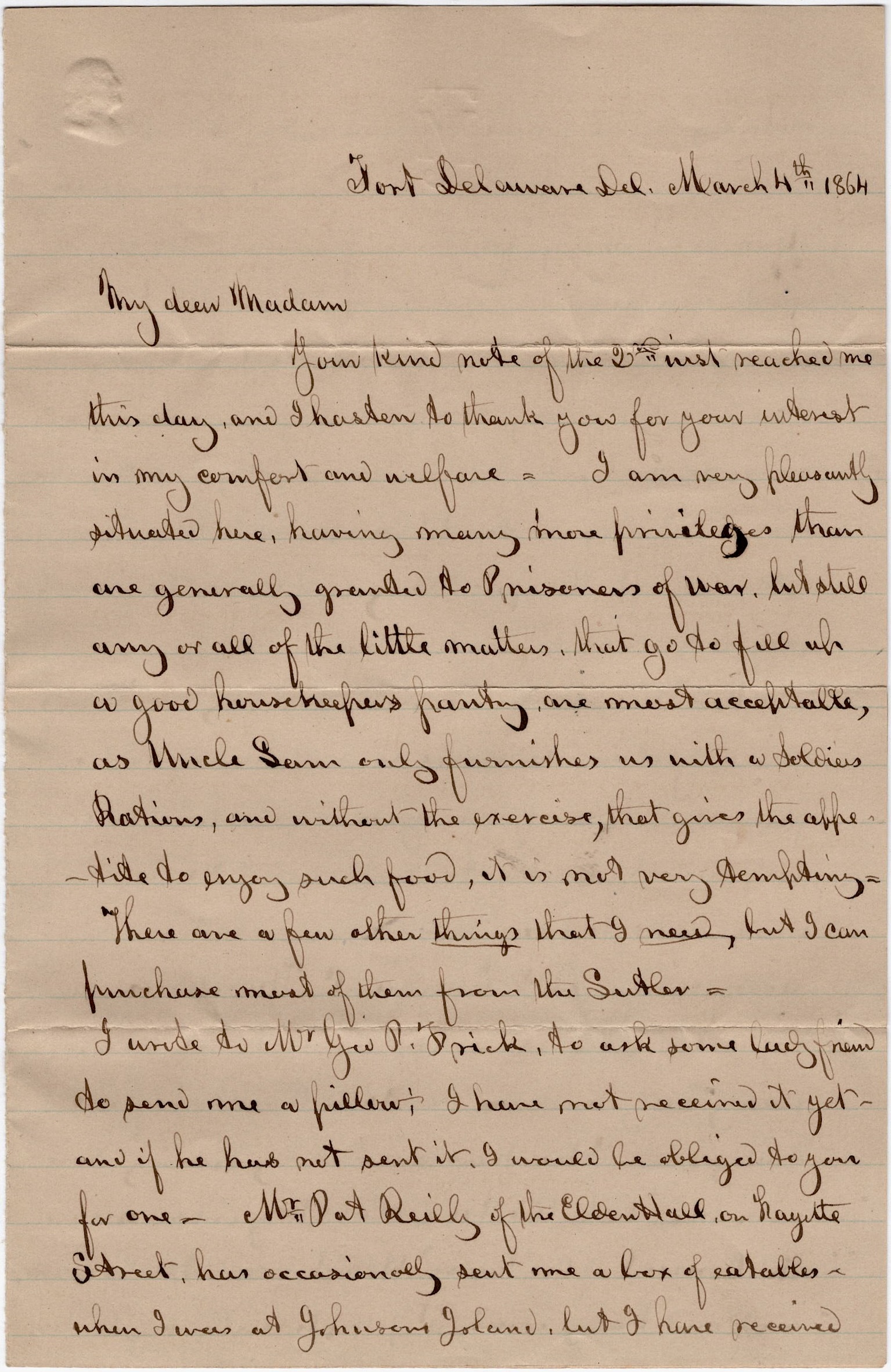
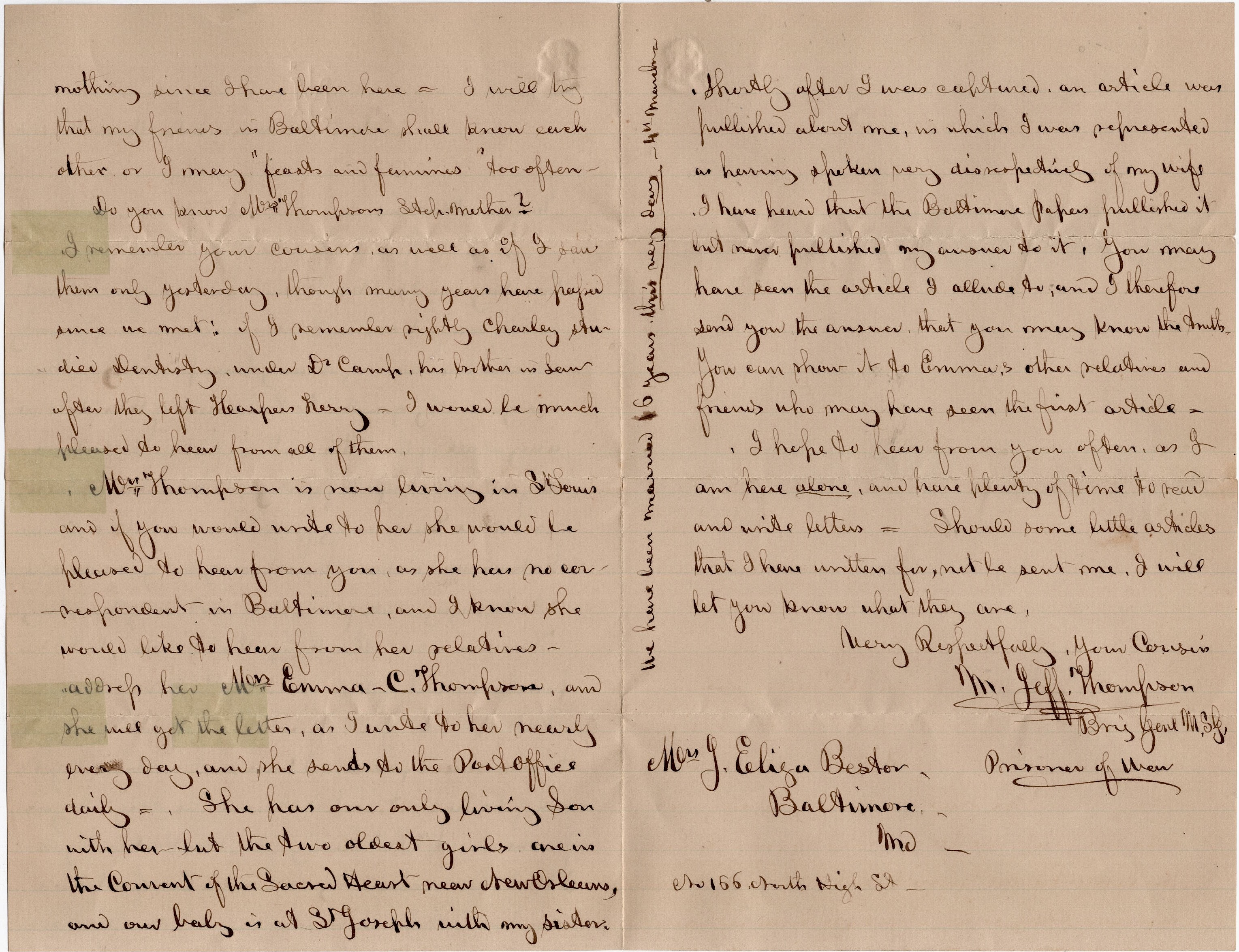
An interesting aspect of this particular letter is that it was three pages in length. Most prisoners were limited in their correspondence to one page—for both outgoing and incoming letters. “Supposedly, all letters were examined by censors and any letter over one page was considered to be contraband and therefore not delivered to the prisoner. This rule led to prisoners using every square inch of the page to write their messages. At times the letters greater than one page were removed from the cover, and the empty cover was sent to the prisoner. When General M. Jeff Thompson was imprisoned on Johnson’s Island in September of 1863, he took steps to eliminate the one page rule. He struck a deal with those censoring the letters. Long letters were to be read by the censors in the evening rather than during the day. Thompson would see that they received two and one-half cents per page for each page read. The censors agreed, but the matter had to be kept secret. This worked well as the censors were able to make several dollars more per day than their pay. However, the scheme fell apart when a prisoner complained to the prison commandant that he had to pay a dime tax to receive a four page letter. After the matter was investigated, the long letter mail was stopped.” Perhaps Thompson struck such a deal at Fort Delaware as well for his are the only letters I’ve seen that exceeded one page. [Source: Letters to and from Confederate Prisoners]
Most of Thompson’s Papers have been deposited in the State Historical Society of Missouri. See Meriwether Jeff Thompson Papers.
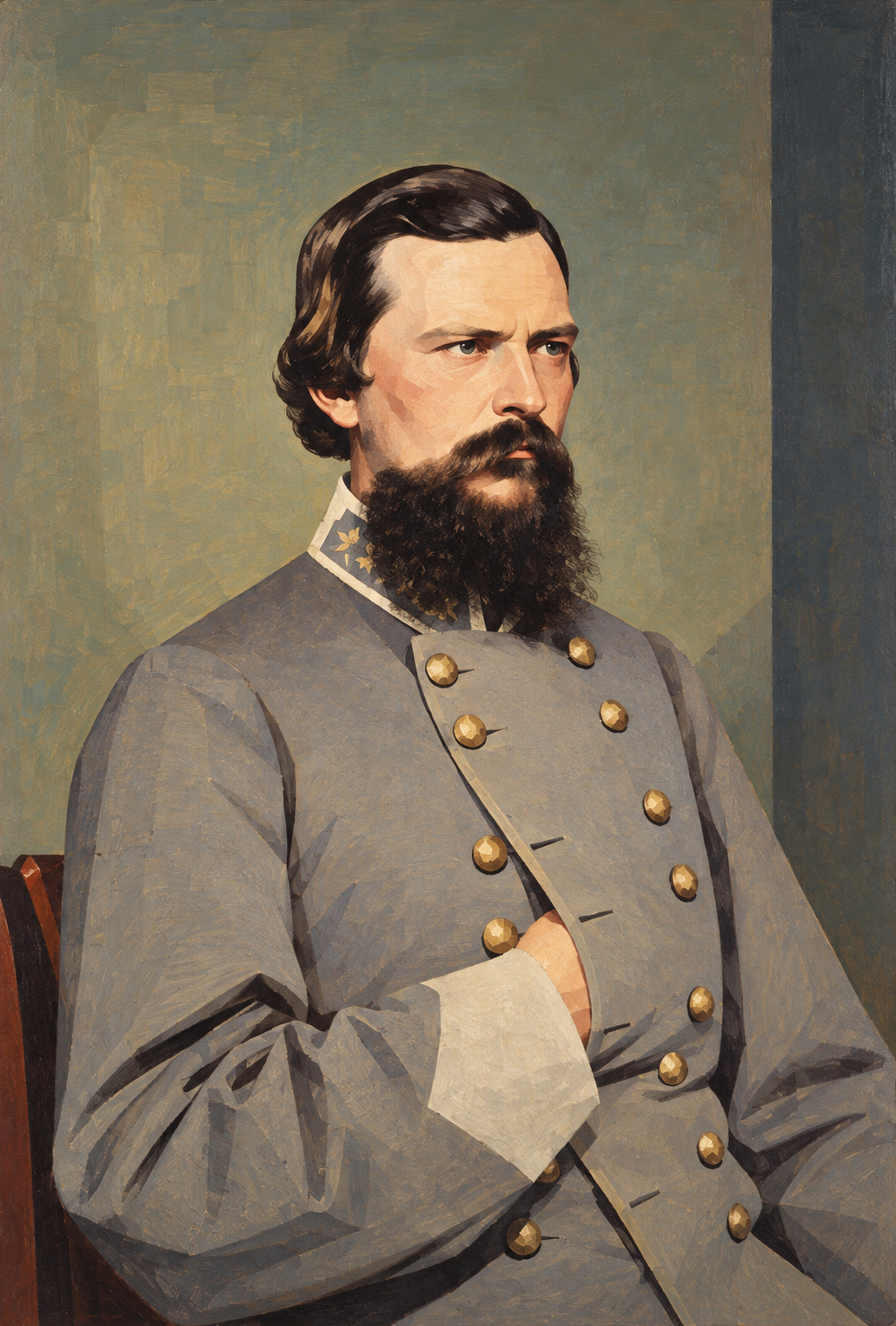
[Editor’s Note: The image of Thompson in the header is based on a photograph in the Library of Congress.]
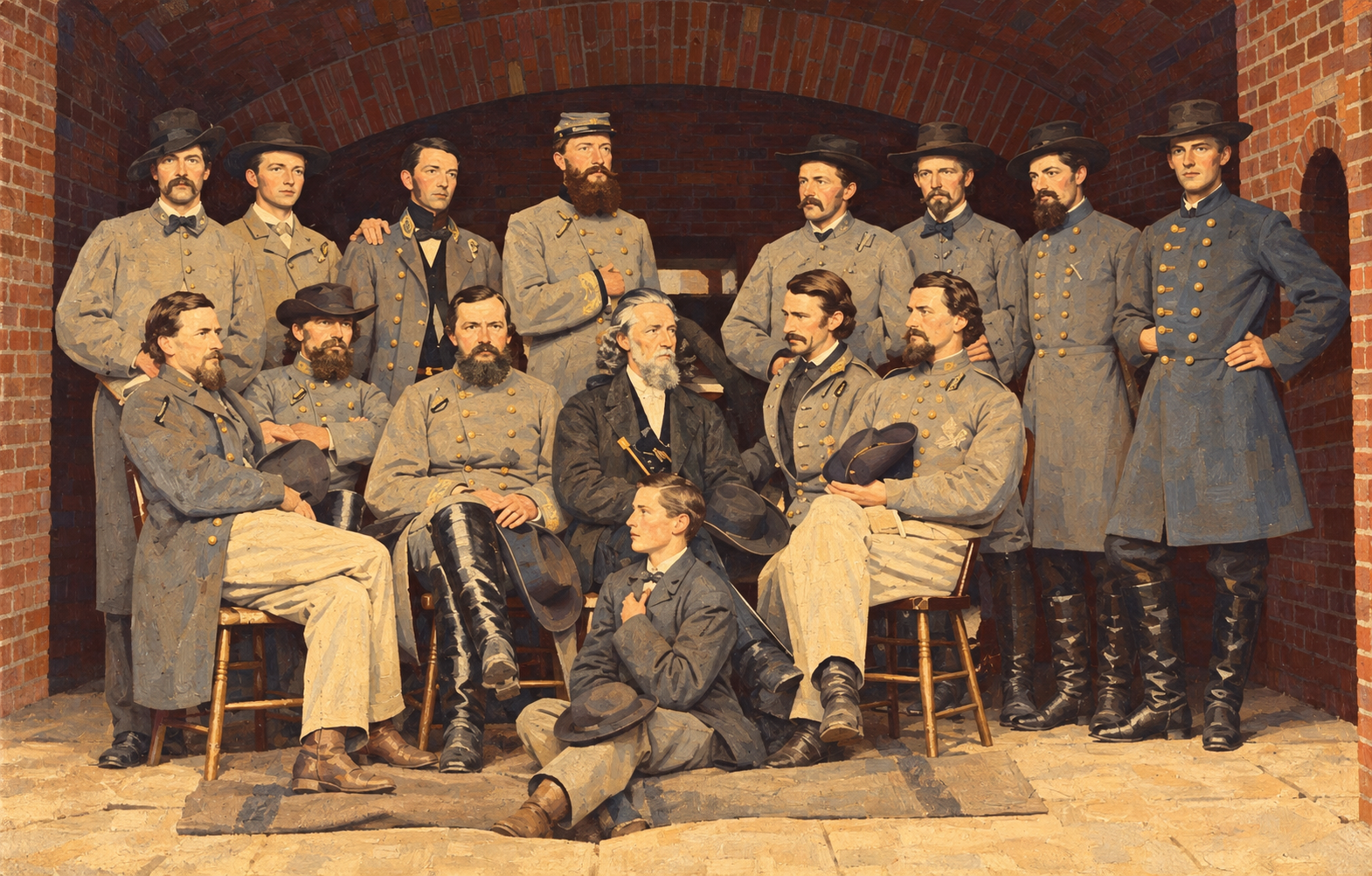
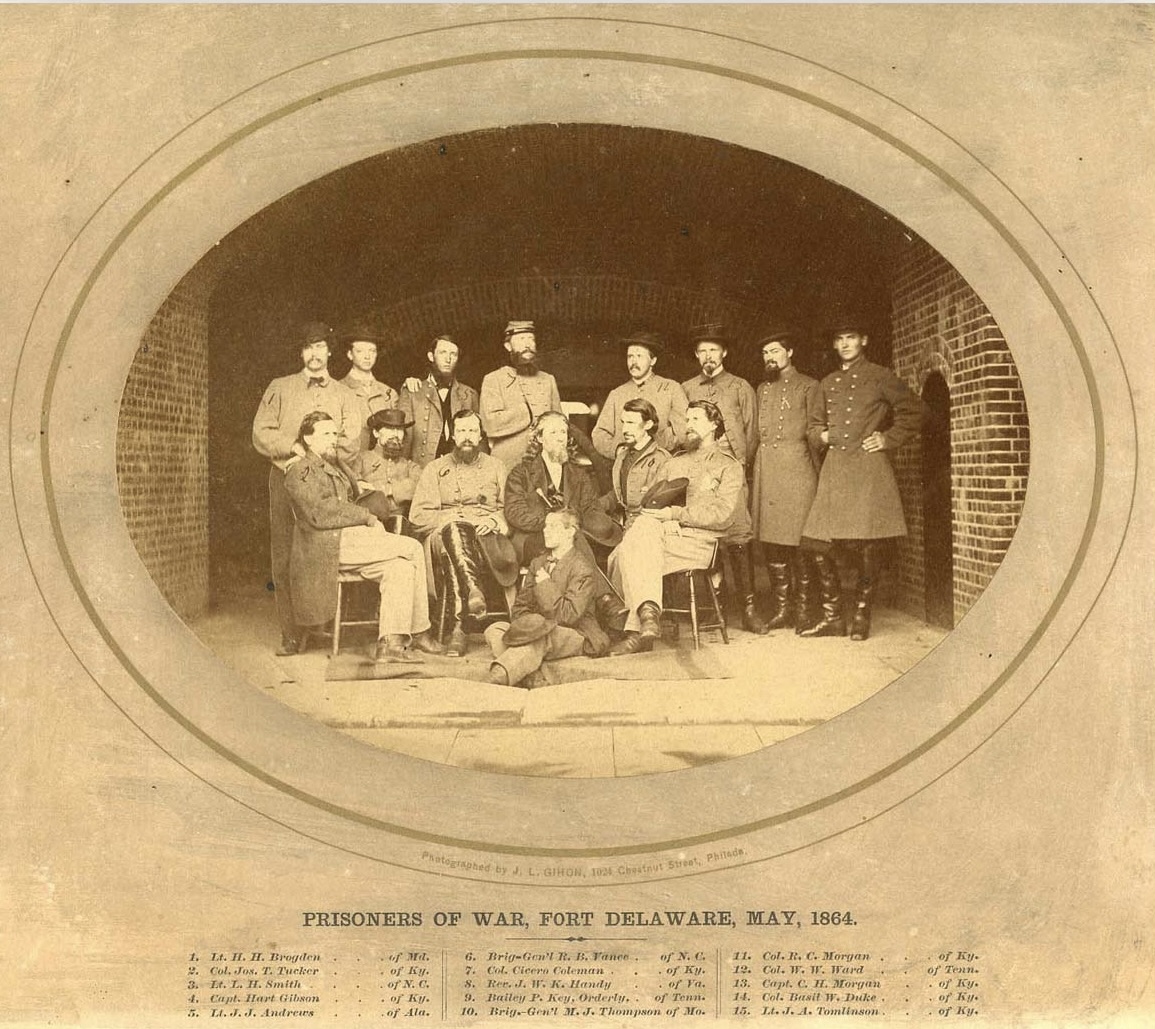
“The company did me the honor to give me the central position with General [Robert] Vance on the right, and Gen. [Jeff] Thompson on the left—the others seated on either side, or standing in the rear, with Bailey [Peyton] Key, the orderly, on a blanket in front.
“Something was said about bringing a couple of Rebel ladies into the picture. Gen. Jeff [Thompson] good humoredly suggested, that it was ‘bad enough to introduce a preacher into such company;’ and so the ladies, beautiful, and thoroughly ‘secesh,’ will be more appropriately daguerreotyped upon the hearts of certain distinguished heroes, for whom their visit was more especially intended.”
Letter 1
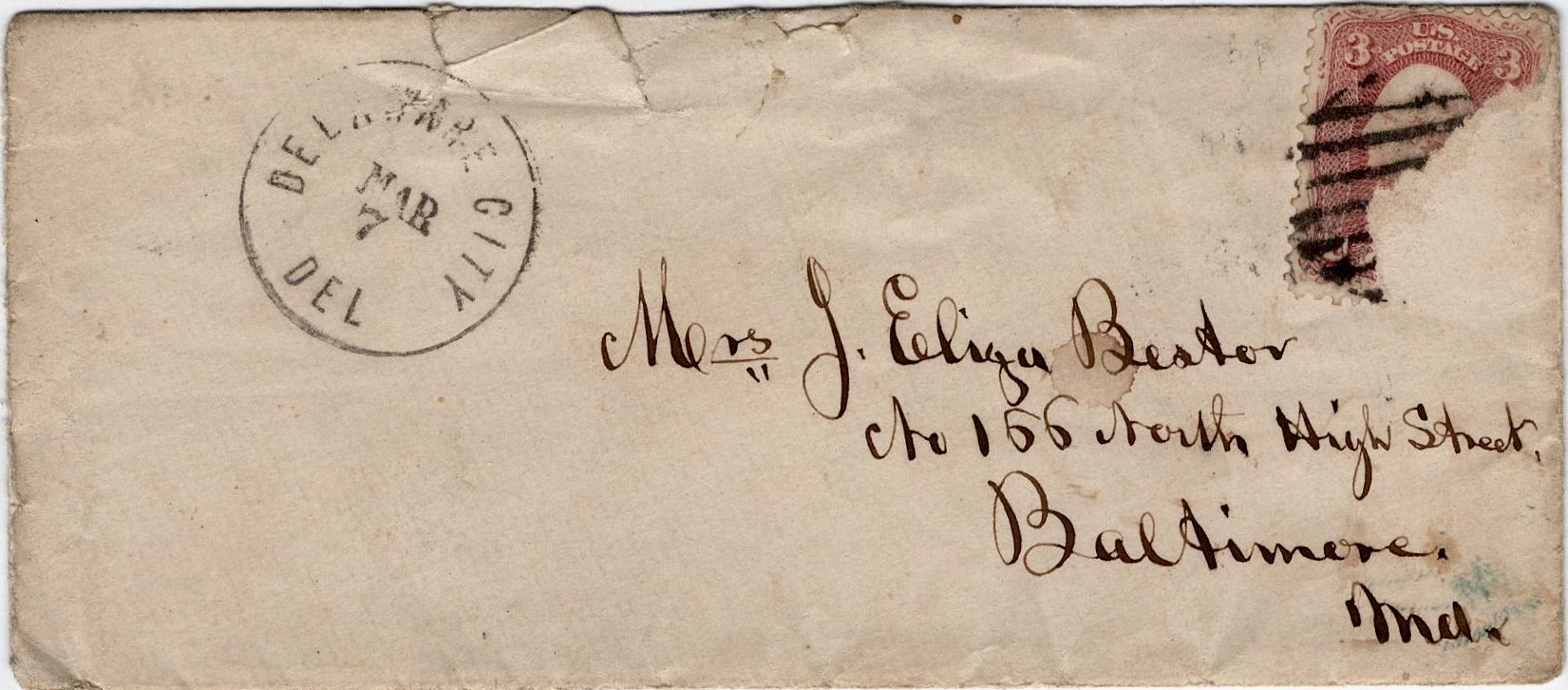
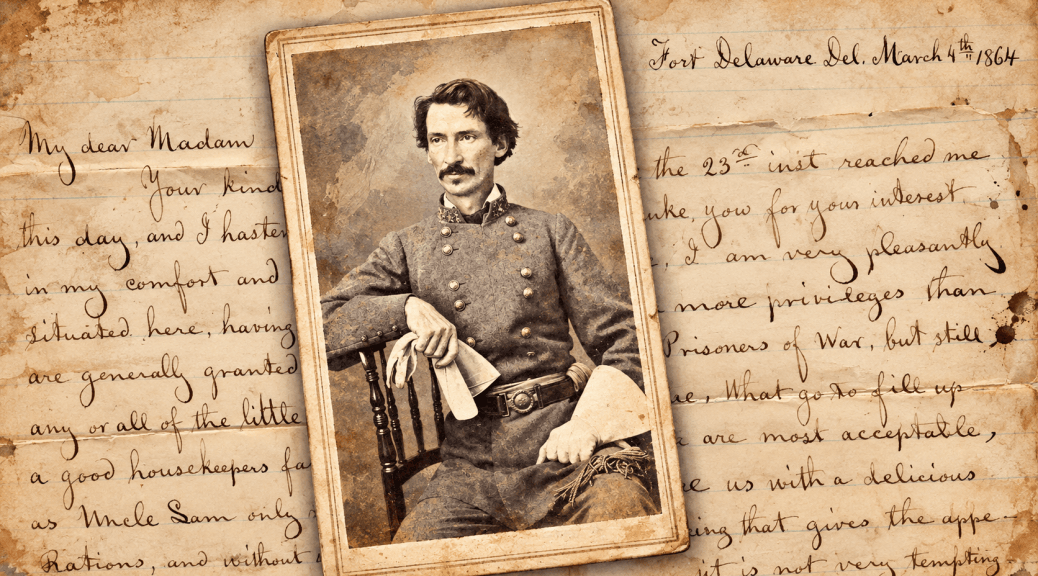
Fort Delaware, Delaware
March 4th 1864
My dear Madam,
Your kind note of the 2nd inst. reached me this day and I hasten to thank you for your interest in my comfort and welfare. I am very pleasantly situated here, having many more privileges than are generally granted to Prisoners of War. But still any or all of the little matters that go to fill up a good housekeeper’s pantry are most acceptable as Uncle Sam only furnishes us with a soldier’s rations, and without the exercise, that gives the appetite to enjoy such food, it is not very tempting. There are a few other things that I need but I can purchase most of them from the sutler.
I wrote to Mr. George R. Frick to ask some lady friend to send me a pillow. I have not received it yet and if he has not sent it, I would be onliged to you for one. Mr. Pat Reilly of the Elden Hall on Lafayette Street has occasionally send me a box of eatables when I was at Johnson’s Island, but I have received nothing since I have been here. 1 I will try that my friends in Baltimore shall know each other or I may “feasts and famines” too often.
Do you know Mrs. Thompson’s step mother? I remember your cousins as well as if I saw them only yesterday, though many years have passed since we met. If I remember tightly, Charley studies Dentistry under Dr. Camp, his brother-in-law, after they left Harpers Ferry. I would be much pleased to hear from all of them.
Mrs. Thompson is now living in St. Louis and if you would write to her, she would be pleased to hear from you as she has no correspondent in Baltimore and I know she would like to hear from her relatives. Address her Mrs. Emma C. Thompson and she will get the letter as I write to her nearly every day and she send to the post office daily. She has our only living son with her but the two oldest girls are in the Convent of the Sacred Heart near New Orleans and our baby is at St. Joseph with my sister.
Shortly after I was captured, an article was published about me in which I was represented as having spoken very disrespectfully of my wife. I have heard that the Baltimore papers published it but never published my answer to it. You may have seen the article I allude to and I therefore send you the answer that you may know the truth. You can show it to Emma’s other relatives and friends who may have seen the first article.
I hope to hear from you often as I am here alone and have plenty of time to read and write letters. Should some little articles that I have written for not be sent me, I will let you know what they are.
Very respectfully, your cousin, — M. Jeff Thompson, Brig. Gen. M. S. G. [Missouri State Guard], Prisoner of War
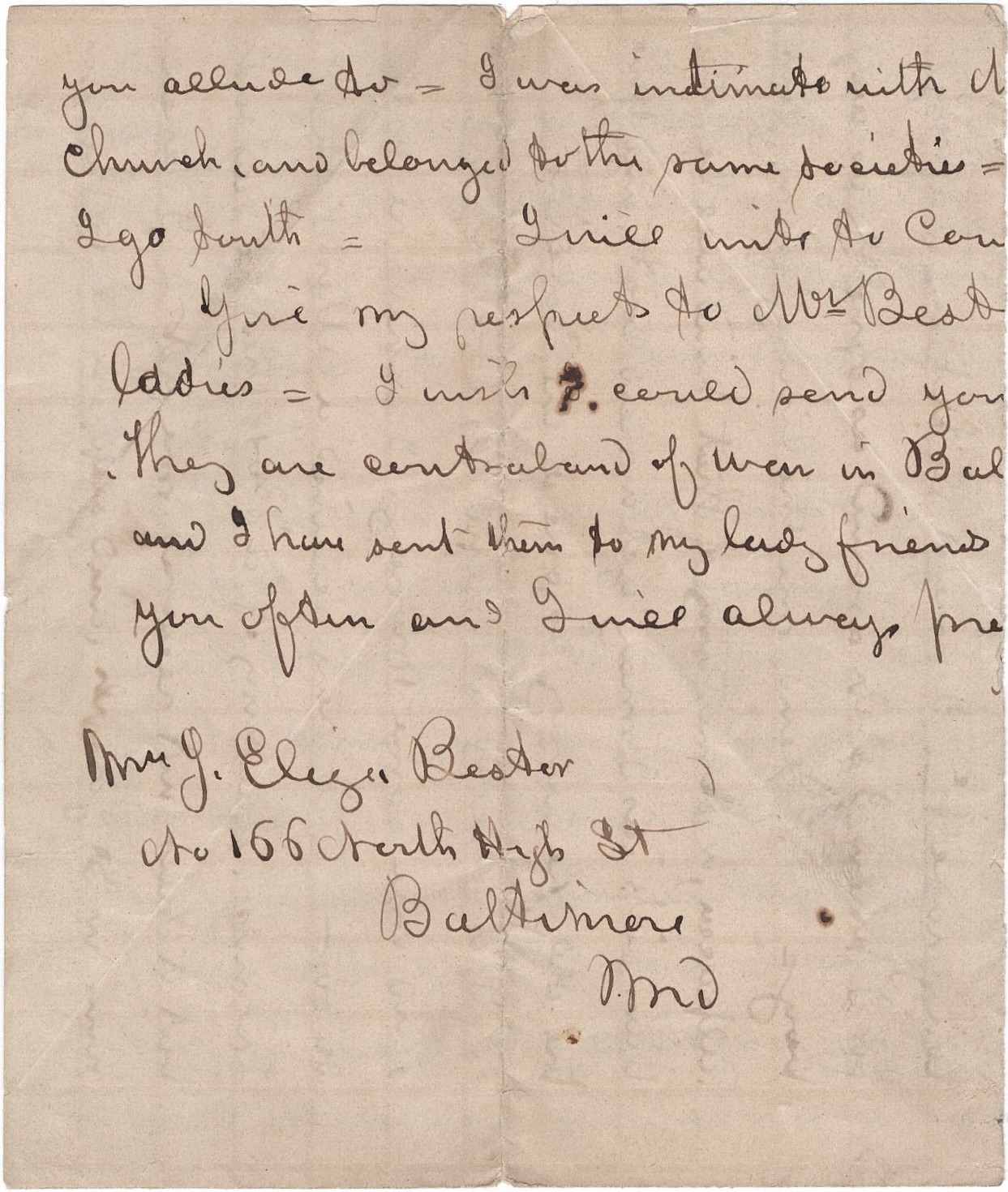
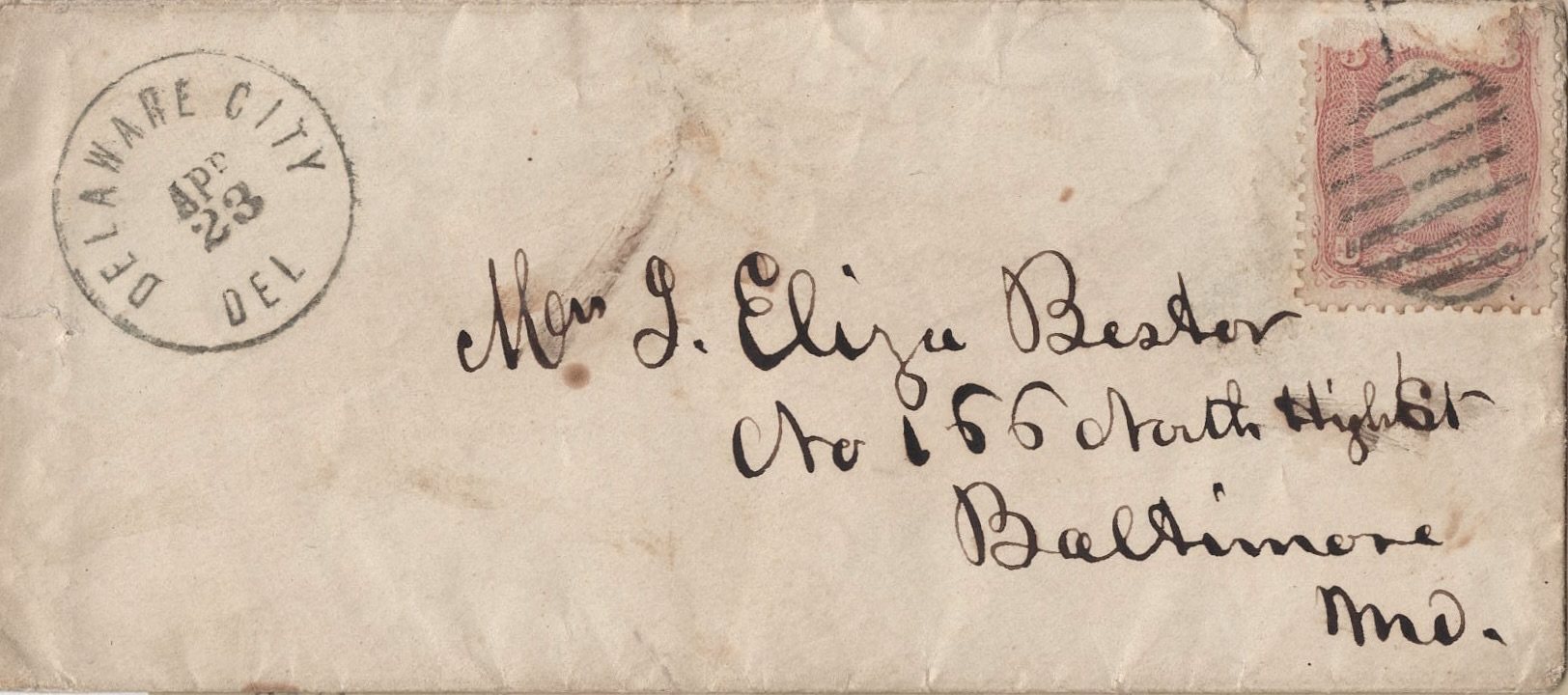
To Mrs. J. Eliza Bestor, Baltimore, Md., No. 166 North Hight Street.
We have been married 16 years this very day—4th March.
1 Patrick Reilly was the proprietor of Eldon Hall, a well-known restaurant and dining saloon in Baltimore. It was located at 75-78 West Fayette Street. Reilly sold it in 1888.
Letter 2
Fort Delaware Del.
April 5th, 1864—Tuesday night
Dear Cousin,
The Box reached me safely today, and I am delighted with the pants and coat, and everything else sent.
Today has been too inclement to go to the barracks to distribute the other clothes, but tomorrow I hope to be able to get down. The collars were the style I wear exactly, and I now have enough to last me through the war, and the steel collar will do to wear where washing is difficult to be done. I received several things from New York today and am now well supplied with clothes. I gave my old clothes to the “pile” to be distributed tomorrow. I can only have a valise full of clothes on hand with a probability of getting them through when I am exchanged, and therefore when I get anything that suits me better than what I have, I give away what I swap for.
Martin’s bundles will be properly delivered. He was present today when the boxes were delivered and was sent away empty handed because my boxes were not examined, and I had not received the letter until after he had gone back to the barracks. After he was gone, we found the bundles and they will be delivered to him tomorrow.
Brogden did not report anything as being for me but as I often eat with him, it answered the same purpose when he received boxes. But now I am not permitted to visit the Political Prison and therefore cannot eat with him now. Brogden now has a parole of the Island, and is much in my room. He is a very nice fellow, and I am quite fond of him.
The fresh oysters you sent are soured, and I have tried the experiment of pickling one can, but the others had to be thrown away. I regretted it much as I am passionately fond of them, and these looked so large and fine that I felt tempted to risk the cholera morbus on them. The Cove Oysters are nice, and I stewed and ate one can of them by myself today. The tomatoes are my next favorite dish to oysters, and I will try them tomorrow.
My messmates all send their thanks to you for your sympathy, and also for the eatables. We have ten now besides Bail! (our orderly) in the mess, and I am the housekeeper or chief of mess. So I have my hands full of business.
I suppose you allude to Major Simon’s sister. Did her Father receive a letter from me shortly after I came here? If he did not, I will write again, just for the pleasure it will give Gus some of these days, when he knows that I told his Father what a brave and efficient officer he was.
I sent Miss Lou one of my Photographs last night which will replace the mad L [?] one you gave away. If you would like to have one of the others, I will send it to you, as I have two of them left.
You must cheer up about your Jewels, and thank God and be proud that you are able to do so much for your country. I know it is hard—very hard—to be separated from them when they are in constant danger, but if you are uneasy and unhappy about them, it may unnerve their arms and then they would be truly in danger. I wish my girls were all boys and old enough to be in the ranks. I would be very proud of them.
Since the creation of the world there has been wars, and there always will be wars, and the bravest and the best will do the fighting and sacrifice their lives for Liberty, Glory, Religion, or honor, and brave sons should have brave Mothers, and you must trust your Jewels in the hands of God, and abide His will.
Give my kindest regards to all friends and relatives. I will write again soon.
Your Grateful Cousin — M. Jeff. Thompson
<missing scans>
Letter 3
Fort Delaware, Del.
April 21st ’64
Thursday night
My dear Cousin,
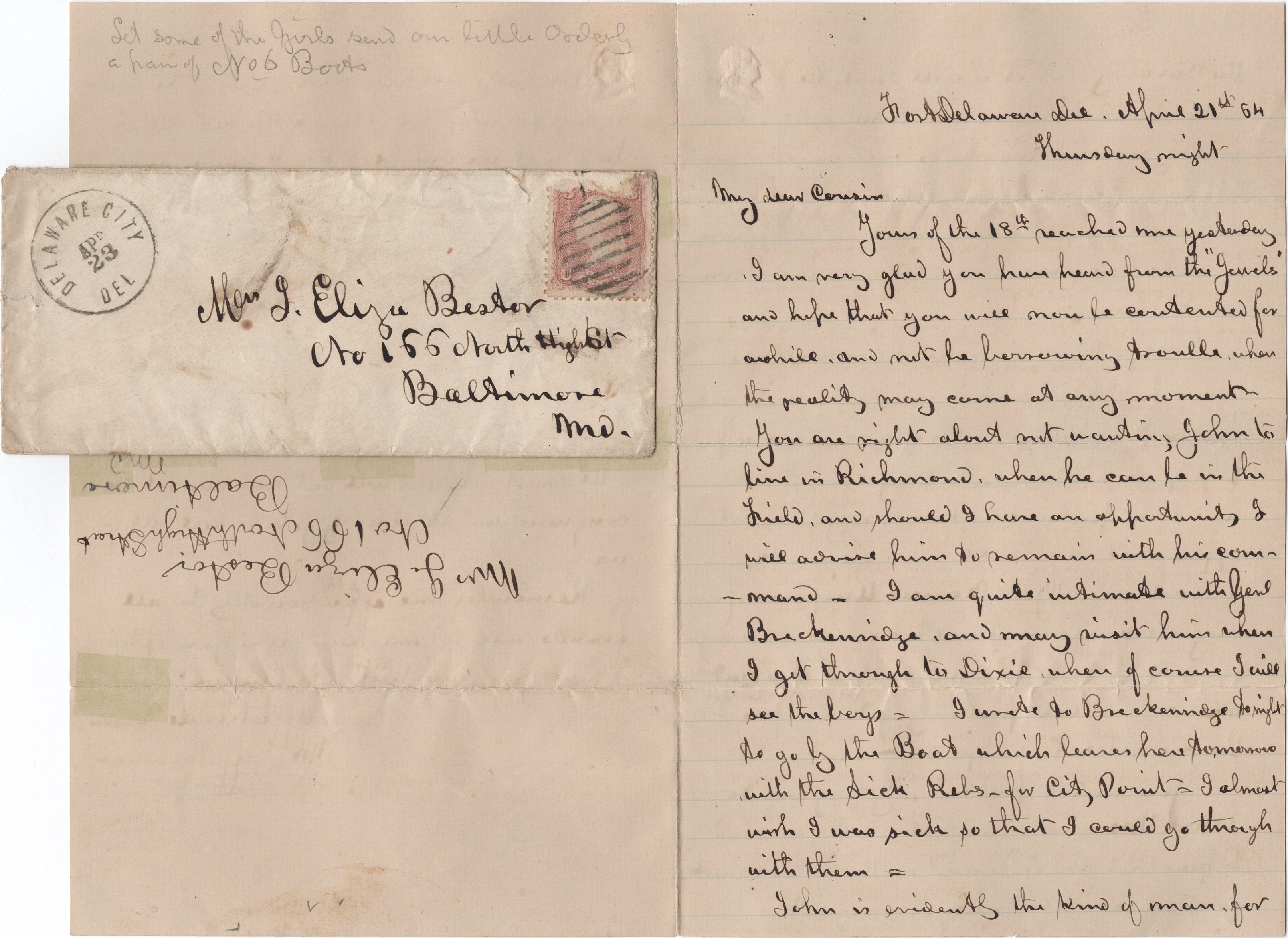
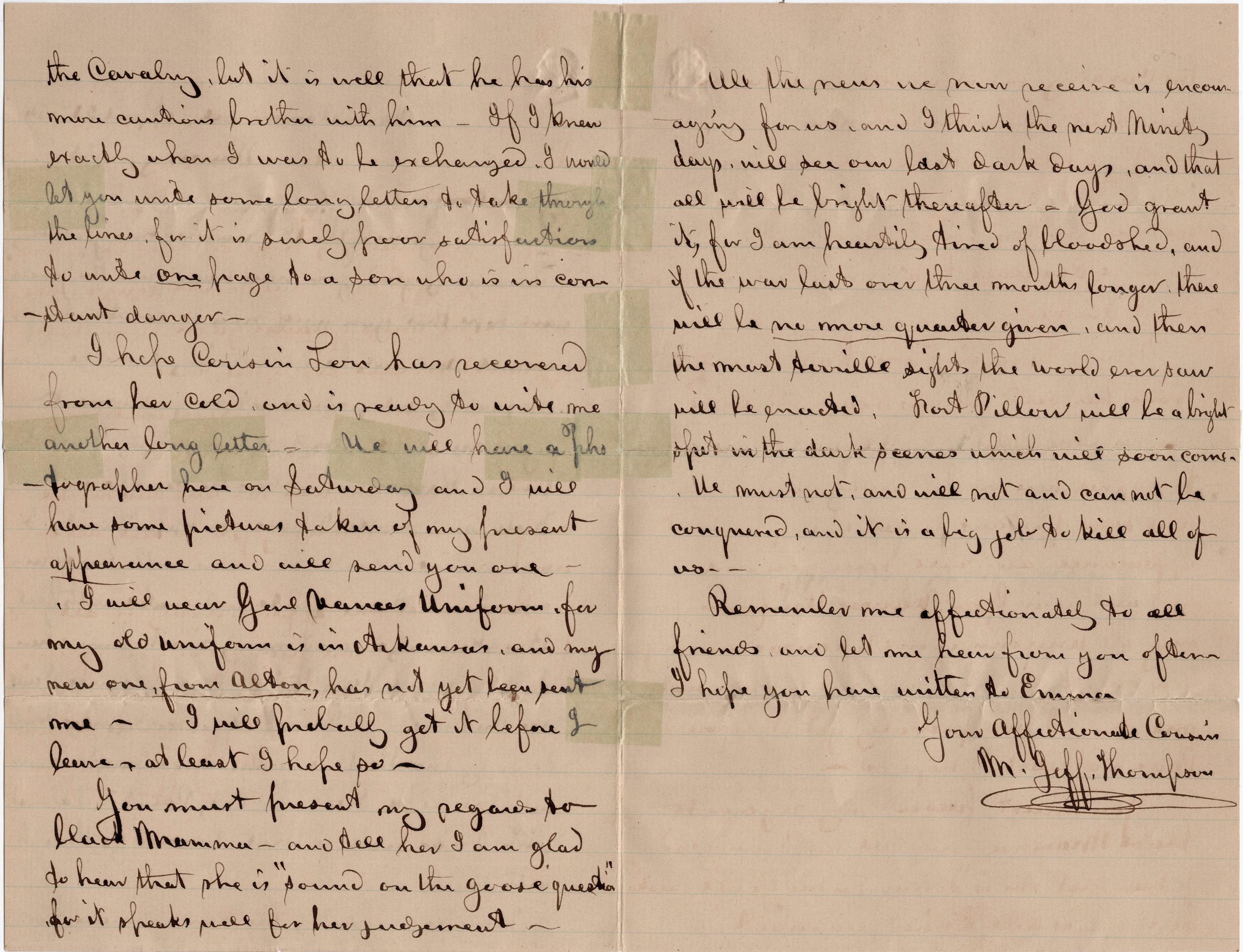
Yours of the 18th reached me yesterday. I am very glad you have heard from the “Jewels” and hope that you will be contented for a while and not be borrowing trouble when the reality may come at any moment. You are right about not wanting John to live in Richmond when he can be in the field and should I have an opportunity, I will advise him to remain with his command. I am quite intimate with Gen’l Breckenridge and may visit him when I get through to Dixie, when of course I will see the boys. I wrote to Breckenridge tonight to go by the Boat, which leaves here tomorrow with the sick Rebs for City Point. I almost wish I was sick so that I could go through with them.
John is evidently the kind of man for the cavalry, but it is well that he has his more cautious brother with him. If I knew exactly when I was to be exchanged, I would let you write some long letters to take through the lines, for it is surely poor satisfaction to write one page to a son who is in constant danger.
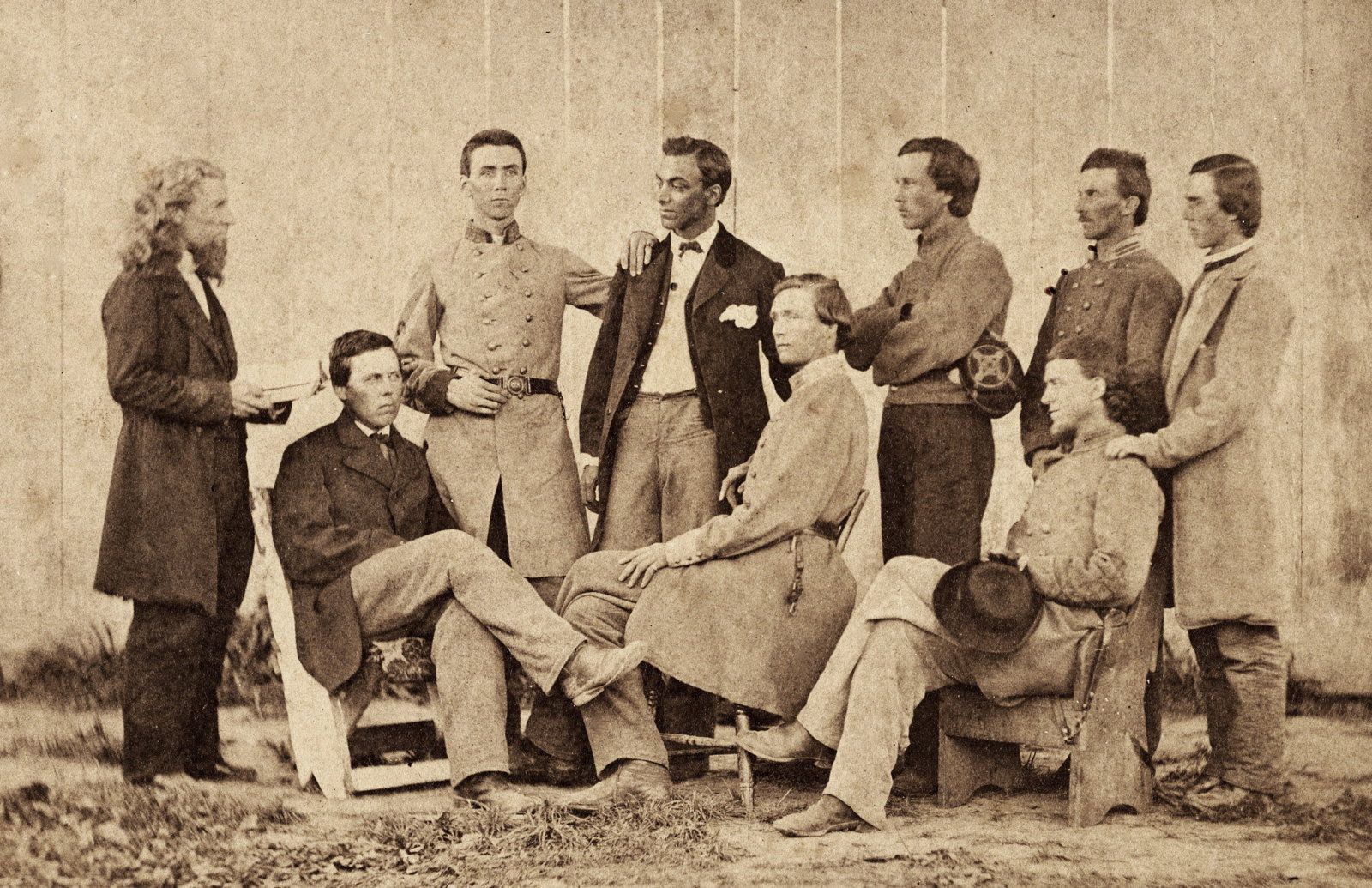
I hope Cousin Lou has recovered from her cold and is ready to write me another long letter. We will have a photographer here on Saturday and I will have some pictures taken of my present appearance and will send you one. I will wear Gen’l [Robert Brank] Vance’s uniform for my old uniform is in Arkansas, and my new one from Alton has not yet been sent me. I will probably get it before I leave—at least I hope so.
You must present my regards to black Mamma and tell her I am glad to hear that she is “sound on the goose question,” for it speaks well for her judgement.
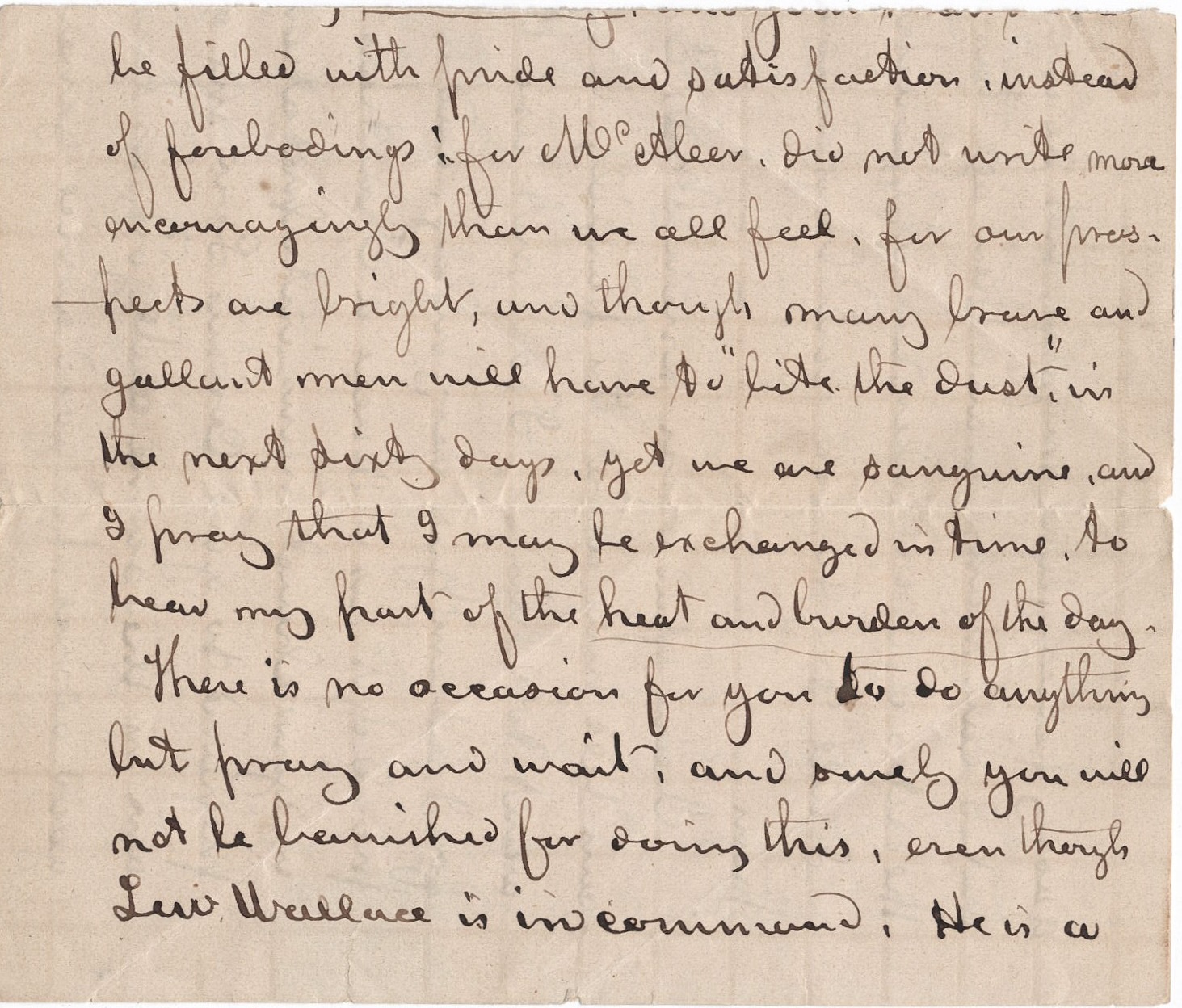
All the news we now receive is encouraging for us and I think the next ninety days will see our last dark days, and that all will be bright thereafter. God grant it, for I am heartily tired of bloodshed, and if the war lasts over three months longer, there will be no more quarter given, and then the most terrible sights the world ever saw will be enacted. Fort Pillow will be a bright spot in the dark scenes which will soon come. We must not, and will not and cannot be conquered, and it is a big job to kill all of us.
Remember me affectionately to all friends and let me hear from you often. I hope you have written to Emma.
Your affectionate Cousin, — M. Jeff. Thompson
Let some of the girls send our little orderly a pair of no. 6 boots.
Letter 4
Fort Delaware, Delaware
May 13th 1864
Friday morning
My dear Cousin,
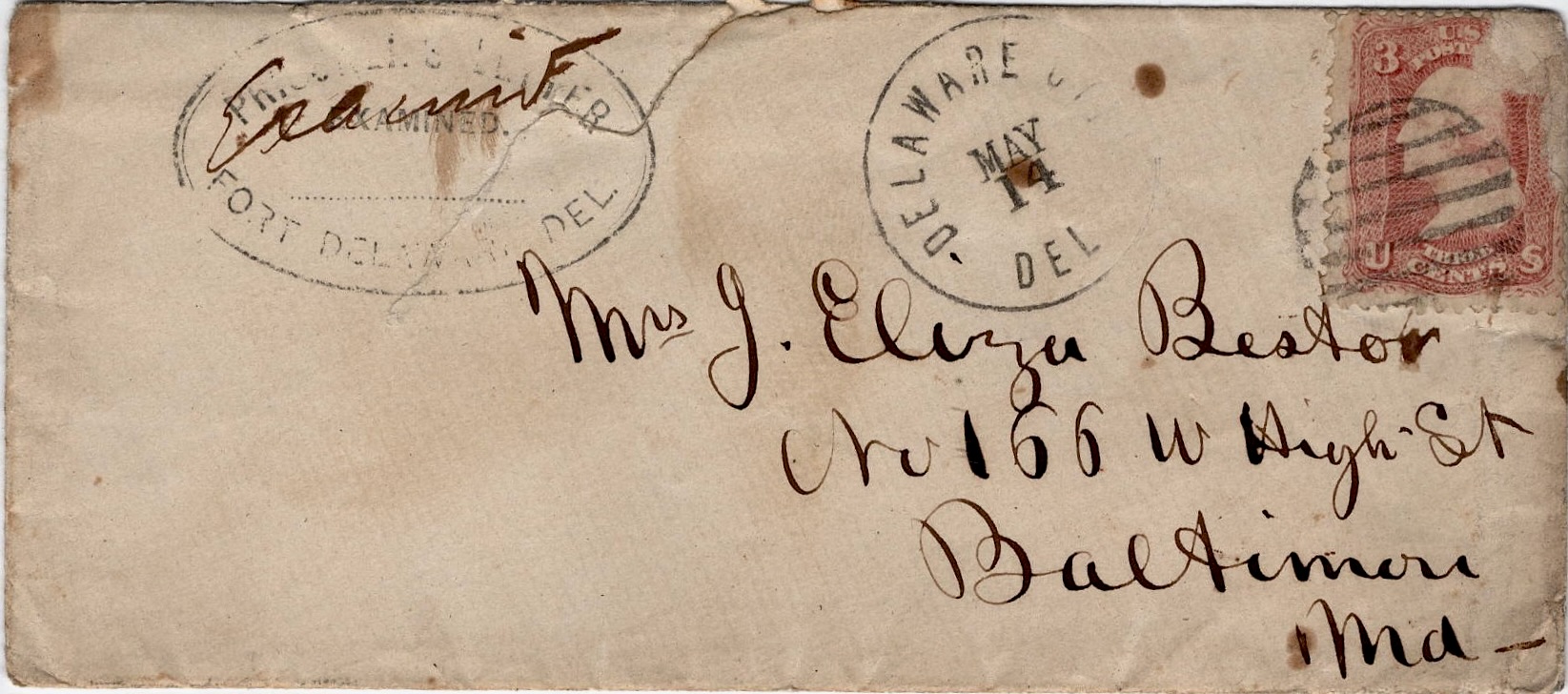
Lately our correspondence has dropped off but you must not blame me for I have had great trouble lately, and then the intense interest which we all feel in the battles now going on in Virginia is sufficient excuse for neglect if even I had not my great private trouble.
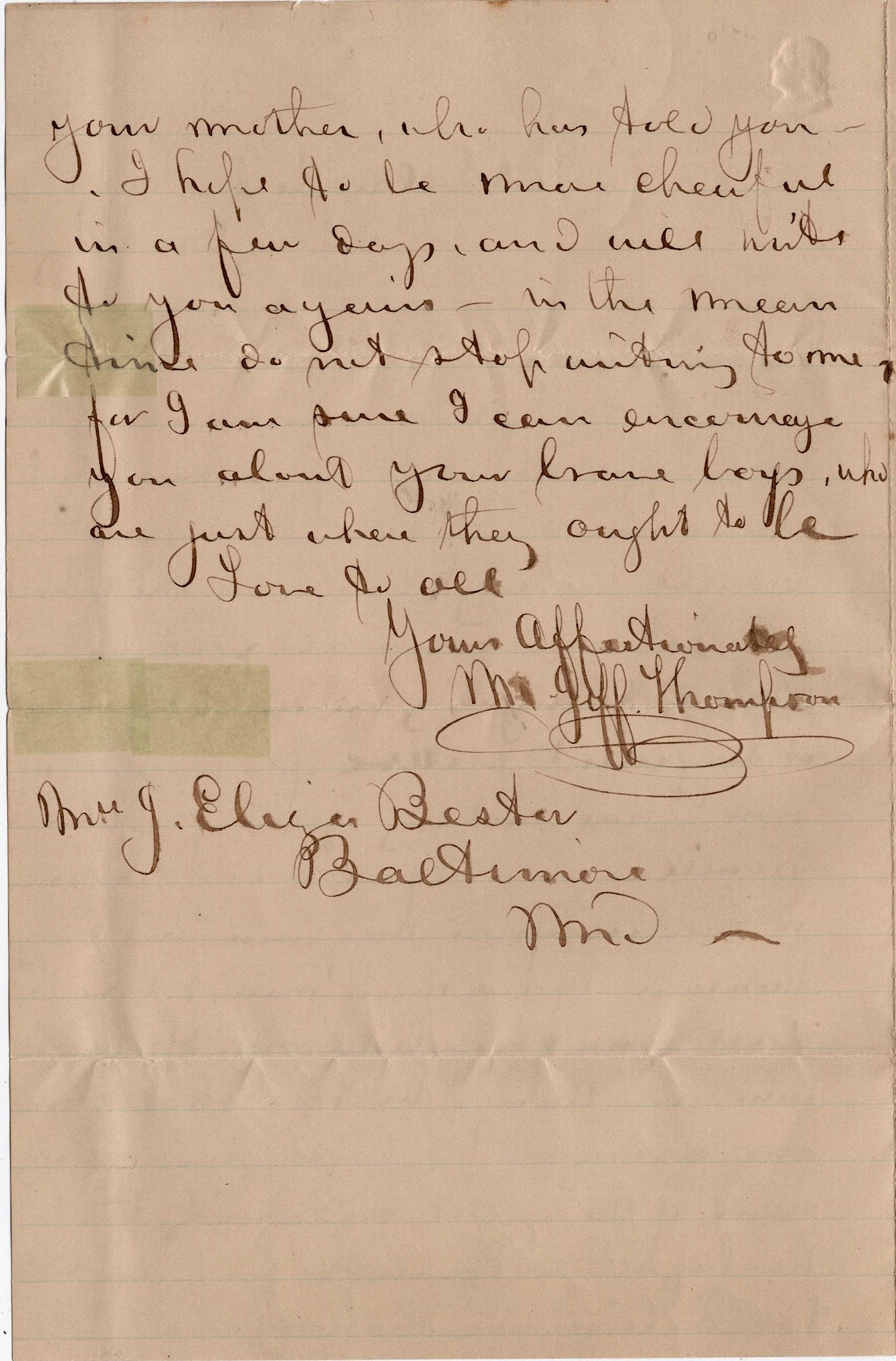
I feel every confidence in our success in Virginia but many thousand brave men must bite the dust and grief will overspread our lane even though victory shall crown our arms. You have probably heard of the great calamity that has befallen [my wife] Emma for I wrote To Adeline and she has probably told your mother who has told you. I hope to be more cheerful in a few days and will write to you again. In the meantime, do not stop writing to me for I am sure I can encourage you about your brave boys who are just where they ought to be. Love to all.
Yours affectionately, — M. Jeff Thompson
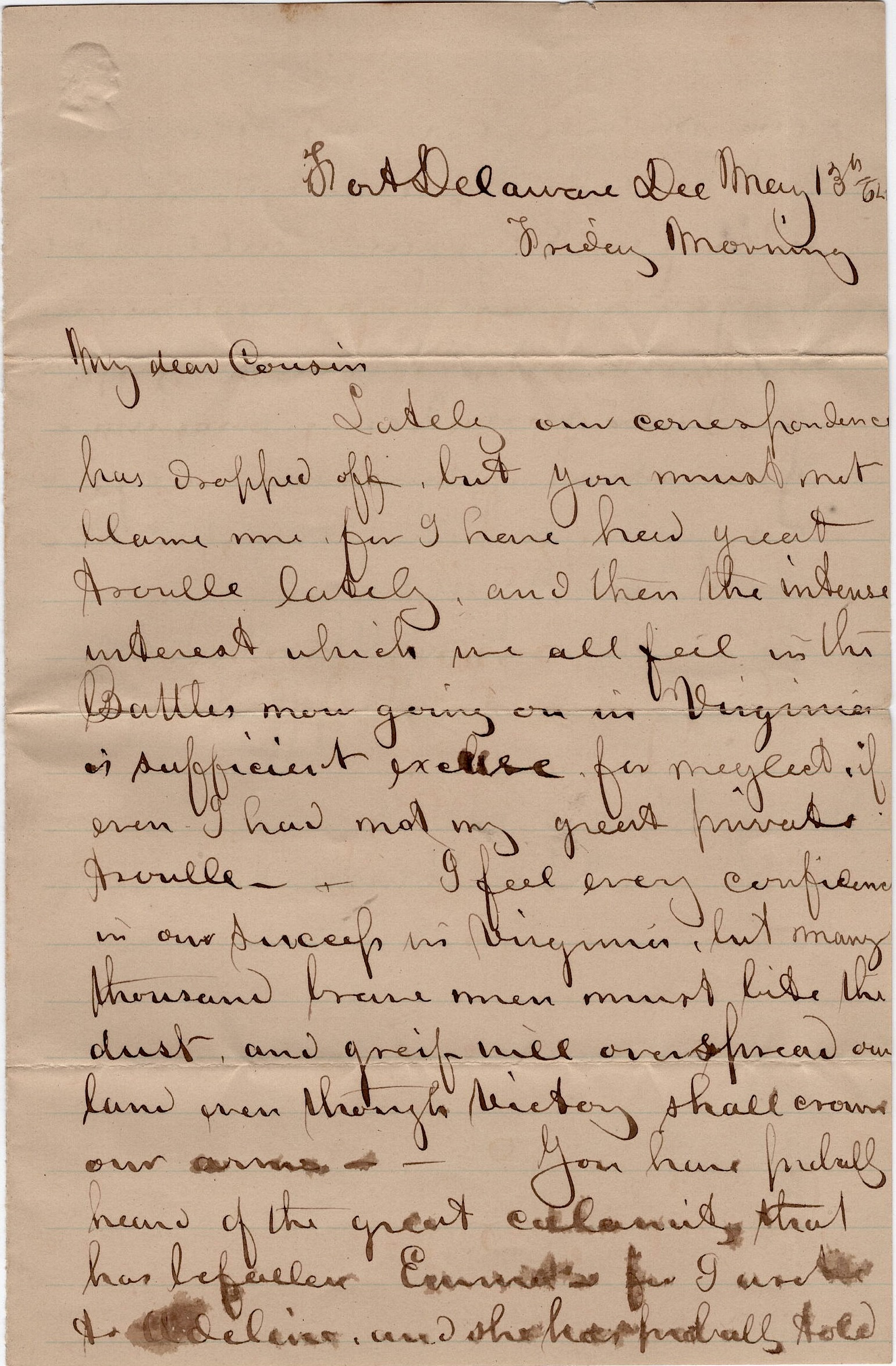
To Mrs. J. Eliza Bestor, Baltimore, Md.
Letter 4