Category Archives: Siege of Port Hudson

1862-63: George Newell Boynton to his Parents

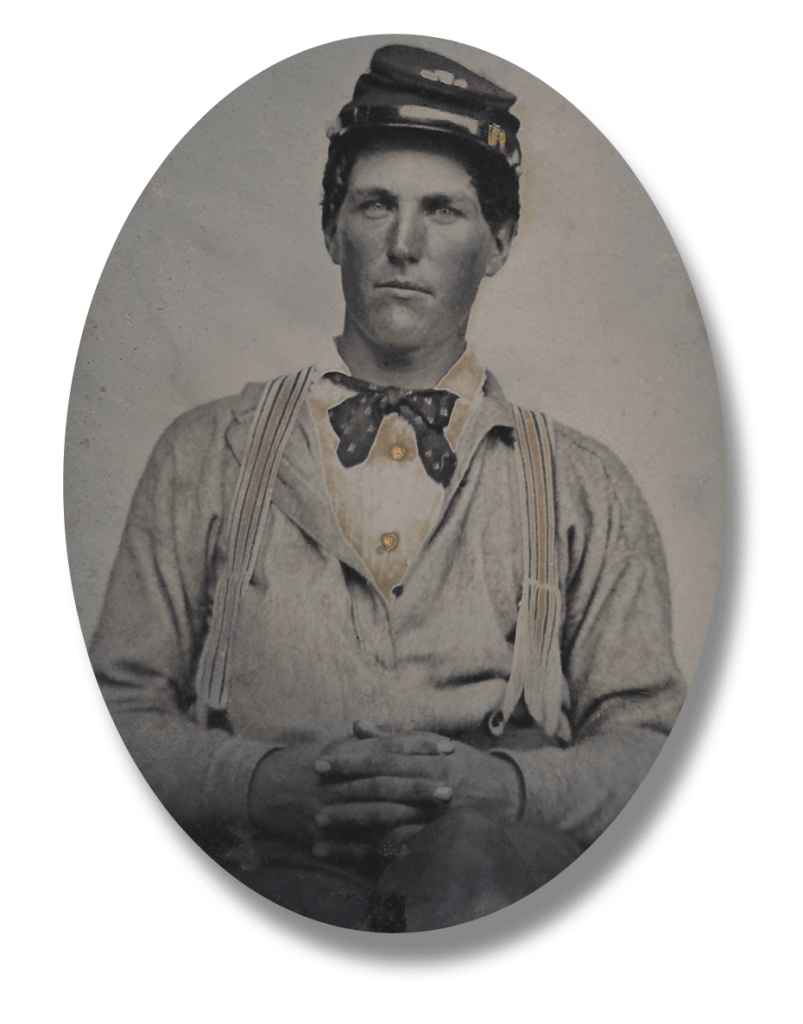
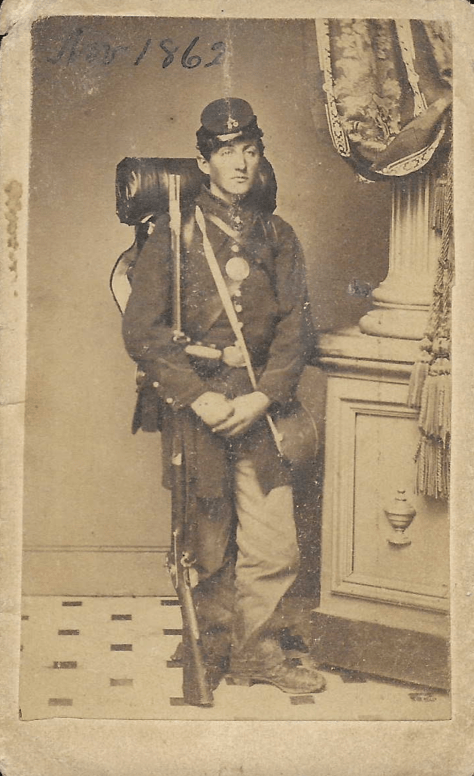
I could not find an image of George but here is one of James E. Trask of Co. A, 50th Massachusetts. James was one of the lucky ones who made it back home from Louisiana. (Ancestry.com)

The following letters were written by George Newell Boynton (1846-1863), the son of George Washington Boynton (1820-1877) and Abby N. Stocker (1819-1898) of Georgetown, Essex county, Massachusetts. George was only 16 years old when he enlisted on 16 August 1862 as a private in Co. K, 50th Massachusetts Infantry. He died of disease at Baton Rouge on 3 July 1863. Burial records of the Harmony Cemetery in his hometown inform us that George’s body was exhumed in Louisiana by his father and returned to Georgetown along with those of Richmond D. Merrill (died 28 June 1863) and Amos Spofford (died 4 June 1863), all three in Co. K, 50th Massachusetts.

Despite the high mortality rate, I have transcribed a considerable number of letters by members of the 50th Massachusetts Infantry to date. They include:

William G. Hammond, Co. A, 50th Massachusetts (1 Letter)
Benjamin F. Blatchford, Co. B, 50th Massachusetts (5 Letters)
Rufus Melvin Graham, Co. F, 50th Massachusetts (29 Letters)
Jackson Haynes, Co. F. 50th Massachusetts (1 Letter)
William Rockwell Clough, Co. G, 50th Massachusetts (5 Letters)
Benjamin Austin Merrill, Co. K, 50th Massachusetts (5 Letters)
Moses Edward Tenney, Co. K, 50th Massachusetts (1 Letter)


Letter 1

New York City
November 21, 1862

Dear Father,

I arrived here yesterday morning at 9 o’clock after having a rough passage. I has rained ever since we left Camp Stanton and is raining now and the Boys are all scattered over the city and are now jumping out of the windows and every other place. We started from Boston about 3 o’clock, arrived in Worcester about 7 o’clock and stopped about a half an hour and then we started for Norwich, Ct., and arrived there about 12 o’clock at night. Then we took the boat and piled in four deep. Some were sound asleep, others dancing and raising a ruckus. After we had been on board about an hour, I went up on deck to report for guard duty and stopped up there all night and finally we came in sight of New York City and landed and came into line, marched up Broadway about a mile, and stopped at Park Barracks in front of City Hall until 4 o’clock. And next we marched into an old stone house now used as barracks. It is the place where Billy Wilson’s regiment stopped. The Orderly is round after the letters and I must draw mine to a close. I am well, fat & saucy. Give my respects to all the folks but [illegible]

P. S. Tell mother that her Chicken Pie went good.

Don’t write until you hear from me again for I can’t tell where to direct it.

Yours, — G. N. Boynton


Letter 2

New York [City]
December 8 [1862]

Dear Father,

Having a few spare moments I thought I would write you a few lines to let you know that we are a going to embark today on the Propellor Jersey City for Fortress Monroe. I got that box that mother and Mrs. Pickett sent last Thursday. Tell Mrs. Pickett that Frank has lost his knapsack and all his clothes. I have got my vest and it fits me first rate and I am very much obliged to you for it.

By the way, I have enjoyed myself first rate. I have been to Barnum’s Museum and Niblo’s Garden 1 and heard Ed[win] Forrest play and it was splendid. Last Monday I went up to Central Park and was was magnificent.

I must dry up for the orders are to fall in and be ready in five minutes. Yours, — G. N. B.

P. S. This makes 4 letters that I have wrote and I haven’t received only two.

1 Niblo’s Garden was a theater on Broadway and Crosby Street. At the time, Edwin Forrest was performing in either Metamora or “The Broker of Bogota” depending on the evening George attended.


Letter 3

On board the Barque Guerrilla
January 18 [1863]

Dear Father,

Having some spare time, I thought that I would write you a few lines to let you know that I am in good health and I hope that you are the same. We left Hilton Head January 1st and arrived at Ship Island on the 15th and stopped there three days and we are now on our way up the Mississippi to New Orleans. I have had a pretty good time since I left Camp Stanton and I have seen a good many sights. While we was at Hilton Head, I saw George Hunkins, Ed Hazen, and Dennis Adams [of 1st Massachusetts Cavalry]. George Hunkins is awful sick of the army, I tell you.

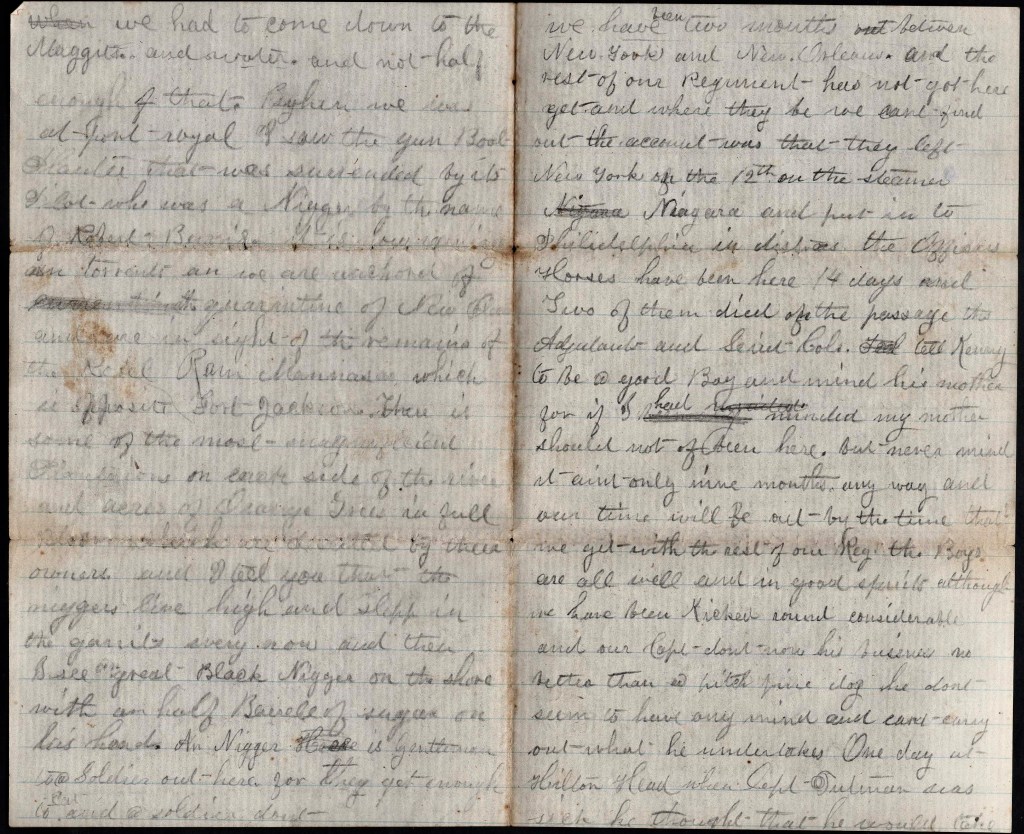
Since we left Hilton Head I have had nothing to eat but hard bread with maggots and salt horse and a quart of water. I tell you it makes me think of home—especially when we had to come down to the maggots and water, and not half enough of that. When we was at Port Royal, I saw the gunboat Planter that was surrendered by its pilot who was a Nigger by the name of Robert Smalls.

It is now raining in torrents and we are anchored off Quarantine of New Orleans in sight of the remains of the Rebel Ram Manassas which is opposite Fort Jackson. There is some of the most magnificent plantations on each side of the river and acres of orange trees in full bloom which are [ ] by their owners. And I tell you that the niggers live high and sleep in the garrets every now and then. I seen a great Black Nigger on the shore with a half barrel of sugar on his head. A Nigger is gentleman to a soldier out here for they get enough to. east and a soldier don’t.

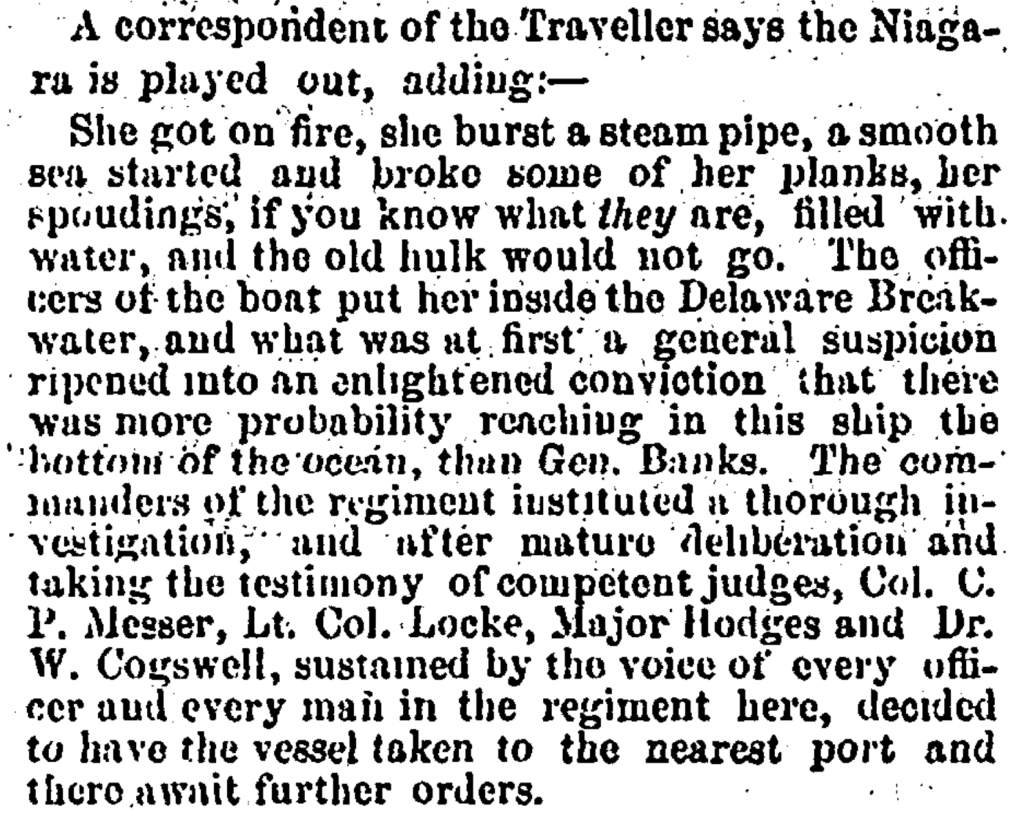
We have been two months between New York and New Orleans and the rest of the regiment has not got here yet and where they be, we can’t find out. The account was that they left New York on the 12th on the steamer Niagara and put in to Philadelphia in distress. The oficers’ horses have been here 14 days and two of them died on the passage—the Adjutant’s and Lieutenant-Colonel’s.

Tell Kenny to be a good boy and mind his mother for if I had minded my mother, should not of been here. But never mind. It ain’t only nine months anyway and our time will be out by the time that we get with the rest of our regiment. The Boys are all well and in good spirits although we have been kicked round considerable and our Captain [John G. Barnes] don’t know his business no better than a pitch pine dog. He don’t seem to have any mind and can’t carry out what he undertakes. One day at Hilton Head when Capt. [George D.] Putnam [of Co. A] was sick, he thought that he would take us out on Battalion Drill and he could not form us in a hollow square and it tickled the Boys, I tell you, for he thinks he [is] capable of bring a Brig. General. We have got orders [to] leave here for Carrollton which is six miles above New Orleans.

They do their teaming here with four mules. The driver rides the right ordered mule and drives with one reign which is attached to nigh leader. 1

Some evil-minded whelp stole my writing base at Hilton Head and I borrowed this. I wrote one letter while I was at Hilton Head. I have just received a letter from you stating that [you] did not receive any word [from] me and that you sent me some money by Charles Tenney. The rest of the regiment has not arrived here yet. It is about dinner time and I guess that I will dry up now so goodbye. Yours, — George N. Boynton

1 Four-mule teams, driven by a rider on one of the mules, were common in the South, particularly for transporting supplies and equipment. Mules were preferred over horses due to their strength, stamina, and ability to navigate difficult terrain. The driver, known as a mule skinner, would ride the lead mule and guide the team using a single rein and voice commands. 


Letter 4

Camp Parapet
Carrollton, Louisiana
January 23rd 1863

Dear Father,

I received a letter from mother this morning dated January 5th stating that she had not received any letter from me since I left Mew York and I did not know hardly what to make of it for I have wrote four letters since we left New York.

We are encamped 8 miles above New Orleans to a place by the name of Carrollton on the banks of the Mississippi River and I am enjoying myself first rate. I have been to work all day making a floor to our tent and it is as warm here as it is in Massachusetts in June. You spoke about giving my love to Mr. F in your letter. He has not got here yet nor he ain’t likely to get here for a month.

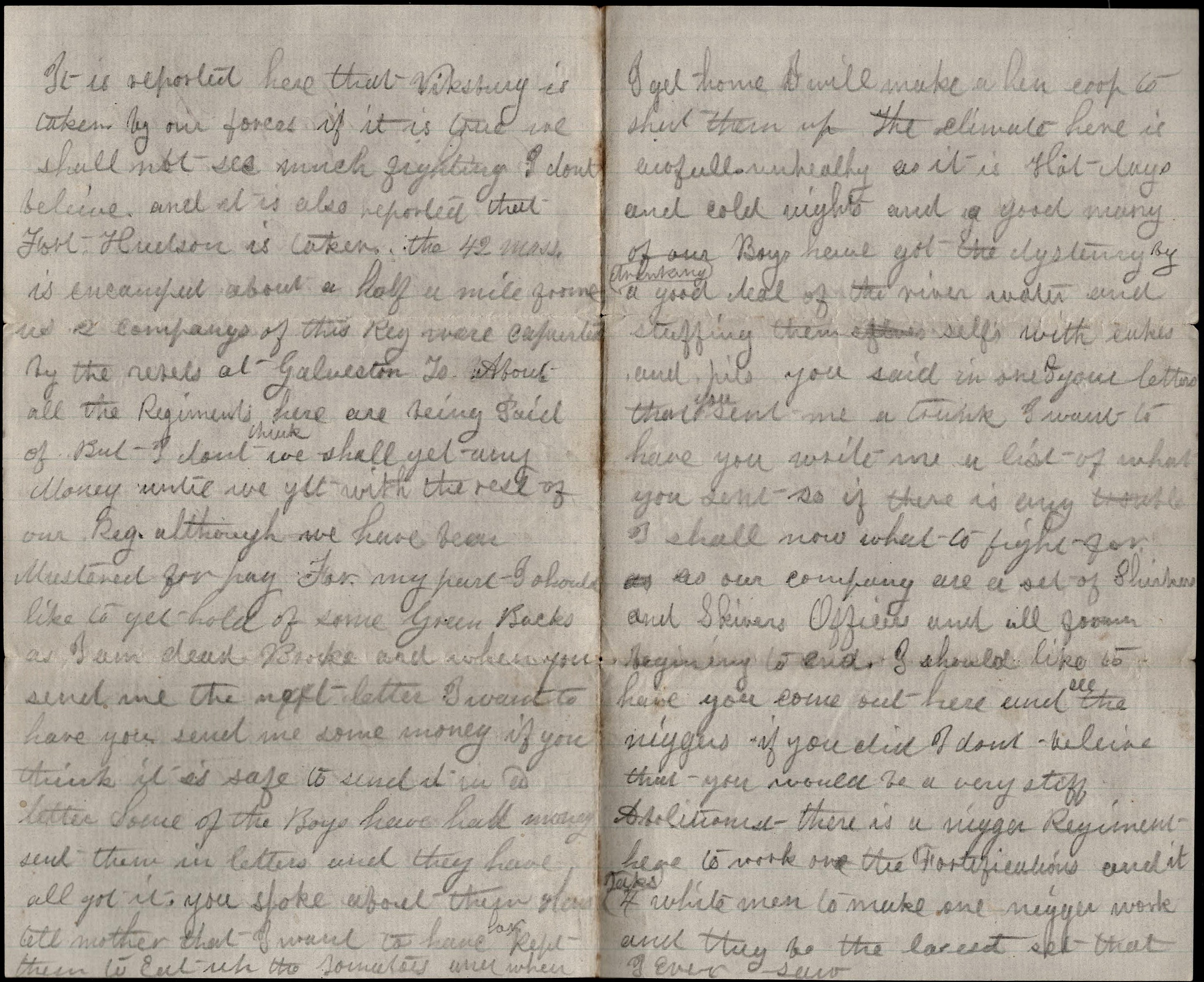
It is reported here that Vicksburg is taken by our forces. If it is true, we shall not see much fighting, I don’t believe. And it is also reported that Port Hudson is taken.

The 42nd Massachusetts is encamped about a galf a mile from us. A company of this regiment were captured by the Rebels at Galveston Texas. About all the regiments here are being paid off but I don’t think we shall get any money until we get with the rest of our regiment although we hsave been mustered for pay. For my part, I shoiuld like to get hold of some green backs as I am dead broke and when you send me the next letter, I want you to send me some money if you think it is safe to send it in a letter. Some of the Boys have had money sent them in letters and they have all got it.

“…Our company are a set of shirkers and skinners—officers and all from beginning to end.”

— George N. Boynton, Co. K, 50th Massachusetts Infantry

You spoke about them hens. Tell mother that I want to have her kept them to eat up the tomatoes and when I get home I will make a hen coop to shut them up. The climate here is awful unhealthy as it is hot days and cold nights and a good many of our Boys have got the dysentery by drinking a good deal of the river water and stuffing themselves with cakes and pies. You said in one of your letters that you sent me a trunk. I want to have you write me a list of what you. sent so if there is any trouble, I shall know what to fight for as our company are a set of shirkers and skinners—officers and all from beginning to end.

I should like to have you come out here and see the niggers. If you did, I don’t believe that you would be a very stiff Abolitionist. There is a nigger regiment here to work on the fortifications and it takes four white men to make one nigger work and they he the laziest set that I ever saw. 1

We have just heard from the rest of our regiment. They left Philadelphia on the 5th of January. I guess that I will dry up as it is about time for roll call. you must [excuse] this writing as it is the best that I can do, but I guess that you can pick it out. I am well and I have not been sick a day since I left Boxford. From your son, — George N. Boynton

P. S. Tell Jericho not to let Old Hutch lick him.

1 The Black regiment must have been members of the 1st Louisiana Native Guards.


Letter 5

Baton Rouge
February 21st 1863

Dear Parents,

I received a letter from you this morning dated February 2nd and was glad. to hear from you. We are encamped in the City of Baton Rouge close to the Louisiana State Prison. We are in Gen. Dudley’s [3rd] Brigade [of the 1st Division] with the 30th Massachusetts, 174th and 61st New York and 2nd Louisiana. Daniel R. Kenny is a Captain [of Co. C] in the 2nd Louisiana. I suppose that you. know him. I believe that you took a watch from him two or three times for board bills. About all of the Boys have been sick with the dysentery and diarrhea but I have been well so far. Frank Pickett is sick and in the hospital, Three companies of our regiment arrived here last Saturday and all the officers except the Lieutenant-Colonel [John. W. Locke].

All I got out of that stuff that you sent was a pound of tobacco and a towel and one letter. But no money. We have been paid off and I sent $30 to you. by Adams Express. We have a pretty hard time here for our General is a Tiger. He gives us a Brigade Drill of four hours every afternoon and go on guard every other day. I have just got in from picket guard. It is fun, I tell you, but rather hard work—especially marching out and coming in. 1

When I was at Carrollton, I saw a lieutenant that was at Robert Boyes’ last summer from N. H. He is overseer on a sugar plantation.

I suppose that Father has as much as he can tend to this winter collecting taxes and sheriffing and is as cross sometimes as usual but if I was at home I should not mind it but I expect that when I get home it will become, “George, it is 9 o’clock, go to bed.” But I guess that I shall be glad to get into a good bed.

Capt. [John G.] Barnes is about played out with the dysentery and I should not winder if he had to come home on account of it. It is reported that our Brigade is a going to stay here in the city. The 40th and 49th Massachusetts came here about a week ago and I found a good many Boys that I am acquainted with. One of them is John Holley. He is a corporal in Co. D. He looks as rugged as a bear. Tell Kenny to be a good boy for brother George is a coming home next June.

When I was on picket about a week ago, I and a fellow in Co. I fired at a Rebel cavalryman but he was a little too smart for us. But finally [James M] Magee’s Cavalry captured him and I [had] the pleasure of seeing the gentleman that I fired at.

It is about time for roll call and I must bring my letter to a close and bid you goodbye. Yours truly, — George N. Boynton

P. S. When you write me a letter, write me a list of what you sent by Charles Tenney. Give my love to Esther and all the rest. Postage stamps are played out with us.

1 In the regimental history published in 1907, the author informs us that “A soldier’s life at Baton Rouge was no holiday. It was one continuous round from sunrise to sunset, with some hours interspersed for rest and recreation, and then occasionally with passes in our pockets, we were allowed to roam about the streets and down to the river, but taken all in all the most agreeable duty was that out the outer reserve or picket guard. The detail, made up about nine a.m. took with them one day’s rations and blankets, and marched out about two miles to relieve the guard of the day, remaining in turn 24 hours, each man being two hours on duty and four hours off…When the weather was pleasant, to go on picket duty seemed a good deal like going on a picnic, the noys frying their rations of pork and potatoes….and making coffee about an open fire, and the enjoyment was made a little keener by occasional glimpses of a rebel vidette making his appearance beyond the lines…”


Letter 6

Baton Rouge
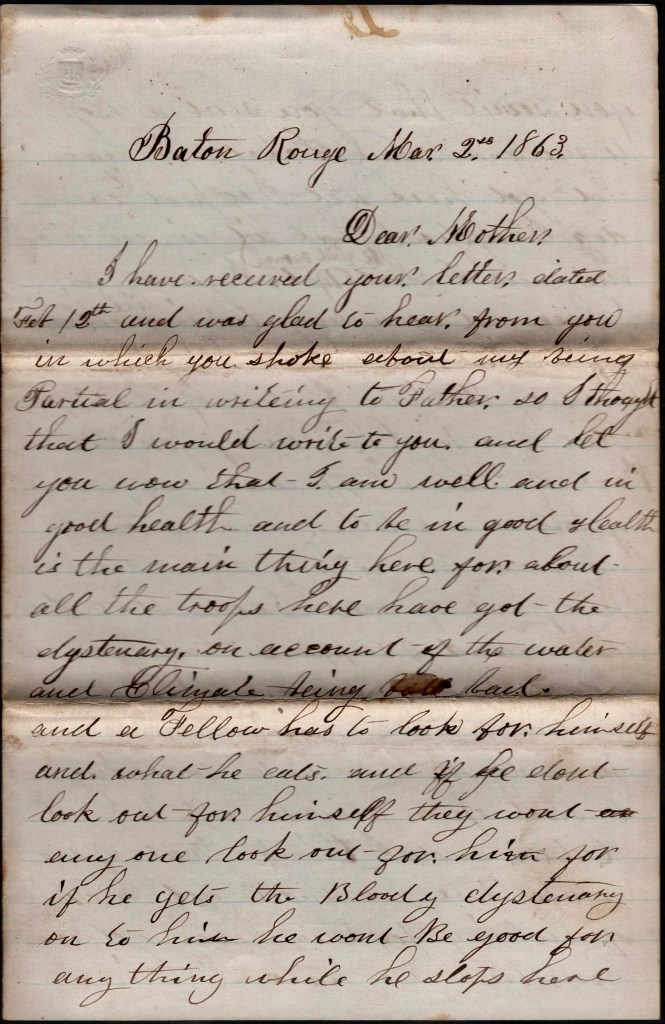
March 2nd 1863

Dear Mother,

I have received your letter dated February 12th and was glad to hear from you in which you spoke about my being partial in writing to Father so I thought that I would write to you and let you know that I am well and in good health—and to be in good health is the main thing here for about all the troops here have got the dysentery on account of the water and climate being bad. A feller has to look out for himself and what he eats and if he don’t look out for himself, they won’t anyone look out for him for if he gets the bloody dysentery on to him, he won’t be good for anything while he stops here.

You said that you sent a box to me and Frank Pickett. It has not got here yet. I expect it every day. I suppose that it is a nice one and I shall be glad enough to get it I guess for I have not seen any cooking like Marms since I left home and I hope that I shall get more of it than I did of that you sent me [by] Charles Tenney for all I got out of that stuff was one pound of tobacco, one letter, and a towel. No money or nothing else. We have been paid off and I sent $30 to you and I suppose that you have got it by this time.

We have had orders to pack our knapsacks and be ready at a minute’s warning to start on a march up to Port Hudson and I think that if we go up there we shall get a devil of a licking for they have got more troops than we have, I think.

I received a letter from Esther and was much pleased to hear from her and I shall write to her tomorrow. I wrote a letter to you and sent it on the 17th. There is not any news here special and it is getting about time for Dress Parade and I must draw my letter to a close and bid you goodbye. Yours truly, — George N. Boynton

Letter 7

Baton Rouge
March 6th 1863

Dear Father,

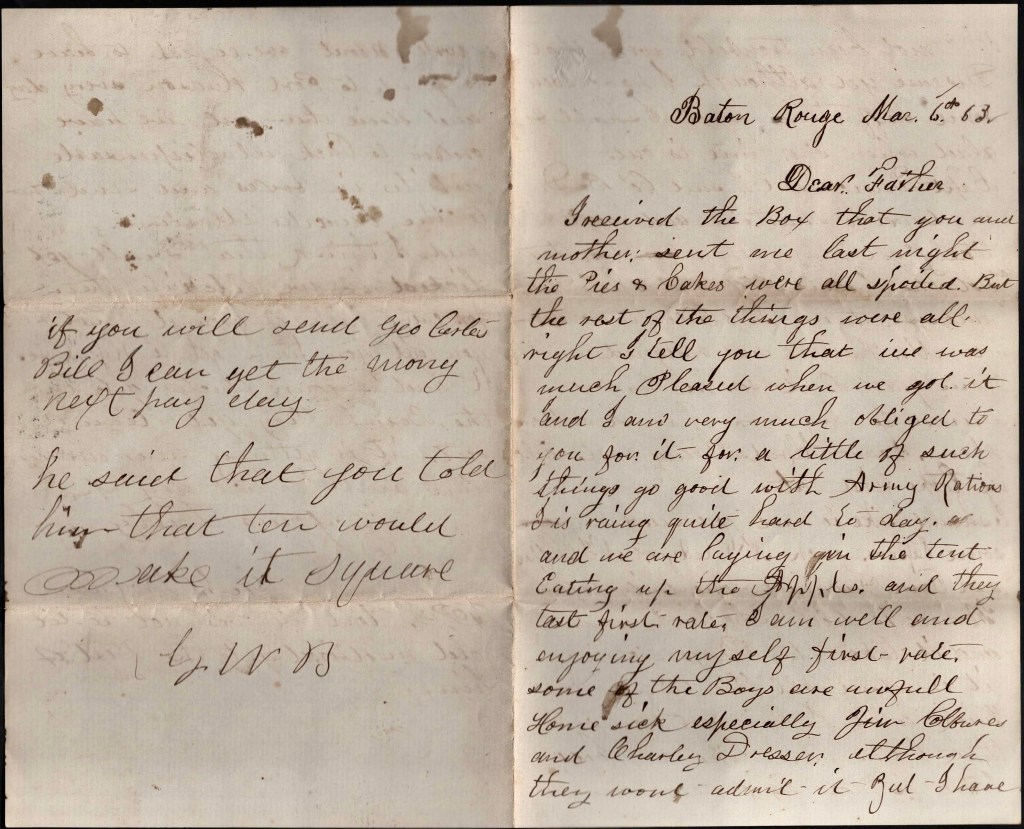
I received the box that you and mother send me last night. The pies and cakes were all spoiled but the rest of the things were all. right. I tell you that we was much pleased when we got it and I am very much obliged to you. for it for a little of such things go good with army rations. It is raining quite hard today and we are laying in the tent eating up the apples and they taste first rate. I am well and enjoying myself first rate. Some of the Boys are awful home sick—especially Jim Colburn and Charley Dresser although they won’t admit it but I have not been troubled with that disease yet although I have seen some rough times and I shall be glad when our time is out.

Capt. Duncan’s company and companies B & D are down to [the] quarantine [station] and won’t be likely to get any further [up the Mississippi] for they have got the Small Pox and ship fever amongst them. Mrs. Pickett’s wonderful Mr. [Robert] Hassall [the Chaplain] has resigned and I am glad of it for he don’t amount to any more than a sitting hen. I saw Alfred Cheeny last night. He looks first rate.

I should like to have you send me some papers such as New York Ledger, New York Clipper, and True Flag and some daily papers.

We have to drill very hard now and it takes the Boys down. It is about all the time double quick and I have got so now that I can run like a horse. There is not any news here to write about. We expect to have to go up to Port Hudson every day and drive them out. We have orders to pack all indispensable articles in boxes and send them to the Quartermasters. And I think that we shall get licked if we pitch into them for every inch of ground that you get, you have to fight for it. And if your Uncle gets in the brush, they get cleaned out. It is getting near dinner time and I must dry up. Yours truly, — G. N. Boynton

P. S. Tell Lewis not to let Old Medford get the best of him.

Letter 8

Baton Rouge
March 9, 1863

Dear Mother,

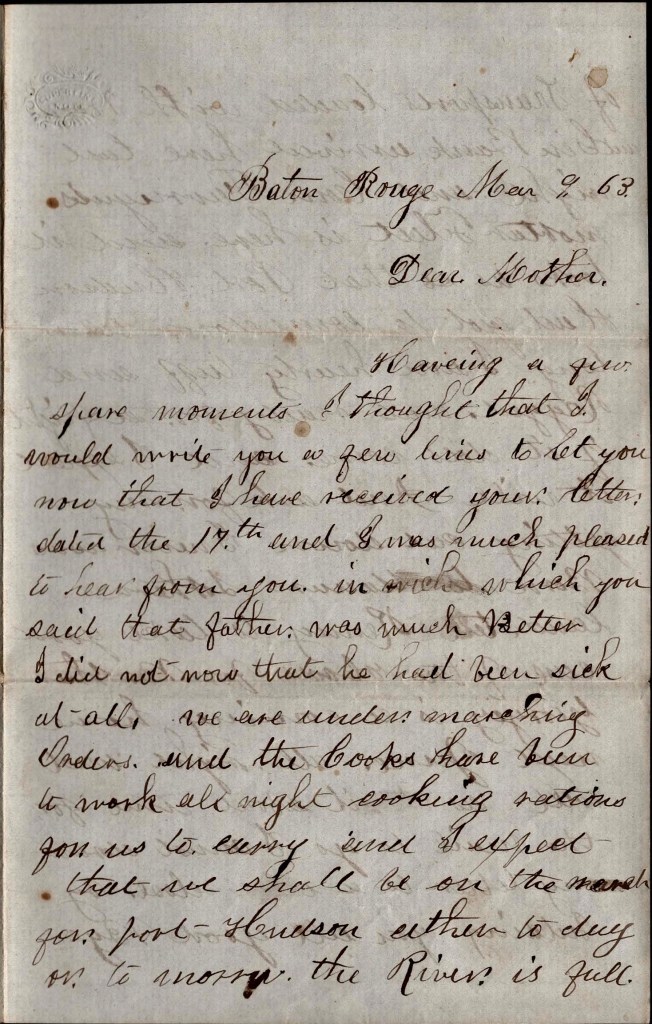
Having a few spare moments I thought that I would write you a few lines to let you know that I have received your letter dated the 17th and I was much pleased to hear from you in which you said that father was much better. I did not know that he had been sick at all.

We are under marching orders and the cooks have been to work all night cooking rations for us to carry and I expect that we shall be on the march for Port Hudson either today or tomorrow. The river is full of transports loaded with troops and Gen. Banks arrived here last night and Commodore Farragut’s mortar fleet is here and it looks [to] us that Port Hudson had got to come down before long.

I am hearty, tough, and rugged and ready for a fight if it does come and I expect it will. And as for my getting cut down, I never was born to manure southern land. Tell Kenny to take good care of the hens for brother Georgey is a coming home next June all right and well. As it’s about time for the mail to go, I must draw my letter to a close by bidding you all goodbye. From your son, — George N. Boynton

P. S. I have wrote to Eben and Esther.

The company that the Hawkes boys are in is down to Quarantine sick with the small pox and ship fever. I saw A. P. Cheney yesterday. He looked as rough as ever.

Letter 9

Baton Rouge
March 13, 1863

Dear Parents,

Having a few spare moments I thought that I would write you a few lines to let you know that we have not gone yet although we are under marching orders and expect to go every day. The river is full of gunboats and mortar boats and today four regiments & three companies of cavalry and four batteries have gone by our camp en route for Port Hudson. The 48th Mass. left here last night at 2 o’clock, the 41st Mass. have been under fire three times. Lieut. Runlet and the Signal Corps have gone out today to reconnoiter. Charles W. Tenney is detailed on the Signal Corps as sharp shooter.

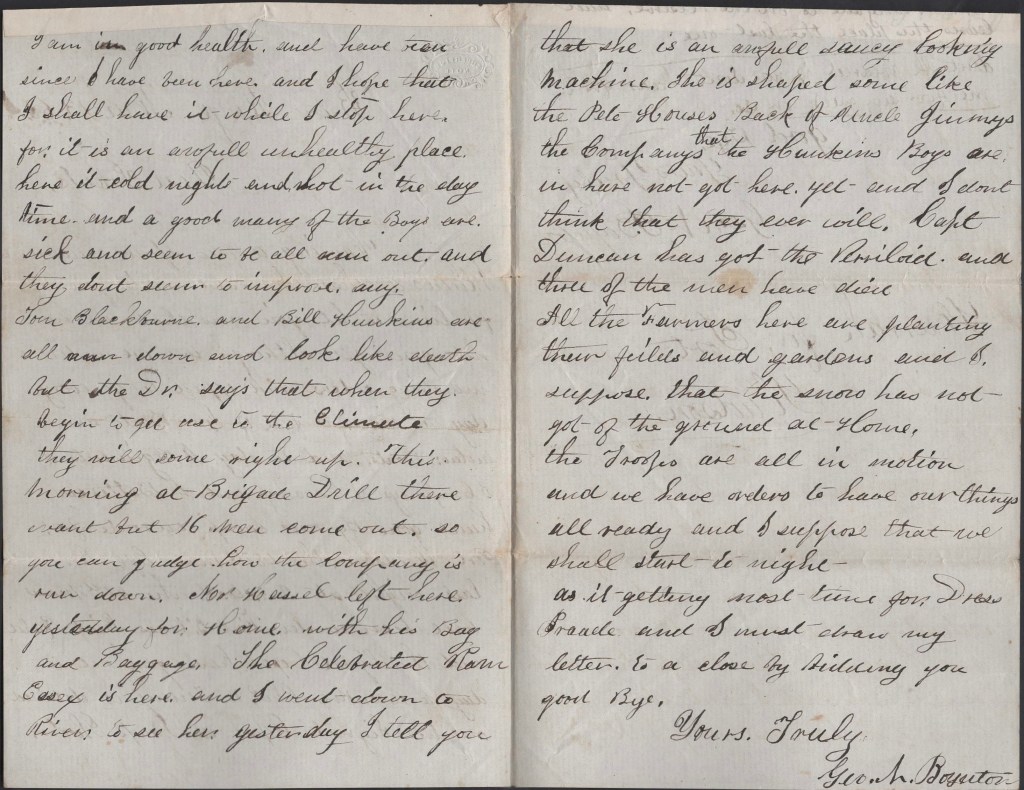
I am in good health and have been since I have been here and I hope that I shall have it while I stop here for it is an awful unhealthy place here. It’s cold nights and hot in the day time and a good many of the Boys are sick and seem to be all run out and they don’t seem to improve any. Tom Blackburn and Bill Hunkins are all run down and lok like death but the Dr. says that when they begin to get use to the climate, they will come right up.

This morning at Brigade Drill there wasn’t but 16 men out so you can judge how the company is run down. Mr. [Robert] Hassall [chaplain] left here yesterday for home with his bag and baggage. The celebrated Ram Essex is here and I went down to the river to see her yesterday. I tell you, she is an awful saucy looking machine. She is shaped some like the peat houses back of Uncle Jimmy’s.

The Ram Essex at Baton Rouge in 1862 (courtesy of the Wilson’s Creek National Battlefield)

The company that the Hawkins Boys are in have not got here yet and I don’t think they ever will. Captain Duncan has got the varioloid and three of the men have died.

All the farmers here are planting their fields and gardens and I suppose that the snow has not yet got off the ground at home. The troops are all in motion and we have orders to have out things all ready and I suppose that we shall start tonight. As it is getting most time for Dress Parade and I must draw my letter to a close by bidding you goodbye. Yours truly, — George N. Boynton

Don’t be worried if you don’t hear from me for a week or so. Goodbye. Yours truly, — G. N. Boynton

Hurrah for Port Hudson!


Letter 10

Baton Rouge
March 26th 1863

Dear Father,

Having a few spare moments I though I would write you a few lines to let you know that I am well and as tough as a knot, although we have seen a rough time since I wrote you last. We left Baton Rouge on the 14th en route for Port Hudson. The first day we marched 15 miles and camped for the night and I had just got to sleep when orders came for us to report to Gen. Banks’ Headquarters which was about five miles so we formed in line and arched up there and as soon as we got there we had to go on guard that night, and the next morning we marched back to the regiment and stayed all day and that night I never see it rain so hard in my life. And [then] orders came for us to come into the pickets with an ambulance train which was about 4 miles and where we had to walk was in the gutter and mud and water up to your knees. And we marched to pickets and stopped for the night. I laid down and went to sleep and when I woke up, I was laying in two or three inches of mud and water. And just about that time, I thought I should like to be in Marm’s feather bed. It was awful hard work but I had a first rate time—especially when we halted.

The inhabitants were all secesh and the General told us that we could take anything that we could get our hands hold of and I tell you that we improved our chances by killing calves and sheep and I tell you that we lived high on fresh beef, pork, chickens, turkeys, eggs, milk, honey, and everything else that we could get our hands hold of. I went in one house that we came past and they had the table all ready for dinner and I sat down and eat what I wanted and when I got up to come off, the women that lived there gave me my canteen full of milk and a jar of honey.

There was one house that we passed that the man that owned it was a secesh and he stood in the door with his pistol in his hand and said that the first damned Yankee soldier that touched any of his things, he would shoot down and it wasn’t five minutes before we stole everything that he had and burned his house down on his head.

The next day we had orders to march back to Baton Rouge and take the boat there, go up the river 15 miles, and as there is not room on this paper to write our adventure, I will tell you about it in my next letter. So I will draw my letter to a close by bidding you goodbye. Yours truly, — G. N. Boynton

P. S. Don’t be worried if you see an account of a battle because our Brigade is a going to stop there.


Letter 11

Addressed to Mr. George Washington Boynton, Georgetown, Massachusetts

Baton Rouge
March 30th, 1863

Dear Parents,

I have just received a letter from you dated the 9th and was very much pleased to hear from you in which you said that you wanted me to let you know how that I stood the guard duty and I am very happy to let you know that I stand it first rate and I am as tough and hearty as a boiled owl.

I wrote you last stating the trip that we had when we marched up to Port Hudson by land and ow I will give you an account of the trip up [by] river. We left Baton Rouge on the 14th [should be 18th] at about three o’clock in the afternoon on the steamboat Morning Light and we all thought that we had to see some fighting but as luck would have it the next morning we found ourselves in middle of a Rebel Colonel’s plantation stuck fast in the mud where the levy had been cut away and river flowed [over] the land. We stopped in this place until 12 o’clock the next day when we got off and continued our course up the river and landed on the Rebel General Winter’s plantation [four miles below and] in sight of Port Hudson on the opposite side and the Rebels found out what we was up to so they cut the levee above us and drowned us out.

While we stopped, we lived high [and] slept in the nigger huts. The sugar house on this place was six times as large as the Old South Meeting House and the store house full of sugar and molasses and we dived into. it and got all. we wanted. This plantation was the nicest place that I ever saw when we went to it, and when we left, it didn’t look quite so slick. We took all copper and the engine out of the sugar house and tore the old planter’s house all to pieces. The papers talk about the Rebels being in a starving condition when they are better off than we be for a regiment went out a foraging every day and they got just as many cattle, mules, horses, sheep, hogs, as they could drive in.

As it is about time for supper, I will draw my letter to a close. Yours, — G. N. Boynton

P. S. Our Division is a going to stop here and defend the place so you need not worry about my being shot if you hear of a battle.


Letter 12

Baton Rouge
April 6th 1863

Dear Parents,

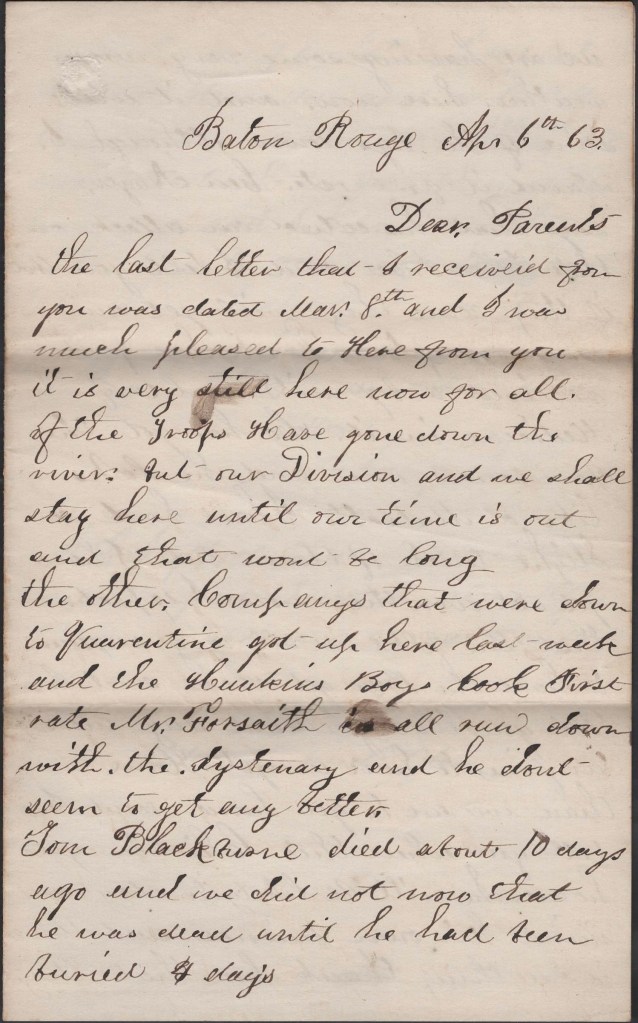
The last letter that I received from you was dated March 8th and I was much pleased to hear from you. It is very still here now for all of the troops have gone down the river but our Division and we shall stay here until our time is out and that won’t be long. The other companies that were down to Quarantine got up here last week and the Hawkins boys look first rate. Mr. Forsaith is all run down with the dysentery and he don’t seem to get any better. Tom Blackburn died about 10 days ago and we did not know that he was dead until he had been buried four days.

We are having some very warm weather here now and it wilts some of the boys down although I stand it first rate. Gen. Auger says that he expects an attack on this place and I tell you that if they come, they will get a warm reception. Frank has just received a box with a lot of medicine in it. He has got the jaundice now and he looks like a mulatto. I have had a slight touch of them but I have got all over them now.

I expect that the folks are all very anxious to have the Boys get home and I. tell you that they ain’t any more anxious to have us get home than we are to get home. And I tell you, when this chicken gets home, he will be likely to stay and mind his own business. And there is one thing, thank God that they can’t conscript him.

I expect that George Harnden and a lot of cowards around home are scared almost to death for fear they will have to go and I hope that they will have to come out here and take their whack at it.

As it is getting most dinner time, I must draw my letter to a close. Yours, — George N. Boynton

P. S. I expect that the women are in great demand about this time on account of the conscript act. Write soon and often.

Letter 13

Baton Rouge
April 10th 1863

Dear Parents,

I have just received a letter and two papers from you and I was much pleased to hear from you, it being a month since I heard from you before. We are having an easy time here now and the time slips away very fast. I am sorry to say that two of our company have died since I wrote you last. Mr. [William] Sides of Groveland and Milton Jewett [of Georgetown] died last night. He had a fever in the first place and it turned into a disease something like the Glanders.
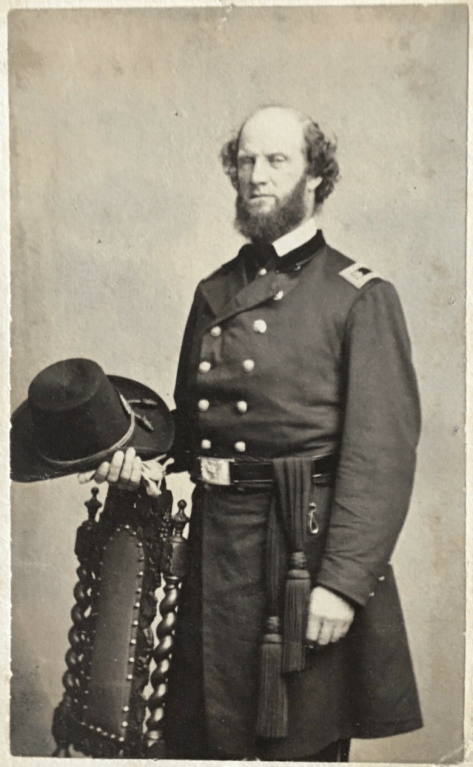
Dr. William B. Cogswell (1821-1891)—“the Boys all hate Dr. Cogswell the way [he] delivers out medicine. He has a plate of Opium pills and he gives every man no matter what the disease is three of these pills.”

I suppose that you are planting the garden about this time but out here the potatoes are in blossom and the corn is up about 20 inches. Lieut. Stowe of Co. G has broke his shoulder and Lieut. Bradstreet is all run down with the diarrhea. He looks like a skeleton. The Boys all hate Dr. [William] Cogswell the way that [he] delivers out medicine. He has a plate of Opium pills and he gives every man—no matter what the disease is—three of these pills. One morning when I went down there to get some medicine for a cold, he gave me pills and the next man came in and he asked him what ailed him and he said diarrhea and sick to his stomach and so he gave him 3 pills.

I am glad that I came out here for nine months for I never has so good a lesson in my life and when I get home, I can give you a good repensation of this war and the damned contractors for we have not had anything to eat but salt pork, bacon sides, and hard tack. But never mind. I shall be at home before a great while where I can get something decent to eat.

Tell Kenny to be a good boy for brother Georgey is coming home in 6 or 7 weeks. Amos Dole is sick and in the hospital and I should not think strange if we had to leave him out here under the sod for when these surgeons get hold of a fellow, he stands a poor sight to get out of it alive. And I tell you that they won’t get me into them hospitals if I can help myself.

As it is getting most dinner time, I will draw my letter to a close. Yours, — G. N. Boynton

P. S. I expect that Mrs. Marshall will have somebody on a string on account of this Conscription.


Letter 14

Baton Rouge
April 12, 1863

Dear Parents,

I received two letters from you last night and was glad to hear from you. Everything remains about the same as when I wrote you last. Our Brigade is a going to stay here. There [are] a lot of steamers down to New Orleans putting in bunks and provisions to carry the nine-month’s troops home. We shall probably start for home in 6 or 7 weeks as we have yet to be at home by the 15th of June and it will be the happiest day that I ever passed when I land in Old Georgetown and when it comes night crawl into Marm’s bed.

I suppose that the folks will have a great time when the Boys get home. Henry Butler’s the sutler plays it on the Boys like the Old Boy. I suppose that Father has as much business as he can tend to now—especially on the mail to Lawrence, and it will be a good job for me when I get home. Tell Kenny to be a good boy and keep his nose clean.

Capt. John G. Barnes of Co. K, 50th Massachusetts Infantry. “The Boys all hate him worst than they do the Devil.”

Mr. Forsaith is improving and he is on duty. His company is doing Provost Duty in the City and he has charge of a slaughter house. Lyman Floyd is a going to have his discharge and probably will start for home inside of a week. Lieut. Bradstreet has gone to the hospital and we are all trying to have [him] resign and go home. But he says that [he] won’t go. until the company does. The company has been under the Sol ever since we have been here.

Capt. Barnes has all flushed out and he don’t amount to Hannah Cook and the Boys all hate him worst than they do the Devil.

We don’t have to drill only two hours and when we go on guard, we have sentry boxes to stand in and they keep the sun off of you first rate.

I had a letter from Uncle Kendall and he said that Jenny had left you in an awful rush and I want you to write me the reason that she had to leave. As it is getting most time for drill, I must draw my letter to a close. I am well and in good health. Yours truly, — George N. Boynton


Letter 15

Baton Rouge
April 22, 1863

Dear Parents,

Yours of the 2nd is received in which you sent them bills on George Curtis and John Perry. We shall probably get paid off in course of a fortnight. Dr. French, our Asst. Surgeon, died this morning and all of our officers are sick and the company is in charge of the 3rd Sergeant but I am fat and saucy and I never was so fleshy in my life. Our regiment has got straw hats and mosquito bars. The report is here that the Government is a going to keep us until August 11th but our officers do not believe it. But if they do try it, there will be a general howl in the regiment.

I wrote to Esther and Uncle Eben a month ago. It is awful weather here now, but we don’t have to drill only an hour a day. But we have poor grub. It consists of ham and bacon sides, or hogs smoked. Rather than to eat the nasty stuff, I have bought the most of my grub. I think that we shall start for home by the last of next month and you can make up your mind to see me by the middle of June. Bill Hankins has just got out of the hospital and he looks rather slim but is gaining fast. Capt. Barnes and Lieut. Bradstreet are in the hospital. When we get into Boston and get mustered out of the service, I guess that he won’t have many followers.

I wrote a letter to Uncle Kendall about two weeks ago and I suppose that he has got it by this time.

I suppose that the Hot Abolitionists are in an awful panic for fear that they will be drafted and I hope that they will have to come out here and take a hack at it. Frank has to toe the mark. They only had him on knapsack drill of 2 [ ] for skipping drill and [ ] and his folks sent him some medicines and he has sold it all. I don’t want [you] to say anything to his folks about it.

As it is getting most dinner time and we are a going to have baked beans for dinner, I must draw my letter to a close. Yours, — G. N. Boynton


Letter 16

Baton Rouge
June 12, 1863

Dear Mother,

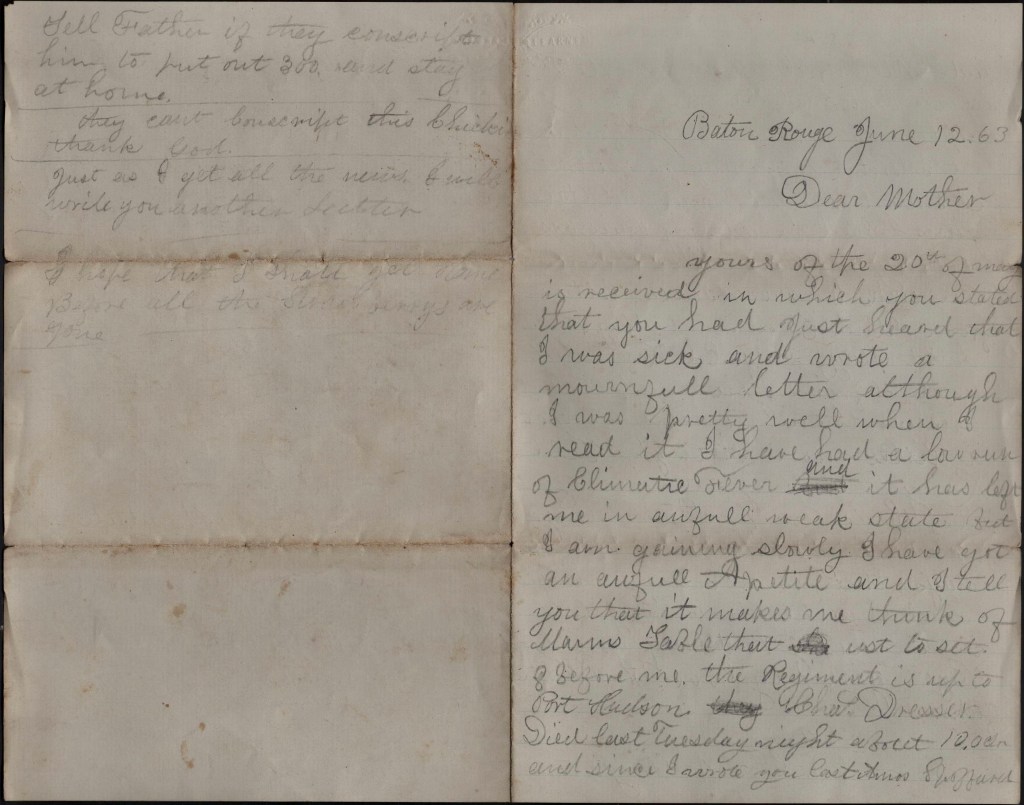
Yours of the 20th of May is received in which you stated that you had just heard that I was sick and wrote a mournful letter although I was pretty well when I read it. I have had a low run of climatic fever and it has left me in awful weak state but I am gaining slowly. I have got an awful appetite and I tell you that it makes me think of Marm’s table that used to sit before me.

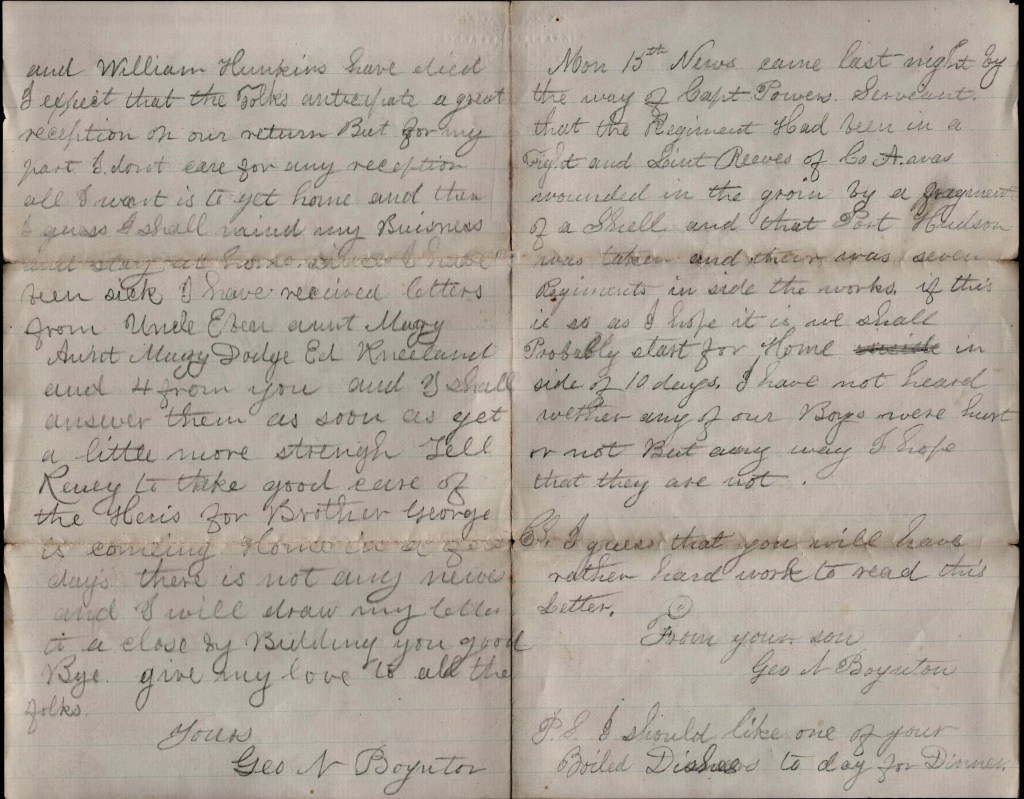
The regiment is up to Port Hudson. Charles Dresser died last Tuesday night about 10 o’clock and since I wrote you last, Amos Spofford and William Hunkins have died. I expect that the folks anticipate a great reception. All I want is to get home and then I guess I shall mind my business and stay at home. Since I have been sick, I have received letters from Uncle Eben, Aunt Maggy, Aunt Maggy Dodge, Ed Kneeland, and four from you and I shall answer them as soon as I get a little more strength. Tell Kenney to take good care of the hens for brother George is coming home in a few days.

There is not any news and I will draw my letter to a close by bidding you goodbye. Give my love to all the folks. Yours, — George N. Boynton

Monday, 15th. News came last night by the way of Capt. Powers’ servant that the regiment had been in a fight and Lieut. Reeves of Co. A was wounded in the groin by a fragment of a shell and that Port Hudson was taken and there was seven regiments inside the works. If this is so, as I hope it is, we shall probably start for home inside of ten days. I have not heard whether any of our Boys were hurt or not but anyway, I hope that they are not.

P. S. I guess that you will have rather hard work to read this letter. From your son, — George N. Boynton

P. S. I should like one of your boiled dishes today for dinner. Tell Father if they conscript him to put out $300 and stay at home. They can’t conscript this chicken, thank God. I hope that I should get home before all the strawberries are gone.
Letter 17

Note: The following letter was written by Edward T. Crosby of Co. K, 50th Massachusetts Infantry. He died of disease a month later, 4 August 1863, onboard a steamer on the Mississippi River.

Baton Rouge, La.
July 3, 1863

Friend Charlie,

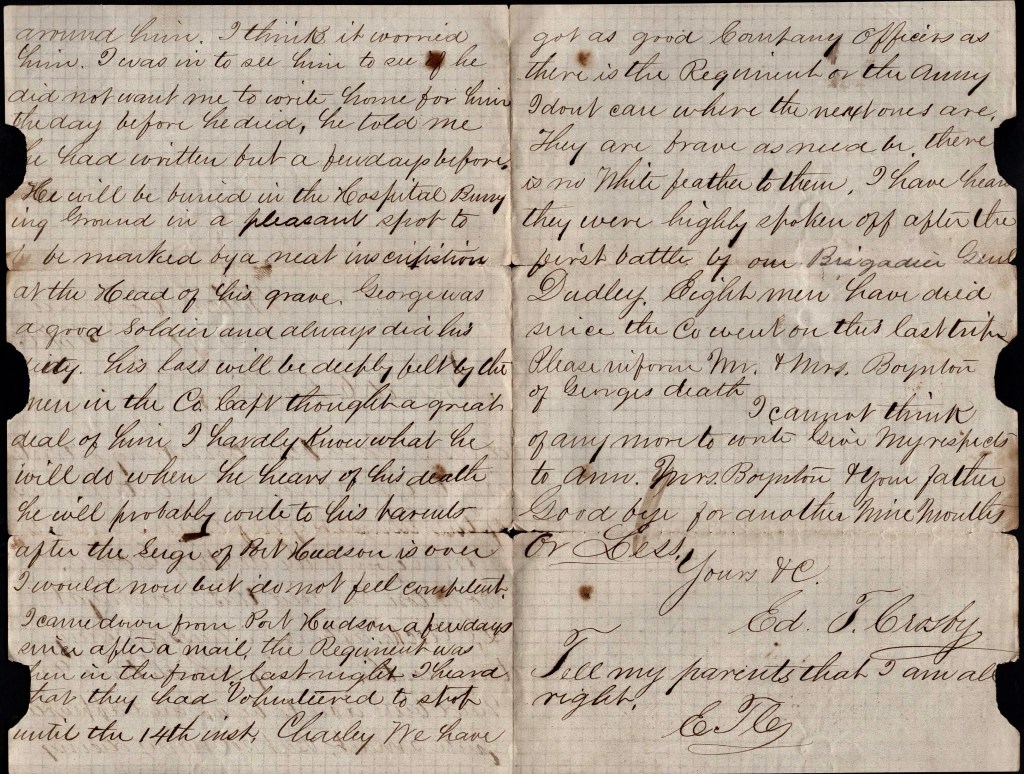
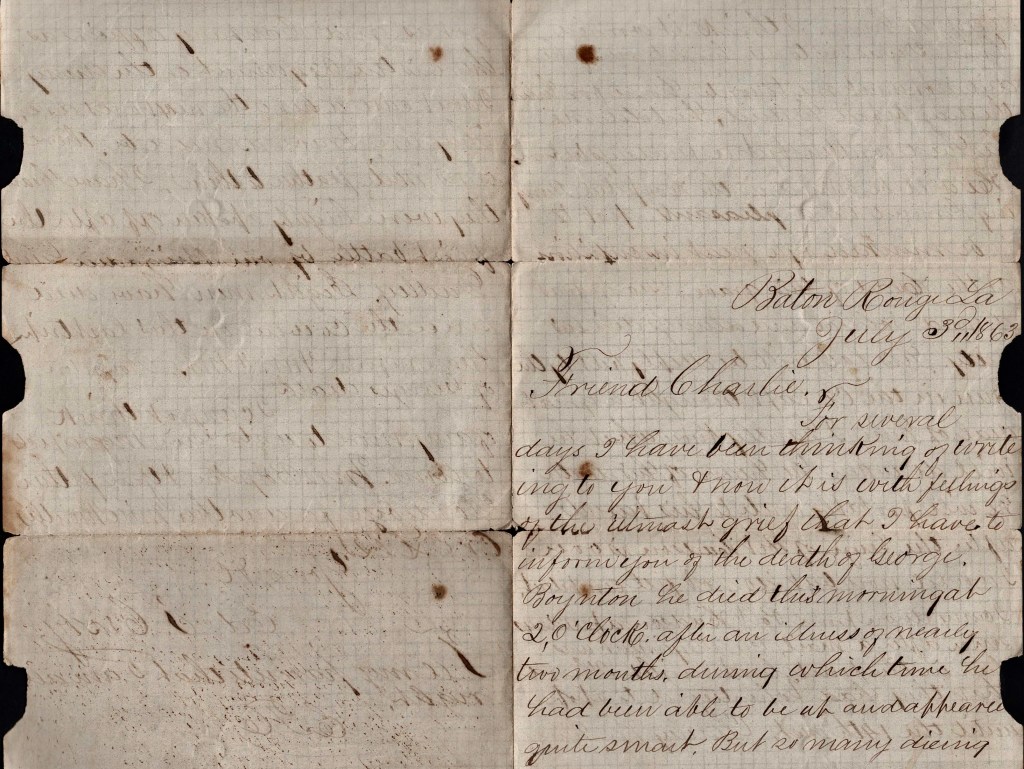
For several days I have been thinking of writing to you & now it is with feelings of the utmost grief that I have to inform you of the death of George Boynton. He died this morning at 2 o’clock after an illness of nearly two months during which time he had been able to be up and appeared quite smart. But so many dying around him, I think it worried him. I was in to see him to see if he did not want me to write home for him the day before he died. He told me he had written but a few days before.

He will be buried in the Hospital Burying Ground in a pleasant spot to be marked by a neat inscription at the head of his grave. George was a good soldier and always did his duty. His loss will be deeply felt by the men in the company. Captain [Barnes] thought a great deal of him. I hardly know what he will do when he hears of his death. He will probably write to his parents after the siege of Port Hudson is over. I would now but do not feel competent.

I came down from Port Hudson a few days since after a mail. The regiment was then in the front. Last night I heard that they had volunteered to stop until the 14th inst.

Charley, we have got as good company officers as there is [in] the regiment or the Army. I don’t care where the next ones are. They are brave as need be. There is no white feather to them. I have heard they were highly spoken of after the first battle by our Brigadier General Dudley. Eight men have died since the convention on this last trip. Please inform Mr. & Mrs. Boynton of George’s death.

I cannot think of any more to write. Give my respects to Ann, Mrs. Boynton, & your father. Goodbye for another none months or less. Yours, &c. — Ed T. Crosby

Tell my parents that I am all right.
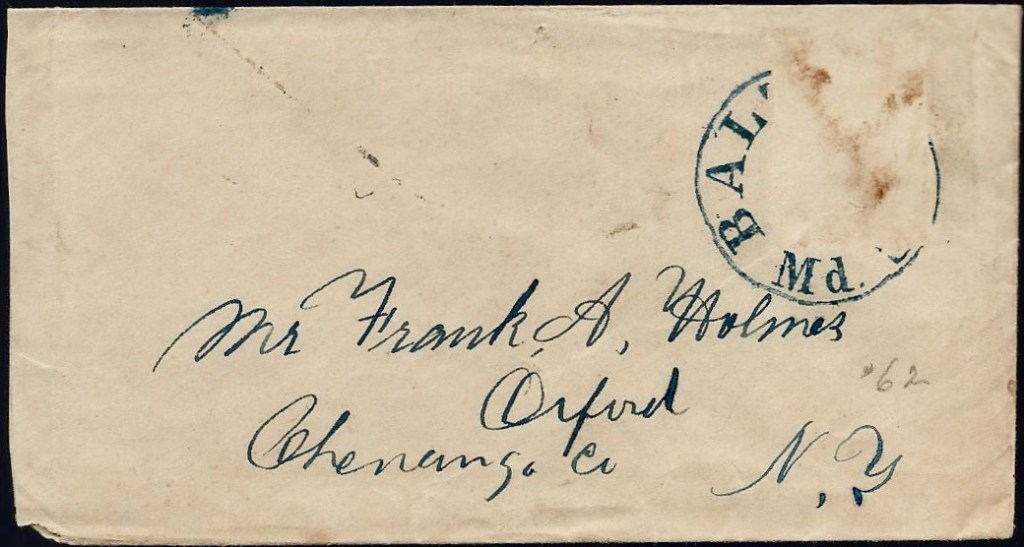
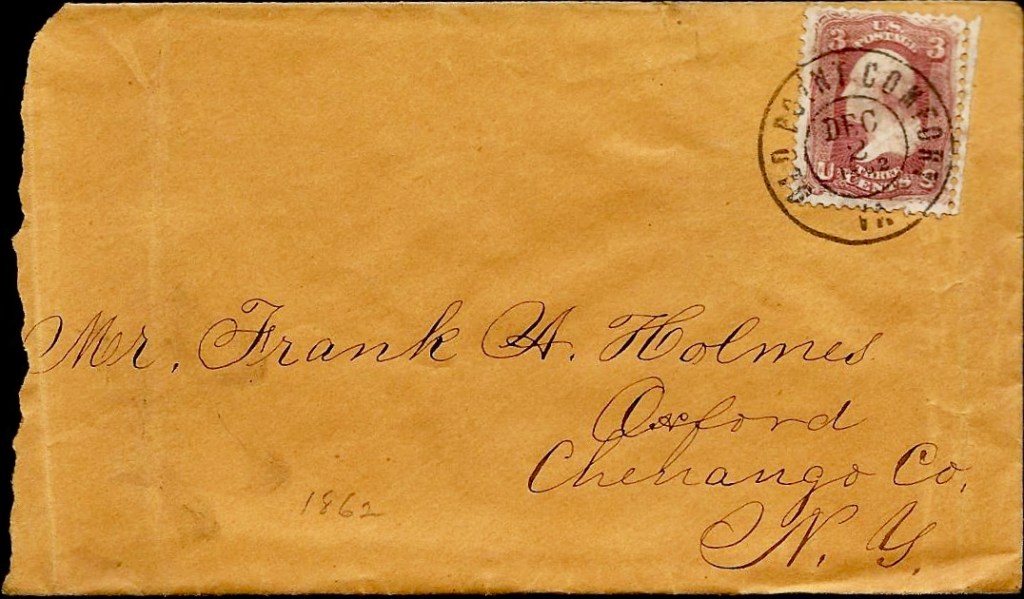
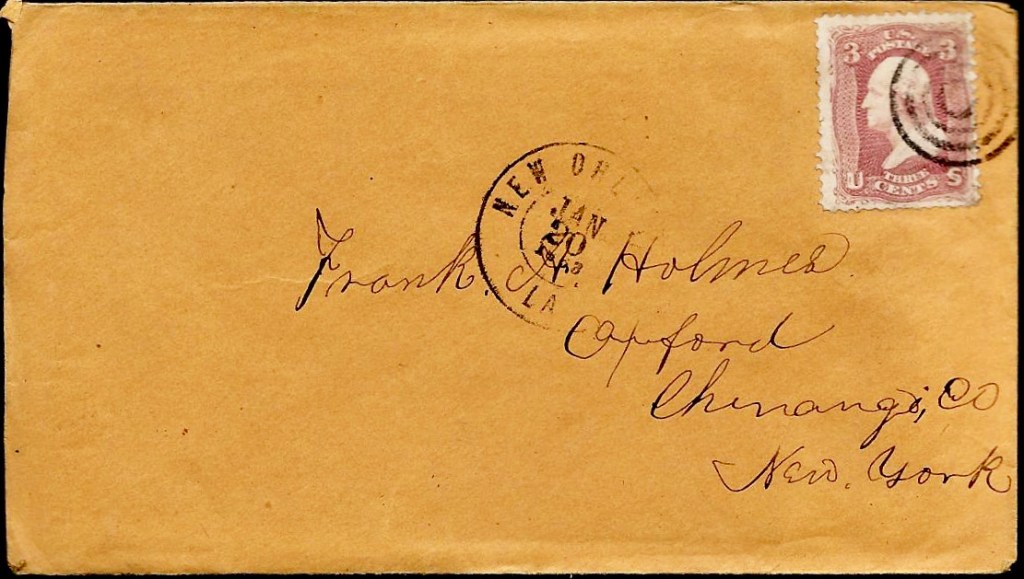
1862-63: Asa Holmes to Frank A. Holmes

An image of an unidentified Yank (Griffing Collection)

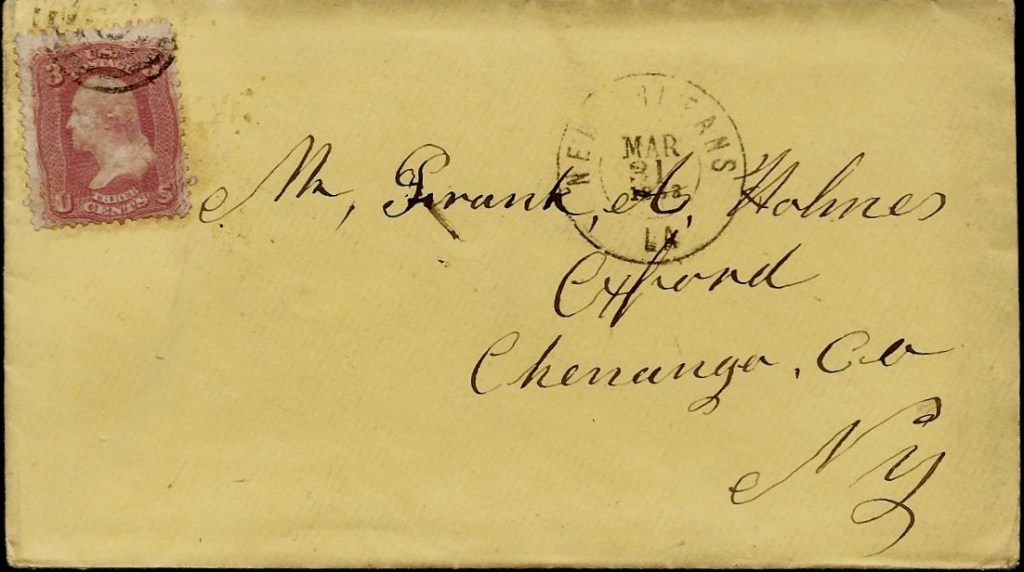
These letters were written by Pvt. Asa Holmes (1816-1863) who was was 46 years-old when he enlisted in Co. A, 114th New York Infantry on 1 August 1862 at Oxford, Chenango County, New York, to serve three years. He died of chronic diarrhea on 1 (or 2) November 1863 at Barracks Hospital at New Orleans.

Asa was the son of John Holmes (1760-1849) and Esther Wilcox Ensworth (1776-1863) of Oxford, Chenango County, New York. Asa wrote the letter home to Oxford where his wife, Eliza Ann (Odell) Holmes (1817-18xx) and their two children—Mary A. (b. 1842) and Frank (b. 1850)—were residing. By 1863, his son Frank was 13 years old and his daughter Mary was 18, married, and the mother of a child.

Seven companies of this regiment were recruited in Chenango County, and three in Madison. They rendezvoused at Norwich, where the regiment was organized and mustered into the U.S. service for three years on September 3, 1862. Three days later, it started for the front, moving to Binghamton by canal boats and proceeding from there to Baltimore. In November, it sailed for New Orleans as part of Banks’ expedition, and upon its arrival there, it was assigned to Weitzel’s (2nd) brigade, Augur’s (1st) division, 19th corps. It was stationed for a time at Brashear City and neighboring points, and it was first engaged at Fort Bisland, where it had 11 men wounded, 3 mortally. It did not participate in the Bayou Teche campaign, but joined its corps before Port Hudson on May 30, 1863, where it was actively engaged for 40 days in the siege and suffered severely in the grand assault of June 14. The loss of the regiment during the siege was 73 killed, wounded, and missing.

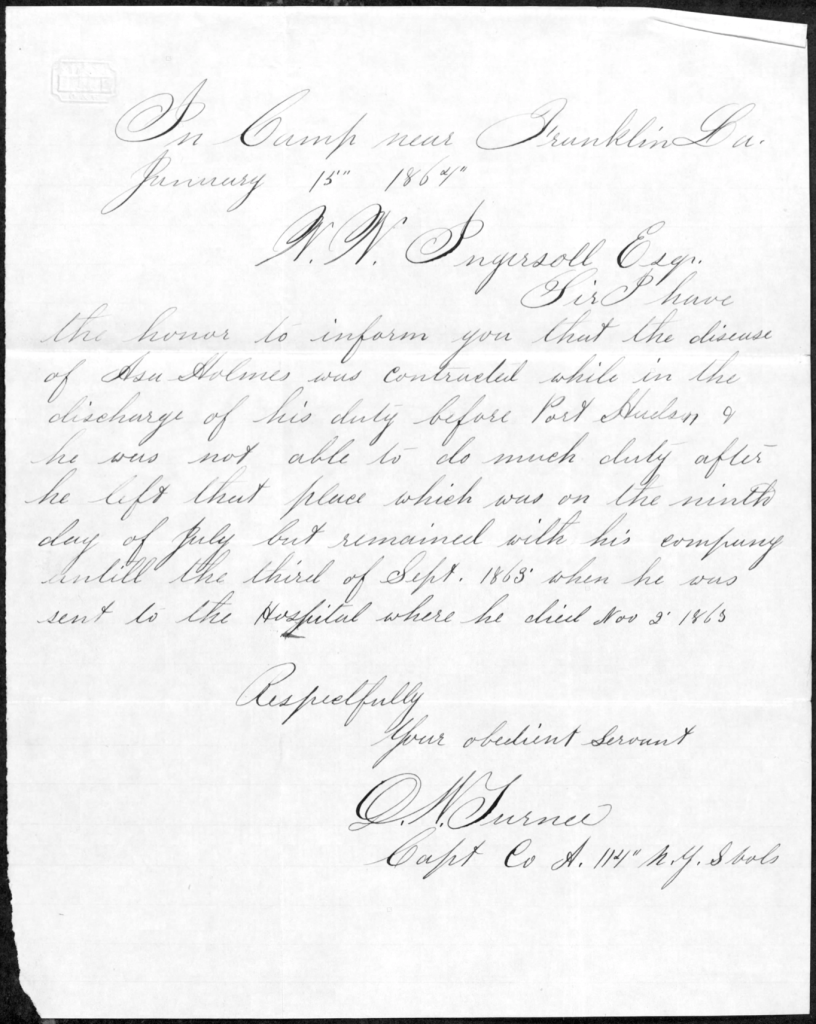
A letter from Asa’s captain states that Asa contracted the illness that killed him about the 9th of July but he remained with his regiment until 3 September 1863 when he was sent to the hospital. Asa was among the 192 men in the regiment who died of disease and other causes during the war.

[Note: see also Holmes, Asa. Civil War letters, 1863 June 16-17.  2 items. Located at Pearce Civil War Collection, Navarro College, Corsicana, Texas.]

Letter 1

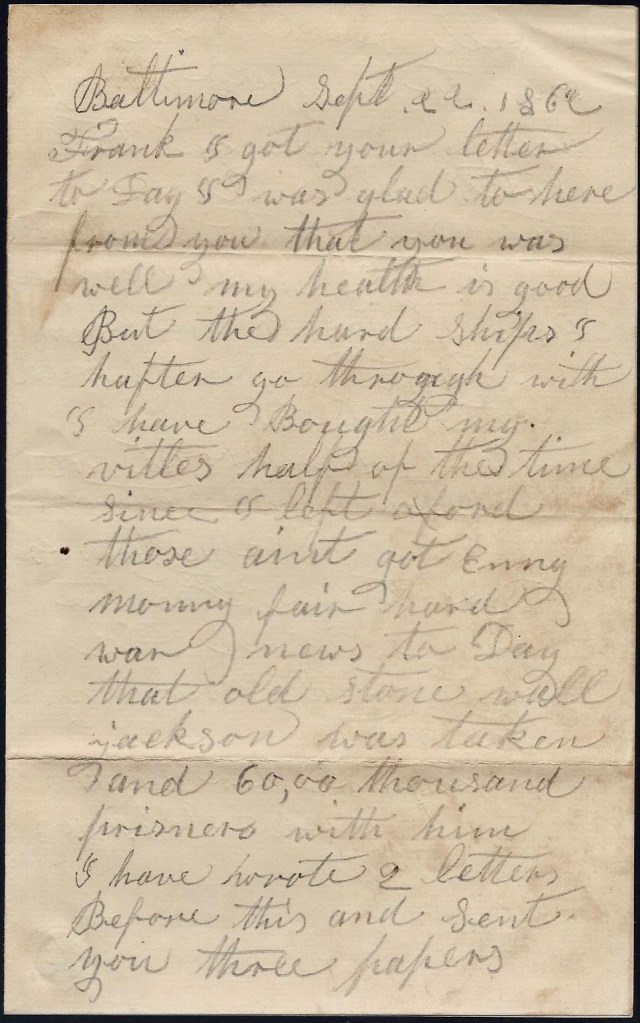
Baltimore[Maryland]
September 22, 1862

Frank, I got your letter today. I was glad to hear from you that you was well. My health is good but the hardships I have to go through with. I have bought my vittles half of the time since I left Oxford. Those [that] ain’t got any money fair hard.

The war news today [is] that Old Stonewall Jackson was taken and 6 thousand prisoners with him. I have wrote two letters before this and sent you three papers. I will send you one tomorrow morning and you will get the latest news of war.

Thy bring into Baltimore from 100 to 150 every day or to prison. I want you should write when you leave all about it.

From your father, — Asa Holmes

Direct your letter as the same you did, Get what money you want. Enquire for paper. — Asa Holmes


Letter 2

Newport News, Va.
November 16, 1862

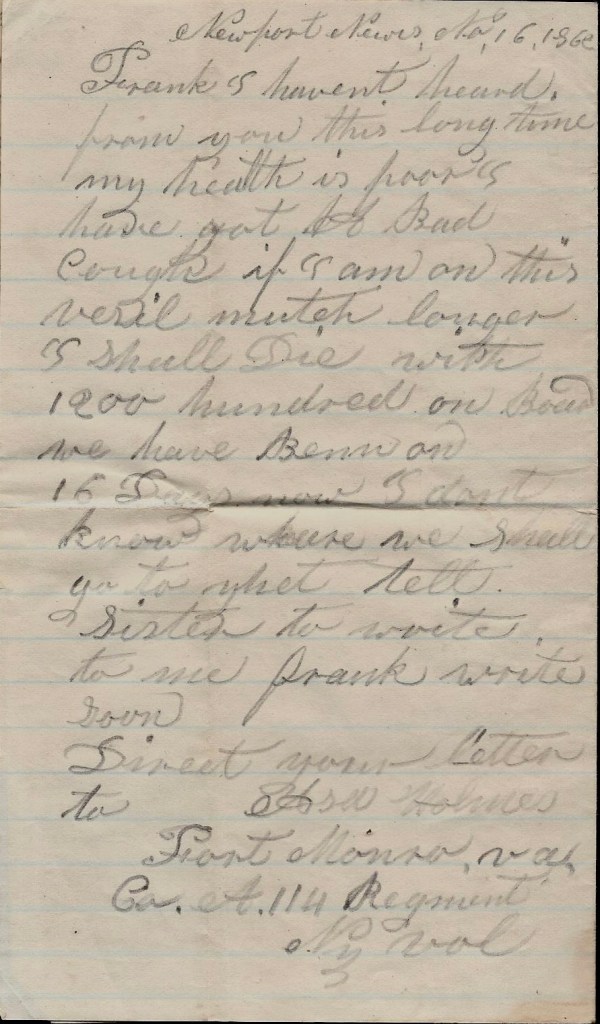
Frank, I haven’t heard from you this long time. My health is poor. Have got a bad cough. If I am on this vessel much longer, I shall die with 1200 on board. We have been on 16 days now. I don’t know where we shall go to yet. Tell sister to write to me Frank. Write soon.

Direct your letter to Asa Holmes, Fort Monroe, Va., Co. A, 114th Regiment New York Volunteers.

December 2nd, 1862

Frank, I wrote to you last night. Now I write to inform you that we was called up at midnight to go on board the vessel. The whole brigade numbers about 7,000 men, to be ready any minute to go. Don’t know where. Don’t make much difference now. I lay in my bunk to write this.

I sent fifty cents in the other letter to you. Also fifty in this. Ask Mr. Lewis if he has received my check and the money I sent.

My health is better but not good yet. I shall come around yet safe, I suppose. There is some hope I shan’t. Do the best you can till I come. Then I can tell you more than I can write about the war. — Asa Holmes

Elisa, take good care of Frank and not have him a nigger to no one. There is money enough to do it. — Asa Holmes


Letter 3

Quarantine Station Sixty Miles Below New Orleans
On Mississippi [River]
December 18, 1862

We have to lay here ten days. No vessel can pass here that have any sick on board. Every vessel has to be examined by the government doctor which comes on board, We had 200 sick—some with the ship fever, measles and typhoid fever and small pox and body lice by the bushel, and the itch and ship rash too.

Frank, I don’t know whether I put that money in the other letter or not, I was in such a hurry. I put some in this.

There is not but four houses here and them belong to the government for sick hospital. Frank, [I wish] you was here to see the orchards of oranges and lemons. Some as as big as pumpkins. We are on shore today. Snakes and alligators too numerous to mention. We can’t hear a word about the war here.

Keep up good courage. I shall be home by and bye. I am exposed to all kind of sickness. Hope you are well and all the rest. When I come to a stopping place, then I’ll tell you where to direct your letters. Then you must write a long letter to me.

I have seen the elephant all lover. I have took the first lesson with the rest of them.

To Frank A. Holmes, [from] Asa Holmes


Letter 4

December 15th 1862

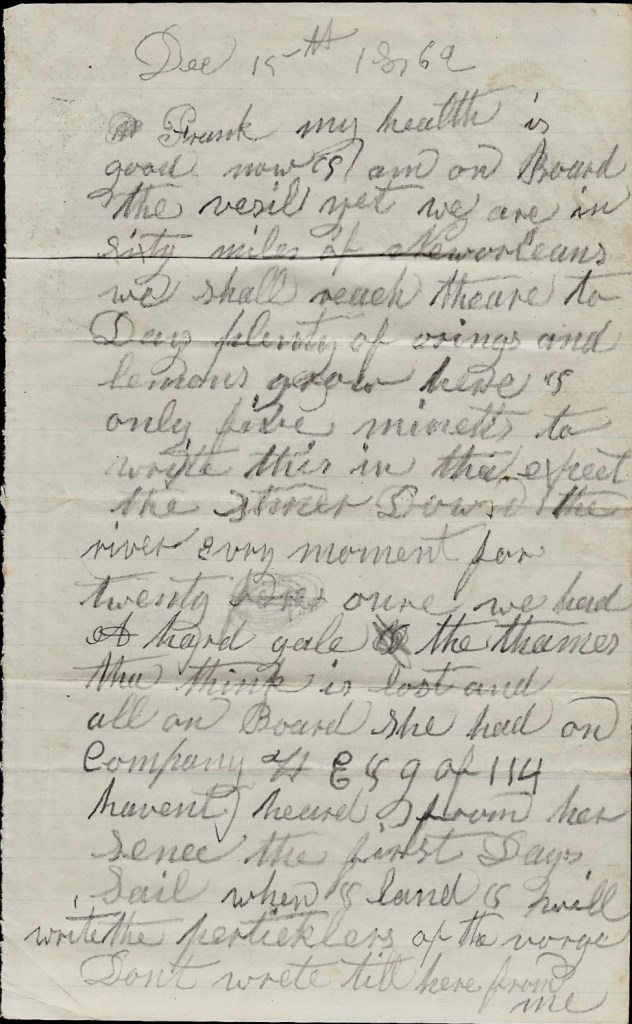
Frank, my health is good now. I am on board the vessel yet. We are [with]in sixty miles of New Orleans. We shall reach there today. Plenty of oranges and lemons grow here. I only have five minutes to write this as we expect the steamer down the river every moment for twenty one.

We had a hard gale. The steamer they think is lost and all on board. She had on Company H, E, F, and G of 114th. Haven’t hear from her since the first days sail. When I land, I will write the particulars of the voyage. Don’t write till you hear from me.

Keep up good courage. Our fare is hard but I think I shall live through it. Don’t you suffer any for money. I send fifty cents in this to you. — Asa Holmes


Letter 5

New Orleans [Louisiana]
[January] 15th, 1863

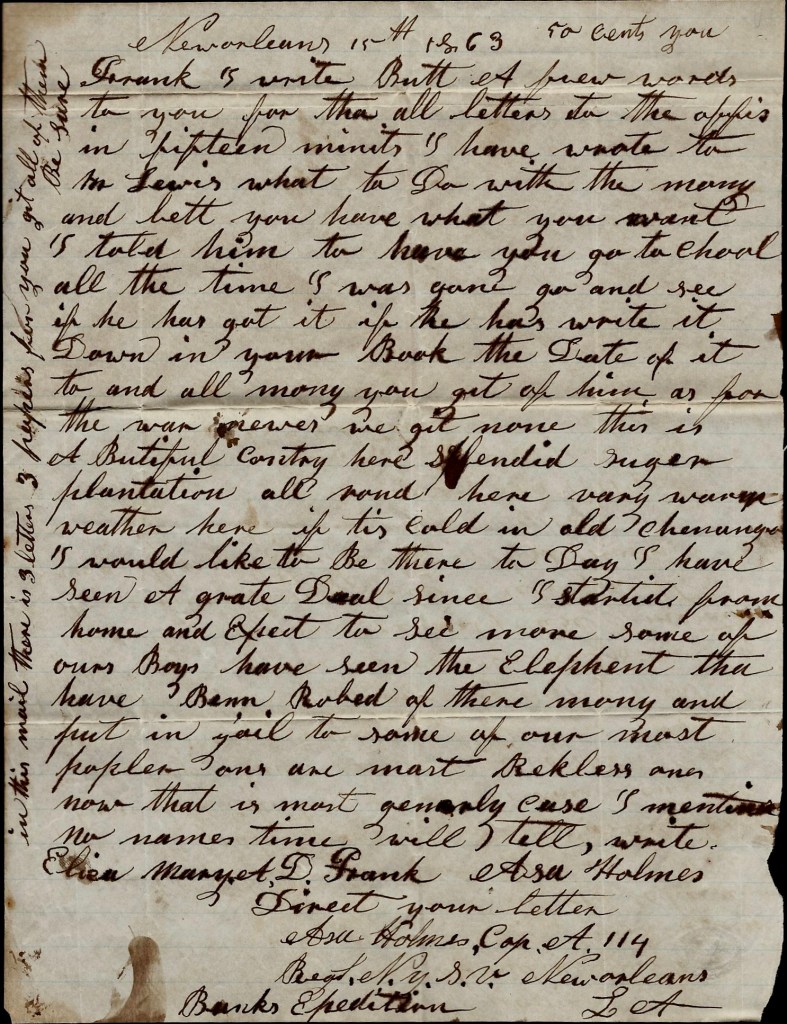
Frank, I write but a few words to you for all letters [must be] to the office in fifteen minutes. i have wrote to Mr. Lewis what to do wit hthe money and let you have what you want. I told him to have you go to school all the time was gone. Go and see if he has got it. If he has, write it down in your book, the date of it too, and all money you get of him.

As for the war news, we get none. This is a beautiful country here. Splendid sugar plantations all around here. Very warm weather here. If tis cold in Old Chenango, I would like to be there today. I have seen a great deal since I started from home and expect to see more. Some of our boys have seen the elephant. They have been robbed of their money and put in jail too. Some of our most popular ones are most reckless ones. Now that is most generally the case. I mention no names. Time will tell.

Write Eliza, Mary A., D. Frank. Direct your letter to Asa Holmes, Co. A, 114 the Regt. N. Y. S. V., New Orleans, La. Banks Expedition


Letter 6

Brashear City [present day Morgan City, Louisiana]
February 10, 1863

Frank, I feel very uneasy to think I don’t get a letter from you. This is the last one I shall write to you or sister till I get one. This is the sixteenth I have wrote to you and got no answer and I think it’s time to stop now till one is [received]. Sister I think don’t think enough of me to write. I don’t feel good tonight. Amen

— Asa Holmes


Letter 7

Bayou Boeuf
Camp Mansfield
March 9, 1863

Rather bad news, Frank, I write. Yesterday one of the gunboats left Brashier City to go up the river with one company [Co. F] of the 160th Regiment on board and one of the General’s staff on board to see what they could discover. They got about two miles from the city where the rebels had fixed a battery with sixteen guns around a bend in the river. They got close on to it before they see it and they destroyed our boat and killed all on board but two. 1 The pilot jumped overboard and ran ashore. The General’s staff got shot through the face. The gunboat Calhoun started as soon as she heard the firing with Co. C of the 114th Regiment but she run on[to] a sand bar before she got there to help them. If they could of got there, both boats would [have] drove them back.

I don’t know what will be the next move. There is a great stir with the big officers today. It may be that we shall have to follow them up and whip them out. There has one gunboat gone down to the gulf to pilot two large gunboats up here. They say, “I hope so.” I think we shall have a big battle before long the way things shape—it is brewing pretty fast.

My health is good now. My cough has most left me—only when I have been out all night on guard or picket in the rain. It is very sickly in the regiment now. It is reported that there ain’t about two hundred and fifty for hard duty now. That is pretty small number from a large regiment.

Write how Hiram Lewis gets along. I wonder if Stephen Lewis feels as savage as ever about the war. I can tell him something about it he never thought of yet, nor I before I left home. Write how Elizabeth gets along since W. was married. I should think Mary A. Deila would write to me and let me know how she gets along this spring. I write two letters every week to you. You must go to school every day this summer without fail. Don’t think of working for no one this summer. Learning is better than money to you and get it while you can and improve it expressly in writing. You can write better, I think, than the last you wrote to me. I could not hardly read it. But I am glad to have a letter from you if it is only a straight mark on paper. It looks though you had some respects for me. I hope Mary A. Delia will send Elroy’s likeness to me. I know it is hard for her to write. It used to be for me but I can write a sheet of paper over in ten minutes now. Don’t think nothing of it. I know I don’t spell every word right, but I think you can make it out.

No more at present. — Asa Holmes

I have no letter tonight from you nor nobody else but most of the boys have got one and reading it. Never mind. I can be contented till I get one from Oxford. Frank, don’t you be kicked around by no one. — Asa Holmes

1 Asa is referring to the engagement at Pattersonville on 8 March 1863, where Co. F, Capt. Josiah P. Jewett, was on board the gunboat Diana during the action with the Confederate batteries. Co. F lost 6 killed and 16 wounded, Capt. Jewett being mortally wounded. 


Letter 8

Bayou Boeuf
March 24th 1863

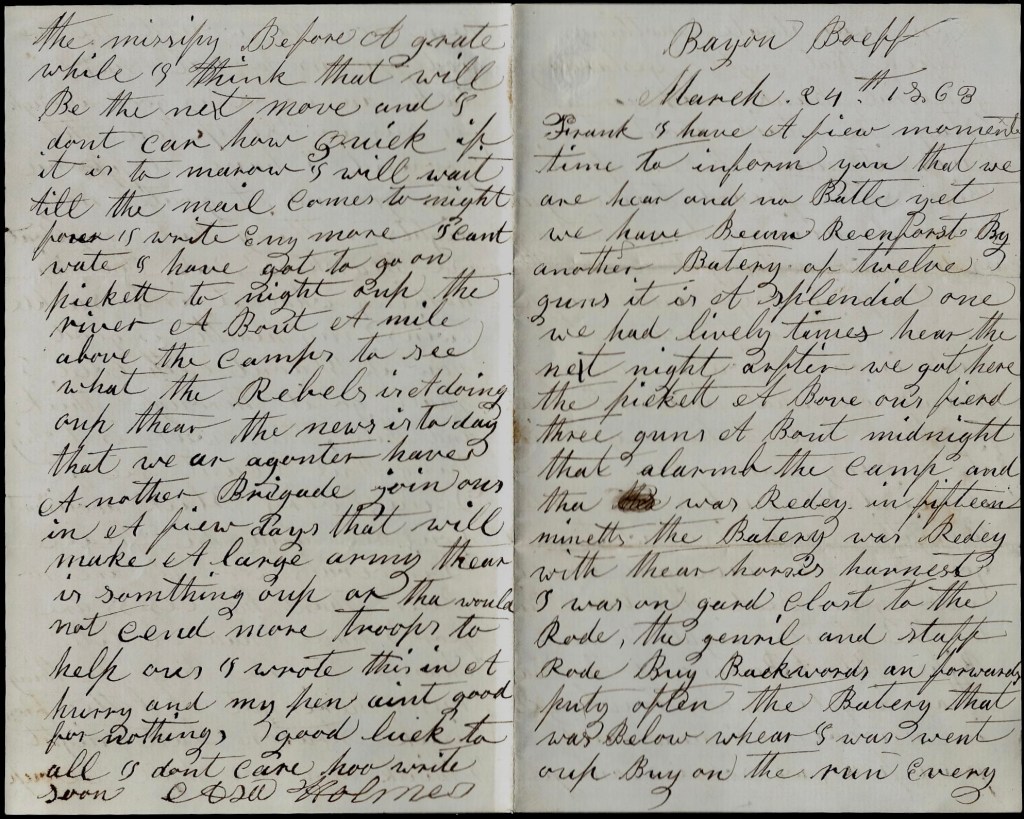
Frank, I have a few moments time to inform you that we are here and no battle yet. We have been reinforced by another battery of twelve guns. It is a splendid one. We had lively times here the next night after we got here. The picket above ours fired three guns about midnight that alarmed the camp and they was ready in fifteen minutes. The battery was ready with their horses harnessed. I was on guard closest to the road. The general and his staff rode by backwards and forwards pretty often. The battery that was below where I was went up by [me] on the run. Every horse was straight. Nothing happened that night.

Yesterday General Banks was here and staff. He stayed about three hours. It must be on special business. They fired twelve guns when he arrived here. The soldiers don’t know nothing till they tell us to pick up and march. We are in camp where the mud is over shoe. We are on a sugar plantation. What makes the mud? We have had a heavy rain. It is very warm here now. [There are] all kinds of snakes here and descriptions and sizes. What would you think to have one crawl into your bed? They crawl into the tents nights.

I saw ripe blackberries and they say there is plenty of strawberries in New Orleans now and green peas. We soldiers can’t get them for they would be too good for us to eat. Hard tack and coffee is good enough for us, and to sleep on the ground. I have slept on the ground a great many nights [with] nothing but my coat and blankets. But that is nothing [compared to] what it is to suckle twins.

My health is good now. If I don’t catch cold, I shall go it through thick and thin. This war is a big thing but I can’t see it. Damn every Black abolitionist you see and the Peace Democrats [too] for they are no better than the secesh are for I have had a little chance to see how the thing runs here.

Got a letter from Isaac Stratton last night. I think now we shall be up the Mississippi before a great while. I think that will be the next move and I don’t care how quick if it is tomorrow. I will wait till the mail comes tonight before I write anymore. I can’t wait. I have got to go on picket tonight up the river about a mile above the camp to see what the rebels are doing up there.

The news today is that we are a going to have another Brigade join ours in a few days. That will make a large army. There is something up or they would not send more troops to help us. I wrote this in a hurry and my pen ain’t good for nothing. Good luck to all. I don’t care how. Write soon. — Asa Holmes


Letter 9

Port Hudson
July 1, 1863

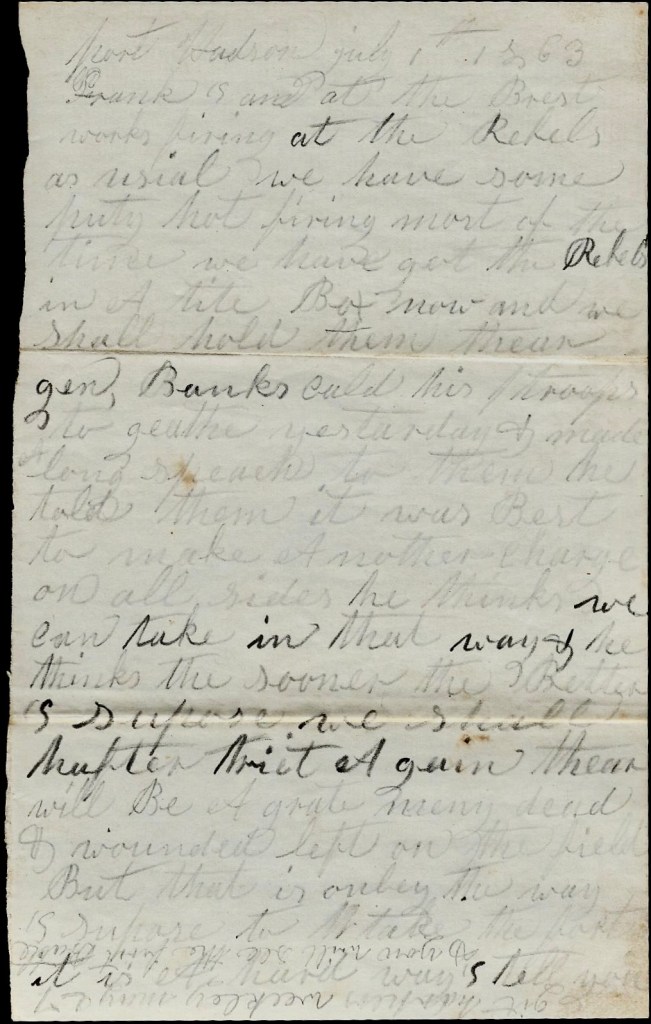
Frank, I am at the breastworks firing at the rebels as usual. We have some pretty hot firing most of the time. We have got the rebels in a tight box now and we shall hold them there.

Gen. Banks called his troops together yesterday and made a long speech to them. He told them it was best to make another charge on all sides. He thinks we can take [Port Hudson] in that way & he thinks the sooner the better. I suppose we shall have to try it again [but] there will be a great many dead and wounded left on the field. But that the only way, I suppose, to take the fortress. It is a hard way, I tell you.

I told you in my other letters I should not write who was killed and wounded till we got through fighting. Then I will write the particulars—if I am alive. I have got to stand my chance with the rest of the soldiers.

July 2nd. Good morning to all of you. I have been to the breastworks facing the rebel balls for twenty-four hours and I am alive yet. I thank God. I have just got your letter dated June the 12th. I was sorry to hear you was so unwell but you and Frank must not feel bad about me. I shall come out alright. If I don’t, I am nothing but a poor cuss. We are a going to hold the 4th of July in the fort if we get into it. It will take a great many lives to get there. I shan’t worry about it. Farewell to all. — Asa Holmes

Get Harper’s Weekly May 27th and you will see the first battle.


Letter 10

Donaldsonville, La.
July 21st 1863

Well Frank, I am here yet. I have just come in off from picket. I have been out for twenty-four hours. We suffer from the heat amazingly. You think it is hot in old Chenango of the Fourth day of July? What do you think of it here now?

It is very peaceable here now for a few days. The soldiers are a resting & appear to enjoy themselves very much. I think this state will come back into the Union before a great while. I think there won’t be much more hard fighting in this state. The Rebels is getting pretty tired of it. There will be some guerrilla fights, of course, but no more big battles, I think. We may have a pretty hard battle with the Rebel army that we have got surrounded here but I think they will surrender before fighting very hard. Our army has taken a great many prisoners already from it & they say the Rebel soldiers are deserting very fast. There is from ten to twenty comes into our lines every day. They say they have got tired of this war & won’t fight anymore.

I was pleased to hear from Mr. Williams that he was so strong a Union man. You take such a man & if he is drafted, he won’t whine, but he will go like a brave soldier and fight to protect the Union forever.

Well I feel very well now except my eyes. They are very weak since I got over the fever & jaundice. It colored my shirts very yellow. There is such a blur over my eyes that I can’t hardly see to write or read. I hope they will get over it as I grow stronger. They are very much as they was when I had the measles. That bothered me very much. I sweat so much it runs into my eyes and makes them smart so.

Well, Mary A. Dealia, how do you get along — and Marting too? & the boy — is he well? If he is, I would like to see him. I will pay for his likeness if you will take the pains to send it to me. This is the last time I shall write about it. You can send it or not. I will pay all expenses. I shall have money by and by & if I die, you will have part of it — or your boy — so it makes no difference. Eliza, write to me whether you got my two letters I wrote before this. I don’t want none of you worrying about me. I am here & you are there — all of you — & I am but one alone by myself. Is Ma fetch round alright yet? I don’t let nothing trouble me.

I sit here a writing while there is a regiment getting onto a transport for some place, I don’t know where. They are the Twelfth [12th] Connecticut that belong to our brigade. They have been with us ever since we have been in Louisiana. The 8th Vermont has got marching orders today for someplace too. They belong to Weitzel’s [2nd] Brigade too. It may be our [turn] next. We can’t tell.

Well, Frank, I have got a good silver-plated knife I am going to fetch you when I come home. It is a dirk knife with a spring in the back of it.

Farewell to all, — Asa Holmes

Write soon. Direct your letters as you always have. They will follow the regiment.


1862-64: Albert T. Wharton to Sarah Ann (Leland) Wharton

I could not find an image of Albert but here is one of George W. Harriman who served as a private in Co. D, 14th Maine Infantry. (Photo Sleuth)

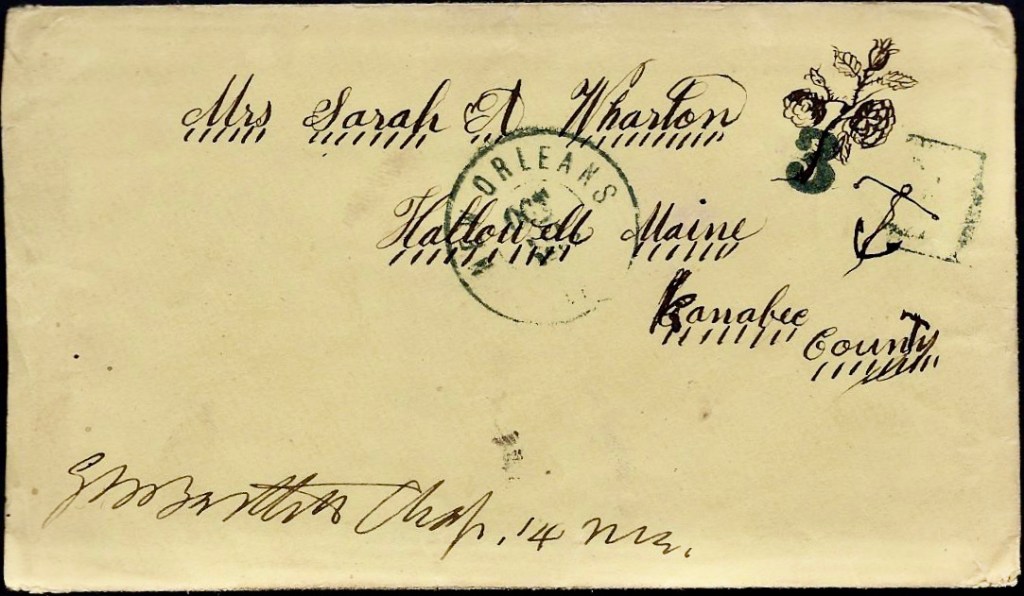
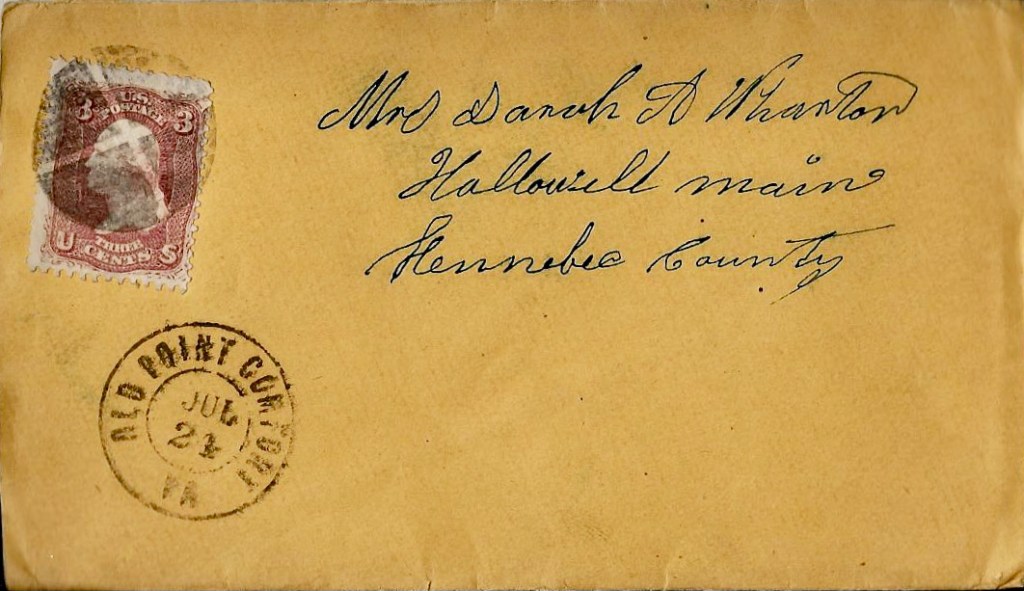
The following letters were written by Albert T. Wharton (1839-1920) of Hallowell, Maine, who enlisted on 11 December 1861 to serve in Co. F, 14th Maine Infantry. Though he was reported sick in New Orleans for a period of his enlistment, he survived the war and mustered out on 13 January 1865.

Albert was the son of Hiram W. Wharton (1810-1879) and Sarah Ann Leland (1810-1888). He was born in Enfield, Penobscot county, Maine, but in the 1860 US Census, the Wharton family was living in Portland, Cumberland, Maine. Albert was married in 1867 to Mary Ellen Libbey (1847-1870).

“This regiment was organized at Augusta, from Dec. 3 to Dec. 17, 1861, to serve for three years, and left the state for Boston Feb. 5, 1862. It sailed at once from there for Ship island, Miss., where it arrived on March 8, and remained in the South until July 13, 1864, during which time it saw an unusual amount of trying and dangerous service. Its first serious engagement was at Baton Rouge, Aug. 5, 1862, where it lost in killed, wounded and missing 126 men. Other engagements in which they participated were at St. Charles Court House, Civiques ferry, and the assaults on the fortifications of Port Hudson, May 27, and June 14, 1863. During the campaign from May 7 to Aug. 5 of this year, the regiment was without tents of any kind, and their only camp equipage was their camp-kettles. Both officers and men were forced to sleep in the open air, and they suffered much from chills and fever. In Jan., 1864, all but 40 of the available men of the regiment reenlisted for an additional term of three years, and on Feb. 10 they left New Orleans for Maine on a furlough of 30 days. They rejoined the regiment at New Orleans May 19, 1864.

On the arrival of the 14th at Bermuda Hundred, Va., July 22, 1864, it was at once assigned to Gen. Butler’s command. Joining Gen. Sheridan’s forces at Berryville, Va., on the 18th, it took an important part in the battle of Winchester on Sept. 19, losing 60 killed, wounded and prisoners, or about one-third of the number engaged. Subsequently it participated in the assault and capture of Fisher’s hill and joined in the pursuit of Gen. Early to Harrisonburg. At the battle of Cedar creek it again suffered severe losses. Of the 200 men in the 14th who entered this fight, 80 were either killed, wounded or captured, Lieut.-Col. Bickmore being among the killed. Shortly after this battle the regiment moved to a position near Kernstown, where it remained until the expiration of its term of service, Dec. 23, 1864. The original members who had not reenlisted were mustered out at Augusta, Me., on Jan. 13, 1865.”

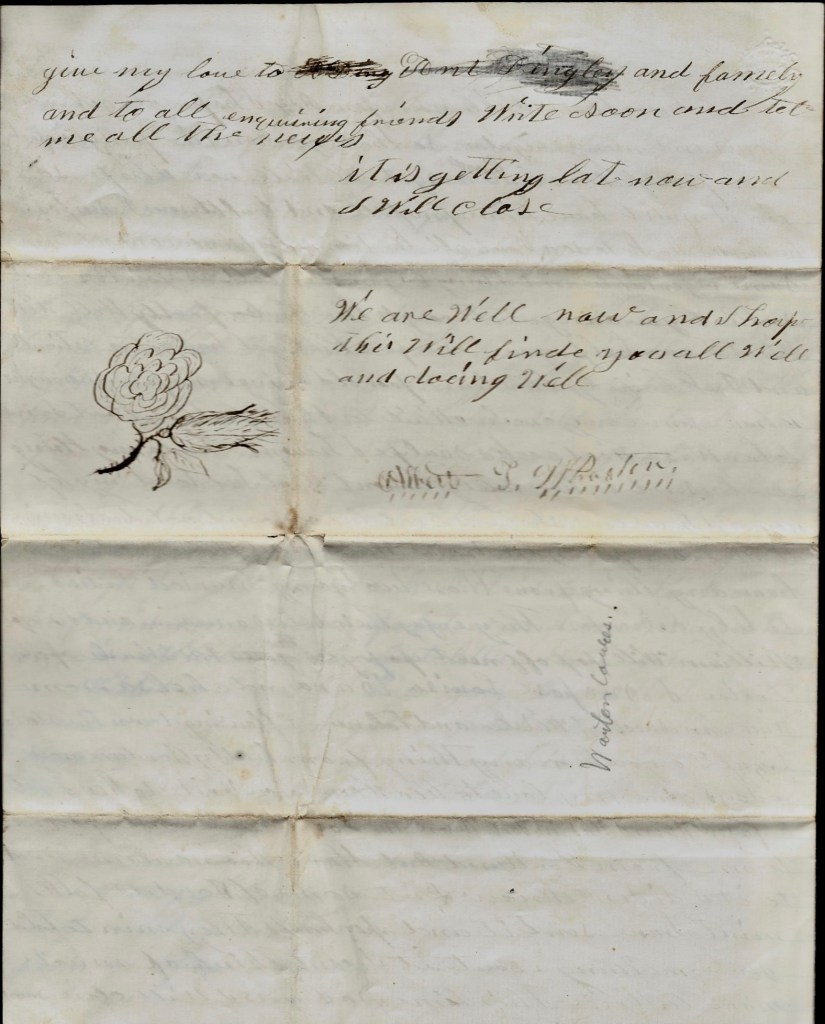
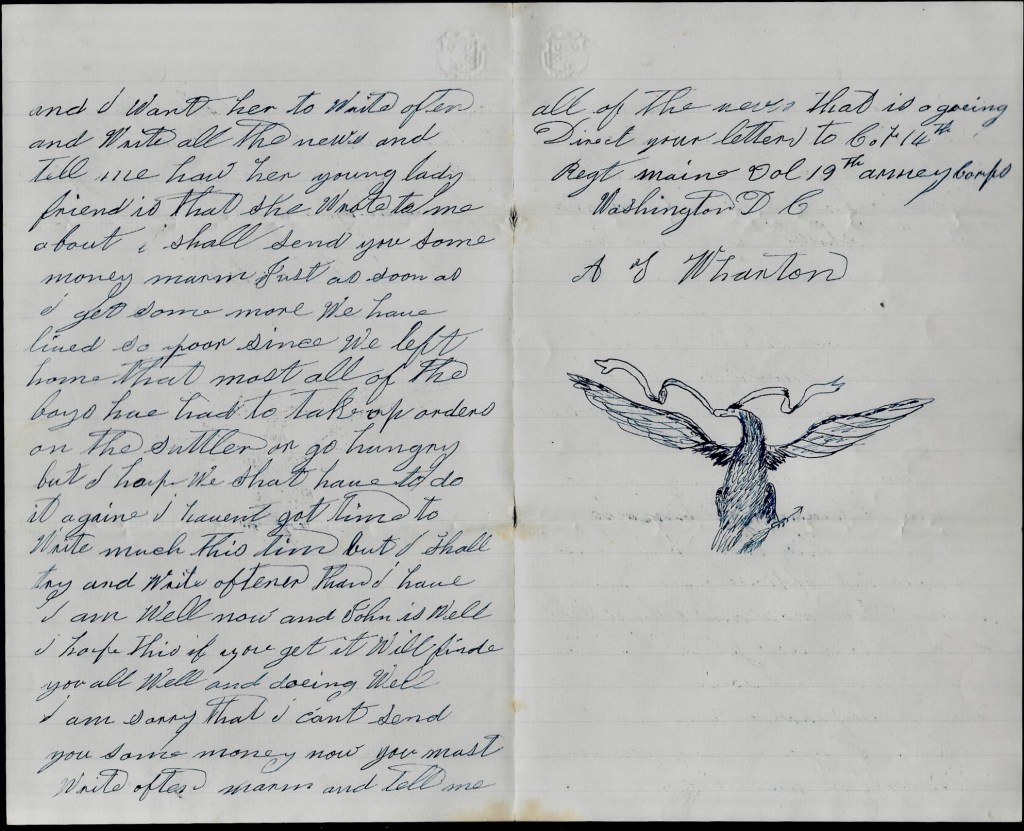
A sketch of an eagle that Albert drew on his letter of 22 July 1864

Letter 1

New Orleans [Louisiana]
May the 20th 1862

Dear Mother,

I now seat myself for the purpose of writing you a few lines to let you know I am well now and hope you are all well and happy. We are now quartered here in New Orleans. We left Ship Island the 17th of May. We went on board of the ship Premier a week ago yesterday and got here Saturday and came ashore yesterday. New Orleans is quite a large city and looks very well. The people are very civil here now and many seem to be greatly rejoiced to see our troops here. As I came from the ship yesterday up through the streets, I talked with several men and women and they all seemed to be glad to us here. There is some stiff neck bugers here yet though but they keep themselves shady and have but little to say. Anyway, there is a good many people here from some of the Middle and Western states and they are all in for the Union. Secesh is about played out.

We are quartered on the outskirts of the town. Most up to the upper end in a lot of a cotton depot. We have a pretty large roomy yard to stir around in and a plenty of air and water handy. It is about as good a locality as we could get here. I think if the men all try to take care of themselves, I guess we shall get along very well. I don’t know how long we may have to stay here but I hope we shall be a getting north soon.

There is four regiments here now—the 12th and 14th Maine, a Vermont, and Massachusetts regiment. The 13th and 15th Maine are on the Island yet. We are here to police the city and keep the citizens from fighting among themselves and to see that everything is kept straight and in order. Most things are pretty high here now. All kinds of fruit is high. Oranges from 5 to 10 cents apiece and other things ditto. But we don’t want their stuff. They will give almost anything for hard bread, beef, or any sort of grub…

…a slight cough and yesterday a coming up I fell in with an old fellow and he gave me some of this junk candy and it went well and helped my cough considerable. But I saw citizens eat off the same piece before I took any of it. But they dare not play their tricks on soldiers now for if there is any of the kind carried on, Old Butler will play the devil with them. We don’t have much fear of their games now but it is well enough to look out for ones self. Still I haven’t drank any strong drink since we left Augusta excepting aboard the ship in Boston [where] one of the fellows had some good brandy and I took a small drink and it done me good for I had a cold and it helped me. But that will do for strong drink this time.

We received your letters of April 13th and was very glad to hear from you all. You wrote that you had heard from [ ]. I am glad you have heard from him. We was glad to hear from him and Rance too. I shall write to them both soon. I wrote in answer to Lizzie’s letter a day or two before we left the Island.

I must close now. I shall write again soon. Goodbye for the present. — A. T. Wharton

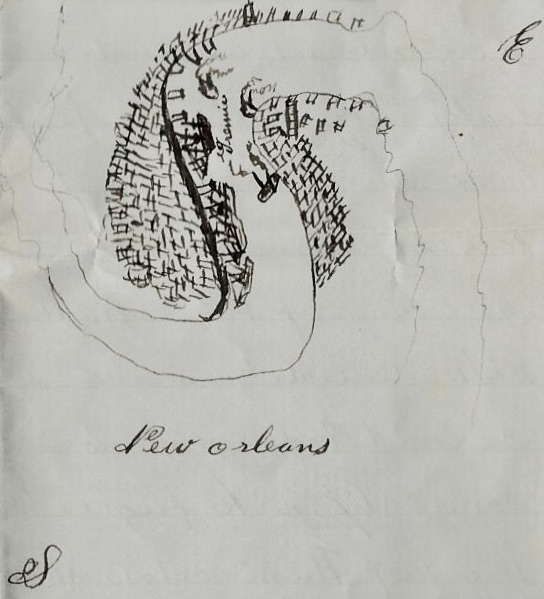
Albert’s sketch of New Orleans showing the Premier docked in the river

Letter 2

Carrolton
Monday, November 3, 1862

Dear Mother,

It is with pleasure that I now seat myself to answer your kind and welcome letter of the 27th of September which I received about a week ago and should have written before but I had nothing to write with before. I am well now and hope this will find you all well and happy. John is well and hearty. We have got a good place here to camp but I don’t know how long we shall stay here. I hope we will stay here through the winter for it is a good, healthy place. We have not been in any more battles since we left Baton Rouge but some of our force is up the river now at Donaldsonville and have had a little fun with them Rebs and have taken some prisoners and some guns. I don’t know how many rebels there is up there but there is quite a force of them, I believe. We have got a regiment of darkeys and they done well up there in the fight but I hope this business will be over soon for it is bad business. Anyway, I don’t think it will last much longer. I hope we shall all be at home in the spriong if we live.

The weather is warm and mild here now and it is comfortable getting around now. There has been pretty cold days which took hold of us pretty sharp at first but it is never very cold here at all. I am glad Sewell Douglas has got home and brought the things that I sent to you for them socks will be a nice fair for the old gentleman to wear this winter and them mittens are a pair that I found on Ship Island and I thought I would save them and send them home if I got a chance to as Hubbard says and the mate to that odd one I lost on board the North America a coming out. I was sorry to lose it for they were such a good pair of mittens. Let the old gentleman have them all to wear this winter if you please for I suppose he will need then. I suppose Sewell thinks himself a great warrior now. I wonder if he has seen the bloomer since he has got home. Perhaps though however she can’t have the honor of walking by the side of Sewell’s new coat and pants this season. I should think it doubtful but she must keep up good courage about it. Poor Sewell. I am glad he has got where he can whistle as much as he is a mind to for this is rather a hard chance for anyone.

We are expecting every day now to get paid off with two months pay and then there will be twenty dollars more a coming to you. I hope you get things enough to keep you comfortable. Father’s little crop that he has got will be a little help, I suppose. I am glad his things have done so well. That gal of ours has got a pretty dress and opera and I suppose she feels pretty grand with them too. The names he has given to my old hen will do very well, I guess, for I am not very particular as to names. She is a very noble old hen. I have no doubt but I don’t want that gal to have any of her eggs to eat though. Ha Ha. That was a nice little envelope of herbs that you sent. It tasted good. We don’t get any such thing out here. I will try and send you my likeness after we get paid off and I guess John will send his too.

Have you head anything from Big Billy and his household pets lately? Gosh, I wonder where they all are gone to—Cuba Island I guess. Has that gal got her kitten Flora yet? I suppose she has got to be a real mouse and rat catcher. And Old Watchey, is he a trotting around yet? Poor old fellow. Marm, I want you to use as much of the money as you have a mind to but I don’t think it is a very good plan to buy that gal much of anything with it than you can get her a stick of candy or something of that kind once in awhile and I guess that will do her for her poor old critter. Most everything is very high here now. Butter is forty-five and fifty cents a pound and cheese 25 and 30 and apples 5 and 10 cents apiece. Eggs 90 cents a dozen. Tobacco a dollar a pound and poor stuff at that. Potatoes 7 and 8 cents a pound adn everything else ditto.

I guess I must close now for I can think of nothing more at present to write…When you write to me again, Marm, I wish you would send me a few postage stamps if you will for they are rather hard to get hold of out here unless one has hard money to pay for them with and then they like to have just the right change handed to them. My love to all. Goodbye this time. I want you to write often. — Albert T. Wharton


Letter 3

Grant Point
Monday, March 2nd 1863

Dear Mother and Sister,

It is with the greatest pleasure that I seat myself to write you a few lines to let you know how we are. We are all well and hearty and I hope these few lines will find you all well and doing well. We got your letters February 28th and was very glad to hear from you all. I am glad that your health is better than it was through the winter, Mother, but I am sorry that Father’s finger is so sore. I hope it is better now for it must make it rather bad for you all I should think.

We are down in the swamp yet by the old sawmill on picket duty. The weather is getting rather warm here now and the flies and mosquitoes are getting pretty thick and the alligators and snakes are pretty plenty but they are harmless.

I don’t know how long we will stay here. We have had no orders yet to move from here but I should like to get out of this swamp before it gets very warm weather for I think it will be unhealthy here. But if we keep a picket here through the summer, I suppose we will be relieved.

We expect to get paid off again this month and then there will be 30 dollars more a coming to you. Hope you get your money and goods regular for I don’t want you to go without things as long as my wages will keep you comfortable. I calculate for you to use it as your own and indeed, it is your own. If I knew that you went with things that you need, I should be sorry you spoke of getting or that you had got a few articles of furniture and so you had better get all you can while you have the opportunity and then you will have them. I suppose that gal wants something once in awhile. Has the poor old thing got a reticule yet. I suppose you must get her what she wants marm if it is a farm leaf pen knife or something of that kind. Poor darling. Wish we was where we could eat some of the currants.

You wanted to know who our Captain was. A. K. Bolan is his name. I do not know yet who’ll take command of the regiment if Nickerson is promoted. The prisoners that we lost at Baton Rouge was E. Barker, H. Moor, and Luce E. R. and H. M. have been home and are there now unless they have started to come back. Cunningham is well. Banks is our Major General commanding this Division.

We have a plenty of clothing and blankets all the time. More dry good than food as a general thing although we are fed pretty well this winter. I had pretty good care taken of me when I was in the hospital. I wish you might get a letter from poor Hie. I want to hear from him very much. I hope he is still alive and well. Poor boy. We had a letter from Elsie when we was in New Orleans but neglected to answer it. But I am a going to write to her again soon. I suspect grandmother had got pretty feeble before she died. It seems that Miss Add and Miss L. L. L. are in for Union these days. Go it while you are handsome for beauty will fade. Mrs. Shoe, Bill Western, and Mrs. Solong Bran. Good luck. Take care yourselves. How’s that hay?

I must close now. Give my love to Aunt and family and to all inquiring friends & to Lizzy. Give my love to Hatty Jordan and tell her for me to be a good gal. I should like to come home and eat that little egg. I am in hopes we shall be at [home[ before long. You must be a good gal, darling, and I guess marm will get you some playthings. Wish we had some warm biscuits now to eat. I shall want you to get me a good big stick of candy when we get home for I haven’t eaten much candy since I have been out here. I saw Ranty—poor boy—the morning they left Augusta. Was on guard by the road when they came up from Hallowell. You must try and bear the sad tidings as well as you can, dear ones, for we may hope the noble boy is with God in heaven.

Goodbye dear ones and God bless. — A. T. W.


Letter 4

Algiers
Monday, September 14, 1863

Dear Friends,

I take this opportunity to write you a few lines to let you know where I am. I am now in Algiers—right across the river from New Orleans. We came here the other day from Sabine Pass, Galveston. We left Port Hudson and came down to Baton Rouge and stayed there a week and then came down to New Orleans and went on board of a ship and went to Sabine Pass just to tame them devils there and unfortunately lost two gunboats but we will have them back again by and by. The gunboats fought well. One run up under the Reb battery a giving them a broad side to a lick, but she got aground and could not weave ship and so the rebels got her and one other one too.

The Second Battle of Sabine Pass, fought on 8 September 1863, resulted in Gen. Magruder defeating Gen. Franklin’s amphibious force that included gunboats and 6,000 soldiers. The Confederate force was heavily outnumbered but the guns of Fort Griffing damaged two of the Union gunboats and forced one to run aground. The troops transports did not even attempt a landing and returned to New Orleans without firing a shot.

We had a pleasant trip both ways with the exception of being very much crowded. We lost one poor fellow overboard a coming back. I don’t know how long we shall stay here. I expect not long enough. We shall have to keep a moving now pretty often I suppose until we get the rebs cleaned out. I guess they will get about played out this winter. Anyway, I hope so.

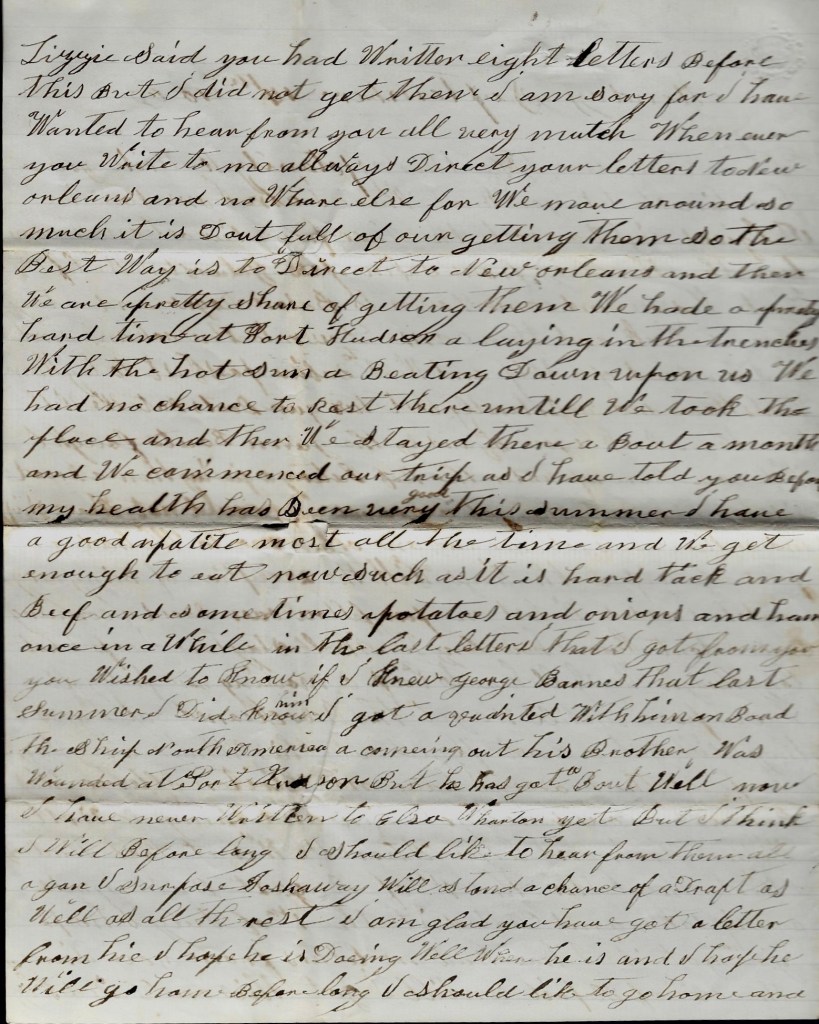
The reason I have not written oftener was because I could not get time and things to write with. I wrote one letter when we was at Port Hudson. I wrote the letter the 7th of August but made a mistake and dated it the 7th of July. I hope you have got it. I have had no letters from you since the 29th of April until I got this dated August 20th. Lizzie said you had written eight letters before this but I did not get them. I am sorry for I have wanted to hear from you all very much. Whenever you write to me, always direct your letters to New Orleans and no where else/ for we move around so much it is doubtful of our getting them, so the best way is to direct to New Orleans and then we are pretty sure of getting them.

We had a pretty hard time at Port Hudson a laying in the trenches with the hot sun a beating down upon us. We had no chance to rest there until we took the place and then we stayed there about a month and we commenced our trip as I have told you before.

My health has been very good this summer. I have a good appetite most all the time and we get enough to eat now—such as it is. Hard tack and beef and sometimes potatoes and onions and ham once in awhile.

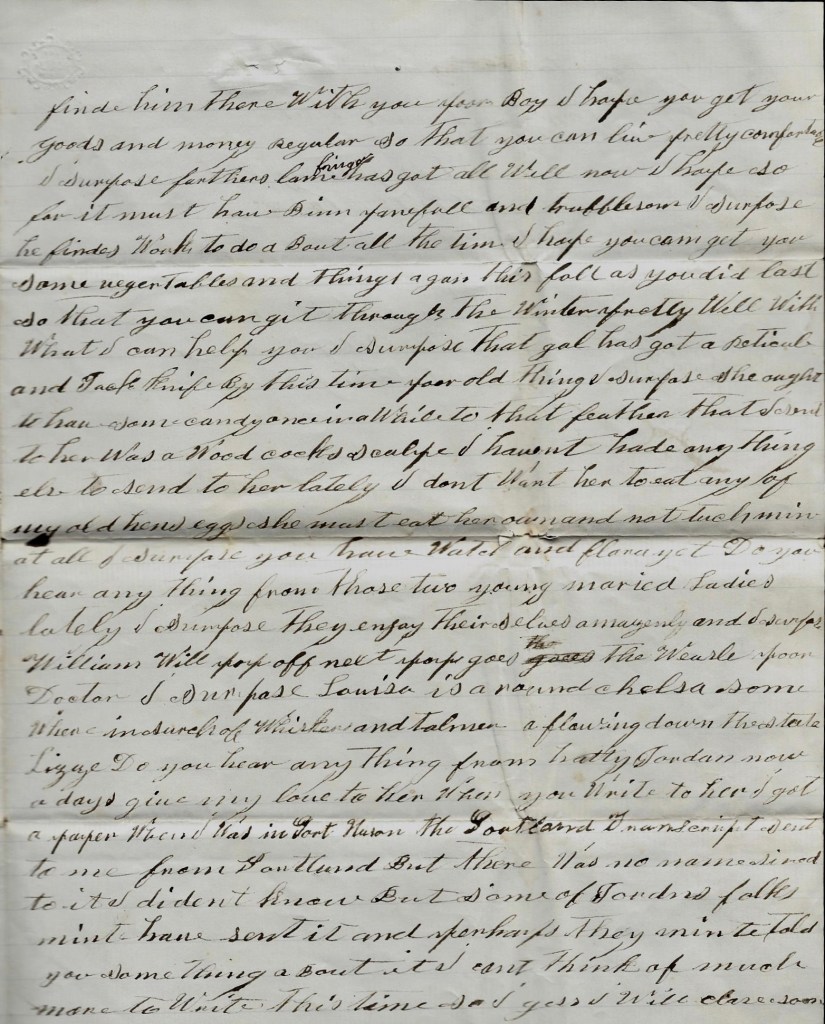
In the last letter that I got from you, you wished to know if I knew George Barnes. That last summer I did know him. I got acquainted with him on board the ship North America a coming out. His brother was wounded at Port Hudson but he has got about well now. I have never written to Elsa Wharton yet but I think I will before long. I should like to hear from them all again. I suppose Joshua will stand a chance of a draft as well as all the rest. I am glad you have got a letter from Hie. I hope he is doing well where he is and I hope he will go home before long. I should like to go home and find him there with you. Poor boy.

I hope you get your goods and money regular so that you can live pretty comfortably. I suppose Father’s lame finger has got all well now. I hope so for it must have been painful and troublesome. I suppose he finds work to do about all the time. I hope you can get your vegetables and things again this fall as you did last so that you can get through the winter pretty well with what I can help you. I suppose that gal has got a [ ] and jackknife by this time. Poor old thing. I suppose she ought to have some candy once in awhile too. That feather that I sent to her was a woodcock’s scalp. I haven’t had anything else to send to her lately. I don’t want her to eat any of my old hen’s eggs. She must eat her own and not touch mine at all. I suppose you have Wattel and Flana yet. Do you hear anything from those two young married ladies lately? I suppose they enjoy theirselves amazingly and do so far.

William will pop off next. Pop goes the weasel. Poor doctor. I suppose Louisa is round Chelsea somewhere in search of Whiskers and Talmen, a flouring down the state. Lizzie, do you hear anything from Hatty Jordan now-a-days? Give my love to her when you write to her. I got a paper when I was in Port Hudson—the Portland Transcript—sent to me from Portland but there was no name signed to it. I didn’t know but some of Jordan’s folks might have sent it and perhaps they might have told you something about it. I can’t think of much more to write this time so I guess I will close soon.

Give my love to family and to all enquiring friends. Write soon and tell me all the news. It is getting late now and I will close. We are well now and I hope this will find you all well and doing well. —Albert T. Wharton


Letter 5

Bermuda Hundred [Virginia]
July 22, 1864

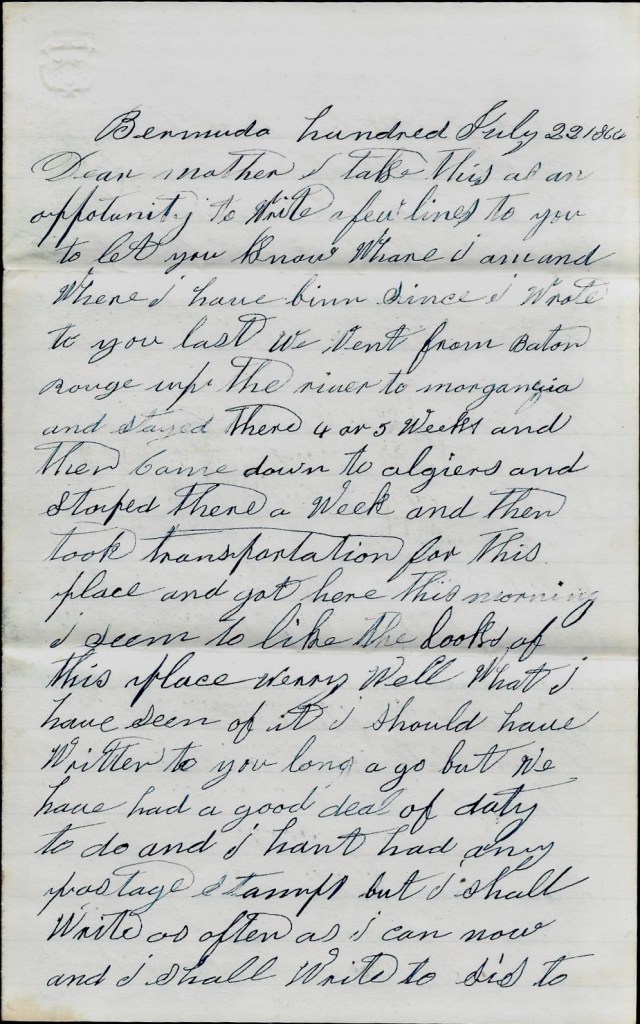
Dear Mother. I take this as an opportunity to write a few lines to you to let you know where I am and where I have been since I wrote to you last. We went from Baton Rouge up the river to Maganzia and stayed there 4 or 5 weeks, and then came down to Algiers and stopped there a week and then took transportation for this place and got here this morning. I seem to like the looks of this place very well what I have seen of it. I should have written to you long ago but we have had a good deal of duty to do and I hant had any postage stamps but I shall write as often as I can now and I shall write to sis too. And I want her to write often and write all the news and tell me how her young lady friend is that she wrote to me about.

I shall send you some money, Marm, just as soon as I get some more. We have lived so poor since we left home that most all of the boys have had to take up orders on the sutler or go hungry but I hope we shan’t have to do it again. I haven’t got time to write much this time but I shall try and write oftener than I have. I hope that if you get this, it will find you all well and doing well. I am sorry that I can’t send you some money now. You must write often, Marm, and tell me all the news that is a going. Direct your letters to Co. F, 14th Regt. Maine Vol., 19th Army Corps, Washington D. C.

— A. T. Wharton

1862-63: Benjamin Franklin Blatchford to his Family

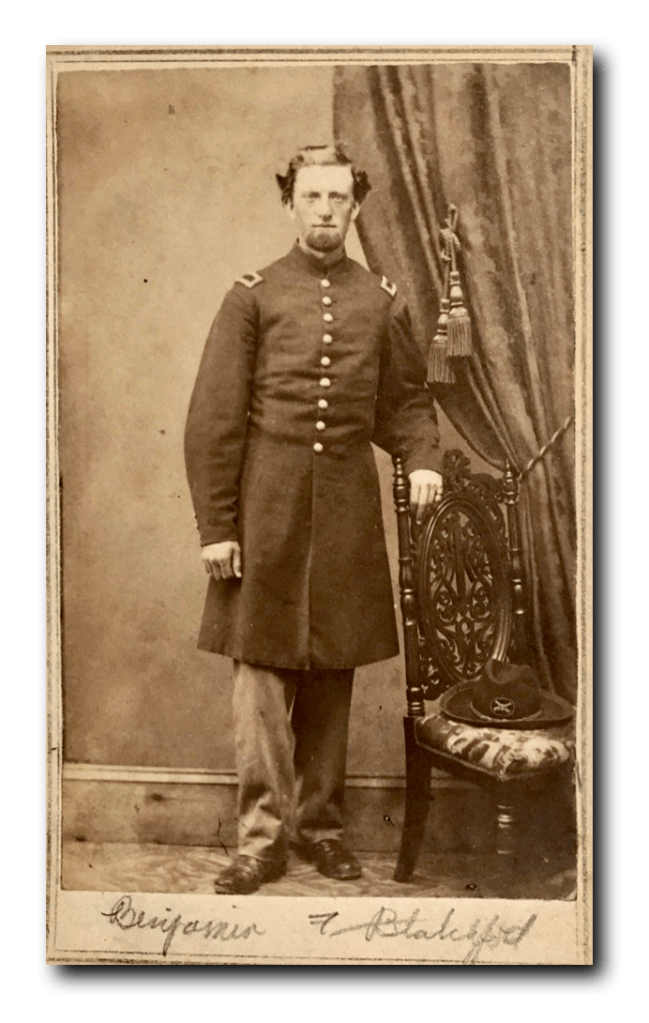
Blatchford in his Lieut. uniform later in the war.

The following letters were written by Benjamin (“Ben”) Franklin Blatchford (1835-1906), the son of William Blatchford (1788-1864) and Mary Gott (1806-1873). Ben was married to Emily (“Em”) F. Snow (1833-1917) in Boston in August 1855 and was laboring as a carpenter in Rockport, Essex county, Massachusetts, at the time of the 1860 US Census. Emily was the daughter of David Snow (1793-1869) and Sarah Weston (1801-1850) of Easton, Massachusetts.

Service records indicate that Ben first enlisted as a 1st Sergeant in Co. B, 50th Massachusetts Infantry on 20 August 1862 and that he mustered out on 24 August 1863 at Wenham, Massachusetts. He was later commissioned a 2nd Lieutenant in Co. K, 2nd Massachusetts Heavy Artillery. He was promoted to 1st Lieutenant in June 1865 and mustered out at Wilmington, North Carolina in September 1865.

To read letters by other members of the 50th Massachusetts Infantry that I have transcribed & published on Spared & Shared, see:
William G. Hammond, Co. A, 50th Massachusetts (1 Letter)
Rufus Melvin Graham, Co. F, 50th Massachusetts (29 Letters)
Jackson Haynes, Co. F. 50th Massachusetts (1 Letter)
William Rockwell Clough, Co. G, 50th Massachusetts (5 Letters)
Benjamin Austin Merrill, Co. K, 50th Massachusetts (5 Letters)
Moses Edward Tenney, Co. K, 50th Massachusetts (1 Letter)

Letter 1

Camp Banks, Long Island, New York 1
November 28th 1862

Dear Mother & Father,

I suppose you have been looking for a letter from me but I have not had much chance to write to anyone yet and I have not much of a chance to write now. But I take this time and will try to give you a idea of the voyage here and the prospects ahead. When we went through Boston, I saw very few that I was acquainted with. We went on board the cars in Boston and went through the city of Worcester and arrived in Norwich about 9:30 p.m. when we went on board the steamer City of Boston and left for New York. We had a very pleasant passage. Just inside of Throgg’s Point, we passed the Great Eastern at anchor. She is what I call a large ship. We went near enough to her to read her name.

We arrived in New York about 9 a.m. and marched down Broadway and into the Park and halted in front of the City Hall, stacked arms, and got our dinner in the Park Barracks. We then marched down Broadway to Franklin Street and went into a large building and stopped about 40 hours when we packed our knapsacks and left for this place. We had a march of about six miles and got here about 4 p.m., stacked arms, and went to the Quartermaster’s and got our tents and had them pitched before it was very dark and turned in on the ground. We could get no hay that night. I put my rubber blanket under and my woolen blanket over me and went to sleep and concluded sleeping on the ground in a tent was not so bad after all.

We are very comfortable here. We live in small A tents, six men in one tent—rather snug quarters. The men as a general thing are well. Joseph Beals is no better (if he is so well as when we left home). I never felt better in my life than I do now and never had a better appetite and the men all say I grow fat and I think I do myself.

I don’t want you to answer this letter until you hear from me again. I expect we will be off from here by Monday sure, for four companies from this regiment leave today and the rest will follow as soon as the transports are ready. They say we are bound to Fortress Monroe and wait for the rest of the Division or Expedition which is said will consist of fifty thousand men. There is a light battery going with us that will fire 160 shots per minute. It has 25 barrels and is breach loading and has a rake of 45 degrees and is considered the most destructive weapons now in use.

As soon as you find out where we are bound, I want you to write and let me know all the news. Ask Mr. Lowe to write too and tell him I will write to him as soon as anything turns up that will be of interest to him. I wrote Em the other day and have had no answer yet but I expect a letter from her today.

I think I like it better than I did at first and am getting on first rate. I had my sword engraved in New York and it looks first rate. Give my respects to Dr. and Capt. Haskell and tell them we are well. Tell Robert that Andrew is well and has been all along and can lug his knapsack with the best of them. Ask him to write to me when he has a chance and tell Louisa to write as soon as she finds out where we are. You can send this to Em or write one to her just as you see fit—only be sure and let her know you have had a letter and she will write as soon as she finds out where we are. I don’t get much time to write or I would write to her today.

If you can see some New York papers, you will find out when we start. I expect it will be Monday and it may be before. Give my love to each of my brothers and sisters and tell them to write to me as often as they can. Don’t let anyone out of the family see this letter for it was wrote in double quick time and I ain’t had or got time to read it over to see what is right and what is wrong. But the next letter I write I will try to make it more interesting and I will write slower. You can let Mr. Lowe read this if he can. I can’t hardly myself. Give my respects to all and tell Uncle Jack that I will write to him and his wife as soon as I can find anything of interest to write about.

If you receive any letters from Henry that are directed to me, I want you to send them to me after you have read them. I have got work to do now so I must say goodbye for this time but I will write again after we land—that is, as soon as I have a chance after. Tell Em what I have wrote or send her this just as you have a mind to.

— Benjamin F. Blatchford

1 In a letter to his father, 18 year-old drummer boy Rufus Melvin Graham described Camp Banks to his father not long after the regiment arrived: “Our camp is a very level place—the Union Trotting Course—but bleak and cold. It is situated right under some hills and the wind blows over on to us. We left New York at 11 o’clock a.m. and marched down to the ferry boat and crossed the ferry to Williamsburgh, then formed a line and marched to camp—a distance of 10 miles through the mud.” [Rufus Graham to his Father, 23 November 1862]


Letter 2

Camp N. P. Banks
December 11th 1862

Dear Mother & Father,

I suppose you have been looking for a letter fro me for some time but as there is not much going on here that would be of interest to you, I have not wrote to you before for sometime, and I only write now to let you know that I am as well as ever and hope to get out of this soon. It is rather cold here. During the cold snap that we have had it has been uncomfortable here. One night it was so sold that our canteens froze solid and one canteen with whiskey in it froze. But of late we have had warm and comfortable weather. We all want to get off before we have another cold snap. It has not been so cold as to cause much suffering (but uncomfortable).

Our situation is—or would be—very pleasant in the summer. We are on the Union Race Course and within a half a mile from here is a burying ground where six hundred soldiers are buried. Part of our regiment went on board the steamer yesterday and we expect to go soon.

I would like to have Louisa write to me as soon as you receive this. Tell William I will write to him after I get off and if anything turns up that will be of interest and as I find time. I will write to Dudley and the rest of the folks. I wrote to Em three days since and she will send the letter to you or write one to you soon.

We have 11 men on the sick list but none of [them] are very sick. All that is the matter with most of them is bad colds.

Benjamin F. Sleeper has had the Shakes or the fever and ague but he is all right now. John M. Tuttle has been sick for about a week but he is better now and he will be ready for duty in a day or two.

The rest of the Rockport boys are well with the exception of slight colds. I am well and have been all along. My back don’t trouble me any and I think I am as well as I ever was in my life and I like it as well as ever.

If I have time, I will write again before I sail and if I don’t find time to write, you will see when we go by the papers. As soon as you find out where we land, I want you to write and let me know all the news. Tell Dr. Haskell I would like to have him write and I will answer it as soon as I find time. Since I have been writing, I hear that we are going to New York tomorrow but I don’t believe it yet. The news is too good to be true. At any rate, you can tell when we go by the papers. Write to Em or send this and let her know that I am well and if I don’t go away, I shall expect a letter soon.

The men don’t get half of the letters that is sent to them and if you don’t get letters as often as you expect to, you must not think I don’t write for I shall write to you or Em as often as I find time and I want you to tell Em to write as often as anything turns up of interest and do the same yourself.

Give my love to all. — Benj. F. Blatchford


Letter 3

Delaware Bay
December 15th 1862

Dear Father & Mother,

On the 12th we received marching orders and I was left behind to take charge of the sick and see to the striking the tents and see that the baggage and everything was forwarded to Brooklyn which I done and gave satisfaction to all concerned. At nine o’clock p.m. I went on board of the steamer Niagara and at 2 p.m. on the 13th, we sailed for parts unknown. Everything went on well until the morning of the 14th when we began to mistrust that something was wrong—and so it proved, for she had sprung a leak and we was making our way for a harbor as fast as steam would drive her. At 10 o’clock Sunday we arrived at Delaware Breakwater and pumped and bailed the water out of her and got a pilot and now we are bound up the Delaware Bay for the port of Philadelphia (as near as we can judge) where this craft will be condemned—or had ought to be—for she is so rotten.

The Salem Register, 18 December 1862

After we arrived at Delaware Breakwater, the officers met and called upon men that had been to sea and decide whether it was best to proceed with the voyage or not. The officer had not been to sea but there was plenty of men in Co. B that had and the first thing that I knew, I was sent for by the Colonel and he asked me several questions about the craft and I told him just what I thought without making anything out any worse than it actually was. Everything that I said they wrote down; also the questions that was asked. You will see the questions and answers in some papers soon after this affair is settled.

After he was through with me, he sent for five or six more of our men from Co. B and asked them about the same questions. He also wrote them down and concluded to abandon the voyage in such a craft as this. I call it the meanest thing that I ever saw done—to send men to sea in a boat like this, and if I had known how bad she was before I went on board, I never would thought of throwing my life away by going in such mean craft as this. But as we are to get out of her, I won’t find fault for you will hear by other letters than mine and see some of the rotten timber that comes out of her best beams, for some of the boys are going to send home some of the pieces and the rest of the companies on board say that if it had not been for Co. B, they would had to go or went in her and they say if they had, they would all went to pot. 1

I never saw a set of men more pleased than these six companies are at the prospect of getting out of this boat. THey all say they are willing and ready to take their chance on the battlefield, but they are not willing to throw their lives away by going in such a craft as this. I may write again before I go further South, but if I don’t get a chance now, I will write the first chance after I arrive. I can’t write any more now for I have got work to do soon. Give my respects to all. Let Uncle Jack read this is he wants to and any of my brothers and sisters that happen to be at the house while this happens to be there. And tel them that I will write to all of them if I can find anything of interest to write about….

Our Rockport men are all well except Mr. Beals. He improves every day. I am as well as ever. My respects to all. You must excuse blunders as this was wrote in haste and the old boat shaking and I ain’t got time to look over to see whether it is written wrong.

We are in Philadelphia. No time to write more.

1 Drummer boy Rufus Melvin Graham of Co. F, 50th Massachusetts also felt relieved to have found safe harbor in Philadelphia: “All the time we were coming, the steam pumps were at work and when we got into Philadelphia, there was—they say—ten feet of water in the hold. The old boat trembled and it was awful dangerous. We all think that we are lucky to come off with our lives. it was a great wonder that the old shell didn’t sink before we got here but here we are all alive and feeling as well as circumstances will permit. We are anchored out in the steam opposite the Navy Yard and we don’t know how long we shall stay here but we will stay here till we can get a steamer that can keep above water at least. There is five companies on this craft and in this port. Companies C, D, F, G, [and] B is with us. Companies A, K, [and] E are gone on board of the Jersey Blue and have gone to their destination, I guess. And Company H has gone on board some other steamer and our regimental baggage with them and they have gone I don’t know where and our Band has gone in another boat and I don’t know where they are. We have got all of staff officers with us on this boat. We shall all meet together again at our destination, I don’t know when or where. It was well that the men did not know what danger we were in night before last. If they had, we should have surely have gone to the bottom. The old boat lasted us in here and that is about all. [Rufus Graham to his Father, 15 December 1862]


Letter 4

Philadelphia [Pennsylvania]
January 15th 1863

Dear Mother and Father,

When I wrote to you before I told you to direct your letter to Fortress Monroe as I expected to be there by this time, but as it is, I shan’t go down there until the middle or last of next week. The reason that I have not gone is I want to get fairly well before I start and I have made up my mind to stop here until I get about as strong as ever. I am not sick now but I am a little weak and I want to get strong before I leave here. The ship Jenny Lind left here with the 50th [Mass.] Regiment on board one week ago today. She has not arrived yet, or at least I have not seen her reported but I expect to hear from her every hour.

The boys from Rockport was all well enough to go on board the ship except Joseph Beals and myself. I am here at this private hospital but Beals is in a General Hospital off 5th Street. He is not very well and I think he will get his discharge or not he will not be able to go any further. I think if you answer as soon as you receive this, I shall get it. Direct your letter to Sergt. Benj. F. Blatchford at the Volunteer Refreshment Saloon, foot of Washington Street, Philadelphia, and I shall get it. But it will be no use to write if you put it off. You want to write as soon as you receive this and I shall be here long enough to receive it. And when you write, tell me all the news and how the folks are getting on.

This is the first time that I have been sick. I never got the least cold on Long Island while almost all the rest had colds and was sick, but I was taken sick on board of the Niagara and ain’t hardly over it yet. But I think I shall take good care of my health above everything else after I go back to the Regiment this time. Tell Robert I think Andrew is (or was) well for he came in to see me twice the day before he went away. He was well then with the exception of a cold. Ask Rob to write to me and let me know how Ann and the children get along. As soon as my head is entirely well, I shall write to my brothers and sisters. Give my love to all and tell them I shall write to them soon.

I have had one letter from Louisa since I left home but I don’t blame her for I think she has wrote more—only I ain’t had the good luck to receive them. But I shall expect an answer from this the first of next week. When you write, let me know where Henry [Lowe] is. I would like a letter from him very much. I think about [his boy] Frank every day. A few days more and he will be one years old. I want you to write and tell me how his eye is and ask Dudley and Bill to write and tell me how Sam York lost his sloop. I heard she was lost and that is about all the news I have heard, and I don’t know as that is true. Tell all the folks I am getting on first rate. Write as soon as you receive this. — Ben


Letter 5

Addressed to Mr. Henry M. Lowe, Newbern, N. C., On board U. S. Steamer Southfield

Rockport [Massachusetts]
August 1863

Dear Brother [in-law],

I received a letter from you this forenoon and was glad to learn that you was in good spirits but was sorry to know that you are troubled with the shakes. I wrote to you when I first got home but you did not say that you had received a letter from me. But in case you don’t get that letter, I will commence and give you a short account of the part we took in the siege of Port Hudson.

On the 27th of May at daylight the first battle commenced. We were ordered to support batteries which we did until about 2 o’clock in the afternoon when we was ordered to the left center to take part in the charge. This was rather hard for us as we had marched upwards of 20 miles and had had but about an hour’s rest. But we had made up our minds to go into Port Hudson that day and off we started. But the men was so tired they could not hold out to march under the burning sun so a great many fell out and lay be the wayside. And when we halted at the battlefield, our company numbered [only] 15 men and 8 of that number I was glad to see belonged to Rockport.

After halting a while, quite a number of the boys that fell out caught up with us and we fell in again and started for the front which was about 600 yards. We had not gone but a short distance when we were ordered into the edge of the woods and order[ed] to lie down which we did under a middling sharp fire where we lay about 2 hours when our whole force began to retreat leaving—as the boys all think—about 1900 killed, wounded and missing. 1

Our regiment then went back to the right center and supported the Marien Battery which was about 700 yards from the Rebel works. After supporting this battery for about 10 days, we built more breastworks of cotton 300 yards from the Rebel works. This work we done in the night without losing a man out of our company and only one out of the crowd. So when daylight came, the Rebs found 4 pieces of Mack’s Battery 2 within 300 yards of their noses.

We supported this battery until the 13th of June when we was ordered to take part in the charge which was to come off the next day (Sunday, the 14th). So at 10 o’clock at night, we formed a line, had the whiskey, and started for the left of our line where we joined the advance column. Here we were ordered to save our powder until we were close on them when we was to fire and then give them the bayonet. This began to look like war. As the rebs opened a sharp fire, men began to fall. We passed over a number of dead and wounded until we, or the regiment ahead of us, came to a deep ravine and could not get across so we had to lie down the rest of the day and get off when it came dark. One company within 25 yards of us lost 13 men that day. We did not lose any but a number was wounded in the regiment. 3

After we got out of this—the worst battle we ever had at Port Hudson—we went back to Mack’s Battery within 300 yards of the Rebel works and supported that battery until the surrender. Then I was willing to come home, but I never wanted to come home until Port Hudson was ours.

While our company was in the service, we lost 16 all told. The last one that died that you was acquainted [with] was William Goday. Solomon Choate is sick but he is getting on first rate. About 20 of our company are sick here in Rockport. I don’t know how many in other places. Ten of our regiment died on the passage home. We came up the Mississippi and had a good chance to see the Western States. Joseph Devon of our company we left sick in Mound City, Illinois. Also Solomon Choate & Ephraim Brown. The two latter are at home but Devon’s case is hard.

I was down to your Mother’s last night. She and Susan send their love. I have not seen Edward yet. He is at Dover. Your Father is down East.

I was onboard of Arthur Parson’s vessel at Port Hudson a number of times. He is promoted to Ensign. George Rowe is dead. John Rowe’s George—the one that married Eliza Gilbert, he died at Louisville, Kentucky. He was in the 35th [Mass.] Regiment.

Father is about the same as when you left home. Your boy is a great friend of mine. He is trying to help me on this letter but I think he does more hurt than good and half of the blunders here you must charge to him. I found him a smarter and bigger boy that I expected. We soon got acquainted and now we are chums. He tries to help me in everything I do but I don’t think he does much good, but as he thinks he does, it’s all right. He calls me Ben and every time I come upstairs he takes hold of my hand and leads me into the room.
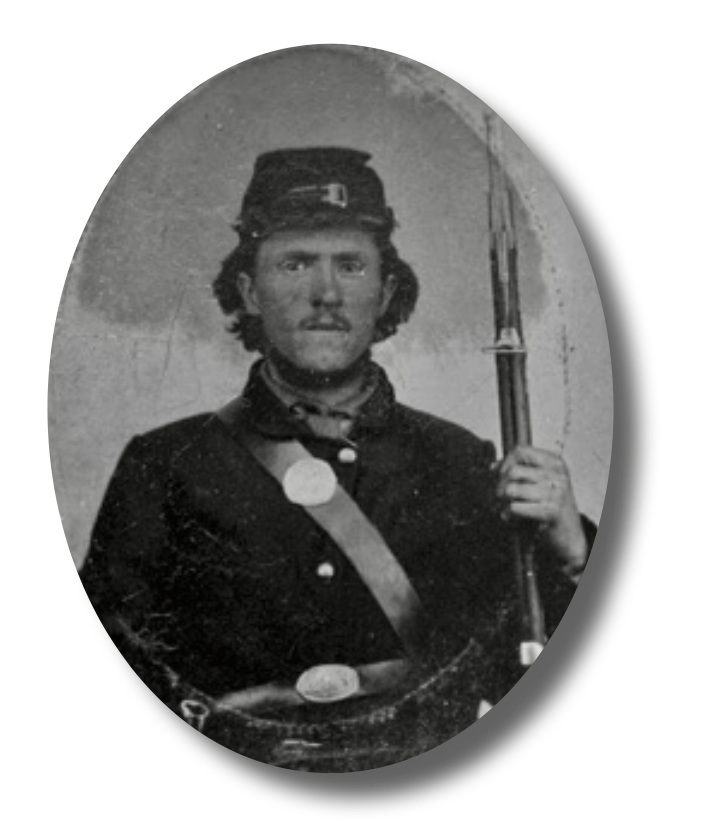
A short time since, Louisa wrote to you and put a letter in the box she sent. She also wrote two letters beside. She will write again in a day or two. She wants you to look out for that box that she sent August 12th. It was worth or cost her $28. I was very, very sorry to find you off when I got home for I had not seen you for so long. I had planned a good many good times and was sure you was at home until I heard the contrary in Boston. But I am in hopes to see you before many months as I expect to come that way soon.

We was sorry to hear that Addison [Pool] is so slim but as cold weather comes on, we are in hopes he will be better. Of the whole number of the drafted men that you mentioned to Louisa, all are exempt with the exception of Frank Farr, James Gott, Arta Gott, Joseph Haskins. These had to fork over $300 each. And of the whole number drafted, no one that I know of are going. And that man that worked for Dr. Haskell took an axe and cut two fingers off of his right hand as soon as he found he was drafted. This of course cleared him.

You wanted to know what we think of the prospect of the war coming to an end. Well, I have heard the Mississippi called the backbone of the rebellion from the beginning of the war. Within a few weeks I had the opportunity of traveling over that backbone from Port Hudson to Cairo and did not see a sign of a reb except what was prisoners and fighting in the Southwest is about over. And of the 1500 prisoners I went with (as a guard) from Port Hudson to Red River, Vidalia, and Natchez, very few say they will fight again.

And as Charleston is called the Head of the Rebellion, we think as the walls of Fort Sumter have crumbled away before our gunboats, the head of the rebellion has received a dreadful shock and the prospects for peace is brighter now than it has been at any time during the war. As I have no more room, I must draw this to a close. Write soon. — Ben. F. Blatchford

1 Drummer boy Rufus Melvin Graham of Co. F, 50th Massachusetts, kept to the rear for duty as stretcher bearer, was more direct in his assessment of the days fight: “The next morning our regiment was ordered to go and support a battery as soon as light. They went off without any breakfast. They supported a battery all the forenoon and in the afternoon went into battle (the 27th). Our folk made a charge upon the breastworks and got driven back. We accomplished nothing but had a lot of men killed and wounded. We had two men wounded in our company—Charles Stickney ¹ in the ankle and Hugh McDermott ² in the hand. Our regiment was in the thickest of the fight. The rebs fired grape and canister and horse shoes and pieces of railroad iron and almost everything. Our batteries fired at them all the time.” [Rufus Graham to his Father, 19 June 1863]
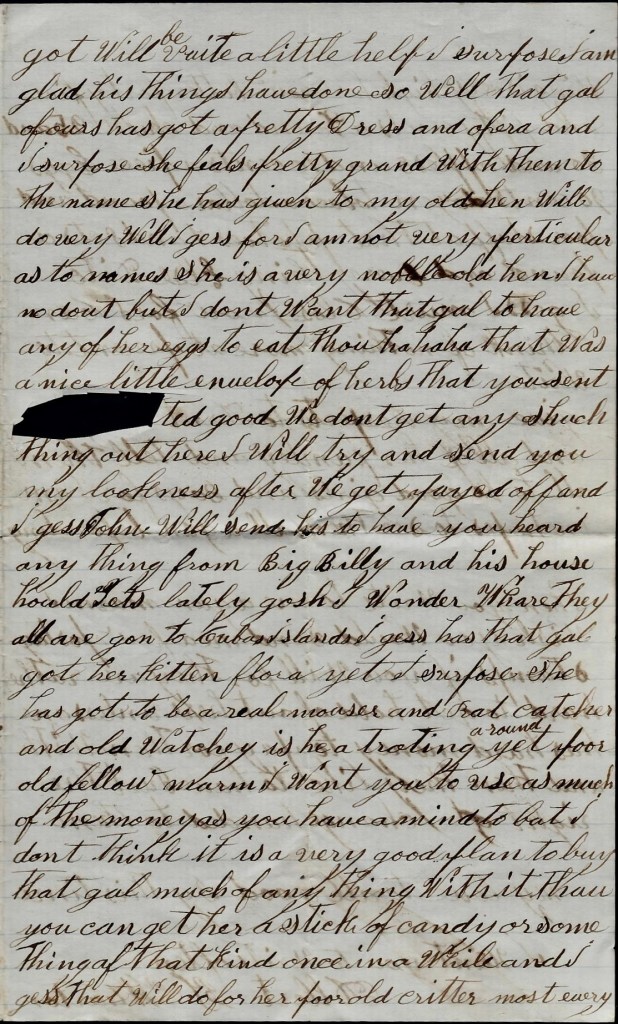
2 Capt. Albert G. Mack commanded the 18th Battery, New York Light Artillery that was attached to Augur’s Division in Banks’ 19th Corps at Port Hudson. The battery was also known as the “Black Horse Artillery.” The battery was active at Fort Bisland, the Amite river, Plains store, and the siege of Port Hudson, La., where it participated in the assaults of May 27 and June 14.

3 Drummer boy Rufus Melvin Graham wrote his father of this day’s action as well: “On the 14th of June (Sunday), we had another battle. Our folks stormed the fort again and two companies succeeded in getting inside of the fort. That was all. They were taken prisoners. We lost in killed and wounded 2,000 men and accomplished nothing. Gen. [Halbert Eleazer] Paine was wounded twice and when they were carrying him off the field on a stretcher, he was shot through the head and killed. That day our regiment was down on the left supporting a battery and were under fire all day and had no one hurt. [Rufus Graham to his Father, 19 June 1863]


1862-63: Gustavus Davis Bates Diary

The following letters and diary track the movements of Pvt. Gustavis (“Gus”) Davis Bates (1823-1903) of Plymouth, Massachusetts, who enlisted in Co. D, 38th Massachusetts Infantry. He was discharged from the University Hospital in New Orleans, Louisiana, for disability on 5 August 1863.

Gus was well educated—an 1850 graduate of Brown University—and was enumerated in the 1850 US Census as a lawyer in Plymouth, Massachusetts but in August 1862 when he enlisted to serve his country he was a 38 year-old county school teacher. His regiment was transported to Louisiana in the Bank’s’ Expedition and fought at Fort Brisland in March 1863, where a large contingent from the regiment were captured and briefly held as prisoners of war. “Gus” was admitted to University Hospital at New Orleans on April 9, 1863 and remained there until medically discharged from the army on Aug. 5, 1863. His diary entries from May and June 1863 suggest that though he might have been marginally capable of being returned to service in the field, his doctors found his nursing skills to be of greater value to the military and so he was kept at University Hospital until his discharge.

Gus was the son of Comfort Bates III (1791-1876) and Elizabeth Pierce (1792-1878) of Plymouth, Massachusetts. Gus was married in 1848 to Nancy Doten Finney (1828-1896) and had at least three boys living at the time of his enlistment—Charles Hubbard Bates (1849-1918), Josiah Finney Bates (1851-1918), and Alfred Merton Bates (1858-1933). After the war, Gus returned to teaching school in Plymouth.

There are four documents in this archive: A letter dated 19 November 1862 written from Fortress Monroe enroute to Louisiana; a diary fragment from the passage from Baltimore to New Orleans; a letter dated from New Orleans on January 7, 1863; and a diary fragment written at University Hospital in New Orleans in May and June 1864 during the fighting at Port Hudson.

1

Adams Express Co.
Fortress Monroe, Va.
November 19th 1862

Dear Wife,

I have sent you $15 (fifteen dollars) by Adams Express. As soon as you get this, send directly over to Rich & Westars or other express in town & get it. Carry the paper I send you with you. I received $23.40.

We are still here. There is no doubt about our going in the Baltic, I think on an expedition. I can’t write you much now. Will do so soon. Our company are now at the Express Office sending their money home. Expect to be ordered to fall in any minute. We have just come on here from the ship & shall go about a mile to hair the day to ourselves. I have been over to Hampton and also the rivers. We are getting pretty dirty & shall have a chance to wash up today. Write me often. You don’t know how much I want to see you all. I am well but there is considerable sickness on board. Four of our company have died within a few weeks.

We shall probably take on board the Baltic about 1700 troops—perhaps 2,000. We shall be packed away on shelves. We are beginning to see what war means but I want my little wife to keep as easy as she can about me. I shall endeavor to look out for No. 1 as this seems to be the rule.

The men of course are in better spirits today having been paid off. I could write you a good deal I have seen since writing you last & will soon but must close now. Yours affectionately, — G. D. Bates


2

The U.S.S. Steam Ship Baltic

Steam Ship Baltic, Fort Monroe

November 24, 1862—Left Camp Emory Sunday November 9, 1862. Embarked on board the Baltic about 15 miles from Baltimore November 10th; and after a pleasant trip down the Bay, arrived at Fortress Monroe on the 12th of November early in the morning. Went to Hampton Village Nov. 17th with regiment.

Visited Negro School. Heard them sing splendidly & listed to several recitations in Arithmetic, Geography, & Spelling. Teacher from Central New York.

We have on board two companies of New York 131st. Went on shore. Fired three rounds at target. Went up the beach about 1 mile from the fort. Arrived on board before dark. Getting in coal all night. Made so much noise, couldn’t sleep. Frank [Bates] had box from home. Letter from wife.
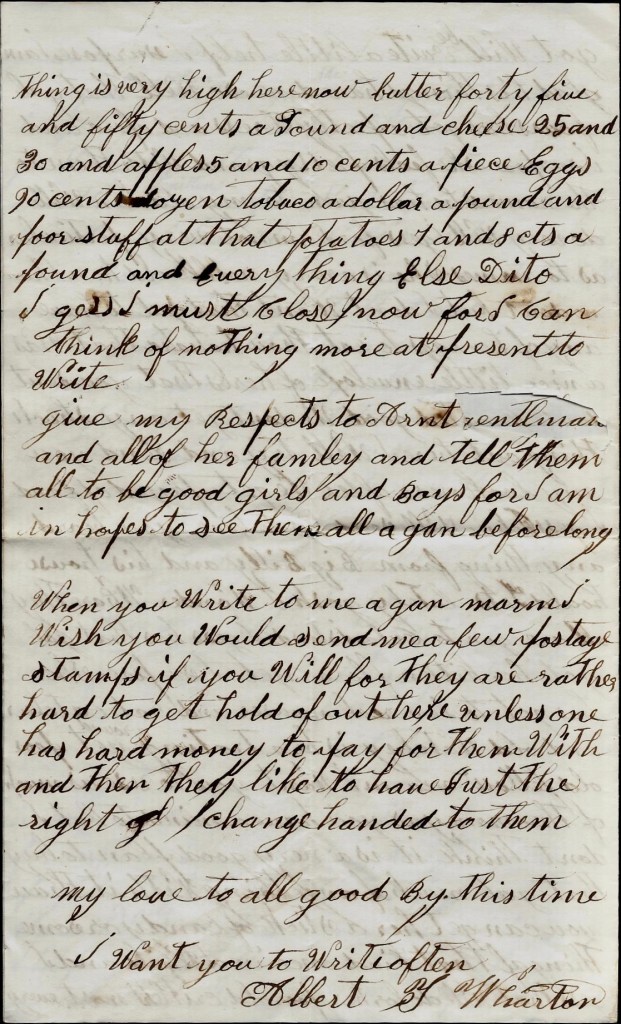
Steamship Baltic—November 25, 1862—Regiment went on shore. Did not go. Nothing unusual transpired today.

November 26, 1862—Went on shore with the regiment. Went up the beach and shot at target.

November 27, 1862—Went on shore without equipments—dismissed and allowed to go where we please. Men generally did well, but few cases of insubordination in consequence of whiskey.

November 28, 1862—Went on shore. Shot at target. Came on board at half past 2.

November 29, 1862—Battalion & Company drill beyond Hampton bridge. New York 110th, 114th, and 116th [regiments] out also. Came on board at 4 o’clock. The Passaic—a steam sloop of war, & a gunboat arrived in Hampton Roads. Several transports also arrived. Raw wind.

November 30, 1862—Spent the forenoon getting ready for inspection. The Passaic accompanied by gunboat went down the Bay about noon. Quite a stir among the gunboats.

December 1, 1862—Inspection this forenoon. Very Pleasant.

December 2, 1862—On board all day. Indian rubber blankets delivered to the regiments this afternoon. 80 rebel prisoners arrived from Baltimore [who] were well dressed. Gave up cartridges today. Commenced raining about noon. General inspection of quarters by physician. Complaints made & remedies promised. Member of company buried.

Steam ship Baltic, Fort Monroe—December 3, 1862—On board all day. Rainy. The fleet ordered to be in readiness to sail and are making preparations to go to sea.

December 4, 1862—A. S. Russell came on board. Fleet got under way this morning. Men securely fastened & preparations are being made for the coming storm.

Steam Ship Baltic at Sea

December 5, 1862—Wind dead ahead. Ship labors hard. Deck very wet. Spray covered the forward part of the ship blowing a gale. A great deal of seasickness on board. Off Hatteras, encountered a severe gale. The sea breaking completely over the starboard wheelhouse & drenching the men forward, accompanied with vivid lightening & crashing thunder. The rain poured down in torrents & at one time the ship was in great peril—the ship running very high and ship straining every timber to keep on her course.

December 6, 1862—At sea. In the morning signaled only 4 of the fleet [in sight]. Capt. Eldridge of the Atlantic came on board. Changed our course to northeast to look after the rest of the fleet. Ascertained that one of the propellers was disabled and in tow of the Ericsson. The Atlantic, U. S. Augusta, Baltic & Arago are in sight of each other during the day. Weather moderated & favorable.

Baltic at Sea

December 7th 1862—Off Port Royal—weather pleasant. Capt. of Augusta sent a Lieutenant to the Baltic & informed Capt. Comstock that the packing of his trunchions [?] was giving out & asking advice whether he should repack them or go into Port Royal. Ordered to unpack them. This settled the doubtful point whether we were going into Port Royal or not. Sent up rockets in the night. Several responses. Having pleasant view. The living on board is very poor & our accommodations are very contracted. The men are scattered over the deck reading, writing, playing cards & chattering together, most of them having recovered from sea sickness & being in good spirits.

At Sea on Baltic

December 8, 1862—Weather fine. Course S. S. W. The remainder of the fleet do not come up. general inspection aft. Inspection of men took off right boot & stocking. Saw three sail towards night. off St. Augustine towards night.
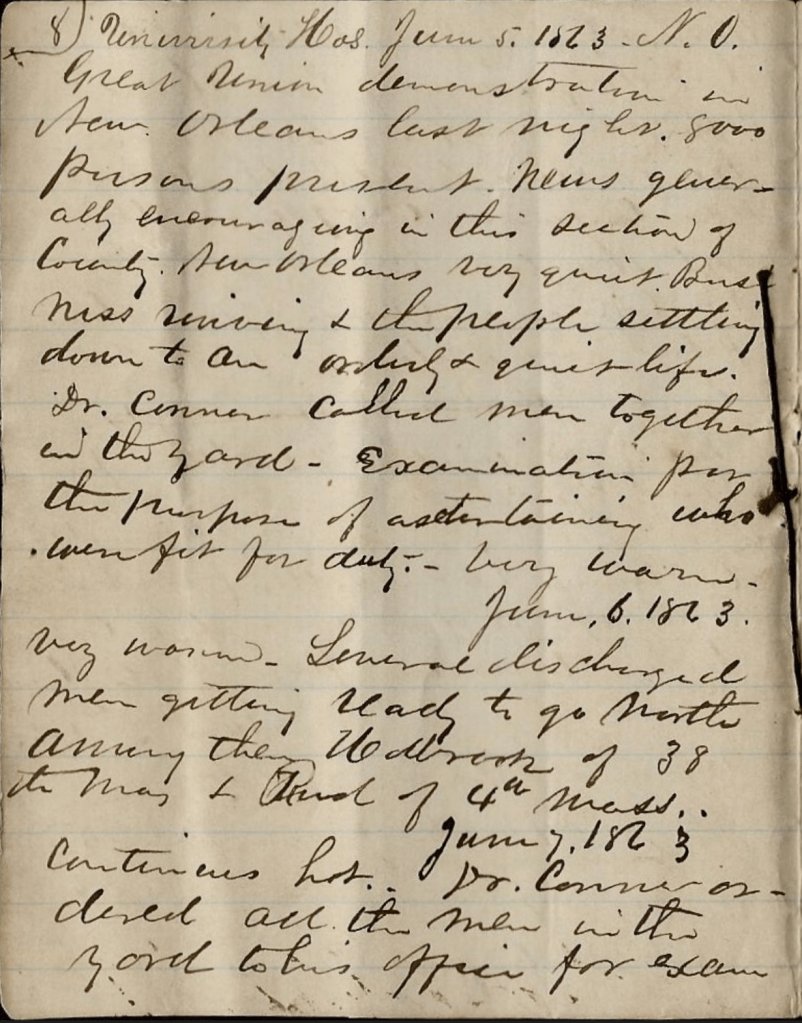
[Page missing, December 9-11, 1862]

At Sea, December. 12, 1862—Warm and pleasant. Fine run last night & today. Nothing unusual has occurred.
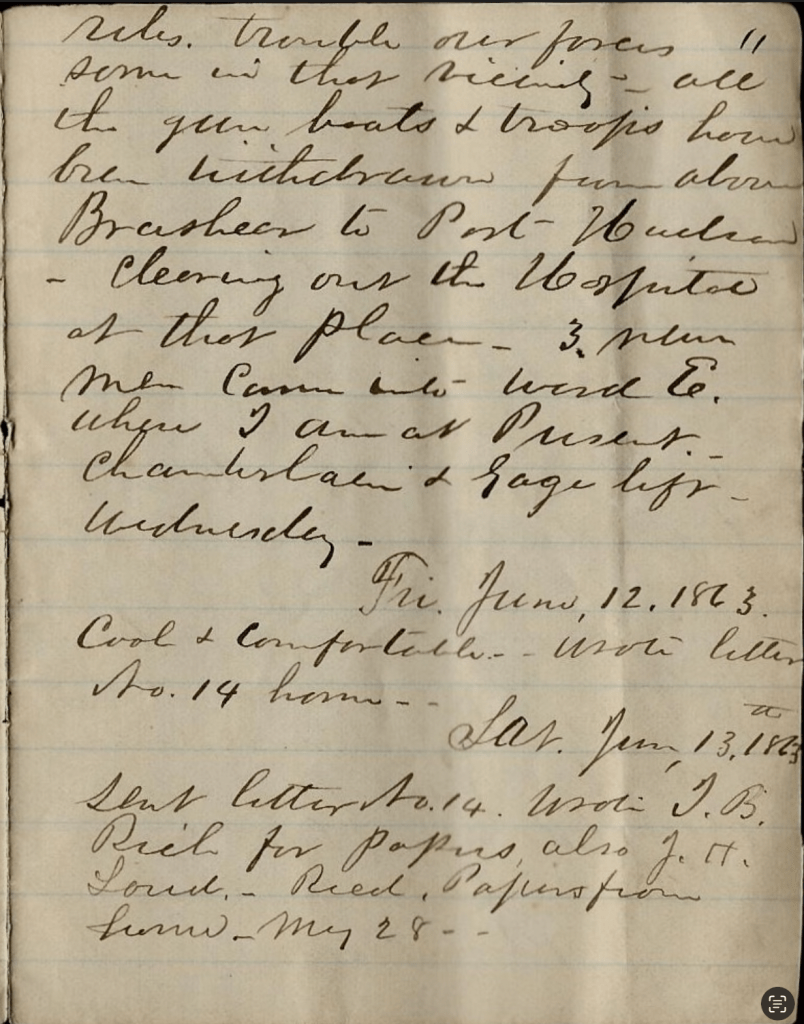
At Sea. December 11 [should be 13th], 1862. The Baltic hove to above 4 o’clock in the night. saw the land early in the morning. Arrived at Ship Island at 1 o’clock today. Atlantic went over the bar first. Baltic struck heavily on the bar going in. Gunboat Augusta came in soon after the Baltic. The U. S. Arago, S. R. Spaulding, arrived before us. Some 15 or 20 sail were in port. The U. S. left soon after we arrived. Mataras [?] arrived at 2 o’clock p.m. Capt of Augusta came on board & accompanied General Emory on shore. S. R. Spaulding left in the afternoon. Several vessels left and several arrived during the day.

Ship Island

December 14th, 1862—Commenced going on shore this afternoon. General Banks with the 41st Massachusetts left in the North Star at noon. On board the Baltic all night.

41st Massachusetts soldiers on board the North Star while anchored at Ship Island in December 1862

December 16, 1862—Ship Island. Went on shore this morning in boats ay Ship Island. Encamped about half mile from the wharf on the sand. 23rd Connecticut encamped here. 16th New York and two companies of 13th Maine doing garrison duty. There are about 50 rebel prisoners here. Drew rations of coffee & sugar. Went down the beach and got a good stove. Saw Robert Finny of The Kensington.

From December 16 to 27 [1862]—At Ship Island drilling, Had frequent conversations with rebel prisoners, most of whom were anxious to have the war brought to a close & join the Union. Others would settle on [nothing] but recognition. Six men from each company was detailed to cut wood on the Island about 4 miles from camp. Israel Thrasher 1 of our company went.

This ambrotype depicts members of the 38th Massachusetts Volunteer Infantry Regiment at camp on the beach of Ship Island, Miss. during the Civil War. The photograph was taken in Dec. 1862 by an unknown photographer and probably was owned by Francis William Loring, a lieutenant with the regiment; an inscription on the verso of the image reads, “Field & Staff 38th M.V. FW Loring Ship Island, Miss. Dec. 25, 1862.” Photo. 2.97 Removed from the Francis William Loring papers [Digital Commonwealth, Massachusetts Collection On Line]

Ship Island, December 27, 1862—Went up the beach with Israel Thrasher, gathered shells & visited the graveyard. Most of the names were between 18 and 25 year old. Mostly from Maine. Indiana, Wisconsin, Connecticut, Vermont, New Hampshire, & Massachusetts were represented among the dead.

Ship Island—December 29, 1862—The North Star, Northern Light, & Illinois came in this morning. Had orders to move. Went on board the Northern Light about 12 o’clock at night.

Steamship Northern Light

December 30, 1862—After some delay in getting off, left Ship Island this morning at 8 o’clock in the Northern Light. Quartered in the forehold. Better accommodations than in the Baltic. Several cases of measles on board. Had a fine run all day & during the night.

Steam Ship Northern Light, Mississippi River. December 31, 1862—Entered the [river] about 9 o’clock this morning. Had a good passage up the river and arrived at New Orleans not far from 7 o’clock in the evening.

1 Israel H. Thrasher was also from Plymouth. He died on 29 June 1863 at New Orleans from wounds received in the fighting at Port Hudson on 14 June 1863.


3

Camp Kearney
At Greenville near New Orleans
January 7, 1862 [should be 1863]

Dear Wife,

I send you within $20 (twenty dollars) by Adams Express. I can’t write you much now. Shall write you by mail. We are encamped here 4 miles from the city and about 8 by the river. We like the camp better than any camp we have been in. The weather here is pleasant most of the time, not comfortably cool night, so that I am not cold with overcoat & blanket.

We have three days rations ordered to be cooked & 10 days on hand all the time. I think I can send you 4 or 5 dollars now. Shall do so in my letters. It costs 65 cents to send this to Plymouth. I received two letters from you dated 7th and 16th of December. Your Uncle Henry is right, I think about the wood. Pay it.

Lt. Col. David K. Wardwell—“When Wardwell went, the fighting talent went also.”

We arrived here last Thursday, laid over one night in the city, and came up here next day. Whether we shall go up or down the river is uncertain. I shall endeavor to write you once a week about Sunday. If we move, I shall write about the time of moving. Should anything unusual take place, I shall let you know. I think the Colonel will try to have us stay at New Orleans. Col. [Timothy] Ingraham is acting as Brigadier General and the 38th is commanded by Lieut. Col. [William L.] Rodman. When [David Kilburn] Wardwell went, the fighting talent went also.

But I must close. Frank [Bates] 1 and I are well. Tom Savery 2 is sick with the measles [which are] prevalent in camp.

Your affectionate husband, — G. D. Bates

1 Francis (“Frank”) Bates was also from Plymouth. He served as a musician in Co. D, 38th Mass., until 30 January 1864 when he was discharged at Baton Rouge for disability.

2 Thomas G. Savery of Plymouth survived his bout with the measles only to be wounded at Port Hudson on 14 June 1863 and discharged at Boston for disability on 28 December 1863.


4

The remaining diary entries were all penned in the University Hospital at New Orleans

University Hospital, New Orleans

May 27, 1863—About 150 men from this hospital ordered away to their respective regiments. Packing up in the afternoon. Showers during the day.

Thursday, [May] 28th, 1863—Packed my knapsack & put things in readiness to go to the regiment. All the men were ordered into the front hall to answer to their names. No questions were asked me by [Asst. Surgeon] Dr. [Samuel H.] Orton but he ordered me back to room. Unpacked knapsack & put things in [ ] for a further sojourn at this institution. Removal into another war. Saw several wounded pass the hospital. Among them General [Thomas W.] Sherman. Reported also that Neal Dow is killed & General [Christopher C.] Augur wounded at Port Hudson. Several doctors came round at 10 o’clock in the eve and took names to send off. About 120 went today. Papers contain accounts from rebel sources of fights at Port Hudson & Vicksburg. Sent letter home, No. 12. Fletcher, Nye & Laws of the 38th in Ward K went off today. [George H.] Fish of Co. D & H[oratio] Sears of Co. G. [George W.] Belcher of [Co. A], 38th [Mass.] sent back. [Albion] Leavitt of 26th Massachusetts went off also who was in Ward K. Become acquainted with Mr. Burbeck of East Abington.

Friday, May 29th, 1863—Rained last night. Pleasant this morning. Became acquainted with George Bates of Worcester, Co. 130. Wounded, came from Baton Rouge. [Was] on the fight at Port Hudson. Heard of the death of Lt. Col. [William L.] Rodman of the 38th [Massachusetts]. No one could be found to take charge of the regiment. Rumored death of Gen. Paine. Shower in the afternoon accompanied with thunder and lightning. About 70 men left the hospital this afternoon. Joe Loring, Otis Foster, & Israel H. Thrasher went off [back to the regiment] today. Only one left of Co. D in this hospital. Seven transported in the evening.

Saturday, May 30th 1863—Hard thunder and rain this morning. Talked with wounded sergeant of 131st New York. 1 Thinks when he left [Port Hudson] there were 3,000 killed & wounded on our side. Represents the fighting as the most desperate of the war. The Negro Brigade fought like tigers & neither gave or received quarters. They were near to the river on the left & were opposite to one of the best brigades of the rebels. They defeated them at every point & would have gone into Port Hudson had they been supported by artillery. They went into the fight with 2700 and came out with 1700.

1 The wounded sergeant was probably one of four men: 22 year old Hector Sears of New York City was 1st Sergeant of Co. I. He was wounded in the fighting at Port Hudson on 27 May 1863; 23 year-old Sgt. Paulis Van Version of Co. F thought the date of his wound was not given; 27 year-old Sgt. James Devlin of Co. F, who was wounded at Port Hudson; or 31 year-old Sgt. William Boxberger of Co. D who was wounded on 27 May 1863 at Port Hudson. One of them would have been the source of the information provided Bates about the “the Negro Brigade.See poem by John A. Morgan entitled, The Black Brigade at Port Hudson.

In May 1863, the 1st and 3d Corps D’Afrique attacked the Confederate stronghold of Port Hudson, Louisiana. After previous units failed to break through the Confederate defenses, Brig. Gen. William Dwight ordered the African American units to attack a strong point along the western edge of the Confederate line. The units crossed a short bridge, bordered on their right by the Mississippi River and on their left by entrenched enemy sharpshooters and cannons. The Louisiana troops, led by freedman Capt. Andre Cailloux, assaulted the position under withering fire. Cailloux, wounded twice, led his soldiers until mortally wounded by a cannon ball just outside the breastworks. The assault withdrew and successfully laid siege to the Confederate garrison until it’s surrender six weeks later. Cailloux’s gallantry under fire became a rallying cry for African American and white Soldiers alike throughout the rest of the war.

Black troops attack the Confederate line at Port Hudson

Has no doubt that Port Hudson will fall before night today. We had taken all the batteries except three. Our force is estimated at 35 to 40,000. The Rebs at 15 to 20,000. The Rebs asked for two flags of truce to bury their dead and wanted a third which was not granted. Before the time had expired for which it was granted, they opened on our men. The battery was immediately charged and taken. Our army advanced through woods filled with briars, fallen trees, ad ravines 15 or 20 feet deep in which the men were continually falling—some of who, were a long time in getting out. The obstructions were represented as formidable & our men suffered incredibly in advancing on the enemy who are strongly posted in every advantageous position, commanding the approaches to Port Hudson. No doctor came round today. Warm and pleasant.

Sunday, May 31, 1863—The tables were full again this morning, many of the wounded being well enough to go down. Went through wards where the wounded are this morning. Saw but one very bad case wounded in the head—looked very bad. Talked with [Corp. Lewis M.] Bailey of Co. G, 38th [Mass.] [who was] slightly wounded [at Port Hudson]. About 200 wounded have arrived at this hospital. Hot day. Dr. McLellan came round—No. 452, Ward E, 3rd Story, University building.

University Hospital—June 1, 1863, New Orleans. Hot day. Siege of Port Hudson still going on. General Banks receiving reinforcements. All the wounded men concur in the opinion that Port Hudson must fall soon. Dr. Conner in charge of the Hospital, having returned from Baton Rouge. Quince arrived 26 days from New York.

June 2, 1863—Continues hot. Letter from home [dated] May 17th. A few wounded continue to arrive from Port Hudson.

January 3rd 1863—Warm and pleasant. Letters from home [dated] April 26th, also April 30th. B. F. Hathaway called.

June 4th 1863—Wrote letter No. 13 home. Hot day. Nothing unusual. Papers contain nothing.

University Hospital, June 5, 1863, New Orleans. Great Union demonstration in New Orleans last night. 8,000 persons present. News generally encouraging I this section of the county. New Orleans very quiet. Business reviving and the people settling down to an orderly & quiet life. Dr. Conner called men together in the yard. Examination for the purpose of ascertaining who were city for duty. Very warm.

June 6th, 1863—Very warm. Several discharged men getting ready to go North. Among them [Corp. Nathaniel O.] Holbrook of [Co. C], 38th Mass. and [Jedediah M.] Bird of the 4th Mass.

June 7th, 1863—Continues hot. Dr. Conner ordered all the men in the yard to his office for examination. 15 or 20 men from the hospital North discharged.

Monday, June 8th 1863—Very hot. 40 or 50 men discharged to regiment today. All the men at supper table ordered to Dr. Conner’s office after supper. Went. Was told to go back to Ward & keep quiet. Took a large number of names for regiment & for light duty about the hospital.

Tuesday, June 9th 1863—Continues hot & dry. Sixty men packed up to leave for regiments. Ordered back & remained over night. Doctor did not come round until after supper.

University Hospital, June 10th, 1863—Continues very warm. 40 or 50 men left this morning for up the river. General Wentzel’s Division defeats the Rebs in rear of our forces at Port Hudson & droves them to Liberty.

June 10th 1863—Cooler. Nothing of importance.

June 11th 1863—Showery. Cooler. Some thunder. Put up cistern in the hospital. Fifty men arrived at hospital from Brashear City. Learn from them that the Rebs trouble our forces some in that vicinity. All the gunboats and troops have been withdrawn from above Brashear to Port Hudson. Clearing out the hospital of that place. Three new men came into Ward E where I am at present. Chamberlain and Gage left Wednesday.

Friday June 12th, 1863—Cool and comfortable. wrote letter No. 14 home.

Saturday, June 13th 1863—Sent letter No. 14. Wrote T. B. Rich for papers. Also J. H. Loud. Received papers from home date May 28th.

University Hospital, June 14, 1863—Comfortable weather. Dr. Conner came round this morning and notified several that he was going to send them home. Said but little to me. Was accompanied by Dr. McLellan who is now practicing in Ward E where I am at present. Had a talk with Quince. Informed me that Israel H. Thrasher & Foster had left Barracks Hospital. Col. [Timothy] Ingraham went home [to New Bedford] today. Several came to the hospital from Brashear City. Had a long talk with Petra of Co, B, 38th [Mass.] Read the scriptures most of the day. Place my dependence on God and try to do my duty & be reconciled to my situation.

Monday, June 15th 1863—Shower in the afternoon. Some thunder. Quite comfortable. Read New York Herald‘s first account of fight at Port Hudson. Some chill today. Received letter from wife of May 31st.

Tuesday, June 16th 1863—Cool this morning. Exciting news from Port Hudson. Few particulars. Sent letter No. 15 home. Rained hard in the eve. Some thunder and lightning. Exciting rumors from Port Hudson. 4th Wisconsin Infantry entirely used up. Talking about sending men away from the hospital to make room for additional wounded. Sergt. [Joseph] Smith, Corp. Parks, & [George W.] Thomas of Co. G received their papers & leave, paid off today & going home. Heard that Brig. General Sherman is wounded.

Wed., June 17th 1863—Rained hard last night. Cool this morning. About 50 wounded came to the hospital from Port Hudson [including] Israel H. Thrasher & Thomas Savery of Co. D. Heard of the death of Lieut. Holmes, Lieut. [George B.] Russell wounded. Opening hospital at St. Louis Hotel. Detailing men to go as nurses.

University Hospital, June 18th 1863—Clear, hot day. About 60 wounded from Port Hudson came to hospital yesterday and today. Thirty or more discharged men left in Matensas for the North, among them [George W.] Thomas of Co. G, and Sergt. [Joseph] Smith of the 38th Mass. Several men left to go as nurses at the St. Louis Hospital. Doctor did not come round today. Reinforcements from Key West, 26th and 47th Mass, went up the river to Port Hudson. Papers contain nothing of movements, successes or reverses in this department. All the information to be had is derived from wounded men whose stories differ so much that but little can be relied on them. Weitzel had has got within fortification at Port Hudson & holds his position.

Friday, June 19th, 1863—Hot day, Several men detailed for St, Louis Hospital. Sent for in the morning by Dr. Conner. Wished me to send down my cord [?] which I did. [George W.] Belcher & [John] Peters were also sent for by the Doctor.

Saturday, June 20th 1863—Sent letter No. 16. Received letter from home [dated] May 24th. Rumors of the Rebs burning 4 or 5 steamers on the Bayou Plaquemine. Heard firing Thursday night up the river. Boats going up the river take on board guns and protect themselves with plating around the pilot house.

1863: Eben Peck Wolcott to Susan (Peck) Wolcott

My friend Buck Zaidel, co-author of the book, “Heroes for All Time: Connecticut Soldiers Tell Their Stories,” informs me that it is near impossible to find an image of a soldier in the 28th Connecticut. This unidentified Yank is from my collection.

This letter was written by Corp. Eben Peck Wolcott (1844-1863) of Co. E, 28th Connecticut Volunteers. Eben was the son of William Albert Wolcott (1810-1879) and Susan H. Peck (1812-Aft1870) of Lakeville, Litchfield county, Connecticut. Eben contracted disease during the siege of Port Hudson and died on 28 August 1863. Eben’s older brother, Samuel W. Wolcott (1842-1864) was killed in the fighting at Deep Bottom Run in Virginia in August 1864 while serving with the 7th Connecticut Volunteers. [The Manuscript Collection at Florida State University has a letter written from Samuel to his brother Eben, dated 26 May 1863] Eben wrote this letter to his mother, Susan (Peck) Wolcott.

The 28th Regiment was the last Connecticut regiment organized under the call for 9-month volunteers. It was composed of only 8 companies: five from Fairfield County and 3 from Litchfield County. Stamford men in the regiment numbered 188.

Eben’s lengthy letter gives us an incredible eye-witness account to the events leading up to the surrender of Port Hudson and of the surrender ceremony itself that took place on 9 July 1863. He also speaks of Rebel desertions and of the danger they faced attempting to enter Union lines manned by Negro soldiers of the 1st and 3rd Louisiana Native Guards.

Surrender of Port Hudson (Officers on horseback and parade). Courtesy of The Historic New Orleans Collection, accession no.1974.83

See also—1862: Eben Peck Wolcott to Josephine Darling Wolcott published on Spared & Shared 17 in August 2018.

The Special Collections & University Archives of Virginia Tech houses the Eben P. Wolcott Correspondence which contains 41 letters addressed to Eben by family members in Connecticut.

Transcription

Addressed to Mrs. Susan H. Wolcott, Lakeville, Connecticut

Port Hudson, [Louisiana]
July 5th 1863

Dear Mother,

It is three weeks today since we made the charge on the fortifications. I think we have gained some on the Rebels since then. We have batteries closer than we had then & have dug trenches close up to their earthworks. There is now and then a gun (I mean one of the big ones) fired so we have plenty of music the most of the time.

I did not expect to spend the Fourth of July in front of Port Hudson 9 months ago. Then I thought if I was a living that I would be home. The boys claim that our time has already been out three different times. I guess when the government gets through with us, they will tell us of it. There is a possibility that we will be at home in August & then we may not. If this place is taken before long, I think we will be at home in August.

Our regiment has been out in front in the trenches now six days. I should of been with them if I had been well enough. But I am feeling much better than I have for the past few days. I shall go on duty in a day or two. We have no doctor in our regiment now—one being left at Brashear City in charge of a hospital and the one assistant left in charge of our sick, & doctor [Ransom P.] Lyon is sick now 1 so we have a doctor from another regiment. Wright & Burns are down today. They have drawed their new suits and look a little more like soldiers than we do for we are rather dirty and shabby. They start home on their furlough the 15th of this month—60 day furlough.

There is no use in my trying to describe what is going on here for I only see a small portion of 5 miles of earthworks & the papers will give a more correct account than I can & I have a most miserable pen—the only one I have—and it has been in use over a month & that all through the company for I am about the only one that has a pen and ink in the company. I was just a thinking where you was today—whether you was at home or with the friends down east. I shall wait very patiently for another mail but may not get another till we get back to New Orleans. I got two letters from Daniel the last mail. I have not written him in some time but I shall the first opportunity.

July 7th. I am feeling very much better—as well as I expect to till I get home again. We have heard most glorious news today (if it be true & it is said to be official news), that Vicksburg has fallen on the Fourth of July. 28,000 prisoners, 280 field pieces, 80 siege guns. I rather think the Rebs though there was something up for we had heard and played brass bands all the forenoon & then ended off with the salute (they were not blank cartridges as they are North). They are getting more guns in position every day. In a few days, I shall look for the downfall of this place. The last two men shot yesterday—shot out in the trenches. There is more or less lost every day. Our regiment has been very lucky since we have been in the trenches. But the Rebs are death on the Negro regiments here. 2 There is more in proportion of them killed than there is of the white soldiers. But in return, the Negroes are death on them. There doesn’t a Rebel get through near them alive. If there are deserters coming in, it makes no difference. They say that the Rebs will kill them if they get a chance & it is now more than fair for them to do the same to them, they think.

There was quite a number of deserters came out yesterday. Some of them got shot in coming out. They said there would be more come out but they was afraid to for as sure as a man showed his head, there is a dozen bullets let loose at it. Our men throwed letters over to them this morning telling them that Vicksburg had fallen. They wrote back asking them to throw over some tobacco for they had none & could not get any. The boys did throw over some & told them if they would only come out, that they could get all they wanted.

We have been waked up the last two mornings by their throwing a few shells rather close for comfort. This morning there was one struck a tree a few rods from us, cutting it entirely down and struck another glancing, hitting another & struck in the dirt a few feet from us. If it had not hit the tree, it might of come pretty close to some of us.

July 9th. The great stronghold of Port Hudson has fallen. Yesterday morning early the Rebel General [Franklin] Gardner sent out & made a request that there might be a meeting of the officials of both sides to see about a surrender of the fort. No sooner than the flag-of-truce was raised & both sides had ceased firing, our men rushed up on the top of our works & the Rebs on the top of theirs. They talked a few minutes & then our men went up to their works (the outer sides) & in a few minutes it looked like a mass meeting or a cattle show for they fairly swarmed around their works. The Rebels fetched out corn beer 3 & treated our soldiers. I traded canteens with one of them. They seemed to be overjoyed at the prospect of a surrender.

The commissioners met at 9 a.m. I know not the conditions of surrender except the officers retain their side arms. Yesterday afternoon at 4 o’clock there was one brigade of our men marched into the fort. 4 This morning the biggest part of the troops marched in at the right and left with the bands playing at the head. The Rebel troops was drawn up in line over near the river side—that being the only level place that I saw inside—and troops marched up in front of their troops so the two armies were a facing each other about 3 rods apart; our troops forming two lines of battle & theirs only one. After the lines formed, there was a company of marines fetched in a flag staff and it was raised right in the rear of the Rebel line upon a battery of theirs & the Stars & Stripes run up. And then our generals & their staffs rode up in front of the Rebel generals & staff. One of our aides rode up to [Maj. Gen. Franklin] Gardner and told him that all was ready. Gardner rode out, lifted his hat to our general, turned around, called for his troops to [come to] attention. They ordered them to ground arms. Then there was some conversation passed between the two generals that I could not hear & the surrender was over. 5

A depiction of the Rebel soldiers grounding their arms during the formal surrender ceremony at Port Hudson on 9 July 1863. Drawn by J. R. Hamilton and published in Harper’s weekly on 8 August 1863.

The surrender was not made to General Banks but to one of the other generals. I could not learn the name but probably shall see it in the papers. There is about 6,000 troops in the fort in all, between thirty-five and 40 hundred official soldiers at the breastworks. There was hardly a gun in the fort but what had been dismounted & in fact, our gunners would knock them over as fast as they could put them up. The most of the fortifications inside are natural, with a little artificial work added to them, making them very strong—ravines after ravines that was most impossible to get through. Our artillery created havoc with them & they was near starved out. The Rebels were very anxious to know what we was a going to do with them—if we was to parole them or keep them prisoners, and if so, where we would take them. 6

Rebel fortifications at Port Hudson as they were found after the surrender

The air is very impure in the fort. There has been a great [many] men, horses, and mules killed & have not been buried. If I can get a chance, I mean to go in again but they have a guard on and will neither let a man in or out unless he can steal in through the lines. That was the way I had to do today. I spent 7 hours in the fort & did not go half way around it. It was so very warm in the middle of the day that got pretty near tired out & had to come in. But I saw what I went to see—the surrender. A part of our regiment is out doing guard duty and the rest is still in the woods. You will get the news of the surrender long ere this reaches you & all the particulars with it so I will not try to tell any more.

I think there is a prospect of our staying here a week yet and then probably we will start down the river. If I had of only been to home now, there would have been a good chance for me to of enlisted in the 6-month regiment and gone into Pennsylvania but I am not one of the lucky ones. I hear today that Arlo Wolcott of Norfolk was killed in the fight of the 14th of June. He was in the 49th Massachusetts Regiment. He was an orderly sergeant. 7

I should like to know what luck Lee had met with in Maryland & Pennsylvania. I hear that some of the 2 years and 9 months men have volunteered to go into Pennsylvania. We got a small mail yesterday but I got none from home. I got one from Daniel after he got to St. Augustine & one from David Curtis. I wrote to him while at Brashear & one from Ettie Wolcott. She wanted to know what was the matter with you all. She had not heard from you since she left Salisbury. Samuel was well when he wrote. If I have time, I must write him today for it has been some time since I have written him.

I haven’t much time to write and therefore have to hurry it off rather faster than I would like to. I take notice that the sick are getting well fast. They have done remarkably well for the last day and a half. It is possible that I shall not write again very quick for I am thinking we shall begin our way home before many weeks. I am as well as ever at present. I don’t know as I have time to write more today.

From your affectionate son, — E. P. Wolcott


1 Surgeon Ransom P. Lyon died of disease on 6 August 1863.

2 The two Negro regiments were the 1st and 3rd Louisiana Native Guards who had been used by Banks in a futile assault on the Rebel works at Port Hudson on 27 May 1863. Most of these soldiers were recruited in New Orleans and were underprepared for the attack but their enthusiasm impressed General Banks who praised them afterwards.

3 Due to the chronic shortage of drinking water during the hot summer months and the severe drought, the Rebels made a weak beer with corn, sugar and molasses which was kept in barrels at their entrenchments. [See Forty Days and Nights in the Wilderness of Death].

4 Though the surrender terms were hammered out and signed on 8 July 1863, Gardner requested that the official surrender not take place until the morning of the 9th. According to Edward Cunningham’s book entitled The Port Hudson Campaign, 1862-1863 (page 118), this delay was exactly what the Rebels wanted so that any who wished to try to escape during the night might do so, which many of them did by swimming downriver under cover of darkness.

5 Wolcott’s eye-witness account of the surrender ceremony at Port Hudson is consistent with that posted on the American Battlefield Trust which reads, “Port Hudson surrendered on July 9, 1863. At 7 a.m., General Gardner’s ragged army formed in line along the river by his headquarters. As the Federals marched across the shell-blasted soil to the river, they could hear the booming of the guns in Battery Bailey firing a 100-shot salute. Arriving at the river, the Union troop wheeled right and lined up facing their former foes. Gardner offered his sword in surrender to Brig. Gen. George Andrews. Andrews returned it to Gardner in honor of his brave defense of his post. The Confederate infantrymen then put down their arms. There were no cheers as it Stars and Bars were lowered, only proud, defiant silence on one side and respectful silence on the other. That changed when the Stars and Stripes fluttered from atop the flagpole. The ragged, gray-clad men were still quiet, but the huzzahs from the blue-clad ranks more than made up for their silence. Captain Jacob Rawles’ 5th U.S. Battery fired a salute of 34 shots as the American flag went up the pole.

Another account of the surrender ceremony appears in “Life with the Forty-Ninth Massachusetts Volunteers,” which reads: “The ceremony of surrender…was conducted by Brigadier-General Andrew, General Banks’s chief of staff. The spot chosen for the ceremony was an open area, near the flag-staff, opposite the centre of the river batteries, and very near the bank. Along the main street the soldiers composing the garrison were drawn up in line, having all their personal baggage, arms, and equipments with them. General Gardner and staff, with a numerous escort, occupied a position at the right of the line. By 7 o’clock our troops marched into the works, headed by the brigade which had volunteered, a thousand strong, to storm the place in the next assault. Colonel Birge, of the 13th Connecticut regiment, was in command of this storming party. It was fitting that they should lead the way with the flag of bloodless victory, who had volunteered to do so with bayonet and sabre. Artillery closed in with the infantry, and as the grand cortege swept through the broad streets of Port Hudson, with the grand old national airs for the first time in many months breaking the morning stillness, the scene was most impressive and soul-stirring. Never did music sound sweeter, never did men march with lighter step, or greater rejoicing, than our troops, as they came into the place which had cost the lives of many of their gallant comrades. All the sorrow for their losses, and all the joy for their present victory, came to the mind at once. But every private bereavement was instantly forgotten in the nation’s great gain, and every man justly seemed proud to have had a part in one of the greatest triumphs of the war. Passing directly across from the breastworks on the land side to the river batteries, the column then marched by the right flank, and afterwards halted and fronted opposite the rebel line. General Andrew and staff then rode up to receive the sword of the rebel commander. It was proffered to General Andrew by General Gardner, with the brief words: “Having thoroughly defended this position as long as I deemed it necessary, I now surrender to you my sword, and with it this post and its garrison.” To which General Andrew replied: ” I return your sword as a proper compliment to the gallant commander of such gallant troops—conduct that would be heroic in another cause.” To which General Gardner replied, as he returned his sword, with emphasis, into the scabbard: ” This is neither time nor place to discuss the cause.” The men then grounded their arms, not being able to stack them, since hardly one in ten of their pieces had a bayonet attached. They were mostly very rusty and of old style. Quite a number of the old Queen Bess pattern were included among them, having a bore half as large again as the ordinary musket. Most of the cartridge boxes were well filled, but the scarcity of percussion caps was universal. An officer of the garrison, in explanation of this fact, remarked, that this very scarcity of caps was the reason that the men were allowed to cease firing on the right and left for several days. The number of men surrendered is over five thousand. Of these nearly four thousand are ready for duty. The remainder are in the hospital from sickness or wounds. There were six thousand stand of arms, with full equipmnents. The troops are some of the best in the Confederate service; many of them were at Fort Donelson, and all have been at Port Hudson since the battle of Baton Rouge.

6 Sometime after the surrender, Banks made the decision to parole the enlisted men and non-commissioned officers who were allowed to go home. Banks erred in releasing the prisoners, however, because the paroles were approved only by Gardner who was himself now a prisoner-of-war. Declaring the paroles illegal, Jeff Davis ordered the men to report for duty after a brief furlough and they were sent back into action. About half of the Rebel officers were sent to Johnson’s Island prison camp; the other half to the US Customs House prison in New Orleans. [Source: The Port Hudson Campaign, 1862-1863, page 120.]

7 Wolcott may have his facts wrong on this identity. The Orderly Sergeant in Co. H of the 49th Massachusetts was named Joseph B. Wolcott. He was killed by a sharpshooter on 23 June 1863 at Port Hudson.