Category Archives: St. Augustine, Florida

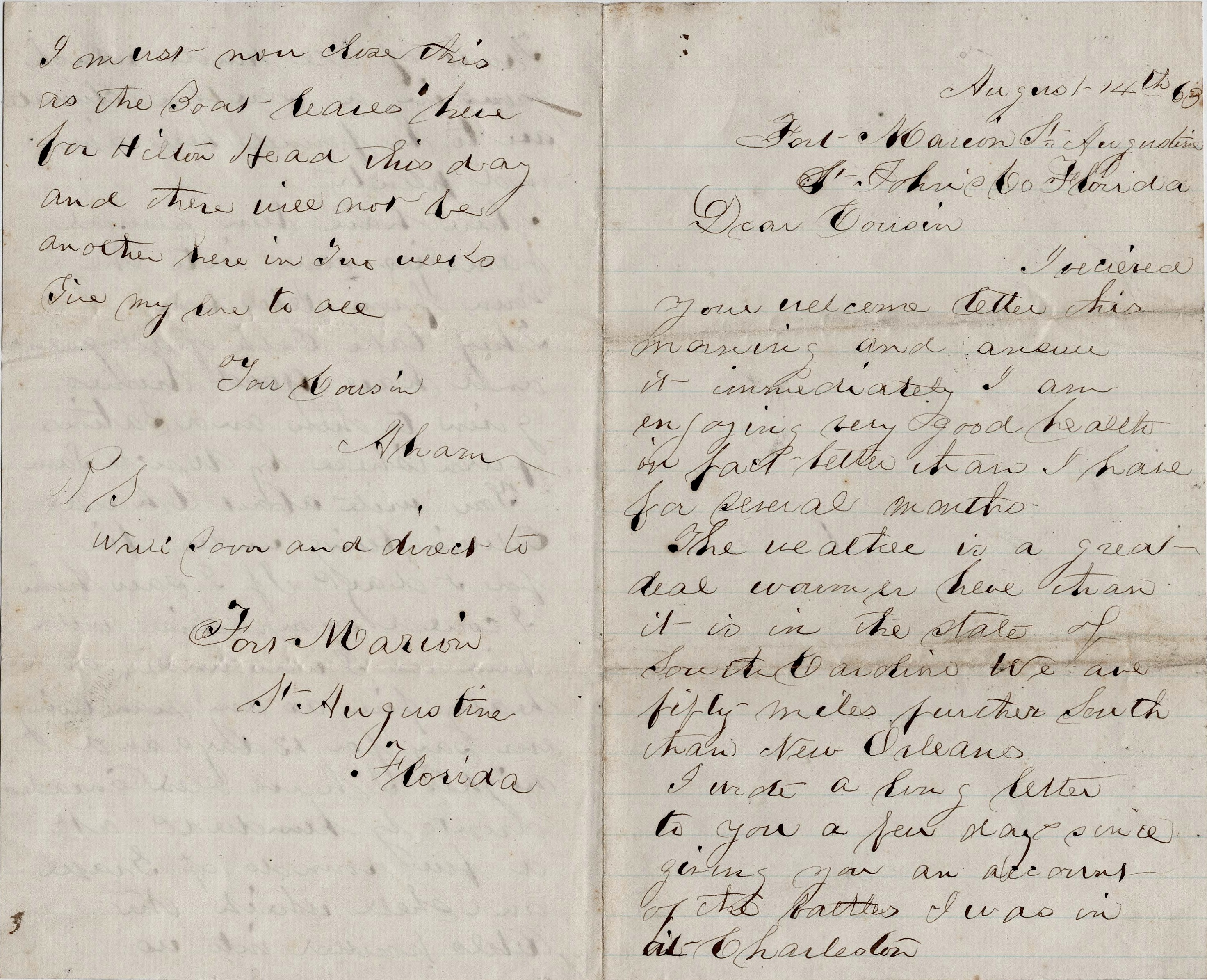
1863: Abram Clark to Ester Timpany

Though he only signed the letter as cousin “Abram,” I believe this letter was written by 30 year-old Abram Clark of Brooklyn, New York, formerly of Greenwich, Fairfield county, New York. The Timpany and Clark families were united when Philo Clark (1772-1856) married Elizabeth Timpany (1776-1850) in 1796.

Abram Clark enlisted in Co. G, 48th New York Infantry in September 1861. He was wounded twice at Cold Harbor, Virginia but survived and mustered out of the regiment in September 1865. He was in the disastrous assault of Battery (Fort) Wagner which protected Charleston S.C., where of three attacking Union columns, only 140 men of his column managed to achieve a measure of success by capturing a wall of Wagner and holding it for three hours. Repeated Confederate attacks with overwhelming numbers finally compelled their surrender, when repeated pleas to the Union officer in charge of reserves failed to send relief.

Anyone who has seen the Movie, “Glory,” which dealt with the raising & training of the first black regiment, the 54th Massachusetts will remember the final scenes which dealt with the attack of this regiment on another point of Battery Wagner’s walls.

Abram wrote the letter to his 32 year-old cousin, Ester Timpany (1829-1891), the daughter of William Tippany, Sr. (1783-1864) and Elizabeth Ferris (1791-1870) of Greenwich, Fairfield county, Connecticut.
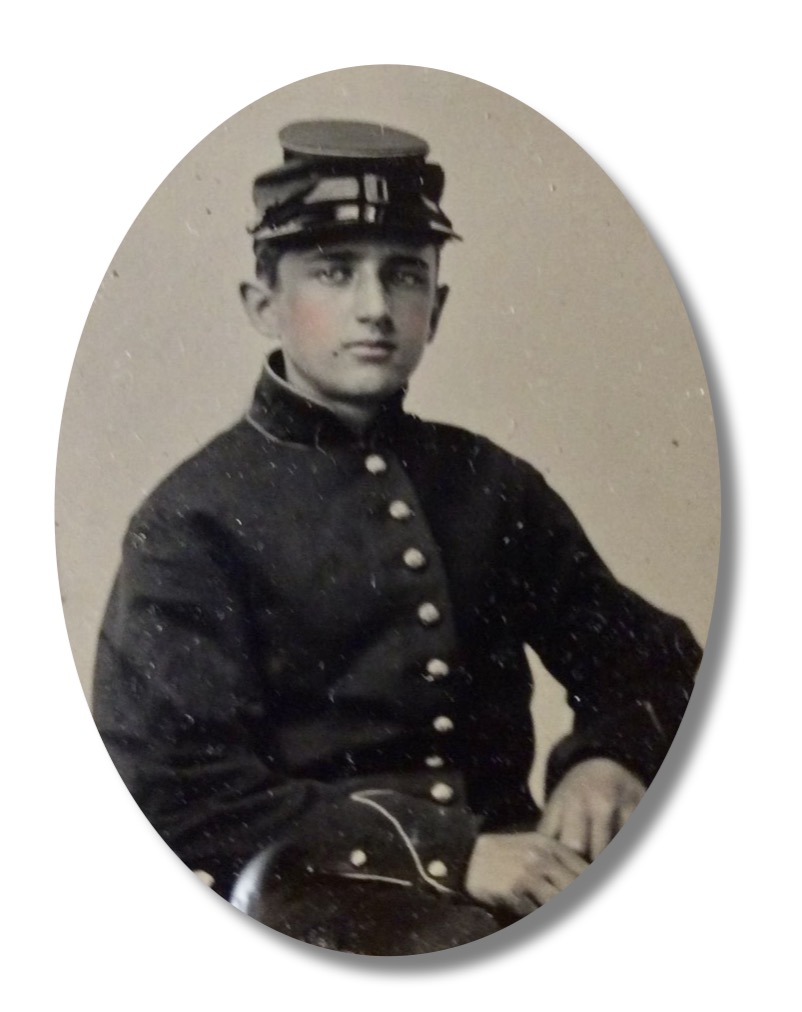
Abram J. Palmer of Co. D, 48th New York Infantry (Claudia & Al Niemiec Collection)

The Timpany family was also related to the Palmer family and there is an outside chance this letter was written by Abram John Palmer (1847-1922) of Greenwich, Fairfield county, Connecticut, who—when but 15 years old—enlisted as a musician in Co. D, 48th New York Infantry. He served from 24 July 1861 to September 20, 1864. I don’t believe he wrote the letter because he was many years younger than Ester and he was also reported to have been taken prisoner in the assault on Fort Wagner. Fifteen years after the war, he was made Regimental historian & tasked with compiling the record of the regiment’s service in the Civil War. As such, he used the “Official Records Of The War “which the Federal government had assembled, his own memories, diaries, letters, & memories of his regiment’s members, as well as the memories, diaries, & letters of surviving former Confederates to write this history of the 48th.

T R A N S C R I P T I O N
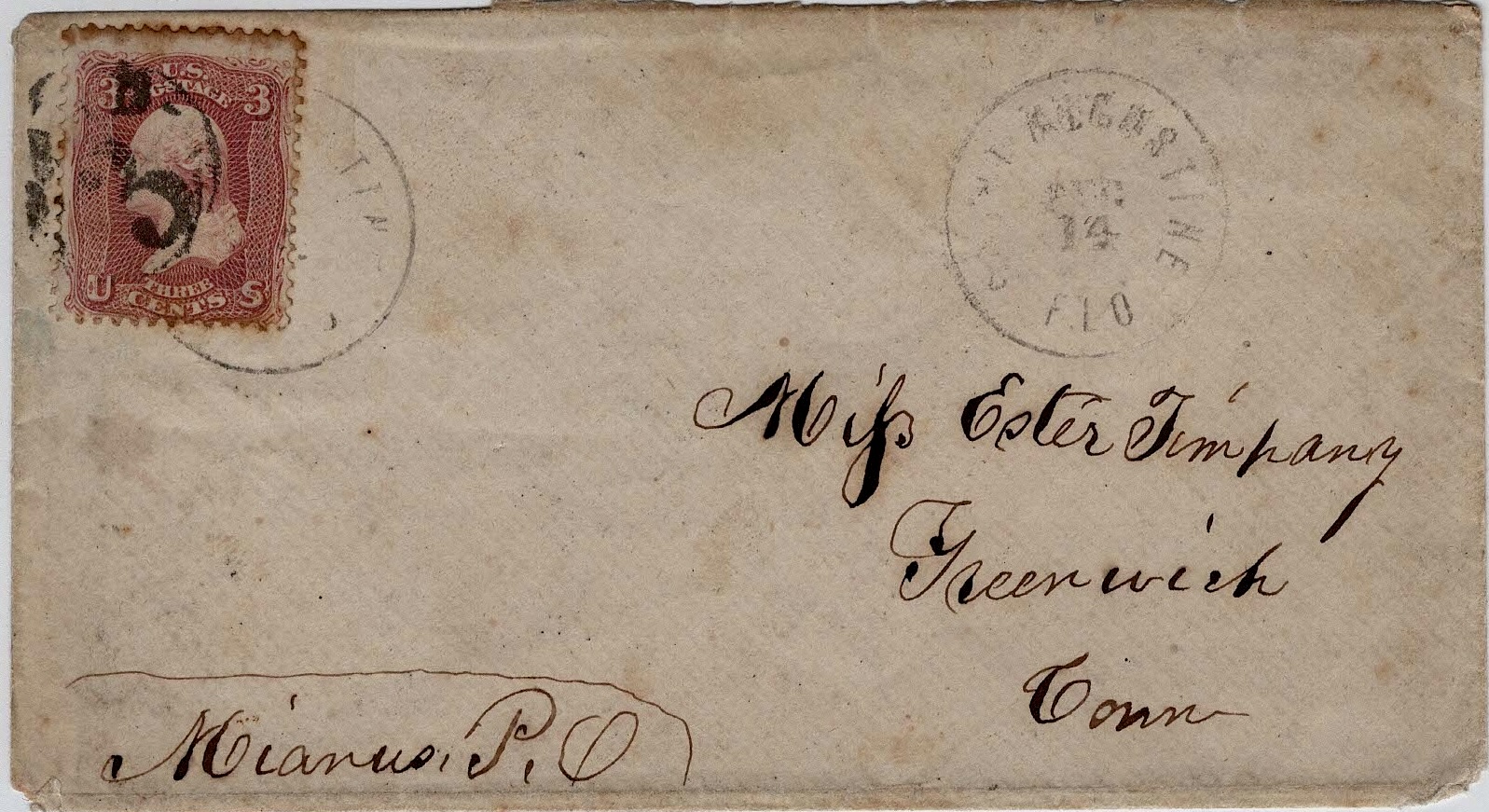
Addressed to Miss Ester Timpany, Greenwich, Connecticut

Fort Marion [only Cos. D, G, and I were garrisoned here]
St. Augustine, St. John’s County, Florida
August 14th 1863

Dear Cousin,

I received your welcome letter this morning and answer it immediately. I am enjoying very good health—in fact, better than I have for several months. The weather is a great deal warmer here than it is in the state of South Carolina. We are fifty miles further south than New Orleans.

I wrote a long letter to you a few days since giving you an account of the battles I was in at Charleston.

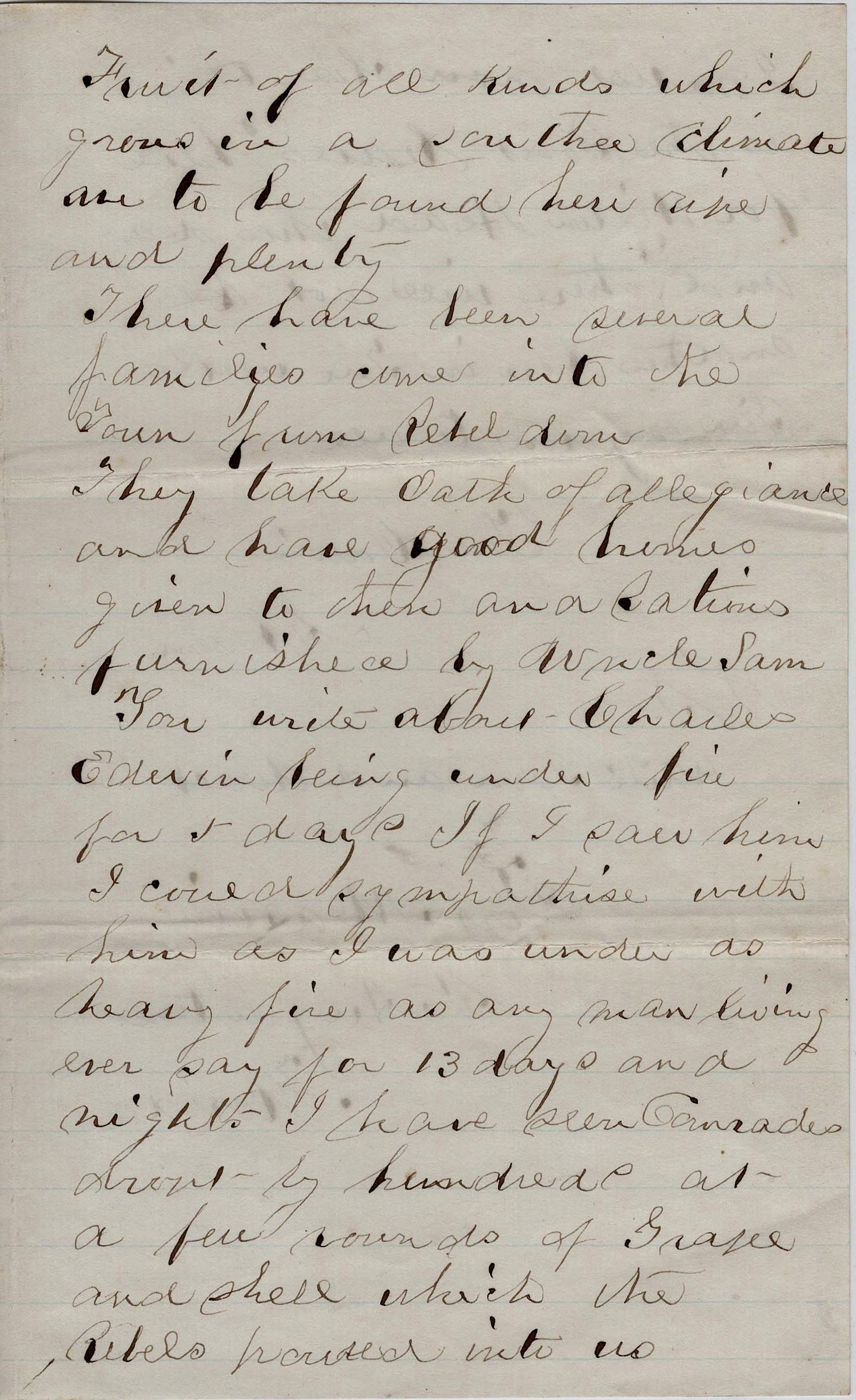
Fruit of all kinds which grows in a southern climate are to be found here ripe and plenty.

There has been several families come into the town from Rebeldom. They take oath of allegiance and have good homes given to them and rations furnished by Uncle Sam. You write about Charles Edwin being under fire for 5 days. If I saw him I could sympathize with him as I was under as heavy fire as any man living ever say for 13 days and nights. I have seen comrades dropped by hundreds at a few rounds of grape and shell which the Rebels poured into us.

I must now close this as the boat leaves here and there will not be another here in two weeks. Give my love to all. Your cousin, — Abram

P. S. Write soon and direct to Fort Marion, St. Augustine, Florida
1862: Edmond Simon Aubril to Louis Bell

The following brief letter was penned by Edmond Simon Aubril (1813-1881), the French-born pastor of the Catholic Church in St. Augustine, Florida, to Louis Bell (1837-1900), Colonel of the 4th New Hampshire Infantry. In January 1862, a force led by Lt. Col. Bell undertook a Florida campaign during which it captured Fernandina, Jacksonville, and St. Augustine. On March 18, 1862, Bell was promoted to full colonel and became commander of the regiment. While commanding the regiment’s occupation of St. Augustine, General David Hunter had Bell arrested and relieved of his command for allegedly returning a fugitive slave to her owners. Following a half-hearted investigation, Bell was reinstated to his command in September 1862 without trial.

When St. Augustine was surrendered to Union forces without fighting in early 1862, the local citizenry gave every indication that they favored the Union occupation. But as time passed it became obvious to Bell that there were some citizens who continued to offer resistance. Perhaps to set an example for others, Bell had William Keyes and three of his neighbors arrested when they were caught harboring a Confederate sergeant in the city. All four were heavily ironed and sent to Northern prisons.

When the women of St. Augustine protested and voiced their opposition to the arrests of civilians, Bell issued an order on 7 May 1862, “declaring that certain women having conducted themselves in a manner grossly insulting to the United States forces, by assembling on the Plaza and openly proclaiming their disloyalty, thereafter it is ordered that ‘any woman who shall be guilty of any open and offensive exhibition of disloyalty shall be considered as having forfeited immunity from punishment by reason of her sex, and shall be held in strict arrest…” This order predated the one of a similar nature issued by the “Beast” Butler in New Orleans by at least a week. [See The Dover Enquirer, 29 May 1862]

The Catholic Church in St. Augustine, Florida

Transcription

Addressed to Col. L. Bell, USA, Commander at the Post of St. Augustine

St. Augustine [Florida]
July 6th 1862

Col. Bell,

Sir, I learn from Mrs. Keyes that her husband is to be removed from St. Augustine in a few days to be taken to Hilton Head. This removal throws her in a grief which was already very great. My dear sir, I do implore your clemency in regard to that afflicted family—afflicted, I may say, on account of their kindness, Mr. Keyes was always respected and beloved by all who knew him on account of his benevolent and friendly disposition and industrious habits. By ameliorating his condition by returning him as soon as possible to his family—his helpless family—you will sir, you will cause a sensation throughout this community and far around which will bring about that friendship, that fraternity, so desirable amongst us and God which we ought to employ all the means in our power. I do think, as I say, the act of clemency of this kind on your part will have the effect which I wish most ardently towards which all our endeavors ought to center—the promotion of mutual friendship.

Happy I will be if I can contribute my little share in such a blessing. Hoping, dear sir, that you will take in consideration this expression of my feelings, I remain truly and respectfully yours, — Edm. Aubril

Pastor of the Cath. Church, St. Augustine


1 The following letter is posted on War of the Rebellion: Serial 020 Page 0356 COAST OF. S. C., GA., AND MID. AND EAST FLA. Chapter XXVI.

HEADQUARTERS DEPARTMENT OF THE SOUTH,
Hilton Head, S. C., June 20, 1862.

Lieutenant Colonel LOUIS BELL, Commanding Post, Saint Augustine, Fla.:

SIR: In reply to your letter dated June 1, relative to the case of William Keyes and three other men who had taken the oath of allegiance, and who nevertheless were quilt of harboring a sergeant of the Confederate Army and supplying him with information, I am instructed by the major-general commanding to advise you that the prisoners in question are to be heavily ironed and sent to these headquarters, with a statement in writing, and as full as possible, of their offense. Your action in the case of Mr. Steubenmeyr, the Episcopal clergyman, is approved.

Col. Louis Bell, 4th New Hampshire

In reference to your letter dated May 29, relative to the hanging and persecution of loyal citizens by roving bands of Confederate guerrillas, the major-general commanding desires that you shall take the most rigorous and prompt measures for the suppression of such practices. All guerrillas caught you will iron heavily and send to these headquarters, with written charges accompanying them.

You will also threaten to arm, and if necessary arm, all negroes and Indians who may be willing to enter the service.

You should also at once drive out of your lines all persons, without reference to sex, who have not taken and shall refuse to take the oath of allegiance.

The general commanding, reposing much confidence in your judgment, gives you a large and liberal discretion in reference to all acts that may be necessary for the vindication of the laws within your district, and guarantees you a frank support in any acts within the limits of a reasonable discretion.

It is not his wish, however, that the death penalty should be inflicted on prisoners captured without -express orders from these headquarters. The better way will be to iron all malefactors and send them here for disposition tinder the necessary guard.

You will report frequently and fully all action taken by you under the terms of these instructions.

I have the honor to be, sir, very respectfully, your most obedient servant, CHAS. G. HALPINE, Major and Assistant Adjutant- General.