Though he only signed the letter as cousin “Abram,” I believe this letter was written by 30 year-old Abram Clark of Brooklyn, New York, formerly of Greenwich, Fairfield county, New York. The Timpany and Clark families were united when Philo Clark (1772-1856) married Elizabeth Timpany (1776-1850) in 1796.
Abram Clark enlisted in Co. G, 48th New York Infantry in September 1861. He was wounded twice at Cold Harbor, Virginia but survived and mustered out of the regiment in September 1865. He was in the disastrous assault of Battery (Fort) Wagner which protected Charleston S.C., where of three attacking Union columns, only 140 men of his column managed to achieve a measure of success by capturing a wall of Wagner and holding it for three hours. Repeated Confederate attacks with overwhelming numbers finally compelled their surrender, when repeated pleas to the Union officer in charge of reserves failed to send relief.
Anyone who has seen the Movie, “Glory,” which dealt with the raising & training of the first black regiment, the 54th Massachusetts will remember the final scenes which dealt with the attack of this regiment on another point of Battery Wagner’s walls.
Abram wrote the letter to his 32 year-old cousin, Ester Timpany (1829-1891), the daughter of William Tippany, Sr. (1783-1864) and Elizabeth Ferris (1791-1870) of Greenwich, Fairfield county, Connecticut.
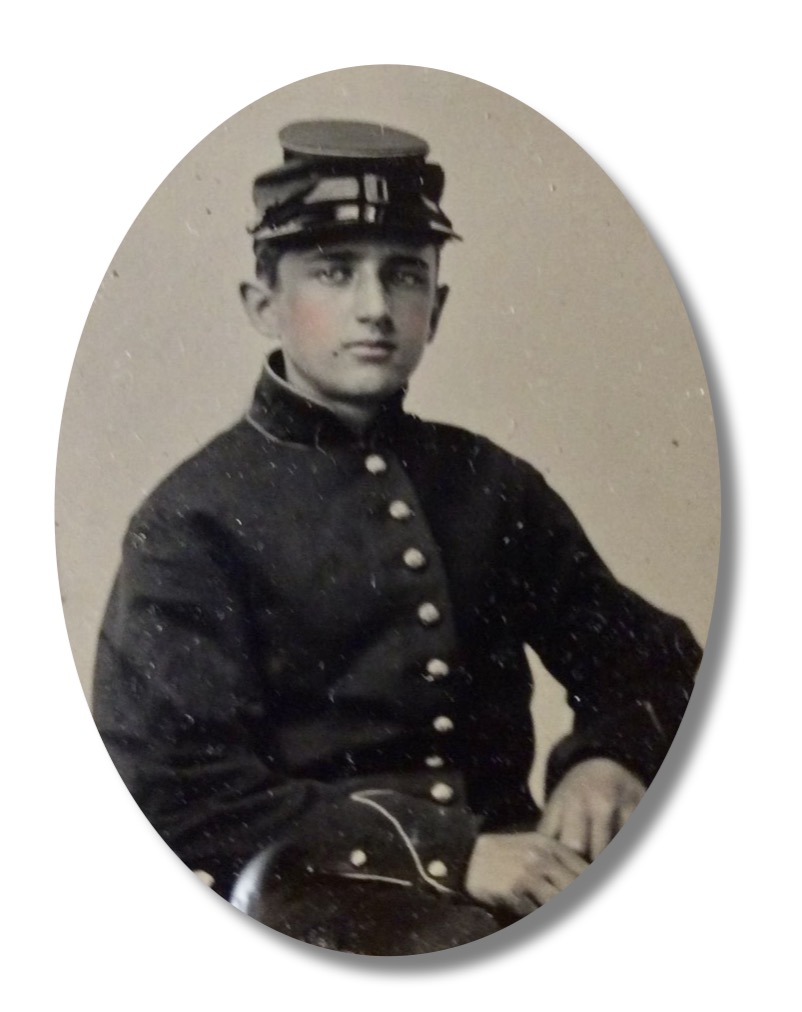
The Timpany family was also related to the Palmer family and there is an outside chance this letter was written by Abram John Palmer (1847-1922) of Greenwich, Fairfield county, Connecticut, who—when but 15 years old—enlisted as a musician in Co. D, 48th New York Infantry. He served from 24 July 1861 to September 20, 1864. I don’t believe he wrote the letter because he was many years younger than Ester and he was also reported to have been taken prisoner in the assault on Fort Wagner. Fifteen years after the war, he was made Regimental historian & tasked with compiling the record of the regiment’s service in the Civil War. As such, he used the “Official Records Of The War “which the Federal government had assembled, his own memories, diaries, letters, & memories of his regiment’s members, as well as the memories, diaries, & letters of surviving former Confederates to write this history of the 48th.
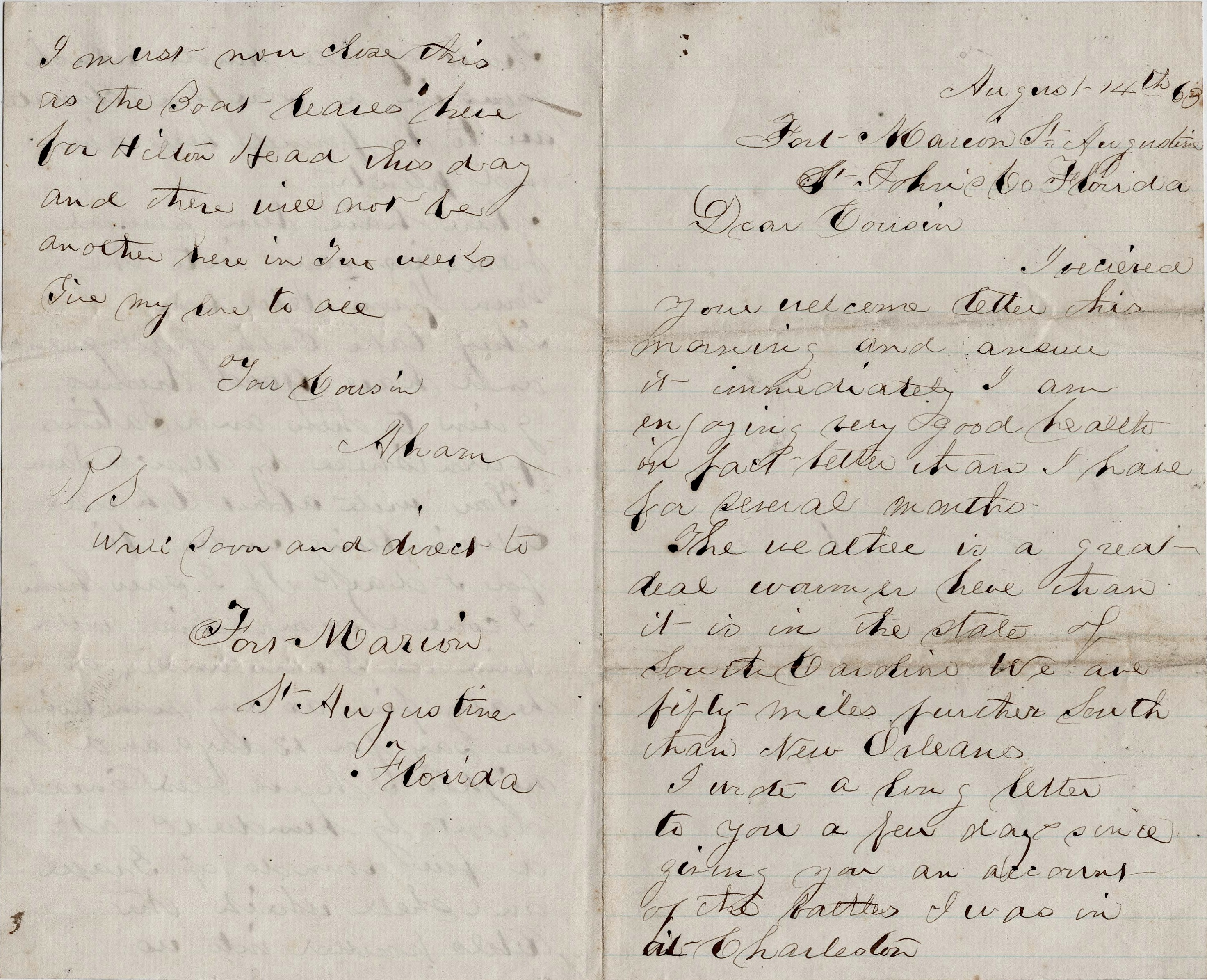
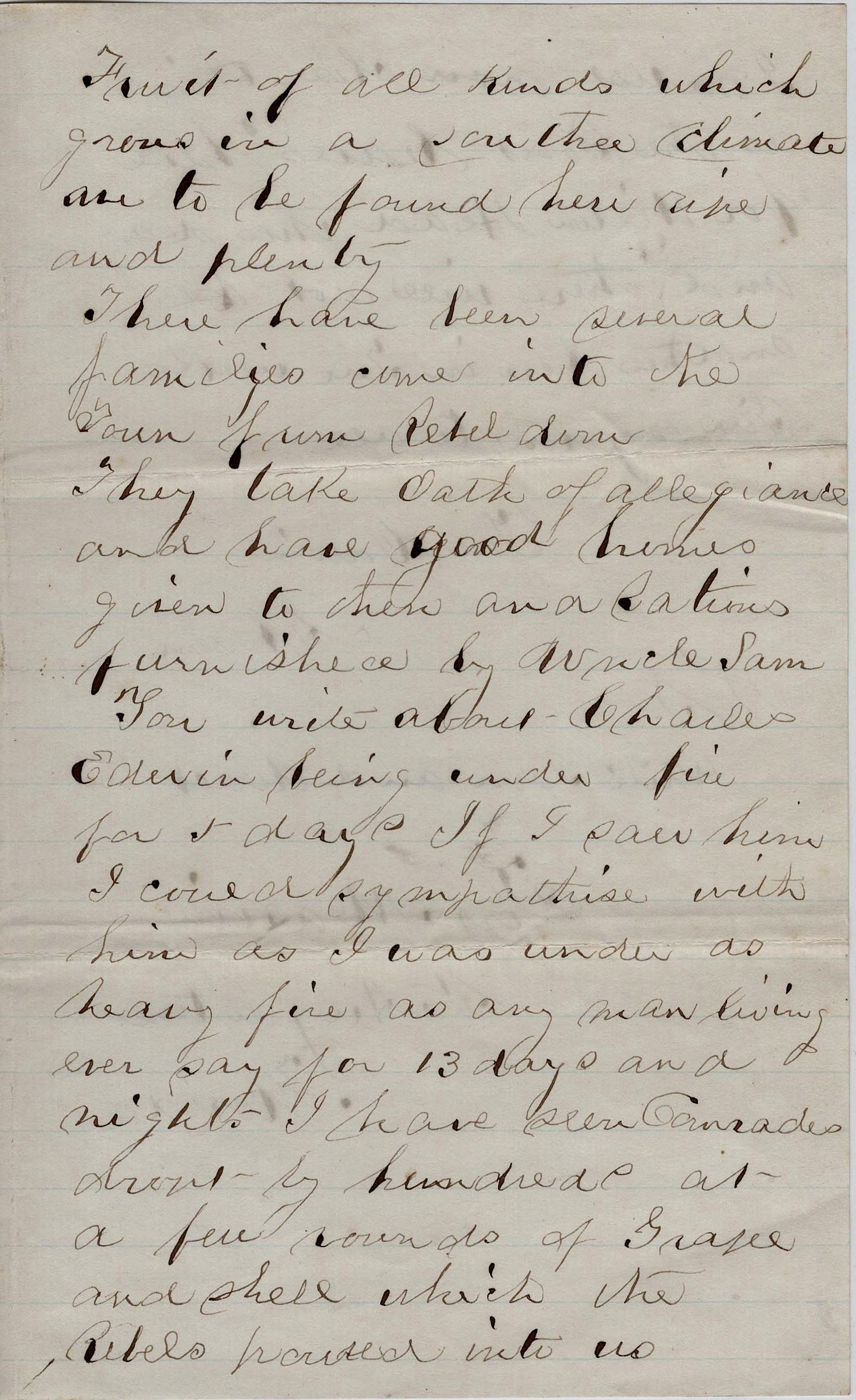
T R A N S C R I P T I O N
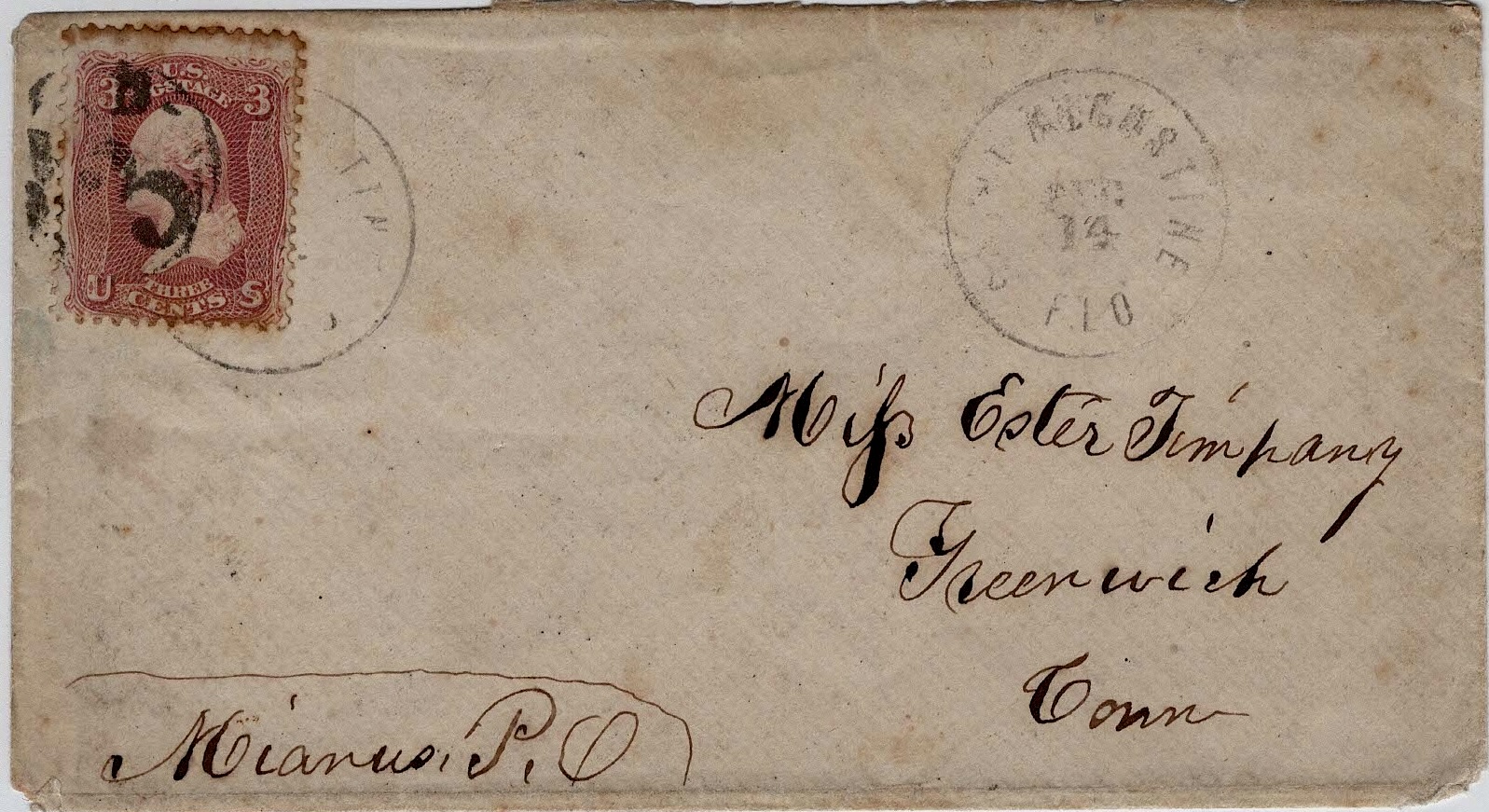
Fort Marion [only Cos. D, G, and I were garrisoned here]
St. Augustine, St. John’s County, Florida
August 14th 1863
Dear Cousin,
I received your welcome letter this morning and answer it immediately. I am enjoying very good health—in fact, better than I have for several months. The weather is a great deal warmer here than it is in the state of South Carolina. We are fifty miles further south than New Orleans.
I wrote a long letter to you a few days since giving you an account of the battles I was in at Charleston.
Fruit of all kinds which grows in a southern climate are to be found here ripe and plenty.
There has been several families come into the town from Rebeldom. They take oath of allegiance and have good homes given to them and rations furnished by Uncle Sam. You write about Charles Edwin being under fire for 5 days. If I saw him I could sympathize with him as I was under as heavy fire as any man living ever say for 13 days and nights. I have seen comrades dropped by hundreds at a few rounds of grape and shell which the Rebels poured into us.
I must now close this as the boat leaves here and there will not be another here in two weeks. Give my love to all. Your cousin, — Abram
P. S. Write soon and direct to Fort Marion, St. Augustine, Florida