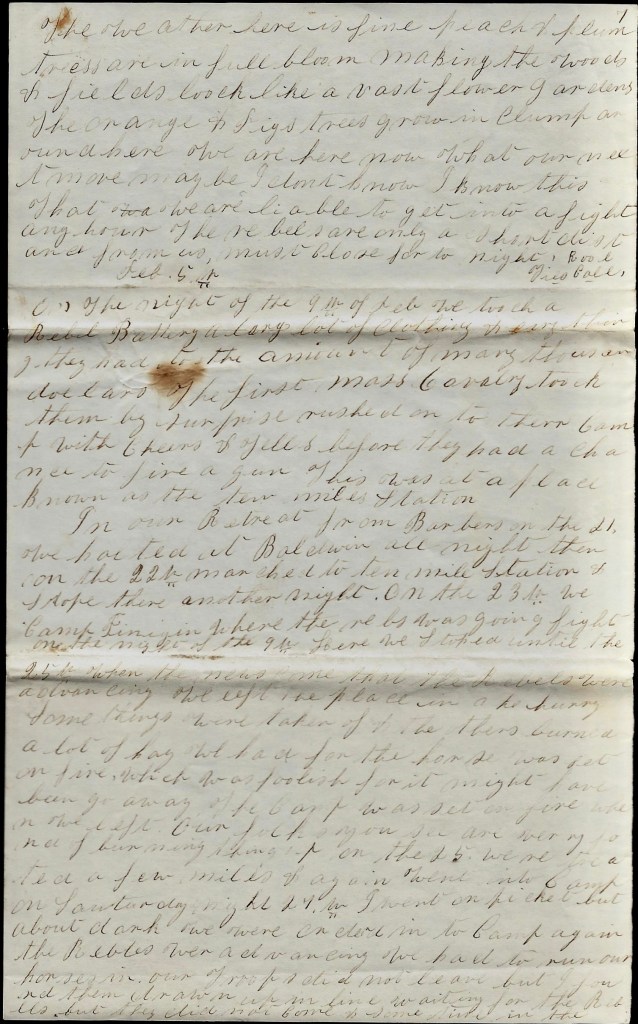
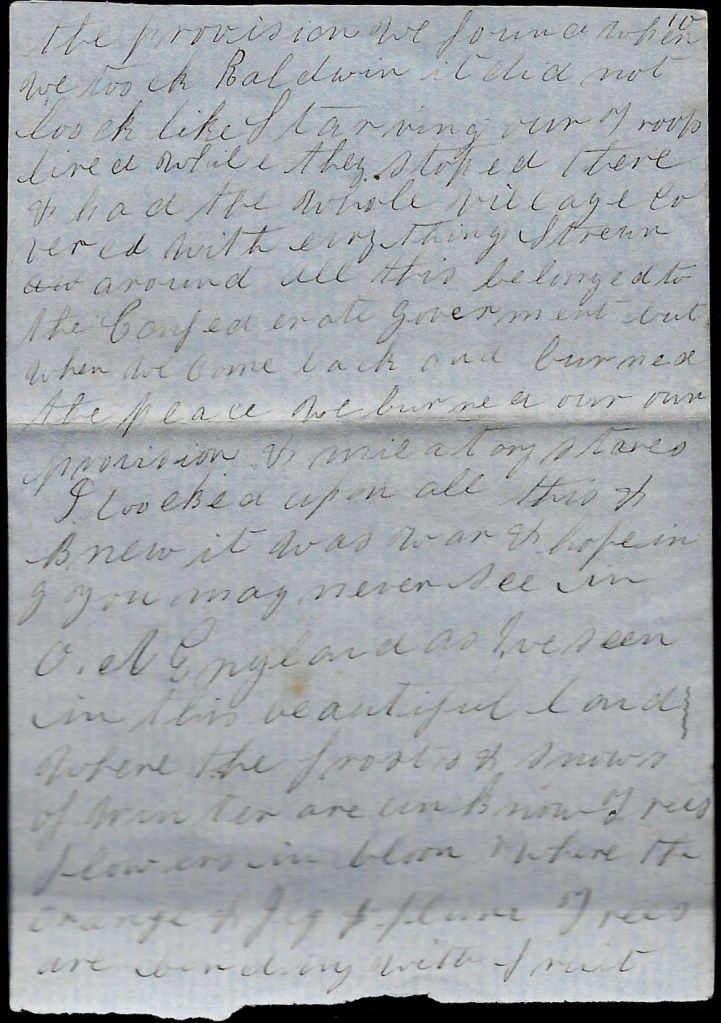
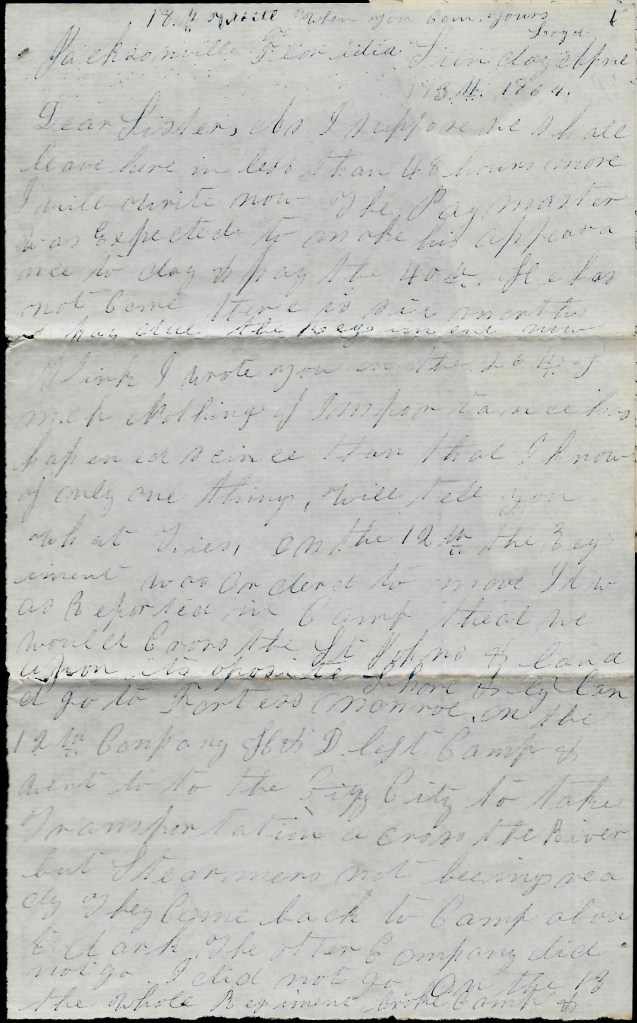
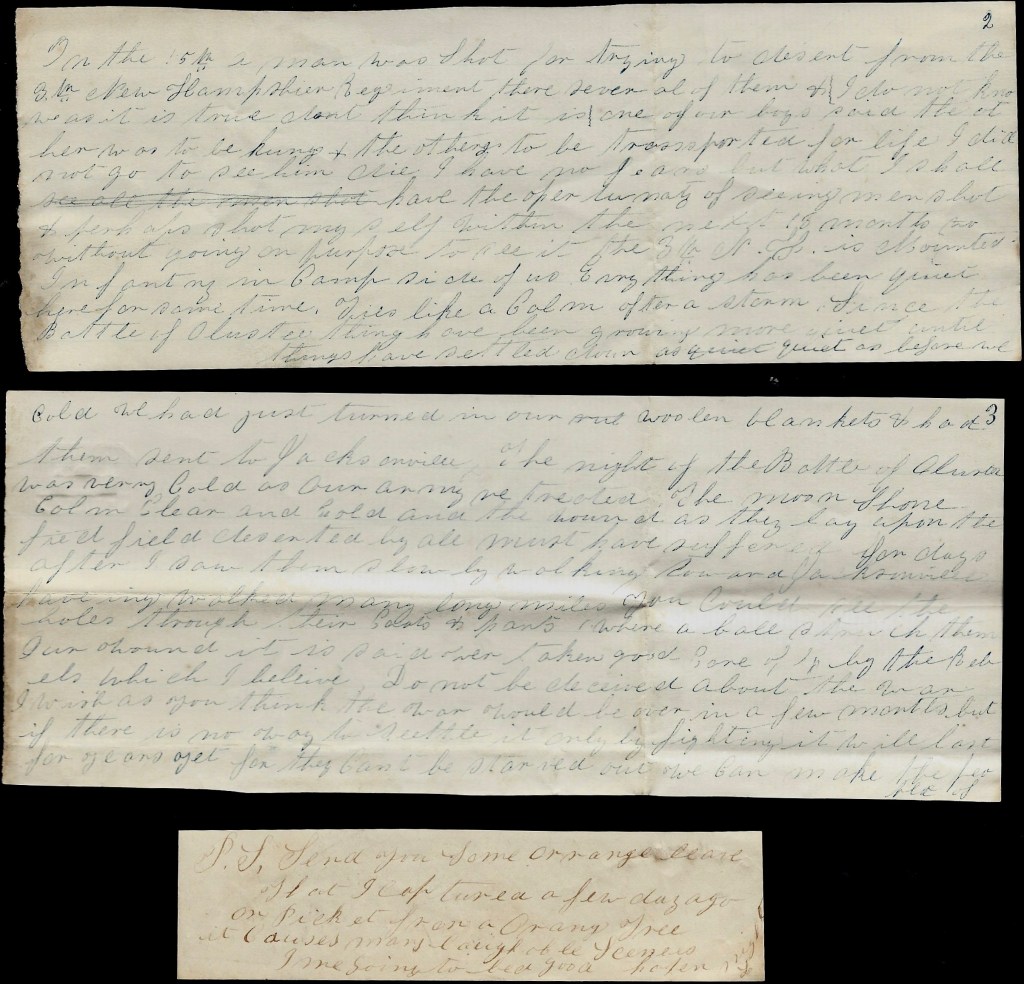
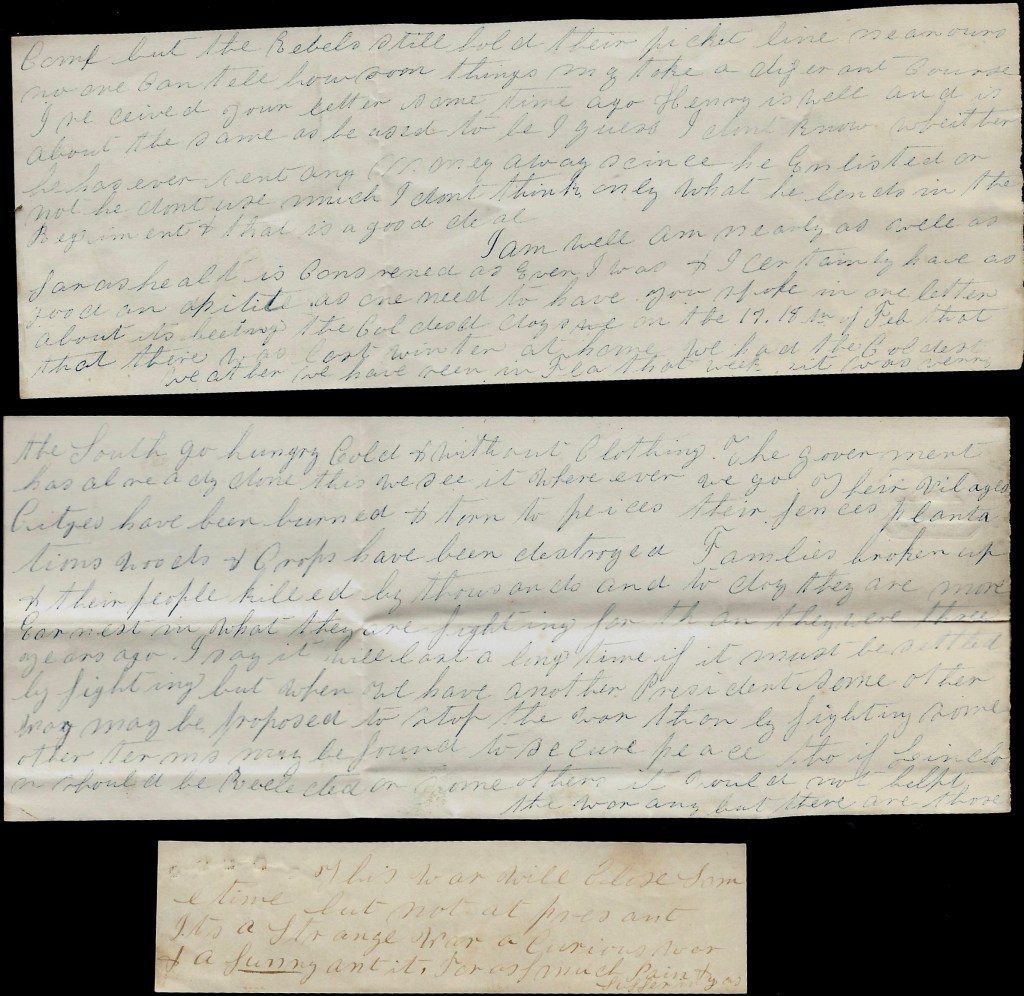
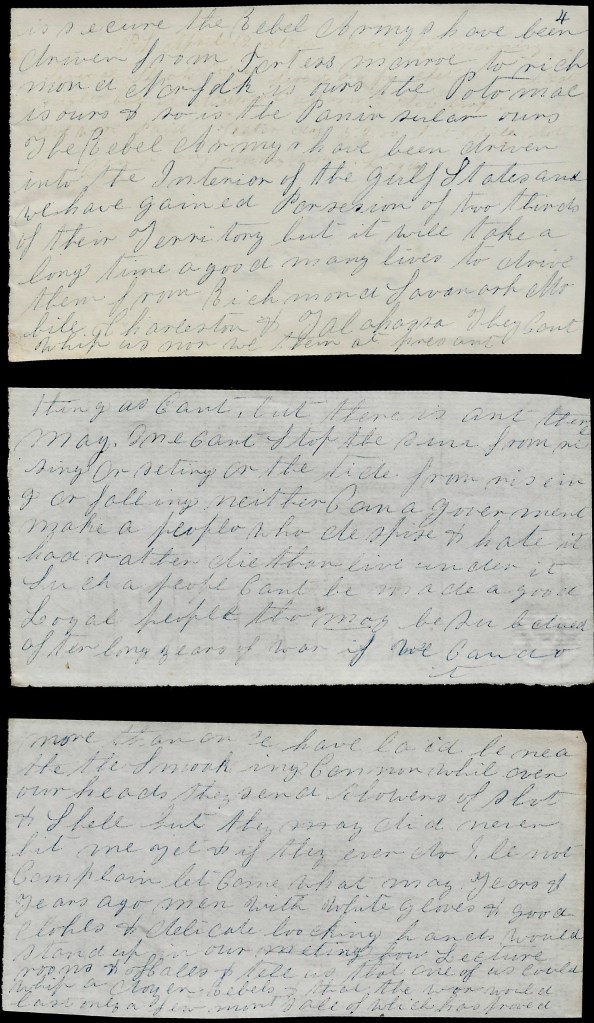
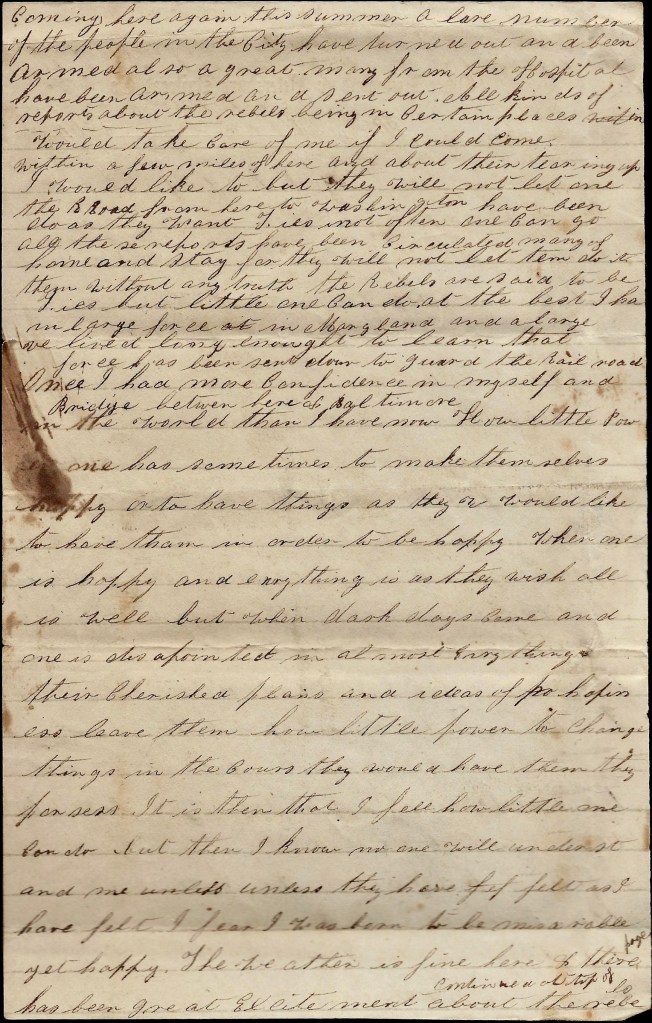
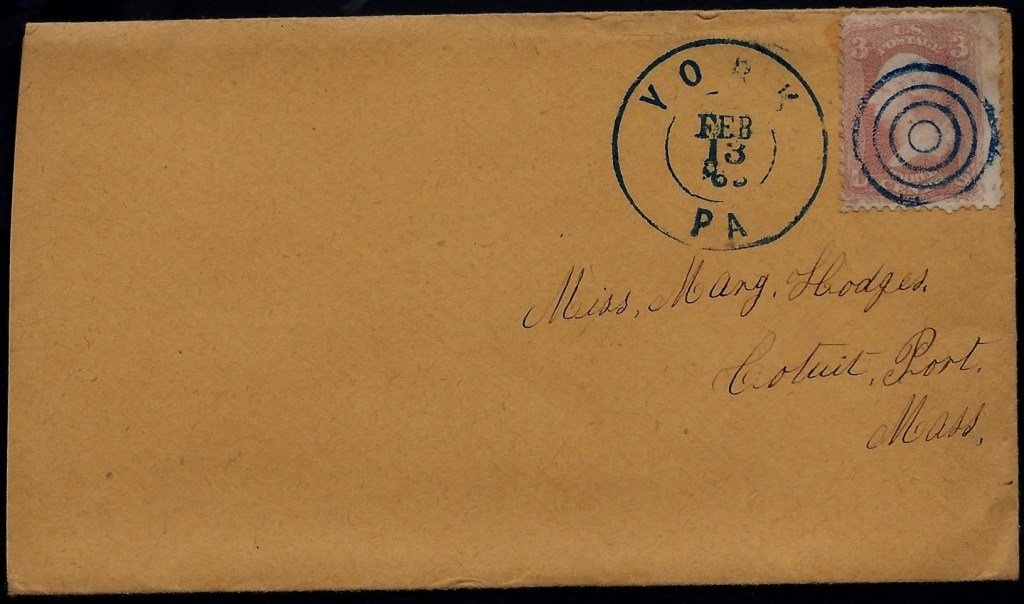
The following letter was written by Noble Lovely Prentis (1839-1900) who was born three miles from Mount Sterling, Illinois. His parents died at Warsaw, Illinois of cholera during the epidemic of 1849, leaving him an orphan at the age of ten. He then went to live with an uncle in Vermont and remained there until he was 18 when he moved to Connecticut and served an apprenticeship in the printer’s trade. He then came west and worked for a time in a newspaper office at Carthage, Illinois.
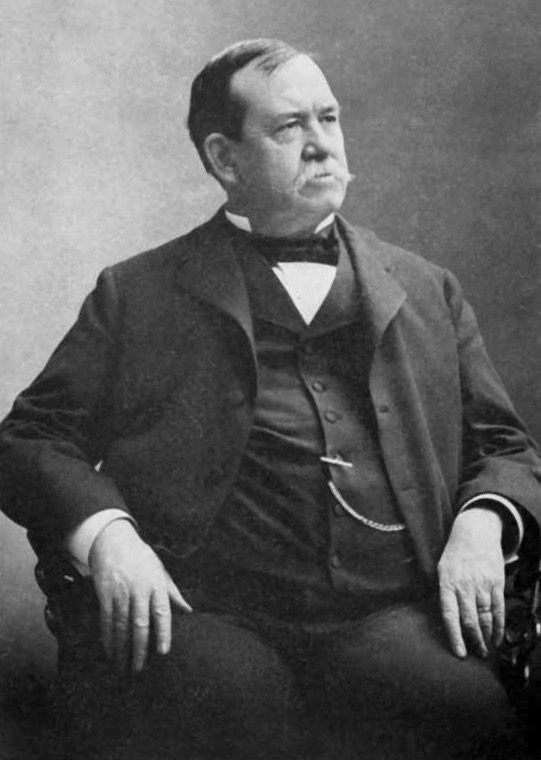
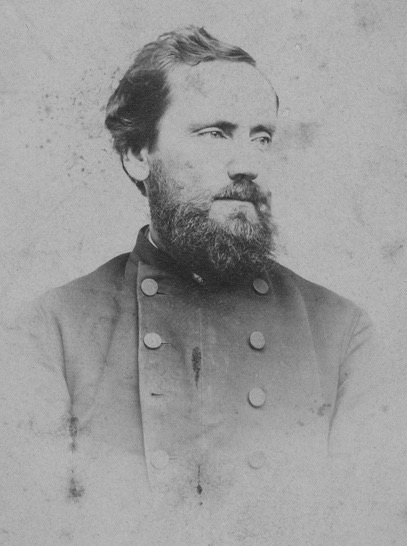
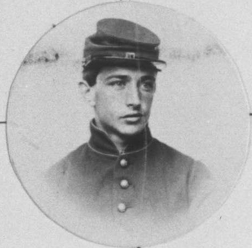
Noble L. Prentis in later years
At the opening of the Civil War, he enlisted as a private in Co. D, 16th Illinois Infantry and served four years when he was honorably discharged. Prentis married Maria C. Strong on May 13, 1866. He published a paper at Alexandria, Missouri until Captain Henry King of the St. Louis Globe-Democrat induced him to come to Topeka, Kansas in 1869 and assist him on the Record. He next worked on the Commonwealth and then on the Lawrence Journal. From 1873 to 1875, Prentis edited the Junction City Union, then returned to the Topeka Commonwealth, and in about 1877, he began to work on the Atchison Champion. He remained with that paper during Colonel Martin’s term as governor and in 1888, took charge of the Newton Republican.
In 1890, he accepted a position on the editorial staff of the Kansas City Star, which he held until his death. In 1877 he went to Europe. His observations during the trip were published in book form, entitled A Kansan Abroad, which ran through two editions. He also wrote Southern Letters, Southwestern Letters, Kansas Miscellanies, and in the last year of his life, wrote A History of Kansas, which became his best-known work.
Noble wrote the letter to his friend, Francis (“Frank”) James Russell (1836-1900), the son of John Russell, Jr. (1793-1863) and Laura Ann Spencer (1797-1890) of Bluffdale, Greene county, Illinois. See also—1863-65: Francis James Russell to Sarah Ann (Burkholder) Russell on Spared & Shared 17.
[Note: This letter is from the private collection of Greg Herr and was transcribed and published on Spared & Shared by express consent.]
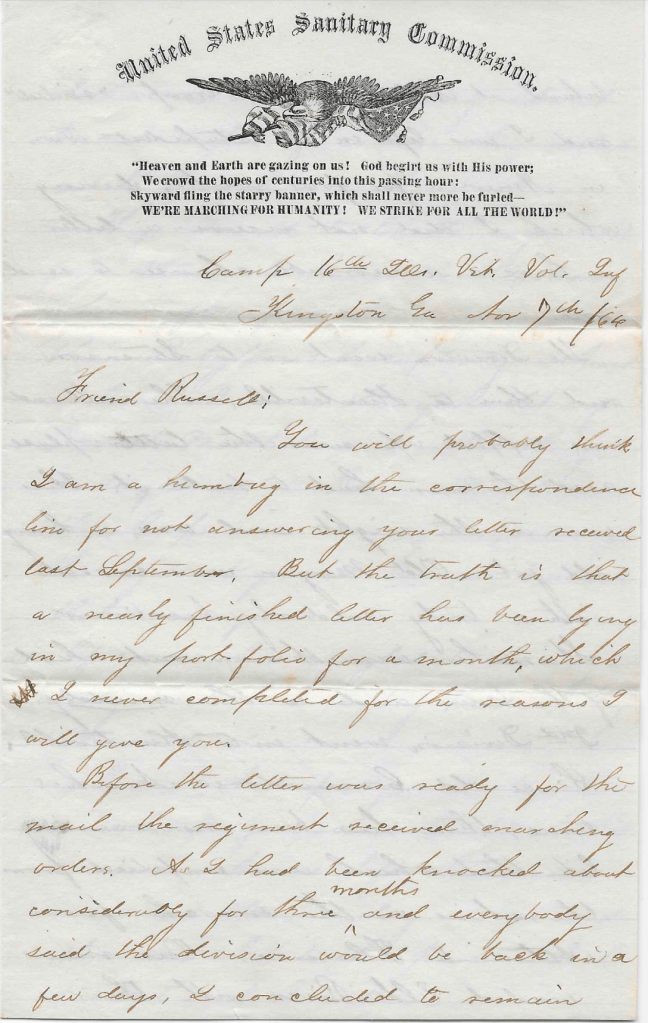
You will probably think I am a humbug in the correspondence line for not answering your letter received last September. But the truth is that a nearly finished letter has been lying in my portfolio for a month, which I never completed for the reasons I will give you.
Before the letter was ready for the mail the regiment received marching orders. As I had been knocked about considerably for three months and everybody said the division would be back in a few days, I concluded to remain behind at Atlanta. The troops “sailed” and I was left in the stupidest town in America for four weeks, during which I did not receive a letter or have a reasonable chance to send one.
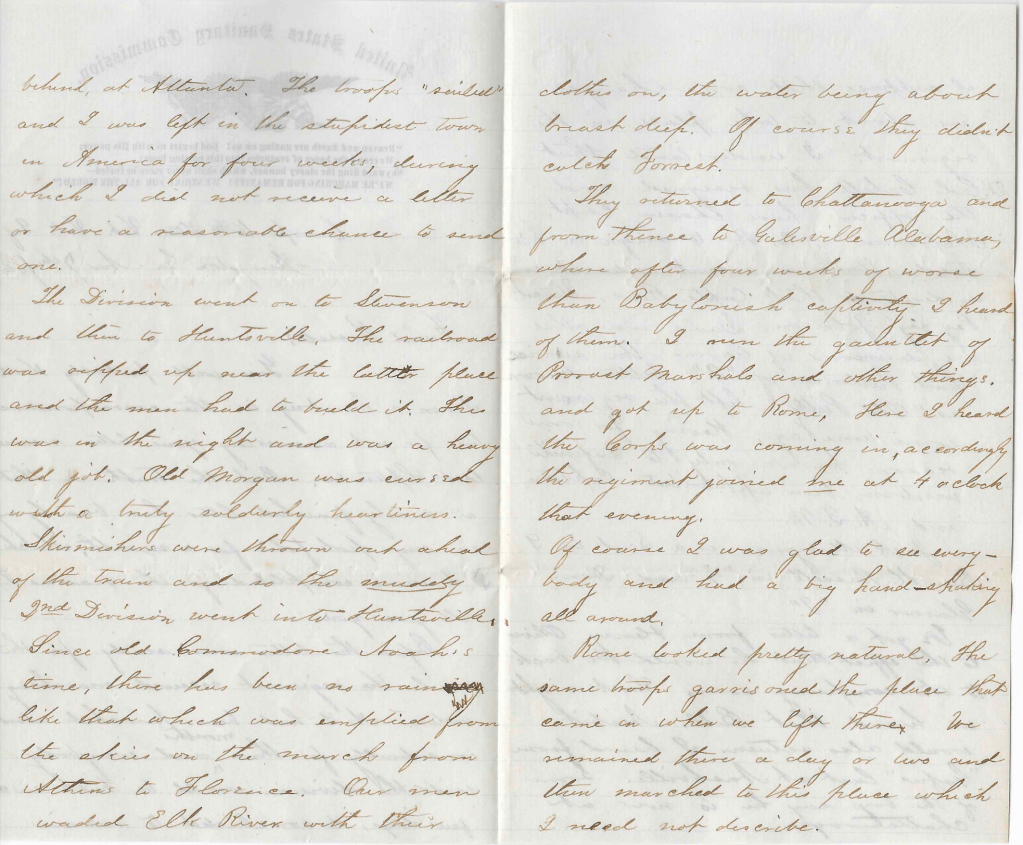
The Division went on to Stevenson and then to Huntsville. The railroad was ripped up near the latter place and the men had to build it. This was in the night and was a heavy old job. Old Morgan was cursed with a truly soldierly heartiness. Skirmishers were thrown out ahead of the train and so the muddy 2nd Division went into Huntsville.
Since Old Commodore Noah’s time, there has been no rain like that which was emptied from the skies on the march from Athens to Florence. Our men waded Elk River with their clothes on, the water being about breast deep. Of course they didn’t catch Forrest.
They returned to Chattanooga and from thence to Galesville, Alabama, where after four weeks of worse than Babylonish captivity, I heard of them. I run the gauntlet of Provost Marshal and other things and got up to Rome. Here I heard the Corps was coming in. Accordingly the regiment joined me at 4 o’clock that evening. Of course I was glad to see everybody and had a big hand-shaking all around.
Rome looked pretty natural. The same troops garrisoned the place that came in when we left there. We remained there a day or two and then marched to this place which I need not describe.
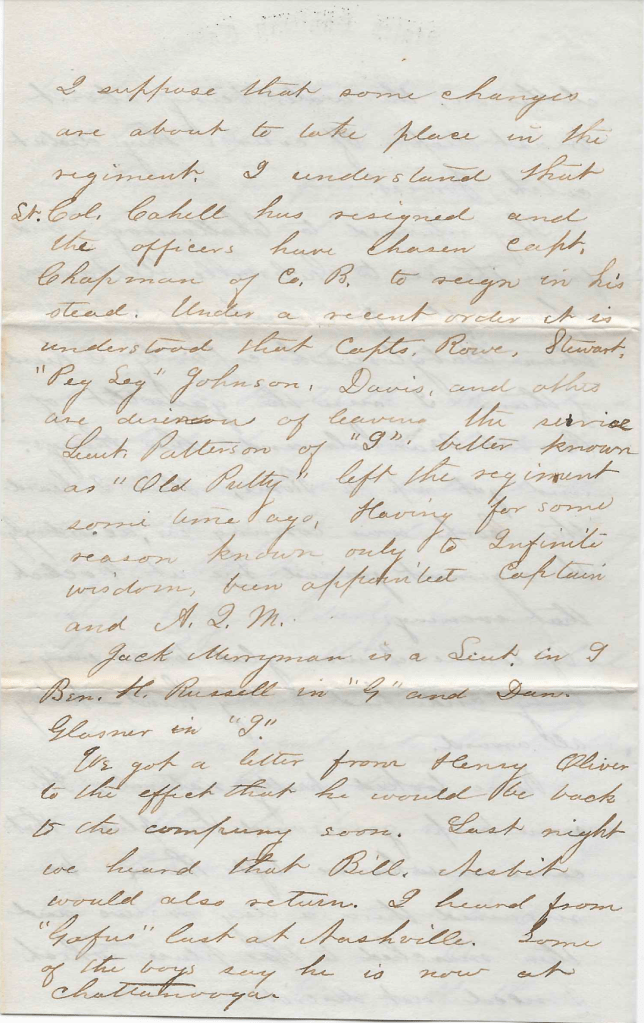
I suppose that some changes are about to take place in the regiment. I understand that Lt. Col. [James B.] Cahill has resigned and the officers have chosen Capt. [James A.] Chapman of Co. B to reign in his stead. Under a recent order, it is understood that Capts. [Abram] Rowe, [George D.] Stewart, “Peg Leg” [Smith] Johnson, [Isaac] Davis and others are desirous of leaving the service. Lieut. Patterson of “I” better known as “Old Putty” left the regiment some time ago, having for some reason known only to infinite wisdom been appointed captain and Asst. Quartermaster. Jack Merriman is a lieutenant in “I”, Ben H. Russell in “G” and Dan Glasner in “I.”
We got a letter from Henry Oliver to the effect that he would be back to the company soon. Last night we heard that Bill Nesbit would also return. I heard from “Gafus” last at Nashville. Some of the boys say he is not at Chattanooga.
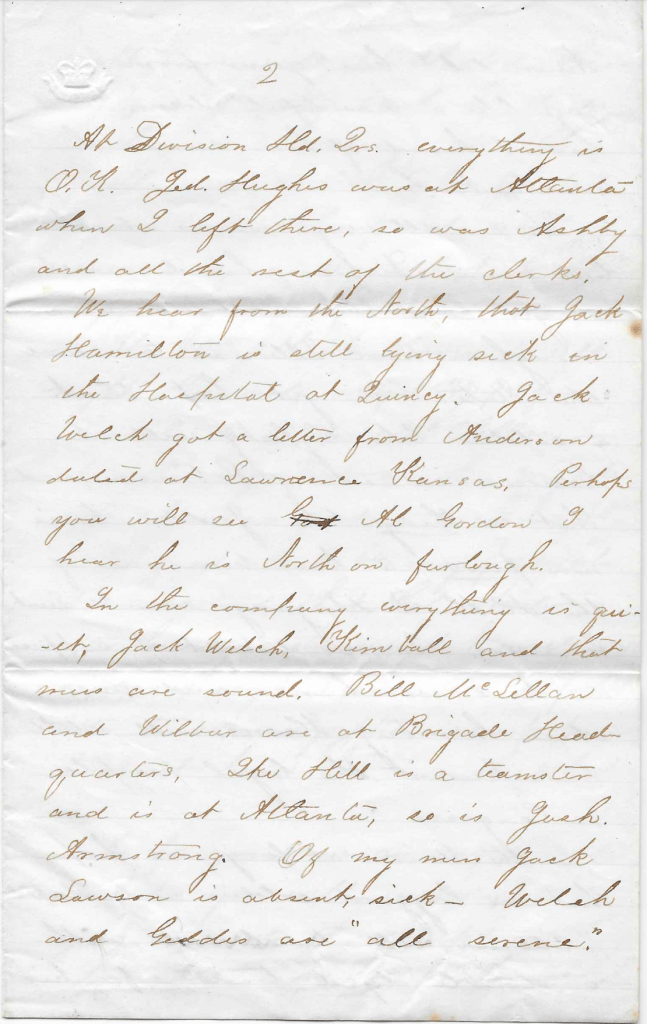
At Division Headquarters everything is O. K. Jed Hughes was at Atlanta when I left there. So was [Martin Van Buren] Ashby and all the rest of the clerks.
We hear from the North that Jack Hamilton is still lying sick in the hospital at Quincy. Jack Welch got a letter from Anderson dated at Lawrence, Kansas. Perhaps you will see Al Gordon. I hear he is North on furlough.
In the company everything is quiet. Jack Welch, [Thomas C.] Kimball, and that mess are sound. Bill McLellan and [William S.] Wilbur are at Brigade Headquarters. [Isaac] Ike Hill is a teamster and is at Atlanta. So is Josh Armstrong. Of my men, Jack Lawson is absent sick. Welch and Geddes are “all serene.” “Aminadah” has gone from our gaze like a beautiful dream. I haven’t heard of him since he went North.
We are all very anxious about tomorrow. Disfranchised ourselves, we yet hope there are true men enough in brave Illinois to save the State. We yet hope that a soldier like [Richard J.] Oglesby will be Governor instead of [James Carroll] Robinson, and that no thing like [Norman B.] Judd who is now proven to have been one of the H. H. Dodd gang, 1 can be Lieut. Governor. In our district I suppose we have no chance and the obese humbug Harris will still misrepresent the loyal people in Congress.
In the Union at large, we hope that no laggard soldier and stupid politician with a double dyed traitor for his right bower will be elected President and bring back to the army (if there is an army) all the Buells and Porters who for two years wasted the blood and treasure of a brave but long-suffering people.
The 16th, thank Heaven, is all right. Our vote stood 379 for Lincoln to 13 for McClellan. No other regiment in this brigade can show so good a record. The “60th” gave about 60 majority for Lincoln. I understand that Col. Anderson after having distinguished himself on the campaign has written a foolish letter to some Egyptian 2 newspaper. I don’t know how true the report is.
As for you, mine ancient comrade, I hope you will, indeed I know you will, do the complete thing. You will now be a “household” and in due time one of the solid men of Greene [county]. You will no doubt take some part in politics and I hope you will let me know what part that is. Let me hear from you and do not imitate my dilatoriness but write soon.
My health is excellent and as it is rumored that we are soon to start on another campaign, I am particularly glad it is so. My regards to Mrs. Russell and best wishes for yourself. Yours truly, — Noble L. Prentis
1 Harrison Horton Dodd (1824-1906) was an Indianapolis businessman and one of the leaders of secret organizations in Indiana that plotted violent uprisings against the authority of the United States government during the Civil War. By 1862 Dodd was speaking frequently all over Indiana to Democratic audiences urging opposition to the war. In his public speeches, he espoused state sovereignty views, asserting that the federal government had no authority over the states. States were sovereign and had the right to secede from the national union. No one owed loyalty to the federal government, he argued. Believing that abolitionists and anti-slavery Yankees had driven the southern states to rebel, he stated that the U.S. Constitution gave no authority to the federal government to coerce the seceded states back into the Union. In public speeches, Dodd alluded cryptically to the existence of an organization called the Knights of the Golden Circle (KGC), a secret oath-bound society formed in the 1850s originally to spread southern slavery into Central and South America. During the rebellion, its northern members supported the Confederate rebels. Members of the KGC and its successors held state sovereignty, pro-slavery views. [Encyclopedia of Indianapolis]
2 “Egyptian” is a reference to the region in Southern Illinois that was called “Little Egypt” sandwiched between the Mississippi and Ohio Rivers.
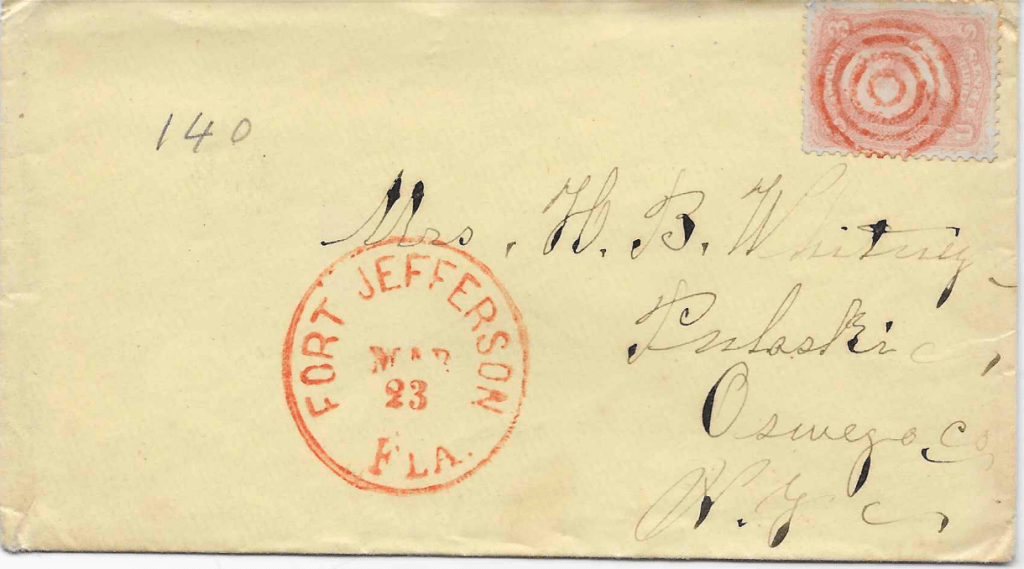
The following letter was written by Henry B. Whitney (1838-1920) who enlisted on 25 August 1862 to serve three years in Co. B, 110th New York Infantry. At the time of his enlistment 24 year-old Henry gave Albion, New York, as his birthplace, and he was described as a 5′ 9″ grey-eyed, brown-haired carriage maker. For a time in the fall of 1863, Henry was hospitalized in Baton Rouge but recovered and returned to his regiment, mustering out with his company at Albany in August 1865.
Henry wrote the letter to his wife, Martha H. (Smith) Whitney (1840-1921). After the war, Henry returned to his old occupation and his residence in Pulaski, Oswego county, New York.
The 110th New York Regiment left the state on the 29th, proceeding to Baltimore, where it was stationed until Nov., 1862, when it was ordered to New Orleans, and early in 1863 was assigned to Emory’s division of the 19th corps. Its first experience under fire was at Fort Bisland, and at Franklin it had 12 killed and wounded. It took part in the long siege of Port Hudson and shared in the grand assault of June 14. The total loss of the regiment during the siege was 37 killed, wounded and missing. Its last battle was at Vermillion bayou, La., in Nov. 1863, where it lost 6 killed and wounded. In Feb., 1864, it was ordered to Fort Jefferson, Fla. The regiment was mustered out at Albany, under Col. Hamilton, Aug. 28, 1865. It lost during service 2 officers and 14 men killed and mortally wounded; 3 officers and 192 men died of disease and other causes—total deaths, 211. The high percentage of loss by disease was due to the long service of the regiment in the extreme South.
[Note: This letter is from the private collection of Greg Herr and was transcribed and published on Spared & Shared by express consent.]
Transcription
Fort Jefferson [Florida] March 13th 1864
Dear Wife,
For a long time I have tried to write a little evenings before going on guard and as another is here I will improve the time in a social chat with my little wife, precious as ever you are to me this eve. Oh, I wish I knew you were well. I am feeling quite well this eve but I will believe you trusting in the same power that has ever watched over you. Even the hairs of our heads are numbered. How very good our heavenly Father is to us when we are so unworthy of His blessings, so heartless and careless. How much strength & grace we need to not entirely forget the Lord. Remember me in your prayers, darling, that I may ever have an eye single for the glory of the Lord & in all things I may exemplify His holy religion & not be a stumbling block & have my lamp trimmed and burning so that when the summons comes, it may find me ready.
How I do miss the prayers & class meetings. Yes, I long for the society of Christian friends. Still I am living in the hopes of one day not long hence enjoying such privileges again. Don’t forget me.
I guess I shall have to stop. Stowell came in & now aird two fine f___s, I assure you. I must stop.
[March] 18th. Dear Matte. How are you this eve? Well and in good health, I trust. Rather a sudden stop to my writing the other eve, but I like a good social chat at times, even so & I am going to have one now with Mattie & tell you the little news there is to tell of the doings on this garden Key. The F. came with a mail [but] no letter for me. I was some disappointed and am afraid your packing up and perhaps moving has made you sick. How I wish I could be there this eve to see you this Saturday night & spend it as we were wont to, but I’ll not believe but you are well, believing that the same arms that has thus far shielded you from harm is still powerful to save if you but trust it. I thank the Lord you do & that together we are treading the narrow way that leads to the haven of rest & if in His infinite wisdom we are never permitted to meet again on earth, we can in heaven & there with the loved ones gone on before, be at rest. Yes, Mattie, then we can see that little pet of ours who is beckoning us on to HIs bright home of light. Pray for me, darling, that I live right and strive to do the will of my heavenly father. How often I am led to worry over my waywardness but the Lord us ever ready to forgive when we ask in faith…
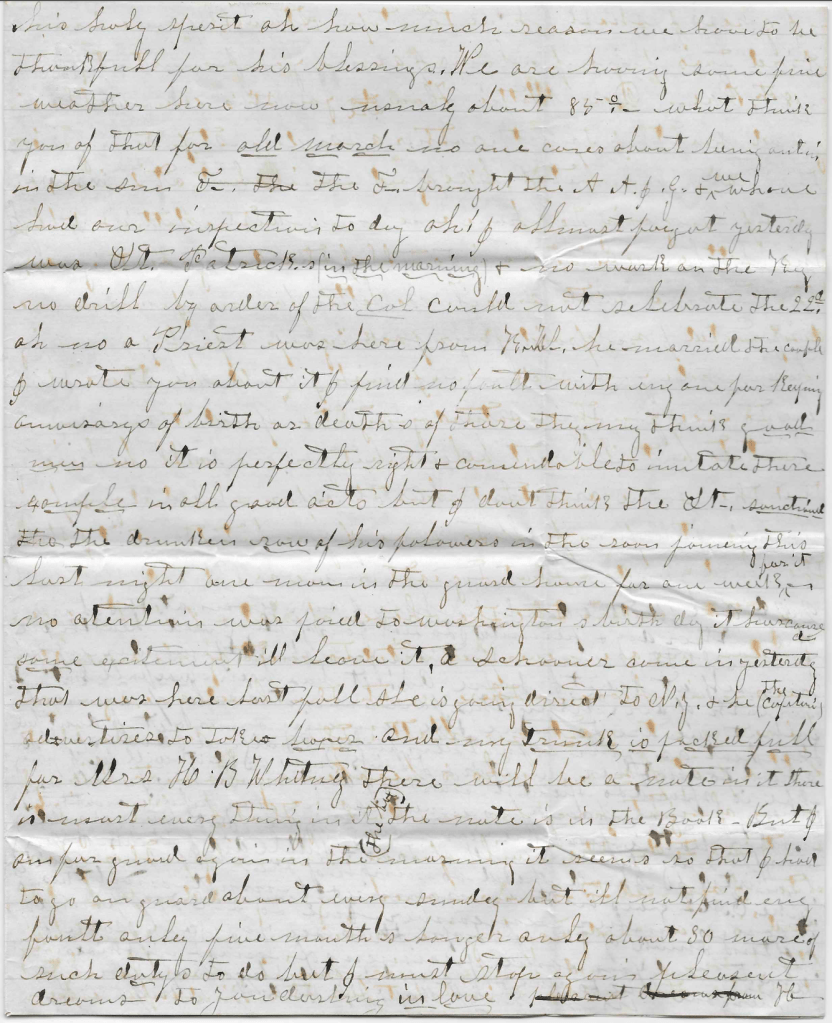
We are having some fine weather here now—usually about 85 degrees. What think you of that for old March? No one cares about being outside in the sun. The F. brought the A. A. J. G. & we have had our inspections today. Oh! I almost forgot. Yesterday was St. Patrick’s 9in the morning) and no work on the Key. No drill by order of the Colonel. Could not celebrate the 22nd. Oh no. A Priest was here from Key West. He married the couple—I wrote you about it. I find no fault with anyone for keeping anniversaries of birth or deaths of those they may think good men. No, it is perfectly right & commendable to imitate their example in all good acts. But I don’t think the Saint sanctioned the drunken row of his followers in the room joining his last night. One man in the guard house for one week for it. No attention was paid to Washington’s Birthday. It has caused some excitement. I’ll leave it.
A schooner come yesterday that was here last fall. She is going direct to New York & he (the captain) advertises to take [ ] and my trunk is packed full for Mrs. H. B. Whiting. There will be a note on it, There is most everything in it. The note is in the book.
But I am for guard again in the morning it seems so. I have to go in guard about every Sunday but I’ll not find any fault. Only five month’s longer. Only about 30 more of such duties to do. But I must stop again. Pleasant dreams to you darling. In love, — H
March 21st. Eve. Dearest wife. How do you do this warm, sultry eve? Well, I trust. I wish I knew you were as well as I am but it will be some time ere I shall know where you are and how you are enjoying yourself these times. I was in hope I should get a letter tonight for the E. M. came in. Only a few letters for Co. K. Nothing for me. Still hoping. Still trusting the Lord. What comfort and consolation there is, ain’t there darling?
That box is aboard the schooner Narria. She goes in the morning. I did not have time to write have I wanted to on the note that is in the book. There is some pressed moss in it too. There is in the paper box quite a variety of shells—perhaps you know the names of them. I’ll not try to tell you. I’ll send some more moss as soon as I get it pressed.
Did you ever get a receipt for the barrel of carrol? What was the charges on it? I hope the box will go through safe for there is many an hours hard work in the hot sun. Never a handful did I put in my pocket but I thought of her I was gathering them for & if they reach you I shall at least feel that I have in part repaid you for the many acts of kindness you have bestowed upon me. If I can never pay them, I can at least acknowledge the debt. There is some satisfaction in that.
But there is the drum & I must stop. Good night Mattie. In love, — H
22nd Eve. Mattie darling, here I am a going at the chore of another day and permitted to tell you of my good health. Are you well this eve? What are you about, I wonder? Enjoying yourself at least, I hope. Oh! it has been woeful hot—not a breath of air stirring this forenoon. It is only a forerunner of what we are to have the coming summer yet. I. don’t feel the heat as you Northern folks think we do & as I look ahead to another winter & think how cold it will be if my life is spared to spend ir North, I don’t know how I shall manage to keep warm, can you? Invent some way before another winter, Mattie, for one year now I have not seen it cold enough to bring the mercury down to 55 degrees. Little did I think when I enlisted I should spend so much of the time here [but] so it is.
The E. M. goes in the morning & I must mail this so it can go on her [way]. Remember me to all the friends. I often think of them and hope to see you all soon. I am going to send you some specimens of moss in this…Keep you ever in His holy keeping is the daily prayer of your, — Henry
Allie’s Headstone at the Oak Hill Cemetery in WDC.
This incredible and lengthy letter provides us with a vivid account of Fort Monroe, Yorktown, and Williamsburg from the perspective of a female civilian who was a native of Virginia and held strong secessionist views. Her name was Allie Catesby Jones (1836-1874) and I feel confident she was the same woman by that name who would later become the wife of Caleb Clapp Willard (1834-1905), possibly her cousin. Caleb, the son of Joseph and Susan (Dorr) Willard, was born in Vermont but came with his family to Washington D. C. about 1850. His older brothers, Henry and Joseph C. Willard, were then the proprietors of the Willard Hotel. After attending Washington Seminary, Caleb was schooled in the hotel business and sent, for his first assignment, when he was but 19 years old, to take charge of the Hygeia Hotel at Old Point Comfort which had a capacity of 1,000 guests and was the only summer hotel south of New York.
A yellow fever epidemic closed the hotel in the 1850s for a time but Caleb returned to partner with John Segar to purchase it and he had the exclusive management of the hotel until 1862 when the government ordered the hotel to be torn down because it interfered with military and naval operations. According to his obituary, Caleb was offered the privilege of superintending the destruction of the building which took two weeks. He then stayed on as a commissary storekeeper until 1864 when he went back to Washington, purchased the Ebbitts House, and became one of the wealthiest men in the District of Columbia.
I’m not certain of Allie’s parents but I believe she was the 13 year-old child named “Alice Jones” residing with Joseph and Catharine Weisiger in Hampton, Virginia, in the 1850 US Census. From her letter we learn that just prior to making the trip to Fort Monroe where this letter was datelined, she was living in St. Joseph, Missouri. She was married to Caleb on 8 September 1863 and the couple had two children, Katherine Dorr Willard who was born on 19 November 1864, and Walter Jones Willard born 1 December 1868.
Fortress Monroe, Old Point Comfort, & Hygeia Hotel in 1861-62
Transcription
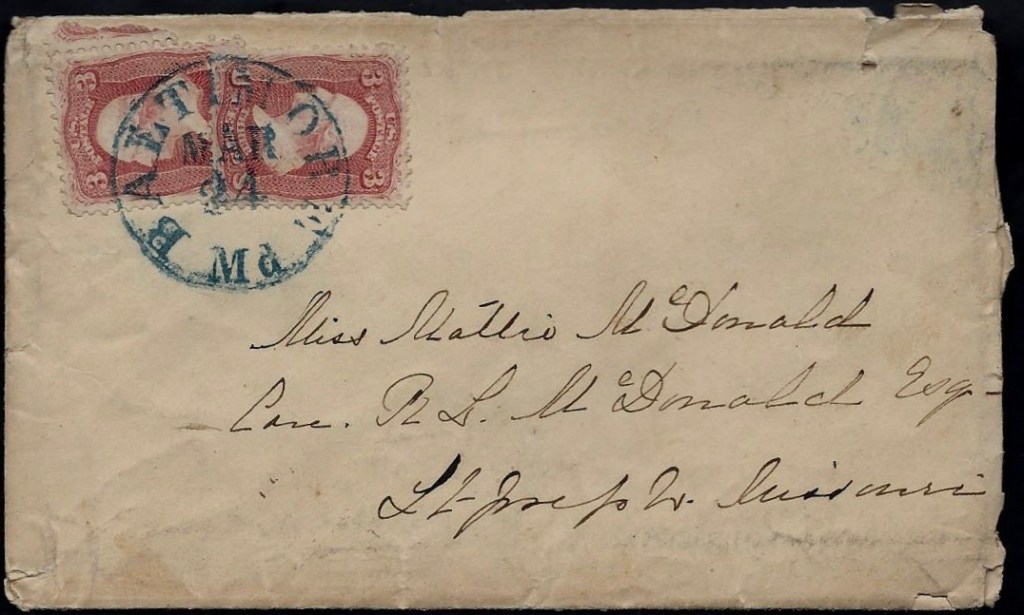
Addressed to Mattie McDonald, Care of R. S. McDonald, Esq., St. Joseph, Missouri
Near Fort Monroe March 22nd 1863
My dear friend,
There has not been an hour since I left you but my promise to write you has come up before me & I have not intended or wished to defer it so long. I have though been in one constant whirl of excitement & confusion & I did not think I could bring order out of such confusion & write such a letter as i should desire or you deserve. I am very far from being settled here now but my anxiety to hear from you all prompts me to write at all hazards. I need not tell you of our journey homeward—it consisted of the usual (no, I think ours was very unusual) amount of railroading, omnibus, shaking steam boating, & hotel stopping, of sight-seeing & shopping. So it was after being through all, after many tears and much sorrowing at leaving all all in dear St. Joe. we arrived in Baltimore on the Thursday following.
After we left Missouri, I sent a card to one very dear friend & she came at once to see me. We went shopping & such a world of lavishly beautiful goods—enough to make ones mouth water. Silks of the loveliest hues, laces fine as webs, & delicate as frost [ ] flowers which look as if they did have an odor—everything so tempting & such fabulous prices. I purchased a handsome black silk only and took to my friend Miss Fall’s, dressmaker. She only took a few measures and came out with the dress lining, fitting to perfection. I left the dress with her. I will give you an idea how fashionable dresses are made. It has four quillings, not flounces, on the shirt confined with velvet. The waist is plain. Two [ ] in front a deep point behind….Silks are very high $4.50 & 5.00 per yard.
After doing my shopping and seeing the secesh—and by the way, one of my purchases was a tiny gold microscopic view of Mr. Davis, Jackson, Bragg, Price, Lee, Morgan, Semmes & Beauregard—I left on Saturday evening and then was on the lovely Chesapeake, one side of whose waters have the shores of “My Maryland,” the other my own Virginia. We came down the bay in the lovely steamer Adelaide whose facsimile you have seen in my picture of Fort Monroe & we arrived at the fort on Sunday morning, three weeks ago today. Mr. Willard’s carriage was there for us & we came over to the Hotel—one of the loveliest places you can imagine.
This morning I just wish I had you here to examine the scenery. Fort Monroe is just a few hundred yards distant with its high stone walls & grim war dogs with the mouths pointed inland. The blue waters sparkle & dance in the sunlight. The first harbingers of spring are singing—the trees in foliage—a few flowers blooming, and everything looks bright & cheerful. But then I turn & look from another window into the country. Here lie fertile fields a waste, trodden hard by the vandals instead of growing crops, dotted all over with pitched tents, negro huts, no enclosure of any kind, lovely homes desecrated & occupied by the vandals. Many the tears I’ve shed over the desolations of my home. I find some friends here who being unable to leave have taken houses in the country. Everyone is glad to see me & this somewhat compensates for the regrets I had at leaving you all.
I have not been idle since coming here. Sister and myself & our Coz [cousin] procured a Pass from our “Old Massa”—Gen. Dix—and started to Williamsburg to see our old Aunt & her family. Coz Williard went so far as Yorktown with us. We went on a splendid steamer & arrived at Yorktown—the famous Yorktown—in the afternoon. There we procured another pass and walked around the fortifications—the same our brave Southerners had created. These were the same battlements over which the flags of our Young Confederacy had waved—the same paths where their feet had trodden—the same bold road which they had jogged upon. I must confess a thrill of joy shot through me as I remembered our Davis was here & his brave followers. I went to the house in which the “war council” was held when Davis and Lee said, “We can’t fight here, Magruder.” & he replied, “If I can’t whip them here, I can’t anywhere.” I took a piece off a tree from the yard, a piece at the gate through which they passed, and as bush overhung the gate, no doubt it has been touched by the sacred garments of our generals. We surveyed the place & after getting a few relics, returned to the boat where we remained all night.
Early next morning we took an ambulance kindly loaned by one of Gen. Keyes’ staff officers, & bidding Mr. Willard adieu, we started for Williamsburg—12 miles distant by the same road over which McClellan’s grand army pursued. I can’t describe my feelings as we passed through forests which I knew had echoed the tread of my friends over bridges which I knew had borne them. All along the road were entrenchments which my friends had thrown up—some only to mount one cannon & that to command the road.
After riding 10 miles we came to the battle ground, to “Fort Magruder”—only 3 miles from Williamsburg. Here stood the same fort but also how changed—not in outer appearance but in occupants. There lay the battlefield stretched out before me—trees shattered by cannon ball & everything quiet, as if no shrieks of dying men had risen from the earth. There is no vestige of the bloody conflict left—only a few large mounds beneath which lie some of our best men. We passed near enough to Fort Magruder to get some leaves from a tree on the parapet. We rode on and soon came in sight of the antique town, the first Capitol of Virginia. I did breathe freer to feel I was only a few miles from our capitol. Williamsburg is only about 80 miles distant.
As we passed through the streets, everything was familiar & here we see the splendid old Manor Houses built of imported brick, with high gable roofs, small windows, circular stone steps and mahogany stairways, large halls and [ ] so ancient and aristocratic one almost looks [ ]. Ladies in stiff, rustling brocades & gentlemen in shorts & powdered hair, descending the steps and promenading the halls.
We found our dear old Aunty’s family well—herself and two daughters. Our boy Jim to the wars. They have a fine large comfortable & well furnished house & plenty to eat, but everything so high. In them we saw secessionists indeed. I can’t hold a light to them & I cannot wonder when they tell us the outrages. They were in Williamsburg the day of the battle. Our army was retiring towards Richmond & the rear guard fights the battle. They tell me how our poor wounded were brought injured to the Ladies to care for. My two cousins went out & took two poor fellows to their home—almost every house had someone wounded in it. The churches were filled.
Our army left their wounded in Williamsburg & of course the Yankees coming in & taking possession found them. The Ladies of the place took linen sheets and pillow cases, fine bandages & everything for their comforts to them and carried everything for them to eat. Our wounded were badly treated by the Yankees. In the old church yard are about 60 graves, each one labeled. On each one is grown over with flowers and evergreens & hung with fresh wreaths everyday which tells the vandals who now possess the soil that they can never quench the spirit of the woman.
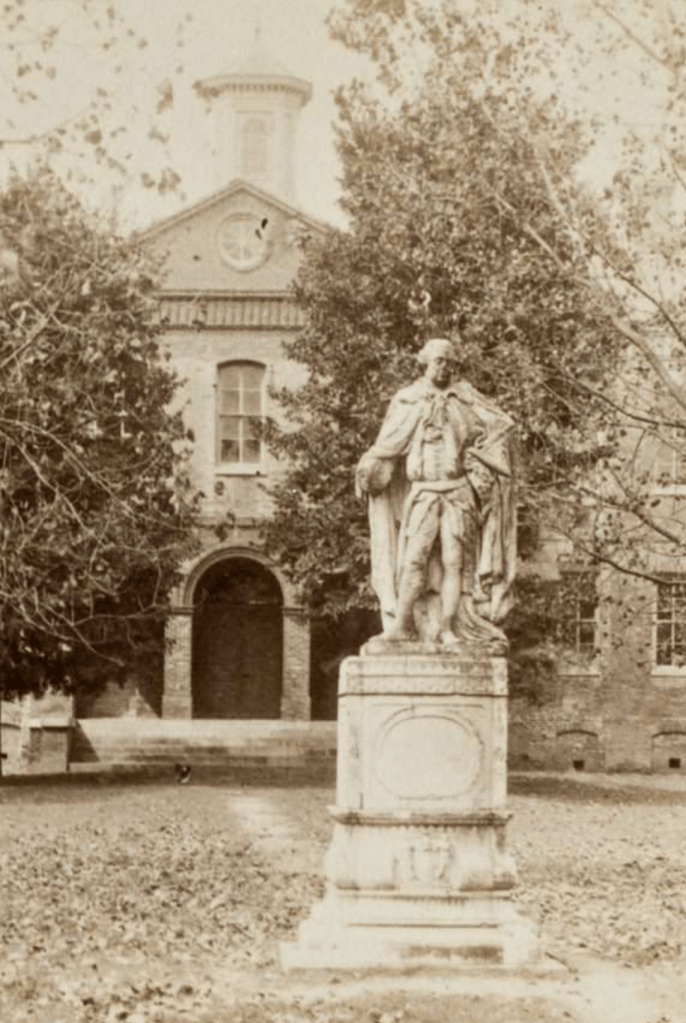
The Statue of Sir Norborne Berkeley at William & Mary College
We went out to see the town. There stands, fast falling to ruin, our “William & Mary College” where some of our bravest officers & men have received teachings. The college was burned by the Yankees 1 —now the blackened walls alone are there—no professors, no pupils. I took a piece of slate from the roof. In front of the college on the green is a splendid statue of Sir Norborne Berkeley, Gov. of the colony. This statue which has stood for years & never been defaced by her sons, is now shattered by her invaders, the hands broken off, the form defaced. 2
We go then to the “Lunatic Asylum” and here I saw the first genuine Confederate persons I’d ever seen. A Capt. Jeffreys, CSA. The lunatics are still there & though our people wish to take care of them, the Yankees won’t allow it. Capt. Jeffries was wounded in the Williamsburg battle & has never been well enough to move. He is so handsome and so warm-hearted. All of the old families are in the town & are very bitter against the Yankees. There are the Tuckers, the Southalls, the Douglasses, Wallers, Byrds & other of the FFV [First Families of Virginia]. There are no men in the town—only a few lazy villains who want to stay at home & enjoy after awhile the liberty our brave men are periling all for. The young ladies scorn them and call them Jeff’s girls, send them tiny articles of ladies wearing apparel. nibs, napkins, &c.
The Yankees say “the women of Williamsburg ain’t afraid of the Devil himself.” They tell me when the Confederates retreated through Williamsburg, the air was rent with sobs and cries of the ladies. As they would pass, they’d take off hats and say, “Goodbye ladies. God bless you. We hate to leave you.” and the girls cried themselves sick in bed. Sad the day, all tell me, to have them go & then have the despicable wretched come in. One yankee rode up to my cousin’s front window where she stood & pointed a pistol at her head. She ran from him & he followed on horseback [as she went from ] the house into the garden. She ran and he pursued until finally she dropped from fear and exhaustion and he then went off. Everyone has tales of horror to tell. We remained one week, visited all the noted places and came home laden with relics.
I must tell you of the late Confederate raid. Three weeks since one morning a body of rebels came in town. The Yankees fled as they came through. All the doors and windows long closed were opened & the ladies, old & young, welcomed them. The men said, “Good morning, ladies, how are you? You are looking very well considering the bad company you’ve been in.” Ladies asked, “Where are the Yankees? We are looking for them. Tell us where they are?” And all such fun. Tis said the Yankees ran away so fast, they did not ever mount their horses. We had a delightful visit & enjoyed the secesh talk. I heard on Sunday prayers for the “President of the Confederate States” & a southern sermon at the house of the Reverend Mr. [Thomas M.] Ambler, his church having been closed. 3
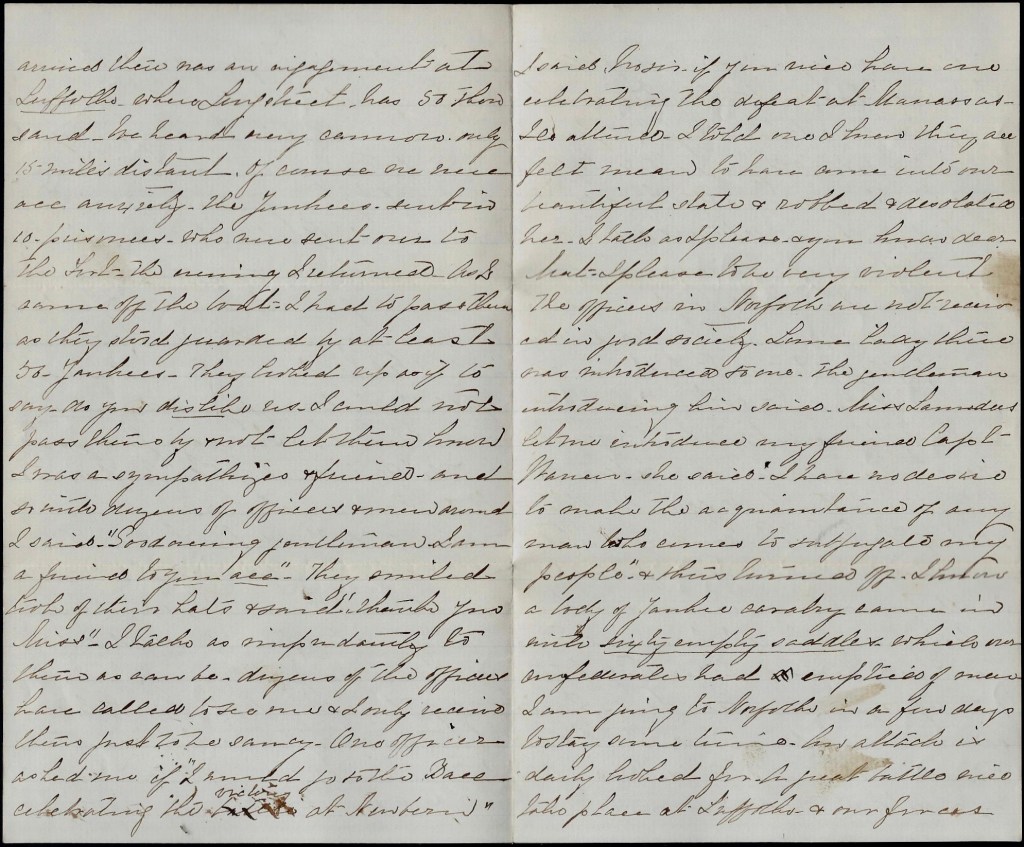
Since our return, I have been up to Norfolk to see my Mother’s family—such delight you never saw. They complain bitterly of the evacuation. I saw the obstructions in the harbor & all the forts around. Everything is quiet on the city but on the day after I arrived, there was an engagement at Suffolk where Longstreet has 50 thousand. We heard heavy cannon only fifteen miles distant. Of course we were all anxiety. The Yankees sent in 10 prisoners who were sent over to the Fort the evening I returned. As I came off the boat, I had to pass them as they stood guarded by at least 50 Yankees. They looked as if to say, do you dislike us? I could not pass them by and not let them know I was a sympathizer & friend and so with dozens of officers and men around I said, “Good evening gentlemen, I am a friend to you all.” They smiled, took of their hats, and said, “Thank you Miss.” I talk so impudently to them as can be—dozens of the officers have called to see me & I only receive them just to be saucy. One officer asked me if I would go to the Ball celebrating the victory at Newbern. I said, “No sir. If you will have one celebrating the defeat at Manassas, I’ll attend.”
I told one I knew they all felt mean to have come into our beautiful state and robbed & desolated her. I talk as I please & you know, dear Mat, I please to be very violent. The officers in Norfolk are not received in good society. Some lady there was introduced to one. The gentleman introducing him said, “Miss Saunders, let me introduce my friend, Capt. Warner.” She said, “I have no desire to make the acquaintance of any man who comes to subjugate my people!” and thus turned off. I know a body of Yankee cavalry came in with sixty empty saddles which our Confederates had emptied of men. I am going to Norfolk in a few days to stay some time. An attack is daily looked for. A great battle will take place at Suffolk & our forces victories will push on to Norfolk. Semmes has sent to the President today. He must have a port opened to take his valuable prizes to and Norfolk must be the one. An attack is daily looked for here. Batteries are moved. Gunboats in readiness & our Merrimack is dreaded. I hope to see the fight. I have seen some 50 prisoners sent by flag of truce to Richmond.
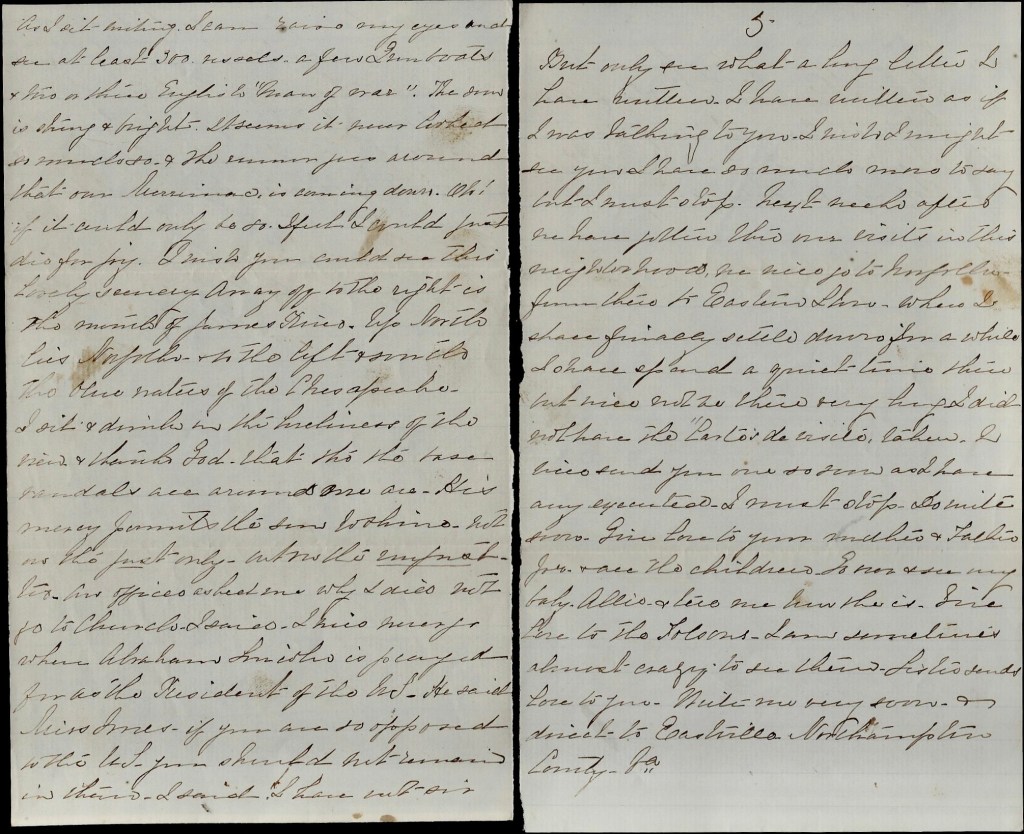
Your letter is too voluminous. It can’t fly twice but my brother in Norfolk tells me he can send a letter to Greensboro without difficulty. They talk of the USRR “underground railroad as if it was a fixed institution. I have seen several letters from the rebel army since I arrived. We are not ready yet to give up & prisoners tell me Davis scorns a compromise. Don’t believe newspaper stories. We are well off and determined as ever. But only see what a long letter I have written. I have written as if I was talking to you. I wish I might see you—I have so much more to say but I must stop.
Next week after we have gotten this our visits in this neighborhood, we will go to Norfolk [and] from there to Eastern Shore where I shall finally settle down for awhile. I shall spend a quiet time there but will not be there very long. I did not have the “carte-de-visite” taken. I will will send you one as soon as I have any executed. I must stop. Do write soon. Give love to the Folson’s. I am sometimes almost crazy to see them. Sister sends love to you. Write me very soon and direct to Eastvilla, Northampton county, Virginia.
As I sit writing I can raise my eyes and see at least 300 vessels, a few gunboats, and two or three English “Man of War.” The sun is shiny and bright. It seems it never looked so much so & the rumor goes around that our Merrimack is coming down. Oh! if it could only be so. I feel I could just die for joy. I wish you could see this lovely scenery. Away off to the right is the mouth of James river. Up north lies Norfolk. To the left & south the blue waters of the Chesapeake. I sit and drink in the loveliness of the view & thank God that though the base vandals are all around me, His mercy permits the sun to shine, not on the just only, but on the unjust too.
Two officers asked me why I did not go to church. I said, “I will never go where Abraham Lincoln is prayed for as the President of the U. S.” He said. “Miss Jones, if you are so opposed to the U. S., you should not remain in them.” “I have not, sir, I am in the Confederate States. Virginia is one of them & I think it best for invaders to leave & let those [alone] who will build her up.” I am going out for a ride this afternoon along the whitest and loveliest of shores. Again let me beg you to write soon. I am with all love and a kiss in my heart for you. Your affectionate friend, — Allie
I send you a piece of lox from the yard of the Nelson house where the Council of War was held & a piece from Fort Magruder. The first one at Yorktown. The last at Williamsburg.
1 The Wren (or Main) Building of the College of William & Mary was burned in September 1862, the fire started by Union soldiers from the 5th Pennsylvania Cavalry in retaliation for the surprise raid and capture of the provost marshal.
2 In 1797 the President and Professors of the College of William & Mary purchased the statue for $100. It was removed to the College in 1801, partially repaired, and placed in front of the Sir Christopher Wren Building in the College Yard, where, as a student of the day commented, “it cut a very handsome figure indeed.” There it remained for 157 years except for a brief period during the Civil War when it was placed for safekeeping on the grounds of Eastern State Hospital. [William & Mary Special Collections]
3 Rev. Thomas M. Ambler served the pulpit in the Bruton Parish Church in Williamsburg. His church was ordered closed in February 1863 by the provost marshal when Ambler refused to pray for the President of the United States.
The following letter was written by 36 year-old Gabriel C. Hulse—or Hulce (1826-1898), the son of Samuel H. Hulce (1777-1853) and Sally Plummer (1780-1859) of Deposit, Delaware county, New York.
Gabriel enlisted at Windsor to serve three years in Co. G, 89th New York Infantry. He was promoted to sergeant on 31 October 1861 but did not serve out his term; he was discharged for disability on 5 January 5, 1863 at Baltimore, Maryland. Gabriel was working as a school teacher at the time of enlistment in 1861.
As stated in his letter, Gabriel was married to Almyra Dickson (1838-1894) in 1854. Though Gabriel survived the war, he grew deranged as he advanced in years. In 1894, when the couple lived in Central City, Merrick county, Nebraska, Gabriel’s reason reached the breaking point. It seems that Gabriel slaughtered his wife by means of broad axe—four blows to the skull, any one of which would have been fatal. When Almyra’s sister found her body, a note was pinned to her shoulder in her husband’s handwriting which read,”P. M. Died, Sept. 11, 1894. Died without knowledge of pain. I would like the whole world to die as easily.” Gabriel was found hours after discovering Almyra’s body. He was still alive after having attempted to shoot himself with an old revolver, firing three times but did not succeed. He was declared insane and did not die until 1898.
Gabriel wrote the letter to his cousin, George W. Plummer (1815-1891) who lived in Athens, Bradford county, Pennsylvania.
Transcription
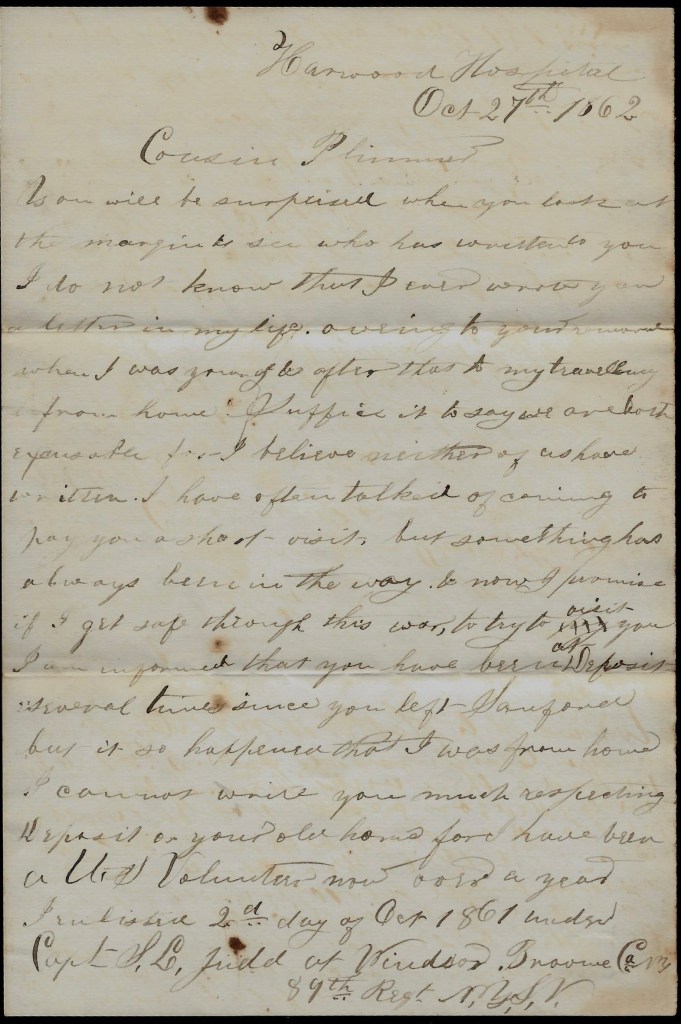
Harewood Hospital [Washington D. C.] October 27th 1862
Cousin Plummer,
You will be surprised when you look at the margin to see who has written to you. I do not know that I ever wrote you a letter in my life owing to your removal when I was young & after that to my traveling from home. Suffice it to say we are both excusable for I believe neither of us have written. I have often talked of coming to pay you a short visit but something has always been in the way & now I promise if I get safe through this war, to try to visit you. I am informed that you have been at Deposit several times since you left Sanford but it so happened that I was from home.
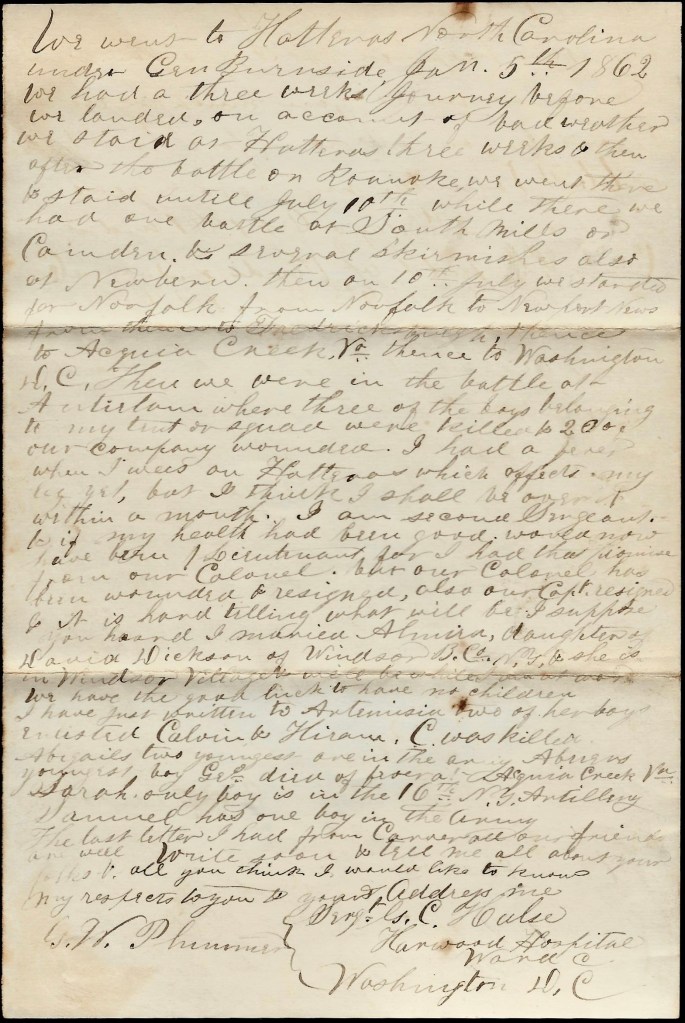
I cannot write you much respecting Deposit or your old house for I have been a US Volunteer now for a good year. I enlisted 2nd day of October 1861 under Capt. S. L. Judd at Windsor, Broome county, New York, 89th Regt. N. Y. S. V. We went to Hatteras, North Carolina under Gen. Burnside January 5th 1862. We had a three weeks journey before we landed on account of bad weather. We stayed at Hatteras three weeks and then after the battle on Roanoke, we went there and stayed until July 10th. While there we had one battle at South Mills, or Camden, & several skirmishes also at Newbern.
Then on 10th July, we started for Norfolk, from Norfolk to Newport News, from there to Fredericksburg, then to Aquia Creek, Va., then to Washington D. C. Then we were in the Battle of Antietam where three of the boys belonging to my tent or squad were killed; 20 of our company wounded. I had a fever when I was on Hatteras which affects my leg yet, but I think I shall be over it within a month.
I am second sergeant. If my health had been good, would now have been 1st Lieutenant for I had that promise from our Colonel. But our Colonel has been wounded and resigned. Also our Captain resigned & it is hard telling what will be.
I suppose you heard I married Almira, daughter of David Dickson of Windsor, Broome County, N. Y. and she is in Windsor Village and will be a while. We have the good luck to have no children. I have written to Artimesia. Two of her boys enlisted—Calvin 1 and Hiram. 2 Calvin was killed. Abigail’s two youngest are in the army. Abigail’s youngest boy George, died of fever at Acquia Creek, Va. Sarah’s only boy is in the 16th New York Artillery. Samuel has one boy in the army. The last letter I had from Conner, all our friends are well.
Write soon & tell me all about your folks and all you think I would like to know. My respects to you and yours. Address me: Sergeant G. C. Hulse, Harewood Hospital, Ward C, Washington D. C.
1 Calvin Ambrose Maxwell (1842-1863) was 21 years old when he was killed. He served in Co. B, 7th Illinois Cavalry.
2 James Hiram Maxwell (1845-1919) survived the Civil War.
Capt. Albert G. Mudgett (Digital Maine Repository)
The following letters were written by Albert Greenleaf Mudgett (1826-1903) of the 11th Maine Infantry. Albert was mustered in as 2nd Lieutenant of Co. H, was promoted to 1st Lieutenant of Co. G, and afterwards promoted to Captain of Co. D. He was later commissioned as Colonel but did not get an opportunity to serve as such, having been captured by the Confederates at Macon, Georgia, and held in captivity for nearly a year.
Albert was the son of Levi Mudgett (1781-1842) and Martha Ricker (1789-1893). He was married in 1851 to Cordelia A. Perkins (1826-1900) of Newburgh, Maine. After the war he moved to Waterville, Kansas, in 1870 and then relocated to Greenleaf, Washington county, Kansas, in 1884.
Letter 1
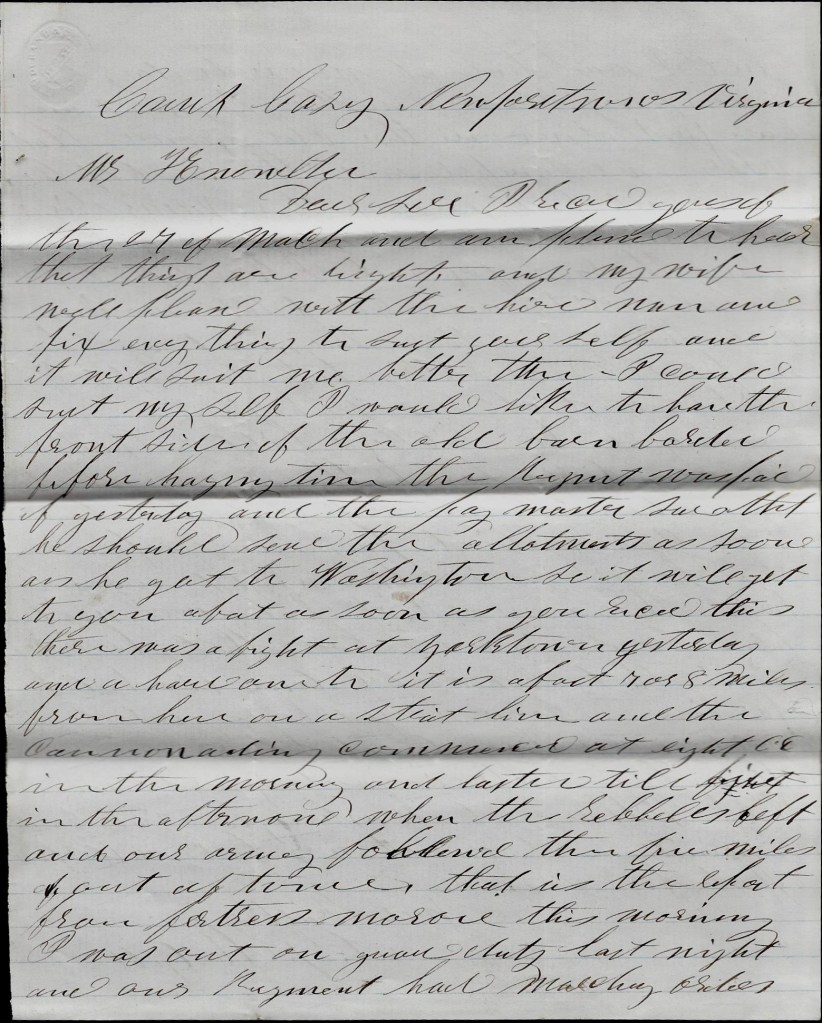
Camp Casey Newport News, Virginia [April 1862]
Mr. J. Knowlton, dear sir,
I received yours of the 27th of March and am pleased to hear that things are alright and my wife well pleased with the hired man. Fix everything to suit yourself and it will suit me better than I could suit myself. I would like to have the front side of the old barn boarded before haying time.
The regiment was paid off yesterday and the paymaster said that he should have the allotments as soon as he got to Washington so it will get to you about as soon as you receive this.
There was a fight at Yorktown yesterday and a hard one too. It is about 7 or 8 miles from here on a straight line and the cannonading commenced at eight o’clock in the morning and lasted till five in the afternoon when the rebel left and our army followed them five miles out of town. That is the report from Fortress Monroe this morning.
I was out on guard duty last night and our regiment had marching orders and I was relieved at noon today by a company from another regiment and have just arrived on the old ground where we camped and the rest of the regiment had gone up the James River ten miles and I have set the boy to getting the supper and I thought I would write and camp till morning and then join the regiment as I have no pilot. I had rather take daylight asa it is most all woods here.
In regard to Ricker’s bill, I think he has got his pay pretty well according to all accounts but if you think it best to pay the miserable devil, pay him. I suppose that he will go in the night and destroy twice the amount if I don’t. I wrote him as soon as I heard that he was gone that I would tan his hide for him as soon as I got home and I will if I live to get home.
The boys health is good generally. We left William at Washington sick with rheumatism but not very bad. we shall expect him soon. Yours truly, — A. G. Mudgett
Dear sir. We have had a quiet time since the brush we had here the last of May but I think we may celebrate the Fourth in good shape. They have ben planting siege guns all round them and when the time comes it will be a big fight. Our regiment don’t amount to much anyway. There is not over 150 effective men in it. They worked the to death before we got here. Our regiment had to go ahead and take all the hard knocks and used the men up.
Col. Harris M. Plaisted (Maine State Archives)
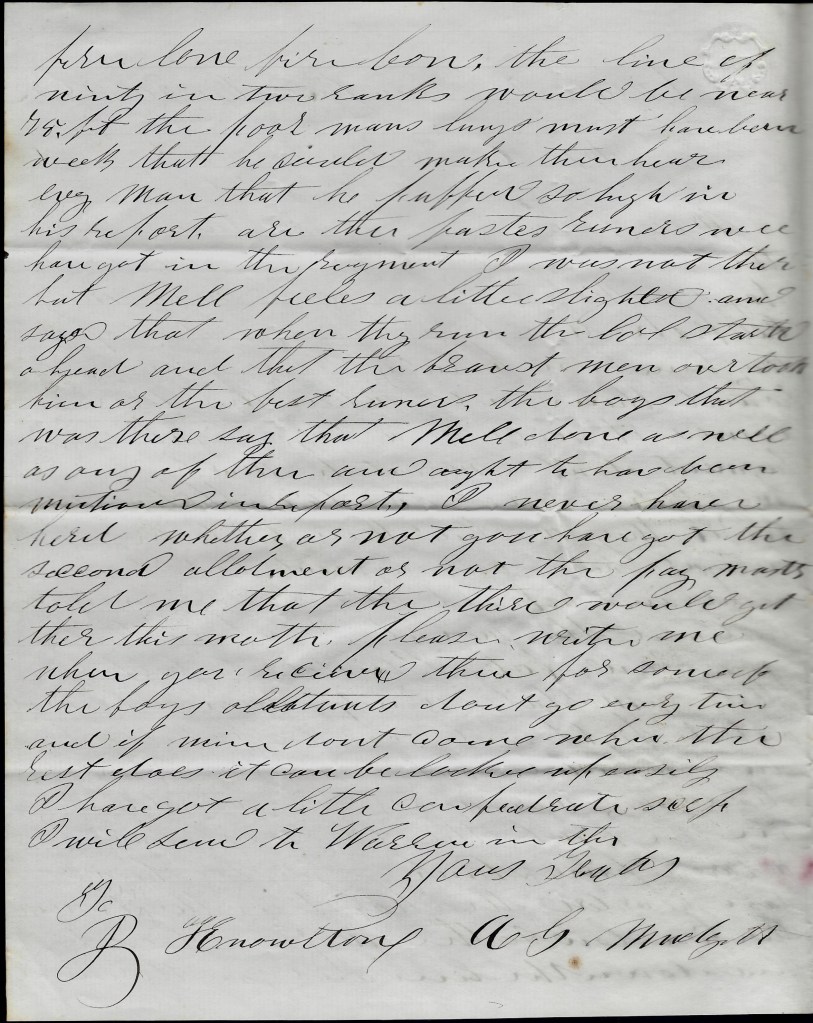
I suppose that you saw Col. [Harris M.] Plaisted’s report of that immortal ninety men who went out to fight and was half killed and wounded. But as near as I can learn they were nearly all wounded in the back. The Colonel was behind a large pine stump so you see he was safe. He ordered the Major [Robert F. Campbell] down the line to make them fire low so the Major walked up and down the line and gave the command, “Fire low! Fire low!” The line of ninety in two ranks would be near 75 feet. The poor man’s lungs must have been weak that he could make them hear. Every man that he puffed so high in his report are the fastest runners we have got in the regiment. I was not there but Mell feels a little slighted and says that when they run, the Colonel started ahead and that the bravest men overtook him—or the best runners. The boys that was there say that Mell done as well as any of them and ought to have been mentioned in the report.
I never have heard whether or not you have got the second allotment or not. The pay master told me that the third would get there this month. Please write me when you receive this for some of the boys allotments don’t go every time and if mine don’t come when the rest does, it can be looked up easily.
I have got a little Confederate sc__. I will write to Warren in this. Yours truly, — A. G. Mudgett
The following letter was written by Edward Seymour Holcomb (1826-1865) of Williamson, New York, who enlisted at the age of 35 to serve three years in Co. E, 111th New York Regiment on 12 August 1862. He was later transferred to Co. B, 12th Veteran Reserve Corps and discharged from the service on 22 March 1865 at the Armory Square Hospital in Washington D. C., but died of disease before leaving the hospital. He was buried at Arlington according to their records; another source says his body was sent home.
In his letter, Edward describes the journey from Auburn, New York, to Harper’s Ferry where they arrived just some two or three weeks after they were mustered into service, with little or no drilling to prepare them for duty. Being at Harper’s Ferry, they were one of the unfortunate regiments surrendered to Stonewall Jackson’s men the following month when Lee made his invasion into Maryland. The men were paroled at Camp Douglas, Chicago, and in Dec., 1862, were declared exchanged and went into winter quarters at Centerville, Va.
Edward was the son of Chester Holcomb (1804-1865) and Catherine Beebe (1800-1841.
Transcription
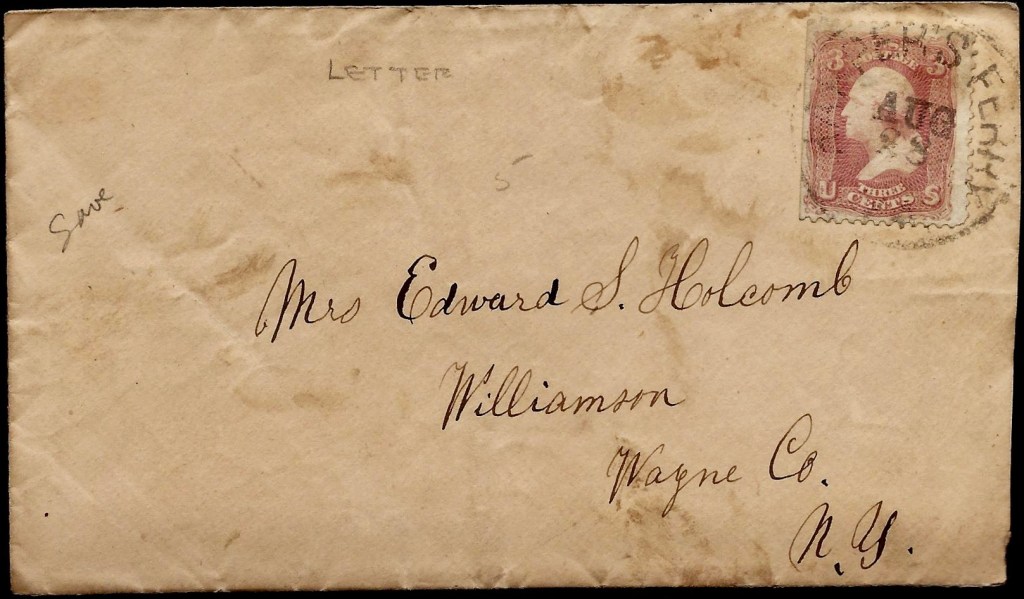
Addressed to Mrs. Edward S. Holcomb, Williamson, Wayne county, New York
Camp Halleck near Auburn August 19th 1862
My dear wife,
have sent you by the hand of Mr. Stanton of Marion seventy-five dollars and the key to the satchel on a ring with another key. I expect now I shall have to send the satchel by Express. Have not received our 13 & 2 dollars yet. Expect it every moment by Mr. Standton is ready to go. I will send you more by mail.
I want two of those coarse shirts, the small ones, but how can I get them & there are lots of things I want but must go without.
5 o’clock. Well we have received thirteen dollars more in United States bills everybody that can is here today. Colonels, Adjutants, Commissioners, & I do not know what else among the rest.
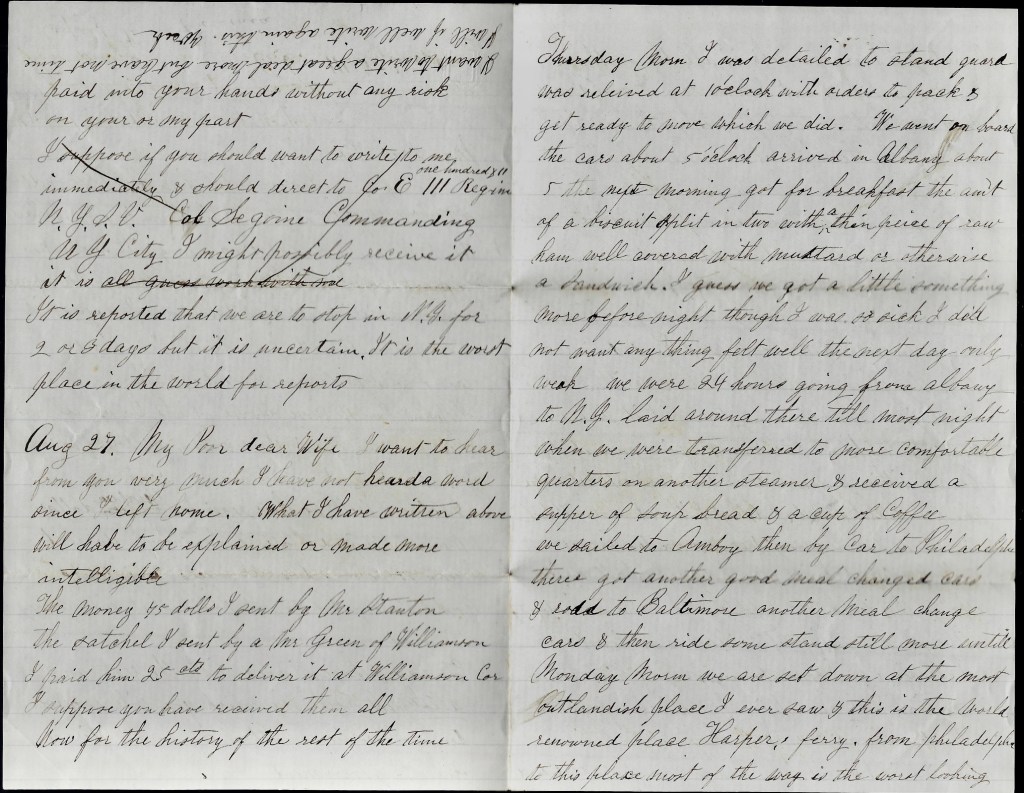
Today I have signed with the rest an allotment roll by which you will receive ten dollars per month of my wages direct from the government paid into your hands without any risk on your or my part.
It is reported that we are to stop in New York [City] for two or three days but it is uncertain. It is the worst place in the world for reports.
August 27. My poor dear wife, I want to hear from you very much. I have not heard a word since I left home. What I have written above will have to be explained or made more intelligible.
The money 75 dollars I sent by Mr. Stanton, the satchel I sent by a Mr. Green of Williamson. I paid his 25 cents to deliver it to Williamson Cor. I suppose you have received them all.
Now for the history of the rest of the time. Thursday morn I was detailed to stand guard. Was relieved at 1o’clock with orders to pack and be ready to move which we did. We went on board the cars about 5 o’clock, arrived at Albany about 5, the next morning got for breakfast the amount of a biscuit split in two with a thin piece of raw ham, well covered with mustard or otherwise a sandwich. I guess we got a little something more before night though I was so sick I did not want anything. Felt well the next day—only weak.
We were 24 hours going from Albany to New York [City], laid around there till most night, when we were transferred to more comfortable quarters on another steamer & received a supper of soup, bread, and a cup of coffee. We sailed to Amboy, then by cars to Philadelphia. There we got another good meal, changed cars, and rode to Baltimore. Another meal, change cars, and then ride some, stand still more, until Monday morn we are set down at the most outlandish place I ever saw & this is the world renowned place, Harper’s Ferry. From Philadelphia to this place most of the way is the worst looking country I ever saw. Why, if all the southerner’s country is like what I have seen, I would not pay one half of the expenses of the war if I could have the whole of it—negroes and all.
Well, to sum up. We came from Auburn here starting Thursday towards night and getting into our camping ground Monday afternoon, following receiving some days one and some[times] two meals a day. There is probably a great glory in war but I say good Lord, deliver me from the glory.
Perhaps I have written too much in a complaining tone but it makes me mad to think of—500 men staying on a dirty barge within a few rods of the largest city on the continent all day without a mouthful to eat, or I should say 1,000 men on two barges. Well, I cannot write all today. I shall write again this week & I hope to make a more interesting letter or a more intelligible one at least. I shall send you some money in my next letter if nothing happens.
Kiss the children for me & keep up good courage. I shall come home in the spring if I do not before, I hope. Yours affectionately, — Edward
Direct to E. S. H., Co. E, 111th [New York] Regiment, Harper’s Ferry, Virginia
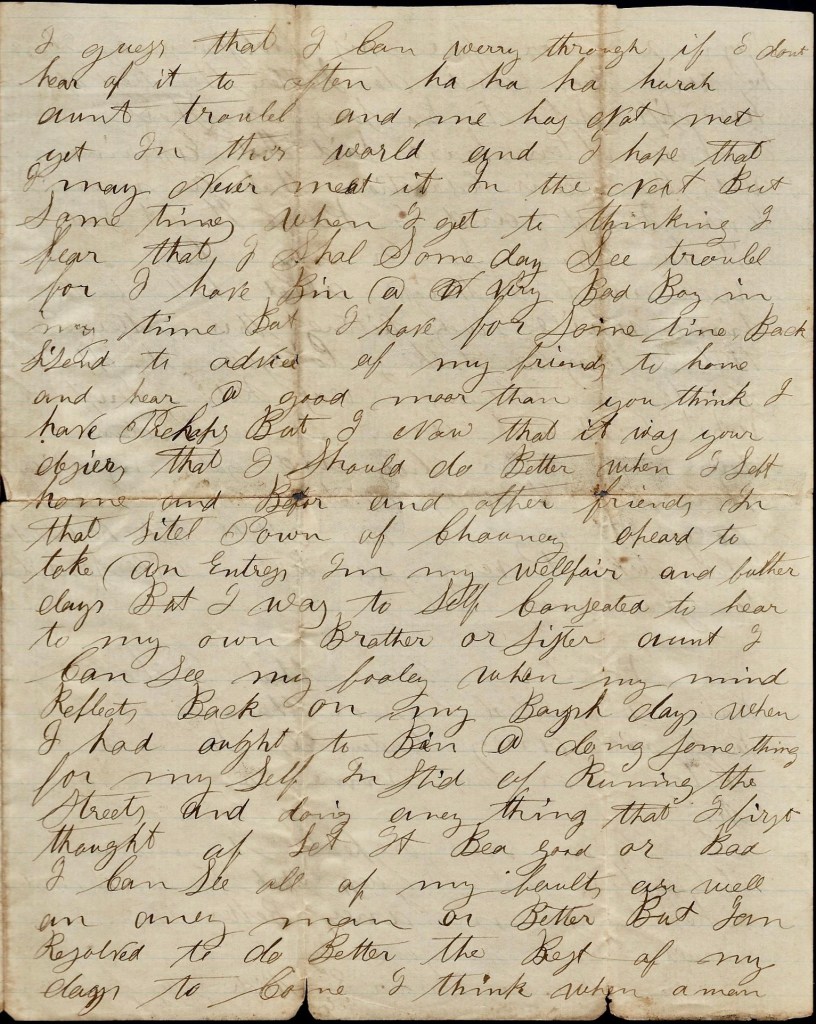
This letter was written by Benjamin F. Stalder (1841-1906) who entered the service in Co. A. as a private in the 63rd Ohio Infantry in August 1861. He transferred to Battery C, 3rd Michigan Light Artillery on 16 January 1864. He wrote this letter from Corinth, Mississippi, in April 1865 while serving in the artillery.
Benjamin was born in Chauncey, Athens county, Ohio. His parents were Andrew James Stalder (1814-1896) and Mary Frances (“Fanny”) Schoonover (1816-1869). He wrote the letter to his aunt, Jane Acton (b. 1823), the wife of Stephen Action. Her maiden name was Schoonover.
I was uncertain of the year this letter was written until I read of the marriage of Wealthy Springer which took place in August 1864. Therefore, this had to have been written in April 1865.
Transcription
Corinth, Mississippi April 3rd 1865
Dear Aunt,
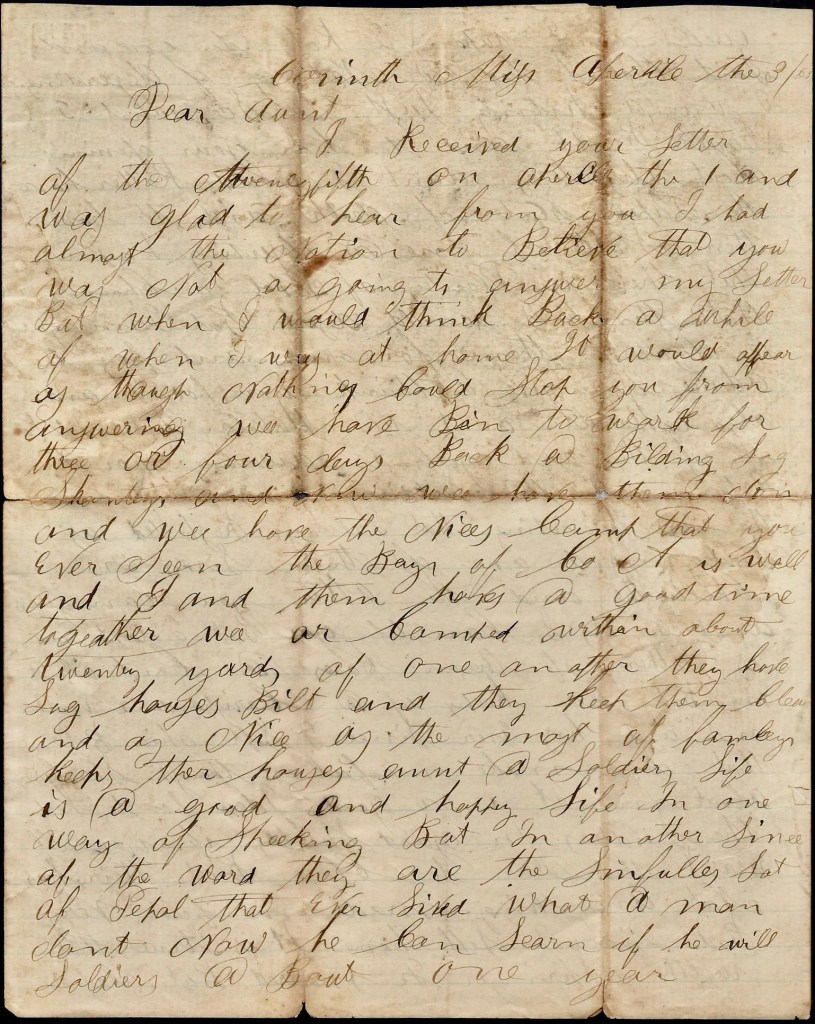
I received your letter of the 25th on April the 1st and was glad to hear from you. I had almost the notion to believe that you was not a going to answer my letter but when I would think back a while of when I was at home, it would appear as though nothing could stop you from answering.
We have been to work for three or four days back a building log shanties and now we have them done and we have the nicest camp that you ever seen. The boys of Co. A is well and I and them have a good time together. We are camped within about twenty yards of one another. They have log houses built and they keep them clean and as nice as the most of families keep their houses.
Aunt, a soldier’s life is a good and happy life in one way of speaking, but in another sense of the word, they are the [most] sinful set of people that ever lived. What a man don’t know, he can learn if he will soldier about one year.
Well, Aunt, when I wrote to you and said that I had a notion of deserting, I was a writing just to see what I could write and to hear your opinion about deserting. Aunt, I would rather have the papers state of death than to have them state of me a deserting. I know that there is plenty of people in Chauncey that think I would desert, but I am a going to disappoint them for once, and for the advice you give, I thank you for it, and also Mahala. Aunt, tell Mahala that I know all of the good girls is waiting for the return of the soldiers. I know of two that is a waiting that I always respected as Ladies and one of them lives in Chillicothe and the other you can guess as well as I can tell you. But I don’t know as as either of them care a cent about me but one keeps up a correspondence with me and has ever since I left Ohio. But that don’t make me feel as though she cares about me,
It is a good idea for to keep the soldiers in good spirits if you all want this war to close but there has not anything made me feel very bad since I left home. It is true that Weath Springer is married. 1 But alas, I guess that I can weary through if I don’t hear of it too often. Ha ha ha harah. Aunt, trouble and me has not met yet in this world and I hope that I may never meet it in the next. But some times when I get to thinking, I fear that I shall some day see trouble for I have been a very bad boy in my time. But I have for some time back listened to advice of my friends to home and hear a good more than you think I have perhaps. But I know that it was your desire that I should do better when I left home and before and after friends in that little town of Chauncey appeared to take an interest in my welfare and farther days. But I was too self-conceited to hear to my own brother or sister.
Aunt, I can see my folly when my mind reflects back on my boyish days when I had ought to been a doing something for myself instead of running the streets and doing anything that I first thought of, let it be good or bad. I can see all of my faults as well as any man or better. But I’m resolved to do better the rest of my days to come. I think when a man pays as dear for his foolishness as I have, he will try and do better the rest of his life, let it be long or short. I have often heard it said that experience was the dearest education that a man ever bought and I believe it—at least it has been so in my case.
Well, Aunt, I thought about half of the time while I was writing this letter that I was a talking to you. It appeared so to me because I was writing just what I thought. Aunt, I went down town the other day and got my picture taken but it was not a good one for it was so near night that he could not take it very good. But I will send it to you anyhow.
Well, I guess that I have wrote a good deal more than you can read or anybody else so I will close for this time by saying goodbye. Give my respects to Mahala. Tell her that I guess that she would not like to see me any better than I would her. So goodbye. — B. F. Stalder, 3rd Michigan Battery, Corinth
[to] Aunt Jane Acton
1 Wealthy Ann Springer (1843-1927) was married on 18 August 1864 at Athens, Ohio.
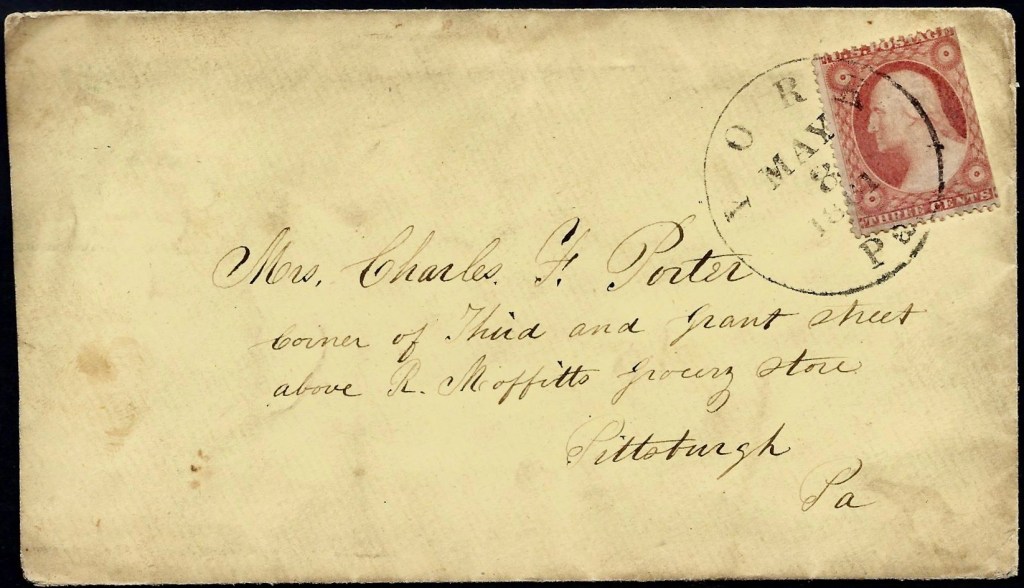
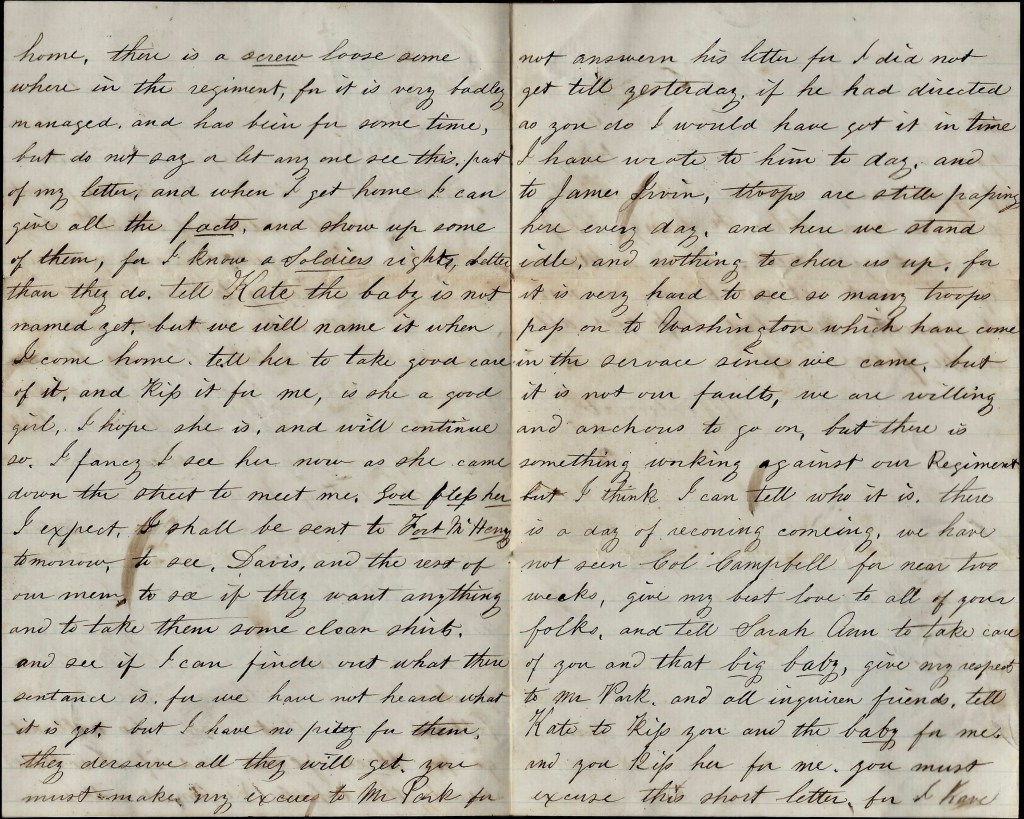
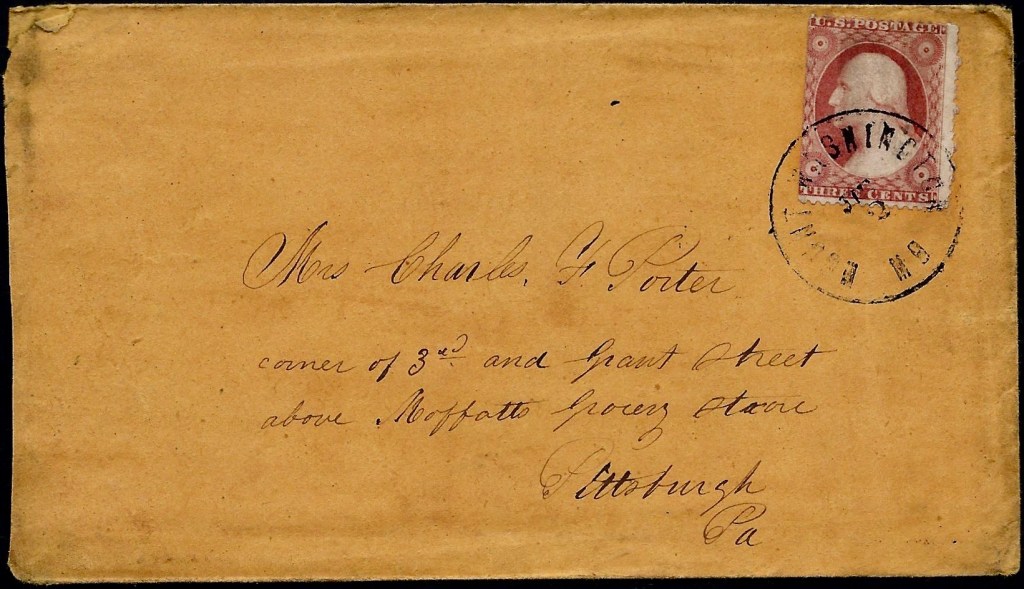
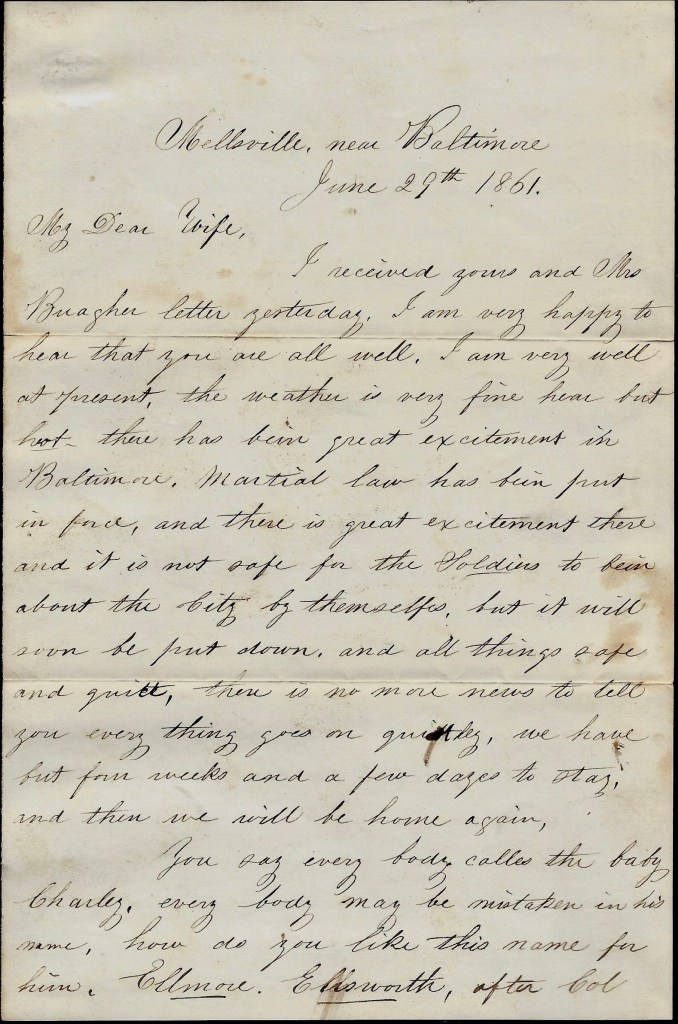
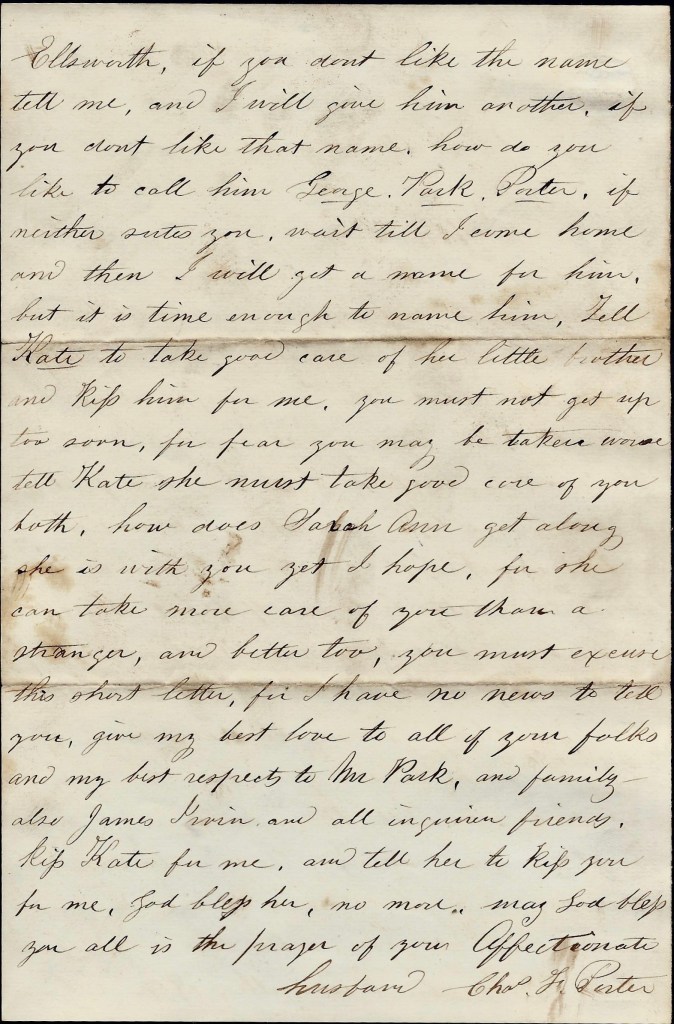
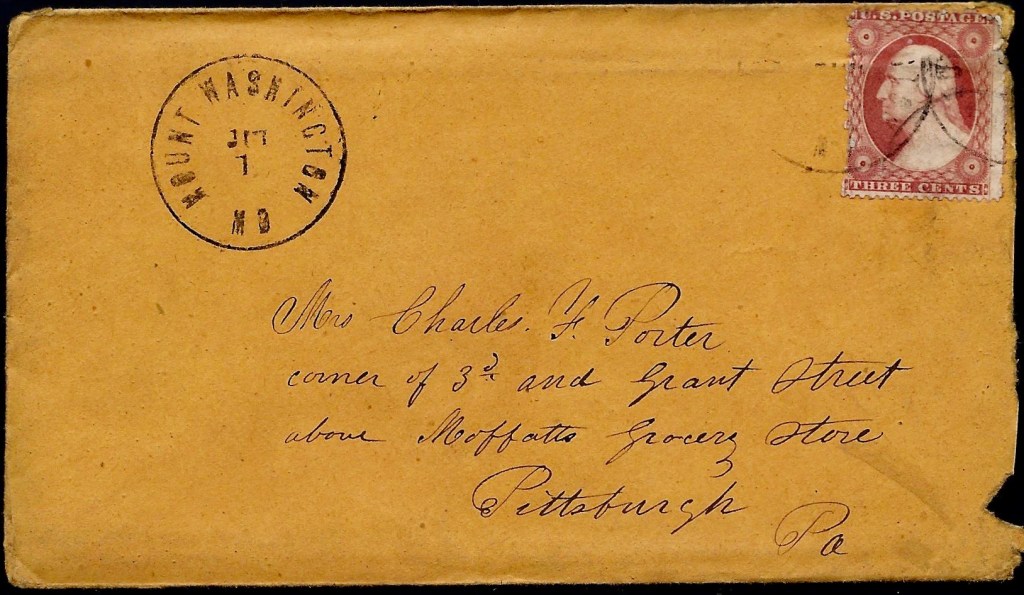
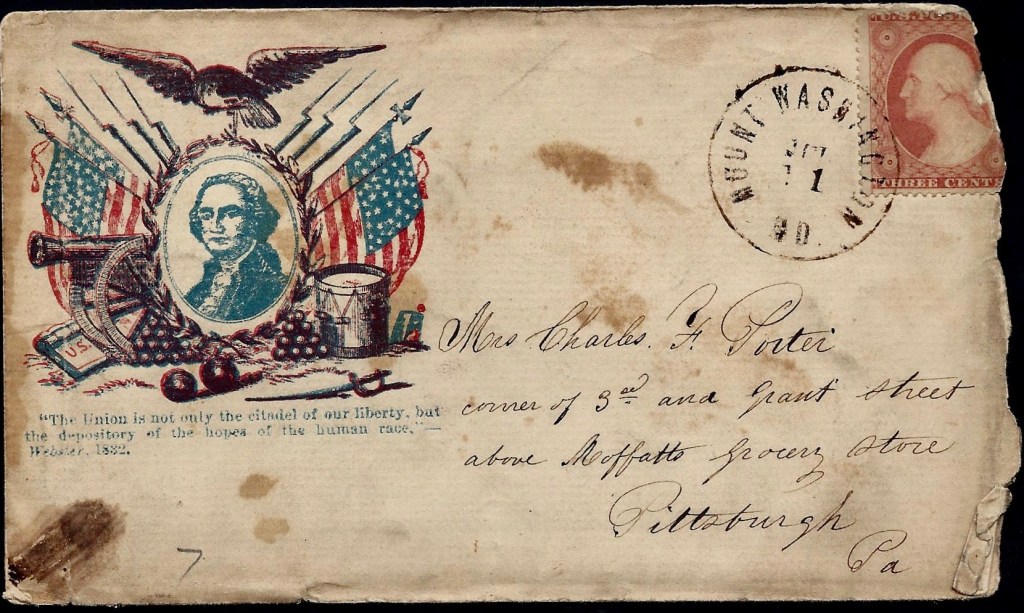
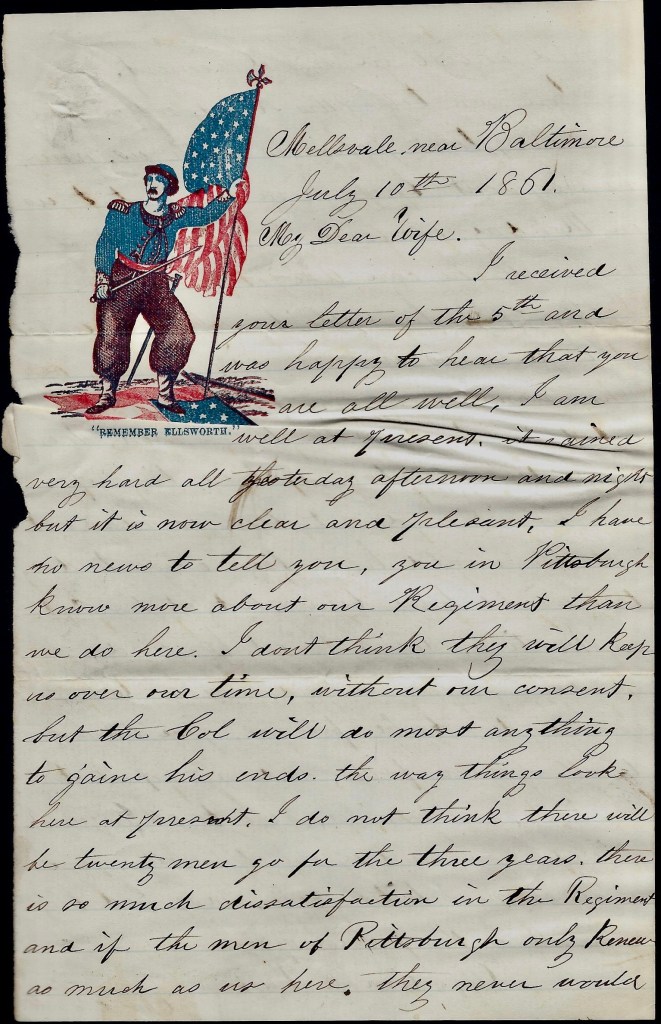
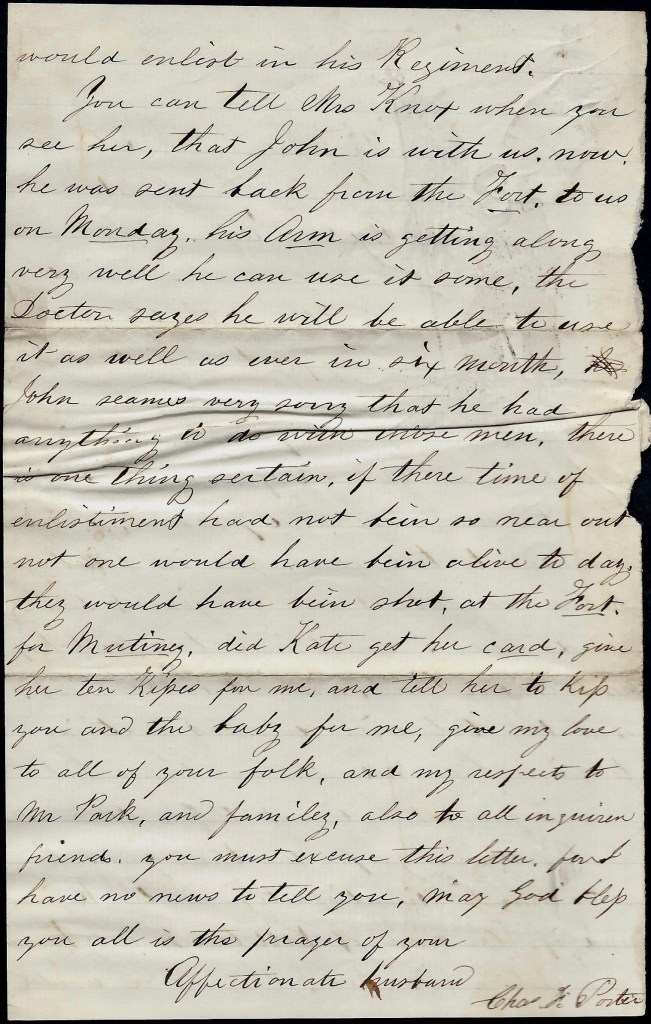
The following letters were written by Charles F. Porter (1822-1872) who served as a Lieutenant in Co. C, 12th Pennsylvania Infantry (3 Months). Charles was mustered into the service on 25 April 1861 and mustered out on 5 August 1861.
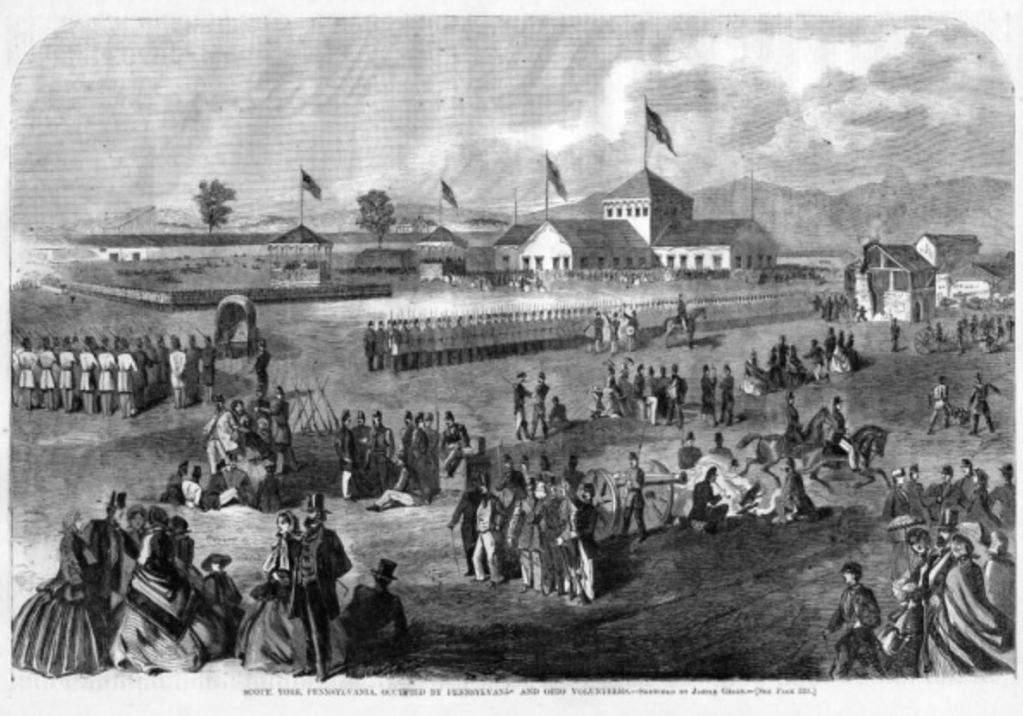
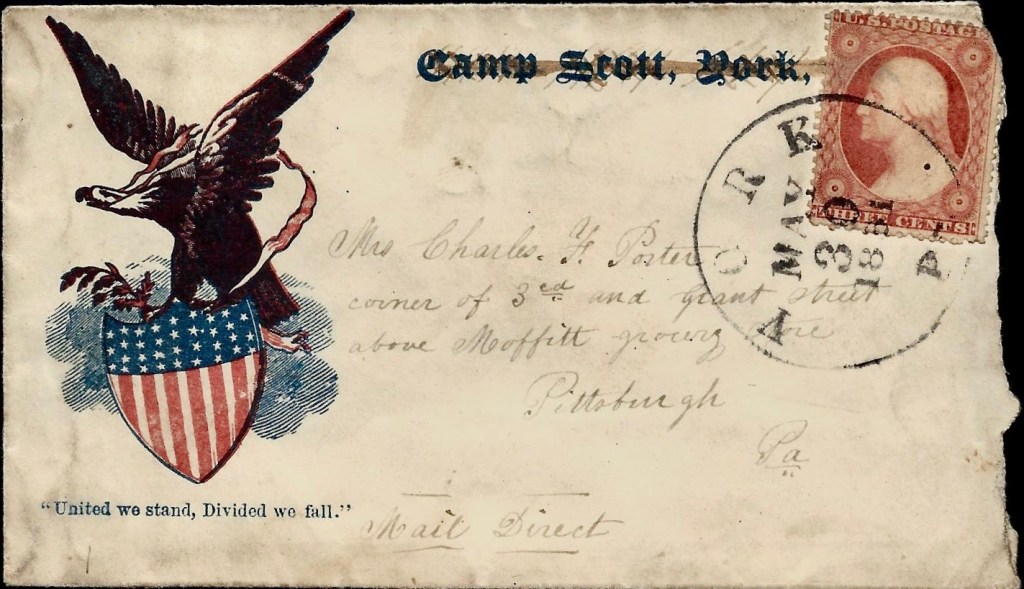
After training several weeks at Camp Scott in York, Pennsylvania, the 12th Pennsylvania received their uniforms and equipment on 19 May and then relieved the 1st Pennsylvania Regiment along the Northern Central from the Pennsylvania–Maryland border to Baltimore on 25 May; the Northern Central provided an important connection between Harrisburg and points further north, Baltimore, and Washington, D. C. to the south. Regimental headquarters and Companies I and K were located at Cockeysville, while the remaining companies were spread out along the railroad; it was assigned to the 3rd Brigade of the 1st Division of Patterson’s Army (the Department of Pennsylvania). Though the regiment had initially been thrilled at the news of its movement, it quickly found guarding the railroad monotonous, and desired action. The regiment did not train as a unit while guarding the railroad due to its dispersed positions, although Companies I and K conducted daily drill.
Camp Scott in York, Pennsylvania, May 1861
Letter 1
Little York York County, [Pennsylvania] April 26th 1861
My Dear Wife,
We left Harrisburg yesterday, after being mustered in to service, and got here at 10 o’clock all. well, and in good spirits, and found nothing ready for us but will be in camp today. We do not know when we leave, nor do we know where we go to. We were only allowed to take 64 men out of 90. John Moffitt was discharged. They would not take him and I think from what I see of the service, he could not stand it. We were not allowed three lieutenants so one of us had to leave. We drew lots who should leave and Charles Lewis had the leave straw, so I am 1st Lieutenant and Mr. [William S.] Collier is in my place. So I have went up one grade and I may still, if things go right, go still higher. When you write, direct to Lieut. Charles F. Porter, care of Col. David Campbell, 1 Second Regiment, Western Brigade, Pennsylvania Volunteers, and it will be sent to him and I will get it.
Poor Kate, how does she get along? Tell her to be a good girl and kiss her.
My uniform is spoiled with the rain on the day we left. The cloth was not sponged and it shrunk nearly off my back. 2 I have sent to him for another, and I wish you would go and see him, Mr. Frowenfeld & Bro., in the Bank Block on Fifth Street upstairs and see about it. 3 And tell him to sponge the cloth. Write soon. I shall have to close for my time is up. May God bless you and take care of you. Kiss Kate for me and tell her to kiss you for me. Keep up your spirits for there is hope for us all. God bless you all is the prayer of your affectionate husband, — C. F. Porter
P. S. Tell Mrs. Knox, John is with is and well.
1 David Campbell recruited the 4th Pennsylvania Cavalry (64th Regiment) in September 1861. He had previously commanded the Twelfth Regiment in the three months’ service, and previously a militia company of considerable repute in the city of Pittsburgh.
2 Sponging is a textile finishing process that involves the use of steam and water to moisten and condition the fabric before it is cut and sewn into garments or other products. The process can improve the quality and appearance of the fabric, making it easier to work with and enhancing its overall performance. Sponged wool made for better uniforms to prevent shrinkage.
3 Frowenfeld & Bros., wholesale clothiers, was located on 31 Fifth Street.A notice appearing in the Philadelphia Inquirer on 21 May 1861 alleged that Frowenfeld & Bros. defrauded the state by supplying Pennsylvania regiments with clothing of such poor quality that the soldiers actually suffered.
Letter 2
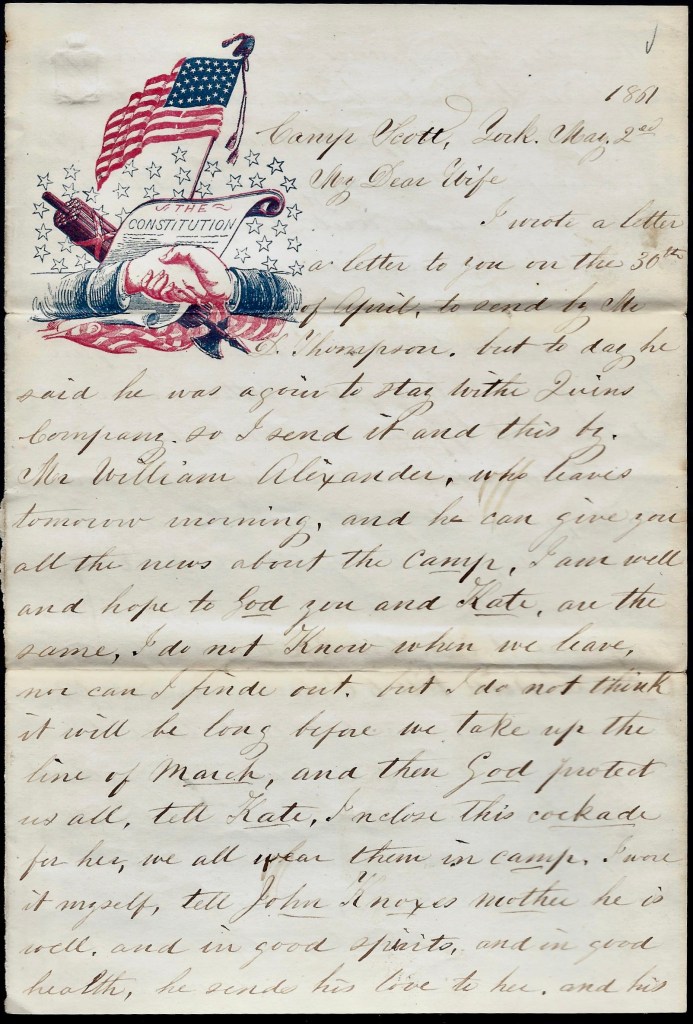
Camp Scott York [Pennsylvania] May 2nd 1861
My Dear Wife,
I wrote a letter to you on the 30th of April to send by Mr. D. Thompson but today he said he was a going to stay with Quinn’s Company so I send it and this by Mr. William Alexander who leaves tomorrow morning and he can give you all the news about the camp. I am well and hope to God you and Kate are the same. I do not know when we leave, nor can I find out, but I do not think it will be long before we take up the line of march, and then God protect us all.
Tell Kate I enclose the cockade for her. We all wear them in camp. I wore it myself. Tell John Knox’s mother he is well and in good spirits, and in good health. He sends his love to her and his little girl. Tell James Irvin when you see him to write to me. He has wrote others in the camp but not to me, so you can jog his memory about it. Tell Mr. Parks I will write to him the first spare moment, I get, and give him my best respects, and kind regards. Also to his family. And tell him I think very often of him. Have they got a letter carrier yet at the Post Office.
Our whole time is now taken up in drilling. Company drills from 6 to 7 o’clock, then breakfast, then drill from 8 to 9 o’clock, regimental drills from 10 till 12, then dinner, the company drills till 2:30 o’clock, the Brigade drill till 5 o’clock, supper at 6 o’clock. So you see we have but little time to ourselves. Mr. Alexander can tell you all when he delivers this. He don’t like camp duty much and won’t enlist so he comes home. He is wise in so doing, for a soldier’s life would not do for him. He is too slow. Everyone has to take care of himself here and one who does not, it not fit for such a life.
But I must close. He will soon be for this letter and I must go to drill. So no more. Kiss Kate for me and tell Kate to kiss you for me. May God bless you all is the prayer of your affectionate husband, — Charles F. Porter
Letter 3
Camp Scott York [Pennsylvania] May 11, 1861
My Dear Wife,
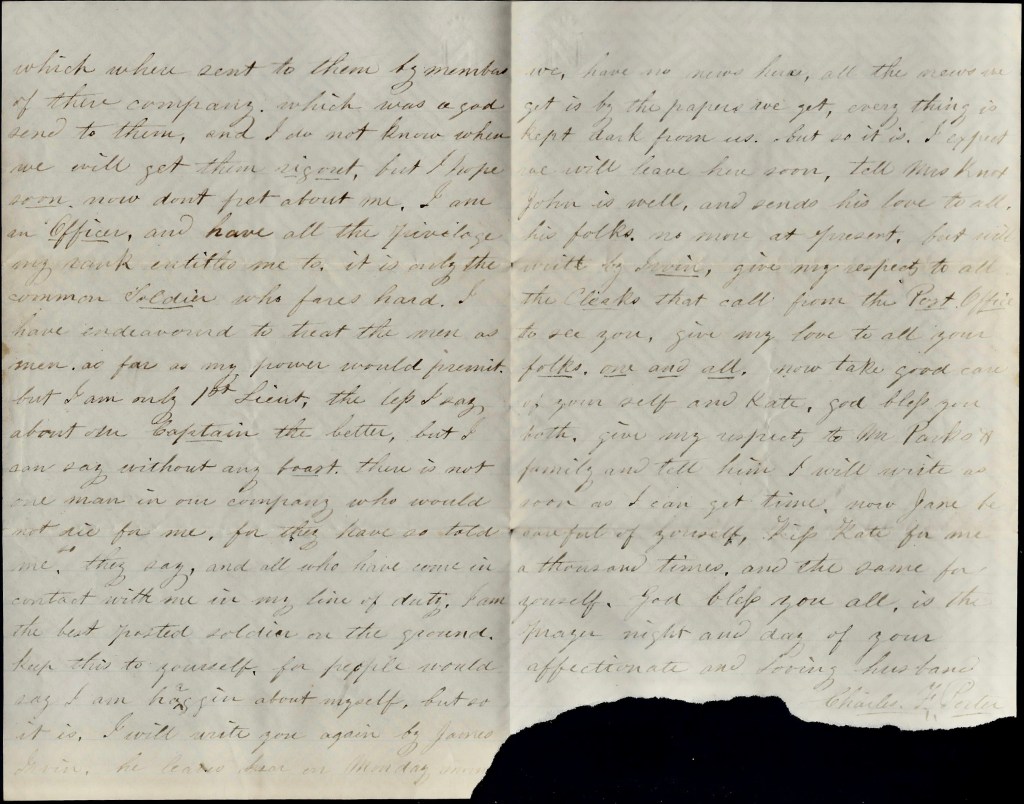
I received your welcome letter and box of eatables by James Irvin this morning and I am thankful for them, for they are very nice, but I am afraid you have spent your money for me, and it will take too much from you. I would rather you would keep all your money for your own use. It is a mistake about us officers having nothing to eat. We fare well for we have to buy our provisions, but our men do not get enough to eat, for three rations does not satisfy them. They do not get enough of bread to eat. They are not any better off than when they [left] Pittsburgh. We got them 69 baskets and haversacks and that is all. One of Neptune Engine1 members came here yesterday and brought some twenty blankets which were sent to them by members of their company which was a God send to them, and I do not know when we will get them rigged out but I hope soon.
Now don’t you worry about me. I am an officer and have all the privilege my rank entitles me to. It is only the common soldier who fares hard. I have endeavored to treat the men as men as far as my power would permit but I am only 1st Lieutenant. The less I say about the Captain, the better. But I can say without any boast, there is not one man in our company who would not die for me, for they have so told me so, they say, and all who have come in contact with me in my line of duty. I am the best posted soldier on the ground. Keep this to yourself for people would say I am bragging about myself, but so it is.
I will write you again by James Irvin. He leaves here on Monday morning.
We have no news here. All the news we get is by the papers we get. Everything is kept dark from us, but so it is. I expect we will leave here soon. Tell Mrs. Knox [that] John is well, and sends his love to all his folks. No more at present, but will write by Irvin. Give my respects to all the clerks that call from the Post Office to see you. Give my love to all your folks, one and all. Now take good care of yourself and Kate. God bless you both. Give my respects to Mr. Parks and family and tell him I will write as soon as I can get time. Now Jane, be careful of yourself. Kiss Kate for me a thousand ties, and the same for yourself.
God bless you all is the prayer night and day of your affectionate and loving husband, — Charles F. Porter
1 One of the oldest Fire Companies in the City of Pittsburgh.
Letter 4
Camp Scott [York, Pennsylvania] May 15th 1861
My Dear Wife,
I take this opportunity of writing you these few lines. I am well at present and hope you and Kate are both well. I suppose you have heard how they have tried to make us enlist for three years, but failed. Our regiment won’t enlist for three years but our men are willing, when our three months are up, to go three more months—or six months—but not for three years. So you may rest easy about me for I will not go myself in the same situation that I have. It must be something better. But do not think for one moment that I will enlist for three years, so rest easy about it.
I expect we will leave here in a few days for we are getting equipped as fast as possible. As soon as we get overcoats and knapsacks, we will be full equipped, and then I expect we go to Washington City and I hope to God we will soon return with honor and peace to our beloved country and our glorious flag long may wave.
I have not seen John Quinn, only on parade, with 13th Regiment [commanded by] Col. [Thomas A.] Rowley. So he is well. Tell Mr. Park I will write to him soon and give him my best respects and to his family. The 12th Regiment is the crack regiment on the ground so we have worked very hard to drill the men. I have very hard work of it for all the leaving to drill falls on me. [Neither Captain John H.] Stewart nor [2nd Lieutenant William S.] Collier knows very little about drill, but I do it for the good of the men, if if they did not know how to drill, it would be a bad show for us.
Give my best love to all of your family and best respects to all friends. Also to Mr. Moffitt. And tell him he may be glad John did not come for it would have been his death. He could not have stood it. John Knox is doing better. He sends his love to his mother and child. Kiss Kate for me and tell her I. hope to see her soon.
Now Jane, take good care of yourself. May God bless you and Kate is the prayer of your affectionate husband, — Charles F. Porter
Letter 5
Camp Scott [York, Pennsylvania] May 19, 1861
My Dear Wife,
I received your kind and welcome letter yesterday by Mr. Neeper and was happy to hear that you were both well. I am well at present and hope you and Kate are the same. Tell Kate I was much pleased at receiving her card and hope she will continue to improve her time. I gave me great pleasure indeed.
It is raining now and has all the appearance of raining all night. There is no news here at present. We do not know when or where they send us. They have not fixed the three years enlistees in our regiment yet. Some company will have 40 men to go, some none, some two, &c. They tell us if we don’t enlist for three years, the people of Pittsburgh if we return in three months, will turn the cold shoulder to us and treat us with scorn. But let them. We came here to do our duty and if they give us the chance, we will do our duty. There are all sorts of rumors here as to what they will do with us. We received our overcoats yesterday—grey cloth. Our men are nearly equipped now and seem better contented.
You are mistaken as to our pay being reduced. My pay is 50 dollars per month, with rations. Without rations—or in other words, find ourselves (for they won’t give us rations)—is $103.50 per month, (that is they pay us for our rations) but I fear we shall never receive any pay. I may be mistaken, but they will do anything now days. But God’s will be done.
I received a letter from Pap last week and one from Julia. They are all well. He and Sarah Ann sends their love to you. Col. Campbell left here yesterday for Pittsburgh. Expect him back on Tuesday. Neagley has gone to Lancaster so we do not have any [drill] till they return.
One Frank Grant of Company C, 13th Regiment, Col. Rowley, was drummed out of camp today. He cut some days ago one of his comrades and he was tried and found guilty and drummed out today. It was a sorry sight. He felt it keenly. Poor fellow. Whiskey was at the bottom of it. If the men would only leave strong drink alone, they would do well. In our mess—that is us officers, we neither drink it or have it in our quarters. I wish I could say the same of our men.
I saw [Lt.] John Quinn [Co. K, 13th Penn] yesterday. He is well. John Knox is doing first rate now. Looks well. He sends his love to his people. Give my best respects to Mr. Parks and family. I hope they are well. Give my respects to all inquiring friends. Give my best respects to any of the clerks that you see from the post office, and through them to all in the office. Give my best love to all of your folks, and you be sure to take the best care of yourself and Kate, and I shall do the same to myself.
If you see James Irwin, give him my best respects, to him and family. There is a great number of Pittsburghers here today. Some I got a chance to speak to and they said everything is still very dull yet and I am afraid it will still be duller yet. But I hope for the best. We have a hard days work tomorrow in the way of drills. They give us plenty of work to do, and it is very hard work to drill 60 raw recruits. But they get along finely and the Major complimented me in their drill yesterday. We do as well as some of the older companies.
Now Jane, keep up your spirits and take care of yourself and don’t send any more eatables. We have enough and can get enough at any time. We live very plain for when we leave here, we will have to come down to hard grub and then it will not sit so hard on us, and in fact, we are better on course grub for camp life is a hard life. It shows up human nature and it has showed up some of the officers here, and when they get home, they will be yet to hear of it.
No more at present. Give my love to all. May God bless you and Kate and all your folk. God bless you is the prayer of your affectionate husband, — Charles F. Porter
Letter 6
Camp Scott York, York County, Penn. May 24th 1861
My Dear Wife,
I received yours of the 22nd and was glad to hear you and Kate are both well. I’m in good health. You said I must be swelled. It is not so. I had my overcoat on that day for it was raining and I was very dirty and wet. But my last picture was taken when I was fixed up so you can judge whether I have got so fat. I am a great deal stouter than when I left home.
But now for news. Our regiment leaves here. The Left of the regiment leaves today; the Right I expect will leave tomorrow, but I am not sure. Our company is on the Right Wing. The Grays [Co. B] and City Guards [Co. K] on the Left Wing. They are packing up their things now. They take six cooked rations and 40 rounds of ammunitions, so they must expect hot work. The Flying Artillery left this morning. We will commence to pack our things this afternoon so as to be ready at a moment’s warning. The Boys are in great glee for they think we will have a fight soon, and I think the same. So pray for us and our cause. God be with us and send us safe through all our trials.
I have not much time to write just now so please excuse this short letter. Give my best love to all of your family, and to Mr. Parks and all enquiring friends. Kiss Kate a thousand times for me and tell her to kiss you the same for me. Now keep up your spirits and be of good cheer, for there is a sweet little cherub that sits up aloft that will take care of me. God Almighty, bless and protect you both. Take good care of yourself and what whatever you want for yourself and Kate. As soon as I can write to [you] again, I will do so. But you must write and direct your letters as I sent the directions to you and I will get them safe. God bless you Kate, and all of you. May we soon meet once more. God bless you both.
Your affectionate husband, — Charles F. Porter
P. S. Tell the letter carrier he is getting fooled by the people. They tried the same on me. He must use his discretion in trusting, but he is too slow and not sharp.
Letter 7
Mellsville, Maryland May 26th 1861
My Dear Wife,
We left York yesterday at 1 o’clock and at the present time are quartered at Mellsville three miles from Baltimore. The regiment is strung along the railroad guarding the bridges. The Greys are 27 miles from us on guard, and at every bridge along the road we have left one company except at this place where we have three companies—the Blues, our company, and the Washington Greys. Col. Campbell is with us. We relieved the 1st [Penn.] Regiment who goes to Frederick City road, four miles from here, to guard the passage to Harpers Ferry to stop all supplies from the rebels.
This place is very healthy and pleasant and the people very friendly. We are within sight of Fort McHenry from a high hill in our neighborhood so we are in the enemy’s country now. We have to keep a strict guard for fear of a surprise.
We are all in good health and good spirits. Knox is well and so is Bell. He never was sick. Now don’t feel uneasy about me for I think this point is as far as we shall go—at least for some time. And maybe we shall go no farther for we are all three months men. Now take good care of yourself and Kate, and do not let yourself want for anything for we will get paid for we are in the government hands now and not the State of Pennsylvania. I shall not get to write so often to you now for there is no Post Office here and we will have to wait till someone goes to York. The Asst. Quarter[master] leaves here for York at 3 o’clock so [I] send this letter by him to put in the office there. You must still direct your letters the same and they will be sent to me. Now you must excuse this short letter for it is near the time the train will pass here which he goes on, so I must close.
Now pray take care of yourself and I will of myself. I like this place better than Camp Scott. We are better quartered here and have better quarters here and have better water. We are quartered in a large new building intended for the distillery. The only thing that will be hard on us is our guard duty for we have to be very watchful. I am in very good health.
Did Lieut. [William S.] Collier give you my last picture or did he send to you? We left the next [day] after he left for home. We sent for him right away so he may have not had time to call on you, but let me know whether you got it or not.
Now give my best love to all of your folks, and to Mr. Parks, and all enquiring friends. How does Kate get along now? Tell her to kiss you for me and kiss her for me. No more at present. May God bless you both is the prayer. of your affectionate and loving husband, — Charles F. Porter
P. S. Now don’t feel uneasy if you do not hear as often from me as you have for I have not the means of sending letters as often. But you must write as often to me and every chance I get I will write to you.
Letter 8
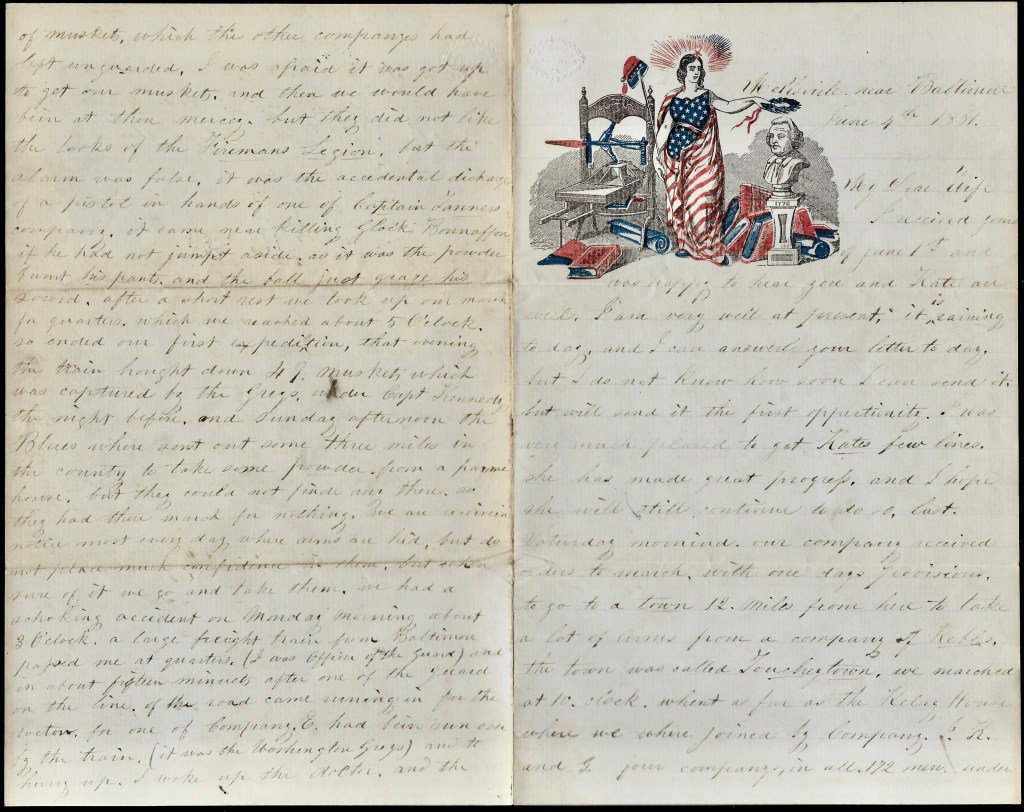
Mellsville near Baltimore June 4th 1861
My Dear Wife,
I received yours of June 1st and was happy to hear you and Kate are well. I am very well at present. It is raining today and I can answer your letter today but I do not know how soon I can send it, but will send it the first opportunity. I was very much pleased to get Kate’s few lines. She has made great progress and I hope she will still continue to do so.
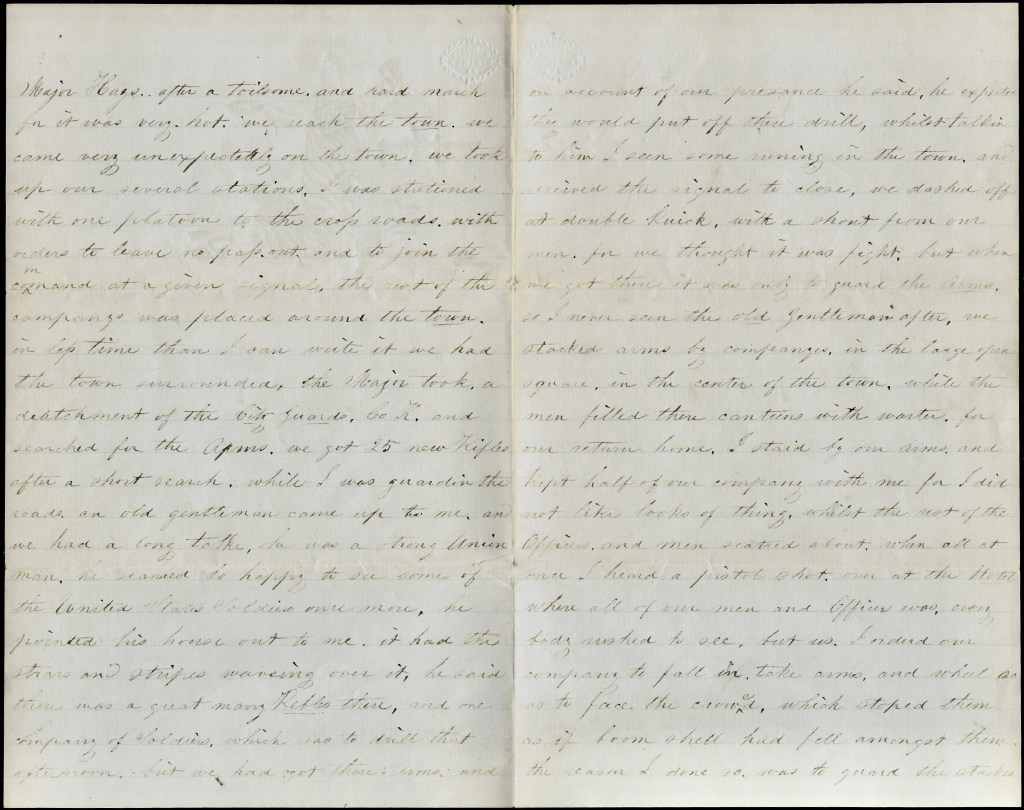
Last Saturday morning ]1 June 1861] our company received orders to march with one days provisions to go to a town 12 miles from here to take a lot of arms from a company of rebels. The town was called Toucheytown [?]. We marched at 10 o’clock, went as far as the Relay House where we were joined by Companies I, K, and G—four companies, 172 men under Major [Alexander] Hays. After a toilsome and hard march, for it was very hot, we reached the town. We came very unexpectedly on the town. We took up our several stations. I was stationed with one platoon to the cross roads with orders to leave no [one] pass out and to join the command at a given signal. The rest of the companies was placed around hte town. In less time than I can write it, we had the town surrounded. The Major took a detachment of the City Guards, Co. K, and searched for the arms. We got 25 new rifles after a short search.
While I was guarding the roads, and old gentleman came up to me and we had a long talk. He was a strong Union man. He seemed so happy to see some of the United States soldiers once more. He pointed his house out to me. It had the Stars and Stripes waving over it. He said there was a great many rebels there and one company of soldiers which was to drill that [day but] on account of our presence, he said he expected they would put off their drill. Whilst talking to him, I seen some running in the town and received the signal to close. We dashed off at double quick with a shout from our men for we thought it was a fight, but when we got there it was only to guard the arms. So I never seen the old gentleman after.
We stacked arms by companies in the large open square in the center of the town while them men filled their canteens with water for our return home. I staid by our arms and kept half of our company with me for I did not like the looks of things whilst the rest of the officers and men scattered about. When all at once, I hear a pistol shot over at the Hotel where all of our men and officers was. Everybody rushed to see but us. I ordered our company to fall in which stopped them as if a bomb shell had fall amongst them. The reason I done so was to guard the stacks of muskets which the other companies had left unguarded. I was afraid it was got up to get our muskets and then we would have been at their mercy. But they did not like the looks of the Fireman’s Legion [Co. C], but the alarm was false. It was the accidental discharge of a pistol in the hands of one of Captain [George W.] Tanner’s Company [I]. It came near killing Glock Bonnoffer [?] if he had not jumped aside. As it was, the powder burnt his pants and the ball just grazed his sword.
After a short rest, we took up our march for quarters which we reached about 5 o’clock. So ended our first expedition. That evening the train brought down 49 muskets which was captured by the Greys under Capt. [John S.] Kennedy the night before. And Sunday afternoon, the Blues were sent out some three miles in the country to take some powder from a farmer’s house, but they could not find any there so they had their march for nothing.
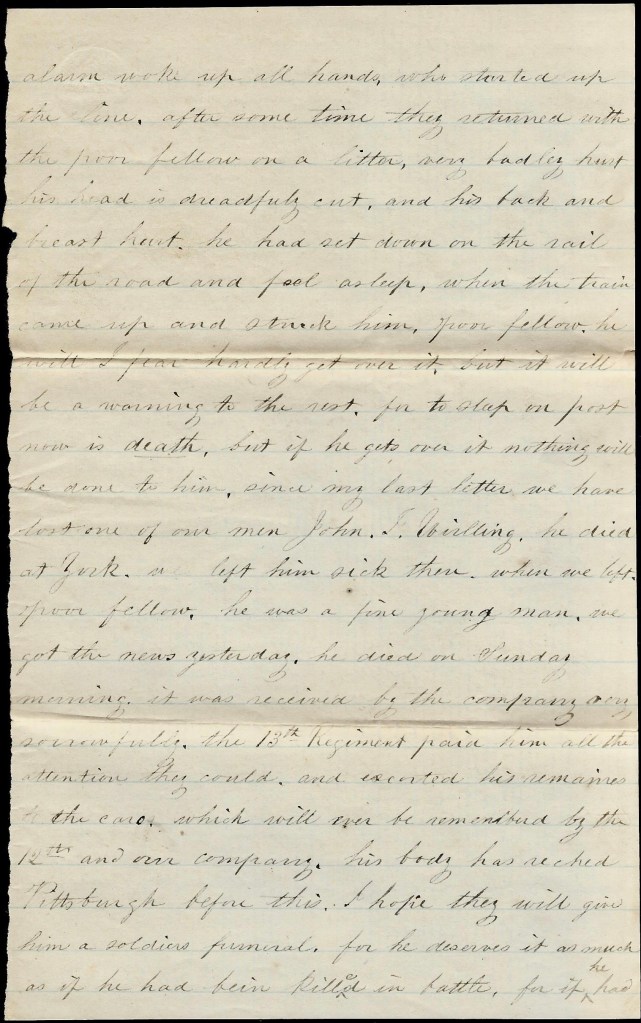
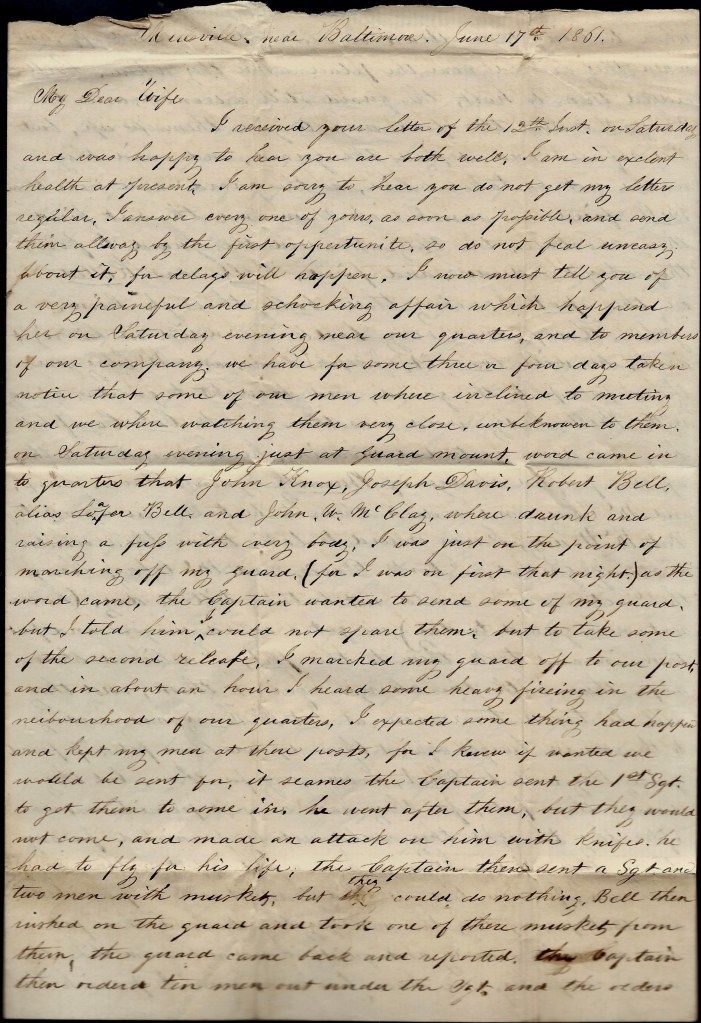
We are receiving notice most every day where arms are hid, but do not place much confidence in them. But when sure of it, we go and take them. We had a shocking accident on Monday morning about 3 o’clock. A large freight train from Baltimore passed me at quarters. (I was Officer of the Day) and in about fifteen minutes after one of the guards on the line of the road came running in for the doctor for one of Company E had been run over by the train (it was the Washington Greys) and to hurry up. I woke up the doctor and the alarm woke up all. hands who started up the line. After some time they returned with the poor fellow on a litter, very badly hurt. His head is dreadfully cut and his back and breast hurt. He had sat down on the rail of the road and feel asleep when the train came up and struck him. Poor fellow. He will, I fear, hardly get over it, but it will be a warning to the rest for to sleep on post now is death. But if he gets over it, nothing will be done to him.
Since my last letter, we have lost one of our men, John J. Werling. He died at York. We left him sick there when we left. Poor fellow. He was a fine young man. We got the news yesterday. He died on Sunday morning. It was received by the company very sorrowfully. The 13th Regiment paid him all the attention they could and escorted his remains to the cars which will ever be remembered by the 12th and our company. His body has reached Pittsburgh before this. I hope they will give him a soldier’s funeral for he deserves it as much as if he had been killed in battle, for if he had lived, he would have fought nobly. May his ashes rest in peace and I hope he is in a better world.
Now you must take care of yourself and Kate and so not neglect to get anything you want. I am sorry to hear the bird is sick. I hope he will get over it for I would be sorry to hear he had died for he cost too much. If you could sell him now, it would come in good time for you. Tell Kate I will keep her letter to me till I come home and give her a kiss for it for me. Captain Stewart and Lieutenant Collier sends their best respects to you and Kate. Give my best respects to Mr. Parks and family and to James Irvin and tell him to write to me. Also give my respects to all inquiring friends and give my best respects to John Roberts and tell him to give my respects to all of our old clerks in the Post Office. Give my best love to all of your folks. Write as often as you can for nothing is so welcome as a letter from you. It cheers me whenever I receive one.
I do not know when we leave here but when we do, it will be at very short notice, like our other orders. There is all sorts of rumors of battles and fights and when and where we go to, but nothing certain. But I expect when we do leave, it will be for Harpers Ferry, but wherever it will be, I will try to do my duty as well as I can. You need not fear for me. I am not one of that kind to rush into danger unnecessarily, or volunteer unnecessarily, but will go where ordered.
Kiss Kate a thousand times for me and tell her to kiss you for me. Write soon and I will answer as soon as possible. No more at present. May God bless you both is the prayer of your affectionate husband, — Charles F. Porter
Letter 9
Mellsville near Baltimore June 10th 1861
My Dear Wife,
I received yours of the 5th on Saturday and I was very happy to hear that you are both well. I am in very good health at present. We had a great deal of rain last week but it is clear and very pleasant now. There is nothing new to tell you at present, but any amount of rumors. We are expecting orders to leave here every moment, but where to we do not know. Some say Harpers Ferry and others say the City of Washington, but God only knows when or where we shall go to. But I think we shall be here for some time yet, and I think when we go, it will be to the City of Washington to help the guard it from the rebels, but cannot say so for certain, but that is my impression.
Col. Campbell has left here with the band and gone to Cockeysville. There is only two companies of [our regiment] here at present. The Blues have gone up to the place where the Greys were. The Greys are at the Relay House, three miles from us, in place of Capt. Cooper’s Company. The City Guards are with Campbell, and the Zouaves at Cockesyville. As there is only two companies of us here, we have still harder guard duty to do, but we all stand it very well.
We have a report in the regiment here that Campbell is to be a Brigadier General and S. W. Black is to be Colonel of our regiment. I cannot vouch for the truth of it, but that is the rumor here, and that the regiment after the three months are up is to [be] filled up and go for three years. I know for certain that the regiment has been offered by Campbell to the Secretary of War for three years, and has been accepted—that is, after out three months are up and all the three months men can [either] reenlist for three years or go home at the end of their present term of enlistment, and then they will recruit to fill up the regiment. I think and am sure there will be very few who will reenlist out of this regiment. They are dissatisfied with their treatment and their officers but would nearly all of them come back in other companies.
We are not in Gen. Negley’s Brigade now. We are not in any. We are on detached service. The Secretary of War sent officers to York to Gen. Kiem for a good regiment and one that could be trusted to guard this road. we were sent as the only regiment he could trust—so much for a good name. All around here and at Washington we are called the crack regiment of Pennsylvania. So they have a good opinion of us, and I say it without any bragging that we are the best drilled regiment for the time we have been in service of any in the state. We will drill with any of them, and our company is as good at drill as any in the regiment. We expect some trouble about here next Thursday, it being election day. They expect plenty of rows in Baltimore and all the troops are ready for any attack that may be made on us or the citizens which stand for the Union. God help them if they do commence on us. Baltimore will be laid in ashes for we can do it, for Fort McHenry commands the whole city and we have troops all around the city.
I enclose a secession badge which will be a curiosity to you as you never saw one. They are afraid to wear them openly here for if caught they would get in trouble.
How is everybody? Give my best respects to Mr. Parks and family, and to Jim Irvin, and all enquiring friends. Give my best love to all of your folks and tell Kate I have her letter safe. I wrote to you last Monday the 4th of June and have got no answer to it yet. Tell Kate to kiss you for me, and you to kiss her for me. How is the bird? How do you get along? I hope you take good care of yourself. Now be sure to do so and tell Kate to be a good girl till I come home. You must excuse this letter for I have nothing to write new to you for we get very little news here.
Tomorrow our quartermaster come to give the men their rations and then we will get some news. No more at present. I remain your affectionate husband, — Charles F. Porter
Letter 10
Mellsville near Baltimore June 17th 1861
My Dear Wife,
I received your letter of the 12th inst. on Saturday and was happy to hear you are both well. I am in excellent health at present. I am sorry to hear you do not get my letters regular. I answer every one of yours as soon as possible and send them always by the first opportunity so do not feel uneasy about it for delays will happen.
I now must tell you about a very painful and shocking affair which happened here on Saturday evening near our quarters, and to members of our company. We have for some three or four days taken notice that some of our men were inclined to meeting and we were watching them very close, unbeknownst to them. On Saturday evening, just at guard mount, word came into quarters that John Knox, Joseph Davis, Robert Bell (alias Loafer Bell), and John W. McClay were drunk and raising a fuss with everybody. I was just on the point of marching off my guard (for I was on first that night) as the word came. The Captain wanted to send some of my guard but I told him I could not spare them, but to take some of the second relief. I marched my guard off to our post and in about an hour I heard some heavy firing in the neighborhood of our quarters. I expected something had happened and kept my men at their posts for I knew if wanted, we would be sent for. It seems the Captain sent the 1st Sergeant to get them to come in. He went after them but they would not come and made an attack on him with knives. He had to fly for his life. The Captain then sent a sergeant and two men with muskets but they could do nothing. Bell then rushed on the guard and took one of their muskets from them. The guard came back and reported. The Captain then ordered ten men out under the Sergeant and the orders were to bring them dead or alive. They marched off and when they arrived near the place where they were, Bell ordered them to halt. The guard still advanced and the Sergeant ordered the four men to give themselves up but they refused and defied the guard and said they would not be taken alive. As the guard came near them, Bell fired his musket at them and the rest fired their revolvers. The Sergeant ordered the guard to fire. They obeyed orders and fired. Bell was killed on the spot having three balls through him. 1 John Knox was very badly wounded in his right arm. He will lose it. Joseph Davis and McClay gave themselves up to the guard and brought to quarters along with Bell’s body.
Word was then sent to Col. Campbell. He came down yesterday morning. He examined into the affair, preferred charges of mutiny against Davis, Knox, and McClay, and ordered them to be taken in irons to Fort McHenry. I was ordered to taken them there under a strong guard. I took Davis and McClay. Knox, the doctor said, could not be taken till today (he was send under guard today). We got a covered wagon and put them in and took them to the fort. I delivered them safe there with the charges against them and they will be tried tomorrow at Fort McHenry, and according to the evidence brought against them, depends their fate. If found guilty they will be shot. I am sorry for them but they deserve their fate for they have escaped punishment so often they thought they could not be punished for anything they did. It will be a good effect on the rest of the men for now they see bad content will be punished and that promptly. The men say they deserved their fate and are quite orderly and quiet. It does not seem like the same company. We have two more men to punish this afternoon for theft. They have been under guard for 48 hours without rations. One is a sergeant, the other a private, both brothers—James and John Fowler. The one that is a sergeant [will] be reduced to the ranks as a private this afternoon and then I hope we shall never have the disagreeable duty of punishing any more of our men and I think we will not have it to do, As soon as I ascertain the fate of those men, I will write you word.
How does old Mr. Parks get along? I hope he does not suffer so much. Poor old man. Give my best respects to Mr. Parks and to all enquiring friends. I do not know how long we will be here. They talk of changing the position of the different companies on the line but the regiment will still be stationed along his road. I expect if they do change the position of the companies, we will be placed up at or near the other end of the road but I would rather not be moved for we are in very good quarters here, and a healthy place, but we will have to obey orders, and go where we are sent to. I think of going to Baltimore with Lieut. Collier some day this week and take a look at the city and see some of my old friends amongst the Philadelphia regiment stationed there.
Tell Kate to kiss you for me and you kiss her for me. Give my love to all of your folks and tell them to take good care of you, and you must take good care of yourself, and get anything you want. We will soon be paid off, so they report here. But I would rather wait till we get discharged and get it all in a lump. It will do more good then. No more at present but write often. May God bless you both is the prayer of your affectionate husband, — Charles F. Porter
1 Robert Bell’s service record indicates that he survived his stint in the 12th Pennsylvania but we now know that isn’t true.There were several people with that name living in Pittsburgh in 1860 but I believe he was either the the grocer and liquor merchant at 237 Liberty Street or his son. He was boarding at the Scott House in Pittsburgh at the time of his enlistment. His enlistment papers record his birth year as 1828 so he would have been @ 33 years old.
Letter 11
Mellsville near Baltimore June 22nd 1861
My Dear Wife,
I received Aunt Betsey’s letter yesterday afternoon. I am more than happy to hear that you have got over your troubles so well and happy to hear you are doing so well. It takes a great weight off of my mind to think you and the child are doing well. Tell Kate to kiss her brother for me and we will name him when I come home. How do you like Doctor King? I hope he will pay proper attention to you and you must take the best care of yourself.
I had to stand treat to our officers on the receipt of the news. They call me Pap now here as it is the first birth belonging to the regiment. They claim him as one of the 12th so take care of yourself.
I wrote you all the facts relating to that sad affair. The Dispatch has the best and truest account of it. Tell Mrs. Knox she has the sympathy of all of us and it would do no good at present for her to come on for I don’t think they will be so hard on John. 1 He has not been tried yet and will not be for some days yet for he is not fit to leave the hospital to be tried. He will not have to have his arm taken off but they say it will be always stiff. But if when tried, I find that her presence will be of any service to him. I will send her word to come, so tell her. [Joseph] Davis, I think will be shot or hung. [John W.] McClay will not be dealt so with, but God knows what their fate will be for we have not heard yet what it will be but expect to know in a day or two, and will write as soon as we do receive the news.
Two regiments of soldiers passed here this morning. Two more to pass this afternoon. There is 20,000 men to pass here in less than ten days for Washington. The 13th [Pennsylvania] will pass here in a day or two for Washington. We will be kept here to guard the road so they can pass in safety over it, for if the road was not guarded, they would burn the bridges and no troops could pass to Washington. I wish our time was up, or else they would send us to Washington to help defend it for they expect the city will be attacked, but they think we can do more service by guarding the road so troops can pass. It is very hard service, but we all keep in good health and spirits.
We have not seen Col. Campbell for a week and our Lieutenant Colonel is at preset in Baltimore sick, so we have to take care and be very watchful—so be it. Give my best respects to all. enquiring friends. Give my love to all of folks, and tell Sarah Ann to take good care of you, and not give you veal cutlets and custards to eat till you are well. Tell Kate to kiss you and the baby for me, and you kiss her for me, and tell her to be a good girl. No more at present. God bless you all is the prayer of your affectionate husband, — Charles F. Porter
1 John George Knox (1821-1904) not only survived his three month stint in the 12th Pennsylvania Infantry, he reenlisted as a private in the 7th Pennsylvania Cavalry and served another one and a half years.He was married to Mary Anna Jones (b. January 1821) in 1850.His mother was Julia (Biggs) Bougher.In April 1864, after Knox was discharged from the 7th Pennsylvania Cavalry and had returned to his job at Bailey, Brown & Co.’s rolling mill, an officer came to arrest Knox for stealing a government horse when he left mustered out. It was Knox’s mother, Mrs. Julia A. Bougher that paid the officer $120 to clear up the matter. It later turned out that the officer had no authority to make the arrest and the officer (named Scanlon) was arrested.
Letter 12
Mellsville near Baltimore June 27th 1861
Dear Wife,
I received Aunt Betsy’s letter of the 21st day before yesterday and was very happy to hear that you are all well. I am very well at present. You must take the very best care of yourself and you get over your sickness very well. I received a letter from Mr. Park and one from James Irvin yesterday dated the 19th of June directed to Cockeysville and had been laying there ever since. Give them my directions to address letters to me and then I will get them.
There is no news here at present. We heard a rumor of our being discharged from the service in fifteen days—that is, all who will not go for three years. And if it is true, nearly the whole regiment will come home. There is a screw loose somewhere in the regiment for it is very badly managed and has been for some time, but do not say or let anyone see this part of my letter and when I get home, I can give all the facts and show up some of them for I know a soldier’s rights better than they do.
Tell Kate the baby is not named yet but we will name it when I come home. Tell her to take good care of it and kiss it for me. Is she a good girl? I hope she is and will continue so. I fancy I see her now as she came down the street to meet me. God bless her.
I expect I shall be sent to Fort McHenry tomorrow to see Dais and the rest of our men to see if they want anything and to take them some clean shirts and see if I can find out what their sentence is for we have not heard what it is yet. But I have no pity for them. They deserve all they will get. You must make my excuses to Mr. Park for not answer his letter for I did not get till yesterday. If he had directed as you do, I would have got it in time. I have wrote to him today and to James Irvin. Troops are still passing here everyday and here we stand idle, and nothing to cheer us up for it is very hard to see so many troops pass on to Washington which have come in the service since we came. But it is not our faults. We are willing and anxious to go on, but there is something working against our regiment, but I thinkI can tell who it is. There is a day of reckoning coming. We have not seen Col. Campbell for near two weeks.
Give my best love to all of your folks and tell Sarah Ann to take care of you and that big baby. Give my respects to Mr. Park and all enquiring friends. Tell Kate to kiss you and the baby for me and you kiss her for me. You must excuse this short letter for I have nothing new to tell you. How does the bird come on? How does all the neighbors do? Do they come to see you any?I hope you will take care of yourself and soon be about. How do you like Dr. King? I hope he treats you well. He is a Mason. If he don’t, let me know. No more at present. May God bless you all is the prayer of your affectionate husband, — Charles F. Porter
P. S. Give my best respects to John Roberts when you see him.
Letter 13
Mellsville near Baltimore June 29th 1861
My Dear Wife,
I received yours and Mrs. Bougher letter yesterday. I am happy to hear that you are all well. I am very well at present. The weather is very fine here but hot.
There has been great excitement in Baltimore. Martial law has been put in force and there is a great excitement there and it is not safe for the soldiers to be in or about the city by themselves. But it will soon be put down and all things safe and quiet. There is no more news to tell you. Everything goes on quietly. We have but four weeks and a few days to stay and then we will be home again.
You say everybody called the baby Charley. Everybody may be mistaken in his name. How do you like this name for him? Ellmore Ellsworth after Col. Ellsworth? If you don’t like the name, tell me and I will give him another. If you don’t like that name, how do you like to call him George Park Porter? If neither suits you, wait till I come home and then I will get a name for him but it is time enough to name him.
Tell Kate to take good care of her little brother and kiss him for me. You must not get up too soon for fear you may be taken worse. Tell Kate she must take good care of you both. How does Sarah Ann get along? She is with you yet, I hope, for she can take more care of you than a stranger, and better too. You must excuse this short letter for I have no news to tell you.
Give my best love to all of your folks and my best respects to Mr. Park and family, also James Irvin, and all enquiring friends. Kiss Kate for me and tell her to kiss you for me. God bless her. No more. May God bless you all is the prayer of your affectionate husband, — Charles F. Porter.
Letter 14
Mellsville near Baltimore July 1st 1861
My Dear Wife,
I received your letter of the 28th today and am very happy to hear that you and the baby are doing so well and that Kate is well. I still [am] in good health. In fact, I was never better.
It has been raining here for three days and we have to keep close in our tents. They are very comfortable and I have ours fixed up very nice. We have a raised board floor and are dry and cool. We have our tents pitched on a hill and our men have theirs just below us, near the creek.
You can tell Mrs. Knox her husband has not been tried yet and I do not think he even will be for his time is so near out. His arm will not be taken off. The Doctor says he can save it so he will get off very easy for the crime he has committed. But I hope it will be a lesson to him as long as he lives. I have no pity for him but I do feel for his poor wife and mother that they should be so disgraced by him. They must suffer a great deal. They may rest easy about him for he will not be shot. I expect to go and see him tomorrow if it is not raining and if it does, I will go the first clear day and will write to you about him. He does not, and not worthy of her love or sympathy. He is a drunken loafer. You need not tell her that, or anybody.
You ask me when I will get home. Our time is up on the 25th of this month. We may be sent home before our time is out and we may not for our regimental officers are trying to get us sent home before our time is out. You need not be afraid of me going for three years in this regiment. We are not treated like men, but I will say no more, but can speak when I get home. I do not know what I shall get at when I get home for they say times are so hard and money scarce. But I put my trust in God and hope something will turn up that I can get something to do for I cannot get along by being idle long.
You. say John Quinn is sick but my opinion of him is he is sick of war and too lay for even a soldier. Has Mr. Park got my letter yet? Tell Kate she need not fear that her nose will be cut out for I can love both as well as one. Now take care of yourself and the baby, and Kate. How is the bird? Give my love to all of your folks and my best respects to Mr. Park and all enquiring friends. Kiss Kate for me and tell her to kiss her brother for me and let her give you a kiss for me. No more at present but write soon.
May God bless you all is the prayer of your affectionate husband, — Charles F. Porter
Letter 15
Mellsville near Baltimore July 10th 1861
My Dear Wife,
I received your letter of the 5th and was happy to hear that you are all well. I am well at present.
It rained very hard all yesterday afternoon and night but it is now clear and pleasant. I have no news to tell you. You in Pittsburgh know more about our regiment than we do here. I don’t think they will keep us over our time without our consent but the Colonel will do most anything to gain his ends. The way things look here at present, I do not think there will be twenty men go for the three years, there is so much dissatisfaction in the regiment and if the men of Pittsburgh only knew as much as us here, they never would enlist in his regiment.
You can tell Mrs. Knox when you see her that John is with us now. He was sent back from the Fort to us on Monday. His arm is getting along very well. He can use it some. The Doctor says he will be able to use it as well as ever in six months. John seems very sorry that he had anything to do with those men. There is one thing certain, if their time of enlistment had not been as near out, not one would have been alive today. They would have been shot at the fort for mutiny.
Did Kate get her card? Give her ten kisses for me and tell her to kiss you and the baby for me. Give my love to all of your folk and my respects to Mr. Park and family. Also to all. enquiring friends. You must excuse this letter for I have no news to tell you. May God bless you all is the prayer of your affectionate husband, — Charles F. Porter
The following letters were written by Lloyd Benson Hodges (1837-1920) who served in Co. H, 40th Massachusetts from 1 August 1862 to 4 June 1865. He was wounded in action on 16 May 1864 at Drury’s Bluff, Virginia, and again on 4 June 1864 at Cold Harbor. He was discharged from the General. Hospital at York, Pennsylvania, in June 1865.
I could not find an image of Lloyd but here is one of Charles W. Crocker who served in Co. E of the 40th Massachusetts Infantry (Photo Sleuth)
Lloyd was the son of Elisha Hodges (1803-1865) and Sarah Ann Crowley (1807-1886) of Attleboro, Massachusetts. He married Sarah C. Gleason (1847-1920). He wrote all of these letters to his older sister, Mary Allen Hodges (b. 1830) who married Isaiah Standish Swift (1823-1897) in 1866.
The 40th Massachusetts left the state on 8 September 1862 and was comparatively inactive for some time and remained on picket and guard duty in and around Washington until the spring of 1863. On 15 April 1863, it moved to Suffolk, Va., then under siege, where it was engaged in two reconnaissances on April 24 and May 3. It then moved to West Point, Va., Yorktown, Williamsburg, White House landing in succession, and was engaged with the enemy at Baltimore cross-roads, on July 2. It then passed through Washington on the 11th, and went to Frederick, Md., where it joined the Army of the Potomac in the pursuit of Lee’s army after the battle of Gettysburg. On Aug. 6, it was ordered to Folly island, Charleston harbor, and occupied the trenches in front of Fort Wagner until the surrender of that stronghold. On account of its high repute for excellence in drill and discipline, it was equipped as mounted infantry at Hilton Head in Jan., 1864, and moved on Feb. 4, to Jacksonville, Fla., where it formed part of the Light brigade composed of the 40th, the independent battalion Mass. cavalry and Battery B, 1st U. S. Artillery, Col. Henry acting brigadier. It was engaged at Barber’s ford and Olustee, losing in the latter engagements 5 killed, 23 wounded and 4 missing.
Letter 1
Minor’s Hill, Virginia October 26, 1862
Dear Sister,
This letter was dated last Sunday as you will see. I wrote one & commenced this but was obliged to stop writing & go to work & stop the water from running into the tent as it was raining very fast.
You have heard of our leaving the fort [Fort Ethan Allen], I suppose. We left there two weeks ago this morning—[which is] October 28th. We went into camp. at Manson’s Hill 4 miles from the fort but we did not stop there—only until the next Saturday morning when we were on our way once more for Minors Hill, some three miles, where we stopped until the next Tuesday morning when we had orders to pack & get ready to leave in a hurry. Some said that we would go to Centerville & I did not know buy we should. We went a mile & a half this side of the Hill where we pitched the tents and went into camp. We got straw & hay for the tents& had put things in good shape not knowing but what we would stay there. The next morning we had orders to leave so we packed up once more & they marched us back to the same place we left the night before. We have not moved since then.
The night before we came back here, that box came. It was all right. They sent over a large box with the paper one inside, the first they let us know anything about it. There is not much difference in the size of the mittens. Henry took the ones with stripes around the wrists. We have not been out so as to use them much yet but if we stay here. we shall soon have use.
Father, I am very much obliged to you for them & for the box too. We came so little ways that I brought just as they give to us in one of the wagons. It will be a good thing as long as we stay here.
I am well now as usual & like soldiers life just as well as I expected too. It isn’t a bit worse than I thought it would be. There is one thing I don’t like about it and that is just as quick as I put my uniform clothes [on], they made me look a good deal larger than my other clothes. They make me look as large as a man & I ain’t a man yet nor won’t be one yet. I am nothing but a boy & that is all I’m going to be at present until I have had a chance to learn something at school or somewhere else. I thought of going last winter. I wish I had have gone to school. I wonder if it plagues others to write letters as it does me. I like to write & sometimes I can write well enough but I don’t know how to arrange them & put together & so I get one half written sometime & then tear it up because it don’t suit me. But I suppose we must live & learn. I’ve only written two letters since I have been here that I have not had an answer to since I’ve been here. I guess that they don’t mean to write me or mind me. I don’t care for I shan’t write to him again unless he does to me first. The other one I shall write once more. Perhaps I did not direct my letter [correctly] and they did not get it.
There, the drums have just beat for he lights to be put out. I can’t write no more tonight. Never mind. I’ll finish it sometime and send it.
Wednesday morning, October 29th, 1862. I will. now tell you something else about this war business so that you know more about it than you now do. Last Sunday morning [October 26th] commenced with a severe rain storm for the northeast. It rained all day. The weather was very cold & windy. Long before night, the tents began to leak through the canvass until we put the rubber blankets on the inside. That did not last long. The water was soon coming through every part of the tents. We put everything inside of our knapsacks that we did not want to get wet. After doing what we could, we threw the overcoats and blankets over us and sat down to watch the storm. We had a grand time, I can tell you. We did [not] have to drill any all all day. There [was] five of us in the tent. We slept well that night.
The next morn [October 27th] we were called out as usual at daylight to roll call. We did not know of leaving the streets when called out but it so happened that there was to be a review some three miles away that day so the regiment fell into line & began the march with overcoats and rubber blankets. As it stormed harder than ever, we could but just hear the beat of the drums at the head of the regiment. They took us two miles out in the mud & water with two other regiments—the 11th Rhode Island & 22nd Connecticut. Then orders came that there would be no review so turned right about face, and went back to camp. It was enough to make one laugh to see such a looking set of men covered with mud and wet all over. We had large fires in the streets close to the tents and dried our clothes.
The review took place yesterday [October 28th] at Hall’s Hill—you’ve heard of it. It was a fine day—as warm as summer—and there were many troops on the field, from ten to 12 thousand. The Review passed off well. Many officers were present—Brigadier General [Robert] Cowdin, who is in command of our Brigade; I think Gen. Sigel was there. It lasted but a few hours. At four o’clock we were home again. 1
We are called up mornings at half past five by the sound of the drums to answer to our names as they are called to see if all are here. It takes but a short time for that, then we have nothing more to do until half past 9 when we drill until 11 o’clock, an hour and a half [and again] in the afternoon from half past one until 3 o’clock. Then [we have] inspection at 4 o’clock when the officers look at everyone’s musket, belts, and everything else they want to see, if they are clean and free from rust. If there is a lot of dirt or stain found on the muskets, it must be taken off by hand—very quick too. The dress parade comes at 5 o’clock & roll call at nine in the evening again. That finishes up the day so you see that the work is not much—only about five hours in the day, but then one must be here just when they are wanted. It will not do [to] be five minutes late & if one is called for anything, one must drop whatever one is doing and leave. One does not have any excuse for stopping any at all. That is the worst part of being so strict in all things.
I suppose you would like to know what we have to eat. All companies draw from the quartermaster a certain amount of bread, both hard and soft. It is as good as you get from the bakery. they draw meat, both fresh and salted, rice, tea, sugar, coffee, molasses, candles, and sometimes potatoes & beans. We generally have salt beef for breakfast & bread with tea or coffee. I do not eat much salt meat or tea or coffee either. I don’t like the way they make it. Yesterday we had baked beans for breakfast. We had them over a week, sometimes fresh meat boiled & sometimes fired, boiled rice once in a while. There is always enough of it but molasses & sugar is do scarce that they do not have enough to eat it with so they throw large quantities of it. They have fresh meat soups once a week. After all that folks ay about the poor living, we think it not bad at all. There is always good bread—all one wants if he does not get the other things always. He will not suffer much for the want of something to eat.
The weather is the same as it is at home so far—cool nights and warm days. I have not time to write more. It is nearly 9 o’clock.
1 According to the regimental history of the 11th Rhode Island, the review “was not so grand an affair as we had hoped. Probably less than three brigades were present and passed in review before Gen. Abercrombie, whose headquarters were at Fort Ethan Allen. It was an imposing sight, however, to see even eight or ten thousand men march in review.”
Letter 2
Minor’s Hill, Virginia November 25, 1862
Dear Sister,
It’s been a long time since I have written to you but I have been sick. That is the reason. I’m well now. I took cold & that brought on some fever & I was pretty sick for a few days. It has been three weeks today since I have done anything.
Henry is well. Such miserable weather I never saw as it has been until within a few days—cold, stormy and dreadful muddy. if you stepped out of doors, you would sink into the mud almost over shoe [top] and the sharp. wind & rain would take you in the face. The 8th of November the snow fell all day. It was on Saturday, I think.
There is a great deal of talk about our moving. We may go tomorrow & we may stay here all winter. Most of the regiment have fixed up their tents with a fireplace in them. They have torn down buildings to get boards and timber and bricks. If they do not stop here [for the winter], they will [be] disappointed after taking so much pains to get ready for winter. We have not been yet, though the time has been set many times when we should get paid. The most of the boys are out of money & they would like to see pay day. We are getting cold weather now. It seems to me about as cold as it is at home. The weather is dull and cloudy—the sky gray and cold-looking. We have not found the “Sunny South” yet.
There is many boxes coming every few days. I think their pies and cakes high. If they only knew it, a dollar and a half will not bring a very large box from Massachusetts. I have not sent for anything yet I should like to have them. Still I think it costs too much to get them here. I know that the boys don’t think about the cost. If they did, they would not have paid 20 and 25 cents apiece for pies as they did three months ago because they had 30 dollars in their pockets after they had been paid. They used money as if there was no end to it, buying everything they see. They lived high for a while. It cost some a dollar a day as long as they had money. At last they were out of money so that they did not have 5 cents to but tobacco. They they had to come down on hard bread and salt meat. I don’t know whether that is the best way or not. I think I shall wait before I send for any boxes & see if I can’t get along without them.
We have no business here & I don’t know but it good enough for me. If I don’t get what I want. I had a letter from Mother last week, I think, with a letter in it from Emma to her. Her school is almost out. Did you get the letter inside? I don’t know as I want anything in the shape of clothing. I will tell you why. The government allows each one 45 dollars a year for clothing besides their wages. If they take more than that amount, all they take over 45 dollars, they say, is taken out of their wages when they are paid. They say too that if you draw less than that amount, it will be made up to us. If we do not draw more than 25 or 35 dollars, the other 20 or 10 dollars will be paid us. But I am afraid they won’t get it, that is the reason I don’t want to get clothes anywhere else—only from the government. If I knew that we should get in cash what we did not take in clothing, I should get some other places but there is so much deceiving about this army business, that one can’t tell much about it.
The Lieutenant told us when we got our first suit of clothing that it would not cost us a cent. He said the State furnishes every man with a suit free of expense. We find on looking at the books that 27 dollars out of the 45 is hcarged for the first suit so if I should buy ten or 15 dollars worth of clothing thinking to get that amount from the government & not get it, I should not like it. I think that I had better draw the clothes & be on the sure side. I have not worn out my first shirts yet. I think I shall draw undershirts now.
I thought before I came into camp that I was coming to a place where I could not get anything like a piece of cloth or anything, but it is not so bad as there are many things [thrown] away and lost—stockings, pocket handkerchiefs. Sometimes you would see half a dozen in a day lying around. I have picked up some when I wanted them and just washed them in warm water & they look as well as new, only I don’t suppose it is a good plan to pick up such things much. But when I know when they are nothing but a little dirty, I am not afraid of them if I want them to use. You could not go anywhere without seeing half worn-out uniforms thrown away. They would make splendid mats for folks that cut old cloths to braid.
When men move, they often are obliged to leave things that are good but can’t carry….We can get anything we want on the ground or nearby by paying for it same as we could at home. Some costs more. There are two officers here with their families. I was down to Falls Church the other day—a small village store by here. We have been out on picket two or three miles several times. The people are all very good—all we have seen. One can go into their houses and talk with them. They will do anything they can for you. Once when we were out, when I went to a house to get sweet potatoes and peaches, they sent me down to their orchard and told me to take what peaches I wanted. I eat what I wanted and carried back a haversack full. That is the way we have lived since we went into camp. I think we have lived very well. We came out here just in time for such things. we have been in camp for three months. The next three will be much harder as the rainy season will soon commence.
What I mean by saying I like camp life as well as I expected too is that I knew all about it before I came. I do not like war and never intended to come to it & had waited 18 months for it to be settled before I did come. And after I got into camp, I was more surprised to find myself there than otherwise to know I was there because no one that knew me thought I ever would go. I knew it was a hard life & I knew to what the men were exposed to—everything worse than death—and knowing that I had not nor shall be disappointed in finding it hard, it is no reason why I should stay away because it is hard. Others have gone. I had two friends that went last fall. One of them now lies beneath the sands of South Carolina. Is it any worse for me to go than others? Others have gone as good as I am & I don’t know as I should stay at home idle. I do not think it the worst thing than can happen to one to die on the battlefield. I for one had rather die there than live the life of some I know. It would require less courage. There is nothing there that I fear but I won’t say more about that,
We do not expect it is going to happen. If you were here, it would seem more like the 4th of July than anything else. Folks get deceived about camp life. It’s not half so bad as they think. I have just been to supper. We had fresh meat soup. You spoke of my sending by the Cape boys a few lines to you sometimes. I might but neglect to do so.
— Lloyd
Letter 3
Minor’s Hill, Virginia December 12, 1862
My Dear Sister,
I am alone again today. The company has gone on picket this morn. I went only to carry some things for one of the lieutenants [and] have just got home as I commence this letter.
You say you are going to send a box. Put in what you think best. You know what we want as well as we do. I asked Henry this morn if there was anything particular he wanted sent. He said he did not know as there was. We can cook the sausages well enough, or potatoes, or any other such thing, so you may not be afraid to send them on that account. You can send the cranberries. We can get molasses close too but do by all means put in a loaf of brown bread & some meal too so I can have some Johnny cakes. I want them if no one else does. You might put in a little rye with it. We have white bread pretty often. It is not so good as yours….
Henry says he wants another pair of mittens. So do I. I have got the same towel I brought from home so we won’t need any. You know two can use one as well as not. Be sure and send the two pillow cases you spoke about a while ago, no matter what they are made of. Any kind of dark or cheap calico will do to fill with lay or leaves. Don’t work too hard getting things ready so as to make yourself sick. Henry wants his mittens a little larger every way. I guess I’ll have the fingers of mine a little loose & the thumbs are a little larger than they need to be when I put them on. The thumb is quite loose on the underside & I should think a quarter of an inch too long but that don’t do any hurt. They are good enough, only I thought if you were going to get more knit, they might as well be a little different. But don’t make too much alteration. You may send me one of them caps to sleep in. Henry, I guess, don’t want any by what he said. When you write, tell what them mittens cost or what they are worth.
We have taken down the tent and fixed up for winter. We have dug down into the ground a foot and a half, then built up with logs two feet and built what the boys call bunks, two on one side for two to sleep in each one and one on the other side for one as there is five in the tent. We keep a fire all night sometimes. We sleep warm enough. I have not known what it was to sleep cold. I don’t always sleep well. Often times I dream all kinds of strange dreams—things no one could ever think and that never could be. I am pretty well now, only I cough a good deal. It will be six weeks next Tuesday morning since I have done anything. Today I have eaten a loaf of bread and two pieces of meat.
When the company goes on picket, they give a loaf of soft bread apiece to carry with them. So this morn when I went to the cook house, I got a loaf which was all I could have for one day. It was all I wanted too.
The weather here is quite warm. It has been very cold but for two days the sun has shone like summer. The regiment has not been paid yet. There is already more than four months pay due them now. There is no money here unless some send home for it. I used a good deal when I was not so well as now in trying to find something to eat. One of the Taunton boys in the tent had a box night before last filled with pies and cakes. The pies were very nice for he gave us a piece. I don’t think it so pleasant to have so many in a tent where the boys have boxes. This fella had a large quantity of cigars and tobacco. I don’t want wither of them. Hen chews tobacco, I guess. You don’t like to have one chew such stuff.
Henry got a half peck of apples a few days ago that had been touched by the frost & the most of hem were bitter. He said he was going to make some sauce, he guessed. He said the bitter taste would all stew out of them but he did not make it. When they were half gone, I took the rest, cut them up, cut out what bitter I could, and made the sauce. It was bitter then so I sweetened it with some syrup he has. I put one side to cool. He tasted of it when he came in and said I got it too sweet, but the bitter taste was there. He would not eat any of it, but I liked it if it was bitter.
I cannot write well lately. I don’t [know] what the reason is. I don’t know whether you can read this letter or not. The last one I sent home last week was written miserable. I told them to burn it soon as they had read it. I guess you had better so so by this. Our Captain was the 1st Lieutenant in the Chelsea Company. I don’t know [how] he happened to be Captain of our company. He is little but seems to be pleasant. His name is Jenkins. I have not drilled and since he has been here.
When you direct now, you might leave out the Capt. Rogers for we have got another captain & they come just as well as with the captain’s name. I don’t know as Rogers ever meant to be our captain. He has never been near the company.
I must close for tonight. My candle is nearly burned out and I must fix up my bed. It makes me think of sleeping in a steamboat for their bunks are the same as they are in the cabins. There is more room since we fixed the tent. We can put wood in the last three days & not have it in the way. My mouth is sore on the inside. I wonder what makes it hurt but I must close now.
Saturday morning. Send me a little bit of ginger in the box if you have it. Two men were discharged from the regiment and left here for home last Monday morn. There was a good many sick once. Now I never would go to the hospital if I were sick. I don’t think it any place for sick folk such hospitals as there are here.
Letter 4
[Minor’s Hill, Virginia Approximately 20 December 1862]
…Cotton cloth in Attleboro I hear is worth 53 cents a yard. I should not think it could be so high as that.
I do not think this war will close at present. I should not be surprised if it lasts until Lincoln’s term in office closes. That will be two years from next March. It will not be closed in a hurry, I can tell you. It must be many months first, if not years. I do not think we can ever whip the Rebels. We certainly never can unless there is different management among our officers. The Rebels are strong & at home. They are in earnest & never will give up until they get what they ask. The government must transport men and arms two thousand miles to fight them. I thought when we came out here the government would do something towards trying to close the war. They seem to be satisfied to let it drag along without trying to close it. Neither the government or the officers have acted to me since the war commenced as if they wanted to whip the Rebels. It is strange [that with] all the men and money we have had that we could not do it. It is something I know but little about so I will not say anything [more] about it.
I suppose you [are] pretty busy now. It is getting along towards Christmas & New Years. Two years ago this Christmas, I think it was, I was to Cape. I did not think then that two years would find [me] out in Virginia. We had roast beef for breakfast this morning. I don’t think we live well at all. We have too much salt meat & hard bread.
I must close now. Henry has just gone to drill & wants me to sew a button on his coat, I do not drill. Give my respects to Julia. Write when you can. Goodbye till I write again.
From Lloyd
Letter 5
[Minor’s Hill, Virginia Approximately January 1, 1863] 1
…loaded in line ready to leave. It was that Gen. Cowdin had ordered us to report at Fairfax Seminary early Monday morn. Then I believed we should march. We had orders to be ready to fall into line at once. As no one expected to come back again, a great change took place in camp in a few moments. We packed up a few of the best things in a box that we could not carry. Many threw & gave away provision of all kinds. We went to the cook house. They put out the boxes of bread, meat, and lots of apple sauce for us to help ourselves. We filled our haversacks and were soon on our way to hunt Rebels.
We marched 7 or 8 miles through swamps, fields, and woods. We arrived at a place called Mills’ Cross Roads where a lot of rebels had been seen. We arrived there at 5 in the morn. No sign of rebels so we lay down, pulled our blankets over us and slept until daylight. No sign of rebels then [either]. We lay around all day waiting for orders to move on. It was another fine day—war and bright. We lay around on our blankets all day & had a fine time. Though the march the night before had worn us down, we had time to sleep it off and get rested.
Monday night we made our beds close to our muskets and lay down expecting every moment to have orders to move on but I had been thinking all the afternoon that we should not go farther but they all said we should go on. There were seven thousand men there besides artillery and cavalry. At seven o’clock the order come to pack up and be ready to march. Soon after General Cowdin gave the orders to take his men back to Camp where we arrived about midnight covered with mud and water, As near as I can find out, what caused the march was that three thousand cavalry had been seen at Mills’ Cross Roads and they were afraid they were going to attack us somewhere and Cowdin, thinking to surround them & take them, had orders out to his brigade & when heard it, they must go. But when his men got there, there were no rebels and the whole movement was all nonsense.
The next morning I could not help laughing to see how we left things & how we went away never expecting to get home again. But there was no one to blame. Our officers knew no more about what they should do than we did. They all wait on orders from Cowdin.
Tuesday and Wednesday nights the long roll beat, the regiment was called out, everything got ready for a long [march] in a hurry. After we had been drawn up inn line, we were dismissed to our quarters with the order to be ready to fall into line at any moment but were not called upon to turn out & I guess we shall not again at present.
Falker was here today to borrow the White Slave, He sends his respects to you. I had a letter from Mother tonight.
We go on picket tomorrow again. We are very busy now. We do not get time to do much. I am glad we did not move on account of the box. I think the ladies were very kind to send things as they did. I am very much obliged to them and to the one who sent the books too. I think a good deal of them for before long, will come stormy days when I shall like to read them.
I do not think of anything I want now. I am well as ever. So is Hen[ry]. He did not say much about the box but I know he was glad to have it & it was very kind in you to think to send it for us. The weather here is quite warm. I have written this in a hurry. I will write again soon if I can. From your brother, — Lloyd
1 The beginning of this letter is missing but from the contents we know that it was written just after the march to Mills’ Cross Roads and returning to Minor’s Hill. The march to Mills’ Cross Roads is conformed by the Regimental History of the 11th Rhode Island, another regiment that made the trek. Both regiments left for Mills’ Crossing on Monday, 29 December 1862. That history describes the trip as follows (p. 76): “The route was over roads in a horrid condition, through mud and water, through woods and briars, over fences and broken bridges, double or single file, picking and threading our way, half moonlight and half darkness, for three hours and a half. This, in heavy-marching order; some knapsacks were very heavy, and the mettle of the. men was severely tried. The mud holes were nearly or quite knee deep.”
Letter 6
Minor’s Hill, Virginia January 4th 1863
Dear Sister,
I write today not knowing when I shall have another chance to do so.
The box arrived here on Wednesday eve last, safe & sound. It was all right. Had not been opened on the way, I guess not. I expected to see a large box but not so large as this is. Falker came over the next day and took his things. Also Cals and Nickerson’s. You sent just what I wanted and lots of it too. Henry said the pieces of cake in the wooden box tasted like wedding cake. Those biscuits & doughnuts were very good. Hen carried two or three of the turnips to one of the houses where he was acquainted and got them to cook them & make them into a sauce though he might have done it himself as well. You did not know as I liked onions. I do like them. And turnips too—when they are made into a sauce. And we have seen so much cooking done here that almost anyone of us can cook such things.
We had baked beans for breakfast this morning & I cut one of the loaves of brown bread and had brown bread and beans for the first time since I have been in camp. I was glad to get a piece of white bread once more from home. That did not last long for I could not help eating it & Hen, I guess, liked it pretty well. The cake, pies, sauces, I shall try to keep some time. The books are very interesting if I can get time to read them. Some of them I mean to save if I can and carry them home for the White Slave, I liked too well to throw away, and them others too—I forgot the name of them—such ones as you have taken so many of them.
Have you heard what a time the 40th Mass has had for a week past. If you have not, perhaps you. would like to know. Last Sunday morning 5 companies of the regiment went out on picket. The day was pleasant and almost as warm as summer. We filled haversacks with bread, tea, coffee, sugar, & shouldered our knapsacks and muskets and blankets and marched out some three miles. There were six on the post that I was on. There was not much to do through the day—only one being required to stand guard. At 6 o’clock two go on guard and remain two hours; two sleep in before they go on again. I went on guard at eight o’clock with another fellow and off at ten and such an evening as it was. I never saw but a few like it here. It was almost as light as day. The full moon shone upon every shrub and bush and made me start more than once. They looked so much like a man that I thought some rebel might be near. I could hear bells ringing in some distant city or village and that, together with the loud barking of the watch dogs who were guarding their master’s property to prevent its being taken by some soldiers who are roaming around nights ready to take whatever they can lay hands on that they can make use of, and the rattling of the cow bells around us, made it seem more like home than anything else. A train of cars would sometimes pass near us and they looked quite natural. At such times I forget we are here engaged in war for it does not seem hardly possible that we are.
But I was going to tell you what we had been doing this week. I went off guard at ten o’clock, spread down my blankets before a blazing fire built in the center of the tent & after eating some hard bread & drinking some coffee, I lay down for a four hours sleep. I had slept but two hours when I was woke up & told we had orders to pack up and march to camp as we were going to break camp and march. You can judge perhaps what my feelings were when I found we had orders to leave the comfortable winter quarters. At first I did not believe we should go but we went to work to pack up and in a few minutes the captain came along with the rest of the company & we fell in to the ranks and marched to the camp in a hurry through woods and fields to camp. There all was confusion & hurry. The teams were already… [rest of letter missing]
Letter 7
[Note: I did attempt to transcribe this letter due to its being so faint as to be almost illegible.]
Letter 8
[Note: The 40th remained in the forces besieging Charleston until 16 January 1864 when relocated to Hilton Head, South Carolina, on 18 January. On the island, the regiment joined the 2nd Battalion, 4th Massachusetts Volunteer Cavalry Regiment (operating as the Independent Massachusetts Cavalry Battalion), and Battery B (Horse Artillery), 1st U.S. Artillery to form the Light Brigade attached to BGEN Truman Seymour’s Jacksonville Expedition forces. The 40th received horses and cavalry equipment and drilled as mounted infantry until its embarkation for Jacksonville on 4 February.]
Jacksonville, Florida March 3rd 1864
I received your last letter written January 26th some time ago. The paper with the handkerchief & yarn & other things in it I received, and I guess I got all of the other letters you sent after a while. Henry did not say anything about Gil’s being married. I did not think of her getting married at present, if ever he did. I did not think he would go to war, either but he seen a chance to make a lot of money out of it, else he never would have gone.
You need think no more of sending a box now. When I spoke of having one [sent], we were in camp & expected to stay there, but we can’t have a box no more until we get settled and in camp again and it is not likely we ever shall see that time. I am glad that you did not send me any more things. We can’t carry anything now—only an overcoat and blanket and not always that since they have taken our knapsacks.
You wanted to know if I would take a furlough if I could get one. I will answer by saying no matter how bad I want one, it would be impossible to get it. A few have had furloughs from the regiment but unless some officer will use his influence, a private cannot get a furlough. And it’s only a few favored ones that the officers will trouble themselves about for they, the officers, can do as they have a mind to and go about when they want with what strictly care for others. But one thing you must understand and that is that those away from the regiment who have been sick like Falker can get a furlough where they could not had they been with the regiment. During our marches last summer we left fifteen of Company H in different places in Virginia and those that went to the hospitals all got furloughs when they could not have got them in the regiment.
Had a letter from Emma last night. She said Ed’s wife was there on the 7th of February and started for Washington next day. She said a while ago that she wanted to come and learn to sew straw. I should think that Em and Mother would like to have her for company. She & Em might sew straw & do the work & they three keep house & have good times. I should think I suppose Edwin would be willing to pay Em something. Ed says Edwin wants father to come out there. Will give him $110 per month but I suppose he would not go for $140 for fear he might be in danger.
I suppose you will go home very soon. If you think father needs any money, give him five dollars, but don’t let anyone know it. The 10 dollars I sent you for Henry, he wants me to take so you may call it the same as though I sent it. Last Monday we were mustered in for $52 but we don’t see the money yet.
On the 5th of February we left Hilton Head. We packed up at midnight and went aboard the steamer E____ and a sadler with us. Since that time our soldier life has begun in earnest—riding night and day, through swamps and forests, river and brooks, without sleep, blankets or provisions, until our horses could go no further. Nearly all the horses of the regiment are worn out. Many have fallen dead with their riders in the saddles and others are broken down, too. worn out so as to be unfit for service horses. I ain’t but a short time in this business.
Friday 4th [February]. When we first landed at Jacksonville, it was said that that we should go as far as Tallahassee, the State capitol of Florida. After going about one hundred and fifty miles towards Lake City, we stopped at a place known by the name of Barbersford, reaching there on the 17th of February. We were now in the Rebel’s country 150 miles farther than any of our troops had ever been for they never had been farther than Jacksonville & they only shelled that place from the gunboats that lay on the St. Johns river. All our troops done was done without landing so that when we came here, we came into what to us was a new country.
At Barbersford, February 20th. So far all is gone well. We’re now within a day’s ride of the Gulf of Mexico. A few miles from us at the village of Baldwin were roads that ran to the Gulf, roads that branched off from the great railroad that ran fro mJacksonville to Tallahassee to Lake City. At Barbersford on the 20th, everything so far had fallen into our hands—Rebel troops, cannon, military stores, cotton, turpentine, flour, corn, roce, lots of artillery to the amount of more than two millions of dollars without firing a gun or any fighting. When we had met the Rebels, they had surrendered & given themselves up without offering to fight. During our marches through the long, dark nights, half did I expect to have a volley of shot & shell fired into our ranks, but nothing of the kind panned though.
We have pretty good proof that a large force of Rebels were drawn up in line at Camp Finegan and they were in camp but it so happened that we did not go the way they expected & when they found out we had passed them by another road & got in front of them, they left Camp Finegan in a hurry, Had our general known how the Rebels were situated & where they were, I think we should have had to fight that night for I think that we should have made an attack on them as they intended to on us had we happened to have gone farther to the left by a mile than we did. We have got some officers now that had as soon fight as go to dinner and sooner. That is as near as we come to getting into a fight on the night of the 9th of February.
This cavalry business was too much for me & I was not able to stand it—neither myself or my horse. They left me behind to run my own risk of being picked up by the Rebels but I did fear that. I kept up with them until the 10th of February when I could go no farther & stopped at the village of Baldwin, but after resting a few days, I went on.
On the morning of the 20th, our troops advanced towards Lake City. By that time I was at Barbersford & did not know what to do about going on. First I decided to go & then I thought I would not. I wanted to go but my horse was not able. Well, I did not go. About four o’clock on the 20th in the afternoon, I had begun to get hungry. I was getting some supper when I heard the roar of artillery. I knew of course too well what it meant—that our boys at last, of all their good success, had met the rebel army. The sound of cannon continued for two hours 14 miles away & then all is still. Our force of five thousand met 15 thousand [in the Battle of Olustee] & finding them too strong, retreated back to Barbersford after fighting a few hours. They reached Barbersford about midnight.
It was reported that the rebels were following us with a large force & now commenced our retreat on Sunday morning the 21st. The news spread that a great battle had been fought, that we were defeated, & that a rebel army was close to us pressing us on and much more of the same kind. Of course a great deal was added to the reports that was not true but every place was evacuated where we had troops. They made their way to Jacksonville where the gunboats would protect them.
The village of Baldwin was deserted by our troops where they had began to build fortifications. Every family [deserted], both black and white. The citizens were frightened to think the rebels were coming, expecting there would be fighting [so] all left the place.
Since the 21st of February, we have been retreating until last Tuesday night close to Jacksonville & have…
The weather here is fine. Peach and plum trees are in full bloom making the woods and fields look like a vast flower garden. the orange and fig trees grow in clumps around here. We are here now. What our next move may be, I don’t know. I know this, that we are liable to get into a fight anyhow. The rebels are only a short distance from us. Must close for tonight. Roll call.
On the night of the 9th of February we took a Rebel battery, a large lot of clothing & everything they had to the amount of many thousands of dollars. The 1st Mass Cavalry took them by surprise, rushed on to their camp with cheers and yells before they had a chance to fire a gun. This was at a place known as the Ten Mile Station.
In our retreat from Barbersford on the 21st, we halted at Baldwin all night, then on the 22nd marched to Ten Mile Station and stopped there another night. On the 23rd, we [came to] Camp Finegan where the rebs was going to fight on the night of the 9th. Here we stopped until the 25th when the news come that the rebels were advancing. We left the place in a hurry. Some things were taken and the others burned. A lot of hay we had for the horses was set on fire which was foolish for it might have been got away. The camp was set on fire when we left. Our folks you see are very fond of burning things up.
On the 25th we retreated a few miles & again went into camp. On Saturday night, 27th, I went on picket but about dark we were called into camp again as the rebels were advancing. We had to run our horses in. Our troops did not leave but I found them drawn up in line waiting for the Rebels but they did not come and some time in the [morning] went back on picket & came in Sunday night & found our troops had moved nearer Jacksonville but we found them. We lived in peace until the 29th when we went on picket again.
On the 1st of March, heavy firing commenced in the morning & the rebels were now advancing in earnest. The pickets were driven in or taken prisoners & at last we were ordered in and had to run the horses for miles. Had I been alone, I don’t think I would have rode so fast to be kept from being taken prisoner but as it was, I had to keep up with the other boys. We come to Jacksonville & had to look again but night come on and brought the fighting to a close. Our regiment lost but one killed that I have heard of Co. A, had five or six men taken prisoners, and others had some wounded.
That is the way we have been marching for the last two weeks. The 40th has lost men several different times. One of the Attleboro boys is wounded & a prisoner. Another was sent on picket & has not been heard of since. Some lie buried beneath the pine trees at Barbersford. It’s said that a flag of truce has been sent in by General Beauregard saying he would give Gilmore five days to evacuate the state.
On the night of the 21st, more than 20 thousands of dollars worth of provisions & hospital stores were burned. They were foolish to do so for it might have been taken away but our officers were frightened & they sent off the wounded in the cars & poured turpentine over large store houses of flour, rice, sugar, molasses, meat, coffee, apples, and large quantities of bread, piles of knapsacks left by the troops in their hasty retreat full of clothing. They were set fire, lighting [up] and wrapped the ruined village in flames, sending up vast columns of smoke that darkened the moon and stars.
So one month has passed since we came here & it has been a month of war. True, we have marched through Rebel camps and captured millions worth of their property everywhere. We have been in every village & camp. Things were not used very nice. You may guess what became of them when the troops had full liberty to do as they pleased though they did not always trouble poor private families, but government property had to suffer. Cotton is very valuable but tons of it has been burned where we have been. Tis a great place for cotton here. They talk about starving the rebels out but if you had the provisions we found when we took Baldwin, it did not look like starving. Our troops lived [well] while they stopped there and had the whole village covered with everything strewn around. All this belonged to the Confederate government. But when we came back and burned the place, we burned the place [and] we burned our own provision & military stores.
I looked upon all this & knew it was war and [am] hoping you may never see in old New England as I’ve see in this beautiful land where the frosts and snows of winter are unknown, trees, flowers are in bloom, & where the orange and fig and plum trees are budding with fruit.
— Lloyd
P. S. James Field has reenlisted & I owe him $7.25. I don’t like cavalry.
Letter 9
Jacksonville, Florida Sunday, April 17th 1864
Dear Sister,
As I suppose we shall leave here in less than 48 hours more, I will write now. The paymaster was expected to make his appearance today to pay the 40th Massachusetts. He has not come. There is six months pay due the regiment now.
I think I wrote you on the 26th March. Nothing of importance has happened since then that I know of—only one thing [and I’ll] tell you what that is. On the 12th, the regiment was ordered to move. It was reported in camp that we would cross the St. Johns [river] & land upon its opposite shore & by land go to Fortress Monroe. On the 12th, Companies H & D left camp and went to the city to take transportation across the river but steamers not being ready, they came back to camp about dark. The other company did not go. I did not go. On the 13th, the whole regiment broke camp and crossed the river. I did not leave camp until the last one. Pet and myself waited in city until about midnight before the boat could take us. We landed on the opposite side of the river, climbing up a steep bank, landed safe. Large fires had been built which lit up the place. Saw several houses, half in ruins. Standing in among the groves of trees, I lay down at the foot of a large live oak, spread my overcoat over me and sheltered by its thick branches and leaves, slept until daylight. Pet, I don’t think, slept any. I lay near him. We fitted up a camp on the 14th at the Empire Mills on the bank of the river in a splendid place overlooking the St. Johns. On the 15th, again we recrossed the rover in boats & before midnight were back in our old camp—horses, wagons, & all the baggage. What the move was made for, or the object of it, I can’t say. A great move, wasn’t it?
There are but two families living in the many houses that remain around the ruins of the Empire Mills & the people in that part of the country are reported to be in starving condition almost.
On the 15th, a man was shot [executed] for trying to desert from the 3rd New Hampshire Regiment. There are several [of them]—we don’t know if its true. Don’t think it is. One of our boys said the other was to be hung & the others to be transported for life. I did not go to see him die. I have no fears but what I shall have the opportunity of seeing men shot & perhaps shot myself within the next 18 months too without going on purpose to see it. The 3rd New Hampshire is Mounted Infantry in camp side of us. Everything has been quiet here for some. time. Tis like a calm after a storm. Since the Battle of Olustee, things have been growing more quiet until things have settled down as quiet as before we came but the rebels still hold their picket line near ours. No one can tell how soon things may take a different course.
I received your letter some time ago. Henry is well and is about the same as he used to be, I guess. I don’t know whether he has ever sent any money away since he enlisted or not. He don’t use much, I don’t think—only what he lends in the regiment & that is a good deal.
I am well. Am nearly as well as far as health is concerned as ever I was & certainly have as good a spirit as one needs to have. You spoke in one letter about its being the coldest day on the 17th and 18th of February that there was last winter at home. We had the coldest weather we have seen in Florida that week. It was very cold. We had just turned in our woolen blankets & had them sent to Jacksonville. The night of the Battle of Olustee was very cold. As our army retreated, the moon shone calm, clear, and cold and the wounded as they lay upon the field deserted by all must have suffered for days after. I saw them slowly walking toward Jacksonville having walked many long miles. You could see the holes through their coats and pants where a ball struck them. Our wounded, it is said, were taken good care of by the Rebels which I believe.
Do not be deceived about the war. I wish as you think the war would be over in a few months but if there is no way to settle it only by fighting, it will last for years yet for they can’t be starved out. We can make the people of the South go hungry, cold and without clothing. The government has already done this. We see it wherever we go. Their villages and cities have been burned & torn to pieces, their fences, plantations, woods and crops have been destroyed, families broken up and their people killed by thousands, and today they are more earnest in what they are fighting for than they were three years ago. I say it will last a long time if it must be settled by fighting. But when we have another President, some other way may be proposed to stop the war than by fighting. Some other terms may be found to secure peace. Though if Lincoln should be reelected or some others, it could not help the war any but there are those which if they should become President, we should see a change in things. The people of the South are waiting to see who is the next President. Some think and I suppose many more of them hope McClellan will be elected.
I know that in three years of war, we have gained much, for then the Rebels held the Potomac & the country about Norfolk, Suffolk, Fortress Monroe, & Yorktown. They were even swarming with their armies around Washington & even threatened the Capitol to lay it in ashes. Now Washington is secure. The Rebel armies have been driven into the interior of the Gulf States and we have gained possession of two-thirds of their territory. But it will take a long time and a good many lives to drive them from Richmond, Savannah, Mobile, Charleston and Tallahassee. They can’t whip us nor we them at present.
I would like to see the Rebs whipped & the country restored to its former power under one government, but one might as well look at the things as they are. In fact, they can’t help doing so when they have seen them as I have. I know the Rebels must be whipped. The Government will conquer them if it costs thousands of millions of dollars & lives—if it can, I mean. But if it can’t, there’re some who say there is no such thing as can’t, but there is. And they may. We can’t stop the sun from rising or setting or the tide from rising or falling neither. Can a government make a people who despise & hate it, had rather die than live under it, such a people can’t be made a good, loyal people though may be subdued after long years of war.
The fact that we may yet have a long war does not keep me awake any nights, nor does it take away my appetite. I’m too hard-hearted for the thought or sight of pain & suffering to trouble me in that way much, though of course I had rather it would not be. I can lie beneath a cannon with a cannonball for a pillow & sleep on the soft side of a board. More than once I have laid beneath the smoking cannon while over our heads they send showers of shot and shell. But they did never hit me yet & if they ever do, I’ll not complain, let come what may. Years and years ago, men with white gloves & good clothes and delicate looking hands would stand up in our lecture rooms & halls and tell us that one of us could whip a dozen rebels & that they war would last only a few months all of which has proved [false].
Letter 10
White House Landing June 6th 1864
Dear Sister,
Don’t write to me until you hear from me again and tell you where to write. I have not received any letter from you for a long time and it has been some time since the regiment has had any mail at all unless it they have it since I left it two days ago. I left the regiment two days ago and came here Saturday morn and got here sometime around midnight.
I am wounded with a ball through the left side but not dangerous at all—only a flesh wound. The Rebs hit me at least five holes through my pants but only one ball hit me. Henry is hit in the right foot. He is here [too]. The 40th has only men enough to make about half of a company—70 men in all. All the Massachusetts regiments here are all cut to pieces. The 23rd has fifty men left. The Massachusetts 27th and 25th are all gone nearly.
We left Bermuda Hundred for Drury’s Bluff on the 29th of May. Crossed the James river on pontoons. The night was dark and stormy. We halted at midnight, rested until daylight, when we rook transports at City Point and sailed for Fortress Monroe. From there [we went] up the York river to Yorktown and West Point. Then up the Pamunkey river and landed at White House on the 31st.
From White House, we marched to the front and arrived, after a long and tiresome march, at Gaines Mills where they pushed [us] right into a fight which lasted until midnight. Henry was hurt that night, the first of June. Lieut. Colonel [George E.] Marshall was killed of the 40th before the battle fairly began. Lieut. Wier [?] of Co. H was wounded with several other officers.
On the morn of the 3rd, I left Henry at the hospital two miles in the rear of the battlefield. He was coming away with a lot of the other wounded. I give him some things to send home that I could not carry & left him to go to the front where the 40th was. I did not expect to see him again before I got where the regiment lay. The fight of the day before again began long before I found the regiment. The woods was full. of shot and shell. The road was full of wounded coming from the the field on the morning of the 3rd after the fight was over.
I was struck by a ball after which I started for the hospital, getting there in time to come in the train with Henry and others of the 40th. Company H went into the fight with 27 men and came out with 7. Again they charged on the rebels. [Company] I lost every man. Company E lost heavy. Company H lost killed L[ester A.] Perkins and [Gideon C.] Slade of Attleboro. J. C. Wilmarth of Attleboro missing. Capt. [Horatio] Jenkins of Company H a prisoner, & Lieut. Weinded [?] of Co. H. Almost every one of the Attleboro [boys] are wounded and in fact, all the regiments are as bad as ours. The New York Regiment lost all of their colonels and officers.
Don’t trouble yourself about us for tis impossible for one to get any better care at home than here. The Sanitary Commission is not idle day or nighttimes on the battlefield and in the hospital. There are men and women here to do anything. The wagon train that I come in from the front reached more than five [miles] in length loaded with wounded. Such trains are coming in all the time—thousands of them, the wounded, every twenty-four hours. [They are] wounded in all ways—hundreds have lost arms and legs. Tis almost impossible for a man or officer to go into the battles up in front twenty miles from here without any man getting hurt. I don’t know what they will do with us but where we shall go. When I find out, I will let you know.
We were in the 16th Army Corps in the Army of the Potomac on the Left Wing of Grant’s Army. The fighting where we were was at Gaines Mills six miles from Richmond.
From Lloyd
Letter 11
York, Pennsylvania July 7th 1864
Mother,
I am not so well as I have been. My leg has been growing worse and has pained me dreadful at times, but for a day or two the doctor says it looks better.
I don’t see what should make you think we didn’t get enough to eat because I said I had milk twice a day. I did not say we had nothing. I have not left the room for my meals at all but had them brought to me. We always get fresh beef for dinner—all we asked for, but I did not think it best lying in a hospital on a bed to eat like a man doing a hard days work. After eating any reasonable amount, I would still be hungry. The doctor makes us eat all the meat we can. I soon found there was no need of getting rid of my appetite for it deserted me altogether & now I can’t eat anything hardly. The doctor gives me anything I ask for that he can give me—a few peas for dinner yesterday. He has sent me in potatoes, beef steak days until the sight of it made me sick. At last I told him I could not eat it.
I feel better this morn for the doctor gave me sleeping powders last night and something to kill the pain. While that lasts, I feel better.
I have not written Kelly. I know they don’t think I was able to go on a furlough and I don’t know as he could get me one if they did think me fit to go here but I can find out. I asked the doctor for wine but he give me whiskey. That is better than nothing though I don’t like it very well.
When you write, send me a little bit of cherry bark in the letter and if I want to use it I can. W won’t write anymore. It won’t do any good & I’ve nothing to say. I guess my leg will not be any worse. — Lloyd
Letter 12
York, Pennsylvania July 13th 1864
Dear Sister,
l am still here and am likely to be for the present. Since I last wrote I have been sick and my leg grew worse but I am better now. My leg grew worse until I could not walk on it though I never have walked on it much. I have not walked or been out of my room for some time. I suffered a good deal of pain at times but I do not feel much pain now and my appetite is coming back.
Emma sent me a letter a few days ago. It was from you, written the 27th of May about the time we left Bermuda Hundred for the Potomac Army. She said it came directed to me. I suppose it went to the Regiment and they sent it to me directed to West Mansfield. There were two stamps in it. You said you hoped that we were not wounded and that your letter would find us all. We [were] both well at that time though the Regiment had seen very hard fighting. In the letter you told me if I got wounded to come to you and you would take care of me if I could come. I would like to but they will not let one do as they want. Tis not often one can go home and stay for they will not let them do it. Tis but little one can do. I have lived long enough to learn that since I had more confidence in myself and in the world than I have now, how little power one has sometimes to make themselves happy or to have things as they would like to have them in order to be happy. When one is happy and everything is as they wish, all is well. But when dark days come and one is disappointed in almost everything, these cherished plans and ideas of happiness leave them. How little power to change things in the course they would have them they possess. It is then that I feel how little one can do. But then I know no one will understand me unless they have felt as I felt. I fear I was born to be miserable yet happy.
The weather is fine here and there has been great excitement about the Rebels coming here again this summer. A large number of the people in the city have turned out and been armed also a great many from the Hospital have been armed and sent out. All kinds of reports about the Rebels being in certain places within a few miles of here and about their tearing up the railroad from here to Washington. All these reports have been circulated, many of them without any truth. The Rebels are said to be in large force in Maryland and a large force has been sent down to guard the Railroad bridge between here and Baltimore. There were some Mass. boys transferred a few days ago but the doctor thought I was not able to go, else I should have gone too. I don’t know whether I shall go or not. Write soon if you have not. — Lloyd
Letter 13
U.S. Gen. Hospital York [Pennsylvania] Feb 11, 1865
Dear Sister,
You people think I am not well by my not writing some but I don’t always feel like writing. I am well as usual, and will soon be well. I think you spoke about being detailed here to work but do not know as it would be easy to get detailed. And I am willing to [return to] my regiment again, I think. I have no longer three years to serve! only about six months and will be home by that time if I do not get shot again, and if I do. my life is worth no more than many others that have died. And if there is anything worth fighting at all, it is worth dying for. And if there should anything happen to me of that kind, I should die happy knowing there is a better land where we meet again but days as this are rather dark. There was a lot of boys went away to the front.
There is plenty of sleighing here now. I have have not been to S. for a number of days but I would go more if I felt as though I would be welcome for they are good folks and I like them but perhaps they think I am too cold, distant, reserved and they do not appear sociable. I know I am and I try to throw off such feelings and thoughts. I don’t think I succeed—not very well. You must know I never had a chance to cultivate the art of being agreeable very much. This town does not bear a very light, moral reputation, but there are lots of nice folks here.
I have not heard from home for a long time. I had a letter from Louisa a while ago. What do you think of making a theater out of a chapel or church dedicated to the worship of God? Our new chapel is finished at last and by orders of Dr. Mintzen, it has been fitted up as a theater. And many concerts have been given in it. It is used for a church on Sundays and it looks more like a theater than a church. It [been] used as church, theater, school room, lyceum room and various [other] purposes. These entertainments we suppose to be given for soldiers, but citizens come in from town.
I want you to send me fifteen dollars until we get paid which will be in March. There is ten months of pay due.
There was one of the Ohio boys transferred 2 days ago and he owed a woman here (who keeps a small shop) fifty-two dollars and went away without paying it as he had not any money and he had accumulated this bill in a few short weeks spending more than his pay. Another one of the boys lost 1.21 dollars in town! He had been drinking! Now that is the way the boys do most of them and you know there is but few people that think of saving money, and indeed I don’t think much of it for when we die, we leave all and it will do us no good, but it might do some others good.
Do you know that I have sometimes wished I was like Ed Ruyler and you know he can’t keep any money and I have [heard] you call him a fool, but though some say I have done well, yet he would be liked better than I and would feel more at home and at ease at all times and everywhere. You know that I have paid more attention to making money and saving it than I ought while neglecting often things of more importance. I think I have been most too good and honest. The world does not recognize such as me, I find, as well as others and I can’t blame people like those who are lively and possessing the act of being agreeable.
Write at once and send me the money if you can and I will send it back again. Write home. — Lloyd Hodges
This letter was written by Hiram Ketchum, a lawyer, public servant, and a Trustee of the African Free School of New York City. He wrote the letter to Gideon Lee (1778-1841), a recently elected member of the New York State Assembly who shared some common interests with Ketchum. Lee later served as the mayor of New York City and was elected to the US Congress as a Jackson Democrat.
Hiram’s letter was penned in 1823–four years before slavery was fully and finally abolished in New York State. The impending abolishment of slavery caused tremendous social upheaval among the citizens of New York, particularly in New York City which was awash is social change, creating much anxiety among those who feared losing a grip on their power. In his letter, Hiram, calls attention to a bill passed in the previous session of the State Legislature called “Chase’s Law” which must have adversely affected the funding for the African Free School in New York City. The African Free School was founded by members of the New York Manumission Society, including Alexander Hamilton and John Jay, in 1787. The first school was established in 1794. In 1813 a state law provided that the African Free School would receive both city and county school funds. By 1820 the enrollment approached 700 students in multiple schools and they were gaining a reputation for success. Under the leadership of Charles C. Andrews, the institution grew significantly. Andrews believed passionately that his black students were just as bright as whites, if not even smarter. In 1834 the Free Schools were transferred to the control of the New York State Public School Society, the major local conduit for state funds. In reality, the schools had already ceased to be philanthropic institutions and had become public schools.
It is a matter of curiosity that when Gen. Marquis de La Fayette visited the United States in September 1824, one of his stops was to the African Free School on Mulberry Street in NYC, and it was Hiram Ketchum who gave the general a synopsis of the history of the school and proudly displayed examples of the black student’s work.
Transcription
New York [City] January 18th 1823
My Dear Sir,
You are ere this warm in your legislative seat, and as one of the representatives of the sovereign people are no doubt troubled with numberless afflictions for the exercise of your influence in procuring appointments for good republicans, &c.
I too am one good republican and have a favor to ask, the granting of which will, I being judge, greatly subserve the interests of the good people of this important state. But before I proceed to lay before you my personal concerns, I wish your advice on a subject which I know you have much at heart.
I am chairman of a committee appointed by the trustees of the African Free Schools in this city to consider of the expediency of sending a memorial to the Legislature praying a repeal of Mr. Chase’s law passed at the last session. As a trustee of the New York Free School Society, you understand this subject in all its bearings. Now the question is, will a Memorial from the trustees of the African Free Schools be, in your opinion, of any service in procuring a repeal of this law; if som we will forward one to you without delay. For my own part, I am rather impressed with an idea that the African cause is not the most popular at the Capitol at the present time. My conjecture, however, may be erroneous. You will be able to judge upon this subject with more certainty. I submitted my views on the subject of Chase’s law to my friend Mr. Gardiner before he left.
Now for my own request. Be it known then that I hold the offices of Notary Public, and Commissioner, which offices are convenient to me though not very profitable. I should like to retain them; if I do so, it will doubtless be owing to the good offices of yourself and Mr. Gardiner, with whom I have conversed on the subject.
Again, an application has been made to the Legislature for the incorporation of the East River Fire Insurance Company. I hope this application may succeed for the following reasons. I can perceive no objections growing out of public policy why incorporations of this kind should not be increased if they are under the direction of respectable men as this will be; and secondly, if the application does succeed, I hope to become the attorney and counsellor of the board. With me the latter reason has weight though it is not one in which the public feel much interest.
I have been threatening ever since you left to take a walk to Art Street 1 to see how matters are conducted in your absence, but have not yet executed my purpose; it will not be long, however, before I shall.
There is no domestic intelligence of interest here. The ladies of our acquaintance are, I believe, all well. By the bye, have you made acquaintance with a certain long, tall but good and agreeable girl who inhabits the basement story of the house where you lodge? If you have, please remember me to her. When I was at Albany last summer, I found it quite pleasant to spend some time in her company. as you well know, where ere I am, I cannot “let the gals alone.”
Please remember me to your colleague, Mr. Gardiner. Very sincerely, — Hiram Ketchum
[to] Gideon Lee, Esqr.
1 Art Street is now 8th Street in Manhattan. Gideon Lee’s leather store was located 20 Ferry Street, His home on Art Street.