1863-64: John William Warner to his Family

The following letters were written by Pvt. John William Warner (1843-1919) of Troop M, 1st New Hampshire Cavalry. This regiment was organized at Concord, New Hampshire, as a Battalion of four companies in the fall of 1861 and then was attached to the 1st New England Cavalry (afterward designated the 1st Rhode Island Cavalry as companies I, K, L, and M.)
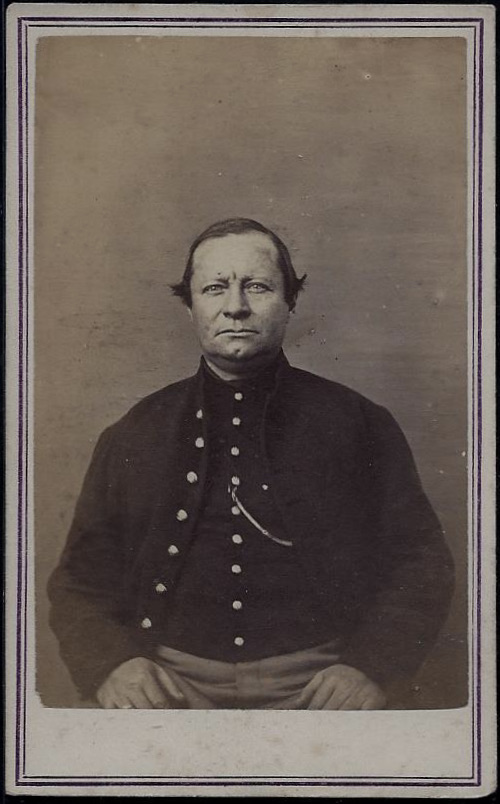
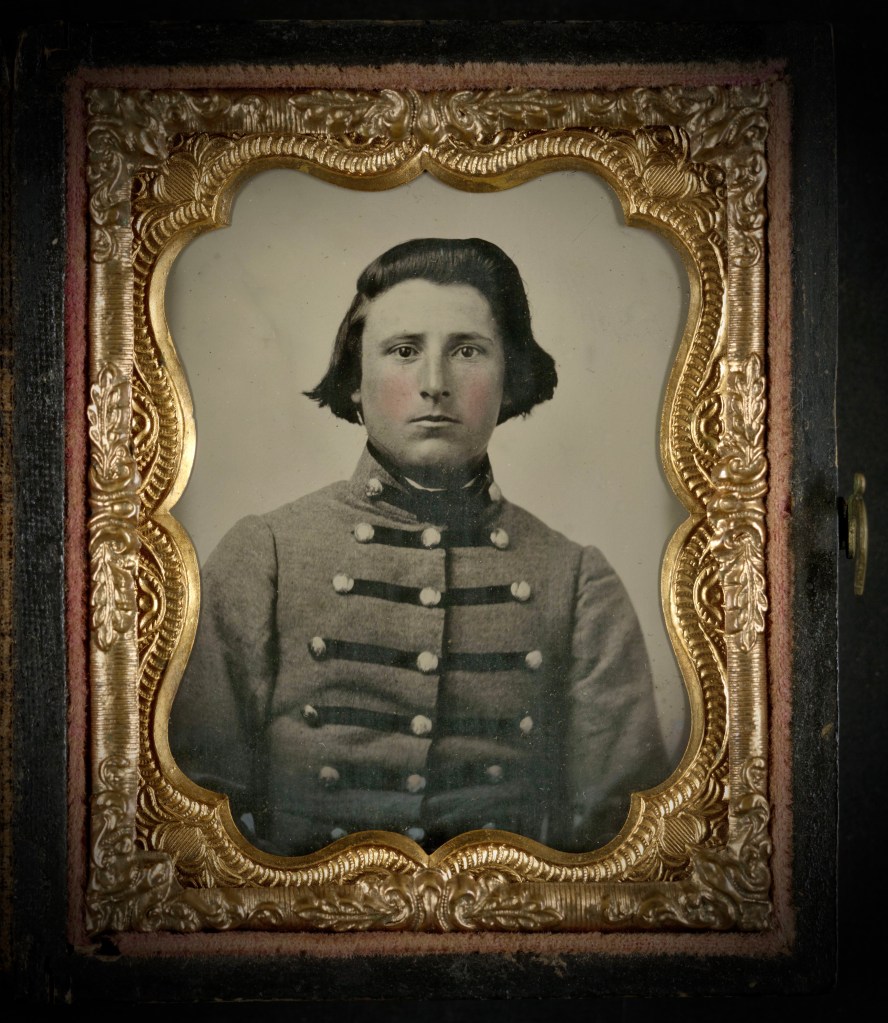
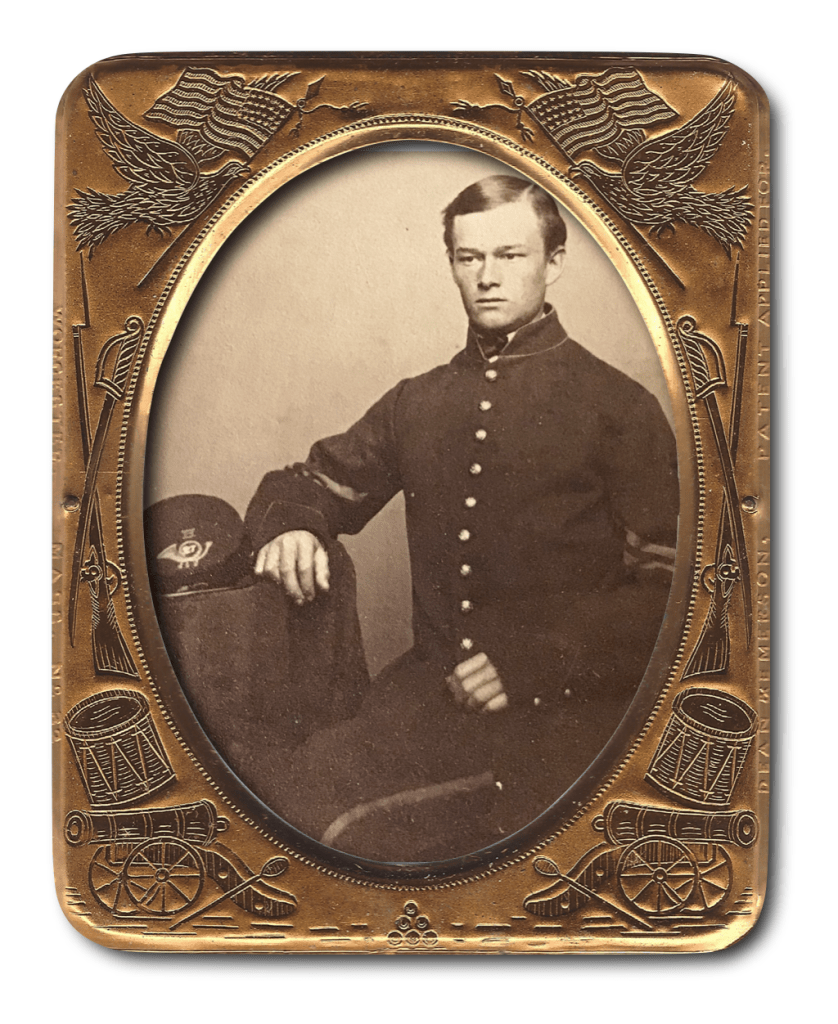
John W. Warner, Co. M, 1st New Hampshire Cavalry

John did not join the regiment until October 1862. When he enlisted, he was described as standing over 5′ 8″ tall, with blue eyes, and black hair. He was taken prisoner on 18 June 1863 at Middleburg, Virginia, and held captive on Belle Isle in Richmond until he was finally exchanged in the fall of 1863 and returned to a hospital in Washington D. C.

In January 1864, the regiment was detached from the 1st Rhode Island Cavalry to form the 1st New Hampshire Cavalry and returned to New Hampshire to reorganize and reenlist as veterans but John did not join them. He mustered out of the regiment on 7 January 1864, just days after the last of these letters were written.

John was the son of Andrew S. Warner (1814-1876) and Olivia Tow Leavitt (1818-1877) of North Hampton, Rockingham county, New Hampshire. After the war he married (1869) Estella Warner (1845-1919) and in the 1870 US Census he was identified as a 27 year-old “carriage maker” in North Hampton. He was still there in 1880 working at the same trade and in 1900 he was identified as a “wheelwright.” He was still living there in 1910 employed as a “wagon manufacturer.”

Letter 1

New York
October 11th 1862

Dear Parents,

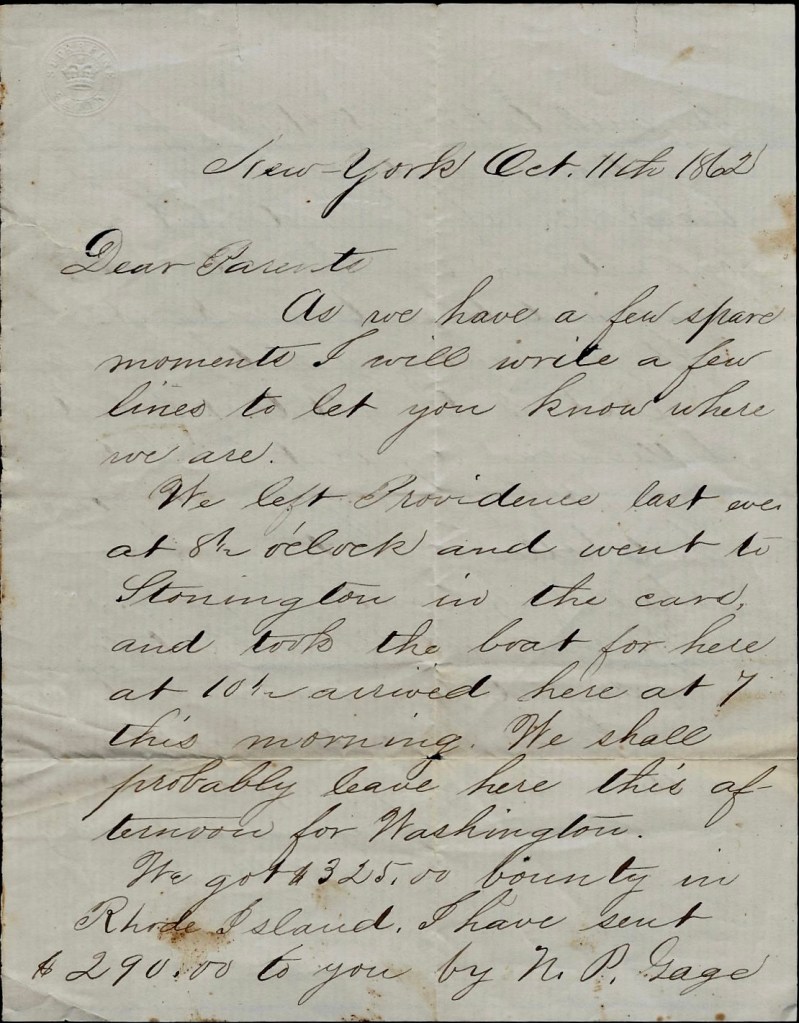
As we have a few spare moments, I will write a few lines to let you know where we are. We left Providence last week at 8:30 o’clock and went to Stonington in the cars and took the boat for here at 10:30. Arrived here at 7 this morning. We shall probably leave here this afternoon for Washington.

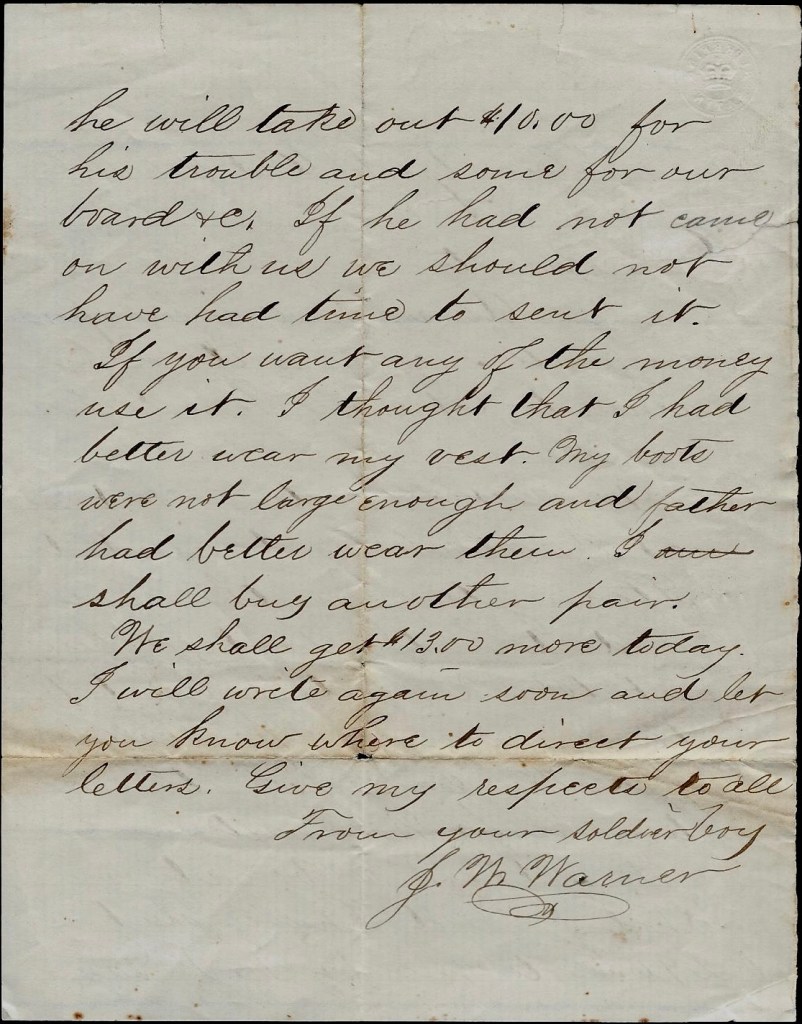
We got $325 bounty in Rhode Island. I have sent $290 to you by N. P. Gage. He will take out $10 for his trouble and some for our board &c. If he had not come on with us we should not have had time to sent it. If you want any of the money, use it. I thought that I had better wear my vest. Mt boots were not large enough and father had better wear them. Shall buy another pair.

We shall get #13 more today. I will write again soon and let you know where to direct your letters. Give my respects to all. From your soldier boy. — J. W. Warner
Letter 2

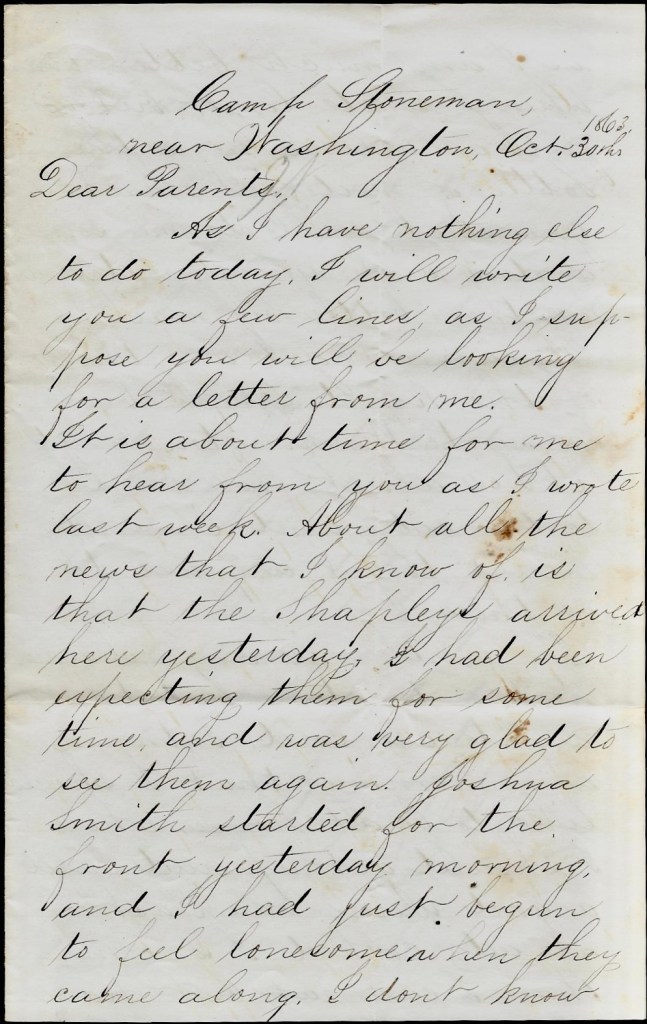
Camp Stoneman near Washington
October 30th 1863

Dear Parents,

As I have nothing else to do today, I will write you a few lines as I suppose you will be looking for a letter from me. It is about time for me to hear from you as I wrote last week. About all the news that I know of is that the Shapley’s arrived here yesterday. I had ben expecting them for some time and was very glad to see them again. Joshua Smith started for the front yesterday morning and I had just begun to feel lonesome when they came along. I don’t know as I am much better than when I wrote last, but am full as well. I hope the bottle of medicine which you sent will do me some good. I wish you would send another bottle by mail.

We can get anything of the kind except by going to Washington and it is about five miles to the city and it is difficult to get a pass to go there.

The weather is very pleasant most of the time but the nights are cold. I think every morning that I should like to be at home which I should get up and find a good, warm breakfast already cooked. I get more than I can eat but have to cook it.

If you can do a shirt up in a small roll so it will not cost too much, I wish you would send one by mail as soon as you can. Send a dark blue flannel one unless you have one of a different color all ready to send. Send a pair of stockings with it.

I believe that I have written out for today and will close. The Shapley’s send their respects. Give my respects to all and write soon to your affectionate son, — J. W. Warner

Letter 3

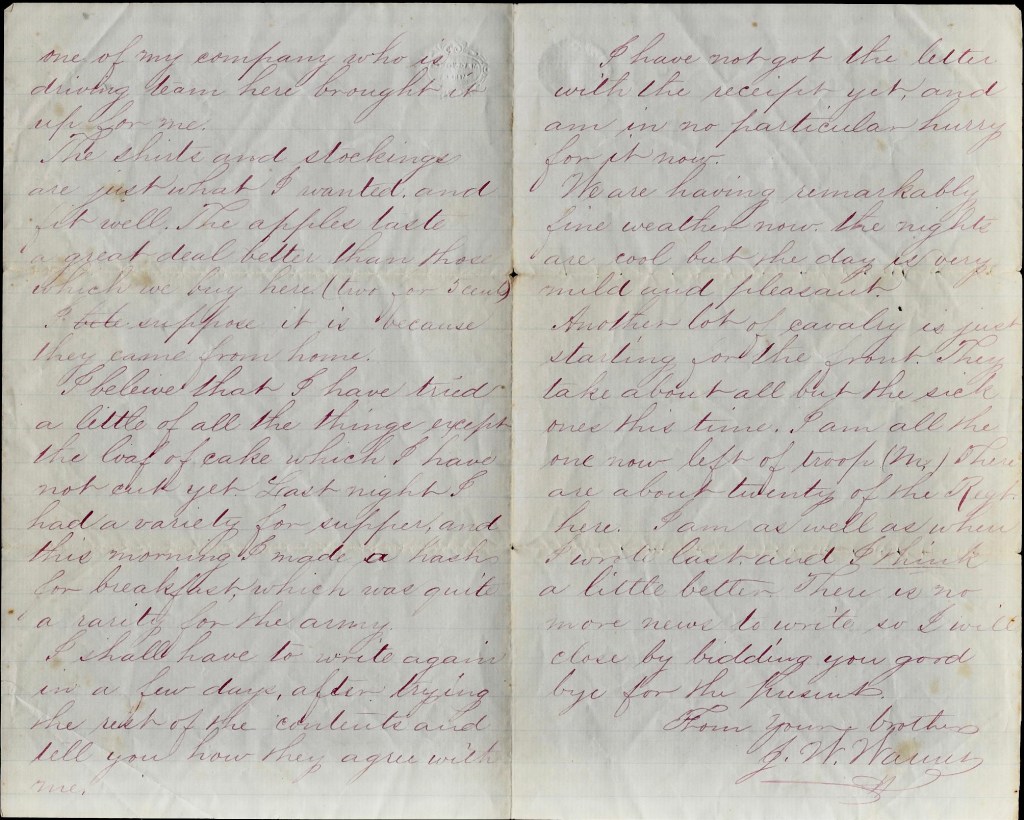
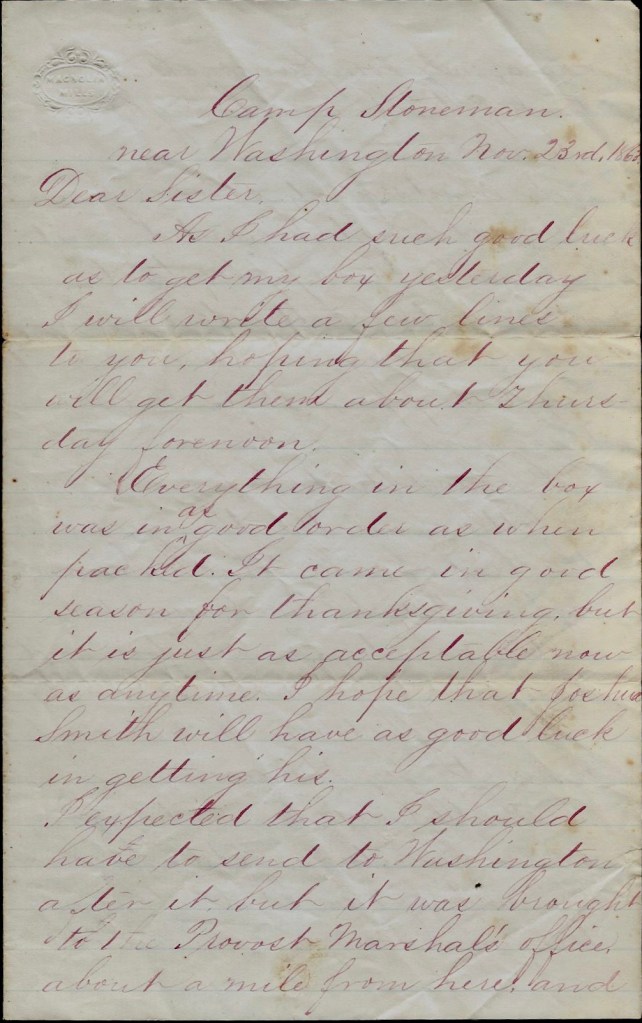
Camp Stoneman near Washington
November 23rd 1863

Dear Sister,

As I had such good luck as to get my box yesterday. I will write a few lines to you hoping that you will get them about Thursday forenoon. Everything in the box was in as good order as when packed. It came in good season for Thanksgiving but it is just as acceptable now as anytime. I hope that Joshua Smith will have as good luck in getting his. I expected that I should have to send to Washington after it but it was brought to the Provost Marshal’s office about a mile from here and one of my company who is driving team here brought it up for me.

The shirts and stockings are just what I wanted and fit well. The apples taste a great deal better than those which we buy here (two for 5 cents). I suppose it is because they came from home. I believe that I have tried a little of all the things except the loaf of cake which I have not cut yet. Last night I had a variety for supper and this morning I made a hash for breakfast which was quite a rarity for the army.

I shall have to write again in a few days after trying the rest of the contents and tell you how they agree with me. I have not got the letter with the receipt yet, and am in no particular hurry for it now.

We are having remarkably fine weather now. The nights are cool but the day is very mild and pleasant.

Another lot of cavalry is just starting for the front. They take about all but the sick ones this time. I am all the one now left of troop M. There are about twenty of the regiment here. I am as well as when I wrote last and I think a little better. There is no more news to write so I will close by bidding you good bye for the present.

From your brother, — J. W. Warner

Letter 4

Addressed to Mrs. Olivia R. Warner, North Hampton, New Hampshire

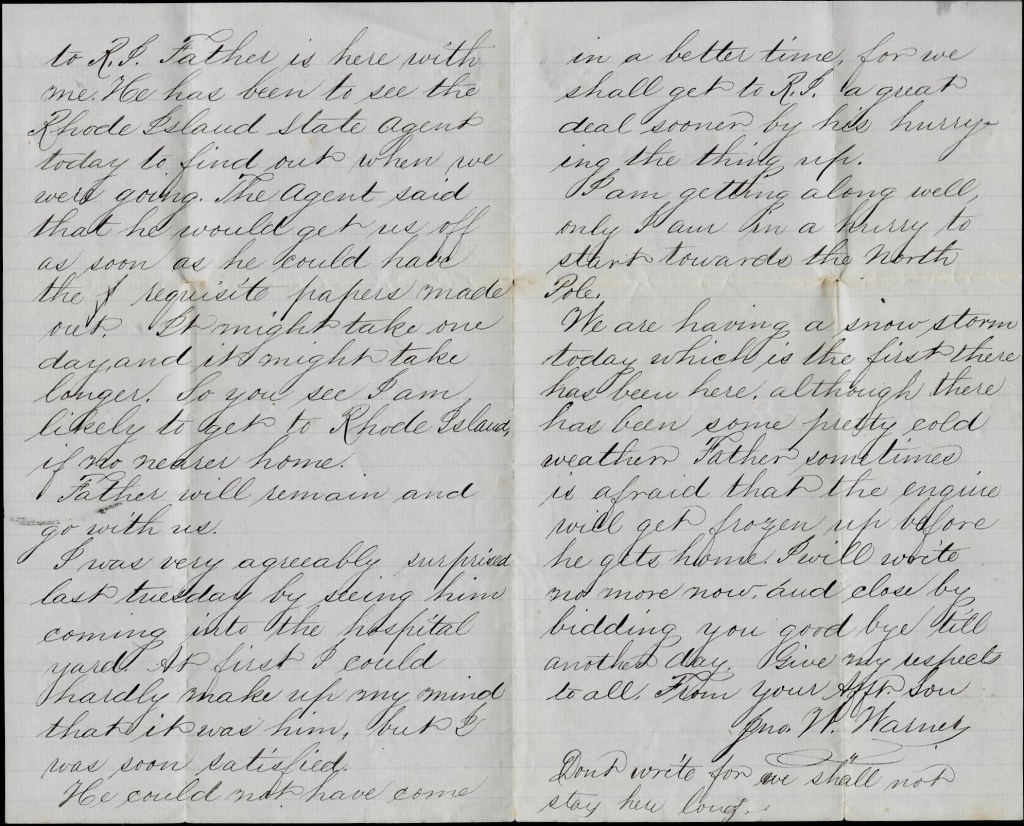
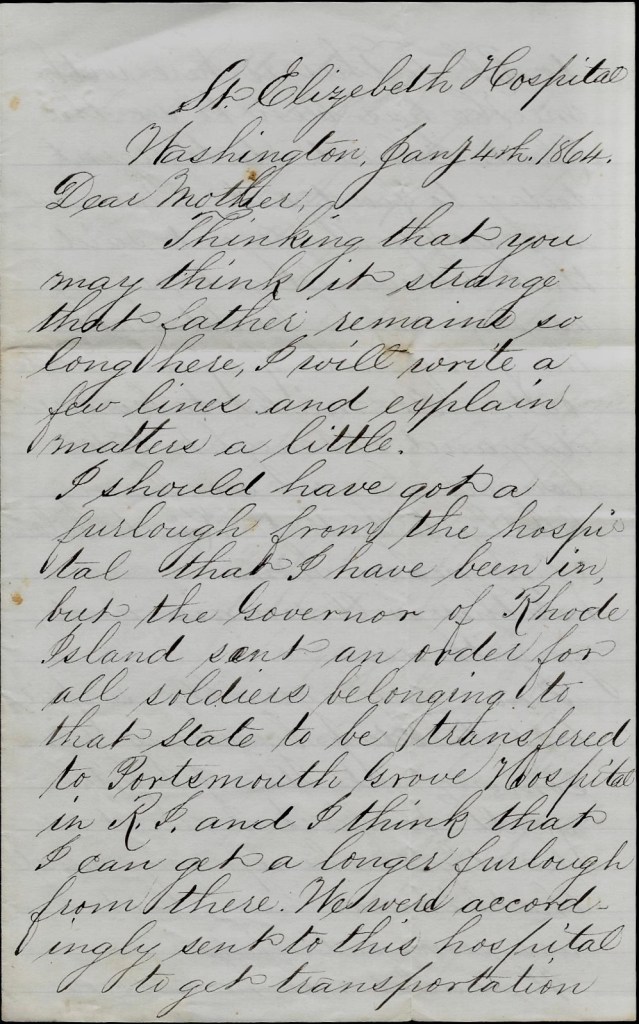
St. Elizabeth Hospital
Washington
January 4, 1864

Dear Mother,

Thinking that you may think it strange that father remains so long here, I will write a few lines and explain matters a little.

I should have got a furlough from the hospital that I have been in but the Governor of Rhode Island sent an order for all soldiers belonging to that State to be transferred to Portsmouth Grove Hospital in Rhode Island and I think that I can get a longer furlough from there. We were accordingly sent to this hospital to get transportation to Rhode Island. Father is here with me. He has been to see the Rhode Island State Agent today to find out when we were going. The Agent said that he would get us off as soon as he could have the requisite papers made out. It might take one day and it might take longer. So you see I am likely to get to Rhode Island if no near home. Father will remain and go with us.

I was agreeably surprised last Tuesday by seeing him coming into the hospital yard. At first I could hardly make up my mind that it was him, but I was soon satisfied. He could not have come in a better time for we shall get to Rhode Island a great deal sooner by his hurrying the thing up.

I am getting along well, onlyt I am in a hurry to start towards the North Pole.

We are having a snow storm today which is the first there has been here, although there has been some pretty cold weather. Father sometimes is afraid that the engine will get frozen up before he gets home. I will write no more now and close by bidding you goodbye till another day. Give my respects to all. From your affectionate son, — Jno. W. Warner

Don’t write for we shall not stay here long.

1862: Howard McCutchan to James Buchanan McCutchan

Howard’s brother, James B. McCutchan of the 5th Virginia Infantry (Find-A-Grave)

The following letter was written by Howard McCutchan (1837-1864), the son of Addison, McCutchan (1805-1880) and Ann Kirkpatrick Buchanan (1811-1880) of Augusta county, Virginia, who enlisted as a private in mid-April 1861 in Co. D (the “Spalding Greys”), 2nd Georgia Infantry Battalion. He was soon elected 2nd Lieutenant of his company and was eventually promoted to 1st Lieutenant. He was apparently made an offer to reenlist that he couldn’t refuse for he was still with the regiment at Gettysburg where he was wounded in the second day’s action near the Codori House. A year later, at Staunton, he died of disease. His gravestone in Shemariah Church Cemetery in Middlebrook, Augusta County, Virginia, bears the inscription, “Died in defence of Southern rights, July 29, 1864, 28 years, 9 months, 22 days.”

Howard wrote the letter to his brother but does not identify him by name. It was most likely addressed to James Buchanan McCutchan (1839-1920) who was closest in age to Howard among the McCutchan children. James served as a sergeant in Co. D, 5th Virginia Infantry during the war.

Transcription

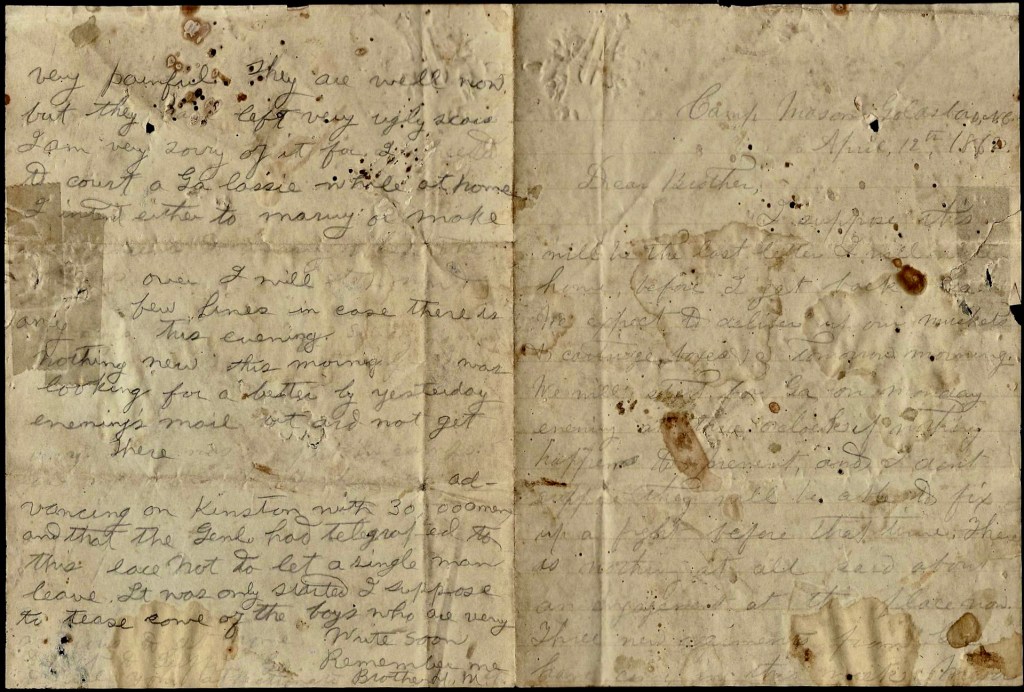
Camp Mason, Goldsboro, N. C.
April 12th, 1862

Dear Brother,

I suppose this will be the last letter I will write home before I get back to  Georgia. We expect to deliver up our muskets & cartridge boxes &c. tomorrow morning. We will start for Georgia on Monday evening at three o’clock if nothing happens to prevent and I don’t suppose they will be able to fix up a fight before that time. There is nothing at all said about an engagement at this place now. Three new regiments from Georgia have come in this week. Major Hardeman is colonel of one of them—the 45th, and Capt. [Robert A.] Smith (one  of our captains) is colonel of the 44th. Colonel Hardeman’s regiment arrived on Wednesday evening. He took us to town yesterday evening to drill us once more before we were disbanded.  The Major General [Theophilus] Holmes tried again to get us to re-enlist but our boys would not listen to  him. He is trying to get some of us to stay and drill his new regiments. Five or six of us sent up our names and asked him what pay he would give and what chance there was for promotion. If he makes a good offer, I will stay here & not, so to Georgia.

I suppose you have heard all about the great fight at Corinth.1 The last reports say General Buell of the Feds is killed and about 5,000 of them captured. We have not heard the particulars yet but will perhaps hear by this evening’s mail. It is said the Virginia 2 went out a few days since & captured 3 boats and schooners without firing a gun.

We have had bad weather this week and it has made a good many of our boys sick. I have been taking salts all week in broken doses to clean my blood. I have had boils coming out on my face and they have been very painful. They are well now but they have left very ugly scars. I am very sorry of it for I expected to court a Georgia lassie while at home. I intend either to marry or make acquaintance & marry before the war is over. I will try to write later a few lines in case there is any news this evening.

Sunday morning. Nothing new this morning. I was looking for a letter by yesterday evening’s mail but did not get any. There  was a report in camp last night stating that the Yankees were advancing on Kinston with 30,000 men and that the general had telegraphed to this place not to let a single man leave. It was only started I suppose to tease some of the boys who are very anxious to get home. Write soon. Direct to Griffin, Georgia. Remember me. Your affectionate brother — H. M.


1 Howard is referring to the Battle of Shiloh that took place on April 6-7, 1862.

2 The “Virginia” was the refurbished USS Merrimack turned into the ironclad CSS Virginia by the Confederates. Howard is referring to the following event: On April 11, the Confederate Navy sent Lieutenant Joseph Nicholson Barney, in command of the paddle side-wheeler CSS Jamestown, along with Virginia and five other ships in full view of the Union squadron, enticing them to fight. When it became clear that Union Navy ships were unwilling to fight, the CS Navy squadron moved in and captured three merchant ships, the brigs Marcus and Sabout and the schooner Catherine T. Dix. Their ensigns were then hoisted “Union-side down” to further taunt the Union Navy into a fight, as they were towed back to Norfolk, with the help of CSS Raleigh.

Youthful Daredevils

The sixth-place ambrotype (reversed) of John Henry Thomas taken in 1862 while serving as 2nd Lieutenant in Co. C of the “Irish Battalion,” or the 1st Battalion Virginia Infantry (Regulars). Lt. Thomas wears his double breasted officer’s frock coat with gilded buttons and he holds his slouch hat adorned with an acorn braid hat cord on his lap. The tip of his leather revolver holster can be seen peeking out from underneath.
(W. Griffing Collection)

“Youthful daredevils who rode side-by-side,” is how noted author Jeffry Wirt referred to the young men who joined John S. Mosby’s partisan rangers from Fairfax, Fauquier, and Louden counties in Virginia. Nicknamed the “Gray Ghost” for his lightning quick raids and his ability to elude Union pursuit, Mosby came to operate with impunity in the aforementioned counties, harassing the rear of the Federal army in an area that came to be called “Mosby’s Confederacy.” His command—the 43rd Battalion Virginia Cavalry—was not officially organized until the spring of 1863, but recruiting was never a problem. Young men from the counties whose family farms were being destroyed and ravished by Union forces, their homes occupied by Union officers, or their family members abused or disrespected were more than anxious to “join up” with Mosby who reported to no one but J. E. B. Stuart.

John’s father, Hon. Henry W. Thomas of Fairfax Court House, Va. (Library of Virginia)

One such volunteer was John Henry Thomas (1843-1888)—the son of Judge Henry Wirtz Thomas who represented Fairfax county in the State Legislature before the war and served the Confederacy as the Auditor of the State. His mother was Julia M. Jackson, the older sister of James William Jackson, the proprietor of the Marshall House in nearby Alexandria, who became instantly famous for killing Col. Elmer Ellsworth when the colonel removed the Confederate flag from the hotel’s rooftop flagpole in May 1861. Jackson was in turn immediately gunned down by Ellsworth’s men, his body bayonetted and trampled—the “first martyr to the cause of Southern Independence.”

A handsome young man standing 6 foot tall, with blue eyes and dark hair, John Henry was working as a clerk when the war began and did not initially enlist until 18 April 1862 as a private in Co. G (the “Hanover Light Dragoons”) of the famous “Black Horse” 4th Virginia Cavalry. Like most other young men with connections, however, he used his father’s influence to obtain a commission from the Governor as a 2nd Lt. in Co. C of the “Irish Battalion,” or the 1st Battalion Virginia Infantry (Regulars), and so he was not long in transferring into the infantry, his commission arriving in May 1862 while he was hospitalized at Chimborazo Hospital in Richmond suffering from diarrhea.

By the fall of 1862, with the Union’s demoralizing loss at the Battle of Second Bull Run and Chantilly, the Army of the Potomac took up permanent quarters around Fairfax Court House, making it the headquarters of Maj. General Franz Sigel’s XII Corps, and even establishing a military hospital in the Seminary. The occupation of his home town and the “house guests” in blue who frequented his father’s home looking for room and board no doubt wore on John like an itchy wool sweater. 

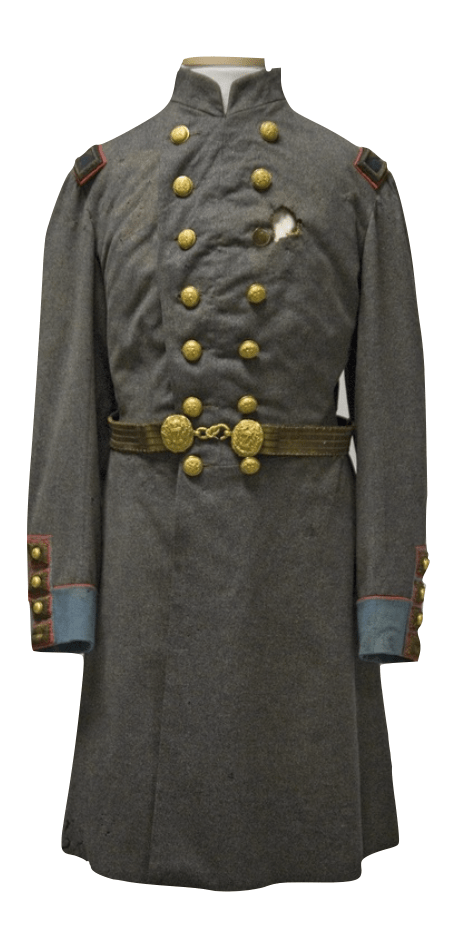
Col. Elmer E. Ellsworth’s frock coat showing the hole that John’s uncle—James Wm. Jackson—put in it at close range with his 12 Gauge double barrel shotgun on 24 May 1861. The New York State Military Museum.

Early in 1863, when Mosby began operating with squads of limited numbers, John’s muster records indicate that he was with his regiment still hunkered down south of the Rappahannock at Fredericksburg. In March and April, however, records shows him on detached service as the Provost Marshall at Beaver Dam, Virginia—his daytime job. At night, he began to hook up with Mosby’s rangers on raids behind enemy lines. Though Mosby had as many as 800 men who rode with him by the end of April, most of the time they operated only in small squads to escape detection. One such midnight raid in which John was known to have participated was the “Fairfax Court House Raid of March 9, 1863” resulting in the capture of Gen. Edwin H. Stoughton who was quartered in the Dr. William P. Gunnell House and other officers quartered in the residence of John’s father. The raid was summed up by William Alexander McCoy of Co. B, 1st West Virginia Cavalry in a letter dated on 13 March 1863 (published on Spared & Shared 22) which read:

“The rebels made quite a daring raid on Fairfax Court House a few nights ago. They took General Stoughton and a few other officers and 40 or 50 condemned horses. I suppose they thought that they were getting a fine lot of horses but I guess that they found out their mistake as soon it became daylight for they turned several of them loose and they came back. The horses on an average were worth about $2½ a piece. There was about 40 of the rebels. All of them had our uniforms on and by some way mysterious obtained the countersign and came almost through our camp, went to Fairfax, done all they wanted to, and then returned unmolested…They are called “Partisan Rangers.” They don’t receive any pay from the Confederacy. All the horses that they capture they sell at Richmond and this is the way that they get their pay. They will not fight anything like their own number. All they want to do is to capture horses and other articles from us that they can sell.”

From April 30 to August 31, 1863, whether John was present with his regiment was “not stated” in the muster rolls. It seems evident that he was not and on 5 October 1863, he “resigned his commission and joined Mosby’s command.” A letter addressed to Secretary of War James Sedden dated 28 August 1863 may be found in his military file requesting authority to raise a company of cavalry “to act within the lines of the enemy in conjunction with Major Mosby & under his command.” He went on to add that he was “well acquainted with the region of country in which he is acting & am confident that, with authority from you, I can raise a Company in a short time, having had assurances given me to that effect.” Such authority may have been necessary for Mosby to accept John officially into the Rangers as he was known to insist upon no deserters joining his outfit.

As a member of Mosby’s Partison Rangers, it understandably proves more difficult to track John’s movements and activities going forward but a book by Keen & Mewborn published in 1993 entitled “43rd Battalion Virginia Cavalry” informs us that John was a 4th Sergeant in Co. A and that he officially joined the Rangers in the fall of 1863. He was known to be on the 14 November 1863 raid on a sutler’s wagon near Fairfax Court House and he was taken prisoner two days later and charged with plundering. The date of his exchange isn’t known. In July 1864 he participated in a raid on Point of Rocks, Maryland (see “Great Calico Raid”), and two days later at Mt. Zion Church. On October 9, 1864, he led a skirmish and captured dispatches at Ashby’s Gap. He officially surrendered on 9 May 1865 and “swallowed the yellow dog” (took oath) at Alexandria.

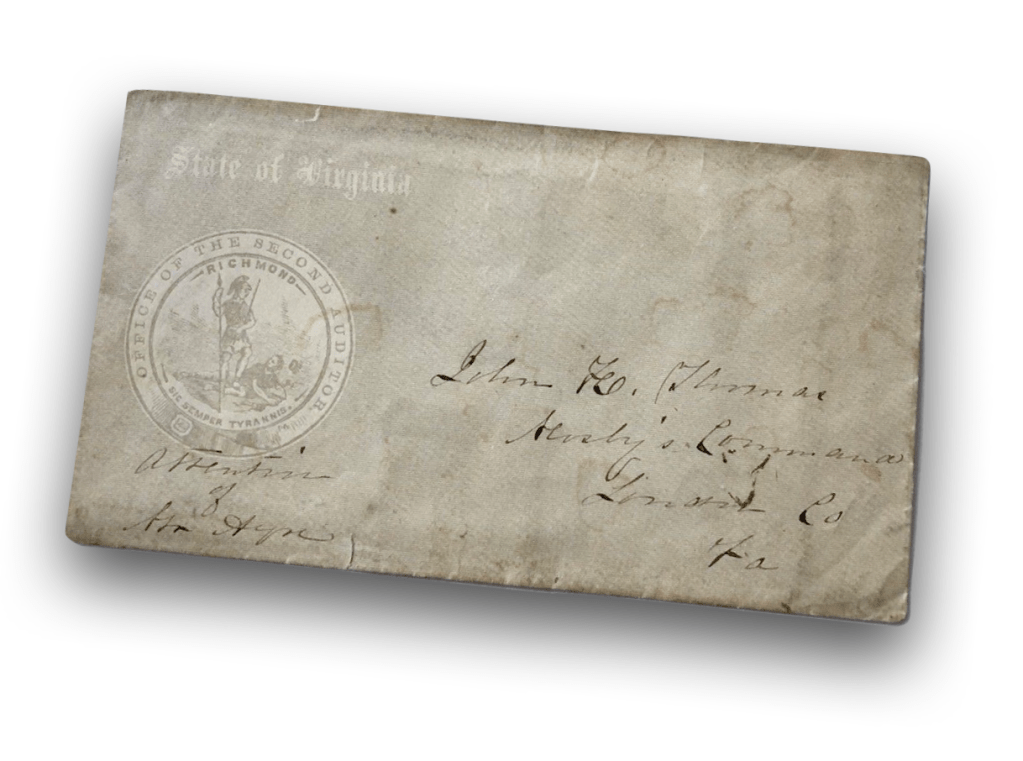
A letter embossed with the State of Virginia seal addressed to John H. Thomas, Mosby’s Command, Louden county, Va. hand carried during the war. [William J. Stier Collection]

John’s post-war activities are sketchy. He married Fannie Gwynn (1847-1907) and settled down in Fairfax county where he attempted to rebuild his life. The 1870 US Census identifies him as a farmer but what was left of the family farm is uncertain as a Freedman’s village and school was reportedly built on a portion of his father’s lands. By 1880 he had taken a job as a “mail agent on the Manassas branch of the Virginia Maryland railroad,” and had fathered three children—Alma M. Thomas, age 7, and twin girls Ruth and Ruby, age 3. He died eight years later in 1888 at the age of 45, his cause of death described curiously “as an illness of but three days” while visiting at his father’s home in Fairfax Court House. The one and only obituary notice I could find for him summed up his life with the phrase, “during the war he was a member of Mosby’s battalion.”

The back of the cased image with Alma’s note identifying the image as that of her father, John H. Thomas. The note is attached with brittle and yellowed tape.

The 6th-plate ambrotype image of John Henry Thomas is identified by a piece of paper taped to the outside of the case which reads, “John H. Thomas, son of Judge H. Thomas, Confederate 1st Lieut. under Stone Wall Jackson by his daughter Alma, Fairfax, Va.” The image was sold at auction in 1997 and has been in the personal collection of my friend Jean MacCallum until recently when she sold it to me. Jean gathered most of the background material on the Thomas family and together we confirmed that Alma was actually John’s daughter, had married Henry Cox Saffell in 1896, and that she lived in the District of Columbia until her death in 1966 at the age of 93. Her advanced age when she labeled this image may account for her confusion of Jeb Stuart with Stonewall Jackson but the other identifiers are unmistakable. 

1863: James A. Gifford to Elihu H. Gifford

Black and White Sailors often served together working and living in tight quarters aboard US Navy vessels. This letter reveals it was not always in complete harmony.

The following letter was written by James A. Gifford (1843-1903), the son of Elihu H. Gifford (1809-1871) and Ann Tripp (1812-1877) of New Bedford, Bristol county, Massachusetts.

James wrote the letter to his parents while serving aboard the USS Release—a bark-rigged sailing vessel. During the period of time James was aboard the Release, she served as an ordnance storeship based at Beaufort, North Carolina, for ships blockading the southern coast from Wilmington, NC, to Norfolk, Va. According to the Veteran’s Records, James entered the US Navy in August 1863 and was discharged in November 1865. There are 38 of Gifford’s letters that have been archived in the Wilson Special Collections Library at the University of North Carolina. They have been digitized and are available on the web at James Gifford Papers, 1863-1865. The collection has been summarized as follows:

This collection consists of 38 letters that James Gifford, who apparently joined the United States Navy in September 1863, wrote to his parents in New Bedford, Mass., while he was aboard the United States Bark Release anchored off Beaufort, N.C. All of the letters are addressed to his father Elihu H. Gifford 39 Smith Street and begin “Dear Parents.”

Letters from 1863 provide little information about Gifford’s naval responsibilities and say little about what he did in civilian life. At the time these letters were written, Gifford was apparently working as an assistant to the ship’s doctor, who was, according to Gifford, a very unpopular character among the ship’s crew. In early 1864, Gifford became paymaster steward, a position that gave him access to information about the prices and availability of goods both on board ship and on land. Many of the letters describe how far Gifford’s salary could be stretched relative to prices that fluctuated considerably. In the same vein, there is much talk about Gifford’s sending lengths of fabric to his parents and their returning finished articles of clothing to him. There is also considerable traffic in local newspapers and other reading matter requested by Gifford, who, until late 1864, seems to have had a great deal of time on his hands.

While the letters contain a good deal of personal griping, in almost every letter, Gifford also reported on events of larger significance that were taking shape all around him. In many of his letters, he wrote of troop and ship movements and the pursuit and capture of blockade runners. He also reported rumors of Union victories in Kinston, N.C., and Goldsboro, N.C. (12 March 1864); the burning of the Cape Lookout Light (3 April 1864) and of Washington, N.C. (2 May 1864); the outbreak of yellow fever in Beaufort and New Bern (September-October 1864); and the assembling in Beaufort of a large fleet in preparation for an attack on Wilmington, N.C.

During the period in which these letters were written, Gifford appears to have had few occasions to leave the Release. Aside from infrequent shore leaves, he made one journey home in September 1864 (21 September 1864) and two training missions with the paymaster of the steamship Lillian.

Coverage of Gifford’s activities and the news he reports may appear to be spotty. One of the reasons for this is that mail delivery was not reliable, a fact bemoaned frequently by Gifford in these letters, especially when a long awaited item never arrives because the request was never received in New Bedford.

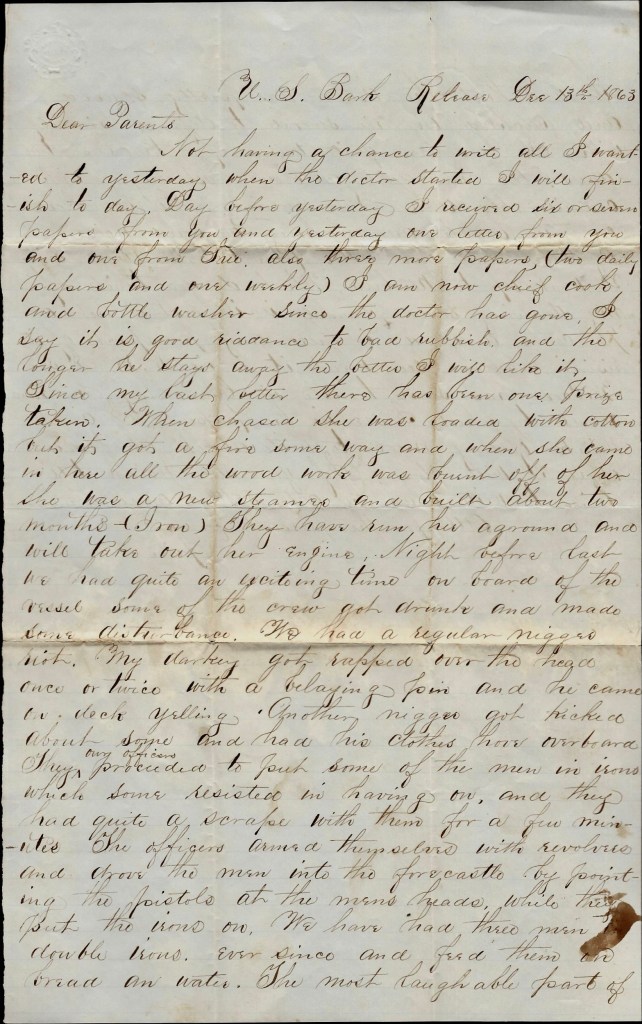
Transcription

Addressed to Mr. Elihu H. Gifford, New Bedford, Mass.

U. S. Bark Release
December 13th 1863

Dear Parents,

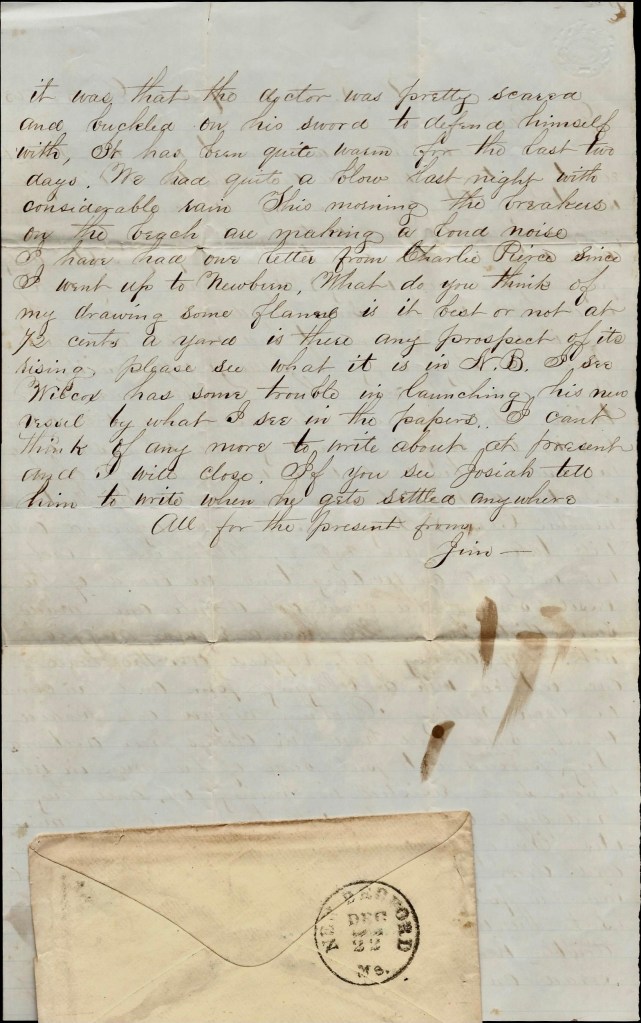
Not having a chance to write all I wanted to yesterday when the doctor started, I will finish today. Day before yesterday I received six or seven papers from you and yesterday one letter from you and one from Sue. Also three more papers (two daily papers and one weekly). I am now chief cook and bottle washer since the doctor has gone. I say it is good riddance to bad rubbish and the longer he stays away, the better I will like it.

Since my last letter there has been one prize taken. When chased she was loaded with cotton but it got a fire some way and when she came in here, all the wood work was burnt off of her. She was a new steamer and built about two months (Iron). They have run her aground and will take out her engine.

Night before last we had quite an exciting time on board of the vessel. Some of the crew got drunk and made some disturbance. We had a regular nigger riot. My darkey got rapped over the head once or twice with a belaying pin and he came on deck yelling. Another nigger got kicked about some and had his clothes hove overboard. They (our officers) proceeded to put some of the men in irons which some resisted in having on and they had quite a scrape with them for a few minutes. The officers armed themselves with revolvers and drove the men into the forecastle by pointing the pistols at the mens heads which they put the irons on. We have had three men in double irons ever since and feed them on bread and water. The most laughable part of it was that the doctor was pretty scared and bucked on his sword to defend himself with.

A belaying pin from 19th Century Sailing Vessel used to secure lines of running rigging

It has been quite warm for the last two days. We had quite a blow last night with considerable rain. This morning the breakers on the beach are making a loud noise.

I have had one letter from Charlie Price since I went up to Newbern. What do you think of my drawing some flannel. It is best or not at 72 cents a yard? Is there any prospect of its rising? Please see what it is in New Bedford.

I see Wilcox has some trouble in launching his new vessel by what I see in the papers. I can’t think of any more to write about at present and I will close. If you see Josiah, tell him to write when he gets settled anywhere.

All for the present, from Jim

1863: George S. Hill to Lucy Maria Hill

I could not find an image of George but here is one of Frank Alling of Co. H, 27th Connecticut Infantry
(Al & Claudia Niemiec Collection)

The following letter was written by George S. Hill (1841-1863), the son of Abram G. Hill and Roxanna Field (1800-1875) of Madison, New Haven county, Connecticut. He wrote the letter to his sister, Lucy Maria Hill (1860-1865).

George S. Hill was mustered into Co. I, 27th Connecticut Infantry in October 1862. The were attached to the Second Corps of the Army of the Potomac at Fredericksburg Chancellorsville. George was wounded on 13 December 1862 at the Battle of Fredericksburg. And he was taken prisoner on 3 May 1863 during the Battle of Chancellorsville when 8 of ten companies were captured in a desperate rear guard action. George was paroled less than two weeks later, apparently suffering from illness however. He died of disease at Annapolis, Maryland, on 14 June 1863.

Transcription

Camp near Falmouth
April 7, 1863

Dear Sister,

I now sit down to write to you to let you know that instead of  being sick, I am well and hope these few lines will find you the same. I wrote a letter to Roxanna—if she has got it—and I wrote that I had been sick with the jaundice. I was sick about a week and was excused by the doctor from duty but I have got over them now and I feel as well now, if not better, than I have anytime since I left home. My appetite is good. I eat potatoes and onions and we draw good, nice bread, and we live very good now.

I will now write to you something of a soldier’s life. The hardest [thing] we have to do now is going out on picket. I went out on picket last Saturday morning and came in on Sunday. It was a tough time. It began  to snow and rain just about sundown and continued to storm till the next day noon. Now, George D. Bailey, [during] the next cold snow and rain storm you have—if you have any in Old Connecticut for I do believe it is colder here than it is up there—you just go out in the lot and sit down on the ground or on a stone. We have to sit down on the ground if we sit down at all, for there is not many stones to be found out here, so we have to seat ourselves right down on the ground or else stand up. You just try it and you will know something what a soldier’s life is. It is all very fine though it is all to save the glorious Union.

Now, if it was for the Union, I would not say any words. But it is not. It is for the cursed niggers. A white man is a slave now and the niggers play gentlemen. Our Captain has got a nigger to wait on his ass and he [the Negro] gets mad at the boys sometimes and calls them sons of bitches. If he should ever call me a son of a bitch, there would be one the less nigger to fight for. I don’t think I would quite kill him, but I would hurt him so he would not live long.

You wrote to have me get a furlough for 60 days. My time will be up by that time or very close and I could not get a sick furlough if I should try for I am well and do duty everyday. I wish I could  get a furlough for 60 days. It would please me very much. But when I come home, it will be a furlough for more than 60 days. If I live till the 15th of June or 3rd of July, I shall see Old Madison once more. That won’t be long to wait. I want to give you to understand that I am well and can write my own letters and I will write to you oftener. I do not think of any more to write now and it is getting late and I must close my letter so good night. Give the children each a kiss for me. I send my love to all you.

This from your affectionate brother, — George S. Hill,  Falmouth, Virginia

1862-66: Sigmond Bachman to John West Webster

I could not find an image of Sigmond but here is a CDV of Quartermaster Sergeant Erwin F. Cheney of the 21st New York Cavalry. Image taken on 25 November 1863 (Robert Mayer III Collection)

The following Civil War letters were written by German (Jewish) emigrant Sigmond Bachman (1840-1911). He first appears in US Census records in 1860 enumerated in the household of John West Webster (1808-1889) and his wife, Esther Arnold (1813-1888) of Ogden, Monroe county, New York, where he was a hired laborer on Webster’s farm. Also living in her father’s home at that time was 23 year-old Ruth Webster (1837-1904). Ruth and her father were the recipients of these letters. Ruth married Russell Chapman (1824-1882) on 1 October 1863.

Sigmond entered the service as a private in Co. E, 27th New York Infantry on 21 May 1861 at Rochester. He mustered out two years later on 31 May 1863 at Elmira. He again entered the service in late November 1863 as a private in Co. L, 21st New York Cavalry, and did not muster out until late June 1866 as a sergeant in Co. F at Denver, Colorado.

Sigmond wrote two of the letters while he was in the 27th New York Infantry and six of the letters while in the 21st New York Cavalry.

To read letters by other members of the 27th New York Infantry or the 21st New York Cavalry transcribed and posted on Spared & Shared, see:
Dexter E. Buell, Co. B, 27th New York (28 Letters)
John B. Edson, Co. E, 27th New York (44 Letters)

William Badger Tibbets, F&S, 21st New York Cavalry (1 Letter)
Hiram C. Barney, Co. H, 21st New York Cavalry (4 Letters)

Letter 1

27th Regiment, N. Y. V.
Col. J. J. Bartlett, Commanding
Camp Franklin, Virginia
March 19th 1862

Friend Ruth,

In my my hurry I take my pen in hand to write to you those few lines. I am well and in good health at present and so is all the rest of the boys. We are a going to move in a few days by water when we shall give the rebels another call.

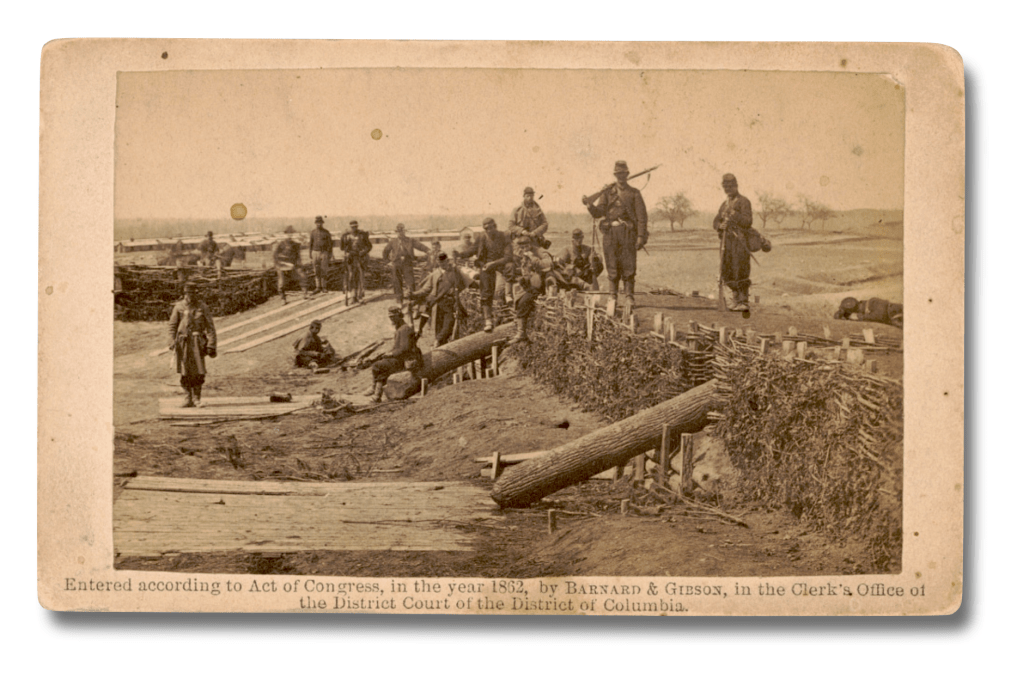
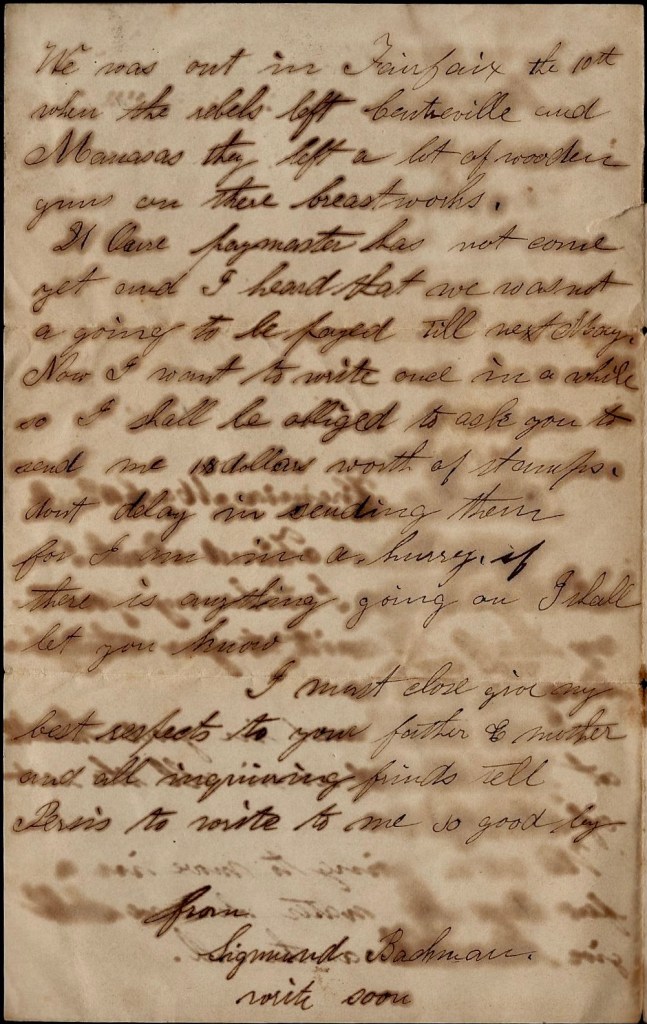
We was out in Fairfax the 10th. When the Rebels left Centreville and Manassas, they left a lot of wooden guns on the breastworks.

The wooden log (“Quaker”) guns found on the breastworks at Centreville when the Confederate army withdrew in March 1862

Our paymaster has not come yet and I heard that we was not a going to be paid till next May. Now I want to write once in awhile so I shall be obliged to ask you to send me $1 dollar’s worth of stamps. Don’t delay in sending them for I am in a hurry. If there is going on, I shall let you know.

I must close. Give my best respects to your father and mother and all enquiring friends. Tell Persis to write to me. So goodbye.

From, — Sigmond Bachman

Write soon.


Letter 2

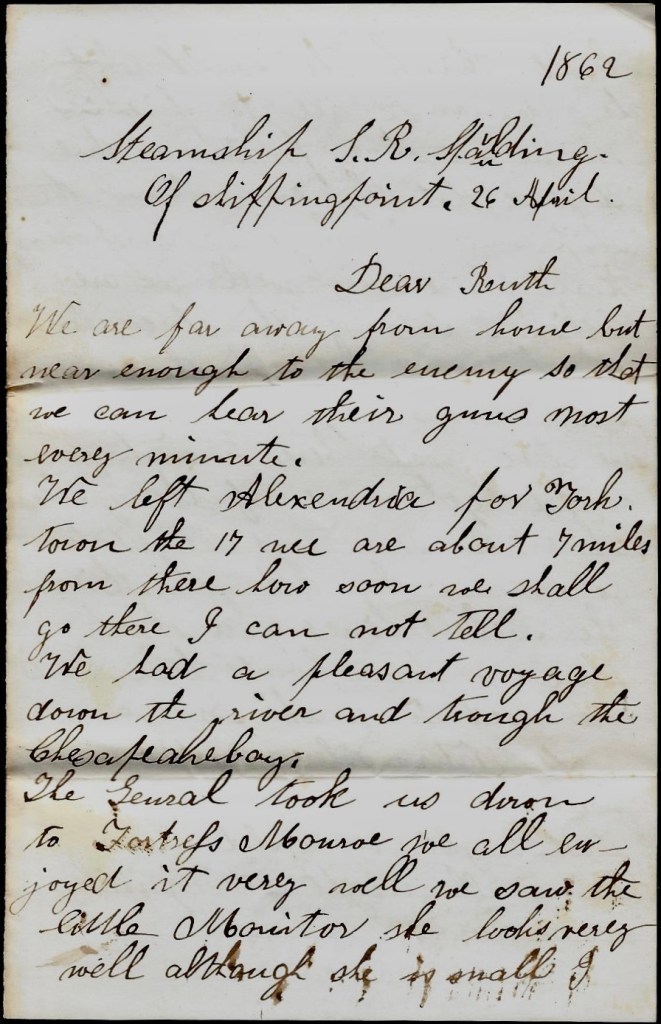
Steamship S. R. Spaulding
Off Shippingpoint
26 April 1862

Dear Ruth,

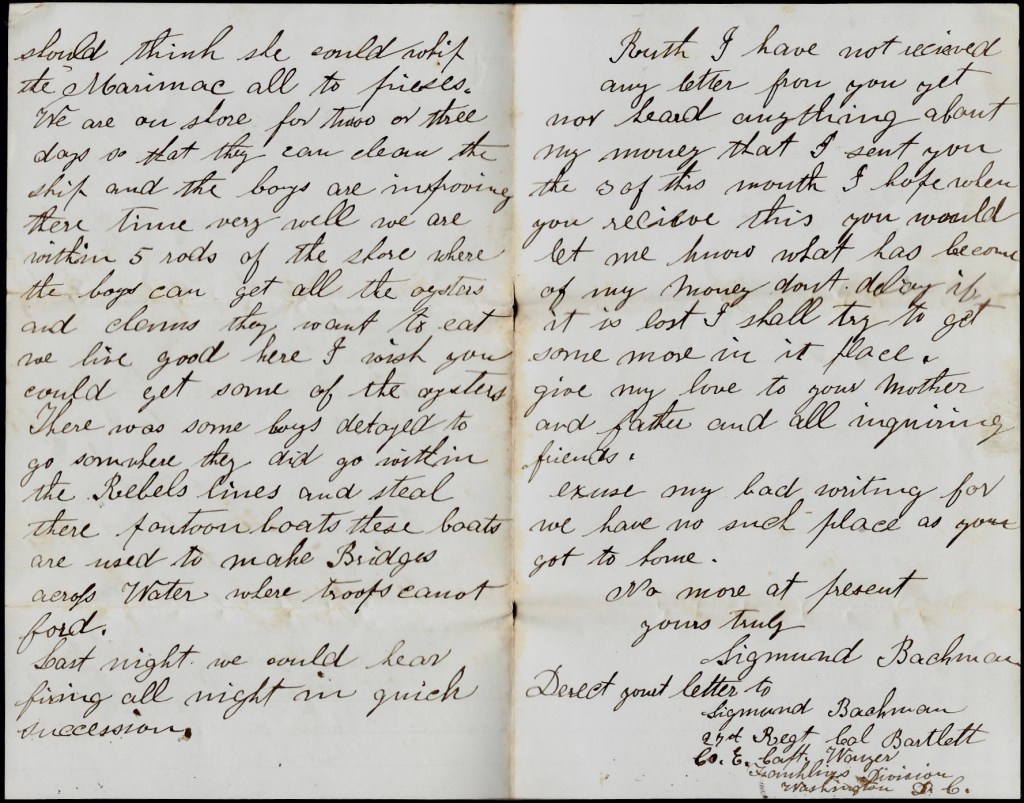
We are far away from home but near enough to the enemy so that we can hear their guns most every minute. We left Alexandria for Yorktown the 17th. We are about 7 miles from there. How soon we shall go there, I cannot tell. We had a pleasant voyage down the river and through the Chesapeake Bay.

The General took us down to Fortress Monroe. We all enjoyed it very well. We saw the little Monitor. She looks very well although she is small. I should think she could whip the Merrimack all to pieces. We are on shore for two or three days so that they can clean the ship and the boys are improving their time very well. We are within 5 rods of the shore where the boys can get all the oysters and clams they want to eat. We live good here. I wish you could get some of the oysters.

There was some boys detailed to go somewhere. They did go within the Rebel lines and steal their pontoon boats. These boats are used to make bridges across water where troops cannot ford.

Last night we could hear firing all night in quick succession.

Ruth, I have not received any letter from you yet nor heard anything about my money that I sent you the 3rd of this month. I hope when you receive this you would let me know what has become of my money. Don’t delay. If it is lost, I shall try to get some more in its place. Give my love to your mother and father and all inquiring friends. Excuse my bad writing for we have no such place as you got to home.

No more at present. Yours truly, — Sigmpnd Bachman

Direct your letter to Sigmond Bachman, 27th Regt., Col. Bartlett, Co. E, Capt. [George G.] Wanzer, Franklin’s Division, Washington D. C.


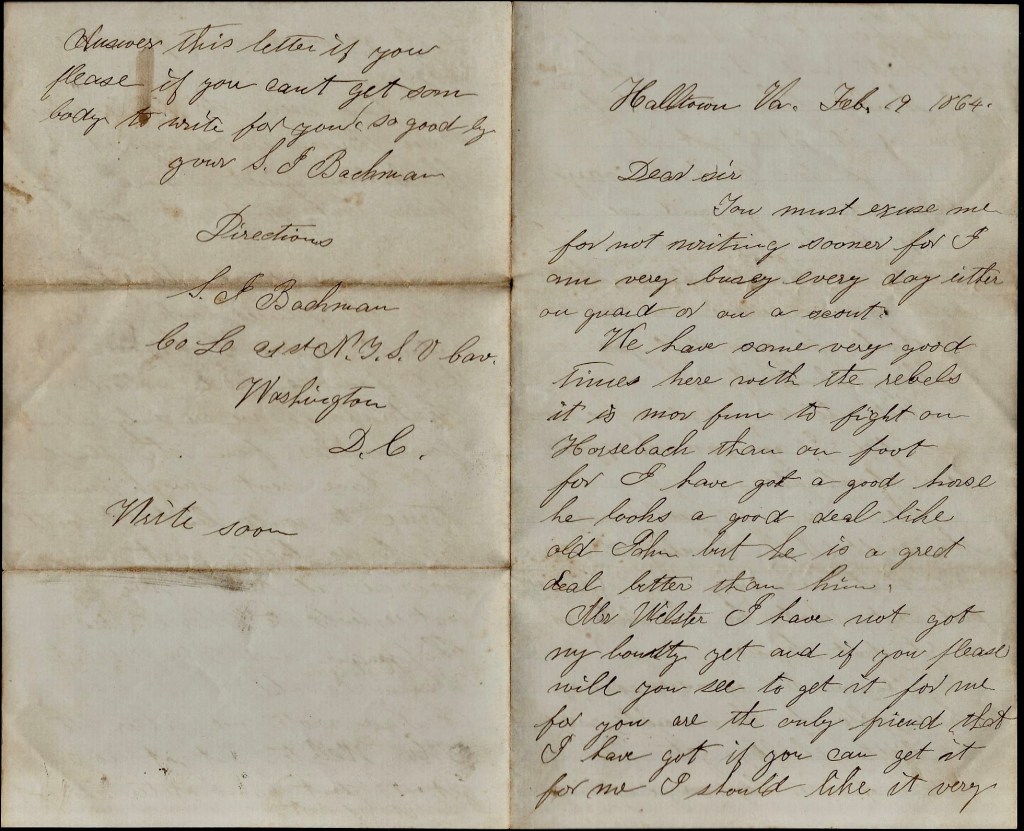
Halltown, Virginia
February 19, 1864

Dear Sir,

You must excuse me for not writing sooner for I am very busy every day either on guard or on a scout.

We have some very good times with the rebels. It is more fun to fight on horseback than on foot for I have got a good horse. He looks a good deal like Old John but he is a great deal better than him.

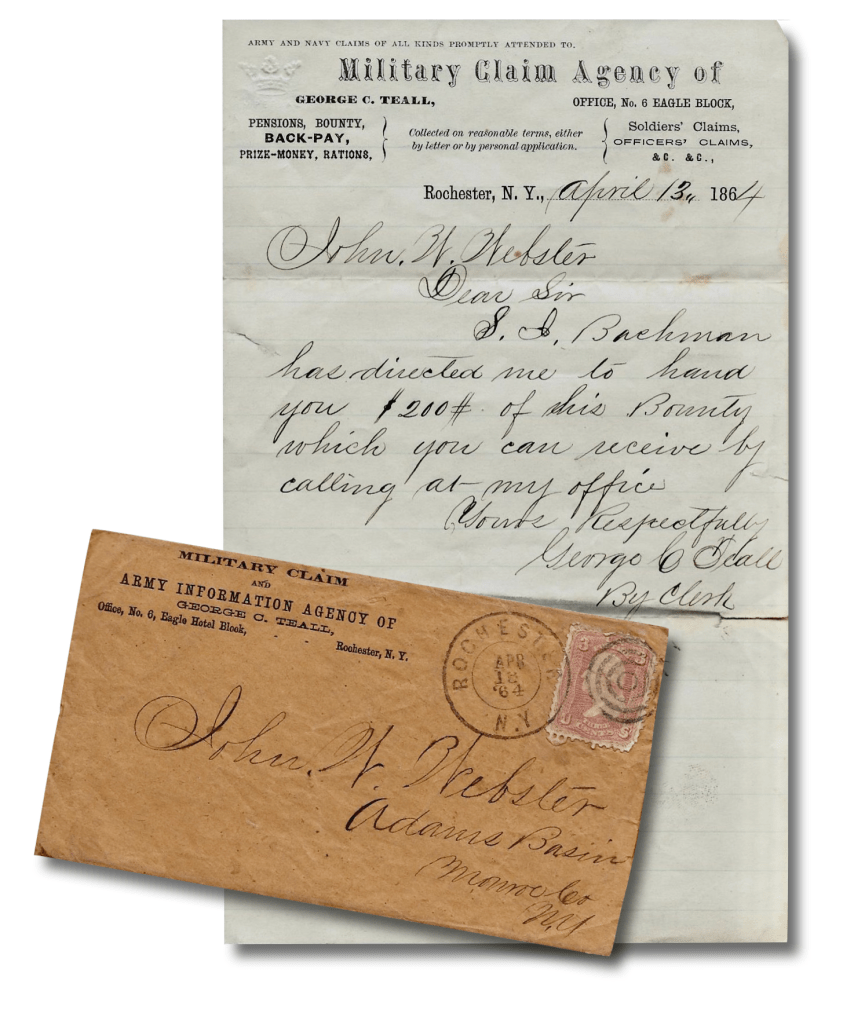
Mr. Webster, I have not got my bounty yet and if you please, will you see to get it for me for you are the only friend that I have got. If you can get it for me, I should like it very much for I got a letter from my sister and she is sick. I should like to send her some of it if I got it. You go to Rochester very often and you go and see George C. Teal, Commissioner of Deeds on Buffalo Street in the Eagle Block. He swore me in. I think he can tell you something about it. Write to me as soon as you can for I am anxious to hear about it.

There is a Arnold in the Eighth New York Cavalry—the same one that ran away from Brockport. But what company he belongs to, I don’t know.

The weather is very fine here although the nights are a little chilly yet. Some of our boys are saddling up to go on a scout for three days.

I have seen the place where John Brown was hung. It is Charlestown. Quite a nice little place but most all secesh in it. We came through Maryland adn the places look quite natural to me, I have seen that famous place called Harper’s Ferry. We are only about four miles from the place.

I have not much more to write but I will try to do better next time. No more at present. Give my respects to Mr. & Mrs. Chapman and Mrs. Webster, Maria Arnold.

I have wrote one letter to Mrs. Webster but got no answer yet. I don’t know whether she got it or not. Answer this letter if you please. If you can’t, get somebody to write for you. So goodbye.

Yours, — S. J. Bachman

Directions:

S. J. Backman, Co. L, 21st New York Volunteer Cavalry, Washington D. C.

Write soon.


Letter 4

Halltown, Virginia
March 12th 1864

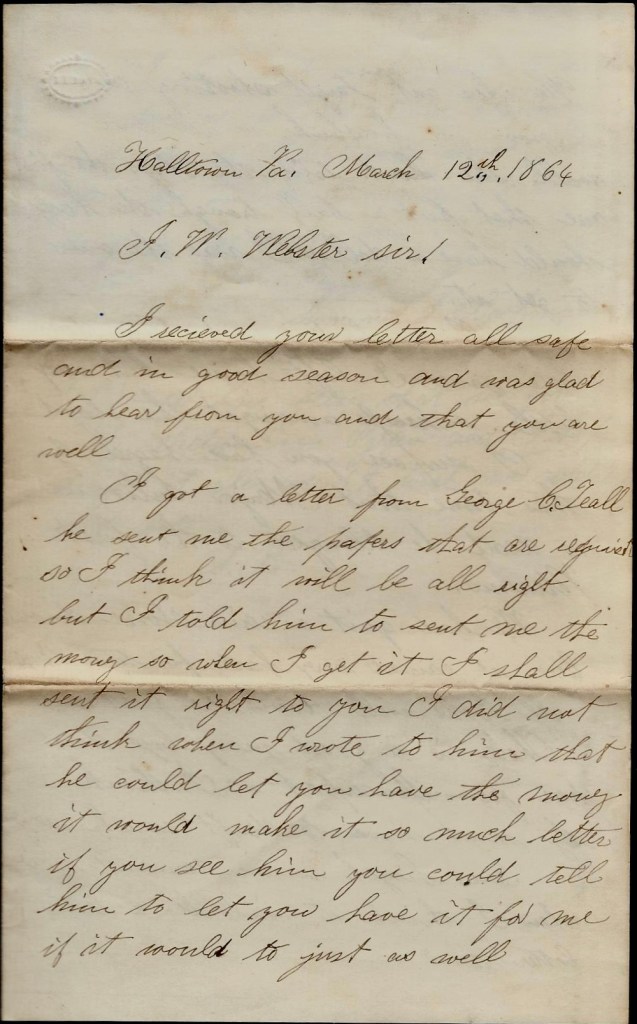
J. W. Webster, Sir!

I received your letter all safe and in good season and was glad to hear from you and that you are well.

I got a letter from George C. Teall. He sent me the papers that are required so I think it will be all right but I told him to send me the money so when I get it, I shall send it right to you. I did not think when i wrote to him that he could let you have the money. It would make it so much better. If you see him, you could tell him to let you have it for me if it would be just as well.

We were out target shooting this forenoon on horseback. We all done well. The lieutenant told the boys the first one that put a ball through the target should have a dollar. I was the one to get it.

Well we had a good time down here since I left home but very little sickness amongst the boys. I suppose you have heard by this time that Major Sullivan is dead. He belonged to the 1st Veterans.

We have quite a rain storm down here. It rained very hard for two days. All looks well down here just now. There is a good many boys down here from Spencerport so I think they won’t have to draft much now.

Gen. Siegel is in command now. I think it will be a little better now.

I have not much more to write. Remember me to Mr. & Mrs. Chapman and also to Miss Arnold. Remember me to Mrs. Webster. I must close so goodbye. Write soon. I am, — Sigmund J. Bachman

P. S. I have seen that we got the election in Ogden and I hope as get it all over. I wish we soldiers could vote. — S. B.


Letter 5

Camp Averill
January 9, 1865

Mr. Webster, Sir:

I seat myself down to write to you these few lines hoping that they will reach you well and in good health.

There is nothing going on here just now. All seems quiet so far but I guess that the Army of the Potomac is on a move. I hope that they will succeed.

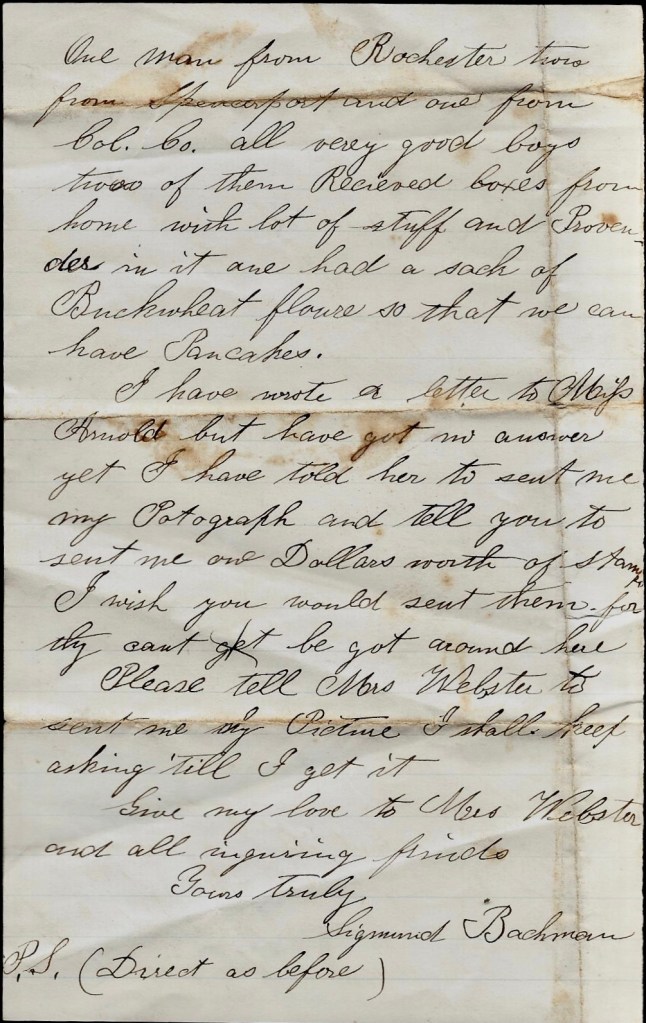
The weather is very cold down here at present but we never mind that as long as we can get plenty of wood. We got a good stove in our tent. There is four men in one tent. One man from Rochester, two from Spencerport, and one from Col. County—all very good boys. Two of them received boxes from home with lots of stuff and provender in it. One had a sack of buckwheat flour so that we can have pancakes.

I have wrote a letter to Miss Arnold but have got no answer yet. I have told her to send me my photograph and tell you to send me one dollar’s worth of stamps. I wish you would send them for they can’t be got around here.

Please tell Mrs. Webster to send me my picture. I shall keep asking till I get it. Give my love to Mrs. Webster and all enquiring friends.

Yours truly, — Sigmund Bachman

P. S. Direct as before.


Letter 6

Camp near Berryville, Virginia
April 8th 1865

Dear Sir,

I am well and in good health, hoping you are the same.

We are on the move again but where we are a going, I can not tell. We have been up to New Market but did not see anything of the Rebels so we came back again and we are now within one and a half miles of Berryville. All seems quiet here in the Valley. I don’t think there are many Rebels here at present.

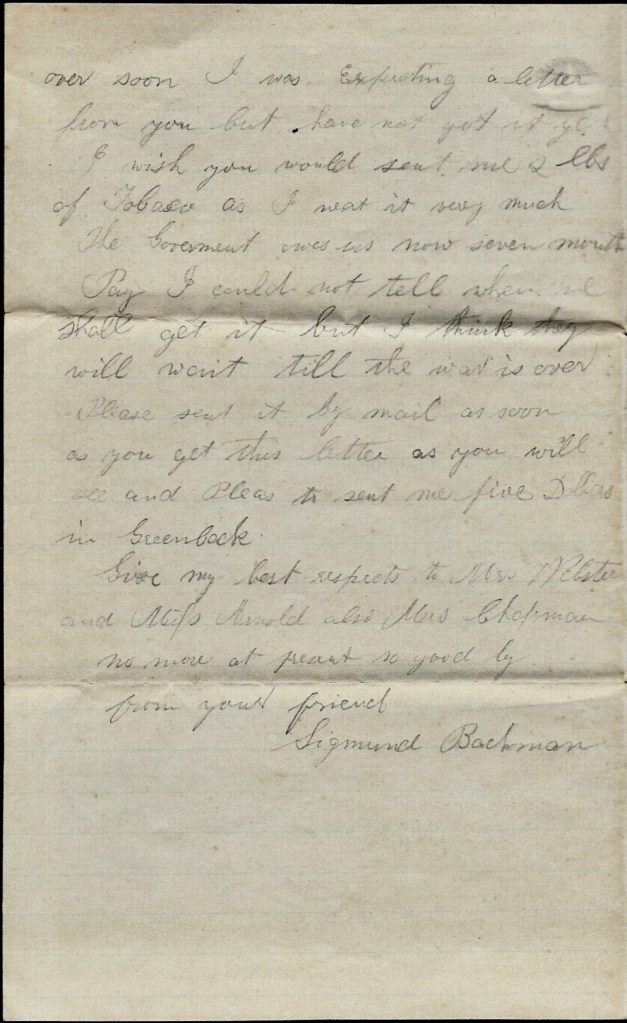
I think that the war will be over soon. I was expecting a letter from you but have not got it yet. I will you would send me 2 lbs. of tobacco as I want it very much.

The govrenment owes us now seven months pay. I could not tell when we shall get it but I think they will wait till the war is over. Please send it by mail as soon as you get this letter as you will see and please to send me five dollars in greenbacks.

Give my best respects to Mrs. Webster and Miss Arnold. Also Mrs. Chapman. No more at present.

So goodbye from your friend, — Sigmund Backman


Letter 7

Camp near Alexandria, Virginia
May 30th 1865

J. W. Webster, Sir:

I must write to you these few lines hoping that they will reach you well and happy as they leave me the same at present.

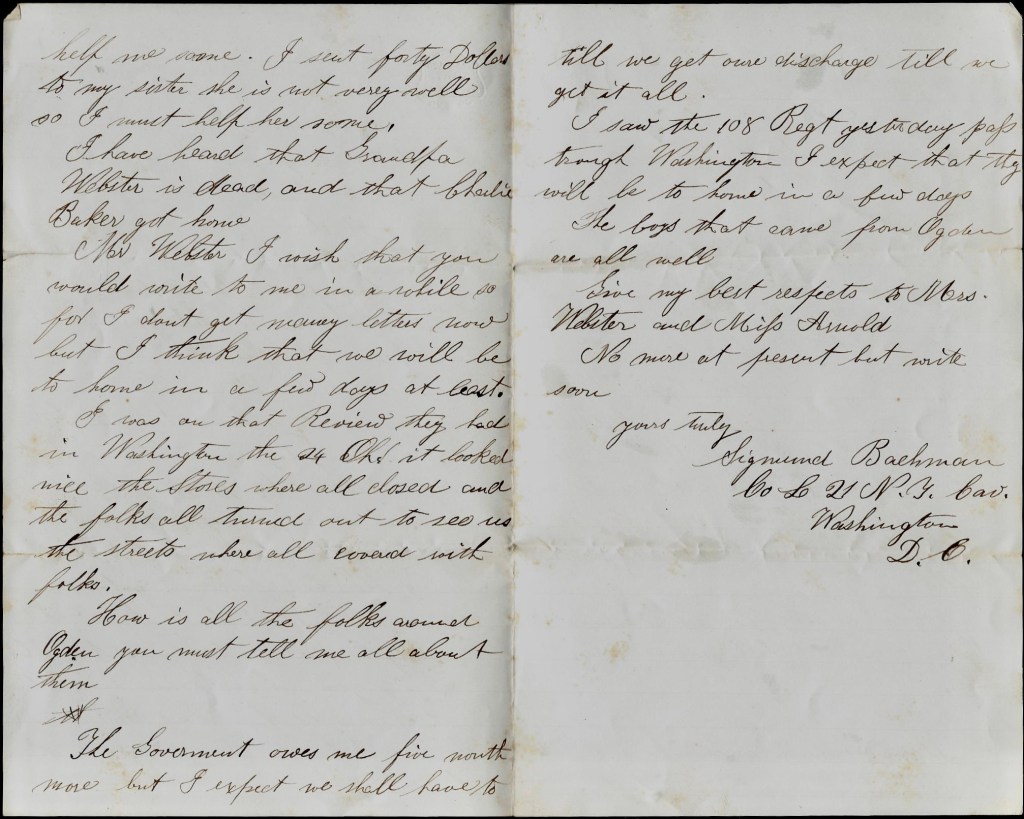
I wrote you a letter from Berryville but have not got no answer from it yet. I don’t know whether you got it or not. I can’t tell. [I was] asking you to send me five dollars and two lbs. of tobacco but you need not send it now as we got four months pay so that will help me some. I sent forty dollars to my sister. She is not very well so I must help her some. I have heard that Grandpa Webster is dead and that Charlie Baker got home.

Mr. Webster, I wish that you would write to me [once] in a while for I don’t get many letters now, but I think that we will be home in a few days at least.

I was on that [Grand] Review they had in Washington the 24th. Oh! it looked nice. The stores were all closed and the folks all turned out to see us. The streets were all covered with folks.

How is all the folks around Ogden. you must tell me all about them.

The Government owes me five months more but I expect we shall have to wait till we get our discharge till we get it all.

I saw the 108th [New York] Regiment pass through Washington. I expect that they will be home in a few days. The boys that came from Ogden are all well. Give my respects to Mrs. Webster and Miss Arnold. No more at present but write soon.

Yours truly, — Sigmond Bachman, Co. L, 21st New York Cavalry, Washington S. C.


Letter 8

Fort Collins
Colorado Territory
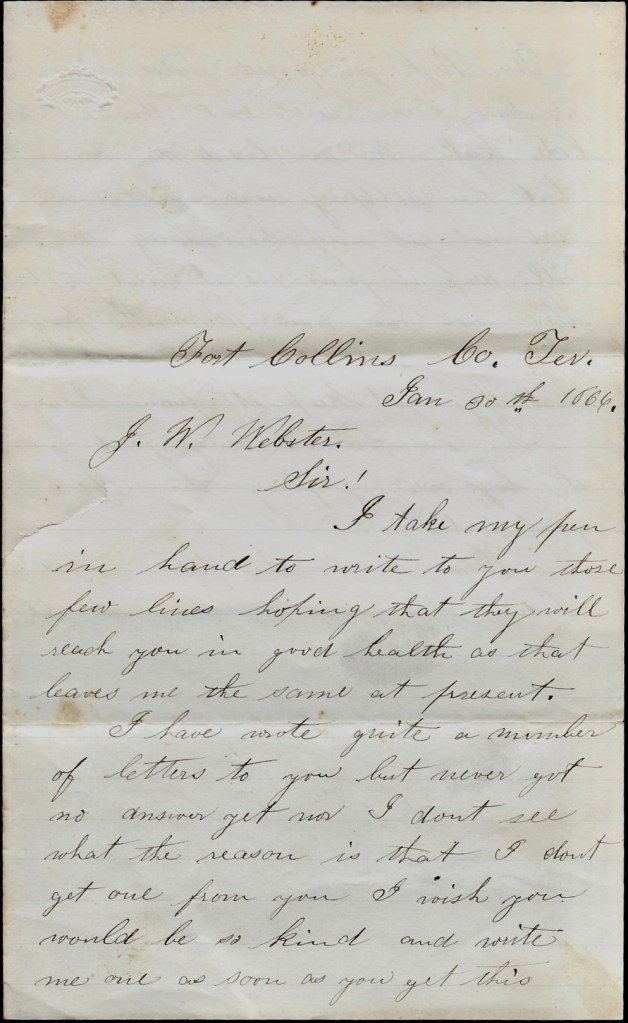
January 30th 1866

J. W. Webster, Sir:

I take my pen in hand to write to you these few lines hoping that they will reach you in good health as they leave me the same at present.

I have wrote quite a number of letters to you but never got no answer yet nor I don’t see what the reason is that I don’t get one from you. I wish you would be so kind and write me one as soon as you get this.

The regiment got paid twice since we have been here but those six companies that were on board the train that the robbery was committed on did not get any. How long they will keep it from us, I can’t tell. They owe me now 13 months pay with two installments but I believe that they can’t keep it from us always.

The weather is very good here. The boys are enjoying themselves a great deal. How is all the folks around Ogden? When you write, you must tell me all the news.

The boys are thinking that we shall be to home by July. I hope so for I want to get out of this regiment as soon as I can. If it was in any other regiment, I should like to serve my time out but never mind. When I enlist again, I’ll know it.

Give my love to Mrs. Webster. Remember me to Mrs. Chapman. Well, I will close with the hope of receiving a letter from you in a month from today.

Accept [this] from your friend, — S. J. Bachman

Directions: Sergt. S. J. Bachman, Co. F, 21st New York Cavalry, Colorado Territory

1864-65: Addison Pool to Henry M. Lowe

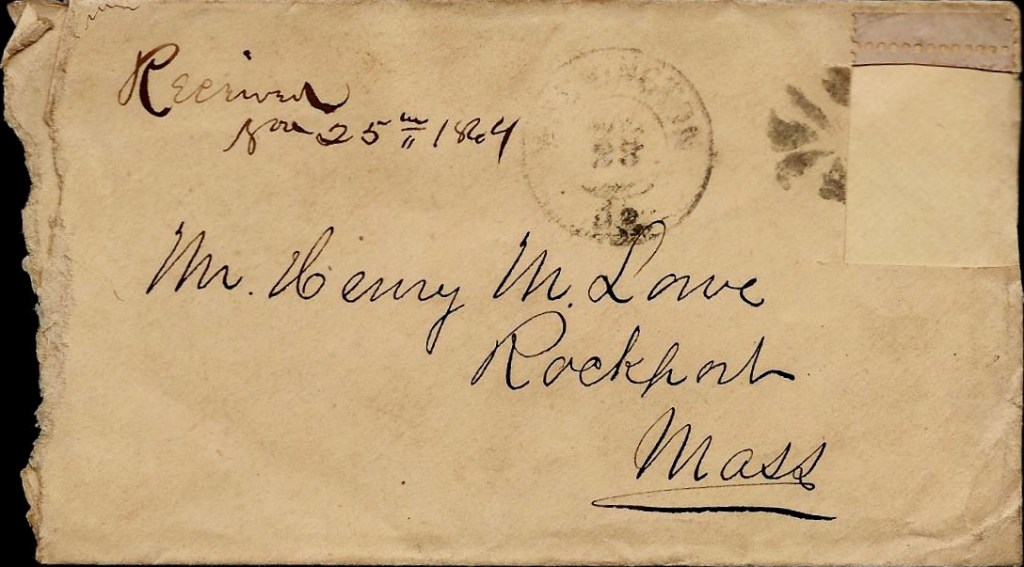
The following letters were written by Addison Pool (1831-1868), the son of War of 1812 Veteran Abraham Howe Pool (1789-1860) and Rachel Tarr (1788-1872). Addison was married to Matilda Augusta White (1832-1883) and living in Ellsworth, Hancock county, Maine when the 1860 US Census was taken. At that time he was working as the register of deeds in his county. The couple had three children but the letter dated in November 1864 gives us a hint that it was a troubled marriage. A search of Maine newspapers informs us that Addison (“libelant”) sued his wife for “misbehavior” and prevailed, resulting in a divorce being decreed in October 1864.

Addison wrote all four of these letters to his nephew, Henry Martin Lowe, who served with him aboard the US Gunboat Penobscot and the USS Steamer Southfield earlier in the war. Addison was the Assistant Paymaster, and Henry was the Paymaster Steward or Clerk. [See—1862-64: Henry Martin Lowe to his Family] Fortuitously, both Addison and Henry avoided possible injury or death when the steamer Southfield was rammed and sunk in the Roanoke river by the CSS Albemarle in April 1864. [See—1864: John J. Allen, Jr. to Henry Martin Lowe] Henry had resigned from the Navy just prior to that incident during the Battle of Plymouth, and Addison had made a trip to New Bern.

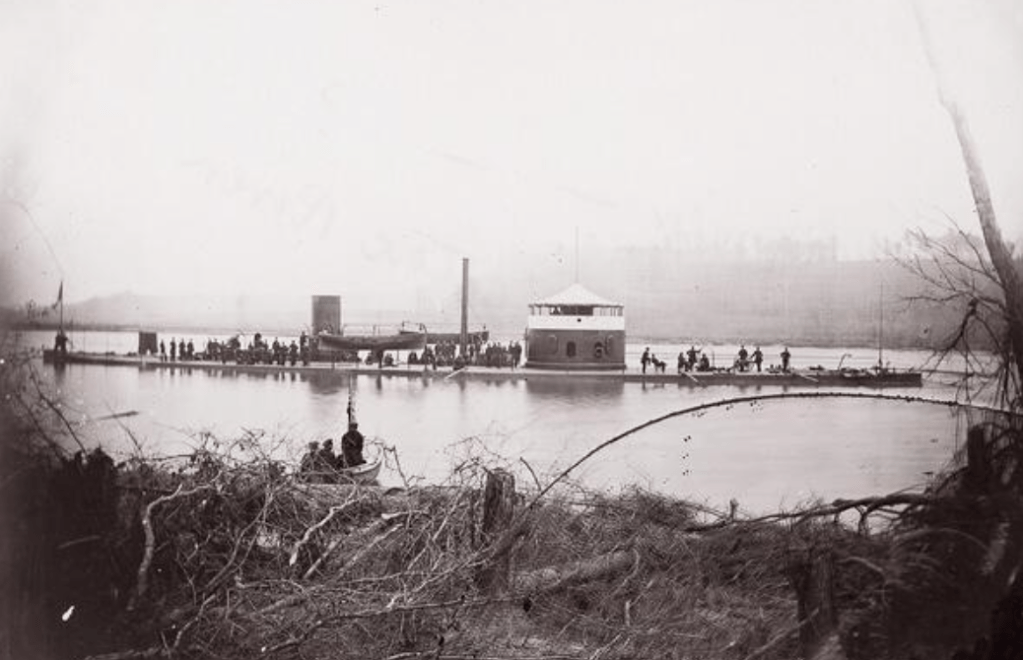
Later in 1864, Addison was assigned to the newly constructed USS Mahopac—a Canonicus-class monitor built for the Union Navy. The vessel was assigned to the James River Flotilla of the North Atlantic Blockading Squadron upon completion in September 1864. The ship spent most of her time stationed up the James River where she could support operations against Richmond and defend against sorties by the Confederate ironclads of the James River Squadron. She engaged Confederate artillery batteries during the year and later participated in both the first and second battles of Fort Fisher, defending the approaches to Wilmington, North Carolina, in December 1864-January 1865. Mahopac returned to the James River after the capture of Fort Fisher and remained there until Richmond was occupied in early April.

The Boston Semi-Weekly Advertiser of 28 September 1864 announced the commissioning of the USS Mahopac during the previous week giving the names of the following officers: Commander, William A. Parker; Lieutenant-Commander, James M. Pritchett; Assistant Surgeon, F. B. A. Lewis; Acting Assistant Paymaster, Addison Pool; Acting Master, C. K. Harris; Acting Ensigns, W. E. Jones and S. C. Halen; Engineers, Acting Chief, M. T. Cheevers; Acting First Assistants, Charles Dougherty and John Bloomsburg; Acting Third Assistants, J. G. Brown, Nelson Crossman, and Charles Enggresen.

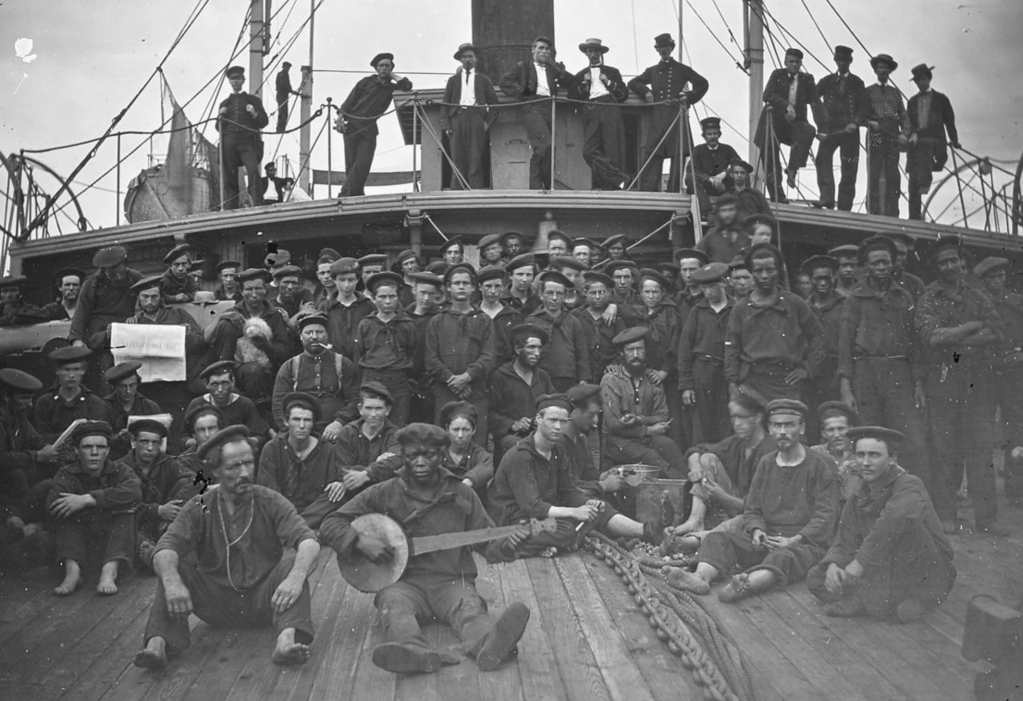
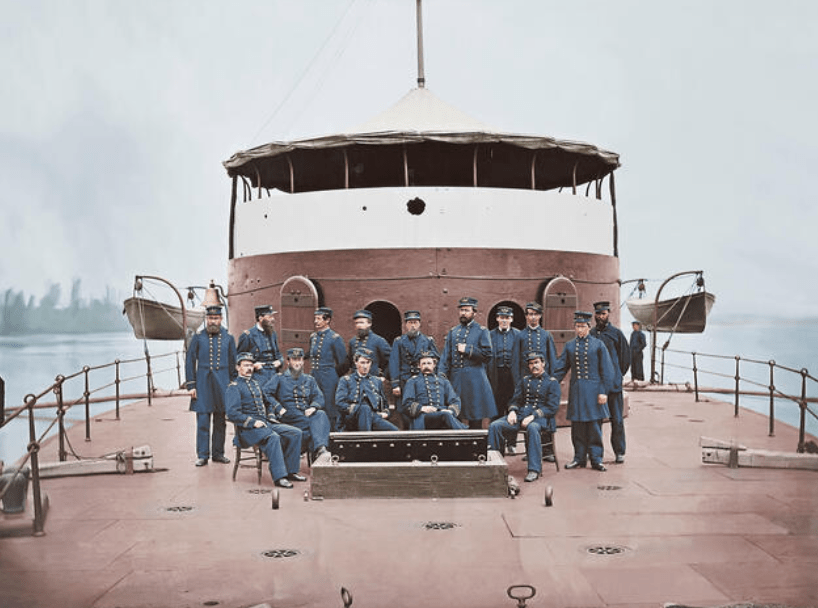
Most likely, Addison Pool is one of the five seated officers in the photograph below, who would have been the five highest ranking officers. Commander William A. Parker is the officer seated fourth from left. Those standing behind would be the Ensigns and Engineers.

The monitor in “Mahopac” on the James River. The coffin-like hatch in the foreground was the only means of gaining entrance to the bowels of the vessel. Air holes can be seen as small grates in the deck planking. She had a crew of 92 men. Her first engagement was with Battery Dantzler in the James River. She was in the first line of the ironclads at Fort Fisher. Spring of 1865. A Brady photo.

Letter 1

[U.S.S.] Mahopac
James River, Va.
November 20th 1864

Dear Henry,

Yours of the 12th inst. was received today. I am pleased to hear that you did well in your voyage “down East” and hope your prospects for next year and your hopes of success may be more than realized. You speak of the $400 note. I have no immediate use for the money and had as leave you would renew it for 4 or 6 months as to pay it. As to the interest you speak of, I lent you the money without intending to take anything for its use. I enclose a draft on Rockport Bank for $100 and want your mother to use it for the children as they may need it—that is, to pay their board, &c.

That confounded suit has nearly stripped me, but thank God it is ended and the children are mine. No one can interfere with them now. I should like to see the little rascals for a while this p.m.

We have no immediate prospect of leaving James River. It is not improbable that we may remain here all winter. We are lying about 300 yards from Grant’s Headquarters and either he is aboard or we are there nearly every day.

Give my love to all and write me. Don’t expect any long letter from me. I have nothing to write about. I am as ever, — Addison Pool

[to] H. M. Lowe

November 20th. I have enclosed check for $100 but do not know as I have that amount in bank, but am quite certain I have. If not, deposit enough to make it up and draw it for your mother. Write me how my account stands at the bank. — A. P.


Letter 2

Near Fort Fisher
Off Wilmington Bar
January 17, 1865

Dear Henry,

How are you Fort Fisher? If you recollect about May 1st 1862 the old Penobscot steamed in and gave them their first shot. Then there was one gun in a small sand battery. Now there are about thirty-six heavy guns backed by the greatest earthwork on the coast. Then two vessels like the Penobscot could have silenced it in an hour. Not it took more than fifty ships and five ironclads five days to reduce it.

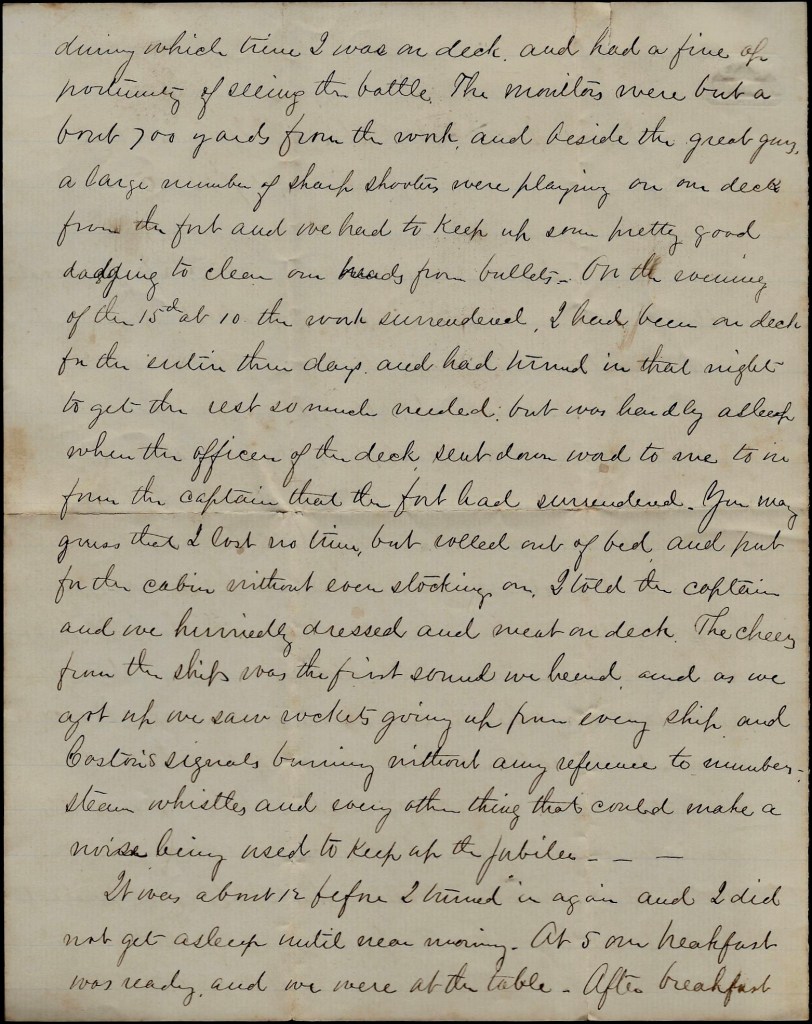
You will get fuller accounts of it through the papers than I can give you. Therefore, I’ll only give a few items that might not reach you in the public accounts. We commenced the action on the morning of the 13th. The fight that day being entirely carried on by the ironclads and continued by them up to a very late hour on the 14th when the other vessels—which had been protecting the landing of the troops—came up and the fight became general. We were fighting for three days during which time I was on deck and had a fine opportunity of seeing the battle. The monitors were but about 700 yards from the work and beside the great guns, a large number of sharp shooters were playing on the deck from the fort and we had to keep up some pretty good dodging to clear our heads from bullets.

On the evening of the 15th about 10, the work surrendered. I had been on deck for the entire three days and had turned in that night to get the rest so much needed, but was hardly asleep when the officer of the deck sent down word to me to inform the captain that the fort had surrendered. You may guess that I lost no time, but rolled out of bed and put for the cabin without even stockings on. I told the captain and we hurriedly dressed and went on deck. The cheers from the ship was the first sound we heard and as we got up, we saw rockets going up from every ship and Coston’s signals burning without any reference to number, steam whistles, and every other thing that could make a noise being used to keep up the jubilee.

Paymaster Robert Gillette of the USS Gettysburg was killed when the magazine exploded at Fort Fisher on 16 January 1865. His death is described in a great blog artcle by my friend John Banks in a piece he wrote in January 2020 entitled, A Death at Fort Fisher of a ‘young man of unusual promise.’

It was about 12 before I turned in again and I did not get asleep until near morning. At 5 our breakfast was ready and we were at the table. After breakfast we went on deck and took a good look at Federal Fort Fisher. At about 8 in the morning while our eyes were directed towards the fort, an explosion of the most terrific nature took place, and for a moment we thought the whole fort was in the air. But as it settled again, we saw that but a small part of the work was ruined. The doctor and myself were soon in a boat and on our way ashore. On landing we learned that the Fort had been mined and electric wires laid to the main magazine which had been blown up by the rebs after its surrender. By this terrible occurrence, we lost more men than in taking the fort. Never have I seen anything so horrible as the sight of those noble fellows who had been blown to atoms while flushed with the pride of recent victory. Six hundred men have lost their lives through the perfidy of a cowardly foe. Had Gen. Terry taken the same number from among his prisoners and butchered them, it would have been a fitting retaliation.

Later. 7 o’clock p.m. Since I wrote the foregoing, our destination has been changed. We have been ordered to Charleston. This is a great disappointment to us as on the first day of the fight we burst a XV-inch gun and felt certain that we should be ordered North to have it replaced. We had no warning of it but were ordered right away with just time enough to drop a line.

While ashore yesterday in Fort Fisher, I undertook to bring off some relics of the fight. I got a sword with a canvas scabbard, one good Springfield musket, and a good rifle (Enfield). I have besides these a musket captured up James River and expect to get lots of things at Charleston. I met Captain Tarr on the beach in front of the fort and just before shoving off, Tom Jones came up and spoke but I didn’t know him. I went up to the works and between two of the mounds. Saw a party burying a marine. I did not notice then but a young officer came up and spoke. It was Jus. Clitz.

I forgot to tell you the gunboats are in the [Cape Fear] river and the Osceola Capt. Clitz took the lead, being the first in. The enemy blew up Fort Coswell and evacuated it last night. The whole of the mouth of the river is in our possession. I don’t know how the people at home may view this thing but we think it the greatest victory of the war. Send in all the papers containing the account and those with the official reports of Admiral Porter & General Terry—more especially the Herald and Tribune.

Ben Butler is in a good place for himself and the government. I hope he’ll be kept there. The old rascal—he defeated us before.

I am well. Calvin is jolly and I’l write again if we take Charleston. We are getting off Frying Pan Shoal and the sea is making so.

With love to all, I’ll close. I am yours truly, — Addison


Letter 3

[USS] Mahopac
James River, Va.
March 12th 1865

Dear Henry,

Once more we have passed safely through a winter voyage of five days length. We left Charleston on Wednesday afternoon in a violent gale in company with the “Katskill“—the latter being in tow of the “Shenandoah” and we of the “Cambridge.” We parted company at the bar (Charleston) and we have not seen her since. She was not considered as good a vessel as this but we hope she may get in safe. I shall never unless compelled make another voyage, or attempt to make another, in a monitor. I have expressed my views of this so freely already as to make some trouble and I shall continue to do so—while they insist on their being sea-going vessels—even at the risk of dismissal. You will probably ask why I don’t try to get out of her. My answer is that each time we have finished a voyage—i.e., made a passage, we have though that it was the last and that easy times awaited us until our orders come and we were off in a jiffy. I would not have left her until after the fall of Wilmington for anything but that accomplished, I did not hanker for any more glory in her, and had I known that we should have been ordered about so much, I should have applied for detachment.

And now I am contented to stay in her in this river but if she is ever ordered South again (for a long distance) during the inclement season, I’ll not go willingly. I like her here better than most vessels and hope not to have occasion to leave her for some months. I only wish that Arrogant Fox and Frothy Porter were compelled to pick out “other spirits more evil than themselves” and that the whole lot of them should make a voyage together in one.

I am very desirous of hearing from home. Please write often and give me the views. I am too tired to write much more tonight. Don’t let any person see this except your father. I have expressed myself too strongly. But really, the Navy, as controlled by such men as Porter, is not the Navy of my idea.

I wrote Mr. Cunningham this morning and sent it ashore. None of us got ashore at the fort. Direct your letters to us in James River via Fortress Monroe. Give me a long letter or all of the news in a short one.

As ever, your—Addison Pool

[to] H. M. Lowe


Letter 4

The USS Mahopac in 1865

[USS] Mahopac
March 28th 1865

Dear Henry,

Yours was received this morning. Also one from your father.

The money (600) I sent several days ago and I suppose you have received it before this. If you buy out Richard Tuft’s share, I will take it and send a good man to represent me this year, and if successful, will be there another year myself. There is a hundred or so dollars lying idle in Rockport Bank that I want your mother to draw, and if she don’t need it for the children, you can use it.

If you buy for me, I think I can manage in a month or two to send you the amount of purchase money without interfering with the money you now have of mine.

I’ve got my tail caught a little in the Petroleum trap, but not so bad as some. How are you Petroleum? It is possible that I may come down there a few days about May if the ship goes to Washington as we expect to do.

If you buy and Mr. Cunningham will represent my interest there this season, I should like to have him do so at any rate of pay which you may decide with him.

It is a great thing to have friends when you have your pockets picked. I wish you would start a paper for me. My love to all friends, I am as ever your obedient servant, — Addison Pool

[to] H. M. Lowe, Esq.


1864: William Coulter Elder to Samuel Elder

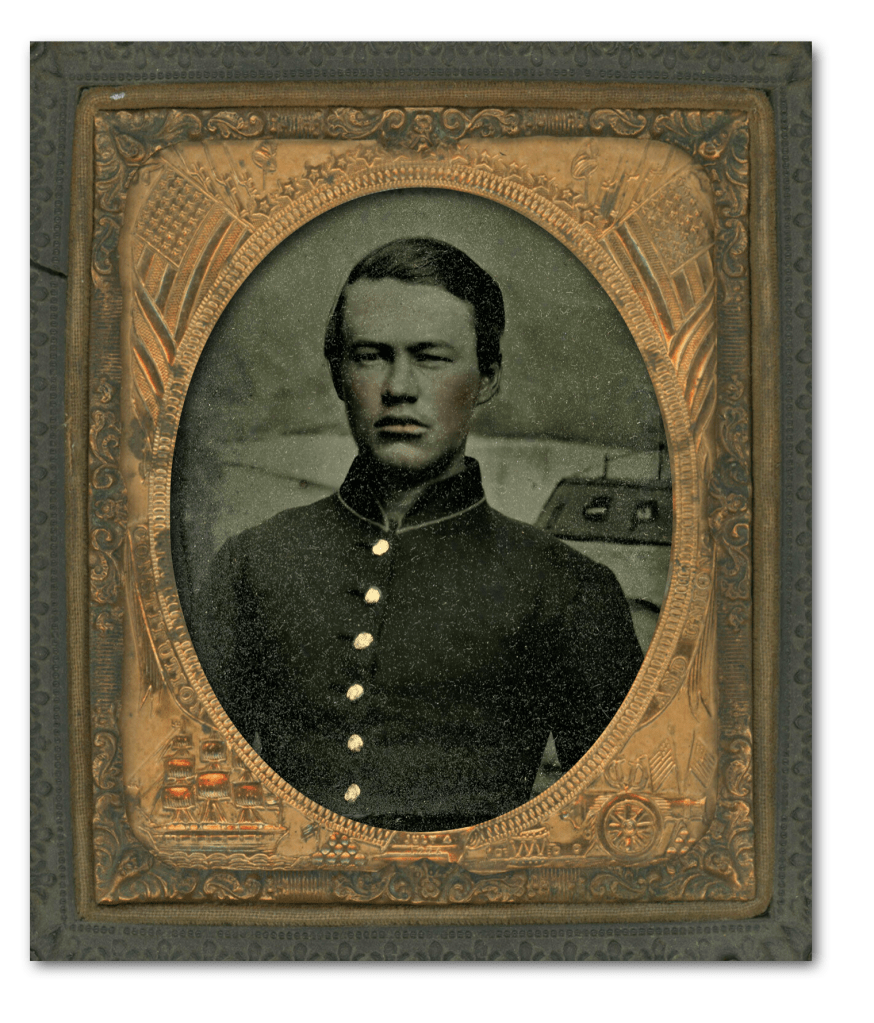
Pvt. William Coulter Elder was just 17 years old when he enlisted in Co. C, 39th Iowa Infantry in August 1862. This tintype was taken at Benton Barracks near St. Louis by Photographer Enoch Long. William sits in front of one of the more iconic “Benton Barracks” backdrops but there were at least six of these with different scenes in his studio. This image was probably taken in 1862. (Mike Huston Collection)
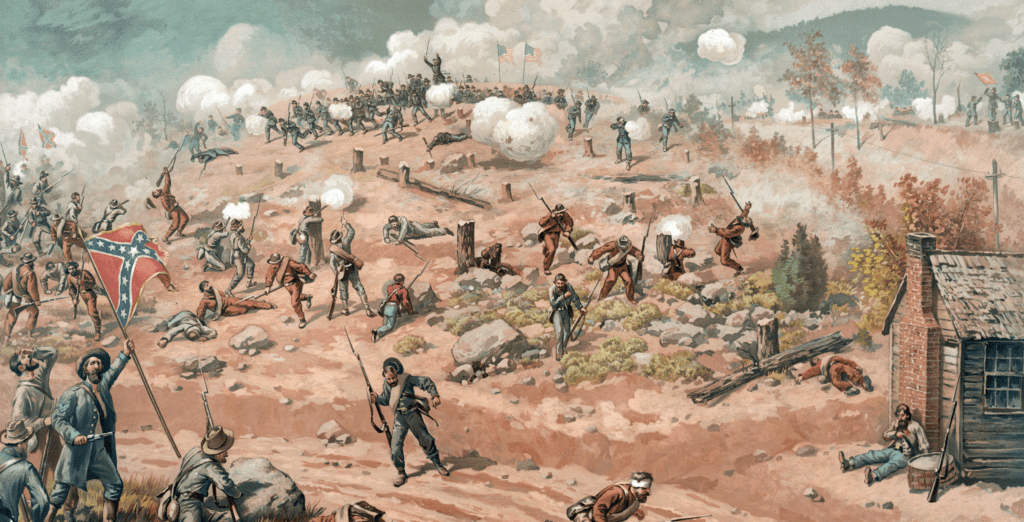
The following letter was written by William Coulter Elder (1845-1911), the son of Samuel Elder (b. 1825) and Elizabeth Miller (b. 1828) of Cowanshannock, Armstrong county, Pennsylvania. In the fall of 1853, the Elder family relocated to Rippy, Greene county, Iowa. When he was only 17 years old, William enlisted as a private in Co. C, 39th Iowa Infantry. On 6 October 1863, William was given a promotion to 8th Corporal. He was severely wounded at Allatoona Pass on 5 October 1864 and mustered out of the regiment on 5 June 1865 at Washington D. C.

After he was discharged from the service, William returned to Iowa and then relocated to Nebraska in 1880, taking up a homestead two miles west of Wellfleet, Lincoln county, Nebraska. He eventually was elected as the first clerk of the district court and then became a judge.

When William was 65 years old, he was admitted into the Home for Disabled Soldiers at Hot Springs, Fall River, South Dakota, suffering from diabetes and having had his right leg amputated below the knee as a result of it. He had been living in North Platte, Nebraska working as a county judge. His wife, Mary H. Clark and a native of St. Louis, Missouri, was 16 years his junior. They were married at North Platte in 1898. William died on 6 March 1911 and was buried in the Ft. McPherson National Cemetery in Nebraska.

Artists depiction of the desperate Battle of Allatoona Pass where William was severely wounded defending Sherman’s supply line in October 1864.

[Note: This letter is from the private collection of Mike Huston and was transcribed, researched, and published on Spared & Shared by express consent.]

Transcription

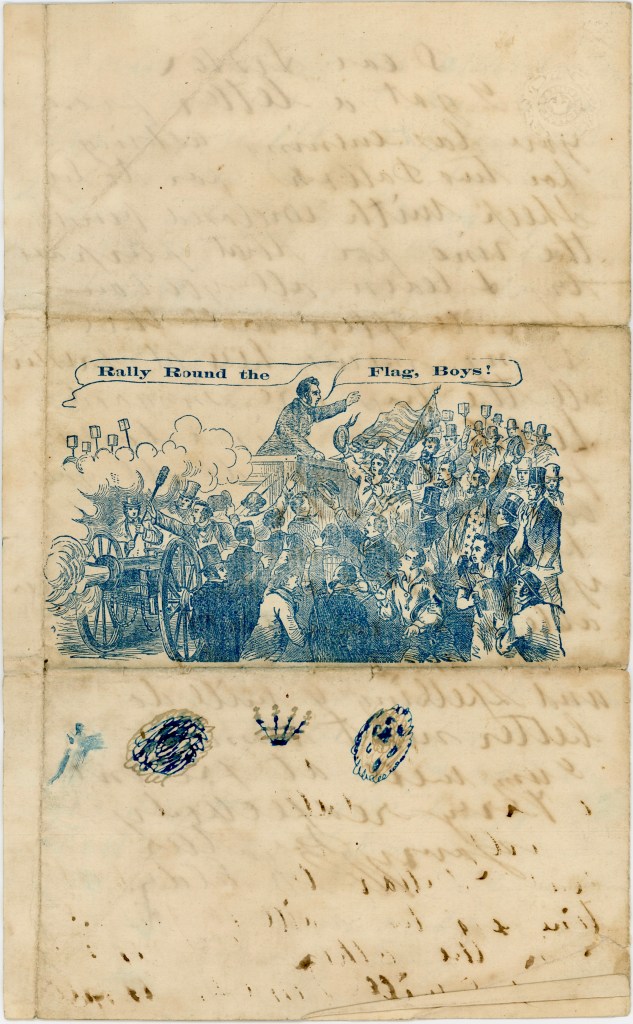
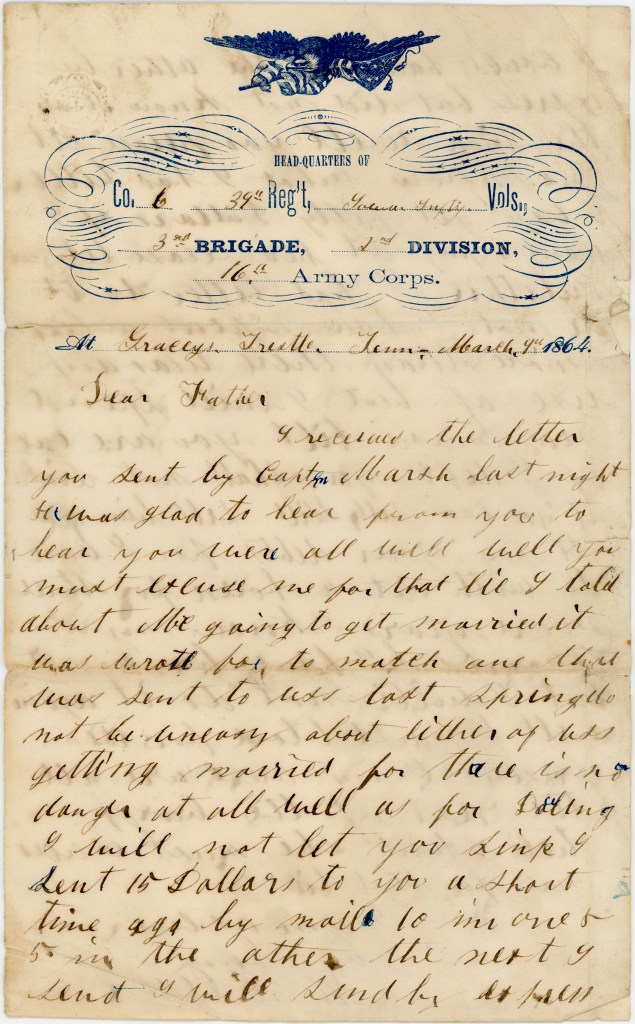
Patriotic Letterhead on Elder’s Letter

Co. C, 39th Regiment Iowa Infantry Volunteers
3rd Brigade, 2nd Army Division, 16th Army Corps
At Gracey’s Trestle, Tennessee
March 9th 1864

Dear Father,

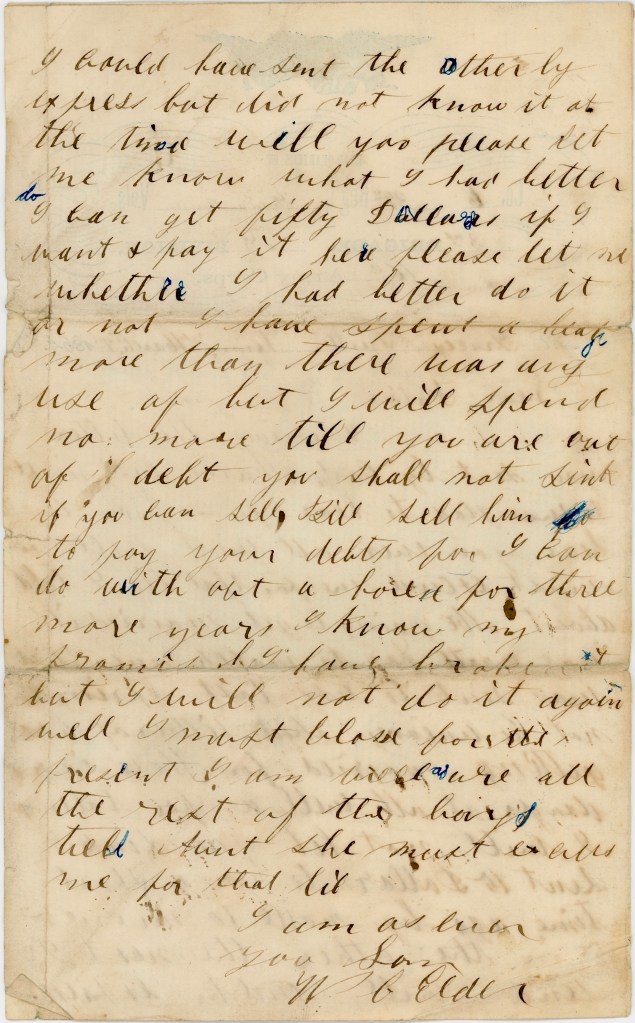
I received the letter you sent by Capt. Marsh last night & was glad to hear from you to hear you were all well. Well, you must excuse me for that lie I told about me going to get married. It was write for to match one that was sent to us last spring. Do not be uneasy about either of us getting married for there is no danger at all.

Well, as for [ ing], I will not let you sink. I sent 15 dollars to you a short time ago by mail—10 in one & 5 in the other. The next I sent I will send by express. I could have sent the other by express but did not know it at the time. Will you please let me know what I had better do. I can get fifty dollars if I want and pay it here. Please let me know whether I had better do it or not. I have spent a heap more than there was any use of but I will spend no more till you are out of debt. You shall not sink if you can sell Bill. Sell him to pay your debts for I can do without a horse for three more years. I know my promise to have broke it but I will not do it again.

Well, I must close for the present. I am well as are all the rest of the boys. Tell Aunt she must excuse me for that lie.

I am as ever your son, — W. C. Elder

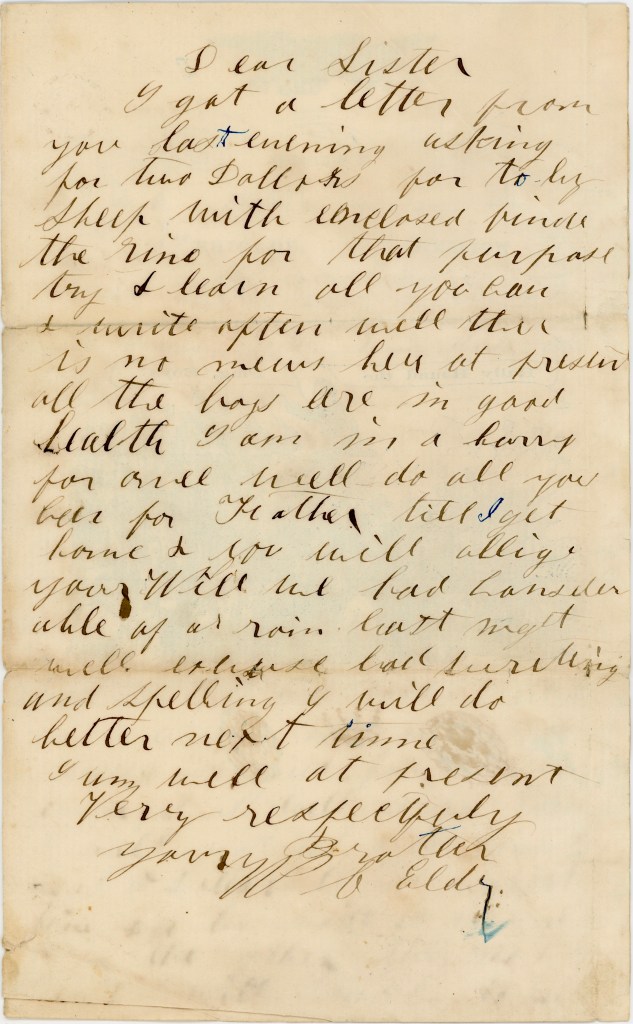
Dear Sister,

I got a letter from you last evening asking for two dollars for to buy sheep with. Enclosed find the [ ] for that purpose. Try and learn all you can and write often. Well, there is no news here at preset. All the boys are in good health. I am in a hurry for once.

Well, do all you can for Father till I get home & you will oblige your Will. We had considerable of rain last night. Well, excuse bad writing and spelling. I will do better next time.
I am well at present. Very respectfully, your brother, — W. C. Elder

1854: Washington J. McConnel to Benjamin Mace

The following letter was written by Washington J. McConnel (1810-1885) of Greensboro, Guilford county, North Carolina. Washington was married to Jane E. Lindsay in March 1840. He was married a second time to Emily S. Sperry of Baltimore, Maryland in September 1846.

From census records we know that McConnel was a “merchant” in Greensboro for most of his life though I cannot find any additional details as to the nature of his business. He was known to be on the board of directors for a local insurance company and may have also dealt in real estate. Unfortunately, we can’t tell from the letterhead what the nature of his business was either except that he clearly kept a store or office in Goldsboro. Only his name, “W. J. McConnel” appears above the door.

McConnel wrote the letter to Elwon Benjamin Mace (1807-1865) who married Susanna Staton (1809-1854), and married second, Betsey Lane (1832-1874) in May 1854.

Transcription

Greensboro, [North Carolina]
December 27, 1854

Benjamin Mace, Esq.
Dear Sir,

Mr. Jolly is in want of a Negro woman & I have told him that you had one to hire & that I should not wait here. Any contract you make with Mr. Jolly is perfectly good and I will see it paid & I have no doubt you will find him a good hand to hire too.

Very respectfully yours, — W. J. McConnel

1864: James J. Peck to George Gose

The following letter was written by J. J. Peck (1832-1864 or after) to George G. Gose (1822-1889), the son of David Philip Gose (1774-1832) and Anna Maria Spangler (1775-1845) of Burkes Garden, Tazewell county, Virginia. George was married to Catharine Sluss Groseclose (1823-1901) in September 1846. George was in the Confederate service during the war; his military record indicates he was in both the 45th Virginia Infantry for a time as well as the 22nd Virginia Cavalry.

I could not find an image of a trooper from the 22nd Virginia Cavalry, let alone one of James Peck, but here is a colorized tintype of Vt. Archibald Magill Smith of the 6th Virginia Cavalry.

The relationship between the correspondents is uncertain though Peck addressed George as “dear friend.” It appears that when Peck was 18 years old at the time of the 1850 US Census, he was boarding with and probably employed by George Gose who was eleven years his senior. I could not find any Peck family living in the same county as George in 1850 so it may be that Peck was an orphan or came from a neighboring county to live with the Gose’s.

Drilling down into census records, I’ve come to the conclusion that the author of this letter was James J. Peck (1832-1864), the son of Jacob Peck, Jr. (1765-1843) and Julia Ann Litz (1792-1845)—both deceased by the time of the 1850 Census in which James appears living with the Gose family. A note in the family record states that after his parents died, James and his brother went to live with their’s brother, Peter Gose Litz “who lived on the old Litz family farm in Burke’s Garden, Tazewell county, Va. By 1850, however, James boarded with George Gose.

The family record (duplicated in Find-A-Grave) goes on to state that James married Christina Clementine Harman (1828-1901) and the couple had five children before James enlisted in Co. C, 23rd Battalion Virginia Infantry in the Civil War. That unit was commanded by Capt. George Gose (the brother of Sarah Gose who raised James). He enlisted in January 1862.

Curiously, the family history records that James J. Peck died on 15 August 1864—four months before he wrote this letter! The aforementioned history states that, “In August 1864, the unit was in Warren County, Virginia, just north of the town of Front Royal, near the Shenandoah River. They were preparing for what would become the Battle of Cedarville. But James died there, on 15 August 1864, which was the day before the battle officially began. He had probably been out scouting the enemy, when he was killed. The next day, about 480 Confederate soldiers died there, and they were buried on the battlefield.”

James’ widow, Christina Peck, did not apply for a widow’s pension until 1889 for which she was awarded $30 per year. In that application, she wrote that James was a member of the 22nd Virginia Cavalry, in Capt. Gose’s company (he was, see Roster) and that he had died at the Battle of Cedarville which occurred on 16 August 1864. Could it be that the following letter was never received by the family in Tazewell county? or that his widow never learned at least by word of mouth that he had survived a wound until at least four months after the battle?

[Note: This letter is from the personal archive of Greg Herr and was transcribed, researched, and published on Spared & Shared by express consent.]

Transcription

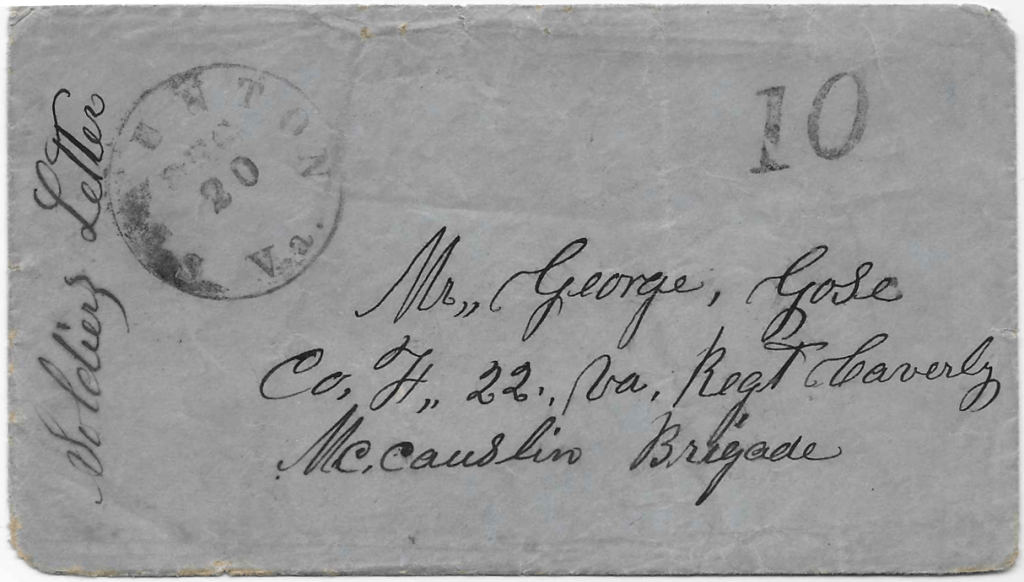
Addressed to Mr. George Gose, Co. F. 22nd Va. Regiment Cavalry, McCauslin Brigade

General Hospital, Ward H
Staunton, Virginia
December 18, 1864

Mr. Gose, dear friend,

I this morning seat myself to pen you a few lines. These lines [leave] me some on the mend to what I have been. I taken the fever a short time after I came to this place but have got so that I can sit up some every day. But as for my arm, I can’t say that it is mending very fast, though I think it is mending slowly.

On the 28th of November I had the ball cut out of my arm. The ball ranged down towards the elbow some two or three inches from the place it went in. The surgeon-in-charge said the bone was badly broken. There was an abscess rise rather behind my arm in my shoulder. I had it lanced and it runs a great deal but where the ball went in has nearly cured up.

There was a man here by the name of Finney belonging to the 16th Regiment 1 promised me to see you and tell you how I was getting [on] and promised to write to me but I have never heard from him yet. I don’t think that I will be able to get home under two months. As for the treatment, I am attended to very well. They all appear very kind to me. There is a lady here than brings me anything that I can eat.

Since I commenced writing, the doctors has split my arm and taken out four pieces of bone and I feel quite feeble at this time. Nothing more but remain yours as ever. Write soon, — J. J. Peck


1 The 16th Virginia Cavalry was raised in Tazewell county, Virginia, so there were undoubtedly many members of that regiment who were friends of both Peck and Gose. A search of the roster in the 16th Virginia Cavalry revealed that there was a Pvt. James M. Finney in Co. A. He enlisted at Lebanon, Virginia, on 10 March 1864. Likewise, his brother William Finney served in the same company and enlisted at the same time.