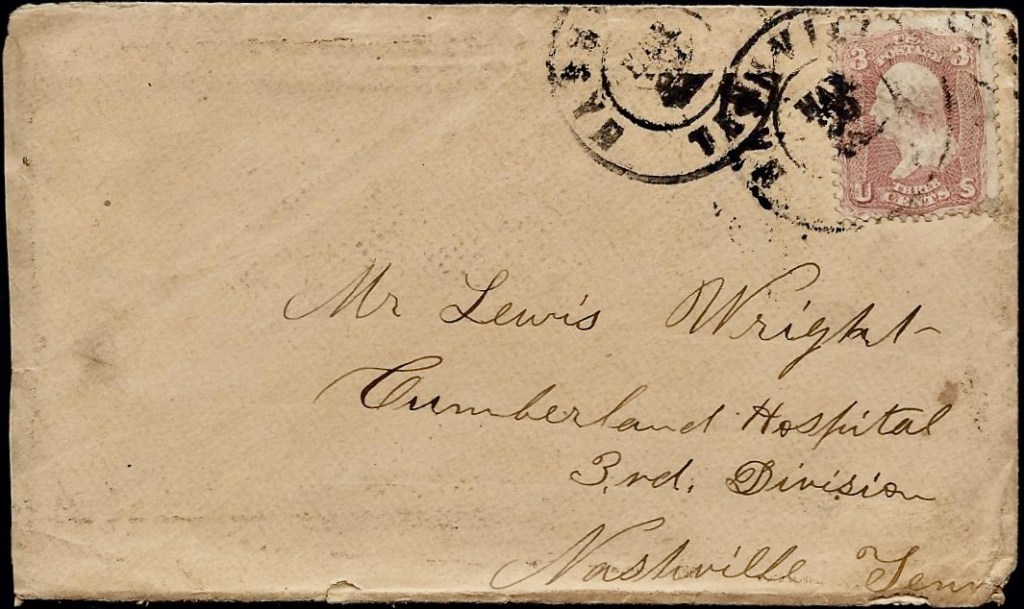
1862-65: Otis Whitney, Jr. to Harriett Newell (Barnes) Whitney

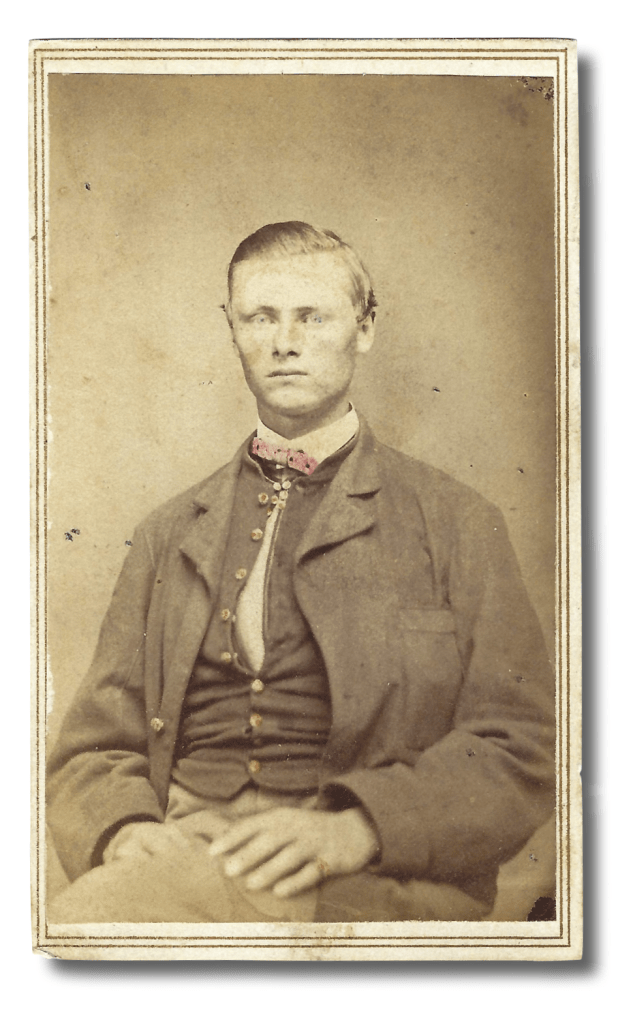
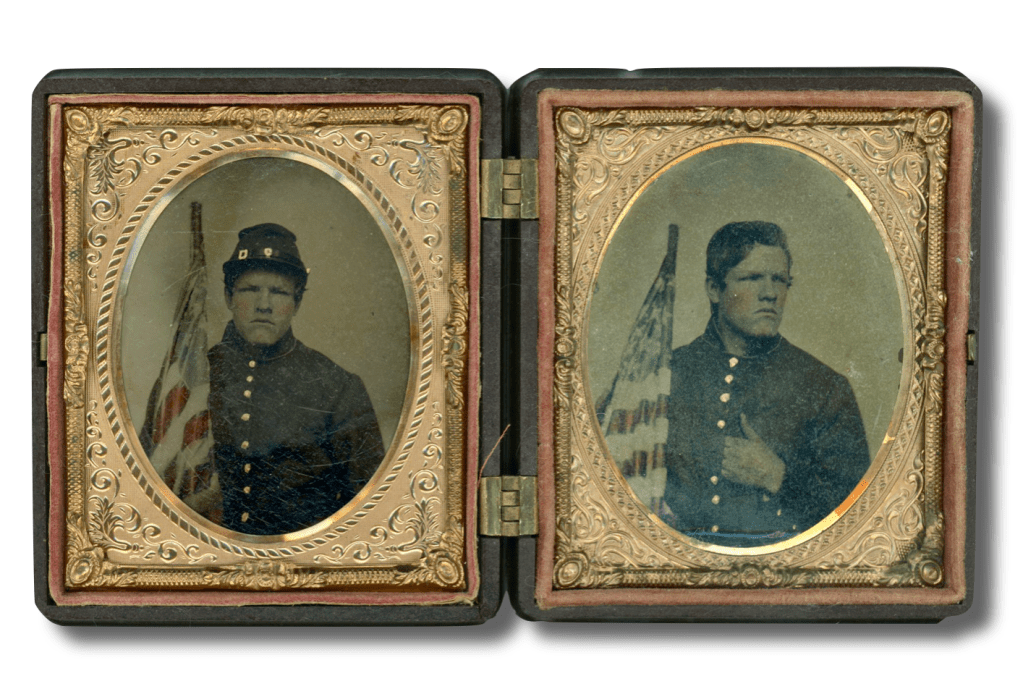
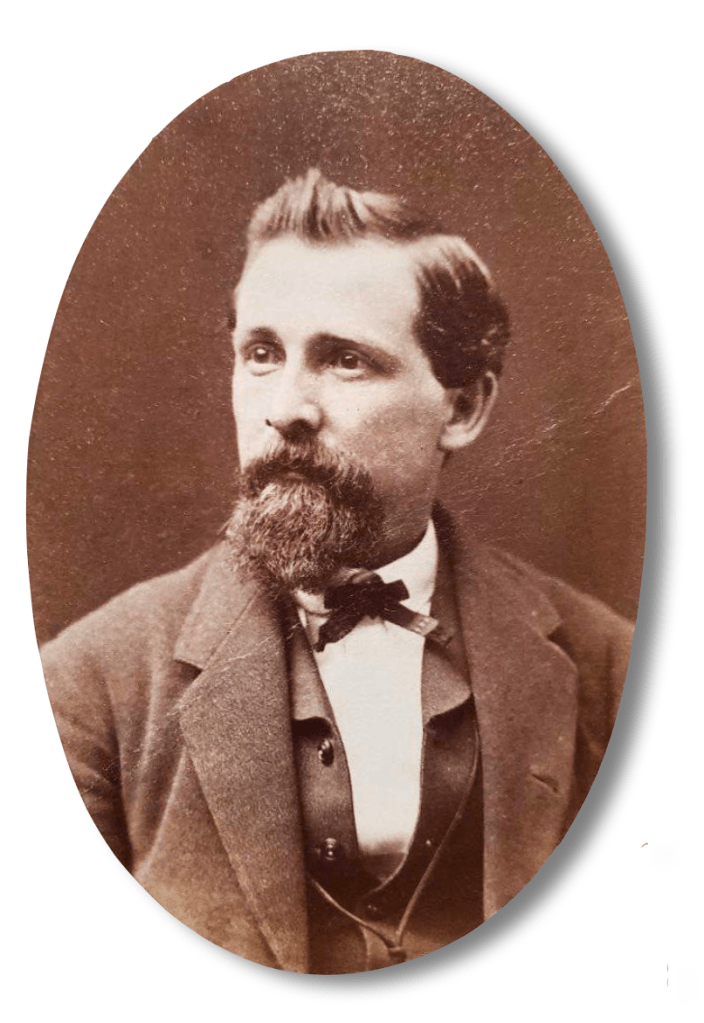
The following letters were written by Otis Whitney (1821-1901) who served in Co. H, 27th Iowa Infantry. The following biographical sketch summarizes his life very well.

Otis Whitney, Co. H, 27th Iowa Infantry
(Iowa Civil War Images)

Otis Whitney, Jr., was born 13 Jun 1831, in the town of Seneca, Ontario County, state of New York, where he lived till nearly thirty years of age, working on the farm, attending school and studying law; was admitted to the practice in the supreme court of the state of New York at a general term of the court held in the city of Auburn, county of Cayuga, on the first day of November, 1847, but never engaged actively in practice, having no relish or respect for it. He traveled and taught school for three years, and then went into partnership with his brother-in-law, Tyler H. Abbey, who was a successful merchant at Watkins, Schuyler County, state of New York, and continued in business up to the fall of 1854, when he caught the western fever and decided to take the advice of Horace Greeley to “go west and grow up with the country.”

Before leaving he was united in marriage with the daughter of Dr. Enos Barnes, in western New York, a well known and popular physician and surgeon, and one of the earliest settlers on the west side of Seneca Lake. The newly married couple started immediately on the journey west, and finally located in Quasqueton, Buchanan County, state of Iowa, where he purchased two hundred acres of land, intending to make a farm of it, but finding more satisfactory employment in town never settled on the land. Most of the time up to 1862 was spent in clerking, overseeing flour and saw mills, and acting justice of the peace, for which office his previous study of law was especially helpful. In the fall of 1862 he went into the army as first lieutenant of Company H, Twenty-seventh Regiment Iowa Volunteer Infantry. In camp of instruction he was familiar with the drill, etc., as he had been studying the tactics from the commencement of the war and in command of and drilling a company of home guards for more than a year. In a few weeks the regiment was ordered to the field, or as the popular phrase is, to the front, and not more than half drilled or disciplined. On 10 Apr 1863, he became captain of the company by reason of resignation of Captain Jacob M. Miller, the previous captain, who became disabled and unable to endure active field service. Whitney was captain of the company up to the close of the war, and was discharged with the company and regiment at Clinton, IA, 8 Aug 1865.

He returned to his home in Quasqueton, which he had not seen in three years, worn out, run down, and weak from constant for three years, and which continued for more than fifteen years after the war. Finding no place of business obtainable he with his family, wife and two children, went on a visit to the old folks at home in the state of New York. While on this visit he was induced to engage in an enterprise to be consummated at Richmond, VA, in the establishment of a dairy farm. The project was a complete failure, and mindful still of the advice of Greeley he again went west with his family to grow up again, locating on government land in Oswego Township, Labette County, Kansas, in the spring of 1867. Upon this place he lived seventeen years, when he sold out and moved into the city of Oswego, two and a half miles distant. 

[Note: These letters are from the private collection of Greg Herr and have been transcribed and published on Spared & Shared by express consent.]

Letter 1

Camp Gilbert
6 miles above St. Paul
October 15, 1862

My dear wife,

It is now one hour past midnight of the 14th. I am in a room with eight others (one sick with a fever) trying to pass away the night. No beds in the room. The reason why I am here is because I happened to be chosen to act as one of the clerks of election which we held on the boat and came here to canvass the votes. Our camp is about half a mile above Fort Snelling. Our tent is up but no arrangements made for sleeping & the weather is so cold we did not like to occupy it tonight. Ice froze half an inch thick last night in pails that were sitting on the hurricane deck of the steamboat we four companies came up on.

We embarked Sunday morning & had a pleasant trip with some little adventure. Sunday night, just at dark, a snag (a large tree trunk) smashed through the guard deck near the bow of the boat & came very near throwing some of the boys overboard. A few minutes before there were several standing on the very spot where the crash was made. Last night a steamer coming down undertook for some unexplained reason to run our boat down but by the skill of our pilot, we avoided being struck but in doing so, the stern of the boat was thrown so near the shore that a tree on the shore crashed through the side of the boat & tore out the entire side of the barber shop to the great fright of several men who were sleeping on the floor & in chairs. The fright was not without cause as it came near sweeping off several men.

The affair I spoke about when I wrote Saturday night was more serious than I then supposed as you have probably learned by the papers before this time. We brought the corpse of the young man with us to McGregor’s Landing. It is hard to see stout young men killed in that way. It is feared the affair will not end so but that more blood will be spilt. Tomorrow 6 companies of our regiment are ordered north to guard the U S Paymaster in paying off the Chippewas their annuity. My company H remains here. 1 Some think we shall be called out to fight the Sioux. It is thought we shall be sent to Kentucky within three weeks.

You need not be alarmed at any stories you hear. I am now enjoying good health and shall probably live out my allotted time.

I got the comforter you sent & it was very acceptable. I ought not to write any more as I would like to sleep a little if I can on the floor. Kiss Emma & little Eddie for me. Much love to yourself. — O. Whitney

P. S. SEnd me the description of lots where the house stands. The deed is in the top part of the box you keep in the drawers. — O. W.

1 Companies “A,” “B,” “C,” “E,” “F” and “G.” Moved to Mille Lac’s, Minn. October 17, thence moved to Cairo, Ill., November 4. Companies “D,” “I,” “H” and “K” at Fort Snelling, Minn., till November 1. Moved to Cairo, Ill., November 1.


Letter 2

Camp Defiance
Cairo, Illinois
November 19th 1862

My Dear Wife,

I have just received your letters & all the articles. The socks are particularly acceptable as those I have on hand are getting the worse for wear.

I have not opened the can to see what is in it. The corn will be very good if I can get it cooked. That is the great difficulty in the way of enjoying any such thing that may be sent us. It is impossible to get any cooked unless it goes into the general mess. The bandages will be carefully preserved against time of need. I hope I shall have no occasion to use them.

You say you hope we will go into winter quarters here. If you could look around & see the position we occupy, you would soon change your mind. It would be difficult selecting as bad a place for quartering soldiers in the state of Iowa as this. It is mud everywhere and such mud as you do not see in Quasqueton. It sticks fast to ones boots until they are completely loaded down. But this is not the worst of our position. It is very unhealthy. Dr. Hastings is afraid there will not be well ones enough by Saturday night to take care of the sick.

Several of us officers occupy an old shanty on the top of the embankment that keeps the Mississippi and Ohio from overflowing the town in high water. The boys and many of the officers sleep on a level with the Mississippi in ordinary stage of water. The place, Cairo, is one of the most God-forsaken places it has ever been my misfortune to visit. Almost every place is a drinking saloon. The place boasts a theatre all on the ground floor. Steamboats and gunboats swarm.

Yesterday 750 secession prisoners embarked for Vicksburg to be exchanged—forlorn God-forsaken wretches—they breathe out blasphemy & threats against the Union.

My quarters are within six feet of one of the sentinels around the battery that defends Cairo. At daylight our quarters are shaken by the thunder of a great cannon.

The sick, wounded and crippled are all around us. War is a horrible thing. I had intended to close my letter with this page but as I have just heard a rumor that we are to go to Memphis soon, I will fill up the fourth page.Our regiment is in most miserable condition to meet the enemy. Poorly supplied with poor guns and many of them unfit for us. God have mercy on us if we have to go into battle in our present condition.

I thank Alice for her kindness with kind regards. Hand over to crooks all of Mt. Buell’s notes with orders to put them into Judgments after requesting payment. Also all other notes except mine. Take his receipt for them. Those charges of Elie’s are correct. Keep the piano. Take William’s word. I shall write to Father & Columbus today. Give my love and respects to Mr. Henry’s family. I will try and write often. Don’t send stamps.

With a kiss for Emma and Eddie, I bid you goodbye for the present. With much love, — Otis

P. S. It is not certain we go to Memphis. Direct to this place care of Col. Gilbert, 27th Regt. Iowa Vol.


Letter 3

Mrs. H. N. Whitney, Quasqueton, Buchan county, Iowa

State of Mississippi
November 29, 1862

My dear wife,

I write you a few lines upon a camp chest, my candlestick a bayonet stuck in the ground.

I am now about thirty-three miles from Memphis. The camp is on a great broad flat, mostly covered with timber. The locality of the 27th Iowa is in a cornfield together with several other regiments. Our whole force I do not know but probably not far from 40,000. It may be more & may be less. On three sides are hills, mostly covered with timber. The fourth side is a continuation of the flat, heavily timbered & inaccessible by a large force. Batteries are posted on the hills around.

Our march from Memphis was very tedious yet I endured it very well—much better that I expected. The first two days I was able to relieve the men by carrying their guns for them. The third day I had all I could do to get along myself well as I could. You may think it a small matter to march only 33 miles in three days but it was not so.

The first day we did not start until in the afternoon but was on foot all day. We reached camp about nine o’clock p.m. Pitched tents, got supper, and got to bed about midnight. The next morning was on the march before sunrise [and] encamped about sun down. Troops were arriving till 2 o’clock in the morning. The third day were up before daylight but did not march till nearly noon. Waiting, waiting, waiting—more tedious than marching. We reached this camp sometime after dark. We marched by a round about course so that we have actually come more than 33 miles.

The tedium of the march is partly owing to repeated halts—some not lasting a minute. I presume we were over an hour passing over the last mile. The men were mostly exhausted, some miserably footsore. Others were weak with sickness. I was troubled with both. Today we have lain in camp. Tomorrow morning we have to march at 7 o’clock without bag or baggage except what we can carry on our backs.

We have an object in view. That is to cut off Van Dorn and Price from forming a junction with Bragg. We look for a battle tomorrow or next day—a severe one. We have had pale cheeks in camp already. I do not intend to say anything to excite your fears. This may be the last letter I can write you & yet I may be spared to write many more & come home to stay for many happy years. God only knows.

It is very possible that Price may run too fast to be caught. If we do intercept him, we shall have a battle. If I survive or am able, I will write as soon as possible. If I go down, I commit you and the children to God & such friends as you can find. I intend writing a short letter home asking their sympathy in your behalf. I send you an order on P C. Wilcox from his nephew for ten dollars. My wages due from the government some $200, you may get after awhile. I cannot tell how now.

It grieved me to leave you in such straightened circumstances but it cannot be helped. I must not write more now. I need strength for te march. Forget and forgive my many failings since we have journeyed together. God bless you and Emma & Eddie. A kiss for them & much love for you. — Otis


Letter 4

State of Mississippi
December 6th 1862

My Dear Wife,

I have not heard from home since leaving Cairo & it is hard telling when letters will arrive. As usual we are in suspense & uncertain of our future movements. One thing, however, seems probably certain and that is that we are not very likely to have an action with Price’s forces for the present. I dare say you are glad of it & so am I, although I would try not to flinch from any duty. Price seems to be the prince of Generals at retreat & a middling good fighter when he can engage an enemy far inferior to him in numbers.

The cannonading I wrote you about was Gen. Grant shelling Price out of some fortifications on the Tallahatchie river about four miles from our present camp. Price evacuated in the night precipitously leaving sixteen of his heaviest guns spiked. His night retreat saved his army from being cut off ot our division from a defeat. We make no calculations for defeat & with an equal force numerically I think we need not. We expected to move some nine miles this morning but owing to a scarcity of provisions the march was postponed one day. So we march tomorrow or expect to on Sunday, of course. Almost all of our movements are begun on Sunday.

We are encamped in the woods on good dry ground & are very comfortable although deprived of many conveniences of home. You would be surprised to see the water we drink for common. It is about a good straw color, mostly caught in mud puddles. Sometimes the boys go to the river after water which is much better though highly colored with the yellow clay of the banks. It is no small job to go one and a half miles through clay mud after water. All our cooking is done with water except occasionally a fry. It is very difficult to cook rice, beans, mush, or anything of that kind without burning. Yesterday they commenced cooking a kettle of beans and had made great calculations on a cup of bean soup for breakfast but when I tasted, it was burnt & bitter with smoke & fire. I got hold of a piece of beef & roasted it on a stick.

The next move we make we may be situated where we can get sweet potatoes, sugar, and some chickens but a stay of two or three days exhausts the supply and then we come down to bare army rations which are how reduced to through greater rations & counting a 42 lb. box of crackers at 52 lb. I am feeling middling well though not strong. Night before last we had a visit from several of the boys in the Iowa 5th—Wm. Brown, Henry McWilliams among them. They are well & in good spirits.

I wish you would write me about the cistern, the house painting, and the floor in the shanty. The bills, &c.

The sergeant major was just here to notify us that we move in the morning at 7:30 for a place called Oxford 10 or 15 miles down the river. Our last camp was about a mile from a little place called Chulahoma. With a kiss for Emma and Eddie, as usual, yours with love, — Otis

P. S. Direct to Cairo, Illinois
Co. H, 27th Regt. Iowa Vols.


Letter 5

Holly Springs, Mississippi
December 23rd 1862

You see I am in the famous place called Holly Springs—a place I little expected to see when we passed it some 12 miles west in chase of Price. I have sent you two letters within ten days. As one or both have probably been taken & destroyed by the secessionists, I shall have to go back a little further than I would otherwise.

Our third camp before this was at Waterford from which place we moved down the railroad 5 or 6 miles on the Tallahatchie where we (the regiment) was divided up and posted along the railroad to guard it. My company and another was posted something like a mile above and towards Waterford & ordered to throw up breastworks which we endeavored to do with all alacrity & perseverance but before they were half completed, we obliged to leave under the following circumstances. 

On Saturday morning (the 20th, I believe) report came into camp that Holly Springs was attacked and taken by the secesh and that a body of their cavalry were on the way to either attack us or pass nearby to destroy a bridge below us. We were accordingly hurried out of quarters with no baggage or provision to march some mile or two, resist the passage, and then return to stay over night. It was afternoon when we started. Reached the post, formed line of battle, stacked arms—built a great high rail fence 30 or 40 rods long (of old rails handy by) then took positions by companies & waited for the enemy. No enemy came, and after waiting two or three hours, word was received to march for Holly Springs by way of Waterfordm whole distance about 15 miles.

We trudged on for Waterford which we reached just at dark where we found troops pouring in by the wholesale. We camped—or rather lay out at Waterford over night, for our blankets & overcoats did not reach us until about 12 p.m.

Before going any further, I will go back & relate a little incident exhibiting the varied fortunes of war.

On Satirday morning at daylight, 14 secession cavalrymen rushed upon a hospital a mile from our camp, made prisoners of the guards—some 12 in number, took what horses they could find (among them Doctor Hasting’s horse) and left in a hurry. No one in our company had the misfortune to be taken. Doctor Hastings can owe his freedom to the comfortable habit of waiting for the sun to rise first. However, the boys are all paroled as we hear today—out of the service until exchanged. 

On Sunday morning early we commenced the march for Holly Springs, nine miles distant, which we reached about 2 p.m. The rebels fled Saturday night after destroying immense army supplies, railroad cars, and burning some of the best blocks in the town. They also destroyed a heavy mail and ransacked the Post Office. They also took some 1000 [prisoners], most of who, they immediately paroled, not having time to parole all. Several were killed and wounded. We cannot learn how many. You can learn by the papers long before we shall know. That is the only way we have of learning what we have done,

Yesterday morning my company was called out for picket guard. Slept in the woods over night. Had my blankets so that I got along very comfortably. As Lieutenant, I stay at the reserve & can usually rest most of the night. Sleeping on the ground in fair weather is not so very bad after one gets used to it but in wet weather it is decidedly uncomfortable. Our future destination is not yet disclosed. Some say our tents and camp equippage will be brought to us tonight.

Holly Springs is a beautiful place of some 2,000 inhabitants. The beauty of the place consists mostly in the ornamental trees, evergreens, surpass anything I have ever seen in the North. They elicit the unbounded admiration of the boys. There are some very fine dwelling houses equal to anything we see at the North. The planters’ houses are generally off some distance from the road. Generally very comfortable and capacious, flanked on either hand by negro huts, also in the rear. The impression the boys get is that the planters live very well—in fact, much easier than northern farmers.

I can’t tell you anything more now. I am getting tired sitting on the ground leaning against the sharp end of a board. The boys have plundered all they could since coming to this place—against orders. Preserves, jelly, marmalade, and many fancy articles. I am writing with a splendid five dollar pen [made by] A. L. Shurtleff, found on paper jayhawked, all supported upon a splendid quorto quill & Morocco-bound volume entitled, National Portraits, 1836, also with ink that was not bought. 

The boys seize many fancy articles of no earthly use to them and which they destroy or throw away when they march. Yesterday I went over the battlefield. The most noticeable feature was broken guns—broken purposely by the victorious party. The dead and wounded are out of sight. The newspaper paragraph recording the fight should be headed, Disgraceful Surrender at Holly Springs, or as Artemus Ward has it, “words to that effect.” There was criminal carelessness on the part of the commander of the post—or treachery.

I do not know when I can send this as our communication is cut off. If you have received the trunk I sent home, open it immediately and air the things. One of the boys gives me a paper of uncle’s to send home. Direct to Holly Springs.

Love to all, remembering the kiss for Emma and Eddie. Yours with love, — Otis


Letter 6

Jackson, Tennessee
January 10, 1863

My Dear Wife,

I have lately received 12 or 15 letters of yours so I concluded I have received all you have written. I have not written you for nearly or quite two weeks. You must not expect letters every two or three days as it is impossible for me to write so often. Today we may have nothing to do & so it may be for several days & then we may be put on a march for several days when it is utterly impossible to find time to write [even] if I had the material for writing.

The last few days of 1862 we were moving from one point to another until on the last day of the year at 2 o’clock a.m. we were landed at this place. Got two hours sleep before morning. After breakfast I lay down and slept two hours more when orders were received to change camp to another part of town. Camp was changed & we had fixed up a very comfortable bed with leaves. The boys being very tired and sleepy, went to bed early but not to sleep for at 7 p.m. orders were such that none took more than a canteen, haversack without plate, knife, or fork, and one blanket. Orders were left with the cooks to have breakfast ready for our return in the morning.

Daylight in the morning found us 14 miles distant on the road to Lexington and night (9 p.m.) found us 33 miles from our tails, bedding and provisions. Thus we spent the last night of the old year & new years day marching most of the time for 24 consecutive hours with 1 and a half hours stop for sleep & that in the open air without fires as they were forbidden to be built. You must not suppose it took 22 hours to march 33 miles. Marching is done by hitches and starts. The stopping is more tedious than marching unless the stop is long enough to allow of siting down. The marching is very different too from taking a walk down street. Everyone must carry a blanket & heavy overcoat besides his arms.  A soldier’s weighs not far from 25 lbs. (a little more than a pail of water; the whole load more than two pails of water.) These overcoats and blankets when wet are very heavy.

The 2nd day of January at 4 a.m., up and at 5 on the march making 30 miles this day by 8 p.m. Fixed a comfortable bed of corn stalks & got nearly asleep at 12 p.m. when orders came for Company H to fall in & report at the General’s Headquarters. Did so, the captain too sick to go with the company. Gen. sent is with another company to check an expected attack. Just as we were falling into line to go to the General Headquarters, two volleys of musketry were heard out on the picket line we were going to guard. The firing was two companies of the 18th Illinois firing into each other—one company mistaking the other for rebels. The result was two killed on the spot, one mortally wounded, and nine others wounded. Before we reached our post, it commenced raining & continued most of the night. Our post was close by the road in a grove of cedar. The ambulances passing by us for the dead and dying & wounded. I got a little sleep on the rocks & did not get very wet. Were relieved a little after daylight. Returned to camp & got a little sleep.

About 10 a.m., cannonading was heard over on the Tennessee river and word was given to fall in. Now commenced one of the most serious marches we have yet had. The distance is 12 miles to a point on the river we wished to reach.

The soil is a miserable kind of clay—sometimes red, sometimes yellow, and sometimes a mixture of red and yellow, ochre, but in places ledges of rocks. The mud was indescribable, soft, slippery, sticky and deep, and yet under the excitement of the cannonade the soldiers, 3 regiments of infantry, our battery, and a part of a regiment of cavalry, made the march to within 2 and a half miles of the river in two hours, as near as it was safe for us to approach, the enemy having the advantage of us in cannon and position. Besides, they had effected a crossing & we could not get at them if we would. The cannonading was all on the rebel’s side. We now commenced a retreat for our position was one of great danger, exposing us to a surround in a position impossible to defend.

It was dark long before we reached our old encampment. Some of the men came in with one shote on, some bare foot, and some did not come in at all that night. Capt. Miller must have been 3/4 of an hour passing the last quarter quarter of a mile. So passed the 3rd day of the New Year. 

The 4th, Sunday, we were permitted to lie in camp except to go through with battalion inspection. The 5th at daylight were on the way for as we supposed Jackson by way of Lexington. Made 18 miles. Rained in the night. Most got very wet. 6th at daylight on the march. Made 18 miles. Camped 3 or 4 miles from a place called Henderson on the Memphis and Corinth Railroad, 17 miles from Jackson. The march today very hard owing to blankets being wet & more gave out than usual.

7th, on the march before daylight and made Bethel on the Memphis & Corinth Railroad (32 miles from Jackson) at about 2 p.m. Were then marched to the railroad to take the cars for Jackson. Waited by the railroad track 3 or 4 hours before the cars came along. Reached Jackson about 11 p.m. safe and sound. Cars stopped by two girls who had extinguished a fire built by the rebels to throw the train off. Conductor gave the girls $5. 

Boys are very glad to get back to their tents and cooking utensils. Some nights parts of companies would have to be up all night to cook mush enough to eat. Many had to leave in the morning without a breakfast.

9th, lay in camp undisturbed except to clean off camp ground. 10th, writing letters and battalion drill. So you see we have been pretty generally employed for the last 8 or ten days. Soldiers in the service 18 months say it was the hardest trip they have had.

You wish me to answer your questions, &c. Let Dr. Hastings’ account stand. There must be some mistake about it. Let Mr. Hyde, Mr. Alford, and all others wait till I get money & then if they have not done the fair thing, let them wait. I am sorry you wrote to Frank Smith. My charges were only made as a means of defense in case she should sue me on the note I signed which she  holds against Ed….Do not trouble yourself to write more than once a week. With a kiss for Emma and Eddie, I remain yours with love, — O. Whitney


Letter 7

Camp Reed near Jackson, Tenn.
February 1st 1863

My Dear Wife,

I have just returned from picket duty & find a letter from you of the 25th together with the directions for making an allotment. I have seen the system before & had Mr. Lakin to explain the business. I did not think it worth while to make an arrangement to have any part of my wages sent home for the reason that no money will be sent only while or at the time we are paid & probably not until after the paymaster should make his returns to the War Department. We can probably find opportunities to send money home when we get it to send.

I find you are sometimes mislead by the papers as to our position, &c. I have already written you that we are under Col. Dunham acting as Brig. General, The brigade is made up on the 103rd Illinois, 50th Indiana, 1st Tennessee, and 27th Iowa. We are at present in Gen. Sullivan’s Division. Now that I think of it, I will say that you can shorten your direction of letters to me. Direct them to Cairo, Illinois, 27th Regt. Iowa Vols.  Writing to the care of Col. Gilbert does not amount to anything. we are supposed to be still in Grant’s Army.

I wish you would send me F. N. Shurtleff’s letter as soon as possible. If it is what I have looked for, I am more than usually interested. I should like to hear from Ed again but I am afraid it will be some time first. I don’t know but he may be disappointed about the Thompson notes. I sent him two two notes I had taken up from which he could see the amounts, yet I am afraid he had the impression that I had taken up the large note that Thompson still holds against him and being so disappointed does not feel inclined to write me anymore. You know he owes me $100. It is very possible he would not have sent that if he had not supposed I was paying off the large note. I never gave him to understand or never intended to do so that I was paying or should undertake to pay it.

One thing is certain, if I ever return from this war, I must have better paying business than I have had in Quasqueton or my friends or the town will have to support us. I dare say there will be time to talk of these things hereafter if at all necessary to talk of them.

Our cook is hurrying up the supper and I must hurry out of the way. Our chaplain is now holding a meeting within ten rods but I shall not go  to hear him. This is the second time I have known of his preaching. 

You speak about my coming home as if you did not want me to come home until my time is out or the war closed. If that is the case, I am afraid I shall hardly come home again. You look upon this war differently from what the soldier does. He—or most—can see no end & but few feel able to endure the three years. As to seeing the hand of God on our side, I can’t. He may favor a great principle we may have in view but He must certainly abhor the principles of the men endeavoring to sustain that principle. I see no end unless a new policy is adopted. How will the North like another call next fall for 600,000 more?

I must go out to dress parade. Kiss the children for me. Affectionately yours, — O. Whitney


Letter 8

Camp Reed near Jackson, Tennessee
February 5th 1863

My dear wife,

As it is a stormy, snowy day 7 not much to do, I will improve the opportunity to write you a few lines, in other words & perhaps a less hackneyed expression—write you a short letter.

as you see, we are still in the old camp at Jackson and are making a long stay for the 27th [Iowa]. We have just experienced another Tennessee snow storm & it is now raining which may terminate in another snow. Residents and those familiar with the country say February and March are the winter months, If so, we shall probably yet be subject to considerable exposure and inconvenience from inclement weather.

Our military operations are now confined to camp guard and picket duty of which we have enough & to spare. Once in about four or five days the 27th furnishes from 300 to 350 men for picket duty. Picket duty runs like this. Our camp is some mile and a half north of town from which the guard formed in line march to Gen. Lawler’s Headquarters in town where the guard is detailed in squads of from ten to twenty, each squad with a commissioned officer and are stationed on the several roads leading into town. These squads are posted out on these several roads from a mile and a half to two and a half miles out of town. The quad is posted at some convenient place to observe the road outwards & have to keep posted on the lookout from one to five, who are relieved every two hours, ready to give the alarm if the enemy should appear. They have to examine papers and take them up of persons leaving town and make those coming in show their oath of allegiance. In the night, none but soldiers are allowed to pass out or in on giving the countersign. Citizens with the countersign are to be arrested and handed over to headquarters in the morning. The regular time for picket is 24 hours but they cannot leave the station until relieved if it is nor in a week or more.

On most of the picket stations there is a rude shelter, or some the “heavens with a blanket for a cover.” The most disagreeable part of standing picket is in the probability that in case of an attack, the picket will be either shot or taken prisoners. There is one consolation—that the enemy will not come in on more than two or three of the ten or a dozen roads leading into town.

Co. H is not called upon to furnish very heavy guards for the very good reason that we have only 18 men reported fit for duty. Yesterday we had 35 men reported sick. today we have 38. The addition consisted of the orderly Wilcox, Charles Coulson, & Jim Haskin. The orderly cut his foot (not very bad) with an ax. Jim said he had the cramp colic through the night. Charles Coulson had the ball of his thumb cut with a butcher knife. Day before yesterday the Captain [Jacob M. Miller] went to the hospital in town. He has done nothing but give orders in the tent since returning from the Tennessee Expedition. [William G.] Donnan has been with Col. Dunham of late—will probably stay there.

Day before yesterday morning, five companies were sent by rail to Henderson 18 miles toward Corinth to forage, &c. At present we are without the prospect of an immediate change & yet the change may come all the sooner. If there is any move, I must lead the company. I don’t like the way things go. Capt. M[iller] is considered by the men a wonderful good man while for myself, I don’t think I am very well liked. Difference. Capt. M[iller] has never been on battalion drill but two or three times, has not drilled the company an hour, & has been away from it nearly half the time. [Lt. William G.] Donnan has represented the company on company & battalion drill not over five days—the time I was at home & with you in Dubuque. I have never been reported sick, have never been absent from company or battalion drill or dress parade except when at home or with you except once—[that was] dress parade on Sunday when the hour was changed without my knowledge.

Out of 13 non-commissioned officers, we have but two to act. I might say some things more pointed but will not for fear it may come back. Our sutler, Mr. Candy of Independence, has just come and I shall probably have to pay him $15 for a pair of boots. Alf[red] and A[lbert] Cordell, Henry Turner, Jacob Glass, E. F. Porter, A[lonzo] L. Shurtleff, A[dam] Hoover, Henry French, B[enton] F. Colburn, & one of the Chase boys are on the sick list of those from Quasqueton.

My health is good except a bad cold. I am satisfied I cannot endure much exposure. Tell me the news when you write. Give my respects to Alice and the girls. Kiss the children as usual. Yours as ever, — O. Whitney


Letter 9

Camp Reed, Jackson, Tennessee
March 6th 1863

My dear wife,

Our regiment is now obliged to do picket duty every other day & expecting to be gone on such duty tomorrow, I conclude to write you a few lines now for fear I may not do it under several days if I neglect doing it now.

The 50th Indiana left this morning, their destination said to be Lexington, some 35 to 40 miles east and north of Jackson. Their tents were left behind & I should think they had not more than one blanket apiece & many no overcoats. It was raining when they marched out of their camp. I expect we shall be called upon to leave in the same way one of these days. In such exposure there is necessarily much suffering & those who are delicate run the risk of losing life. One great difficulty the soldiers experience on such expeditions it that of getting wholesome food. For want of that, many become sick. A regiment, as today, may be accompanied with but four teams which with almost impassable roads allows of but scanty supplies for only a few days. Each company may have not to exceed two camp kettles & two spiders. With these must get all they have to eat & you may be assured it frequently makes lively work & many got to bed hungry after a long march. In the morning, if the march is renewed at an early hour, many commence the day’s march hungry. There are always some of the men ready to find fault with any kind of usage they may receive. Such curse and swear at their officers & blame them as the sole cause of all their trouble, while there are others who do not grumble at any kind of usage in the unavoidable line of duty.

You have written several times about sending some things to me. From what I have seen, I am content to let you & my kind friends keep their good things to eat or wear them at their leisure. The two boxes Mr. Candy (our sutler) brought with him from Buchanan county cost $24 just to get across the Mississippi & then after the things (food mostly) reached here they were eaten in such quantities as to make many of the boys sick. Some parents were so foolish as to send liquor to their sons. It is needless to say the liquor was drunk with the usual effects & results. The inducements to drink in the army are so great that friends and relatives need not be to the trouble of sending intoxicating liquors. After the Mississippi is fairly open to navigation, the expense of transportation will not be probably one half what it is now.

For myself, I want no boxes sent or consigned to me until I get a supply of money. You will find one one of my letters directions about strawberries and raspberries. 

Our, or this brigade, is broken up for the present, but the direction of letters will be the same as heretofore. Give my respects to all friends. Remembering the children as usual. Affectionately, — O Whitney


Letter 10

Camp Reed
Jackson, Tennessee
March 19th 1863

My Dear Wife,

Yesterday morning I went out on picket guard & did not return till noon today & found a letter from you. Some things in yours are more interesting than agreeable. For instance, the report nuisance circulates of you & Mrs. H. It is needless to take any notice of his slanders. No one that knows him believes anything he says unless they first know it to be true. I could name certainly one more of the same stripe.

I cannot learn anything definite about pay. It will probably come some time unless the government breaks down in which case greenbacks will be of no account. Although we are doing nothing in a military view, I am for one kept busy almost all the time. So many sick to visit & then the dead or their effects to attend to. Two more of my company have died within a week—Joseph Moore and B[artimeus] McGonigil. The latter died yesterday. A[lonzo] L. Shurtleff is thought to be getting better. Warren Chase is at the post hospital. The left top of his lungs is said by the doctors to be entirely consolidated. [The] Cordell boys [Albert & Alfred] about as usual. Witten doing duty. Henry French has a large swelling on his neck. I can only send you a short letter now but will try and write often. We know nothing of going to Vicksburg.

I have just received the papers & bundle of linens. Respects to friends, &c. Kisses for the children. Love for you. — O. Whitney


Letter 11

Medon, Tennessee

May 6th 1863

My dear wife,

You see I am in a new place (Medon). It is 13 miles from Jackson, southeast on the Ohio & Mobile Railroad. It is the rout taken by the cars to and from Memphis. The cars at Corinth are 93 miles from Memphis by the Charleston & Memphis Railroad but there is a link out from Corinth to what is called Grand Junction which is not in repair so the cars have to run to Jackson some 64 miles and then they are still 92 miles from Memphis. The roads run somewhat like the following diagram. Corinth is lower down than I have represented.

Yesterday we moved everything from Camp Reed to a new campground much nearer Jackson & a very pleasant place. We had pitched our tents and were beginning to provide for something besides the bare ground to sleep on & were getting along finely when word came that we were to move in the morning. The morning came, this morning, & by 8:30 a.m.we—the whole regiment—were at the depot of the Ohio & Mobile Railroad. Co. H & B were under the charge of Major [George W.] Howard [and] ordered to Medon. Other companies went farther down towards the Junction. We moved off about 10 a.m. & reached Medon about 11:30 a.m. where I am at present with most of, or, a part of the men. After landing here, a very heavy detail was made for the purpose of relieving the pickets that were then out. I will give as near as I can a diagram of roads and picket stations. The men stay at the stockades three days before they are relieved. The pickets regular are relieved each day in the morning.

8 o’clock p.m., May 7, 1863

Last night I was too tired to finish this letter & contrary to my usual practice, I did not burn it up but left it to finish tonight. And if I do not finish it this evening, I may leave it for some other time. Notwithstanding we are moving here & there & do not know from day to day when we shall be the next, the soldier’s life has a sort of varied monotony about it that makes a diary less interesting than you at home would suppose.

Yesterday we landed in the little dilapidated town of Medon, sent out pickets, & relived 11 stations. Then I mounted a horse and rode 8 hours to visit the picket stations after which, attempting to write you a letter, failed from fatigue, made up my bed on the floor and went to sleep dreaming of home & everything else that one ever thought of—and more too. And that makes up about the sum total of the day’s labors & though other days may be different, the difference is in quantity & not in kind.

This place seems to be built for the sake of having a place to look at or name, I could not say which. It must have contained not to exceed one hundred and fifty people in prosperous times, and there must have been 8 or 10 stores. Most every house holds a widow and a few darkies attached in the little darkey houses. I have called on two of these widows in this place, one just before dark of whom I purchased two pair of cotton socks for $1. She is a great raw-boned double-jawed woman, has two married & three unmarried daughters living with her, & the usual complement of negroes. I did not fall in love with her or her daughters nor the wenches. The other widow is something more of a personage. She is accounted to be rich but she says she is nearly ruined by the soldiers. I was Officer of the Day yesterday & as such she sent to have me come & see her. A new set of soldiers coming in, she felt a great anxiety to see what kind of Yanks were to guard the town & if possible conciliate them so that safe might be safe from pecuniary loss. I did the best I could to assure the lady that she need not fear harm from our detachment of the 27th Iowa if she would preserve a strict neutrality which of course she promised to do. Today I called on her & found her in good spirits, safe & sound to all appearances. She keeps a piano but does not play it. Has a little daughter called Peter something (I don’t recollect what now). The last name is Swink. The daughter is some 11 years old, goes to school, does not play the piano. The widow has a few wenches. The balance are in Texas. The widow is smart but too old to captivate. Southern women vary very much in what constitutes female charms, &c. Some are somewhat attractive, and some are somewhat otherwise. Most of the ladies in this part of Dixie either chew tobacco or dip snuff. You probably know what chewing means, Dipping snuff is in this fashion. They take a stick of Dogwood & split one end up fine, then dip into snuff, then chew & suck it. Sweet pretty-looking young ladies will spout tobacco spit like a barroom loafer.

I have not smoked since the 22nd of February. I will not try to write more now. It ia very hard work for me to think of anything. Kisses for the children. Yours with love as ever. — O. Whitney


Letter 12

Camp Opposite Little Rock, Arkansas
October 4th 1863

My Dear Wife,

Yesterday I was gratified at the reception of three of your letters dated August 30th, September 6th, and September 13th. It had been nearly or quite a month since receiving any intelligence from you. I was anxious to learn whether you have received the money I sent by the chaplain although I had previously been informed that the money was left at Independence [Iowa].

I hope you will keep the money as safely as possible for I send you all but what I spend for my own personal expenses. I wish you would let me know when you answer this how much you have on hand. I would like to know that I may make some calculation as to the amount I can save. When I leave the service, I shall be out of any income and also out of business & as there will be thousands in the same situation, it may be difficult getting into business. Those who have no money on hand will be driven to work at perhaps uncongenial employment. I expect you will live well & dress well & your judgment satisfies me. Some wives of soldiers act like fools. I have heard of some that received the $50 county bounty & 30 or $40 in cash & at the first opportunity, went to town & laid out the last dime for clothes, buying everything that pleased the fancy as long as money lasted.

It is very difficult finding any clothing here and when it is found, very costly. Boots from $10 to 15 per pair. Pants the same. Dress coat from $30 to $40. And overcoat from $40 to $60, and other things in proportion. Soldiers clothes can be had of Post Quartermaster at very low figures but the service will not allow officers to dress entirely like the men in the ranks & the officers cannot complain as the government pays them liberally & has a right to expect they will wear the uniform of officers. You must not expect me to give an very minute answer to your letter. I am very glad to find that Eddie recognized me & now that I think of it, I will enclose the other likeness in this letter. It is so small I think Eddie will be puzzled to make out the original.

I hope you will not allow yourself to become nervous on account of my absence. The soldiers wives are much worse situated than you are for when furloughs are being granted, only five in a hundred can go home at once and generally by the time one set gets back, the order granting furloughs is revoked or the regiment is under marching orders & then it costs a soldier several months pay to go home & return. It costs an officer more than a private as it is customary to charge them higher fare on the river and full fare on the railroad. If the order should be renewed allowing leaves of absence, I shall make an immediate application but I do not expect any opportunity for some time. It will depend entirely upon what is intended to be done with us. If we should be posted here, we shall be allowed furloughs & leaves of absence. You must make no calculation on seeing me until I let you know. Now that you have a house full of friends, I dare say you wil not be lonesome.

I have no news of interest. We go to bed at night without any fear of enemies or of being disturbed. There are more Union people here than we have found at any other place. The Arkansas River is very low—so low that the boys wade it in places. The evenings are very cold, not freezing, but if anything worse. One feels the cold here more than in the North. The atmosphere is different here from Iowa, rendering a slight degree of cold very penetrating & uncomfortable. I wish you could make me a couple of good shirts—fine woolen of some delicate tasty color. If you should make them, have them made very large, a fold & buttons in front with a band round the neck. You could send them by mail. Others have them sent by mail. You need not send me paper as I can get it readily. Postage stamps cannot be had for money. I will close this prosy letter but not with the promise of doing any better next time. With love as ever, — Otis Whitney


Letter 13

Camp near Little Rock, Arkansas
October 20, 1863

My Dear Wife,

As it has been a number of days since I have written to you, I conclude to write you a few lines now although I have nothing to communicate but the old story—as well as usual & doing nothing of any account. A soldier’s life is one the most calculated to make anyone reckless & lazy. I have stopped writing long enough to eat breakfast & now that we are about prepared to to put up a log cabin. I must be very brief for we must move the tent to another place to make way for the cabin. I shall not have an opportunity to work today as I have quarterly report of ordnance and ordnance stores to make out.

In some respects we are living very well & comfortably. For breakfast we had nice white fish, corn meal, quick cakes with melted sugar and coffee. I get our supplies from the Division Commissary & do not have to pay as high as you do at home. Sometimes we get potatoes but generally go without for the best of reasons. We have been well supplied with sweet potatoes lately at $1.50 per bushel. Chickens are to be had occasionally at 50 cents apiece. We now have very nice persimmons. I wish the children could have some. They cannot be transported because when fit to eat, they are as soft as a thoroughly rotten apple. They are very harmless & the saying is that no one can eat too many.

The 50th Indiana have been removed fifty miles up the river. We have received no mail a long time. The occasion of the long delay is that the White River is getting unprecedentedly low and the fleet sticks on the sand bars for days at a time.

I have just stopped long enough to move the tent & everything is covered with dust half an inch deep or less. The wind has been blowing for two or three days is the reason of so much dust. There are yet no signs of leaves of absence & I begin to thing the expense from this point too much. I should not think so if it were not that I may be holden by the government for $200 or $300 worth of company property that has been lost, destroyed, & thrown away. I could not afford both now. The government hold captains [responsible] for every article put into mens hands.

I cannot write more now. I hope to hear from you soon. Love to all & yourself, — O. Whitney


Letter 14

[Note: The following letter is from the collection of Greg Herr and was transcribed and published on Spared & Shared by express consent.]

Camp near Little Rock, Arkansas
November 1st 1863

My Dear Wife,

I have before me your letters of the 5th, 8th & 12th of October & I suppose it will not be out of order to answer them all at once—especially as i have sent you one letter since receiving these. It was sealed up and stamp on envelope or I should have opened & at least acknowledged the receipt of these last letters. Your stamps & photographs came safe & are very welcome—the first because it saves me considerable inconvenience & the latter because it places your image before me in the best possible form. I think it is a fine likeness and those of your acquaintances to whom I have shown it pronounce it perfect. It seems to me you are thin—more so than usual. You do not take after your Father i that respect, but rather imitate your worthy stepmother, who I believe was not remarkably adipose. I believe, however, she was a slippery creature if not very greasy. But I will turn the leaf & change the subject.

It is now nearly 3 p.m. & I have just completed a muster & payroll having worked continually on it today. I have not a complete set of muster & pay rolls made out for the months of September & October & am ready for the pay master to come along as soon as he pleases which he may do in two weeks, a month, 2 months, or longer. Every two months we are and all the forces are mustered & the periods are stated to wit: the 31st of October, 31st December, 28th or 29th of February, 30th of April, & so on through the year. Those that are not mustered lose their pay for that term unless they get an order which restores them to pay.

Mustering is this—after we are in the U. S. Service, the muster roll is made out with all the names of those belonging to the company, their date of enlistment, where enlisted, by who enlisted, when mustered into the U. S. Service, for what period, where mustered, by whom mustered, by whom last paid, to what time paid. Then the company is paraded & the names of all answering present are put down in a column as present & all those absent. Their absence must be explained in a column of remarks. That is what is called mustering for pay. Muster and pay rolls are just alike with the exception that the payroll extends to the right 6 or 8 inches further with columns for amount of pay, time to be paid for stoppages, &c. &c. &c. a column for each man to sign his name as a receipt to his pay, and then a column for a commissioned officer to witness the receipt of each man. I will not take up more room with this.

Last night I had the pleasure of spending the evening in the company of Mr. & Mrs. Hastings at the St. Anthony Hotel in Little Rock. They reached the place Thursday night & got tipped over before crossing the river. Tipped over in the sand in an ambulance from the depot to the hotel. They came as all have to come, by the river to DuVall’s Bluff, thence to this place on platform railroad cars. They had proceeded down the river as far as the famous place Vicksburg—the doctor being on his way to join the Engineer Corps—when McPherson’s adjutant ordered him to report at Helena, Arkansas, and from there proceed to his regiment, the 27th Iowa, at Little Rock. Yesterday the doctor was very busy trying to find a place to live. I think Mrs. Hastings will not find it very agreeable here.

I have been writing so much that I will stop with this page. My health is very good as usual. One of our captains started home this morning for Iowa to get recruits. He will probably have an opportunity to stay some months and get better acquainted with a wife he married a month or two since when home for a few days on leave of absence.

If you send me shirts, you can send by express as there is an agency here. With respects to all and love to yourself & the children, goodbye for the present. — O. Whitney


Letter 15

Memphis, Tennessee
January 1, 1864

My dear wife,

I wish you a Happy New Year—also Emma and Eddy. I am trying to have a comfortable New Year’s day if not a happy one. I am writing with my paper on a book called Order Book & am sitting close up & almost over the little sheet iron stove. Yesterday towards night the weather became very cold (for this latitude), blowing the snow like a regular Iowa storm. It is to me the severest storm I have experienced in the South. This morning it is very cold—the ground frozen hard. My ink froze up in the night. We should perish if out in the open field as we were last year unless in the woods where the trees break the wind and where we could build up large fires. Day before yesterday I was field officer of the day. The morning was fine and I thought I should have a pleasant day but I was disappointed.

Just after dark it commenced raining and rained more or less all night. A little after 12 p.m., I started out & went twice along the picket line & returned a little before 5 p.m. The distance around the picket line is about 5 miles. It is not a very agreeable job in the night. I have blankets that I can keep warm nights & when the wind does not blow & it is not so excessively cold, I can keep warm enough.

We are having disagreeable times with the field officers of the regiment. Charges & specifications have been drawn up & served upon Col. [James I.]  Gilbert, also upon Lieut. [William G.] Donnan. I think Dr. H. is at the bottom. The worst of it is they have my name down as a witness against the Colonel & the first witness against Lieut. Donnan. I do not know what they expect to prove by me. Lieut. Donnan thinks I am interested in the prosecution against him when I cannot think what they want me to testify to & knew nothing of the charges until they were drawn up & did not know I was a witness until after the charges were handed in. The result of the thing is I shall have no friends on either side. I wish we had at the head of the regiment some men who understood military a little better. I have not yet called to see Mrs. D. and now I shall not. We have hitherto had very good feeling among the line officers of the regiment, but I am afraid it will not continue long.

I expect you will exercise your own judgement in the conduct of your affairs. If you choose to give Henry’s family the cold shoulder, I have no objections, or if you wish to become somewhat isolated from society. When I wrote about your coming down here I had intended or expected if you come you would stay 3 or 4 months or perhaps so long as the regiment remained here, or at any rate until spring. You probably noticed on the envelope of the letter of the 28th that my application for a leave of absence was not granted. I did not much expect it would be, My chances for getting one are less now than at any previous time because Lieut. Wilcox is Acting Regimental Quartermaster & Lieut. Donnan is Acting Adjutant of the Regiment so that if I should go away, there would be no commissioned officer with the company. Lieut. Donnan has never been with the company but a few days at a time since we left Dubuque & I do not expect that Lieut. Wilcox will ever be with the company again to do duty.

Mr. John Smyser, Orderly’s father, made us a first rate visit. He brought a lot of sausages, butter, honey, & so on. We have plenty of butter and honey yet. With love to you and kisses for the children. As ever, — O. Whitney


Letter 16

Union capture of Fort De Russy, Louisiana, March 15, 1864

[Note: Whitney refers to Fort De Russy throughout this letter as Ft. La Rogue for some reason.]

At Alexandria, Louisiana
On board Steamer Diadem [a sternwheel packet]
March 19th 1864

My dear wife,

We have been at this place three days and how much longer we shall stay, I doubt if anyone knows. The next day after the taking of Ft. La Rogue [Fort De Russy] , we went aboard the fleet & moved up to this place meeting no opposition. Gen. [A. J.] Smith with some gunboats & 5 transports remained at Ft. La Rogue to finish up the job by removing the cannon and blowing up the works. They came up last night having accomplished the object. In the bursting of one of the cannon which they purposely burst, several men were killed & wounded. One Lieutenant had his head completely blown away. One man had both legs cut off. Another both arms. All the result of carelessness.

The same day after reaching this place, the men were disembarked & all but the sick have been shore since. Many are getting the ague & fever & it seems to be very unhealthy. When we marched upon Ft. La Rogue we left behind some said to be sick with the small pox. Most if not all of the soldiers have been vaccinated so that I think they will not be likely to have more than the varioloid. I have been vaccinated twice since being in the army. Almost all of the river towns have more or less cases of small pox in them.

It is the expectation that we shall be joined here by Gen. Banks who has a large force of mounted infantry & that after a little, we shall advance up to Shreveport, distant by land 184 miles & nearly 300 by water. I hope we shall not attempt to go if we have to walk for I do not feel like walking 368 miles now & in this climate.

We have some 22 gunboats along and I suppose the good people at home think the infantry will not have much to do with such help—especially where some of those gunboats carry as high as 30 cannon, but a little observation would correct some mistaken notions with regard to the supposed invincibility of gunboat fleets. The little Fort La Rogue defied our whole fleet of gunboats & persons said they would have driven back our fleet or sunk it. Certain it is that the gunboats fired but our shell to my knowledge, & that bursty directly over the heads of Co. H, 27th Iowa Infantry.

Living is rather expensive on the boat for the line officers $1.50 per day. I am in hopes the expedition will do up its business as soon as possible & return.  I believe we were ordered to report at Memphis or Columbus. This country is full of sugar. 100’s of hogsheads of sugar have been found. The gunboats are very busy taking on cotton, When sold, they get a part of the proceeds as prize money. With love as usual. Yours affectionately, — O. Whitney


Letter 17

Camp back of Memphis, Tennessee
June 17th 1864

My dear wife,

I received yours of the 5th and 8th on the 13th and 14th—one on my birthday and the other the day after. You must know pretty near how old I am for when we were married, I was several years the older or elder. At any rate, I am so old it hurts my feelings to talk about it. Where the years have gone to & how they went is a mystery to me.

My sister Martha 2 years younger than I am is now a little old maid & I can think of her as only a girl just home from school. Well, it can’t be helped. Neither can I help thinking of myself as an old fool. But I hope if I am permitted to live for years to come, I can do something more for my family that I have yet done or shown any ability to do. Those children are not at all provided for and in less time than we have been in Iowa, Emma become a married woman when I presume she will expect a setting out, & in a few years Eddie will want a farm or some other substantial evidence of his Father & Mother’s economy and thrift. My wish is to be able to do something for them. But to do it, things must prosper more in future than in the past. One of the great desires in my life is to live to see the children grow up.

You write to me about resigning. Now that is a thing that cannot be done very easily. If I should undertake it & be successful, I could not probably get around under 3 or 4 months & perhaps much longer. I have been tempted often to undertake it. One consideration that has kept me back is that I might be drafted. When I hear from Mr. Shurtleff’s folks in Oregon & how successful they are, I wish myself there away from the commotion & uncertainty of war. They, from accounts, appear to be doing well and like the country much.

The condition of things & the prospect in this country is very dark to me & I begin to feel as if I would prefer to have rest. Notwithstanding the noble & continual efforts of many at home & in the army, I begin to feel as if we do not deserve success in this struggle. The northern towns & cities swarm with those who do not wish our cause success and the army is almost controlled by those who wish the war prolonged indefinitely. Favoritism & partiality are carried to that extent as to become disgusting & disheartening. True patriotism is scarce & many of our most prominent men are ready to barter the best interests of the country for some prominent office or for money. I am not sure but the taunts of the South that the mercenary spirit of the North would prove its ruin. While the South is sacrificing everything for its cause, the North is reveling in wealth the profits of the war. Those who contribute most are least able to contribute. I wish you would keep an eye on this & not be too liberal for when the war closes, or even before, I expect there will be a reaction that will grind the face of the poor into the very dust.

The swimming times that now prevail in the North will not last always and not even as long as the war has already continued. It looks to me as if the wheels are getting clogged. These 100 days men called out is the beginning of temporary expedients—the drowning man catching at straws. If Grant is successful in taking Richmond, all will go well. If he is not, then the botch work will appear.

My health is improving. We are under orders to be ready to march at an hour’s notice—after [Gen.] Forrest I suppose. I received Martha’s letter and will write to her soon. The annual interest of $10 has not yet been paid Father. We expect pay soon. There is no use in applying for leave of absence. Remember me to the children. Yours affectionately, — O. Whitney


Letter 18

Holly Springs, Mississippi
August 11, 1864

Dear Father,

As I have an opportunity, I am trying to improve it by writing some short letters to my friends. I with my company, regiment, & brigade (2nd Brigade, 3rd Division) have been camped at this place since the 4th waiting for the railroad bridge to be built across the Tallahatchie River, To build that bridge the rebels had to be driven back from the opposite bank where they were entrenched—that was done yesterday by Gen. [Joseph A.] Mower who commands the 1st Division, 16th Army Corps. He is a fighting general & is undoubtedly working for the 2nd Star as he only wears one now. Waterford is 10 miles farther south on the railroad & the bridge crossing the Tallahatchie River is some 7 or 8 miles further on.

“Col. David Moore…is a perfect savage. He will order his men to charge without any preliminaries upon a battery regardless of men or guns.”

This expedition consisting of 15 or 20, or 25,000 men is under command of Major General [Andrew J.] Smith. I think on the whole everything considered, he is a safe commander of such number of forces as we have here. He is a fighting man & seems to delight in the thunder of artillery. I have seen him sit on his horse where the shot and shell and Enfield rifle bullets were howling and whistling all about, as cool & unconcerned as most persons could be sitting down to eat in his own house. Gen. Mower the same. And Col. [David] Moore who commanded our [3rd] division in the late expedition & Battle at Tupelo is a perfect savage. He will order his men to charge without any preliminaries upon a battery regardless of men or guns. For example, he ordered us to charge upon the battery at Lake Village on our return up the Mississippi River from the Red River expedition & after we had got up to within close canister range, we came to a bayou that we could not cross. Their lines of infantry was also in ambush on the opposite bank from 10 to 15 rods off. As might be expected, our men were slaughtered. But we outnumbered them so that we should soon have cut off their retreat & they fled after they found our men would not fall back.

As yet my clothes even have not been touched but I have had many very close calls—too many to specify in a letter. At the Battle of Tupelo, however, I had one so strange that I must tell it that you  may see by what singular circumstances one’s life is saved. Our brigade was supporting the front line within about 15 rods & was by order lying down. The bullets, shot and shell struck the ground just behind us mostly so that if we had not lain down, hardly a man could have escaped untouched. Most of the time while laying there, I had rested upon my elbow so as to look around & see what was going on, but getting tired, I dropped my head down flat on the ground which I had hardly done before a 6 lb. solid shot passed over me lengthwise within three inches of my back and heels, bounded out & stopped within two rods. The only man who was fidgety & got up in the heaviest of the fight had his right forefinger shot off. In some places our brigade suffered more severely than the front line.

The next day we charged on a battery and might have been easily used up if the enemy had not run when they heard the order for us to fix bayonets. We had to charge so far that not more than one quarter of the line of the 27th Iowa Regiment was able to come up to where the enemy had their line. The rest were exhausted or struggling along as their strength would permit. It was very hot & many fell down blind & sun struck. But I will not continue this letter further in this strain.

The country is full of Rebs & they seem to love to fight. The country is full of corn with some cotton. When we subjugate this country by force of arms, I shall expect to be an old man. If the backbone of slavery is broken, there is no excuse for continuing the war to free the slave. If the freeing of the slave is not the object, but independence on the part of the South, who has counted the cost of subjugation? And can it be done? But I will stop.

My health is good. I hope to hear from you & that you & mother & all are well. I have heard nothing of Olive in a long time. With love to Ma and all the rest, I remain with the greatest respect your affectionate son, — Otis Whitney


Letter 19

Camp at Nashville, Tennessee
December 6th 1864

My dear wife,

I have seated myself on my roll of blankets & commenced a letter to you not knowing whether I shall have an opportunity to finish before having to fall into line to repel Gen. Hood’s army. We are entrenched behind strong temporary works which we have thrown up since the 3rd inst.  We are on a high and commanding hill with a section of a battery planted on it. Cannonading has been going on almost all the time since we took our position with the exception of part of the night & it has just now commenced again 8:30 a.m.

We have no fears of an attack in the daytime, nor much in the night. But a night attack would to a great extent deprive us of the use of our artillery. It is no doubt the intention & policy of the rebels to attack us in the night & then by force of numbers to overwhelm us—precipitating themselves upon us in massed columns with insane and reckless fury, hoping to break our lines. We have a force large enough to whip the rebels in the field, I think, but it is not the intention of our commander to move outside our works to fight. Gen. Hood cannot afford to remain long before the city & if he attempts to retreat, that retreat must soon be converted into a flight. The rebels do not reply to our artillery & have not except once the first afternoon when they planted a section of a battery (2 guns) and attempted to shell us but soon gave up the attempt as useless as they could not reach us with their shell. Judging from appearances, they are short of artillery ammunition. We have a line of entrenchments 7 miles long that is the outside line. Inside are rifle pits and two formidable & very commanding forts full of heavy siege guns.

Yesterday Gen. Hood under a flag-of-truce sent in a demand for an unconditional surrender of the place with all the men, arms, munitions, &c. as a means of saving the needless effusion of blood. I do not know what reply was returned to the demand, but we are still here & still unattacked except that lively skirmishing is going on all the time night and day. Tonight my company go on picket—or rather into the skirmish line. We were on the first night after taking this position but there was no skirmishing that night. The skirmishing has been almost entirely on our left. On our left to the river above Nashville where our lines touch the river, it is upwards of three miles. 

Nashville is a rough, to me, not very pleasant place. There are quite a number of fine houses in town & some very fine residences just outside of town. The Capitol is built on a hill overlooking the city and is a fine structure, said to have been at one time the finest Capitol in the U. S.

Lt. Smyser has been sick since reaching this place—that is, he has not attended to any company duty in the field. I do not think he will be sick long. At any rate, I hope not, as I expect we shall soon have a long march to make either after Hood, or away from him. Our men are all in good spirits & I believe would rather have an attack from Hood than not. The weather has been quite comfortable since our arrival here with a slight rain at two different times. Today I expect to get a dog tent & then I shall be as comfortable as a dog can well be in a strange place away from home. The other day I saw Lt. Johnson who brought the doll for Eva Scott. He said it cost only $5. I would have bought one for Emma if I had had a chance. I am Officer-of-the-Day & must be looking around. Accept love and kisses for the children and yourself, — O. Whitney


Letter 20

Camp 12 miles from Columbia, Tennessee
December 20th 1864

My dear wife,

I avail myself of a few minutes leisure, or rather respite from marching, to send you a few lines. You have probably heard long before this all the particulars of the two days fight before Nashville & how the Federal forces defeated Hood’s forces. The battles were on the 15th and 16th. On the 17th our forces commenced the pursuit—that is, the infantry. The cavalry were in pursuit the night after the fight. The roads were very bad & it rained most of the day. The 18th continued the chase & camped long after dark on the battlefield of Franklin with the evidences of the sanguinary contest all around us—cast away knapsacks, haversacks, blankets, cartridge boxes, and various kinds of small arms. Dead horses lay scattered around and new made graves were in the midst of our camp & long rows in sight near our fortifications.

The 19th yesterday we were up prepared for the march at 8 a.m. Left encampment at 8:30 a.m. but did not make a half mile before noon—raining all the time and weather cold. We had a very disagreeable march of 12 miles to this encampment. We are now resting in camp for one or two reasons. Our division supply team is not yet up although wagons were coming up all night. Besides, we are within 10 or 12 miles of Duck River over which it is reported our forces cannot cross—the late heavy rains having swelled the river too much to be forded. Hood’s forces are across & he is probably making every effort to reach and cross the Tennessee River. Our march thus far has been on what is called the Franklin Pike. The Pike or road is nothing more or less than a graded macadamized road. It would be entirely out of the question to march on a common earth road. On such, I do not think our army could make two miles a day. The Pike is getting out of repair which delays our march very much, at times obliging us to stand hours waiting for teams to get past a broken place in the road. I rained part of night before last and all day yesterday.

We may be ordered to move any minute so that I must hurry up. I passed through the battles unharmed but was dreadfully fatigued. In the charge on the 16th, I had a full haversack & canteen, a rubber blanket, and my overcoat which was wet and very heavy. Although not carrying near so much load as many others, I gave out with fatigue for a time and fell behind apiece but regained the front before the line permanently halted. I am feeling very well—better than one could expect after being exposed to so much inclement weather & especially sleeping under & on wet blankets.

I received yours of December 12th with a few lines from Uncle Nathan. I had written him a letter. Randolph I have observed does not feel very much inclined to carry on correspondence except on business.

There is a sound of heavy skirmishing on the left & it may be possible the cavalry are trying to pen up some of the rebs. I do not know when I can send this. Love and kisses for you and the children, — O. Whitney

December 23, 1864  I have not had an opportunity to send this till today and now I only put it into the hands of our postmaster. We are camped on the banks of Duck River near Columbia. The weather has been very stormy but now it is fair but very cold. I am well. Yours with love, — O. Whitney


Letter 21

[Note: The following letter is from the collection of Greg Herr and was transcribed and published on Spared & Shared by express consent.]

Camp 27th Iowa Infantry
6 miles below New Orleans, La.
February 22d 1865

My Dear Wife,

Here we are at last in the mud & rain waiting for further orders & on the identical ground where the British army was defeated by Andrew Jackson some 49 years ago. We reached New Orleans yesterday afternoon, lay on the opposite side of the river an hour os so, and then moved down to this encampment. Yesterday we were amused & interested in watching the scenery on either bank of the river as moved along down. After passing Baton Rouge, the banks present the appearance of fine residences in the suburbs of a great city. All the time there were from one to a dozen sugarhouses in sight. There were many beautiful mansions and nearby the negro quarters gave the appearance of fine little villages. On some of the plantations there must have been fifty or sixty negro houses generally painted white—sometimes yellow. One house the main part had 15 windows in a tier & was three stories high making forty-five windows in front and then one each side were wings, themselves fine houses. All around were heavy pillars. The grounds around were planted with large evergreens, live oak most conspicuous. Orange trees in profusion shining with golden colored oranges, but they are not fit to eat being as sour as lemons. Among the large shrubbery, the dark green foliage of the fig was prominent. Notwithstanding these beautiful sights, there is an unsatisfactory feeling pervading that I can account for in no other way than that one does not like the location of a residence nearby a vast river several feet higher than all the surrounding country.

The river is dammed up on both sides or the whole country where those large mansions are would be overflowed so that river steamers might float at pleasure. We have seen no sunshine for two or three days and last night the regiment debarked in the rain. I was brigade officer of the day & remained on the boat over night.

It is expected that we shall be on board Gulf Steamers within a few days. We shall no doubt have a touch of that nautical complaint sea sickness. Out destination is said to be Mobile. There we shall have a new experience in warfare. Dr. Hastings has gone into a hospital in the city or expected to last night when I last saw him. He may get an order to proceed North as Lt. Snyder did at Vicksburg. I suppose he—the Dr.—has written to Mrs. Hastings. If not, and this should be the first she hears of his being sick, say to her that the Dr.’s trouble is neuralgia in the head. I think he will be about in a few days and perhaps accompany us to Mobile.

I have frequently heard the Dr. speak of New Orleans as a very healthy place at this season of the year & for that reason am induced to think he will stay in the city unless on account of being with his brother he should prefer to to to Memphis if he could get an order to that effect. Give my respect to Mrs. Hastings. It has been some time since I have received any word from you. I suppose of course that you and the children are well & enjoying the winter, cold as it may be. It is not very warm here yet. Since being here we have had a stiff sea breeze, generally cool with occasionally warm streaks intermixed. The boys say they have seen peas in blossom in the gardens. My health is good but every day makes me more and more tired of soldiering. With love and kisses for yourself and the children, I remain as ever yours, — O. Whitney


Miscellaneous

1863: John Hawn Boon to Edward Boon

The following letters were written by John Hawn Boon (1842-1890), the son of Joseph Boon (1808-1850) and Ann Hawn (1811-1898). John enlisted as a private in Co. A, 24th New Jersey Infantry, and served from 30 August 1862 to 29 June 1863—a total of 9 months and 29 days. Muster records sometime record his name as “Boone.”

In the 1860 US Census, 18 year-old John was enumerated in Allowaystown, Salem County, New Jersey, working as an “apprentice farmer” for Ercurius Ayres, his father having passed away ten years earlier. By the 1870 US Census, John was married to Sarah E. Allen (1841-1922) and was farming for himself on Lower Alloways Creek in Salem county.

The service record for the 24th New Jersey claims they were at Camp Ingham on East Capital Hill till October 14. At Camp Nixon near Chain Bridge till October 18. Picketing Leesburg Road and fatigue duty at Forts Ethan Allen and Marcy till October 25. At Camp Cumberland till December 1. March to Falmouth, Va., December 1-9. Battle of Fredericksburg, Va., December 12-15. At Camp Knight till January, 1863. At Camp Robertson till April 27.  Chancellorsville Campaign April 27-May 6. Battle of Chancellorsville May 1-5. Mustered out at Beverly, N. J., June 29, 1863. During the service 3 Officers and 46 Enlisted men were killed and mortally wounded and 53 Enlisted men by disease.

Camp Knight, Virginia

[Note: This letter is from the personal collection of Greg Herr and was transcribed and published on Spared & Shared by express consent.]

Letter 1

Camp Knight
December 20, 1862

Dear brother and sister,

I thought as long as you would not write to me, I would write to you and it will be with pleasure that write too. But it would be more pleasure for me to get a letter from you.

Well, brother, we have had a big fight in Fredericksburg but I was not in it. I was sick with the lung fever but I am better. But if I had been well, I would [have] been in it too. I hope that this letter will find you all well, and in good spirits, for I am.

Well, Edward, there was two men killed in our company. One of them was Jonathan Simpkins and the other was Levy Kelley. But there were fourteen wounded but I can’t tell you their names. Jacob Nixon was one that was wounded. He was wounded in the arm and leg, and Henry Donaldson right through the stomach, but I don’t know whether they are dangerous or not. But the rest of our company is not severely wounded, I don’t think.

Edward, I tell you that it was awful to hear the guns. But I don’t know how it must of been for them that were in the fight. I laid in the tent sick.

Edward, I have seen Isaac Nixon and Isaac Hawn and [they] look as hardy as bricks. There was in the fight. Isaac Hawn got shot in the hand but Isaac Nixson did not get a mark. I have seen a few others that you know. I have seen George Efert and John McClain.

Well, Edward, you must forgive me for not paying for this letter. I han’t got any money nor postage stamps. I hope that I may get a letter from you. This is the fifth letter that I have wrote to you but I han’t got any from you. Well, I must stop writing for it is time that the letter is in the office.

Direct your letter to Washington D. C., the 24th [N. J. ] Regiment, Company A, in care of Capt. [Howard] Bassett, the Army of the Potomac. No more at present. So goodbye. Please write soon.

— John H. Boon

to Edward Boon


Letter 2

This envelope was directed to Joseph E. Boone (1840-1912) of Salem City, Salem county, New Jersey

Camp Knight
February 5, 1863

Dear brother and sister,

I received your letter night before last and I was glad to hear from you. Your letter found me in good health and this letter leaves me in good health and I hope it will find you and your family enjoying the same blessing.

Dear brother, this is a very stormy day, I tell you. It’s snowing here very hard and it is very cold. But I expect that it is colder at home than it is here. I am sitting in my tent with my shoes off and got my feet covered up with the blanket and I am quite comfortable. But this afternoon at two o’clock I have to go out on picket and that is a bad job, I tell you. Most every time that I am on picket, it storms. But I have got a pair of boots and they come up to my knees. I paid 8 dollars for them. It is cold, cold, stormy weather and in comes the old folks a drinking, but everything is lovely, “Oh the bridle and the saddle hangs on the shelf, and if you want any more, sing it yourself.” 1

Do you know the reason that I write with a pencil? If you don’t know, I will tell you. Well, the reason is the paper is so soft that I can’t write on it with a pen. So now you know the reason.

I got paid off the other day, twenty-six dollars, but I did not send any of it home nor I don’t lay out to.

Edward, I want you to tell me whether you get my letters or not. I would put postage stamps on them but I can’t get them. They are as scarce as hen teeth out here so you will have to pay for them. I would send some money home to get some stamps but I am afraid you won’t get the letter. So I think it better to not send any. So I guess that I will bring my letter to a close. I still remain your affectionate brother, — John H. Boon

to Edward Boon

Please write soon. Goodbye.


1 This line is from a popular folk song sometimes under the title, “Pompey is Dead and Laid in his Grave.”

1863: Edwin Ruthven Brush to Amy (Fletcher) Brush

Edwin Ruthven Brush in later years.

The following letters were written by Edward Ruthven Brush (1836-1908) who came to the 2nd Vermont Infantry with draftees and substitutes in the fall of 1863 and was assigned to company H. Though he entered the regiment as a private, it was not long before Edwin was commissioned an Assistant Surgeon. He was with the regiment until 15 July 1865.

Edwin was the son of Salmon Brush (1804-1887) and Sarah Lovegrove (1817-1890) of Cambridge, Vermont. He graduated from the University of Vermont in 1858 and succeeded his father as a medical practitioner in his hometown. He was married to Amy Fletcher (1835-1915) in 1860.

Letter 1

[Note: This letter is from the private collection of Greg Herr and was transcribed and published on Spared & Shared by express consent.]

Camp Vermont
October 7th 1863

Dearest one,

Having arrived at my place of destination, I hasten to write you thinking you would be anxious to hear from me. We left Long Island Thursday evening October 1st on board the U. S. transport Forest City. It was very calm and pleasant when we started and continued so until the next day about noon when the wind commenced blowing and continued to blow until the next day so that we had a pretty rough time that night. But it did not prevent my sleeping that night, except when the ship would come up with an extra jerk when it would wake me up. Some of the boys were pretty sick about that time but strange as it may seem, I was not sea sick in the least.

I got cold on the island and for a day or two my lungs were quite sore. The wind stopped blowing the next day and it was very pleasant again so that I was on deck most all day Saturday. We were going up the Chesapeake Bay. We had to go to Portsmouth to leave some New Hampshire boys off whom I shall speak presently. I was on deck when we went up by Fortress Monroe. It is a very formidable fort. There were quite a number of gunboats laying in the harbor near there. We went by some points of interest on our way up. There was the place where the Merrimack came out from Norfolk and attacked our fleet and sunk some of our boats, and the boys in the fort were expecting she would come down and attack them. But just at that time the Monitor made its appearance and drove the Merrimack back to Norfolk where the rebels blew her up when Gen. Wool took the place. What remains of her lays near the shore above Norfolk in sight of where we were at anchor.

Norfolk and Portsmouth are quite pleasantly situated one on either side of the James [Elizabeth] River, nearly opposite each other. There are some very good buildings in them but they seemed quite deserted. There seemed nothing going on except what government was doing (the effects of war). Amy, when we were coming up the Bay, I could not help thinking how happy I should be if I was on a passenger boat and you with me. If you had been with me, I should have enjoyed myself very much indeed. It was so warm and pleasant.

We landed the New Hampshire boys a little after noon Saturday and started on our way down the bay immediately. We had to go down to the mouth of the Potomac river where we arrived in the night and had to anchor our boat and stay until Sunday morning when we started up the river for Alexandria. There was a cold wind all day Sunday so that I did not go on deck much that day, but was on deck some of the time but did not have a chance to see as much as I should have been glad to see. I just got a glimpse of the tomb of Washington but did not see enough to say anything about it.

I promised to tell you about the New Hampshire boys. Well there were about three hundred and sixty aboard the vessel. Out of them, there were some thirty or forty New York roughs who were taken to New Hampshire by substitute brokers. There were a set of thieves, robbers, and pick pockets and they went into the army for that purpose and we expected to have a pretty rough time when we started from Boston. And we were not disappointed either. They did not meddle with Vermonters as much as they did with Maine and New Hampshire boys for two reasons. First, we did not have much money with us and they knew it. Secondly, we posted a guard in front of our bunks and gave what little money we had to our Captain or took care of it otherwise. But they would [go] to a man’s bunk when he was asleep and rifle his pockets or they would get a crowd around, pull his hat off, pull him around generally, and in the scrape, would take what money they could find. They took one hundred and fifty dollars from one man and from that down to five or ten from others. There was more or less fighting as long as they remained on the boat. But you may be sure of one thing—that men never left a place when those that were left were more pleased than we were when they left us. The boys did not hardly know what to do they were so pleased to get rid of them. I did not write you about them before we left because I thought you might feel concerned about me.

We arrived at Alexandria Monday night where we received our arms and equipments. We stayed in Alexandria over night and the next morning we started for our regiment. We came to Culpeper (which is about sixty miles from Alexandria) on the railroad where we arrived about two o’clock p.m. From there we marched to here which is about 12 or 15 miles from Culpeper. We arrived here a little after dark, hungry and tired. I expected to be pretty lame today but had a good night’s sleep and got up feeling quite well this morning.

The [Vermont] Brigade came here day before yesterday to do picket duty so you see they are pretty well in the front. The country we came through was anything but beautiful—no fences, not much growing except weeds. In fact, if I had not known that I was on the sacred soil of Virginia, I should have thought I was in a wilderness. But then I suppose I am not. We are in sight of the ruins of a house that the boys tore down yesterday to built their tents of. I believe after they had got it nearly torn down, Col. Grant put a guard around it but the guard did not prevent the boys from getting what they wanted to make themselves comfortable. They believe in taking what rebel property they want for their own use. I stayed with Hack last night. As soon as I got back here, he took me to his tent, got me a good supper, and I went to bed. I have been assigned to Co. H. Uncle Joseph is out on picket so I have not seen him yet.

The cavalry is not far from here. I hope to get word to George that I am here so he will come and see me. My darling, I want to see you so much. I love you more than I ever thought I did. Do you know how much I love you> You must write as often as you can. It does so much good to receive one of your letters. They are all so kind. You do not know how happy I should be if I could only be with you as I used to be. I think I should try and be better to you than I used to be. You must be careful and [not] work too hsard. Kiss our little darling for me and think I am kissing you for it. Hack sends his respects. Give my love to all the folks. I must stop writing for this time. From your own darling, — Edwin

To my dearest one.

Direct to E. R. Brush, Co. H, 2nd Regiment Volunteers, Washington D. C.


Letter 2

Camp near Brandy Station
December 4th 1863

My dearest one,

You undoubtedly think it is a very long time since you last heard from me. Well, it is but it is not my fault. I would have written if I could but we have been out on an expedition the last week and have neither received nor sent out any mail. So you see that you have had a letter since I have. I am looking for a letter from home today as there is a large mail at headquarters and our post master is getting it as fast as he can.

We started from here one week ago yesterday—it being Thanksgiving Day—and crossed the Rapidan [river] that night, both tired and hungry. For my Thanksgiving supper, I had har tack, coffee, and raw pork instead of roast turkey, chicken pie, &c. with which I suppose you was stuffed to your utmost capacity. You do not know how much I pitied you too when I thought how uncomfortable you must have felt and would have gladly taken some of your eatables if I could have done so and thereby have relieved your stomach of some little part of its load which I think I would have made you feel easier as well as myself.

The next morning we got breakfast very early which consisted of coffee, raw pork, and hard tack and started again on our way. We traveled very slowly, being in the rear of the army, until just at night when we came up to support the 3rd Corps who were engaging the enemy where we remained until about two o’clock in the morning when we again took up our line of march and marched until daylight when we stopped for breakfast. We had some potatoes for breakfast. After breakfast we again started and marched until we came to a pine grove where we formed in line of battle and remained there until the next morning which was Sunday when we moved into a clearing where we lay in line of battle until some time in the night when we moved off through the woods in front of the rebel line.

It was very cold and they would not let us have any fire as they expected to attack the enemy the next morning and did not want them to know it as if they had have known it they could have shelled us very much as we were in good range of their batteries and the woods where we were filled with troops. But in the morning they found that they could not get at the rebs without a great sacrifice of life, there being a brook and swamp to cross which the water was five or six feet deep, and after we crossed that, we had quite a distance to go under fire, and as it was not practicable to leave the woods in the day time, we remained there until dark without any fire.

At dark the troops commenced moving off and they all left except the pickets. The 3rd Regiment was on picket and I was with them so I remained until the next morning when we moved about two miles where we remained until 3 o’clock the next morning when we commenced to fall back and reached here yesterday afternoon, tired and hungry. I did not have a hard tack for two days and should not have had anything if they had not have killed a beef as our wagons could not get to us. My horse did not have anything to eat from Wednesday morning about 2 o’clock until last night at dark. Take it all around, I think we had a pretty rough time of it. It rained all day Saturday when we lay in the pine woods but it cleared off just at night and has no trained since.

I do not know what the move amounted to unless it served to prevent the rebs from reinforcing any other place which I think it probably did. We did not have much fighting to do except what the 3rd Corps did on Friday when they made an attack on the enemy and drove him back and a little that was done by the 2nd Corps the same day. I see by the papers that the rebs claim that they drove the 3rd Corps back several miles but the fact is that the rebels left in such a hurry from their entrenchments that they did not even stop to bury their own dead. I saw some dead rebs the next day as we were going along.

The country that we passed through was mostly woods. A good deal of it was second growth pine. The land had evidently been cultivated some time as we could see where the rows had been. They had probably exhausted the land in raising tobacco and then left it to grow up to scrub pine. Vermont farmers would not call that very good farming, I think.

I feel very well today. I find some difference between riding and going afoot and carrying a load on one’s back. We have been having some very cold weather the past week but I have managed to sleep warm, having plenty of blankets. But some of the boys have suffered a good deal and it has been very hard for the sick riding in the ambulances. But all have done as well as could be expected.

Amy, you do not know how much I have thought of you these past few days. If I could see you a little while, how happy it would make me feel. If I could have one good kiss from you every night, I could endure almost anything. I have been afraid you were worrying about me by not hearing from me which makes me feel bad because I do not want you to worry about me at all as I am not in much danger of rebel bullets. I have just got a paper from home. I must close.

From your darling husband, — Edwin

To my dearest wife Amy

How is our darling one. I hope she is well. Give my love to all our folks. Hope you are well. Let me know all about Thanksgiving; where you were, &c. — Edwin

1873: C. L. Van Piper to William Van Nostrand

Van wrote the 1873 to William Van Nostrand, shown here.

The following letter was written by 52 year-old C. Van Piper who we learn was the station agent in Nunda, Livingston county, New York, before heading west in 1873 with his wife Susan to accept a similar position in Boulder, Colorado Territory. The letter was written in two parts, by both “Van” (as his wife called him) and by his wife.

Van addressed his letter to William Van Nostrand (1835-1925), a native of Allegany county, New York, whose father, Luzon Van Nostrand (1807-1895) was an early settle of Short Tract. In 1880, William was enumerated at Nunda Station, Livingston county, New York, where he ran a saw and planing mill. He was married to Susan Maria Swain (1839-1902).

In his letter, Van writes of his journey from Chicago to Colorado by train but first stops to see Henry Moore Teller, a native of Allegany county, New York, who earned a law degree and settled in Morrison, Whiteside county, Illinois, before joining the gold-seekers in Colorado in April 1861. Rather than pan for gold, however, Teller accumulated wealth as a supplier and opened an office in Central City—the chief mining area west of Denver. In 1865 he drew up the charter for the Colorado Central Railroad and got the Territorial legislature to back the project. Henry and his brother Willard built a hotel in Central City in 1871-72 which was the town’s main hotel for more than 60 years.

The Teller House, built in 1871-72, still stands today in Central City, Colorado

Transcription

Addressed to Wm. Van Nostrand, Short Tract, Allegany County, NY

Colorado Central Railroad
Boulder Station
October 27, 1873

Wm. Van Nostrand
Dear Sir,

You have probably heard how I slid out and left Nunda Station. No living soul knew where I was going when I left home except my wife—not even my mother—but I was bound to see this country and here I am and not sorry for it. It was a fine ride for me. After I left Chicago, I stopped at Mr. Teller’s [in Morrison] and then met H[enry] M[oore Teller. Stayed from Thursday till Tuesday and then left for Colorado, passing through Illinois, Iowa, Nebraska, touched Wyoming Territory, and then Colorado.

We left the Union Pacific Railroad at Cheyenne (pronounced Shyan) and took the Denver Pacific Railroad 106 miles and this was a very pleasant and interesting road. On the west you can see the Rocky Mountains with their snow-clad peaks and on the east the broad plains as far as the eye can reach and all dotted over with large herds of cattle, accompanied with their her wagons and tents—a most splendid sight to me. You can see so far in this country. The air is so clear you have a fair view of the mountains—can see them for some 300 miles.

The narrow gauge Colorado Central Railroad in Clear Creek Canyon

I was disappointed in the way they look. I supposed we would come to them by degrees but not so. You keep on the plains and all at once as it were you come to them staring you in the face and saying, hold! and come no farther, but man is a progressive animal and into them he has you in search of the precious metals and it is wonderful to see what man can accomplish. For instance, the railroad running from Golden to Central City follows up Clear Creek Canion and is wonderful to behold. Rocks from 5 to 1500 feet high piled in all manner of shapes and the railroad track cut in the rocks and crooked. Not half of the time you can see either end of the train. But I cannot describe it. You must come and see for yourself and it will pay you well.

This is a great country for stocking can keep all you choose and no fodering winters. They say you can turn out an old broken down ox in the fall and he will come out fat in the spring. If your wife and girls was here and had about 30 coins [?] and 500 hens, could make as much money as all Grangers. Butter 40 cents, eggs 40 cents, and they say you can keep eggs till the Holidays. You can get from 6 to 8 bits per dozen up in the mountains among the miners. They do raise the finest wheat I ever saw sown—white and plump—and spring at that. Oh what nice flour. I believe irrigating is the way after all for fine crops. You say it must cost something to irrigate. So it does, but not as much as to clear up a farm in your section.

But I must quit as I will tire your patience. You will please write us and let us know how you and all the folks are. Please accept this from your friend, — C. Van Piper

[In a different hand]

Boulder Station
October 27, 1873

Dear Friends, Van Norstrands,

Here we are this beautiful Sabbath morning literally among the mountains. I wish I could describe to you the beauty of this mountain scenery—peak upon peak, glade upon glade, more rough and rugged now, more smooth and undulating as far as the eye can reach north and south, and even east of us is somewhat sharp points, but not so high. So we are almost surrounded by mountains.

In coming from Central City (where the Teller’s live) to here, we, in the first place come down out of the mountains following a canion down some 20 miles to Golden, just out on the plains. Then changed cars and come north about 28 miles, following the base of the mountains all the way but keeping on the plains. Such splendid views as we had some of the way. Got here just dark. Was here a week before out household goods come. The former agent moved out the next morning and left the coast clear but so dirty. The new only been built three months. Well, we got dirt out as soon as we could. Van had to do the most and he bought out a chap who had kept bachelor’s hall and we went to eating ourselves. Got along very well but it was an experience quite new to me. Well, we are comfortably settled now. Got such a nice little stove for 35 dollars, kettles, and everything with it. We burn a sort of soft coal. Makes a splendid fire. Got our carpets down and my melodian here and bought some fowls. We can keep as many as we like. Bought 7 old hens and 8 chickens half grown. Have the whitest bread here. 1.75 for sack of flour, potatoes 1.20 per bushel, butter 35 to 40 cents, sugar about the same. Their tea about the same though we have not bought any. Had some eggs 40 cents a dozen.

I am going to go into the poultry business. Bought a good chance. Had warm pleasant weather all the time. A little snow now but won’t lay long. We are half mile from the city proper of Boulder but they are building down this way very fast. 25 brick houses going up now. It is quite lonely for us here—too far to go to church for mother and me at least. Van goes. Heard the bells ringing this morning very lively. Sorry I could not go. The town is right in plain sight but farther off than it looks. I have not been up town yet. Don’t know how it looks nearby.

Well, I must get dinner. Please write us, will you. Ever your friend, —S. A. Van Piper

Van will write himself. I am getting better.

1863: William T. Lewis to Peter Lewis

A young unidentified Black man (LOC)

The following letter was written by William T. Lewis (1839-Aft1865), the son of Peter Lewis (b. 1815) and Emeline E. Lewis (1817-1865), who grew up a free black man in Cayutaville—a small hamlet between Smith Valley and Catharine in the southeast corner of Hector Township in Schuyler county, New York. In the 1860 US Census, the Lewis family was enumerated in Odessa, William’s father in his mid-40’s and employed as a farm hand, and 21 year-old William the oldest of three children. According to the 1865 NY State Census, William’s father was born in New York City and his mother in Connecticut. William and siblings were born in Chemung county. The 1880 US Census informs us that William’s paternal grandmother was from the West Indies. The community that William’s parents lived in before and after the war was almost exclusively White.

Unfortunately I cannot find any record of William’s service during the war—if in fact he was drafted. He may not have been and William’s enrollment may have been an error as blacks were not considered citizens and therefore not subject to the draft. Hence the animosity borne against the black citizens of New York City and other urban centers that resulted in the draft riots of 1863. Some scholars have argued, however, that blacks were eligible because in the aftermath of the Emancipation Proclamation, the Second Confiscation Act, and Attorney General Bates’ opinion that free blacks were citizens and Dred Scott was not legally binding, Congress changed the definition of the militia from “free able-bodied white male citizens” to “Able-bodied male citizens.” There are reportedly few cases of blacks being called up by local draft boards under the act though.

We do know William lived beyond the war. He was enumerated in his parent’s home in July 1865, but I could not find him in census records beyond that date.

1863 Draft Registration, William T. Lewis identified as a 24 year-old “Col’d Laborer” who was “at work in Hector, Schuyler county, NY”

[Note: The following letter is from the personal collection of Richard Weiner and was transcribed and published on Spared & Shared by express consent.]

Transcription

Addressed to Mr. Peter Lewis, Cayutaville, Schuyler county, New York

Jacksonville, Tompkins county, New York
Sunday, August 9, 1863

Dear parents,

It is with pleasure that I find myself by my desk addressing you with my pen. I am well & in good spirits. I must write you some of our victories of the last month. July 3rd the victory of Gettysburg, rebel loss in killed & wounded & prisoners 33,000. July 4, capture of Vicksburg with 31,000 prisoners, 220 guns & 70,000 small arms. July 4, victory of Helena, Arkansas, the rebels losing 2,700 killed, wounded & prisoners. July 6, defeat of Stuart by Buford at Hanover with loss of 1,000 prisoners. July 8, capture of Port Hudson 7,000 prisoners & numerous cannon & small arms & several other victories including in all 28 successful contests with a loss to the enemy of more than 300 guns & 80,000 prisoners. The Mississippi is open from its sources to the gulf. The rebels expelled from nearly all Tennessee & Mississippi—the territory subject to their military control reduced to the states of Alabama, Georgia, South & North Carolina, & a part of Virginia. That looks bully indeed.

I received my notice on Monday morning. I have to appear on or before the 2nd of September or just as I am a mind to. As I have plenty of paper & time, I will write you my notice. So here it is.

Lincoln’s General Order No. 233; A rebel soldier shall be executed for every Black soldier killed instead of being treated as a POW.

Notice. Any person drafted & notified may on or before the day fixed for his appearance before the Board of Enrollment, furnish an acceptable substitute to take his place in the draft or he may pay to the Collector of Internal Revenue of his Congressional District the sum of 300 dollars who will give him a duplicate receipt. He must take to the Board of Enrollment on or before the time for his appearance before said Board persons furnishing a substitute or paying the above sum of money shall be discharged from further liability under the draft. Any person failing to report in person or by substitute or to furnish receipt of payment will be treated as a deserter and arrested as such.

The President has issued a Proclamation [General Order] declaring that colored soldiers must be protected. If the rebels take them prisoners, they must treat them as such. I have come to the conclusion that I had better go to Dixie than to pay 300 dollars. The belief is now that there won’t be much fighting for they are about whipped & I shall go unless you think that I had better pay the money. I think it is best for me to go. I haven’t paper to explain all I should like to write so that I can get it by the first of next week. I shall be home a week before I go. — W. T. Lewis

1865: John C. Lilley to Mitchell Campbell Lilley

The following letter was written by John C. Lilley (1842-1890) of Shelby county, Ohio. He enlisted as a corporal in September 1861 in Co. D, 46th Ohio Volunteer Infantry (OVI) but later transferred to F&S as Quartermaster Sergeant of the regiment. He mustered out of the service on 22 July 1865.

John wrote the letter to his uncle, Mitchell Campbell Lilley (1819-1897) of Columbus, Ohio, who served as a Captain of Co. H, 46th Ohio Volunteer Infantry.

After the war, John became a medical doctor and practiced medicine in Quincy, Logan county, Ohio.

Transcription

Addressed to Capt. M. C. Lilley, Company H, 46th Regt. OVI, Memphis, Tennessee

Quartermaster Office 46th Ohio V. V. I.
Thunderbolt, Georgia
January 11, 1864 [should be 1865]

Dear Uncle,

I have not received a letter from the North (that is, since we occupied Savannah). I must write anyhow. We are on the move once more. We will stop here only long enough to get boats to take us someplace above on the coast. Beaufort is thought our destination. The 17th Army Corps has already gone. This place is about 4 miles by land from Savannah on the river. It is said that Hon. E. M. Stanton is here this evening. We have heard of Butler’s safe return to Ft. Monroe—a fine thing—something that the 15th don’t do. Our chaplain arrived today. He is from Van Wert—Rev. George [Alexander] Exline. I think that he is a very good man.

I did not have a very fine Christmas but New Years we had all the oysters we could eat—raw, friend, soup, &c. I think they are best to lay them on the fire till they are just warm enough to open easily. They had been selling at $2 per bushel until the Provost Marshal regulated the prices. They they could be had for $1.

Just wait till the Army of the Tennessee commences operations. We will show these Easterns how to do it up. Gen. John A. Logan has returned and taken command of the 15th again. The opinion of the Army is, that with Sherman, Howard, and Logan, we can go any place.

I was thinking over matters in general today and came to the conclusion that a certain young man in our regiment had been misused or had a personal enemy in the regiment of considerable import. He was Sergt. Major from January 13, 1863 till January 1, 1864 when he re-enlisted and was appointed Q. M. S. and I know that if he is capable to fill that position (as he seems to be), think he is capable of more, and I think if Gov. Brough does, as it is said, he should have been promoted long ago. I only wish for justice. Will you please examine the Regimental records at the State House and call the attention of the Adjutant General to it? I hardly think he will treat the matter with indifference. I will not, if I stay in the service 5 years more, ask the Regimental Commander to recommend me for promotion for I know that I am entitled to it. The Sergt. Major and Commissary Sergt. have both been promoted within the last six months. I have for the last four months made all the necessary papers for this office. What is more, 7 duty sergeants and corporals have fared the same—that is, have been promoted.

I must close by sending my love to all. Write soon. Your affectionate nephew, — John C. Lilley

1864: Humphrey J. Comer to Honorable Austin Augustus King

The following letter was written by Humphrey J. Comer (1819-1889) of Richmond, Missouri. He was born in Chillicothe, Rosee county, Ohio, to John Comer (1785-1865) and Polly Baker (1790-1852), and came to Missouri Territory with his parents when he was young.

Comer wrote the letter to U.S. Congressman Austin A. King—also from Richmond, Missouri—at Washington, D.C. in which he thanks King for his help in obtaining a pardon for his brother, and now asks the same favor for friends of his—two of whom he points out had formerly “had the pleasure of a personal acquaintance with the President [Lincoln], having had him employed at one time in the State of Illinois as an Attorney in a long suit in Court.”

He notes that all is “quiet” at present, but in just 8 months, the Guerilla leader, “Bloody Bill” Anderson was killed in Richmond, Mo. and buried there. 

Congressman Austin King

On the back is a lengthy autograph endorsement signed by Austin A. King, (1802-1870), born in Tennessee, he came to Missouri in 1830; Colonel of Militia in the Black Hawk War, 1832; Move to Richmond, MO in 1837, when he was appointed Judge of the Missouri Fifth Circuit Court, serving on the bench until 1848, and during which time he presided over the trial of Mormon Founder Joseph Smith during the 1838 Mormon War; Governor of Missouri, 1848-1853; In U.S. Congress, 1863-1865.  

Congressman King endorses the request for the pardons requested by Mr. Comer in this letter (which would have to be granted by President Lincoln), and notes that “they, like very many of the men of their county, went originally into the rebellion, but voluntarily returned home & were arrested & gave bond & took the oath of allegiance & I have no doubt have lived up to it…”

Transcription

Richmond, Mo.
February 19, 1864

Sir, 

Your favor covering a pardon for my brother was duly received, and delivered to my brother in a few days after I received it, which allow me to assure you places him and myself under lasting obligations to you. 

And, Sir, if you could confer an additional favor upon my friends Messrs. James M. Withers, Marquis M. Withers, and John N. Carter of Lafayette County, Missouri, in the way of procuring their pardons, they together with myself will feel ourselves under obligations to return the favor at any time. 

This request is made by the above named Gentlemen of my hearing that you had procured a pardon for my brother through my request. I can assure you that they are all Gentlemen, and men of influence in the County in which they reside. They, Messrs. Withers, inform me that they have formerly had the pleasure of a personal acquaintance with the President, having had him employed at one time in the state of Illinois as an Attorney in a long suit in Court. They are all men of decided conservative feelings—having given bond and strictly complied with their requirements. Please make an effort for them.

There is nothing transpiring here of interest. All quiet. There will be a rush for the gold regions in the spring equal to that of 1850. Mrs. King, I understand, is in very bad health. Mr. James R. Allen died some weeks since. The weather is intensely cold. 

If you succeed in procuring the within pardons, please mail them to me at this place. 

Respectfully your obt. servt. 
Humphrey J. Comer 

[to]  Hon. Austin A. King, Washington City, D.C. 

docketed on the reverse:

I endorse the request for the pardon of the within named men. They, like very many of the men of their county went originally into the rebellion, but voluntarily returned home & were arrested, & gave bond & took the oath of allegiance & I have no doubt have lived up to it. Subsequent they were indicted in U.S. Court at St. Louis for their original offense. 

A. A. King , House of Reps. 

They reside at Lexington, Mo.

1863: Charles Ray Brayton to Colonel Edwin Metcalf

Col. Charles Ray Brayton, 3rd Rhode Island Heavy Artillery

Charles R. Brayton (1840-1910) was born in Warwick, Rhode Island to William Daniel Brayton and Anna Maud (Clarke) Brayton. In 1857, his father was elected as a Republican representing Rhode Island in the U.S. Congress. In 1859, he began attending Brown University in Providence, but left in the middle of his second year to join the 3rd Rhode Island Heavy Artillery. He was commissioned as first lieutenant in 1861, promoted to lieutenant colonel in 1863, and to colonel in April 1864. He was honorably mustered out of service in October 1864. In March 1865, along with many others, he received a brevet (honorary promotion) to the rank of brigadier general. That same year, just a month before the end of the war, he married Antoinette Percival Belden.

Charles wrote the letter to Col. Edwin Metcalf of the 3rd Rhode Island Heavy Artillery. At the time of this letter, the 3rd Rhode Island Heavies were still stationed on Morris and Folly Islands near Charleston, South Carolina.

[Note: These letters are from the personal collection of Greg Herr and were transcribed and published on Spared & Shared by express consent.]

Letter 1

Headquarters Battery C, 3rd Rhode Island Vol. Artillery
Morris Island, South Carolina
September 14, 1863

Dear Colonel,

Thinking you would be pleased to hear from us on Morris Island and having something to say on my own account which I intended to have said to you personally before you went home, I write this epistle. You may think me presumptuous, egotistical, and inordinately ambitious for so young a man when I ask that if Frieze is removed, I may have his position as Lieut. Colonel. There are many reasons why I should not have it—my age, present position in the line, and three Majors besides. There are also others why I feel that I could fill the position as well as an officer in the regiment, certainly with as much credit and satisfaction to yourself as the present incumbent. I hardly think you would recommend any of the “Senior” Captains for the position. Neither would your judgement lead you to select either Day or Bailey for equally strong reasons.

Ames is the only Field Officer that can fill the position with any credit, either to the regiment or himself. The simple fact that he is now my Senior should not, I think, weigh against me as he entered the service as 2nd Lieutenant and I as a 1st, and owes his seniority not to any particular ability for, or claim to, the position over me, but to his good fortune in securing the vacancy. My experience is varied and my opportunities for acquiring a practical knowledge of both artillery and infantry are as great as his. How well each may have improved them is not for me to say. I know of no claim he possesses more valid than mine, provided you do not intend to promote any other officer, assuming the position to lie between us. Other have claims of rank and age, &c., which must be overlooked if Ames should be promoted for he too must “jump” as well as I to reach the position.

As far as satisfaction in the regiment goes, I think my promotion would cause less ill feeling than his for he is looked upon by some of our old Captains as an “outsider” without claims to anything higher than his present position. If I ever have a Field Position, I don’t want to be hampered by anyone. I want to be 2nd and it is just as easy to make me so as to give me any Field Position. I have written you just as I feel and just as I would talk to you were you where I could see you. Don’t think me crazy or foolish. I confess I am ambitious, inordinately so perhaps. I have a name and reputation to establish and maintain and daily see chances that I could improve were I a Field Officer. I am thrown in contact with me, much higher in rank who seem to possess but little qualifications for their positions. If their actions is a safe criterion to judge by, how easy to take the lead of such men and obtain for my regiment and myself the preferment they are too lazy to strive for.

I know I am young but that makes but little difference. I do not wish to disparage the capabilities of any officer, but am anxious to get ahead for if promotion is as slow as before, I shall be gray before I command the Army of the Potomac. I do not ask you to commit yourself, I only offer the above for your consideration—content to abide your judgement.

You have heard of the occupation of [Forts] Wagner and Gregg by our forces and the reduction of “Sumpter.” The rebels still hold it but “Sumpter” is but a shapeless, irreparable pile of masonry. Had the Navy any pluck, they would have been into Charleston before this. The Marines assaulted “Sumpter” by night and got licked like hell. They refused to cooperate with us and so Gillmore let them go it blind. We had an expedition the same night but our orders were to let the Navy take it if they got there first, which they did. I had the 24 pounder Howitzers and the Advanced boat. Could not “get in” however on account of the above order. The artillery operations are practically at an end—we having accomplished all Gillmore agreed to—the capture of Morris Island and the reduction of “Sumpter” after which the Navy said that they could take Charleston but have not done it and don’t seem inclined to try. It is disgusting to see their cowardly movements. A sharpshooter and a Coehorn Mortar will drive them anywhere except up near the Rebel Batteries and we have not any ordnance here heavy enough to do that.

Capt. Shaw assumed command of the Battalion yesterday by order of Gen. Terry to simplify office business, I suppose. All the companies have behaved well and the General is satisfied with their artillery practice. Capt. Strahan, Capt. Greene, Capt. Colwell, and Capt. Comstock took great interest in their batteries. Capt. Shaw had but one 200-pounder Parrott and thought his command not adequate to his rank and did not take the interest that the others did, although he had seven 30-pounders besides.

We have lost but few—none by carelessness. One of Co. “M” blown up by a torpedo on “Wagner” while strolling about without permission. The men are well. No epidemic having appeared. We get ice daily and the companies have ice water during the greater part of the day. Day is in command of the regiment, Frieze being on a court martial. I shall try to go back to Beaufort as it is no use staying here longer and my Battery needs drill, and the horses rest. Now is the time to start Frieze. All are disgusted with him. It will be a popular move no matter who succeeds him. No Hamilton to advise him. An intimation from you would cause him to resign, I believe. If you come back without the “conscripts,” I would like to go home in your place provided you have no one else picked out. All the officers wish to be remembered to you.
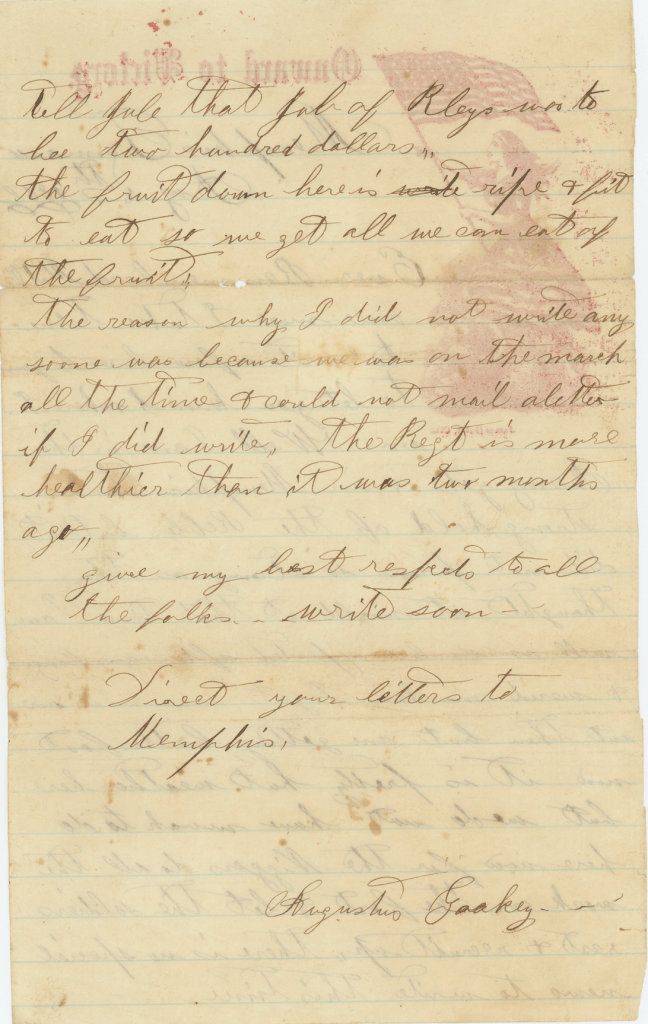
Truly yours, — C. R. Brayton


Letter 2

Headquarters Battery C, 3rd Rhode Island Vol. Artillery
Morris Island, South Carolina
September 24, 1863

Dear Colonel,

Yours of the 13th inst. came duly to hand by the Arago. I thank you kindly for the advice which I only wished had reached me before I was compelled to answer the Governor’s proposition without hearing from you. I knew you thought well of me and I have tried to merit your esteem and confidence, but there were so many officers senior to me that I thought my chance for further promotion distant. I have already written you my reasons for accepting the position offered and trust that all may yet be satisfactorily arranged. I shall be “mustered out” if I can so as to get home for a few days. Then the whole matter can be settled. But I assure you I do not want to leave the 3rd. My Battery never was in better condition. Have got 27 new horses, all sound and young, have a good name in the command, and as independent as I could wish to be. I know I never shall be as pleasantly situated and should leave the Battery reluctantly to take a Majority in the 3rd but feelings must be suppressed—the wisest course pursued. Was there any prospect of active service on the main land, I would not give up my company, but I see none now.

I have been compelled to perform a duty at once humiliating and imperative. I yesterday preferred charges against Lieut. Morrow for “Drunkenness on duty” while in command of a section on picket duty. He has tendered his resignation which I respectfully forwarded. It came back from Henry Metcalf for my recommendation. I endorsed it “respectfully recommended for the good of the service.” I could not approve his honorable discharge and thought I might appear to crowd him too hard did I insist on a court martial. As it is, he may be court martialed as I have not heard from the resignation and Gillmore is severe in such cases. Did I do more than my duty? No doubt of his guilt, as I brought him to camp beastly drunk. I regret that my company furnishes the first case and hope you will not consider it a fault of mine for I have ever discouraged drinking and no one ever saw me drunk or under the influence of liquor while here.

I have talked to Morrow and let him pass when my judgment told me better. I could not have been more lenient with my own brother. My duty was plain. I did it and hope you approve the course. It may save some good officers and be of great benefit to the regiment in the end. Gen. Gillmore has received his appointment as a Major General. I fired a salute of 13 guns for his yesterday on the beach where there were thousands to congratulate him by cheers.

Regulars have “played out.” I don’t associate with them now. They are beneath my notice. What have they done in the campaign thus far—nothing but growl at the manner in which matters were conducted by “damned Volunteers,” yet “Sumter” gave up the ghost, and “Wagner” yielded reluctantly to the Volunteer. I am proud of the Volunteers and glad I am one. I sed to think Regulars something wonderful but have got all over that. We have given them a blow here that staggers them. Even Henry, who talked of you at first as our “amiable Colonel, praises you to the skies.” But Colonel, he is a damned hypocrite. Don’t trust him as far as you would a thief. I ask no odds of him. He is not Brig. Gen. and if he says to me what he says to others, I will break his jaw. It makes me so mad to see “Rawson” and “Gardiner” follow him like curs—not daring to speak unless Henry says so. Damn a man that will go back on his regiment and has not the moral force to resent an insult to it—come from whom it may. But never fear but that I will hold my own. They have no Seymour, damn him, to help them in their infernal designs upon us poor Volunteers.

“Irwin” has joined Hamilton’s Battery. Am sorry for it. “Myrick” and “Brainard” have had a “row” and Brainard has gone to Beaufort to take charge of hospital. No. 2 in that Battery is going to hell fast. But let them quarrel, hoping they may come out like the “Kilkenny cats” in the end.

There is to be a Grand Review today. “Brayton’s Battery” has the “Right” of the Light Artillery. Capt. Joe Comstock is still at the [Hilton] Head awaiting transportation. You speak in your letter as though the 3rd was intolerable now. I can’t believe you really mean any such thing. Cursed we are by as miserable a lot of Field Officers (excepting yourself and Ames) as ever sapped the life of any regiment, but still we have talent among us sufficient to fill creditably any position. Our officers are far in advance of any I have seen here, take them as a class. You have no idea of the class of officers that came with those troops from Virginia. The 3rd stands well and are treated as Artillery Companies should be. They have done well. I am proud of them. If you can make a better regiment than stands out of the 4rd Rhode Island, mark out your cause and there are enough of us to support you. Only a few croakers to deal with.

Never fear about our getting into Charleston before you come back. Don’t you think me rather precocious in asking what I did. But I can’t help it for if I am left out now, I shall never command a regiment, I fear, and it is hard jumping from Major to Colonel over a Lieut. Colonel. But we will talk this over I hope before anything definite is done. I can keep my counsel—have so far—and promise you I will in future. Please excuse the emphatic remarks. Yours truly, — C. R. Brayton


Letter 3

Office of the Chief of Artillery
Morris Island, South Carolina
December 14, 1863

Dear Colonel,

Yours ofthe 4th and 5th (postscript) was duly received a few hours after I had mailed one for you. I think Eddy’s case settled for I well knew the Gov. had “no personal interest in the matter.” Bailey, I think, was at the bottom of the affair, put up to it by Eddy’s friends at home. If you think the matter need more attention, I will write the Governor about it, but I think it unnecessary.

Maj. Ames is in command of the Battalion. I showed him your letter about Report and Returns. Peirce of Co. D had a Descriptive List which Burton says he gave to Lamson, one having been given, the Company Commander has no right, I think, to give another.

Reenlisting is all the rage here now. Connecticut offers a bounty to Veterans which with the US Bounty, makes $792 for cash, beside aid to the families. Rhode Island should offer $500 in addition to the US Bounty of $402. This will secure all the old men of the regiment we want and many from others. Regimental commanders here have appointed Regimental Recruiting Officers to reenlist Veterans. Why not appoint some officer in the Battalion here or direct Ames to do so? It is a matter that requires immediate attention—else other regiments will get the start of us. The course is for you to appoint a Recruiting Officer here with orders to report to Lieut. Reynolds, Com. of Musters for instructions as to his duties. I have the above direct from Col. Smith.

Why not write the Governor about the Bounty and see if the $300 now paid by the State will be paid to men reenlisting in the old regiments.

There is nothing new. We have been having a heavy storm during the past week which has caused the water to encroach on the island 30 or 40 feet, completely cutting through the island just below “Wagner.” Admiral Dahlgren got caught outside and could not get into the Inlet on account of the sea on the bar. The “Weehawken” sank last week—cause unknown, so the Navy says. I saw her go down. There was a puff of smoke and she sank in less than a minute. Between 20 and 30 lives reported to have been lost.

The storm has evidently broken up the “obstructions” 1 between Sumter and Moultrie as large masses of timber, evidently links of some chain have been driven on shore. They consist of 9 sticks of 15 in. hard pine timber firmly bound together with iron hoops. Through the centre is a bar of railroad iron, on either end of which iron links have been attached so that an indefinite number of these wooden masses can be joined together and thus make a chain of great strength. The timber having buoyancy enough to support the railroad iron at all times and the iron being strong enough to prevent vessels from forcing their way past it.

Sumter was on fire in the Southwest corner during the past week—cause unknown to us. We shell the city every twenty-four hours. I will see about King’s Case Co. M today. Regards to all your officers. I pity Lanahan’s wife—she being alone at Pulaski, but Capt. Jerry is satisfied, I suppose. Write soon. Have not yet received our mail by the Arago. Can’t it be sorted at the Head some way?

Ever your sincere friend, — C. R. Brayton

1 The New York Herald of 7 April 1863 carried an article on “the obstructions” in Charleston Harbor. They were said to consist of “floating rafts, made of heavy timber, securely lashed together by cable chains, and then bolted to an upper layer of timber, which not only covers the chains, but adds a bracing strength to the structure. At a given point this bar or boom is provided with a moveable gate, which is opened to allow their own vessels to pass in and out. This place of ingress is directly under the guns of Fort Sumter and so close that it seems impossible that any vessel could pass them, A chain and a connecting seres of obstructions exist between Forts Sumter and Moultrie.”


1863: William McCarty to Marilla Jane (Wilson) McCarty

William’s broken headstone in Cottonwood Cemetery, Dallas, Texas

The following letter was written by William McCarty (1821-1883) to his wife, Myrilla Jane Wilson (1827-1882). The couple were married in 1846 and had at least two children by the time this letter was written. William was born in Tennessee and was residing in Bradley county, Tennessee, when the 1850 US Census was collected. Ten years later he and Marilla were enumerated in Plano, Collin county, Texas.

TexasMuster Roll Index cards indicate that William was drafted into Co. D, 15th Battalion Texas State Troops on 15 July 1863.

Transcription

Camp Lane, Fannon County, Texas
September 30th 1863

I have sat down in a wagon to scratch you a few lines amongst the fuss and bustle in camp. We are all well and passing of time very well.

We have had some very good preaching in camp and have religious songs sung until 9 o’clock every night. It commenced raining last night and is still raining yet. We will move from here in a few days further up the river. I want you to do the very best you can for I do not know when I will be at home. It may be before long and it may be not be before spring. I cannot tell. You know anything about it. We will know in a few days whether we will get to come or not.

We are all sworn into the Confederate service for the length of three years after our six months is out. Now my Marilla, I do not want you to give way in despair to everything. I want you to brave the storm and do all the good you can for yourself and your country. Do not fret nor grieve for me for I will try to take care of myself and I want you to do the same.

I will say something about our tent. I do not know whether it will take 36 yards or not. When you go to make it, make your breadth about 7 yards long the ends. Set your breadths up on the end and then take a pleat in it up high enough for the wall and that will make the eve. Then a small rope every yard. Then it will do without corner posts. — William McCarty

When you write, direct your letter to Bonham, [Texas], Company, Co. D, 15th Battalion

1863: Joseph B. Frost to Henry Martin Lowe

An unidentified seaman from the collection of Ron Field

The following letter was written by Joseph B. Frost (1839-1872) of Marblehead, Massachusetts who entered the US Navy in December 1861 at the age of 22 and held the rank of Ordinary Seaman (OS). He was described as standing 5’9″ tall with brown hair and blueish gray eyes. We know from this letter as well as official records that Joseph served aboard the USS gunboat Penobscot. The next notice of him in Naval Records indicates that he was admitted into the Naval Hospital at Portsmouth, Virginia, in July 1863 suffering from periostitis (shin splints). He was discharged from the hospital on 21 August 1863 and I believe discharged from the Navy at or about the same time. An assistant surgeon named William Longshaw, Jr. 1 who served aboard the USS Penobscot form May-July 1863, treated Frost with the following comments: “Has been under treatment for ulcer affecting right leg. This patient manifests a scrofulous diathesis and has before been treated for indolent ulcer. Treatment has been…local stimulants with iodine externally and idiod. internally. Was sent to army hospital in Beaufort, N. C. on 19 July 1863 and discharged 27 July 1863 for passage to Hampton Roads.” From this description, my interpretation is that Joseph may have been suffering from syphilis which was commonly treated with potassium iodine.

Curiously, Joseph’s hospital admission record at Portsmouth suggests that Joseph was incapable of signing his own name with anything other than an “X” (his mark). If so, he must have had someone else on board the gunboat to write the following letter on his behalf.

Frost wrote the letter to his friend, Henry “Martin” Lowe (1840-1907), who served with him aboard the US Gunboat Penobscot. Martin was the son of Henry Thurston Lowe (1806-1888) and Rachel Pool (1816-1897), and the husband of Louisa Foster Blatchford (1841-1910) of Rockport, Essex county, Massachusetts. Martin and Louisa were married on 21 April 1860 at Newburyport and in the 1860 US Census, they were enumerated as newlyweds in her parents home—William and Mary (Gott) Blatchford of Rockport. At that time, Martin was employed as a clerk. One of some forty-one men from the fishing port of Rockport, Massachusetts who served in the Navy during the Civil War, Martin Lowe was a Paymaster’s Steward aboard the U.S.S. Penobscot. He entered the service in early February 1862 and was discharged in March 1864. [See 1862-64: Henry Martin Lowe to his Family]

1 Dr. William Longshaw Jr., Acting Assistant Surgeon, U.S. Navy, was killed on 15 January 1865 at the Battle of Fort Fisher. “A sailor, too severely wounded to help himself, had fallen close to the water’s edge and with the rising tide would have drowned. Dr. Longshaw, at the peril of his life, went to his assistance and dragged him beyond the incoming tide. At this moment he heard a cry from a wounded marine, one of a small group who, behind a little hillock of sand close to the parapet, kept up a fire upon the enemy. Longshaw ran to his assistance and while attending to his wounds was shot dead.”

Transcription

Addressed to Mr. Henry Lowe, Rockport, Massachusetts

U. S. S. Penobscot
Off Wilmington, N. C.
May 1, [1863]

Friend Henry,

It is with pleasure that I now address you from the old and familiar spot Rollingville and a gay place it is. There is now 23 steamers on the blockade and vessels can run in and out just as they please without anyone troubling them.

And now for our trip down here. We arrived at Fort Monroe on the next Monday after we left Washington and then steamed up to report to the flag ship and he sent a steamboat down to the store ship and got our crew and the next day the Captain made the petty officers and give the rest of the men their station and old Snow and the carpenter still hold their rates and all the rest are new men and there is any amount of dissatisfaction amongst them. I can tell you, Henry, she is not the ship she used to be. It is like a going on board of a new vessel as there is all new rules and regulations in regard of all things.

And now Henry, I hope you will pardon me for opening two letters which I got the next day after we arrived for I had no envelopes large enough to get them into and so I had to open them and fold them over to forward them to you. And now I will ask you to send me some papers as they will be very receptive as you know yourself when you were with us.

And now Henry, I will bring this to a close as the mail is all ready to go on board the Florida. This is from your friend and well wisher. — Joseph B. Frost

Direct as before.

P. S. Henry I want you to send me your wife’s and baby’s picture for I have already got yours and when I get them, I shall keep them in remembrance of you and your family. And by sending them, you will greatly oblige old — Hob