The following letter was written by Thomas W. Wick (1839-1891) while serving as a private in Co. G, 28th New Jersey Infantry—a nine-months regiment mustered into service in September 1862. Thomas claims that he is “willing to do my part” to put down the rebellion though many of the men who enlisted in the regiment probably assumed they would see comparatively little service in their nine-months. They were wrong. Instead, the regiment led the charge on Marye’s Heights at Fredericksburg and they were in the brutal fighting around Salem Church near Fredericksburg in the Chancellorsville Campaign.
Thomas was the son of John Wick (1806-1876) and Eliza Ann Eldridge (1810-1893) of Turnersville, Gloucester county, New Jersey. In the 1860 US Census, Thomas was enumerated at Chew’s Landing in Camden county, New Jersey, residing in the household of Thomas A. Chew where he was identified as a “laborer.”
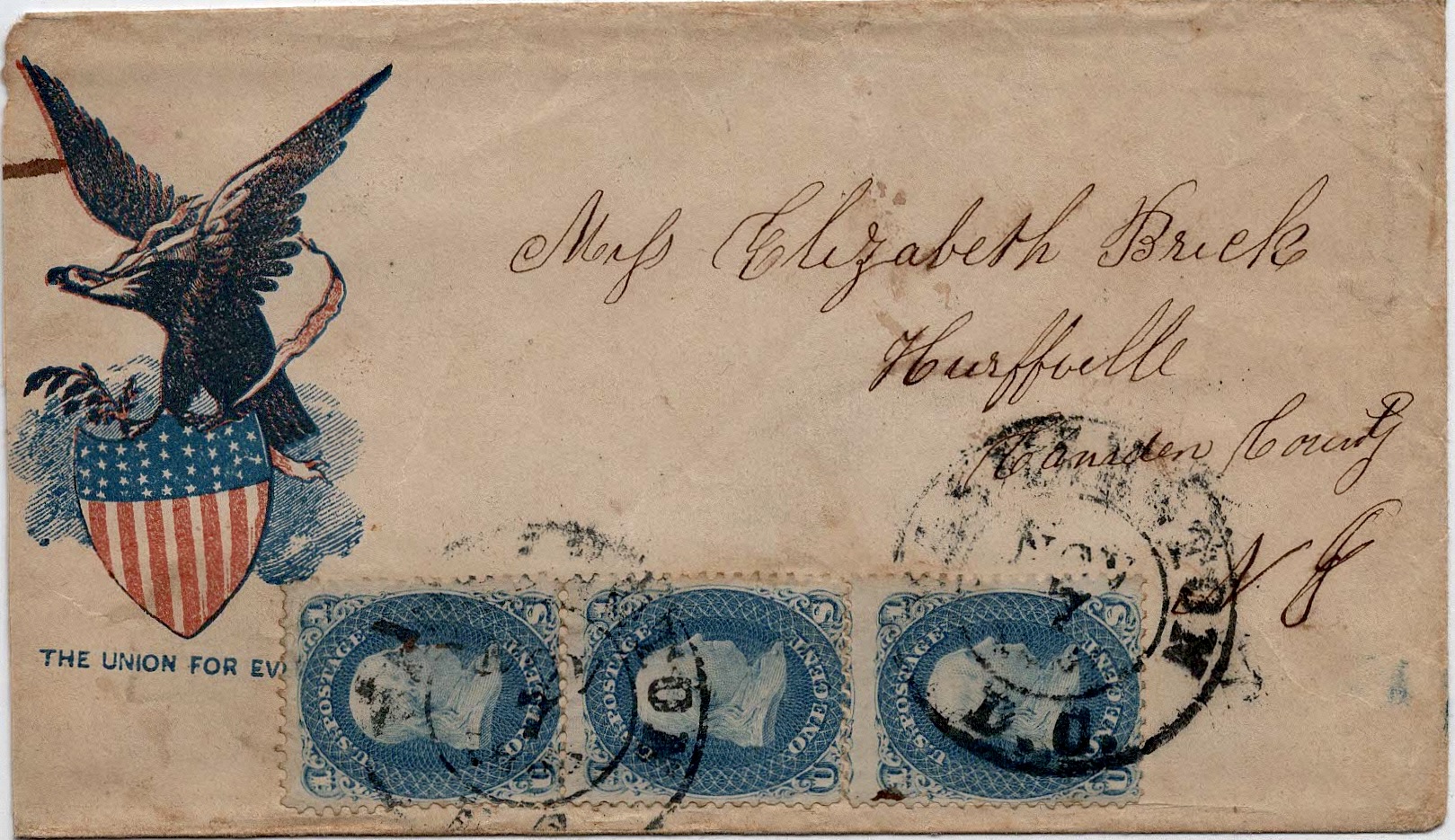
Thomas wrote the letter to his friend, Elizabeth (“Lizzie”) Brick (1845-1919) of Hurffville, Gloucester county, New Jersey. Lizzie married John C. Thompson (1838-1911) in 1864.
T R A N S C R I P T I O N
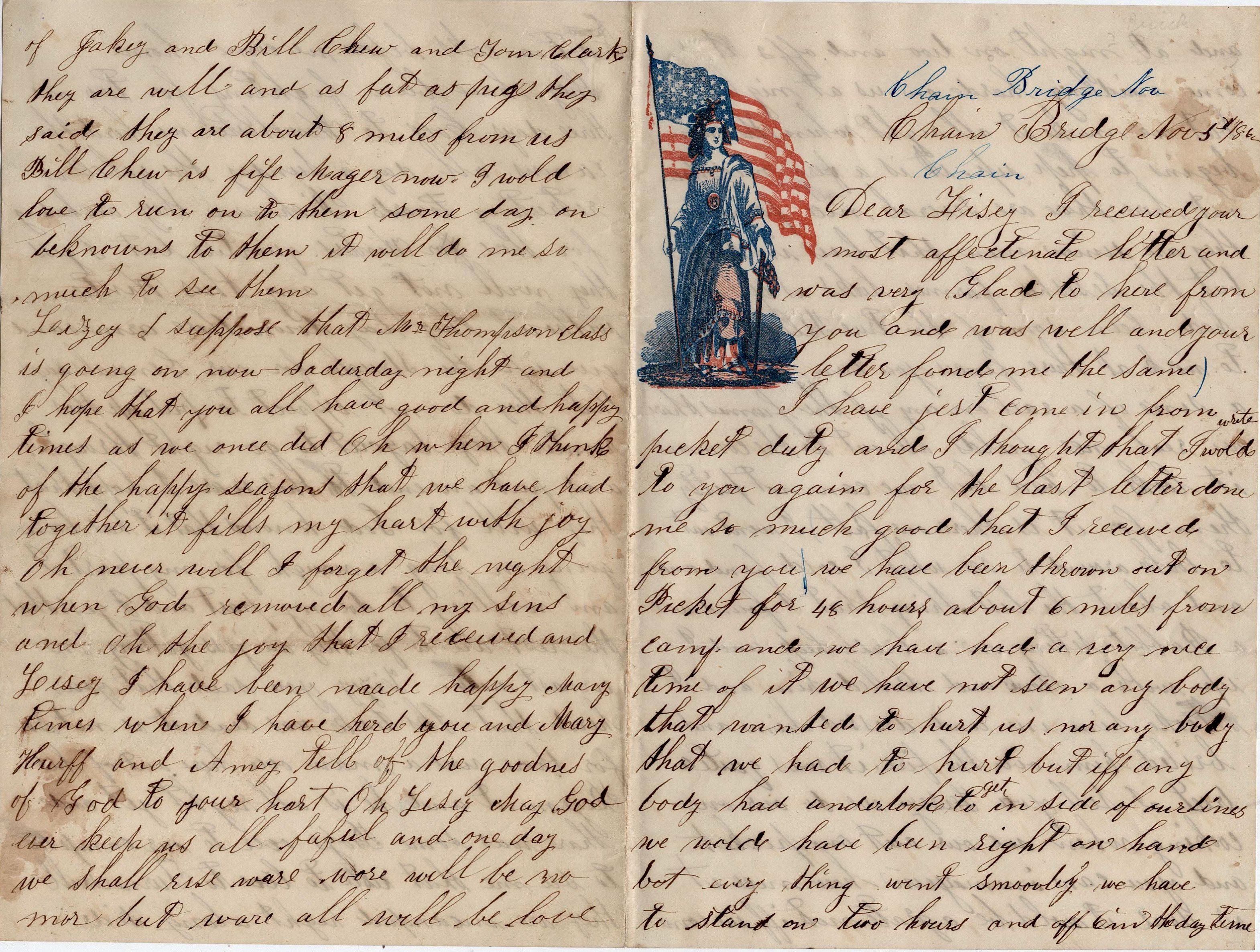
Chain Bridge
November 5th 1862
Dear Lizzie,
I received your most affectionate letter and was very glad to hear from you and was well and your letter found me the same.
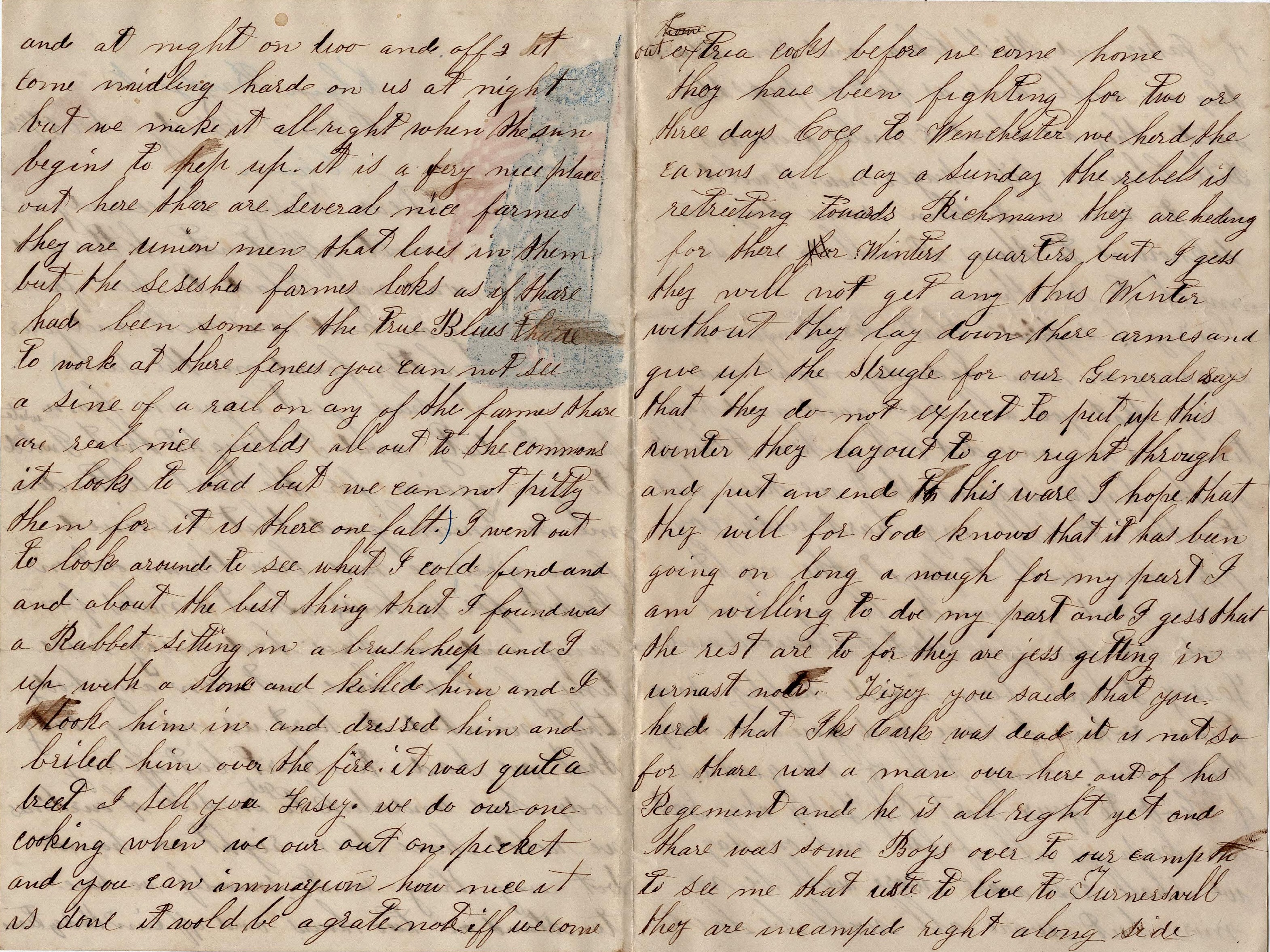
I have just come in from picket duty and I thought that I would write to you again for the last letter done me so much good that I received from you. We have been thrown out on picket 48 hours about 6 miles from camp and we have had a very nice time of it. We have not seen anybody that wanted to hurt us not anybody that we had to hurt, but if anybody had undertook to get inside of our lines, we would have been right on hand. But everything went smoothly. We have to stand on two hours and off 6 in the day time, and at night on two and off two. It comes midling hard on us at night but we make it all right when the sun begins to pop up.
It is a very nice place out here. There are several nice farms. They are Union men that lives in them but the secesh farms look as if there had been some of the true blues. [They need] to work at their fences. You cannot see a sign of a rail on any of the farms. There are real nice fields all out to the commons. It looks too bad, but we cannot pity them for it is their own fault. I went out to look around to see what I could find and about the best thing that I found was a rabbit sitting in a brush heap and I up with a stone and killed him and I took him in and dressed him and broiled him over the fire. It was quite a treat, I tell you Lizzie. We do our own cooking when we are out on picket and you can imagine how nice it is done. It would be a great note if we come out extra cooks before we come home.
They have been fighting for two or three days close to Winchester. We heard the cannons all day on Sunday. The rebels is retreating towards Richmond. They are heading for their winter quarters but I guess thy will not get any this winter without they lay down their arms and give up the struggle for our generals says that they do not expect to put up this winter. They lay out to go right through and put an end to this war. I hope that they will for God knows that it has been going on long enough. For my part, I am willing to do my part and I guess that the rest are too for they are just getting in earnest now.
Lizzie, you said that you heard that Iks Cark [?] was dead. It is not so for there was a man over here out of his regiment and he is all right yet and there was some Boys over to our camp to see me that used to live to Turnersville. They are encamped right along side of Jakey and Bill Chew and Tom Clark. They are well and as fat as pigs. They said they are about 8 miles from us. Bill Chew is Fife Major now. 1 I would love to run on to them some day unbeknownst to them. It will do me so much [good] to see them.
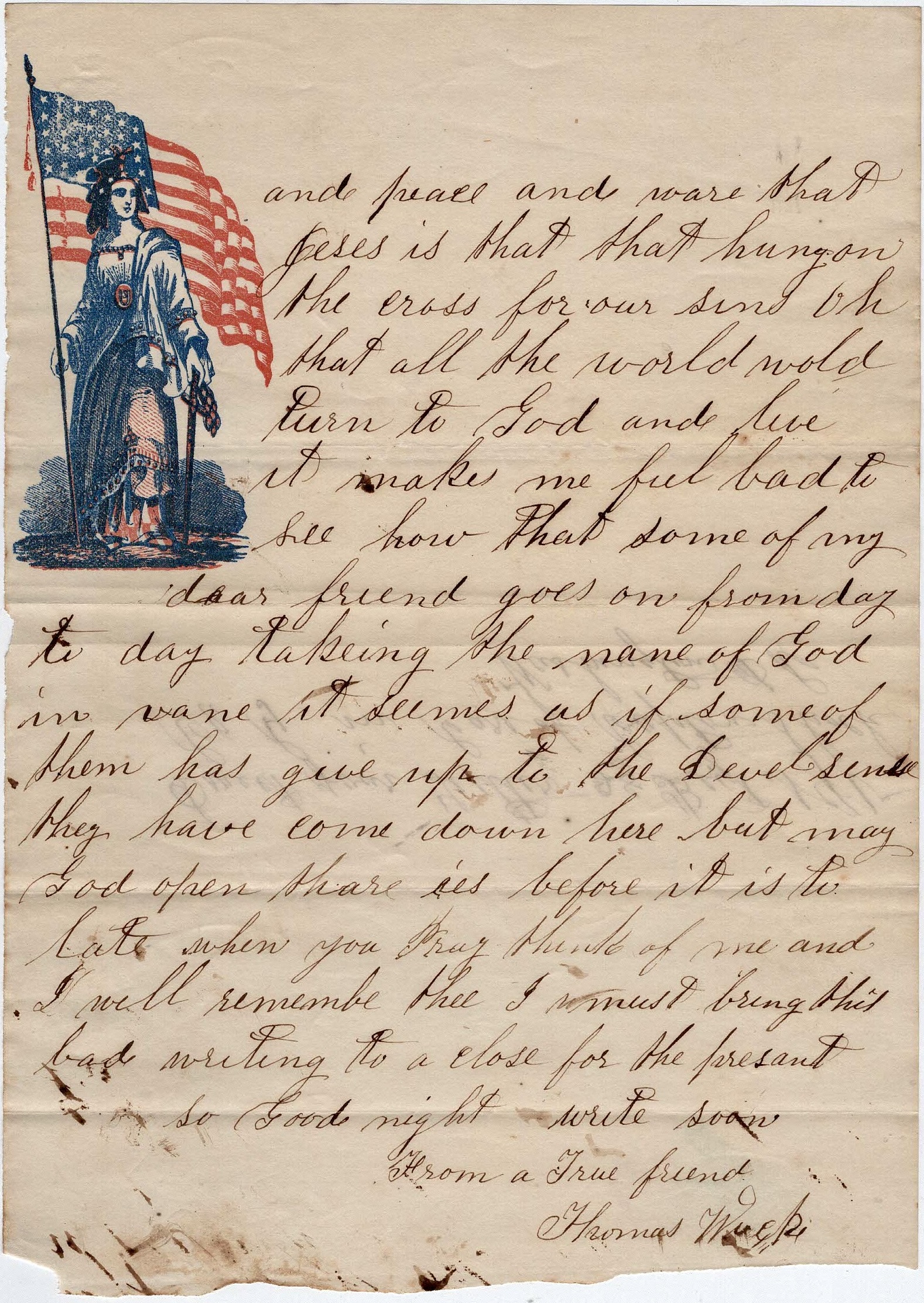
Lizzie, I suppose that Mr. Thompson’s class is going on now Saturday night and I hope that you all have good and happy times as we once did. Oh when I think of the happy seasons that we have had together, it fills my heart with joy. Oh, never will I forget the night when God removed all my sins and Oh! the joy that I received. And Lizzie, I have been made happy many times when I have heard you and Mary Hurff and Amy tell of the goodness of God to your heart. Oh Lizzie, may God ever keep us all faithful and one day we shall rise where war will be no more, but where all will be love and peace and where Jesus is that hung on the cross for our sins. Oh that all the world would turn to God and live.
It makes me feel bad to see how that some of my dear friends go on from day to day taking the name of God in vain. It seems as if some of them has give up to the Devil since they have come down here. But may God open their eyes before it is too late. When you pray, think of me and I will remember thee. I must bring this bad writing to a close for the present. So good night. Write soon. From a true friend, — Thomas Wick
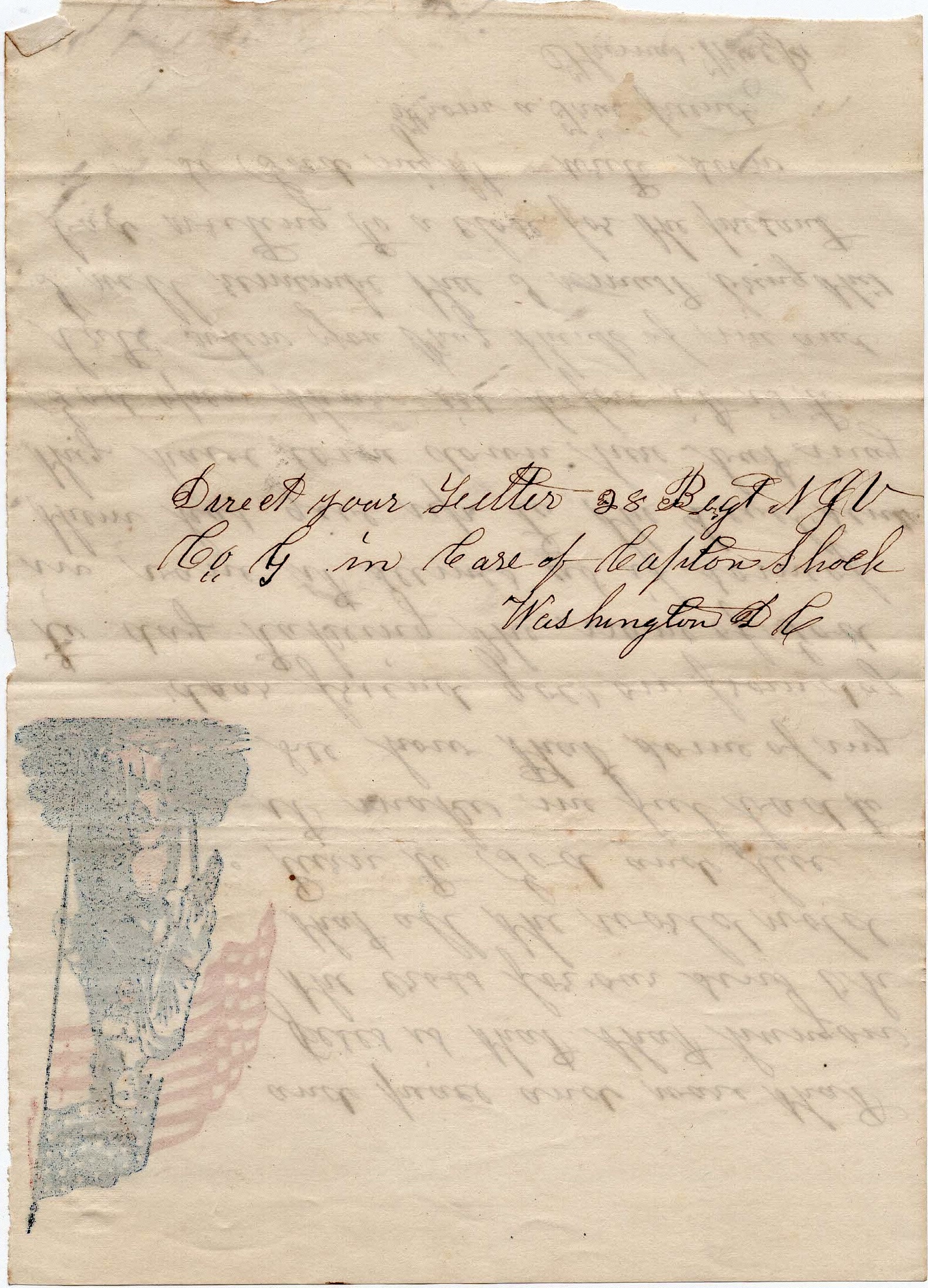
Direct your letter to 28th Regt. N. J. V., Co. G, in care of Captain [Louis W.] Schock, Washington D. C.
1 William S. Chew (1821-1911) was Fife Major of Co. I, 6th New Jersey Infantry. He served from August 1861 to September 1864.