The following partial letter was penned by Corp. Alfred H. Bryant (1840-1902), a 23 year-old machinist in Rochester, New York, when he enlisted in the 18th Independent Battery—Capt., Albert G. Mack. This battery, known as the “Black Horse artillery,” or “Billinghurst battery,” was recruited and organized by Capt. Mack at Rochester, where it was mustered into the U. S. service for three years on Sept. 13, 1862.
The 18th Independent Battery left the state on Dec. 2, 1862, and joined Sherman’s division, Department of the Gulf. It was attached to the 19th Army Corps and was active at Fort Bisland, the Amite river, Plains store, and the siege of Port Hudson, La., where it participated in the assaults of May 27 and June 14. After the surrender of Port Hudson it went into the defenses of New Orleans; was engaged at Bayou La Fourche in July, 1863; took part in the expedition to Clinton and Liberty creek, La., in Nov., 1864; and in the spring of 1865, participated with Gen. Canby’s forces in the siege of Mobile, engaging at Spanish Fort, and at Fort Blakely and Mobile. It was mustered out under Capt. Mack, at Rochester, N. Y., July 20, 1865, having lost during service 4 men mortally wounded, and 23 men by disease and other causes, a total of 27.
In July 1863, the fort and buildings burned during the Bayou Lafourche campaign were associated with Fort Butler (pictured below) at Donaldsonville, Louisiana, and the surrounding Kock’s Plantation. The destruction occurred during the Battle of Kock’s Plantation on July 13, 1863, after Confederate forces under General Tom Green engaged Union troops. Fort Butler, an earth-and-log fortification designed to guard the confluence of the Mississippi River and Bayou Lafourche, was the anchor point of the Union stronghold in Donaldsonville. Union troops and gunboats shelled and burned portions of the surrounding town, while retreating or attacking Confederate forces also destroyed nearby government and plantation buildings.

T R A N S C R I P T I O N
[Editor’s note: This partial letter begins on page 5 of an eight page letter. It was probably datelined from Donaldsonville, Louisiana in mid July 1863.]
..and attacked Banks force here. They had an idea that they could draw our force away from Port Hudson but their plan didn’t work. This place is situated on the bank of the Mississippi River about 100 miles from New Orleans.
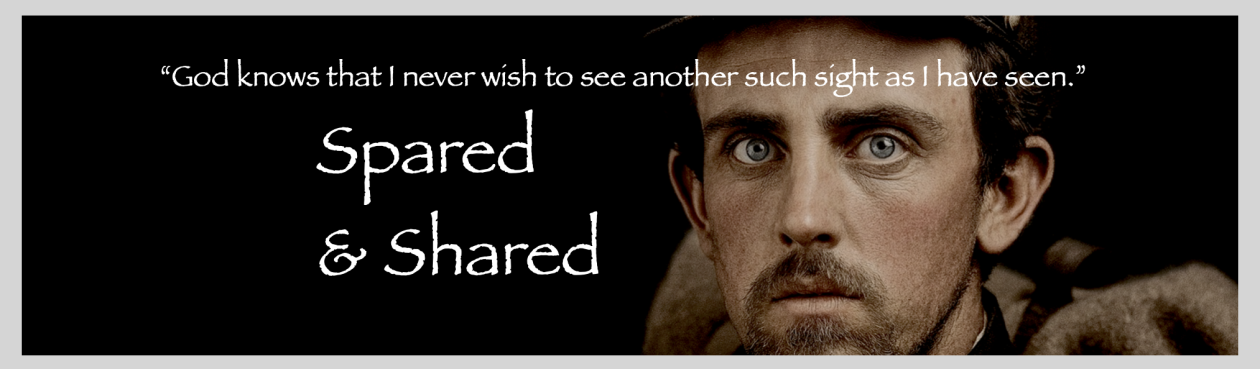
We have had two terrible battles here—one while we was at Port Hudson and one the day before we arrived here. They tried to take the place but our troops kept them back at the point of the bayonet until our gunboats arrived and burned the place down. We have a small fort here but there wasn’t men enough to man the guns at the time of the fight. It was a terrible sight the day we arrived here. The buildings was all burned to the ground and was still smoking while the dead still lay upon the ground, unburied, left there for their friends to recognize them while there was hundreds of man made graves all along the road while the wounded was being carried to the hospital at Baton Rouge.
How long we will remain here, I do not know. The rebel force is about 15 miles from here. I do not think they will give us a chance to try our big guns again right away. We have a large force in their rear and I think we will be apt to bag them all. Fighting is about played [out] in this state and I guess it is all over. I think the rebels have found out that the Yankees are too much for them, If they hain’t, it is about time they had. I told a reb in Port Hudson that I could whip 3 rebels and keep it up 7 days in a week.
I will have to finish this letter the same as I did my pants the other day—haft to patch it.
There is rumors in camp that there is proposals of peace at Washington. We have a few in our company who correspond with the Rochester paper. I will send you some papers as soon as I get some stamps. I have one or two letters that I will send you. One was taken from the New York Herald. It will give you a slight sketch of our doings. We have nigh 7 months pay due [us]. It is hard telling when we will get pay. My health is good at present. I have had a slight touch of the fever but I am better now.
I must close this letter for there is a dreadful shower driving up and I must try and fix my shelter tent so as it won’t leak. This is a dreadful rainy month. One hour the sun will shine dreadful hot and the next it will rain. It has rained every day for the last two weeks. Goodbye. Remember me to all my friends. Farewell from your ever affectionate brother. Write soon. Please direct to Mr. Alfred H. Bryant, 18th New York Battery, Care of Capt. A[lbert] G. Mack. General Banks’ Expedition, New Orleans
We are not in the 108th Regiment.


