This letter was signed by G. M. Wood but I have not been able to identify him further though he informs us that his father was living in Aurora, Kane county, Illinois, and laboring as a tanner in 1846. The family appears to have migrated to Illinois from Vermont. I searched Ancestry.com records for any residents of Aurora hailing from Vermont who may have been a tanner, or in the leather goods business, and could not find anyone by the name of Wood, or any other name that seemed to fit the profile of this family.
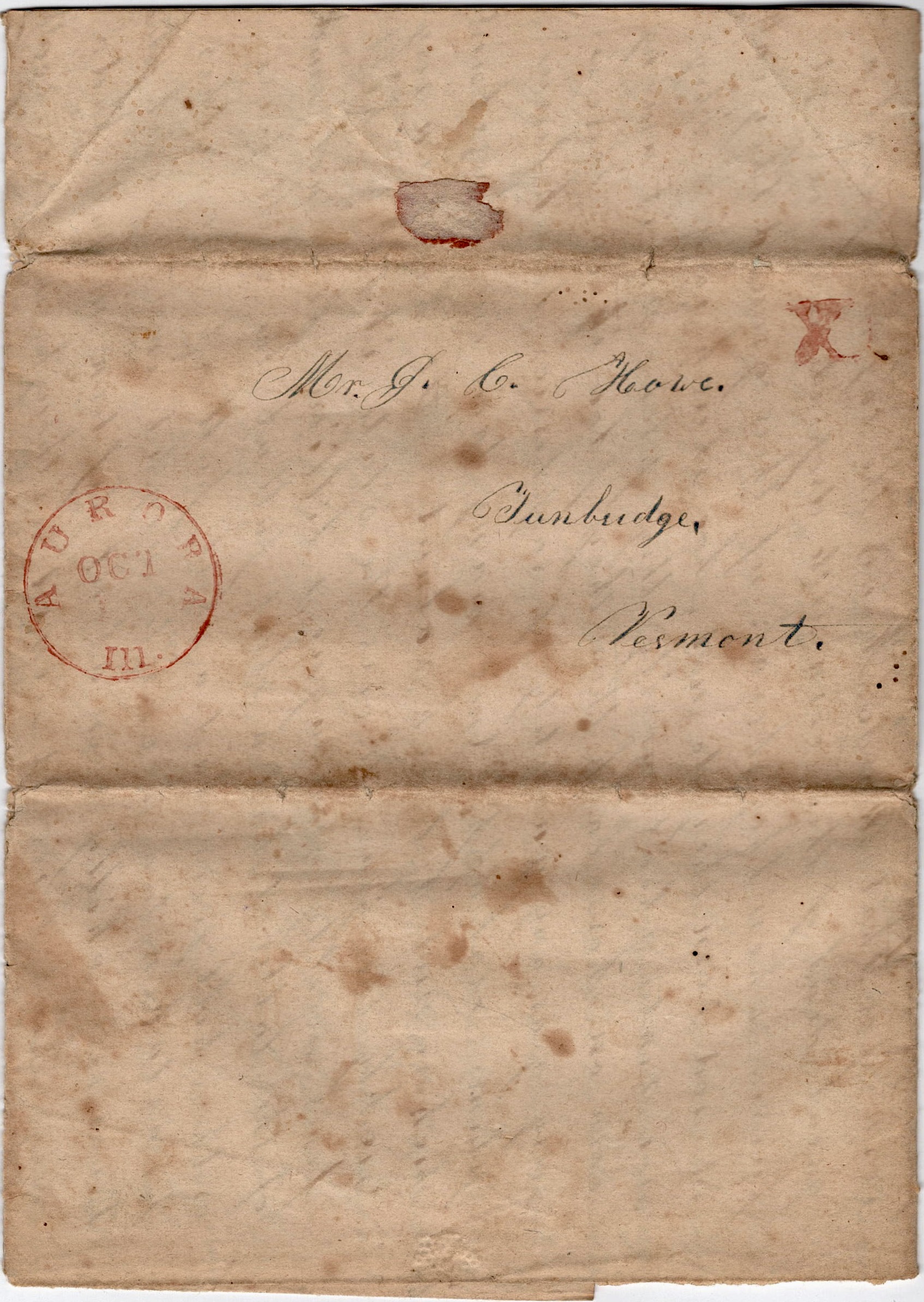
The letter was addressed to Jeremy C. Howe (1814-1879), a farmer residing in Tunbridge, Orange county, Vermont. Jeremy was married to Betsey T. Thompson (1819-1880). The relationship between Howe and the author of this letter is not yet established.
In 1846, Aurora was not yet a unified city. There were two different villages, East and West Aurora, on opposite sides of the Fox River. When they finally united as one village, the civic center was built on Stolp Island in the middle of the river. The local economy of Aurora was driven by water-powered industrial milling. The town expanded rapidly with the arrival of the railroad in 1849.
T R A N S C R I P T I O N
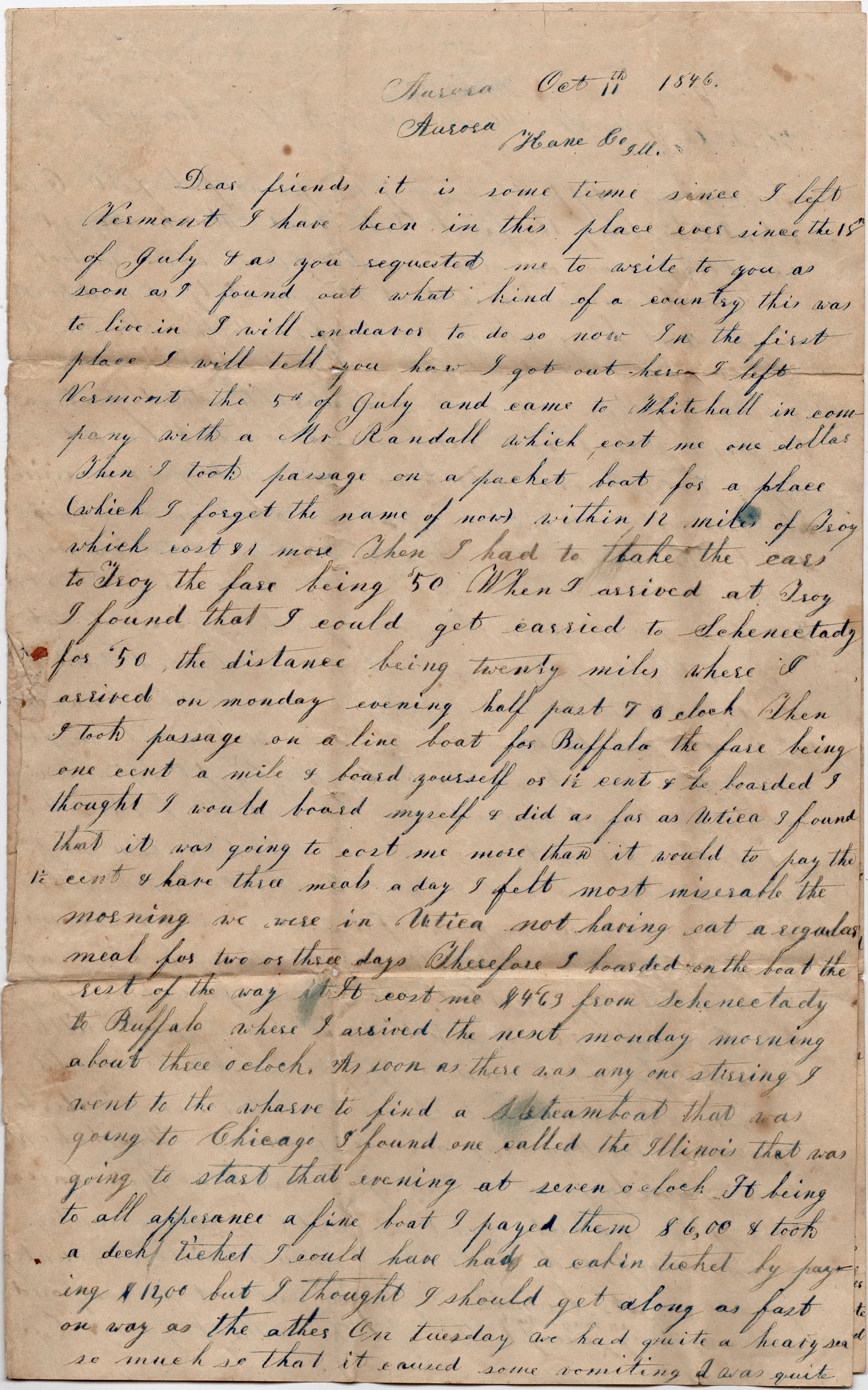
Aurora, Kane County, Illinois
October 11, 1846
Dear friends,
It is some time since I left Vermont. I have been in this place ever since the 18th of July & as you requested me to write to you as soon as I found out what kind of a country this was to live in, I will endeavor to do so now. In the first place, I will tell you how I got here.
I left Vermont the 5th of July and came to Whitehall in company with a Mr. Randall which cost me one dollar. Then I took passage on a packet boat for a place (which I forget the name of now) within 12 miles of Troy which cost $1 more. Then I had to take the cars to Troy, the fare being 50 cents. When I arrived at Troy, I found that I could get carried to Schenectady for 50 cents, the distance being twenty miles, where I arrived on Monday evening, half past 7 o’clock. Then I took passage on a line boat 1 for Buffalo, the fare being one cent a mile & board yourself or 1.5 cents and be boarded. I thought I would board myself and did so as far as Utica. I found that it was going to cost me more than it would to pay the 1.5 cents & have three meals a day. I felt most miserable the morning we were in Utica, not having eat a regular meal for two or three days. Therefore I boarded on the boat the rest of the way. It cost me $4.63 from Schenectady to Buffalo where I arrived the next Monday morning about three o’clock.
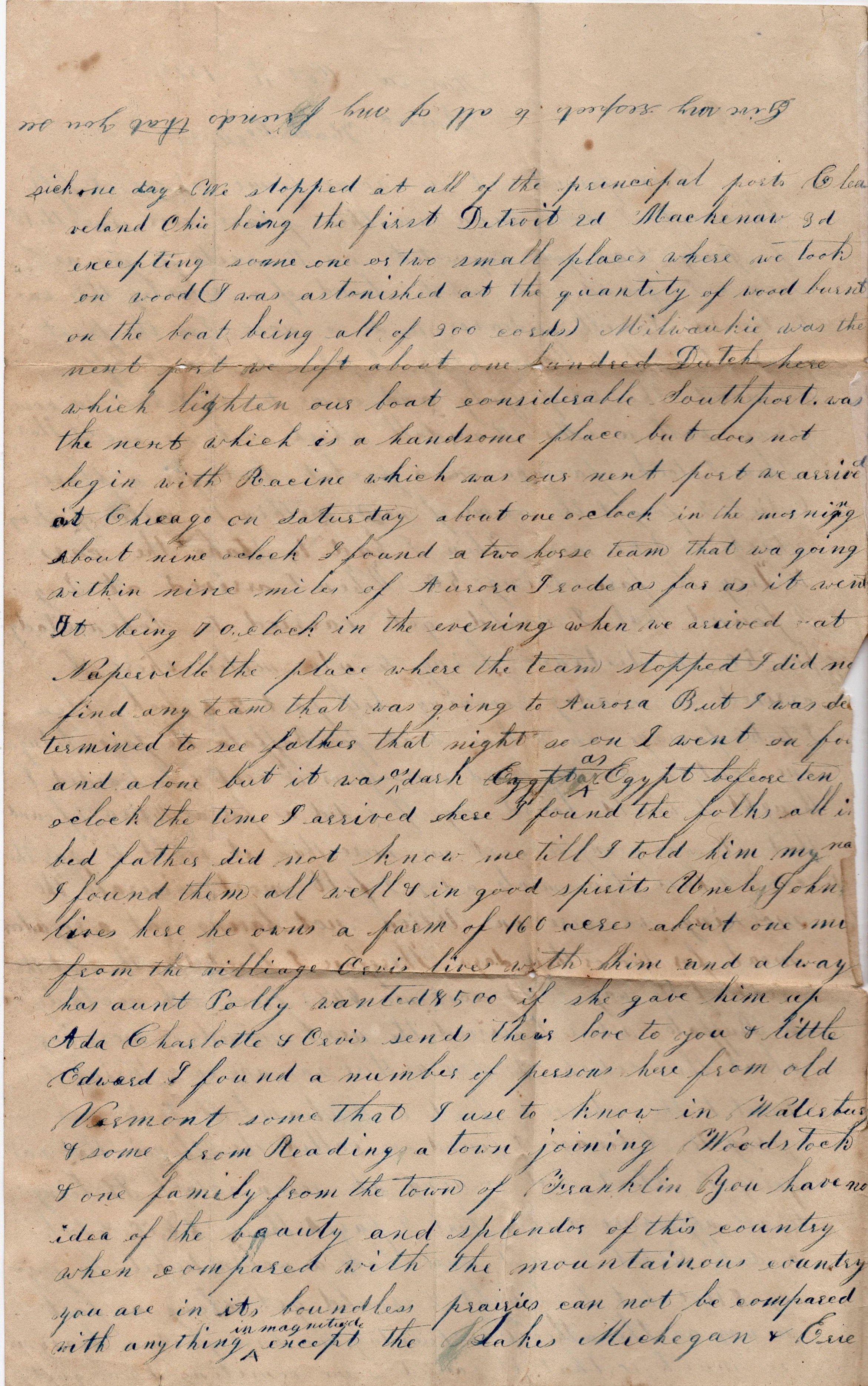
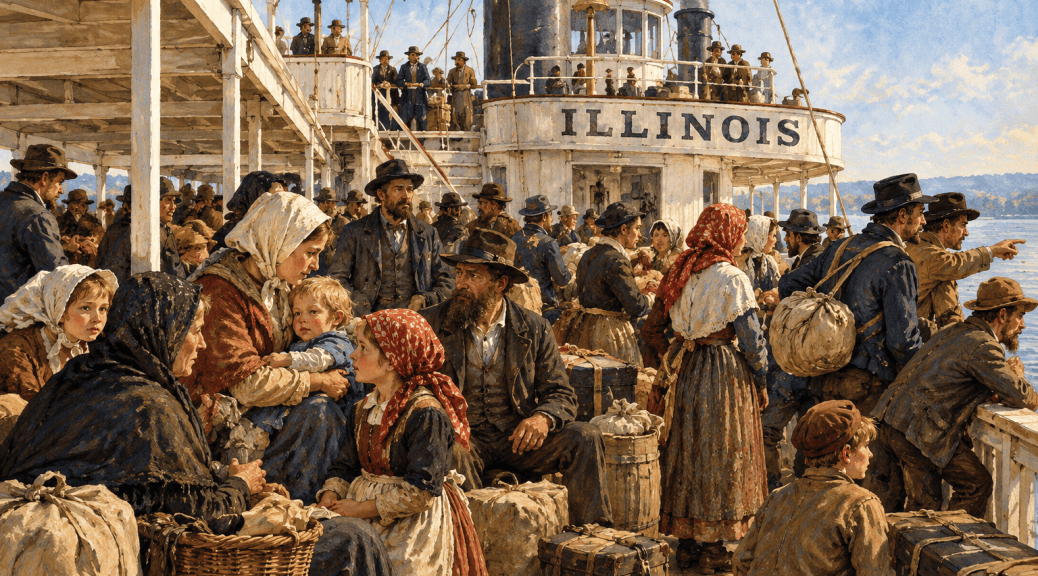
As soon as there was anyone stirring, I went to the wharf to find a steamboat that was going to Chicago. I found one called the Illinois 2 that was going to start that evening at 7 o’clock. It being to all appearance a fine boat, I payed them $6 and took a deck ticket. I could have had a cabin ticket by paying $12 but I thought I should get along as fast one way as the other. On Tuesday we had quite a heavy sea—so much so that it caused some vomiting. I was quite sick one day. We stopped at all of the principal ports, Cleveland, Ohio, being the first, Detroit 2nd, Mackenaw 3rd, excepting some one or two small places where we took on wood (I was astonished at the quantity of wood burnt on the boat, being all of 300 cords.)
Milwaukee was the next port. We left about one hundred Dutch [Germans] here which lightened our boat considerable. 3 Southport was the next which is a handsome place but does not begin [to compare] with Racine which was our next port. We arrived at Chicago on Saturday about one o’clock in the morning. About 9 o’clock I found a two-horse team that was going within nine miles of Aurora. I rode as far as it went. It being 7 o’clock in the evening when we arrived at Naperville—the place where the teams stopped—I did not find any team that was going to Aurora but I was determined to see Father that night so on I went on foot and alone. But it was as dark as Egypt before ten o’clock, the time I arrived here. I found the folks all in bed. Father did not know me till I told him my name. I found them all well & in good spirits.
Uncle John lives here. He owns a farm of 160 acres about one mile from the village. Orvis lives with him and always has. Aunt Polly wanted $5 if she gave him up. Ada, Charlotte & Orvis sends their love to you & little Edward. I found a number of persons here from old Vermont—some that I used to know in Waterbury & some from Reading, a town joining Woodstock. And one family from the town of Franklin. You have no idea of the quantity and splendor of this country when compared with the mountainous country you are in. Its boundless prairies cannot be compared with anything in magnitude except the Lakes Michigan & Erie.
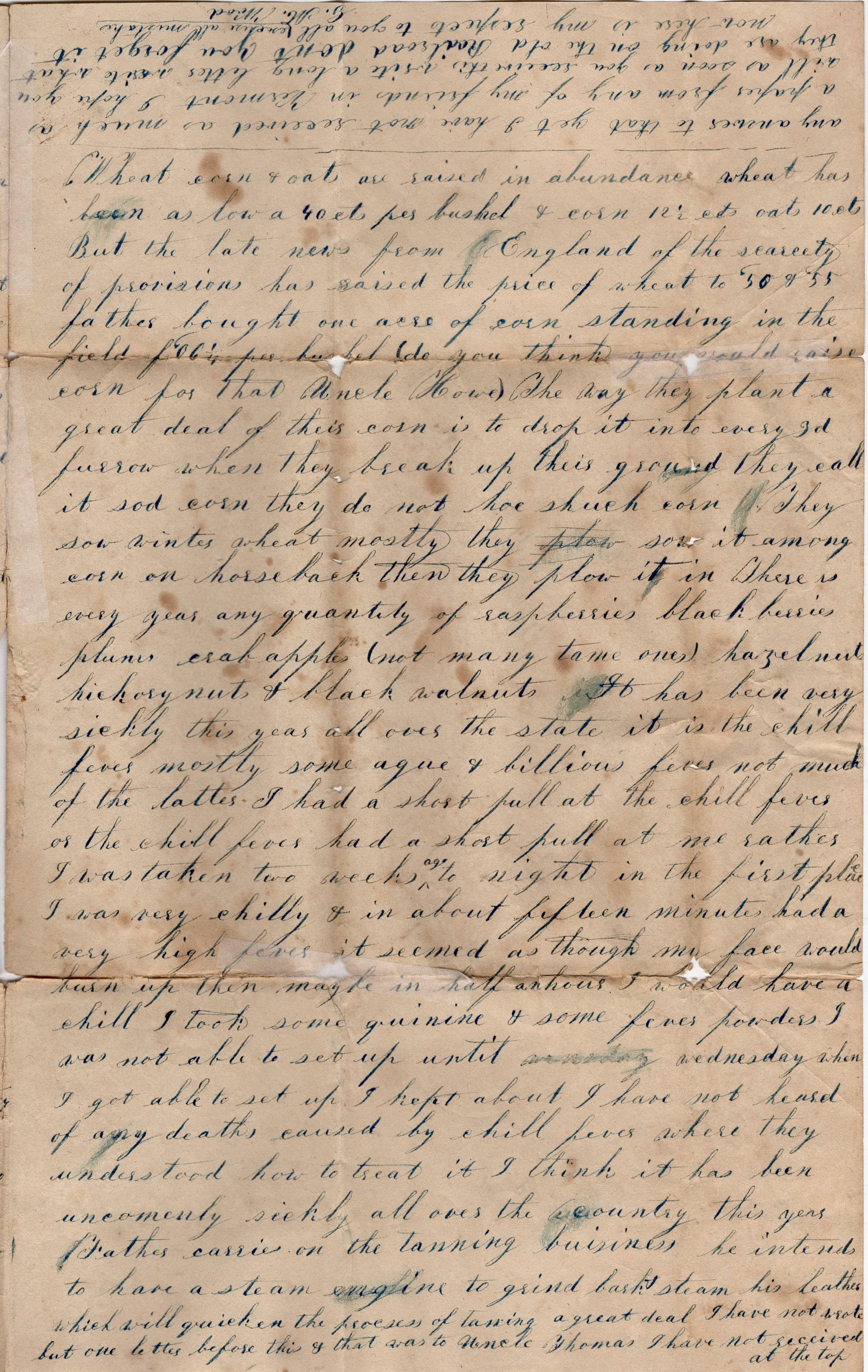
Wheat, corn 7 oats are raised in abundance. Wheat has been as low as 40 cents per bushel, and corn 12.5 cents. Oats 10 cents. But the late news from England of the scarcity of provisions has raised the price of wheat to 50 and 55. Father bought one acre of corn standing in the field for 6.25 per bushel. Do you think you could raise corn for that Uncle Howe?
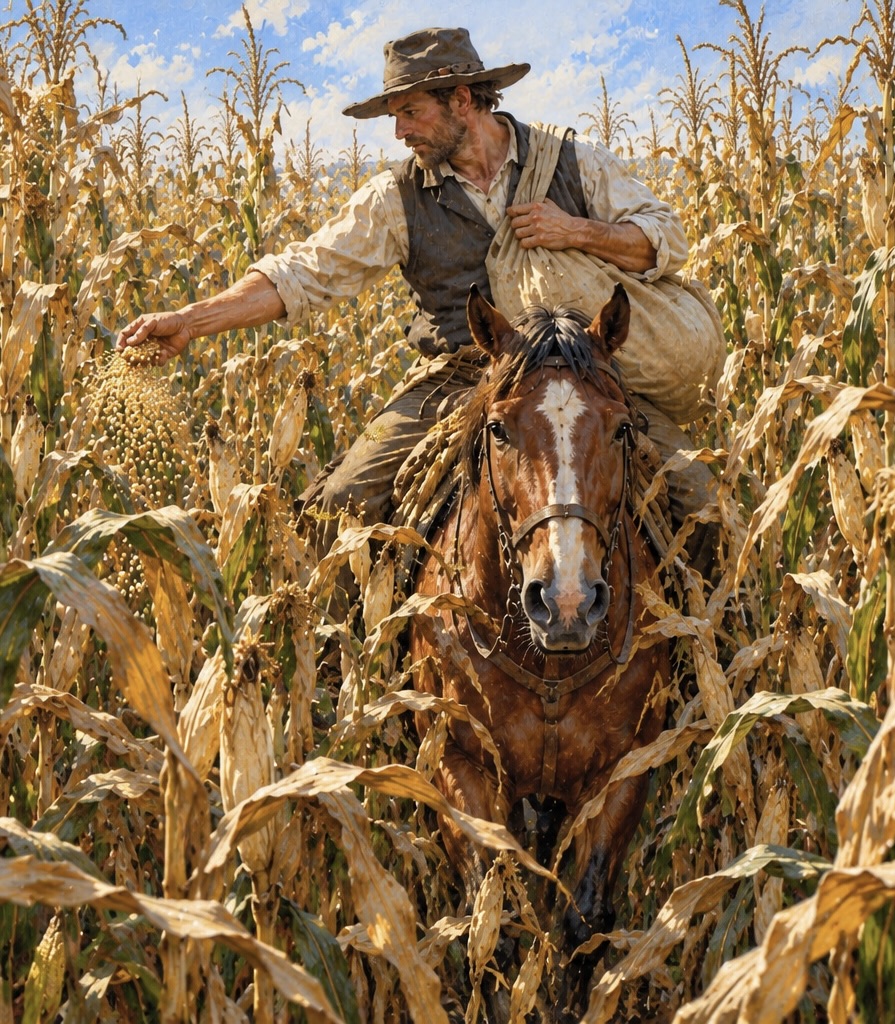
The way they plant a great deal of their corn is to drop it into every third furrow when they break up their ground. They call it sod corn. 4 They do not shuck corn. They sow winter wheat mostly. They sow it among corn on horseback. Then they plow it in. There is every year any quantity of raspberries, blackberries, plums, crab apples (not many tame ones), hazelnuts. hickory nuts. and black walnuts.
It has been very sickly this year all over the state. It is the chill fever mostly—some ague and bilious fever, not much of the latter. I had a short pull at the chill fever, or the chill fever had a short pull at me rather. I was taken two weeks ago tonight. In the first place, I was very chilly & in about 15 miles had a very high fever. It seemed as though my face would burn up. Then maybe in half an hour, I would have a chill. I took some quinine & some fever powders. I was not able to sit up. I kept about. I have not heard of any deaths caused by chill fever where they understood how to treat it. I think it has been uncommonly sickly all over the country this year.
Father carried on the tanning business. He intends to have a steam engine to grind bark & steam his leather which will quicken the process of tanning a great deal. I have not wrote but one letter before this & that was to Uncle Thomas. I have not received any answer to that yet. I have not received as much as a paper from any of my friends in Vermont. I hope you will [write] as soon as you receive this. Write a long letter. Write what they are doing on the old railroad depot. Don’t you forget it. Now here is my respects to you all. — G. M. Wood
Excuse all mistakes.
1 A line boat on the Erie Canal was designed for both freight and passengers. They were drawn by two horses and traveled at a rate of two and a half or three miles per hour. The fare was cent per mile, and one and a half cent per mile if one took board as well. This was te cheapest way to travel on the canal.
2 Period newspapers name The Illinois as one of the many steamers operating on Lakes Erie, Huron, and Michigan in 1846. She was a side-wheel steamer, built in 1837. She could make the trip from Buffalo to Chicago in five days.
3 By the middle of the 19th Century, Milwaukee was known as the “German Athens of North America.” A very large number of German (called the “Dutch”) arrived and settled in Milwaukee, particularly after the revolutions of 1848.
4 Sod corn is a crop of corn planted directly into a newly broken field of prairie sod. The practice described of sowing winter wheat by horseback was employed because the wheat was planted in standing cornfields which made walking and planting by hand difficult. So farmers rode a horse between the rows of corn and scattered the wheat seed by hand from a sack slung over their shoulder. Later they would plow it in with a one-horse plow.