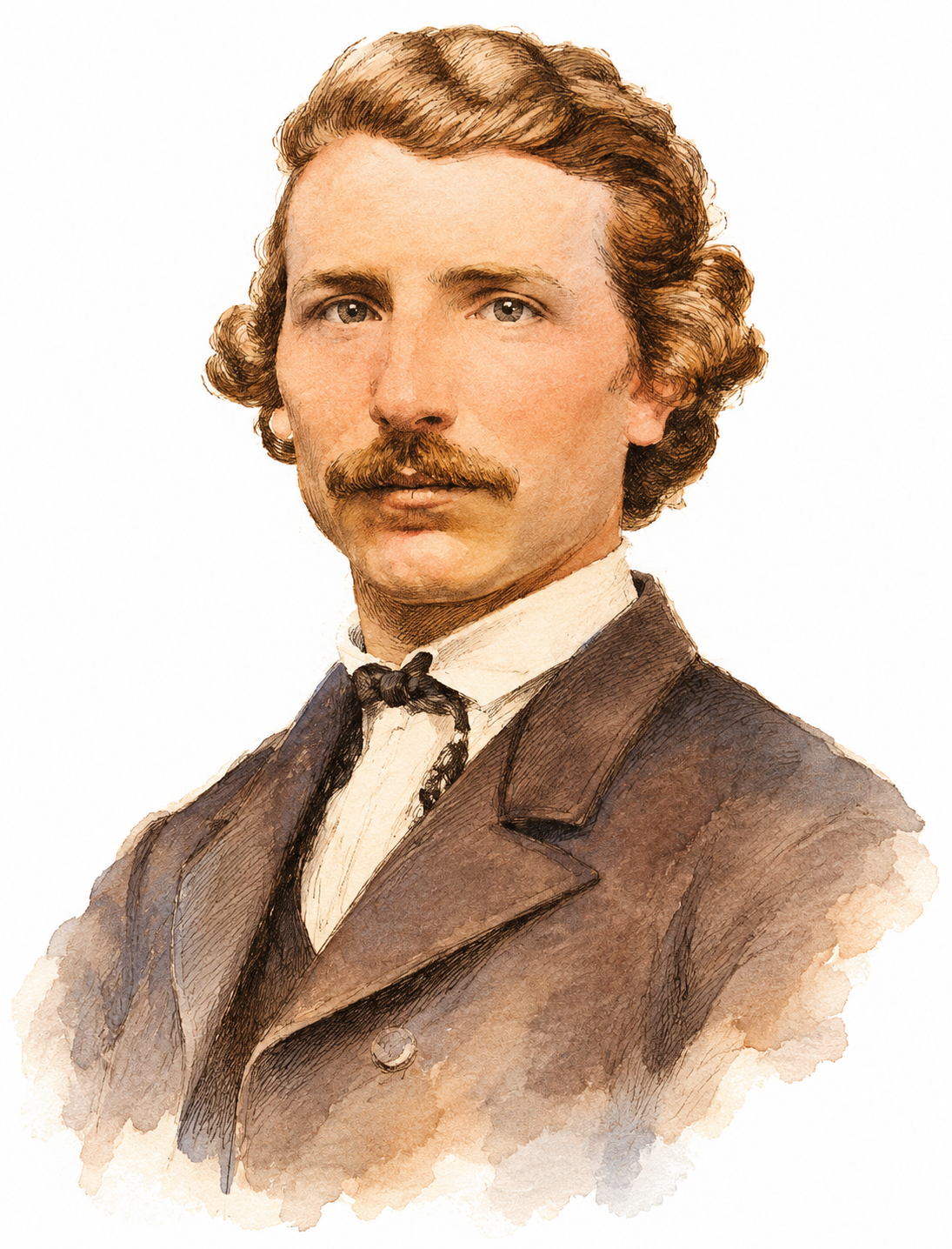
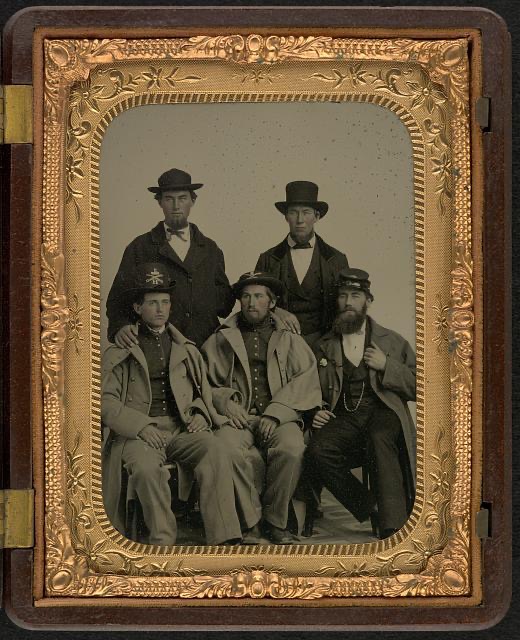
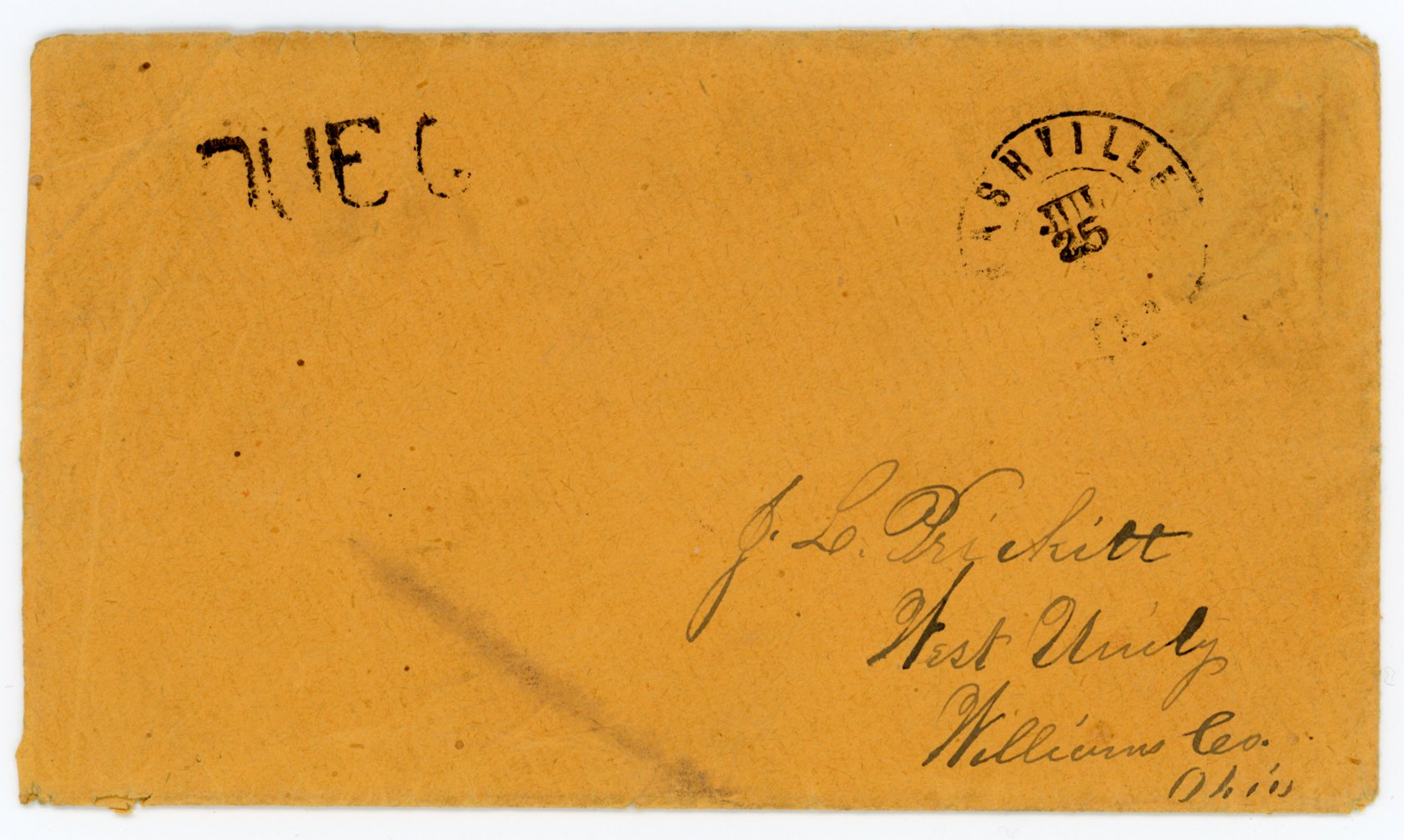
The following letter was written by Daniel Joyce. Prickett (1840-1927) of Co. H, 3rd Ohio Cavalry. This regiment was organized at Camp Worcester in the fall of 1861 and remained there until mid-January 1862 when they were sent to Cincinnati, and then on to Nashville, Tennessee where they were attached to the 6th Division, Army of the Ohio. The regiment also fought in the Army of the Cumberland and in Wilson’s Cavalry Corps. Their engagements included the Siege of Corinth, the Battle of Stones River, the Battle of Chickamauga, the Atlanta Campaign, The Franklin-Nashville Campaign, and Wilson’s Raid through Alabama & Georgia.
Daniel served in the 3rd Ohio Cavalry from 5 October 1861 until 4 August 1865. He entered the service as a sergeant and for most of his time served as the regimental quartermaster. He was briefly taken a prisoner with others of his regiment at Bardstown, Kentucky, in October 1862. Also serving in the same company as a private was Daniel’s younger brother, James Hudson Prickett (1843-1924). Their parents were Japheth Leeds Prickett (1815-1893) and Phebe Sharp Borton (1815-1901) of West Unity, Williams county, Ohio.
[Editor’s Note: This letter was sent to me by Gregory Fried for transcription and publication on Spared & Shared by express consent.]
T R A N S C R I P T I O N
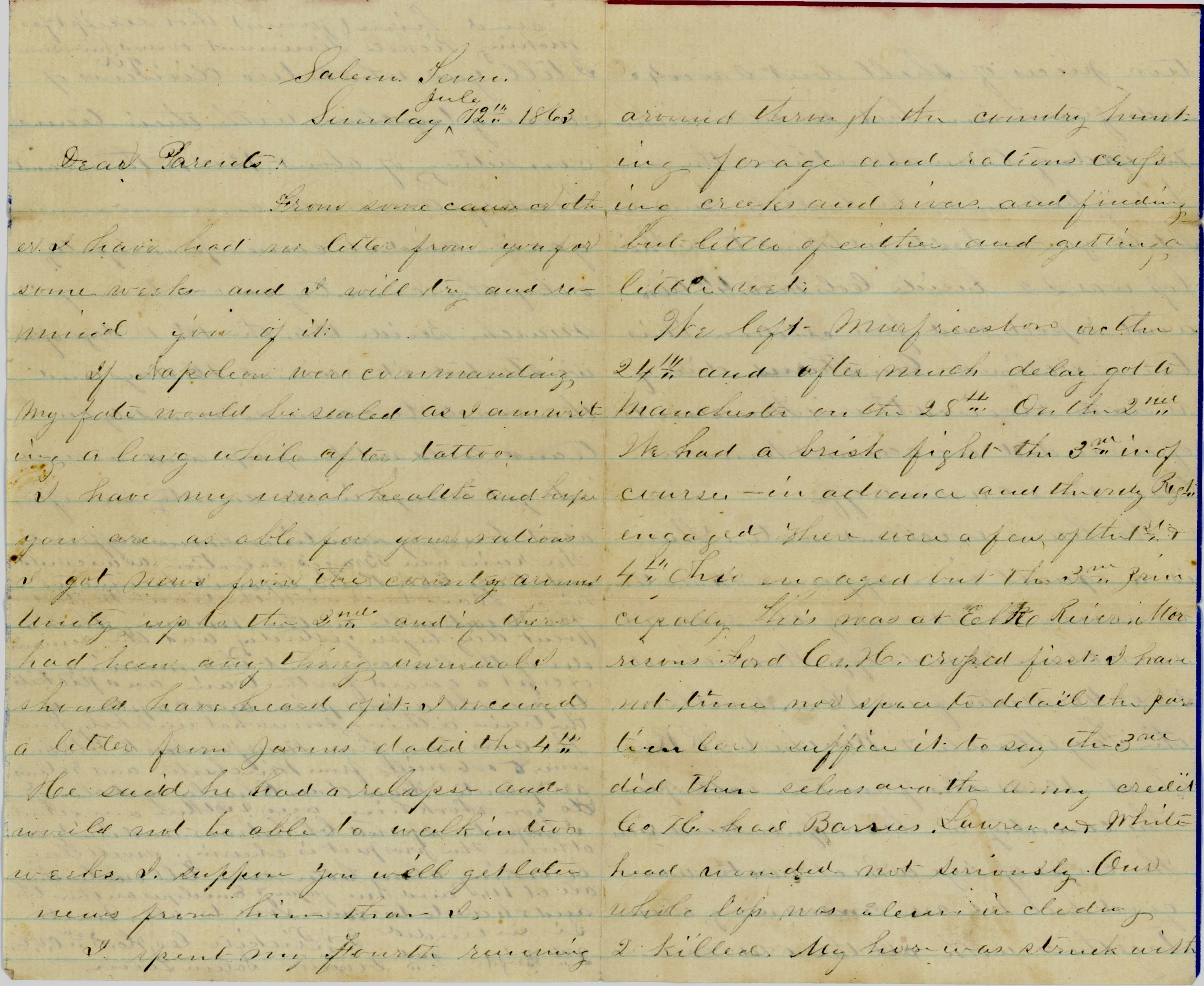
Salem, Tennessee
Sunday, July 12th 1863
Dear Parents,
From some cause or other I have had no letter from you for some weeks and I will try and re mind you of it.
If Napoleon were commanding, my fate would be sealed as I am writing a long while after tattoo. I have my usual health and hope you are as able for your rations. I got news from the county around Unity up to the 2nd and if there had been anything unusual I should have heard of it. I received a letter from [brother] James dated the 4th. He said he had a relapse and would not be able to walk in two weeks. I suppose you will get later news from him than I.
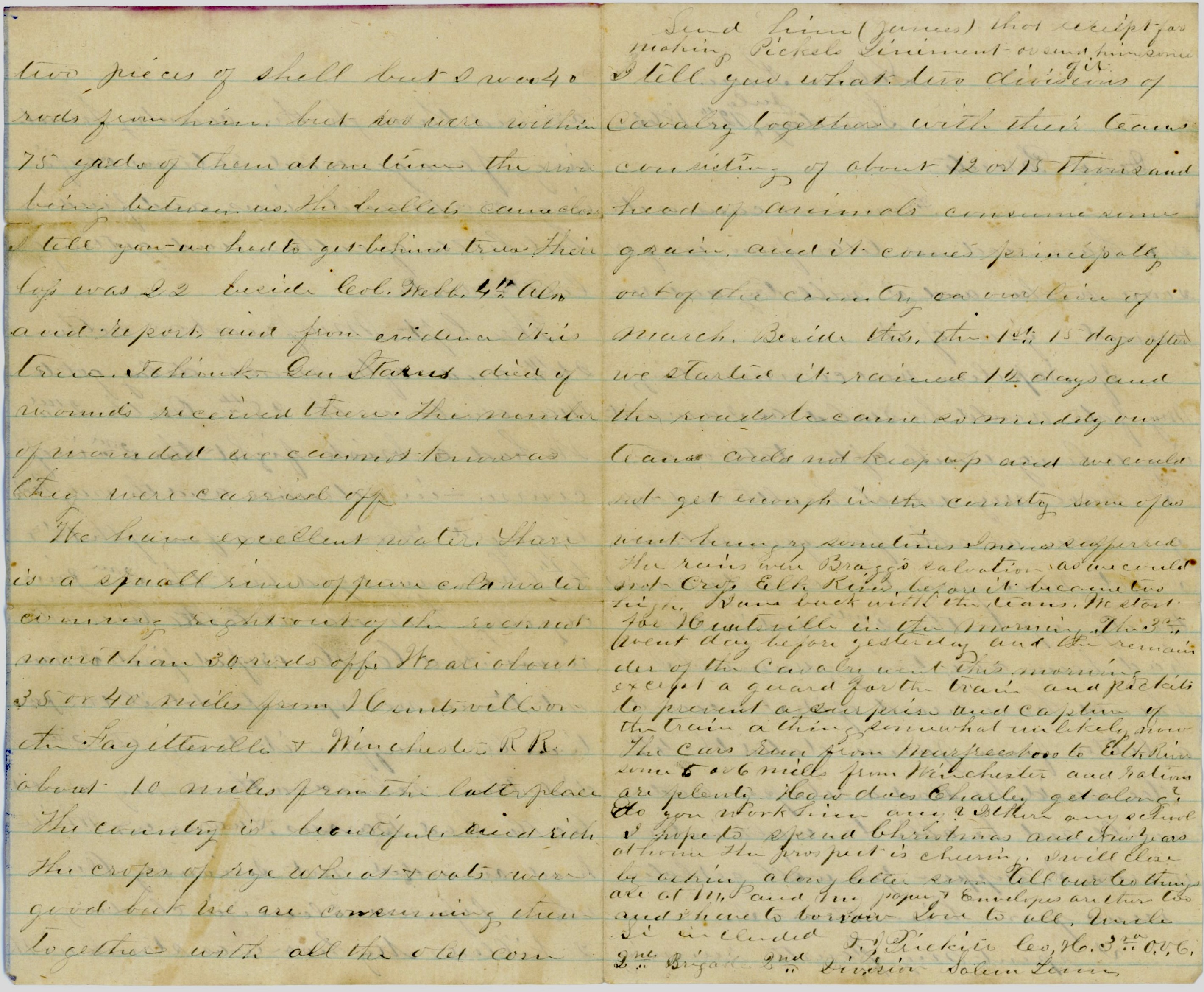
I spent my 4th [of July] running around through the country hunting forage and rations, crossing creeks and rivers, and finding but little of either and getting little rest or sleep. We left Murfreesboro on the 24th and after much delay, got to Manchester on the 25th. On the 2nd we had a brisk fight, the 3rd [Ohio Cavalry] of course in advance and the only regiment engaged. There were a few of the 1st & 4th Ohio engaged, but the 3rd principally. This was at Elk River at Morrison’s Ford. Co. H crossed first. I have not time nor space to detail the particulars—suffice it to say the 3rd did themselves and the army credit. Co. H. had Barnes, Lawrence & Whitehead wounded—not seriously. Our whole loss was eleven including two killed. My horse was struck with two pieces of shell but I was 40 rods from him, but we were within 75 yards of them at one time, the river being between us. The bullets came close, i tell you. We had to get behind trees. Their loss was 22 beside Col. Webb, 4th Alabama and report, and from evidence it is true. I think Gen. Stearns died of wounds received there. The number of wounded we cannot know as they were carried off.
We have excellent water. There is a small river of pure cold water coursing right out of the rock not more than 30 rods off. We are about 35 or 40 miles from Huntsville on the Fayetteville & Winchester Railroad. About 10 miles from the later place. The country is beautiful and rich. The crops of rye wheat & oats were good but we are consuming them together with all the old corn. I tell you what, two divisions of cavalry together with their teams, consisting of about 12 or 15 thousand head of animals, consume some grain, and it comes principally out of the country on our line of march. Beside this, the 1st 15 days after we started, it rained 12 days and the roads became so muddy our teams could not keep up and we could not get enough in the country. Some of us went hungry sometimes [but] I never suffered.
The rain was Bragg’s salvation as we could not cross Elk River before it became too high. I am back with the teams. We start for Huntsville in the morning. The 3rd [Ohio Cavalry] went day before yesterday and the remainder of the cavalry went this morning except a guard for the train and pickets to prevent a surprise and capture of the train—a thing somewhat unlikely now. The cars run from Murfreesboro to Elk River some 5 or 6 miles from Winchester and rations are plenty.
How does Charley get along? Do you work him any? Is there any school? I hope to spend Christmas and New Years at home. The prospect is cheering. I will close by asking a long letter soon. All our company things are at Murfreesboro and my paper & envelopes are there too and I have to borrow. Love to all—Uncle Si included. — D. J. Pickett, Co. H, 3rd O. V. C., 2nd Brigage, 2nd Divsion, Salem, Tennessee.
Send him (James) that receipt for making Peanuts Liniment.
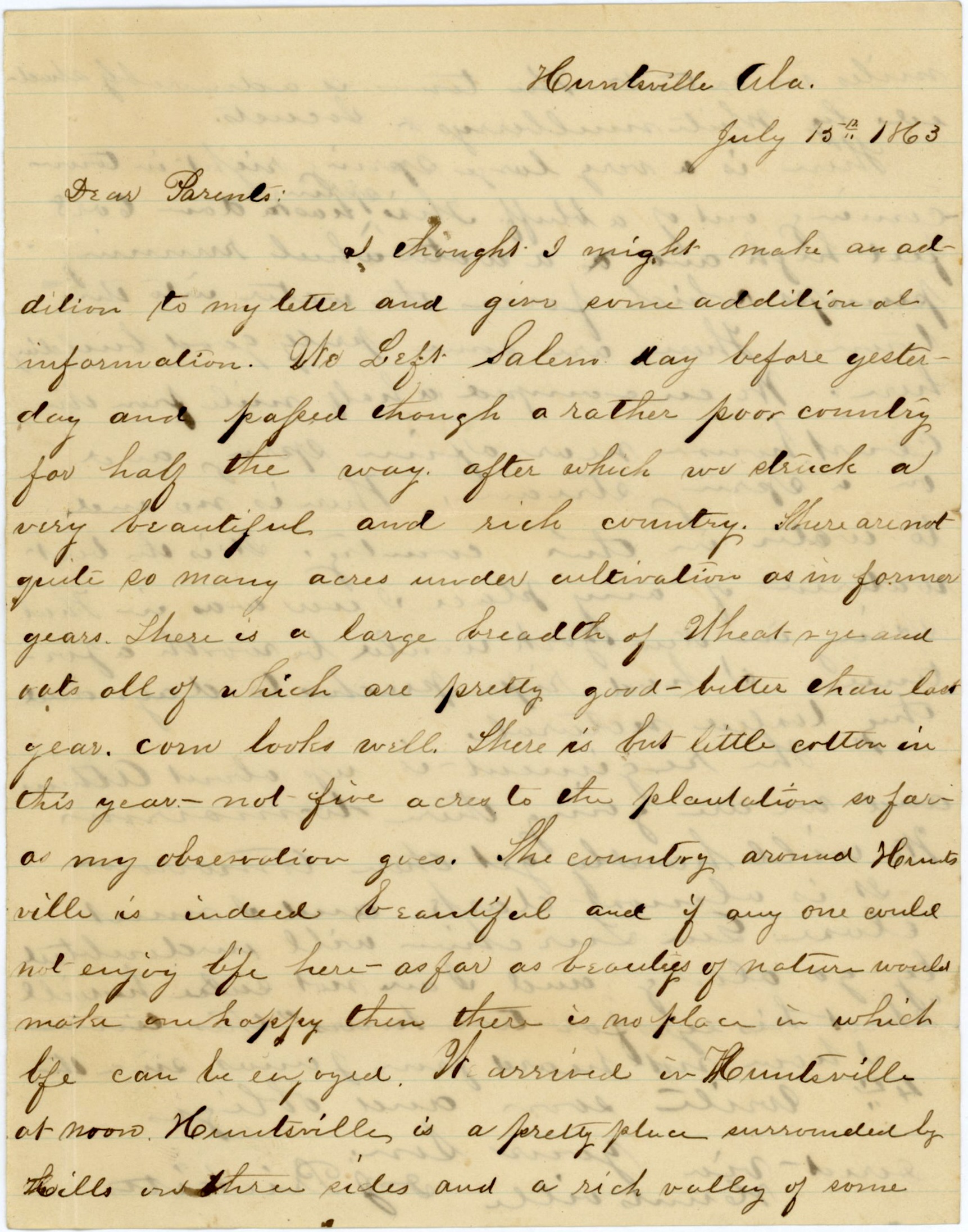
Huntsville Alabama
July 15th 1863
Dear Parents,
I thought I might make an addition to my letter and give some additional information. We Left Salem day before yesterday and passed through a rather poor country for half the way, after which we struck a very beautiful and rich country. There are not quite so many acres under cultivation as in former years. There is a large breadth of wheat, rye, and oats, all of which are pretty good—better than last year. Corn looks well. There is but little cotton in this year—not five acres to the plantation as far as my observation goes. The country around Huntsville is indeed beautiful and if any one could not enjoy life here—as far as beauties of nature would make one happy—then there is no place in which life can be enjoyed.
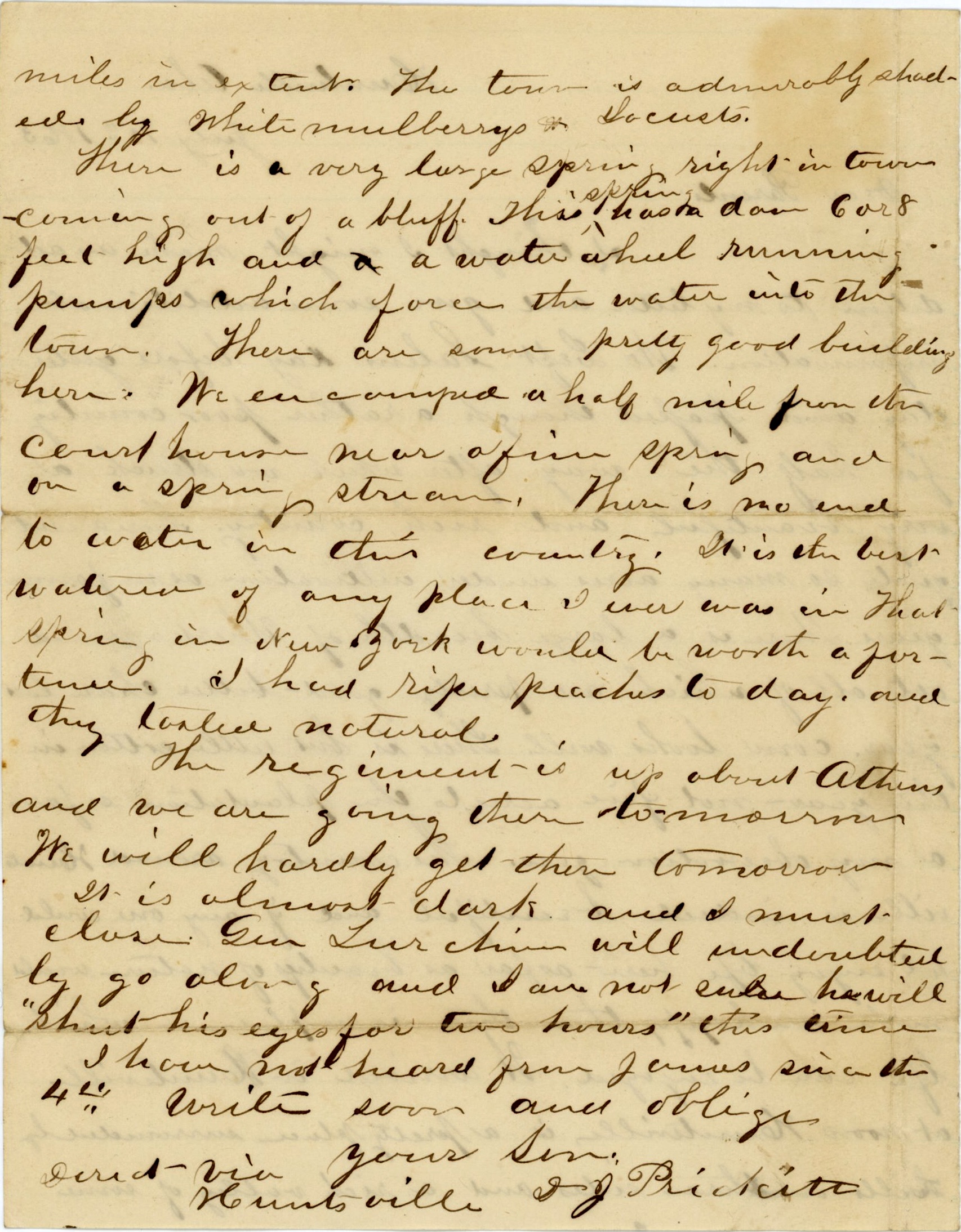
We arrived in Huntsville at noon. Huntsville is a pretty place surrounded by hills on three sides and a rich valley of some miles in extent. The town is admirably shaded by White Mulberrys & Locusts. There is a very large spring right in town coming out of a bluff. This spring has a dam 6 or 8 feet high and a a water wheel running pumps which force the water into the town. There are some pretty good buildings here.
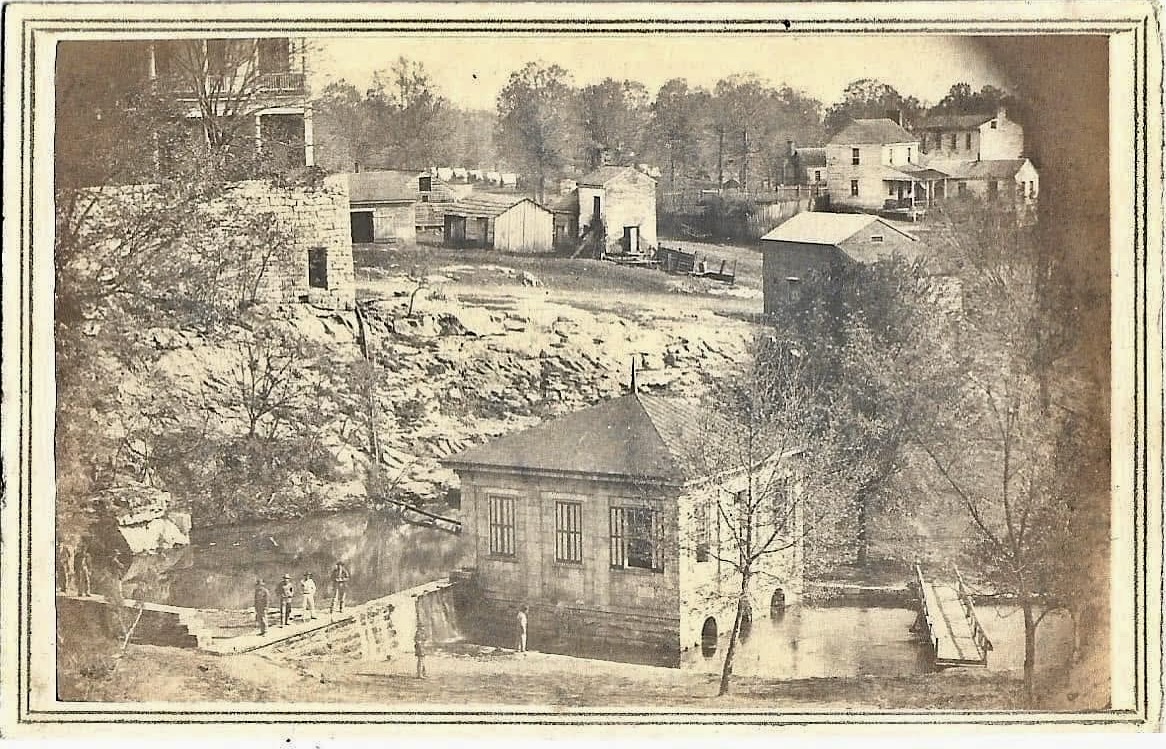
We encamped a half mile from the court house near a fine spring and on a spring stream. There is no end to water in this country. It is the best watered of any place I ever was in. That spring in New York would be worth a fortune. I had ripe peaches today and they looked natural.
The regiment is up about Athens and we are going there tomorrow. We will hardly get there tomorrow. It is almost dark and I must close. Gen. Turchin will undoubtedly go along and I am not sure he will “shut his eyes for two hours” this time. 1
I have not heard from [brother] James since the 4th. Write soon and oblige your son, — D. J. Prickitt
Direct via Huntsville.
1 This refers directly to the widely publicized May 1862 “Sack of Athens” by the 8th Brigade under Russian-born Brigadier General John Basil Turchin. Turchin reportedly told his men, “I shut my eyes for two hours,” implicitly authorizing them to pillage the hostile Alabama town. Prickitt uses the phrase in quotation marks, proving that this euphemism for sanctioned plundering was deeply embedded in the cultural lexicon of the Union army by 1863.