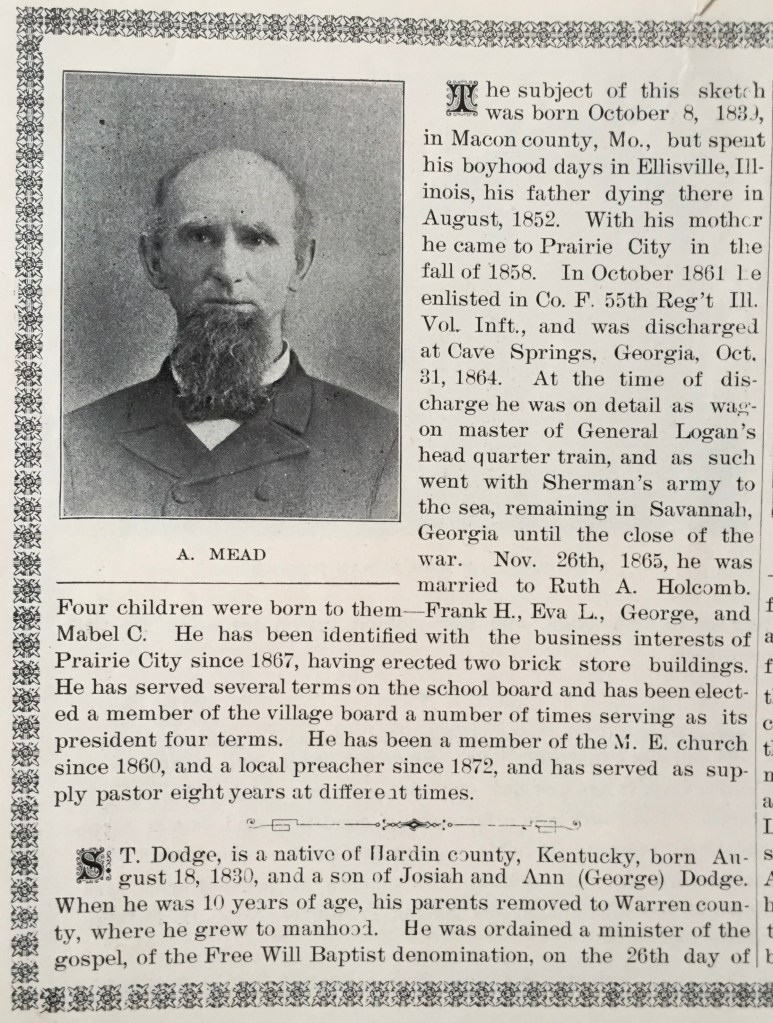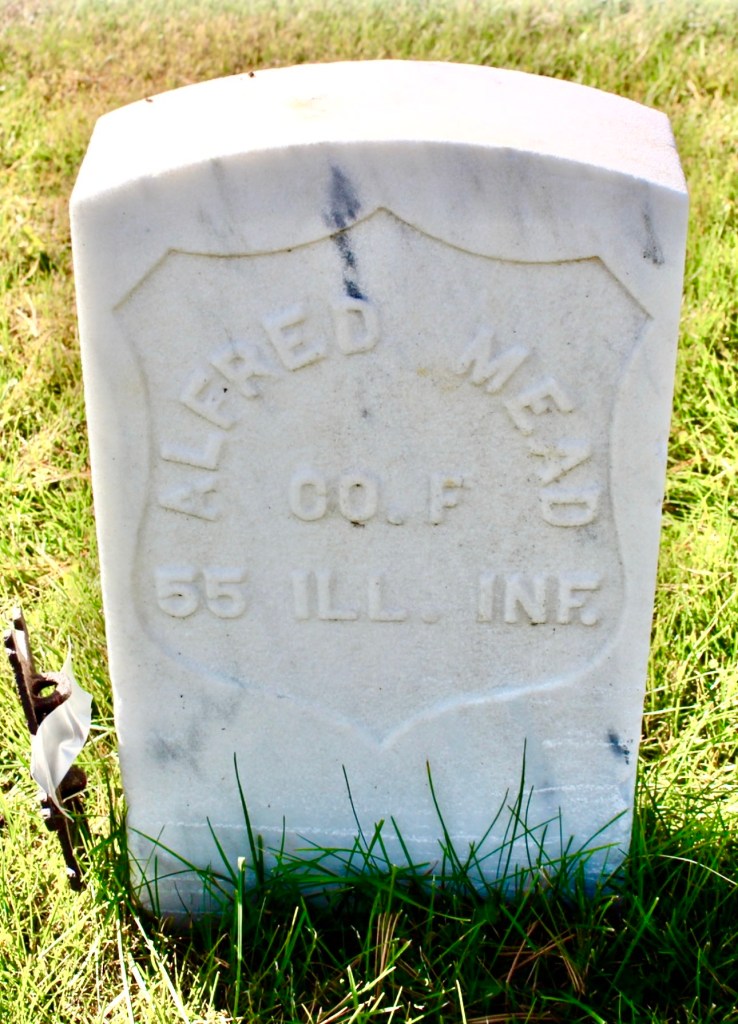
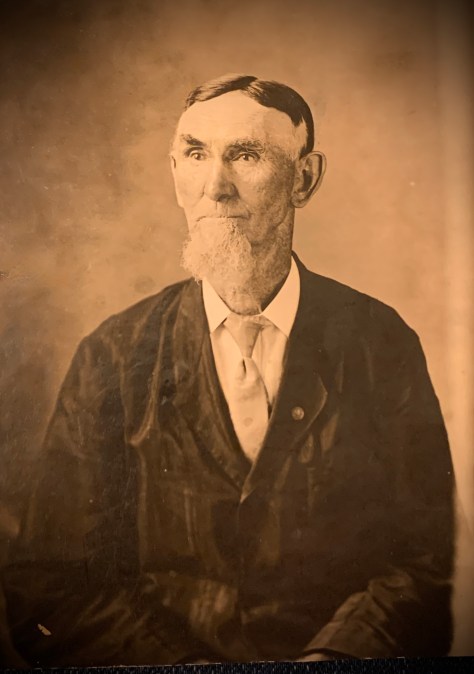
Alfred Mead came with his parents to McDonough county, Illinois, in 1841, and settled in Walnut Grove township. He was born October 8, 1839, in Macon City, Missouri, and is a son of Nathan and Nancy (Hand) Mead, natives of New York state. Alfred Mead was married November 26, 1865, to Ruth Holcomb, of Plymouth. Four children have blessed this union—Frank, Eva, George and Mabel.
“Mr. Mead is an ordained minister of the Methodist Episcopal church and was on the circuit two years. He is now, church trustee and Sabbath school superintendent. He is prominent also in county and town affairs, being at present, one of the board of county supervisors, and has served upon the city board seven years, being chairman one year, and seven years school director. He has always been in sympathy with the republican party and is an earnest advocate of the cause of temperance, favoring prohibition. He enlisted during the war of the rebellion, in October, 1861, in Company F, of the 55th Illinois infantry, and served three years. He acted as wagon-master of the 15th army corps, and participated in the battles of Shiloh, Russell House, siege of Corinth and Colliersville. He is the owner of considerable real estate in Prairie City. Has been in business the most of the time since 1867, and is now handling a general stock of merchandise.” [Source: McDonough County GenWeb]
These letters were made available to me for transcription and publication on Spared & Shared by express consent by Laura Mead Varner who sent them to me with the following statement, “Our family had letters from my g-g-grandfather Alfred Mead, 55th Illinois infantry. I have photos of the letters but the originals where donated to an Abraham Lincoln museum in Springfield, IL…- Laurie
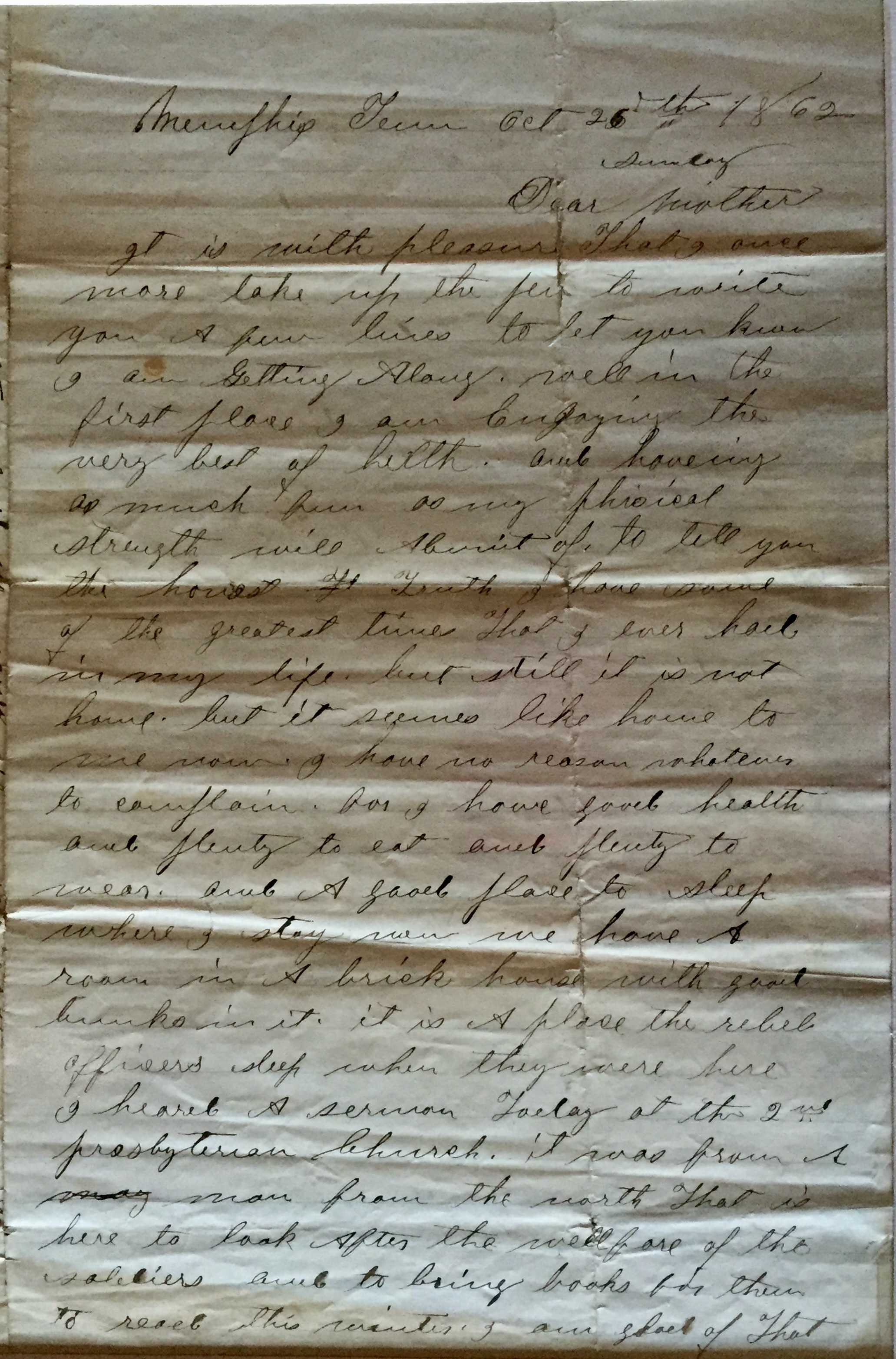
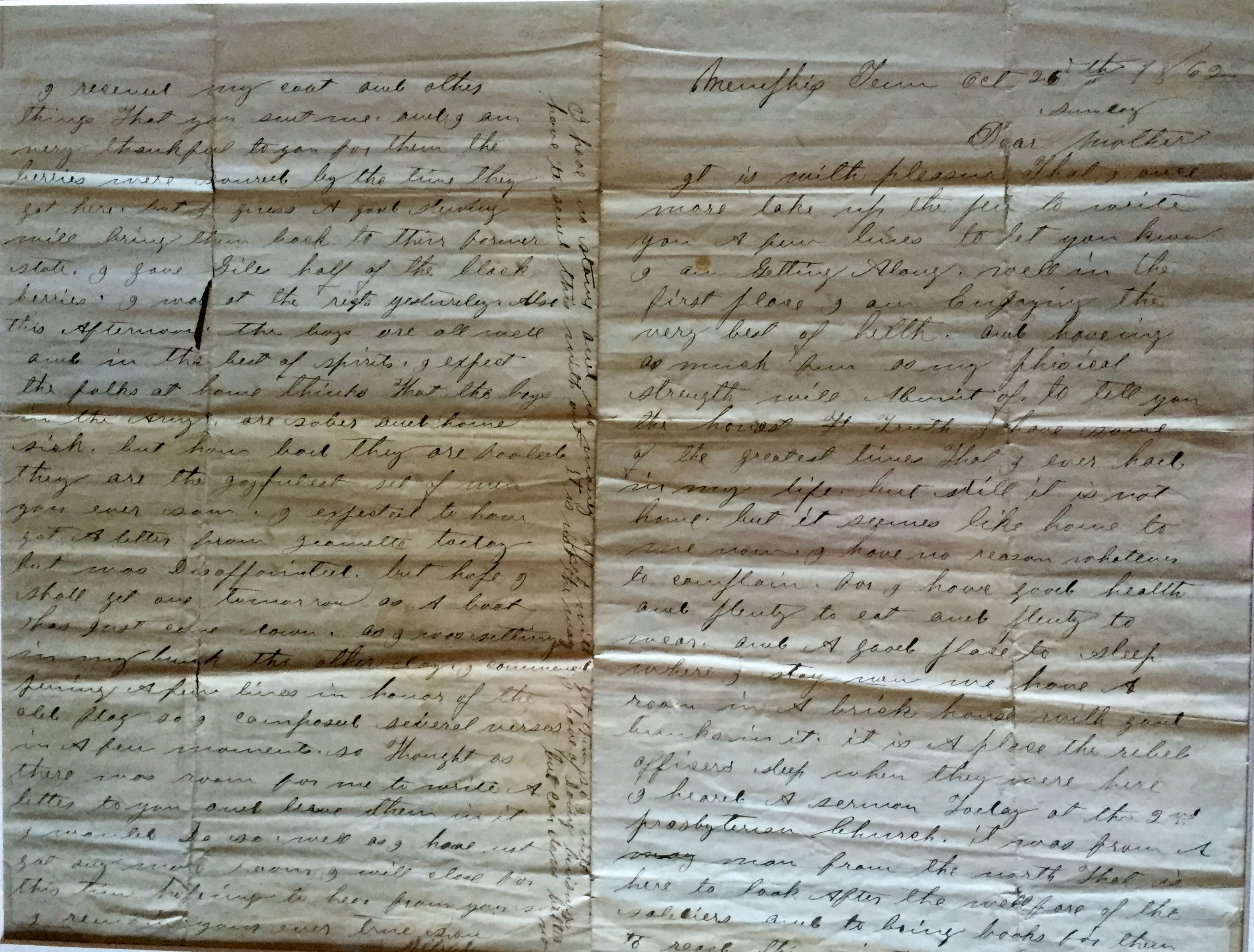
Letter 1
Murfreesboro, Tennessee
October 26th 1862
Dear Mother,
It is with pleasure that once more I take up the pen to write you a few lines to let you know I am getting along well. In the first place, I am enjoying the very best of health and having as much fun as my physical strength will admit of. To tell you the honest truth, I have some of the greatest times that I ever had in my life but still it is not home. But it seems like home to me now. I have no reason whatever to complain for I have good health and plenty to eat and plenty to wear and a good place to sleep where I stay now. We have a room in a brick house with good bunks in it. It is a place the rebel officers slept in when they were here.
I heard a sermon today at the 2nd Presbyterian Church. It was from a man from the North that is here to look after the welfare of the soldiers and to bring books for them to read this winter. I am glad of that.
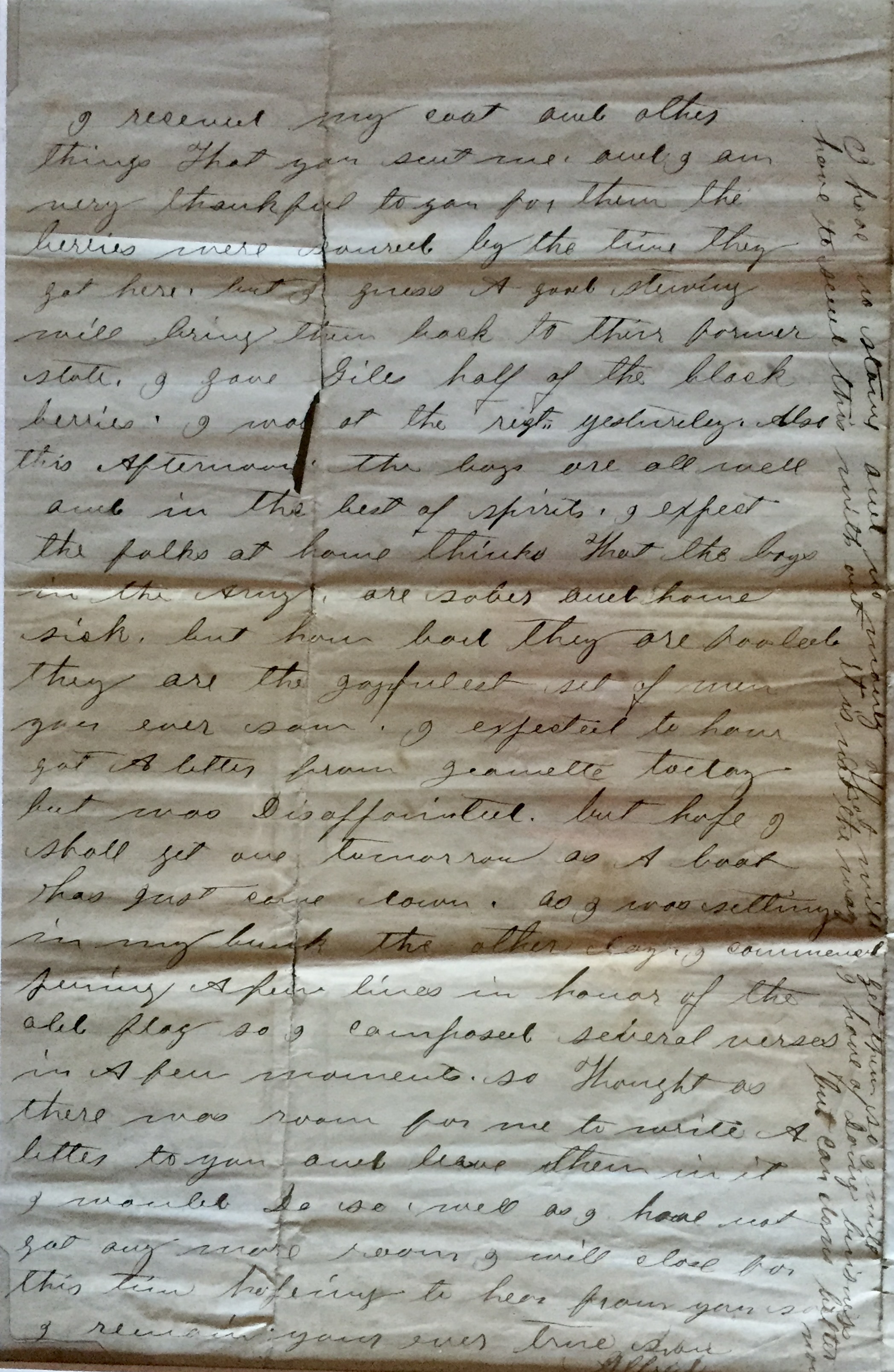
I received my coat and other things that you sent me and I am very thankful to you for them. The berries were soured by the time they got here but I guess a good stirring will bring them back to their former state. I gave Giles half of the blackberries.
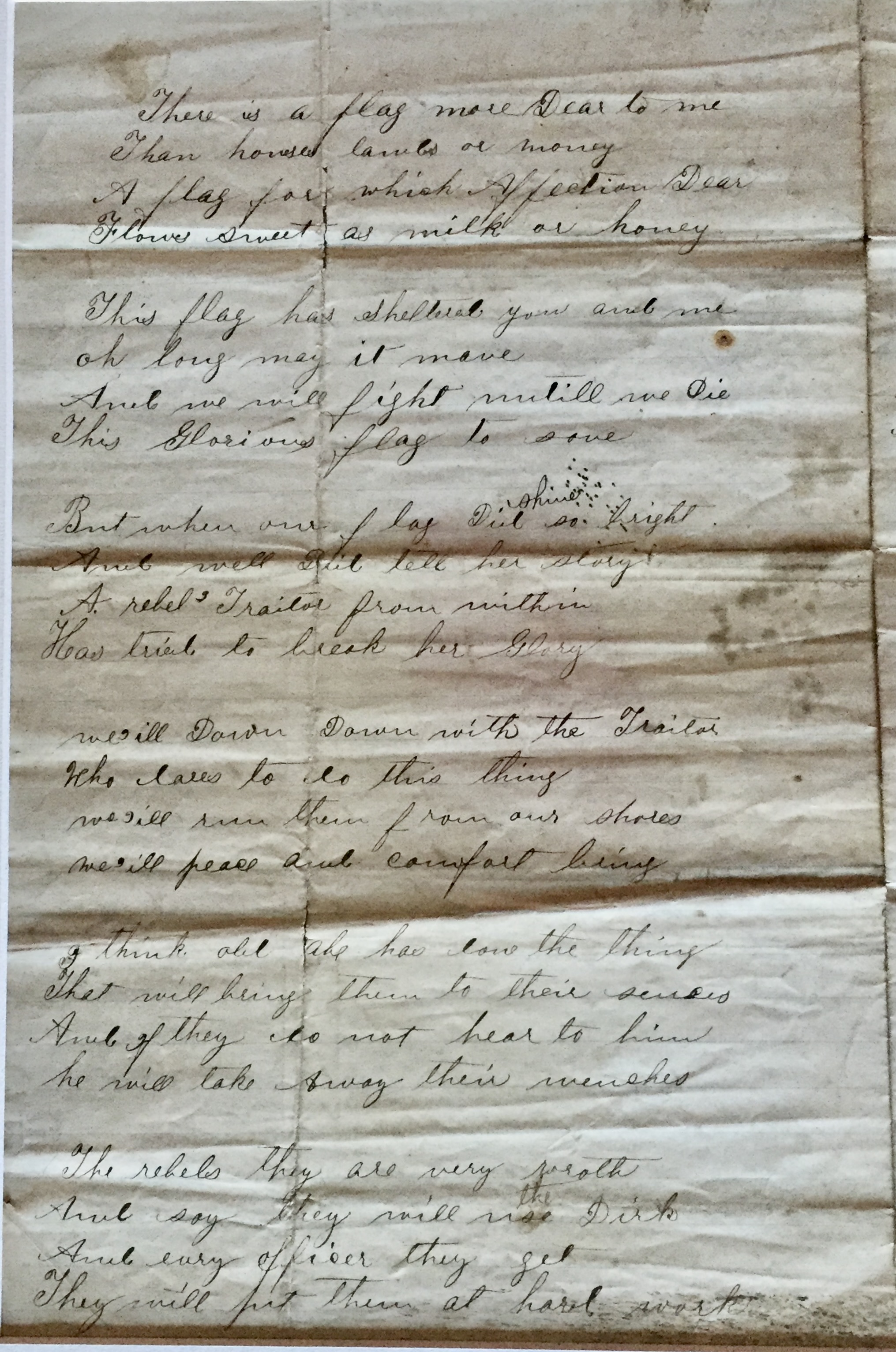
I was at the regiment yesterday. Also this afternoon. The boys are all well and in the best of spirits. I expect the folks at home thinks that the boys in the Army are sober and homesick, but how bad they are fooled. They are the gayfullest set of men you ever saw. I expected to have got a letter from Jeanette today but was disappointed. But hope I shall get one tomorrow as a boat has just come down. As I was sitting in my bunk the other day, I commenced penning a few lines in honor of the old flag so I composed several verses in a few moments. So thought as there was room for me to write a letter to you and leave them in it, I would do so.
Well, as I have not got anymore room, I will close for this time hoping to hear from you soon. I remain your ever true son, — Alfred
I have no stamp and no money that will get them so I will have to send this without. It is not the way I have of doing business but can so no better now.
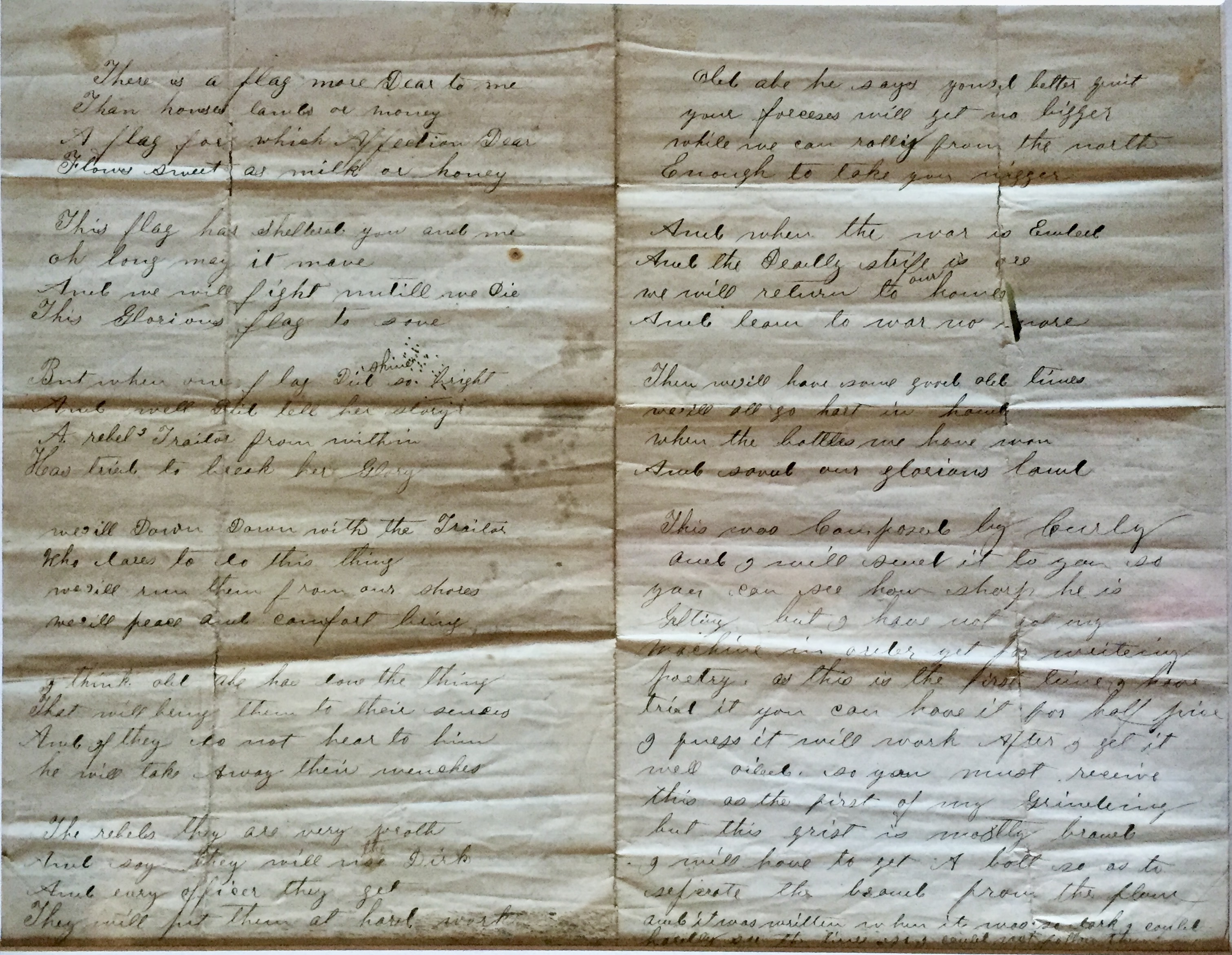
There is a flag more dear to me
Than houses, land, or money
A flag for which affliction dear
Flow sweet as milk or honey
This flag has sheltered you and me
Oh long may it wave
And we will fight until we die
This glorious flag to save
But when our flag did shine so bright
And we’ll but tell her story
A rebel traitor from within
Has tried to break her glory.
We’ll down, down with the traitor
Who dares to do this thing
We’ll run them from our shores
We’ll peace and comfort bring.
I think Old Abe has done the thing
That will bring them to their senses
And if they do not head to him
He will take away their wenches.
The rebels they are very wroth
And say they will use dirk
And every officer they get
They will put them at hard work.
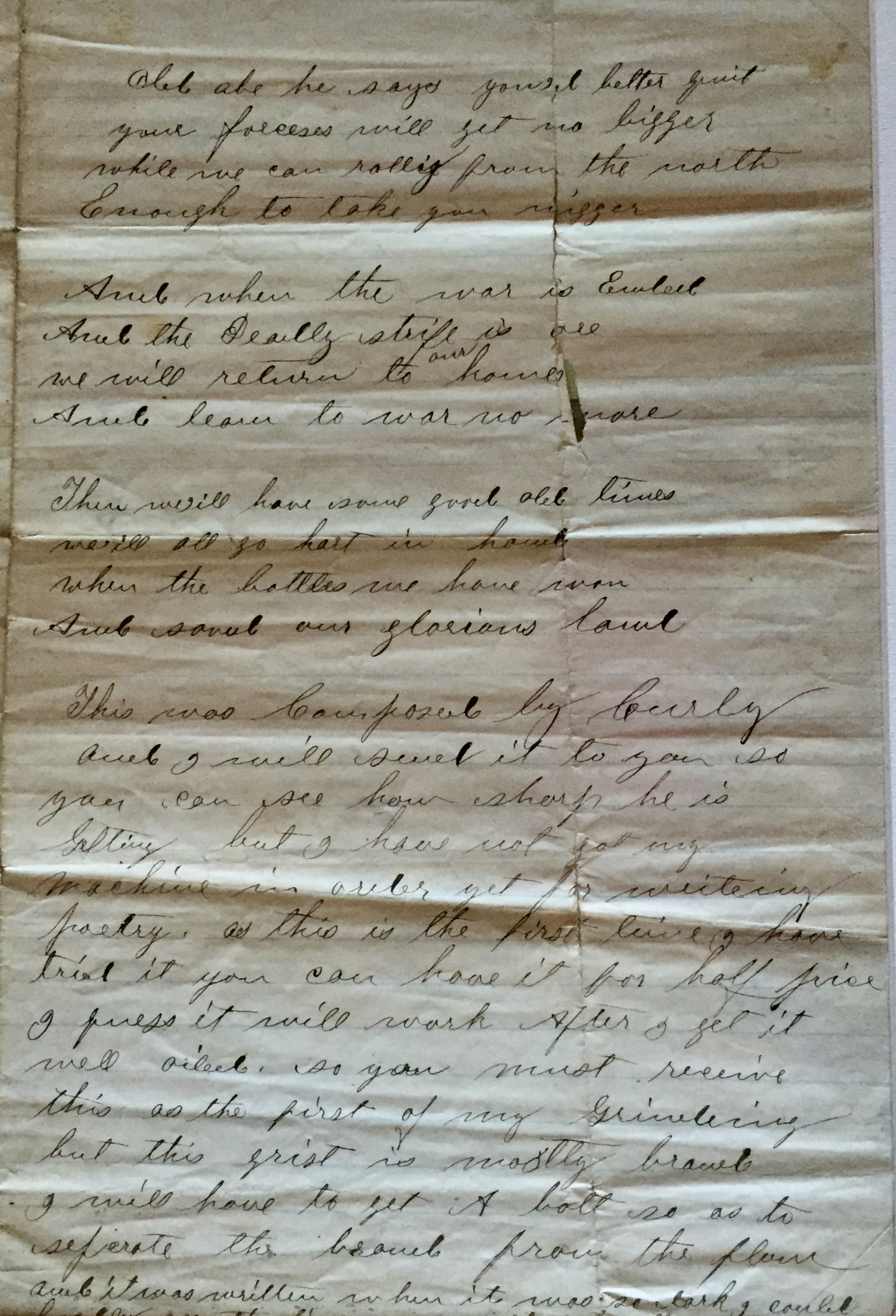
Old Abe he says you’d better quit
Your forces will get no bigger
While we can rally from the North
Enough to take your nigger.
And when the war is ended
And the deadly strife is o’er
We will return to our homes
And leave to war no more.
Then we’ll have some good old times
we’ll all go heart in hand
When the battles we have won
And saved our glorious land.
This was composed by Curly and I will send it to you so you can see how sharp he is getting. But I have not got my machine in order yet for writing poetry. As this is the first I have tried it, you can have it for half price. I guess it will work after I get it well oiled. So you must receive this as the first of my grindering but this grist is mostly brand. I will have to get a bolt so as to separate the brand from the flour. And it was written when it was so dark I could hardly see the lines and could not follow them.
Letter 2
Huntsville, Alabama
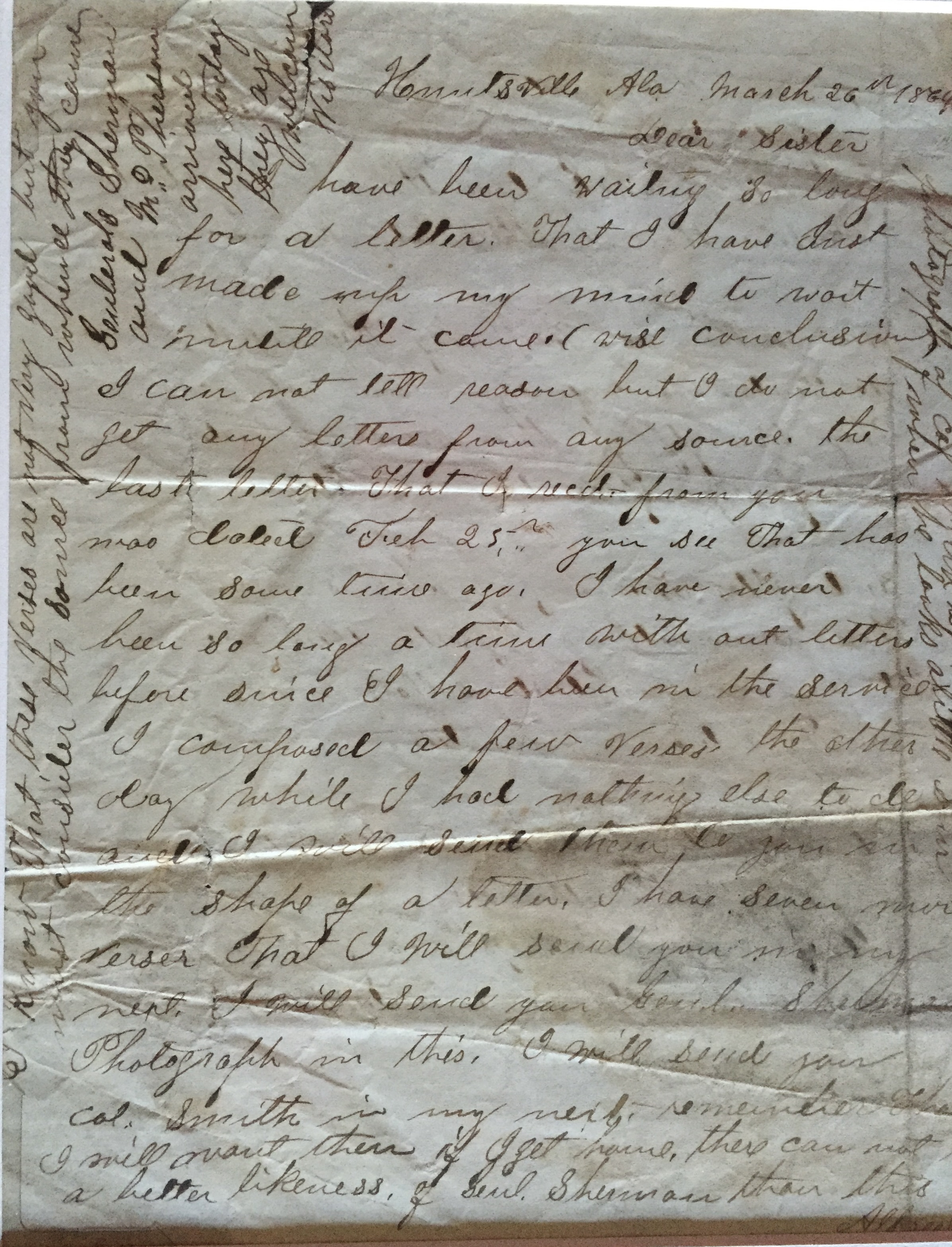
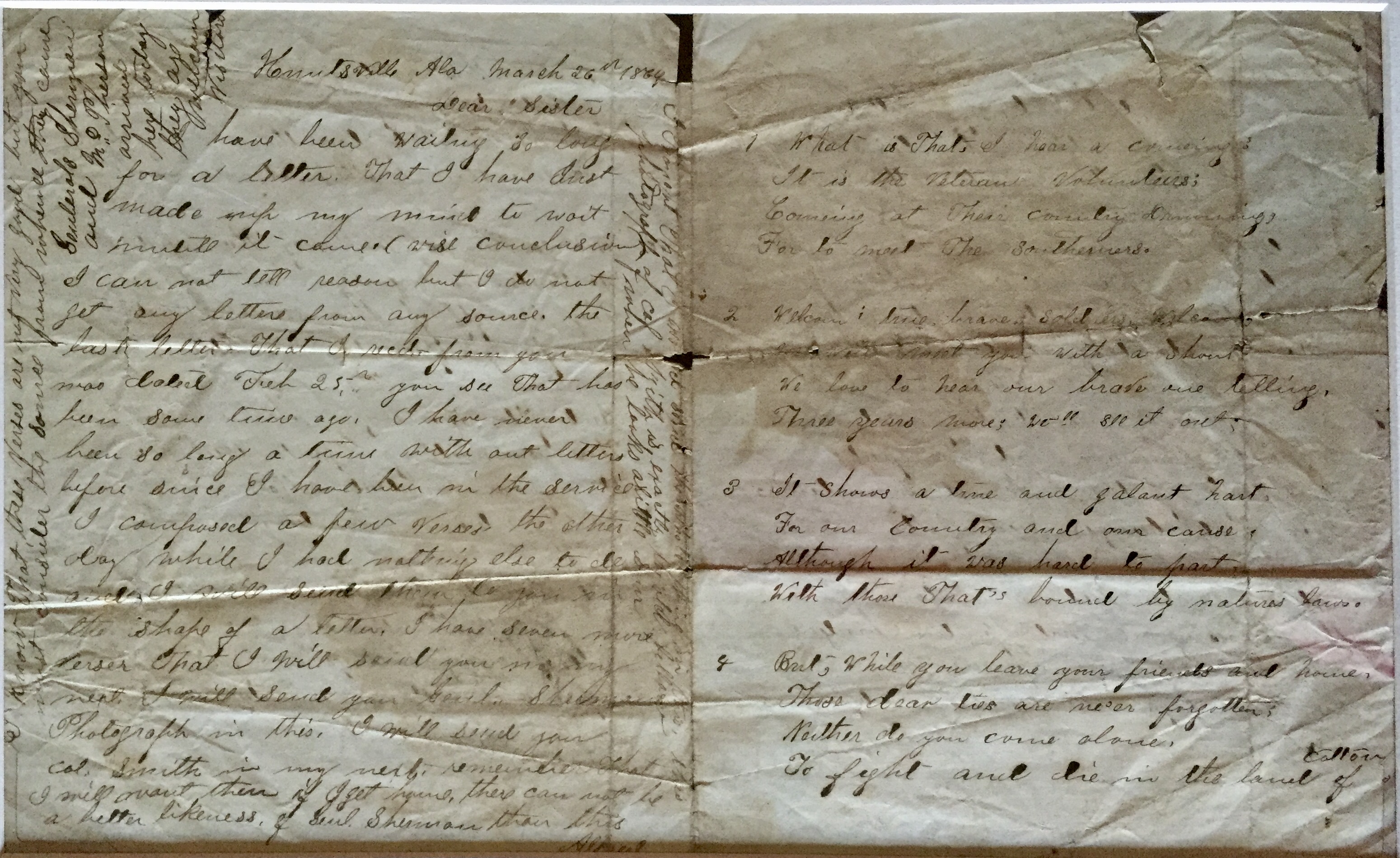
March 26th 1864
Dear Sister,
I have been waiting so long for a letter that I have just made up my mind to wait until it came (wise conclusion). I cannot tell reason but I do not get any letters from any source. The last letter that I received from you was dated February 25th. You see that has been some time ago. I have never been so long a time without letters before since I have been in the service.
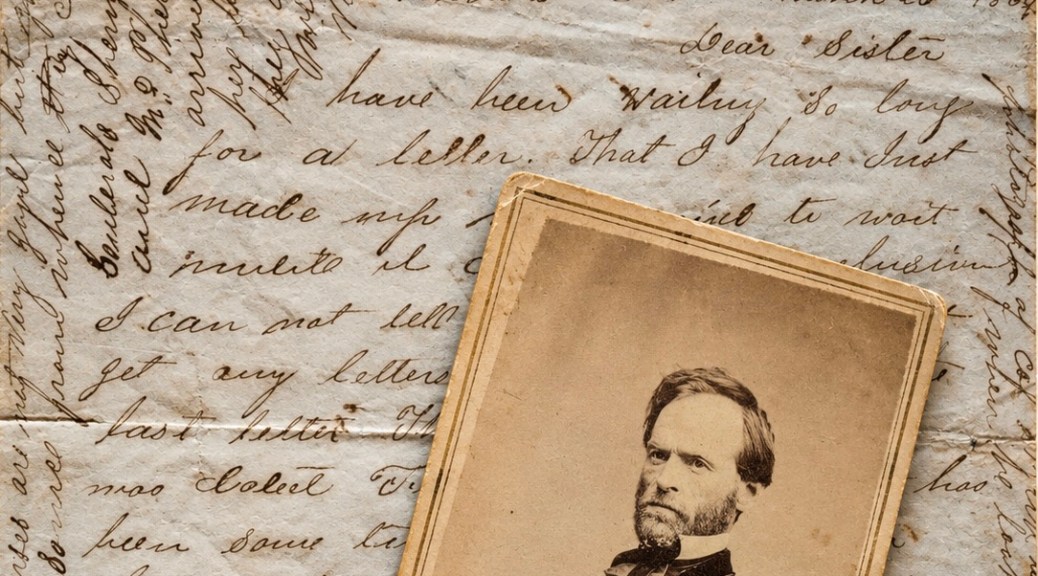
I composed a few verses the other day while I had nothing else to do and I will send them to you in the shape of a letter. I have seven more verses that I will send you in my next. I will send you Gen. Herman’s photograph in this. I will send you Col. Smith in my next. Remember that I will want them if I get home. There cannot be a better likeness of Gen. Sherman than this. — Alfred
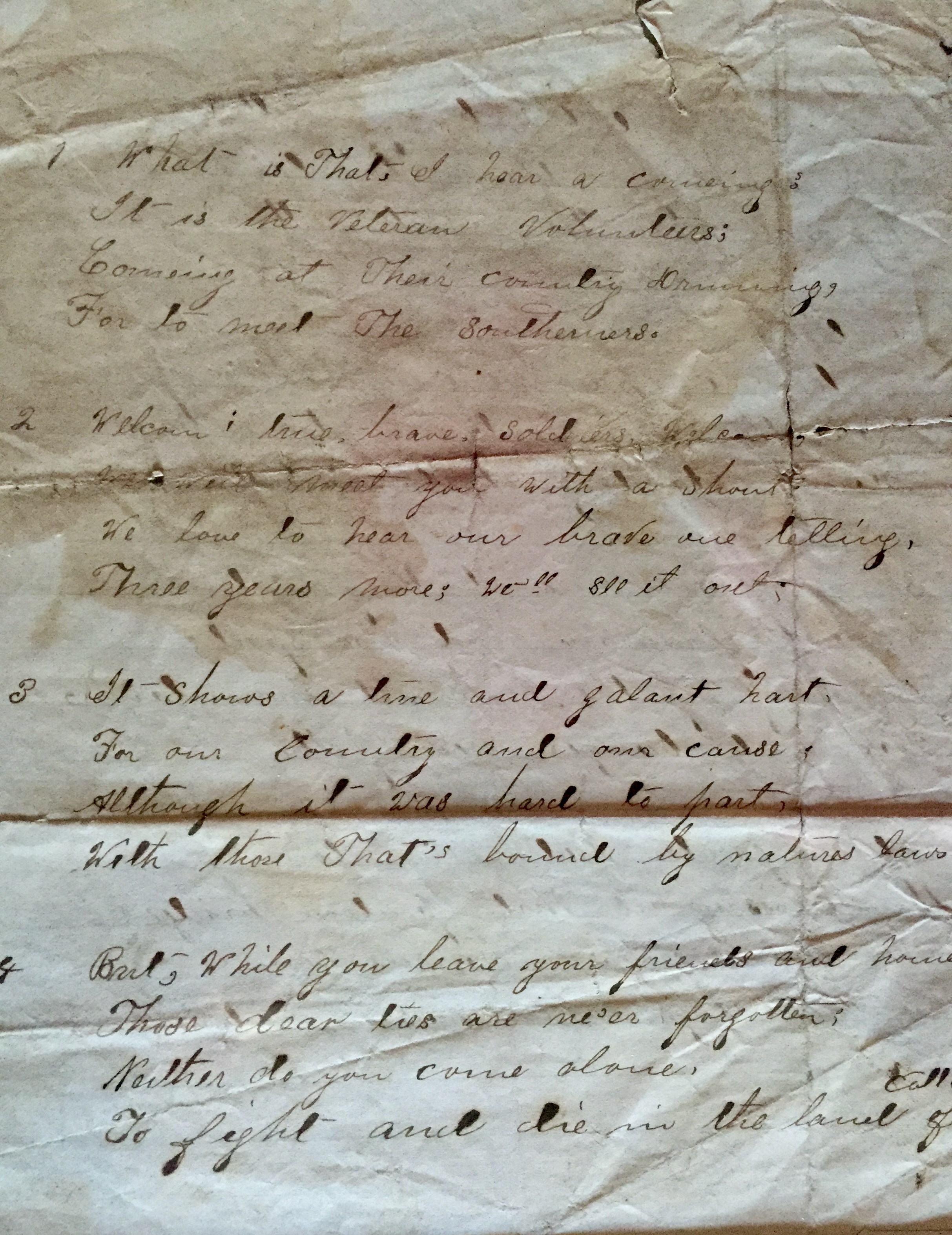
The Veteran Volunteers
What is that I hear a coming
It is the Veteran Volunteers;
Coming at their country’s drumming
For to meet the Southerners.
Welcome true hearted soldiers, welcome
We will greet you with a shout;
We love to hear your brave one telling
Three years more; we’ll see it out.
It shows a true and gallant heart,
For our country and our cause:
Although tough it was hard to part,
With those that’s bound by nature’s laws.
But while you leave your friends and home,
Those dear ties are ne’er forgotten;
Neither do you come alone,
To fight and die in the land of cotton.
Know that these verses are not very good but you must consider the source from whence they came. Generals Sherman and McPherson arrived here today. They are welcome visitors.
Letter 3
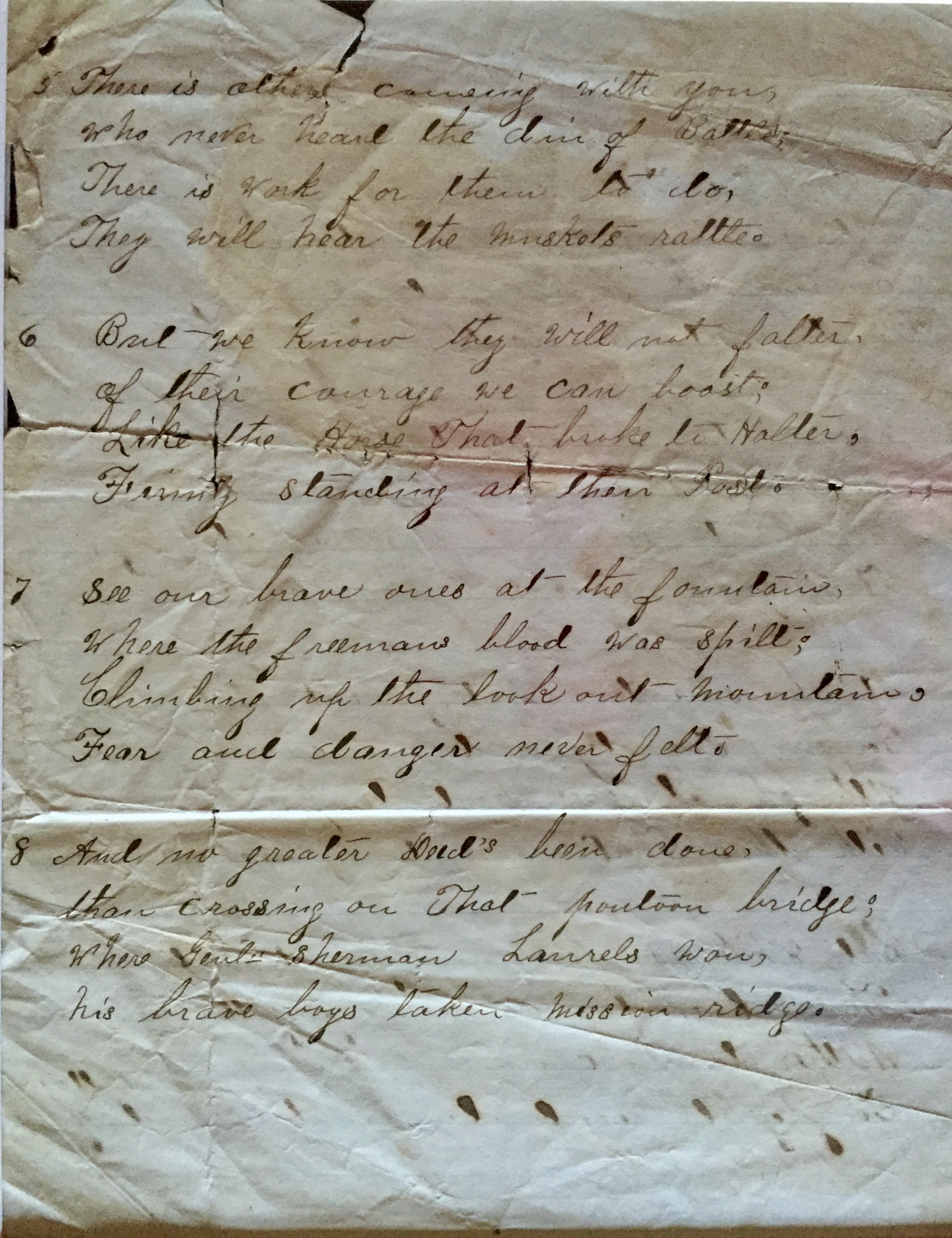
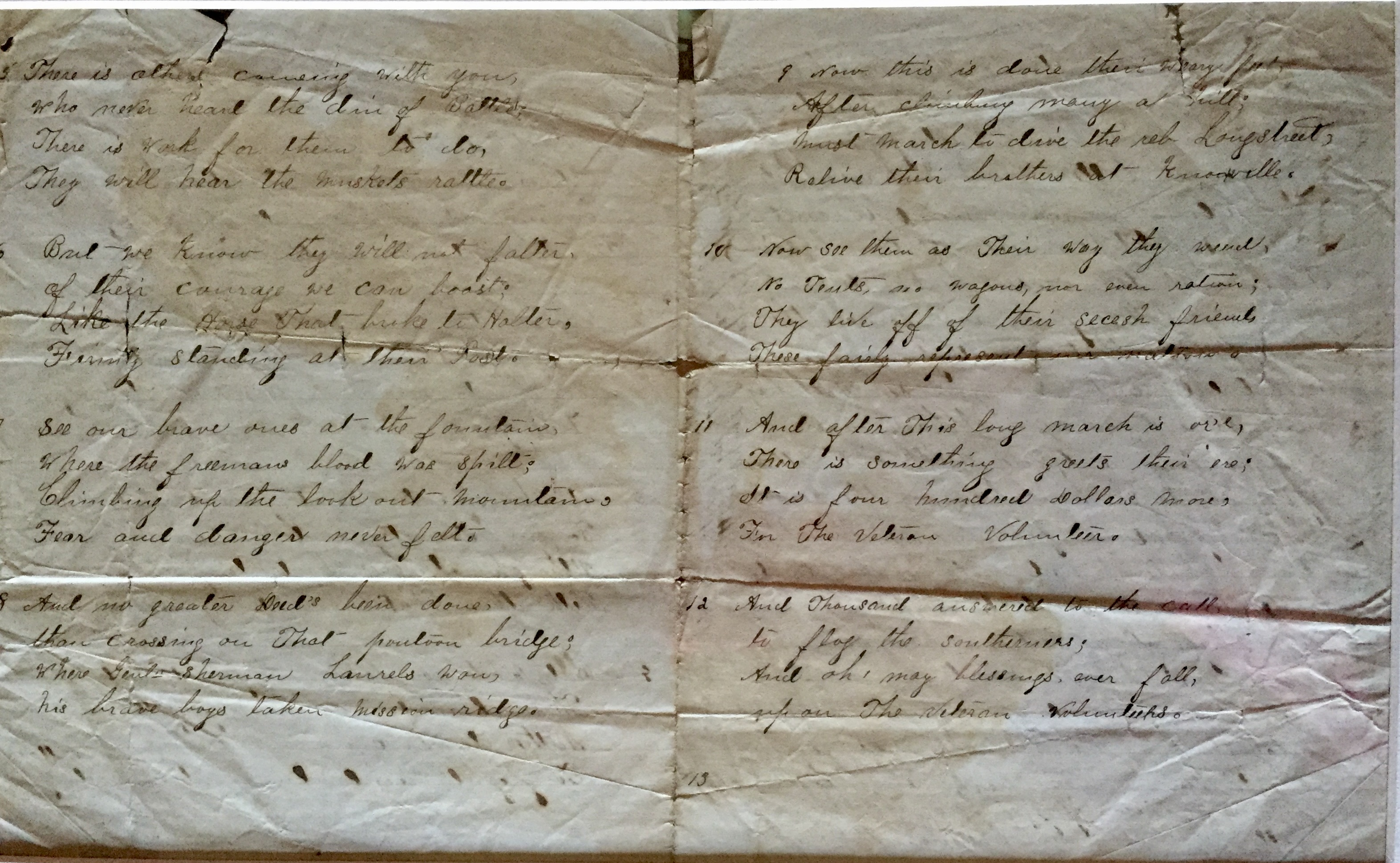
There is others coming with you,
Who never heard the din of battle;
There is work for them to do,
They will hear the muskets rattle.
But we know they will not falter,
of their courage we can boast;
Like the horse that broke to halter,
Firmly standing at their post.
See our brave ones at the fountains,
Where the freeman’s blood was spilt;
Climbing up the Lookout Mountain,
Fear and danger never felt.
And no greater deeds been done
Than crossing on that pontoon bridge;
Where General Sherman laurels won,
His brave boys taken Mission Ridge.
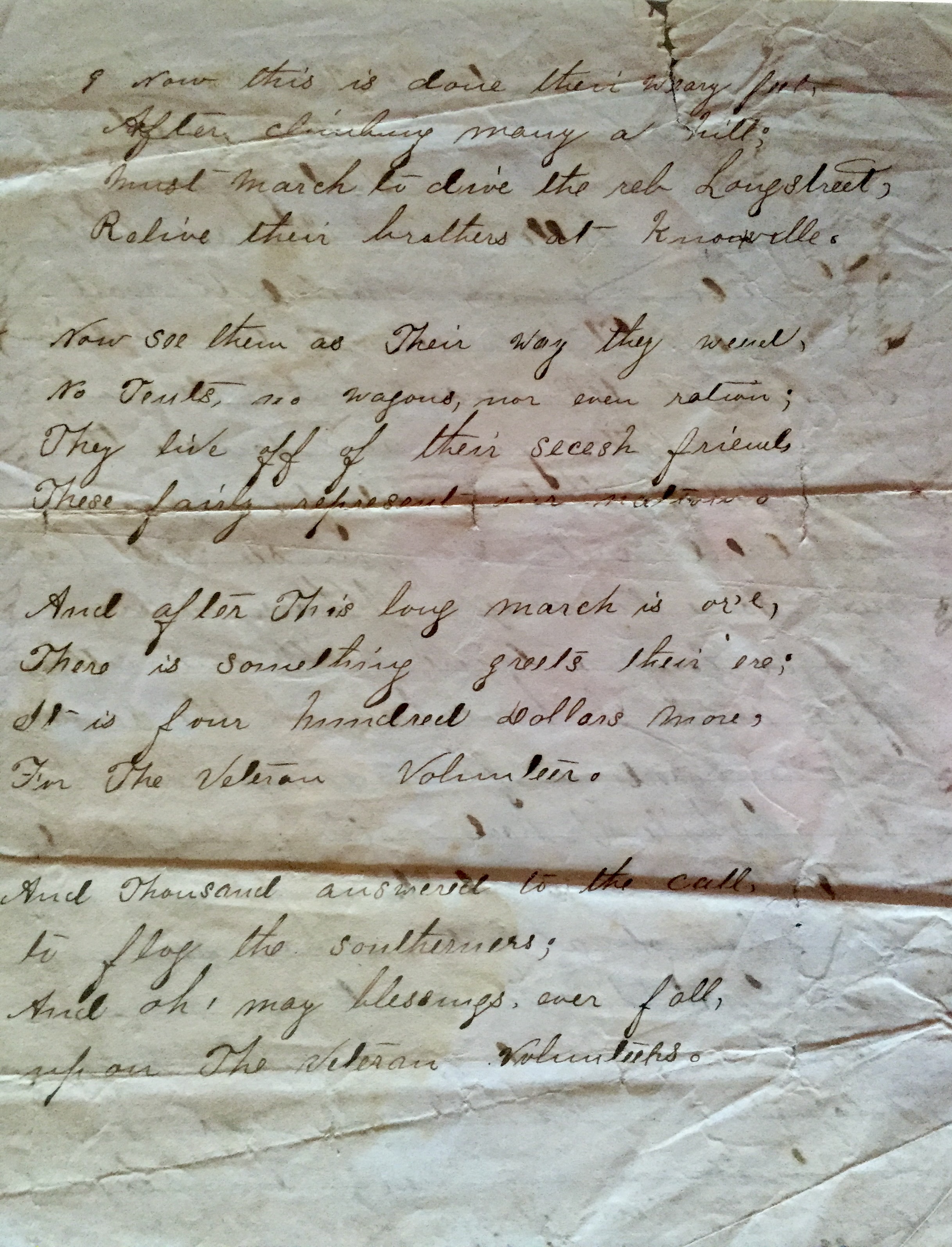
Now this is done their weary feet
After climbing many a hill;
Must march to drive the reb Longstreet,
Relieve their brothers at Knoxville.
Now see them as their way the wend,
No tents, no wagons, nor even ration;
They live off of their secesh friends,
These fairly represent our Nation.
And after this long march is o’er.
There is something greets their ear;
It is four hundred dollars more,
For the Veteran Volunteer.
And thousand answered to the call,
to flog the Southerners;
And oh! may blessings ever fall,
Upon the Veteran Volunteers.