The following letter was written by a Union soldier named “George” but he didn’t give his last name and there is no unit affiliation listed nor an envelope to help us with his identification. He mentions that “The Concord Boys are all well,” however, so this gives us a pretty good lead. Since the letter was datelined from Union Mills, Virginia, in May 1863, my hunch is that George was a member of the 15th Virginia Infantry; many of its members were recruited from Concord, Vermont, and that regiment was encamped at Union Mills at that time, performing picket duty along the Orange & Alexandria Railroad. George enlisted on August 28, 1862 and mustered in on October 22, 1862. He fought at Gettysburg and chased after Lee’s retreating army after the battle. The regiment was mustered out of service on August 5th, 1863. He died on April 20, 1901.
There was a soldier named George W. Quimby (1843-1907) from Concord, Vermont, who served in Co. K, 15th Vermont Infantry and I have found some of his letters transcribed on line. Unfortunately there are no scans of the original letters posted to allow for a handwriting comparison. See: Letters Home—George W. Quimby, University of Virginia, or Charles and George Quimby Civil War Letters, University of Vermont, Special Collections.
This letter was made available by Gregg Herr for transcription and publication on Spared & Shared by express consent.
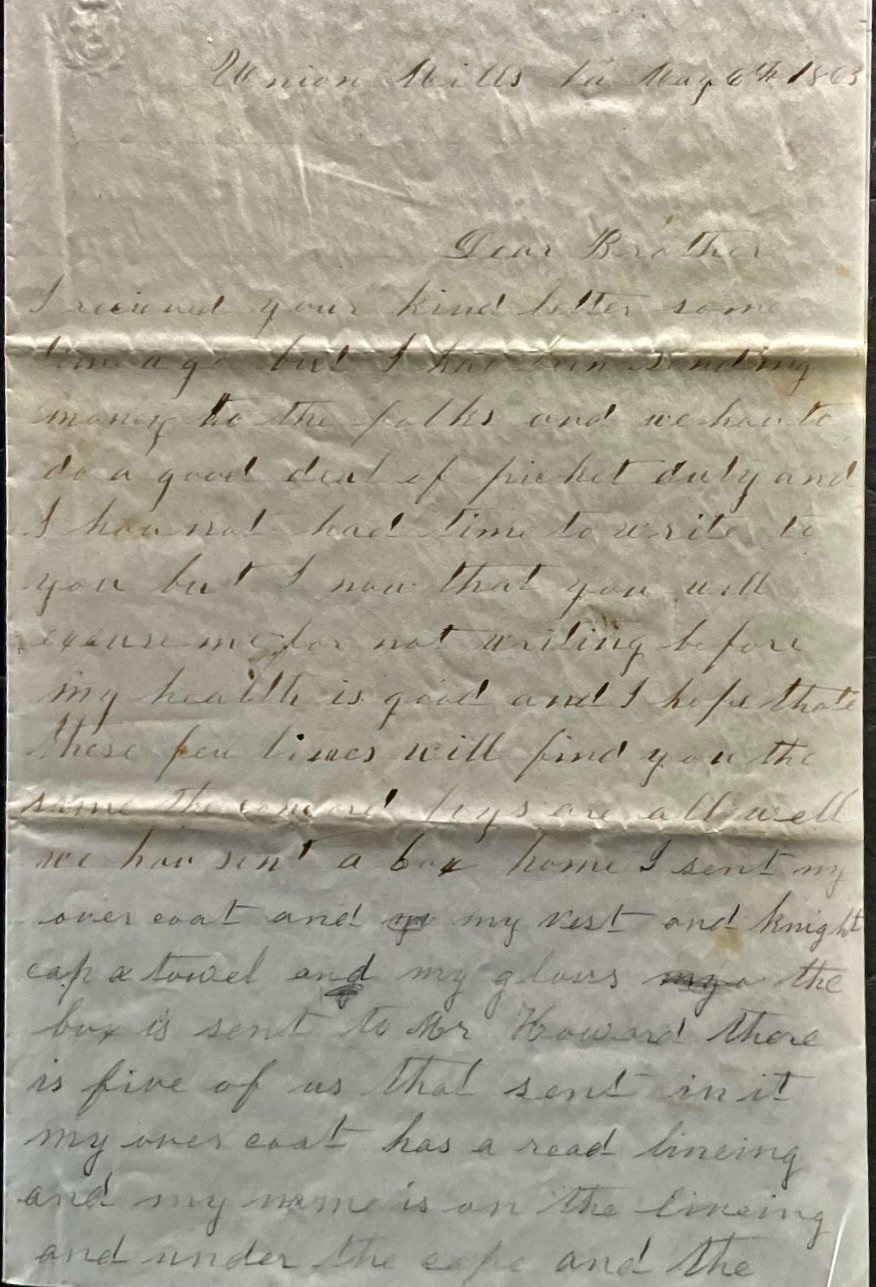
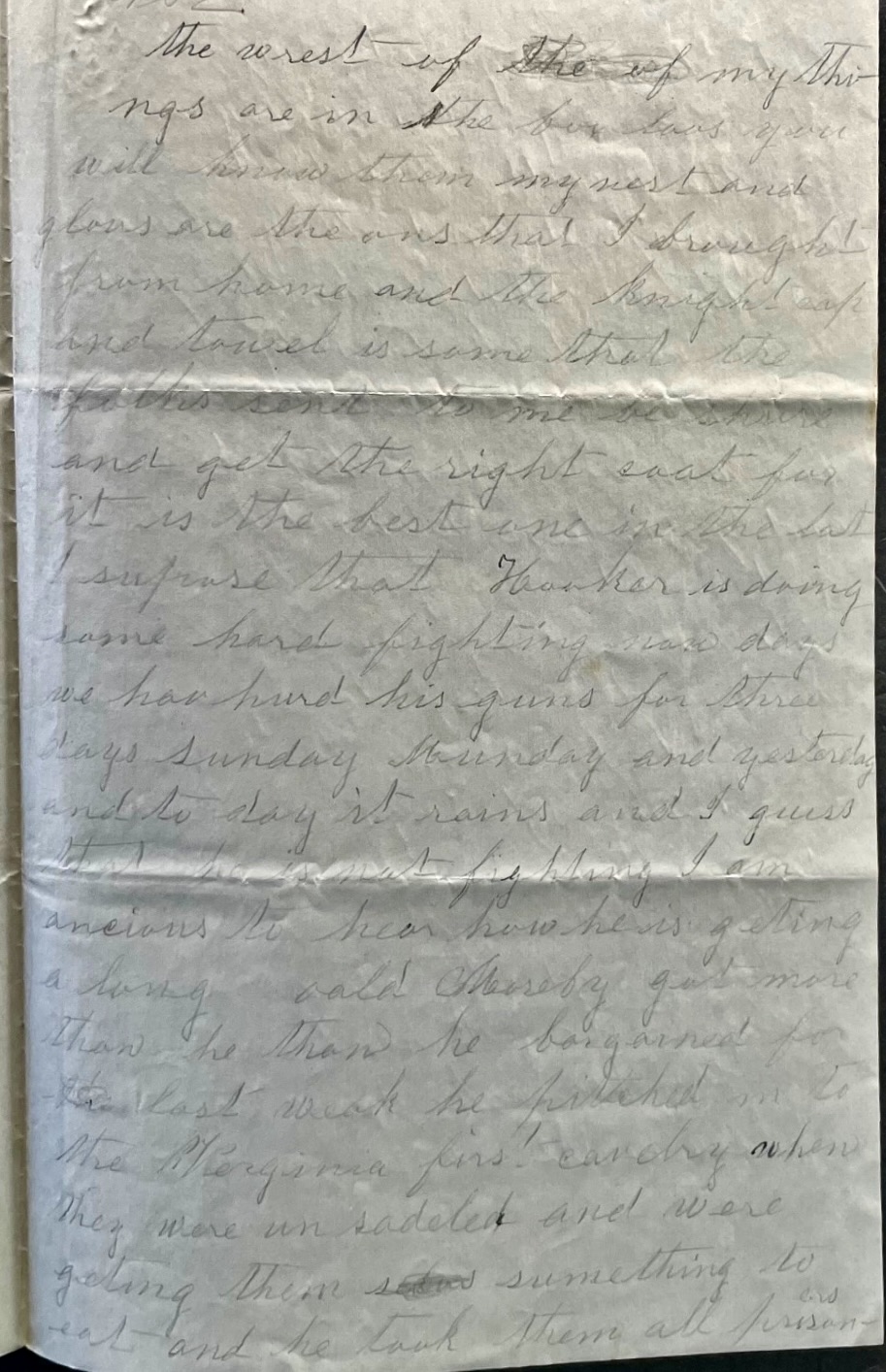
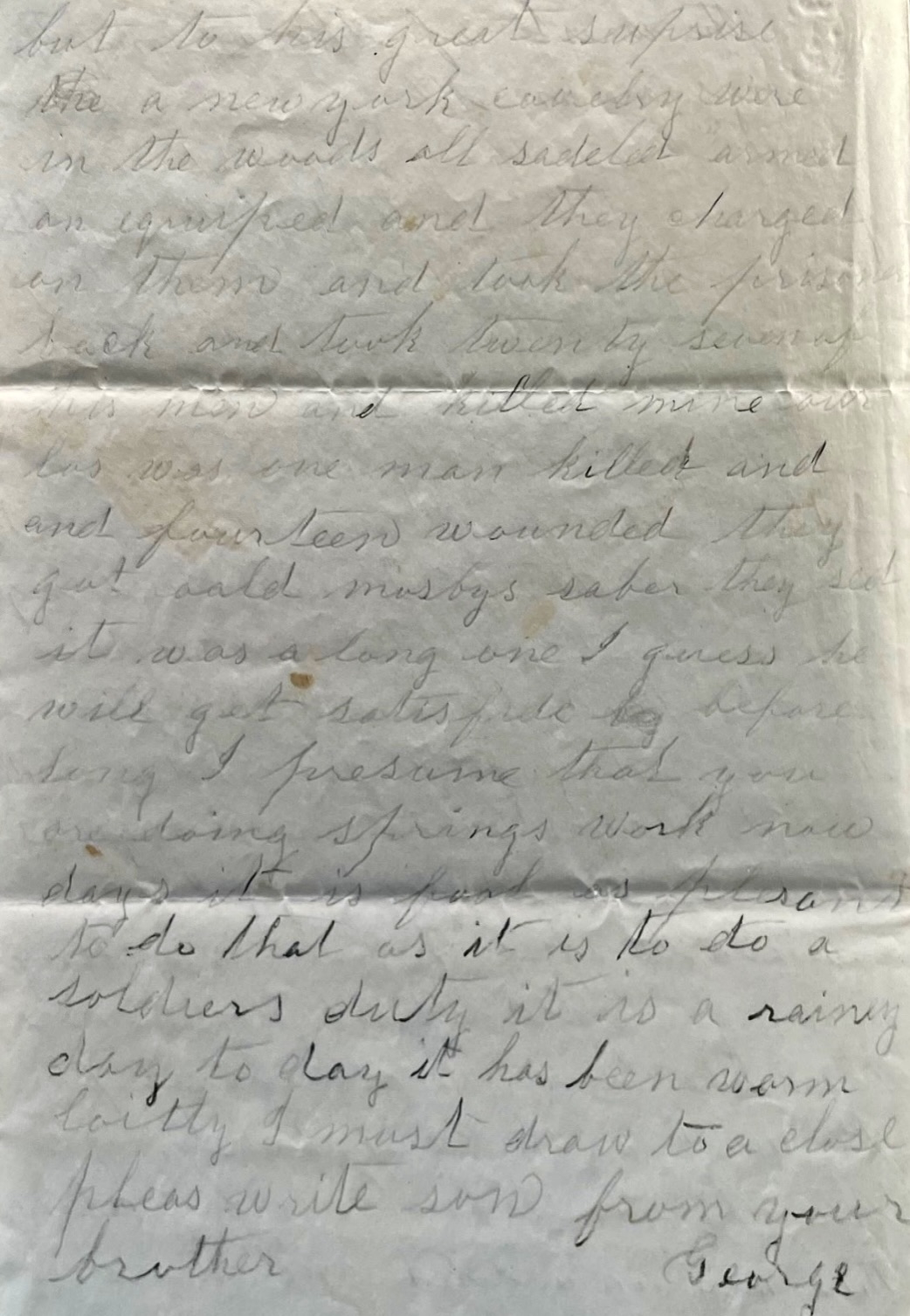
T R A N S C R I P T I O N
Union Mills, Virginia
May 4th, 1863
Dear Brother,
I received your kind letter some time ago but I have been sending money to the folks and we have to do a good deal of picket duty and I have not had time to write to you but I know that you will excuse me for not writing before. My health is good and I hope that these few lines will find you the same. The Concord Boys are all well.
We have sent a box home. I sent my overcoat and my vest and night cap & towel & my gloves. The box is sent to Mr. Howard. There is five of us that sent in it. My overcoat has a red lining and my name is on the lining and under the cape and the rest of my things are in the box loose. You will know them. My vest and gloves are the ones that I brought from home and the night cap and towel is some that that the folks sent to me. Be sure and get the right coat for it is the best one in the lot.
I suppose that Hooker is doing some hard fighting now days. We have heard his guns for three days—Sunday, Monday, and yesterday. And today it rains and I guess that he is not fighting. I am anxious to hear how he is getting along. Old Mosby got more than he bargained for last week. He pitched into the [West] Virginia 1st Cavalry when they were unsaddled and were getting them something to eat and he took them all prisoners, but to his great surprise, the New York Cavalry were in the woods all saddled, armed and equipped and they charged on them and took the pisoners back and took 27 of his men and killed nine. Our loss was one man killed and 14 wounded. They got Old Mosby’s saber. They said it was a lone one. I guess he will get satisfied before long. 1
I presume that you are doing spring work now days. It is full as pleasant to do that as it is to do a soldier’s duty. It is a rainy day today. It has been warm lately. I must draw to a close. Please write soon. From your brother, — George
1 On May 3, 1863, at the Warrenton Junction Raid in Fauquier County, Virginia, Confederate Major John S. Mosby and his partisan rangers surprised about 100 men of the 1st West Virginia Cavalry and forced their surrender. Shortly after, Major John Hammond leading a detachment of the 5th New York Cavalry counter-attacked Mosby’s scattered rangers, rescuing most of the Union prisoners and capturing horses.