My passion is studying American history leading up to & including the Civil War. I particularly enjoy reading, transcribing & researching primary sources such as letters and diaries.
The following letter was written by Charles E. Pettis, a native of Vermont, who enlisted at Erie as a private in September 1861 to serve in Co. K, 83rd Pennsylvania Infantry. He was discharged for disability in mid-September 1862. His residence was given as Garland, Warren county, Pennsylvania.
Charles’ letter, dated 2 June 1862 during the Peninsula Campaign, makes reference to the recent fighting at Hanover Court House, where the 83rd Pennsylvania, part of Fitz John Porter’s V Corps, clashed with Branch’s North Carolinians. Being outnumbered three to one, the Confederates suffered a decisive defeat at Peake’s Crossing. The letter suggests that the victory was facilitated by the inferior weaponry and lack of enthusiasm among the North Carolinians.
The original tintype of the 1st State Colors of the 83rd Pennsylvania Infantry with colorbearer Alexander Rodgers. The CDVs of the image were copy shots of this tintype. From the collection of Captain John Sell of the 83rd in the archives of CalState Northridge.
[Note: This letter is from the private collection of James Campbell and was offered for transcription and publication on Spared & Shared by express consent.]
Transcription
Camp near the Chickahominy June the 2, 1862
Dear Friend James,
I now take my pen in hand to answer your welcome letter which come to had in due season. I am well at present and I hope that when this letter reaches you it will find you enjoying good health. Well James, I must give you a few details of what have been going on since I last wrote to you. We are about five miles from the heart of rebeldom. Yesterday our men fought pretty near all day. Our men were victorious. 1
Jim, I wish you were here to see the rebel pimps run when we begin to shell them. I must give you a little account of the fight that I was in at Hanover Court House. It was a hard fight. I thought the killed and wounded on our side was about 75. As near as I can find out, the rebels loss was about twice the number. We took a good many prisoners. The rebel troops that we fought was mostly North Carolina chaps. They said they were glad to be taken prisoners. They were armed with the old musket that our men fought in the revolution. They were very poorly dressed and said they had not enough to eat.
While we was out there, we destroyed the rebels railroad bridge and tore their telegraph and we captured a large amount of tobacco and sugar. We killed a large supply of fresh meat. The weather is very warm here. Corn is about eight inches high. Winter wheat is all headed out. I think that before next Saturday that Richmond will be in our hands. I hope so.
Well James, I don’t know that I can give you any more news this time. You must write very soon. Yours truly, C. E. Pettis
The poem titled “The Angel Watchers” comes from a private collection and is a precious piece of history. It was penned presumably in July of 1863, as indicated at the top of the page. On one of the pages, the name “J. C. Lovejoy” is inscribed, sparking curiosity about the author’s identity. Months after I posted this poem on Spared & Shared, I received a solid clue (see comments) from Eric Pominville who suggested the poem was written by Joseph Cammett Lovejoy (1805-1871), the older brother of Congressman Owen Lovejoy. According to Eric, who has been researching Armory Square General Hospital, he reports that Amanda Akin Stearns (1909) memoir, The Lady Nurse of Ward E, Mr. Lovejoy was a frequent visitor at Armory Square and was well known to the hospital staff. Writing under the date May 14, 1863: “A gallant old gentleman in Congress (brother of Owen Lovejoy, the noted Abolitionist) was introduced to us by Mrs. [Henrietta Crosby] Ingersoll. He says, “We can take care of the soldiers, and he will take care of us,” so he comes quite often to accompany us in a walk after supper through the Capitol grounds. He writes verses, and is a friend of Mrs. Sen. [Henry Smith] Lane. Tomorrow for diversion, he is to take a party of us to another hospital, where they have theatrical entertainments.” Akin, The Lady Nurse of Ward E, (1909), p. 27-28.
I have searched the internet extensively to look for evidence that this poem was published at some time but could not find it. That search included newspapers and “Google Books,” etc. The Armory Hospital was established in 1862. It was constructed on land adjacent to the Smithsonian Institution, approximately where the National Air and Space Museum is today. There was an anniversary celebration at the hospital in August 1863. Perhaps that is when this photograph was taken and was the occasion for the poem.
Armory Hospital in the District of Columbia
The Angel Watchers
At the Armory Hospital, in this city, we have a company of the celestials, a group of cultivated, refined voluntary nurses, who come as all heavenly blessings come, “without money and without price” and they are above all price. They have an enthusiasm that never falters, a kindness like the gentle rains, and a wisdom and prudence that rarely errs. Private Letter.
Descend from heaven some sacred fire, some magic hand touch every string, And wake to life the lisping lyre, That would its grateful incense bring.
Lo! from the gory fields of death The long and solemn trains move on, Each gazer, silent, holds his breath And gives a tear to valor won.
That bleeding train by wounded filled Halts where the House of Mercy stands, And ever nerve by anguish thrilled Is quickly soothed by angel hands.
The hoarse rough notes of brazen war The bursting shell the booming gun, Are changed for voices, sweeter far Than whispering streams that sparkling run.
By every couch of torturing pain, Where restless turns the sufferer o’er, An angel stands, and glad to gain The bliss, the oil and wine to pour.
Woman, since first by morning light She stood beside the Sacred Tomb, Has born on Earth a sunbeam bright Midst sorrow, darkness, grief and gloom.
Not wounds alone her hands can heal, The spirit too hath sharper woes Each quivering heart doth keenly feel That from each couch a cripple goes.
Nancy Maria Hill, one of the nurses that worked at Armory Square Hospital(LOC)
By night and day with ceaseless care On all these bleeding “boys” they wait, The sufferer soothed by hands so fair Seems lingering at the heavenly gate.
When gentle sleep, that heavenly balm Spreads o’er him round her raven wing When fevered pulse grows soft and calm And gentle as the voice of spring
With whispered words and careful tread That graceful form is hovering round The hero facies near his bed The thrice loved forms of home are found
In dreams, on Mother, Wife, and Sister calls And bids them see the thousands slain Points out the spot where he too falls. But lives in dreams to fight again.
Exterior of Armory Square Hospital during the Civil War,
How these two friends might have looked at the time.
The following letter was written by Henry Simpson Mesinger Farnam (1815-1878), the son of Roger and Susan (Everett) Farnam of Attleboro, Massachusetts. Henry wrote the letter to his friend, George Henry Hough Silsby (1817-1892), the son of Ozias and Francis (Jones) Silsby of Hillsboro county, New Hampshire. We learn from the letter that Henry and George were former partners in the publication, “Star in the East“—a religious newspaper out of Concord, New Hampshire. The letter was written in the midst of the financial depression that occurred in 1837 so my assumption is that the newspaper failed as did many small businesses at that time.
From what little I could find on both young men, George remained in Concord all of his life. He ran for the position of town clerk in Concord, N. H. in 1849 but was defeated. In the 1850s he was a partner in the printing firm of Morrill & Silsby on Main Street in Concord. George was a stationer, printer, and bookbinder, and followed that business during the active period of his life.
Henry left Concord and attempted to earn a living in the District of Columbia, in New York City in the early 1840s. He may have been the same Henry S. M. Farnam (Farnam & Osgood) groceries and dry goods, who was listed in the 1867 Concord, New Hampshire.
Henry’s letter is a tantalizing treasure trove of historical tidbits delving into the social and political scene of the District of Columbia in the late 1830s. Within its pages, he regales us with colorful depictions of Henry Clay, James Buchanan, and John Quincy Adams, shedding light on the excessive alcohol consumption among Congressmen and the proliferation of brothels in the city.
The July 1837 Issue of the “Star in the East” printed by Farnam & Silsby in Concord, N.H.
Transcription
Washington D. C. April 23, 1838
Friend Silsby,
“God bless you!” is just such a salutation as I should greet you with were I to meet you in person or perhaps might “run in this wise”—“God bless you, Squire, give us your hand.” But as it would be useless and vain for me to add the request here, I will content myself with invoking the blessing.
Henry Clay as he appeared in the late 1830s.
I am on a furlough this afternoon which you know is a very desirable respite to a jour[neyman] printer—especially when he has the consolation of knowing when Saturday night comes round that he shall find his bill docked at the rate of 20 cents per hour during his absence. But I shall be called on duty again tomorrow morning, while three poor devils received the gratifying intelligence when they come into the office this morning that that their services were no longer required. Four of us were furloughed for this afternoon only, one of whom concluded that it would be a good time to take a “round turn” as they call it here—what we at the North usually call a “bust“—and he has probably arrived at the corner and capsized before this; while two others and myself took a “B-line” for the Capitol where we hear Henry Clay make one of his best speeches, a short one however, and a reply to it from Buchanan of Pennsylvania. Clay is a noble-looking fellow, and his eloquence when speaking exceeds all the lofty opinions I had ever formed of it from what I had read and heard of his greatness as an orator and debater. the likeness in his biography, which you have seen, is a good one. Buchanan too is one of the finest speakers in the Senate. I have heard the most of the distinguished men in the Senate speak a few minutes each, and some of the most talented ones in the House. 1
I went into the House a few moments this afternoon. Old Johnny Q. [John Quincy Adams] had the floor, and, as usual, expressing his opinions without “fear or favor.” But the way some of the Senators and Reps. “liquor up” and “lay in” makes it profitable for those [who] deal in brandy and “balm!” You know what kind of an article Hodgdon kept, which the owl said was “tainted by the sea breezes,” don’t you? Well then you know what “balm” is, as it is termed here.
One of the Reps. the other day got his feet knocked from under him on Pennsylvania Avenue by an ungrateful little fellow by the name of alcohol whom he had very hospitably given shelter in his head, but the little rascal having a curiosity to see what was in the other extremes of the premises took the liberty of intruding himself into the props of his protector, and upset his corporation. Another one took a “round turn” with one of the jours. of our office last week and the story is (and it is true) that the honorable M. C. fell into the canal which probably cooled him off a little! As for the article of “balm”, I suppose there is no city of its size in the Union where such an extensive business is done at it as in this—so I have been told—and so I should think from the number [of] establishments that have been pointed out to me—and the great quantity of frail sisters who promenade the streets both day and night.
I received this morning a letter from Isaac Davis—Young’s private secretary, I suppose, as it was in answer to a letter I wrote Young. It was a very interesting letter and I think Young has made a very good selection. He stated that you read my letter to him and so you got most of the particulars of my journey here. The Stonington Excursion was rather a “hard siege” taking everything into consideration but we made the best of it and that night and the next day we were a jolly crew. Old Finn, the comedian, was one of the number, and he gave us puns and conundrums enough to make up for our bad fare, extra expense, and lost time. I came on in company with him from Boston to this place. He played here a few nights.
Edwin Forrest in his William Tell costume (Illinois Library Digital Collections)
They have a good theater building here but a poor set of stock actors. Forrest and Booth have both played here since I came to this city, I saw Booth in Brutus and Forrest in Richard, William Tell, Virginians, and two or three other characters. I never saw so noble-looking fellow as Forrest is—and then his acting, my God! if it wouldn’t bear one “on the wings of poetry to the regions of ineffable refulgence!” He must be as “devoid of soul as a statue!” Booth is a small man but he is a powerful actor.
Well, Squire, how “wags the world” with you in these hard times? You are having you $7 per week and a permanent situation, I suppose. I wish to God I was as well off. It is true, I am having pretty good wages just now, but then in a month from now. I expect to be on my oars when I shall have to make tracks for some other region and spend what I have earned in traveling and lounging about in cities with nothing to do. A good cit. [situation] in Concord at 7 per week is not to be sneered at and I advise all who have got such an [one] to hold on to it as long as they can.
The blues crawl over me sometimes when I think of the pleasant days I have spent in Old Concord, and among the best of those I may reckon my sojourn at the “Star” office, with you as a comp[anion], when our names went forth weekly to give character and influence to the important and sacred truths contained in the sheet which bore them; scattering light from the darkest corners of the Grany State, to “Bluffsdale, Green county, Illinois”—the residence of that believer “in the faith and delivered to the Saints,” Abram Coon!! 1 It is strange that we could not have been contented while enjoying such a distinction! But man is never satisfied, you now, until contentment would be of no avail, and then he only thinks he should be. However, I think we did enjoy ourselves during that period; at any rate, I would be willing to try it over again. But the fact is, I don’t expect I shall see Concord again very soon, but I should like to see all of the old acquaintances that I formed there—especially the members of the craft. But that never will be “this side of the gate whereof St. Peter holds the key.” They are scattered over the earth and will probably never be collected until Gabriel blows his bugle for the last time. But without any joking, it akes me feel melancholy to reflect on it.
Squire, I haven’t a friend on God’s earth whom I would give more to see than Silsby! If you were here, I should feel perfectly contented, come what would. But as that is altogether out of the question, there is one way in which you can render me a very essential service—and that is—as you cannot “shed upon me the light of countenance“—-to “shed upon me the light of your mind,” through a sheet of foolscap! Yes, I want you to fill out one of the largest kind, with close matter, and thin-spaced (minion type) of all the interesting events, &c. that have transpired in Concord and vicinity since I left. Winter, I understand, has left Barton’s and Foster has taken his place. What was the trouble?
I see by the Bap[tist] Reg[ister] that there has been a great revival in Concord, and that great numbers have been added, &c. Just give us the names, if there has been any remarkable instances. There are at least forty things that I intended to have mentioned when I commenced this letter I have forgotten. I shall probably go to New York when I am out here and if I don’t get work there, I don’t know whether I shall go to Boston or to the West! Oh, by the way, I received a letter from Sherman the other day. He says he is in the paper-making business yet. Fisher is with him. He didn’t say whether they were in the money-making business or not. Tell Isaac that I will endeavor to answer his letter before long. Tell Elder Morse if he goes to New York to let me know it.
Now Squire, I want you to answer this without delay. Don’t be afraid of exposing your penmanship to my criticisms, although it may not bear a comparison with mine!! Give my respects to all who recollect me. I must wind up by subscribing myself your everlasting friend, “in the bonds of the gospel” — H. S. M. Farnam
P. S. I dare not read this over, and, shall have you to correct the errors. I will endeavor to a more interesting next time, that after I receive one from you which I shall expect soon. I suppose you are freezing in New Hampshire yet. We have had it hot enough to “scorch a feather”—peach trees blossomed a week ago. We have pretty good living here—poultry a plenty of it, from turkeys down to robins, blue birds, and even yellow birds—four to the mouthful. Possums too brought into market every morning! Oh, I’ve left off chewing tobacco–[ ] today! and take but 3 glasses of ale a day! — H. S. M. F.
1 In 1837, Henry Clay was hard at work in a successful effort to organize and strengthen the new Whig party. In his attempt to provide for it an ideological core, he emphasized restoration of the Bank of the United States, distribution of the treasury surplus to the states, continued adherence to his Compromise Tariff Act of 1833, and federal funding of internal improvements. The achievement of these goals, Clay reasoned, would mitigate the severe impact of the Depression of 1837 and sweep the Whigs into the White House in 1840.A review of the newspapers at the time of this letter suggests Clay’s speech probably had something to do with the distribution of the treasury surplus.
2 Abraham Coon (1810-1885) was a member of the Church of Jesus Christ of Latter-day Saints.
The first part of this letter was written by Elephalet Mason Rogers (1831-1862), the son of Isaac Rogers (1771-1846) and Zilpha Mason (1806-1859) of Bradford county. Eliphalet enlisted in July 1861 in Co. F (the “Northern Invincibles”), 6th Pennsylvania Reserve Infantry (35th Regt. Pennsylvania Vols.) and was killed in action at the Battle of Antietam on 17 September 1862. 1 He wrote the letter to his cousin, John Wesley Rogers (1840-1932), the son of Moses Austin Rogers (1806-1879) and Jane Sadler (1810-1892) of Forksville, Sullivan county, Pennsylvania. Wesley later enlisted in Co. G, 26th Pennsylvania Militia.
The second part of the letter was written by John Speaker Osler (1839-1934) who enlisted as a private in Co. C, 12th Pennsylvania Reserves (41st Regt. Pennsylvania Vols.). John was the eldest son of John Hinkle Osler (1808-1891) and Jane Myers (1813-1891) of Forksville, Sullivan county, Pennsylvania. John mustered into the regiment in August 1861 as a corporal. He was discharged for disability on 31 May 1862 after 11 and a half months of service. His letter mentions the Battle of Lewinsville that took place two days earlier.
The “Cameron Highlanders” of the 79th New York are reprising their roles as pickets during their reconnaissance of Lewinsville, Virginia on Sept. 11, 1861. (LOC)
[Note: This letter is from the personal collection of Greg Herr and was transcribed and published on Spared & Shared by express consent.]
Transcription
Headquarters, Washington D. C. [Friday] September 13th 1861
Dear Cousin,
I thought that being [as] I was over in the 12th Regt. along with the boys, I would write you a few lines and let you know how I am getting along in my new occupation, or in the camp and brass wood [?] life. It is sometimes good and then it is better and now it is very good for we was called out the other night for a fight, but we had to come back without one. But we are under marching orders all of the time and I think that we will have a pretty big fight when we do have one, and by [ ] we will stay there. Tell your father that I am well and expect to see him again before long if I live. Give my respects to all and the same to yourself. Write to me and direct your letter—E. M. Rogers, Washington D. C., in care of Captain D. Bradley, Company F.
Company F, 6th Regt. P. R. V. C.
To Mr. Wes Rogers
[in a different hand]
Friend Wesley,
As Macon Rogers was over to see me and the rest of the boys, I am well and hope you are the same. Wales is sick but he is getting better. David Bryan is at Georgetown yet at the hospital. He is getting better. Heter Samuel Brey is well. Joney Cales is well and George Parks is very well. I am getting fat, the boys says, but I don’t think so.
We was called to battle Wednesday night [11 September 1861]. 2 The noise of the cannons was very heavy. We smelled powder but we did not get there till the battle was over. They took two batteries and we killed about 200 hundred of rebels and we lost 6 men and 7 wounded and 3 took prisoners by not keeping up to the regiment. The smoke came among our tents like a foggy morning and it made me think of home and we marched down to the chain bridge. The line of battle was two miles long. The half of our men was not there nor was not wanted. There was seventy-five thousand men—that is a small crowd, but it is enough to make a noise when they all get together.
Wesley, it would do you good to see us fire blank cartridges when we fire by company. It looks like burning log [ ]. Tell Isaac I would like to see him come to help his country, who work on a fort. We have it done. They have 16 cannons planted on top of the fort. They can talk very loud when they put 3 lbs. of powder in them.
You must write to me and let me know all about the young folks. I send my best respects to all of the boys. Let my folks know that you got a letter from me. Will have to bring my scribbling to a close. Write soon and so goodbye. Your friend, — John S. Osler.
How to direct to me:
John S. Osler, Co. C, 12th Regiment, Pennsylvania Regt. Vols., In care of Captain [Richard] Gustin
The following letter was written by Franklin L. Stuard (1839-1865), the oldest son of Mathaniel Thomas Stuard (1817-1897) and Caroline Jane Robeson (1816-1896) of Lincolnton, Lincoln county, North Carolina.
According to Muster rolls, Frank enlisted in May 1861 as a private in Co. B, 23rd North Carolina Infantry. He was severely wounded two years later in the Battle of Chancellorsville and treated at Winder Hospital in Richmond but returned to his regiment in January 1864 when this letter was penned. It was the 23rd North Carolina that took the lead in Stonewall Jackson’s immortal night march that fell upon the unsuspecting right flank of Hooker’s army. Frank’s military record does not inform us of his death but his grave marker stated that he was killed on 5 April 1865, most likely in the Battle of Amelia Springs.
Transcription
Addressed to Mr. N. T. Stuard, Lincolnton, North Carolina
Camp near Orange Court House January the 30th 1864
Dear Father & Mother & Sister & Brothers,
I have the privilege of dropping you all a few more lines to let you know how I am. I am as I left home only I have a bad cold since I left. I got here yesterday in the evening. The boys [were] some glad to see me & when I got here I was that tired, I couldn’t hardly walk. I had to walk about six miles. The men are enlisting again but I don’t intend to. Some of them say they will run away & go to the Yankees & I think they will. They are shooting men here every day. There is three to be shot today for running away & going home.
Ma, I am all right. They won’t do anything with me for staying at home without furlough but if I had of stayed any longer, they might of tried it. But as it is, they don’t say anything.
I haven’t any news to write that will interest you in the least. I [had] written to you all [the news] when I was at Richmond. I wrote on Thursday & I thought I would write a few lines today. Ma, I want you to write & tell me how Harriet is getting along. I want to see her mighty bad. I won’t say any more for the present—only I want you to write as soon as you get this & give me all of the news.
Direst your letters to Orange Court House, Va.
So I will stop for the present. So goodbye, — F. L. Stuard
I could not find an image of Samuel but here is one of Henry P. Ralston who also served in the 13th Michigan (Co. H). He was transferred to the VRC in January 1864. (Dale Niessen Collection)
The following letter was written by Samuel Elisha Stillson (1833-1902) of Co. B, 13th Michigan Infantry. In the 1860 US Census, Samuel was enumerated in Manlius township, Allegan county, Michigan, working as a day laborer. He was mustered into the regiment as a private in January 1862 but we learn from his letter, datelined from Nashville in June 1863 that he had been ill and unfit for duty at least nine months. And though he seemed uncertain if he would return to duty, his military record indicates that he had returned to his regiment three months later as he was wounded in action at the Battle of Chickamauga on 20 September 1863 and promoted to corporal in April 1864.
Ancestry.com has a genealogical record that informs us Samuel’s parents were William Briggs Stillson (1804-1881) and Sophia Hutchins (1805-1870) of Ganges township in Allegan county, formerly of Rochester, New York. No marriage date is given but multiple sources give Mariah Billings (1843-1899) as his wife. Given her age and the dates of her children, the marriage must have occurred in 1859 when she was barely 16.
[Note: This letter is from the private collection of Dale Niessen and was transcribed and published on Spared & Shared by express consent.]
Transcription
Addressed to Mrs. Martha A. Haines, Saugatuck, Allegan county, Michigan
Nashville [Tennessee] June the 7th, 1863
I received your kind letter today and was very glad to hear from you again for I had thought that you had forgotten me. It is the first line that I have had from you since the first of April or thereabouts. I couldn’t think what was up but it appears that they have not come.
Well, Martha, I am glad to hear that you are a getting well after an illness for I know something about that, for since I wrote to you I have been very sick so that I could not leave my bed and I am not very strong yet. But I am on the gain slowly. I am so that I can’t write so that you can read it, I guess. But if you can’t, you can send it to the dead letter office and they are obliged to read it. But I can’t write much this time for my nerves are all unstrung. I don’t feel my self but I think that I shall live and get home alright yet. But a soldier don’t never know what he has got to know. He may think when he lays down that he can lay five minutes but he ain’t disappointed if he about lay half that time.
Well, I can’t write much this time. You said that you sent me a book. I wish that I could have got it for I can read when I can’t do anything else. I have not have any duty for 9 months and if I don’t [soon] feel different, I don’t think that I shall do any for that length of time to come.
Well Martha, I can’t write any more this time so goodbye for this time and I shall look for an answer from this soon. Give my respects to all enquiring friends. Direct [to] Woods [?] Convalescent Camp, Nashville, Tenn.
This is a letter written by Pvt. Emanuel Cowger (1843-1862) to his parents, Jacob and Sarah Dice Cowger dated September 22, 1862. Emanuel served with in Co. E, 25th Virginia Infantry (“Heck’s Regiment”). Emanuel was 19 years old when he enlisted on 5 April 1862 at Camp Shenandoah. He was wounded slightly in the leg during the fight at McDowell, Highland county, Virginia, on 8 May 1862.
In his letter Emanuel describes the capture of Harper’s Ferry and the fight two days later at Sharpsburg on 17 September 1862. During this period, the 25th Virginia was part of Stonewall Jackson’s foot soldiers, attached to Jubal Early’s Brigade of Ewell’s Division. In the latter fight, Emanuel mentions two other Pendleton County men serving with the 25th who were wounded; John Linthicum age 18 and Josiah Elyard age 22. Josiah would recover from his thigh wound. John, who was wounded in the neck, died 2 days after this letter was written.
The letter was written from Winchester, Virginia, on 22 September 1862, just three weeks before Emanuel died at a hospital there on 14 October 1862. He wrote the letter to his parents, Jacob Cowger (1809-1879) and Sarah A. Dice (1811-1902) of Pendleton county, Virginia (now W. Va.).
[This letter is from the personal collection of Dennis Miller whose great-great-grandmother, Amelia Cowger Miller (1839-1863) of Seybert, Pendleton county, W. Virginia, was the 1st cousin of Emanuel Cowger. It was offered for transcription and publishing on Spared & Shared by express consent.]
Transcription
Frederick county, Winchester [Virginia] September 22, 1862
Dear Father & Mother,
I seat myself this morning to drop you a few lines to let you know our present condition. I am not very well at this time. But I hope when this comes to hand it will find you all enjoying good health. I have been sick about a week but I am better now. I had something like the cramp colic. I am at the hospital at Winchester. I came here yesterday. Our men has been doing some big work since I last wrote. I suppose you have heard all about the fight at the junction. We have been in Maryland. We went around by Frederick City, came on around to Williamsport, and crossed over into Virginia, from there to Martinsburg, and run the yankees away. Then on to Harper’s Ferry. September 15th, [we] captured about 15,000 prisoners. We got the whole army, artillery and all. they did not stand us a fight.
We left the ferry on [the] night of the 15th and marched up to Shepherdstown, crossed over into Maryland and had a very hard fight with Burnside’s and McClellan’s army. The fight was on Wednesday the 17th. I don’t know whether to call it a victory or not. Our men have fallen back on this side of the river. We lost one or two men killed out of our regiment. We had one killed and two wounded out of our company. Our 2nd Lieutenant C[harles] W. Delay was killed. Joseph Elyard & John Linthicum was wounded very badly. Elyard was shot in the thigh. John Linthicum was shot through the neck with a large minié ball. The ball went in just above the collar bone, missed his windpipe to the right, ranged rather down, and come out on his shoulder. I saw him the next day after the fight. He was very poorly and he looked very bad but he said he did not suffer much. It does not hinder him from eating. I wish you would let Mrs. Linthicum know that he is wounded. The wounded are getting furloughs and I think as soon as John gets abl, he will get a furlough.
The doctors are sending the sick up the Valley, I do not know whether we will leave or not. John Da[ ] and myself are here together. We are the only ones from our regiment. I would like to have some clothes from home if I could get them. If you could have a chance to send them in the course of two months, I would be very glad, I would like to have a pair of socks, If you could get me a pair of boots made and send them to me, I would be very glad. If you get them made, have them made large 7 or small 8. Have them made wide in the instep. If you can get the boots made, try and send the clothes. I lost my knapsack last spring and all that was in it. We have no chance to draw anything on the march.
I must bring my letter to a close. My pencil is so bad I can hardly write with it. I would be very glad to hear from you all once more if I could. I haven’t heard from you since the 7th of August. I would sooner see you all than to hear from you. I think we will get furloughs this winter if nothing happens. I hope the war will soon come to a close and we will be permitted to go home once more. I don’t think the war can last long the way it is going now.
If you have any chance to send me a letter, do so. I am very anxious to hear from you all once more. Please excuse my bad writing and spelling. So no more at present but still remain yours, &c. — Eml. Cowger
I will write again in a few days and let you know how I am and where I am and I will try and give you more satisfaction.
The following letters were written by Thomas C. Edwards (b. 1835) who served in Co. B, 8th New York Heavy Artillery. The regiment was organized at Lockport, New York as the 129th New York Volunteer Infantry and mustered on August 22, 1862, for three years service under the command of Colonel Peter Augustus Porter. Because heavy artillery regiments were needed for the defenses of Baltimore, the regiment was converted from infantry on October 3, 1862, and became the 8th New York Heavy Artillery on December 19, 1862. Companies L and M joined the regiment at Baltimore in February 1864.
Thomas C. Edwards—Age, 25 years. Enlisted, July 29, 1862, at Lockport; mustered in as corporal, Co. B, 129th Infantry, July 29, 1862 (which became the Eighth Heavy Artillery, December 19, 1862), to serve three years; promoted sergeant, April 25, 1863; quartermaster-sergeant, February 1, 1865; mustered out with company, June 5, 1865, at Munsons Hill, Va., as Thomas C. Edwards.
Letter 1
[This letter contains a description of the fighting at Harris Farm in the Battle of Spotsylvania Court House. The 8th New York Heavy Artillery was one of five Heavy Artillery regiments serving as infantrymen in the fight. Others included the 1st Maine HA, the 1st Mass. HA, the 2nd & 7th New York HA regiments.]
Addressed to Amanda J. Edwards, Lockport, New York
Army of Potomac Friday noon. May 20th 1864
Dear Sister,
The 8th had our first severe fight yesterday & last night. I am still safe, thanks to that kind Providence who has ever kept me. We fought Ewell’s Corps from 5 p.m. till nearly midnight & whipped him severely. The field was covered with dead rebs this morning. They had retreated during the night & this morning we came back to our old camp. Our loss was severe but the 8th did not suffer much—9 killed and 35 wounded. Only one slightly wounded in Co. B but the bullets whizzed by us good. Co. D suffered the most, Daniel Haller 1 was slightly wounded. Capt. Holmes 2 & company are all safe. The 1st Maine and 1st Massachusetts Heavy Artillery suffered the most. The 2nd, 7th, and 8th Heavy Artillery were also in the fight. Most of the firing was done with musketry & it was a severe musketry fight. No doubt you will read of it. We were under Gen. [Robert O.] Tyler. All the boys did nobly & we were highly complimented this morning by Gen. Tyler & Gen. Meade.
We had to double quick three miles to the battlefield. I lost my knapsack and almost everything I had—portfolio, paper, clothes, and all. I can’t write more now. I had a letter written to Libbie but lost it. Tell her this is for her too. I will write to her soon if I can. I can’t write often. Goodbye, — Thomas
1 Daniel D. Haller—Age, 23 years. Enlisted, August 12, 1862, at Lockport; mustered in as private, Go. D, One Hundred and Twenty-ninth Infantry, August 11, 1862 (which became the Eighth Artillery, December 19, 1862), to serve three years; wounded at Cold Harbor, Va., June 3, 1861; discharged to date, August 12, 1861.
2 Joseph W. Holmes—Age, 41 years. Enrolled, August 12, 1862, at Lockport; mustered in as captain, Co. E, One Hundred and Twenty-ninth Infantry, August 12, 1862 (which became the Eighth Artillery, December 19, 1862), to serve three years; mustered in as major, October 21, 1864; lieutenant-colonel, February 4,1865; mustered out with regiment, June 5, 1865, at Munsons Hill, Va.; commissioned captain, September 10,1862, with rank from August 12,1862, original; major, September 16,1864, with rank from June 19,1864, vice E. L. Blake, died of wounds received in action; lieutenant-colonel, January 30, 1865, with rank from January 14, 1865, vice J . B. Baker, promoted.
Letter 2
Camp in the field Near Mechanicsville, Va. June 1st 1864
Dearest sister & home friends,
Wouldn’t you like to have a chat with me this pleasant June morning? How pleasant it would be, wouldn’t it, if I could see you for a little time? No doubt you have all been very anxious about me of late and have wondered why I have not written more frequent. I have written as often as I could. Have written to you twice and once to Libbie. Don’t know whether you have yet received any of them nor when you will, but hope you will have heard from me ‘ere this. I am feeling very well this morning for we have had quite a rest for two days past which has done us all good for we were nearly worn out with hard marching, hard work, sleepless nights, &c. &c. We have had a hard time of it since we came out here but the boys seem to bear it all very cheerfully.
It is wonderful to see how much we can endure, but we are on the way to Richmond & are hoping victory will crown our efforts by & by & we will endure almost anything that Richmond may fall and we may see this wicked rebellion put down. We have been in line of battle almost every day for two weeks, have been under fire nearly half of the time, have laid on our arms and tried to sleep I should say nearly every night, while we were not marching or throwing up breastworks. But we stand it well. Have lost but few men as yet and certainly as a regiment have been highly favored. We have seen war through its terrible realities. We have seen its horrors which never can be described, and we have also seen some of its grandure which like the other cannot be described. And when once seen, can never be forgotten.
Now we are resting behind our breastworks waiting for further orders and a few of us are improving the time in writing. Our line of battle is in front of us & some distance beyond that is another line of skirmishers which keep up a little music with their muskets and a little to our left, the 19th Battery not long ago sent their morning compliments over to the rebs (Johnny’s—we call them) in the shape of a few shells. But the Johnny’s seem to be quite still all along our front & only once in a while do we hear the peculiar singing of a bullet as it strays over our way. It is so pleasant and so quiet we almost wonder if there really is war all over this fair land of ours. And then we wonder if the rebs won’t soon give up and conclude it is best after all to stay in the Old Union. Then we wonder what the late war news is, what our forces have been & are now doing, whether the rebels are really as discouraged & nearly whipped as we hear. All are camp rumors. The fact is we know nothing of what is being done more than what we as a Division or Corps have done ourselves. Queer, isn’t it?
Well we haven’t seen any newspaper since we left Baltimore and we have no other means of knowing what is being done by the army. We do know we have made a great flank movement and the rebel army has thus far been well out-generaled. The 2nd Corps are now not far from Mechanicsville, we hear between there and Hanover Court House. We hear we are 10 or 11 miles from Richmond. We know we are in a beautiful country & are now in one of the most beautiful cornfields I ever saw. How is it? Has Father planted his corn yet? Tell him before me is nearly 100 acres of corn now nearly a foot in height, good color, and I never saw a more even field in my life. It is splendid. We have seen a great deal of corn growing as we came along & most all of it looked well. But we think it will never do the rebs much good.
But I am going to tell you what more we hear. We hear the 6th Corps is on our right and were yesterday within six miles of Richmond & that Burnside is on our left & yesterday captured Fair Oaks and still holds it. And then we hear Lee is really dead. The rebels are suing for peace, any part of which we hardly know whether to believe or not. But we have great confidence in Grant and do think some part of the army is nearer Richmond that we and we (our army) shall capture it by and by.
I saw Uncle Lemuel day before yesterday. He was well. Took a letter I had just finished to mail for me. That one was to Libbie. Those to her will have to do for you & yours for her & all our folks & the friends. It will be impossible for me to write much at present and it is almost impossible to get those we do write mailed. We have received no mail, only a little. Some of our boys brought us one week from the day we left Baltimore. I received four letters then—one from Libbie, one from you written the same day we left Baltimore. & one from Lucy and one from Monroe. These I will answer when I can. Lucy will feel disappointed that I have left Baltimore but we couldn’t remain there & be here helping to take Richmond too. We don’t live here as we did in Baltimore, are dirty, ragged. and often some of us hungry. But all are cheerful and happy as larks.
The weather has been very dry & as we march and dig, our clothes get filled with dust. Sometimes we have an opportunity to wash and slick up but it doesn’t do much good for it may not be an hour before we are ordered on another march or to digging or sometimes to lie down flat on our faces in three inches of dust & perhaps have to remain there for hours, sometimes all night, and we have had the bullets kick the dust about us good sometimes. What think you? Is there much use of our trying to keep clean while on this campaign? You will not wonder this paper gets mussed and dirty, will you? This paper is some I picked up the other day. You know I lost all my things at the time of our first fight—all except my Bible and my Journal. Those I hope never to lose. I have kept a little memoranda of our every day move and some day will try and write you a little history of our “On to Richmond.”
Perhaps you’d like to know how we live just now. We don’t have cake & pies, bread and butter, & milk, though we often dream of them and think we are living sumptuously. Sometimes we have a little meat and sometimes we don’t. Sometimes we don’t have ant time to make coffee but our most sumptuous fare is hard tack and coffee, with a little meat perhaps once a day. Our breakfast is three hard tack with a cup of coffee. If you ask how we make our coffee, each has his little cup. We fill it half full of water, put in a spoonful of coffee and a litle sugar, sit it on the fire, and when it boils, take it off and fill it up with water to cool and settle it. If we have a little meat, fry it in the end of a stick over the fire and our good meal is ready. Thus we cook our dinner & supper.
But I must close for just now we have received orders to prepare to march. Hoping you are all well and with much love to you all, I remain ever your loving brother, — Thomas
P. S. Fred Button is well. Also Eugene Fuller and nearly all of Co. B. Very much love to Libbie & yourself.
Saturday, June 4th 1864
Dearest sister, yesterday was a terrible day to us. Our regiment was ordered to charge on some strong rebel works and were all cut to pieces. The boys did nobly but the work was too hard for them. Our loss is severe. Oh it is too bad, too bad. Co. B. lost two-thirds of our men. We charged a half mile clear up to the rebel works & we cannot yet get the bodies of some who fell there. Col. Porter is dead and still lies on the field. Col. Bates is safe. Maj. Willet is severely wounded. Capt. Baker is safe. Also Sergt. [Romeo G.] Burns, myself, Corp. Harmon, Fred Button, and some others. Eugene Fuller is wounded in the leg but is doing well. Charley G. also. Lieut. [James] Low is wounded in the leg—not severe. Lieut. Nichols slight in the arm. Lieut. Brown is dead. Poor fellow. Pitcher severely wounded. I cannot yet give you all the casualties. No doubt you will see a list soon. May God bless the mourning ones at home & save the 8th from another so terrible of a slaughter. Oh what a sad, sad day this is to us. Oh when will this terrible war end. May it be soon. Much love, — Thomas
Letter 3
[This letter contains a description of the 3 June 1864 early morning assault by the 8th New York Heavy artillery on Colquitt’s Georgians at Cold Harbor. For a great summary of that action, see Dan Masters’ “Struck down at Cold Harbor: In action with the 8th New York Heavy Artillery” posted on 11 April 2022.]
Cold Harbor June 6th 1764
Dearest Sister and loved ones at home,
Again I have the pleasure of penning you a few lines. It is a pleasure for I know you are all anxious, very anxious, to hear from me and I am happy to say I am still safe & well though I have passed through many dangers. God has been with me & has thus far kept me safe from harm for which I am thankful & I will continue to strive to trust in Him to watch over and keep me until this cruel war shall have ended & return me safe to all the loved ones. But oh! how my heart aches when I think of the many of our number who have so lately fallen. It is too sad to think of. Oh how must their friends feel. Let them all remember that we mourn with them for while they have lost a loved one—a son, or father, or brother—we feel that we have lost dear friends & companions we loved as brothers.
No doubt you will hear of all the losses in our regiment ere this reaches you. It was terrible but not so severe as we at first supposed. It seems Co. B suffered worse than any other company. We were on the right where they got a cross fire on us & their grape & canister mowed us down terribly. I wrote you the next day after the charge & told you somewhat of our loss. I hope you received the letter. Since then a few whom we thought dead have since been brought in and we hear there are still some live ones left there but we cannot help them. Isn’t it dreadful? They are hardly a half mile from us but are lying near the rebel breastworks & when we attempt to go out there, they shoot our boys down. We have worked every way to get off our boys & in spite of their fire & though several have been wounded in the attempt, we have crept up to them and saved some of them during the night. We have wished we could get all but it has been impossible to do so. We heard there was to be a flag of truce sent in this afternoon to give us an opportunity to bring in our dead & wounded but the skirmishers keep up such a firing all the time I fear such an opportunity will not be given us.
Wayside Marker on Cold Harbor Battlefield Walking Tour
Our Colonel’s [Peter A. Porter] body was brought in Saturday night, he having laid on the ground two days and one night. And we hear his body has now gone home. All our wounded have been sent on to Washington or Baltimore & no doubt many of them will soon go home on furloughs. Some of our wounded have since died. I cannot tell you how many of our boys are missing. Quite a number are. We think most of them dead now but some may be taken prisoners & some may still be saved of our company. Among the missing are still Sergt. [Job] Cornell [and] Sergt. [Nathan] Peterson. We think them dead. Also Corps. [John] Root, Taylor, and [William H.] Saddleson. Then there are many other boys—25 or more in all, 25 killed and as many wounded. We went into the fight with 120 and came out with but 38 safe. Some of the other companies suffered little more than half as bad. Others scarce any. Lieut. [John H.] Nichols was slightly wounded in the arm but is still with us, being our only officer now. Captain [J. B. Baker] is acting Major.
The charge was made at five in the morning…It was a rash move and amounted to nothing but slaughter. We hope no more such charges will ever be ordered.”
—Thomas Edward, 8th New York Heavy Artillery
The charge was made at five in the morning, was led by Brig. Gen. [Robert O.] Tyler who lost a leg we hear. 1 It was a rash move and amounted to nothing but slaughter. We hope no more such charges will ever be ordered. The whole brigade started in line of battle at a double quick, had to go almost a half mile, were not fired upon much until they were more than half way when a most terrible fire of artillery and musketry was opened upon them. But the boys halted not. On they went, some of them clear up to the rebel works, & then the few who were left turned and came back to our old present line and listened to the stories of each of his narrow escape. Then we helped off the wounded. I worked all the afternoon & that night & all the next forenoon. Seems to me I never worked harder. I was just drawing rations for the company and was not with them in the charge so have nothing to say of my bravery. I do not know how long we are to remain here. They are firing at our works all day so we lay close behind our works. It is not very pleasant for us.
Yesterday afternoon we heard heavy firing on our left & hear the 5th Corps crossed the Chickahominy. Today we hear firing on our right where is the 6th Corps. The 151st are in that corps and are not far from us now. Just now Watson McHall came to see me. Is well. Says Uncle is well.
We are holding our ground and occasionally drive the rebels back a little. Soon the siege will commence here, I think. A great many guns are being planted near us & soon there will be the most terrible shelling we ever heard. We hear Gaines Hill is two miles from us and we hope the rebels will soon be driven back beyond that. They now have a good position but we trust Grant will soon have their stronghold and ere long Richmond will be ours.
May God bless our efforts that we may soon see an end to war. Love to all. Pray for your loving brother, — Thomas
1 Gen. Robert Ogden Tyler took a bullet in the ankle which ended his military career in the field. He received the brevet rank of Major General of volunteers for “great gallantry at the Battle of Cold Harbor.” He died at the age of 42 in 1874.
Letter 4
Cold Harbor [Virginia] June 10th 1864
Dearest sister,
Once more I have a little time for writing & will spend it with you & the loved ones at home for I’m sure I cannot do better. I cannot write many letters and those few must be to those I hold most dear—my sisters, parents, brothers, and that dear one who is more than a sister to me. Though this is directed to you, tell Libbie it is her letter too and I will try and write the next one to her. I have received quite a number of letters of late and am sorry I cannot answer them all now but I cannot while we remain here. So all must be content to hear from me by you. When we get where I can procure plenty of writing material & have plenty of time, then I will write them all. I suppose I won’t receive many letters for at time. At least I can expect them, but I wish all would write though I cannot just now. They would if they knew how much good their letters do us. We can’t tell how glad we are to receive letters & papers too. I am ever so thankful for the papers you sent me. I received only two the other day—the Rural and another Rochester paper. No doubt the others will come soon. You are very kind to think to send me the American. I shall be very glad to see that. It will seem like seeing an old friend….Now we will receive our mail more regular, i suppose two or three times a week which will seem good to us. We hope our friends will write as often as they can and we will try and make it up some time—perhaps when we get to Richmond. But we don’t know when that will be. We hope the time is not very far distant.
There has been but little done near us for a week past and we don’t know what any part of the army is doing, but we hope something. We expect Grant is busy somewhere. We believe he is not idle. We are just holding our ground here—that seems to be all. There are rumors of wonders being done such as the late capture of Fort Darling and our forces being within four miles of Richmond—that we are to move by the left flank again and make the James river our base of supplies instead of White House Landing, &c. &c. which we think may be but we hear so many reports we don’t believe any of them at first. We have moved a little to the left since I last wrote to you and are now in the second line of works from the enemy on a little hill in a beautiful pine forest. It is pleasant, but we have to keep close during the daytime for the sharpshooters are most of the time at work and we occasionally lose a man. Most every day some of our regiment are killed or wounded & men from other regiments are killed or wounded & men from other regiments near us. Our company have lost none since the charge made just one week ago this morning. Some days all is quiet still and it seems so strange to hear no boom of cannon or crack of musketry.
Last Tuesday afternoon [June 7th] the rebels hoisted a flag of truce just in front of us & the firing all ceased. Our men went out and picked up and buried the dead and the rebels buried them. It seemed so strange to see men who but a few minutes before had been doing their best to destroy each other now conversing with and shaking hands even & exchanging newspapers with each other. It seemed so strange to us. The 7th Michigan & a New Jersey regiment were on our right & a little in advance of us & [Sgt.] Romeo [Burns] and I went out to their line that we might better see what was being done. We were not allowed to go over the line but there was a line of skirmishers & sharpshooters in front & the rebs talked with them. One fine looking reb stood up on their works and held up a newspaper. Soon came one of our men holding up one. They both advanced, shook each other by the hand, exchanged papers, and returned again. Perhaps I could tell more which will entreat you.
The flag of truce was to last but a short time. Then we expected the leaden misiles that had been daily picking off our men would again be flying and our men would again be popping at the rebs. Soon we heard the boom of the signal gun, telling us to look out for bullets. But the bullets didn’t come. All still remained quiet. there was no firing that night and the next morning all was still. As we saw the rebs standing on their works and many of our men so cool and unconcerned, we wondered why. It was soon learned that the pickets and sharpshooters had agreed not to fire upon each other. The rebs were tired of it as well as our men & said they would not fire if our men would not. Our men did not choose to fire so we had peace nearly all day. Again some of our men advanced, shook hands with and conversed with the rebs. One in the 64th New York recognized his brother (a rebel) and shook hands with him. How can brother fight against brother thus?
Day before yesterday, firing ceased on our left & our men and the rebels came out to the same spring of water. All was quiet for a time the next morning but soon a reb hallowed to our boys to keep their heads down now for they had orders to open fire soon. All the men were behind the works and the rifles were cracking away. Some of the rebels are heartless wretches, we know, but they are not all so. Some of them are men with noble hearts & would that this terrible war were at an end, but their homes are in the South and of course their sympathies are there. I cannot look upon the men of the rebel army as I used to. The war would not last very long were it not for the rebel leaders. The men would soon throw down their arms if they could.
Well, how do you all do at home this pleasant morning? Has the rain ceased & the ground dried so your folks can go on with their spring work. Things must be very backward there. The weather has been delightful most of the time since we came to the Army of the Potomac. Today the air is cool and the sky is as clear as in some pleasant spring day. We have had some very hot days though, but most of us have stood it well. My health is still excellent and i cannot be too thankful for that great blessing. May that kind Providence continue to watch over and keep your absent brother, and when this cruel war is over, return me safely to you all. Oh that it might soon end that not many more precious lives shall be sacrificed. It is so terrible to think of mens being so destroyed and so many rushed into eternity unprepared. May our kind Heavenly Father hear the prayers of a mourning nation & with His own power put down this wicked rebellion. We hope it cannot—we pray that it may not last much longer.
I suppose you have heard of that fatal charge our regiment made one week ago ere this. Have you seen a list of the killed, wounded, and missing of the regiment & of Co. B? Oh! how terrible must be the feelings of our friends at home now. Never before we think did any regiment lose so man at once and so soon cause so much mourning at home. Has the Lockport paper had much to say about it yet? I should like to see some of them. Do you remember reading of three brothers who had lately enlisted & the poetry written about them? Their names were Coe. Two of them [Nelson & Bedford] were wounded & one [Elwood] was killed. The one killed was married. Now I hear the loss of our own regiment in killed, wounded, and missing is 655, twenty-five of them commissioned officers. I can not tell how many ewre killed nor how many are missing. Our whole regiment is now here, or all but a few men, but all were not here the morning of the charge. Capt. Holmes was in the fight & came out safe. Ham[ilton] Ingalls was wounded in the hand, I hear, I do not know how bad. Fred Button tells me George Pool was killed. Daniel Haller was wounded again. I think not badly. Albert was wounded too, I hear. I hope not badly. Was shot through the leg, i heard. Do you see Ann of late?
One of the wounded boys from the Bloody 8th, shot in the left leg at Cold Harboron 3 June 1864.
Now we find the loss in our company is 78; 13 killed and 15 missing. All the missing must be dead now we think. There were about 20 but a few have since been heard of, are in the hospital wounded. If the rebels would have ceased firing sooner than Tuesday, we might have found the bodies of all the boys, we think, but when we were permitted to go out, most all the bodies had been picked up and buried by the rebs and some of our men. Those we know are dead are: Lieut. Brown, Sergt. Peterson, Corp. John Root, M. G. Stiles, B[enjamin] J. Rose, E[lwood] Coe, [Gus L.] Maynard, G[eorge] W. Johnson, William Watson, E[mory] Wilcox, T[heodore] Myer, and J[ohn] Howell.
The missing [are] Sergt. [Job] Cornell, Corp. Taylor, Corp. [William H.] Saddleson, F. E. Morrison, George Day, W. E. Elton, J. Starrow, C. Minwald, W[illiam] Ireland, W[illiam] Hall, A Sapworth, J[ohn] Walden, J[ames] Brewer, J[ohn] Bowman, and J[acob] Senn. There were 50 wounded. I cannot give you all their names, It seems now as though the best of our little company were gone. Many of the wounded will soon be able to come back again but some will never be with us more.
Charles Gifford received a bad wound in his arm and it will be a long time before he will be able to do duty. Corp. [Robert] Furman had a leg amputated. Also John Walker and M[artin] L. Swift. Mr. Nichols’ people knew J. Walker. Tell them J[ohn] Vedder was taken sick and was left at a hospital some distance back. I have not heard from him since. Hope he is not very sick. It is noon now and I must get my dinner. If I have time this afternoon, I will try and write some from my journal.
Afternoon. I have just finished reading two more letters just received—one from Libbie and one from you. You can tell perhaps how glad I was to hear from you both for I know you are glad to receive my letters now. Yours was written on the Monday of the 30th. You said you had not received any letter from me of late. You have since, have you not? I wrote the day after the battle & have written almost every week, sometimes twice a week to you or Libbie. I hope you will receive all my letters. You had lately heard of our first battle of the 19th and how well the 8th did but the thought of killed & wounded in our regiment made you sad. You have heard of another loss since then, haven’t you? Oh that the lost were no greater than the first, there wouldn’t be so terrible wailing in our home land as there now is. In spite of us, as we few in number gather round our little company circle and talk & think of our dead comrades who are with us no more, who have fallen in the struggle for Richmond.
In a previous letter you spoke of receiving the memorial I sent and how well you liked it. I am so glad those pictures are on it too. I have no other of Lieut. Brown and money would not buy that one now. Be very choise of that memorial. I know you will. Has Libbie seen it? And how does she like it?
I was somewhat surprised to hear of Delavan’s being married. I hope he has done well.
But you would like to hear all about our marches, &c. &c. I will write you something of what we have seen and passed through and will try and make it go interesting as I can though I did not have room to write much each day in my journal.
Sunday, May 15th. Left our little home at Fort No. 5 early this morning. After bidding a few friends there goodbye and promising to call and see them if we ever came to Baltimore & had our opportunity of doing so, and started for Washington Depot. Found we had some warm friends at No. 5 who were true friends to the Union soldiers. Stayed at the depot until afternoon, then with most of the regiment, took the cars for Washington. The rain has been falling in torrents most of the afternoon.
Monday, 16th—Stayed in Washington last night and this morning took the steamer George Washington and came down the river to Belle Plain and went into camp back on a hill a mile or so. The ride down the river was pleasant. The day has been warm and showers. Saw Charles Gregory this evening. He is quite well.
Tuesday, 17th—All are feeling well this morning. I drew five days rations for the company & about nine we started on a march for Fredericksburg. Are brigaded under Gen. Tyler with several heavy artillery regiments making a very large brigade. Did not stop at Fredericksburg as we had expected to but after eating our supper and resting a little, we came on, marched until two the next morning when we arrived at the front with the Army of the Potomac. All were very tired having marched nearly 30 miles.
Wednesday 18th—Did not sleep much last night. We were so tired. Were called up early this morning and brought in line of battle. Hear some firing about two miles in advance of us. After a little time we were ordered to the right two or three miles. Were marched up near the firing under a hill where we were halted. Saw a few wounded going to the rear as a few shell went whizzing over our heads. We began to realize for the first time we were near the field of battle and bloodshed. Did not remain there long when we were ordered to the left four or five miles and pitched our tents for the night in a pleasant woods.
Thursday 19th—Stayed here last night. Saw the 6th Corps pass us on their way to the left. The 151st [New York] were with them & we saw many with whom we were acquainted. Uncle came to see me last evening. Was well. Saw Gardiner Corlls [?] this morning. All was quiet most of the day. Just before night, heavy firing commenced on our right and soon we received orders to advance on the enemy.
Friday, 20th—Advanced at a double quick about two miles last evening when we came upon the enemy, had a hard fight with them until late at night when they were driven from the field. Learned part of Ewell’s Corps first attacked the 1st Maine [H.A.] who were guarding one of our wagon trains. They were driven back for a time but soon the 1st Mass. [H.A.], the 8th & 7th New York [H.A.] came to their support when the enemy began to fall back and were finally severely whipped. We lay on our arms all night and this morning came back to our old camping ground. Found the loss in our regiment was 7 or 8 killed and about 30 wounded. But one in our company slightly.
Saturday, 21st—Left our camp at 11 last night, marched to the left in a southerly direction. Marched all night and most of the day today. Are with Gen. Hancock’s Corps & a portion of another is with us. We hear more than 40,000 in all. Can see as far as we can see each way. Never saw so great an army before. Passed through some beautiful country. Passed through Bowling Green in the p.m.—a pleasant little village.
Sunday, 22nd—Stopped last night one mile south of Millford and a small river, having marched 25 or more miles. At ten in the evening, our regiment were called up and marched about two miles to some breastworks. Co. B was then sent out on picket. Did not sleep much and we feel very much worn out today. Were relieved a little before noon and marched back to our camp. Were soon sent a mile or two from here to some new unfinished breastworks where we worked hard all the p.m. expecting Lee on his retreat will soon attack us. A few of our boys came in from Baltimore and brought us some of our mail which we were very glad to receive. The boys are all in good spirits but feel very tired and lame.
Monday, 23rd—All was quiet during the night and early this morning. We started on our march again, marched nearly all day and were near the North Anna river & Hanover Junction when we met the rebels and our advance commenced fighting. The artillery and musketry firing is now severe. Also hear heavy firing on our extreme right.
Tuesday, 24th—About nine last evening we were called to the front but the fighting for the night soon ceased. The rebels had been driven across the North Anna. The rebs commenced shelling us this morning and we retreated to the woods. Has been nearby firing all day. Hear [that] our forces have been crossing the river since early this morning and are driving back the enemy. Just before night we were ordered across. The rebels threw shell into us just before we crossed the bridge & killed Sergt. Thomas of Co. I almost instantly. We did not go far. Has been hard fighting a little in the advance all the evening. We hear Burnsides Corp is now with us.
Wednesday, 25th—Was more quiet this morning & has been quite still all day though we had expected hard fighting. A heavy rain storm came up just before night. Did not last long. After dark we were ordered back across the river to the right a mile or more and worked all night building breastworks.
Thursday, 26th—All is quiet this morning. Is raining hard again. We are just in the edge of the wood about a half mile from the river. Can distinctly see the rebel works on the other side. The rain ceased before noon and the afternoon has been pleasant. Heavy firing in front of us commenced just at dark and we were called out but it did not last long and we did not take part in it. Lay all night on our arms on the bank of the river near the bridge.
Friday, 27th—Found our forces were recrossing and going to the left. All night long they passed us & just at day break we brought up the rear. Hear most of the Army of the Potomac is ahead of us. All day long we marched and until late at night when we halted & rested two or three hours.
Saturday, 28th—In the morning, marched again until late in tyhe morning when we halted for a little more rest and for breakfast, but many of us were too tired to eat any. Do not know where we are. Soon started again in a southerly direction, marched nearly all day. Just before night crossed the Pamunkey river and went into camp not far from it in a large wheat field. Hear we are not far from Hanover Court House. Hear no news and know nothing—only what little we have seen.
Sunday, 29th—Rested well last night & rested most of the forenoon. About noon went about two miles toward the southwest & went to building breastworks again. Are resting here this evening. I have not felt very well most of the day. Uncle Lemuel came to see me. Says their regiment is near us.
Monday, 30th—Feel much better this morning. Hear we are about 17 miles from White House Landing which is now to be our base of supplies. We are about the same distance from Richmond also. After breakfast left our camp and went about three or four miles toward Richmond and have heard firing in front of us all day.
Tuesday, 31st—Am feeling quite well this morning. We were called up early and again set to building breastworks. Fighting commenced in advance of us soon after daylight. About ten we left our line of works and advanced a half mile or more to another line. The fighting has been severe all day. Our forces are driving the enemy. Have driven them two or three miles.
Wednesday, June 1st—The day has been beautiful but very warm. All was very quiet until afternoon when the rebels commenced advancing on our forces and heavy firing again commenced. A little before night we were marched two miles to the right and massed in the woods near the rebels.
Thursday, 2nd—Left the woods just after dark and came back to our old camp we had just left. After resting a little, started on another southern march. All night long we trudged away and this morning rested a little while near Prospect Hill, then advanced two or more miles to the front and relieved the 1st Vermont who drove the rebels back to this place last night. The rebels are in sight and have fired at our breastworks all day. There is heavy firing all around us. Hear we are now near Cold Harbor and about two miles from Gaines Hill.
Friday, 3rd—A little before 5 this morning a general advance was ordered. Our regiment jumped over our breastworks and advanced in line of battle at double quick. They went almost to the rebel works when they were so cut down they had to retreat. Our regiment is most all cut to pieces. Our loss is terrible. it has been a terrible day to us—one we shall never forget. You know most of what has transpired since then. I have written this very fine & in a hurry. Hope you can read all. Tell all the friends I shall be very glad to hear from them often. Love to all. Very much to you and Libbie. — Thomas
Letter 5
Near Petersburg June 23d 1864 (Thursday P.M.)
Dearest Sister,
No doubt you would be glad of a good long letter from me this time but I have not time to write much now and had I, my heart is too sad to write much just now. You will read of all our late moves and perhaps of all our casualties ‘ere this reaches you, but I will try and tell you a little about the battle our regiment were in yesterday.
Another flank movement has been made which brought us below and southwest of Petersburg—2½ or 3 miles from it—and today we learn the move drew the rebs away from the east side of it, so that our forces left there advanced and captured the place yesterday. But to our regiment and brigade. As usual we lay all day yesterday near the front under the rebel fire and just before sunset were ordered to charge, and charge they did, but again they were met by a terrible fire and were mowed down. Our noble Lieut. Colonel fell this time, pierced through the body with a rebel bullet, and I fear must die. We had hoped he would be spared to us, but alas, how vain our hopes. Why was he not spared to us. Ah why?
Captain Baker (acting major) must now be the leader of our shattered little band unless some of our majors—Willet or Spaulding—are soon able to be with us. We don’t know the loss of the regiment but it was large in proportion to the number left. Those of us who are still safe are all worn out with long marches and hard work.
I received your letter day before yesterday and the line yesterday with papers and envelopes. Many thanks. I have written to you often though paper was sometimes hard to get. Hope my letters have been received ‘ere this. I wrote the day after the charge at Cold Harbor and have written just after nearly or all our engagements. I wrote you with ink, one very long, two-sheeted letter. Have you received that? I hope so. I have read several papers from you of late, also one American of the 4th, an Advocate and two Lockport papers—one of the 15th, all of which were read over and over with great interest. For a few days past we have had an opportunity of purchasing papers. This morning I had the Herald of the 20th which gave us a better idea of things than we had before and I conclude we are seeing the darkest side only—that the Army is doing more than we are aware of, and our confidence is still great in Grant’s ability to succeed; certainly he is driving things at a crushing rate. By the way, I have had the pleasure of seeing him several times.
But you wished to know more of my duties and how I stand the fatigues. We commissaries have found it a hard task to try to do all the duties of the soldier and attend to drawing and distributing rations to each of our companies. Sometimes while others were resting, we have had to go miles to the rear with a squad & of men, and hunt up the supply wagons, draw and carry our rations to the regiment, and distribute to the hungry tired boys. It was too hard and we could not stand all the work, so our officers told us to turn in our guns and equipment and keep with the regiment while on the march, and just attend to the rations. Of late we do not carry a gun, so I have not been with the regiment while they made those charges.
I was with them yesterday while they lay in the woods and the shells fell all around us, but when they advanced, I did not, but soon went up and helped back some of the wounded. Was not very well and was too tired to come clear back to the hospital (2 miles) so Lyman Pyle, who was wounded in the foot, and I came as far as we could and lay down until this morning. Started on after making us a little coffee, and this forenoon I tried to wait on our wounded boys. Peter Marcig is badly wounded through the body. William Matson hip broken; John Nagle, shot through the back; William Green, arm badly shattered, are the worst cases and only two were killed. There were hundreds of other poor mangled fellows who were suffering for the want of care, though all were doing all we could. We worked all the forenoon with them, and when I became too tired to stand it longer, I came back a little way to the edge of the woods and have tried to get a little rest. I feel a little better now. Will try and go to the regiment in the morning.
Our wounded are being moved away now to the river. Now I have written you quite a letter. Goodbye. Much love to Libbie, you, and all. — Thomas
Letter 6
Near Petersburg July 1, 1864
Dearest Sister,
What a pleasant July morning this is. Is it so pleasant at home? The sun which is now a little above the horizon is shining brightly but it is not too warm for the air is cool [illegible] but what is most pleasant [illegible]. We are in the woods in as pleasant a camp as I ever saw. The ground has been fixed off very nicely and they are making [illegible].
Let me see, we were on picket when I last wrote, were we not? Well we moved from there the next day to this place which is about four miles from [ ]. We are now nearly south of Petersburg four or five miles. We are still having a rest for we are not on the front line of works. We are behind a very strong line of breastworks but there are other lines in advance of us. We hear pretty heavy firing on our right this morning not far from Petersburg, I think it must be. Things have seemed very quiet for a few days past. We have not heard of much being done at least.
The [New York] Herald says there is still fighting going on. We should know nothing of this were it not for the papers. We have them every morning now. We hear some of our Cavalry have had a hard time of late & yesterday we heard the 6th Corp—which we relieved here—were sent to their relief, & though they were a little late, they were in time to do the rebels much damage . I see in the fight it is reported we lost more prisoners than we were at first aware of. The writer says nearly three thousand. He may be right, but we think not. I do not think we lost over a thousand prisoners there if we did that number.
The 1st & 3rd Brigades of our Division were sent out a little in advance of us to support the 19th Battery which had been ordered clear to the front. It seems the forces on the left of the 1st Brigade did not advance to connect with it, so the rebels had a good opportunity to march a heavy force in the rear of the brigades & the Battery & ere our men were aware, many of them were surrounded by the rebs. A portion of the 1st Brigade made good their escape also most of the 3rd but the Battery could not be got away The boys did not even have time to spike their guns. They said the rebs came swarming around them like bees. It is a wonder so many got away as there were but the boys said they run & told the rebs they couldn’t see Libby Prison just yet.
But then was where the tug of war came for us. All that advanced line had given away & the rebs were coming in upon us. They must be stopped or our old line would be broken & thrown back. The 2nd & 4th Brigades were ordered up, clear up to where the first line was. Our boys leaped over their works & on they went, through a shower of shot & shell which felt thick & fast around them & though many of the boys fell to the ground [illegible]. That was a hard time for the boys but they did nobly. The Lt. Colonel [ ] you remember [ ] great man…
Can you read this? One of our boys made the ink and it’s a little too thin & pale. With a great deal of love to you all, I remain your brother, — Thomas
Letter 7
In our old camp near Petersburg, Va. Wednesday morning, July 6th 1864
Dearest Sister,
Again I have the opportunity of writing to you and as I wrote you before, I am still dafe & well, for which great blessings I am very thankful. We still remain near our place of rest from which I last wrote to you in the woods, behind a line of breastworks [in] the reserve line, some two miles from the enemy, and we think about four miles south of Petersburg. You don’t know how much good this rest has done us but could you have seen our lank, weary, jaded-looking faces, and tottering step ten days ago, and see us now, you would see the great changes. We were a wary worn lot of boys, I assure you, But now we feel quite as well as ever, with but few exceptions. The great fatigue seems to have been too much for two or three of our company. Two of them new recruits are sick with some fever we think and we fear they will not be with us long. Two or three others are complaining a little. Our rations are very good of late and we think the situation a very healthy one so if we are careful, we think the health of the regiment may be good, even if we should remain here some days or even weeks as is talked of now. But of course we don’t know how long we shall remain here. No doubt our stay will depend upon circumstances. If Gen. Grant thinks we are in the right place and sees fit to let us stay for a time, no doubt we shall stay. We don’t think the rebels will drive us out very soon.
Perhaps you would like to know what the government furnishes us to eat now. We have had some vegetables of late and they have done us much good. We draw soft bread two or three times a week, then we have beside hard tack, coffe and sugar, good salt pork and plenty of good fresh beef, beans, some potatoes, some sour kraut—or pickled cabbage, some pickles and vinegar, and yesterday we drew string beans and new cabbage. We also have salt and pepper. Then of late sutlers are near us so we can buy good canned fruit, bread, butter ($75 per lb.), cakes and cheese, lemons, &c. &c. so we have managed to live pretty well for ten days past. For something extra for the 4th [of July], the Sanitary Commission gave our regiment several boxes of canned tomatoes, splendid lemons, & tobacco which was quite a treat for us. But we did not all relish the latter. I cooked my tomatoes in my little coffee cup and had a good slice of toast bread to eat with them the way I like them, you know, and I thought I never had a better breakfast. We are not deprived of all luxuries by any means though we are in the Great Army of the Potomac.
How we cook? Each man has his little cup and does his own cooking, or two or three in a tent cook together. Some of us have plates to fry our meat and potatoes, hard tack and vegetables in & some boil all their little cup and fry their meat on the end of a sharp stick held over the hot coals. You would laugh to see the boys huddling around a little fire just after roll call in the morning, cooking their morning meal & you would be surprised to see how good of a breakfast some of them will get up, all with a little tin cup & a little tin plate. Then we sit down on the ground & eat with a spoon or our finger except a few lucky ones who like myself have a pocket knife, fork & spoon combined such as Harvey saw when with us. I have that worth a great deal to me since we came out. Any money would hardly tempt me to part with it.
How we live? Each of us has a shelter tent and a piece of canopy about four feet square & most of us have besides a rubber or oil cloth blanket or woolen one. While we were on those marches, we rolled ourselves up in them as best we could & slept in the ground anywhere whenever we could get a chance. In camp we have them pitched in rows, like those you have seen at Lockport, only thy are not half so large. We take two and button the ends together and by placing the middle over a little pole held about four feet from the ground by two crotches. then we fasten the other end of each tent to the ground with little stakes. Our little pitches roofed house is complete. This is for two—sometimes four of us go into one. Then we have a tent to fasten up each end of our little house. But we wanted the ends of our tents open in the summer time. Here we have made ours a little extra. It is pitched under a large old pine tree which makes a shade for most of the day. The trees are very scattering just here. We have lengthened the stakes of our about two feet which sets it up well & gives us more room and more air. We have a nice floor & bed of pine boughs and on one side is a little shelf upon one end of which I am writing, The other holds our haversacks & furniture (four little cup & one plate). Stephen Aldrich’s, Gilbert Fellows’, Lyman Pyle’s and my own. One end of our tent is covered with bushes and though the day is very hot, it is quite comfortable.
Do you enjoy yourselves? We do, I assure you. A soldier’s life is not all a sad one. But I must change the subject or you will tire of this and my letter will be too long. The weather still continues warm and very dry. We did have a little rain the morning of the fourth, but it hardly cooled the air any. The clouds soon all cleared away and the sun came out just as red and smoky & warm as ever. Charles Gregory was here to see me this morning. Is well and seems to enjoy himself well. they have new guns now. Their battery is only a few rods from us. Zeb [Zebulon Stow Parsons, 151st NY Infantry] was here to see me yesterday & I had a real good visit with him. He is very healthy. Says their boys are well. Uncle is well. He says there never was a better Chaplin. In speaking of Grant, he thinks there never was another such general. He has all confidence in him as have most of us. Stephen has just returned from the front where he with a few of them have been on picket 24 hours. Says all very quiet there southwest of us. Forty rebs came into our lines yesterday and gave themselves up. Said they were almost starving—that all their provisions had to come from Richmond in wagons. They could not stand it so long. So much for the Johnny’s story. The rest we leave with our noble U. S. Grant.
Just now we hear Ewell has gone with a heavy force up the valley and already has captured Martinsburg. Also we hear a part of the 6th Corps have started that way. If all prove true, we will look for great news from near Washington soon.
I have received three or four papers from you since I last wrote and two letters—one written the 27th and one the 30th. Also two letters from Libbie and one from John. I am very glad to hear all are still well. You are trying to enjoy yourselves. You think you may not have received all my letters. I am not sure but think I dis write between the 10th and 18th. Did you receive a long two-sheeted letter I wrote you? It was written very fine, two lines in one. I think was written about the 12th or 15th.
So our people are busy haying, or have been? You have been out helping them. Wonder if I could do as much as you if I were there? By the way, do you help as much as Emma did us one summer? Excuse me if I do stop and laugh a little while. I can’t help it. Is the hay crop going to be good? I had not expected you were going to frame that memorial. Did you attend the Union [Meeting] at its close? Was all pleasant? Did John come and did he bring those two fine young ladies? Who were they? So you have an Aide Society organized? I hope it may succeed. You don’t know how much good these societies—the Sanitary and Christian Commission—are doing. I hope the people will not be discouraged in well doing. They are saving the lives of thousands of our sick and wounded soldiers. How did that picnic pass off? Did you all enjoy it? We had expected a noisy cracking time but the artillery didn’t continue firing as we heard they were going to and altogether the day was rather quiet and passed pleasantly. Sunday was a quiet, pleasant day. In that afternoon our chaplain preached an excellent sermon from 2nd Corinthians, 4th Chapter, 17th and 18th verses. Oh it was so good. I wish you could have heard it.. But goodbye, your brother, Thomas
Letter 8
Below Petersburg July 10th 1864 Sabbath Evening
Dearest sister and loved ones around home,
Another Sabbath day has almost passed but ‘ere it has entirely left us I wish to write you a few lines. It has been clear and warm—very warm—most of the day, has passed quietly & pleasantly, though I have heard no preaching today as our Chaplain has gone home on a short furlough. I think he will be back this week. We miss him much. I spent most of the forenoon reading as I had lots of papers to read (thanks to kind friends). Beside your letter of the 5th received last evening, I received 3 papers from you & one from Libbie & then I bought the Washington Chronicle of the 8th last evening so you see I have not lacked for reading today. But we moved after dinner and I haven’t had much time to myelf this afternoon.
We (our Brigade) moved to the left about a mile and a half and are now in the open field & in the thick dust. It is terrible. You have no idea what a place the army make where they have been in camp a week or two—especially in dry weather. It is all kept neat & clean, but so many traveling over the ground have made the dust almost over shoe & the little wind that has been stirring this afternoon has made it fly like feathers. The sun has set now & with it the wind has gone down. It does really seem pleasant. There are heavy dark clouds in the west & we hope we may have rain soon. We will if all [ ] don’t fail.
My health is still excellent. I have thus far stood all the warm weather remarkably. Fred [Buttons] is well. Was just sitting by me but has now gone to stand guard by the breastworks four or five rods distant. Most of the boys are feeling quite well now.
Are you all well at home this afternoon? Is it pleasant and quiet there? Have you heard from me yet? I mean have you received any more of my letters? You say you had not received any in a long time & were very anxious about me as Uncle Samuel had written to Uncle Seneca as he did. If you have received my letters, all is explained ‘ere this. I was a little unwell the 21st, 22nd, 23rd, and the 22nd went back to the hospital partly to doctor myself and get rested and partly to help take care of our poor wounded boys. I wrote you a letter there the 23rd. That evening I was much better & joined our regiment. Uncle came up to the regiment and not finding me there, left for the hospital just soon enough to miss me, and not finding me there was told I had gone to City Point & wrote so to Uncle Seneca. Am sorry you did not receive my letter in time to save you so much anxiety. I was not sick there—only a little worn out. I saw Uncle the next day & when he told me he had looked for me & wrote home what he heard of me, I wrote you another letter the 25th, I think. I have written to you or Libbie almost every other day since…
Camp near Petersburg Monday, July 11th
Dear Sister, I wrote you a letter yesterday and expected to have mailed it ‘ere this…I was busy all the forenoon fixing bushes over our tent and drawing rations for the men, and expected to have a rest this afternoon but before we had finished our [ ], orders came for us to strike tents and fall in. We were soon in line in front of our breastworks & expected to move off somewhere but the order to move didn’t come so after standing there in the sun for more than an hour, we were told to break ranks and seek the shade of our bushes. It is almost sunset now and we have not received any other orders yet. I have just finished my supper of coffee & two slices of soft bread & sugar with a little raw pork which has refreshed me much & now though I may hear the words, “Fall in” any minute, I will try to write a little to you. I do not know where we are to go. Some say City Point. Maybe so and maybe not. We shan’t know till we get there. We don’t trouble ourselves about that. We have learned to fall in when we are told to & go where ever we are ordered, not knowing nor caring where that may be, and when we stop, there is home just as much as the one we left a few hours before….
We don’t hear much news today. Don’t know but Lee has sent so much of his force away north. Grant is going to take advantage of his absence or the absence of so many of his troops. We are willing to trust all with him.
July 13th. That letter has not been mailed yet so I will send a little more…All of us are well. We did not move day before yesterday as I had thought we would. We hade worked most of the night destroying our breastworks and just at daylight yesterday morning we marched away. Went to the right about a mile and a half where we halted and soon [ ] marched came part way back and [illegible]…did not remain there very long. Next went toward the rear and left. Marched about most all day and at night found ourselves within a few rods of where we started in te morning & we had picket duty for the night. Are on picket still. Our lines here have been withdrawn near [ ]. We are the outside line now on the front line facing the west. Most all the breastworks [illegible].
We saw thousands of troops marching all day yesterday. Some to the right and some to the left….
As ever, your loving brother, — Thomas
Letter 9
In Front of Petersburg July 20, 1864 Wednesday Eve
Dearest Sister,
[illegible] in the pine woods where we were when I last wrote you/ Time is passing pleasantly and as nothing of importance has transpired since then, I have no news to write you. Yet, we had a good rain yesterday—the first we have had in a while [illegible]…
The 2nd Corps is all going to Maryland to take the place of the 8th Corps, that we are going to [ ] the defenses of Baltimore very soon and many other such things which we don’t see just yet and can’t believe in till we get nearer Baltimore than we now are. We may possible get back there this fall some time but I think not very soon. We read that the rebel invaders have all been driven from Maryland soil and have made good their escape with most of their plunder and we gear the 151st [New York] lost very heavily in the battle near Washington. Captain [Joseph W.] Holmes says Zeb was killed there. 1 We hope it is not so. It does not seem to [illegible]
Great news comes from Sherman’s army. The papers say he has crossed the river near Atlanta and is in a fair way to soon have possession of it (Atlanta) and rumor says he has captured six or eight thousand prisoners there. Pretty good, isn’t it? If it were only true. But enough of this.
Did I tell you I read [illegible]…I felt not a little flattered when I read what our Chaplain 2 told you. It was certainly very kind in him to tell you so many good things about me. Well, well, I’m glad you went to hear him and it did you so much good to shake hands with him and to have a little talk with him. I knew you would enjoy [ ] if you could only hear him. Am so glad Libbie heard him. She said she liked him ever so much. He is a noble, good man. We have missed him and shall be glad when he is with is once more. Beside your letter and [illegible]…from Mary R., a very good [ ] was from Rowland Harmon from a New York Hospital in which he says his wound is doing well and he is able to get about on crutches a little though he cannot [ ] his leg any yet. He expects a furlough very soon & was going home. How glad his friends will be…. We shall be glad to see Lieut. Low with us again. We expect him here next week. Stephen left those shears in Baltimore with many other things we left there. I left a little chest full of things, coat, pants, and other smaller articles.
Are there many steamboats going on the canal this summer? …
I bid you goodbye, — Thomas
1 Sgt. Zebulon (“Zeb”) Stow Parsons (1834-1864) served in Co. B, 151st New York Infantry. He was killed on 9 July 1864 in the Battle of Monocacy, Maryland. He was the son of Aaron Parsons (1797-18660 and Emily S. Stow (1800-1878).
2 Gilbert De La Matyr served as the Chaplain most of the war. He graduated from a theological course in 1854 and became an itinerant elder. From 1879-1881, he served as a US Representative from Indiana in the US Congress.
Letter 10
In Front of Petersburg July 24th 1864 Sunday, 2 o’clock
Dearest Sister,
You have received other letters from me have you not since you wrote last—the 17th? I presume so for I have written a good many of late. I hope you are all still well and are enjoying a quiet Sabbath day. My health is very good and I am enjoying the day very well but it is not exactly a quiet day with us. Often we hear the roaring cannon and the whizzing shell, but the firing is not heavy and as we are a little farther from Petersburg than we were. It does seem real quiet, and were it not for the noise of scores of axes that axes we hear around us falling down the old forest trees, it might seem very much like the Sabbath.
We are not in the pine woods where I once was and where I wrote the letter of which you spoke. We have moved many times since then. We are now not very far from where I last wrote you, where we came yesterday. It is a pleasant place—is also in a pine woods, but the trees are fast disappearing for they are cutting most all of them down. Those who once lived here could hardly find their homes now—all is so changed. Their homes have been town down or burned , fences destroyed, orchards (some of them splendid ones) cut down and forests disappear like the morning dew. Once beautiful fields are piled in heaps, roads dug up or filled with trees, all to help carry on this great war to a successful termination. I have seen hundreds of acres of beautiful pine timber cut down and destroyed. Two days ago we came here near this place and all was a dense woods around us. But the old army has been at work and now the woods is far in our rear.
We haven’t had a great deal of rest for two days for when we were not moving, the boys have been chopping and building breast works night and day. We hope to have more rest soon for we are tired of this work. Breastworks are being built all along the rear of our army & all is being well-fortified, to be prepared for any flank movement should the rebels try to make one & attack us from this way I suppose. We don’t expect they will ever do such a thing, but Grant no doubt intends to go sure and always be on the safe side.
Received your letter with one from Della & one from Libbie night before last, and last night one came from Lucy. Was as usual very glad to receive them & hear from the friends. Also read the three papers you send me at the same time your letter came. Also the Intelligencer of the 20th from B.
You have seen Uncle’s letter have you not, and the list of killed, wounded & missing of this regiment. That was a sad record, wasn’t it? We heard the 6th Corps had returned to City Point but don’t know. How sad that Zeb [Zebulon Stow Parsons, Co. B, 151st NY Infantry] should be killed there. I shall never forget that visit he made me the day before they left here. I enjoyed his visit so much and little did I think when he gave me his hand and bid me goodbye I should never see him again on earth. I hope we may all meet him in heaven. I remember we spoke of our Corps. and Corps commander (Hancock) and he did not like him much. Thought he was not careful & prudent, and said he, “Thomas, you are in the wrong corps, the unlucky one, you should be in the 6th Corps.” I almost thought so then but since have thought, all corps are suffering about alike, and if Gen. Wright is a good general, Hancock is quite his equal. And we are doubtless just as safe and can do just as much good in the one we are in as any other.
Did you also see a letter written by one of the I9th Battery? He is a good writer and we were very much pleased with the story. I think he was a little [illegible].. Harper Weekly the I4th N. Y. [Heavy] Artillery so majestically crossing the James under a galling fire. It was the bridge over the North Anna they were represented to be crossing and we were not a little pleased with that picture for we were witnessing that majestic movement. They were represented to be bravely marching across at a double quick and the shell were flying all around them. We had just crossed the bridge and we did run, I assure you, for the rebels shelled us terribly and brought down some of our regiment. One shell passed through the ranks of Co. I and struck one of their Sergeants beyond tearing him frightfully and killing him almost instantly, some others were hurt.
Grants’ Great Campaign-the New York 14th Heavy Artillery crossing Chesterfield Bridge, on the North Anna, under a heavy artillery fire.
We went on and had gone nearly a half mile when we saw the 14th coming down the hill toward the bridge. The rebel batteries opened on them. They came on until the advance were on the bridge when the shell whizzed so thick & fast, they turned and ran back up the hill and away on to the right like a flock of frightened sheep. The rebs shelled them harder when they turned to go back which added to their majestic movement and we laughed in spite of ourselves. We don’t brag, but we didn’t run back though they did shell us, and perhaps it was our regiment the artist saw instead of the 14th. But no matter. If so, the 14th got the credit of it, just as the 5th N.Y. used to receive credit for all we ever did of any note while were in Baltimore, even if anything was said (in the papers) of our bands playing at any place or meeting, it was the splendid brass band of the 5th N.Y. Arty that discoursed so sweet music & added greatly to the interest of the occasion.
There was another letter in the Intelligencer. Captain Maginnis’. Do you remember he said at the battle of Cold Harbor [illegible]…the 1st Battalion broke & returned to their old breastworks, but the 2nd held their ground until night. What bravery! They did hold to the ground—pretty close too, and remained there because they couldn’t get away! That was the reason they held their ground—they fell flat on their faces in a little ravine that just covered them from that shower of bullets which flew over them most all day.
The weather has been a little cooler for two or three days past. The nights have been almost uncomfortable. Looks very much like rain this afternoon.
I hear our chaplain has returned but have not see him yet, Hope I may soon. Perhaps he would have preached to us but most of the men have to work & cannot come together. Should like to have heard Br. Buck’s address that Sabbath of which you spoke. The collection was certainly a good one and speaks well for the people of Pendleton….
We hear the best of war news… Thomas
Letter 11
Near Petersburg, [Virginia] July 31, 1864 Sunday morning
Dear Sister,
No doubt you will think me a long time writing but it could not very well be helped. I wrote to Libbie some time ago & to Elvira the middle of the week & have not mailed the letter yet as I had no opportunity to do so & had I had time to write to you, you could not have heard from me sooner than today.
We have had another hard march & pretty tough time of it though we did not fight nor have we lost many men, if any—only a few who dragged. Some have not come up yet. We are back to our old camp again where we started from last Tuesday and most of us feel old and tired this morning and hope we may now have a little more rest. I am well—only tired & sore—but I have stood it remarkably. I wrote to Elvira Friday and told her what we had done up to that time.
That evening we recrossed the river and returned to Petersburg about three miles from where we now are. It was a hard march we had, all that long weary night, and when the division halted just at day light near Petersburg, our regiment didn’t have one third their men present. Company B only had five & one officer, Lieut. [Romeo G.] Burns. Other companies did not do much better in proportion to their number. Most of the men came up the next morning. The men would have done better had they had one more days rest before they came back, but then they had not half recovered from the long weary all night march up there. It is cooler marching in the night & there is not so much dust, but it is hard work to go stumbling through the woods & fields in the dark night and some of the time feel so sleepy we can not keep our eyes open, and oftten find ourselves on the ground, or coming up to a dead halt against some old pine tree. You see I with others fell out for I did not mean to kill myself. I stopped only about a mile back, had two hours good sleep, and came up to the regiment after sunrise.
We lay in an awful hot sun during the day yesterday & last night returned to this place, had two or three hours good sleep this morning and now feel pretty well. We had expected to go into a fight yesterday & were ready to move any minute but were not called upon. It was a hard day for many of our troops—the 9th and 18th Corps—for they were fighting nearly all day. Some of the time the firing was terrible and made me think of old Cold Harbor.
Early in the morning the artillery firing commenced & for two hours there was a terrible fuss & hum & roar like a score of thunder storms. Then there was an advance of our lines which we hear was pretty successful, though I supposed our loss was very heavy as well as the rebs. We hear 3 lines of the rebel works were taken, a good many prisoners, one fort, and some pieces of artillery. The fort had been undermined and was blown up killing several hundred men. Is still held by our forces but the rebs charged so furiously on our men they retook two lines of the works they had lost. Our forces still hold one line, we hear. The negroes lost very heavily but they say the rebs were well paid also. They were piled up in heaps where they charged our forces. We were where we could hear all the firing & see the smoke of battle but the trees & little hills hid the scene from our view. We could distinctly se Petersburg & could occasionally see where a shell would strike & soon a great cloud of black, thick smoke would rise from the ruined building. Petersburg must have been a beautiful city surrounded as it is by little hills & once beautiful—yes, grand—old shade trees. But it isn’t beautiful Petersburg now. The hills are dug & torn & piled up or down. Many of the shade trees are gone and the city itself is almost a mass of ruins. Soon I think it will be in our hands or there will be nothing left of it. We learned day before yesterday they commenced shelling it. Nothing is being done today, we think, as all is quiet and it seems good to have the Sabbath so respected. I believe our Nation will never lose anything by remembering the Sabbath day.
Now we hear the reason we went to the James river is a heavy force of rebels were coming down the other side of the river and a brigade of the 9th Corps was sent to hold the place and hold them back. The rebs [ ], so our Corps being at the rear & being the [ ] of the army were sent up. As soon as the 10th could be relieved from the front here, they went up & took the place of the 2nd and 19th Corps. Then we had a forced march back. We hear the rebels there did not attack our forces last night but did the next day and got well thrashed. Before we left, our forces had made a long line of masked breastworks and the rebels came in strong force onto that not knowing they were so near a trap when our boys (the 10th Corps) gave them a warm reception. We hear this but don’t know how true it is.
We see Sherman has been having terrible fighting of late but holds a portion of Atlanta now. We hope he may be entirely successful.
I received another letter from Libbie this morning making two [ ] I have to answer. Did she go over to our house last Friday as she thought of doing? I received your letter of the 20th and 25th the day before we left here and the one sent with Harvey’s the 29th. Am glad to hear from you all so often. Hope you are all still well. How does Eugene get along? Is he still gaining, and Albert? Do you hear from Charles Gifford? I heard he had died in the hospital but can’t believe it. I wrote to him to Wilson a long time agi but have received no answer. Wish his folks would write me something of him if they know how he is. Is Gardiner still gaining? He will not be able to come back to the army very soon, will he? I see Frank King occasionally who is in the same battery. He is well. So is John…
Oh dear, how warm it is—[so warm that I] could not write and I can hardly keep my eyes open. The days are very warm of late—terrible almost. But the nights are cold. I hope it is not so warm at home. If it is, you won’t go to meeting I guess….
We were a little surprised to hear that John Vedder was a prisoner. We were glad to hear that three others who were missing are still living. They are also in the Libby Prison—Sergeant Peterson, Wm. Ireland, and Washington Elton. We hope the others will yet be heard from.
I want to write to Libbie this afternoon so will have to close. I see heavy, dark clouds [ ] hear the roar of distant thunder. Hope we may have rain soon & cool the air a little. Love to all the friends. Much love to you all. I am as ever yours lovingly, — Thomas
Letter 12
Near Petersburg August 5th 1864 Friday afternoon
Dear Sister,
How do you tame this warm weather. Is it as warm there as it is here? If so I don’t believe you are doing much of anything. We don’t try to do much here. Have not had to shave for two or three days and about all we do is to sit in the shade and read or sleep. Some of the boys have considerable to do for we have a few on camp guard and there are fatigue parties who are clearing away the logs and bushes around us. Already our woods look almost like a garden. I wish you could see it. I have often thought what a splendid place it would be for picnics or a camp meeting.
I drew rations again this forenoon and this afternoon have been washing and since have been trying to rest a little. I think there is not much being done around Petersburg this week. We do not hear much firing. Some of the boys from the front whom we occasionally see tell of a little digging still going on and a prospect of some more blowing up of forts soon. They say too the rebels are under mining some of our forts. If so, the fun may be on the other side soon but we haven’t many fears.
The army feel our late failures and are sadly disappointed. I fear unless Gen. Grant does a big thing soon, he will lose the friendship and confidence of the Potomac Army boys and Abraham too. Already we hear many saying they will never vote for Old Abe. He will not be our next President, &c. &c. I don’t know what the result will be but I fear things will not go well the coming fall. There has been a wonderful change in the mind of the army within two weeks past. But we will continue to hope all will be well in the end.
I have not received many letters of late. Your last, the 27th, was received last Monday. Also one from Libbie. I hope I may receive a letter this evening from each of you. I shall feel disappointed if I do not. I do not often have to go so long without one of your good letters, not while we are in camp I mean. Have you seen her of late? Are crops growing forward? How is the garden looking? How is father’s corn. Will that be much of a crop? Sugar is very high here. We buy it at the sales wagons—the wagons that keep supplies for the officers go at government prices…Seems to me things are going up in the North. It must be very hard for poor people to live, isn’t it? How does Mr. Hanlin get along? I suppose he still remembers me. How is that little bunny of his?
I suppose Clark is just the same ambitious boy he always was. I hope he will not work too hard this fall threshing. I should think he would get tired of the machine. Are Uncle Reuben’s boys at home this summer? How do they get along? I was just surprised to hear Sarah had a daughter. How do they all do now? Stephen is waiting for this to mail it so I must hasten. I will try & write again soon. With love to you all. Ever your loving brother, — Thomas
Letter 13
Near Petersburg August 17th [1864] Thursday 5 p.m.
Dearest Sister,
I have just mailed a letter to Libbie and will now try and finish the one I commenced to you yesterday—that is, I will try and write what I did not have time to put in my yesterday letter. I don’t feel quite as much like writing this afternoon as I did yesterday and can’t think of all then wanted to write. But I will do the best I can. I am well but don’t feel in a real writing mood. I guess you know we sometimes feel more like writing than we do at other times.
The day has been much cooler than yesterday was. We have enjoyed a cool southwest breeze all day which has been very refreshing to us. Some of our sick are feeling better. We hear this afternoon that Lieut. [Romeo] Burns is better and will soon be with us which we are very glad to hear. Lieut. [James] Low—Captain, I should say—has not arrived yet. We expect him the last of the week or the first of next. We heard Gov. Seymour was going to send us a Captain and we did not like it very much. Are glad it is not so though. All the boys liked Lieut. Low so well and would not have been satisfied with anyone else for Captain. We shall be very glad to see him.
I heard today that our chaplain is intending to go home soon as his wife is sick, He has been back to the hospital taking care of the sick and I have not seen him for some time past.
Nothing very unusual is transpiring with us of late more than the regiment have to drill three or four hours a day, We hear good news from Sherman still. Also from Maryland—that the raiders are being driven back while glorious news comes to us from Mobile. We hope the stars and stripes float over that place ‘ere this. Surely we should not be discouraged. Grant will make all right here by and by. But you know sometimes we can’t help feeling a little low-spirited and discouraged. I was feeling a little so I guess when I wrote you a letter a few days ago.
I received three letters last evening—one from John, one from Elvira, and one from R. C. Harmon. 1 He is at home but not gaining very fast. I fear—no, I am mistaken about the time of receiving his letter. I received that the night before. It was Alice Parker’s letter I received last evening and it was a good, long cheerful one too, I assure you. Alice sometimes writes me excellent letters. The other letters I received were [ ] good. [illegible]
The dishes are all washed up and put away so we will resume our visit. Do you ask what we had for supper? Boiled rice and sugar, coffee and hard tack. For dinner we had boiled mashed potatoes and onions with friend meat pork and flour gravy made by putting flour and water into the spider after the meat was fried and cooking it. Then with our hard tack and cabbage and onions sliced in vinegar for our desert. We made out a very good dinner. We think we are learning to cook some—at least we can get up a pretty good meal when we are hungry especially. But this won’t be very interesting to you.
You must have had a pleasant and interesting time at the meeting at Lockport. I would like to hear Br. Hunt speak or preach again. Should think he would request the man for the place he now has.
How I should liked to have gone up to the orchard with Elvira when she went after apples. I get so apple hungry sometimes. Do you remember how well we used to like apples? I have that same appetite for them still, I believe. I have seen a few poor ones of late at the sutler’s—little fellows for five cents apiece. Tempting ain’t it? Perhaps it is best I do not have money here. Are the early apples good now? You will have to eat my share, I guess Are the cherries all gone? Did father’s trees bear many this year? You had a fine time while at Buffalo, I guess? How did mother enjoy being alone while you were away? In a previous letter I asked you [illegible]…
That church must be very nice now. I hope the people will like to turn out to hear the preaching more than they used to. I would like to see how nice it is. I suppose I would hardly know the place. I should have enjoyed being with you at Buffalo to have attended the Association and heard those addresses that were so interesting to you, to have seen Lieut. Low and gone to those places of interest with you and him, and then to have gone with you to Emma’s. Also to Mr. Chamberlain’s. Do you think Emma would like to see me? I would like to receive a letter from Eugene. He must be [ ] now. Then to have attended church with you that day of fasting and prayer. It was something like a Sunday here but we had no preaching. It seems to hear no preaching for so long a time. Of late we have no meetings of any kind.
So you saw some of our boys in the hospital? I remember some of those you named. Our regiment is very small now. A great many are leaving us who are sick with fever or diarrhea. We have only about forty in our company now and more than half of them are unwell. Little more than four hundred men in our regiment.
The pay rolls have just come and we must go and sign them. Will receive our pay tomorrow, I think. The boys are feeling very well…It is nearly four months since we have received any pay. Here comes the mail too and three items for me. Excuse me a little while, won’t you. while I read them. One is from Charley Gifford whom although [ ]. He is in a hospital in Philadelphia and not able to get home yet, but thinks [illegible]. Hope he will recover but I fear it will be a long time first. Another letter is from you and one from Libbie. Your last letter I wil try and answer next time. Am glad you have heard from me again. Libbie had not received a letter from me in a long time and was feeling very sad….Am sorry she worried so…
Goodnight. Accept a kiss from — Thomas
1 Rollin C. Harmon—Age, 27 years. Enlisted, July 29, 1862, at Lockport; mustered in as private, Co. B, 129 Infantry, July 29,1862 (which became the Eighth Heavy Artillery, December 19, 1862), to serve three years; promoted corporal, April 25, 1863; wounded, June 18, 1864, before Peters-burg, Va.; mustered out with company, June 5, 1865, at Munsons Hill, Va., as Harman, Rollins C. and Rouland C.
Letter 14
[Describes activities at Strawberry Plains, Deep Bottom]
Near the James [River] August 18th 1864 Thursday evening
Dearest Sister,
It is almost night now. Still I think I will have time to write you a short letter before dark. With us it has been a day of quiet and we have enjoyed the good showers that have fallen during the day very much, but it has not been quiet all around us. Most all the day we have heard the boom of the heavy cannon in the direction of Petersburg, and all night long there was a continuous roar of artillery in that direction. We do not know the result.
Not long since, a terrible musketry fire opened on our right and for a few minutes the noise was almost deafening. Then there was a lull and soon a little farther to the right, it commenced again, and then farther on still and now away in the distance I hear another roar—all said to be an advance of the 10th Corps. Now the artillery opens and the rebels reply sharply. Some of the shells fly almost over our heads making the air sing and whiz. There goes another bang, bang, bang—a perfect roar of musketry. And just now I hear that fearful scream that denotes a charge—a fearful one. A battle is near us. May God give us the victory. As yet there is not firing in front of our brigade but it is coming nearer and nearer. I am just back of our regiment who are on the front line where they have been most of the time since we came up here. I cannot write more now. Will try and finish this in the morning.
Friday morning. All is quiet this morning so I think I can finish my letter undisturbed. That was a terrible struggle the 10th Corps had with the enemy last night though it did not last very long. I think I never heard sharper firing. Have not learned the result but hear the rebels made a charge. Hardly think they accomplished anything. The firing was along the live for two miles in length, I should think, and though at one time it came very near us, none of our brigade were engaged and I believe none were harmed during the night.
We moved to the left a mile or more and spent the remainder of the night building breastworks. Now the boys are resting behind them. We see the works of the enemy and the Johnnies very distinctly on the hill about a half mile from us. The pickets are not firing by mutual agreement. Some have no fears of standing and walking about if we like. A good deal of the time since we landed on the banks of the river our regiment have been on picket or on the skirmish line. And we have lost quite a number more of our men. Last Tuesday was the most severe day we have seen here. I started for the regiment that morning as I had been back by the river since we landed and just before I came up to the regiment, I heard they were on skirmish line and soon our Sergt. [W. H.] Crawley was brought back on a stretcher badly wounded in the neck and shoulder. I went to him and as he wished me to go back to the hospital with him, I did so and remained with him most of the afternoon. His wound, though a bad one, was not considered dangerous. The ball went sideways through the front part of his neck and marked the top of his right shoulder a little. The doctor said it was a narrow escape for him. Crawley could whisper a little and told me he was on the skirmish line, that they were just advancing and he had just brought up his gun to fire when the ball struck him and passed on, hitting the Orderly of Co. H just above the eye and came out near the opposite ear, wounding the poor fellow so severely he only lived a few hours. I saw hi at the hospital before he died. He suffered dreadfully.
I came to the regiment that night and the next day heard Crawley had gone to City Point Hospital that morning. Was feeling pretty well. We hope he will recover but it will be a long time first no doubt. None others of our company were injured. Since then we have been behind works except some who were from day to day detailed for picket. Major Baker is still in command of the regiment and is getting along well. We do not hear from the sick of late but hear they are doing well. They have excellent care. Most of the boys here are well but very tired. I still stand it pretty well. The weather is cooler of late. This is a cloudy day and the coolest we have had in a long time. Looks like rain now and does already rain a little.
The morning paper speaks of a renewal of the fight at Petersburg. We heard heavy firing last night and most all day yesterday and night before last. Most all night long there was a perfect roar of artillery in the direction of the doomed city. I never before heard so heavy a roar of artillery. We hear our forces have taken most of the [ ] in front of it we have been so long striving for. Perhaps by this time the rebs conclude Grant is not quite ready to remove his army to Washington.
I was very glad to receive another letter from you this morning. I came very near losing it, however, as it was not properly directed. Instead of Q. M. Sergeant, Co. B, it was thus, Co. M Sergt, Co. B, so went to Co. M. But they recognized the name and I received the letter after a time. I have three of your letters to answer now. And I see by the first I have not written to you since the 11th or 12th. A long time, isn’t it?
….two or three times I have been attacked with that disease [diarrhea], but I have succeeded in soon checking it once with strawberry leaves. Now I carry with me a bottle of Jamaica Ginger which I have an excellent medicine.
Am glad Emily made you a good visit. Capt. [Joseph W.] Holmes is quite well—as well as any of the men at least. And would you believe it, has proved himself one of our bravest officers. Just now orders came for me to draw two days rations…
Accept love from, — Thomas
Letter 15
Near the Weldon Railroad South of Petersburg August 23rd 1864
Dearest Sister,
Do you remember where I was one year ago today? Of course you do, and how happy you were to see the soldier boy. I remember the time well and have almost wished I were with you again just for a little time. But that pleasure cannot be granted us now so I must try to be patient one year longer. Then if we are spared I trust we shall meet again. See, one year today the 23rd was Sunday. I went with you to church. Then in the afternoon we went over to see Libbie and remember just how glad she was to see me, and how happy I was then too, but I imagine now our happiness would be much greater could I see her again.
Last evening I thought of the time I lived at home and how differently I was situated from then. I was not sick as then, it is true, but I was not very pleasantly situated. It rained terrible just before night and continued late in the night. I had my tent up to keep the rain off me but the water had become so deep on the ground one could hardly find a dry spot. About the time of evening I walked into the house and surprised mother, I was scrambling and contriving some means to keep above water. I thought there was quite a contrast—quite a difference in my situation. But the rain ceased, the water dried away, and I succeeded in getting some sleep which was quite refreshing. But I thought when I awoke this morning the little piece of hard tack box which I tried to lie on during the night must feel pretty sore for my hip felt as though they had hurt it considerably. Perhaps it is better now.
We are now camped in a large field where we have been since Sunday and have enjoyed the rest very much. Saturday night we left the James [river] and that was a long weary march we had down to this place, but we stood it pretty well and have felt very well since. The day has been cool and beautiful. Cash was here to see me this morning but made a very short stay. Sent twenty dollars ($20) by him to father. He will give it to him when he goes home. Said he did not know how long he would stay about here. He might [stay] two or three weeks. Mr. Nye, Frank’s father, also came here to see Frank this morning and thinks of remaining with the regiment a few days. Frank was very glad to see him. Has not been very well for a few weeks past and his father’s presence will no doubt do him good. He has seemed very lonely and low-spirited since his brother was killed and our long marches have been very hard for him too.
Away Down South Wednesday afternoon.
I had to stop my letter very short yesterday afternoon as we had orders to fall in in a hurry. We moved a little to the rear and struck the Jerusalem Plank Road, then followed it down and as we were marched so fast, we began to think another flank movement or raid was at hand. We were hurried on until nine o’clock when we halted for the night. At three this morning we were called up and soon started on in a westerly direction. About eight we halted behind breastworks where we now are and they tell us we will have a little rest here. We hope so for we need it much. We are close by the railroad and a portion of our brigade—the 164th New York—have been working on it all day tearing it up. 1 They tell us we are at Reams Station, fourteen miles from Petersburg on the weldon Railroad and we are to hold it for a time. the breastworks here are very strong and a good defense. Have been built lately. They [rebs] commenced them, they say, but our people drove them away and finished them.
We are now in a pleasant place. The day is cool and beautiful. The country here is very level and not as pleasant as some we have passed through, but green corn is plenty around us, just large enough to boil and roast and we all had a good dinner of it. Orrin boiled some for our dinner and it was excellent. Have you had any boiled corn yet? We have had a few ripe apples too, natural fruit, but they taste good. Of course I am careful not to eat much. I think a little will do us all good.
Your letter of the 17th I received Monday the 22nd. Also another good long letter from Libbie. I have since received a letter from John too in which he tells me of his good visit home, the visit at the Falls, &c. &c. That must have been very pleasant. It seems most too bad you did not go. He seemed disappointed because you did not. I hope Elvira will like the school at Lima and learn a great deal. I should think you would miss her very much.
I did not lose any of my pictures with my knapsack. I had the photographs in my journal in my blouse—the Ambrotype in my vest pocket. I could not leave that nor any of my pictures in my knapsack. i have managed to keep them al very nice—especially the Ambrotype…
It is supper time now so I must lay this by and go to eating. Wouldn’t you like to eat with me. I am going to have coffee and boiled rice and sugar. You would rather I would take tea with you, wouldn’t you? Of course But goodbye. Accept love, — Thomas
1 In August 1864, the 8th New York Heavy Artillery was brigaded with the 155th, 164th, 170th, and 182nd New York Infantry regiments under the command of Col. Mathew Murphy, in John Gibbon’s 2nd Division of Hancock’s 2nd Corps.
Letter 16
Army of the Potomac In front of Petersburg, Va. September 1st 1864
Dearest Sister,
For the first in a long time I have a little leisure and now that I have had a good nap, I will spend a few minutes writing to you and the loved at home. Are you all well as usual and does time pass pleasantly? I stand it pretty well but have had to work rather harder of late than is for my comfort at least as there is no other sergeant or corporal to do anything. Lieut. Low and I have been busy making out Pay Rolls but as that is about done now, I hope we will soon have easier times. Two more of our men have been taken sick and sent to hospital and now I have only seven well men left. When I go out to call the roll and see the little remnant of Co. B, I need not tell you I feel sad and lonely. Sometimes I almost wonder that I am still left. Truly our Heavenly Father is very merciful to me in thus sparing me while so many have gone. I know He hears the prayer of those at home who are praying for me. Oh how much I need your prayers that I may have grace and strength sufficient for me in this time of trial and sadness. May my trust ever be strong in Hi,.
Lieut. [Eli Sterling] Nichols is feeling a little better than he was. Is now acting adjutant for the regiment. Major Baker is quite unwell and Captain [Joseph W.] Holmes is now in command of the regiment. He seems to stand it pretty well.
The twelve missing boys of our last fight (Reams Station) we hear nothing from. I wrote to Mrs. Button this afternoon. What sad news this will be to her. We hope Fred is still living but don’t know what is his fate. 1 Lieut. Nichols was the last who came off the ground and he says none of the missing were hurt he feels sure, but were taken prisoners. He was with them until all were surrounded and the rebs were all among them. He could put his hand on some of them. He wonders how he ever got away.
We moved again the other day and are now in front of Petersburg near the rebs where the 5th Corp were a eek or two ago. Most of the time it has been quiet in front of us and the Johnnies stand on their works and talk to our boys, exchange tobacco for coffee, &c. &c. But a mile to our right, they (10th Corps) bang away most all the time. This forenoon they had a real artillery duel and they say (as usual) the Johnnies got the worst of it. The weather is pleasant and quite cool.
Received a good though short letter from cousin J. B. Foote the other day. All were quite well, he said. Your letter and one from Libbie came yesterday. Was glad to hear from you again.
Friday afternoon. I had to leave this yesterday and help Lieut. and will now go at it again. It is nearly time for the mail to go out and I will try and get this finished so it may go this evening and soon reach you or I fear you will be worrying about me again. Am feeling quite well. I have been very busy until just now ever since light this morning helping make out the pay rolls, writing, &c. and attending to drawing rations. That is not very hard work now, however, as we don’t have many men to draw for. Was made very glad again this morning by receiving three letters….
Are you having pleasant weather now? It is delightful here but we find the nights pretty cool—real chilly some of them are. Am glad you received as good and patriotic a lettter from Uncle Samuel. You say I did not write of his coming to see me. I thought I did. I was a long time ago, just after their terrible fight near Washington. He only stopped a few minutes with me. Said he would see me again in a day or two as the Corps were at City Point then and were coming back to their old position here, but I guess they did not come as he had expected for I have not seen him since nor have I seen any of the 6th Corps. here.
Am glad father sold some of his sheep…
I will write again as soon as I can. With much love to all, I remain your loving brother, — T. C. Edwards
1Frederick (“Fred”) Button was taken prisoner at Reams Station on 25 August 1864. He died on 9 October 1864 of disease onboard the flag-of-truce on its way from the Richmond to Annapolis.
Letter 17
Army of the Potomac In front of Petersburg September 4th 1864
Dear Sister,
Joel B. Baker, 8th New York Heavy Artillery, wearing Captain’s uniform.
Major [Joel B.] Baker having received a few days leave of absence on account of his health is to start for home tonight and as he kindly offers to take whatever I wish to send home, I gladly improve the opportunity to send you a few lines. I don’t know that I have anything to send you. I might have had some letters had I preserved them but I could not carry all I had received so I had to destroy them which I very much disliked to do but I could not well send them to you. I am feeling quite well today. Have not quite as much to do now as we have our pay and muster rolls made out and off our hands. Lieut. Low is well and is all the time busy. Has been very kind to me and tries to make all as easy and pleasant for me as he can which, all my officers have also tried to do. Major is just as kind and noble as ever. I hope he may recover his health so as to be able to soon return to us.
The weather is still cool and quite pleasant. Times passes very pleasantly though I should get very lonely at times had I not a good deal to do. All is quiet most of the time. Occasionally the Johnnies amuse themselves by annoying us with a few of their shells—just enough to let us know they are still alive and usually they find out some of our artillery boys are still alive too. Some of the rebels shell have come pretty close to us but as yet none of us have been hurt.
I received a letter from Sergt. [William H.] Crawley this morning. He is not doing very well I fear. Says the gangrene has got into his wound in his throat and the day before he wrote the doctor tried to burn it out. I hope he may not have a very bad time with it but it is a bad place for such a wound.
No doubt you will see the Major soon and hear from me, and all about what we have seen and passed through of late. I hope the Major may have pleasant time home as no doubt he will. How glad his friends will be to see him. When I think of it, I think too of my own home & how happy you would all be to see me, and I almost wish I could see you all just for a little while even, but when such longings for home come over me, I try to check my feelings and look forward to the time when I can return to stay with you.
My three years will soon have expired. Then, if spared, I hope to see you all. My trust is still in that kind Providence who has kept me safely thus far and will I trust go with me through all danger and spare me to return to you. Sometimes I have thought it was providential that I have been partially kept from some of our most severe battles. Isn’t it almost strange that not one of our company is left who has been in all our engagements. Lieut. [Eli Sterling] Nichols is the only officer and he was not in the first one at Spottsylvania. Our Major has been Providentially preserved through all our most severe battles but he has not been in the dangers the company has seen while on picket and the skirmish line. Out last battle [2nd Reams Station] too all our remaining boys. I have thought of this often of late. (The few who survived our last battle have not been in all other engagements.)
I have changed my mind a little and thinking might be a pleasure for you to make me a couple, or you would do so, I will send you some money to purchase the cloth and let you make them and send them to me. I will send five dollars with this letter and if that is not sufficient, let me know, and I will send you the balance some time. Make them about as you made those for me last fall, only not quite so high in the neck and not so wide collars. Collars quite narrow, just as well if there are no collars on them—nothing but a binding so I can wear a boughten collar when I like. Then if mother would like to send me a pair of sicks—thick ones—they would be very acceptable. Also a little woolen yard to darn them with. And a housewife too would be very acceptable as I have none and have to depend upon the boys for thread and needles when I wish to sew. A few small one that I can easily carry in my blouse pocket if I wish to, with a few needles and a small piece of bees wax, also a small pair of scissors and a few quill toothpicks, and other little things that you think I would like and have forgotten to mention—but only a few, as I cannot carry a great amount with me. Perhaps Libbie would like to make the housewife for me. You might if you wish just let her know that I would like such an article. But I must hasten for the Major is abot going and I wish to send this by him.
Give him the articles in a small bundle just before he returns and he will bring them to me. Of course you will want to go and see him. Love to all. Yours affectionately, — Thomas
Letter 18
Army of the Potomac Before Petersburg, Va. September 12, 1864
Dearest Sister,
The wind is blowing almost a gale this afternoon—so hard I can hardly keep my paper from blowing away. Still I will try and write you a few lines. How is it at home? Are you having winter? We have had some very cool weather of late and some of the nights are so cold we can hardly keep from suffering. It is nearly clear now and were I at home, I should think by appearances it would freeze ice at leasty a quarter of an inch in thickness. I fear there will be early frost throughout the North, But such cool weather will be more healthy for the soldiers no doubt so we will not complain. Already we seem to have new life.
We are still resting where we were when I last wrote you. Have drills every day and this evening had dress parade. It passed off very well but did not seem much like some of our old parades. Our band is not with us nor have they been for a long time past. For a time they were the brigade band but so many of them were taken sick they gave up their music for the present and the remaining ones went back to the hospital to help take care of the sick. Our whole Division is in camp near us and all last evening a splendid band played for us. the evening was pleasant and we enjoyed the music much. It was splendid. I wish you could have heard it too. There is something so cheering in a brass band in the field. It does one good to hear them occasionally, but we have sometimes been very tired of them.
Yesterday seemed a little like Sunday but I should hardly have known it had it not been for my journal. The sutlers were ordered to close their tents, however, and respect the Sabbath. A few who refused to do so we saw marching to Divsion Headquarters under guard, so you see what becomes of those who wil not obey orders. The day passed quite pleasantly. What spare time I had I spent in reading. Had just read some papers from you, one of which George sent you. I noticed the marked pieces and liked the paper. That Gen. Garfield I have seen adn heard him speak in Baltimore. He is a noble fellow. Gen. Sheridan I have also seen. Friday night I received a letter from you. Expect another tonight. Last evening received one from Libbie and one from John, but none from Elvira yet. Has she forgotten me? I hope I shall receive a letter from her soon.
Just now I heard from one of our boys who was taken prisoner at Reams Station. Capt. Low received a notice from Annapolis stating that H. J. Elton was there, had just been paroled. Some from other companies were there also but no more from our company. Homer must have been wounded. I wish we could hear from the others. We will write to Homer & see if he can tell us about any of them. None from our regiment went back to help bury the dead. We do not know that all the missing are still alive, but Lieut. [Eli S.] Nichols was among the last who got away, and as there a was not much firing just there after that, he feels sure the boys were not hurt. But it seems Homer must have been wounded and I fear some of the others were wounded or killed. One of our regiment tells me he saw several start to run away, but were shot down. But we will hope for the best.
I have written to Mrs. Button and told all I could about Fred. I was with the regiment and him until just before the last rebel charge. The company were then in the trench behind the breastworks and I sat on the ground with Lieut. Nichols, a few feet back of them. The bullets were whizzing all about us, occasionally hitting someone, but none of our company, and the shot & shell cut the trees and tore up the ground about us. One musket ball struck the ground very near me. I picked it up and found it to be a brass ball about an inch in length. Am sorry I did not preserve it but I did not think it worthwhile then, and tossed it to Fred. He thought it a queer thing to fire from a gun & concluded lead must be scarce. Then [he] asked me why I remained there as I had no gun. Said if he were in my place, he would go back farther from danger—that I was exposing myself needlessly. The shell soon began to fly thicker & I went back a little way—twenty rods perhaps, and stopped behind the ice house just back of the 1st Division where they soon broke and ran by me like wild sheep. You can guess what I did. That was the last time I saw Fred & the last conversation I had with him. Little did we think then our lines would so soon be broken & we would have so terrible a time.
Some of our boys who saw more of the battle than I did tell it a little different from what I wrote you. They say the 1st Division—or a portion of it—broke and run before the rebels got near their works. I have since read several accounts of the battle but many of them are far from being correct. The best I have seen is in the Weekly Herald dated Sept. 3rd. There is an excellent sketch of our lines too. Procure the paper & read it if you have not. Thursday morning we moved from the extreme right, the end of the works, to where you see the 2nd Division are in the picture. We were near the center of the 2nd Brigade, but after the fight had fairly commenced the two regiments on our right went to our left which left us next to the enemy & they came upon our right first.
Do you know if William Ingalls has heard anything of Hamilton? I fear he was wounded. Captain Holmes thinks he is dead. I hope not. Some of their boys (Co. E) say they saw him lying in the trench, and thought he was badly wounded & could not get away. Some others say they think he is all right. I fear we will never hear from some of them. They will be missing as is Charlie Robinson, and their friends will never know their fate. How terrible the thought. May our Father in Heaven be very near to those mourning ones.
I heard Charles Gregory was also a prisoner but have had no opportunity to see any of the battery boys since to learn the particulars. I will do so as soon as I can. Am glad to hear you had another pleasant visit with Libbie. Think could I have been with you, our happiness would have been greater. Was somewhat surprised to hear John Benjamin had enlisted. Am glad to hear it. Will Ann or George ever write to me again? Frank Nye is still safe but has not been very well for some time past. Remember me kindly to all the friends and accept very much love from, — Thomas
Letter 19
Army of the Potomac Before Petersburg, Va. September 17th 1864
Dearest Sister,
I have been working on reports most all the forenoon and as I now have a little time to myself, will visit with you. If it were only a real visit, it would be so pleasant—much more pleasant than for me to sit here and write. Still I am very glad of this privilege and the privilege of often hearing from you, a long time it seems to me. I hope I may receive a letter soon. Have not received any from Elvira yet. I fear she has written and the letter has been lost.
The weather is beautiful and time passes very pleasantly. Lyman Fuller came to see me day before yesterday afternoon when he started for City Point. He seems to like living at Baltimore very well.
We still remain where I last wrote you though we had expected to leave ‘ere this. Yesterday morning we unexpectedly had orders to pack up and heard the rebs were making a raid in our rear between us and City Point, but so many troops were seen on their way to the scene of action we were not called away so last night pitched our tents again & again feel at home. This morning we hear all the men and cattle the rebels captured yesterday are retaken & 900 of them are captured. If so, our boys have done pretty well we think & the rebs will not wish to try raiding in this direction again soon.
Of late news from the North seems very encouraging inspiring the army with new courage and hope, and many of us hope we may soon see an end to the rebellion. If the people continue true to the interests of our country and send Gen. Grant a good supply of reinforcements soon, and rally to the support of Abraham, we may well hope our General will end the rebellion in 50 days. Everything looks encouraging now and we hope for the best.
Is the draft to come off in Niagara county next Monday? or have the people done so well there will be no draft? I see it is to be enforced immediately.
I received two papers from you last evening and one from the office of the Intelligencer (the 14th). Was not a little surprised to see the notice of the marriage of <r. Leman Stedman to Miss Nellie Phelp. But when I thought this is “Leap Year” all was accounted for. Seems to me a great many of the elder ladies (Misses) of Niagara county are taking advantage of this year. Well, perhaps it is good that we do occasionally have leap years. If things go on so charmingly, the remainder of the year, there won’t be man old maids left, will there? Nor old bashful bachelors either.
Have our people finished sowing their wheat? How much do they put in this fall? Are they getting along well with the fall work? Is Tommy still helping them? I suppose he would be very much pleased to see me and others would too, wouldn’t they? I’m sure I would like to see you all.
Jane must have given her scholars very nice presents. Did not want them to forget her pretty face, I suppose. Isn’t it too bad that I could not have been there and got a picture too? Maybe she wouldn’t be as willing now to give me her picture though as she once was.
Do you know if Mrs. Button has yet heard anything of Fred? I have heard nothing from the missing boys of late. Have you seen Major Baker yet? Is his health improving? Are you wearied with my many questions? Well, I don’t know that I have more to ask you this time so accept much love from your loving brother, — T. C. Edwards
Letter 20
Army of the Potomac Before Petersburg, Va. September 20th 1864
Dearest Sister,
I am “monarch of all I survey” this afternoon, that is all our boys are away on fatigue. Went early this morning & as this is the day to draw rations, I stayed to attend to them. My work is over now so I will spend a part of the afternoon writing to you. How pleasant if I could be with you this afternoon so we could have a real visit. Or if you could be with me just a little while, wouldn’t we visit, though, and let writing go. But perhaps it is best we do not always have all our wishes and everything just as we like. Had I my wishes I would be very likely to give you a call soon, wouldn’t you be glad to see me? I know you would, but don’t think me homesick by what I write. I am not in the least. But I came so near to having a furlough of a few days or weeks that it has made me think more of home and seeing you and the friends than I did before I heard of it. But you do not understand what I mean so I will explain.
Early this morning, Captain came in and told me six men were to go from this regiment home recruiting in a day or two, and had there been any other sergeant here, or anyone in the company to take my place, I could have gone. But as it was, he could not possibly spare me, so sent Adolphus Stein. “Dolph” (as we call him) was wounded slightly at Cold Harbor and has just resturned from a fifty days furlough home, has been promoted to corporal since he came back. If he goes, no doubt he will have a fine time. You see I came near being the lucky one, but “a miss is as good as a mile” is the old saying which seems to be true in this case. It would have been so pleasant if I could go home this fall & see you all. But I try to think “all is for the best.” Perhaps it will be best for me not to go home before my time is out. That is only eleven months more, you know. If I am spared, then I can return to you. I trust that kind Providence who has watched over & kept e thus far will continue to go with me and keep me from sickness and harm in the future as He has preserved me in time past. How thankful I am for His great mercies & blessings. We will continue to trust all with Him and strive to do His will in all things and love him more and more.
I was glad to receive another letter from you Saturday last and though it was a little late, I thought its length made up for the waiting so you need not call yourself naughty for not writing sooner. Am glad my letters and the money I sent reached you safely and in good time. I had expected the cloth and other things for me would cost much more than I sent you. I will send you some more money after pay day. Can you wait until then? I haven’t a great deal of money by me now. How much more than the cost of the shirts shall I send you? You paid out more money than just the cost of the cloth, did you not?
You were fortunate to see the Major in Lockport. Have you made him the visit yet? Is his health still improving? I hope he will soon be well. We have Major Holmes with us now and would you believe it, he is very popular with us. He is still in command of the regiment. Is quite well. I think [he] makes a good regimental commander.
Of late the weather is warm & very pleasant but the boys have a great deal of fatigue duty to do which keeps them from getting much rest. Now they are working on the railroad near us, digging through a hill or lowering it so as to level the new track and at the same time throwing up an embankment of earth so as to hide the cares from rebel view & their shell. They have thrown a few shell through some of the cars already.
Evening. I could not finish this in the afternoon and now that roll call is over, I will talk with you a little before retiring. Have you heard the good news that Sheridan is whipping the rebel army at Winchester, has had a great fight with them, captured about three thousand and killed and wounded as many more who are in our hands. Our forces have driven the enemy clear through Winchester and are still following & fighting their retreating columns. Such is the official news we had read to us on dress parade this evening. While we rejoice at this glorious news, we hope for still greater, and that success may be given to our forces everywhere so we may speedily see an end to this wicked rebellion.
How encouraging everything is looking of late and how our successes and the McClellan platform, and lastly the nomination of Seymour have changed the minds of our soldiers. A few weeks ago, Abraham had few friends. All were going to vote for “Little Mac.” Now we can hardly find one who dare say he will vote for him. Everyone seems to think the reelection of Lincoln will nearly put an end to the rebellion—that if he is reelected, war will not last much longer. God grant it may be so.
I have just been reading the great speech of Mr. Colfax in the “Weekly Washington Chronicle.” It is truly a great speech. Have you seen it? I will send you the paper. Also the daily which I received this morning. I like the Chronicle very much. Have received the papers containing the verses of which you spoke and will send them with this. They are good, very.
You speak of Uncle Seneca’s going on his journey soon. Where did he think of going? And did you induce Father and Mother to go East? I hope so. The journey would do them so much good.
This morning Capt. of Co. K received a letter from one of his boys now in Annapolis who was taken prisoner with others at Reams Stations and went to Belle Island with them. Says there were over two hundred of our regiment there—none of them hurt. All the missing of Co. K (16) were there safe. Said nothing about any of our boys, but we hope all of them are safe. I believe I answered in a previous letter your questions in regard to Captain Low. He received his commission since he came back. Am glad you had a good visit with Hattie. No doubt some of those apples such as you sent Elvira would taste good to me but I am not entirely deprived of them here. I occasionally buy one. Only five cents apiece & small at that. About the pumpkin pie, I guess I would have liked a piece, but I can do without that luxury a while longer.
Now we live on soft bread and butter and pancakes. Good, I tell you. Make the cakes of flour & meal, mixed up with water. Don’t you think they are light & good? They are good. Nye is not very well yet but a little better. Wish you could see the shells just now flying through the air on our right, some distance away, they are having a sharp cannonading just now from both sides I guess. The sight from here is beautiful. But it is late & I must seek rest, so good night. Accept much love, — Thomas
Letter 21
Before Petersburg, Va. Fort Morton September 25th 1864
Dearest sister,
I was very glad to receive another good letter from you last Thursday and I too felt to rejoice at the good news it brought me—namely, that our dear sister was trying to love and serve Jesus. Oh how I left to rejoice at this good news. Now we are all striving to love and serve our dear Savior, and will hope to rejoice together in His love here and all meet in our happy home above hereafter. We will continue to pray for our dear sister that she may continue to persevere on in the good way. May she ever feel to put er whole trust in Jesus. I have not received a letter from her yet. John wrote me—received the same day as yours—the same good news your letter contained.
I thought to write to you yesterday but could not find time. Now you see we are in a different place. Last night we moved. Our corps relieved the 10th Corps and we are now at the front again. Our regiment are in a pleasant fort named “Fort Morton” so you see we are in garrison again. Thus far we like it very much. Our forces have one line of works in front of us so we are not very close to the enemy—are hardly half a mile from the rebel fort that was blown in July. Have been busy most of the day fixing up our houses which are bomb proof—gofer holes we call them. Are large rooms built in the side of the bank. One side is open. Are very dry and comfortable quarters for us. All has been very quiet during the day.
Yesterday morning at eight o’clock a salute was fired from all the guns along our line, which gave us music enough for a half hour or so. Was for another great victory in the Valley we learned. Isn’t the news cheering? Gen. Sheridan’s new style of “getting up Early” will put an end to raiding in the Valley, won’t it? Our army were never in better spirits than now we think. All seem so hopeful of a speedy end to the war.
Yesterday was warm and it rained very hard just before night, but today has been very pleasant though cool. It has hardly seemed like Sabbath to us.
The boys have got supper ready for me now, so I will leave you a little while. I have finished my hard tack and coffee and will return to my letter. It is evening now—quite pleasant Sabbath evening, so pleasant I almost wish I were with you to enjoy it. Where are you this evening? at home writing to me? Are all well at the old home? Father, Mother, brother & sister? Have you been to church today and has the day passed pleasantly with you? Have you seen Mrs. Button today and has she heard anything more of him? I have not sent the money for her yet. (The twenty dollars Fred handed me.) I hardly like to send it by letter. Have waited for some better opportunity. I am quite anxious to hear the result of the draft in our town. Hope Harvey was not drafted. If so, he best try and go into a battery of light artillery—that is much the best and most pleasant branch of service. But can he have any choice if drafted? I wish to write to Libbie now so I must close this letter. Accept very much love from your loving brother, — Thomas
Letter 22
Army of the Potomac Before Petersburg, Va. Sunday, October 2nd 1864
Dearest Sister,
I have been quite busy all day and though I am feeling a little tired & sleepy having had but little rest for two nights past, still I must take a little time to write to you and answer one received the 30th & one the 29th. First don’t look too sharp at this paper for you may see it is a little soiled but never mind, it is the best I can do this time and I trust the contents (I have forgotten how to spell) will be just as acceptable. We are trying to get a little rest this afternoon and recover from the severe wetting and chill we received yesterday and last night for we left our little fort early yesterday morning and though we did not go far, were out in the heavy cold rain most all day yesterday & last night, and were a little wet this morning. But the day has been quite warm & pleasant and now we are feeling much better, but most of the company have to go on picket tonight which will be hard for them.
We have had exciting times of late and as most of the boys have been kept up for several nights past, they are already feeling, worn, and weary. But all are trying to be cheerful and help put down this great and wicked rebellion. This is the third day we have heard heavy firing and hard fighting around Petersburg but as yet we have escaped, most of it being farther down to our left. Day before yesterday we heard heavy firing nearly west of the city and yesterday a little to the left of it, and near there today. We do’t know the result, but rumor says our forces are doing well. We hear they have reached the other railroad. All this time too we have heard the distant roar of the heavy artillery on our right that tells us our forces are doing something near Richmond as well as we here—so we cheerfully work away hoping for great results soon.
The night before we left the fort we had a little scare near us. The rebels charged our lines with quite a force, but our pickets were wide awake and the rebs failed even to drive them in. There was sharp exciting work on both sides. For a half hour or so, the air was alive with shell, & the roar of musketry was terrible. After the rebels returned to their works, our boys shouted for them to come on again. They were ready for them. But doubtless they (the rebs) couldn’t see it—at least they kept very close during the remainder of the night. We hear their loss was nearly a thousand killed and wounded. As our boys were behind works, of course ours was slight.
We are now only about a mile to the left of Fort Morton and not far above the old plank road.
Elvira’s long looked-for letter came to hand day before yesterday. A real good cheering one. She is enjoying her school and the good meetings very much. Hoe the good news rejoiced my heart. May she ever love and serve our dear Savior. Libbie’s good long letter received last evening informed me of her good health and pleasant visit with you. How she wanted to visit you the past week but could not. Have father & mother returned from their visit? Father must write me all about it. Did you attend the fair? How did that pass off? Am glad Harvey was not drafted but was Tristran Corliss? I see a name in the list of drafted that might pass for his name. Have you seen the Major again? We received the official notice of the death of Lyman Pyle & Charles S. Wright this morning. How sad! Crawley is at home on furlough. Says he is nearly well & will be with us soon. We shall be very glad to see him. No word from Homer Elton yet. But here comes an order for me to draw two days rations so goodbye. With love to all and a sweet kiss for you. I ever remain your loving brother, — Thomas
Letter 23
Army of the Potomac Before Petersburg, Va. October 8, 1864
Dear Sister,
Were you here to put some pockets in my new blouse fr me you might look for a long letter, but as I must sew them in myself, I shall not have much time for writing. I would have answered your letter sooner but have been too busy of late. We have moved so often we have been busy much of the time building our houses and packing up again. Lt. Pitcher came two days ago and has helped us some but he is on picket today. Is looking quite well but his arm is still weak. Of late we are having a great deal of picket duty to do but the boys like it well. Say they sometimes have lots of fun with the Johnnies.
Our Corps are now holding all the line along here, we think. Often the Johnnies attack our pickets and make quite a muss but as yet they have accomplished nothing—only given us lots of fun and a splendid view of fireworks. All day yesterday we heard terrible banging in the direction of Fort Darling and hear all sorts of rumors about it. Hope our forces have done well. Some say our gunboats are above the fort. One of the rebel pickets said to one of our boys yesterday evening, “Don’t you’s know, Yanks, we licked you’s up there this morning? Of course he was told that we didn’t “see it in that light.”
I have two of your letters to answer this time, one received the 5th and one the 8th this morning. You forgot to seal this one. I guess it came through. It had not been sealed at all. Both of them found me in the enjoyment of good health and haing had a little more rest of late. I am not as much wearied as I was three or four days ago. At times we are very tired moving about so often and fixing up so much, being broke of our rest, &c. &c. for all our moves (nearly) are made during the night. But this is far preferable to fighting the way we used to. Other corps seem to be doing most of the hard fighting now.
What a fine time you must have had visiting with the cousin and friends. I know I should have enjoyed being with you so much but never mind, I enjoy reading your letters of your good visits. And when this cruel war is over, if I am spared to return to you, I hope we may have some of those good visits over again. I would very much like to visit Aunt Sarah and many aunts, uncles, and cousins—especially the cousin who lately made you a visit. I should very much like to see her. By your description of her, she must be a fine girl and fine looking too. Is she not? But looks are not very much after all. “Handsome is that handsome does,” is an old & true saying. Guess she is brought up to work. Perhaps all the boys have gone to the war. Has she any brothers? Don’t you think I am quite inquisitive? Have fallen in love with her, do you say? Ha ha. What would Libbie say if she knew this? I don’t think she would worry much though, do you?…
Our chaplain has not come yet. John King just came here to see me. He is well now. You remember he was wounded at Reams Station. Is real cold today. I can’t write more this time. Love to all & a kiss from, — Thomas
Letter 24
Before Petersburg, Va. October 12, 1864
Dearest Sister,
I have been writing to Eugene Fuller & Charles Gifford this afternoon and will now try and spend what time I can before mail time writing to you. I am still well and time passes pleasantly. Are having fine weather. It has been very cool but is much warmer now. Looks much like Indian Summer today. All goes about as usual with us. Sometimes the Johnnies get a little uneasy & try our lines but thus far they have found plenty of en with powder & lead behind our works to receive them. Last night they kicked up quite a muss so we had to turn out just as we had got to sleeping so nicely. But the pickets didn’t need any of our help so after we had commented on the whang, crack, bang, and roar, and admired the splendid fireworks for a little time, we returned to our tents and soon all the roar was drowned in sleep, and we slept as sweetly and as soundly, I doubt not, as we would had there not been ten thousand Johnnies whanging away at our great piles of dirt that make the sides of “our houses at the front.” I guess though our pickets fired about as fast as they did and most of the roar of artillery was from our side. This accounts for our admiration of the fireworks. We would see one, two, six, sometimes ten great balls of fire sailing through the air at once, some of them racing it for the Johnnies forts. Like the boy and the frogs, it was fun for us but death of the Johnnies. Sometimes though it is visa versa. At Reams Station, for instance, such a getting out of the wilderness as that was I never did see.
Do you know if Mrs. Button has heard from Fred yet? I received the good news this morning in a letter from Washington that he and five others had just been paroled. What rejoicing news this will be for Mrs. Button and how rejoiced all the friends of the boys will be. I heard no particulars. Hope to hear more soon. Hope some of them will write us a letter. This was just a few words some one of them got the Commission to write…
Am sorry to hear any of our relatives are in favor of McClellan. Our only hope of peace & prosperity is in the reelection of Lincoln who I trust will be our next President. But the people at home ust be up & doing. We fight the enemies in the field; they must attend to those at home.
Has Major made you the visit yet? I hope you had a pleasant time. Last night we heard more cheering news from Sheridan that he had again routed Early’s army, taken 9 pieces of artillery and a supply train with several hundred prisoners. We hear Butler is doing well. Hear some firing there today. It was the 1st Division of our Corps that went on an excursion down to the weldon Railroad of which you spoke.
Did Tristram succeed in procuring a substitute? The papers came all safely. Would you like to ready Charley Gifford’s letter? I will send it with this. You can put it with my other letters. With much love to you all, I remain yours, — Thomas
October 14, 1864, Friday afternoon.
Dear sister, what will you think for being so negligent? I wrote you a letter day before yesterday but did not have time to mail it so put it in my portfolio and forgot all about it until this afternoon, and now you are cheated of a letter or have been, but lucky it is that I did not seal it, and now I will write a little more &send with it
I am still well and time is passing as pleasantly as usual. The weather is very pleasant but cool—very cool nights we are having now. We hear you have had snow. We had a little rain a few days ago but no snow yet.
Have been at work fixing up our house so we can keep a little more comfortable. We have a gay little house now—Orrin, Adolphus, and I—made mostly of logs and covered over with dirt, with a nice little fireplace and everything to make us comfortable. We shall enjoy it if we can stay here a week longer.
Richard Crowley came here yesterday & since then we have been voting. I voted yesterday—that is, I put my vote into an envelope, the way we vote, and sent it to Fathre. He will take it to the polls election day and my vote will count there just the same as though I were at home. It was sent to Pendleton. Richard wished it addressed thus.
Richard says he will remain about here a week or more. Thinks he would not like soldiering much. He is not accustomed to a soldier’s life. It is a hard life for one who is not used to it, but we are so accustomed to it we do enjoy ourselves even here.
I recieved a letter from Edson Gregory yesterday. A real good one. And this morning received two—one from Rowland Harmon and one from Libbie. Rowland says he is gaining slowly but still has to go with a crutch. Said he saw you & Harvey a few days ago. All of which you wrote me. Libbie’s letter was just as good as ever. I could not wish for better letters than she writes me. Had you heard Kate has another son? Kate must feel very rich. But I am at the bottom of the page & must close. Hope to hear from you tomorrow. Accept love, — Thomas
Letter 25
Before Petersburg, Virginia October 19th 1864
Dear Sister,
Another day has passed away and this pleasant evening finds us still in our old camp, me in my little house with Orrin & Adlophus, before our cozy little fireplace which is as comfortable & pleasant as can be. The guns stil keep popping away in front of us and things go just about as usual. Occasionally we get waked up with the big guns and sometimes the Johnnie’s shells come pretty close to us, but they most always cease firing when our batteries open upon them. The day has been beautiful and this is a lovely evening though the air is cool these nights of late. We have had splendid Indian Summer weather for a week past, and we have enjoyed it too. Though I have been quite busy all day, I am not very tired. A feeling very well tonight. Do not have to work as hard since Lieut. Pitcher came back and find I do not feel as tired when it comes night as I used to. The boys tell me I am growing fat and I conclude I am when I look in the glass, for we do have a little glass in our little parlor—an old fashioned Virginia glass with a very long frame one of the boys found before we came here.
Perhaps you would like to know just how I am looking now. Well, we don’t have any artists here so I can’t send you my picture, but Richard was here today and when he gets home he can tell you how he found me & all of us here at the “front.” Richard laighed as I shook hands with him his old-fashioned good-natured laugh and said so home like, “How do you do, Thomas. A real soldier, are you? You are looking pretty well, &c. &c.” I tell you, it did me good to shake hands with him but I was going to say you have his opinion of my looks at present, pretty & well—very good recommends. But you know how I look now. Ha! Ha! Richard started for home this afternoon. I have seen him two or three times, but have hardly had any time for a visit. I intended to send some money by him but when he told me he would not be home before November and had so many places to go before returning to Lockport, I concluded not to send it and will wait for another opportunity. Richard has had a good opportunity to see how we live & how things look & how all is going on in front of Petersburg. He will have a great many things to tell you, no doubt, when you see him.
I was very glad to receive your letter with Harvey’s & Lucy’s yesterday morning. This morning I received one from John from Buffalo. Your letter with Father’s came in due time & I answered his the same day, I think it was. You will see that we had received official notice of Fred’s death. We have heard nothing since. Mrs. Button heard that [her son] Fred was paroled. What terrible news to hear of his death now. Oh, isn’t it sad. I fear the boys must have suffered severely while prisoners. Oh, we hope & pray this terrible war will not last very much longer. It does not seem as though it would. Every day brings to us good cheer from both North & South. We think the army were never in better spirits nor more hopeful of a speedy end to war & bloodshed. Did you read in last week’s Intelligencer written by a Lieutenant of the 15th New York Cavalry? [And by] Lieut. Maxwell? Such letters are needed now, at home and in the army too, for a few (would that the number were less) are so blind & ignorant of their own great interests as to vote for McClellan. Isn’t it strange?
Have you received a paper I sent you a few days ago? It contained an official report from General Sherman which I thought worth preserving and in it you will find some cotton just as we picked it. You have seen cotton bulbs before though have you not?
You fear I will ned my clothes before Major comes back. I am in no hurry for them. Have enough to make me comfortable for the present. A month from now would do just as well if the weather is not very severe. Did the Major finally make you a visit or were you entirely disappointed? If so, it is most too bad. I will send you two dollars in this toward paying for the shirts & will send some more after another pay day.
Am sorry you have not a change in a minister but they have a good one at Royalton. You must try and go there occasionally. Am glad Clark takes so great an interest in the welfare of the church. He would be missed now, wouldn’t he? Your great Mass Meeting is to take place tomorrow, I believe. Hope it will be a pleasant day. It would be pleasant if I could be there. I would like to see it and especially as so many ladies are to be present. We see one here about once a month & hardly that. Would you wonder if we became a little wild separated so long from their society, or deprived of it, I should say. But who is to represent some of our rebellious sister states? Some sad one for Virginia, I should judge. Have you seen Uncle Samuel? Tell Harvey I will try & answer his letter soon. Am glad Lucy can visit you often. Love to her & to all the friends. Your loving brother, — Thomas
Letter 26
[Note: This letter describes the Battle of Boydton Plank Road (or 1st Hatcher’s Run)—an attempt to seize the Boydton & Petersburg Plank Road and cut off the South Side Railroad near Petersburg. The fighting occurred on 27 October 1864 and was considered a Confederate victory. Union casualties were twice as many as Confederate casualties.]
Before Petersburg, Va. Saturday Morning, Oct. 29, 64
Dearest Sister,
‘Ere this reaches you, you will have heard of another sudden dash of the 2nd Corps into the enemy’s country & their hard fighting. We had a hard time fighting nearly all the day, day before yesterday, but wonderful to tell, we escaped with scarce any loss. Are back a little to the right of our old camp this morning feeling pretty well though very tired & lame. Many of us had narrow escapes, but He who hath kept us from other dangers was with us & preserved us from harm. We feel thankful that we are still safe & well.
Soon after I last wrote you, we left our pleasant camp and Monday night worked on a new fort a little to the left. Tuesday moved back about two miles near breast works in the rear of our line. Wednesday afternoon our Division with the 3rd started on a march with six days rations, moved to the left five or six miles and near the 9th Corp. Then left our line of works & started as we suppose[d] for the Lynchburg Railroad, halted for a little rest about midnight, soon moved on. Just after light, [we] came upon the enemy & our Division were sent on as skirmishers continued to drive them back until about 8 or 9 A. M. when we came to their first line of breastworks on the bank of a little creek. Here the enemy made their first stand.
Our skirmish line lost a few men and one officer—[Frank J. Spalter, Lt.-]Col. of the 4th Ohio—who was killed almost instantly by a sharpshooter. I had often seen him while on our marches & thought him a noble little officer. Soon we charged & took the works with several prisoners. Our boys had to charge through the creek waist deep & up a a high steep bank. They rushed on nobly, continued to drive the enemy back through the thick woods & brush—a real wilderness, until nearly 2 P.M. I should think, when we found them in strong force & behind works. Here the fighting commenced in good earnest.
Our brigade charged & took their first line of works, drove them over a hill, a cleared field, and into the thick woods, capturing several prisoners. Several times they charged on our boys & tried to retake the ground but could not & lost heavily each time. Fought hard all the afternoon, took about a thousand prisoners, but they were so heavily reenforced they had us nearly surrounded at dark, & during the night we evacuated the place & returned to the rear of the 9th Corps. Do not know where we were nor the object of the movement, nor whether all was accomplished that was expected to be. But we know our boys did nobly & received considerable praise from our Commanding General.
Gen. Winfield S. Hancock—“as usual was in the thickest of the fight [and] brought us off safely”
Thought at one time it was [going to be] another Reams Station affair, but though we were nearly surrounded, our lines were not broken as then, and in spite of our fears of all being captured, Hancock—who as usual was in the thickest of the fight—brought us off safely. We do not know our whole loss there, but it was not heavy. Our regiment lost 5 killed, 25 wounded, and a few are missing. Co. B had 3 slightly wounded.
We arrived near here a little before night & last night marched to this place, a little to the right of our old camp, and near the front line, and are to go into camp here. Had two or three hours refreshing sleep early this morning, it being the first opportunity we had had for sleep since Tuesday night. You may know we do not feel very keen today after two days and most of three nights hard marching & one day hard fighting. We feel the need of rest now. Guess we enjoyed our coffee too this morning as most of us had no opportunity to make any or cook anything since Wednesday morning. Seems to me hard tack & raw fat pork never tasted sweeter. I’m sure I never ate it with a better relish. How do you think you would like that fare for a week? and could you go a whole day & longer without water as some of us did? We often wonder we can endure so much. One doesn’t know how much they can endure, but we are thankful that we have come through this safely and are back where we feel at home again. Would you believe we have learned to love our old place here before Petersburg, and that is does seem almost like a home to us?
Engraving captioned “The Army of the Potomac Battle of Hatcher’s Creek, Va., October 27th, 1864–The Second Corps, under Major General Hancock, flanking the Confederate Works at Armstrong’s Mill.” From Frank Leslie’s Scenes and Portraits of the Civil War (1894)
Well, how do you al do at home this pleasant morning? Are you having pleasant weather now? Yesterday was quite pleasant but night before last was very cold & rainy. We were so wet & chilled our bones really ached. But we don’t often have so hard times as that.
I was glad to receive another good letter from you last evening. Also a good long one from Libbie. What a time you must have had as the Mass Meeting. I am sure I should have enjoyed being there. Did Mr. Goodridge’s people attend? A, sorry to hear Father is so unewll. How is he now? Is his sickness more than a hard cold? I hope he will not be sick long.
Am glad all difficulties in our district are settled. Hope there will never be any great trouble. It is so unpleasant. Will Harvey engage the school for the coming winter? How is Tristram’s health now? Am glad you had a pleasant visit at Royalton & the pleasure of having. Br. Burlingham preach. Merritt has concluded to make farming his business for life, hasn’t he? He has a good farm to start with. Do you know how much he is in debt for it? It is too bad that Uncle Seneca thinks of leaving Royalton. He never out to leave the old homestead. I fear he will never return to that place again and live there. I t will hardly seem like Royalton anymore, will it? But we have some friends left there still whom we can visit, and of course we shall want to visit the old homestead & Oliver too but it won’t be Uncle Seneca’s, will it?
‘Ere this you have doubtless received my letter stating the death of Fred Button. Libbie wrote me that Mrs. Button was almost distracted. Poor woman. How soon was her joy turned to sadness. Since I wrote you, we have another letter from S. Dean. He says all who were paroled were sick with Chronic Diarrhea. That he was at Annapolis getting better. That Fred & Augustus Beach died while coming down the James [river]. How many, many homes this cruel war is desolating. O, we hope & pray it may not last much longer. With much love to you all, I remain your loving brother, — Thomas
Letter 27
Before Petersburg, Va. November 3, 1864
Dearest Sister,
I have just finished drawing rations for the company and will now try and write to you. What sort of weather are you having at home now? It is very disagreeable here. Commenced raining yesterday morning and has been raining ever since. A real cold northeast storm snowed some yesterday. It is very muddy and unpleasant where we now are in camp and so cold we hardly like to stir at all. We hope we will have sunshine soon for it seems very dull when we have so cold rains. Most of the boys are on picket now and say they have a much better place to stay than we have here.
Col. James M. Willett
Yesterday there was considerable cannonading along our front lines, but today all has been very quiet. Col. Willett still commands our brigade but we hear another Colonel is to take command of it tomorrow and he will return to the regiment. Things seem to go better with us since he came back—not that he is a better commander than Capt. (now Major) Holmes, but the rank is more respected. We find it makes quite a difference whether a regt is commanded by a captain or a colonel. Col. Willett is a noble man and officer. Maj. Holmes is very popular too with the regiment.
Our regiment did so well the other day we hear we are to have our colors again. You will see the orders which were read to us the other evening on parade, in the papers soon no doubt. Our Brigade & Brigade commander and Division commander are highly spoken of. I see today’s paper speaks of the 5th Corp doing all that was done there. I suppose they did save us from being captured as they came up when we were nearly or quite surrounded, but we were not aware that they took any part in the fight. I saw Gen. Hancock, Meade & Grant that day. They were there and saw how things were going. Hancock was with us all the time and in the thickest of the fight. I saw Gen. Warren the next morning. Had never seen him before. He is very young looking but has a noble, interesting look.
I might tell you a great many things of that fight and what I saw there had I time, but cannot write them. Must let them got until I can see you which I hope to another fall if spared. Some of the sights I saw were too sad to write—to think of even. What terrible work the rebel shell made with some of our men. A member of the Co. “D” was all blown to pieces. The Orderly of Col. “L” was shot through the breast from side to side with a shell or shot which made a six inch hole through his body, cutting him almost in two. Of course he was instantly killed. I saw many others terribly mangled, but why should I sadden my letter with this which is too dreadful to write. You no doubt have heard of the death of Lieut. Rector of Co. “F.” He was wounded through the body and died in Division Hospital the next day. His body has been sent home.
I received your letter last Monday. Also one from Libbie. Does Mrs. Button hear anything more in regard to Fred’s death? I wrote a letter yesterday and told them what I could of Fred. What a sad house that must be. Libbie told me of the terrible grief of Mrs. Button. May she strive to look to Jesus for comfort and consolation now. I sent the money in the letter [to Father] and hope it may reach him safely and I hope too the letter may reach him before election. Still, I don’t know as I wrote anything that would change his vote. I did the best I could but feared to write much. I would have written sooner had I not been so busy working on our pay rolls, but I finished them yesterday and now feel as though I had a good job off my hands. Captain had me do most of the writing on them and they have occupied all my spare time for more than a week.
If I could only see and talk with Mr. Gaul, I think I might perhaps influence him some and maybe save his vote. Many of us might have had an opportunity to go home could we not vote in the field. Many from other states have lately gone, some whole brigades. There has been so much forgery and fraud of late forging votes. I fear our state will be lost. Had you heard about it? Men have been sending on forged votes by the thousand, so the Washington Chronicle says. Isn’t that too bad? I fear the soldiers’ privilege of voting in the field will be worse than no votes. But we will soon know how the state goes. We hope for the best.
I received a letter from Elvira yesterday—an excellent one. She seems very busy and very happy. Spoke of seeing Uncle Lemuel at the Conference, and was so glad to see him. Expected to see the home friends in two weeks. I should enjoy being with you then too. Is Uncle Lemuel still at home? Am glad you conclude to let the Major bring my things for I am in no hurry for them. I am not suffering for the want of them yet.
I have received a paper speaking of the great Mass Meeting. You had a great time.
How is Father’s health now? I hope he will soon be well. Are all the rest of you still well? Harvey has to work pretty hard, don’t he? Are those potatoes dug yet. and how are they? Tell Harvey if he wants help to just bring the field down here and we will soon dig and pick up his potatoes for him, and we could very soon cook and eat them too. We are great at cooking potatoes. Guess we could husk corn too if it was here. But goodbye. Love to you and all, — Thomas
Letter 28
Before Petersburg, Va. Monday afternoon, November 7, 1864
Dear Sister,
We have moved again since I last wrote to you a little nearer the front lines that we were. Still we are some distance from the rebels but the Captain just tells me we are to move again tonight to the front line so we will soon be nearer the music than we have been. There is but very little more danger there than here and we are not half as liable to be moved about so we prefer being there and having a little home for a week or so at a time, to being so far to the rear and remaining but one or two nights in a place. Though it doesn’t take us long to pack up and get ready for a move, it isn’t real pleasant some of these cold nights so we think.
It is much warmer today than it has been for several days past. Has been smoky & rainy most all day. A very mild “September like” rain. Has been more quiet today than yesterday. Night before last the rebs captured a part of our picket line down to our left near Fort Morton. They very soon waked up our artillery & musketry, which played so lively a time the Johnnies soon had to skedaddle losing part of their prisoners & many of their own men were killed and captured—so many killed they have had a “flag of truce” out today to bury their dead, so we conclude they didn’t make a great deal by the move. They did make a stir among though, calling us up just after we had retired for the night (“turned in” I should say) and we went nearer the music were we could hear it more distinctly and help play some too if necessary but though the music was kept up most of the night and most of the day yesterday, our regiment did not take part in the play—only a few who were out on picket.
I am not feeling quite as well today as usual. Have had a severe headache most of the day, Think perhaps I have taken a little cold. Hope I will soon feel better again.
Received your letter this morning. Was glad to hear Father was better. Hope he will soon be well I have two of your letters to answer this time for another of yours came day before yesterday.
Ere this no doubt you have received my letters dating of our move & the fight on the 27th and know that I am still safe. I received those papers yesterday, read the speech of which you wrote. Also Edward Everett’s Address. The speech sounded just like “Sum er”—tomorrow decides his fate. I hope the fraud has not been carried to such an extent that he will be reelected. Hardly think it can possibly be so. Edward Everett’s address I liked much.
I saw a piece in the “Northern Christian Advocate” the other day that I thought so good. I cut it out and will send it to you. Perhaps you have not seen it & would like to read it. I wish everybody might read & remember it. Another letter from Libbie this morning. Am glad her health is so good. She is attending the Institute now she tells me and likes it much.
What can be the reason you do not hear from George & Ann? It can’t be they have gone to Michigan, can it? Remember me kindly to them when you see them & tell them not to quite forget the soldier boy. Of course I should be glad to hear from them when they have plenty of time to write.
Have you visited Mrs. Button’s yet? and how is she now? Has he (Mr. Gaul) received my letter & the money I sent to her? You speak in your last of Frank Boyd. That is sad but we had expected he would have been discharged or receive some hard sentence long before. For a long time his conduct has been such we could not respect him. Major [Joseph W.] Holmes had tried all he could to save him. The Major is still safe and well except a hurt he received the other night while visiting the picket, fell in a hole and hurt his knee and is still a little lame.
So you think you can tell a McClellan man by seeing him? Well, I think your ideas of them are pretty good. It is not very hard to tell them usually. It will be easier still to tell them tomorrow evening, will it not? But I cannot write more now for I must get ready to move. Will add more in the morning if I can. Good night. Lovingly, your brother, — Thomas
Tuesday afternoon. We moved last evening as we had expected to and are now on the front line. Can keep behind the works in safety if we are very careful and keep our heads low. One of our Lieutenants (Lt. Claff of Co. M) was badly wounded while on picket this morning. We fear he cannot live. He was a very fine, young officer and will be missed much by the regiment.
Today is warm and cloudy. Was a little rainy last night. I am feeling must better than yesterday. Quite well today. Orrin Babcock has just started for home—Michigan, on a twenty day furlough. Never had had one and as a few furloughs were being granted, he applied for one a few days ago and it came around much sooner than he had expected. He will have a fine time. This will be a great day in York State. We are very hopeful of the results that not only our own state, but the whole of the Northern States will show to the world that they are for truth and justice. With love to all, I remain as ever, — Thomas
Letter 29
Before Petersburg, Va. Friday evening, November 11, 1864
Dear Sister,
How do you all do this lovely evening? for it is a splendid moonlight evening here. I am still well though I feel pretty tired tonight for I have been busy most all day. Have been acting regimental commissary today and find the new business rather tiresome. Our regimental commissary has gone home on furlough and this morning I was appointed to act during his absence. I like the business very well but that added to my other duties will keep me very busy. Maybe you will not receive quite as long letters for a time but you will not be disappointed, will you? I will try and make up for short letters when I have time. I wish I could have a good chat with you this evening. Your advice might be a benefit to me, still I don’t know as it would change my mind. Maybe you would tell me I have not done right. At least you would say I am not very aspiring and perhaps not very patriotic.
This afternoon Captain Low came to me and told me if I would accept of one, he would give me a commission. I told him I was satisfied where I was and would rather he would give it to someone else so I suppose someone else will have the promotion. Now what think you? did I do wrong to refuse it? I had several reasons for refusing. I am now excused from all picket and guard duty and can usually have rest nights which if I were deprived of as some are I fear I should lose my health. I do not have to go into battle and am not so exposed to danger now as I would then be and I do not like to take the responsibility of the company. To be sure my wages would be increased, but I could not save much more than I now do and I think I am serving my country in my present position just as well as if I had a commission. The rank is something but the associations would not be better for me I think, if as good. Officers are expected to spend a great deal of money and thus will form habits which may be an injury to them through life. I might resist all these temptations perhaps, but I think it is better and safer not to be thrown in the way of them. You see I am satisfied where I am. Will try and do my duty in my present position and perhaps can do quite as much good. I was offered a promotion once before, some time ago, but refused it. Now what think you? Would you have advised me differently?
I received a letter from you this morning which was perused as usual with great interest and pleasure. A letter from loved ones at home; do you know how we prize one? Oh what would we do without them. They are the links that bind us to that home and often I think keep the absent soldier from straying from the path of right and truth. How cheering to know “They think of me at home.” Oh how strong we feel when we know the loved ones at home are praying for us. Yes, we feel stronger to battle on, trusting all with Jesus who has promised to “be with us always.” I also received a letter from Libbie and one from John. Am glad Father’s health is improving. Hope he will soon be well.
Of late the weather is more mild and has been very pleasant. The picket firing is still kept up and now and then the artillery opens, throwing shell and shot so ew have to keep low heads. The rebels shelled us considerably this afternoon and one of our regiment, Co. L, had his leg nearly torn off with a shell. It has since been amputated—poor fellow.
I was out on the picket line yesterday morning about a half mile to the right of us, on the bank of the Appomattox and had a good view of the City we have so lone been striving to gain possession of. There is was not more than a half mile distant, in plain view, and still we dare not, could not, take possession of it. But we hope it will not be long ere our own stars & stripes will wave over it.
Election day has passed and resulted favorably to our cause, we hear. We do not yet know the exact figures but hear Lincoln has received a grand majority. I suppose we will soon know how it (election) went in all the states and in our own county and town. I hope Pendleton did well. I just received three papers from you—two Lockport and one Buffalo, but have not yet had time to read them. I read in the Herald & Washington paper all about that fraud.
I suppose Elvira is at home now. Is she well? Does she think of going back to school again? Was very much surprised to hear Alvin Foote was married. Who did he marry? Anyone I know? I suppose I will soon see by the papers though.
Samuel Dean lived near Warren’s Corner but I hardly think is at home. I think he is still at Annapolis. We hear nothing from them of late.
I am not particular about your sending me every Baltimore paper for we have the Washington paper nearly every day. Now I think I have written you quite a letter and as it is quite late, I must bid you good night. With love to you all and a kiss for you. I am your loving brother, — Thomas
Letter 30
Before Petersburg, Va. Monday p.m., November 14, 1864
Dearest Sister,
Another good letter was received from you last evening. Also a short one from Libbie * one from Stephen Addrich who is now at home on furlough from hospital where he has been some time sick. Are you having sunshine and more pleasant weather of late? This is a beautiful day and yesterday was very pleasant also, but cold as winter almost, and we suffer some with the cold of late for wood near us is growing scarce where we now are. We have hard work to find enough to do our cooking with.
If our battle lines remain here all winter, I don’t know what we will do for wood. Most all the beautiful shade trees with which the country did abound have already disappeared but perhaps our army will not have to remain here very long. We hope a portion of it at least may winter in Petersburg & Richmond.
All goes with us about as usual. The pickets still keep up the firing and occasionally the roar of the artillery makes everything jar. Gen. Egan who commanded our Division in our last battle, now commanding the 1st Brigade of it, was wounded while visiting the pickets last night and Col. Willett is now to take his place—only for the present, I suppose. Major Baker now commands our regiment as he returned night before last. He is looking quite well. Says he is very well. We were very glad to see him. I have been so busy I have not had time to talk with him much yet. Hear that he saw Samuel Dean while on his return, that Samuel has succeeded in getting a furlough & has gone home. Major says he is a sad sight to look at. Is only just alive and says that only Samuel, Fred & young Beach were paroled (besides Elton). All the others were set south and Fred & Beach died on their way to Annapolis. Samuel lives as I before wrote you near Warren’s Corners. I hope Mrs. Button will soon be able to see him & hear more of Fred. No doubt he knows all about Fred’s sickness & death. Can you go down & see him? He will be glad to see you. Has heard me speak of you often. Tell him I wrote to him some time ago at Annapolis. Perhaps he did not receive the letter. Tell him to write to me. Who sent the things to Mrs. Button & who wrote to her—was it Samuel?
Major brought my things all safe, I guess, though they were all undone and I fear some things from the housewife might have been lost. In it was five needles, wax, thread and yarn, a small very nice comb, the tooth picks, some tape, the scissors, and some very nice soap. I guess nothing was lost. All is just as nice as I could wish but who am I to thank for it? Libbie or yourself? There was nothing to tell me who is the donor of so nice a gift. I will thank you for it now at least & if Libbie did make it, why some time I will thank her of course and when I can do more than to thank you, I will. (Some buttons I found also). But those shirts are splendid, so I say, and so all who have seen them say, and think I have a very kind sister. I tell them there never was a better (now don’t box my ears, ha, ha.) I have one of the shorts on. How they are just the fit and just what I wanted. The socks are very nice too. Also the towel. A great many thanks for them all and as many and as good and long letters as I can write to boot, besides. Major had a load of.
Letter 31
Before Petersburg Thursday morning, November 24, 1864
Dearest Sister,
What are you all doing at home this Thanksgiving morning? Having a fine time no doubt. Are you to have a thanksgiving dinner and do you expect company, or has someone invited you to take dinner with them? We are to have a dinner too, they say of turkey, which the State is sending to her soldiers. No doubt the boys will enjoy it. All of us are feeling quite well this morning though some of the boys have severe colds which they have taken during the severe storms we have had of late. We have had a terrible rain but it cleared away day before yesterday and since then has been oh so cold. Some of the boys have nearly froze but the air is much warmer today and it is going to be a beautiful clear day. Froze very hard last night so the ice on the ponds near us was almost an inch in thickness. Pretty odd for this place, isn’t it? But I suppose you have seen much colder weather ere this. Have you had much snow yet? and any sleigh rides? We have had but little snow here.
Our boys are still doing picket duty. Last night one Johnnie came into the lines where one of our boys were. A great many are deserting of late. Some come into our lines ever night. Night before last, they say two companies came in. I do not wonder they feel as though their cause was hopeless. Wish all might lay down their arms. We do not hear much news of late. They say Sherman is going to do something great soon. We don’t know what it is. I think our army here were just on the eve of some great move when this late storm commenced. Now it will be delayed some time.
Did I tell you that Romeo Burnes returned last Sunday? He is quite well now. Lieut. Clapp who was wounded the other day while on picket line is now dead. And day before yesterday one of Co. C boys was shot dead while on picket. But little firing has been done of late along our lines and it seems almost strange to have quiet so long. Has Elvira written to me yet? I looked for a letter this morning but none came. I hope I will receive a letter from her tomorrow. I don’t receive many letters of late. I hardly know why unless it is because I have not written many of late. I don’t have much time for writing. Have to draw rations for the regiment every day now which takes about half my time.
Received a short letter of the 17th yesterday morning; also one from Libbie. She has the Mapleton school, she tells me. I hope she will not have to work so hard this winter. How is Father> Id his health still improving? Has Elvira become tired of talking to you, telling you of her school and so many things which you would like to hear about? I wish I might listen to her conversation a while too. But she will have to talk on paper to me. Hope she will find time to write me a long letter. I haven’t heard from John is some time. I am looking for a letter from him. Has he been home of late?
You say Clark would like to borrow some money of me. I would like to accommodate him, but cannot send any money home just now as I have lent most of what I had to the boys here until pay day. I don’t know when we will be paid again. I fear not until after New Years. Much love to you and all, — Thomas
Letter 32
Near Petersburg, Virginia December 3rd 1864
Dearest sister,
Don’t you think you have been neglected this time. Well, I am sorry. I hope you do not think I am sick. I am still enjoying excellent health for which great blessing I am so thankful. The reason I have not written is we have been on the move again and I have been too busy to write. Have been almost a week trying to write a letter to Libbie. Of course that must be finished before commencing this as it was commenced first. I sat up and finished it last night by candle light so now comes your turn for a letter.
It is Saturday afternoon. Though the third day of winter, it is as beautiful a day as I ever saw in Indian Summer time. We have had splendid weather ever since that cold storm for which many of us suffered so much. Last Tuesday I think it was we left the front line and moved around to the left two or three miles beyond the Weldon Railroad and are now building winter quarters in what a few days ago was a beautiful pine woods—now one vast field of stump and log cabins—a young city it seems, inhabited by a very industrious people one would think by the sound of the hundreds of axes we hear from morn till night. The 9th Corps relieved us and we take their places. Our Division having been on the front line so long are to remain back and rest awhile, I guess. Are building log houses and preparing streets and everything necessary for a very nice winter camp. Are soe distance from the front line. Hear no picket firing and the little artillery firing we have heard since we came here was toward Petersburg nearly east of us, so we are on the other side of the city now. Are on a little rise of ground surrounded by a beautiful level country. The new railroad is only a few rods from us and often we hear the puff of the steam horse, reminding us of peace and prosperity, rather than the terrible war that is raging in our land.
I have been relieved of my command as Commissary Taylor has returned and so many of our boys have returned I shall not have to work as I used to . I believe I told you Romeo had returned. Since then Lieut. Crawley came and Orderly Sergeant E. C. Fuller and Corporal Babcock who was home on furlough and Corporal Ward and two others came last night—Ezra Cole & Bradford Coe. So we now have forty with the company.
You would like to know how our Thanksgiving passed, would you not? Much as other days—only our chaplain gave us a very short good discourse in the morning. Saturday we had our dinner and had we received what was each one’s share of the things sent, we would have enjoyed it but as it was divided, we only just got a taste of the things. Each had three apples, but except those, a large teacup would have held all. Each had turkey, chicken, pie, cake, cheese, pickles, and all. The friends at home did nobly. All thanks to them for thus remembering us but the things came through the hands of so many quartermasters, clerks, and commissaries, when they reached us, we had to take up with the crumbs and broken pieces and but very little of those. There were bushels of cake, splendid pounds of butter, and other things came to the Brigade which the men never tasted and though they told us all was for the men, none for the officers, some of the Brigade officers had more than they could eat in a whole week, so we hear. So much for our great Thanksgiving dinner. We hope when the friends at home wish to give the soldiers another dinner, they will send the things direct to a company or regiment. Then the soldiers will have their share of the things sent.
I have three of your letters to answer now—one received the 25th, one the 28th, and the last last evening containing cousin’s letter & picture. All was read with interest and pleasure—and the picture. I was very glad you sent it to me. I like her looks much and should say she is a noble girl. The letter is good too and your sending them to me has given me quite an introduction to the new cousin. It almost seems as though I had seen her now. I would like to make her a visit some time. Hope we both may. Wouldn’t it be pleasant if you and I could sometime make her a visit? Don’t you think she looks in the picture a little like Uncle Daniel—her forehead—and when I first saw it, I thought her face looked a little like Hattie Green, especially the mouth and lip. Good disposition, I guess, isn’t she? and full of life and fun too. Wonder if she didn’t ever do such a thing as to tie up poor grandfather’s coat sleeve? Ha! Ha!
I will return to the picture & letter soon. A letter from John and one from Elvira lately. Elvira has gone back to school again I suppose. You ask of Lieut. Low of Ransom’s Battery. They have received a great many recruits so their Battery is more than full & Captain told me this morning Thomas has made application to bring 150 of his men to our regiment and he (captain) thinks he will soon. I do not see the Atlantic. I shall be very glad to help pay for that present after pay day. That is a nice birthday present. Do you know today is Libbie’s birthday? I have thought of it all day…Now, goodbye again. With love & a kiss from, — Thomas
Letter 33
Camp in the Field near Petersburg, Va. December 9th 1864
Dearest sister and loved ones at home,
I feel that I have been almost negligent again in not writing to you ere this for almost a week has passed since I last wrote, but we have been marching & working & have been so busy it seemed as though I could hardly find time to write. I think I told you we were to build winter quarters. Well, we commenced them and were getting along finely with out litle 8 by 10 log cabins when orders came for us to draw extra rations which we knew meant prepare for a march. Then our work stopped for we did not like to work for nothing. Day before yesterday early in the morning the whole of the 5th Corps left their nice winter quarters and started on a raid, our 3rd Division going with them.
We left our camp supposing we were to go with them, but halted not very far distant and took their places. Soon moved again and are now near some new forts on the left flank, are acting as a support. Are now but a little way from our old camp (our commenced huts, I mean) but do not know as we will ever go back to them. And now we think all our work building them was only to blind the rebels and make then think we had given up the campaign for this fall while the real object was to get the troops massed here for this great raid. Now we hear the 2nd Division were left here to hold the line while the others are gone so at present we may not have to move very far. We do not know where the forces have gone but Gen. Warren and his forty or fifty thousand men will soon be heard from no doubt for they will strike a terrible blow somewhere that will shake the trembling confederacy. God grant that this move may be crowned wit success.
As yet we hear but little from them. Some say they were to move on the Danville Railroad while others think they have gone south and have already cut all communication in their rear. Perhaps you will have learned by the papers all about the movement ere this reaches you. This evening the 1st & 3rd Divisions of the 6th Corps passed us going farther to the left. We expect to hear great news soon—news that will come with a crash on the whole South and tell the world that General Grant is in earnest in putting down rebellion. We hope & pray this great move may not only end this terrible campaign but end this cruel war also. Oh may our Heavenly Father give us a great victory this time also, that peace and prosperity may speedily be restored to our bleeding, suffering country.
Did I tell you the 6th Corps were with us again? They came a few days ago and day before yesterday Uncle Lemuel came to see me. He is looking very rugged and healthy. Said he was very glad to see me looking so well. Thought I stood being “in the field” well. My health is still excellent, was never better, I think, for which I am very thankful. I have just about enough to do of late to keep me hale & hearty but I am not quite as fleshy as I was two winters ago.
Lyman Harwood came to the company yesterday morning. Also one of our boys who was wounded at Hatcher’s Run. Both are quite well now. Lyman was wounded at Cold Harbor in the leg and has had rather a hard summer, he says.
Now let me warm my fingers a little by our good fire and then I will try and tell you what the weather has been since I last wrote. Come into our little hut, will you if you can creep under our little tented roof and you may see how we are living this terrible winter night. None but Hopkins Rose is with me just now and he keeps up the fire while I write. It is a new hut, but partly finished you see, so low we cannot straighten up under our tent cover, but we can sit on our little bunk and write very comfortably on the Quartermaster Sergeant’s nice new table made of hard tack boxes.
December 6th 1864 Our fire place you see is not a fire place yet—only a little hole cut through the side of the building for a fireplace but by putting a few short logs in a little half circle outside to the height of two or three feeet, we make it draw very well. the building has not been plastered yet so today to keep the wind out I stuffed al the cracks between the logs with moss as well as I could. Do you hear the wind whistle outside and shiver and call it cold here? We call it real comfortable tonight. Last night we slept in the open air and as it was so cold it froze the ground and very thick ice, you may guess we thought it decidedly cold. We didn’t freeze, however, though we feared we should. But we almost feared we would shake our teeth out before morning and it took all the forenoon to get our bones thawed so we felt like ourselves.
It is wonderful how much a soldier can stand. We feel now as though the cold had never hurt us any—only our fingers are numb from holding the pens. But I fear many of the boys won’t sleep much tonight as they have not as good a place as I. We very much feel the need of winter quarters now. For some time the weather has been warm and as beautiful as summer until day before yesterday it commenced raining and rained considerably during the day and night. Cleared away the next forenoon and began to grow cold. Froze very hard last night and has been growing cold today. Has been a cold north wind and has hardly thawed any during the day. Is colder and more frosty tonight and has been snowing a little cold bits of snow or hail. I hope the weather will soon moderate for it is very hard for the soldier to be thus exposed to its inclemency.
I was very glad to receive another letter from you last Tuesday. Have looked for a long time for one from Libbie but do not receive any. Suppose she is very busy with her school duties. I think I have received all your letters. I wrote of cousin’s letter and picture. She is a noble, dignified looking girl. I like to look at the picture. Will send it to you in my next letter. The snow is falling so it is spoiling my writing so I will put iy by & finish in the morning. Good night and pleasant dreams, — Thomas
Saturday morning. How do you all do this morning? I am feeling very well though fear I took a little cold during the night. Have a slight headache this morning. It stormed hard most of the night—cold snow & hail at first, then the air became warmer and it almost turned to rain. This morning the snow and ice is nearly two inches deep and everything is covered with a crust of ice. Will soon thaw no doubt & be very sloppy. Looks more like fair weather this morning and I think will soon be very pleasant again.
Heard some cannonading away in the distance in a southwesterly direction early this morning, but do not hear any news. Will soon no doubt. No more letters from any one of late. I surely thought I would have one or two this morning. Hope I won’t be disappointed of a letter tomorrow.
Have you most of that sewing done now? Don’t you wish I were there to help you? You don’t know how much I have improved in that art. I can manage to do my own sewing pretty well at least. The other day I went to work at my old vest—the one I bought at home, and by fixing it over have made almost a new one of it and a better one than it was at first. Most of it is new…
Charles Gifford is not with us yet & I fear will not be able to come back this winter. Frank Nye is still at the hospital. I heard he had a firlough home. Do not know how he is getting along. Has Harvey taken that school? You will miss him this winter, won’t you? I should think Father could hardly spare him. Hope he will have a good school in a good neighborhood. He had a hard time when he taught before. Wouldn’t it be pleasant if I could visit you this winter. I am going to try but you need not say anything about it for I may not get one and if I do, I would like to surprise some of you. Ha! Ha! a great surprise to you now, wouldn’t it be? I though I wouldn’t write to anyone anything about it, but you see I couldn’t keep it entirely to myself. I must tell someone.
Captain told me if they continued to grant furloughs, I could have one in a month or two. Now I must hasten this to the office. With love to you all. Ever, — Thomas
Letter 34
In my little house Tuesday afternoon, December 13th 1864
Dear Sister,
It is very quiet here just now for I am all alone, Hopkins having gone to the company with their bread and pork and all the others being on picket. I have finished my forenoon’s work and will now try and write to you. No letter from you of late and none from Libbie. None from anybody for me. What can the matter be? Am I forgotten or are the friends all sick that they do not write? I hope neither but it is so long since I have received any letters, it seems strange. Sometimes I fear Libbie is sick, but I try to think not, and that I will soon hear from her again, that she is still well & enjoying herself. It is nearly two weeks now since I have received a letter from her. A very long time it seems, & it is a ewek since I have received a letter from you or anyone except Lucie Foote. She continues to write. I owe no one but her a letter now and I shall try and answer her soon. Then my debts will all be paid. But somebody will be owing me a good many letters, I fear, unless they go to writing soon for I shall continue to write as usual if I can.
How is Eliza now? and how do you all do? I hope all are well. I am & am still growing fat they say. Am regimental commissary again as Sergt. Taylor is appointed Brigade Commissary. I like the place very well. The work is not severe. Do not know how long I may continue to act but probably while Taylor is Brigade Commissary which may be as long at least as we remain in the field. I will not be with the company all the time as I will have to remain near the Quartermaster’s. It does not seem quite as pleasant for me to be away from the boys but I will not have to move to often from place to place and will not have so many hardships to endure. Hopkins Rose is to take my place for the present. Most of the boys are well and endure the cold very well but it is hard for them to be without shelter so much of the time. The weather is still cold & frosty, the ground frozen hard, and the snow & ice has not all thawed away. The boys are needing gloves or mittens very much as many are without. Some time ago I heard all of us were to draw mittens but they have not come & I hear nothing of them of late.
The great raiding party have returned having accomplished all they intended they say, which was to tear up & destroy fifteen or twenty miles of the Weldon Railroad down almost to North Carolina, and an immense amount of property. Did not see many rebels and lost but few men—mostly stragglers. Another move is on foot, I think. Troops are going to the left and only a few minutes ago I heard our regiment & brigade had marching orders. Some say the whole 2nd Corps is to move.
Just now I stepped to the door and saw a long line of men coming which they told me is a portion of our Division. Wouldn’t you like to see them just now as far as I can see up the road and away down the road going past it is filled with troops, more than a mile in length they extend, and this is only a portion of the 2nd Division. But what would you think to see the whole army in motion when it would take nearly a day to pass by a place. That is a sight. But the greatest sight—the grandest I have yet seen—was the cavalry that went with us to Deep Bottom last summer. 20 or 30 thousand, they say, under command of Gen. Sheridan. They commenced crossing the pontoon bridge early in the morning just as we came up and were until the middle of the afternoon galloping across. I never saw more splendid horses than some of those were. Hour after hour I watched them as they galloped on up the hill toward the enemy seeming eager for the fight. 20,000 noble steeds dashing on and on. What a sight!
Pontoon Bridge at Deep Bottom, July 1864
But I must close. I will send the letter & picture of cousins with this. I hope we may make her a visit some time. I’m sure we would enjoy it. Am very glad you sent the letter & picture for me to see. Saw our chaplain this morning. He is well. Wished to be remembered to my sisters. Now shall I hear from you soon? Hoping to and that all are well. I am with much love ever your loving brother, — T. C. Edwards
Letter 35
Near Petersburg, Va. Friday eve. December 16, 1864
Dearest Sister,
After a pause of three days I again find myself seated for a chat with you and the home loved ones. Are you all well this evening?…I am here far, far from home & loved ones, trying to serve my country, and though I long so much to be with you again, I do not regret that I am here, that I am a soldier. I am trying to do my duty and am contented and happy. Yes, I am happy, and why shouldn’t I be? God is good to me, has done so much for me, has watched over me and kept me from harm thus far. Is still giving me health and strength and so many numberless blessings, and has given me so many friends to love me…
Of late it is delightful here, like Indian Summer again, and is as warm this evening. We scarcely need a fire to keep ourselves comfortable. I am still in the little house Herbert and I went into the other day. Am some distance from the regiment now as they have moved again but we expect to move near them tomorrow. You see I remain near the commissary tent now and do not have to move every time the regiment does. But I like to be near them where I can see the boys often. Have I told you who Herbert is? Then I will do so. He is brother to one whose place I have taken, and is detailed to help with the Commissary Department now. He helps me and we are keeping house together. He used to live near Medina, I think. Is quite young but a very steady boy and excellent company. Is a great reader withal, and all the evening he has been reading the papers. I received the [Christian] Advocate & Intelligencer. Seems to like them much. He has several papers & magazines set him so I will have more good reading now. He often has the Atlantic Monthly among others, and now has the Novermber number, but I have been so busy this far I have only had time to look it through. After we get moved & settled if we do not have to move again soon, I hope to have more time for reading & writing. Now I have no company duties to do.
Have no great news to write for I haven’t had time to read any of late, have hardly seen the inside of the newspapers for a week. Most of the boys are well. Are building winter quarters again. Lieut. Crowley who was sick is again well & with the company. Majors Baker and Holmes are looking very rugged and healthy. Captain is well & as good and cheerful as ever. Last evening he invited me in to eat cake and chestnuts with him—some he had just received from home. Said if I had been there to dinner, I should have had some of his mince pie & splendid turkey. Loroy Pike who has been home on furlough brought back a trunk full of things for him (captain) and some others. Leroy lives at Pekin. Had a splendid time while home, he said. Of course who would not…
I must bid you goodbye until another time. With much love & a good night kiss. I am as ever your loving brother, — Thomas
Letter 36
In my little Cabin Near Petersburg, Va. Wednesday, December 21, 1864
Dearest Sister,
It has bee nraining hard this morning and has been so wet I did not venture out until nearly noon when I went to the company to get my mail. We have not moved to the regiment yet you see. I have just returned and am going to write a few letters this afternoon as we have nothing more to do today. Herbert sits near the fire reading as usual and as he thinks of going to the regiment this afternoon, he will take my letters to the office. I sat up quite late last night writing as I had several letters to write and we intended to move our house today, but when I awoke this morning and heard the rain pouring on our little tented roof, I concluded we could not very well move so went to sleep again and it was quite late when we did get up. Then our fireplace was so wet and some of the mud had caved in so we had a time getting the fire started and would you believe it, was noon before we got our breakfast. Lazy boys, do I hear you say? Yes, I suppose so, but who has a better right to be? And whose business is it if we have nothing to do & can afford it.
The rain has ceased now and our little fire is burning brightly seeming so warm and pleasant, we almost forget the many who are wet and cold with no comfortable fire to warm and cheer them. We even forget that we have sometimes been out in just such storms and have suffered with the wet & cold but little care we for the past if we can only be comfortable now. The air is now growing a little cooler and it is looking more like fair weather. Still it is not as cool as yesterday. That was a real cold day. But the weather moderated during the night. I found most of the boys feeling quite well this morning for they have nice, comfortable houses now.
Eugene had one letter for me, one from Mr. Gregory and a good long one it was too. Mr. Gregory writes very patriotic and seems very hopeful of a speedy overthrow of rebellion and an end to war and slavery. Said they could hear nothing of Charles. I fear Charles has been sent south. Hope he may be spared to return to his home and friends. But how very much the boys have to suffer. It is terrible to think prisoners should be treated so. The South will be well paid for such cruelty. How can they even hope for any success? I had expected another letter or two but suppose I will hear from you and Libbie again by tomorrow. Are you all well? Have you heard from Harvey and Elvira of late? Did I tell you I had received a letter from her since she returned to her school? She was quite well and the school seemed as pleasant, or more pleasant, than ever. The teachers were so good and the scholars so kind. All seemed so glad to see her again. Am glad she finds it so pleasant.
Lieut. Nichols started for home on furlough Monday evening last. He will have a pleasant time during the Holidays. I intended to give you a little surprise there too but it is all up with me now. I had made out a furlough and Captain and Major had signed it and sent it to Brigade Headquarters for approval when an order came round stopping all our furloughs. And now I may not get one this winter. Had such an order not been published, I think I should have been at home next week. But perhaps all is for the best. I try to think so. If I can get a furlough after New Years, perhaps you will have just as much time to visit with me and I can visit with you all just as well. But I had thought next week would be so good a time for Libbie to have a little vacation and Elvira & Harvey and John could be at home better than any other time. Perhaps though another time would do just as well, though it might not be as pleasant as good a time for Libbie to close school as next week would be. If she teaches next week, she can have a weeks vacation another time if I do get a furlough before Spring. I wrote her last night that I had thought of coming home but could not now…
We still have to do picket duty a portion of the regiment at a time—three or four from each company each day—so the duty is not severe. All is quiet along our lines of late. We hear of no great movement. Sunday morning we heard heavy cannonading in the direction of Petersburg and heard it was a salute fired for the capture of Savannah, but cannot learn yet that that has been captured. Hope it has. All the news we do hear seems to be so good and encouraging. I hope our forces may still continue successful and the rebellion can’t last very much longer. Do you have any more sleigh rides? Have you seen Libbie of late? The sleigh ride with you all a week ago would have been pleasant. What has become of Lucy? No letter from her in a long, long time, nor Dellie either. Tell them to write. Remember me kindly to all the friends. Ever your loving brother, — T. C. Edwards
Letter 37
Near Petersburg, Va. Sabbath eve, December 25, 1864
Dearest Sister,
Are you all at home this evening and how do you all do? How is Elvira now? I hope better. It is too bad that she had to leave her school but I think it will be best for her to remain at home and rest a while. I hope Uncle John’s medicine will soon sure her. How have you spent Christmas day? Suppose you have been to church and heard a good sermon. And maybe this evening you are thinking of the absent one, wondering how and where he is, and how he enjoyed Christmas. If you could only take a peep into my little log cabin, you might see how I am and how I look and I would tell you where I am and how I have enjoyed the day. Well just imagine yourself here, can’t you for a few minutes. You may take a seat by my side near our little fireplace where you will be warm & comfortable even though the air without is damp & chilly. You want to see me first, do you? Well I guess I look about as usual—not as I did when you last saw me but rugged and healthy and as I have not shaved this winter, my face does not look just as it did at home.
I am feeling pretty well, better than I did this morning for I have been working so hard for a couple of days past I almost made myself sick. Herbert and I have been putting up a house near the regiment. It is not finished yet, but we have made it quite comfortable so we are living in it. A few hours tomorrow will finish the plastering and fix us a bunk. Then we will call it done. And if we remain here a few weeks, we will enjoy our labors. It seems so pleasant to be with the regiment again. All are so comfortably situated now we hope we will not have to move again while the severe cold weather lasts.
You can hear the boys outside talking and just now the drums are rattling all along the whole line of our Division for we are all near here. It is time for roll call. Don’t you think they make music enough? It is a noisy place in such a camp in winter but I enjoy it. I have spent the day reading and resting. It has been a day of real rest to me. Received two papers from you this morning and a letter from Libbie. She is still enjoying herself much. Am sorry she cannot get my letters oftener. Received a letter from you yesterday.
The regiment have been busy all day. Had inspection this morning and after dinner, review before General Meade, the whole Brigade together, and a great dress parade this evening. They have four hours drill each day so do not have much time for play. Of late we are having pleasant but cool weather.
How good the news still from our armies south and west. Sherman will soon have Savannah if he has not taken it already and Hoods army is nearly destroyed. Wonder what the rebels will try to do next. If our armies can continue successful a little longer, we will have peace—a peace that will be permanent, we trust, with slavery rooted out of our land, and the rebellious brought back under the protection of the old flag. There will be no more cause for another rebellion and war and bloodshed.
Are you having sleighing now? Perhaps you have had a good Christmas ride today. I have not had anything more than a good beef soup for dinner which was excellent and a good rest that has done me a great deal of good—and a good Christmas letter from Libbie which was the best of all. Yesterday I received with your letter a good one from Lucy. She writes me excellent letters. I will try and answer it soon. You have received some from me since you last wrote have you not? I usually write often but have not written to you since the 21st, I think. Received one of your letters the 22nd so have two to answer. Are you still so busy with your work? Clark is very kind to take you to the lectures. Did you hear the great lecturer? And was it interesting? Of course it was. Wish I could be there to hear [John Bartholomew] Gough’s [Temperance] lecture but I don’t know as I shall be at home this winter.
Am glad that Mr. Button’s body was found & sent home. It will be a great comfort to his friends to have him buried where they can often visit his grave. How is Mrs. Button now?
I fear Emily will not see Major Holmes [this] New Years if even this winter. He is quite well.
Am sorry Newton Baker brings such evil reports. True, some officers are poor, are overbearing, and abuse their men, but they are exceptions. Usually good soldiers have no reason to complain of their officers. I notice here the poorest soldiers are the most bitter complainers. Will this do for this time? I wish to write another letter tonight so goodbye with love and a kiss from your loving brother, — Thomas
A Merry Christmas to you all!
Letter 38
Headquarters 8th N. Y. Artillery Near Petersburg, Va. Wednesday Eve., December 28th 1864
Dear Sister,
Our mail did not arrive last evening as usual—not until this afternoon and it brought me quite a present too. Those nice mittens you worked hard to finish, beside a letter form you written the 22nd, two papers, and a letter from John. The mittens are very nice and ever so acceptable. I thought you would send me some but I had not looked for them so soon. Now I hope I will not suffer with the cold as I did last week, handling barrels & boxes, nearly froze my hands. But just now we have no need of mittens for a few days. It has been most as warm as summer. Is raining hard tonight so may soon be cold again. How is that snow storm of which you spoke progressing now? Met with a sudden reverse, hasn’t it? It must have been a severe one. How strange it seems to hear of such severe cold storms which we here are having such warm pleasant weather. But if I mistake not, we had some cold days about the time you wrote. Those mittens I may call my Christmas present, may I not? A great many thanks for them. I may have the handling of the boxes if they come to us New Years and I will be on the look out for the things you sent. Hope I may find some of those apples and those cakes. Are the friends to send a box, or boxes from Lockport? We hear the other counties are doing quite a good deal to give our regiment a great New Years dinner and today I hear Mrs. Porter (Col’s wife) has donated twelve nice turkeys for our dinner. If so, she is very kind. Many thanks to all who are thus kindly remembering us.
Am glad to hear Elvira is better. Is she still improving? Hope under your good care she will soon be well. Did Libbie come to see you Friday? She wrote me she intended to go there. I wrote her that I could not come home now. She will feel disappointed, won’t she? It may yet be so I can be home in March, but I would not wish to tell her so for fear she might again be disappointed. I don’t now as I can get a furlough this winter. They are now offering furloughs to the best & neatest man soldier in each brigade of the 2nd Division and for two weeks past there has been quite a strife among some in the different regiments. At inspection last Sunday one of Co. A of our regiment (Thomas Leonard, another brother of Michael’s) had the best looking gun & equipments and was pronounced the neatest looking and best soldier in our regiment so was sent ot brigade headquarters and was there pronounced the best in the brigade and upon being inspected by the Division Inspector was the best in the Division which pleased us not a little as our regiment had been pronounced the poorest in the brigade and not been used fairly we think ever since August last, though we do not like to complain. But we think with fairness shown, we are quite equal if not a little ahead of any in the Division as this inspection has shown. Maybe we are a little conceited but we always thought we were as good as any & now it does us good to come out a little ahead. One other in the Division was as soldierly & neat as Leonard they said but Leonard had on government clothes throughout & he did not so Leonard was pronounced best.
Today they had inspection again in the regiment & brigade and the Col. commanding—Murphy of the 69th New York—said a corporal from Co. K of our regiment had his gun & equipments in the best order of any in the brigade but the straps to his knapsack were not buckled just as he thought they should be so he gave one of the 69th the preference.
Well, what think you of Sherman’s great victory in the capture of Savannah? Pretty good, isn’t it? It seems as though he was sweeping everything before him. And Hood’s wonderful army that was going to do so much out West is nearly destroyed. Everything seems encouraging for the Union cause.
We hope to see peace ere long. I have not seen Uncle as of late. Watson McHall was here to see me a few days ago. Had just returned to the regiment, he said, but as he was mustered out of the service was intending to go home soon. As their regiment has been reduced to a battalion, their Colonel, several of their officers and sergeants could not hold their positions so were mustered out of service. I heard they could not have a chaplain but I believe Uncle is going to remain with them…
We use about two hundred pounds of salt pork a day. About the same quantity of fresh beef. Besides 75 pounds of good brown sugar, 40 of coffee and wagon loads of salt-bread, hard tack, beans, potatoes, onions, &c. &c. so you see it costs Uncle Sam something to keep his boys. We ought to be good hadn’t we? Sometimes we think some of the men in his employ try to keep back a little of that bountiful supply though. Then some of us look pretty hungry and scowl and growl a little but we don’t lay up anything against Uncle Sam. We love him just as well & try to work for im just as faithfully as ever. With a wish you all a happy new year, I will close. A good night kiss from, — Thomas
I could not find an image of Henry but here is a tintype of Cyrus Olinger who served in Co. A, 100th Indiana Infantry (Kenneth Warstler Collection)
The following letters were written by Henry M. Scott (1843-1864), the son of Joseph Herbert Scott (1810-1888) and Mercy Kinsman (1811-1857) of Orland, Steuben county, Indiana. Henry mustered into Co. B, 100th Indiana Infantry in mid-August 1862. As will be seen in these letters, the regiment was organized quickly and sent to Kentucky in the event they were needed to turn back Bragg’s army threatening Louisville in the fall of 1862. Henry did not survive the war. He died at Chattanooga on 6 June 1864.
The scans of Henry’s letters were made available to me for transcription and publication on Spared & Shared by Ann Elizabeth Wilder whose ancestor, the recipent of Henry’s letters, should be credited for preserving Henry’s letters. The originals of these letters were gifted by the Wilder family to the Lilly Library at Indiana University. See Wilder mss. 1860-1868. Henry as well as other friends and relatives wrote these war letters to Edson Adelman Wilder (1845-1927) who became a hardware merchant in Orland. Two of the correspondents were Edson’s uncles: Charles Henry Wilder, the brother of his father, Orlando Wilder; and Otis M. Humphrey, his mother’s brother, who served as an army physician from Massachusetts in Virginia and Baton Rouge. The other correspondents were Charles C. Ellis, J. Monroe Haines, G.A. McKinley, and Henry M. Scott. To my knowledge, Henry’s letters have never been transcribed or made publicly available.
The 1865 flag of the 100th Indiana Infantry
Letter 1
Addressed to Mr. Edson Wilder, Orland, Steuben county, Indiana
Camp Allen [Fort Wayne, Indiana] August 30th [1862]
Dear Friend,
According to the promise I made you, I sit down to write you a partial description of the experience I have thus far had in the ways of camp life. After leaving Orland, we reached Kendallville before sunset and starting the next morning we got into camp the next afternoon. The 88th Regiment was under orders to leave at 6 o’clock but however they did not go until after dark.
Supper was got for us by the first company of our regiment which arrived in camp four or five days before we did. A number of our boys—myself among them—were put on guard that night. About three in the morning a company from Goshen, Elkhart county, came in by way of the railroad. Between all the disturbance, I did not get much sleep the first night but I rested well on the next night and so on all the nights which I have spent here.
Night before last, a circus showed in Wayne and as the bridge which led in the direction in which they wished to go was broken down, they had to go up the river a short distance and ford it. Then they had to cross the beat of one of the sentinels in order to reach the road down which they wished to go. As they could not give the countersign of course, they were not allowed to pass and as they tried to break through the guard, the officers called out more men and doubled the guard and thus kept them waiting on their wagons from 2 o’clock until after daylight when they were allowed to pass.
Camp Allen is situated west of the city of Fort Wayne which at present contains about 21,000 inhabitants. This morning J[ohn] Jadwin and I got passes and taking a piece of bread and meat in our hands, started off for town before breakfast. As we could not have much more than an hour’s time in which to look around, we walked off pretty fast, went up towards the center of the city, took a turn across towards the railroad, thence down west apiece and so across north to West Main which is the street which comes nearest to camp and got back in time to be detailed as guard for the next 24 hours, having walked as near as we could judge about 4 or 5 miles.
Well, I cannot tell you half that I can think of but I have enjoyed myself well. Had good health and plenty to eat ever since we came into camp. Tell my folks that we have been examined and that I am going. — H. M. Scott
Letter 2
Camp Emerson [near Madison, Indiana] September 22, 1862
Friend Ed,
I have not yet got an answer to the other letter which I wrote to you, but as I have an opportunity for writing I have come to the conclusion to give you a little more of my experience in my new line of life. As you will probably have heard ere this reaches you, we left the capital on last Wednesday morning and riding until the next morning, arrived here safely. We passed through a tract of country which seemed to consist mostly of timbered land and the latter part of it—or that which we saw by dasylight—was very rough and hilly. I did not see but one field of wheat which was up and but very few which were being plowed for the purpose of seeding and I [saw only] a single straw stack on the road. The railroad bridges were guarded some miles before arriving at this place.
The City of Madison near which we are encamped is situated on the Ohio River and contains about 12,000 inhabitants. As the river bank is so much lower than the surrounding country that the railroad passes down a grade of 6 feet to the hundred for over a mile. The road is so steep that take a common engine and lock all the wheels, it would run down into the river at a great rate. They have an engine made on purpose with cogs in a wheel made to fit a rail laid in the center of the track. The road passes through hills where it had to be dug down a hundred feet through solid rock. Altogether it was a rather droll ride.
I have had a swim in the Ohio which is here a large stream about as wide probably as from your house to the creek. At present the government is hurrying troops down from Cincinnati to Louisville for fear of an attack from Bragg. For several days past, steamer after steamer has passed down the river.
I am now writing by candlelight in the hospital as Bradley Rogers adn myself are staying with German Brown who is sick but he is getting better now. Across for camp on the Kentucky shore the ground rises in a steep hill probably half a mile long on the top of which in plain sight of the camp stands the house of a rebel colonel. There are several vineyards on the side of the hill and the vines, which are higher than a man’s head, look as if they are about knee high. Well, one night two of our boys crossed over and got a few grapes. I got one or two. They were very nice and sweet. All the boys who tasted them were crazy to go for more so the next day eight or ten of us got a couple of boats and crossed over. We went up to the first house and bought a peck and ate to our heart’s content.
We have received orders since beginning this letter to prepare three days rations and be ready to start tomorrow. I cannot tell which way we will go. I can’t write half the news. Show this letter to my folks if convenient. You must not fail to write me two letters for each one that I write to you. Tell all the friends who may inquire about me that I am well and have not been in the least homesick. — Henry
September 23rd Morning. There is a steamer lying at the river bank to take away two companies of cavalry which are encamped here but still we cannot tell when or where we shall go—some even saying that we will not leave here at all for the present. We hear that the women and children were all sent away from Louisville yesterday and that Bragg is close upon the city with 80,000 men. We also hear that there are 140,000 Union troops there but I cannot tell how much dependence to place on these stories. There are but four companies of our regiment in camp here, but we expect two more in soon. There are also 7 companies of the 93rd here but they are not going to leave at present.
Corn through this part of the country is quite ripe and the nights are cool. Perhaps up in Old Steuben the nights are cooler yet, Some of the boys sleep out under the beech trees and that way seems to go full as well as to sleep upon a pine board. We have got used to that now so that it seems natural. — H
Letter 3
[Camp near Madison, Indiana] October 19, 1862
Friend Ed,
Although there has hardly been time for me to receive an answer to the last letter which I wrote, I have begun on this sheet as you probably have seem with a large October and stuck my fingers in it in fine style to start with.
The boys are all out of temper this morning for we have heard that we have got a Colonel appointed for our regiment. We have expected that there was some gonge [?] game on hand ever since we were sent off here and so there was. I mean this. The Captain of one of the companies who was rather large feeling (at least so we thought) was left at Indianapolis with his men. Although his company was better drilled than some of those who were sent, he stayed to get office and by some means whether it was by bribery or by teasing those in power, he has got the office of Colonel. He is perfectly hated by the men here and many of them do not hesitate to declare that if he comes down here, he will not live a month. His name is R. M. Johnson. We hear that the name of our Lieut. Colonel is Simons. We know nothing about him. It is also said that Capt. Crocker of the Lagrange company will be our Major, Well, let them rip. I guess we can live through it.
The health of the boys from our neighborhood is excellent and as far as I have learned or seen it, healthy through this section of the country. But there is a kind of disease prevailing among the hens and turkeys through this section of country. It is very mysterious in its workings, carrying them off by scores. We have heard that last night it operated fearfully among them (I thought after breakfast that I did not care if we had some every day or two). It is said that not less than 140 were lost by the farmers about here last night.
One of the pickets got shot through the foot accidentally last night by a gun falling down when it had been leaning against the fence.
The river is very low now. Every little while a steamer gets aground. Last night one lay in the river near camp nearly all night. Orrin, Charley, and I got a pass Frday and walked down to Madison. I wish you could pass a dday in the country around here. You would see many things which would look rather strange to you. No trees like those on the openings, Locust trees grow naturally all over the hills. The principal timber for fences is black walnut. All along the river the land is hilly, extending back so 5 or 6 miles into the country where I am told that it is smooth and fertile. On the river bottoms, the land is very rich and for one thing, I can say that I have seen the greatest weeds here that I ever did. In some places they are 10 or 12 feet high and there are all kinds of burrs & stick tights imaginable. The hills are full of stone, usually of flat shape. Some ofthe great flat ones in the ledges would form the side of a cellar. You can find remains of shells and other curiosities about here. The Captain has sent a lot home, I think. I saw one piece of fence which had stones in it. In the place of short rails, they were generally about two feet long and 4 inches thick.
The way we stand picket is to place three or four men in a place and they take turns in standing, each one standing two hours and lying down and sleeping four. A few nights ago, Orrin and I were on picket [ ] 1.5 miles near an old fisher’s boat. In the morning we thought we would go in and see him before we went back into camp, so we went into his house on the flat boat. He got breakfast—pork, coffee, and home-made bread and we ate with him. After breakfast we went out with him to see them get the fish which they had got during the night. He had 17 lines each about 100 yards long with short ones about 2 feet long tied to them once in about 8 feet. They are anchored in deep water in the river and there is a little buoy tied to the end near the shore, They bait them with live crabs. They only caught a dollar’s worth that morning. We gave them half of that for a large buffalo fish which they caught. We judged that he would weigh between 20 and 25 pounds. Our mess paid their share towards him and we had him for dinner. The fish had a spider full of eggs in it which we friend. They were good eating. The kinds which they mostly catch are perch and catfish. The perch are not like the little striped perch in the lakes around home. They are a light-colored fish nearly as chunked as a rock bass with a small mouth, growing to weigh 10 pounds or more. The catfish are somewhat like a bullhead but they are slimmer with forked tail and mouth and head not more than half as large in proportion. They grow to weigh as high as 150 lbs. sometimes. The buffalo is the heaviest fish for its length that I ever saw—looking some like a red horse. The mouth of the one which we got not being over two inches across. Perhaps that is enough in the piscatory line for once but I presume you would like to try them yourself.
Every little while some of the boys loses something in a way which would make one think it was stolen. For instance, James Kale had his pocket book taken out of the pocket in the bosom of his shirt a few days ago as he was taking a nap on the barn floor. It contained about $7. I have not much to lose but I should hate to lose even that. Please answer as soon as convenient. — Henry M. Scott
Letter 4
Camp Guthrie [Carrollton, Kentucky] November 2nd 1862
Dear Friend,
I received yours of October 19th on the morning of leaving Camp Gray and since then I have had such a sore thumb that I could not write if I would. The matter of it proved to be a boil which after giving me a few nights of broken rest, has healed up nearly so that it is nearly as well as ever and as I have a pleasant Sabbath day before me, I must try to write a number of letters.
You no doubt have heard of our removal to Carrollton, Kentucky, the situation of which you will easily find on any considerable map. The town has a beautiful site in the angle between the Ohio and Kentucky rivers. The ground is quite level and there is room for quite a large city between the bluff and the river but as long as slavery rules the soil, probably there will be no marked improvement. The town is scattered over more ground than the city of Madison which is said to contain 12,000 inhabitants while this does not have more than as many hundreds. The houses are scattered round like a country village. There is hardly a block in the town larger than Haskins in the city of Orland. It is true there are some brick buildings which show the place is an old one but there are none worthy of note.
We are having glorious weather which makes us think of corn husking at home and all that sort of thing. I presume my correspondent will have to pull the husks off from as many as a few nubbins this fall. Here we are where we can see slavery every day at least. We can occasionally see both masters and slaves, oftener the latter, for as elsewhere they know their friends and do not fear to come in and tell us anything which they think will be of service. Taken them together, they are more sprightly and smart than I had supposed. One was in camp last night who when the boys were jumping at three jumps, went through as though he did not try and went a foot over the best of those who were trying. One boy who had until our coming always been a slave and never ben off his owner’s place (so to speak) is now probably safe in our own country. He went with the captain who perhaps is in Orland this morning. I can think how the boy looked the day he came into camp—not half clothed. He shivered round the fire in the storm (for it was the worst day which we have seen yet), but it bot a very short time before a nice coat and cap out of a secesh store were brought in and given to him.
We have build good, comfortable barracks and fixed up to stay all winter. But we cannot tell anything about how long we shall stay. We are living on the top shelf at present. Can’t tell how long it will last. Our mess has had chickens for dinner every day for a week and expect to have some today which your humble servant helped to get night before last. I presume you would like to hear about how we get those things. Well, I had as leave tell you something about it as not. In the first place, you cannot get out of camp without the countersign or if you do, you will come across some pickets who will ask for it and if you cannot give it, you will have to go to headquarters with them and give an account of yourself. Sometimes you will have to stay till morning with them first. But if you can get it “all right,” you can go out at the gate and go where you please.
Well, night before last, two of the boys and myself thought we would try and get something so we started off about 8 o’clock and took the road up the river for some distance. The folks seemed to be up so we thought we would go on till we found a place where they were abed. At length we stopped at a house where there was no light but on going up to it, we found a flagstaff planted on the gravel walk in front of it with the Red, White & Blue floating from the top. At that we turned back and went on saying that we would not take anything from the protection of that flag although we believed from what we heard that it was only a pretense on the part of the owner. We went on to the next place and looked over every place from the barn to the icehouse but we could not find the least thing in the shape of poultry or anything else which we wanted. So on we went again. At the next place was the most expensive set of farm buildings which I ever saw. The barn was finished off nicer than your house and all the surroundings were equally nice but nothing could we find. I was almost ready to take his carriage whip but did not. Half a mile further and we found all the fowls shut up in the house and all the doors and windows fastened. We tried to get in but could not. We started back almost discouraged, found a patch of cabbage containing about two acres. We got a head such as all the rest were—that is, very small. We went back to [a place] we had not examined the premises and found a few in an old log stable. We ran upon a lot of puppies. Their mother ran off barking at a rate which we thought would raise the neighborhood. We got four chickens at that place, then went to another place where one of the boys had been the night before and got half a dozen out of the trees. They had shut all their fowls up in a little shed or house and turned an old stone up against the door and fixed everything up so that if anybody tried to get in they would make a great racket. We got them out of the way without much trouble but the old dog came out as though he would eat us up, but one good rap from a stone sent him to the other side of the house and we did not hear from him again. We took 11 out of that roost and then thought we would get some honey. After looking round we found a place where there were three hives but there were two or three dogs there too so I went off one side of the house and drew the attention of the dogs while the other boys got a hive and then we went back into camp. We killed the bees and found that we had not got many pounds of honey. After taking it out and eating what we wanted, we thought we would have some more so we called up three more boys and went back after the other two. We got clear up to them before we started the gogs and then we grabbed them. One of them was empty and when the boys lifted it, flew up as high as their heads. they threw it down and out came the dogs. But what did we care when we had got the bees. We carried them in and when we got to bed it was about 5 in the morning. After breakfast I went to bed and slept till noon which was the first sleeping which I have done in the day time since I enlisted.
Since morning when I began this letter, it has clouded up and has been raining for some time. I pity the boys who have to stand guard today in the storm. Well, tomorrow I shall have to take it myself along with the rest of the company for it takes the whole of us to guard the camp. As there are four companies of infantry, we come on once in four days. There are two companies of the 4th Cavalry and two of the 5th. They went off on a scout last Tuesday and did not come back till last night. They brought in 25 or 30 horses which they captured and some shotguns, &c. &c. They lived off the secesh entirely while they were gone and cleaned out some stores and played smash generally.
The sutler for the regiment has just come into camp and put up his tent so now the boys will have a chance to spend their money, if they did not before.
I believe that the last time I wrote to you we were all boiling over mad because we had heard that one of the captains was our colonel. It was a mistake. Our colonel is C. Case who formerly was representative from our district. He was adjutant of the 44th Regiment. You perhaps will be surprised to see the different kinds of paper which I have used. This sheet and the black edged sheet of drawing paper were given to me. They are some that the boys confiscated and I thought I would use them to show the style. I guess that this will do for one letter. So no more this time. Yours truly, — Henry Scott
Letter 5
Camp Occupation, Memphis, Tennessee Monday, November 17th 1862
Friend Edson,
I received yours of November 2nd yesterday by the hand of the captain. Since leaving Madison the last time, we have seen a great many new things. Two weeks ago today we went from Carrollton, Kentucky, to Madison on our way to Indianapolis, And one week ago we got up in the morning at our new camp west of Camp Morton, having spent our first night in tents. The next night we started out for the cars. As we passed along, the general testimony was that our regiment was as fine a one as they had ever seen march & there were five or six thousand paroled prisoners i camp. They flocked us in the rain to bid us goodbye. They told us we might have four or five weeks to get back in. We told them we did not want to get back the way they [did] for we were going to give the rebels old Hundred.
We marched through the city in the rain grumbling because it would rust our new guns up so. The cars in which we were to go were standing on the track instead of in a depot. We crowded into them and at length we started. In almost no time we were out of the city and into the woods and among the farms. We went to sleep as soon as we could. When the train was running, we could sleep very well but when it stopped, we would wake up. As we were on a special train, we had to stop at nearly every station and wait for the regular trains to pass. We reached Terre Haute near the state line at three or four in the morning where I got off the cars and filled my canteen as I had been on guard just before starting and did not have an opportunity to get water then. We took an extra engine there to help us over the grades by the river and when we got up the grade west of the Wabash river near the Illinois state line, it went back to Terre Haute.
We continued on west till we struck the first railroad running to the southwest. We went on that road till we came to the Illinois Central at Centralia which is quite pretty town—or city, rather, for it is quite a large place although it is new as all the towns along the road seem to be for you know that Illinois has had a very rapid growth. The majority of the ground seemed to be prairie with oak openings between them. When I saw the oak trees and bushes, it made me feel more like going home that I had ever felt before, You cannot think how the large prairies look till you see them—some of them so large that you can look either way without seeing the trees of the edges. The country villages too standing out in the open prairie without a tree of any kind in them to interrupt the views. We did not change cars at all but we changed engines several times.
It was early Thursday morning when we reached Cairo on the most southern point of Illinois. This is a small place to what one would expect from its situation at the junction of the Mississippi and Ohio Rivers. I do not exactly know the population of the place but i think it has only about 3,000 inhabitants. We stayed there till a little after noon when we went on board the steamer Iowa and after some delay, we turned and went down stream. When we came to the Mississippi River, we could see the difference in the water of the two rivers t the first sight. That of the Ohio was clear and blue while that of th Mississippi is muddy and dirty all the way down the river. All the way down the river the water looked as though it did not thoroughly mix together but it looked like dirty soap suds or rather like cold suds not very dirty.
The first afternoon we went only a little past Columbus, Kentucky, which you will remember was held by the rebels last spring and it was very strongly fortified by them. It was only because Commodore Foote got his mortars ready to attack them that they left. The works are a little above or north of the town on a high bluff facing a bend in the river. Across the river on the flat is the place where the Battle of Belmont was fought. It looked like any low flat piece of ground, full of trees. We lay to for the night a few miles below Columbus and took on twenty cords of wood for the steamer which they used with coal of which they had a large quantity.
The next day we passed Island No. 10. this did not answer to my expectations at all. You can see the situation of it by looking at a map. It is in a bend of the river where it turns to the west and some after it turns to the north and goes up to New Madrid, Mo. I noticed six or eight earthworks on the Kentucky shore along opposite the Island and I saw a few guns on the Island but it did not look so very strong. The banks are not very high—probably not more than 30 feet. They are some higher on the Kentucky shore. We lay to for the night near the Arkansas line and just above a sandbar. In the morning we had to get off the boat and walk four or five miles around the bar. The land seems to be a sort of clayey loam—so low that there was a levee thrown up to keep the land from overflowing. There were but few trees in the woods which grow near home There were sweet gum, sweet oak, cottonwood, sycamore, cypress, once in a while a beech or ash, and in some of the low places some canebrake. But it did not grow to a very great height—say four to five feet. We saw a few patches of corn. It appeared to be a fair crop but it was hardly ripe. All along the shore wherever we saw any houses, we saw the poor slaves. They always waved their hands to us as though they were glad to see us but the general appearance of the country was that of a thinly settled and half civilized region.
At length we got back to the boat after going a mile or two more than we needed to. Going on down the river we saw during the day Ft. Wright or Pillow as it has been called by both names. It was the strongest looking place that I have yet seen. In fact, you know the place was never taken. All the rebels evacuated it because our army had got in behind them at Corinth. The works are thrown on the side of a steep hill which came down to the river, fronting a bend in the river as the other forts were. We also passed during the day the wreck of the steamer Eugene which had left Cairo the day before we did. It had run upon a snag in the river and pitched over upon the starboard side so that on that side the upper or hurricane deck touched the water. The river for miles below was full of boxes from the wreck, some of them full of apples adn others seemed to be filled with pilot bread, &c.
Down at Fort Wright there were a number of boats ashore the third night. They thought as they were so near to our destination we would go on to Memphis instead of stopping as usual. So a little after dark we ran upon a sandbar and it took till about midnight to get off again and they then lay to till morning. When we stopped at Centralia, Illinois, William Welch, our barber, stopped to get some shaving soap and the train went on and left him. He got on another steamer—the Mary Miller—which was smaller and lighter than the one on which we were, so that although it did not run as fast as ours, it could run nights and so he got down there first.
At length we landed and formed on the slope leading down from the city to the river, took a turn through the city, and came down to the bluff between the city and the river where we oitched our tents. I should judge the bluff to be 80 or 90 feet high and so steep to start with that it was just possible to crawl up and down it. But yesterday the officers detailed some 200 men to dig a road down to the river so now we have a very decent road if it had not rained so that it is so slippery that you can scarcely go up and down at all. The place where we are encamped is clay soil and mud is over a fellow’s shoes almost so that we have a very nasty place indeed. But I presume we shall see much worse places before we get back—if we ever do.
There are 10 of the mortar boats which we have heard of so often. They each have a 13-inch mortar on them. They are droll looking things for guns—as near the shape of a hogsnead with a large kettle turned up on one end of it as anything you can compare it to. The boats are flat like rafts but they have a protection of iron half inch thick around them. It is placed a little sloping inward at the top with loopholes around to fire musketry through. The pieces weigh about 17,200 lbs. each and were cast at the Ft. Pitt foundry, Pittsburgh, Penn. during the present year. There are a great many troops in and around here. There are said to be 16,000 in one camp a short distance below us on the river. The 31st Iowa and 33rd Wisconsin came in about the same time we did and the 73rd, 93rd, 97th, and 99th Indiana are all said to be here.
As my paper is so dirty and I am tired of writing, I guess I will stop for this time. You may give the letter to my folks after you have read it as I suppose they would like to see it. We hear today that Holly Springs, Mississippi, is evacuated by the rebels. I suppose the best way to direct would be via Indianapolis. They may not come as quickly directed in that way but they probably will be more sure.
From your friend, — Henry M. Scott
Letter 6
Grand Junction, Tennessee January 18th 1863
Dear Friend,
I again undertake to pen a few lines for your perusal. You no doubt are thinking by this time that I owe you quite an amount in the shape of letters but for some weeks I have had little opportunity for answering letters. I received yours safely a few days ago telling of the death of your grandfather. His death is a great loss to you as also to the circle in which he was known. If we are all as well prepared for our end as we trust he was, it need make but little difference where or how we meet the monarch to whom we must all sooner or later submit.
This is the Sabbath morning but you would never know when it came by anything like the cessation of the stir and bustle which characterize a military town as this little place may be termed at present. The railroads which cross each other at this place being kept and run by the government though I do not see any trains go eastward toward Corinth. In the other directions, troops, cotton, or army stores as the case may be are moving every day though there does not seem to be as many troops moving as there were a few days ago. Probably they are waiting to see how things turn out at Vicksburg.
As near as I can judge, we are near the rear of General Grant’s army though if we are in it, we cannot tell about such things. One division of it will move one day on one road and perhaps others on three or four more a few miles apart. When we camp, we are usually off from the road in some field or piece of woods. At any rate, when we were back at Abbeville, a great many thousands of troops passed us. That was near Christmas. And now I think our brigade is to stay here some time to guard the railroad, Perhaps our whole division is somewhere along here but it is not in sight and so I cannot say.
Last Thursday it rained all day and in the evening it grew cold and froze so that in the morning we found it snowing. It snowed hard all day and part of the next night. The next day was cold so that it did not thaw but kept on freezing and so we have had one or two quite respectable winter nights and mornings. Yesterday it thawed a little but not as much as it froze last night. Today there is a prospect of quite a share of the snow leaving. I saw one or two fellows skating this morning and yesterday. The natives say they have not seen such a cold spell for 14 or 15 years. I have been told that some negroes who had come in here and not [had] proper shelter froze to death, but I can hardly believe it. The boys had rather a hard time of it in the tents (which we have had only about a week) but after it stopped storming, they could keep more comfortable for they could set a dish or two of coals in the tent and warm the air at night as we cannot if we would do any other way than to lie close we could sleep pretty well.
Last Thursday as there were more sick in the regiment than the hospital tent could hold, those who could not be accommodated there were brought up here in town and as one man could not take care of them night and day, I have been here since Friday helping some. There have been two brought in since the first morning. We now have eight in this ward. Those of them whom you know are Chancey Carpenter, Marden Sabin, Charles Rude, and John Jadwin. Chancy and Marden are gaining. Charles Rude seems to be the worst of the lot. He is out of his head and has been for the last two days. He has a fever of some kind. John P. Jadwin had been having the diarrhea and he checked it rather suddenly so that it threw his stomach out of order and caused him to have some fever. He was very sick at his stomach and then he took an emetic so that he is rather tired and weak now and has no appetite yet but he is easier and I think will gain right along. If it had not been for him, I don’t know as I should have come in here but my health is excellent and if I do have to work a little harder, I shall have more comfortable quarters during the bad weather.
Please to tell my folks that I am well or let them have the letter if convenient. I will enclose a few lines for Allen Patch which you will please hand to him when you have an opportunity. You must not delay writing if you do not hear from me. Yours, — Henry
Letter 7
Grand Junction, Tennessee January 18th 1863
To Mr. Allen C. Patch, dear friend,
I was glad a few days ago to receive your kind letter in answer to mine written from Memphis. Probably by the time this reaches you, your term of schooling for this winter will be half out. Improve it while you have an opportunity for you cannot tell how long you will have one. I hope, however, that yo may not be needed in the business in which so many are engaged, though if rumor be true such might be the case. I mean that we have heard that the President has called for 300,000 more men but I cannot credit it. We have learned not to believe anything until we see it with our own eyes or proof so strong that it cannot be disputed. And to tell the truth, we learn to care as little for anything we hear. The whole tendency of our mode of life seems to be to make one indifferent.
Your pigeon hunt reminds me of our running after rebels and one seems to amount to about as much as the other. We started off like you expecting to find game in a little while but so far we have been mistaken. I should like a little of the thousand gallons of molasses which you have made very well as I suppose probably it is a nice article and we do not get much of a variety to live on. But if we are well and have an appetite, almost anything tastes good.
My health keeps excellent. I do not know how to be thankful enough for it. Here in the room where I am writing there are eight boys from our company who are sick. I have been helping take care of them for the last two or three days. The boys have to lie on the floor with only a blanket under them and thus their condition is comparatively easy to what it was when they were lying in their tents. We cannot get many delicacies for them and what we can have to be paid for at a starvation price. For instance, two apples for five cents; soda crackers 2.5 inches square a cent apiece, &c. We are in hopes of getting some bread for them in a day or two.
We have had quite a cold spell for the latitude with 5 or 6 inches of snow but it is going off now, leaving mud in its place. Yesterday I noticed that some of the youngsters had extemporized a cutter or jumper and were flying around in great style. This place is full of negroes who have flocked in (as I suppose) from the country round. One can see some drill looking specimens of humanity (though there are many who deny that they are human). I hear that some clothes which our quartermaster went to Memphis after for us are at Lagrange—a station two and a half miles west of here. I hope we will get them soon. My breeches for one are more holy than righeous.
From all that I can learn, it seems as though the situation of the government grew worse and worse from day to day. It seems singular that our armies are foiled so continually. Perhaps it is because justice is not done to the enslaved, and if the President was disposed to, I fear the North would not stand by him.
Give my respects to your parents. Enjoy yourself as well as you can in the comforts of home for you know not how soon you may lose them. Yours truly, — H. M. Scott
Letter 8
Grand Junction, Tennessee February 10th 1863
Friend Ed,
I received yours of January 31st yesterday and was glad that you was still able to write such a powerful hand. Some of the comparisons I heard made to it were the tracks of wild geese in the mud or a spider running out of the ink bottle upon the paper. But if I don’t beat it in the way of scribbling before I get through, you may eat an apple for me or any other terrible thing you can think of. According to your story, this state can beat Indiana this winter at least for I have went out to the woods and cut wood when the snow was six inches deep and I have seen boys skating on the ice in town here so that we probably have seen about as much of winter as you though perhaps you will see some hereafter which will be colder. I do not think we will have much more freezing weather but we are likely to have a good many cold rains yet to initiate the coming spring.
You say “give me an account of your travels and hardships.” I think I have written about where we have been. As to hardships, they do not seem to amount to much now. As far as rations are concerned, I can say that when we were on our marches we never drew full rations. We usually got three crackers a day with about a spoonful of sugar, a little tea or coffee, and beef from cattle so poor that you would disdain to own the like of them and never salt enough to make it palatable and healthy. Also for a period of a month and a half we did not get any soap so that it was a very hard matter to keep either our clothes or persons clean. There there were times when we could not get even these articles which we were allowed. For instance, we have seen the time when we had only one cracker a day or something of that kind. Also as far as shelter was concerned, we had none except what we made by tying our rubber blankets together making little tents which we could crawl into and be comparatively dry though sometimes we got sadly drenched. Then it was no easy matter to march 15 or 20 miles with but little rest, carrying our knapsack, canteen, haversack with three or five days rations, your gun which will weight about a dozen pounds, and your cartridge box and belt and should strap with 40 rounds and your cap box and bayonet sheath, &c. &c. I tell you that take them altogether, they make a fellow feel as though he was pretty well loaded down.
John Jadwin is still very much the same as heretofore. He does not gain except it be very slowly. The other sick ones from our company are doing well. There is a story that we are to draw some pay in a day or two but we will believe it when we see the greenbacks coming and we will not be likely to before.
I am glad you have got along so well with your studies. I would say to you improve the opportunities you have for you cannot tell how long they may last. From your old chum, — H. M. S.
Letter 9
Collierville, Tennessee March 22, 1863
Dear friend Edson,
It is Sunday morning and as I have not much to employ me at the present moment, I concluded that it would be a good idea for me to sit down and have a good long talk with you as I used to do sometimes when we had an opportunity. Though perhaps I should not say sit down if I would have it in the old style for we always used to be running around, shooting chipmunks and squirrels, or trying our usually not very good luck at catching bass and bullheads in the creek. Perhaps taking a swim meantime by way of changing the programme. Well, if that is introduction enough I will proceed to matters of the present.
I am not commencing this in answer to any letter which I have received from you as the last one of your writing which I received, I answered immediately, and that was as much as six or seven weeks ago. Thinking that perhaps you had not received mine or if you had that you had answered it and I not received it, I will do my share toward keeping the matter straight.
My health is good and I sincerely hope that these lines may find you in the enjoyment of the same blessing. The general health of our company is I believe pretty good. James Kale died of pleurisy during the past week. He had a very painful illness. He makes the 8th one of our company who has fallen by disease since our starting, besides some others who are incapacitated for service and who should be discharged. Rufus R. Gillespie has been [discharged] and is on his way north. John P. Jadwin is still gaining as well as common. Can dress himself and sit up to table to eat and can walk with my assistance six or eight rods at a time.
Lieut. Goldsmith is up and all around just as happens though as a matter of course he cannot go a very great distance at a time. Yesterday Andrew Sutherland was brought here. He has been somewhat down for the last five weeks but he has stated at his tent in camp all the time. He has had a sort of low fever which has kept him down. I had a very good night’s rest notwithstanding that the troops were all drawn up in line of battle expecting an attack. The teams were all hitched up and drawing cotton to help complete the fort.
Doctor Quimby told us that if the rebels came in to tell them that “we had the small pox—the worst kind.” I told them that I would bet five cents that I should not run after them to tell them that we had small pox or any other kind of pox and I lay down and went to sleep. Yesterday someone who had authority had some loopholes punched in the walls of the brick depot or freight house. For my part, I do not expect anything very serious, though perhaps we may see a skirmish or something of the sort.
You can scarcely [realize] how good and homelike it seems to me to see the opening of spring here. The air is full of the songs of birds and the fruit trees are loaded with blossoms, and in the dooryards of the houses there are half a dozen sorts of flowers in bloom. The little calves are lying around in the warm sunshine and make one think of sights and sounds at home in May.
The dialect of the people here shows them almost to be another race of people. You will hear them using such everlasting slang phrases as “a right smart”—“I’ll be dog gone”—“I low” or “reckon”—and “tote” for carry, and the nigger style of “have you got the ashes done taken up”—-“he has done gone”, &c. Their houses are generally built with a large hall in the middle and one room on each side, generally of one high story. You will see the pigs running round in the dooryard and under the house. The wells here are over 100 feet deep and the water is not very good at that.
I hear that our regiment is to change with the 26th Illinois once in two weeks in guarding the railroad east from here. Yesterday the rebels took a wood train at or near Hickory Valley north of Grand Junction where three companies of our regiment formerly stayed. They tore up three rails to throw off or stop the train and it is said that they killed 30 negroes who were on the train. There was a freight train right behind it and the engineer, seeing the wreck of the first train, whistled down the brakes and then reveresed the motion and backed out. There was a paymaster on the train with a safe containing a large lot of greenbacks but he was fool enough when the cars were stopped to go back to jump off and put into the woods so they left him and kept the greenbacks safe.
There is going to be a sweet old time with our sutler. For one thing his loyalty is doubted and with very good reason too as he is a regular Chicago Times man. Then he has never had any commission as sutler, has charged the boys the most extravagant prices for his goods, and has failed in living up to the army regulations in regard to various matters. There has been a committee appointed to look into the matter. He refused to recognize their authority and Col. Stoughton closed the shop forthwith.
Last Tuesday our cavalry attacked a part of guerrillas who had driven in a forage train of ours the Sunday before and killed 19, wounded several, and took three or four prisoners. It is raining a little this afternoon but not much. It is the first we have had for some little time. I had some potatoes yesterday and today the first for months. Write as often and as much as possible. Still as ever, — Henry Scott
Letter 10
Collierville, [Tennessee] May 18, 1863
Friend Edson,
Yours of the 10th inst. came duly to hand this morning & I sit down to answer it by return mail. The mail comes in here every morning at 9:30 and goes out at 3 p.m. so you see we look for letters almost every morning but the trouble us we do not get them as often as we look for them. Yesterday I bet a glass of lemonade with John that I or he would get a letter & we did not & this morning I bet we would not and I got two so you see I lost both times. Well, no matter. I would be willing to pay it every day if I could only get the letters. As I have not had any for a week or so, I have got quite willing to receive & answer a few.
Things slide along here about as usual. Fears of an attack every few days. The troops were drawn up for fight once yesterday and again last night but no enemy came. The force which threatens the line here is said to be 6,000 men and four pieces of artillery under General Chalmers. Our force here is six companies of the100th [Indiana], the 26th Illinois, and a part of the 4th Illinois Cavalry with two guns of the 5th Indiana Battery. There is also quite a stout little fort here which I expect is worth a regiment or two of troops.
Sam Blanchard and William Pulver were captured by the guerrillas on the day you wrote your letter to me. They had been out to a house a few days before to get some butter. The woman told them when to come and she would have some ready for them so they went over there with five or six pounds of coffee to pay for it with and two mounted men and four citizens captured them. They had each a revolver and Sam a watch and I suppose that they had their greenbacks along too for we had been paid not long before.
Another rascal stole Gore’s money & tried to desert with it. The boys took him and brought him down to the guardhouse in town here. One night a few days after someone took the handcuffs off from him because he said they hurt his wrists & that night he got away again.
The proper direction is like this: H. M. Scott, Co. B, 100th Regt, Indiana Vols., Care Capt. J. W. Gillespie, via Cairo, Illinois
Of course you do not need to put it on in just that shape but that is all that is required. Yours, — Henry
Letter 11
Haines Bluff June 14, 1863
Friend Edson,
You see that I have changed locations since last I wrote to you. I received yours of May 30th on th morning of the 12th of June. Of course I was glad to hear from you again as I always are or am, I should say.
Well, I expect you will be somewhat surprised at learning where we now are. We hardly thought of it ourselves but 1 week ago today we had orders to start & we marched to the suburbs of Memphis that day. On Tuesday we left there and on Thursday we landed here in good condition. We were at work on rifle pits yesterday and tomorrow I expect we will be on picket. They do not do such things here as they do where there is only a regiment or two for they take a whole regiment or brigade at a time here.
The weather is quite war, but we do not suffer from the heat, I suppose you are at haying about this time of the year. There is nothing of the kind to do down here. I have not seen any crops here but I heard a young man say yesterday that he was on a plantation where there was 5 or 600 acres of corn over his head in height. I have seen cabbages and blackberries are ripe. Are you enjoying lots of strawberries or not?
We have never heard from Sam Blanchard & W[illiam] Pulver since they were taken.
I would like to have you here to take a stroll over the hills and bluffs with me for I know it would interest you. There are some very large siege guns here which the rebels left.
I have not seen a [religious] meeting for months excepting a Catholic performance in the 90th Illinois—an Irish regiment. Our opportunities for writing are poor but I can manage to scrawl a lone once in a while. Where are you going to spend the 4th of next month? I calculate to go up to town here and have a spree—get a pir or have my picture taken or something of that sort. Well, I have not much to wrote so I will close by telling you not to talk about waiting four weeks before I answer your communications. — H. S.
Letter 12
Camp Sherman September 1, 1863
Friend Edson,
Yours of the August 16th came in last night after I was asleep and so I did not read it until this morning. After I read mine, I went down to the next tent where Charley stays and found him asleep. I went to tickling his nose with the letter and woke him up when I gave him the letter and came away.
You said it has been about two months since you have received a letter from me. Well, for my part, I have not received one from you since the beginning of June and I know that I answered the last one I got from you. Well, no matter about that now. I got this one all right and am at work answering it although it is not more than 7 o’clock. I sincerely pity you for your many bodily infirmities of which you speak & hope this letter will find you in a better condition for active operations.
I guess U would have been even worse off if you would have had to go through the thick and thin of a soldier’s life for a year back. You gave me the history of a week’s running around and ask for some of my diary in return. So I will begin where you left off.
On the 8th of August, the cook Joseph Hoover and Corporal [Francis] Flint started home on furlough.
9th. Went down to Black River and had a swim—the second one which I have had since I have been here. Now we are forbidden going in at all in account of our health, Also wrote to sister Mary & attended preaching by our chaplain.
10th. Detailed for fatigue duty. Went to Division Commissary and loaded rations for the regiment. In evening I had a game of marbles with Col. Loomis Brigade Commander—said now to be Brigadier General.
12th. Worked all day cleaning my own and C. H. Wilder’s guns. Sutler arrived & set up the trade. Received letter from home dated August 2nd. Warren Taylor came to the company from hospital in Memphis.
13th. Detailed for Commissary Guard. Hade quite a shower of rain. James B. Dillingham and Daniel Bradley went out into the country after peaches and have not been seen since. I suppose they calculated to desert.
15th. One year in service today. A board of physicians examined the sick to see who of them should have discharges or furloughs.
18th. O. J. Frost and Samuel Blanchard returned to the company. Sam brought me a pair of boots from home. Sister Mary 18 years old today.
25th. Anniversary of leaving home for camp. Signed the pay roll. O. J. Fast detailed as Chief or Ordnance for the Division.
28th. Drew two months pay.
31st. Lieut. Goldsmith started home on leave of absence for 20 days. Sent $21 home by him.
There, I guess that will have to do for that sort of stuff.
Reveille is at 5 a.m. Taps at 9 p.m. We take turns sweeping the tent out each morning with a canebrake broom. Mine came this morning.
There is considerable ague in camp. My health is good as usual and appetite in proportion. You ask what I think about the Morgan raid. Well, I think that those who took them did well and that is all they did do. It would have been criminal for them not to have captured the rebs, with the chances which they had for it. And I don’t think they deserve any more praise than any other soldiers who have done their duty. I hope the brave Home Guards will have a chance to make their mark yet and be satisfied.
My respects to your parents. As ever, your friend—-Henry M. Scott
Letter 13
Camp Sherman, Mississippi Saturday, September 16th 1863
Friend Edson,
I had just sat down and dated my sheet to write to Father when CHarles Ellis came up from the Post Office with your letter of September 13th so I will send it to you instead of two him as at first calculated.
I am in good health and enjoying myself as well sa can be expected. I am glad to learn that the friends are all well. Should think that seeding must be very late indeed from the date you give. From what I had heard, I was afraid that corn was very seriously damaged. I m glad to learn otherwise.
You are “mighty right”—I would do ample justice or else as good destruction to your peaches, melons, and apples if I could only get at them! But there is the stick—if I could.
A fellow’s chances for getting his “face smashed” are rather poor in the places which we generally occupy. I mean to get likenesses taken. Why we are out in the wilderness as far as such things are concerned.
Well now, to come to what made me start to write in such a scrawling style, we are going to march—really going to start. Expect it will be tomorrow as we move as often on Sunday as all other days put together. I expect we will go to Vicksburg and then up the old “Father of Waters” to Memphis or further. I rather think our destination will be to reinforce Rosecrans [at Chattanooga] for we have heard that he is in need of help. We may stop anywhere this side of there but cannot tell when or where. Those who are unable to march are to go today to the railroad and on that to Vicksburg. I hate the idea of carrying my old knapsack most confoundedly. I tell you what. It don’t set easy at all on a fellow’s shoulders. Well, let her rip. We will know what comes when we get there.
Please to let my folks know that we are going to move. I got a paper today which father sent. I will write again when I have an opportunity. My respets to all. Yours in haste. — H. M. Scott
Letter 14
Scottsboro, Alabama December 30, 1863
Friend Ed,
Your favor of the 20th inst. was received by me a day or two since. It seems to me that you was a little more prompt than usual this time or at least I had not begun to expect a letter from you.
I have been busy lately fixing up our tent, building a fire place to it, &c., so that I have not had much time for writing. But now as it is rainy, we have to stop work and so I pick up my pen with 4 or 5 letters in my pocket, all of which should be answered immediately if not sooner.
You ask me to write and tell you the reason why our officers will not let Charley come home—or words to that effect. Now Edson, for my part, I don’t think the officers have done anything to prevent his receiving a furlough. If they have, I am totally ignorant of it. If there is any difficulty in existence between them, I for my part could not explain it if I would, & I would not if I could for I have found that the safest way for anyone is to mind their own business—especially in such a place as ours. If I have had no book schooling in the Army, I have learned something nevertheless. So I will tell you once for all, don’t ask me questions of a private character about the boys for I cannot answer them.
Our general health is good. A few are not fit for duty but most are good for their rations of hard tack and sowbelly, as our bacon is always called. If there is any chance, we may have a “bust” tomorrow and break a 3-cent stamp or five dollar bill as the case may be for we always want something on “New Years.” One year ago today, we were at Holy Springs, Mississippi. Our number is much less than it was then. Who will be gone before 1865 shall appear? No one can tell. Let us hope for the best. Yours truly, — H. M. Scott
P. S. Haynes & Ellis both say in answer to your request to have them write that they have already set you down in their shit ass book for not answering letters they have already written to you. — H
Letter 15
On picket or Railroad Patrol near Bellefonte [Alabama] February 12th 1864
Friend Edson,
Yours of the 24th was gladly received last evening. I have been looking for a letter in vain for two weeks past when all at once I got four to make amends for what I had not got before. So thinks I, I’ll answer Ed’s letter today while I am on picket. Well, here I am 1 and a half miles out from camp with 5 boys from our company to stay till relieved tomorrow.
It is very pleasant once in a while to get out of camp where you don’t have to keep watching for roll call or some other bane incidents to camp life—a [place] where you can feel that you are free to enjoy yourself so only you are careful to keep watch and do your duty.
The weather is very mild and pleasant lately, almost like spring. Charley Wilder and John Taylor arrived here 3 days ago from Memphis in tolerable health though Charley is not near as fleshy as common. His [legs] trouble him some yet as they are not as strong as they used to be. John Jadwin also arrived day before yesterday quite fleshy and looking healthier than I had seen him for a year. John says that you have grown so that one would hardly know you. I can assure you that I don’t grow unless it is to grow smaller.
It is rather bad if small pox has made its appearance in the place but I have been exposed more than once since I have been in the army and never felt the least fear of it. Well, I will tell you this time how to direct.
H. M. Scott, Co. B, 100th Indiana, via Nashville, Tennesee
— Henry
Letter 16
Well Edson, I got your letter of April 12th all right yesterday. I have complied with your request and written a piece for the Lyceum. I have signed it with my initial inverted. You will please keep them so. You must accept of that sa an answer to your letter as I am too tired to do more writing today and the mail will go out soon. My health is good. The sick boys are nearly well. There is no particular news more than I wrote to my folks yesterday. The Memphis Bulletin and Argus, two papers we used to get the news from, have been suppressed so that we cannot get the news as well as we did.
I see you still have to bore Monroe about his big boots. The night when we left Indianapolis I heard someone remark that the 100th beat all regiments he ever saw for big feet and tall men. So you see that Monroe would count very well both ways. — Henry M. Scott
The Generalship of the Fall campaign of 1863
All who are, or have been, conversant with the progress of our military affairs must remember among other matters the unparalleled march of the 15th Army Corps (then under the command of General W. T. Sherman) to the relief of the Army of the Cumberland, then acting on the defensive in their fortifications at Chattanooga.
After the surrender of Vicksburg and subsequent evacuation of Jackson, Mississippi, last July, the rebels forced to abandon Mississippi by the prowess of Grant, sought by concentrating their forces to regain possession of East Tennessee, which was being rapidly taken from them by the indefatigable Rosecrans. The bloody field of Chickamauga shows only too plainly how near they came to accomplishing their design. Rosecrans, although repulsed at that spot, fell back to the strong position of Chattanooga and fortified himself so securely that the rebels saw that it was useless to try to drive him from it by force. Still his route of supplies was very long and uncertain adn his army but scantily fed. Here though the rebels we are sure of a triumph. Leaving a strong force to hold Rosecrans in check, they dispatched Longstreet with a powerful army to take Knoxville that they might then flank Rosecrans, cut off his line of communication and then surround and overwhelm him.
This they were confident of doing as they thought that Sherman could not get from Vicksburg to the relief of Chattanooga before February or March. Here was their mistake and in it lies the cause of this failure. Sherman left the camp on Black River, Mississippi, with his Corps in the latter part of September, going up the river to Memhis. A part of the troops went by railroad as far east as Corinth, while others (among who was our division) marched the entire distance.
Sending a division ahead to skirmish with the enemy and make them think we were going to force our way through south of the Tennessee River, along the Mississippi & Charleston Railroad, Sherman with the balance of the corps crossed the river at Eastport and rapidly and silently marched through Northern Alabama and the southern part of Middle Tennessee till he struck like a thunderbolt upon the surprised rebels at Mission Ridge, who thought him still vainly struggling to get through the difficulties which they had thrown across the route which they imagined he was taking.
The sequel is well know. Our troops gallantly wrested Lookout Mountain and Mission Ridge from Bragg’s army and then an expedition under Sherman moved to the relief of Burnside who was hard pressed in Knoxville. Longstreet was compelled to raise the siege and retreat, and thus their army was defeated in detail instead of ours. No wonder that the rebels fear the name of Sherman who is ever executing such lightning vengeance on them.
And while the rain patters on the tent over my head as I write, he is far away on another expedition which the rebels have styled “the boldest move of the war.” May success attend him. — S. M. Co. B. 100th Indiana
March 1st 1864
Letter 17
Bellefonte Station, Alabama Saturday, March 19th 1864
Mr. E. A. Wilder, President Lyceum Society
Dear Sir,
Your favor of March 6th came to hand and I seat myself at once to acknowledge the favor. Truly all this time I have been dealing with greatness in disguise, poking fun at one of the society’s best loved and behold I knew it not.
My Lord, let this servant find favor in thine eyes and discord not, I pray thee his humble offerings when they come into thy presence.
I am most happy to hear of your good health and I assure you that ours is good as ever.
News is scarce as you can well imagine. All goes on in the same round day after day. Nearly all the changes we see are those which the weather makes. Although it is now very comfortable, it was very cold a few days ago.
Those who have been absent from the regiment—sick or wounded—are dropping in nearly on plan. Dick Bloss is with us again. You will of course see W. R. Parker, the sergeant, who is sent home to recruit for our company. You see that when a company has less than 84 men, they can have but two commissioned officers so they are trying to fill our regiment up. It is the same way with the staff officers of the regiment. Until the regiment is filled up to the minimum number of a full regiment, we can have no Col. so you see there is interest in the matter for those who desire or expect promotion.
Lt. Goldsmith is Adjutant of the regiment. We are all sorry to lose him from the company but I suppose it is best on account of his health which never has seemed to be good enough to endure field service in the position of Lieutenant. Now he can have a horse to ride which will make it easier on a march.
If you are bothered any to eat your pound of sugar, just hand me the dish and I’ll finish it for you. — H. M. Scott
Letter 18
Bellefonte, Alabama April 6th 1864
Friend Edson,
Your favor of March 27th which was mailed the day following came to hand on the third day of this month. I was as I ever am, glad to hear from a friend and to hear that friends were well. This is what makes us feel that we can rest wasy for time being at least. But when we hear of sickness at home, and we so far away, it is far different.
Your kind wishes in regard to my health were realized. I should be foolish indeed to murmur at my present condition when I know how much worse it might be.
Yesterday I was out on duty on what we call “Patrol”—i. e., we go out all along between the railroad stations to guard the railroad and telegraph wires. Your Uncle Charles & four other boys from our company were on the post with me. He and another of the boys went out and shot three pigs so we had some fresh pork to eat. This morning before I was relieved, I went out and took a short walk in the woods. I heard some hounds chasing something so I went out that way and first I knew, a nice red fox came running along and seemed quite tired. He stopped and looked at me not more than 5 rods off but I like a fool had not brought my rifle. So I threw a stone at home and he ran off into the mountains among the ricks.
Spring I think is now really close at hand. The blue, white, pink and yellow flowers have opened their eyes upon us again. The peach trees look “never so gay.”
Thank you for your information about my matrimonial interests. Yours, — H. M. Scott, Co. B, 100th Indiana
The following letter was written by Benjamin James Alexander Coopwood (1834-1925) while being held at prisoner at Rock Island, Illinois, in late February 1865. He wrote the letter to his wife, Lucy (Sivley) Coopwood (1841-1884); the couple were married on 26 July 1860.
Benjamin James Alexander Coopwood and his wife Lucy (Sivley) Coopwood, ca. 1861
Benjamin enlisted at Tupelo, Mississippi, on 30 June 1862 to serve three years in Co. E, 37th Mississippi Infantry. This company subsequently became Co. E, 34th Mississippi Infantry. Despite some illness in the fall of 1862, Benjamin was with his regiment through most of the winter and the spring of 1863 until he was sent to the hospital on 16 July 1863 by order of the Brigade Surgeon. He had recovered and rejoined his regiment in time to participate in the Battle of Missionary Ridge at Chattanooga on 25 November 1863 but was taken prisoner at Ringgold two days later as Bragg’s army retreated into Georgia. He was forwarded to Louisville, Kentucky, most likely by way of Nashville, where he was processed and sent to the Confederate prison at Rock Island, Illinois. He entered the prison on a cold, blustery day in early January 1864. He remained there 14 months before bing transferred to City Point, Virginia, to be exchanged. His military record describes him as standing 5′ 8″ tall, with dark hair and blue eyes. He gave Desoto county, Mississippi, as his place of residence.
Benjamin was among the first of the Confederate prisoners to enter the Rock Island Prison which did not receive its first prisoners until early December 1863. Out of the 12,400 men confined during Rock Island’s 20-month operation, 1,964 prisoners and 171 guards died from disease. This was a death rate of about 16% of the total population.
The prison consisted of 84 barracks surrounded by a rough board fence. It was described by their builder as “put up in the roughest and cheapest manner, mere shanties, with no fine work about them.” Each barrack was to be 100-feet long, 22-feet wide, and 12-feet high with 12 windows, 2 doors, and 2 roof ventilators. At the west end of the barrack was a kitchen or cookhouse that was 18-feet long. The remaining part of the barrack was to be the sleeping/living quarters for the prisoners. Each barrack would have 60 double bunks and would house 120 prisoners. The barracks were built anywhere from 1 foot to 3 feet above ground.
The fence surrounding the prison was to be 12-feet high with a boarded walkway along the outside, 4-feet from the top, with guard boxes spaced out every 100 feet. Double-gate sally ports were built on the east and west ends of the prison and were the only openings into the prison. Guardhouses were built outside of the fence at each gate. In early 1864, a few barracks in the southwest corner of the prison were turned into the hospital barracks. Also, some “pesthouses” were built to house prisoners who got smallpox. [Source: Rock Island Prisoner of War Camp]
According to regulations, Benjamin’s letter was limited to one side of a single sheet of paper as all correspondence was examined to be certain that no military intelligence was being communicated. It would have been conveyed across enemy lines by way of a flag-of-truce mail exchange which sometimes took several weeks to arrange. This copy of Benjamin’s letter was made available to me for transcription and posting on Spared & Shared by Amanda Keating, his great-great-granddaughter. She is uncertain where the original letter resides.
Outdoor albumen CDV of guards and POWS at attention. Rock Island Barracks, Illinois: Josh Smith, ca 1864-1865. Photographer’s imprint to verso, identifying Smith as “Post Artist.” Residue of removed revenue stamp.(Fleischer’s Auctions)
Transcription
Rock Island, Illinois Barracks 47 February 26th 1865
My dear wife,
I have been looking for a letter from you for two months but it seems that each mail comes and fails to bring me any glad tidings from you & the last letter from you caused me to be very anxious to hear from you since judging from your letter that you were very low spirited & right in the first place, let me tell you that I never felt more rejoiced in all my life than I am now for I do believe that I will soon be back on Dixie’s sweet soil, breathing the sweet soft air, & the best of all, that I will soon be on my way home to see you and our sweet little daughter—God bless her. Lucy, you cannot contemplate near and distant ideas of my feelings at the hope of seeing you once more. Joy, oh how sweet, to contemplate upon the happiness there will be felt with us when we meet. But from your letter, from the neighborhood it seemed that all are having a very gay time & I heard that Miss Johnson is married, but I do not know who to. Let me know in your next. Also that you are having some very interesting parties & I hope to find you the same. Yes, I want to see that same bright vision of beauty in you that I saw when we parted, but instead of that sweet sad countenance, I hope to see that bright, sparkling vision of beauty that you presented to me in 1860—the happiest year of all my life. I want you to keep a look out out for me for when I am exchanged, I am coming home to stay with you & my love to mother, mamy, pappy. I will now come to a close hoping that we may son meet. Your true husband, — Ben Coopwood

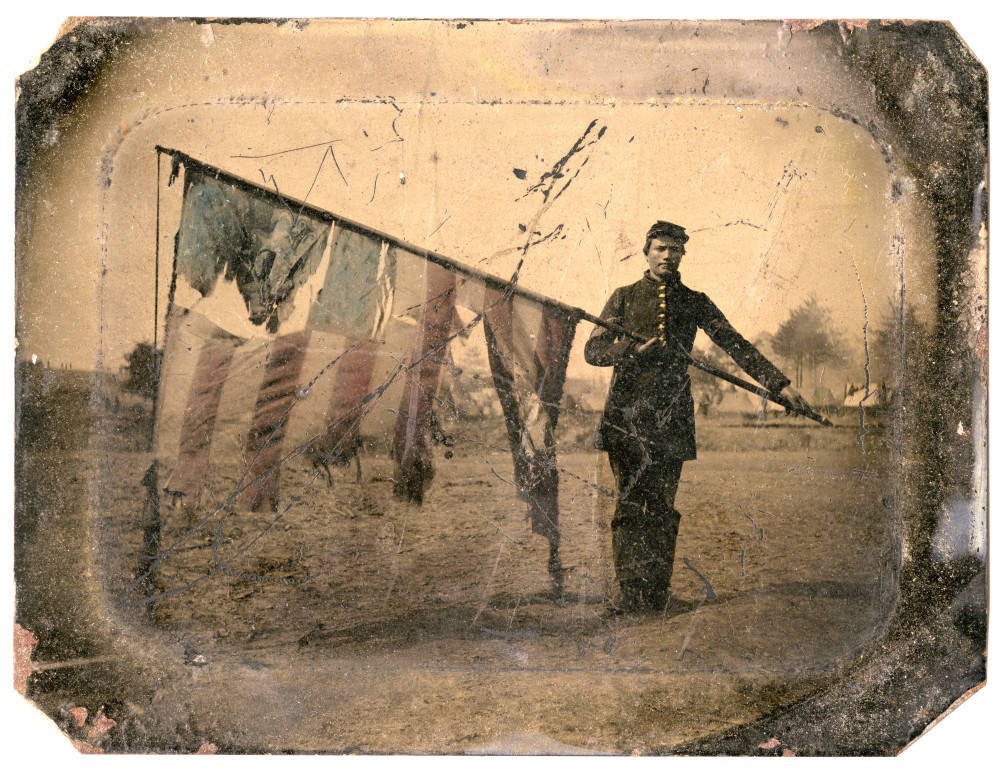
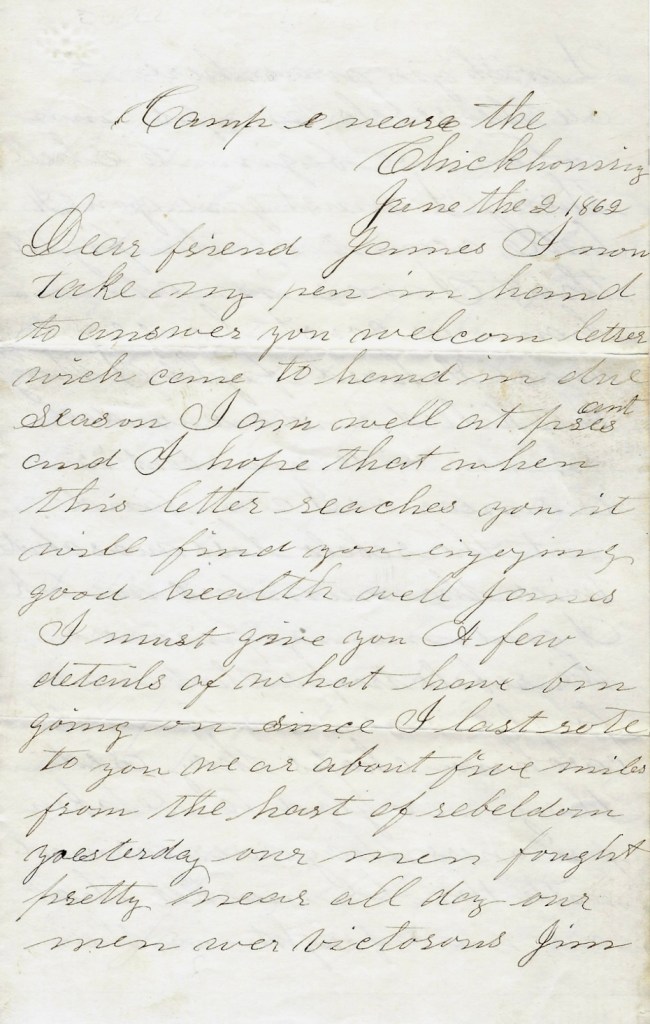


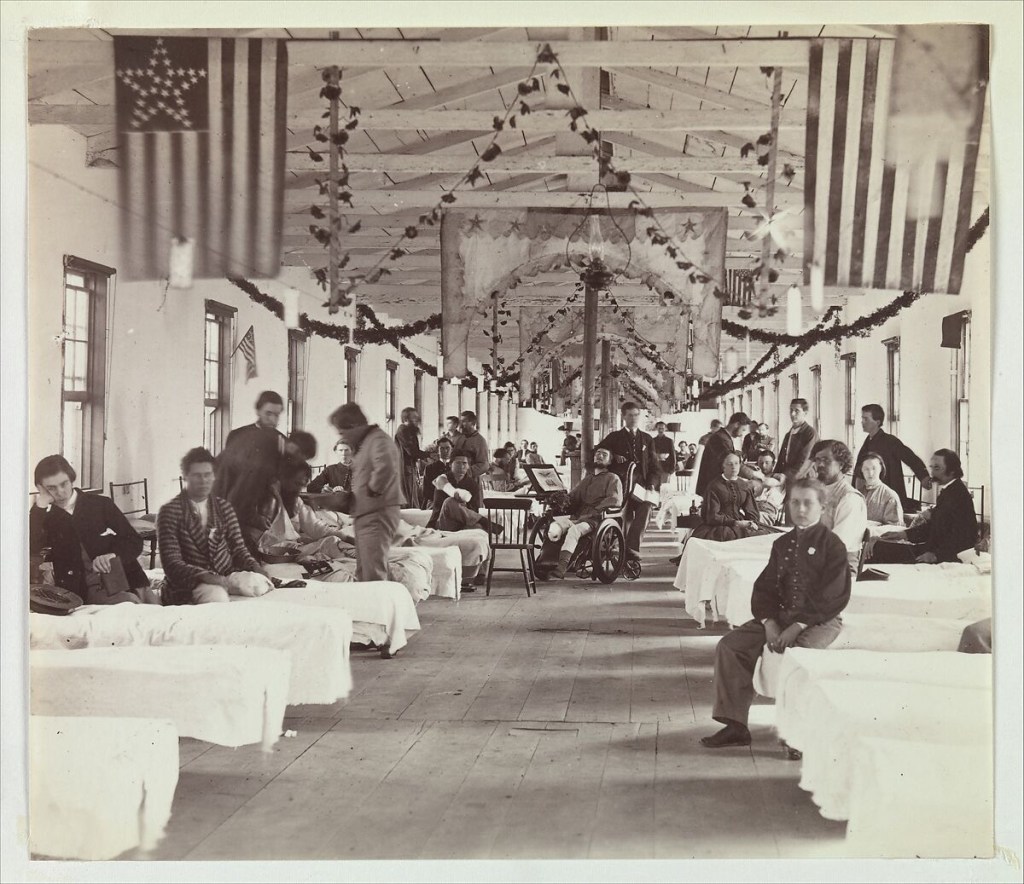

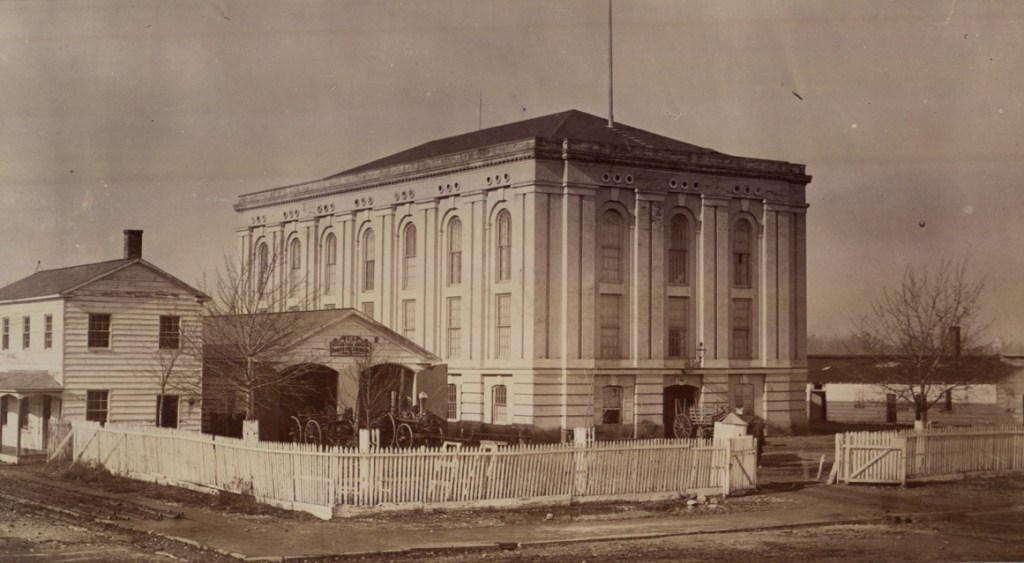
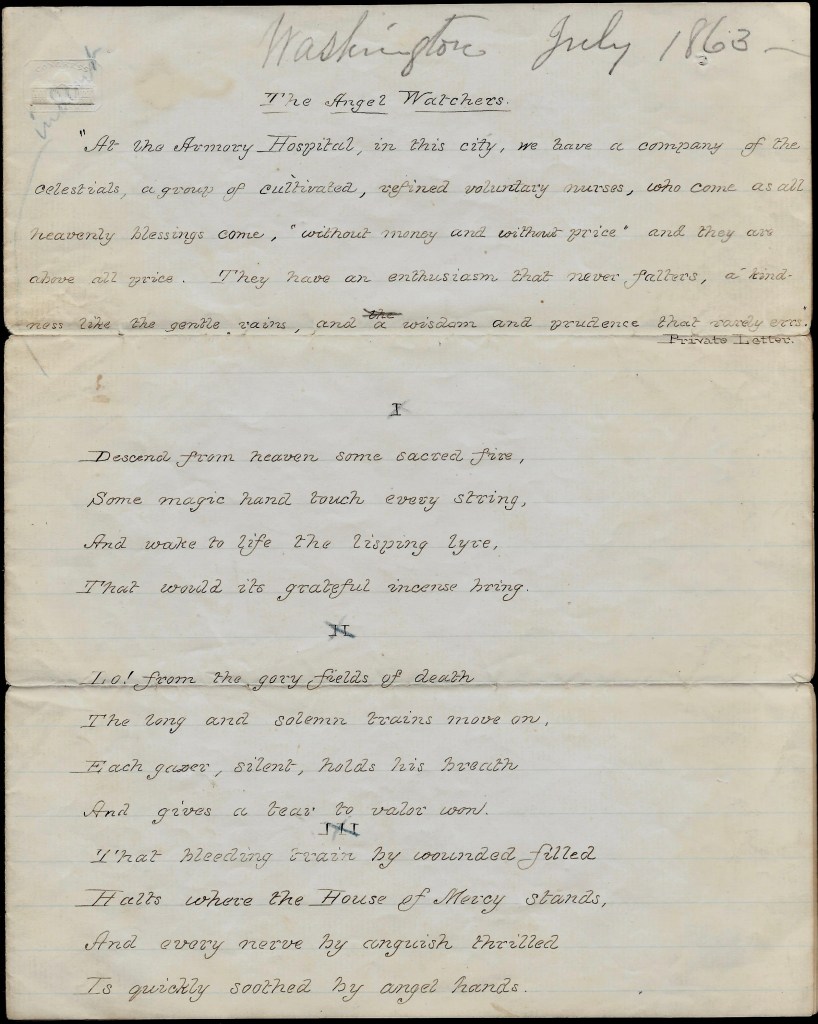
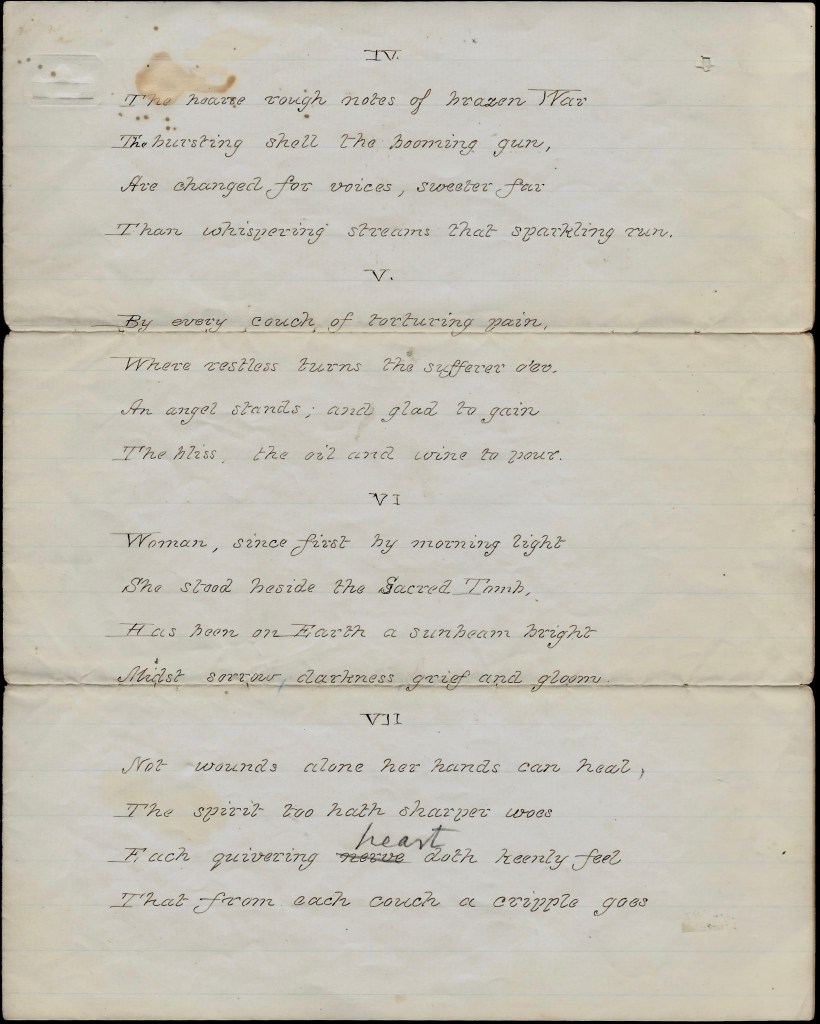
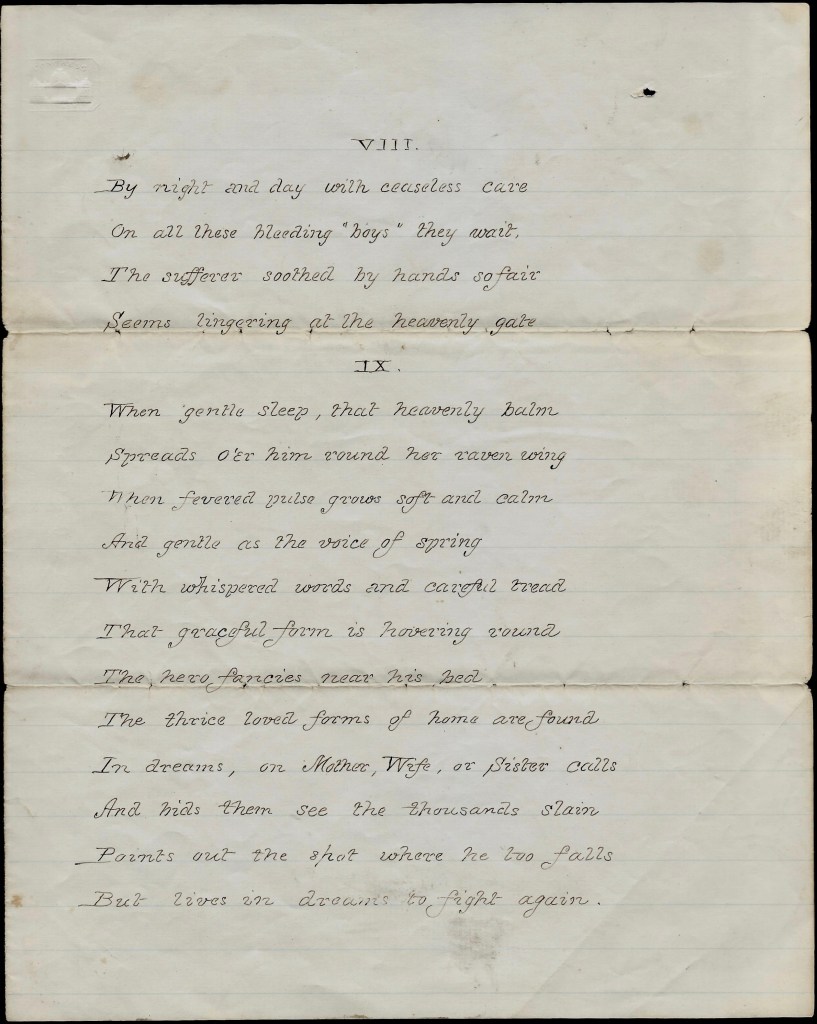
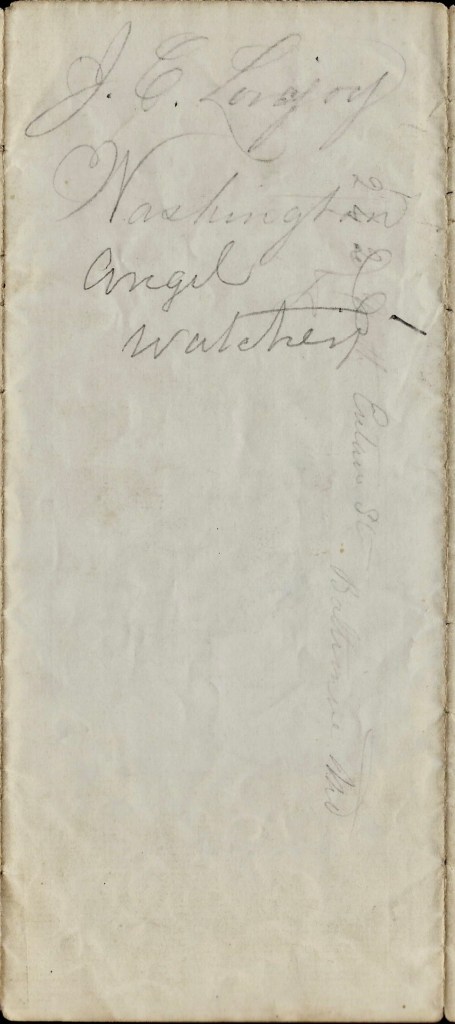
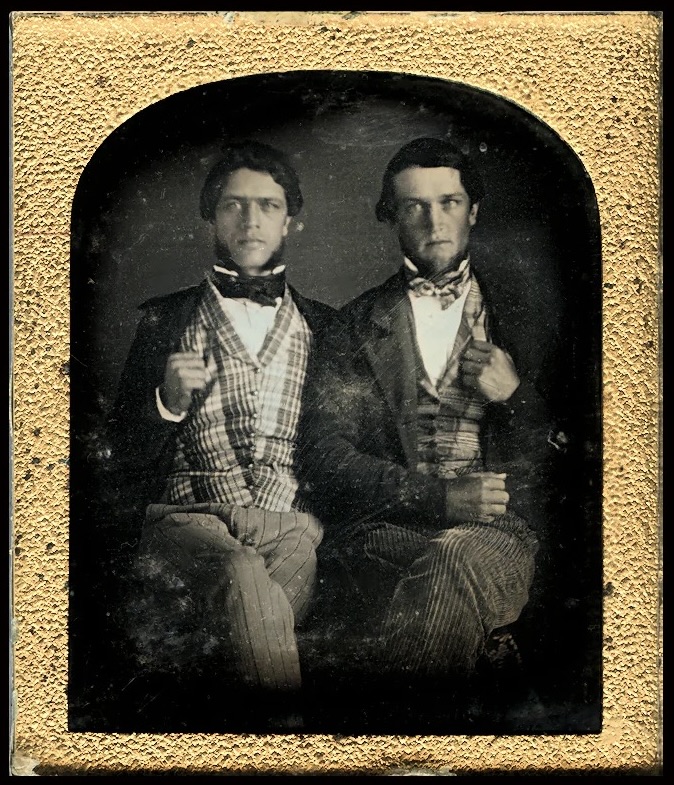
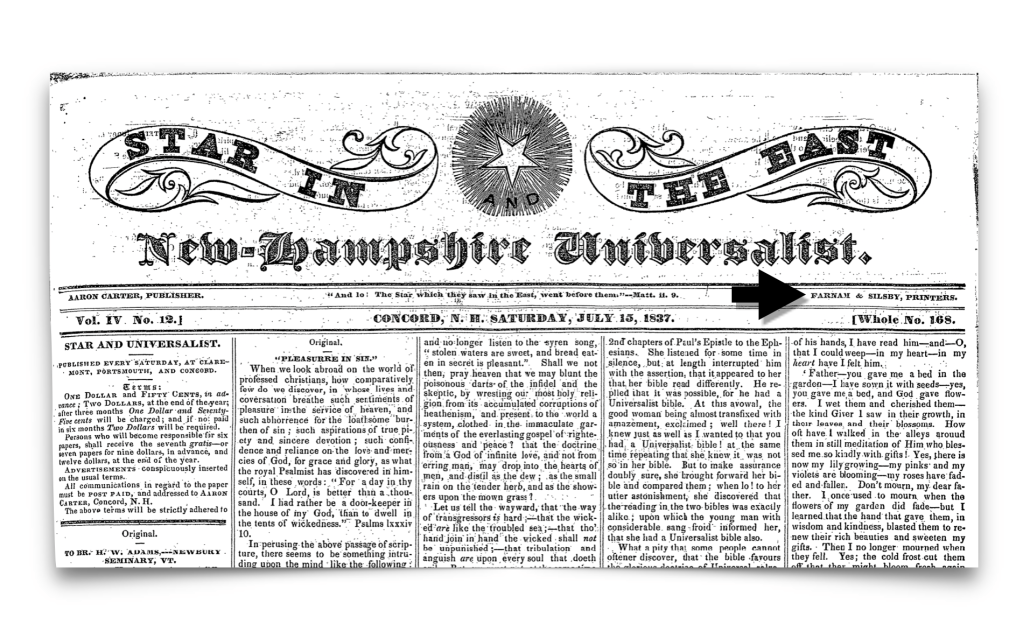
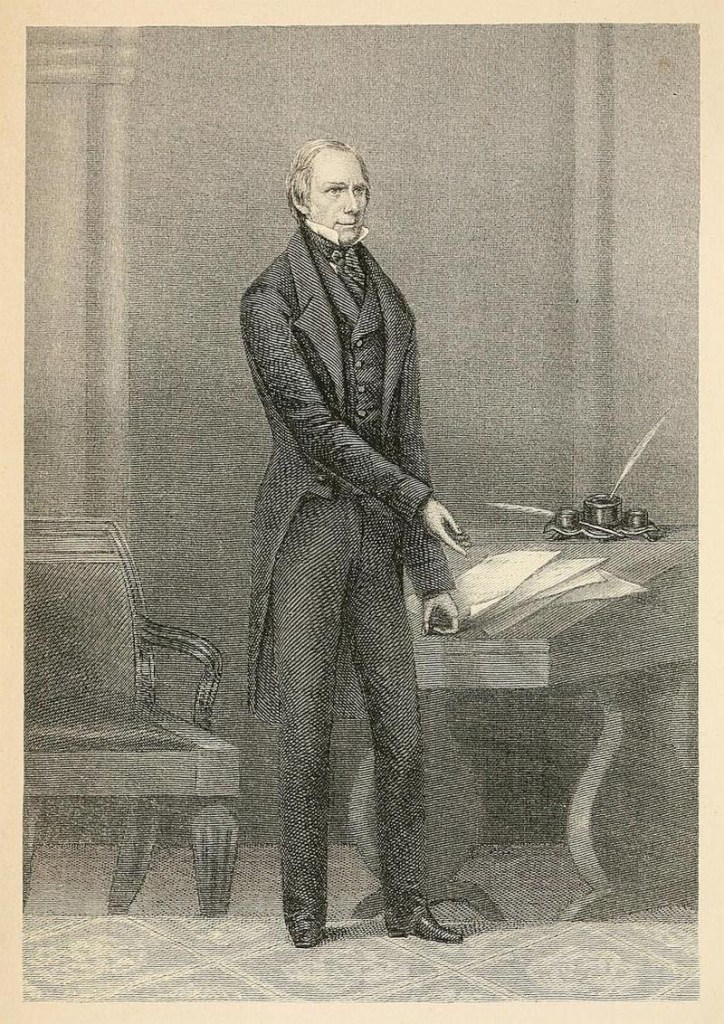
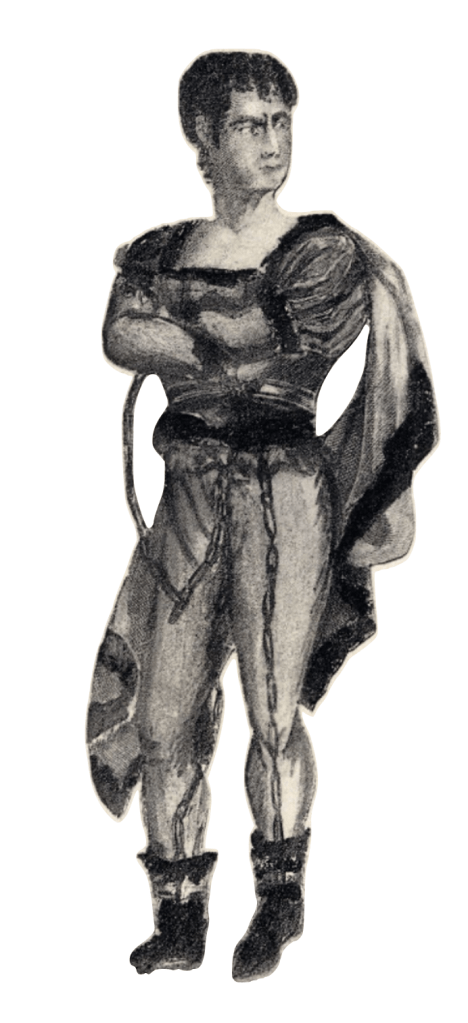

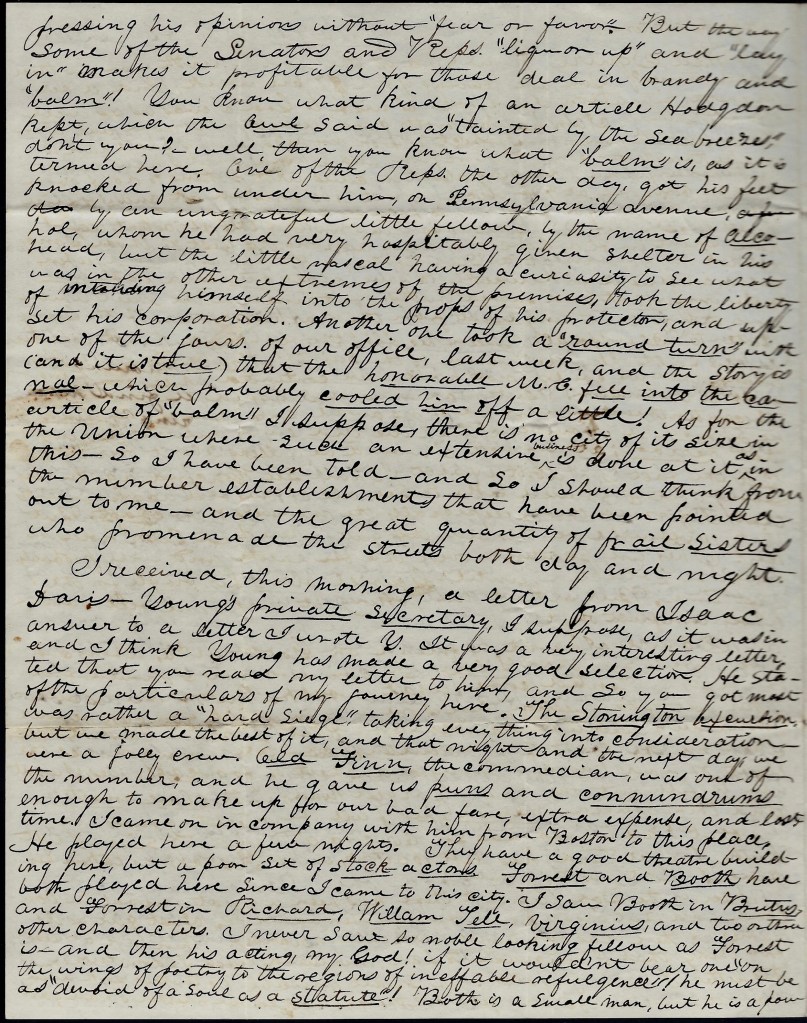


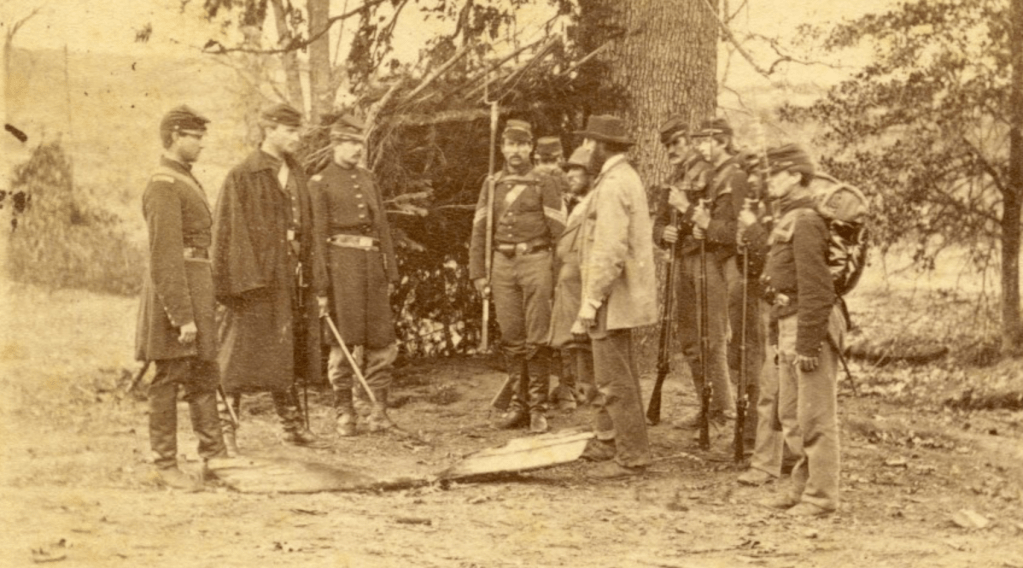
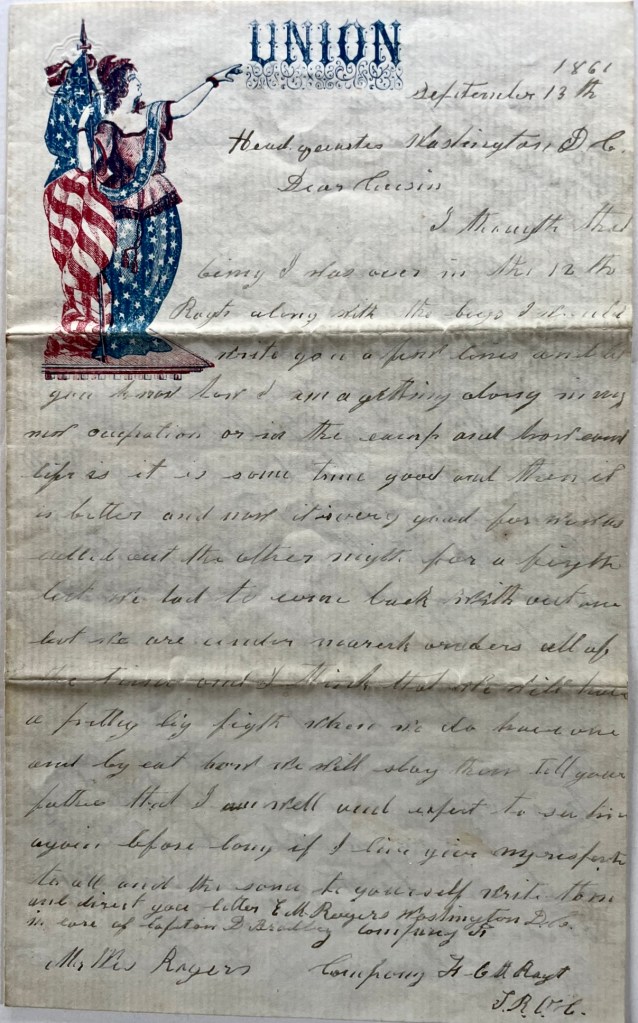
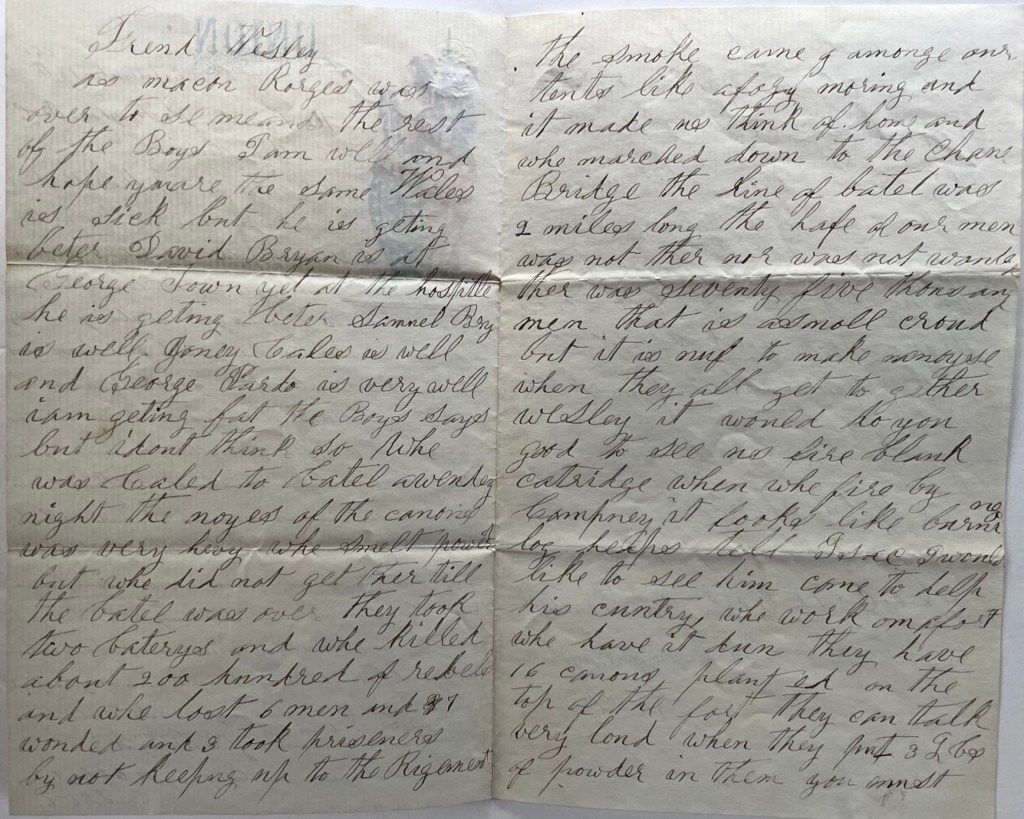


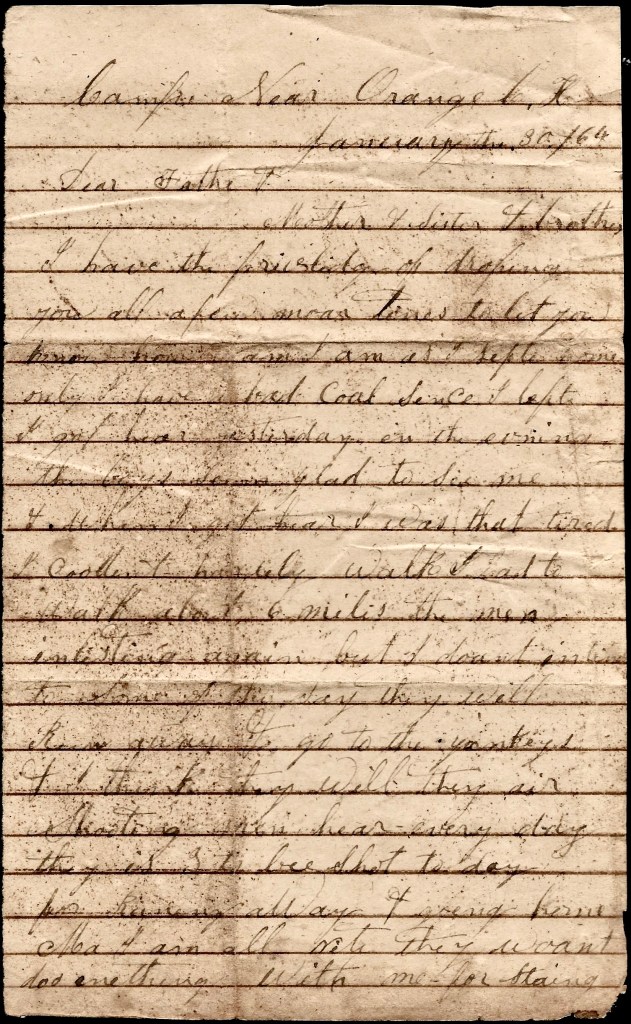

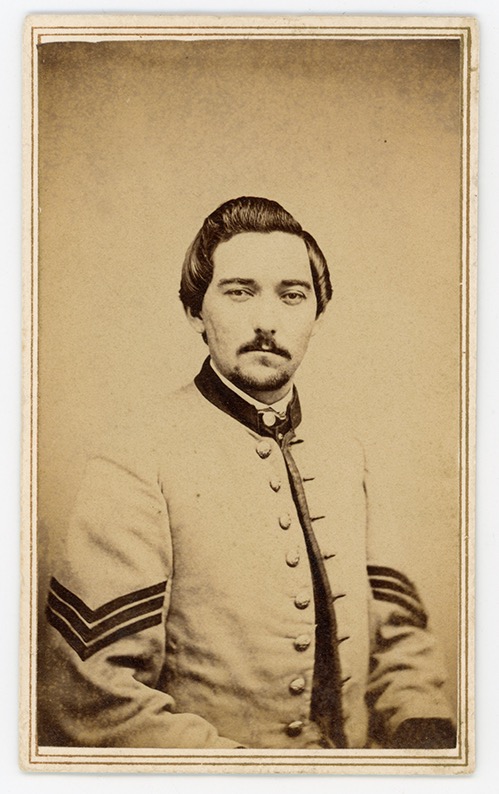

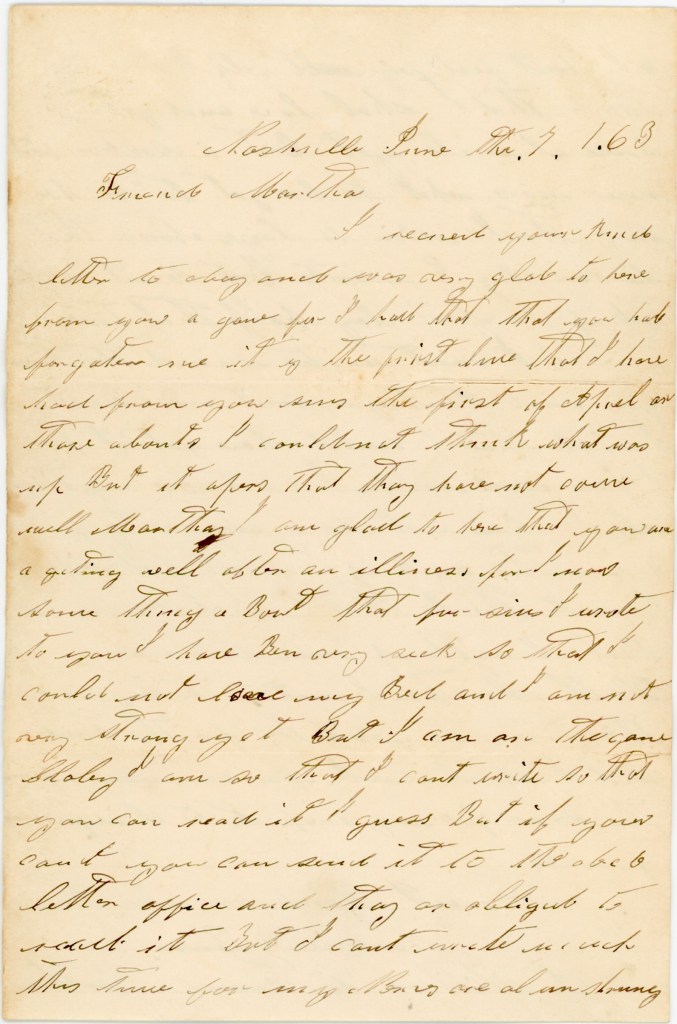


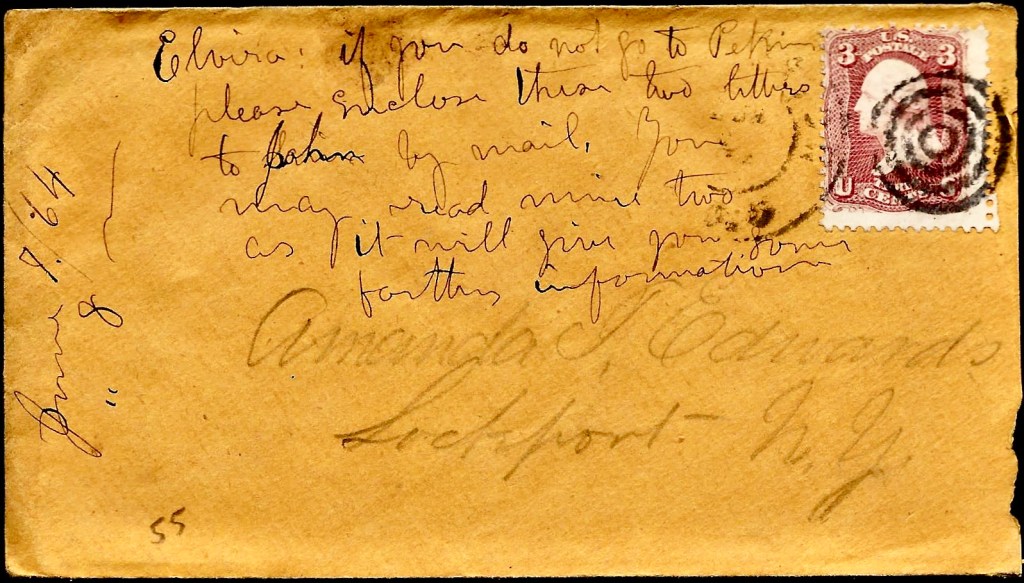
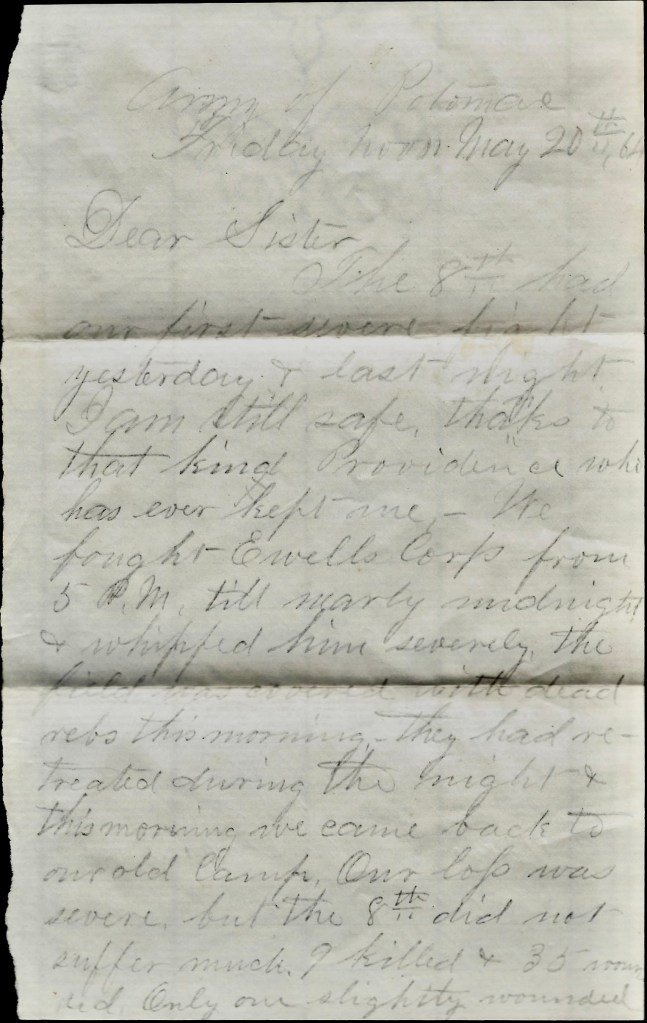
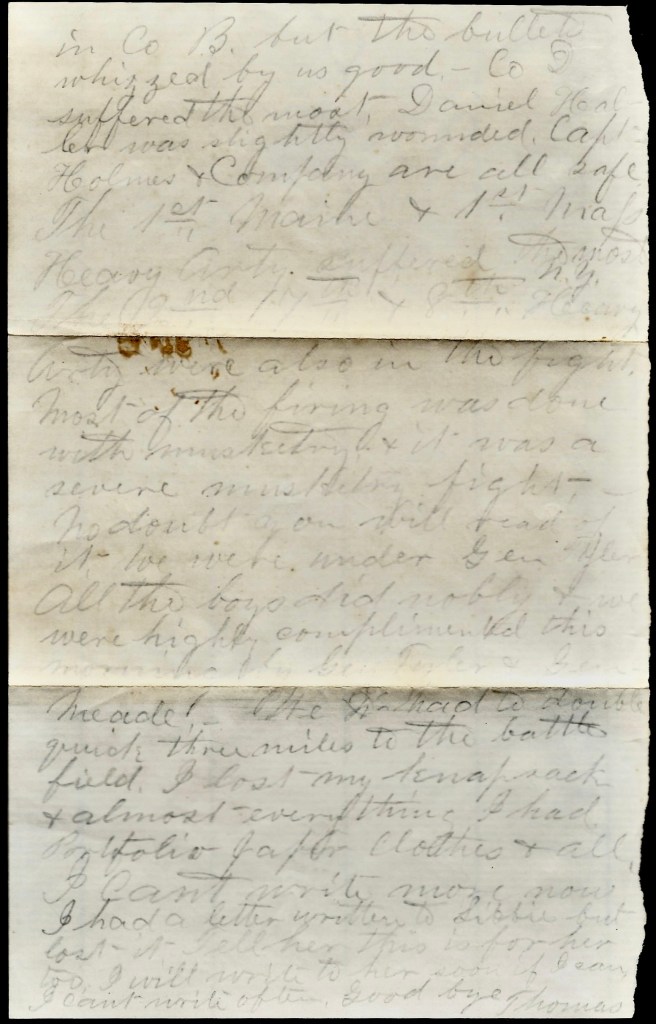


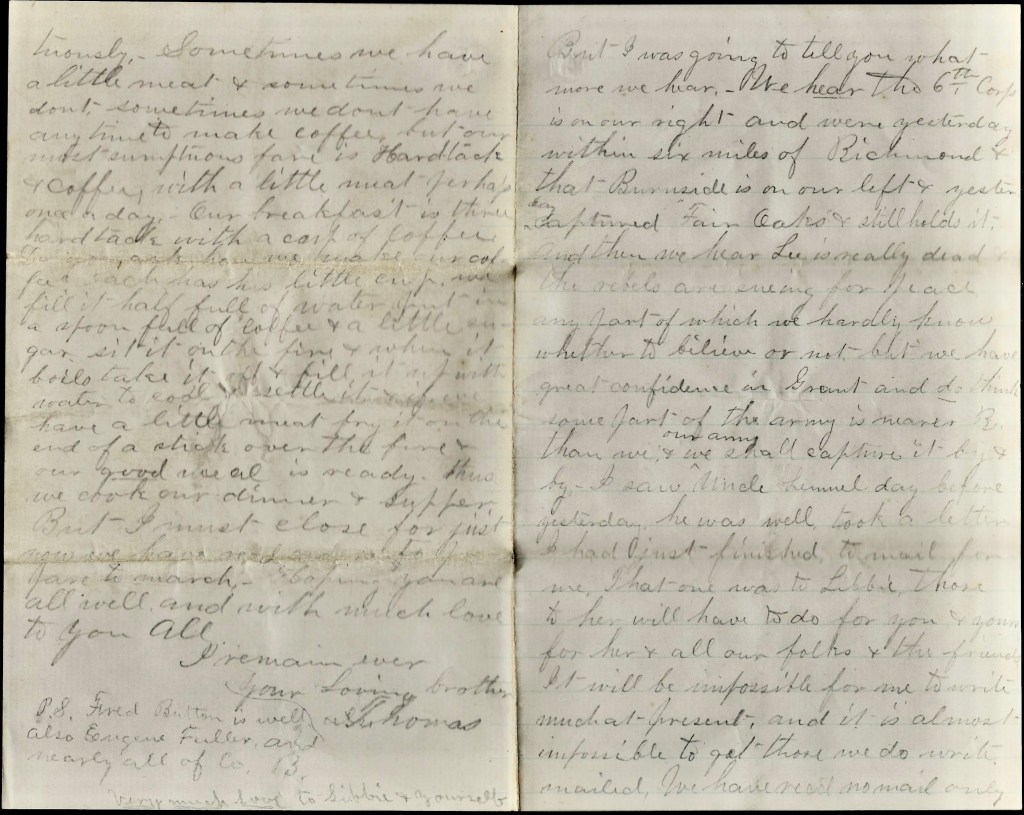


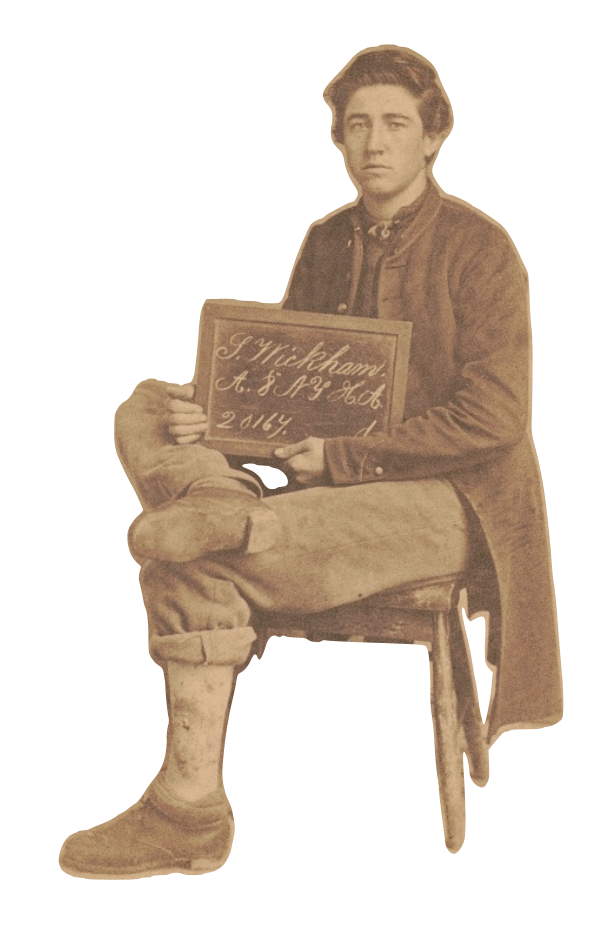


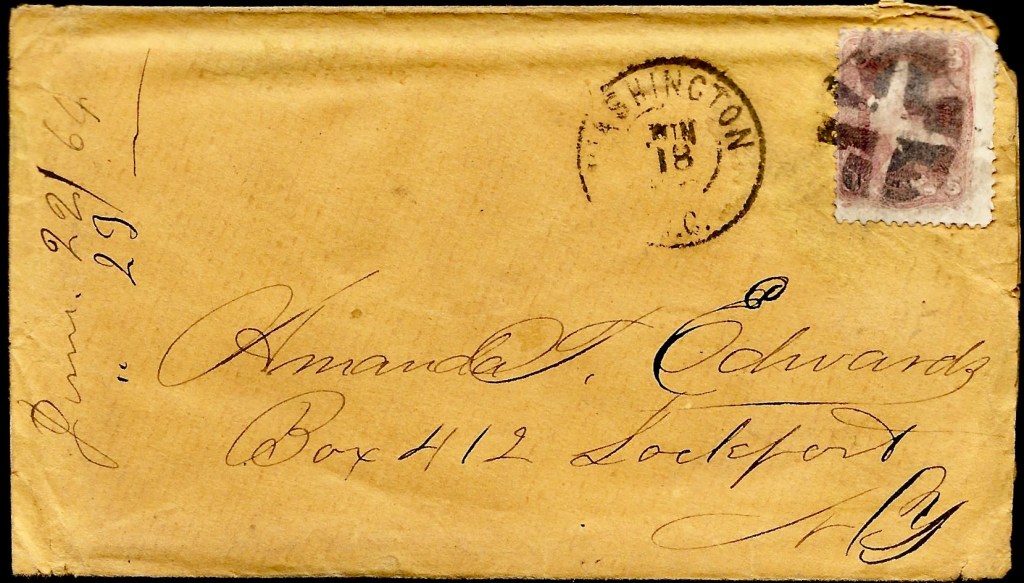
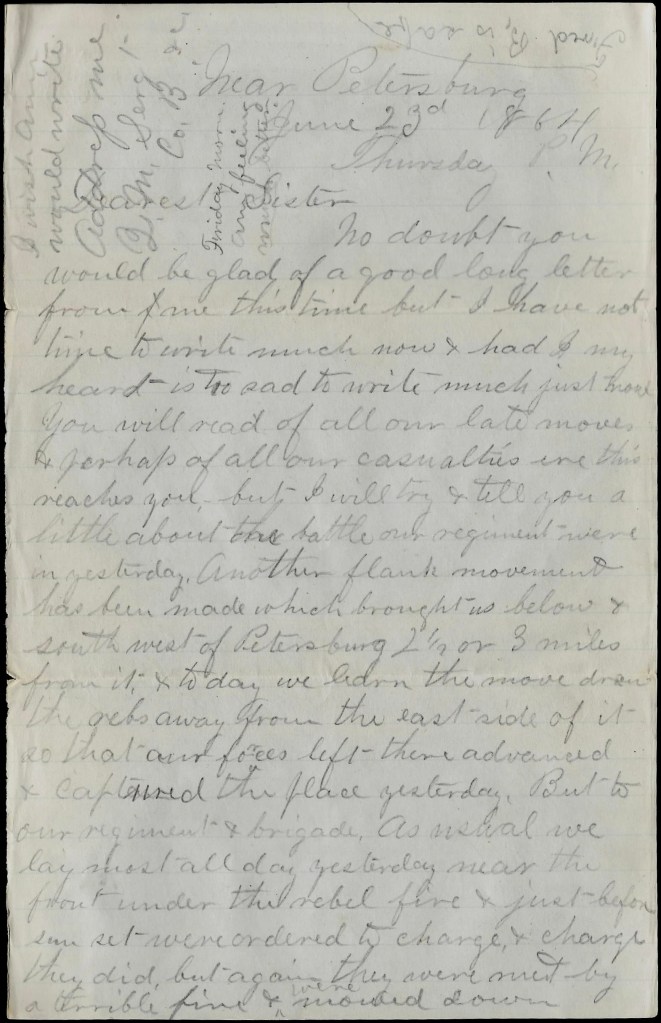
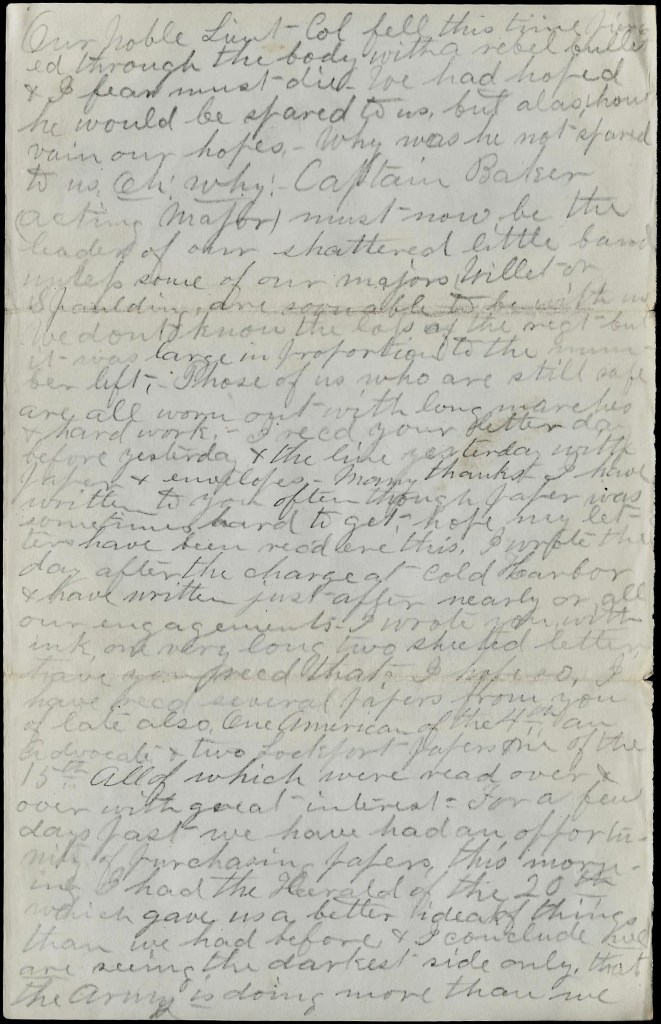

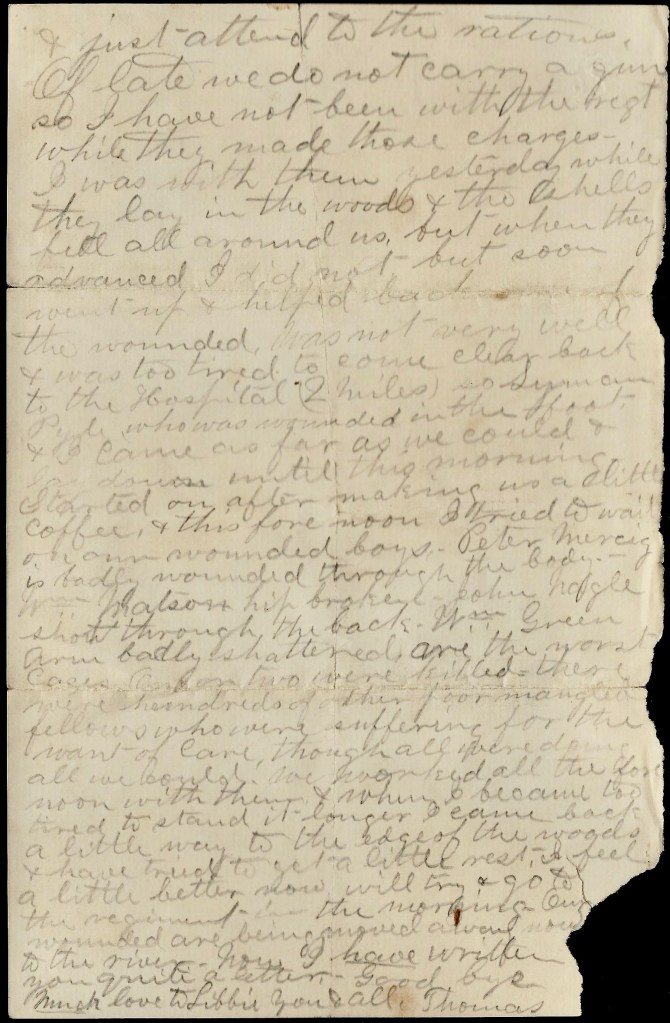




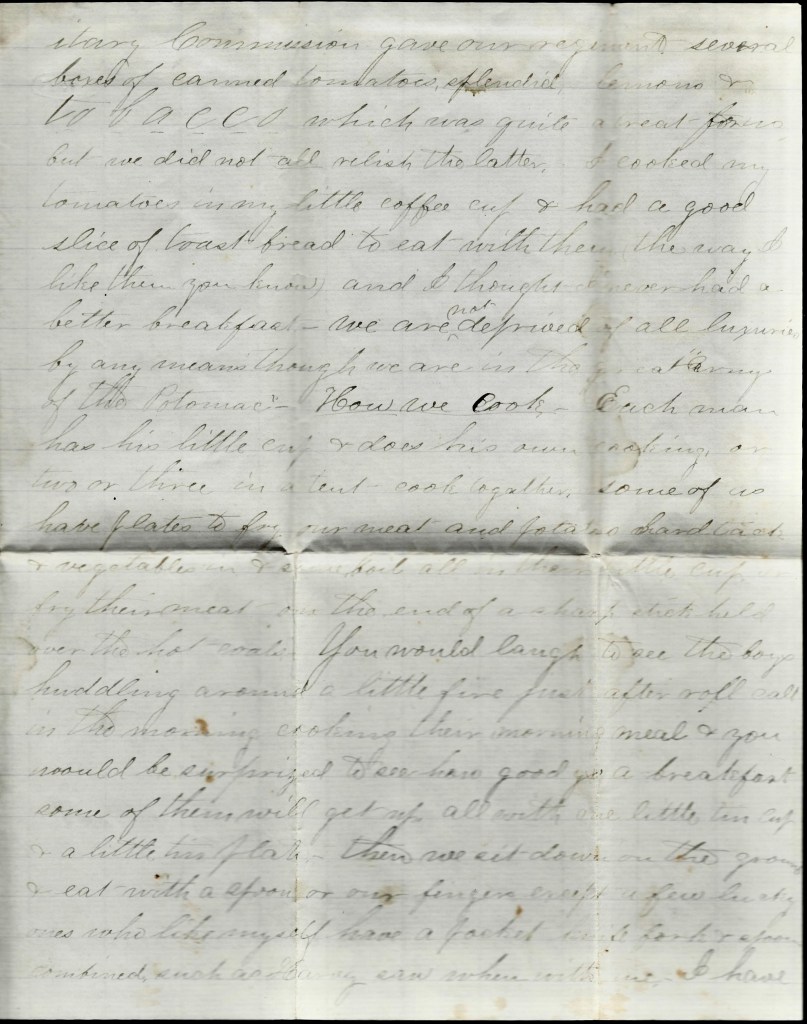


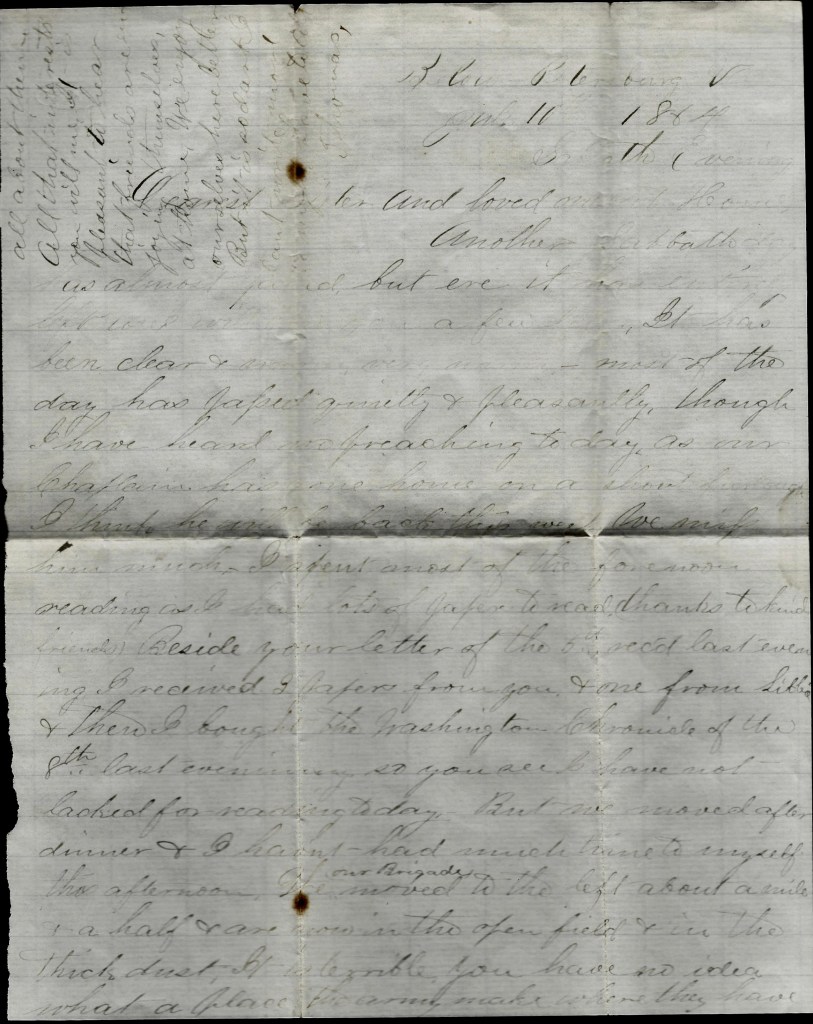

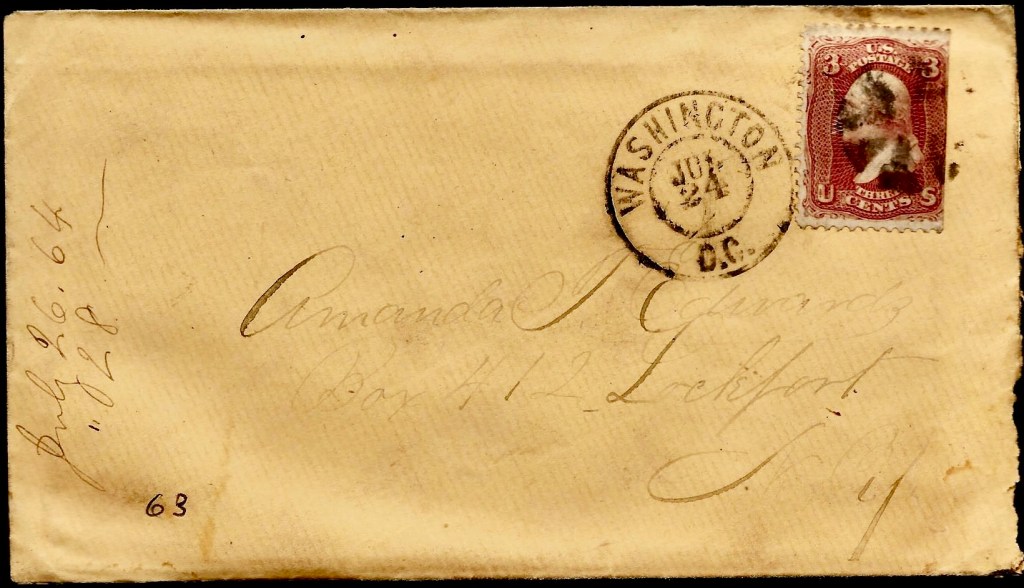








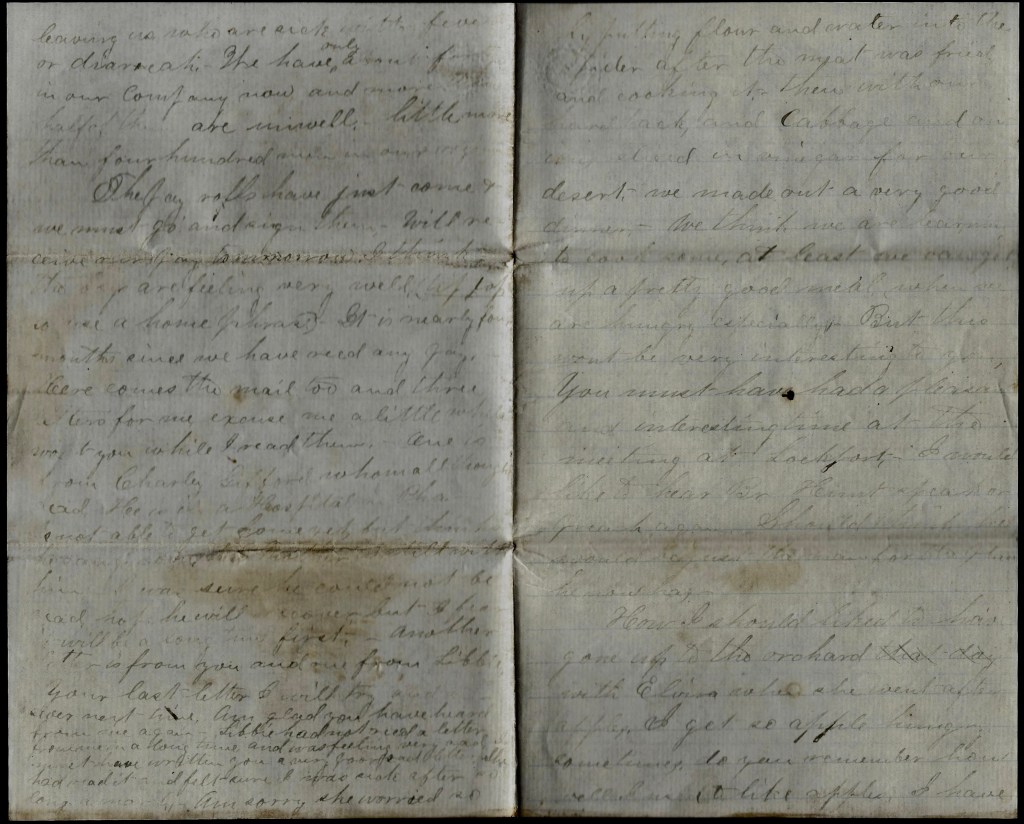

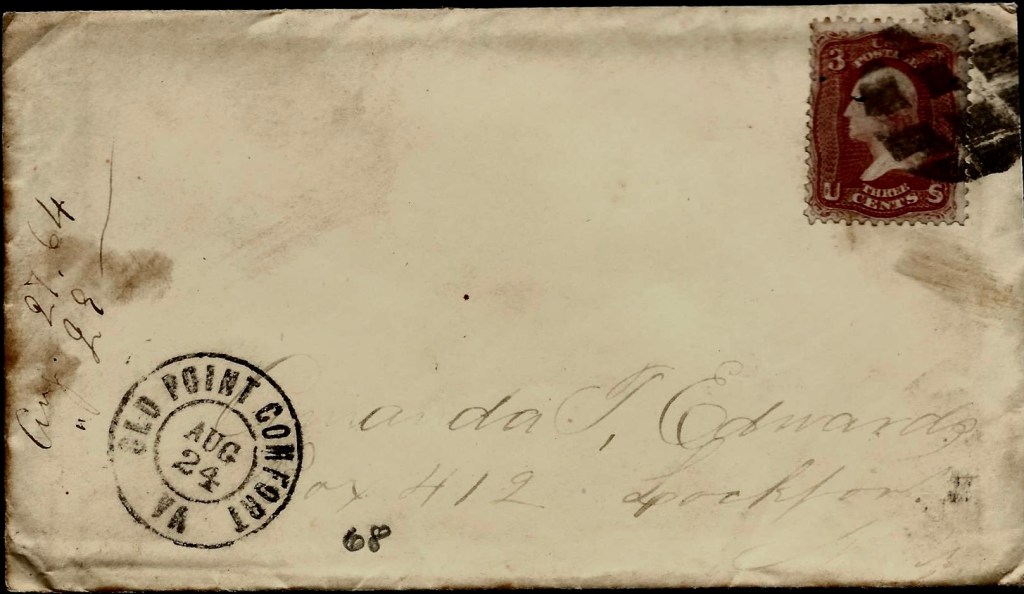
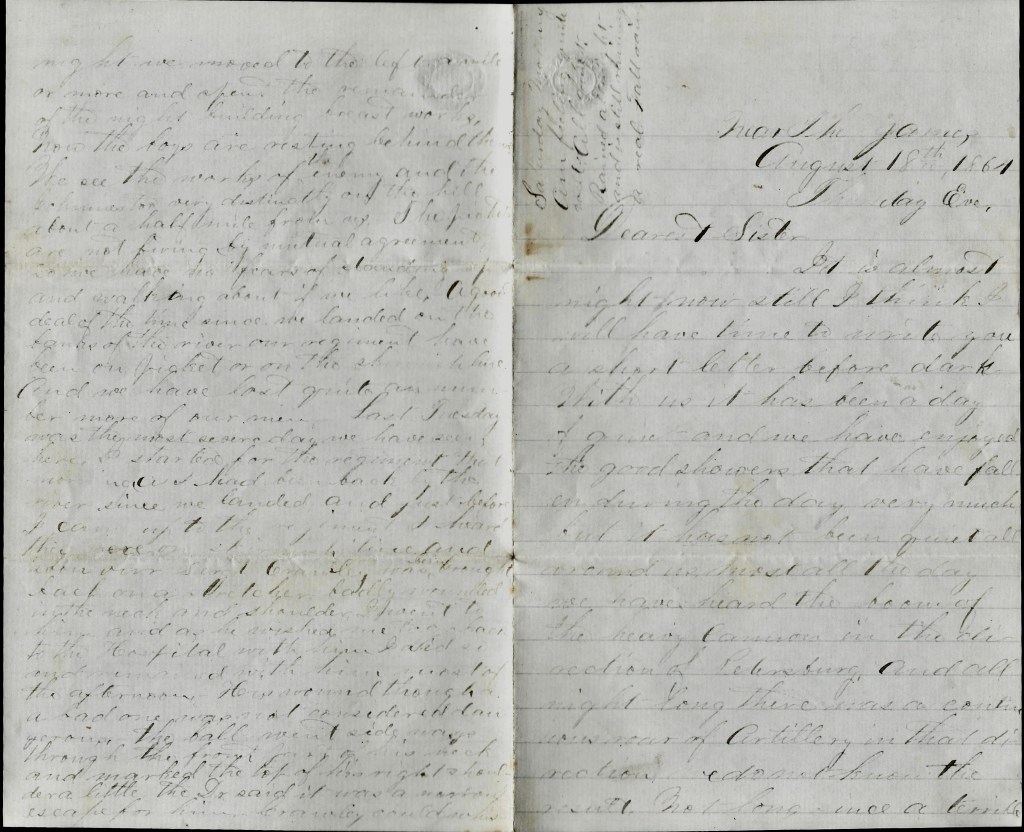
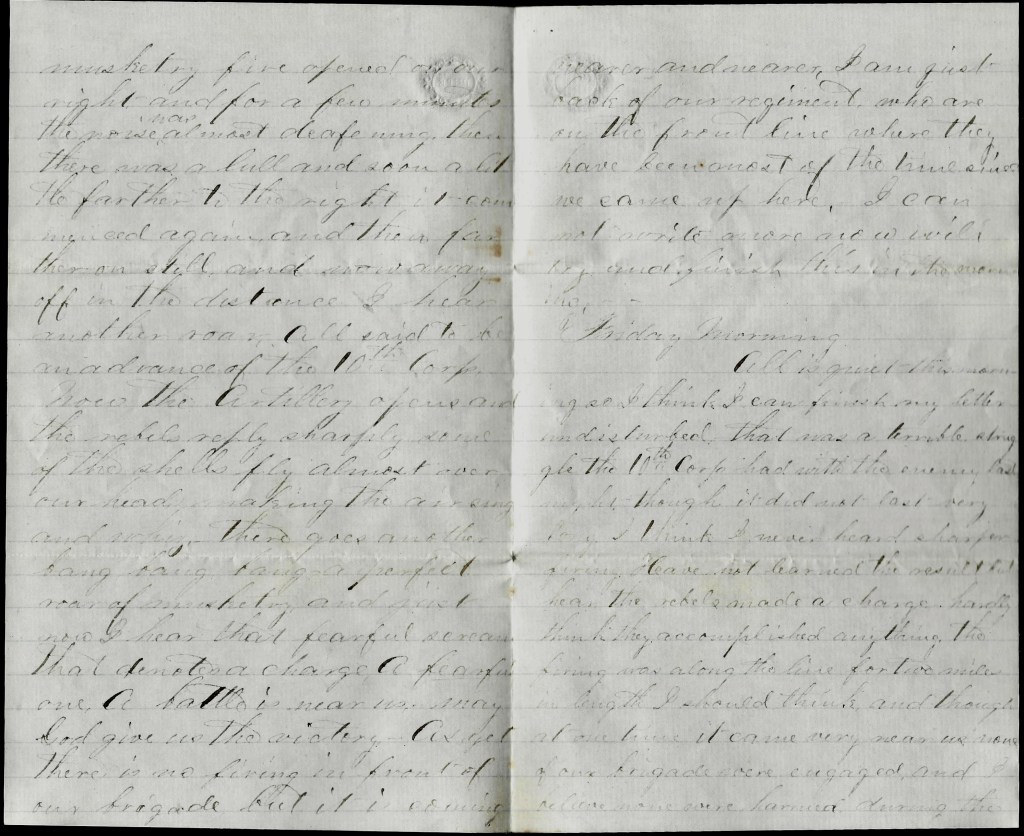



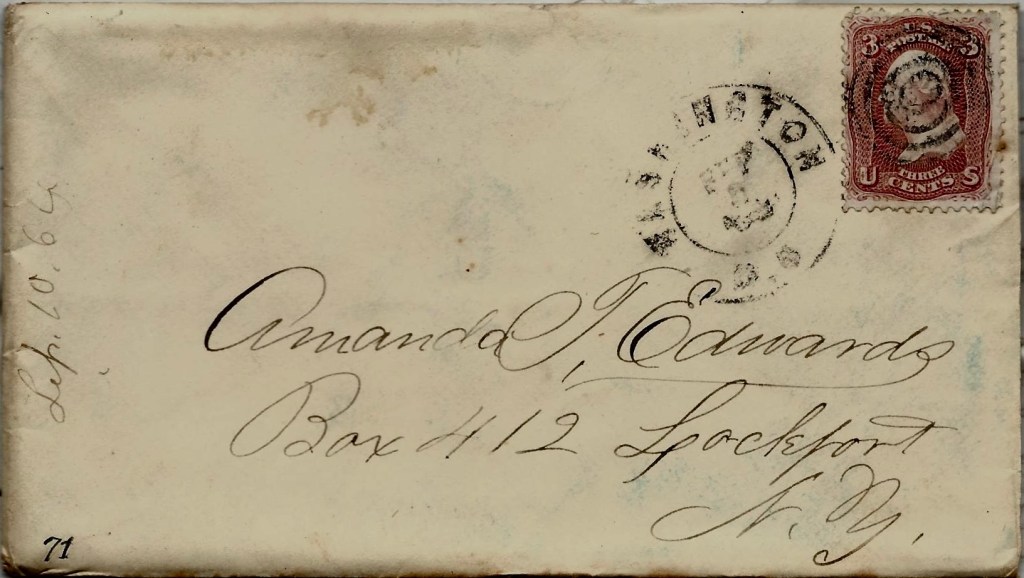



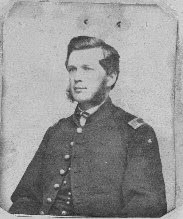
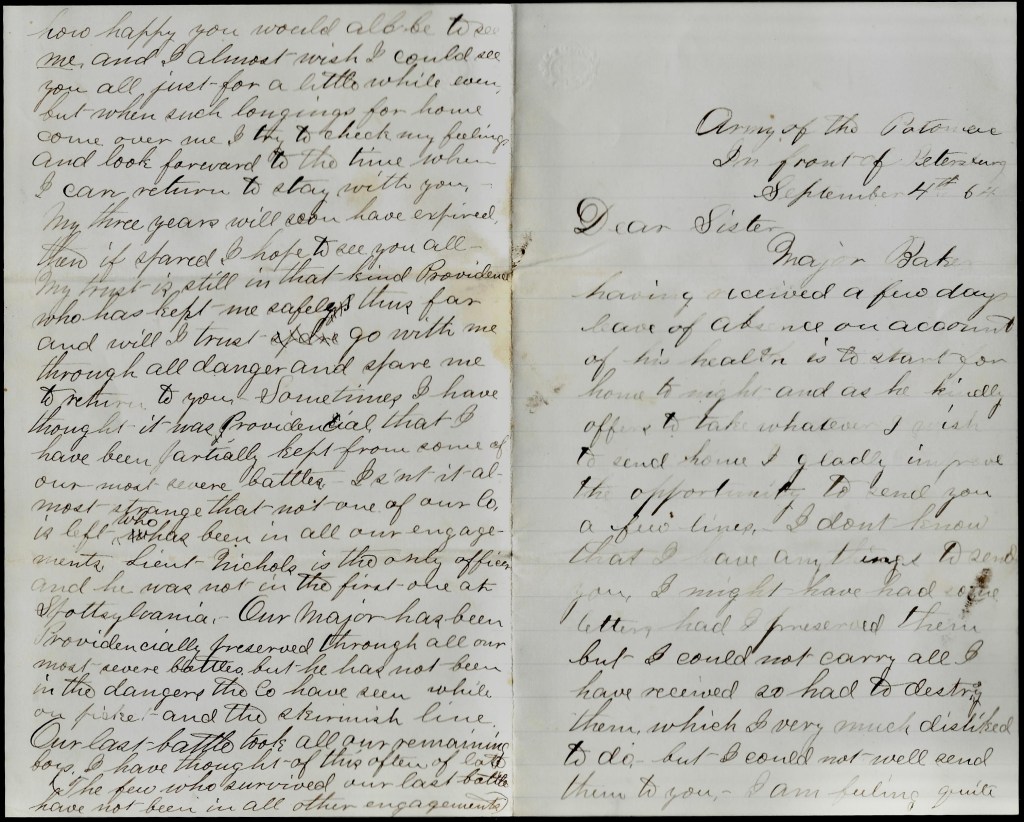


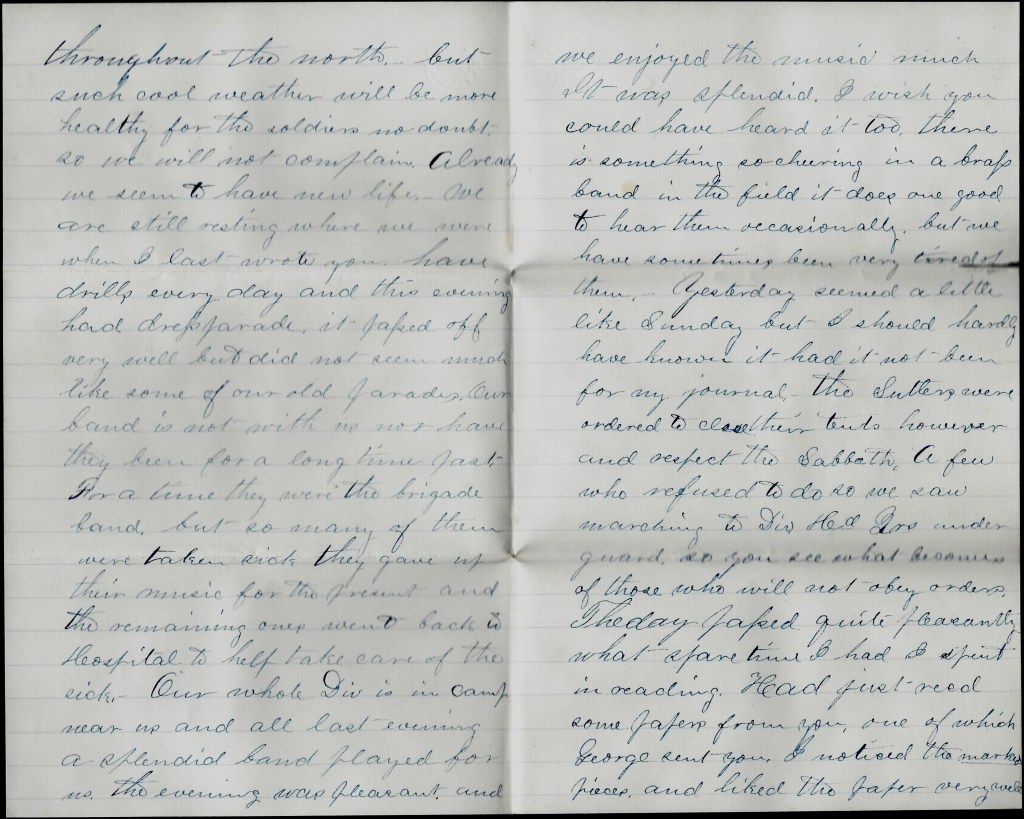


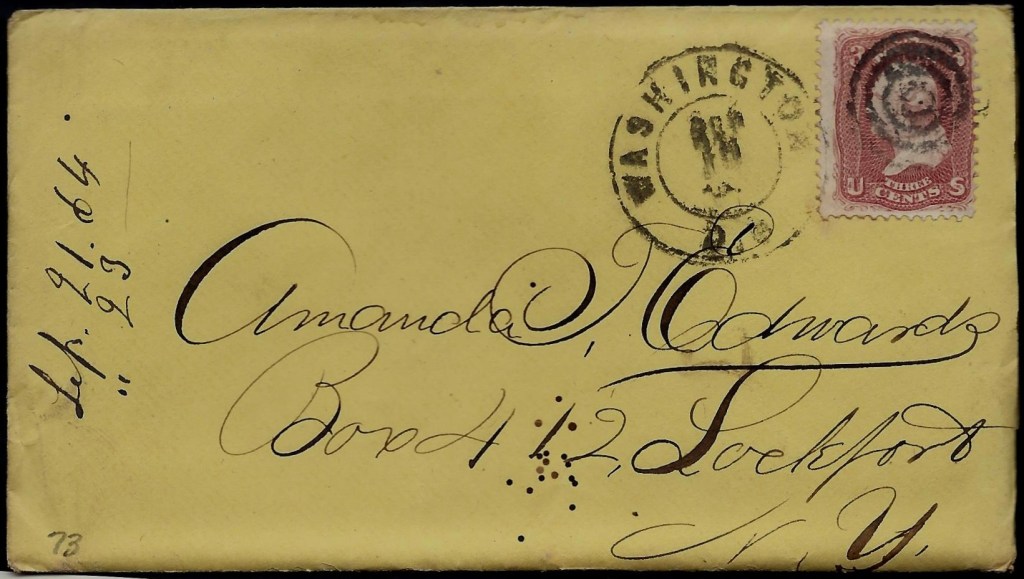

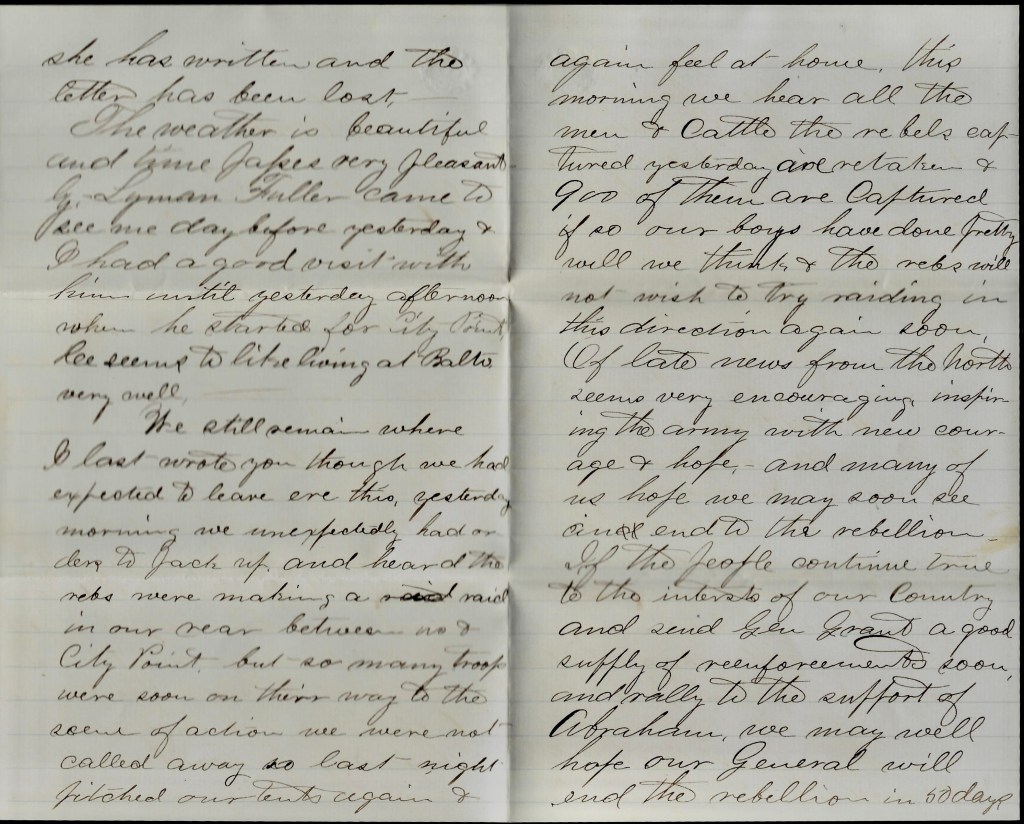


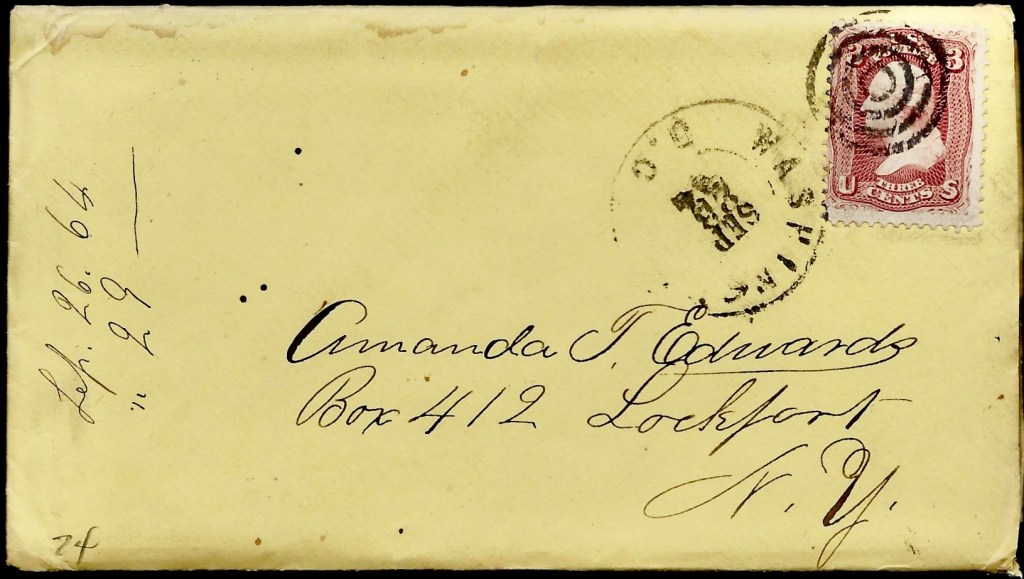

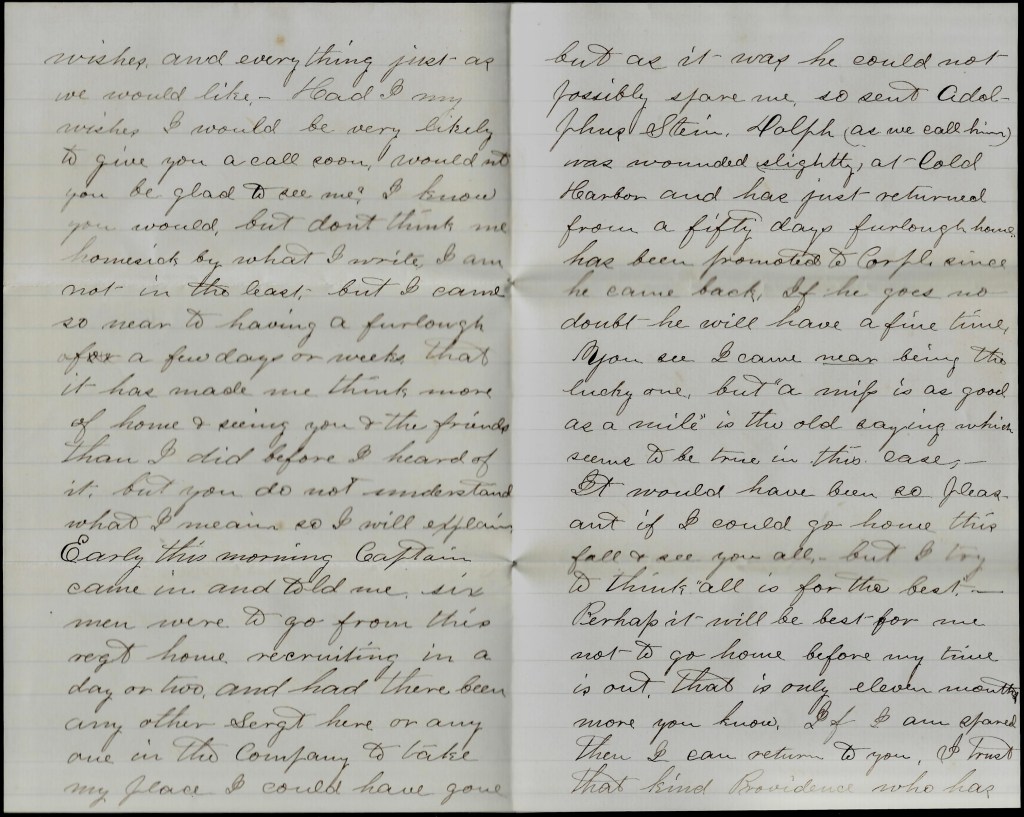
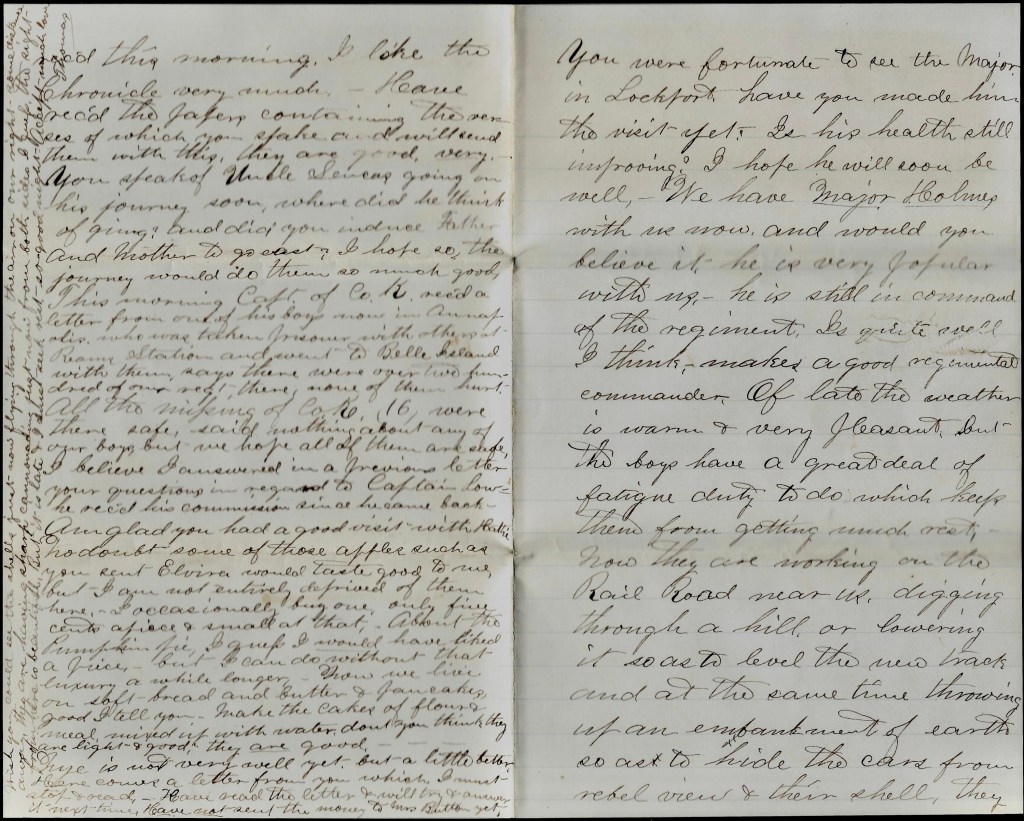







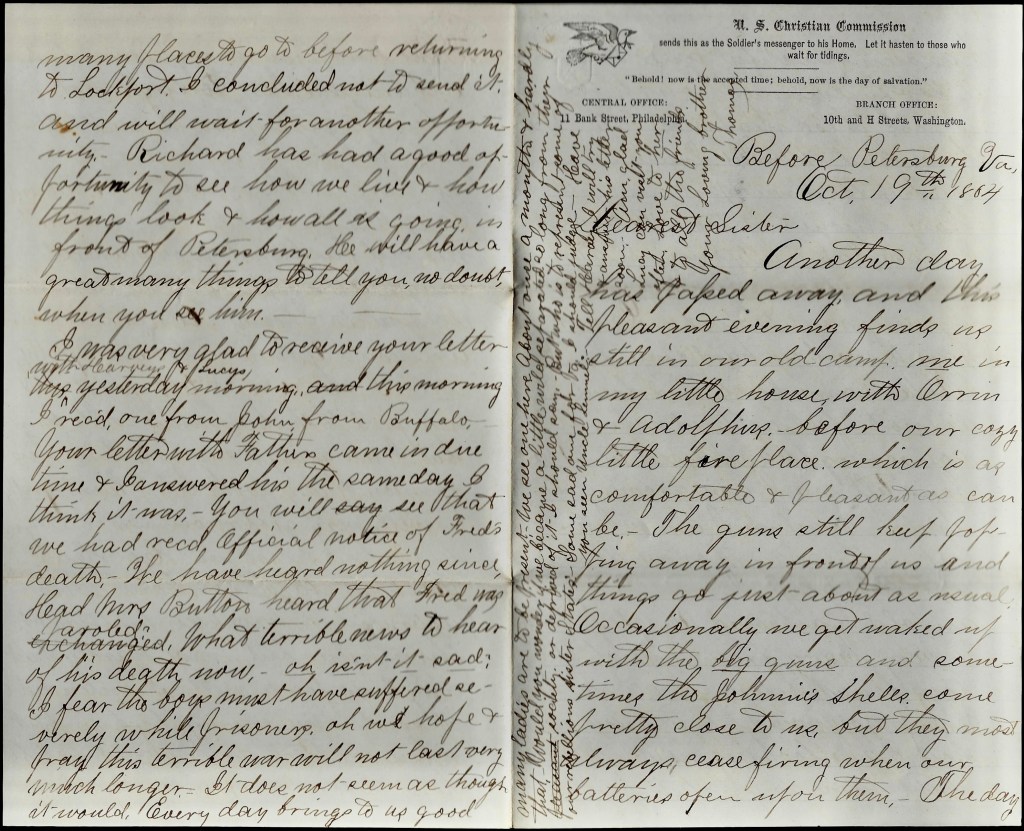


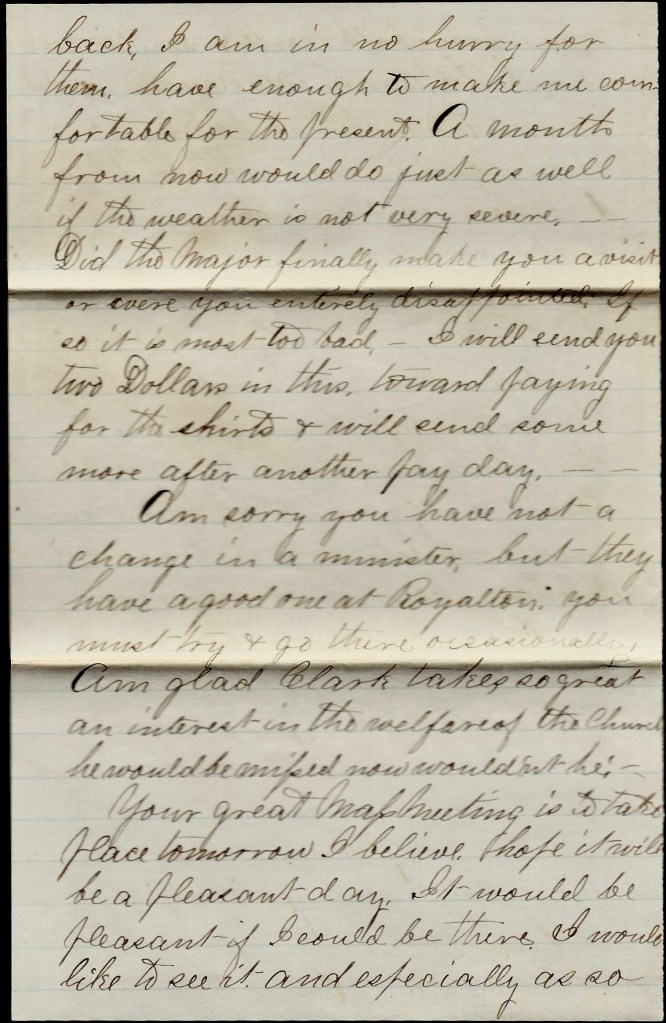
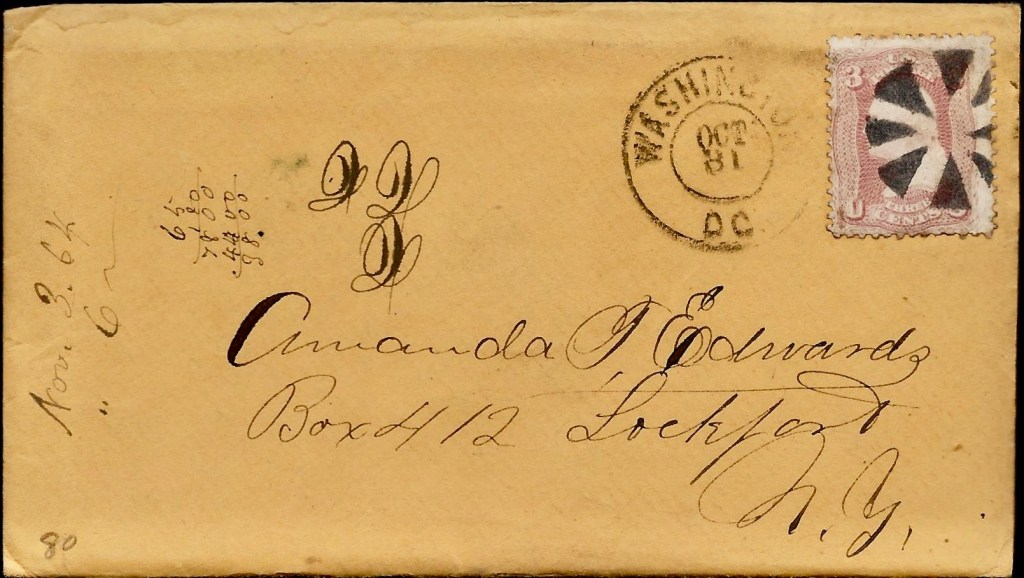

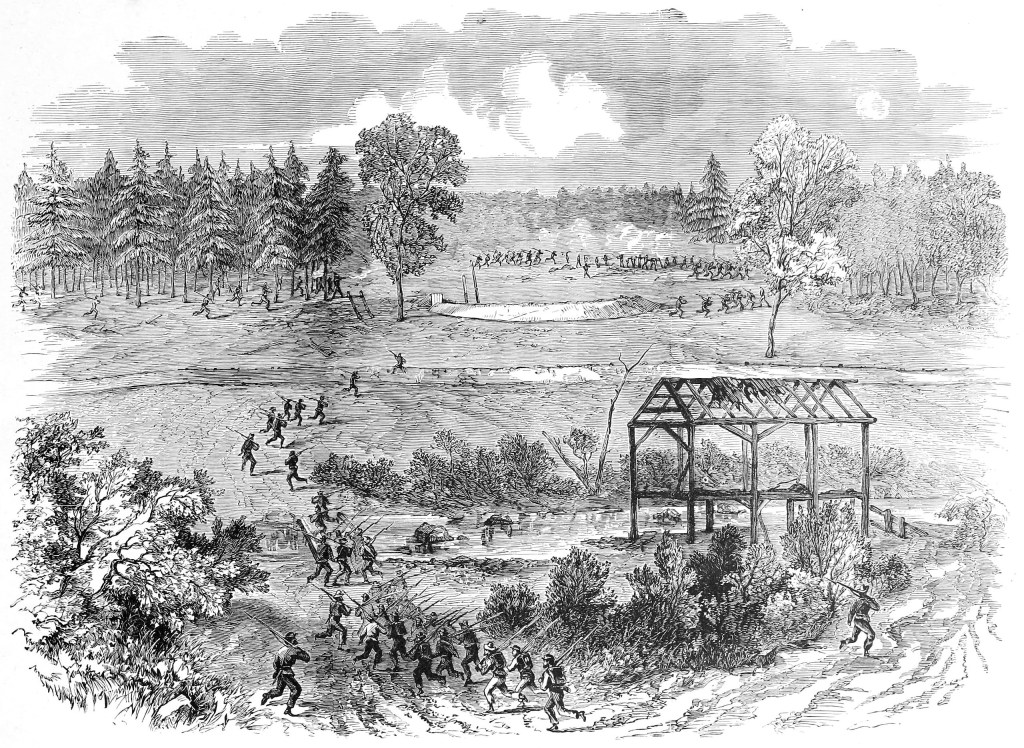

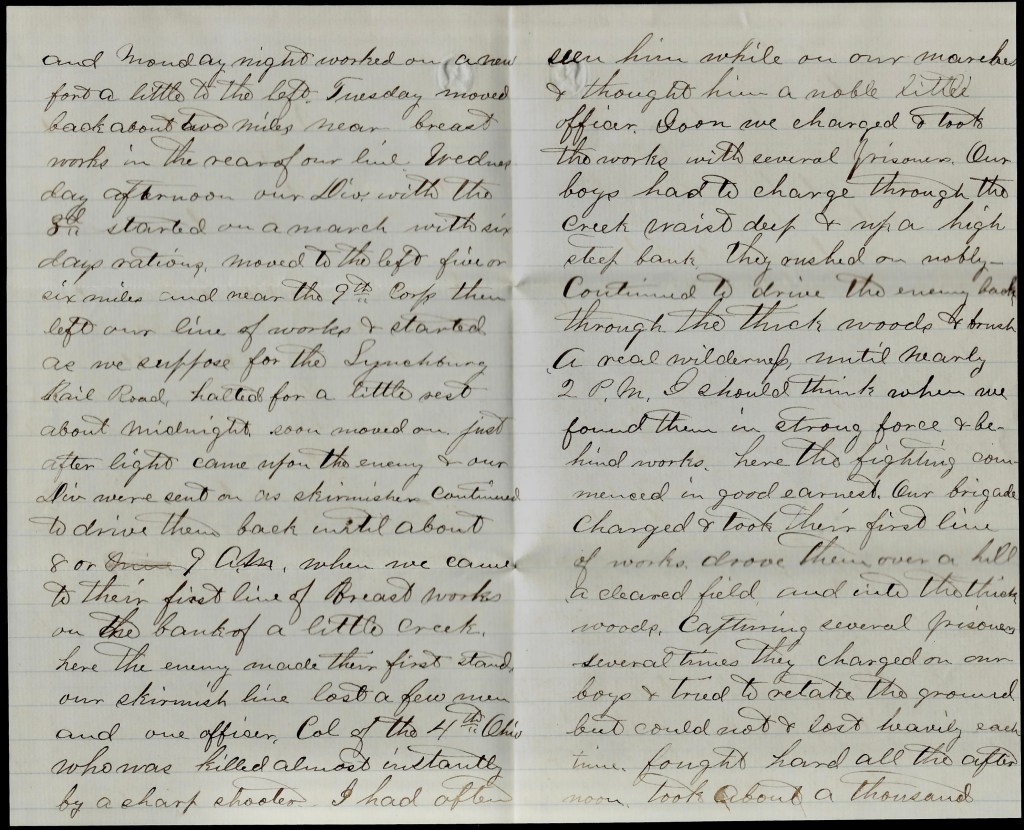

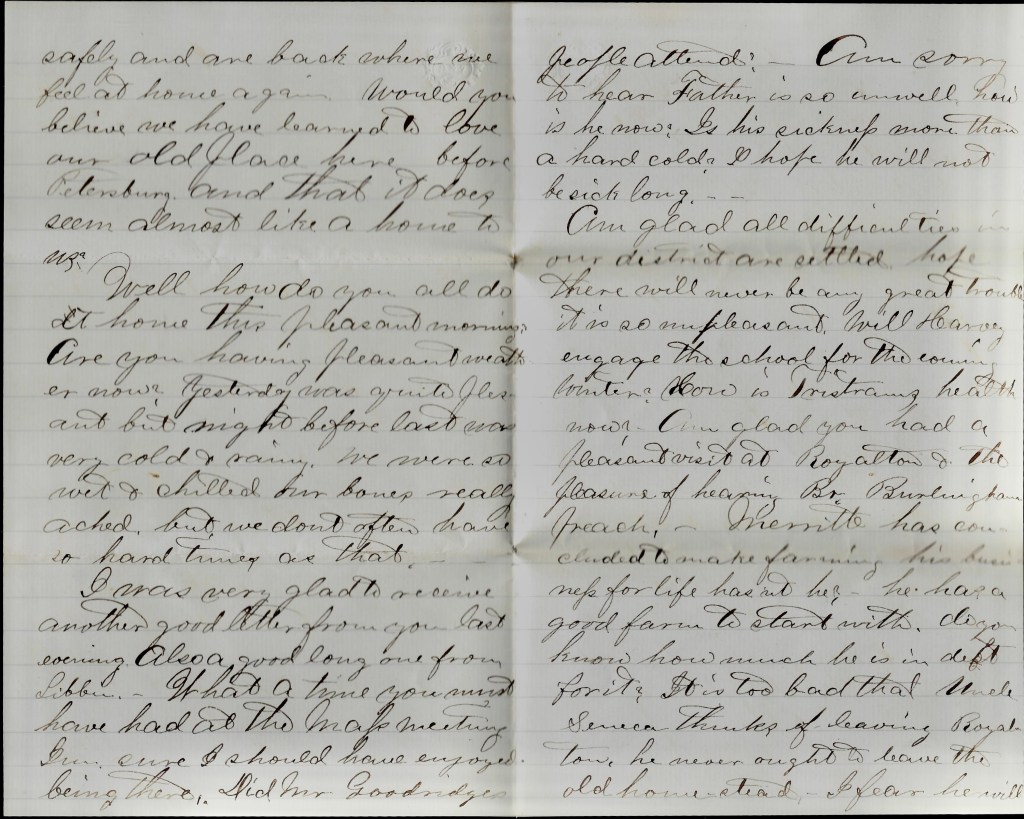
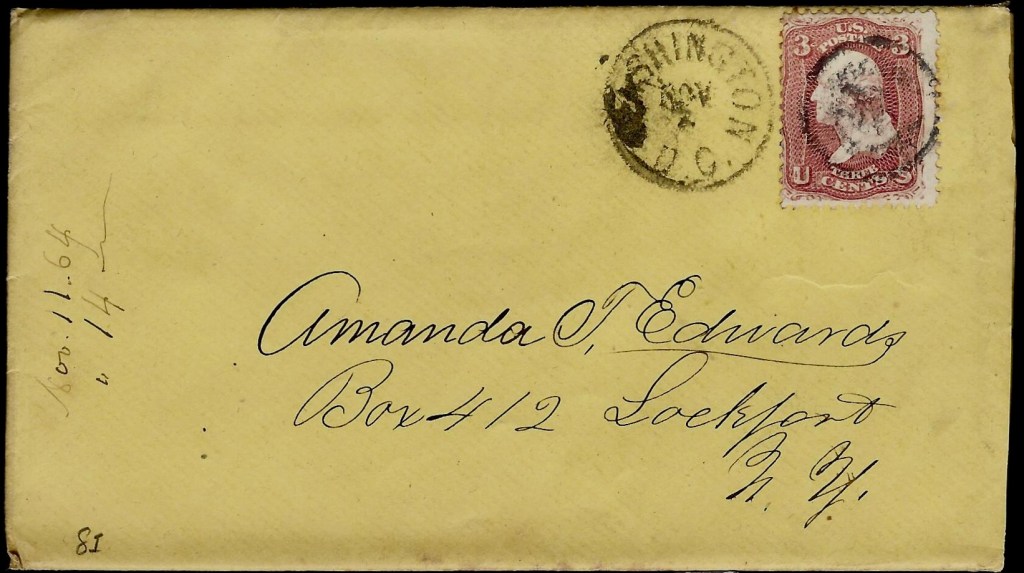
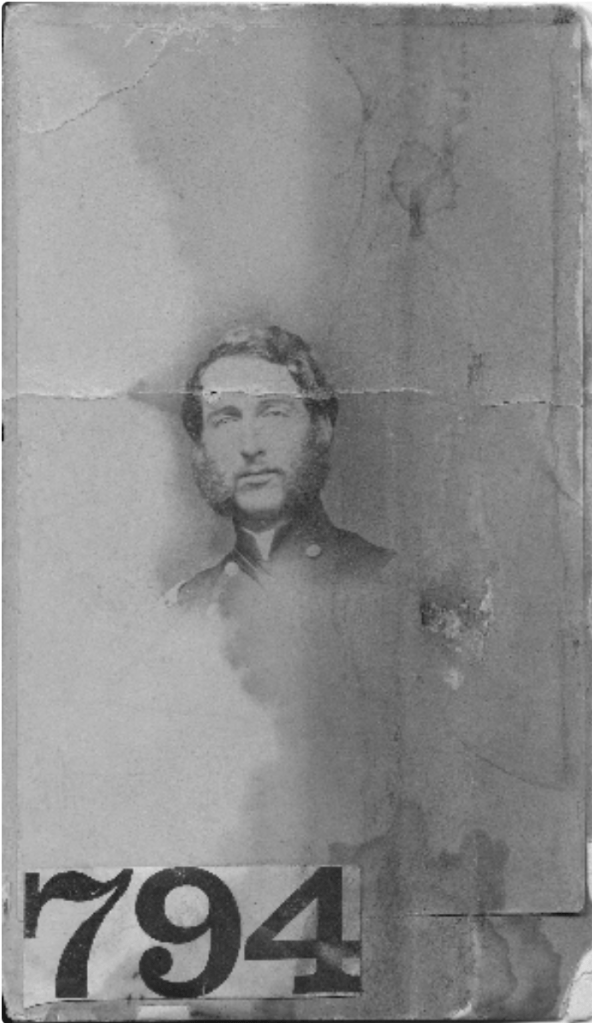


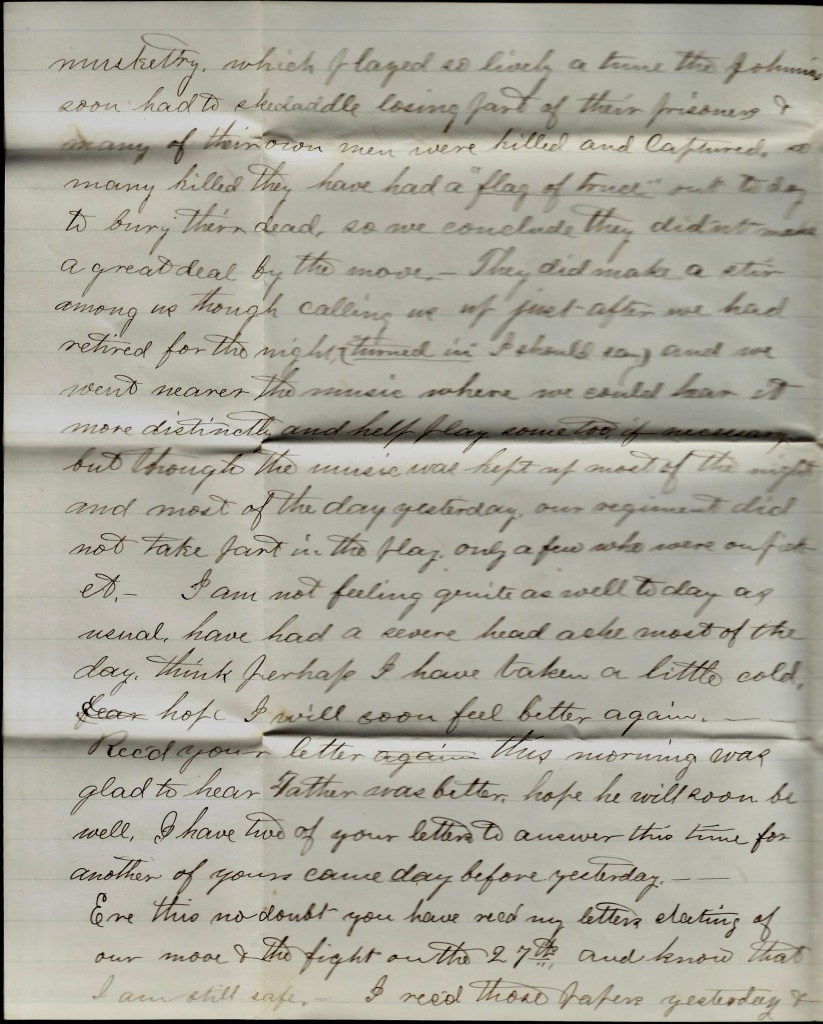
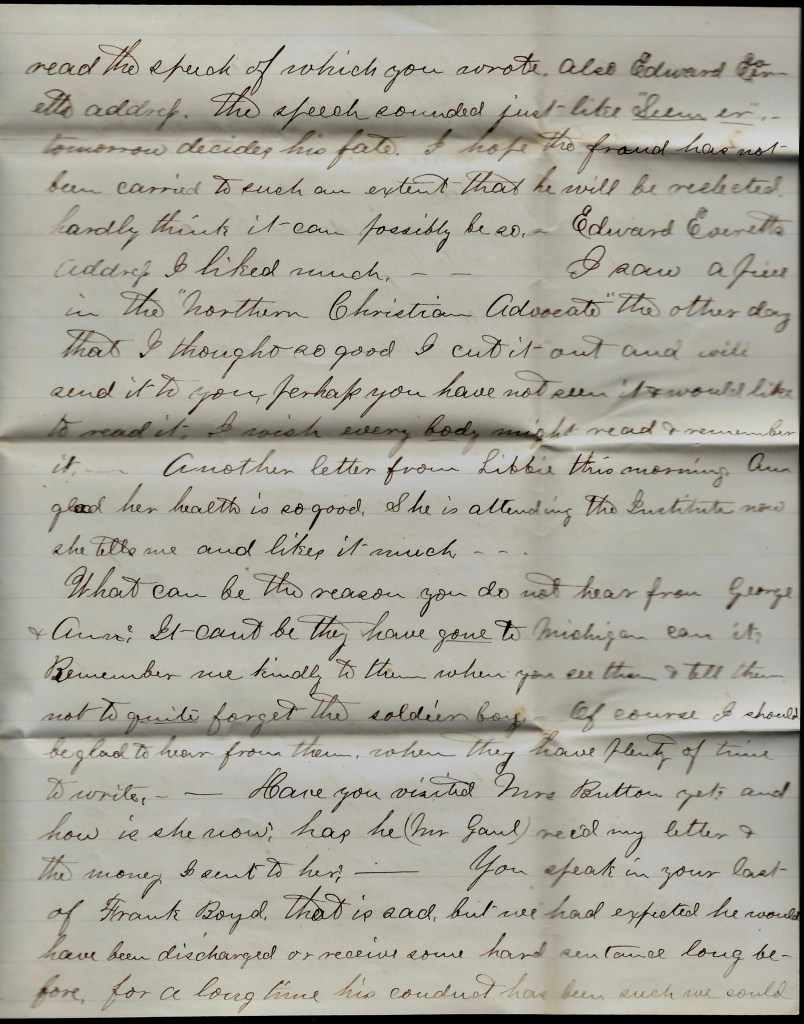
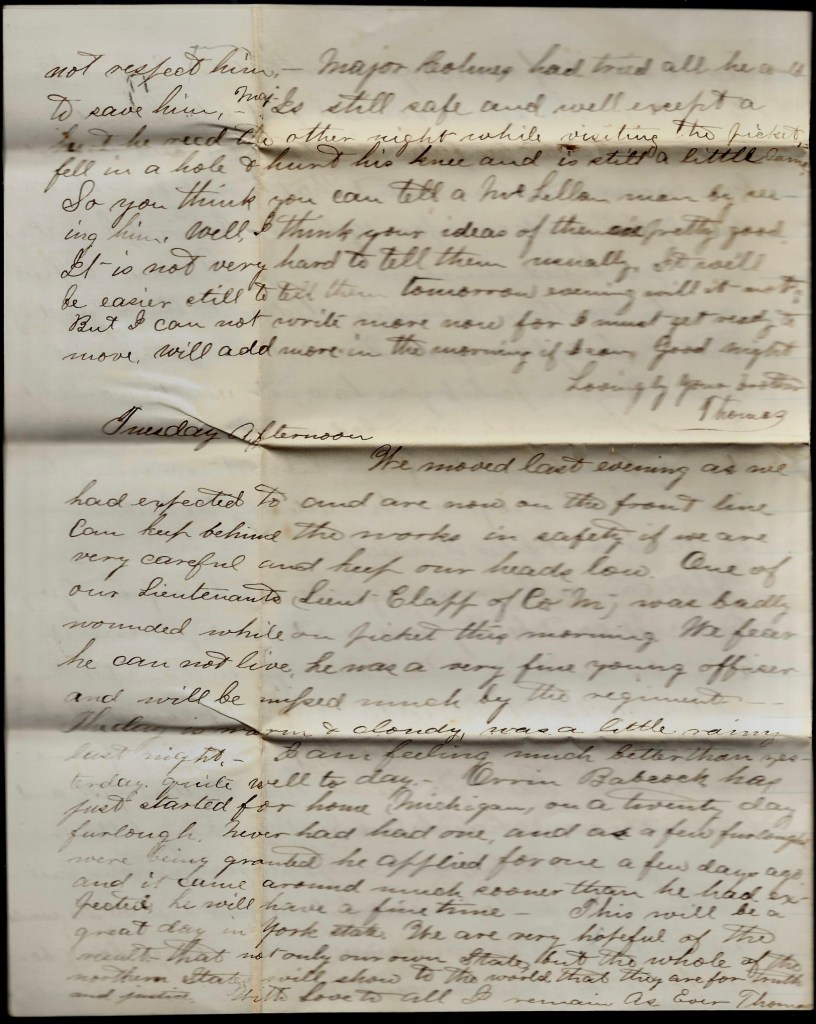


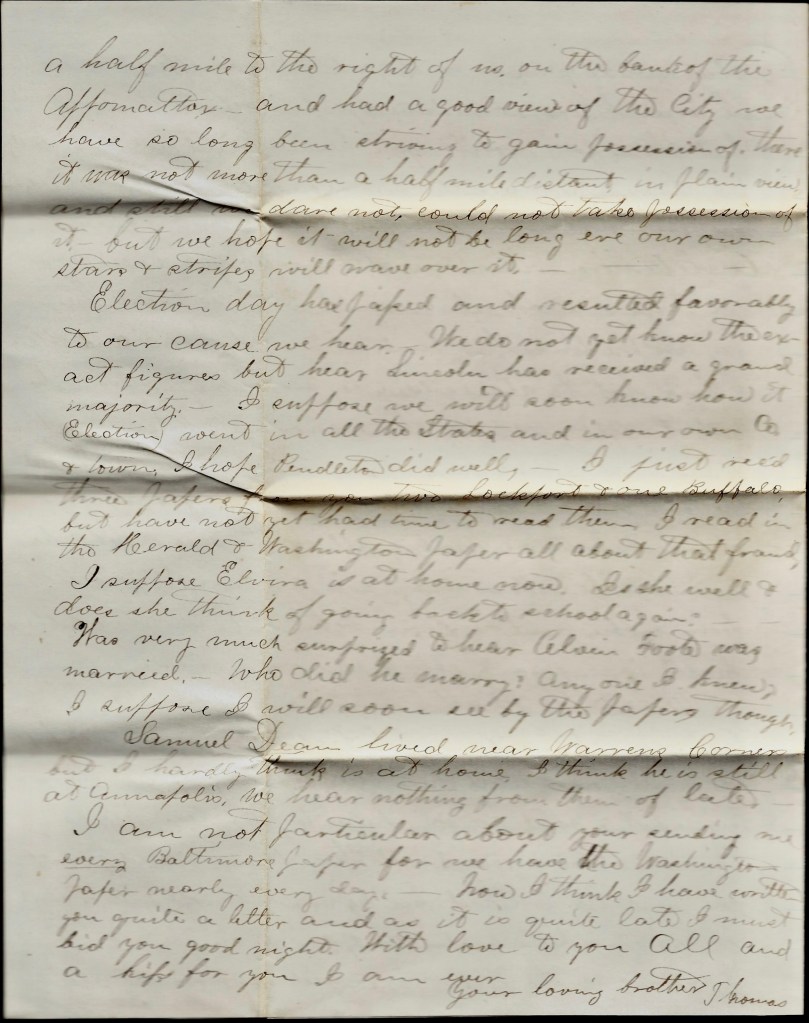


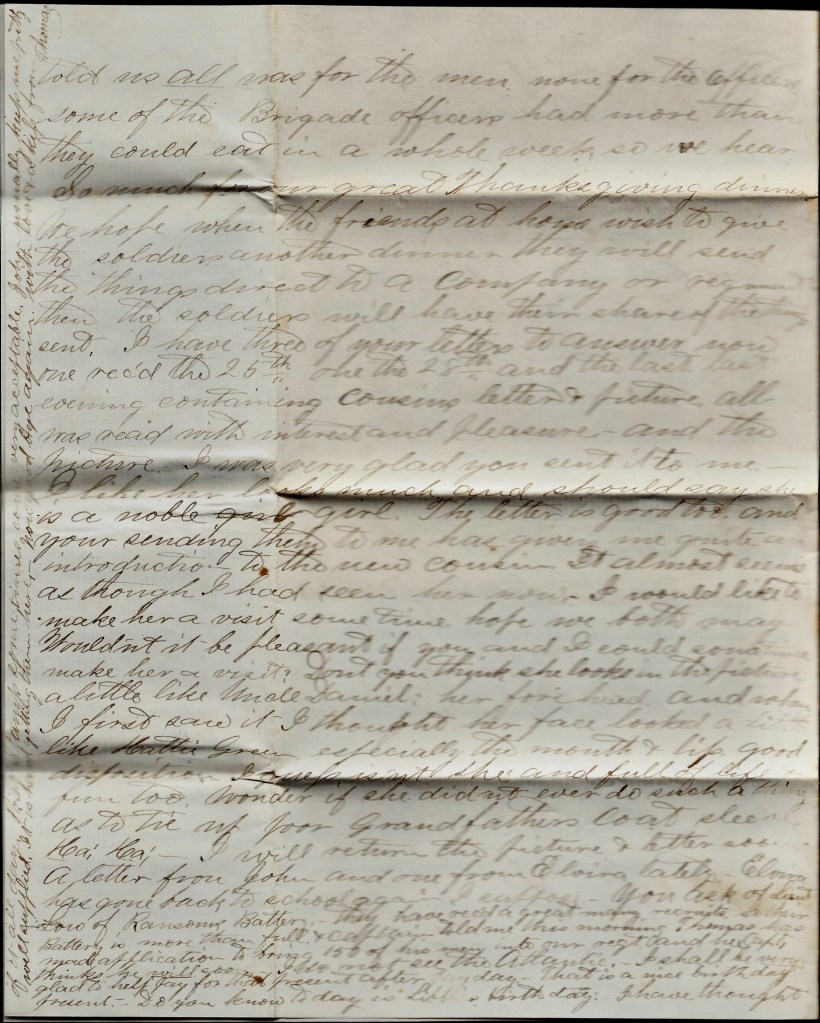
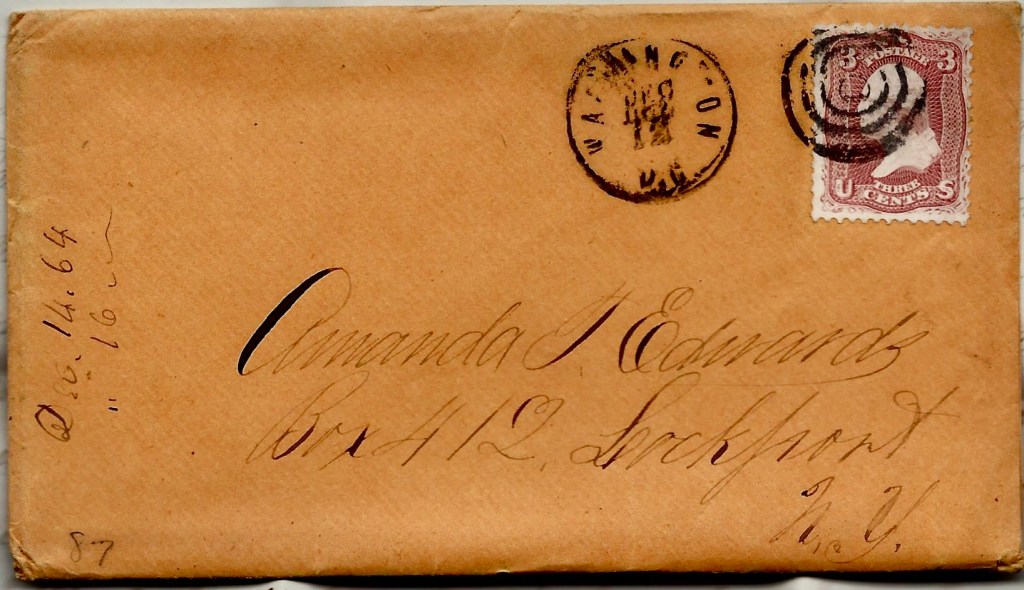

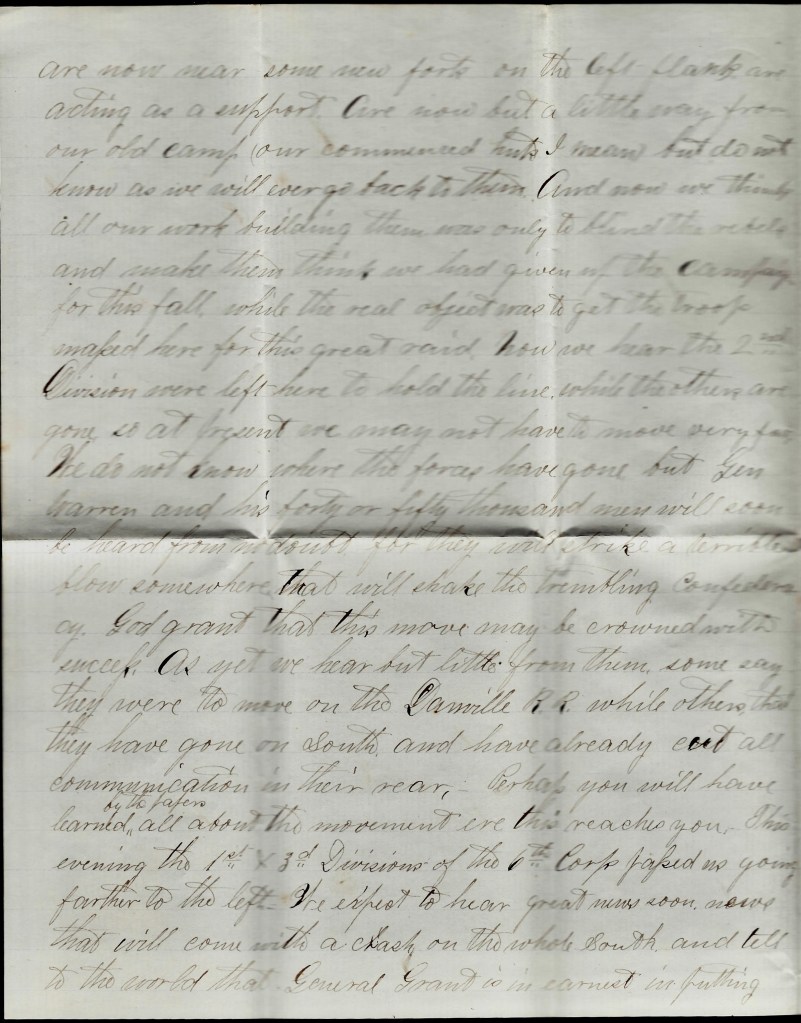

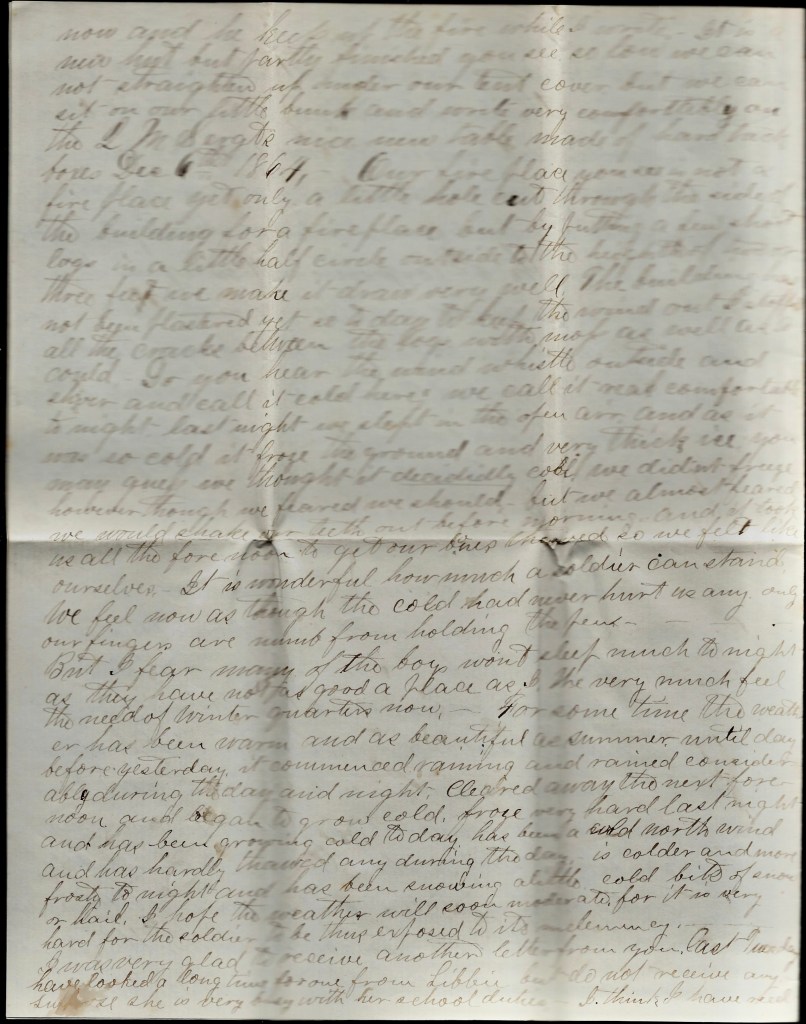










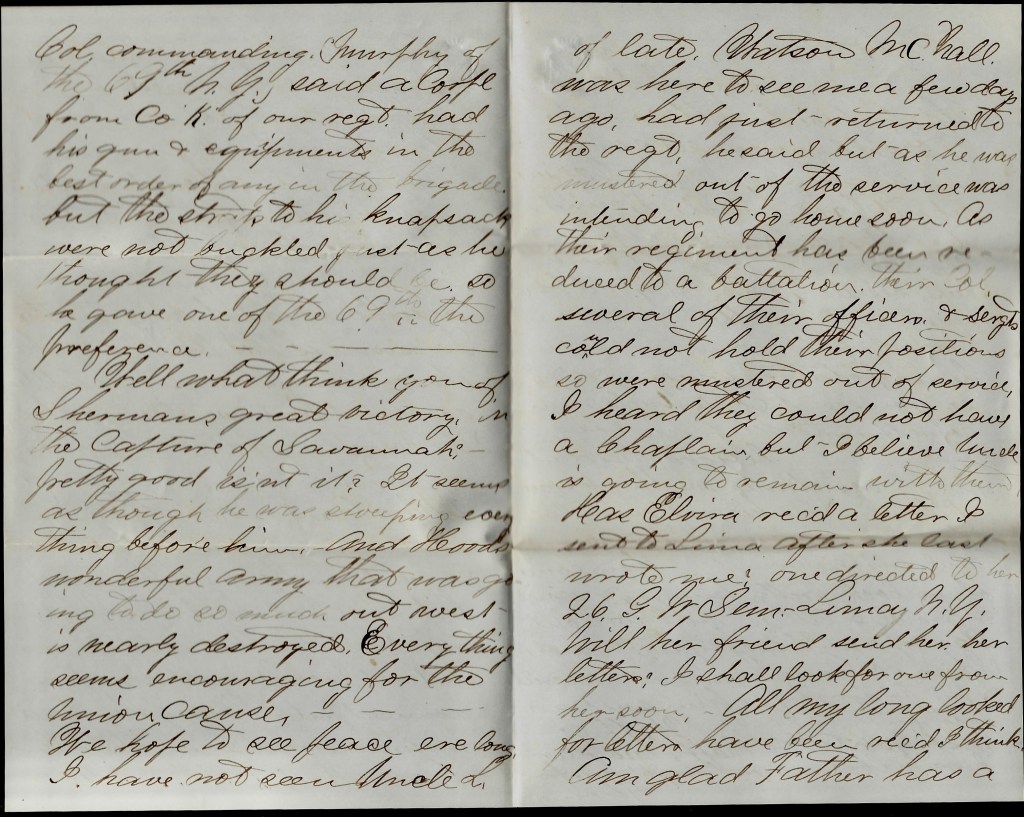
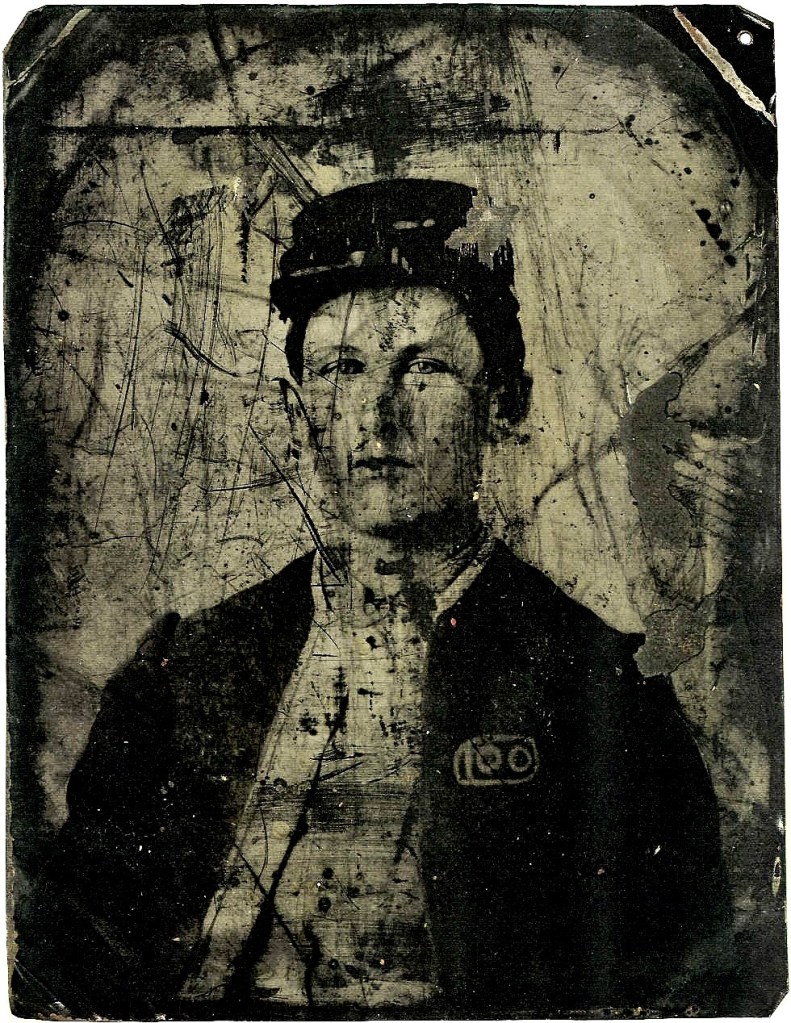
































 Spared & Shared 23