My passion is studying American history leading up to & including the Civil War. I particularly enjoy reading, transcribing & researching primary sources such as letters and diaries.
The following letter was written by English emigrant Charles Shelling (1827-1887), a former chaplain in the 56th New York Infantry (serving from September 1861 to December 1862) from Newburgh, Orange county, New York. Charles emigrated to the United States in 1841 aboard the ship Wellington. By 1850, when he was only 24, he was already laboring as a Methodist minister in Concord, Erie county, New York. By 1860 he was married to Laura Jane Draper (1822-1869), the daughter of Rev. Gideon and Ella Elizabeth (Cronise) Draper.
In this incredible 1872 letter, Charles informs his brother Esmond of his safe arrival in Sacramento, California, and shares his observations of the journey which was made on the “Pacific Railroad” which was completed just three years earlier in 1869. Charles made the journey to accept an appointment as the pastor of the Westminster Presbyterian Church in Sacramento. He held the position there for two years and then returned East to accept the pastorate at the Main Street Methodist Episcopal Church in Nashua, New Hampshire. After two years there, he then requested to be transferred back to the Southern California Conference in March 1876 and he was pastor of Pasadena’s Methodist Church until he retired. He died in Alhambra, California, in December 1887, where he had settled prior to 1880.
Transcription
Sacramento, [California] Nov 13, 1872
My dear brother Esmond,
It is not until one crosses the Iron bridge at Burlington, Iowa, and so gets “beyond the Mississippi” that he is fairly “out West.” And it is not until he has crossed the other Iron bridge that spans the Missouri at Omaha, that he fully realizes the magnitude of the transcontinental trip from the Atlantic to the Pacific. There stretches from the Missouri to the foot of the Rocky Mountains one vast plain. It spreads out on every hand, far as the eye can see, without apparent bound or limit. The monotony is occasionally relieved by one of the many towns that are springing up along the line of the Pacific Railroad.
The Iron Bridge crossing the Missouri River at Omaha. (1872)
And it happened to the lot of our journeying to witness one of the grandest spectacles of the West—a prairie on fire. It covered an area of many, many miles. It was not an unbroken sweep of flames as might be supposed, but it rushed onward, like the embattled battalions and divisions of a vast army, marshaled on a field of strife broad as an empire. Now the flames would fly on the wind in detached squadrons as though forming on a skirmish line. And then the front for miles would rush and roar majestically forward, leaving other miles ablaze far as the eye could see, in the background, like the grand reserve of an army. I think but little damage was done to buildings for the reason that they were few. And for the better reason that the pioneers on the plains understand how to ward off and guard against this fiery autumnal fury.
The Rocky Mountains are simply vast in grandeur, awe-inspiring, indescribable. There is the solitude of an awful sublimity—as wild, and wonderful, and thrilling as to be well nigh appalling. It is not so much a ridge, or range, like the Alleghany’s or the Catskill’s, standing on the summit of which you may look into the valleys on either side. It is rather like the piling of one mighty continent upon another. For hours and days and nights the train sweeps you along through successions of wonders—so high, so deep, so weird in shape, and rugged and gigantic—that all previous conceptions of magnitudes and distances are dwarfed. Now you glide through a canyon beneath frowning battlements of granite thousands of feet high on either side. Now you see in dim and grand perspective the outlines of a snow-clad range of peaks. And then you get a glimpse of wending vales and sloping hills, that are of gigantic stretch and magnitude. And all are but the picturesque indentations and topographical wonders that are upon the summits of the mountains.
There is scarcely any life. The ranges are bald and bare of trees. A low shrub or alkali grass covers the surface where slopes are not too steep to admit of growth. At other places, rough coarse grained granite of every grand and fantastic shape in gigantic magnitudes, tower and stretch away into remote solitudes. The presence of man seems almost an intrusion. Nature is here on a scale beyond and above man. One feels amid these mountain grandeurs and solitudes much as the psalmist felt under the astronomic glories and grandeurs of the skies. “Lord, what is man, that thou are mindful of him.” I thought I knew the reason why Israel of old was led out to the mountain solitudes of Sinai to receive the laws. Surely, no other place, can be so befitting the throne and footstool of the great and dread Jehovah, as these bare, bald, and solitary sublimities. Here Bossuet’s confession in Notre Dame, is echoed in awe-thrilled whisperings—“God only is great.”
We saw but little of Utah. The train made a halt of an hour [stop] at Ogden. Many passengers took the cars for Salt Lake City. We saw some of the outlying settlements of Mormondom; saw the dwellings with extensions added, as we fancied to furnish home accommodations to the followers of this accursed Yankeeised Mahomedanism. They are—apart form their polygamous abomination—a quiet, industrious, and thrifty people. But their peculiar system is doomed. The miners want the wealth of their mountains. And they will have it. Political aspirants want the places and honors and spoils of legislative and congressional offices and powers. And the men are there who are keenly watching and waiting for the expected time to strike and seize control of public affairs. This is mere opinion, but it is intelligently formed. My opportunities en route were such as to justify the conviction that within ten years Mormonism will be wiped out.
Formerly the overland journey took six months for its accomplishment. The family with whom I board were that time on the way. Now it is made in seven days. Then the emigrant slept by his camp fire at night and fared on coarse, rough provisions by the way. Now there are luxuriantly furnished palace cars, providing a soft and richly canopied couch at night, and one may fare sumptuously every day. But notwithstanding, I think the physical fatigue of the modern may be even greater than the wagon train journeying. Og this I am sure, that those of us who had come directly through from Chicago without stopping were thoroughly railroad tired. The long winding descent from the Sierra Nevada’s with the changed scenery of the land and the climate of our destination had for us all the interest and charm of novelty. And yet I fear that we did not fully appreciate the fresh wonders that were before us because we were too tired. We knew we were in California for as the last day of the trip wore on, the weather grew hot as an Eastern June day.
At the stoppages of the train, the ubiquitous railroad depot boy peddlers offered fruits of such marvelous size and cheapness as we had read of but never seen before. Clusters of grapes weighing three pounds offered to us for a “bit.” But then with well-affected disdain they refused our “nickels” and small currency. However, we managed to procure the fruits we wanted. As we journeyed onward, we saw the debris of the miners’ work. Hillsides and vallies had been ploughed, burrowed, and upturned everywhere in quest of gold.
But we were tired. About nine o’clock our train stopped at the end of the long pier—over a mile ling—in Oakland. We crossed the bay on an immense ferry boat to San Francisco and were safely roomed in the Cosmopolitan Hotel at ten o’clock at night, thankful to the good Providence that had brought us to our journey’s end without accident. On Sunday we were in Alameda. On Tuesday we dined at Rev. Mr. Fraser’s in Oakland. On Wednesday we went to Cliff House, 1 saw the sea lions, saw the Pacific Ocean, and the Golden Gate. On Thursday we came here where I am hard at work. We are well and send love, — Charles Shelling
The Cliff House in 1872. Credit: Smith Collection/Gado/Getty Images
Mrs. S. is well, with occasional symptoms of homesickness. I thank you! She sends her love to Newburgh—to all its river front and hills, and streets and buildings, and peoples. This in the general. And to her friends with very much of the particular and especial. Please distribute and oblige.
The Golden Gate from Telegraph Hill in 1873. Courtesy of US Berkeley, Bancroft Library
1 According to the National Parks Service, the original Cliff House was built as a resort retreat for wealthy hunters and picnickers. It opened in 1863. Perched on a cliff above Land’s End, the Cliff House was originally very remote from downtown San Francisco, which was a small city at the time.
I could not find an image of Albert but here is one of George W. Harriman who served as a private in Co. D, 14th Maine Infantry. (Photo Sleuth)
The following letters were written by Albert T. Wharton (1839-1920) of Hallowell, Maine, who enlisted on 11 December 1861 to serve in Co. F, 14th Maine Infantry. Though he was reported sick in New Orleans for a period of his enlistment, he survived the war and mustered out on 13 January 1865.
Albert was the son of Hiram W. Wharton (1810-1879) and Sarah Ann Leland (1810-1888). He was born in Enfield, Penobscot county, Maine, but in the 1860 US Census, the Wharton family was living in Portland, Cumberland, Maine. Albert was married in 1867 to Mary Ellen Libbey (1847-1870).
“This regiment was organized at Augusta, from Dec. 3 to Dec. 17, 1861, to serve for three years, and left the state for Boston Feb. 5, 1862. It sailed at once from there for Ship island, Miss., where it arrived on March 8, and remained in the South until July 13, 1864, during which time it saw an unusual amount of trying and dangerous service. Its first serious engagement was at Baton Rouge, Aug. 5, 1862, where it lost in killed, wounded and missing 126 men. Other engagements in which they participated were at St. Charles Court House, Civiques ferry, and the assaults on the fortifications of Port Hudson, May 27, and June 14, 1863. During the campaign from May 7 to Aug. 5 of this year, the regiment was without tents of any kind, and their only camp equipage was their camp-kettles. Both officers and men were forced to sleep in the open air, and they suffered much from chills and fever. In Jan., 1864, all but 40 of the available men of the regiment reenlisted for an additional term of three years, and on Feb. 10 they left New Orleans for Maine on a furlough of 30 days. They rejoined the regiment at New Orleans May 19, 1864.
On the arrival of the 14th at Bermuda Hundred, Va., July 22, 1864, it was at once assigned to Gen. Butler’s command. Joining Gen. Sheridan’s forces at Berryville, Va., on the 18th, it took an important part in the battle of Winchester on Sept. 19, losing 60 killed, wounded and prisoners, or about one-third of the number engaged. Subsequently it participated in the assault and capture of Fisher’s hill and joined in the pursuit of Gen. Early to Harrisonburg. At the battle of Cedar creek it again suffered severe losses. Of the 200 men in the 14th who entered this fight, 80 were either killed, wounded or captured, Lieut.-Col. Bickmore being among the killed. Shortly after this battle the regiment moved to a position near Kernstown, where it remained until the expiration of its term of service, Dec. 23, 1864. The original members who had not reenlisted were mustered out at Augusta, Me., on Jan. 13, 1865.”
A sketch of an eagle that Albert drew on his letter of 22 July 1864
Letter 1
New Orleans [Louisiana] May the 20th 1862
Dear Mother,
I now seat myself for the purpose of writing you a few lines to let you know I am well now and hope you are all well and happy. We are now quartered here in New Orleans. We left Ship Island the 17th of May. We went on board of the ship Premier a week ago yesterday and got here Saturday and came ashore yesterday. New Orleans is quite a large city and looks very well. The people are very civil here now and many seem to be greatly rejoiced to see our troops here. As I came from the ship yesterday up through the streets, I talked with several men and women and they all seemed to be glad to us here. There is some stiff neck bugers here yet though but they keep themselves shady and have but little to say. Anyway, there is a good many people here from some of the Middle and Western states and they are all in for the Union. Secesh is about played out.
We are quartered on the outskirts of the town. Most up to the upper end in a lot of a cotton depot. We have a pretty large roomy yard to stir around in and a plenty of air and water handy. It is about as good a locality as we could get here. I think if the men all try to take care of themselves, I guess we shall get along very well. I don’t know how long we may have to stay here but I hope we shall be a getting north soon.
There is four regiments here now—the 12th and 14th Maine, a Vermont, and Massachusetts regiment. The 13th and 15th Maine are on the Island yet. We are here to police the city and keep the citizens from fighting among themselves and to see that everything is kept straight and in order. Most things are pretty high here now. All kinds of fruit is high. Oranges from 5 to 10 cents apiece and other things ditto. But we don’t want their stuff. They will give almost anything for hard bread, beef, or any sort of grub…
…a slight cough and yesterday a coming up I fell in with an old fellow and he gave me some of this junk candy and it went well and helped my cough considerable. But I saw citizens eat off the same piece before I took any of it. But they dare not play their tricks on soldiers now for if there is any of the kind carried on, Old Butler will play the devil with them. We don’t have much fear of their games now but it is well enough to look out for ones self. Still I haven’t drank any strong drink since we left Augusta excepting aboard the ship in Boston [where] one of the fellows had some good brandy and I took a small drink and it done me good for I had a cold and it helped me. But that will do for strong drink this time.
We received your letters of April 13th and was very glad to hear from you all. You wrote that you had heard from [ ]. I am glad you have heard from him. We was glad to hear from him and Rance too. I shall write to them both soon. I wrote in answer to Lizzie’s letter a day or two before we left the Island.
I must close now. I shall write again soon. Goodbye for the present. — A. T. Wharton
Albert’s sketch of New Orleans showing the Premier docked in the river
Letter 2
Carrolton Monday, November 3, 1862
Dear Mother,
It is with pleasure that I now seat myself to answer your kind and welcome letter of the 27th of September which I received about a week ago and should have written before but I had nothing to write with before. I am well now and hope this will find you all well and happy. John is well and hearty. We have got a good place here to camp but I don’t know how long we shall stay here. I hope we will stay here through the winter for it is a good, healthy place. We have not been in any more battles since we left Baton Rouge but some of our force is up the river now at Donaldsonville and have had a little fun with them Rebs and have taken some prisoners and some guns. I don’t know how many rebels there is up there but there is quite a force of them, I believe. We have got a regiment of darkeys and they done well up there in the fight but I hope this business will be over soon for it is bad business. Anyway, I don’t think it will last much longer. I hope we shall all be at home in the spriong if we live.
The weather is warm and mild here now and it is comfortable getting around now. There has been pretty cold days which took hold of us pretty sharp at first but it is never very cold here at all. I am glad Sewell Douglas has got home and brought the things that I sent to you for them socks will be a nice fair for the old gentleman to wear this winter and them mittens are a pair that I found on Ship Island and I thought I would save them and send them home if I got a chance to as Hubbard says and the mate to that odd one I lost on board the North America a coming out. I was sorry to lose it for they were such a good pair of mittens. Let the old gentleman have them all to wear this winter if you please for I suppose he will need then. I suppose Sewell thinks himself a great warrior now. I wonder if he has seen the bloomer since he has got home. Perhaps though however she can’t have the honor of walking by the side of Sewell’s new coat and pants this season. I should think it doubtful but she must keep up good courage about it. Poor Sewell. I am glad he has got where he can whistle as much as he is a mind to for this is rather a hard chance for anyone.
We are expecting every day now to get paid off with two months pay and then there will be twenty dollars more a coming to you. I hope you get things enough to keep you comfortable. Father’s little crop that he has got will be a little help, I suppose. I am glad his things have done so well. That gal of ours has got a pretty dress and opera and I suppose she feels pretty grand with them too. The names he has given to my old hen will do very well, I guess, for I am not very particular as to names. She is a very noble old hen. I have no doubt but I don’t want that gal to have any of her eggs to eat though. Ha Ha. That was a nice little envelope of herbs that you sent. It tasted good. We don’t get any such thing out here. I will try and send you my likeness after we get paid off and I guess John will send his too.
Have you head anything from Big Billy and his household pets lately? Gosh, I wonder where they all are gone to—Cuba Island I guess. Has that gal got her kitten Flora yet? I suppose she has got to be a real mouse and rat catcher. And Old Watchey, is he a trotting around yet? Poor old fellow. Marm, I want you to use as much of the money as you have a mind to but I don’t think it is a very good plan to buy that gal much of anything with it than you can get her a stick of candy or something of that kind once in awhile and I guess that will do her for her poor old critter. Most everything is very high here now. Butter is forty-five and fifty cents a pound and cheese 25 and 30 and apples 5 and 10 cents apiece. Eggs 90 cents a dozen. Tobacco a dollar a pound and poor stuff at that. Potatoes 7 and 8 cents a pound adn everything else ditto.
I guess I must close now for I can think of nothing more at present to write…When you write to me again, Marm, I wish you would send me a few postage stamps if you will for they are rather hard to get hold of out here unless one has hard money to pay for them with and then they like to have just the right change handed to them. My love to all. Goodbye this time. I want you to write often. — Albert T. Wharton
Letter 3
Grant Point Monday, March 2nd 1863
Dear Mother and Sister,
It is with the greatest pleasure that I seat myself to write you a few lines to let you know how we are. We are all well and hearty and I hope these few lines will find you all well and doing well. We got your letters February 28th and was very glad to hear from you all. I am glad that your health is better than it was through the winter, Mother, but I am sorry that Father’s finger is so sore. I hope it is better now for it must make it rather bad for you all I should think.
We are down in the swamp yet by the old sawmill on picket duty. The weather is getting rather warm here now and the flies and mosquitoes are getting pretty thick and the alligators and snakes are pretty plenty but they are harmless.
I don’t know how long we will stay here. We have had no orders yet to move from here but I should like to get out of this swamp before it gets very warm weather for I think it will be unhealthy here. But if we keep a picket here through the summer, I suppose we will be relieved.
We expect to get paid off again this month and then there will be 30 dollars more a coming to you. Hope you get your money and goods regular for I don’t want you to go without things as long as my wages will keep you comfortable. I calculate for you to use it as your own and indeed, it is your own. If I knew that you went with things that you need, I should be sorry you spoke of getting or that you had got a few articles of furniture and so you had better get all you can while you have the opportunity and then you will have them. I suppose that gal wants something once in awhile. Has the poor old thing got a reticule yet. I suppose you must get her what she wants marm if it is a farm leaf pen knife or something of that kind. Poor darling. Wish we was where we could eat some of the currants.
You wanted to know who our Captain was. A. K. Bolan is his name. I do not know yet who’ll take command of the regiment if Nickerson is promoted. The prisoners that we lost at Baton Rouge was E. Barker, H. Moor, and Luce E. R. and H. M. have been home and are there now unless they have started to come back. Cunningham is well. Banks is our Major General commanding this Division.
We have a plenty of clothing and blankets all the time. More dry good than food as a general thing although we are fed pretty well this winter. I had pretty good care taken of me when I was in the hospital. I wish you might get a letter from poor Hie. I want to hear from him very much. I hope he is still alive and well. Poor boy. We had a letter from Elsie when we was in New Orleans but neglected to answer it. But I am a going to write to her again soon. I suspect grandmother had got pretty feeble before she died. It seems that Miss Add and Miss L. L. L. are in for Union these days. Go it while you are handsome for beauty will fade. Mrs. Shoe, Bill Western, and Mrs. Solong Bran. Good luck. Take care yourselves. How’s that hay?
I must close now. Give my love to Aunt and family and to all inquiring friends & to Lizzy. Give my love to Hatty Jordan and tell her for me to be a good gal. I should like to come home and eat that little egg. I am in hopes we shall be at [home[ before long. You must be a good gal, darling, and I guess marm will get you some playthings. Wish we had some warm biscuits now to eat. I shall want you to get me a good big stick of candy when we get home for I haven’t eaten much candy since I have been out here. I saw Ranty—poor boy—the morning they left Augusta. Was on guard by the road when they came up from Hallowell. You must try and bear the sad tidings as well as you can, dear ones, for we may hope the noble boy is with God in heaven.
Goodbye dear ones and God bless. — A. T. W.
Letter 4
Algiers Monday, September 14, 1863
Dear Friends,
I take this opportunity to write you a few lines to let you know where I am. I am now in Algiers—right across the river from New Orleans. We came here the other day from Sabine Pass, Galveston. We left Port Hudson and came down to Baton Rouge and stayed there a week and then came down to New Orleans and went on board of a ship and went to Sabine Pass just to tame them devils there and unfortunately lost two gunboats but we will have them back again by and by. The gunboats fought well. One run up under the Reb battery a giving them a broad side to a lick, but she got aground and could not weave ship and so the rebels got her and one other one too.
The Second Battle of Sabine Pass, fought on 8 September 1863, resulted in Gen. Magruder defeating Gen. Franklin’s amphibious force that included gunboats and 6,000 soldiers. The Confederate force was heavily outnumbered but the guns of Fort Griffing damaged two of the Union gunboats and forced one to run aground. The troops transports did not even attempt a landing and returned to New Orleans without firing a shot.
We had a pleasant trip both ways with the exception of being very much crowded. We lost one poor fellow overboard a coming back. I don’t know how long we shall stay here. I expect not long enough. We shall have to keep a moving now pretty often I suppose until we get the rebs cleaned out. I guess they will get about played out this winter. Anyway, I hope so.
The reason I have not written oftener was because I could not get time and things to write with. I wrote one letter when we was at Port Hudson. I wrote the letter the 7th of August but made a mistake and dated it the 7th of July. I hope you have got it. I have had no letters from you since the 29th of April until I got this dated August 20th. Lizzie said you had written eight letters before this but I did not get them. I am sorry for I have wanted to hear from you all very much. Whenever you write to me, always direct your letters to New Orleans and no where else/ for we move around so much it is doubtful of our getting them, so the best way is to direct to New Orleans and then we are pretty sure of getting them.
We had a pretty hard time at Port Hudson a laying in the trenches with the hot sun a beating down upon us. We had no chance to rest there until we took the place and then we stayed there about a month and we commenced our trip as I have told you before.
My health has been very good this summer. I have a good appetite most all the time and we get enough to eat now—such as it is. Hard tack and beef and sometimes potatoes and onions and ham once in awhile.
In the last letter that I got from you, you wished to know if I knew George Barnes. That last summer I did know him. I got acquainted with him on board the ship North America a coming out. His brother was wounded at Port Hudson but he has got about well now. I have never written to Elsa Wharton yet but I think I will before long. I should like to hear from them all again. I suppose Joshua will stand a chance of a draft as well as all the rest. I am glad you have got a letter from Hie. I hope he is doing well where he is and I hope he will go home before long. I should like to go home and find him there with you. Poor boy.
I hope you get your goods and money regular so that you can live pretty comfortably. I suppose Father’s lame finger has got all well now. I hope so for it must have been painful and troublesome. I suppose he finds work to do about all the time. I hope you can get your vegetables and things again this fall as you did last so that you can get through the winter pretty well with what I can help you. I suppose that gal has got a [ ] and jackknife by this time. Poor old thing. I suppose she ought to have some candy once in awhile too. That feather that I sent to her was a woodcock’s scalp. I haven’t had anything else to send to her lately. I don’t want her to eat any of my old hen’s eggs. She must eat her own and not touch mine at all. I suppose you have Wattel and Flana yet. Do you hear anything from those two young married ladies lately? I suppose they enjoy theirselves amazingly and do so far.
William will pop off next. Pop goes the weasel. Poor doctor. I suppose Louisa is round Chelsea somewhere in search of Whiskers and Talmen, a flouring down the state. Lizzie, do you hear anything from Hatty Jordan now-a-days? Give my love to her when you write to her. I got a paper when I was in Port Hudson—the Portland Transcript—sent to me from Portland but there was no name signed to it. I didn’t know but some of Jordan’s folks might have sent it and perhaps they might have told you something about it. I can’t think of much more to write this time so I guess I will close soon.
Give my love to family and to all enquiring friends. Write soon and tell me all the news. It is getting late now and I will close. We are well now and I hope this will find you all well and doing well. —Albert T. Wharton
Letter 5
Bermuda Hundred [Virginia] July 22, 1864
Dear Mother. I take this as an opportunity to write a few lines to you to let you know where I am and where I have been since I wrote to you last. We went from Baton Rouge up the river to Maganzia and stayed there 4 or 5 weeks, and then came down to Algiers and stopped there a week and then took transportation for this place and got here this morning. I seem to like the looks of this place very well what I have seen of it. I should have written to you long ago but we have had a good deal of duty to do and I hant had any postage stamps but I shall write as often as I can now and I shall write to sis too. And I want her to write often and write all the news and tell me how her young lady friend is that she wrote to me about.
I shall send you some money, Marm, just as soon as I get some more. We have lived so poor since we left home that most all of the boys have had to take up orders on the sutler or go hungry but I hope we shan’t have to do it again. I haven’t got time to write much this time but I shall try and write oftener than I have. I hope that if you get this, it will find you all well and doing well. I am sorry that I can’t send you some money now. You must write often, Marm, and tell me all the news that is a going. Direct your letters to Co. F, 14th Regt. Maine Vol., 19th Army Corps, Washington D. C.
The following letter was written by 19 year-old Bezer Loring Lincoln (1845-1905), the son of Joseph Hall and Sally (Smith) Lincoln of Attleboro, Bristol county, Massachusetts. At an early age, Bezer was employed by the Boston & Providence Railroad—a job held before and after the Civil War up until the time of his death in 1905. Bezer datelined his letter 1 July 1862 but it was actually 1 July1864. In this letter, Bezer wrote of his civilian employment on the Western & Atlantic (W&A) Railroad between Big Shanty, Georgia, and Chattanooga, Tennessee, under the auspices of the US military—a dangerous stretch of road that was under frequent attack by Confederate guerrillas. “I should like to be on the road all of the time if it wasn’t for the Rebs. I don’t like them,” he wrote his friend. The W&A railroad and the East Tennessee & Georgia Railroad were under the supervision of Col. Levi P. Wright (formerly of the 1st Massachusetts Heavy Artillery) until he was relieved by W. C. Taylor in July 1864.
Earlier in the war (October 1862), Bezer had enlisted in the 11th Rhode Island Infantry and served as a private with his regiment in the defenses of Washington, D. C. and later in the Norfolk, Yorktown, and Williamsburg, Virginia area. He was mustered out of service with the 11th Rhode Island in July 1863.
The Big Shanty Railroad Depot in Georgia—the Union front in July 1864.
Transcription
Chattanooga [Tennessee] July 1, 1862 [should be 1864]
Dear friend,
I thought as I was loafing this week, I would write you a few lines to let you know how I like. I think if I knew as much as I do know now, I should stay on the Boston road but I am out here [now and] I shall stay a year, I think. But some of the boys has gone home and some more are a coming. But I shan’t [go home] if the rebs will let me alone. They have run us off of the track twice and the last time we had fun, I tell you. They pull[ed] up a rail and as soon as we was off the track, the dam[n] cusses jump’ed] right onto us. They did not kill no one but shot one man through the face. As near as they came to hitting me was [to] put one through the cab right close to my ass and one into the firebox. We fought 40 minutes and the dam[n] fools left and in the morning we pull[ed] out a torpedo weighing 100.4 pounds. We came [within] just one rail of going on to it. I ain’t a going to fire anymore. I am going to breaking. 1
Our road is 120 miles miles from headquarters to Big Shanty—that is, to the front. We work 7 days and then lay off 7. But I should like to be on the road all of the time if it wasn’t for the Rebs. I don’t like them.
I am going to tell [you] how we live. We have a change three times a day. We have for breakfast baked beans and pork and rice and bread and coffee. For dinner we have rice and pork and beans and coffee and bread. That’s for dinner. For supper, we have coffee and bread and rice and beans and pork. We only have to eat it 21 times a week. I must close. Give my respects to all.
Direct your letters to Chattanooga, Tennessee in care of Col. L. P. Wright
Bezer L. Lincoln
1 Bezer is indicating that he considers it too dangerous to work as a fireman in the locomotive where they might hit a torpedo laid on the track or be picked off by sharpshooters.
There are few identifiers in this letter but I’m confident it was written by Martha G. Russell (1838-Aft1880) who was married to Celon R. Swett (1837-1907), the son of Alfred and Eunice (Strout) Swett of Maine. Martha was the daughter of Amzi Russell (1810-1879) and Eliza Morse George (1814-1905) of Albany, Carroll county, New Hampshire. Martha wrote the letter to her younger sister, Ruth Priscilla (“Priscie”) Russell (1850-1930).
A late 19th Century image of “Priscie” (Russell) Colbath standing in front of her home and post office when it served as the Post Office in Passaconaway, Carroll county, New Hampshire, from 1892 to 1907.
In the letter to her sister Priscie, Martha writes of attending a lecture by one of Jeff Davis’s slaves. The slave was undoubtedly William Andrew Jackson who was a slave in Richmond, Virginia, where he worked as a messenger in the courts and also drove a coach. In 1861, Jackson’s master—G. W. Jones—hired him out to Jefferson Davis, the president of the Confederate States of America, to be his coachman.
“In May of 1862, Jackson found out that Jones was planning on selling him South. Despite the fact that he had a wife and 3 children, Jackson decided to escape to Union lines like many enslaved people before him at that point in the war. When he arrived behind Union lines, he caught the attention of Union commanders due to his relationship to Jefferson Davis. Jackson shared a great deal of information about the low morale of Southerners, even the Davis family itself.
After escaping to Union lines, Jackson became a celebrity in abolitionist circles, offering public lectures. In a speech he delivered in Boston he described escape from slavery, his early life and how he learned to read. The abolitionist newspaper, The Liberator reported that Jackson spoke in the Boston lecture about how enslaved people were able to obtain information about the War’s developments. Jackson also reassured his audience that slavery had prepared Black people to care for themselves and he opposed the idea of colonization for newly freed slaves. Jackson himself claimed that he tried to join a regiment of Black soldiers raised by Governor Edward Sprague in the summer of 1862, but was unable to fight since the United States was not yet enlisting African Americans. Jackson’s talks influenced the debate in the North about the policy of the Federal government toward enslaved Black people.
Newspapers place William A. Jackson in Maine in February 1864; The Portland Daily Press, 12 February 1864
Jackson also traveled to England to lecture about his experiences. While he was in England, he was a guest of noted abolitionist George Thompson. The Liberator reported that Jackson audaciously wrote Jefferson Davis a letter from London that he could not be with the Confederate President for the upcoming Christmas holiday. Because Jackson was a hired slave, Davis forfeited a sizable deposit to G.W. Jones. William A. Jackson remained in the United Kingdom until 1863. He was disappointed when he learned of the considerable English support for the Confederacy and returned to the United States where he continued giving lectures.
Not much information is available about Jackson’s life after the Civil War. A Vermont newspaper reported that he had enrolled at Pierce Academy, a New England preparatory school to prepare for college, but there is no other evidence of that. After that report Jackson disappears from the public record.” [BlackPast Blog]
Transcription
Bridgeton Centre [Maine] February 21 [1864]
Ever Dear Priscie,
This is Sunday and we are sitting here all alone wishing we could hear from you at home. Have hear nothing since Uncle Thomas was here. Hope Mary is better & the rest are well. But Priscie, why don’t you write to me sometime. I think you can get time if you try hard.
Perhaps you would like to know how we are getting along keeping house. We enjoy ourselves much better than we did while hiring our board & it is cheaper. Celon has not been very well for a few days since he had his last sick time. Suppose he will have another before he feels right. He has worked most of the time. I have been sowing some and have made some cone work. Have got two dozen stockings to finish now. Wish they were done for I shall not have any more.
I went up the hill with Mrs. Cole yesterday to get broad cloth for her a saque. Got some very pretty for one dollar, sixty-two cents per yard. Would like one if I could afford it but must wait. Got some bleached sheeting for 22 cents per yard for some pillowcases & Celon’s shirt, some calico for apron for 16 cents per yard. We can certainly get things cheaper here than at Conway but we are obliged to have more.
William A. Jackson, Harper’s Weekly, June 7, 1862
Oh Priscie, we went to hear a lecture by one of Jeff Davis’s slaves. You ought to see his eyes shine & hear him talk. I wish every copperhead in the United States could hear him. They never would hiss again. The hall was crowded full and many could not get in at all. I was fortunate enough to get a front seat and hear every word.
Went to the Lyceum last evening. I can go every Saturday now and not pay any more. Enjoy it very much for I learn something if use to me every time I go. Wish you and the girls could go too.
We have not been to meeting today because we did not like the Universalists. I bought a prize package the other day & I will send you a piece of the envelope with a list of the contents all right, only I did not get but one pen. The jewelry is a National Union League pin, rather small and pretty. Do not care so much for that as for the rest. Think I got the worth of the money.
Bose is very well contented but he is not done looking for Uncle Thomas. When he hears us say anything about any of you, he goes anywhere he likes & does not think of going back alone. Does not bark at people & is called a good dog. Sits at the window a long time every evening to see the factory. They run the factory all night now. I guess you will want me to stop writing soon but I shan’t & if you don’t write to me soon, I will write ten times as much next time & it shall be every word culch. Now remember what I say & write to your sister, — Martha
Tell brother to write. Celon thinks he shall not go up to town meeting—it will cost so much.
The following letter was written by Eli Babb, Jr., a native of Anne Arundel county, Maryland, who came with his parents, Eli Babb, Sr. (1781-1851) and Mary E. Thralls (1875-1875) and several other siblings to Smithfield—an early settlement on the White River in Delaware county, Indiana prior to 1840. Eli wrote the letter to John Dorsey Gardner (1809-1851) who married Eli’s daughter, Susannah Babb (1810-1876) in 1829 before they moved to Cumberland county, Illinois. The letter was also addressed to Mary Ann Babb (1808-1882) who married James Green (1806-1846) in 1826 and also lived in Cumberland county, Illinois.
Adding greetings of their own were Eli’s mother, Mary, and his brother, Evan T. Babb (1814-1898). Eli mentions another brother named Joseph Waddell Babb (1817-1898).
Transcription
State of Indiana Delaware county, Indiana August 29, 1840
Respected brothers and sisters,
After a due compliment of respect to you all, I gladly embrace the present opportunity to write you a few lines to let you know how we are coming on, We are all well at present, hoping these few lines may come safe to you and find you enjoying the same blessing with us.
We received your letter that you wrote to Joseph and myself and was very much pleased to hear that you all was well. I am at home working at this time. I am building father a new house. You wrote to me that you would be very glad if I would come out and build you a new house. I should be very glad to come out and work a while for you but it will be out of the question for me to come out this fall for we have commenced the house at home and we must finish it before we quit for we want a house as bad as anybody in this world. If it was not for this house at home, I would come out and stay all the winter with you and work for you. You must excuse me for the present. I will try and come out winter and see all of you if possible but I will write to you again before I come.
It has bean about three weeks since I left Fall Creek. Joseph and wife was well and no bees yet. He talked of writing to you soon. You request me to write to you but I have neglected writing to you till now. I have nothing strange to write to you. Give my respects to Mary Ann Green and James and all the children and tell them I should be very glad to see them.
Mother and Evan will finish this letter to you. My pen is so bad I can’t write no more. Yours in much love and affection to you all, I rest. Your sympathizing brother until death, — Eli Babb, Jr.
[in a different hand]
Susan and Mary, I am going to write a few lines in Eli’s letter to you to let you know how I am getting along. We have just returned from a camp meeting home. We had a glorious time there and many souls converted to God. I have had my health better this summer than I have had since I have been in the State of Indiana. I weigh one hundred and seventy pounds this summer. It is very healthy this summer in this country. Susan, I wish you was here this fall. I could give you fifty weight of honey instead of a crock full. We rolled our bees in June and then the last of August we took out about two hundred pounds of the prettiest honey you ever seen. We have had seventeen new swarms and every one of them has filled their hives full.
Now I will tell you about my new house. I am getting a good convenient house built. It is one story high and twenty-four by thirty feet long, two room and a good porch the whole length. I have made about one hundred weight of cheese and two hundred weight of butter this summer. I expect to dry what peaches will do us for our trees is very full this summer. I have many things to write to you but for want of room, I cannot at present. Susan, I want you and Mary to write to me as soon as you receive these few lines. No more at present. — Mary Babb
[in a different hand]
Respected brothers and sisters, I thought I would drop a few lines to you all in Eli’s letter to let you know how I prosper. I thank my Creator that I enjoy good health at this time. I am very busy at this time at the house with Eli. Corn crops never was better. I had thought of coming out to see you all this fall but since things has turned out, so I don’t expect I can come this fall. Maybe I will this winter.
I am going to alter my situation in life about the first of [ ] by taking to myself a loving wife. I want you all to come and enjoy the festival with me. It is not to Miss Elizabeth Points. If none of you don’t come< I will write to you again as soon as I am married. You must excuse my bad writing. I write it on the work bench. You must write to me as soon as you get this letter. Direct to Smithfield. No more at present but remain yours until death, — E. T. Babb
I could not find an image of Benjamin but here’s one of Henry Baker who served in Co. H, 141st Pennsylvania Infantry (LOC)
The following letters were written by Benjamin M. Dunham (1840-1863), the son of John L. Dunham (1811-1861) and Laura Cheney (1812-1894) of LaPorte, Sullivan county, Pennsylvania. Benjamin enlisted as a private in Co. K, 141st Pennsylvania Infantry. Benjamin enlisted with his older brother Henry R. Dunham (1838-1877) who was made the 1st Lieutenant of the same company for his efforts in raising the company. However, ill health resulted in his resigning is commission in late December 1862 and returning home where he remained until 1864 when he accepted a commission in Co. E, 13th USCT.
According to the regimental history, Benjamin M. Dunham was a young man of more than ordinary ability and character. Said one who knew him: “He was characterized by untiring energy and intense application to his studies. No lesson or duty was ever assigned that he did not grapple with all his powers. He loved study. He was impetuous almost to a fault. Whatever he did, he did with all his might. His moral character was without reproach. He could be relied on implicitly in all he said or did. He was, in ‘ short, one of Nature’s noblemen, an honest man. His dear remains rest in an unknown grave, on hostile ground, and his spirit has gone to God who gave it.” Benjamin was killed at Chancellorsville.
Letter 1
In Camp near Falmouth, Va. February 24th 1863
My dear Mother,
I yesterday received a letter from you full of your anxious fear about me. I hear nothing from you but a constant lament that I am where I am! Nothing but worriment about & fears that I am suffering here where I am. Now let this be enough for you, Mother, as it ought to be for anyone to know that I am doing well, getting over my lameness, and in fact, I have almost gained my flesh again. I have been on duty and took no cold from it & I hope I am none the worse for it. I asked to be put on [duty], it is true, for I knew there were some who would think I did not want to do [my] duty, but I did and so I went on. And as I said before, I am not sorry.
Now, Mother, what more under the light of Heaven could a son write to a Mother that would be of more cheering—I mean real cheering news—than what I have just written to you which is God’s truth and no deception, for I have not now nor never intended to deceive you. I know, Mother, there is news that I could write that might be more pleasing such as that I was coming home soon or something like this. But do I not tell you, Mother, that if I have my health, which I now hope to get, that I had just as leave be in the army here at such a time as this as at home. Maybe you think I lie, but I tell you that I can stand it here from my friends & family, if old grey-headed men who have children & a wife to think of & long to see, for this is the great, the most difficulty the soldiers has to contend against.
Don’t understand me to say that I like the hardships & hard marching of our life. But Mother, I do say in view of all things now, I—a single man [with] no one to depend on me [and] no one to suffer from my loss if should be the case, and no one’s support arising from my earnings—I say I and those in like circumstances are just the ones to be where I am if they have their health.
Mother, be reasonable! Look about you & see if you can point to another Mother who has three able bodied (for such I am now called & hope Henry is) Republican son who have no wives & little ones, no farms & workshops to hinder their being in the army of our Nation. I say, see if you can find another Mother who still has two sons with her at home all the time. Do you think, Mother, to raise three sons and live to see them all grow to be men & still be with them all & live with them all? It is an impossibility & the sooner you make up your mind to be content & satisfied while your boys are all doing well, the better it will be for you and your health and comfort also. You are almost selfish. You wish us with you & by constantly (except when we are fighting perhaps). But you must expect to be obliged to lay aside your own desires to see & pleasure to be with your boys.
I know this is not altogether what you wish me to come home for but you fear I will die here & then you will never see me again. Mother, does it make any difference about our meeting again in this world (for I have no fears for the next). Whether I die here from disease or you die there from a useless worriment, that does no one any good & hastens your own end. Think of this when you are lying awake nights on my account & if you wish to do anything to please me & make me happy and contented here with my lot. Why, don’t fret and worry & lie awake nights for me. Will you do this for me? Will you let this ring in your ears every time your mind turns upon me. Or will you still do that which is the farthest from my wishes of anything you can do? If you will, why then I cannot help it.
Again, my complaint (diarrhea & rheumatism), Mother, is not a thing you need to worry about at all. Why, do you not know that those who die with the chronic diarrhea live for four or five months & that there is no need of men to be sick that long in this army and not be sent home. As to the rheumatism, I do not fear death from that at all. So be contented & satisfied with your lot.
Mother, as to what you say about getting into this army, you did not such thing at all. I came of my own free will & you never asked me to come at all so I want you never to think of that again. Oh! you are a queer woman, Mother, & I hope you will try and exercise a little more your reasoning & relective faculties a little more & your caution a little less and it will be better for us both.
Our Captain has returned & I like him very much indeed so far & all the boys seem to almost worship him. We have just received orders to be ready to move over into Ward’s Brigade & the 4th Maine is to come into our Brigade. It is but a few rods between us. The trade is from some cause, I know not what. Time will tell.
Brewster, I think, will come home on a furlough but I do not know whether he can get it or not. Hank Gunn too, if he’s able. I shall try and get one if I can but I have little hopes as there is so many ahead of me. Do not build up any hopes of my coming home this winter.
An J. H. Winslow silver watch with engraving of soldier, perhaps like the one Benjamin purchased.
I yesterday received returns from my little investment (J. H. Winslow and Co., of New York) and I have me a larger patent lever silver watch and gold chain for which I have been offered $20 in cash besides selling some ten dollars worth of tickets to the boys and keeping for myself a ticket that calls for a watch worth fifteen dollars & ever so many other tickets calling for articles valued at eight and ten dollars. In fact, Mother, I have an agency here from which I can make double my wages & do it just as honestly as anything else.
So be content. Be satisfied & do not for God’s sake, kill yourself by worrying yourself about me. Have you any help yet? I will send you a circular of J. H. Winslow & you can see what I am doing. — B. M. Dunham
Letter 2
Stoneman’s Switch in May 1863.
[Note: This letter is from the personal collection of Keith Fleckner and was offered for transcription and publication on Spared & Shared by express consent.]
In Camp near Stoneman’s Switch Wednesday, April 8th 1863
My Dear Mother–
I have at last succeeded in getting you a picture which I hope will be satisfactory to all. I think if you compare this with those taken before I left home, you will find I am still “the same old six pence.” I have the locket filled which I think will be—or at least I hope will be—satisfactory to you also. I have been asked by several for pictures and all want photographs which I cannot get here in the army as there is no one who takes them on this side of the Potomac that I know of. The only way I can think of to get them is to send this to [ ] with Edwin and let Mr. Wood copy it. Then when you get a negative, I suppose you know you can get as many as you choose & give them to whom you choose. If you think this one not large enough, I will get a half-sized picture and let that be used in its stead.
Mother, have you received that package of old letters I sent home some time ago but have not heard from them. I do hope they are not lost for I value them too highly to lose them now. I wrote to Edwin day before yesterday. Have you received that yet? I have just received your letter of March 31st also. I am very glad to say it was the most encouraging thing I have had for many a day. It cheered my feelings very much & I hope I will not run to enquirer “if there is any letters for me” very often without being answered in the affirmative.
Well Mother, I have seen Honest Old Abe, President of these Dis-United States and I consider it one of the greatest treats I have had since I left Little Sullivan. As you are aware if you have read my letter to Edwin, this Brigade is on picket for three days and I was left behind for camp guard. I was relieved yesterday and had the day to myself, so I took a french furlough and went over to Stoneman’s Switch after the pictures I now send to you. While there, I heard the awfullest cheering and shouting heard in all my life and was soon told that the President was with Hooker reviewing the Army, or rather riding around from regiment to regiment as they were drawn up in line to receive them. Out I went and took across the fields on double quick to where I saw a long line of troops drawn up. It was quite a piece but on I went, through mud sometimes nearly to the top of my big boots, but I got there just in time to have him ride close along side of me. He was followed by General Hooker & staff, and one battalion of Rush’s Lancers. (I believe they called them Rush’s Lancers). He was then, at the time I saw him, just reviewing Berdan’s Sharpshooters.
I then turned and went back, and as I crossed the road, I looked behind me and saw him & [ ] coming at a full gallop. I stopped—there was four or six with me—and they did the same. They all fell back from the road and said, “Oh, don’t stand so close! Don’t stand so close.” But I didn’t run all this distance to spoil it all now, so I stood in front and when the honest old fellow came along, I gave him a military salute and he returned it with all the grace imaginable. Three cheers for our President was then proposed, and if I didn’t give my old Methodist lungs rent then, I never did. It raised Old Abe’s hat right off his head and he smiled as pleasantly as you please. It did me good I can tell you, and I guess if he ever hears me cheer again, he will know he has heard me before. When he took off his hat, I could see he looked for all the world just like the pictures of him. He rode a very beautiful horse on which was a very handsome saddle but not a very handsome man. He wore a tall black hat which was put on the back of his head and made him look like an old farmer by the side of the many dashing looking exquisites who call themselves officer who followed him. I saw old Gen. Hooker and a number of other Major Generals I did not know.
I began to think Mother from appearances that we are not agoing to be moved from here right off. I do not think now we will move before the last of this month and perhaps not before June or July owing to the weakening of our army by the leaving of many troops. Both the nine-months men from Pennsylvania and the two-year men from New York leave about the same time which will weaken us until their places are supplied by other troops which will take some time to do—two or three months at least. I will put this in the mail and the locket the next if I cannot get it done up for this one. If I do, I will send it in this. Sam sits here as I write and wishes me to say that he sends his best wishes to you and all the family. I wish to be remembered to all who inquire after me, especially to Mrs. Finch. Tell her I will write to her in a day or two or as soon as I can find time. I wish Aunt Annie would write to me. Has she forgotten me or has she no time to do so as I hope all will write often.
The following letter was written by George W. Westfall (1842-1923) of Newark, New York, who enlisted for two years as a corporal on 10 May 1861 in Co. I, 17th New York Infantry. He mustered out of the regiment as a private in June 1863 and then saw subsequent service in the 1st New York Veteran Cavalry.
George was the son of David Westfall (1814-1857) and Laura Daniels (1820-1873) of Arcadia, Wayne county, New York. He wrote the letter to Mary Catherine Phillips (1844-1941) whom he would later marry and with whom he would move to Hillsdale county, Michigan, after the war and raise at least four children.
17th New York Infantry at Hall’s Hill, Virginia; Butterfield’s Brigade; Fitz John Porter’s Division
[Note: This letter is from the personal collection of Greg Herr and was transcribed and published on Spared & Shared by express consent.]
Transcription
Camp Butterfield Hall’s Hill, Virginia February 8, 1862
Dear Friend Katie,
I received your letter last night and was glad to hear from you. We are all well but A. Westfall and W. Brink. They have got bad colds so they can’t speak loud. You said that Benny Brink was a coming down here. If he has not started, you tell him to come and see us. Tell him that we are on Hall’s Hill. He can’t help but find us if he enquires for the 17th New York Regiment. They all know where we are around here. I should like to [see] Benny if he comes down here. I will see him too if I have to run away.
You said that the talk was up there that we was a going to have a battle here soon. That is the talk here, The sooner that we do have a battle, the better for I am tired of staying here penned up in camp. You said that you had good sleighing up there. Last Sunday we had some snow and the [ ] yet. The men went out on Monday morning and rolled snow balls and built a snow fort. They was eight hundred out and worked all the forenoon and in the afternoon we had the men divided up in two parties and put one party in the fort and the other party outside of the fort. They was eight hundred out in the whole regiment besides the officers and he had them snow ball and see which party could whip. I was in the party outside of the fort. We whipped the other part and draw them out of the fort. I got one black eye and was glad to get off with that. It was the biggest snow ball fight that I ever saw. It was in the Washington paper the next day. We have some good times here.
When the Colonel gets the regiment out and have a good time a playing ball and I tell you, we have some hard times. I shall have to close by saying goodbye. From Corp. George W. Westfall
When the Civil War began in 1861, 51 year-old Thomas Humphrey Crow (1809-1865) was a prominent merchant in Berryville, Clarke county, Virginia. He had been married to Frances Amelia Shepherd (1811-1879) for nearly thirty years and their youngest child was at least ten years old. His oldest living son was Henry Clay Crow (1846-1865). But the war disrupted Thomas’s household and the lives of most of their neighbors. Union and Confederate troops passed through, bivouacked, and fought in Berryville so many times that by 1865, the town was in ruins.
Thomas was too old to pick up a musket himself but he led the county’s war effort by serving as the Chief Commissary, collecting taxes from its citizens to procure arms, tents, wagons and provisions for the volunteers who offered their services to the State of Virginia—one of whom would be his 16 year-old son Henry Clay Crow (1846-1865). Of course these commissary duties that Thomas engaged in were considered “treasonous” by the U. S. Government (having never recognized the Confederate States of America) and he was eventually rounded up with other “traitorous” citizens and sent to Fort McHenry where he was held until December 1862, 1 probably with an admonition not to engage in further such activities.
Thomas must have continued to wear on Gen. [Robert H.] Milroy like an ill-fitting shoe, however, for the following order—issued just a month before the Battle of Gettysburg—informs us that from his headquarters in Winchester, Gen. Milroy decided to have Thomas and his family exiled further “South.” Apparently he didn’t care where so long as he was gone from the district he was responsible for.
I haven’t learned where Thomas took his family but he did not live to see war’s end. He died on 14 February 1865 at the age of 55 and was buried in the Grace Episcopal Church Yard in Berryville. Census records indicate that Thomas owned 9 slaves prior to the war.
A Virginia family exiled further South during the Civil War
Transcription
Headquarters 2nd Vision, 8th Army Corps Winchester, Virginia June 2, 1863
Colonel,
You will send Mr. [Thomas H.] Crow living in Berryville through the lines immediately with his family. Send then South not to return during the war, under pain of being treated as deserters.
They will be permitted to take such articles of apparel and furniture as will be necessary to their comfort. A guard will be placed over the house and furniture left to prevent its being destroyed or removed until the Government Agent comes to receive it. An inventory must be taken of the effects left.
By command of Maj. Gen. Milroy
(signed) Jno. O. Cravens, Maj., & A.A.G.
Col. A[andrew] T[homas] McReynolds, Commanding 3rd Brigade Headquarters 3rd Brigade, 2nd Division, 8th A. C. Berryville, Va., June 2nd 1863
Official Jas. H. [ ], AAAG
1 It’s not clear when Thomas Crow was arrested and taken to Fort McHenry but a newspaper notice appearing in the Alexandria Gazette on Friday, December 12, 1862, states: “By order of the Secretary of War, Thomas H. Crow and William H. Carter, citizens of Berryville, Clarke county, Virginia, have been released from Fort McHenry and returned to their homes.”
The following 1863 diary was sent to me for transcription. I was informed the first part of the diary was kept by a member of the 2nd Rhode Island Infantry who had not yet been unidentified. After some effort, I was able to identify the author as 40 year-old John T. Goldsmith (1823-1904), a carpenter by trade, who mustered into the 2nd Rhode Island Infantry in November 1862 and deserted the regiment in June 1864 at Cold Harbor, Virginia. The portion of the diary written by Goldsmith can be found at 1863 Diary of John T. Goldsmith, 2nd Rhode Island Infantry.
Walter Augustus Weddin at right with mustache (Courtesy of F. M. Polston)
A notation of the inside cover of the diary suggests that the diary was picked up on the battlefield during the Battle of Chancellorsville. Subsequent diary entries reveal that they were made by Walter Augustus (“Gus”) Weddin (1840-1902), a member of Manly’s Battery, or Co. A, 1st North Carolina Artillery. This battery was commanded by Captain Basil C. Manly, the son of the former governor of North Carolina. By the summer of 1863, the battery consisted of two Napoleons and two 3-inch Blakely Rifles. In the Battle of Chancellorsville, Manly’s Battery was attached to Cabell’s Artillery Battalion in Lafayette McLaws’ Division and factored heavily in defending Lee’s rear at Salem Church. In fact, Manly posted one gun immediately adjacent to the church. Later in the day, Manly’s battery fired at the retreating enemy passing over the Rappahannock on a pontoon bridge.
Gus was born in Wake county, North Carolina, where he resided as a professor and enlisted at age 21 on 8 May 1861. He mustered in as a farrier but was promoted to Corporal in 1862. He suffered a gunshot wound to the arm on 9 June 1864 but returned to duty in mid-September and was present and accounted for through December 1864. After the war he married Kate Levy (1846-1908) of Raleigh and became one of the proprietors of the Weddin & Bailey Stage Line to Asheville. When that business was replaced by the railroads, Weddin ran the Eagle Hotel and then became superintendent of the Greystone Quarry.
The Goldsmith/Weddin 1863 Diary
One of the artillerists in Manly’s Battery was a New York native named Henry Ellis Thain. The story of his service in the battery and of having a “Confederate Medal of Honor” conferred on him can be found at the following web page along with some very interesting material about the battery. See Private Henry Ellis Thain.
[Note: This diary is from the collection of Rob Morgan and was transcribed and published on Spared & Shared by express consent.]
Transcription
JUNE 1863
Monday, June 1, 1863—In camp near the Poe River. Nothing transpired of importance. Went fishing. Caught a fine mess.
Tuesday, June 2, 1863—In camp near Poe River. Nothing transpired of importance only we received three days rations in advance. We expected orders at any moment. Called on Mrs. Blackley. Taken tea with them.
Wednesday, June 3, 1863—Marching orders. Left camp at sunset. Ordered to or near Chancellorsville. Marched 7 miles & went into park. Remained there until daylight.
Thursday, June 4, 1863—Marched 25 miles near the Rapidan. Went in park. Remained there until the morning.
Friday, June 5, 1863—Left camp at ten o’clock. Went one mile to better grass. Remained in camp until morning.
Saturday, June 6, 1863—Left camp at eleven o’clock. Ordered to Stevensburg. Got in camp at 10 o’clock. Remained there until morning.
Sunday, June 7, 1863—Received orders to march back to Culpeper Court House. Was out towards Sperryville on the turn pike 3 miles. Went in camp [illegible].
Monday, June 8, 1863—Remained in camp. All quiet. Many troops passed.
Tuesday, June 9, 1863—Fighting commenced at Beverly’s Ford soon after sunrise. Cavalry engaged. Our boys run back. Our battery was ordered off. Formed line of battle after marching through Culpeper. Advanced in sight of Stevensburg. Remained in position till near night. Went in park for the night.
Wednesday, June 10, 1863—Remained in camp all day. Reported that the Yankees had recrossed the river. All quiet during the day. We received orders to hook up to move camp. The order was countermanded.
Thursday, June 11, 1863—Still in camp. Nothing of importance transpired. No orders.
Friday, June 12, 1863—Received marching orders. Hooked up. Remained in park all night. Orders countermanded. All quiet along the lines.
Saturday, June 13, 1863—Went down near Stevensburg to graze the horses. Yankees crossed the river near Brandy Station. March back at double quick. Hooked up and moved out in a field. Moved from there to a new camp.
Sunday, June 14, 1863—Remained in camp all day. All quiet. Attended prayer meeting conducted by Mr. Oliver. Spoke a great deal of [ ].
Monday, June 15, 1863—Received marching orders. Left camp at 9 o’clock a.m. Marched through Culpeper. Very warm day. Went out ten miles on the turnpike road. Camp on Ha____ River.
Tuesday, June 16, 1863—Reveille at 2 o’clock a.m. Marched at daylight. Passed Sperryville at eleven o’clock. Camped near Washington all night. Passed through Woodville before we got to Sperryville. Taken breakfast with Mrs. Williams.
Wednesday, June 17, 1863—Reveille at 3 a.m. Left camp at 4 a.m. Passed through Washington. Got to Gaines’s Crossroads at ten o’clock a.m. and waited there for our Division. Very warm/ Camped on Fishers [Farm?].
Thursday, June 18, 1863—Reveille at 3 a.m. Left at 7 a.m.. Marched 12 miles. Very warm. great many sun stricken men. Got to Piedmont at 5 p.m. Camped for the night. Pleasant rain.
Friday, June 19, 1863—Reveille at 4 a.m. Cloudy but very pleasant. Marched at 7. Got to Paris at 9 o’clock at the top of the Blue Ridge. Got to the top, rested under a large Poplar [tree] where three counties joined (Fauquier, Loudoun and Clark). Remained all day. Cold and rainy. Ashby’s Gap.
Alfred Waud’s sketch of Ashby Gap in the Blue Ridge Mountains. The point marking the border between Fauquier and Loudoun counties was originally marked by a “double-bodied poplar tree standing in or near the middle of the thoroughfare of Ashby’s Gap on the top of the Blue Ridge.”
Saturday, June 20, 1863—Still on the ridge. Very cold & rainy. Clouds very low. Orders to leave at 3 p.m. Got to the Shenandoah river. Cross the river. Very deep. Camped for the night. Still cloudy.
Sunday, June 21, 1863—Reveille at daylight. Left camp at 8 a.m. Turned back. Threw up breastworks. Expected a fight. Taken position on bank. Through out part of our force. Heavy fighting with cavalry beyond Paris.
Monday, June 22, 1863—Reveille at daylight. Ordered across the river. Taken position on the Blue Ridge. Yankees fell back. No fighting up to 2 p.m. Ordered to recross the river. Camp near ford for the night.
Tuesday, June 23, 1863—Reveille at daylight. Nothing transpired until evening. Received orders to cook up three days rations. Enemy falling back. Reported by cavalry.
Wednesday, June 24, 1863—Reveille at 3 a.m. Marched at 4. Passed Millwood, very pretty village, taking the Pike Road to Berryville. Very pretty town. Taking the Smithfield Pike. Left the Charlestown to our right. Passed Summer Points on the Harpers Ferry-Winchester Railroad. Camped for the night.
Thursday, June 25, 1863—Reveille at 3 a.m. Marched at 4 a.m. Passed Smithsburg, very pretty little place. Went on, struck the W&M Pike. Passed through Darkesville one mile [and then] rested. Marched on through Martinsburg. Very pretty town. Came out one mile & camped for the night.
Friday, June 26, 1863—Reveille at 3 a.m. Marched at 4 a.m. Came to a crossing of the Potomac at Williamsport. Came out a mile and rested. Had whiskey. Cold and rainy day. Came on to Hagerstown. Quite a large place. Great many secesh. Came out one mile [and] camped for the night on the Frederick City Turnpike, Maryland. Whiskey killed 50 yards around the corner.
Saturday, June 27, 1863—Reveille at 3 a.m. Left Hagerstown at 9 o’clock a.m. Meet a great many friends. Went in Pennsylvania at 12 M. Received very cordially at Middleburg. Came past Greencastle [ ] came on towards Chambersburg. Passed through Marion. Camped [with]in 4 and a half miles of Chambersburg.
Sunday, June 28, 1863—Reveille at 4 a.m. Left camp at 7 a.m. Came through Chambersburg. All Union. Very pretty place. Came out mile and camped for the night. Population about 8 thousand.
Monday, June 29, 1863—Reveille at 4 a.m. Remained in camp all day.
Tuesday, June 30, 1863—Reveille at 4 a.m. Marched at 7 a.m. Passed through Fayetteville at 9 a.m. on the Baltimore Turnpike. Camped near Fayetteville at the foot of the Schuylkill Mountain.
JULY 1863
Wednesday, July 1, 1863—Reveille at 4 a.m. Orders to cook up 3 days rations. Left camp at 2 p.m.. Passed the ruins [of the] Catskill Iron Works at the foot of the Catskill M. Came down at Cashtown. Heavy fighting near Gettysburg. Came on through New Salem. Came on near Gettysburg to camp. Yankees driven 5 miles. Reported 30 pieces of artillery & three thousand prisoners. Rainy.
Thursday, July 2, 1863—Reveille at 3 a.m. Went to the hospital. Saw Capt. [Campbell Tredwell] Iredell [of Co. C, 47th North Carolina Infantry]. Right arm shot off. 1 Came on to battlefield. Went in line of battle. Marched to the right. Marched back to center. Went in action about half past 2. Battery fought till night. Lost one man killed—W. F. Ramsey, 7 wounded, 8 horses wounded & killed. 2
1 Captain Campbell T. Iredell of Co. C, 47th North Carolina Infantry had his right arm shot off by a shell in the first days fight but lingered for nearly two days before dying. He was 27 at the time of his death and as far as is known, his remains were never recovered and no record exists, except for the fact that he was buried on the Polly Farm. He may still to this day rest where the “green grass waves between thy clay and heaven.”See Their Stories. 2 Capt. Manly’s after action report for 2 July 1863 reads: “When we arrived within a few hundred yards of the crossroads mentioned above, we discovered that the enemy held it with a large force of infantry and artillery, which opened upon us immediately. We forwarded into line by a right oblique, and came into battery on an eminence a short distance to the right of the road on which we were advancing, at a distance of 700 yards from the enemy’s batteries. From this position we engage the enemy at 2.30 p.m., giving and receiving a very heavy fire for several hours, until at last, with the assistance of other troops, we succeeded in driving them from their position. During the evening, we advanced by a left oblique to the position left by the enemy in a large peach orchard. During the night, I was ordered to resume the position I had occupied during the afternoon.“
Entries on 1 & 2 July 1863
Friday, July 3, 1863—Still in line of battle. Fought all day. Fell back to our former position. Severe shelling. Rifle Section engaged. Lost three men wounded, 7 horses killed & wounded. 3 Heavy rain.
3 Capt. Manly’s after action report for 3 July 1863 reads: “On Friday, July 3, at 5 a.m., I was ordered to carry my rifled guns to the position occupied by the enemy’s batteries the day previous, leaving my smooth-bores in the same position occupied on Thursday, to check the advance in that direction. I accordingly placed my rifles in battery beyond and to the left of the crossroads, from which point the enemy’s line of artillery was 2,000 yards distant. At a given signal, we engaged the enemy from this position, my guns firing slowly and with deliberation. About 3 p.m. my supply of ammunition was exhausted, but in a short time I received another supply, and was enabled again to engage the enemy, which we did, keeping the fire until 7.30 p.m., at which time I received orders to withdraw my guns, as our troops had carried that line.“
Saturday, July 4, 1863—Still in line of battle. Enemy attempted to charge our batteries. We opened & drove them back in gallant style. Sharp skirmishing all day. Rumors of falling back. Fell back at 8 o’clock p.m. Enemy also fell back. 4 Rainy.
4 Capt. Manly’s after action report for 4 July 1863 reads: “On Saturday, July 4, I occupied my original position of Thursday, 2nd. At about 10 a.m. the enemy advanced with about three regiments toward our position. At about 1,200 yards distance we opened on them with beautiful effect, causing them to report that fact to their comrades in rear in great haste and disorder. They made no other advance on our position during that day. That night we withdrew from the vicinity of Gettysburg, and marched toward Hagerstown, Md.“
Entries on 3 & 4 July, 1863
Sunday, July 5, 1863—Struck the Fairfield Road at the Black Horse Tavern. Very rainy. Roads awful muddy. Seen 35 hundred prisoners come through Fairfield town. Our loss in the 3 days fight in Battalion was 67 horses & 65 men. Struck the Mountains. Got to the top about 10 o’clock at night. At Monterrey, great waiting place. Came down at Waterloo, Rainy.
Lee’s army in retreat from Gettysburg
Monday, July 6, 1863—Reveille at 3 a.m. Left Monterrey Springs at 8 a.m. Came down the mountain. saw good many wagons destroyed by the enemy. Passed Waterloo. Came on by Ringgold Crossroads. Came on through Leitersburg. Heavy firing towards Hagerstown. Cavalry fighting. Came on to Hagerstown. Saw some dead Yankees where they fought through town. Our boys run them several miles. Camped for the night. Rainy.
Tuesday, July 7, 1863—Reveille at 4 a.m. Ordered to hook up to meet a cavalry dash. Orders countermanded. Still in camp. Rainy morning.
Wednesday, July 8, 1863—Still in camp. No orders. Still rainy. Faired off about noon. Received orders at 8 o’clock p.m. Left at 9. Marched down the Boonsboro Road to the Antietam river. Cavalry fight near Boonsboro Gap. Beautiful night.
Thursday, July 9, 1863—Went in position at the bridge at the edge of Funkstown. Remained there all night.
Friday, July 10, 1863—Still in position. Orders to cross at 8 o’clock. Heavy fighting beyond town. Went in position and commenced firing at the edge of town [Funkstown]. Exhausted all our ammunition. Came to the rear. Loss C. Harwood seriously through the stomach. [George] Bridgers [ ] on horse killed. 5 J. H. Dunn [taken] prisoner. 6 Came to the old camp. [ ] to General Pickett.
5 Capt. Manly’s after action reports reads: “On Friday, July 10, I was ordered to cross the Antietam, and go to the assistance of General Stuart’s cavalry. We engaged the enemy at about 6 a.m. near the suburbs of Funkstown, and fought them from that position until late in the afternoon, compelling their artillery to change position twice during the engagement.” 6 J. H. Dunn was taken prisoner at Funkstown on 10 July 1863 and taken to Baltimore, then Point Lookout. He was exchanged on 17 March 1864.
Saturday, July 11, 1863—Left camp at 7 a.m. Came to Williamsport. waited for orders. Ordered out to park on the Potomac near the town. Charley Harwood died about 5 o’clock p.m. No orders.
Sunday, July 12, 1863—Still in camp near Williamsport. Went over to town to bury Charley. Buried him in the Catholic Church yard. No orders. Fighting up on river. The enemy repulsed three times. Rainy.
Monday, July 13, 1863—Still at Williamsport. Rainy. George Bridges died about 1 o’clock. Firing on the line towards Hagerstown. Orders to cross the river at 4 p.m. Left camp 6 p.m. Very rainy & muddy. Got over about 9 o’clock. Ordered to Martinsburg. Went several miles and camped for the night.
Tuesday, July 14, 1863—Left camp at 7 a.m. Came on through Martinsburg two miles and camped near the Big Springs. Heavy fight with [ ‘s] Brigade. General P. killed. Reported.
Wednesday, July 15, 1863—Left camp at 7 a.m. Came on through Darkesville on to Bunker Hill. Ordered in camp for the night. Fine day.
Thursday, July 16, 1863—Reveille at 4 a.m. Orders to join our Battalion. Left camp at one o’clock p.m. Very pleasant. Arrived at 3 p.m. Taken very sick in the morning. Heavy firing in the direction of Martinsburg.
Friday, July 17, 1863—Rainy today. Severe pain in my head & neck. Nothing of importance going on.
Saturday, July 18, 1863—Received orders to move camp. Left at 2 p.m. Came on towards Winchester several miles & camped for the night.
Sunday, July 19, 1863—Camped in a beautiful grove. Orders to be ready to move. Didn’t leave today. Received a letter from home. Wrote letter.
Monday, July 20, 1863—Reveille at daylight. Orders to leave at 7 o’clock. Left at half past 7 a.m. Ordered to Berryville. Came through Bucktown on to Berryville from there to Millwood. Got in camp at 7 p.m. Yankees occupied Ashby Gap at 12 o’clock.
Tuesday, July 21, 1863—Reveille at half past three thirty. Left camp at 8. Passed through Millwood. Took the Winchester Turnpike. Left the pike. Came on to White Post. On out to Winchester & F. R. Pike on towards F. R. Camped on Crooked Run.
Wednesday, July 22, 1863—Reveille at 3 o’clock. Marched at light. Came down to the Shenandoah River. Crossed on the pontoon bridge at the fork. Came on through Front Royal. Came up the mountain through Chester Gap 5 miles up. Had a cavalry fight coming down. Run them back. Came on to Gaines’s Crossroads. Got into camp at 11 o’clock at night.
Thursday, July 23, 1863—Reveille at daylight. Left camp at eleven o’clock. Came on towards Cupeper. Camped near the Hazel River. Rained.
Friday, July 24, 1863—Reveille at half past 3. Marched at daylight. Came on to Culpeper. Out mile and camped. Very warm.
Saturday, July 25, 1863—Beautiful morning. Orders to was the gun carriages & rub up the pieces. Pleasant rain after dusk.
Sunday, July 26, 1863—Pleasant morning. Nothing transpired of importance. Wrote a letter to G. L. T. & received a letter G. L. T.
Monday, July 27, 1863—In camp. Nothing of importance transpired. Rain in the afternoon. No orders.
Tuesday, July 28, 1863—In camp. Nothing of importance transpired. Thunder storm & heavy rain. No orders.
Wednesday, July 29, 1863—In camp. No orders. Pleasant rain.
Thursday, July 30, 1863—In camp. Nothing of importance transpired. Light showers of rain. Yankee General Meade’s Headquarters at Warrenton.
Friday, July 31, 1863—In camp. No orders. Signal gun heard towards the enemy just at light. Eleven o’clock received orders for two days rations. Commenced cooking. No sleep for the night.
AUGUST 1863
Saturday, August 1, 1863—Reveille at 2:30 o’clock. Orders to march at 4 a.m. Harnessed, hooked up, orders countermanded. Heavy firing towards Stevensburg. Cavalry fighting. Enemy drove ours 2 miles.
Sunday, August 2, 1863—In camp. All quiet today.
Monday, August 3, 1863—Reveille at 3 o’clock. Orders to be in readiness at daylight. Moved at 8 o’clock. Came out and struck the Rapidan road. Stopped to rest on the battlefield of Cedar Run. Came across to country toward Summersville. Crossed the Rapidan at Summersville ford. Camp for the night.
Tuesday, August 4, 1863—Very warm. Heavy storm of wind and rain. Some firing towards Fredericksburg. All quiet along our lines up to this time—half past 2 o’clock. No orders. All quiet.
Wednesday, August 5, 1863—Reveille at sunrise. Orders to cook up three days rations & be ready to march at 8 o’clock. Came of 20 miles of Fredericksburg. Camped for the night.
Thursday, August 6, 1863—In camp. No orders. All quiet except slight firing towards Stevensburg.
Friday, August 7, 1863—In camp. No orders. Went foraging. Got some hay. Pleasant rain.
Saturday, August 8, 1863—ve camp. Left at camp at 5 o’clock p.m. Came 4 miles. went in park. Very pleasant camp.
Sunday, August 9, 1863—No orders. All quiet. Quite warm.
Monday, August 10, 1863—No orders. All quiet. Very warm.
Tuesday, August 11, 1863—All quiet today. Orders to report to General Kershaw. Some talk of moving towards Spotsylvania Court House. Very warm. Moved at 5 p.m. Came to [ ] Church. Camp near the church.
Wednesday, August 12, 1863—In camp. No orders. Went fishing. Catched a fine mess. very warm. Rain.
Thursday, August 13, 1863—Still in camp. No orders. Very warm. Rainy.
Friday, August 14, 1863—No orders. Very warm. Rainy.
Saturday, August 15, 1863—All quiet. No orders. Warm.
Sunday, August 16, 1863—Orders to hold ourselves in readiness to move. Firing towards Fredericksburg.
Monday, August 17, 1863—No orders. Very warm.
Tuesday, August 18, 1863—No orders. All quiet. Very warm. Orders to grant furloughs.
Wednesday, August 19, 1863—No orders. All quiet.
Thursday, August 20, 1863—All quiet. No orders., Very warm.
Friday, August 21, 1863—All quiet. Fast and pray. Went to church. Orders to leave at 2 o’clock.
Saturday, August 22, 1863—Reveille 2 a.m. Marched at 3. Came 12 miles. Halted for the night.
Sunday, August 23, 1863—Reveille at 2 a.m. Marched at 3 a.m. Came 10 miles. Went in camp. Expected to stay some time here.
Monday, August 24, 1863—All quiet. No orders, Rain in the evening.
Tuesday, August 25, 1863—All quiet. No news of interest. Pleasant rain in the evening.
Wednesday, August 26, 1863—All quiet. Very pleasant. Cool. Wind. No news of interest.
Thursday, August 27, 1863—All quiet. No orders. Beautiful day.
Friday, August 28, 1863—All quiet. No orders. Very cool day.
Saturday, August 29, 1863—Orders to hold ourselves in readiness to move. Yankee force advancing on Richmond. Two of our brigades ordered to Richmond. Wofford’s & Semmes’s orders were countermanded when around at Bumpass’s Station.
Sunday, August 30, 1863—Beautiful day. Went to (Good Hope) to church. Heard a splendid sermon from the 68 Psalms. Came to camp. Went to prayer meeting in Kershaw’s Brigade.
Monday, August 31, 1863—No orders. All quiet today. Very cool.
SEPTEMBER 1863
Tuesday, September 1, 1863—Very quiet today.
Wednesday, September 2, 1863—No orders. All quiet today. Very pleasant.
Monday, September 7, 1863—Pleasant today. Orders to cook up three days rations. Orders to move at daylight.
Tuesday, September 8, 1863—Left camp at half past five. Very warm. Camped on Butler farm near the railroad.
Wednesday, September 9, 1863—Left camp at 7 a.m. Came down to Hanover Junction. Parked on the railroad.
Thursday, September 10, 1863—Great many troops being transported on the roads. Our battery still in park on the railroad.
Friday, September 11, 1863—All quiet today. Still waiting for transportation. Went on guard at Mrs. Saunders’.
Saturday, September 12, x1863—Corporals Weddin and Brooks are detailed to go to Chesterfield after some clothing. Camp Manly Battery, September 12, ’63. Granted, — B. B. Guion, in command. Went to Chesterfield Taken dinner with Mrs. Burns.
Sunday, September 13, 1863—No transportation yet. Rumored that the artillery is not going out West. Went visiting to the 15th N. C. Regiment.
Monday, September 14, 1863—Orders for going out West is countermanded. Received orders to report at Gordonsville.
Tuesday, September 15, 1863—Reveille at 3 a.m. Left camp at daylight. Very pleasant morning. Came on near Villa Green. Camped for the night.
Wednesday, September 16, 1863—Reveille at 3 a.m. Left camp at 4 a.m. Came on to Louisa Court House. Camp for the night past Collinsville.
Thursday, September 17, 1863—Left Louisa C. H. at daylight. Came near Gordonsville. Heavy rain. Dr. Wall’s farm.
Friday, September 18, 1863—Very rainy. No orders.
Saturday, September 19, 1863—No orders, Rainy. Reported that the army was going to fall back.
Sunday, September 20, 1863—No orders. Very pretty day.
Monday, September 21, 1863—All quiet. No orders.
Tuesday, September 22, 1863—Heavy firing towards Liberty Mills. Cavalry engaged. Our men driven back. Received reinforcements. Held them. Own ground. Our loss 70 in all. Received orders to move.
Wednesday, September 23, 1863—Left at daylight. Came our near Gordonsville. Went in park. Run around there all day.
Thursday, September 24, 1863—Still in camp near Gordonsville. All quiet beyond the mountains.
OCTOBER 1863
Thursday, October 8, 1863—No orders. Samuel Snow and Nock West returned from home. Joseph Harly came with them.
Friday, October 9, 1863—Orders to move to t he front. Hooked up. Orders countermanded. Henry & Batte [?] left us [ ]. Whole army moved forward.
Saturday, October 10, 1863—Sharp skirmishing in the front. Good many cavalry came to Gordonsville.
Sunday, October 11, 1863—All quiet today. No news from the front. Went to work on quarters. Put up very comfortable house.
Monday, October 12, 1863—Reported that the army have passed Springville. Our army marching altogether through the woods to avoid being seen from the heights occupied by the enemy.
Tuesday, October 13, 1863—But little news from the front. Some prisoners passed Gordonsville. Heavy rain.
Wednesday, October 14, 1863—Heavy fight near Bristoe Station. [John Roger] Cooke’s & [William Whedbee] Kirkland’s Brigades engaged. Our loss near a thousand on our side. Enemy loss also heavy. Lieut. Boone wounded. General Cooke wounded in the thigh. General Kirkland in the arm. Heavy rain.
Thursday, October 15, 1863—Heavy storm of wind and rain. Enemy reported to fall back to Centerville.
Friday, October 16, 1863—No fighting as can be heard today. Ambulance committee went on from Richmond.
Saturday, October 17, 1863—Some wounded arrived here today.
Sunday, October 18, 1863—Good many wounded came down today. Saw good many friends among them. Very pleasant day. Went to church in afternoon.
Monday, October 19, 1863—Wounded still coming. Saw Lieut. Boone wounded through the right arm near the shoulder. No news from the front—only Hill’s Corps reported falling back to the Rapidan river.
Tuesday, October 20, 1863—no news reliable today. Rumors say Meade is advancing to [ ].
Wednesday, October 21, 1863—No news from the front. Very cool. Went to depot. Saw some acquaintances from North Carolina.
Thursday, October 22, 1863—No news today from the front. Saw three hundred prisoners that came down on the Orange & Alexandria Railroad. General [Stephen Dodson] Ramseur visited our camp on his way home. Looked very well.
Tuesday, October 27, 1863—Went out foraging with two wagons to Morris’s farm. Very cool today. The cavalry had a skirmish yesterday. One hundred of the enemy killed. A great many wounded. Our loss killed ten, 30 wounded.
NOVEMBER 1863
Sunday, November 8, 1863—Nothing of interest today. Very stormy. Very cold. Windy. Cloudy. Fighting up on the line. Two of our Brigade reported captured except 6 hundred. Hooks and Hayes. Our forces fell back to Rapidan.
Monday, November 9, 1863—Cold and windy. Heavy snow commenced at 2 o’clock and stopped during the night.
Friday, November 13, 1863—Very pleasant today. Very dull in camp. Went to Gordonsville after corn with the wagons. received orders to leave camp early on Saturday morning.
Saturday, November 14, 1863—Left camp at 8 a.m. Came out two miles to the right of Orange Court House. Camp in an old field. Rainy. Very pleasant. Camped near a camp where we camped one year two months before. Awful thunder storm lasted all night.
Sunday, November 15, 1863—Thunder showers until 7 a.m. Faired off very pretty morning over head. Heavy cannonading towards Germanna Ford on the Rapidan.
Germanna Ford on the Rapidan River
Tuesday, November 17, 1863—Very cool morning. Some rain early. Went to Orange C. H. Went over to Kirkland’s Brigade. Saw several acquaintances…
Wednesday, November 18, 1863—Sharp skirmishing in front. Went to Orange C. H. with the wagon after forage. Dreamed of being home again 4th night in secession.
Sunday, November 22, 1863—Beautiful morning. Went down near Forest Hill Church to see some friends. Came back late at night. Very cool.
Monday, November 23, 1863—Moved camp. Cloudy and cool. To more wood.
Tuesday, November 24, 1863—Cold and rainy. On detail after lost horses. Nothing could be heard from them. Went over to Riley’s Battalion. Saw some old friends.
Wednesday, November 25, 1863—On detail after horses. Very cold…Major Badger came from home. Went out to camp.
Thursday, November 26, 1863—On detail after stray horses. Came to the depot. Mrs. Sterne and Lieut. Dunn came from home. I went out to camp with. Heavy firing down towards Raccoon Ford. Enemy reported trying to cross at Raccoon Ford. Received orders to cook up 2 days rations & be ready to move.
Friday, November 27, 1863—Reveille at 2 o’clock a.m. Left camp at 4 a.m. Came down towards Spotsylvania C. H. Heavy firing on the river. Cavalry fighting 3 miles off. We were ordered out towards Louisa C. H. to avoid the raid. Close place all day. Stopped at 3 o’clock p.m. & camped for the night 6 miles west of Waller’s Tavern. Rations wagon broke down. No rations tonight. Very bad pain in my head. Cold.
Saturday, November 28, 1863—Remained in camp all day. Heavy fighting in front. Nothing heard of the losses. Rained. Received orders to be ready to move at moments notice. Ordered to cook up 3 days rations. Rumors say 100 captured. 450 prisoners & 225 mules and horses. Destroyed 50 wagons.
Sunday, November 29, 1863—Reveille at 2 a.m. Left camp at 4 a.m. Ordered to Sandersville on the O & F Plank Road. Cannonading heard towards Ely’s Ford. Came several miles before daylight. Very warm & looked like rain until daylight. Then turned off very cool.
Monday, November 30, 1863—Reveille at usual hour. Heavy cannonading towards Ely’s & United States Fords. Rifle Section ordered off at 9 a.m. Rumors say two Yankee regiments captured. Henry’s Battalion lost good many men. Rifle section returned.
DECEMBER 1863
Tuesday, December 1, 1863—Very cool morning. Went to Orange Court House with Sterne. Enemy reported falling back. No fighting going on today.
Wednesday, December 2, 1863—No fighting going on today. Went to Orange C. H. with the wagon after corn…A. P. Hill’s Corp is returning to old camps.
Thursday, December 3, 1863—Troops all returning to old camps. Went on several miles & meet out battalion coming back to old camp, 2 miles of Orange. Got in camp at 3 p.m.
Wednesday, December 9, 1863—Nothing of interest today. All quiet along the lines. Papers speak of Longstreet falling back to Morristown. Very cool & fair. Received a Napoleon gun for my detachment.
Thursday, December 10, 1863—no orders nor no news. Sergt. Slade & Private Newsom fell out about rations. The latter stabbed the former in three places on the left arm.
Saturday, December 12, 1863—No orders today. Some rumor about going in winter quarters near Louisa Court House. Rainy and cold in afternoon. Yankees leaving Culpeper Court House and destroying a good deal of property of the citizens.
Tuesday, December 15, 1863—Reveille at 4 a.m. Left at 6 a.m. Ordered to Raccoon Ford. Came on near Ewell’s Headquarters & parked & waited for orders. Ordered on in position at Raccoon Ford. Bad camp. No woods. Relieved battery.
Wednesday, December 16, 1863—Nothing of interest today. The enemy seem to be in small force on the opposite side of the Rapidan but in large force on the Rappahannock. Cool. Commenced raining & drizzling during the night. Visited Gen. Ramseur’s Brigade. Saw many friends.
Thursday, December 17, 1863—Still raining and sleeting. see but few Yanks today. Rainy and cold all day.
Friday, December 18, 1863—Went to work on chimney. Finished it & moved in. Very cold, cloudy and looks like snow after dark. On guard. Went up to post. The relief saw signal lights on Pony Mountain. Good many lights up & down the lines. Rapidan very full.
Saturday, December 19, 1863—Nothing going on today of any interest. The Yankees double their lines of pickets. All our extra men and horses are ordered to the rear. Caissons, horses included on account of the bad roads to Orange. We can’t get forage for them over the roads. Worked on my quarters today.
Sunday, December 20, 1863—Nothing of interest today. After suffering for six days with the toothache, I went over to Dr. Brown’s to have it pulled…Pulled two teeth & [ ] the jaw bone which caused much pain. But few Yanks today.
Monday, December 21, 1863—Nothing of interest today. But few of the enemy visible. Early’s Division moved to the rear. Very pretty morning but turned off very cool and looked like snow in the afternoon.
Wednesday, December 23, 1863—Found the ground covered with snow. Faired off in the afternoon. The Louisiana Brigade moved back to Wood. Leaves us alone except a small picket force.
Thursday, December 24, 1863—Beautiful morning, only it’s rather cool. Hear more drums in Yankeedom than usual. This morning snow all gone.
Friday, December 25, 1863—Beautiful morning. Very dull. Yankees reported advancing from Culpeper Court House. Afternoon officers having a gay time. All hands drunk. I don’t think I ever spent a duller Christmas in all my life. Nothing to amuse us at all. Near night, the enemy appeared in some force on the line & we taken three cracks at them & they soon departed.
Tuesday, December 29, 1863—Faired off very pleasant. Went down on the river to see our breastworks. Found them very strong. McM__ wounded himself in the foot.
Wednesday, December 30, 1863—Very pretty morning. Went down to Orange C. H. with the wagon after rations. Went down to the 14th N. C. troops. Saw all the Raleigh boys. Came back to the forage camp after supper. Stayed there all night. Looked like rain.
Thursday, December 31, 1863—Rainy and cold. Came back to camp. Awful roads. Drew coffee, sugar, flour, dried peaches, apples, bacon, beef, and rice. Quite a ration.
The following 1863 diary was sent to me for transcription. I was informed the first part of the diary was kept by a member of the 2nd Rhode Island Infantry who had not yet been unidentified. His entries were cryptic up until the Battle of Chancellorsville, when, on the morning of May 3rd, the Regiment supported General Gibbon’s division in carrying Salem Heights, near Fredericksburg. The diary gives some pretty good detail of the regiment’s movement on the “Mud March” in late January but the majority of his other entries serve more as a ledger for loans the author has made to officers and enlisted men in the 2nd Rhode Island. The majority of these seem to be in Co. B though there are loans to comrades in other companies as well. The amount of money loaned is rather significant and seems to be beyond what would normally be handled by anyone other than an officer. However, his handwriting and spelling are poor and more likely that of an enlisted man—especially since he does not record any activities typically performed by an officer.
On the inside cover, “found on the battlefield, Sunday May”
The diary is then taken over by Walter Augustus Weddin (1840-1902) of Manly’s Battery, Co. A, 1st North Carolina Artillery. A faint notation on the inside indicates the diary was “found on the battlefield.” Weddins started daily entries in June—including Gettysburg—and on through the year. Weddins also used the memorandum section as well as the first half of the diary (written around and on top of the previous owner’s entries) to keep various lists.
With the help of my friend Rob Grandchamp, an expert on Rhode Island regiments, I have been able to identify the author as John T. Goldsmith (1823-1904), a carpenter by trade. The numbering of the letters received and sent suggested to me that the author had only recently joined the regiment which had been in existence since much earlier in the war. John was not mustered into the regiment until 4 November 1862. He was mustered into Co. B but that company was consolidated with Co. A shortly afterward. In mid February he was detailed to the Brigade Quartermaster Department with whom he served until after the Battle of Chancellorsville. He then was assigned duty as a Provost Guard until mid-December 1863 and then worked in the commissary until deserting at Cold Harbor on 6 June 1864. These details and activities coincide reasonably well with the diary entries and are consistent with a man his age, which was about 40 years old. What’s more, John Goldsmith had a younger brother that served with him in the same company named Tobias A. Goldsmith, also a carpenter by trade, who enlisted in early August 1862 when he was about 30. Corporal Tobias Goldsmith was reported missing after the battle of Salem Heights and was “probably killed” in the battle. The clincher, however, was finding the author’s brother, “Asa” with a death date of 13 March 1863—the date stated in the diary. In Ancestry.com I was able to find that Asa H. Goldsmith (1834-1863) died on that date in Providence. In the 1860 US Census, Asa was identified as a 26 year-old “stable keeper” still residing in his parents home in Providence’s 5th Ward. His parents were Hubbard Goldsmith (1796-1879)—-a carpenter, and Joanna Roberts (1796-1875).
The Goldsmith/Weddin 1863 Diary
John Goldsmith was married on 26 April 1849 to Emily Frances Barton (1831-1910). She was the daughter of Robert H. and Julia Ann Barton of Providence.
[Note: This diary is from the collection of Rob Morgan and was transcribed and published on Spared & Shared by express consent.]
Transcription
JANUARY 1863
Sunday, January 4, 1863—Inspection of arms this morning. Orders for three days rations for fatigue duty, to be ready at 7 o’clock in the morning.
Monday, January 5, 1863—Broke camp at 8 o’clock. Went to landing 10 miles.
Tuesday, January 6, 1863—Went out to work this morning at 8 o’clock corduroying a road from the new landing at the Potomac Creek.
Wednesday, January 7, 1863—Went to work on the road at 8 o’clock.
Thursday, January 8, 1863—Went to work on the road at 9 o’clock. Returned to the camp near White Oak Church.
Friday, January 9, 1863—Nothing of importance.
Saturday, January 10, 1863—Raining.
Sunday, January 11, 1863—Received a letter from George [Edwin] Cushman. 1
1 George Edwin Cushman (1837-1898) was the son of Asa Cushman (1798-1884) and Puah Tilton (1795-1863) of Massachusetts. George was married to Susan L. Waite (1838-1865), the daughter of Stephen and Nancy B. ( ) Waite. in July 1855. In the 1860 US Census, George was a “laborer” residing in Providence’s 6th Ward. In 1870, he was employed in a screw manufacturing company in Providence.
Monday, January 12, 1863—Tending for the sutler.
Tuesday, January 13, 1863—Tending for the sutler. Received letter No. 17
Wednesday, January 14, 1863—Sent Letter No. 3.
Thursday, January 15, 1863—Received letter No. 18.
Friday, January 16, 1863—Marching orders. Orders countermanded.
Saturday, January 17, 1863—Went to the landing with the sutler.
Sunday, January 18, 1863—On inspection.
Monday, January 19, 1863—Received letter No. 19.
Tuesday, January 20, 1863—Broke camp at 11 o’clock to cross the Rappahannock. Marched 9 miles and camped for the night. Rained all night.
Entry for 21 January 1863 during Burnside’s Mud March
Wednesday, January 21, 1863—Broke camp at 6 o’clock. Marched 4 miles. The roads so bad that we could not go any further. The 4th Battery struck in the mud and most of the pontoon train. Some of them tipped over in the road. At 2 o’clock we moved 1 mile and camped for the night.
Thursday, January 22, 1863—Marching orders at 10 o’clock. We took our tent down and packed up. At 4 o’clock we pitched our tents again and waited for further orders. Order at 9 o’clock to turn out at 4 o’clock in the morning to ready to move at daylight.
Friday, January 23, 1863—Turned out at 4 o’clock and packed up. Started at 7 o’clock for our old camp. Arrived at 3 o’clock. 8 miles. Cleared off pleasant.
Saturday, January 24, 1863—[no entry]
Sunday, January 25, 1863—Sent letter No. 4.
Monday, January 26, 1863—On general inspection. Colonel [Nelson] Viall left us today. Read on dress parade.
Tuesday, January 27, 1863—Received letter No. 21.
Wednesday, January 28, 1863—Snowing. Sent letter No. 5.
Thursday, January 29, 1863—Cleared off beautiful. Snow 7 inches deep.
Friday, January 30, 1863—Went to the landing. Got stuck in the mud. Received letter No. 20.
Saturday, January 31, 1863—Credit Mr. Brady one dollar.
FEBRUARY 1863
Sunday, February 1, 1863—Brother T[obias] and I built a chimney to our tent. Received letter No. 22.
Monday, February 2, 1863—Sent Letter No. 6.
Tuesday, February 3, 1863—[no entry]
Wednesday, February 4, 1863—Loan Mr. Booth $1.50 of Co. C. On guard today. Brother T[obias]] detailed to go to headquarters as a carpenter.
Thursday, February 5, 1863—Received letter No. 23. Sent letter No. 7.
Sunday, February 8, 1863—The regiment gone on picket. I am with the sutler.
Monday, February 9, 1863—Loan [Peter] Riley, the tailor in Co., one dollar. Sent letter No. 8.
Tuesday, February 10, 1863—Over to the 139th [Pennsylvania Infantry] with the sutler.
Wednesday, February 11, 1863—Over to the 139th [Pennsylvania Infantry].
Thursday, February 12, 1863—Loan Sergt. [James C.] Nichols [Co. B] $4 with $1.25 [interest] ($5.25). With Bedwell today. Received letter No. 25.
Friday, February 13, 1863—Received letter No. 26.
Saturday, February 14, 1863—Loan two dollars.
Sunday, February 15, 1863—Loan F[rank] D. Morse [Co. B] four dollars. Rainy. Sent letter No. 9 with [$]20.
Monday, February 16, 1863—Sent a letter to G. E. Cushman. Sent letter No. 10.
Wednesday, February 18, 1863—Received letter No. 27.
Friday, February 20, 1863—A man in Co. F borrowed the spade. Sent letter No. 11.
Saturday, February 21, 1863—Commenced snowing at 10 o’clock this evening. Received letter No 28.
Sunday, February 22, 1863—The severest storm ever witnessed out here. The snow is 10 inches and still snowing.
Monday, February 23, 1863—Cleared off very fine.
Tuesday, February 24, 1863—Loan Luke Kelley [Co. B] $2. Received letter No. 29.
Wednesday, February 25, 1863—Received a letter from George Cushman. Sent letter No. 12.
Thursday, February 26, 1863—Started for three days picket. Down to the [Rappahannock] river. The Rebs is trying to send a board across the river with some tobacco to our boys. It is a stormy day.
Trading coffee for tobacco with the Reb pickets on the Rappahannock River
Friday, February 27, 1863—It has cleared off very warm. We are out hunting rabbits. A broiled rabbit for breakfast.
Saturday, February 28, 1863—We caught 8 rabbits today. It rains tonight.
MARCH 1863
Sunday, March 1, 1863—Came off picket today. It is a beautiful day.
Monday, March 2, 1863—Mustered in today. Lent $1 to Hunt, Co. C.
Tuesday, March 3, 1863—Loan T. B. Howath one dollar. Morris O’Hern $6.
Wednesday, March 4, 1863—Loaned James Stanley [Co. E] $1. Received letter No. 30.
Thursday, March 5, 1863—Received a letter No. 31. No. 9 Lincoln Street. Sent a letter to T. M. & A. H. with $20 (sent letter No. 13).
Friday, March 6, 1863—Loan Lt. [Edwin A.] Russell $10.
Thursday, March 12, 1863—Built a fire place and chimney for the colonel.
Friday, March 13, 1863—On line drill. Loan Corporal Calley $1. Brother [Asa] died today at 11:30 o’clock.
Saturday, March 14, 1863. Received letter No. 34.
Sunday, March 15, 1863—Sent letter No. 15.
Monday, March 16, 1863—Went on picket for three days. Brother Asa was buried today at 11 o’clock.
Tuesday, March 17, 1863—Loan Frank Carr $2.
Thursday, March 19, 1863—Loan Tom Reynolds [of Co. B] $1. Came off picket today. Received letter No. 35.
Friday, March 20, 1863—Stormy.
Monday, March 23, 1863—Loan Frank McCaughey $15. James Bishop $1.
Wednesday, March 25, 1863—Sent letter No. 18 with my knife.
Thursday, March 26, 1863—Received letter No. 37.
Monday, March 30, 1863—Blustering snow storm. Miss Millum. Received letter from Just Clarke. Sent letter No. 21 with $20.
Tuesday, March 31, 1863—Loan T. Custy $1. Sent a letter to mother $5. Sent brother [ ] a letter with 2 dollars. Sent a letter to Gust. Clarke. Received letter No. 38.
APRIL 1863
Wednesday, April 1, 1863—Loans [to] Robert Yeaw $2. Lt. Russell $5. J[ohn] T. Goldsmith $7.
Thursday, April 2, 1863—On guard.
Friday, April 3, 1863—Loan McManuel $2.
Saturday, April 4, 1863—Some Capt. [Henry H.] Young $10. Richard Grant $1.
Sunday, April 5, 1863—Very stormy. Snow and rain. Received letters No. 39 and 40. Sent letter No. 22.
Monday, April 6, 1863—Loan John Heart $1. Lt. Gifford $5. W. H. Rutser, Dutchess county, New York. Sent Letter No 23 with 20 dollars.
Tuesday, April 7, 1863—Loan John T. Goldsmith $15. [apparently a loan to himself]
Wednesday, April 8, 1863—Loan Hilton $2. Morris O’Hern $1. Was reviewed by the President today. Received letter No. 41.
Thursday, April 9, 1863—Loan Foster $2.
Friday, April 10, 1863—Was mustered by Colonel of the 37th Mass. Received letter No. 42.
Saturday, April 11, 1863—Loan M. O’Hern $2. On guard today. Received letter No. 43.
Sunday, April 12, 1863—Going on picket for three days. Sent letter No. 24 with $20.
Monday, April 13, 1863—Received letter No. 44. One from mother.
Wednesday, April 15, 1863—Came off picket. It rains in torrents.
Thursday, April 16, 1863—Loan Lt. Gifford $15. Sent letter No. 25 with 5 dollars and one to the treasurer.
Friday, April 17, 1863—Received letter No. 45.
Sunday, April 19, 1863—On guard today.
Monday, April 20, 1863—Sent letter No. 26 with $5.
Tuesday, April 21, 1863—Answered brother T’s letter. Received letter No. 46. And one from Brother Tom.
Wednesday, April 22, 1863—Sent letter No. 27, with $40 and another $20.
Thursday, April 23, 1863—Loan Bishop $5. Very rainy. Sent a letter to Charley Becker. Sent likeness with 40 dollars.
Friday, April 24, 1863—It rained all day. Receive letter No. 48
Monday, April 27, 1863—From 7 o’clock a.m. to 12 at night. 17 hours. 254.00
Tuesday, April 28, 1863—14 hours $125, 17 hours $254. 31 hours $379.00. No. of checks that I sent today 32.19 $700 dollars. Broke camp at 3 o’clock. Went down near the river and camped till further orders.
Wednesday, April 29, 1863—Broke camp and started at 7 o’clock. Corcoran’s Brigade crossed the river at sunrise. It is now 10 o’clock. We are resting in the road near the river. A very little firing his morning. Sent letter No. 29 with check $700.
Thursday, April 30, 1863—Daniel T. Lyman, Allotment Commissary. No. 42 Weyhosset Street, Providence, R. I. No, 3289 Sent 50 dollars check in a letter No. 30. A slight cannonading today. A beautiful sight to see it.
Friday, May 1, 1863—As fine a morning as I ever saw. Everything quiet. Received letter No. 50. Sent letter No. 30 with check 50 dollars, No. 3289.
Saturday, May 2, 1863—Received letter No. 51.
Sunday, May 3, 1863—The batteries opened at 4 o’clock a.m. The rebs opened first and was soon answered.
[To see the remainder of the diary, kept by Corp. Walter Augustus Weddin of Manly’s Battery—Co. A, 1st North Carolina Artillery, see 1863 Diary of Walter Augustus Weddin.]


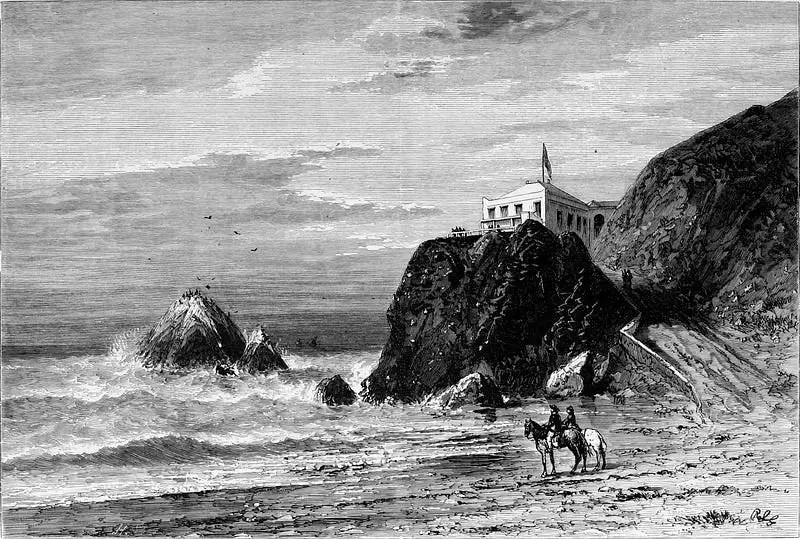
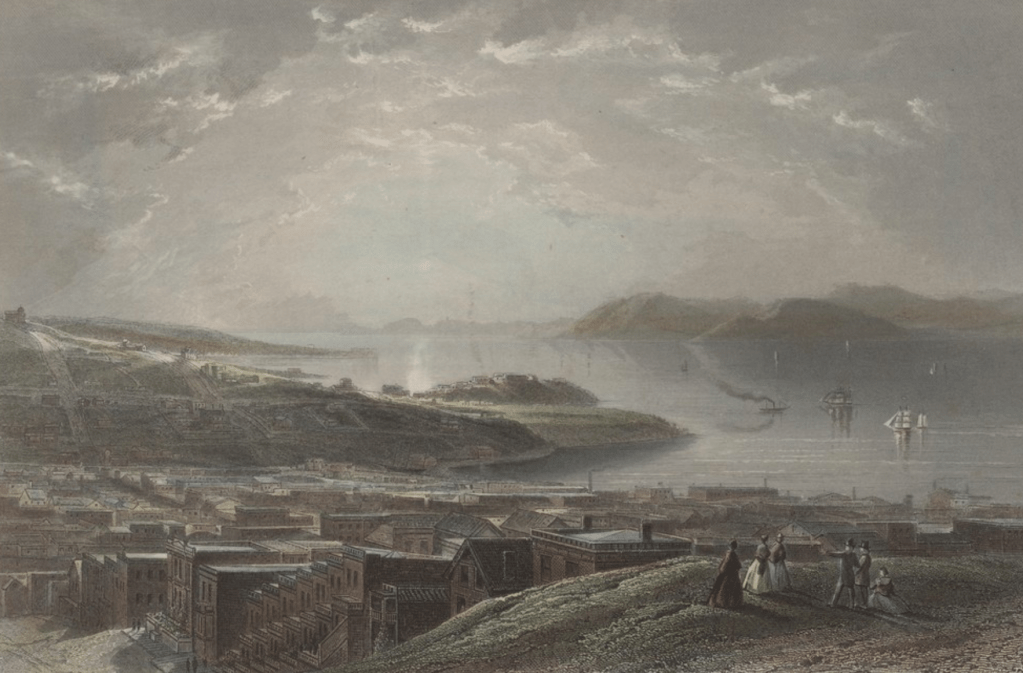
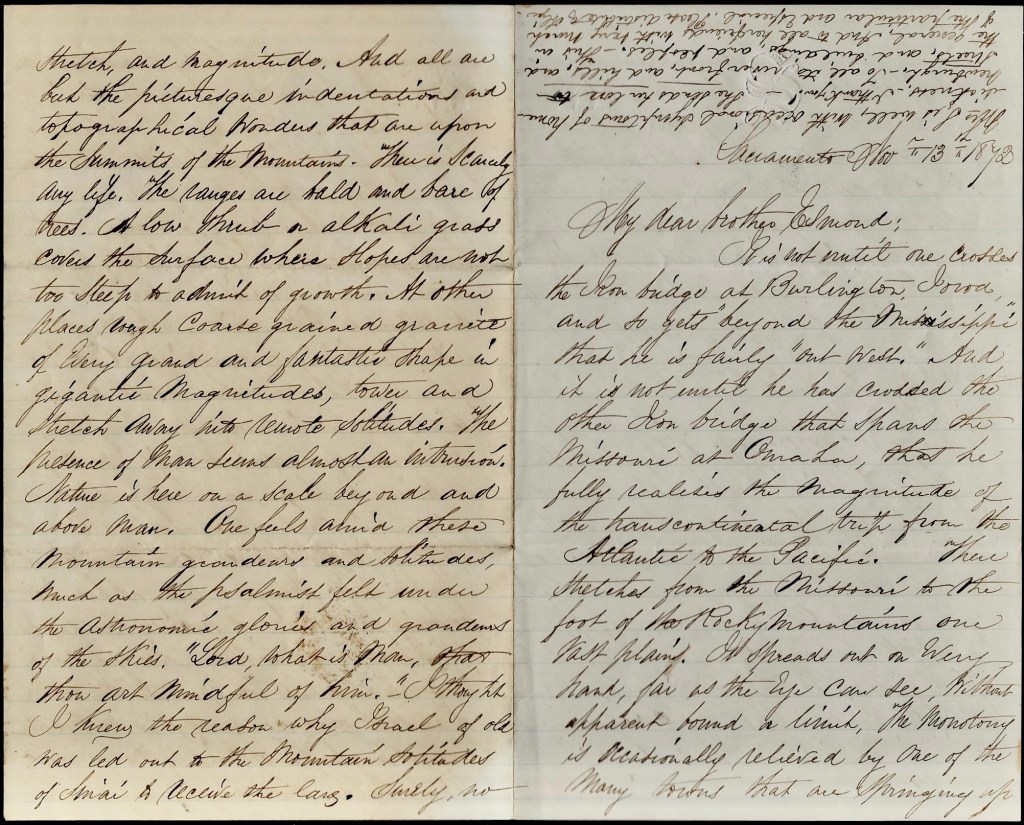
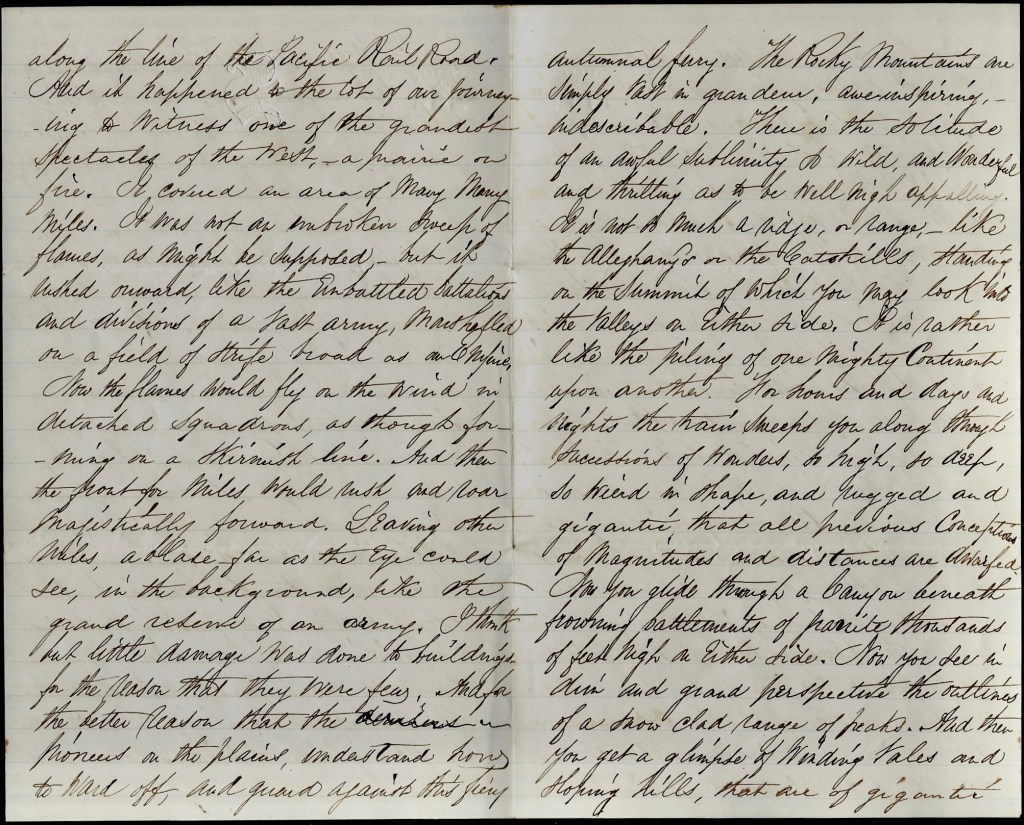
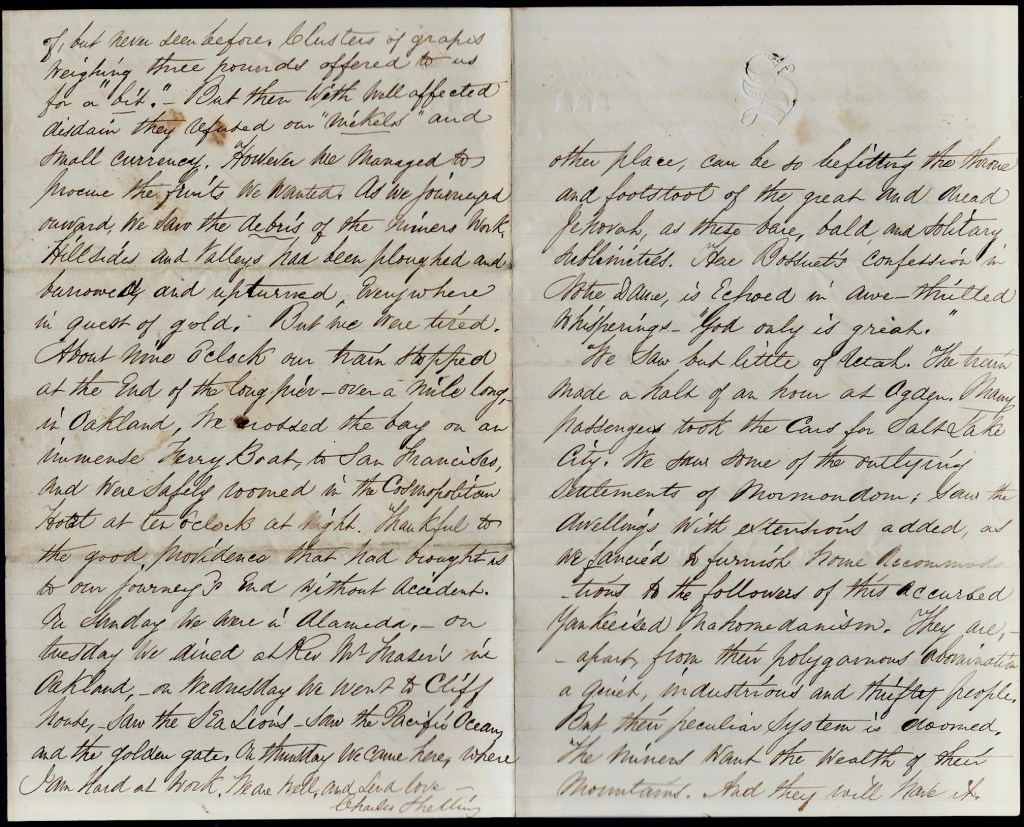
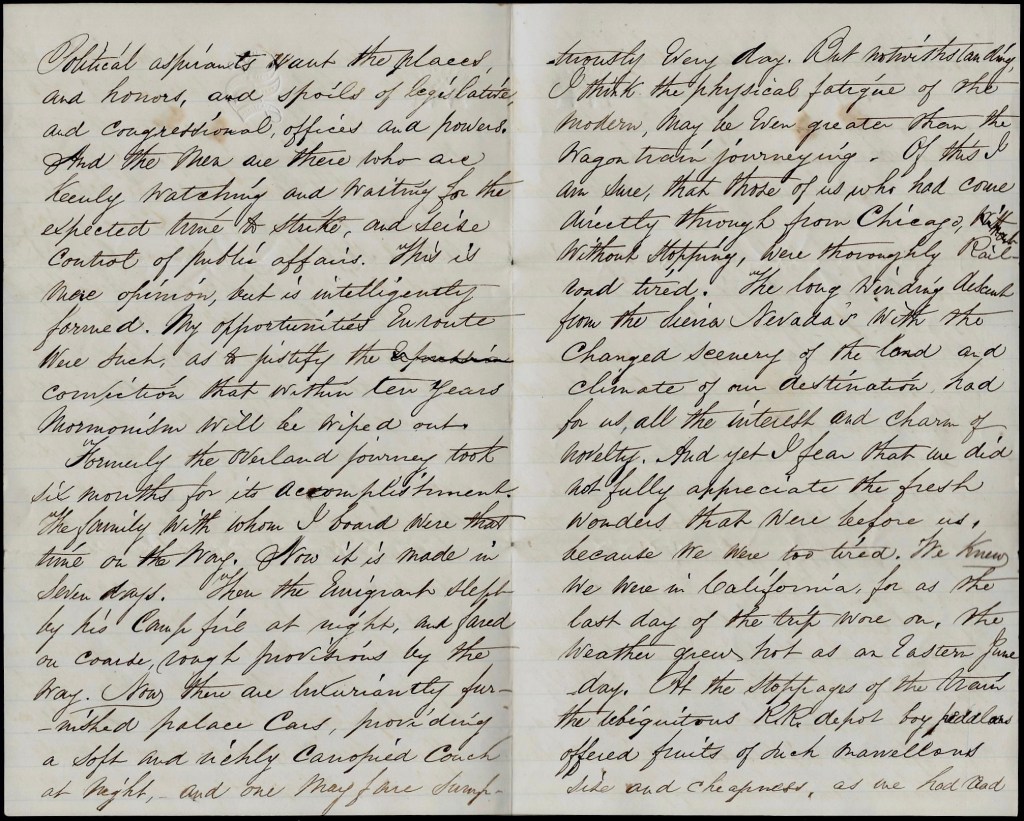
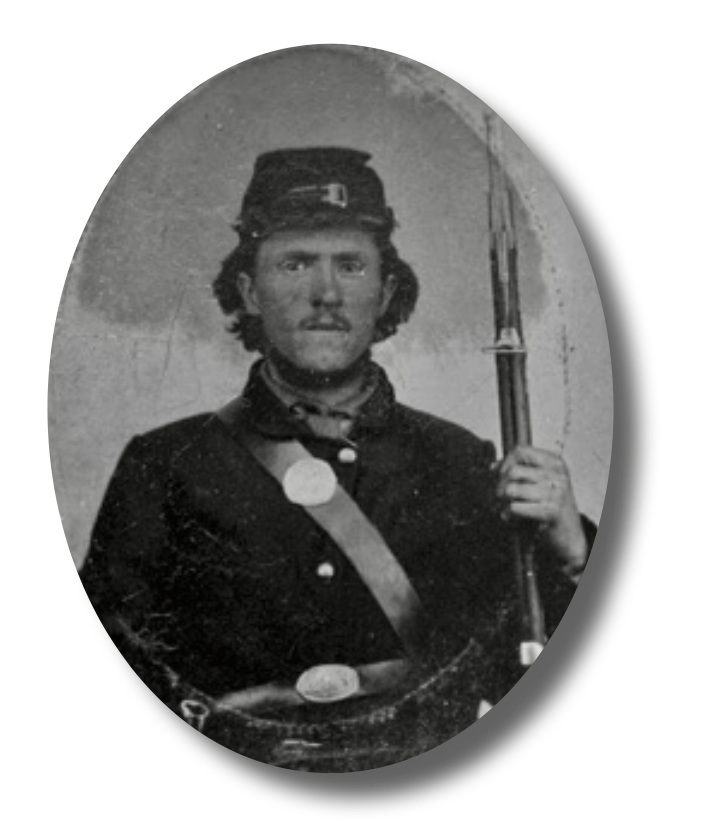

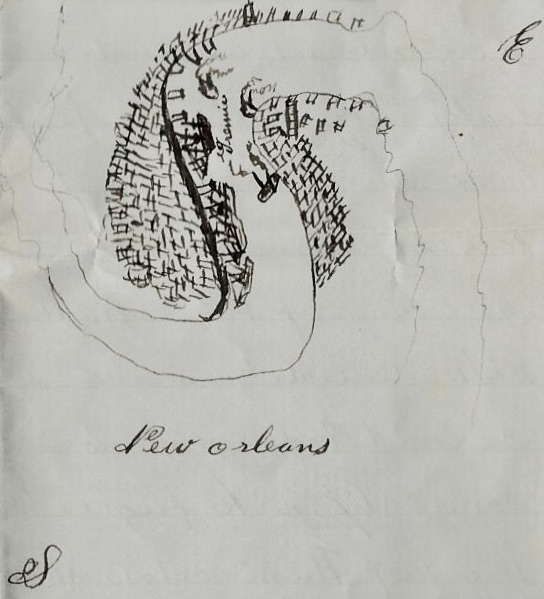


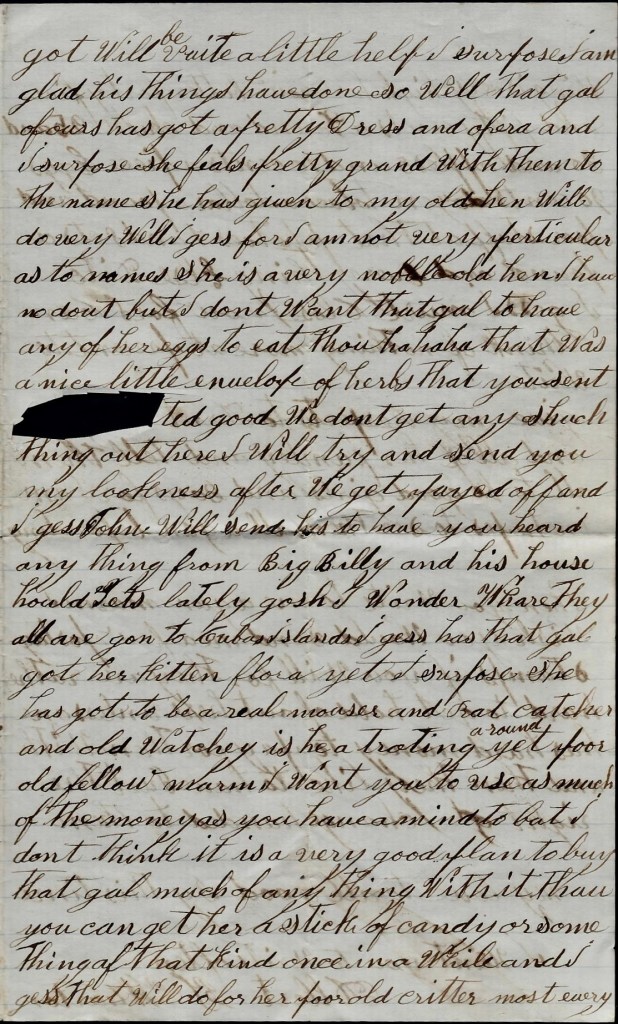
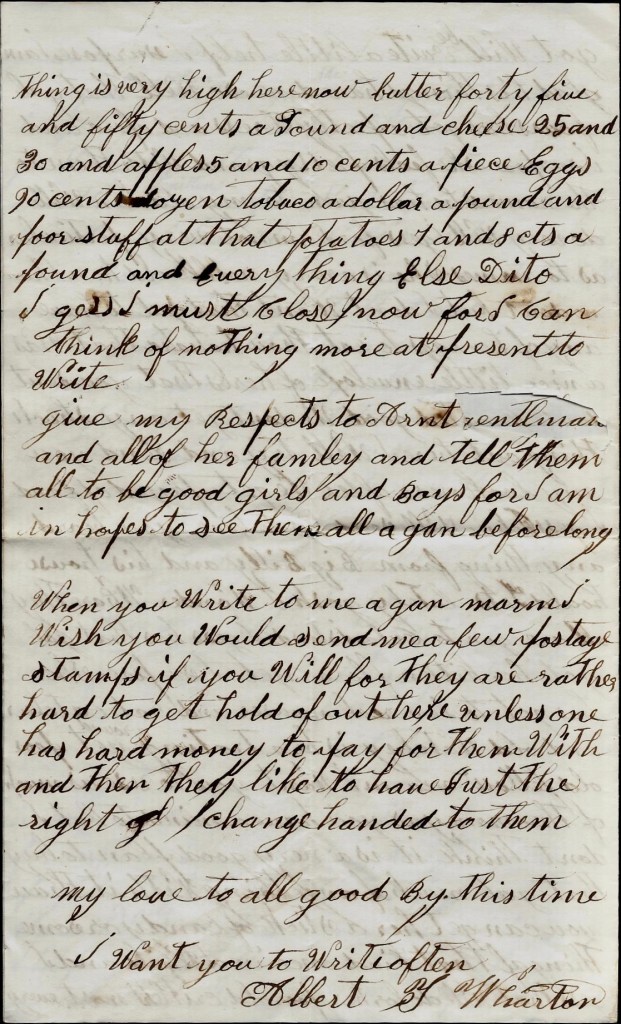




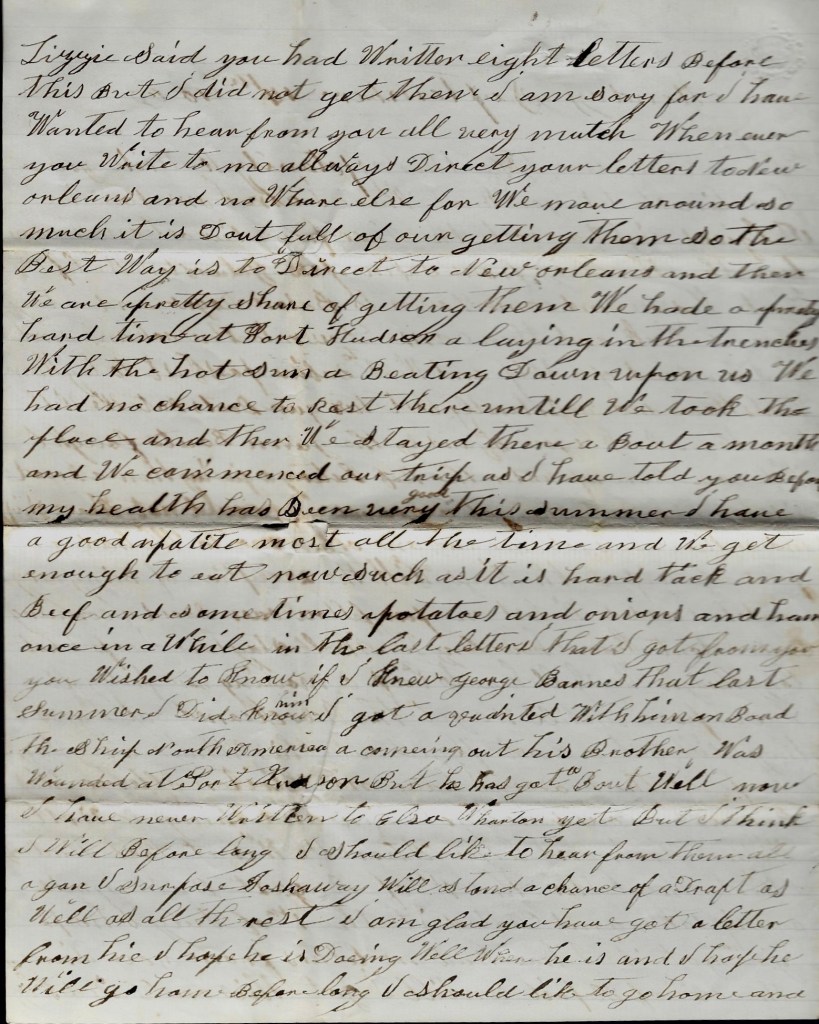
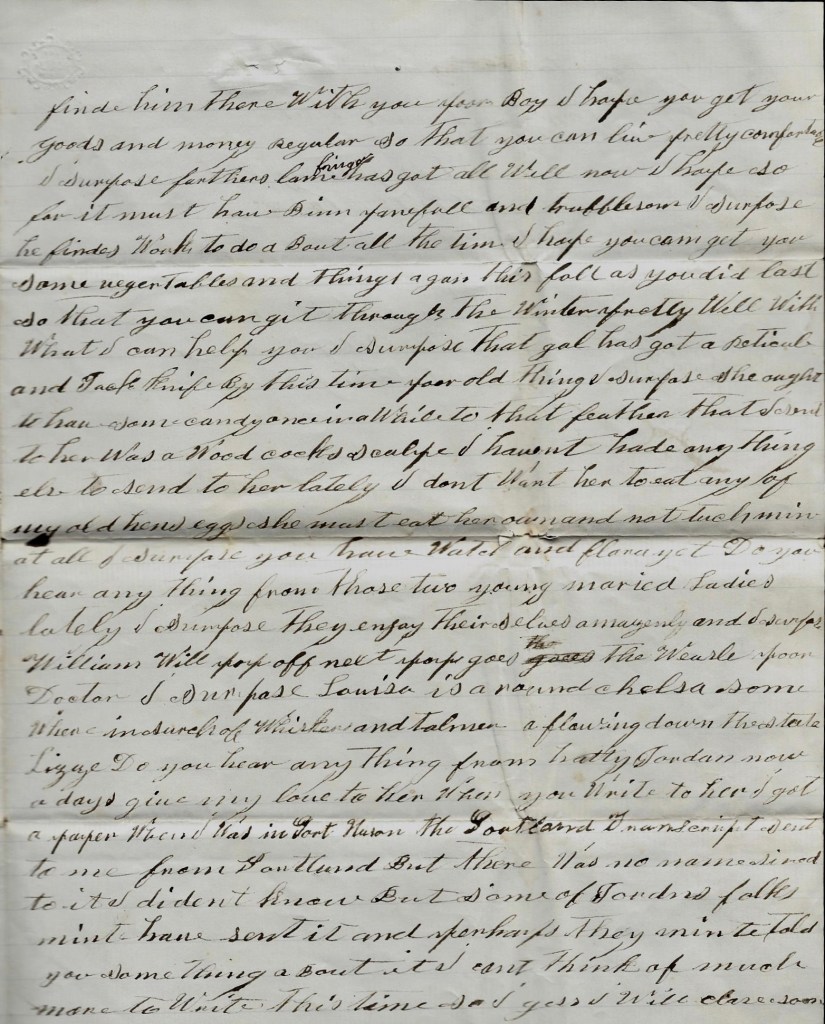
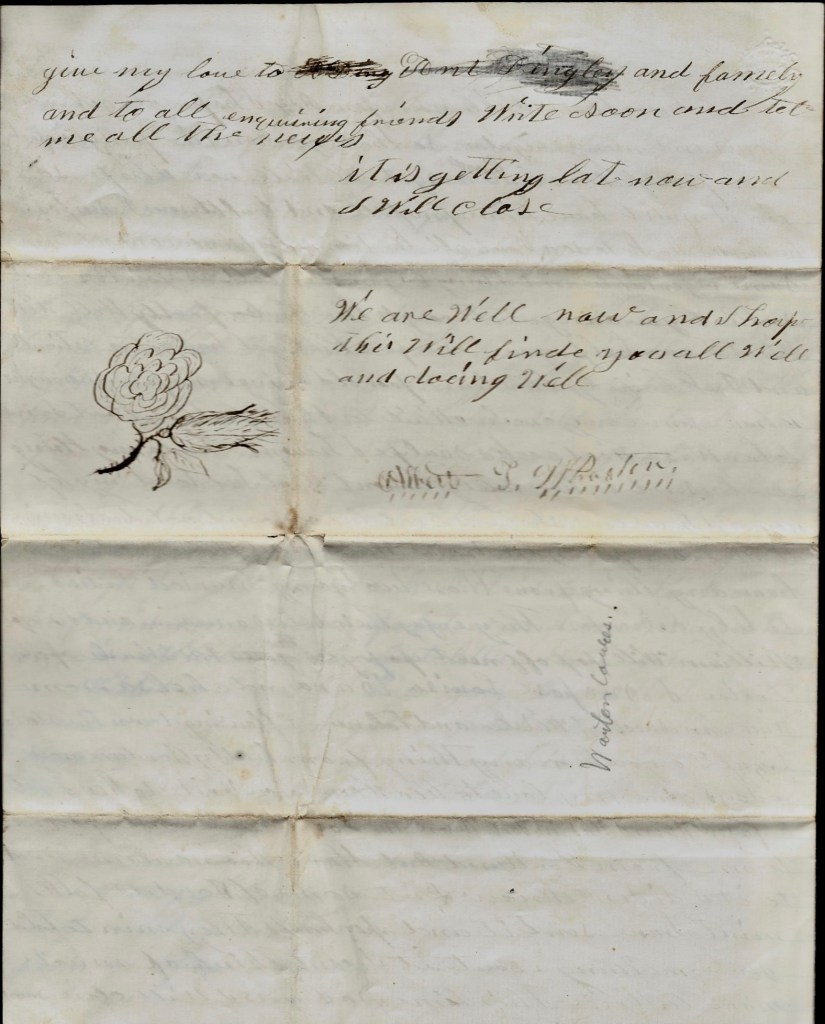
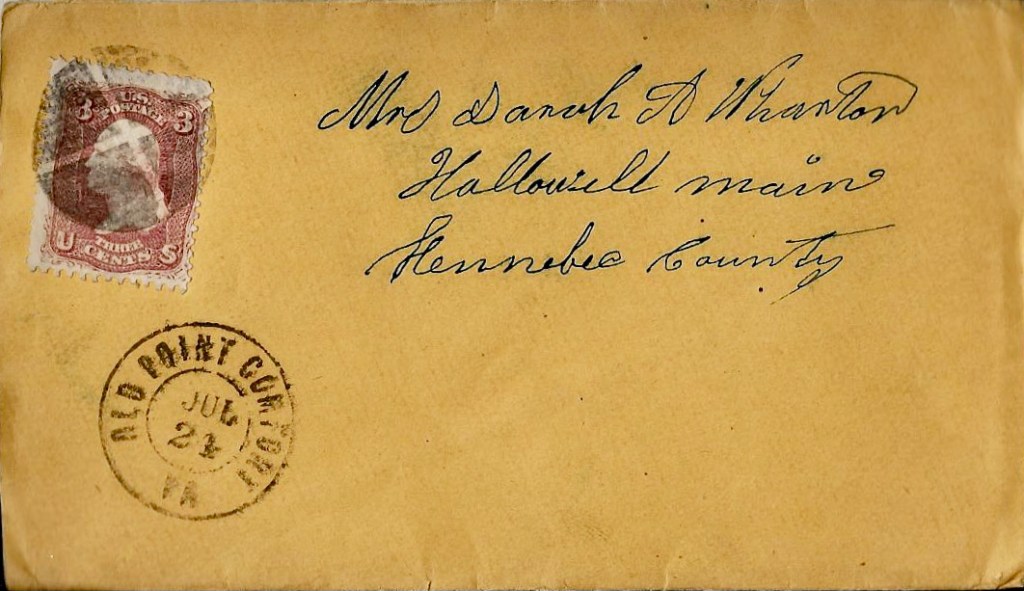
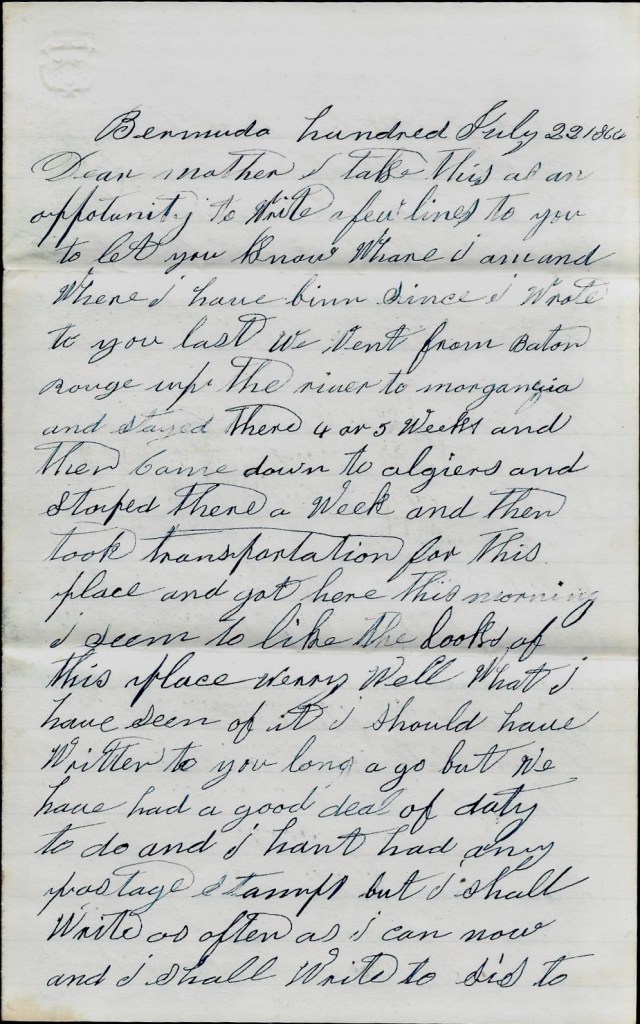
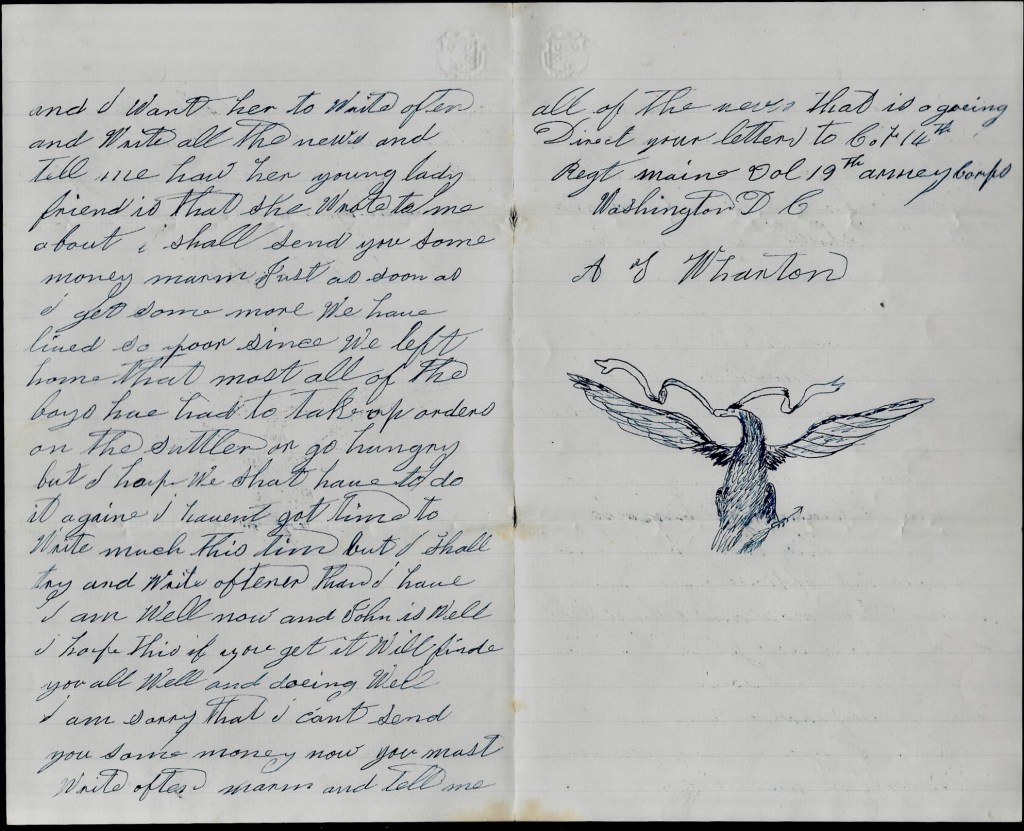
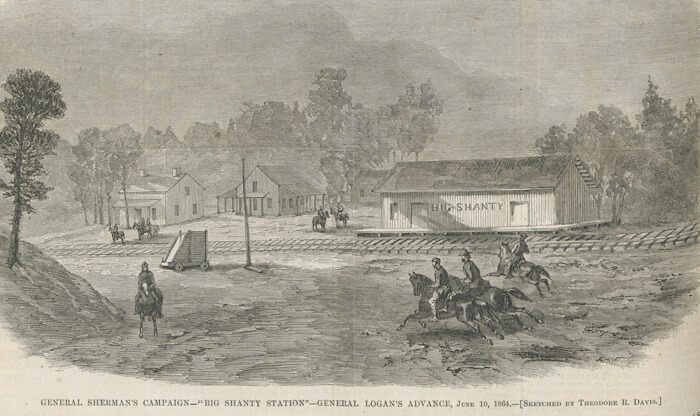
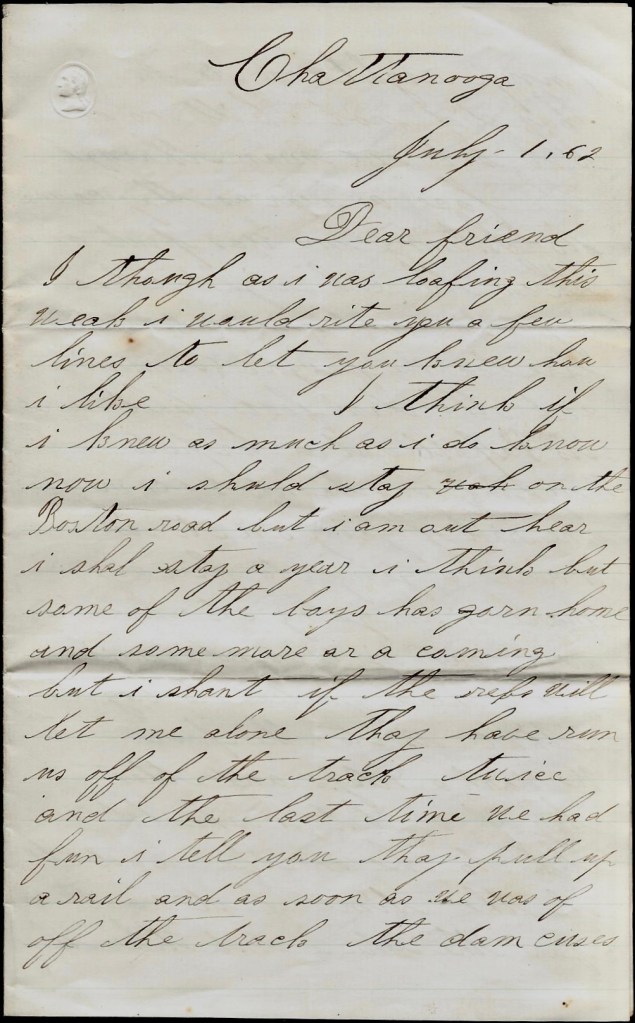

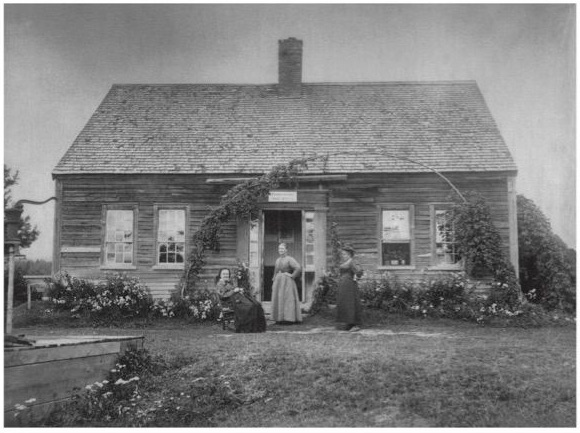


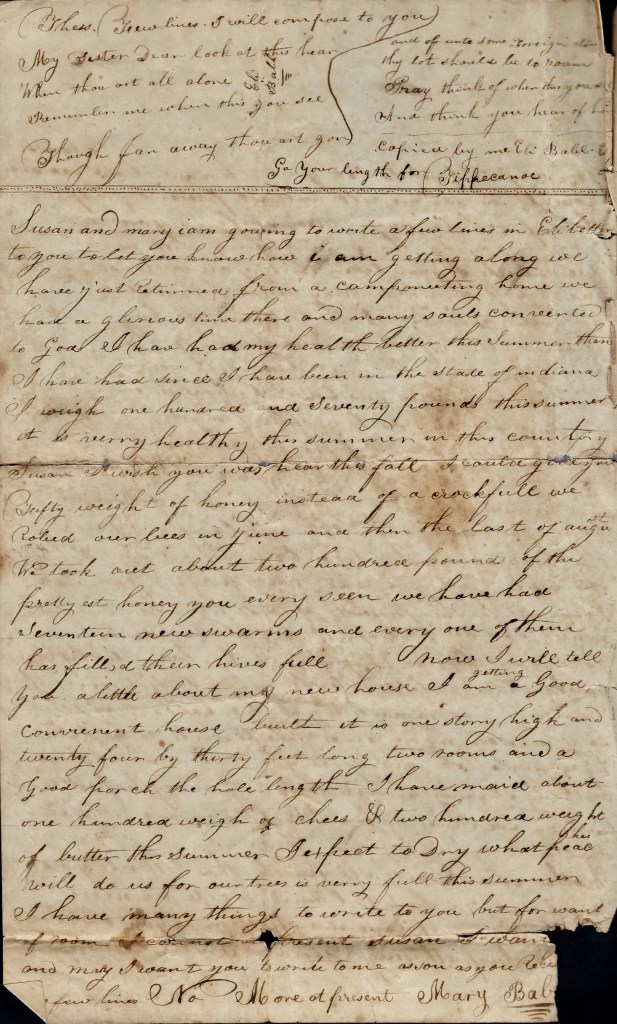
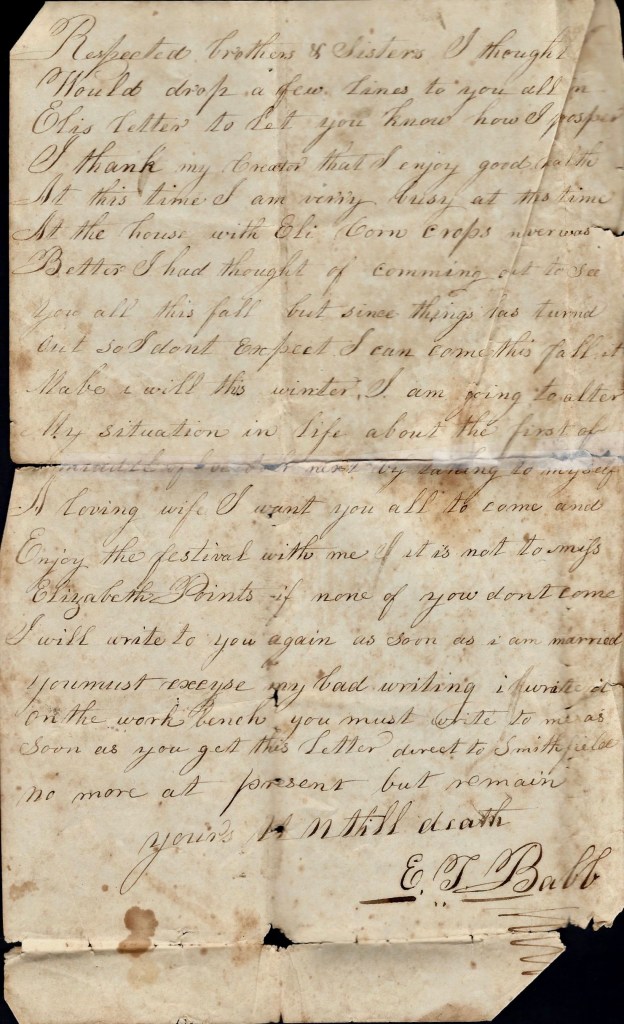


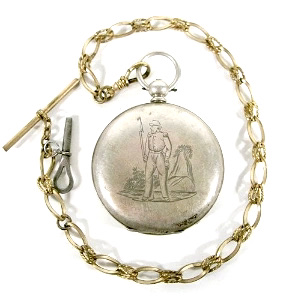


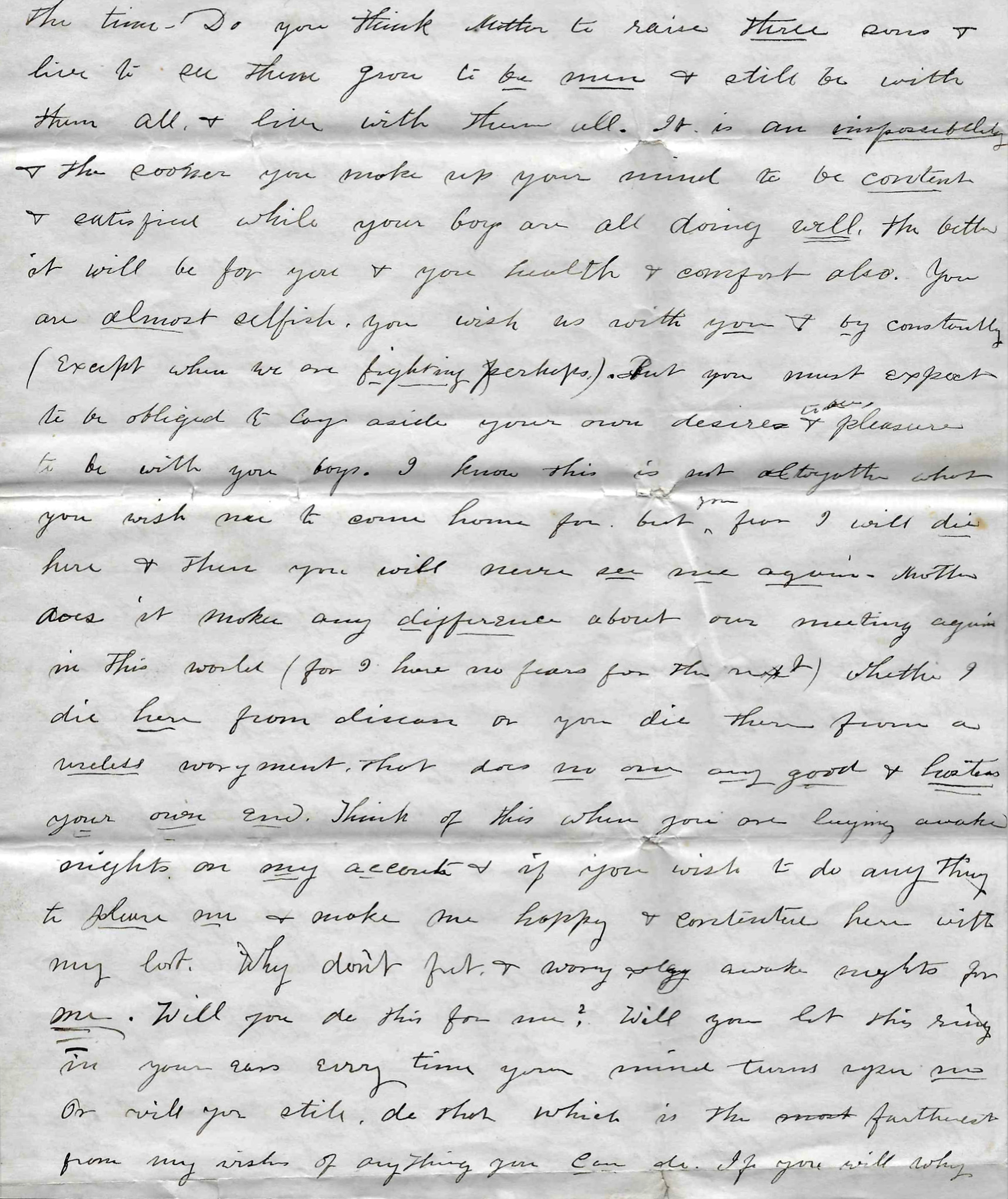

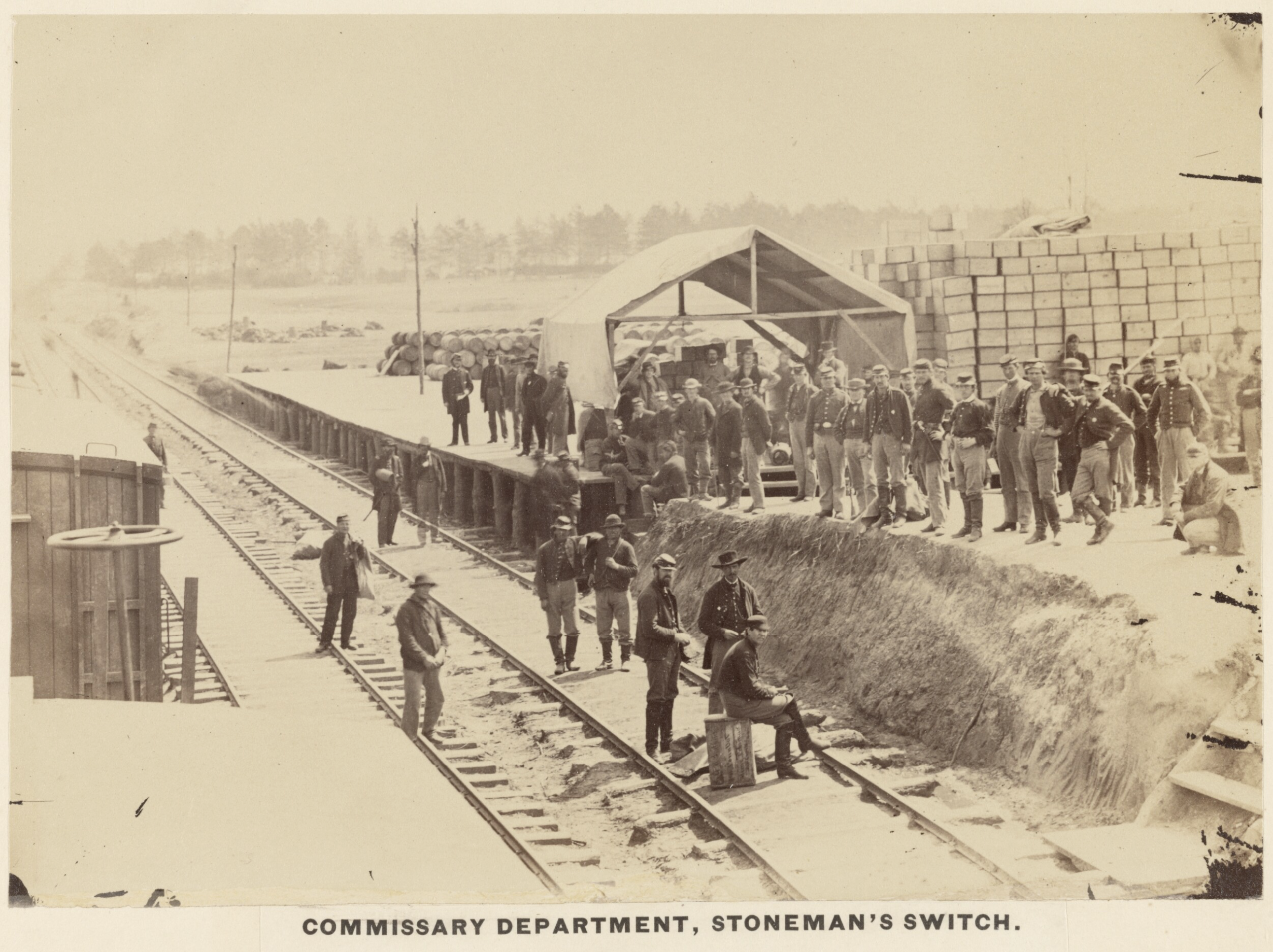


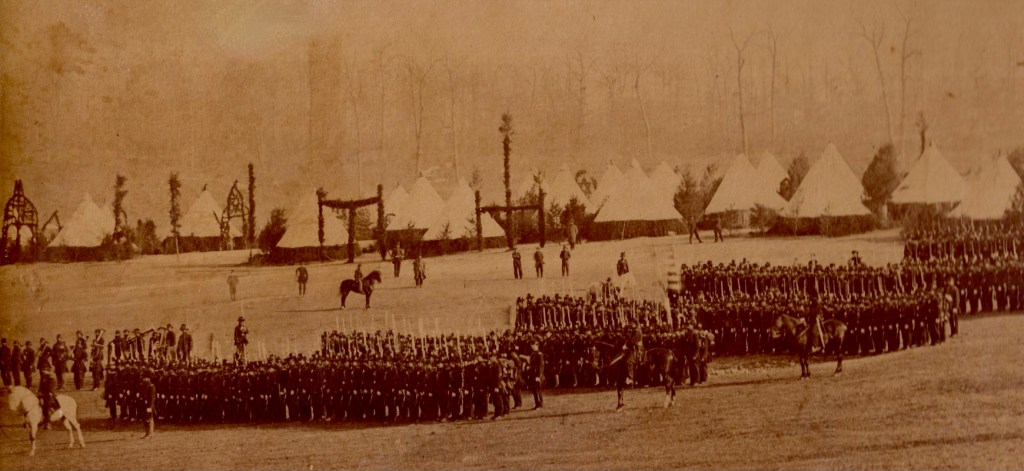
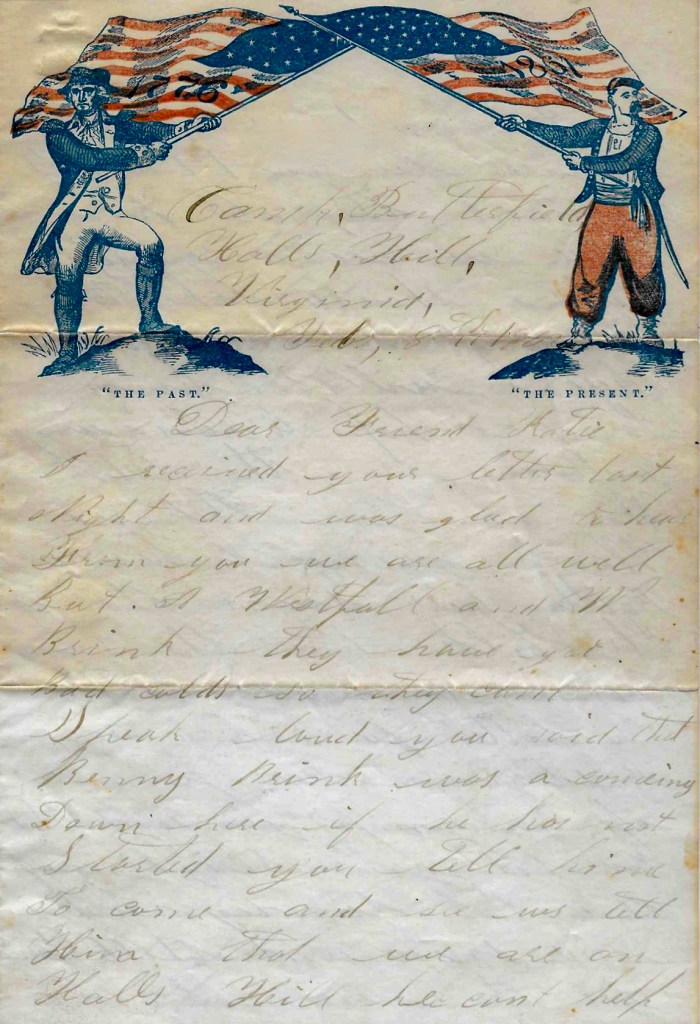
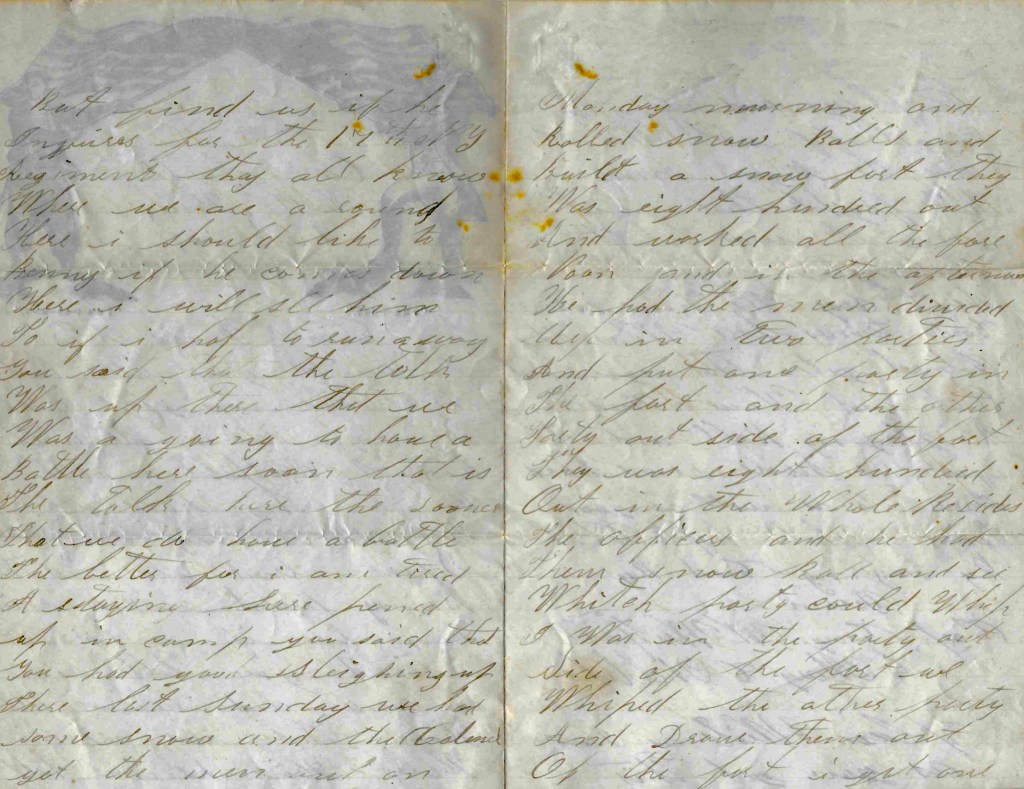
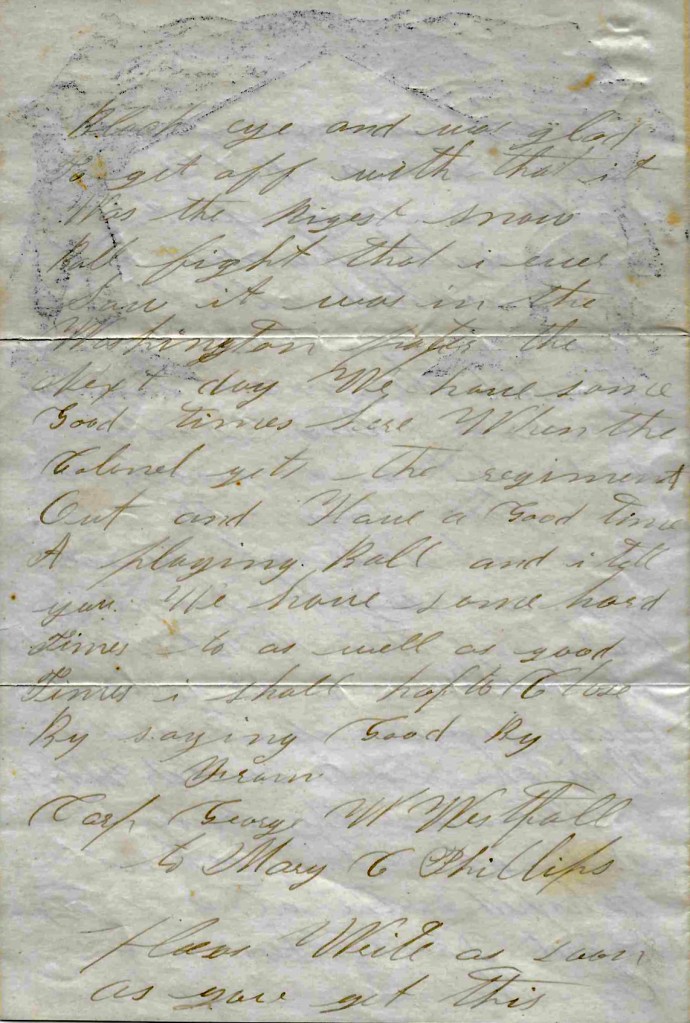

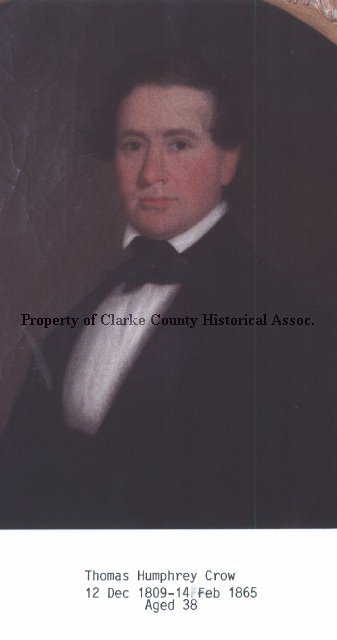


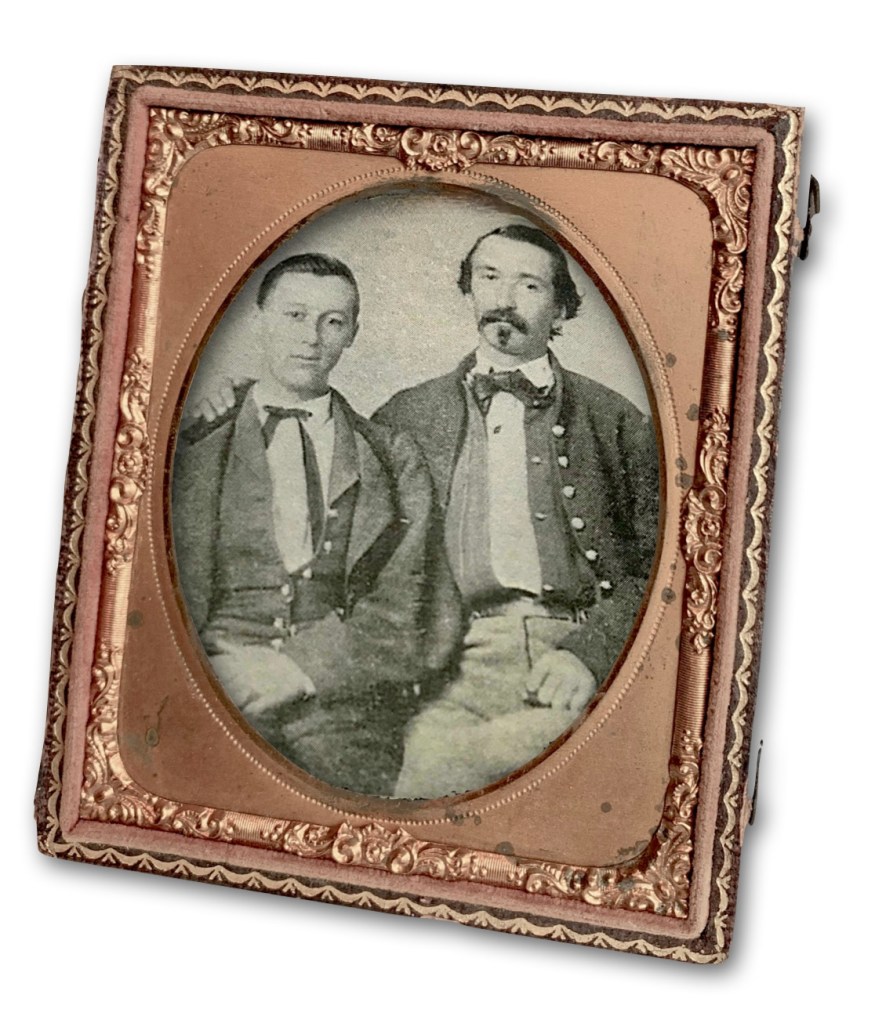


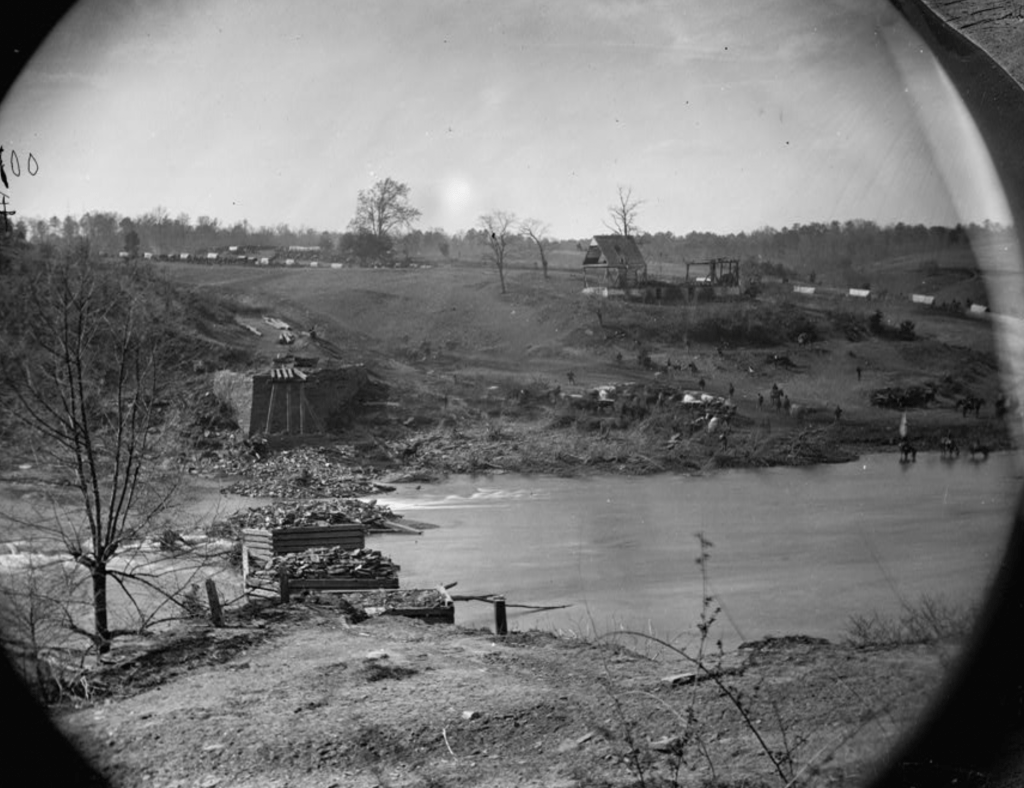
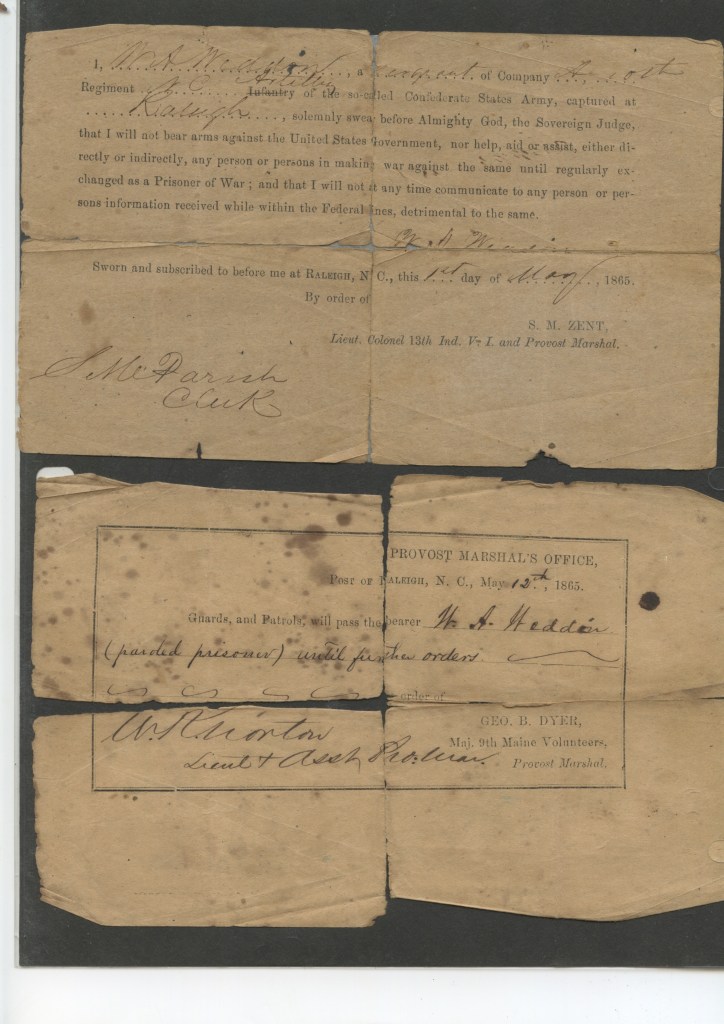
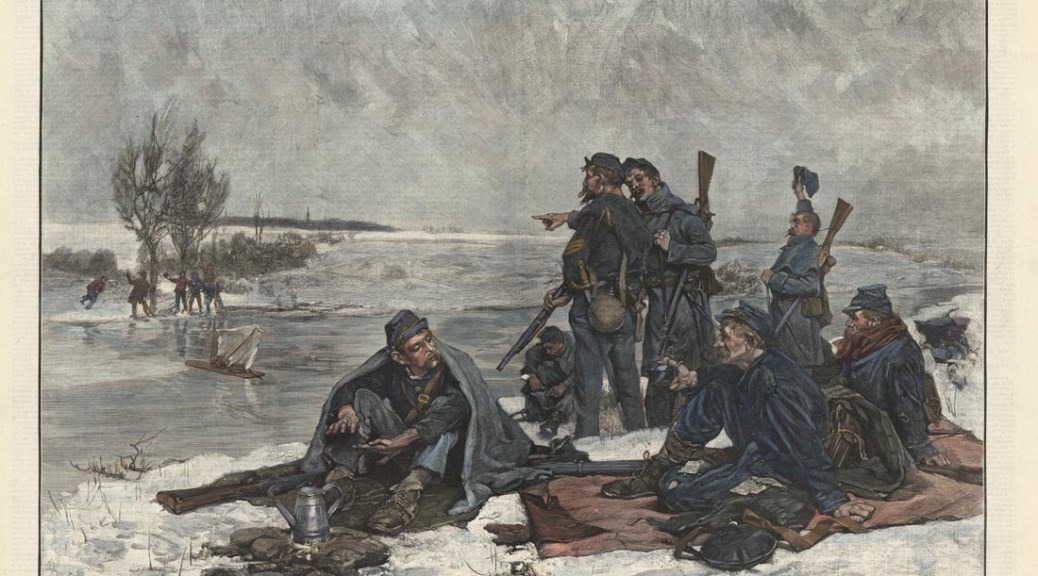
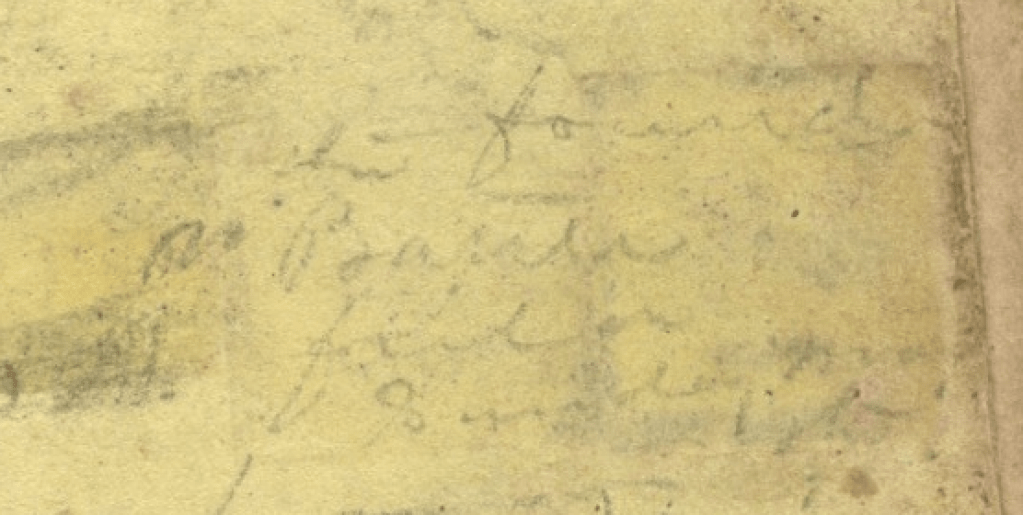
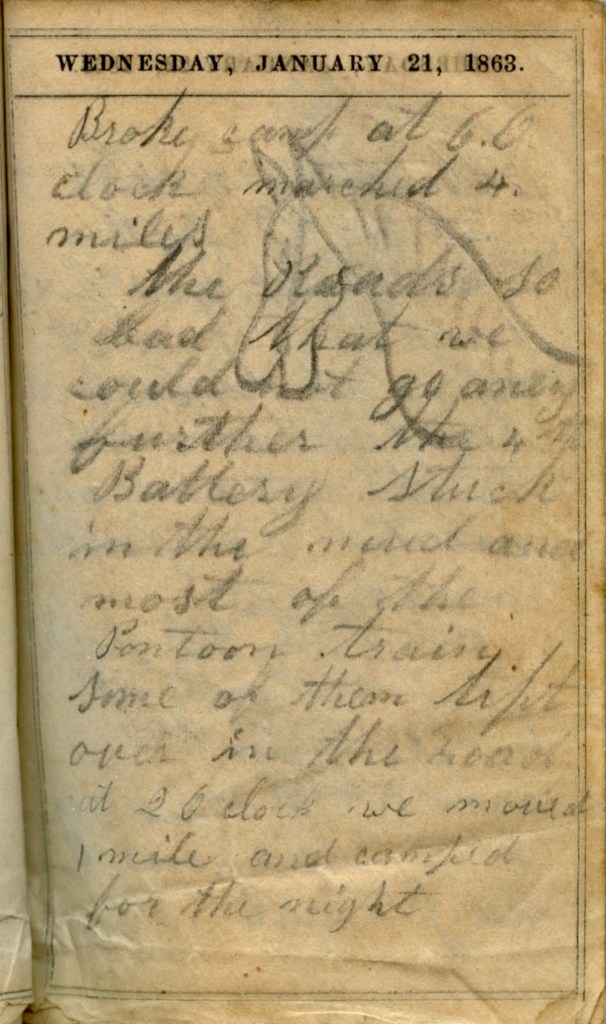

 Spared & Shared 23