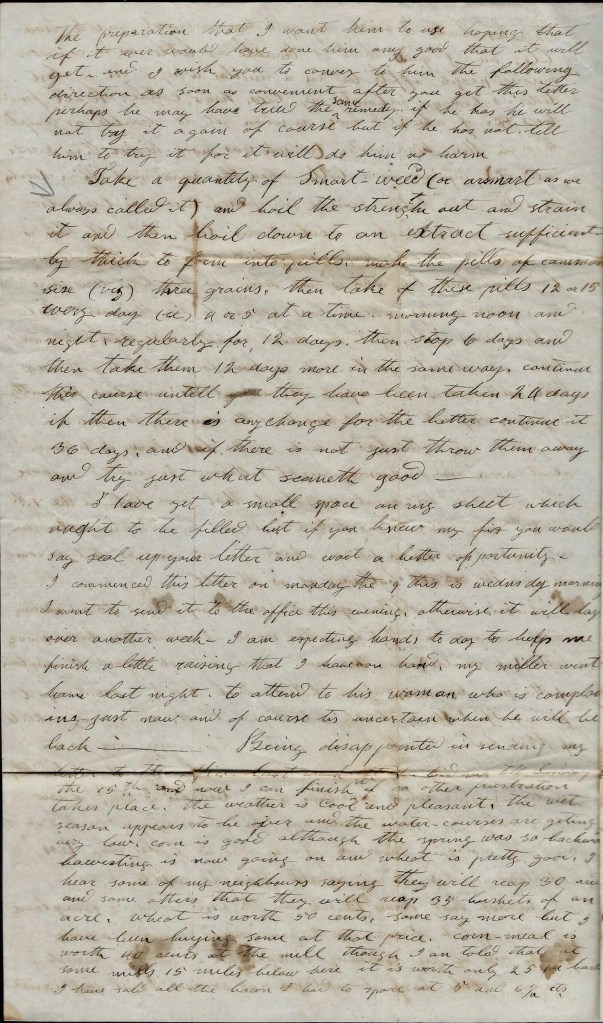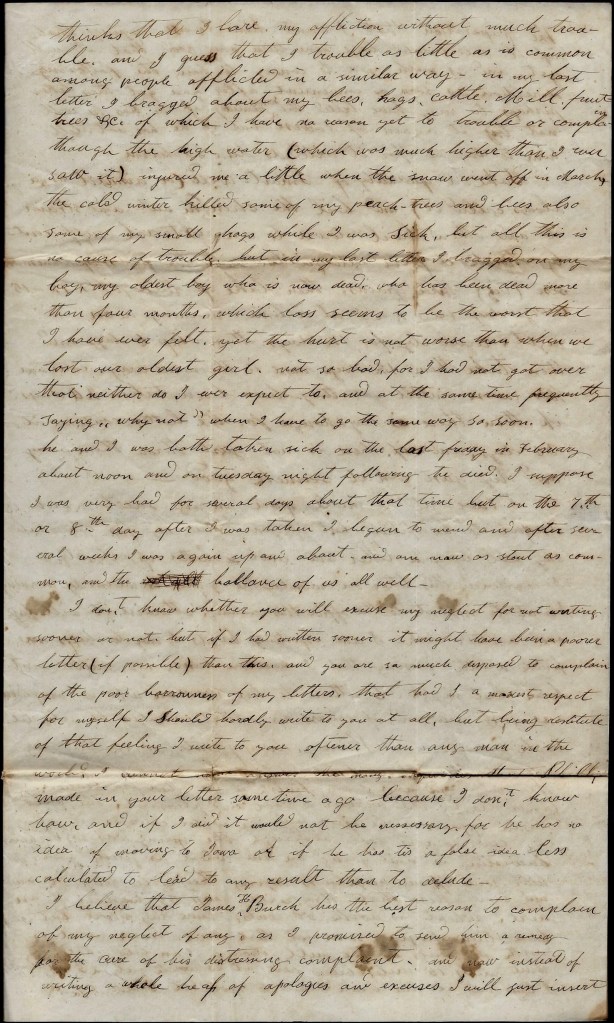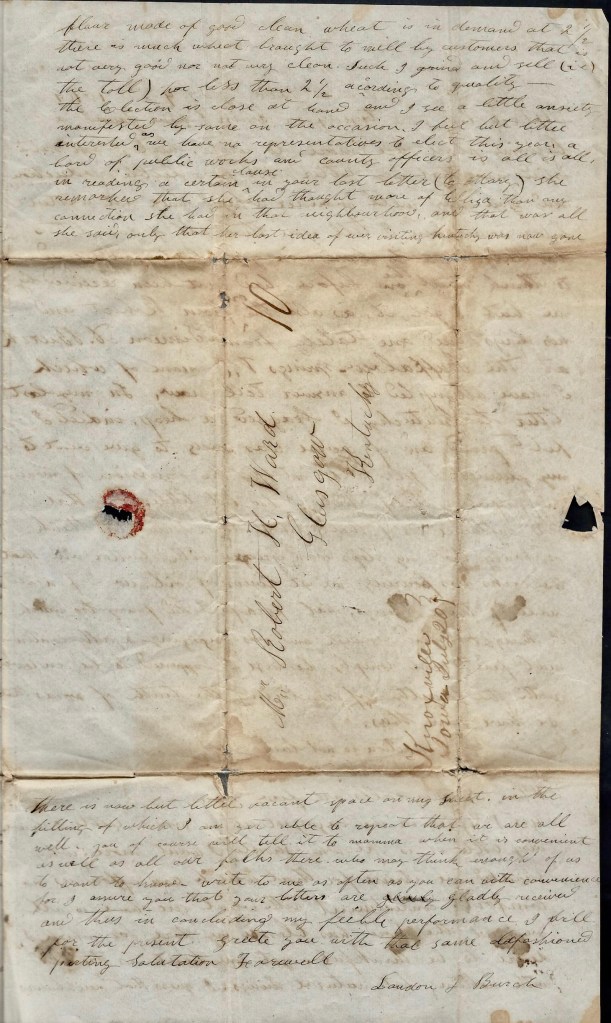
My passion is studying American history leading up to & including the Civil War. I particularly enjoy reading, transcribing & researching primary sources such as letters and diaries.
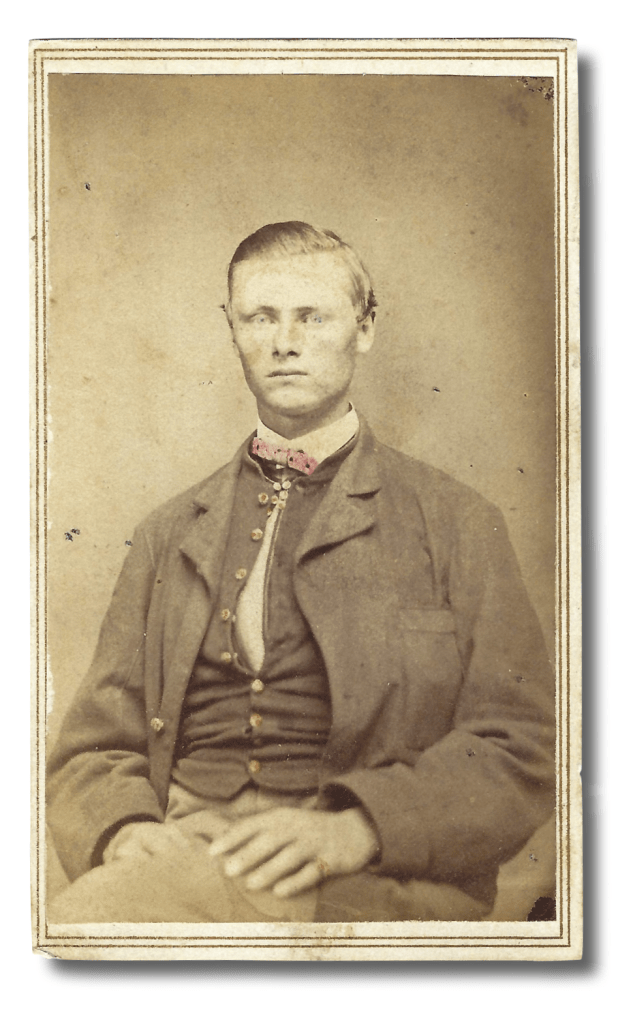
I could not find an image of John but here is one of L. Smith Cogswell who also served as a sergeant in Co. E, 18th Illinois Infantry (Photo Sleuth)
The following letters were written by John L. Roberts (b. 1838), a native of Wyoming county, Pennsylvania, who was earning his living as a farmer in Clear Creek township, Alexander county, Illinois at the time the Civil War began. When he enlisted as a corporal in Co. E, 18th Illinois Infantry on 28 May 1861, he was described as a 5 foot 7 inch tall, brown-haired, blue-eyed, single, 23 year-old farmer. John had recently been promoted to a sergeant before the Battle of Shiloh which he describes in some detail in the first letter. In that two-day fight, the regiment lost 10 killed, 63 wounded and 2 missing—all on the first day. The 3 color bearers who carried the flag in the first day’s conflict were all killed while supporting the banner.
John Roberts’ actions in the battle no doubt earned him recognition and he was later commissioned a lieutenant by Captain Charles H. Reed. Also serving with him in the same company was his older brother, Sgt. Benjamin Franklin Roberts (b. 1835) who became seriously ill in the spring of 1862 and had to be discharged for disability in July 1862.
The 18th Illinois Infantry saw its first major action at Fort Donelson in February 1862 where it occupied the right of Oglesby’s brigade, on the right of the line of battle, and during the second day’s fight lost 200 men in killed and wounded, 50 dying upon the field and 10 soon afterward. The regiment during the battle bravely and persistently maintained the position to which it was assigned in the early morning, and not until its ammunition was spent was the order to retire given.
Letter 1
Pittsburg, Tennessee March 31st [1862]
Dear Brother & Sister,
As I have a little time this morning I will write you a few lines in answer to yours of the 27th. I have just received a letter from Benjamin. He is a Clear Creek [and] has been very sick but is now able to be around. He will stay there till he is able for duty.
I saw the boys of the Ohio 20th a week ago. Tip was not very well. Dan and Ed are both very fleshy. Ed is much larger than either of us. I received a letter from Giles the other [day]. They are well at home.
We have been here since the 22nd. We stopped two days at Savannah. Our Colonel who was wounded returned a few days ago. He leaves again this morning for home—is not able to take command yet. Our Major who has been under arrest so long has resigned. Our Lieut. Colonel is still under arrest. The boys that was wounded are all getting well. But one has died since I last wrote (that is, from our camp). We don’t have but very little sickness [in the] regiment. We have but one in our camp. He stays in my tent and is quite sick and there is but little attention paid to him by the doctors. We have no hospital tents with us.
We have orders to be ready to march at a moment’s warning. There is but three tents to go with the regiment so we will have to stem the weather without tents from this on.
You said you had sent us some papers. We did not get them. Our mail is very uncertain. The news here that the Rebels are fortifying Corinth about twenty miles from here. My opinion is that there will be a big fight or a big dud. I should rather think the latter as we have a large force here.
We have been having very fine weather here for a week past. The fields begin to look quite green with grass wild plums, and peach trees are in full bloom.
I will now close as it is impossible for me to write when there is from one to a half dozen talking to me which is the case this morning. I will write again as soon as convenient. Ben says he will probably sell out before he comes back. If he does, we will make you a visit as soon as we are discharged and spend a few weeks at home. I will enclose your letter in an envelope which was sent to me from a friend.
Direct to Pittsburg Landing, Tennessee
Respectfully yours, — J. L. Roberts
Letter 2
The Battle of Shiloh
Pittsburg [Landing], Tennessee April 10th 1862
Dear Brother,
As you have doubtless heard of the late battle here, would be anxious to know how we came out. I am happy to [say] Ben and I luckily came through without a scratch, although Benjamin was not in action as he did not get here from home till we had been thrown back in the rear as a reserve.
Our regiment did not suffer here as they did at Donelson—only 9 or 10 killed and 18 or 19 wounded which we thought very lucky as we was engaged a part of two days. We lost the most of our men the first day. We was ordered to retreat by our Major [Samuel Eaton] who was in command of the regiment—an order which he had no occasion for giving at that time although he was wounded. That through us in confusion and some of them retreated so far that they could not be found to rally again.
Mason Brayman (1813-1895) of Springfield, Illinois (Heritage Auctions)
After we had rallied the men that was left, the rebels came up again and undertook to charge a battery but failed in the attempt. We had a good position and just raked them from two [directions]. Major [Mason] Brayman took the flag and rode up and down our lines and cheered us on (Brayman is a staff officer of our division). 1
Monday we followed close in the rear of the forces that was engaged until late in the day [when] we was ordered to charge a battery which had been charged twice by our force but could not hold it. We charged it and held it and gave them about forty rounds of canister before they got out of range of the battery. Our Captain [Charles H. Reed] fired a gun three times before he could get a man to help him. He then was assisted by our 2nd Lieutenant [Daniel W. Flick] and Capt. [Henry S.] Wilson [of Co. B] and myself. The General 2 told our Captain he should have the battery so we hitched on and soon was ready for action again. 3
I cannot tell you but little about the battle—only what I saw myself [and] that was but a small portion. But one thing I know, that there was a perfect stampede of our forces on Sunday. They conducted themselves shamefully—both men and officers. They run and left but few braves to face the enemy who kept them from all being taken prisoners or brutally slaughtered. I will now close hoping to hear from you soon. I will write when I have time.
— John L. Roberts
1 Major Mason Brayman, an AAG on the staff of Gen. McClernand, is credited with helping to rally the troops of McClernand’s command to make a stand.For his bravery at Shiloh, Brayman was promoted to a Colonelon 15 April 1862 and given the command of the 29th Illinois Infantry.
2 Roberts does not identify the general by name but the first general in the Union chain of command of the Division in which the 18th Illinois was a part of would have been Major General John McClernand. The 18th Illinois was commanded by their Major Eaton). The 1st Brigade, of which they were a part, was commanded by a Colonel (Ware), and they were a part of McClernand’s 1st Division of Grant’s Army of the Tennessee.
3 One source describes this action as follows: “On the morning of the 7th the regiment fell in as a reserve to General Thomas L. Crittenden’s brigade. At about 2 PM they charged a Confederate battery, capturing two 6-pounder brass field pieces, one of which Captain Charles H. Reed, of Co. E loaded and brought to bear upon the retreating enemy, giving them three shots unassisted. He was then assisted by Captain Wilson and Lieutenants Daniel Flick and John Davis [could they mean John Roberts?], and fired 15 or 20 rounds into the retreating Confederate cavalry. [see Shiloh National Military Park]
Letter 3
Map of area between Pittsburg Landing on the Tennessee River at bottom right and the Confederate Stronghold at Corinth, Mississippi, at upper left. Roberts wrote the 2nd letter from near Monterey located at the center of the map.
Army in the field Camp near Monterey [Tennessee] May 26, 1862
Dear Brother,
I have not received any letters from you for a long time but as our mail is very uncertain, I account for it in that way. I went to the river with Benjamin the 14th of this month, but him aboard a hospital boat (or rather a receiving boat for the hospital). He had been quite sick but was better when I left him than he had been for several days before. I have been watching the papers daily to see him name among the list of sick arriving at the hospital. I have not heard from him yet. He took with him his Descriptive Roll so that he could get his discharge which he perhaps has got and gone home to Ohio.
I received a note from Ed yesterday. They are camped at Shiloh Church about 14 miles from here [and] 3 miles from the river landing. They are having considerable sickness in the regiment. Ed Perfect 1 died not long ago. Leroy [Perfect] and Henry Wilson has gone home. Henry was very sick when he left. They are camped on the battlefield. I expect the stench from the carnage is what causes them sickness. I camped at the church a few nights ago [and] the stench was very disagreeable then. I did not know that the boys was there at the time. I am in hopes they will soon be relieved as they are there guarding the road from the landing.
Our Division is one of the reserve divisions. We are on the right and rear of the extreme right. We have heavy duty to do here standing guard [and] building breastworks, but we are pretty healthy. We can hear skirmishing along the lines every day, sometimes pretty heavy.
This is our fifth camp since we commenced advancing. I saw Henry Case about five weeks ago. He is in the 34th Illinois Regiment and Sam Beaty is in the 9th Indiana. I have not heard from home lately. The last I heard they was well. I will now close. you will direct to Pittsburg Landing. Write soon. — John L. Roberts
1 Edwin R. Perfect (1839-1862) was the son of William Perfect (1797-1882) and Maria Stark (1804-1870) of Trenton, Delaware county, Ohio. Ed was a corporal in Co. D, 20th Ohio Volunteer Infantry. He died of disease on 3 May 1862 in Shiloh Church which had been converted into a hospital.Leroy Perfect (Edwin’s cousin) and Henry Wilson also served in the same company. They both contracted typhoid fever and were put on a steamer and taken to a hospital in Cincinnati.[See 20th Ohio Vol. Infantry]
Letter 4
Jackson, Tennessee September 16, 1862
Dear Brother,
As I have a little time this morning, I will improve it by writing. General R____ Division passed here yesterday on their way to Corinth. I saw Dan and Tip. They was engaged in the fight at Bolivar which you perhaps saw an account of (Aug. 31st). James Herron was killed. Ed was taken prisoner. He has not been heard from since. There was some prisoners paroled down on the River a few days ago. We are in hopes that Ed is among them. There was two companies taken of the 20th—K & G. Ed was at the spring about a half mile up when the alarm was given and did not get to camp in time to fall in with his company as they had been deployed in advance. He was with Company K when taken. Giles has enlisted in the 96th Ohio Regiment. Joseph Kimball is their Captain (Company G is their company). They are at Covington, Kentucky. Benjamin is at home. He has hte ague.
We have a great deal of duty to do here. We are on guard every other day. I think we do a great deal of guarding that is uncalled for.
There was quite an excitement here about ten days ago. We expected to be attacked. If we had have, the boys would have burned the town. As it was, there was several fires. I would have been glad to saw it burn. We then would have less guard duty to do.
George I am getting disgusted in the way this war is carried on. Men that we know to be the most rabid secesh are granted all the privilege they ask for. They are allowed to extortion on the soldiers in every way they can, [yet] we are not allowed to forage at all. Vegetables are sold so high that a private cannot afford to buy them. The soldiers here have but little confidence in our General. They doubt his loyalty.
I will now close hoping to hear from you soon, — J. L. Roberts
Letter 5
Patriotic stationery used by John L. Roberts in his letter of September 18, 1862
Jackson, Tennessee September 18, 1862
Dear Brother,
I have just received your letter of the 14th and now attempt to write a few lines in answer. Benjamin is at home. He has the ague. He will be back to Illinois again this fall.
I wrote to you a few days ago. I believe I told you that Ed was taken prisoner about the last of last month at Bolivar. He has not been heard from since. Rufus Davis [?] passed on here on the way to Corinth. I saw Dan and Tip when they passed. Giles [H. Roberts] is in the 96th Ohio, Co. G. Joseph Kimball is their captain.
You say you are out of business. Now if you will go to trading with the soldiers, I will insure you to make money. Anything that can be eaten will sell at high prices. I know men that are making fortunes trading with the soldiers. One man discharged from our camp told me that he made $72 clear in two weeks at Helena. I know he has but small capital. He was up here last week with a stock and sold out at wholesale. He has gone for another stock. I expect to help him sell out when he comes. He is going to buy tobacco, cigars, oysters, sardines, canned fruit, crackers, cheese, nuts, and stationery &c. He has to have everything shipped by express from Columbus up and pay $250 a hundred. So you see that takes off some of the profits. But keeps traders out and a few men here have the trade monopolized here. I should like to have you come down and try your luck. After the first trip, you can tell what you can do and what you can sell best. Butter sells here at 25 cents per lb. I don’t know where I could buy a pound at that. It is very scarce. I think you might bring a lot and sell at wholesale and pay the expense of a trip.
There is no danger of Jackson being evacuated as is reported. There is quite extensive fortifications going up here. I will now close hoping to hear from you soon. — John L. Roberts
The following letter was written by Alonzo S. Cushman (1843-1864), the son of Lemuel Cushman (1800-1866) and Polly Sisson (1802-1886) of New London county, Connecticut.
Alonzo enlisted as a private in Co. H, 11th Connecticut Infantry in December 1861 and by the time this letter was written in April 1864 he was a veteran of many battles and campaigns. Little could he have realized as he penned this letter on 21 April and fancied himself home “rolling lemons” with his friends Betsy and Mary that he would be dead a little more than two weeks—killed on the battlefield of Swift Creek in Powhatan county, Virginia, in what would be Maj. Gen. Benjamin Butler’s last attempt to isolate Petersburg from Richmond on 9 May 1864. Union casualties that day were estimated at 128 killed, wounded or missing.
I believe the Mary J. McNeely to whom Alonzo addressed his letter was 18 year-old Irish-born daughter of the widow Nellie McNeely. Mary worked as a housekeeper and later in the woolen mills at Lisbon.
Transcription
Addressed to Miss Mary J. McNeely, Yantic, Connecticut
Camp 11th Regt. Connecticut Volunteers Williamsburg, Virginia April 21st 1864
Friend Mary,
I received your letter of April 11th last Friday and am sorry that I could not answer it before. I am on picket or camp guard every other day and I don’t have much time to write. But I think in a few days it will be easier for us. Our recruits are learning to drill fast. We have got about 1100 men in our regiment now. That is more than we had when we left the state first. We have had 7 [?] desert and go over to the rebs since we have been here.
A week ago last Friday there was 50 of us old vets went out on a scout and was gone two nights and 1 day. We left camp about 9 in the evening and marched until 3 in the morning. Then we went and camped in the woods until 10 Saturday morning [when] it began to rain and we had to find shelter in a nigger shanty until that evening. Then we started on again. We marched until 12 Saturday night. It began to rain in good earnest about 10 and we all got so wet that we could not fire them off.
Sunday morning we cleaned them [and] then started for camp. We was out hunting after a guerrilla captain but we did not get him. It was reported that there was one on the road with a small squad of his men but I guess it wasn’t so.
I hear that there is 40,000 troops landed at Yorktown lately. The 6th, 7th, and 8th Conn. Vol. with them. If it true, we may get marching orders in a few days but I hope not for we have got a very pleasant camp here.
I can’t think of any more news to write. I am getting awful lonesome here of late. I don’t go out of the company street, only when I am on duty.
Give my respects to Betsy and tell her that I have not rolled any lemons since that night but I should like to be in the same place and roll some more if you two could be there and I out of the army altogether. But I guess this will do for this time. Give my love to all the folks and kiss that baby of Fanny’s for me.
The following letters were written by Martha Jane Irwin (1825-Bef1856), the eldest of four children born to John Maclay Irwin (1785-1856) and his second wife, Martha Nourse (17xx-1829). John’s first wife was Nancy McMurtry (1785-1821) with whom he had seven children. His third wife was Elizabeth Glass Marshall (1801-1844) with whom he had three children, and his fourth wife was Martha Culbertson. We learn from this letter that Martha’s father took his fourth wife in the summer of 1847 and that she was from the Pittsburgh, Pennsylvania, area.
How Martha might have looked
It appears that Martha’s father lived his entire life on the farm he had near Lexington, Fayette county, Kentucky. When he died in 1856, his will directed that his slaves Moses, Juba, Matilda, Rachel and Ann be hired out “at good and suitable places” and that half their earnings go toward their support and the other half to them. The other slaves, namely Lewis, Aaron, William, Solomon, Samuel, Mary and Jane, he directed should be hired out for $200 per year and then, he expressed his hope, that would voluntarily “elect to go to Liberia” and given $200 each. It appears that he wished his slaves Betsy and her two children, James & Eliza, as well Sarah and Susan would be offered the same terms. Two boys—Thomas & John, he desired should learn a trade and then in five years be sent to Liberia, but if they refused to go, they would be sold.
We also learn from the will that his daughter Martha was deceased by the time it was written in 1856.
Martha wrote the letter to her much older sister, Eleanor Estill (Irwin) Chambers (1808-1888) and brother-in-law, George Maxwell Chambers (1800-1891). George moved with his parents from Maryland to Kentucky in 1805 and married Eleanor in 1820 in Fayette county. In 1835 they relocated to Jacksonville, Morgan county, Illinois, where he engaged in various business pursuits.
Midway, Kentucky [May 14th 1847]
Dear Brother George,
I feel very grateful to you for the two very interesting letters I have received from you and as I consider two of yours quite equal to one of mine, I have determined on answering them forthwith. Lizzie and myself are almost alone this evening having no one but George to protect us. Pa has left for Pittsburg where he will remain for a week or two (Providence permitting) taking unto himself in the meantime another rib as our friend, Dr. English, so affectionately designates his companion. Now this step I shall make no remarks on knowing as I do the very desolate situation of a widower even though he have an interesting, accomplished daughter like myself to manage his domestic concerns and one whose housekeeping qualifications are the boast of an admiring community.
As to intellectuality, you yourself are forced to acknowledge in almost every document I receive at your hands the decided superiority of my humble self, but after all that can be said of these admirable attainments and commendable traits, I consider my humility my most shining characteristic, and I would ask of you what can be more interesting than to imagine a being possessed of all these charms and yet perfectly ignorant of her numerous graces and virtues? If the mere imagining of so exceedingly delightful, how infinitely blest you should consider yourself to have just such an exquisite for a correspondent. Oh yes, I doubt not but the “bright reality” will be overpowering and the intensity of feeling so great that you will have an alarming attack of “high strikes“—put the children all in the corners for not being intellectual—and endeavor to burnish your own ideas by an excessive application of your ten scratchers to the region of phrenological developments.
I am glad to hear that you are all well. No one can tell the great anxiety I feel to see you all once more and I hope to be able to visit you this fall if nothing should turn up to prevent and I have a suitable opportunity.
It may be that this is the poem referred to which was making the rounds in newspapers in the fall of 1846.
There is no news of consequence to communicate except that we have whitewashed the fence, broke one of the parlor looking-glasses, and killed the black cat for eating chickens. Tell Sister that I thank her very much for those tomato seeds and planted them immediately. I cannot express the very deep sense of gratitude that I felt on receiving that very applicable piece of poetry relative to the gal that had a hole in her stocking. Now it is nothing very uncommon for folks to have rents in their hose, but it was certainly “shocking” on an occasion like that and I would advise anyone placed in similar circumstances to adopt my plan of sewing them up.
Well another day has fled and I have not yet finished this letter and the worst of it is I have no additional news to communicate except that Old Frederic Cable of Woodford County was shot night before last by two negro men. One of them was named Hawkins—a brother of our Maria’s former husband. I suppose they will be hung. 1
This is the first day of our big meeting. We have brother Strahan and I have to assist Mr. Logan. My best love to sister, Charles, Kate, Rowland and all the rest of the children and believe me to be yours affectionately, —M. J. Irwin.
1 I inferred from this statement initially that Frederic Cable was killed but it appears he was only shot. Frederick Cable was born in Mississippi in 1774 and did not die until 1853. He was married to Mary Dickerson (1777-1853). I couldn’t find anything in the newspapers pertaining to this incident.
Letter 2
Addressed to Mrs. Ellen E. Chambers, Jacksonville, Illinois Care of Mr. G. M. Chambers [Postmarked at Lexington, KY]
Locust Grove, [6 miles from Lexington, Kentucky] August 1st 1847
My dear Sister,
It has been a long, long time since I wrote to you but I intend now to write you a long, long letter to fill up the space caused by my delinquency. The fact is there is very little to write but probably by dint of comments, &c., I can spin out “a something.” But whether it will merit the name of letter or not, I leave you to judge.
Our neighbors are all well and so are we. There has not been a death in the neighborhood for some time. Mrs. Lyle, Mrs. McClure, and Miss King and Miss Mary Simrall McClure 1 are over from Madison, Indiana, on a visit to the Marshall’s and Glass’s. Mrs. Mary White is on a visit to her Father’s. The old Aunty’s and their granddaughters have spent several days with us. You know that “big Glass Marshall” 2 and ourselves are at loggerheads so I have never been to call on his kin, but they waved ceremony and came to see us. Sam (Charles’ uncle) is spending the summer at his “loving brother Glass’s” so I think that with him and the Granny’s and their four grandchildren (for there are two boys), that they have something for a squeeze in their two spare beds. It does me good to think how delighted (!) Mary Ann is to have them all there at this particular time for you must know that she is in a “situation” to appreciate and enjoy company. But you will say that I am sarcastic. Well, I know it is wrong to indulge in anything of the kind, but I know the contents of this letter cannot injure any of the breed and I do not speak my sentiments very often these days, for everything I say is of such vast import that it is heralded abroad as speedily as a “report from the seat of war.”
The whole neighborhood is angry at me almost. The Stevenson’s were insulted because Charles wrote “something” to William. The blame was all thrown on me who was as innocent as “our dog Watch.” Then Sally Poke has told the Offutt’s family some lie that I should have said of them and there is not one of them that ventures within speaking distance of me. All this, however, I care nothing scarcely about for I know my own innocence and they knew that Sally Poke was the greatest enemy I had in the world and if they choose to believe that “snake in the grass,” let them do it There is no one living better able to appreciate her whining hypocrisies than I for I have had sufficient experiences. Dear knows she has sent word time and again for me to go and see her but I treat her invocations with that perfect contempt which they so richly merit.
My dear sister, you say in your last letter that I had given some hints of matrimonial intentions and now I doubt not you are looking for an open announcement of something of the kind. But you will be mistaken. But trusting to you honor as secret-keeping lady, I will inform you that I gave two flats [rejections?] week before last—one of them was a written [letter] and the other a verbal heartbreak. Now I do not tell you this by way of boasting but just because you are my sister and I have always been in the habit when with you of confiding all my sorrows and joys to you. Indeed, if everybody hated such things as much as I do, there would be little coquetry in this world of ours. It is always a matter of very great regret and I trust I may never have but one more opportunity and that the right one—which by the way I never expect to have for I do not know where that one is to come from. I hated very much to reject my Philadelphia beau but Pa said I should not go so far from home with one whom I had so slight an acquaintance with. And sure enough, I wrote the poor, dear fellow and that “his cake was dough” (I didn’t exactly use these words but the idea was the same) and it cost me many a pang to blast his fond expectations.
My other beau started off to Niagara Falls and I fear he will precipitate himself headlong down the cataract. Oh dear, what a world we live in.
Bethel Church has been pulled down and the workmen are busily engaged building another which they expect to complete in about three months. It will be a very handsome country church. I expect Mr. Logan will preach tomorrow in Mr. Stephenson’s Woods.
George was at a great barbecue today that was given to our Volunteers that have returned from the [Mexican] War. He says that Miss Mary Nuckols and Miss Lizzie Washington were there and Mr. James Nuckols. The attending beau, Mr. Nuckols, is very attractive to Miss Washington. Tell Charles that Miss Kate Lewis has a beau from Louisville about as “long for this world” as Mr. Gray and it is thought that (as Solon Martin was married a week or two since to Miss [Catherine Harriett] Pinkerton of Midway) 3 they will make a match. Mr. Stuart (this is his name) took her to Frankfort in a buggy to see the remains of McKee Ivy, &c. buried. George went down to the great doings on that occasion and Pa gave all the negroes holiday. Susan Dolan went down and I as I generally do, staid at home.
Wednesday morning.
You will want to know, I suppose, how we all like our new mother. Well she has been with us nearly three months and she and I have not had the first hard word between us, and you know it takes a right clever person to get along amicably with me. Yes, she is devoted to Pa and seems to take a lively interest in his children. I not only like but love her. She is a very dignified, fine-looking woman and the only blue-eyed wife Pa has had. I do not want you to think her pretty for she is not, but she has a countenance that is a true index to her kind heart and if it had been left to me to choose for Pa, she is the one I would have chosen. She is too old to promise any more little brothers and sisters, and I don’t know how it is with you, but I feel satisfied on that score. She is a perfect pattern of housekeeper, but the sewing will still devolve on me till I get married and that will be a little while yet. If I am spared and can get anybody to accompany me, I will try and see my Illinois friends this fall. Pa says he feels very anxious to see you all but he cannot go now as all the winter work is coming on.
I have not got to Cincinnati yet and have almost declined going.
We are fixing up wonderfully here. We have got a set of very handsome mahogany chairs, a handsome wardrobe, sofa, and venetian blinds for the parlor and are expecting a handsome bedstead and silver candlesticks soon.
Tell Charles that his true love is the admired of all admirers and has more beaus than she can shake a stick at. Mrs. Laird says what’s the reason you don’t write? She is quite hurt at you all. Mother sends on her love. Pa’s in a hurry and I stop. Your affectionate sister, — Martha
Dr. Douglas Price is going to the Legislature.
1 Mary Simrall M’Clure (1832-1916) lived her entire live in Madison, Jefferson county, Indiana. She was a life-long member of the 1st Presbyterian Church and a school teacher. Her father was Dr. William McClure, a pioneer physician, and her younger brothers were Colonel William Simrall McClure (1834-1900), and Captain David G. McClure (1837-1894), both of whom were members of the First Indiana Cavalry in the Civil War.
2 Glass Marshall (1809-1899) was the son of Rev. Robert Marshall (1760-1832) and Betsy Glass (1772-1828). He’s buried in the Bethel Presbyterian Church Cemetery in Lexington, Fayette county, Ky.
3 Catherine Harriett Pinkerton (1827-1903) and Solon D. Martin (1825-1907) were married on 28 June 1847 in Woodford county, Kentucky. Not long after the couple were married, they relocated to Kansas City where Solon practiced medicine.
The following letter was written by Martin Van Buren Richardson (1838-1885), the son of Reuben M. Richardson (1795-1875) and Mary Ann Sanborn (1799-1883) of Manchester, Hillsborough county, New Hampshire. As stated in this early May 1861 letter, Martin was commissioned a 1st Lieutenant in Co. C, 1st New Hampshire Infantry—a three months organization. The following September, he was commissioned an officer in Co. C, 4th New Hampshire Infantry and he was promoted to captain of that company on 12 September 1864.
“The First Regiment New Hampshire Volunteers did no fighting, excepting the exchange of shots at intervals for two days across the river at Conrad’s Ferry. In this affray none of our men were hit. The rebels admit one captain and two privates killed and about twelve wounded. The regiment, however, did a large amount of guard duty, a service, which, though unattended with much eclat, may have accomplished as great good as a victory on the field of blood and carnage. The regiment did faithfully all that was required of it. If, as a regiment, its history is meagre, its individual members have an enviable record. Not less, probably, than five hundred members re-enlisted in subsequent military organizations.” [New Market Historical Society.]
An obituary notice for Richardson published in the Boston Evening Journal on 23 October 1885 informs us that he was only 47 years old when he died and that he had been with the firm of Jerome Marble & Co., in Worcester. His obituary was posted next to that of “the widow of the celebrated actor, Junius Brutus Booth, and the mother of John Wilkes Booth, who apparently died on the same day.
In his letter, Martin writes of the uniforms they expected to be issued: “The officers of the regiment, including lieutenants, were measured for their uniforms last Monday and will receive them next week Monday. The uniform of the officers will be blue frock coat, sky blue pants, &c. The privates will be dressed in grey.”(see image above)
Transcription
Addressed to Frank T. E. Richardson, Manchester, New Hampshire
“Camp Union” near Concord, N. H. May 2, 1861
Dear brother,
Mr. Barron was in my quarters today and wanted me to send word to my friends and of course I was desirous of doing so.
You will be a little surprised when I tell you that I have been commissioned 1st Lieutenant Company B, 1st Regiment. Day before yesterday we divided our recruits from Manchester into two companies. Capt. [John L.] Kelly, myself and Ensign Charles O. Jenison command the 1st Company. Capt. Sleepers, 2nd Lieutenant [Hollis O.] Dudley, and another man from West Point for 1st Lieutenant of Company H.
Today we were mustered into the service and received our arms so that we will be pretty well drilled in the course of a week. We may not receive our uniforms until the first of next week. The officers of the regiment, including lieutenants, were measured for their uniforms last Monday and will receive them next week Monday. The uniform of the officers will be blue frock coat, sky blue pants, &c. The privates will be dressed in grey.
We received our papers from Mr. Porter of Manchester and the officers & men voted their thanks heartily for the same. I may possibly visit Manchester again before I leave the state so to fix up matters a little.
You had better lay some soft paper upon the surface of the stone that I received from Boston and pack in snugly in a box that you will find in the closet in our room and have it in readiness when I leave the state or before.
My health is good. My quarters are good as anybodies and I am well contented with a soldier’s life so far as I have been.
I cannot write much now for Mr. Barron is waiting and so I will stop for the present. Give my love to Mother, Father, and all the rest. Write soon and address, — Lieut. Martin V. B. Richardson, “Camp Union”
I could not find an image of William but here is a cdv of Calvin Jerome LeFevre of Co. H, 116th Pennsylvania Infantry. Calvin was wounded at Spottsylvania Court House on 12 May 1864, transferred into the 14th VRC and died in July 1865.(Ancestry.com)
These letters were written by William Augustus Smith of Co. D, 116th Pennsylvania Infantry (fought with the Irish Brigade). The first letter discusses the Battle of Falling Water (soon after Gettysburg, in which that unit was heavily involved) among other things. Even though that letter is not datelined, it most likely was written on July 15, 1863, since it is headed “near Harpers Ferry.” According to Mulholland’s history of the regiment, the 116th spent the night of 15 July 1863 there following Falling Water. William served as a private in Co. D, and later as a corporal in Co. A of the 116th Pennsylvania before being transferred to the Veteran Reserve Corps.
William A. Smith was the son of John Matlock Smith (1809-1873) and Phebe M. Medenhall (1813-1900) of West Chester, Chester county, Pennsylvania. It is curious, however, that he was not enumerated in his parent’s household in the 1850 US Census.
There are several references to this soldier—including quotations from other letters—posted on the internet or published in books. In his book, Defeating Lee: A History of the Second Corps, Army of the Potomac, (page 87), Lawrence Kreiser wrote that Pvt. William Smith—when he learned of Lincoln’s Emancipation Proclamation—was quoted as writing, “To hell with the Niggers…I would shoot one quick as a wink if he gave me any sase.”
Letter 1
[This letter is from the collection of Richard Weiner and is published with express consent. It was first published on 10 December 2017 on Spared & Shared 10.]
Pleasant Valley, Md, near Harper’s Ferry [15 July 1863]
Dear Father & Mother,
I thought I would write a few lines to let you know where I am. We have had a hard time of it since I wrote to you before. We have been chasin’ the johnnie rebs up and run them to Falling Waters and then captured about 2,000 prisoners and kill[ed] a good many of them. We have about 16 rebs of them that we are going to shoot for surrendering and waving a white flag and seeing that there was not many of them and then they run back and pick[ed] up their arms and shot our men down after they had surrendered. So they held a drumhead court martial and their sentence was to be shot.
We have had marching all the time—today 20 miles. And the day before the Battle of Gettysburg we marched 35 miles—and it is hard work. It is kill[ing] me up marching with the diarrhea so bad. It [is] keeping me running all the time and it makes [me] mighty weak. And it is as much as I can do to get along on the march. If they don’t stop pretty soon, I will have to give up the ship.
We have got orders to go ahead again tomorrow at 4 o’clock to Winchester [to] try to get ahead of Old Lee. If we had not marched so hard and so long, we could [have] got ahead of them in a day and got half of Lee’s army. They rushed them in the river with the point of the bayonet and drowned a great many of them in [ac]count of us running them so hard to get them across the river so that we could not get them. As it was, we took about 2,000 of them altogether. Our division took 4 or 500 of them. In their rush, one of the orderlies at the headquarters took 3 of them himself—so you can see which side it takes to capture one.
Well, it is getting late so I will have to stop writing. I seen Bill Dollings today and 2 others from West Chester. Asis Fittings and Gad Goule in the bands. I think it is Beck’s [Philadelphia Brass] Band and they are all well.
Here is an envelope with the stamp on that was taken from [a] rebel’s knapsack at the Battle of Falling Waters and a little cathrel [?] badge that I found on the Battlefield of Bulls Run. It was laying along a lot of human bones. I have got some things more to send home but there is no chance. I thought I would [have] got them sent home when I was in Pennsylvania but we got out of it in such a hurry there was no chance. And tomorrow morning we will have to cross the river in[to] Old Virginia again. I am sick and tired of that state.
So goodbye to you all for awhile and direct your letters [to] Headquarters, First Division, 2nd Army Corps, Army of the Potomac.
From your son, — Wm. A. Smith
Letter 2
Headquarters Turkey Run 1st November 1863
Dear Father & Mother & Sisters,
I take this opportunity of answering your letter I just received this evening and was glad to hear from you that you were all well at present and I am enjoying very good health at this time as long as we are staying here. We have a barn to stay in now and we have bunks fixed up in it and it makes it very good for us and it keeps us dry and off the ground. I tell you, it is bunkum. My pardner and me was waken out the other day and we seen a chicken and we thought it would bite us so we had to twist the neck for him. He hollow at us and that would not do so we picked him and put him in a pot and had two good meals off of him for he must bin the first one that Noah drove in the Ark in the year of one. He had spurs on a inch and a half long. It put me mind of Mosby—the Griller [guerrilla].
So yesterday we seen another one running around loose so we were afraid it would bite us so we made away with him the same way. But it turned out better. It was young. So I think I have told you anuf about the chicken this time. But they must not run around here loose where we are for we will serve them the same way.
There has been nothing new going on since I wrote to you before but the Reserve Artillery has come up and gone to Belle Plains and I expect that we will be on the march again in a day or so. There is some talk of us going tomorrow or the next day. They say that we are going to our old place again—that is Falmouth. So the next letter that I will write to you will be from there or Fredericksburg.
So goodbye this time. So my love to you all and give my love to Mrs. Apple and all the family and to Aunty & Becky Joyce and to Turser Snare and give Molly my best respects and I wish her much joy and her man also.
I think the young men had better stop getting married till after the draft is over for maybe some of them will have to come out in the field to battle with the Johnny Rebs yet and then they will have to leave their sweet turtle doves and they will not like it much then for when they get out here, they won’t have their sweet ones to go home to when they are done work at night to play with and to comb their head and make them look slick when they take a promenade with on Saturday evenings and Sundays to the woods in the afternoon. For Molly Snare said that she was going to be a old maid but that is played out now.
So goodbye to you all. My love to all of you. From your son, — Wm. A. Smith
Write soon.
Letter 3
Camp near Stevensburg January 17, 1864
Dear Father & Mother & Sisters,
I take my pen in hand to write you a few lines to let you know that I received your kind letter last night and was very glad to hear from you, that you were all very well at present, and that you had a happy Christmas there together. And I would like to been there with you, but it was no go for I could not make it. The furloughs has stopped now and I think there is a poor chance for me now without I play the Old Soldier and get my discharge, or get in a hospital away from here and then I will have a chance. Then I might have a chance.
Well, I am a little better than I was when I wrote to you before. I have got my feet frozen on New Year’s night. They are pretty sore now. It keeps me off doing duty now and I ain’t going to do anymore for Uncle Sam than I can help for they act the nigger on me in everything. There is some men going home to reenlist for the regiment. The pets has to go so there is no chance for me so let it rip.
Well, you can send me a box now if you choose. All the boys are getting them by Adams Express Co. now. If you you send me a box and some things that I want, I will be very much obliged to you for it. Uncle Sam has not paid us off yet or else I would send some money home to get some things. But I guess there is enough of money I sent home for to spend when I come home on a furlough. I wish you would take that and get me some files—about a half dozen. I want a rat tail file and two or three half round ones about 3 or 4 inches long and two or three saw files—small ones—and a small sprigen awl so that I can work to pass away the time. And I would like to have a good mess of sausage and scrapple and a good loaf of Mother’s bread and some butter and I don’t care what else. And don’t forget a pie—some like you had for Christmas. I think it would do good for a change for I have not a taste of one for so long. I will not know how it will taste.
My ink is played out so I will have to stop. So give my love [to] all of my friends and love to you all and write soon. So goodbye from your son, — Wm. A. Smith
Direct this:
Wm. A. Smith Co. A, 116th Regt. P. V. 2nd Brigade, 1st Division, 2nd Corps Washington D. C.
Letter 4
Camp near Stevensburg March 4, 1864
My dear Father & Mother & Sisters
I take my pen in hand to write you a few lines to let you know that I received your kind and welcome letter last night and was glad to hear that you are all well at present when it left you. Well, for my part I am getting along very well at present here now. I have not done any duty since I left the Headquarters the 26th December.
Well, there is not much news here now. We had a big ball on the 22nd of February [Washington’s Birthday] and had all of the Heads of Washington our here to see us and it was a grand thing to see so many men and women together in one place and see the women ride with the generals on horseback along the columns as fast as the horse can go. There was 14 ambulance loads at Division Headquarters and among them was Gov. A. J. Curtin and Lady, and the Vice President and Mr. Greenbacks [Salmon Chase] & daughter [Kate]. I suppose you know how that is.
On the 25th we got 40 new recruits for the regiment today and the first doctor’s call was 12 of them on the sick list. I thought that was a good bargain for the first. That is the way they come—there will not be much relief to the old men off of duty.
Some of the army was out on a reconnoiter on the 27th—that was the 6th Corps—and the 3rd Corps got orders to move in the afternoon and the 2nd Corps on the 28th got orders to move in a moment’s notice. On the 29th we got mustered in for pay for two months more. I expect we [will] get [it] in a week or so.
Well, we are moving camp now. Some of the boys has their tents up. There was not anuf of room for us there when the new recruits come out. We expect 400 men today or tomorrow as soon as they can get the new camp fixed for them.
Well, that is all the news down here now. The weather is clear today. On the 1st of March we had quite a snowstorm. Well, I must come to a close now for I want to write a note to Emily [and] see if I can mend her ways for if I was there, I would help her to. Well, I come to a close by sending my love to you all and all of my enquiring friends. So goodbye. From your son, — William Augustus Smith
Mother, here is a ring I send to you with your letters [initials] in—P. M. S.
Letter 5
Addressed to Mr. John M. Smith, No. 27, Union Street, West Chester, Chester county, Pa.
Alexandria [Virginia] [May] 26th 1864
My dear Father & Mother & Sisters,
I take this opportunity of writing you a few lines to let you know that I received your letter dated the 22nd and was very glad to hear from you all that you are all well at present. I am better than I was a few day ago. I left Cliffburne Barracks on the 22nd of May and was reassigned to the 3rd Regiment Veteran Reserve Corps. The boys are first rate fellows but the captain is a darn mean man. He shows too much of the red tape about him. He will damn a man uphill and down for little or nothing. He has but one eye. The other is a glass eye. I hate it that his name is Smith for he is a disgrace to the name of Smith.
There is not much news here now—only that I got 5 letters from the front last night—all of the back letters that is at the regiment. My old Company A is doing provost guard duty at Division Headquarters. The boys say that they are getting along first rate and if they keep on doing as well as they have been doing, they say that they will go in Richmond before the 4th of July or take his head for a foot ball.
Is Frank’s corps the 10th or 16th for I can’t tell in Anne’s letter for it looks like a 16th. I have forgot the run of the corps now or else I would know.
So I come to a close by sending my love to you all and all of my friends. So goodbye. From your son, — W. A. Smith
Direct your letter to Corporal Wm. A. Smith, Co. D, 1st Battalion, 3rd Regiment, Veteran Reserve Corps, Alexandria, Virginia
I could not find an image of Reuben but here is one of Harmon Whitton who also served in the 10th Vermont Infantry. Harmon served in Co. E.
The following letter was written by Reuben Stephen Kirk (1834-1910)—the “tinman” of Springfield, Vermont, and the son of William Kirk, Jr. (1787-1874) and Lydia Bruce (1794-1854). Reuben was married in 1858 to Mary C. Long (1833-1910) and was the father of one (surviving) child named Ida G. Kirk who was born in 1862.
Reuben enlisted on 19 December 1863 to serve in Co. H, 10th Vermont Infantry. Perhaps he was drafted. He entered the war as a private but his age and maturity elevated him to a corporal in early 1865. He was with the regiment throughout the Overland Campaign, Opequan, Cedar Creek, and the Appomattox Campaign before mustering out on 29 March 1865 to return to his small family. According to his obituary, Reuben participated in “14 of the most important battles of the war.”
Transcription
Camp near Weldon Railroad February 2nd 1865
Dear Mary,
Another month has passed swiftly by—a month gone on my second year in the Yankee army. The question comes to mind tonight with force, what will another year bring forth? But still I would not seek to look into those things that only deity knows.
I received a letter from you dated 26th yesterday while on the picket line and I passed a few moments very pleasantly reading it over and over and thinking about Ida—how she looked when writing to Father. I have the picture fairly drawn in my mind now & it is a pleasing one. I think I have not missed writing you twice a week lately. I presume you have not got all of my letters. I am glad you went to the Donation [fund raiser]. I hope you will go out as much as you can so as to not get lonesome and homesick or sick (of home rather).
I have no choice about you letting the rooms. I want you to do as you please with the house while I am away. I shall not want you to send me any more money. I earned 50 cents washing Monday. I pick up some change now and then in that way so I have a plenty now & I do not need to spend any for a good while now I have got the box of goodies you sent. I am living like a king now but I have to be careful & not eat but a little at a time. The things will last me a long time if we do not move.
Night before last we had orders to be ready to move at a moment’s notice & I feared I should have to give away about all my stuff. But we have not gone yet & I hope we shall not at present. Our of 5 nights past, I have been on camp guard 28, picket one, so tonight I am plotting on having a good sleep and who knows but I shall visit you in my dreams (I hope so). I found the pickles and other canned stuff—lilly I think you call it—very nice & it goes complete with my pork and beef. The sausage too was No. 1 on the list. I have not eaten Ida’s candy yet. I guess it is sweet but I would swap it for a kiss on her red cheeks.
I made a mess of my griddle cakes for supper. I mixed the meal and flour together with salt and a little vinegar to rise them and they were extra nice. Sergeant Ross that I tent with received a box the other day from home & nearly half of the contents have been taken out & what there was left was well mixed up.
John Howe has come back to the company. I have written to [ ] to send you some money if he has it to spare, to pay up your store bills. You know how I feel about store debts. I think a good deal of my credit—more than most men do.
The rebs sent over a bullet at the post I was on yesterday but they did not take very good aim. I heard the ball whistle as it passed us. They are rather saucy. We are so near that we can converse with them by hallowing moderately loud. Their camp fires are right in sight in the edge of a woods. We are strengthening the works in our front & working on the forts more or less every week when not on duty. Today we had target shooting and battalion drill.
Lieutenant Thompson of our regiment has got back. He was taken prisoner at Cold Harbor the 1st of June. Also two privates—one was taken here near Petersburg in July last. They tell hard stories of rebel barbarities too sad to relate. Methinks they will have sins to account for that are enough to sink any native.
I received two papers also from you a few days ago. I wish I could get hold of something to send you but I cannot as I know of. I am attending meetings evenings when I am not on duty & I think I am profited by doing so, I am well and happy so cast not a anxious thought for me. Good night almost with a kiss.
This letter was written by Dr. Bradley Crippen (1835-1909) of Coldwater, Branch county, Michigan, who enlisted on 1 October 1861 as a hospital steward in the 1st Michigan Light Artillery and then transferred on 27 April 1864 into the 16th Michigan Infantry as an Assistant Surgeon. He mustered out of the service at Detroit in 29 October 1864.
Crippen’s biography states that he served in Co. A (Loomis’ Battery) while in the 1st Michigan Light Artillery but the officers’ names mentioned in this letter suggest he at least initially served in Battery F commanded by Capt. John S. Andrews of Coldwater. The battery left the state for service in Kentucky on 3 March 1862, two weeks before this letter was written, and were for several months in garrison at West Point. In March 1862, Luther F. Hale was the 1st Lieutenant of Battery F. Lt. Holbrook would later command Battery F.
Loomis’ Battery was engaged in action at Elkwater and Greenbriar, W. Va, Bowling Green and Perryville Ky: Bridgeport, Gunthers Landing, Athens and Whitesboro Ala: Stone River and Hoovers Gap, Tenn: Chickamauga Lookout Mountain and Mission Ridge. In the Battle of Perryville, Loomis’ Battery is reported to have fired the first and last artillery rounds of the battle.
Bradley wrote the letter to “Dear Hattie” who was Harriet E. Harris (1845-1936). The couple were not married until October 1866 and so the envelope must date to a later period. The letter was datelined from Camp Gilbert outside of Louisville, Kentucky, and not far from “Springfield,” the boyhood plantation home of Zachary Taylor and the location of his final resting place.
The original Taylor Family vault where Zachary Taylor was buried in 1850 on the Springfield Plantation near Louisville.
Transcription
Camp Gilbert March 16th 1862
Dear Hattie,
Had intended to go to church today but it os one of those rainy, muddy ones such as we have so often in Michigan. For the past forty-eight hours it has rained constantly and what is still worse, it is very cold.
There are a few of the men sick but the officers are all in hood health. This weather makes some of us look a little homesick—the captain 1 among the number, but he don’t like to acknowledge it. At breakfast this morning said I, “Captain how would you like to be at home today?” which he answered by person (meaning you). My answer you well know.
We have to undergo many hardships and be deprived of many of the conflicts of life but this I knew, ere leaving Coldwater and do not complain. And had we stoves which neither the captain, lieutenants, nor myself have, it would be a little more agreeable. But there are none for us and we have to go to the privates’ tents to warm. Yet we live in hopes that they will send us farther south soon where it is warm and comfortable.
Expected to have got a letter from you yesterday but none came and now shall look for one on Tuesday. And you will not disappoint me, will you?
On Sunday last, having no place to go to church (for the cars do not run on the Sabbath and we have not got our horses yet), the captain and I took some of our men and went out to General [Zachary] Taylor’s Plantation and were kindly shown around by his nephew and taken to the vault that contains all that is mortal of the Old herve 2 and Ex President of the United States. His wife lies by his side.
By permission, I broke a small piece from one of the granite rocks of the vault and cut a twig from an arbor vitae (or tree of life) that grows by and waves its boughs over his tomb. Enclosed I send you the twig. Ere leaving we formed the company in two ranks around the vault and at the word, silently uncovered our heads in token of our respect to the honored dead, Peace to his ashes.
[George] Holbrook has just gone to bed to get warm and want to know what his Mother would say could see see him now. Lieut. [Luther F.] Hale also lies covered up and occasionally says how cold I am. And it is cold, damp, and lonely. But then we are soldiers and must bear it manfully.
There are a great many plantations around here occupied by very refined and well educated people and those of strong Southern principles too. They own a great many slaves and do not want slavery abolished.
Yesterday as I was coming from the city on the cars, two gentlemen sitting on the seat before me were conversing together about the prisoners that we have confined at Indianapolis. One of them had been there to see them and the other was enquiring how they were treated and if they were comfortably cared for. And receiving an answer in the affirmative said he wished the war would close either the one way or the other—he did not care which party was victorious.
Said I, “Sir, please excuse me for interrupting you but I must say that your last remark I did not like.” He turned very suddenly and appeared quite angry at first, and said, “I presume you are a Northern man?”
“No Sir, I am a Union man,” said I. “and yet I know that you and I do not differ but little in regard to slavery.” Told him that I did not want to see it abolished and would not have come here to fight had I thought that the war was waged for that purpose.
[end of letter is missing]
1 The captain of Battery F was 40 year-old John Sidney Andrews (1820-1909).
2 Old herve is English or French in original and means “eager for battle” so he probably meant the “old warrior.”
The author of the following letter remains unidentified though I believe there are enough clues in it to figure it out with more time and effort. We know that the author was born in April 1843 and that she likely had a brother with the first name of “Smith” attending Amherst College. I thought at first he might be William Smith Clark who taught there and led the effort to raise a company of students at the college in 1861 and actually received a commission later that year, but I can’t find any evidence that he had a sister that young. [See: “Some of the sweetest Christians” The Wartime Education of Amherst’s Boys in Blue by Bruce Laurie]
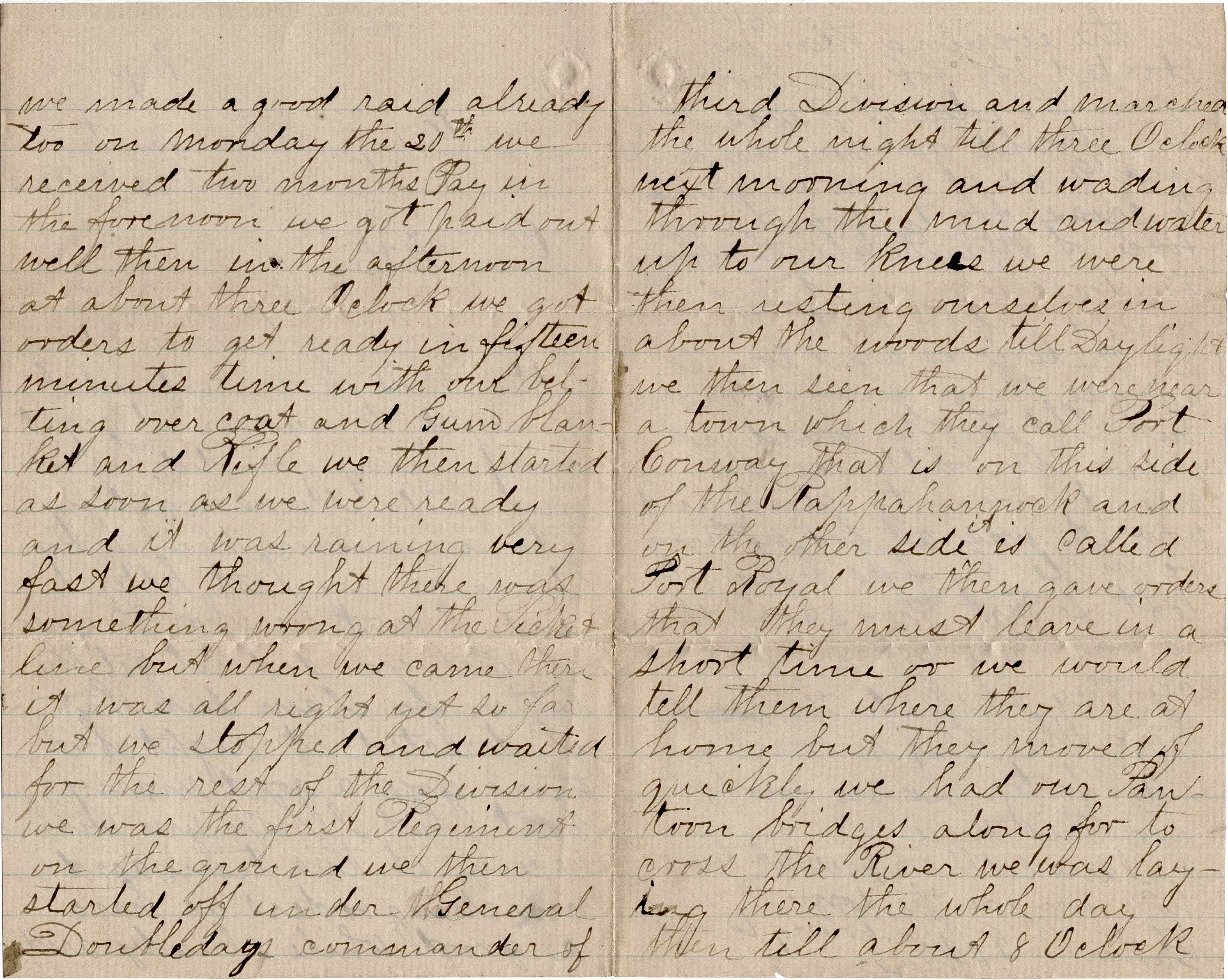
The author wrote her letter from Canandaigua, New York. It isn’t clear if she lived there or was only temporarily residing there. It may be that she was actually from Rochester, New York. Various cousins are named but I could not make a connection. She wrote the letter to her cousin Kate who may have had two brothers, Austin and Lyman who were early enlistees in the war.
Her letter speaks of the danger that the City of Washington was in until troops were sent to bolster its defenses. She also speaks of the reality of war: “Now that we are convinced the rumor of war is not a mere transient gust of enthusiasm, but has become a stern, sober reality, is not the condition of our country awful? Only think of the horrors of a civil war. I think that there is great cause to fear that the prosperity of America has vanished. You know the old adage, ‘United we stand, divided we fall.'”
Transcription
Canandaigua [New York] Saturday eve, May 11, 1861
My dearest cousin Kate,
Many thanks for your dear kind letter for which I truly beg pardon for not answering before, [and] also for the paper you sent me yesterday which brought intelligence that was more soothing and tranquilizing to my feelings than anything I had before read. I either hear read, or read myself, the daily news and knew that [the City of] Washington was considered safe at present from any attack that could be made upon it. Yet it gave me great pleasure to realize for a certainty that one to whom neither my patriotism nor yours would be willing to have harm some felt himself safe and secure. But oh! how dreadful, how painful must have been the suspense before aid arrived, hemmed in as they were and surrounded on all sides by those Rebel secessionists and feeling every moment that they were liable to be attacked.
You were very kind and thoughtful to write to me about the death of little Zany Pound. How sad and beautiful he left this vale of tears for a home of perfect love and happiness in the arms of his savior. I should think that his death would establish a new bond of sympathy between darling Alice and cousin Almina. I can almost imagine the sweet spirits of dear little Eddie and Zany in that other and more glorious world where their souls may entwine the tendrils of their affections around pure spirits and live on forever in the presence and “bask in the smile of that Being who alone is Love.” It must have been a hard struggle for Cousin Alex and Almina to give their pet child up, but perhaps they have not forgotten the right use of adversity. Afflictions from Heaven are angels sent on embassies of love. They are commissioners to show us the insignificance of earthly greatness and “to wean our affections from transitory things, and elevate them to those realities which are ever blooming at the right hand of God.”
You must miss cousin Lyman and Austin very much. Do you never have any anxious thoughts about Washington and Austin’s safety? Now that we are convinced the rumor of war is not a mere transient gust of enthusiasm, but has become a stern, sober reality, is not the condition of our country awful? Only think of the horrors of a civil war. I think that there is great cause to fear that the prosperity of America has vanished. You know the old adage, “United we stand, divided we fall.”
Canandaigua has become quite a rendezvous for soldiers. Troops are constantly passing through on their way to Elmira. Col. Tyler’s Zouaves were in town Friday and Saturday. They left Saturday evening. A large number of ladies and gentlemen were at the depot to see them depart. Just before starting, a number of the zouaves mounted upon the top of the cars and sang the beautiful national anthem. It was the saddest sight I ever beheld—to see so many brave and loyal hearts on their way to almost certain destruction. When the signal was given for their departure, there was hardly a dry eye among them and one of their number remarked that they were too fine [of] fellows to perish upon the field of battle.
I read in the Rochester paper that Dr. Helmer was a going as assistant surgeon. Have any of my other acquaintances enlisted from Lockport? They have formed a large company of the students of Amherst College. Smith was very anxious to enlist and wrote home to that effect. The thought of his wishing to go made mother almost frantic. She wrote back that he must not think of such a thing. I think upon the whole that Mother’s health is much better this spring than in the winter and I sincerely hope and trust that in a few years she will be able to be about.
How is cousin Amy this spring? Give a good deal of love to her for Mother and I and tell her that I love her more and more every day if possible. I thank her very kindly for her kind invitation to visit her this summer and of course should be delighted to visit her, but I expect to go to Burlington in the fall and shall be quite busy getting ready. I shall remain there a year without coming home. I expect to be very lonesome and homesick as eight weeks is the longest time I ever spent from home and that at your house last summer.
I saw Charley Farlinghouse a few days ago. He said that they were all well at his house. Mrs. Farling talks of visiting you in the summer. A few weeks ago Tuesday was my eighteenth birthday and I received from Father a chased watch and chain. Do you not think it a nice present? Also from my anonymous friend a very pretty gold pencil.
David Cussoot was buried nearly three weeks ago. Hannah Smith, Aunt Lucy’s daughter, has been here since. She appeared quite cheerful. She says she thinks her Father and Mother enjoyed themselves most during the past six months of her Mother’s life than ever before and that his death was hastened by his continually grieving after her. As I wish this letter to go out this evening, I will not write anymore. Please give my love to Alice, cousin Lyman Walter Spalding and all, and hoping to hear from you
This Corporal from the 36th Illinois Volunteers wears the Army regulation dress hat, complete with: bugle, company letter, Jefferson Davis eagle, and ostrich plume, though the hat is pinned up incorrectly per regulations as was done by the 36th. He wears a flannel Federal Issue shirt underneath a state issued jacket, which featured a nine button front, epaulets, and two buttons on each sleeve cuff. His trousers feature a 1/2 inch stripe designating his rank as a Corporal. He wears standard Issue brogans. His accouterments; a bayonet and scabbard, cap pouch, and cartridge box, are all worn on his belt. He does not have a shoulder strap for his cartridge box, as these were at the time, omitted from issue at the St. Louis Depot. He wears full marching order, including a Federal Issue painted haversack and canteen with leather strap. He also carries a full double bag knapsack, with his blanket rolled on top. Inside his knapsack he carries extra socks, an extra shirt, a gum blanket folded in the middle, a fatigue blouse, forage cap, and any additional personal items he can fit. [Alton Jaeger Guards Website]
The following letters were written by James Betts Sifleet (1841-1863) who came to the United States with his parents from Kent, England, prior to the Civil War. The family settled in Verona, Grundy county, Illinois. His parents names were Robert Thomas Sifleet (1817-1893) and Sarah Betts (1819-1871). The Sifleet’s had two son’s that served in the Civil War—James, and his younger brother George Thomas Fleet (1842-1863. Neither son came home.
James enlisted in September 1861 as a private in Co. F, 36th Illinois Infantry—the “Fox River Regiment.” He died on 10 January 1863 in a Nashville Hospital from an infected wound received during the Battle of Stone Rivers [See The 36th Illinois Infantry at the Battle of Stones River]. His brother George served in Co. D, 127th Illinois Infantry and died of disease on 25 April 1863 at Youngs Point, Louisiana.
To read other letters by members of the 36th Illinois Infantry that I have transcribed and posted on Spared & Shared, see:
[Note: The image in the header is from the Alton Jaeger Guards, portraying the 36th Illinois Infantry. They began forming in early August 1861 at Camp Hammond near Aurora, Illinois. They would take part in action at Pea Ridge, Perryville, Stone’s River, Chickamauga, Missionary Ridge, the Atlanta Campaign, Franklin, and Nashville.]
Letter 1
[Camp Hammond, Aurora, Illinois] September 18, 1861
Dear Friends,
I now take the pleasure of writing these few lines to you hoping to find you in good health as, thank God, it leaves us at present. This letter is to let you know that I arrived here safe yesterday morning. I cannot tell you how long we shall be here. It is hard to tell for some say we are a going Friday [and some] say we are a going to be here two or three weeks yet. The fact is, I don’t believe anyone on the ground knows. I should not be surprised if we went this week nor if we stayed two or three weeks. I shall not write but a few lines so as to let you know that I am well.
I think often of what you said when I was coming away. I think that you could not mean exactly what you said. I suppose you think that I am under great temptations. It is true that we are surrounded by evil but still there are good people here as there are anywhere.
I went to a prayer meeting last night in one of the tents. It was one pleasant meeting to me. We can have as good prayer meetings here as anywhere. We have our God here as well as there, so dear Mother, I hope you think different from what you did when I come away. And remember that it is a good cause for which I am fighting. I believe that God called me to fight and will put my trust in Him. And if I should fall in the battlefield, I hope to meet you in heaven where there is no more parting and where there will be no war, but peace and harmony and serving God. So let us live here in this world as true Christians. Pray for me that I may hold out as a true Christian until the end.
I am writing just as I feel. I feel happy in my tent. We have not got our uniforms yet. I shall write often if I do not write much. It is likely I shall not get letters that come from [you] as well as you can from me. I must now conclude with my love to you and all inquiring [friends].
Please give William Huggett 1 love to you all, to his grandmother, and tell her he was very glad to have a letter from [her] and was thankful for advice and he intends to take it [and] do the best he can. So no more from your affectionate son, — James Sifleet
Care of Capt. Olson, Fox River Regiment, Aurora, Illinois
You will have to write your directions pretty clear because they are large.
1 William Huggett enlisted in the same company at the same time as James. He was mortally wounded (like James) at the Battle of Stone River.
Letter 2
Camp Rolla, Missouri October 13, 1861
Dear father and mother, brother and sister,
I now take the pleasure of writing these few lines to you hoping to find you in good health as thank God this leaves me at present. I received your kind and welcome [letter] yesterday and I can tell you, I was very glad to get it although I was sorry to hear of the horse dying. I suppose likely you have had another letter by this time from me.
I am enjoying myself well living here and trying to serve God. This last week there has been prayer meetings every night but one and it rained and I expect they will continue by the help of God. But it is terrible to hear the cursing and swearing going on around us. I am surprised when I think about it, [especially] when they are expecting to go to battle and no knowing when they may be called away into eternity adn to stand before God to give an account for themselves before the Great High God.
I went to meeting this morning. It was a good meeting. Our first lieutenant [was there]. There was quite a congregation there. The meeting was out in the woods and most of us took along our blankets and sat down on the ground. There will be prayer meeting tonight. There was prayer meetings this morning before the other meeting.
You wrote in your letter about [how] you expected it was hard for me to write. To be sure, it is not so pleasant writing as it is to home, but I have time to write and so I shall write often. This is the 12th letter I have wrote since I have been here, 8 for myself and four for others. And I expect I shall write often and I will send you all the news here. I wish you would send me your papers as often as you can.
I don’t know what you hear about Camp Rolla. There was a report that we had give up this place to the secessionists but it is not true. When that is true, you may expect we have had a hard fight. For the last week we have been expecting to fight but I have about given it up now. We some expected General Price here with his large force. If he had come, we should have done the best we could. We have a good fight place here. One day this last [week] we heard a fight but where it was, we could not tell. It might have been 50 or 60 miles from here. We heard the canons along in the morning and they was heard right along until about midnight.
Our picket guards were drove in the other night but as soon as they come in, there was more went out. They go out 10 or 12 miles and sometimes 20. I went to [see] the Morris boys as soon as I got your letter. The [ ] boys had received a letter. Job nor any of the rest of the boys had not got any letter but they were very glad to hear from the folks to hear they were all well. The boys are all well. Vyrus Brayton has got a sore wrist. I expect it was sprained but it is getting better now.
I was glad to hear from Mrs. Thompson and the rest of the folks there. Please give my love to Mr. Day and tell him to pray for the soldiers for thy need his prayers. Give my love to all my friends and accept the same yourselves. So no more from your affectionate son, — James Sifleet
William Huggett sends his best respects to you and all inquiring friends. He has not heard from his folks yet.
Letter 3
Camp Rolla, Missouri October 21, 1861
Dear father and mother,
I now take the pleasure of writing a few more to you wishing to find you in good health as this leaves me at present. Being as the mail does not go till morrow, I thought I would write you a little more about a soldier’s life. Yesterday we had a good meeting. There was about 7 or 800 present. We sat down on our blankets on the ground and the rest sat on the stools that they made. Then we had a pleasant prayer meeting in the evening. It was a good one. There was plenty to lead in prayer and talking of the love of the blessed Savior. The longer I am here the more I find there is that are striving to serve God and last night I felt more fully resolved that I would strive to walk nearer to God than I have done. I find the opportunity far better than I expected to find it to meet with my Christian friends.
While I was writing in here Saturday night, I was aroused about 10 o’clock by the firing of a gun. There was a man that undertook to pass one of the guards of cavalry and the guard shot him—not dead, but so as to hurt him pretty bad. It’s rather poor business to undertake to pass the guards after night without the pass word, even if it was the Colonel. He cannot pass without giving the password.
On Sunday morning about 6 o’clock, two of the guards out of the 4th Iowa Regiment were running up to each other at charge bayonet and one of their guns went off and shot the other through the head and killed him dead on the spot. It will probably learn the guards not to be fooling with loaded guns. There is another man in the hospital that was wounded by a careless discharge of a musket and was shot so bad our chaplain said he cannot live more than two or three days. He does not belong to our regiment but he sent down to our prayer meeting last night to have us pray for him. There was some great prayers offered up in his behalf.
There is a good many people come here for protection—some of them that have laid in the bushes two or three days in fear of being killed by the enemy. There is some at the fort that are run away and have joined the home guards to fight for their country.
Civilian refugees take shelter in the Union camps in Rolla, Missouri (Frank Leslie’s Illustrated Newspaper, 1862)
Our company is on guard today. I went on at 9 o’clock and come off at 11 and I shall go on again at 3, then off at 5, and then go on at 9, off at 11, and then on again at 3 and off at 5. Now I will tell you something about our standing on guard in the night. If we see anyone coming near our beats, we say, “Who comes there?” If they answer, “A friend with the countersign,” we say, “Advance friend and give the countersign.” If a friend without, we halt him and call for the Corporal of the Guard. Then he comes and we find out who it is. If it is someone that will not halt, we directly cock our gun ready to shoot and if he does not stop, we shoot him. When we go on guard, we wear our belts with the cartridge boxes and cap boxes. On all our belts there is a large buckle with “U. S.” on it. If there is any gun shot off on the ground, there is soon plenty there because there is not a gun to be shot off within half a mile of the ground without it is done on duty. Every morning when the guards come off, they have to go and shoot their guns off.
Today we have got a large overcoat each. They are good and warm. They come down below our knees. I must now conclude for this time as this is a pretty good lot of news, so no more from your affectionate son, — James Siffert
Letter 4
Camp Rolla, Missouri October 28th 1861
Dear father and mother, brother and sister,
I now take the pleasure of answering your kind and welcome letter which I received yesterday wishing to find you in good health as I am thankful it leaves me at present. this is the third letter I have received from you. There is no trouble about getting letters here. My last letter got here on Friday night but the mail did not get here in the camp till after 9 o’clock and so I did not get it till yesterday as I went out about two miles on picket guard. There was six sent out. I volunteered to go out in another man’s place as I felt I would like the privilege of catching a secessionist but we did not see any.
Cotton boll plucked from the field
There is a great deal of difference between being picket guard and guarding round the tent. Out there in the night, we sit down and lay down in the brush and keep ourselves in readiness for to shoot. But we did not get any chance. I was glad I got a chance to go out to see a little of the country. I seen some small corn fields and a few log gouses. The people here are a pretty hard-looking set. While I was out, I got some cotton just as it grows. The hull that it grows in is just about like a hickory husk and about the [same] size. And in this letter you will find some cotton with the seeds in just as it grows. I forgot to tell you I received two papers from you as well as the letters and was very thankful to receive them and I hope you will continue to send them.
After I got home yesterday in the afternoon at three, I went to meeting and there was a good many there. The Colonel came round to us before meeting and said that if they did not come, they would be fetched at the point of the bayonet. Then after that meeting we had class meeting and after that in the evening, we had a prayer meeting and they was all good meetings. I rejoice that I ever started in that glorious cause and that I started to come to the war as I greatly think I am needed here although I am surrounded by sin. Yet God is giving me grace to hold out his servant. I am happy to say that we have such good meetings.
I have been up to the fort to work today. There was 40 from this regiment up there to work today besides about 80 or 90 secessionists to work there. We have about 100 secession prisoners here and if we can see any more, we will have more.
I will tell you something about the fort. 1 I was digging in the entrenchments today. The place where we was digging is about 14 feet wide on the top and about 7 feet deep where it is finished and the dirt is wheeled up so that the bank is about 18 feet from the bottom of the ditch. It would be pretty hard climbing up there but I don’t think we shall ever have to use the fort in this war.
You spoke about my money in your letter. I will with the greatest pleasure in the world send you my money when I can get it. So no more. From your son, — James Sifleet
1 James does not give the name of the fort but it seems certain he was referring to the same fort that was eventually dubbed Fort Wyman, named after Col. John B. Wyman of the 13th Illinois Regiment who worked on its construction after the 36th Illinois. See newspaper article below.According to Larry Wood, a freelance write specializing in the history of the Ozarks, “Two forts were constructed, one called Fort Detty on the north side of town on what is now the campus of the University of Missouri-Rolla and the other called Fort Wyman located just south of town along present-day US Highway 63. In addition, a network of earthworks and trenches surrounded the town, the courthouse was fortified with rifle pits, and a strong headquarters encampment was located west of town.” [See “Rolla During the Civil War”]
A 114 page diary written by Lyman Gibson Bennett (1832-1904), an enlisted soldier of the 36th Illinois Regiment, is now part of the Western Historical Manuscript. It is the source of this article.
View of Fort Wyman; the village of Rolla in the background.
Letter 5
Camp Rolla, Missouri November 4, 1861
Dear parents,
I now take the pleasure of writing these few lines to you wishing at the same time to find you in good health as thank God I am at present. I expect to receive a letter tonight as the train has just come in. It is over a week since I have received any letter. I like to get a letter as often as once a week if it is possible for you to send it. It is with a glad heart that I write this letter to you as I am enjoying myself in the work of God. Since I have been writing, I have received two letters—one from George Jellingham [?] and one from you.
Dear sister, I am glad I have got your likeness and George’s but yours does not look very natural, I don’t think. But George’s looks very natural. I was very glad you write so much and George getting home too. You wrote about the likeness. I should be very glad to receive all your likenesses. You did not say what you thought of my last likeness that I sent to you as I suppose Anne Rumney fetched over to you. Tell Mrs. Seamark that if she wants my likeness I will send it to her as soon as I can. I shall be very glad to receive a letter from any of you. I know that if you all knew how glad we are to receive letters, you would write often. I never was so anxious for letters as I have been since I have been here. I wrote a letter to Mrs. Rumney. I have not heard whether she got it or not. I hope to get a letter sometime soon. I received a letter from Anne Rumney and I intend to answer it as soon as I can.
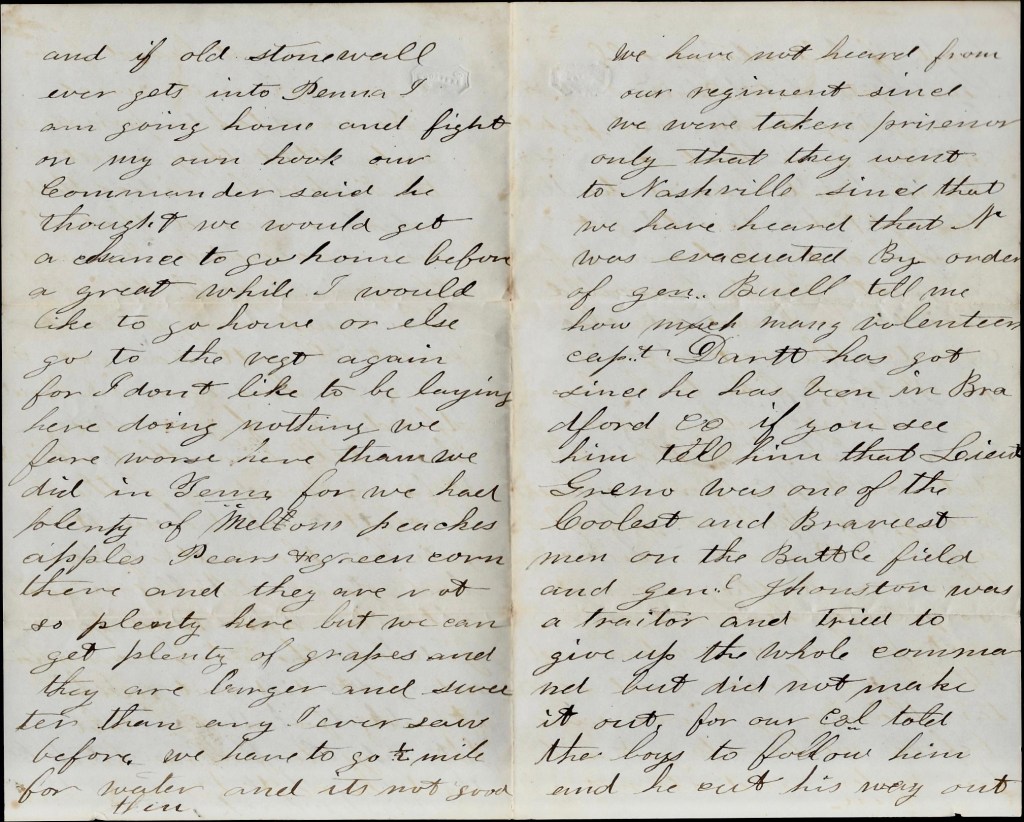
I have been to work to the fort today. I do not know if I shall go tomorrow or not. Now I will tell you a little news about this place. Our Lieutenant Colonel left here last Wednesday with about 60 men, cavalry, and something turned up so that our Colonel left here Friday night about sundown with about 650 men—about 200 cavalry, and the rest infantry. [There were] about 400 men from our regiment and the rest from another regiment here. There is about 2,000 men yet left to fight here. We have been expecting to be attacked now. For the three last nights, we have not taken any clothes off and we have had our guns loaded and we have slept on them all night, ready at any time in case of necessity. And we are stil under the same orders although not supposed to be in much danger. I should have liked very much to have went with the boys but our company did not go. We do not know where they are a going.
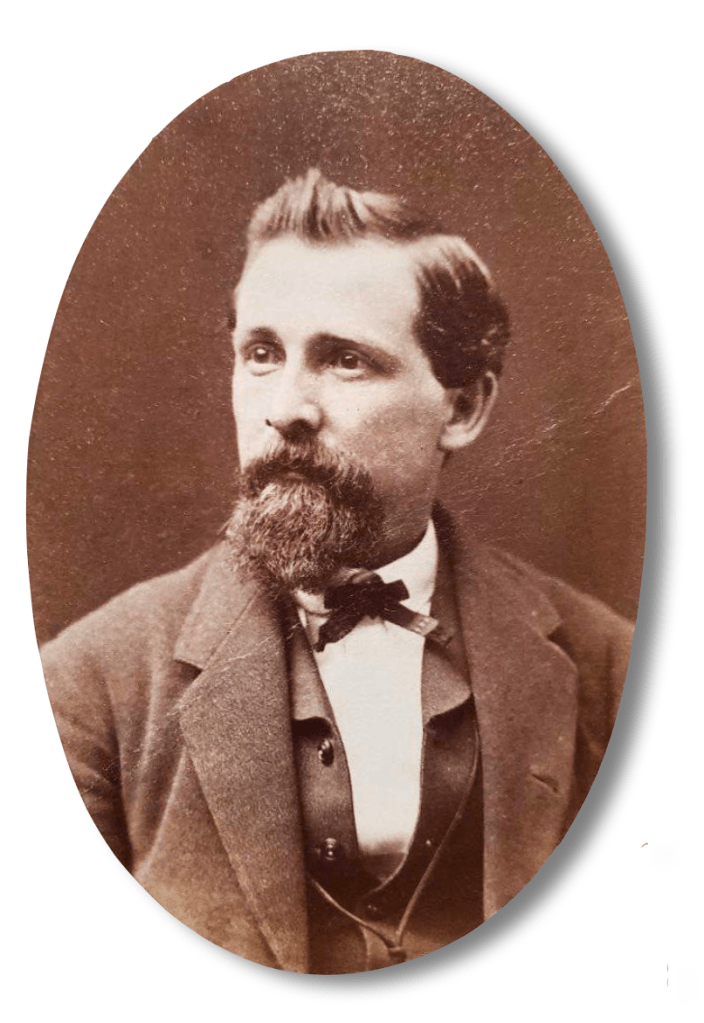
Last night the messenger arrived here from them. He left them 50 miles from here yesterday morning [where] they traveled. We do not know if they will come back again or not. We somewhat expect to have to follow them. The boys are all well and in good spirits, ready to travel. The boys send their best respects to you and George Finch and the rest of the folks. I will write again in a day or two as I must send this letter now to get it to go with this mail. Please give my love to all the friends and accept the same yourself. From your affectionate, — James Sifleet
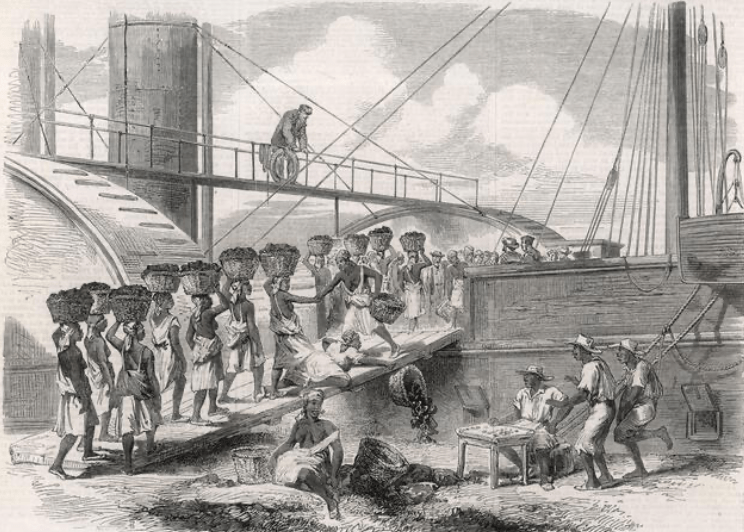
Letter 6
Camp Rolla, Missouri December 10th 1861
Dear Brother [George Sifleet],
You may think that I never intend to answer all the letters that I get. I hope these few lines will find you in good health as this leaves me at present.
I have had good health so far ever since I have been in the army. It is just three months today since I enlisted in the United States service and I like it better than I expected to for I expected to have pretty hard times. I did not enlist because I thought I would like it but because I thought mu country needed me. I do not think you would like soldiering very well. You would not get your meals just as you would like and you could not say and do just as you would like to all the time. And besides all that, this is a hard place for such a young man as you are. You said in your last letter that you wished you was a soldier. You may better wish that you are not. But I am getting to be a good soldier now [that] I know how to handle my gun.
There is about 20,000 soldiers here and ours is the best regiment and the best drilled regiment here. We are ready for a fight at any time. We have got plenty to load our guns with. Secesh should come now. We should like to have Old Price come along here with his army now. We have got a good fort here and a few pretty large guns besides a lot of flying artillery. I should like to hear them roar for awhile.
We have got the best weather here I ever saw this time of the year. Down in the hollows there is just as green grass as I ever saw. I judge you have not such weather in Vienna. I will send a paper and I want Ike Nelson to get the song on the first page and learn to sing it for I want him to sing it when I come home. I do not know when that will be. It may be soon and it may be a good while. It feels a little cooler tonight. I shall direct this letter to father so that you will get it. In with this you will find a piece wrote about camp life—the first time I ever tried to write any piece—and it is not composed very good. I hope you will not laugh at it. So no more. From your brother, — James Sifleet
To George Sifleet
Letter 7
Camp Rolla, Missouri December 27, 1861
Dear friends,
I now sit down to answer your kind and welcome letter which I received last night. I was glad to hear that you was all well. I am pretty well except I have a bad cold. The health of our regiment is much better than it was. I hope these few lines will find you all well. I do not know of much news to send this time. I will send this with what I have wrote in the last few evenings just for the fun of it.
You will see the last day I have not finished for the want of room but I will send you the rest some other time and I will send you two papers–oone for Mrs. Seamark and one for you. They are both the same date. You will see on the 3rd page a piece that our company had written. Our company took over 200 of these papers today. There is not but little news in them so it will not be much trouble to read them. They are about the right size for George to read. This is the best paper that Rolla can afford.
You may wonder why I have not said anything in my last two or three letters about the meetings. I am sorry to say they are all broke up. I fear there is not much Christian about our chaplain. I do not think he has acted so lately. It appears that all he cares about is to get big wages. He has [been] arrested for cheating Uncle Sam and I guess he will be put him right through. We had better be without a chaplain than such a one as he is. I suppose you have read his letter that he has wrote to the Northwestern Christian Advocate? His name is [George G.] Lyon. 1 I saw one paper that states there was several conversions every week. That was a lie. I [at]tended the meetings and I did not see but one conversion since I have been in a camp. I tell you this is a hard place for any young man that thinks of trying to serve the Lord. I feel glad that I have started to serve the Lord before I came here.
I suppose you have wondered how we spent Christmas. This you will see by the writing the account of the day. I hope we shall have as good a time on New Year’s day. I wish you all a happy new year. Last Sunday it snowed about all day and it was pretty cool in our tents although we can stand it much better than I expected we should. I suppose we don’t have it so cold here as it is there.
We have more signs of leaving now than we have had before. Our Colonel had orders to get the things ready that he needed so as he could march and the two gentlemen that came from Newark went and made a call on General [Franz] Sigel and he told them we should have something to do pretty soon but I do not think we shall leave for a good while. I do not see any more signs of fighting than I did when I was at home.
Job Whybrow is well and we send our best respects to you all. From your son, — James Sifleet
Camp Rolla, Mo., 36th Illinois Regiment, Co. F
1 George G. Lyon (b. 1824 in Fayette county, Pa.) was appointed the Chaplain of the 36th Illinois on 20 August 1861 and was mustered in on 23 September 1861. He mustered out of the regiment on 11 June 1862 at Washington D. C., to take effect on 1 April 1862. He gave his residence as Woodstock, McHenry county, Illinois.The Woodstock Sentinel of 26 February 1862, published a notice that “Rev. George G. Lyon of this place…has been acquitted of the charges preferred against him by an officer of the regiment.”
Letter 8
[Curtis’ Campaign] January 16, 1862
Dear father,
I now take the pleasure of writing these few lines wishing to find you in good health as I am thankful to say this leaves me at present. We left Camp Rolla about 2 o’clock Tuesday. The brass band came with us and played about two miles. Then they went back and we marched on about a mile and a half and then we commenced sweeping the ground and pitching our tents, building fires, and everyone was very busy. We cut some hazel brush to lay on. We went to bed pretty early. Our feathers was pretty hard that night.
In the morning about 2 o’clock the boys began to get up. Pretty soon we all got up and before daylight we had our tents and everything loaded, ready for start. But we had to stand and wait around until about 10 o’clock for the other regiments. Then we started and we walked quick time with our knapsacks and everything to carry.
Now I will tell you what we have to carry. I have got to carry my blanket that is 12 feet long and 4 feet wide, and a Indian rubber blanket 6 feet long and 3 feet wide, 1 pair of britches, two pair of socks, two shirts, a big overcoat, my gun cartridge box with 8 cartridges in it. This is about all. I forgot—there is [also] my haversack with my dinner in it and my canteen to carry water in. This makes a pretty heavy load for old Jim to travel with his lame foot, but I guess I will hobble along. We traveled about 10 miles, then we had a job to cross the Little Piney River. Some waded right through and the rest of us come across on logs. We had a great time when we got across. Then we set our tents for the night. Then went to work and cooked our suppers and at 6 o’clock I was detailed to go out on picket guard and stood guard until 12 o’clock. Then I came to camp and laid down till morning. But it was so cold that I did not sleep. Then we got up, got breakfast and struck tents, and then we commenced marching.
We marched 9 miles in three hours. Then we had to stop until we made a bridge over the Big Piney River with wagons. We had 15 wagons with boards reaching from one wagon to another. Then we crossed the street and camped where the secesh have camped before. We took 200 blankets and 12 hogs. These the boys stole and we eat them and the first team we can find, we will take it to carry our knapsacks.
I must close with my best respects to you all. Direct the same as before. From your affectionate son, — James Sifleet.
This will have to do for this time and I will write again in a few days.
Letter 9
Arkansas February 10, 1862
Dear Father & Mother,
I now sit down to write a few lines to let you know that I am alive and well after the dreadful battle [of Pea Ridge]. I suppose you will be very uneasy until you do hear from me. I shall not write anything about the battle now as I have not time to write but it was, I believe, the heaviest battle that has been fought. It lasted three days and then Price and his army was whipped.
You will see the full accounts in the paper so I will not write while the fight was some of the boys found letters that they had wrote so that we see that the secesh took our mail but before long we shall be able to bring the news more to you. So no more at present. From your son, — James Sifleet
Direct the same as before.
Letter 10
[Six miles into] Arkansas February 19th 1862
Dear parents,
As there is some talk of a chance to send a few lines to you, I thought I would send you a few lines just to let you know that I am well as I hope these few lines will find you. This is the first time we have stopped since we left Lebanon.
We are now about 205 miles from Rolla. We have seen some pretty tough times sure. We have drove Price out of Springfield. our advance guard had a fight with Price’s pickets just before we got to Springfield. None of our men was killed but there was a secesh killed. Then Price cleared out of Springfield that night and ever since we have been following him up and fighting with some of his men every day. We have killed a good many of their men but they did not kill any of ours until day before yesterday. Then there was 9 killed and 7 or 8 wounded and quite a lot of horses killed. But we killed about 100 of their men. We do not know certain the number. They came in yesterday with a flag of truce to bury their men. The infantry has not had any chance to fight yet but the cavalry and some of the artillery [have]. But the game is not played out yet. We expect to keep following him up. I guess he does not like to be followed up so close. We are now about six miles in Arkansas.
Now I must draw my letter to a close as I want to rest as much as possible. It may be a long while before you hear from me again but don’t be alarmed for the Lord is on our side. So give my best respects to all the friends and accept the same from yours on, — James Sifleet
Direct to Rolla as usual.
Letter 11
Camp Rienzi Tishomingo county, State of Mississippi June 16th [1862]
Dear Father and Mother, Sister and Brother,
I now sit down to answer your kind and welcome letter which I received yesterday. This leaves me enjoying good health and I hope it will find you all the same. I received two letters from you yesterday. One was posted 23rd April; the other 28th May. One had a letter from England in it. I do not know whether you have answered it yet or not. I will write a few lines in a day or two and send it to you so if you have not answered it, you can send it.
You told in your letter about Mrs. Whitton. I had heard of it before. That is a scandalous shame that she should go and leave him with them children and he a cripple. I was sorry to hear of the news of Mr. Weldon’s son but you spoke of the other son being here in front of Corinth expecting a fight every day. But little did you think then at the time you wrote that as well as Mr. Weldon’s having a brave son in the army expecting to be in the great battle in Corinth, that you had a brother there. But before this time you have found it out.
I have not seen the boys yet that you spoke of. I have not seen their regiment but since I have been here, I have seen quite a number boys that I know. You will see I am making a good many mistakes. You must excuse them for it rains and the boys are making such a noise I can’t help it. I am glad to see you write such a good letter. I tell you it is getting hot sure now. I have certainly got in the South now. I do not know anything about his long we shall stay here. Neither do I know whether any of the army are leaving or not. You can tell by the newspapers as soon as I can. I know we are here. There is no bounds [?] when we may have to fight. We have to be ready at any time so that if the rebels come, they will find us ready to give them the best we have in our cartridge boxes. We may never have to fight, but as long as we are in the service, we intend to be ready for them.
William Huggett is down at Hamburg Landing. He is pretty sick. He has been sick now for about a month. There is quite a good many sick. I fear a good many will be cut off by sickness. Three or four days ago one of the boys of this regiment died and last night another one died. I believe he will be sent home. I thank God I have had such good health. I have been through many hardships since I have been in the service but my Savior has been through with me and helped me through my troubles. But this is a hard place for a Christian. I hope that the time is not far when we shall be able to meet again and go to meeting together.
I must close wit mine and Job’s best respects to you all from your son, — James Sifleet, 36th Illinois Regt., Co. F, Hamburg Landing, Tennessee
Mother, pray for me.
Letter 12
Camp near Rienzi [Mississippi] August 19, 1862
Dear parents and sister,
I now take the pleasure of writing a few lines in answer to two letters which I have just received. I was very glad to receive them to know that you was all well as I am thankful to say this leaves me at present. One of the letters had eight postage stamps in it. I am glad to get them for I sent the last one away last night with a few lines to you.
We moved out here today and we have got pretty well fixed again so that we can live comfortable. We are about a mile and a half from our regiment. There is another company here from our regiment besides us. We are here to protect a battery of artillery and it is here to protect us so you see that we are both here for to do that. Then we are here to protect them that are in Rienzi. Then if the enemy is too strong for us we shall fall back to Rienzi and they will protect us. Then we will join together and each man protect himself.
I don’t know as I have ever told you that artillery is one of the best of supports for us yet. It can’t do anything without us infantry. It was with artillery that Sigel wiped the rebels at Pea Ridge with on the last day. Te artillery drove the rebels yet without the infantry, they could not have done anything scarcely. Now when we fight, there is always infantry lying by the side of the artillery so as to protect it from a charge by the enemy. A good share of our regiment laid under the fire of the cannon at the Battle of Pea Ridge.
Well, the time is coming fast when we shall have to commence to operate again. We do not know but what we may have to fight here before we are prepared to go forward. Every day or two we hear that enemy is advancing on us but they have not got along yet. About a week ago,m the battery and two companies that was and all the cavalry went out to attack a force of secesh said to be 3 or 4,000. They was about 15 miles from here getting things for their army. But they heard our men was after them andn they left. Our men got about a hundred horses and mules that they had to leave because they was in such a hurry to get away before our men got there and about a hundred head of fat cattle. That is not the first time they have been routed in that way for they have had to get up and skedaddle in the night and out at Ripley, they did not have time to dress themselves. When we hear of any such men within our reach, we send out men in the night after them. Now if there is any such thing going on, we shall be about the first men to go if there is any need of any besides cavalry.
Well, I shall have plenty of time to write now for we do not have so much guarding to do here so I shall need lots of postage stamps. We have not got our pay yet but we are expecting to get it every day. We have a good camping ground here in the shady timber. We can get all the fruit we want. You said you was glad to think we had some good things. I can tell you we have had first rate times since we have been here. We are well rested now and when it gets cool, we shall go to work in earnest. I hope the new troops will be in the field pretty soon.
August 20th. Last night was the first night we was here we had a prayer meeting. It makes my heart glad to think we can have meetings now. I have just received another letter from you with eight more postage stamps in it. There is a few lines from Miss McConnell. I want you to tell me if she has any relations around there. I will write again on Sunday. Then I will answer all that I received from you in this letter this morning. I must close for the present. From your son, — James Sifleet
Job is some better. He joins with me in sending best respects to you all.
Letter 13
Bowling Green [Kentucky] November 3rd 1862
Dear parents and sister,
I now take the pleasure of writing a few lines to you wishing to find you in good health as this leaves me at present. I received a letter from you this evening that was dated 26th October. I was glad to hear that you was well. Job is well. William Huggett returned yesterday from the hospital. He is well again. We was glad to see him come back again. He looks some whiter than he did when he left us and he does not look like we do—all tanned up. We have seen some hardships since we left Louisville. We have marched over 300 miles on short rations. We was just one month without our tents but we have them now and we have got a fire in it now and we are sitting around it enjoying ourselves. We have round tents now. They run to a peak and a hole in the top so we build a fire in the center of the tent.
I suppose you would like to know a little about the State of Kentucky. It is the best state we have been in since we have been in the service. It is a rich state. It has the best earth that I have seen in America. We have plenty good fat beef since we left Louisville. We arrived here at Bowling Green on Saturday. I expect we shall soon start for Nashville. We are drawing some clothing that we need. I shall draw a new overcoat so that father can take mine to wear or any other clothing that is to home belonging to me. I wish you could have my old clothes that I have to throw away but it is no use of wishing for that won’t get them home.
Elizabeth said in the letter that she was a going to send me a needle book but she did not say when nor how she was a going to send them. I have a diary book that I think I shall send home and a likeness I had taken some time ago but it will take a number of postage stamps and maybe I shall not send them soon.
Give my best respects to all inquiring friends and accept the same yourselves. From your son, — James Sifleet
36th Regt., Co. F, Louisville, Kentucky
Do not neglect writing as the letters will follow us.
Letter 14
Camp on Mill Creek near Nashville [TN] November 28, 1862
Dear Father and Mother and Sister,
I now take the opportunity of writing a few lines to you wising to find you in good health as this leaves me at present. I received your kind and welcome letter on Monday with eight postage stamps in it, dated November 16th. You wished for me to send you the date of our letters. It would be trouble for me to tell you some for I have received some without any date but I will try and tell you when you date them.
In my last letter I told you that I heard the secesh pickets stood but little ways from ours. Our pickets saw some of them. They would come up and look at our pickets and then go back. Yesterday morning at 3 o’clock we got up, eat breakfast, and at 5 o’clock we commenced marching with four other regiments—the 2nd and 15th Missouri, 44th and 88th Illinois. We marched outside of our pickets. The 2nd Missouri was on the lead. They deployed as skirmishers on each side of the road. When we got about a mile from our picket and we run on to the secesh pickets, then skirmishing commenced and it was kept up all along for three or four miles. Then we came in sight of their camp. Then we halted and formed a line of battle and fired some cannon and drove them from their camp. Then we advanced a little further and stayed there until noon and the secesh did not return. Then we came back to camp.
We heard some pretty heavy cannonading over on the left of us by some other division. The cars run clear through to Nashville now and I suppose as soon as we get a lot of provisions here we shall move forward. I do not now how many was killed and wounded. We took a few prisoners—one captain—all along the road yesterday when we was going forward. We found the houses deserted. Some of them left breakfast on the table. When we came back, we found most of the folks in their houses again.
I do not know of any more news to tell you at present. I will send a few lines in this letter for to go to England. I received a letter from George since he has been at Memphis. He was well. Job is well and sends his best respects to you all. From your son, — James Sifleet
I could not find an image of David but here is one of Corp. Daniel Tarbox who also served in the 11th Connecticut and was mortally wounded at Antietam. (Claudia & Al Niemiec Collection)
This letter was written by David M. Ford (1841-1862), the son of Benjamin Ford (1792-1868) and his 2nd wife, Ann P. Osborn (1808-1874) of Greenville Post Office, Norwich, Connecticut. Receiving 25 dollars bounty which he gave to his mother, David enlisted in Co. H, 11th Connecticut on 25 October 1861. He was promoted to a corporal in the summer of 1862 but was killed in action on 17 September 1862 during the Battle of Antietam.
We learn from the pension application filed by David’s mother that prior to his enlistment, David supported her with his earnings at the mill in Greenville and that when he went into the service, he continued to support her by sending money home until his death. David’s father, it seems was unable to work due to his “rheumatism” and was therefore indigent. I’m not certain that David’s parents actually lived together at the time of David’s death as both parents apparently tried independently to obtain a pension for David’s service.
The letter suggests, perhaps, that David may have picked up a few of the bad habits of his father. David also mentions John W. Wood, a comrade and hometown friend who served with him in Co. H. with whom he occasionally had “a good bum” (drinking spree).
Transcription
Addressed to Mr. William Menerly. Greenville, Norwich, Connecticut
In camp near Newbern, North Carolina May 14th 1862
Dear William,
I thought I would write you a few lines although I said I would not write until you answered mine. But Lon wanted to send a letter so I will write. We are expecting to go home every day according to the stories. We are going to be disbanded and sent home but I guess we won’t see it. It is hard going off to the city or anywhere for if we don’t get back by time the pass is out, into the guard house you go. They shoved me in two or three hours because I did not turn out the guard for the general as I was on guard in front of the guard house. I thought it was two aides. There was one aide with him. But that was made alright.
The Dutch Captain was officer of the day and he is strict as the devil. He might have known I wasn’t near enough to see his badge or buttons. A week or two ago John Wood and I went for the city. John had business to tend to so I sent him for the pass. The Lieutenant-Colonel told John if he had got business, he would sign the pass for him but must scratch off the friend as they was so many going on passes. We just went and called on our friend Reab from a place about six miles from Norwich. You lived up that way once, I believe. He just sat right down and wrote a pass for two hours more and for both of us. We started for the city and the bridge was down so we straddled the string piece and jumped ourselves across. We promised the boys we would bring back some whiskey but we got a bottle and had to pay one dollar and a half for it and we couldn’t see the point of it so we put it down and told the boys we couldn’t get any as they had put a stop to it. We bummed around in some gay places you can bet, came home, told the boys everything was dull, nothing going on, and we did not go anywhere. They believed it all.
We have been down once since on another good bum but I don’t calculate to bum often. I have been steady ever since I enlisted, more so than when I was at home. I would like to see you and the rest of the bloods. Lon says if he gets home, he will have a good bum with you, and if we stay here, he will send money when we get paid off for you to send a box of cigars and whiskey in.
There has a large number of cavalry and artillery landed lately from the Potomac Army. Give my love to all the ducks and to your Mother. Tell her the Sh____ky is all right. Lon says drink for him often. I wrote two letters not long ago—one to Jim, one to Mary Jane. Tell Jim to take courage. Keep up his spirits and spark the ducks for me.