My passion is studying American history leading up to & including the Civil War. I particularly enjoy reading, transcribing & researching primary sources such as letters and diaries.
This letter was written by 16 year-old Martha Rebecca Elizabeth (“Lizzie”) McElwee, the daughter of Jonathan Newman McElwee (1809-1892) and Martha Amelia Orr (1810-1873) of Rock Hill, York county, South Carolina. Lizzy was married in 1870 to J. W. O. Riley.
Lizzie’s father served in the Confederate army early in the war and her two brothers, Jonathan Lewis and Manlius Jerome were still serving in the 1st South Carolina Cavalry late in 1864.
Lizzie may have been attending the Yorkville Female College in Yorkville when she wrote this letter in December 1864.
Transcription
Addressed to Mr. J. N. McElwee, Taylor’s Creek, South Carolina Postmarked Yorkville, S. C.
Yorkville, South Carolina December 31, 1864
My Dear Father,
I received your very kind letter this evening brought by Mr. C. and also 10 dollars. I am very much obliged to you for it as I have been needing some for I was nearly out. I also received the trunk. It came safe—all but the key. He did not send it around with the trunk but if he didn’t bring the key, I can get it open anyway as Aunt Emily has one that will unlock it.
Father, I suppose that you all are very despondent about our country now. I think that almost everyone is so now—at least all of the York people is that I have seen. I have not heard from the boys in three or four weeks until this evening [when] sister sent me one from [brother] Jerome. I am very sorry to hear that they have left Charleston for they were fixed very well for this winter.
If you have not got a supply of salt, you had better get it as salt is selling here at 100 dollars a bushel. Everyone is trying to get all they can as nearly all of the people think that Charleston & W[ilmington] will fall & if so, it will be very hard to get salt at almost any price.
I have just returned from Mrs. Smith’s. She died last night very sudden with apoplexy. She leaves a very helpless family. I will be at home on next Thursday if it does not rain too hard for me to get to the depot as Mr. Muller is going down to tune our piano. I thought I would go down with him as he is a very old man & he asked me to go down with him. Aunt Emily says for me to go that way as the raids is very bad so please send the carriage to Rock Hill for us on that day.
You must excuse this bad written letter as I can hardly write at all with my pen, it is so dull. Aunt Emily joins me in love to you all. Tell sis that I have received two letters from her but will not answer them now as I will be at home in a few days. Write soon. I remain your affectionate daughter, — Lizzie McElwee
P. S. Father, I hope that you will not be displeased at me for coming home on the railroads as I have several friends going down on that day and perhaps Aunt Emily will go with me down to Chester.
This letter was written by Calvin Waldo Marsh (1825-1873), the son of Henry Marsh (1797-1852) and Sarah Whitney (1796-1883) of Berkshire county, Massachusetts. Calvin’s father, Henry, died of cholera at LaSalle, Illinois in 1852 when he was 55 years old. By that time, Calvin had already graduated from Williams College (1844) and was working as a commission merchant in St. Louis, Missouri.
Calvin write the letter to his sister Clarissa (“Clara”) Dwight Marsh (1834-1899) who was attending the Cooper Female Seminary in Dayton, Ohio, at the time of this 1850 letter.
One large paragraph of the letter is devoted to a discussion of journals kept by Calvin’s older brother, Rev. Dwight Whitney Marsh (1823-1896), an 1842 graduate of Williams College and the Andover Theological Seminary who traveled as a missionary to Turkey in 1849. As mentioned is young “Charlie,” (Charles Francis Marsh) the thirteen year-old brother of Calvin’s.
Transcription
Addressed to Miss Clara D. Marsh, Cooper Female Seminary, Dayton, Ohio
Saint Louis, [Missouri] June 1, 1850
My Dear Sister,
Although I am not indebted to you by way of correspondence, still as I have leisure this morning, I thought t’would be pleasant to spend it in holding a little chat with you. I presume ‘ere this you are having there as here delightful warm weather. For four or five days it has been charming here & except last Monday, none too warm for comfort.
An early Saint Louis fire pump apparatus
On Monday the firemen had their annual “Parade” and of course Charlie was half crazy to see it all. T’was a beautiful sight and the bright colored uniforms of the men and the highly polished engines gaily trimmed with flowers and the streets in front of the different engine houses filled with flags suspended by ropes from one side to the other, the beautiful horses drawing the “machines” & the inspiriting music of six or eight different bands all tended to excite & please the multitude of citizens of all ages which thronged the sidewalks, church steps, balconies & windows of each street they passed. 1
The Butchers, each mounted & in a beautiful white shirt with blue scarfs paraded with the firemen. They were quite half an hour passing where I stood. They marched from eleven till three or four, &c., then dined at different hotels. T’was the warmest day of the season—the thermometer standing at 90 degrees in the shade.
I have had one or two letters from Sandusky from Jim Peck and John Massey. Kate spends the summer in Rochester & also her father & mother. We have not heard very recently from Racine but they were all well when we last heard. Lizzie seems quite anxious that you should remain at Dayton another year & I am also decidedly of the same opinion & when father returns from Illinois, shall talk with him about it. Should you do so, can you spend part of your vacation in Sandusky, pleasantly. If you should, I should think & advise that Lizzie meet you there & make a visit and then father or myself would meet here at Cincinnati or Dayton. It would be too hot for you to think of spending the vacation here & would cost too much besides.
I wish you would write me in your next what your expenses have been for the last year & what they probably will be for the year to come.
Monday, the 3rd. I stopped writing on Saturday to go to the post office & there found a letter from Julia to me together with Dwight’s journal “No. 4.” No. 3 we received a month since & after all reading it, I copied it and sent it to Henry with instructions to forward to you. As soon as you receive it & have read it, you must remail to “Julia” in New York. With the last journal came a letter addressed to the “family” & in it he says, “return the journal as soon as possible to New York to her.” His journal Nos. 1 & 2 have not been received as yet and I begin to fear they are lost. No. 1 contains his trip across the ocean & No. 2 his stay at Smyrna & journey to Beirut & stay there. “No. 3” is description of a week’s sojourn at Scanderoon & his journey from there to Aleppo. The last one, No. 4. contains description of Aleppo & journey from there to Aintab. & his reception there. I copied on Saturday about one half of the last journal, some four sheets (16 pages) and was quite tired before night. Journal No. 3 is 11 sheets—44 days—and it was quite a job but a pleasant one. I shall copy the balance today & tomorrow and send to Henry next day.
I received six letters this morning, one from Henry, one from you, from Thornton, from Henry Boardman, and two on business—one for Father however. Henry has just received the journal and will I presume forward it to you. Edward Smith has been dangerously sick & when he wrote, they had scarcely any hopes of his recovery. Maria & Clara had taken almost the entire care of him. His complaint is pneumonia & hemorrhage of the lungs. His father Canfield & John were both absent and he was very busy. All the rest well.
Thornton says Mr. L. S. Hubbard is to be married 25th of this month & he expects to be Mr. Hubbard’s right hand man & thinks they will take a trip to Falls of Saint Anthony by way of this city. He says also that Mr. A. M. Porter has bought the Hollister place where we lived. He speaks of “Ella,” Converse little child being sick or having been of which I believe you wrote. In regard to “Lizzie’s” going there with you, I like the idea myself but this morning Father did not concur at all. We had not time to discuss the matter but shall today or soon & then pressure Father & Mother will both write you. I still take my meals at the “Munroe” and room up on Fourth Street & Father & Mother with Charlie are at Mrs. Douthitt’s on Sixth Street. As to my business, cannot say much as in this business I have to first make the acquaintance of the men who send produce here to sell and then to get their confidence, all of which takes time, & it is both a dull season and near the close of the spring business season.
I see cousin Robert every day or two although I have not seen a great deal of him as he is pretty closely confined by his banking duties. Mother has written to Aunt Clara once or twice & I think I will soon. I am pretty confident I sent the paper you speak of & cannot now get another. I send you now the Republican with two quite pretty stories & a very interesting letter from France by their correspondent in Paris who is a lady & the suggestions in regard to dress I think exceedingly good. I like Mrs. Peters much. Of Belle I cannot judge but she appears well for what I have seen of her.
Charlie is happy as a cricket & is perfectly well. He goes to Mr. Wyman’s school & finds his way about the city without much trouble. I sent him from my office up home alone the other day, seven blocks off.
The painting of Adam & Eve by [Claude Marie] Dubufes has been on exhibition here for four weeks & leaves today for Louisville. Strawberries are getting quite plenty & will soon be cheap and abundant.
I went to ride with Mother a week ago down towards “Vide Pochí” pronounced Veed Poshe & called first at a Mr. Williams whose acquaintance I had made & who very politely took me out to tea with him one evening sometime ago & although his wife (a lady of twenty-two or three & very agreeable( was not at hot house, her house keeper showed us over the garden and gave us flowers and took us up on the back piazza where there is a most beautiful view down the river twenty-five miles & the river appearing to come out of the ground at the foot of the long descent from the house.
We called at Mr. Thomas Allen’s as came along back and there had a pleasant chat with Mrs. A., a romp with “Lillie” & “Russell,” and were refreshed with some nice cake. Lilla showed me her chickens & ducks & young Guinea hens, her flower bed in the garden, & found me one or two ripe strawberries, then into the house & up in the library to see her young canaries two weeks old, five of them in one next—little beauties. Russell showed “his” birds, four little young “catbirds” in a nest built in a evergreen bush not so high as my head near the gate & about ten rods from the house. Is Miss Claflin still your roommate & how does the Misses Osborn? Remember me to them should they enquire. With much love from Father & Mother, & from your own brother, — C. W. Marsh
Hubbard marries a Miss Livingston of Gainsville who spent part of last winter in Sandusky. I knew her very intelligent and quite handsome. A good match.
Father returned from Illinois Saturday night & will write you before he leaves again, I think. Write when you have leisure. I shall not be able to write you as often as I do after the [ ] commences. — Waldo
1 The city of Saint Louis had 12 volunteer fire companies by the 1850s.
This letter was written by a recently resigned Union officer, regiment unknown. He signed his letter with the initials “G. C. S.” and addressed it to his friend “Bedford,” also unfortunately unidentified although we learn from the letter then Bedford had recently been assigned to the staff of Union General John W. Slocum and was with him in Atlanta, Georgia. During the summer of 1864, Slocum commanded the District of Vicksburg and the XVII Corps of the Department of the Tennessee. When Maj. Gen. James B. McPherson was killed in action during the Atlanta Campaign, command of Army of the Tennessee opened up, and when Hooker did not get it he resigned his commission. Maj. Gen. William T. Sherman the appointed Slocum to command the XX Corps, which earlier had been formed by merging the XI Corps and XII Corps into a single command. His former XII Corps soldiers cheered their previous commander’s return. When Atlanta fell to Sherman on September 2, 1864, Gen. Slocum and his corps were the first to enter the city. Slocum was occupation commander of Atlanta for ten weeks, during which time he tried to make the occupation as tolerable for civilians as he could.
There is some possibility that. “G. C. S.” was connected with the 72nd Ohio Infantry that occupied Vicksburg at the time but I could not find an officer with those initials. He may also have been connected with one of the USCT Regiments.
Transcription
Vicksburg [Mississippi] September 22, 1864
My dear Bedford,
Your highly esteemed favor of the 29th ult. came to hand today after my patience was quite exhausted with waiting to hear from you.
We have heard of the occupation of Atlanta and of Sherman’s order to citizens loyal and disloyal to vacate. There has always been too many of the latter class permitted to remain at our military posts but I question the policy of sending from their homes those who are loyal or who are willing in good faith to turn to the overtures of mercy and embrace the amnesty offered by Father Abraham. We all rejoice to hear that you are safely through the campaign so far.
My resignation was returned to me today “accepted” and in consequence, am now an American Citizen, not of A. D. [African Descent] unfortunately perhaps, but willing to take the risk of getting my rights with a fair complexion.
All your old friends are well and make frequent inquiry after you. I took tea last evening at Judge [Laurence S.] Houghton’s besides the daughter of the judge [Theodosia], Mrs. Cushing, and a Miss Grafton were present—a very nice party you will say. After tea several officers of the 72nd [Ohio?] came in. Miss Dona was much gratified when I told her you had wished to be most kindly remembered to her. I have not seen Miss Hazelett since you left.
How is General [Henry Warner] Slocum? The ladies here all say they never properly appreciated him until after he was gone & now they earnestly pray for his return. They want him to know it. I congratulate you upon having your fortunes cast with such an officer. General Dennis now commands the 2nd Division, 19th Army Corps—8,000 strong now [and] is at the mouth of the White River. Kuhn is A. A. A. G., Davis [is] C. S. Kuhn is about to lose Miss Williamson. She is now lying very low with typhoid fever and no hopes are entertained of her recovery.
Since you left I had quite an attack of chill & fever that prostrated me completely. Mrs. Wilson & family were very kind indeed. I still occupy the old room and use the same furniture every piece of which serves to remind me of my old chum.
Write a greater length & oftener. I shall be here until Christmas. My respects to the General & staff and believe me as ever, truly your friend, — G. C. S.
This letter was written by Calvin Waldo Marsh (1825-1873), the son of Henry Marsh (1797-1852) and Sarah Whitney (1796-1883) of Berkshire county, Massachusetts. Calvin’s father, Henry, died of cholera at LaSalle, Illinois in 1852 when he was 55 years old. By that time, Calvin had already graduated from Williams College (1844) and was working as a commission merchant in St. Louis, Missouri. During the Civil War, Calvin received a commission as a Lieutenant and served consecutively on the staffs of Generals Halleck, Curtis, and Schofield in the Army of the Frontier. He was married in December 1860 to Anna W. King of Roxbury, Massachusetts. We learn from the letter that Waldo and Anna had a young child named Waldo at the time of the 1863 letter.
Despite being a letter to his mother, Waldo shares a lot of his impressions on the progress of the war and of the politics controlling the selection of generals and the campaigns they were tasked to conduct.
Transcription
Headquarters, Army of the Frontier Springfield, Mo. March 4th 1863
My very dear Mother,
I feel ashamed to think I have suffered nearly two months to elapse since I received your kind letter. My time is pretty fully occupied and it often happens that I do not get a chance to read the papers until after reasonable bed time. Another thing, ever since about the 10th of February I have been more than half sick at least two-thirds of the time and most of my bad feelings have partaken of the ague type and you know that is terribly paralyzing in its effects both upon the body and the mind. Of course this halt and delay of the army here is also very trying and there does not seem to be any object in the future towards which the Army of the Frontier is, or is to be, moving.
Anna’s letter of the 27th arrived about 7 o’clock last evening but owing to the obstinacy of our postmaster, I did not get it until about 10 o’clock this forenoon. I was really delighted with the photograph of you and think it one of the very best I can say [that was] taken in Saint Louis. You could hardly have sent me anything I could prize so much. I have been very much gratified both for his sake and yours that Charlie has been reported to be doing so well. I believe he will yet make a man of good mind. I regret that I cannot at present contribute to the defraying of the expense of his present position.
Have you laid any plans for the next year? If I am obliged to remain away from home I think I shall try to get Anna to go North or East and board during the hot weather and break up housekeeping. I have been inclined to think favorably of it—not so much as a matter of economy as an account of the danger to little Waldo. I think it would be very much better for him to leave the city during June, July, and August and perhaps September even if they went no farther away than Kirkwood or up in St. Charles county.
Senator Henry Wilson “is a bigoted radical abolitionist and proclaimed himself a fool in military affairs when he made his abusive tirade against West Point men.”
I presume the future of General [John McAllister] Schofield will be determined upon by the 10th of this month or immediately after the extra session of the Senate adjourns. I presume you can imagine how disappointed the General and his staff were yesterday when the news came by telegraph that the Senate Military Committee had failed to report his name among the selected list that the President had sent in for confirmation. Senator [Henry] Wilson of Massachusetts is the Chairman and the whole thing is political of General Blunt & Curtis through Jim Lane and others of his ilk. Wilson is a bigoted radical abolitionist and proclaimed himself a fool in military affairs when he made his abusive tirade against West Point men. Every single Rebel General of any note except Forrest and Morgan were educated at West Point but they have had an opportunity to carry on their campaigns on their own plans while every campaign we have had except one or two in the West have been managed solely by the politicians. Of one thing I feel sure, if the ultra politicians continue to rule over Lincoln and the War Department sixty days to 3 months longer, the South will certainly achieve her independence. The North has not gained one point of value for eight months & today occupies much less of the rebel soil than we did six months ago, and the rebels have probably added more men to their army than we have. If this Conscription Law is rigidly enforced and the politicians will let Lincoln and the War Department alone, I believe we shall succeed in the course of the year. I guess you will think I have croaked long enough, but although unpalatable what I have said are truths.
I have had several very pleasant horseback rides since we have been here and have been much surprised to see the quantity of birds which used to see in Massachusetts between April 1st and November 1st only. Robin red breast, meadow larks, blue birds, all kinds of sparrows, golden winged woodpecker & many others. The fields are full of them in large flocks.
Dear Mother, let me renew my expressions of love & reverence for you, and tell you that hardly a day passes that I do not look back to the many years of patient love and counsel which you gave to me. I hope time will still continue to deal gently with you and that for years I may still have your love, counsel, and prayers. With much love to all. I am your son, — Waldo
This letter was written by 24 year-old William Penn Cresson (1814-1892), the son of Caleb Cresson (1775-1821)—a prominent and wealthy Quaker merchant—and Sarah Emlen (1787-1870) of Philadelphia. William became engaged in the hardware commission business in the 1830’s and 1840’s. The company offered a variety of products with a strong focus on metal ware, household building materials and household furnishings. In the late 1840’s, the firm began selling cooking stoves, and became stove manufacturers, and likely, hollow ware manufacturers as well. During the late 1840’s and 1850’s, a number of stove patents were applied for in the firm’s name.
William wrote this letter to his wife, Susan Vaux (1813-1890). The couple were married in November 1835 at Philadelphia. The nature of William’s trip to the Alabama and Tennessee is not revealed in the letter but it was presumably connected with his hardware business. William’s letter reminds us of the dangers of traveling by steamboat on the western waters in the 1830s.
Painting by Paul Rainer
Transcription
Jackson, Madison county, Tennessee December 25, 1838
My own dear wife,
How I have wished this whole day during my lonesome ride that I was with you spending this Christmas instead of being here, an insulated being without a friend to chat over old times or cheer my fagged spirits. I have been trying but in vain to raise my spirits with the idea that more than half of my travels were over. I expect to be home about the 1st of February but there is 37 long days to pass before I can home to see you and the dear children. I should feel much better if I could hear from you but I cannot before I arrive at Florence, Alabama, which place I hope to visit about New Year’s Day and then, love, I shall devour your letters—a great feast for me. It almost makes me jump for joy to think that one short week will, with God’s blessing, find letters in my hands from my own sweet wife.
Love, write to Pittsburgh immediately on receipt of this and I think it will be in time for me. Do tell me how those dear children are. Can Sally step any? Dies she say Momma or Pappa? Does George improve much in tasing? Does he know his letters? Any letter? Does he begin to spell?
How happy should I have spent this day if I had only been home, but we will have our Christmas when I do come. Speaking of this day puts me in mind of Johnny Fassitt. Have you remembered him or did he send anything to George? Has Mrs. Fassitt been to see you? I have been thinking a good deal about Aunt Debby these last 3 days. Has she come home or have you heard from her? Has Charley written to you or me? Does Mary and Joseph say anything about coming home? Has Mrs. C. Smith got any better? I suppose Hetty Smith is married. Tell me something about it and all our friends.
I last wrote you from Randolph before I had gone down to Helena. The next day, Tuesday, I saw a steamboat coming down the river and got on board. It was the Asia, one of the 2nd class boats and by far the most splendid one that I have seen on the western waters, but still not nearly as handsome as some on our own waters except that they are 2 storied and that of course makes them look finer from the shore but the inside of our boats far surpasses these boats for elegance of furniture.
It was about 11 o’clock when we started from Randolph and we arrived at Memphis about 4 o’clock that afternoon and as they found some cotton freight we had to lay there 2.5 days days which made me sick enough, only a ride of 36 hours to take and to be detained on the road 4 days. Well there is no use of complaining. We arrived then on Friday and on Saturday I started back and arrived at Randolph again on Sunday evening. During the time, saw and heard of more destruction that had just happened to steamboats than in all of my life before. Two steamboats had just blown up—saw the fragments of one myself. Saw three boats that had either snagged or been torn to pieces by others. Saw three boats which were traveling with their bows patched to keep [out] the water but 1 pumping 10 minutes out of every 30 to keep her afloat. Heard of the boat which laid by our side at Memphis. She was going down the river and between Memphis and Helena run on a snag which almost disabled her so much that she could not proceed and to crown the whole, the Asia run aground 30 miles below Helena but with God’s blessing, no accident occurred to her.
I found my pony pretty well at R___ on Monday. Started and arrived at Brownsville about an hour after dark, the moon being almost obscured by clouds made me feel very disagreeable but I got in safe. This morning, to my sorrow, found that there was about two inches of snow on the ground and it made the traveling still worse than yesterday which was bad enough. It is snowing now very hard and probably by morning there will be a foot of snow and I shall have miserable traveling. I have 32 miles to go to McLemoresville but it must be made and I shall start by sun up, which I do almost every morning generally making my destination before 5 o’clock.
My health is perfectly good. Remember me to all our friends and I remain your own husband, — William
This letter was written by H. C. Hicks, most likely a Confederate prisoner held at the Elmira Prison Camp in Elmira, New York. He wrote the letter to Chauncey Thomas, Sr. (1813-1882), one of eleven children born to mill owner and entrepreneur Moses Thomas and his wife, Rebecca Monington of Damascus, Wayne county, Pennsylvania. He is probably best known as the owner of the four Barryville–Shohola Bridges over the Delaware River, and as the father of Rear Admiral and Commander in Chief of the Pacific Fleet, Chauncey Thomas Jr., USN.
Given the apparent casual nature of their relationship and since Chauncey lived in Shohola, Pennsylvania, I can only assume that he and Hicks became acquainted at the time of the Shohola train wreck that took place on 15 July 1864 when a train carrying 833 Confederate POWs and 128 Union guards bound for Elmira collided with a coal train coming from the opposite direction. 49 POWs and 17 guards were killed with many more seriously wounded. Most of the prisoners were from North Carolina so my hunch is the letter was written by H. C. Hicks of Co. D, 26th North Carolina Infantry but I have not been able to confirm that.
Elmira Prison, Elmira, New York
Transcription
Addressed to Mr. Chauncy Thomas, Shohola, Pike county, Pennsylvania
Prison Camp Elmira, New York November 17, 1864
Mr. Thomas, dear friend,
Yours of 14th is at hand [and] finds me well though overwhelmed in trouble on account of my dear father’s death. It seems that trouble after trouble has never ceased to fall upon my brow for the last four years but surely there is a better time not far distant when people will awake to a sense of duty and endeavor to stop this cruel war which has blood drenched our once bright and happy country.
I hope to return soon on parole or change and settle the estate of my father as there is no one but Ma and sister left to see to the farm, hands, stock, store and consequently I fear much will be destroyed ere I can return as I have no hope of going unless exchange or parole takes place which I hope will soon. Shall be under lasting obligations to you for the tobacco you spoke of sending besides duly rewarding you for all expenses [and[ troubles during my unfortunate situation. Let me know when you send it. The book has been read. I prize its contents highly. Shall keep it long as I live as a sacred memento. May God bless you.
I could not find an image of John but here is a CDV of Calvin M. Hathaway who served in Co. D, 4th MA Heavy Artillery (Andrew Garton Collection)
This letter was written by bootmaker John O. Gay (1836-1907) of Weymouth, Massachusetts, who enlisted on 9 August 1864 in Co. G, 4th Massachusetts Heavy Artillery. He served with the regiment until discharged on 17 June 1865.
In the late summer of 1864, fourteen companies of heavy artillery were raised throughout Massachusetts for the purpose of coastal defense of the state. They were to be “unattached,” thus not part of a regiment, and sent to various military locations for a one-year term. They were numbered 17 through 30, and were the Unattached Companies of Heavy Artillery. They encamped on Gallops Island in Boston Harbor, where they organized and were mustered in during latter part of August and into the first days of September 1864. In September, they were ordered to Washington, DC for garrison duty in the forts surrounding the capital.
John’s parents were Willard and Roda (Penniman) Gay. His wife was Susan A. Ware (1830-1891).
Though John’s headstone application clearly stated he served in the 4th Massachusetts Heavy Artillery, the US Government erroneously supplied a headstone with the 3rd Massachusetts Heavy Artillery on it.
Transcription
Addressed to Mrs. John O. Gay, S. Weymouth, Massachusetts
Fort Ethan Allen October [1864]
Dear wife & friends,
I received your letter with pleasure and if my letters give you as much joy as yours do me, I should want to serve my time out that way. You tell me to write often if I have leisure time. I can tell you my time is pretty well occupied—more so than any of the old soldiers that have been out before, so they say. We have some with us. In the morning when the drum beats and answer to our names and then we have breakfast at six and then we have to drill from seven until eight and they they mount guard at half past eight and then we have to go out and drill from nine until eleven o’clock a.m., dinner at twelve, and then we have to go out at two o’clock and drill until four, and then supper at five, and go out on dress parade at half past five which takes until dark and then roll call at half past eight in the eve and then go to bunk right off. You may not understand all this.
I got a pass from the Captain and went to the city today. I walked most all the way there and back. You may believe I am tired. I saw Uncle Abe just as he was going into the White House. He had about twenty cavalry horsemen doing escort duty with him. I did not get a good view of him because it was raining. I also went into it. It is a splendid building and them pictures that were hung up there you and Mrs. Shaw would admire them and the park in front—the best that I ever saw.
But Washington is a nasty city. I was disappointed. There is no order about the streets and they throw all the slops right in the streets and muddy too and they are not paved and not much business done there as I expected to see. I had my miniature taken while there. If you do not like it, you can put it out of sight and look at my old one. [Elisha] Faxon Shaw was with me. He had his taken in full but I thought you would be better pleased to have only my head and shoulders and not show more of my military suit. They say it is a good one but I am a little thin in flesh now. Well you know that the original is rather homely. You could not expect a good looking one.
Well Mrs. Shaw, I have got to go out at roll call now. Good night.
Thursday morning. I will send my picture and that will excuse me for not writing any more but I would write more if I had time. But if I did, you would not get it this week. Taking it for granted that you want to see such a pretty picture. God bless you all. My love to you all, — John O. Gay
I could not find an image of Frank but here is a private believed to be from New Jersey (Melissa Hacker Winn Collection)
These letters were written by Benjamin Franklin (“Frank”) Titsworth (1843-1918), the son of Isaac Dunham Titsworth (1805-1897) and Hannah Ann Sheppard (1813-1895) of New Market, New Jersey. According to an obituary in the Sabbath Recorder (1918):
Frank was born in Shiloh, New Jersey in September 1843 and came with his parents to Plainfield, N. J. when he was nine years old. Soon after they relocated again to New Market (now Dunellen), N. J., where he attended school at the New Market Academy, and where, after baptism by Rev. H. H. Baker, he united with the Seventh Day Baptist Church of Piscataway.
On August 1, 1862, at the age of nineteen, he enlisted as a private in Co. D, 11th Regiment, New Jersey Infantry, and was mustered out of service June 6, 1865. An incident which he was fond of relating in this connection was that, in the final review before President Lincoln in Washington, his division was the last in the procession, as was his regiment and his company, and he was in the last line and would have been the last man in forming single rank. He was promoted to detached service first in the brigade general’s office and afterwards in the adjutant general’s office, where his duties were largely clerical because of his clear and fine penmanship and systematic methods.
On his return to civil life he attended Alfred Academy for a time, and afterwards engaged in business with his father and brothers, first in Dunellen, N. J., and afterwards in Milton Junction, Wis. While living at Milton Junction he married Emeline A. Langworthy, of Little Genesee, N. Y., whom he first met while attending school at Alfred. This was on October 11, 1871, and she died November 19, 1873. While living at Milton Junction he was made a deacon of the Milton Seventh Day Baptist Church. In 1880, he moved to Farina, Ill., and engaged in the grocery and drug business, and at one time was cashier of the Farina Bank. On February 21, 1881, he married Genevra Zinn, of Farina, and to them were born three children, – Bertha, now of Durham, N. H., Adeline, now of Pittsburgh, Pa., and Lewis, now of Brawley, Cal. There are two grandchildren, Phillip and Genevra, living in California. In 1896, the family moved to southern California and later to the city of Riverside, where they were prominent in the Seventh Day Baptist church, where he retained his membership until the time of his death. In 1908, the family removed to Alfred, where he lived at the time of his death.
The first two letters that Frank wrote in this small collection were sent under the name of “Frank Marlow”—a false identity. They were sent to a correspondent who had answered an advertisement he had placed in the newspaper looking to open a correspondence with “a few young ladies of the North.” See ad below:
I am a true soldier of Uncle Sam, belong to the Army of the Potomac and having lots of spare time, nothing would suite me better than to correspond with a few young ladies of the loyal North. Object, mutual improvement and to pass away the dull hours of camp life. Address FRANK MARLOW, Hd. Qrs. 1st Brig., 2nd Div., 3d Corps, Washington, D.C.
Responding to the ad was a young woman named Amanda Wallace of Lawrenceville, Alleghany county, Pennsylvania, who also began her correspondence with Frank under a false name and address—“Amy Waterman” of Pittsburgh. Beginning with the third letter in this collection, both parties apparently had convinced themselves they wished to continue their correspondence and to do so under their real names. Whether they carried on their correspondence beyond the last of these letters is unknown but is doubtful. In any event, Frank’s letters provide some good information on the closing days of the war around Petersburg.
Letter 1
3rd Brigade Headquarters, 3rd Division, 2nd Corps December 14th 1864
Friend Amy,
I was really surprised and happily disappointed to have the pleasure of reading another one of your letters. I had made up my mind that you had not received mine in answer to your first one, or if you had, thought you wouldn’t wish to correspond with one no more punctual than I was and I couldn’t blame you. It would give me pleasure to be numbered among your correspondents. I promise to be more punctual in the future.
I intended to answer this as soon as received but the next day we went on an expedition and was cut off from all communication for three or four days. We returned last Monday after destroying several miles of the Weldon Railroad below Stoney Creek Station and nearly to Hicksford Station. If you have a map of Virginia, it might interest you after reading a detailed account of it in the papers, which will be better than I can give you.
We had very disagreeable weather. Nevertheless it was exciting and therefore enjoyed. We marched at a good rate going and some of the men straggled. On our way back we found some of those men murdered. They were completely stripped of their clothing and shot through the head and some were bruised terribly in retaliation of which General Warren—commanding 5th Corps and commanding the expedition—ordered all buildings not containing families to be destroyed. It is supposed the outrage was committed by guerrillas, inhabitants of the country we passed through. It was a splendid sight destroying the railroad and the boys seemed to enjoy it and went at it with a will. No force troubled us. It was reported that some force was awaiting our advance at Hicksford but we gave them the slip and got home safe with only one casualty in this brigade.
All is quiet at present but there is appearance of an important move. I wish it would come off soon so we could build winter quarters. You say you thought my address might change and so it has. It is now Headquarters 3rd Brigade, 3rd Division, 2nd Army Corps. I have nothing of interest to relate. We are enjoying ourselves and looking forward to the time of our deliverance from the clutches of Uncle Sam—eight months from the 18th of this month. How will it seem to be citizens once more and free. But I must close and do some work.
Believe me your true friend, — Frank Marlow
Letter 2
Addressed to Miss Amy Waterman, 885 Penn Street, Pittsburg, Pa.
Headquarters 3rd Brigade, 3rd Division, 2nd Corps February 7th, 1865
Friend Amy,
I received yours of the 27th last in due time. I am glad you reminded me of my tardiness. I now propose a withdrawal of correspondence. Do not be astonished. I make this proposal for one reason—that I do not want to favor this manner of corresponding. I have found nothing in your letters which tempts me to do this. No—I am sorry to lose such a correspondent. I admire your sentiments both religiously and political. Your letters have been a source of pleasure to me as well as instructive. If you wish to continue the correspondence, I propose that we do it with our true names.
It has been a cold, dreary, stormy day and a lonesome one to me. Last Sunday morning, two divisions of the 2nd Corps, parts of the 5th and 6th, marched to the left. Sunday afternoon heavy musketry firing could be heard and it was reported afterward that the enemy charged on our Brigade and were repulsed with heavy loss which has proved true. Yesterday and today the 5th Corps, on the left of ours, has had some severe fighting. I haven’t heard yet how it turned out except heavy loss on both sides. Some great movement is afoot, I think. This force of ours has gone out to hold a strong force of the enemy while our cavalry operates on some point or they have gone there maybe to capture the South Side Railroad or establish a new line so the enemy will have to rally theirs. We have received some reinforcements lately. Grant will not be idle long at a time.
You are surprised that I have not been absent from the army since my first winter, 1862/1863. The next winter I gave away to a friend as he had urgent business which called him home. And when he came back, the reenlisting order was received which deprived all of furloughs but those who reenlisted, and as I hadn’t been out long enough to reenlist, I lost my furlough that winter. And my time is so near now, I don’t wish to go home. As you say, “The long absence will make my return more joyous.” I was born and always lived in New Jersey—and still live there. I have a very pleasant home, as good parents as anyone could desire and patriotic too for they have sent four sons into armed service and two sons-in-law. Maybe you think it strange I am not with the troops. Well I’m left in charge of the camp. It is the first time I have been left so far in the rear for some time.
But I must draw this to a close. Hoping to hear from you and your mind on this subject, I remain as ever your friend, — Frank Marlow
P. S. Please excuse my writing. I am doing it in a hurry. — F.
Letter 3
Addressed to Miss Amy Waterman, 885 Penn Street, Pittsburg, Pa.
Camp 11th New Jersey Volunteers March 1st 1865
Friend Amy,
Yours of the 13th was duly received. Believing that our further correspondence will be not only a pleasure to me but instructive, I cheerfully extend my hand in favor of its continuance. I think there will be no harm in divulging my real name so here goes—B. Frank Titsworth. You may have heard that name before if you had lived in Jersey City.
Since the last of January I have changed my position from clerk at Brigade Headquarters to Quartermaster Sergeant of my Regiment. Quite a jump you might say from a private to a sergeant. The Colonel couldn’t get me back for less promotion. As I had been in the Adjutant General’s Department so long, I had fully become acquainted with the business and the Adjutant General was bothered to let me go. I’m very well satisfied with my new position as it gives me more time to myself. I can improve my mind by reading too. My time is very well occupied at present, making out the Quartermasters Monthly Returns, etc.
We have been having some very wet and stormy weather for the last few days. Doesn’t appear much like clearing off yet. Winter is gone—my last winter as a soldier but I can hardly realize it. In fact, the remainder of my time in Uncle Sam’s service appears longer than what I have passed through. If I devote my mind to other things, the time will seem to pass away quicker and likely be more healthful to my mind for as a person is apt to become partly deranged by setting his thoughts on one object like that and fretting on account of its nonappearance.
But this is not of any interest to you. I have no news of interest to relate. It has been so long since I saw a daily paper that I am hardly acquainted of the situation. I don’t see what is the matter that the newsboy doesn’t make his appearance now that we have just been paid off four months pay. It appears that Sherman still marches on triumphantly.
Last night just after dark, the Rebs in our front commenced to cheer and yell. We could hear them very distinctly. We couldn’t imagine what was up. Some thought Sherman had likely been defeated. But last night two deserters came into our brigade picket line and they stated the cause to be that a ration of whiskey was issued the men and also that their brigade commander told them to cheer and holler for an attack was expected from us. The cheering appears only in our front. There was noise enough for a pretty large force.
The situation of affairs looks very bright I think at present. And if divine providence continues his smile upon us, we shall soon crush this rebellion and live once more a united North and South under the best government on the earth. Deserters are coming in to our lines continually and tell stories of woe and suffering. It is my prayer that this war may be done with as little bloodshed as possible. Hoping to hear from you soon. I will subscribe myself, your friend, — B. F. Titsworth, Quartermaster Sergeant 11th New Jersey Volunteers
Direct to B. F. Titsworth, Quartermaster Sergeant , 11th New Jersey Volunteers, 2nd Army Corps
Letter 4
Addressed to Miss Amanda Wallace, Lawrenceville, Alleghany county, Pennsylvania
Wagon Park in the field Quartermaster Department 11th New Jersey Volunteers
April 1st 1865
Friend Amanda,
It gives me pleasure to address you thus, not only because we believe each other to be corresponding under pure motives, which I hope I’ll never give you cause to doubt the same of me, but I believe I have found a true soldier’s friend—a patriotic Lady. I received yours of the 11th and would have answered it ere this had not a move of the army prevented it.
We are still on the move. Broke camp last Wednesday morning and the troops marched to the left where they have been since advancing gradually. The 5th Corps and Sherman’s cavalry force are on the left of us. There has been fighting every day. The wagon train lies near Humphrey’s Station—the farthest station on General Grant’s railroad. My new position requires me to accompany the train. The wounded are brought to this station after having their wounds dressed at the field hospital, put aboard the cars and sent to the General Hospital at City Point. I have been over to the station frequently when wounded came in and I saw some very severe cases.
All is reported progressing finely for our side. General Grant is here supervising the move. It was reported two days ago that General Sheridan had cut the South Side Railroad and destroyed ten miles of it, then moved off in the direction of Burkesville—the junction of the Danville and Lynchburg Roads. That report was contradicted this morning. I won’t vouch for the truth of either. I’m not afraid but Grant will carry things through alright. I have unbounded confidence in that General.
Sherman no doubt is resting his army now at or near Goldsboro [and] well he might. Twenty thousand of his men were unshod when they reached that place. After they are reclothed and recruited, I expect we will hear more good news from “Sherman and his Veterans.” We can afford to let them rest a while. We have had two days of very heavy rain which left the roads almost impassible. Yesterday some supplies were sent to the front and almost every team mired. They returned this morning. Today is a regular March day—very windy and it’s throwing the rain on my paper. You must excuse me if my paper doesn’t look as neat as it might. We haven’t any log houses now. However, we get along first rate with tents as it is not very cold weather. I guess I have built my last log house and I hope the army has as a general thing. But I must give way for the cook to set the dinner table.
Hoping to hear from you soon, I remain as ever, your true friend, — B. Frank Titsworth, Quartermaster Sergeant, 11th New Jersey Volunteers
Letter 5
Addressed to Miss Amanda Wallace, Lawrenceville, Alleghany county, Pennsylvania
Camp 11th Regiment, New Jersey Volunteers Near Burkeville, VA April 24th 1865
Friend Amanda,
Your last kind missive bears date April 10th. It was received with many others on the 15th after having no mail for nearly two weeks. I tell you, it was appreciated. During the absence of all this mail, news from home, our spirits were not allowed to become morose and demoralized. How could we when we were pursuing a fleeing enemy so successfully and every new engagement and day brought to light that Lee couldn’t hold out much longer without surrendering or being annihilated. The long wished for surrender came at last. On Sunday, April 9th 1865, General Lee surrendered the Army of Northern Virginia to General Grant—the object fought for by the Army of the Potomac for the last four years. It is my opinion that if any other man but Grant had been put in command of this army, it would not be here as it is this day, enjoying easy camp life, no fear of the presence of an enemy, and hardly duty enough to keep the men from becoming lazy. Grant can’t see defeat.
While we have been made to rejoice over these victories, God has seen fit to stricken us as a Nation with a great affliction—yes, it seems to me, one of the greatest afflictions He could throw at us. It was evidently the will of God that President Lincoln should depart this world and we are invited to “trust in Him for He doeth all things well.” “Cast your burden upon the Lord and He will sustain thee.” I speak of the many sad hearts that will remain after this cruel war is over—yes, and even now are suffering from the loss of bosom friends by the hand of traitors. Many a sad heart will exist to tell the tales and horrors of this war. God has been very merciful to my Father’s family thus far. Of six sons and sons-in-law in the Army and Navy, all still live to share in Heaven’s blessings. You ask me if I am not glad that my position is such that I am not exposed to the fire of the enemy. Of course I shall answer in the affirmative, but don’t let this allow you to think that if my duty called me on the battlefield, I would act the part of a coward. Never.
I believe I can justly say I have always performed my duty. I have been in but one battle with my musket. You may want to know why I say with my musket. Well, I have been in battle while I was performing the office of clerk. But I won’t flatter myself in past doings.
I have now not quite four months to stay in the service. The time passes away quickly, as rumors are afloat all the while that we are going home in a very short time. I will credit that as soon as I hear of the surrender of General Johnston. You write as though you thought I had become weary of your letters. Far from it, much the other way. I love to receive and peruse them. Do you read anything in my letters that make you think so?
But I must close. Ever your friend, — Frank
11th Regiment, New Jersey Volunteers
Letter 6
Addressed to Miss Amanda Wallace, Lawrenceville, Alleghany County, Pennsylvania
Camp 11th Regiment, New Jersey Volunteers Near Washington, DC May 19th 1865
Friend Amanda,
Yours of April 30th was received the day we reached Manchester. I hoped to answer it before but pressure of business would not permit. Leaving Burkeville at the time we did put me behind in my monthly papers. But since we reached this camp, I have worked pretty busy and finished them this forenoon. We have commenced to make out our “muster out rolls” and “discharge papers” and shall be very busy until we start for home which time, I think, will not be two weeks from date. The boys are highly pleased at the prospect of getting home so soon. Nothing would suit me better. I have made up my mind to be a citizen by the sixth of next month (June). That is giving us sufficient time to make out any papers.
On our march from Burkeville to our present camp, we passed through Manchester, Richmond, Fredericksburg and Falmouth. I broke off from the column after we marched into the City of Richmond and took my own route accompanied by a friend. We visited the places of interest—the Capital, Jeff’s mansion, &c, &c. It has been a very nice city, but most of the principal streets was destroyed which damages the looks of the best part of it somewhat. It is not as large as I thought. There is some very splendid country around it.
We passed through some very nice country during our march. Fredericksburg and Falmouth looked natural as well as the country around them. We didn’t exactly pass the ground of our (3rd Corps’) old camp but saw some houses which were near there. The nearer we got to Washington each day the more it felt like home.
We are now lying on Arlington Heights near Four Mile Run. On a hill near our camp, Washington can be seen in the distance. It is about six miles. Next Tuesday and Wednesday the army is to be reviewed. I believe it is to pass through Washington. I suppose a number of visitors from the North will be present to witness it. I believe I should rather be a witness than a participant.
Since the receipt of your letter many glorious news have been received—that of the capture of Jeff Davis, &c. I haven’t had a chance to see a paper lately so I don’t know much of what is transpiring in relation to the assassins. I hope the Government is successful in ferreting them out and give them their just desserts. It seems they have been very successful thus far.
You say that “you have never told me directly but once that you did not wish my correspondence.” I don’t recollect the time. I guess I didn’t mean it. You spoke about writing this letter on the Sabbath. I suppose you want my opinion on the subject. When I was at home, I wouldn’t write a letter on the Sabbath unless to a soldier engaged in active service. I don’t know as there is any sin in writing on the Sabbath. However, I very seldom do it.
We are having very pleasant weather. I think I will be in the service by the time you write me next. If you do not write by the 6th of next month, direct to New Market, New Jersey.
Ever believe me your friend, — Frank
Excuse my hurry.
Letter 7
Addressed to Miss Amanda Wallace, Lawrenceville, Alleghany County, Pennsylvania
New Market, New Jersey June 20th 1865
Friend Amanda,
It has now been nearly one month since the receipt of your last and welcome letter. I hope and think you will pardon me for this long neglect if I tell you the circumstances. When I received your letter, we were busy finishing the muster out rolls and proper papers for our discharge. As soon as they were completed, we reported to Trenton, NJ, and while lying there, all was excitement and hurry so I couldn’t get my mind near enough pacified to write one letter. I meant to write you there. We received our discharges and pay last Friday so you see we haven’t been home long.
“Home at last,” I can hardly realize that I am home for anything except on furlough, unless [it is] the fact that I have donned the citizen’s garb. I found everything looking natural, more so than I expected to. So much the better. We are having nice times now. We are waiting now for three more boys to return; one at school and two in the navy. Then our family will be made up—all home together for the first time in four years.
We are having splendid weather—very sultry and greatly in want of rain. It has made several attempts to rain for two weeks but never made out anything. The ground is getting very dry.
They are preparing to celebrate the 4th of July in this place. Several have met at our house a few times to practice singing. I believe they are going to have a speaker, &c., and I don’t know what all. Can’t expect much from a small village like this. I think this fourth will be more generally observed than it has for many years past. Since the war, there appears to be a more patriotic feeling—a greater love for our country. I believe this war has instilled into the heart of our people a greater knowledge of the worth of our country.
New Jersey is a copperhead state. We have a copperhead governor. When we (the 11th Regt. N. J. Vols.) arrived at Newton, we marched to the State House and Governor Parker came out to make a speech. The New Jersey soldiers all hate Parker and when he commenced his speech (if it can be called such) the boys instead of cheering, groaned at him and called for Marcus L. Ward (Mayor of Newark, NJ and a great friend of the soldier). They kept it up during his remarks. It was an ungentlemanly way of acting but they were soldiers from the front and would rather have a dinner than all their speeches, though we didn’t get any dinner until two or three days afterwards and then [only] through the unceasing efforts of the ladies. I don’t know what we would have done in many instances if the ladies hadn’t taken an interest in us.
In your letter you say you would like to have been at the [Grand] Review at Washington. It was a grand sight. My Regiment was the last one to pass in review the first day.
Well, my soldier life has passed and I must habituate myself to a citizen’s life again—almost the same as a start in a new life. But I must close. Hope to hear from you soon again. I remain as ever, your friend, — Frank
I could not find an image of Ellen but here is an Ambrotype of a woman with a sweet disposition of about the same age.(Megan Kemble Collection)
These letters were written by 32 year-old Ellen Davis (1830-1902), the daughter of Pratt Smith (1788-1874) and Eleanor Wheeler (1788-1859), and the wife of John Henry Davis (1820-1883) of Deerfield, Oneida county, New York. Ellen’s mother, Eleanor Wheeler, had been married to Wheaton John Dutcher (1781-1813) before she took Pratt Smith as her second husband.
Ellen wrote all of the letters to Frederick (Fred”) A. Dutcher (1834-1863), a distant family relative with whom she apparently carried on a correspondence throughout the war though only these letters from 1863 remain which were kept by Fred when he fell ill with chronic diarrhea and eventually died of the disease. Fred enlisted as a corporal on14 August 1862 in Co. G, 27th Iowa Infantry. From the letters we learn that Fred had become hospitalized by mid summer 1863 and grew progressively worse in the ensuing months. He was officially transferred to the Veteran Reserve Corps in mid September 1863 but discharged for disability on 21 November 1863, returned home, and died a couple weeks later on 7 December 1863.
Ellen’s letters remind us of the countless hours loved ones devoted to writing soldiers during the Civil War in an attempt to lift their hopes and spirits when they faced hardship and disease.
Letter 1
Deerfield [Oneida county, New York] February 3, 1863
Dear friend Fred,
Your letter was gladly received yesterday, and I was glad to hear that you are as well as you are, for it found us sick. John is very sick. Pratt and Aunt Abby have had an attack of the typhoid fever that run about two weeks. John has some inflammation of the lungs with it. As the consequence of sickness in the family, I am very tired if not sick. Still I must write a few lines to you while I know where you are. Surely you have had a long and tedious journey since I heard from you. Little have I thought what you were going through, though I heard that you had gone to Min. but felt a little sad that you did not stop a line to let me know how it was with you. I had almost given up ever hearing from you again.
I wish you would write often even if you are moving about so that I cannot answer. You know where I am and am anxious to hear from you, and feel more so now that you are in the heart of Rebeldom. Fred, take care of yourself as well as you can. May God shield you from the hurtful bullet and the temptation that must surround you. I have been reading of the intemperance of the officers of the Army of the Tennessee. What example is that for the soldier? And I know their temptations are great, being so much exposed to hunger and suffering of every kind. But there is one that is able to keep you from all harm and bring you home in spotless manhood.
We have felt very little of the war here yet and money is plenty. Some things are getting very dear, but we have felt no inconvenience as yet.
I did not have time to finish this last evening and now our family all retired and the sick one asleep, I wish to talk a little with you and say how much I wish you was here today. And if you ever get in a situation where you can get a discharge, don’t refuse it. I think you have suffered your share. Is there anything that can atone for the suffering of your noble ones for the last two years? How many brave, educated, talented in every sense noble men have been sacrificed on the altar of this rebellion? Is it possible that God reigns and permits all this? Yes, I believe He will overrule this and bring great good out of all this evil. In your hardship, trust in Him whose eye is never off of your hope that you may be kept from all danger and permitted to come and see us where a hearty welcome awaits you and the best the house affords.
Don’t forget we are always anxious to hear from you and the more you write the better. All the particulars of a soldier’s life and hardship meets with sympathy here. Hoping to hear from you soon, I must close this. From your most sincere friend, — Ellen Davis
There is many local matters and things I would like to tell you but must leave all such things till I see you. Please excuse these blots. You would if you knew how many times I have to drop my pen.
Letter 2
Deerfield [Oneida county, New York] July 6, 1863
Dear friend Fred,
I sit down once more to speak a little with you. Your letter was gladly received very near the same time. I imagine you thought I was insane to write twice before your answer had time to come. I thought it was longer than it really was and I saw an account of fighting at Jackson. As the paper did not say, I supposed it was Jackson, Tennessee, but I see afterward it was Jackson, Mississippi, and I hope all is quiet about your camp. But how do you stand it this hot weather? It seems to me I never knew it so warm here before and how must it be there? We are afraid our dear Northern boys will all perish with the heat.
I saw a mother yesterday who had two sons in the Potomac Army. One has had it hard ever since he was there. She said he was in battle then and she almost wished they would desert and come home, and I could not blame her, such works as they have there. But we are looking for good news now and hope this rebellion will have its death blow before you get this. But Dr. Eaton and Abby have been here and he thinks it will never be. But my faith is stronger than that and I will hope and pray on that. God will take it in His own hands knowing that nothing is impossible with Him. Our God leave us not to perish in thine anger, neither chasten us in thy bad displeasure for who have we in heaven but thee and what is there on earth we desire beside thee. If every soldier would send up this fervent petition, it seems to me they never could be defeated for I believe God hears and answers prayer, and His eye is ever on us, and he has a healing balm for every wound, a cordial for every fear. How sweet it is to trust in Him and know that He cares for us.
Are you in the hospital yet? If so, you have the privilege of doing for the sick and perhaps wounded. I have often wished I was where I could do something for the suffering soldiers though I could not so much today. Dr. Eaton and Abby came down two weeks ago. He stayed one week and went home. She has gone to Trenton now. We had a very good visit but it was too much for me. It made me worse than ever. I hope the day is not far distant when we shall see you here. I have a nice lot of chickens which I am fatting up against you come. We are a going to the city this evening. If you happen in at five or six o’clock, you will be very likely to find us there. We often go down after tea.
Now, hoping God will take you under His especial care and that you will be true to Him, I shall have to bring this to a close. Please excuse this poor specimen of a letter and send me a good long one with all the particulars and when we may hope to see you here. Don’t you write a short letter because I have for I have no time. Now don’t let me write twice this time. Now I hope you are well. I have been better but I had to over exert myself to wait on my big bug visitors. Give me a plain home spun visitor. It would do me more good.
As ever your most sincere friend, — Ellen D.
Letter 3
Deerfield [Oneida county, New York] September 1, 1863
My dear friend Fred,
Your oh! how welcome letter came to hand about one hour ago. I need not nor can I tell you the anxious hours I have seen since I received your last. I was afraid August could be a hard month for you, but I hoped you would be here and I would have done for you all that could be done and every delicacy that could tempt your appetite you should have had. I shall not give up the hope that I may have the pleasure of nursing you up yet.
It pains me to see your indifference and your seeming discouraging spirits about getting a furlough. You think it would not think. it would only pay for so short a time. Don’t go home if you can get a furlough. Take the most direct route for Utica and if I cannot prove to you that it will pay, I will pay your expenses. I was in hopes that you would get a discharge on account of your knee but if you cannot, come on a furlough if you are able to travel. Write as soon as you receive this and let us know when to meet you at the cars. If you only knew how I have watched to see you coming, how I have scrutinized every countenance ad they got off the cars to see that face of yours, you would not talk about it not paying.
Now, my dear friend, there is none that can sympathize with you in the loss of [your brother] dear Wheaton more than I do and it seems to me that I can never enjoy the blessings that cost so dearly. I will cherish his memory as a sacred insence precious to my soul, but I can not realize yet that it is so. Dear friend, if you have his likeness or know of anyone that has, will you secure me one when you can ad I will send the money to pay for a copy in my next if you are not here. I wish to have a large one taken which we do here from the small ones and put in a gilt frame and your beside it. And I want you to come and pick it out.
As Bub is waiting to carry this to the office, I shall have to close now hoping that you are better and that we shall have the pleasure of seeing you soon. All hearts here are waiting to welcome you. Keep up your spirits and do not be discouraged for Jesus is your friend and I will pray to Him to watch over your sick bed and hasten the hour when I shall see you fully recovered. If you can come, I have plenty of time to take care of you which I will most faithfully.
As I received your letter, I was thinking of going to a camp meeting but I gave it up at once. Your letter sent a chill over my heart that disqualified me for everything and I almost felt that God had forgotten to be gracious. But I know by experience that behind a frowning Providences he hides a smiling face. I can but think how many costly sacrifices has been laid on the altar of our country, but life is short and uncertain at best. If we are only prepared for eternity, what matters if when we go, if we can only meet our friends on the other side, where sickness, sorrow, and death never come. What a blissful meeting that will be. My friend, may we meet there. God help us to live to that end. Then Jesus will make our dying bed feel as downy pillows are while on his breeze I lean my head and breathe my life out sweetly there. As ever your friend, — Ellen
Letter 4
Deerfield [Oneida county, New York] September 25, 1863
Dear friend Fred,
Your welcomed letter that was almost despaired of, has just arrived. I feel very sad to hear that you are so very weak and feeble although it is no wonder considering how long you have been sick. If you was in this climate, I do not think but what you would soon recover. I know of one that came home very low and the last I heard from him he was going back, and now the weather is getting cool. I hope Providence may so order that this may find you much better. It seems to me that I must see you coming and I have yet to learn the reason that you cannot come when you get able to travel.
There is a Dr. I am acquainted with that doctors chronic disease and nothing else. He lives in Buffalo but comes to Utica once in four weeks. I know of many cures he has done and I think if you could take his medicine, with proper care, you would soon recover. And if you continue in your present, feeble state which I supposed is caused by chronic diarrhea, you had better let me send you a prescription if it is possible which I think it is. I don’t think I should been living today if it had not been or this medicine.
It is a satisfaction to me to hear that you seem so composed and contented. We never can feel better than we do when our will is lost in God’s will. That is the way I wish to live. I know by experience it is sweet to trust in Him and I think I can say all my trust on thee is saved, all my help from thee I bring, cover this defenseless head with the shadow of thy wing. What poor creatures we are when left to ourselves. But he says not a sparrow falls to the ground without His notice. And again He says your very hairs are all numbered. Again ask and it shall be given you, seek and you shall find. Let not your heart be troubled nor be afraid.
Peace troubled soul, thou needs not fear. Thy great provider still is near. Who fed the last, will feed thee still. Be calm and sink into His will. (You do not say whether you have good care and comforts that your feeble state demands. I should like to know.) And did you get your pay when you was inspected? If I knew you had not, I would send you a little. Will you let me know in your next. There is an invalid corp in Utica. The soldiers that I have seen came from Illinois and Indiana and have been through those western battles and suffered almost everything and have not one cent of money in six months and it does my heart good to give them. They are young and all that I have seen are farmer boys, so gentlemanly and intelligent.
I thought you might be here to go to the fair with us but as you was not, Nella and me took our money and bought our basket full of pears ad peaches ad went to the cemetery which is very near the fairground while the boys went to the fair. The crowd was immense. I am afraid I shall weary you and must close.
God willing, I hope to have the pleasure of seeing you at pay day not far distant. In the meantime, I would be very glad to hear from you every week at least, if possible, and I will try and make amends for your trouble most sincerely. Hoping this will find you much better but should He decree otherwise, I hope we may meet on the other shore where sickness and sorrow never come. God knows what is best for us, and what He does, we know not now, but we shall know hereafter. Most heartily commending you to His love and protection, I remain as ever your most sincere friend, — Ellen Davis
P. S. If you do not feel able to write get someone to oblige your anxious friend. God grant you may be able and He shall have all the thanks. E. D.
Letter 5
Deerfield, Oneida county, New York September 29, 1863
Dear friend Fred,
Although I have just answered your letter, I did not write half I wanted to for fear I should weary you and as I think of going does tomorrow, I thought I would write a little more. I feel very anxious about you, a way off there with no kind relative near, and where it is only of our power to do anything for you. But my heart’s sympathies are with you, to think how very weak you are and I do not know whether you have good care or not. How I wish you was here today. But though this very beautiful sun shines where you are, yet long miles lie between. Yet I hope you are better today than when you wrote me. You seem to think you will regain your usual health and I do hope and pray you may, dear Fred. I miss already those good long letters I used to get, though most thankful for a short one now.
When your last letter was brought in and laid on the table before me as I stood ironing, how quick I missed that dear familiar hand that was want to direct them and almost made me fear to open it, and sadness gathered over my heart as I read how very weak you was, and my mind was pressed with alternate hopes and fears as to how you may be by this time. And although my trust is in God and I know He does all things well, on some points I am weak. I can’t help but bring home to my heart how I should feel if one of my boys was in your situation, and they may be in a worse one even. If they should be, I hope some friendly heart will feel for them as I feel for you.
Fred, the shadows are lengthening on the wall and tells me the sun is setting and the hour I gave myself to talk with you is almost past away. And so too the sun of life is ebbing downwards. A few more rising and setting suns and the strongest of us will have done with all things here. I believe we may attain a state here when we will have no more fears of death and the future than the present hour. God so unfolds the veil from the eyes of his believing ones that like Jacob, they can almost see the angels of God ascending and descending from the throne of God. I do hope and pray that He will manifest to you the exceeding riches of His grace and grant that you may be enabled to read your title clear to a mans in the skies though I hope He has years of happiness in reserve for you here and I hope to hold this pleasant correspondence with you yet a while longer, and hope yet to behold your face here. Gladly would I pay all the cost to see you here. God only knows whether we shall ever meet in this world but I have many dear ones of the other side and I hope to see you among them.
Shall we meet with many a loved one that was torn from our embrace? Shall we listen to their voices and behold them face to face? Yes, if we believe the Bible, we must believe that for every witness says yes. Dear Fred. I monist you to our Father’s care. With Him all things are possible if consistent with His holiness. I most devoutly pray that He may restore you to health. If not, may He bear you gently inHis arms to our home above. But I cannot endure the thought that it could be so and I shall hope and pray on. Now I shall have to close for this time hoping to hear from you before this get there and that I shall hear you are better when I get an answer to this.
I remain as ever your most sincere friend, — Ellen Davis
Letter 6
Deerfield [Oneida county, New York] October 6, 1863
Dear friend Fred,
Your welcome lines of September 26th I received on the 1st of October. I need not tell you how thankful I am that you are better and that you are so much nearer than when you wrote last as the recent date of your letter showed. I feel very sad that you are so very weak, but most sincerely hope that you may soon get over that. I hardly know what to think of your symptoms but hope you’re Dr. will guard against inflammation and yourself guard against taking cold. It takes but a trifle to prostrate one so weak. In the meantime, I am hoping you are quite smart by this time and that I shall hear the same from you before you get this,
I intended to have wrote a few lines as soon as I got yours but company and other extra hindrances prevented though I think of you every day and wish that I could do something for you. But you have a friend nearer than I am and one that can do more than I am capable of doping if you only commit yourself to Him, and I humbly trust you have. Jesus love is worth more than gold dug from out the richest mines. Jesus love like death untold around the heart entwines. I hope I know something about this love and can say that it is a source of happiness that the world knows not of, and I hope my dear friend is abiding in this love that makes the should happy and contented as you appear to be.
I must close this as you have my late letters and paper most likely by this time and I am afraid I have written too much already. If so for friendship sake, you will forgive, as your present and eternal welfare lays near my heart.
I hope you will keep gaining till you are able to come here if you wish tom and it is God’s will you should, I hope to see you some day ere long. Write soon and often. I should like to hear from you every day. Let me know how long you expect to stay where you are and if you are loose from the army, I suppose you have not forgotten what you promised in your letter of July 5. If you have, I have not. I remain as ever your most sincere friend, — Ellen Davis
If you can’t come and like it, I will have a copy of that paper sent you every week. If you are able to come on here and if it don’t result to your benefit, it would be my fault, as ever, — Ellen
Letter 7
Deerfield [Oneida county, New York] October 16th 1863
Dear friend Fred,
Your welcome letter of the 10th of October I received this morning. I am very sorry that you have had another relapse but glad to hear you are mending again, and I hope you may get the advantage of your disease after awhile as you seem to think. You do not say as you have had more than one letter from Memphis though I think you answer questions that was in both letters but do not speak of the paper that was sent between them. It seems I have written two letters and sent three papers that you have not received as. the writing of your last which I am afraid will get to be and old story by the time they get around.
I am anxious to know how communications go from here to your present quarters. My last ought to have been there soon after your last was written. I was very thankful that you have fared as well as you have and had good care when you was so sick at Memphis, but do not see how it is that you do not fare as well where you are as you did at Memphis as it is not as far to send and I. suppose all the hospital stores are sent from the North.
I thank you very much for the satisfactory answers to my questions and think you done wisely in keeping your money as you have o one to look out for but yourself and if you ever need anything, it is now. I supposed you had some or I should have tried to send you some. As it happened I have been a little short of pocket money on account of letting fifty dollars go (to make up a certain sum we had an opportunity to let) which I meant to have kept by me. It is beginning to come in now and I don’t mean to be caught in that trap again. I am glad that my friendship is not misplaced, that you possess the principle that I admire of all things to relieve the needy. Every good act is its own reward and will feel the truth of that verse, that it is more blessed to give than to receive. I feel that the many blessings and comforts I enjoy are the gift of God, and not to be used selfishly by me.
I am perfectly content with my portion here, though some would think it a humble one. I have kept Aunt Abby [Wheeler] seven years and I told Schuyler W[heeler]. He had better get her a place as her year is up the first of next month. He was here the other day and is determined I shall take her for life—that is, bind ourselves to take good care of her as long as she lives for what she has got, which is nine hundred and fifty dollars in money and enough other things to make up a thousand. And I think I shall do it (she has been here so long she seems about as near as the children). She wants Nellie to have one half and me the other,
You said you would write a few things you would like me to send but I do not see anything of it in the letter. Don’t forget to put it in your next. We shall likely butcher as soon as it gets cold enough to keep fresh. In the meantime let me know what you would like no matter what it is. I shall have to close this as our folks are going to the city and I wish to send this to the office.
Now hoping this will find you much better and that I shall hear again soon, and that God will take care of us all and make us just such creatures as He would own and bless, I remain as ever your most sincere friend, — Ellen Davis
Write soon. Do not forget. This is one of the loveliest days. God’s sun is shining in all its loveliness. Do not forget Him who has kept you in all your months of sickness.
Letter 8
Deerfield [Oneida county, New York] November 23, 1863
Dear friend Fred,
I take my pen once more to address a few lines to you, hoping that you are still in the land of the living and recovering your health and spirits, both of which seemed so bad when you wrote your last. I had hoped you would write a few lines just to let me know how you are getting along without my answering your last as I have nothing of interest to write. But as you have not, I feel very anxious to know how you are and if you are able, I hope you will write a few lines just to let me know.
I have been very anxious to send you a few delicacies that you could eat in your present state if I knew how and what you you would like, and propose to do so as soon as the weather gets so that I can get around to find out and if there is anything you think of that would taste good, let me know what it is. We shall butcher some next week but perhaps you could not eat hearty food. But if I have anything or the Utica market affords anything that can do a sick soldier good, it will be a pleasure to me to forward the same.
Now hoping that this will find you much better and that I shall have the pleasure of seeing you some day in better spirits than when you wrote, I remain as ever your most sincere friend, — E. Davis
Don’t forget to write a few lines when you get this if able.
P. S. John requests me to tell you we are hoping to see you here as soon as you are able to travel. — Ellen
Deerfield, Oneida county, New York
Fred’s Discharge papers from Co. G, 27th Iowa Infantry based on a Certificate of Disability, issued at Saint Louis, Missouri, on 21 November 1863. Disability described as “chronic diarrhea, great emaciation and debility, Has done no duty for six months. He is not fit for Invalid Corps.”
I could not find an image of Wheaton Dutcher but here are George W. and Miles Kennedy Ramsey of Co. E, 3rd Iowa Infantry wearing their early-war, grey-cloth battle shirts. (Michael Huston Collection)
These letters were written by Wheaton Montgomery Dutcher (1840-1863), the son of master carpenter Newman Dutcher (1813-1905) and Mary Jane Morrison (1812-1841). The Dutchers lived in Oneida and Chautauqua counties, New York, before moving to Cuyahoga county, Ohio, just prior to the 1850 US Census. After a brief stay in Wisconsin, the family moved to Charles City, Floyd county, Iowa, in 1855. Wheaton’s mother died when he was less than a year old and by the time of the Civil War, his father had married twice more fathering at least ten more half siblings. It seems that Wheaton and his father were not close; their relationship described as being not “on confidential terms.” At the time of the 1860 US Census, Wheaton was enumerated in the household of George R. Pete in Butler, Iowa, working as a hired farm hand.
According to military records, Wheaton enlisted on 20 May 1861 in Co. I, 3rd Iowa Infantry, giving his age as 19 and his residence as Waterloo, Iowa. He was officially mustered into service as a private on 10 June 1861 and served with his regiment until 12 July 1863 when he was killed in action during the Siege of Jackson.
[Note: These letters are from the private collection of Michael Huston and are published on Spared & Shared by express consent.]
Letter 1
[In this letter, Wheaton informs his father that he has decided against teaching a school in Floyd county during the winter of 1860-61, choosing instead to stay in Waterloo, Black Hawk county, Iowa, to clerk in a store and attend school himself.]
Waterloo [Iowa] November 28, 1860
Respected Father,
I have concluded not to take that school so I thought that I would write you a few lines so you could get someone else. I am going to attend store night and morning and going to school this winter in Waterloo.
Give my respects to all. Respectfully yours. — Wheaton M. Dutcher
Letter 2
Camp Benton [St. Louis, Mo.] December 25, 1861
Dear Father,
I received a letter from Frances last night. She said that you sent me some papers which I received a few days ago and am very much obliged to you for sending them for reading matter is pretty scarce here in camp for it is seldom that we get out to get any.
I am well with the exception of a bad cold. The weather is pleasant here. It seems more like summer than winter although the weather is very congenial here.
About eighteen or twenty thousand soldiers is here at present but I expect that we will leave here soon. I hope that you are well. I wish you all a Merry Christmas and New Years. I should like to be there with you but since that can’t be, I will have to wait till next time.
How is all the children? Albert is here. He is well. Give my best respects to all, yourself included. From your son, — Wheaton M. Dutcher
Letter 3
Montgomery January 19, 1862
Dear Brother,
I received your welcome letter a few days ago. When I write before, I had not received your letter but it came at had the day after I mailed my letters. We left the barracks about three weeks ago. We have had some hard times since then. The first three days we were out we got to private houses, but the poultry had to go. But I presume you have heard of it before this.
The weather is changeable. The ground is covered with snow. I am well, all but a cold which I have had for the last month.
I was out a hunting yesterday and have not much to do here on the account of it being so wet. We have not drilled any since we left the barracks. Several has died out of the Twelfth Regiment since we left. They have gone to Cairo now. I expect they will stay on the North Missouri Railroad this winter.
I haven’t see Lamon Kellogg since we left. I shall have to close my letter for the present for the drums is beating for the guards so I shall have to go giving respects to all.
Address the same as before. Write soon. From your brother, — W. M. Dutcher
Letter 4
Camp in the rear of Vicksburg June 29, 1863
Dear Brother,
I received your welcome letter in due time after date. I was well pleased to hear from you.
We are now within a mile and a half of Vicksburg. Most of the town can be seen from our lines. We have rifle pits dug within ten rods [@ 55 yards] of their forts. One night last week we had quite a skirmish. It was about ten o’clock and raining & so dark that one could not see more than two rods. The rebels came out of their works & charged on us but did not succeed to drive us out of our pits. It lasted about one hour and a half. One out of our company was killed by the bursting of a shell & two are wounded in the regiment. Their works are very strong. I think that it would be a hard matter to storm them. It may have to be done but I don’t think it will.
I am perfectly confident that our grub will hold out the longest so I think that they will have to give in after awhile. We come on picket every other night.
You must excuse my short letter this time for there is not much to write about. Write soon. From your brother, — W. M. Dutcher
Letter 5
Camp near Vicksburg July 20, 1863
B. F. Cleery, Esq. Dear Frank,
You will excuse me for addressing Mr. Dutcher under cover to you and also expressing his effects in your name which will make it necessary for you to give the order upon the express agent. I could not find among his things his father’s address and remembering that he was not on confidential terms with his father, I have barely made the announcement to him without comment.
He was a young man whose loss I regret deeply. He did not fear to do his duty. I have no doubt but you and family will unite with me to shed a tear over his untimely end.
My kind regards to the girls, Father, and brother and believe [me] yours with respects, — J. P. Knight [Capt. Co. I, 3rd Iowa Infantry]
Charles City Intelligencer, 13 August 1863
The post war image at right is Newman Dutcher, Wheaton’s father. The document at left, dated 8 October 1863, certifies Newman’s identity and may have been carried with him to Mississippi or wherever he had to go to retrieve his son’s body.

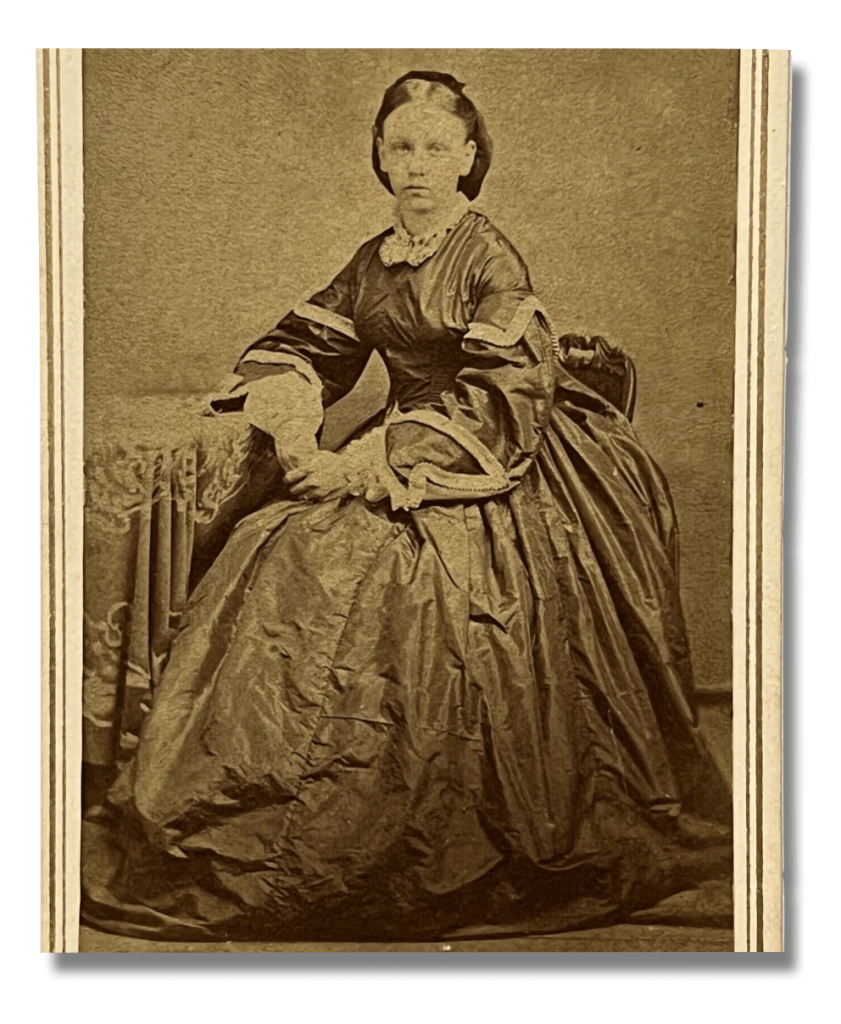
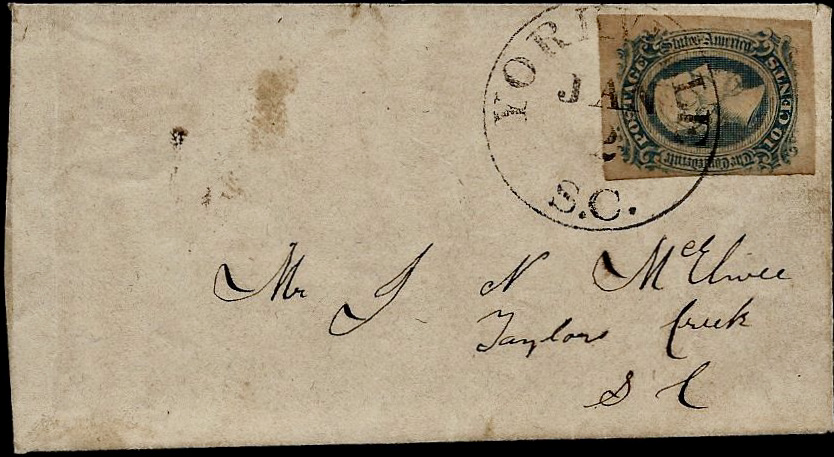
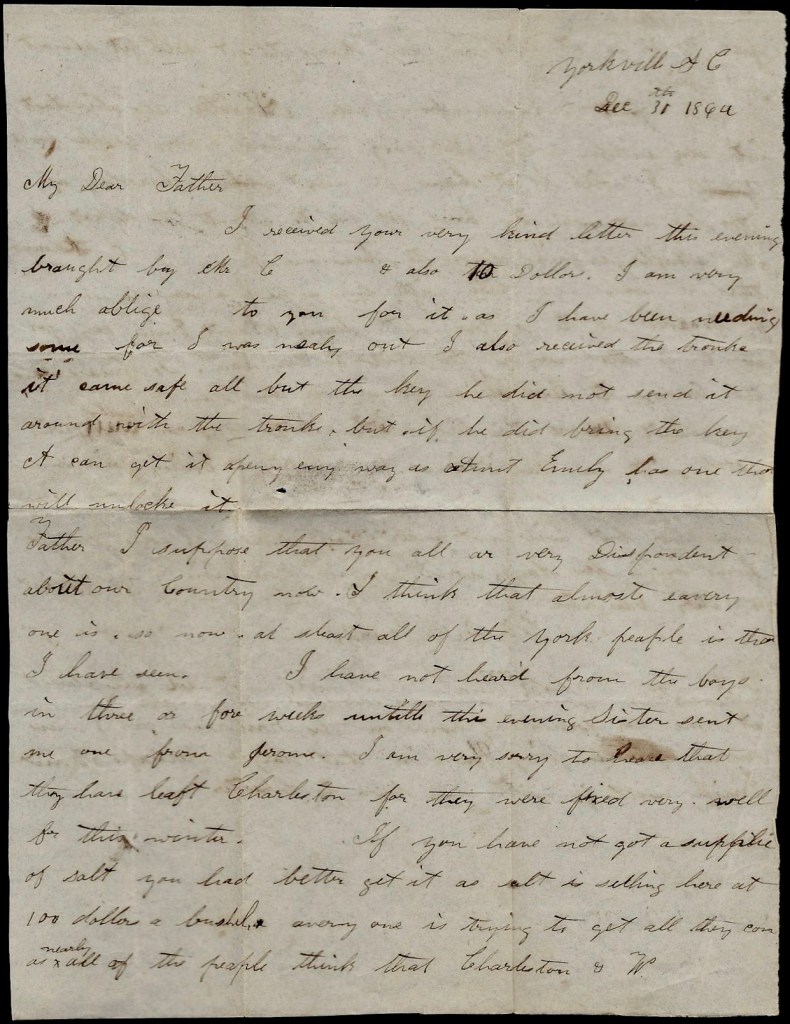
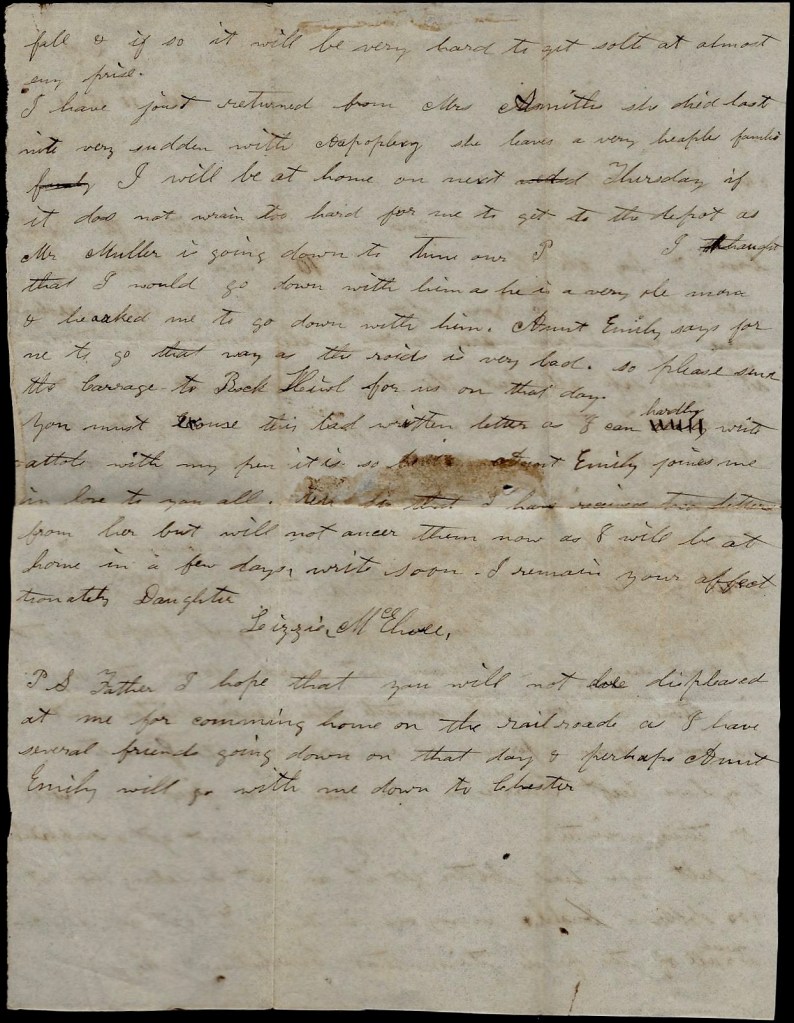


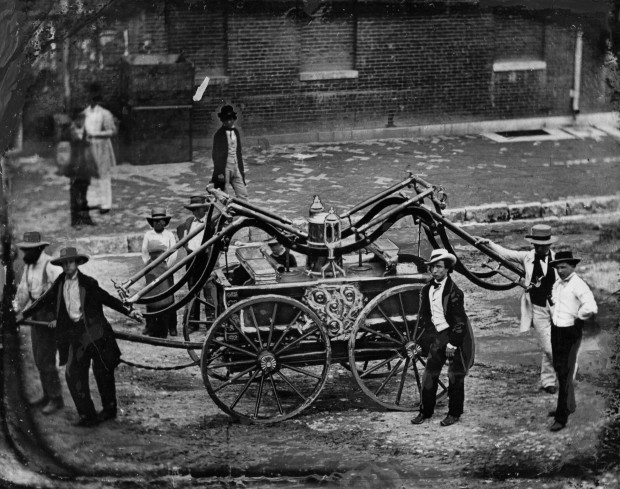


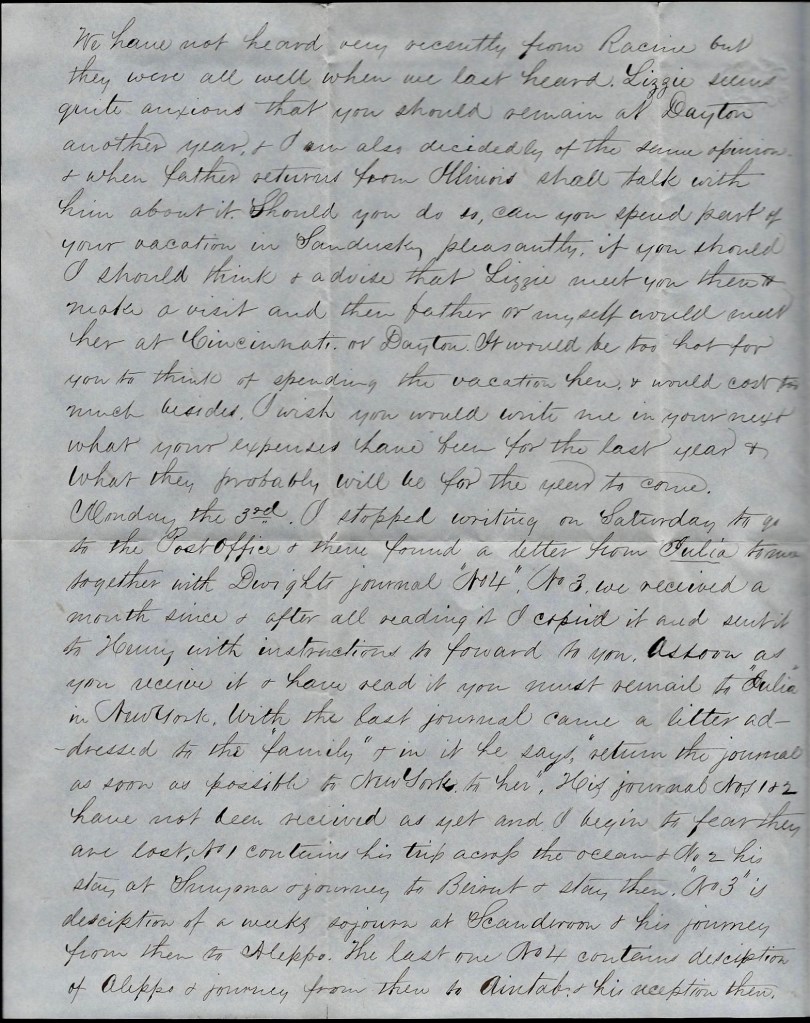
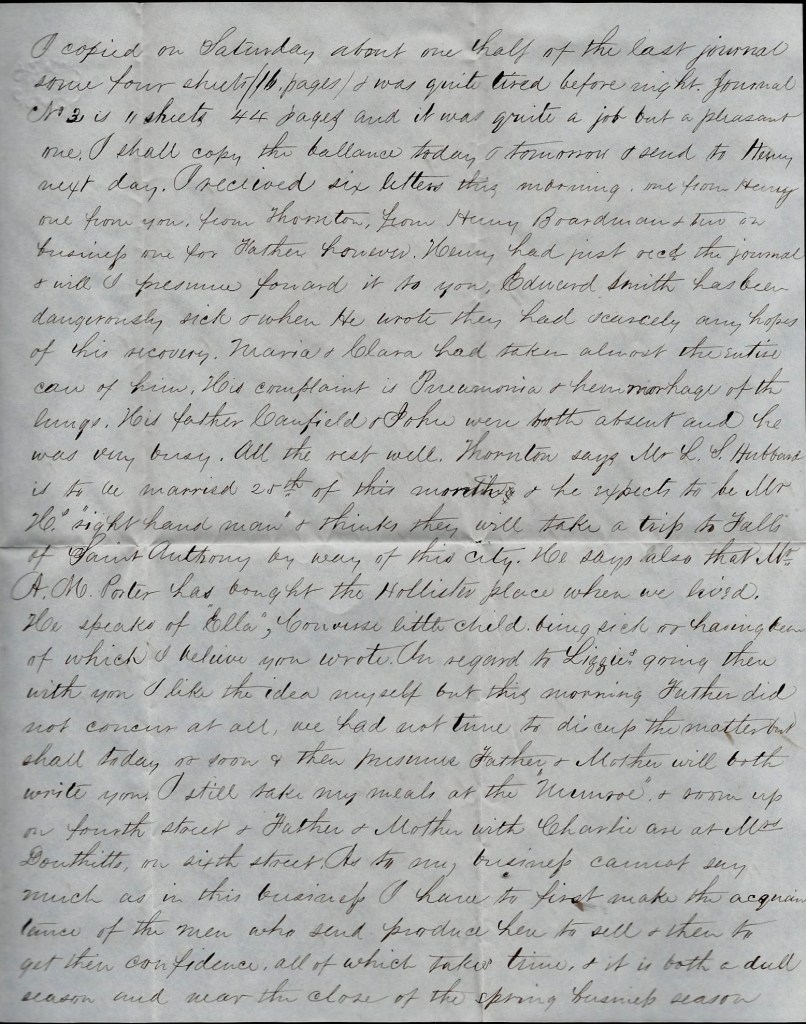


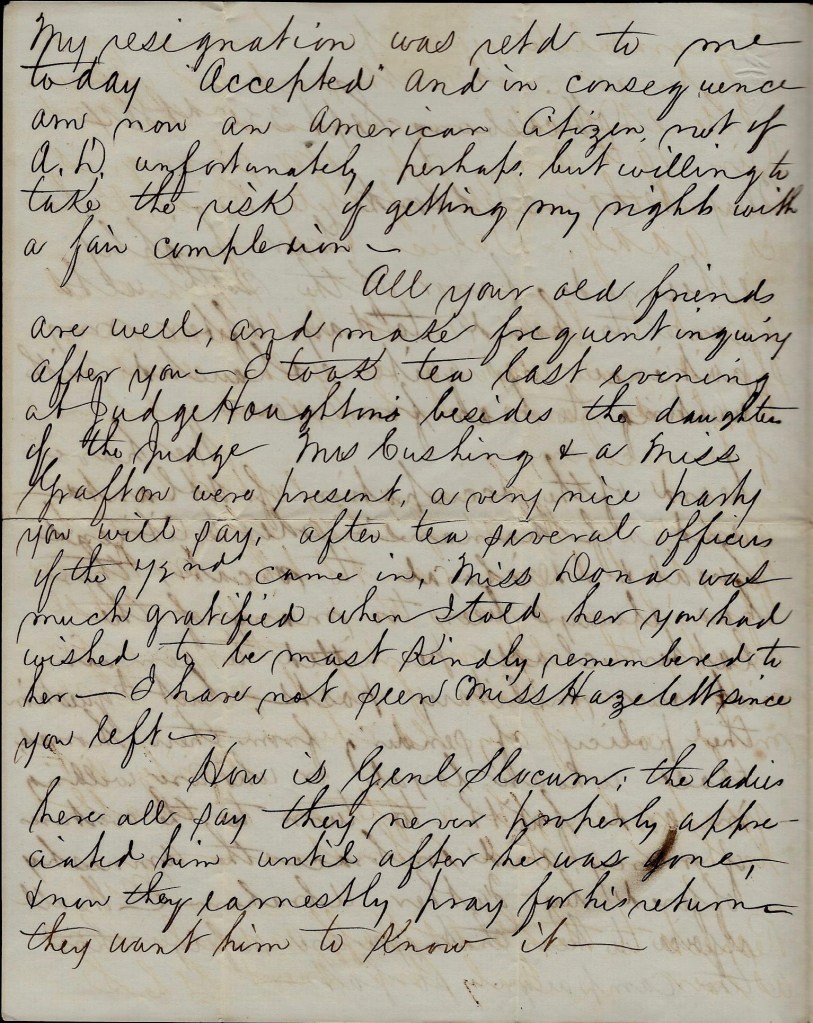
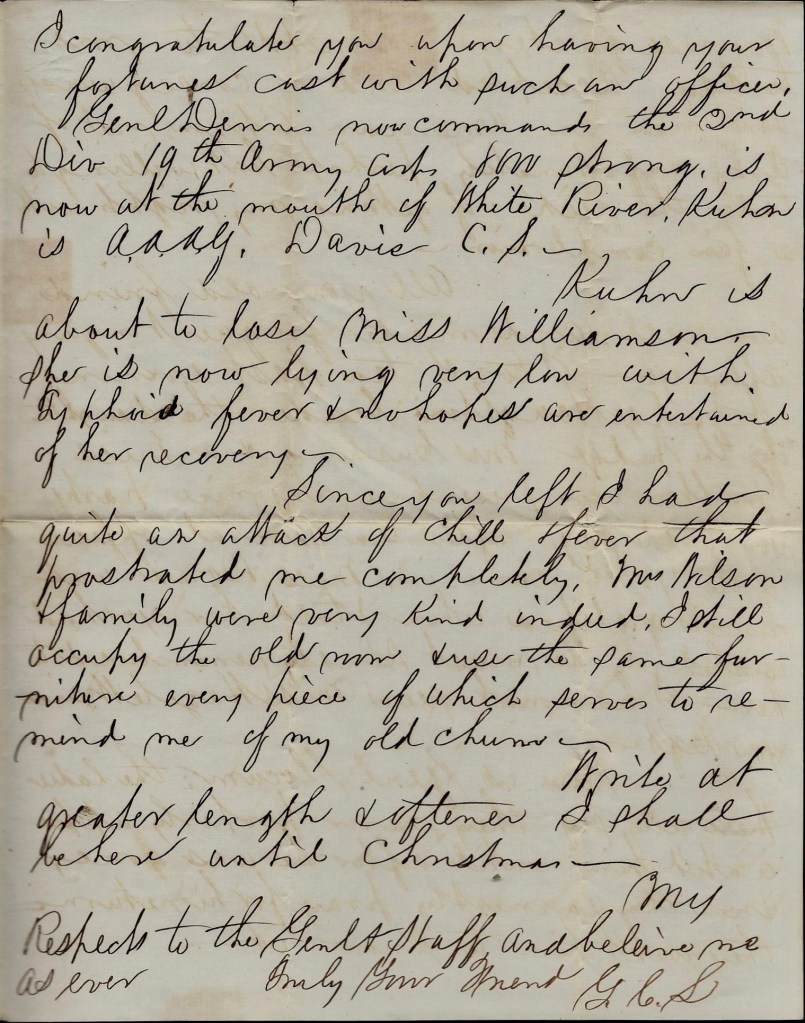

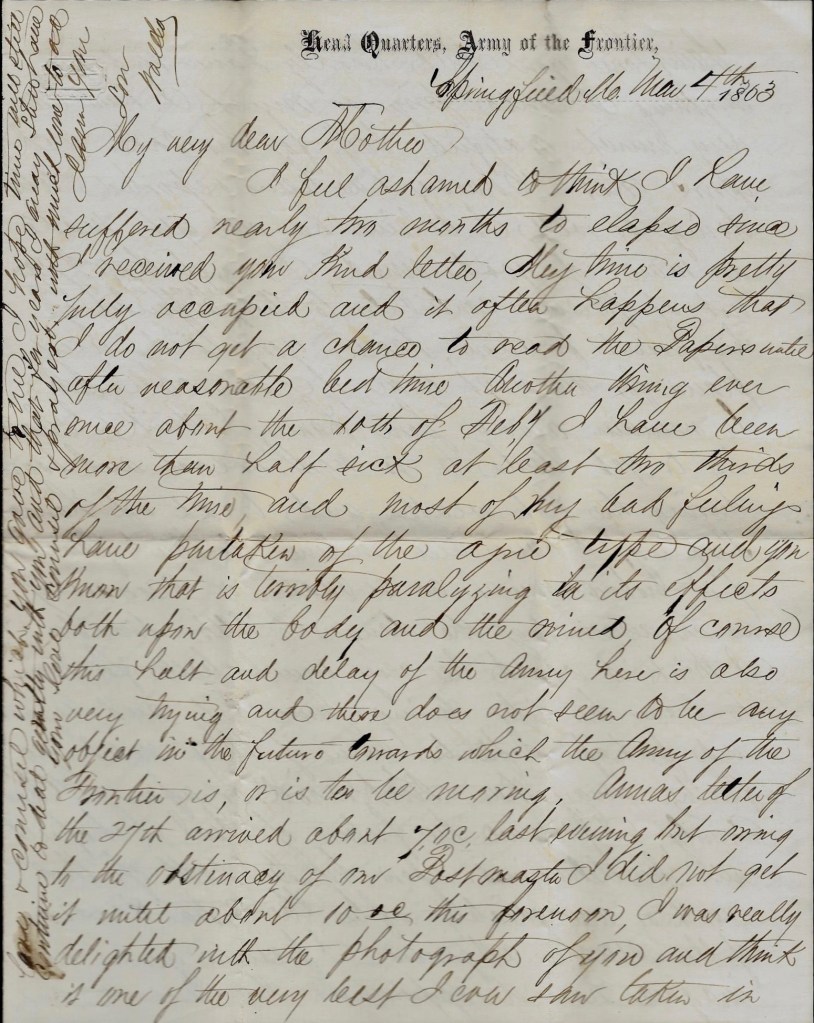

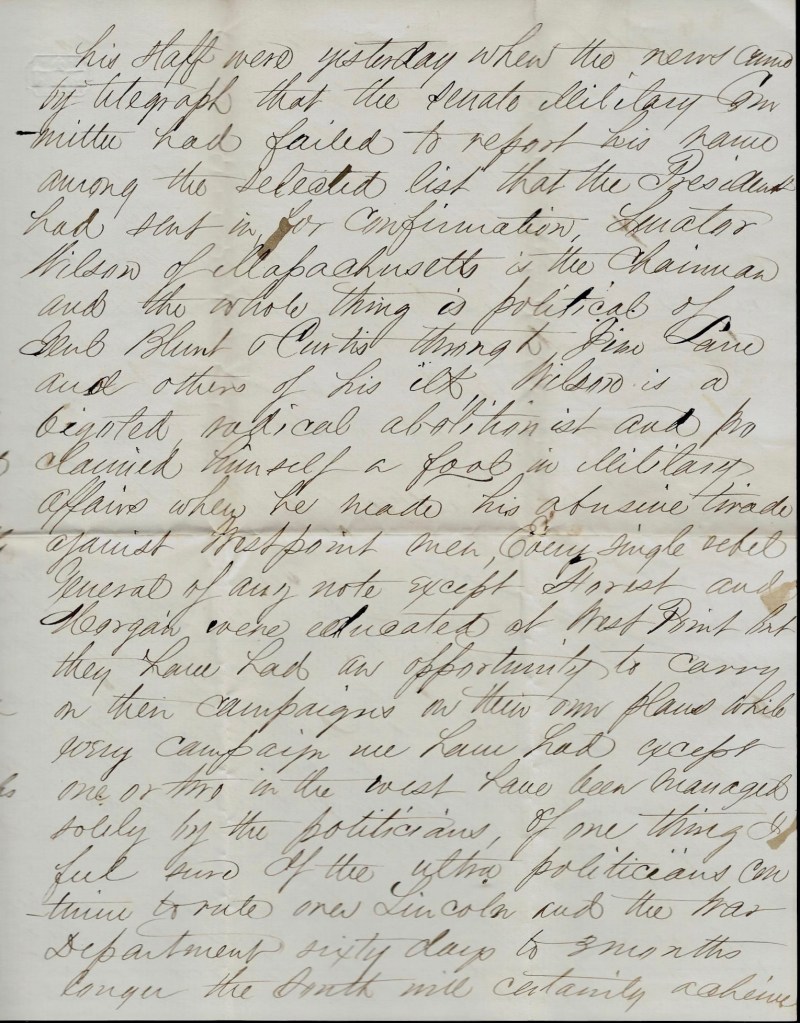
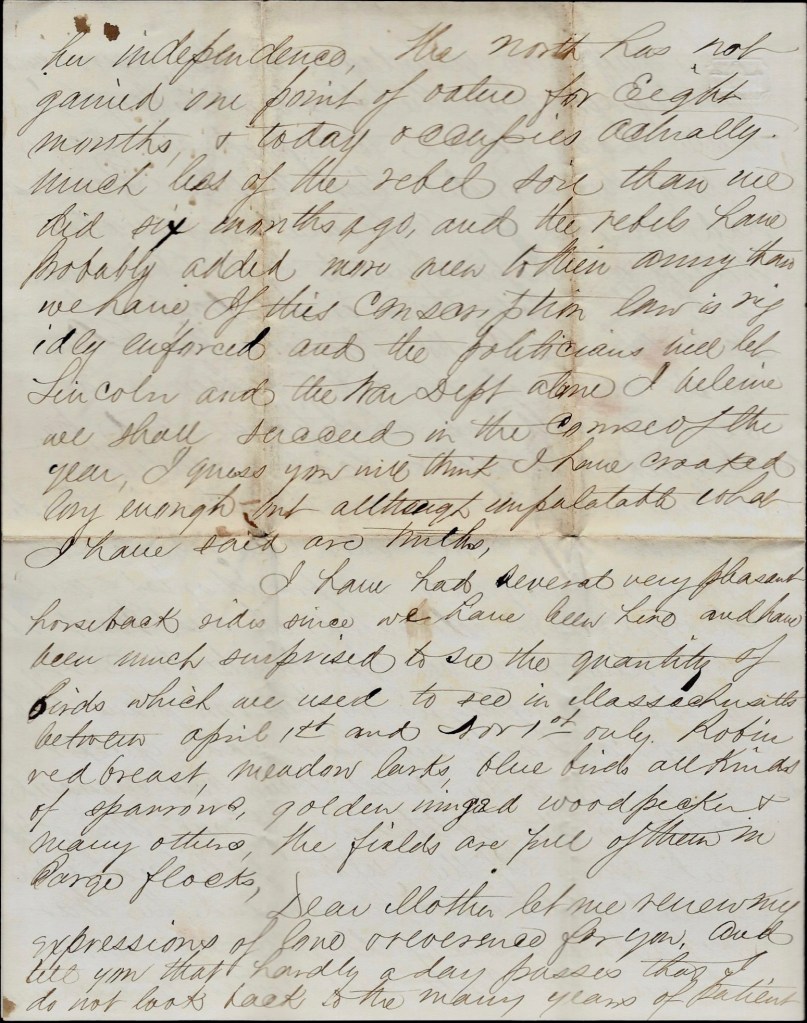
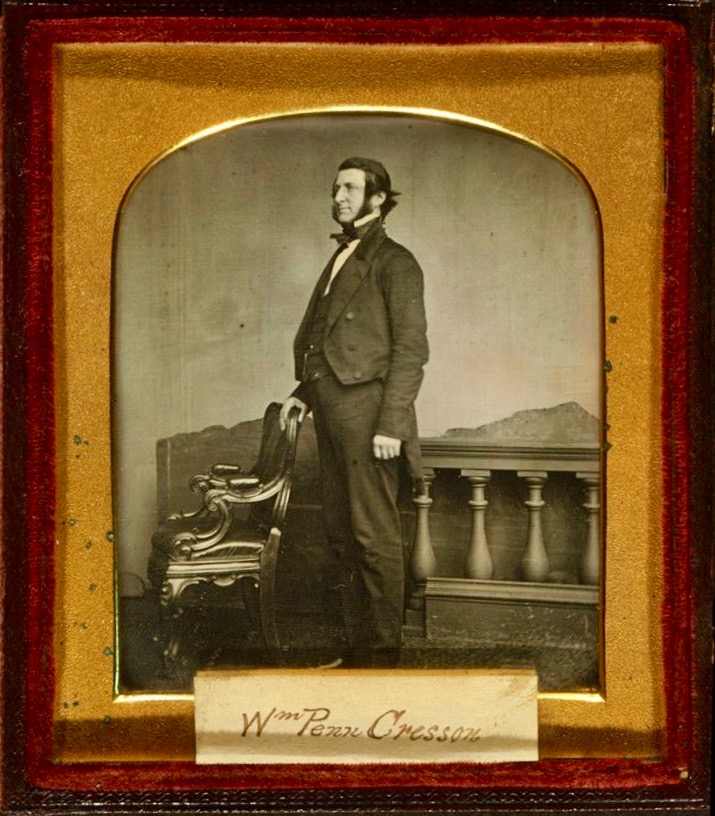
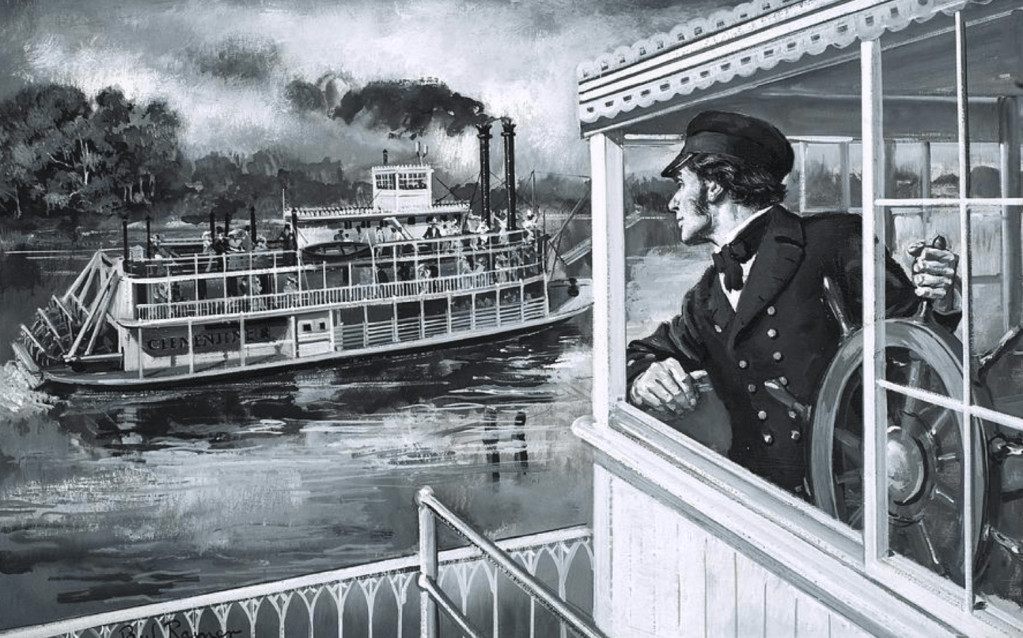
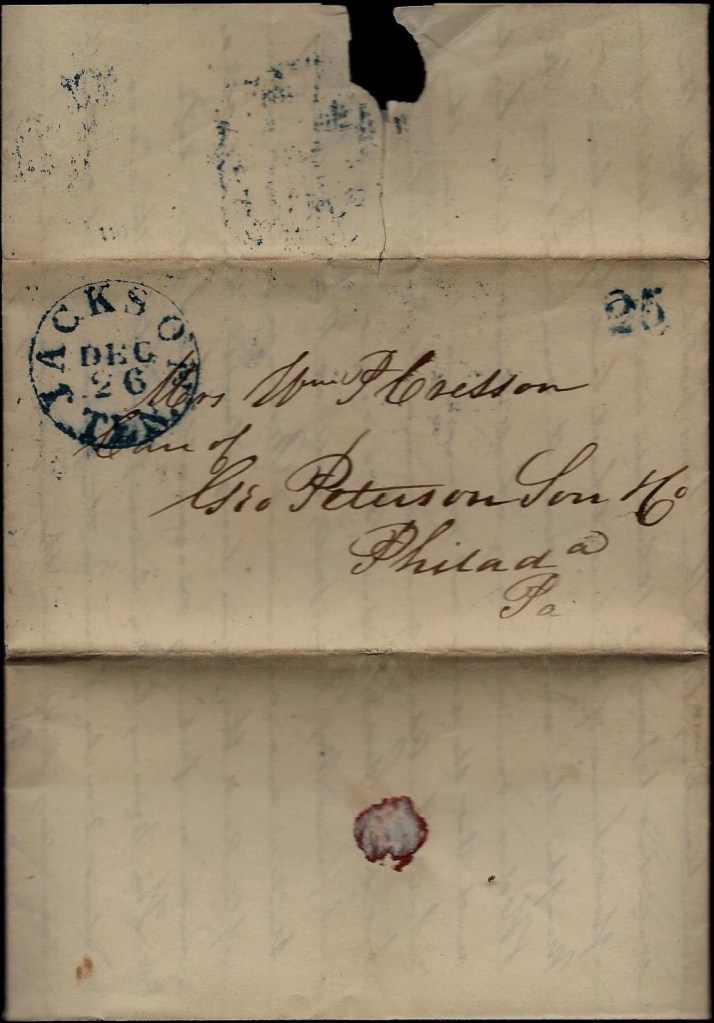
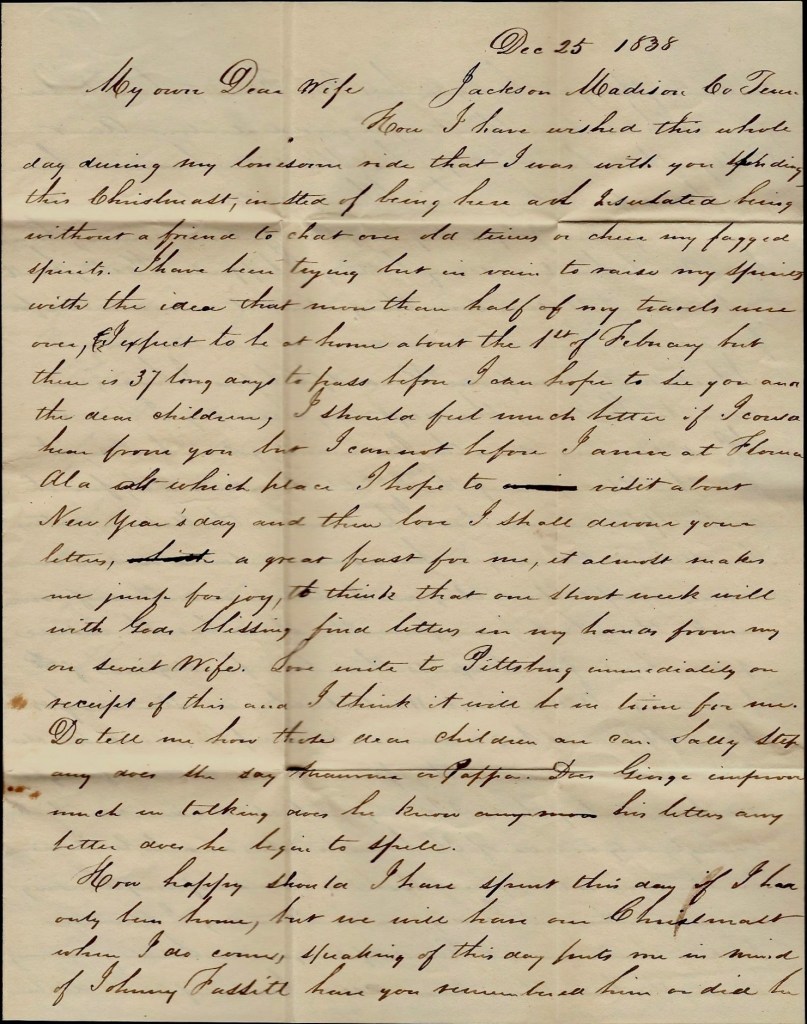
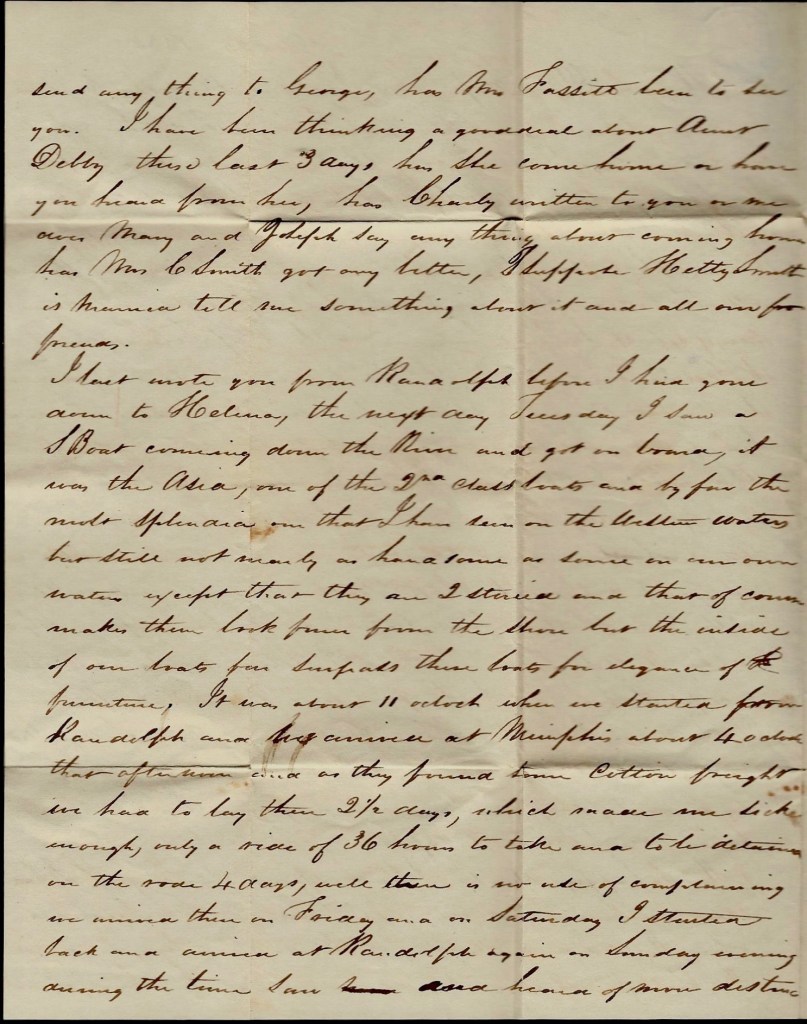
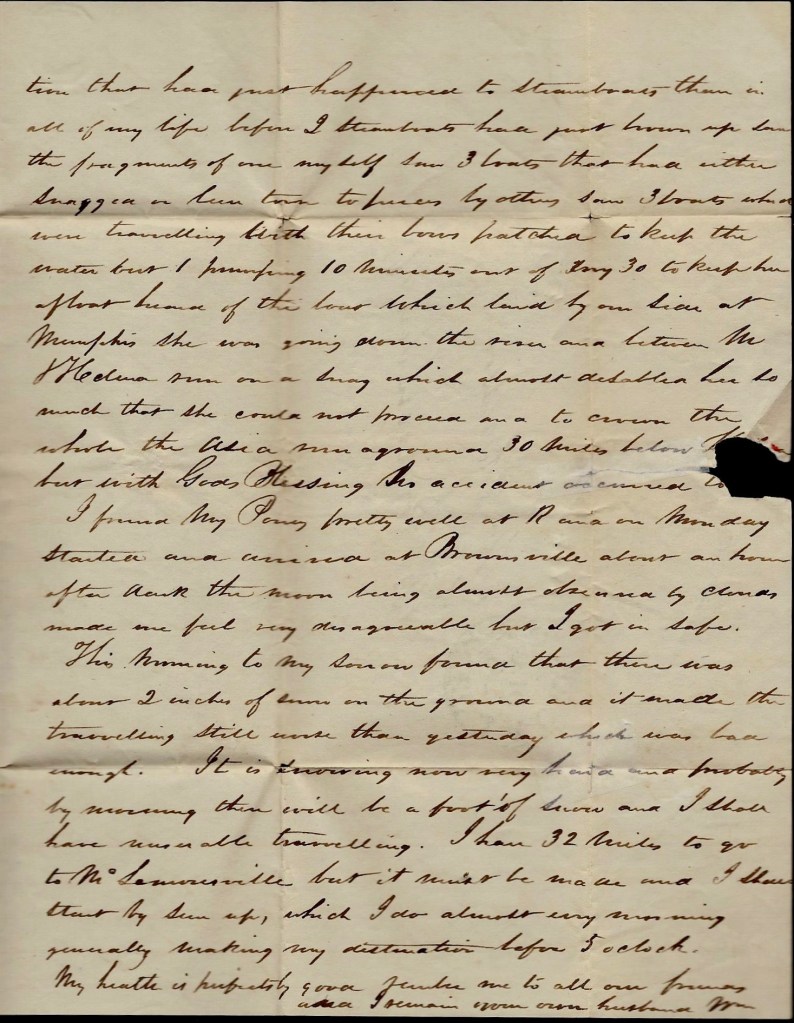


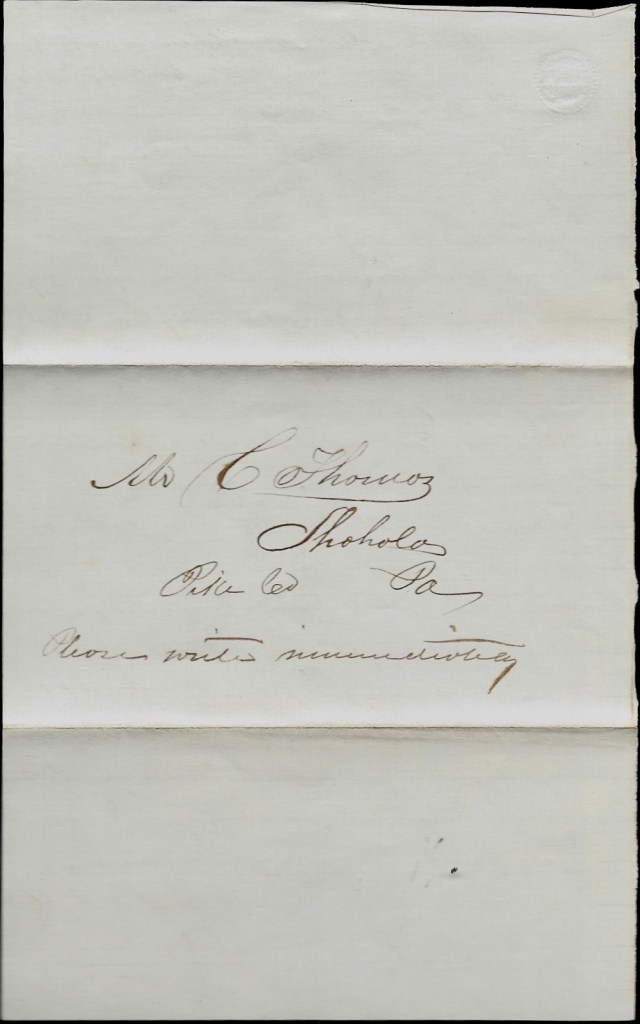


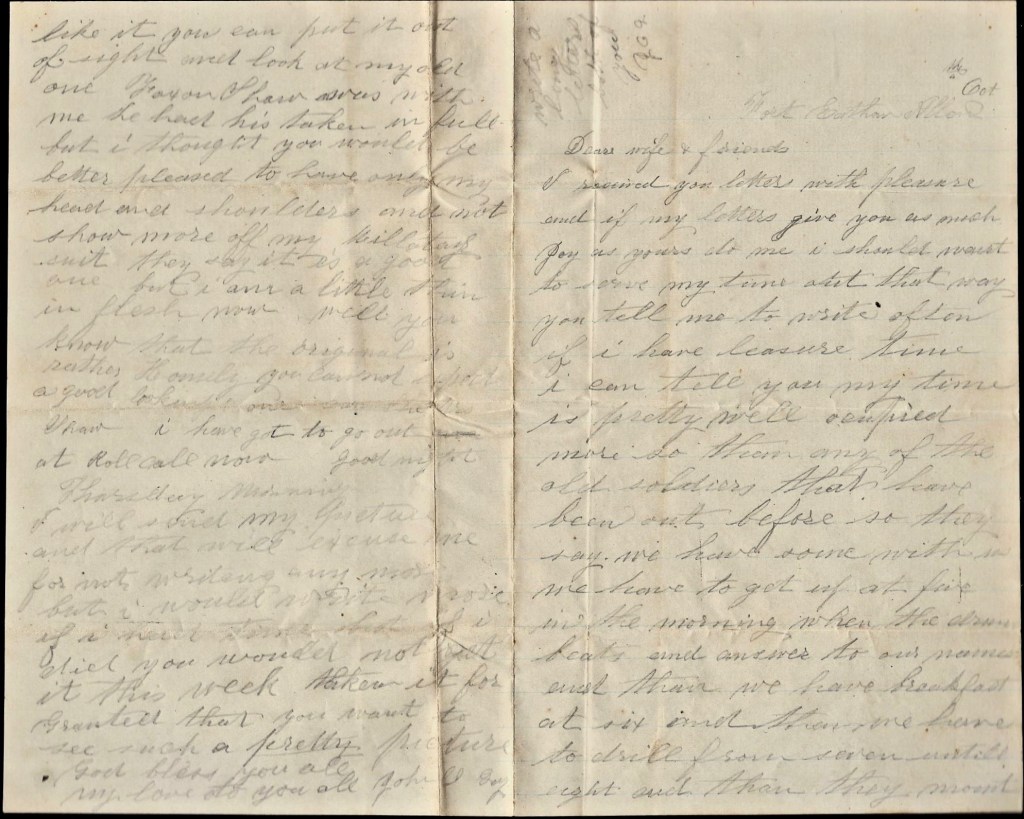
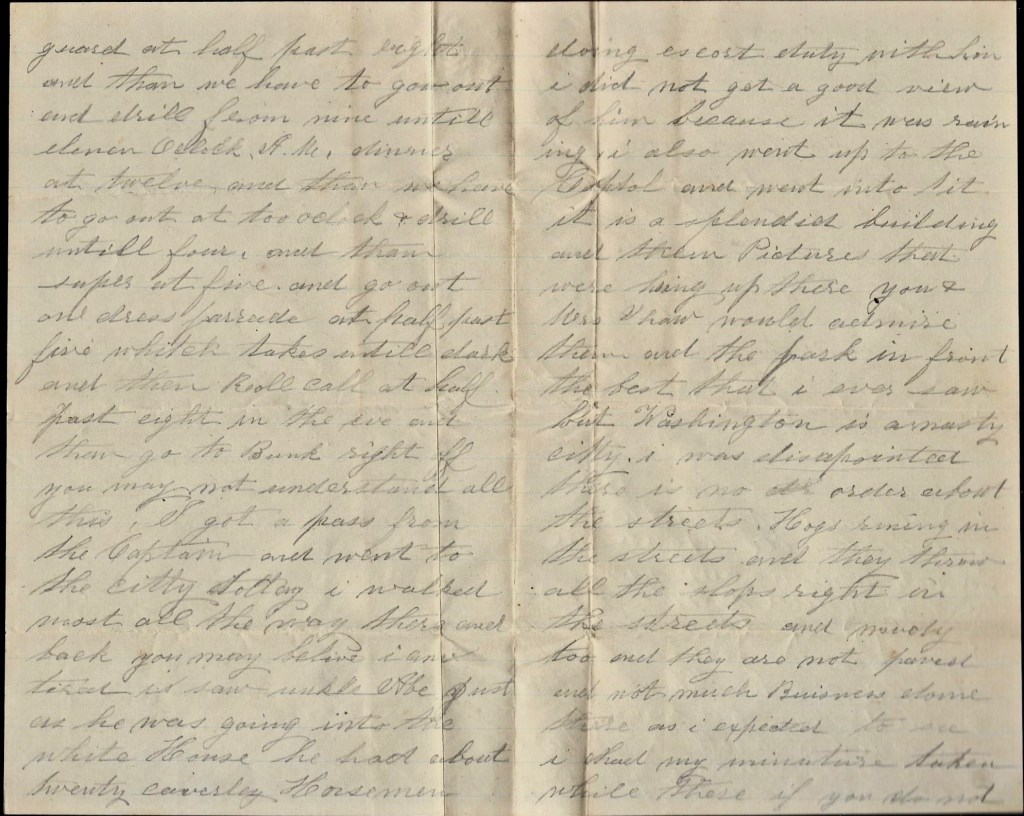
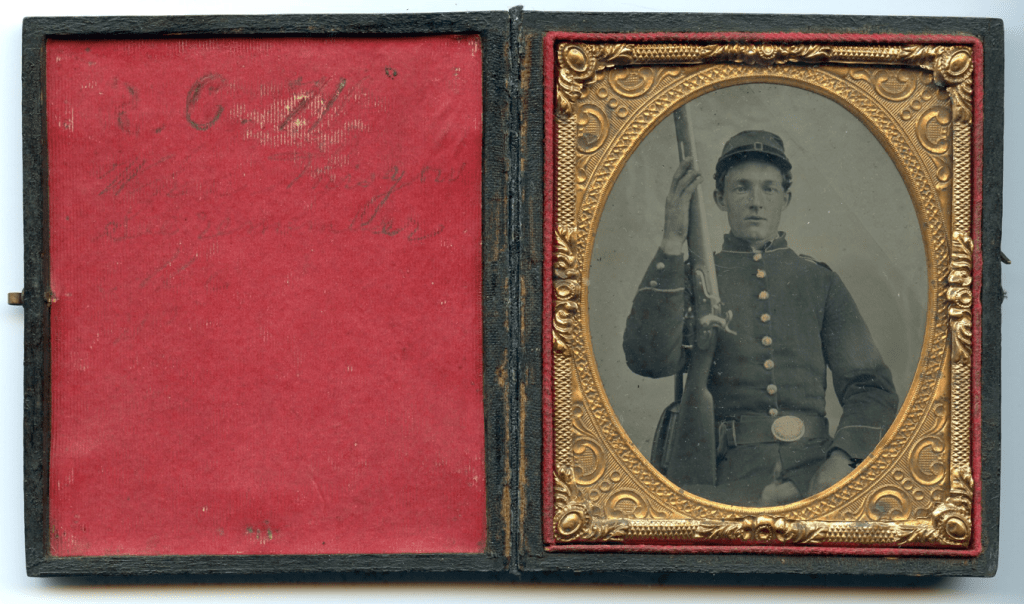
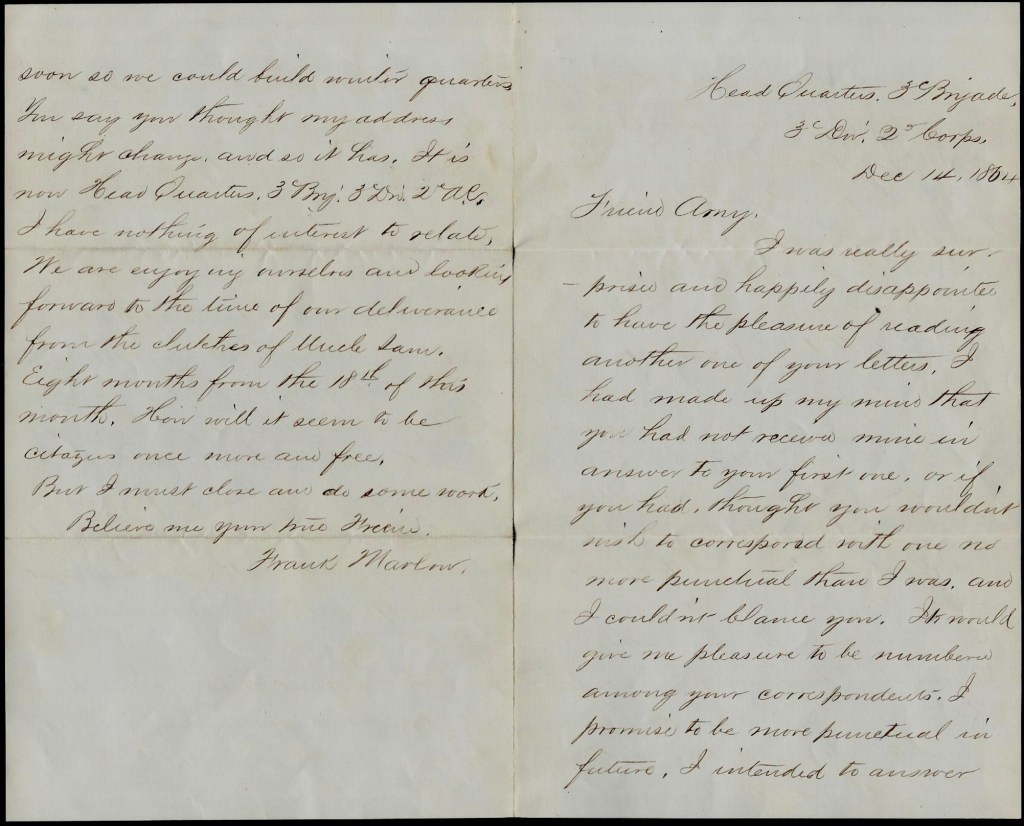

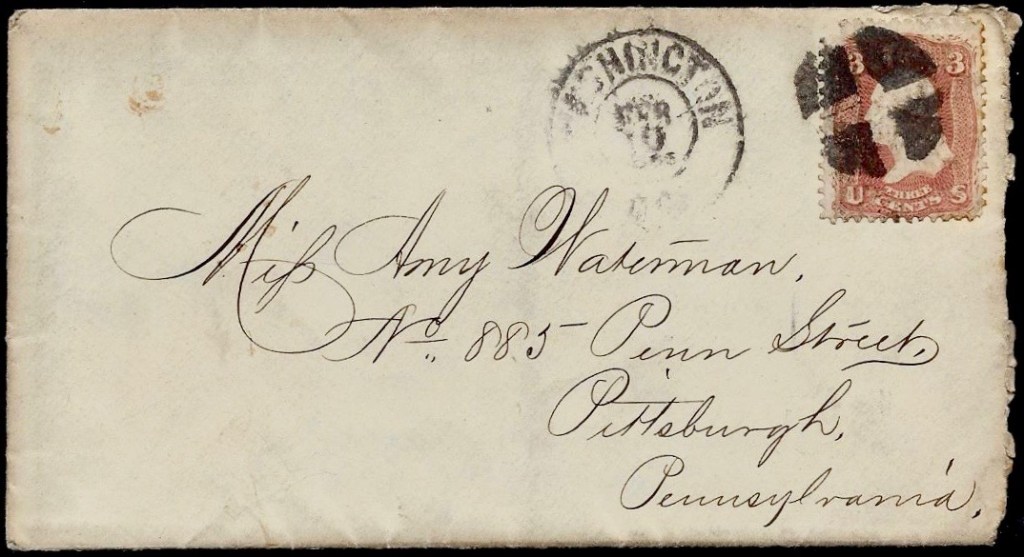


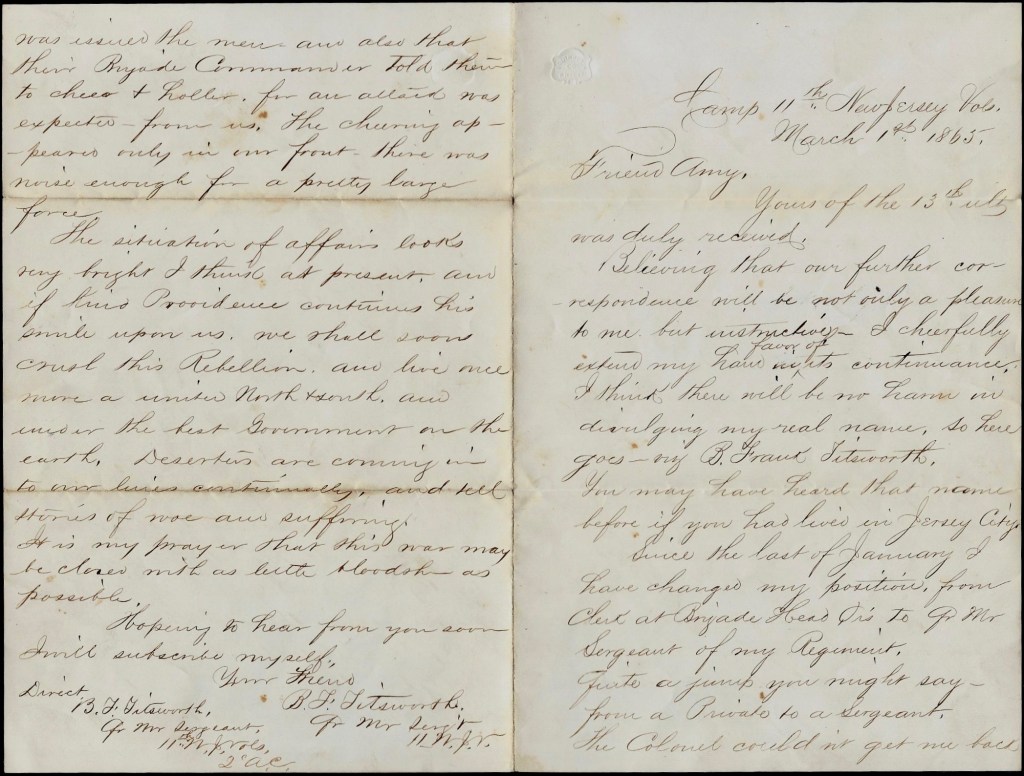


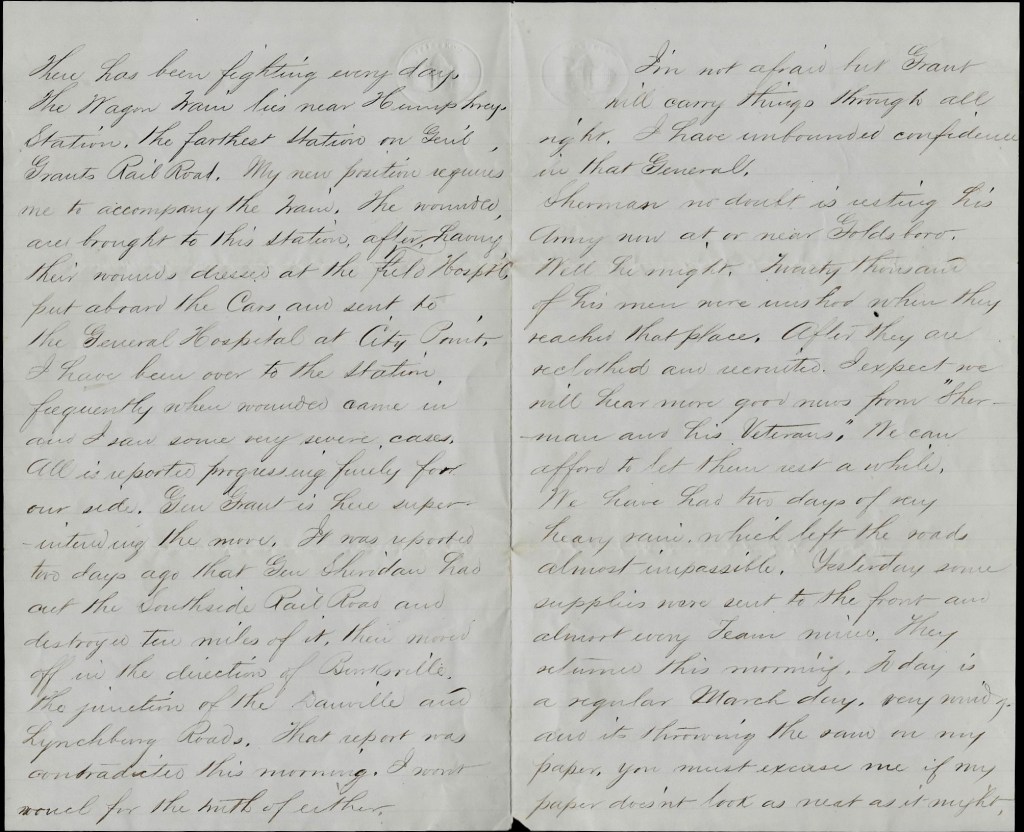


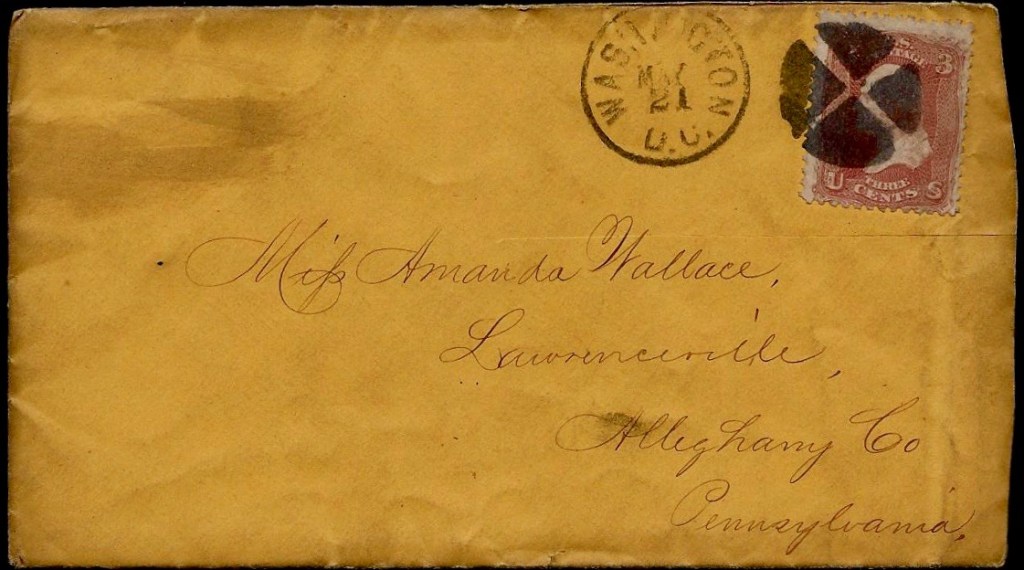

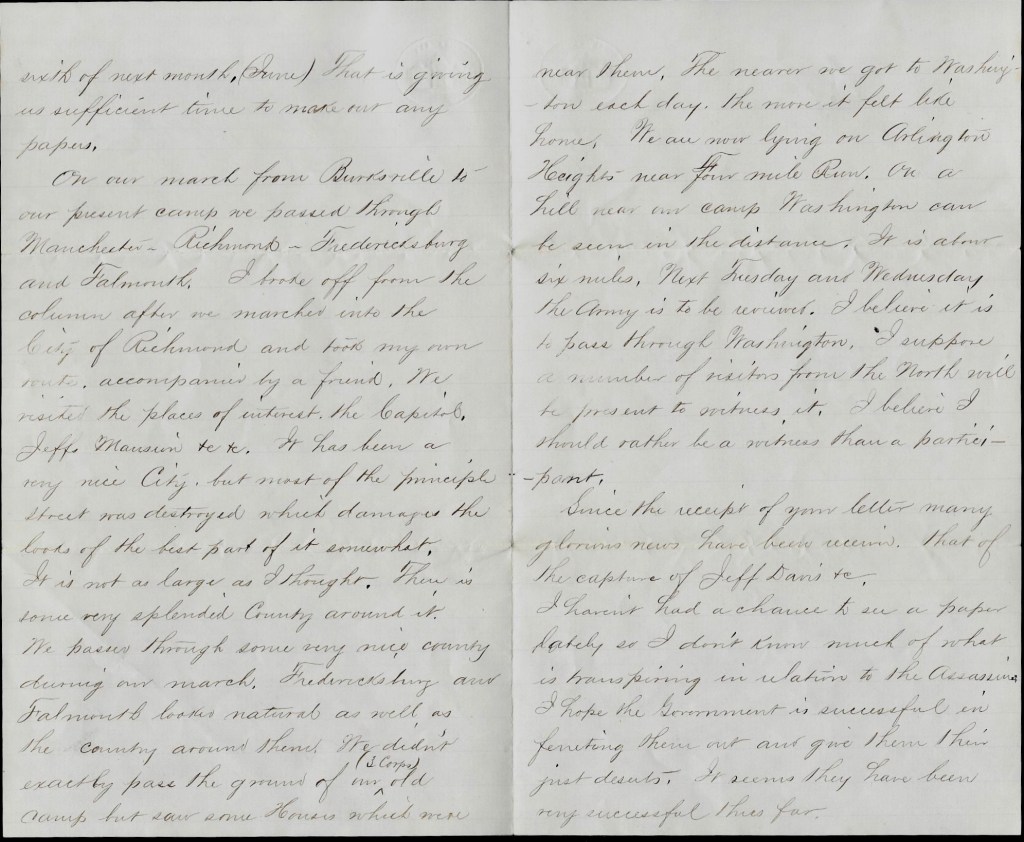


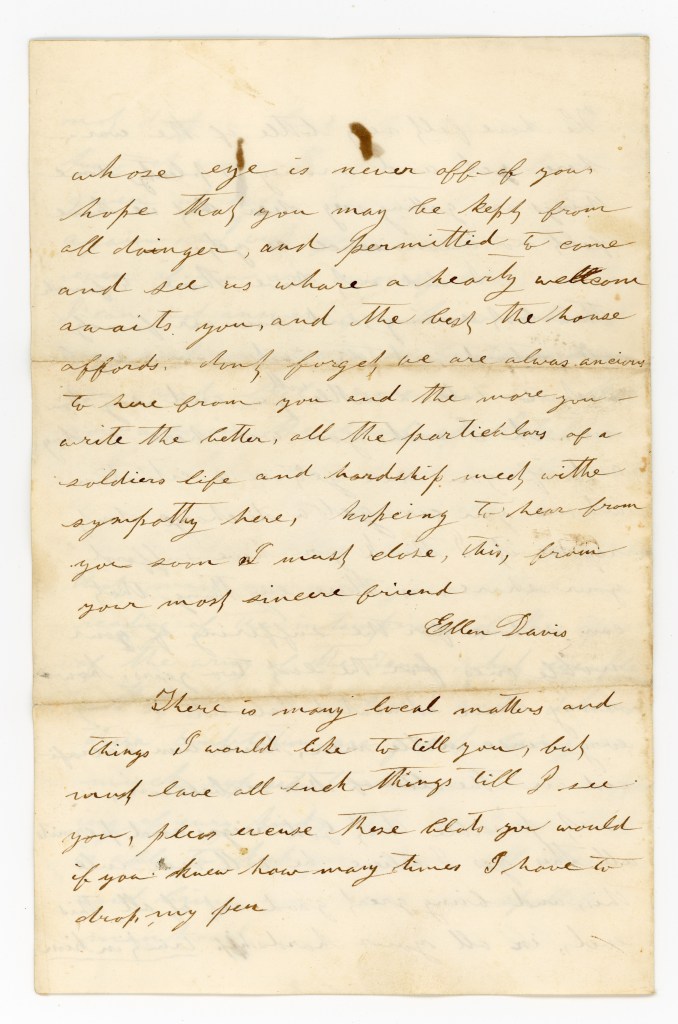

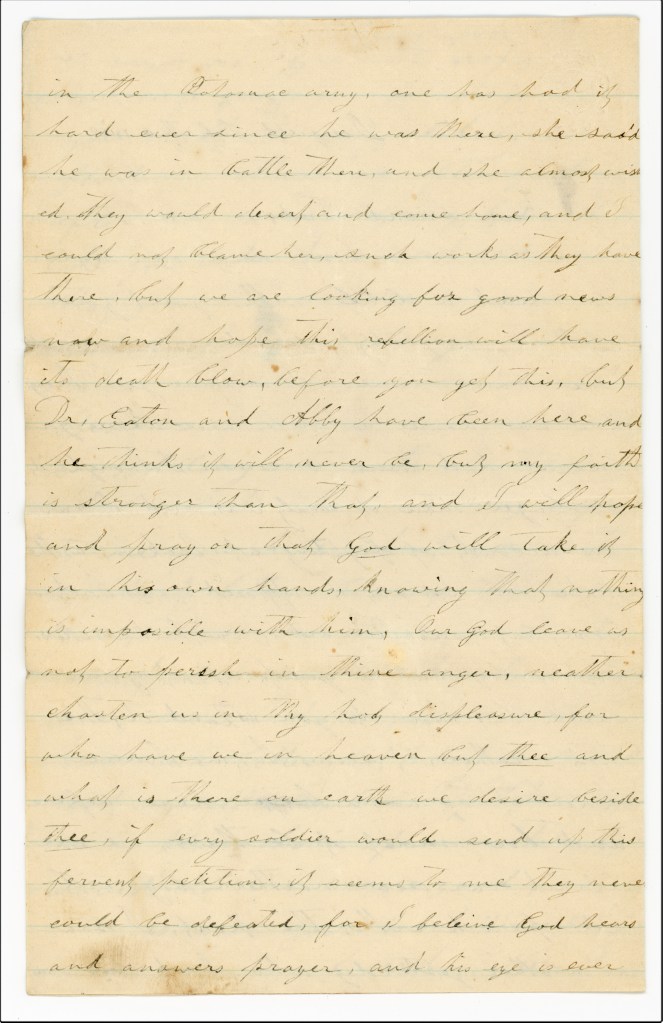
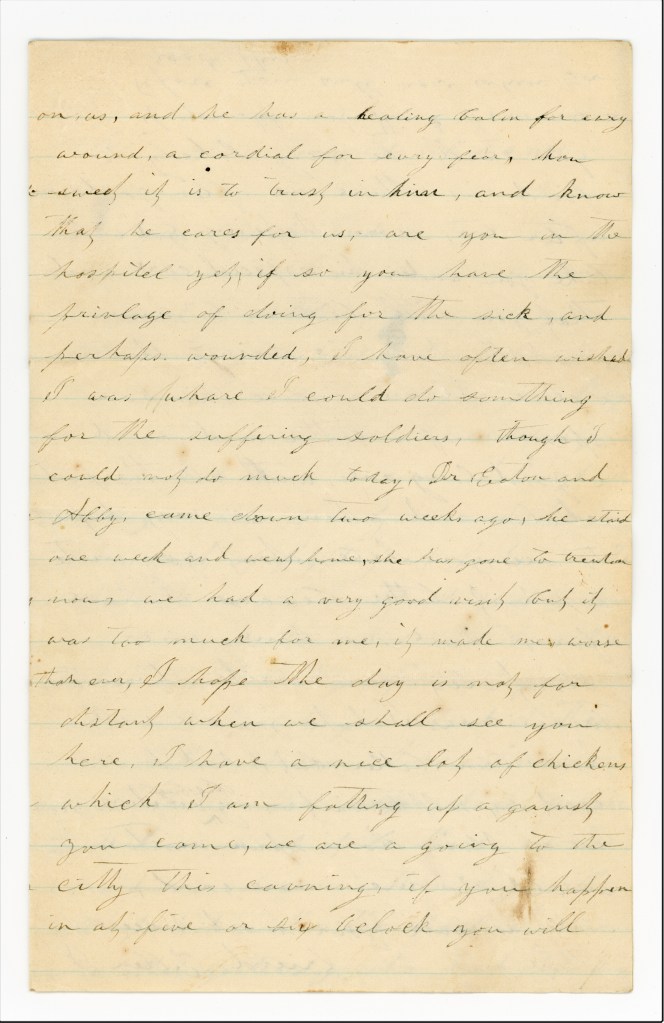
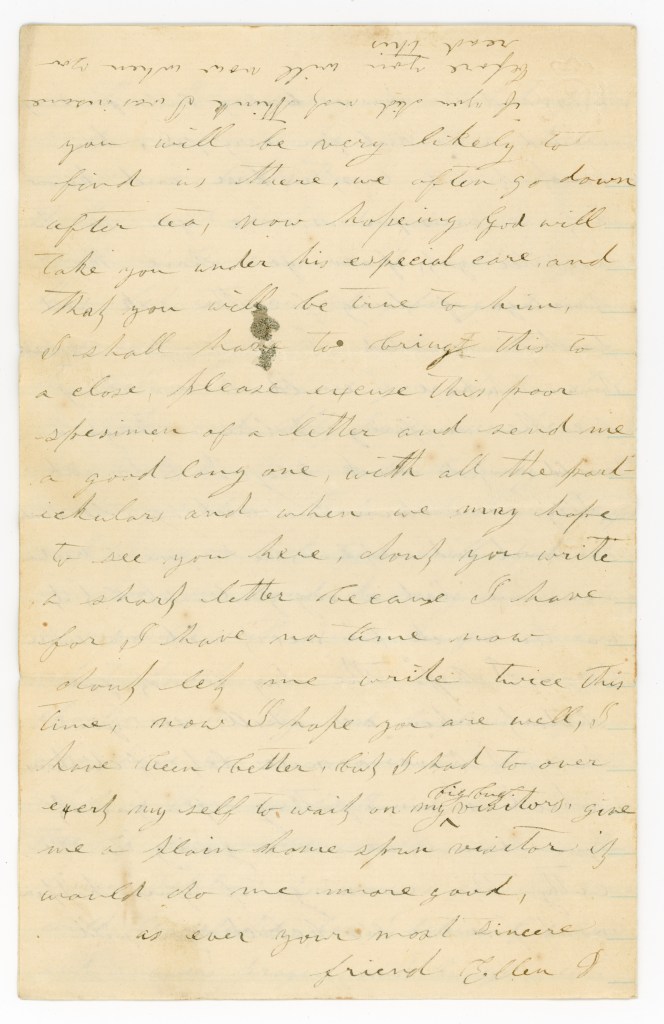


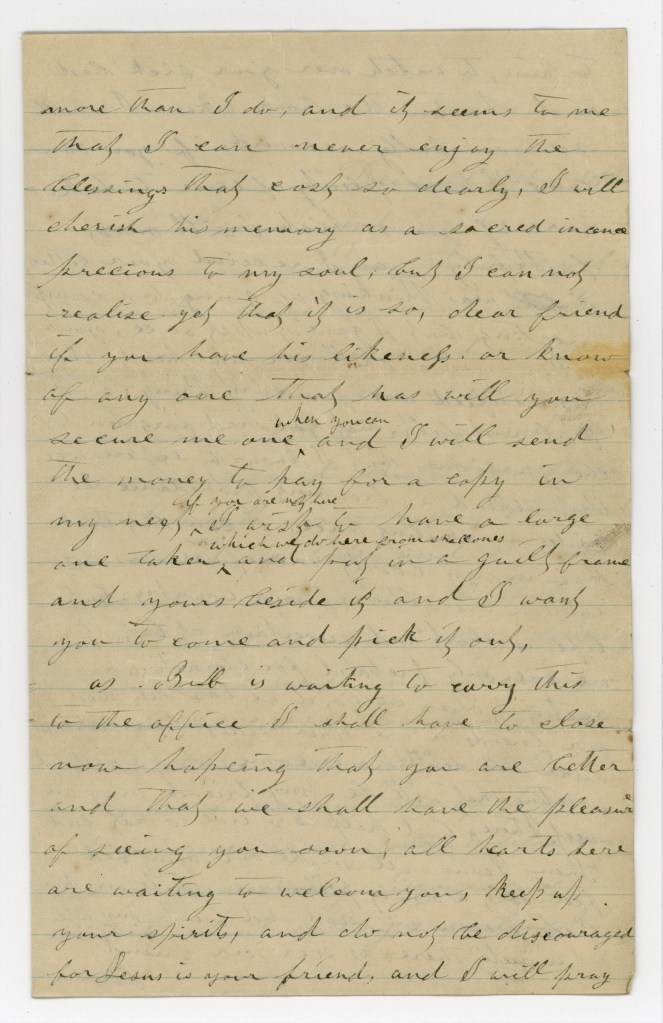

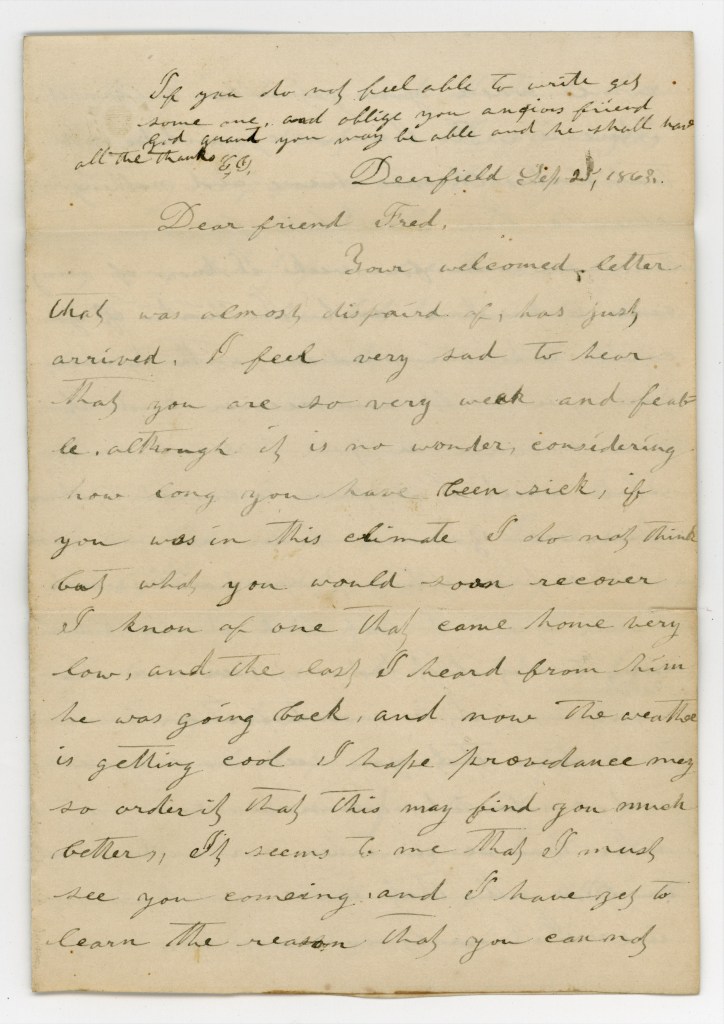
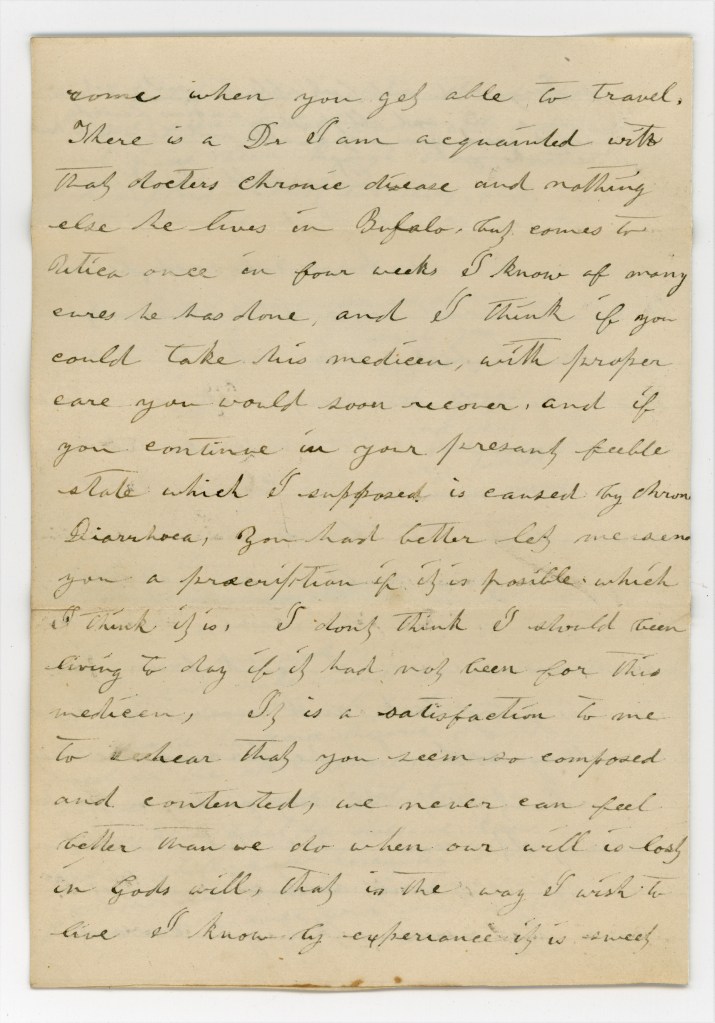

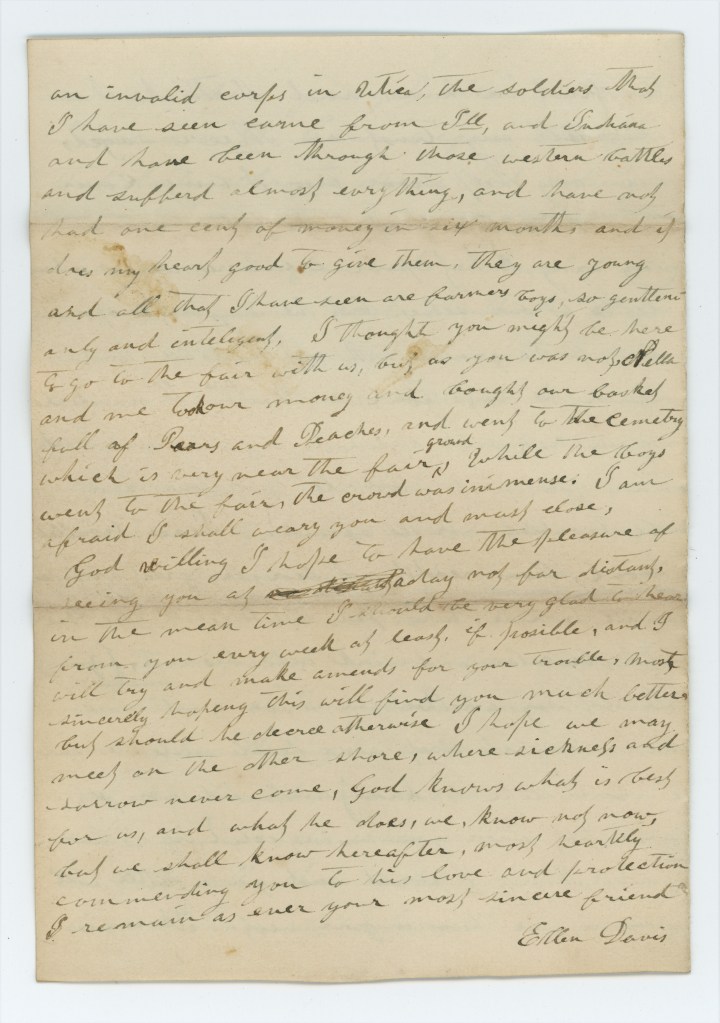

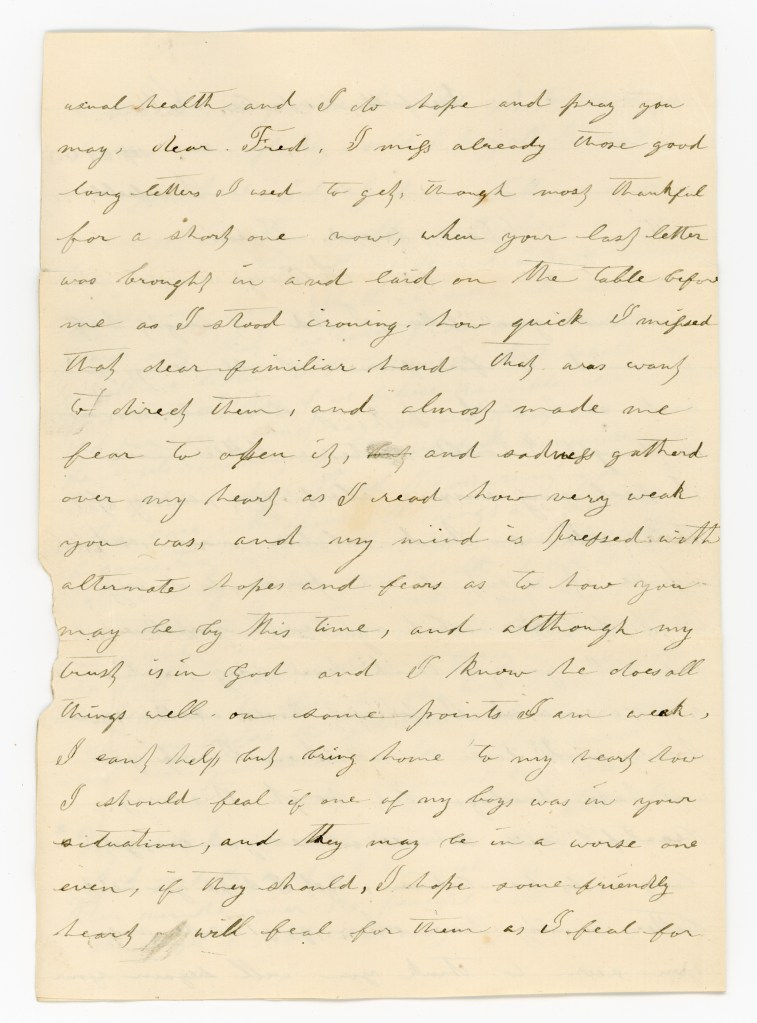


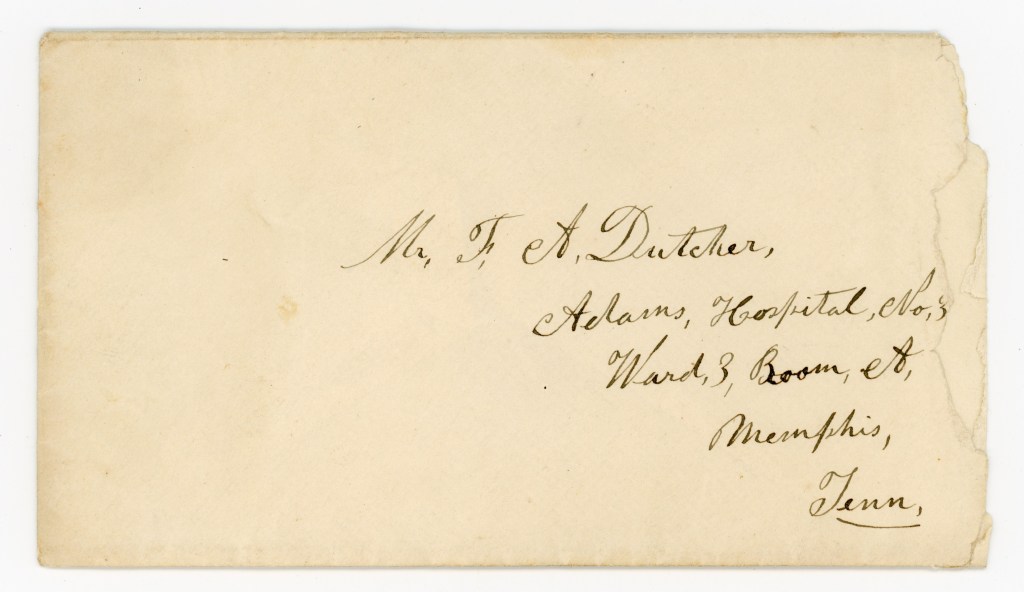

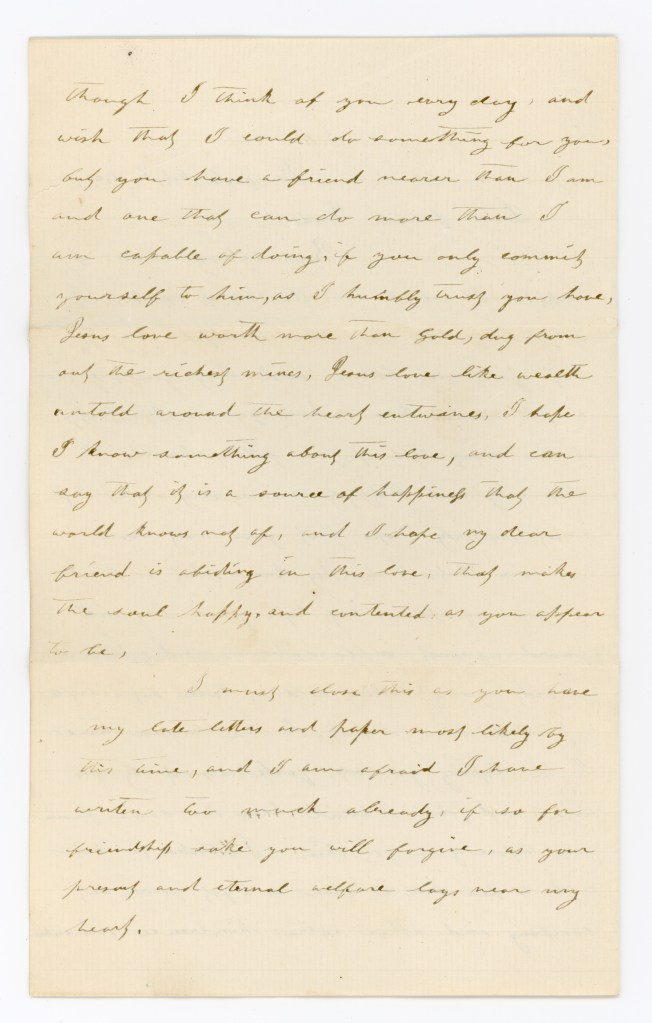
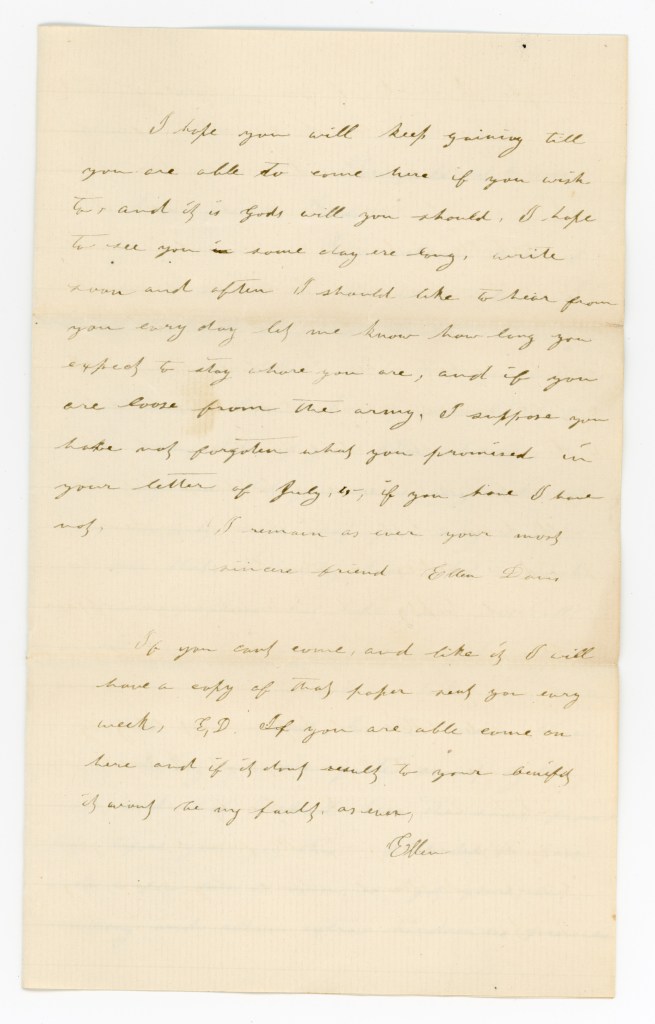

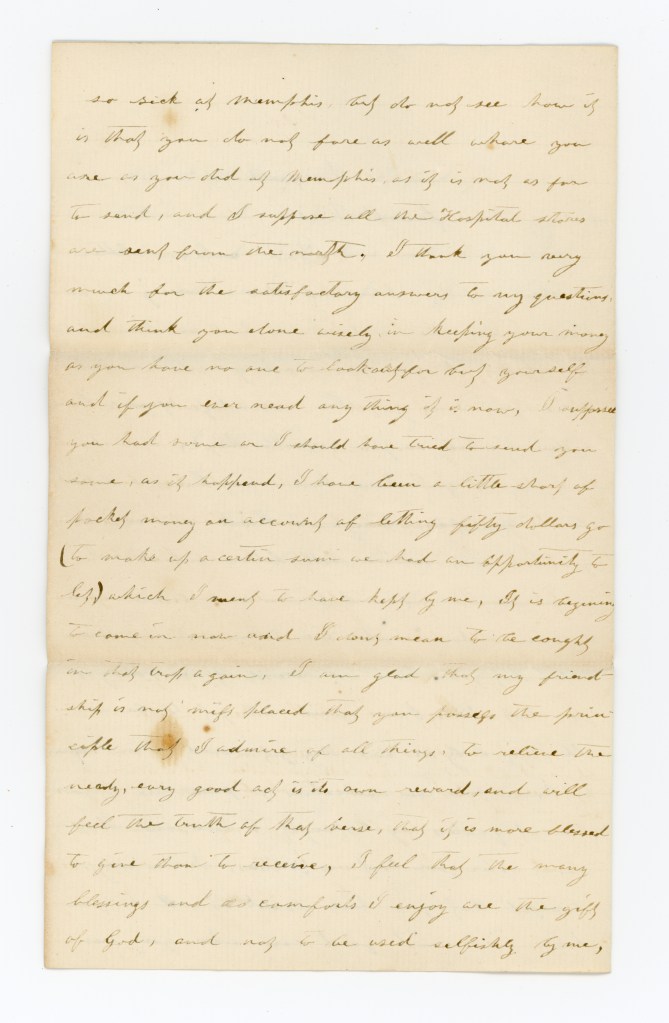


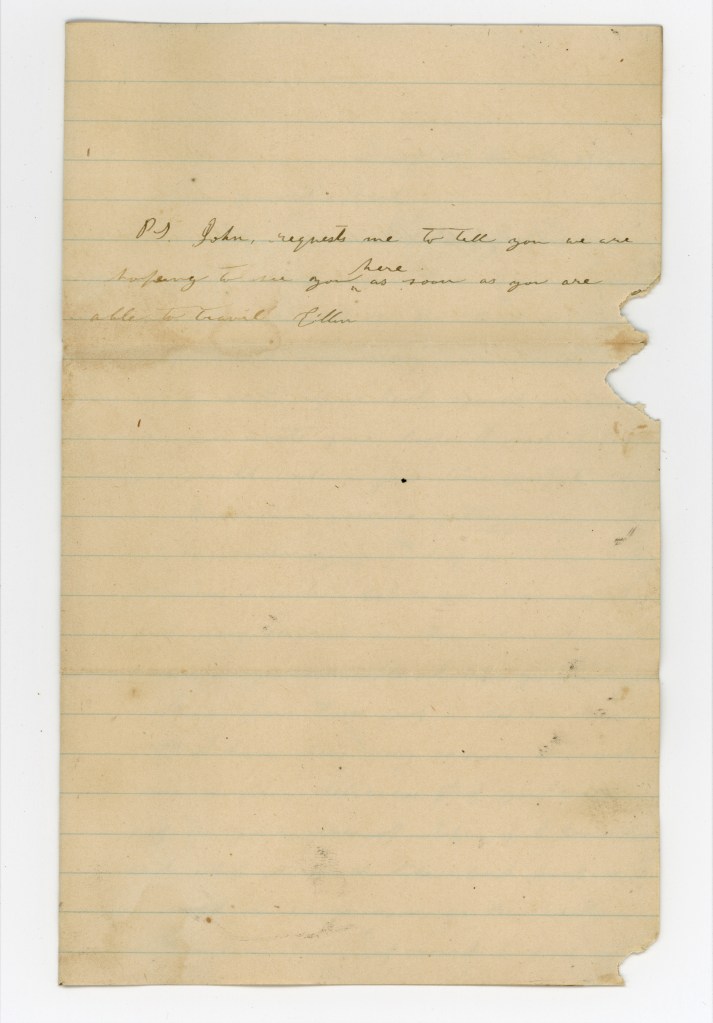

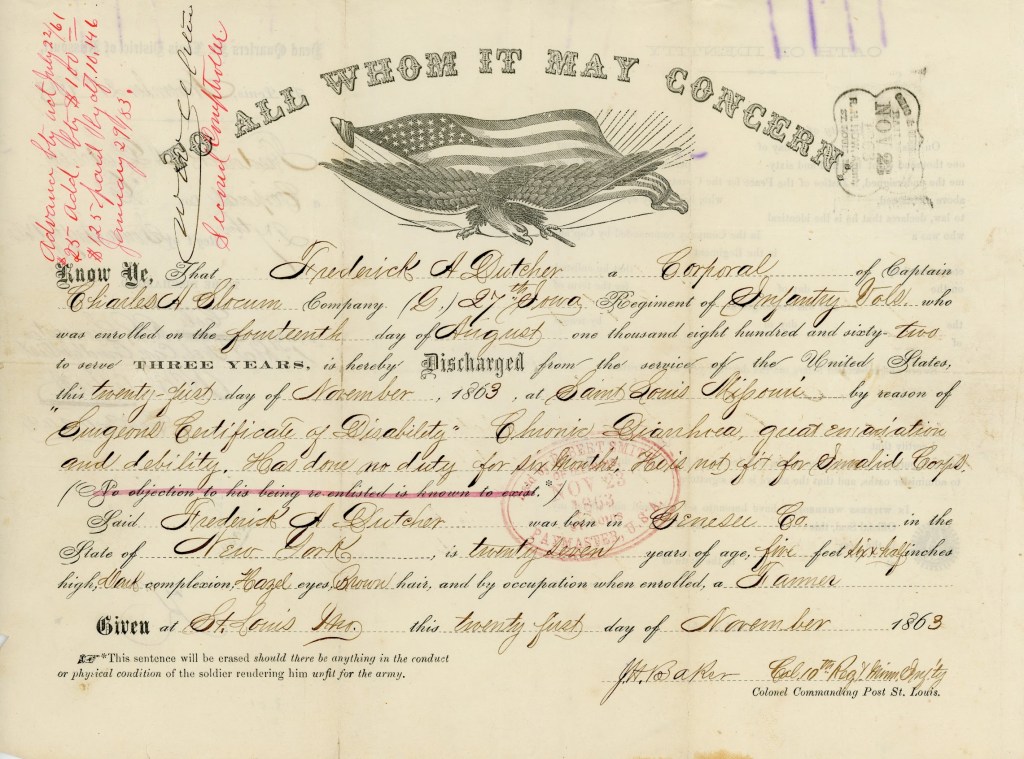
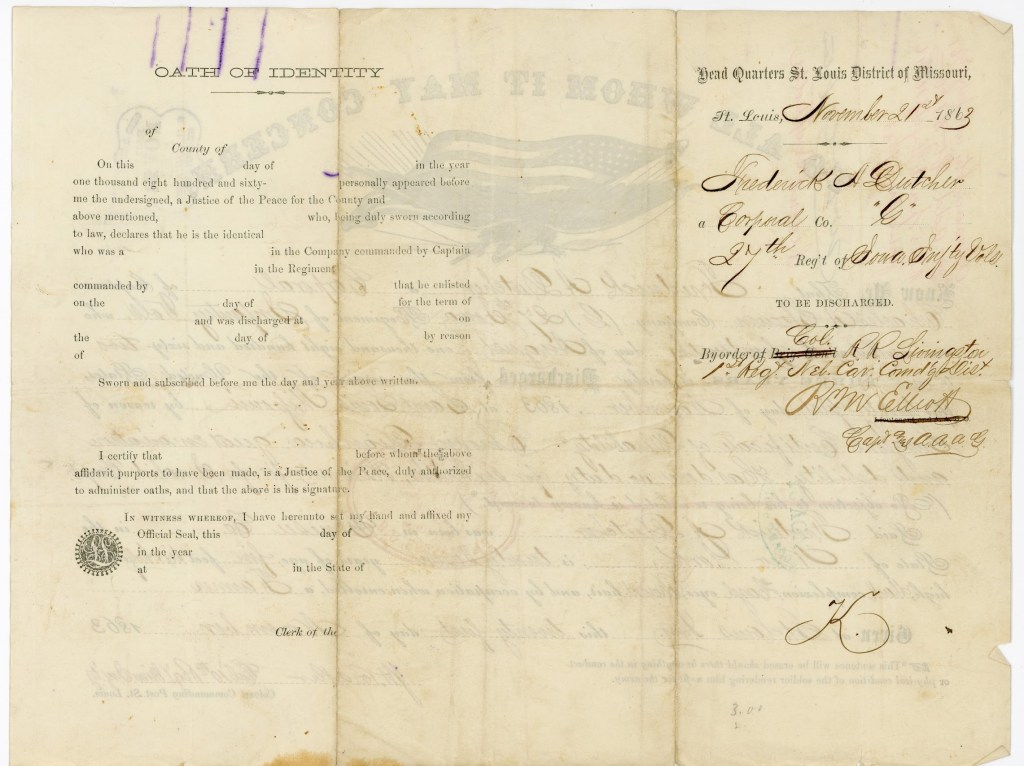


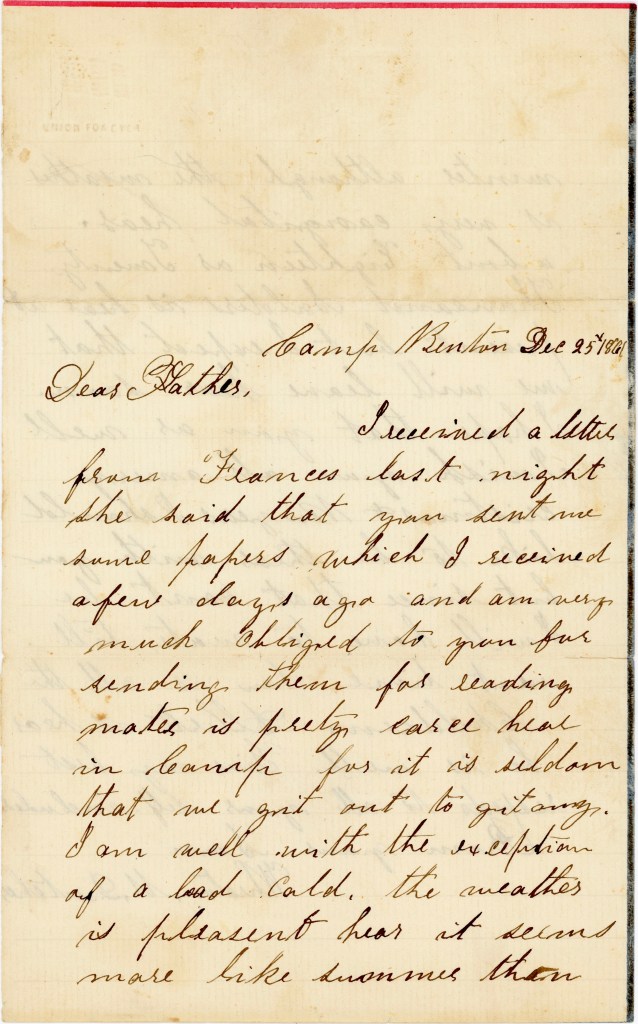


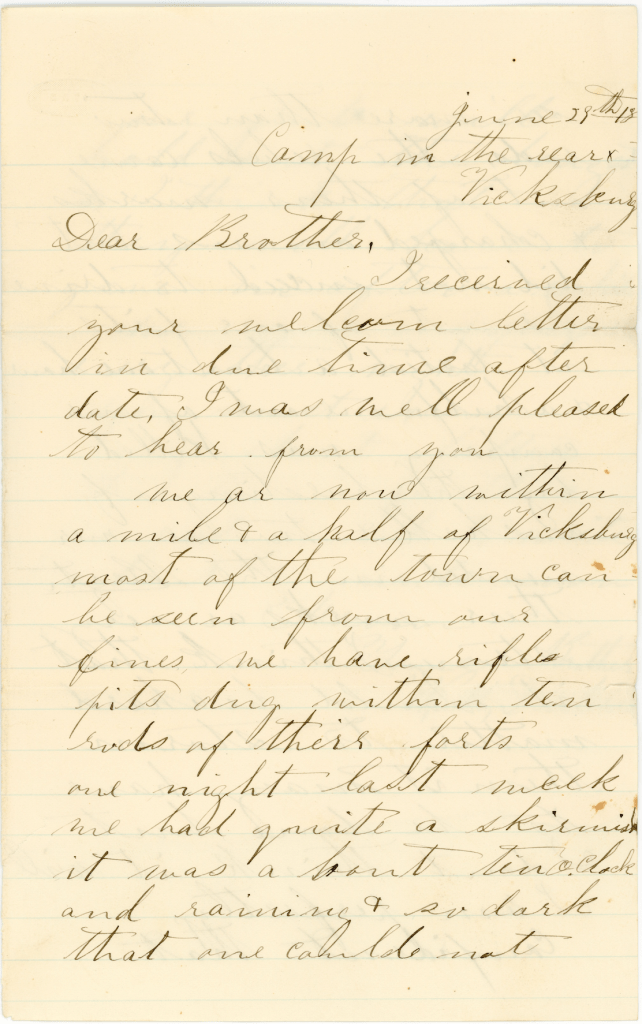
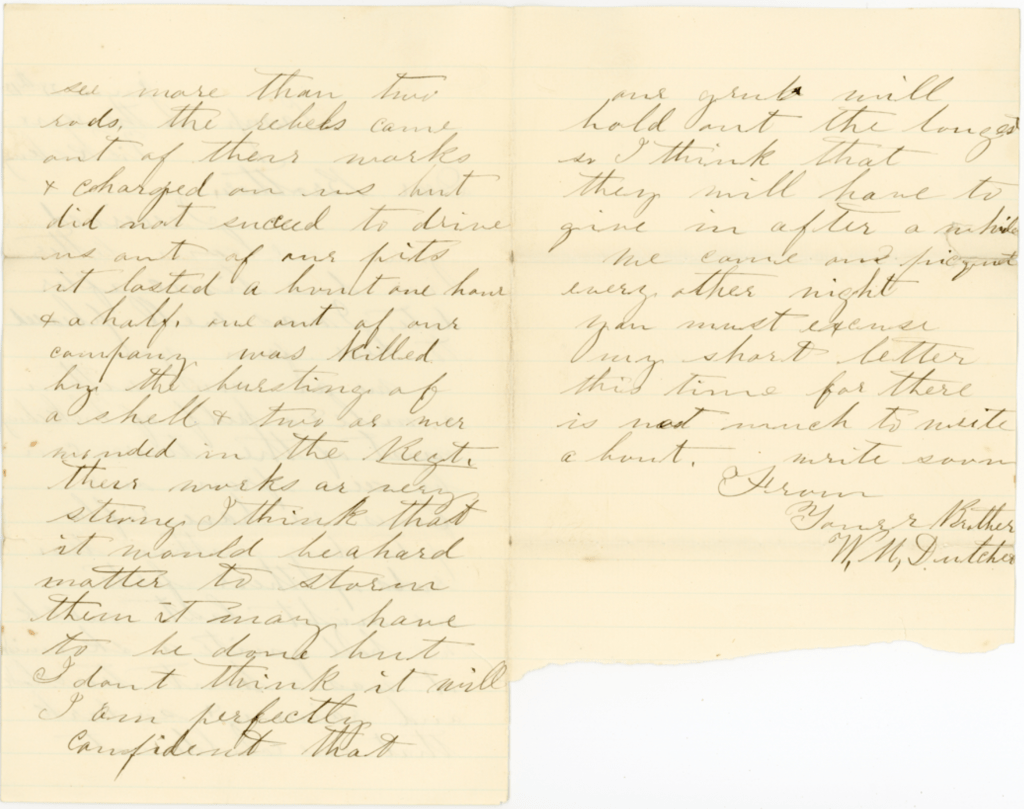
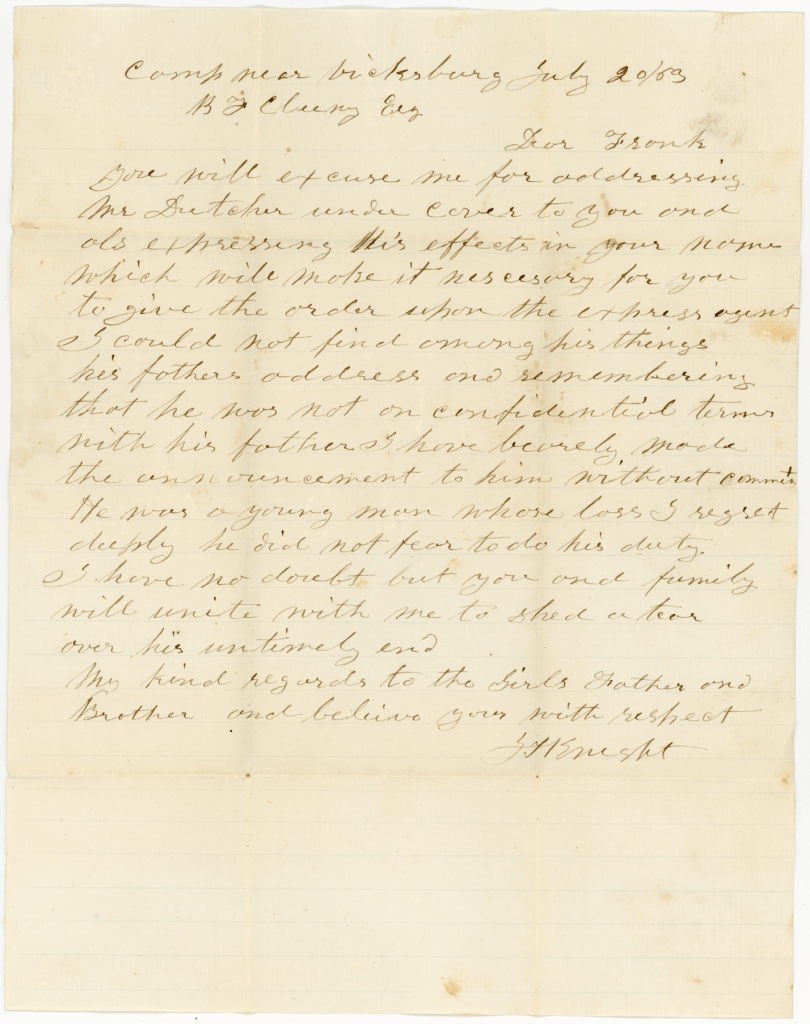


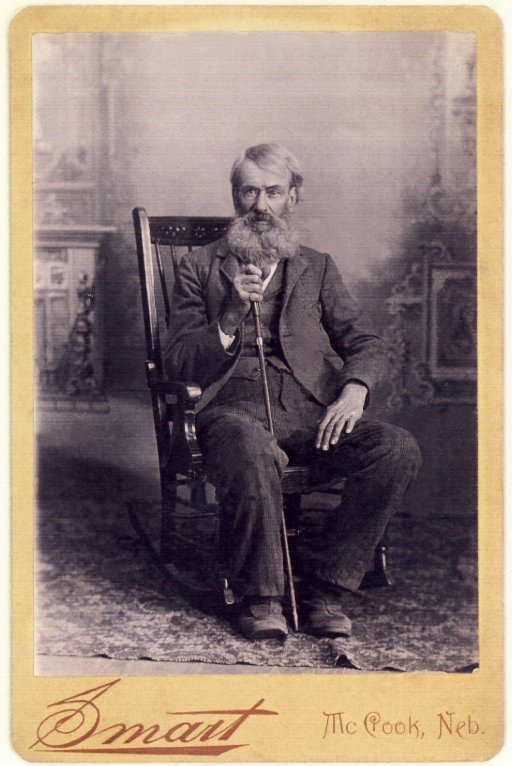
 Spared & Shared 23