Category Archives: Elmira Prison

1864: Henry VanSchaick Colt to Jane Eliza (Brown) Bestor

This letter was written by Henry VanSchaick Colt (1826-1906), the son of Charles Colt (1793-1866) and Ann Smith (1798-1853), and the brother of the famous firearms manufacturer, Samuel Colt. During the Civil War, Henry served as the Major of the 104th New York Infantry and was assigned to command the Elmira Prison Camp in July 1864 after suffering an accidental injury. He was the commandant from July 1864 through December 1864.

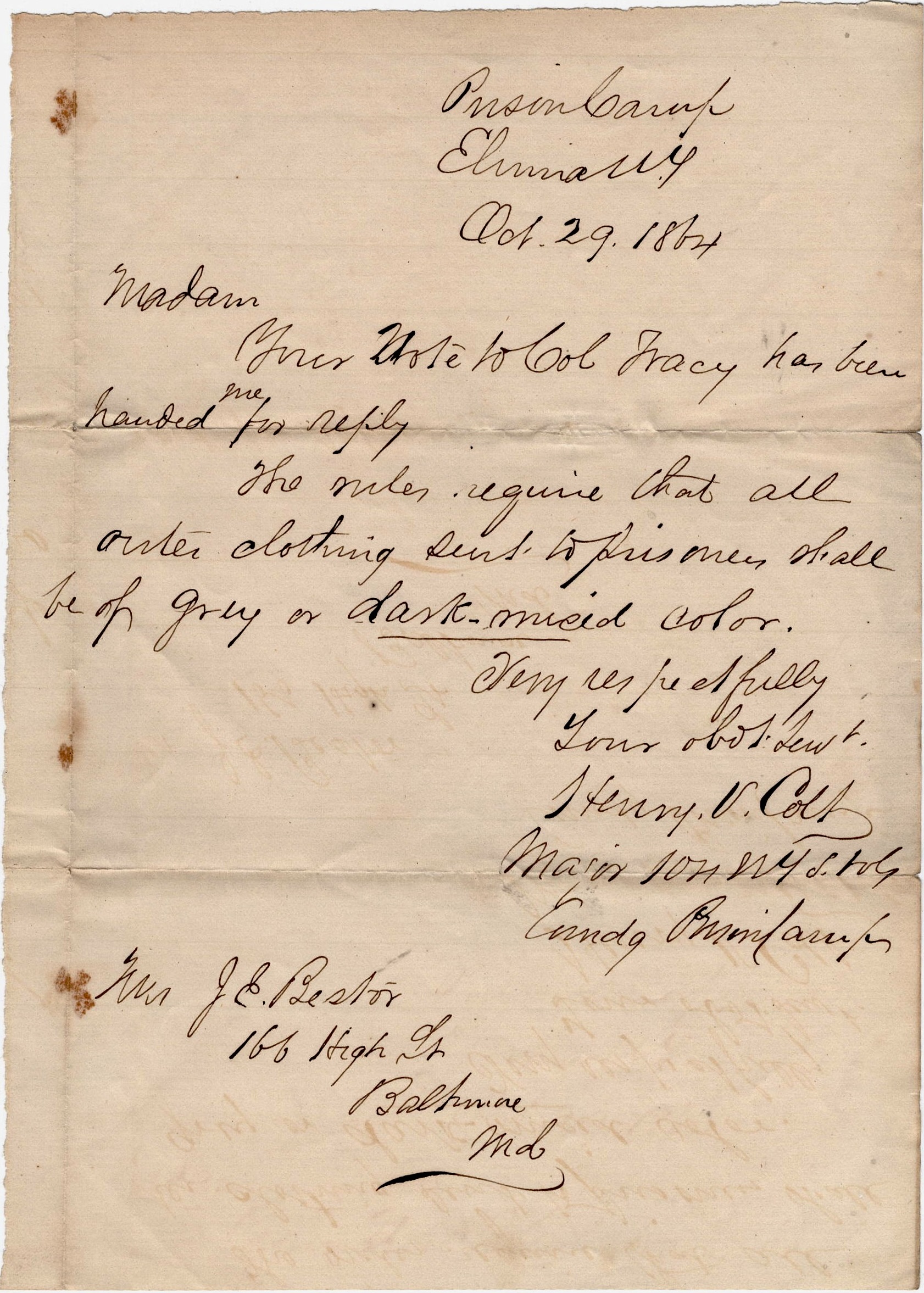
This letter is historic for it communicates the highly controversial policy established by the camp requiring that only “grey or dark-mixed color” outer clothing could be worn by the prisoners confined at Elmira Prison. Even during the brutal winter of 1864-65 when Confederate prisoners were exposed to sub-freezing temperatures, prison officials burned clothing that did not conform to the rule. This strict policy led to an unnecessarily high mortality rate.

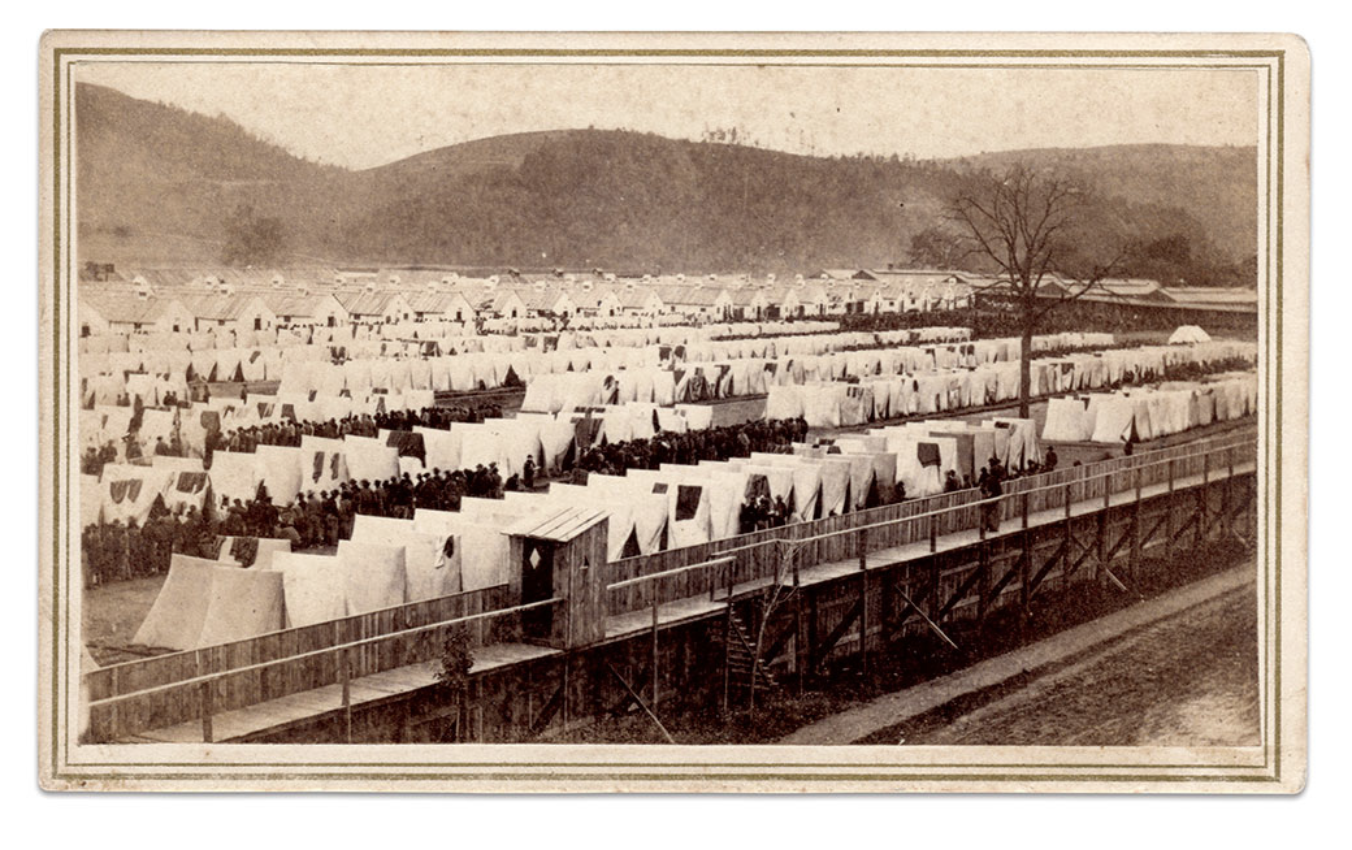
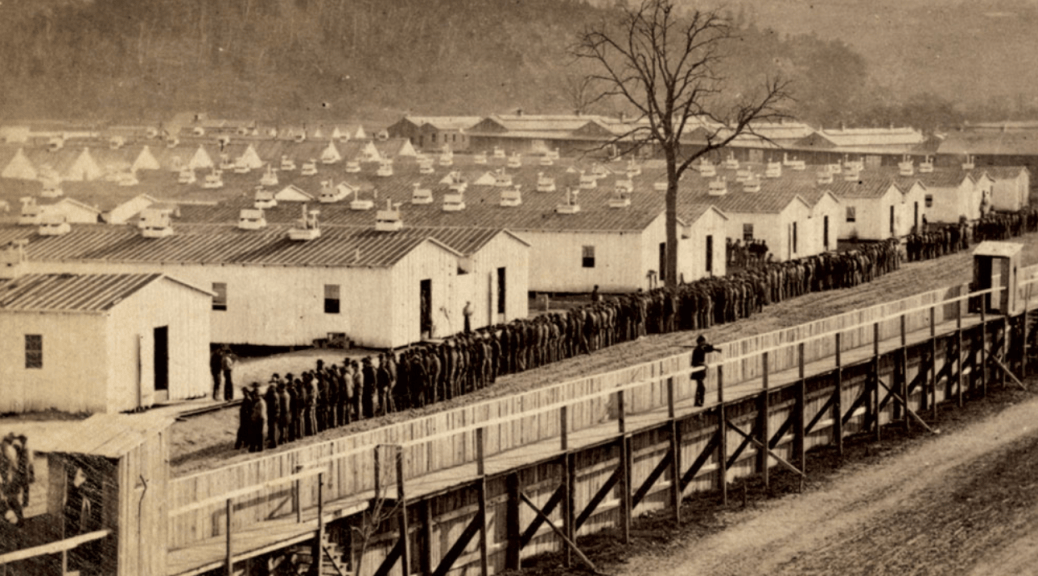
Elmira Prison in August 1864. (Richard Leisenring, Jr. Collection)

T R A N S C R I P T I O N

Prison Camp, Elmira, New York
October 29, 1864

Madam,

Your note to Col. [Benjamin F.] Tracy has been handed me for reply.

The rules require that all outer clothing sent to prisoners shall be of grey or dark-mixed color.

Very respectfully, your obedient servant, — Henry V. Colt, Major, 104th NYS Vols., Commanding Prison Camp

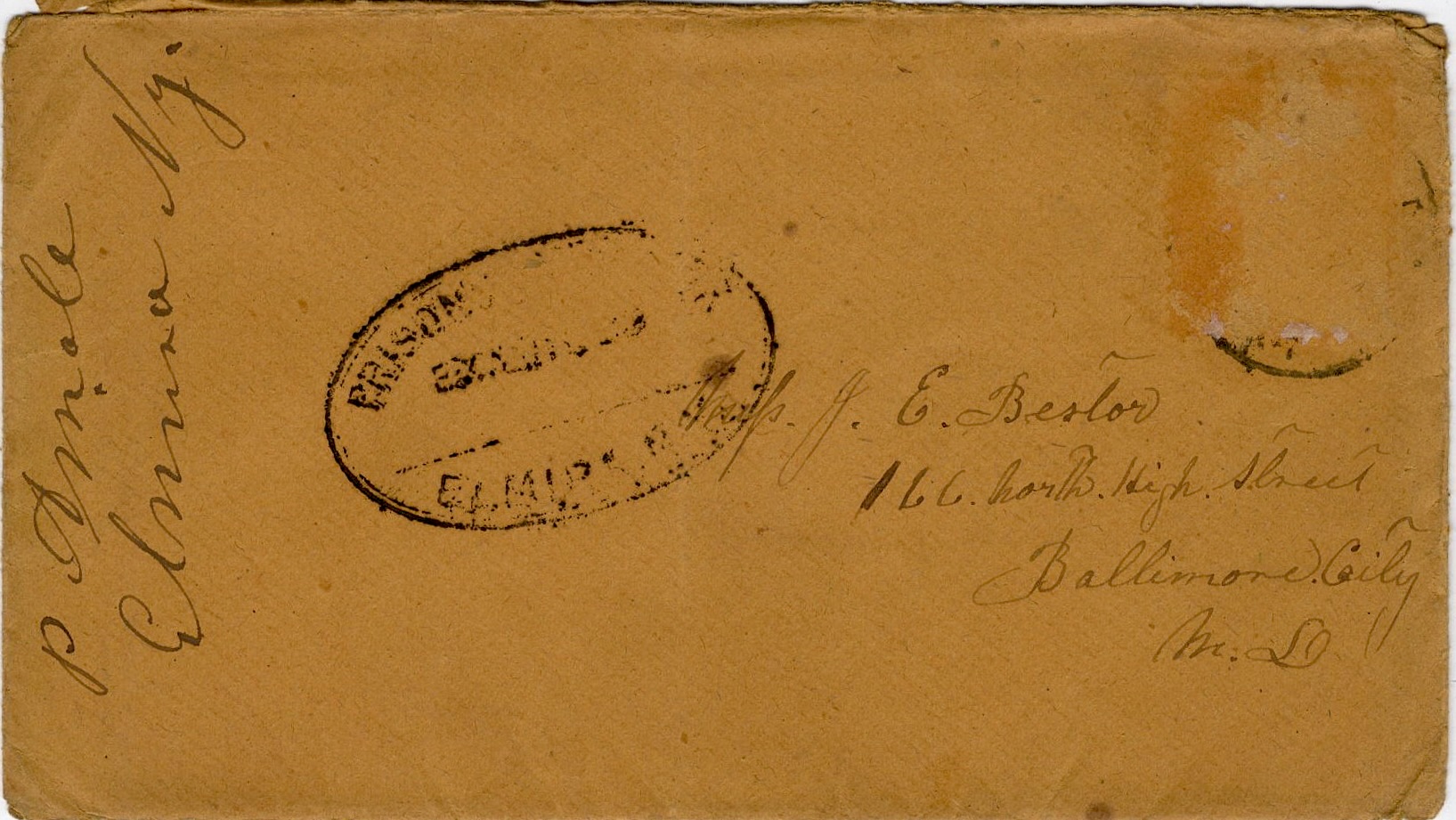
Mrs. J. E. Bestor, 166 High Street, Baltimore, Maryland

1864: James Preston Amole to Jane Eliza (Brown) Bestor

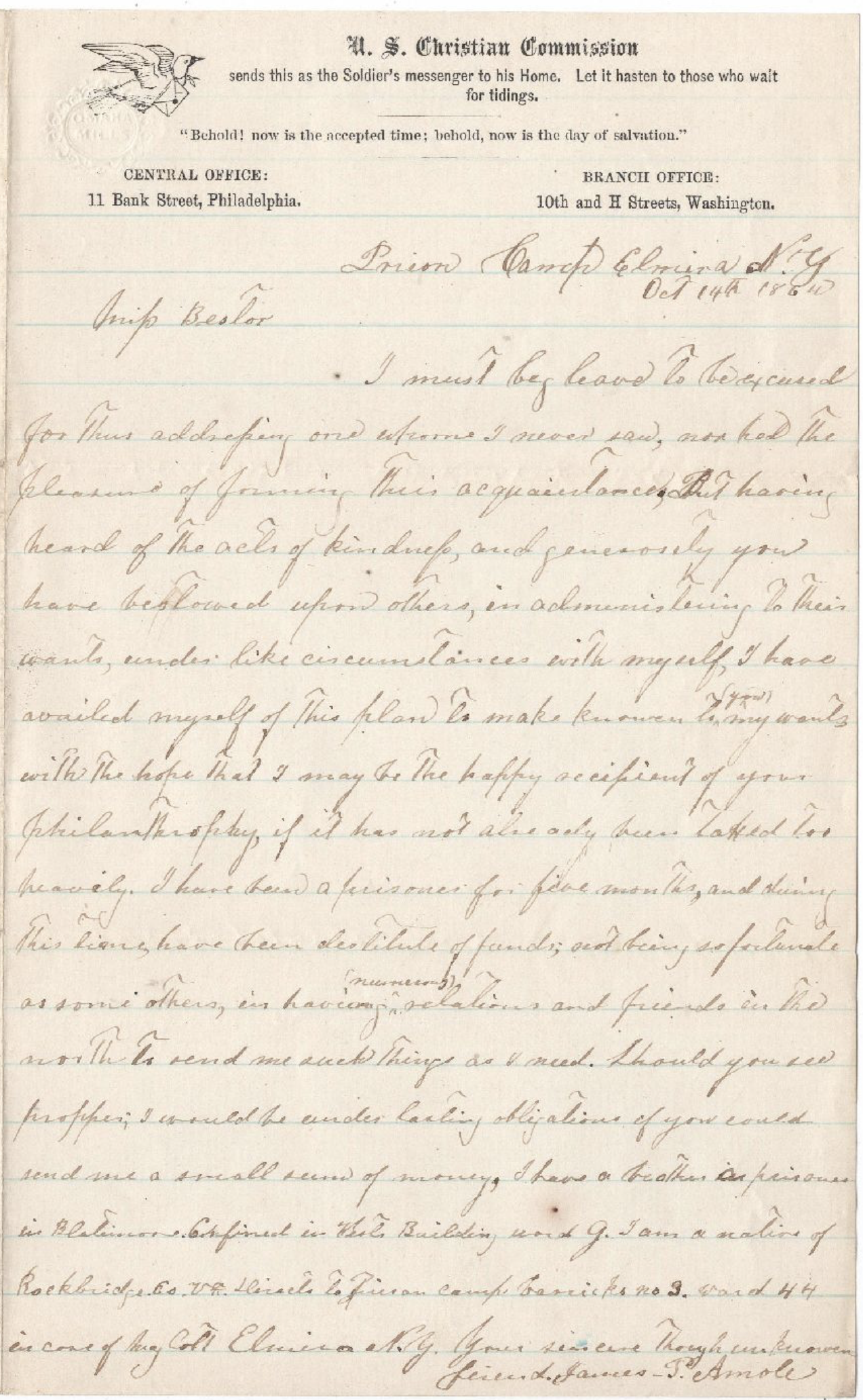
The following letter was written by James Preston Amole (1837-1916) of Rockbridge county, Virginia, who served the Confederacy as a private in Co. I of the 4th Virginia Infantry—part of the Stonewall Brigade. He wrote the letter from Elmira Prison in mid-October 1864 to Mrs. J. Eliza Bestor, a Southern sympathizer residing in Baltimore who had two sons in the Confederate service and provided assistance whenever she could to Confederate soldiers imprisoned in the North.

T R A N S C R I P T I O N

Prison Camp, Elmira, New York
October 14, 1864

Miss Bestor,

I must beg leave to be excused for thus addressing one whom I never saw, nor had the pleasure of forming their acquaintance. But having heard of the acts of kindness, and generosity you have bestowed upon others in administering to their wants under like circumstances with myself, I have availed myself of this plan to make known to you my wants with the hope that I may be the happy recipient of your philanthropy, if it has not already been taxed too heavily. I have been a prisoner for five months and during this time have been destitute of funds; not being so fortunate as some others in having numerous relations and friends in the North to send me such things as I need. Should you see proper, I would be under lasting obligations if you could send me a small sum of money. I have a brother [Thomas Franklin Amole], a prisoner in Baltimore, confined in [ ] Building, Ward G. I am a native of Rockbridge Co., Virginia.

Direct to Prison Camp Barracks No. 3, Ward 44 in care of Maj. Colt, Elmira, N.Y. 1

Your Sincere though unknown friend, — James P. Amole

1 Major Henry V. Colt was the 1st Commandant of Elmira Prison. He held the administrative post from July 1864 through October 1864. He was the brother of the arms manufacturer Samuel Colt.

1864: J. W. Martin to Jane Eliza (Brown) Bestor

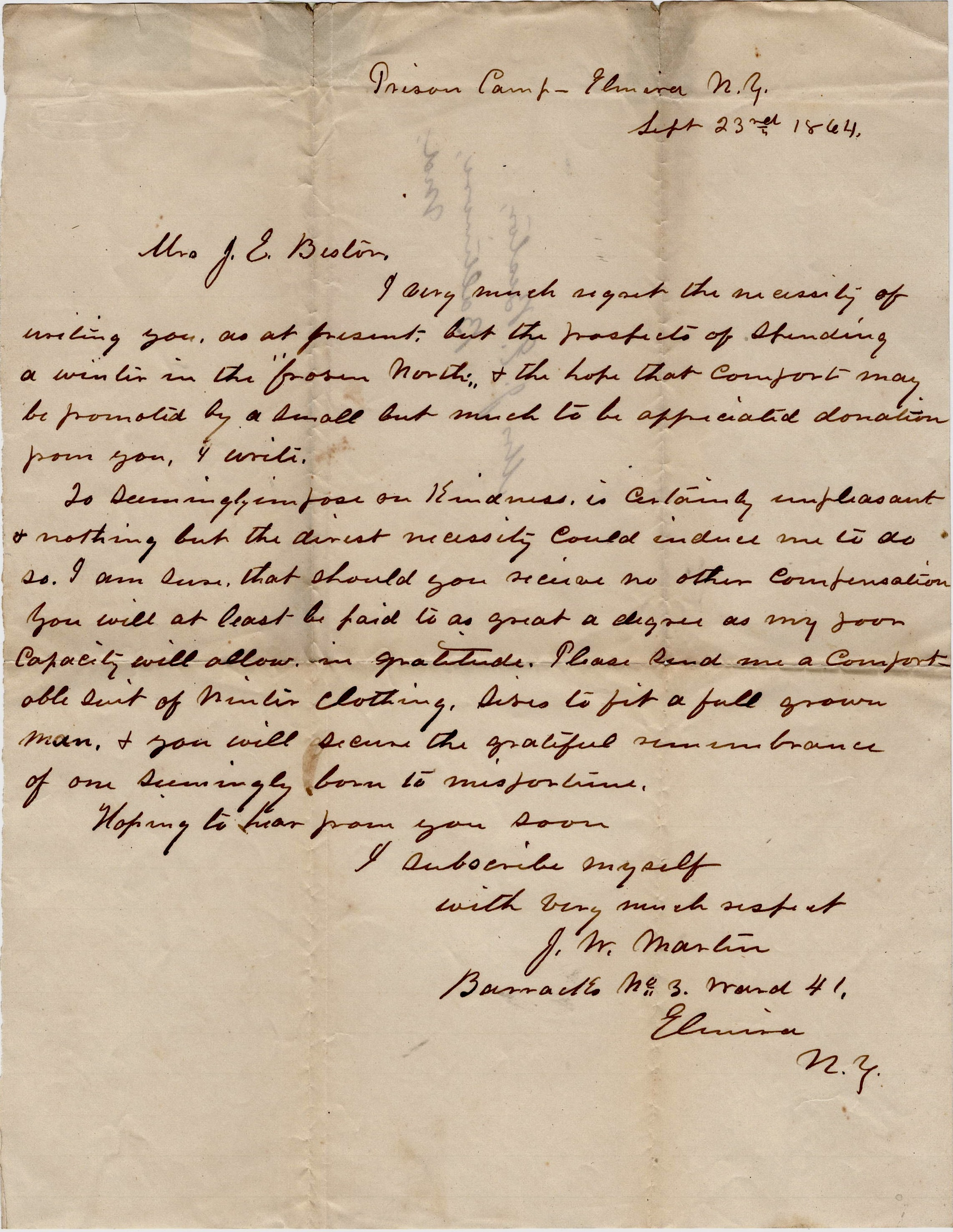
The following letter was written by a Confederate prisoner of war being held at the recently completed prison camp at Elmira, New York. He signed his name J. W. Martin—a common name which makes it rather difficult to pinpoint his identity precisely. I found two soldiers by that name who may who may have written this this letter but I can’t be certain of either. One was named John Wesley Martin (1839-1921) and he belonged to Co. D of the 12th Georgia Infantry. He was taken prisoner at the Battle of Spotsylvania in May 1864 and was eventually placed at Elmira Prison camp after it became operational in July 1864. I cannot confirm when he arrived or left, however.

The second soldier was John W. Martin of Co. I, 18th North Carolina Infantry. He was taken a prisoner at Cold Harbor and was definitely held at Elmira over the winter of 1864-65. He was not released until 14 June 1865. If it was this J. W. Martin, he may have only survived because he received winter clothing from Mrs. Bestor. Whomever wrote the letter was an educated prisoner as the spelling and composition is remarkable for an enlisted man.

Elmira Prison did not open until early July 1864 and they quickly exceeded the design capacity of the camp. Many of the prisoners transported there were taken in the Overland Campaign in the middle of summer which meant they arrived with little extra clothing to protect themselves from the harsh Northern climate. Severe weather, poor drainage near the Chemung River, malnutrition, and disease led to nearly 3,000 deaths in its year of operation. Those confined there called it “Hellmira.”

Martin wrote the letter to Jane Eliza (Brown) Bestor (1820-1885), the wife of John Rollin Bestor, Sr. (1813-1867). This Baltimore couple had twin sons who served in the Maryland Guard that became Co. B, 21st Virginia Infantry. Eliza seems to have corresponded with numerous Confederate officers and soldiers seeking information about her sons. It’s possible that Martin heard of Mrs. Bestor’s benevolence though he was a total stranger. Whether she assisted all who wrote her is unknown. The Bestor brothers’ letters have been transcribed and may be found at 1861-65: The Bestor Brothers of Baltimore.

T R A N S C R I P T I O N

Prison Camp, Elmira, New York
September 23rd 1864

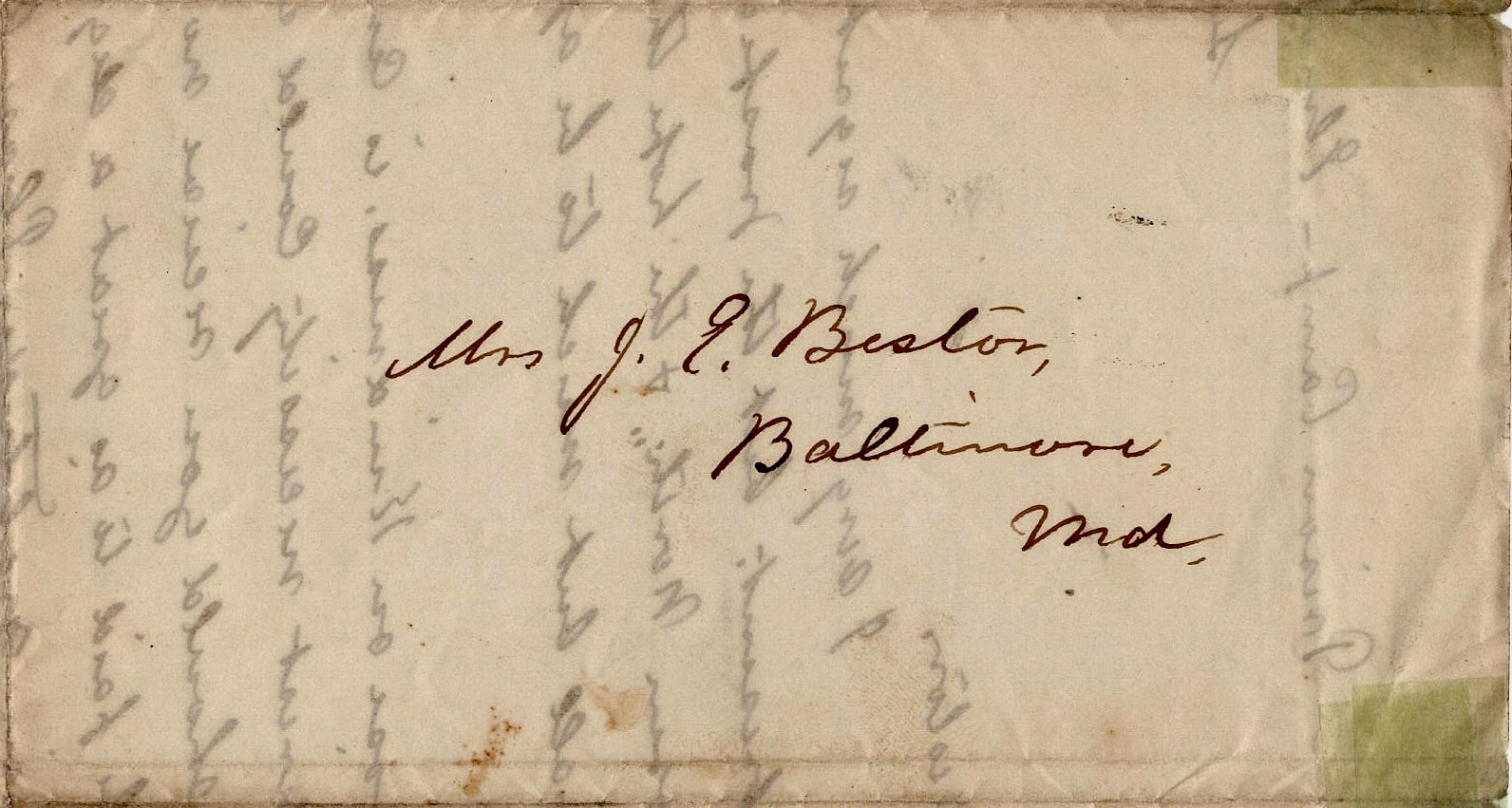
Mr. J. E. Bestor

I very much regret the necessity of writing you, as at present, but the prospects of spending a winter in the “frozen North” & the hope that comfort may be promoted by a small but much to be appreciated donation from you, I write.

To seemingly impose on kindness is certainly unpleasant & nothing but the direst necessity could induce me to do so. I am sure that should you receive no other compensation, you will at least be paid to as great a degree as my poor capacity will allow in gratitude. Please send me a comfortable suit of winter clothing, sizes to fit a full grown man, & you will secure the grateful remembrance of one seemingly born to misfortune.

Hoping to hear from you soon, I subscribe myself, with very much respect, — J. W. Martin

Barracks No. 3 Ward 41, Elmira, N. Y.
1864: John W. Brett to William G. Porter

The following Prisoner of War (POW) Letter was written by Pvt. John W. Brett of Co. I, 5th Battalion Florida Cavalry. He enlisted on 9 January 1864 in Henry county, Alabama, and was taken prisoner on 23 September 1864 at Eucheeanna, Florida by Federal troops under command of Brig. General Asboth. After capture, he was forwarded to New Orleans, then to Ship Island, then to New York City, and finally to the prison at Elmira, New York, arriving there on 19 November 1864. Ten days later, he wrote the following letter.

At the time he took the Oath of Allegiance and was released from Elmira Prison on 19 June 1865, he gave his place of residence as Woodville, Alabama, and was described as standing 5′ 9″ tall, with a florid complexion, light hair and grey eyes.

Brett wrote the letter to William Gibbs Porter (1799-1877), a well-to-do business man of Philadelphia whose company had strong financial and personal ties to Apalachicola and the Florida panhandle that went back to the 1830s. Porter spent much of his time in Florida until his marriage in 1843 when he made Philadelphia his permanent residence. [See Historical Notes & Documents: Philadelphia Foundations of the Wm. G. Porter Company of Apalachicola, by Judith Y. Robertson, Florida Historical Quarterly, Vo. 83, No. 3]

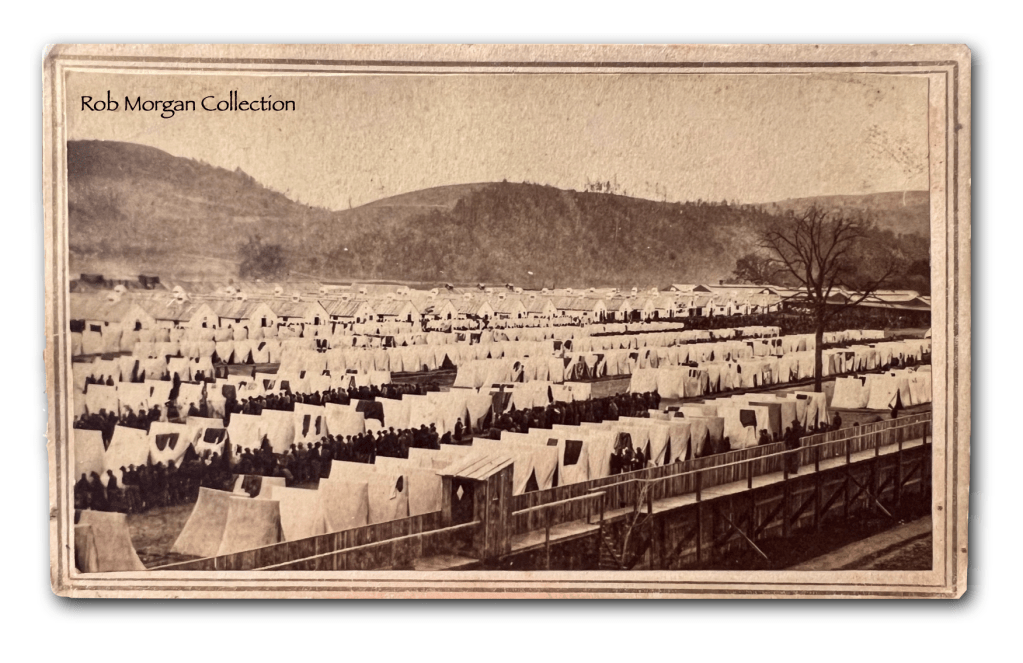
An 1864 view of the Elmira Prison Camp
(Rob Morgan Collection)

Transcription

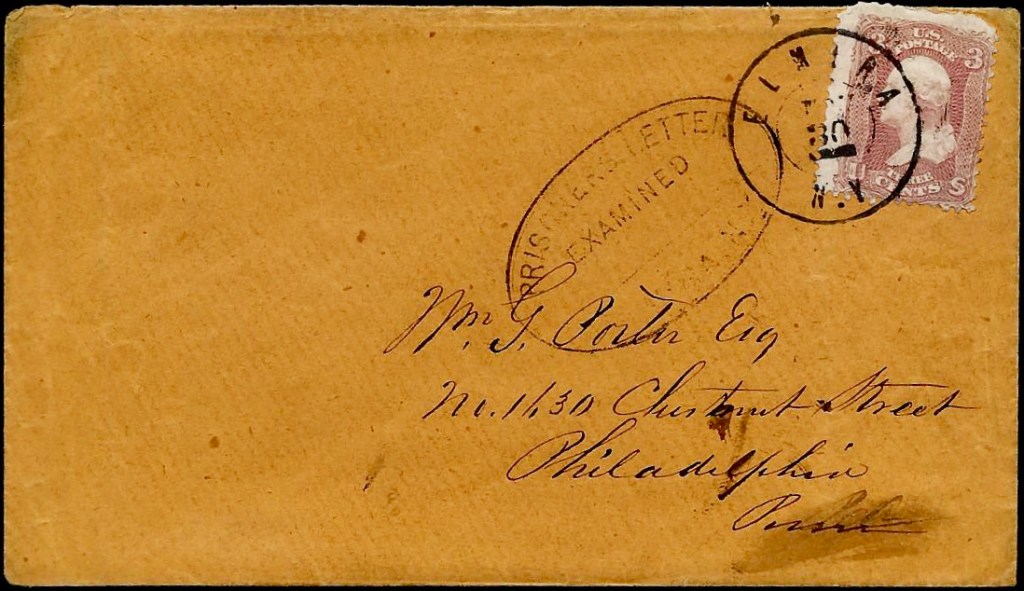
Addressed to Wm. G. Porter, Esq., No. 1630 Chestnut Street, Philadelphia, Penn.

Military Prison
Ward No. 31
Elmira, New York
November 29th 1864

Wm. G. Porter, Esq.,
Dear Sir,

I am here a prisoner of war and in a very destitute condition. I write to ask of you the favor of sending me—say twenty (20) dollars in money care of Maj. Colt, commanding prisoners. The amount shall be promptly refunded as soon as circumstances will admit—and oblige your obedient servant, — Jno. W. Brett

1864: H. C. Hicks to Chauncey Thomas

This letter was written by H. C. Hicks, most likely a Confederate prisoner held at the Elmira Prison Camp in Elmira, New York. He wrote the letter to Chauncey Thomas, Sr. (1813-1882), one of eleven children born to mill owner and entrepreneur Moses Thomas and his wife, Rebecca Monington of Damascus, Wayne county, Pennsylvania. He is probably best known as the owner of the four Barryville–Shohola Bridges over the Delaware River, and as the father of Rear Admiral and Commander in Chief of the Pacific Fleet, Chauncey Thomas Jr., USN.

Given the apparent casual nature of their relationship and since Chauncey lived in Shohola, Pennsylvania, I can only assume that he and Hicks became acquainted at the time of the Shohola train wreck that took place on 15 July 1864 when a train carrying 833 Confederate POWs and 128 Union guards bound for Elmira collided with a coal train coming from the opposite direction. 49 POWs and 17 guards were killed with many more seriously wounded. Most of the prisoners were from North Carolina so my hunch is the letter was written by H. C. Hicks of Co. D, 26th North Carolina Infantry but I have not been able to confirm that.

Elmira Prison, Elmira, New York

Transcription

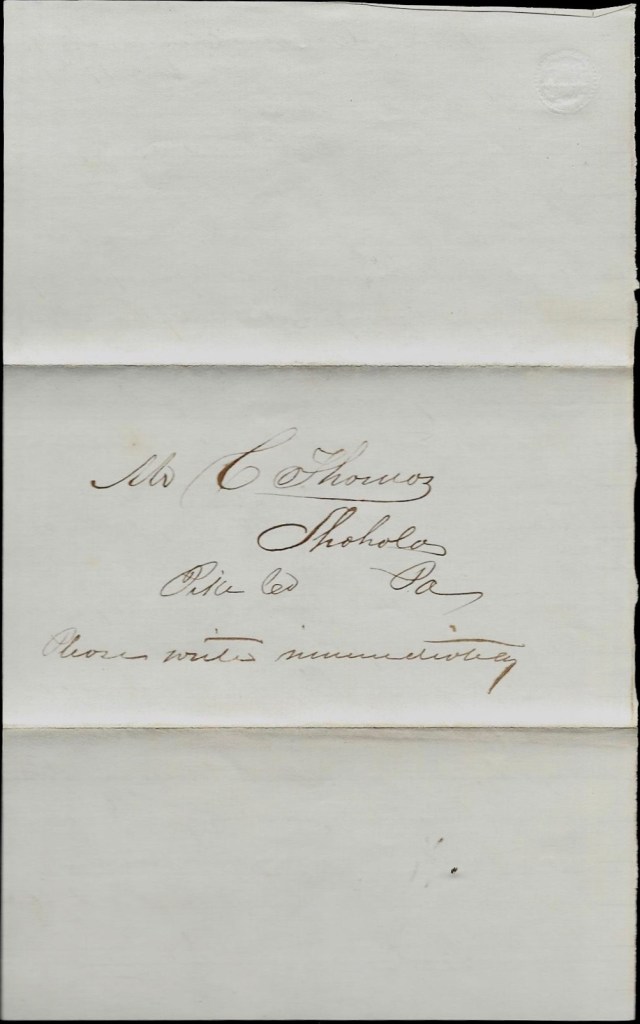
Addressed to Mr. Chauncy Thomas, Shohola, Pike county, Pennsylvania

Prison Camp
Elmira, New York
November 17, 1864

Mr. Thomas, dear friend,

Yours of 14th is at hand [and] finds me well though overwhelmed in trouble on account of my dear father’s death. It seems that trouble after trouble has never ceased to fall upon my brow for the last four years but surely there is a better time not far distant when people will awake to a sense of duty and endeavor to stop this cruel war which has blood drenched our once bright and happy country.

I hope to return soon on parole or change and settle the estate of my father as there is no one but Ma and sister left to see to the farm, hands, stock, store and consequently I fear much will be destroyed ere I can return as I have no hope of going unless exchange or parole takes place which I hope will soon. Shall be under lasting obligations to you for the tobacco you spoke of sending besides duly rewarding you for all expenses [and[ troubles during my unfortunate situation. Let me know when you send it. The book has been read. I prize its contents highly. Shall keep it long as I live as a sacred memento. May God bless you.

— H. C. Hicks