My passion is studying American history leading up to & including the Civil War. I particularly enjoy reading, transcribing & researching primary sources such as letters and diaries.
This statement, testifying to the death of a slave boy named Robert while employed constructing rebel fortifications on James Island, was made by and sworn to by Samuel Dagnell who I believe was a civilian overseer at the time but had formerly served as a private in the 5th South Carolina Reserves, Co. E, for 90 days during the winter of 1862-63. Samuel Dagnell (spelled Dagnal) was enumerated in the Edgefield District of Edgefield county, South Carolina, as a farmer with his wife Cathrine in the 1860 US Census.
We learn from the letter that the slave belonged to William Francis Prescott (1822-1877) of Ivey Island, Edgefield county, South Carolina. William was a captain of Co. I (the “Red Field Guards”), 7th South Carolina Infantry during the Civil War.
Transcription
Personally came before me Samuel Dagnal and after being duly sworn sayeth that Robert the slave of W. F. Prescott was placed under his care whilst working on the fortifications around Charleston. That he was well when he received him and remained so for about two weeks after he had been sent to James Island to work on fortifications by Confederate authority.
That said boy Robert was sick in quarters for some days before he was sent to the Hospital by order of the Surgeon. I saw the boy afterwards in the hospital sick.
South Carolina Edgefield District
Personally came before me Samuel Dagnell and on oath says that the within statement relative to the slave Robert belonging to W. F. Prescott is correct. Sworn to this December 6th 1863, before B. M. Martin, M. E. D.
I could not find an image of Benjamin but here is a tintype of Pvt. John S. Shoolbred of the cavalry battalion in Hampton’s Legion. The uniform he wears dates to late 1861. (Joseph A. Matheson Collection)
This letter was written by 26 year-old Benjamin Joseph (“Ben Joe”) Pack (1835-1862) who enlisted as a private in Capt. Brown Manning’s Company (the “Manning Guards”) on 19 June 1861. He indicates on the envelope that his unit was Co. B, but Manning’s company was actually Co. C of Hampton’s Legion. When the Legion was organized in 1861, there were two companies of cavalry, one of artillery, and six of infantry. Most of the Legion participated in the Battle of Manassas (Bull Run) on 21 July 1861 but we learn from Ben Joe’s letter that he did not participate. Rather, he manned a battery posted on the Potomac that was placed to prevent Federal forces from landing troops and invading Virginia by that route, as well as to harass and potentially blockade river traffic going to and from the Capitol at Washington D. C. This battery set up two 8-pounder rifles at Freestone Point on the Potomac, Prince Williams county, Virginia, in late September 1861.
Save for a little illness, Ben Joe was with his company until the Battle of 2nd Manassas when he was wounded in the arm and died almost three weeks later on 18 September 1862.
When he died, Ben Joe left a wife, Salina Susan (Dorrity) Pack (1834-1877) and two children, Benjamin Joseph Pack (1855-1928) and Frances Elizabeth Pack (1857-1934). The family farm was in Packsville [now Paxville], Clarendon District, South Carolina.
Transcription
Addressed to Mrs. S. L. Pack, Packsville, South Carolina, postmarked Tudor Hall, Va.
Camp Conner, Va. October 3rd 1861
Dear Salina,
I have nothing worth communicating at this time but believing that the bare reception of a letter from me at any time affords you some satisfaction, I will write.
Your letter dated September 22nd came to hand a few days ago & gave me much pleasure as it informed me that you all were well & doing well. You wrote that you wished me to be caution how I wrote certain things to everybody as there was a variety of opinions existing in the neighborhood of home. Now I am not atall surprised to hear this for different persons very frequently have different opinion & inclinations & I have no doubt but very different tales have been told. I am truly thankful for your suggestion for I feel assured that you was actuated by that kind of love that never grows cold to give the advice. But my dear, have you not learned enough of me ere this to assure you that I always endeavor to give all men justice & that riches and royalty have but little to do in shaping my conclusions. No one has tried harder than I to do their whole duty & in all that I have written the plain, undisguised truth has been told & shall be maintained as long as life lasts.
I am well aware that some ridiculous tales have been told about the Manassas Battle. I was not there & consequently nothing in connection with it can be applied to me. Neither can I testify from personal knowledge to anything that transpired there, but I had friends there—& truth telling friends—and from all that I have heard I am satisfied that great injustice bas been done some men. They have this glorious consolation though. God is where he always was & the future proves all things. I shall comply with your request, not that I fear the consequences that might accrue from anything I have written, but simply because I wish to gratify you in such matters.
The Manning Guards are getting on extremely well at this time—I mean those that are well. Lieutenant Huggins is as kind as a brother to all of us & when we march towards the enemy, the idea of being lead on by a kind, christian patriot inspires us with a determination to fight as true soldiers in a just cause should.
The things you sent us arrived on Sunday evening last. We were all well pleased with our clothes and was delighted with the cake and other little eatables sent us. I never had drawers to please me better than the pair I am trying. My shirts are better than I thought you could get prepared, but the velvet is entirely out of place. I would have preferred having my wristbands and color of the same material of the short, but as it is an easy matter to take the velvet off of the wristbands, I can soon make them alright.
“Beauregard has fallen back from near Alexandria to Fairfax. His object was to coax the Yankees out, but burnt children dreads fire. I hardly think there is much prospect for a fight up there.”
B. J. Pack, Co. C, Hampton’s Legion, 3 October 1861
I am sorry to say that I have not learned yet where we will probably spend the winter. Beauregard has fallen back from near Alexandria to Fairfax. His object was to coax the Yankees out, but burnt children dreads fire. I hardly think there is much prospect for a fight up there. Everything remains the same down here as when I wrote last. We are here to keep the Yankees from invading Virginia & they to prevent us from crossing into Maryland so there is not much prospect for a fight down here except with artillery. The battery 3 miles below this at Dumfries has not opened fire yet. I can’t imagine what can be the cause unless they are waiting to get as many vessels cut off from the seacoast as they possibly can. We will be kept here until something is done by the battery.
Winter quarters is being spoken of pretty frequently as the weather is growing cool & a few weeks more will reveal to us the fact that we must either be barracked up in Virginia or return to good old South Carolina.
P.S. Dear sister, I didn’t think to say to Lizzie that I didn’t care for her to send me more than five dollars. I expect she can get that amount without changing the 20 dollar bill I sent her—though she can change it if she wishes. I would like to send a five dollar confederate bill for her to preserve as a keepsake. 20 dollars is too much for that. The Confederate money draws 8 percent interest. Kiss the children for me. I’ll write you a letter as I can. Give all my love. Your affectionate brother, — Andrew
This letter was written by Charles Roswell Hine (1832-1919) who came to Kent county, Michigan in the mid 1840s with his parents, Demas and Sally (Noble) Hine from Delaware county, New York. Charles was married to Emeline Whitney (1838-1892) in the mid 1850s and the boy mentioned in his letter was their son, Fred Benton Hine (1856-1922).
In the 1863 Draft Registration Records, 30 year-old Charles was enumerated as a resident of Lowell, Kent county, Michigan, and his occupation was given as grocer. He had not, as of that date, served in the military, and I can find no record that he did subsequently either. In this letter, written in 1868, he indicates that he engaged in the “drug trade” which was a common adjunct business to the grocery business. By 1870 he was identified simply as a “druggist.”
Roswell Hine and his daughter Sarah Elizabeth Hine (1839-1874)
Charles wrote the letter to his uncle, Roswell C. Hine (1811-1878), a grocer in Athens, Limestone county, Alabama. Rosewell was the son of Silas Hine (1764-1841) and Betsy Tyrell (1767-1834). Roswell’s wife, Mary (Malone) died in 1841 after only three years of marriage but gave birth to their daughter Sarah in 1839.
This letter reminds us of the challenge before the Nation regarding Black suffrage. Former Confederate states were required to form new governments in their respective states that would enfranchise all male citizens 21 years and older of “whatever race, color, or previous condition” before they could be readmitted into the Union. Ironically, it the North and West that objected to Black male suffrage and there were numerous state-level referendums—such as that described in this letter—that proved the road to the Fifteenth Amendment would not be an easy one.
Transcription
Addressed to R. Hine, Esqr., Athens, Georgia
Lowell [Michigan] April 11, 1868
Dear Uncle,
I have been waiting for a long time for matter of sufficient interest to make up a letter of, and at last, write more for the purpose of hearing from you than of communicating news—the best and most glorious of all is the result of our recent elections. Michigan has repudiated “Negro Suffrage” by at least 30,000 majority; while Conn. elects her Democratic Governor. 1 I think we have reason to hope for the “dawning of a better day” politically and we hope that the strength of the “Radicals” is growing less in Michigan but next fall will tell the story.
There has been no important changes with us since I wrote you last—no deaths, no births, although I am expecting the latter event to occur soon in my own family. My wife’s health is very poor but hope for an improvement soon. Milton’s wife has also been very poorly for the last year. The rest are in good health. Father and mother are thinking of removing to Lowell if they can sell where they are. Jimmy Hine has ben with me since last October with the intention of remaining permanently.
Business has been very good with us for the last year, although money has been somewhat tight. I still continue the drug trade and Martin the dry goods trade Martin started last Wednesday for New York to purchase goods accompanied by Fannie, a daughter of Charles Noble of Franklin who has been spending the winter here. A son of Charles Noble is clerking for Martin’s firm.
We have had some cold winter and the weather still continues cold. It is freezing some today.
Can you take Bettie and come North and make a visit this summer? If so, we will try and make it agreeable to you. I am in hopes of being able to visit you next year if I can arrange to leave home which I think I can after Jimmie has become more familiar with the business. I purpose giving him an interest in the business after awhile so as to enable me to get away from it myself in order to visit some of my friends. I have never been East since I left there with you which was 23 years ago. I now have a boy nearly as old as I was at that time and I now am about as old as you were then. So times flies.
Give my love to all the friends and in writing, please give particulars concerning them as well as yourself. It is some time since I have heard from any of you South. Your nephew, — C. R. Hine
1 In the 1868 Connecticut gubernatorial election, Democratic nominee James E. English defeated Republican nominee Marshall Jewell by a majority of only 1,700 votes.English was one of the members of Congress who broke ranks with the Democratic Party and voted for the Thirteenth Amendment abolishing slavery. He feared it would ruin him politically but Connecticut voters rewarded him with the Governor’s chair twice in subsequent years.
This travel journal was kept by 27 year-old Andrew Clark, Jr. (1813-1885) of Methuen, Essex county, Massachusetts. Andrew was the son of Andrew Clark (1786-1858) and Elizabeth Clark (1787-1849).
We have no idea what Andrew looked like but he would most likely have dressed in the fashion of this young man from about 1840.
The reason for the trip is learned from the cover page of his journal wherein he claimed it was for “his health” although it’s curious that he says next to nothing about his health throughout the entire journal which consists of 90 pages. What ailed him is never mentioned. It’s possible that he simply was tired of attending school and needed a break. He matriculated as a Junior in 1837 at Brown University but he did not graduate from there until 1841.
Of the 90 pages in the journal, the first two-thirds of them are devoted to describing the ocean voyage from Boston to Mobile Bay which appears to have been his first experience at sea despite growing up in Essex county, Massachusetts. I can’t be absolutely certain but I believe that Andrew sailed on the schooner Namshong with Capt. Haley at the helm. That is the only schooner arriving in Mobile Bay from Boston at the time of their arrival. For some inexplicable reason, several pages have been excised from the journal that probably captured more of his observations of Mobile. This is unfortunate for what little he gave us included the following:
“I am disappointed in seeing a less number of negroes than I expected & in seeing them looking more neat & well dressed, manifesting more intelligence & activity & appearing more contented & happy that I had any idea. This is my honest impression from what I have seen. The whites appear active & civil to others but, as I learn, are villainous. Gambling & intemperance are very prevalent. There are many thieves. The thieves are the whites. The slaves are noted for their honesty.”
The journal resumes with his arrival in Demopolis after traveling by steamer up the Bigtombee river. From there he made his way to Tuscaloosa (AL), and then purchased a horse a rode overland to Columbia (MS) and up to Memphis (TN), then past Nashville and Somerst (KY) until he reached the Ohio river. He rode a steamer up to Pittsburg and then came across the Keystone State by way of railroad and canal to Philadelphia. He arrived home to Methuen on 7 May 1840 after an absence of four months.
By the time of the 1850 US Census, Andrew had married Mary Theodosia Garrett (1820-1906) and had a daughter named Mary. Andrew was employed as a farmer in New Hartford, Litchfield county, Connecticut, his 61 year-old widower father living in the same household. Andrew appears to have been selected as a representative from New Hartford in April 1861. Beyond that, I could find no other notice for him. Andrew and his wife as well as his parents are all buried in the Nepaug Cemetery in New Hartford.
Transcription
Andrew Clark, Jr. Account of his journey to Mobile for his health Also on horseback through Kentucky & Tennessee & up the Mississippi River to Pittsburgh
1840
January 7th—Left home early this morning on a tour to the South. Never before had such feelings and never before gave vent to them in tears, a good opportunity for doing which I had as there was no other person in the stage. I left home for my health & whether I should see it again nor not was uncertain. I moreover was going among strangers, knowing no one & no one knowing me. I composed myself as well as I could & endeavored to trust my self into the hands of God. Was lucky in getting my bills changed into specie. Had peculiar feeling in carrying my money in my shirt. Had rather carry it in my pocket. Found an opportunity of sailing out to Mobile the next day.
January 8th—Am disappointed in sailing out as I expected. The Captain says we shall sail in a few hours but when the hour arrives there is ice clouds, contrary winds, or something else to hinder.
January 9th—One day waiting seems as two or three days. Now feel as anxious to be out as I heretofore dreaded it. 9 a.m. It is now fine weather to be on our voyage but we are now stuck fast in the mud and must wait for high water.
I find on examining my almanac that Friday is the 10th instead of the 9th as I expected. I fear I shall not be able to keep the days of the week distinct from each other. 11 a.m., the owner of the schooner is now on board & making a thorough examination of every part of the vessel—the pumps, the boat rigging, et cetera—that everything may be safe. How much anxiety property produces! Saw just now one of my old classmates. He is studying medicine in Boston. Has not completed his studies. How many begin the college course but fail completing it.
January 10th. 7 p.m. On board schooner in the night. Expect to start at 9. The sailors are all jolly talking about one thing & another or, as the phrase is, “spinning out their long yarns.” I can hardly think that I exist, everything is so strange. 9:30 p.m. Horrors! The captain has come with three other suspicious-looking fellows. All are very merry, drinking spice bitters & smoking. I am in the berth [but] they do not notice me. From respect to me, the captain says, “Let’s go on deck” and away they go. In a few minutes they all leave. The captain saying that he shall set sail at 3 in the morning. After the captain’s exit, the sailors express freely their opinion in regard to him. Some say that he is a little boozy, others they think not. Some have suspicions in regard to the place where he has gone. Judging from their conversation, I expect that captains generally are rather low characters.
January 11th. 8 a.m. I awoke this morning about 3 and awaited with anxiety the approach of the captain till somnia closed my eyes. The sailors have just routed & say [ ] a snow storm & sure enough, a real Northeaster. Sad luck. I shall not start for several days yet & worse than all, I wrote home 2 days previous that I was then going to set sail & now, in their minds I am far away on the sea where I wish I was. 10 a.m. After having bid cousin’s Waitt’s family goodbye twice, my ghost appears to stay again. I never felt much more disappointed in my life. I don’t feel very well. I don’t like to tarry in Boston. Neither do I feel like going home. I can hardly content myself with anything although Cousin Waitt’s are kind and do everything that can be asked to render me contented. I need very much grace to keep me. O Lord, give me a contented spirit and firmness to discharge every duty.
January 12th. Sunday. Feel anxious to be off. Have peculiar feelings spending the Sabbath in such a state of anxiety in regard to setting sail. 2 p.m., the captain has just come on board. He says he shall start tomorrow early in the morning. A dinner is just ready. I accept the invitation to fine now for the first time on board of a vessel. We had boiled beef & potatoes with sea-bread. Those articles constitute the principal food of seamen. Each sailor eats 3 or 4 slices of beef as big as your whole hand. They manifest considerable politeness. The sailors do not regard the Sabbath much, although the mate and cook frequently say they do not know as this or that is right, or if they had some conscience. They have read some today in a religious book which I had & a tract which some friend bestowed. They speak favorably of the regulations of vessels which [ ] captain of the Seaman’s Home Society & other means used for their benefit which show their value. They speak in terms of the greatest misappropriation of most places which are kept for the accommodation of seamen as places where the hard earnings of the sailor are taken from him by fraud. There is one on board of our vessel now—a Spaniard—who has been cheated out of every cent in this way—nay, more as the villain of a housekeeper pretends that the Spaniard is owing him and is trying to get some of his advance money. The officers are now searching for him. The rest of our sailors sympathize with him & are continuing to rescue him. The sailors have noble hearts. They need the prayers of every benevolent person. May I exert a good influence on them.
January 13th. 8 a.m. The captain has not come yet. I do not know but we may stay here a week longer. The secret of the whole delay is, I suppose, a new married wife. He hates to leave home at the present time and especially till there are very good indications of fair weather that his voyage may be good. I pity his wife if she has any love to him. The wife of a seaman must be in constant misery. Every storm and every accident are feared for them when they are away and they can enjoy their presence only for a short time & then far between. 12 noon. We set sail at 10:30 and we are now about 5 miles from Boston in a snowstorm from the S. E. We could not have a worse wind. The Spaniard of whom I spoke has now made his appearance. Last night he absconded. All thought he had gone ashore. When he was enquired for by those making search, all said he had gone. But to the great joy of the sailors, when we were a short distance from the wharf, he made his appearance. Instead of going ashore, he had without saying a word to anyone, crawled under the yardboat turned bottom-side up upon the deck were he hid for 9 or 10 hours. 2:30 p.m. We have ben floating about in Boston Harbor ever since we set sail in a great snowstorm except a short time aground. Just as we were on the point of casting anchor, the wind shifted and the weather cleared up and we are now dashing through the waves on our way just passing Castle Island. The sun looked splendid tonight when setting. We sail very fast to S. E. with a strong wind to the N. W. I begin to feel seasick, there is such a tremendous rolling of the sea.
January 15th. 2 p.m. I have been very seasick. Could not eat & was obliged to keep my berth for 2 days. It is a peculiar kind of sickness. Had a very bad headache & so horrid sick I wanted to vomit all the time. I now begin to feel a little better. Should like some of Mamma’s porridge. The sea has been exceedingly rough. We had a strong N W. wind & as soon as we were out of Boston Harbor, the vessel was nothing but roll & toss. After we got around Cape Cod, we sailed 30 or 40 miles in full sight of the coast. The beach broke the [ ] and the strong fair wind set us forward at the rate of 8 or 9 miles to the hour. We passed the cape about 10 p.m. For 30 or 40 miles it is a high, bleak-looking beach. The next day we sailed forward with a strong N. wind but had a rough sea. In the following night we were overtaken by a violent N. E. storm, accompanied with numerous squalls of sleet & snow. In the morn the storm had in a measure ceased but the sea was awfully high. The wind at one time seemed to mount to the skies. At another to plunge into the deep & at the same time such a rolling & pitching as passed all my expectations.
January 16th. We had a tremendous storm last night—more severe than the preceding. The wind was tempestuous and what a thrashing about of the vessel. I really thought the vessel had upset many times in the night. Every few minutes a mountain wave would dash over the deck & set all afloat. The ocean appears like a mighty boiling caldron & the waves like numerous hills or mountains, each in motion & striving for the mastery. My previous idea of them very erroneous. Instead of being a continued range, they are broken up having no regular size or shape. The ocean and the waves at such a time appear grand & awful & remind us of the power of Him who put them in motion & has them perfectly at his command.
January 17th. Friday. Stormy sea and rough. Cannot sleep night. Have not scarcely had a nap since we have set sail. (The captain taunts too much to his sailors and manifests no concern when it blows a gale.) We have not hardly seen the sun or the stars. The vessel rocks & tosses so much that I am obliged to lay in my berth most of the time. My bones ache and though I am not seasick, I am sick of sea. As the storms have shaken to pieces our stove, we now have no fire which would be very agreeable this cold, snowy weather. But we are going fast to where it is warm. 4 p.m. Just spied a ship. It gives a peculiar pleasure to find that we are not alone in the boundless ocean. Finding that it was an American [vessel], we bore up towards it. When we passed they enquired for provisions. We hove to and they came out to us in a boat. We let them have all that we could spare. It was a whale ship by the name of Awashanks—had been out 47 months. I had the privilege of sending a short letter home by this ship from latitude 25, longitude 71 or 72. Our captain sent two letters & my friend Clark one, making four in all. What a pleasure thus to meet other human beings so far from land. There were 31 in number, each man on a small allowance. [They will] eat supper tonight with a merry heart. 7 p.m. Fine on deck this evening. The moon looked splendid as it was setting but nothing could exceed the beauty of the clouds ad their numerous variegated colors.
January 18th. Saturday, 8 a.m. Pleasant & warm though appearance of rain. the sea is quite tranquil. 2 p.m. Squally but not cold. The sea water feels quite warm. 4 p.m. A violent storm of wind and rain begins. There has been no opportunity of making observations of the sun since we started.
January 19th. Sunday. The storm continued all night very severe. I thought many times the schooner had gone for it. The waves run terribly high & frequently dashed over our tossing vessel. I could not sleep as has been the case every night but one. 10 a.m. The sun has made his appearance but the weather appears squally. Saw a bright rainbow between 8 and 9. The sailors cried out, “Squalls! Squalls!” There is no prospect of this day being kept as a Sabbath. All hands are on deck. Some engaged in one thing, some in another. What to do. Whether to endeavor to exert a direct religious influence or not. I can hardly decide. If the sailors are unoccupied, I think of distributing tracts. I have a few if the captain permits. Oh Lord, direct me in the right discharge of my duties. 3 p.m. We were able to take the altitude of the sun today and find that we are in latitude 32o 25′ It has been very pleasant and comfortable sitting on deck today—the first we have had. This day has not been kept as I anticipated. I had some conversation with the captain upon the subject of religion. He talked very candidly though he esteems it rather lightly. There is one trait in sailor’s that I admire. They are frank-hearted. They let you know the worst of themselves, not like those rouds upon the land who conceal their real character.
January 20th. Monday. Last night was the first we have had on our voyage which was not stormy. This morning we are in latitude of Savannah. The weather is now delightful. The sea is comparatively tranquil. We have also a good breeze. We eat breakfast this morning with some comfort. Generally when we eat there is such a tremendous ricking and pitching of the vessel that each one of us has to hold on to his plate & tumbler and eat at the same time. To form a faint conception of us at our meals, just imagine a table for four fastened to the floor so that it cannot move if the vessel should upset. Seats also immovable. The platter with meat is placed in the centre. The potatoes and sea-bread near. At each side of the table one of us sits with legs spread out so as to brace ourselves in every direction. We continue with one hand to keep our dishes in place and with the other to eat. If at any time we need the use of both hands to cut our meat or the like, we watch the favorable moment when our vessel lies the stillest and then work with dispatch. we frequently have what may be called changing work. Sometimes the vessel is in such commotion that both hands are required to secure our dishes, nay more, when we ourselves are thrown from our seats & then away goes our plates. At other times we may catch a few moments when both hands are at liberty. And the style is routine eating at such times can better be imagined than described. In regard to our cooking, there is something a little novel. One instance will answer for many. A day ot two ago the captain ordered the cook to make flapjacks for supper. Accordingly the cook (who by the way is a novice at cooking) prepared the materials. About the time he began to fry his flapjacks a heavy squall of wind arose and the poor cook had no occasion of turning over his cakes. The trouble over, as soon as they were put in to fry, they were turned out of the frying pan. They looked as if they had been turned over the whole stove and galley. 10 p.m. Very pleasant and mild now. A little south of Savannah. Nothing can surpass the beauty of the silvery appearance of the ocean at a distance, now gilded by the waves.
January 21st. Tuesday. 6 a.m. The weather today has been delightful, like May or June in New England. One disadvantage arises from it. When we have so very pleasant weather, we don’t have much wind. But I care not so much for that—if it only blows out. All the others are impatient. They care not if it storms provided the wind is favorable. Nothing can exceed the beauty of the scenery at this time. The sun is now dipping himself in the ocean’s waves & the clouds present a beautifully variegated appearance. It must be seen—not described. It baffles description.
January 22nd. Wednesday 2:30 p.m. We have not had favorable winds for several days. Either they have been very faint or against us. Now it is blowing a gale against us. We are beating against it. For half an hour I have been in constant fear of upsetting. Strange to say, the sailors are occupied about various things as if nothing was the matter. The captain, while he expresses fear she may upset, is so accustomed to danger that it makes no impression upon his mind. He has been talking about gambling and other trifling matters. There need be no danger if we had not so much sail, but for the sake of making the voyage as quickly as possible, they keep under all the sail that they dare. For the last 24 hours we have not gone more than 30 miles where for 6 or 7 of the first days of our voyage we went from 150 to 200. As the vessel plunges over the waves & meets the approaching, the salt spray dashes fiercely over the deck. A strong wind in a short times raises a tremendous sea.
January 24th. Friday. The gale continued with little variation till midnight accompanied with heavy showers of rain. Once or twice it seemed as if the ocean had been transferred over our heads & at once allowed to descend in one mighty flood upon us. It did not sound like dropping or pouring down but a splash as if all descended in a mass at once. The sea was awfully high, foaming and tossing as if eager to find some victim upon which to spend its wrath. Our frail vessel seemed as nothing before its fury. It would tumble first on one side and then the other as if possessing no strength of its own but depending entirely upon the will of the elements. At such a time, there is something dreadful as well as grand. You hear the fierce howling of the winds through the rigging—the creaking of the vessel strained to its utmost—and the fearful roaring of the ocean. You feel the rocking of the vessel, every roll of which seems as if she had capsized. You behold the mountain waves far elevated above foaming and tossing, threatening to engulf you, or if the vessel heads the wind, you see her now rising upon some vast billow where her masts seem to pierce the clouds and now plunging into the deep gulf ahead and burying her bow in the approaching wave & flooding the deck with the briny ocean. In a moment she recovers the shock [and] again mounts high in air, but it is only to be followed by another plunge more deep and awful. Such a scene makes one fear—especially one not accustomed to the dangers of the deep. The fear, the uncertainty of life—he sees death in full view before him. I never had my faith put to a severer trial & felt the need of the support of the gospel. I endeavored to commit my unworthy self into the hands of God but Oh! how wicked and undeserving of His favor did I appear. (What aggravated my fears was the fact that I was not merely exposed to the dangers of the sea which I could bear with considerable fortitude, but I was exposed to the mercy or caprice of the captain.) So anxious was he of making a quick voyage, that he would keep the vessel under all the sail that his daring heart would allow. Thus, when we might have been comparatively safe, we were greatly exposed. If the wind was fair, no matter how violent, he would spread sail because it would carry us ahead fast. If it was against us, he would be anxious of not only keeping his own but of making way against it. 10 a.m. There is now but little breeze. This is, however, in our favor. We have made but little progress for several days. I am heartily sick of sea. This constant rolling of the vessel, the food salt pork, salt beef, salt fish & salt water all salt, salt. salt as it seems to me, I cannot endure. My mouth is salt all the time. The phlegm which I spit is salt. I am sick of salt.
We are now in latitude 27 or 28. Our winter clothes feel quite burdensome. Have not had a fire nor needed one for nearly a week. The weather produces a languid feeling. 5 p.m. We are now near Abaco—a very dangerous island for vessels. It rains hard and a strong wind is driving us directly towards her. we cannot see half a mile ahead in day time. Great is the anxiety of the captain and mate and the dark night renders it yet more dangerous.
January 25th. Saturday. 8 a.m. Last night was thick and stormy and as we are near the dangerous coast of Abaco, the captain ordered to lay to & let the wind drift. The prospect of being so near a dangerous coast in a dark night produced peculiar sensations in myself and in all the others as I could tell from their appearance. This morning we felt the joy of finding that we were not along in peril. We spied a vessel near which probably felt equally with us the same danger. 1 p.m. till 3 there was almost a perfect calm. Since we had an excellent breeze & are sailing off finely before it, but as we have not been able to make any observations for two days, we hardly know where we are driving to. we expect that we are a little to the eastward of Bahama isles & are watching for the lighthouse upon the southeastern extremity of Abaco—the point called “Hole in the Wall.” The weather is mild although there is a clear, fresh breeze after a storm such as in New England at this season freezes everything all up. We need no extra clothing to sit or stand on deck even in the evening. Another week has gone and my past religion, life, how unprofitable it appears! Accidentally, I had some conversations with the captain and the other passenger in regard to the Bible & its truths. They are disposed to make but little account of religion. I feel anxious that I may exert a proper influence & spend the coming day as its sacredness requires.
January 26th. Sunday 6 a.m. Laid to again last night till 3 this morning. We are now sailing at the rate of 8 or 9 miles to the hour west, directly towards land. As our latitude and longitude are not known definitely, we are all filled with anxiety, particularly the captain. Unless we soon discover land and in this way or some other find where we are, I expect the Sabbath will be spent in this way. The day, however, as it reminds us of our religious duties appropriate to the occasion, should also remind us that in our danger we are in the hands of God & that He can direct the winds and other circumstances to our good or hurt. I feel much more composed now that I seem to be entirely at the disposal of Providence than in the storm when owing to the captain’s desire to gain ahead, I seem to be exposed not only to the mercy of the winds but the caprice of the captain. May the Lord grant to us a favorable voyage. 9 a.m. Contrary to my expectation, we had religious services on deck this morning. At the request of the captain, I made prayer, read a chapter & made a few remarks. What the motives of the captain were I cannot tell—whether to try me or because such services were appropriate especially at this time of fearful anxiety. I think the latter was the main reason. I first made a prayer, then read the 3rd chapter of John, after which I made a few remarks first upon the importance of all having the Bible and reading it carefully—especially on the Sabbath. Next I dwelt a few moments upon the doctrine contained in the chapter—viz: regeneration. After continuing the services about an hour, I closed by another short prayer. All were attentive. I endeavored to be faithful to truth & their real good. Hope the occasion may not be lost. After service I asked the captain if I might distribute a few tracts among the sailors. He without the least hesitation gave his consent. Previous to doing it. I laid them upon the table in the cabin where they were perused by the captain and the other psasenger.
January 27th. Monday, 9 a.m. Yesterday at about 2 p.m. a heavy gale commenced and lasted nearly all night. As we had not yet ascertained where we were, we felt in a very perilous situation. We laid to the afternoon and night. The storm was very severe and the sea high. We could scarcely keep in our berths. Early in the morning although the sea was yet very high, we hoisted sail & steered west for land. It is strange to me that we should be so far out of our way and the captain not know it. It is now three days since we expected that we were near the Bahama islands and have been steering west towards them except when the darkness of the night or storms prevents. We are now dashing with tremendous speed through the mountainous waves towards the west. We shall fetch land, rocks, shoals, or something soon. The vessel cracks, groans, and leaps from wave to wave—now dashing one side of her bow in the raging billows, now the other. It is hardly possible to walk the deck. The ocean is foaming and spraying all around us now, tossing us heaven ward now, about to engulf us now, with deadening crash, dashing against our vessel, flooding all on deck. Description fails. There is something terrible and grand. The present exceeds anything I have witnessed yet, although not nearly a day has passed without a storm or a gale of wind. The captain & all say they never in their life had so much stormy weather or so high a sea. I hope that hereafter we may have more pleasant weather. I always thought I should like to witness a storm at sea, but do not care about seeing another. I this morning saw a school of flying fish and some very large birds which indicate that land is near. During the violence of the storm the ocean presented a beautifully sparking appearance, as if full of stars. 12 noon. We had an opportunity of taking an observation & find that we are in latitude 26 o 44′ one degree further north than we expected & from observing the course of a brig just in sight which we suppose has a chronometer, we find that we have been mistaken in regard being near land & that we from some course, have been out of our way far to the east.
January 28th. Having yesterday found our latitude, we took a southern course till, as near as we could calculate, we were far enough south & then west. We had a strong breeze & went fast. About 3 this morning the watch cried out, “A light! A light!” The captain then in his berth, in an instant, roused & up on deck found sure enough that there was a light at a distance & that we were running at a rapid rate upon the dangerous shore of Abaco. In a moment he ordered all on deck, shifted sails, and course & though the wind was blowing us upon the rocky shore, we just in time escaped. The captain said we were within half a mile of the shore when he was called upon deck. After daylight appeared we had a fine view of the desolate & rocky shore of Abaco & of the southeast projection called “Hole in the Wall”—a real hole through the extremity of the projecting rock. Not a solitary human being dwells upon this island save those who take care of the lighthouse. But notwithstanding the dreariness of the island, it seemed really good to see land—the first we have seen since we left Cape Cod. This morning we had for breakfast a flying fish which flew on board last night. I wish some more would fly on board. Now, although there is a strong breeze, the sea is smooth, being shielded by the projecting point of Abaco. But I fear a rough sea soon. 7 p.m. About noon we beheld a brilliant rainbow in the North. Its highest altitude was not more than half an hour of the sun. It was a rare sight and I never saw before. We expected to have come in sight of Berry Islands a little after noon but have not. We took a direct course for them but the captain says there must have been some current which carried us to the north. There are many currents in the ocean & probably this accounts for our having been carried so far to the east previous to maing Abaco. The seas has been calm all day. Now we have just entered Bahama banks. The water looks quite white owing to the shallow water & the white bottom.
January 29th. Wednesday 6 a.m. We have just crossed the banks. There was a strong breeze & smooth water so our vessel glided along fast. We went clear of all reefs of which there are very many. Sometimes, however, we had barely enough water to float our vessel. In one place the mate found only 12 feet by sounding when his hair stood up I guess. But I was asleep and knew nothing of the danger till all was over. 8 p.m. The day has been pleasant with now and then a gentle shower. This evening it lightened to the N. as if there was there a thunder shower. Two vessels have just passed us at some distance off bound I suppose to the Northern States. We are now in the Gulf stream in almost a perfect [ ]. Unless some precipitous breeze helps us out, we shall be borne back to the North. The current here, I believe, is 2 or 3 miles to the hour. Our vessel lays still. I think I shall sleep tonight.
January 30th. Thursday, 9 a.m. Last night the captain finding that we were near Florida reef and had good anchorage & as there was not breeze enough to stem the current, cast anchor & furled sails. In the morning we beheld to the west the coast of Florida & within sight 5 or 6 vessels which anchored during the night. Saw a [ ] fish. There is now almost a perfect calm. The captain has thrown out the boat & now we are engaged in working, shoving, & [ ] after which if we do not have a good breeze, we shall take an excursion gunning. It would be delightful to go ashore and view the new land but the captain says it is dangerous as the Indians would take our scalps the instant they saw us. It is impossible to keep a lighthouse near here as the Indians will immediately burn it down & kill those who have the charge of it. Saw a monstrous horrendium [squid]. He emitted an ink colored substance when touched. 4 p.m. There has not been breeze enough to enable us to stern the current so we have remained at anchor. About 10 a.m., the captain, friend Clark, and myself with two to row on a boat excursion. We went 5 or 6 miles toward shore. We found a large number of seagulls upon some coral reefs of which we shot two. We saw many specimens of coral of which we took several. We found one starry looking thing all covered with painted black quills. We here met a boat load of men called wreckers who expected we had been cast upon the reefs & were wanting the opportunity of assisting us, not that they had much sympathy for us, but because they received a certain premium for aid rendered to wrecked vessels.
January 31st. Friday 9 p.m. Early this morning having a gentle breeze we weighed anchor and set sail. The first part of the day we did not much more than hold our ground. Afterwards we had a better breeze & made considerable headway. About 10 we passed a ship which during the night had run upon the reef & we suppose much damaged as there were around her 5 sloops of the wreckers to carry off her cargo. Vessels so frequently are cast upon these reefs that a large number of light vessels are kept constantly in employ in thus saving stranded vessels. They receive a certain fee according to the damage done to the vessel. There are very many of these wreckers. Yesterday we saw 5 or 6 sloops. Today as many more, and our captain says they are scattered all along Florida reef, several hundred miles in extent. In the daytime we can see very distantly where the reefs are. I ascended aloft where I could distinctly see the bottom as we moved slowly in, checkered with dark and light colored coral. The distant view was beautiful. As far as the eye could reach, the water was diversified with a dark blue, light blue, crimson, a dark orange color. The deep water a dark blue, next in depth a light blue, where it is quite shallow a crimson, & where there is no depth scarcely an orange color. These reefs are formed by coral. They are several miles wide and hundreds of miles long. Something approaching to the surface of the earth at other places several fathoms under water. In the course of many years, it is not improbable but that these reefs will be [ ] similar to the clusters of islands which line the coast of Florida. Strange what wonders these insignificant animals are doing—animals of so low an order in the scale of beings that maybe the idea of these being living animated creatures is laughed at. These animals [ ] in no very long period to fill up very part of the mighty ocean & make [ ]. How great this work. What man or number of men would think of performing such a task. We passed several islands between us & Florida. We have been in sight of these islands all day. Not able to see main land. Saw during the day many sea turtles. The captain lowered the boat and tried to take one but was unsuccessful. Have seen the latter nearly all day. Have had from 4 to 10 fathoms of water.
February 1st. Saturday 7 a.m. We are now on terra firma. We ran aground about 6. It was dark and the captain could not see the bouys. We are within a mile or two of Key West, an island upon which there is quite a village. We heard the clocks crow this morning. We are now as far south as we shall go this voyage, in latitude 24o longitude 81. As we have been in nearly this latitude for about a week, I can judge a little of the weather. So far, there has not been so much difference in the temperatures of days and nights as there is in New England. For a week past, we have had fine weather with a few refreshing showers. The temperatures I should think was about 70o the average warm of New England summers. Cold-blooded as I am, I sit upon the deck in my shirt sleeves, sweat like a beaver drinking my hot tea. I cannot but pity the inhabitants of New England now shivering with the cold over hot fires & swallowing down in haste their food, cooling between their knife and mouth. The appearance of the heavens is somewhat altered also. The North star has lowered very much. The handle of the dipper is almost in the ocean when between the star. I can see several new bright stars to the south. They were often much higher than in New England. 8 p.m. We took pilot and got off about 9. The day has been very warm and pleasant. Have but scarcely no breeze. The surface of the water as far as the eye could reach all around was smooth as glass. Saw hundreds of black ducks in flocks. Saw several porpoises & large fish. We are now moving very slowly towards colder weather & trying the waters of the Gulf of Mexico.
February 2. Sunday, 5 p.m. Had religious services this morning. After making prayers, I read the 7th Chapter of Mathew. Attempted to show that the Christian religion is the most consistent of any & then I spoke briefly of several truths contained in the chapter. I endeavored honestly to illustrate the truth. Great attention was paid & I hope some benefit was the result. The calm, warm weather continued till about 4 p.m. At 2 p.m. a thick fog arose. At 4 a squall of wind N. E. & now we are half lifted over & begin to bounce ahead.
February 4th. Tuesday 5 p.m. There was not much rain but a stormy wind which has continued with a little abatement today present from the N, to N. E. The weather has been clear & cool. It appears like the clear N. W. wind in New England after a storm. There has been quite a change in the weather & sea. For a week previous to the last date, we had warm weather & a smooth sea—sometimes so smooth that as far as the eye could reach scarcely a riffle or a swell could be seen. But after the commencement of the wind in less than an hour the sea was all in commotion & our vessel upon the rock & toss. I have been sea sick all the time since & been obliged to keep my berth for the most part. I begin to think that I was not made for a sea animal. Terra firma suits me best. The weather has been quite cool though not freezing. We feel it more because lately had such warm weather. We have for a week past seen one or two vessels nearly every day, some far off, some near. Today we saw two, one of which came very near as it passed. Our captain spoke her. She was bound to Havana. The two captains were acquainted. When they recognized each other, they called each other by name & not being able to great each other with a hearty shake of the hands, they did it by swinging their hat and jumping which they seemed to be in perfect ecstasy. We have now about 300 miles to go in a N. W. course. I hope we shall soon be over with this ricking and pitching. I cannot exercise or take comfort in anything.
February 5th. Wednesday 6 p.m. We have had a strong, favorable wind N. E. & E. the last 24 hours which has borne us on our course rapidly. The only fault I have to find is the rough sea but as we are going with the waves, it is not so bad. At 12 today out latitude by observation was 28o 30′. Our longitude was about 86o 30! so that we then had about 150 to reach Mobile. Now we probably have not far from 100 miles. If the wind is as favorable as at present, we shall make land by morning. We are dashig along through the waves at the rate of 8 or 9 miles to the hour. It is now some cloudy and I fear squalls or a storm before morning.
February 6th. Thursday 6:30 a.m. We sped our way at a rapid rate till 10 last night when we furled main sail. We kept under remaining sail till 4 a.m. when by sounding we had 17 fathoms. In a short time we found only 13 fathoms. Knowing by this that land was near, the captain laid to. About 6 we found that our fore-top-mast had given away & the stay of the main mast also. The captain & sailors are busy to work securing them. I dare not go on deck for fear the shaking masts a flying will got my head. What luck we shall have in reaching Mobile I cannot tell. At present, things look rather dubious. The weather is cloudy. There is a strong wind to the shore [and] a tremendous high sea. We are near land and our vessel at present unmanageable. 10 a.m., the captain succeeded in a short time to take down the top-fore mast which is not of much consequence & also in securing the main mast. Then though it was thick & raining, we could see land. We sailed along side of it looking for Mobile lighthouse. We as we thought saw it. No one can tell our feeling of joy at the prospect of soon being within Mobile Bay, out of the reach of the terrible, rough sea.
But to our great disappointment, the captain—who was aloft observing the shore & giving directions how to steer—cried out, “Hard down the helm!” and “Jibe the sails!” He just discovered that the lighthouse instead of being Mobile Point was on Sand Isle and that we were fast approaching the breakers upon the shore. The white foam of rock began to be visible. As he had gone a little too far to the east, we now are beating our way back to make another trial to enter. Generally there are pilot boats out watching for vessels that approach but the sea is so rough that none have ventured out. Hope we shall succeed on this trial to enter. 3:30 p.m. After beating our way for 10 hours against the wind in a sea full as rough as we have had during the voyage, we gained what we lost in a few more minutes, but the captain was obliged to be his own pilot. It was a critical situation. The bar was navigable only at one place and there the depth of water generally did not exceed 3 or 4 fathoms. As the sea was so tremendous high, setting directly over the bar and aking huge breakers both in the channel and out, it was difficult to distinguish it. Indeed, it could not be distinguished. The captain took a range from the lighthouse which he thought would carry him safe. While passing the breakers, peculiar sensations are produced. Just before you enter, you see ahead the dashing waves and the white foam & hear a wild tumultuous roar. You feel as if you were running into awful [ ]. In a moment you are in the midst of breaking & foaming waves. You feel light as air. You dare not move or speak but gaze in awful silence. A moment more and you have passed the danger. You look back and see the angry billows raging and tossing as it were in [ ] because you have escaped their fury. Now and then one huge wave, more furious than the rest, dashes after you threatening to overtake and destroy you but fails. you can hardly believe that you are safe after the danger is over. I now bid farewell to old ocean. The [sea] treated me rather roughly. I think I shall not make acquaintance with her again. We now are in Mobile Bay, have smooth water [and] are abut 20 miles from the city.
A map of Mobile made in 1838 before the fire of1839 that burned part of city between Conti and Government Street from Royal to Saint Emanuel Street and also both sides of Dauphin to Franklin Street.
February 7th. 8 a.m. Last night a little after 6 p.m. owing to the darkness & the shallow water and narrow channel in the bay, we run into the mud where we have remained till this morning. We can see the city distinctly 2 or 3 miles from us. It looks like a low, sunken place. It seems to be on a level with the water. I felt safe last night. The vessel laid still & I slept soundly from 8 to 8 making up for lost time 3 or 4 days past. Last night about 7 a heavy thunder shower came up from the N. E. which terminated in a violent storm. It now rains fast. I am sorry for this as I should like to be on deck but I am much pleased with our good fortune in being in the bay where we have good anchorage & are safe from being tossed by waves or driven on reefs. I pity the fortunes of one vessel which made the mistake that we did in regard to the bar but too late in the day to mend her mistake. She anchored but high sea and the storm last night I fear has driven her from her anchorage. It happened lucky that we made the mistake in the early part of the day. In fact during the whole voyage we have been fortunate—been highly favored by Providence. When we started from Boston, we had a good breeze to carry us around Cape Cod & afterwards strong northerly winds. When we came near running upon the coast of Abaco, we were fortunate in discovering the lighthouse in season to [ ]. When we approached Florida reefs, the captain, by constantly throwing the lead, discovered that we were approaching them & cast anchor before we were in danger. Then when we were aground at Key West, there was scarcely no breeze & it was low water so that in a short time we were off. And last & most fortunate of all when there was a tremendous high sea so that no pilot ventured out, & just before a heavy storm driving towards shore without the guidance of a pilot, we succeeded in safely passing the bar where we now feel secure. Never before did I realize so much the import of the vessels safety, security and the like.
February 8th. Saturday, 6 p.m. We have just arrived at the wharf. We had to lighter to get afloat. It wants only a day of being 4 weeks since we left the wharf at Boston. The length of the voyage was occasioned principally by the bad weather. Several other vessels which started some days sooner were still longer on their passage. We have just learned that the schooner which we passed when beating the wind & waves at Mobile Bay and which we saw anchored parted her cable during the night and went ashore. Whether any lives were lost or not I have not heard.
February 9th. Sunday. I went to meeting this forenoon to the Baptist meeting. The church is small—have no minister. Have lately been organized. Build a plain house. In the afternoon I attended the Presbyterian Church. There are but few churches in the city. It is the custom here to have a social or conference meeting in the afternoon instead of a discourse & have the discourse in the evening.
“I am disappointed in seeing a less number of negroes than I expected & in seeing them looking more neat & well dressed, manifesting more intelligence & activity & appearing more contented & happy that I had any idea. This is my honest impression from what I have seen.”
—Andrew Clark, Jr., Mobile, Alabama, February 1840
February 10th. Monday. I have been about in the city considerable today. What terrible havoc fires has made. It seems as if half of the city had been burnt. I felt in pain as I saw the piles of brick—the remains of the desolating fires. I am disappointed in seeing a less number of negroes than I expected & in seeing them looking more neat & well dressed, manifesting more intelligence & activity & appearing more contented & happy that I had any idea. This is my honest impression from what I have seen. The whites appear active & civil to others but, as I learn, are villainous. Gambling & intemperance are very prevalent. There are many thieves. The thieves are the whites. The slaves are noted for their honesty. Cents are not passed in Mobile. The smallest piece of money is picayune 5 cents & bits (10 cents or 12.5). To close this part of my journal, a word or two about seamen. I have altogether a different idea of them than formerly. I always thought that they were an open-hearted & generous class of men, but suspected that they were rather rather impudent & not trusty. On the contrary, however, I find that they are as free from the latter fault as other men & more from the former. The principal fault are profanity & neglect of the Sabbath. They commit these violations without thinking. If anything bothers them, it occasions an oath.
[Some pages excised from journal]
Demopolis on the banks of the Tombigbee River
February 15th. Arrived at Demopolis at 12 M. Cannot describe my feelings on leaving the boat in a strange land, surrounded by strange objects and a stranger to every individual. Had a pleasant ride [up the Tombigbee River] in the steamer Avalanch—slow on account of the rapid current. The captain was a very fine man who attended faithfully to his appropriate business. Demopolis is a small place of only several hundred inhabitants. Streets laid our parallel and crossing at right angles.
February 17th [16th]. 12 miles from Demopolis. The road was the worst of any that ever I saw—muddy and full of gutters. Nothing but logs and mud as rich as New England manure to make roads. In lowlands, or where cane break grows, the soil is very rich—abound in lime—no rocks to be found save rotten limestone. Put up at a publick house.
Next morning traveled on my journey several miles before I knew that it was Sabbath and then was reminded of it by a negro riding up of whom I enquired the way to Greensboro. He kindly rode on slowly some distance and showed me a near route. Hardly know whether to justify myself in traveling on the Sabbath but there was no place to stop. Endeavored to reach Greensboro in time to attend worship but failed. Greensboro is some larger that Demopolis on elevated red, sandy soil. Should thnk it healthy but was told it is not. Strange kind of roads. No walls nor fence except zig-zag fence to enclose cultivated spots of land. Difficulty to keep correct road, it branches in so many directions to arrive bad places or to lead to come plantation or mill. Trees very large, mostly oak—white and red. Six miles from Greensboro, put up at a publick house. The gentleman, B. L. Mayfield, is of a generous social make. Several gentlemen put up here the same night, most of them from Tennessee, one from the East, 2 from the West. They each speak highly of their country. Saw a gentleman lately from the North now engaged in the multicanlis [silk] business. Says he finds it very profitable. It seemed good to meet a man from so near home although unknown to me. He appears (I fear that is all) to be a real friend to me in my present circumstances. I humbly pray the Lord to direct me in the path of duty and to give me wisdom to see clear of every danger. The gentleman with whom I stopped would take nothing for my lodging &c. The gentleman from the North—Mr. Davis—offered to carry me to Tuscaloosa if I would wait till the next day.
February 22nd. Mr. Davis did not come as I expected. I waited at Esq. Mayfield’s till the 21st when I left supposing Mr. Davis had gone to Tuscaloosa another way. Esq. Mayfield would take nothing for nearly a week’s board and washing all my dirty clothes. Mr. Mayfield is a noble, generous, yet high-spirited [man]. As it looked likely for rain, I hailed the stage as it passed. I was all but jolted to pieces. The road was up hill and down all the way. The stage went through streams 3 and 4 feet deep. Arrived at Tuscaloosa at eve. Mr. Davis arrived at the same time but in a great hurry. Called to see me at my room. Is going to start tomorrow—Sunday. Had been delayed by rain. Very kindly offered me a horse to ride which I might take on Monday and overtake him on his way to Clarendon, Tennessee. Mr. Lovell, the keeper of the [publick] house says he can purchase a tolerably good horse for 15 or 20 dollars. If he can, I shall go to Columbus et cetera. If not, I shall accept the offer [of Mr. Davis].
February 23rd. Sunday. Did not attend worship this morning, desiring to converse with Mr. Davis. Fear I may not be the gainer. Business ill becomes the Sabbath. He finds the silk business very profitable. His income is over a 1,000 dollars per day from which his expenses are to be deducted. He offers to help me into the business. Will sell multicanlis and eggs to me at the lowest price and on 12 months credit, and at the end of that time, will take them back if I am sick of my bargain. He thinks highly of the country in North Mississippi around Holly Springs.
The statehouse at Tuscaloosa. Built in 1826. Served as state capitol until 1847.
I find on conversation that Mr. Lovell is a regular Baptist. Had considerable conversation with him. The church is this place is small and in doctrine coincides with the Baptists at the North. There is a Methodist, Presbyterian, & Episcopalian Church in this place, but all small. Tuscaloosa, if the academies, college, and state house were removed, would not be much larger than Methuen. Violation of the Sabbath is very common here and in other towns at the South. Gambling and lewdness are very common vices. I went to the Baptist meeting house this afternoon but found none but negroes. It is customary here for the whites to attend in the forenoon, the blacks in the afternoon. I listed to the prayer of one negro, very intelligent and feeling. I did not go in for fear of disturbing though I had a desire of witnessing their services. I attended the Episcopal meeting where whites went. Good sermon.
Now for myself, my life is almost a dream. I do not feel myself. I fail in the discharge of religious duties. Oh! how wicked in the sight of God—so forgetful of Him, of Christ, & the Holy Spirit. I have had the fear of men too much. I have not kept inn mind sufficiently that He controls me—all men and all events.
March 2nd. Reached Columbus [Mississippi] Saturday. It is about the size of Tuscaloosa, not more than 3,000 inhabitants. It is finely laid out for a city—streets run north and south, east and west. Money matters are in a bad fix in Mississippi. They will hardly take their own money. In traveling from Tuscaloosa to Columbus, I passed an abundance of hills and bottom land, overflowed sometimes for 1 or 2 miles up to the horses’ belly and side. Lodged during one night where the man and his wife, 4 children, another traveler and myself, all slept in one room. This is the only one they had.
In Columbus there are many meeting houses in proportion to the population, but few supplied with preaching. The Methodists have a large society, the Baptist a large and expensive host [that] cost $20,000 but they are unable to support a minister and are talking about selling their house.
March 6th. Arrived at the gentleman’s house with whom I rode in company for 3 days past. He lives in Marshall county, 14 miles south of Holly Springs. The first day of the 3 we passed over prairies. The 2nd and 3rd over mountains and valleys, sometimes 6 or 8 miles on a ridge and then that distance in a valley.
March 15th. Sunday. I am still remaining at Mr. Mooring’s. Good kind of people. Both professors. His wife a very good, conscientious, and consistent Christian. Children modest and amiable. Treat their slaves kindly. I went to meeting in a log house—loose oak board floor. We all rode on horseback. The gentleman and lady on one horse. The minister was a loud-speaking Methodist. What he said was very good but little connection. I had an opportunity today of starting with a near neighbor to look out some government land and was almost induced to go although it was Sabbath. I however declined mainly on this account. Well I did not only in a moral point of view, but temporal, as it is now raining fast. We are having a thunder shower or storm as it has continued for hours. We had one last night. Rain here generally comes from the southwest or west. It is a very warm rain as we are comfortable sitting around a fire.
March 18th. Reached Memphis. Saw the Mississippi [river].
March 20th. Passed through Somerville. Land between Memphis and Somerville low and unhealthy.
March 21st. Crossed Wolf river. Rode half a mile in water almost swimming to horse.
March 22nd. Sabbath. Rode all day. Crossed the Hatchie [river] and a flat overflowed 2 or 3 miles wide.
March 23rd. Stopped at a man’s house by the name of Roberson 8 miles from Denmark [Tennessee]. This section of country is hilly and healthy. A family of 11 all healthy. Had very heavy thunder in the evening. Previously we had quite cold weather, almost freezing.
March 24th. Traveled 10 miles in northeast rain over hills. Passed through Jackson and much flat to the west of Jackson [Tennessee]. Called at several places to lodge and be sheltered from the rain but unsuccessful. Almost every night I am obliged to go 4 or 5 miles farther than I wish because I cannot find lodging. Wet my feet almost every day fording creeks.
March 25th. Traveled over a sickly county. Many sick with consumption.
March 26th. Passed Lexington [Tennessee] where was a trial [underway] of a man for shooting his cousin and brother-in-law.
March 27th. Passed over a very hilly country, sometimes miles on ridges. Saw the effects of some terrible tempest in prostrate trees. Went through Perryville [Tennessee]—a small cluster of buildings. Crossed the Tennessee river, large and beautiful.
March 28th. Traveled most of the time in the bottom land of creeks or what may be called valleys Generally level land on one hand and a steep rocky hill of 2 or 3 hundred feet almost perpendicular on the other. Find many sick for 2 or 3 days past with fevers and consumption. Few slaves.
March 29th. Sunday, Now stopping for the day about 20 miles west of Centreville [Tennessee] with a Baptist—a very plain man as most are. All of us slept in one room as has been the case many times. Does not seem like keeping the Sabbath in New England. No meeting today. The people here are very rude in their manners, far more so than Alabama and Mississippi. The gentleman is an Anti-missionary Baptist. Great deal of company on the Sabbath. saw a courtship. 10 of us were sleeping in the room where the courtship was.
March 30th. Passed Centreville. Traveled on ridges and in valleys. Frost two nights past.
March 31st. Traveled on ridges all day. Passed only 2 or 3 houses all day. 36 miles.
April 1st. Passed through Nashville—a very pretty place, high and healthy. Land fertile around.
April 2nd. Passed Gallatin, a small but pretty place. People in this section of country appear more civilized than in other parts of Tennessee.
April 3rd. Traveled but a few miles. Very rocky but land fertile where the soil is of any depth.
April 4th. do. do. do. do.
April 5th. Sunday. Stayed all night with a gentleman, Mr. Carl. Very pretty folks. Methodists. I attended meeting today with them. No baptist meeting near.
April 6th. Crossed the gap of ridge where there is an unknown poison—milk sick supposed to be occasioned by some undiscovered mineral. Traveled on ridges and in valleys. Land poor. People poor.
April 7th. Passed the boundary line of Tennessee and Kentucky and Tomkinsville. Traveled over what may be called mountains and in valleys with perpendicular rocks hundreds of feet high.
April 8th and 9th. Passed through Burksville. saw a natural rock bridge. Had a steep mountain on one side and a steep descent into Cumberland river on the other. Have passed many salt works.
April 10th. Rode through Somerset [Kentucky].
April 11th. I somehow have made a mistake. This is the day in which I passed Somerset. I stopped tonight at a Baptist minister’s home by the name of Warren [who was] in low circumstances.
April 12th. Sunday. Am now remaining at Rev. Mr. Warren’s, a feeble man, has bled at the lungs. A good man. No meeting today near. Went to a marriage. Two simpletons married.
April 13th. Passed London. A great scarcity for 4 or 5 days ride past.
April 14th. Passed Manchester and many salt works.
April 15th. Very rainy. Creeks so high that I am obliged to stop traveling. The mountain torrents rise quick and fall quick.
April 16th. Traveled in valleys by the side of creeks. Am now stopping at a house where the mountains are on each side 1.5 miles high. He has an abundance of deer, bear, and coonskins. Bears, wildcats, panthers, &c. are numerous here. People do not fear them.
April 18th. Raining in morning. Overtaken and stopped by two men (one with rifle) pretending that they thought I was a counterfeiter on Troublesome Creek.
April 19th. Traveled all day Sunday.
April 20th. Passed Prestonsburg [Kentucky].
April 21st. Climbed one of the highest kind of mountains. Had enough of climbing.
April 22nd. Exchanged saddles for 10 dollars to boot. Then sold all out to another for 20 dollars. The man–an old miser—started on foot toward the [ ].
April 23rd. Weary traveling on foot. Tried to purchase a canoe to float down but could find none. Tried to hire a horse but all in use.
April 24th. Reached the Ohio—a noble river.
April 25th. At noon took steamboat Dolphin for Pittsburgh. The Ohio very rocky and fill of drift. Rises sudden.
April 26th. Sunday. From appearance on the boat, not to be distinguished from other days. At 1 p.m. stopped at Marietta, a middling sized village.
April 27th. Reached Wheeling, considerable of a place. Cold weather. At 4 p.m.. stopped at Wellsville. Met with a gentleman formerly at Haverhill. Mr. Ezekiel Gile.
April 28th. At 2 a.m. being in all 25 days reached Pittsburgh. Found an opportunity of starting for Philadelphia by railroad and canal at 4 p.m. I have walked over the town. It is quite large—as large as Providence nearly but awfully smoked up.
April 29th. We started as stated. Very much overcrowded. Move along very quietly except in docks. Went through the tunnel west of the Allegheny. A grand concern—partly natural, partly artificial.
April 30th. This morning saw some beautiful fields of wheat and grass upon the sides and even on the top of mountains. 12 o’clock reached Johnstown where as bad luck will have it, I must wait 18 hours or more for the boat to be repaired—a work of an hour. From this place we took the railroad over the Allegheny Mountains. We have been ascending by the side of a river ever since we started, sometimes in the river in slack water. We have ascended 62 locks.
Illustration of a sectional canal boat being hauled over one of the inclined planes of the Portage Railroad crossing the Allegheny Mountains between Pittsburgh and Philadelphia.
May 1st. After waiting till 8 a.m. today we started on the railroad. 4 p.m. Reached the top of the Alleghenies having been drawn by steam power up 5 inclined planes of about half mile. We have 5inclined planes to descend immediately and 82 locks and one inclined plane besides before we reach Philadelphia. Quite cold. Have just descended into a coal mine 75 feet perpendicular down to the strata of coal 4.5 in depth, then horizontal hundreds of feet in every direction. I thought of Hades. Many settlements upon the summit of the Alleghenies.
May 2nd. At Hollidaysburg took canal. About 10 a.m. saw a tremendous rocky peak of the mountain projecting over the river from which an Indian chief—the last of his tribe—is said to have leaped. A great contrast between the appearance of the country east and west of the Alleghenies. In the east, more settled and cultivated.
May 3rd. Sunday. Morning [spent] on the canal.
May 4th. 8 a.m. Crossed the Susquehannah. Now the water being high is a grand looking river. 12 noon. Reached Harrisburg, a large and pretty town. 8 p.m. Have just reached Columbia where we take the railroad to Philadelphia 83 miles. Have passed many large and beautiful islands on the Susquehannah occupied as farms.
The inclined plane railroad near Philadelphia, Pennsylvania
May 5th. Took railroad 8 a.m. Passed through Lancaster, a very large inland town. Have passed very many excellent farms. 5:30 p.m. Have reached the inclined place five-eighths of a mile long and 4 miles from the city. The city is in full view.
May 6th. Stopped last night in the city—a large and beautiful city. 7 a.m started for New York. 3 p.m. Reached the Imperial City. 5 p.m. Took steam for Boston by way of Norwich, Connecticut & Worcester, Massachusetts. Met with Deacon Moses Merrill. Heard from home of the death of my sister [Lydia F. Clark (1821-1840)]. Cannot describe my feelings for a moment.
May 7th. 10 a.m. arrived at Boston. 7 p.m. at home [Methuen].
This letter was written by James Taylor Wade, Sr. (1786-1853) of Lancaster, South Carolina—the son of Capt. George Wade (1747-1823) and Martha Taylor (1749-1816). James was married to Martha Rives (1792-1853) and the couple raised at least seven children.
James wrote the letter to his nephew, Dr. Walter Ross Wade (1810-1862) of Port Gibson, Claiborne county, Mississippi. Dr. Wood’s “Rosswood Plantation” diary (1834-1862), containing details of the operation of his cotton plantation, is housed at Mississippi State University.
He worked as a physician, treating patients in the Natchez District. He purchased the Rosswood Plantation, a 1,250-acre cotton plantation in Jefferson County, Mississippi. He owned more than 100 slaves who picked cotton in the fields. In 1857, he hired architect David Schroeder to design the Greek Revival mansion that he had built as a gift for his second wife. The Wades entertained guests regularly and went fox-hunting on the grounds. During the Civil War, the mansion was offered up as a Confederate hospital.
The familial relationship between uncle and nephew was further cemented through Dr. Walter Wade’s marriage to his first cousin, Martha Taylor Wade, eldest daughter of James T. Wade. It seems that also James also sold slaves to his nephew in Mississippi. In a letter written in 1847 in the South Carolina Library, Univ. of South Carolina, James wrote his nephew that he was delighted Walter was pleased with “Beck and her family…as I never saw a family that I would prefer; they are of true African blood are healthy and as hardy as mules, if a little lazy, [but] that can be brought out as has to be done with most of them.”
In this letter, James postulates that the birth of several male slaves on his plantation may be due to his feeding the slaves pork. Male slaves, of course, were preferred as they could command a much higher value in the marketplace.
Cotton Plantation painting by William Aiken Walker
Transcription
Chestnut Ridge April 3, 1852
I received your letter telling of the death of Mrs. Young and the copy of Mr. Johnson’s letter by Patrick. The death of Mrs. Young 1 took us quite on surprise. When we parted with her yesterday twelve months ago, she was the picture of health and to judge from appearances anyone would have supposed she would have survived Mr. Young, but alas! how uncertain is human life and how often are our fondest hopes and desires disappointed as in this case. Yet it behooves us to submit with humility to the dispensation of an all-wise Providence. I suppose in this the corpse of Mrs. Young has arrived and has been buried in the family burying ground at Prospect Hills. It did seem strange to me that one who seemed so devoted to his wife while living should leave her corpse to be brought across the ocean and even home without his personal protection and as you remarked it might come as safely yet it did not seem right it should be alone and for the life of me, I never could have done it. I would have been miserable until its arrival. But all men are not alike and it is best it should be so.
I have executed Titles to Thomas Lockhart and Samuel A. Sproles with your Aunt’s renunciation of dower on each which I hope will be satisfactory and that the amounts due by each of them will be paid on presentation of Title. They are enclosed in an envelope and sent with the letter. I hope Mr. Johnson will be able to sell the other quarter section he spoke of. In fact, if the whole of the balance could be sold so as to net me two thousand dollars cash, I would be satisfied. And when Patrick goes up, would like him to make an effort to sell it at that price but if he could get more by giving time and on interest as Mr. Johnson has done, he might do so. I leave it with you and him to do what you think best.
We have all been suffering with bad colds. The children have got pretty well over it. Your aunt and myself are now bad off with it & Charlotte not much better. It is just beginning to take hold at the plantation two or three cases. I fear it will go through all there will will be bad on us at the season of the year planting time. We have had an uncommon dry spring with the exception of two days in March which were rainy and cold at that. We have had but little rain since the winter broke in January. Vegetation is forwarder than I have ever seen it since I have lived up here and planters are generally forewarder than I have ever known them. Most my nearest neighbors have planted their corn and I understand Coln. Burns has planted nearly half his cotton crop. He has quit public life and is attending to his own business.
We have planted about 75 acres corn at the plantation and it is going up. Have about 30 acres in the lowest, wettest bottoms yet to plant, and our nice ground 30 acres. Want to begin to plant cotton on Thursday the 8th—the soonest we can planted here was the 6th and then had to plant over. I planted my corn crop here today. Have in all planted in corn 100 acres which I hope may do well. Have fifty acres in the island which I expect to manure and plant in cotton forty acres of new ground cleared but not planted last year and the balance to make up 200 acres shall cull from the gin house fields and others about 25 acres of which will be manured. I fear unless we have a very favorable year and good health, it will be full as much as we can manage as we have four suckling women and Harriet—one of our best hands—will be confined in May making the fifth. This will be a drawback. There must be something in feeding on pork as we have had seven boys born within a year all doing well and Harriet, who has not borne a child in eight years, can barely hope she may have a boy also and both may do well, which would make eight.
James’ family have all had the colds but have got better of it. Their unfortunate one, S. Agnes, continues to have convulsions. Their youngest seems to be a healthy and perfect child, and the little boy is fat and lively—runs all about. Maria Louisa goes to school with James T. and Martha Rives. She and Martha Rives, Mr. Croxton says, are doing very well but he can’t bring James T. to it yet. Sally is learning at home, is fond of her book, and says when Pa comes she is going to school too. And they all say you must be sure and come in May and that I must tell Pa and Uncle Pat howday. All the rest of the family unites in respects to you, Patrick, and all other friends and relations. your affectionate uncle, — James T. Wade
1Jane Brown (Ross) Young (1824-1852) died on 29 January 1852 at the age of 27. She was the wife of Benjamin Farer Young (1799-1860)—25 years his junior. She died in Paris while on her wedding tour. She was the daughter of John Isaac Wayne Ross (1784-1832) who owned the Prospect Hill Plantation in Jefferson county, Mississippi.
This letter was written by 52 year-old Charles Bingley Polk (1809-1886), the son of Thomas Independence Polk and Sarah Isham Moore. In 1834 Charles married Sarah John Le Noir in South Carolina and two years later moved his family and slaves to Fayette County, Tennessee. He moved again in the late 1840s to Jackson Parish, Louisiana, and in the 1850s to Bastrop, Morehouse, Louisiana, where the 1860 US Census gave his real estate value at 59,200 and his personal estate at 130,520. The 1860 Slave Schedules informs us that Charles owned as many as 126 slaves.
Charles’ plantation was located in Morehouse Parish in Louisiana’s northeast “Delta,” just south of the Arkansas state line. Just prior to the Civil War, it is estimated that there were nearly 7,000 slaves living in Morehouse Parish. Charles was one of 19 slaveholders in the Parish who owned 50 or more slaves. Leonidas Pendleton Spyker, mentioned in Charles’ letter, also from Morehouse Parish, owned 122 slaves in 1860.
Charles wrote the letter to his relative, John Houston Bills (1800-1871), a prominent Tennessee merchant and plantation owner, out of concern for the health of John’s daughter, Ophelia, who was married to Horace Polk and living near Charles in Louisiana. Included in the letter, written less than two weeks after the fall of Fort Sumter, is a synopsis of current events in Louisiana where the male portion of the population was “full of war and gunpowder.”
Transcription
Hamilton Place April 22, 1861
Maj. J. H. Bills Dear Sir,
I have been trying for some time to make up my mind to write, and now that I have began, I don’t know that I am doing right but trust the kindly feeling and high regard that you must know I have for yourself & family will hold me blameless in the step I have concluded to take. And if I err in judgment and may be thought meddling with what does not concern me, set it down to that portion of scripture which says, “do unto other as you’d have them do to you.”
What I wish you to know is about Ophelia’s health. I do not think she ought to spend this summer here and I fear at this particular time that Horace would be troubled to get funds to go away on. He seems to be in a good deal of trouble about it and would sacrifice anything for her welfare.
If it can be so managed as to get her to spend the summer in Virginia at some of the Sulphur & Hot Springs, her health no doubt would be greatly benefitted. We would with pleasure keep her children if she can be induced to leave them here. I write this without the knowledge of anyone but my wife, and hope if you open any communication with them on the subject, you will not let what I have said reach them. You will know best how to act in the matter.
Horace’s overseer has been very ill and will hardly be able to attend to business for a month yet. The rest of our community are all quite well and the male portion full of war and gunpowder. A fine company leaves Monroe tomorrow and another from our Parish on next Saturday. We received the news of the Baltimore fight, Scott’s resignation, Virginia & Arkansas [seceding] and so on yesterday—and I hope Tennessee will do something handsome if it’s only to show the South that Andy Johnson is not her God.
You are in a bad position. You’ll have to go north, or come south, or all our battles will be fought on your soil [in Tennessee]. But we feel very well satisfied that as soon as the Rip Van Winkles all get their eyes open, they’ll know where to find their friends.
I have a little company getting up here myself for home defense and have in the ranks [Leonidas P.] Spyker, Tom & Horace [Polk], and if you want a lot of mean sausages, send down your [“Andy”] Johnson, [Emerson] Etheridge, & [“Parson”] Brownlow—but I’m afraid the latter would [be] tough. We sent off this morning for some Maynard rifles and have no doubt will kill something before it’s all over. We raised over $2,000 for our company that leaves Saturday, and the Monroe Company had twice that given them. I’m afraid they won’t give my boys anything.
We are most awfully behind with our crops. No cotton planted yet. I have 200 acres land for cotton not touched yet and 100 acres of corn to plow, and I’m about up with the rest of your friends here. Too much rain.
Please give my kindest regards to my kinfolk and accept for yourself the best wishes of — C. B. Polk
This letter was written by Horace Moore Polk (1819-1883), a native of South Carolina, the son of Thomas Independence Polk (1786-1861) and Sarah Isham Moore (1786-1848). Horace was married to Ophelia J. Bills (1826-1885) and was the father of at least seven children by the time this letter was written in 1859. Ophelia was the daughter of John Houston Bills (1800-1871)—-to whom Horace addressed this letter.
Horace served in the Louisiana legislature from 1856 to 1859. In the 1850s and 1860s, Moore owned a plantation in Morehouse Parish, Louisiana, and he lived in Bolivar, Tennessee, from the late 1860s until his death on September 14, 1883. Many of Polk’s letters can be fund in the Clements Library at the University of Michigan. Some of these letters pertain to state and national political issues such as a Louisiana legislature elections committee and related threats from “thugs” in New Orleans (January 31, 1856); the possible presidential nomination of Stephen Douglas and Polk’s preference for Douglas over a “black Republican” (March 7, 1859); and the rise of African Americans in Reconstruction-era Louisiana politics and of Radical Republicans in the U.S. Congress (February 20, 1868). Polk also provided news of the health of his wife and children, commented on plantation crops such as cotton and corn, and mentioned the effects of delayed telegraph news on war excitement in Bastrop (October 11, 1861). [see Polk Family Letters]
I have just arrived at the plantation and now have all my negroes down except two negro women who have recently been confined and were not in a condition to be removed. I will bring them down about the first week in next month when I will bring my family. Ophelia is staying with Father until that time. I shall by that time have the addition to my house, which is necessary. The house I am now writing in has two rooms and having an excellent double cabin on the lower place (plantation originally settled by three persons), I have hauled up one of the pens and will attach it to this house which will do until next summer when I will move up the other. I have already moved up from the lower place two excellent negro cabins and they are now occupied.
I am taking a good start to make a crop, by getting down in December. Cotton stalks are removed from most of my corn land and I could have had most of them off but Mr. Gray has only finished picking cotton within the last few days. He has lost from falling out & left in the stalks nearly as much cotton as we make in the hills. Getting rid of stalks is a rough job. They grow quite large. Some have heavy stalk cutters weighing 350 or 400 lbs. drawn by two mules—a cylinder 9if spelled right) with 9 steel blades around it which is passed over the row of cotton stalks (1 mule on each side of the row) which cuts them up very nicely. The machine requires but one negro to manage it and he rides one of the mules. It costs about 60 or $70 and the price alone keeps me from getting one of them. Economy being now the flag under which I expect to sail for many a year to come.
I am more than ever pleased with my place and know that I could never have got such a place if Mr. Gray’s debts had not compelled him to sell. He was deeply in debt when he bought here two years ago. The place was then not sufficiently opened. The first year he made 80 bales. This year 165—about a bale per acre. Mr. Gray is one of the best men in the world & my particular friend. we hope to elect him U. S. Senator in a few weeks & if any man could possibly be elected from North Louisiana, he would be. But we are in a minority compared to South Louisiana.
I expect to go down on his account to remain until after the election which take place (by our Constitution, the 2nd Monday after the meeting of the legislature & then return home and see my ground properly prepared for corn, stay 3 or 4 weeks, and return the last week of the session, and close out my political career. This I expect to do without a sigh even though my chances for preferment for high office from my position and unmerited goodwill of many friends throughout the State would be almost certain to advance me long beyond my deserts.
My name has been connected with two of the highest offices in the gift of the people in the State, but I have most peremptorily refused to be considered in any way a candidate for office. My first and last duties are to my family and every energy must now be bent to pay for a place which will be a small fortune when paid for to my children. I feel sensibly the force of your remarks in regard to my future prospects depending so much upon the price of cotton. I had weighed the subject as well as I was able, knew you and others of my family were anxious for me to leave the hills—felt that I was there breaking slowly through surely—which would soon be accelerated as my children grew larger, and feeling confident that if cotton kept up (and all the chances are favorable to it for years to come) and sickness did not injure me, I had found a place where I could redeem the past and get to making money. I was glad to meet the chance I did for a No. 1 place. I have no fears it will ever command as little money as I gave for it.
Lands scarcely worth half the money are selling for as much and still they come and want to buy on Bartholomew. I have been told by an intelligent gentleman that my lands are worth nearer $50 per acre than what I gave for them and I have yet to meet anyone who thinks Mr. Gray got as much as they are worth. Old Mr. Smith, a stranger to me, says my track is nearer to Maury City, Middle Tennessee lands than any he has seen since he left there 40 years ago. I shall plant 200 acres in cotton & shall expect with ordinary luck to make 200 bales id I can pick them out. We can safely calculate on 40 bushels of corn per acre. C. B. Polk made corn enough for 50 hands and 25 mules on 100 acres last year.
I wish Marshall would come and look at the place [ad]joining me. It is small—240 acres—but can be added to. 100 in cultivation about the same old deadening and cut down. Could make a bale an acre. The man who owns it has 3 negroes and makes last year 40 bales cotton. 15 of it yet to pick. I am under many obligations for your kindness in offering to assist me in entering back lands but I have through Mr. Gray already purchased all that is desirable (he having discovered another area about to enter them). I shall enter only 120 acres more.
Write me at Baton Rouge. Love to all. Am very truly yours, — H. M. Polk
My logs are cut and rolled on 75 acres of land. I have paid Mr. Gray about $1,500 & will pay him the balance of 1st payments about the first of March. we do not hear very often from Tennessee. Please get all to write to Ophelia & I would be very glad to get letters also. As ever yours, — H. M. P.
This letter was written by Samuel Hartshorn Potter (1809-1895), a merchant of Terre Haute, Vigo county, Indiana. An obituary for Samuel was found in the Terre Haute Saturday Evening Mail, 12 January 1895.
Unusual Mortality. A familiar figure will from this time forth forever be missed from our streets. The figure of a man who had spent the best years of a useful life in the Prairie City, had seen it grow from a hamlet to a thrifty commercial city, and had been identified with its growth, and participated in the efforts that made it possible for such growth. Samuel Hartshorn Potter—”Captain” Potter as he was familiarly known—died at his home on south Sixth street last Tuesday evening, at the advanced age of eighty-six years. He had long been subject to attacks of illness for which simple remedies “had heretofore brought relief.” But this attack was beyond remedy, and while seated in his room on the day named, the end came suddenly and unexpected, his daughter, Miss Frances E. Potter, being present when the final call came. In the historic town of Cooperstown, N. Y., Mr. Potter was born on November 11, 1808, of a family noted for its longevity. He began life as a farm boy, afterwards engaged in the dry goods business, and later took up the hardware business in Utica, N. Y. He was engaged in the latter business in Cleveland, Ohio, and in May 1844, became a resident of Terre Haute. He was joined here by his brothers-in-law, Lucius Ryce, A. O. Potwin and P. R. Whipple, whose names are inseparably connected with the early history of the town. He continued in the hardware business until 1865, when be disposed of it to C. W. Mancourt and Simeon Cory, of which firm the first named is the survivor. Since then he had not actively engaged in business, his entire attention being devoted to his property interests here and in Clay county, and to other business connections elsewhere.
In years gone by Mr. Potter’s name was familiar to the newspaper readers, for it was well known that “P.” was the only disguise he pretended to assume when he expressed his well known views in public print. It was a well known fact that when an article appeared in public print signed “P.” there was sure to be something said that was directly to the point. He had views of his own, and the courage of his convictions, and he never hesitated to express them in his own pointed way. An Express writer who knew him well describes his characteristic pointedly when he says: “He possessed by nature and inheritance marked characteristics. What he believed, he believed with his whole soul, and he never shrank from saying or doing what he believed ought to be said or done. He was naturally high-spirited and of impulsive temper. How much more so he was than he showed none could know but himself, for he thought that he had restrained and subdued himself to a great extent.” He was the kind of a man who leaves his impress on a community. When be believed he was right he cared not if the whole world was against him. He made friends by it, too, for besides loving a lover, all the world admires a fighter.
Mr. Potter was married three times. His first wife was Miss Emily Van Buren, of Newark, N. J., whose brothers were Messrs. Whipple, Ryee and Potwin. She died in 1868. His second wife was Miss Louise Freeman, a sister of Stephen R. and John R. Freeman, who were also well known in Terre Haute’s business circles. She died after a few years’ residence here. Later Mr. Potter was married to Miss Gloriana Eldridge, of Lafayette, who has been dead many years. For many years Mr. Potter’s daughter, Mrs. Hannah Tutt, wife of Jas. P. Tutt, once a well-known shoe merchant, kept house for him, and in recent years that duty had fallen on his youngest daughter, Miss Frances E. Potter. One brother survives, Wm. M. Potter, of Lafayette, Ind. Besides Mrs. Tutt and Miss Frances Potter his surviving children are Mrs. Helen M. Beach, of Watertown, N. Y., and Mrs. Susan R. Smith, of Peoria, III. The deceased had been connected for many years with the Congregational church, and exercises appropriate to his memory will be held there next Wednesday evening.
From Samuel’s letter we can infer that he was a volunteer in a soldier’s aid society—probably the Terre Haute Sanitary Committee—attending to the wounded soldiers in hospitals in and around Evansville, Indiana, still arriving from the Shiloh battlefield. C. Russell Bement is mentioned in this letter and he was a member of the Evansville Sanitary Commission’s Board of Directors. Samuel wrote the letter to J. O. Jones who served as the Post Master in Terre Haute, Indiana.
Transcription
Evansville, [Indiana] April 15, 1862
J. O. Jones, Esq. Dear sir,
I arrived all safe last evening at 8 o’clock. Visited one of the hospitals before I went to bed. Saw many cases needing some of our stores & clothing. The sights were pitiful in the extreme and calculated to inspire sympathy of the strongest kind.
Early this morning I had all the stores in a good, spacious room arranged for opening. To Mr. Russell Bement 1 and others of the committee here I was under special obligations for furnishing the room and drays to haul them. I have distributed freely in two hospitals. Mr. Bement and myself visited the Marine Hospital 2 this forenoon and there found the poor wounded soldiers greatly in want of clothing, surgical attention, and nurses. What surgeons were there were busily engaged in performing capital operations, leaving 50 to 100 with wounds needing surgical attention badly. Also nurses to assist them to wash up and get on a clean shirt and drawers. Many had not washed since the battle and were still in their dirty and bloody clothing.
We returned after dinner with a dray load of stores, some more surgeons and nurses. I have worked hard all the afternoon distributing shirts, drawers, pollows, pads, handkerchiefs, and towels, and in some cases a little wine to strengthen and revive the weakened pulse. The S. B. Adams arrived this evening with many more of the Indiana wounded, among them some of the 31st [Indiana Infantry]. A portion of them will go on to New Albany.
I shall remain here tomorrow. Will send shirts and pillows to Paducah as per request of your dispatch. I have requested Mr. Crawford to see you or Bement, and have purchased 50 pair of slippers and sent immediately.
In haste with poor pen, paper and ink. Yours, — S. H. Potter
The Marine Hospital at Evansville
1 Charles Russell Bement (1828-1893) was a wholesale grocer in Evansville. He died at the age of 65 of Bright’s Disease.
2 The Evansville area had four hospitals during the Civil War. The largest of the four was Marine Hospital which was located on the bank of the Ohio River and Ohio Street. When occupancy was exceeded there, makeshift tents were set up on the grounds outside. This occurred in April 1862 when wounded soldiers arrived from the Battle of Shiloh.
The following letter was written by Confederate Gen. Phillip Dale Roddy (1826-1897) to his eldest daughter, Mary Emma Roddy (b. 1850). He also mentions his 2nd eldest daughter, Sallie Ruth (“Pink”) Roddey (1852-1935).
A post-war image of Phillip Dale Roddy
Phillip was raised in Lawrence county, Alabama, under meagre means and with scanty educational opportunities. He began his career as a tailor, but then went steamboating on the Tennessee River. He residence was in Chickasaw when the Civil War began. By that time he had been married to Margaret Ann McGaughey (1827-1881) for more than 15 years and the couple had four children. A fifth child was born in 1864.
Phillip enterd the war as a captain of mounted infantry. At Shiloh his company was the escort of General Bragg, and Roddey was complimented for gallantry on the field. While Bragg was organizing for his Kentucky campaign, he advised General Price that “Captain Roddey is detached with a squadron of cavalry on special service in northwest Alabama, where he has shown himself to be an officer of rare energy, enterprise and skill in harassing the enemy and procuring information of his movements. Captain Roddey has the entire confidence of the commanding general, who wishes to commend him to you as one eminently worthy of trust.”
At the close of 1862 he was colonel, in command at Tuscumbia, with his regiment, the Fourth cavalry, and other forces. He was then ordered to join Van Dorn’s cavalry corps in Mississippi, and his force at that time was given as 1,400 strong. With this corps he was in battle at Tuscumbia, February 22, 1863, and at Columbia, Tenn., early in March.
In April he assailed the strong expedition under General Dodge, intended to cover Streight’s raid, and fought it stubbornly during its advance up the valley to Courtland. Soon afterward, having been promoted to brigadier-general, he was in command in this district, of a force including Patterson’s Fifth cavalry, Hannon’s Fifty-third, his own regiment, under Colonel Johnson, Capt. W. R. Julian’s troop, and Ferrell’s battery. In October he cooperated with General Wheeler in the raid into Tennessee against Rosecrans’ communications. Early in 1864 he was in battle at Athens, near Florence, and at Lebanon, and in the latter part of February Gen. J. E. Johnston called him with his command to Dalton, and put him in command of a cavalry division, but he was ordered back to northern Alabama in April by the war department. He remained on duty in north Alabama commanding a cavalry division, two brigades, under Colonels Johnson and Patterson, and in June sent Johnson’s brigade to the assistance of Forrest at Tishomingo creek. It took an important part in the battle of Harrisburg, under Forrest, and in the pursuit of the enemy. Part of his troops were with Forrest in the September-October raid in Alabama and Tennessee, under Colonel Johnson, who was wounded. In the latter part of September, 1864, he was put in command of the district of Northern Alabama, under Lieutenant- General Taylor. During the Atlanta campaign he fought a heavy Federal raiding party at Moulton, and in Hood’s Tennessee campaign did great service to that general by keeping open his communications. In 1865 he offered a stout, though vain, resistance to Wilson’s column, and was engaged under Forrest in the gallant attempt to defend Selma against the overwhelming numbers of the enemy.
In the following letter, Phillip offers fatherly advice to his daughter, emphasizing the importance of a good education, and for his part, promising to “make an honorable name for you.” Ironically, during the post-war period, he was implicated in scandal involving a second marriage to a much younger woman and in defrauding the U. S. government, resulting in him avoiding prosecution by fleeing to London where he died in 1897. The details of the scandal were captured in a book published by Carlotta Frances Shotwell—the woman he married—entitled, “The Sufferings & Trials of Carlotta Frances Roddey.” See: Phillip Roddey.
Transcription
Gilbert, [Alabama] February 25, 1865
My dear child,
Yours dated 19th inst. is at hand, and of course very gratifying to me. You say you had had no letter from me in more than a week. I can’t say how that happens. I write every chance.
Col. Winos [Winds?] went from here to Tuscumbia and a letter from Capt. Jamison says he was captured and carried away on the 22nd inst.
I am glad to hear that you are pleased with your school and that your determination is to succeed in learning. The letter written by General Walker seems to have reached you in due time. I have written twice since and presume I have received all the letters you have written though I only acknowledged the receipt of those lately written & am sure I have more from you than from Pink though I have not kept a strict account. The length of my letters are governed by the time I have to spare when writing. You need not apprehend any danger of orders to stop your correspondence as quarreling letters are better than none. I am always anxious to hear from you by letter. I know by them that I am not forgotten. You must take more pains in writing. Write slow and educate yourself to making smooth letters, &c. I am not complaining of what you have done—only advising you as your writing shows some haste, &c.
I have not met Mr. Hodges since the [ ] was sent up & have not seen Mr. Price. Will do so as soon as I can.
I am sorry my horses are not doing better & hoped Col. Winos [Winds?] or Capt. [Arthur Henley] Keller1 would have procured sufficient forage for them without my paying for it.
Cousin James got back safe & brought my overcoat. You express doubts whether I would be pleased if I were to visit you. I hope you are getting on all right. I have done the best for you I could under the pressure of circumstances surrounding us. So far as we can see, you are now enjoying all the chance you will ever have of acquiring an education & you must not neglect that for anything as it will be more advantageous to you than anything that I can hope to do for you. And if I fall in this war, God only knows what will be your destiny or what may be your suffering. To you—as the eldest daughter—I must look for help in training the younger ones. They will pattern after the example set them by you. Therefore you must be scrupulously correct in your deportments & habits & in all things & under all circumstances as much as possible preserve an even temper & control them by the love that have for you.
I will endeavor to make an honorable name for you and when President Davis asks pardon of the Federal government for his conduct, I may do the same. And when our government so instructs, I will lay down arms & seek as best I can to support the family dependent on me. These are my determinations. And if I live, will carry them out to the honor of my family. Better men than me have been killed by the thousand—& better soldiers than me now languish by the thousand in northern prisons.
We cannot tell what a day may bring about nor how soon you may be deprived of my health. Therefore, I importune you to forego any passing pleasure for your own & the good of the family. Write as often as convenient & oblige yours truly, — P. D. R.
To my dear daughter Mary.
1 Arthur Henley Keller was the father of Helen Keller (1880-1968) by his second wife, Catherine (“Kate”) Everett Adams (1856-1921). Arthur worked for many years as an editor of the Tuscumbia North Alabamian. The Keller family were part of the slaveholding elite before the war, but lost status later. Kate was the daughter of Charles W. Adams, a Confederate general, and his wife.
These letters were written by 33 year-old Charles E. Bowers (1826-1864) , the son of Henry and Jane L. Bowers, and the husband of Minerva D. Linsday (1831-1908) of Branch county, Michigan. Charles and Minerva were married in Branch County on 1 January 1852.
The following biographical sketch of Charles E. Bowers was published in the History of Branch County, page 307, published in 1879. Curiously, there is no mention of the gold seeking sojourn to California during which time he wrote the transcribed letters appearing below. Perhaps it was not a proud moment for the family that Charles should leave his wife and child on a wanderlust adventure of such danger and risk.
“His boyhood was spent in obtaining a fair education and in farm labor. In after-years he was engaged in teaching district school in the winter season, and in working at farming in the summer. He taught several terms in Washtenaw Co. and afterwards in Branch Co. In 1847 he settled on 80 acres of wild land in the township of Butler. He erected a small frame house, and improved his lands during the summer and taught school in the winter for a number of years. He became attached to one of his pupils, Miss Minerva D. Linsday, daughter of Pioneer Preacher Rev. David Linsday of Butler Co., MI.
In 1864 Charles was drafted into the army [as a private in Co. B, 14th Michigan Infantry,] and, on the “March to the Sea,” strayed from his command, and for eleven long years his fate was unknown by his sorrowing widow and friends at home. But, after years of uncertainty, the full history of his sad death was revealed. He became sick and exhausted on the march through Georgia, and, delirious with fever, wandered away from his comrades. He was found by some people in almost a dying condition, and was taken to the house of Mrs. Bryson, the wife of a Confederate soldier.
This kind lady procured a doctor and nursed him until his death, which occurred in Nov 1864. He gave Mrs. Bryson the address of his family in Michigan, but, owing to some mistake in the name, the several letters she wrote to Mrs. Bowers never came to hand, and in after-years, by advertising in the Detroit papers, the whole sad story came to light. He was buried in the cemetery at Conyers, Georgia, but afterwards removed to the National Soldiers Cemetery at Marietta, Georgia.
At the time he entered the army he left his wife and one son, Don Juan. Two weeks after his departure for the war his wife gave birth to a daughter, to whom she named Jane L. At the age of 7 months the babe died, leaving the mother and little boy alone in the world.“
Because of the nature of Charles’ disappearance and death while in the service of his country, his widow had difficulty obtaining a widow’s pension. The official report from the Assistant Adjutant General was that Charles was “Missing from the Ambulance train of the 1st Brigade, 2nd Division, 14th Army Corps on 19 November 1864 on the march from Atlanta to Savannah, Ga., while in a deranged condition resulting from sickness—supposed to be dead.” Minerva’s claim appears to have been initially denied—“Deserted December 1864 in the field. No evidence of death.” The pension record reveals she was still seeking a pension years later.
These eight letters are part of several letters written by Charles Bowers on his overland journey to California by way of Salt Lake City. “In crossing the plains when we got to Salt Lake,” he wrote his wife from California, “we sold our wagon and packed our things on the horses, sold our tent and slept on the ground in the open air the rest of the way to California without inconvenience of any sort.” Before winter 1859, his party made it to California where they began their search for gold in Genesee Valley in Plumas county, California. By February 1860, after digging for three months, Charles was not very sanguine as to his chances of great fortune: “I hope to make enough to pay a little towards the expenses of my journey. I do not expect to make much, and I should not probably have made a great deal if I had stayed in Michigan. I shall have a chance to satisfy myself about this about this western country and I think a man can gain more information by making the trip than by any other way.” By June 1860, he informed his wife that he intended to return home in the fall.
Charles wrote each of the following letters to his wife, Minerva, in 1859
Letter 1
Council Bluffs May 9, 1859 Minerva,
I embrace this chance to inform you of my whereabouts. We arrived at Council Bluffs on Saturday, May 7th, all well. We are so at present. The boys have gone down to the city to buy our stock of provisions and have left me here to watch the tents. I forgot to tell you in my former letters that we got in company with four men from Genesee County, Michigan. We met them at Michigan City, the next day after we left home and have traveled with them to this place and shall most likely go through with them. They appear to be first rate fellows.
I was a good deal disappointed on not finding a letter from you at the Bluff. I had made a good deal of calculation on hearing from you there but presume I shall not. A letter now from you now would be one of the bright spots in everyday life. Alonzo and Daniel were also disappointed. We shall leave orders with the postmaster at the Bluff to send them on if they arrive soon. If you do not have a letter already sent when you get this, you need not send any till you hear from me again and then I will tell you where to direct one. We shall start from here in two or three days.
We are encamped about ¼ of a mile from the Missouri River. I went over on Saturday after we arrived and took a look at it. Well, how do you think I found it. I will tell you. I found it to be a mudhole about 4000 miles long and a little less than a mile wide. It is very muddy and runs very swift. The cause of the water looking so is because the sides and bottom are quicksand. I saw about a half dozen steamboats passing up and down the river yesterday. There was a very nice boat stopped to take on freight on this side of the river and I went over and made her a visit. We use the water from the river for cooking and drinking. We have to bring it and let it stand over night and settle, then it is very good. The inhabitants here use it altogether but there is no need of it as good water can be got by digging. The water in Iowa where we have passed though is generally the best I ever saw. It is first rate. There can be no better.
There is plenty of Indians here and they come to the tents and want to eat, eat off the trim. They are a hard-looking set—poor and dirty. The squaws in particular—a degraded and abandoned set. They do all the work, carry all the burdens, bear all the drudgery and ____ hard. The Indians march along by their side carrying their rifle perhaps and fixed off as grand as coffee.
Council Bluffs as a village is perhaps as large as Coldwater, situated on the river bottoms, three miles and a half from the river on the East side. There is a good deal of business done here, most of the emigrants fitting out here. Omaha City is situated in Nebraska Territory on the West side of the river. It is the capitol of the Territory and a very fine place, nearly as large as the Bluff to judge of its appearance from the east side of the river. The capitol stands on the elevation west of the town and is a fine-looking building. Our company have been well since we left, with the exception of Len, he had the Ague every other day for a week but he is healthy now.We sleep on the ground on a blanket, cook our own grub and fare first rate. I have washed once since I left and did it first rate. We get along better by a good deal than I expected we should. We shall probably cross the river this afternoon. We are camped near the ferry and it is three miles back to town. As soon as the boys get back, we shall go across the river. And now about the [Pike’s] Peak. I cannot tell you much—only that there is an immense emigration that way. It is estimated that fifty wagons per day have crossed the ferry here for sixty days. There is all sorts of news but on the whole they are favorable. If I could hear from you and know that you and Juan was well, I should be better satisfied but I shall wait patiently till the time comes. Give my respects to all friends. Hug Dick for me a little and remember me.
Ever yours, truly, Chas. E. Bowers
Letter 2
Council Bluff May 11, 1859 Minerva,
I did not think when I wrote to you a day two ago that I should write to you so soon again, but having a little spare time this morning, I think perhaps that I cannot spend it in a manner more agreeable to myself or to you. When I wrote last, I had not got your letter, but the boys had gone to the village and when they returned, they brought me your letter. I need not tell you how well I was pleased to hear from you, and to hear that you and Juan were well as also all the friends. I wrote to Lewis and Uncle Thomas at the same time that I did to you last.
We did not go over the [Missouri] river on Monday as we intended but we shall go today, for all I know now. We had a terrible thunderstorm last night—rain in torrents and wind in abundance. But we dug a ditch around our tent and got in and covered up and let it storm. This morning it is again fair and warm. Dan and Lon have not got any letter yet, but Dan is going to town this morning, perhaps he may find one. In my last letter to you I told you that you need not write to me again till I got established or wrote to you where to write. I cannot tell when I shall be where. I should be apt to get a letter from you with regard to the mines. I do not know anymore that I can depend upon than I did when I started from home.
There is some going home that have been three hundred miles west of here. They say that the whole matter is a humbug—that there is no gold there at all or none of any amount—that mining there cannot make 50 cents per day. In fact, we hear all sorts of stories and cannot tell anything about it. Some are going one way, some another. Some say one thing, some another, and that is all you can tell about the matter. Keep up good grit as I know you will, and all will come out right whether there is any gold anywhere or not.
I will tell you how much it has cost me up to this time. We have got all our provisions that we can draw and all our equipage with the exception of a very little and it has cost me a little over fifty dollars or will when we get everything complete. That will include what I have spent and all.
This Iowa that we have passed through is a good country, but I do not think I should like it well enough to settle in it. The prairies are too large and there is but very little timber on the route we passed through. There is thousands of acres that there is not a thing upon the grass. We did intend to go to Samuel Nicholls but did not go that route, so we did not see him.
Sometimes I get to thinking of home and of you and Dick and then I wish I could be there for a little while, but I do not get homesick. I only think of the enjoyment we have had at home and hope we shall have again. You wanted me to write good, long letters and I do as long as I can and what I do not make in length, I try to in number. I believe this makes six that I have written to you.
We intend to cross the Missouri this afternoon and go on slowly at first as our load is heavy. We have to carry some feed from here for the horses and that makes the load a good deal heavier. You need not look for another letter till we get to Fort Kearney, which is one hundred and eighty miles, but I will write if I have an opportunity to send back. We have a first rate time full well and enjoy ourselves as well as we can. We hunt some but there has not been much game so far. We expect more ahead. We are all well and hearty, have good fare but rough, as all do on this journey.
Tell your mother that the frying pan does the best kind of service and we keep it quite busy. I shall write to all the friends as fast as I can, but when we travel, we have to work hard. We get up in the morning, get our breakfast, pack up and move on. At night we camp, unpack, get our supper, go to bed and so it goes. There is a good many women going west with the emigrants, but it must be a hard journey and it certainly is a rough place. I saw one woman that was going through dressed in men’s clothes. She was not smart.
And now, Minerva, take good care of Juan. Make a hero of him if you can by making him do his duty and your own heart will reward you. We start in a short time, so good-bye now.
Yours truly, Chas. E. Bowers to M. D. Bowers
Letter 3
Fremont, Nebraska Territory May 14, 1859 Minerva,
When I wrote to you last, I thought that it would be some time before I wrote again but today it is very rainy and we are laying over and I thought I would like to write a few lines to you as that it is the most agreeable occupation I can engage in. When last I wrote to you I believe the mines were as favorable as common but now they are of the worst possible kind. The talk is that it is all a humbug and thousands of men are coming back. I do not know anything about it. I cannot tell anymore about it than I could before I started, but I must tell you the truth—the matter looks very dull. But I am going through if possible and then I shall know for myself certain.
I want you to write to me and tell me what the news are from the boys that went from Butler and what they write back. And now Minerva, I shall write this to you as a private letter. You must not let anyone see this at present but write me a letter and direct it to Denver City, Kansas Territory, and I think I shall get it by the time I get there.
And now Minerva, if this matter is a humbug, what do you think or what would you think if I should tell you that I think of going through to California. The company that we are with are going through and I do not know but that may be the best way. I think so. When I get to Cherry Creek, I can go to California just as cheap as I can come home, and I think I would like to go. The news from the Kansas mines are very discouraging but I can’t tell you any more now till I get there and know for myself and I shall write to you as often as I can. I think of you and Juan often and would like to see you, but I am not homesick and do not expect to be.
This is a splendid looking country but there is no timber and it is not near as ___ as Michigan. I went down to the Platt River this morning with Dan and took the first look at it. We are 40 miles west of the Bluffs. I cannot write much as we shall leave here this afternoon I suppose. Think the matter over and write me a letter directed as above and there I will have more chance to know. If you want any money, tell Lew so and he will get it for you. Take good care of yourself and Juan and then I shall be satisfied. I am healthy and feel first rate as far as health is concerned. Do not say anything to anyone of this matter.
Remember me and I shall remember you. God Bless you, — Chas. E. Bowers to M.D. Bowers
Letter 4
Shinn’s Ferry, Platte River Nebraska Territory May 18, 1859 Minerva,
Again, I embrace the opportunity of writing to you. I think I do my only towards you in that respect but it may be that I shall not be able to write so often by and by so I will write while I can. We are camped on the bank of the Platte River. Have been here two days [and] expect to go on tomorrow.
Minerva, in my last letter I told you that the news from the mines were very discouraging. They are so still and a great many men are coming back from the mines. Yes, thousands of them who say they cannot make their board by digging gold. But we are going on and if the mines at the Peak do not pay, we are going on to California. We can do just as well by going through as to come home and go just as cheap from there as to come home. You can just not say anything to anyone about our going to California till I write to you whether we are going or not. I don’t think I can afford to come so far and not make it pay. The man that come with us from ‘Homer’ leaves us here. Thinks it will not pay to go farther. Perhaps he will call and see you if he comes home but I do not know whether he will or not.
Be of good cheer. Take good care of Dick and yourself and have no fears for me. I am health us and feel better drinking river water and sleeping on the ground than before in two years. I feel as well as I ever did. Remember me to all to the old folks especially, and believe me ever yours, yours, yours, — Chas. E. Bowers
I will write as often as I can to you and to all, but I shall write to you first. We shall not cross the ferry here but go up on the north side of the Platte—a river that is of no account at all to the country. C.E.B to M.D.B. Did not I write this side.
Letter 5
Fort Kearny, Nebraska Territory May 25, 1859 Minerva,
This will tell you that we are all well and will also inform you where we are. We arrived here last night. We are not at the fort, but on the north side of the river. We are going on again shortly. I hope you will write me a letter and direct it to Salt Lake City, Utah Territory, as I requested in my last letter. I sometimes long to hear from home but think I can wait a little while. I shall not write again till I get to Fort Laramie which is 300 miles, or I don’t expect to but if there is a post office between here and there, I will write if I can.
We had a snow storm last night and it is cold this morning. We are camped with a company that are going over the river and I can send this over to the fort, so I thought I would write. I hope you are comfortable and enjoy yourself well. Keep up good courage and I will see you again as soon as possible. We are in the buffalo range and expect to have some fun soon. We came across a dead Indian last night before we got to camping plane. He lay wrapped in his blanket. He had laid there a good while. How he came there, no one knows. I have no news to write. I knew you would like to hear how we were getting along.
Give Dick a good hug for me and consider yourself hugged a little if you are a mind to. Yours truly, — Chas. E. Bowers
Letter 6
Nebraska Territory June 10, 1859 Minerva,
We are now within 15 miles of Fort Laramie, all well. We have had a lame horse the past week which has delayed us some but he is better now. We are camped now on the Platte River in a nice grove—the first almost that we have seen for two hundred miles. Lon is cooking dinner. We shall be at the fort tomorrow if nothing happens to hinder us. We have had some sandy roads but they are better now. Yesterday we came in sight of the Black Hills and soon shall be among them. From here it is 500 miles to Salt Lake. We can make that I suppose in about a month. We met a train of Mormons going east a few days ago. They stated the roads to be good but some snow on the mountains. There were some women with them—fine looking ones too. One in particular dressed in good style and wore kid gloves but when I saw her, she was cooking over a fire of buffalo chips. But one needs gloves to fuel the fire with such fuel.
I must tell you something of the kinds of winds they sometimes have on these plains. A company of emigrants going to California had stopped for the night about 200 miles east of here when a tornado struck them, upset their wagons and blew them upwards of 80 rods, broke their wagons to pieces and scattered their effects in every direction. We were some 40 miles east of them at the time. It blew terribly where we were but did no damage. We stopped and saw the wreck. When we came up on the wheels of their wagons, seven wheels were torn to pieces. Some of their things were blown 5 miles. One spoke of a wheel was broken in two pieces. It broke open trunks and satchels and scattered the contents on the ground. One woman had her arm broke and two men were hurt but not seriously. It is a wonder some were not killed. I would not have believed it if I had not seen it myself.
A young man in a company near us met with an accident a few days ago. One of the company was taking a gun out of the wagon when it went off and lodged a ball in his back or struck him in the shoulder blade and lodged in the bones of his breast, going nearly through his body. It did not kill him and he may get well. They have taken him to the fort to be attended to by the United States surgeon there. We have got mostly out of the region of storms of rain. I suppose that it rains here very seldom. We have traveled on the bank of the Platte so long that it looks like an old friend.
I hope you are well and enjoy yourself, will try to do so as well as you can. Take good care of my boy (I might say your boy). Train him up in the way he should go but allow him to act like a child while he is a child for Saint Paul done that you know. I would like much to see him. I would give money now, as little as I have got to hug the little fellow. Perhaps I shall have the chance some time. I shall write you from Salt Lake again and I want you to write and direct your letters to Placerville, California so I can hear from you as soon as I get there.
I do not know that I shall write any more this time. If I get time when we get to the fort I will. And now good-bye, — Chas. E. Bowers to M.D. Bowers
Letter 7
Fort Laramie, Nebraska Territory June 11, 1859 Minerva,
We are at the fort as you will see. I did not think yesterday that I would have any more to write in this letter, but I think I like to write to you best of anyone. I shall send some though besides this to others. I have not had time to write to my folks yet. I suppose you do not think of going to see them. If you should, you can tell them the news and I shall write to them as soon as I can. Keep up your courage and do not get downhearted.
I wish you was here this morning to see the Indians with their ponies and packs. We see lots of them now.
Enclosed I send you the seed of a small prickly pear that grows on the prairies here. We shall go on from here soon. As soon as I can I am going over the river to the fort which is on the point between Platte and Laramie Rivers.
I must say good-bye, which I very seldom say to anyone but will as it you. Hoping to see you at the earliest possible time, I remain your affectionate — Charlie
Chas. E. Bowers to M.D. Bowers
Letter 8
Nebraska Territory June 19, 1859 Minerva,
Today is to us as to all & should be a day of rest. We are laying over and shall start from here in the morning. We are well as common. We are camped on the bank of Platte River. I hope we shall see the last of this river soon. We have followed on its track about 700 miles. We are about 125 miles from Fort Laramie. The mountains on each side of the river begin to look up some. From where I am writing I can see snow on their tops in lots of places and yet it is 140 miles to the summit of the Rocky Mountains yet. This country has every evidence of having been formed as it now is by the force of volcanos or earthquakes. Of that I will tell you more when we meet.
We are in company with a company of seven wagons going to California by the way of Salt Lake. We expect to get there in about three weeks if nothing happens to hinder us. I shall mail this letter there. I thought I would commence to write you now and would have it ready when I get there. I am expecting a letter from you at Salt Lake and hope to get it too but if I do not, I shall be much disappointed. I shall have to wait, in that case, till I get to California which will seem like a long time. I sometimes fancy that something is the matter at home, that you or Juan is sick or worse and often blame myself for not staying with you but perhaps this is not the case and I fondly hope that it is not. Of one thing you may be assured, I shall return as soon as I can, and I shall probably think the time as long as you. Take good care of Dick and yourself and the time will not seem long. I wrote you a letter from Fort Laramie which I sent one week ago yesterday. In that I told you all the news up to that time and I shall write this letter at intervals between this and the time we get to Salt Lake. I want you to be sure and write to Placerville, California and have the friends write that wish to and I shall get there sooner than if you waited longer.
We have got out of the region of rain I think as we do not have any more though we have some heavy thunder very. The feed that we find here in the mountains is as dry as hay but is very good. Sometimes it is plenty, sometimes none at all. Then we have to take our horses off two or three miles to where we can find grass, take our blanket along and lay down by them and sleep on the ground through the night. There is no dew of any account, so it is good sleeping. The weather here is very warm in the middle of the day when there is no wind but the nights are cool. I have not had better health in a long time than on this journey except a very sore mouth and lips. It seems that they cannot be cured. Everyone almost has them. I shall write enough before I send this to you to make out a good long letter, so I shall not write any more at present except to say that if I go to California and like the country as well as I expect to, I want to know if you will go there to live. When you write after you get this, let me know what you think of it. For the present I must close but you will hear more from me soon again if nothing happens. Till then Adieu, From your Charlie
Devils Gate, Nebraska Territory June 27, 1859
Minerva,
When I commenced this letter, I expected to mail it at Salt Lake but conclude to send the some now, as I have a good chance and you will get it sooner. We are 200 miles from Fort Laramie. Expect to go on from here in the morning. We are now about 300 miles from Salt Lake. We are camped on the Sweet Water River at the Devil’s Gate—a passage of the river through a spur of the Rocky Mountains. It is a frightful looking place. The river passes through a narrow cut in the rocks which rise about 400 feet from the water, perpendicular on each side. It looks frightful to go down into the gap and look up, but nothing to be compared to the looking down from the top. I went up to the top, had to lay down and crawl up to the edge and look over. I am not nervous, but it made me have a horrid feeling to look down on the river, tumbling over the rocks below.
We have plenty of game here. Dan has gone out hunting. We are staying in camp today, so we have a little leisure. I hope you are well, but you cannot tell how much I would like to hear from home and from you all. I shall write from Salt Lake, most likely, if not before. Keep up up the best kind of courage and all will be well. I am not homesick but would like to see you and Juan the best kind. I shall write to you as often as I can and to all the rest, but you will get letters ahead of the rest of course. Be brave and strong and we will meet again soon, From your Charlie truly


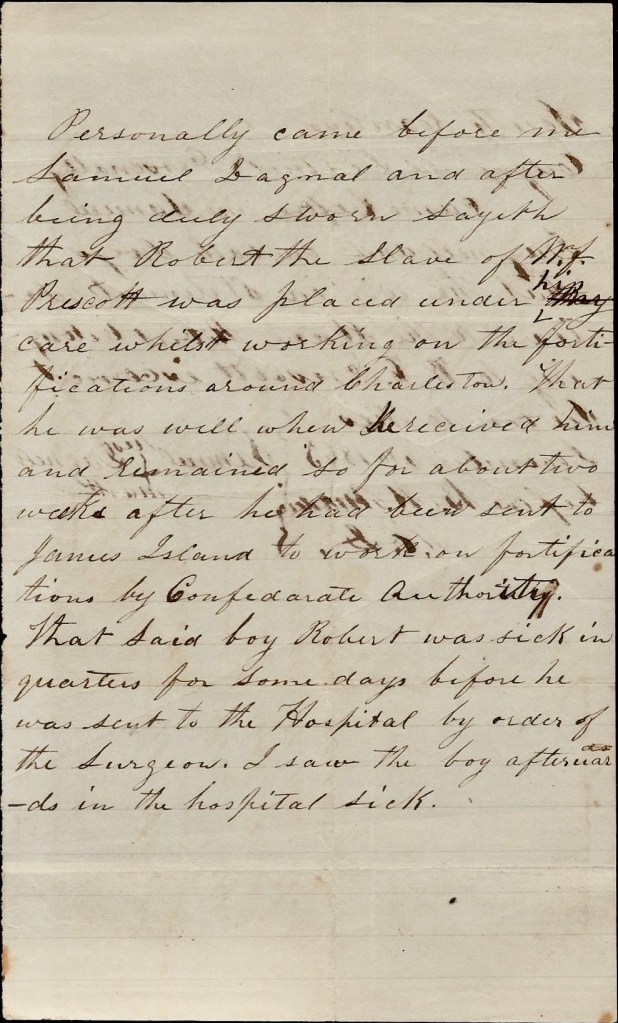
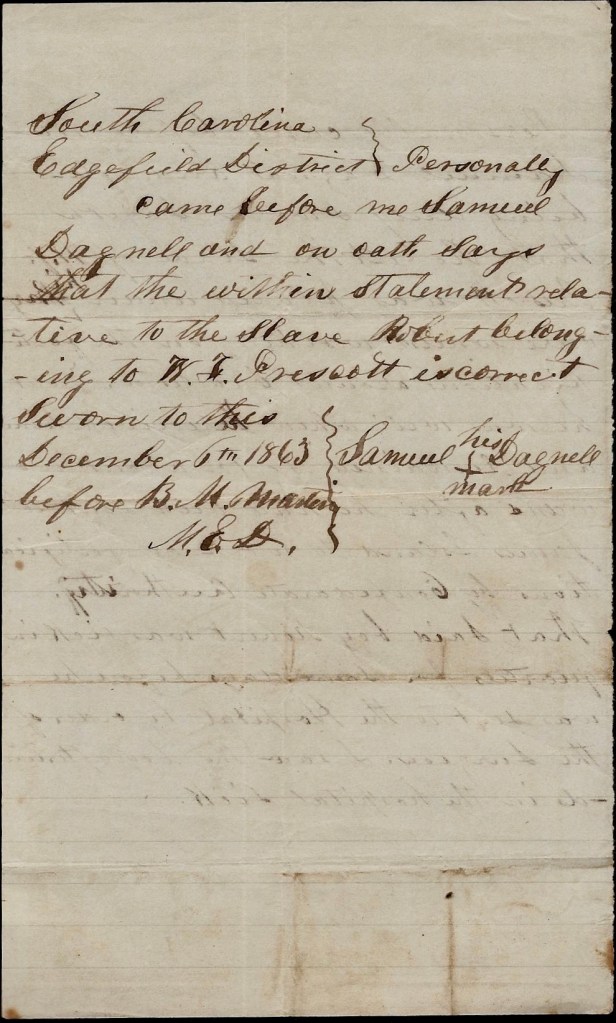
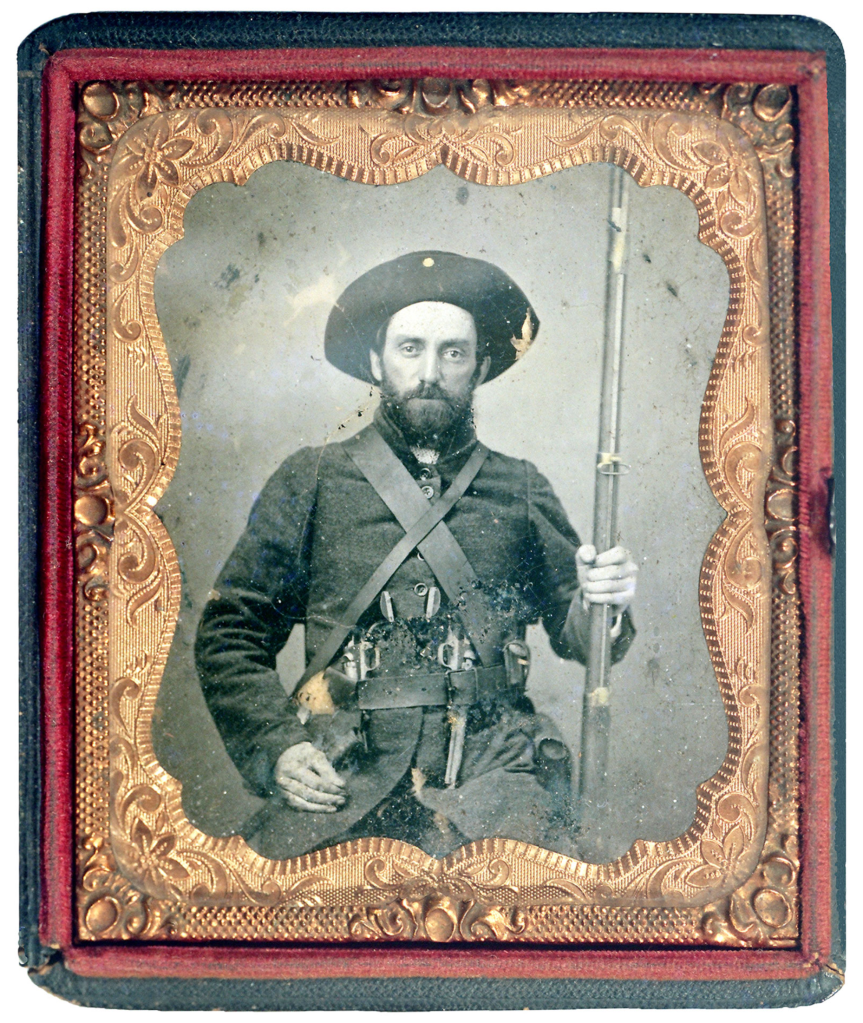
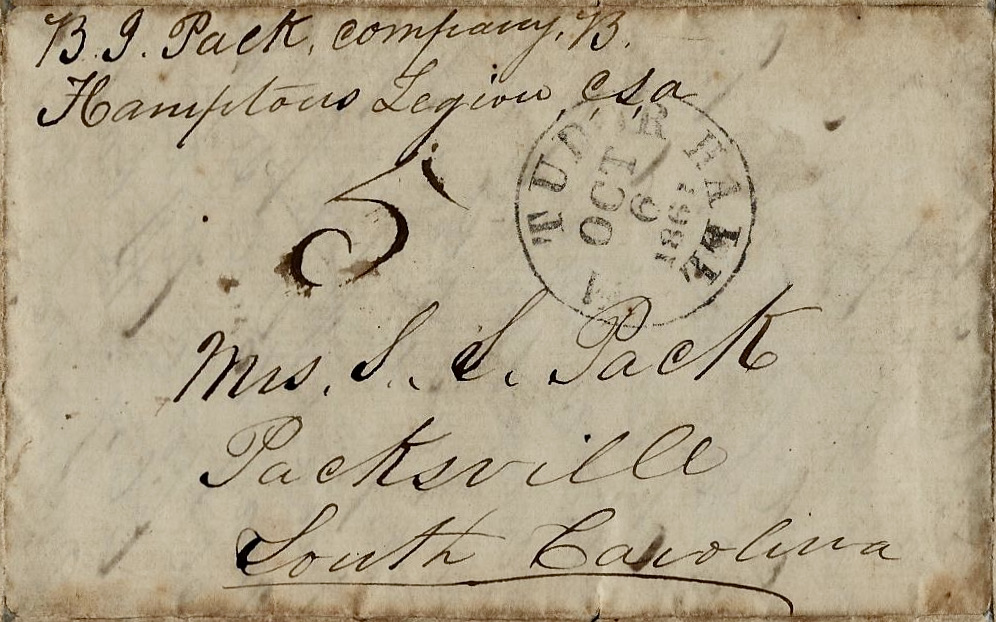
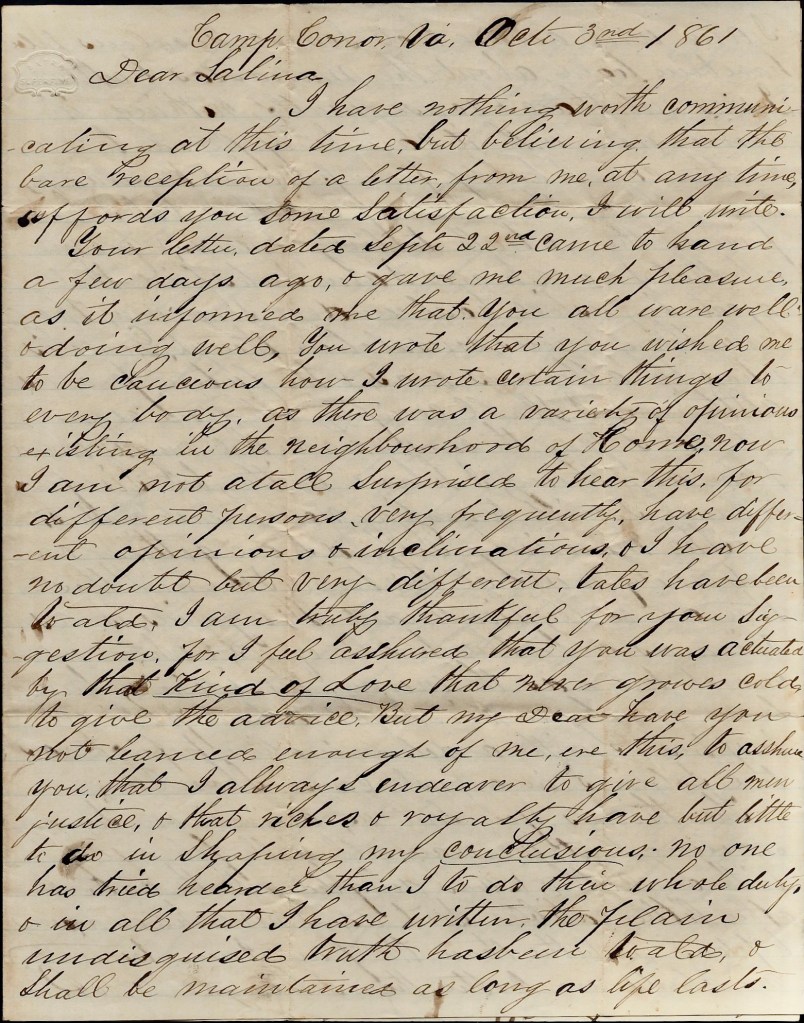


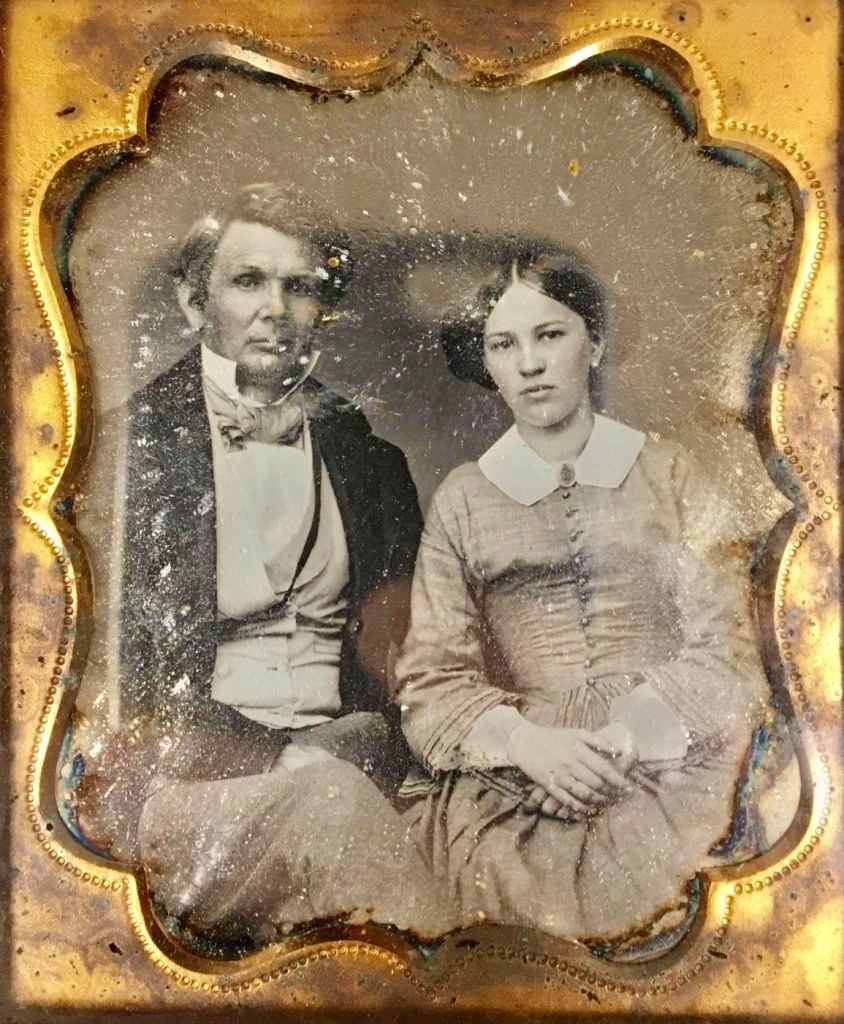
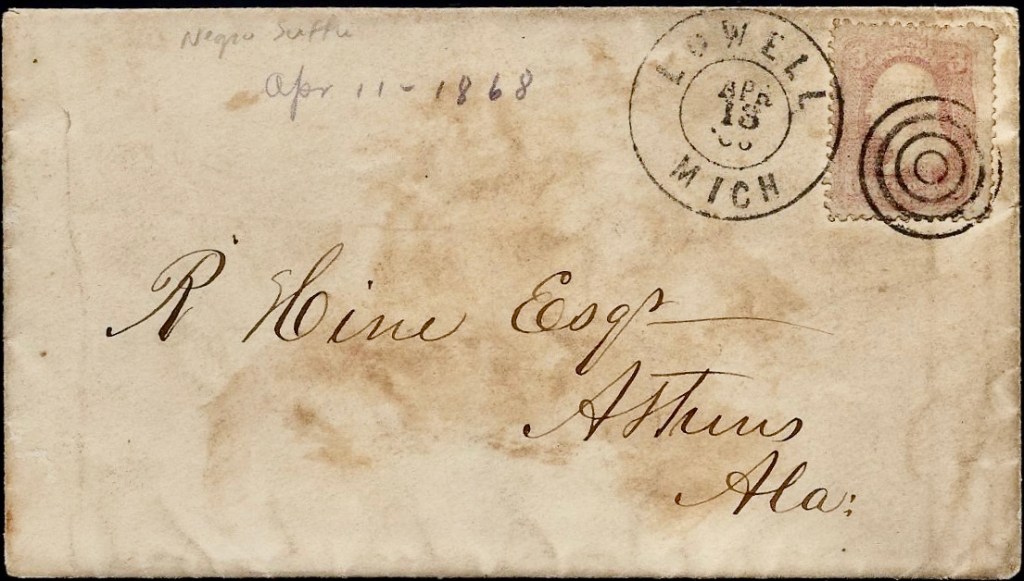
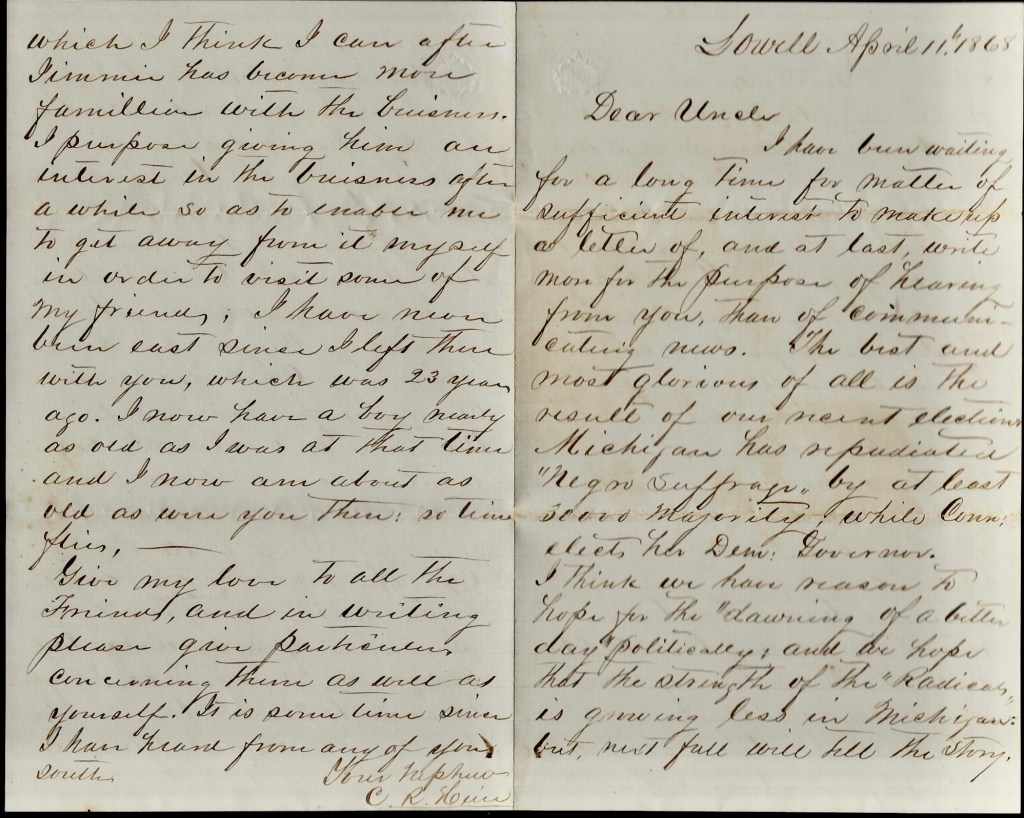

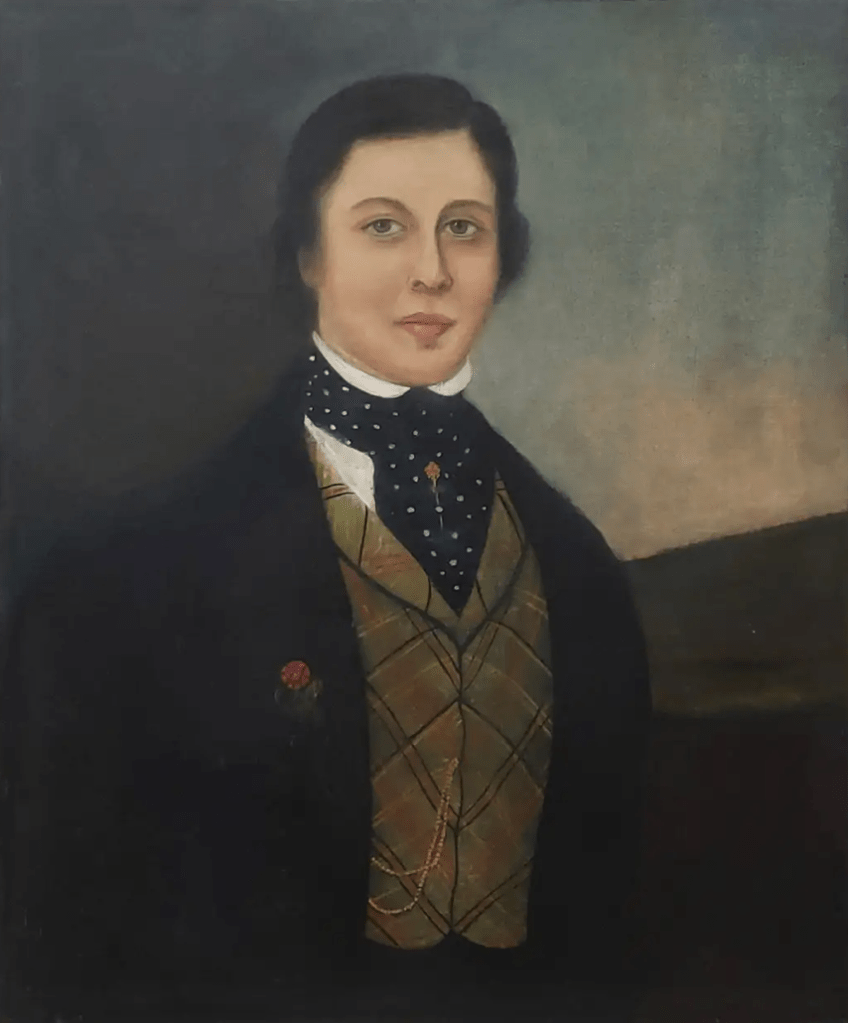
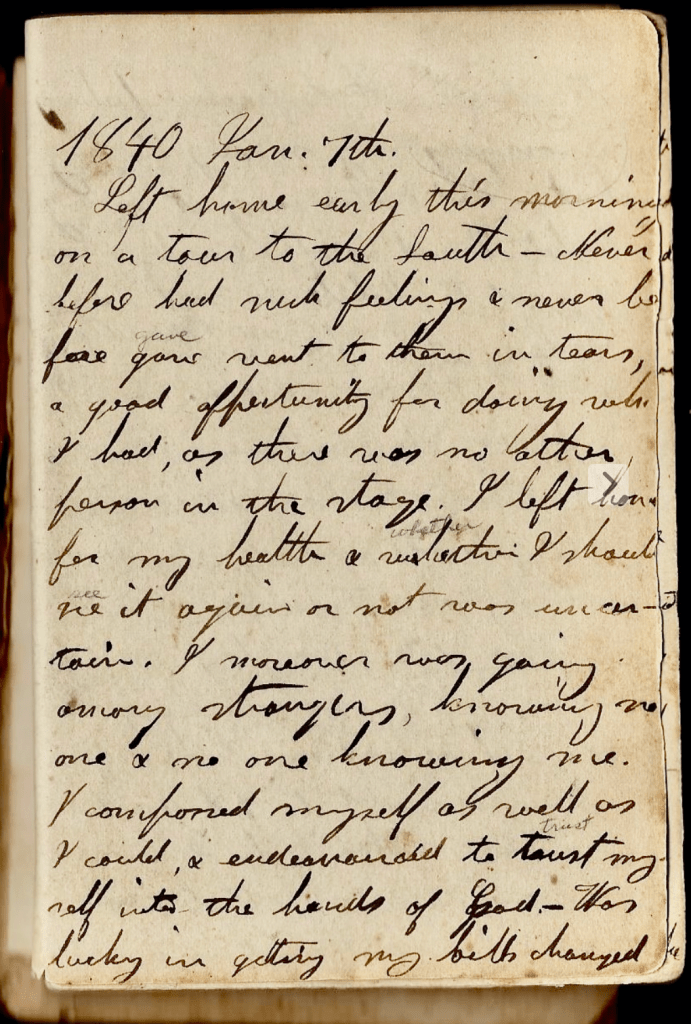

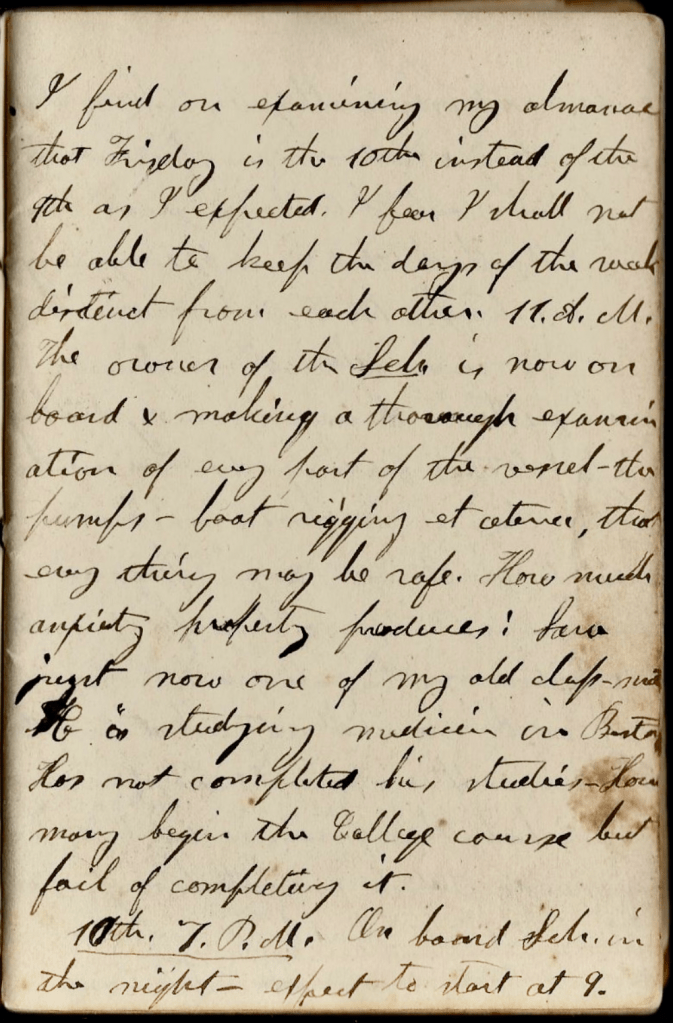
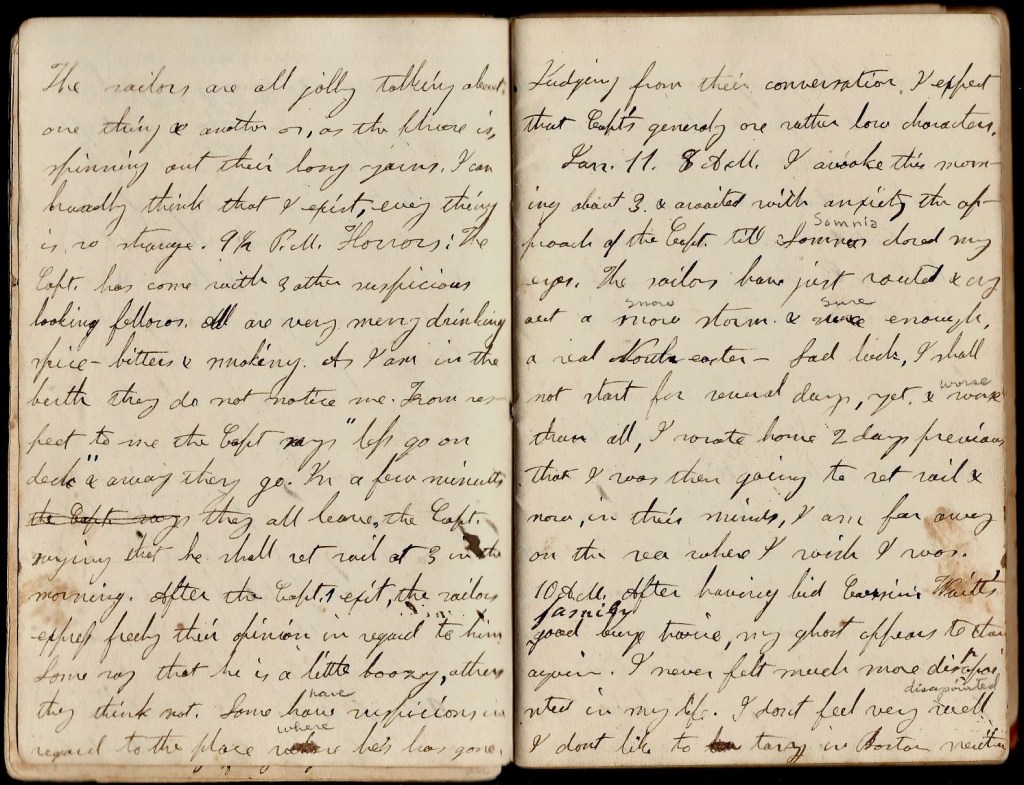
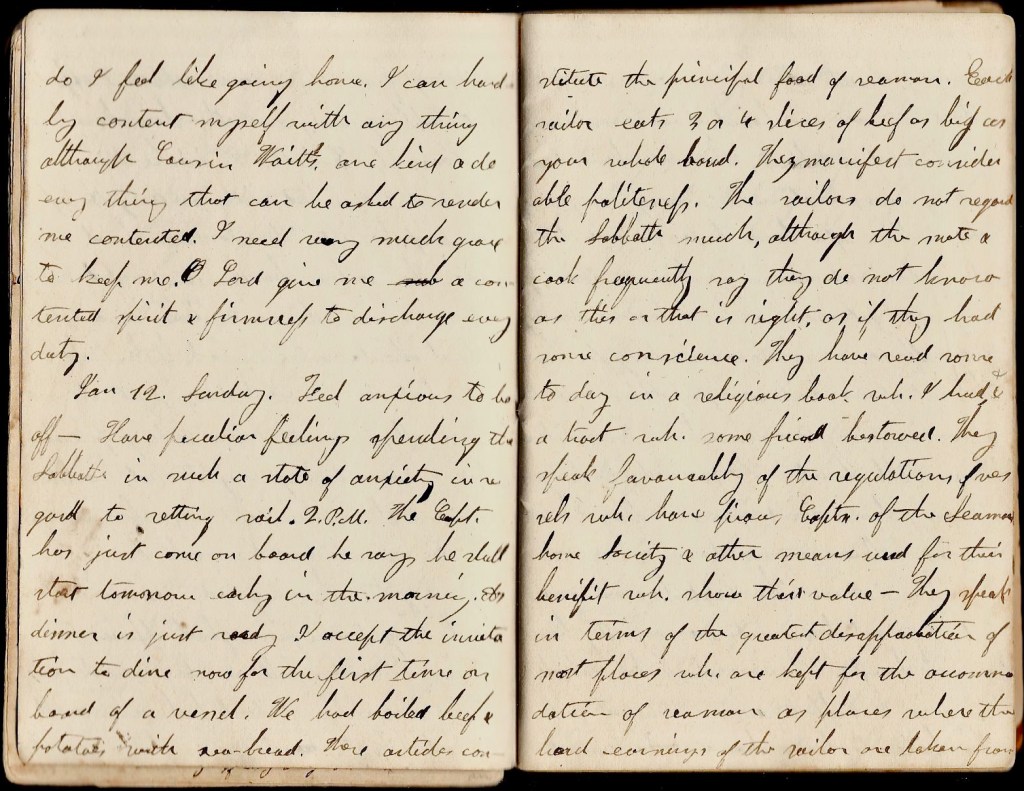
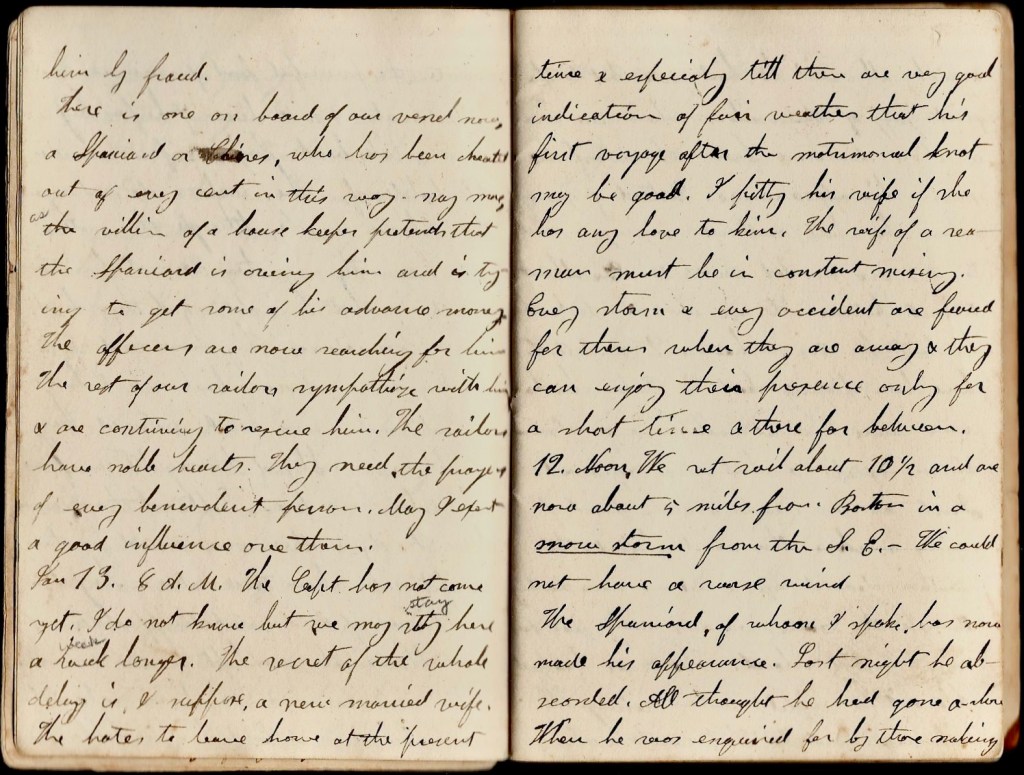
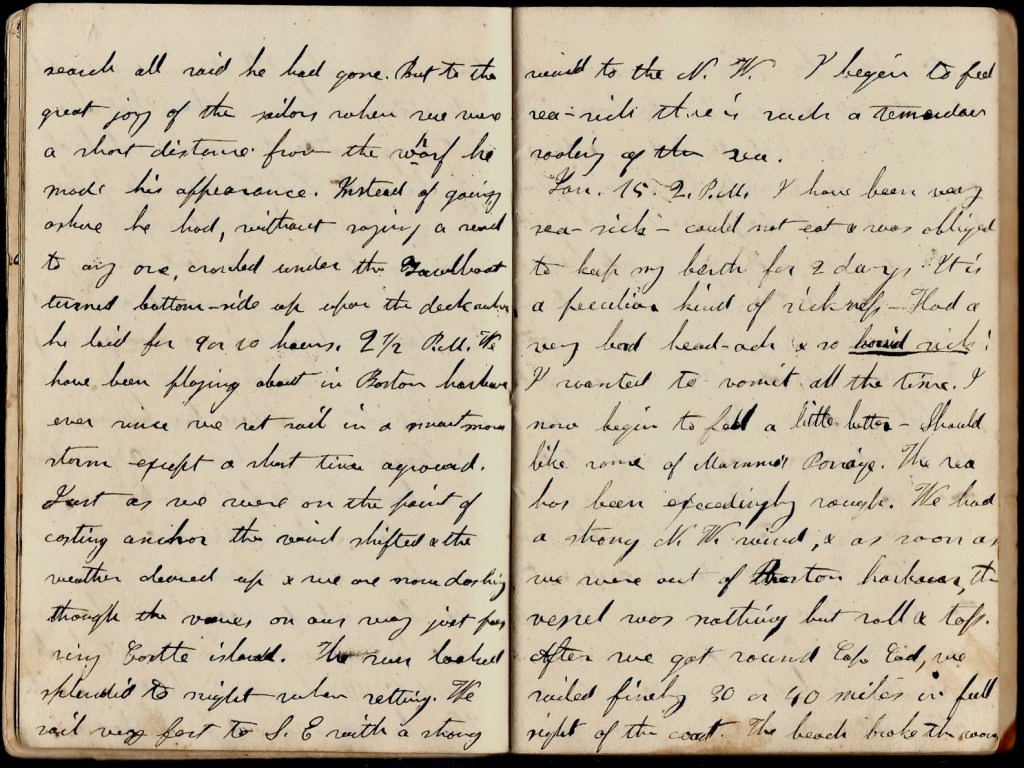
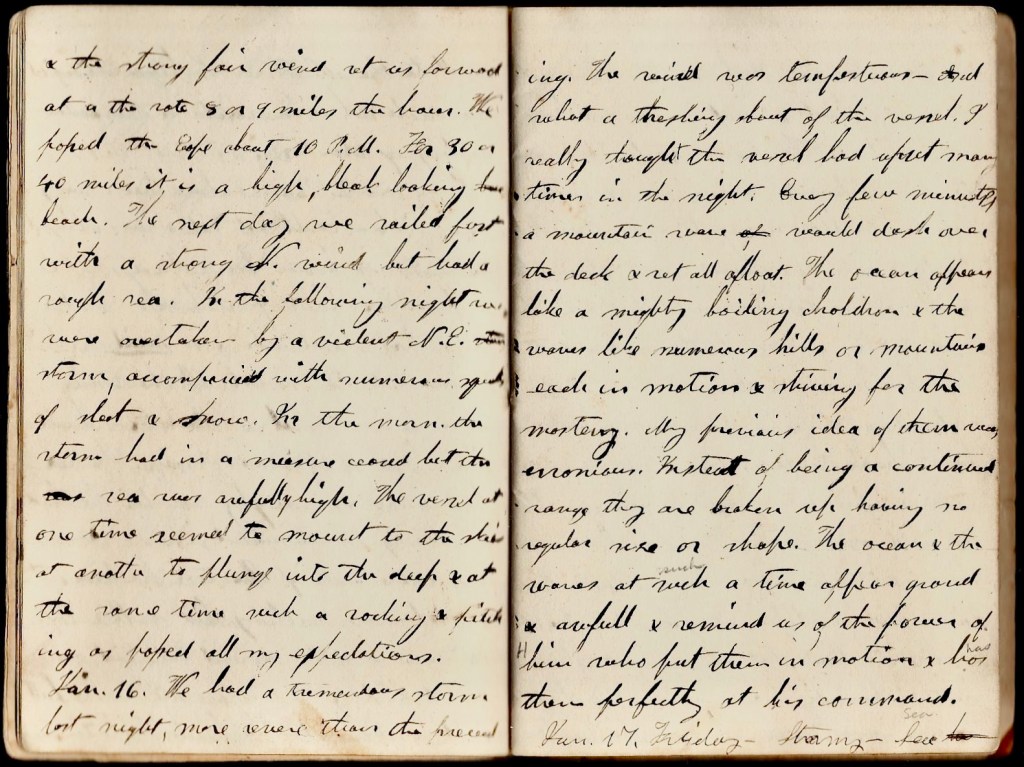
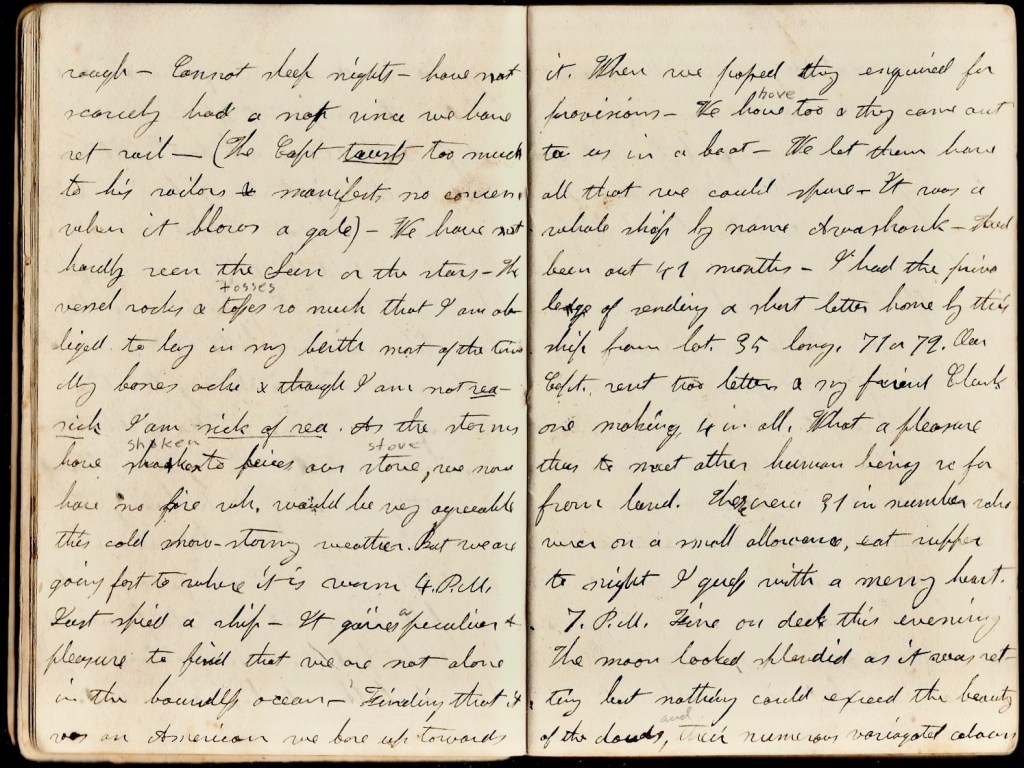
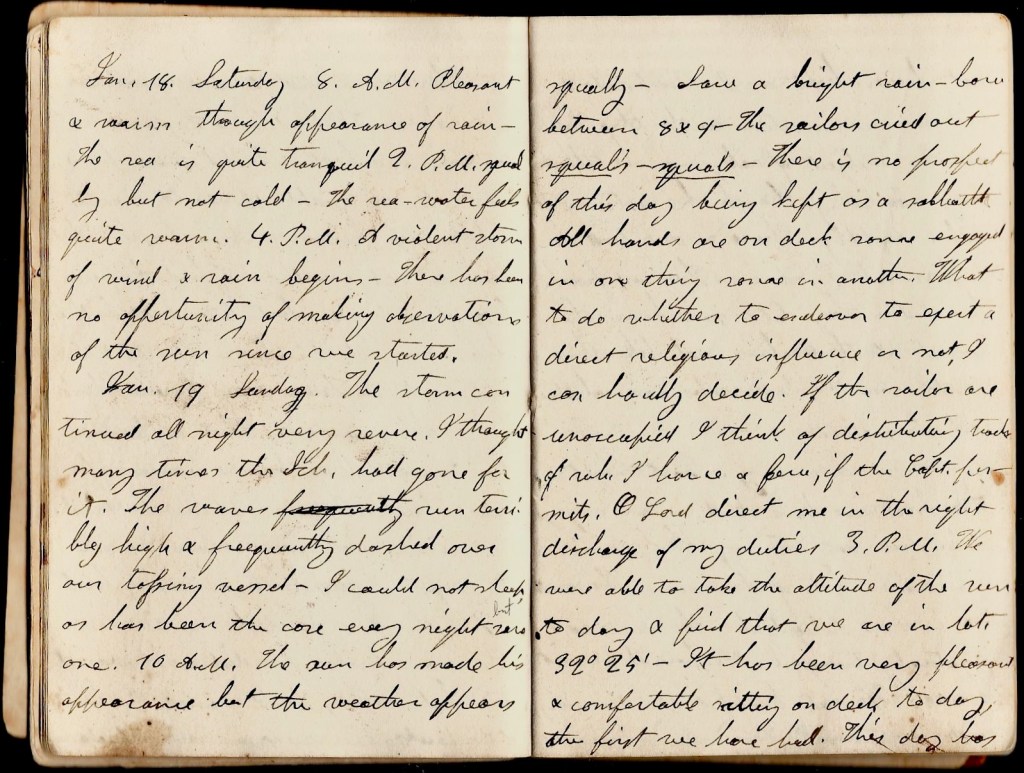
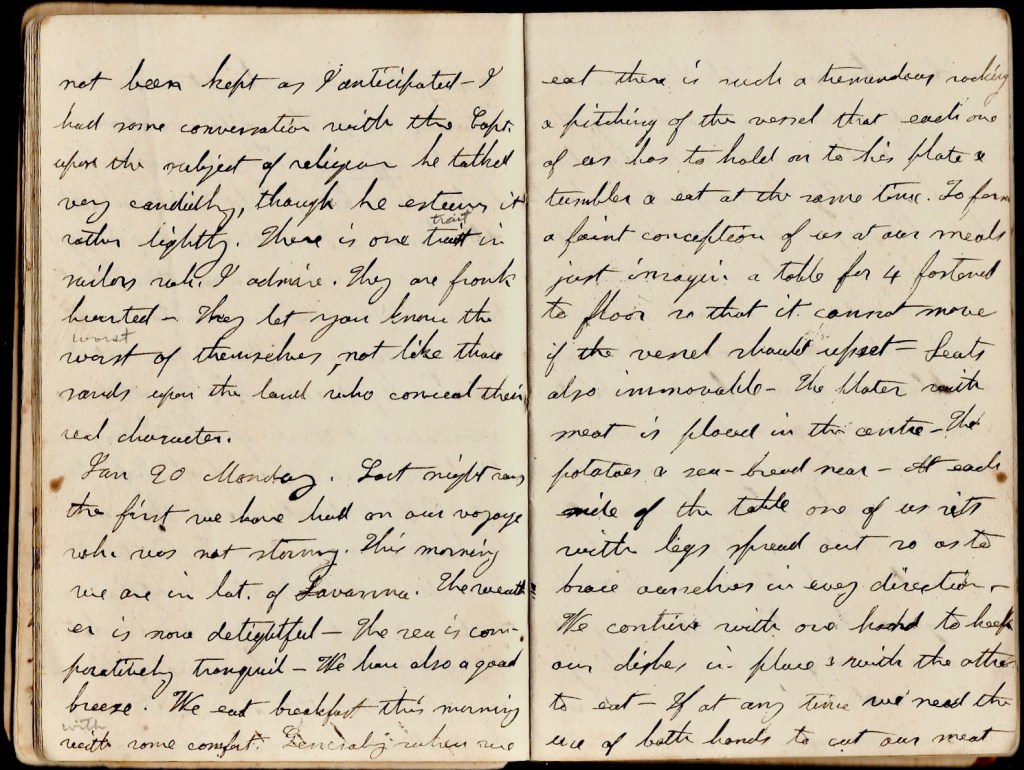
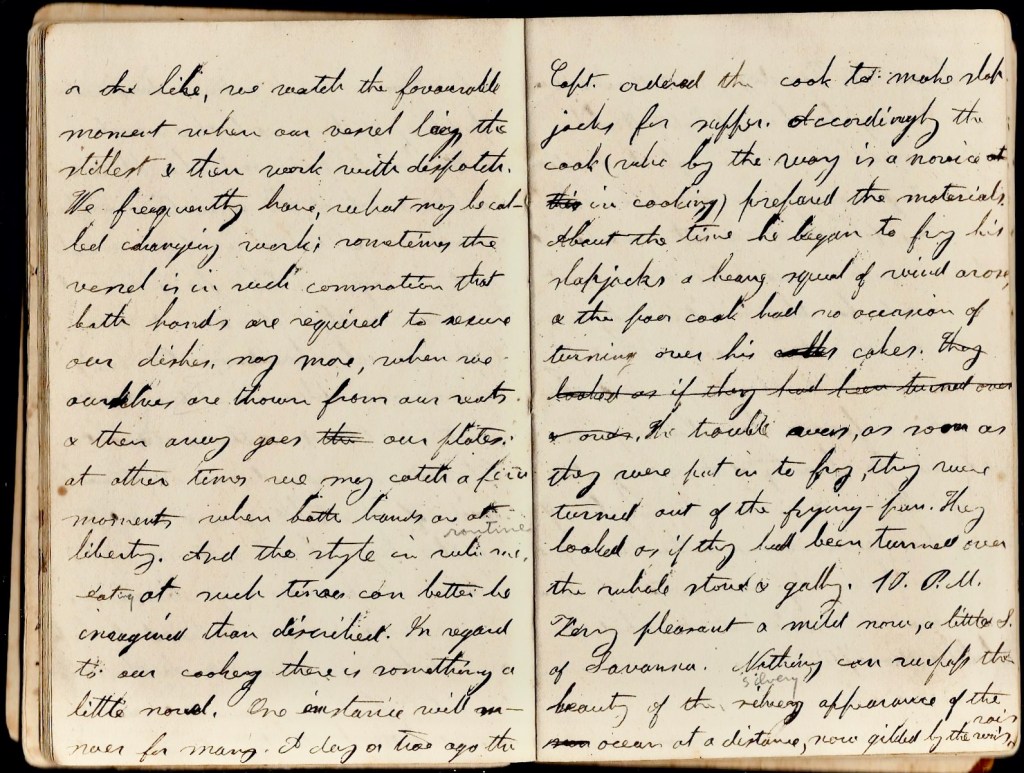

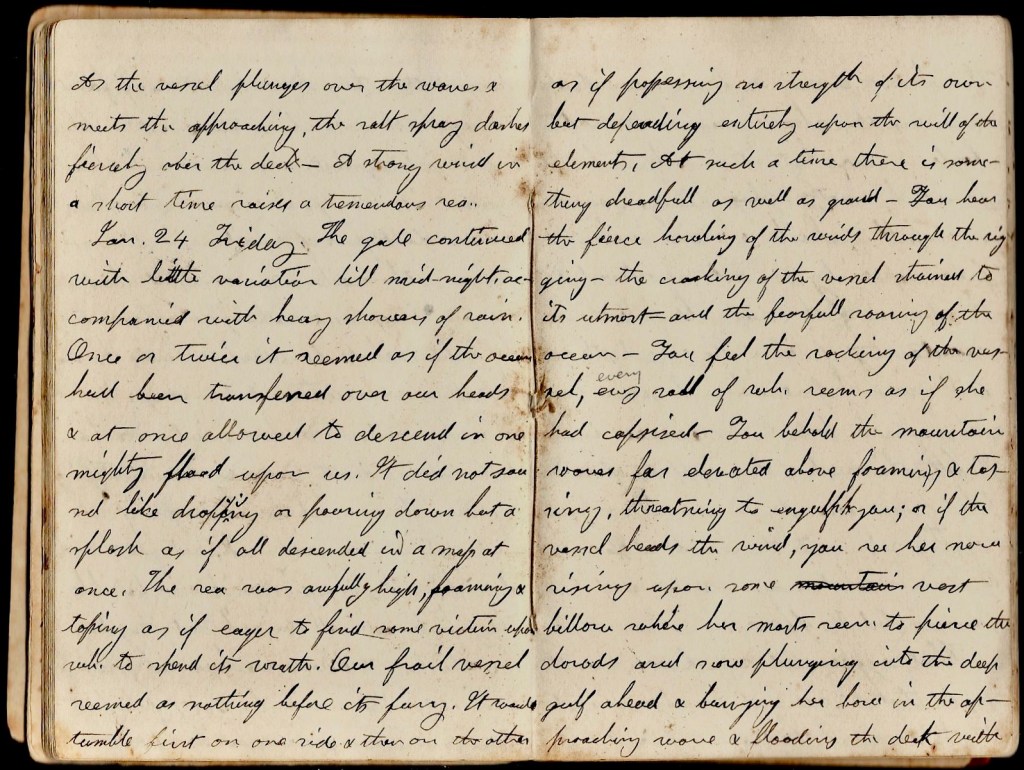

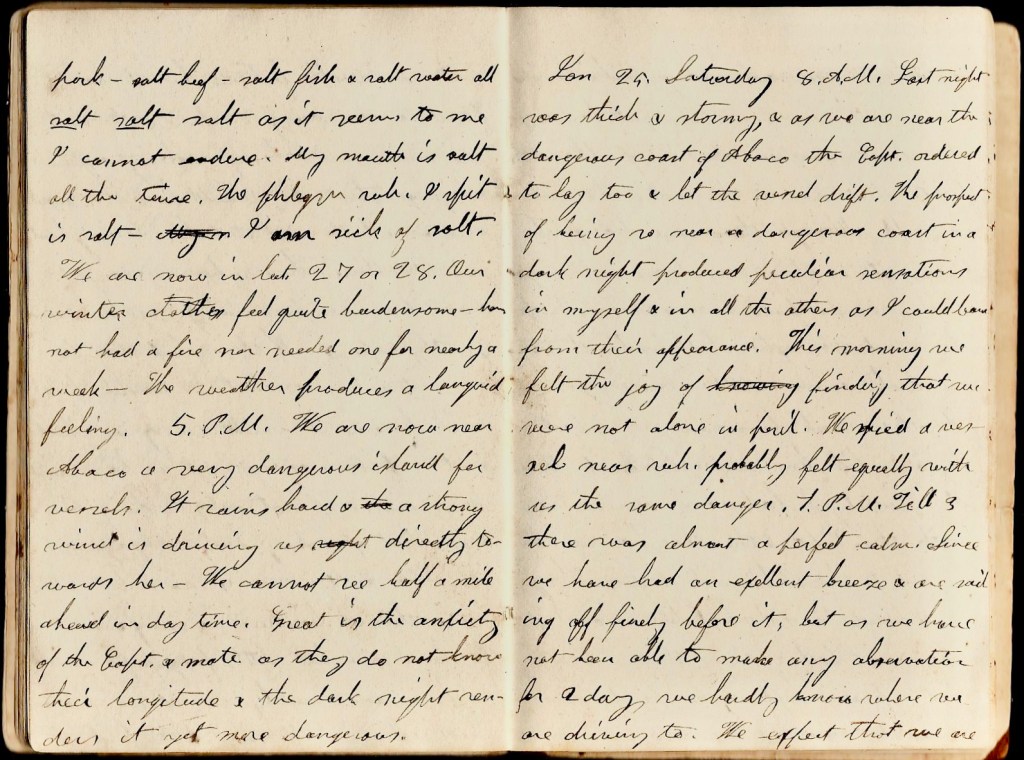
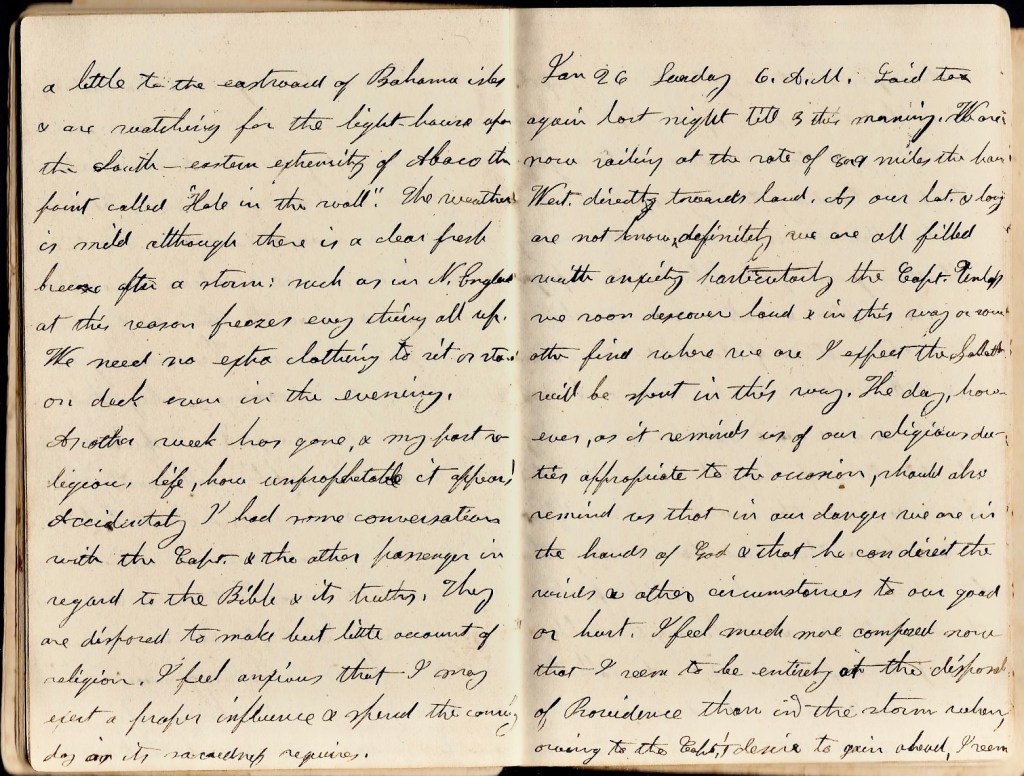
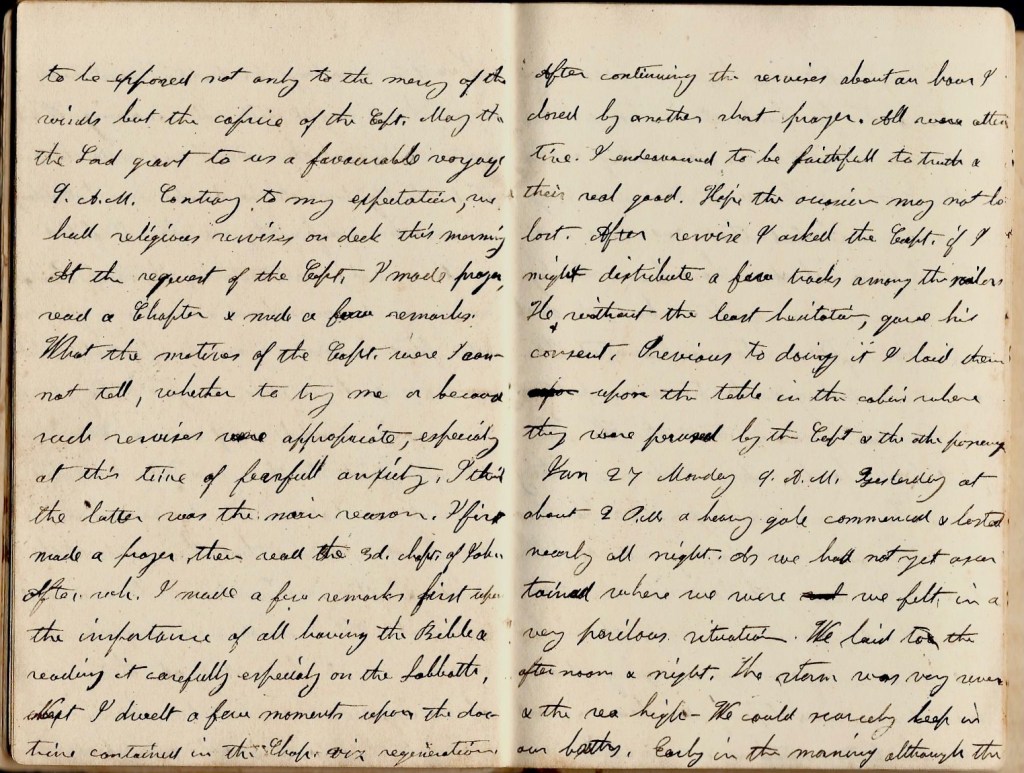
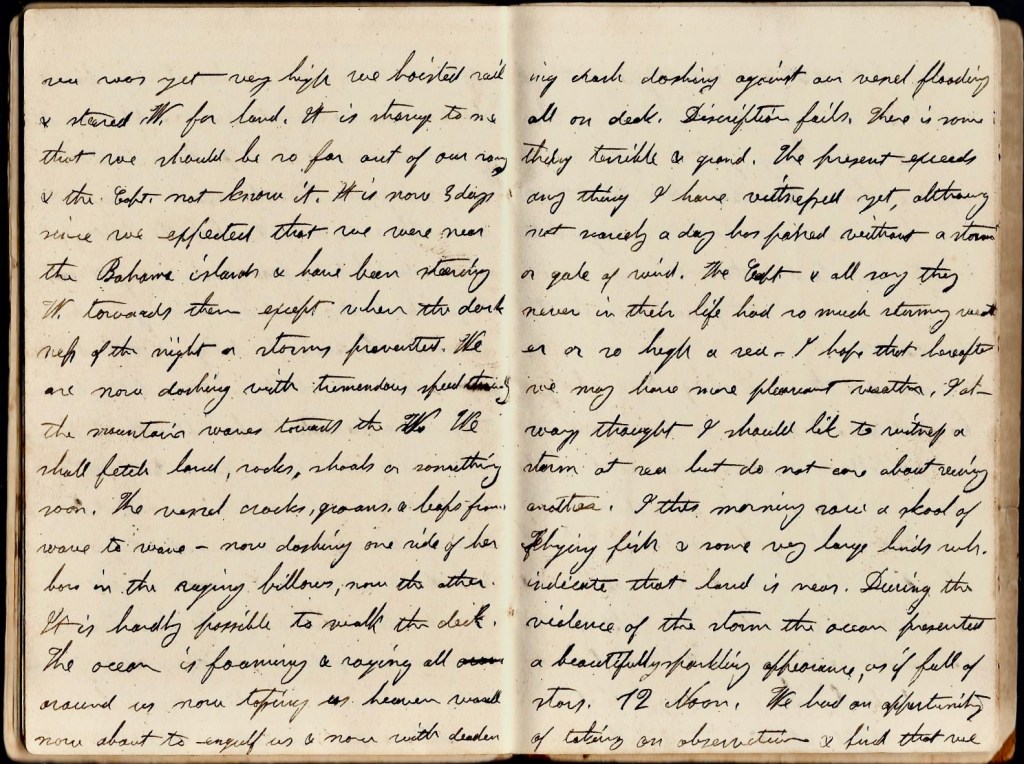
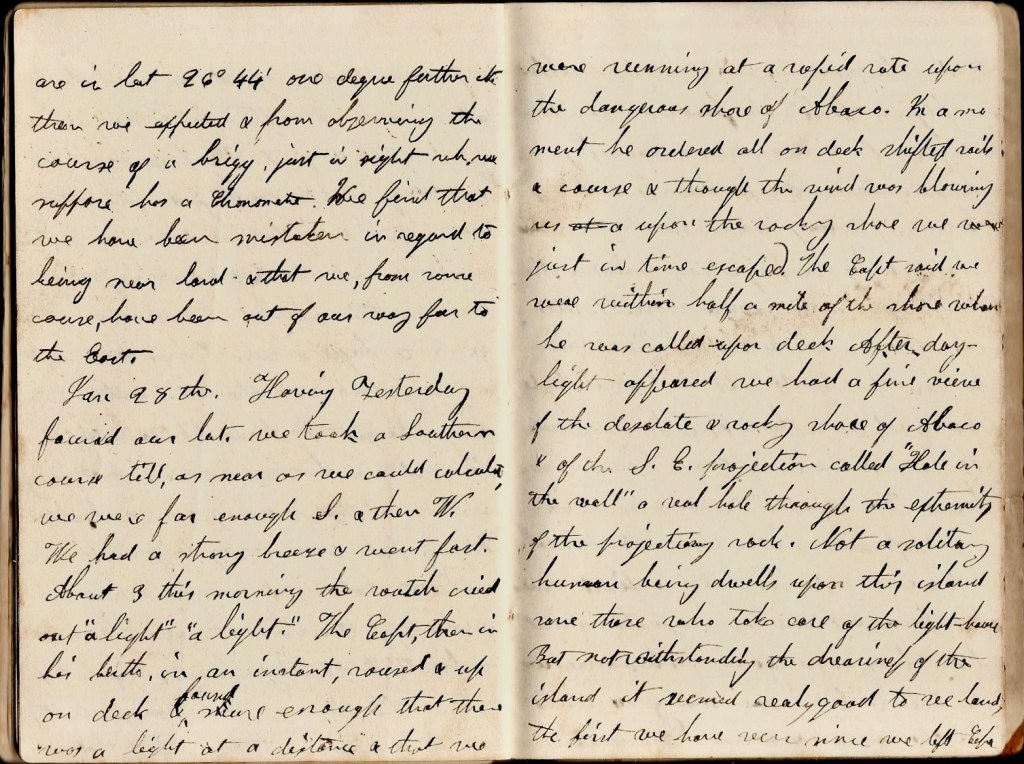
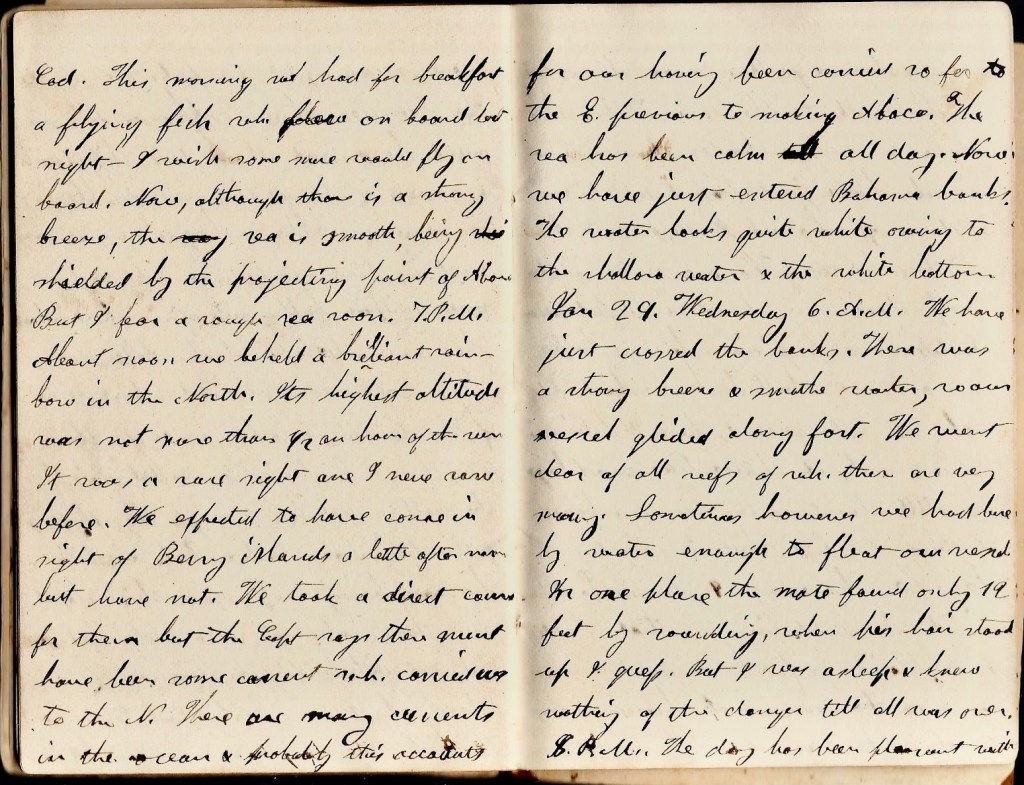
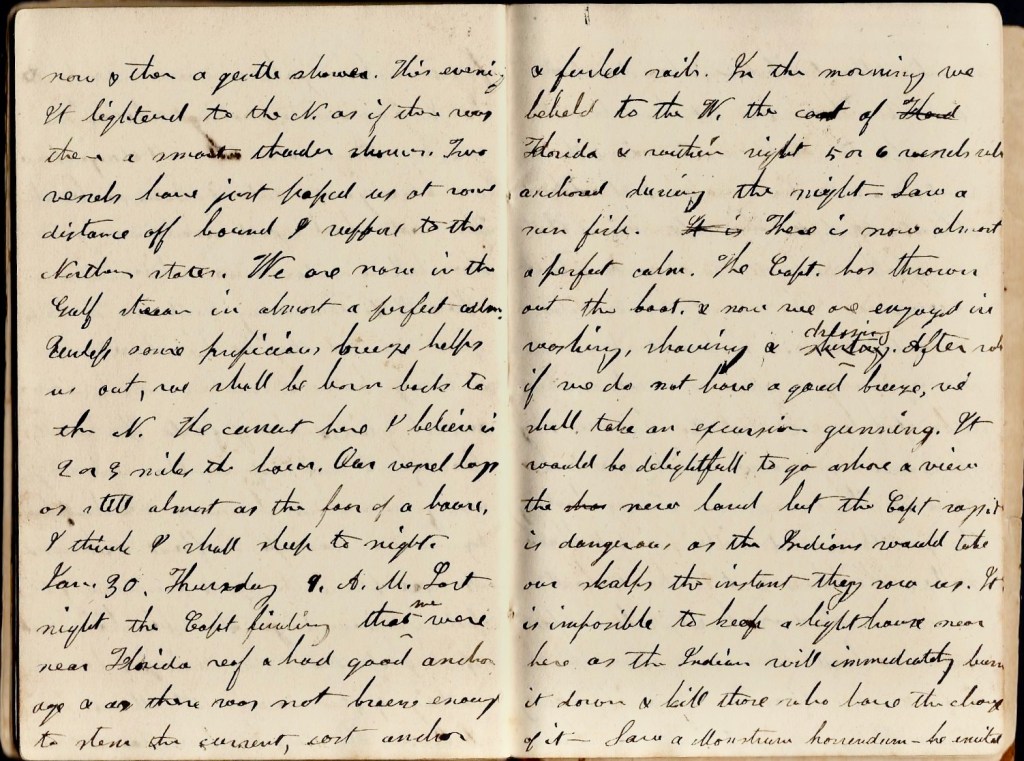
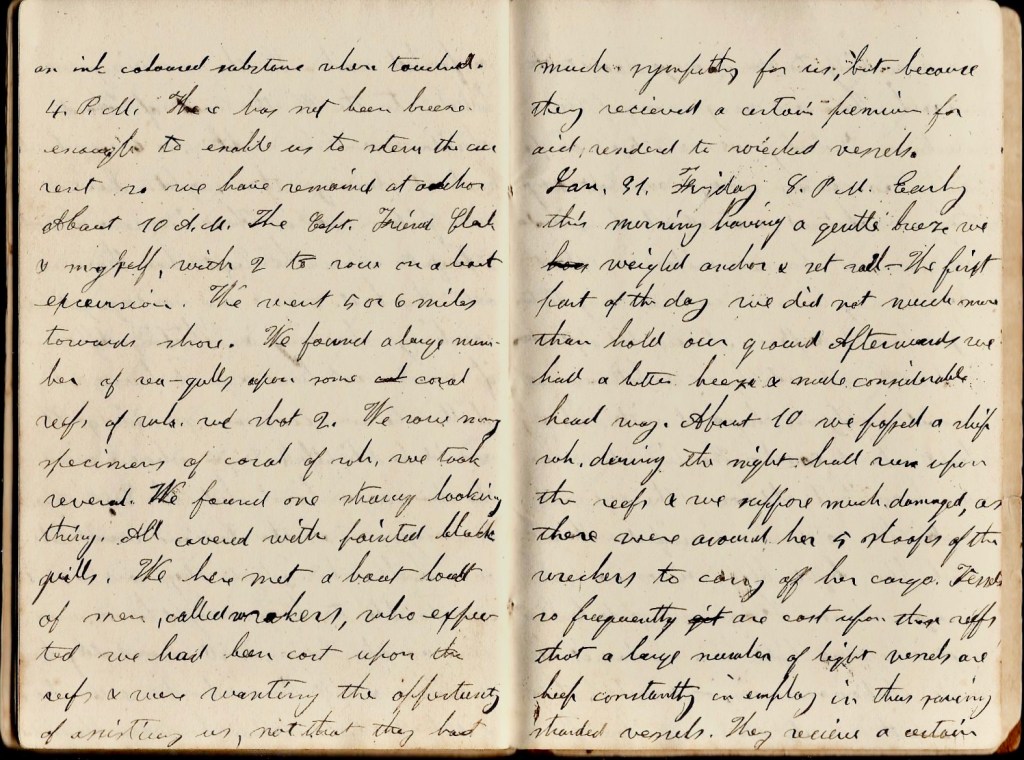

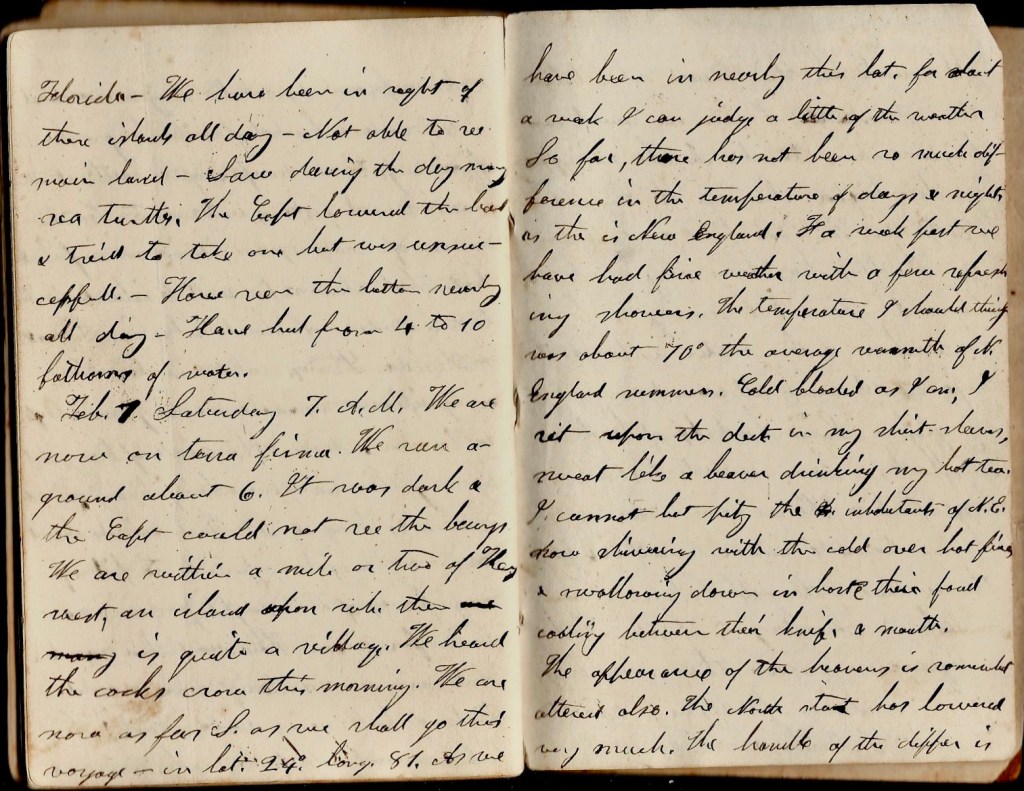
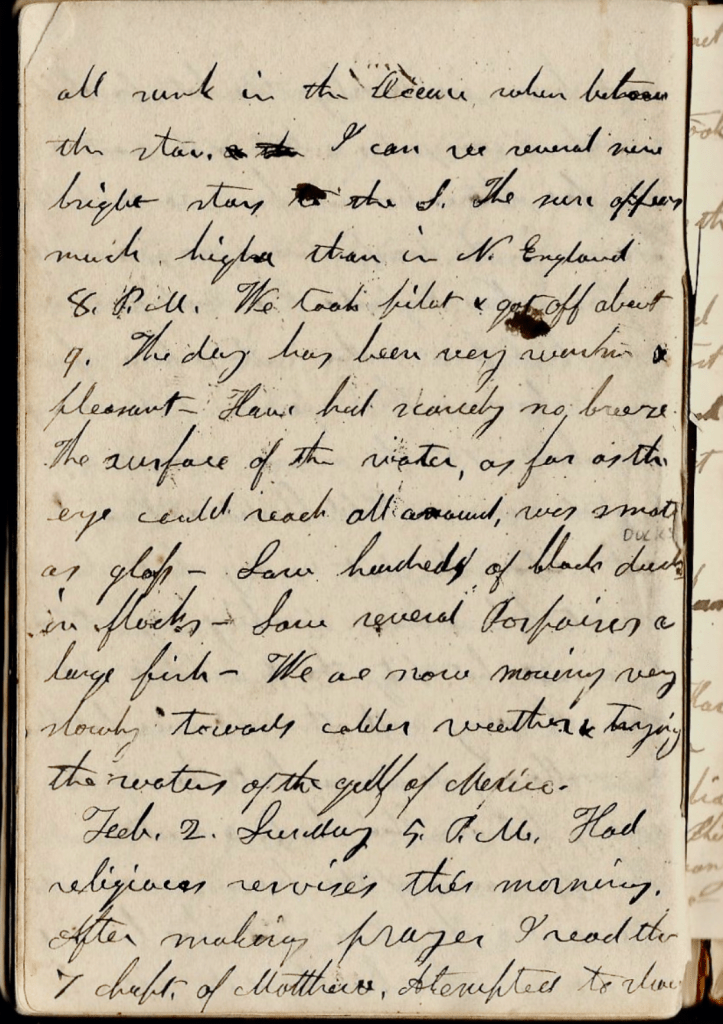
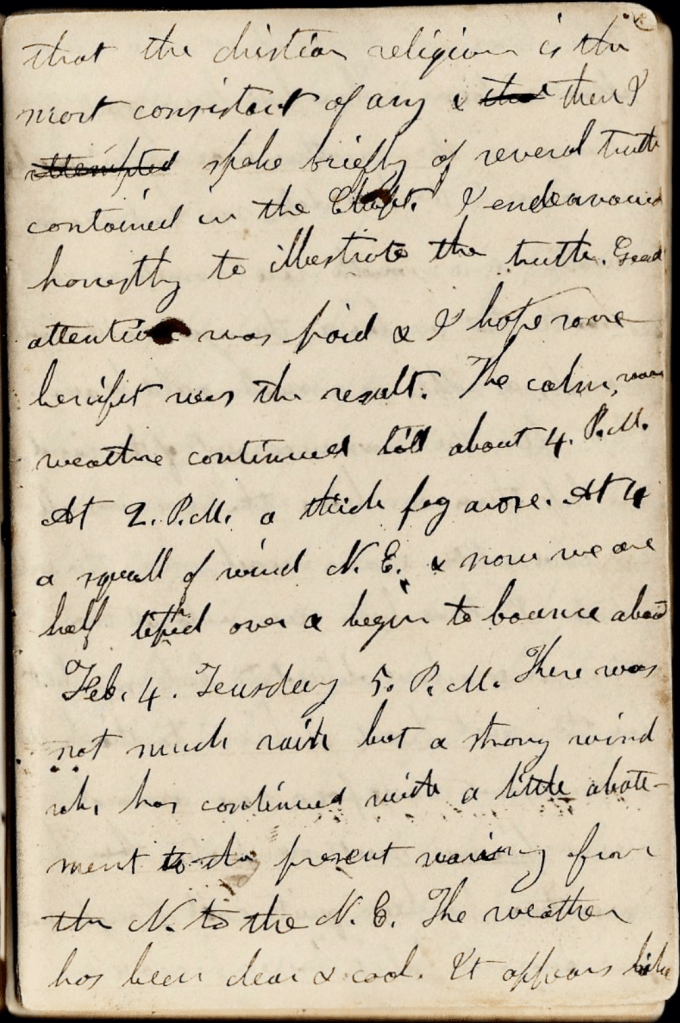


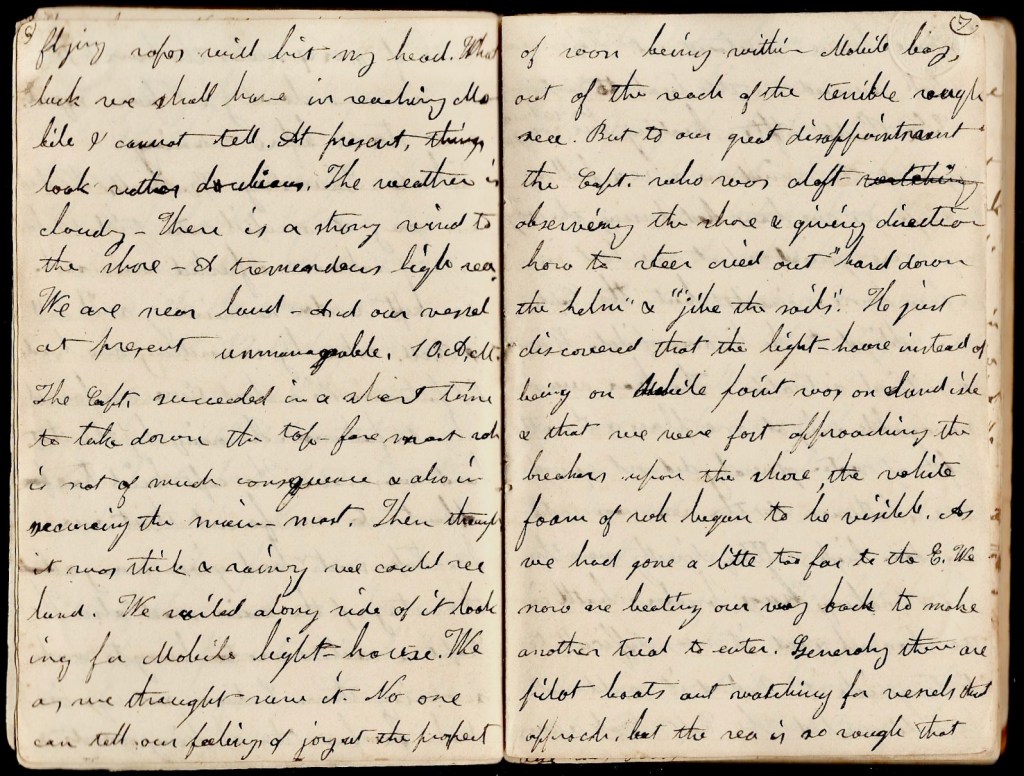

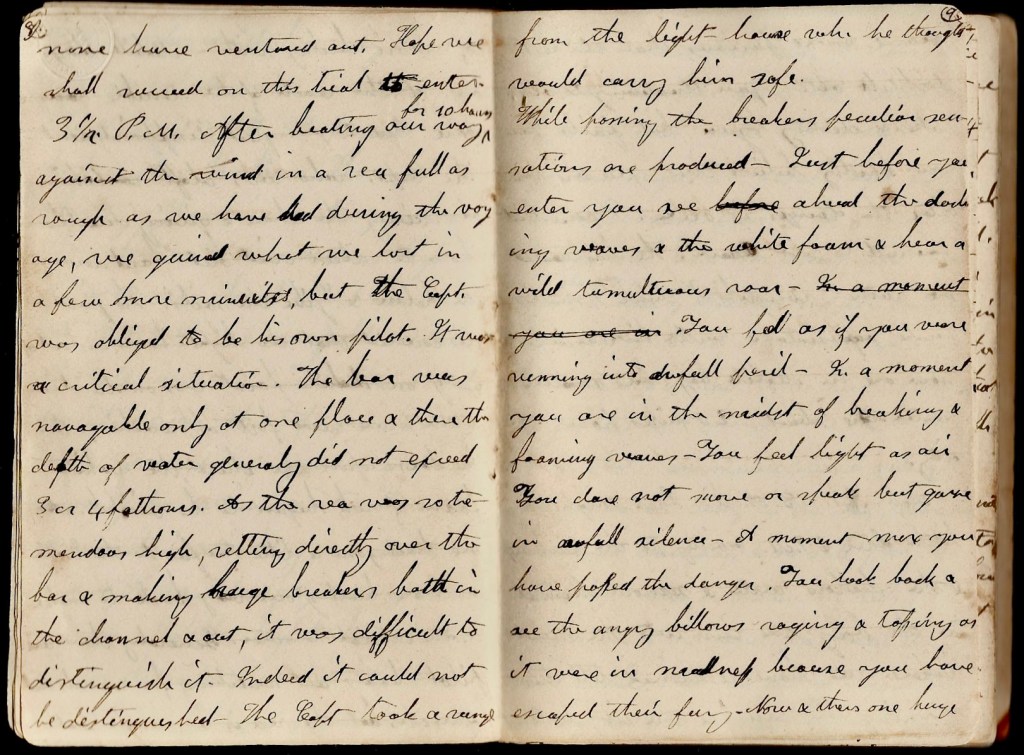
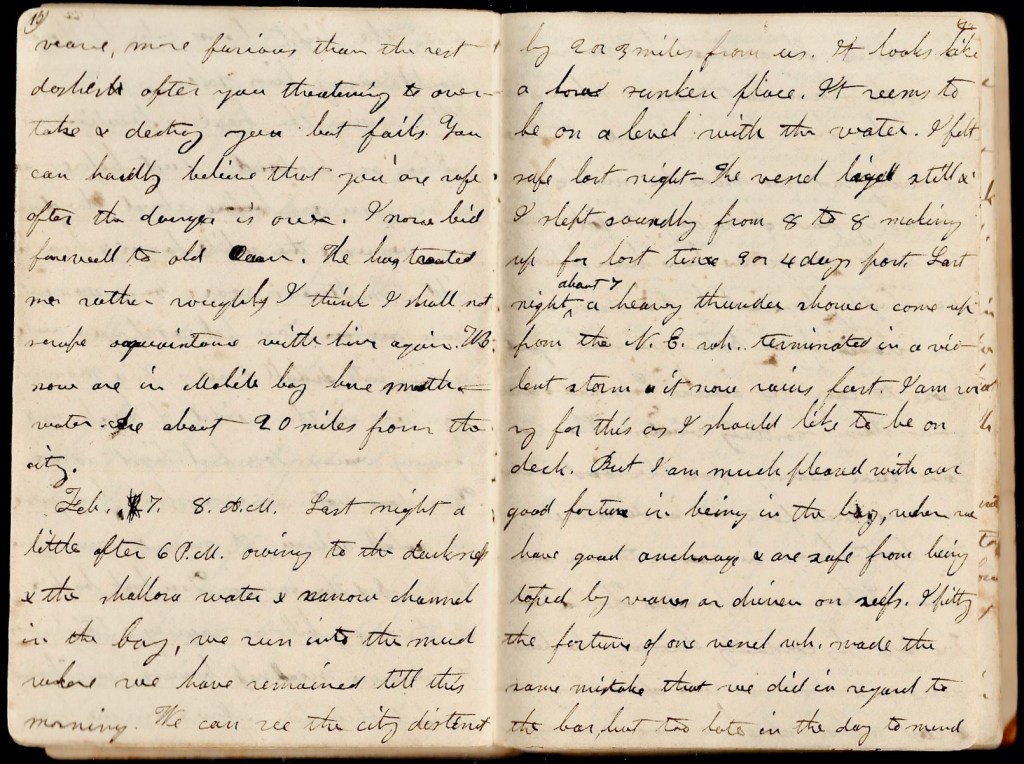
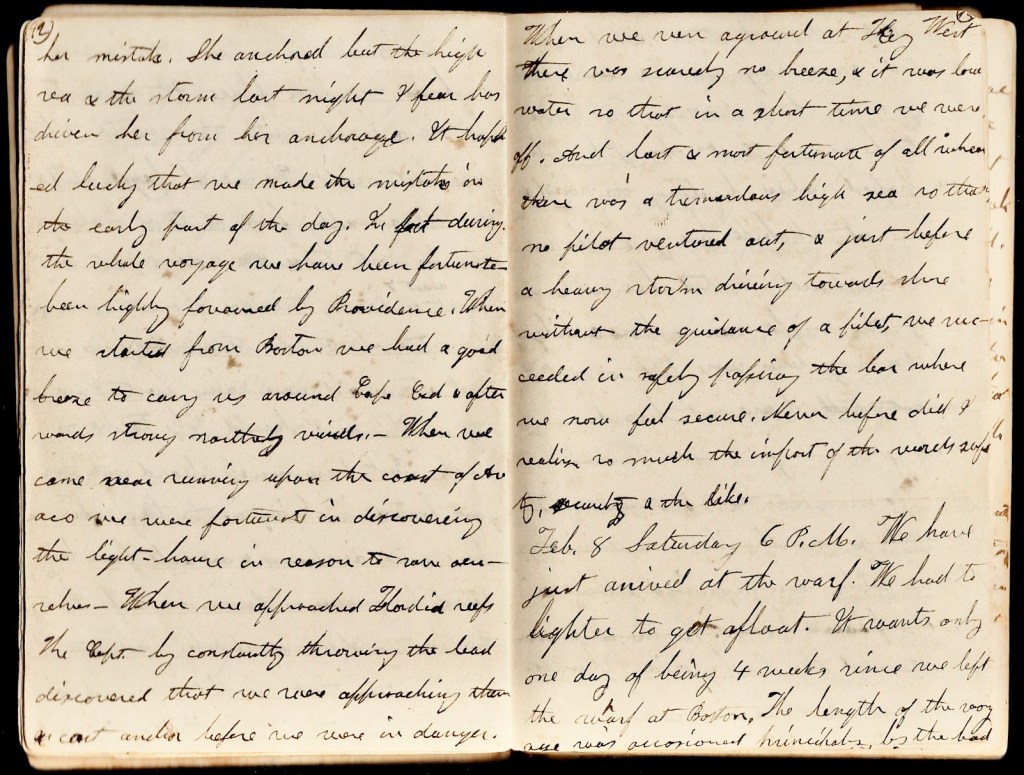
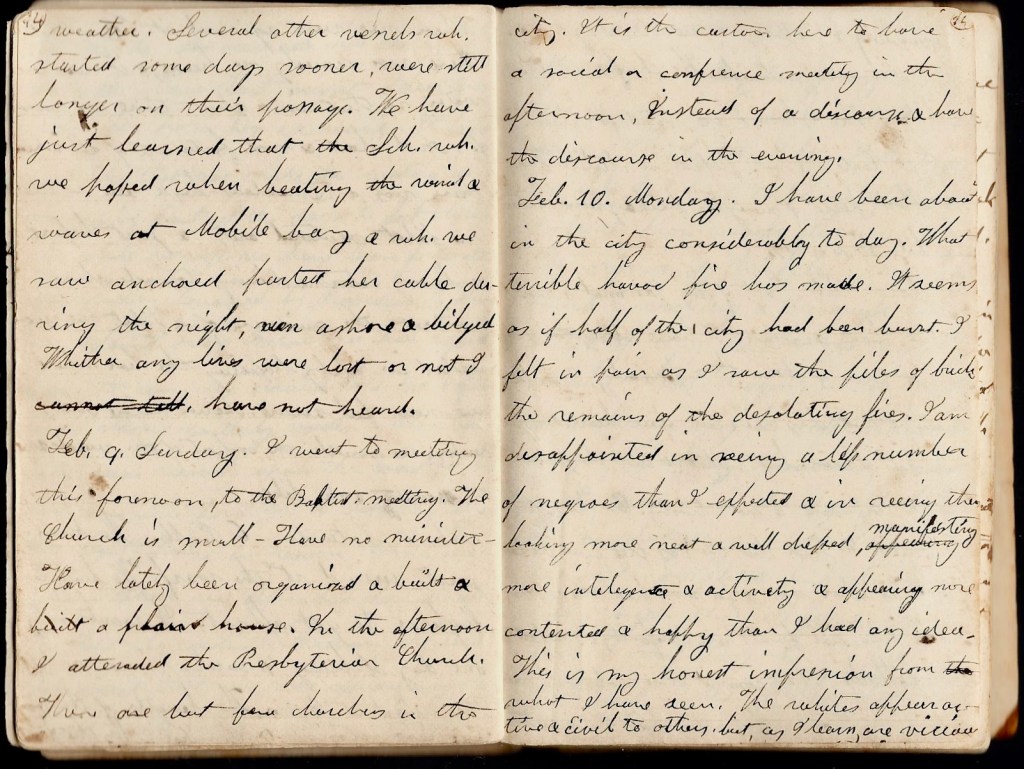
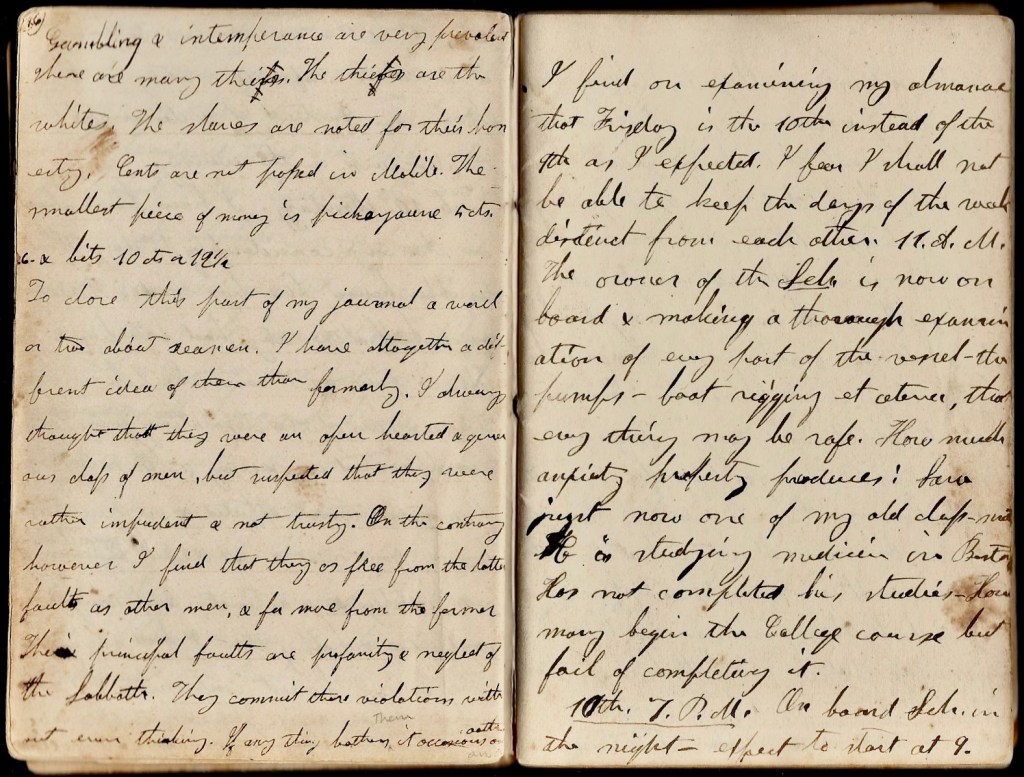
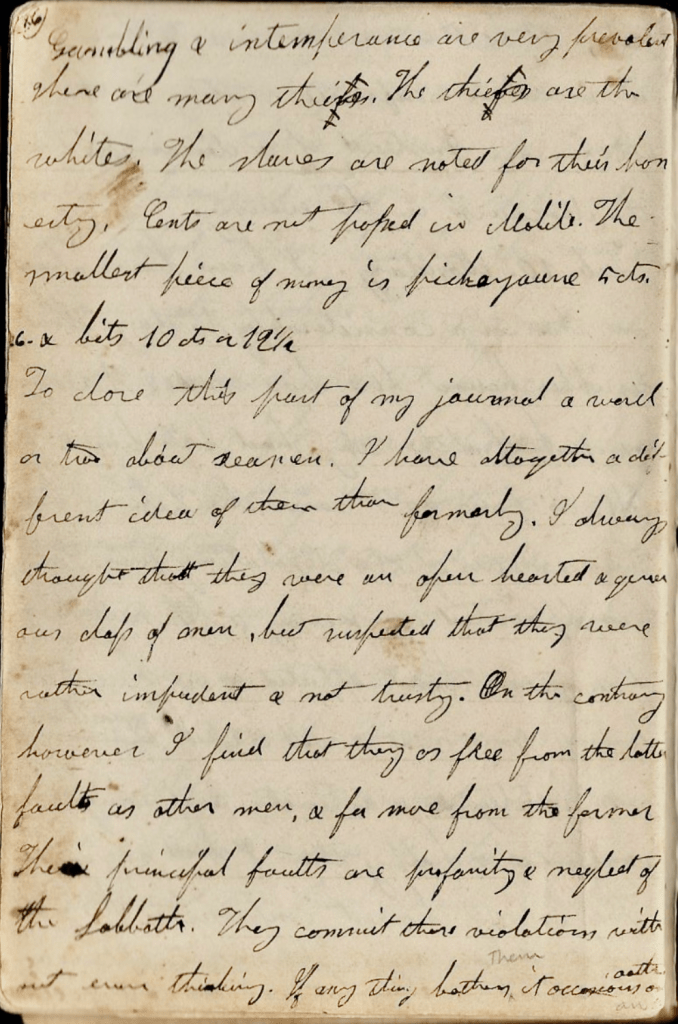
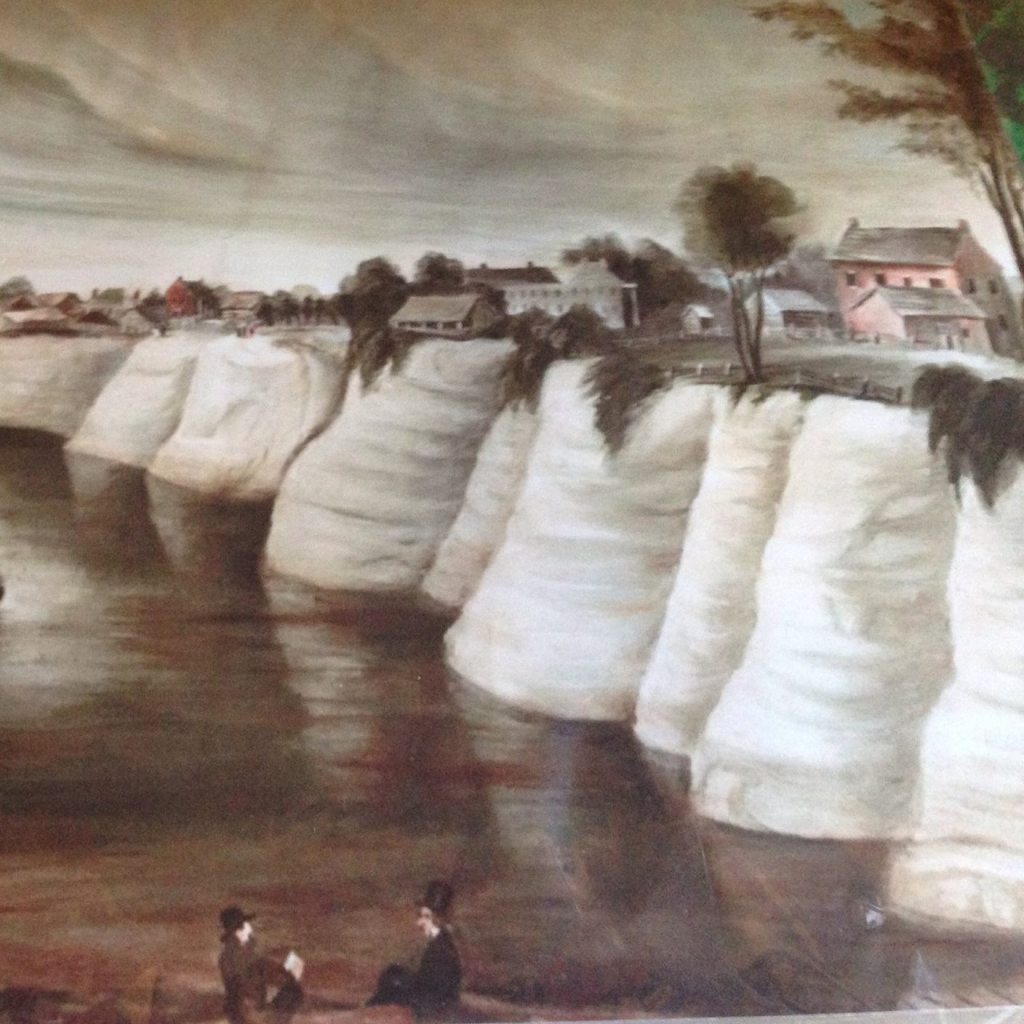

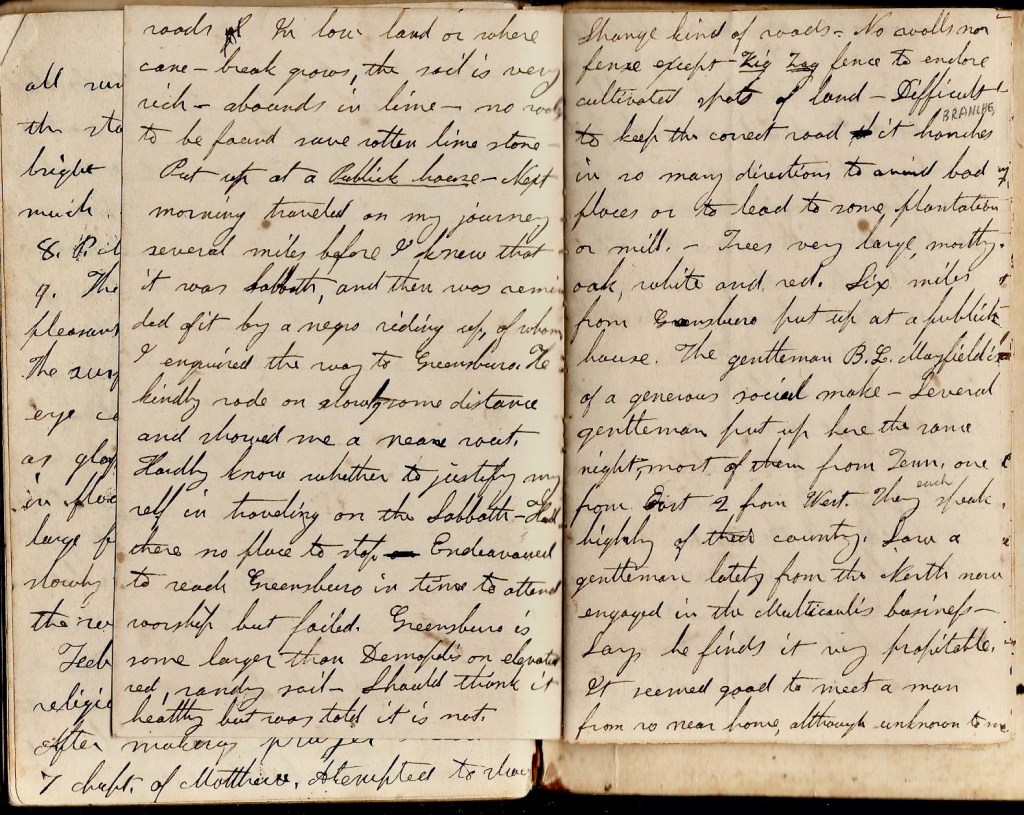
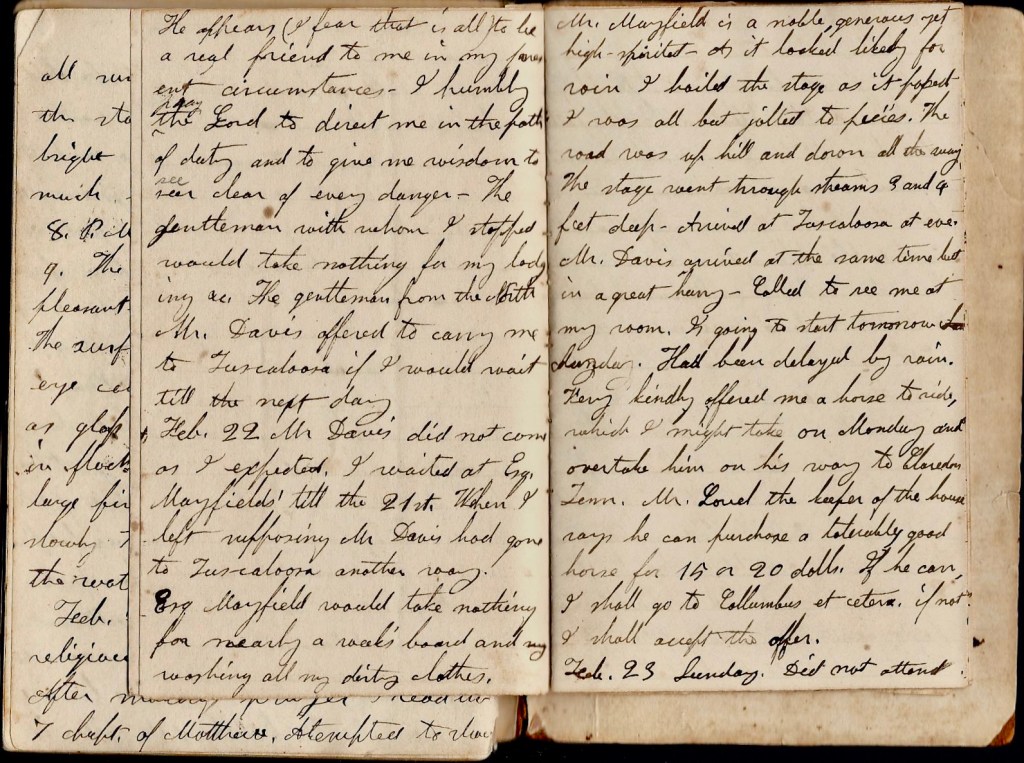
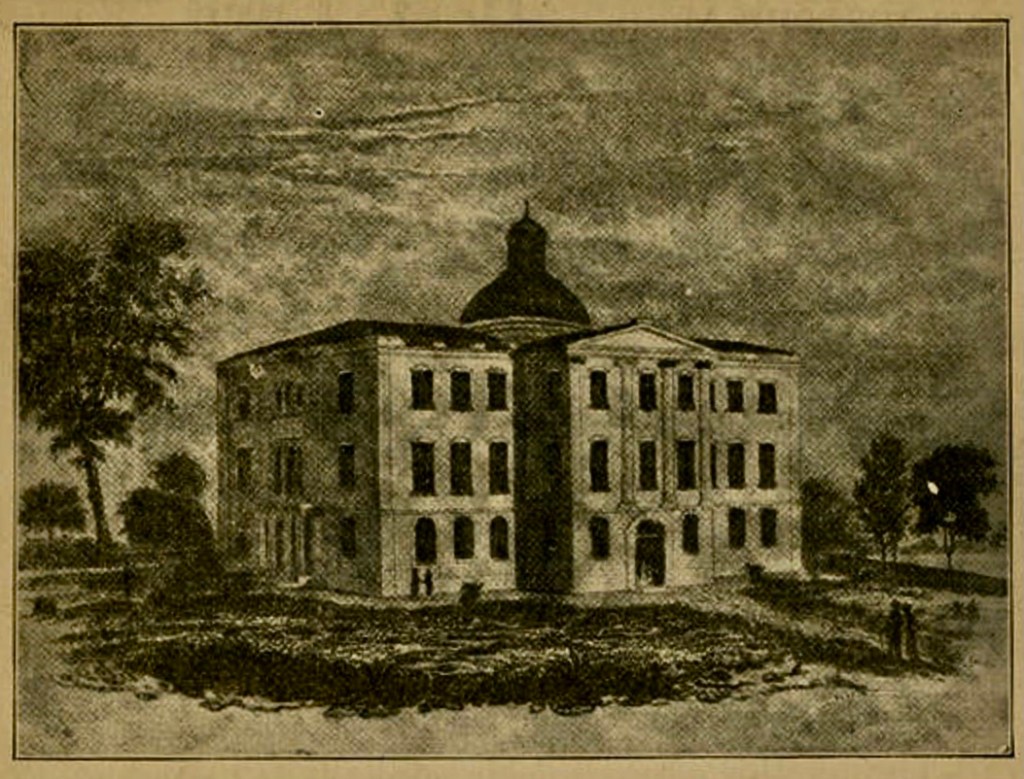
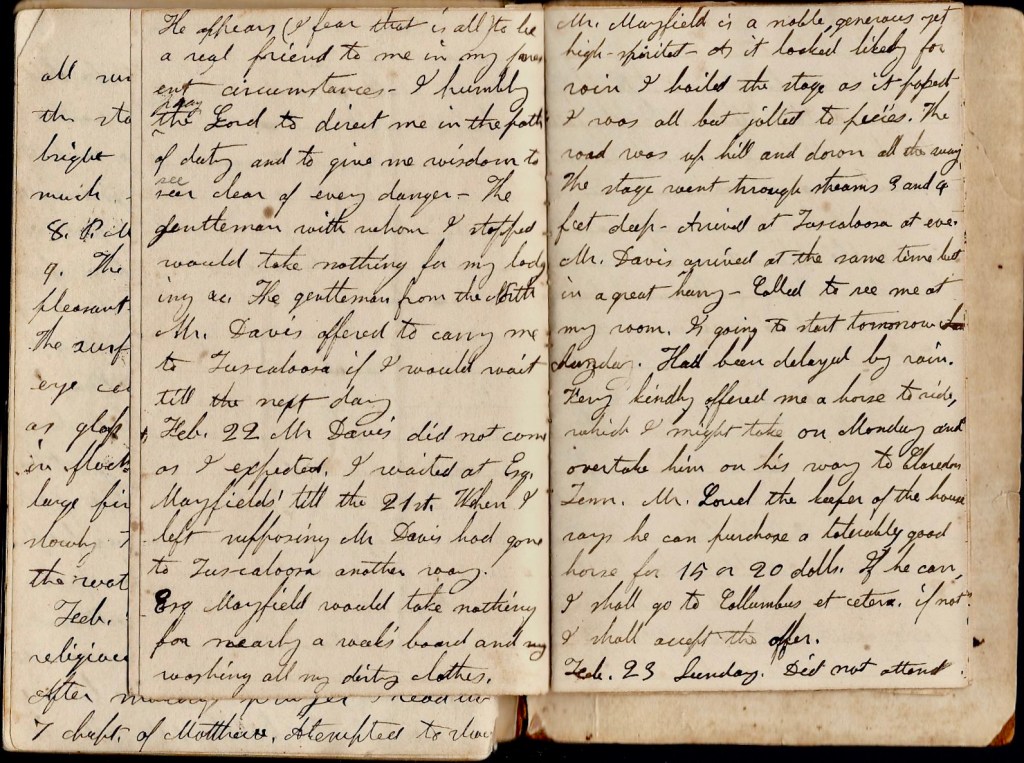

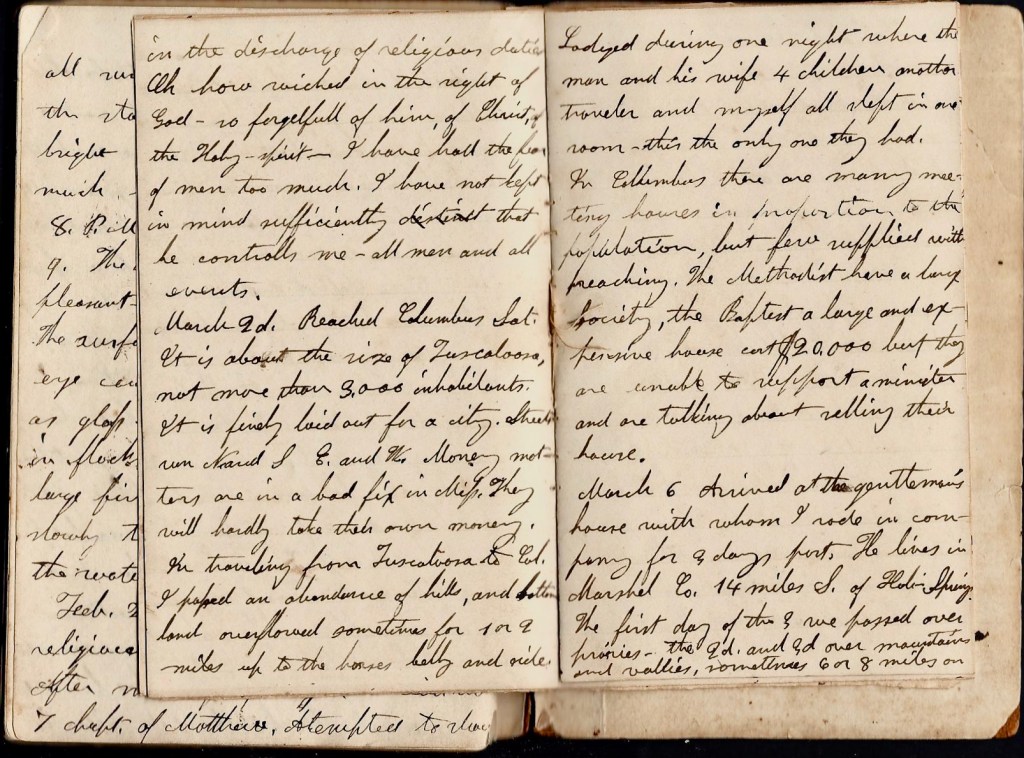
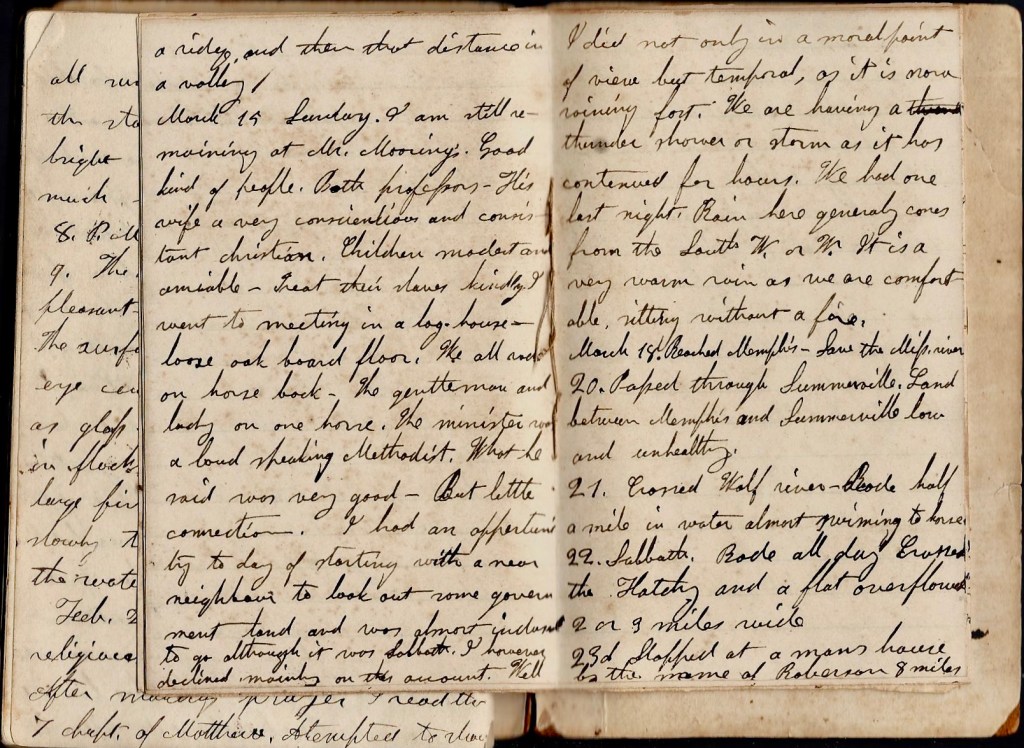
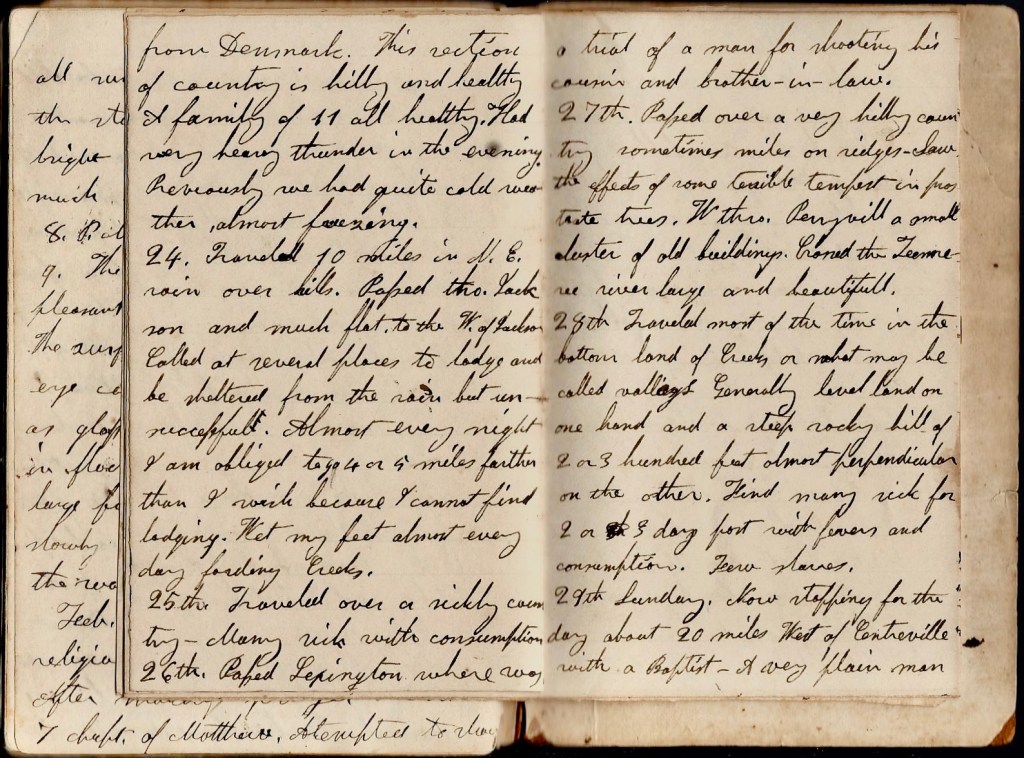
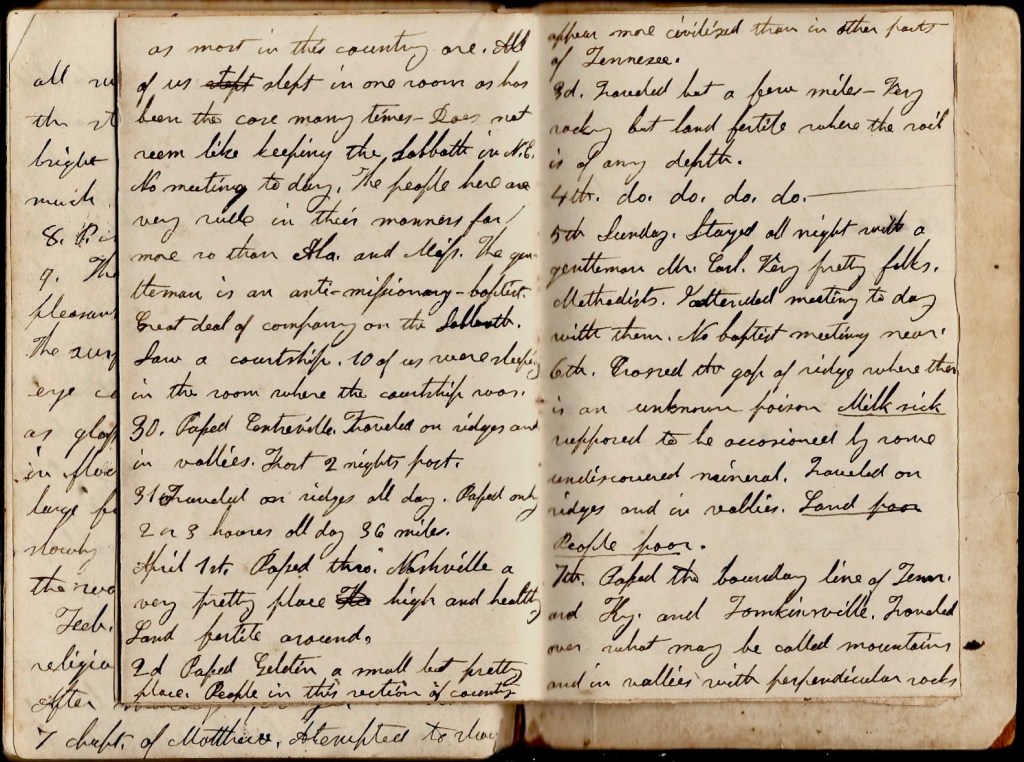
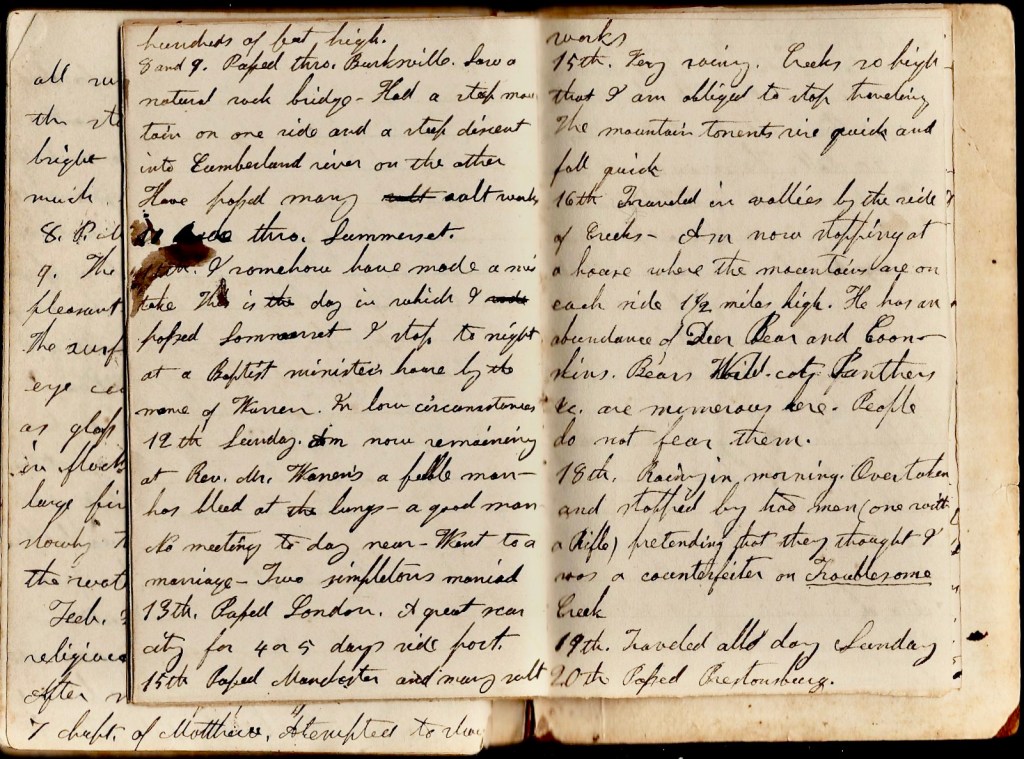

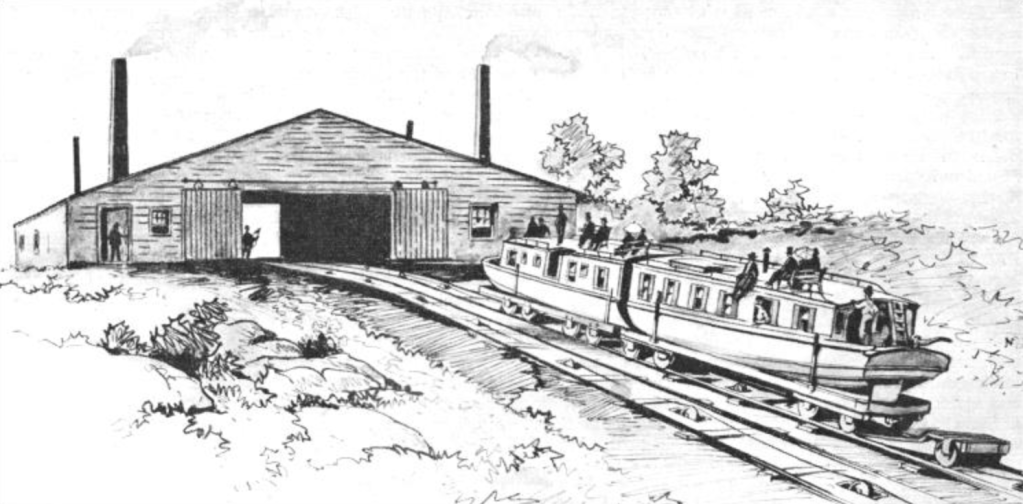
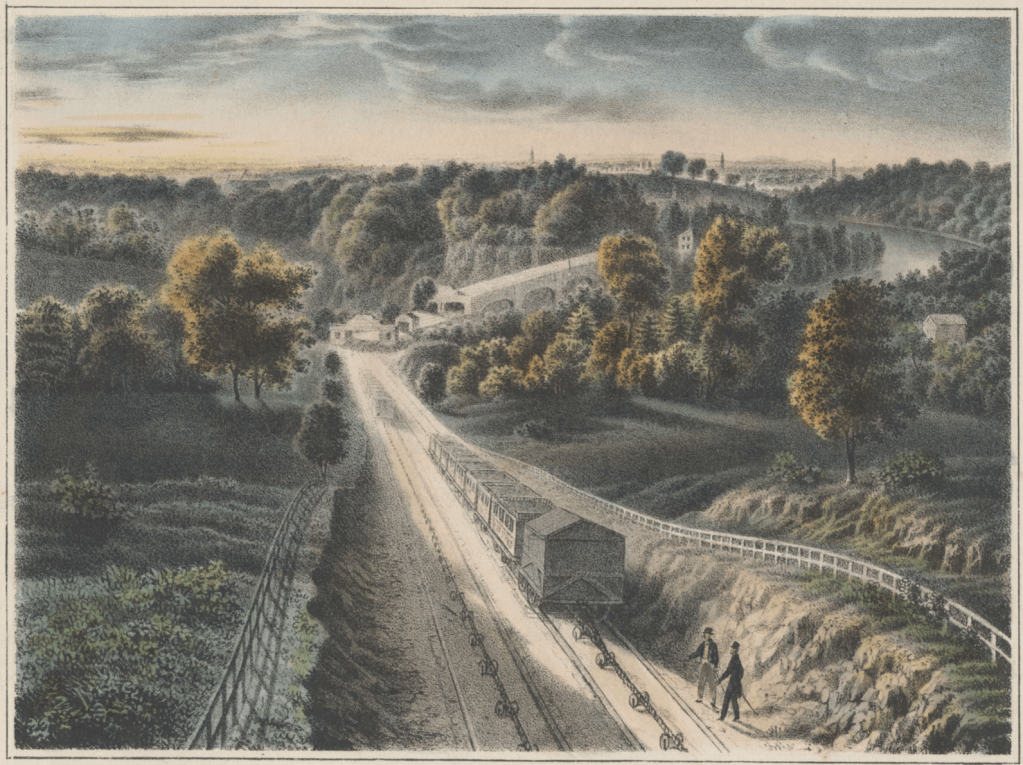
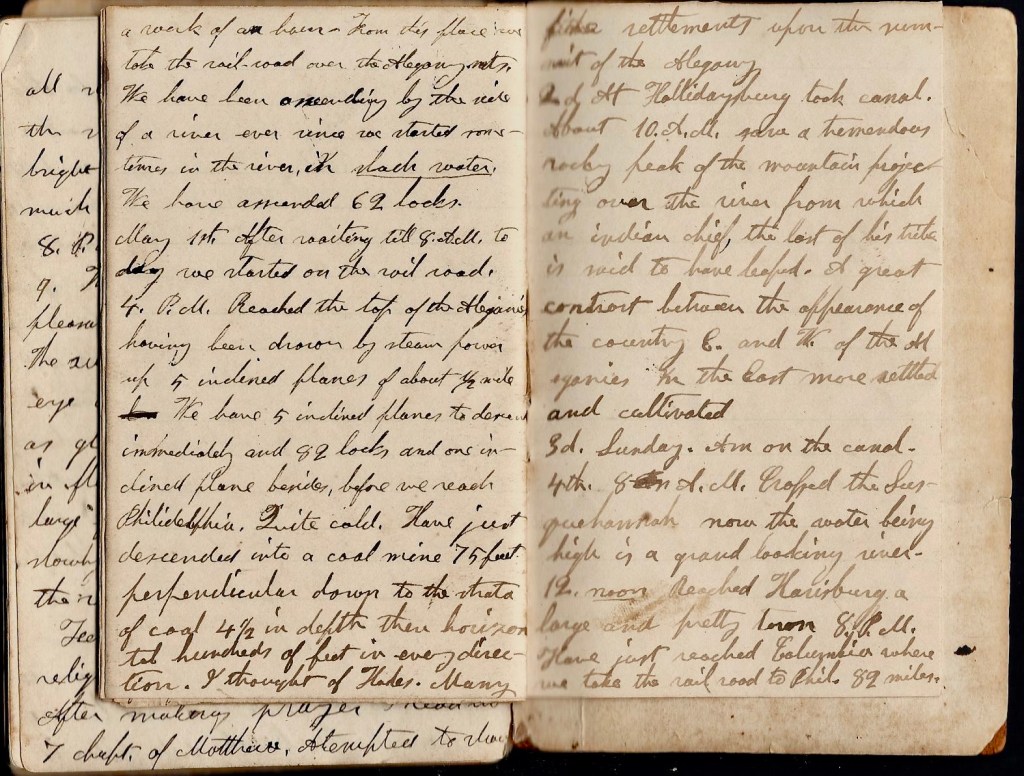
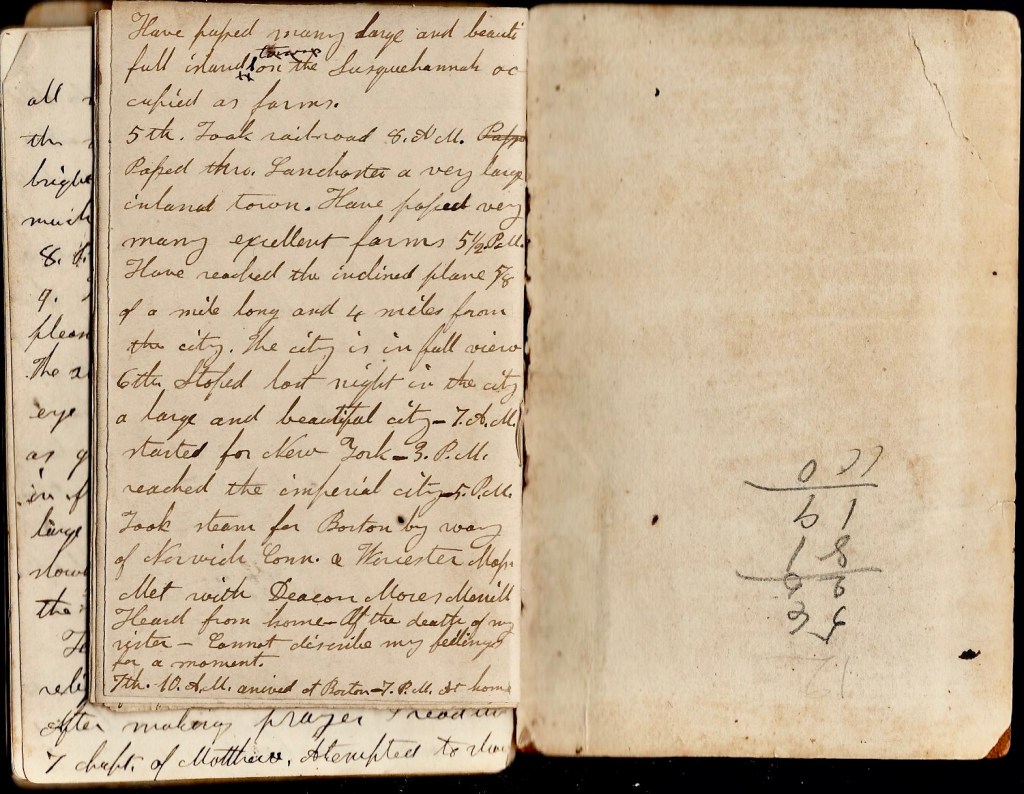

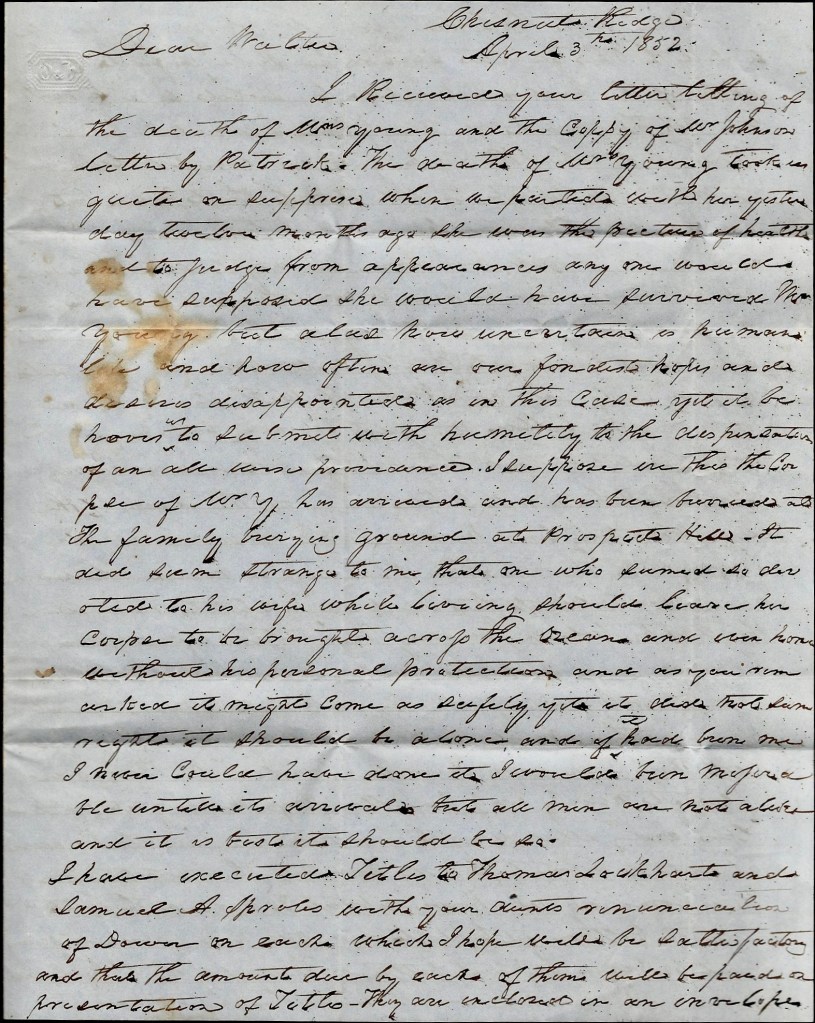
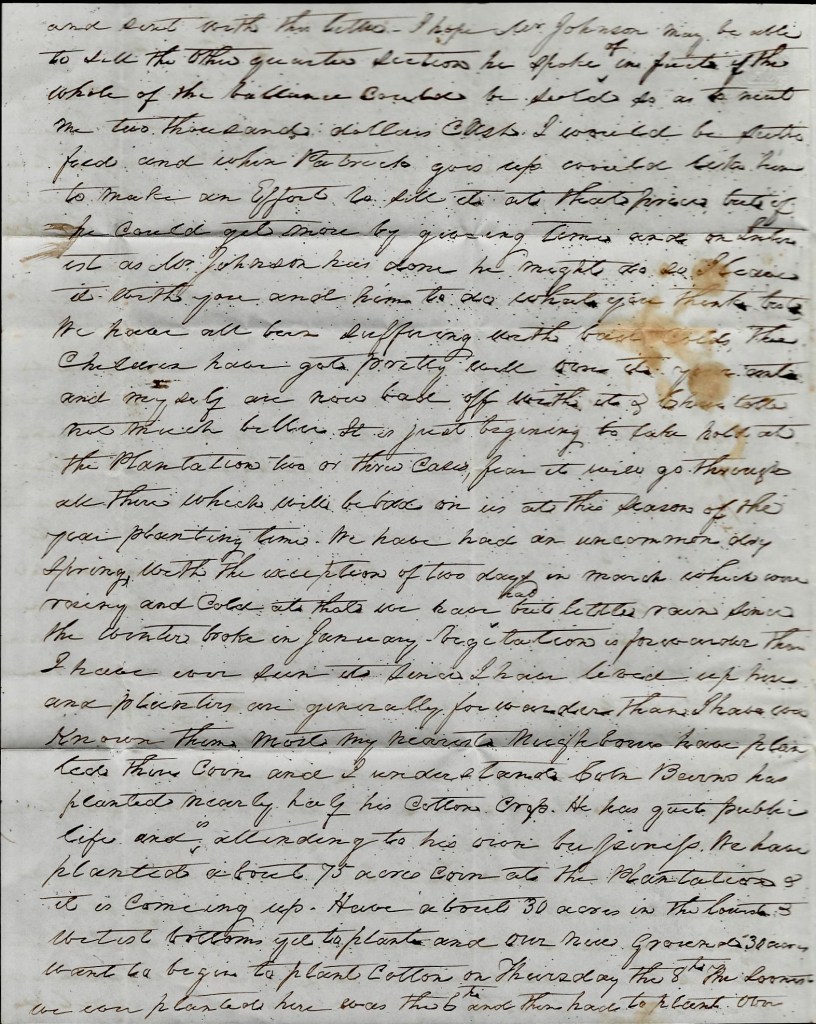
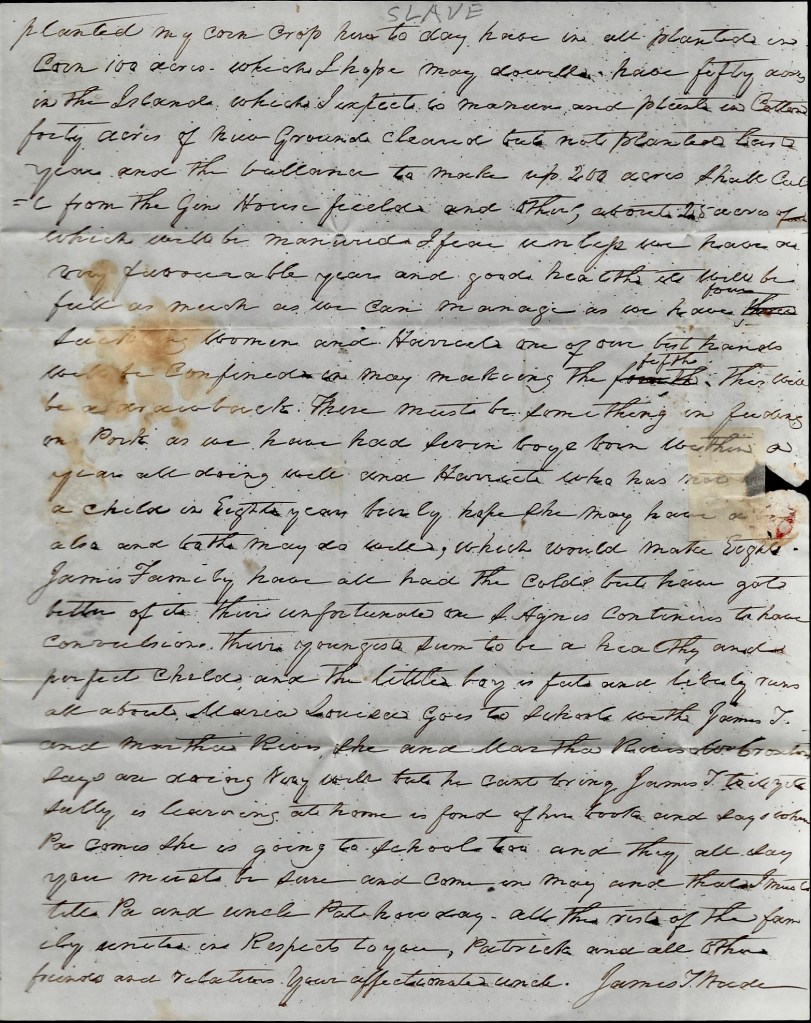

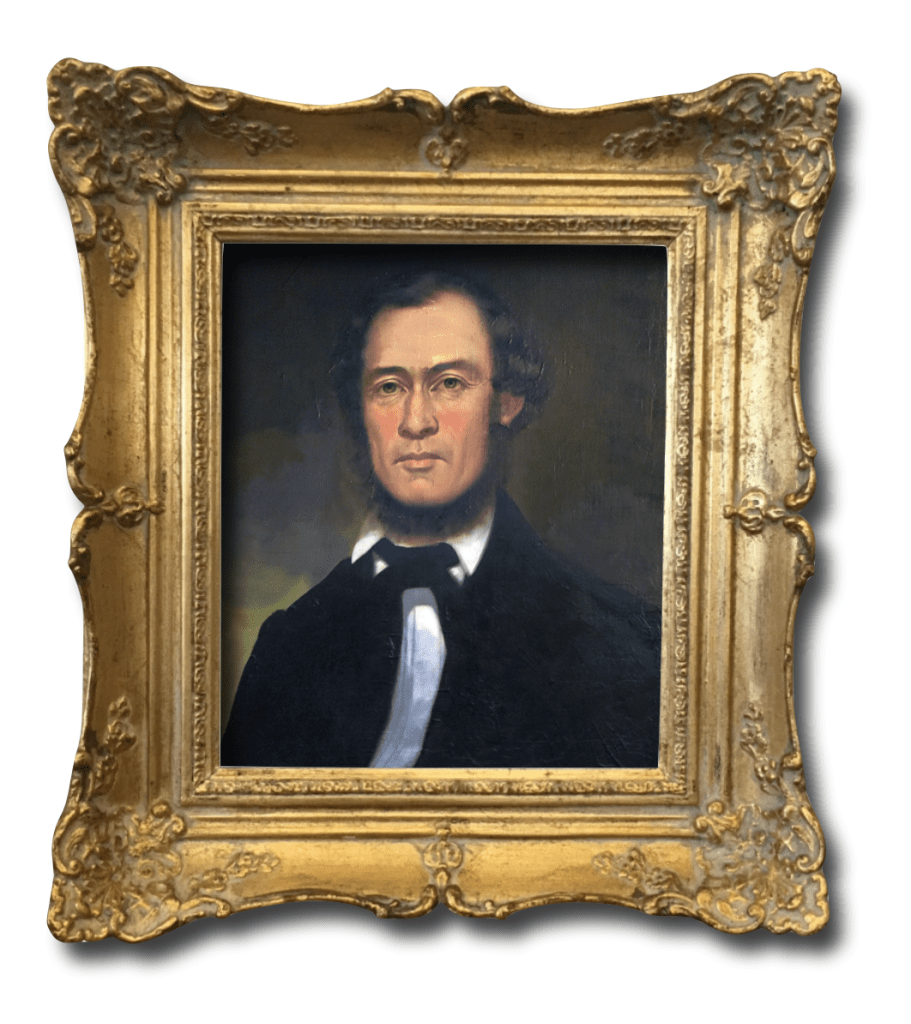
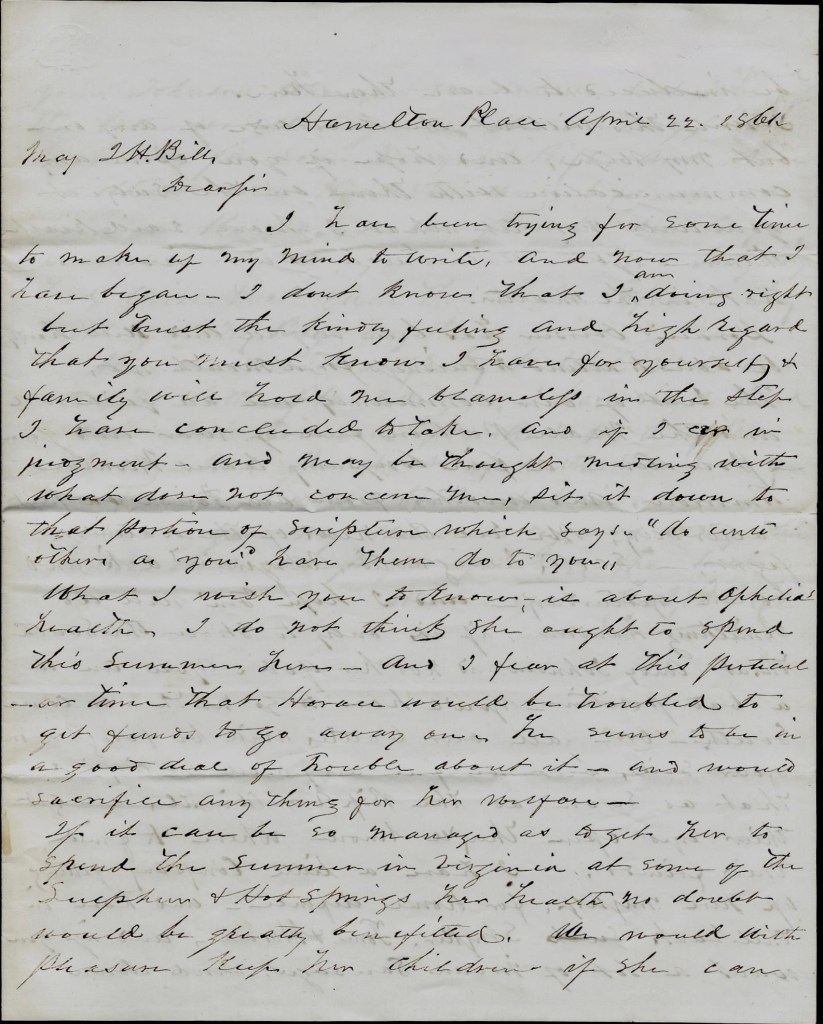
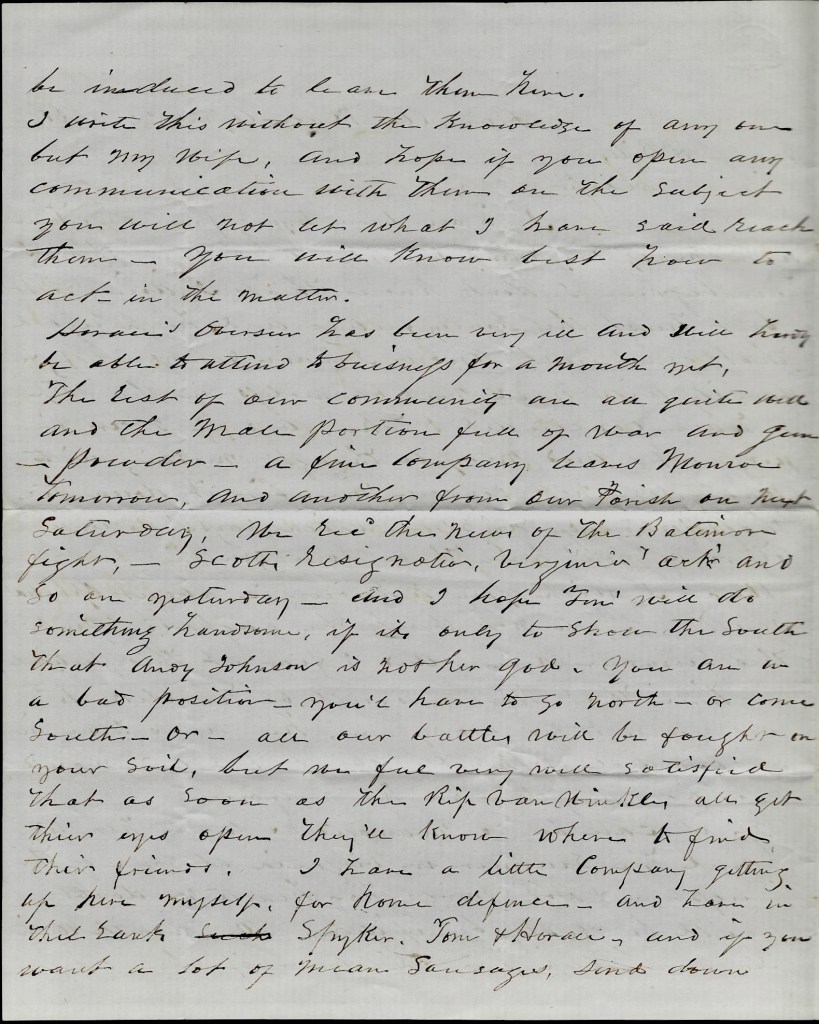
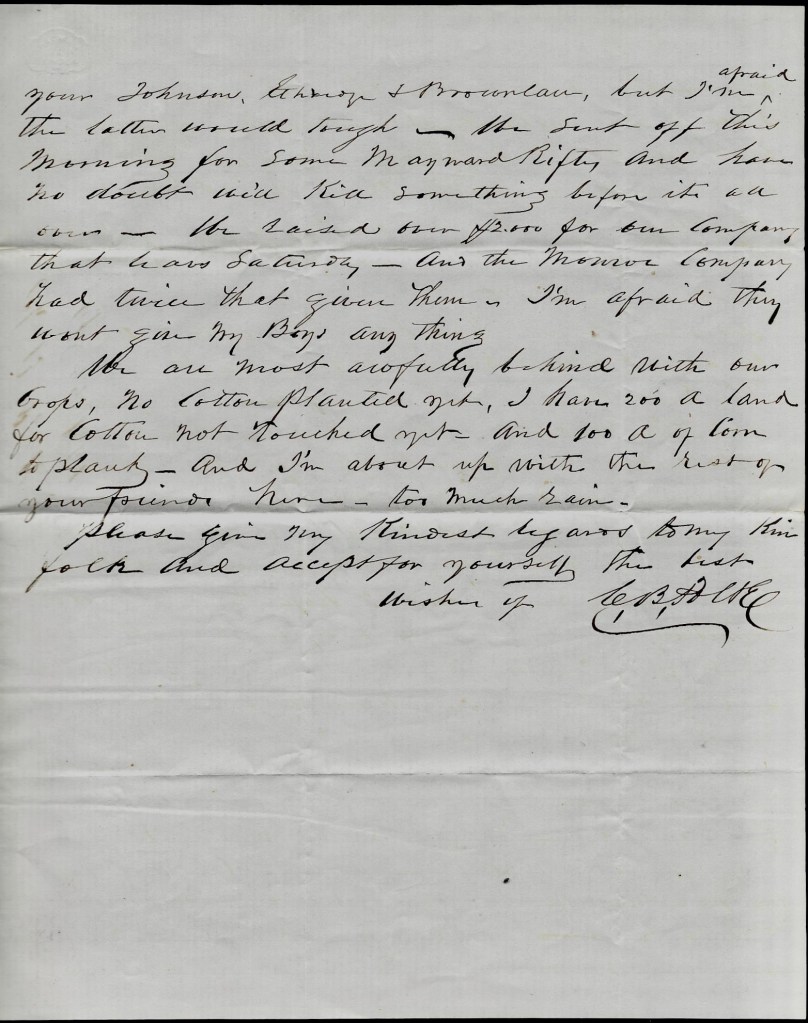
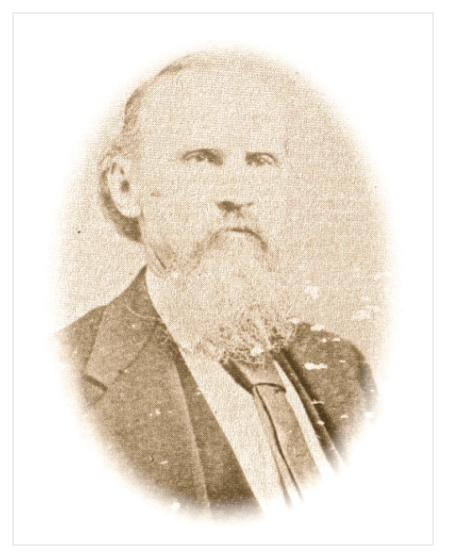
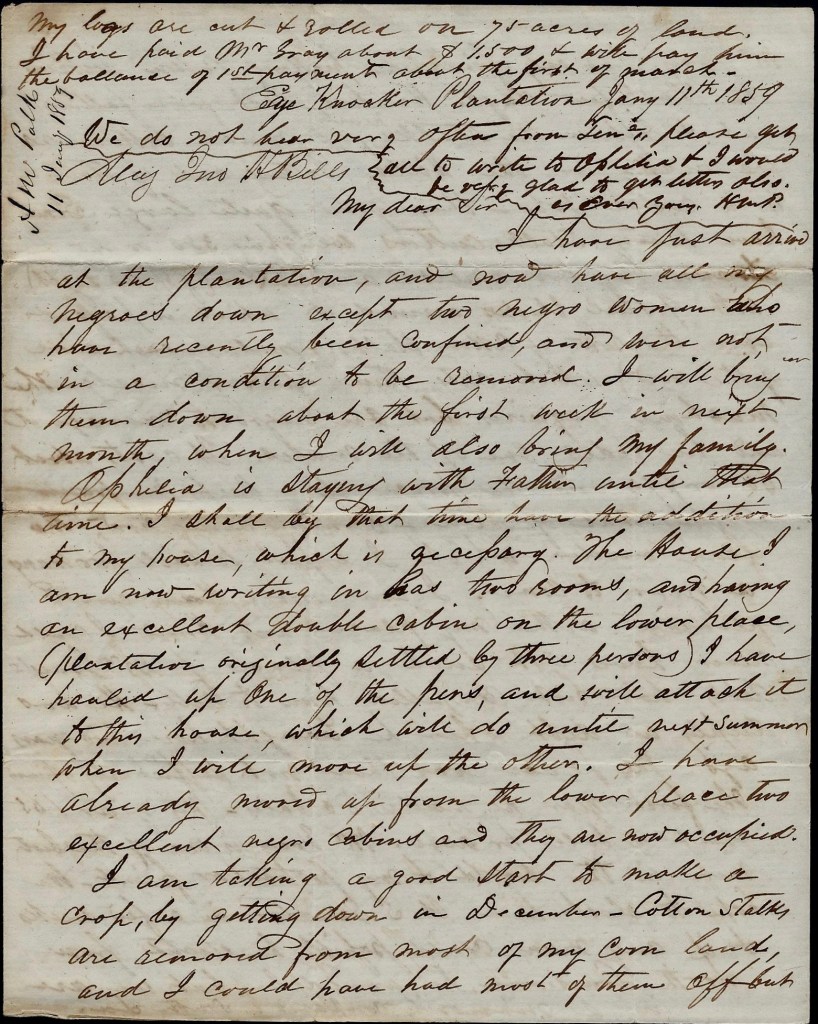


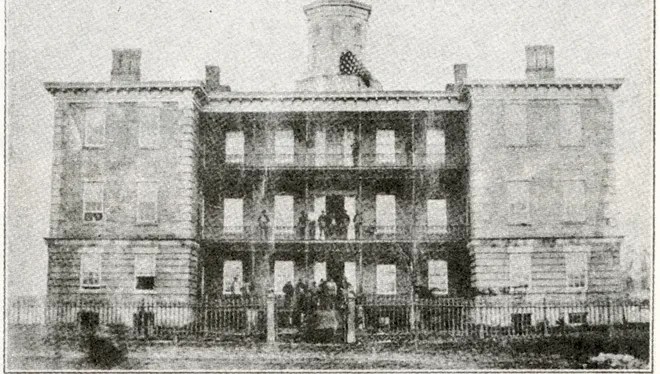
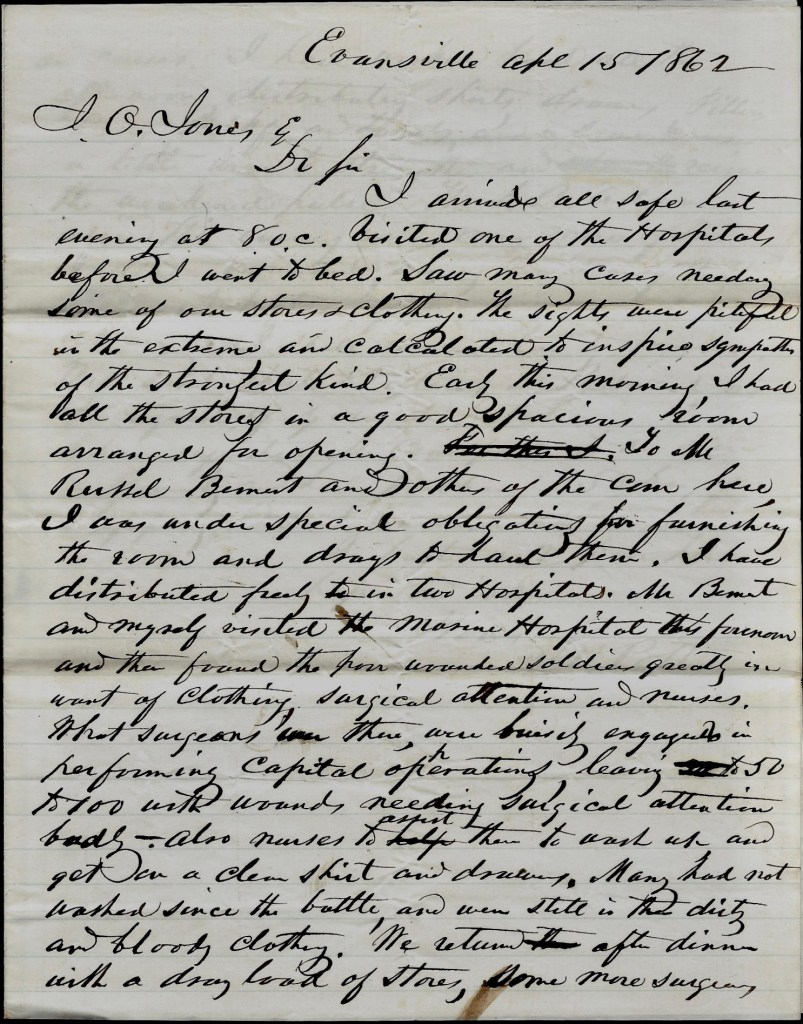
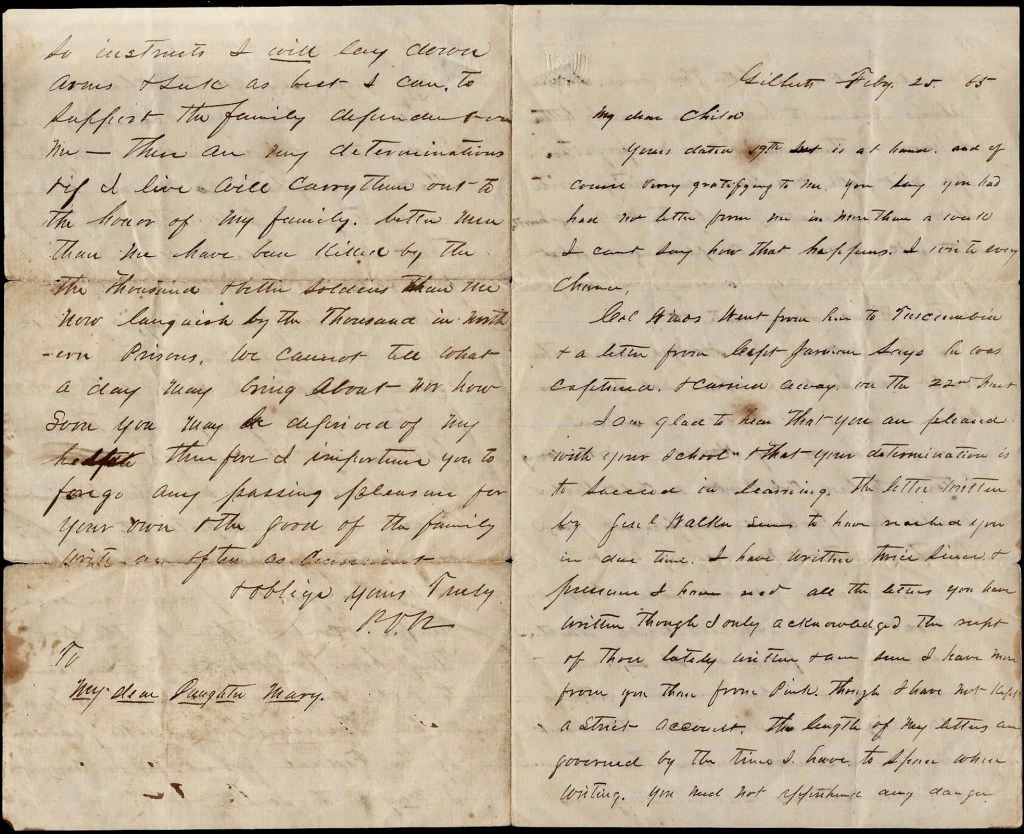
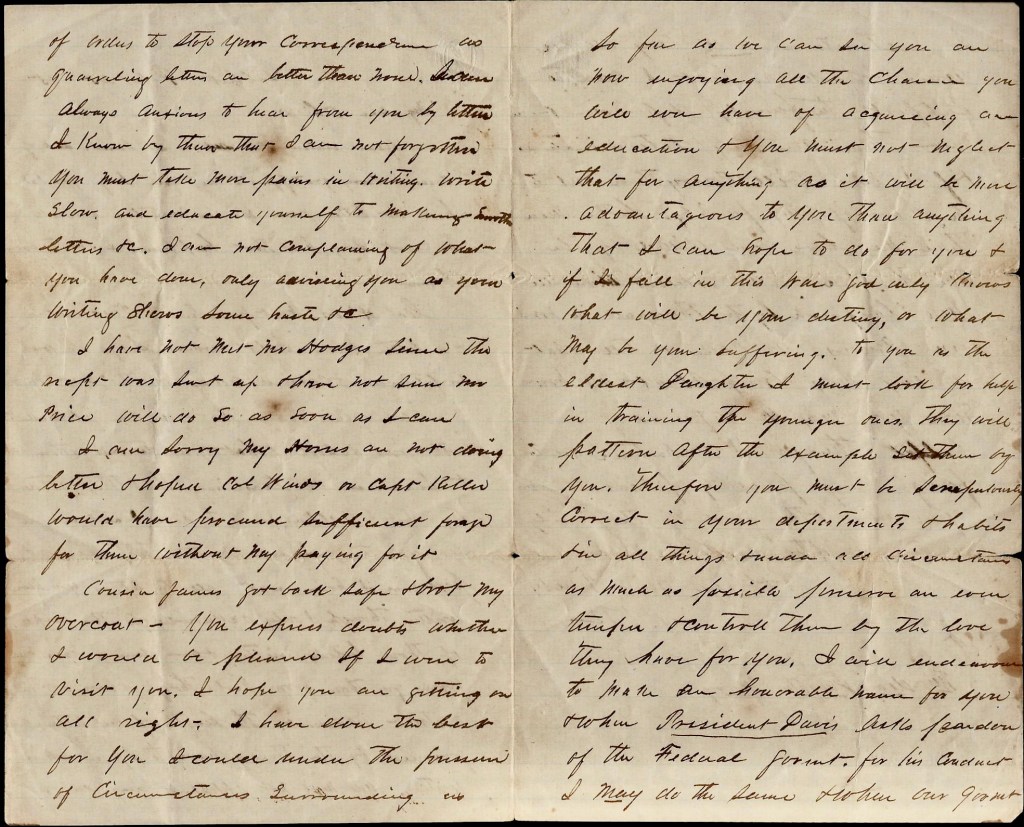
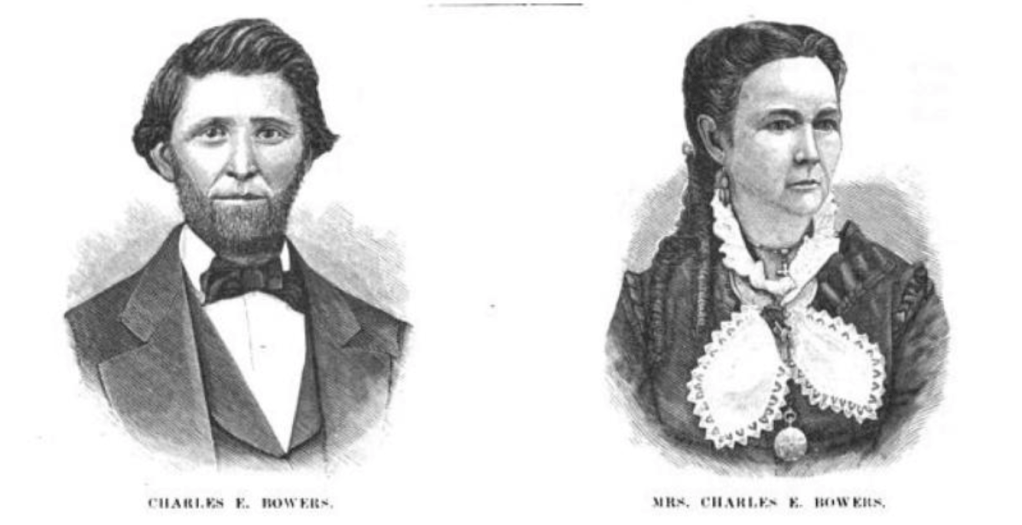
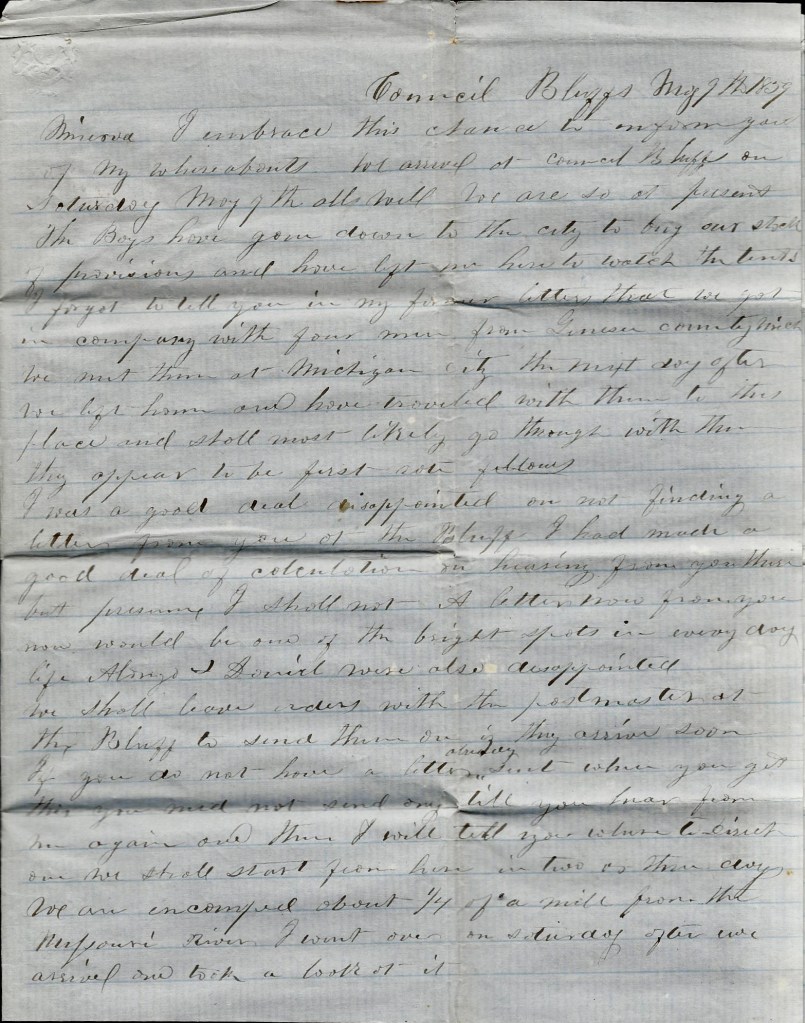
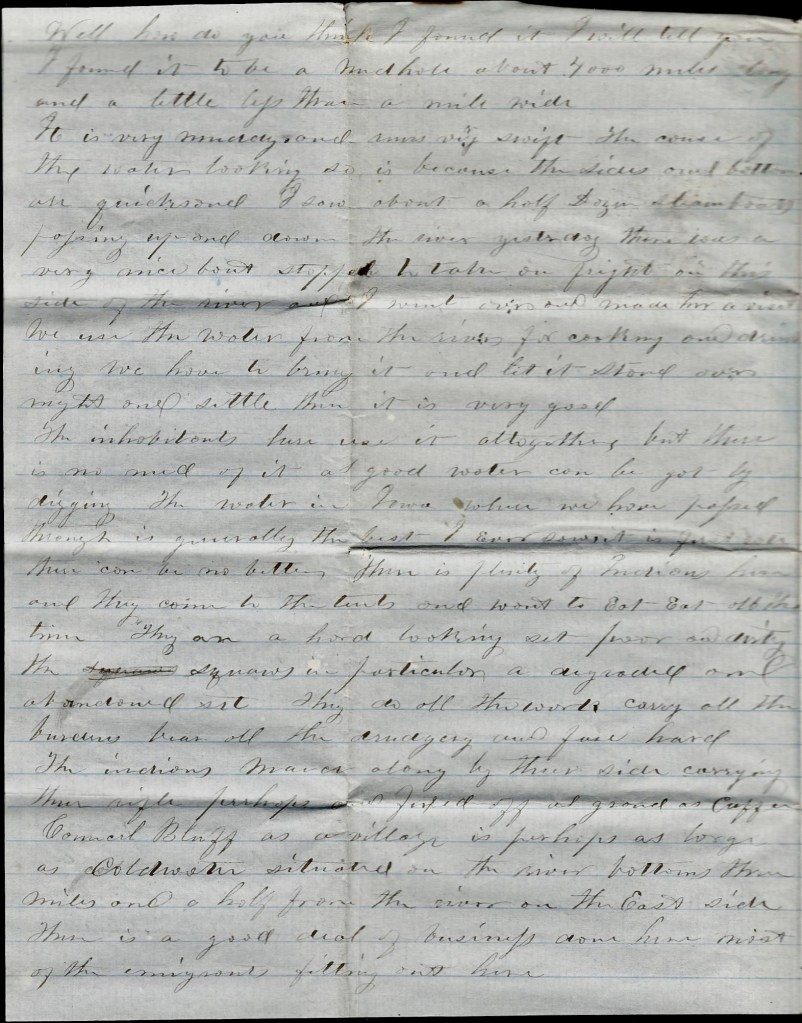
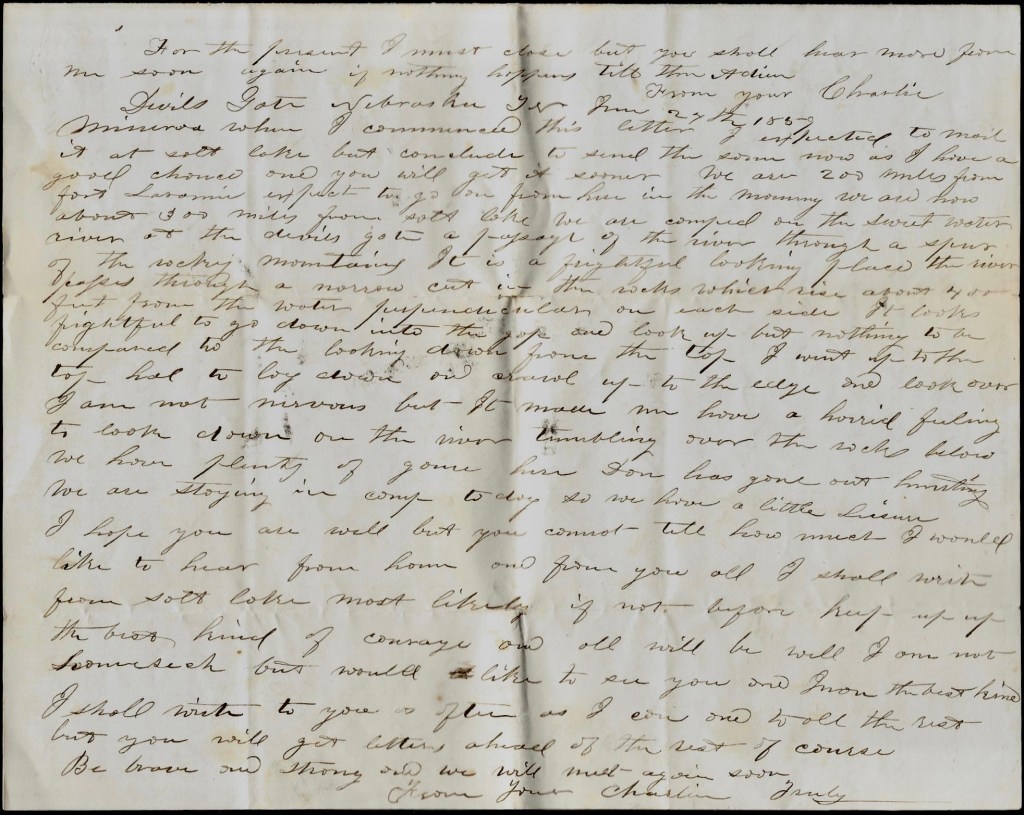
 Spared & Shared 23