My passion is studying American history leading up to & including the Civil War. I particularly enjoy reading, transcribing & researching primary sources such as letters and diaries.
This morning I saw a post on Yankee Rebel Antiques by my friend Ron Coddington, author and editor of Military Images Magazine, in which he referred to a poem entitled “Soldier’s Tear” that was published by James Gates of Cincinnati during the Civil War. He described the piece as having been folded, suggesting that someone had possibly carried it with them—perhaps a soldier given to him by a loved one.
As I read the poem it occurred to me that I had read at least a portion of it before but couldn’t remember where. Thinking was on an envelope, I searched Civil War envelopes and found one with the familiar words (though retitled “Soldier’s Farewell”) and an engraving of a soldier waving goodbye to his family. The poem and stationery was sold by James Gates, the proprietor of the Union Envelope Manufacturing company located at the southeast corner of 4th & Hammond Streets. While there were many manufacturers who produced stationery with patriotic scenes on them during the war, Gates took his marketing to a new level, even going so far as selling entire “kits” of not only paper and envelopes (a set of 12), but a pen, a pencil, and a “Union pin or other piece of jewelry” suitable for gifting to a loved one. Soldiers often purchased these kits as they passed through Cincinnati and early war letters are commonly found on his stationery. [See Union & Confederate Soldiers’ Stationery, Their Designs & Purposes, by Steven R. Boyd]
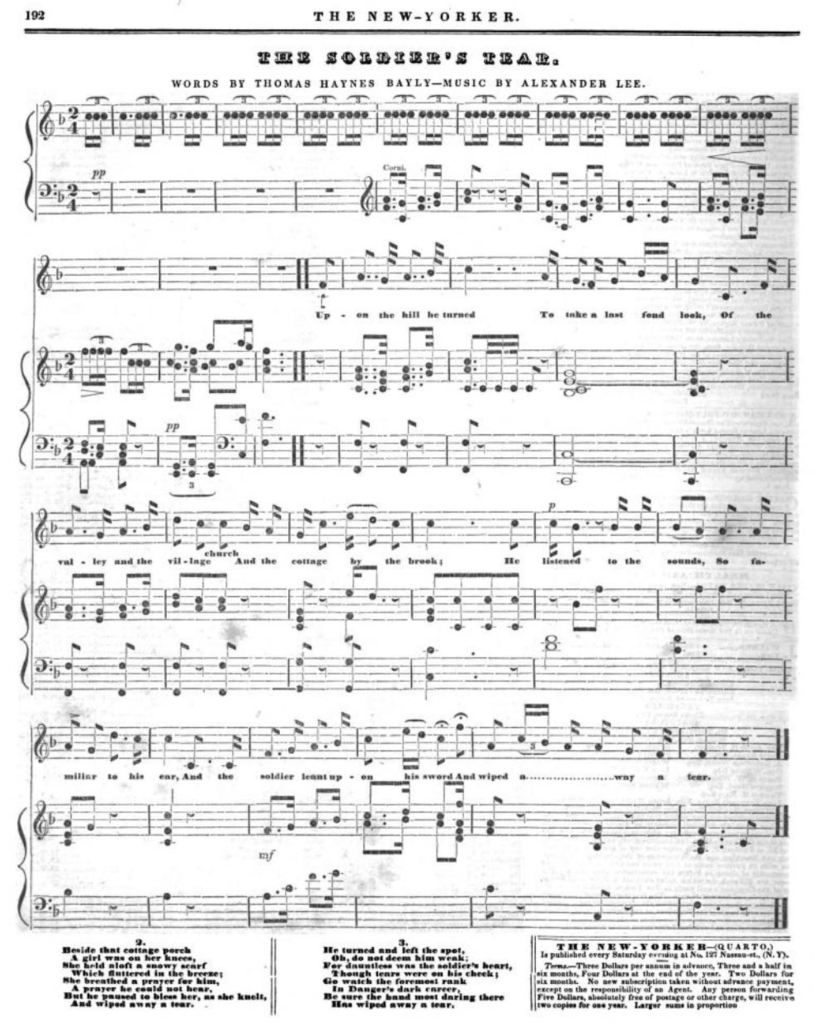
What I found to be most unusual about this piece, however, is that it was written not by an American, but by an Englishman named Thomas Haynes Bayly (1797-1839) whose songs and ballads, including this one, were published in Philadelphia under the title, “Songs and Ballads, Grave & Gay” in 1844. If you are observant, you will notice that he also died in 1839, more than twenty years before the Civil War. I don’t know for sure when Thomas wrote the piece “Soldier’s Tear,” but it was published in the New Yorker in June 1837 so it had to be prior to that. The preface to Songs & Ballads defines him as “unquestionably the most popular English song-writer of his age…unequalled as he is for graceful imagery and delicately turned expression…”
Thomas wrote the lyrics for a tune written by Alexander Lee which was also published in the New Yorker:
The Soldier’s Tear
Wanting to hear the tune played and sung, I found the following clip on YouTube:
This letter was written by Alburtus H. Peckham (1841-1919), the son of William Robinson Peckham, Jr. (1816-1886) and Maria Schermerhorn Kettle (1819-1887) of Cortlandville, Cortland county, New York.
At the age of 23, Alburtus enlisted on 1 September 1864 as a private in Co. F, 185th New York Infantry—a one-year regiment. He was wounded (gun shot through left thigh) on 29 March 1865 in the fighting at Quaker Road (see Battle of Gravelly Run) and transported to the Lincoln Hospital in Washington D. C. where he was discharged on 8 June 1865.
After the war, Alburtus was a merchant in Virgil, New York. He married Lydia Ann Smith (1842-1903) in 1870 and moved to Michigan prior to 1900.
Alburtus wrote the letter to Asahel G. Eggleston (1813-1897) and his wife, Louisa Kenney (1818-1897) of Cortland, New York. Asahel was a farmer in Cortland county. Alburtus does not appear to have been a relation but perhaps he had been previously employed by Asahel as a farmhand.
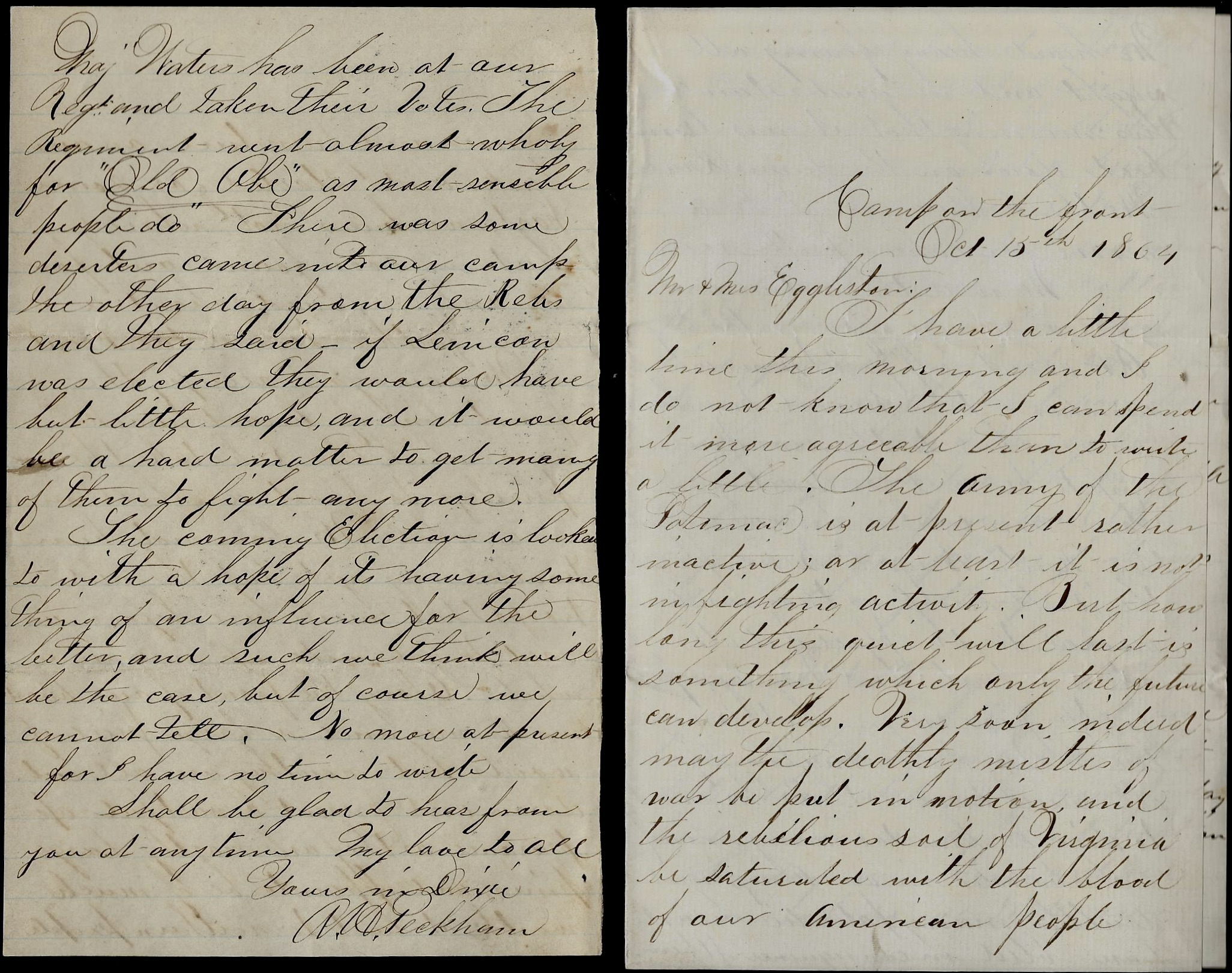
Transcription
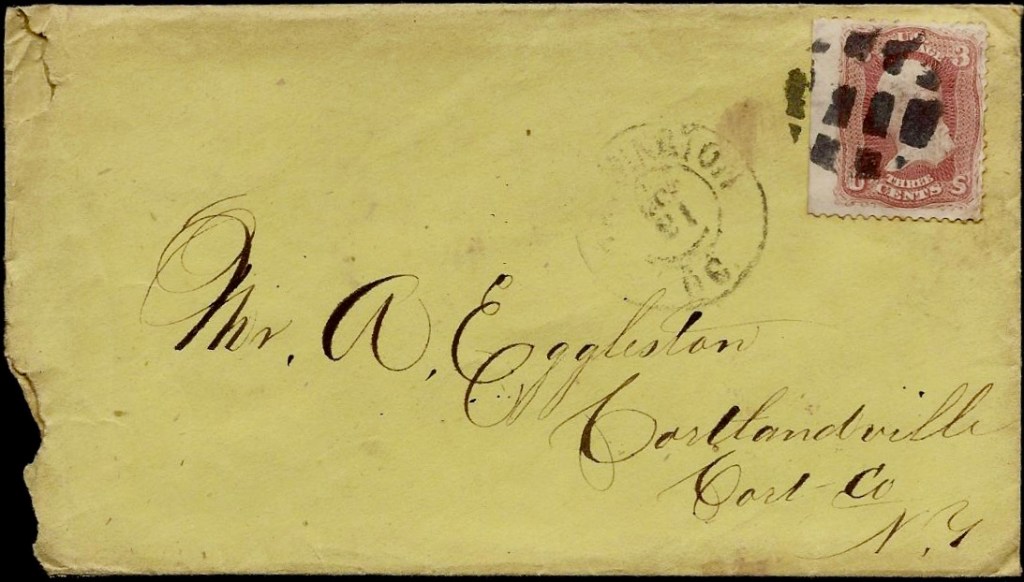
Addressed to Mr. A. Eggleston, Cortlandville, Cortland county, New York
Camp on the front October 15th 1864
Mr. and Mrs. Eggleston,
I have a little time this morning and I do not know that I can spend it more agreeable than to write a little. The Army of the Potomac is at present rather inactive—or at least it is not in fighting activity. But how long this quiet will last is something only the future can develop. Very soon indeed may the deathly missiles of war be put in motion and the rebellious soil of Virginia be saturated with the blood of our American people. We heard heavy firing all night and we understand this morning that it was gunboats down on the James River. We think there must be a move somewhere pretty soon.
We were the witnesses of rather a solemn affair yesterday. At about half past nine, a member of the 2nd Maryland was marched to the rear of our camp to be shot for desertion. 1 Four men carried his coffin and the 9th Brigade Band played the “Death March” as thousands moved to the place of death. Many hearts beat in sympathy for the poor victim but from the history of his military life all were assured that he ought to die. We have too many men of such character in our army and doubtless many patriotic hearts have bled in consequence of them.
Our camp at present is located on the farm of a rebel officer. It does not look much like farming here now. Not a building except the house nor a fence is to be seen. The ground was the past summer covered with tobacco and cotton. We find occasionally a cotton plant standing now. I have not seen a stone of any kind since I have been in Virginia. Some of the company have seen one or two. The principle timber here is pine and the boys use it too, just as if it was not worth anything.
October 18
I did not have time o finish and mail this letter last Saturday and today finds us in a different location. Sunday we were ordered to march so we took our house and furniture on our backs and started for some part, we knew not where, but we soon found out for we only moved about a mile farther toward the front.
We now again occupy the front line of breastworks, over which the Rebs take the privilege to boost a shell once in awhile. We have not been troubled any yet but the old troops that were here before us used to get “woke up” once in awhile. Along the front of our breastworks was once a large piece of woods but now they are all cut down and present a wasteful appearance as they are mostly large pines, and appear to be of much worth—at least to northern people.
The regiment went almost wholly for “Old Abe” as most sensible people do. There was some deserters came into our camp the other day from the Rebs and they said if Lincoln was elected, they would have but little hope and it would be a hard matter to get many of them to fight anymore.
—A. H. Peckham, 185th New York, 18 October 1864
Maj. Waters has been at our regiment and taken their votes. The regiment went almost wholly for “Old Abe” as most sensible people do. There was some deserters came into our camp the other day from the Rebs and they said if Lincoln was elected, they would have but little hope and it would be a hard matter to get many of them to fight anymore. The coming election is looked to with a hope of its having something of an influence for the better, and such we think will be the case, but of course we cannot tell. No more at present for I have no time to write.
Shall be glad to hear from you at anytime. My love to all. Yours in Dixie, — A. H. Peckham
1 The soldier from the 2nd Maryland who was shot for desertion on 14 October 1864 was Charles H. Merling.
I could not find an image of John but here is a tintype of Benjamin Darby of Co. F, 41st Ohio Vol. Infantry (Matthew Fleming Collection)
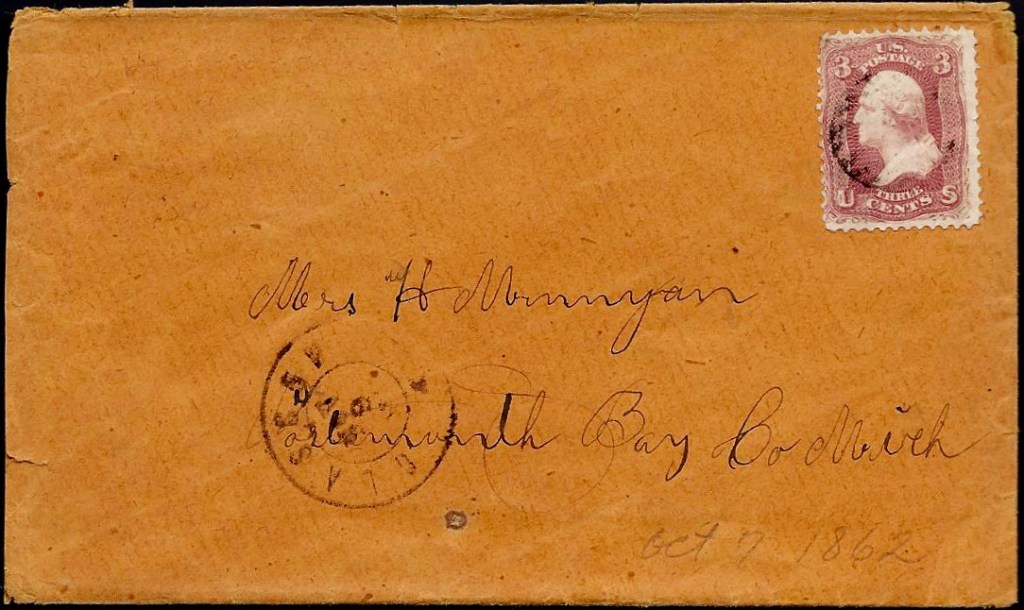
These two letters were written by John Henry Wakefield (1839-1893), the son of John Wakefield (1802-1871) and Susan A. Wakefield (1813-1878) of Bedford, Cuyahoga county, Ohio. John wrote both letters to his older sister, Hellen (Wakefield) Munyan (1837-1903), the wife of Horace Franklin Munyan (1832-1922) of Bay City, Bay county, Michigan.
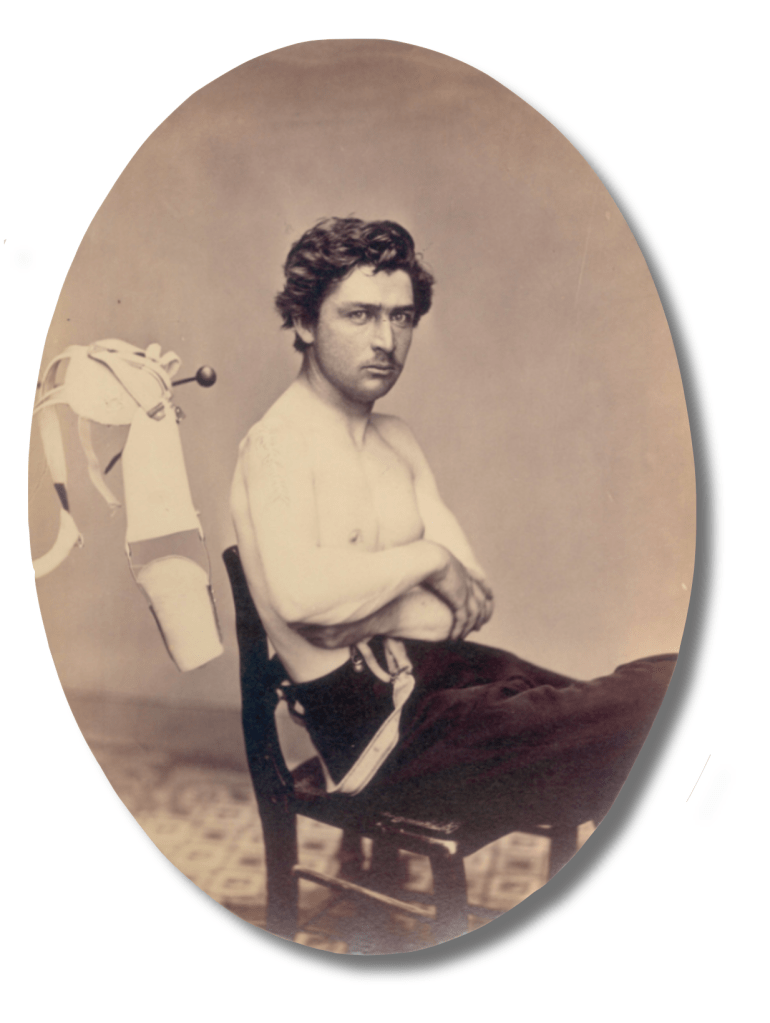
John enlisted on 27 September 1861 when he was 22 years old to serve three years in Co. D, 41st Ohio Volunteer Infantry (OVI). He was appointed corporal on 24 November 1861, and made the 1st Sergeant of his company on 27 April 1863. He was wounded in the Battle of Chickamauga on 19 September 1863 and again on 27 May 1864 in the Battle of Picketts Mills, Georgia. His wound in the last named battle resulted in the amputation of his right arm and he was mustered out of the service on 4 November 1864.
The first letter was datelined from Glasgow, Kentucky, on the day before the Battle of Perryville in which the 41st OVI participated, though they saw only light skirmishing. After having helped to drive Bragg’s army out of Kentucky, the 41st returned to Nashville in late October 1862 and remained there until late December when the Army of the Ohio advanced against the Confederate army at Murfreesboro and participated in the Battle of Stones River. On the first day of that battle, the brigade in which the 41st fought stopped a Confederate assault after the Right Wing collapsed, saving the Union army from defeat. They repulsed another attack on the second day and silenced a Rebel battery on the third day. Following this three day battle, the 41st entered camp at Readyville, Tennessee, where the second letter was written.
Letter 1
Camp at Glasgow [Kentucky] October 7, 1862
Dear Sister,
It has been a long time since I have written to you. I have not had any chance as we have been on the move for two months and I expect we shall tomorrow for Gallatin within fifteen miles of Nashville and sixty-five or seventy miles from here. The weather is quite cool and has been for some time. We had a snow about ten days ago. It fell three inches in depth and was very heavy and cold.
I have no news of interest to write—only we got four months pay yesterday. We have two [ ] yet. My health is very good and I hope these few lines will find you and Harold well. I wrote a letter home yesterday. The last letter I received from home was dated the sixth. It arrived in five days. Your letter of the 13th of August arrived some time after. I was very glad to hear that you were all well. I hope Horace has not enlisted yet. [Brother] Martin had not the last letter I got. They have not had their tents since we left Murfreesboro until a few days ago the Captain had one the Colonel gave him and I slept under it. I have not carried my blankets any on the march. We are still at our old business—Headquarters guard.
Our regiment had a skirmish with the enemy. There was no one hurt, one horse shot. There were heavy volleys of musketry and they opened on us with shell from artillery. Our men skirmished with them every day on our march from Louisville. If I were to give you a detailed [report], it would weary your patience so I will close sending my best respects to you and James. So goodbye, — J. H. Wakefield
J. H. Wakefield, Co. D, 41st Regt. OVI, 19th Brigade, 4th Division, Army of Ohio, Louisville, Kentucky, Care of Capt. [Harvey] Proctor
Letter 2
Camp at Readyville, Tennessee February 16, 1863
Dear Sister and Husband,
I received your letter of January 6 and one from home some time ago. I received your letter of February 8th. This evening I was very glad to hear that you were all well but I was surprised to hear that you had not heard from me and that you were so much troubled about me. I wrote a letter to you a few days after the battle & wrote a long letter to Aunt Powers a short time since and requested her to send it to you. I am in good health and enjoying good spirits.
We are encamped at the foot of a hill on a fine slope of ground near a small river. The water is very good. The health of the soldiers is very good. We are in advance on this pike from Murfreesboro to Woodbury. It is ten miles to Murfreesboro and seven to Woodbury. The rebels are quite thick around here but we are getting used to them. We have had several skirmishes with them since we have been here. We went out to Woodbury and had quite a sharp skirmish with them. One man was wounded in our company in the leg quite severely.
The weather has been fine and warm for a week. It rained last night and has rained all day and rains hard tonight.
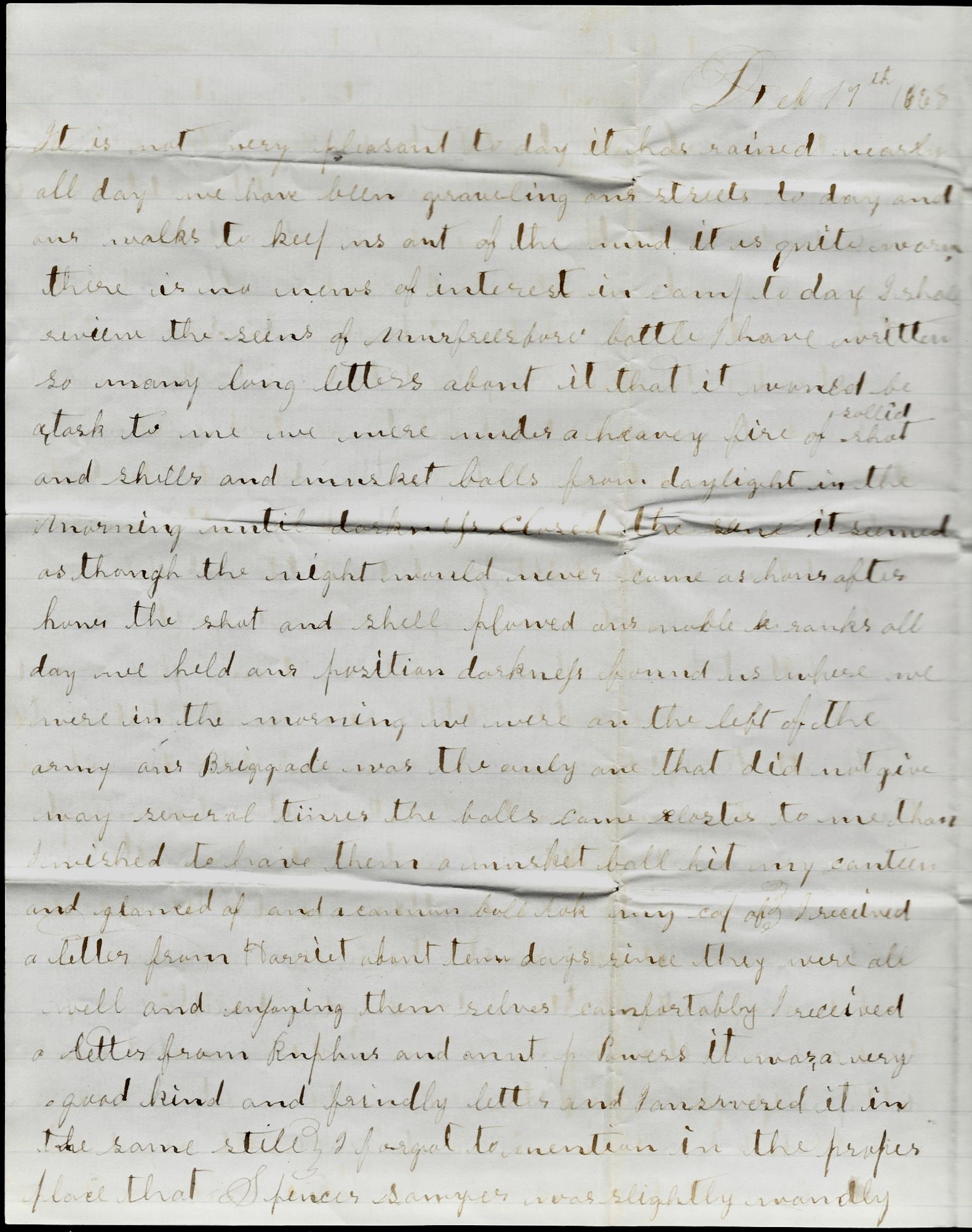
February 17th. It is not very pleasant today. It has rained nearly all day. We have been graveling our streets today and our walks to keep us out of the mud. It is quite warm.
There is no news of interest in camp today. I shall review the scenes of Murfreesboro Battle. I have written so many long letters about it that it would be a task to me. We were under a heavy fire of solid shot and shells and musket balls from daylight in the morning until darkness closed the same. It seemed as though the night would never come as hour after hour the shot and shell plowed our noble ranks all day. [But] we held our position. Darkness found us where we were in the morning. We were on the left of the army. Our Brigade was the only one that did not give way. Several times the balls came closer to me than I wished to have them. A musket ball hit my canteen and glanced off and a cannon ball took my cap off. 1
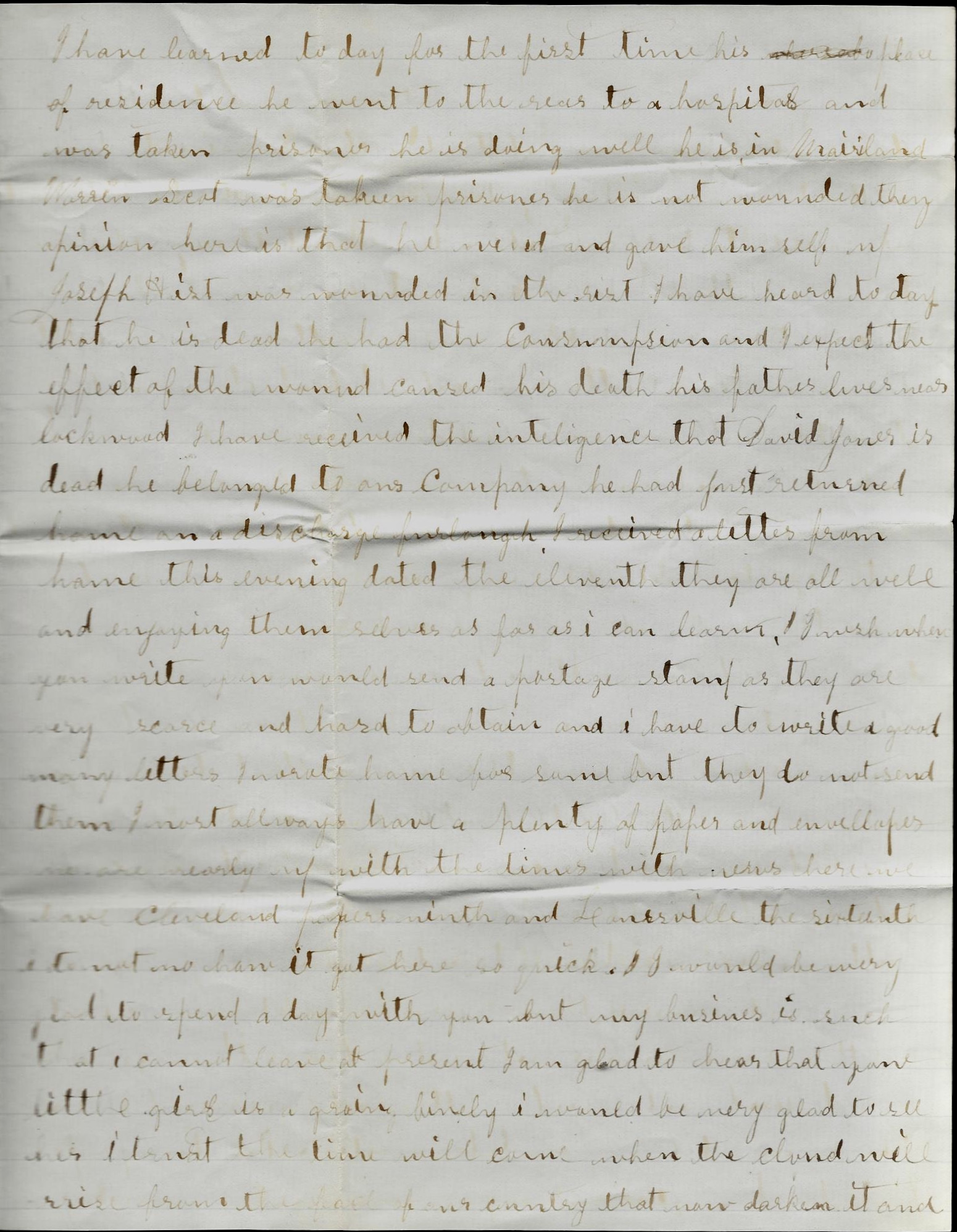
I received a letter from Harriet about ten days since. They were all well and enjoying themselves comfortably. I received a letter from Rufus and Aunt Powers. It was a very good, kind, and friendly letter and I answered it in the same style. I forgot to mention in the proper place that [Sergt.] Spencer Sawyer was slightly wounded. I have learned today for the first time his place of residence. He went to the rear to a hospital and was taken prisoner. He is doing well. He is in Maryland. Warren Scott was taken prisoner. He is not wounded. The opinion here is that he went and gave himself up. Joseph Hist was wounded in the wrist. I have heard today that he is dead. He had the consumption and I expect the effect of the wound caused his death. His father lives near Lockwood. I have received the intelligence that David Jones is dead. He belonged to our company. He had just returned home [to Bedford, Ohio] of a discharge furlough.
I received a letter from home this evening dated the eleventh. They are all well and enjoying themselves as far as I can learn. I wish when you write, you would send a postage stamp as they are very scarce and hard to obtain and I have to write a good many letters. I wrote home for some but thy do not send them. I most always have a plenty of paper and envelopes. We are nearly up with the times with news here. We saw Cleveland papers ninth and Louisville the sixteenth. I don’t know how it got here so quick. I would be very glad to spend a day with you but my business is such that I cannot leave at present. I am glad to hear that your little girl is a growing finely. I would be very glad to see her. I trust the time will come when the cloud will rise from the face of our country that now darkens it and we will meet again. I would be very glad to visit with you in your northern home.
The health of the regiment is very good. I have been acting Orderly Sergeant since we left Nashville. I must close fearing I will weary you with my long letters. If there is any mistakes, you must correct them as I have not time. We are having a very good time this winter. It is so warm.
Yours truly. I send my love to all. From your brother, — J. H. Wakefield
Address: Co. D. 41st Regt. OVI, 2nd Brigade, 1st Division, Army of the Cumberland. Left Wing Murfreesboro, Tenn.
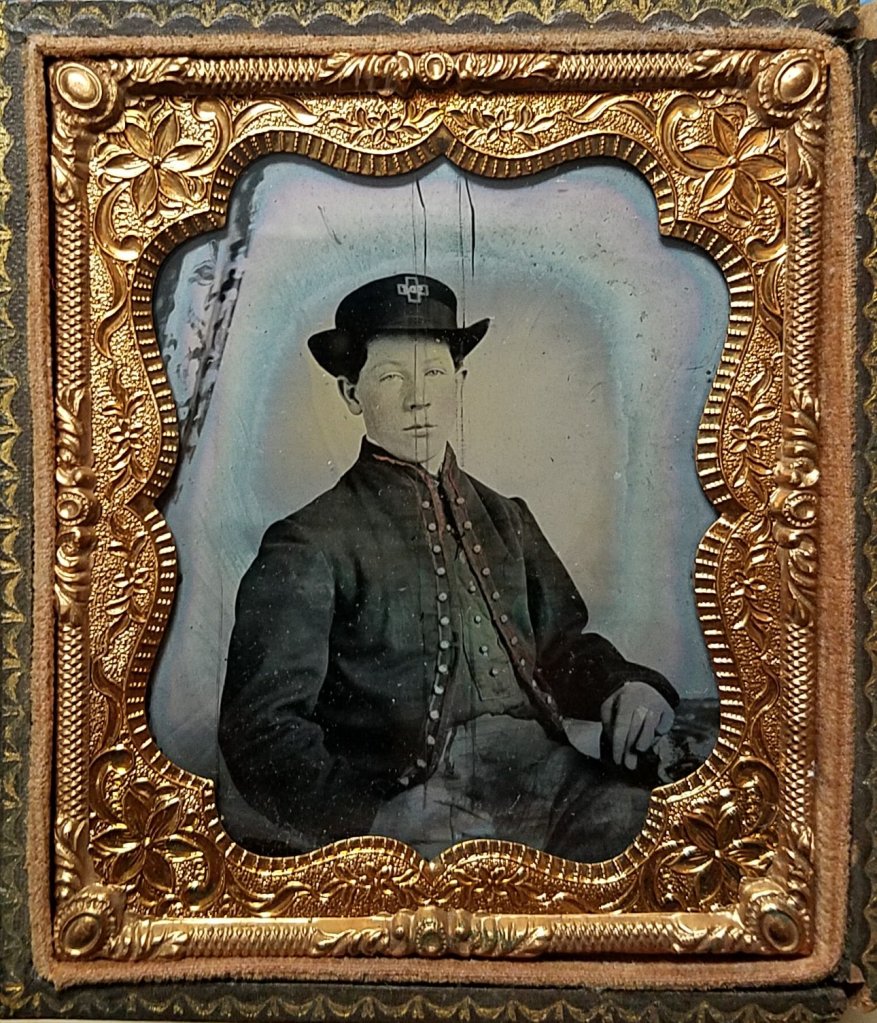
I could not find an images of James but here’s one of Sylvanus B. Crane who served in the same company of the 13th US Regulars. (Photo Sleuth)
This letter was written by James W. Hughey (1830-1917) to his brother-in-law Levi S. Miller (1829-1917) and Sarah Jane (Hughey) Miller (1829-1917) on Vinton, Benton county, Iowa. James was the son of Thomas B. Hughey (1801-1885) and Elizabeth Jane Gordon (1804-1854) of Madison, Highland county, Ohio.
James was married to Mary Jane Trout (1833-1911) in November 1853 and had at least two children, Melissa (b. 1855) and George (b. 1856) by the time of his enlistment on 17 March 1862 as a private in Co. H, 1st Battalion, 13th US Infantry. At the time of his enlistment, James was described as 5’7″ tall, with blue eyes and brown hair. He was discharged from the service in March 1865 at Nashville, Tennessee.
At the time this letter was written in mid-May 1862, the battalion of regulars were still encamped at Camp Sherman near Alton, Illinois. Gen. Halleck used them to guard prisoners of war until September 1862 when they were finally set to Newport, Kentucky, for final organization and then sent to General Sherman’s army who was then at Memphis.
[This letter is from the personal collection of Greg Herr and is published on Spared & Shared by express consent.]
Transcription
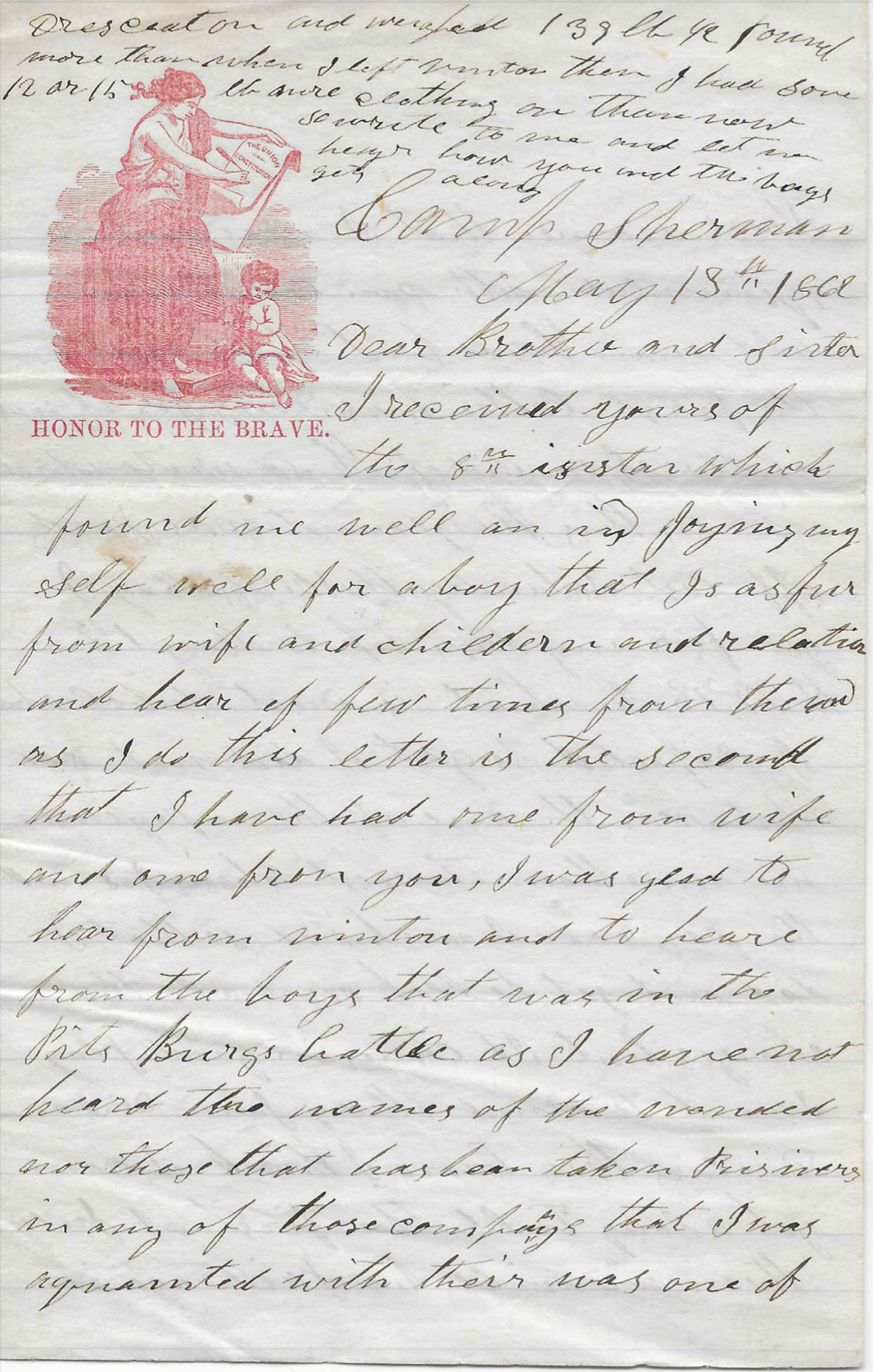
Camp Sherman [near Alton, Illinois] May 13th 1862
Dear Brother and Sister,
I received yours of the 8th inst. which found me well and enjoying myself well for a boy that is as far from wife and children and relation and hear of few times from them as I do. This letter is the second that I have had—one from wife and one from you. I was glad to hear from Vinton and to hear from the boys that was in the Pittsburg [Landing] Battle as I have not heard the names of the wounded nor those that has been taken prisoners in any of those companies that I was acquainted with. There was one of those names that I was not acquainted with unless it was old man Loree but if it was, the first letter was wrong for it was a letter S instead of L. So write which it is.
This regiment was paid off last Saturday the 10th of May. I got for my dues up to May 1st. $29.73 which is most double what I expected to get. I did not see what was the cause of them paying me more than the rest. When I signed the pay roll I was hurried so that I did not get to look over all the charges but it comes in good play. I want to send Mary Jane $25 this time. I think I can get along till the first of July. Then we will be paid again.
I will have my likeness taken as soon as I can have it taken and send it to you. I went yesterday but I could not get it taken. There is two artists in this city and since the boys has got their pay, there is such a rush to have them taken that there is not any chance but I will try to send it in my next letter as I want to send one to Mary Jane as soon as I can get it taken.
So I want you to write oftener and none of your half sheets for you cannot buy a half sheet without buying the other two so write all the news and let me have something to read. We are still a gaining ground on southern soil and backing the Rebels down. We get word that there was a general engagement going on now. We got this news last night so God speed the times when rebellion will be subdued and our poor prisoners set free for if anyone would see how prisoners look where there is no more than 1,000, they would like to hear the sound of freedom where there is sentinels to guard them with loaded guns and bayonets to pierce a man through if they say a sassy word to him and see them sick and dying and no one to cheer for them.
I will have to close by requesting you to write often. So goodbye. J. W. Hughey
A word to Mr. and Mrs. [John] Felker. I am in Illinois now and am enjoying good health—I think better than I ever did at this season of the year, I was weighed yesterday with just my dress coat on and weighed 139 lb—a half pound more than when I left Vinton. Then I had some 12 or 15 lb. more clothing on than now. Write to me and let me hear how you and the boys get along.
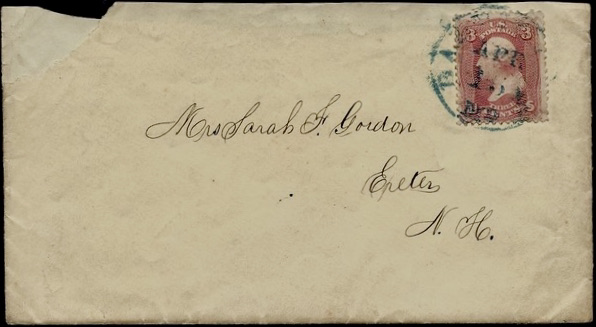
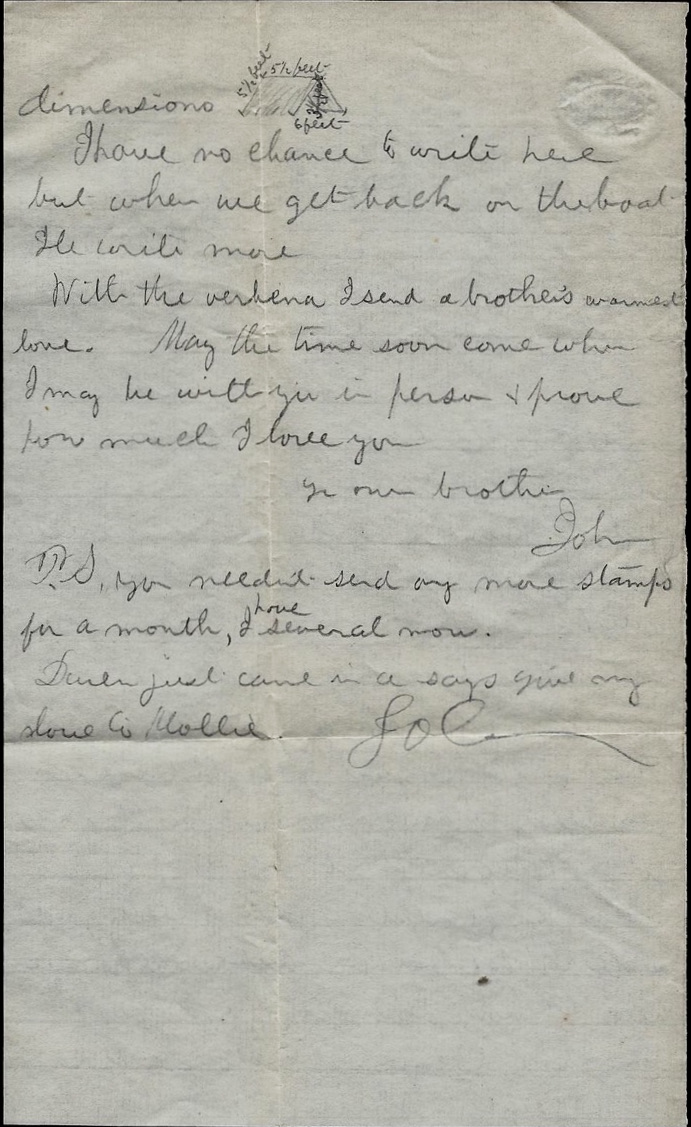
The author of this brief letter remains unidentified. It appears that he has signed his name “John” and he has given the name of a comrade but it is not easily read. It turns out that envelope is of no help because I don’t believe it actually belong with the letter. It was addressed to Mrs. Sarah F. Gordon of of Exeter, New Hampshire, who was a 61 year-old widow at the time this letter was written. Since the soldier has called her his “dear little sister, ” this seems improbable. Besides the envelope was postmarked in Baltimore in April, and the handwriting of the envelope does not match that of the letter. The soldier is clearly an enlisted a man as he is consigned to a shelter tent of small proportions.
From searching regimental histories, it seems most likely that the author served in either the 23rd Massachusetts, the 9th New Jersey, the 81st New York, or the 98th New York. These four regiments comprised the 1st Brigade of Negley’s 2nd Division in the 18th Army Corps that moved onto St. Helena Island on February 10th, 1863—the day before this letter was penned.
[Note: This letter was transcribed by Annaliese Vonheeringen; edited and researched by Griff]
Transcription
Addressed to Mrs. Sarah F. Gordon, Exeter, N. H. Postmarked in April, Baltimore, Maryland [Not convinced the envelope goes with the letter; month wrong, handwriting different]
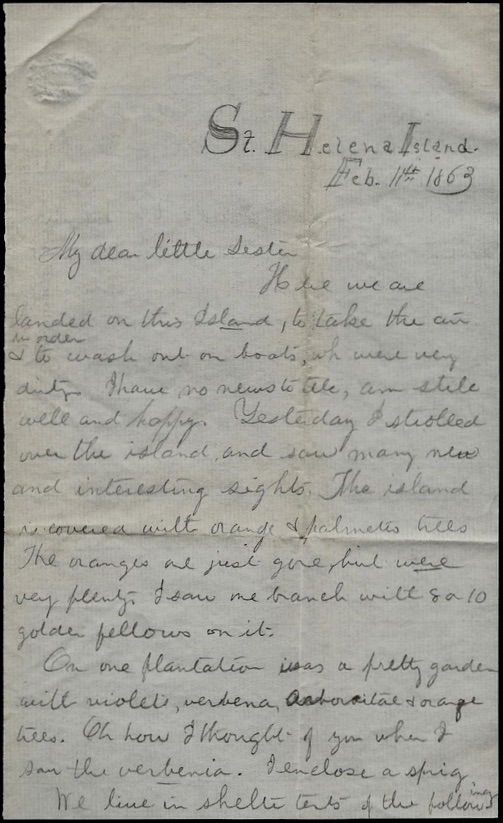
St. Helena Island Feb. 11th 1863
My dear little sister,
Here we are landed on this island to take the air and in order & in order to wash out our boots. Oh, we were very dirty. I have no news to tell—am still well and happy. Yesterday I strolled over the island and saw many new and interesting sights. The island is covered with orange and palmetto trees. The oranges are just gone but were very plenty. I saw one branch with 8 or ten golden fellows on it. On one plantation was a pretty garden with violets, verbena, arborvitae & orange trees. Oh how I thought of you when I saw the verbena. I enclose a sprig.
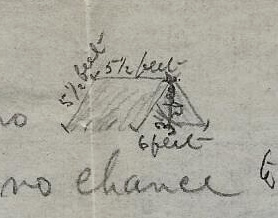
Sketch of tent dimensions
We live in shelter tents of the following dimensions [drawing of tent with dimensions 5 ½ feet L by 5 ½ feet diagonally L. 3 ½ feet tall and 6 feet wide at the entrance]. I have no chance to write here but when we get back on the boat, I’ll write more.
With the verbena, I send a brother’s warmest love. May the time soon come when I may be with you in person & prove how much I love you.
Your brother —John
P. S. You needn’t send any more stamps for a month. I have several now. Denen just came in and says give my love to Mollie
This image of Ebenezer Clapp, Jr. was taken by Peter Foss on 9 September 1848. Clapp gifted the daguerrotype to his sister, Hepzibah Sumner. Ebenezer was born in Dorchester, Mass. on 24 March 1809. He died in Boston on 12 June 1881. Ebenezer was one of the organizers of the Dorchester Antiquarian & Historical Society, He married in April 1833 to Sarah Swan. (William Griffing Collection)
Obituary of Ebenezer Clark, Jr.
Clapp’s obituary, published in the Boston Journal on June 13, 1881, reads as follows: “At Dorchester on Sunday Deacon Ebenezer Clapp, an old and respected resident of that section of the city, died very suddenly. He was standing in one of the rooms of his house, when visited by the fatal stroke and dropping to the floor expired instantly. Mr. Clapp had been a consumptive several years but this sudden termination of his life was an unexpected one. He was born in Dorchester April 24, 1809, and was the fifth son of Deacon Ebenezer and Eunice (Pierce) Clapp. Receiving his education in a brick school house adjoining the old homestead where he was born, he remained with his father until he was in the twenty-third year of his age. His father was carrying on successfully the business of a tanner, and the son worked in the tannery.
In September 1831, the young man received an appointment in the Boston Custom House as substitute for a relative who was obliged by ill-health to vacate his position temporarily, and in August 1832, he was commissioned as an inspector, Mr. David Henshaw being Collector of the Port at that time. Mr. Clapp held the position eleven years, proving himself a capable and faithful officer, and retiring with the respect and esteem of all with whom his official duties brought him in contact.
After leaving the Custom House he engaged in the book selling and stationery business, having a store on the corner of Franklin and Washington Streets. Here he remained until 1861. Previous to this change in his business he had been instrumental in forming the Dorchester Antiquarian and Historical Society. The preliminary meeting held with a view to organizing that society, was held at his house January 27, 1843, and when the organization was effected, he was elected Corresponding Secretary, to which office he has been reelected every year since that time. He was one of the committee of the society appointed to compile a “History of Dorchester.” Much of the labor devolved upon him and he published the work, a volume of 672 pages in 1839.
From the corner of Franklin and Washington streets Mr. Clapp removed to (old) No. 308 Washington street, where he continued his business a few years, removing again to No. 7 School street where he remained until within a few years his son, E. Herbert Clapp, succeeding him and retaining the stand until January last, when he sold out.
Mr. Clapp took great interest in historical and genealogical research, had a very retentive memory, adn from June 1834 kept a daily journal. He was therefore a very reliable authority in regard to persons and events. In 1842 he resolved to collect the history of his ancestors, and while engaged in this work became impressed with the importance of the work, and determined to make it a broader one. Accordingly he began to collect material for a genealogical history of all bearing the name of Clapp and the result was a large volume entitled, “Record of the Clapp Family in America,” which was published in 1876 under the direction of a committee appointed for the purpose.
Mr. Clapp has always been a resident of Dorchester. In 1854 he was chosen as Deacon of the First Church there, succeeding his father in that office, adn being the ninth member of the family to hold it. He was also a clerk of the parish many years, and was long a member of the School Committee of the town. He held a commission as Justice of the Peace about a quarter of a century. On April 4, 1838, Mr. Clapp married Miss Sarah Swan of Dorchester, by whom he had one daughter and three sons. Two of his sons are living, namely Charles Augustus, who is engaged in the publishing business in New York, and Ebenezer Herbert, who has been Assistant Clerk of the Massachusetts Senate during the past two sessions. The funeral of Mr. Clapp will take place at the First Church, Dorchester, at 3 o’clock Wednesday afternoon.
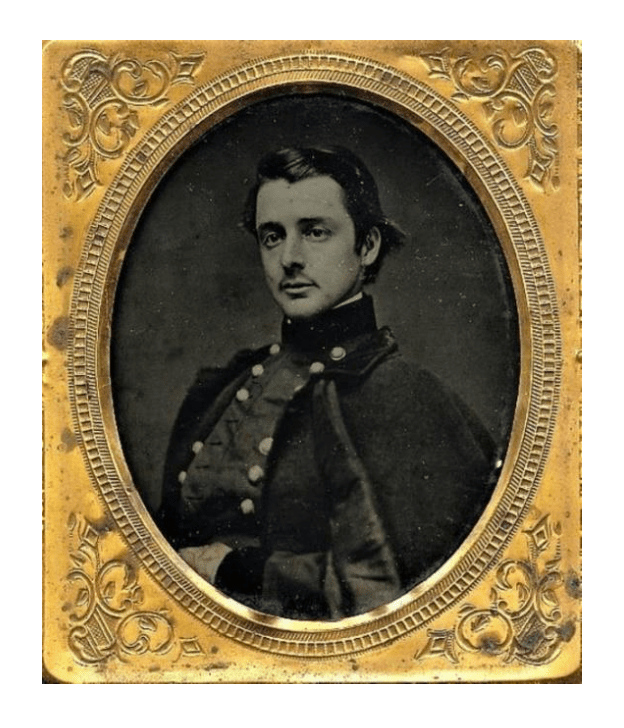
I could not find an image of William but here is one of James S. Sayre who also served as a private in Co. K, 127th New York Infantry (Photo Sleuth)
These letters were written by William B. Miller (1840-1909), the son of George W. Miller (1799-1881) and Mehitable King (1812-1888) of Amagansett, Suffolk county, New York.
William enlisted in Co. K (the “Monitors”), 127th New York Infantry in September 1862 and mustered out of the regiment in June 1865, serving two years and 11 months. He served with his brother Josiah Parsons Miller, with his cousin Jonathan Allen Bennett, and a number of other relatives who were recruited in the fall of 1862 from the eastern tip of Long Island.
William wrote all of these letters to his uncle, William J. Bennett who was the father of his cousin, Jonathan Allen Bennett.
For more letters by the 127th New York Infantry that have been transcribed and posted on Spared & Shared, see: Henry Blain Graham, Co. C, 127th New York (1 Letter) John Allen, Co. E, 127th New York (1 Letter) Lord Wellington Gillett, Co. H, 127th New York (1 Letter) Jonathan Allen Bennett, Co. K, 127th New York (33 Letters) Josiah Parsons Miller, Co. K, 127th New York (3 Letters)
Letter 1
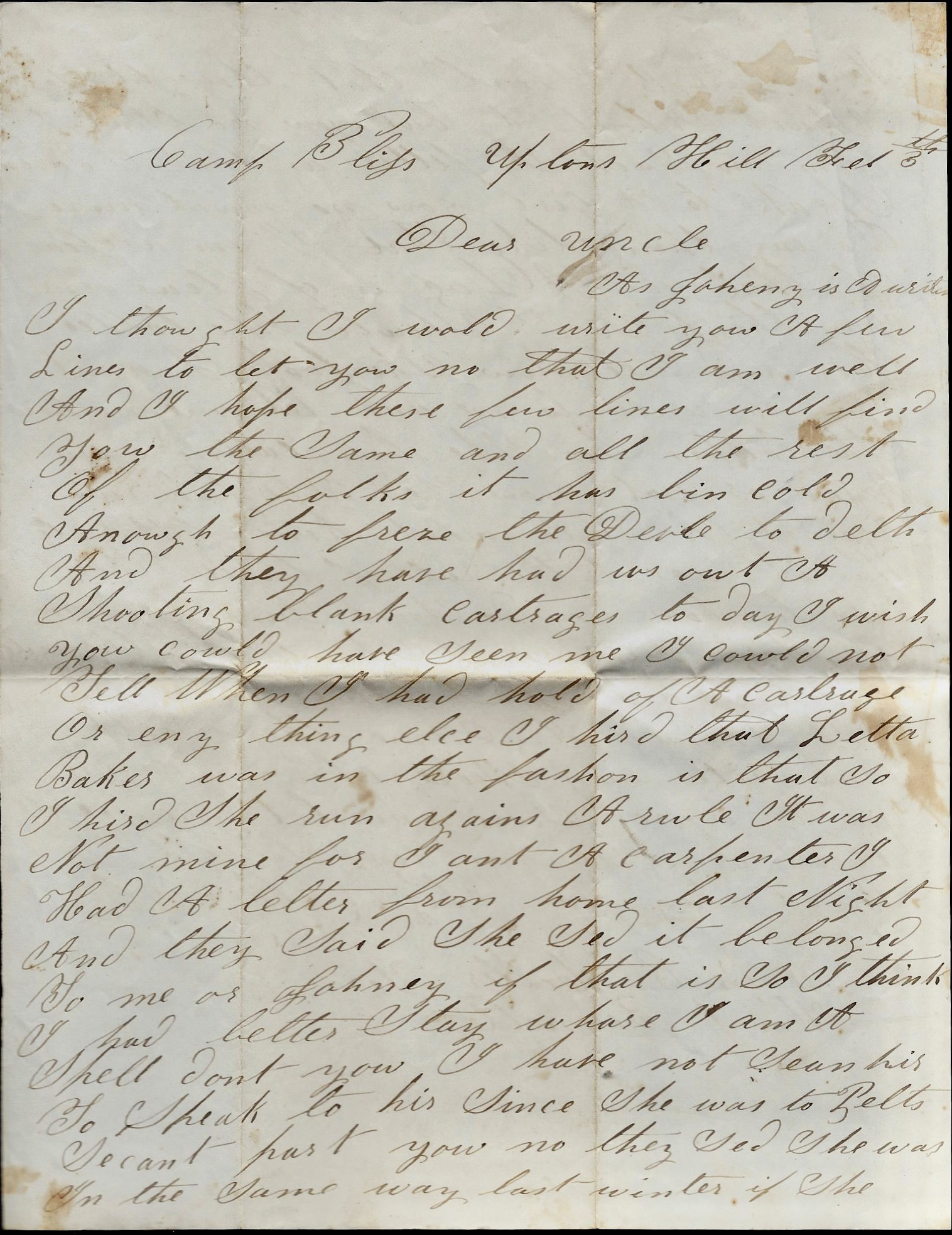
Camp Bliss Upton’s Hill February 3rd, 1863
Dear Uncle,
As [your son] Johnny is a writing, I thought I would write you a few lines to let you know that I am well and I hope these few lines will find you the same and all the rest of the folks. It has been cold enough to freeze the Devil to death and they have had us out a shooting blank cartridges today. I wish you could have seen me. I could not tell when I had hold of a cartridge or anything else.
I heard that Letta Baker was in the fashion [pregnant]. Is that so? I heard she run against a rule. It was not mine for I ain’t a carpenter. I had a letter from home last night and they said she said it belonged to me or Johnny. If that is so, I think I had better stay where I am a spell, don’t you? I have not seen her to speak to her since she was to Pelts Second Part. You know they said she was in the same way last winter. If she had him, I should not thought so much about it but you know that I am no such a feller as that. I don’t speak to a girl. You know much more do anything like that. I am as clear of that as a dog is of fleas, don’t you think so? I should like you to see her and see how she looks. I want you to write to me and let me know how she looks. Has she been eating raw rice or not? You said she had run against a rule. What kind of a rule was it? Was it the rule of three? I should like to have you do such sums by long or short division. I should try the rule of three and if I could not get it, I should try some other way.
I can’t write any more now. I want you to answer soon and let me know all about it. Give my love to all. I must say good night. This is from — William B. Miller
Letter 2
Camp near Vienna, Virginia April 2, 1863
Dear Uncle,
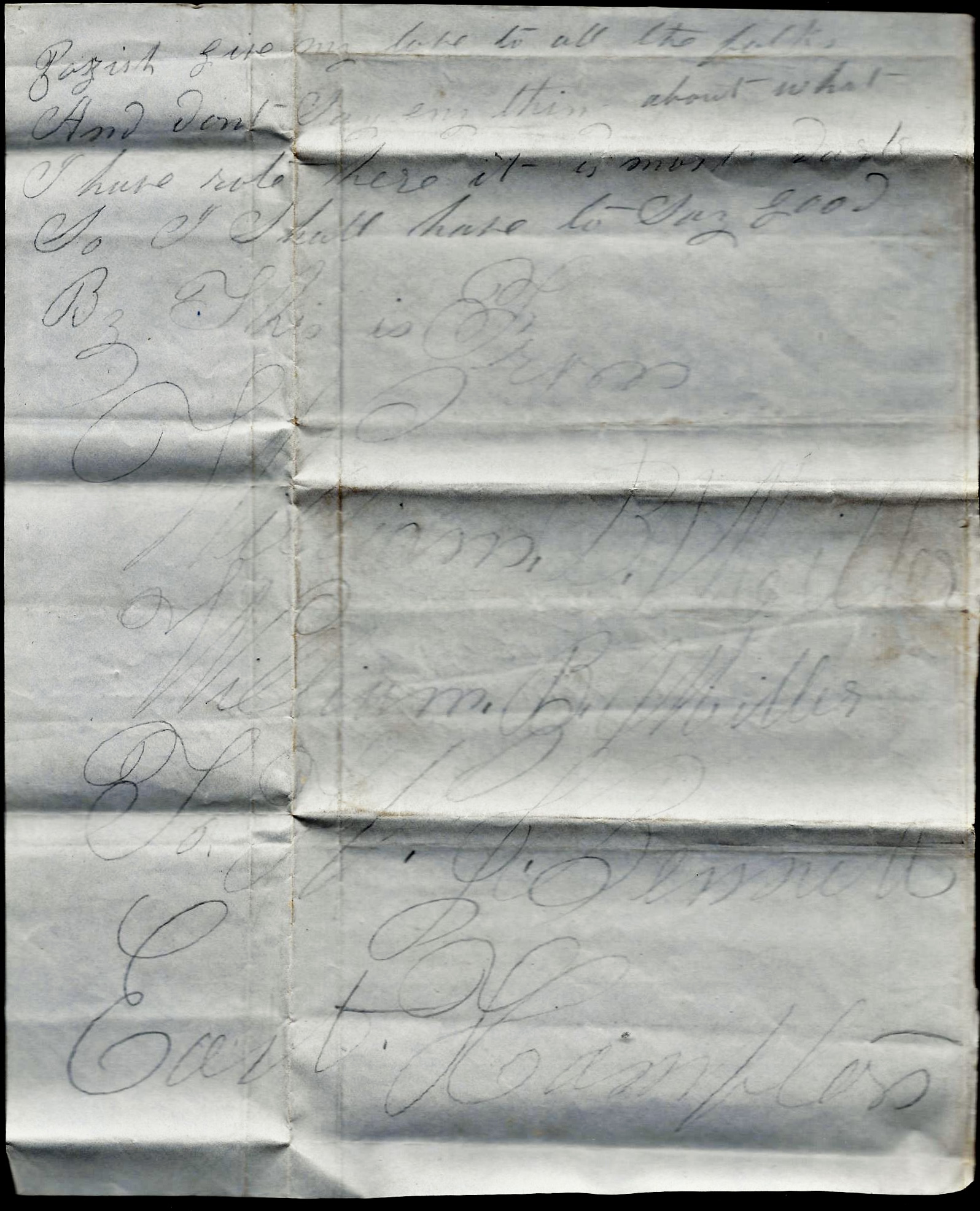
as Johnny is writing, I thought I would write you a few lines to let you know that I am well and hope these few lines will find you the same. There is not much news to write. We have moved about sixteen miles from Camp Gurney. We have been put through [ ]. Since we moved last, Johnny and I have been contriving how to get out of this scrape. We don’t see any way [but] to have you go and see Charles P. Dayton and see if he can get a Lieutenant’s berth in some regiment. I want you to see him as soon as possible and see how much he thinks he can get one for and write to me soon and let me know all about it. Johnny or I—either of us—know twice as much as Shirey did about drilling and if you will see him and have a talk with him. I will pay you for your trouble if I ever see you and if I don’t, I will make my will and give you something.
The boys are all well and send their respects to all.
I don’t care what regiment it is if I only can get a commish.
Give my love to all the folks and don’t say anything about what I have wrote here. It is most dark so I shall have to say goodbye. This is from — William B. Miller
Letter 3
Camp near Catlett’s Station, Va. July 3, 1863
Dear Uncle,
As I have a few leisure moments to spare and Johnny is a writing, if I live to get home, I never will say a word about hot weather. It is so hot here that I man can’t hardly live. I want to get home where I can go and see the girls. What do you think about Mary Fithen’s boy? I left in the right time to get clear of that. Now I am a coming home to go up and see them balsam trees again. The girls must look out for the soldiers. They talk hard some of them but that ain’t me. You know that I ain’t any such a boy as that for I never have anything to do with the girls, that you know I hope. Some of the boys will ask me to [their] wedding. You would think to hear them talk that they calculated to get married soon after they arrive home.
We have heard good news, if true. It is i a Baltimore Clipper. It says that the inhabitants of Richmond are coming back on Old Jeff and say he has led them into this rebellion and they don’t see any sight of it ending very soon and if he don’t end it, they will. And North Carolina talks hard of coming into the Union again. We are the boys to fetch them back. Do you see any sight of his cruel war ending this year? I can’t see the point yet if you do but I hope for the best. I must get supper soon. All I have got to do is fill my cup up with water and set it out in the sun and it will boil while I am finishing this. We don’t have any trouble to boil coffee when the sun shines and that is most of the time. We have not had rain enough to blow a feather over for the last month.
I can’t write any more this time. Pelt sends his respects to you and says he is a hard soul. Sam Ranger is here to my tent. He is well. Give my love to all. No more this time. From Old Bill Miller to his uncle W. J. Bennett
Write soon.
Letter 4
Morris Island, South Carolina June 4, 1864
Dear Uncle,
As I have a few leisure moments to spare, I thought I would improve them in writing to you to let you know that I am well and I hope these few lines will find you and family all well. We are having pretty good times here now. Our company and E company and D company are detached to do picket duty in boats. we go out at retreat and get back at reveille. We go every other night. There is two reliefs of us.
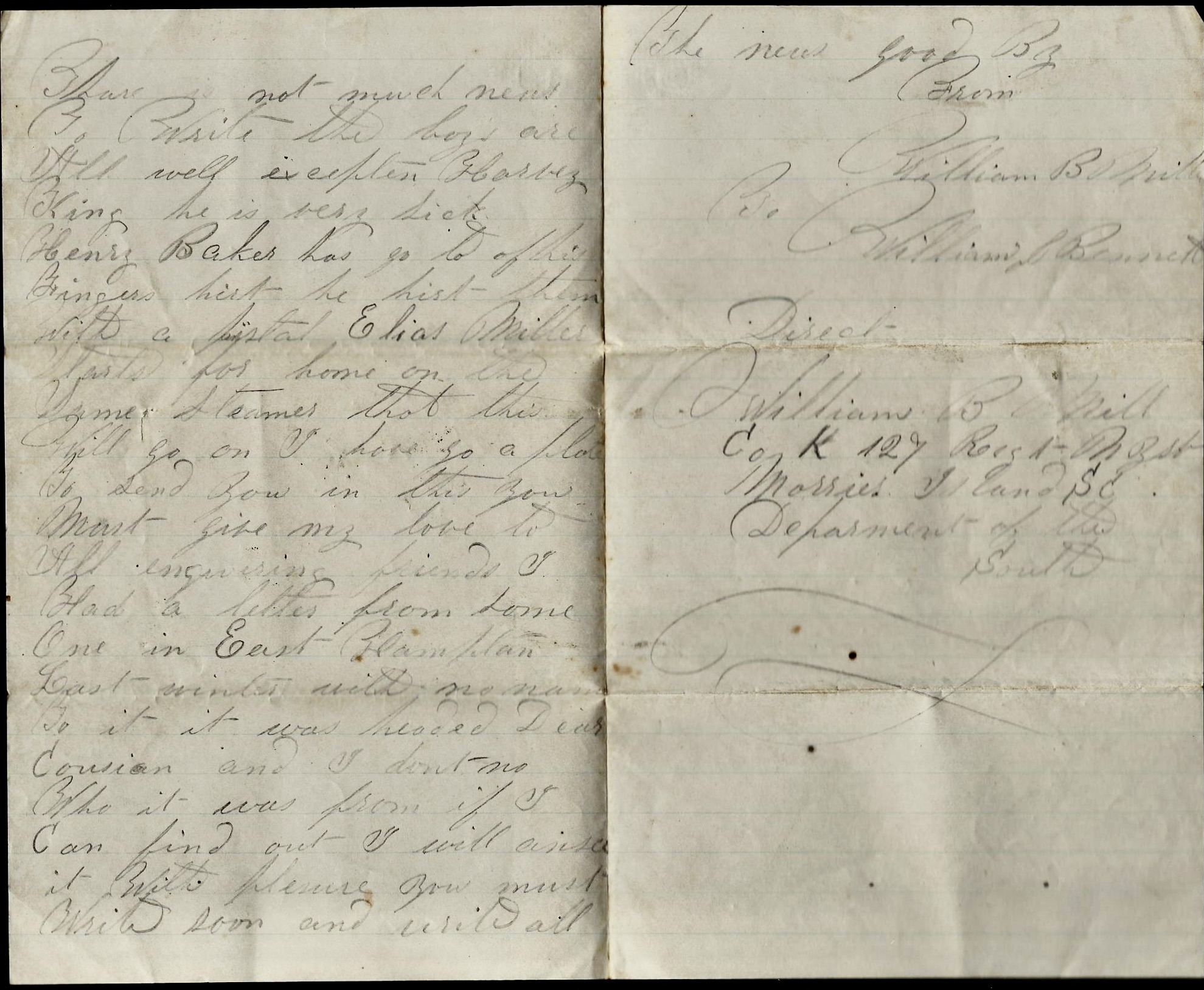
There is not much news to write. The boys are all well except Harry King. He is very sick. Henry Baker has got two of his fingers hurt. He hurt them with a pistol. Elias Miller started for home on the same steamer that this will go on. I have got a plate to send you in this. You must give my love to all enquiring friends, I had a letter from home. One in East Hampton last winter with no name to it. It was headed “Dear Cousin” and I don’t know who it was from. If I can find out, I will answer it with pleasure.
You must write soon and write all the news. Goodbye, from Willia B. Miller
Direct to William B. Miller, Co. K, 127th Regt. N. Y. S. V., Morris Island, S. C., Department of the South
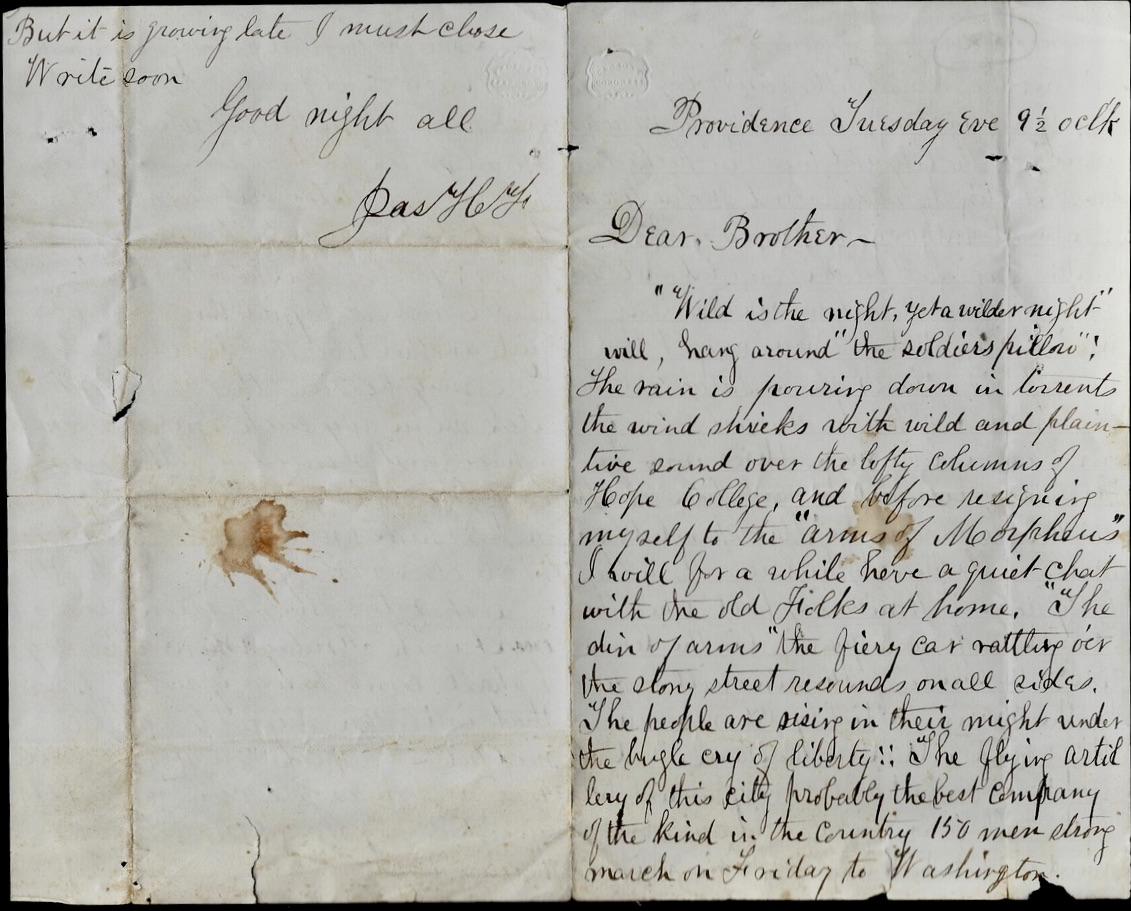
This 1861 letter was written by James Henry Foss (1842-1916), the son of Joshua Nathan Foss (1799-1886) and Eliza Foss (1801-1883) of Penobscot county, Maine, who relocated to Rowley, Essex county, Massachusetts, in the 1840s. In 1859, he entered Brown University in Providence, Rhode Island. The school catalogue shows him residing in Room 14C of Hope College. He graduated from the school in 1863. By reviewing an autobiography Foss wrote in the twilight of his life, we learn that his father was but a farmer and a meagre income so Foss was only able to attend Brown University by winning a scholarship that paid his tuition fees and room rent which was supplemented by preaching and tutoring.
Foss’s letter captures the intense excitement in the City of Providence during the week that followed the firing on Fort Sumter and Lincoln’s call for troops. He mentions the local artillery—the Providence Marine Artillery Company—that was commanded by William Sprague and who had less than a year previously been elected Rhode Island’s 27th Governor at the age of 29. William inherited wealth from his prosperous family that operated the largest calico textile mill in the world—hence Foss’s reference to him as the “little calico boy.”
Foss’s autobiography reveals his limited military experience—apparently incredibly enhanced either through faulty memory or a sense of guilt for the transcribed letter suggests little interest in “any such small business” as joining the military.
“The university cadets unanimously tendered their services to the government; were at once accepted, and it was the proudest day of my life when, as an officer in our battalion, I marched with the rest to the drill camp on the historic training ground. The citizens turned out en masse to do us honor, and frantically cheered us on our way to do or die; every house was gay with old glory; our best girls, inspired with patriotic fervor, applauded while they bedewed the streets with their tears; the air resounded with martial music and the boom of saluting cannon; the young war governor, who went up like a rocket and down like a stick, led the way on a prancing charger; the people vied with each other in tendering hospitalities, and every corner afforded its liquid refreshments. We thought it lemonade, but it “had a stick in it” and, presto!–we were no longer seedy theologues, but young heroes all, resplendent with brilliant uniforms and flashing bayonets, marching to defend our great and glorious republic. We, unsuspecting, imbibed freely the seductive fluids, and soon our heads were in a whirl. We wildly sang the war songs and gave the college yells. It is but a step from the sublime to the ridiculous. That night, Jupiter Pluvius burst upon our frail tents in all his fury, and I awoke the next morning half covered with water, and in a raging fever. I was taken to the hospital, and as I was a minor my father took me from the service. For weeks I was a wreck, and all my dreams of martial glory vanished, alas, like the many which have bloomed in the summer of my heart. Before I regained the little strength I ever had, the war was over, but I had done my best to serve my country, and the rapture of pursuing is the prize the vanquished know. The few remaining students plodded along through the curriculum; but our hearts were far away on the battle-fields, from the glory of which, cruel fate debarred us.”[Source: The Gentleman from Everywhere]
In 1863, following graduation, Foss was enumerated in the Draft Registration as a 21 year-old teacher residing in Rawley, Massachusetts.
[Note: Transcribed by Alan Thompson/edited & researched by Griff]
Hope College & University Hall in Providence, Rhode Island
“Wild is the night, yet a wilder night” will hang around “the soldier’s pillow”!
The rain is pouring down in torrents. The wind shrieks with wild and plaintive sound over the lofty columns of Hope College, and before resigning myself to the “arms of Morpheus,” I will for awhile have a quiet chat with the old folks at home.
“The din of arms,” the fiery car rattling o’er the stony street resounds on all sides. The people are rising in their might under the bugle cry of liberty!! The flying artillery of this city, probably the best company of the kind in the country—150 men strong, march on Friday [April 19th] to Washington.
Gov. William Sprague—the “little calico boy.”
Governor [William] Sprague is wild with enthusiasm. The gallant “little calico boy” rode nearly all last night visiting the various armories of the city and town inspecting them and exhorting the soldiers and people to arms. The utmost enthusiasm prevails. The recruiting office just below is crowded. We can even now hear the loud hurrahs the peals of music! The students have caught the war spirit. Six or seven have enlisted, one from the Sophs, the strongest fellow in our class, a noble man. Three from the freshman class and the rest from the upper classes.
Tomorrow the “Star Spangled Banner” is to be flung to the breeze from the lofty dome of University Hall where the French troops were quartered in the Revolution!! A salute of 34 guns will be fired by the marine artillery, 150 men. A brass band will be in attendance, and a great time is expected. As everything undertaken by the collegians is popular, there will be a grand rush to the campus of ladies, uniforms, &c. Some speeches will probably be delivered.
There was a grand parade of the students last night at midnight which awakened much enthusiasm. Hurrah for the old Bay State, but be careful not to let the fire of patriotism carry you too far, for it is one thing to rush hotheaded and rashly into danger, and quite another to be shot down like a dog. You may be sure that you won’t catch me in any such small business.
I have just received a letter from Carlton. He is prospering well [and] wants me to get him another school. His present one closes May 9th.
My health is first rate. This session closes next week [on] Friday, then Saturday I shall come home if not before. That is if you see fit to send the needful. I wish you would send $4.00 as soon as you can which will be enough to pay some little bills and the fare home.
But it is growing late. I must close. Write soon. Good night all. – James H. F.
I could not find an image of Walter but here is a 6th Plate Ambrotype of Thomas W. Ward of Co. D, 95th Pennsylvania, or “Gosline’s Zouaves” (David Basco Collection)
This letter was written by Walter Lackey (1841-1898) of Philadelphia, who enlisted as a private in Co. K, 95th Pennsylvania Infantry (“Gosline’s Zouaves”) in October 1861. At the time of his enlistment he was described as a 20 year-old, 5’9″ tall, blue-eyed, light-haired printer. He was discharged with disability in June 1864.
The men of the 95th Pennsylvania had a long and glorious record of achievement on the battlefield. They wore an “Americanized” zouave uniform. Later in the war, they turned in their scarlet pants, scarlet trimed kepis, and tan gaiters, but the jacket, and vest still remained, and they wore the zouave jacket, and vest up until their regiment was mustered out at the end of the war. The regiment lost six field officers during the war: two colonels, two lieutenant-colonels, a major and an adjutant; this is the second highest total of officer casualties for any Union regiment during the war.
According to a notice posted in the Bridgeton Pioneer (New Jersey) on 21 April 1898, Walter “dropped dead at his home” in Philadelphia. He was only 55.
Other letters and diaries by members of the 95th Pennsylvania transcribed & published on Spared & Shared include: Joshua Thompson, Co. A/H, 95th Pennsylvania (Union/1 Letter) Samuel Clayton, Co. D, 95th Pennsylvania (2 Diaries) Edward Riggs, Co. K, 95th Pennsylvania (Union/1 Letter)
Transcription
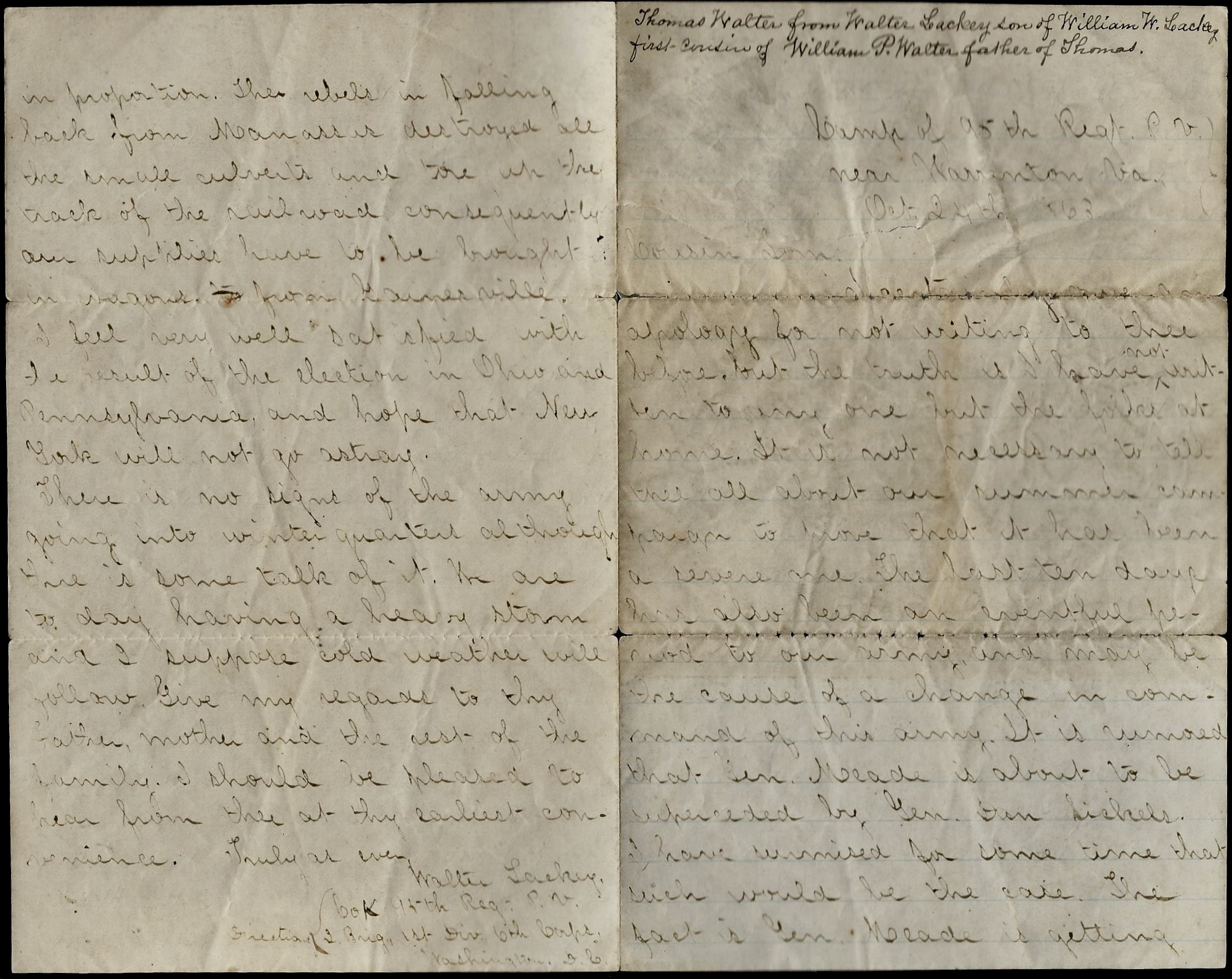
Camp of the 95th Regt. Penn. Vols. Near Warrenton, Va. October 24, 1863
Cousin Tom,
I received your letter and owe thee an apology for not writing to thee before. But the truth is, I have not written to anyone but the folks at home. It is not necessary to tell thee all about our summer campaign to prove that it has been a severe one.
“It is rumored that Gen. Meade is about to be superseded by Gen. Dan Sickles. I have surmised for some time that such would be the case. The fact is, Gen. Meade is getting much too popular for that consummate villain H. W. Halleck.”
—Walter Lackey, Co. K, 95th Pennsylvania, 24 October 1863
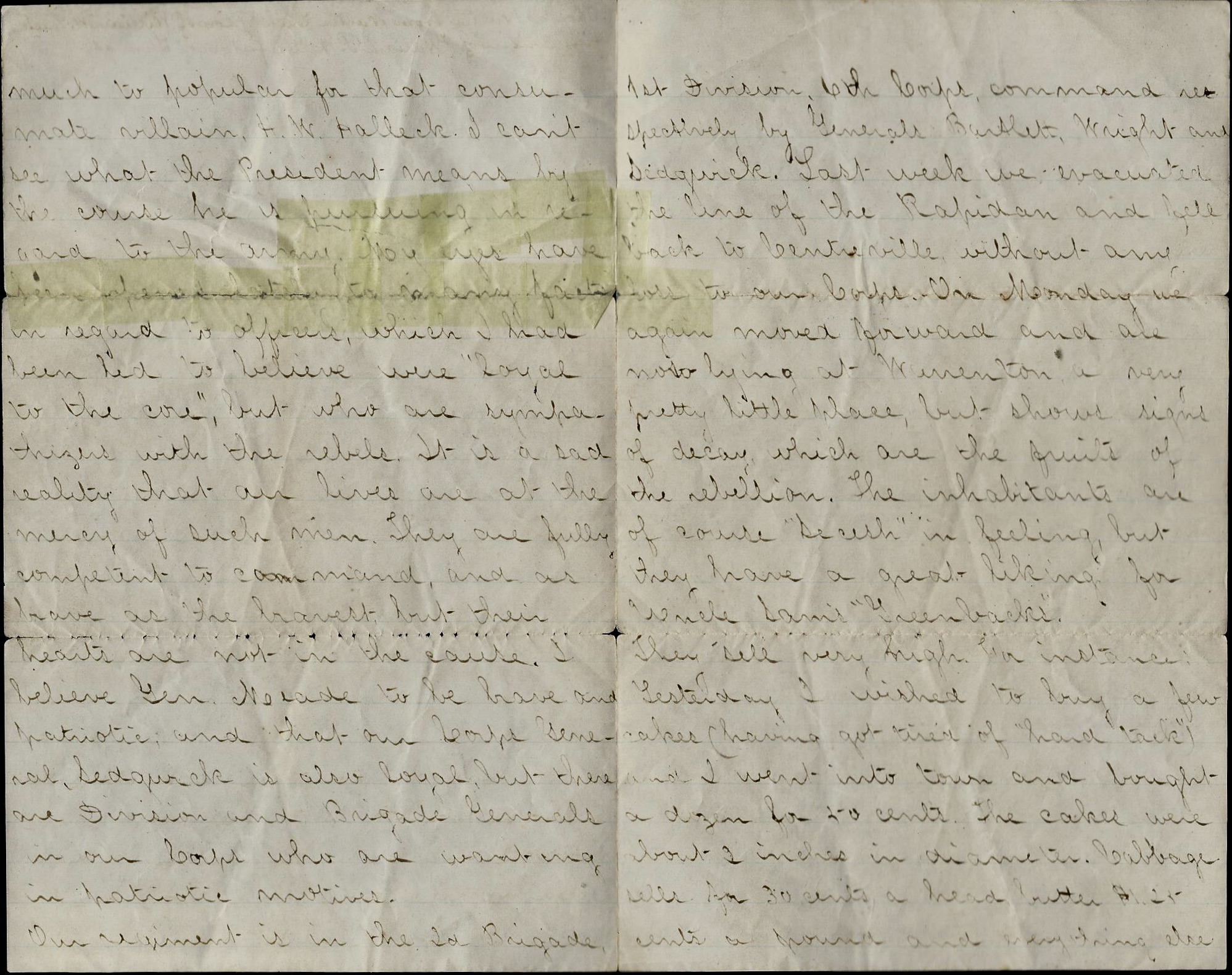
The last ten days has also been an eventful period to our army and may be the cause of a change in command of this army. It is rumored that Gen. Meade is about to be superseded by Gen. Dan Sickles. I have surmised for some time that such would be the case. The fact is, Gen. Meade is getting much too popular for that consummate villain H. W. Halleck. I can’t see what the President means by the course he is pursuing in regard to the army. My eyes have been opened lately by many facts in regards to officers which I had been led to believe were “loyal to the core,” but who are sympathizers with the rebels. It is a sad reality that our lives are at the mercy of such men. They are fully competent to command and as brave as the bravest, but their hearts are not in the cause.
I believe Gen. Meade to be brave and patriotic, and that our Corps General Sedgwick is also loyal, but there are division and brigade generals in our Corps who are wanting in patriotic motives. Our regiment is in the 2nd Brigade, 1st Division, 6th Corps, commanded respectively by Generals Bartlett, Wright, and Sedgwick.
Last week we evacuated the line of the Rapidan and fell back to Centreville without any loss to our Corps. On Monday we again moved forward and are now lying at Warrenton—a very pretty little place, but shows signs of decay which are the fruits of the rebellion. The inhabitants are of course “Secesh” in feeling, but they have a great liking for Uncle Sam’s “greenbacks.” They sell very high. For instance, yesterday I wished to buy a few cakes (having got tired of hard tack) and I went into town and bought a dozen for 50 cents. The cakes were about two inches in diameter. Cabbage sells for 30 cents a head, butter $1.25 cents a pound and everything else in proportion.
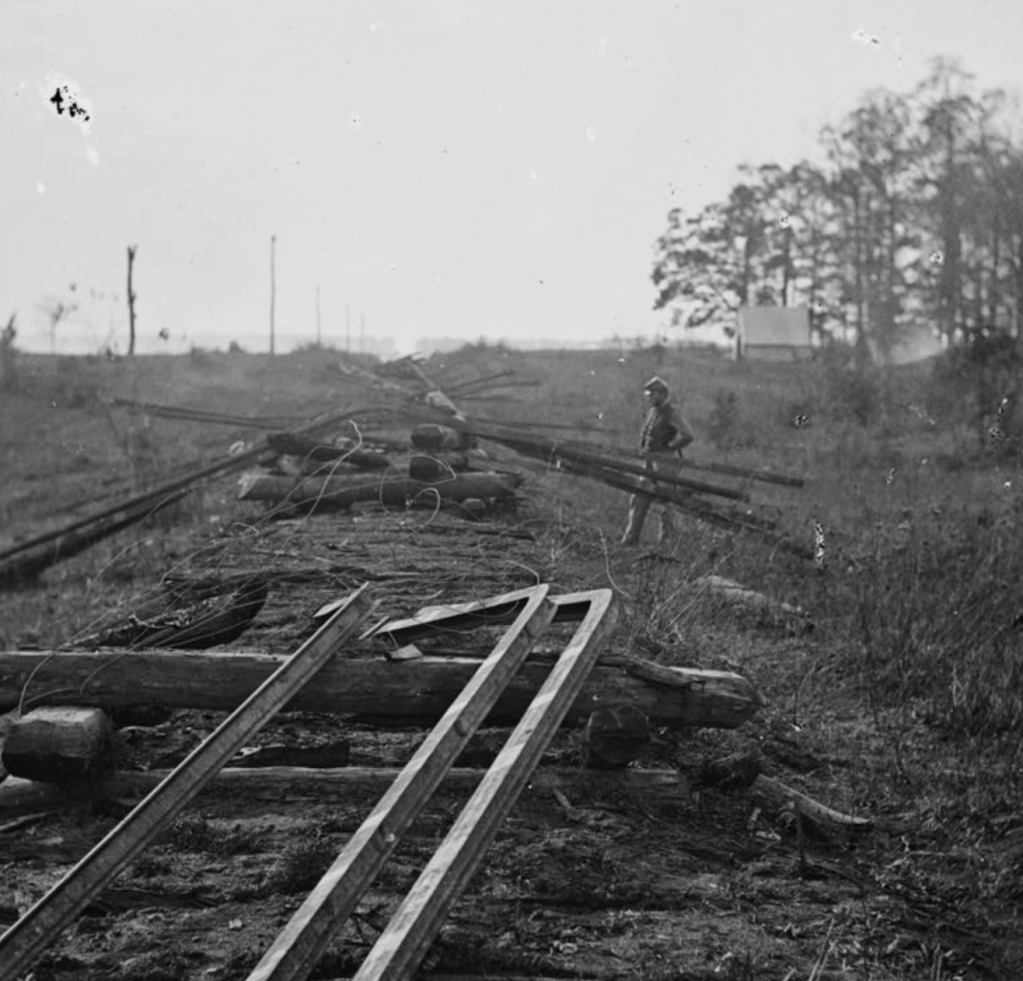
The rebels in falling back from Manassas destroyed all the small culverts and tore up the track of the railroad. Consequently our supplies have to be brought in wagons from Gainesville.
Tracks of the Orange & Alexandria Railroad torn up by the retreating Confederates in the fall of 1863.
I feel very well satisfied with the result of the election in Ohio and Pennsylvania and hope that New York will not go astray.
There is no signs of the army going into winter quarters although there is some talk of it. We are today having a heavy storm and I suppose cold weather will follow. Give my regards to thy father, mother, and the rest of the family. I should be pleased to hear from thee at thy earliest convenience.
This letter was written by Archer Hays Jarrett (1825-1869) of Bel Air Harford county, Maryland. He was married to Martha Frances Shepherd (1833-1915) of Norfolk, Virginia. In the 1860 US Census, Archer was enumerated as the head of a household that he shared with his 73 year-old mother in Bel Air with two black servants. He was married to Martha on 11 February 1861 in Norfolk.
An article appearing in the Baltimore Sun (July 8, 2006) describing “Harford History” claims that in mid July 1861, “300 Union troops from the 12th Pennsylvania marched from White Hall to Bel Air to arrest certain secessionist sympathizers and seize the weapons of local militia units. The soldiers announced that they were in Bel Air at the request of Unionists who feared violence from secessionists. Capt. Archer H. Jarrett, leader of the Harford Light Dragoons, was arrested [on a charge of treason]. Having failed to elicit from Jarrett the location of the militia weapons, the troops searched several public buildings and then private homes, to no avail. In the evening, the troops departed empty-handed of the weapons. But they took Jarrett, who was detained until Sept. 22 because of his refusal to take an oath of loyalty to the federal government.”
It should be noted that this region of Maryland was filled with southern sympathizers. Junius Booth, older brother of John Wilkes Booth, built his home just north of Bel Air in 1847. In the days leading up to the outbreak of hostilities in 1861, local militias were formed primarily for the purpose of patrolling the region to prevent the runaway of slaves which was anticipated. In the election of Jarrett to the Captain’s position of the Harford Light Dragoons, Bel Air felt they had secured “a fearless and independent gentleman and Southerner.” Those joining the dragoons pledged themselves “ready to take the field in the defense of Southern rights and the honor of old Maryland.”
According to the Baltimore Sun (July 9, 1869), Jarrett died a tragic death. It was claimed to have been the result of an accident, but sounds questionable to me. “Intelligence reached this city yesterday, by telegraph from Cumberland, that Mr. Archer Jarrett, of Harford county, accidentally fell from an upper window of the City Hotel, in Cumberland, Maryland, on Wednesday night, and was instantly killed. The deceased was a lawyer by profession, and was at one time State’s attorney for Harford county. He was a relative of A. Lingan Jarrett, Esq., and also of Lefevre Jarrett, Esq., president of the police board. The remains are expected to reach this city today on their way to Bel Air, where the interment will take place.”
This letter is a request by Jarrett to Maj. Gen. Wool for permission to allow his wife to pass over from Fortress Monroe to Norfolk, Virginia, where his wife’s widowed mother and presumably other relatives were living. Norfolk was evacuated by the Rebels on 10 May 1862—just two weeks before this request. Prior to that date, it had been in possession of the Rebels who seized Fort Norfolk and the ordnance stored there in April 1861.
[This letter was transcribed by Annaliese Vonheerigen/edited by Griff]
Transcription
May 22d 1862
Major General John E. Wool, USA Dear Sir,
I have just received permission from General Dix for my wife Martha F. Jarrett to pass to Fortress Monroe and he advises me that it will be necessary at that point to obtain a pass from you to visit her family in Norfolk.
Will you oblige me by advising whether she can obtain your permission to pass over to Norfolk, without delay should she go down.
Very respectfully your obt. Servt., — A. H. Jarrett
Bel Air, Hartford Co., Md.
Docketed on the reverse:
Belair Hartford Co. Md. May 22., ’62 A H Jarrett In relation to pass to Norfolk for his wife Answered May 26th requesting Mrs. Jarrett to defer her visit for a few days.




















 Spared & Shared 23