My passion is studying American history leading up to & including the Civil War. I particularly enjoy reading, transcribing & researching primary sources such as letters and diaries.
Oren Fletcher of Co. F, 11th Pennsylvania Cavalry (Jim Mayo Collection)
This partial letter is missing the signature page so I wasn’t certain of the identity of the author initially though it was clear he was a sergeant in Co. I, 11th Pennsylvania Cavalry. This regiment was organized at Philadelphia as an independent Regiment, “Harlan’s Light Cavalry,” under authority of the Secretary of War, August to October, 1861. Its name was changed officially to the 11th Pennsylvania Cavalry in November 1861.
The content suggested the sergeant was from Cumberland county, Pennsylvania, though he may have been from a neighboring county. When first published, my hunch was that the author was Daniel W. Balmer (1839-1914), the son of Daniel & Harriet (Fisher) Balmer. In 1860 he was a carpenter living with his family in Elizabethtown, Lancaster County, Pennsylvania. I subsequently transcribed a letter by Daniel H. Schriver, the 1st Sergeant of Co. I, 11th Pennsylvania Cavalry, and I feel confident that his handwriting matches this letter.
Transcription
Camp Hamilton near Fort Monroe, Virginia December 29th 1861
My Dear Brother,
I received your now most kind and considerate letter the day before Christmas (and one previous to that saying that you received my last, &c.) and one Christmas afternoon. A[bram] E. Garrett and I received that most welcome and ever memorable box which so agreeably surprised us upon opening it. It was truly a treat worthy of the greatest of patriots. May the glorious light of day never darken the National Emblem that now waves of the heads of the donors of this token of respect toward our unworthy.
A. E. Garrett said it was a treat to both of us (that is the turkey, &c.) and therefore insisted upon me partaking of it until it was finished. That was yesterday so you may be assured that there has been no want of appetite with us lately. Please remember me kindly to the donors of these articles and particularly to the Ladies Department of it. Tell them if I ever get down to Texas that I will bring them a Mexican poney along to ride up and down those Sherpherdstown hills, &c. That butter is very nice and sweet. The orderly sends his warmest respects to you as it was on his acount that I sent for it.
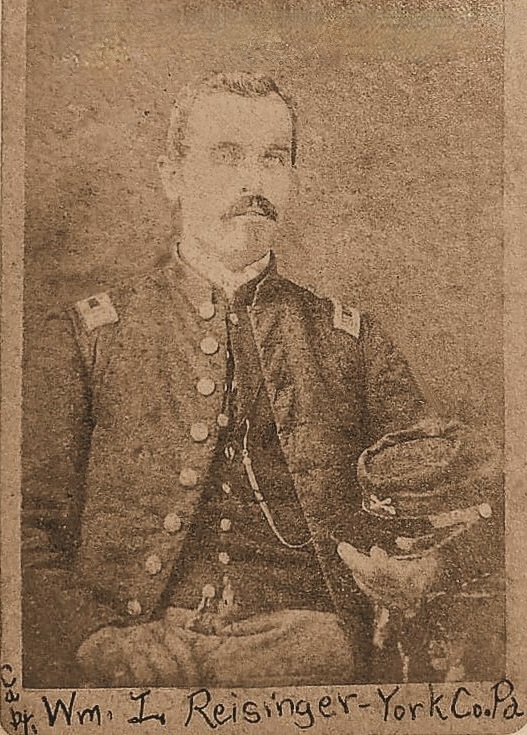
William Independence Reisinger (1823-1905) was promoted to Captain of Co. I, 11th Pennsylvania Cavalry in November 1862.
All the articles are just the thing except the boots which are a size too large for me. The legs are just right and also the instep part of them but the shoe part is too long and wide. My feet slips back and forward in them. Otherwise they are just right. I am sorry as they are a very good boot. However, there is no loss as I have sold them to our Lieutenant Wm. I[ndependence] Reisinger for $5.50. I could sell a dozen pair here without any trouble. There is government boots came here now for the men but the men do not like them as they are not very good and are very short in the legs. I got my old ones fixed up again. I do not want you to go to any extra trouble but if you can conveniently stop at George Otstot’s the next time you go to Mechanicsburg and tell him about it, and if he will send me another pair by express for $5 at his own expense just like the others only smaller in the foot, when he can do so and I will send you the money as soon as they arrive and you can pay him or I will give him $5.50 if he makes the fore top that is the front part of the legs longer than the hind part and rounded off at the top (and leave the front all the same kind of leather—no red or black sheepskin—and the boots to be the same kind of leather as the others were). If he will send them for that, well and good. If not, why don’t send them as I am not very hard up for them now.
I spent quite a pleasant Christmas. The Lieutenant and myself were down to the Fort on a kind of k—-y in the morning and in the afternoon the boys in general got happy.
Last week some of the boys had a chance for a scout. Some of the rebels made themselves pretty obnoxious about 1 mile or 2 out here so Gen. Wool (who is commanding general here at this post) gave orders for several companies of infantry and one of cavalry to go out on a kind of scout. So we each company got orders to send one sergeant and three of the best horsemen and soldiers to Headquarters for that purpose. The Lieutenant asked me to go and pick myself three of the best men in the company and report ourselves to the Colonel. I did so. We all left the next morning well armed with the full expectation of having a brush with the enemy that day but did not succeed. We at first took a northern direction for 6 or 7 miles, then we changed to southwestern toward Newport News 8 or ten miles southwest from here. We were within sight of it when we returned to camp. We seen but one rebel battalion that was out on drill. We were about going to make a charge on them when we were suddenly halted at a burnt bridge so that the infantry could not cross…[rest of letter is missing]
Pvt. Daniel Wright, Co. F, 5th New York Cavalry (NYSMM)
The following letter was written by Abijah S. Spafford (1840-1882) who enlisted in 9 September1861 as a private in Co. G, 5th New York Cavalry. He reenlisted on 11 February 1864 as a 1st Sergeant and mustered out on 19 July 1865 at Winchester, Virginia. The muster rolls inform us that he stood 5 foot 10.5 inches tall, had grey eyes, brown hair, and a light complexion.
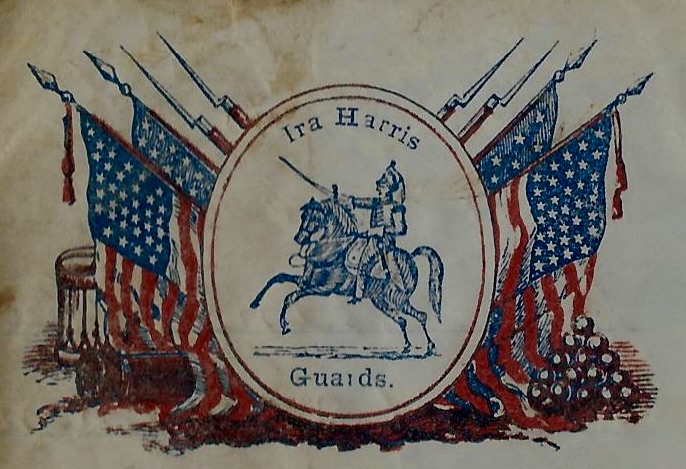
The 5th New York Cavalry Regiment, also known as the 5th Regiment New York Volunteer Cavalry, and nicknamed the “1st Ira Harris Guards“, had a good fighting reputation, and had important roles in the Battle of Hanover and the Battle of the Wilderness. It was present at nearly 175 battles and skirmishes, including Gettysburg, Opequon, and Cedar Creek. A majority of its fighting was in Virginia. The regiment was originally called the Ira Harris Guard in honor of the senator from Albany, New York. It was named 5th New York Cavalry on November 14, 1861. The regiment’s battle flag was blue with “painted inscriptions and a semi-elliptical red shield in the center” inscribed with “5th.”
Abijah was the son of Milton R. Spafford (1811-1873) and Lucy Sheldon (1810-1888) of Middletown, Susquehanna county, Pennsylvania. His name was spelled variously as Spafford or Spofford but his family headstone reads, “Spafford.”
Transcription
Patriotic Letterhead, “Ira Harris Guards.”
Camp Scott, Staten Island, [New York] October 26, [1861]
Dear Cousin,
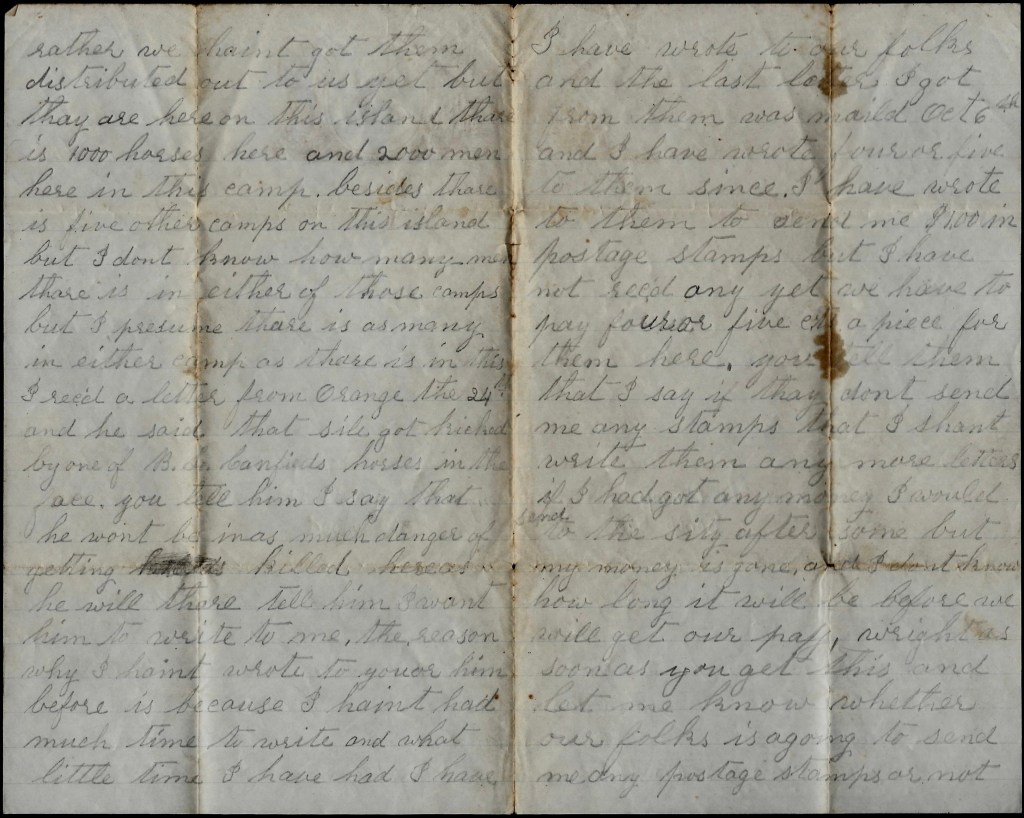
I sit myself down this pleasant Sabbath morning to write a few lines to you to let you know how I am getting along. I am well at present and enjoying myself first rate and I hope this will find you the same. I am getting so fat that I can’t hardly see out of my eyes. I have gained about 25 pounds since I left home and I never enjoyed myself better nor enjoyed better health for the same length of time in my life. I wish you and Sile was here and I know you would enjoy yourselves better than you ever did in Pennsylvania. We have got all of our uniform except overcoats and we are to have them tomorrow. We hain’t got our horses yet or rather we hain’t got them distributed out to us yet but they are here on this island. There is 1,000 horses here and 2,000 men here in this camp besides. There is five other camps on this island but I don’t know how many men there is in either of those camps but I presume there is as many in either camp as there is in this.
I received a letter from Orange the 24th and he said that Sile got kicked by one of B. L. Canfield’s horses in the face. You tell him I say that he won’t be in as much danger of getting killed here as he will there. Tell him I want him to write to me. The reason why I hain’t wrote to you or him before is because I hain’t had much time to write and what little time I have had I have to write to our folks and the last letter I got from them was mailed October 6th and I have wrote four or five to them since. I have wrote to them to send me $1 in postage stamps but I have not received any yet. We have to pay four or five cents a piece for them here. You tell them that I say if they don’t send me any stamps that I shan’t write them anymore letters if I had got any money. I would send to the city after some but my money is gone and I don’t know how long it will be before we will get our pay.
Write as soon as you get this and let me know whether our folks is going to send me any postage stamps or not. Write and let me know…
— Abijah Spafford
Direct to Camp Scott. Write as soon as you get this. Give my love to all enquiring friends.
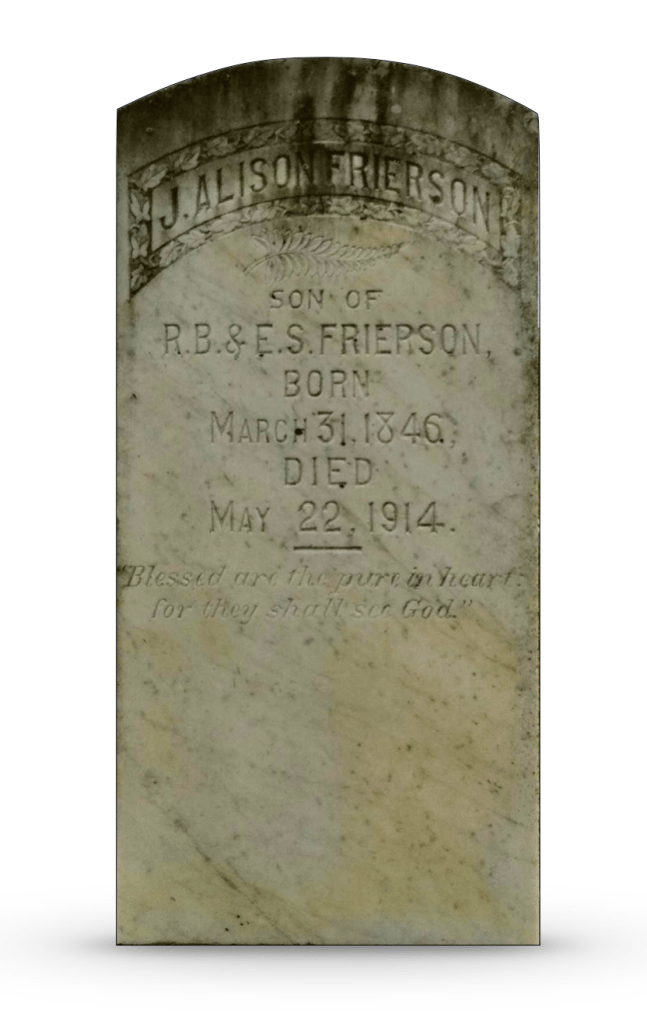
The following letters were written by Jacob Alison (“Ally”) Frierson (1846-1914), the son of Robert Burdell Frierson (1821-1902) and Elizabeth Singleton Alison (1827-1884) of Kingston, DeSoto Parish, Louisiana.
18 year-old Ally wrote both letters in September 1864 from the camp of the 27th Louisiana Volunteers near Alexandria, Louisiana. Muster rolls show him in Co. G (the “Dixie Rebels”) under the name J. A. Friarson. He is also listed as having served for a time in Collins’ Scouts.
Most of the 27th Louisiana men were taken prisoner at Vicksburg inJuly 1863, but were declared exchanged in the fall of 1863. In the summer of 1864, six companies, reduced in strength, re- organized at Alexandria. Companies A and H reorganized at Clinton, Louisiana, and became part of Gober’s Regiment Mounted Infantry. One source states that Company D never reorganized, but some records show at least part of it at Clinton in June, 1864. The regiment occupied a camp at Pineville until the end of the war. Occasionally, detachments would help garrison Fort Buhlow and Fort Randolph near the town. Many of the men began dispersing to their homes in late April, 1865. The remnants of the regiment marched to Mansfield and disbanded there about May 19.
Letter 1
Addressed to Mrs. E. S. Frierson, Kingston, La.
Camp near Alexandria [Louisiana] September 1st 1864
Dear Ma,
I received your welcome letter on day before yesterday together with Pa’s and proceed to and answer it. I am glad to hear that you are all enjoying good health, It is surely a great blessing. I am thankful that I have not been sick any more. In yours of the 27th, you said you had not received a letter from me in several weeks. I cannot account for your not receiving one every mail since Mr. Scott has been here, except the first, and the reason why I did not write then was because I was sick.
The news of yesterday from across the Mississippi is cheering. The papers states that Gen. Lee has tried another mine on the Yankees and blown up about six thousand. Ohio is for peace. Grant is still falling back. Washington being threatened by our forces. The Yankees are very uneasy for fear of being invaded.
A protracted [religious] meeting is being carried on about a half mile from here. We have meeting every night. A private of the 31st preaches on one night and Mr. Faucher (who was appointed by the Convention at Kingston) on the next, and so on. Mr. Faucher is a splendid minister. I like him better every time I hear him. The other would preach very well if he would omit the (an a) after every two or three words.
On last Sunday I heard the first sermon I had heard in nearly three months. We have been going to preaching every night since. On night before last Mr. Faucher preached us a splendid sermon from the text, “He hath bourn our graves.” 1 His composition and delivery are both splendid.
In your letter you asked if you must send my over shirt when you send my winter clothes. In answer I say you need not send it as one will be as much as I can pack. The things you send by Mr. Crawford all arrived safely. I am very much obliged to you all for them. The clothing and hat fit finely. Many thanks to cousin Martha for making the hat. Tell her I say it is beautifully made and fits me as well as though it was made on my head.
By the by, while talking of my head, I have had my hair shingled at last. The boys all say it is an improvement. Many thanks also to Aunt Annie for the cake. It was fine. Thanks also to the children and Susannah for the apples set. Give my love to Uncle Asa, Aunt Mary, and family. Tell cousin Emma I am very much obliged to her for the book she sent me. Tell her I will write to her next week. Tell Mary, Anna, Aunt Mollie and cousin Martha that they must answer my letters. I wrote to Pa and Sissy last week. You must all write every mail. You must tell Sissy and Emma they must not wait for me to answer their letters as I have to write so many…
Believe me as ever, your affectionate son, — J. A. Frierson
P. S. Howdy for the negroes.
1 Ally’s letter appears to read, “He hath borne our graves,” though the actual passage from Isaiah 53:4 is “He have borne our griefs and carried our sorrows…”
Letter 2
Addressed to Robert B. Frierson, Kingston, De Soto Parish, La.
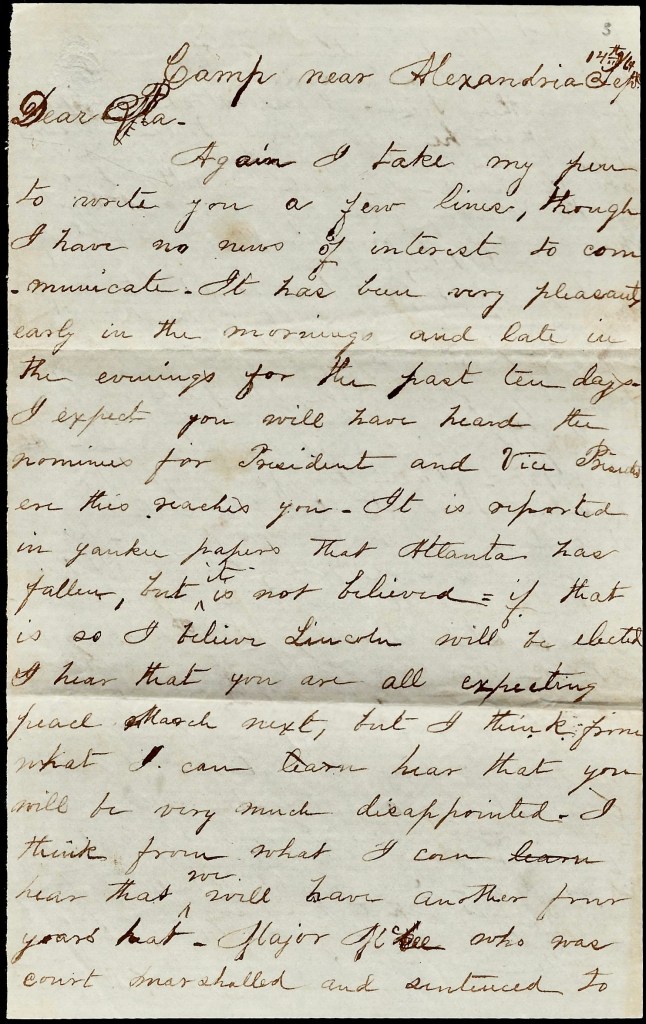
Camp near Alexandria [La.] September 14th 1864
Dear Pa,
Again I take my pen to write you a few lines though I have no news of interest to communicate. It has been very pleasant early in the mornings and late in the evenings for the past ten days. I expect you will have heard the nominees for President and Vice President ere this reaches you. It is reported in Yankee papers that Atlanta has fallen but it is not believed. If that is so, I believe Lincoln will be elected. I hear that you are all expecting peace March next, but I think from what I can learn here that you will be very much disappointed. I think from what I can hear, that we will have another four years war.
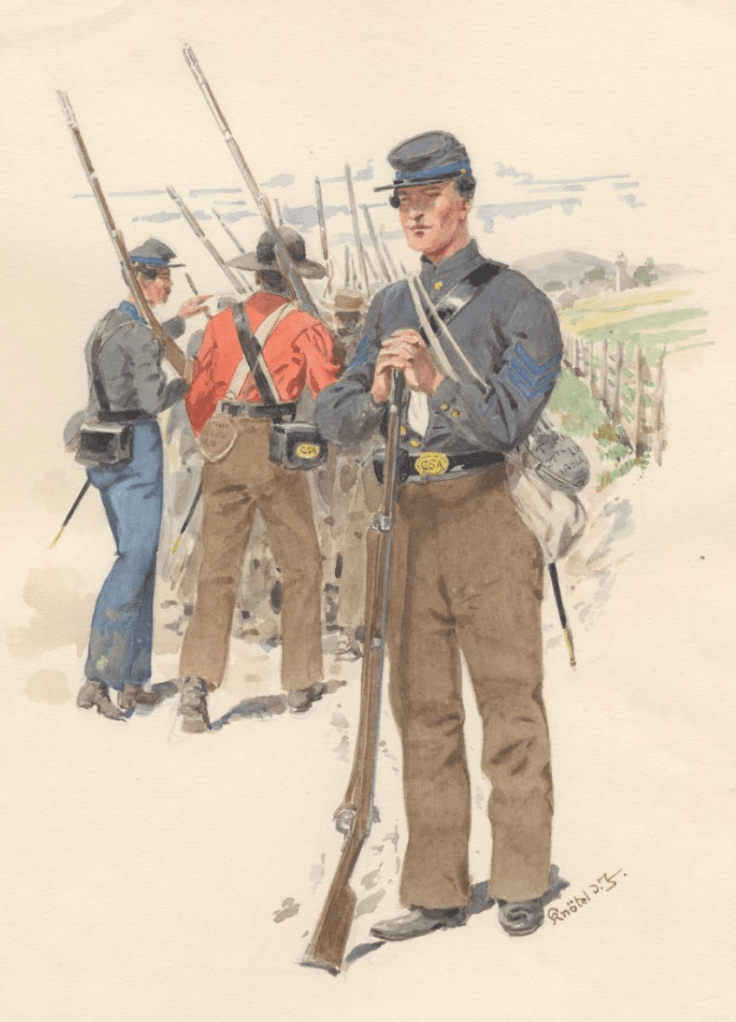
Artist’s rendering of 27th Louisiana Uniform
Major [A. W.] McKee who was courtmartialed and sentenced to be shot for swindling the government and giving information to the enemy but he was turned over to the civil authorities for another trial. I understood on yesterday that he was ordered to be conscripted by Gen. Buckner so I am afraid he will be cleared. He wrote a letter to one of Banks’ army when they were at Natchitoches. He gave one of our men $60 in gold to carry it to him but the man he gave it to happened to be a true Confederate and carried it to Gen. Taylor. The letter advised Banks by all means not to go any farther north. He stated what size army we would have and that he would surely be whipped if he advanced.
September 16th. I hate to inform you this morning that Atlanta has certainly fallen. It is surely a great blow to us. Gen. Morgan is said to be killed. If that is true, we will miss him a great deal. Grant still driving at Petersburg. I think we can look for another four years war.
There is to be a man shot over in the “Crescent” on tomorrow for desertion. I do not know whether our brigade will be ordered out to see it or not but if it is not, I intend going anyhow as it is so close. Give my love to Uncle Lock’s family. Give my best respects to all enquiring friends. Love to Ma and yourself. Kiss the children for me. Remember me in prayer. Your affectionate son, — J. A. Frierson
The following letter was written by Lewis Francis Beers (1843-1910), the son of Andrew Beers (1797-1875) and Lucy B. West (1796-1861) of Leavenworth, Crawford county, Indiana. Lewis had several siblings but only two of them lived to be adults—Caroline (“Carrie”) Beers (1834-1914) who married Josiah Shaw (1829-1913) in 1855, and Edward M. Beers (18??-1891). Both are mentioned in this letter.
In spite of the 23 October 1862 date of this letter, previous owners have claimed it as describing Hines’ Raid, an exploratory mission led by Thomas Hines, on orders from Gen. John Hunt Morgan, into the state of Indiana in June 1863, laying the groundwork for Morgan’s Raid across the Ohio River into Indiana and Ohio. Reading Lewis’s letter carefully, however, it’s clear that the Confederates did not cross the river in October 1862 though they posed such a threat and caused considerable excitement among the Hoosier population in Crawford county. The rebels would return in June 1863 to make good on this threat.
Lewis enlisted on 28 January 1864 in Co. H, 13th Indiana Cavalry. He was discharged on 15 October 1864.
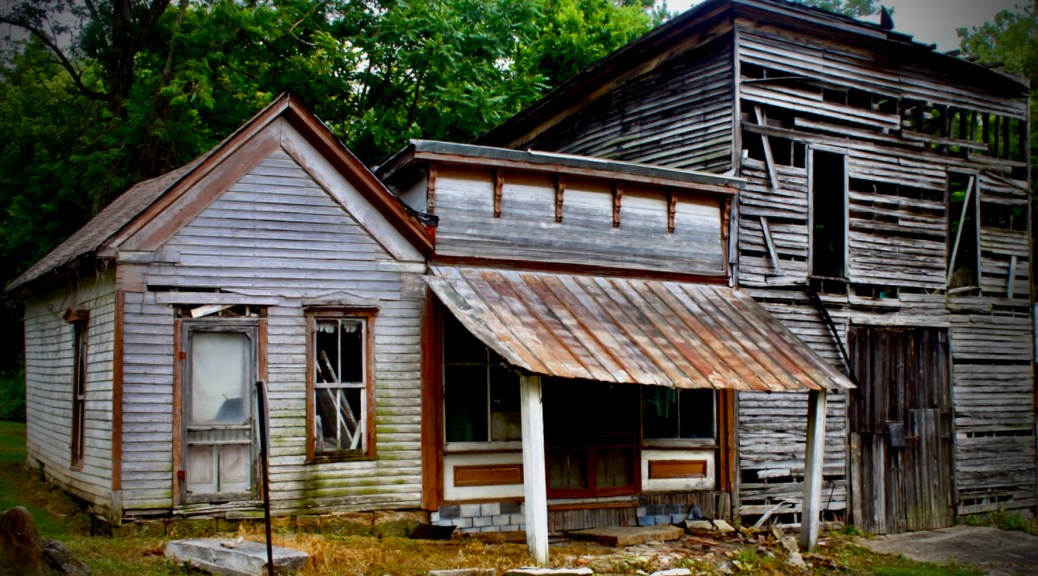
It should be noted that the original town that Lewis describes in this letter was virtually destroyed by the flood of 1937 and was subsequently relocated to higher ground. A few of the remaining abandoned buildings of the original town still stand. See Header (photo by Dan Davis).
Transcription
Addressed to Mr. Oliver Beers, Maple Grove, Otsego county, New York State
Leavenworth, [Crawford county] Indiana October 23, 1862
Mr. Oliver Beers,
Dear cousin, I take the present hours in answering your kind & welcome letter of the 9th of October. I was glad to hear from you all & to hear that you were all well. Our little town has been considerable excited for several days. The rebels were about 50,000 in number at Elizabeth, Kentucky, which was about 40 miles from here and also 250 rebels had taken the town of Brandenburg, Kentucky, which is only 18 miles from here. But as luck have it they would not come down and try Col. Morgan’s Home Guards. The Guards were eager for a fight. There was about 300 soldiers here and one piece of artillery and plenty of shot and shell. All they had to do was to come on and we would help them to plenty of Lincoln’s powder & pills. That is all the war news I believe, except there is no draft in little Crawford. She is the banner county so far.
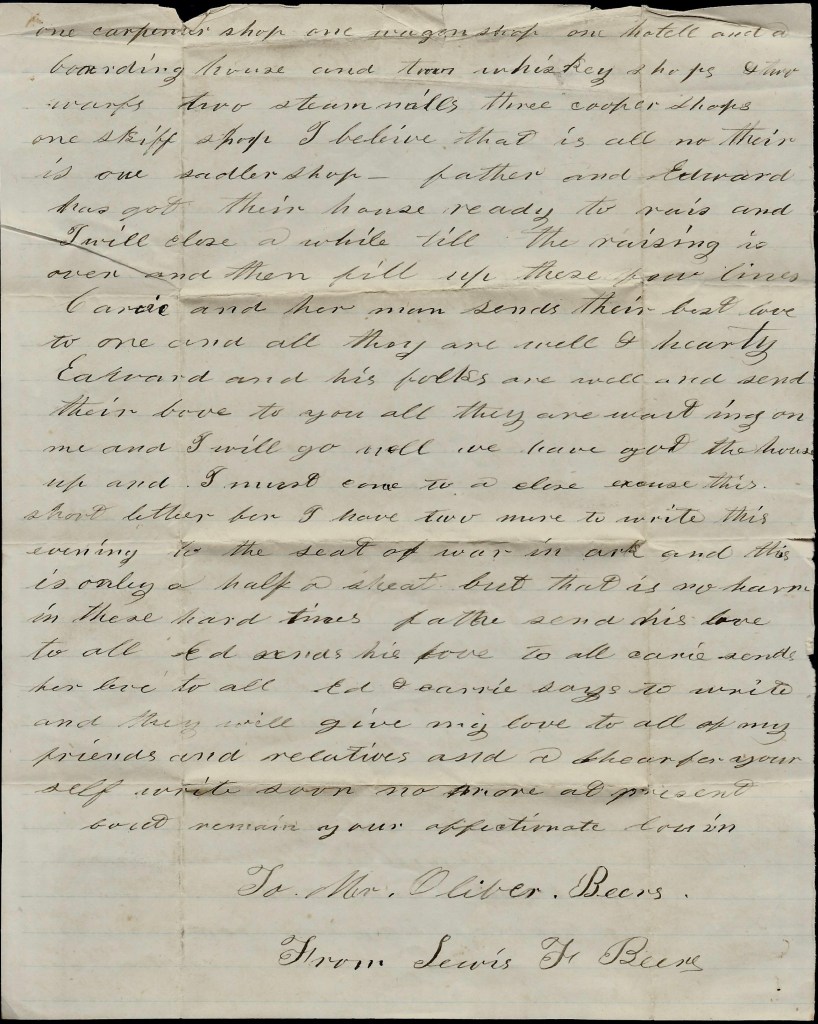
The weather is very cool for this time of year. It sleeted this morning the 23rd. The [Ohio] river is lower at the present time than it has been since 1852. There is no boats running except small ones. Father and Edward is to work on a house. You would hardly know our little town now. It has improved very fast for a one-horse town. It contains two churches, six stores and one drugstore, which is seven, two blacksmith’s shops, one carpenter’s shop. one wagon shop, one hotel, and a boarding house and two whiskey shops & two wharfs, two steam mills, three cooper shops, one skiff shop. I believe that is all. No, there is one saddler shop.
Carrie (Beers) Shaw (1834-1914)
Father and Edward has got their house ready to raise and I will close a while till the raising is over and then fill up these few lines.
Carrie and her man sends their best love to one and all. They are well & hearty. Edward and his folks are well and send their love to you all. They are waiting on me and I will go.
Well, we have got the house up and I must come to a close. Excuse this short letter for I have two more to write this evening to the seat of war in Arkansas and this is only a half sheet but that is no harm in these hard times. Father sends his love to all. Ed sends his love to all. Carrie sends her love to all. Ed & Carrie says to write and they will. Give my love to all of my friends and relatives and a share for yourself. Write soon. No more at present and remain your affectionate cousin, — from Lewis F. Beers
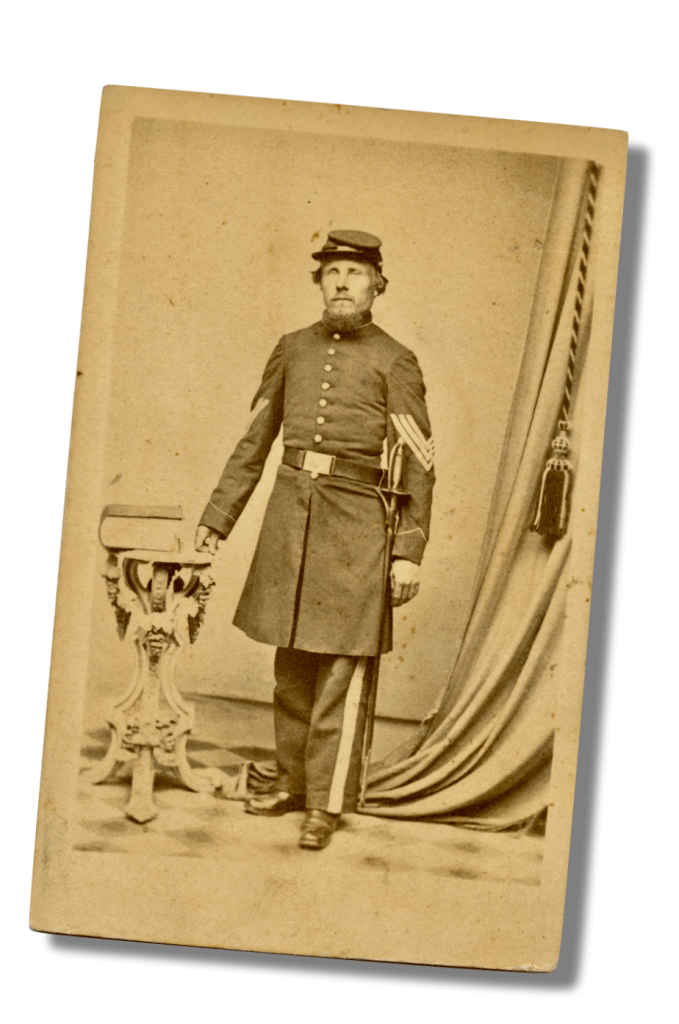
Sgt. James L. Sutton, Co. G, 150th New York Vols. (Paul Rusinoff Collection)
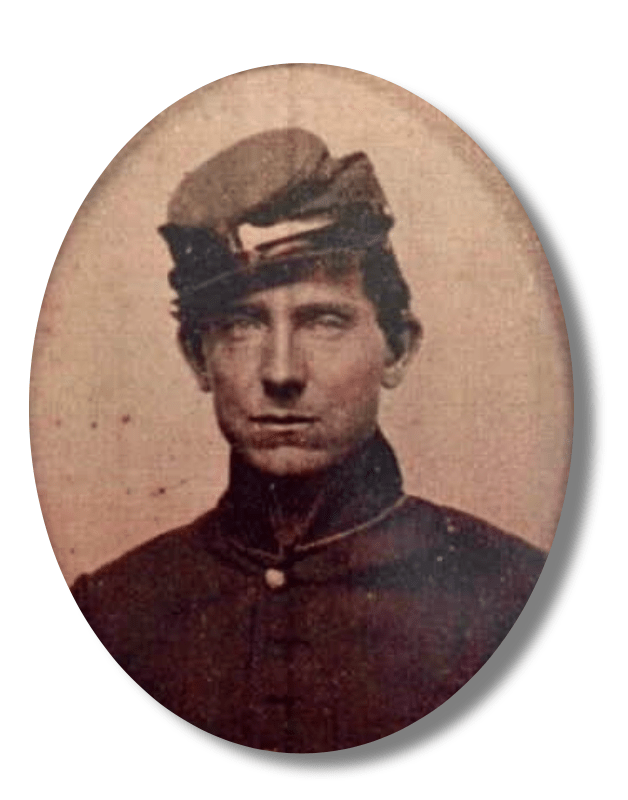
The following letters were written by James L. Sutton (1825-1895) who enlisted on 12 September 1862 when he was 37 years old at Poughkeepsie to serve as a sergeant in Co. G, 150th New York Volunteers. He was promoted to 1st Sergeant on 10 November 1864 and mustered out with his company on 8 June 1865.
The 150th New York participated in Sherman’s Atlanta campaign about the beginning of May and took an important and honorable part in many of the great battles of that memorable campaign, including Resaca, Cassville, Dallas, Kennesaw mountain, Peachtree creek and the siege of Atlanta. The casualties of the regiment aggregated 100 killed and wounded during the 4 months’ fighting from Tunnel Hill to Atlanta. On Nov. 15, 1864, the regiment started on the march to the sea with Sherman, and in December was actively engaged in the siege of Savannah, losing 20 killed, wounded and missing. The following year it embarked on the campaign through the Carolinas, being sharply engaged at the battle of Averasboro and losing a few men at Bentonville. On the close of this campaign it marched on to Washington, where it took part in the grand review, and was mustered out there on June 8, 1865.
These four letters take us from the trenches before Atlanta, to the occupancy of Atlanta, the occupancy of Savannah, to the surrender of Johnston’s army and President Lincoln’s assassination. They are from the private collection of Paul Russinoff and were made available for transcription and publication on Spared & Shared by express consent.
In the trench near Atlanta Thursday, July 28th, 1864
Dear Sister and Brother,
Yours of the 12th was received the 21st. I was very happy to hear from you. It seemed a very long time since your last. Dear sister, it is pleasant to know, situated as we are in the army, that kind friends at home feel an interest in us, and often think about and pray for our safety.
We have had a very long and tedious campaign. We have been moving about since April 25th—over three months. We are dirty and weary, but there is rest ahead. We are within 2 miles of Atlanta and some of our lines nearer than that. We are drawing the lines tighter every day. If they leave the city, I think we shall remain there some time for rest.
We have had some hard fighting since I last wrote you, and very many have fallen. Our Corps and Division have lost quite heavy. Yet in the kind Providence of God! I am still preserved and in good health. We are but a short distance from a Rebel fort. They have a very good range of our works. They shell us quite often, doing a good deal of damage, killing some and wounding others. We have batteries just above us which replies to theirs, and sometimes we have quite an artillery fight—all shot and shell going over our heads, making us keep our heads low, as some of them burst very near us, the pieces flying all around us. Add to this, the Reb sharp shooters just in good shooting distance keep firing at us day and night, much to our annoyance. The skirmishers of both armies are in sight of where we lie. There was two dwellings and barn a short distance from us. The Johnnies were in there shooting at us. We could not get them away. Our batteries tried to fire the buildings with shell. They would pass through them making boards and shingles fly, but could not fire them.
Yesterday Morning the 13th [New] Jersey went up there, driving the skirmishers back and firing the buildings. It was a grand sight as we could see the whole of it where we lie. They brought in some 30 prisoners. One little fellow came along with a great, long-legged Johnnie by the neck, pushing him along. The 13th lost 2 killed and about 7 wounded. They accomplished a great deal as they found out the position of the Rebs. Just now a ball passed just over our heads, making us dodge down and lie low. I will be glad when we get out of this. We have been under fire most of the time now for about two weeks.
I received a letter from Charlie a few days ago. They were well. You think us better off than the Army of the Potomac. In many respects we are, and in some we are not. We have considerable rain and as a general thing, plenty of water. Yet it is more difficult to get food and clothing. As for vegetables, we get no sight at them, and if a man is wounded here, he cannot get the care he can in Virginia as it is so far from the hospital. Then if one is killed, he has to be buried as we cannot get him away.
We have two batteries here in our breastworks. The Rebs are throwing up works in sight of us. Our battery just opened and knocked it—as the printer would say—into pie. You talk about flies. If you could see what we have here, you would think we had just a few. Please write often. I will let you know when we get into Atlanta. My love to all. Yours affectionately, — James L. Sutton
Letter 2
Atlanta [Georgia] September 29th 1864
Dear Brother & Sister,
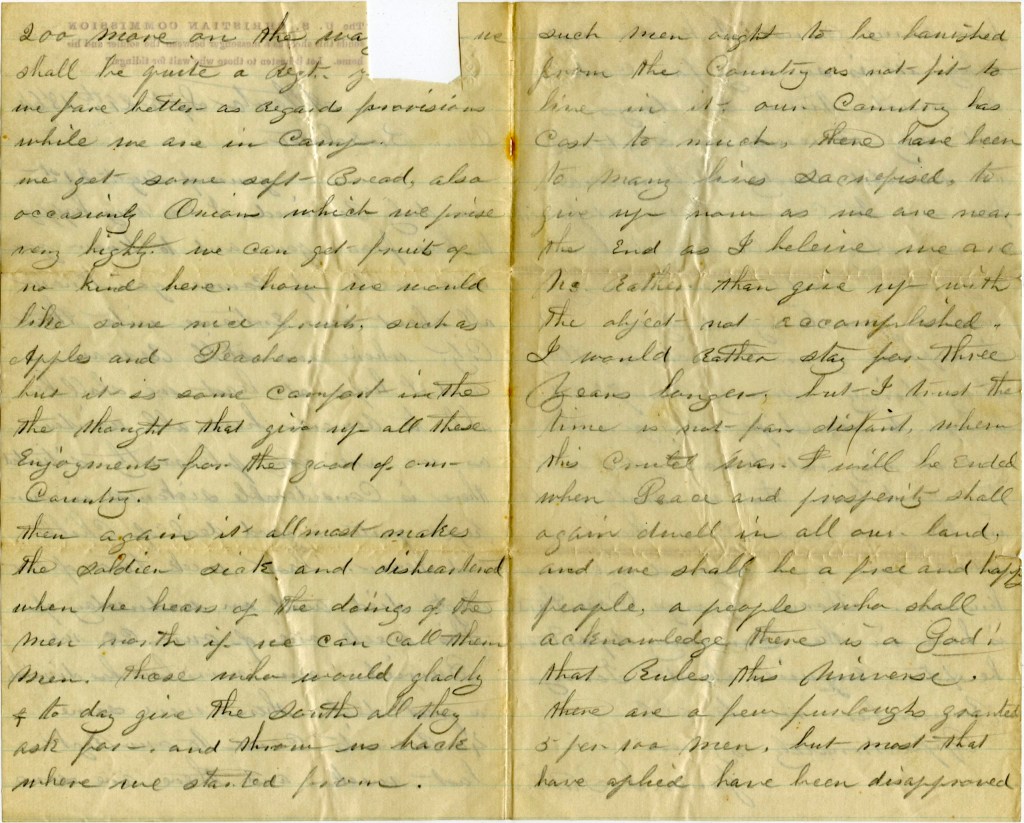
Yours of August 21st was duly received. I was very happy to hear from you and to know you were well. Of course you know all about our entrance into the city where we still remain and I hope at least we shall be able to remain here all winter as we are very pleasantly situated. There is considerable sickness in our regiment. Quite a good deal of chills and fever. Last week two of our regiment died and on Wednesday of this week one of our company we buried. Our numbers has diminished a great deal. There were some 40 recruits came to our regiment last week and there are some 200 more on the way. We shall be quite a regiment yet.
We fare better as regards provisions while we are in camp. We get some soft bread. Also occasionally onions which we prize very highly. We can get fruit of no kind here. How we would like some nice fruits such as apples and peaches. But it is some comfort in the thought that [we] give up all these enjoyments for the good of our country. Then again it almost makes the soldier sick and disheartened when he hears of the doings of the men [in the] North—if we can call them men. Those who would gladly today give the South all they ask for and throw us back where we started from. Such men ought to be banished from the country as not fit to live in it. Our country has cost too much. There has been too many lives sacrificed to give up now as we are near the end as I believe we are. Rather than give up with the object not accomplished, I would rather stay for three years longer. But I trust the time is not far distant when this cruel war will be ended—when peace and prosperity shall again dwell in all our land and when we shall be a free and happy people—a people who shall acknowledge there is a God that rules this universe.
There are a few furloughs granted—5 per 100 men—but most that have applied have been disapproved for some cause, I know not why. It is so very far, costs so much time 20 days, and my friends so scattered it would hardly be beneficial for me to come home at present as my stay would be short I could hardly have time to say how do you do and goodbye. I suppose your church is getting along finely, nearly completed. I hope to worship with you there yet. It ay not be so yet I will try so to live that we shall meet in the great assemblage of the just, where war and discord are never known.
Thomas George Courtland is here in the Commissary Department. He often enquires about Fanny. Remember me to all. Affectionately yours, — James L. Sutton
Letter 3
Savannah, Georgia January 13th 1865
Dear Brother & Sister,
I have been waiting since lying here to receive a mail from some of my friends but as yet have waited in vain. I received yours while lying in front of Savannah and also a pair of woolen gloves for which I thank you. They came in good time as the day after was quite cold. We were then on A____ Island.
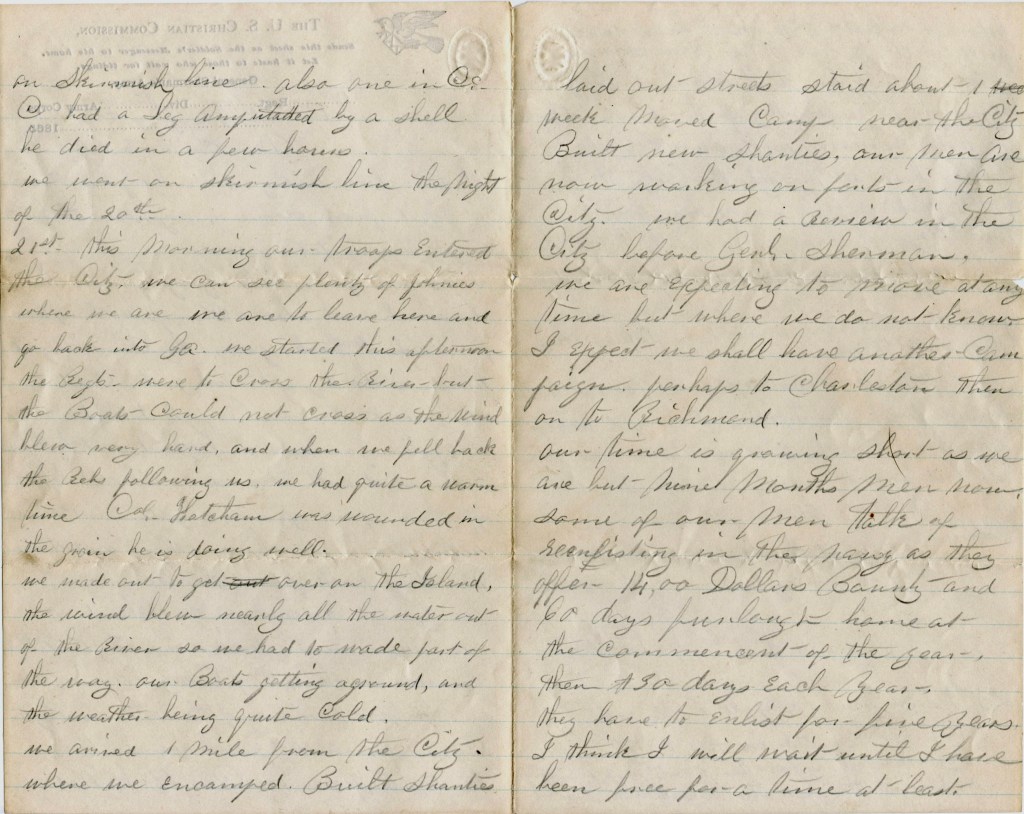
I suppose you saw the letter I sent to Hannah Bush so I will commence where I left off there. Part of our Brigade went over on the South Carolina shore and drove the rebs back from the river. We be in reserve on the island. One man in 3d Wisconsin Regiment [was] killed. This was on the 19th of December. On the morning of the 20th, our regiment crossed on South Carolina soil. Today a man in Co. H [was] killed on the skirmish line. Also one in Co. C had a leg amputated by a shell. He died in a few hours. We went on the skirmish line the night of the 20th.
21st—This morning our troops entered the city. We can see plenty of Johnnies where we are. We are to leave here and go back into Georgia. We started this afternoon. The regiments were to cross the river but the boats could not cross as the wind blew very hard and when we fell back, the Rebs following us, we had quite a warm time. Col. Ketcham was wounded in the groin. He is doing well.
We made out to get over on the island. The wind blew nearly all the water out of the river so we had to wade part of the way, our boats getting aground and the weather being quite cold. We arrived 1 mile from the city where we encamped, built shanties, laid out streets, stayed about 1 week, moved camp near the city, built new shanties. Our men are now working in forts in the city. We had a review in the city before Gen. Sherman. We are expecting to move at any time but where, we do not know. I expect we shall have another campaign—perhaps to Charleston. Then on to Richmond.
Our time is growing short as we are but nine months men now. Some of our men talk of reenlisting in the Navy as they offer 1400 dollars bounty and 60 days furlough home at the commencement of the year, then 30 days each year. They have to enlist for five years. I think I will wait until I have been free for a time at least before I enlist. I think I have done pretty well to give three years service.
I hear Col. John H. Ketcham is Brigadier General. He is worthy of the place. I hope he will remain with our brigade. I have been all through the city. It is quite a large city. Some very nice buildings. I tried all over to get a few notions such as a handkerchief and a few other things but there is nothing we can get. The rebels must have taken everything with them.
My health remains very good for which I am truly thankful. I should like very much to come and see you all but must wait patiently till the time arrives. Please write soon. Remember me to all enquiring friends. I remain as ever yours, — James L. Sutton
P. S. I send you a couple of papers that are printed in this city. They are selling for ten cents here in camp. We have another just started called The Herald.
Letter 4
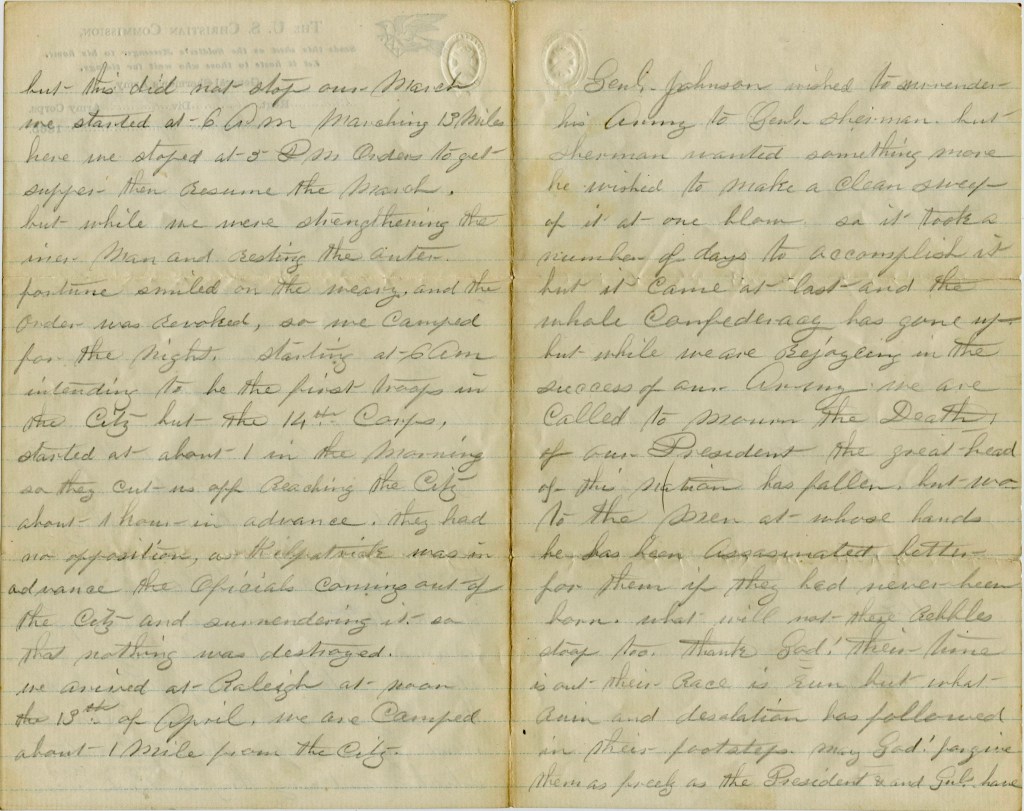
Raleigh, [North Carolina] April 20th, 1865
Dear Brother & Sister,
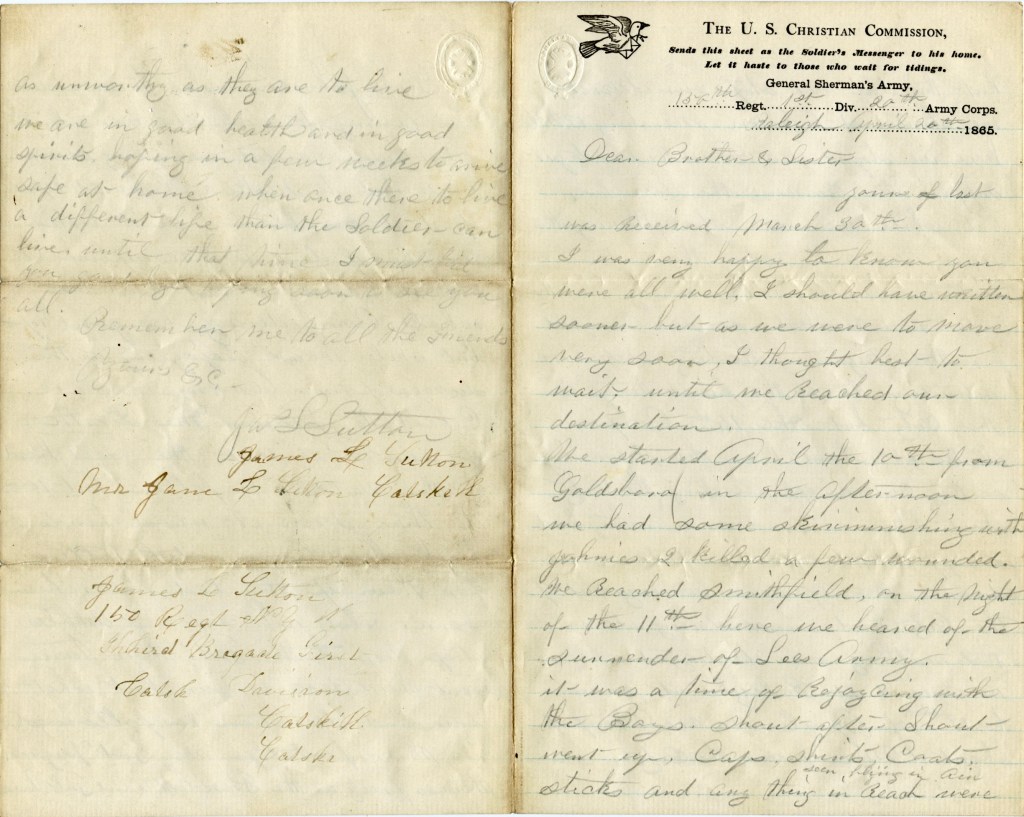
Your last was received March 30th. I was very happy to know you were all well. I should have written sooner but as we were to move very soon, I thought best to wait until we reached our destination.
We started April the10th from Goldsboro (in the afternoon). We had some skirmishing with Johnnies, two killed [and] a few wounded. We reached Smithfield on the night of the 11th. Here we heard of the surrender of Lee’s army. It was a time of rejoicing with the boys. Shout after shout went up. Caps, shirts, coats, sticks, and anything in reach were seen flying in air. But this did not stop our march. We started at 6 a.m., marching 13 miles. Here we stopped at 5 p.m. Orders to get supper, then resume the march. But while we were strengthening the inner man and resting the outer, fortune smiled on the weary and the order was revoked so we camped for the night. Starting at 6 a.m. intending to be the first troops in the city, but the 14th Corps started at about 1 in the morning so they cut us off, reaching the city about 1 hour in advance. They had no opposition as Kilpatrick was in advance. The officials coming out of the city and surrendering it so that nothing was destroyed.
We arrived at Raleigh at noon, the 13th of April. We are camped about 1 mile from the city.
Gen. Johns[t]on wished to surrender his army to Gen. Sherman but Sherman wanted something more. He wished to make a clean sweep of it at one blow so it took a number of days to accomplish it but it came at last and the whole Confederacy has gone up. But while we are rejoicing in the success of our army, we are called to mourn the death of our President—the great head of the Nation has fallen. But woe to the men at whose hands he has been assassinated. Better for them if they had never been born. What will not these rebels stoop to? Thank God their time is out—their race is run. But what ruin and desolation has followed in their footsteps. May God forgive them freely as the President & Generals have, as unworthy as they are to live.
We are in good health and in good spirits, hoping in a few weeks to arrive safe at home when once there to live a different life than the soldier can live. Until that time, I must bid you goodbye, hoping soon to see you all. Remember me to all the friends. Yours, &c. — James L. Sutton
The following letter was written by John Holmes Newcomb (1838-1883), the son of Foster Newcomb (1789-1869) and Fanny Collins (1799-1878) of Enfield, Massachusetts. John wrote the letter to his brother, unidentified, but most likely Leander Witherell Newcomb (1833-1908) who was next closest to his own age.
John enlisted in Co. E, 2nd Massachusetts Volunteers on 25 May 1861 for three years. He was seriously wounded in the Battle of Cedar Mountain on 9 August 1862 and was in the hospital many months before he was discharged for disability in late March 1863. The wound was a 1 oz bullet in his right thigh that was not removed. This wound ultimately was the cause of his death. When discharged from service March 9, 1863, he held the rank of sergeant, but through an error the discharge papers read “private.”
The 2nd Massachusetts was trained at Camp Andrew in West Roxbury, Massachusetts. Roughly half the regiment was mustered in on May 18, 1861 and the remainder on May 25, 1861 for a term of three years. The regiment saw extensive combat as part of the Army of the Potomac. The regiment spent the winter of 1861-62 guarding the upper Potomac River and Frederick, Maryland. The camp depicted in the lithograph was located on the Baltimore Pike four miles east of Frederick, Maryland, where they were for three months. This image is one of a group of 23 hand-colored lithographs of Union encampments produced by Rosenthal’s Lithograph of Philadelphia between 1861 and 1865. Armed with a pass that provided him full access to the camps of the Army of the Potomac, Max Rosenthal’s pencil sketches provided the basis for this encampment series, a subset from over 150 prints of Civil War battle and camp scenes published by the Rosenthal brothers.
To read other letters by members of the 2nd Massachusetts transcribed and published on Spared & Shared, see:
Camp of the 2nd Massachusetts Regiment [February 1862]
Dear Brother,
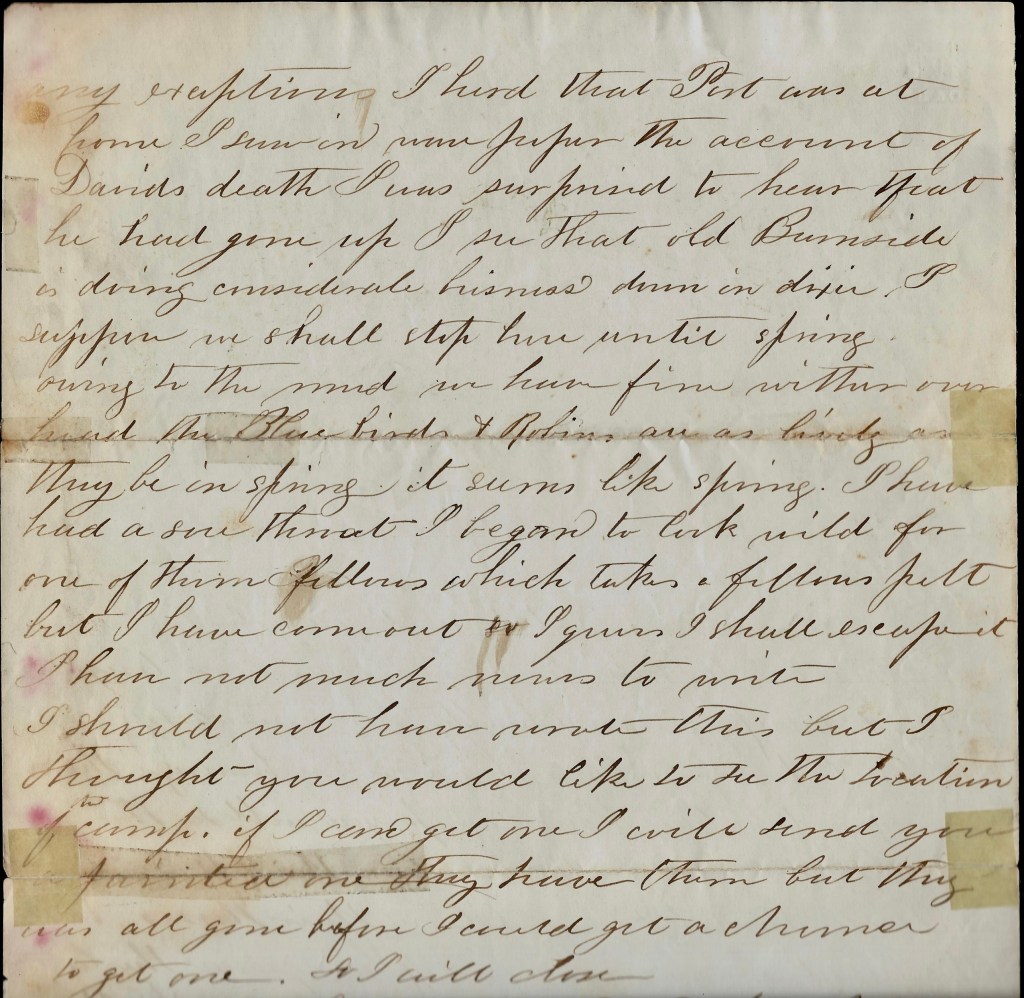
As I want to send you a picture of our camp I will write you a few lines. I am tough and rugged. The regiment is very healthy now considering the wet damp weather which we are having. This is a very good picture of our camp. You will see the band tent & also the band. On the left you will see the Colonel & Lieut. Colonel on their horses & the guard marching off to fire off their guns. The long tent on the left is the officers’ mess tent. This picture was taken from the road so you can’t see the colonel’s tent very plain but, however, it shows some. The picture will do enough to look at but come to be here in reality, it ain’t quite so funny. Mud is two feet deep without any exceptions.
I heard that Put was at home. I saw in newspaper the account of David’s death. I was surprised to hear that he had gone up.
I see that old Burnside is doing considerable business down in Dixie. I suppose we shall stop here until spring owing to the mud. We have fine weather over head. The blue birds and robins are as lively as they be in spring. It seems like spring.
I have had a sore throat. I began to look wild for one of them fellows which takes a fellow’s pelt but I have come out so I guess I shall escape it. I have not much news to write. I should not have wrote this but I thought you would like to see the location of the camp. If I can get one, I will send you a painted oner. They have them but they was all gone before I could get a chance to get one. So I will close.
An unidentified member of the 46th Ohio (Carl Fogarty Collection)
The following letter was written by William E. Joshua (1833-1869), who came to the United States from Wales with his parents, Joseph Joshua (1810-1878) and Sarah Lewis (1813-1887) in the 1850s and resided in Newport, Campbell county, Kentucky. William enlisted as a private in Co. D, 46th Ohio Infantry on 10 September 1861. He died of disease at the City Hospital in St. Louis, Missouri, on 28 January 1863.
This letter was written just a week before the Battle of Shiloh. For a great article on the 46th Ohio and the role they played in that two-day engagement, see “Crank” Worthington’s Boys at Shiloh, published in Dan Masters’ Civil War Chronicles in 2020.
Transcription
Addressed to Mr. Samuel Moon, for Mr. Joseph Joshua, Newport, Kentucky
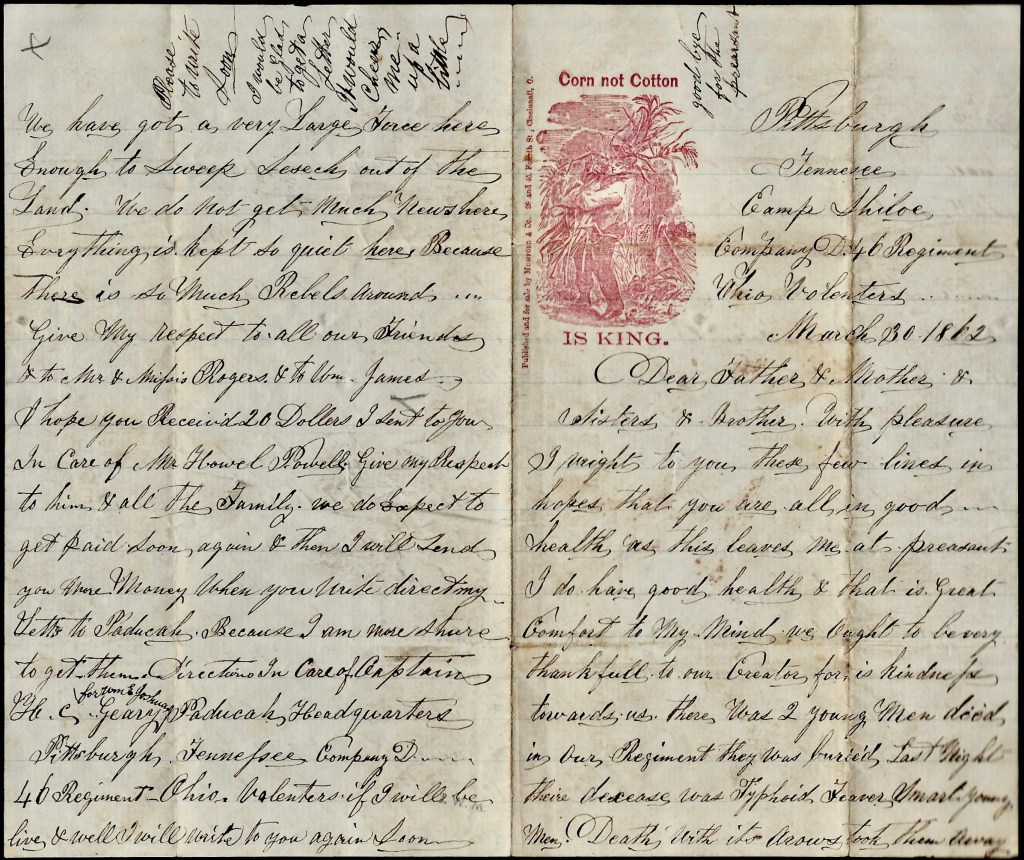
Pittsburg, Tennessee Camp Shiloe [Shiloh] Company D, 46th Regiment Ohio Volunteers March 30, 1862
Dear Father & Mother & Sisters & Brother,
With pleasure I write to you these few lines in hopes that you are all in good health as this leaves me at present. I do have good health & that is great comfort to my mind. We ought to be very thankful to our Crestor for his kindness towards us. There was two young men died in our regiment. They was buried last night. There disease was typhoid fever—smart young men. Death with its arrows took them away to the land where there is no shot nor shell. Our band played very mournfully the Dead March. It was very striking. It’s a hard thing for a young man to die in a strange country without any parents, without relative or friends. I hope it will never come to my lot to be numbered with the dead in this country. But I hope that I shall return home safe and sound again.
Today is Sunday—the Lord’s Day. It’s a very fine day. How brightly the sun shines today. We are encamped in the wild woods of Tennessee. Our soldiers does burn the woods for miles. It looks very pretty at night. It gives a good sign that the Union brave boys are approaching. They are in camp about 18 miles from here. The name of the place is Corinth, Mississippi.
There was two young men deserted from their camp. One of them is from Cincinnati. He is a very smart young man. His name is Rice. They pressed him at New Orleans. The came in last night. They are very glad that they have come to us. They told us that the Rebels had 80 thousand men there. They said they had not much to eat. There is two railways at Corinth & we are a going to attack them some of these first days. We are waiting for General Buell’s Army to come. As soon as they come. we are going to take the junction & cut all communication from east and west so we intend to starve them out. They say after this fight the war will be at an end. I say may it be so.
We have got a very large force here—enough to sweep Secesh out of the land. We do not get much news here. Everything is kept so quiet here because there is so much Rebels around.
Give my respect to all our friends & to Mr. & Mrs. Rogers & to Wm. James. I hope you received 20 dollars I sent to you in care of Mr. Howell Powell. Give my respect to him & all the family. We do expect to get paid soon again & then I will send you more money. When you write directing letters to Paducah because I am more sure to get them. Directions: In care of Captain H[arding] C. Geary, for William E. Joshua, Paducah, Headquarters, Pittsburg, Tennessee, Company D, 46th Regiment, Ohio Volunteers. If I will be live & well, I will write to you again soon. Please to write soon. I would be glad to get a letter. It would cheer me up a little. Goodbye for the present.
These letters were written by Corporal Albert H. Carter (1844-1864) of Leominster, Massachusetts, who enlisted as a private Company A, 36th Massachusetts Infantry in August 1862. A few days after they were mustered into service at Worcester, they were sent to Alexandria, Virginia, and then ordered at once to join the Army of the Potomac. They reached Sharpsburg on 17th September, 1862, too late to participate in the Battle of Antietam. Here they were officially attached to Welsh’s 3rd Brigade, Wilcox’s 1st Division, 9th Army Corps.
Albert was promoted to corporal on 1 January 1864 and was “shot dead near Spottsylvania in the Battle of the Wilderness, May 6, 1864” according to the book, Leominster, Massachusetts, Historical and Picturesque, by William Andrew Emerson. His body was originally buried at Wilderness Battlefield, Spotsylvania but later reinterred in Grave 3741 at the Fredericksburg National Cemetery.
It is believed Albert was the son of Nathaniel and Lodema Carter of Lynnfield, Essex County, Massachusetts. See also 1864: Albert H. Carter to Clara E. Carter on Spared & Shared 7. Seven more of Albert’s letters are published on “Private Voices.”
Letter 1
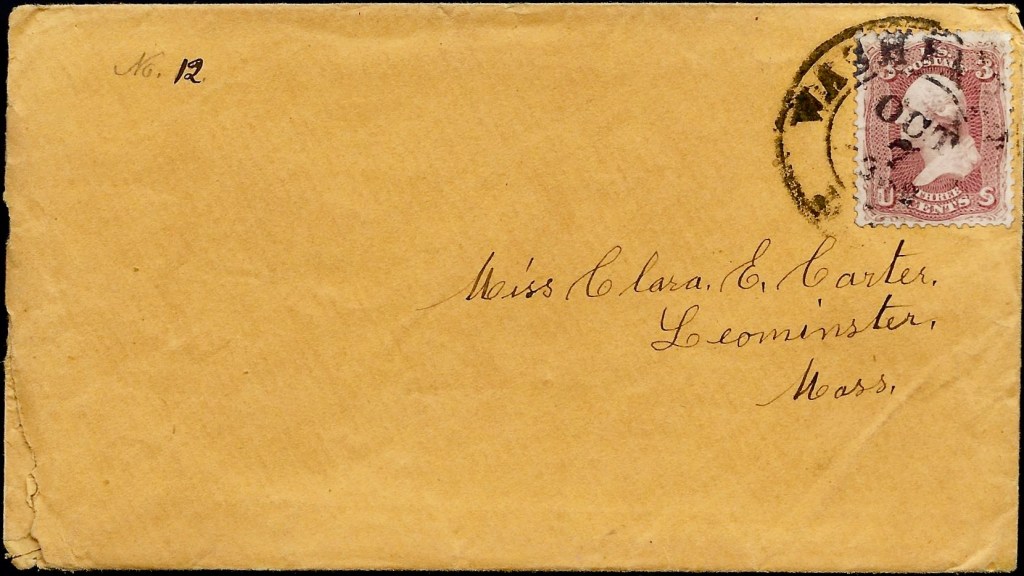
Addressed to Miss Clara E. Carter, North Leominster, Massachusetts
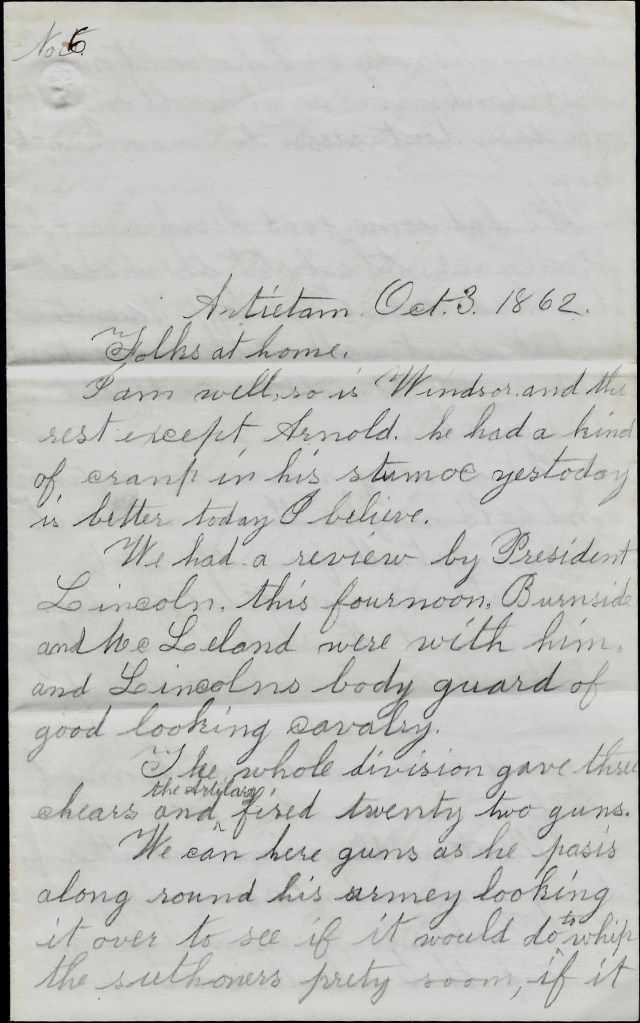
Antietam October 3, 1862
Folks at home,
I am well. So is Windsor and the rest except Arnold. He had a kind of cramp in his stomach yesterday. Is better today, I believe.
We had a review by President Lincoln this forenoon. Burnside and McClellan were with him and Lincoln’s body guard of good-looking cavalry. The whole division gave three cheers and the artillery fired twenty-two guns. We can hear guns as he passes along round his army looking it over to see if it would do to whip the Southerners pretty soon if it comes handy, as I hope it will, but don’t know as will right off. They don’t seem to move much now.
We had some good fresh meat fried for dinner—the first the whole company has had since we left Worcester and it went well with some hard tack as the old soldiers call the hard crackers.
It is very warm here day times and cold nights. There is not much wind—most all from the east. There is a great lot of wheat that is not threshed. It is in large stacks. The corn is about all ripe that has been let alone until it could ripen. The took most all of it.
What are the nine-month’s men doing now and where are they?
Pickles go pretty well for spice and if those cluster cucumbers [are] not all gone, I wish you would put up some in good strong vinegar that will go well on beans, if we have any next winter.
I shall want some good gloves or mittens with four fingers to them for Battalion Drill.
Saturday morning the fourth, thirty-five of Co. A will go on picket today and we shall come off tomorrow, I guess. We are going to have soup for breakfast this morning and fresh meat to carry with us and fry it ourselves.
Gen. Wilcox came down in front of us last night at Dress Parade. He looked as if he was a farmer with a young fellow with him taking a walk. I can’t [write] any longer so goodbye. — A. H. Carter
Letter 2
Crab Orchard (Kentucky) September 9th 1863
Friends at home,
I am well and doing duty in the ranks. I was in the cooking department ten days a while ago. Arnold is not very smart. There was a lot left back at Nicholsville when we marched from there that had the chills &c., but they have most of them got up now. There is talk about our going on to B. Side [Burnside] but I have not gone yet. I don’t know whether they are going to send home for conscripts or not. I was one that was picked out to go and the Lieut. said my name was sent to B. Side as one to go. The Seventy Ninth New York (was ) sent a week ago or so. That is in our Brigade—Eighth Michigan, Forty Fifth N.Y. and Thirty Sixth, Mass are all in the same Brigade.
The ague has got hold of a great many of the boys, but it hasn’t got me yet and I hope it won’t. It shakes the flesh right off of some. Two of our company died back at N. Ville [Nashville] since we came from there. There was a sergeant from Fitchburg and a Corporal of Leominster, Eugene Sullivan, North Village.
That sugar bag don’t come. I should like one very much. I don’t know as you got the letter though. I should like one made of oiled silk such as they put in fur hat linings that would hold about two pounds.
How is war business in other parts of the U. S.? We don’t get the papers here very regular. Once in a while there is a lot comes along. I have not heard the girls say whether they had bin here long enough or not and I don’t know whether to get them conveyed to Nashville or not. Mr. A. J. Phillips and wife came from Kansas to see me. They started for L. [Louisville] some time ago. They were calculating to visit Sarah Boyden first. I guess they will come and visit you too. She was enjoying herself very much in her own little house. She said Allie is growing fast. She thought I did not calculate on her growing so much when I made the ring I sent her, but she could wear it on her little finger.
I have got one from Henry Boyden that I have not answered. I don’t get much to write about just now. Yours truly, — A. H. Carter
The following letter was penned by William Henry Burns of J. H. Walter’s Company, South Carolina Light Artillery (Washington Artillery). William entered the service early in the war as a private and was later promoted to corporal. He was transferred in March 1864 to Co. C, 17th South Carolina Infantry.
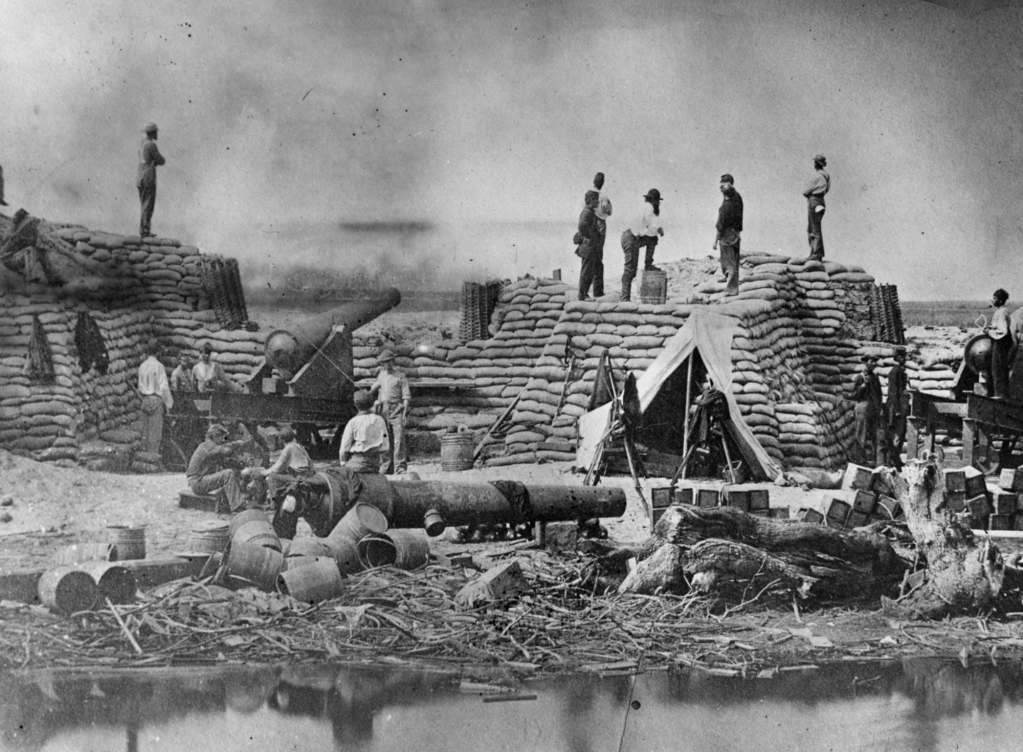
At the time William wrote this letter in July 1863, his battery was in Fort Sumter, besieged by Union batteries less than a mile away. They fired over seven million pounds of metal at the fort during a 587-day bombardment, reducing its brick walls to rubble. Despite this, the fort became stronger as the rubble formed a massive earthwork. The Union’s attempt to land troops on the island fort was repulsed.
The letter served effectually as his last will and testament as he feared he would be killed in the impending bombardment.
Union soldiers at Battery Stevens bombarding Fort Sumpter in 1863. (LOC)
Transcription
Fort Sumter July 19th 1863
W. P. Price Esq.,
I snatch a leisure moment under a flag of truce now pending to communicate a request as I am now in a garrison that is likely to be closely besieged & as I am satisfied it will be defended to the last, it is not improper for me to make some arrangements for the disposition of my worldly effects.
1st—It is my desire you administer upon my effects to assume the guardianship of my little Boy.
2nd—Out of the amount of my legacy from Miss N. Brooks estate, I desire you to purchase a small place in Newberry village for Mrs. Burns, the title to remain in your hands for the benefit of my son at his mother’s death, or when he becomes of age. In no case is the place to be disposed of unless in your judgment, my son’s interest is to be advanced by it.
3rd—I desire you to be governed by your own good judgment in the further disposition & investment of any means you may find me possessed of for the interest of my wife & son.
In the event you are not full willing to act as above requested, I trust you will at least see that their interest does not suffer for the want of a friend in the settlement of Miss N. Brooks Estate. By complying with the above, you will greatly oblige your ever true friend, — W. H. Burns
The following letter was written by Charles Milton Woodbury (1843-1865) of South Danvers who enlisted at age 18 in May 1861 to served as a private in Co. B, 17th Massachusetts Infantry. He made corporal in February 1864 but died of disease on 8 June 1865 at Fort Schuyler, New York, at war’s end.
Charles was the son of Benjamin Franklin Woodbury and Emily Jane Flower. He mentions his older brother in the letter, Benjamin Franklin (“Frank”) Woodbury (1832-1899).
The 17th Massachusetts spent the winter of 1861-62 near Baltimore, with the exception of an expedition into Virginia, and in the spring of 1862 was ordered to New Berne, N. C. It took part in an expedition to Goldsboro and met the Confederates at Kinston, Whitehall and Goldsboro. From Dec. 22, 1862, to July 25, 1863, the headquarters were at New Berne, with several minor expeditions. On July 25 it embarked in support of a cavalry raid on Weldon, but returned to duty again at or near New Berne. In Feb., 1864, a detail of the regiment had a sharp brush with the enemy at Batchelder’s creek, and in April another detachment was sent to the relief of Little Washington. The battalion spent the winter of 1864-65 near Beaufort, moved to Goldsboro in March, encountering the enemy along the route, and closed its term of service in July, 1865.
Transcription
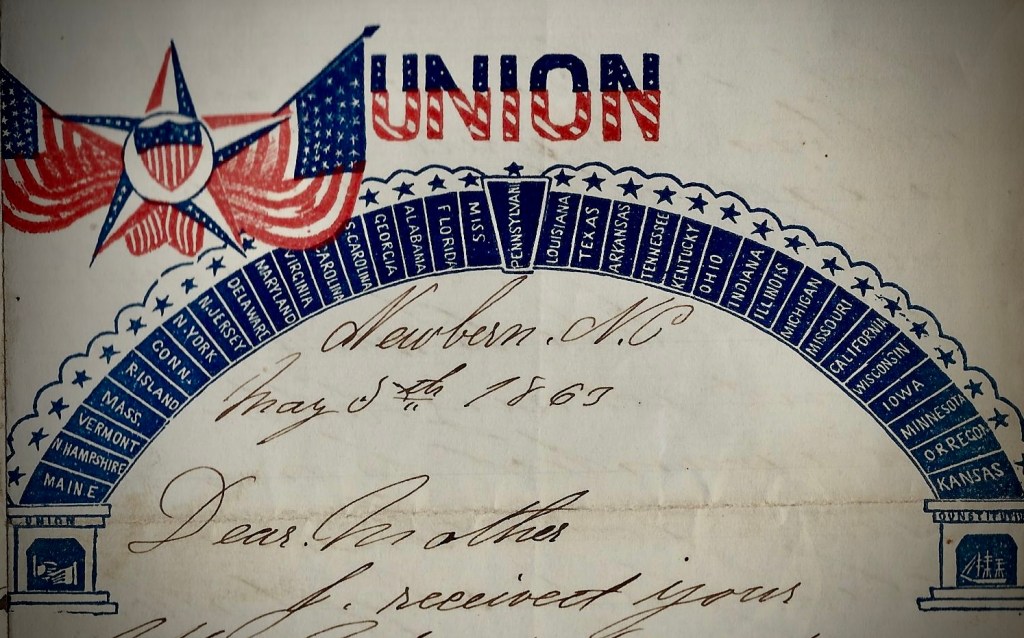
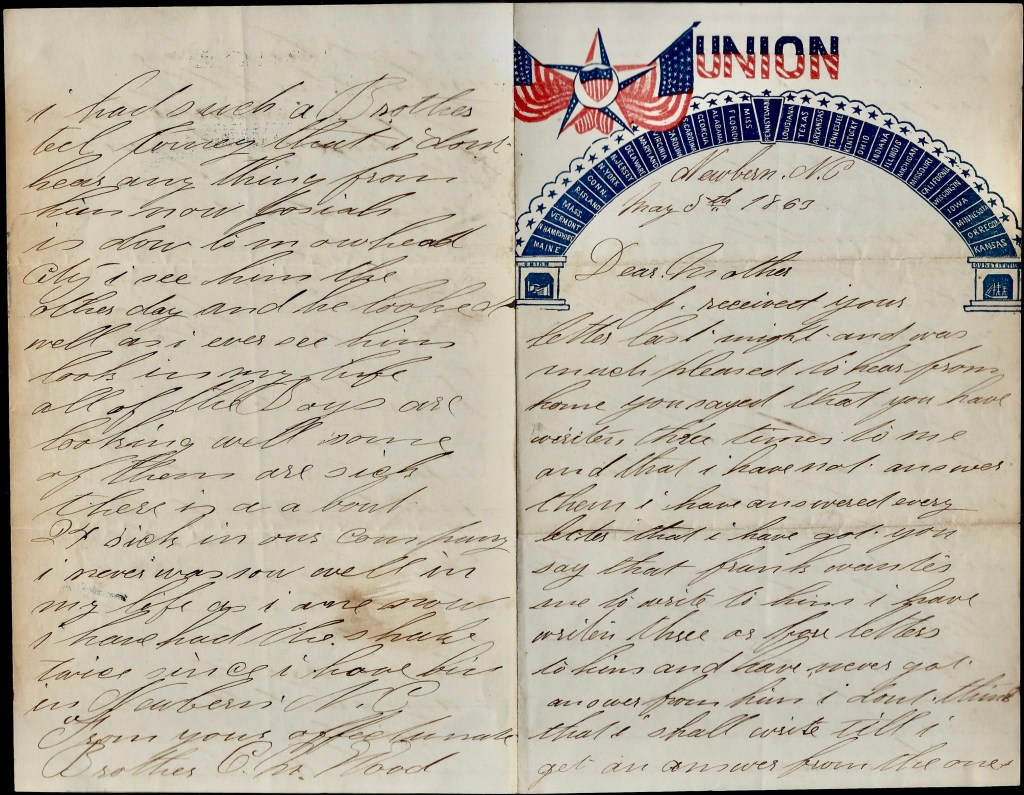
Newbern, North Carolina May 5th 1863
Dear Mother,
I received your letter last night and was much pleased to hear from home. You said that you have written three times to me and that I have not answered them. I have answered every letter that I have got. You say that Frank wants me to write to him. I have written three or four letters to him and have never got an answer from him. I don’t think that I shall write till I get an answer from the ones that I have wrote. I am willing to write as often as I get letters. I like to write as well as anyone but I don’t like to write when I don’t get any letters.
You wanted to know how we got along on the expedition. We got along pretty well. We don’t stay to home more than three or four days at a time before we have to go on another. We got back from one day before yesterday. We don’t know when we shall have to start again.
Tell Frank to answer to answer them letters that I sent him and I will answer him right away as soon as I get his. I have written three letters to you within a fortnight and have sent you $20 by Fisk. You go and get it if you have not got it. From your son, — C. M. Woodbury, Newbern, N. C.
Dear Sister, I got your letter in mother’s and was much pleased to hear from you. Tell Frank in your next letter that I had forgotten that I [had] such a brother. I am glad that he thought enough of me to let me know I had such a brother. Tell Comey [?] that I don’t hear anything from him now. Josiah is down to Morehead City. I seen him the other day and he looked [as] well as I ever seen him look in his life. All of the other boys are looking well. Some of them are sick. There is about 24 sick in our company. I never was so well in my life as I am now. I have had the shakes twice since I have been in Newbern, N. C.

























 Spared & Shared 23