Category Archives: 16th Illinois Infantry

1863-64: James Wesley Cassingham to Salina (Cassingham) Wyatt

These letters were written by James Wesley Cassingham (1840-1921), the son of English emigrant James Cassingham (1811-1882) and Virginia-native Martha Oden (1810-1844). James was born in Jackson, Muskingham county, Ohio, and was living in LaHarpe, Hancock county, Illinois when he enlisted on 24 May 1861 to serve as a private in Co. F of the 16th Illinois Infantry. He reenlisted as a veteran in the regiment on 28 December 1863, for which he received a bounty and a 30 day furlough in February 1864. He mustered out of the regiment on 8 July 1865 as a corporal.

In his letters, James mentions his cousin, Thomas Alexander (“Alex”) Cassingham (1844-1863) who served in Co. F of the 88th Illinois Infantry. Alex was killed in the Battle of Missionary Ridge in November 1863, as described in Letter 2 below. The recipient of all three of these letters was a third cousin, Salina (Cassingham) Wyatt, who lived in Dresden, Muskingum Co., Ohio at the time. Her husband, Frank Wyatt, served as a private in Co. F, 62nd Ohio Infantry.

To read letters written by other members of the 16th Illinois Infantry made available by Spared & Shared, see:
Noble Lovely Prentis, Co. D, 16th Illinois (1 Letter)
Francis James Russell, Co. D, 16th Illinois (6 Letters)
Matthew Davis, Co. G, 16th Illinois (3 Letters)

These Cassingham letters were kept by Salina and passed down to a descendant, Melvin Ernest Wyatt, who gifted them to Paul Jacque Cassingham. Wishing to preserve the history in them, he in turn provided me with scans for transcription and publication on Spared & Shared.
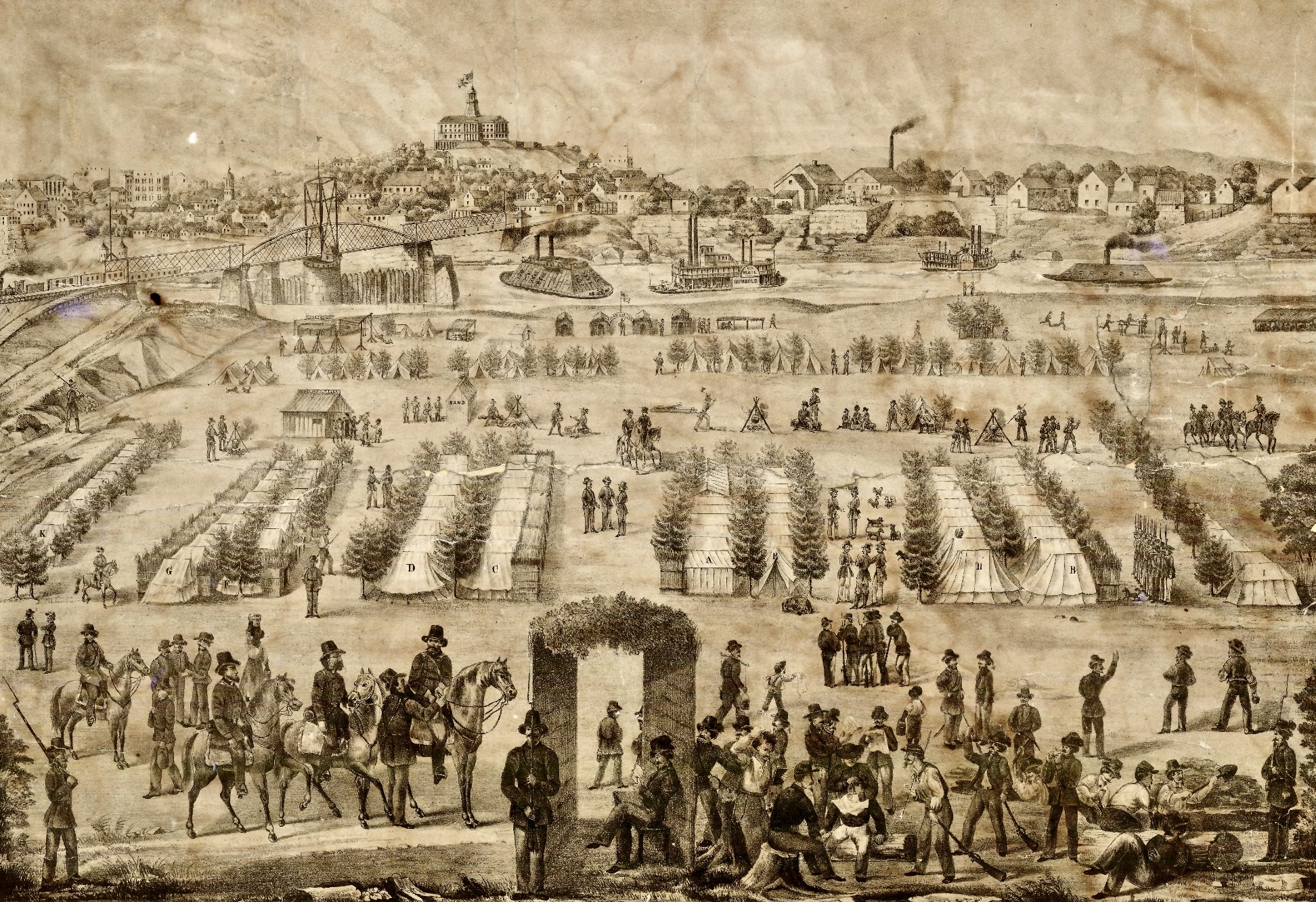
Camp of the 16th Illinois Infantry across the Cumberland River from Nashville, TN.

Letter 1

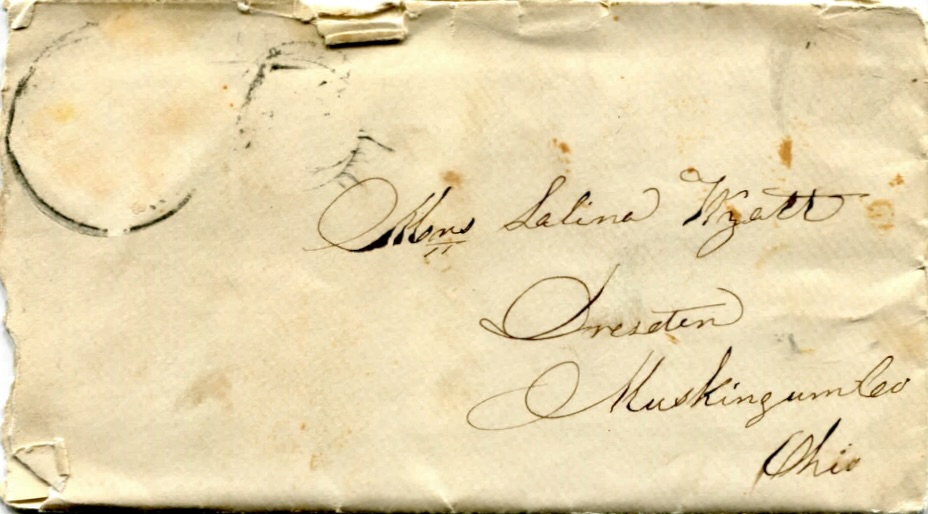
Addressed to Mrs. Salina Wyatt, Dresden, Muskingham county, Ohio

Kelly’s Ferry, Tennessee 1
November 3rd, 1863

Dear Cousin,

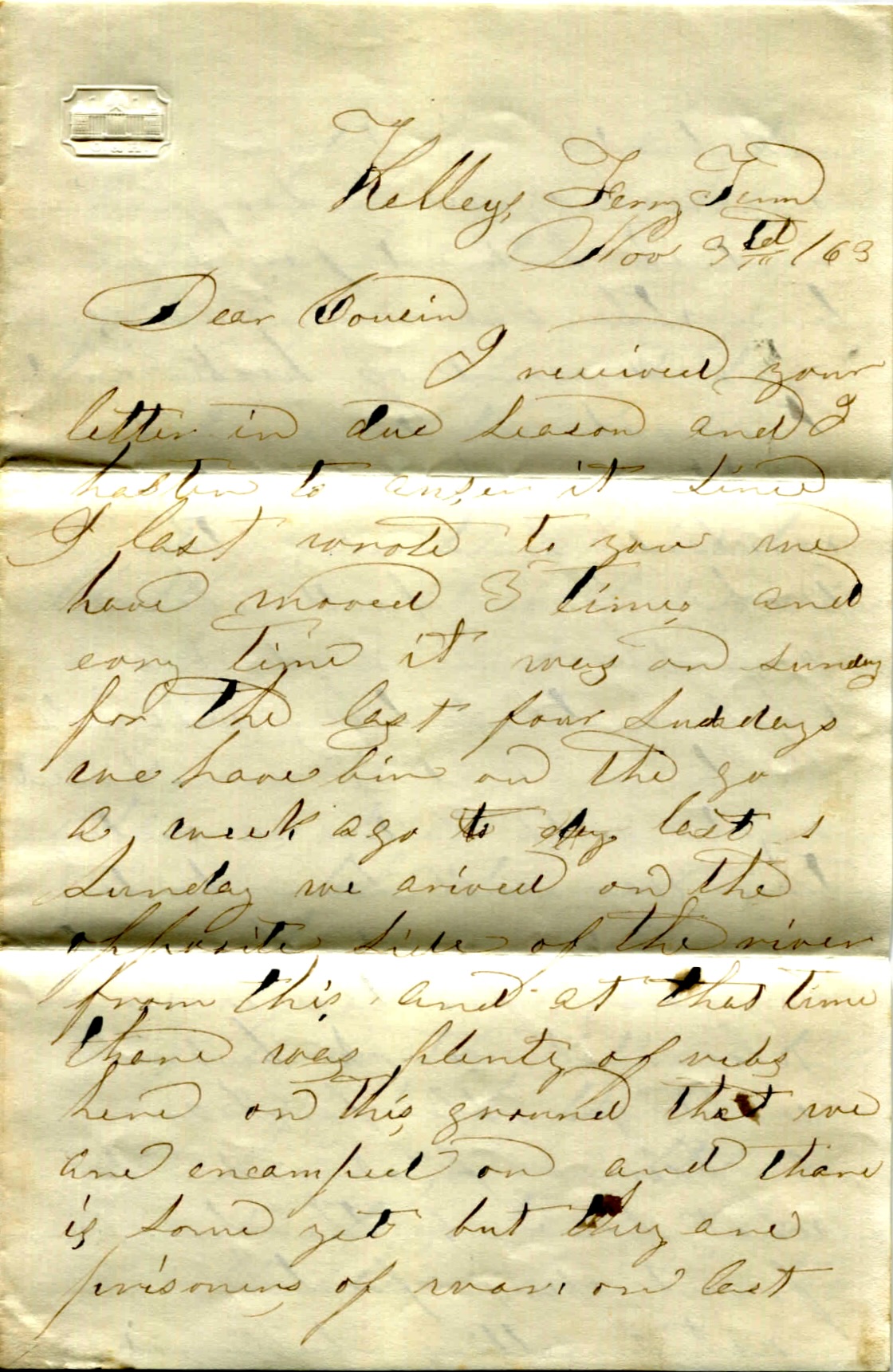
I received your letter in due season and I hasten to answer it. Since I last wrote to you we have moved three ties and every time it was on Sunday. Gor the last four Sunday’s we have been on the go. A week ago today last Sunday we arrived on the opposite side of the river from this and at that time there was plenty of rebs here on this ground that we are camped on and there is some yet but they are prisoners of war.

On last Wednesday night we was waked up by heavy firing and it continued for some time. The cause of it was by a movement of Hooker and the rebs made a night attack on him and they got repulsed handsomely. The rebs is in pretty close quarters now and it is hoped that they will all be captured and if we should meet with such a victory, this war will soon be to an end and I won’t be sorry for this is no pleasnt work. But I won’t grumble for I am a faring first rate to what some of the troops front of us is they they are not getting full rations and for a long time they have not got half rations. But they are getting plentier now for the river is open to this point and the boats is a running to this point and from this point to Chattanooga it is but ten miles and good roads.

Alex got through the fight safe and sound. If you see either of them uncles of [yours], you can tell them I am all right and if they want to hear from me, for them to answer the letter that I wrote to them.

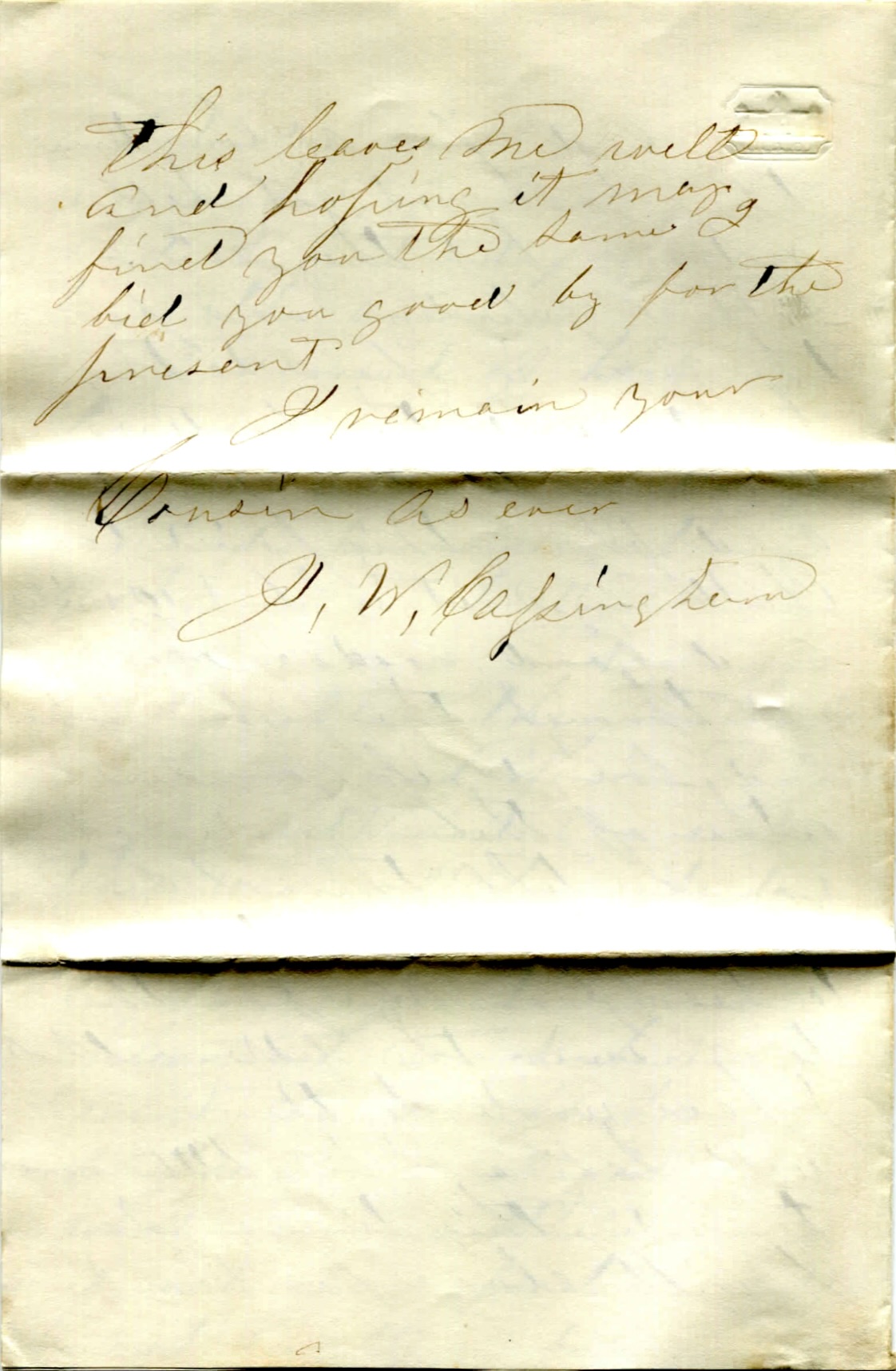
Well, Salina, I [have] but little news to write this time so I will close for this time. This leaves me well and hoping it may find you the same. I bid you goodbye for the present. I remain your cousin as ever, — J. W. Cassingham

1 Kelly’s Ferry on the Tennessee River in Lookout Valley, Tennessee, was a highly strategic point during the Civil War. It served as the crucial river terminus for the “Cracker Line,” a vital supply route that saved starving Union forces during the Confederate siege of Chattanooga in late 1863. Union victories in October 1863—including the amphibious assault at Brown’s Ferry and the Battle of Wauhatchie—secured the surrounding valley roads and guaranteed that provisions, ammunition, and reinforcements flowing through Kelly’s Ferry could safely reach Chattanooga.

Letter 2

Kelly’s Ferry, Tennessee
December 7, 1863

Dear Cousin,

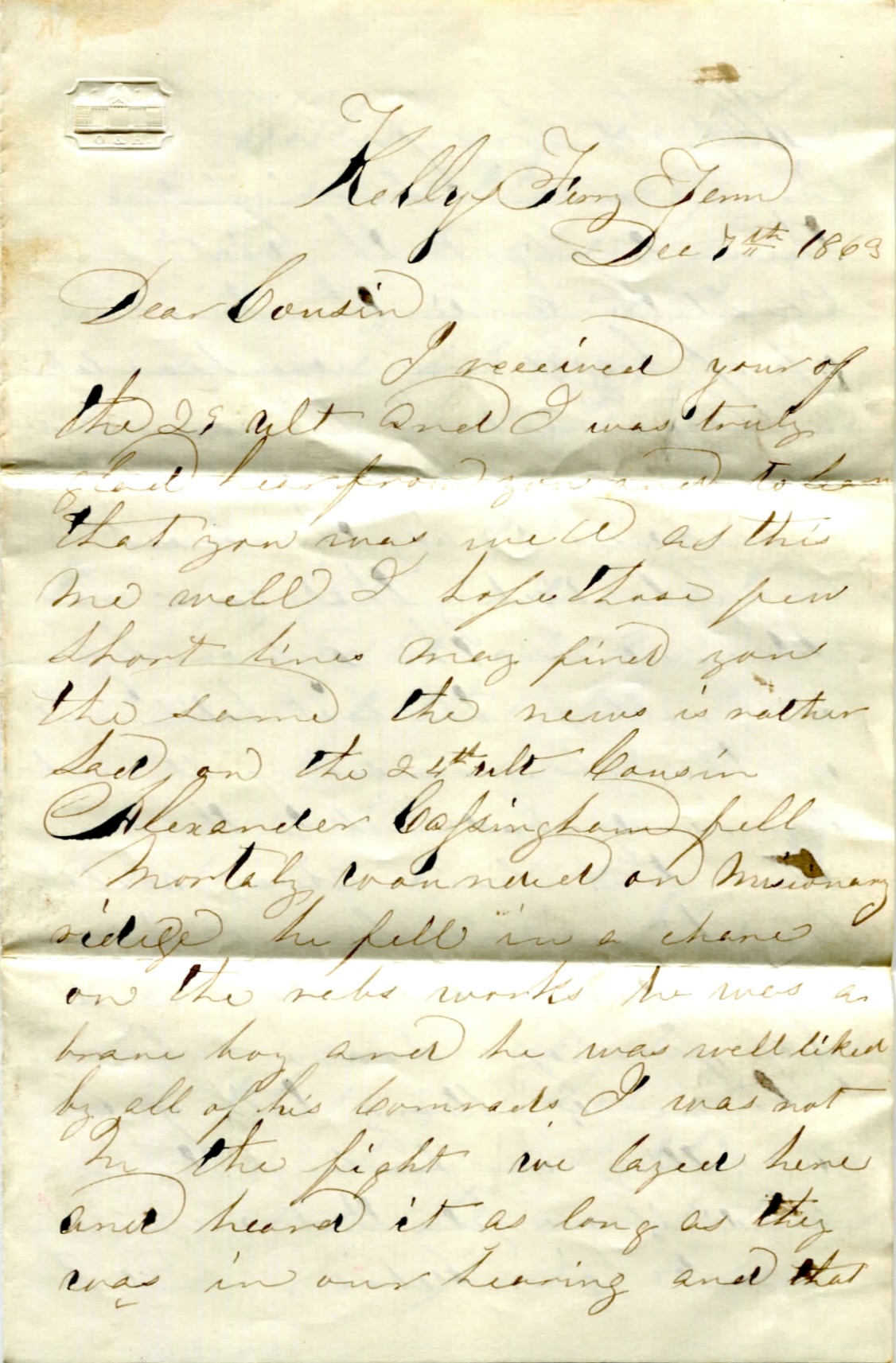
I received yours of the 29th ult. and I was truly glad to hear from you and to hear that you was well as this [leaves] me well. I hope these few short lines may find you the same.

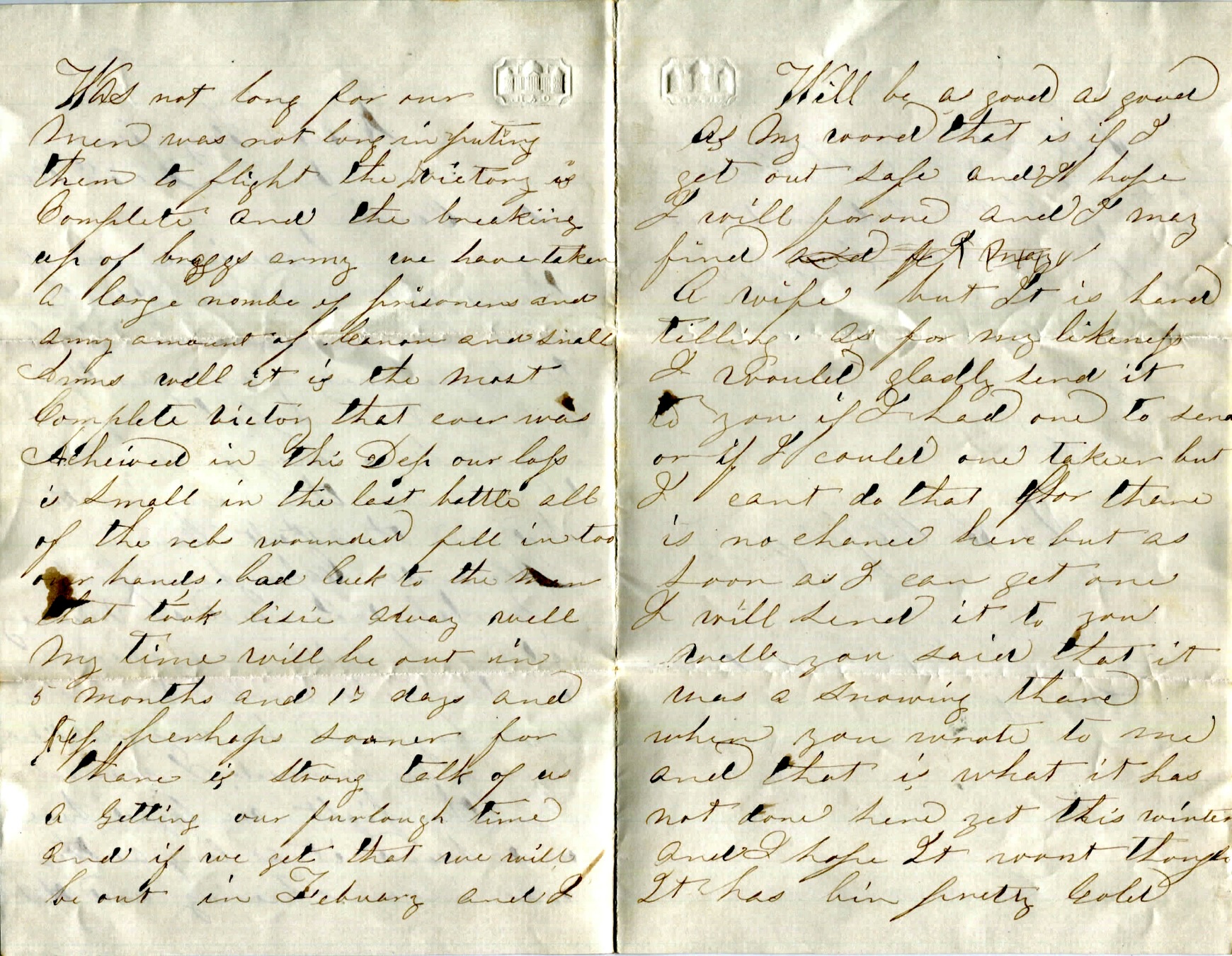
The news is rather sad. On the 24th ult. Cousin Alexander Cassingham fell mortally wounded on Missionary Ridge. He fell in a charge on the rebel works. He was a brave boy and he was well liked by all of his comrades. I was not in the fight. We layed here and heard it as long as they was in our hearing and that was not long for our men was not long in putting them to flight. The victory is complete and the breaking up on Bragg’s army. We have taken a large number of prisoners and any amount of cannon and small arms. Well, it is the most complete victory that ever was achieved in this department.

Our loss is small in the last battle. All of the rebs wounded fell into our hands. Bad luck to the men that took Lisie [Alex] away.

Well, my time will be out in 5 months and 17 days and perhaps sooner for there is strong talk of us a getting our furlough time and if we get that, we will be out in February and I will be as good as my word—that is, if I get out safe. And I hope I will for one. And I may find a wife but it is hard telling.

As for my likeness, I would gladly send it to you if I had one to send or if I could [get] one taken but I can’t do that for there is no chance here. But as soon as I can get one, I will send it to you. And you said that it was a snowing there when you wrote to me and that it what it has not done here yet this winter. And I hope it won’t thought it has been pretty cold.

Well, I must close for it is about dinner time and I am cook so no more at present. I remain your cousin, — Jas. W. Cassingham

Give my love to Aunt.

Letter 3
Nashville, Tennessee
February 26th 1864

Dear Cousin,

I seat myself to write you a few lines to let you know that I am still alive and among the living. We left Illinois on last Saturday and we got to this place the night of the 23rd and here we are yet. But how long we will stay here, I cannot tell but I hope it won’t be long for this is not the kind of soldiering I like to do. It is as bad as Libby Prison for we are kept about as close anymore than we can get out.

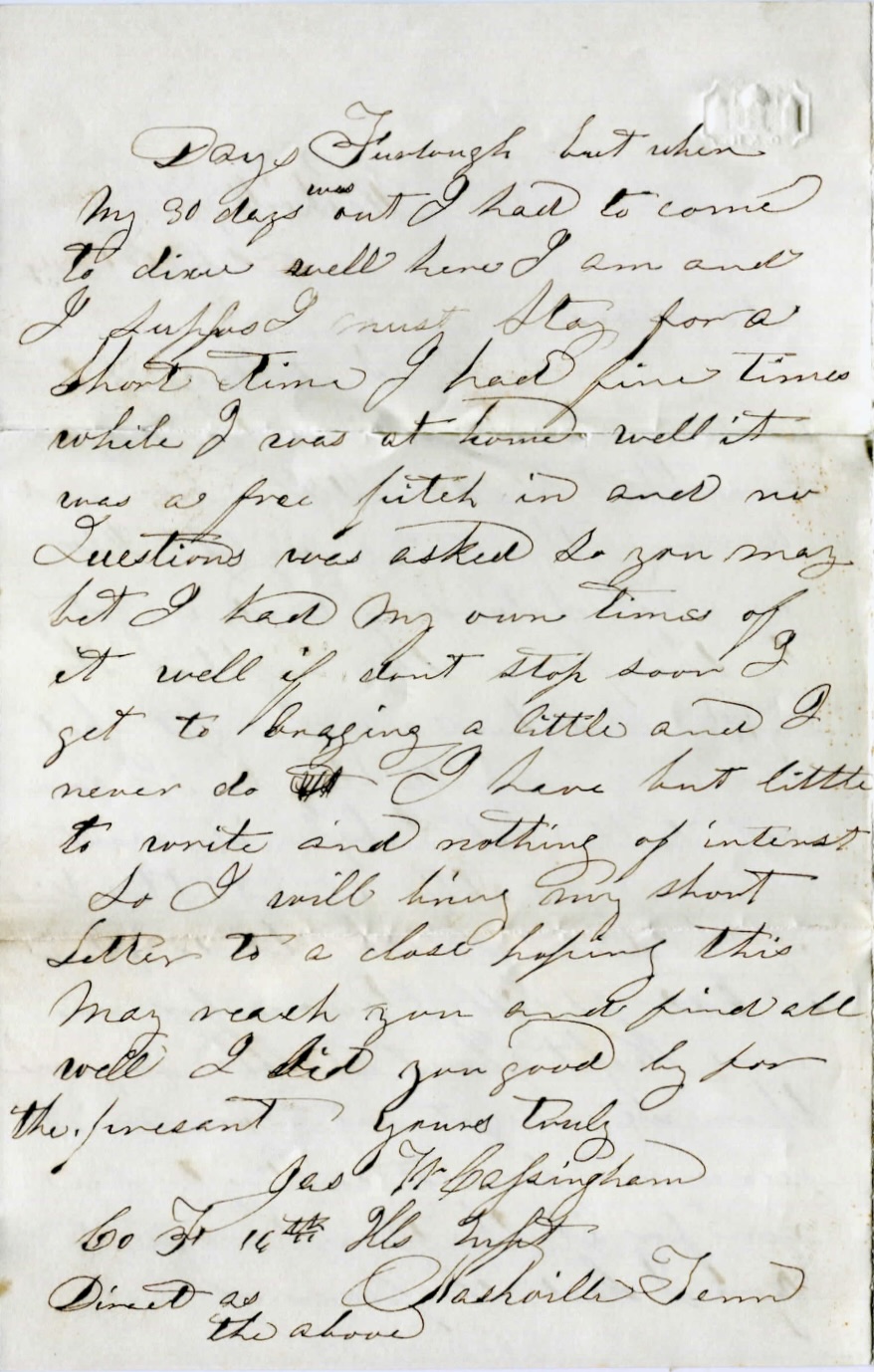
You must excuse me for not coming to see you for at the time I wrote to you, I had the promise of sixty days furlough but when my 30 days was out, I had to come to Dixie. Well, here I am and I suppose I must stay for a short time. I had a fine time while I was at home. Well, it was a free pitch in and no questions was asked so you may bet I had my own times of it.

Well, if I don’t stop soon, I’ll get to bragging a little and I never do. I have but little to write and nothing of interest so I will bring my short letter to a close. Hoping this may reach you and find you all well, I bid you goodbye for the present. Yours truly, — Jas. W. Cassingham

Co. F, 16th Illinois Infantry
Nashville, Tennessee

Direct as above.

1864: Noble Lovely Prentis to Francis James Russell

The following letter was written by Noble Lovely Prentis (1839-1900) who was born three miles from Mount Sterling, Illinois. His parents died at Warsaw, Illinois of cholera during the epidemic of 1849, leaving him an orphan at the age of ten. He then went to live with an uncle in Vermont and remained there until he was 18 when he moved to Connecticut and served an apprenticeship in the printer’s trade. He then came west and worked for a time in a newspaper office at Carthage, Illinois.

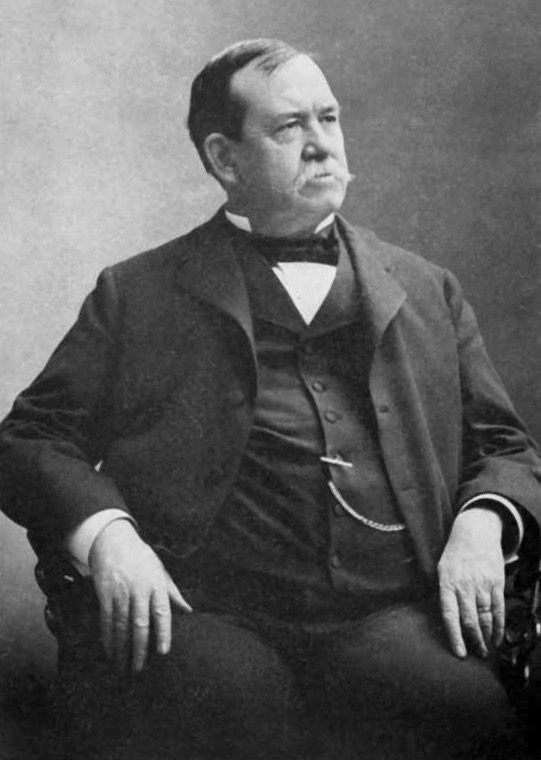
Noble L. Prentis in later years

At the opening of the Civil War, he enlisted as a private in Co. D, 16th Illinois Infantry and served four years when he was honorably discharged. Prentis married Maria C. Strong on May 13, 1866. He published a paper at Alexandria, Missouri until Captain  Henry King of the St. Louis Globe-Democrat induced him to come to Topeka, Kansas in 1869 and assist him on the Record. He next worked on the Commonwealth and then on the Lawrence Journal. From 1873 to 1875, Prentis edited the Junction City Union, then returned to the Topeka Commonwealth, and in about 1877, he began to work on the Atchison Champion. He remained with that paper during Colonel Martin’s term as governor and in 1888, took charge of the Newton Republican.

In 1890, he accepted a position on the editorial staff of the Kansas City Star, which he held until his death. In 1877 he went to Europe. His observations during the trip were published in book form, entitled A Kansan Abroad, which ran through two editions. He also wrote Southern Letters, Southwestern Letters, Kansas Miscellanies, and in the last year of his life, wrote A History of Kansas, which became his best-known work.

Noble wrote the letter to his friend, Francis (“Frank”) James Russell (1836-1900), the son of John Russell, Jr. (1793-1863) and Laura Ann Spencer (1797-1890) of Bluffdale, Greene county, Illinois. See also—1863-65: Francis James Russell to Sarah Ann (Burkholder) Russell on Spared & Shared 17.

[Note: This letter is from the private collection of Greg Herr and was transcribed and published on Spared & Shared by express consent.]

Transcription

Camp 16th Illinois Veteran Volunteer Infantry
Kingston, Georgia
November 7th 1864

Friend Russell:

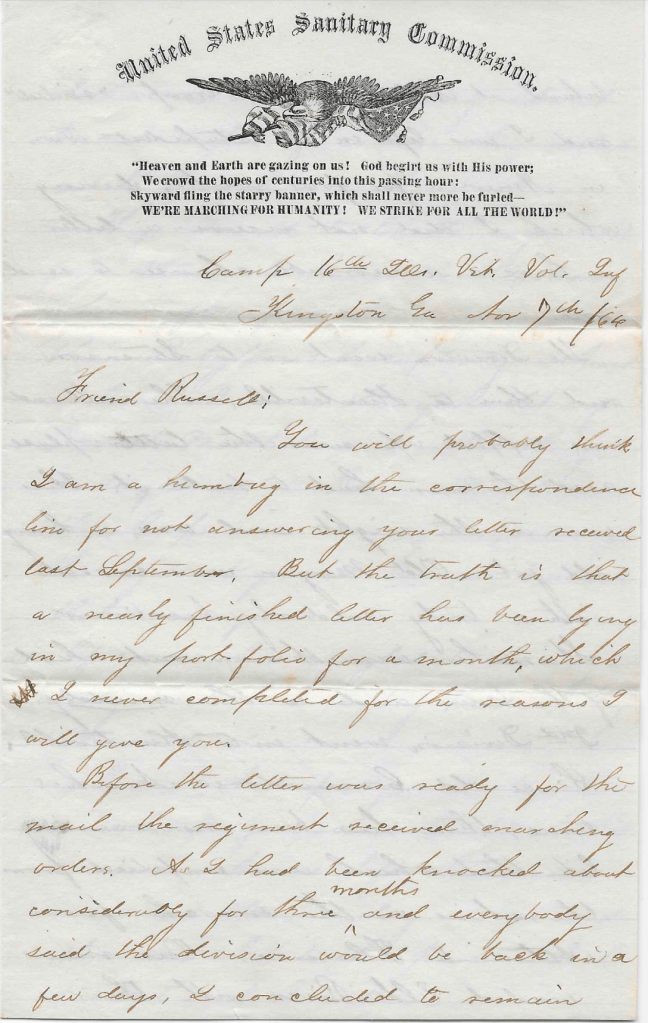
You will probably think I am a humbug in the correspondence line for not answering your letter received last September. But the truth is that a nearly finished letter has been lying in my portfolio for a month, which I never completed for the reasons I will give you.

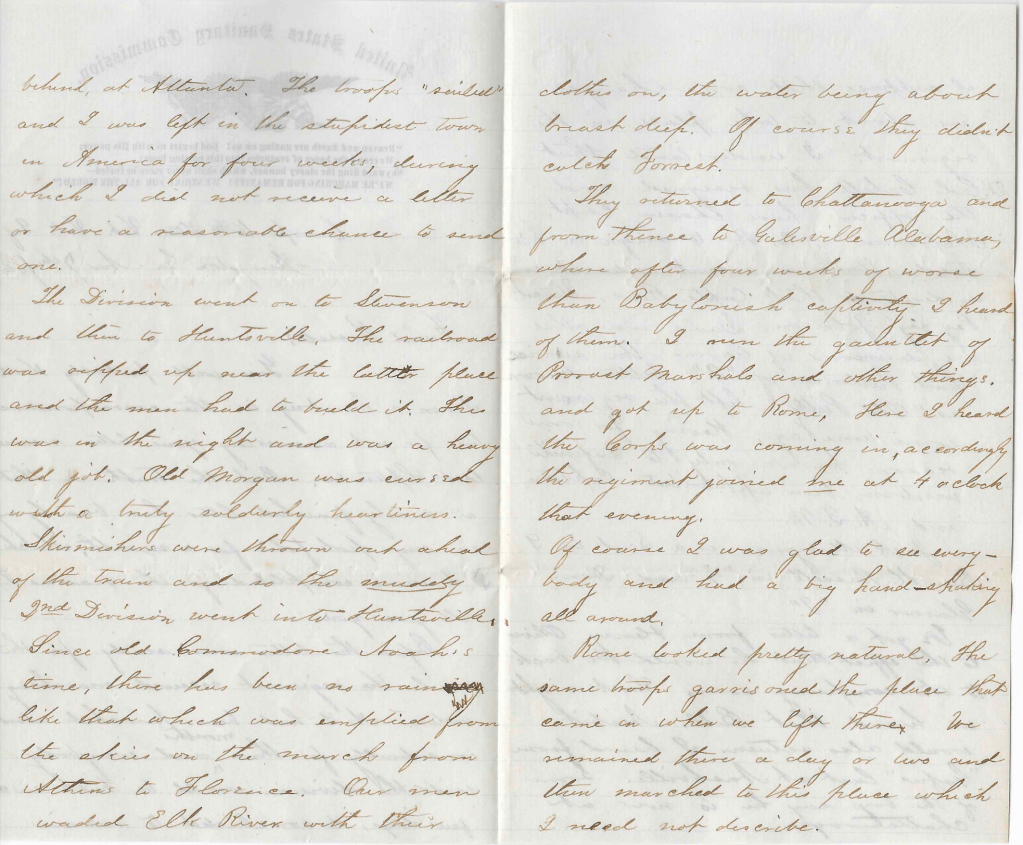
Before the letter was ready for the mail the regiment received marching orders. As I had been knocked about considerably for three months and everybody said the division would be back in a few days, I concluded to remain behind at Atlanta. The troops “sailed” and I was left in the stupidest town in America for four weeks, during which I did not receive a letter or have a reasonable chance to send one.

The Division went on to Stevenson and then to Huntsville. The railroad was ripped up near the latter place and the men had to build it. This was in the night and was a heavy old job. Old Morgan was cursed with a truly soldierly heartiness. Skirmishers were thrown out ahead of the train and so the muddy 2nd Division went into Huntsville.

Since Old Commodore Noah’s time, there has been no rain like that which was emptied from the skies on the march from Athens to Florence. Our men waded Elk River with their clothes on, the water being about breast deep. Of course they didn’t catch Forrest.

They returned to Chattanooga and from thence to Galesville, Alabama, where after four weeks of worse than Babylonish captivity, I heard of them. I run the gauntlet of Provost Marshal and other things and got up to Rome. Here I heard the Corps was coming in. Accordingly the regiment joined me at 4 o’clock that evening. Of course I was glad to see everybody and had a big hand-shaking all around.

Rome looked pretty natural. The same troops garrisoned the place that came in when we left there. We remained there a day or two and then marched to this place which I need not describe.

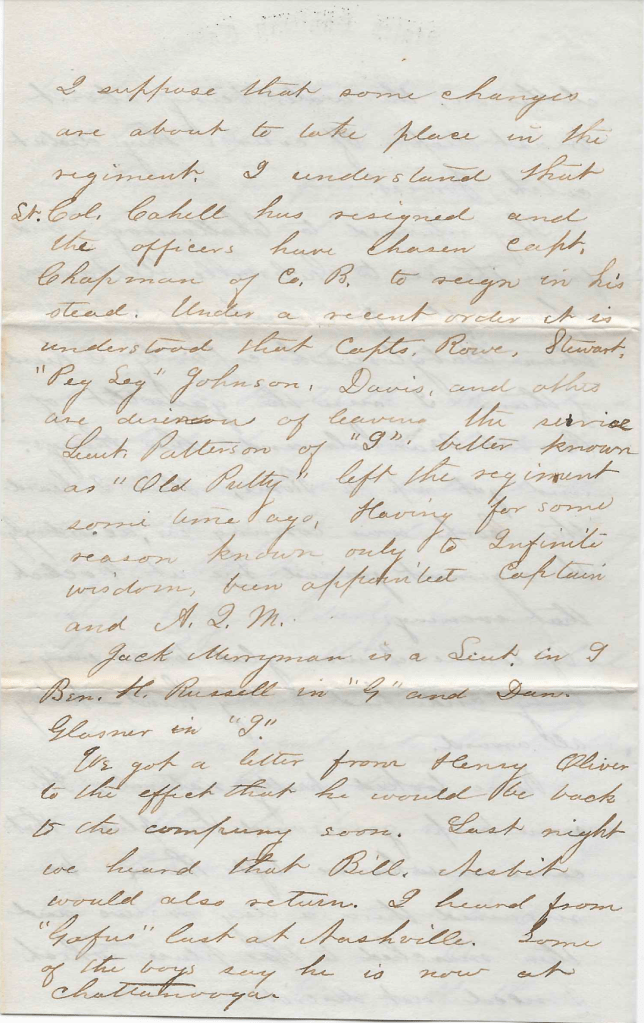
I suppose that some changes are about to take place in the regiment. I understand that Lt. Col. [James B.] Cahill has resigned and the officers have chosen Capt. [James A.] Chapman of Co. B to reign in his stead. Under a recent order, it is understood that Capts. [Abram] Rowe, [George D.] Stewart, “Peg Leg” [Smith] Johnson, [Isaac] Davis and others are desirous of leaving the service. Lieut. Patterson of “I” better known as “Old Putty” left the regiment some time ago, having for some reason known only to infinite wisdom been appointed captain and Asst. Quartermaster. Jack Merriman is a lieutenant in “I”, Ben H. Russell in “G” and Dan Glasner in “I.”

We got a letter from Henry Oliver to the effect that he would be back to the company soon. Last night we heard that Bill Nesbit would also return. I heard from “Gafus” last at Nashville. Some of the boys say he is not at Chattanooga.

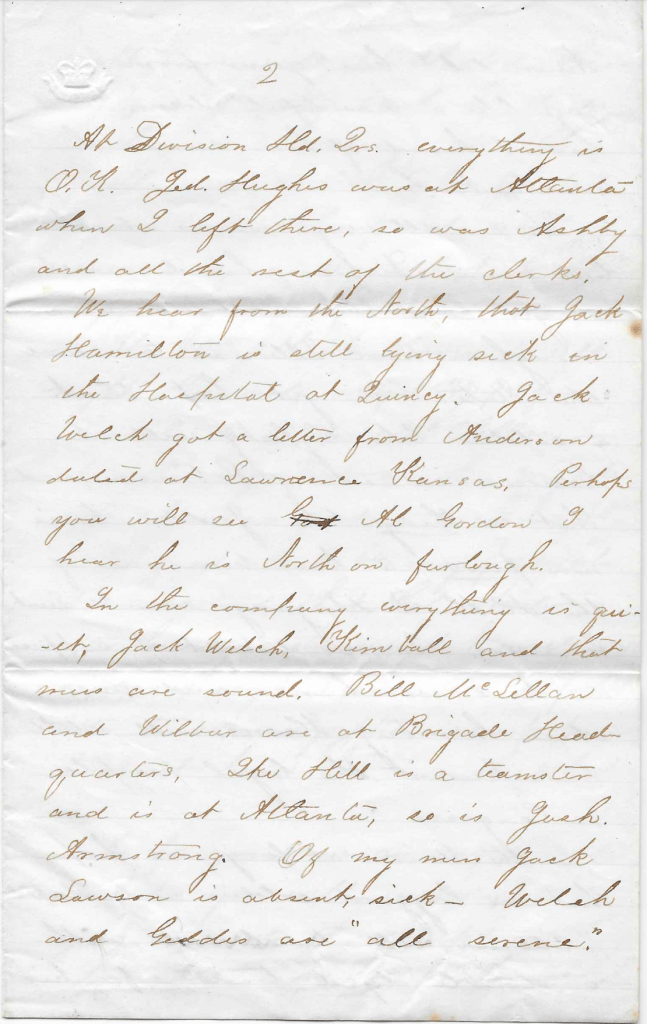
At Division Headquarters everything is O. K. Jed Hughes was at Atlanta when I left there. So was [Martin Van Buren] Ashby and all the rest of the clerks.

We hear from the North that Jack Hamilton is still lying sick in the hospital at Quincy. Jack Welch got a letter from Anderson dated at Lawrence, Kansas. Perhaps you will see Al Gordon. I hear he is North on furlough.

In the company everything is quiet. Jack Welch, [Thomas C.] Kimball, and that mess are sound. Bill McLellan and [William S.] Wilbur are at Brigade Headquarters. [Isaac] Ike Hill is a teamster and is at Atlanta. So is Josh Armstrong. Of my men, Jack Lawson is absent sick. Welch and Geddes are “all serene.” “Aminadah” has gone from our gaze like a beautiful dream. I haven’t heard of him since he went North.

We are all very anxious about tomorrow. Disfranchised ourselves, we yet hope there are true men enough in brave Illinois to save the State. We yet hope that a soldier like [Richard J.] Oglesby will be Governor instead of [James Carroll] Robinson, and that no thing like [Norman B.] Judd who is now proven to have been one of the H. H. Dodd gang, 1 can be Lieut. Governor. In our district I suppose we have no chance and the obese humbug Harris will still misrepresent the loyal people in Congress.

In the Union at large, we hope that no laggard soldier and stupid politician with a double dyed traitor for his right bower will be elected President and bring back to the army (if there is an army) all the Buells and Porters who for two years wasted the blood and treasure of a brave but long-suffering people.

The 16th, thank Heaven, is all right. Our vote stood 379 for Lincoln to 13 for McClellan. No other regiment in this brigade can show so good a record. The “60th” gave about 60 majority for Lincoln. I understand that Col. Anderson after having distinguished himself on the campaign has written a foolish letter to some Egyptian 2 newspaper. I don’t know how true the report is.

As for you, mine ancient comrade, I hope you will, indeed I know you will, do the complete thing. You will now be a “household” and in due time one of the solid men of Greene [county]. You will no doubt take some part in politics and I hope you will let me know what part that is. Let me hear from you and do not imitate my dilatoriness but write soon.

My health is excellent and as it is rumored that we are soon to start on another campaign, I am particularly glad it is so. My regards to Mrs. Russell and best wishes for yourself. Yours truly, — Noble L. Prentis


1 Harrison Horton Dodd (1824-1906) was an Indianapolis businessman and one of the leaders of secret organizations in Indiana that plotted violent uprisings against the authority of the United States government during the Civil War. By 1862 Dodd was speaking frequently all over Indiana to Democratic audiences urging opposition to the war. In his public speeches, he espoused state sovereignty views, asserting that the federal government had no authority over the states. States were sovereign and had the right to secede from the national union. No one owed loyalty to the federal government, he argued. Believing that abolitionists and anti-slavery Yankees had driven the southern states to rebel, he stated that the U.S. Constitution gave no authority to the federal government to coerce the seceded states back into the Union. In public speeches, Dodd alluded cryptically to the existence of an organization called the Knights of the Golden Circle (KGC), a secret oath-bound society formed in the 1850s originally to spread southern slavery into Central and South America. During the rebellion, its northern members supported the Confederate rebels. Members of the KGC and its successors held state sovereignty, pro-slavery views. [Encyclopedia of Indianapolis]

2 “Egyptian” is a reference to the region in Southern Illinois that was called “Little Egypt” sandwiched between the Mississippi and Ohio Rivers.