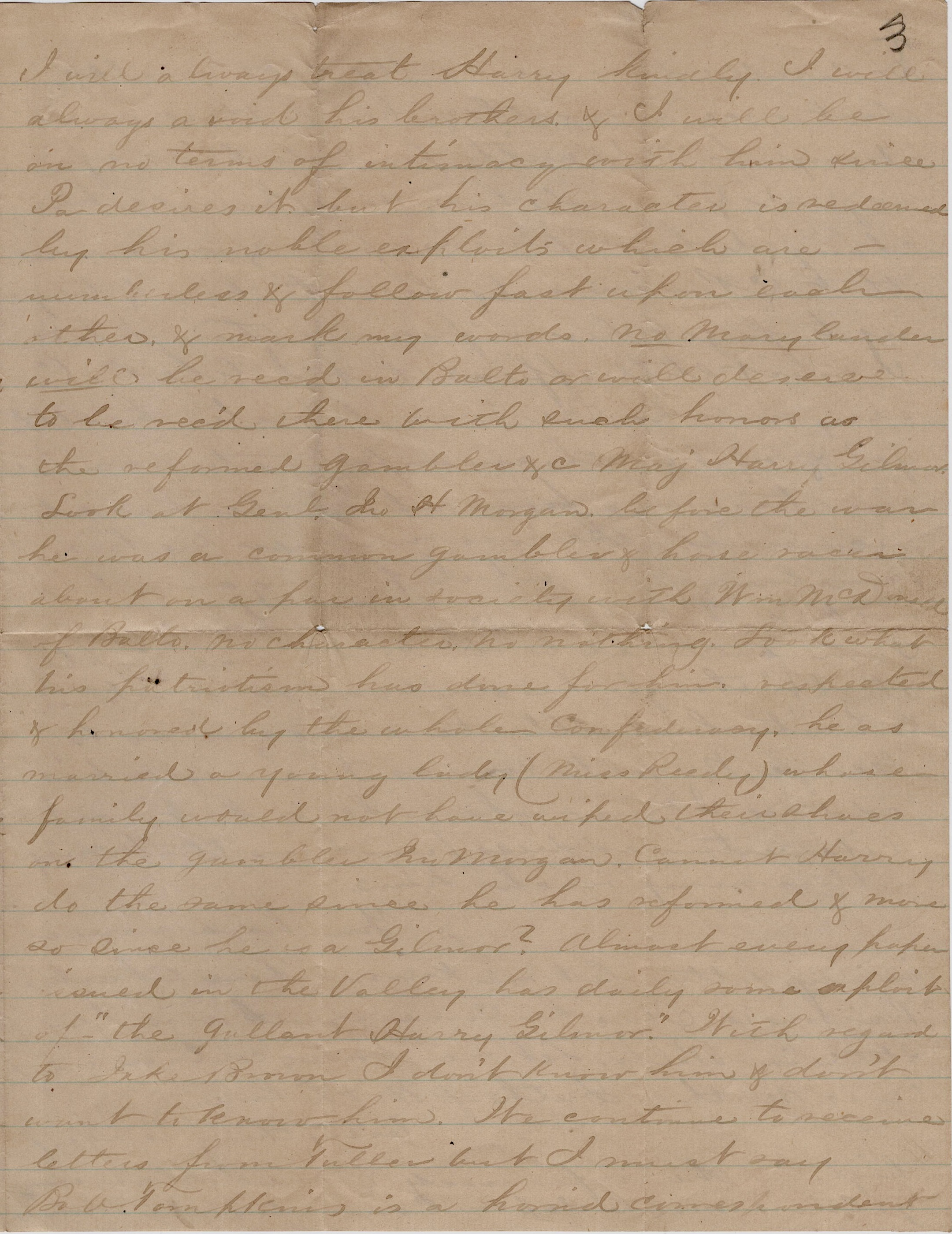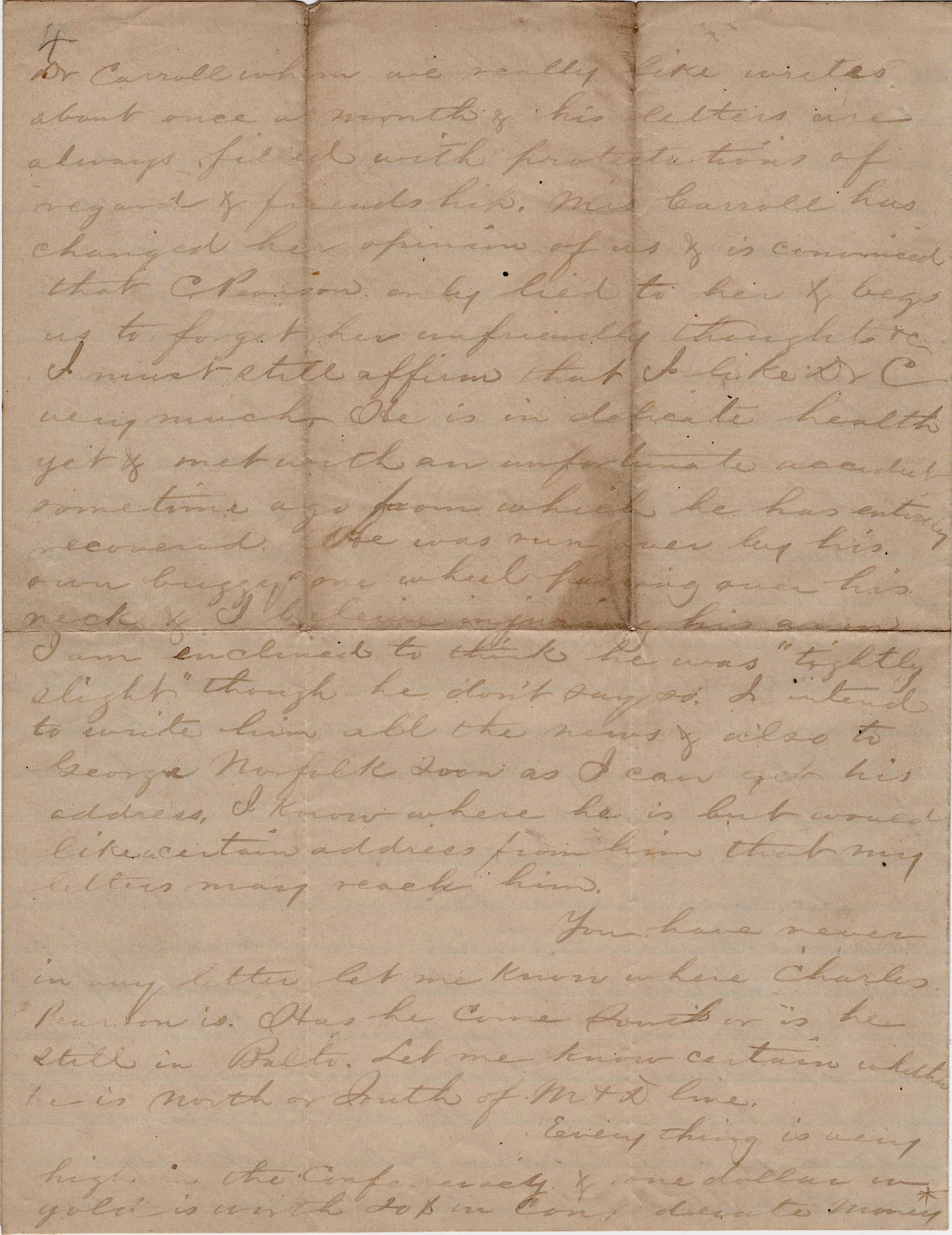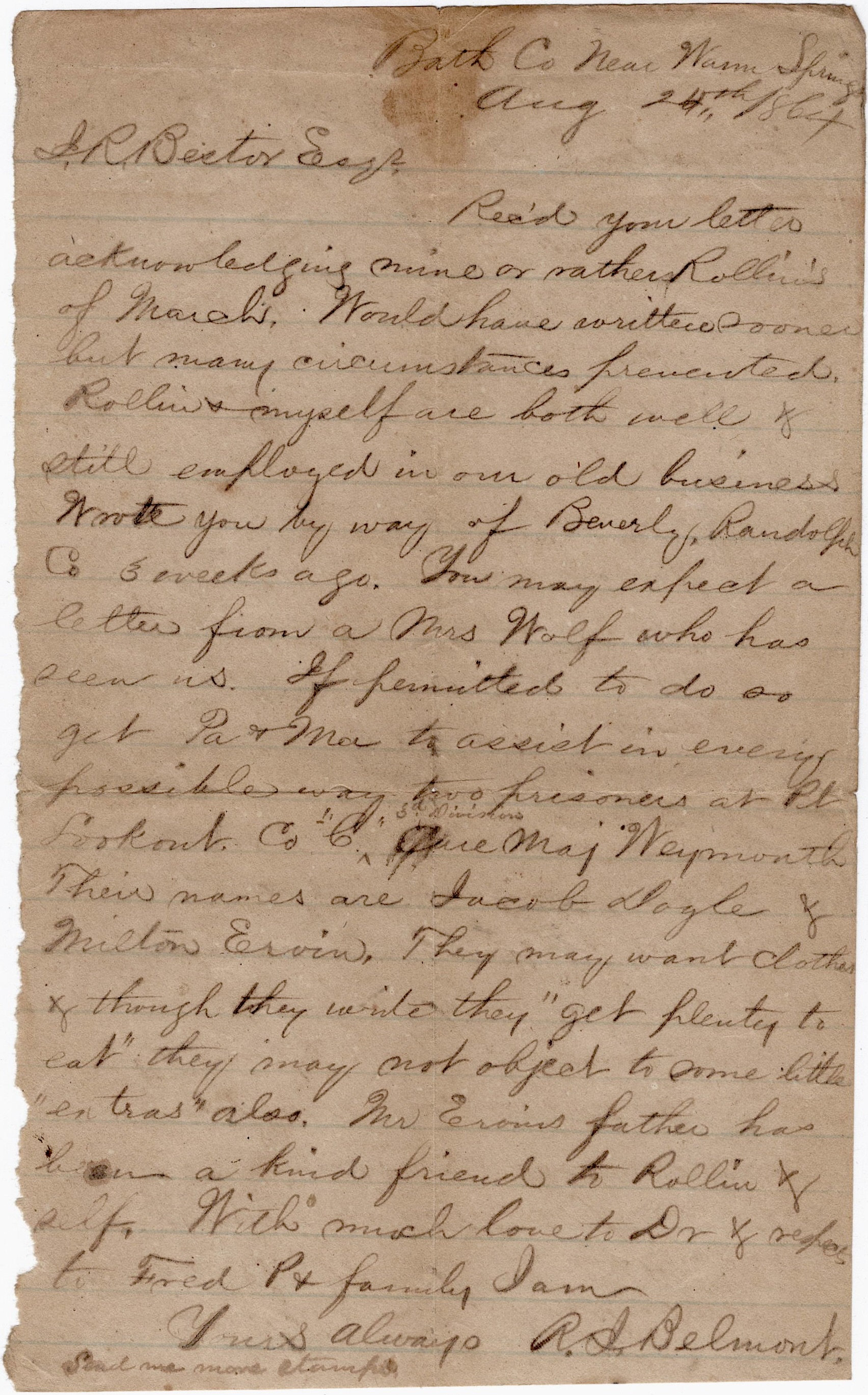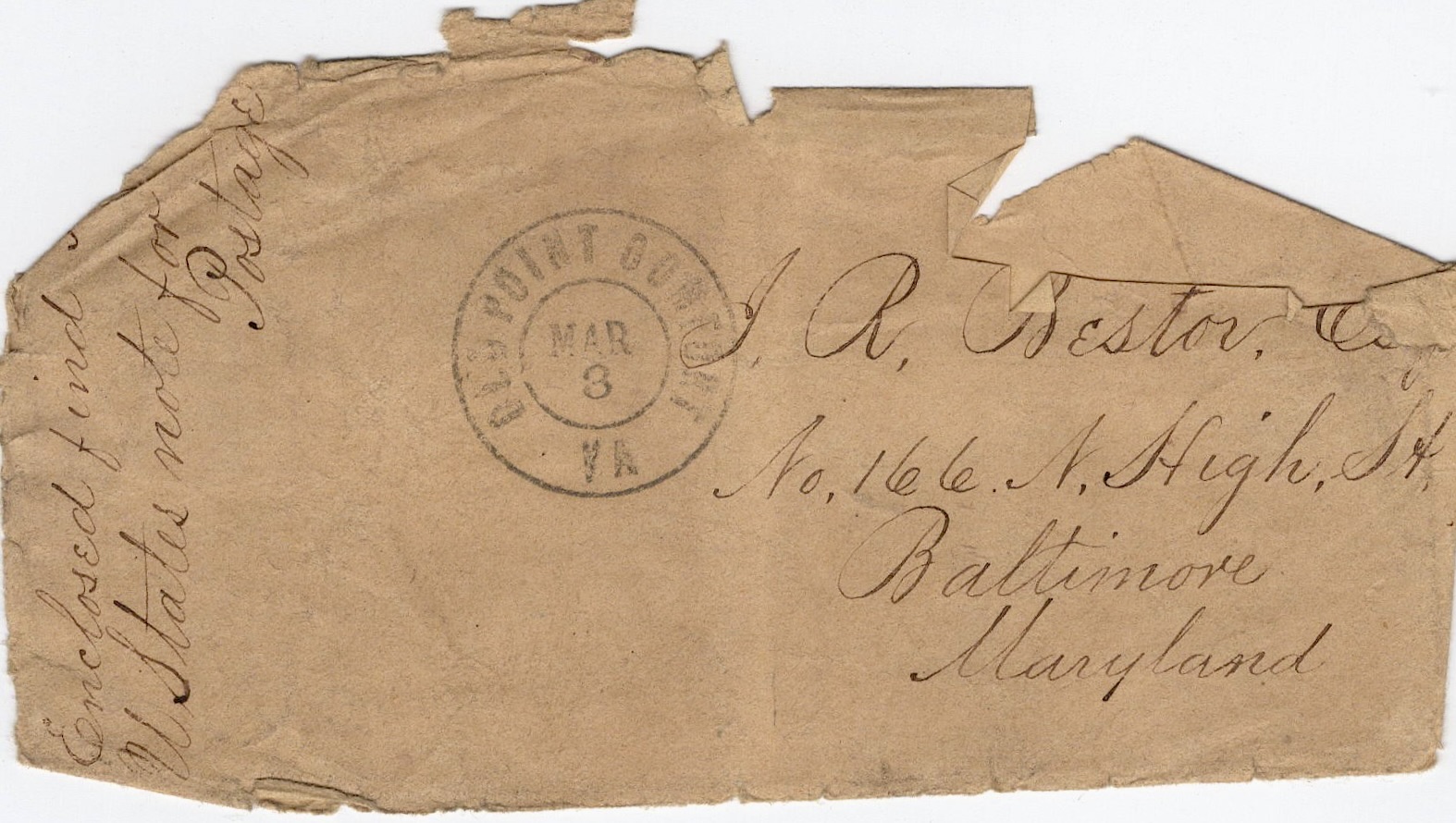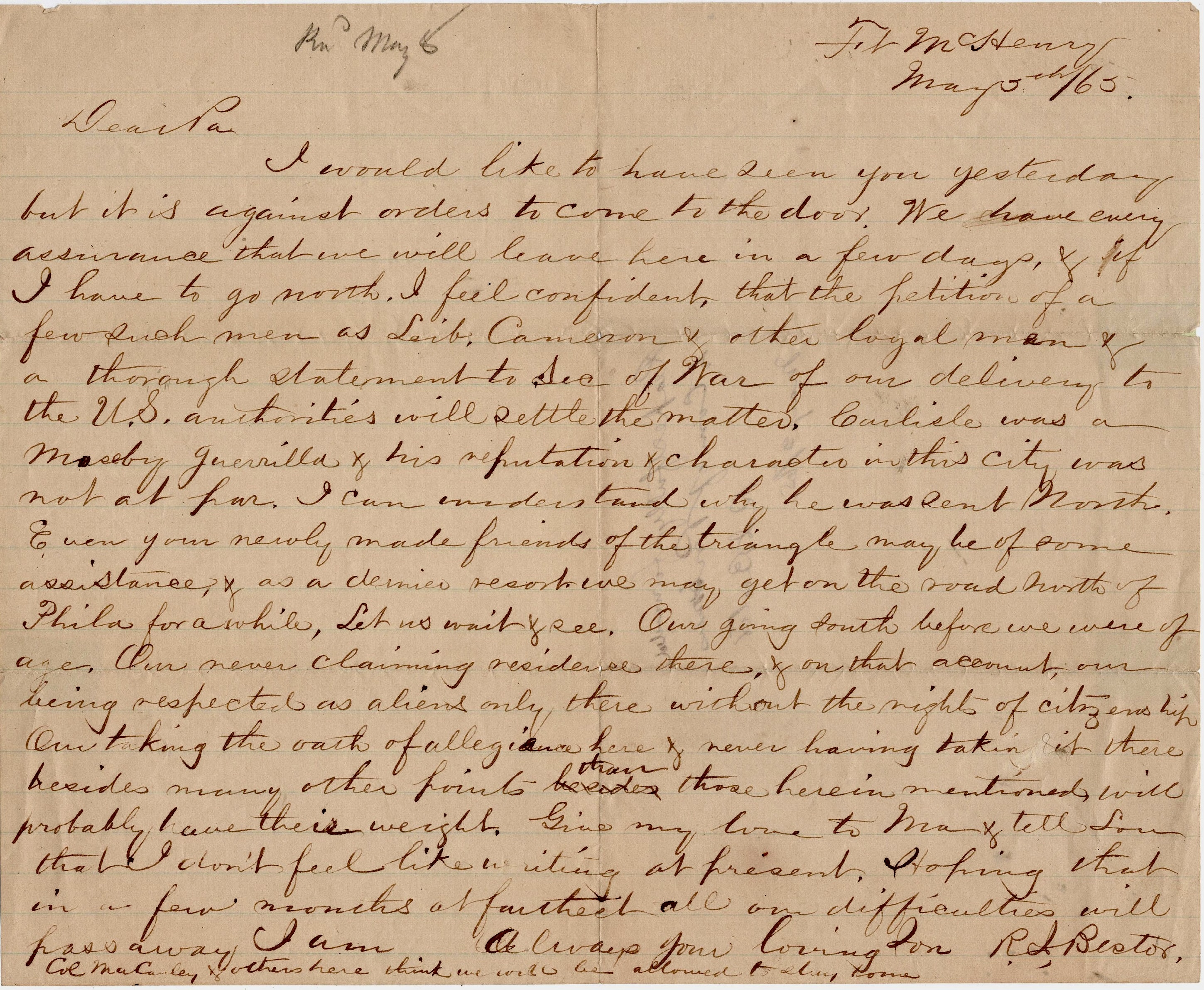
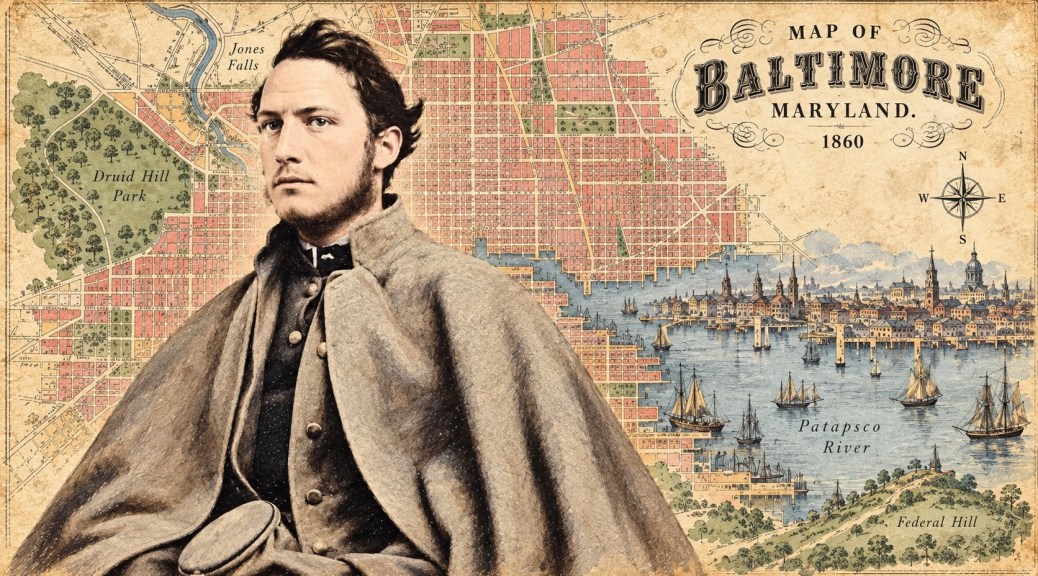
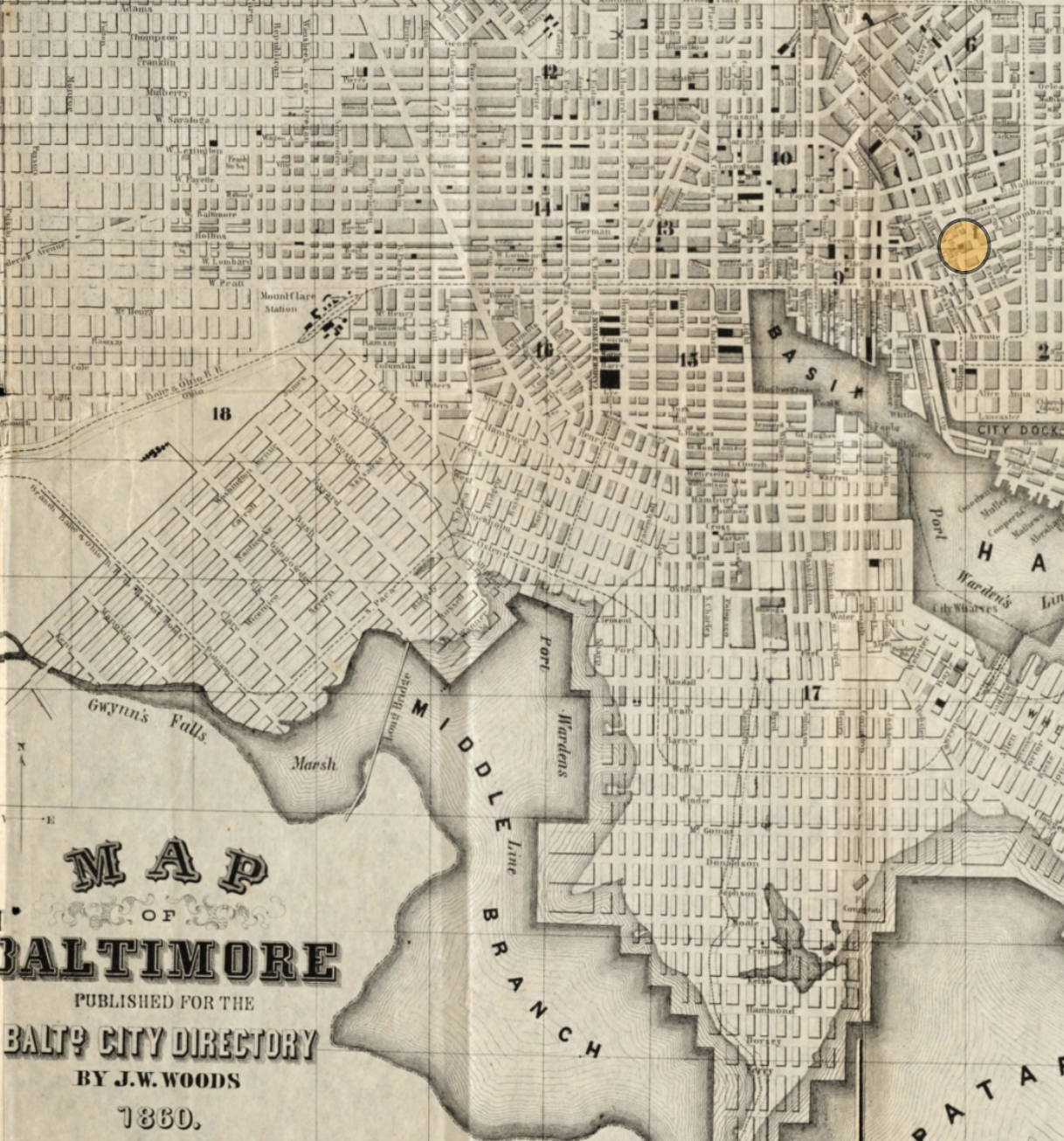
The following letters were written by Rollin John Bestor (1842-1899) and his twin brother, John Rollin Bestor, Jr. (1842-1891). They were the sons of John Rollin Bestor, Sr. (1813-1867), a Baltimore book-keeper, and his wife, Jane Eliza Brown (1820-1885). The couple married in Baltimore in October 1835. In 1860, they resided at 97 South High Street—a dense, bustling, enclave that had been the heart of Baltimore’s German-Jewish community but was transitioning to a working class society of Irish and Italian emigrants. Their home was most likely a two or three-story row house on a gas-lit cobblestone street frequented by horse-drawn omnibuses that daily transported passengers to the inner city. A few blocks to the south, within walking distance, was the harbor basin, lined with wharves, packing houses, and tobacco warehouses. By 1863, the Bestor family had moved to 166 North High Street, an older established neighborhood almost in the shadow of the Fayette Street Phoenix Shot Tower. The boys’ father had a presence in Baltimore in the 1830’s; he left advertisements in the local papers offering flute lessons and for selling a one horse buggy. John Rollins, Jr. was also trained in music—gave concert at Masonic Hall in 1853. He also won an award for penmanship in 1852.
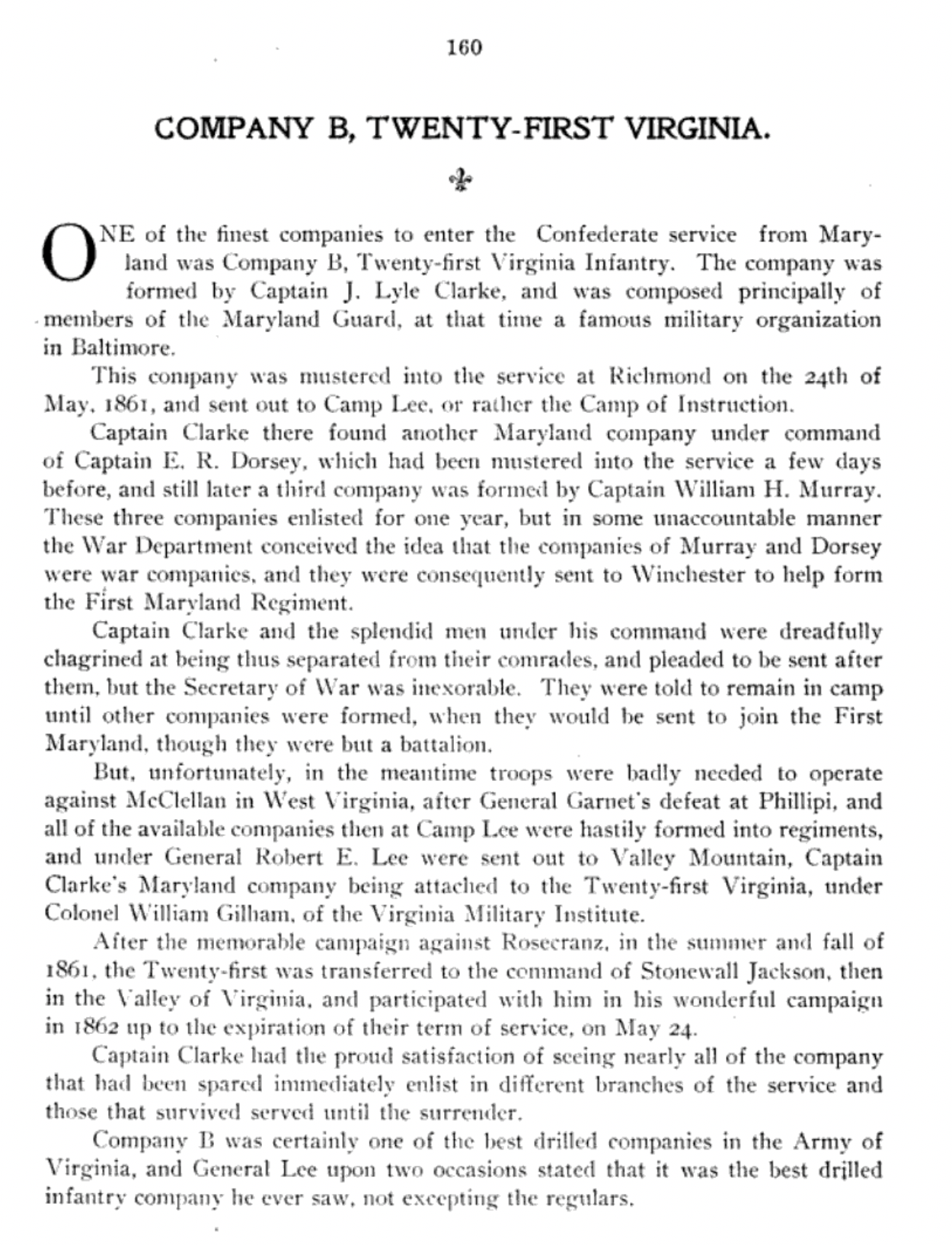
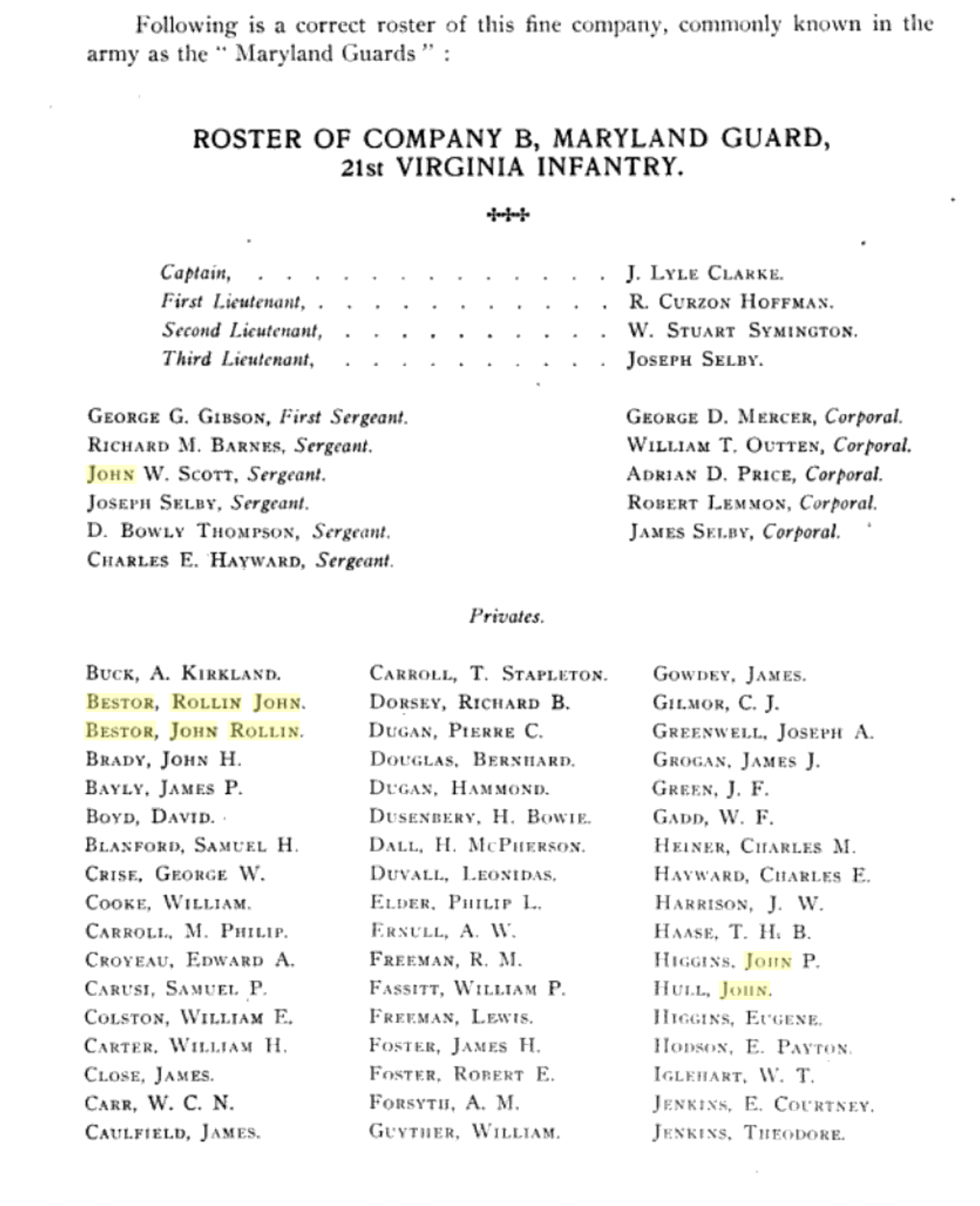
When the Civil War began the boys turned their back on Baltimore and joined Co. B of the Maryland Guard. They quickly moved to Richmond where they drilled, mustered into service, and were eventually assigned to the 21st Virginia Infantry.
Obituary of John Rollin Bestor, published in The Sun, 18 May 1891. Burial was at Loudon Park Cemetery. “Mr. Bestor was born in Baltimore 48 years ago, was graduated from a college at Chillicothe, Ohio at the age on 19 years, and became a civil engineer… [He worked in City Surveyor’s office and later for the Chesapeake & Potomac Telephone Company.] At the outbreak of the late war, he enlisted in Col. J. Lyle Clark’s regiment, was captured, and after being imprisoned at Fort McHenry for a short time, was exchanged and served till 1865.” [Died of a brain tumor]. Note: The only possible colleges in Chillicothe at that time would have been John Allen’s Ohio Military Academy that operated from 1857 to 1860, or the Chillicothe Academy (not technically a college).
After the war, Rollin Bestor was listed in the 1870 Baltimore Directory as a bookkeeper for the N C. Railroad. His obituary states that he was at one time on the private staff of stonewall Jackson. He died in 1899 of Bright’s Disease at his home at 19 Washington Avenue in New Rochelle, Westchester county, New York, when he was 57 years old. He was married to Lucy Maria Tuller (b. 1847).
See also—1861-63: James Marshall Hamlet & John William Hamlet Letters published on Spared & Shared 11 in December 2020. John Hamlet served in Co. A, 21st Virginia Infantry and has several letters in this small collection.
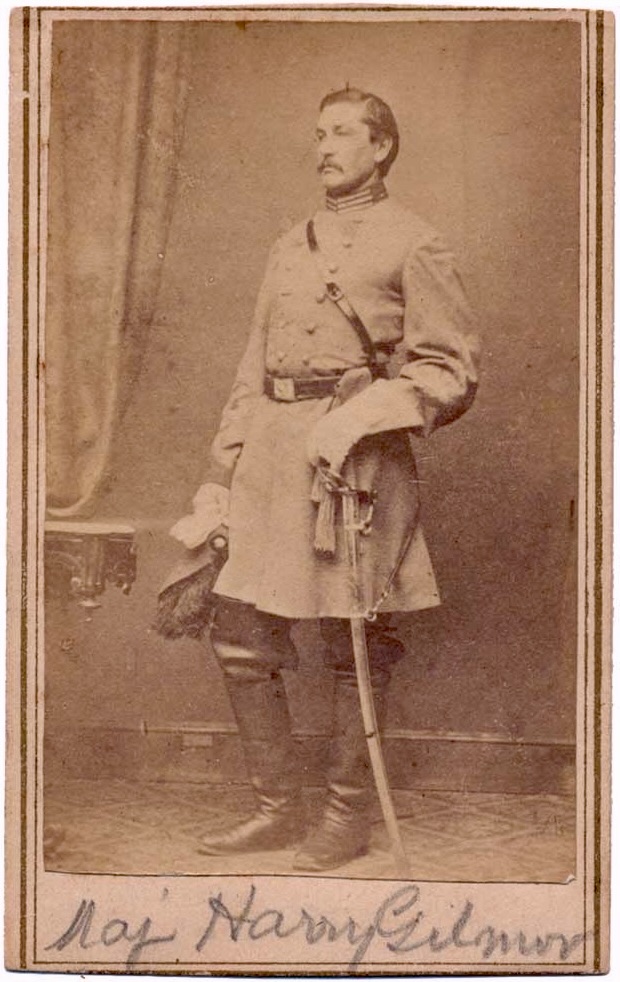
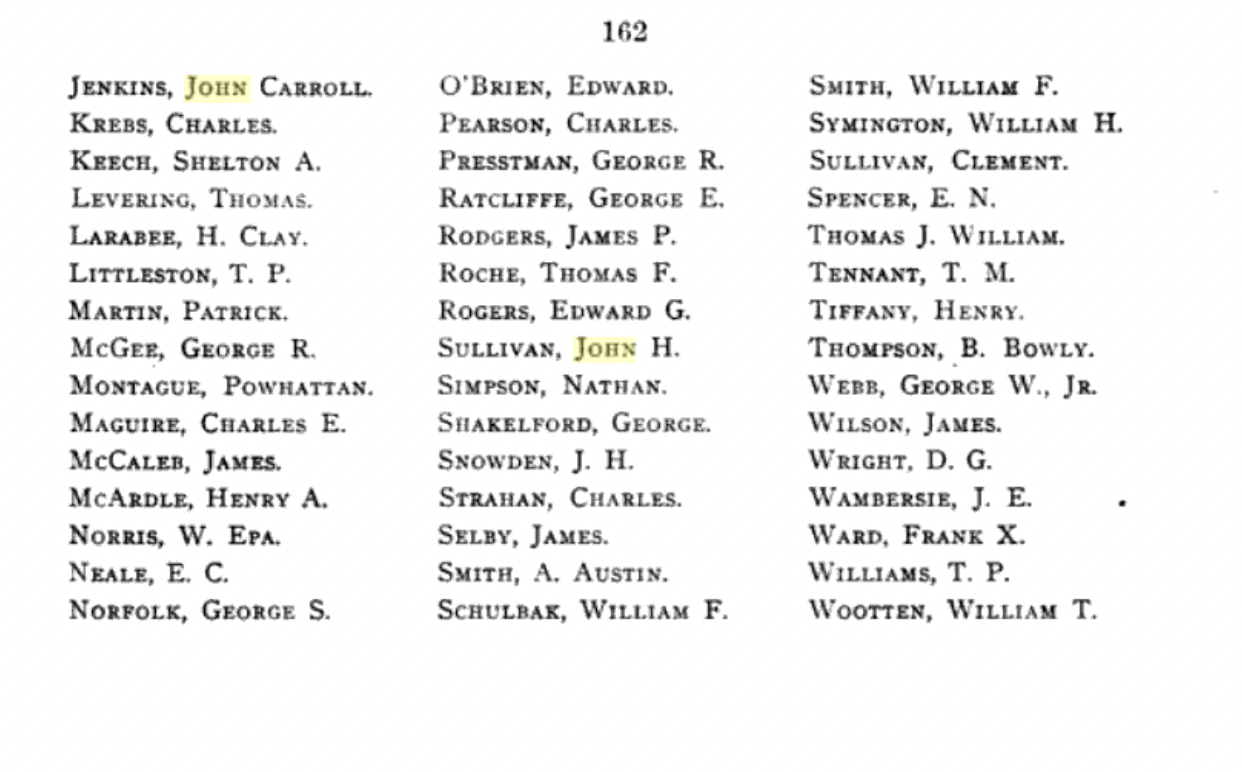
The following pages are from The Maryland Line in the Confederate army, 1861-1865, pages 160-162.
Letter 1
Editor’s Note: In August 1861, Gen. Robert E. Lee marched north an area along the Pocahontas-Randolph County Line where he established his headquarters at Valley Mountain, guarding the pass between the two counties. The Confederate troops spent a miserable, rainy month at Valley Mountain. The cave mentioned in this letter was the Simmons-Mingo Cave.
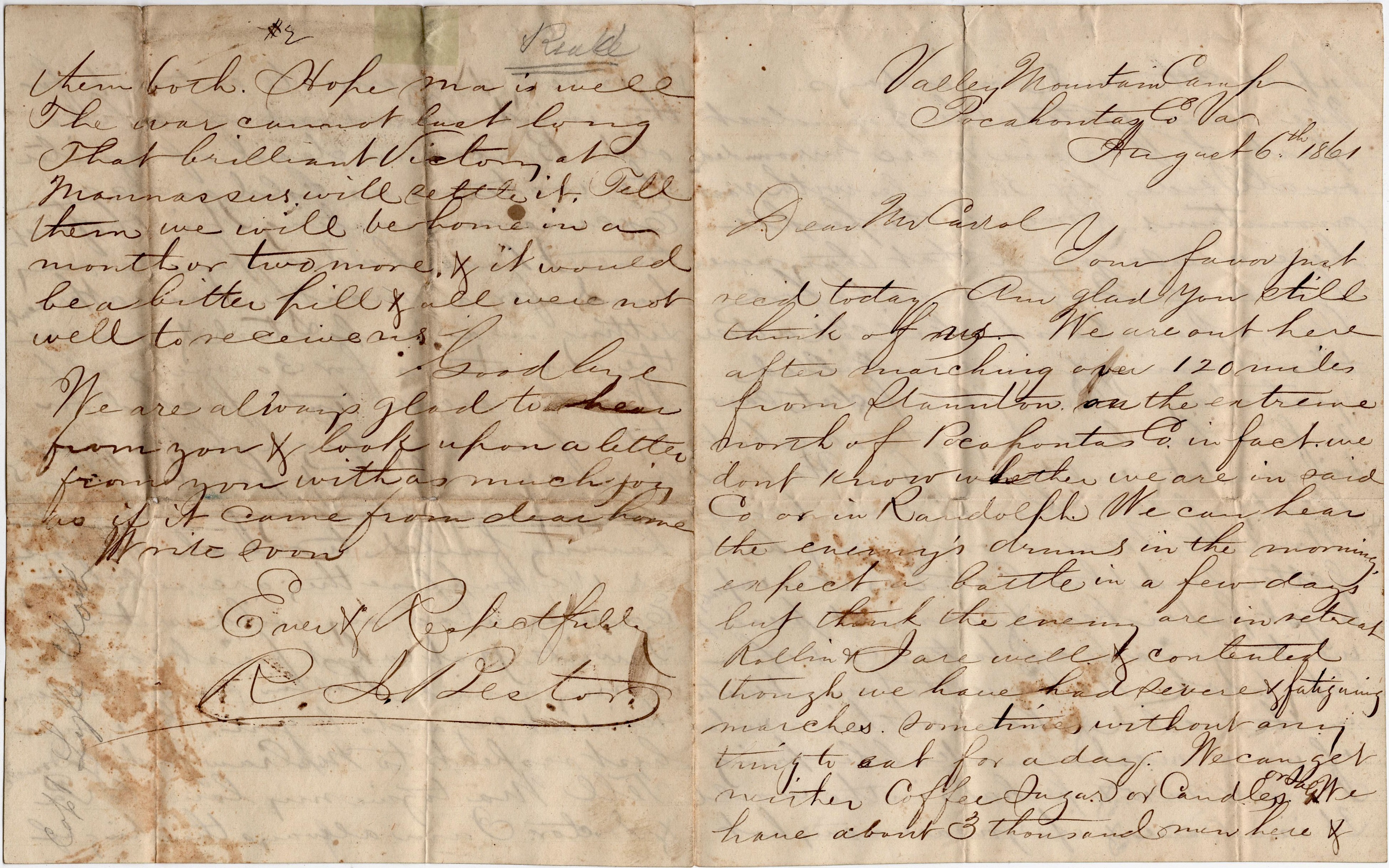
Valley Mountain Camp
Pocahontas Co., Va.
August 6th 1861
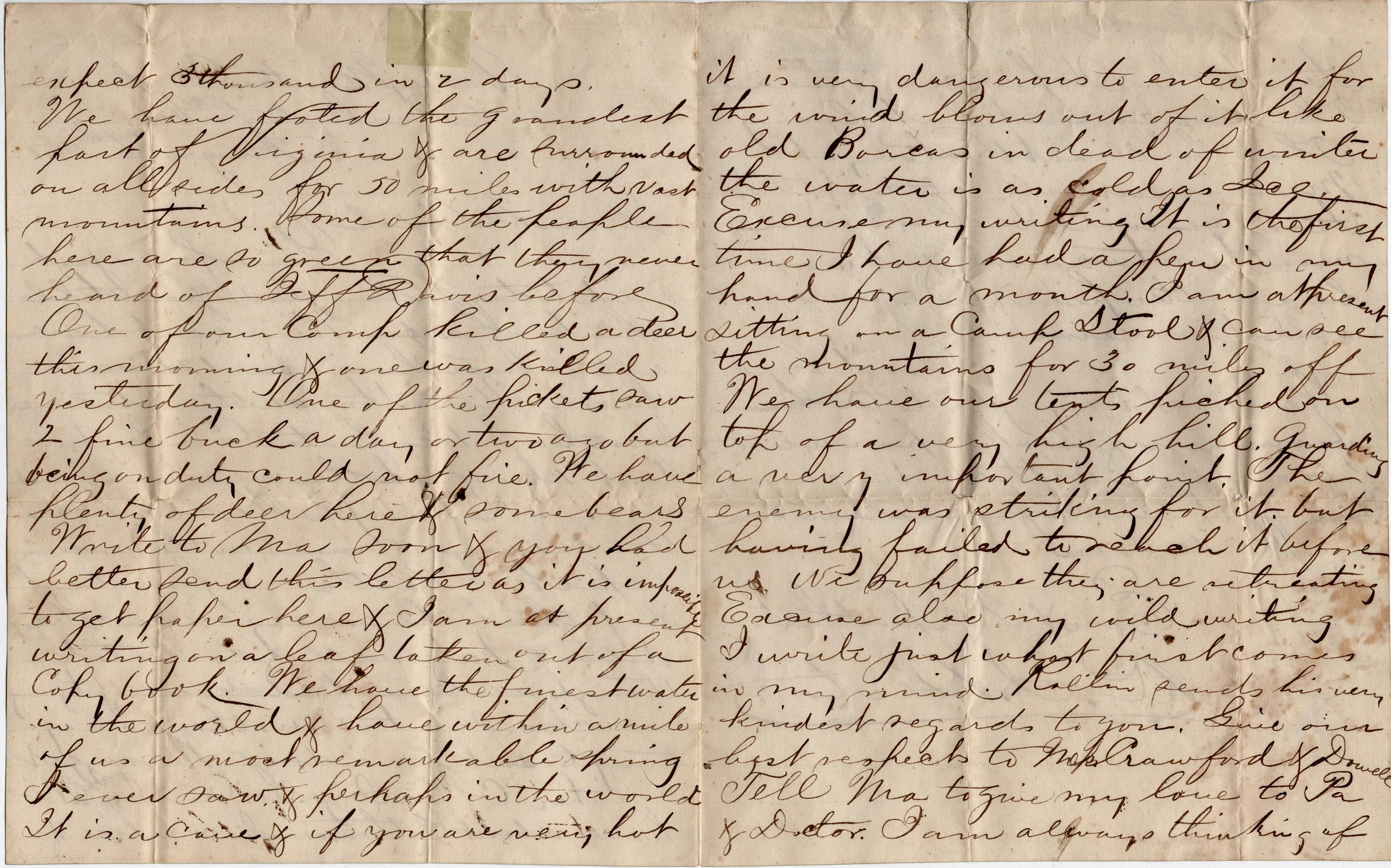
Dear Mr. Carrol.
Your favor just received today. Am glad you still think oof us. We are out here after marching over 120 miles from Staunton on the extreme north of Pocahontas county. In fact, we don’t know whether we are in said county or in Randolph. We can hear the enemy’s drums in the morning, expect battle in a few days, but think the enemy are in retreat. Rollin & I are well contented though we have had severe & fatiguing marches—sometimes without any time to east for a day. We can get neither coffee, sugar, or candles or salt.
We have about three thousand men here and expect three thousand [more] in two days. We have footed the grandest part of Virginia & are surrounded on all sides for 50 miles with vast mountains. Some of the people here are so green that they never heard of Jeff Davis before. One of our camp killed a deer this morning and one was killed yesterday. One of the pickets saw two fine bucks a day or two ago but being on duty could not fire. We have plenty of deer here and some bears.
Write to Ma soon & you had better send this letter as it is impossible to get paper here & I am at present writing on a leaf taken out of a copy book. We have the finest water in the world & have within a mile of us a most remarkable spring I ever saw & perhaps in the world. It is a cave & if you are very hot, it is very dangerous to enter it for the wind blows out of it like Old Boreas in dead of winter. The water is as cold as ice.
Excuse my writing. It is the first time I have had a pen in my hand for a month. I am at present sitting on a camp stool & can see the mountains for 30 miles off. We have our tents pitched on top of a very high hill guarding a very important point. The enemy was striking for it but having failed to reach it before us, we suppose they are retreating. Excuse also my wild writing. I write just what first comes in my mind. Rollin send his very kindest regards to you. Give our best respects to Mrs. Crawford & Dowell. Tell Ma to give my love to Pa & Doctor. I am always thinking of them both. Hope Ma is well.
The war cannot last long. That brilliant victory at Manassas will settle it. Tell them we will be home in a month or two more & it would be a bitter pill if all were not well to receive us. Goodbye. We are always glad to hear from you & look upon a letter from you with as much joy as if it came from dear home. Write soon.
Ever & Respectfully, — R. J. Bestor
Letter 2
[Editor’s Note: This letter describes the fight at Cheat Mountain in mid September1861. “The three Confederate brigades that attacked Cheat Summit Fort on September 12 had to contend with limited visibility due to poor weather conditions, a defending force that knew the terrain well, and poor coordination between each brigade; during the battle, each brigade acted independently and never made contact with each other. The 14th Indiana, comprised of about 300 men, put up a stubborn defense that was so aggressive that Confederate commanders believed the force was much larger than it was in reality. Daunted by these odds, they withdrew. At the same time, three more Confederate brigades were attacking Camp Elkwater, but the camp’s well-prepared entrenchments allowed for a solid Federal defense. Lee soon called off the entire attack. He maneuvered in the area before withdrawing to Valley Mountain on September 17.” Source: American Battlefield Trust]
Valley Mountain Camp
September 17th 1861
Dear Ma,
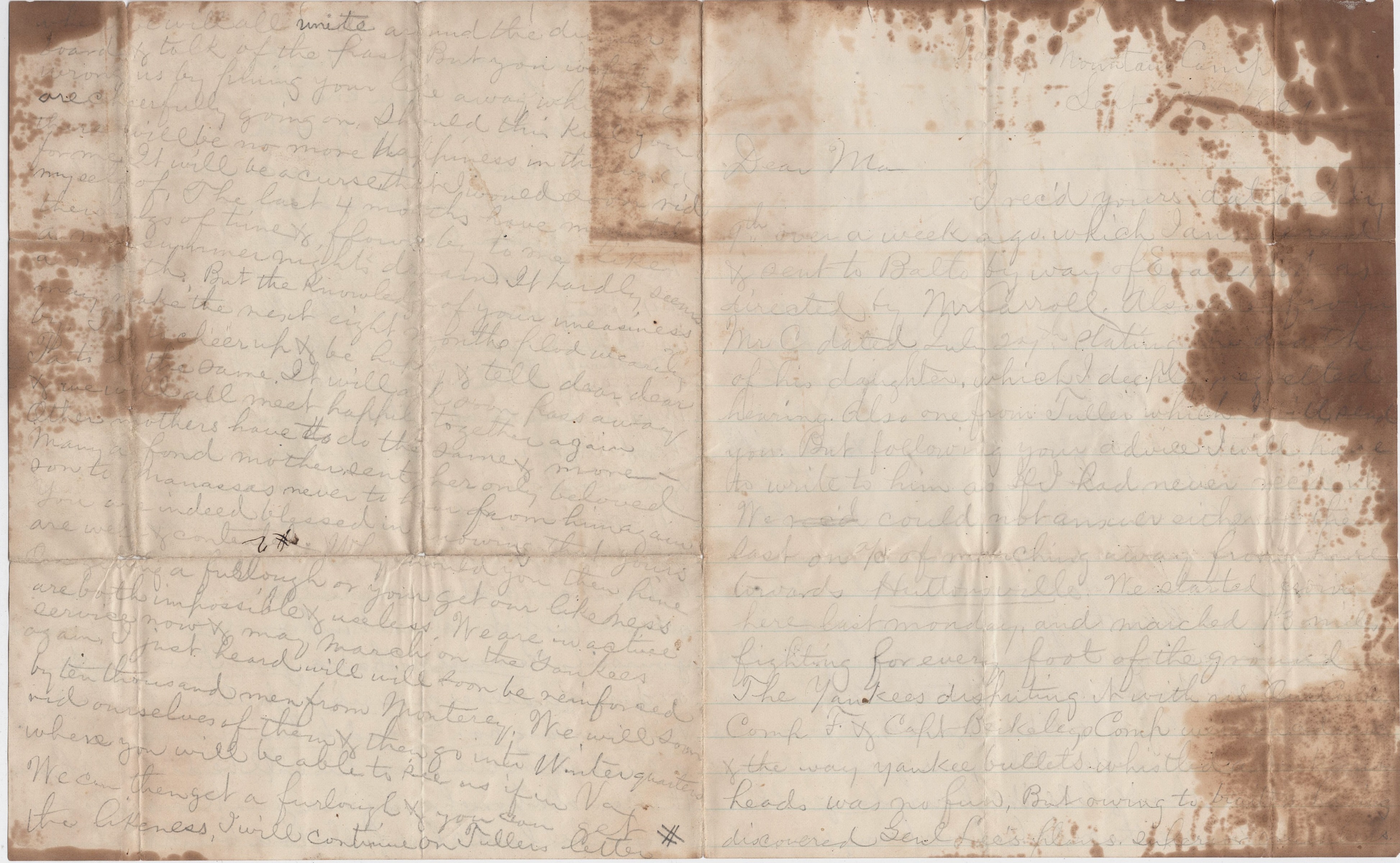
I received yours dated July 9th over a week ago which I answered & sent to Baltimore by way of [Evansport] as directed by Mr. Carroll. Also one from Mr. C. dated July 27th stating the death of his daughter which I deeply regretted hearing. Also one from Tuller which I will send you.
But following your advice, I will have to write to him as if I had never received it. We could not answer either of the last on account of marching away from here towards Huttonsville. We started from here last Monday and marched 13 miles, fighting for every foot of the ground—the Yankees disputing it with us. Our company, Co. F, and Capt. Berkeley’s company were in advance & the way Yankee bullets whistled about our heads was no fun. But owing to traitors having discovered Gen. Lee’s plans, inferior numbers, & one or two false steps of some of our commanders, we could not go on & retreated.
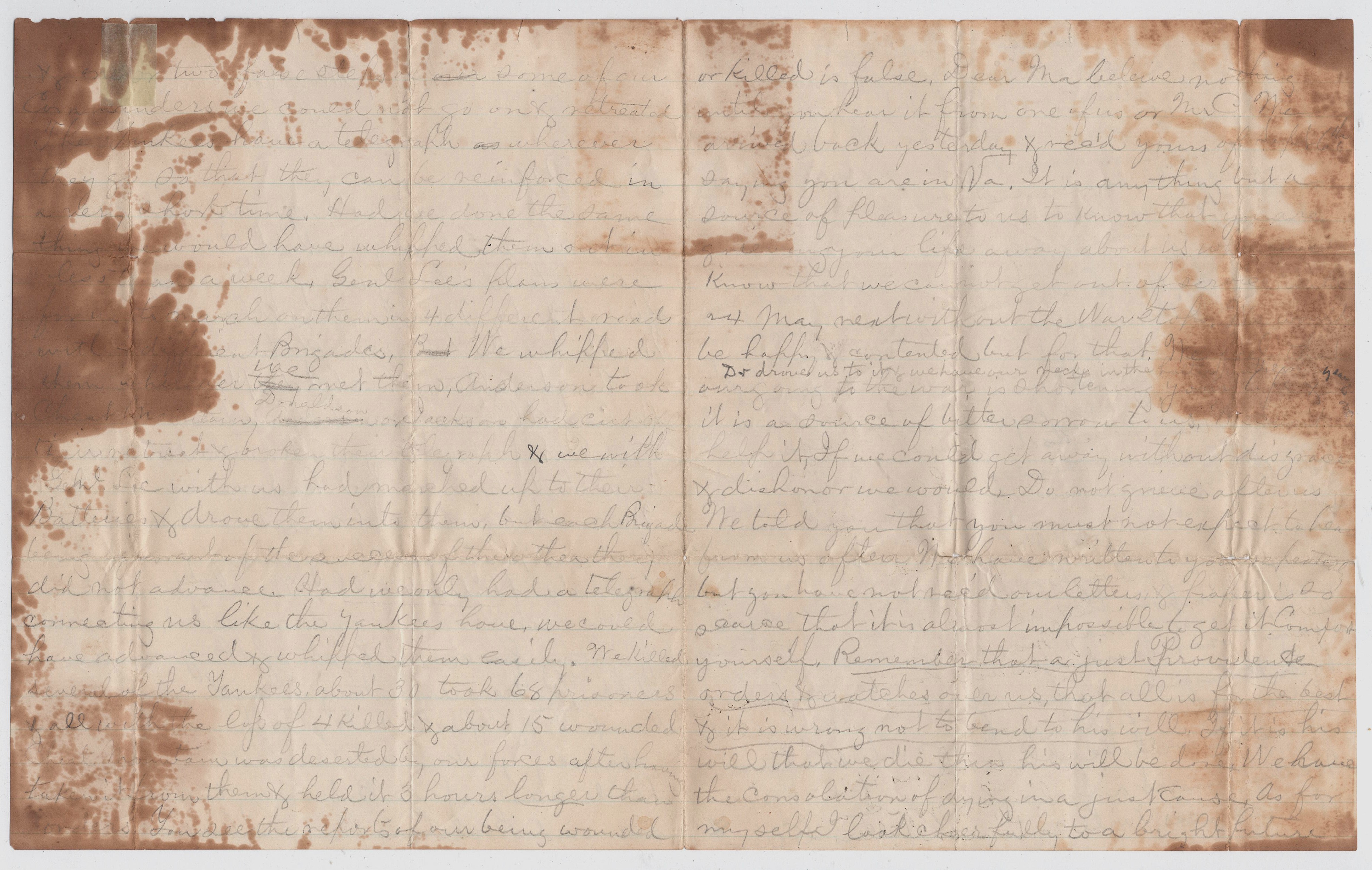
The Yankees have a telegraph wherever they go so that they can be reinforced in a very short time. Had we done the same thing, we would have whipped them out in less than a week. Gen. Lee’s plans were for us to march on them in four different roads with four different brigades. We whipped them whenever we met them. Anderson took Cheat Mountain. Donaldson or Jackson cut off their retreat & broke their telegraph, and we with Gen. Lee with us had marched up to their batteries & drove them into them, but each brigade being ignorant of the success of the other—they did not advance. Had we only had a telegraph connecting us like the Yankees have, we could have advanced and whipped them easily.
We killed several of the Yankees—about 30, took 68 prisoners, and all with the loss of 4 killed & about 15 wounded. Cheat Mountain was deserted by our forces after having taken it from them & held it three hours longer than orders. You see the reports of our being wounded or killed is false. Dear Ma, believe nothing until you hear it from one of us or Mr. C.
We arrived back yesterday and received yours of September 6th saying you are in Virginia. It is anything but a source of pleasure to us to know that you are grieving your life away about us when you know that we cannot get out of service until 24 May next without the war stops. We would be happy & contented but for that. We feel that our going to the war is shortening your life and it is a source of bitter sorrow to us.
Dr. drove us to it & we have our necks in the halter until the year is over. We could not help it. If we could get away without disgrace & dishonor, we would. Do not grieve after us. We told you that you must not expect to hear from us often. We have written to you repeatedly but you have not received our letters and paper is so scarce that it is almost impossible to get it. Comfort yourself. Remember that a just Providence orders & watches over us—that all is for the best, & it is wrong notto bend to His will. If it is His will that we die, the His will be done. We have the consolation of dying in a just cause. As for myself, I look cheerfully to a bright future when we will all unite around the dinner board & talk of the past.
But you woefully wrong us by pining your life away while we are cheerfully going on. Should this kill you, there will be no happiness in the world for me. It will be a curse that I would soon rid myself of. The last four months have mounted the wings of time & flown by to me like a mid summer night’s dream. It hardly seems a month. But the knowledge of your uneasiness may make the next eight months plod wearily by. It will all soon pass away & we will all meet happily together again. Other mothers have to do the same—and more. Many a fond mother sent her only beloved son to Manassas, never to hear from him again. You are indeed blessed in knowing that yours are well & contented. Why should you then pine?
Our getting a furlough or your getting our likeness are both impossible & useless. We are in active service now & may march on the Yankees again. I just heard we will soon be reinforced by ten thousand men from Monterey. We will soon rid ourselves of them & then go into winter quarters where you will be able to see us if in Virginia. We can get a furlough & you can get the likeness. I will continue on Tuller’s letter. [end of letter, unsigned]
Letter 3
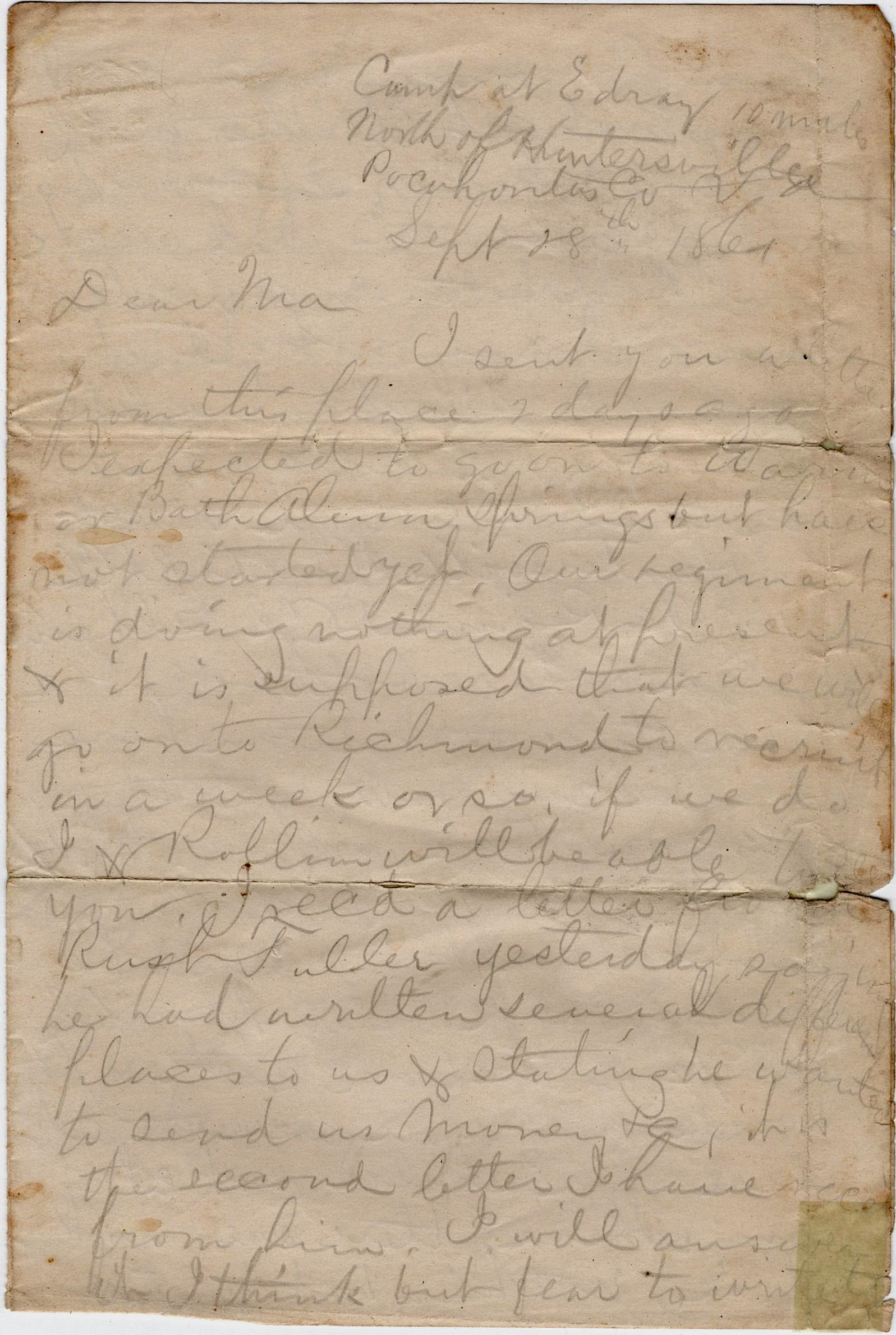
Camp at Edray
10 miles north of Huntersville
Pocahontas county, Virginia
September 28th 1861
Dear Ma,
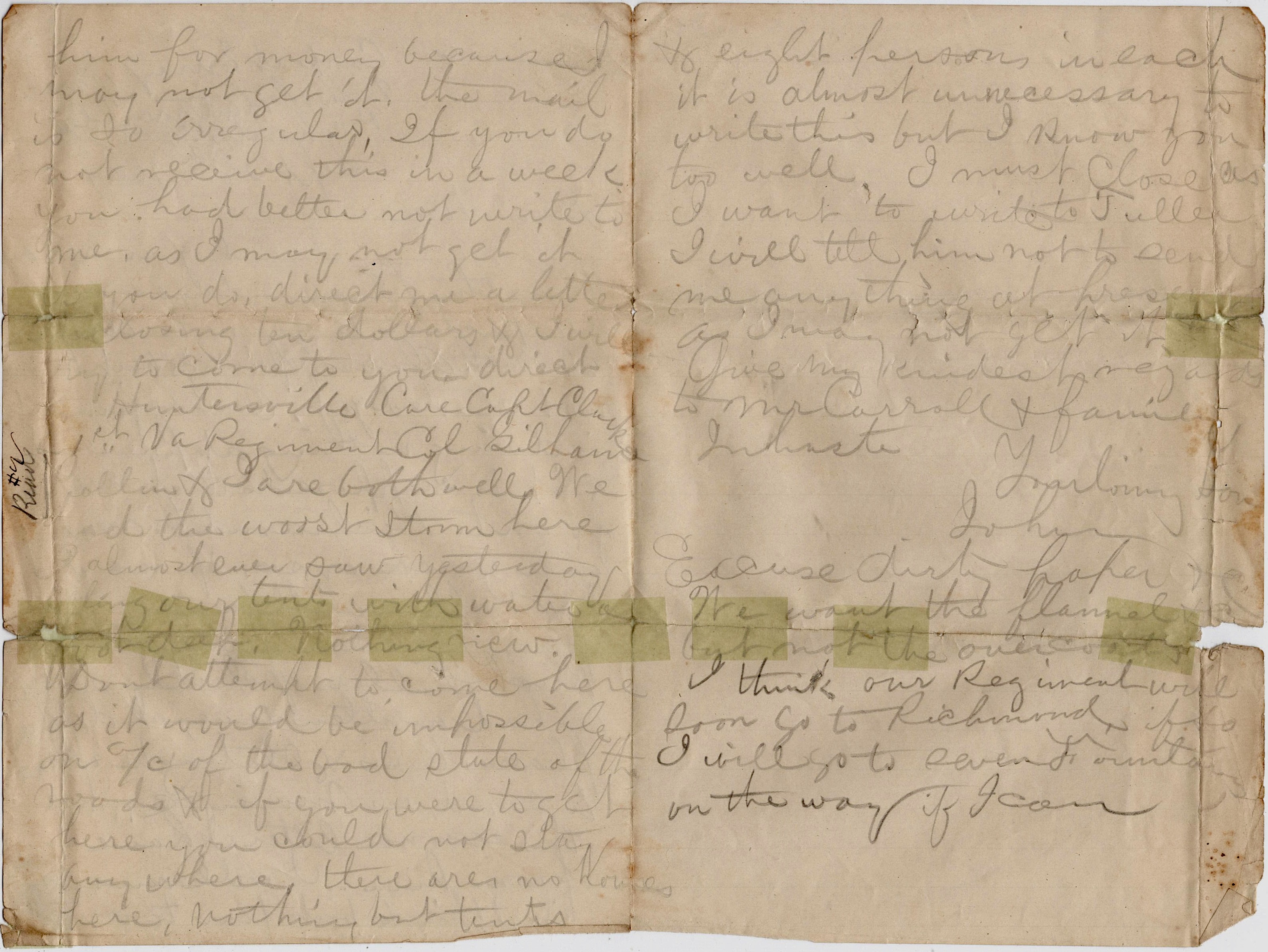
I sent you a letter from this place two days ago. I expected to go on to Warm or Bath Alum Springs but have not started yet. Our regiment is doing nothing at present & it is supposed that we will go on to Richmond to recruit in a week or so. If we do. I and Rollin will be able to see you. I received a letter from Rush Tuller yesterday saying he had written several different places to us & stating he wanted to send us money &c. It is the second letter I have received from him. I will answer it, I think, but fear to write to him for money because I may not get it. The mail is so irregular. If you do not receive this in a week, you had better not write to me as I may not get it. If you do, direct me a letter enclosing ten dollars and I will try to come to you. Direct to Huntersville, Care of Capt. Clarke, 21st Virginia Regiment, Col. Gilham.
Rollin & I are both well. We had the worst storm here I almost ever saw yesterday, filling our tents with water a foot deep. Nothing new. Don’t attempt to come here as it would be impossible on account of the bad state of the roads & if you were to get here, you could not stay anywhere. There are no houses here—nothing but tents & eight persons in each. It is almost unnecessary to write this but I know you too well.
I must close as I want to write to Tuller. I will tell him not to send me anything at present as I may not get it. Give my kindest regards to Mr. Carroll & family. In haste.
Your loving son, — John
Excuse dirty paper, &c. We want the flannel but not the overcoat &c. I think our regiment will soon go to Richmond. If so, I will go to Seven Fountains on the way if I can.
Letter 4
Camp at Greenbrier Bridge
October 18, 1861
Dear Ma,
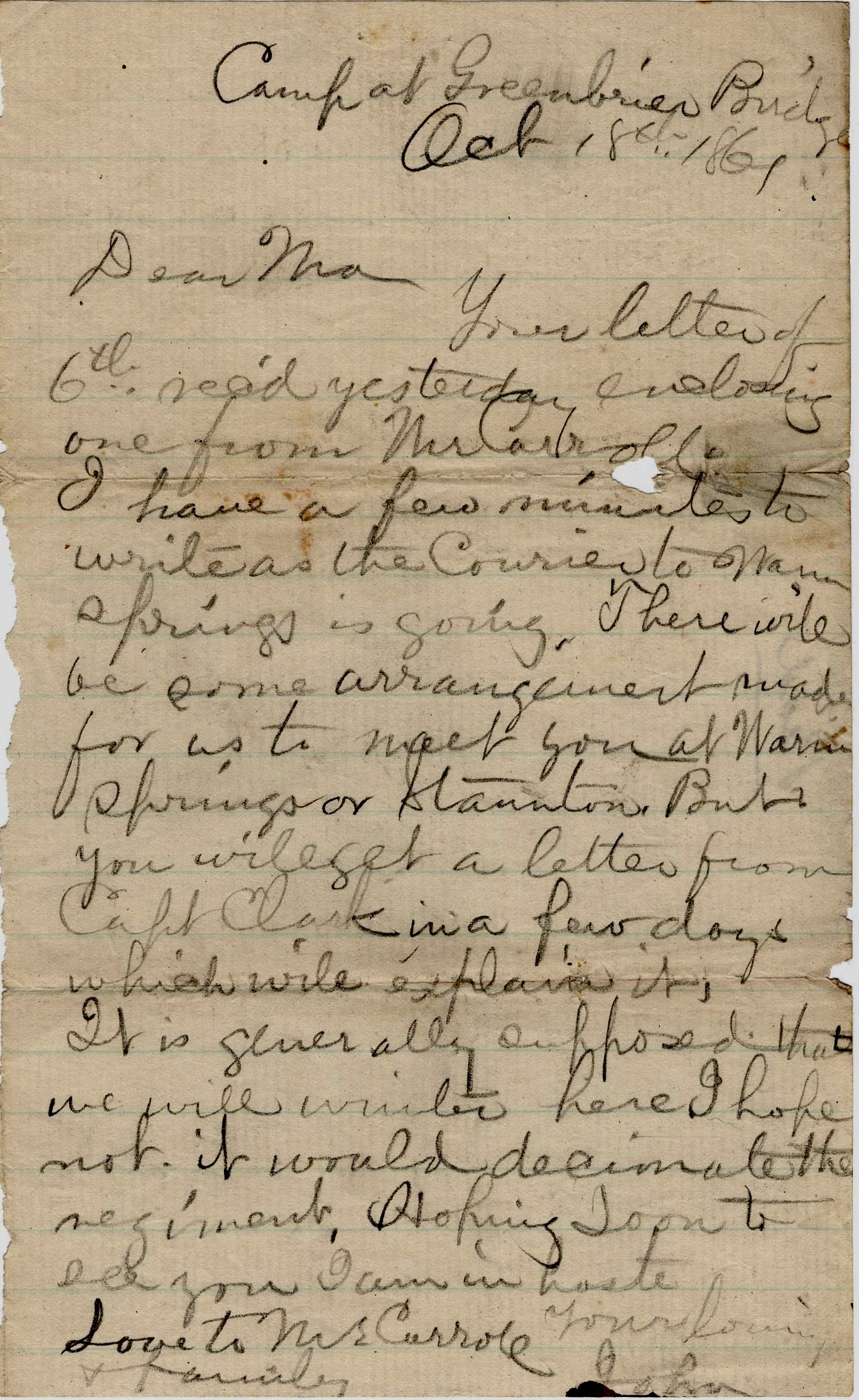
Your letter of 6th received yesterday enclosing one from Mr. Carroll. I have a few minutes to write as the courier to Warm Springs is going. There will be some arrangement made for us to meet you at Warm Springs or Staunton but you will get a letter from Capt. Clarke in a few days which will explain it.
It is generally supposed that we will winter here. I hope not. It would decimate the regiment. Hoping soon to see you. I am in haste. Love to Mr. Carroll & family. Your loving son, — John
Letter 5
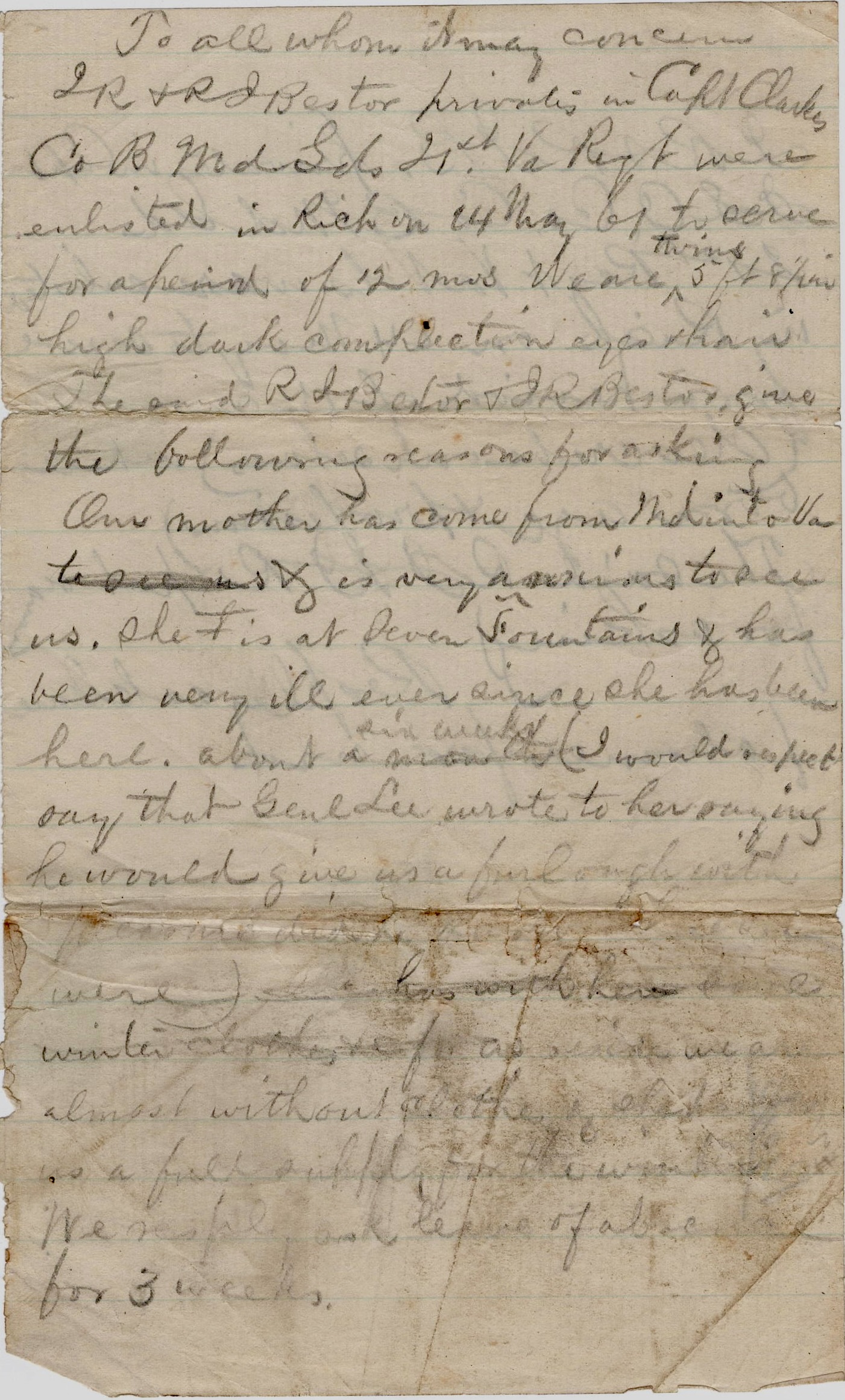
To all whom it may concern. JR & RJ Bestor, privates in Capt. Clarke’s Co. B. Md. Gds. 21st Va. Regt., were enlisted in Richmond on 24 May ’61 to serve for a period of 12 mos. We are twins, 5 ft. 8½ in. high, dark complection, eyes, & hair. The said R. J. Bestor & J. R. Bestor give the following reasons for asking. Our mother has come from Md. into Va. & is very anxious to see us. She is at Seven Fountains & has been very ill ever since she has been here—about six weeks. I would respectfully say that Gen. Lee wrote to her saying he would give us a furlough with pleasure [illegible]… She has with her some winter clothes for us, & as we are almost without clothes, she will give us a full supply for the winter. We respectfully ask leave of absence for 3 weeks.
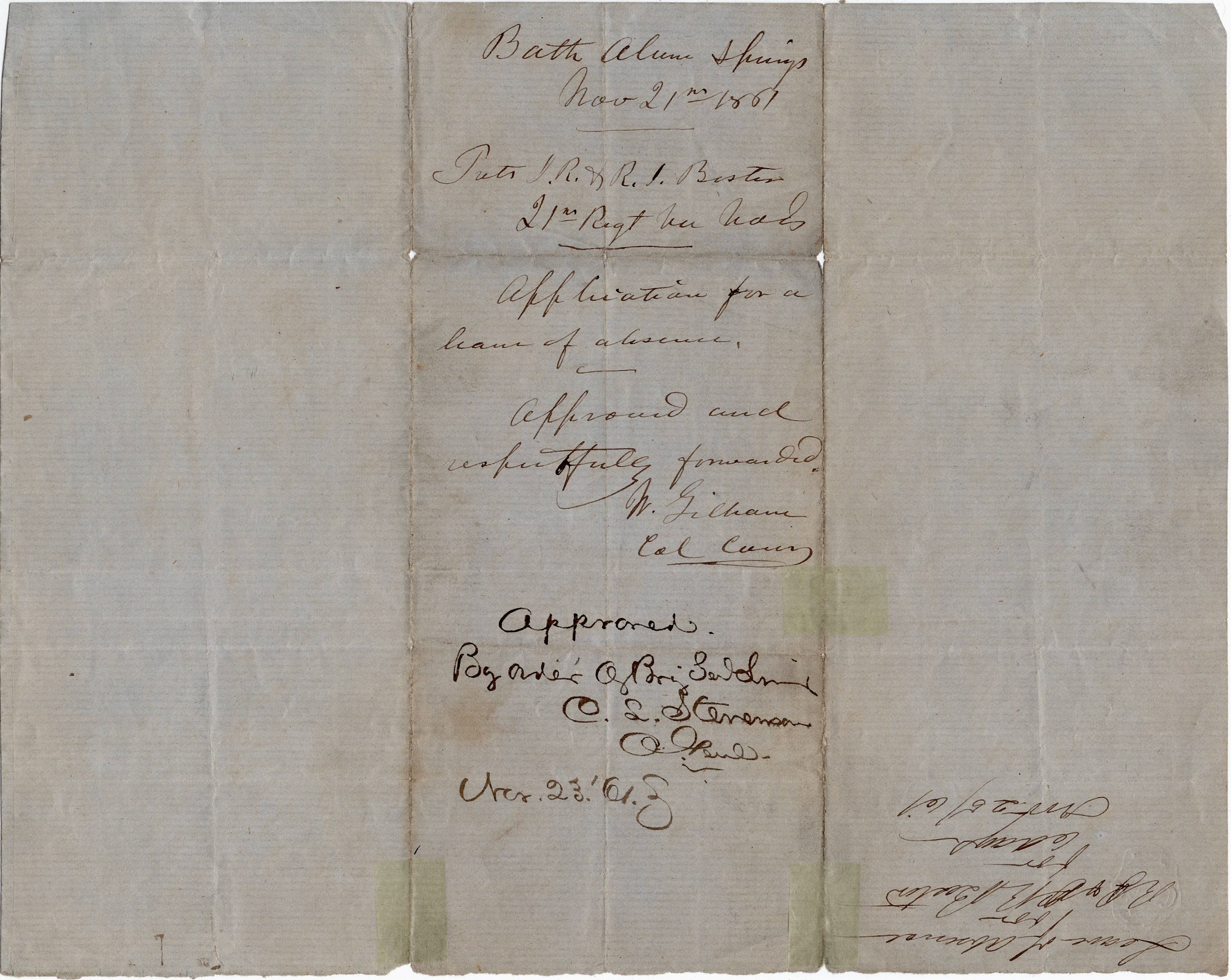
Furlough pass
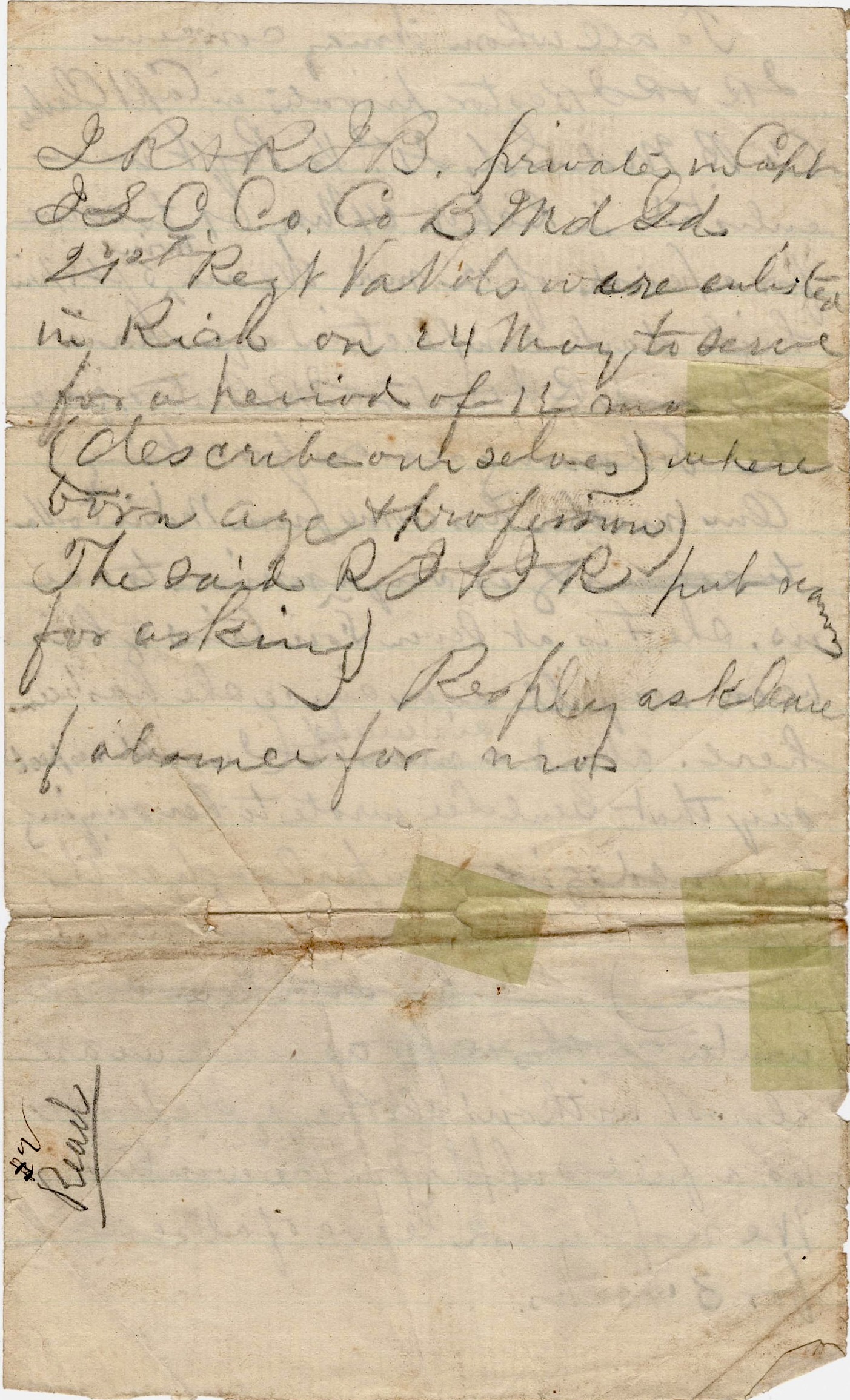
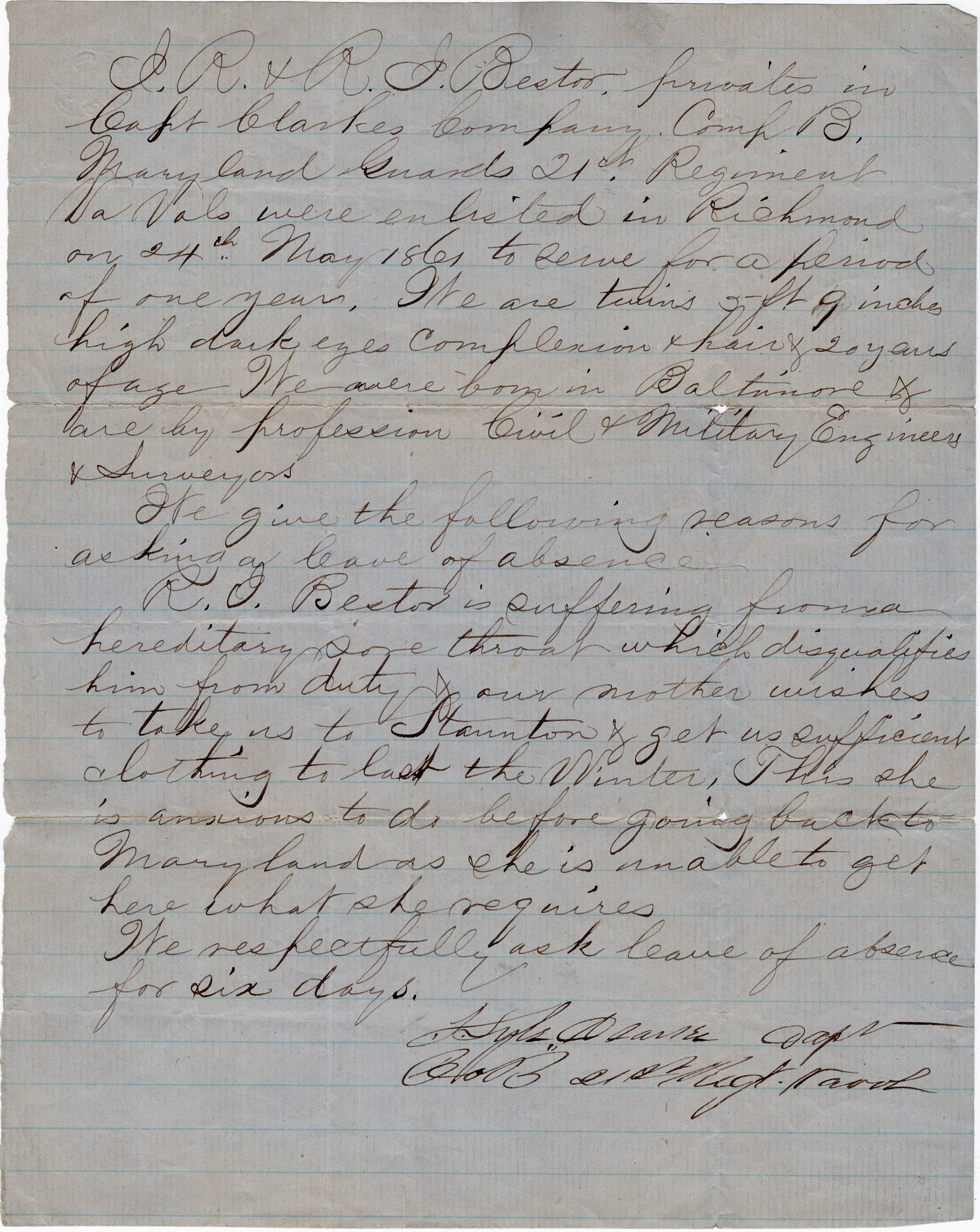
J. R. & R. J. Bestor, privates in Capt,. Clarke’s company, Co. B, Maryland Guards, 21st Regiment Virginia Vols., were enlisted in Richmond on 24th May 1861 to serve for a period of one year. We are twins, 5 ft, 9 inches high, dark eyes, complexion & hair & 20 years of age. We were born in Baltimore & are by profession Civil & Military Engineers & Surveyors.
We give the following reasons for asking a leave of absence.
R. J. Bestor is suffering from hereditary sore throat which disqualifies him from duty & our mother wishes to take us to Staunton & get us sufficient clothing to last the winter. This she is anxious to do before going back to Maryland as she is unable to get here what she requires.
We respectfully ask leave of absence for six days.
J. Lyls Clarke, Capt. Co. B, 21st Regiment Va. Vols.
Letter 6
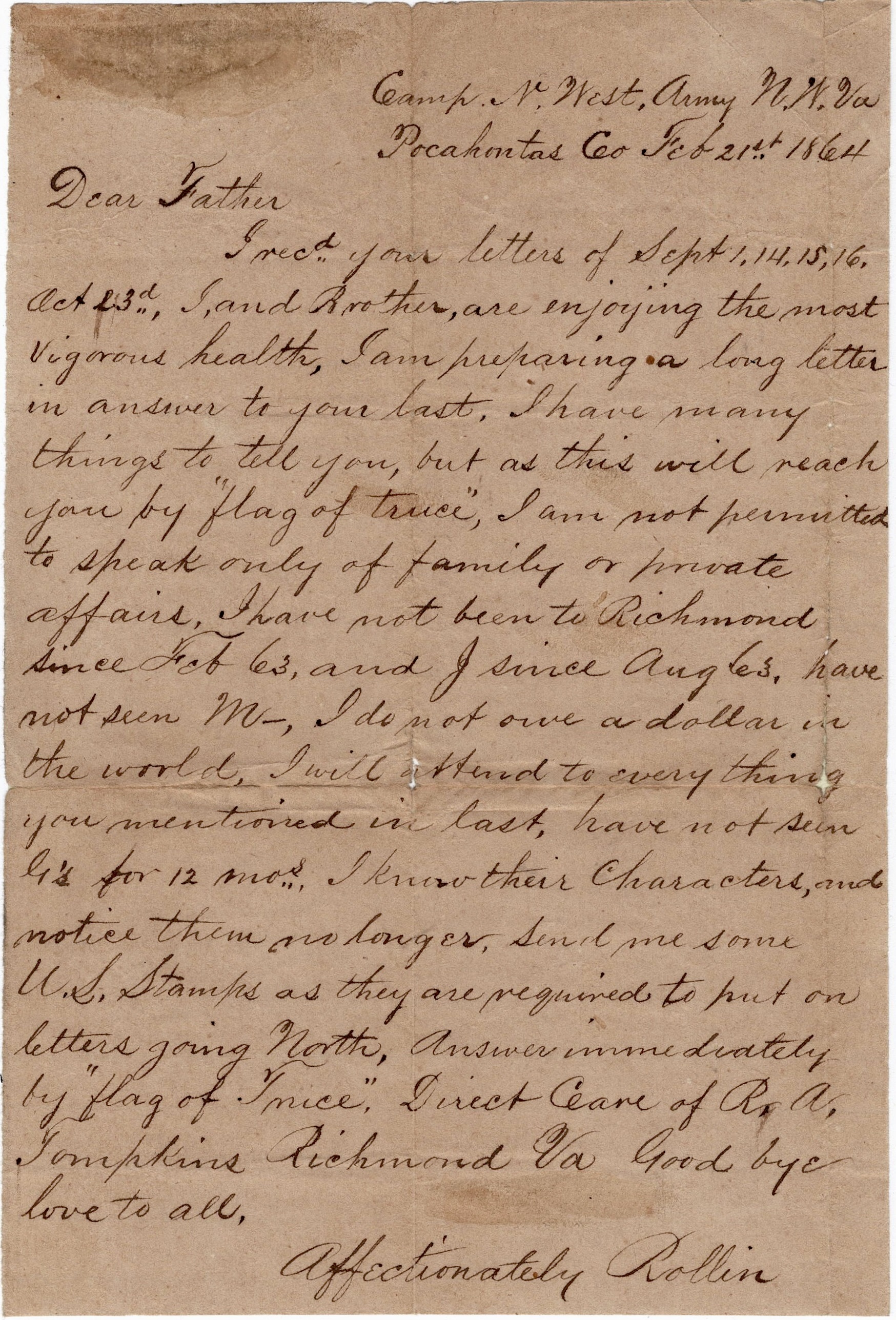
Camp N. West
Army Northwest Va.
Pocahontas Co.
Feb. 21st, 1864
Dear Father,
I rec’d your letters of Sept. 1, 14, 15, 16, Oct. 23rd. I and brother are enjoying the most vigorous health. I am preparing a long letter in answer to your last. I have many things to tell you, but as this will reach you by “flag of truce,” I am not permitted to speak—only of family or private affairs.
I have not been to Richmond since Feb. ’63, and J[ohn] since August ’63. Have not seen M—-. I do not owe a dollar in the world. I will attend to everything you mentioned in last. Have not seen G’s for 12 mos. I know their characters and notice them no longer. Send me some U.S. Stamps as they are required to put on letters going North.
Answer immediately by “flag of Truce.” Direct Care of R. A. Tompkins, Richmond, Va. Good bye. Love to all. Affectionately, — Rollin