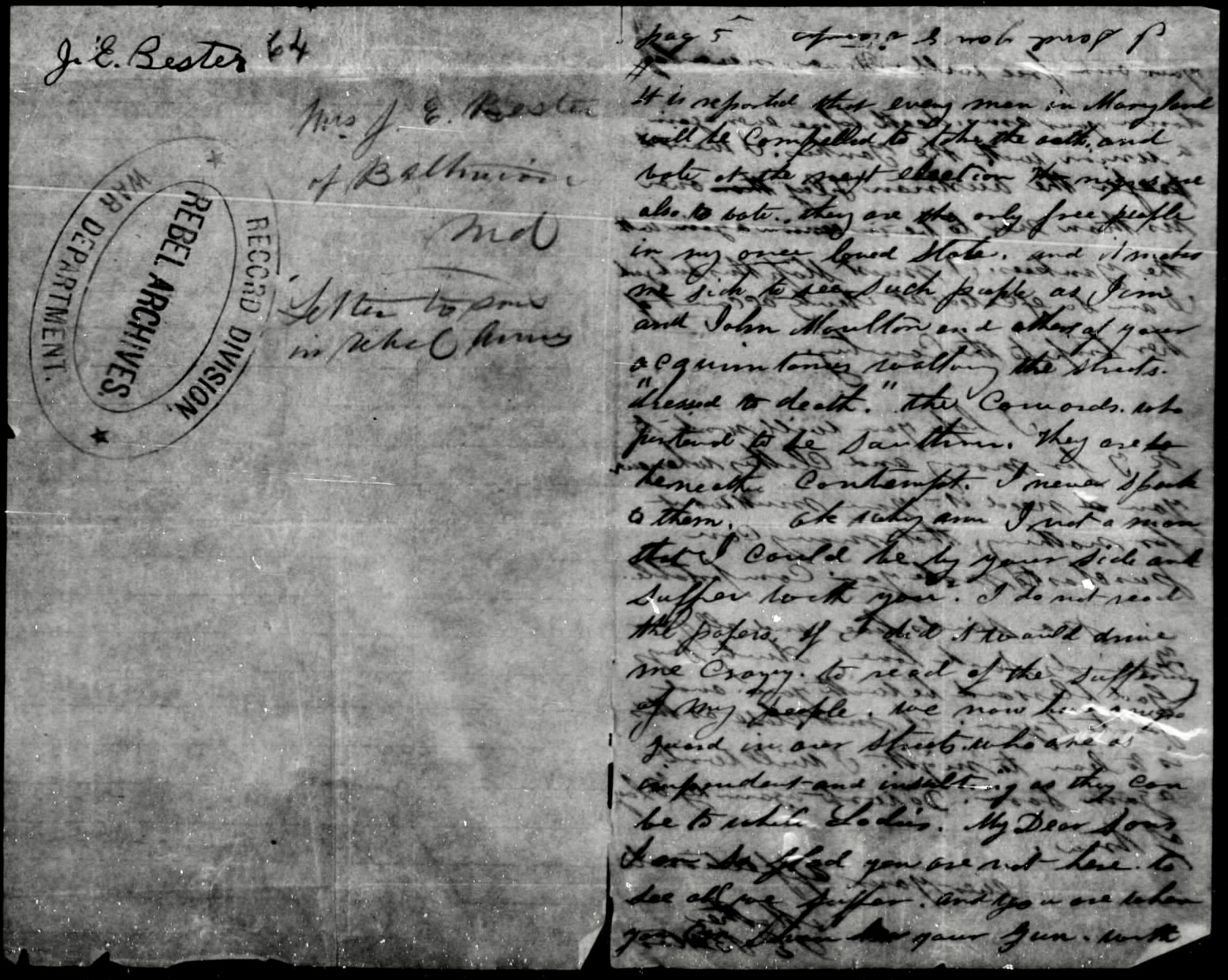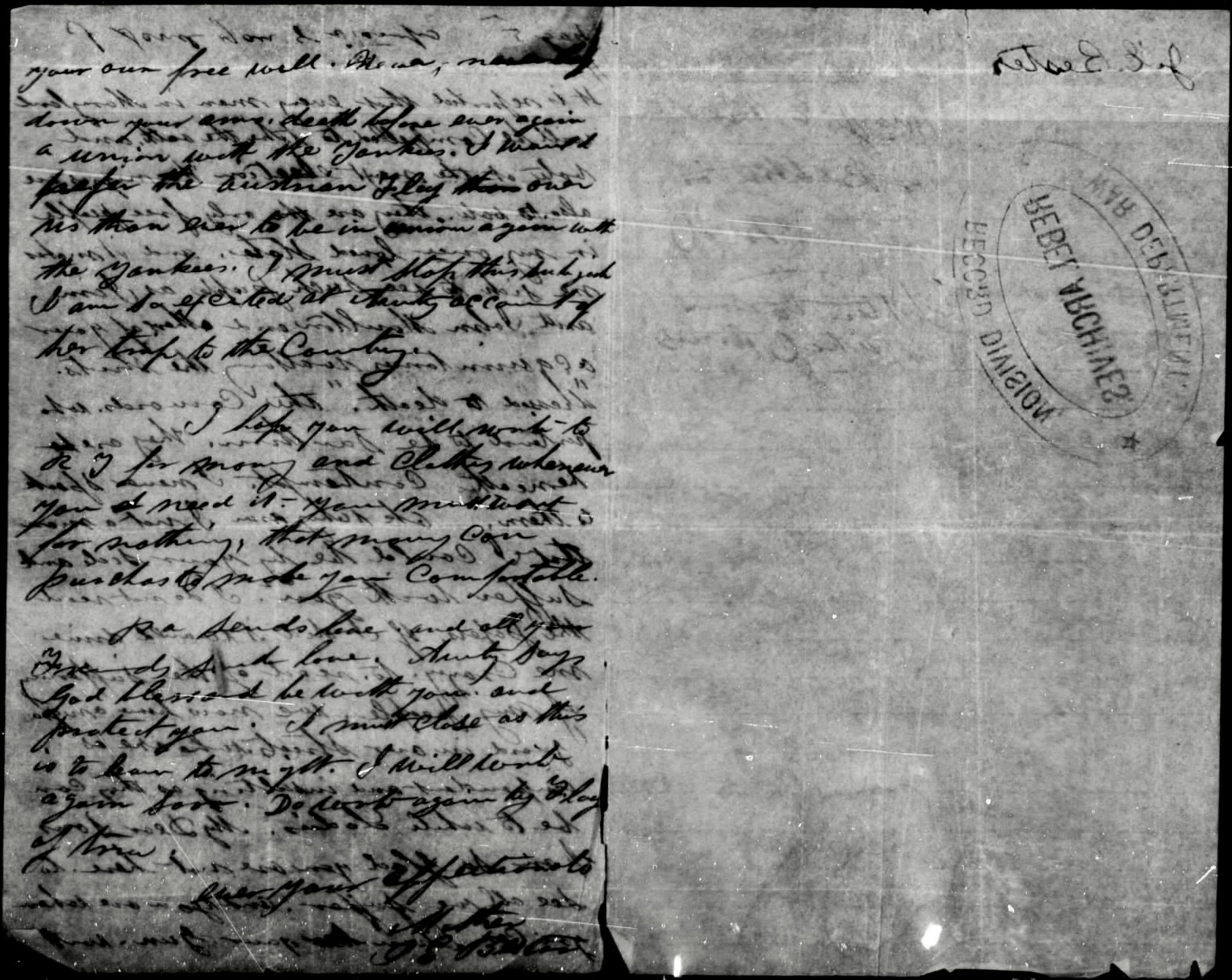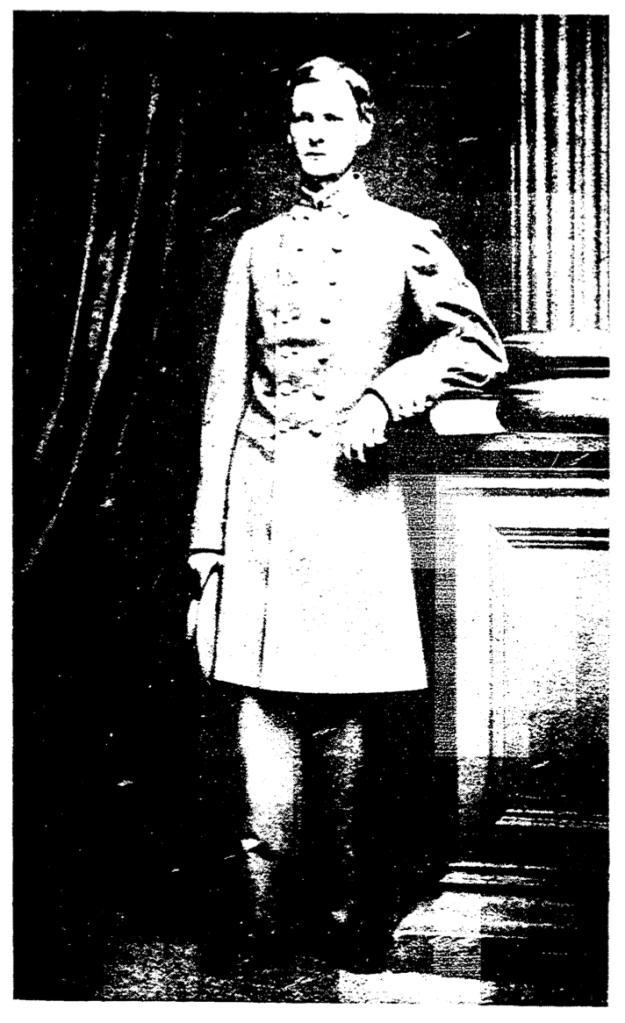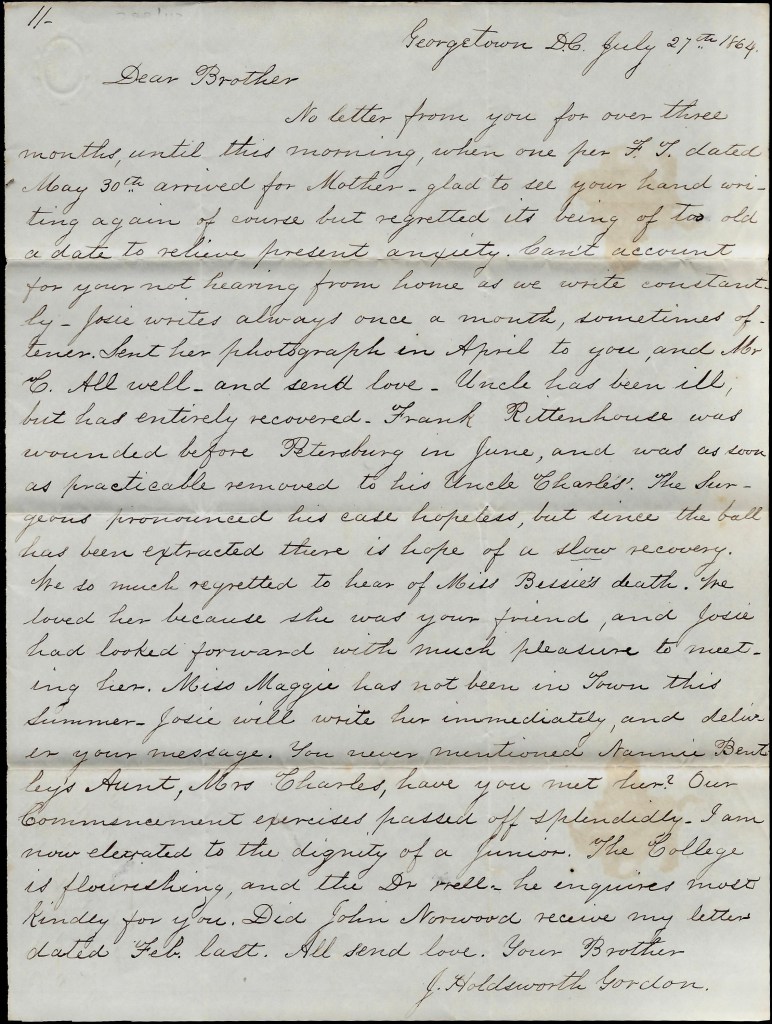
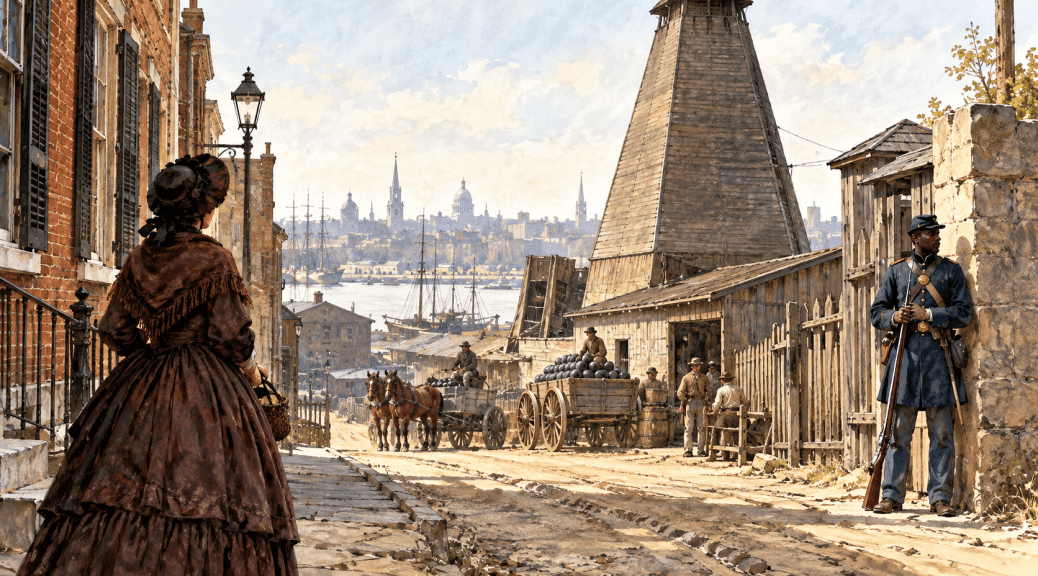
The following partial Flag of Truce letter was found on Fold 3, suggesting that it may have been intercepted and not allowed to pass through enemy lines from its author, Mrs. Jane Eliza (Brown) Bestor (1820-1885) of Baltimore, Maryland, to her twin sons serving in the Rebel army in Virginia. The sons were Rollin John Bestor (1842-1899) and John Rollin Bestor, Jr. (1842-1891)—yes, those names are correct. Mrs. Bestor and her husband, John Rollin Bestor, Sr. (1813-1867) resided at 166 North High Street on the near east side of Philadelphia near the Fayette Street Phoenix Shot Tower.
Her boys were only 19 years old in 1861 when they left their home in Baltimore to join the Rebel army. Throughout the war Mrs. Bestor attempted to communicate with her sons, either directly or by corresponding with citizens or soldiers whom she believed may have some knowledge of their activities. When she could not provide aid to her sons, she made every effort to give it to Confederate prisoners of war at Fort Delaware, Point Lookout, Elmira, &c.—particularly officers who might have some influence in the welfare of her sons in Virginia.
This is the only letter I have found written by Mrs. Bestor and it reveals much about her politics and sentiments in general.
T R A N S C R I P T I O N
[partial letter, page 5]
[Written in Baltimore, Maryland, in 1864]
….It is reported that every man in Maryland will be compelled to take the oath and vote at the next election. The negroes are also to vote. 1 They are the only free people in my once loved state and it makes me sick to see such people as Jim and John Moulton and others of your acquaintance walking the streets “dressed to death”—the cowards—who pretend to be southern. They are so beneath contempt. I never speak to them. 2 Oh why am I not a man that I could be by your side and suffer with you? I do not read the paper. If I did, it would drive me crazy to read of the suffering of my people. We now have negro guards in our streets who are as impudent and insulting as they can be to white ladies.
My dear sons, I am so glad you are not here to see all we suffer and you are where [illegible] your gun with your own free will. [illegible] your own death before ever again a union with the Yankees. I would prefer the Austrian flag wave over us than ever to be in [the] Union again with the Yankees. 3 I must stop this subject. I am so excited at Aunty’s account of her trip to the country.
I hope you will write to R. T. for money and clothes whenever you need it. You must want for nothing that money can purchase to make you comfortable.
Pa sends love and all your friends send love. Aunty says God bless and be with you and protect you. I must close as this is to leave tonight. I will write again soon. Do write again by Flag of Truce.
1 These statements about mandatory Oaths of Allegiance and of Negro Suffrage are patently false. Whether Mrs. Bestor didn’t know better or purposely wished to disseminate falsehoods to her sons in Virginia in uncertain. It may be the reason this letter was intercepted as Flag of Truce letters were required to avoid talking politics.
2 Mrs. Bestor may be referring to John DuHamel Moulton (1837-1884) and his younger brother, James Francis Moulton, Jr. (1838-1923) of Baltimore. They were the sons of James F. Moulton, Sr. and Araminta Maria DuHamel and lived in Baltimore’s 19th Ward.
3 At the time of the American Civil War, the Austrian Empire was one of Europe’s most notorious monarchies. By saying she would rather live under their flag, she is claiming that the Union government had become more oppressive than the worst autocratic empire of Europe.