Category Archives: Natchez

1864: Mason Brayman to Natchez Citizens

This letter was written by 50 year-old Mason Brayman (1813-1895) while commanding the Union forces in the District of Natchez in August 1864.

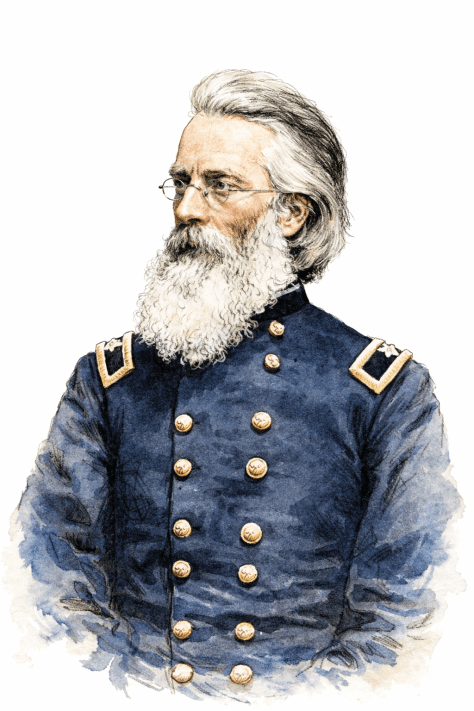
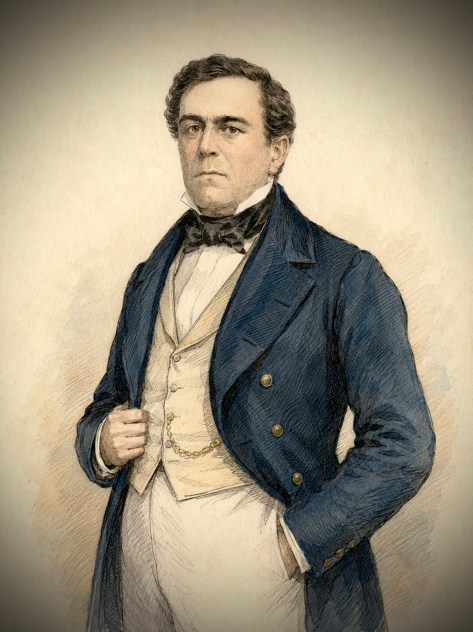
Brig. General Mason Brayman

Brayman was born in Buffalo, N. Y., May 23, 1813. Brought up on a farm, he became a printer, then editor of the Buffalo “Bulletin,” studied law, and in 1836 was admitted to the bar. Removing to the West, he became city attorney of Monroe, Mich., in 1838, editor of the Louisville “Adviser” in 1841, opened a law office in Springfield, Ill., in 1842, and in 1844-45 revised the state statutes. In 1843, as special government commissioner, he adjusted the Mormon disturbances at Nauvoo, and conducted the negotiations which resulted in the withdrawal of the Mormons from Illinois. He was from 1851 to 1855 attorney for the Illinois Central railroad, and then, until the outbreak of the Civil war, was a promoter of railroad enterprises in Missouri, Arkansas and the southwest.

In 1861 Brayman joined the Union army as major of the 29th Ill. volunteers, became colonel of the regiment in May, 1862, and fought with such conspicuous gallantry at the battles of Belmont, Fort Donelson and Shiloh that he was promoted brigadier-general of volunteers. He was in command at Bolivar, Tenn., when Van Dorn’s attack was successfully repulsed. He afterwards reorganized about sixty Ohio regiments, at Fort Dennison; was president of a board of inquiry to investigate the conduct of Gen. Sturgis, commanded at Natchez, Tenn., from July, 1864, to May, 1865, and was presiding officer of a committee to investigate cotton claims. He was mustered out of the service at the close of the war with the brevet rank of major-general of volunteers. After the war he was engaged in reviving railroad interests in the south, was editor of the “Illinois State Journal” in 1872-73, practiced law in Ripon, Wis., from 1873 to 1877, and was then appointed by President Hayes governor of Idaho. At the expiration of his term, in 1880, he resumed the practice of his profession in Ripon, Wis. He afterwards settled in Kansas City, Mo., and died there Feb. 27, 1895.

Brayman’s letter formally addresses a request from the citizens of Natchez for the return of horses that had been seized by his order to equip his cavalry in the pursuit of rebels and guerrillas within his District. He respectfully declines the request, citing military necessity as the rationale for commandeering the horses, while simultaneously expressing an understanding of the vital role that these animals play in supporting civilian physicians who care for the ill both in town and the surrounding areas. Brayman assures the citizens that he will facilitate the provision of horses liberated from the rebels as soon as it is feasible to do so.

One of the two gentleman that Brayman addressed his letter to was Judge Josiah Winchester, a native of Salem, Massachusetts, who studied law in Boston before moving to Natchez. His uncle, George Winchester, was a prominent lawyer, member of the Mississippi Supreme Court, and the longtime tutor to Varina Howell, future wife of Confederate President Jefferson Davis. He married in 1846 to Margaret Graham Sprague, a first cousin on Varina Howell—an attendant to Varina’s wedding to Jefferson Davis the previous year. He was a prominent Union sympathizer despite his ties to Jefferson Davis.

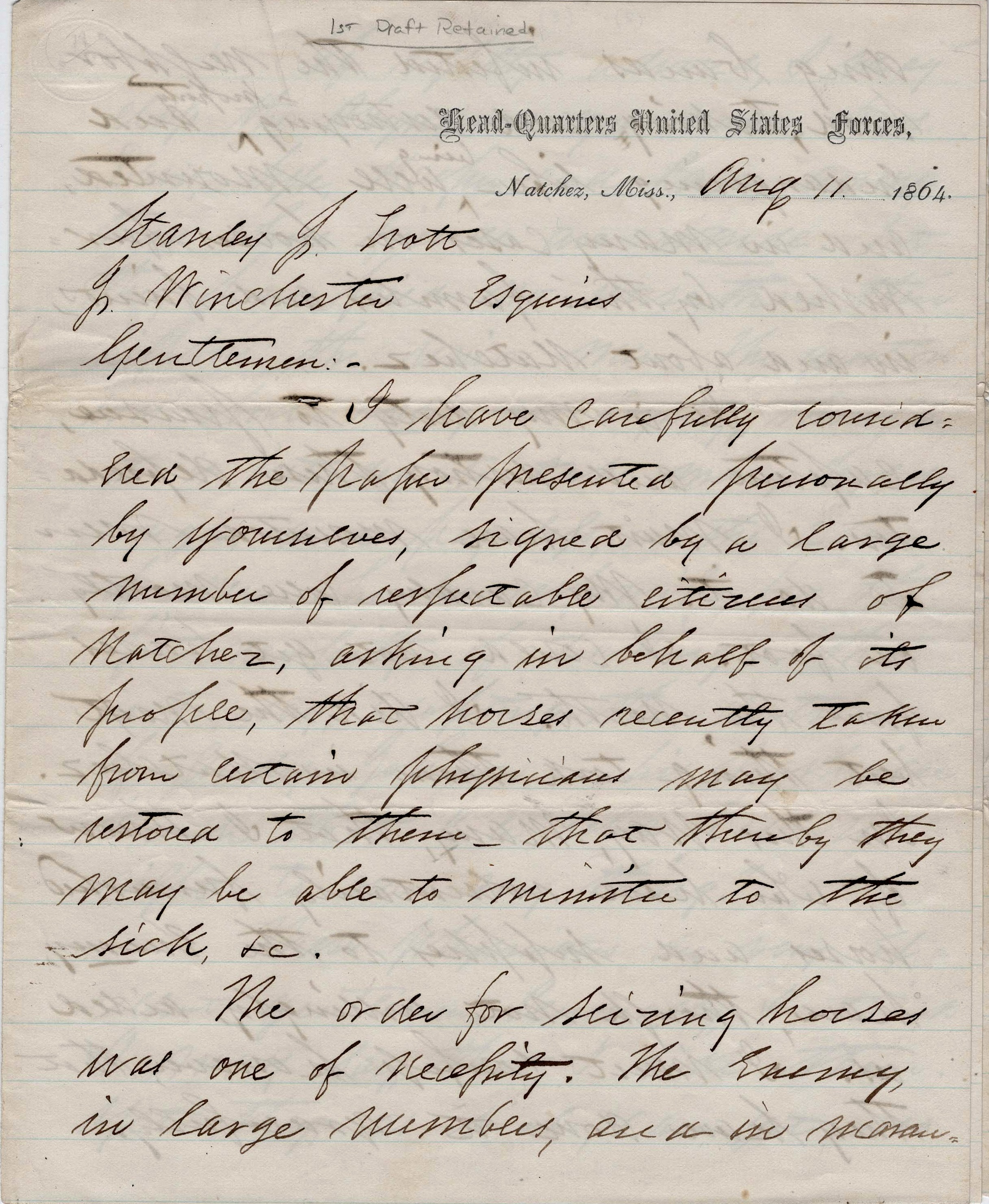
T R A N S C R I P T I O N

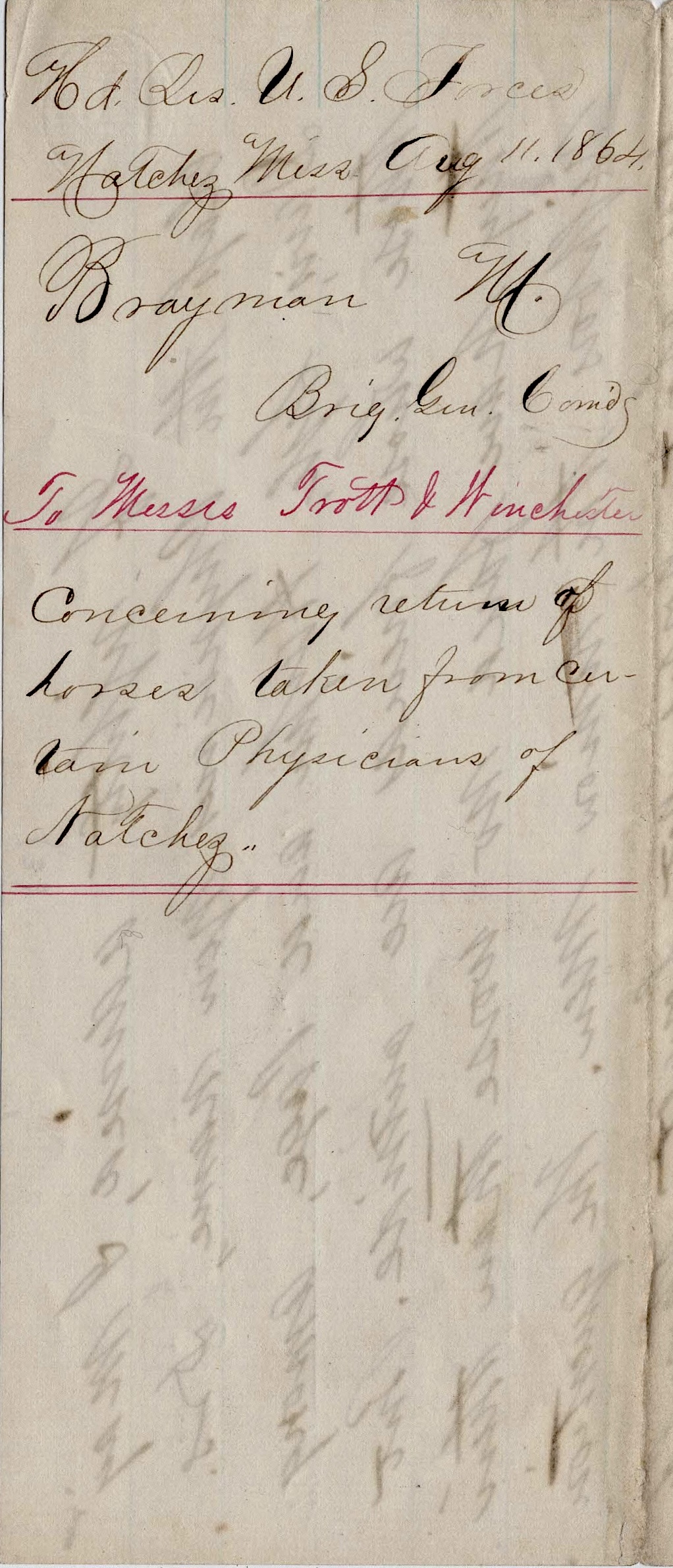
Headquarters United States Forces
Natchez, Mississippi
August 11, 1864

Stanley J. Trott & J[osiah] Winchester, Esq’s.,

Gentlemen,

I have carefully considered the paper presented personally by yourselves, signed by a large number of respectable citizens of Natchez, asking in behalf of its people that horses recently taken from certain physicians may be restored to them that thereby they may be able to minister to the sick, &c.

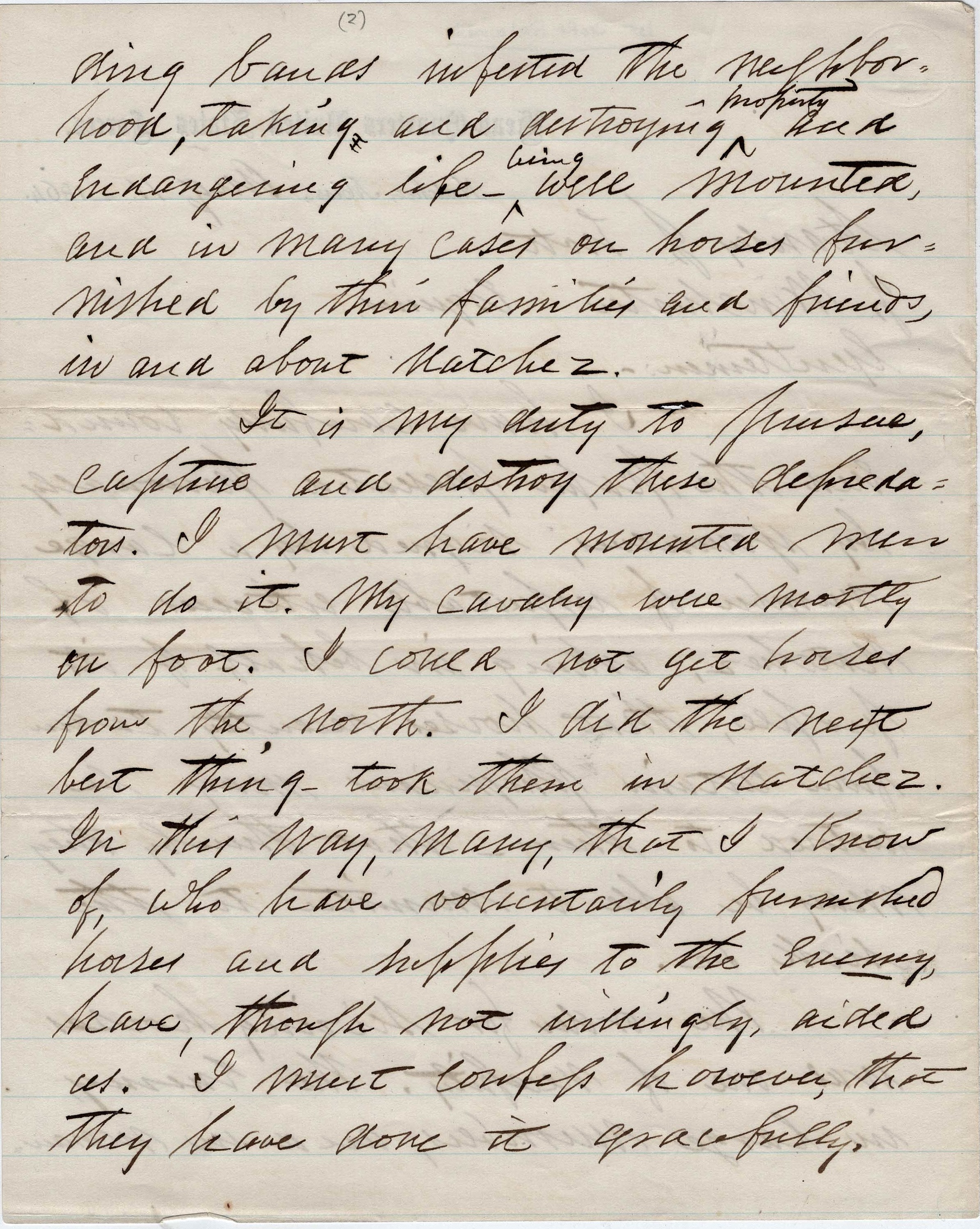
The order for seizing horses was one of necessity. The enemy in large numbers and in marauding bands infested the neighborhood, taking and destroying property and endangering life, being well mounted and in many cases on horses furnished by their families and friends in and about Natchez. It is my duty to pursue, capture, and destroy these depredators. I must have mounted men to do it. My cavalry were mostly on foot. I could not get horses from the North. I did the next best thing—took them in Natchez. In this way, many that I know of, who have voluntarily furnished horses and supplies to the enemy have, though not willingly, aided us. I must confess, however, that they have done it gracefully.

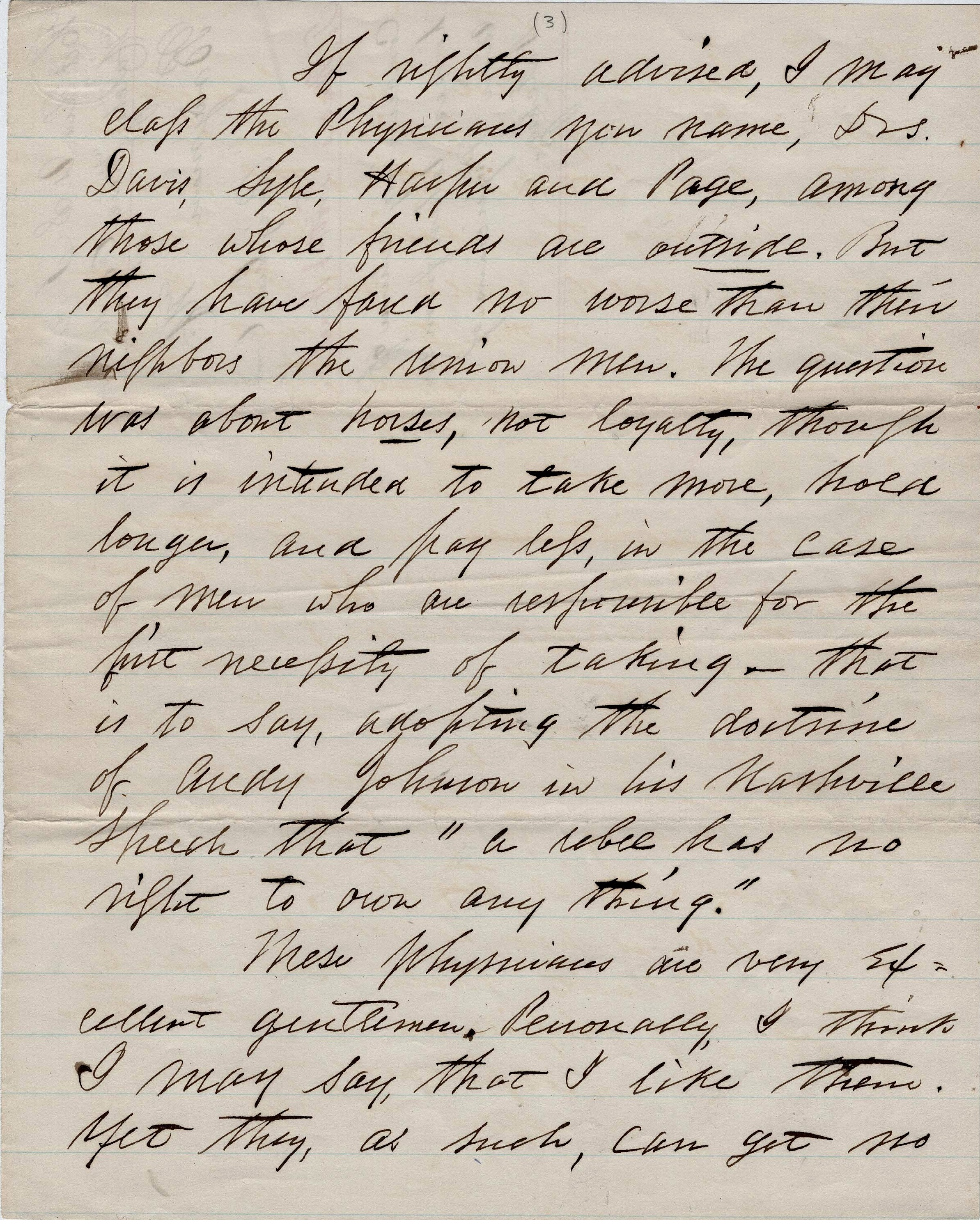
If rightly advised, I may class the physicians you name, Drs. Davis, Lyle, Harper and Page, among whose friends are outside. But they have fared no worse than their neighbors, the Union men. The question was about horses, not loyalty, though it is intended to take more, hold longer, and pay less, in the case of men who are responsible for the first necessity of taking—that is to say, adopting the doctrine of Andy Johnson in his Nashville speech that, “a rebel has no right to own anything.”

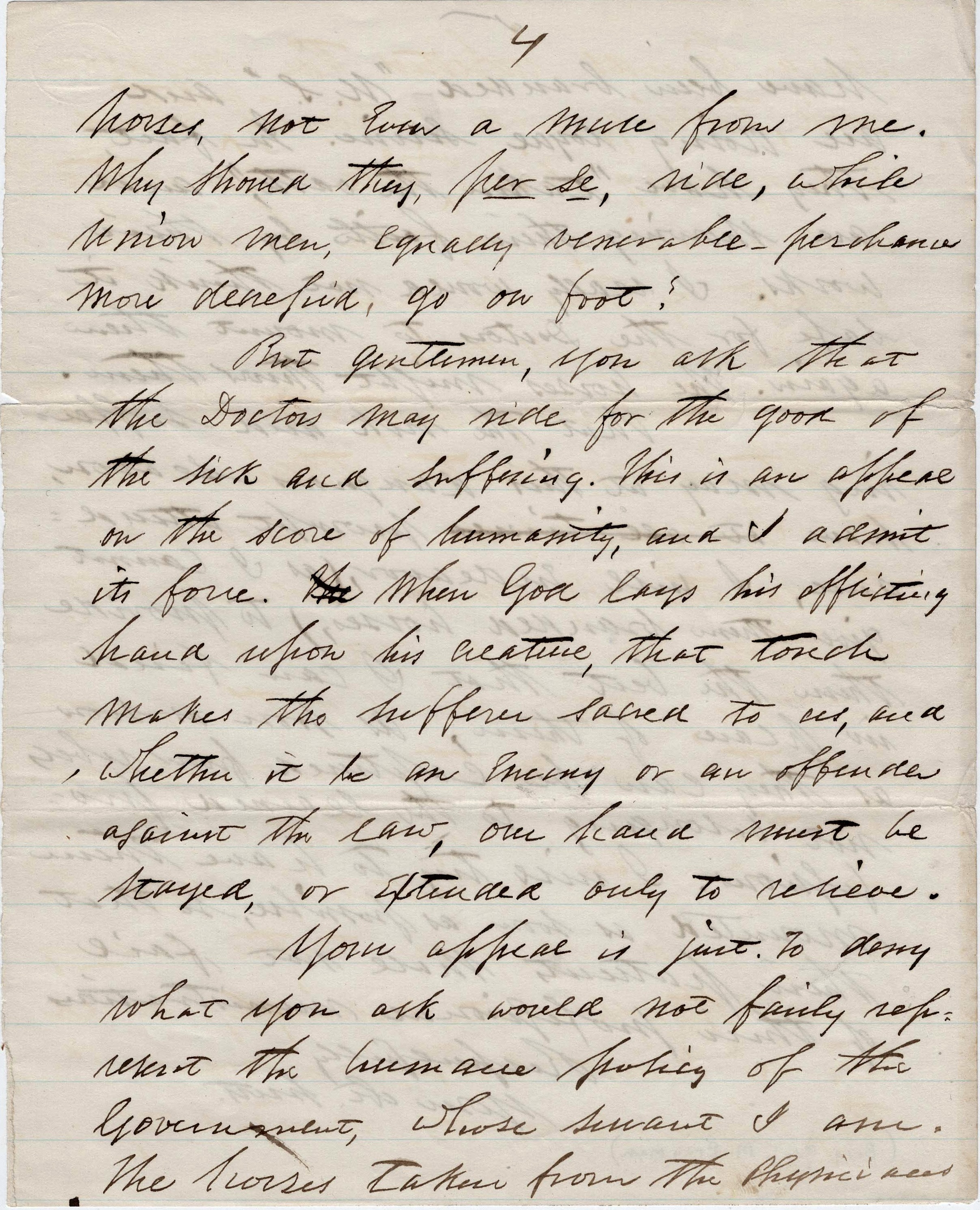
These physicians are very excellent gentlemen. Personally I think I may say that I like them. Yet they, as such, can get no horses, not even a mule from me. Why should they, per se, ride, while Union men, equally venerable—perchance more denefied [?], go on foot? But gentlemen, you ask that the doctors may ride for the good of the sick and suffering. This is an appeal on the score of humanity and I admit its force. When God lays his afflicting hand upon his creature, that touch makes the sufferer sacred to us, and, whether it be an enemy or an offender against the law, our hand must be stayed or extended only to relieve.

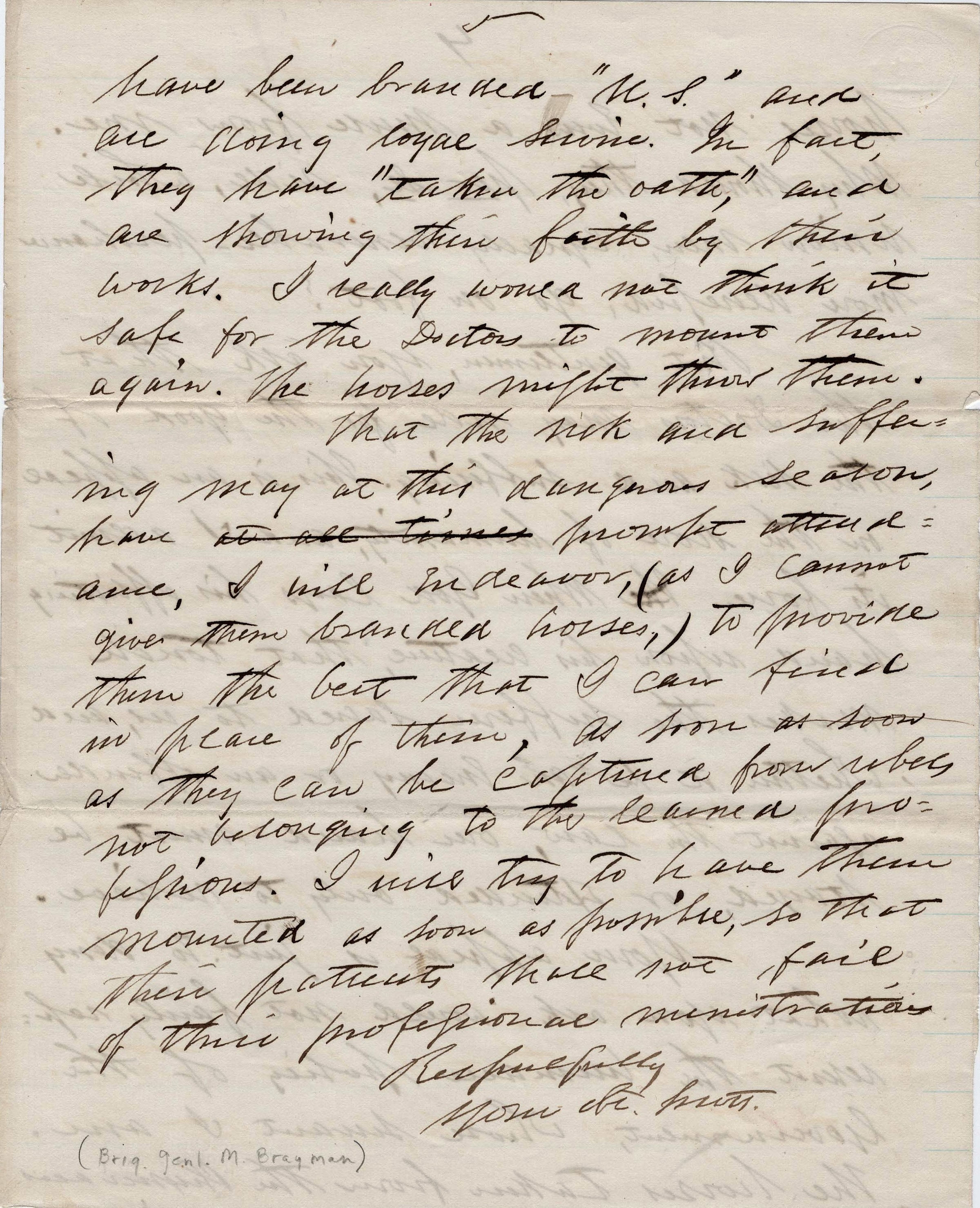
Your appeal is just to deny what you ask would not fairly represent the humane policy of the Government, whose servant I am. The horses taken from the physicians have been branded “U. S.” and are doing loyal service. In fact, they have “taken the oath” and are showing their faith by their works. I really would not think it safe for the doctors to mount them again. The horses might throw them.

That the sick and suffering may at this dangerous section have prompt attendance, I will endeavor (as I cannot give them branded horses) to provide them the best that I can find in place of them as soon as they can be captured from rebels not belonging to the learned professions. I will try to have them mounted as soon as possible so that their patients shall not fail of their professional ministrations. Respectfully, your obedient servant.

[1st draft retained]

1862-63: Calvin Rogers Johnson to Lucy A. (Marsh) Johnson

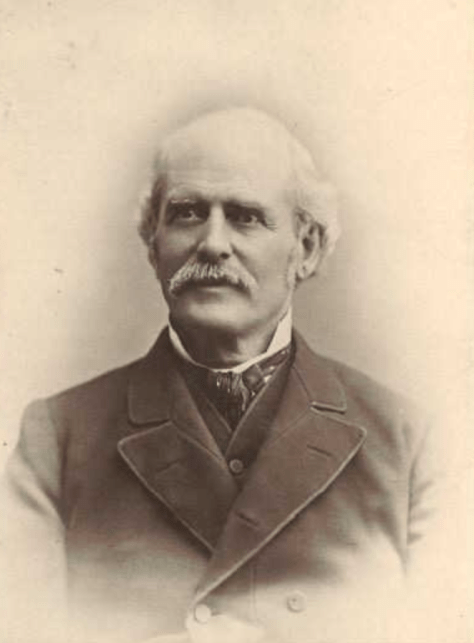
The following letters were written by Capt. Calvin Rogers Johnson (1822-1897), Co. I, 14th Wisconsin Volunteer Infantry, to his wife, Lucy Abigail (Marsh) Johnson Mississippi in 1862 and 1863. The couple were married in 1852 and they had six children. Calvin was a native of Holliston, Massachusetts; his parents were Calvin John son (1793-1826) and Nancy Rogers (1790-1861).

Calvin Rogers Johnson (ca. 1890)

Calvin’s 2nd letter tells of the arrival of the regiment at Natchez with a nice description of the location and citizens. Following the surrender of Vicksburg on July 4th, 1863, the regiment embarked with the rest of the brigade of General Ransom and proceeded to Natchez of which place they took possession on the 14th. They remained at Natchez until the 9th of October. There is a nice railroad embossment on upper left corner of the sheet.

It is noted that one of Captain Johnson’s letter, written from Abbeville, Mississippi on 4 December 1862, that is in the Library of Congress has been digitized and is available on-line.

See also—1864: Andrew Jackson Manley to Calvin R. Johnson on Spared & Shared 23.

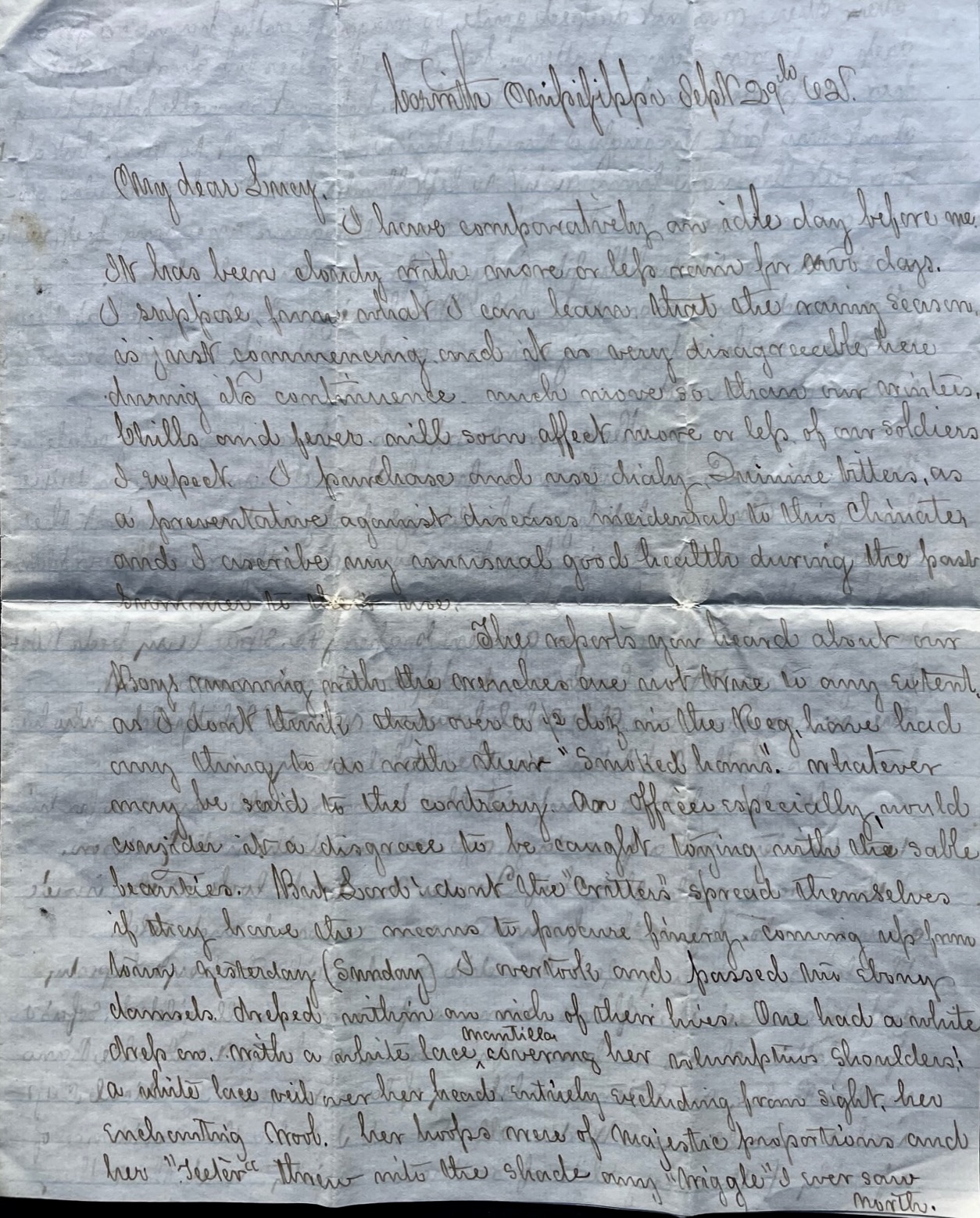
Letter 1

[Note: This letter is from the collection of Greg Herr and was offered for transcription and publication on Spared & Shared by express consent.]

Corinth, Mississippi
September 29, 1862

My dear Lucy

I have comparatively an idle day before me. It has been cloudy with more or less rain for two days. I suppose from what I can learn that the rainy season is just commencing and it is very disagreeable here during its continuance, much more so than our winters. Chills and fever will soon affect ,ore or less of our soldiers, I expect. I purchase and use daily quinine bitters as a preventative against diseases incidental to this climate and I ascribe my unusual good health during the past summer to this use.

The reports you heard about our Boys running with the wenches are not true to any extent as I don’t think that over half a dozen in the regiment have had anything to do with their “smoked hams,” whatever may be said to the contrary. An officer especially would consider it a disgrace to be caught toying with the sable beauties. But Lord! don’t the “critters” spread themselves if they have the means to procure finery.

Coming up from town yesterday (Sunday), I overtook and passed two ebony damsels dressed within an inch of their lives. One had a white dress on with a white lace mantilla covering her voluptuous shoulders; a white lace veil over her head entirely excluding from sight her enchanting wool. Her hoops were of majestic proportions and her “Teeter” threw into the shade any “wiggle” I ever saw North. The other was not dressed quite so magnificently, having on for a dress a fancy lawn pattern, but about 6 inches too short for style. Her hoops were as large as the others but not so well fitted, being about two foot through I should think from front to rear, but about four feet through from right to left flank. Her head was also covered with a lace veil but her shoes were brogans encasing feet which a No. 11 would tightly fit, judging from a casual glance.

The road was crowded with “Black niggers” who gazed at the beauties with admiring glances and no doubt tingling sensations under the waistcoat.

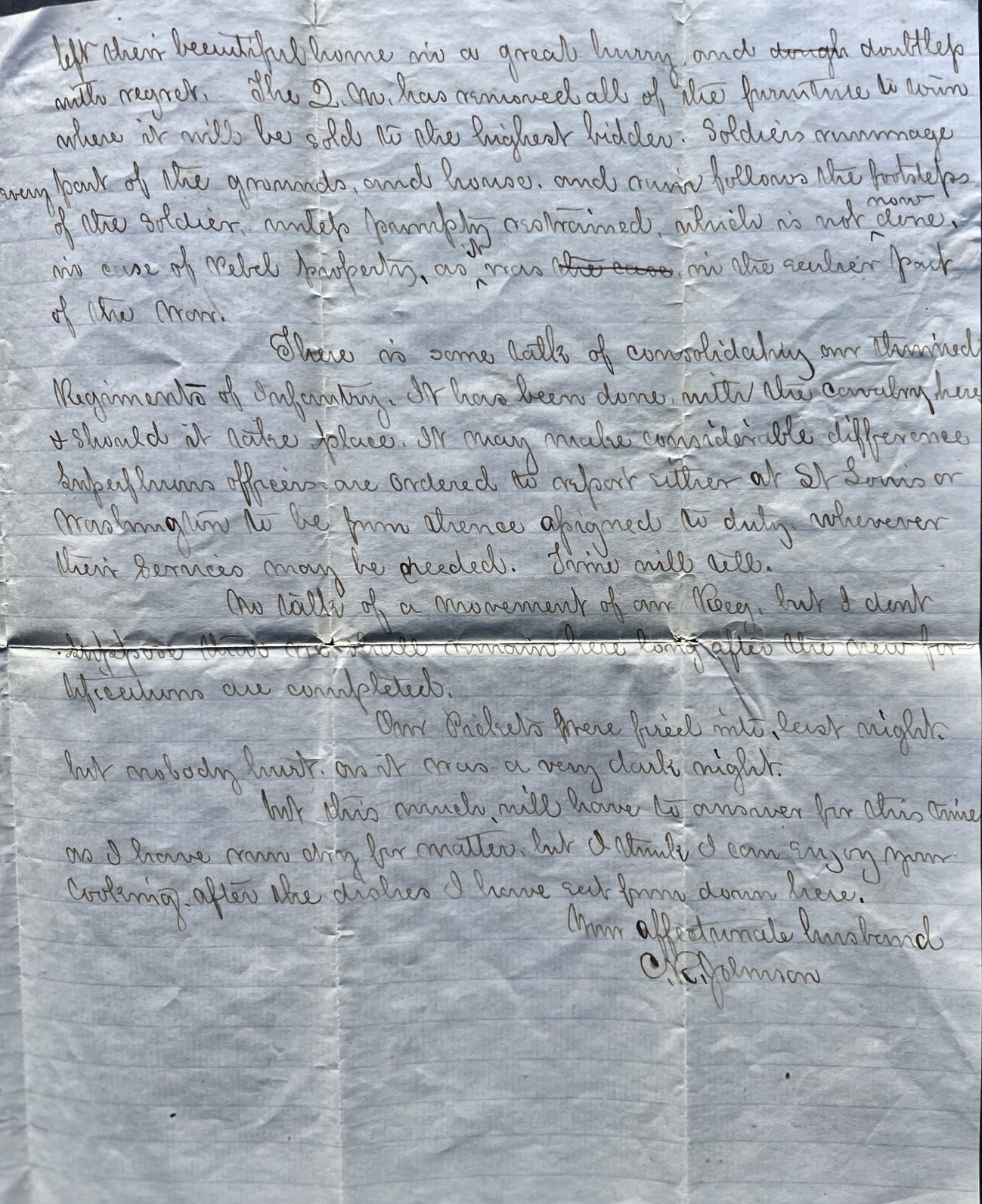
Near our camp is a large two story white house—the best in style and finish that I have seen in “Dixie” thus far. Surrounded by outbuildings, tasty and convenient, the large lawn or yard in front is covered with rare flower plants and shrubbery through which is a grove and walk to the front entrance. In the rear is a garden, grapery, &c. strawberry beds, raspberry bushes, &c. Peach and apple orchards come next. The owner was an old Rebel lawyer name Whitfield who has two sons, both captains in the Rebel army. Gen. Grant has occupied the premises all summer for his headquarters but a few days ago removed them to Jackson. I then went with the Chief Quartermaster to look at the inside arrangements before the furniture was removed and sold. The house was a perfect paradise inside—rich Turkey & Tapestry carpets covered the floors, cornices of the room all gilded, sofa’s and spring bottom chairs in four or five rooms. A large and valuable piano in the parlor. An extensive library of law, religious, medical, classical and miscellaneous works. All showed it to be the residence of a family of the very elite of Southern society and that they left their beautiful home in a great hurry and doubtless with regret.

The quartermaster has removed all of the furniture to town where it will be sold to the highest bidder. Soldiers rummage every part of the grounds and house and ruin follows the footsteps of the soldier unless promptly restrained, which is not now done in case of Rebel property, as it was in the earlier part of the war.

There is some talk of consolidating our thinned regiments of infantry. It has been done with the cavalry here and should it take place, it may make considerable difference. Superfluous officers are ordered to report either at St. Louis or Washington to be from thence assigned to duty wherever their services may be needed. Time will tell.

No talk of a movement of our regiment but I don’t suppose that we will remain here long after the new fortifications are completed. Our pickets were fired into last night but nobody hurt, as it was a very dark night.

But this much will have to answer for this time as I have run dry for matter, but I think I can enjoy your cooking after the dishes I have eat from down here. Your affectionate husband, — C. R. Johnson


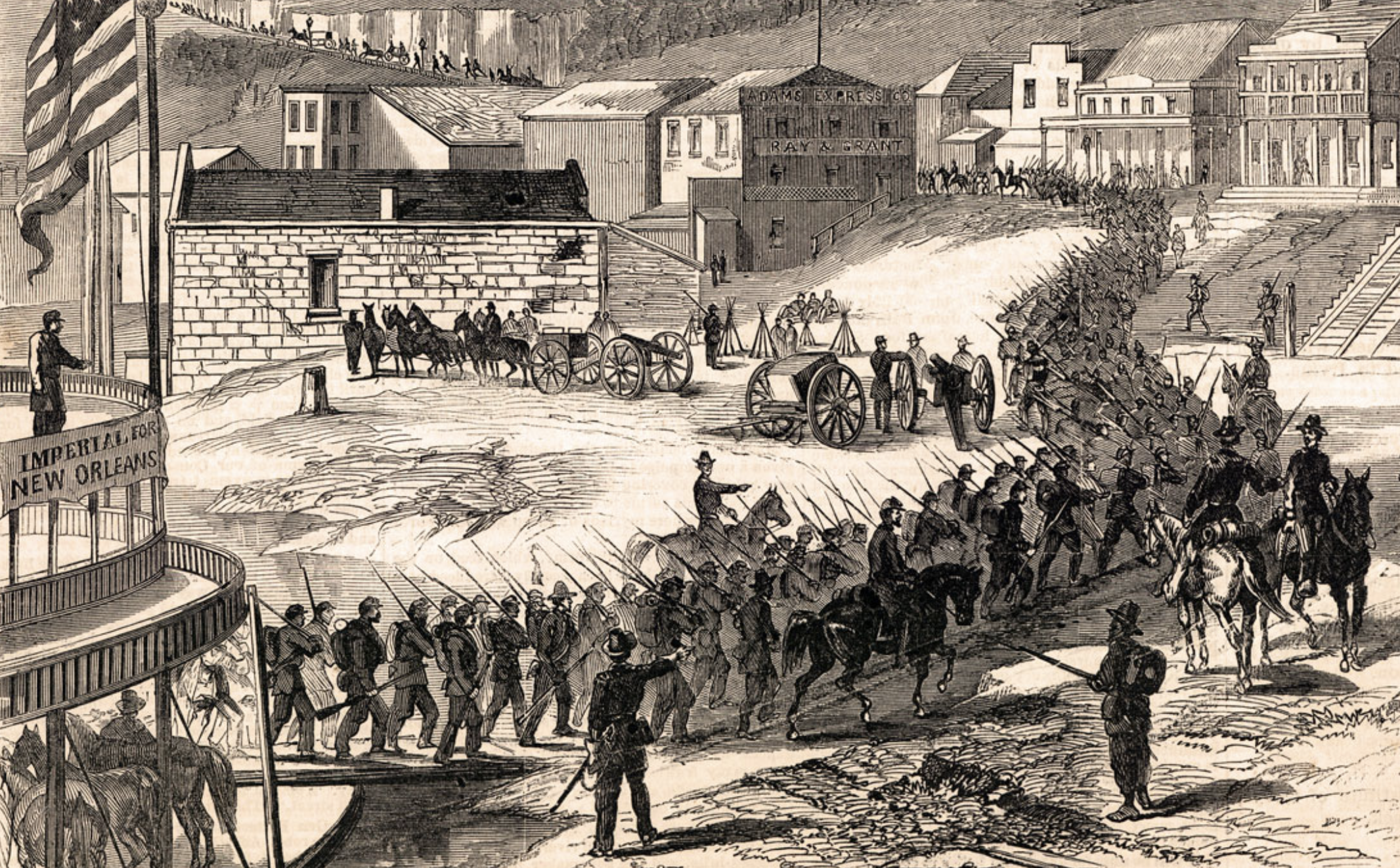
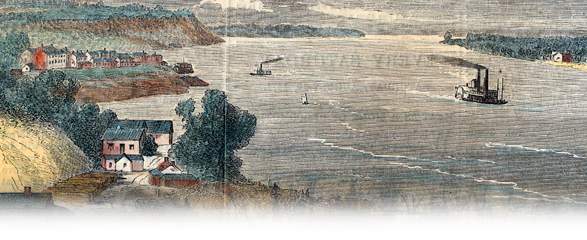
Union troops arrive at the Natchez landing in mid-July 1863. Depicted at right is the lower town at the landing. Calvin’s description of Natchez refers to that part of the city up the road to the left in the picture high atop the bluff overlooking the Mississippi River.

Letter 2

Natchez, Mississippi
July 23d 1863

My dear Lucy,

Well, here I am with the Regiment again in the prettiest place I have been in South. Natchez on the bluff is about 100 feet above the river and if there is any air stirring, we catch some of it here. The streets are laid out at right angles with each other and on each side are beautiful shade trees, The houses display great wealth and taste. There never having ben a Rebel garrison here, the city is clean and must be comparatively healthy. Vicksburg fairly reeked in filth and I am glad to be away from it.

Thirteen Rebel companies have been raised here so of course the sympathies of the citizens are with the South and they are rebels of course, but different in many respects from the citizens of almost any place we have been in.

Within three days after our Brigade got here the stores were opened and although the merchants haven’t much to sell yet, they showed their disposition. The market too was opened and now all sorts of vegetables can be procured. Some mammoth water and mush melons a yard long, $3 in rebel money or 50 cents in ours. That’s what they begin to think of their own money. I notice cabbage, cucumber, tomatoes, figs, new potatoes, mutton, pork and beef are plenty. We have captured 6,000 beef cattle and large flocks of sheep.

The Boys are living like fighting cocks, the best pleased set I ever see. Some say that its a good thing the war commenced or they wouldn’t have been here!

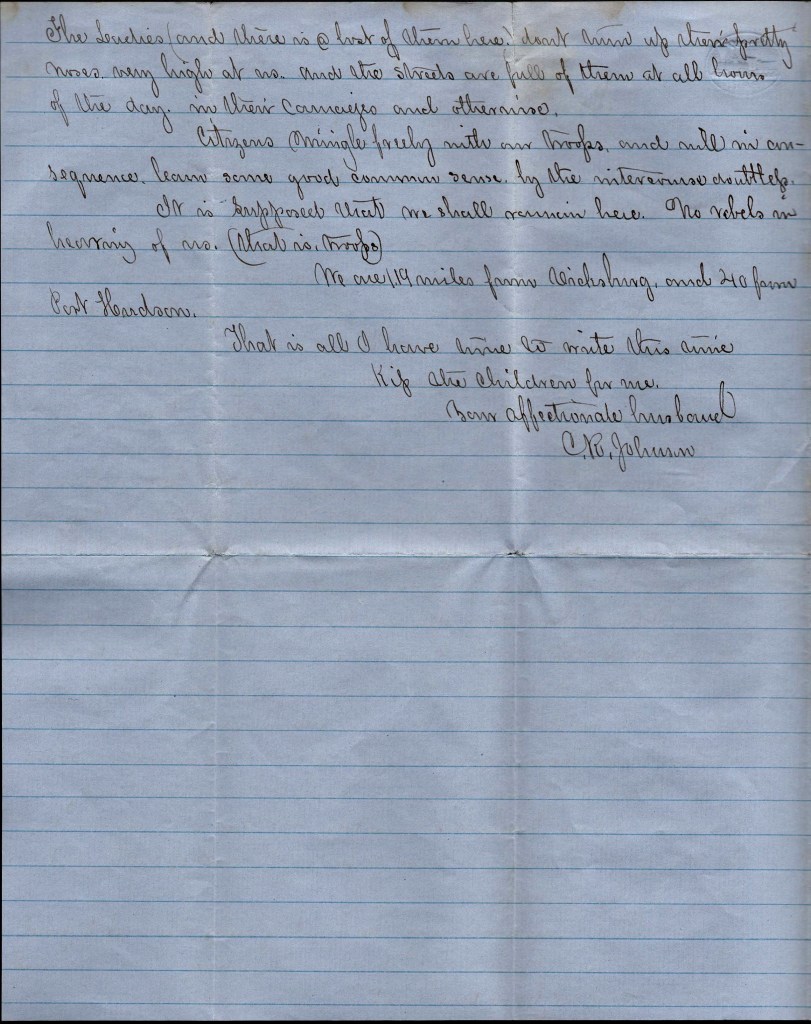
The Ladies (and there is a lot of them here) don’t turn up their pretty noses very high at us and the streets are full of them at all hours of the day, in their carriages and otherwise. Citizens mingle freely with our troops and will in consequence learn some good common sense by the intercourse doubtless. It is supposed that we shall remain here. No rebels in hearing of us (that is, troops). We are 119 miles from Vicksburg and 40 from Port Hudson.

That is all I have tome to write this time. Kiss the children for me. Your affectionate husband, — C. R. Johnson

1838: E. H. Fletcher to Jonah Spaulding

The early date of this letter makes it more difficult to confirm the identity of its author but my hunch is that E. H. Fletcher was the son of Col. Robert Fletcher (1786-1865) and Nancy Sprague (1788-1853) of Kennebec county, Maine. He seems to have been a young man, probably in his early 20s, looking for “facilities for making money” in the grip of the Financial Panic of 1837.

Fletcher wrote the letter to his friend, Dr. Jonah Spaulding (1778-1870) of Somerset county, Maine.

What’s most interesting about the letter are not only the author’s direct observations of the Mississippi river valley but his discovery that the Mississippi cotton plantation slaves were “kindly treated” and apparently were “happier and much better off than the poor people at the North.”

Transcription

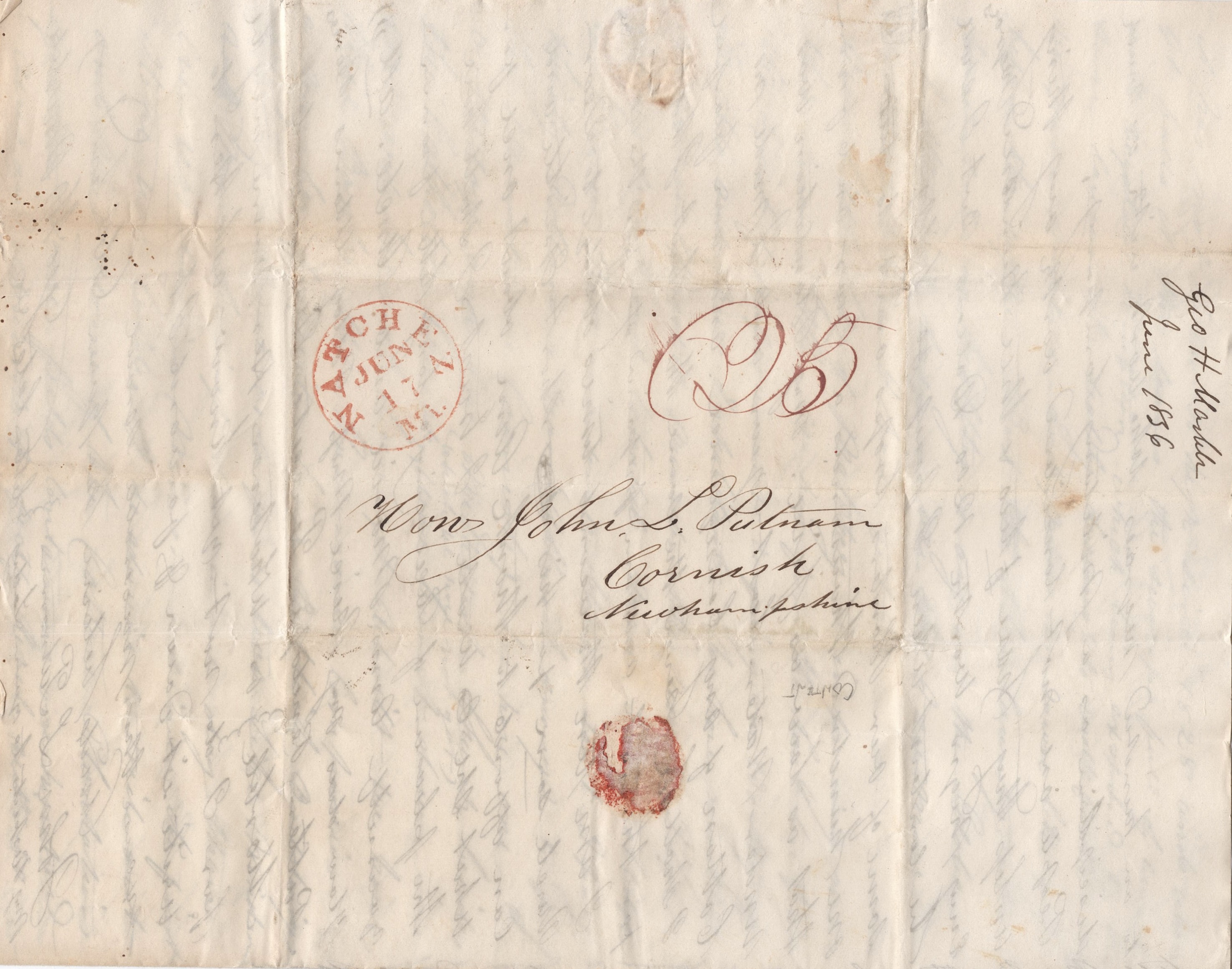
Addressed to Jonah Spaulding, Esqr., Bingham, Maine

Natchez, Mississippi
March 16, 1838

Worthy Friend,

In looking over my journal, I find I have not written a word to you since I left home. I now hasten to accomplish the delightful task, but not without experiencing the sharpest pangs of ingratitude for neglecting it so long. I hope you will condescend to excuse me this time, and I will be more punctual in future.

After leaving the beautiful valley of the Kennebec and turning my back upon all that was near and dear to me, I was resolved to see the far famed western country—also the southern, before I returned. I was anxious to see with my own eyes what I had heard so much about. I therefore bent my course towards Illinois by the way of New York, thence up the Hudson river, and so on across Lake Erie, and Michigan to Chicago. After staying a few days in Chicago, I traveled in various directions about the country, making all the enquiries of a greenhorn from Yankee Town, and getting what information I could in relation to business, lands, and healthiness of the country. I was very much pleased with all, and the facilities for making money I consider to be far superior to those of Maine, and I was surprised to see with how much less labor it requires to cultivate the soil there than in Maine. I can assure you, it gladdens the heart of a New Englander who has there emigrated for the purpose of bettering his fortune and being sure when he sows and plants of harvesting something.

They are deprived of many comforts, tis true, such as schools, good roads, but they are every day improving. What can a young man do in Maine without a capital, I ask? And I will answer—nothing. Then let him emigrate like his forefathers to a country where he can.

After spending a few weeks very agreeably traveling about the country, I left Chicago, traveled by stage to Peoria on the Illinois river, there took a steamboat for St. Louis where I safely arrived, and spent one week cruising in that vicinity, then took passage for no particular place down the Mississippi River. I arrived safely at Natchez, and like the location of the town, and having an agreeable situation offered me in a store, I accepted and here I still remain.

Natchez is a small city—population about 6,000. Is situated on the eastern bank of the river, 300 feet above the level of the river and 300 miles above New Orleans. It is surrounded by large cotton plantations which extend throughout the state. Country level and I need not say the soil is fertile. Here is a chance for our good Abolitionists at the North to look into the condition of the slaves. They are generally kindly treated and I candidly believe they are happier and much better off than the poor people at the North. As for the society, it is not so good as it might be. It is composed of all classes of people from every part of the world. Young men who come here are too apt to get into the general train of dissipation though I hope your friend is an exception to that general routine.

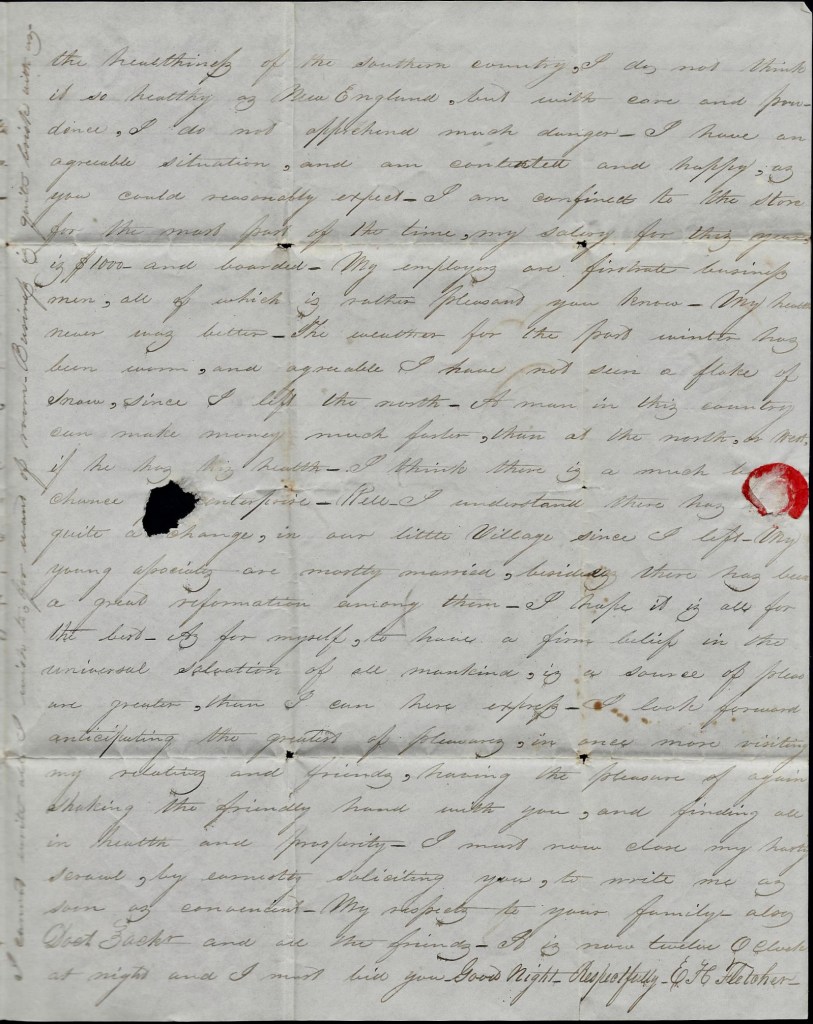
As to the healthiness of the southern country, I do not think it so healthy as New England but with care and prudence, I do not apprehend much danger.

I have an agreeable situation and am contented and happy as you could reasonably expect. I am confined to the store for the most part of the time. My salary for this year is $1,000 and boarded. My employers are first rate business men, all of which is rather pleasant you know. My health never was better. The weather for the past winter has been warm and agreeable. I have not seen a flake of snow since I left the North.

A man in this country can make money much faster than at the North, or West, if he has his health. I think there is a much better chance for enterprise.

Well, I understand there has been quite a change in our little village since I left. My young associates are mostly married. Besides, there has been a great reformation among them. I hope it is all for the best. As for myself to have a firm belief in the universal salvation of all mankind is a source of pleasure greater than I can here express. I look forward anticipating the greatest of pleasures in once more visiting my relations and friends, having the pleasure of again shaking the friendly hand with you, and finding all in health and prosperity. I must now close my hasty scrawl by earnestly soliciting you to write me as soon as convenient. My respects to your family. Also Doct. Zackr and all the friends. It is now 12 o’clock at night and I must bid you good night.

Respectfully, — E. H. Fletcher

I cannot write all I wish to for want of room. Business is quite brisk with us. I hope you enjoy a good sleigh ride occasionally. I think I would, give me a chance. The genuine depression in the money market is still continuing but must be easier soon.