This letter was written by Lafayette Cornelius Cooper, a member of the Troup (Georgia) Artillery (also known as Carlton’s Battery)—an elite light artillery unit that fought extensively with the Army of Northern Virginia. Born in 1842 to Temple Franklin Cooper (1805-1864) and Unity Love Patrick (1825-1896) of Franklin county, Georgia, Lafayette Cooper joined the Athens-based Troup Artillery at the outbreak of the war. When the unit formally departed for Savannah in April 1861, he was initially mustered in as a 2nd Corporal. He rose through the non-commissioned officer ranks to Sergeant, and was later commissioned as a Lieutenant. At the Battle of Gettysburg, Cooper’s unit served as part of Colonel Henry Coalter Cabell’s Artillery Battalion, attached to Major General Lafayette McLaws’ Division of Longstreet’s First Army Corps. During the intense fighting on July 2, Cabell’s battalion actively engaged Union forces while supporting the famous assaults through the Peach Orchard and Wheatfield,
A collection of his surviving letters home to his mother, Unity, is preserved at The University of Virginia and the files of the Kennesaw Mountain National Battlefield Park. See also 1863: “Even the birds are seldom heard with their cheerful voices”: A Confederate Reflects post-Chancellorsville, by Ryan Quint (2023).
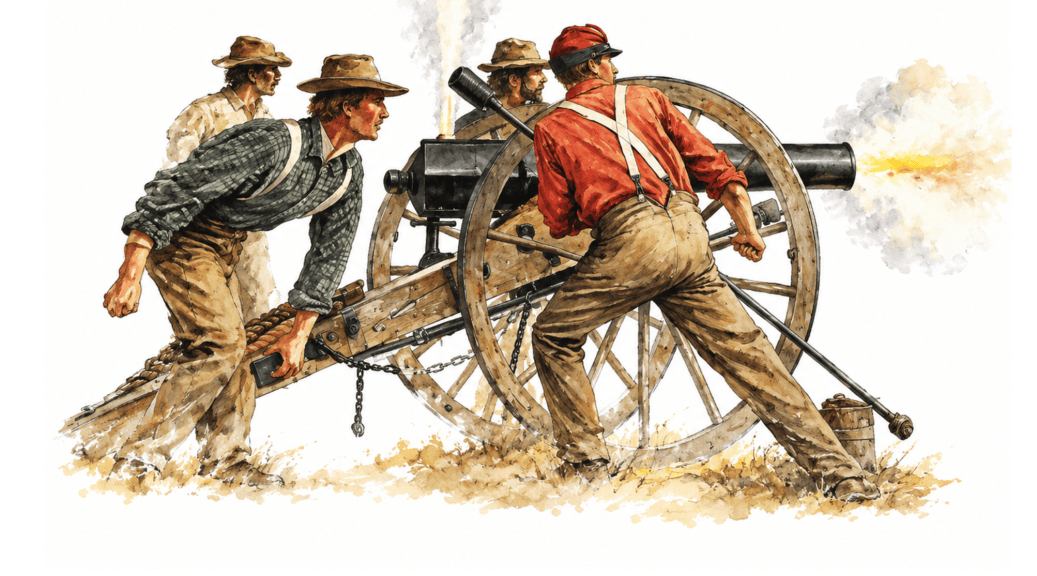
[Note: the AI-generated watercolor on the header of this post is based on Gallon’s painting of a Confederate Battery at Gettysburg.]
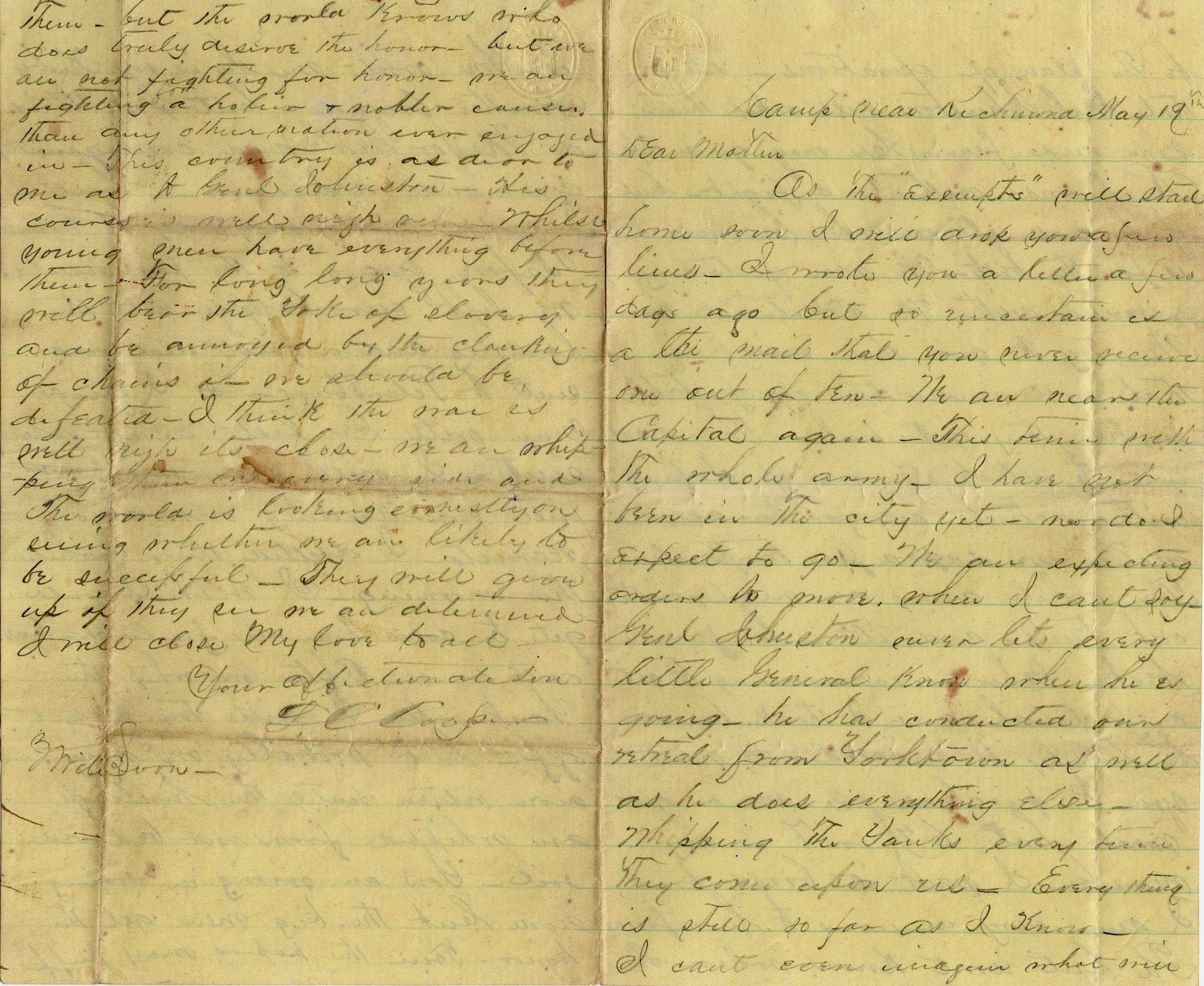
T R A N S C R I P T I O N
Camp near Richmond, [Virginia]
May 19th [1862]
Dear Mother,
As the “exempts” will start home soon, I will drop you a few lines. I wrote you a letter a few days ago but so uncertain is the mail that you never receive one out of ten.
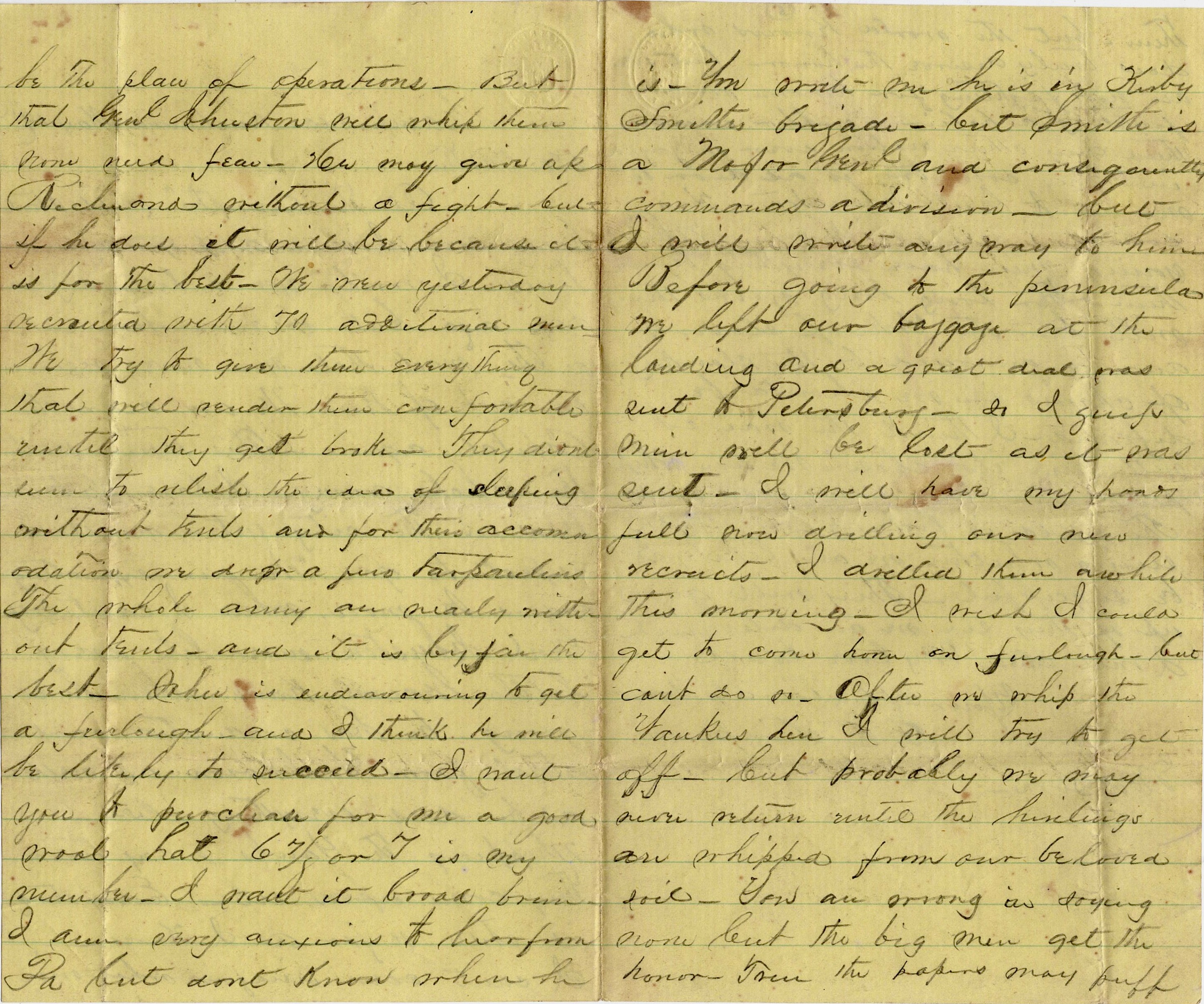
We are near the Capitol again—the time with the whole army. I have not been in the city yet, nor do I expect to go. We are expecting orders to move—when, I can’t say. Gen. Johnston never lets every little general know when he is going. He has conducted our retreat from Yorktown as well as he does everything else—whipping the Yanks every time they come upon us. Everything is still so far as I know. I can’t even imagine what will be the plan of operations. But that Gen. Johnston will whip them, none need fear. He may give up Richmond without a fight, but if he does, it will be because it is for the best.
We were yesterday recruited with 70 additional men. We try to give them everything that will render them comfortable until they get broke. They don’t seem to relish the idea of sleeping without tents and for their accommodation we drape a few tarpaulins. The whole army are nearly without tents and it is by far the best.
John is endeavoring to get a furlough and I think he will be likely to succeed. I want you to purchase for me a good wool hat; 6 7/8 or 7 is my number. I want it broad brim. I am very anxious to hear from Pa but don’t know where he is. You write me he is in Kirby Smith’s Brigade but Smith is a Major General and consequently commands a division. But I will write anyway to him. 1
Before going to the Peninsula, we left our baggage at the landing and a great deal was sent to Petersburg, so I guess mine will be lost as it was sent. I will have my hands full now drilling our new recruits. I drilled them awhile this morning. I wish I could get to come home on furlough but can’t do so. After we whip the Yankees here, I will try to get off but probably we may never return until the hirelings are whipped from our beloved soil.
You are wrong in saying none but the big men get the honor. True, the papers may puff them, but the world knows who does truly deserve the honor. But we are not fighting for honor. We are fighting a holier & nobler cause than any other nation ever engaged in. This country is as dear to me as to Gen. Johnston. His course is well night run, whilst young men have everything before them. For long, long years they will bear the yoke of slavery and be annoyed by the clanking of chains if we should be defeated.
I think the war is well nigh [at] its close. We are whipping them on every side and the world is looking earnestly on, seeing whether we are likely to be successful. They will give up if they see we are determined.
I will close. My love to all. Your affectionate son, — L. C. Cooper
Write soon.
1 Lafayette’s father, Temple F. Cooper was Captain of Co. K, 52nd Georgia Vol. Infantry.