The following letter was written by George Robinson (1829-1885) who enlisted at the age of 31 as a 1st Sergeant in Co. A, 123rd New York Infantry. He was promoted to a 2nd Lieutenant on 4 September 1862 and to a 1st Lieutenant on 18 July 1863. He mustered out of the regiment as Captain (by Brevet) of Company A on 13 March 1865.
George wrote the letter to his wife, Elizabeth (Wright) Robinson (1838-1912). The couple lived in Greenwich, Washington county, New York. After the war, George worked in the Coal industry.
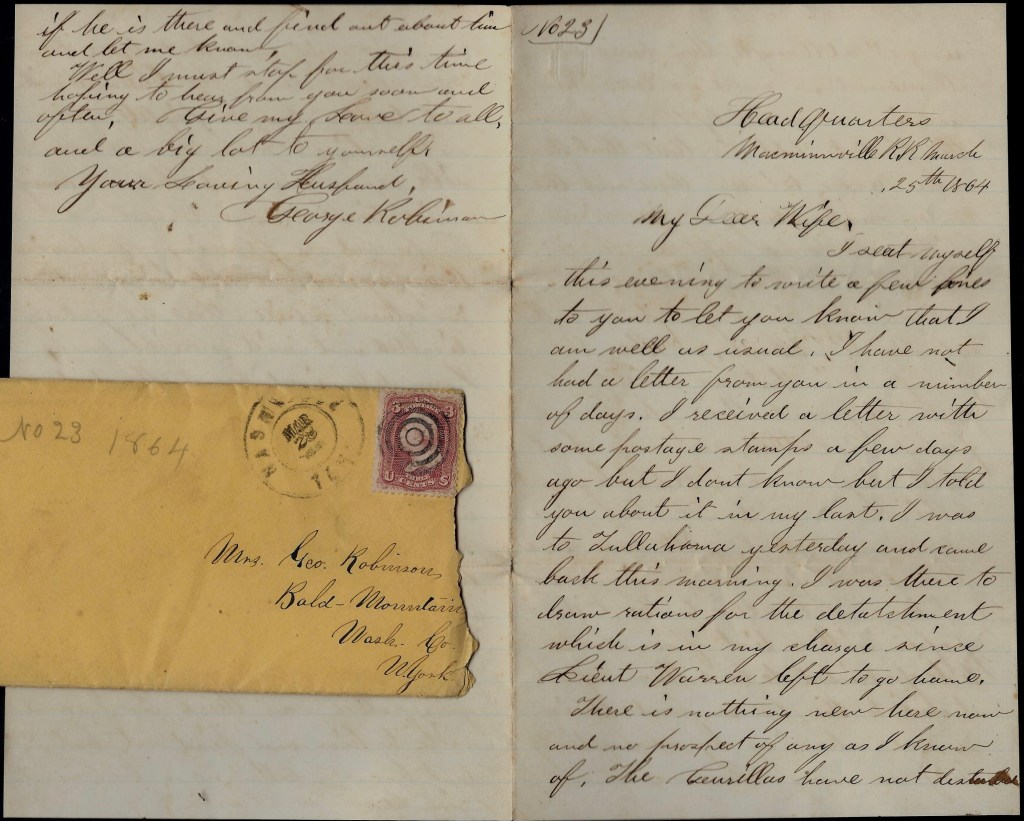
I seat myself this evening to write a few lines to you to let you know that I am well as usual. I have not had a letter from you in a number of days. I received a letter with some postage stamps a few days ago but I don’t know but I told you about it in my last. I was to Tullahoma yesterday and came back this morning. I was there to draw rations for the detachment which is in my charge since Lieut. Warren left to go home.
There is nothing new here now and no prospect of any as I know of. The guerrillas have not disturbed us yet although they have been all around us more or less. This morning when we left Tullahoma, the pickets told us that that there were Rebels between there and the water tank about four or five miles out, so we kept a sharp lookout for them but we did not see any, so we got down without any disturbance. The prospect is that we shall not go to the front this spring and perhaps not this summer but will stay on some RR to guard. I think we will not stay where we are now but will have some other road for our division.
I have sent a letter to the village paper with a list of our absentees to be published to have them report at once to the company or send their excuse, showing by what authority they are away. There are quite a number of men that have been absent since the Chancellorsville and Gettysburg fights—some with slight wounds and others with severe ones, and they are having a nice time at some convalescent camp and are playing off, claiming their pay regular, and doing nothing in return while others are probably disabled and will never be back. I am determined to get the dead beats back if there is any such thing. If you hear anything about any of them anywhere laying off, let me know and I will take measures to bring them back. I have heard that Caleb Tefft was in New York and I don’t know what he is doing there and I would like to know for certain if he is there. If I knew your father was there now I would write to him and find out but I don’t know whether he is there or not. I wish you would write to your Father if he is there and find out about him and let me know.
Well, I must stop for this time hoping to hear from you soon and often. Give my love to all, and a big lot to yourself. Your loving husband, —George Robinson
Like his dreams for Cuban statehood, William’s headstone lies shattered in Yazoo County, MS
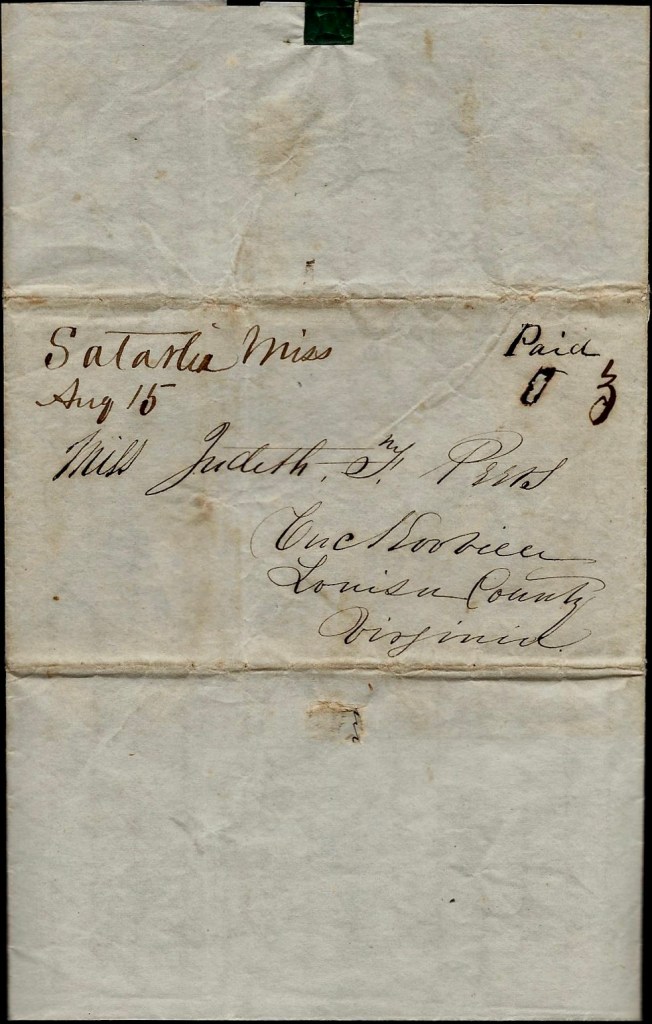
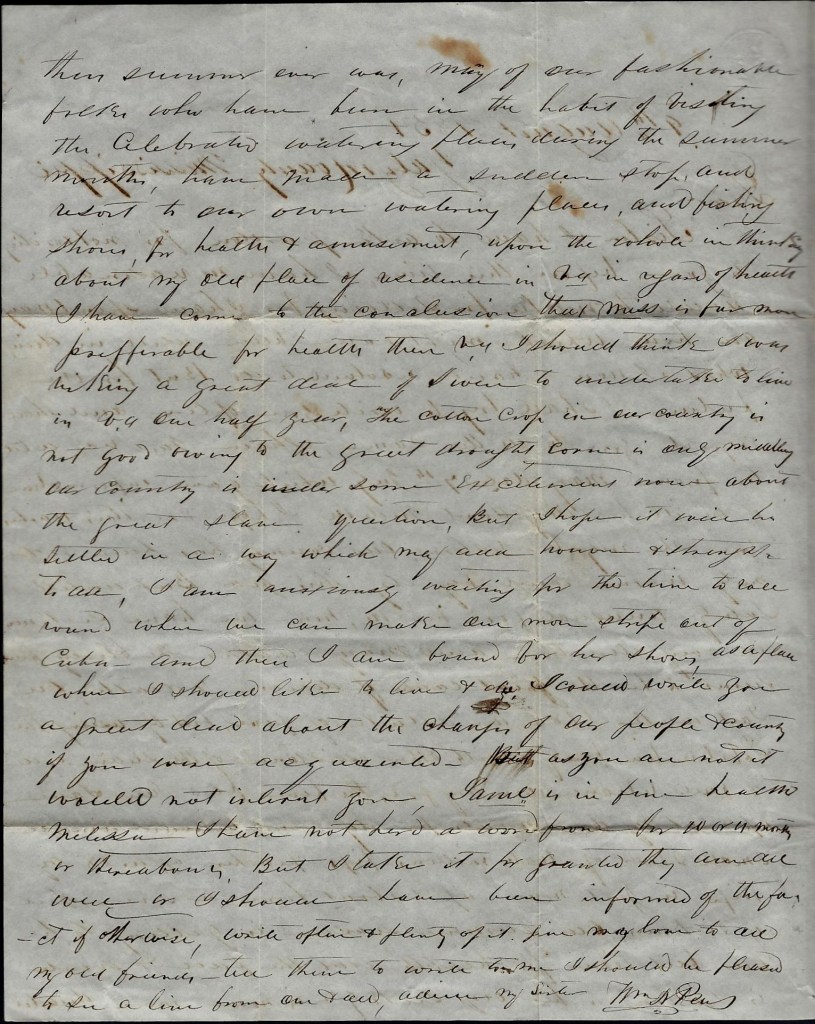
The following letter was written by William N. Alexander Peers, the son of Thomas Peers Jr. and Elly Parsons, both of whom were also from Louisa, Virginia. He married Sarah Ann Sturdivant about 1838 in Mechanicsburg, Yazoo County, Mississippi. They had four children born to their marriage. Sarah Ann died at the birth of their last child, William Henry Peers, born about 1815, Louisa, Louisa, Virginia. William died on 20 November 1855, Yazoo, Mississippi. William was a planter in Yazoo county and of course owned many slaves.
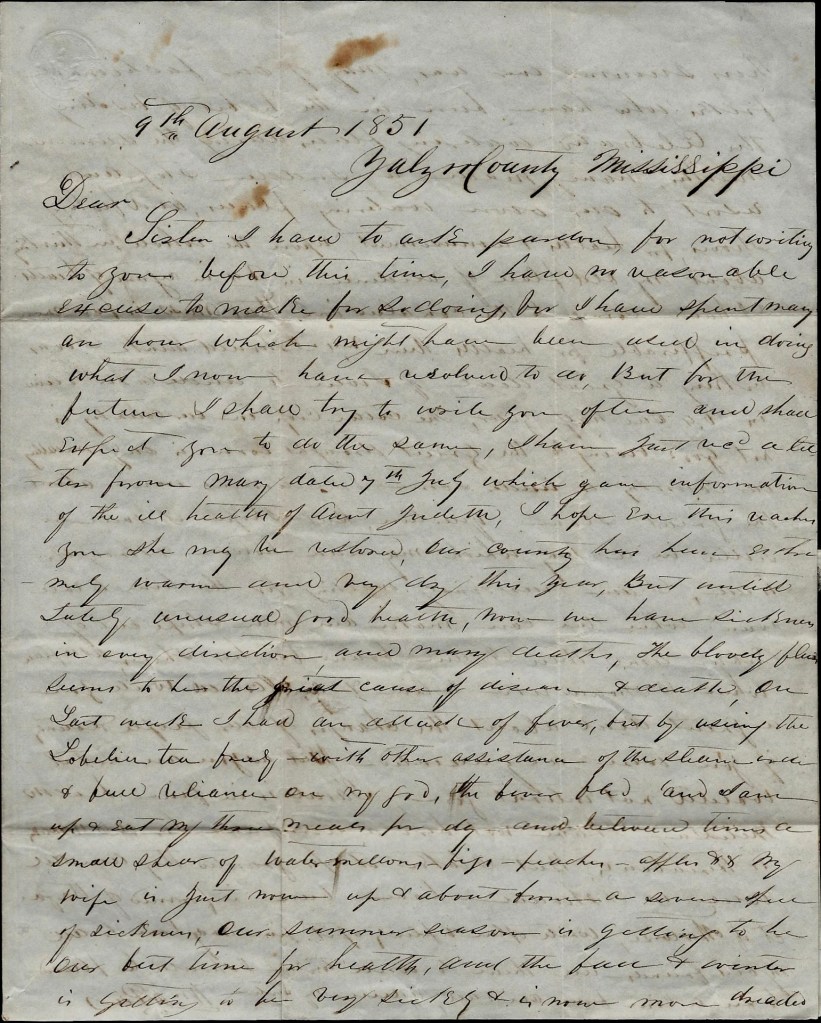
In his letter, datelined from Yazoo county in August 1851, William informs his sister that “our country is under some excitement now about the great slave question but I hope it will be settled in a way which may add honor and strength to all. I am anxiously waiting for the time to roll around when we can make one more stripe out of Cuba and then I am bound for her shores, as a place where I should like to live & die.” Of course William is referring to the agitation of the slavery question brought on by the admission of more states into the Union which resulted in the Compromise of 1850, temporarily suspending threats of secession. Plantation owners were particularly optimistic and enchanted with the idea of acquiring Cuba from Spain and making it a new state in the Union. Hopes for wrestling Cuba from Spains’s control by the Lopez Expedition were soon dashed when Lopez was taken prisoner and garroted not long after this letter was penned.
Transcription
Yazoo County, Mississippi 9th August 1851
Dear Sister,
I have to ask pardon for not writing to you before this time. I have no reasonable excuse to make for so doing for I have spent many an hour which might have been used in doing what I now have resolved to do. But for the future I shall try to write you often and shall expect you to do the same. I have just received a letter from Mary dated 7th July which gave information of the ill health of Aunt Judeth. I hope ere this reaches you, she may be restored.
Our county has been extremely warm and very dry this year but until lately, unusual good health. Now we have sickness in every direction and many deaths. The bloody flux seems to be the great cause of disease and death. On last week I had an attack of fever, but by using the Lobelier tea freely—with other assistance of the steam [ ] and full reliance on my God, the fever fled and I am up and eat my three meals per day, and between times a small share of watermelons, figs, peaches, apples, &c. &c. My wife is just now up & about from a severe spell of sickness. Our summer season is getting to be our best time for health, and the fall and winter is getting to be very sick & is now more dreaded than summer ever was.
Many of our fashionable folks who have been in the habit of visiting the celebrated watering places during the summer months have made a sudden stop, and resort to our own watering places, and fishing shores for health and amusement. Upon the whole, in thinking about my old place of residence in Virginia in regard of health, I have come to the conclusion that Mississippi is far more preferable for health than Virginia. I should think I was risking a great deal if I were to undertake to live in Virginia one half year. The cotton crop in our country is not good owing to the great drought. Corn in only middling.
Our country is under some excitement now about the great slave question but I hope it will be settled in a way which may add honor and strength to all. I am anxiously waiting for the time to roll around when we can make one more stripe out of Cuba and then I am bound for her shores, as a place where I should like to live & die. I could write you a great deal about the changes of our people & country if you were acquainted but as you are not, it would not interest you.
James is in fine health. Melissa I have not heard a word from for 3 or 4 months or thereabouts. But I take it for granted they are all well or I should have been informed of the fact if otherwise. Write often and plenty of it. My love to all my old friends. Tell them to write to me. I should be pleased to see a line from one and all. Adieu my sister, — Wm. N. Peers
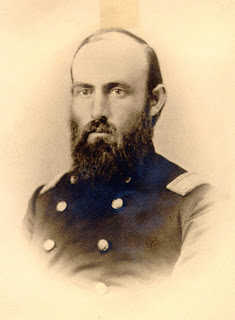
In 1868, Theodore Frelinghuysen Vaill (1832-1875) published the regimental history of the 2nd Connecticut Volunteer Heavy Artillery which was originally organized as the 19th Connecticut Volunteer Infantry. He served with the regiment as a private from 1862 to September 1863 when he was made a sergeant. He was promoted in March 1864 to 1st Lieutenant as Adjutant. He was mustered out of service on 18 August 1865 at Fort Ethan Allen in Washington D. C.
Theodore was the son of Rev. Herman Landon Vaill (1794-1870) and Flora Gold (1799-1883) of Litchfield, Connecticut. His siblings included Catharine Harriet Gold Vaill (1824-1898), Charles Benjamin Vaill (1826-1881), Elizabeth Sedgwick Vaill (1828-1909), Abbie Everest Vaill (1829-1897), George Lyman Vaill (1831-1833), Sarah Hopkins Vaill (1834-1862), Clarissa Champlin Vaill (b. 1836), Joseph Herman Vaill (1837-1915), Julia Maria Vaill (1839-1912), and Mary Woolsey Vaill (1842-1871).
Theodore was an 1858 graduate of Union College. He married Alice Mercy Dudley (1842-1920) after the war, published the afore-mentioned regimental history, and served as the editor of the Winsted Herald until his premature death in 1875 at the age of 43. He is buried in the Winsted Old Burying Ground in Winsted, Litchfield county, Connecticut.
Theodore was wounded in the fighting at Fort Fisher—a mere flesh wound in the left hip by a “cast iron ball from spherical case shot.”
“The map on the first page, please present with my regards to your sister [ ]. I have marked the position of our cap with a black dot.”
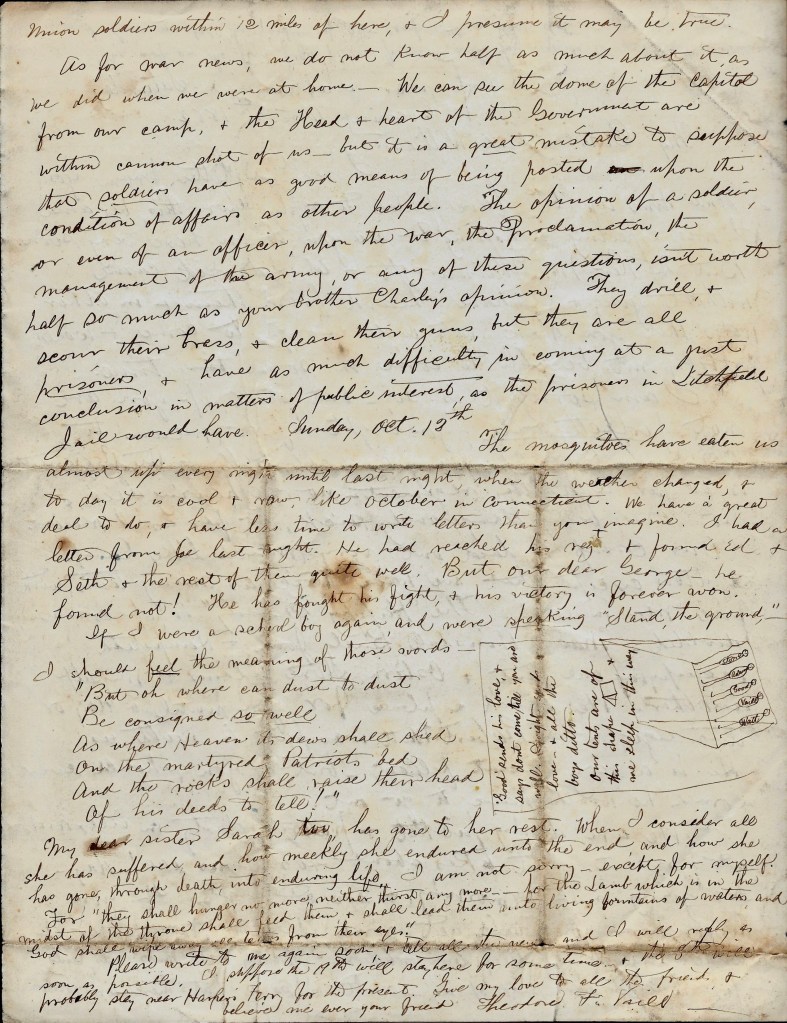
Transcription
Camp near Alexandria [Virginia] Saturday evening, October 11th 1862
My dear friend William,
I received a letter from you some time ago but have failed to reply before this because I was expecting & hoping to see you down here very soon. But the Rev. Mr. Wainwright & Ed Sedgwick came without you and I have heard from them & in other ways that you were not well enough to come and probably would not be well enough to come in some time. I am sorry it is so, but still, if you are not perfectly well you ought by no means to come. Our company are all well and the regiment is so far a healthy regiment—no one having died. No one being discharged sick so far as I know.
Our camp is laid out very much like Camp Dutton, except that we have twice as many tents, with five men in each. The “Happy Family” is, of course, divided—Mason, Hinsdale, Buel, Jones & Hempstead occupying one tent, & Osborn, Stone, Adams & myself another. We saved a place for you until a day or two ago, when Robert Watt was put in with us. He is a very decent fellow, but if you should ever come he would have to go out.
We are doing picket & patrol duty in Alexandria at present. It takes about 400 of us each day—200 going in the morning and 200 at night. If you were here you would get some idea of the number of soldiers engaged in putting down rebellion. Nothing but tents, tents, tents for miles on every side of us. It is said that there are 100,000 Union soldiers within 12 miles & I presume it may be true.
As for war news, we do not know half about it as we did when we were at home. We can see the dome of the capitol from our camp & the head & heart of the Government are within cannon shot of us. But it is a great mistake to suppose that soldiers have as good means of being posted upon the condition of affairs as other people. The opinion of a soldier or even of an officer, upon the war, the [Emancipation] Proclamation, the management of the army, or any of these questions, isn’t worth half so much as your brother Charley’s opinion. They drill & scour their brass & clean their guns, but they are all prisoners & have as much difficulty in coming at a just conclusion in matters of public interest as the prisoners in Litchfield Jail would have.
Sunday, Oct. 12th The mosquitoes have eaten us almost up every night until last night when the weather changed, & today it is cool and raw—like October in Connecticut. We have a great deal to do & have less time to write letters than you imagine. I had a letter from Joe last night. He had reached his regiment & found Ed & Seth & the rest of them quite well. But our dear George he found not! He has fought his fight and his victory is forever won. If I were a school boy again and were speaking “Stand the ground” I should feel the meaning of those words. But oh! where can dust to dust be consigned so well, as where Heaven its dews shall shed, on the martyred Patriots bed, and the rocks shall raise their head of his deeds to tell!”
My dear sister Sarah, too, has gone to her rest. When I consider all she has suffered and how meekly she endured unto the end, and how she has gone through death into enduring life. I’m not sorry—except for myself. For “they shall hunger no more, neither thirst any more—for the Lamb which is in the midst of the throne shall feed them and shall lead them unto living fountains of water and God shall wipe away tears from their eyes.”
Please write to me again soon & tell all recent news and I will reply, as soon as possible. I suppose the 19th will stay here for some time & probably stay near Harper’s Ferry for the present. Give my love to all the friends & believe me every your friend, — Theodore F. Vaill
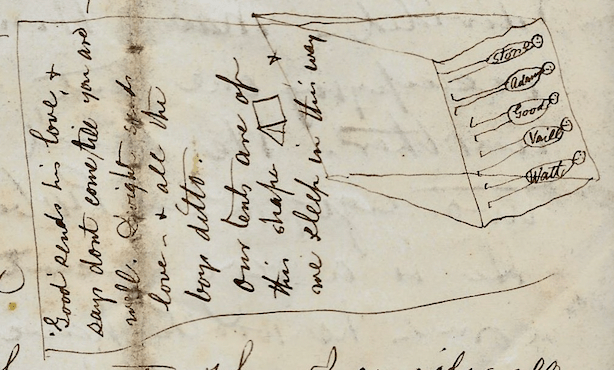
P.S. “Good” sends his love & says don’t come till you are well. Wright sends love & all the boys ditto Our tents are of this shape, & we sleep in this way.(Sketch follows)
The following letter was written by 24 year-old Alfred Norman Proctor (1822-1901), the son of Nicholson Broughton Proctor (1788-1866) and Lucy Bond (1788-1837) of Essex county, Massachusetts. He wrote the letter to his brother Albert Edgel Proctor (b. 1824).
Alfred was working in the US Naval Yard in Charleston under the direction of the yard’s blacksmith in the Spring of 1847 when he embarked on a journey to Mexico to meet up with the Massachusetts regiment at Matamoras only to arrive there and discover that they had left for Monterey. He decided to follow after them but became seriously ill and so returned to the States. He returned to New Orleans and eventually took a job as a Civil Engineer at the Navy Yard in that city.
This interesting letter was written while Alfred was enroute to Mexico. He describes the processions honoring returning veterans of the War with Mexico which was rapidly drawing to a close—including a description of the funeral procession transporting the bodies of Col. William McKee and Lt. Col. Henry Clay, Jr. from the army to the steamer to be transported home. Both were killed in the Battle of Buena Vista almost four months earlier. The detailed descriptions of the uniforms of Col. Doniphan’s Missourians is priceless.
Alfred’s service record during the Civil War can be found on Find A Grave at Col. Alfred Norman Proctor.
Transcription
New Orleans, [Louisiana] June 18, 1847
Dear Brother,
I suppose by this time that you have received my last and are anxiously looking for another. I left Pensacola on the 9th for a short pleasure trip, &c., and arrived here on the 11th in good health. I had a very hard ride for about 60 miles on the way—that is, from Pensacola to Mobile in the stage. The road was very rough indeed. I left Pensacola at half past 4 p.m. and arrived at Mobile at 11 on the next day, kinder tired out. I tried my best to get some sleep but could not. The way the coach jumped was a caution to Davy Crockett and it was a tight match to keep on my seat some of the time. The whole distance was through the woods.
But as to my visit here, I suppose you would like to know about it. I will not disguise it. I never did nor never will disguise except it be actually necessary. I think of visiting Mexico to see what the soil is made of and see how they look and so on. I expect to leave for the Brazos tomorrow or the day after. I don’t know how long I shall stop there, but probably but a few days. I wish you to write immediately on the receipt of this to Metamoras. I want you to direct. Don’t fill your letter up with humbug and soft soap, but write the news of the day about the Hancock, &c. It will do no good—only fill up the sheet. If I can get employment at that place for $80 or $90 per month, I shall stop. If not, go on. I shall keep you informed.
They are having great times here—processions, &c., &c. The day before I arrived here they had a great reception of the Mississippi Regiment. And the day after I arrived, there was a great procession in honor of the gallant Feud. I saw the coffins that contained the bodies of the Gallant Colonel’s [Henry] Clay [Jr.] & [William R.] McKee & three others. They were drawn on common carriages and were covered with beautiful velvet palls with silver fringe & characters. It was a mournful sight, I can assure you. Every face was downcast. The poor volunteers looked sorrowful enough. The remains were taken on board the boat and they—the living and the dead—left for their homes together. 1
I was on board of the Massachusetts steamer today. There are a number of sick on board of her too weak to be removed. They are from Vera Cruz. I would not go there for anything at the present time. i saw two that died last night & spoke with one that will die before night. I think they are all emaciated from diarrhea. I believe 5 or 6 have died since she arrived. They were laying on the deck with their clothes on with their faces covered with a jacket thrown over & the well men were running about. them as if they were alive. They laid as they died in different parts of the ship.
A Missouri Mounted Volunteer from Doniphan’s expedition
It is getting rather sickly here. 120 died last week but I thank God that I am well as yet & hope & pray that I may still be preserved. I saw among the wounded that arrived last week one poor Lieutenant of the Mississippi Regiment that lost his leg at Monterey; another, a Colonel of the same regiment, lost two of his fingers & was wounded in the hip. I could not help pitying them although they were in excellent good spirits. Col. [Alexander W.] Doniphan’s Regiment arrived yesterday. They are a fine looking set of men—strong and healthy. They have hard looking clothes. Some of them are made of buff leather entirely and without a stitch of thread or a button on them but made together by a twinning, so called, which are pieces of sinew. It is tied together so to look like a fringe at every seam. Others had on velvet pants lined on the inside with buff so that they would not wear against the saddle. Their hair hangs down almost to their waists. I saw a great many trophies which were taken from the Mexicans—cannons, blunderbusses—saddles—blankets, &c. &c. &c.
I met last Saturday with Charles Blodget from Boston. We met in the street—he knew me; I did not him. He has been through the Lakes & come down the [Mississippi] River last Friday. Both arrived on the same day. His health is much better. He thinks of stopping here somewhere in the South. He is fatted up considerably. He sends his respects. I have had a very bad cold for the last two weeks on my lungs but hope to get well soon. I have no more news at present. Your affectionate brother — Alfred N. Proctor
I left my trunk & $77.50 in care of a responsible man—Mr. James Wright at the Navy Yard. I have no thought of joining the regiment but go to fulfill my promises to them to meet them there. It makes me feel mad to think that I am so tied up by bloody relatives that I cannot do as I think best.
1 The Daily Picayune of Sunday, 13 June 1847 reported that “the remains of Col. McKee, Lieut. Col. Clay, Adjutant Vaughan, Capt. Willis and Private Trotter, of the 2d Kentucky Regiment, who fell at Buena Vista, were yesterday escorted by the Orleans Battalion of Artillery, the staff of the Legion, the commanders of the military corps and a large concourse of citizens, from the Arsenal to the steamer Ringgold. The funeral cortege moved from the Place d’Armes at 4 o’clock, and passed through Chartres Canal and St. Charles streets to Poydras street down which it marched to the Levee. All the vessels in the river carried their flags at half mast during the day, and minute guns were fired whilst the procession was in motion…The bodies were carried upon cannon carriages covered with black velvet and appropriate emblems of mourning…As the solemn pageant passed through our streets, many a sigh was heaved for the brave spirits whose mouldering dust is all that is left of them on earth, except the memories of their virtues and their gallant deeds—many a tear was shed for the hearths made desolate by the chances of war. The bodies were deposited in the Ringgold at 6 o’clock and at 7 she dropped down to the Place d’Arms where a salute was fired…”
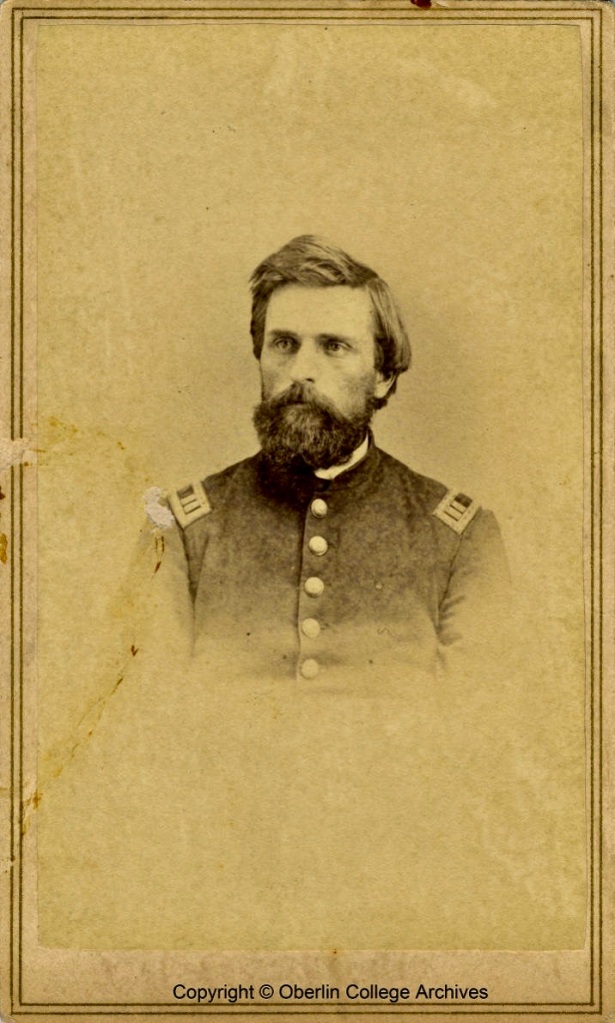
The following two letters were written by Arthur (“Art”) Tappan Wilcox (1834-1902), the son of Capt. Franklin Wilcox (1797-1867) and Julia Ann Wilcox (1802-1859) of Lorain county, Ohio. He wrote the letter to his older brother, Lucien (“Lute”) Henry Wilcox (1830-1880).
Arthur Tappan Wilcox
Art was living in Sandusky, Ohio, at the time of the 1860 US Census. In 1861 he graduated from the law school at the University of Michigan and married Julia Morehouse soon after. That same year he enlisted into military service and was elected 2nd Lieutenant of the 7th Ohio Volunteer Infantry (OVI), Co. E. He was promoted to Captain of Co. D for bravery and meritorious service. He participated in these battles: Cross Lanes, Virginia, where he was captured by the enemy and confined to various prisons; Dumfries, Virginia; Chancellorsville, Virginia; Gettysburg, Pennsylvania; Lookout Mountain and Missionary Ridge, Tennessee; and several battles in the state of Georgia. He mustered out of the 7th OVI on July 6, 1864. Soon, he reenlisted and became Colonel of the 177th OVI. On June 24, 1865, Colonel Wilcox was mustered out with regiment at Greensboro, North Carolina.
After the war was over, Wilcox resumed his work as a civil engineer. He worked on the construction of railroads, including the Union Pacific and the Canada Southern. A publication of the University of Michigan Alumni Association reports that Arthur Tappan Wilcox contracted yellow fever while working on bridges in Central America. He died of the disease at Port Limon, Costa Rica, on October 24, 1902. A biographical sketch of Arthur T. Wilcox which appeared in the book Itinerary of the Seventh Ohio Volunteer Infantry, 1861-1864 closed with this statement about Colonel Wilcox: “He was a zealous officer and a brave man.” [Source: Sandusky History]
[Note: These letters are from the private collection of Brent Reidenbach and were transcribed and published on Spared & Shared by express consent.]
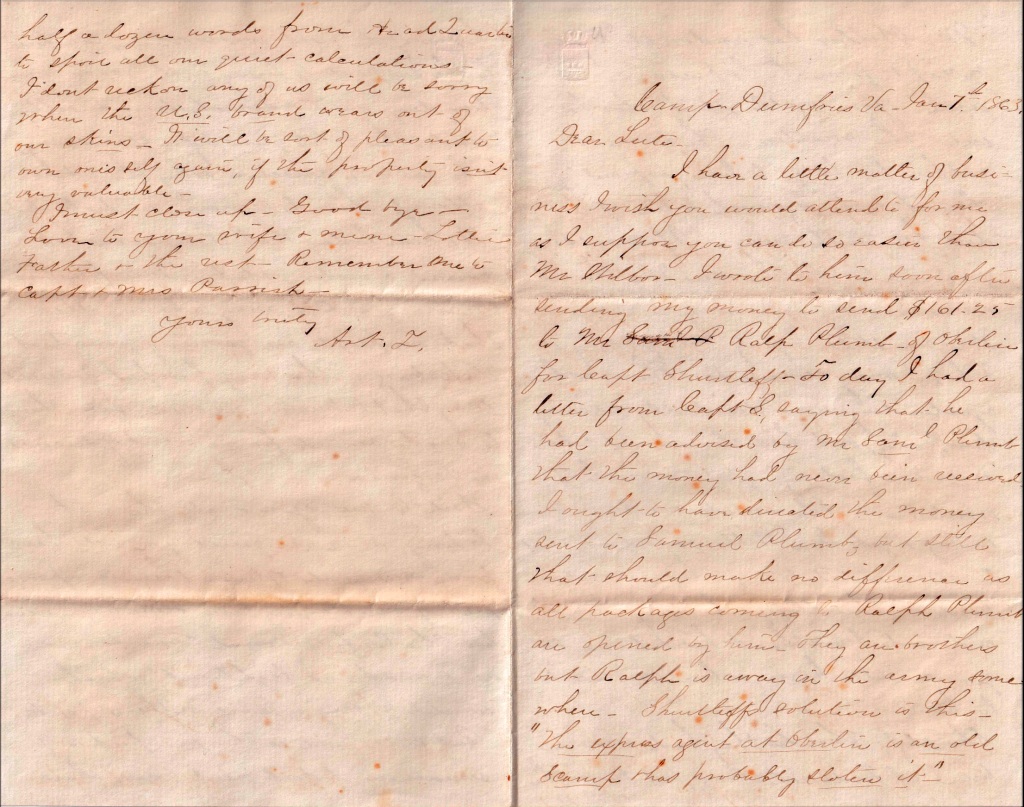
Letter 1
Camp Dumfries, Virginia January 7th 1863
Dear Lute,
I have a little matter of business I wish you would attend to for me as I suppose you can do so easier than Mr. Wilbor. I wrote to him soon after sending my money to send $161.25 to Mr. Ralph Plumb of Oberlin for Capt. Shurtleff. Today I had a letter from Capt. Shurtleff saying that he had been advised by Mr. Samuel Plumb that the money had never been received. I ought to have directed the money sent to Samuel Plumb but still that should make no difference as all packages coming to Ralph Plumb are opened by him. They are brothers but Ralph is away in the army somewhere. Shurtleff’s solution is this—“The express agent at Oberlin is an old scamp & has probably stolen it.”
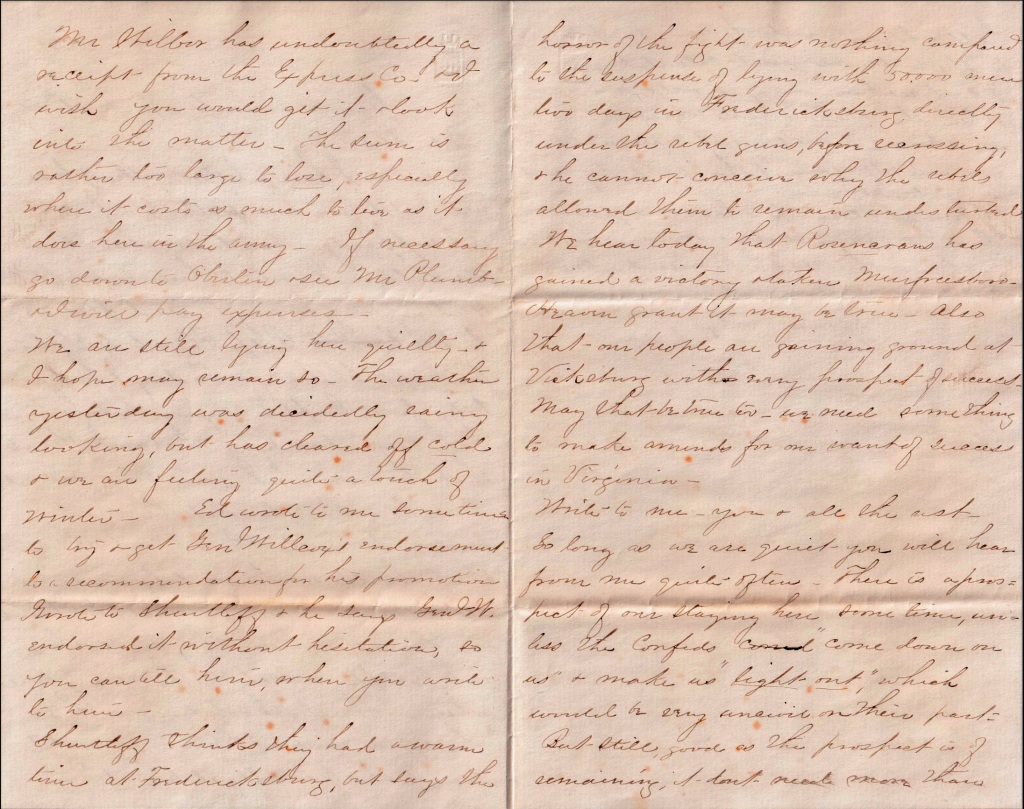
Mr. Wilbor has undoubtedly a receipt from the Express Co. & I wish you would get it and look into the matter. The sum is rather too large to lose—especially when it costs so much to live as it does here in the army. If necessary, go down to Oberlin & see Mr. Plumb and I will pay expenses.
We are still lying here quietly & I hope may remain so. The weather yesterday was decidedly rainy looking but has cleared off cold and we are feeling quite a touch of winter. Ed wrote to me sometime to try & get Gen. [Orlando B.] Willcox’s endorsement to a recommendation for his promotion. I wrote to Shurtleff & he says Gen. Willcox endorsed it without hesitation so you can tell him when you write to him.
Capt. Giles Waldo Shurtleff, Co. C, 7th OVI (OberlinCollege Archives)
Shurtleff thinks they had a warm time at Fredericksburg but says the horror of the fight was nothing compared to the suspense of lying with 50,000 men two days in Fredericksburg directly under the rebel guns, before recrossing, & he cannot conceive why the rebels allowed them to remain undisturbed.
We hear today that Rosecrans has gained a victory & taken Murfreesboro. Heaven grant it may be true. Also that our people are gaining ground at Vicksburg with every prospect of success. May that be true too. We need something to make amends for our want of success in Virginia.
Write to me, you and all the rest. So long as we are quiet you will hear from me quite often. There is a prospect of our staying here some time, unless the Confeds “come down on us” and make us “light out” which would be very uncivil on their part. But still, good as the prospect is of remaining, it don’t need more than half a dozen words from Headquarters to spoil all our great calculations.
I don’t reckon any of us will be sorry when the US brand wears out of our skins. It will be sort of pleasant to own one’s self again, if the property isn’t very valuable.
I must close up. Goodbye. Love to your wife and mine, Lottie and Father and the rest. Remember me to Capt. and Mrs. Parrish. Yours truly, — Art. T.
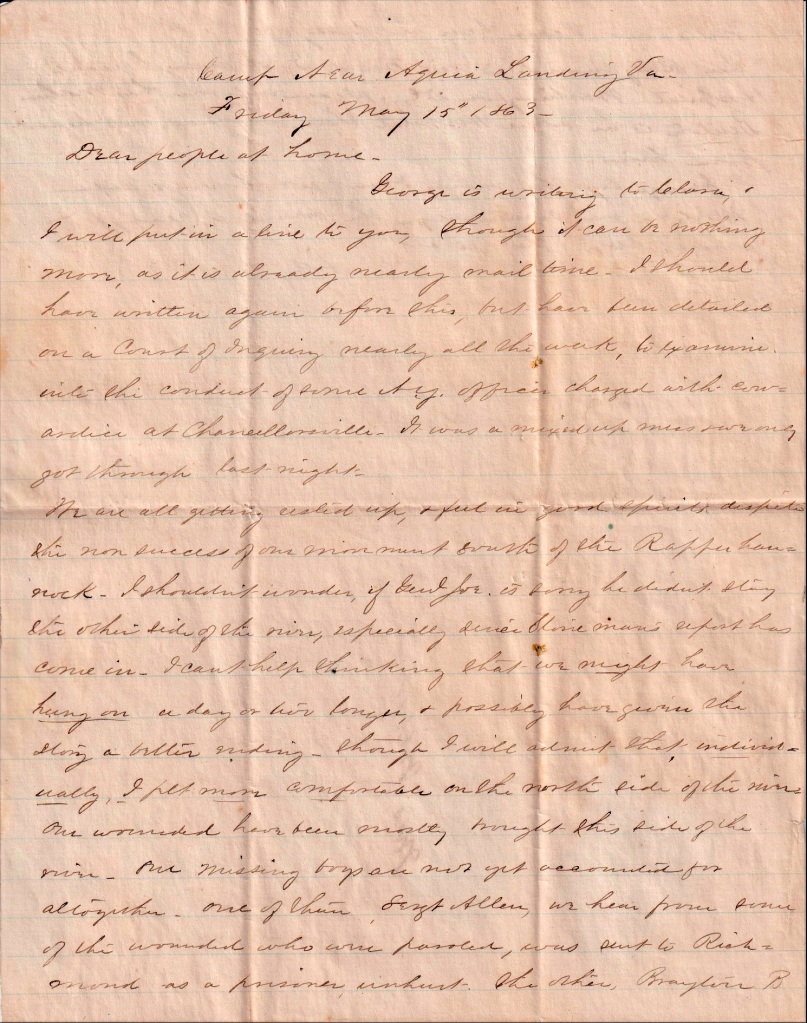
Letter 2
Camp near Aquia Landing, Virginia Friday, May 15th 1863
Dear people at home,
George is writing to Clara, & I will put in a line to you though It can be nothing more, as it is already nearly meal time. I should have written again before this, but have been detailed on a Court of Inquiry nearly all the week, to examine into the conduct of a New York Officer charged with cowardice at Chancellorsville. It was a mixed up mess & we only got through last night.
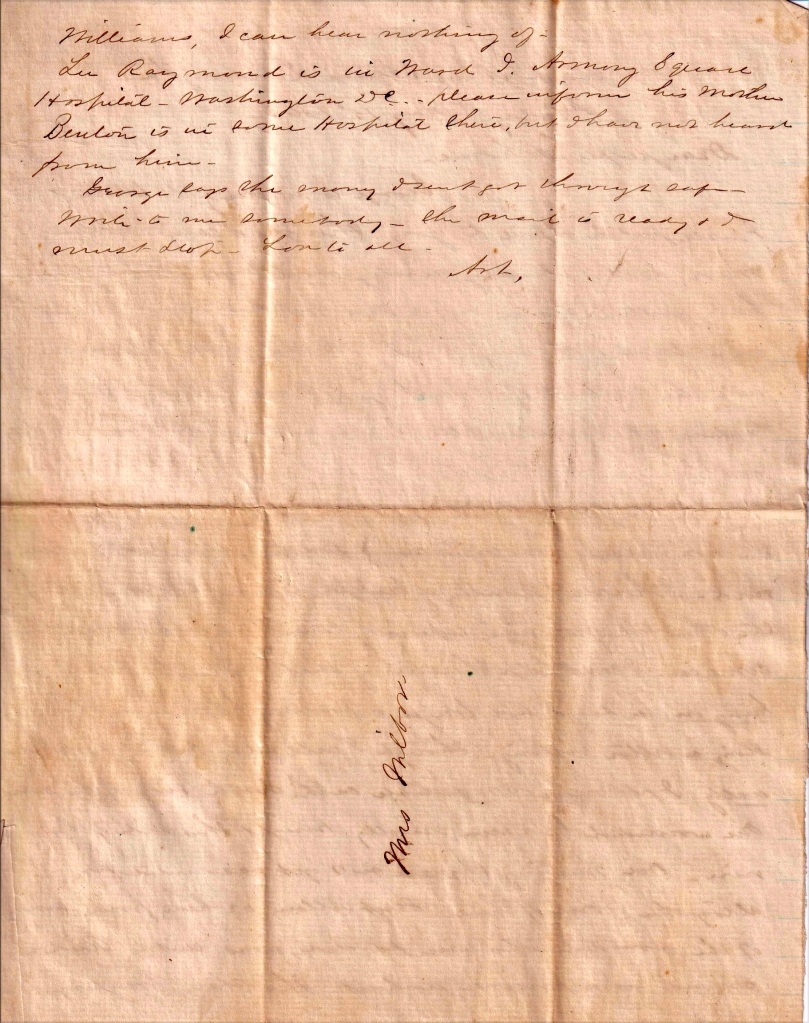
We are all getting rested up & fel in good spirits, despite the non success of our movement south of the Rappahannock. I shouldn’t wonder if Gen. Joe [Hooker] is sorry he didn’t stay the other side of the river—especially since Stoneman’s report has come in. I can’t help thinking that we might have hung on a day or two longer & possibly given the story a better ending, though I will admit that individually, I felt more comfortable on the north side of the river. Our wounded have been mostly brought this side of the river. Our missing boys are not yet accounted for altogether. One of them, Sergt. Allen, we hear from some of the wounded who were paroled, was sent to Richmond as a prisoner, unhurt. The other, Brayton B. Williams, 1 I can hear nothing of.
Lee Raymond is in Ward I, Armory Square Hospital, Washington D. C. Please inform his mother. [Henry T.] Benton 2 is in some hospital there but I have not heard from him.
George says the money I sent got through safe. Write to me somebody. The mail is ready & I must stop. Love to all, — Art
1 Brayton B. Williams was taken prisoner at Chancellorsville on 3 May 1863 and returned to duty in mid November.
2 Henry T. Benton was wounded in the left knee at Chancellorsville on 3 May 1863 and discharged for disability on 7 March 1864.
The following two letters were written by Edgar (“Ned”) Norvell Wilcox, a native of Berkshire, Massachusetts, born in 1837. He was studying civil engineer at the University of Michigan when he enlisted as a private in the 7th OH Infantry at age 23 on June 19, 1861. He was discharged in December of 1861 and then joined the 18th US Regular Infantry on January 14, 1862. He was assigned as a private in Co. B, 3rd Battalion. In May 1862 he was promoted to sergeant of Co. H and was commissioned 2nd Lieutenant on June 11, 1863 (retroactive to February 19th). Wilcox was promoted to 1st Lieutenant on September 20, 1863. He was breveted Captain in September 1864 for Murfreesboro, Atlanta, and Jonesboro and after the war was officially promoted to Captain on January 22, 1867. He mustered out January 1, 1871 and lived in Oberlin, OH working in railroad construction.
Ned’s first letter is particularly interesting as it summarizes the casualties of the 1st and 2nd Battalions of the 18th USA Infantry at the Battle of Stones River. The 1st Battalion, Major Caldwell, went into action with 16 officers and 273 men, and on the 31st of December sustained a loss of one officer (Captain Kneass) killed; six officers (Captains Douglass, Wood and Hull, and Lieutenants McConnell, Carpenter and Adair) wounded. Twenty-seven enlisted men were killed and 109 wounded. In his official report Major Caldwell says: “All exhibited the same coolness and unflinching devotion to their country and flag that they had shown on the battle-field of Perryville, Ky.” The 2d Battalion, commanded by Major Townsend, went into action with 16 officers and 298 men and sustained a loss of one officer (Lieutenant Hitchcock) killed; five officers (Captains Dennison, Thompson and Haymond, and Lieutenants Ogden and Simons) wounded; 30 enlisted men killed, 98 wounded, 3 captured, 2 missing; aggregate loss, 139. In his official report of the battle, General Rousseau says: “The 18th Infantry were new troops to me, but I am now proud to say we know each other. If I could I would promote every officer and several non-commissioned officers and privates of the brigade of regulars for gallantry and good service in this terrific battle. The brigade was admirably and gallantly handled by Lieut.-Col. Shepherd.” [Source: US Army Center of Military History]
Ned refers to his brother, Arthur (“Art”) Tappan Wilcox (1834-1902) in both letters. Art was serving as 1st Lieutenant of Co. D, 7th Ohio Infantry at the time these letters were penned. Ned wrote the letters to his brother Lucien (“Lute”) Henry Wilcox (1830-1880) and to Charlotte (“Lottie”) Esther Wilcox (1823-1870).
[Note: These letters are from the private collection of Brent Reidenbach and were transcribed and published on Spared & Shared by express consent.]
Letter 1
Headquarters 18th Infantry USA Columbus, Ohio January 29th 1863
Dear Lute,
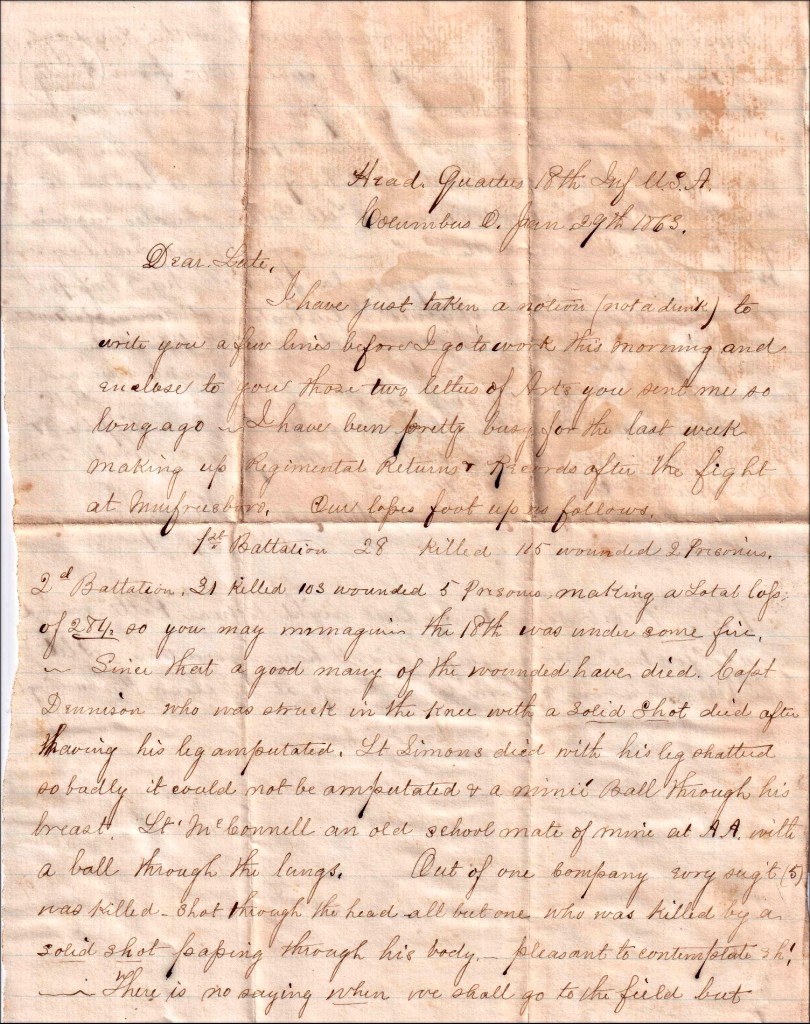
I have just taken a notion (not a drink) to write you a few lines before I go to work this morning and enclose to you those two letters of [brother] Art’s you sent me so long ago. I have been pretty busy for the last week making up Regimental Returns & Records after the fight at Murfreesboro. Our losses foot up as follows.
2nd Battalion, 31 killed, 103 wounded, 5 prisoners, making a total loss of 284 so you may imagine the 18th was under some fire. Since that a good many of the wounded have died. Capt. Dennison [of Co. B] who was struck in the knee with a solid shot died after having his leg amputated. Lt. Simons died with his leg shattered so badly it could not be amputated & a minié ball through his breast. Lt. McConnell—an old school mate of mine at A. A.—with a ball through his lungs. Out of one company, every sergeant (5) was killed, shot through the head, all but one, who was killed by a solid shot passing through his body—pleasant to contemplate sh!
There is no saying when we shall go to the field but most of the companies will probably march within ten days. I was very much surprised to receive a letter from Aunty Shattuc of Ann Arbor whom you probably remember. She enquired after you & wanted to know where you were, &c. and I think the best answer will be for you to enclose to her your “keards”—won’t you? Tel Lottie she also enquires after her “and her dear little ones.”
I spent last Sunday evening with Cousin Ria and had a good laugh with her & Miss Post over some old sketches of yours—“Illustrations of Reveries of a Bachelor.” I did not know you were so much of an artist before, Lute. Ria says you must be “mad” at her as you haven’t answered her last letter. I tell her I guess not—your only ma-rried. I believe I’ve nothing more to offer. Give my love to sister Zilpha & remember me to Mrs. Parish and the Captain. Write to me when you get time, &c. &c. &c. — Yours, — Wilcox, Jr.
P. S. Went down town last night to hear “Patti”—reserved seats “for two”—Oh no! guess I didn’t have a good time. I let the jibs run down & “come to” in camp at 2 o’clock this morning. 1
1 Miss Carlotti Patti gave a concert at Brainard’s Hall in Columbus. She was accompanied by the great pianist Gottscaalk.
Letter 2
Camp of the 18th Infantry USA near Cowan Station Wednesday, July 14th 1863
Dear Sister Lottie,
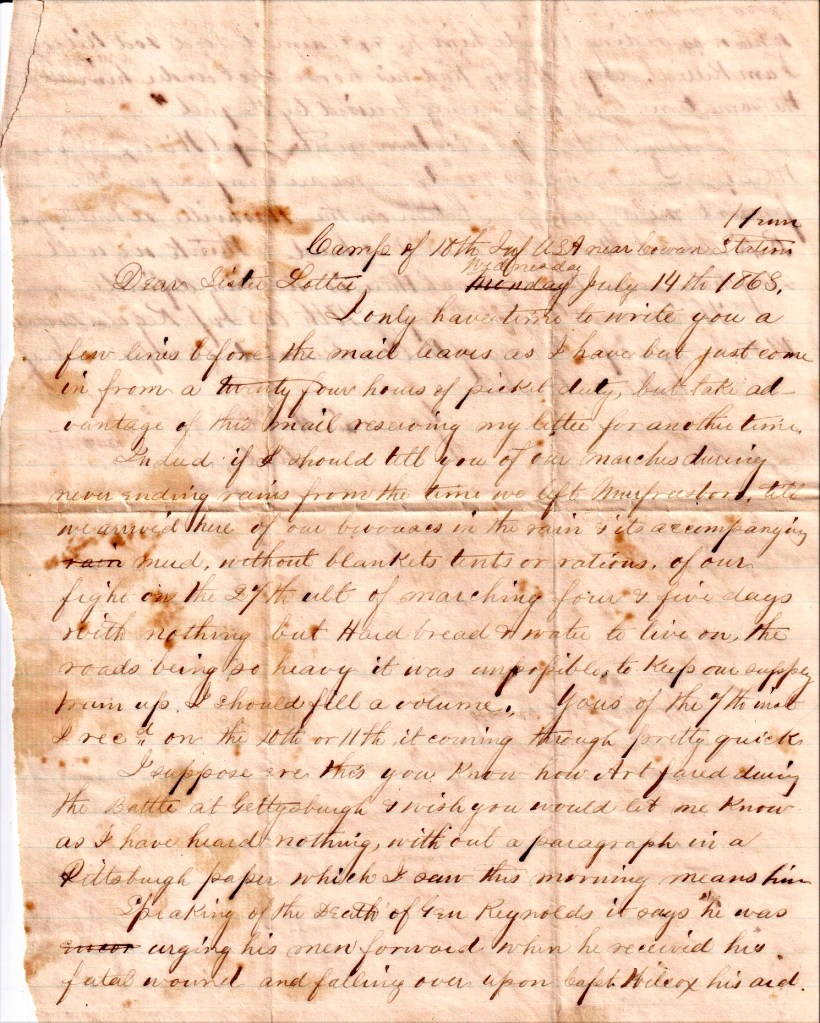
I only have time to write you a few lines before the mail leaves as i have but just come in from a twenty-four hours of picket duty, but take advantage of this mail reserving my letter for another time. Indeed, if I should tell you of our marches during never ending rains from the time we left Murfreesboro till we arrived here, of our bivouac’s in the rain, and its accompanying mud, without blankets, tents, or rations, of our fight on the 27th ult., of marching four and five days with nothing but hard bread and water to live on, the roads being sp heavy it was impossible to keep our supply train up, I should fill a volume.
Yours of the 7th inst. I received on the 10th or 11th, it coming through pretty quick. I suppose ere this, you know how Art [Arthur T. Wilcox] fared during the Battle of Gettysburg & wish you would let me know as I have heard nothing without a paragraph in a Pittsburgh paper which I saw this morning. Speaking of the death of Gen. Reynolds, it says “he was urging his men forward when he received his fatal wound and falling over upon Capt. Wilcox—his aide—who was riding beside him, he exclaimed, ‘Good God, Wilcox, I am killed.’ Capt. Wilcox had his horse shot under him about the same time and was severely bruised by the fall.” Was this Art or is there another Capt. Wilcox down there? 1,2
I am well and hearty. We are camped for the present near Cowan Station on the Nashville & Chattanooga Railroad about 4 miles from Decherd & think we will stay here some time though there is nothing definite.
Write and direct simply 18th US Infantry Regular Brigade, 14th Army Corps, Army of the Cumberland (to be forwarded). Love to all.
Yours in haste, — Ned
1 There are various accounts of the death of Gen. Reynolds on the first day of Gettysburg. One account claims that it was “about ten o’clock a.m. that Gen. Reynolds was shot while cheering on his men. He was on the left wing of his forces, and the ground where he fell lies somewhat to the left of the convent [Lutheran Theological Seminary], near the boundary of the town. The ball (which was from a Minie rifle) struck him in the back part of the neck and passed into the front part of the brain. He fell from his horse, considerably bruising his face. His death was almost instantaneous. He did not speak after being shot. The body was immediately conveyed to the rear, and given in charge of Sergeant Clevenger, who will convey it to the residence of the General’s mother, which is in Lancaster county, Pennsylvania, where he was born.”
2 It was Capt. William H. Willcox (1832-1929) who served as the aide-de-camp on the staff of 1st Corps Commander Major. General John F. Reynolds. A native of England whose family emigrated to the United States in his childhood, Willcox became an architect and surveyor and began his career in Brooklyn and New York. In December 1861 he joined the 95th New York Infantry as a topographical engineer, but must have demonstrated considerable talent, as he was detached to Brig. Abner Doubleday’s staff in July 1862.
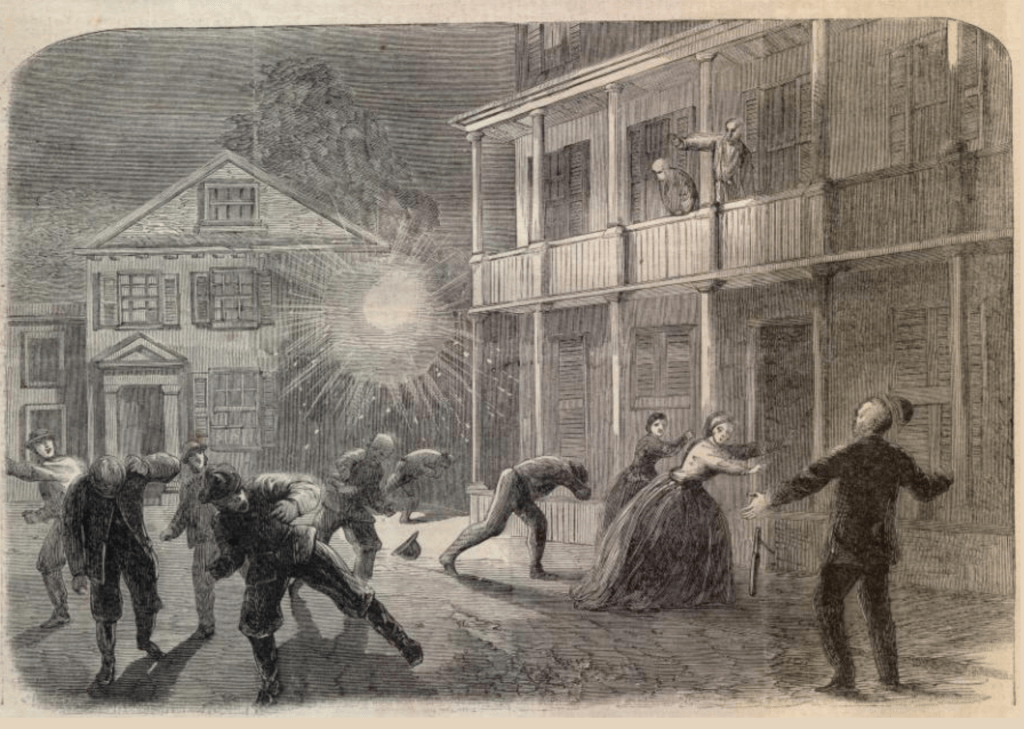
After several unsuccessful attempts to take Charleston by water, the Union launched a different tactic—shelling Charleston civilians from James and Morris Islands. Gillmore set twenty-two thousand men to work erecting gun batteries in the island marshes facing the Charleston peninsula and Fort Sumter. The batteries were five miles from the city, too distant for conventional ordnance to reach, so residents were at first unconcerned. However, recent weapon developments and rifling technology actually put the city in range, and on the night of August 22, 1863, the “Swamp Angel” gun opened fire on Charleston.
The first shell hit Hayne Street near the Market, narrowly missing the Charleston Hotel. A British visitor recalled, “At first I thought a meteor had fallen, but another awful rush and whir right over the hotel and another explosion beyond, settled any doubts that the city was being shelled.” Beauregard admonished Gillmore: “It would appear sir, that despairing of reducing our works, you now resort to the novel measure of turning your guns against old men, the women and children, and the hospitals of a sleeping city, an act of inexcusable barbarity.” Church steeples became targets for Union artillery, so many closed during the siege for the safety of their parishioners. Newspapers reported that many residents had made a “Grand Skedaddle,” leaving as quickly as they could pack their belongings.
Those who stayed became used to the daily explosions. Fitz Ross, a visiting journalist, wrote, “Nine out of ten shells fall harmless—the hope of the Yankees to set fire to the city or batter it down have hitherto proved disappointing.” The shelling continued with varying degrees of intensity for 587 consecutive days. In January 1864 the Charleston Mercury did report a frightening near miss: “One of the enemy’s large shells, after penetrating the roof of a dwelling, overturned a bed in which three young children were sleeping, throwing them rudely on the floor, but then strange to say, it passed without bursting, and buried itself in the foundation of the house.”
The worst bout of shelling occurred during a nine-day stretch in 1864, when over fifteen hundred shells rained down on the city. Volunteer fireman Charles Rogers wrote to his wife in June 1864 that “there was a fire downtown last week, and the Yanks dropped their shells in town like peas…I have experienced a remarkable change since my return. In fact it is a matter of much congratulation in the Starvation times. I don’t eat half as much now.” [Source: Christina Rae Butler, Legends Magazine]
I can’t be certain of the identity of the “S. S. Roberts” who wrote this letter but I believe it to have been 30 year-old Stephen S. Roberts (b. 1834) who worked as a clerk in Charleston and whose widowed mother Mary Roberts lived on Spring Street east of King Street in the City. Though he called himself “Old Woman,” I think this was in jest. The letter was datelined from Summerville where many residents fled to avoid the shelling.
The letter was written to William Birnie (1782-1865), a Charleston, S.C., merchant and president of the Bank of South Carolina. It may have been that Roberts clerked for Birnie. William Birnie was an immigrant from Aberdeen, Scotland, who had settled in Charleston in the 1850s. Birnie refugeed to Greenville during the Civil War, and in October 1863 purchased 96 acres and a home on the Augusta Road for $30,000 that became his home.
Charleston remained under intermittent bombardment from August 1863 until it was evacuated in February 1865. Though only five individuals would be killed by the cannonade, Charlestonians moved north of Calhoun Street and along the Ashley River. The downtown area became known as the “Shell District.” The historic churches, houses, and graveyards were damaged and some destroyed by Union shells.
Shelling of Charleston, South Carolina
Transcription
Summerville, [South Carolina] 17th January 1864
Wm. Birnie, Esq.
Respected sir, it has been some time since I wrote you last and there has been many changes in our good old city since then. I removed Mr. Ogilvie’s 1 stock up Meeting Street after I found Broad Street had been completely deserted by everybody else. A great many removed to the south of Calhoun Street which I remarked at the time was very foolish of them. Friday’s shelling will tell them that they will be compelled to make another move higher up.
Last Friday the Yanks threw a shell into Charlotte Street & another in John Street east of Meeting Street. What a stampede these two devils have caused amongst the people. The Banks & portions of the Government departments removed by daylight Saturday morning. The Bank of Charleston had pulled up stakes & gone—where to? deponent knoweth not. Sub Treasury & most of the other banks were removing yesterday afternoon.
I do hope that the Yanks may never reach my new quarters. On Thursday last the enemy put a shell through the shed of our old store which did not stop until he reached the second floor. There the gentleman belched out all his venom & made sad havoc all around. The lower story not injured farther than the contraction of the doors attached to the large safe, or in other words—vault. Not many panes of glasses to be seen over the building. To my astonishment, there is not one piece of the shell to be found in the rooms. I notice several holes in the walls so I suppose the fragments have hid themselves in them. The building is not as badly damaged as I expected to find it.
The Southwestern Railroad Bank was also struck and received much more injury than your building. Yesterday when I was down in Broad Street, the shells came whistling over my head like so many Mock Birds. Any number struck around the neighborhood. When leaving the old establishment, I took a farewell look at the old place & said to myself, “Old woman, this will be the last visit I will pay you until our esteemed friends shall stop sending so many black pills to yourself & neighbors, as I have no relish for those sort of plums.”
I have heard heavy firing all last night & this morning. My health & my mother’s not of the best. I hope this will find yourself & family well. Please accept for yourself & Mrs. B. our best respects. I remain, dear sir, truly — S. S. Roberts
1 William Matthew Ogilvie (1810-1872), a native of Scotland, married Margaret Murdock Walker in Charleston in 1840 and was a merchant in Charleston at the time of the Civil War.
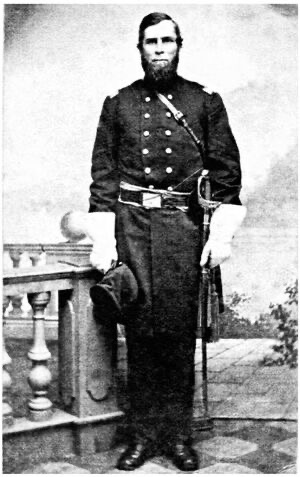
The following letter was written by Richard Erskine Holcomb, Sr. (1824-1863), the son of Thomas Holcomb (1779-1865) and Clarinda Pettibone (1781-1855) of Granby, Hartford county, Connecticut.
Richard Erskine Holcomb
Richard was an explorer of South America who learned to speak both French and Spanish and wrote articles about South America which were published in Harper’s Magazine. He also helped build several railroads in the south, including the Panama Railroad. Early in the Civil War he enlisted with the 3rd Connecticut Volunteers, in which he was a 1st Lieutenant. He was promoted rapidly to Major in the 13th Connecticut Volunteers, then to Colonel, and served for six months as brevet Brigadier General in White’s Regiment of 1st U.S. Louisiana Volunteers while commanding the 13th Connecticut Volunteers in policing New Orleans. He sailed up the Mississippi with General Farragut. While acting as Brigadier General in the siege of Port Hudson, Louisiana, he was killed leading his men in an assault on the Confederate works on 14 Jun 1863. His last words: “Charge forward, double quick.”
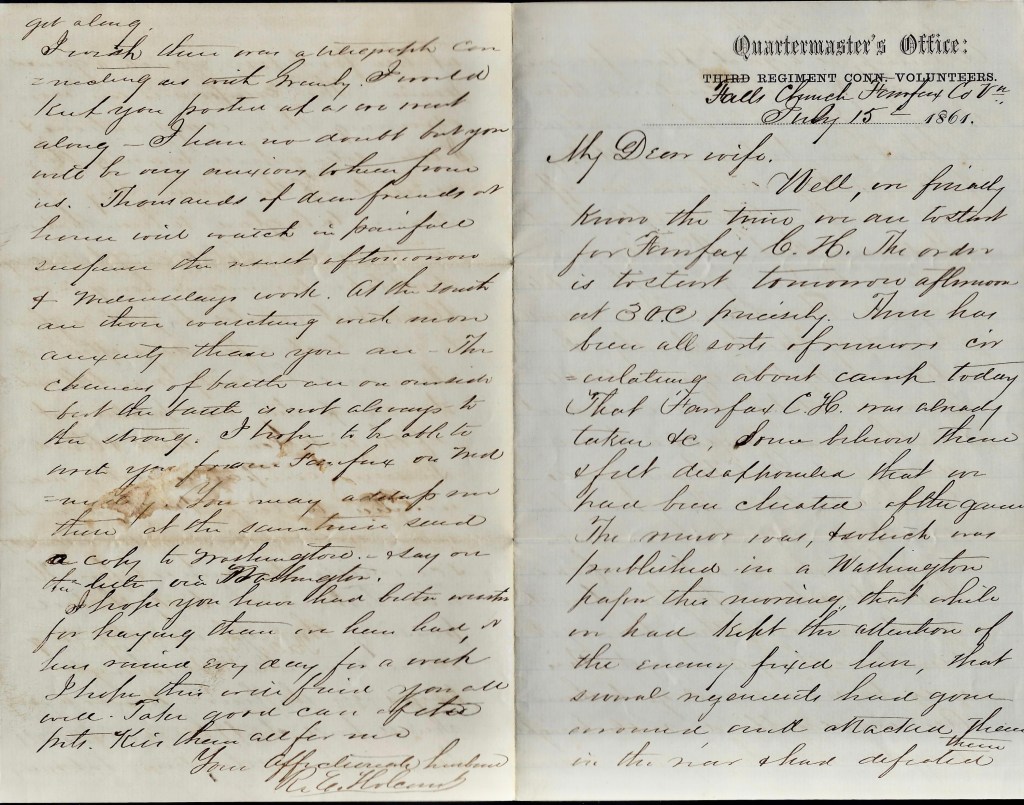
Richard’s letter was penned on 15 July 1861, just days before the Battle of Bull Run. It contains a variety of rumors and prognostications of how the long-awaited battle would turn out that are amusing to read today in light of what actually happened in the battle.
Transcription
Envelope free franked by C. H. Van Wyck, New York Congressman
Falls Church, Fairfax Co., Va. July 15, 1861
My Dear wife,
Well, we finally know the time we are to start for Fairfax Court House. The order is to start tomorrow afternoon at 3 o’clock precisely. There has been all sorts of rumors circulating about camp today that Fairfax Court House was already taken, &c. Some believe them & felt disappointed that we had been cheated of the game. The rumor was, & which was published in a Washington paper this morning, that while we had kept the attention of the enemy fixed here, that several regiments had gone around and attacked them in the rear & had defeated them. A camp is a great place for rumors, but we understand these things better now than we did so that we believe everything false until we have an official conformation of its truth.
It seems that McClellan in western Virginia has given the rebels a good thrashing. There is another awaiting them shortly. The rebels are put to great straits. Governor Letcher has called out ten thousand militia to rendezvous at Genl. Beauregard’s headquarters. They have been drafting all the men in our neighborhood outside of our lines, to repair forthwith with such arms as they have got & such as they can get. This will be no advantage to them. An undisciplined rabble brought together in a hurry will run at the first fire, & create a general panic.
The companies are now drawing three days rations & I am siting here hearing the comments of the men. They all seem to be glad to hear that we are to move. Soldiers get uneasy—don’t like to remain long in one place—but would be just as glad to move back a few day after. There will be sixty men left with the camp. They are picked out of the sick, lame, halt & blind. In some companies, not a man wanted to stay.
We had another man shot yesterday, accidentally & carelessly—the same as before. He was shot in the belly, the ball passing through in a slanting direction & the doctor thought logged in the liver. It was a very small ball, but is in a very precarious situation, but may get along.
I wish there was a telegraph connecting us with Greeley. It would keep you posted up as we went along. I have no doubt but you will be very anxious to hear from us. Thousands of dear friends at home will watch in painful suspense the result of tomorrow and Wednesday’s work. At the south are those watching with more anxiety than you are. The chances of battle are on our side but the battle is not always to the strong. I hope to be able to write you from Fairfax on Wednesday. You may address me there at the same time. Send a copy to Washington & say on the letter “via Washington.”
I hope this will find you all well. Take good care of the pets. Kiss them all for me. Your affectionate husband, — R. E. Holcomb
The following letter was written by 46 year-old John Reid, Jr. (1816-1885) to his second wife, Maria Frances (Thompson) Reid (1832-1875). John was the son of Maj. John Reid and Elizabeth Branch Maury. Maj. Reid was aide-de-camp and military secretary to Gen. Andrew Jackson during the British and Indiana War and was with him in New Orleans. John Reid, Jr. was born on the Major’s farm (called “Tree Lawn”) near Franklin, Williamson county, Tennessee.
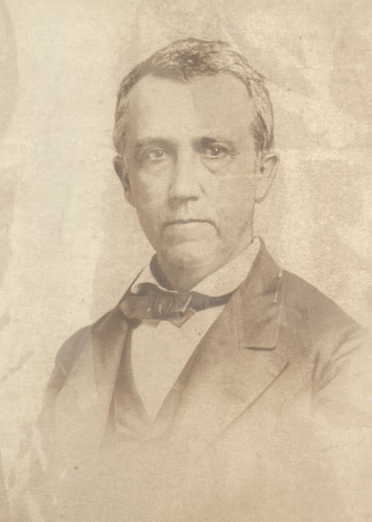
In 1860, John Jr. was enumerated as a lawyer in Nashville, Davidson county, Tennessee. Adding a note to his letter was Frank T. Reid (1845-1923), John’s son by his first marriage to Margaret Louise Trimble (1821-1849). Frank indicates in his note that he had not yet enlisted in the Confederate service. According to muster rolls, Frank enlisted on 13 February 1863 at Columbia, Tennessee, as a sergeant in Capt. John W. Morton Jr.’s Company, Tennessee Artillery. He was later transferred to Co. F, 4th Tennessee Cavalry as orderly sergeant.
John wrote the letter while visiting with his brother William Steptoe Reid, a large slaveholder in Williamson county, Tennessee. We learn that William had recently sold out and intended to relocate to Georgia. William was married at the time to his second wife, Sarah Claiborne Maury (1829-1912). In the letter, we learn that John Jr. and his son Frank intended to go to Murfreesboro on 31 December 1862. If they did, they would have ridden right into the Battle of Stones River.
I can’t find any evidence that John Reid ever served in the Confederate army. I did find him mentioned in an article published on 6 February 1864 in the National Aegis under the title, “The Amnesty Proclamation in Tennessee” which may or may not be propaganda: “The Union says also that Hon. John Reid, formerly a senator from Davidson County in the state legislature, and an able lawyer, has returned from Dixie, and accepted the President’s amnesty proclamation. He advises all others to follow his example as the Confederacy must go to the dogs. If John Bell doesn’t want to be conscripted, notwithstanding his age, Mr. Reid says he will be compelled also to come in.”
Transcription
Addressed to Mrs. Maria F. Reid, Gallatin, Tennessee, to care of Wm. B. Bayless, Nashville, TN
Warren county [Tennessee] December 29th 1862
My dear wife,
I am at my brothers & as Mr. Stovall goes to Sumner tomorrow, I avail myself of the opportunity to write you again. I wrote to you about two weeks ago & gave my letter to Mr. Charles Cantrill to send it to you. Did you get it? I have not heard a word from you since I left except through Mr. Gill. The letter you wrote by Mrs. Bond did not reach me. She was overhauled by the Yankees and destroyed your letter.
In my letter to you I stated in substance that you must be the judge whether you remained longer in Gallatin or come south; that if you were not molested nor likely to be by the Yankees, it would be probably more prudent to remain longer where you were. Otherwise you ought to come by the first opportunity that presented itself, if God in His mercy gave you the chance. Of course I would rather have you with me, if I consulted only my desires, but I do not know how long the Southern army will or can remain in Murfreesboro.
My brother has sold his place here and will love his family as soon as he can to Georgia. Frank & I are both well and expect to leave here for Murfreesboro day after tomorrow. I think of you & the baby constantly. I am all the time uneasy & unhappy about you. I pray God this state of things will not continue long. Write me the first & every opportunity that presents itself. I hope I will get a letter from you when I reach Murfreesboro. I write this letter on my cap & must close. I send you my best and warmest love & pray that I may be permitted before long to see you.
Kiss George for me and tell him not to forget his Pa. Love to all the family, — Jno. Reid
A post war image of Frank Reid
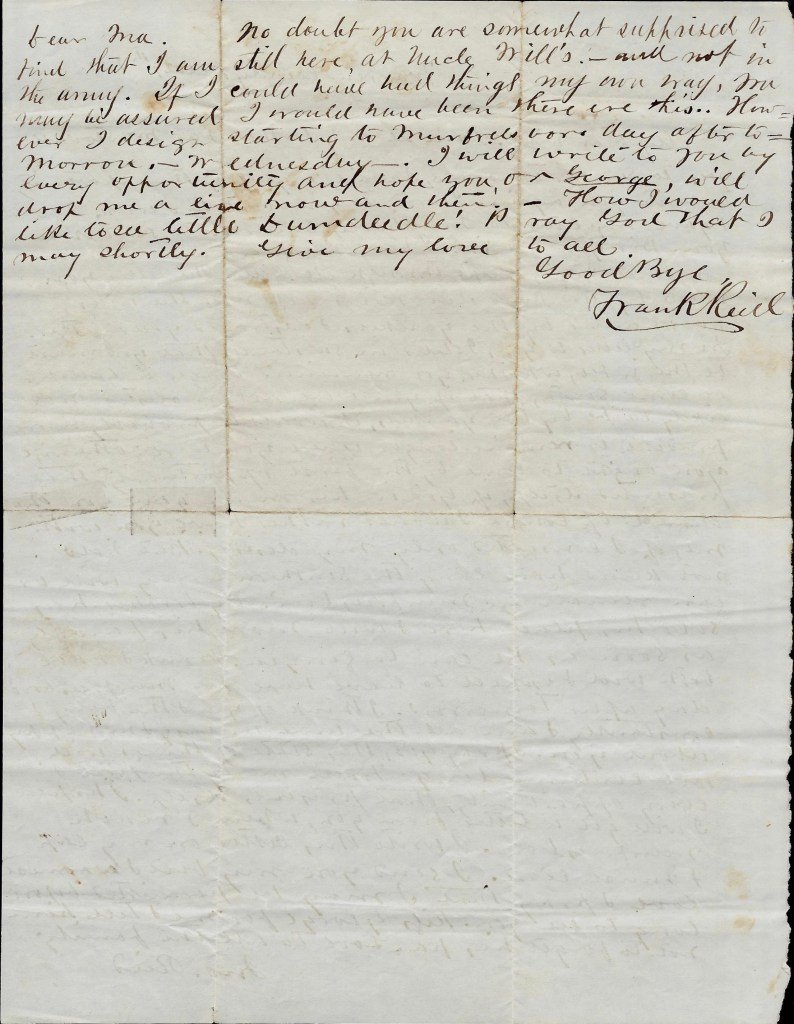
Dear Ma, No doubt you are somewhat surprised to find that I am still here at Uncle Will’s—and not in the army. If I could have had things my own way, you may be assured I would have been there ere this. However, I design starting to Murfreesboro day after tomorrow—Wednesday. I will write to you by every opportunity and hope you or George will drop me a line now and then. How I would like to see little Dumdoodle. I pray God that I may shortly. Give my love to all. Goodbye, — Frank Reid
The following letter was written by Manly S. Leiby (1845-1894) to his sister, Anna M. Leiby (1836-1907), the children of James and Elizabeth (Manly) Leiby of Williamsport, Pickaway county, Ohio.
Manly’s letter was written in late May 1864 while serving in Co. K, 114th Ohio Volunteer Infantry (OVI). He enlisted in the regiment on 22 August 1862 when he was 18 years old.
The letter informs us of his experience in the Red River Campaign, or the Red River Expedition as it’s sometimes called. The campaign was an offensive by the Union army under the overall command of Gen. Banks designed to cut off the use of Shreveport by Confederates as an outlet for sugar and cotton as well as split the Confederate lines. It was plagued from the start by poor management and planning. Manly places the entire blame on Maj. Gen. John A. McClernand who deserves some but not all the credit for the failed expedition.
It is with pleasure I sit down this morning to write you a few lines to inform you that I am well and doing finely. I came here last Sunday morning from Alexandria. I wasn’t sick when I left the regiment but had been on picket the day before and owing to the weather and having nothing to sleep under but my gum blanket, I caught cold and it settled in my legs so I could hardly get around. So they was going to start on the retreat and ordered all that was not able to march to the boat to go that way so of course I was one of the number that had to go.
Well, I will tell you when we got to Alexandria. We arrived there on the 26th of April, disembarked in the evening, and lay on the bank till morning and marched to the front 5 miles west of the above named place. The cavalry were skirmishing with the enemy when we got out there. Our regiment was put out to support the cavalry which held the Rebs in check all day and night. We lay there all night and rested well till morning. Thursday I was detached for picket, went out, and hadn’t been there an hour before the rebs advanced on our cavalry and begun to drive them back. It wasn’t long before Old Gen. McClernand came out to the picket post and seeing what was going on, sent back orders for the Division to move to the front which was done in less than no time and a line of battle formed, then [sent] out a line of skirmishers and skirmished with rebs about half an hour and was ordered to fall back. Fell [back] about 2 miles to a bayou and formed a new line of battle and by that time it was getting dark and the firing ceased and everything seemed calm as if there hadn’t been any fighting going on.
Thursday night we dug a line of rifle pits thinking the enemy would attack us in the morning but in the morn there were no signs of any such thing. We laid there until the 2nd of May when we advanced and [had] a considerably hard fight in which we routed the Rebs and drove them seven miles, capturing a number of prisoners. Our loss was one killed and 4 wounded. This is way we done all the time we were up there until we started on the retreat.
Friday 13th, the Army started from Alexandria & they destroyed the whole city. We were fired into 6 times coming down Red River but didn’t do much harm. They killed one man and wounded one. I don’t see how they missed so many for the boat was crowded with sick men. We run down the Atchafalaya ten miles to Simmesport where the army crossed on a pontoon which were formed by transports. It took from Wednesday until Friday at 4 o’clock to cross all the troops over. We run to the Mississippi river Friday night. I don’t know what the troops are going to do now. We were entirely surrounded when we started from Alexandria but we cut our way out. The cavalry done the most of the fighting coming down. I think if we [would] have had a good general, we would have whipped the Rebs there. Well, I hope Gen. Grant will be successful.
I will close. Write soon. Love to you and the rest of the family. Compliments to Aunts and Uncles. I am well and will go to the regiment as soon as the doctor will let me. I saw Nelson Norman up above here. He is well. The boys were all well when I left the company. Love and kisses from your affectionately brother—Manly S. Leiby