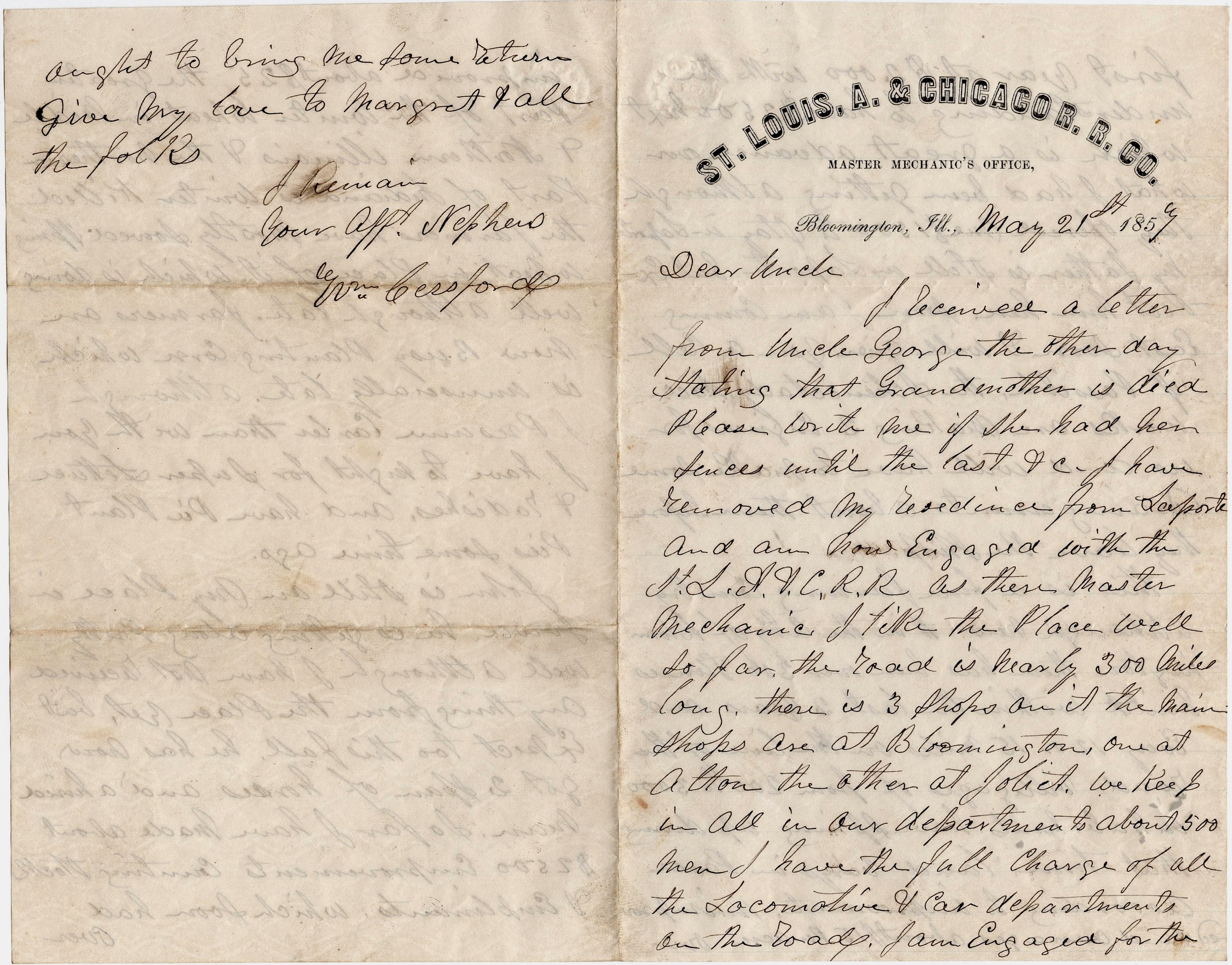
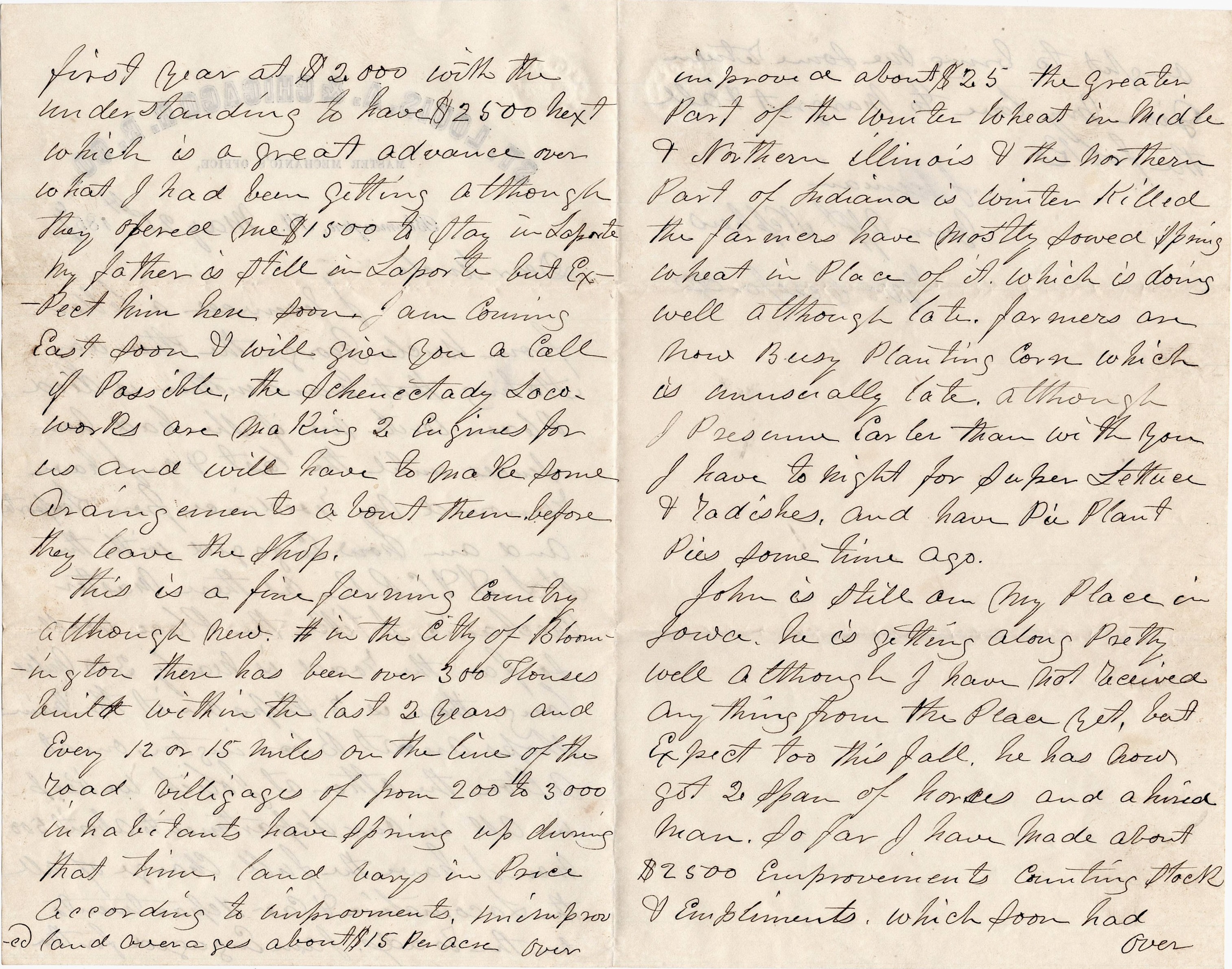
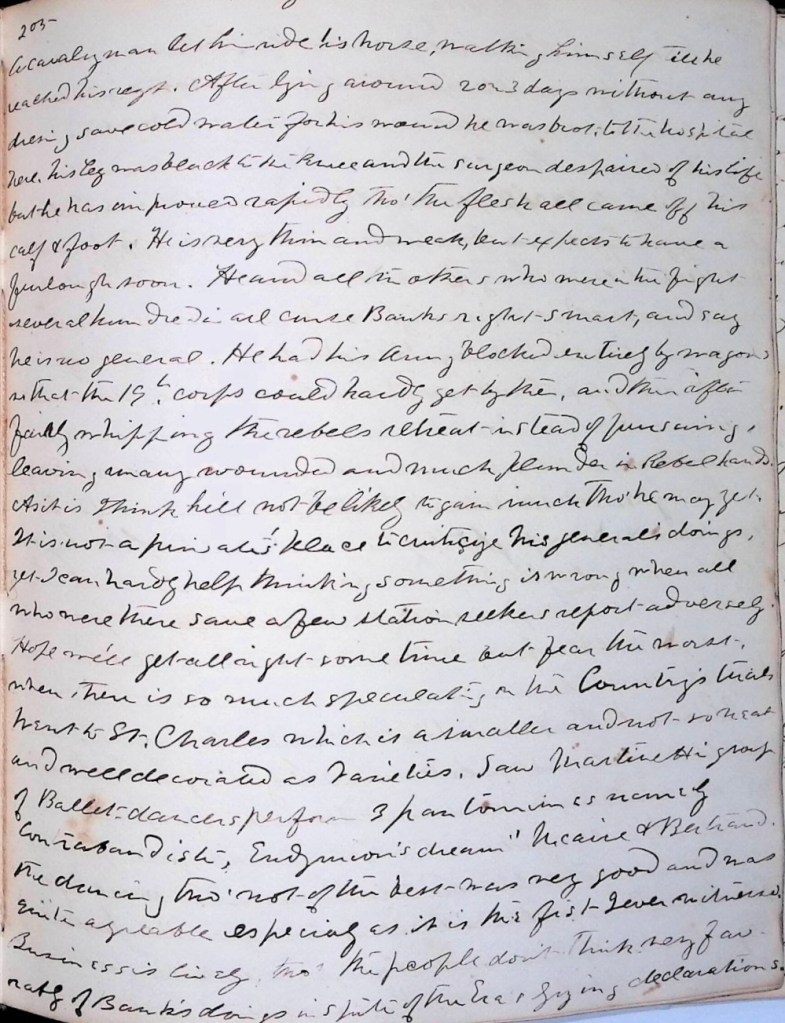
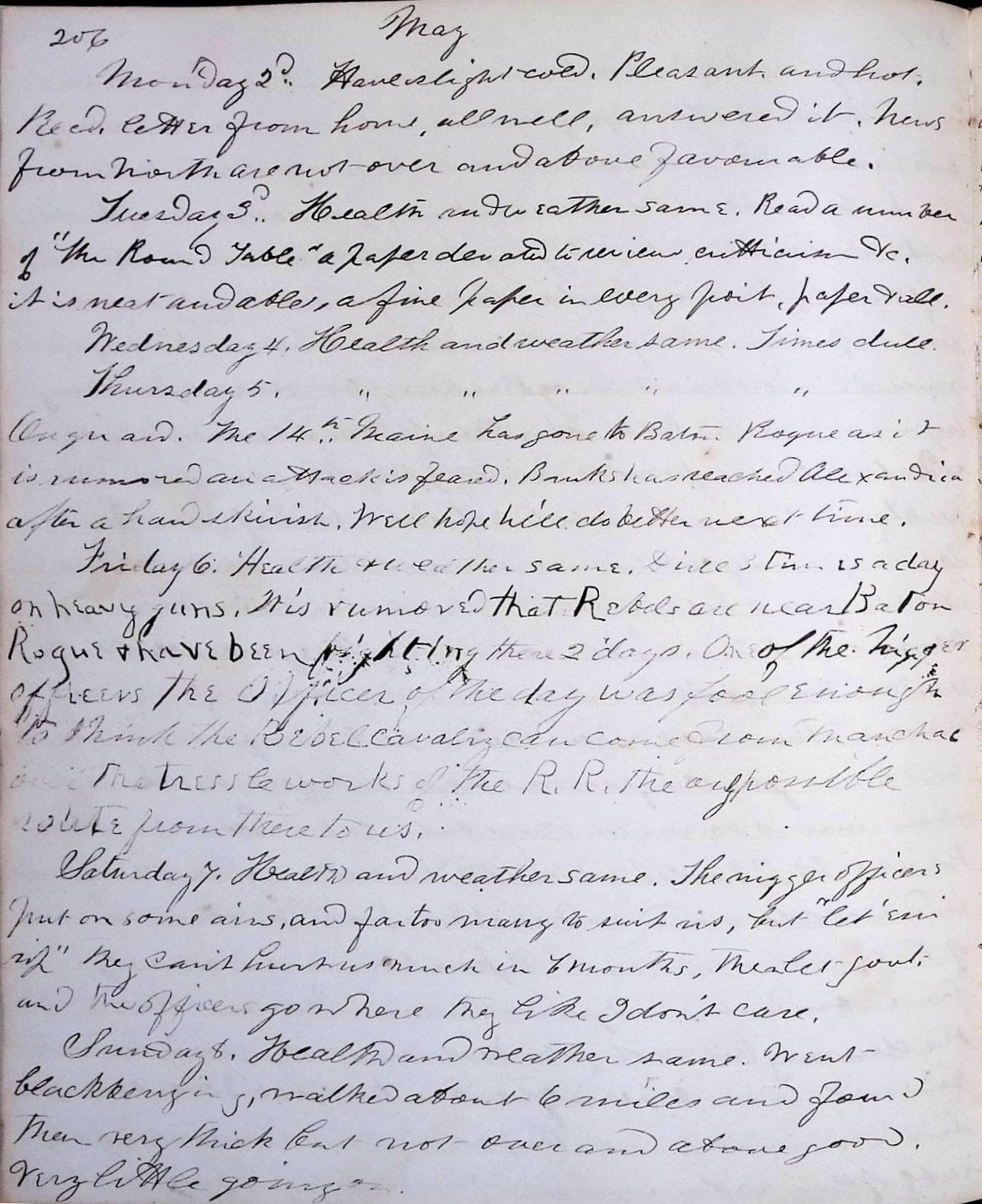
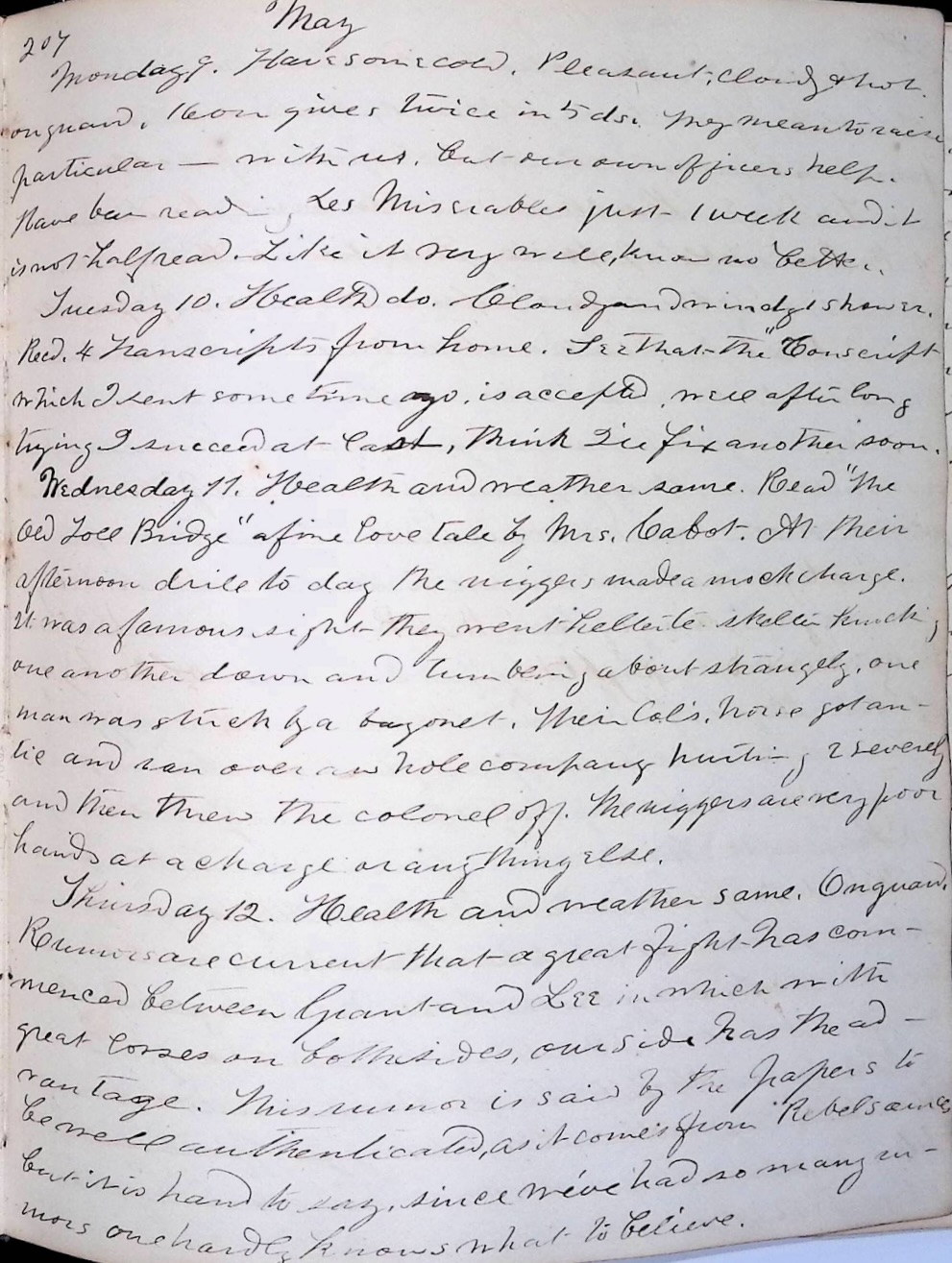
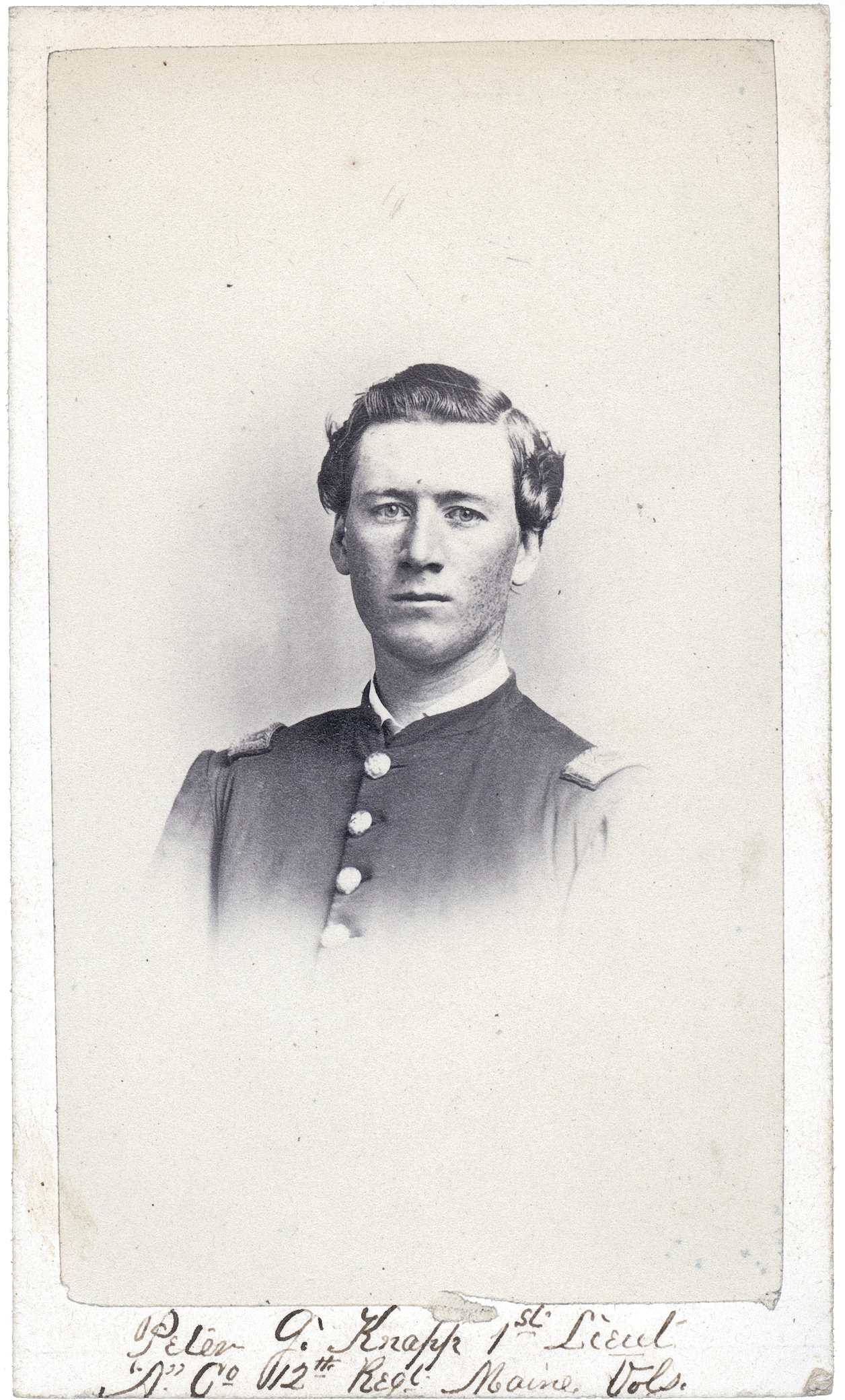
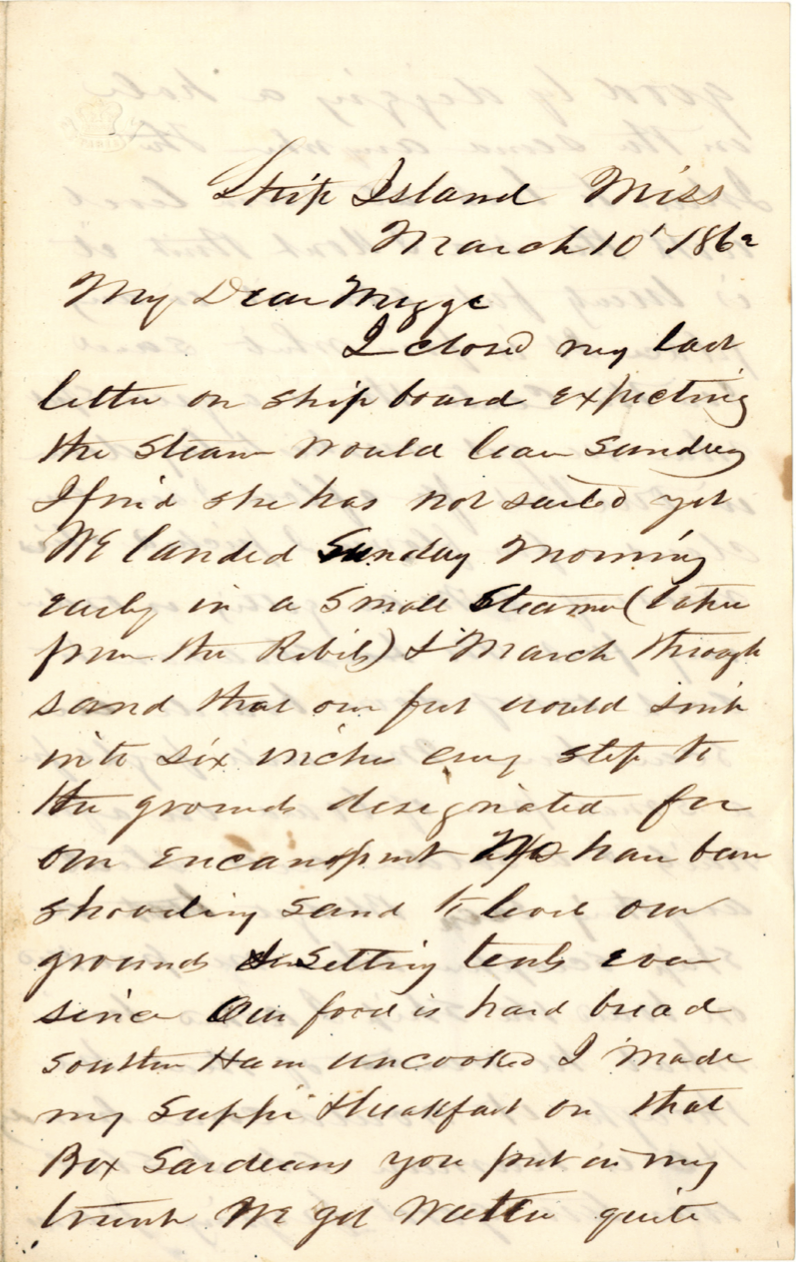
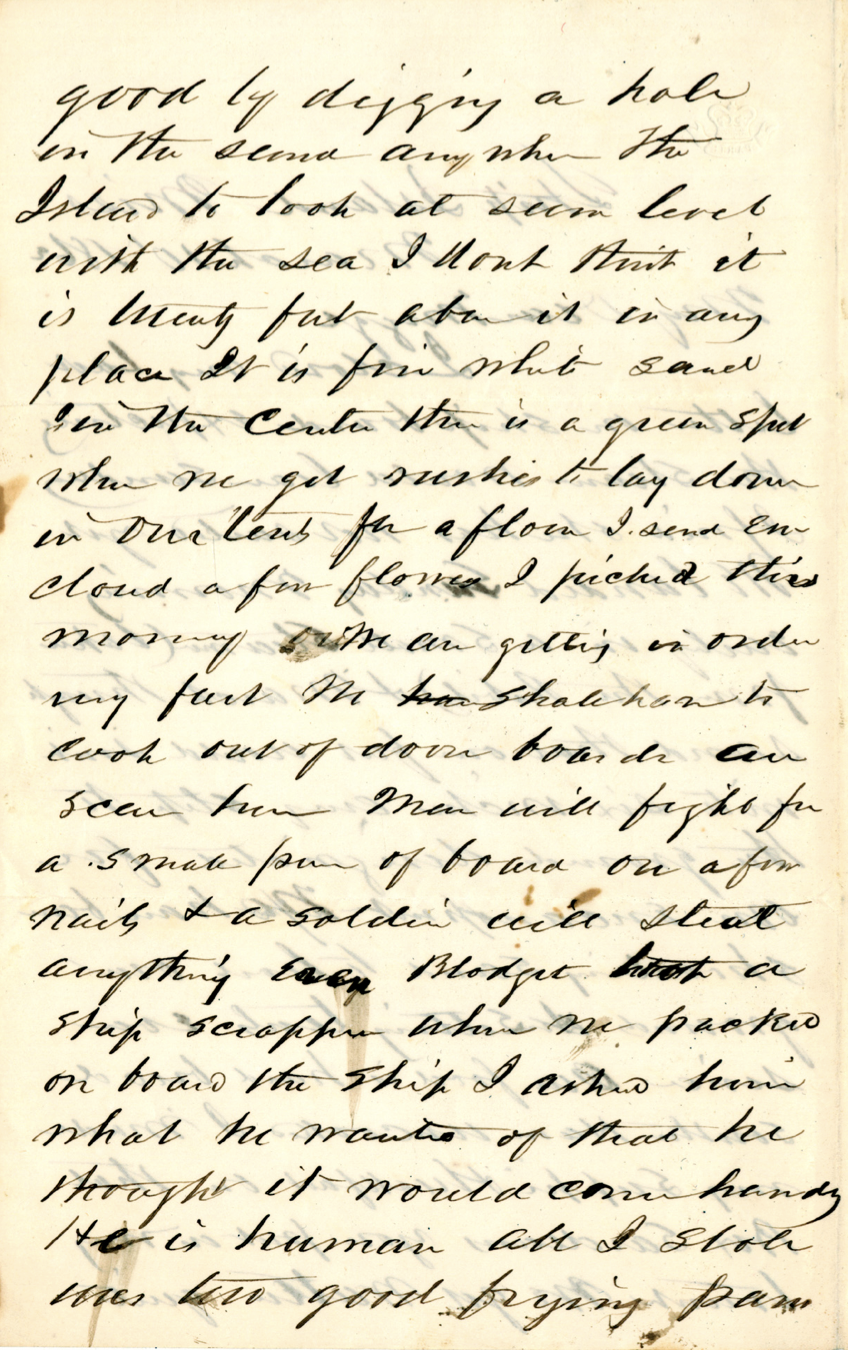
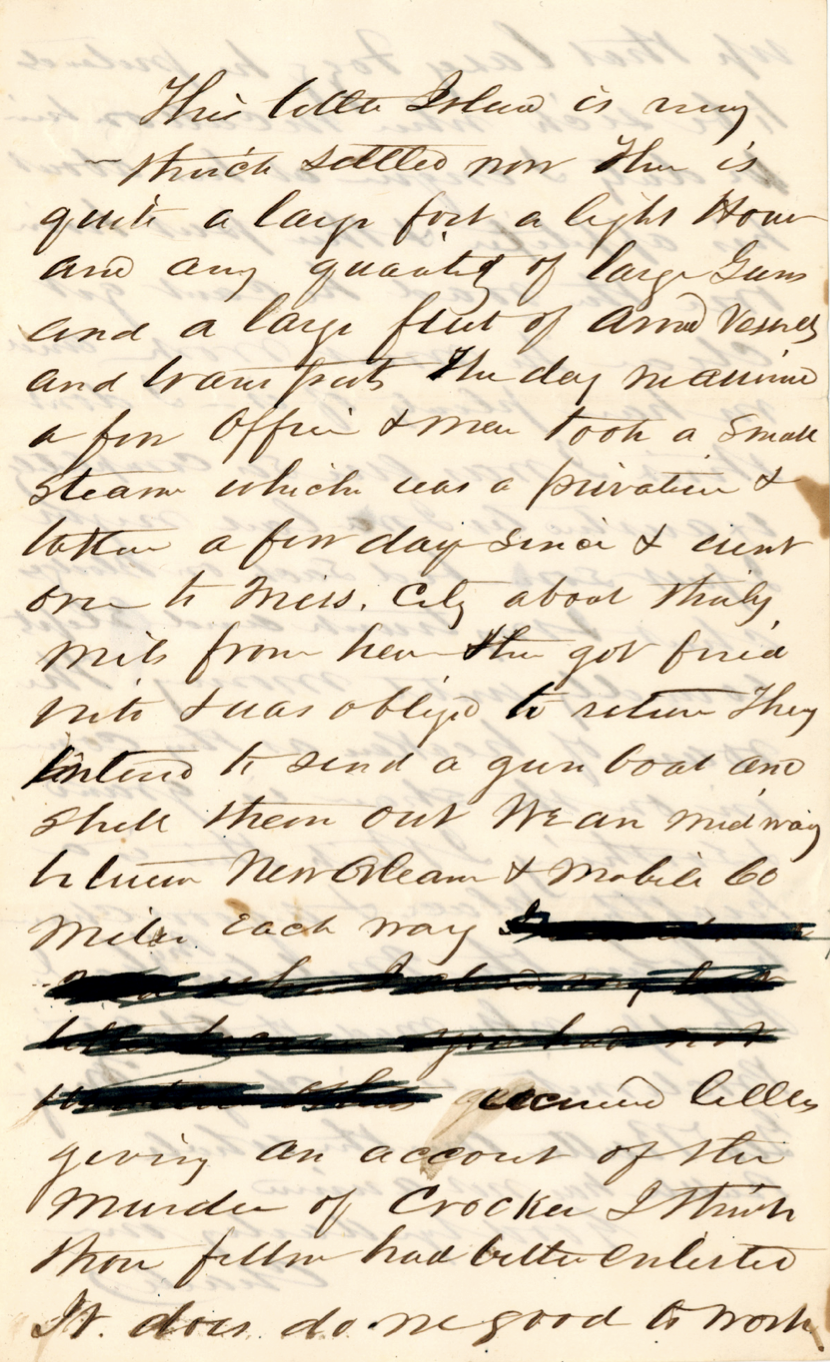
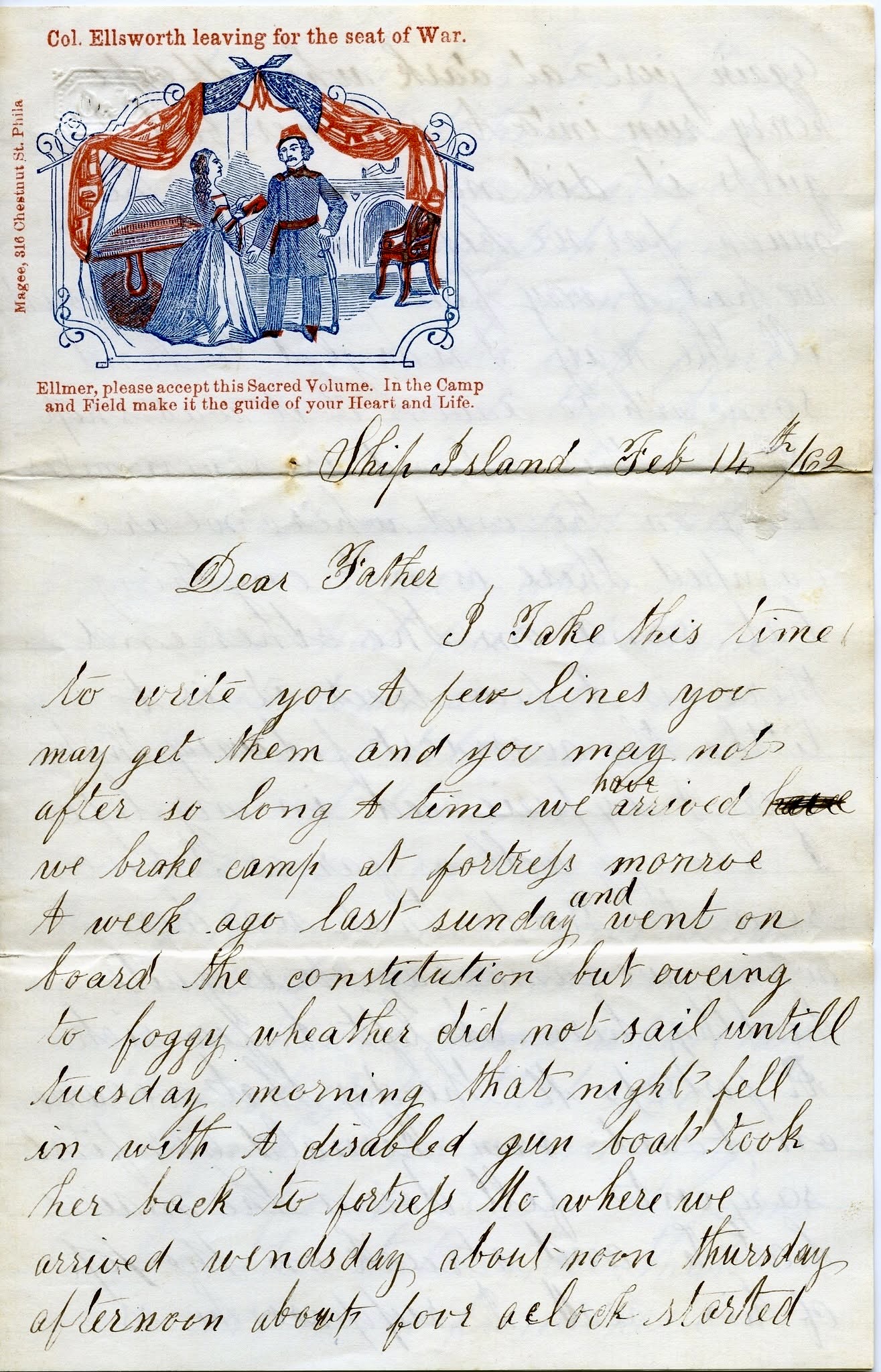
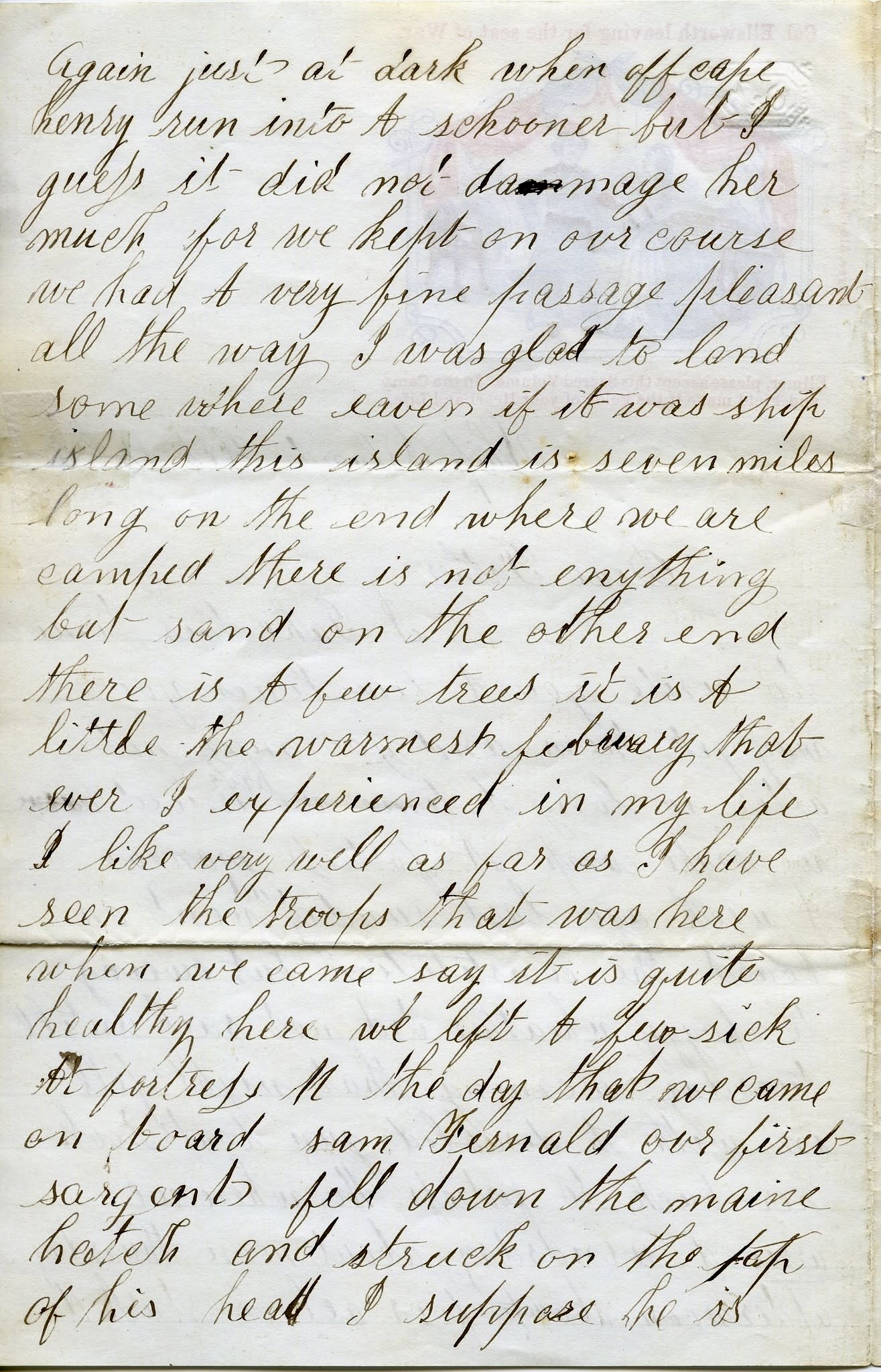
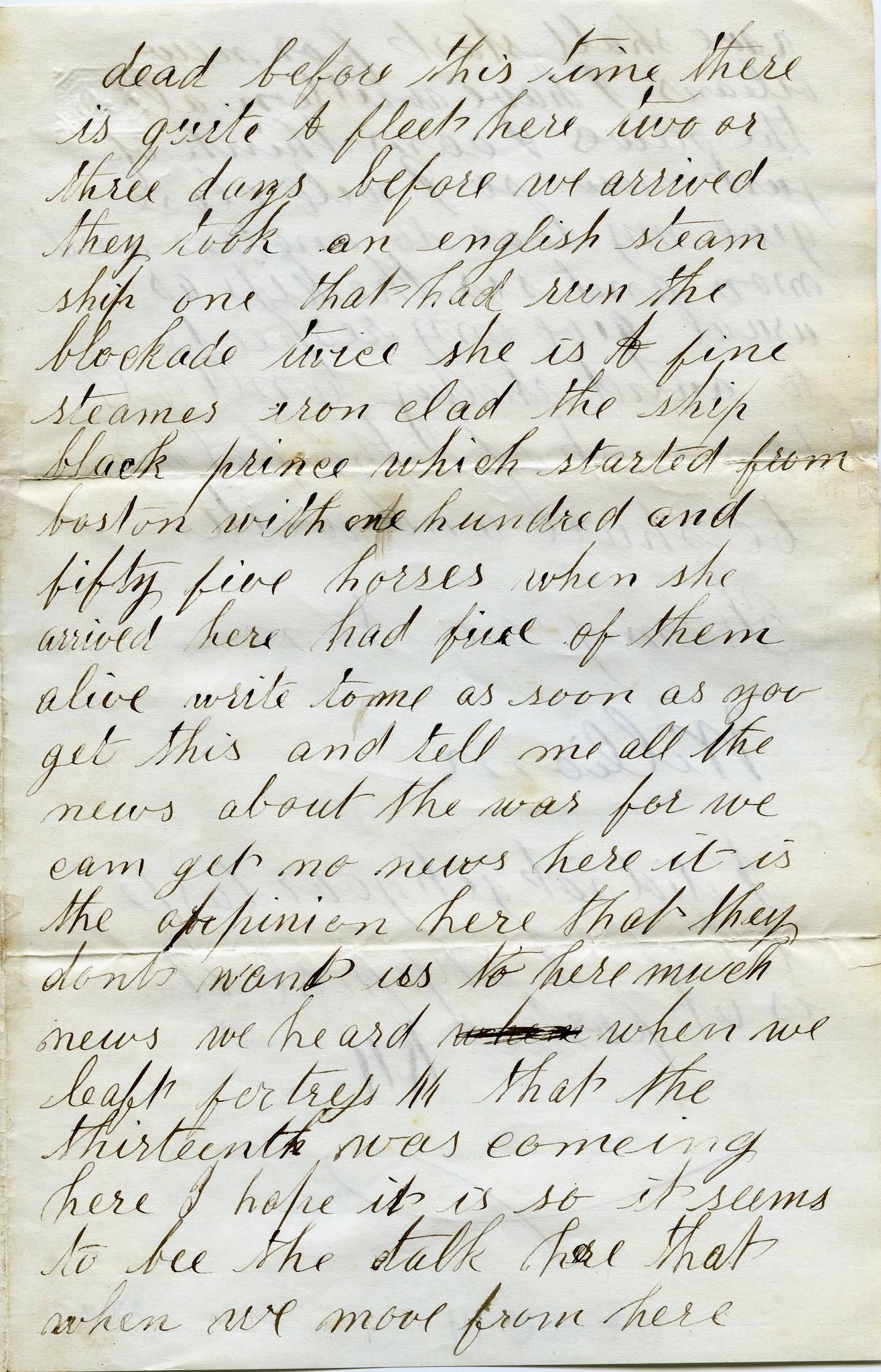
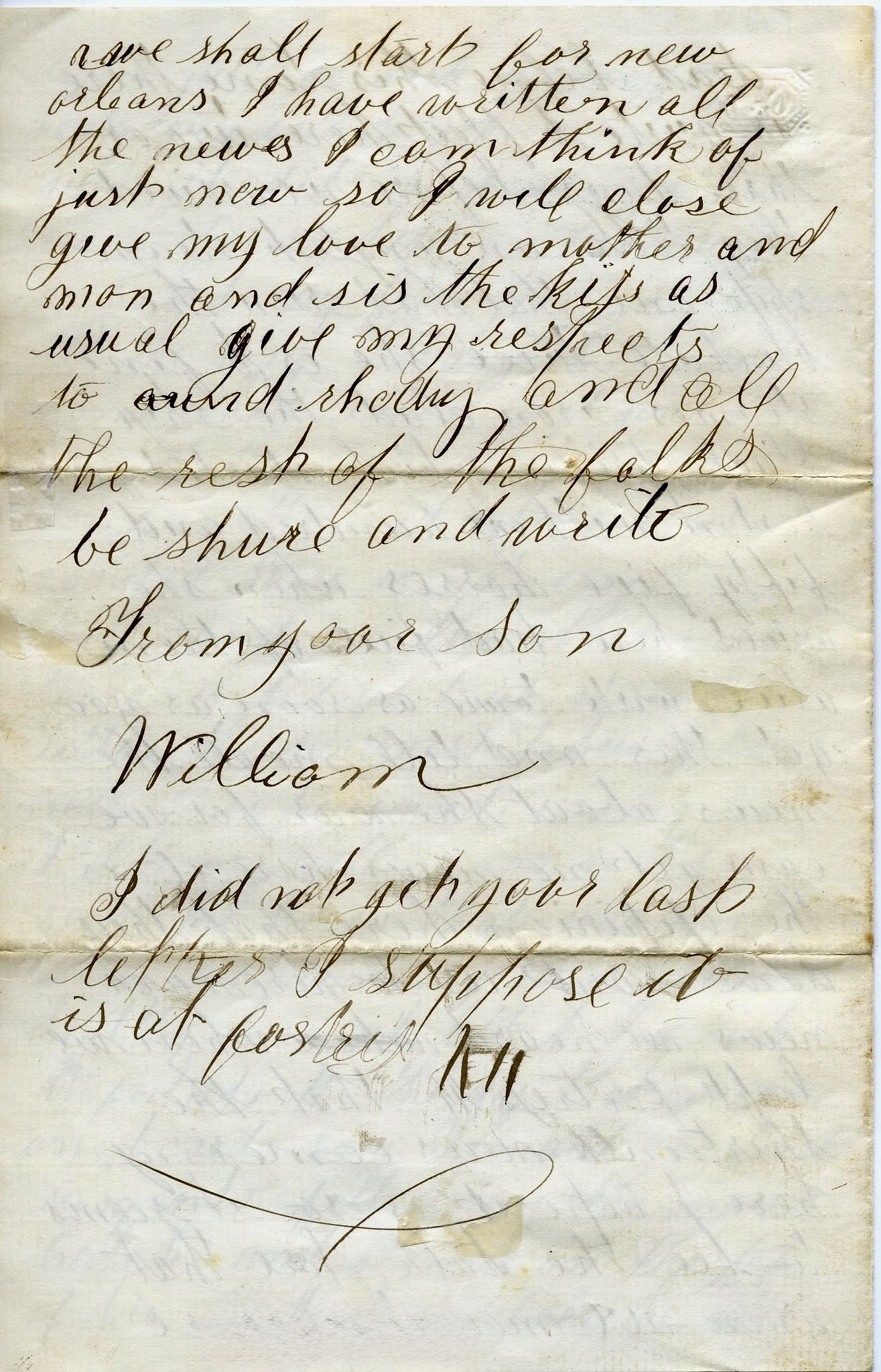
The following letter was written by William Cessford (1822-1908) a native of Scotland, who was employed as the Master Mechanic for the St. Louis & Chicago Railroad in 1857. His parents were James Cessford and Cecelia Beattie. In the 1870 US Census, he was still enumerated in Bloomington, Illinois—where this letter was penned in 1857. His occupation in that census was “Car Carpenter.” At age 78, he was still enumerated in Bloomington as a “carpenter.”
Despite his prospects for success herein stated, William outlived his money. He died on the McLean County poor farm. He’s buried in Evergreen Memorial Cemetery in Bloomington. His obituary claims he worked for more than 50 years as a pattern maker for the Chicago and Alton shops.
T R A N S C R I P T I O N
Bloomington, Illinois May 21st 1857
Dear Uncle,
I received a letter from Uncle George the other day stating that grandmother is died. Please write me of she had her senses until the last, &c.
I have removed my residence from Laporte and am now engaged with the St. Louis & Chicago Railroad as their Master Mechanic. I like the place well so far. The road is nearly 300 miles long. There is three shops on it. The main shops are at Bloomington, one at Alton, the other at Joliet. we keep in all in our departments about 500 men. I have the full charge of all the Locomotive & Car departments on the road. I am engaged for the first year at $2000 with the understanding to have $2500 next which is a great advance over what I had been getting although they offered me $1500 to stay in Laporte.
My father is still in Laporte but expect him here soon. I am coming East soon & will give you a call if possible. The Schenectady Loco-works are making two engines for us and will have to make some arrangements about them before they leave the shop.
This is a fine farming country although new. In the City ofBloomington there has been over 300 houses built within the last two years and every 12 or 15 miles on the line of the road, villages of from 200 to 3,000 inhabitants have spring up during that time. Land varies in price according to improvements. Unimproved land averages about $15 per acre. Over improved about $25. The greater part of the winter wheat in middle & Northern Illinois & the Northern part of Indiana is winter killed. The farmers have mostly sowed spring wheat in place of it which is doing well although late. Farmers are now busy planting corn which is unusually late although I presume earlier than with you. I have tonight for supper lettuce and radishes and have pie plant [rhubarb] pies some time ago.
John is still on my place in Iowa. He is getting along pretty well although I have not received anything from the place yet, but expect to this fall. He has now got two span of horses and a hired man. So far I have made about $2500 improvements counting stock and implements which soon had ought to bring me some return.
Give my love to Margret & all the folks. I remain your affectionate nephew, — Wm. Cessford
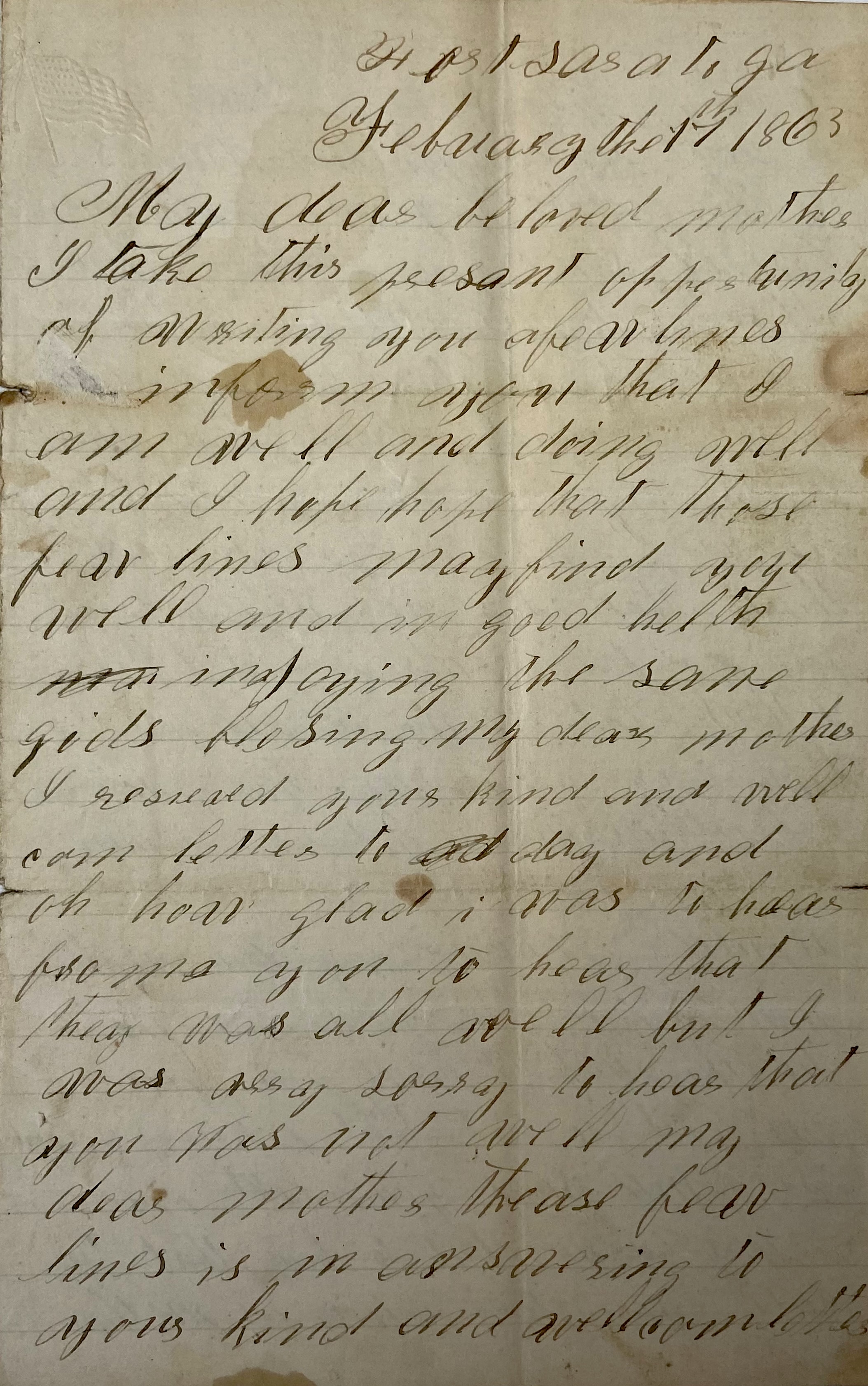
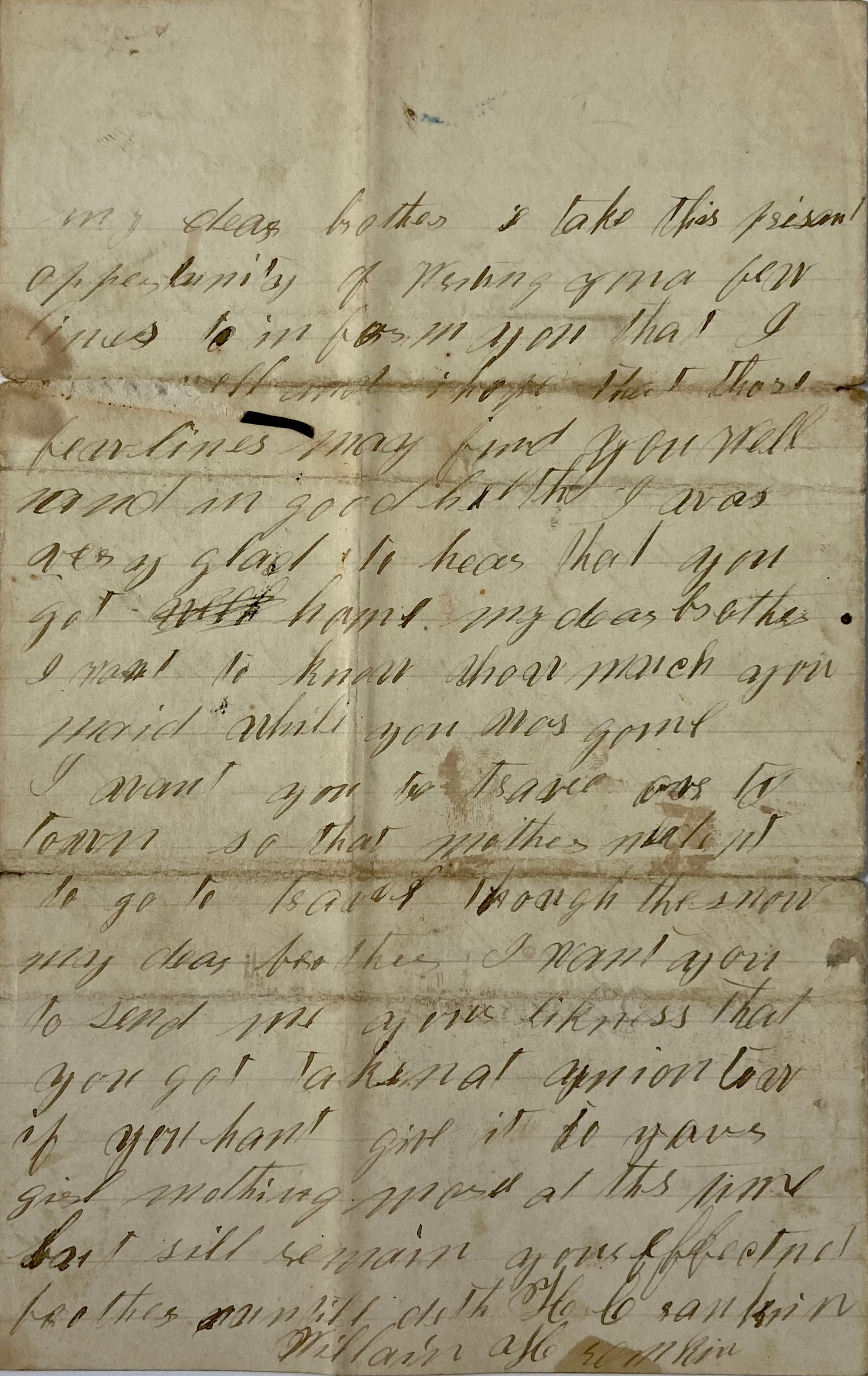
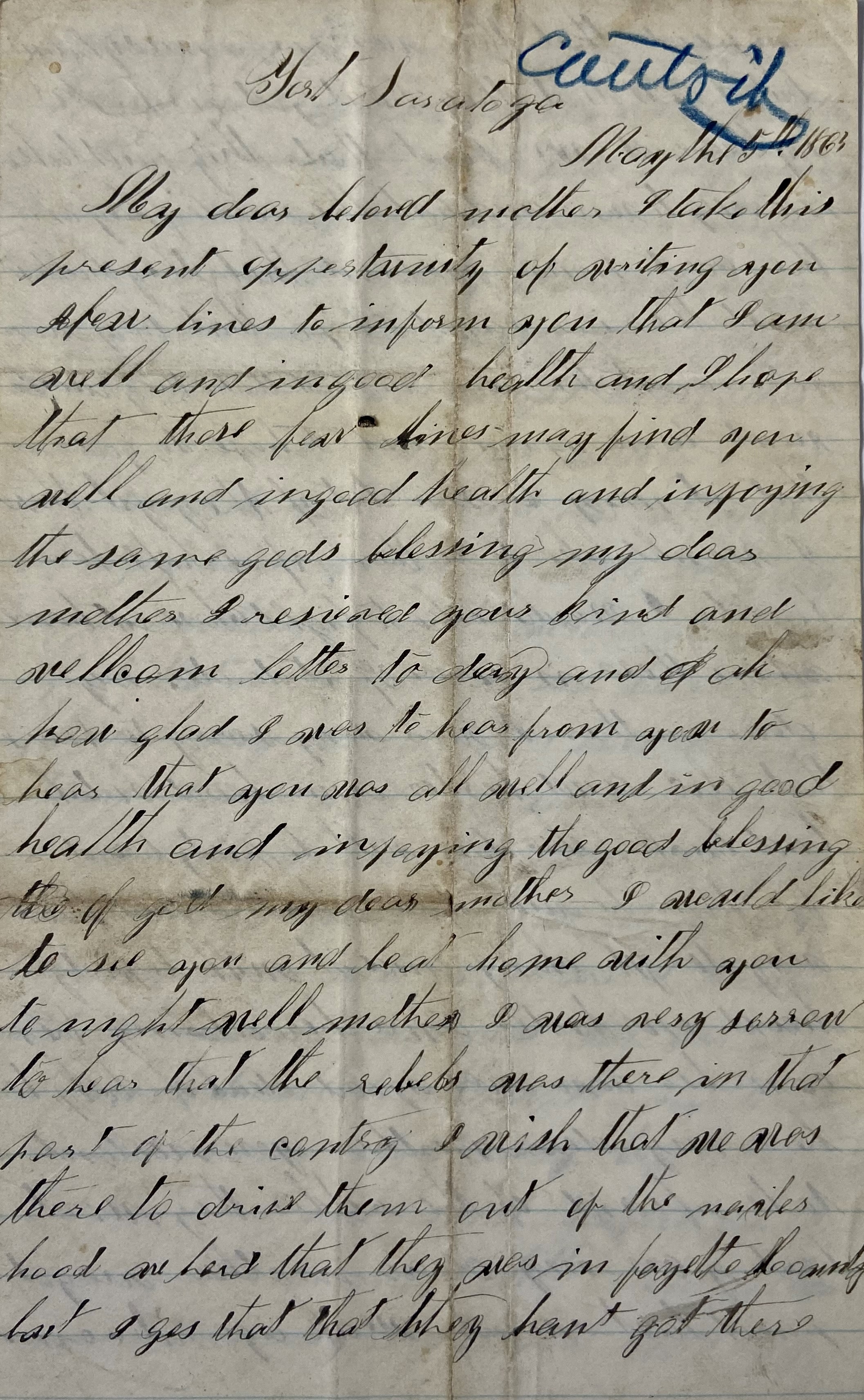
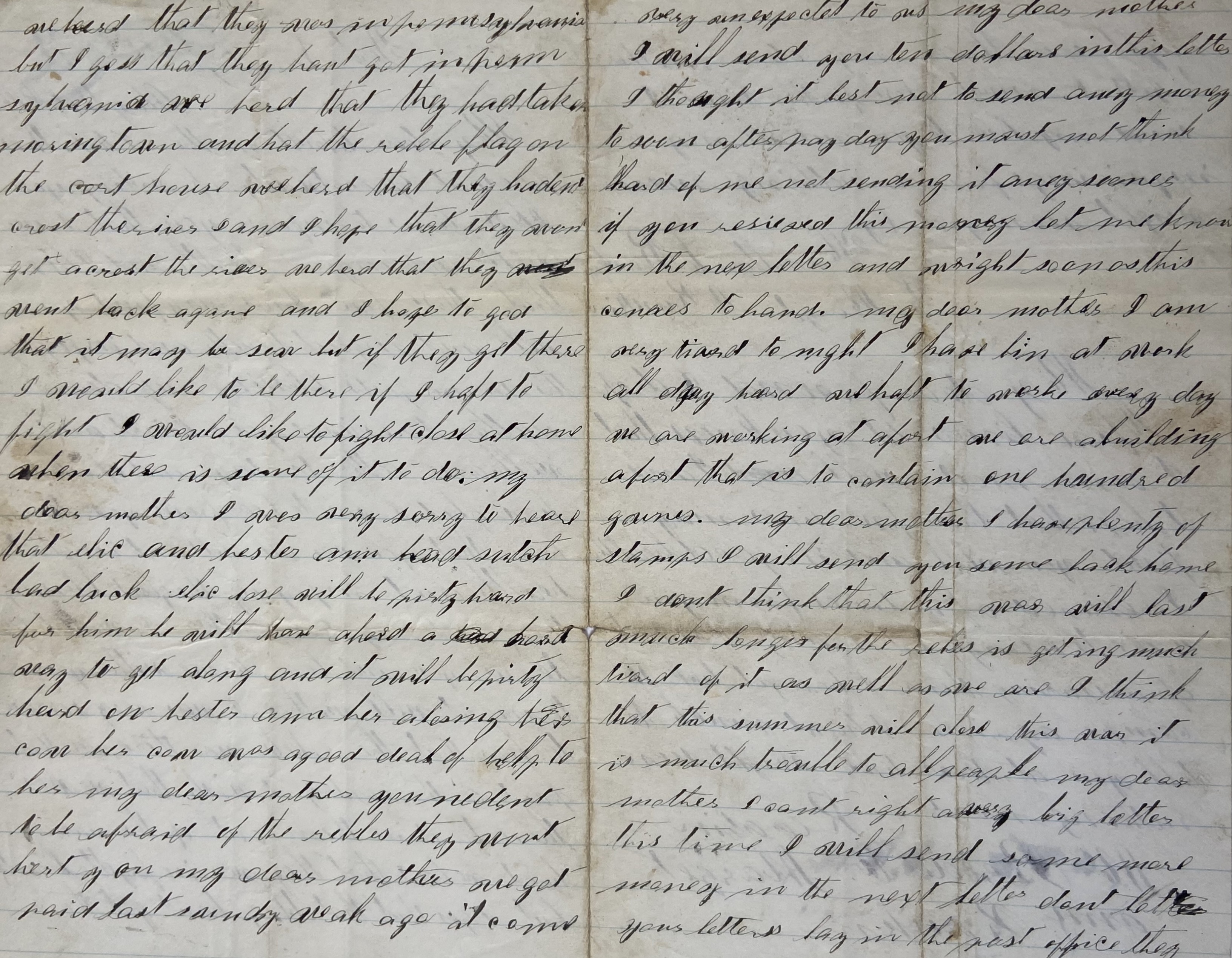
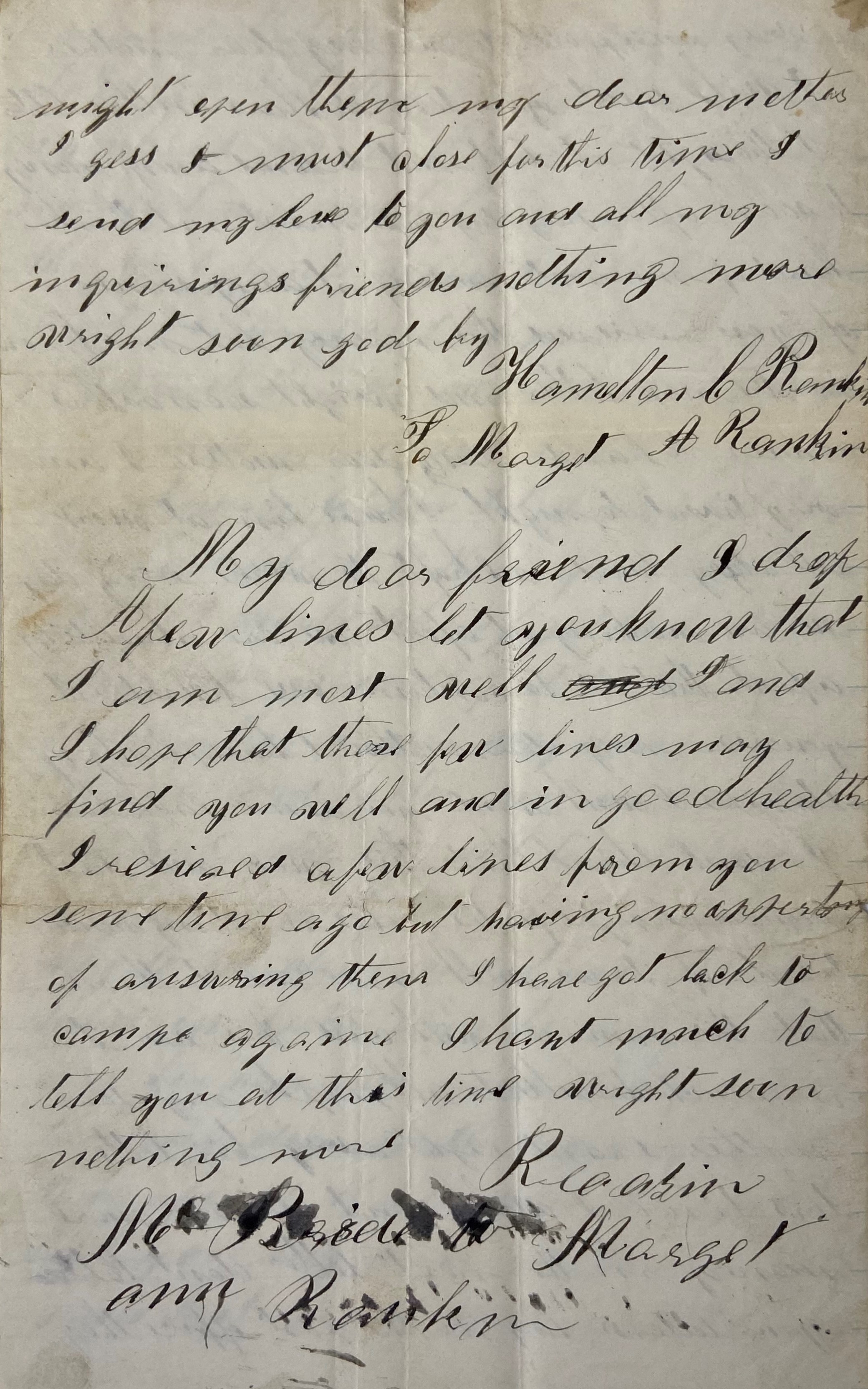
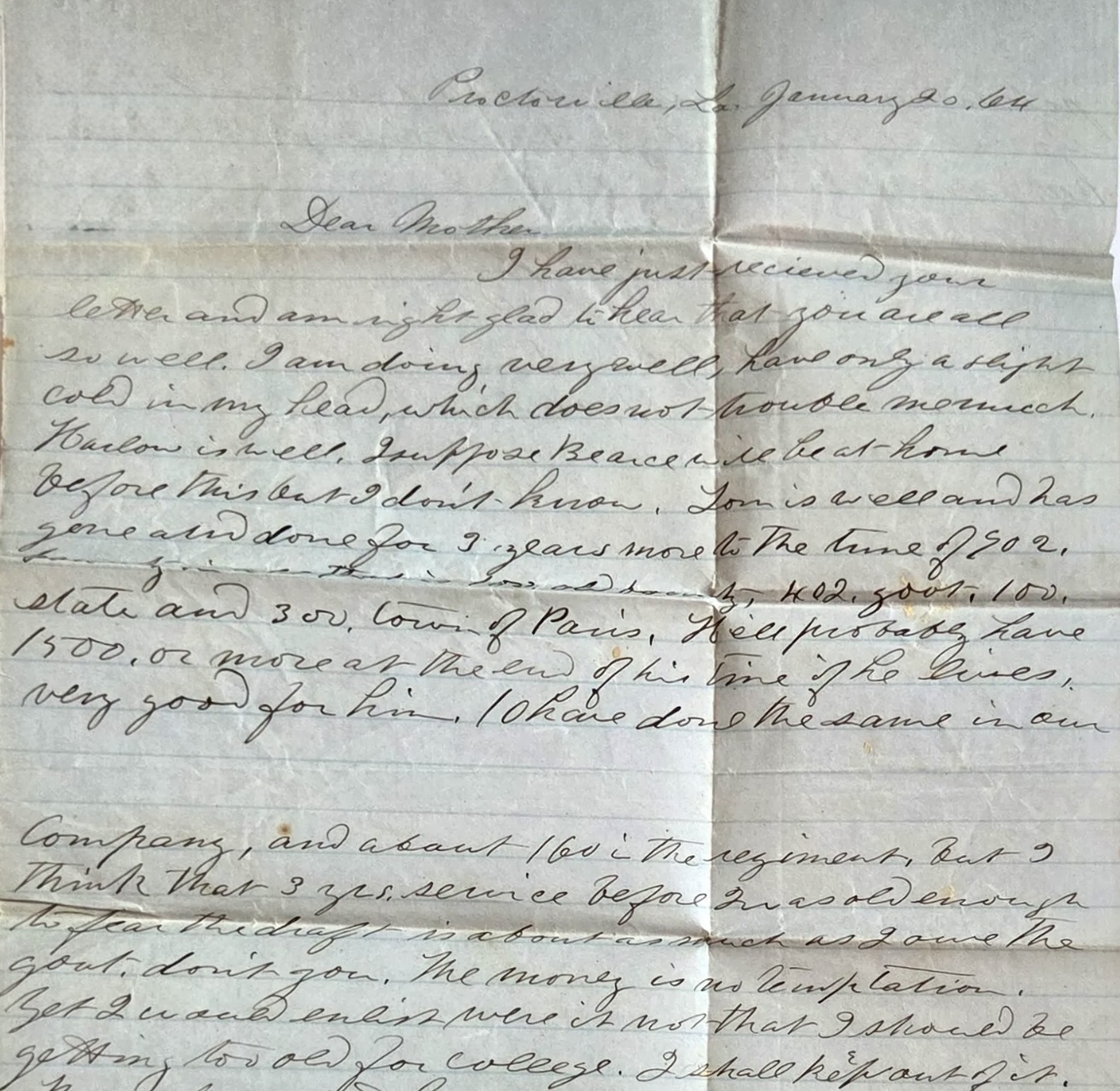
The following letters were written by Hamilton Campbell Rankin (1839-1863) of Farmington, Fayette county, Pennsylvania, who enlisted as a recruit in Co. K, 112th Pennsylvania Infantry (2nd Pennsylvania Heavy Artillery). He mustered into the Battery in early August 1862 and died while in garrison at Fort Saratoga near Washington D. C. on 23 May 1863. His cause of death was recorded as Typhoid Pneumonia.
These letters were found in the Pension Records at the National Archives as evidence that Hamilton’s mother, Margaret Ann (Ritenour) Rankin depended on the money her son sent home to her during the nine months he was in the service. Hamilton’s parents were John Rankin (1803-1880) and Margaret Ann (“Betsy”) Ridenour (1805-1892) who had a small farm on the Alleghany Plateau within the Laurel Highlands region of Pennsylvania, some 70 miles southeast of Pittsburgh.
Fort Saratoga was one of the temporary earthen forts constructed in the northeast quadrant of Washington City to protect the Nation’s Capital. It was begun in August 1861 and worked on considerably by the 2nd Pennsylvania Heavy Artillery during the time they were in garrison there.
Images of these letters were provided to me for transcription and publication on Spared & Shared by Brian Rhinehart, a descendant of the Rankin family.
Letter 1
Fort Saratoga February 17th 1863
My dear beloved mother,
U take this present opportunity of writing you a few lines to inform you that I am well and doing well and I hope that these few lines may find you well and in good health and enjoying the same God’s blessing. My dear mother, I received your kind and welcome letter today and oh how glad I was to hear from you [and] to hear that they was all well [at home] but I was sorry to hear that you was not well. My dear mother, these few lines is in answer to your kind and welcome letter.
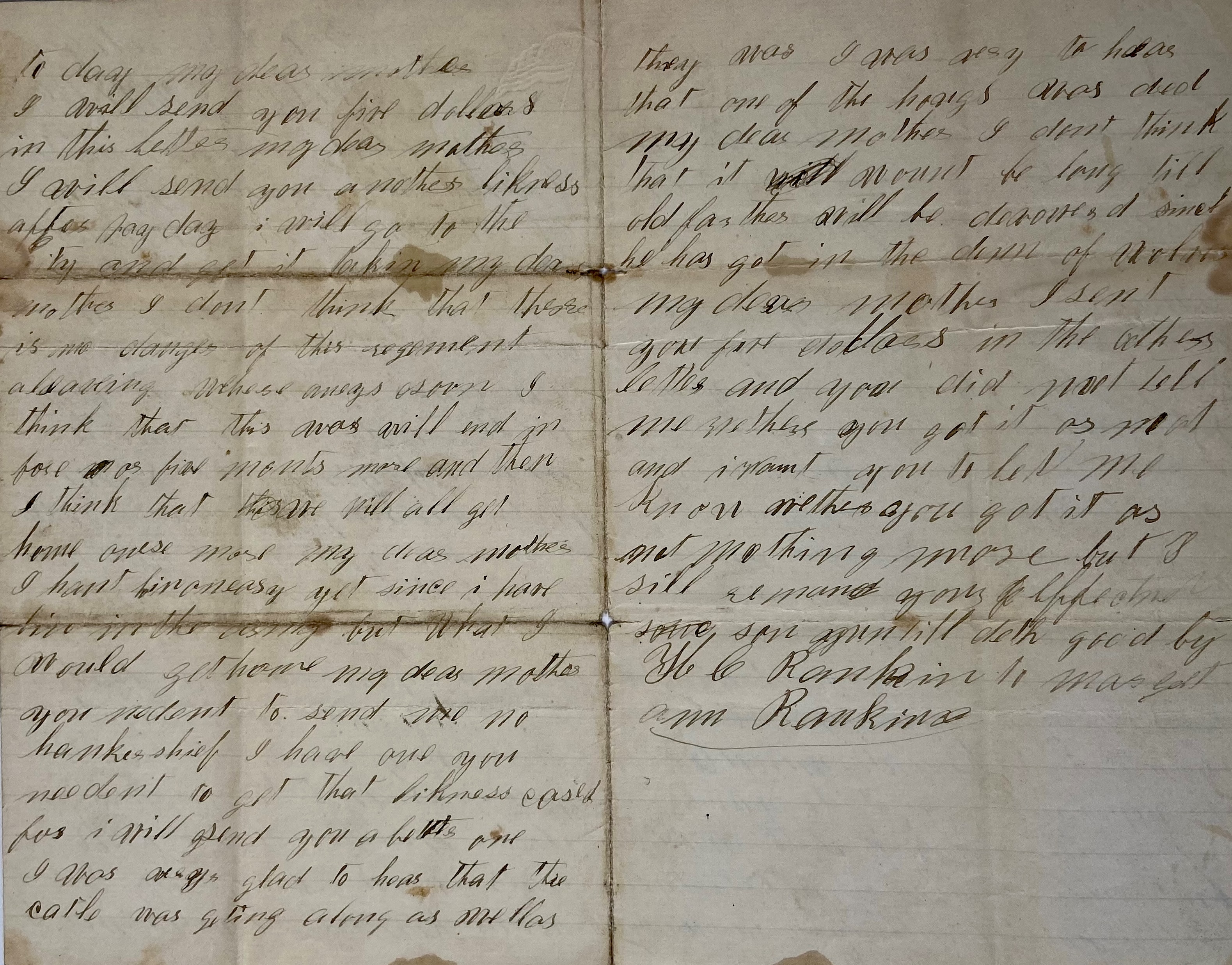
Today, my dear mother, I will send you five dollars in this letter. My dear mother, I will send you another likeness after payday. I will go to the city and get it taken.
My dear mother, I don’t think that there is no danger of this regiment a leaving here any[time] soon. I think that this war will end in four or five months more and then I think that we will all get home once more. My dear mother, I han’t been uneasy yet since I have been in the army but what I would get home. My dear mother, you needn’t to send me no handkerchief. I have one. You needn’t to get that likeness cased for I will send you a better one.
I was very glad to hear that the cattle was getting along as well as they was. I was very [sorry] to hear that one of the hogs was dead. My dear mother, I don’t think that won’t be long till old father will be drowned since he has got in the den of wolves. My dear mother, I sent you four dollars in the other letter and you did not tell me whether you got it or not. And I want you to let me know whether you got it or not. Nothing more but I still remain your affectionate son until death. Goodbye, — H. C. Rankin
To Margaret Rankin
My dear brother,
I take this present opportunity of writing you a few lines to inform you that I am well and I hope that these lines may find you well and in good health. I was very glad to hear that you got home. My dear brother, I want to know how much you made while you was gone. I want you to travel over to town so that mother needn’t to go to travel through the snow. My dear brother, I want you to send me your likeness that you got taken at Uniontown if you hain’t give it to your girl [already]. Nothing more at this time but I still remain your affectionate brother until death. — H. C. Rankin
to William H. Rankin
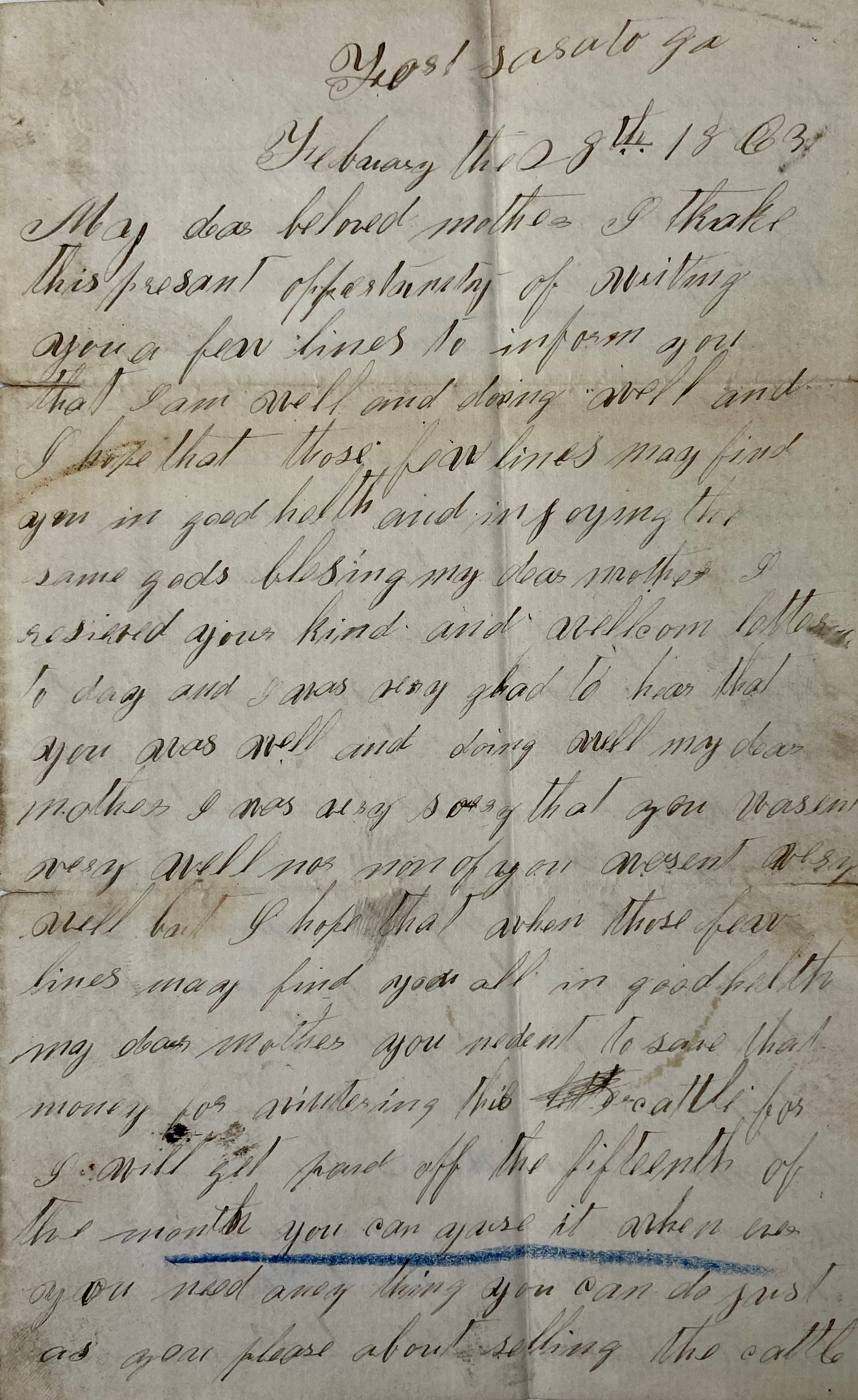
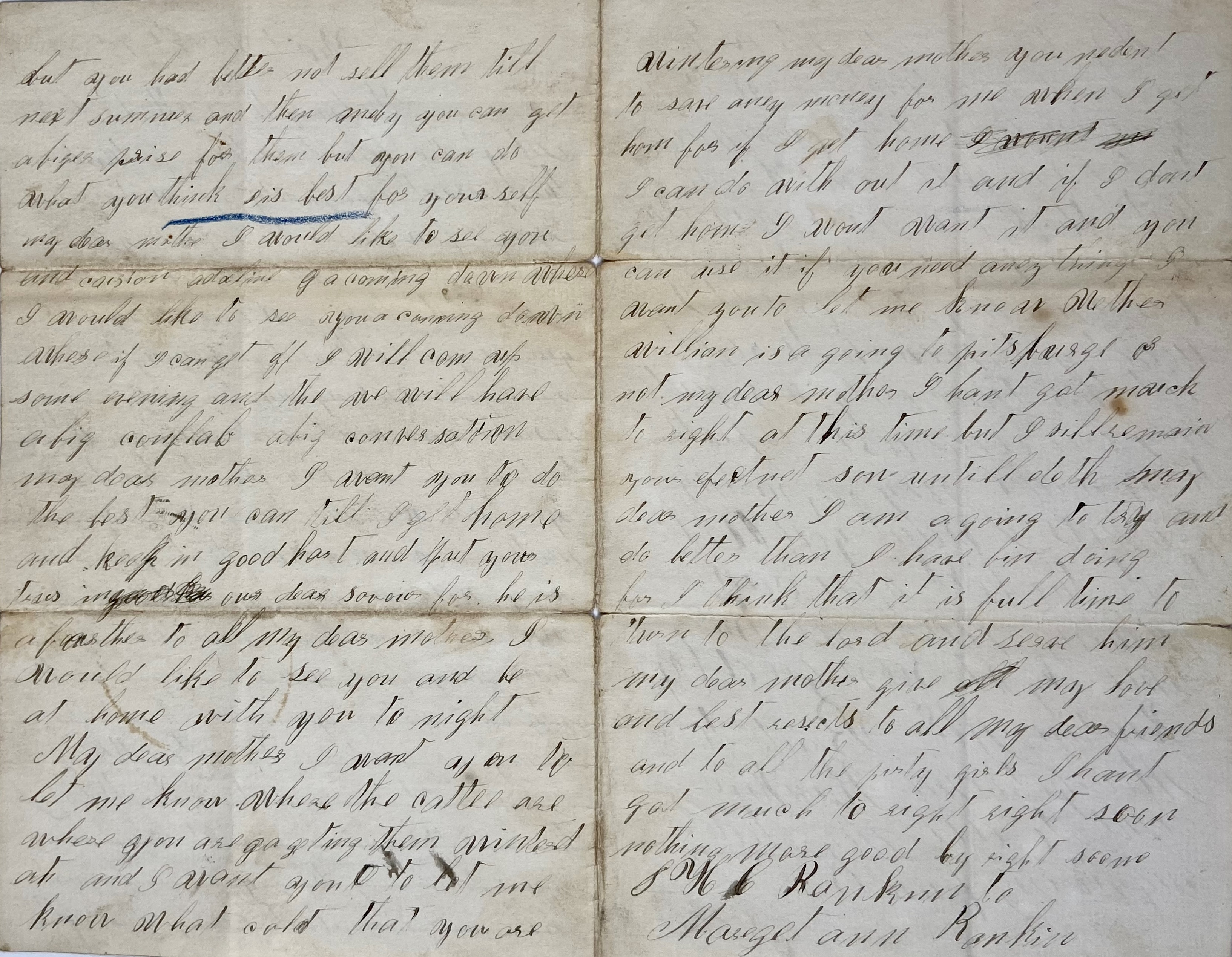
Letter 2
Fort Saratoga February 28th 1863
My dear beloved mother,
I take this present opportunity of writing you a few lines to inform you that I am well and doing well and I hope that these few lines may find you in good health and enjoying the same God’s blessing. My dear mother, I received your kind and welcome letter today and I was very glad to hear that you was well and doing well. My dear mother I was very sorry that you wasn’t very well nor none of you weren’t very well. But i hope that when these few lines may find you all in good health. My dear mother, you needn’t to save that money for wintering the cattle for I will get paid off the 15th of the month. You can use it when you need anything. You can do just as you please about selling the cattle but you had better not sell them till next summer and then maybe you can get a bigger price for them. But you can do what you think is best for yourself.
My dear mother, I would like to see you and cousin Adeline a coming down where I would like to see you a coming down here if I can’t get off. I will come up some evening and then we will have a big conflab—a big conversation. My dear mother, I want you to do the best you can till I get home and keep in good heart and put your trust in God, our dear Savior, for He is a father to all. My dear mother, I would like to see you and be at home with you tonight. My dear mother, I want you to let me know where the cattle are. Where are you grazing them around at? And I want you to let me know what colt that you are wintering.
My dear moter, you needn’t to save my money for me when I get home for if I get home, I can do without it and if I don’t get home, I won’t want it and you can use it if you need anything. I want you to let me know whether William is a going to Pittsburgh or not. My dear mother, I hain’t got much to write at this time but I will remain your affectionate son until death. My dear mother, I am going to try and do better that I have been doing for I think that it is full time to turn to the Lord and serve Him. My dear mother, give my love and best respects to all my dear friends and to all the pretty girls. I hain’t got much to write, so nothing more. Goodbye. Write soon. — H. C. Rankin
To Margaret Ann Rankin
Letter 3
Fort Saratoga May 5th 1863
My dear beloved mother,
I take this present opportunity of writing you a few lines to inform you that I am well and in good health and I hope that these few lines may find you well and enjoying the same God’s blessing. My dear mother, I received your kind and welcome letter today and oh how glad I was to hear from you to hear that you was all well and in good health and enjoying the good blessing of God.
My dear mother, I would like to see you and be at home with you tonight. Well, mother, I was very sorry to hear that the rebels was there in that part of the country. I wish that we was there to drive them out of the neighborhood. We heard that they was in Fayette county but I guess that they hain’t got there. We heard that they was in Pennsylvania but I guess that they hain’t yet in Pennsylvania and we heard that they had taken Warrington and that the rebel flag [was] on the Court House. We heard that they hadn’t crossed the river. We heard that they went back again and I hope to God that it may be so. But if they got there, I would like to be there if I have to fight. I would like ot fight close at home when there is some of it to do.
My dear mother, I was very sorry to hear that Elic and Hester Ann had such bad luck. Elic’s loss will be pretty hard for him. He will have a hard way to get along and it will be pretty hard on Hester Ann. Her losing her [son?]. He was a good deal of help to her. My dear mother, we got paid last Sunday week ago, It came very unexpected to us. My dear mother, I will send you ten dollars in this letter. I thought it best not to send my money too soon after pay day. You must not think hard of me not sending it any sooner. If you received this money, let me know in the next letter and write soon as this comes to hand.
My dear mother, I am very tired tonight. I have been at work all day hard and have to work every day. We are working at a fort. We are a building a fort that is ot contain one hundred guns. My dear mother, I have plenty of stamps. I will send you some back home. I don’t think this war will last much longer for the rebs is getting much tired of it as well as we are. I think that this summer will close this war. It is much trouble to all people.
My dear mother, I can’t write a very big letter this time. I will send you some more money in the next letter. Don’t let your letters lay in the post office [where someone] might open them. My dear mother, I guess I must close for this time. I send my love to you and all my enquiring friends. Nothing more. Write soon. Goodbye. — Hamilton C. Rankin
To Margaret A. Rankin
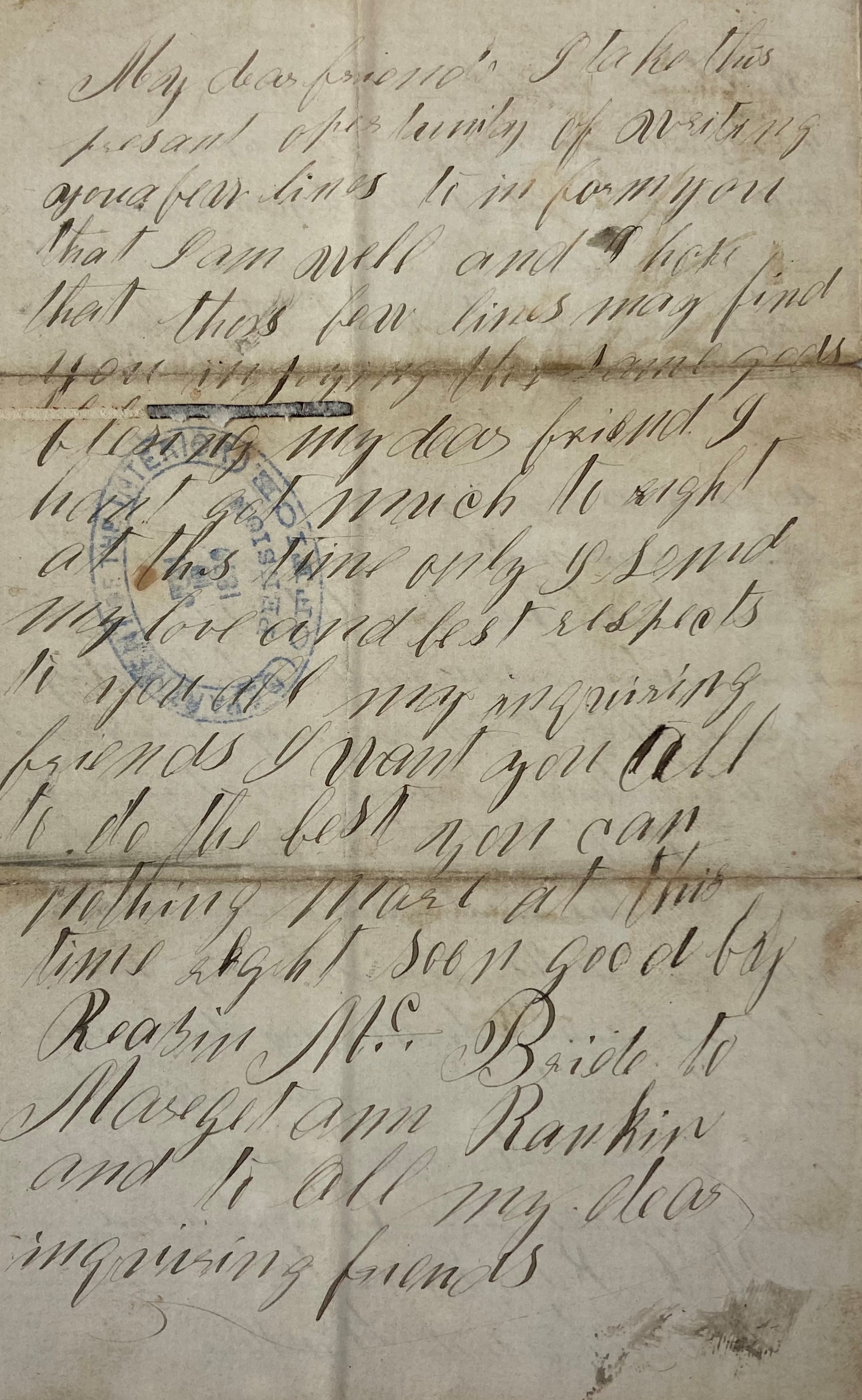
My dear friend, I drop a few lines to let you know that I am most well and I hope that these few lines may find you well and in good health. I received a few lines from you some time ago but having no opportunity of answering them, I have got back to camp again. I hain’t much to tell you at this time. Write soon. Nothing more.
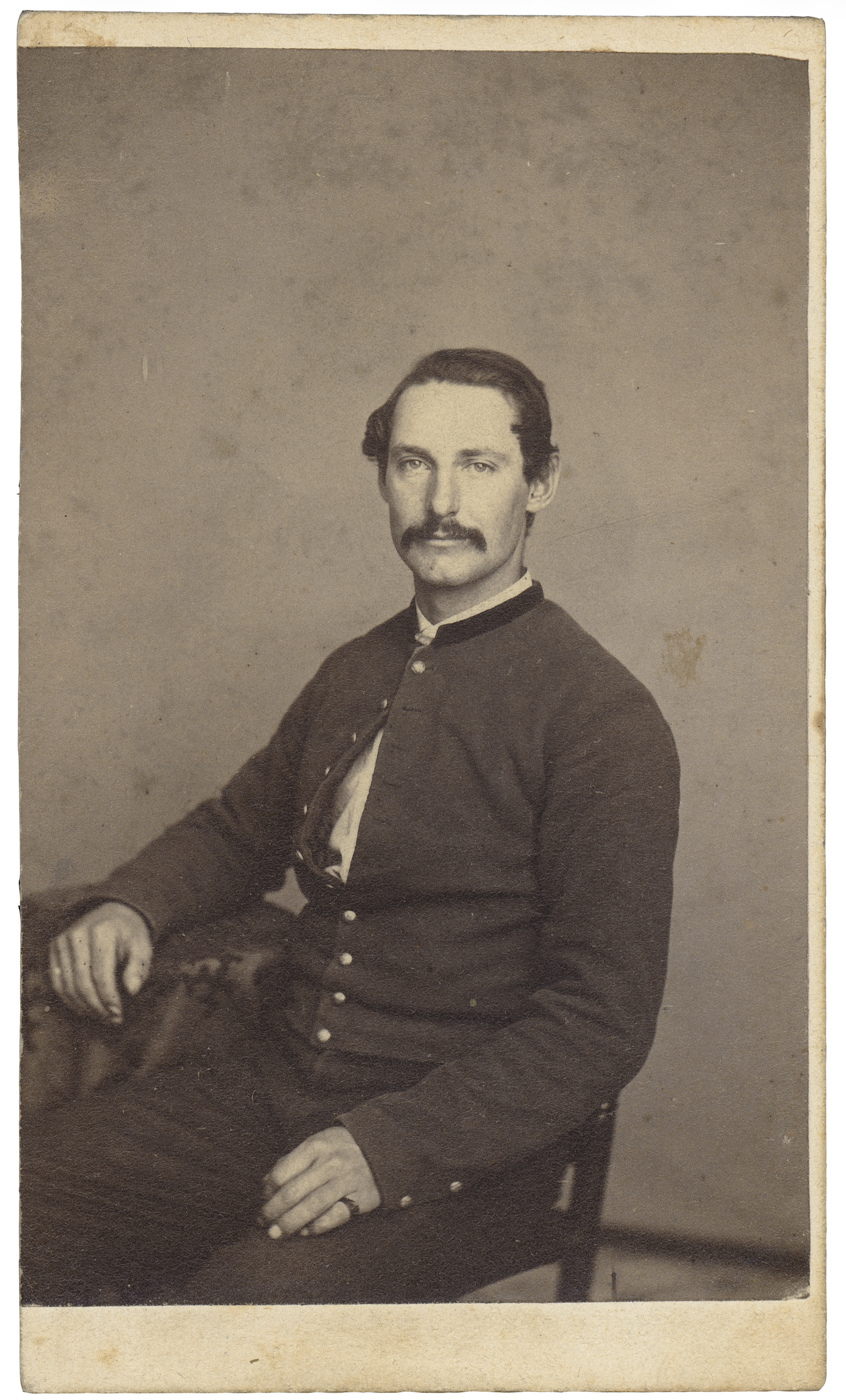
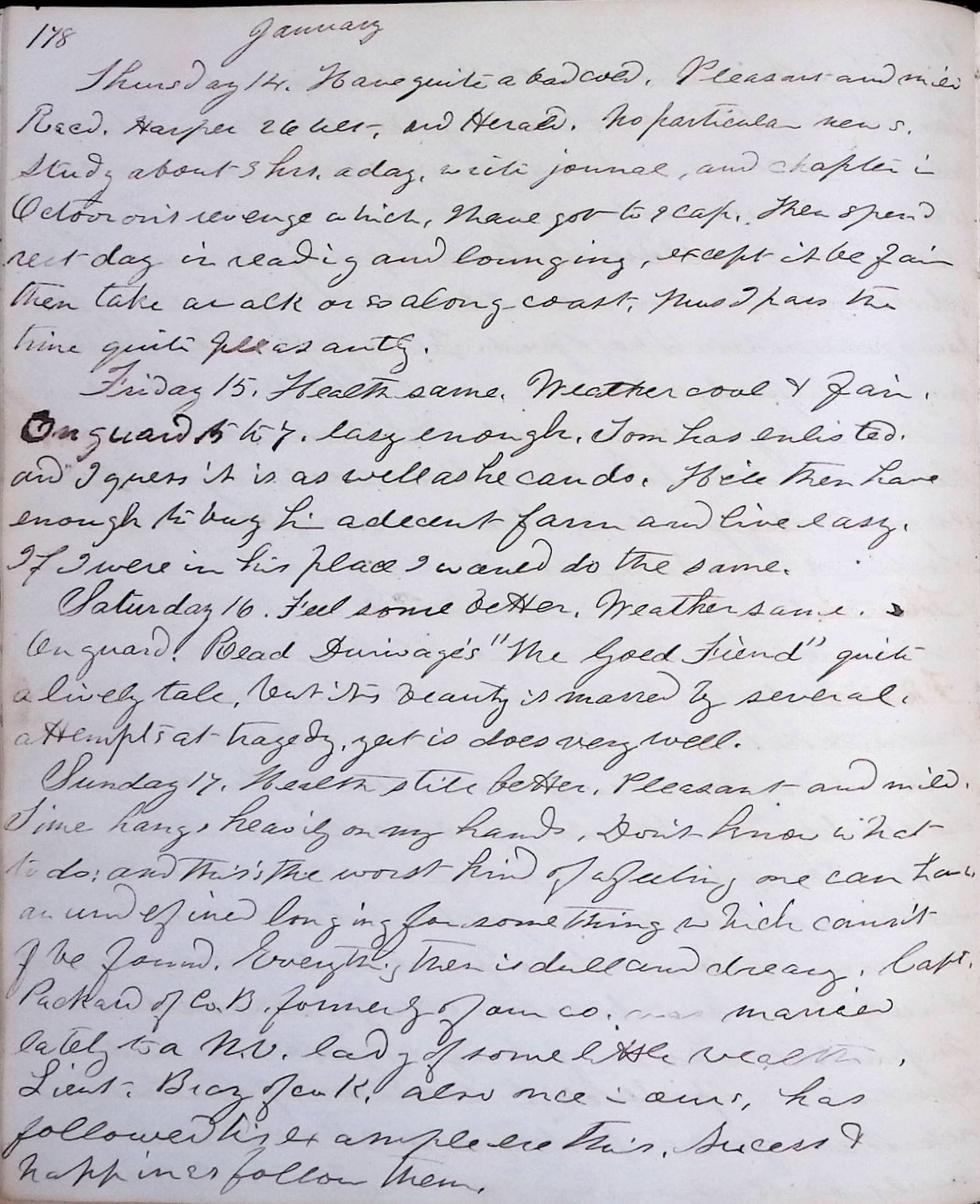
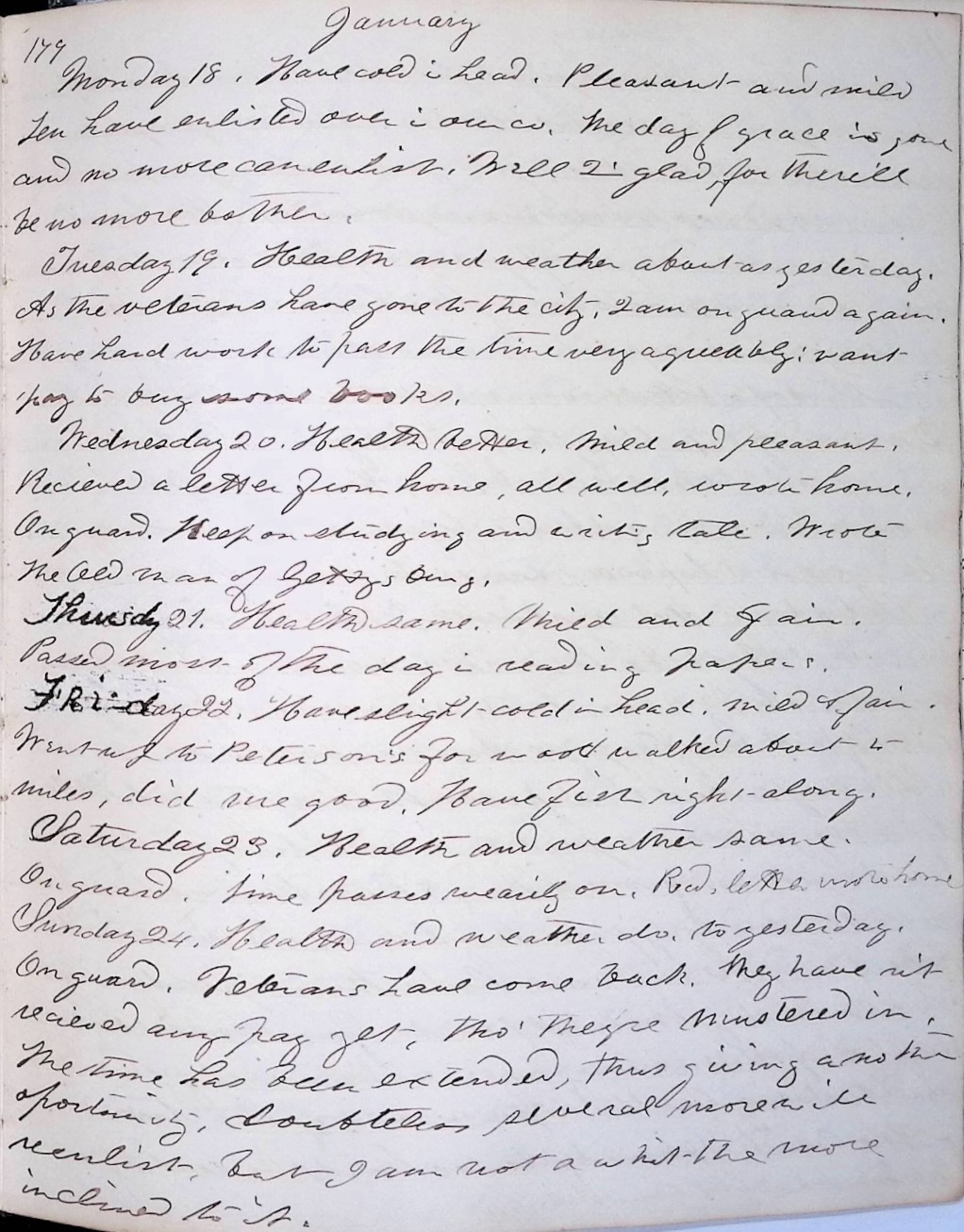
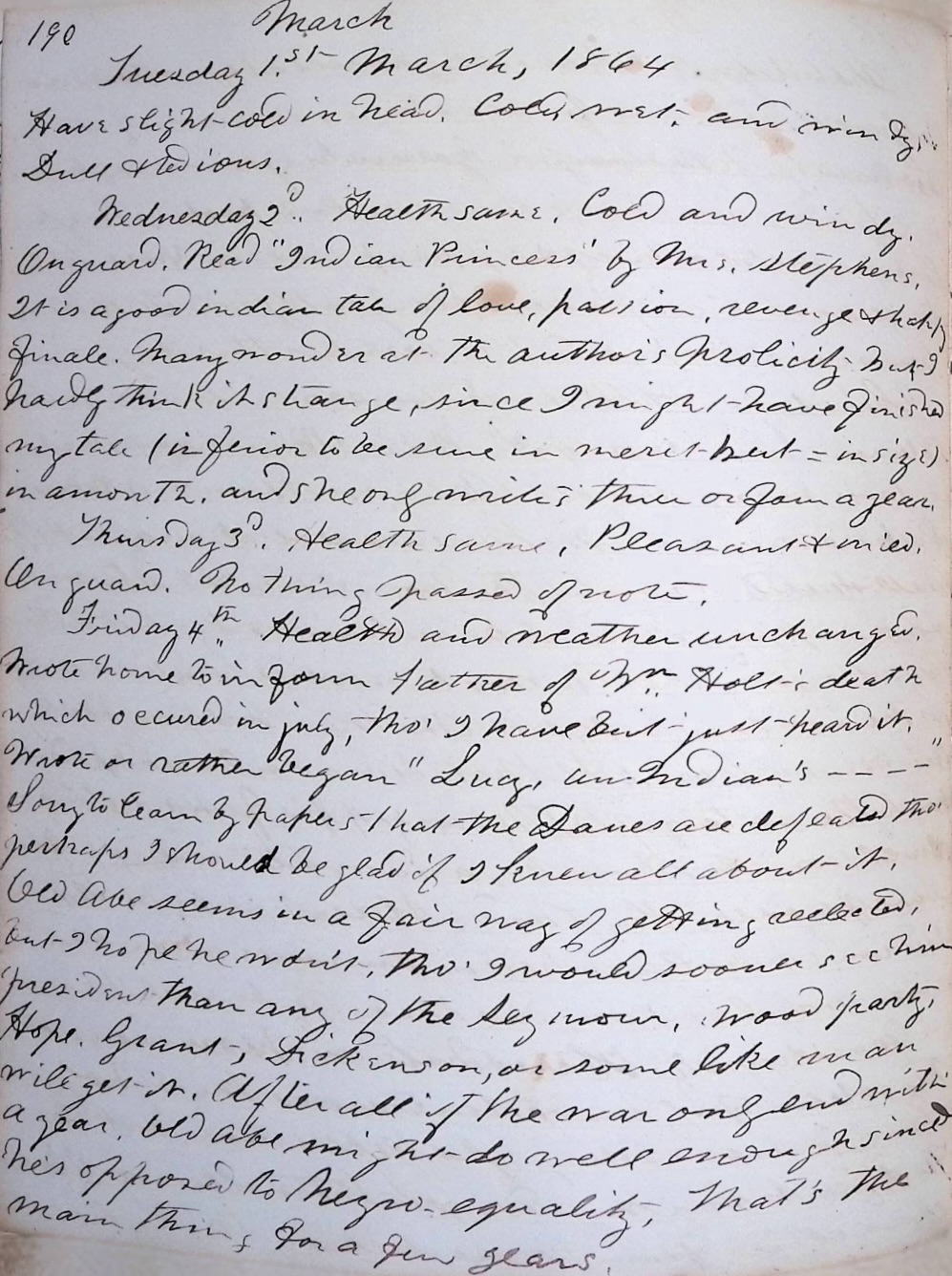
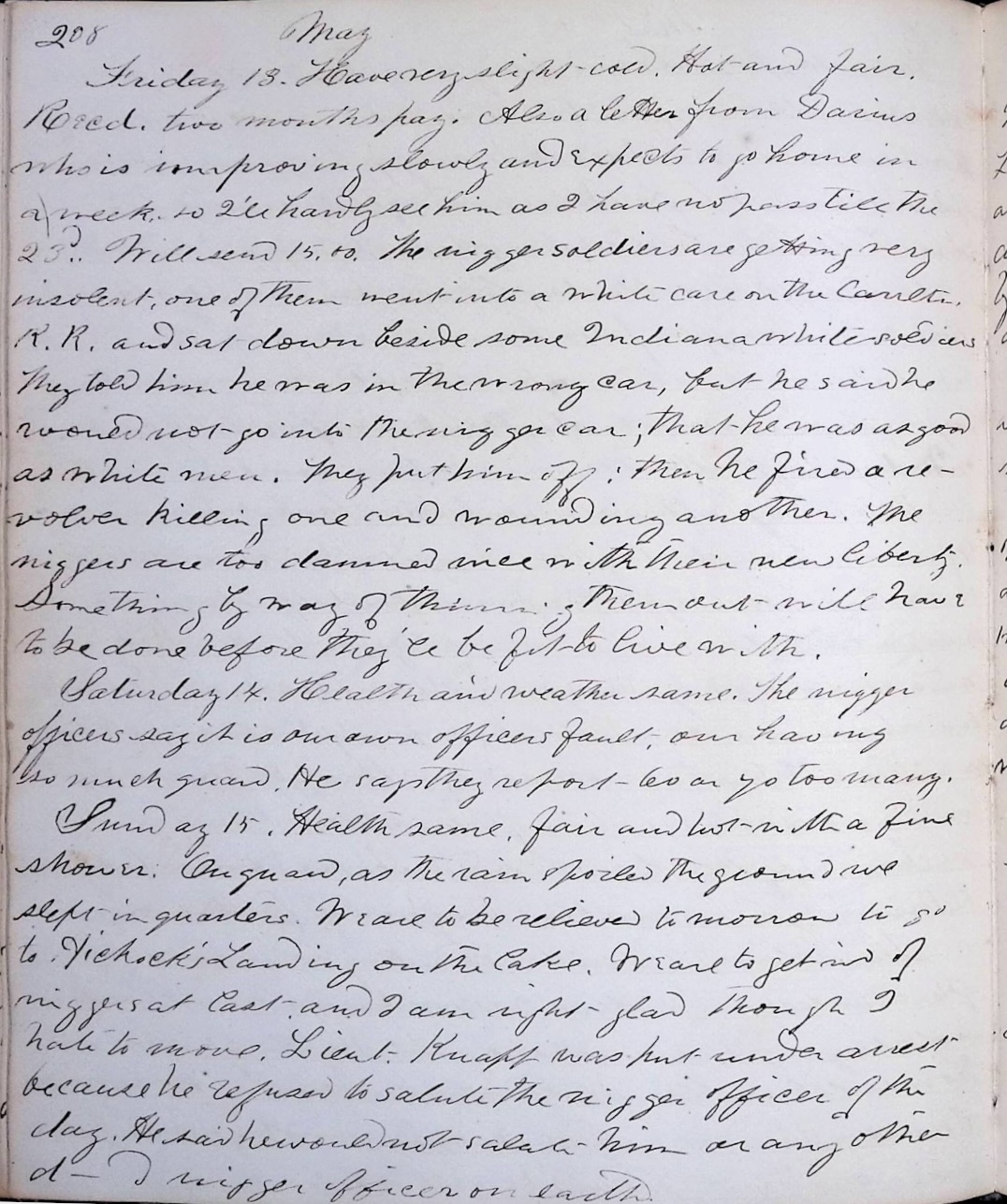
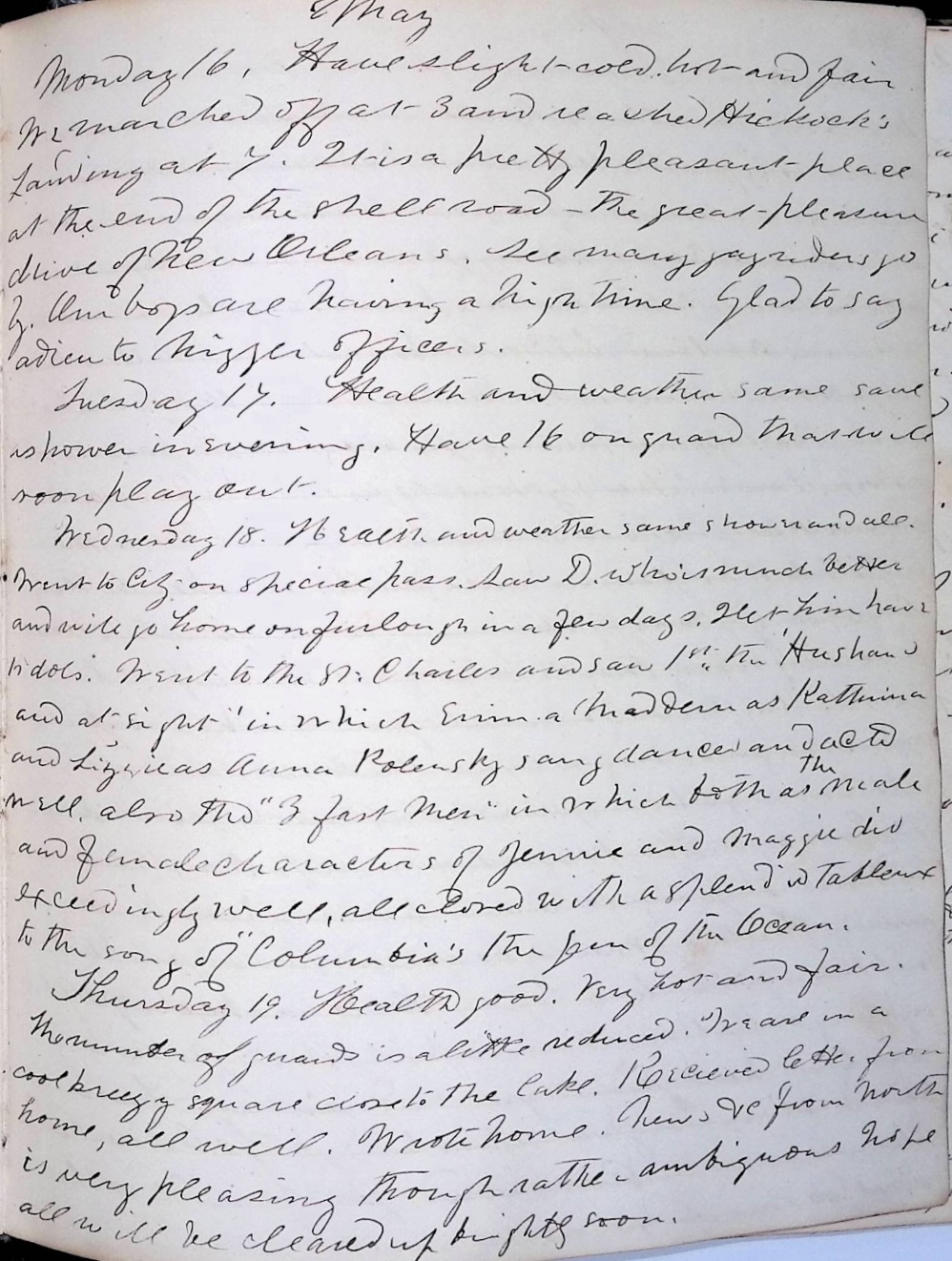
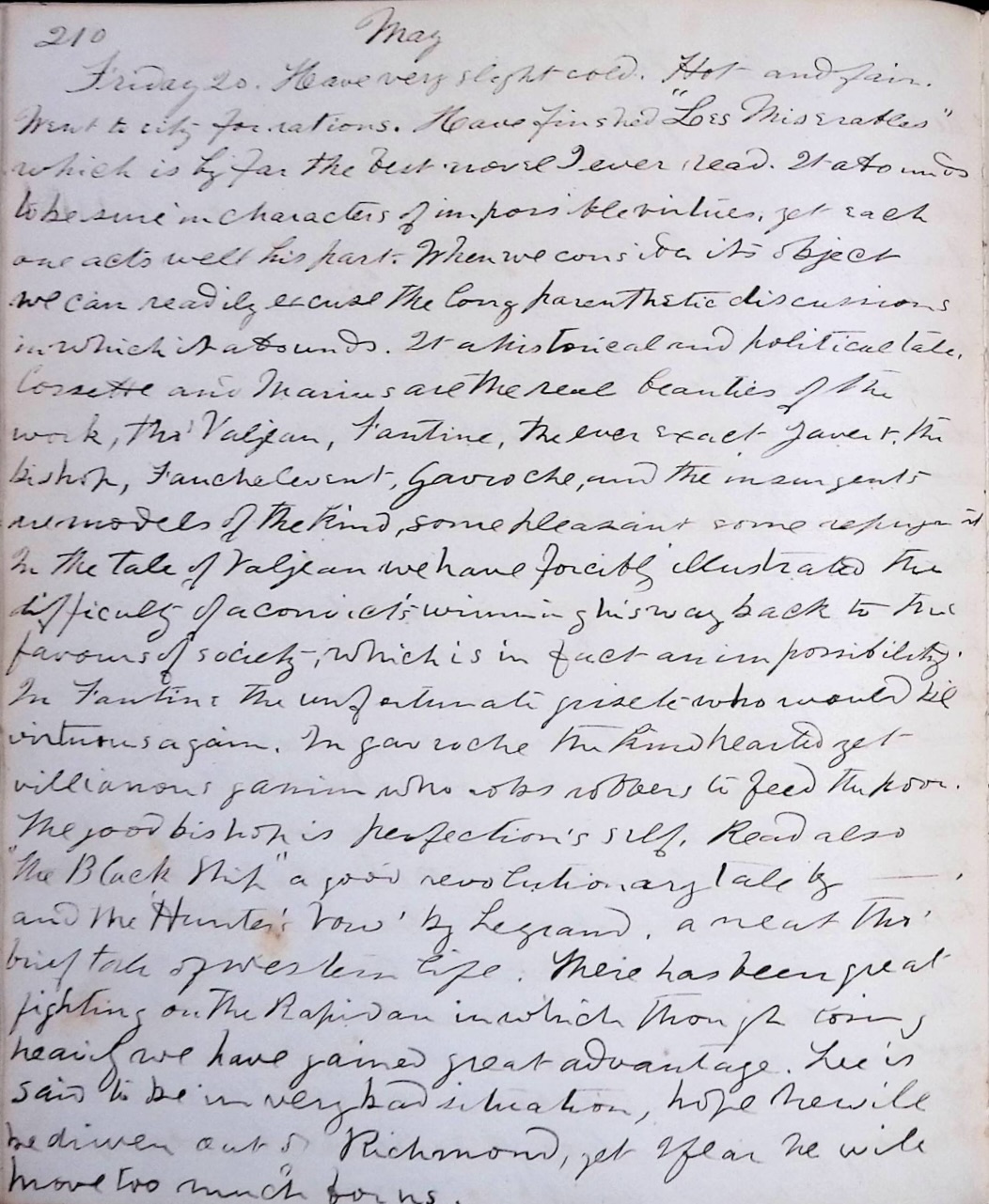
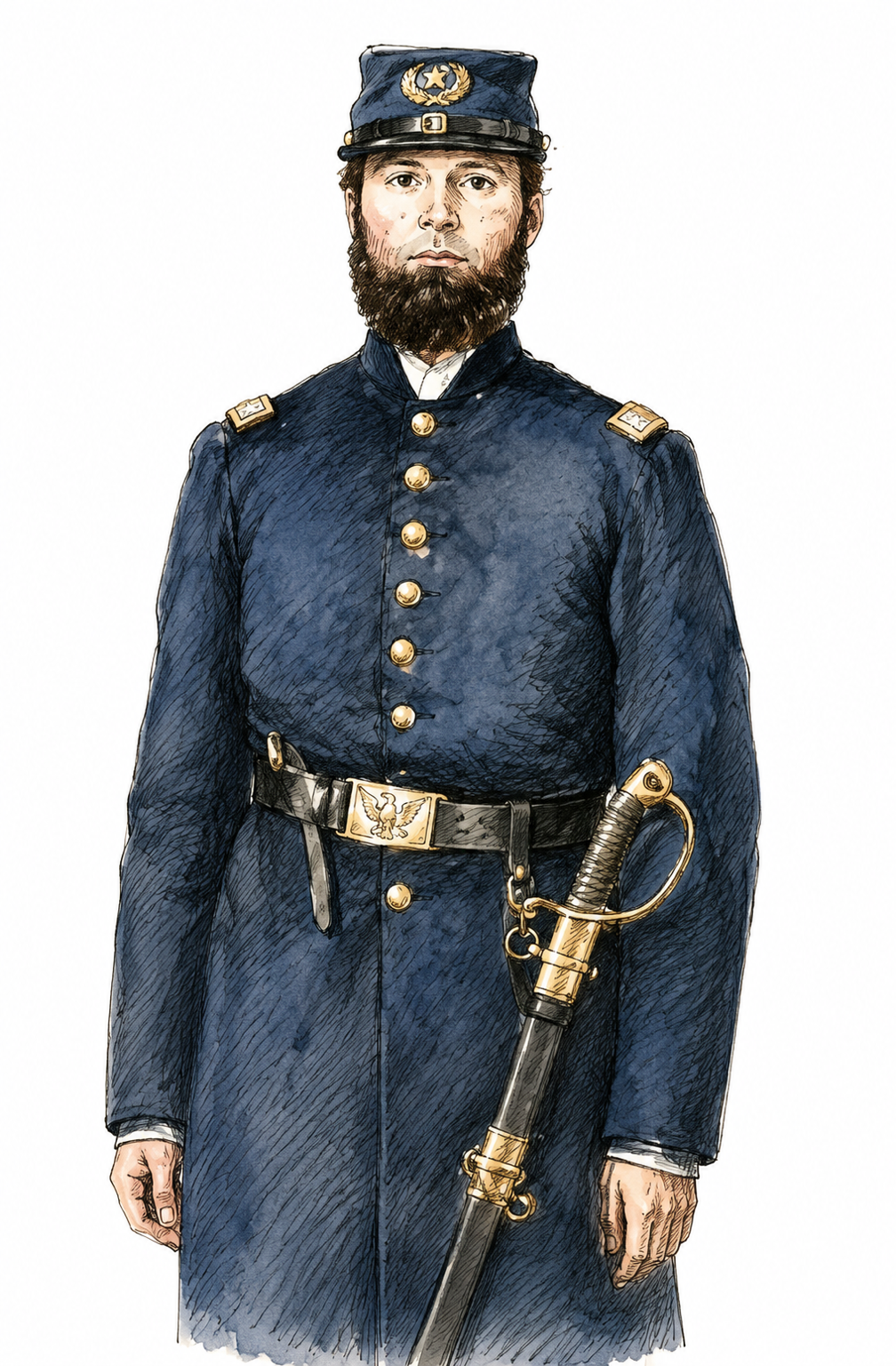
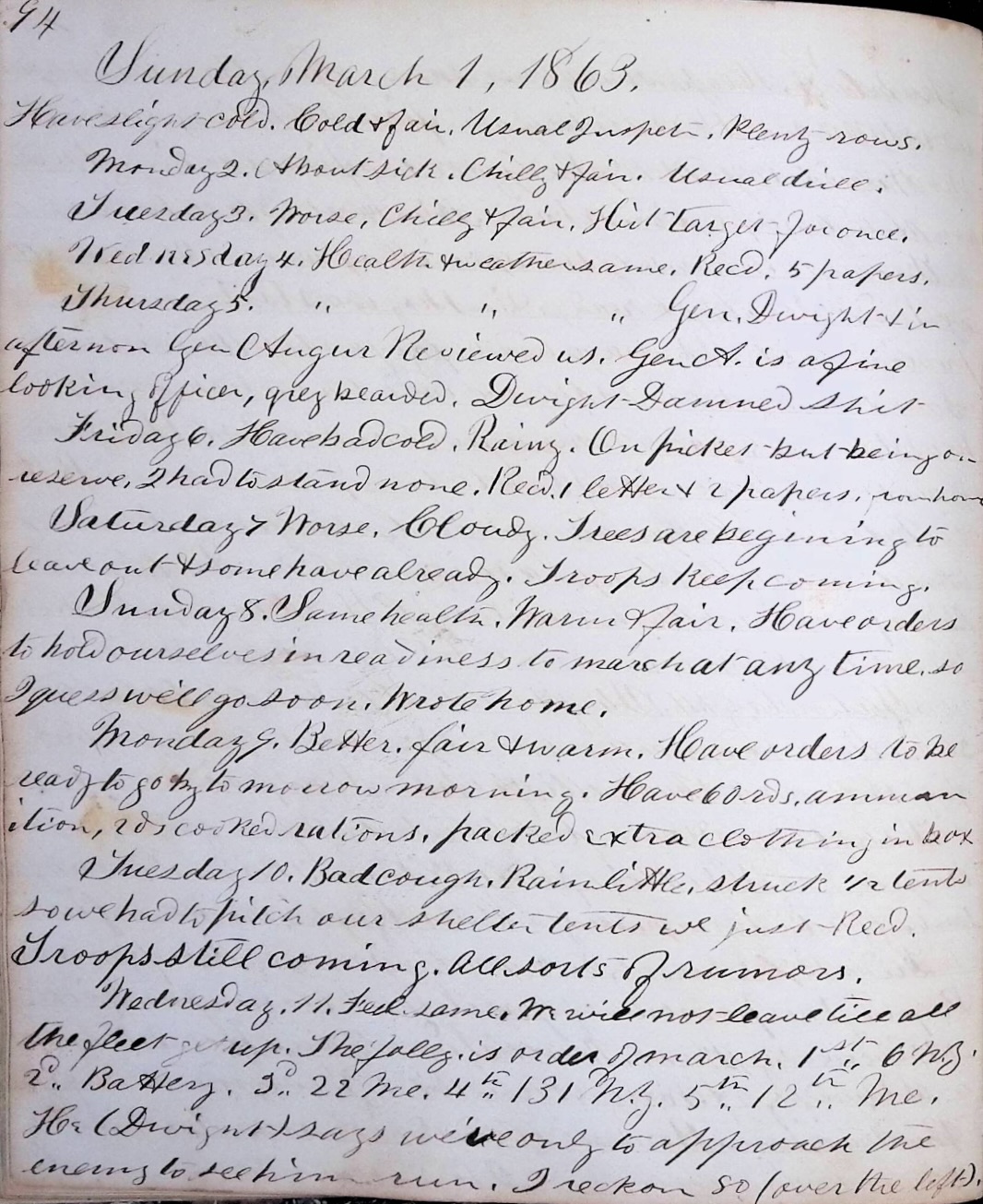
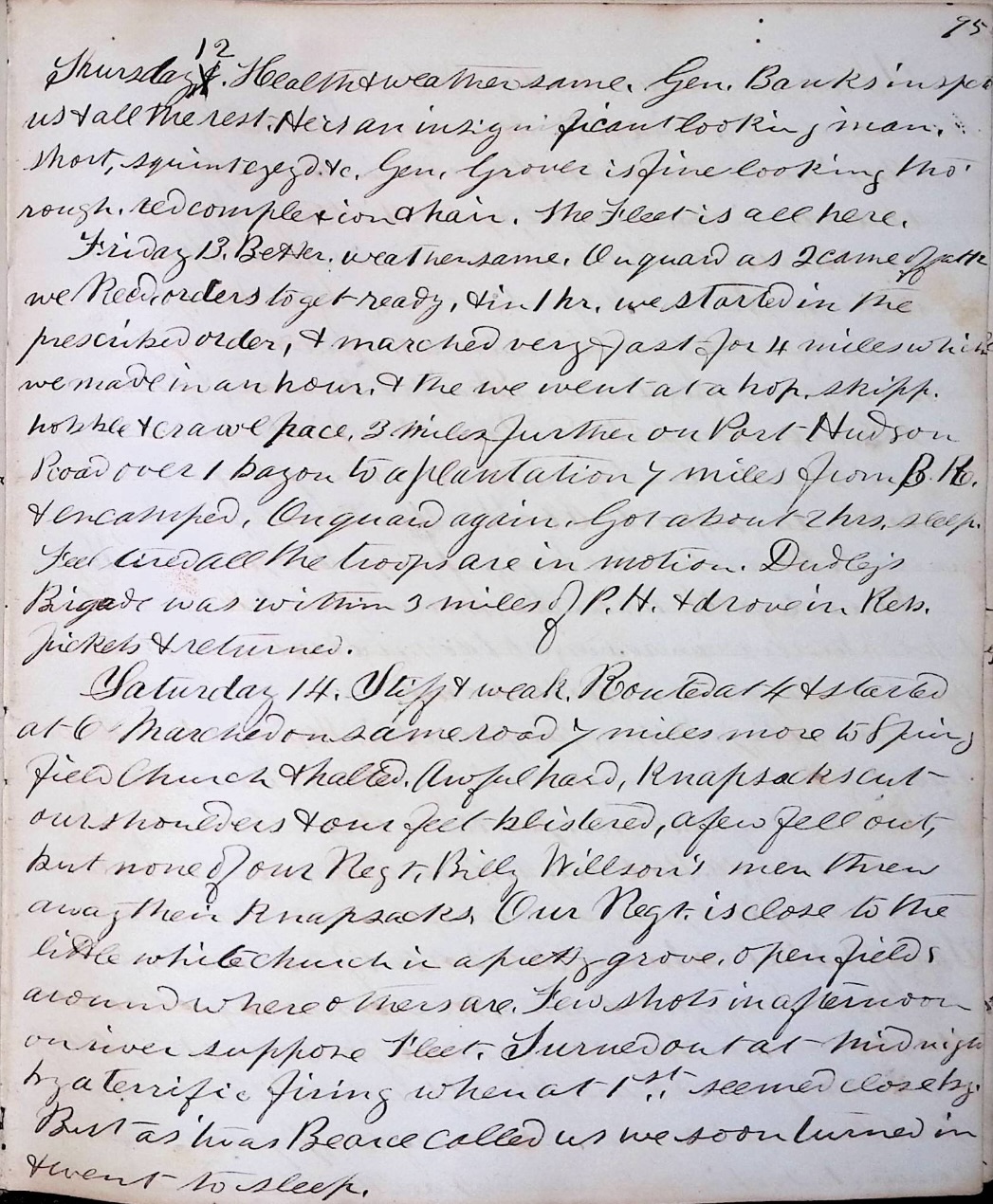
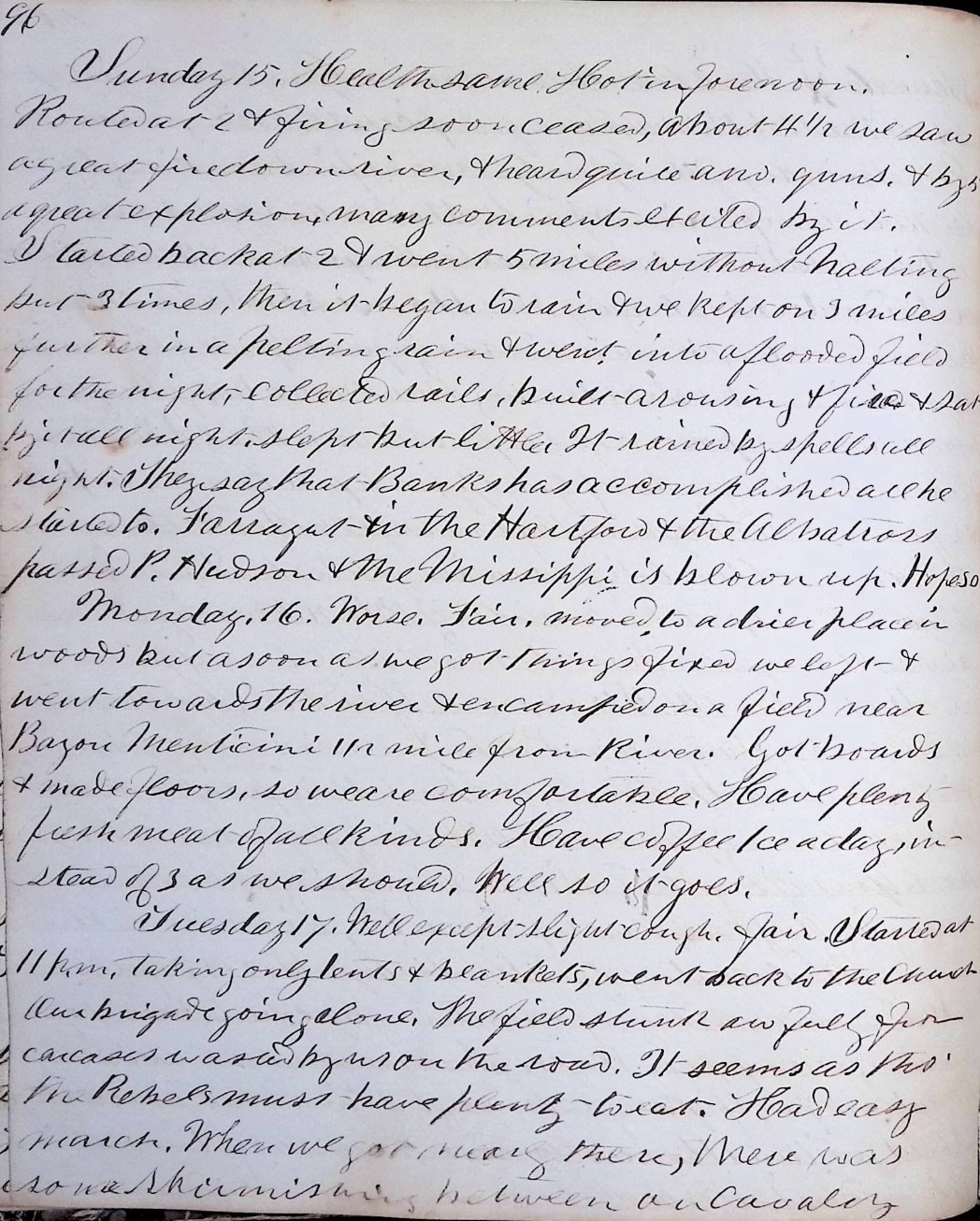
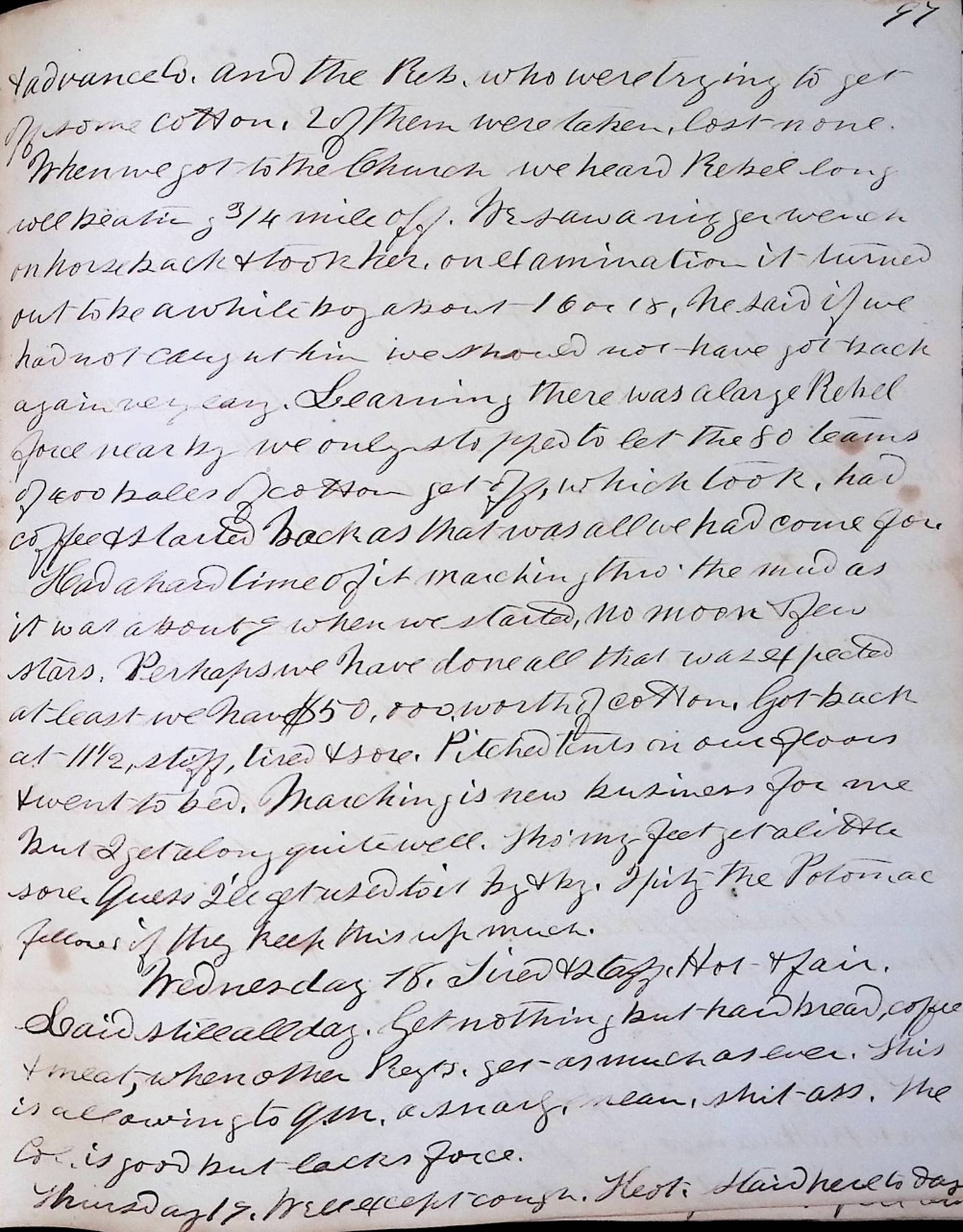
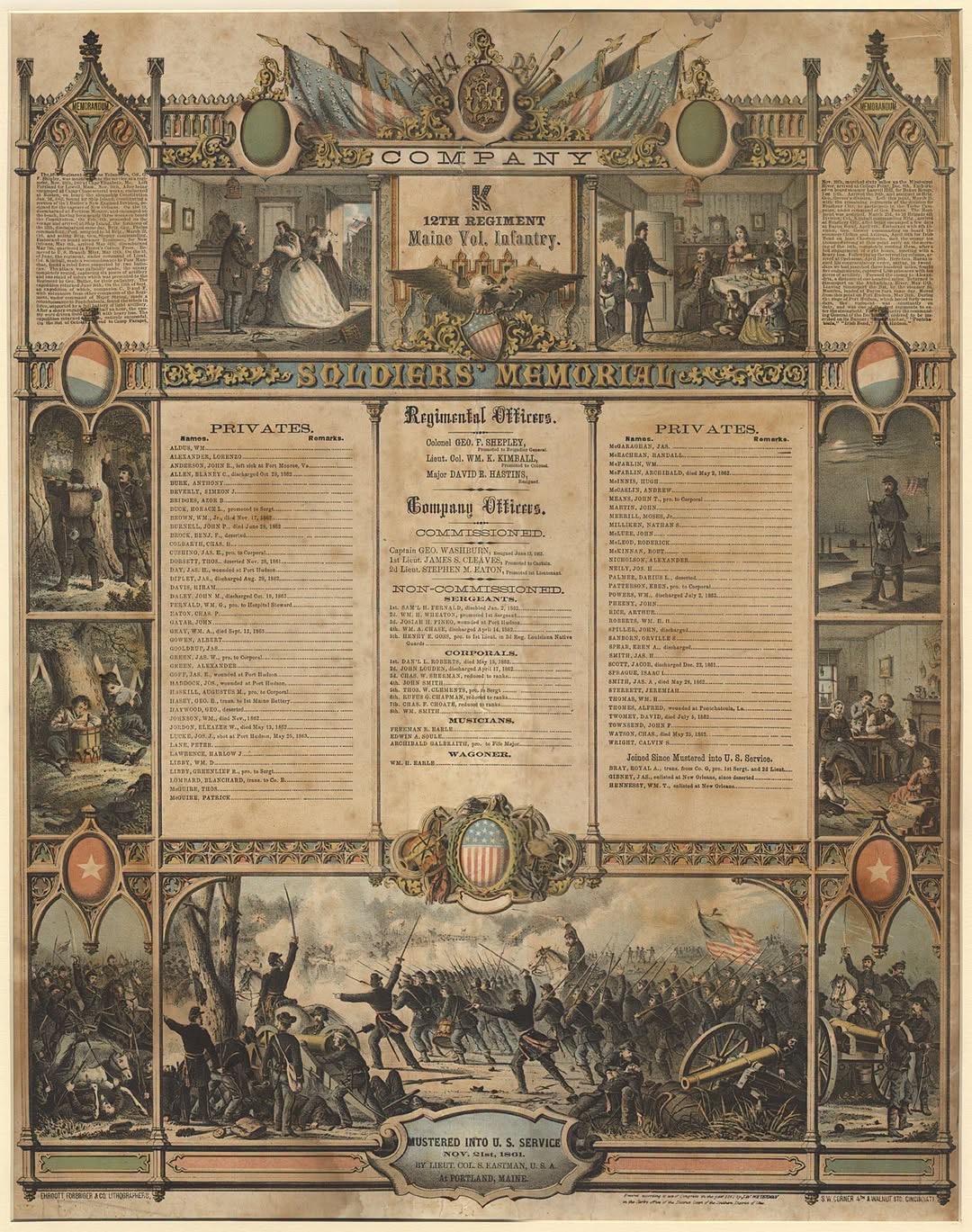
This diary was kept by Pvt. James Redlon Holt (1845-1864), a 16 year-old youngster when he enlisted on 15 November 1861 with Co. G, 12th Maine Infantry. James was the son of Rev. Dudley Barker Holt and Susan M. Redlon from Gorham, Maine, who grudgingly must have given their consent to let him collect a bounty and enter into the service.
In the sweltering heat of Louisiana, where the 12th Maine was stranded for most of its service, James poured his heart onto paper. But just as the light at the end of the tunnel seemed near, with mustering out on the horizon, fate had a cruel twist in store. The regiment was called back East, only to face the brutal carnage of the 3rd Battle of Winchester in September 1864, where James met a tragic end on 19 September 1864—“killed by a cannon ball”—just two months before completing his three-year enlistment. What a visceral reminder of the brutality of war and the fragility of life!
Serving with James and mentioned in some of his letters was his Uncle Darius Holt (1820-1875) who enlisted at the age of 42 and served several months until his health failed and he was discharged for disability. Darius was living in Minot with his wife, Mercy Ann (Lord) Holt (1828-1902) and six children when he enlisted.
This diary is from the private collection of a Holt family descendant and scans were sent to me for transcription and publication on Spared & Shared by express consent. A dozen of James’ letters were recently published on Spared & Shared from the same source. To read those letters, see—1862-64: James Redlon Holt to Dudley Barker Holt.
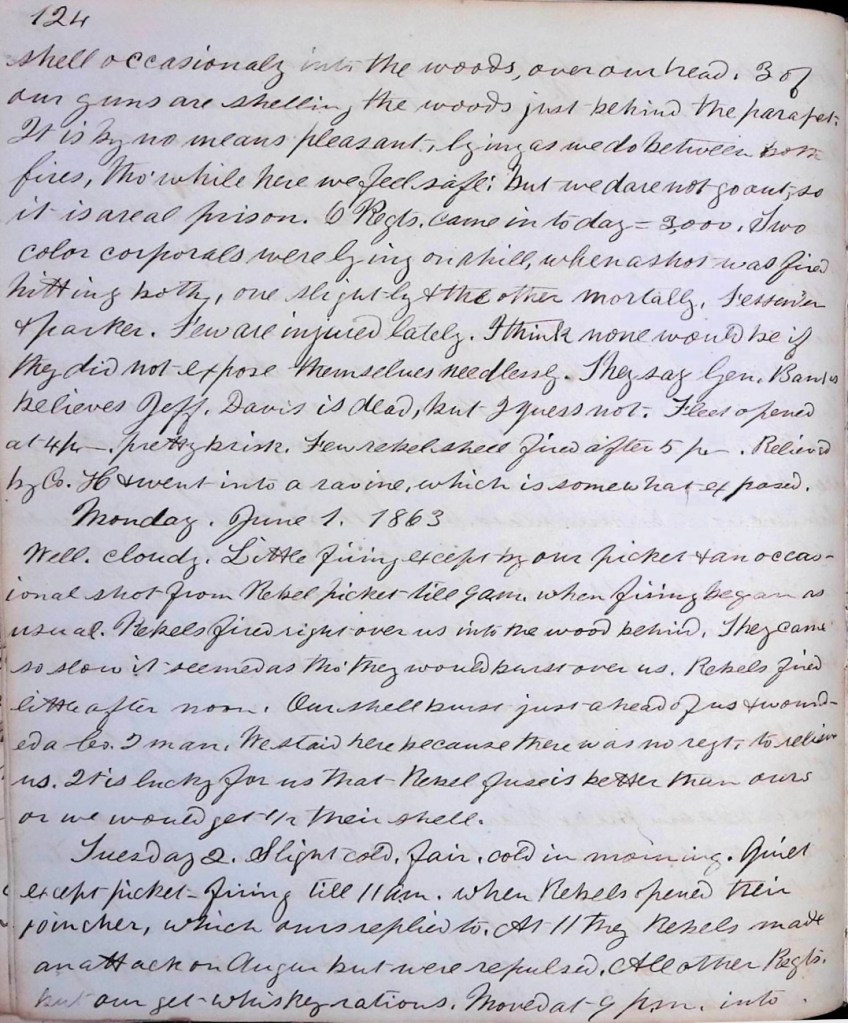
[Editor’s note: This portion of the diary begins as the 12th Maine are before Port Hudson, at the beginning of the siege. James and his comrades of Co. G are on advance picket between the two lines of artillery, with shells passing over them from each side.]
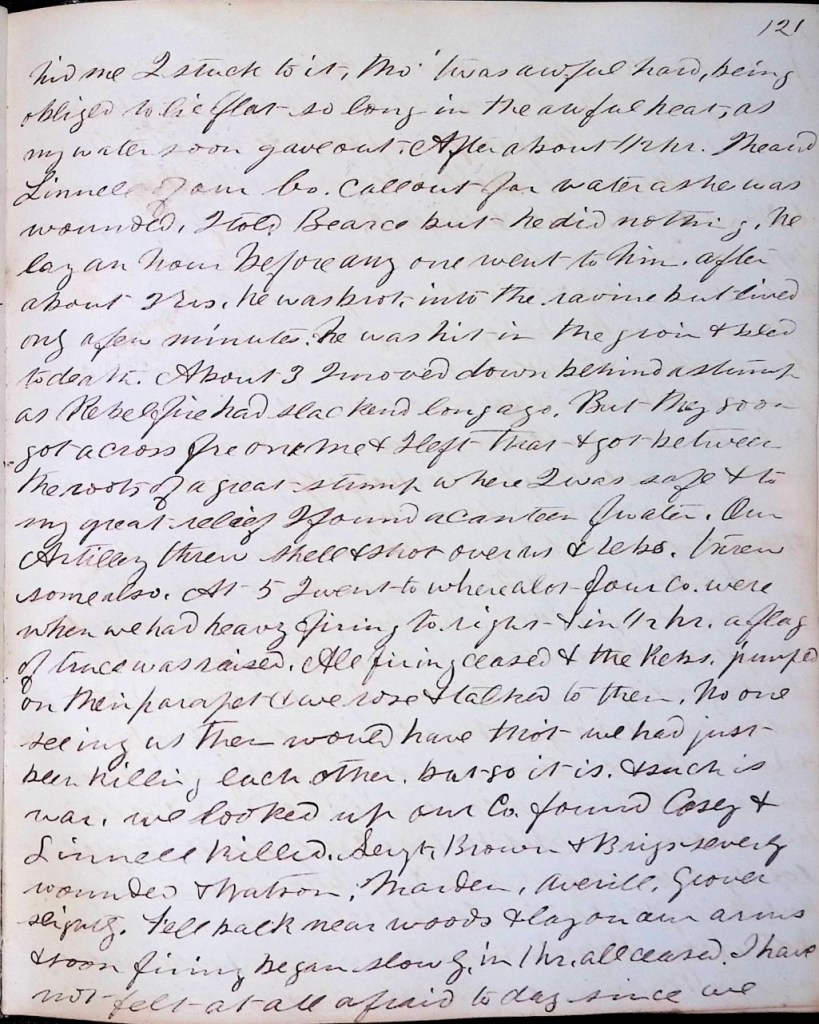
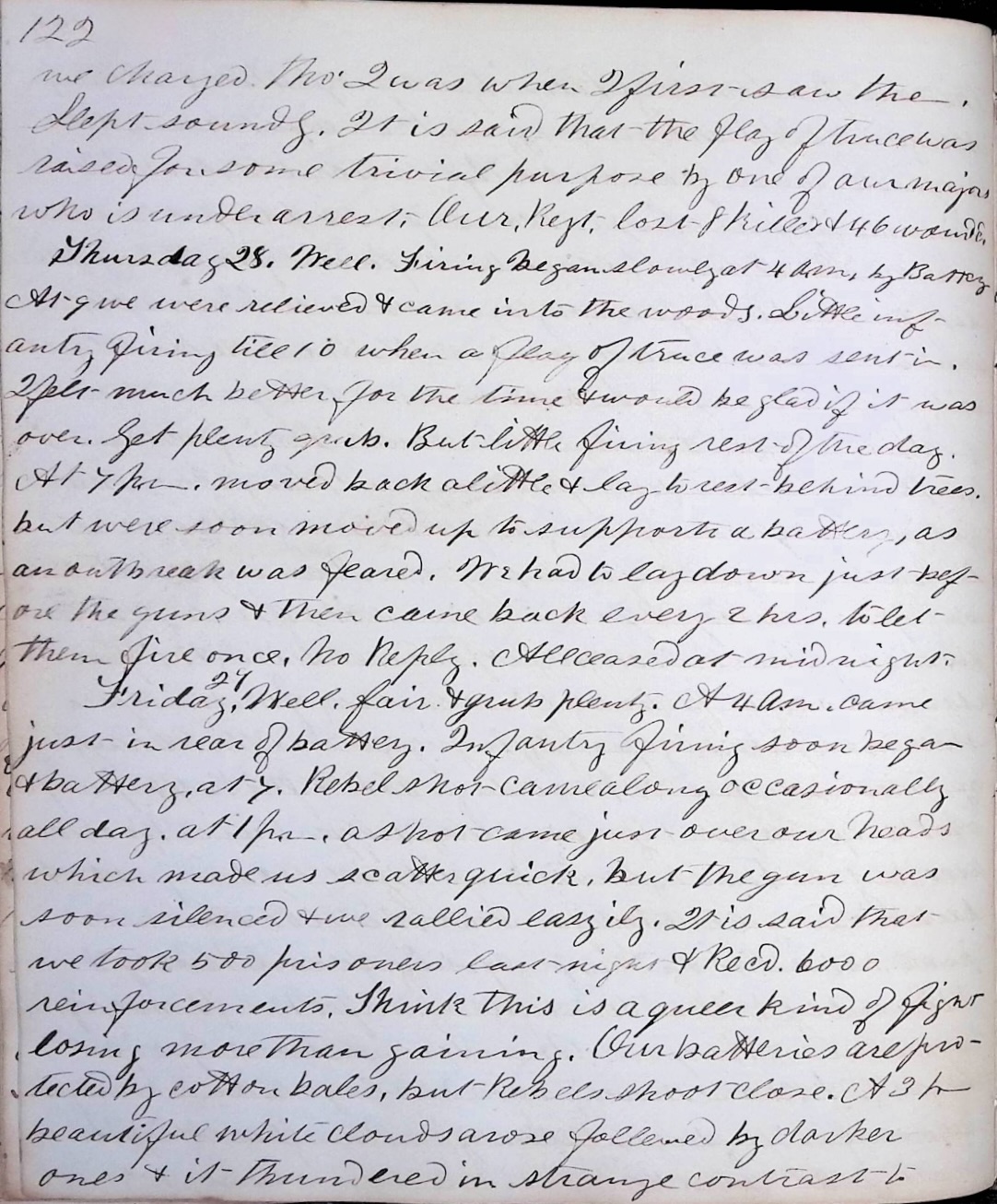
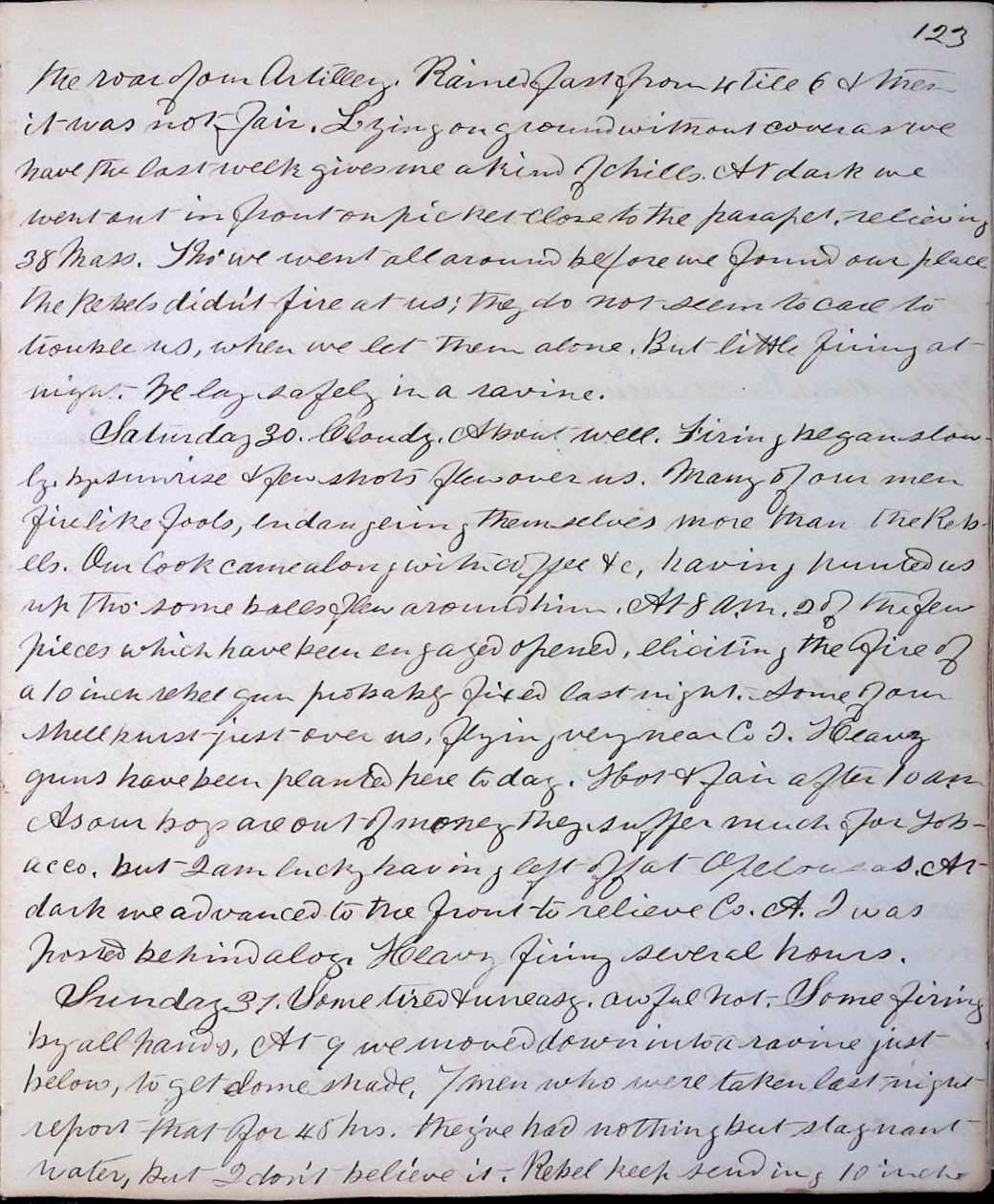
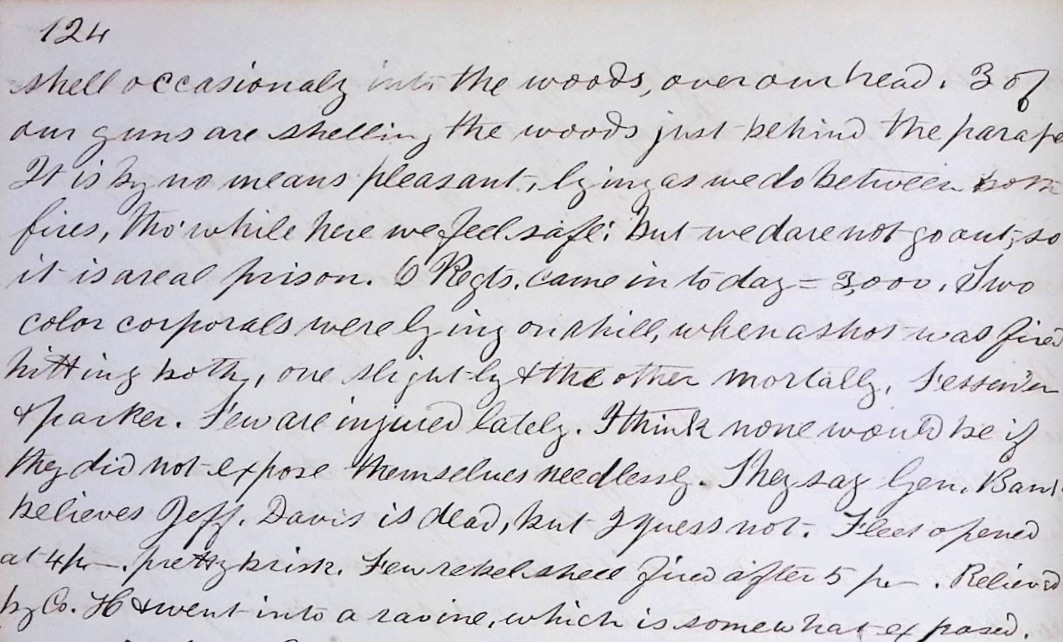
Monday, June 1, 1863—[I’m] well. Cloudy. Little firing except by our picket & an occasional shot from Rebel picket till 9 a.m. when firing began as usual. Rebels fired right over us into the woods behind. They came so slow it seemed as tho’ they would burst over us, Rebels fired little after noon. Our shell burst just ahead of us & wounded a Co. I man. We stayed here because there was no regiment to relieve us. It is lucky for us that Rebel fuse is better than ours or we would get half their shell.
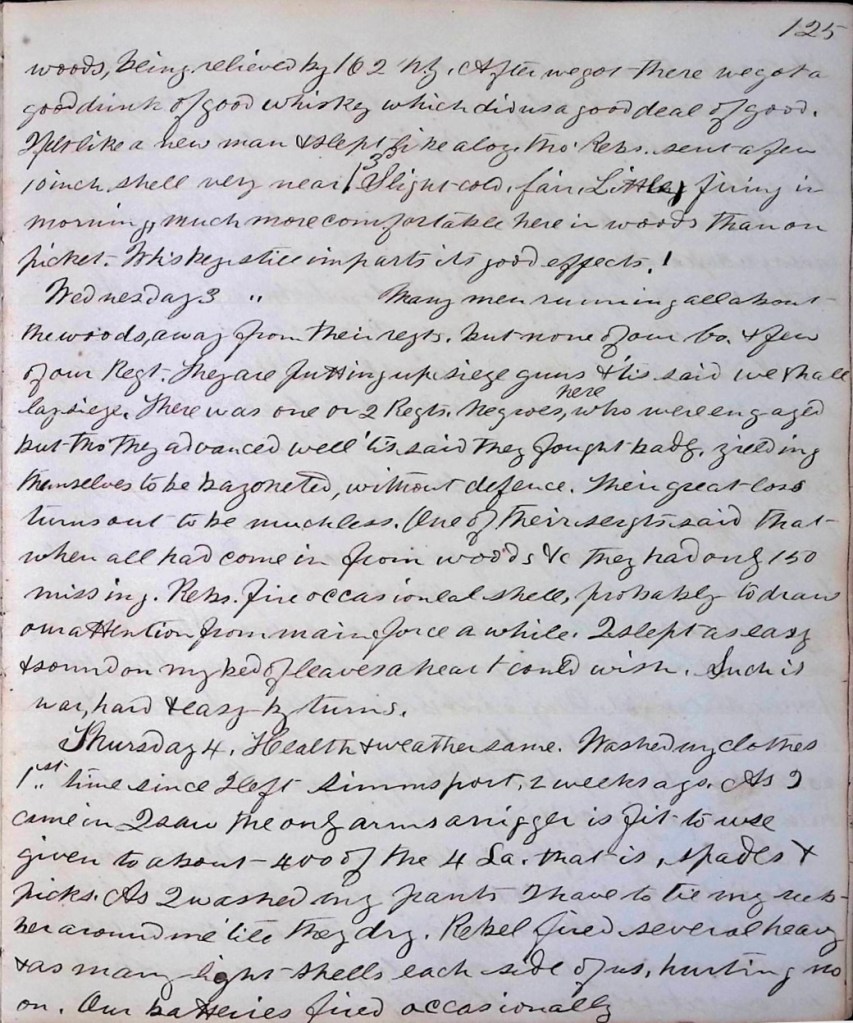
Tuesday, 2nd—Slightly cold. Fair. Cold in morning. Quiet except picket firing till 11 a.m. when Rebels opened their 10-incher, which ours replied to. At 11 the Rebels made an attack on Augur but were repulsed. All other regiments but ours get whiskey rations. Moved at 9 p.m. into woods, being relieved by 162nd New York. After we got there we got a drink of good whiskey which did us a good deal of good. I felt like a new man & slept like a log tho’ Rebs sent a few 10-inch shell very near.
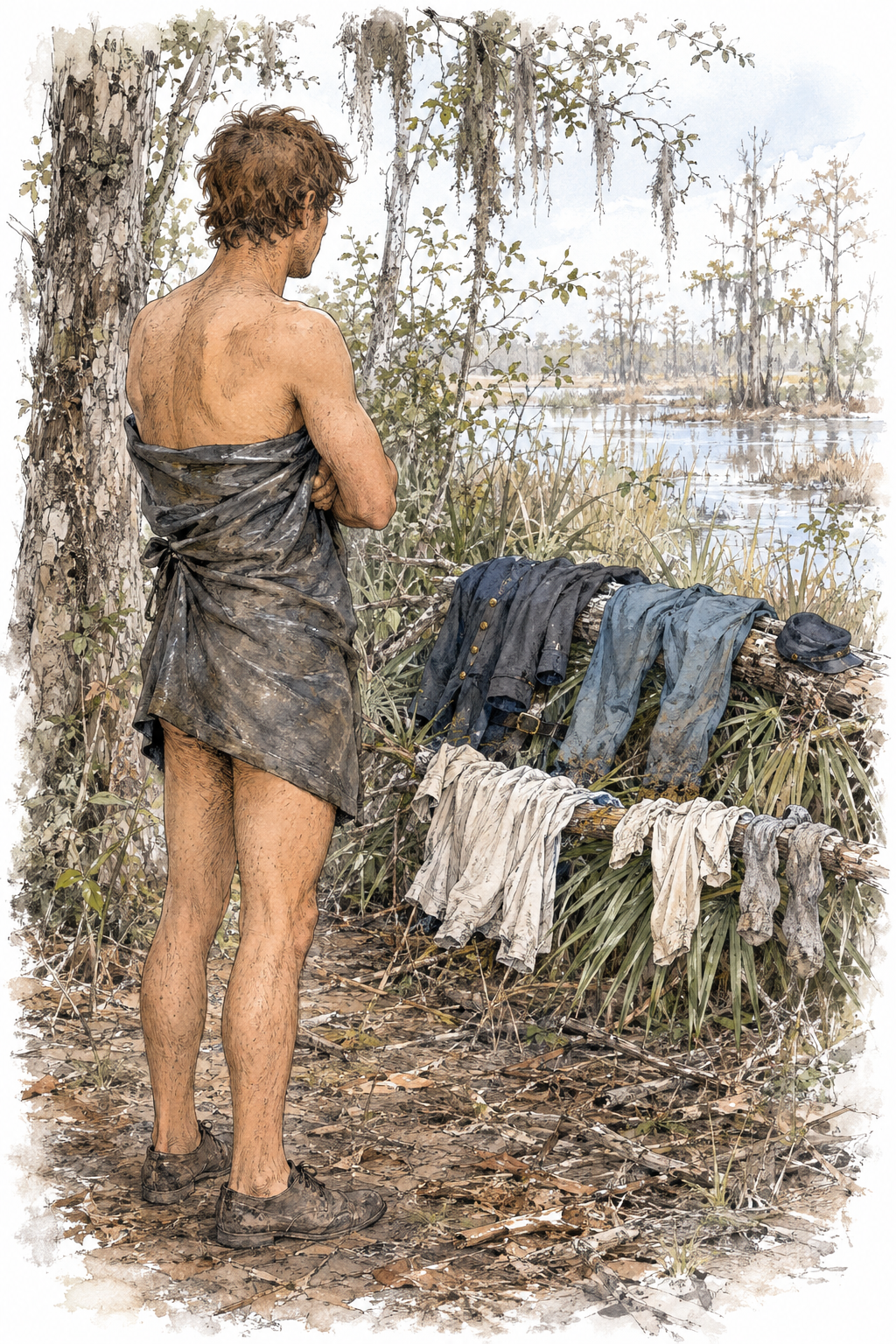
“As I washed my pants, I have to tie my rubber around me till they dry.”
Wednesday, 3rd—Slight cold. Fair. Little firing in morning. Much more comfortable here in woods than on picket. Whiskey still imparts its good effects. Many men running all about the woods, away from their regiments but none of our company and few of our regiment. They are putting up siege guns and ’tis said we shall lay siege. There was one or two regiments, negroes, here who were engaged but tho’ they advanced well, ’tis said they fought badly, yielding themselves to be bayoneted without defense. Their great loss turns out to be much less. One of their sergeants said that when all had come in from woods & they had only 150 missing. Rebs fire occasional shell, probably to draw our attention from main force a while. I slept as easy & sound on my bed of leaves a heart could wish. Such is war, hard & easy by turns.
Thursday, 4th—Health and weather same. Washed my clothes 1st time since I left Simmesport two weeks ago. As I came in, I saw the only arms a nigger is fit to use given to about 400 of the 4th Louisiana—that is spades & shovels. As I washed my pants, I have to tie my rubber around me till they dry. Rebel fires several heavy & as many light shells each side of us, hurting no one. Our batteries fired occasionally.
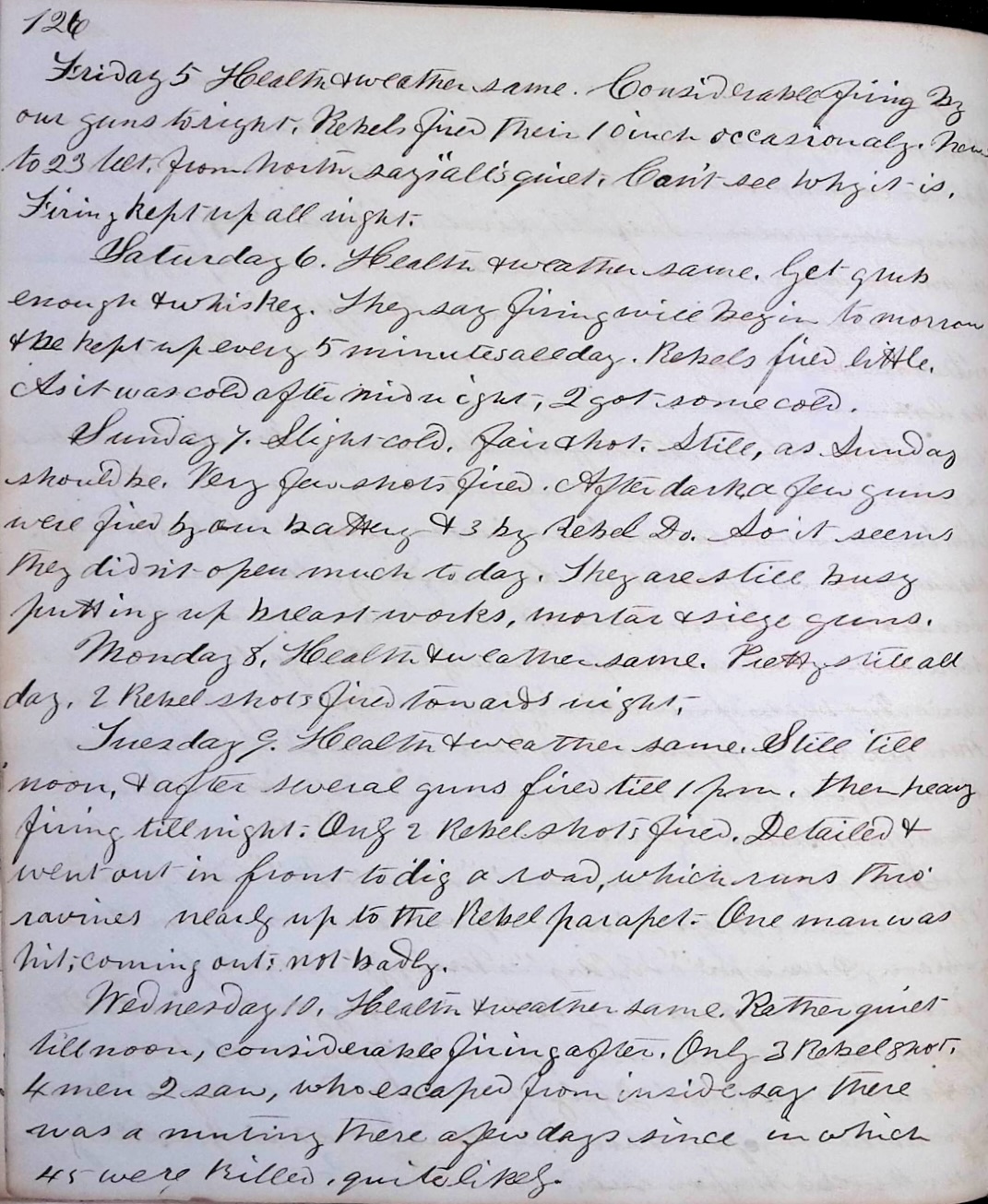
Friday, [June] 5th—Health & weather same. Considerable firing by our guns to right. Rebels fired their 10-inch occasionally. News to 23rd ultimo from North says, “All’s quiet.” Can’t see why it is. Firing kept up all night.
Saturday, 6th—Health & weather same. Get grub enough & whiskey. They say firing will begin tomorrow and be kept up every five minutes all day. Rebels fired little. As it was cold after midnight, I got some cold.
Sunday, 7th—Slight cold. Fair & hot. Still, as Sunday should be. Very few shots fired. After dark, a few guns fired by our battery & three by Rebel ditto. So it seems they didn’t open much today. They are still busy putting up breastworks, mortar & siege guns.
Monday, 8th—Health & weather same. Pretty still all day. Two Rebel shots fired towards night.
Tuesday, 9th—Health and weather same. Still till noon, and after several guns fired till 1 p.m. Then heavy firing till night. Only two Rebel shots fired. Detailed & went out in front to dig a road which runs thro’ ravines nearly up to the Rebel parapet. One man was hit coming out, not badly.
Wednesday, 10th—Health & weather same. Rather quiet till noon. Considerable firing after. Only three Rebel shots. Four men I saw who escaped from inside say there was a mutiny there a few days since in which 45 were killed—quite likely.
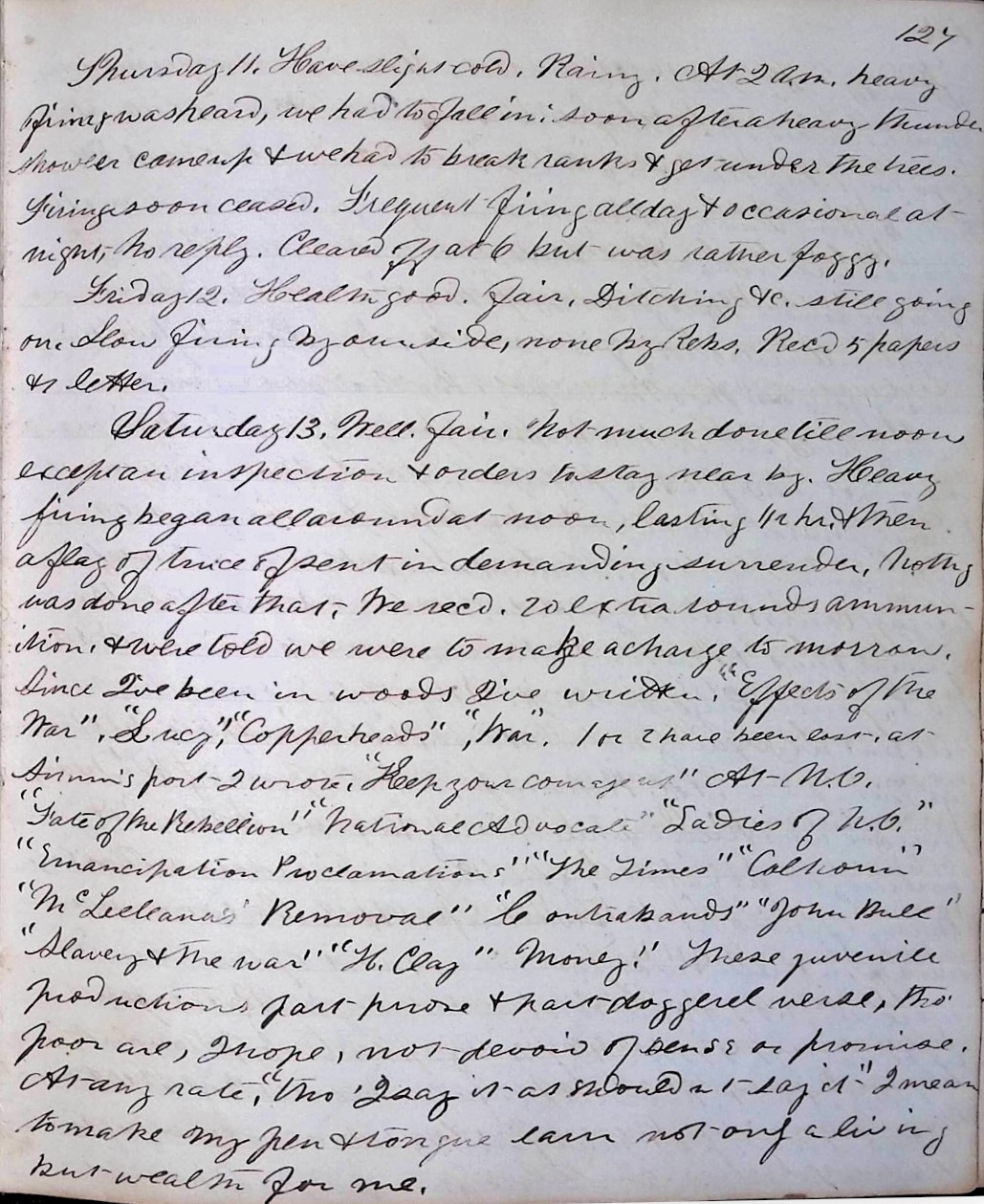
Thursday, 11th—Have slight cold. After 2 a.m. heavy firing was heard. We had to fall in. Soon after a heavy thunder shower came up & we had to break ranks & get under the trees. Firing soon ceased. Frequent firing all day & occasional at night. No reply. Cleared off at 6 but was rather foggy.
Friday, 12th—Health good. Fair [weather]. Ditching, &c. still going on. Slow firing by our side. None by Rebs. Received five papers & a letter [from home].
Saturday, 13th—Well. Fair. Not much done till noon except inspection & orders to stay near by. Heavy firing began all around at noon lasting half an hour & then a flag of truce sent in demanding surrender. Nothing was done after that. We received 20 extra rounds ammunition & were told we were to make a charge tomorrow. Since I’ve been in woods, I’ve written, “Effects of the War,” “Lucy,” “Copperheads,” [and] “War.” One or two have been lost. At Simmesport I wrote, “Keep your courageous.” At New Orleans, “Fate of the Rebellion,” “National Advocate,” “Ladies of New Orleans,” “Emancipation Proclamations,” “The Times,” “Calhoun,” “McClellan’s Removal,” “Contrabands,” “John Bull,” “Slavery & the War,” “H. Clay,” “Money!” These juvenile productions—part prose & part doggerel verse, tho’ poor are I hope, not devoid of sense or promise. At any rate, “tho I say it as shouldn’t say it,” I mean to make my pen & tongue earn not only a living, but wealth for me.
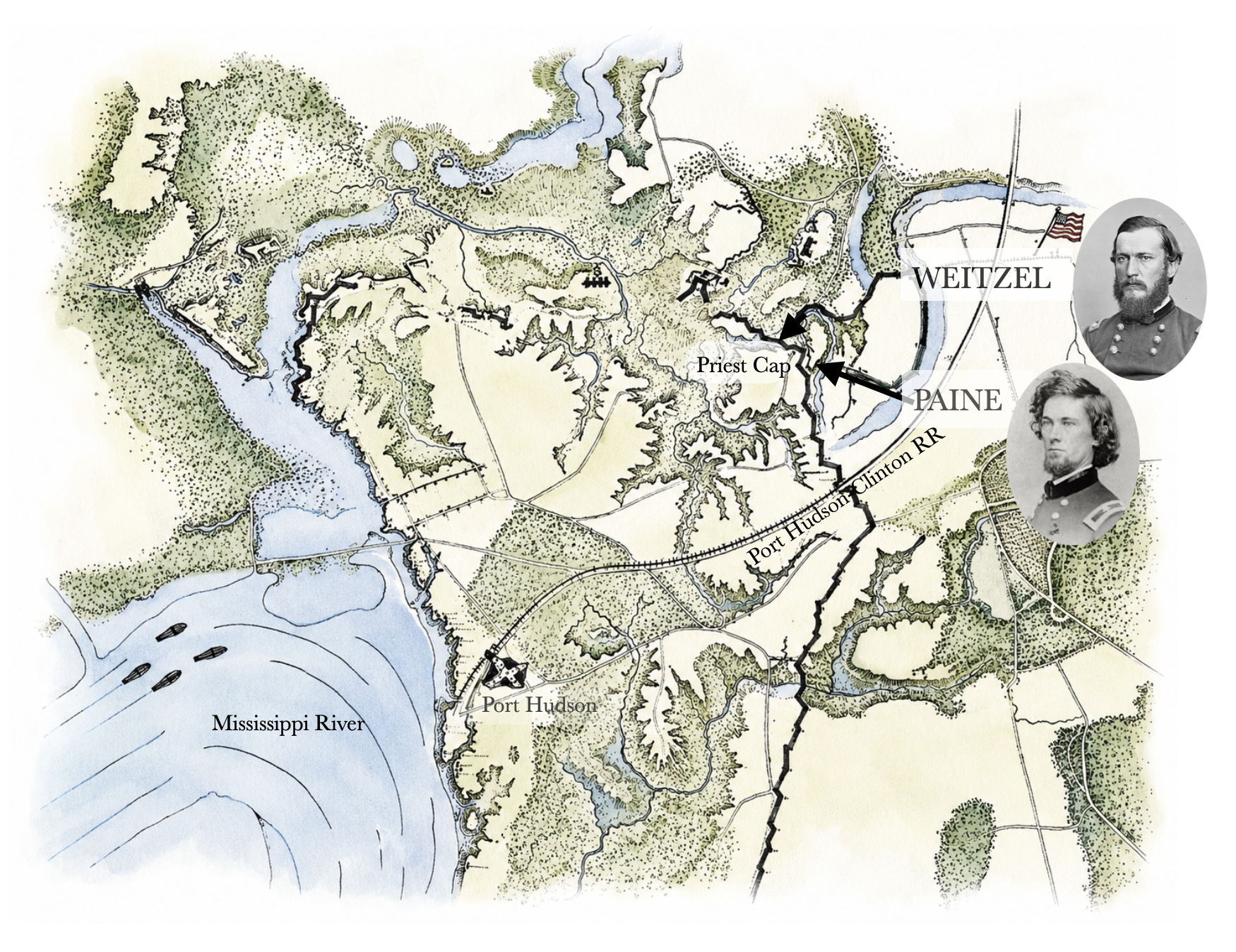
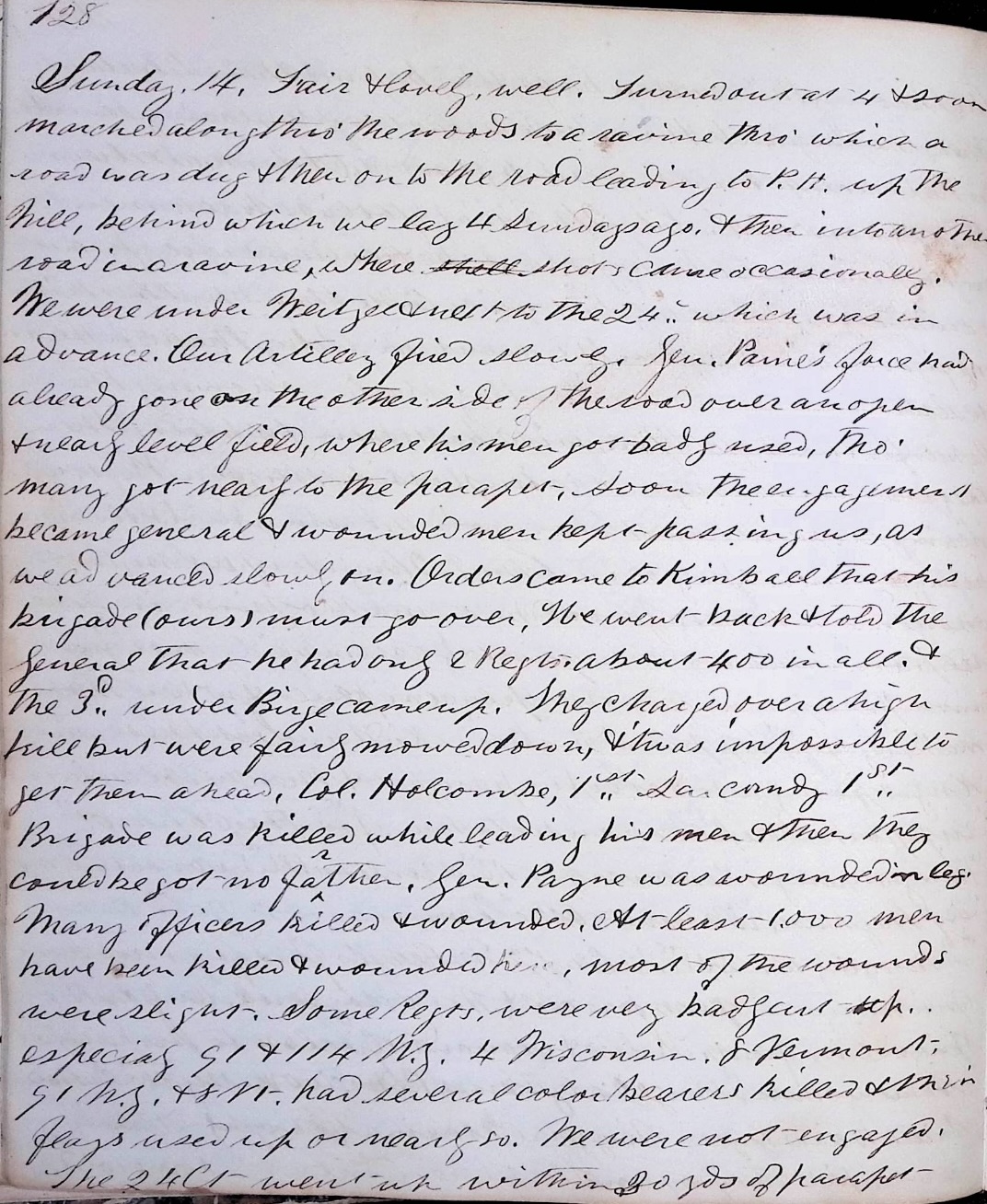
Sunday, 14th—Fair & lovely. [I’m] well. Turned out at 4 & soon marched along thro’ the woods to a ravine thro’ which a road was dug & then onto a road leading to Port Hudson up the hill, behind which we lay four Sundays ago, & then into another road in a ravine. A few shots came occasionally. We were under Weitzel & next to the 24th [Connecticut] which was in advance. Our artillery fired slowly. Gen. [Halbert] Paine’s force have already gone on the other side of the road over an open & nearly level field where his men got badly used, tho’ many got nearly to the parapet. Soon the engagement became general & wounded men kept passing us as we advanced slowly on. Orders came to Kimball that his brigade (ours) must go over. We went back & told the General that he had only two regiments—about 400 in all—& the 3rd under [Henry W.] Birge came up. They charged over a high hill but were fairly mowed down, & ’twas impossible to get them ahead. Col. [Richard Erskine] Holcomb, 1st Louisiana, commanding 1st Brigade, was killed while leading his men & then they could be got no farther. Gen. Paine was wounded in the leg. Many officers were killed & wounded. At least 1,000 men have been killed & wounded here. Most of the wounds were slight. Some regiments were very badly cut up—especially the 91st & 114th New York, 4th Wisconsin, 8th Vermont, 91st New York & 8th Vermont had several color bearers killed & their flags used up or nearly so.
[Editor’s Note: One of the regiments “badly cut up” that James mentions in his diary was the 114th New York. Capt. James Fitts of this regiment wrote of the assault on June 14th: The sound of the strife rolled down from above in an increasing tumult; the bullets fell thicker into the road; the air was mingled with noises of battle. The sides of the cut began to slope toward the level of our feet; two rods more, and we were out of the covered way. There was an abrupt ascent, then a small area of rough, uneven ground, then a ditch, seven feet deep, and quite as wide, while beyond all rose a perpendicular earthwork, not less than twelve feet above the ditch, built in the form of a retreating angle. Here was the point chosen for the assault, and before it was being enacted a scene of slaughter replete with all the horrors of a close and desperate fight. There was not sufficient ground to allow a regiment to deploy to advantage; as fast as they were unmasked from the cut, the companies rushed with a shout up the ascent, across the intervening ground, and into the ditch. From the parapet of the Rebel work came a continual flash of rifles–not in volleys, but in an irregular burst which never ceased while the attack lasted. The Rebels were entirely sheltered behind their defenses; hardly a head was to be seen above the parapet. The open space before the work was strewn with soldiers in blue, dead, dying, and severely wounded; they lay among the bushes, on the hillside, and covered the bottom of that awful ditch, yawning like a grave, at the foot of the work. For a whole hour there was a continued repetition of the scene; a yell, a rush, shouts, musket shots, cries and groans. The ditch was at last filled with the living and the dead; the former striving, within six yards of the muzzles of the Rebel rifles, to climb the face of the earthwork, and continually dropping back, with bullet holes perforated clear through their bodies…Wounded men were killed while trying to crawl beyond the range of the fire, or lay helpless under it, unable to hazard the attempt…every repetition of the assault was met by the same murderous discharge, covering the ground thickly with its victims, and adding to the horrors of the scene.” Source: Iron Brigadier, 2013]
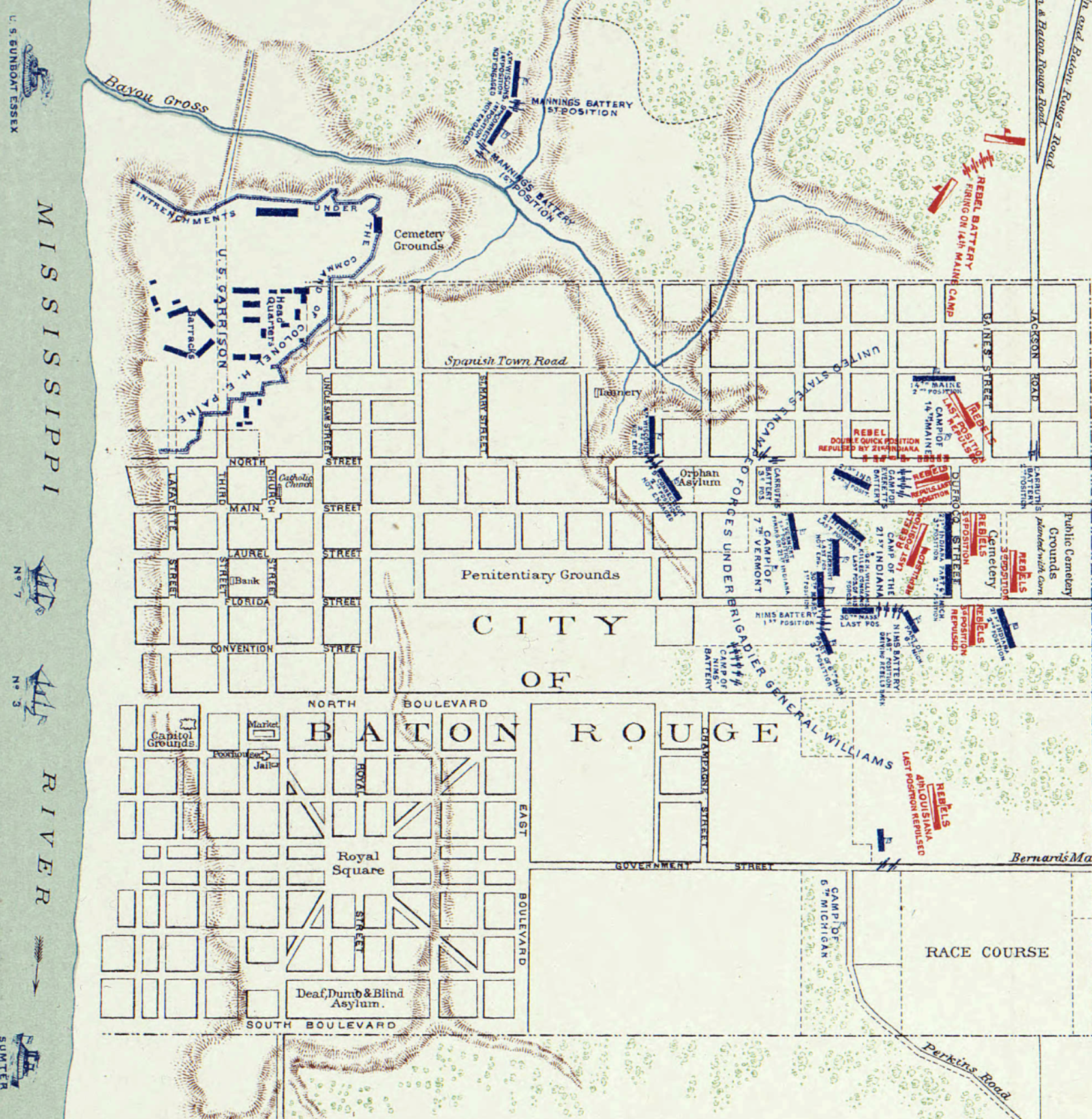
This AI-generated map gives an approximate view of the separate assaults made on June 14, 1863 by the 19th Army Corps, both directed at the Confederate salient known as Priest Cap and adjacent ridges. Weitzel’s men moved up through ravines largely under cover while Paine’s men were compelled to cross an open field.
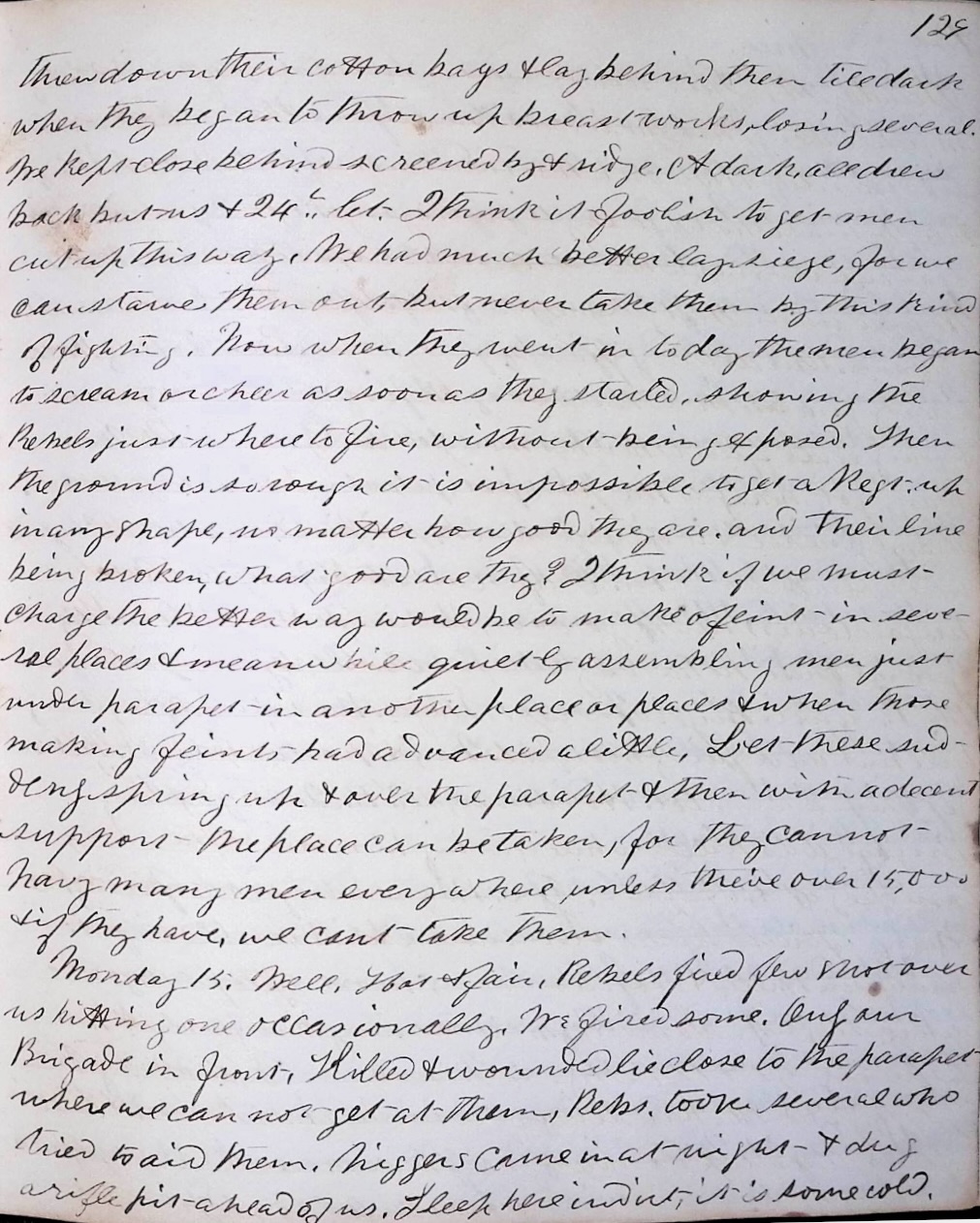
We were not engaged. The 24th Connecticut went up to within 30 yards of the parapet, threw down their cotton bags, and lay behind them till dark when they began to throw up breastworks, losing several. We kept close behind, screened by a ridge. At dark, all drew back but us & the 24th Connecticut. I think it foolish to get men cut up this way. We had much better lay siege for we can starve them out, but never take them by this kind of fighting.
[Editor’s Note: During the 14 June assault on Port Hudson, the 24th Connecticut (a 9-months regiment) was assigned to carry cotton-filled bags and fascines to lay down in the ditches and moats in front of the Confederate breastworks, making it easier for the storming columns to follow to cross over scale the rebel earthworks. However, due to heavy Confederate fire as the 24th Connecticut approached the earthworks, many of the men stopped short of the ditches, dropped their bags in the road and took cover behind them, effectively blocking the pathway for the 12th Maine and the other regiments who followed.]
Now when they went in today, the men began to scream or cheer as soon as they started, showing the rebels just where to fire without being exposed. The the ground is so rough it is impossible to get a regiment up in any shape, no matter how good they are, and their line being broken, what good are they? I think if we must charge, the better way would be to make a feint in several places & meanwhile quietly assembling men just under the parapet in another place or places, & when those making feints had advanced a little, let these suddenly spring up & over the parapet, and then with a decent support, the place can be better taken for they cannot nary many men everywhere unless the’ve over 15,000 & if they have, we can’t take them.
Monday, 15th—Well. Hot & fair. Rebels fired few shot over us hitting one occasionally. We fired some. Only our Brigade in front. Killed & wounded lie close to the parapet where we cannot get at them. Rebs took several who tried to aid them. Niggers came in at night & dug rifle pits ahead of us. Sleep here in dirt. It is some cold.
[Editor’s Note: For a great article written by Capt. Alonzo Mabbett of Co. I, 24th Connecticut, describing the plight of a wounded corporal from Co. B, 12th Maine Infantry, pinned down on the June 14th battlefield in front of the Rebel parapet, see An Incident, at the siege of Port Hudson.]
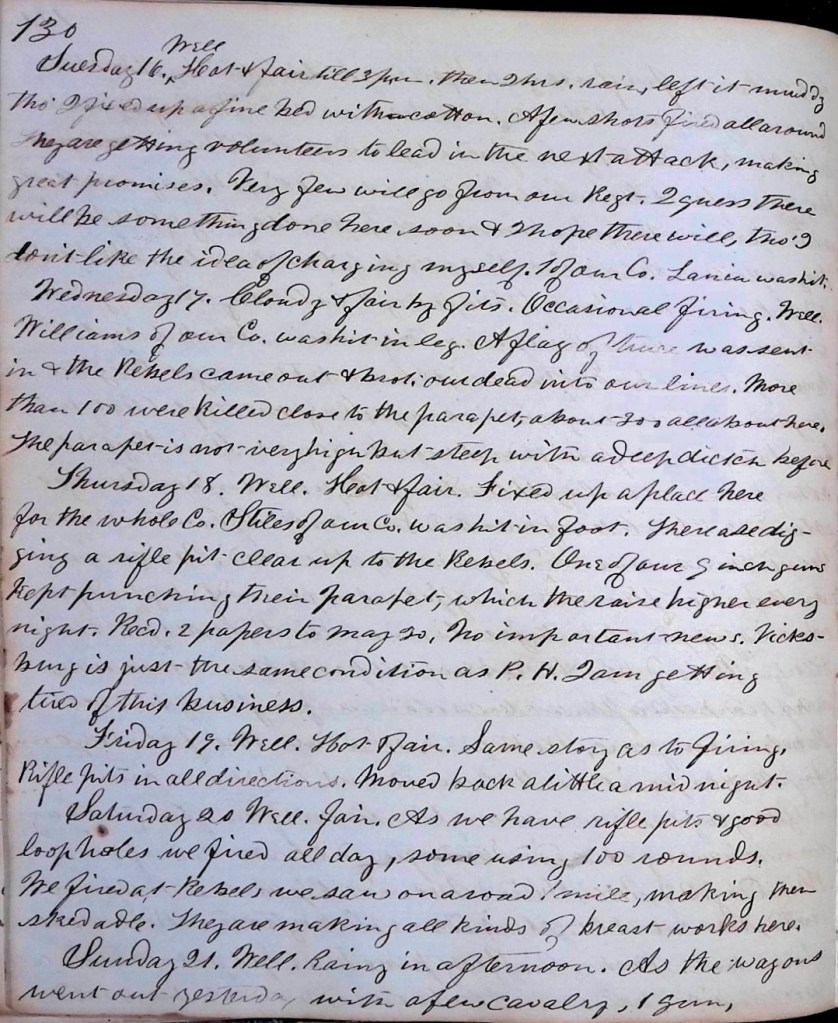
Tuesday, 16th—[I’m] well. Hot & fair till 3 p.m. Then two hours rain. Left it muddy tho’ I fixed up a fine bed with cotton. A few shots fired all around. They are getting volunteers to lead in the next attack, making great promises. Very few will go from our regiment. I guess there will be something done here soon & I hope there will, tho’ I don’t like the idea of charging myself. One of our company, Lania [?], was hit.
[Editor’s Note: On June 15, Gen. Banks called for a thousand volunteers to form a storming party, known as the “forlorn hope”, which would serve as the spearhead for the coming assault he intended to carry out on 11 July 1863. The approximately 1000 volunteers had been pulled from their regiments and formed into a unit, to train for their coming assault. Union soldiers had dug tunnels under the Confederate fortifications and planted large mines which were to be exploded at the beginning of the assault, giving the storming party an avenue to rush into the fortress. There were 17 men volunteered from the 12th Maine but none from Co. G.. Source: Union Soldiers at Port Hudson.]
Wednesday, 17th—Cloudy & fair by fits. Occasional firing. Well. [James] Williams of our company was hit in the leg. A flag of truce was sent in & the Rebels came out & brought our dead into our lines. More than 100 were killed close to the parapet, about 300 all about here. The parapet is not very high but steep with a deep ditch before.
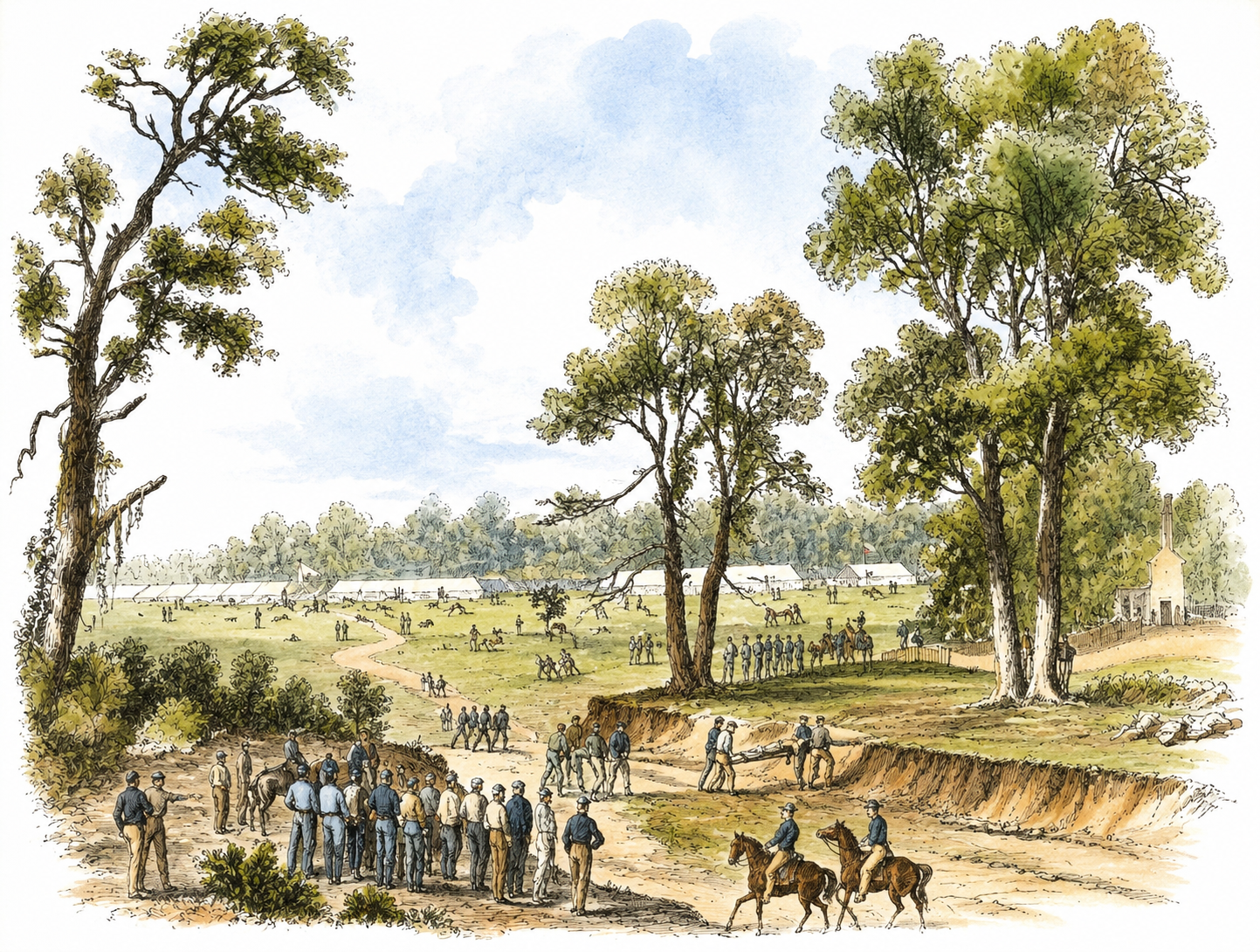
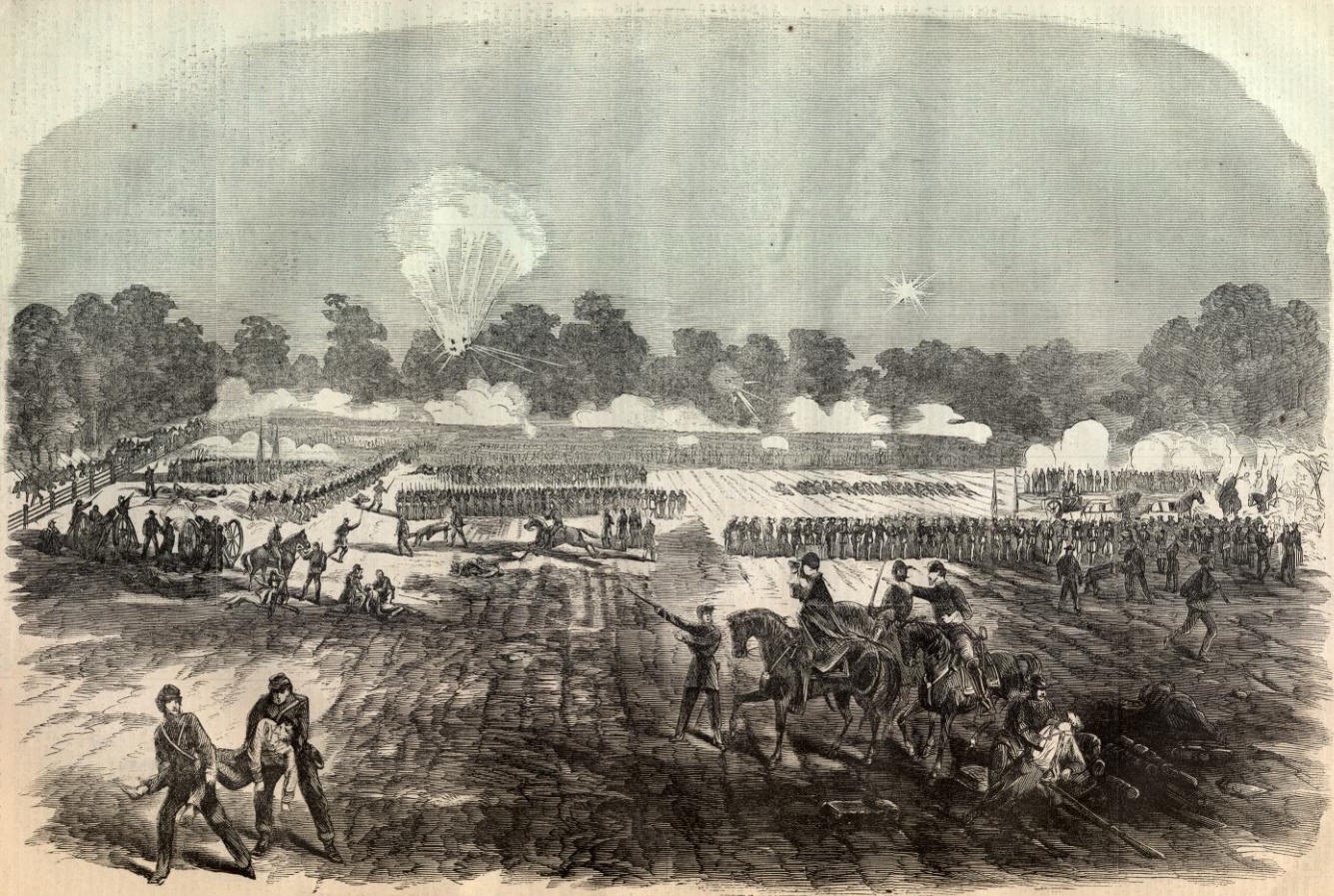
Scene of Gen. Paine’s attack on Priest Cap Salient at Port Hudson on June 14, 1863. Carrying off the dead and wounded under a Flag of Truce. The open area should probably show more tree stumps and felled trees than it does in this artist’s rendering.
Thursday, 18th—Well. Hot & fair. Fixed up a place here for the whole company. [William H.] Stiles of our company was hit in foot. They are digging a rifle pit clear up to the Rebels. One of our 9-inch guns kept punching their parapet, which they raise higher every night. Received two paper to May 30th. No important news. Vicksburg is just the same condition as Port Hudson. Getting tired of this business.
Friday, 19th—Well. Hot & fair. Same story as to firing. Rifle pits in all directions. Moved back a little at midnight.
Saturday, 20th—Well. Fair. As we have rifle pits & good loop holes, we fired all day, some using 100 rounds. We fired at Rebels we saw on a road one mile [away], making them skedaddle. They are making all kinds of breastworks here.
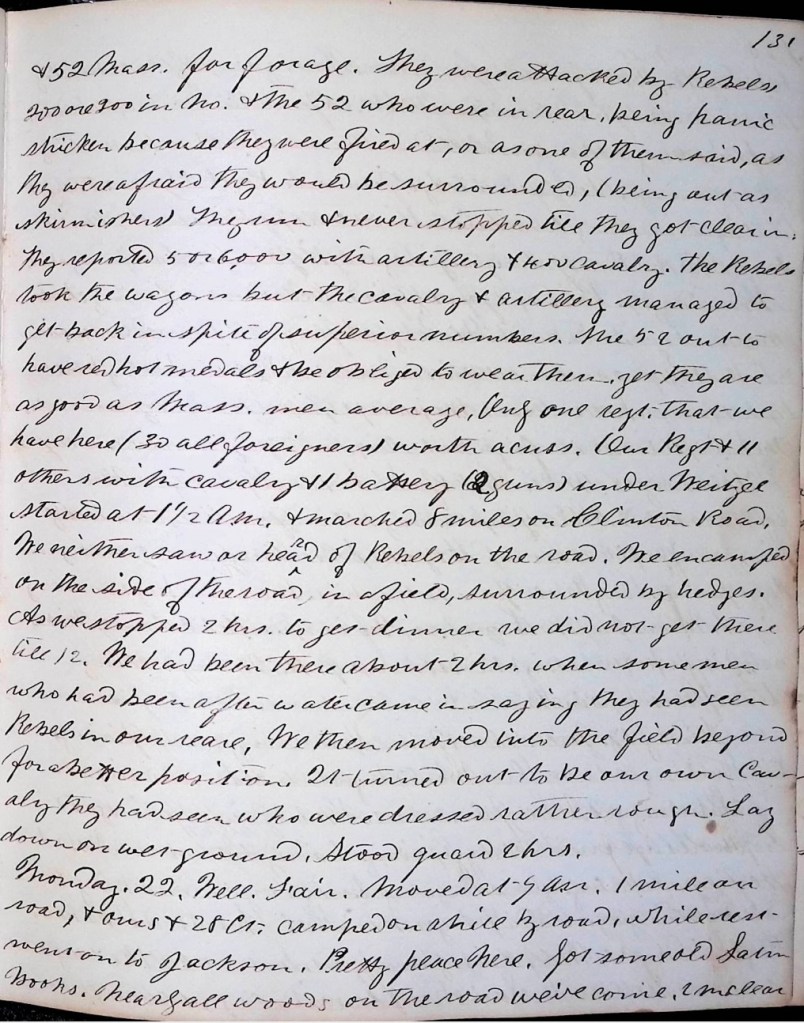
Sunday, 21st—Well. Rainy in afternoon. As the wagons went out yesterday with a few cavalry, one gun & 52nd Massachusetts for forage, they were attacked by Rebels 200 or 300 in number & the 52nd who were in the rear, being panic stricken because they were fired at, or as one of them said as they were afraid they would be surrounded (being out as skirmishers), they run & never stopped till they got clear in. They reported 5 or 6,000 with artillery & 400 cavalry. The Rebels took the wagons but the cavalry & artillery managed to get back in spite of superior numbers. The 52nd ought to have red hot medals & be obliged to wear them, yet they are as good as Massachusetts men [on] average. Only one regiment that we have here (30 all foreigners) worth a cuss.
Our regiment & 11 others with cavalry & one battery (2 guns) under Weitzel started at 1:30 a.m. & marched 8 miles on Clinton Road. We neither saw nor heard of Rebels on the road. We encamped on the side of the road in a field surrounded by hedges. As we stopped two hours to get dinner, we did not get there till 12. We had been there about two hours when some men who had been after water came in saying they had seen Rebels in our rear. We then moved into the field beyond for a better position. It turned out to be our own cavalry they had seen who were dressed rather rough. Lay down on wet ground. Stood guard two hours.
Monday, 22nd—Well. Fair. Moved at 7 a.m. one mile on road & ours & 28th Connecticut camped on a hill by road, while rest went on to Jackson. Pretty place here. Got some old Latin books. Nearly all woods on the road. We’ve come two miles. Clear.
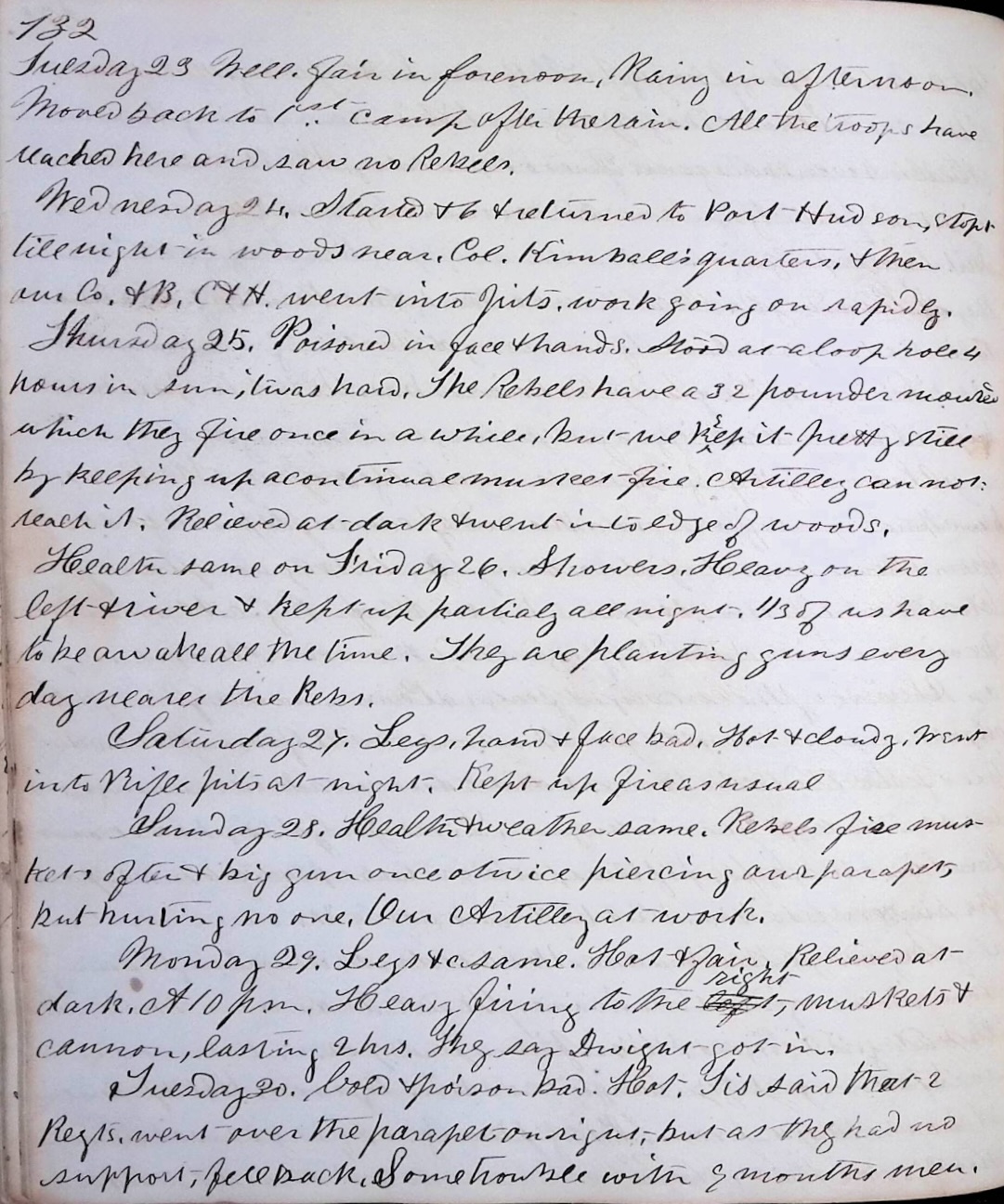
Tuesday, [June] 23rd [1863]—Well. Fair in forenoon. Rainy in afternoon. Moved back to 1st camp after the rain. All the troops have marched here & saw no rebels.
Wednesday, 24th—Started at 6 and returned to Port Hudson. Stopped till night in woods near Col. Kimball’s quarters & men in our company and B, C, & H went into pits. Work going on rapidly.
Thursday, 25—Poisoned in face & hands. Stood at a loop hole four hours in the sun. ‘Twas hard. The Rebels have a 32-pounder mounted which they fire once in a while but we kept it pretty still by keeping up a continual musket fire. Artillery cannot reach it. Relieved at dark & went into edge of woods.
Friday, 26th—Health same. Showers. Heavy [firing] on the left & river & kept up partially all night. One third of us have to be awake all the time. They are planting guns every day nearer the Rebs.
Saturday, 27th—Legs, hand & face bad [from poisoning]. Hot & cloudy. Went into rifle pits at night. Kept up fine as usual.
Sunday, 28th—Health & weather same. Rebels fire muskets often & big gun once or twice, piercing our parapet but hurting no one. Our artillery at work.
Monday, 29th—Legs &c. the same. Hot & fair. Relieved at dark. At 10 p.m. heavy firing to the right, muskets and cannon, lasting two hours. They say Dwight got in.
Tuesday, 30th—[I’ve a] cold & poison bad. Hot. ‘Tis said that two regiments went over the parapet on right, but as they had no support, fell back. Some trouble with 9 months men.
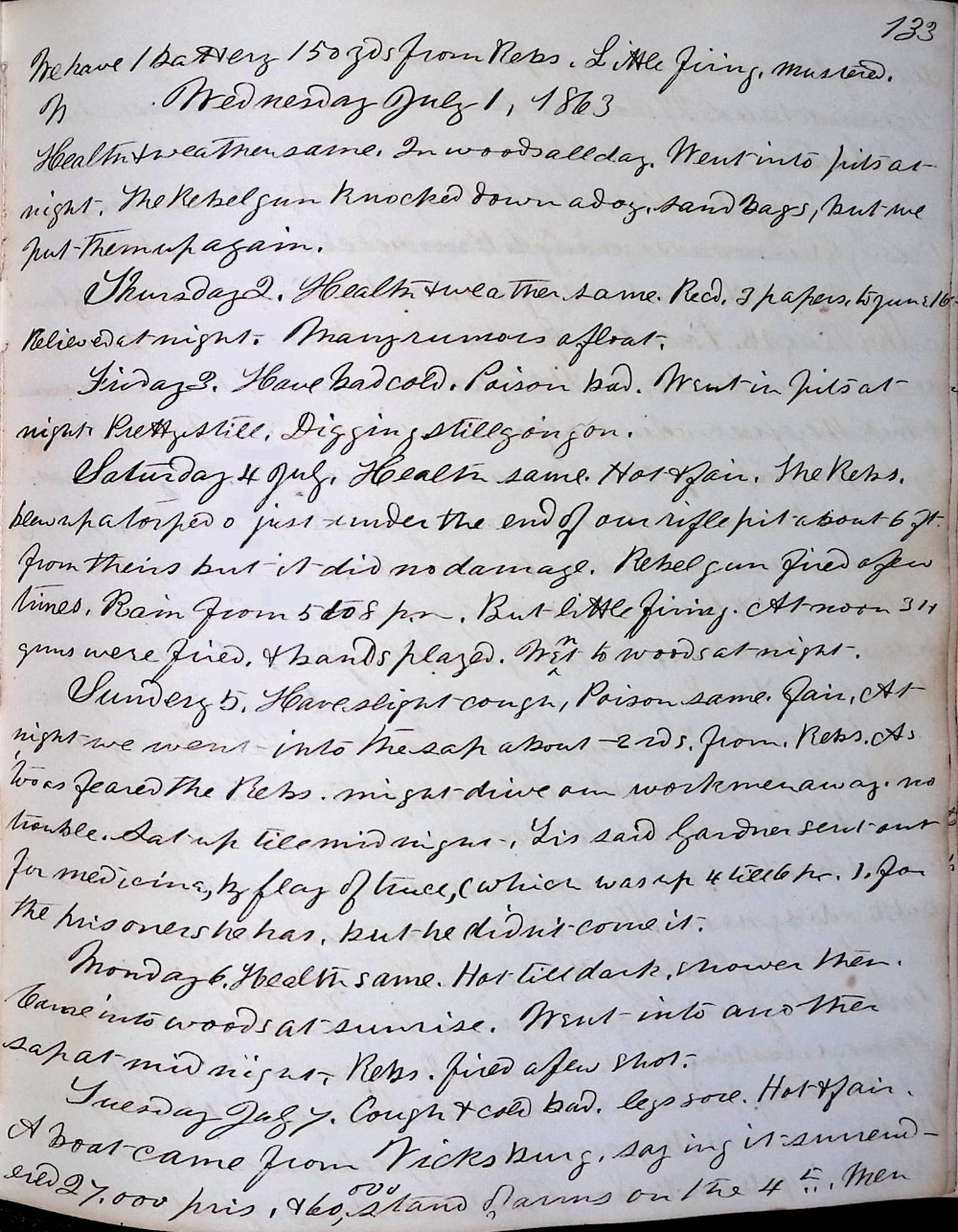
We have one battery 150 yards from the Rebs. Little firing. Mustered.
Wednesday, July 1, 1863—Health & weather same. In woods all day. Went into pits at night. The Rebel gun knocked down a dozen sand bags but we put them up again.
Thursday, 2nd—Health & weather same. Received three papers to June 16th, Reviewed at night. Many rumors afloat.
Friday, 4rd—Have had cold. Poison bad. Went in pits at night. Pretty still. Digging still going on.
Saturday, July 4th [1863]—Health same. Hot & fair. The Rebs blew up a torpedo just under the end of our rifle pit about six feet from theirs but it did no damage. Rebel gun fired a few times. Rain from 5 to 8 p.m. But little firing. Afternoon 34 guns were fired & bands played. Went to woods at night.
Sunday, 5th—Have slight cough. Poison same pain. At night we went into the sap [covered trench] about two rods [11 yards] from the Rebs. As ’twas feared the Rebs might drive our workmen away, no trouble. Sat up till midnight. ‘Tis said Gardner sent out for medicine by flag of truce (which was up 4 till 6 p.m. one for his prisoners he has, but he didn’t come it.
Monday, 6th—Health same. Hot till dark. Shower then. Came into woods at sunrise. Went into another sap at midnight. Rebs fired a few shot.
Tuesday, July 7th—Cough & cold bad. Legs sore. Hot & fair. A boat came from Vicksburg saying it surrendered 27,000 prisoners & 60,000 stand of arms on the 4th. Men cheered, drums beat, bands played, & a salute was fired. So I guess it is so. If so, Port Hudson will soon fall.
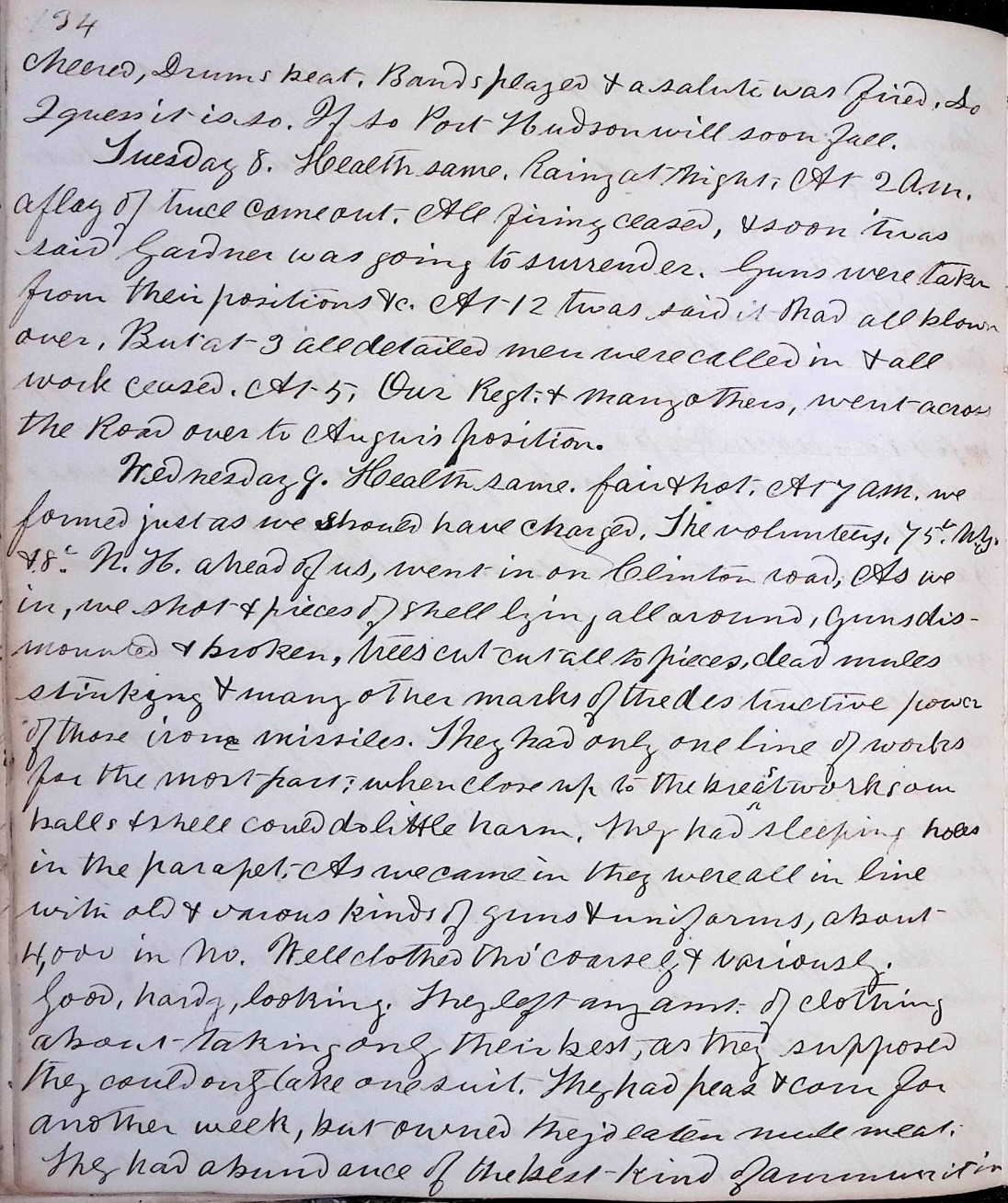
Tuesday, 8th [July, 1863]—Health same. Rainy at night. At 2 a.m. a flag of truce came out. All firing ceased & soon ’twas said Garner was going to surrender. Guns were taken from their positions &c. At 12 ’twas said it had all blown over. But at 3, all detailed men were called in & all work ceased. At 5, our regiment & many others went across the road over to Augur’s position.
[Editor’s note: Confederate forces surrendered Port Hudson, Louisiana, to the Union Army on July 9, 1863, after a grueling 48-day siege. Led by Major General Franklin Gardner, the starving garrison surrendered upon learning that Vicksburg had fallen, giving the Union complete control of the Mississippi River.]
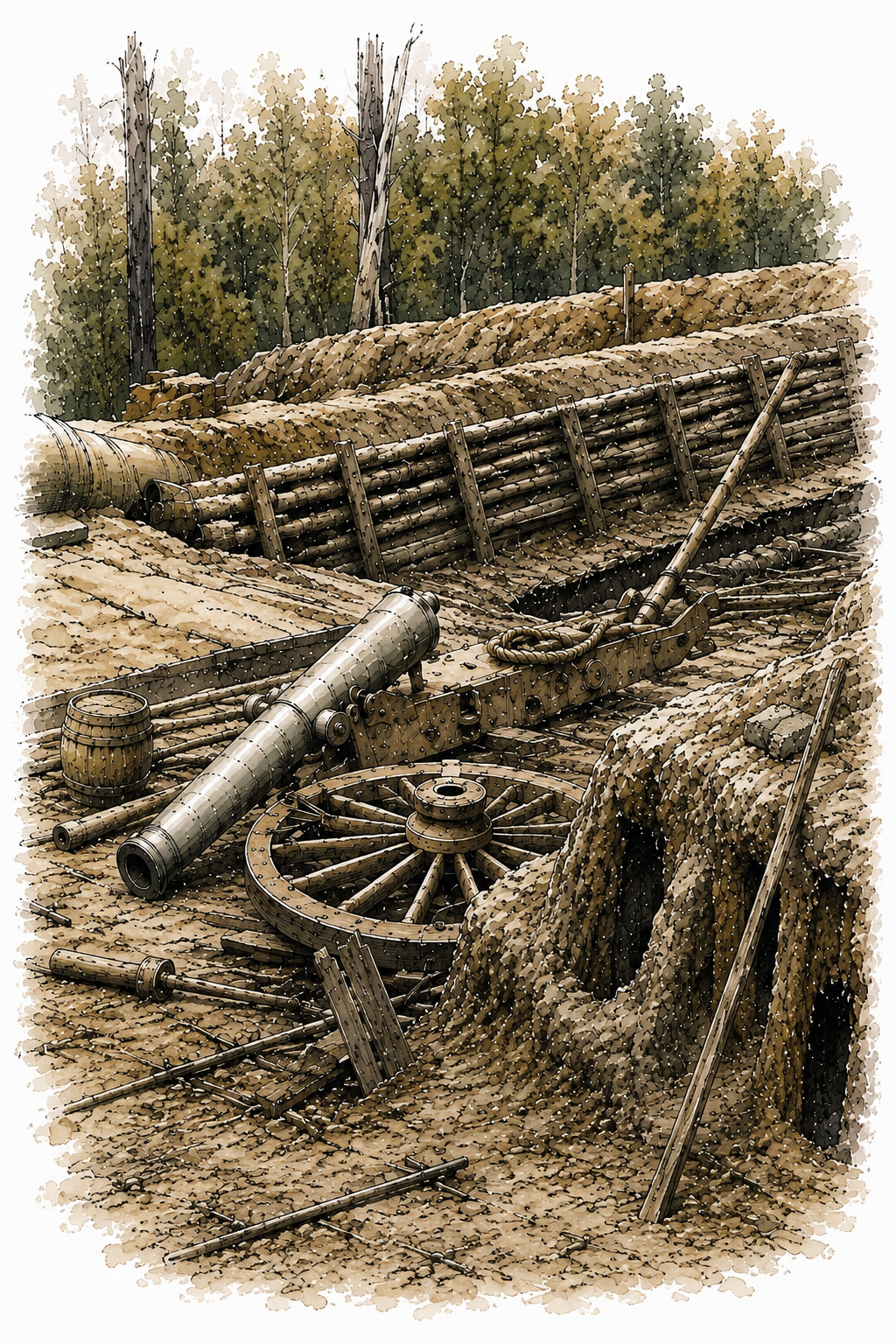
“Many had sleeping holes in the parapet.”
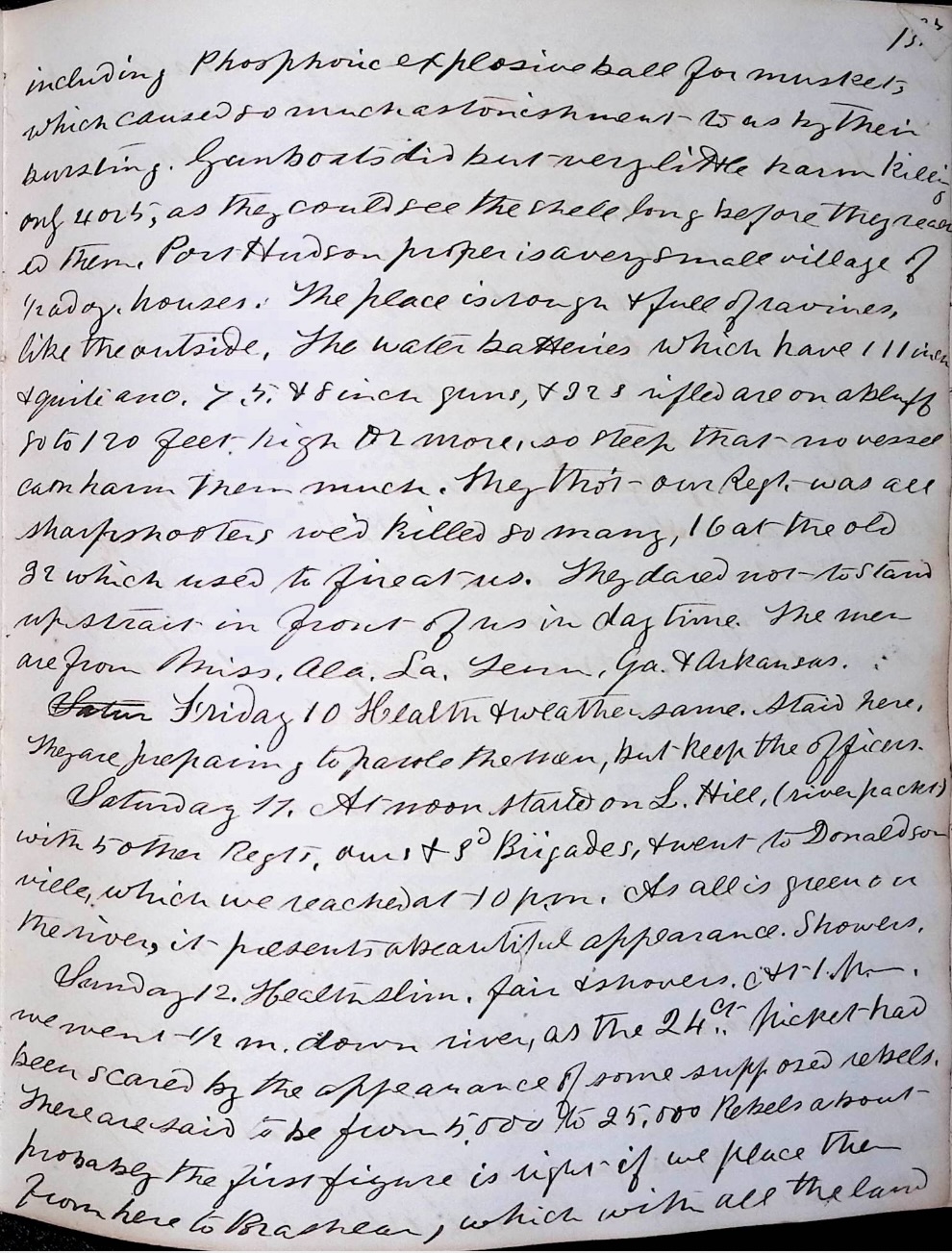
Wednesday, 9th—Health same, Fair & hot. At 7 a.m. we formed just as we should have charged. The volunteers, 75th New York, and 8th New Hampshire ahead of us, went in on Clinton Road. As we [went] in, we [saw] shot & pieces of shell lying all around, guns dismounted & broken, trees cut all to pieces, dead mules stinking & many other marks of the destructive power of those iron missiles. They had only one line of works for the most part. When close up to the breastworks, our balls and shells could do little harm. Many had sleeping holes in the parapet. As we came in they were all in line with old & various kinds of guns & uniforms, about 4,000 in number, well-clothed tho’ course & variously. Good, hard-looking. They left any amount of clothing about, taking only their best as they supposed they could only take one suit. They had peas and corn for another week but owned they’d eaten mule meat. They had abundance of the best kind of ammunition including phosphoric explosive balls for muskets which causes so much astonishment to us by their bursting. Gunboats did but very little harm, killing only four or five, as they could see the shell long before they reached them.
Port Hudson proper is a very small village of half a dozen houses. The place is rough & full of ravines, like the outside. The water batteries which have one 11-inch & quite a number of 7.5 & 8 inch guns, & [ ] rifled are on a bluff 80 to 120 feet high or more—so steep that no vessel can ham them much. They thought our regiment was all sharpshooters, we’d killed so many. 16 at the old 32 which used to fire at us. They dared not to stand up straight in front of us in day time. The men are from Mississippi, Alabama, Louisiana, Tennessee, Georgia & Arkansas.
Friday, 10—Health & weather the same. Stayed here. They are preparing to parole the men but keep the officers.
Saturday, 11th—At noon, started on Laurel Hill (river packet) with five other regiments—ours & 3rd Brigades—and went to Donaldsonville which we reached at 10 p.m. As all is green on the river, it present a beautiful appearance. Showers.
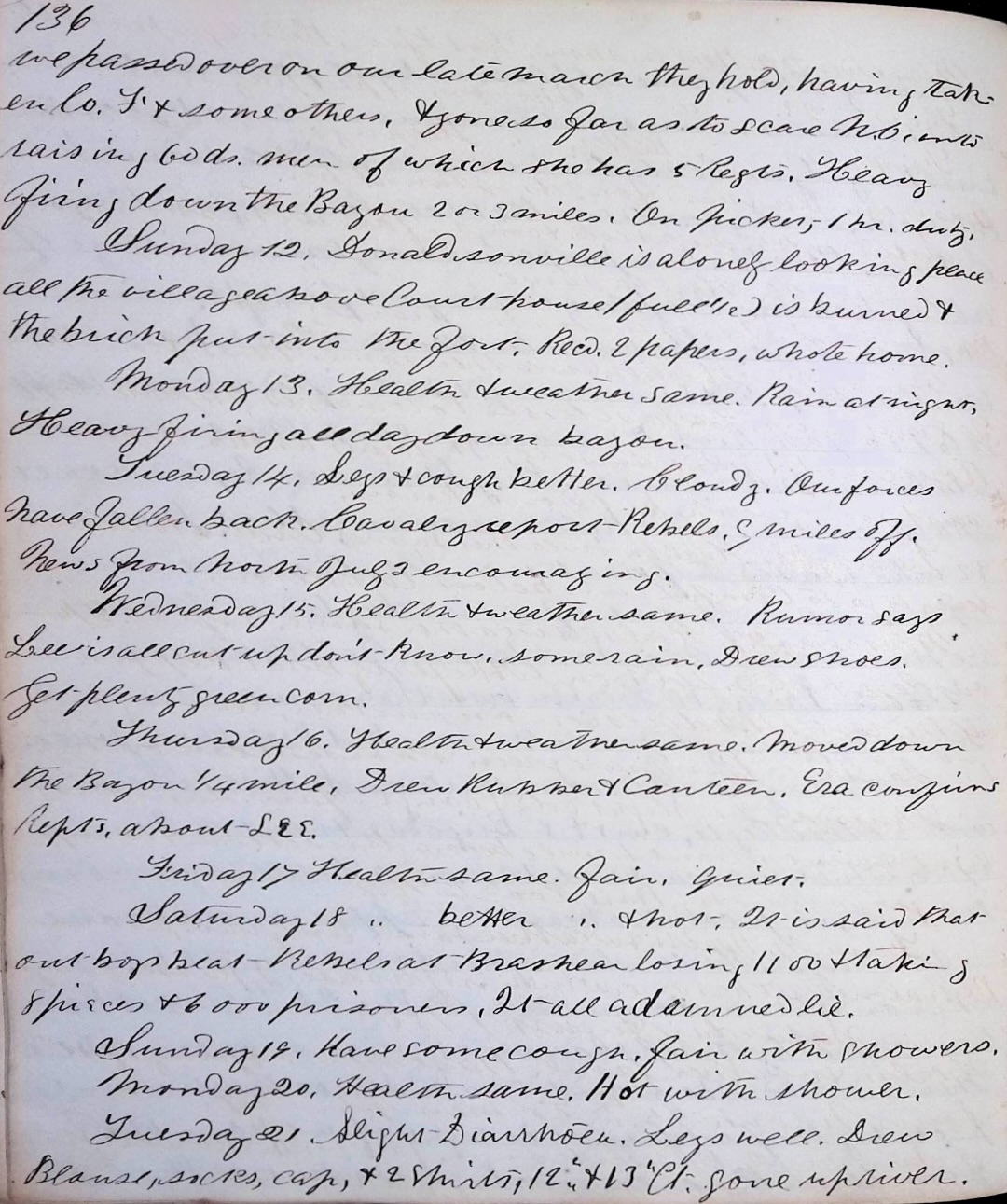
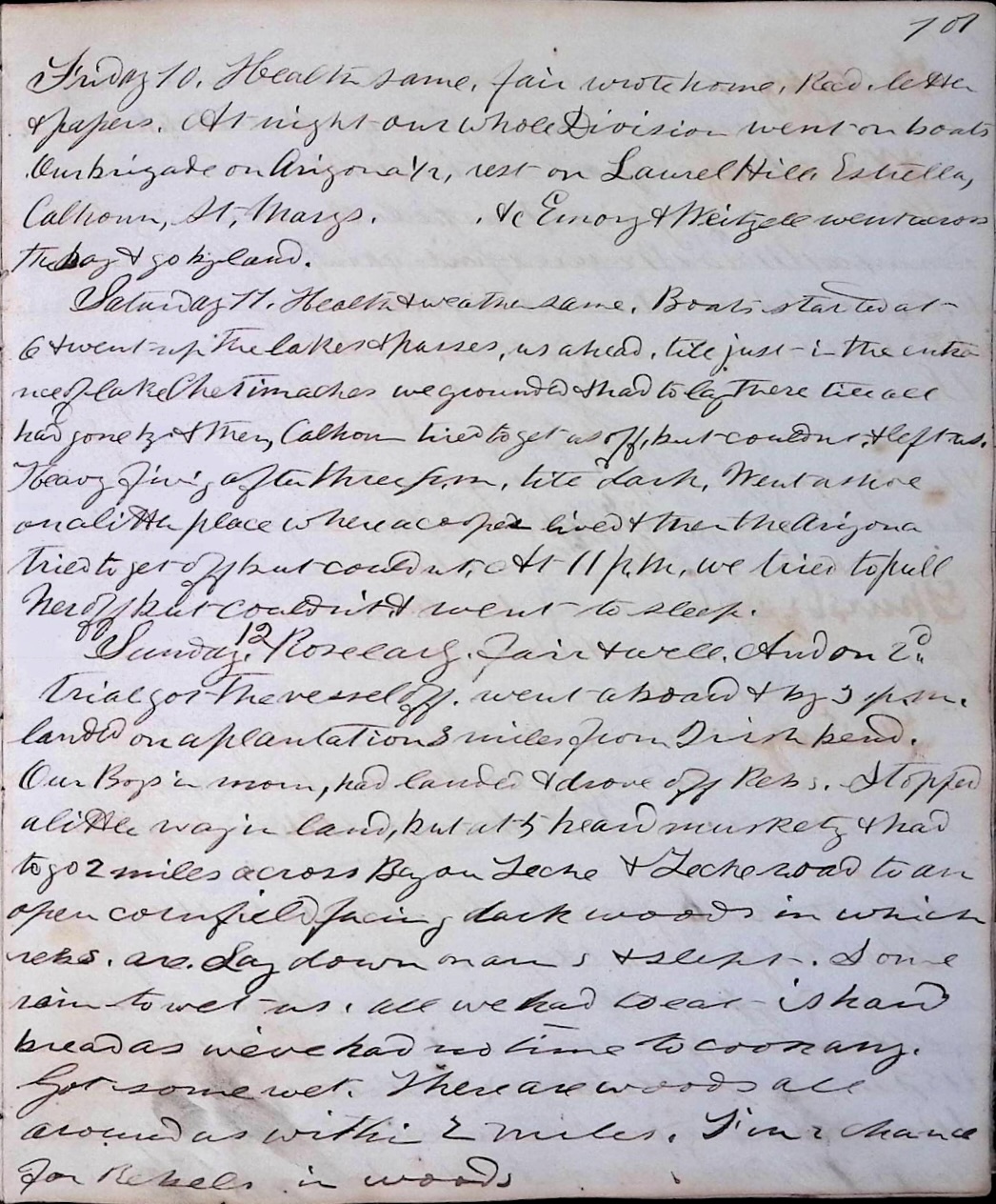
Sunday, 12th—Health slim. Fair & showers. At 1 p.m. we went half mile down river as the 24th Connecticut had been scared by the appearance of some supposed rebels. There are said to be from 5,000 to 25,000 Rebels about. Probably the first figure is right if we place them from here to Brashear, which with all the land we passed over on our late march they hold, having taken Co. F & some others & gone so far as to scare New Orleans into raising [ ] men of which she has five regiments. Heavy firing down the Bayou two or three miles. On picket, one hour duty.
Sunday, 12th—Donaldsonville is a lonely looking place. All the village above Court House (full half) is burned & the brick put into the fort. Received two papers. Wrote home.
Monday, 13th—Health & weather same. Rain at night. Heavy firing all day down bayou.\.
Tuesday, 14th—Legs and cough better. Cloudy. Our forces have fallen back. Cavalry report Rebels 9 miles off. News from North, July 3rd, encouraging.
Wednesday, 15th—Health & weather same. Rumor says Lee is all cut up. Don’t know. Some rain. Drew shoes. Get plenty green corn.
Thursday, 16th—Health & weather same. Moved down the bayou quarter mile. Drew rubber & canteen. Era confirms reports about Lee.
Friday, 17th—Health same. Fair. Quiet.
Saturday, 18th—Health better. Fair & hot. I is said that our boys beat Rebels at Brashear losing 1100 & taking 8 pieces & 6,000 prisoners. It’s all a damned lie.
Sunday, 19th—Have some cough. Fair with showers.
Monday, 20th—Health same. Hot with shower.
Tuesday, 21st—Slight diarrhea. Legs well. Drew blouse, socks, cap, & two shirts. 12th & 13th Connecticut gone up river.
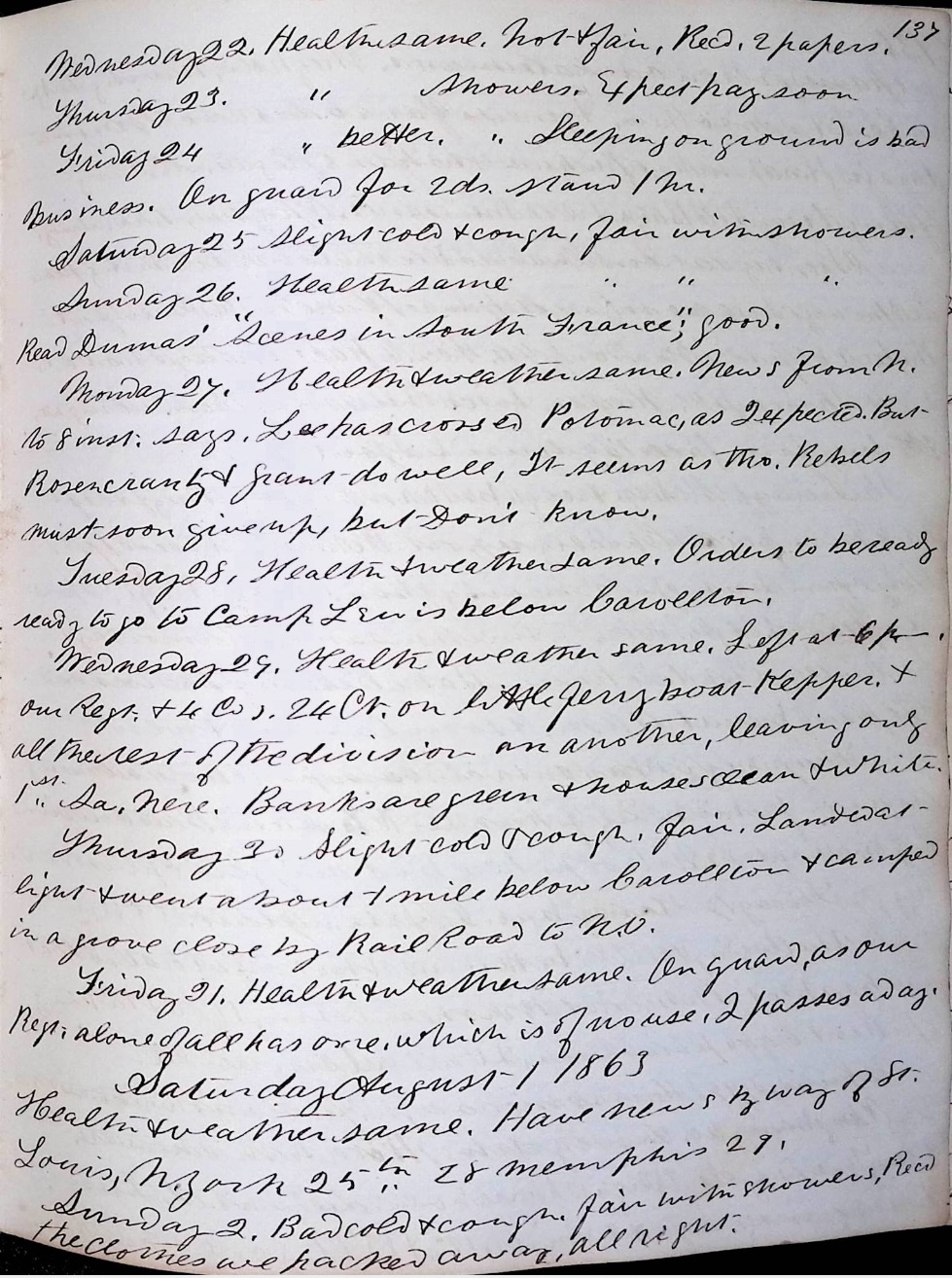
Wednesday, 22nd—Health same. Hot & fair. Received two papers.
Friday, 24th—Health better. Showers. Sleeping on ground is bad business. On guard for two days. Stand one hour.
Saturday, 25th—Slight cold & cough. Fair with showers.
Sunday, 26th—Health same. Read Dumas’ “Scenes in South France.” Good.
Monday, 27th—Health & weather same. News from North to 8th instant says Lee has crossed the Potomac as I expected but Rosecrans & Grant do well. It seems as tho’ Rebels must soon give up, but don’t know.
Tuesday, 28th—Health & weather same. Orders to be ready to go to Camp Lewis below Carrolton.
Wednesday, 29th—Health & weather same. Left at 6 p.m. Our regiment and four companies of 24th Connecticut on little ferry boat Kepper & all the rest of the Division on another, leaving only 1st Louisiana here. Banks are green & houses clean & white.
Thursday, 30th—Slight cold & cough. Fair. Landed at light & went about one mile below Carrollton & camped in a grove close by the railroad to New Orleans.
Saturday, August 1st 1863—Health & weather same. Have news by way of St. Louis, New York [up to] 25th & 28th; Memphis [up to] 29th.
Sunday, 2nd—Bad cold & cough. Fair with showers. Received the clothes we packed away. All right.
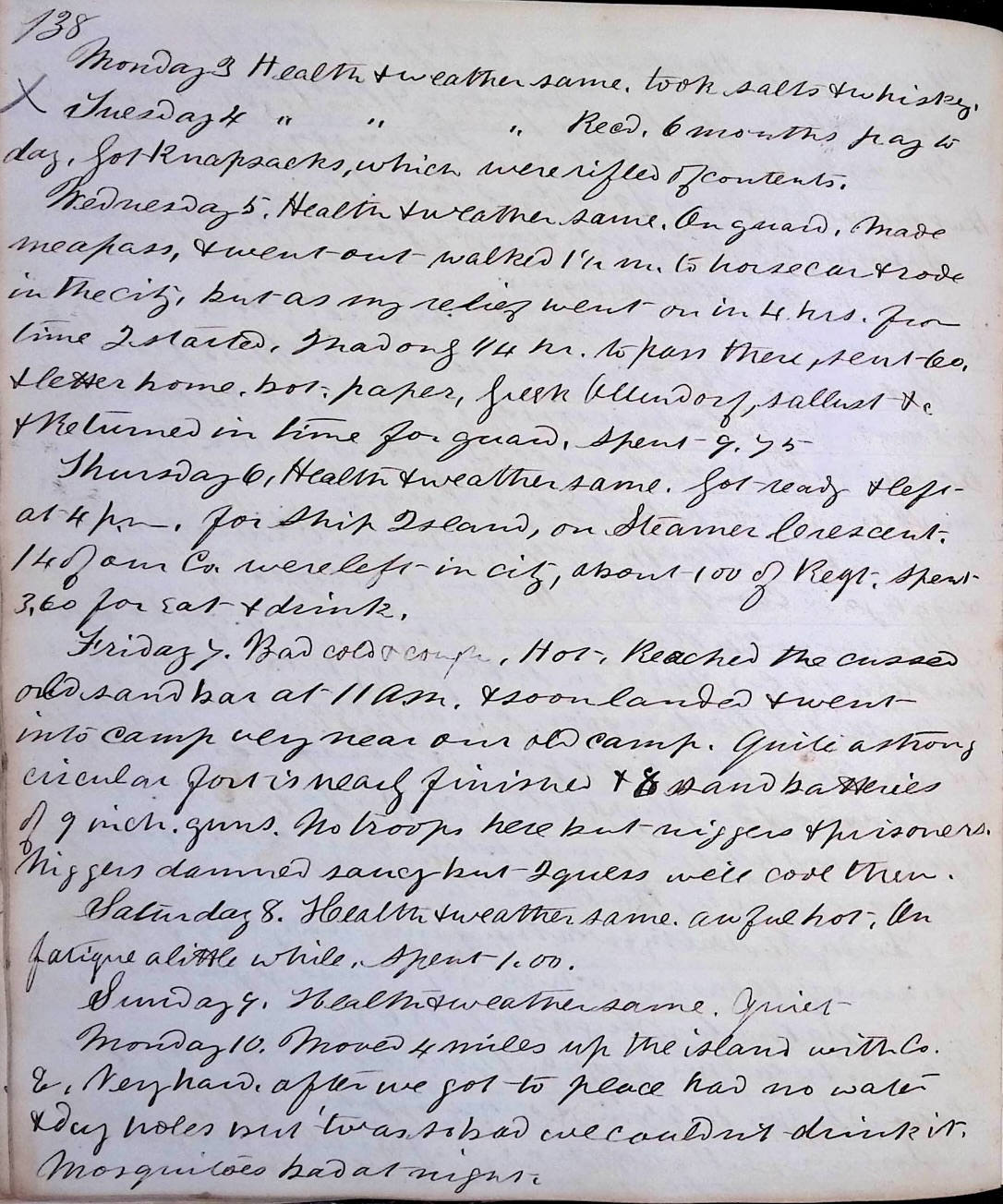
Monday, 3rd—Health & weather same. Took salts & whiskey.
Tuesday, 4th—Health & weather same. Received six months pat today. Got knapsacks which were rifled of contents.
Wednesday, 5th—Health & weather same. On guard. Made me a pass & went out. Walked one and a half miles to horsecar and rode in the city, but as my relief went on in four hours from time I started, I had only a quarter hour to pass there. Sent $60 and a letter home, bought paper, Greek Ollendorff, Sallust, &c. and returned in time for guard. Spent $9.75.
Thursday, 6th—Health & weather same. Got ready & left at 4 p.m. for [garrison duty at] Ship Island on Steamer Crescent. Fourteen of our company were left in the city, about 100 of regiment. Spent 3.60 for eat & drink.
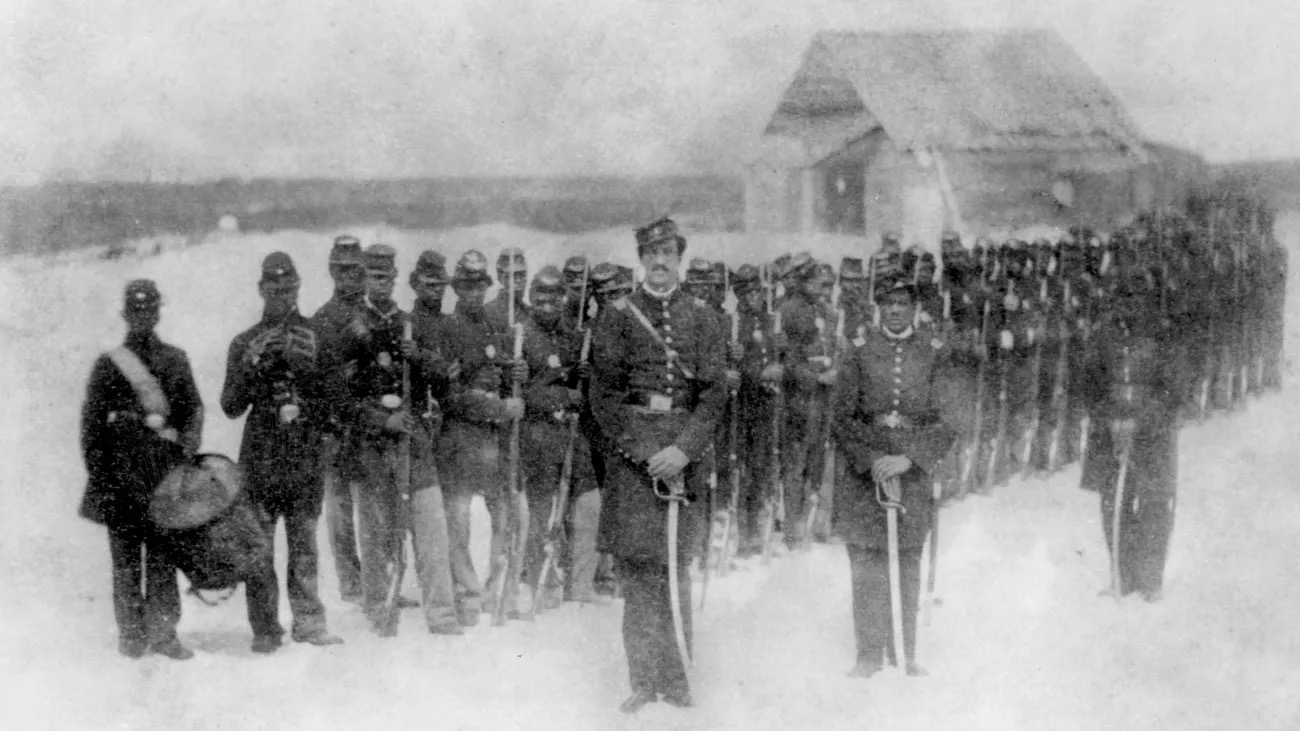
Friday, 7th—Bad cold & cough. Hot. Reached the cussed old sand bar at 11 a.m. & soon landed & went into camp very near our old camp. Quite a strong circular fort is nearly finished & 8 [?] sand batteries of 9-inch guns. No troops here but niggers [of the 2nd Louisiana Native Guards] & prisoners. Niggers damned saucy but I guess we’ll cove [?] them.
2nd Louisiana Native Guard Company Formation on Ship Island. Sometime in August 1863, Companies G, H, & I of the regiment, now called the 2nd Regiment, Corps de Afrique, were sent ot Mobile Bay and then they returned to Ship Island in September. (Gulf Islands National Seashore Collection)
Saturday, 8th—Health & weather same. Awful hot. On fatigue a little while. Spent $1.
Sunday, 9th—Health & weather same. Quiet.
Monday, 10th—Moved four miles up the island with Co. E. Very hard. After we got to place, had no water & gug holes but ’twas so bad we couldn’t drink it. Mosquitoes bad at night.
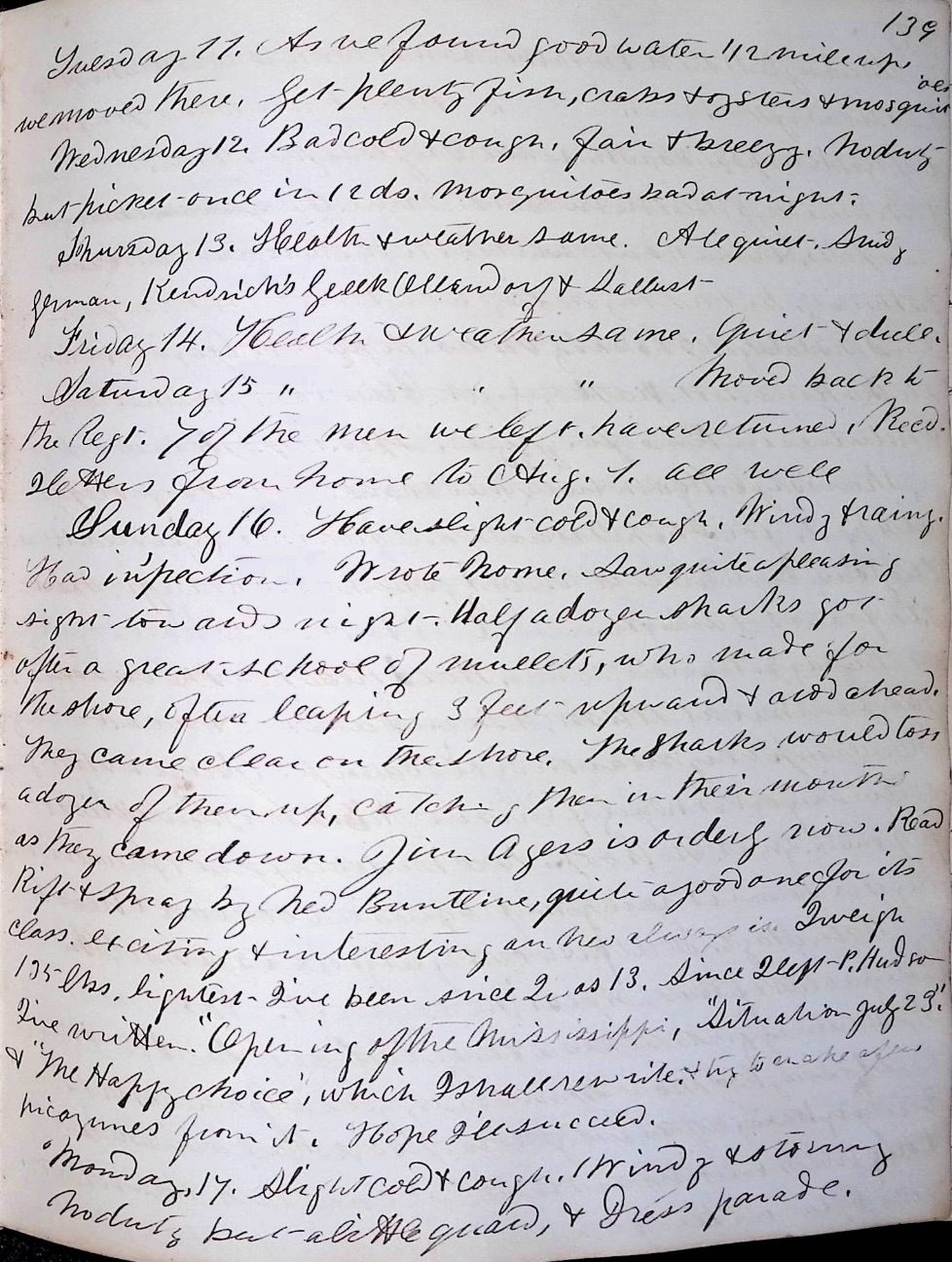
Tuesday, 11th—As we found good water half mile up, we moved there. get plenty fish, crabs, & oysters & mosquitoes.
Wednesday, 12th—Bad cold & cough. Fair & breezy. No duty but picket once in 12 days. Mosquitoes bad at night.
Thursday, 13th—Health & weather same. All quiet. Study German, Kendrick’s Greek, Ollendorff & Sallust.
Friday, 14th—Health & weather same. Quiet and dull.
Saturday, 15th—Health & weather same. Moved back to the regiment. Seven of the men we left have returned. Received 2 letters from home to August 1st. All well.
Sunday, 16th—Have slight cold & cough. Windy & rainy. Had inspection. Wrote home. Saw quite a pleasing sight towards night. Half a dozen sharks got after a great school of mullets who made for the shore. The sharks would toss a dozen of them, catching them in their mouth as they came down. Jim Ayer is Orderly [Sergeant] now. Read Rift & Spray by Ned Buntline—quite a good one for its class. Exciting & interrsting a Ned always is. I weigh 125 pounds—highest I’ve been since I was 13. Since I left Port Hudson, I’ve written, “Opening of the Mississippi,” “Situation July 23,” and “The Happy Choice,” which I shall rewrite & try to make a few picayunes from it. Hope I’ll succeed.
[Editor’s Note: The sharp behavior describes by James suggests that he was observing Spinner Sharks (Carcharhinus brevipinna) that are common in the nearshore waters and barrier islands of the Mississippi Gulf coast, including Ship Island.]
[Editor’s Note: The Rift and the Spray (also known as The Prairie Scud; or, The Rift and the Spray) is an 1860 nautical tale about smugglers in the English Channel. While it was promoted and reprinted in America under the famous pen name Ned Buntline (Edward Zane Carroll Judson), the actual author of the work was M. J. Rymer.]
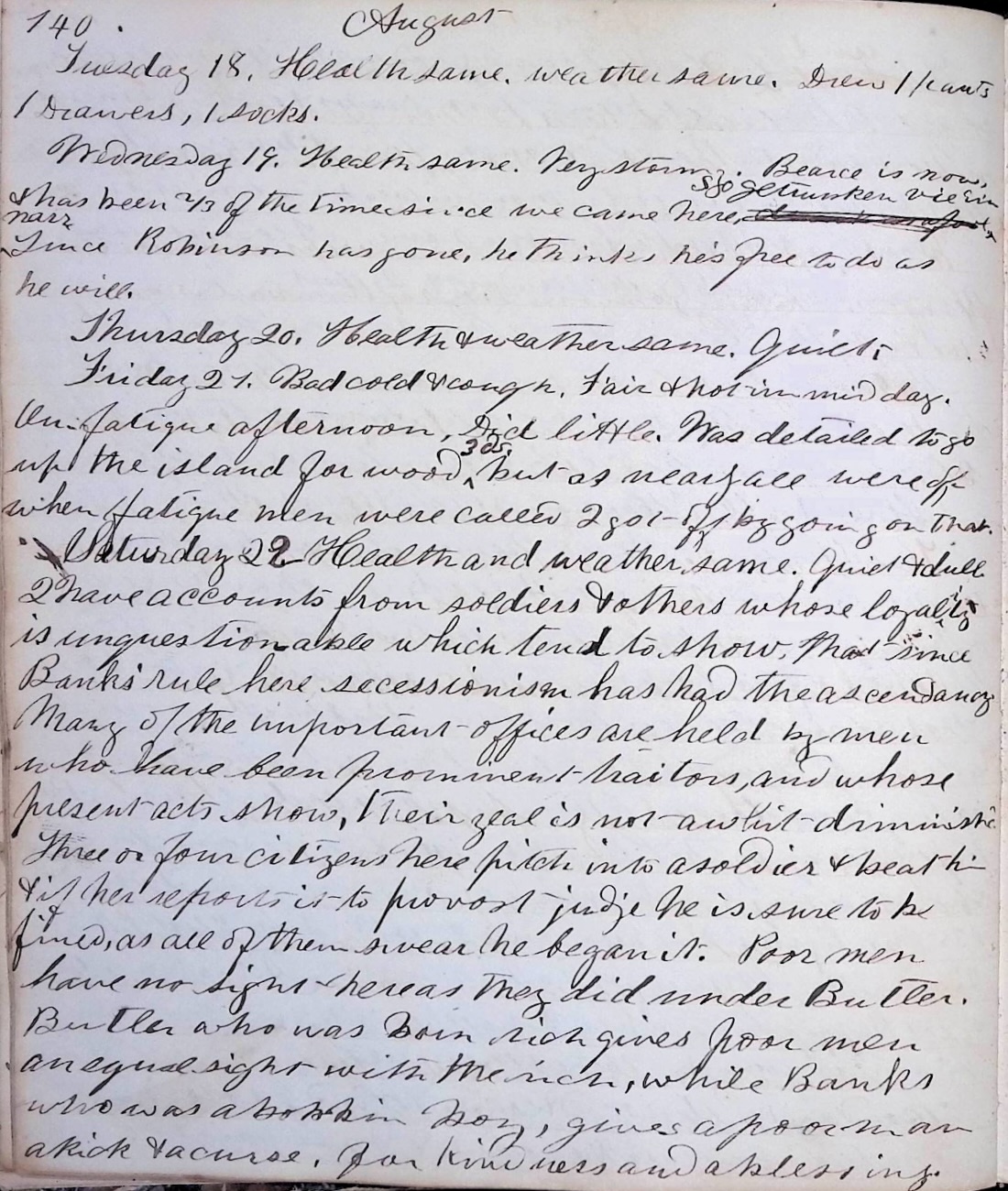
Monday, 17th—Slight cold & cough. Windy and stormy. No duty but a little guard & dress parade.
Wednesday, 19th—Health same. Very stormy. [Lt. William Augustus] Bearce is now and has been two-thirds of the time since we came here getrunken vie ein narr [“drunk like a fool”]. Since Robinson has gone, he thinks he’s free to do as he will.
Thursday, 20th—Health & weather same. Quiet.
Friday, 21st—Bad cold & cough. Fair & hot in mid day. On fatigue in afternoon. Did little. Was detailed to go up the island for wood three days but as nearly all were off when fatigue men were called, I got off by going on that.
Saturday, 22nd—Health & weather same. Quiet & dull. I have accounts from soldiers & others whose loyalty is unquestionable which tend to show that since Banks’ rule here, secession has had the ascendancy. Many of the important offices are held by men who have been prominent traitors and whose present acts show their zeal is not a whit diminished. Three or four citizens here pitched into a soldier & beat him & if he reports it to provost judge, he is sure to be fined as all of them swear he began it. Poor men have no rights here as they did under Butler. Butler, who was [ ] rich, gives poor men an equal right with the rich, while Banks, who was a [bumpkin?] boy, gives a poor man a kick and a curse for kindness and a blessing.
Henry Maxim, 12th Maine Infantry (Digital Maine)
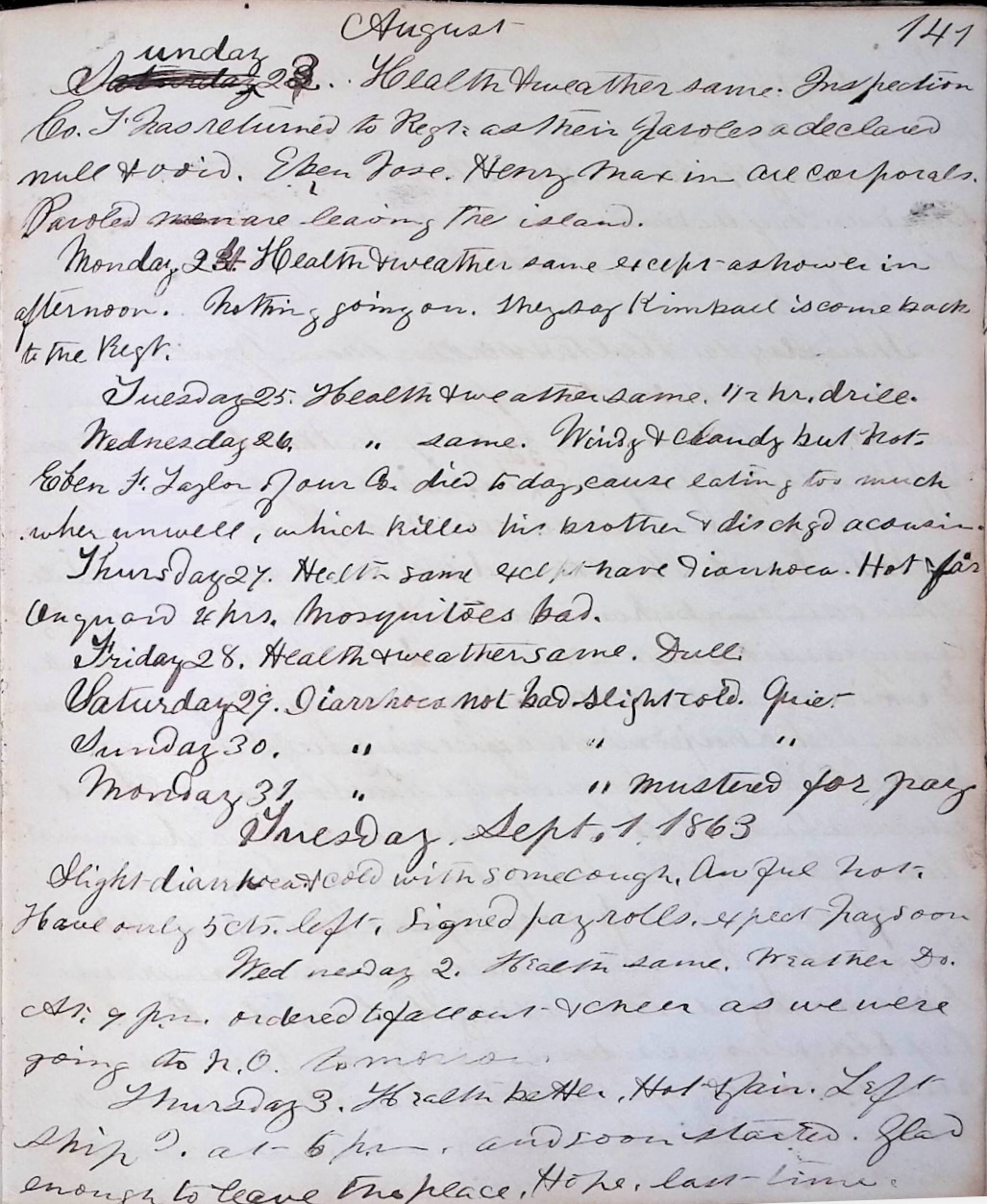
Sunday, 23rd August [1863]—Health & weather same. Inspection. Co. F has returned to regiment as their paroles are declared null & void. Eben Vost, Henry Maxim are corporals. Paroled leaving the island.
[Editor’s Note: Union soldiers who accepted unauthorized field paroles from Confederate forces without a formal processing through designated Union exchange camps were many times considered unauthorized field paroles and were nullified, requiring soldiers to return to active duty.]
Monday, 24th—Health & weather same except a shower in afternoon. Nothing going on. They say Kimball is come back to the regiment.
Wednesday, 26th—Health same. Windy & cloudy but hot. Eben F. Taylor of our company died today—cause? eating too much when unwell which killed his brother & discharged a cousin.
Thursday, 27th—Health same except have diarrhea. Hot & fair. On guard four hours. Mosquitoes bad.
Friday, 28th—Health & weather same. Dull.
Saturday, 29th—Diarrhea not bad. Slight cold. Quiet.
Sunday, 30th—Diarrhea not bad. Slight cold. Quiet.
Monday, 31st—Diarrhea not bad. Mustered for pay.
Tuesday, September 1, 1863—Slight diarrhea & cold with some cought. Awdul hot. Have only five cents left. Signed payrolls. Expect pay soon.
Wednesday, 2nd—Health same. Weather ditto. At 9 p.m. ordered to fall out & cheer as we were going to New Orleans tomorrow.
Thursday, 3rd—Health better. Hot & fair. Left Ship Island 5 p.m. and soon started. Glad enough to leave the place. Hope last time.
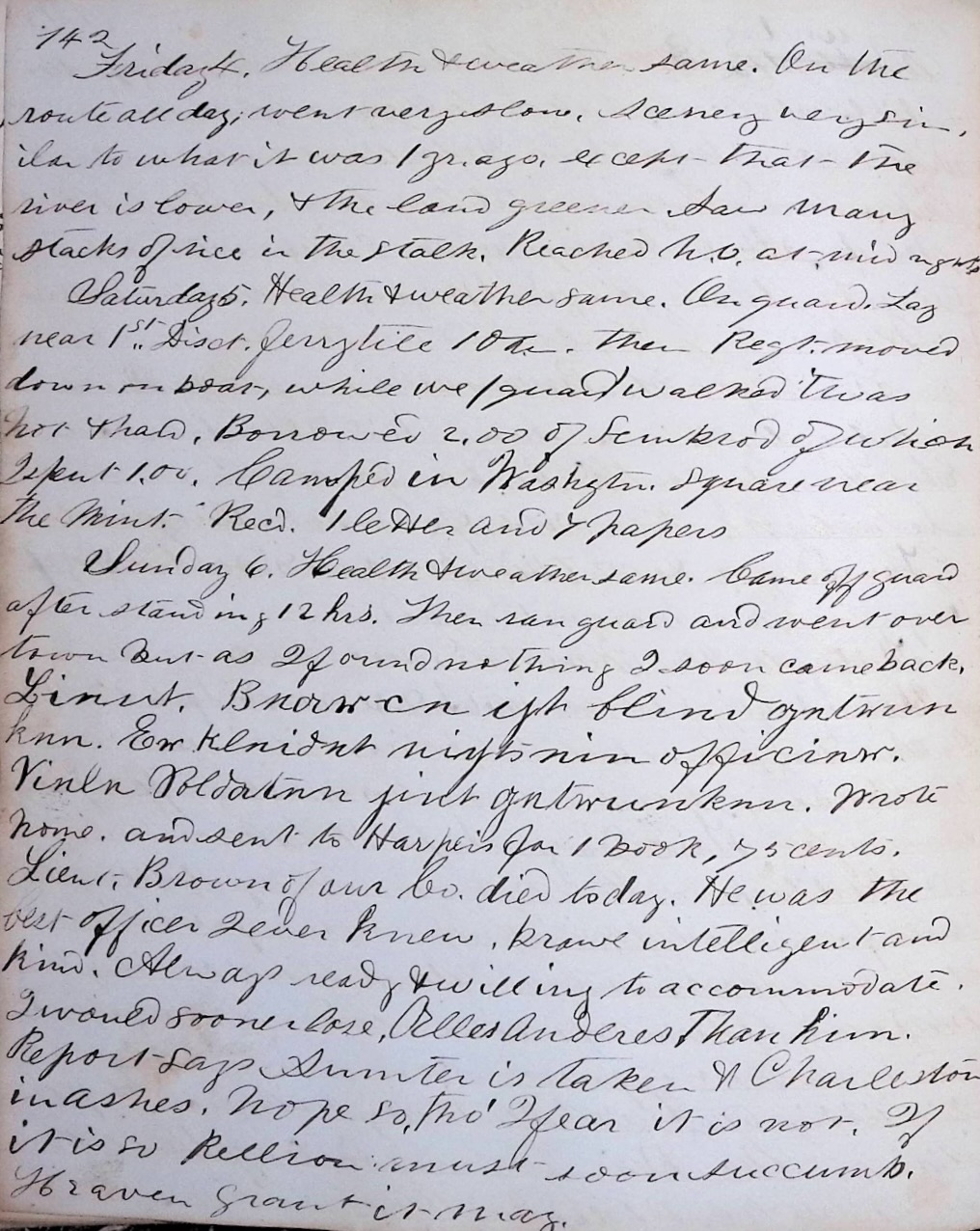
Friday, 4th [August, 1863]—Health & weather the same. On the route all day. Went very slow. Scenery very similar to what it was one year ago except that the river is lower & the land greener. Saw many stacks of rice in the stalk. Reached New Orleans at midnight.
Saturday, 5th—Health & weather same. On guard. Lay near 1st District ferry till 10 a.m., then regiment moved down on boat, while we (guard) walked. ‘Twas hot & hard. Borrowed $2 of Sembrod [?] of which I spent $1. Camped in Washington Square near the Mint. Received one letter and 7 papers.
Sunday, 6th—Health & weather same. Came off guard after standing 12 hours. Then ran guard and went over to town but as I found nothing, I soon came back. Lieut. [what follows appears to be an attempt to write two sentences in either German or Latin but does not translate to English]. Wrote home and sent to Harper’s for one book, 75 cents. Lieut. Brown of our company died today. He was the best officer I ever knew—brave, intelligent, and kind. Always ready & willing to accommodate. I would sooner lose Ozells Anderes [?] than him. Report says Sumter is taken & Charleston in ashes. Hope so tho’ I fear it is not. If it is so, rebellion must soon succumb. Heaven grant it may.
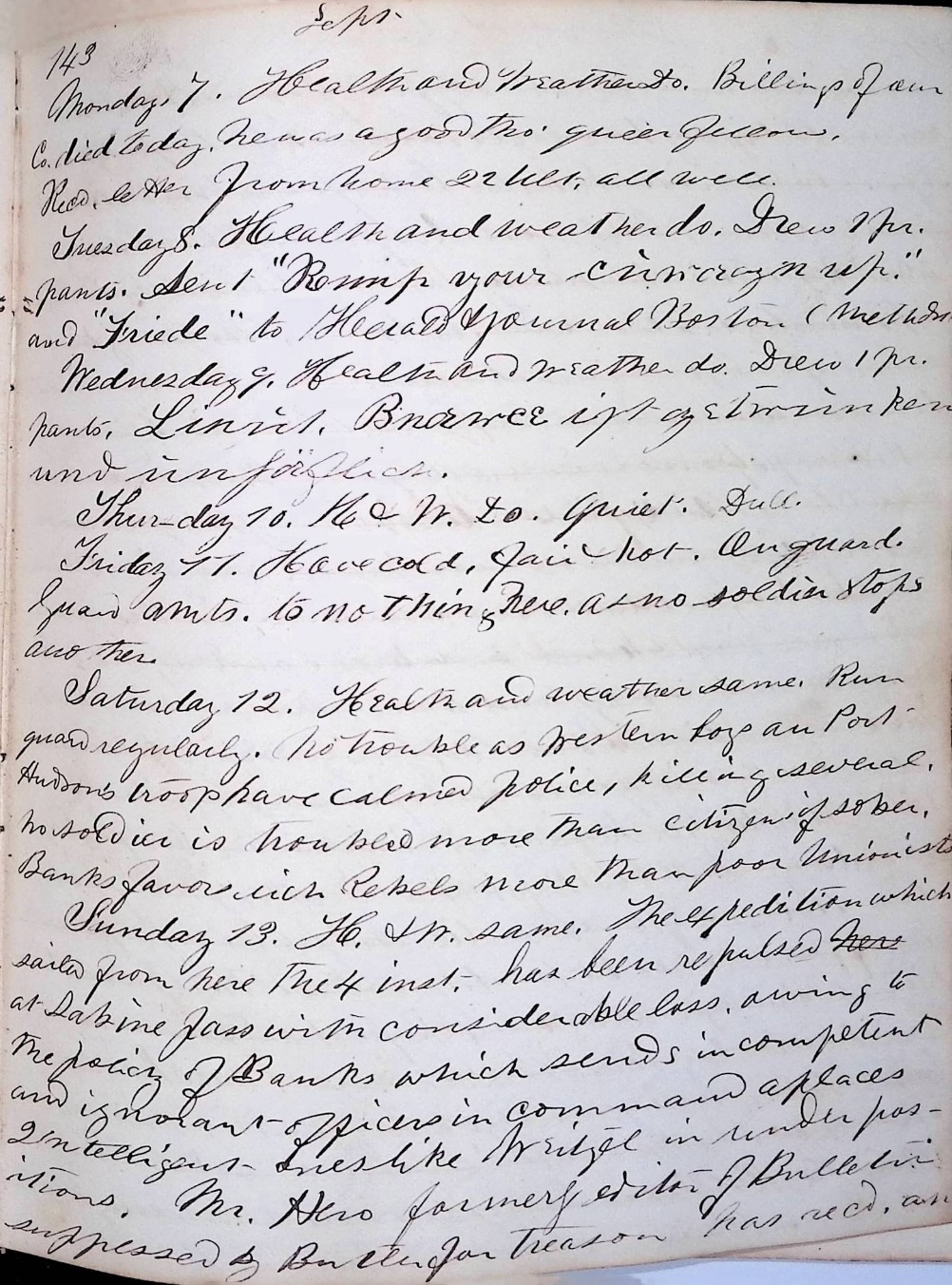
Monday, 7th—Health & weather ditto. [Charles L.] Billings of our company died today, He was a good tho’ queer fellow. Received a letter from home 22nd ultimo. All well.
Tuesday, 8th—Health & weather ditto. Drew 1 pr. pants. Sent “Rimp your [ ] up.” and “Friede” to Herald Journal, Boston.
Wednesday, 9th—Health and Weather ditto. Drew 1 pr. pants. Lieit. Bierce [German translation: “is drunk incessantly”].
Thursday, 10th— Health & weather same. Quiet, Dull.
Friday, 11th—Have a cold. Fair & hot. On guard. Guard amounts to nothing here as no soldier stops another.
Saturday, 12th—Health & weather same. Run guard regularly. No troubles as western boys of Port Hudson’s troops have calmed police, killing several. No soldier is troubled more than citizens if sober. Banks favor rich Rebels more than poor Unionists.
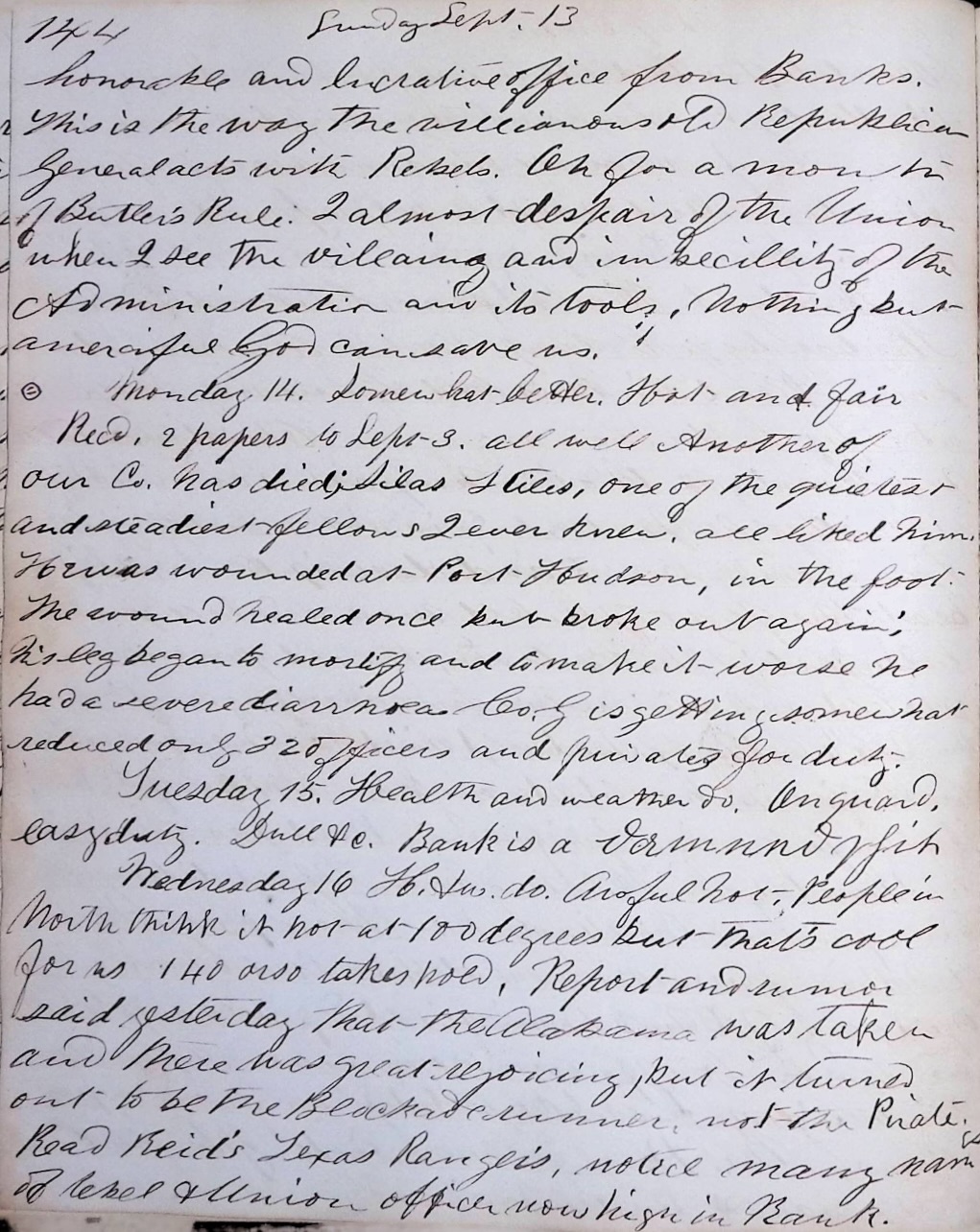
Sunday, 13th—Health & weather the same. The expedition which sailed from here the 4th instant, has been repulsed at Sabine Pass with considerable loss owing to the policy of Banks which sends incompetent & and ignorant officers in command in place of intelligent ones like Weitzel in under positions. Mr. Hero [William Seymour]—formerly editor of [the New Orleans Commercial] Bulletin suppressed by Butler for treason—has received as honorable and lucrative office from Banks. This is the way the villainous old Republican General acts with Rebels. Oh for a man on Butler’s rule. I almost despair of the Union when I see the villainy and imbecility of the Administration and its tools—nothing but a merciful God can save us.
Monday, 14th—Somewhat better. Hot & fair. Received two papers to September 3rd. All well. Another of our company has died—Silas [B.] Stiles, one of the quietest and steadiest fellows I ever knew. All liked him. He was wounded at Port Hudson in the foot. The wound healed once but broke out again. His leg began to mortify and to make it worse, he had a severe diarrhea. Co. G is getting somewhat reduced. Only 32 officers and privates for duty.
Tuesday, 15th—Healt & weather same. On guard. Easy duty. Dull &c. Banks is a damned shit.
Wednesday, 16th—Health & weather same. Awful hot. People in North think it is hot at 100 degrees but that’s cool for us. 140 or so takes hold. Report and rumor said yesterday that the [CSS] Alabama was taken and there was great rejoicing, but it turned out to be the blockade runner, not the pirate. Read Reid’s Texas Rangers. Notice many numbers of Rebel & Union officers now high in rank.
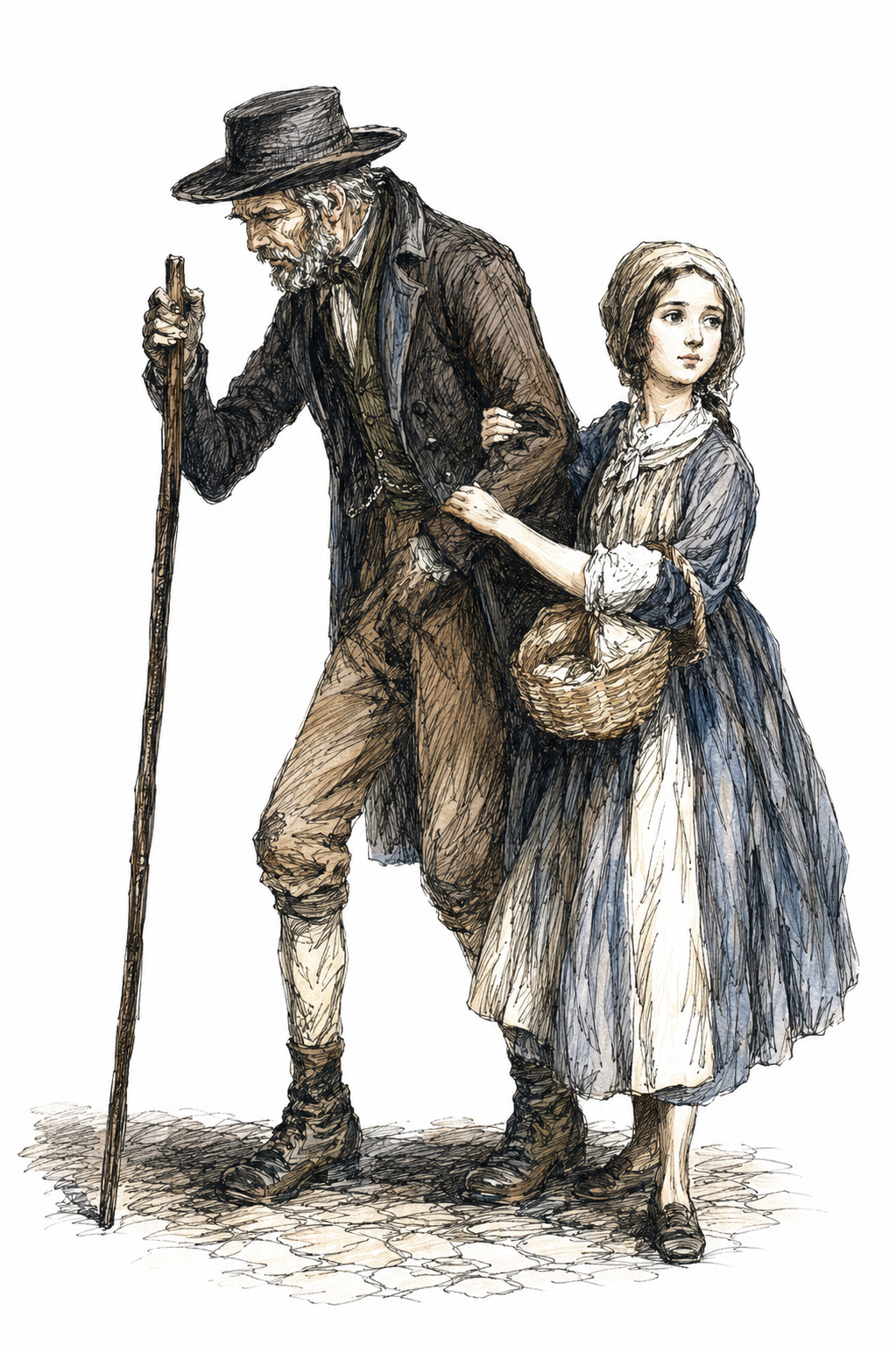
A scene from Dickens’ Old Curiosity Shop—the flight of the old man and Nell.
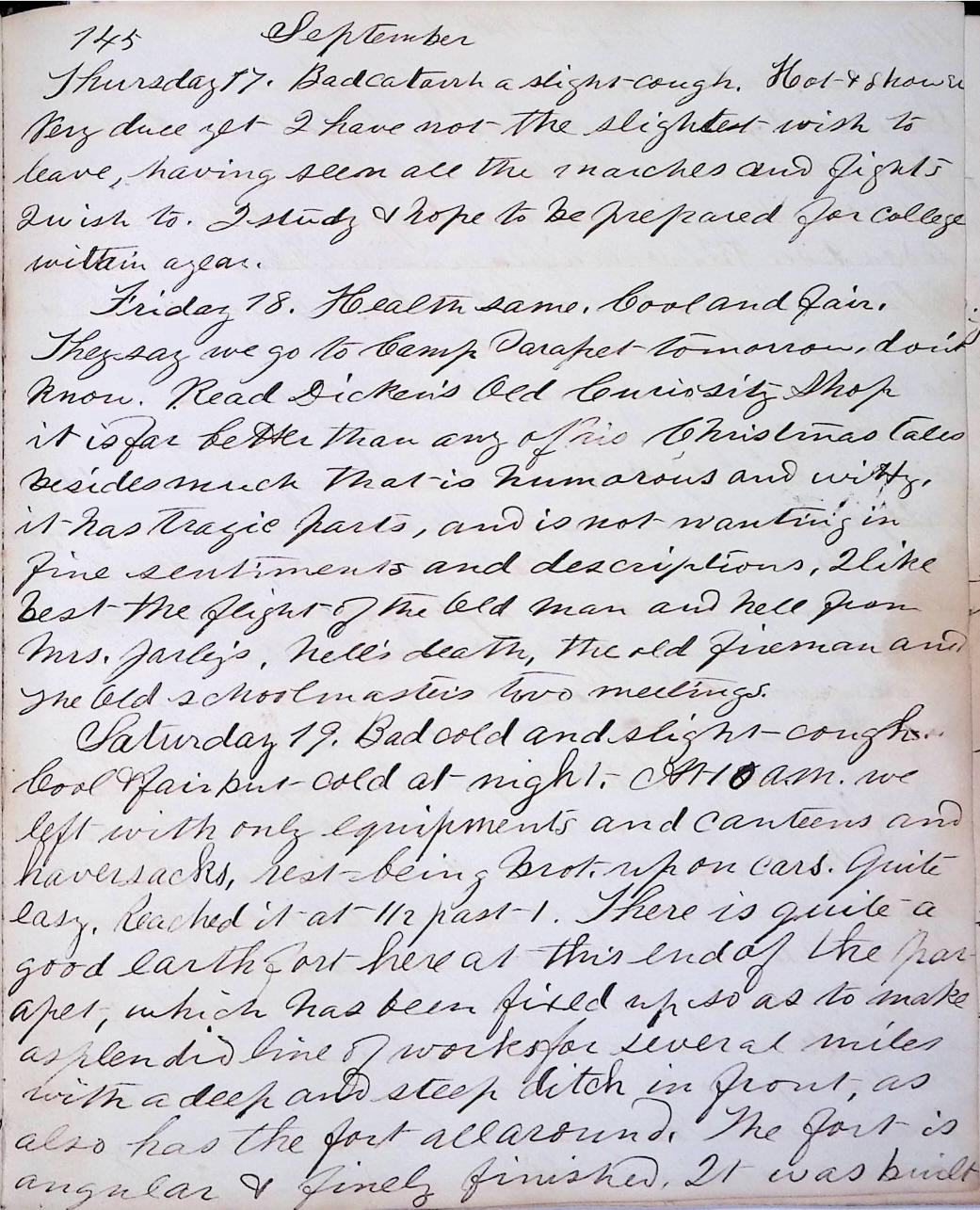
Thursday, 17th—Bad catarrh and slight cough. Hot & showery. Very dull yet I have not the slightest wish to leave, having seen all the marches and fights I wish to. I study & hope to be prepared for college within one year.
Friday, 18th—Health same. Cool & fair. They say we go to Camp Parapet tomorrow. Don’t know. Read Dickens’ Old Curiosity Shop. It is far better than any of his Christmas tales besides much that is humorous and witty. It has tragic parts, and is not wanting in fine sentiments and descriptions. I like best the flight of the old man and Nell from Mrs. Jarley’s, Nell’s death, the old foreman and the old schoolmaster’s two meetings.
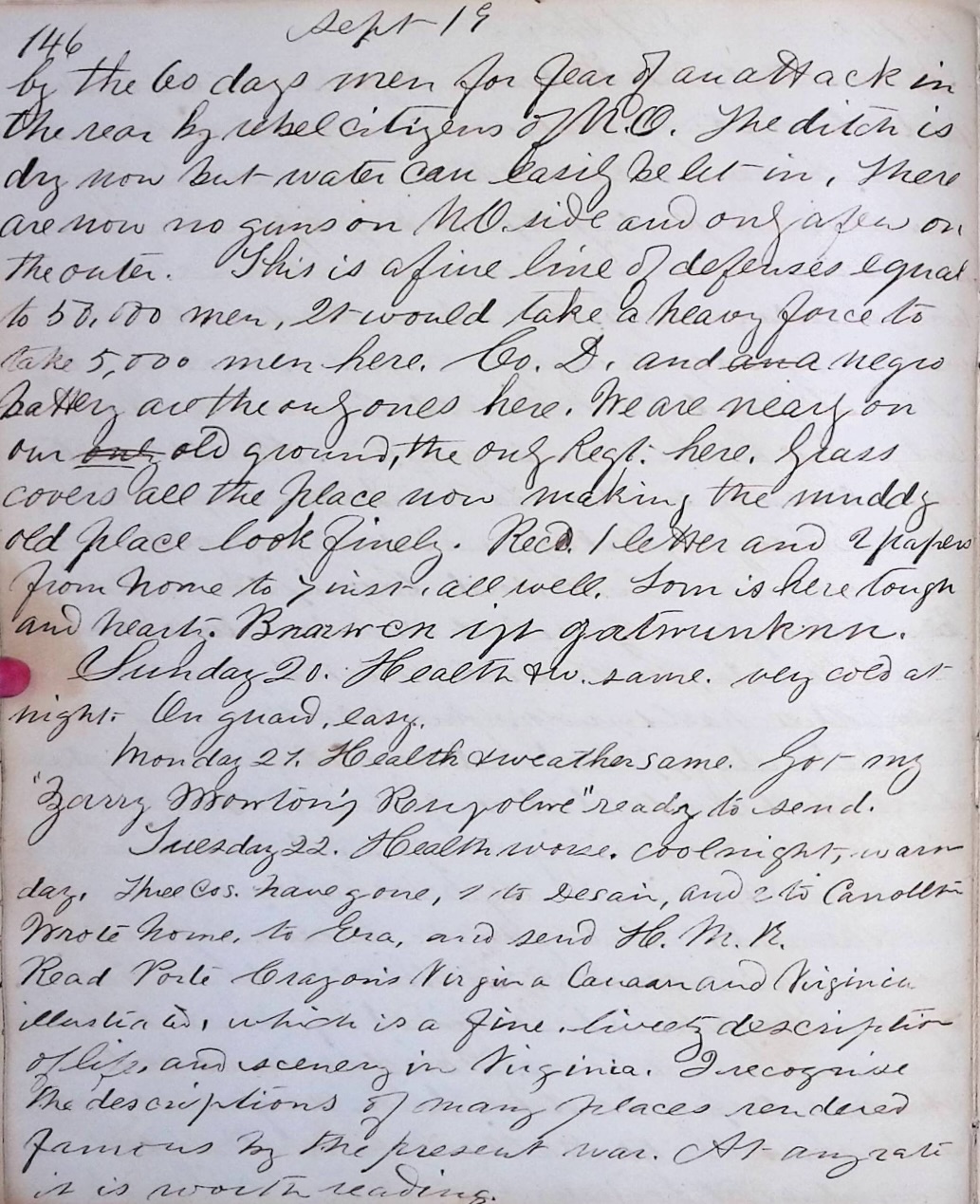
Saturday, 19th—Bad cold and slight cough. Cool & fair but cold at night. At 10 a.m. we left with only equipments and canteens and havesacks, the rest being brought up on cars. Quite easy. Reached it at half past one. There is quite a good earth fort here at this end of the parapet which has been fixed up so as to make a splendid line of works for several miles with a deep and steep ditch in front, as also has the fort all around. The fort is angular & finely furnished. It was built by the 60 days men for fear of an attack in the rear by rebel citizens of New Orleans. The ditch [30 feet wide and 6 feet deep] is dry now but water can easily be let in. There are no guns on New Orleans side and only a few on the outer. This a fine line of defenses equal to 50,000 men. It would take a heavy force to take 5,000 men here. Co. D and a negro battery are the only ones here. We are nearly on our old ground, the only regiment here. Grass covers all the places now making the muddy old place look finely, Received one letter and two papers from home to the 7th instant. All well. Tom is here, tough and hearty. [More German about drunkenness]
Sunday, 20th—Health & weather same. Very cold at night. On guard. Easy.
Monday, 21st—Health & weather same. Got my “Zarry Mowton’s Resolve [?]” ready to send.
Tuesday, 22nd—Health worse. Cool night. Warm day. Three companies have gone, one to Desair, and two to Carrollton. Wrote home to Era [Erastus Holt (1818-1897)?] and send the H. M. R. Read Porte Crayon’s Canaan and Virginia Illustratedwhich is a fine lively description of life and scenery in Virginia. I recognize the descriptions of many places rendered famous by the present war. At any rate, it is worth reading.
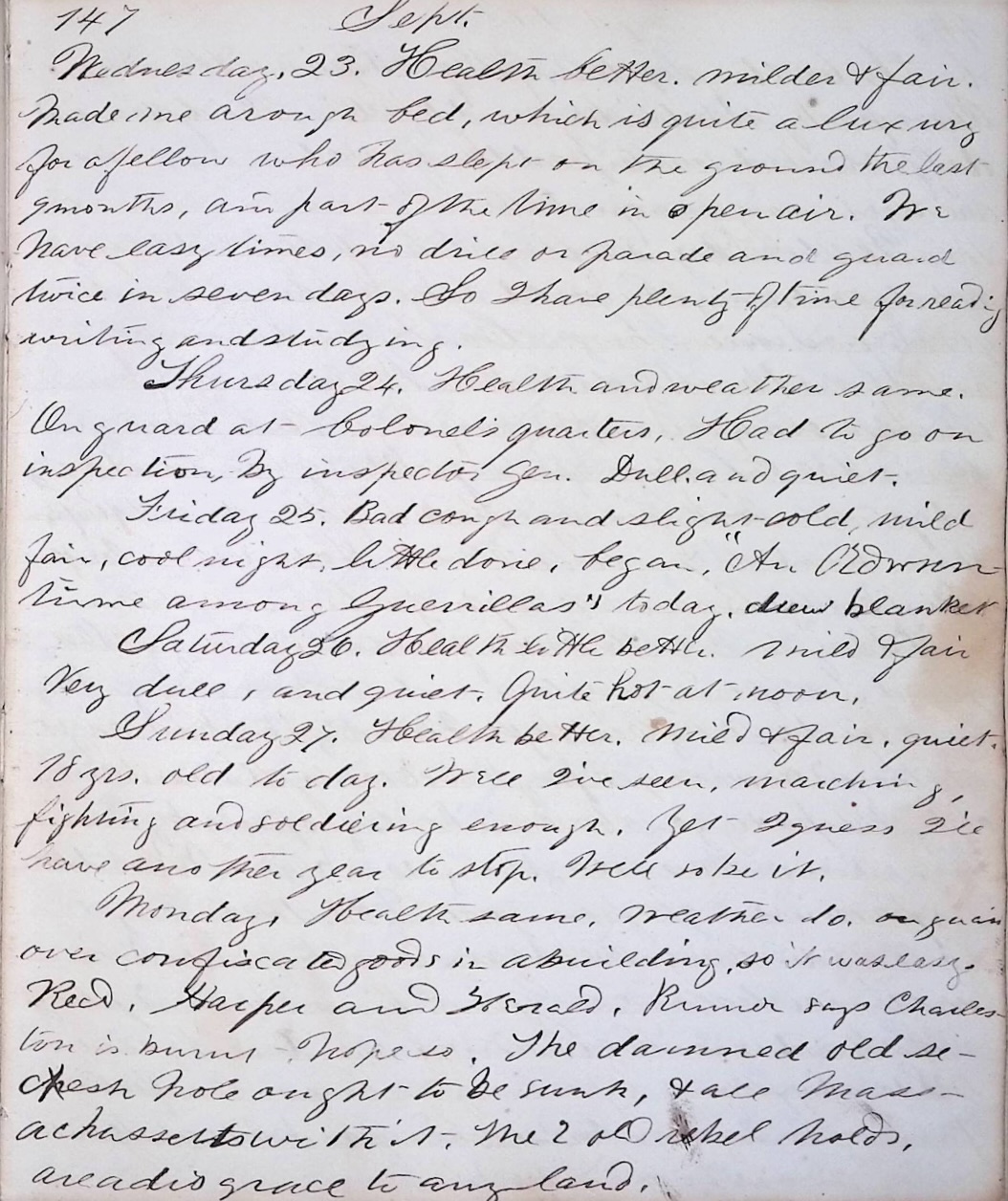
Wednesday, 23rd [September, 1863]—Health better. Milder & fair. Made me a rough bed which is quite a luxury for a fellow who has slept on the ground the last nine months and part of the time in the open air. We have easy times, no drill or parade and guard twice in seven days. So I have plenty of time for reading and studying.
Thursday, 24th—Health & weather same, On guard at Colonel’s quarters. Had to go on inspection by Inspector General. Dull and quiet.
Friday, 25th—Bad cough and slight cold. Mild, fair, cool night. Little done. Began “An Old [?] time among Guerrillas” today. Drew blanket.
Saturday, 26th— Health little better. Mild & fair. Very dull and quiet. Quite hot at noon.
Sunday, 27th [September 1863]—Health better. Mild & fair. Quiet. Eighteen years old today. Well, I’ve seen marching, fighting, and soldiering enough. Yet I guess I’ll have another year to stop. Well, so be it.
Monday, [28th]—Health same. Weather ditto. On guard over confiscated goods in building so it was easy. Received Harper’s and Herald. Rumor says Charleston is burnt. Hope so. The damned old secesh hole ought to be sunk & all Massachusetts [Abolitionists] with it. The old rebel holds are a disgrace to any land.
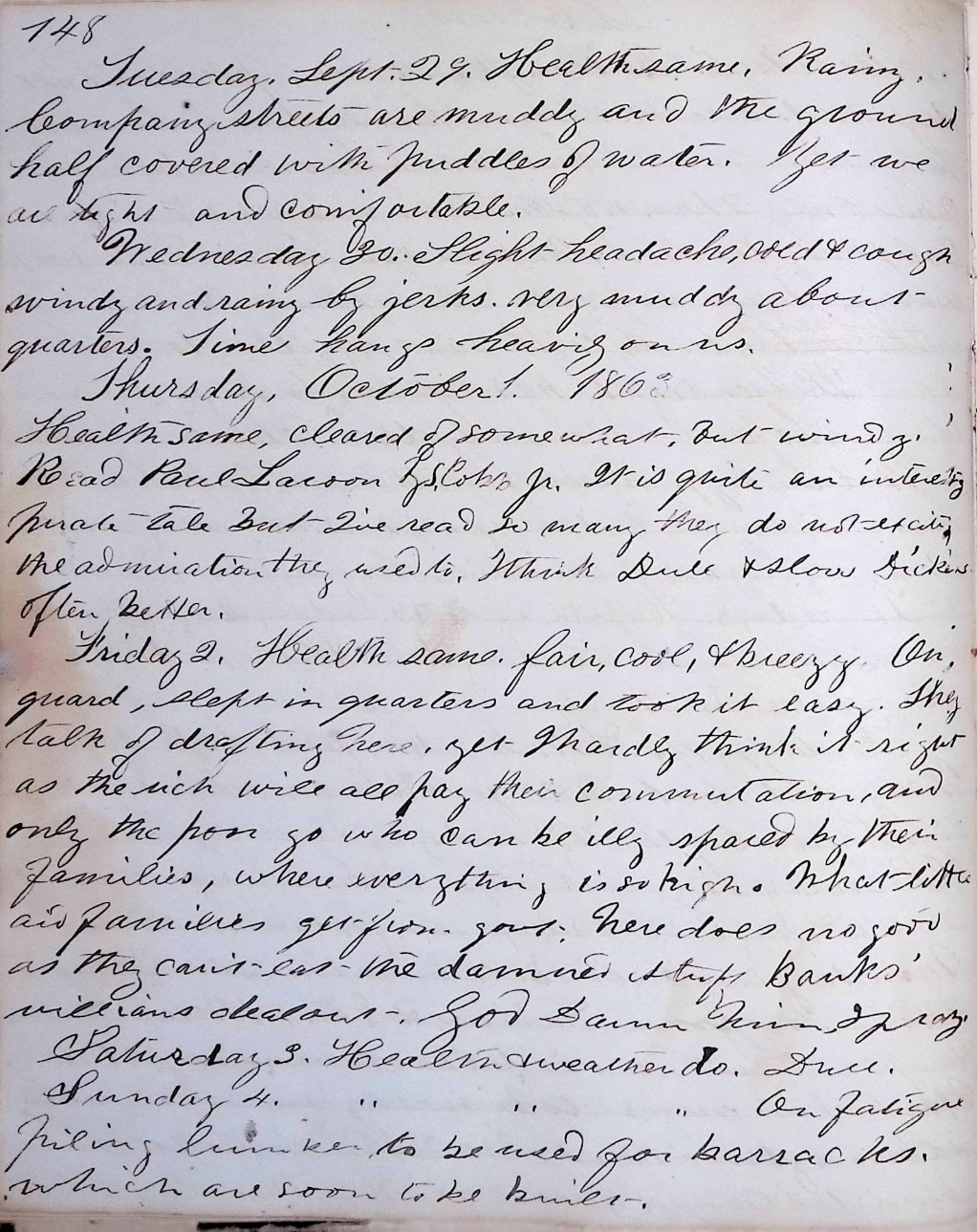
Tuesday, September 29th [1863]—Health same. Rainy. Company streets are muddy and the ground half covered with puddles of water. Yet we are tight and comfortable.
Wednesday, 30th—Slight headache, cold & cough. Windy & rainy by jerks. Very muddy about quarters. Time hangs heavy on us.
Thursday, October 1, 1863—Health same. Cleared off somewhat but windy. Read Paul Laroon, by S[ylvanus] Cobb, Jr. It is quite an interesting pirate tale but I’ve read so many they do not excite the admiration they used to. I think dull & slow. Dickens often better.
Friday, 2nd—Health same. Fair, cool & breezy. On guard. Slept in quarters and took it easy. They talk of drafting here, yet I hardly think it right as the rich will all pay their commutation and only the poor go who can be illy spared by their families, where everything is so high. What little aid families get from the government here does no good as they can’t eat the damned stuff Banks’ villains deal out. God damn him, I pray.
Saturday, 3rd—Health & weather ditto. Dull.
Sunday, 4th—Health & weather ditto. On fatigue piling lumber to be use for barracks which are soon to be built.
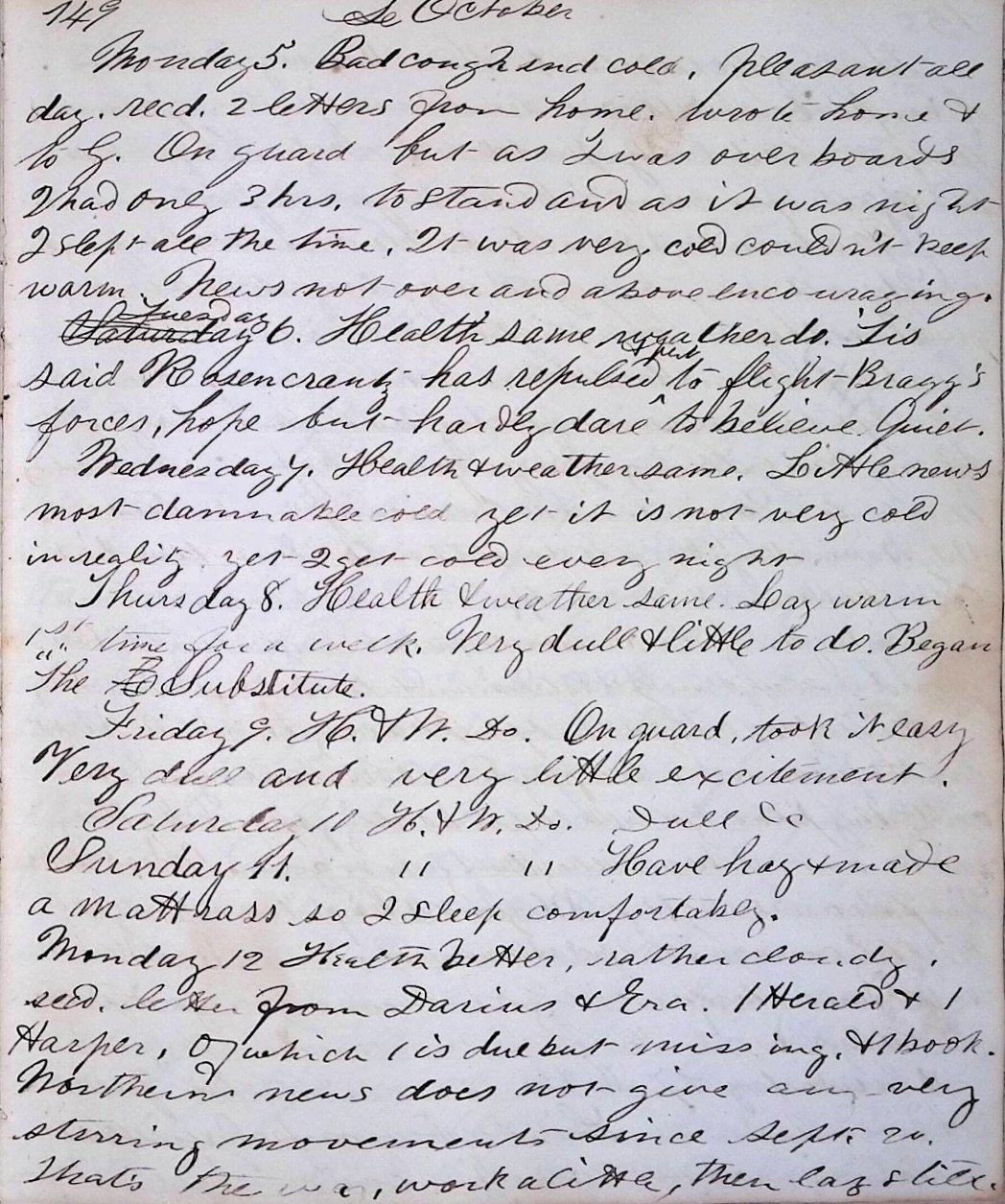
Monday, 5th—Bad cough and cold. Pleasant all day. Received two letters from home. Wrote home & to G. On guard but as I was over boards I had only three hours to stand and as it was night, I slept all the time. It was very cold. Couldn’t keep warm. News not over and above encouraging.
Tuesday, 6th [October 1863]—Health same. Weather ditto. ‘Tis said Rosecrans has [been] repulsed and put to flight [by] Bragg’s forces [at Chickamauga]. Hope but hardly dare to believe. Quiet.
Wednesday, 7th—Health & weather same. Little news. Most damnable cold yet it is not very cold in reality. Yet I get cold every night.
Thursday, 8th—Health & weather same. Lay warm 1st time for a week. Very dull & little to do. Began “The Substitute.” [I believe a composition James authored]
Friday, 9th—Health & weather same. On guard. Took it easy. Very dull & very little excitement.
Saturday, 10th—Health & weather same. Dull.
Sunday, 11th—Health & weather same. Have hay and made a mattress so I sleep comfortably.
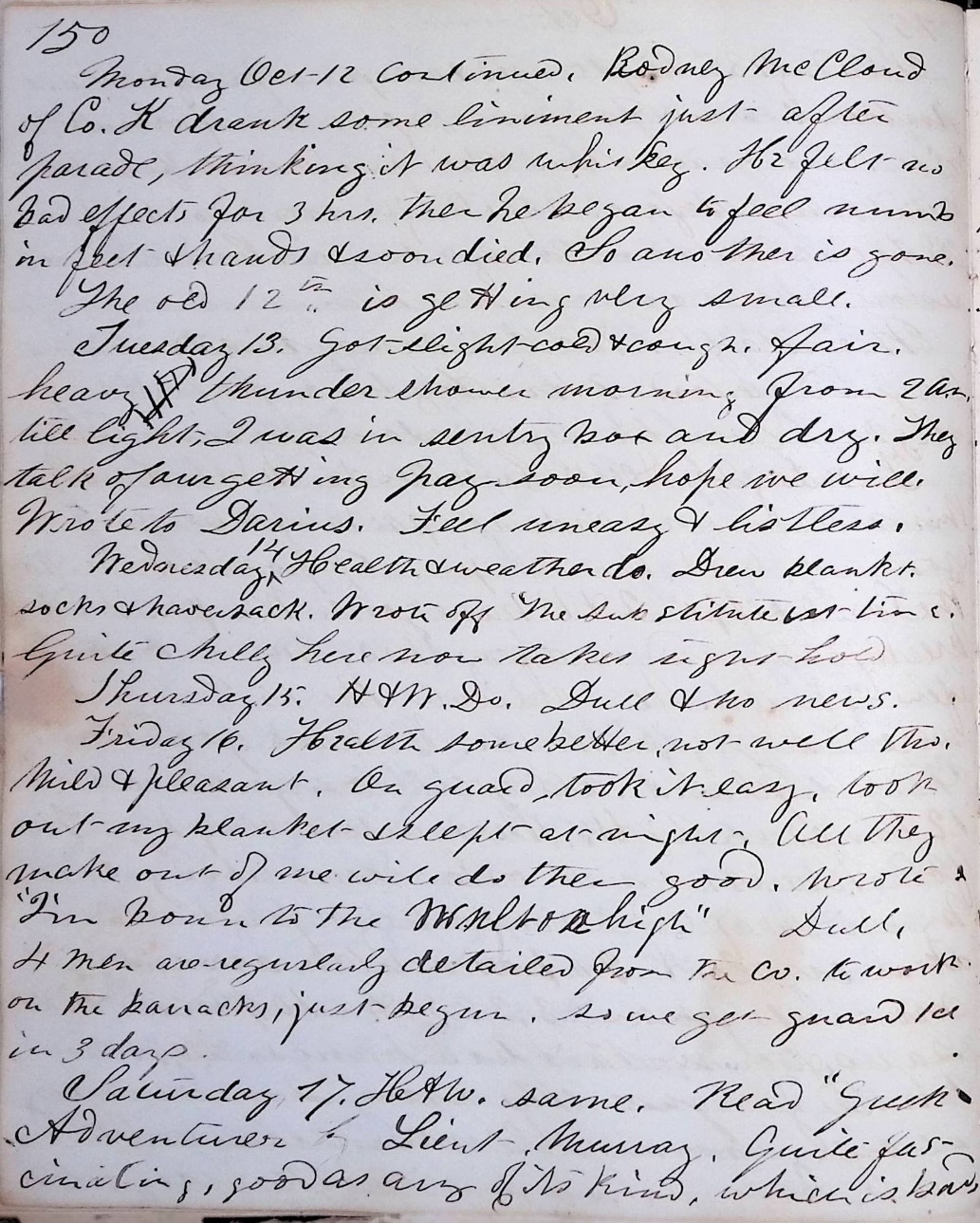
Monday, 12th—Health better. Rather cloudy. Received letter from Darius & Era. One [New York]Herald and one Harper’s[Weekly] of which one is due but missing, and one book. Northern news does not give any very stirring movements since September 20th. That’s the war—work a little, then lay still. Rodney McCloud of Co. K drank some liniment just after parade thinking it was whiskey. He felt no bad effects for three hours, then he began to feel numb in feet and hands & soon died. So another is gone. The old 12th is getting very small.
[Editor’s note: Liniments of various forms were used by doctors during the Civil War but the symptoms Rodney McCloud experienced sound as if it might have been caused by a tincture of aconite (derived from monkshood or wolfsbane) suspended in alcohol. Soldiers sometimes desperate for alcohol might be tempted to drink a liniment unaware of the lethal properties of these concoctions—particularly if prepared in improperly labeled bottle. Rodney is found on the Co. K roster as Roderick McLeod (1823-1863). His body was initially interred at Camp Parapet but later moved to the Chalmette National Historic Park. I believe he was a Scottish emigrant who resided in Calais, Maine, prior to his enlistment.]
Tuesday, 13th—Got slight cold & cough. Fair. Heavy thunder shower in morning from 2 a.m. till light. I was in sentry box and dry. They talk of our getting pay soon. Hope we will. Wrote to Darius. Feel uneasy & listless.
Wednesday, 14th—Health & weather ditto. Drew blanket, socks, and haversack. Wrote off, “The Substitute” 1st time. Quite chilly here now–takes right hold.
Thursday, 15th—Health & weather ditto. Full & no news.
Friday, 16th—Health some better—not well though. Mild & pleasant. On guard. Took it easy. Took out my blanket & slept at night. All they make out of me will do them good. Wrote, “I’m bound to the [ ] high.” Dull. Four men are regularly detailed from the company to work on the barracks, just begun, so we get guard one day in three days.
Saturday, 17th—Health & weather same. Read “Greek Adventurer” by Lieut. Murray. Quite fascinating. Good as any of its kind which is bad.
[Editor’s note: “Lieutenant Murray” was a popular 19th-century pen name used by American author, journalist, and publisher Maturin Murray Ballou (1820–1985). Under this pseudonym, he wrote sensational, fast-paced nautical tales, piracy stories, and action-packed adventure novelettes that became early American bestsellers.]
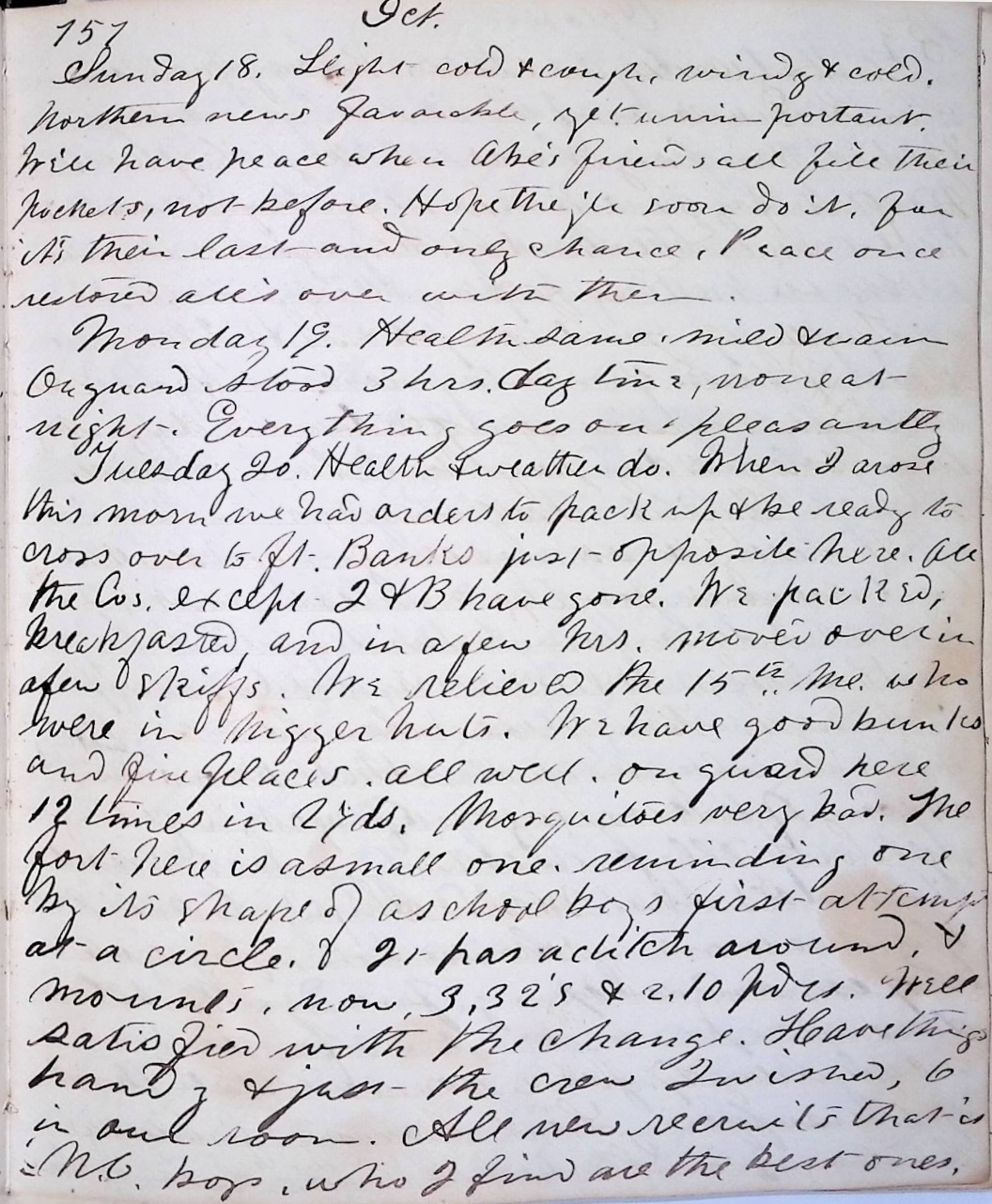
Sunday, 18th—Light cold and cough. Windy & cold. Northern news favorable yet unimportant. Will have peace when Abe’s friends all fill their pockets—not before. Hope they soon do it for it’s their last and only chance. Peace once restored—all’s over with them.
Monday, 19th—Health same. Mild & rain. On guard. Stood three hours in daytime, not at night. Everything goes on pleasantly.
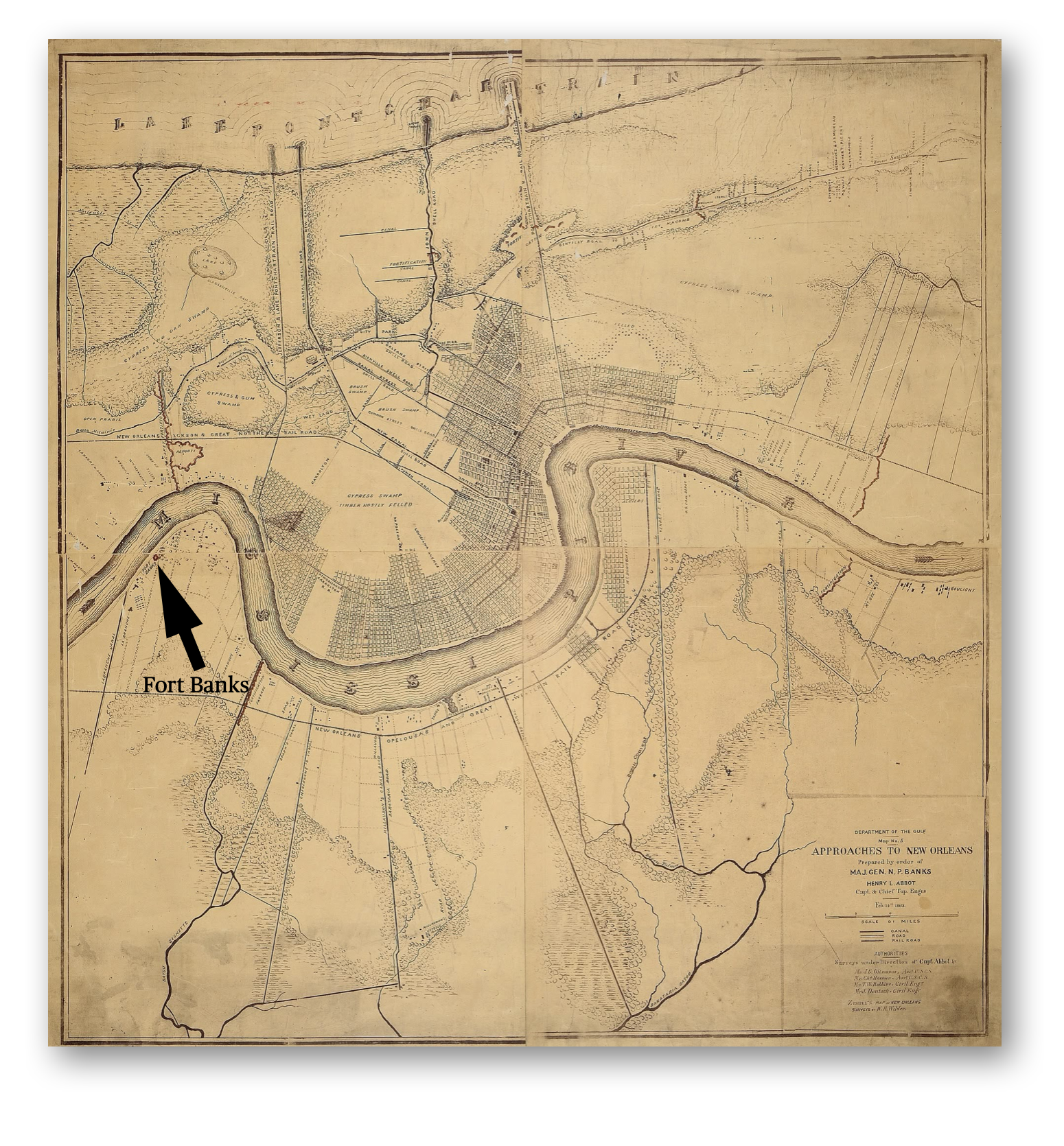
Tuesday, 20th—Health & weather ditto. When I arose this morn we had orders to pack up & be ready to cross over to Fort Banks, just opposite here. All the companies except I & B have gone. We packed, breakfasted, and in a few hours moved over [the Mississippi River] in a few skiffs. We relieved the 15th Maine who were in nigger huts. We have good bunks and fine places. All well. On guard here 12 times in 27 days. Mosquitoes very bad. The fort here is a small one reminding one by its shape of a schoolboy’s first attempt at a circle. It has a ditch around & mounts, now, three 32-[pounder]’s and two 10 pounders. Well satisfied with the change. Have things in hand & just the crew I wished. Six in our room. All new recruits—that is, New Orleans boys, who I find are the best ones.
Map entitled, “Approaches to New Orleans, 1863”
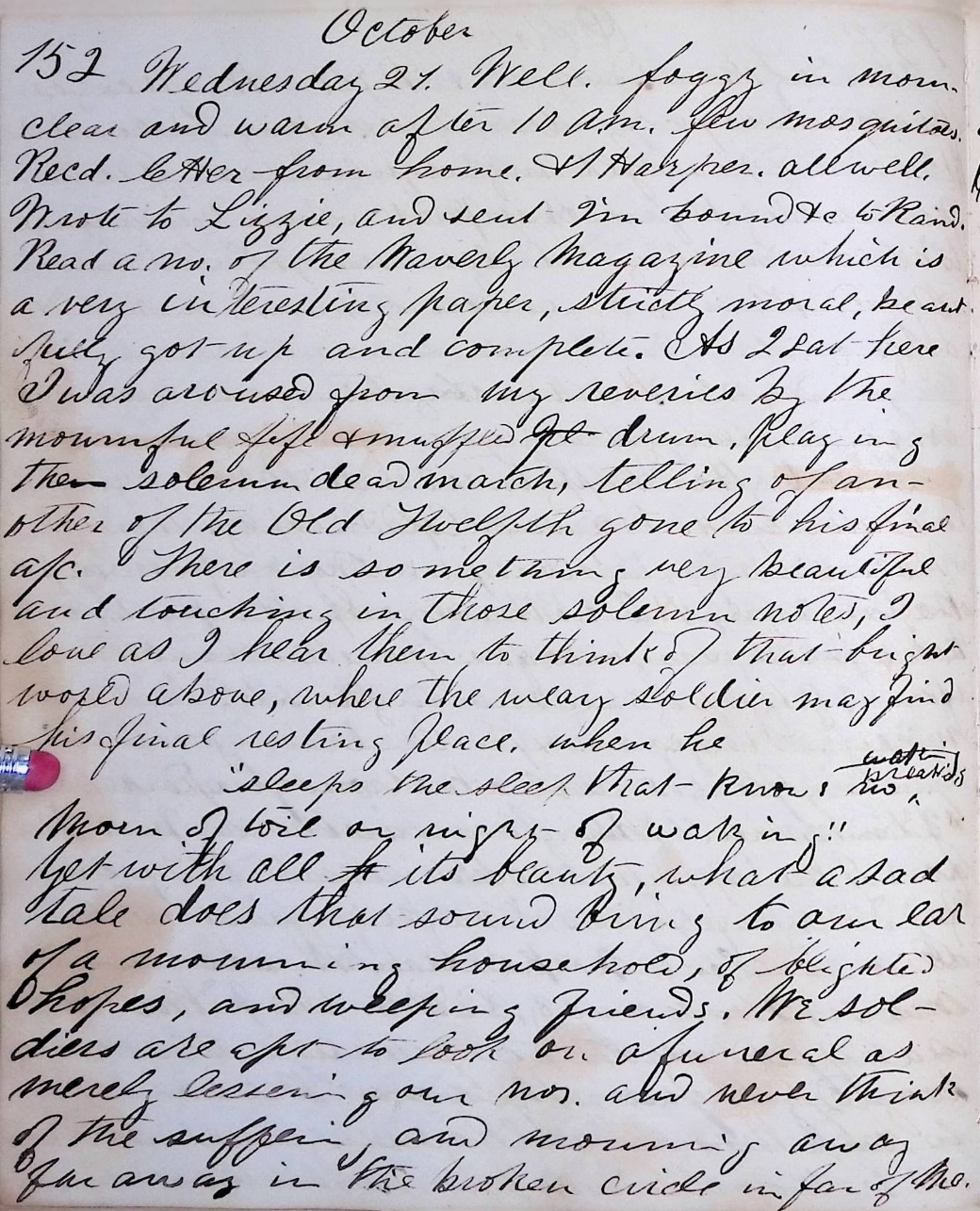
Wednesday, 21st [October, 1863]—[I’m] well. Foggy in morning. Clear and warm after 10 a.m. Few mosquitoes. Received letter from home & one Harper’s [Weekly]. All well. Write to Lizzie and sent “I’m bound…&c.” to Rand. Read a number of the Waverley Magazine which is a very interesting paper, strictly moral, beautifully got up and complete. As I sat here, I was aroused from my reveries by the mournful fife & muffled drum playing the solemn dead march, telling of another of the Old Twelfth gone to his final account. There is something very beautiful and touching in those solemn notes. I love to hear them—to think of that bright world above where the weary soldier may find his final resting place, when he “sleeps the sleep that knows no breaks morn of toil or night of waking.” Yet with all its beauty, what a sad tale does that sound bring to our ear of a mourning household of blighted hopes, and weeping friends. We soldiers are apt to look on a funeral as merely lessening our numbers and never think of the suffering and mourning away, faraway in the broken circle in far off Maine.
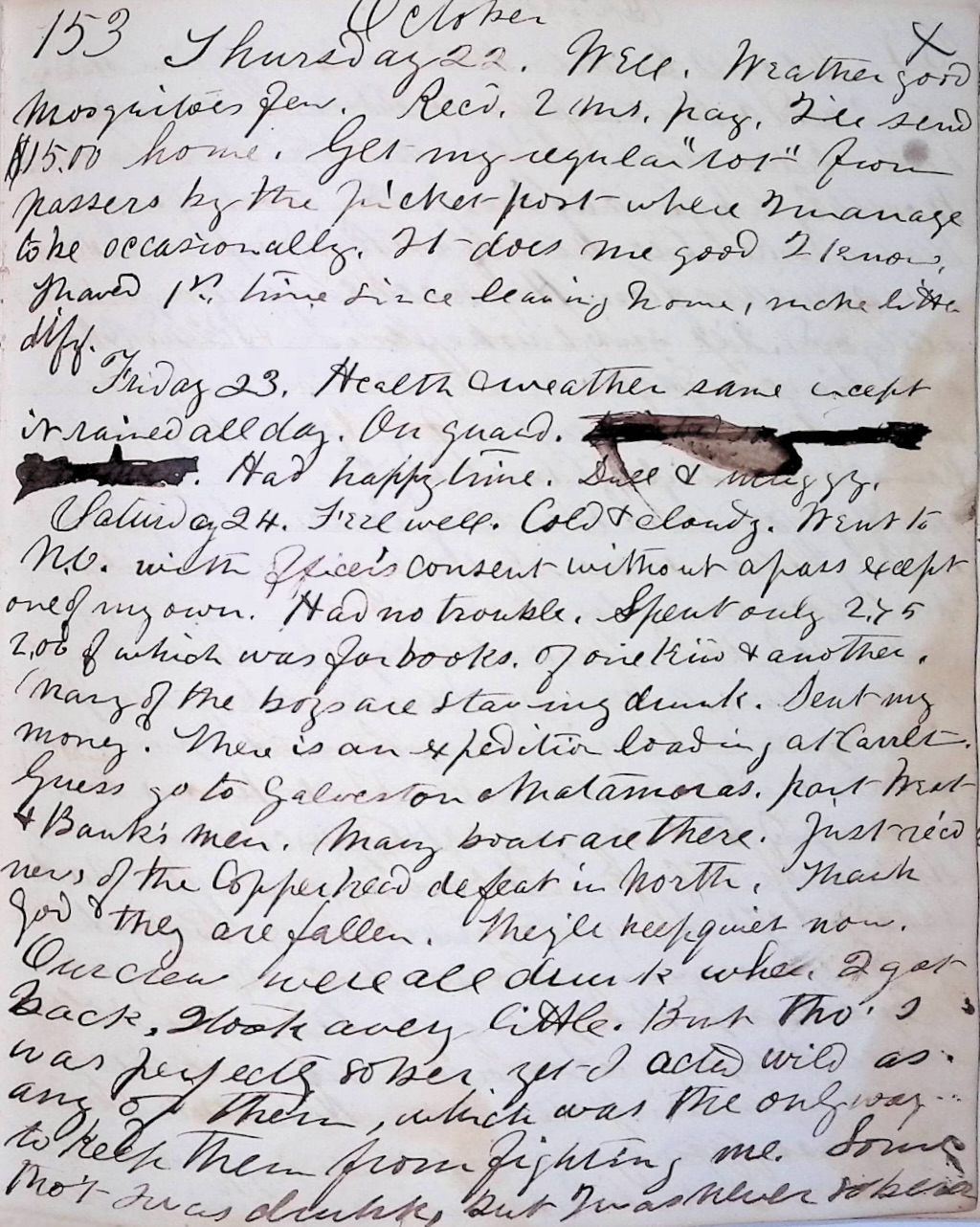
Thursday, 22nd—Well. Weather good. Mosquitoes few. Received two months pay. I’ll send $15 home. Get my regular “lot” from passers by the picket post where I manage to be occasionally. It does me good, I know. Shaved first time since leaving home. Makes little difference.
Friday, 23rd—Health and weather same except it rained all day. On guard. [Here is a four word sentence that James crossed out with ink which seems to begin something like, “Treated myself….] Had happy time. Dull & muggy.
Saturday, 24th—Feel well. Cold & cloudy. Went to New Orleans with officer’s consent without a pass except one of my own. Had no trouble. Spent only $2.75, $2 of which was for books of one kind or another. Many of the boys are starving drunk. Sent my money [home]. There is an expedition loading at Carrollton. Guess [they] go to Galveston [or] Matamoros, part West & Bank’s men. Many boats are there. Just received new of the Copperhead defeat in North. Thank God they have fallen. They’ll keep quiet now. Our crew were all drunk when I got back. I took very little but tho’ I was perfectly sober, yet I acted wild as any of them, which was the only way to keep them from fighting me. Some thought I was drunk but I was never sober.
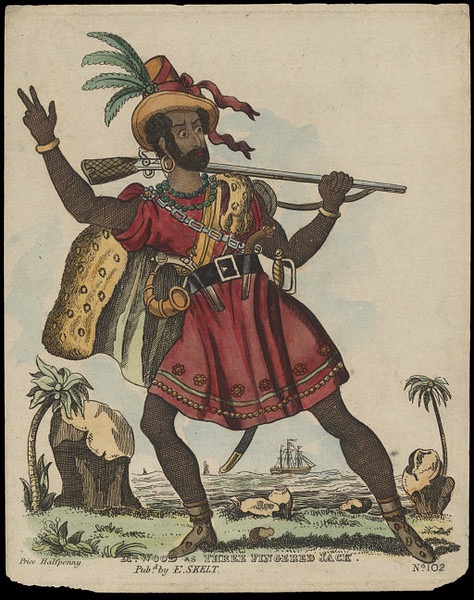
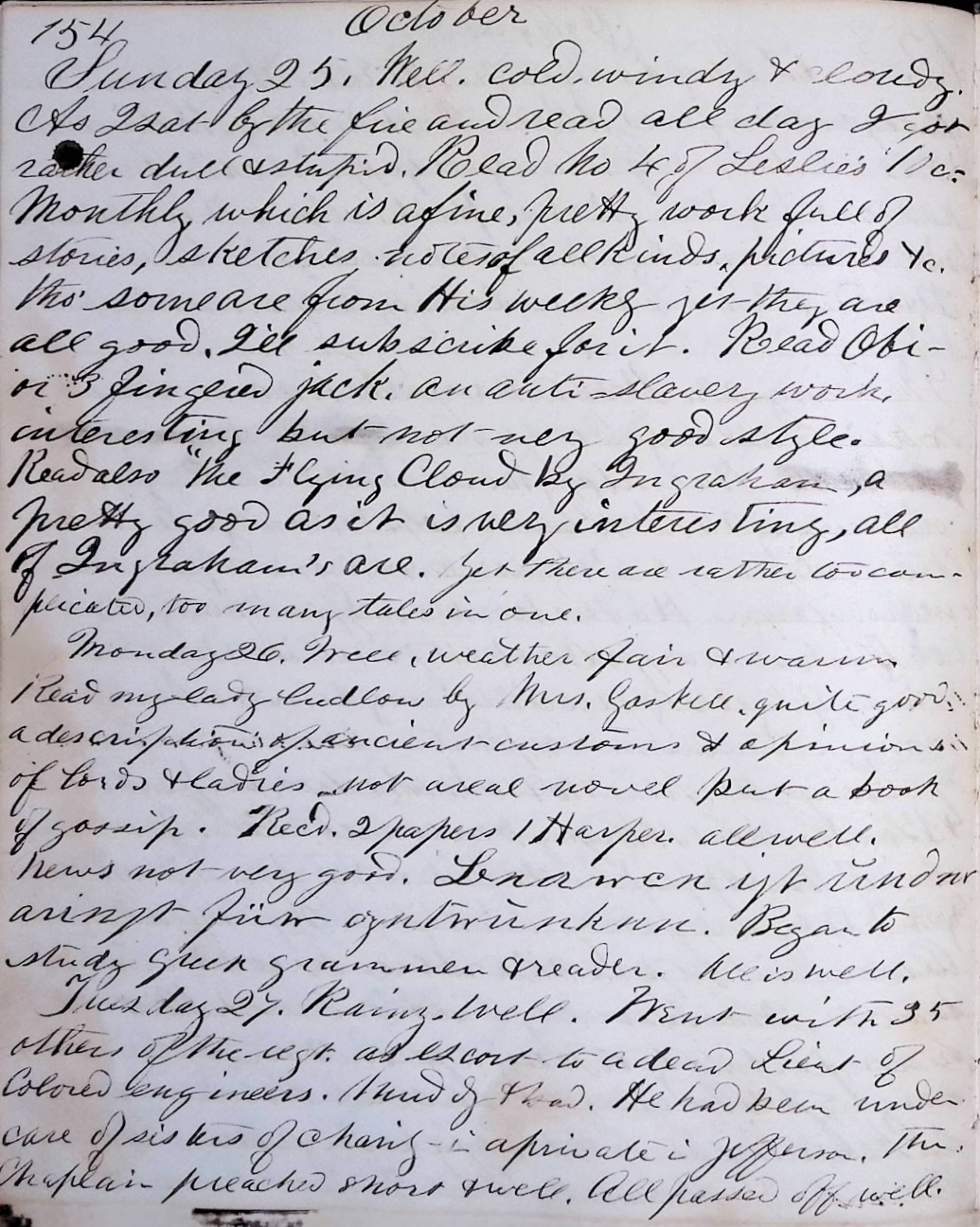
Sunday, 25th—Well. Cold, windy, and cloudy. As I sat by the fire and read all day, I got rather dull & stupid. Read No. 4 of Leslie’s 10 cents Monthly, which is a fine work, full of stories, sketches, notes of all kinds, pictures, &c. Tho’ some are from his Weekly, yet they are all good. I’ll subscribe for it. Read Obi—or Three fingered Jack—an anti-slavery work. Interesting but not very good style. Read also, “The Flying Cloud” by Ingraham, a pretty good [story] as it is very interesting—all of Ingraham’s are. Yet they are rather too complicated, too many tales in one.
Monday, 26th—Well. Weather fair and warm. Read “My Lady Ludlow” by Mrs. Gaskell. Quite good. A description of ancient customs & opinions of lords & ladies. Not a real world novel but a book of gossip. Received two papers, 1 Harper’s. All well. [Attempt at foreign language but cannot make out all the letters]. Began to study Greek grammar & reader. All is well.
Tuesday, 27th—Rainy. Well. Went with 35 others of the regiment as escort to a dead Lieutenant of Colored Engineers. Muddy & bad. He had been under care of Sisters of Charity in a private [home] in Jefferson. The chaplain preached short & well. All passed off well.
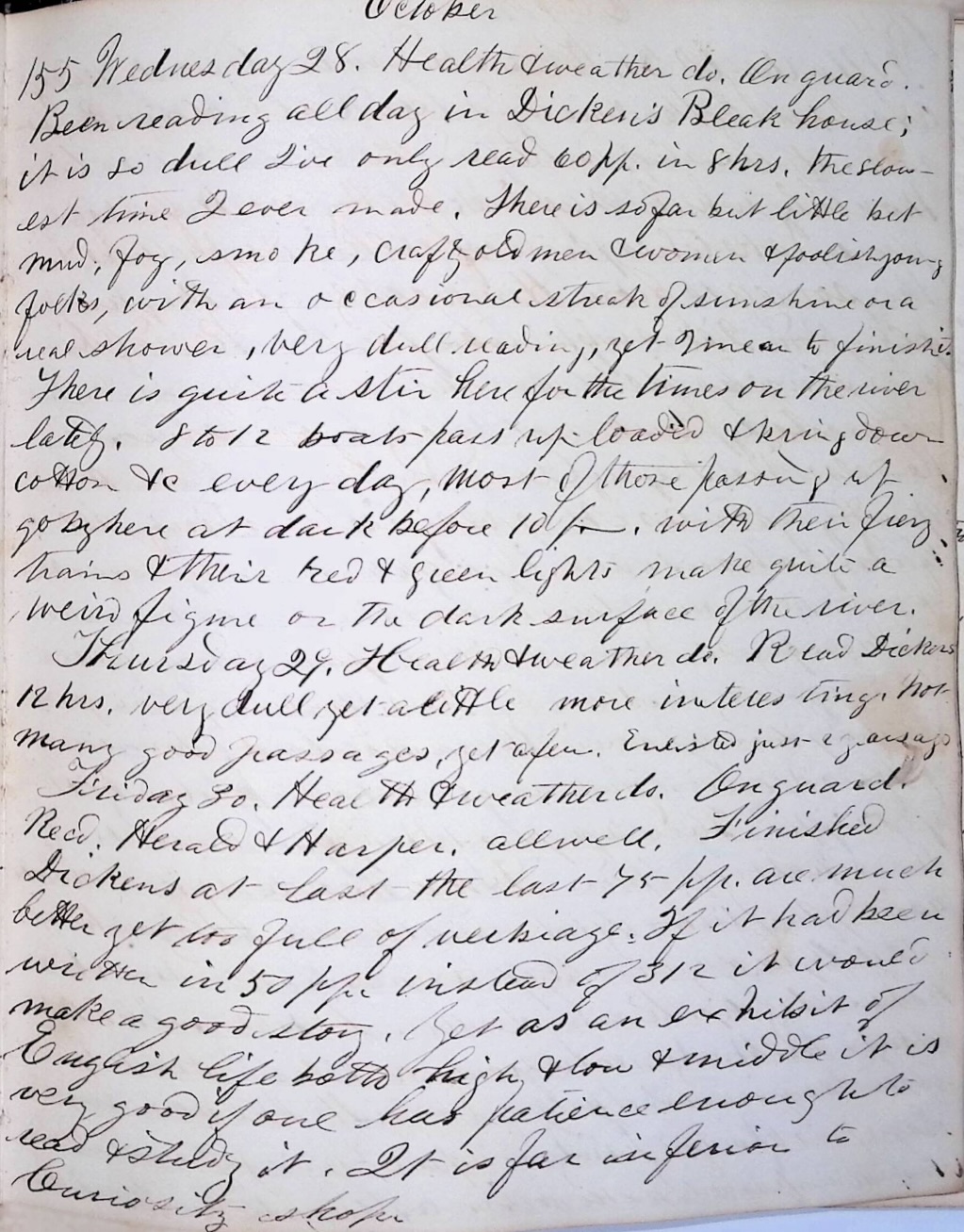
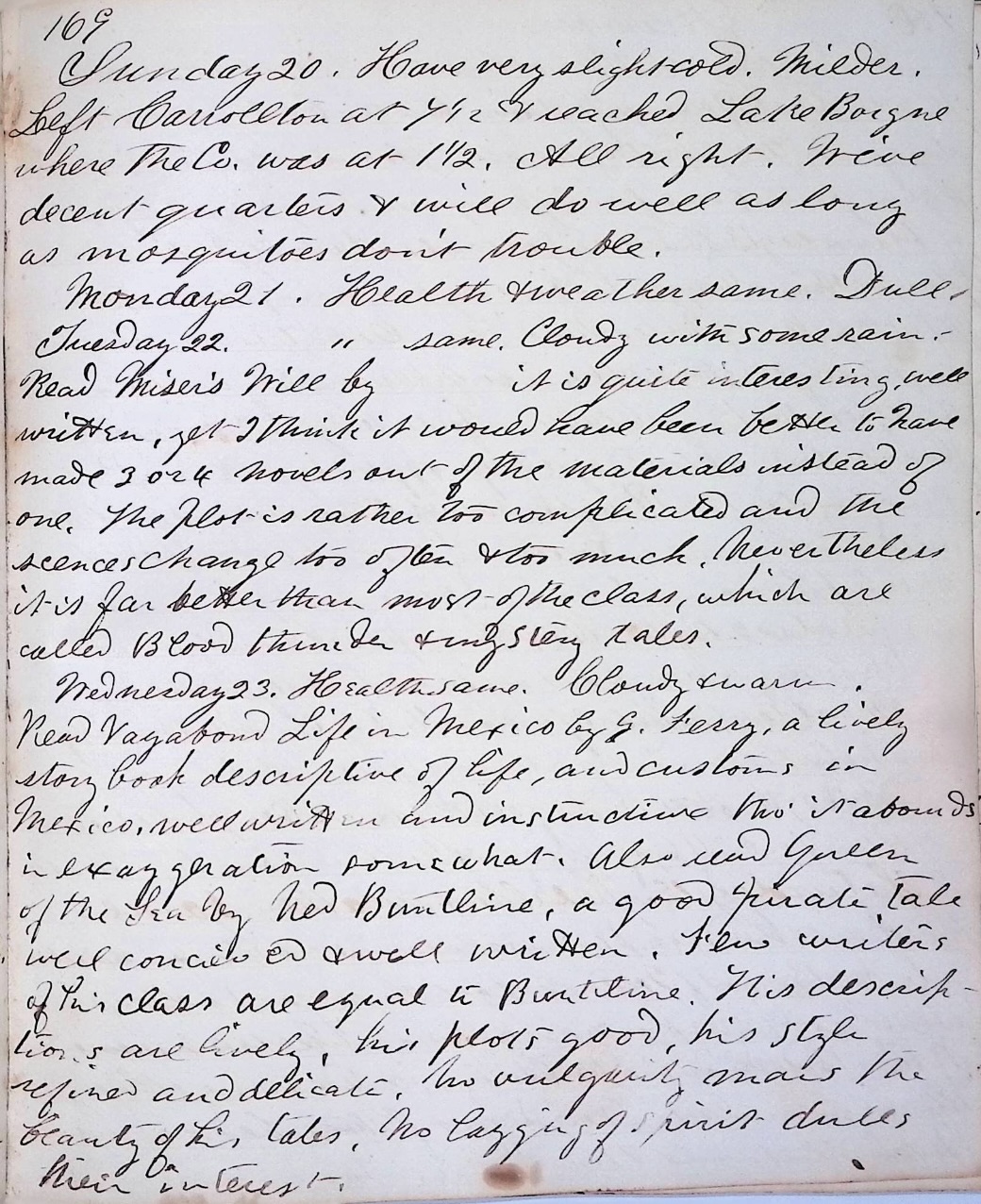
Wednesday, 28th—Health & weather ditto. On guard. Been reading all day in Dickens’ Bleak House. It is so dull I’ve only read 60 pages in eight hours—the slowest time I ever made. There is so far but little but mud, fog, smoke, crafty old men & women & foolish young folks, with an occasional streak of sunshine or a real shower. Very dull reading, yet time to finish it.
There is quite a stir here for the times on the river lately. Eight to twelve boats pass up loaded & bring down cotton &c. every day, most of the time passing up and by by here at dark before 10 p.m. with their fiery trains & their red & green lights make quite a weird figure on the dark surface of the river.
[Editor’s note: By the 1840s and 1850s, maritime rules had established the international and U.S. practice of outfitting steam vessels with colored sidelights—red on the port (left) side and green on the starboard (right) side—to prevent collisions in the dark. During wartime operations on the Mississippi, these running lights were often doused or masked so vessels would not reveal their positions to the enemy. By late 1863, with the Mississippi again open to navigation, these signal lights were reestablished.]
Thursday, 29th—Health & weather ditto. Read Dickens 12 hours—very dull, yet a little more interesting. Not many good passages yet. A few. Enlisted just two years ago.
Friday, 30th—Health & weather ditto. On guard. Received Herald & Harper. All well [at home]. Finished Dickens at last. The last 75 pages ar much better yet too full of verbiage. If it had been written in 50 pages instead of 312, it would make a good story. Yet as an exhibit of English life, both high & low & middle, it is very good if one has patience enough to read & study it. It [Bleak House]is far inferior to Curiosity Shop.
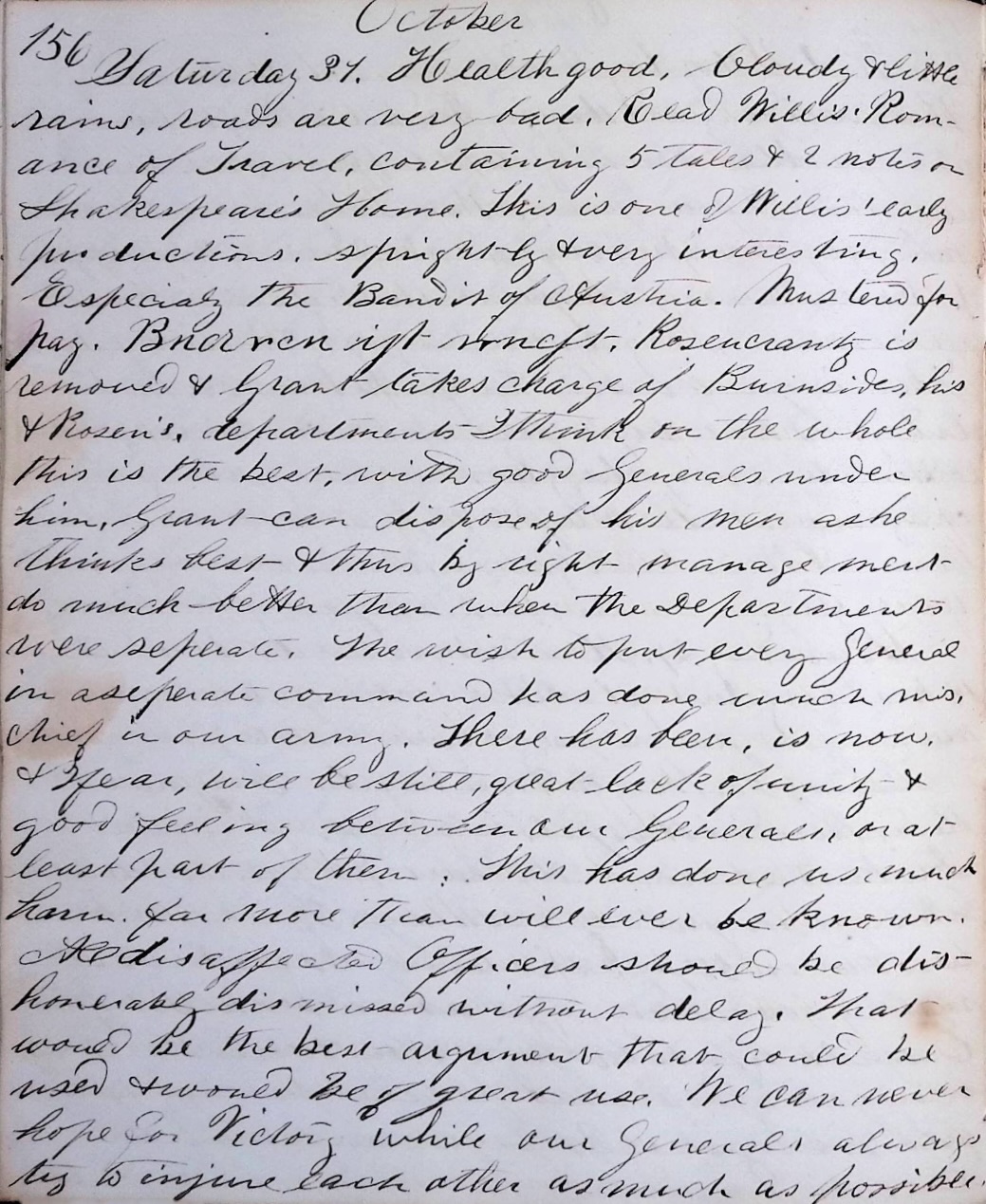
Saturday, 31st—Health good. Cloudy & little rain. Roads are very bad. Read [Nathaniel Parker] Willis’ Romance of Travel, containing five tales & two notes on Shakespeare’s home. This is one of Willis’ early productions [pub. 1840], sprightly & very interesting—especially the Bandit of Austria.
Mustered for pay. [Another foreign language phrase] Rosecrans is removed & Grant takes charge of Burnsides’, his, and Rosecrans’ departments. I think on the whole, this is the best. With good generals under him, Grant can dispose of his men as he thinks best & thus by right management, do much better than when the departments were seperate. The wish to put every general in a seperate command has done much mischief in our army. There has been—is now—& I fear will be still, great lack of unity & good feeling between our generals, or at least part of them. This has done us much harm—far more than will ever be known. All disaffected officers should be dishonorably dismissed without delay. That would be the best argument that could be used & would be of great use. We can never hope for victory while our generals always try to injure each other as much as possible.
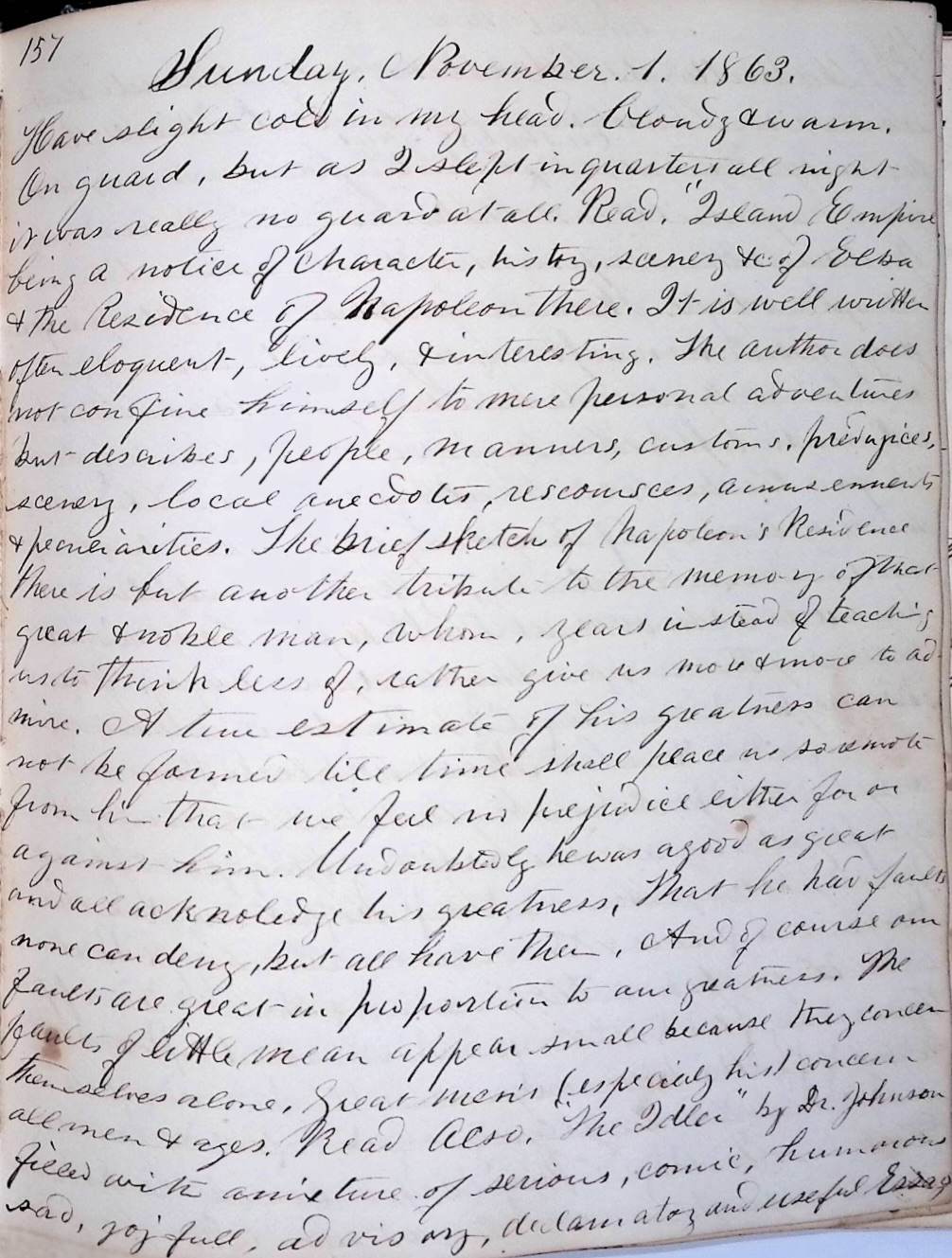
Sunday, November 1st, 1863—Have slight cold in my head. Cloudy & warm. On guard but as I slept in quarters all night, it was really no guard at all. Read, Island Empire, being a notice of character, history, scenery, &c. of Elba & the residence of Napoleon there. It is well written, often eloquent, lively & interesting. The author does not confine himself to mere personal adventures but describes people, manners, customs, prejudices, scenery, local anecdotes, resources, amusements, & peculiarities. The brief sketch of Napoleon’s Residence there is but another tribute to the memory of that great & noble man, whom, years instead of teaching us to think less of, rather give us more & more to admire. A true estimate of his greatness cannot be formed till time shall place us so remote from him that we feel in prejudice either for or against him. Undoubtedly he was a good as great and all acknowledge his greatness. That he had faults, none can deny, but all have them. And of course our faults are great in proportion to our greatness. The faults of little mean appear small because they concern themselves alone. Great men’s (especially his) concern all men & ages. Read also The Idler by Dr. Johnson. Filled with a mixture of serious, comic, humorous, sad, joyful, advisory declamatory and useful essays.
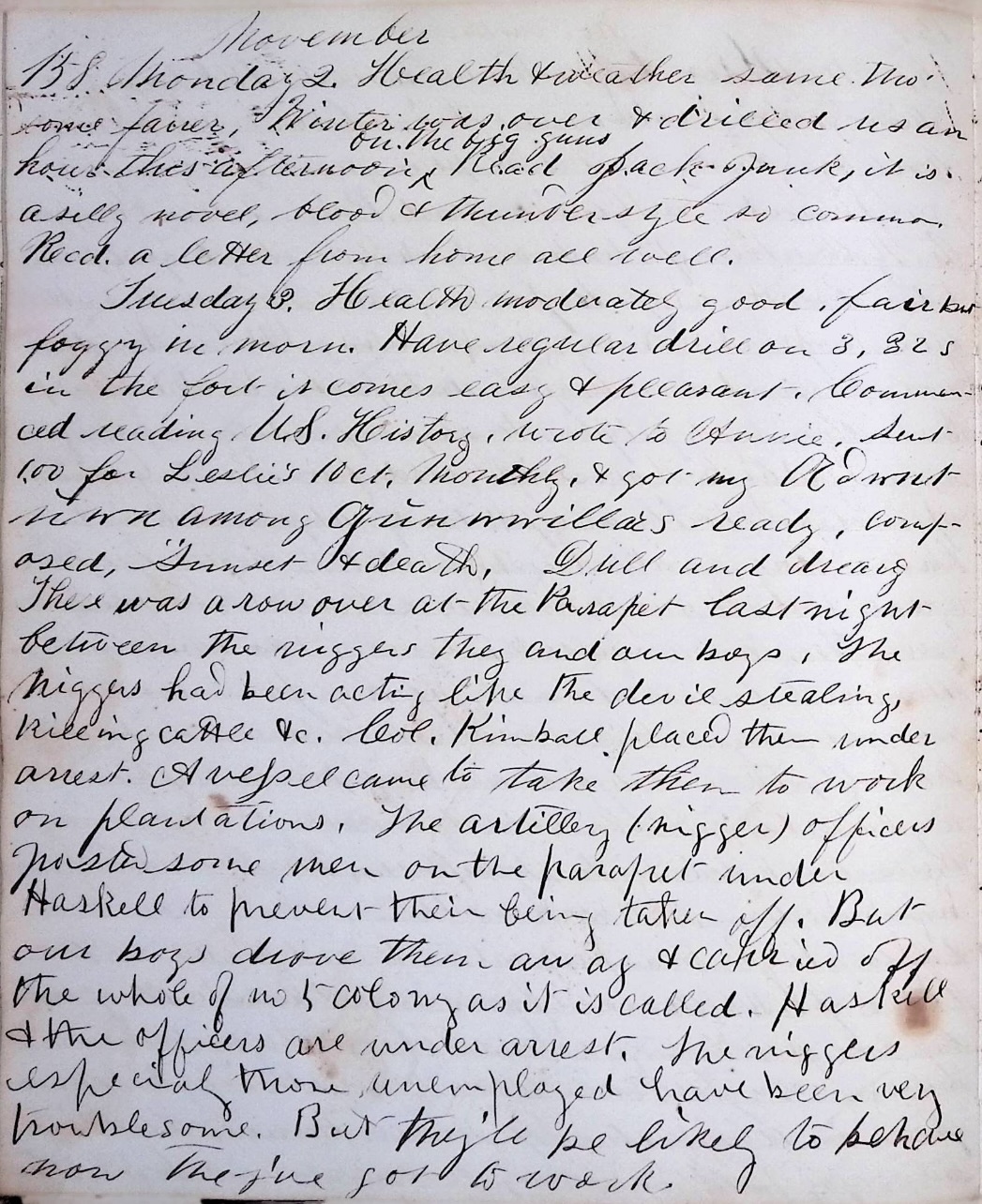
Monday, 2nd [November 1863]—Health & weather same tho’ some [ ]. Winter was over & drilled us an hour this afternoon on the big guns. Read Jack Junk. It is a silly novel—blood & thunder style, so common. Received a letter from home. All well.
Tuesday, 3rd—Health moderately good. Fair but foggy in morn. Have regular drill on three 32-pounders in the fort. It comes easy & pleasant. Commenced reading US History. Wrote to Annie. Sent $1 for Leslie’s, ten cents for Monthly, & got my [“____ ____] among guerrillas” ready. Composed “Sunset & Death, Dull and Dreary.”
There was a row [fight] over at the Parapet last night between the niggers—they and our boys. The niggers had been acting like the devil, stealing [and] killing cattle, &c. Col. Kimball placed them under arrest. A vessel came to take them to work on plantations. The artillery (nigger) officers posted some men on the parapet under Haskell to prevent their being taken off but our boys drove them away and carried off the whole of No. 5 Colony, as it is called. Haskell & the officers are under arrest. The niggers—especially those unemployed—have been very troublesome. But they’ll be likely to behave now they’ve got to work.
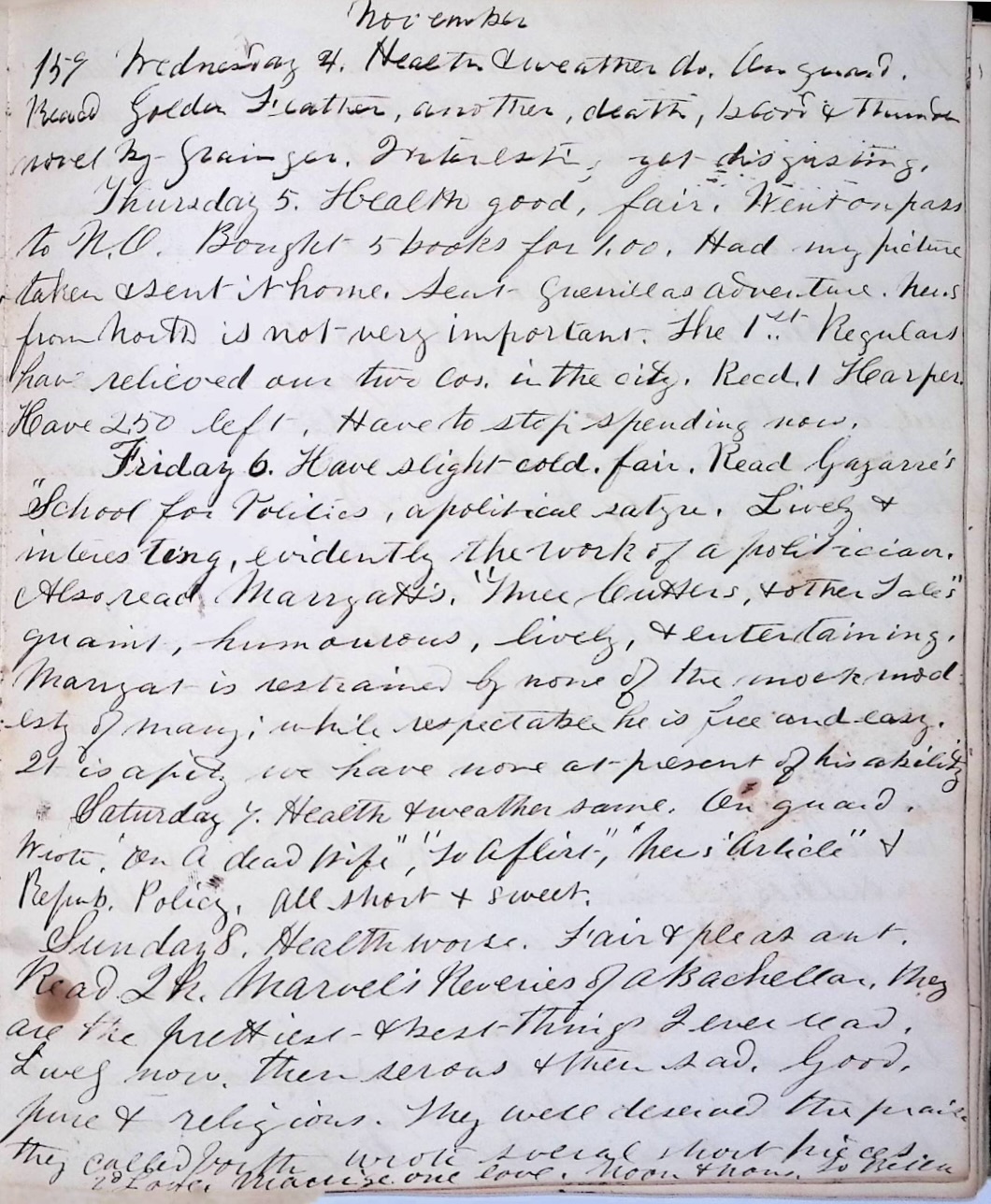
[Wednesday] November 4th—Health & weather ditto. On guard. Received Golden Feather, another death, blood & thunder novel by [Arthur M.] Grainger. Interesting yet disgusting.
Thursday, 5th—Health good. Fair. Went on pass to New Orleans. Bought five books for $1. Had my picture taken & sent it home. Sent Guerrillas Adventure. News from North is not very important. The 1st Regulars have relieved our two companies in the city. Received one Harper’s. Have $2.50 let. Have to stop spending now.
Friday, 6th—Have slight cold. Fair. Read Gayarre’s School for Politics [pub. 1854], a political satire. Lively & interesting—evidently the work of a politician. Also read Marryat’s Three Cutters & Other Tales [pub. 1836]. Quaint, humorous, lively, & entertaining. Marryat is restrained by none of the mock modesty of many while respectable. He is free and easy. It is a pity we have none at present of his ability.
Saturday, 7th—Health & weather same. On guard. Wrote “On a Dead Wife,” “To a Flirt.” “____ Article,” & “Republican Policy.” All short & sweet.
Sunday, 8th— Health worse. Fair & pleasant. Read two hours in Marvel’s Reveries of a Bachelor.” They are the prettiest and best things I ever read. Lively now, then serious, and then sad. Good, pure and religious. There well deserved the praise they called for them. Wrote several short pieces….
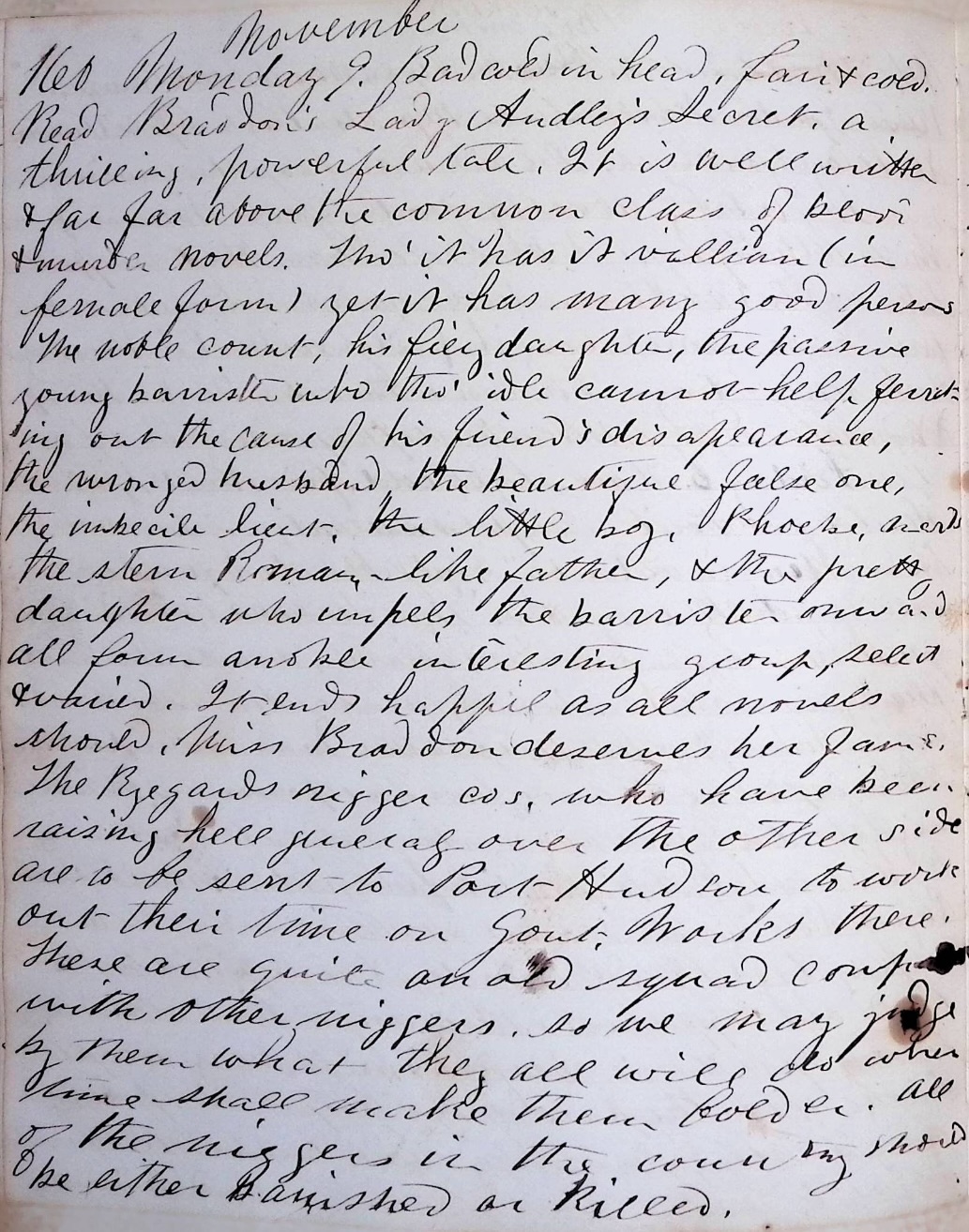
Monday, 9th [November 1863]—Bad cold in head. Fair & cold. Read [Mary Elizabeth] Braddon’s Lady Audley’s Secret [pub. 1862], a thrilling, powerful tale. It is well written and far, far above the common class of blood & thunder novels. Tho’ it has its villain (in female form), yet it has many good persons—the noble county, his fiery daughter, the passive young barrister who tho’ idle cannot help ferreting out the cause of his friends disappearance, the wronged husband, the beautique false one, the imbecile lieutenant, the little boy, Phoebe, and the stern Roman-like father., & the pretty daughter who impels the barrister anew and all form a noble, interesting group, select and varied. It ends happy as all novels should. Miss Braddon deserves her fame.
The brigade’s nigger companies who have been raising hell generally over the other side [of the Mississippi] are to be sent to Port Hudson to work out their time on government works there. These are quite an old squad compared with other niggers so we may judge by them what they all will do when time shall make them bolder. All of the niggers in the country should be either banished or killed.
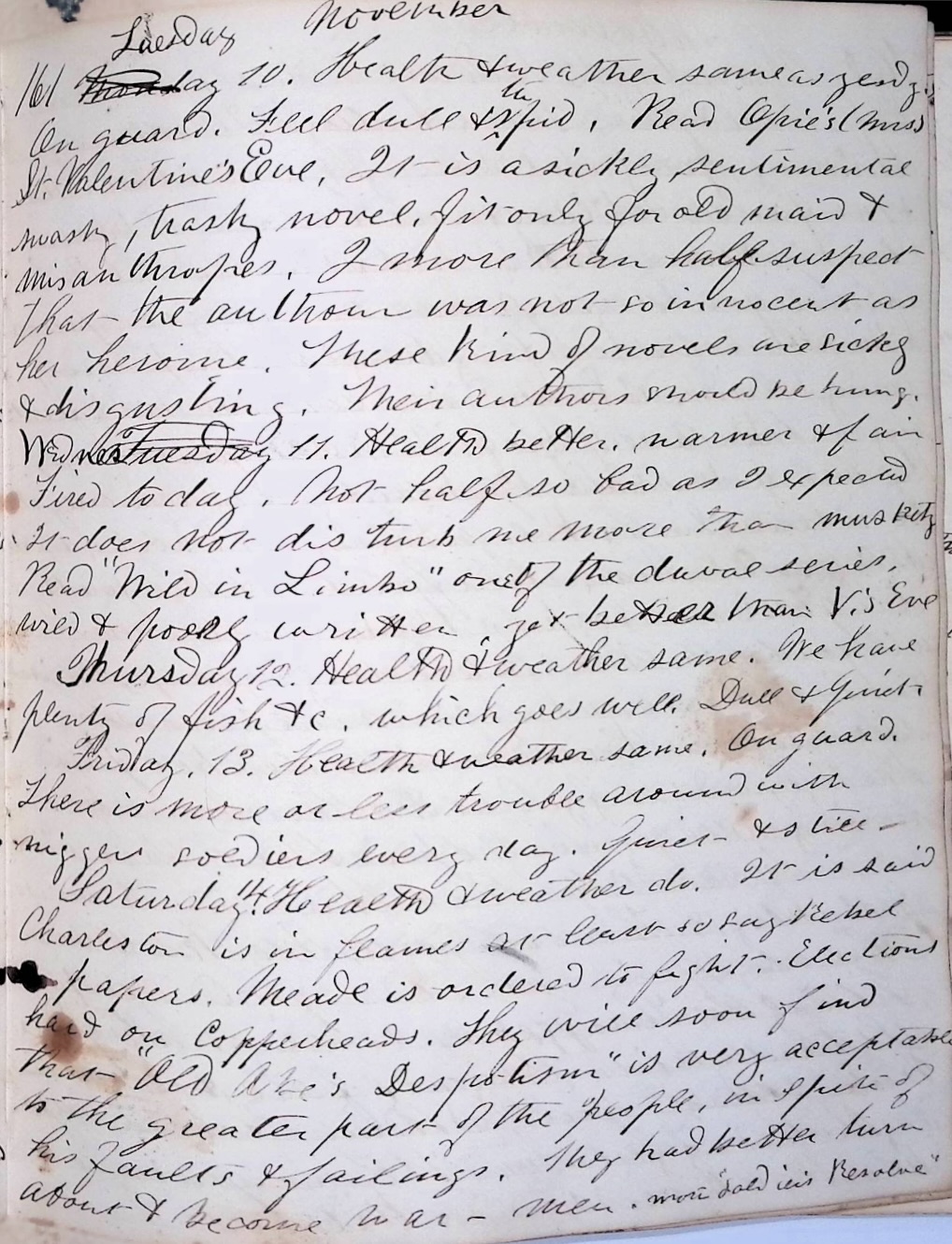
Tuesday, November 10th [1863]—Health & weather same as yesterday. On guard. Feel dull & stupid. Read Opie’s (Mrs.) St. Valentine’s Eve. It is a sickly sentimental, mushy, trashy novel, fit only for old ,aid & misanthropes. I more than half suspect that the author was not so innocent as her heroine. These kind of novels are sick & disgusting. Their authors should be hung.
Wednesday, 11th—Health better. Warmer & fair. Fired [32-pounder] today—not half so bad as I expected. It does not disturb me more than musketry. Read “Wild in Limbs“—one of the Duvall series. Wild & poorly written, yet better than Valentine’s eve.
Thursday, 12th—Health & weather same. We have plenty of fish, &c. which goes well. Dull & quiet.
Friday, 13th—Health & weather same. On guard. There is more or less trouble around with nigger soldiers every day. Quiet & still.
Saturday, 14th—Health & weather ditto. It is said Charleston is in flames, at least so say Rebel papers. Meade is ordered to fight. Elections hard on Copperheads. They will soon find that “Old Abe’s Despotism” is very acceptable to the greater part of the people in spite of his faults & failings. They had better turn about & become war men. Wrote “Soldier’s Resolve.”
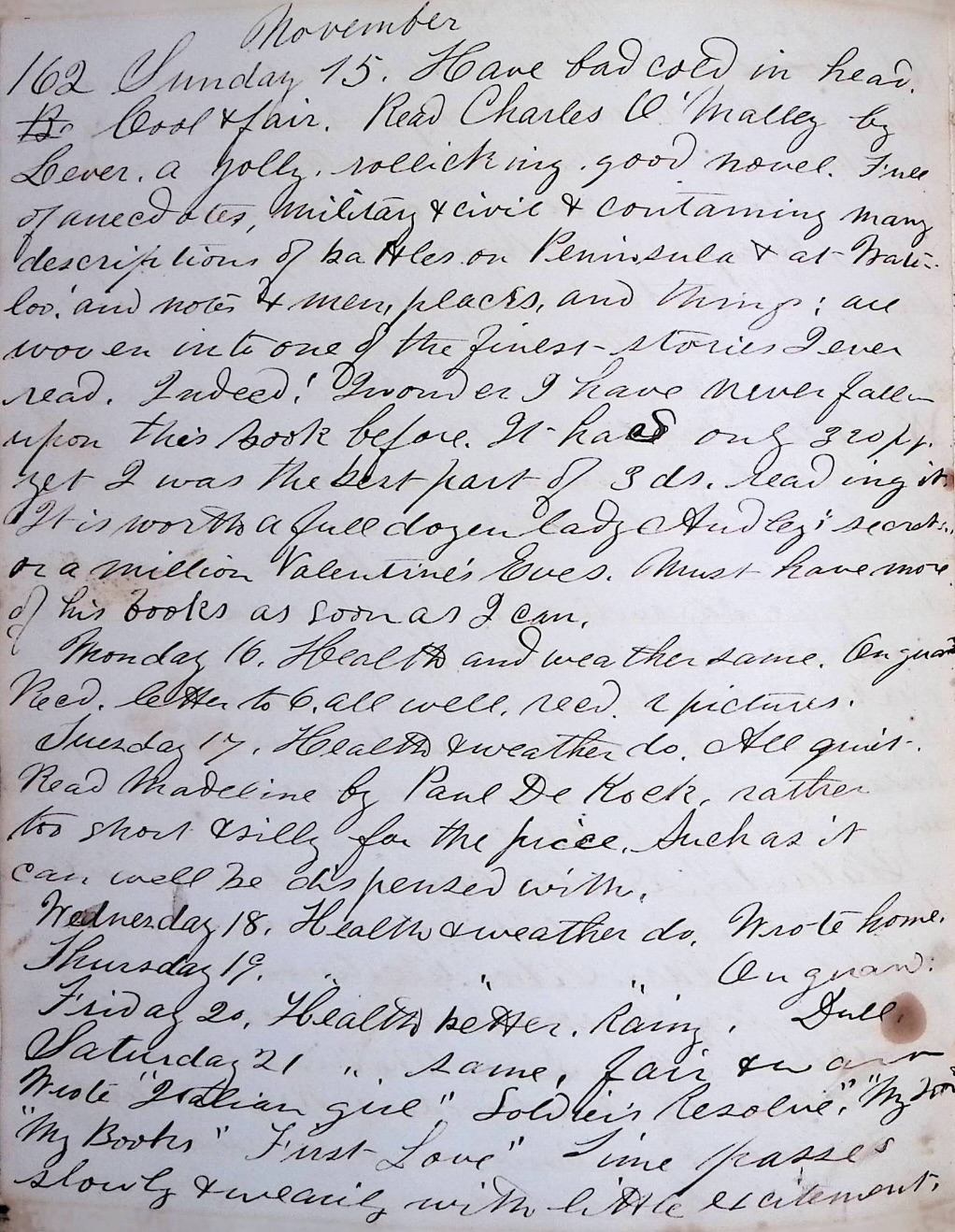
Sunday, 15th—Have bad cold in head. Cool & fair. Read Charles O’Malley [pub. 1840] by [Charles James] Lever—a jolly, rollicking, good novel. Full of anecdotes, military & civil, & containing many descriptions of battles on Peninsula & at Waterloo, and notes & men, places, and things, all woven into one of the finest stories I ever read. Indeed! I wonder I have never fallen upon this book before. It has only 320 pages yet I was the best part of three days reading it. It is worth a full dozen Lady Audley’s Secret or a million Valentine’s Eve‘s. Must have more of his books as soon as I can.
Monday, 16th—Health and weather same. On guard. Received letter to 6th. All well [at home] Received pictures.
Tuesday, 17th—Health & weather ditto. All quiet. Read Madeleine [pub. 1832] by [Charles] Paul de Kock—rather too short & silly for the price such as it can well be dispensed with.
Wednesday, 18th—Health & weather ditto. Wrote home.
Thursday, 19th—Health & weather ditto. On guard.
Friday, 20th—Health better. Rainy.
Saturday, 21st—Health same. Fair & warm. Wrote “Italian girl,” “Soldier’s Resolve,” “My Books,” “First Love,” Times passes slowly & wearily with little excitement.
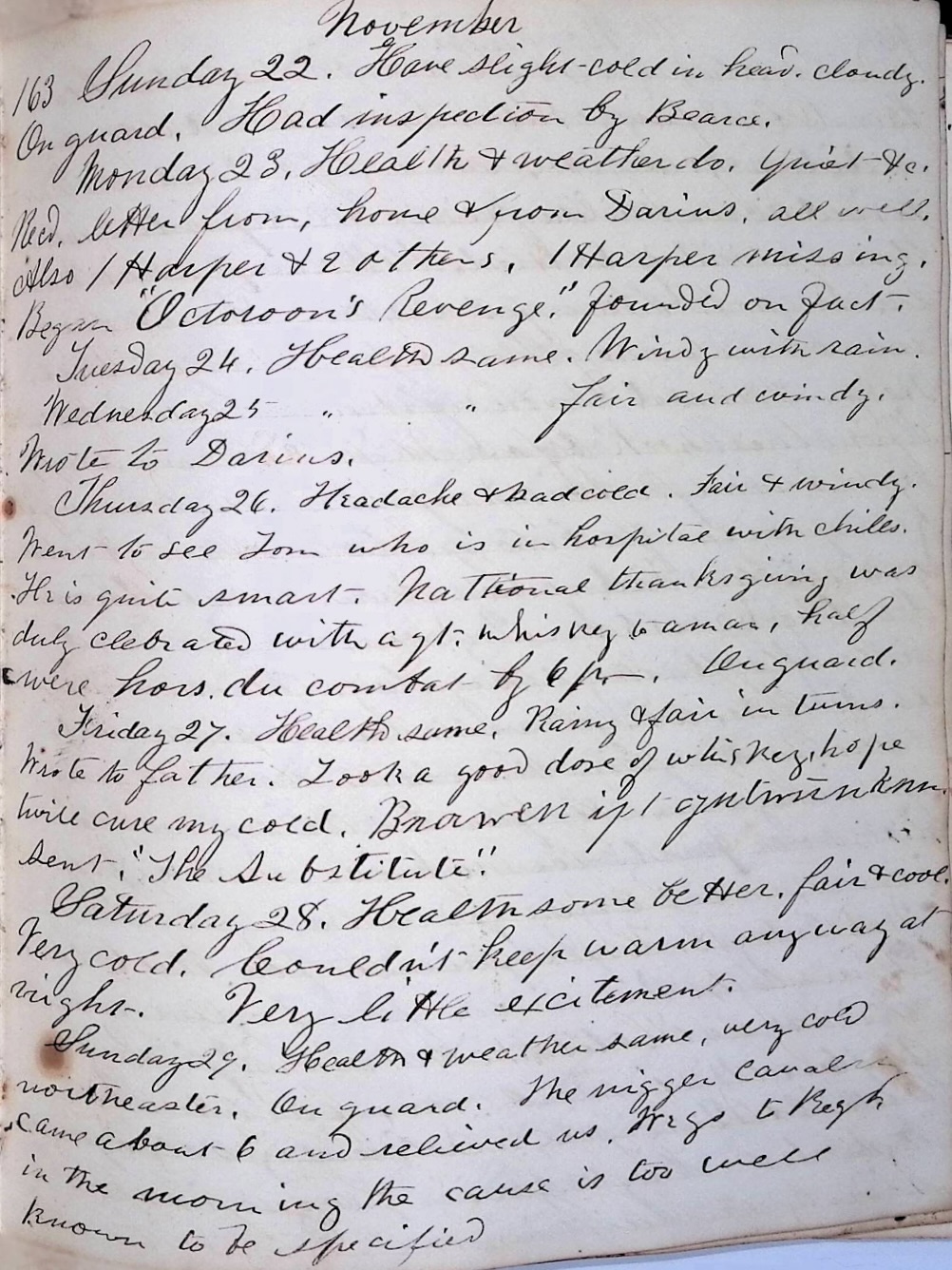
Sunday, 22nd—Have slight cold in head. Cloudy. On guard. Had inspection by Bearce.
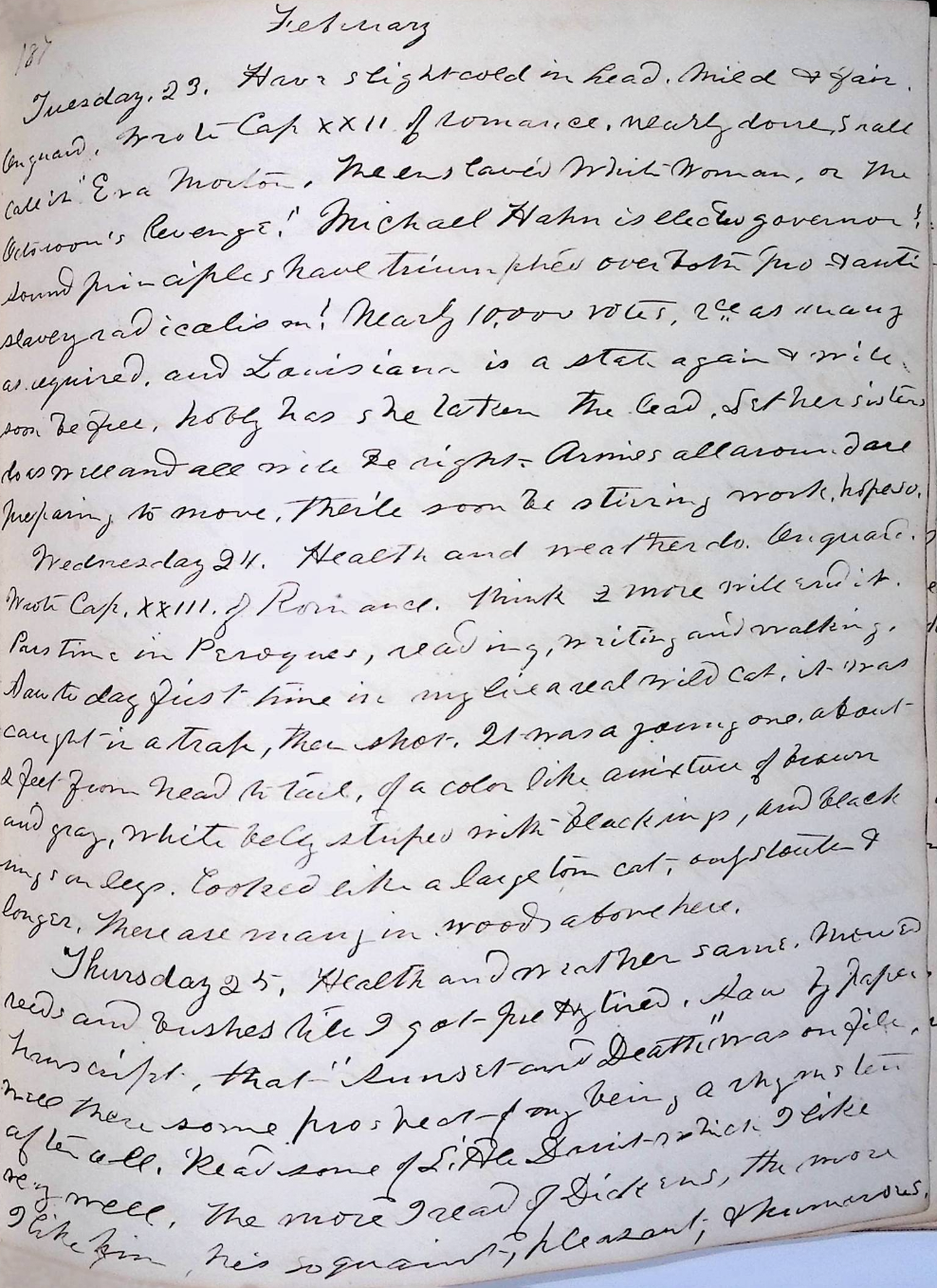
Monday, 23rd—Health & weather same. Quiet, &c. Received letter from home & from Darius. All well. Also one Harper’s and two others. One Harper’s missing. Began Octoroon’s Revenge, founded on fact.
Tuesday, 24th—Health same. Windy with rain.
Wednesday, 25th—Health same. Fair and windy. Wroteto Darius.
Thursday, 26th—Headache & bad cold. Fair & windy. Went to see Tom who is in hospital with chills. He is quite smart. National Thanksgiving was duly celebrated with a quart of whiskey to a man. Half were hors du combat by 6 p.m. On guard.
Friday, 27th—Health same. Rainy & fair in turns. Wrote to father. Took a dose of whiskey. Hope ’twill cure my cold…. Sent The Substitute.
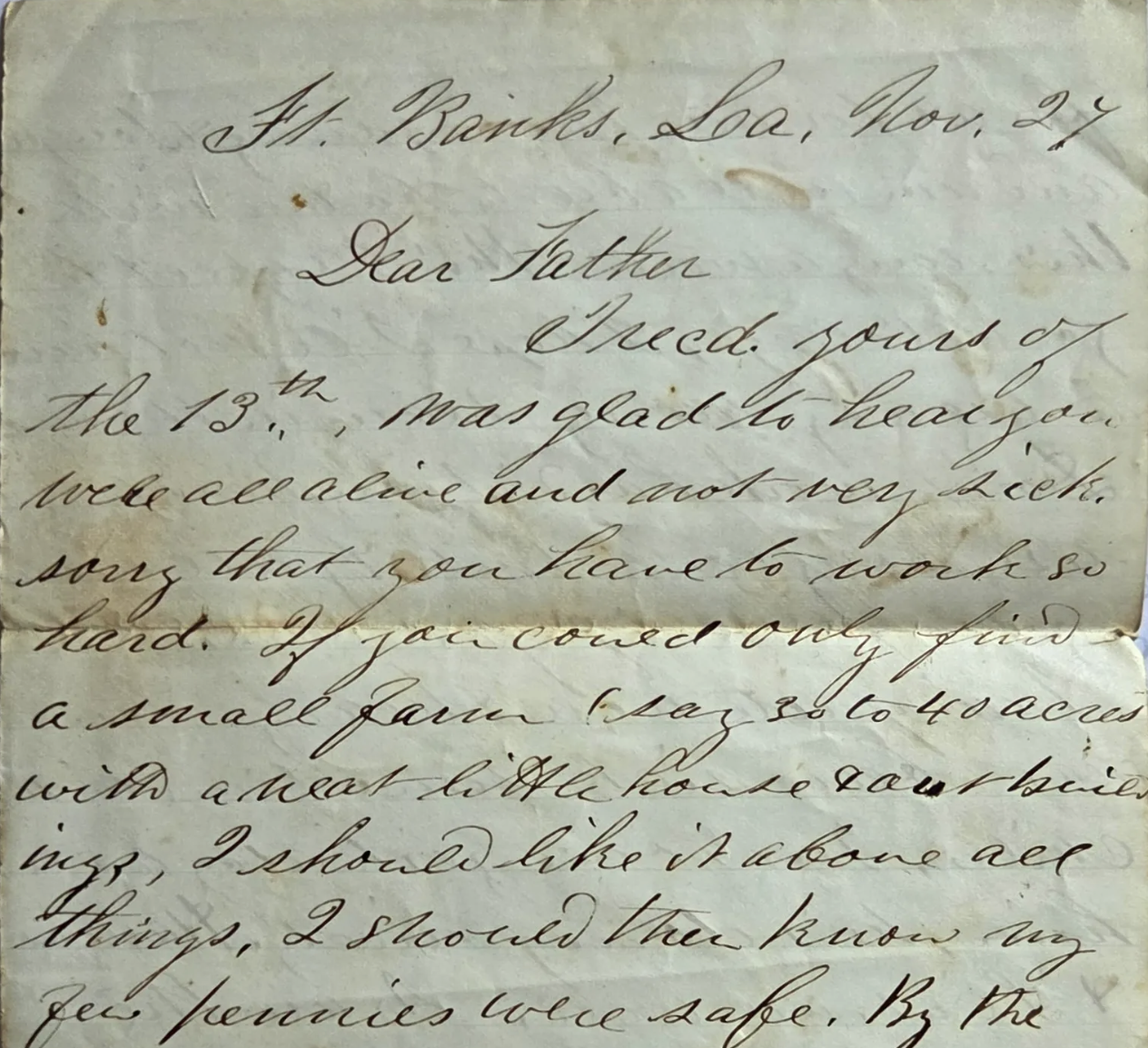
James datelined this letter to his father from Fort Banks on 27 November 1863 informing him that, “I should like a place to call home, much more to have you and mother have one for as for me, I am young and tough and am well able to battle with this rough world. Though I expect to go to college, I hope I’ll not have to use any money I earn in the war. Don’t work hard [even] if you have to use every cent. But by all means, get a farm if you can.” This was Letter 5 of 12 letters James wrote home during the war that have survived. See: https://sparedshared23.com/2026/07/13/1862-64-james-ridlon-holt-to-dudley-b-holt/
Saturday, 28th—Health some better. Fair & cool. Very cold. Couldn’t keep warm anyway at night. Very little excitement.
Sunday, 29th—Health & weather the same. Very cold northeaster. On guard. The nigger cavalry came about 6 and relieved us. We go to regiment in the morning. The cause is too well known to be specified.
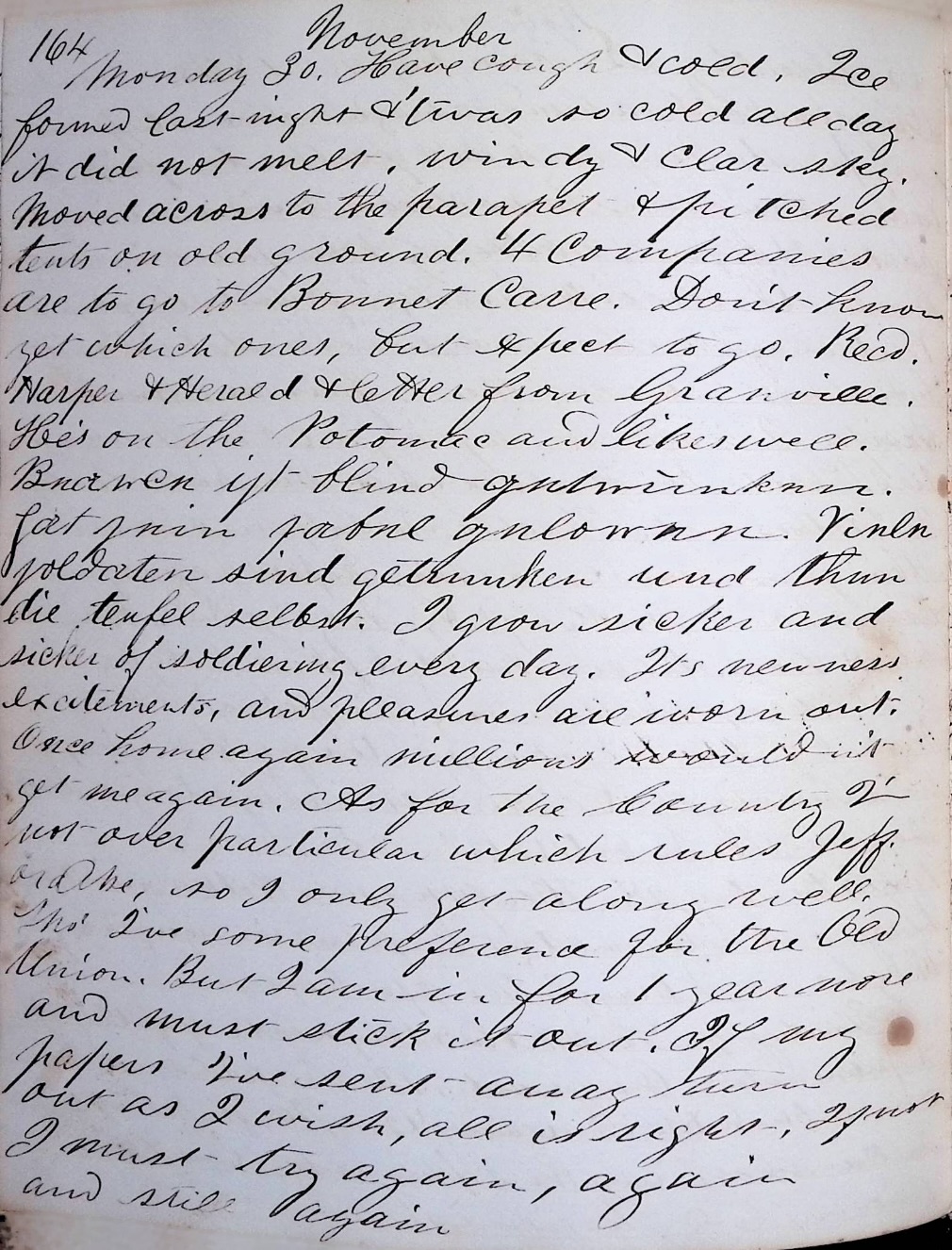
Monday, 30th [November] 1863—Have cough & cold. Ice formed last night & ’twas so cold all day, it did not melt.Wind & clear sky. Moved across [the Mississippi] to the Parapet. Four companies are to go to Bonnet Carré. Don’t know yet which ones but expect to go. Received Harper’s and Herald & letter from Granville. He’s on the Potomac and likes well. Budwen ist blind gutwnknn fat juin jabel gulownn. Vinl joldaten sind getrunken and thun die tenfel selbst [translates from German to read: Many soldiers are drunk and act like the devil himself.] I grow sicker and sicker of soldiering every day. Its newness, excitements, and pleasures are worn out. Once home again, millions wouldn’t get me again. As for the country, I’m not over particular which rules—Jeff or Old Abe, [just] so I get along well, tho’ I’ve some preference for the Old Union. But I am in for one year more and must stick it out. If my papers I’ve sent away turn out as I wish, all is right. If not, I must try again, again, and still again.
[Editor’s Note: The papers James refers to are the various essays he’s written under the various titles he’s named earlier in his diary, the most recent being “The Substitute.” It is likely he hoped to get them published in some newspaper and launch a career as an essayist or story writer. That he sent them to newspapers there can be little doubt but whether any of them were actually published, or if he even used his real name or a pen name is unknown. I have not found any published in period papers to date.]
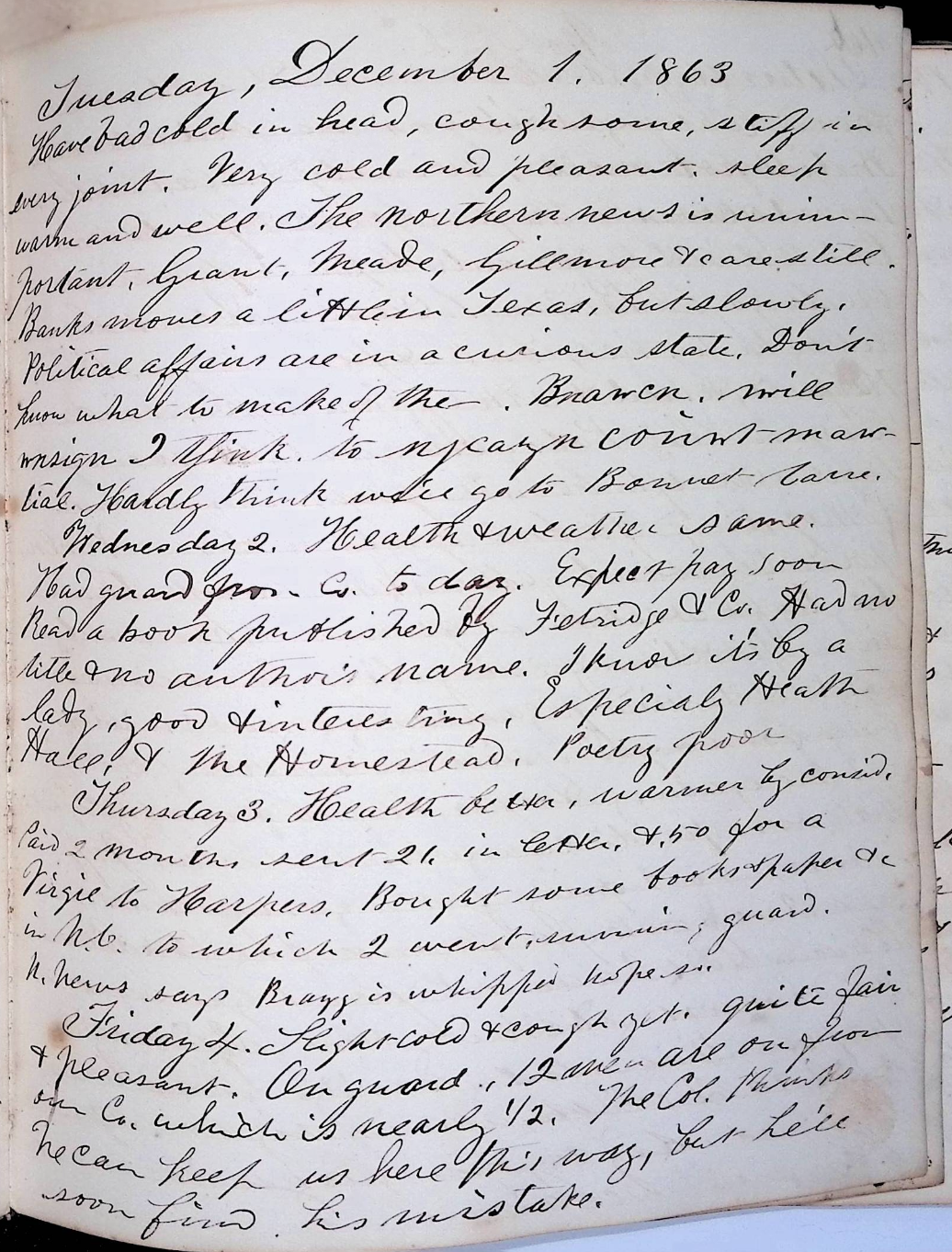
Tuesday, December 1st 1863—Have bad cold in head, cough some, stiff in every joint. Very cold and pleasant. Sleep warm and well. The northern news is unimportant. Grant, Meade, Gillmore &c. are still. Banks moves a little in Texas but slowly. Political affairs are in a curious state. Don’t know what to make of the [German gibberish] court martial Hardly think will go to Bonnet Carré.
Wednesday, 2nd—Health & weather same. Had guard from Company today. Expect pay soon. Read a book published by Fetridge & Co. Had no title & no author’s name. I know it by a lady, good & interesting. Especially Heath Hall & the Homestead. Poetry poor.
Thursday, 3rd—Health better, warmer by considerable. Paid two months. Sent $21 in letter & 50 cents for a Virgil to Harper’s. Bought some books & paper, &c. in New Orleans to which I went, running the guard. Northern news says Bragg is whipped [at Chattanooga]. Hope so.
Friday, 4th. Slight cold & cough yet. Quite fair & pleasant. On guard. 12 men are on from our company which is nearly one half. The Colonel thinks he can keep us here this way but he’ll soon find his mistake.
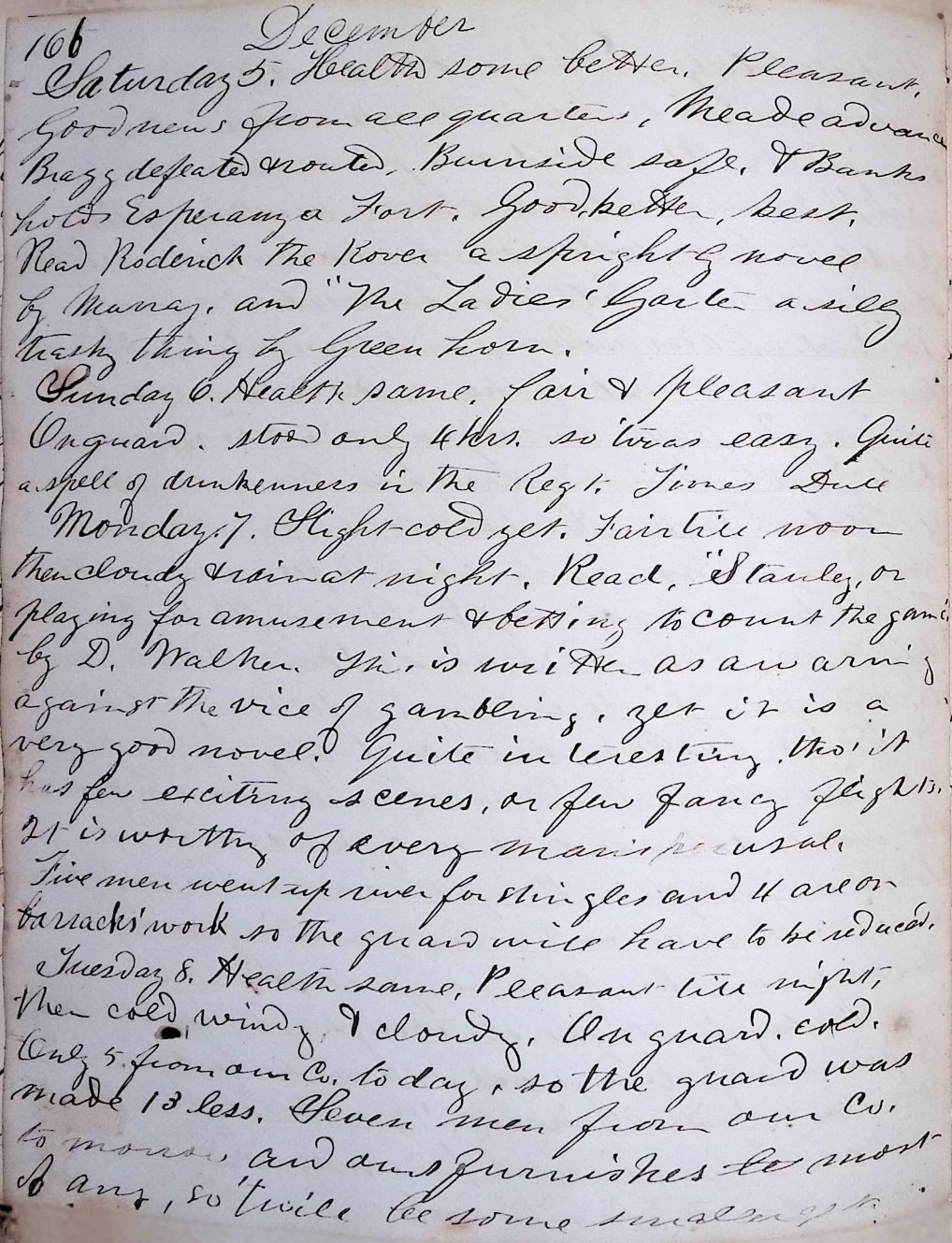
Saturday, December 5th [1863]—Health some better. Pleasant. Good news from all quarters. Meade advanced. Bragg defeated & routed. Burnside safe. And Banks holds Esperanza Fort. Good, better, best. Read Roderick the Rover [pub. 1847], a sprightly novel by [Lieut.] Murray and The Ladies Garter—a silly trashy thing by Green Horn.
Sunday, 6th—Health same. Fair & pleasant. On guard. Stood only four hours so ’twas easy. Quite a spell of drunkenness in the regiment. Times dull.
Monday, 7th—Slight cold yet. Fair till noon. Then cloudy & rain at night. Read, Stanley, or playing for amusement & betting to count the game by D. Walker. This is written as an argument against the vice of gambling, yet it is a very good novel. Quite interesting tho’ it has few exciting scenes, or few fancy flights. It is worthy of every man’s perusal.
Five men went up the river for shingles and four are on barrack’s work so the guard will have to be reduced.
Tuesday, 8th—Health same. Pleasant till night. Then cold, windy, and cloudy. On guard, cold. Only five from our company today so the guard was made 13 less. Seven men from our company tomorrow and ours furnishes the most of any, so ’twill be some smaller yet.
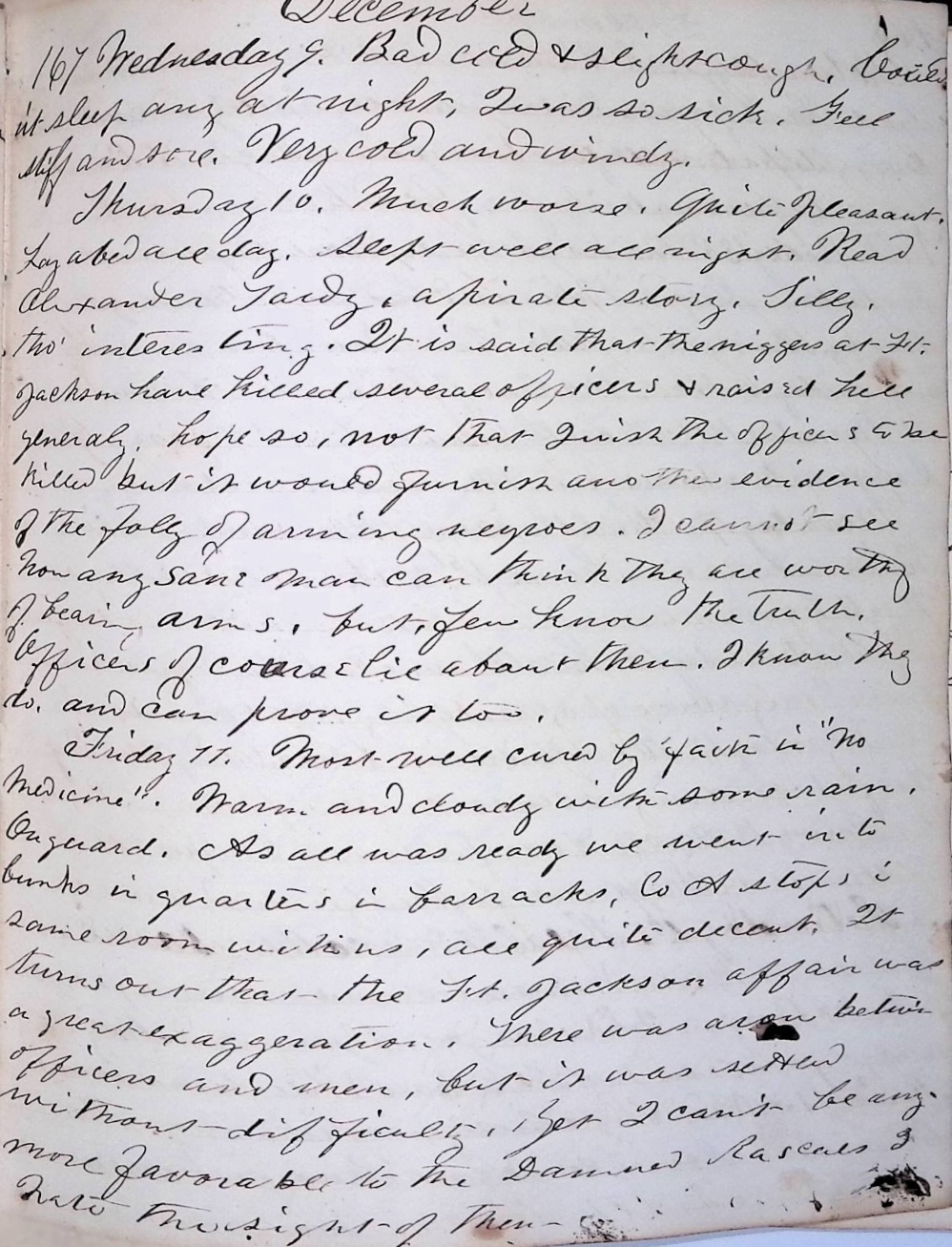
Wednesday, 9th—Bad cold & slight cough. Couldn’t sleep any at night. I was so sick. Feel stiff and sore. Very cold and windy.
Thursday, 10th—Much worse. Quite pleasant. Lay abed all day. Slept well all night. Read [Jacque]Alexander Tardy, a pirate story. Silly tho’ interesting. It is said that the niggers at Fort Jackson have killed several officers & raised hell generally. Hope so, not that I wish the officers to be killed, but it would furnish another evidence of the folly of arming negroes. I cannot see how any sane man can think they are worthy of bearing arms. But few know the truth. Officers of course lie about them. I know they do and can prove it too.
Friday, 11th—Most well cured by faith in “no medicine.” Warm & cloudy with some rain. On guard. As all was ready, we went into bunks in quarters in barracks. Co. A stops in same room with us. All quiet. Decent. It turns out that the Fort Jackson affair was a great exaggeration. There was a row between officers and men, but it was settled without difficulty. Yet I can’t be any more favorable to the damned rascals. I hate the sight of them.
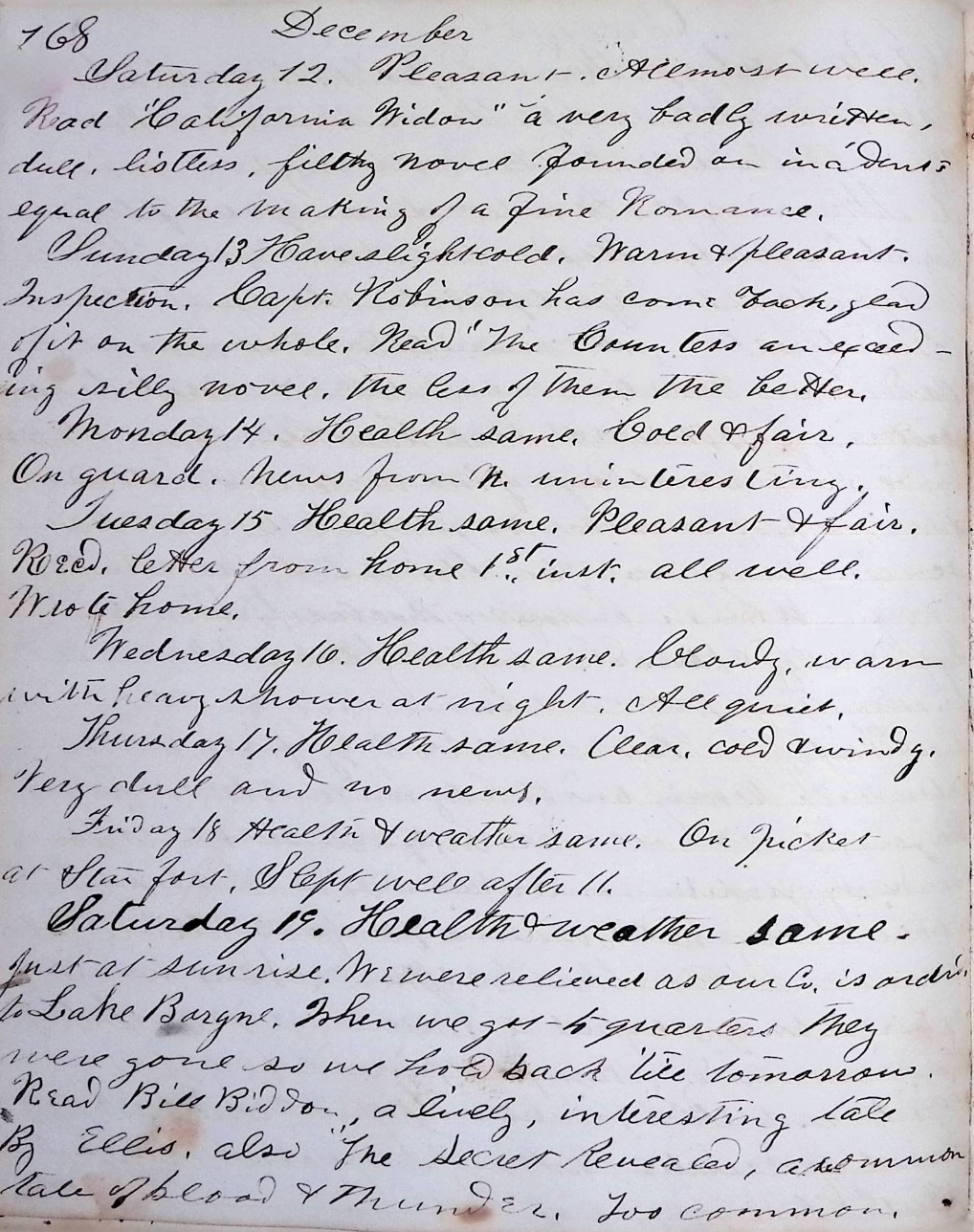
Saturday, December 12th [1863]—Pleasant. Almost well. Read California Widow—a very badly written, dull, listless, filthy novel founded on incidents equal to the making of a fine romance.
Sunday, 13th—Have slight cold. Warm & pleasant. Inspection. Capt. Robinson has come back. Glad of it on the whole. Read The Countess—an exceedingly silly novel; the less of them the better.
Monday, 14th—Health same. Cold 7 fair. On guard. News from North uninteresting.
Tuesday, 15th—Health same. Pleasant & fair. Received letter from home. 1st instant. All well. Wrote home.
James letter from Camp Parapet to his mother, dated 15 December 1863, was incredibly brief: “We are in barracks now & comfortable. I am quite well. Capt. Robinson has got back. All were glad to see him. Tell father not to send for Harper’s any longer. There is very little going now. Times are very dull.” It can be found as Letter 6 on the following website: https://sparedshared23.com/2026/07/13/1862-64-james-ridlon-holt-to-dudley-b-holt/
Wednesday, 16th—Health same. Cloudy, warm with heavy shower at night. All quiet.
Thursday, 17th—Health same. Clear, cold 7 windy. Very dull and no news.
Friday, 18th—Health & weather same. On picket at Star Fort. Slept well after 11.
Saturday, 19th—Health & weather same. Just at sunrise we were relieved as our company is ordered to Lake Borgne. When we got to quarters, they were gone so we hold back till tomorrow. Read Bill Biddon [pub. 1860]—a lively, interesting tale by [Edward S.] Ellis. Also The Secret Revealed—a common tale of blood & thunder. Too common.
Sunday, 20th—Have very slight cold. Milder. Left Carrollton at 7:30 and reached Lake Borgne where the company was at 1:30. All right. We’ve decent quarters and will do well as long as mosquitoes don’t trouble.
Monday, 21st—Health & weather same. Dull.
Tuesday, 22nd—Health same. Cloudy with some rain. Read Miser’s Will by [ ]. It is quite interesting, well written, yet I think it would have been better to have made three or four novels made out of the materials instead of one. The plot is rather too complicated and the scenes change too often & too much. Nevertheless it is far better than most of the class, which are called Blood & Thunder &c. story tales.
Wednesday, 23—Health same. Cloudy & warm. Read Vagabond Life in Mexico by G. Ferry—a lively story book description of life and customs in Mexico, well written and instructive tho’ it abounds in exaggeration somewhat, Also read Queen of the Sea by Ned Buntline—a good pirate tale, well conceived and well written. Few writers of this class are equal to Buntline. His descriptions are lively, his plots good, his style refined and delicate. No vulgarity mars the beauty of his tales. No lagging spirit dulls their interest.
Thursday, 24 December [1863]—Have slight cough & cold. Fair. Wind blows strongly from the Lake and the waters rise fast. The place will soon be overflowed but we are on post 6 or 8 feet high so all is right. Read Pål of Prashant & Landlord—a Swiss tale by I don’t know who, a very simple play, light adn pretty tale. Received two papers from home. Harper’s 5th instant. On guard.
Friday, [December] 25th [1863]—Health same. Somewhat rainy in afternoon. Heavy blow, raising water 4 or 5 feet. On guard except only have to stand 4 hours a day, 1 day off [every four days. Read Peon Prince by A. J. K. Duqanne—a lively Mexican tale, well written and interesting tho’ short.
Old Abe’s [Annual] Message has come to hand. It is simple, earnest, and just as I like to see. In a proclamation, he declares the policy he is in favor of in regard to the seceded states—namely, when 1/10 of the inhabitants who have held no important office in Rebel Government shall take the oath in any state, such state shall be immediately organized and received back [into the Union]. That surely ought to give no one umbrage, save the Rebel leaders themselves. It is honorable, just and good. If Old Abe always does as well as this, he never need be ashamed of his administration, and will long be remembered as one of the best Presidents we ever had.
[Editor’s Note: James has captured the essence of what came to be called as Lincoln’s “Ten Percent Plan” which laid out for the first time his lenient approach to restoring Southern states back into the Union. Many citizens praised it but the Radical Republicans criticized it as far too weak.]
Saturday, 26th—Have bad cold & cough. Cloudy. As the wind has gone down, the water subsides gradually. Have written “The Conscript” and “Satan’ Choice,” and “Patriot’s Resolution.”
Sunday, 27th—Health same. Rainy & windy. Cleared off cold about 7 p.m. Dull & no news.
Monday, 28th—Health same. Clear and cool. On guard. Stand on 7 to 9. Then sleep till 7 a.m. again. Very easy.
Tuesday, 29th—Health and weather same. On guard. Military affairs are at a stand still all around. [John Camel] Heenan is victorious in the prize fight with [English champion Tom] King, tho’ I think these fights are foolish. Yet I am glad a county man triumphs. Write “Burial at Sea,” and “Vallandigham’s Removal.” Bearce’s resignation has been accepted but he will hover around I expect.
American John Camel Heenan (1834-1873) was a bare-knuckle prize fighter who challenged the reigning champion Tom King—a Brit. They fought on 10 December 1863 in Wadhurst, England. King was declared the winner when he knocked out Heenan in the 24th round but the result was controversial.
Wednesday, 30th—Health little better. Windy with rain.
Thursday, 31st—Health same. Read Vol. 2 Heron’s History of Scotland—a work written & printed in 1776. describing reign of John Balliol & Robert Bruce and the manners & customs of Scots in that period. Well written & interesting. This is the last day of the present year in which we have gained much and lost little, in which the rebs have been worsted very often, and foreign nations convinced of our final success.
[Editor’s Note: During the winter of 1863-64, the 12th Maine Infantry had a calm season, mostly engaging in picket duty. This allowed James time to read books and write essays or poems, preparing for college and his aspiration to become a writer. He enjoyed classic literature and dime novels—some of what he termed the “blood and thunder” genre—if only to analyze different writing styles. I have transcribed his diary up to this point, but I will focus on more relevant content for Civil War readers moving forward, while still displaying his diary pages for reference on the books he read.]
Friday, January 1, 1864—Have slight cold and cough. Very cold and windy. Another year begins today—a year which we may hope will, and bids fair to, bring an end to this damnable rebellion which is already well nigh broken up, for since ’62 we have taken all of Tennessee, cleared Kansas and Missouri, conquered a victory on nearly every occasion in which we have met the rebel forces in field. We have opened the Mississippi, this dividing the Confederacy in two, the Carolinas, Texas, Arkansas, Virginia, and almost all of Louisiana have been invaded. Surely another such a year will finish the war. Yet we must not forget that all these gains may be lost in a single false move or by a succession of adversities. We may well look with bright anticipations to the future, however. All except a very few silly Copperheads have seen how futile were their attempt at obtaining peace without fighting for it. Surely the total deflect of the peace party, the late elections is sufficient evidence. Then foreign nations taught by our successes and preparations for war, that we were becoming the strongest nation in existence, have softened towards us and against the Rebels.
Saturday, 2nd—Have little cold. Milder than yesterday. Saw today in Portland Transcript a notice of an old schoolmate at Monmouth who started as 2nd Lieutenant in 5th Maine and is now the Major of the 5th alive and well. This is good as I have not heard from him for two years. He and I used to be classmates in Cicero and Mathematics and I used to assist him in Latin translations. He is several years older—a Major, and I a Private. But he deserves his promotion. He is brave and talented.
Read some of Abbott’s Life of Napoleon. It is needless to praise so well written a work. I like his high estimation of Napoleon for I fully concur in all. I believe him to have been as good as he was great, as wide as he was brave, as generous, as rash, and pious as he was ambitious. Truly he was the greatest general the old world ever saw, and in mere military point of view, greater even than our own illustrious Washington, who combined his great qualities as General to those other qualities of the true Republican, ambition only to serve his country and his God faithfully. On the contrary, Napoleon I fear sometimes forgot both in the mad whirl of success in which he was often enveloped. His name will forever remain as a warning to those who would aspire to more than attainable things.
Sunday, 3rd—Have slight cold and cough. Quite comfortable. On guard 7 to 9. Drew 1 pair shoes and 2 pairs socks, $2.64.
Monday, 4th—Health same. Mild and rainy. On guard. Very dull and tiresome here.
Tuesday, 5th—Health better. Cold. Windy. Rainy. I feel very dull and stupid in this dreary spot.
Wednesday, 6th—Health same. Worst day I ever saw in the South. It is so cold that rain freezes as it falls. All in ice. Heenan it seems was beaten and the 1st news was a hoax. Well never mind—nothing serious will happen.
Thursday, 7th—Health same. Cloudy and icy cold. Read Sue’s Wandering Jew—a political novel. well written against Jesuits and many evils of French government… Read also Life of J. S. Hare—one other the highwaymen of the first part of the present century….
Friday, 8th—Have cold in head. Very cold & ground all ice. Windy. Received letter [dated] December 21st. All well at home. Wrote home. Received also Herald and Harper’s. No news.
From James’ letter to his father, written from Proctorville, Louisiana, on 8 January 1864, we learn that he had good quarters: “We have a good house in which Gen. [Godfrey] Weitzel used to live when he was building the fort [Fort Proctor] here which is unfinished still, not being touched since 1860. We are at the lake end of the Mexican Gulf Railroad, while I was at the City end last year, 27 miles from here. All the company is here under Capt. [Moses M.] R[obinson] whom all like better every day.” We also learn that “Lieut. Bearce took the death of his child very hard all the more so since the mail which brought your letter brought an acceptance to the resignation which he was allowed to make to escape court martial for being too antic just before we left the fort. That spree was the cause of our leaving. The company all hate him and knowing that made her death much harder. I pitied him, but knew not how to comfort him. He came to me just after the cars came in and handed me your letter but he felt too bad to talk. He walked the room all night. He is a good fellow when he is himself, but he is very easily led astray. I really like him though I think he will stay here till we go home. You had better not tell his wife about this or anyone else for two reasons. First, it would only hurt him and make him worse and make his wife feel bad. Second, it might still cause hard feelings between him and I and as I like him, I shouldn’t like that.” To read the three-page letter, go to Letter 7 at https://sparedshared23.com/2026/07/13/1862-64-james-ridlon-holt-to-dudley-b-holt/
Saturday, 9th—Health same. Cold, cold, very cold. On guard. Little by way of excitement. By the last letter from home, I find father has bought a farm with fair opportunities for paying for it. I am glad for tho’ I have been accustomed to the wandering life of a methodist minister, yet I have always longed for a place to go to and call home. Now there is a prospect of this, I have cheerfully given what I have saved to go to school with to him. Yet I do not mean to give up my notions of a college course. I’ll go to college yet.
Sunday, 10th—Read Man O’Warsman’s Grudge by [Ned] Buntline—a very fine plainly told tale of Revolutionary time… Also Wild Sports of the West by a sporting Englishman… Also Tales of American Landlord—too full of sermons and religious sentiment… On guard.
Monday, 11th—Have cold in head. Mild and cloudy. Read Disheartened by J. H. Robinson—a tale of highwaymen in 1811 in England…
Papers have been sent for reenlistment, guaranteeing $702 bounty, but will get few from our company as most of them, like myself, think that three years service is enough—as much as we need give to do our part. Besides, it would put me back too far in studies were I to enlist for two years more. I think that my giving three years service before I was old enough to be accepted without concealing my age and four years before I could be drafted is all that could be expected. If it is not, then it can’t be helped. When my time is out, I shall bid adieu to war for a while & try to fit myself for the course I have marked out for the future.
Began to read Virgil without lexicon. Find little or no difficulty in it. Virgil is my favorite. I like him far better than Homer which also I am reading, but he is duller, more still and grand than Virgil, and therefore much harder, not to say anything of the frequent obscurities of his Greek.
Tuesday, 12—Have cold in head. Mild and rainy. Been reading first volume of Fanny Kemble’s Diary of 1835….It is lively and true and gives a good picture of New York, Philadelphia, & in 1835, besides an insight to actor’s life…
Wednesday, 13th—Health same. Cloudy and mild. Washed clothes today. Got feet wet and tho’ dried them right away, fear I’ll get cold. Banks has ordered an election in February of State officers, thus inaugurating Old Abe’s policy in regard to the final settlement of the vexed question. It is well and I hope and believe it will prove to be wise and just. Surely none but traitors can oppose such an impartial manner of bringing states, which have falsely pretended to move out of the Union, into their former positions, save that slavery will be done away forever. Thank Old Abe for this.
Thursday, 14th—Have quite a bad cold. Pleasant and mild. Received Harper’s 26th ult. and Herald. No particular news. Study about three hours a day, write journal. and chapter in Octoroon’s Revenge which I have got to 9 chapters. Then spend rest of day in reading and lounging, except it be fair, then take a walk or so along coast. This I pass the time quite pleasantly.
Friday, 15th—Health same. Weather cool & fair. On guard 5 to 7. Easy enough. Tom has enlisted and I guess it is as well as he can do. He’ll then have enough to buy him a decent farm and live easy. If I were in his place, I would do the same.
Saturday, 16th—Feel some better. Weather same. On guard. Read The Gold Fiend—quite a lively tale…
Capt. Stephen Bennet Packard (1839-1922) of Co. B, 12th Maine Infantry. He married Emma Frances Steele, a belle of Algiers, on 31 December 1863.
Sunday, 17th—Health still better. Pleasant and mild. Time hangs heavily on my hands. Don’t know what to do and this is the worst kind of feeling one can have—-an undefined longing for something which cannot be found. Everything then is dull and dreary. Capt. [Stephen Bennet] Packard of Co. B, formerly of our company, was married lately to a New Orleans lady of some little wealth. Lieut. [Royal A.] Bray of Co. K, also once in ours, has followed his example ere this. Success & happiness follow them.
Monday, 18th—Have cold in head. Pleasant and mild. Ten have enlisted over in our company. The day of grace is gone and no more can enlist. Well I’m glad for there’ll be no more bother.
Tuesday, 19th—Health and weather about as yesterday. As the veterans have gone to the city, I am on guard again. Have hard work to pass the time very agreeably. Want pay to buy some books.
Wednesday, 20th—Health better. Mild & pleasant. Received a letter from home. All well. Wrote home. On guard. Keep on studying and writing tales. Wrote “The Old Man of Gettysburg.”
James’ letter from Proctorville, Louisiana. on 20 January 1864 informs his mother that he has declined to reenlist in spite of the $702 bounty. “I think that 3 years service [volunteering] before I was old enough to fear the draft is about as much as I owe the government, don’t you? The money is no temptation. Yet I would [re]enlist were it not that I should be getting too old for college. I shall keep out of it. Those who have [re]enlisted have gone to the City to be mustered.” To read the letter in full, see Letter 8 at: https://sparedshared23.com/2026/07/13/1862-64-james-ridlon-holt-to-dudley-b-holt/
Thursday, 21st—Health same. Mild and fair. Passed most of the day in reading papers.
Friday, 22nd—Have slight cold in head. Mild & fair. Went up to Peterson’s for wood. Walked about 5 miles. Did me good. Have fish right along.
Saturday, 23rd—Health and weather same. On guard. Times passes wearily on. Received letter. Wrote home.
Sunday, 24th—Health and weather ditto to yesterday. On guard. Veterans have come back. They haven’t received any pay yet tho’ they’re mustered in. The time has been extended, thus giving another opportunity. Doubtless several more will enlist but I am not a whit the more inclined to it.
Monday, 25th—Have very slight cold. Mild & fair. Things go on as usual. The reenlisting project cases no little talk, yet I guess Co. G has furnished all the veterans it will. We have a great abundance of fish, a chowder twice a day and often three times. We live well as soldiers could expect. We hear almost every day of some depredation or crime committed by negro troops. Very lately they took a citizen and killed and robbed him and then buried him, but one of them was foolish enough to tell of it so they were caught. This is not a lone instance but one of many which occur daily almost. I think the government will bye and bye see the needlessness and danger of entrusting arms to the negroes, tho’ perhaps as I hope it may be, yet know very well it won’t. They will so improve that after a little time they will be equal to white troops. If they do not improve soon, I hope they will murder every officer they have and rise in rebellion so we can have the opportunity of cleaning them all out for there never can be peace as long as we have niggers and abolitionists, the worst of the two, in the land. Where both are, will always be trouble.
Tuesday, 26th—Have slight cold in head. Mild & fair. [Nathaniel] Harlow is sergeant from today. [Leonard] Briggs and Randall are corporals. Briggs is a good fellow and deserves it. Aber Randall ist ein eugner and grosser sheiteyer und klein narr [meaning: Randall is a scoundrel, a big shyster, and a petty fool].
Wednesday, 27th—Health and weather ditto to above. Went up to battery one mile above and worked cutting weeds on parapet till noon. Good exercise. Finished Greek Reader today. Set fire to the prairie but it did not take very well. Yet it burned seven pigs and scorched the sow. Ayer’s commission has come. Well, he is a good fellow and will make a good officer.
Thursday, 28th—Have cold in head which does not plague me much. Think I have catarrh. Fair. Worked some on battery today. It does me good.
Friday, 29th—Health same. Rainy in morning. On guard. Spent day in reading old magazines. They help pass an idle hour very agreeably.
Saturday, 30th—Health same. Fair & mild. On guard. It is so warm that I feel uneasy all the time, being able neither to sit, lie, stand or walk with ease or comfort.
Sunday, 31st—Health and weather same. Capt. Rob. went to town on Court Martial. Three of our company went out sailing. They tipped over & [John] Chase drowned.
Monday, February 1, 1864—Have slight cold in head. Foggy till noon, then fair. Mosquitoes thick and troublesome. Chase’s body has not been found. Read some of Thackery’s, Newcome’s. Phillip & Virginians but think them good for only one thing—to give an idea of English fashion, &c. a hundred years ago. They are dull & stupid…
Tuesday, 2nd—Health same. Fair, mild and windy. Took pirogue ride second time. Got along first rate. It is rather ticklish.
Wednesday, 3rd—Health ditto. Cold & fair. Chase’s body washed ashore and was buried. It was but little changed. Read Valentine Vox by [Henry] Cockton. It contains the humorous adventures of a ventriloquist with a little love to match…
Thursday, 4th—Health & weather same. On guard. Wrote another Cap. of Tale.
Friday, 5th—Health & weather same. On guard. Received letter & magazine from home. Wrote home. Read Heart’s Secret by Murray—a lively tale of Spanish life & adventure.
Saturday, 6th—Have bad cold. Cool and windy. Read Ida Lee by Balfour Fairfax, a tale of 60 chapters, all full of startling events…
Sunday, 7th—Health and weather same as yesterday. Read Kitty Atherton by Margaret Blount—a very charming tale. Tho’ the incidents are somewhat mournful, it is well written. As I was trying to go under a bridge in a pirogue, I got stuck in the middle & tipped over, getting well wet. The bridge is only two feet from water so I had to lean to get under the first string [but] the second was too low & I had to back [up] In backing, I caught in something & got ducked all over. I changed clothes and was all right.
Monday, 8th—Health and weather as yesterday. Read On the Wilds by [ ], a tale of life in trapping grounds andIndian lands. The best & cheapest dime novel yet out.
Tuesday, 9th—Health and weather same. Went to battery & worked till noon. Dull & quiet.
Wednesday, 10th—Health better. Pleasant & mild. On guard. Read The Quadroon by Mayne Reid, a well told tale of Louisiana life in 1855. It is lively, interesting, and full of information about land and society.
Thursday, 11th—Have slight cold. Windy & mild. On guard. Read Dangerous Woman by Miss Blount—a well told tale as all her’s are. No very wicked or bloody, but neat and moderately conceived. Also Prairie Guide by Curtiss–a poorly written tho’ interesting tale…
Friday, 12th—Health and weather same. As those who enlisted in New Orleans in our company have never been mustered yet, they went today to be mustered for three years from the date of their enlistment about two years ago. There are only seven of us left here so we are all on guard four hours a day. Finished Chapter 16, page 64 of Octoroon’s Revenge. Have fine pirogue rides around the bayous and the lake. And yet times pass slowly and wearily.
Saturday, 13th—Health and weather same. On guard. Time passes lazily along.
Sunday, 14th—Health and weather same. On guard. The boys are back. Four have reenlisted. Active moves are being made all around. Something will be done soon. Wrote “Cavalry Charge.”
Monday, 15th—Health better. Fair with a shower. Two more men have reenlisted making 20 now in all. Finished Virgil without Lexicon….
Tuesday, 16th—Have slight cold in head. Cool & fair. Wrote Chapter 18 “Octoroon’s Revenge.” Took ride in pirogue.
Wednesday. 17th—Health and weather same. On guard. The day passed with the usual monotony.
Thursday, 18th—Health same. Very windy & cold. A very little snow fell, first I ever saw in Louisiana. On guard. Received Leslie’s for February. Wrote quarter chapter in novelette. Too cold for such business.
Friday, 19th—Health same. Weather moderated some. Wrote Chapter 19 Novelette. By papers, I see Richmond was put into great fight by the attempted capture by Butler’s men, which failed on account of a traitor. Butler probably let his object be too well known. Also that theRebel Congress has proposed to send representatives to meet same from US to settle first, a separation. If not that, second, an honorable union. Third, if not those, treaties. Now this proposition supposes the Confederacy to be already a government which we will not acknowledge. A convention would be really acknowledging them so. But if we had one, the only compromise we’d ,ake would be to restore everything as it was, which would leave the trouble still here, only to begin anew sometime. Old Abe’s amnesty is all they deserve and good enough.
Thursday, 20th—Have touch of catarrh. Mild. Wrote Chapter XX, “Octoroon’s Revenge.” About four more [chapters] to finish it tho’ I think I shall enlarge the first 13 to 26 so as to have about 40 in all if I can. Today has brought around the long looked for time when I can say I’m a nine-month’s man. Yes, if I live nine month’s more, and goodbye Army!
Sunday, 21st—Wrote “Sabbath.” Time passes as usual. There’s still trouble wit hthe niggers. Some are sent every day to Tortugas. Others put in jail and stocks. It is safe to say that more than half are maliciously ugly. They expect Uncle Sam to keep ’em without labor. But I guess he won’t. Nearly all the old abolitionists whom I know in the Army are down on the brutes the worst kind. One month’s experience is enough to make any sane man despise them. Yet there are fanatics who’d make them equal us.
Monday, 22nd—Health and weather still same. Wrote “Washington’s Birthday 1864.” Also Chapter 21 of Octoroon’s Revenge.” Went with rest to the battery at 12 when four guns fired 36 shots in 9 minutes and might have done it in 5 had we chosen to. Received letter from home. All well. Wrote home.
[Editor’s note: Firing a round for every single state—even while the nation was fractured by civil war—served as a powerful political and symbolic assertion by Union forces that the breakaway Confederate states were still legally part of the Union, must to the annoyance of those Southerners within audible range.]
Tuesday, 23rd—Have slight cold in head. Mild & fair. On guard. Wrote Chapter 22 of romance, nearly done. Shall call it “Eva Morton—the enslaved White Woman, or the Octoroon’s Revenge.” Michael Hahn is elected Governor [of Louisiana]. Sound principles have triumphed over both pro-South slavery radicals. Nearly 10,000 votes received as many as required, and Louisiana is a state again and will soon be free. Nobly has she taken the lead. Let her sistsers do as well and all will be right. Armies all around are preparing to move. There’ll soon be stirring work. Hope so.
Wednesday, 24th—Health and weather ditto. On guard. Wrote Chapter 23 of Romance. Think two more will end it. Pass time in Pirogues, reading, writing and walking. Saw today first time in my life a real wildcat. It was caught in a trap, then shot. It was a young one about two feet from head to tail of a color like a mixture of brown and gray, white belly, striped with blackings and blacking on legs. Looked like a large tom cat only stouter and longer. There are many in woods above here.
Thursday, 25th—Health and weather same. Mowed reeds and bushes till I got pretty tired. Saw by paper Transcript that “Sunset and Death” was on file. Well. there’s some prospect of my being a ryhmster after all. Read some of Little Dorret which I like very well. The more I read of Dickens, the more I like him. He’s so quaint, pleasant, and humorous.
Friday, 26th—Have slight cold in head. Fair & mild. Wrote Chapters 24 & 25 of Romance today. It is finished though I have to revise several times yet. It may be good or bad. Can’t tell. Hope it’ll pass. Glad the hardest part is done anyhow. It will be about 42 pages, size of Harper’s Magazine. Perhaps alittle ought to be 50 pages. That is just two pages per chapter. Made chapters short because i hate long ones.
The nigger editor of the Union says there is no class of society in the world who are so respectable as the nigger class (the free) of New Orleans. The damned fool. How long does he suppose he’d be allowed to bluster & blow as he does. The niggers want to vote, hold office, and marry white women, but they can’t. The editor seems to forget how like hell the niggers act in New Orleans and all over the state a dozen of them go to Tortugas or some other fine place every day & half a hundred are before the courts—five times as many of them in proportion to the whole number are in prison than whites. The Provost Marshall’s guards have them on hand for petty theft &c. all the time. It is safe to say that more than half of the negroes of this state are the very worst & most degraded class of persons in the world. Yet abolitionists would like to place them on an equality with us and make Frederick Douglass president. Hope Union will be ruined first.
Saturday, 27th—Have slight cold in head/ ild & fair. On guard. Wrote “At Gettysburgh“–a revision of “The Old Man of Gettysburgh” more rhyme. Our regimental flag is to have “Irish Bend” and “Port Hudson” on it. The Negro soldier who robbed the man when on post and then killed him are to be shot. Good for them. Have “The Conscript” ready to send to Leslie.
Sunday, 28th—Health and weather same. On guard. Three sergeants and five men of 3rd Mississippi (Rebel) came in from Biloxi. They left Meridian 16th instant where Polk then was and Sherman now is. They say three regiments have deserted. Part of their company started & the rest were sent after them and haven’t caught them yet. They say they mean to wait for them at New Orleans. They look tough & well clothed & fed. All hate Polk. In Jones Co. are 500 armed Unionists who parole every small squad they can get hold of. They are tired of war as all the rest are save the leaders and fools. Their pay didn’t keep them in tobacco at $6 a pound. An attack has been made on Powell—a small dirt fort on Grand Pass.
Monday, 29th—Health and weather same. Mustered for another two months pay. Time passes slowly, wearily on. Have so little to divert our minds from the slowness of time. We suffer from lassitude.
Tuesday, 1st March 1864—Have slight cold in head. Cold, wet and windy. Full & tedious.
Wednesday, 2nd—Health same. Cold & windy. On guard. Read Indian Princess by Mrs. Stephens….
Thursday, 3rd—Health same. Pleasant & mild. On guard. Nothing passed of note.
Friday, 4th—Health & weather unchanged. Wrote home to inform father of William Holt’s death which occurred i nJuly, tho’ I have but just heard it. Wrote or rather began Lucy, and Indian’s _____. Sorry to learn by papers that the Danes are defeated tho’ perhaps I should be glad if I knew all about it. Old Abe seems in a fair way of getting reelected but I hope he won’t, tho’ I would sooner see him President than any of the Seymour, Wood party. Hope Grant, Dickenson, or some like man will get it. After all, if the war only ends with a year. Old Abe might do well enough since he’s opposed to Negro equality. That the main thing for a few years.
Saturday, March 5th—Have slight cold in head, otherwise feel well as I have for some time. Mild and windy. Louisiana has again a Governor of her own choosing. Hahn’s message was short & promising. Banks made a brief & appropriate address. All the ceremonies passed pleasantly over. Well may Louisiana be proud to remember this day.
Sunday, 6th—Health & weather same. Went up to Peterson’s and had a look at Proctor’s Library which contains many rare old books, worth enough to buy twice as many as new. There are several mounds of shell & mud around the house which sets on one. Some suppose them to be Indian works but I think they were formed by the water several centuries ago as they are evidently less than 200 years old by trees &c. on them. At that time, no levee held back the water of the Mississippi, few white men dwelt on its banks, and water in high season swept over the land. Still it may be that Indians who lived here in summer when the river was low made these for burial places or for security to their huts and provisions. This they could easily have done since the whole land is a mixture of shell & mud. But I prefer to lay the charge to the water which has done the same nearer the lake.
Monday, 7th—Have slight cold in head. Mild & fair. Read Collins’ Kentucky in History, Biography & Antiquities which combines the gazetteer & history most admirably….Also read Irving’s Companions of Columbus….
Tuesday, 8th—Have a cold in head. Windy 7 fair. On guard. Read 1st Volume of Thiebault’s Anecdotes of Frederick the Great….
Wednesday, 9th—Have cold in head. Cloudy & rainy. Wind raised the water dangerously high but luckily it subsided again before midnight. Read 2nd Volume of Thiebault…
Thursday, 10th—Have cold in head. Windy & cloudy. Have better opinion of Villette as we read it all…
Friday, 11th—Health same. Mild & cool. Read Clotelle, a tale by W. W. Brown….
Saturday, 12th—Had bad cold & slight cough. Cool and windy & fair. On guard. Last relief, easy. There has been considerable skirmishing lately which has done about as much for our side as for the other. Several advances have been ,ade by us only to fall back again. Tho’ the Potomac Army is far on towards Richmond which I sincerely hope will be taken now, if ever it is. The time for reenlistment is extended. This will doubtless bring in a few more recruits but the greatest part who will enlist have already done so. Although I hope many more will reenlist, my mind is unchanged, I think—and always shall—that I have done my part.
Sunday, 13th—Have slight cold and cough. Fair & windy. On guard. Finished reading Memoirs of Napoleon…
Monday, 14th—Have cold & cough. Windy & cold. Read Heart of Midlothian by Scott…
Tuesday, 15th—Health same. Pleasant & chilly. Very little a doing. Too little by far.
Wednesday, 16th—Health & weather same. Dull.
Friday, 18th—Health & weather same. On guard. Alexandria is again in our hands. Ortega is president of Mexico instead of Juarez. Think French will have to leave.
Saturday, 19th–Health and weather same. On guard. Read Fieldings’ Joseph Andrews…
Sunday, 20th—Have some cold. Cloudy & rainy. Very little news save that Grant intends to try Richmond. He’ll do well if he refuses to run for President. If not, he’s gone under.
Monday, 21st—Health same. Rain, thunder, wind and high water, very rough. The regiment will go home in 30 days. Wrote “Thackery.”
Tuesday, 22nd—Health and weather same. On guard. Read King’s Own by Marryatt….
Wednesday, 23rd—Health same. Fair and windy. On guard. Wrote home. Began Don Bernado Monardo…
Thursday, 24th—Health same. Rainy, windy, and cloudy. The water rose so high that we had to wade to the cook house for supper. But it cleared off about 6. Our forces hold Nachitoches in fair way for clearing Texas. Hope it will be done soon.
Friday, 25th—Health same. Mild & pleasant. Read Quorndon Hounds by Herbert (F. Forrester).
Saturday, 26th—Have slight cold. Mild & fair. Little news and dull times.
Sunday, 27th—Health and weather same as usual. No great probability of moving just yet.
Monday, 28th—Health and weather same. Showers. On guard. Quite a little stir was made today when the cars had reached the battery where they ran off. They whistled and we supposed it meant relief as we had told them to. When they brought relief, it turned out false before we had got packed.
Tuesday, 29th—Health same but still & rheumatic. Cool. On guard. Louisiana will soon be a full state, having elected free state ticket for the convention by a large margin. Well done Louisiana—the first of all the states to elect a convention to abolish slavery.
Wednesday, 30th—Health and weather very rheumatic. Have written Chapter 3….
Thursday, 31st—Have cold & cough and am very stiff and have rheumatic pains in my limbs. I think it is all I can do to stick it out till the end of my service. Been reading some old Knickerbockers which was the quaintest and best magazine once, but Harper’s has conquered it as all the rest in New York Shreveport is in our possession now, so that nearly all the state is in our hands. Good.
Friday, April 1st, 1864—Have some cold 7 cough and feel rheumatic. Cool & fair. Wrote “Buzzards a doggerell on some filthy lucre seekers.”
Saturday, 2nd—Health and weather same. Very dull.
Sunday, 3rd—Health same. Rainy in showers. On guard. Have seen incontestable evidence. I have come to the conclusion that Negroes can fight some—that is, that many of the regiments of niggers are decent kind of soldiers tho’ they are hardly to be trusted.
Lawrence Barrett (1838-1891) was still a young actor when James saw him play the Varieties Theatre in New Orleans in 1864.
Monday, 4th–Health & weather same. On guard. Paid four months pay. Went to town on pass. Wrote home and sent $10. Also $25 by Express. Went to Varieties Theatre. Saw King of Commons played. All the acting was good but Barrett’s (Lawrence) was far best of all. He acted King James V. Angela Lofton sand a wild screaming son which I don’t like at all. Walked around some time before U found a lodging place.
Tuesdaym 5th—Health and weather same. Passed day in wandering over the city. Went to Varieties at night. Famous play Duke’s Motto played. It is very fine in scenery. Otherwise nothing great.
Monday, 6th—Health and weather same. The 9th Connecticut—that is, those who did not reenlist, have relieved us. We came up to the Parapet in the evening after a hard run for the cars. Slept in Co. I quarters. Expect the regiment will go home soon as preparations are being made.
Thursday, 7th—Have slight cold. Cloudy and rainy. Got up our tents and fixed up for a few days. They have three drills a day and considerable guard duty. There are only our regiment and Wisconsin cavalry here. The place is green and pleasant. Regiment will go home in a week or so.
Friday, 8th—Health same. Cloudy and little rain. Drill bayonet exercise. Drew coal-tarred knapsacks. Read The Barclays of Boston, by Mrs. Otis….
Saturday, 9th—Health same. Cold and windy. On guard. Read Sword & Gown…
Sunday, 10th—Health same. Warm & pleasant. Had usual inspection. Read Bob Brant… Also tried to read Post Captain…
Monday, 17th—Health and weather same. Have bayonet drill. Read Pickwick Papers, edited by Dickens…
Tuesday, 18th—Health and weather same. Received a letter from home. Wrote home. Read Hermit of Colorado Hills…
Wednesday, 13th [April 1864]—Have cold in head. Warm 7 fair. The veterans [those who reenlisted] will soon leave [to go home on a 30-day furlough]. Read Millrose…Struck tents and moved into [Co.] K’s quarters.
Thursday, 14th—Health same. Rainy and cool. There has been a fight above Natchitoches lately so the Veterans hold back a day or two for fear the luck may turn. Read Bill Johnson, a silly western tale.
Friday, 15th—Health same. Cloudy, fair, showers, cool. The fight above turns out some better than a draw game and not quite a full victory. The Rebels were routed but we fell back. Read Rebels and Tories… Veterans leave tomorrow.
Saturday, 16th—Health same. Cool and pleasant. The veterans left at 7 a.m. Several of them were left behind though all of our company got off. We will stay in the barracks in shape of Heavy Artillery in three companies. The Era contradicts the Times‘ report of a second engagement. Read Banker’s Wife. Also Maid of the Ranche…
Sunday, 17th—Health and weather same. Cos. I, G. & D are together. We are in Co. D’s quarters. 65 men & non-coms. There are three companies of the same size, 195 in all. Have good quarters here. We act as heavy artillery. The Rhode Island niggers [8th US Colored Heavy Artillery] are here. Drill well.
Monday, 18th—Have bad cold. Cool morn. Warm after. Drill as usual. Nothing stirring.
Tuesday, 19th—Health and weather same. Get along well. Read Phantom Canise…
Wednesday, 20th—Health and weather same. On guard. Read Aurora…
Thursday, 21st—Health and weather same. Little doings. Read Silver Knife….
Friday, 22nd—Have very bad cold and sharp pains in my limbs caused by the sudden change from hot and dry to cloudy and windy which happens very regularly. Also my vaccination has taken, so my arm begins to be sore. Received letter & Herald from home. Read The Law Student… Troops are on the move all the time, coming and going up and down river.
Saturday, 23rd—Health and weather same. Wrote home. Have read considerable of The Small House at Allington…
Sunday, 24th—Health and weather same. Usual inspection. They have guards pretty thick here. The 12th Illinois Cavalry and 14th New Hampshire Infantry are very thick with the niggers here but as for our boys, the niggers find little favor in their eyes. I grow more & more disgusted with them every day. Sent “Sunset & Death” and “April” to Era.
[Editor’s Note: The Era was a notable daily newspaper published in New Orleans, Louisiana, during the American Civil War era (specifically operating from 1863 to 1864, with roots or digitized collections spanning broader mid-19th-century segments). It chronicled New Orleans under Union Army occupation, providing historical insight into wartime governance, local notices, and societal shifts.]
Monday, 25th [April 1864]—Have considerable cold, little cough, and lame arm. Fair and pleasant. On guard. Stood my four hours before 6 p.m. A nigger officer commands us. He puts on great airs.
Tuesday, 26th—Health and weather same. Had inspection. The nigger officer in command is cutting up finely but he makes nothing of us. We don’t salute him much. For all his swearing that he wants no damned Democratic soldiering, he’ll be relieved soon.
Wednesday, 27th—Health and weather same. As usual.
Thursday, 28th—We have in our company four men. Made out muster rolls for the companies.
Friday, 29th—Health better. Weather same. Made up muster rolls/ Very warm and uncomfortable.
Saturday, 30th—Health and weather same. On guard. Had muster today. Cavalry have all left. Received letter from [brother] Gran[ville]. Answered it. Also from Darius who is wounded in foot & in Barracks Hospital.
Sunday, May 1st 1864—Health & weather same. Went to city on pass. Saw [Uncle] Darius who was very badly wounded in foot by a piece of shell. After being wounded and sent to Surgeon’s quarters, he and all the others who were last wounded were left behind as the ambulances were filled. Just then the army began to retreat, and leave them behind so he & three others hobbled and crawled along as best they could very hard though cavalryman let him ride his horse, walking himself till he reached his regiment. After lying around two or three days without any dressing save cold water for his wound, he was brought to the hospital here. His leg was black to the knee and the surgeon dispaired of his life but he has improved rapidly tho’ the flesh all came off his calf and foot. He is very trim and weak but expects to have a furlough soon. He and all the others who were in the fight, several hundred in all, curse Banks right smart and say he is no general. He had his army blocked entirely by wagons so that the 19th Corps could hardly get by them, and then after fairly whipping the rebels, retreated instead of pursuing, leaving many wounded and much plunder in Rebel hands. As it is, I think he’ll not be likely to gain much tho’ he may yet. It is not a private’s place to criticize his general’s doings, yet I can hardly help thinking something is wrong when all who were there save a few station seekers report adversely. Hope we’ll get all right some time but fear the worst, when there is so much speculating on this country’s trials.
[Editor’s Note: James’ Uncle, Darius Holt (1820-1875) originally enlisted with James in Co. G, 12th Maine Infantry, but his health failed and he was discharged on a surgeon’s certificate after only a few months service. After recovering his health, he enlisted again as a private in Co. A, 30th Maine Infantry on 15 December 1863. He was with his regiment in Louisiana during Bank’s ill-fated Red River Campaign where he was wounded in the foot by a shell (as described by James) at Pleasant Hill on 9 April 1864. He eventually recovered from his wound and remained in the service until mustering out with the regiment in mid-June 1865.]
Went to St. Charles [theatre] which is a smaller and not so neat and well decorated as Varieties. Saw Martinetti group of ballet dancers perform. Three pantomimes—namely Contrabandiste, Endymeon’s Dream, [ ] & Bartand. The dancing tho’ not of the best was very good and was quite enjoyable—especially as it is the first I ever witnessed. Business is lively tho’ the people don’t think very favorably of Banks’ doings in spite of the Era‘s lying declarations.
Monday, 2nd—Have slight cold. Pleasant 7 hot. Received a letter from home. All well. Answered it. News from North are not over and above favorable.
Tuesday, 3rd—Health and weather same. Read a number of The Round Table…
Wednesday, 4th—Health and weather same. Times dull.
Thursday, 5th—Health and weather same. Times dull. On guard. The 14th Maine has gone to Baton Rouge as it is rumored an attack is feared. Banks has reached Alexandria after a hard skirmish. Well, hope he’ll do better next time.
Friday, 6th—Health & weather same. Drill three times a day on heavy guns. ‘Tis rumored that Rebels are near Baton Rouge & have been fighting there two days. One of the nigger officers—the Officer of the Day—was fool enough to think the Rebel cavalry can come from Manchac over the trestle works of the railroad…
Saturday, 7th—Health and weather same. The nigger officers put on some airs and far too many to suit us, but “let ’em up.” They can’t hurt us much in 7 months. Then let govt. and the officers go where they like, I don’t care.
Sunday, 8th—Health and weather same. Went blackberrying. Walked about 6 miles and found them very thick but not over and above good. Very little going on.
Monday, 9th—Have some cold. Pleasant, cloudy & hot. On guard. 16 on gives twice in 5 days. May mean to raise particular—-with us, but our own officers help. Have been reading Les Miserables just one week and it is not half read. Like it very well. Know no better.
Tuesday, 10th—Health ditto. Cloudy, windy, and shower. Received four Transcripts from home. See that the “Conscript” which I sent some time ago is accepted. Well after long trying, I succeed at last. Think I’ll fix another soon.
[Editor’s Note: I have searched the on-line Era newspapers for James poem or essay entitled, “Conscript” but have not found anything.]
Wednesday, 11th—Health and weather same. Read The Old Toll Bridge—a fine love tale by Mrs. Cabot. At their afternoon drill today, the niggers made a mock charge. It was a famous sight. They went helter skelter, knocking one another down and tumbling about strangely. One man was stuck by a bayonet. Their colonel’s horse got antic and ran over a whole company, hurting two severely and then threw the colonel off. The niggers are very poor hands at a charge or anything else.
Thursday, 12th—Health and weather same. On guard. Rumors are current that a great fight has commenced between Grant and Lee in which with great losses on both sides, our side has the advantage. This rumor is said by the papers to be well authenticated as it comes from Rebel sources but it is hard to say since we’ve had so many rumors one hardly knows what to believe.
Friday, 13th [May 1864]—Have slight cold. Hot and fair. Received two months pay. Also a letter from Darius who is improving slowly and expects to go home in a week so I’ll hardly see him as I have no pass till the 23rd. Will send $15. The nigger soldiers are getting very insolent. One of them went into a white car on the Carrollton Railroad and sat down beside some Indiana white soldiers. They told him he was in the wrong car, but he said he would not go into the nigger car; that he was as good as white men. They put him off. Then he fired a revolver killing one and wounding another. The niggers are too damned nice with their new liberty. Something by way of thinning them out will have to be done before they’ll be fit to live with.
Saturday, 14th—Health and weather same. The nigger officers say it is our own officers’ fault, our having so much guard. he says they report 60 or 70 too many.
Lt. Peter G. Knapp, Co. A, 12th Maine Infantry; arrested for not saluting a Black officer.
Sunday, 15th—Health same. Fair and hot with a fine shower. On guard. As the rain spoiled the ground, we slept in quarters. We are to be relieved tomorrow to go to Hickock’s Landing on the Lake. We are to get away of niggers at last and I am right glad though I hate to move. Lieut. [Peter G.] Knapp was put under arrest because he refused to salute the nigger Officer of the Day. He said he would not salute him or any other damned nigger officer on earth.
Monday, 16th—Have slight cold. Hot and fair. We marched off at 3 a.m., reached Hickock’s Landing at 7. It is a pretty pleasant place at the end of the shell road—the great pleasure drive of New Orleans. See many joy riders go by. Our boys are having a high time. Glad to say adieu to nigger officers.
Tuesday, 17th—Health and weather same. Rain shower in evening. Have 16 on guard. That will soon play out.
Wednesday, 18th—Health and weather came, shower and all. Went to city on special pass. Saw Darius who is much better and will go home on furlough in a few days. Let him have 15 dollars. Went to St. Charles [Theatre] and saw first, the Husband and at sight” in which Emma Maddern as Katterina and Lizzie as Anna Polensky sang, danced and acted well. Also the “Three Fast Men” in which both as the male and female characters of Jennie and Maggie did exceedingly well, all colored with a splendid tableaux to the song of Columbia, the gem of the Ocean.
Thursday, 19th—Health good. Very hot and fair. The number of guards is a little reduced. We are in a cool, breezy square close to the lake. Received letter from home. All well. Wrote home. News &c. from North is very pleasing though rather ambiguous. Hope all will be cleared up brightly soon.
James’ letter to his father was extremely brief, stating, “We came here the 16th. It is at the lake end of the shell road where all the New Orleans highbucks drive with their ladies. It is a pleasant place. We were paid a day or two ago and I’ll enclose 15 if I don’t let D[arius] have it. ” It is Letter 11 at: https://sparedshared23.com/2026/07/13/1862-64-james-ridlon-holt-to-dudley-b-holt/
Friday, [May] 20th—Have very slight cold. Hot and fair. Went to city for rations. Have finished Les Miserables which is by far the best novel I ever read. It abounds to be sure in characters of impossible virtues, yet each acts well his part…Read also The Black Ship—a good revolutionary tale, and the Hunter’s Bow by Legrand…
There has been great fighting on the Rapidan in which, tho’ losing heavily, we have gained great advantage. Lee is said to be in very bad situation. Hope be will be driven out of Richmond, yet fear he will move too much for us.
Saturday, 21st—Have slight cold. Hot and fair. News good, better, best. Lively times. Little to do.
Sunday, 22nd—Health and weather same. On guard. Have 14 on which gives us less than two days in. We furnish 18 men to keep the paroled prisoners from disturbing their fancy officers and to keep them close, all of which is damned foolishness and would not be done if our officers were not damned fools. They don’t have decency but shove it to us themselves as hard as they can.
Monday, 23rd—Health and weather same. Received two papers. One—the Transcript—has “The Conscript” in it—my first appearance in print. It is rather too nervous and hurried. I’ll have to send another soon. Have the paper till January 20th. Pay for it. that is, about $1.25.
[Editor’s Note: The Portland Transcript was published in Portland from 1849 to 1910. It served as an independent family literary and news journal, featuring local reporting, stories, and historical accounts. James does not give the date in which his submission entitled “The Conscript” appeared but it must have been in late April or early May 1864. My subscription to old newspapers does not include the Portland Transcript.]
Tuesday, 24th—Health and weather the same. Have the mumps, I guess. All but our detachment and Co. K have left. We will have guard every other day but it can’t be helped so long as we have to guard the paroled prisoners. Escaped guard by a mere oversight of the sergeant. Have a dood bunk and only two in our tent.
Wednesday, 25—Mumps worse. Plague me about eating. Breezy yet warm. Tho’ excused by the surgeon, I went on guard in the commissary building. I bundled up so at night that I was in no danger of taking cold. Things go in as usual.
Thursday, 26th—Mumps & health same. Fair & breezy. Have some trouble in eating.
Friday, 27th—Mumps and health little better. Fair & hot. Took Physic. Read The Road to Ruin, a robber tale of little interest or decent by “Greenhorn.”
Saturday, 28th—Better still, considerably so. Hot & breezy. Have just finished Dumas’ Monte Cristo, one of the best novels I ever read… The Picayune and Courier Francais have been suspended for their too hasty promulgation of the “Bogus Proclamation.” Well I am glad. They have never done us any good–but a great deal of hurt, printing all they could against us. They deserve their fate.
Sunday, 29th—Health and weather same. On guard. Stood two hours. We have devilish cooking now, one gill of deviled water and a piece of half raw beef, salty as piss and no change. We complained to the Lieutenant but he says we have good enough, so I suppose for him, he sends all the extra grub to his niggers and don’t pay us. Read The Owlet…. Wrote “Irish Bend.”
Monday, 30th—Mumps nearly well. Health good. Hot and fair. Some breeze. Received letter from home. Answered it and wrote to Gran[ville] who is in hospital, having escaped the fight. Read Rebel Beauty…Sent “At Gettysburgh.”
Tuesday, 31st—Health and weather same. On guard. The paroled prisoners have gone and yet we have to guard the house—our officers not having spunk enough to refuse. Read Mysteries and Miseries of New Orleans by Ned Buntline…Read also Mercedes or the Outlaw’s Child, one of Dawley’s novels…
Wednesday, June 1st 1864—Have been quite well. Hot and fair with showers in afternoon. Went to city on pass. The Lake Railroad is the roughest road I ever saw—worse than the Mexican Gulf. One can hardly keep one’s seat sometimes. Saw the great fairy extravaganza The Seven Sisters played [at St. Charles Theatre]. It is laid both on earth and hell, and show the final triumph of good over evil…
Thursday, 2nd—Health and weather just same save that I’m quite used up by traveling yesterday. Wrote to Almeda Brown because she has dared me to. Guess she’ll think I’m not afraid when she gets it. Hope so anyway. Read the Poetry of Flowers… Also The Young Woodcutter…
Friday, 3rd—Well save my stomach is weak. On guard. Hot, showery and breezy. Some paroled Rebels and some rebel-inclined citizens went up to Biloxi today. There were several ladies. They little think what they are running into. They’ll not find easy Old Gen. Banks there nor greenbacks so plenty and so good a chance to get them. They had better stay here. Banks would have fed them. He has ever since he relieved Butler.
Saw a March number of the Bangor Democrat which is enough to sicken anyone with. It cries for peace on any terms and its denunciation of the government. It is full of treason, rank and foul. Why should we let it live? On no account. It is time we have learned that in order to prevent civil discord, we must have a strong government—one which shall crush every traitor and ever abettor of treason—one which shall ever give all reasonable liberties to all who are loyal but not to such sneaking hounds as Voorhies, Brooks &c. Received “The Transcript” of May 14th.
Saturday, [June] 4th—Have bad cold such as I always get here from a cold wind or a chilly rain. Am easily sick. Rained quite hard all day and was quite chilly. The Mississippi [River] has been blockaded at Greenville several day. It will soon be opened though.
Sunday, 5th [June 1864]—Have very bad cold all over. On guard. Had very hard rain. Our tent had four inches of water in it a while. Have much better grub as we changed cooks a day or two ago. Read Lea Lion by Cobb—a fanciful tale of 1812. Also Paul Jones by Dumas…
Monday, 6th—Health better. Cool. Breezy and misty. Moved our tent to a higher place.
Tuesday, 7th—Health same. Cool, breezy and showery. Guard is so reduced we get two nights in. Read a very interesting sabbath school book on Tyre and The Free Hopper’s Pass, a good Indian tale, tho’ short.
Wednesday, 8th—Health and weather same. On guard. Read a little book on the Plants of Scripture which is quite interesting. Twelve men, three non-coms, and ten officers went to Cat Island for guard today.
Thursday, 9th—Health and weather improved a little. Read Transcript of May 28th and June Leslie’s.
Friday, 10th—Health and weather improved. Read The Storm Children by S. Cobb…There are many officers here tight and carousing with their fancy women.
Saturday. 11th—Have slight cold. Cloudy, breezy, hot. There was a shooting match for $1000 here today between two gamblers—Mott and Duane. The last was declared beat. The first evidently made the best shots. It was a game, no doubt, to cheat outsides made up by the beachley [?] party. There is to be one for $2500 Friday.
Sunday, 12th—Health same. Rainy and coolish. On guard. Grant has advanced within five miles of Richmond, it is said. It now remains to be seen whether Lee can dodge by him and make another raid. I think not, yet he may. The thing’s getting pretty close.
Monday, 13th—Health and weather improved. Received letter 31 ult. All well. Wrote home. One of the coffee house keepers here was arrested tonight by a special for selling liquor to a fancy dressed soldier who called himself an officer. The special wanted his half of the thousand dollars, but he’ll miss his mark this time, I guess. He ought to be ducked. Read Tennyson’s Morte de Arthur—a very pretty poem…
Tuesday, 14th—Health same. Fair and breezy. On guard four hours. Wrote 2nd time “My Box of Books” and “Italian Girl.” Time drags heavily on. A day seems almost a week. A month, a year.
Wednesday, 15th—Have slight cold. Cool, fair and breezy. Read Norma Danton and Scotto the Scout… There is a report that Richmond is taken. Guess not yet.
Thursday, 16th—Health and weather same.
Friday, 17th—Health and weather same. On guard. Read The Red Scout… The regiment has returned having left nearly 25 deserters behind. We expect to join them soon and go up Red River way, long marches &c. Guess we can stand it either three or five months. Then goodbye Old 12th and the army.
Saturday, 18th—Have diarrhea. Hot and fair. The prospect of conquering the rebels seems as distant as ever—rather more so. Hope Old Abe’ll not be [re]elected.
Sunday, 19th—Health worse. Very weak. Weather unchanged. Darius has reached home safe. The Veterans are on their beer—part of them. Read Round Pack, a good tale of present times by Robinson.
Monday, 20th—Health and weather same. Shower at night. Moved back to regiment tho’ not turned over yet. The boys are all fat and healthy. Read Wanananga—a poor Indian tale. Piles very bad. They say there are many Copperheads in North. Hope there are enough to elect “Little Mac.”
Tuesday, 21st—Piles very bad. Rainy. Talk of leaving soon. Went to rear [?] 19 times in 24 hours.
Wednesday, 22nd—Health same. Took physic. Rainy. Received three papers from home. Letter from Darius.
Thursday, 23rd—Went on government transport just for Morganza. Some rain. Checked diarrhea. Feel weak but not sick.
Friday, 24th—Feel dizzy and weak. Eat nothing. Arrive at Morganza about 8. Come ashore.
Saturda, 25th—Have another touch of diarrhea. The surgeon gave me physic & then blue mass—enough to break fever but I didn’t take much. Took some of Peck’s sweet gum extract and feel better. Very hot. Am very weak, not having eaten over two ounces for 4 days. They say Richmond is evacuated. If so, Lee is about some curious trick.
Sunday, 26th—Diarrhea not very bad tho’ very weak. Sweet gum is good. Wrote to Darius. Fair & very hot. Eat some.
Monday, 27th—Health same. Weather ditto. with showers. Thompson marked me duty but the officers didn’t see it. Wrote this with sweet gum extract.
Tuesday, 28th—Diarrhea checked yet very weak. Very hot and sunny. Read Mill on the Floss….
Wednesday, 29th—Feel pretty well tho’ weak. The sun is very hot and fixes off a good many. No news and little excitement.
Thursday, 30th [June 1864]—Feel pretty well. Hot & fair. Received letter & papers from home.Answered. Also from Almeda. Answered. Read Midnight Queen…Also Fearless Fred… Also Three Days in the White Mountains… News from the North does not give much encouragement. Fighting daily with excessive losses and paltry gains seems to be the order. Old Abe now he is nominated ought to go in earnest but I suppose he’ll keep up his damned office seeking and bribery. Damn him.
Friday, July 1st 1864—Have slight cough and cold. Hot with clouds. Read Grossback Mansion… Have battalion drills. Our officers know nothing.
Saturday, 2nd—Health same. Showery. On picket. Hot, mosquitoey and hard.
Sunday, 3rd—Health and weather same. Came off picket about noon. Went on board N. W. Thomas at 11 p.m. All the Corps leaving and going down.
Monday, 4th—Have slight cold and cough. Hot & fair. Was all day coming down [Mississippi]. Reached Algiers at dusk. Many rumors are afloat—[they have us] going all the way from Brashier to Fort Monroe. As we came down, all looked fresh & green. Cotton, corn, and cane were mixed in every style.
Tuesday, 5th—Health and weather ditto. All appearances indicate a move towards Mobile soon. Yet it is hard to say where we will go. Many of the troops have already gone down in transports.
Wednesday, 6th—Health ditto. Rainy all the afternoon. On fatigue. Fooled about in all the rain & did nothing. News is not very favorable in spite of our boasting papers. All is not well. Sent “Guerrilla Adventure.” Translated Uhland’s Minstrel’s Curse.
Thursday, 7th [July 1864]—Health ditto. Very hot & fair. Received two months pay. $26. The paymaster not being ordered to pay the rise [in pay] yet. That’s next time. Sent $18 home & this book.
[Editor’s Note: A week after his last entry, James wrote a letter to his father informing him that he had sent him $18 by mail, adding, “I also sent my journal and a lot of papers by Express leaving the bill to be paid by you. I want you to be sure to let no one see the papers, but put them all in my trunk. Be careful not to lose a single scrap—that is, if they ever come, which may not be as the steamer they went on has been disabled. I am as tough & hearty as a bear. I weigh near 135 again of more than ten lbs. in a week. I didn’t weigh more than 120 when I was sick. We expect to leave soon for Pensacola, Mobile, or Fort Monroe or somewhere soon though it is hard telling when. We are getting on well.”]
This diary was kept by Pvt. James Redlon Holt (1845-1864), a 16 year-old youngster when he enlisted on 15 November 1861 with Co. G, 12th Maine Infantry. James was the son of Rev. Dudley Barker Holt and Susan M. Redlon from Gorham, Maine, who grudgingly must have given their consent to let him collect a bounty and enter into the service.
In the sweltering heat of Louisiana, where the 12th Maine was stranded for most of its service, James poured his heart onto paper. But just as the light at the end of the tunnel seemed near, with mustering out on the horizon, fate had a cruel twist in store. The regiment was called back East, only to face the brutal carnage of the 3rd Battle of Winchester in September 1864, where James met a tragic end on 19 September 1864—“killed by a cannon ball”—just two months before completing his three-year enlistment. What a visceral reminder of the brutality of war and the fragility of life!
Serving with James and mentioned in some of his letters was his Uncle Darius Holt (1820-1875) who enlisted at the age of 42 and served several months until his health failed and he was discharged for disability. Darius was living in Minot with his wife, Mercy Ann (Lord) Holt (1828-1902) and six children when he enlisted.
This diary is from the private collection of a Holt family descendant and scans were sent to me for transcription and publication on Spared & Shared by express consent. A dozen of James’ letters were recently published on Spared & Shared from the same source. To read those letters, see—1862-64: James Redlon Holt to Dudley Barker Holt.
“….containing personal adventures, interesting facts about regiment, places, Rebs, &c.”
T R A N S C R I P T I O N
Saturday, November 1, 1862—Have cold in my head. Pleasant. Went to Carrollton to get some clothes but couldn’t. They have stoves there now & live well. Live easy & have little to do.
Sunday, 2nd—Feel well. October weather. Capt. Sawyer of Co. H, 9th Connecticut, went to lake today, taking charge of the train, bringing Proctor, Armstrong, &c. & a lot of arms. Guess there’ll be better management now.
Monday, 3rd—Have slight cold & headache. Train ran today only to accommodate the boys at the lake. About 300 came here wishing to go down but couldn’t. They bother us all the time with their questions & don’t seem satisfied when we tell them we know nothing about it. Well let them go. That’s all we have to do.
Tuesday, 4th—Health & weather decent. Train ran but carried none who had not a pass from Butler. Received a letter from home & two papers. All well. Old Maine has gone ahead of all other states. She is the 1st and almost the only one to fill her quota without a draft.
Wednesday, 5th—Have slight cold. Fine day. Train is not regulated yet. It is said our regiment was paid off today.
Thursday, 6th—Health same. Cold. Wrote some. Capt. Robinson came here & paid me $26.50. Sent $16 home.
Friday, 7th—Cold no better. Fair & cold. Money most gone.
Saturday, 8th—Health & weather same. The Opelousas train which was conveying powder to Gen. [Godfrey] Weitzel blew up killing 11 & wounding 30 of the 13th Connecticut & 8th New Hampshire.
Sunday, 9th—Health & weather same. Dull times.
Monday, 10th—Feel well. Pleasant. Went to Carrollton & drew some clothing. They have mounted quite a number of heavy guns on the parapet. I have nothing to do but enjoy myself as I can.
Tuesday, 11th—Have a slight cold. Fair.
Wednesday, November 12 [1862]—Feel same. Cloudy & rainy.
Friday, 14th—Haveslight cold in head. Rainy. Dull.
Saturday, 15th—Have bad cold. Warm & rainy. Out of 10. I kept to [ ] this time. I’ve only four left. Spent half for books so it’s not entirely lost.
Sunday, 16th—Health & weather same. Mighty dull. Since I came here I’ve read Authur Conway, Robert Oaklands, Waverley, New England’s Tale, Captain’s Ward, & Lanman’s Alleghanies.
Monday, 17th—Heath same & weather ditto. [ ]
Tuesday, 18th—Health & weather same. Lieutenant of 9th [Connecticut] goes with the train so we’ve nothing to do. Our regiment goes off tomorrow. Wish I could go too but I can’t. All of our boys are sick here.
Wednesday, 19th—Health same. Cloudy. Nothing to do. Regiment moved off somewhere.
Thursday, 20th—Health & weather same.
Friday, 21st—When I awoke this morning I felt weak & had no appetite. Have the diarrhea quite bad. Went up to the Crescent City Press & returning took a look at Reading Press where Tom is but didn’t go in. Having bought a Virgil Lexicon, I’m reading that now.
Saturday, 22nd—Diarrhea still bad. Pleasant. By Marion, we have [news that] dates to 12th November from New York. Potomac Army still progressing. Gen. McClellan has been relieved by Burnside per Presidential order. This is mean anyhow. After all he has done, he is left without command. It seems as though some dire fiend was pursuing him, depriving him of the pleasure of expected victory. It is honor enough, however, to any one man to have been so beloved by his men. His parting from them is said to have exceeded anything ever recorded in history (save that of Napoleon parting from his generals) in solemnity. But the noble young general makes no complaint, quietly submitting to his superiors. It may be just, but I look upon it as another yielding of our President to Radicals.
Sunday, 23rd—Diarrhea still continues. Pleasant [day]. When I awoke this morning, a policeman came and told us that our sergeant was in the calaboose. About 9 last night as he was walking down to the market, a policeman asked him if he had a pass. He replied in the negative. Well, says the policeman, let’s go see the clerk & he’ll give you one. He went. They shoved him in the ‘boose. We’ve got him out since though. Went to see Tom but found the [Reading] Press shut up. Heard that they had been in Parish Prison on account of some $1,000 worth of goods being stolen but they’ve since been removed as innocent.
Monday, 24th—Diarrhea well, yet weak. Pleasant [day] When up town today, I saw a squad of young girls of St. Mary’s Asylum marching along Camp Street accompanied by two or three matrons. They were all dressed in black with white aprons & grey shaker bonnets. The matrons had on queer looking concerns, much like a quaker hat on back side before. There was about 100—quite a pleasing sight.
Tuesday, 25th—Well but weak. Fair [weather]. Business in this city is quite lively; but few are unemployed. Wish I was with the regiment. Wrote to Leroy.
Wednesday, 26th—Feel weak. Headaches. Chilly. Begin to feel lonesome so far from the regiment.
Thursday, 27th—Have slight cold in head. Fair. Dull staying here with nothing to do. We are in an out of the way place so it is very dull but I make out to stand it by studying Dutch [German] & Virgil.
Friday, 28th—Health & weather same. After I’d gone to bed, Lieut. Packard came up with two letters & three papers to the 6th instant. All well and happy [at home]. Many of my old schoolmates of the 7th Maine are dead.
Saturday, 29th—Health & weather same. Stick pretty well to quarters & do little but read and study German.
Sunday, 30th—Health & weather the same. Do nothing.
Tuesday, 2nd—Health same. Cloudy all day. Rain at night. Times very dull.
Wednesday, 3rd—Feel well. Rainy. Had toothache. [Benjamin] Flanders of the 1st & [Michael] Hahn of the 2nd District, Union men are elected Representatives to Congress. Thus has this part of Louisiana escaped emancipation. This is the right way for all to do.
Thursday, 4th—Health & weather same. As for grub, we draw our rations & cook them ourselves, so with plenty of cero, oranges, sugar, potatoes, fish, &c. which we get for nothing, we live well. The police are beginning to put in force the regulations in regard to the dogs. Two or three loads pass here every morning. Poisoned sausage does the work but I’m afraid another kind of sausage—that is, dog meat will soon appear.
Newspaper clipping from the Daily Delta, December 11, 1862
Friday, 5th—Feel well except bad toothache which keeps me awake most all night. Received one letter 7 one paper from home. All well to the 21st ult.
Sunday, 7th—Health good. Fair & cool. The following order issued on the 5th:
Office Provost Marshall General. By direction of Commanding General, “All persons registered enemies of the U. S., both men and women with their families, who desire to go within the Rebel lines and not return, will report themselves by letter to the Provost Marshall General’s Office before the 10th of December when conveyance will be found them. They will be allowed to take personal clothing only, not to exceed $50 in value for each adult. All persons desiring to go within the rebel lines & not return, because they prefer to live there, will report in the same manner for the same purpose. J. H. French, Prov. Marsh.
Everyone would naturally suppose from the large number enrolled as enemies, the greater part would gladly avail themselves of the opportunity, but it is not so. Of the thousands thus enrolled, only 50 have as yet applied. Why is this? Why do these villains who daily curse Butler’s mildness (which they style tyranny) still desire & share with the loyal part the many blessings they now enjoy? Do they fear the conscription that awaits them, or is it starvation they shun? God only knows, but we can easily guess. Never before was such magnanimity displayed by an injured government to its erring subjects. But let those traitors look out for they know not what awaits them. Old Ben is quite up to act their game & will not let them off so very easy.
Monday, 8th—Health good. Pleasant. After cruising about the city till 10 o’clock, I made one of a party with a band who serenaded Benjamin F. Flanders, the Representative Elect from the District. He called us in, for we were few, and treated us to brandy, whiskey, &c. We had a good time talking, singing, &c. till two. Mr. Flanders is a grey headed & bearded man, tall and good looking. I guess this District has got a good man to represent her in the coming Congress. Hope the damned Radicals will find enough like him to defeat their hellish plans. They are resolved to put down slavery or destroy the Union.
Tuesday, 9th—Health & weather same. Some talk of our being relieved soon. I don’t care how soon. Our regiment is part at College Point, part at Bonnet-Carré, & our company at Prenier [Prieur?] & Desair [Desiré] on Jackson Railroad. Wrote home.
[Editor’s Note: College Point was located about 40 miles upriver from New Orleans in St. James Parish, named for the prominent bend in the river where Jefferson College and a Catholic convent school were established. Bonnet-Carré was roughly 33 to 40 miles above New Orleans on the east/north bank of the Mississippi River in the German Coast region (near present day Norco and Montz).]
Wednesday, 10th—Health & weather same. 200 have reported to leave the Federal lines. Just read [Alexander] Pope’s Homer’s Odyssey. Quite a fine production.
Thursday, 11th—Lame in my back. Tooth aches. Moderately cool & rainy. Nothing to do.
Friday, 12th—Health & weather same. Read “The Revenge” by Greenbow [?]. Smutty but interesting.
Saturday, 13th—Health & weather same. President’s Annual Message has arrived. Little too sanguine, I think, of the result of his emancipation schemes but it can do little harm to try it on, [even] if it does no good.
Sunday, December 14—Lame in back. Dull & cloudy. Nine steamers filled with Bank’s men came in tonight so it seems that wherever he goes, he’s not going to make Galveston his rendezvous as at first supposed.
Monday, 15th—Feel well. Fair. About 10 a.m. received orders to report to Co. A to go to the regiment tomorrow. All our regiment is to be got together except perhaps Cos. H & D. Reckon will have a chance to fight soon. Went to the Varieties Theatre [on Gravier Street] last night & saw the Swiss Cottage & Soldier’s Daughter acted. Thought it quite good though perhaps I should not if it had not been the first I ever saw. At any rate, I got my quarter’s worth. I’ll go again when I can though Lord only knows when.
Newspaper article clipped from the Daily Delta of December 16, 1862.
Tuesday, 16th—Have a slight cold. Chilly. Stayed here at Co. A’s quarters all day. At noon today, Gen. Butler committed his command to Banks, by order from Washington. All is to be changed, no doubt. What will become of us, I know not. This exchange is probably a part of the Abolition program which is to put Republican generals in all the important commands. But though they may prosper in this awhile, they’ll find out their error. Like Gen. McClellan, Butler has won a name which all the Abolitionists out of hell can’t injure. He has made out of the most important, wealthy strongholds of the Rebels, one of the quietest, best, and most loyal in the land. The Abolitionists may consign him to private life during the war, but that will only be adding the last stone to their already tottering edifice. Soon—but not too soon—Abolitionism will have its end. Gen. Butler’s fair fame cannot be tarnished by these vile beasts. He has already endeared himself to all the loyal people of the land—especially of New Orleans. Gen. Banks has heretofore done well & I hope he may still, but I can never feel for him that respect that I have for Ben. Banks seems to me to be the tool of villains who would sooner see the Union fall than lose a single plank from their vile platform. But let us trust in God & keep our powder dry?
Wednesday, 17—Have slight cold. Remained here all day.
Thursaday, 18th—Health good. Chilly & fair. Started at 8 a.m. with all our baggage on foot. It is 6 miles & as we rested but twice, it was quite hard. But we weathered it & reached there at 10. Went aboard the Laurel Hill—a large stout river boat. Billy Wilson’s boys came aboard here so we didn’t get ready to start till 9 p.m. They are a rough looking set [who were] fighting among themselves all the time, officers & men alike. It was mighty cold. At Bonnet-Carré, took in Co. C & about midnight we arrived at a place ten miles above where Cos. I & F were.
William Wilson was a controversial New York City political pugilist who commanded the 6th New York Infantry—famously known as “Billy Wilson’s Zouaves. They served principally inn Florida and Louisiana in 1862 and 1863.
Friday, 19th—Feel rather stiff & lame. Quite warm. Having taken Cos. I & F aboard we started at sunrise. Saving that the river is lower & wider than in spring, the country looks very like that for twenty miles below New Orleans, though there are a few better mansions & more houses. It makes quite a pretty scene. The smooth, quiet, and huge river flows between two strips of cleared land about one mile wide covered with pretty villas & waving cane with a background of thick green woods.
Arrived at Jefferson College at noon where we took in the rest of the regiment. This is a pleasant little village. Billy’s boys scattered abroad, knocking down niggers, stealing all they could find & kicking up particular hell. One sergeant was shot by an officer. Nothing of consequence was seen after we left till we reached Baton Rouge at 8 p.m. Received two letters & 6 papers [from home]. All well.
Saturday, 20th—Feel well. Went into camp near the battleground one and a half miles from the river. Baton Rouge is nearly deserted. There are a few fine houses in it. It is on a bluff about 10 feet above high water. Saw the Essex [gunboat]. She is rusty so she looks like a house top covered with slate. Laid on our arms all night as it is aid the Rebels are not far off. Very cold.
Sunday, 21st—Have bad cold. Quite warm. At 4 a.m. we were awakened by the firing of three guns & fell into line of battle but no Rebels appeared. No one seemed afraid to turn out. At parade tonight, orders for two hours drill were given. We sleep on arms no more till further orders. Col. [Halbert E.] Paine [4th Wisconsin] commanding. The field we are on is about 80 rods (440 yards) square covered with grass. Close to the wood. There are graves all about here. 4th Wisconsin & two batteries came here today with 2nd Louisiana. Let the Rebels come if they will & if they don’t, we must go after them.
Monday, 22nd—Health & weather same. I went to the Penitentiary & brought off a moss mattress which makes a fine bed. One drill. 133rd New York came in here.
Tuesday, 23rd—Health same. Foggy all day & rainy at night. On brigade guard 1st time in 5 months though got some wet. Had easy time. 173rd New York came in here. Live on hard bread, coffee, salt junk & beef & poor at that. Wrote to Darius.
Wednesday, 24th—Feel well though stiff. The cavalry brought in some guerrillas & a lot of cattle & cotton. We are turned out at 10 by the New York Band beating reveille at 10 instead of 8:30. One man shot on picket tonight in the 2nd Louisiana. He saw & fired on a lot of niggers & then ran to the reserve, when a sergeant halted him & shot him as he did not answer.
Thursday, 25th [December 1862]—Feel well. Fair. Today is Christmas & so I’ll tell what we had to eat. Breakfast—beans, coffee & hard bread. Dinner—Pork. Supper—Fresh meat. The cavalry brings in all kinds of animals & things.
Friday, 26th—Well. Fair in morning & rainy rest of the day. Our company is on picket today. I was lucky enough to stand only two hours. We were half mile from camp. We got plenty of molasses, cow meat, calf and sheep. It rained all night & I had to sleep as I could under the fence.
Saturday, 27th—Feel same. Cleared off at noon so we got it all on picket. Relieved at 10 & then had to prepare for tomorrow’s inspection.
Sunday, 28th—Feel better. Hot & cloudy. Were inspected by & passed in review before Col. Paine, Acting General. Have about 15,000 here. News from the North says Burnside, after taking Fredericksburg, had to fall back. Guess they’ll want McClellan soon.
Monday, 29th—Health same. Fair day. Wet night. Our cavalry had a small skirmish with the Rebels today, losing one and having eight wounded. Rebel loss 8. They took a team loaded with boiler for Confederate gunboat. Guess we’ll go there soon. Had a brigade drill today. We acted like the devil.
Tuesday, 30th—Little lame. Quite cool. Did better on drill today. Paid off two month pay.
Wednesday, 31st—Have cold and am lame. Very cold for this country. Water skimmed over. 13th Connecticut came in. We shall probably leave soon. This is the last of the year. One year ago today I was at Camp Chase, Massachusetts, where—though twice as cold—I did not feel it so much as I do here. Received one letter & five papers.
Thursday, January 1, 1863—Feel quite well tough have little cold. Pleasant. 4th Wisconsin has left & the 22nd Maine, 131st New York, and 6th New York came in. Billy [Wilson] commands us now. Sent $20 & lent $2.
Friday, 2nd—Feel sick. Warm & cloudy. Lost $4.45 mitspielen [gambling].
Saturday, 3rd—Feel same. Rainy & warm. Heavy thunder. Went as escort to Bob Young who died yesterday. Dan Taylor & Joe Longley died while I was in the city. Have 135 left.
Sunday, 4th—Feel same. Fair & chilly. Three companies were out last night cutting the trees & building barricades. ‘Tis said to be only murdering cavalry to send them out as picket for the Rebels lying in the woods pick them off. We send out infantry now which is much better.
Monday, 5th—Feel same. Rainy all day. All kinds of rumors are abroad about the Potomac Army.
Tuesday, 6th—Had orders to go on picket today but as we got into line, we were ordered to pack up and be ready to go on board the gunboat Albatross which took us to Plaquemine City, twenty miles down on the other side where the Rebels have lately troubled our transports. Four companies [of the[ 52nd Massachusetts are here. We camped at the Market, a few rods from the levee. Plaquemine is a fine little city of 4,000 inhabitants. It is in form of a triangle between the river & the Bayou Plaquemine which is a creek running out of the river down to Berwick’s Bay & bids fair to be one day the main channel of the Mississippi. It runs half a mile on Bayou and one-quarter on river. The houses are low except one dozen or so & nearly all wood, painted white. There are two churches, 6 or 10 stores and two or three taverns & a market. There is quite a pretty village of large plantation houses across the Bayou. The people dress coarse & plain & live mostly on corn meal & meat of all kinds but have no flour or other luxuries.
Wednesday, 7th—Feel same. Fair. While I was washing my clothes this [morning] down at the river, our company was ordered on picket so when I got back, I found them gone & followed. Was put on the bayou. Got no sleep. The niggers sold us plenty of corn bread & molasses for hard tack. The planter near us sent us just the same as he had himself for each meal. He did well for himself as he would have lost his fine lot of chickens and geese tonight if he had not done thus. I was very cold.
Thursday, 8th—Feel same except cough. Warm & fair. Rainy at night. We’ve lived well since we came here. Plenty chickens, pigs, geese, being got for nothing.
Friday, 9th—Feel better. Cough little. Rainy. Turned out at 11. Were turned out by the cavalry who reported that they had been fired upon by rebels who after firing several times, they left without crossing the bayou so we didn’t find any as we expected. Slept on arms & turned out at 2 but by false alarm. Have still plenty of plunder.
Saturday, 10th—Health same. Fair. Had baked chicken. Six men went out foraging & brought in a lot of cattle, meal, &c. so will live well enough. Cavalry took one of the Rebel signal corps today. Wrote home.
James addressed his 4th of 12 surviving letters from Plaquemine, Louisiana. He informs his father that “We came here—that is, Companies G, H, I, & K under command of Capt. Robinson to assist the 52nd Massachusetts in holding this place so as to protect the transports from the guerrillas who are a few miles from here on an island in Bayou Plaquemine.” To read the full letter, see Letter 4.
Sunday, 11th—Health & weather same. Had roasted pig. Report says Vicksburg is taken & that they are bombarding Port Hudson though it is not sure.
Monday, 12th—Health & weather same. Moved from the market to a place about ten rods from the mouth of the bayou, so we are in a corner with the bayou and [Mississippi] River and the other open, so the Rebs can come only in front. All kinds of rumors.
Tuesday, 13th—Health & weather same. On guard at quarters. had easy time. They are building barricades on all exposed streets (four in number) of logs. good for infantry and cavalry, but [of] no account for artillery. Our troops at Baton Rouge are drawing in towards the city as the Rebels are not far off. They are making embankments, &c.
Wednesday, 14th—Feel same. Rainy & warm.
Thursday, 15th—Health & weather same. Cold at night. On picket with company today. Stood 8 hours. Not paid.
Friday, 16th—Have some cold & slight cough. Very cold. Ground frozen.
Saturday, 17th. Feel same. Warm. We’ve got a lot of chickens & geese over the Bayou & as we were going after more, Capt. Robinson came along & stopped us. But we’ll do awhile.
Sunday, 18th—Heath & weather same. Received two letters & lots of papers. Rains at night.
Monday, January 19th [1863]—Feel same. Tooth aches. Rainy. Plenty of ducks &c. for a week.
Tuesday, 20th—Health & tooth same. Fair & cold. Our boys crossed the bayou today & got 40 hens, 8 ducks, 2 geese, and 1 turkey. The old planters looked blank, but, but of no use. I do but little but read except when I am helping fix things & cut wood.
Wednesday, 21st—Tooth easier. Health same. Fair days and cold nights. Little done.
Thursday, 22nd—Health & tooth same. Fair & cold. A cavalry man being across the bayou with four others was shot by one on plantation yesterday night.
Friday, 23rd—Health same. Tooth ached all night & day. On picket. Stood 10 hours. River is rising & the bayou is filled with driftwood which makes great noise. Another cavalry shot by his mate.
Saturday, 24th—Feel sick all over. Tooth uneasy.
Sunday, 25th—Got some cold. Tooth bad. Fair & mild.
Monday, 26th—Feel about sick. Hot & chilly. Tooth aches. On guard. Cold & rainy. Heard sounds like chopping wood & felling trees over bayou which I took to be Rebels preparing to cross. Since found ’twas a jam breaking.
Wednesday, 28th—Feel same. Still cold & fair. See by papers that Gen. Butler was enthusiastically received at home & is an Abolitionist. Well so be it. As for me, I hate the niggers more & more. They are so damned saucy to privates. Many officers think more of them than us. The cavalry & one gun crew from the Albatross went down two miles & drove off Rebel picket & burnt their camp. No loss.
Thursday, 29th—Health & weather same. Had pig for dinner. Dull.
37 year-old Lt. Charles H. Buswell of Co. I, 12th Maine Infantry was acting as the regimental quartermaster in January 1863; James accused him of graftwhile carrying out his duties(privately in his diary). Buswell mustered out of the regiment in 1866 as Quartermaster Sergeant.
Friday, 30th—Have slight rheumatism. Otherwise well. Fair. I’ve never yet found fault with my grub but I will & I can prove all I say. Our Acting Quartermaster is Lieut. [Charles H. Buswell, Co. I. He received everything & all the government allows. But he sells beef, half hard bread, half candles, half coffee, &c to the citizens, not for best of purposes to [ ] for my pages. He & other officers take rations to pay their pleasure expenses so we get hard bread & half pound poor hog & water strained through coffee a day which is meaner than convicts get. They feed lots of niggers on our scanty rations. I wish to God they were in the lowest pit of hell on double rations of fire & brimstone.
Saturday, 31st—Health the same. Cloudy & warm. On picket. Stood 3 hours. Plenty of reading.
Sunday, February 1st, 1863—Feel same. Rainy & warm. Grub bad. There are little boys who come to get our extra bread who say the Rebs never used them so well. They lived on corn bread & meet & kept them away.
Monday, 2nd—Health & weather same. It is fun to see our officers, Captain & all, rush for the bar when the boat comes along. Lieut. Phillips was drunk—not the first time. Soldiers can get none.
Tuesday, 3rd—Health good. Cold & fair. Have & probably shall have bad grub. If one of us complains, plenty of them are ready to swear all is right as they curry favors of officers.
Wednesday, 4th—Worse. Rainy & warm. See by papers Gen. Banks has ordered all the niggers of the Department to be put to work on plantations, &c. which shows that they are getting troublesome. I suppose he is mad because one of them stole from him. He also proposes to the planters to make arrangements to pay their niggers, promising to enforce obedience & respect. I think it will go well.
Thursday, 5th—No better. Water froze tonight in our tent with fire half the night. 5,000 Rebs taken with Arkansas Post.
Friday, 6th—Health & weather same. Fair & mild. Paine’s Brigade came here today & went towards Indian Village, part by land and part by water. Got lots of chickens. We hope who got them stayed till dark as orders were given not to let them cross bayou. Had orders to go to Baton Rouge in 1st steamer.
Sunday, 8th—Better. Warm & fair. About noon the Eastern Queen came up with our Colonel & Lt. Colonel. I little thought when I saw the Eastern Queen for the first time four years ago that when I next saw her, would be on the Mississippi & I a soldier. At 6 p.m. the Merville came along & taking us on board, left at 8 in 3 hours was at Baton Rouge. Lay on board all night.
Monday, 9th—Went ashore & to camp in rear & to left of Orphan Asylum in Wilson’s Brigade with 6th & 131st New York. 22nd Maine paid two months today. Wrote home & sent $3 to father. We’ll have to drill now. Better. Warm & fair.
An August 1862 Map of Baton Rouge. The Penitentiary Grounds are seen at center; the Orphan Asylum is just above and to the right of those grounds, some 12 city blocks back from the Mississippi River.
Tuesday, 10th [February 1863]— Health same. Hot & fair. Had very hard drill for so hot a day. Old Billy [Wilson] is a hard one. The Provost guard raise the devil with fellows here. Received a letter from [brother] Gran[ville Holt].
Wednesday, 11th—Have slight cough. Dewey & foggy mornings & dry & fair rest of the day. Had Battalion Drill. The officers & some of the men seem to have forgotten all they knew.
Thursday, 12th—Health same. Showers. One of our company, James O’Donnell by name, came in from hospital today. He & bunkee were with a small detachment on Jackson Railroad at Desair Station & when they came off (being relieved by some of the 31st Massachusetts), [John] Casey (his bunkee) left his cartridge box and after he had gone six miles down the railroad, the two set out to get it. They went on happily & carelessly till they got nearly to the station when seeing three men approaching, they said good evening (supposing them 31st Mass.) & [the greeting] ’twas returned. Time about 8 p.m. As they had on Yankee uniforms, they got close to our boys before they recognized them. They then ordered our boys to give up their guns which Casey was about to do as Jim had none, when O’Donnell said, “Don’t let them have the gun, Casey, & grabbed it when he was struck on the head with the butt of a musket & felled to the ground. Casey then wheeled & ran. The Rebs fired after him but missed & he got back after wandering here and there through the swamp. O’Donnell was then struck on the knee which brought him to & told to get up, which he did & was again struck on left arm. They took him a little way above on railroad. O’Donnell asked them what they were going to do with him & was told he would soon see.
Thinking it his only he hope, he sprang away from them & ran into woods & into a duck pond where he lay—only his head above water three hours. Then, all being still, he crawled on hands and knees to a shed & crawled beneath but some hogs drove him out, smelling his blood & then he crawled along and got into the shed in some hay & slept. When he awoke, it was light & the place was still. He tried to get up but he was so weak that he fell as fast as he raised himself up on his knees. He knew that unless he got help soon, he must die so he yelled as loud as he could & an old Dutchman [German] came out & told him to lie still and he would help him. So he brought out some beef tea & brandy &told him to try and get along till night and he would see what he could do. At night, he and two others and a young fellow of the 31st Massachusetts & his sergeant, both severely wounded, were taken aboard a little schooner & taken to New Orleans where they were well care for. But the sergeant died. He said he & 15 privates under a lieutenant were attacked by guerrillas, two shot and one killed & the rest took to woods. Some got away & some were taken. Guerrillas were called good Union men Capt. Robinson when he was there & treated as such. They were very cruel to prisoners but paroled them. Baton Rouge is looking livelier.
Friday, 13th—Health same. Hot & fair. Rain at night. Inspection. Gen. inspected us. Nine months men here are of little account. They say they didn’t enlist to fight but for bounty. Many Wide Awakes [among them]. They are mad if you say fight.
Sunday, 15th—Health & weather same. Rainy at night. Usual inspection.
Monday, 16th—Health decent. On picket. Damp but warm all day. Little rain in night.
Tuesday, 17—Health same. Rainy, windy, & warm. Sergt. [William] Bearce is made 1st Lieutenant & Sergt. Co. A [made] 2nd Lieutenant of our company. Lovejoy acts as Orderly [Sergeant]. Guess they’ll do well. Our company gave $40 for sword & sash for Bearce. I gave nothing.
Wednesday, 18th—Have a cold in head & cough. Gen. [William] Dwight commands our Brigade, the 1st of [Gen. Cuvier] Grover’s Division. Had hard drill. Troops still come. Two pickets shot. Signs of moving soon to fight.
Thursday, 19th—Health same. Fair & mild. On guard. Received letter & paper of January 31st. All well at home. Had drill. It seems as if our officers knew less every day. They care only to gratify their lusts & passions & the men taking pattering from them. [only] a very few like Packarrd and Appleton take a little pains. Wrote home.
Saturday, 21st—Better. Rainy all day & cool at night.
Sunday, 22nd—About so so. Fair & cool. Usual inspection. Orders that no man of suspicious character can have a pass. Hatteras has been sunk by [Confederate] Alabama
Monday, 23rd—Have slight cold. Fair & cool. Usual drill. Sent $10 by letter today.
Tuesday, 24th—Health same. Warm & fair. Target practice at which I do badly.
Wednesday, 25th—Health same. Cloudy. Rainy & hot. A man who ran away from Rebs last May & enlisted in Co. C was taken prisoner at Ponchatoula, recognized at Camp Moore, taken to Port Hudson, tried & sentenced to be shot. By the kindness of a sentry who took his irons off, he escaped & after three days, arrived here, nearly naked, trim and handcuffed. He says there are 12,000 at Port Hudson and strong earthworks.
Thursday, 26th—Better. Cloudy all day. Rainy after three p.m. On guard at Lt. Colonel’s. Fair on 1st tour. Rain 2nd in adjutant’s tent. Got drink of whiskey. Stood only 4 hours. No newsy mails.
Friday, 27th—Cloudy but no rain till night. Slight cold. Reports of the presence of Queen of the West made a little stir among fleet. Mortars all down below Essex.
Saturday, 28th—Well as ever. Rainy till noon, then fair. Mustered. Gen. Hooker commands Potomac Army. Hope he’ll do well but I fear he won’t.
Tuesday, 3rd—Worse. Chilly & fair. Hit target for once.
Wednesday, 4th—Health & weather same. Received 5 papers.
Gen. William Dwight (left) and Gen. Christopher C. Augur. “Augur is a fine looking officer, grey-bearded. Dwight—a damed shit.”
Thursday, 5th—Health & weather same. Gen. Dwight and in afternoon Gen. Augur reviewed us. Gen. [Christopher Columbus] Augur is a fine looking officer, grey-bearded. Dwight—a damned shit.
Friday, 6th—Have bad cold. Rainy. On picket but being on reserve, I had to stand none. Received one letter & two papers from home.
Saturday, 7th—Worse. Cloudy. Trees are beginning to leaf out & some have already. Troops keep coming.
Sunday, 8th—Same health. Warm & fair. Have orders to hold ourselves in readiness to march at any time so I guess we’ll go soon. Wrote home.
Monday, 9th—Better. Fair & warm. Have orders to be ready to go by tomorrow morning. Have 60 rounds ammunition, two days cooked rations, packed extra clothing in box.
Tuesday, 10th—Bad cough. Rain little. Struck half tents so we had to pitch our shelter tents we just received. Troops still coming. All sorts of rumors.
Wednesday, 11th—Feel same. We will not leave till all the fleet get up. The folly is order of march. First, 6th New York; Second, Battery third, 22nd Maine; fourth, 131st New York; fifth, 12th Maine. He (Dwight) says we’ve only to approach the enemy to see him run. I reckon so (over the left).
“Gen. Grover (left) is fine looking tho’ rough, red complexion and hair. Gen. Banks is an insignificant looking man, short, squint-eyed.”
Thursday, 12th—Health & weather same. Gen. Banks inspected us & all the rest. He is an insignificant looking man—short, squint eyed, &c. Gen. Grover is fine looking though rough, red complexion, & hair. The fleet is all here.
Friday, 13th—Better. Weather same. On guard as I came off at 12, we received orders to get ready & in one hour we started in the prescribed order, and marched very fast for four miles which we made in an hour & then we went at a hop, skip, hobble & crawl pace three miles further on Port Hudson Road over one bayou to a plantation seven miles from Baton Rouge and encamped. On guard again. Got about two hours sleep. Feel tired. All the troops are in motion. Dudley’s Brigade was within three miles of Port Hudson & drove in rebs pickets and returned.
Saturday, 14th—Stiff & weak. Routed at 4 and started at 6. Marched on same road seven miles more to Springfield Church & halted. Awful hard. Knapsacks cut our shoulders & our feet blistered. A few fell out but none of our regiment. Billy Wilson’s [6th N. Y.] men threw away their knapsacks. Our regiment is close to the little white church in a pretty grove, open fields around where others are. Few shots in afternoon on river. Suppose fleet. Turned out at midnight by a terrific firing when at 1st seemed close by. But as ’twas Bearce called us, we soon turned in & went to sleep.
Sunday, 15th—Health same. Hot in forenoon. Routed at 2 and firing soon ceased. About 4:30 we saw a great fire down river & heard quite a number of guns & by and by a great explosion. Many comments excited by it. Started back at 2 & went five miles without halting but three times. Then it began to rain & we kept on three miles further in a pelting rain & went into a flooded field for the night, collected rails, built a rousing fire & sat by it all night. Slept but little. It rained by spells all night. They say that Banks has accomplished all he started to. Farragut in the Hartford &the Albatross passed Port Hudson & the [USS]Mississippi is blown up. Hope so.
[Editor’s Note: On the night of March 14 into the early hours of March 15, 1863, Union Admiral David Farragut attempted to run a fleet of seven warships past the heavy Confederate artillery batteries at Port Hudson, Louisiana. The midnight operation resulted in a fierce engagement where five Federal ships were disabled, and the warship USS Mississippi ran aground and was burned by its crew. Only the Hartford and the Albatross made it past the bluffs.]
Monday, 16th—Worse. Fair [weather]. Moved to a drier place in woods but as soon as we got things fixed, we left & went towards the river & encamped on a field near Bayou Menticini, half mile from the river. Got boards & made floors so we are comfortable. Have plenty fresh meat of all kinds. Have coffee one [ ] a day instead of three as we should. Well, so it goes.
Tuesday, 17th—Well, except slight cough. Fair [weather]. Started at 11 p.m. taking only tents & blankets, went back to the church. Our Brigade going alone. The field stunk awfully from carcasses wasted by us on the road. It seems as though the Rebels must have plenty to eat. Had easy march. When we got nearly there, there was some skirmishing between our cavalry & advance company and the Rebs who were trying to get off some cotton. Two of them were taken, lost one. When we got to the church, we heard the Rebel long roll beating three-fourths of a mile off. We saw a nigger wench on horseback and took her. On examination, it turned out to be a white boy about 16 or 18. He said if we had not caught him, we should not have got back again very easy. Learning there was a large Rebel force nearby, we only stopped to let the 80 teams of 400 bales of cotton get off, which took, had coffee & started back as that was all we had come for.
Had a hard time of it marching through the mud as it was about 9 when we started. No moon and few stars. Perhaps we have done all that was expected. At least we have $50,000 worth of cotton. Got back at 11:30 stiff, tired & sore. Pitched tents on our floors & went to bed. Marching is new business for me but I get along quite well though my feet get a little sore. Guess I’ll get used to it by and by. I pity the Potomac fellows if they keep this up much.
Wednesday, 18th—Tired & stiff. Hot & fair. Laid still all day. Get nothing but hard bread, coffee, and meat when other regiments get as much as ever. This is all owing to our quartermaster—a snarly, mean, shit-ass. The Colonel is good but lacks force.
Thursday, 19th—Well except a cough. Hot. Stayed here today. Had short inspection. At parade, received congratulations of Grover & curses of Dwight, who may yet meet William’s fate [alleged to have been shot by his own men when in battle].
Friday, March 20th—Health & weather same. Left at 2 p.m. & marched to our old camp in Baton Rouge in three hours, stopping only once. Put up tents and slept all night.
Saturday, 27th—Health same. Cloudy. Went on picket on Clinton Road two miles off. Our regiment moved today with Brigade on Hamburg Road close to picket. Up nearly all night. Dark & cloudy. Guerrillas fired on our cavalry advance picket killing two and two escaped.
Sunday, 22nd—Health & weather same. Rainy night. Our Colonel is to be Brigadier General & we go with him to Thibodeaux. Hope to get rid of Dwight soon.
A frontispiece illustration from J. Thornton Randolph’s “The Cabin and Parlor, or, Slaves and Master.”Published in 1852, the novel is an antebellum “anti-Tom” novel that defends the Southern plantation system by contrasting the supposed security of enslaved people with the hardships of Northern and British industrial labor.
Just read Cooper’s The Headsman. It would be fine as a book of travels but tho’ the story & plot are good, yet the action is too much clogged with description to keep up the interest of novel readers. It is very instructive. Read also Randolph’s Cabin & Parlor, being a reply to Uncle Tom’s Cabin. I believe it is a truthful picture of & no apologist for slavery & it shows also that there is much worse slavery in North. It would be well I think for the Abolitionists to pluck the beam out of their own eye, that cleanse themselves at first & then they may talk against slavery. Wrote home. Received two papers.
Monday, 23rd—Feel same. Rainy. Better grub. It is reported that the Queen of the West & 6 Rebel transports are taken. Our ground here is low, rough, and muddy. But we [have a] decent floor.
Tuesday, 24—Feel same. Clear. Moved from our camp to one near the Gas Works, much better & drier than the other. By orders on parade, Col. Kimball assumes command of the 2nd Brigade, Grover’s Division, consisting of 12th Maine, 24th Connecticut, 52nd Massachusetts, & 41st Massachusetts. Dean is Adjutant General. Goddard is quartermaster of the Brigade, &c. Plaquemine Buswell is our quartermaster. Guess we’ll starve entirely. Old Phillips (our new adjutant) was half drunk on parade. He dropped his papers, cut corners & faced wrong. Received one letter.
Wednesday, 25th—Weather same. Health good. Received clothing we boxed up when we started for Port Hudson. Quiet.
Thursday, 26th—Health & weather same. Left at 4, having packed all but blanket, extra shirt, and knapsacks, and went in boat to Donaldsonville where the rest of the Division went today.
Friday, 27th—Health same. Hot. Went ashore and camped on Bayou Lafourche half a mile down. Pitched large tents.
Saturday, 28th—Bad cold. Chilly. On guard.
Sunday, 29th—Ditto.
Monday, March 30th [1863]—Health and weather same. Put knapsacks on teams & started at 9 a.m. and went down bayou with whole Division. Went 12 miles near to Napoleonville & camped at 2. Our regiment did well. Many others fell out.
Tuesday, 31st—Started early & went 13 miles near to Labadieville & camped at 12. Same as to holding out.
Wednesday, April 1st 1863—Health good. Fair. Started early. Marched by Thibodaux at 11 & at 12 went into camp on Opelousas Railroad, close to the station on road. Hardest of the two days. Nearly all the 52nd Massachusetts fell out [but] we held out well. Scenery along the bayou is very pretty as nearly all the houses [which] are good & painted white with fine yards & pretty gardens & groves, green fields, and greener woods in rear with a pretty little bayou running quietly between. Weitzel is at Brashear 70 miles off.
Thursday, 2nd—Stayed here today. Well except diarrhea, Get plenty of wild hog. All have gone but ours & 3rd Brigade & we have orders to be ready.
Friday, 3rd—Still here. Well. Fair. Third Brigade’s gone.
Saturday, 4th—Left here taking cars for Bayou Boeuf which is 58 miles off. Pitched large tents. All rest are here.
Sunday, 5th—Lay quiet. Health so so. Hot.
Monday, 6th—Lay quiet. Health so so. Hot.
Tuesday, 7th—Lay quiet. Health so so. Emory gone.
Wednesday, 8th—Lay quiet. Health so so. [Gen.] Paine gone down.
Thursday, 9th—Started and went 12 miles to Brashear City on Berwick’s Bay & pretty little town. Received a letter from Darius. [Am] well. [Weather] fair.
Friday, 10th—Health same. Fair. Wrote home. Received letter & papers. At night our whole Division went on boats. Our brigade, half on Arizona, rest on Laurel Hill, Estrella, Calhoun, St. Marys, &c. [Gens.] Emory & Weitzel went across the Bay and go by land.
The USS Arizona, a side-wheel, iron-hulled merchant steamship seized by the Rebels early in the war but captured by US Navy and played a significant role in the West Gulf Blockading Squadron. She joined a naval force commanded by Commander Augustus P. Cook which, in cooperation with troops commanded by Maj. General Banks, was operating in the swampy backwaters of the Louisiana lowlands weather of the Mississippi.
Saturday, 11th—Health & weather same. Boats started at six and went up the lakes & passes, us ahead, till just in the entrance of the Lake Chetimaches we grounded & had to lay there till all had gone by & then the Calhoun tied to get us off but couldn’t and left us. Heavy firing after three p.m. till dark. Went ashore on a little place where a cooper lived & then the Arizona tried to get off but couldn’t. At 11 p.m. we tried to pull her off but couldn’t & went to sleep.
Sunday, 12th—Rose early. Fair & well. And on 2nd trial, got the vessel off, went aboard & by 3:30 p.m., landed on a plantation three miles from Irish Bend. Our boys in morn had landed & drove off the Rebs. Stopped a little way inland, but at 5 heard musketry & had to go two miles across Bayou Teche & Teche road to an open cornfield facing dark woods in which Rebs are. Lay down on arms & slept. Some rain to wet us. All we had to ear is hard bread as we’ve had no time to cook any. Got some wet. There are woods all around us within two miles. Fine chance for Rebels in woods.
Monday, 13th—Rose early & started by 5 a.m. & went along Bayou Road. Soon heard heavy firing & musketry but a high hedge kept us from seeing it. In 30 minutes we came in sight of a large open field on which our men were (the 2nd Brigade) firing on Rebels who were posted in woods, nearly thus:
James’ hand drawn sketch can be seen in his diary (see Page 102 below) but the scribbling is difficult to decipher. Using AI, I have recreated his sketch identifying the landmarks of the scene as James marked them as best as I could determine. The 12th Maine came marching up the road at bottom right and were shielded from view of the battlefield until they passed the tall hedge. They joined in the later stages of the battle which became known at the Battle of Irish Bend. That same battlefield was depicted in a drawing of the battle that appeared in Harper’s Weekly below.
At first the 26th Maine went in with Battery with 13th [Connecticut] on the road at left. They came very near being flanked on right, when the 22nd Maine went up but fell back in disorder, & the 25th Connecticut & 159th New York took their place & all charged at once, driving Rebels. Just then we came up & joined them. We threw off our knapsacks, formed in line & rushed through the woods, but soon a conical shell came tearing through the trees a few feet ahead of us & we were ordered back & our company went down to Bayou to pick off [Confederate gunboat] Diana‘s gunners if she came along. She sent all kinds of stuff at us but hurt no one as we got behind trees. ‘Twas skittish business anyway to hear them yell, scream and whistle around.
A Facebook post on “Louisiana Uncovered” depicted the AI-generated image above of the gunboat Diana with the story that she was set on fire the morning of 14 April 1864 by her captain Oliver Semmes on Bayou Teche to keep her out of Union hands. Holt’s diary informs us, however, that she was set on fire and exploded at 3 p.m. on 13 April 1864 near Irish Bend.
At 3 p.m., we heard a great explosion & soon learned the Diana had blown up [scuttled by retreating Rebels]. We got our knapsacks & encamped for night, just beyond the battlefield. Our loss in killed & wounded was 300 nearly. Probably rebels about 200 & 300 prisoners. Weitzel holds Franklin and Rebels are in flight.
Tuesday, 14th—Well. Fair. Started at six and went 18 miles up Teche Road near Indian Village & camped. Country low, level, and decorated with houses & woods & fertile fields. Awful tired. Ran in with many prisoners. All look well ^ dressed well. Plenty cattle & mules & corn. Our whole force is now together. Weitzel & Emory took 1,000 prisoners.
Wednesday, 15th—Started early & marched 15 miles & camped on bayou four miles from Generet. Tired & stiff. Fair. Scanty grub tho’ plenty around. We get some pig, chicken, eggs, &c. Scenery as pretty as yesterday’s. Cavalry had skirmish.
Thursday, 16th—[I’m] well. [Weather] fair. Marched 12 miles to New Iberia which we reached 3 p.m. and at 5 started with part of the 41st Massachusetts & 24th Connecticut under [W. K.] Kimball, leaving everything but rubbers, taking one and a half days rations & went one mile on wrong road, then six miles over a rough, low, boggy prairie, having several times to wade deep mud holes. We couldn’t see a house or anything else, but our road & hardly that. Encamped at 12 p.m., cold, tired, & stiff & slept.
Friday, 17th—Well. Fair. At sunrise started without breakfast, went four miles to the Plank Road which goes to Petite Anse Island where the salt works are. It is one mile long, ten feet wide, so no teams can pass but had regulators to go each way, as I saw by a notice at a kind of toll house. It crosses a large swamp covered with long rushes & weeds & water full of alligators & snakes & then the little bayou which runs around the island. One of our boys shot a great alligator here. The view of the island from Plank Road is beautiful. It rises in three hills, the highest 300 feet high & lowest 100 feet, Beautiful variegated with field & wood. From highest hill, the Gulf is seen. To the rear, the island extends for miles in a low salt marsh half covered with water. The island contains 2,000 to 3,000 acres owned nearly all by Judge Avery who discovered & worked the mine which has paid him well.
Reached the [salt] works about 9 a.m. They consist of about one dozen pits of various sizes covered with rude sheds, several houses, and one tool shop & carpenters’ shops. We burned the building and rolled all the barrels in the pits, worked about one hour. Tho’ we’ve made complete work of it, yet in a few hours, they can get salt again. After finishing up this part, we went to Judge Avery’s farmhouse & helped ourselves & got a fine meal. Plenty of all kinds. The salt looked like ice—is very good and pure. All the water here is brackish. Marched back again & reached New Iberia at 9 p.m. The place is an open prairie & has many houses, somewhat boggy. Oxen, mules, sheep & feed in abundance and in common. Many were brought off. Each officer had one and each company had a team of three mules. Feel very tired & stiff. Our grub is out so we have to do with fresh meet and mush.
[Editor’s Note: In 1863, the salt works on Petite Anse Island (now known as Avery Island, Louisiana) served as a vital, highly strategic rock salt source for the Confederacy during the American Civil War, producing millions of pounds of salt before Union forces under Colonel W.K. Kimball seized and destroyed the facility in April 1863. Transport relied on the raised plank road through the surrounding cypress swamp and salt marsh, where wagons operated on strict single-direction hourly schedules before transferring barrels onto bayou steamboats.At least 500 enslaved people were put to work manually excavating and processing the salt deposits. Union troops captured the works on 17-April 1863, burning 18 buildings, smashing mining equipment, and destroying hundreds of barrels of prepared salt.]
Saturday, 18th—Have diarrhea. Fair. Started at 10:30 & marched 8 miles by 2 p.m. & then halted one hour to get dinner. Made pig 7 potatoes—very good. Rode one hour. Started again & went 8 miles to Vermillionville where we encamped at 8. Had mush & meat. As a bridge was burned here, Grover’s and all were delayed till tonight building it. They had some skirmishing. Saw several dead cavalry horses on our route today. which lay thro’ a prairie with a few plantations. We have left the Teche & are between Black and Vermillion Bayous. Rain at night.
Sunday, 19th—Started at 9 in the rain. Marched thro’ Lafayette—a little village, 16 miles on Opelousas Road & encamped just over a little bayou at 5:30 a.m. Very hard marching as ’twas very muddy tho’ it is cleared off by 10. Scenery similar to yesterday, Received four hard breads & fresh grub enough but no coffee or whiskey which all others have. The trouble is we have too few teams. We march too much in middle of the day.
Monday, 20th—Well & fair. Got coffee. Started at 9 a.m. & marched very slowly, halting every few minutes. Waded thro’ one small bayou barefooted. Stopped half mile this side of Opelousas (having come 7 miles) at 6 near a pretty grove. Scenery more uneven & woody & pretty. Plenty fresh grub. Not tired. Captain got whiskey for us but he gave it to a few of his pigeons.
Tuesday, 27th—Have diarrhea. Got hard bread & coffee & nothing else. Find plenty fresh stuff. Cruised about all day as the regiment didn’t move. Pretty place. Houses & farms by themselves, each separated by woods. Wagons with grub have come. Hope will have better now. Our knapsacks were sent away. My other things were stolen. Blanket, tent, pants, socks, & shirt.
Wednesday, 22nd—Have diarrhea. Fair. Went to a house one and a half mile off belonging to a judge who has run off & I got Brooks’ Ovid & a little memorandum. A lot of splendid furniture is spoiled. Live well. Went on picket at 5 p.m.
Thursday, 23rd—Diarrhea bad. [Weather] fair. Got up at 4 & went to a plantation one and a half miles off & got fowl & garden stuff. It is said that Vicksburg, Charleston, & Richmond are taken & Gen. Banks says in an order that we’ll get home in three months. I guess so (over the left). Someone cut the levee at Thibodeaux, thus stopping the cars.
Friday, 24th—Diarrhea bad. Fair. Washed & went off to a plantation which is deserted where I got Campbell’s Poems, & Life of Putnam. Reviewed by Banks. Have plenty bread & fresh meat but no salt, soap, or whiskey. We need soap most as we can’t keep clean without. Some are lousy but I am not. Make tent of rubber, sleep on blanket.
Saturday, 25th—Diarrhea bad. Hot & fair. Lay still all day reading Life of Putnam & Campbell’s Poems, which I think very fine—especially Gertrude of Wyoming & Glencoe. On parade tonight. Banks orders very strict punishment against plundering, &c. Guess ’twill not work very well tho’.
Sunday, 26th—Health better. Fair. Started at 6:30 a.m. & marched 8 miles when a bayou bridge broke under the cavalry who were crossing, killing several horses. We were delayed four hours & then went one mile further to Barres Landing on Bayou Courtableau, which we reached by 4 p.m. Got nothing but coffee and bread to eat. A great amount of cotton has been confiscated & brought here, which is being hauled in as fast as possible to be taken by bayou to New Orleans.
Monday, [27th]—About well. Some rain. Went on a foraging scout but got nothing. On picket. Slept from 10 till 4. We will remain here till all the cotton is gone. River boats are taking it off. All the boats have artillery and infantry to protect them against guerrillas. Charleston is not taken but we lost the Keokuk in the attack.
Tuesday, 28th—Well. Fair. Got badly poisoned between my legs by using leaves when I had diarrhea so I can hardly walk. Received one letter. Commenced reading Brooks’ Ovid. They are getting all the sugar and cotton they can find. Hundreds of bales and barrels are piled here and hundreds come in daily. Guess we’ll stop a month or so.
Wednesday, 29th—Well except poison. Fair. Got soap. Have plenty [ ]. Wrote home. Received letter & paper, handkerchief and stamps. News about so-so.
Thursday, 30th—Well. Fair & hot. Mustered. Over 1,000 teams are hauling here and thousands of bails are here.
Friday, May 1, 1863—Slight toothache. Pain. 13th Connecticut came in today having the Rebel flag [that] once belonged to the St. Mary’s Cannoneers, presented by ladies of Franklin and taken at Irish Bend. The niggers who follow us are the dregs of the race, the best & smartest having sense enough to stay at home. Some say they had a skirmish at Washington, Louisiana, today taking 200. Have four hours drill which is useless.
Saturday, 2nd—Have piles. Fair [weather]. Cotton still comes in.
Sunday, 3rd—Health and weather same. Inspection. Begin to feel like moving. Dull staying here.
Monday. 4th—Health & weather same. On picket. Slept after 11 as well as mosquitoes would let me. 900 cavalry arrived at Baton Rouge lately from Memphis.
Tuesday, 5th—Health good. Fair. Taken off picket at 8 a.m. & found preparations being made to leave. 3rd Brigade left at 11 and we fell in at one but started at 2:30. Only 24th Connecticut & us going in our Brigade. Marched slowly & stopped often till sunset when we reached Washington past 8 p.m. and then crossed Bayou & put on five miles & camped. Was awful tired & so were all. Passed about 600 niggers. It is said that Capt. [Howard] Dwight [younger brother of Gen. William Dwight] was shot on this road by guerrillas altho’ he surrendered. Very dusty. Land on route apparently new corn two and a half feet high & other things in proportion. Only few houses & those good except at Washington which is low & dirty & small. Read Shakespeare’s Tempest & three other pieces—very good.
Wednesday, 6th. Well, but foot sore. Started at 5 a.m. & marched 15 miles & halted at 11 a.m. one hour to eat, and then went five miles more, going into camp at 2:30. Much cotton burnt on the way. Stopped in a cornfield after crossing Bayou Boeuf. Took the corn for bed. Not very dusty. This bayou has banks 20 feet high at high water. Cleared one mile back each side with woods in rear. Quite a number of pretty plantations averaging one or two a mile. Many slab huts.
Thursday, 7th—Well. Sore feet. Fair. Started at 6 making 15 miles by 3:30, halting 7 times. Passed thro’ a country of scattering plantations. Little cotton or sugar plantations—mostly corn. Plenty cotton in store. Some mud houses along road, being a frame filled with mud for boards. Not dusty. Passed little village of Holmesville. Quite tired. Get plenty to eat. [Generals] Dwight, Emory & Weitzel are ahead. Banks passed today. 159th New York came up with us having come from Washington 35 miles in 24 hours.
Friday, 8th—Well, but stiff & sore. Started at 5:30 a.m. and marched till 11 when halted for dinner one hour. Then started & marched til 1:30, crossing Alexandria Railroad & Bayou Boeuf & camped on Thompson’s Plantation. Same scenery as before. Bayou is very crooked & as the road follows, we’ve had to go three miles to get two ahead. Marched 15 miles. Passed through Chaneyville at ten—a pretty little village nearly deserted.
Saturday, 9th—Slight diarrhea. Stayed here all day. Heavy firing was heard after ten to the east. I guess it is at Port Hudson.
Sunday, 10th—Health & weather same. Fixed up a hut of branches & twigs. Hear firing towards Port Hudson. Getting ready to leave. Hot days and cold nights.
Monday, 11th—Started at 8 a.m. & marched four miles to Well’s Plantation on same bayou. Made a board house. At parade, orders were read against marauding. Offenders to be sent to New Orleans to clean streets. Guess it won’t work. Received six papers and one letter. All well [at home].
Tuesday, 12th—Diarrhea. Have sore heel. Fair till sunset, when it rained two hours, wetting me thro’ my boards.
Wednesday, 13th—Well, tho’ I have a boil on heel. Fixed my tent. It is said Port Hudson is taken. Well, I reckon also that Farragut is captured. Guess so. Orders to start at 4 tomorrow. Reveille to be at 3 a.m.
Thursday, 14th—Started at 4:30 & marched briskly, stopping every three miles, thro’ Chaneyville, crossed Bayou & went into camp. It began to rain when we were about halfway ^rained by spells till sunset. Marched 12 miles. Just as we fixed up a squall came up which sent the rain thro’ my tent. But little tired tho’ foot was bad. Slept well. Went with one foot bare.
Friday, May 15th [1863]—Started at 7, tho’ the head of column left at 5 as our train is five miles long. Passed 8 miles along the bayou & then struck off to northeast & soon came to old bayou—a sluggish stream. Went 8 miles & camped. As I gad to go barefoot, the march for the last six miles was all I could endure. I was just going to the ambulance when we halted. Land here seems rough & new. Few plantations & many poor houses. Fair [weather]. [Am] well
Saturday, 16th—Foot sore. As I got socks, I wear shoes. Walked along bayou 5 miles & then left & soon struck Bayou Des Glaises—a very large stream. Houses mixed in character. Arrived at Moreauville at 11 a.m. It is a little place of six houses (1 shop & 1 coffee house). Marched 15 miles. As we go along the niggers come out & sit & stand gaping at us. No man who has a mother would ever call one of those ape-like things a man. Corn planted all about. Some cotton in field & store. As we were in advance we went very fast averaging three miles an hour. Other regiments call us devils. Feet ached badly & I was so bad off, I couldn’t look around for something good to eat so had to take government grub.
Sunday, 17th—Started at six and marched in rear to Yellow Bayou which we crossed & went one mile beyond to Atchafalaya Bayou at Simmesport which contains five houses—two being coffee houses—and one tavern. Country is rough & low & boggy. Encamped at 11 having come 12 miles. Well, but foot still sore. Some men and wagons crossed bayou on flats. Found a Rebel mail here & papers.
Monday, 18th—[Am] well, feet still sore. Crossed Bayou at 10 a.m. It is 200 yards wide. Marched one mile to a splendid plantation higher up the bayou. It has a beautiful two story wood house painted white with green trimmings, with yard of pretty trees & flowers, fine stables, & neat slave huts. We are in a pretty place just above, all surrounded with trees. So much stealing was carried [on] that we had to fall in, but Kimball interceded with Andrews, commanding general, and we stayed. Received Harpers [Weekly Magazine] of April 28th. A man who has spent the last 9 years in Shreveport and vicinity, brother to one of our company, German by birth, has just arrived from Alexandria where he had served as Engineer for Rebs. He knows Weitzel & was at school & in the army with Sigel. He says when we left Franklin, troops at Alexandria blew [up] their fort on account of a rumor that we were near. All that gives courage to the Rebels is Northern Copperheads. He has seen letters sent to our soldiers who were taken [prisoners], telling them to desert for something was soon to be done.
They had about 7500 men at & about Franklin. Thinks Vicksburg & Port Hudson will fall, their only hope being to reach Bragg. Flour was $125 per barrel at Alexandria. Rebels have gunboats & fortifications at Shreveport. They reported great victories just before we came along. He says every northern man at the outset had his choice to enlist or leave & as he couldn’t leave, was forced to enlist. He says he knows whole regiments of good Union men. Harpers Weekly, which I received tonight, is the best & most straight forward & honest paper I know of. Always bold & cheerful. Saw a copy of the Southern Illustrated News today. Its general reading is good but the paper is poor & only two pictures, one portrait and the other comic. Price 25 cents a number. Of the Franklin fight, Rebels say we were repulsed & that Banks has sent to New Orleans for surgeons, &c.
Tuesday, 19th—Little diarrhea. Detailed & mounted guard but didn’t go on as company was called for picket. Just as we’d got ready, we had orders not to go. Had such pain in stomach, I never slept till 2 a.m. New from North to 8th, discouraging. Hooker has received just such a repulse as Burnsides did. Yet I still have hope & put my trust in that God who rules the storm & sways the destiny of nations.
Wednesday, 20th—Diarrhea bad. Fair [weather]. On guard at Genreal’s quarters—a pretty place close to the Bayou with pretty shade trees. In front appears the Bayou with pretty green woods all around. Some firing to the southeast from 10 till 4. It seems our forces mean to keep the Rebels busy at Port Hudson. Bet we have to place ourselves between Vicksburg and Port Hudson to keep reinforcements coming there when Grant attacks.
Thursday, 21st—Have slight cold. Had orders at 9 a.m. to march as soon as possible. Went aboard St. Maurice (which with the Empire Parish took Grover’s two brigades) at 12. Went up Bayou which is boarded with pretty groves six miles to Old River, the ancient channel of the Mississippi, half full of mud & willows. Then on four miles without seeing a house to the great Mississippi. Had heavy showers. As we came upon the broad bottom of the mighty yellow God, we saw the Hartford, safe and sound as ever. The land on west side is low and covered with trees. The other [side] is high bluff, 20 to 100 feet or more, gradually sloping down to the river. Several pretty houses in sight. Came close to the west side and fastened up at 4 p.m. Just then the Estrella came on followed by old Sachem with Banks, followed by the Bee. Banks came near & said, “Both transports follow us to Bayou Sara.” We then started & reached the Bayou at 9—so dark I could see nothing but river boats. Landed & our company & H & K under our Robinson, [went] on a scout, met nothing & at 12 midnight posted pickets, stayed awake till 3 7 then lay down. Had severe pain in bowels but got better after a while. There are few houses on the river coming down. Our Adjutant was so drunk that he could hardly go. Saw many fine houses & quite a number destroyed.
Friday, 22nd—Went back to regiment after breakfast. It was one mile from Bayou. This a large, pretty village, well shaded, tho’ rough. Our boys found plenty Mississippi rum, but well as I love good liquor, I couldn’t see it. Left at 11 in advance. Skirmishers out. After we had gone two miles or so on the Port Hudson Road, the Rebel cavalry picket fired on mounted squad 13th Connecticut, wounding one, but they escaped. Proceeded 6 miles at a slow pace, stopping often till about 2 p.m. We encamped at Thompson’s Creek. Gen. Banks who is along says our Brigade has done enough for one day. Made tent from rubber & bushes, cooked my dinner, &c. Hilly & rough. Very hot & dusty. Shower after encamping. As there was a high hedge, we could see but little beyond. Two houses on road. Stopped near 2nd. Health better. Hard march. Emory has crossed the river. REst of division is just ahead of us. Slept well.
Saturday, 23rd—Rose early & started in rear four miles, thro’ a rough wooded country & but little cleared. Tis said [Gen.] Augur is below having driven in th Rebels. Halted at the 1st plantation we saw today just where Baton Rouge & Port Hudson and Clinton roads meet. Had orders to start at 4 but didn’t. All batteries but one have gone, probably to attack tonight. All was quiet & slept well. Abbott Coan, Co. A, is dead. Tis said Grant has taken Jackson, Mississippi, & Dwight says he saw 2,000 men take three batteries & 2700 prisoners at Vicksburg, that Hooker has driven Rebs from Fredericksburg, that there are 5,000 more at Port Hudson. Shower at 5:30 p.m. We have in all about 20,000 men here & 100 pieces or more.
Sunday, 24th—Diarrhea moderate. Fair [weather]. Routed at 5 & fell in, stacked arms, went to getting breakfast, drew three days rations, & started at 9. 24th [Connecticut] in advance, we following. Going thro’ alternate wood & plain. We had proceeded about 4 miles when the advance came upon Rebel picket in rifle pits & began to fire. Cos. I & E reinforced them, one piece of artillery went up & soon drove them. We proceeded half a mile further, crossing a little creek, & halted just where the Rebels had been under cover of a little hill, just beside the Clinton road, on which we were. Soon two wounded men were brought by. Ay 11:15 a.m. a shot came screeching across our left & we then lay down under the bank. Shot, shell, and grape came thick and fast in good line, but too high to harm us. One battery man was killed. Our Lt. Colonel received a slight scalp wound. Two Parrott guns of Indiana Battery came and went on the hill & opened fire but had to come back.
Felt skittish & dodged every time. Firing all around. 24th & 13th Connecticut [regiments] had a little brush by mistake. At 2:30, Banks rode out, viewed the Rebel batteries & returned. Gen. [Cuvier] Grover’s horse was shot under him in the thigh and the Captain of Battery L [Capt. Henry W. Closson of US Artillery] shot his own horse when drawing his revolver to shoot the General’s [horse].
Firing ceased at 5 p.m. At dark we fell in & were ordered to keep awake all night but I slept some. No firing till midnight when our men fired four guns & then all was quiet. Felt chilly. Allowed no fire so had to do without coffee.
[Monday] May 25, [1863]—Well. Fair. At 7 heard we’d stay here all day as Dwight was somewhere else. At 9 a.m. we left & went back a few rods & took position as reserve picket behind a little hill. Occasional firing & balls whistled about is. Several of the regiment were wounded and two killed, none in our company. At 2:30 p.m., heavy vollies of musketry & several cannon were heard beyond us & cheering, supposed to be our men. Country awful rough., hilly & the rich ground nourishes so many shrubs & plants it is impossible to see far ahead. Had severe headache. Feel tired. They say ’twas the Rebels charging on our men who cheered, but were repulsed. At 4:30 firing began slowly as firing by file & increased to collies. It began on the right & extended to our left & ceased at dark. Slept in spite of orders.
Tuesday, 26th—Some diarrhea. Fair. Some firing around the picket. Got coffee & meat for breakfast. Only occasional shots till we were relieved at 9 a.m. & went to the road side where the rest of the regiment was. Two killed & 12 wounded in our regiment. Our boys drove the Rebels inside their entrenchments but had to fall back. Several nigger regiments came along. Little firing done today. At 5 p.m., the 28th Connecticut came here & stacked arms just in our rear. They number 400. They think they’ve suffered awfully what I should call easy times. They say the’ve had to march 12 miles & once! a shot came within 100 yards of them!!! For the first time in three nights, I had boards to sleep on. Shell fired by fleet all night. 28th Connecticut went back to guard wagons as 200 Rebels made a dash on it but were driven back by [6th or 7th] Illinois Cavalry.
Wednesday, 27th—Well. Fair & hot. Firing by Augur began at 7 a.m. & was pretty brisk for an hour or so. At 10 a.m., we fell in and went off thro’ woods to our right, passing many wounded men on our way & came out in front of Rebel breastworks about 300 yards ahead of [us]. Saw quite a number of heads just above their parapet who were firing at our artillery which was here. There is a road running along a ridge to their lines on which we marched. The ground here is terrible rough, steep ridges, deep ravines, gullies, knolls, and stumps and fallen trees as all were cut for 300 yards all around their works.
Just as we had all got out in fair sight, a whole volley of buck & ball came whistling over our heads, making us fall. We jumped up & started again & then came an order which spoilt all our work—that was to deploy out into the ravines each side of the road. I jumped ahead as did the rest thro’ a perfect hail of balls & never stopped till I ran against a Lieutenant & [ ] who were on picket behind a large stump. I laid down & fired & loaded. When looking back, I saw our flag two rods behind & heard several wounded men cry out. Then the order was given to advance & the Lieut. Col. came along & drove me off & fell down in my place so I just laid down by another stump close by & fired several times. Then another order to advance was given and I ran with balls whistling all around & got behind a heap of corn about four rods [22 yards] from the parapet where lay a dead man. Soon the Colonel came along, skulking thro’ the ravine behind me and about a dozen others saying, “On to the parapet!” &c. and Lieut. Bearce stood in the ravine crying out the same. We told him we’d go if he’d lead us & called him a coward but he wouldn’t start. Six men went ahead about a rod and got behind a stump but I lay still while balls flew over my head, both from Rebels and [from] our own men who were behind. My corn heap was no protection but as it hid me, I stuck to it, tho’ ’twas awful hard, being obliged to lie flat so long in the awful heat as my water soon gave out.
After about half an hour, I heard [George] Linnell of our company call out for water as he was wounded. I told Bearce but he did nothing. He lay an hour before anyone went to him. After about two hours, he was brought into the ravine but he lived only a few minutes. He was hit in the groin & bled to death. About three, I moved down behind a stump as Rebel fire had slackened long ago. But they soon got a cross fire on me & I left that & got between the roots of a great stump where I was safe & to my great relief I found a canteen of water.
Our artillery threw shell and shot over us and rebs threw some also. At 5 I went to where a lot of our company were when we had heavy firing to right & in half hour a flag of truce was raised. All firing ceased & the Rebs jumped on their parapet & we rose and talked to them. No one seeing us then would have thought we had just been killing each other. But so it is. And such is war. We looked up our company, found Casey & Linnell killed, Sergt. [Sam’l] Brown and [Leonard] Briggs severely wounded, & Watson, [Nathaniel] Marden, [Eliab] Averill, [and Hazan] Grover [all] slightly [wounded]. Fell back near woods & lay on our arms & soon firing began slowly. In one hour, all ceased. I have not felt at all afraid today since we charged tho’ I was when I first saw them. Slept soundly. It is said that the flag of truce was raised for some trivial purpose by one of our Majors who is under arrest. Our regiment lost 8 killed & 46 wounded.
Thursday, 28th—[I’m] well. Firing began slowly at 4 a.m. by battery. At 9 we were relieved & came into the woods. Little infantry firing till 10 when a flag of truce was sent in. I felt much better for the time & would be glad if it was over. Get plenty of grub. But little firing rest of the day. At 7 p.m. moved back a little & lay to rest behind trees but were soon moved up to support a battery, as an outbreak was feared. We had to lay down just before the guns & then came back every two hours to let them fire once. No reply. All ceased at midnight.
Friday, 29th—[I’m] well. Fair [weather] and grub plenty. At 4 a.m., came just in rear of battery. Infantry firing soon began & battery at 7. Rebel shot came along occasionally all day. At 1 p.m., a shot came just over our heads which made us scatter quick but the gun was soon silenced and we rallied easily. It is said that we took 500 prisoners last night and received 6,000 reinforcements. Think this is a queer kind of fight, losing more than gaining. Our batteries are protected by cotton bales, but rebels shoot close. At 3 p.m. beautiful white clouds arose followed by darker ones & it thundered in strange contrast to the roar of our artillery. Rained fast from 4 till 6 & then it was not fair. Lying on ground without cover as we have the last week gives me a kind of chills. At dark we went out in front on picket close to the parapet, relieving the 38th Mass. Tho’ we went all around before we found our place, the Rebels didn’t fire at us. They do not seem to care to trouble us when we let them alone. But little firing at night. We lay safely in a ravine.
Saturday, 30th—Cloudy. About well. Firing began slowly by sunrise & few shots flew over us. Many of our men fire like fools, endangering themselves more than the Rebels. Our cook came along with coffee, &c. having hunted us up tho’ some balls flew around him. At 8 a.m., two of the few pieces which have been engaged opened, eliciting the fire of a 10-inch Rebel gun probably fixed last night. Some of our shell burst just over us, flying very near Co. I. Heavy guns have been planted here today. Hot & fair adter 10 a.m. As our boys are out of money, they suffer much for tobacco but I am lucky, having left off at Opelousas. At dark we advanced to the front to relieve Co. A. I was posted behind a log. Heavy firing several hours.
Sunday, 31st—Some tired & uneasy. Awful hot. Some firing by all hands. At 9 we moved down into a ravine just below to get some shade. Seven men who were taken last night report that for 48 hours, they’ve had nothing but stagnant water, but I don’t believe it. Rebels keep sending 10-inch shell occasionally into the woods over our head. Three of our guns are shelling the woods just behind the parapet. It is by no means pleasant lying as we do between both fires, tho’ while here we feel safe. But we dare not go out, so it is a real prison. Six regiments came inn today—3,000. Two color corporals were lying on a hill when a shot was fired hitting both—one slightly and the other mortally—Fessenden & Parker. Few are injured lately. I think none would be if they did not expose themselves needlessly. They say Gen. Banks believes Jeff Davis is dead but I guess not. Fleet opened at 4 p.m.—pretty brisk. Few rebel shell fired after 5 p.m. Relieved by Co. H & went into a ravine which is somewhat exposed.
The following letter was probably written by the same John P. Foster (1817-1890) of Lynchburg, Campbell county, Virginia, who married, in 1848, to Susan Ann Temperence (“Tempy”) Holt. He was originally from Charlotte, I believe. Later in life he was a farmer. I was unable to find anyone else by this name in the 1850 census. But I also could not establish a link with his uncle, S. B. Foster.
From what I can gather, John was an itinerant watch peddlar/repairman. His letter speaks of the growing agitation between the North & South over the slavery issue and specially refers to Millard Fillmore’s recent message to Congress urging Texasto give up her claims to parts of New Mexico in exchange for $10 million in federal compensation which led to the Compromise of 1850. (see Speech).
T R A N S C R I P T I O N
Fork Union Fluvanna county [Virginia] August 11th 1850
My dear Uncle,
With pleasure I now seat myself to address a few lines to you to inform you of my whereabouts, &c.
I got your letter about two weeks ago & was very glad to hear from you & to learn of my friends in that part of the world & to know that you are yet in the enjoyment of good health & as you say—happy, which is far more than I can say. Although my health is as good as it has been for the last two years, I cannot say that I am happy for I am far from it yet. I think that I am as happy as almost anyone could be in my situation. I find my business very good yet. I am doing well as could be expected. I have taken since last November over three hundred dollars [and] have cleared over and above expenses a little over two hundred besides my horse & clothes. I have just one hundred in the bank which pays five percent [interest]. I have in my pocket about over a hundred & as I am a going on to Washington & Baltimore, I think I will lay it out in Lever Watches. I can get $25 for Harrisons which pays very well as it is no expense to sell them.
I want to see you and others of my friends but it is useless to talk about that as I do not expect to do so for a long time. I am now at Mr. Mann’s. He has given up the business & he has given me a recommendation to all of his former customers. I have been out on his route three days [and] got $9.50 and the promise of $5 more when I come around next time. I think my prospect is far better this year than it was last.
The weather is very warm. For several days the thermometer stood at 104 which you know is very warm riding. Yet I stand it far better than I expected. I am now in what is called a very sickly place at this season of the year but it is uncommonly healthy. I do not know of a sick person about excepting some that are always a grumbling year after year as ther are some in every place. We have had no cholera in this section yet. It is at Harpers Ferry, 30 miles west of Washington—a few cases.
As it regards Miss Martha playing [backgammon?], I think she tried to make it appear a little to smoothe on her part by saying that she had but little knowledge of the play. I think she must have played before to have beaten you six times in succession yet I think that she ought to be credited for the same. I would be very happy to take a game with her myself. I think by the time she had beaten three or four times, that the rest would come out mine, but as you know, it is useless to oppose a woman. We must let them have their own way & say you spoke of my pen making me write strangely as it regards Phebe kissing me. It is no more strange than true. yet I don’t think that it bestows much honor on me. But she did it as though she loved it which you know is natural for her.
Give my respects to Marth T. & all others of my old acquaintance except the man that keeps a preparation for pies (_urber). Peaches are very plenty & beginning to ripen & we have a most all kinds of fruit. The wheat crop is a little short. Corn looks very well. Tobacco is small but very high in market.
There is a great stir about the Abolitionist Question which I think is now a going to soon bring the North & South into a quarrel as I suppose you have seen Fillmore’s message in regard to Texas which if he sends a force there, the South will rise. But I hope it will prove otherwise.
I shall be in Washington on the 1st of October. Write me either at Fredericksburg, Virginia, or Washington City. I must now close. Goodbye at present. From your nephew, — John P. Foster
The following letter was written by Pvt. Joseph H. Corbin (1846-1932) of Darke county, Ohio, while serving in Co. G, 44th Ohio Infantry. This regiment was organized in the fall of 1861 and spent the first winter of the war in West Virginia. They moved to Lexington, Kentucky in October 1862 and to Richmond, Kentucky, on 1 December 1862. It was while in Richmond that Joseph wrote this letter. Later in the war, in January 1864, the 44th Ohio Infantry was converted into the 8th Ohio Cavalry. Hence, Joseph finished his term of service in April 1864 in the 8th OVC
Joseph was the son of David and Margaret Corbin. In the 1880 US Census, Joseph was enumerated in Richland, Darke county, Ohio and his occupation was given as physician. His letter suggests that he must have worked in a printing office prior to his enlistment.
Joseph’s letter mentions the local newspaper office in Richmond, Kentucky. A paper was printed there prior to the Civil War called the Kentucky Weekly Messenger but shortages of paper and the ravages of war soon left them without a local paper. It appears that only a single issue of The Kentucky Rebel was printed in Richmond in September 1862 during the Confederate occupation of the town.
The reverse side of Joseph’s letter contains a sketch with no labels to indicate what it depicts. One drawing appears to be a Sibley tent perhaps. The other may represent some type of enclosure or breastworks but there are no landmarks or sense of scale.
T R A N S C R I P T I O N
Richmond, Kentucky December 22nd, 1862
Dear Brother,
I now take the present opportunity of writing you a few lines to let you know that I am well at present and am having a very good time. I am still working in the printing office. It seems natural to take off my coat and go to work. The office is in a miserable condition. It belongs to a Union man and when the rebels was here, they printed a small sheet called the Kentucky Rebel. It has been a good office once but now it is in a ruinous condition.
Well, Al, they are still fortifying this place. They have put up some splendid breastworks so that cavalry could do no injury. A shell or a cannon ball would not go through it.
Well, Al, the weather here now is not very cold. There has not been any snow since we have been here. The country is more broken here than it is at Lexington. It will not be long till this winter is over. Christmas and new Years is near at hand. Times passes swiftly. Our time of enlistment is nearly half out and I am not tired soldiering yet.
Well, Al, there is no news here ad I have nothing more to write at present. It may be that the next time I write, I will have more to write about. Well, Al, I must bring my letter to a close. Write soon. From your brother, — Joseph H. Corbin
This letter was written by Capt. Charles Barnard, of Bucksport, of Co. A of the 14th Maine Regiment, wrote to his wife, Margaret, about the regiment’s arrival at Ship Island Mississippi.
This letter was posted on Maine Memory and transcribed by crowd-sourcing which did not yield a very accurate transcription. I have reposted it here with a corrected transpription so that it can be referenced. See Maine Historical Society MMN # 79906.
T R A N S C R I P T I O N
Ship Island, Mississippi March 10th 1862
My Dear Maggie,
I closed my last letter on ship board expecting the steamer would leave Sunday. I find she has not sailed yet.
We landed Sunday morning early in a small steamer (taken from the Rebels) & marched through sand that our feet would sink into six inches every step to the grounds designated for our encampment, We have been shoveling sand to level our grounds & setting tents ever since.
Our food is hard bread, Southern ham uncooked. I made my supper & breakfast on that box of sardines you put in my trunk. We get water quite good by digging a hole in the sand anywhere. The Island, to look at, seems level with the sea. I don’t think it is twenty feet above it in any place. It is fine, white sand. In the center there is a green spot where we get rushes to lay down in our tents for a floor. I send enclosed a few flowers I picked this morning.
We are getting in order very fast. We shall have to cook out of doors. Boards are scarce here. Men will fight for a small pair of board or a few nails & a soldier will steal anything. Even Blodget took a ship scrapper when we packed on board the ship. I asked him what he wants of that. He thought it would come handy. He is human. All I stole was two good frying pans.
This little Island is very thickly settled now. There is quite a large fort, a light house, and any quantity of large guns and a large fleet of armed vessels and transports. The day we arrived, a few officer & men took a small steamer which was a privateer & taken a few day since & went over to Mississippi City about thirty miles from here, then got fired into & was obliged to return. They intend to send a gun boat and shell them out. We are midway between New Orleans & Mobile, 60 miles each way.
I received [your] letter giving an account of the murder of Crocker. I think those fellow had better enlisted. It does no good to work up that lasy Fogg. He pretends to be sick when we call on him for duty. I enquire at his about his appetite & then put him over the road. He can’t get clear. He must work and we have plenty of it. I don’t think I was ever so completely exausted as I was last night. I put some bed sock on Blodge’s chest & my trunk and slept soundly until morning. The sound of beakers as they come in on the shore is grand & soothing. I think this is a healthy place & a good chance to learn the Military.
Brig. General Phelps who made the Abolition Proclamation is in charge. Maj.-Gen Butler over the whole Battalion has not a [ ].
The following letter was written by a member of Co. K, 12th Maine Infantry from Ship Island on 14 February 1862. Troop movements place him in the 12th Maine; his reference to their 1st Sergeant Samuel Fernald leaves no doubt that he was in Co. K. However, he only signed his name “William” and as you might image, there were at least ten in the company with that name. He refers to an Aunt Rhody but that doesn’t help much. The description of his voyage from Fortress Monroe to Ship Island and the events that occurred there since landing are consistent in every detail with the content of a diary by another member of the regiment in Co. G, soon to be published.
T R A N S C R I P T I O N
Ship Island February 14, 1862
Dear Father,
I take this time to write you a few lines. You may get them and you may not. After so long a time, we have arrived. We broke camp at Fortress Monroe a week ago last Sunday and went on board the Constitution but owing to foggy weather, did not sail until Tuesday morning. That night [we] fell in with a disabled gunboat, took her back to Fortress Monroe where we arrived Wednesday about noon. Thursday afternoon about four o’clock, we started again [and] just at dark, run into a schooner but I guess it did not damage her much for we kept on our course. We had a very fine passage—pleasant all the way. I was glad to land somewhere, even if it was Ship Island.
This island is seven miles long. On the [west] end where we are camped, there is not anything but sand. On the other end there is a few trees. It is a little the warmest February that ever I experienced in my life. I like [it] very well as far as I have seen. The troops that was here when we came say it is quite healthy here. We left a few sick at Fortress Monroe. The day that we came on board, Sam Fernald—our 1st Sergt. [of Co. K]—fell down the main hatch and struck on the top of his head. I suppose he is dead before this time. There is quite a fleet here. Two or three days before we arrived, they took an English steamship—one that had run the blockade twice. She is a fine steamer ironclad. The ship Black Prince which started from Boston with one hundred and fifty-five horses, when she arrived here, had [but] five of them alive. 1
Write to me as soon as you get this and tell me all the news about the war for we can get no news here. It is the opinion here that they don’t want us to hear much news. We heard when we left Fortress Monroe that the 13th [Maine] was coming here. I hope it is so. It seems to be the talk here that when we move from here, we shall start for New Orleans. I have written all the news I can think of just now so I will close.
Give my love to Mother and Mon and sis. the kiss as usual. Give my respects to Aunt Rhody and all the rest of the folks. Be sure and write. From your son, — William
I did not get your last letter. I suppose it is at Fortress Monroe.
1 The horses belonged to the 3d Mass. Mounted Rifle Rangers (Read’s Company). The men shipped out of Boston, headed for Ship Island, Mississippi aboard the steamship Constitution. They sent their horses aboard the transport Black Prince. While enroute, she encountered a severe gale and the ship pitched so badly that the horses spooked and became hysterical, causing them to tranple each other to death.
On March 12, 1861, Charles Russell Codman (1829-1918) enlisted in the Union Army as captain and adjutant. In 1862 he was commissioned into the Boston Cadets at Fort Warren. Following President Abraham Lincoln’s July 1, 1862, call for three hundred thousand soldiers, the Cadets began recruiting a nine month regiment. Codman was selected to be commander of this regiment, which was to be known as the 45th Massachusetts Infantry Regiment. Codman led the regiment during the Battles of Kinston and White Hall, as well as in skirmishes in and around New Bern, North Carolina. On July 21, 1863, the 45th Massachusetts was discharged from service.
Directed to Mrs. C. R. Codman, 7 Park Square, Boston, Mass.
T R A N S C R I P T I O N
New Bern, [North Carolina] December 21st 1860
My dearest wife,
I returned this morning in safety to New Bern with the regiment. God has spared my life through many perils and I hope to show my thankfulness by being hereafter more devoted to His service. As the mail is about closing, I cannot now give you a detailed account of the expedition which has been completely successful throughout. Our regiment has suffered severely and behaved bravely. We had ten killed and 40 wounded at Kinston and 4 killed & ten wounded at White Hall.
Our brave relative Theodore Parkman was killed at White Hall. I have written to his father a detailed account of how it happened. I will only say to you here that it was not at all on account of his being color bearer that he was struck. The regiment was entirely out of sight of the enemy and Theodore was killed by being struck upon the head by a fragment of a shell that burst near us. I feel his loss keenly for I had learned to admire his unselfishness and manliness of character.
Dearest Lucy. The news that I receive in my letters from you which I find awaiting me here are mournful indeed. My dear friend and cousin and sister has passed from earth. She was more ready to go than most of us and yet it seems a severe dispensation. I feel it very deeply and can hardly realize it. Tom Russell. With all my heart I pity him and yet he seems to have the only consolation possible—and happy is he that it is so.
My darling Lucy, how much we all need to trust in God. I never felt it so much as when I went into the battle the other day. I believe that I was calm and my men say that I was brave, and I was myself surprised to find how cool I was when there was anything to be done, and yet men about me were killed and why should I not have been struck as well as others? I can only feel that God did not will it so. And I pray that through all my dangers, He may restore me to my dear wife & children. But at any rate, may you and I, my Lucy, both be prepared for the worst, by trusting in God. I will try to do so. Do you the same.
By the next mail, I will try to give you some account of our expedition and will answer many. Most fondly, your Charles