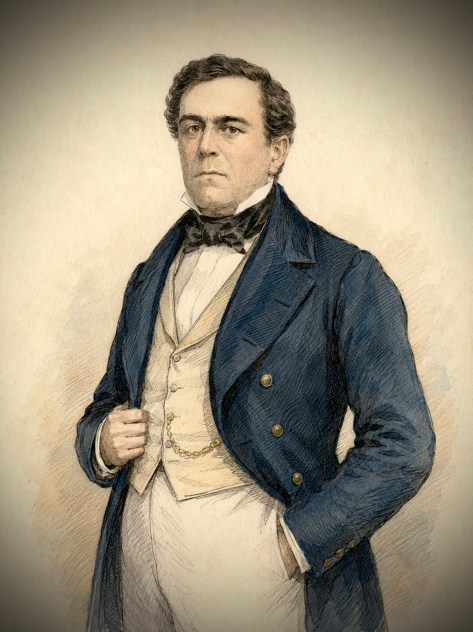
The following letter was written by 23 year-old George H. Marble (1813-1843, the son of Antipas Marble (1766-1841) and Sally Putnam (1772-1826) of Cornish, Sullivan county, New Hampshire. George wrote the letter to his much older cousin, the Hon. John Lyscom Putnam (1792-1875) who served as an associate judge on the Sullivan county bench and was described as a “man of sound judgment and stern integrity.” Putnam was the son of Samuel Putnam (1768-1843) and Lois Lyscom (1766-1855) of Cornish. One of Judge Putnam’s son’s, born just after this letter was penned, was Haldiman Sumner Putnam (1836-1863) became a West Point graduate and served with honor in the Civil War as the Colonel of the 7th New Hampshire and was acting Brig. General in the storming of Fort Wagner on 18 July 1863 where he was instantly killed.
The letter reveals that George Marble owned a plantation near Natchez in the mid-1830s, yet his aspirations seem to have far exceeded what his achievements could support. As the youngest child in a large family, he did not inherit substantial wealth, and his resources were constrained. Absent George’s correspondence, it would have been difficult to conceive that he had left New Hampshire and traveled to the banks of the Mississippi River. No census, land records, or family histories document any endeavors on his part other than his untimely death from “consumption” (tuberculosis) in his hometown of Cornish in 1843, at the age of 30.
T R A N S C R I P T I O N
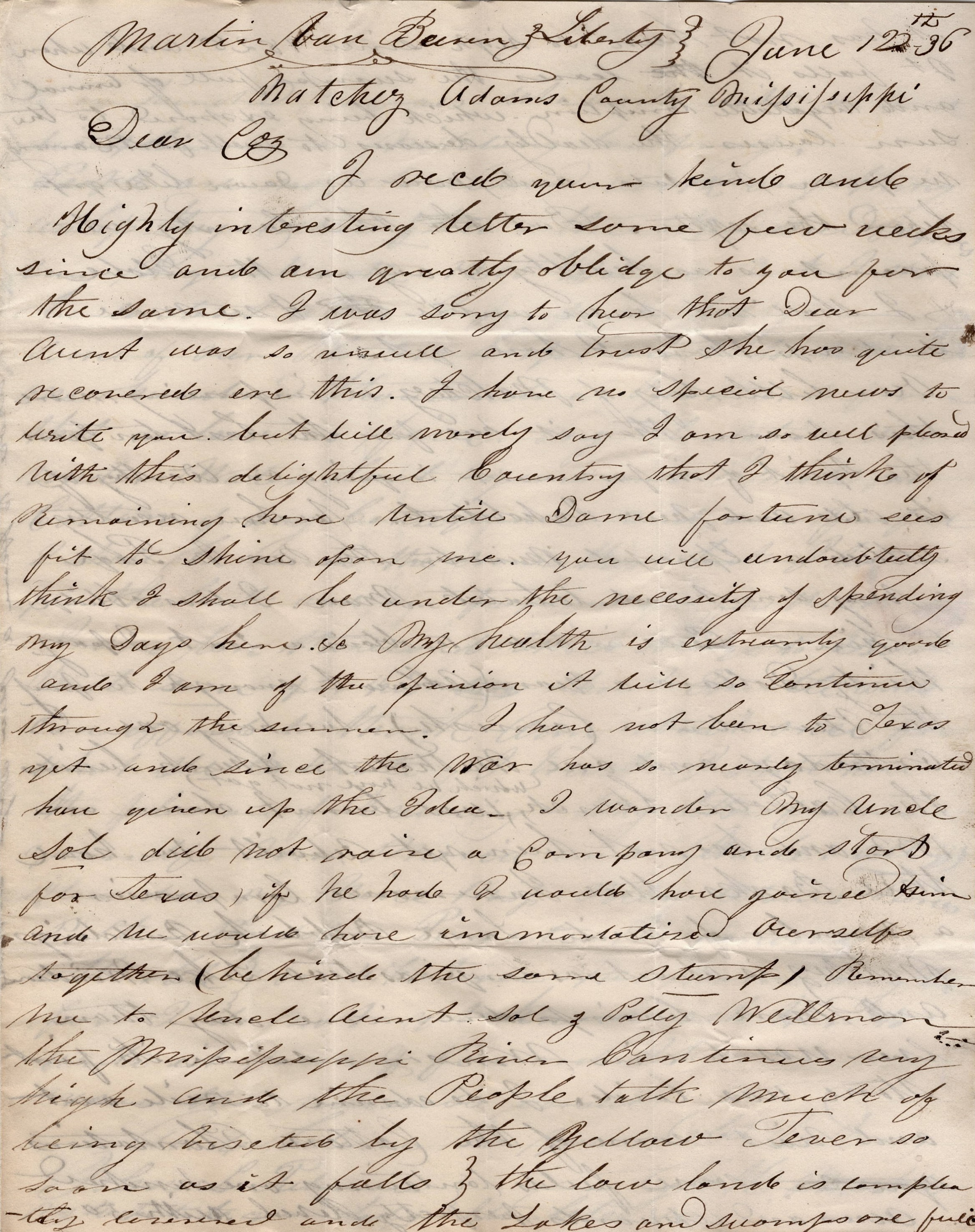
Natchez, Adams county, Mississippi
June 12, 1836
Dear Coz,
I received your kind and highly interesting letter some few weeks since and am greatly oblige[d] to you for the same. I was sorry to hear that dear Aunt was so unwell and trust she has quite recovered ere this. I have no special news to write you but will merely say I am so well pleased with this delightful country that I think of remaining here until Dame fortune sees fit to shine upon me. You will undoubtedly think I shall be under the necessity of spending my days here, &c. My health is extremely good and I am of the opinion it will so continue through the summer. I have not been to Texas yet and since the war has so nearly terminated, have given up the idea. I wonder my Uncle Sol did not raise a company and start for Texas. If he had, I would have joined him and we would have immortalized ourselves together (behind the same stump). Remember me to Uncle [&] Aunt Sol & Polly Wellman. 1
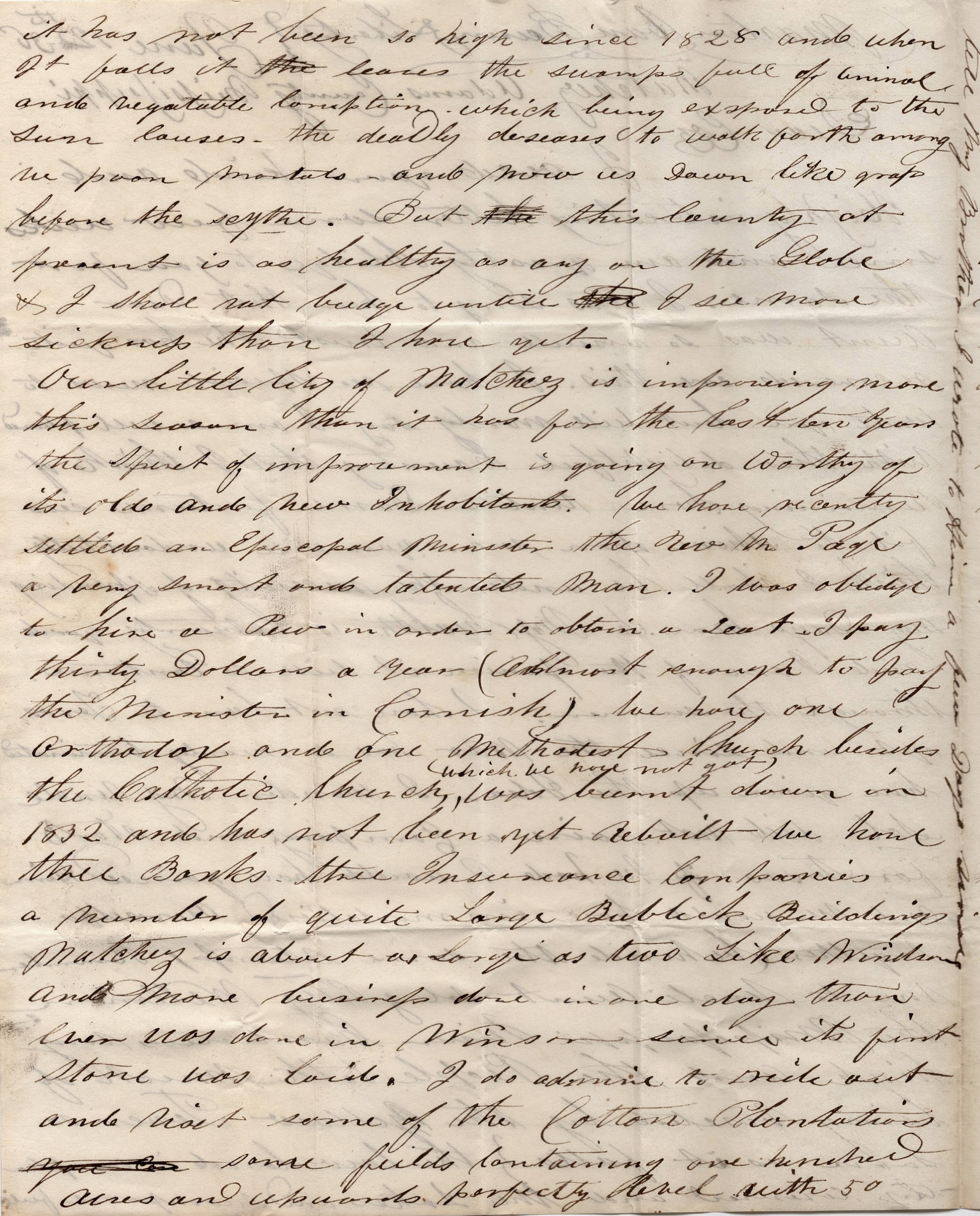
The Mississippi River continues very high and the people talk much of being visited by the Yellow Fever so soon as it falls. The low land is completely covered and the lakes and swamps are full. It has not been so high since 1828 and when it falls, it leaves the swamps full of animal and vegetable comption [decomposition] which, being exposed to the sun, causes the deadly diseases to walk forth among we poor mortals and mow us down like grass before the scythe. But this country at present is as healthy as any on the Globe and I shall not budge until I see more sickness than I have yet.
Our little City of Natchez is improving more this season than it has for the last ten years. The spirit of improvement is going on worthy of its old and new inhabitants. We have recently settled an Episcopal Minister—the Rev. [David C.] Page, a very smart and talented man. I was obliged to hire a pew in order to obtain a seat. I pay thirty dollars a year (almost enough to pay the minister in Cornish). We have one Orthodox and one Methodist Church besides the Catholic Church (which we have not got) was burnt down in 1832 and has not been yet rebuilt. We have three banks, three Insurance Companies, [&] a number of quite large public buildings. Natchez is about as large as two like Windsor and more business done in one day than ever was done in Windsor since its first stone was laid.
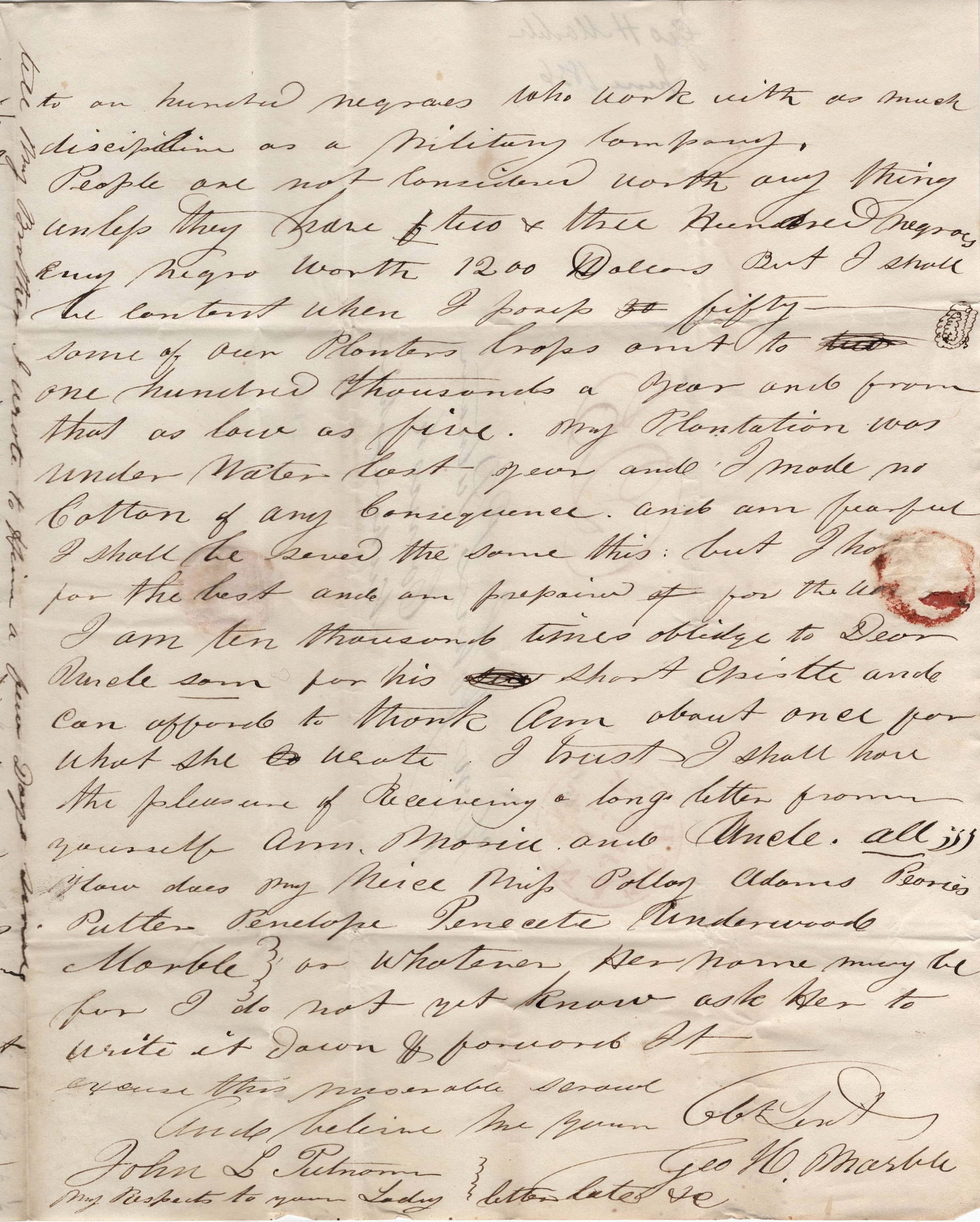
I do admire to ride out and visit some of the cotton plantations, some fields containing one hundred acres and upwards, perfectly level, with 50 to an hundred negroes who work with as much discipline as a military company. People are not considered worth anything unless they have two and three hundred negroes—every negro worth 1200 dollars. But I shall be content when I possess fifty. Some of our planters’ crops amount to one hundred thousands a year and from that as low as five. My plantation was under water last year and I made no cotton of any consequence and am fearful I shall be served the same this [year], but I hope for the best and am prepared for the worst.
I am ten thousand times oblige[d] to Dear Uncle Sam [Putnam] for his short epistle and can afford to thank Ann about once for what she wrote. I trust I shall have the pleasure of receiving a long letter from yourself, Ann, Maria, and Uncle—all. How does my niece Miss Polly Adams Peories, Putter, Penelope, Penecete Underwood Marble—or whatever her name may be for I do not yet know. Ask her to write it down and forward it. Excuse the miserable scrawl and believe me your obedient servant, — Geo. H. Marble
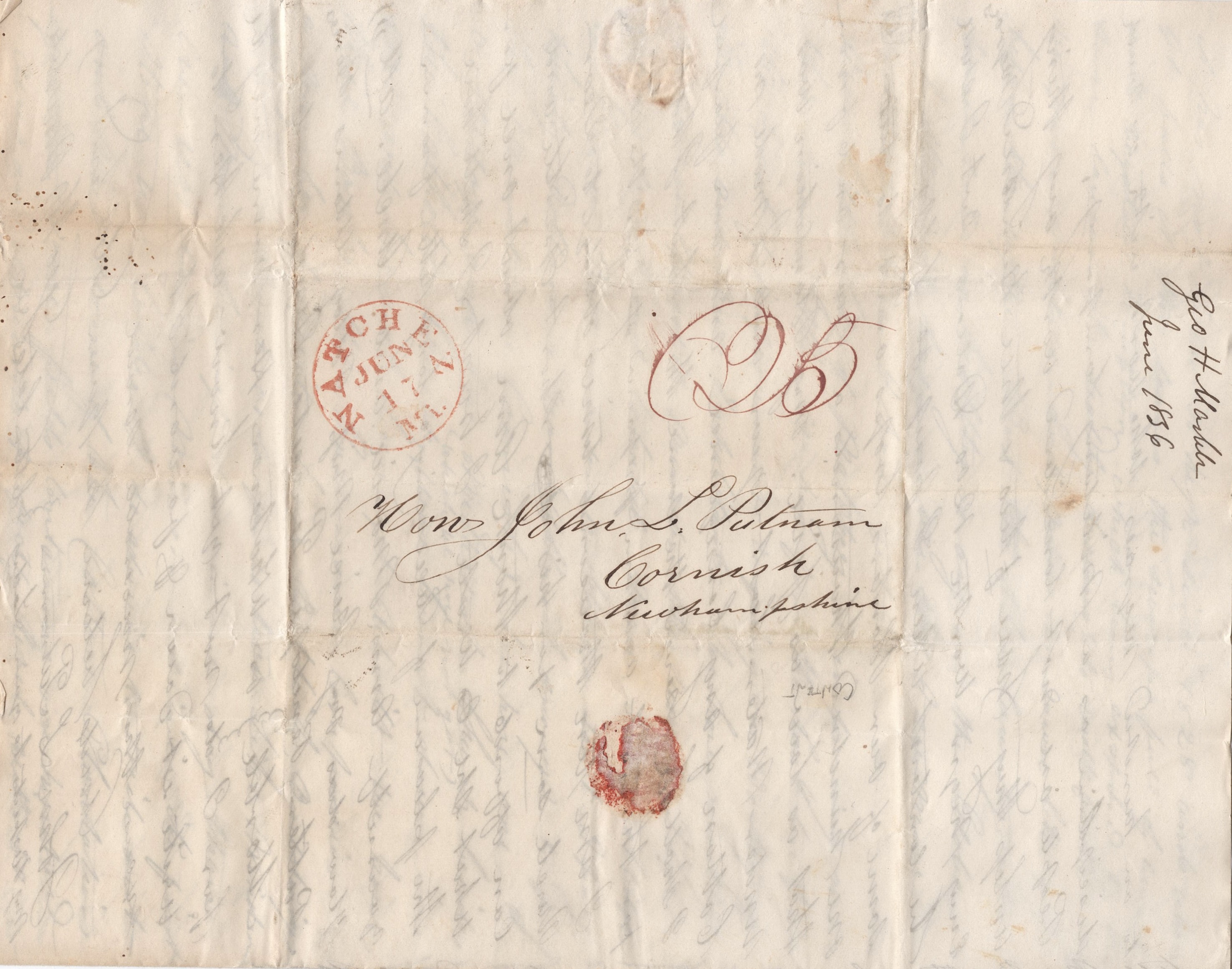
[to] John L. Putnam
My respects to your Lady.
Tell my brother I wrote to him a few days since.
Martin Van Buren & Liberty!
1 George is referring to the Texas Revolution in 1835-36, and to his Uncle Solomon (“Sol”) Wellman (1758-1841), a veteran of the American Revolution, who was in his 70s at the time. Sol was married to Polly Putnam (1769-1848)—a sister of George’s mother. The Wellman’s lived in Cornish.