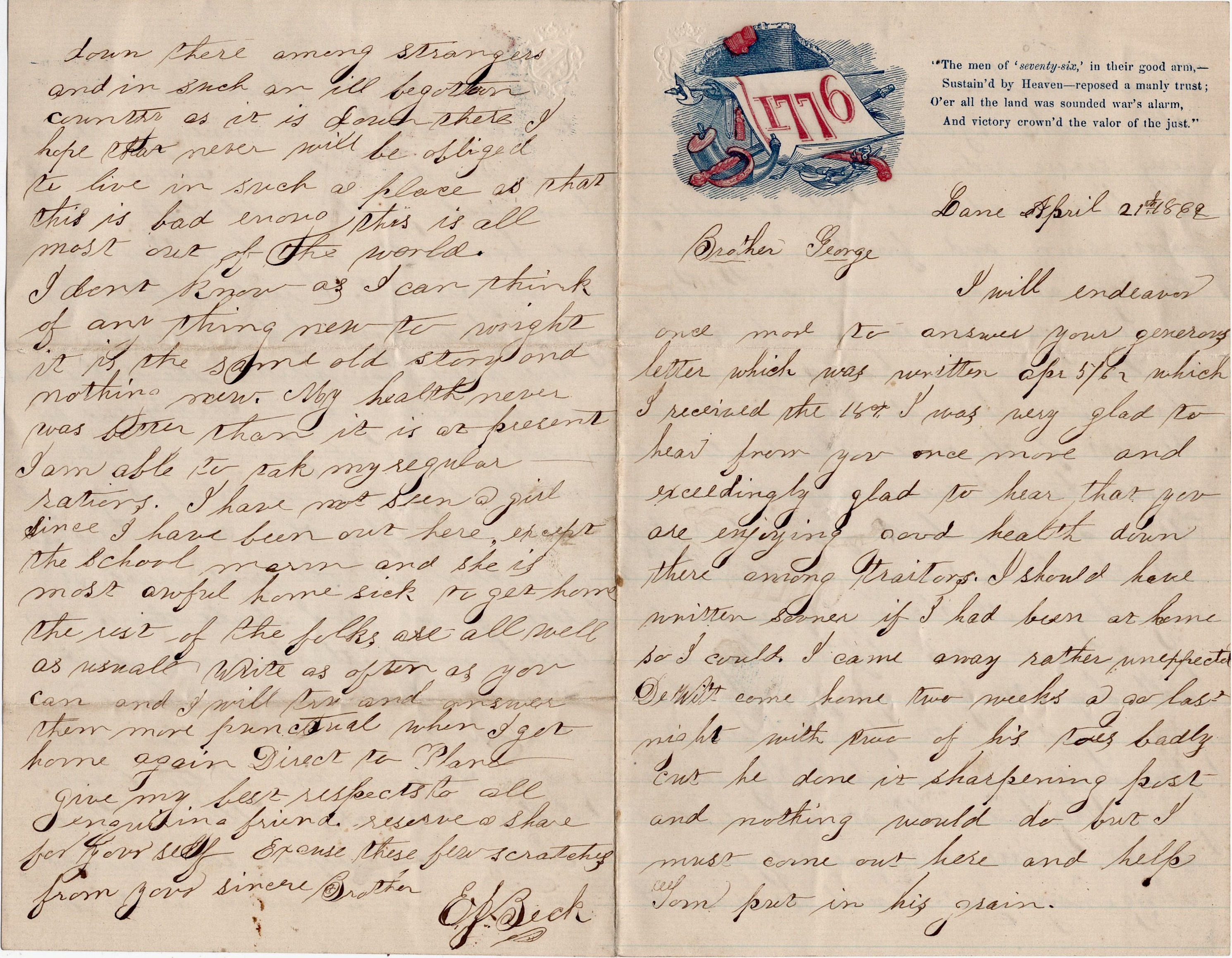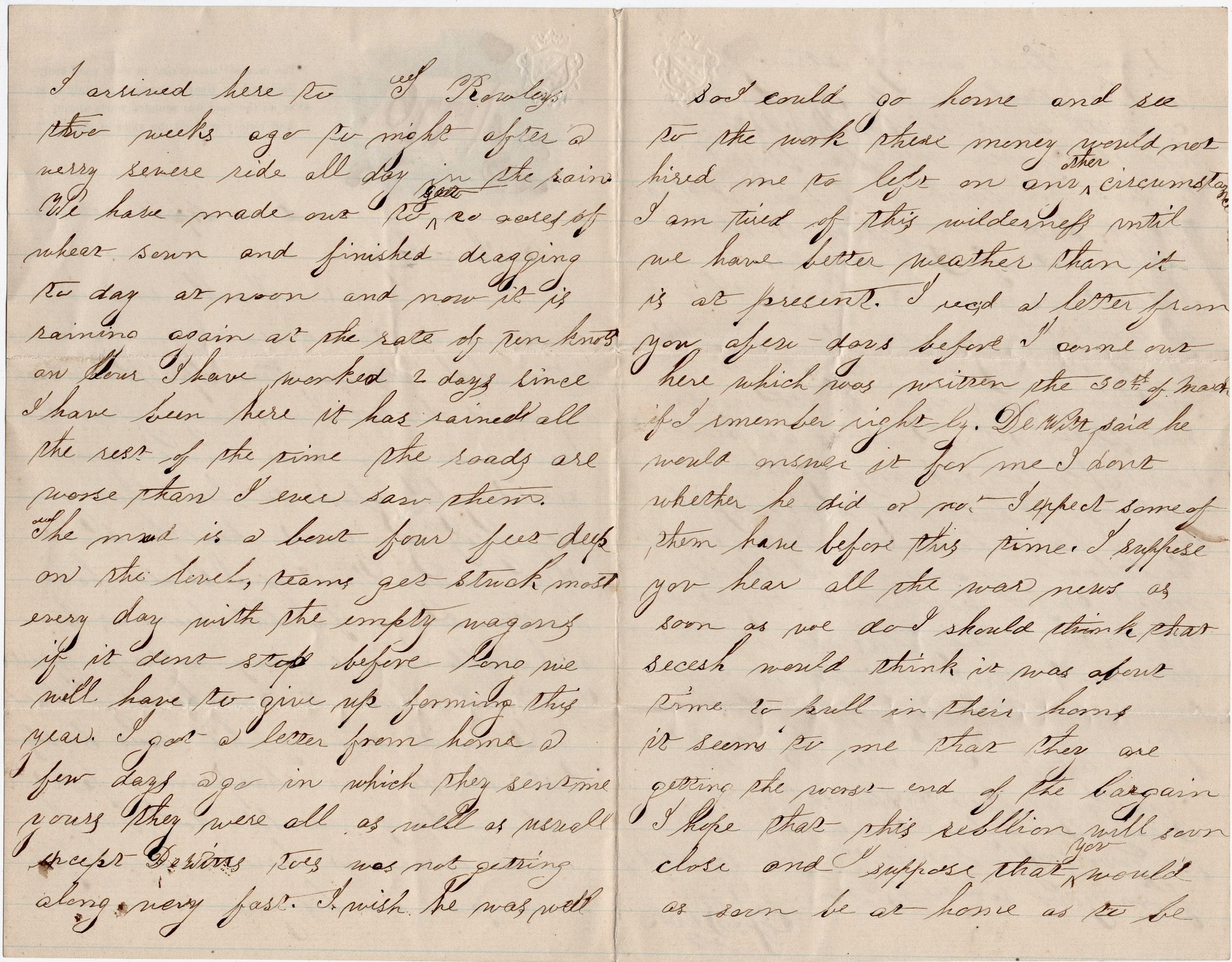
The following letter was written by Joel E. Beck (b. 1842), the son of Benjamin J. Beck (1814-1862) and Mary Ann Walrath (1814-1881) of Plano, Kendall county, Illinois. He wrote the letter to his older brother, Sgt. George Anthony Beck (1838-1889) who was serving at the time in Co. H, 13th Illinois Cavalry, having enlisted on 31 December 1861. He mentions his brother DeWitt Clinton Beck (1840-1898) a couple of times in the letter.
Joel’s letter reveals that he was assisting someone named Thomas, likely his brother-in-law, with wheat farming on his land. The letter is dated from Lane, but the state isn’t specified. It is believed to refer to Lane in DeWitt County, Illinois, located about halfway between Springfield and Champaign, nearly 150 miles from Plano. This region, known as the Grand Prairie, features vast areas of deep-rooted prairie grasses in a rolling landscape with wetlands. Due to its poor drainage, many early settlers avoided it, deeming it too swampy and unhealthy. Farming there would have been quite muddy in springtime, earning it the labels of “wilderness” or “ill begotten country.”
T R A N S C R I P T I O N
Lane
April 21st 1862
Brother George,
I will endeavor once more to answer your generous letter which was written April 5th, 1862 which I received the 18th. I was very glad to hear from you once more and exceedingly glad to hear that you are enjoying good health down there among traitors. I should have written soon if I had been at home so I could. I came away rather unexpectedly. DeWitt came home two weeks ago last night with two of his toes badly cut. He done it sharpening posts and nothing would do but I must come out here and help Tom put in his grain.
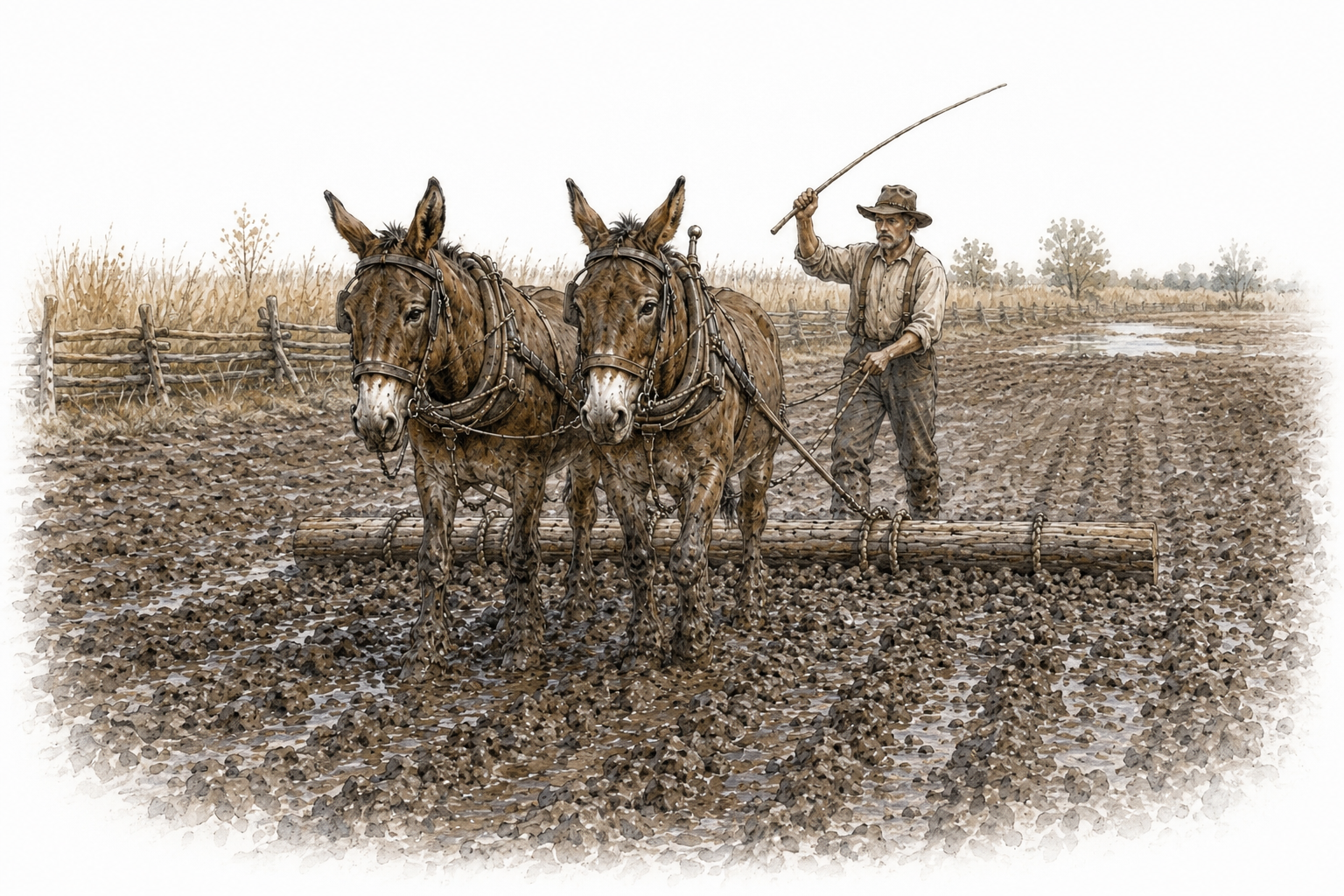
I arrived here to T. Prowley’s two weeks ago tonight after a very severe ride all day in the rain. We have made out to get 20 acres of wheat sown and finished dragging today 1 at noon and now it is raining again at the rate of ten knots an hour. I have worked two days since I have been here. It has rained all the rest of the time. The roads are worse than I ever saw them. The mud is about four feet deep on the level. Teams get stuck most every day with the empty wagons. If it don’t stop before long, we will have to give up farming this year.
I got a letter from home a few days ago in which they sent me yours. They were all as well as usual except DeWitt’s toes was not getting along very fast. I wish he was well so I could go home and see to the work there. Money would not have hired me to left on any other circumstances. I am tired of this wilderness until we have better weather than it is at present.
I received a letter from you a few days before I came out here which was written the 30th of March if I remember rightly. DeWitt said he would answer it for me. I don’t [know] whether he did or not. I expect some of them have before this time. I suppose you hear all the war news as soon as we do. I should think that secesh would think it was about time to pull in their horns. It seems to me that they are getting the worst end of the bargain. I hope that this rebellion will soon close and suppose that you would as soon be at home as to be down there among strangers and in such an ill begotten country as it is down there. I hope we never will be obliged to live in such a place as that. This is bad enough. This is almost out of the world.
I don’t know as I can think of anything new to write. It is the same old story and nothing new. My health never was better than it is at present. I am able to take my regular rations. I have not seen a girl since I have been out here except the school marm and she is most awful homesick to get home. the rest of the folks are all well as usual. Write as often as you can and I will try and answer them most punctual when I get home again. Directto Plano. Give my best respects to all enquiring friends. Reserve a share for yourself. Excuse these scratches. from your brother, — E. J. Beck
1 Dragging the field after sowing crops was required to cover the seed and was accomplished typically with a harrow but in resource-constrained locations, farmers may have used repurposed items like heavy wooden logs or chains. It must have been extremely difficult to accomplish this in muddy fields.