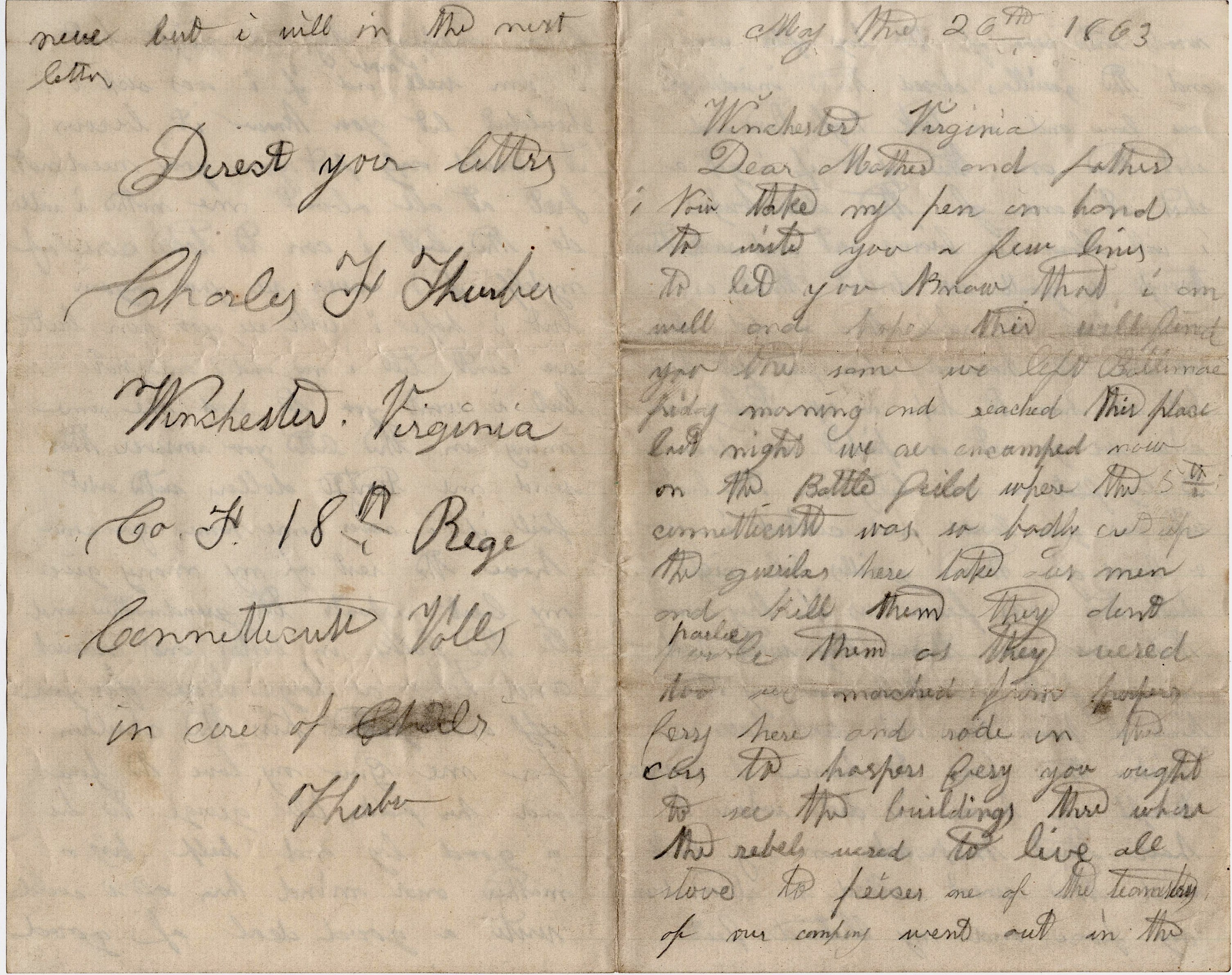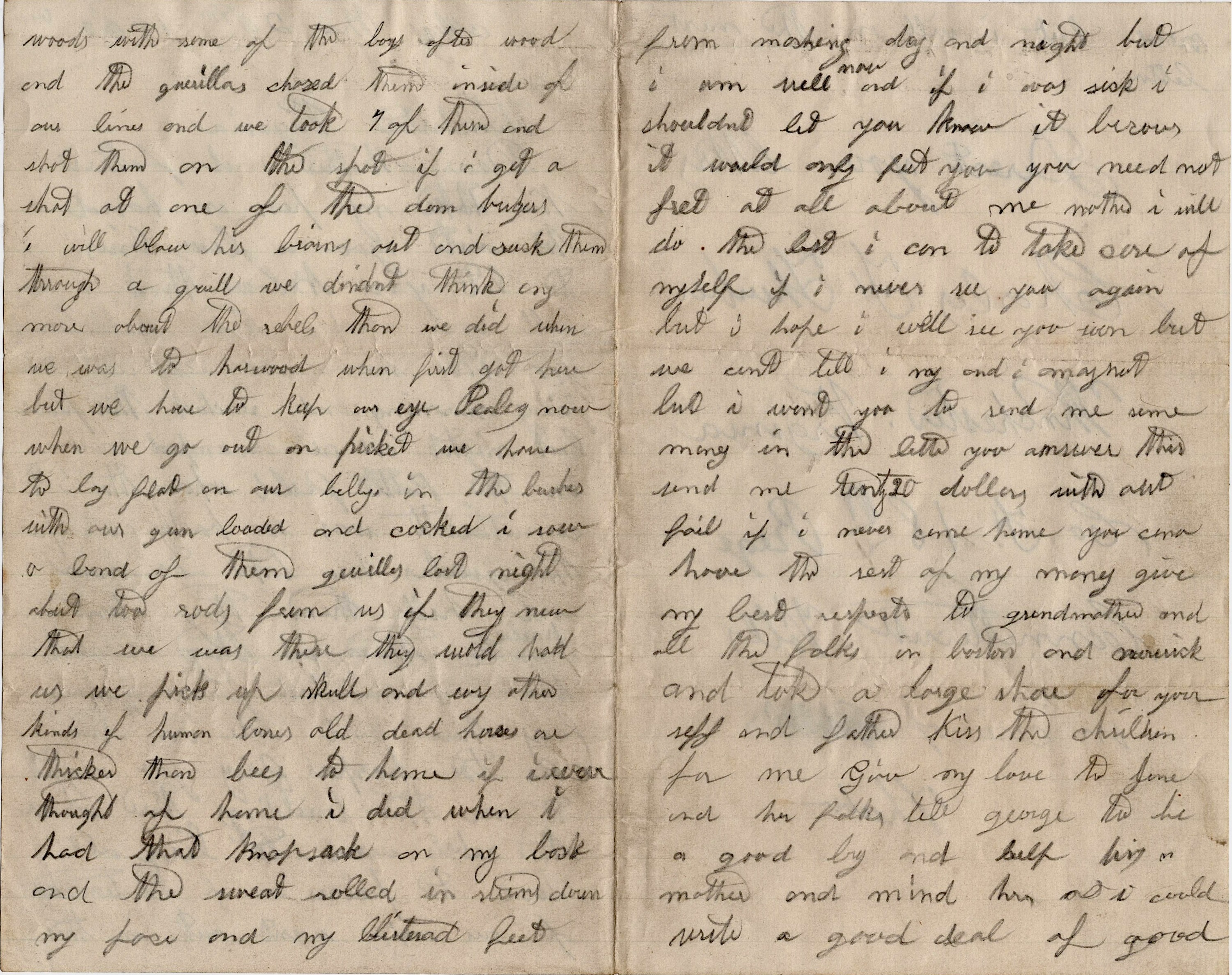
The following letter was written by Charles Francis Thurber (1846-Aft1884), the son of Nehemiah and Susan Thurber of Preston, New London, Connecticut. Census records inform us that he was born in Rhode Island.
Charles mustered in as a private in Co. F, 18th Connecticut Infantry in mid-August 1862. He mustered out of the regiment on 27 June 1865 as a 3rd Corporal. The regiment spent the winter of 1862-63 in garrison and were not sent into Virginia until the spring of 1863, as described in this letter). He was wounded slightly in the battle of Piedmont on 5 June 1863 and taken prisoner along with most of his comrades in the 2nd Battle of Winchester less than two weeks later.
T R A N S C R I P T I O N
Winchester, Virginia
May 26th 1863
Dear Mother and Father,
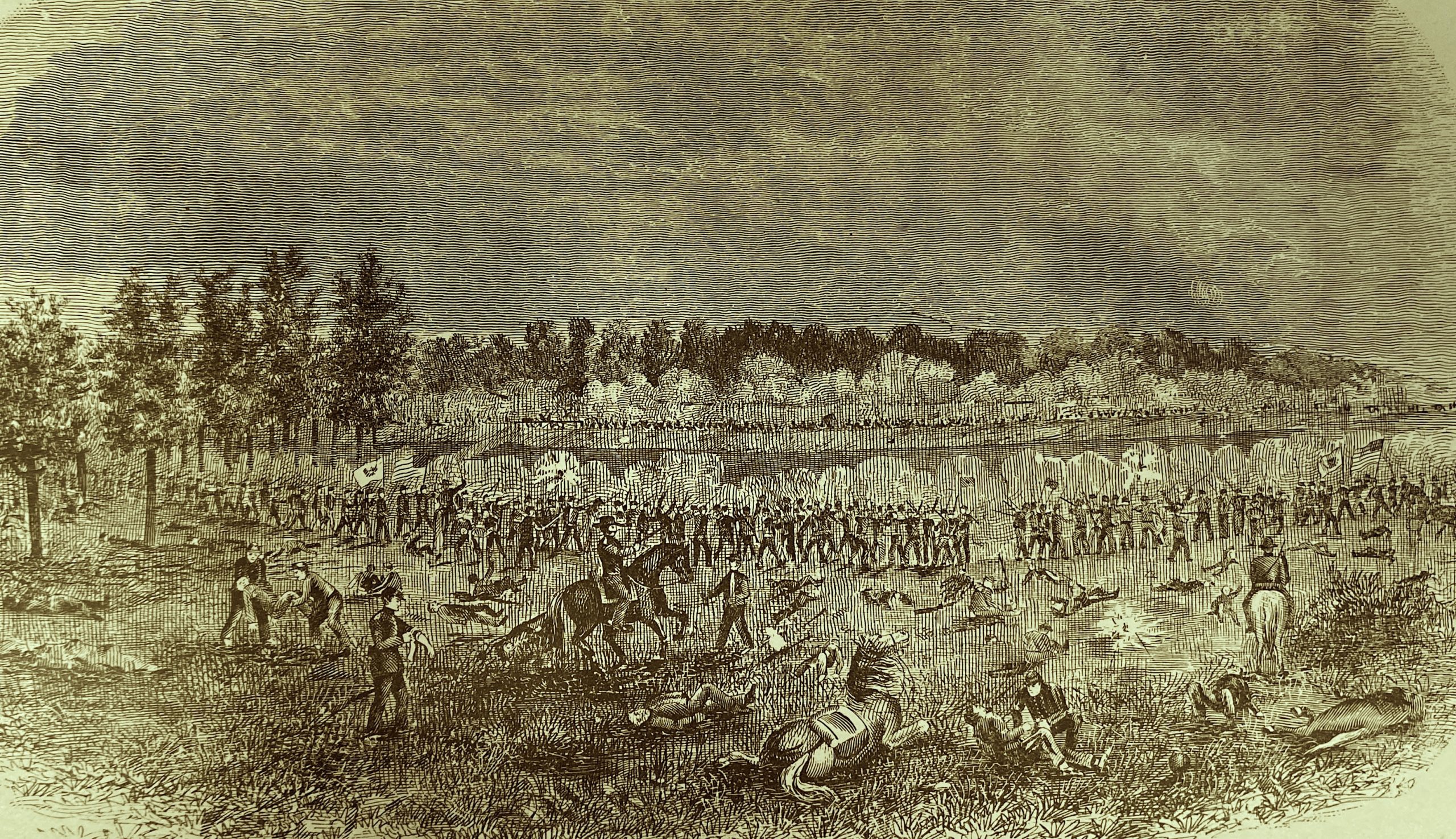
I now take my pen in hand to write you a few lines to let you know that I am well and hope this will find you the same. We left Baltimore Friday morning and reached this place last night. We are encamped now on the battlefield where the 5th Connecticut was so badly cut up. The guerrillas here take our men and kill them. They don’t parole them as they used to. We marched from Harpers Ferry here and rode in the cars to Harpers Ferry. You ought to see the buildings there where the rebels used to live—all stove to pieces.
One of the teamsters of our company went out in the woods with some of the boys after wood and the guerrillas chased them inside of our lines and we took seven of them and shot them on the spot. If I get a shot at one of the damn bugers, I will blow his brains out and suck them through a quill. We didn’t think anymore about the rebels than we did when we was to Harewood when first got here, but we have to keep an eye peeled now. When we go out on picket, we have to lay flat on our belly in the bushes with our gun loaded and cocked.
I saw a band of them guerrillas last night about two rods from us. If they knew that we was there, they would had us. We pick up skull and every other kinds of human bones. Old dead horses are thicker than bees to home. If I ever thought of home, I did when I had that knapsack on my back and the sweat rolled in streams down my face and my blistered feet from marching day and night.
But I am well now and if I was sick, I shouldn’t let you know it because it would only fret you. You need not fret at all about me, Mother. I will do the best I can to take care of myself. If I never see you again—but I hope I will see you soon, but we can’t tell. I may and I may not. But I want you to send me some money in the letter you answer this. Send me twenty dollars without fail. If I never come home, you can have the rest of my money.
Give my best respects to grandmother and al the folks in Boston and Norwich and take a large share for yourself and father. Kiss the children for me. Give my love to Jane and her folks. Tell George to be a good boy and help his mother and mind her. I could write a good deal of good news but I will in the next letter. Direct your letters, — Charles F. Thurber, Winchester, Virginia, Co. F, 18th Regt. Connecticut Vols.