My passion is studying American history leading up to & including the Civil War. I particularly enjoy reading, transcribing & researching primary sources such as letters and diaries.
The following letter was written by William H. Arndt (1844-1910), the son of Abraham S. Arndt (1821-1853) and Alvinah Winter (1823-1909) of Harmony, Warren county, New Jersey. William serged in Co. F, 2nd New Jersey Cavalry from 4 September 1863 to 1 November 1864, a total of 1 year, 2 months. He entered the service as a private and mustered out as a sergeant.
William wrote the letter to Caroline (Bareford) Alston of Springfield, Burlington county, New Jersey, the mother of his tent mate, Sgt. Thomas B. Alston (1842-1864). He wrote to inform her that Thomas had been shot in the hip during the fight at Egypt Station in Mississippi. In the battle, the 2nd New Jersey lost three officers killed and two wounded, and 16 enlisted men killed and 69 wounded. One officer and 39 men from the 2nd New Jersey were left at Egypt Station under the care of the regiment’s assistant surgeon because they were too badly hurt to be moved.
Transcription
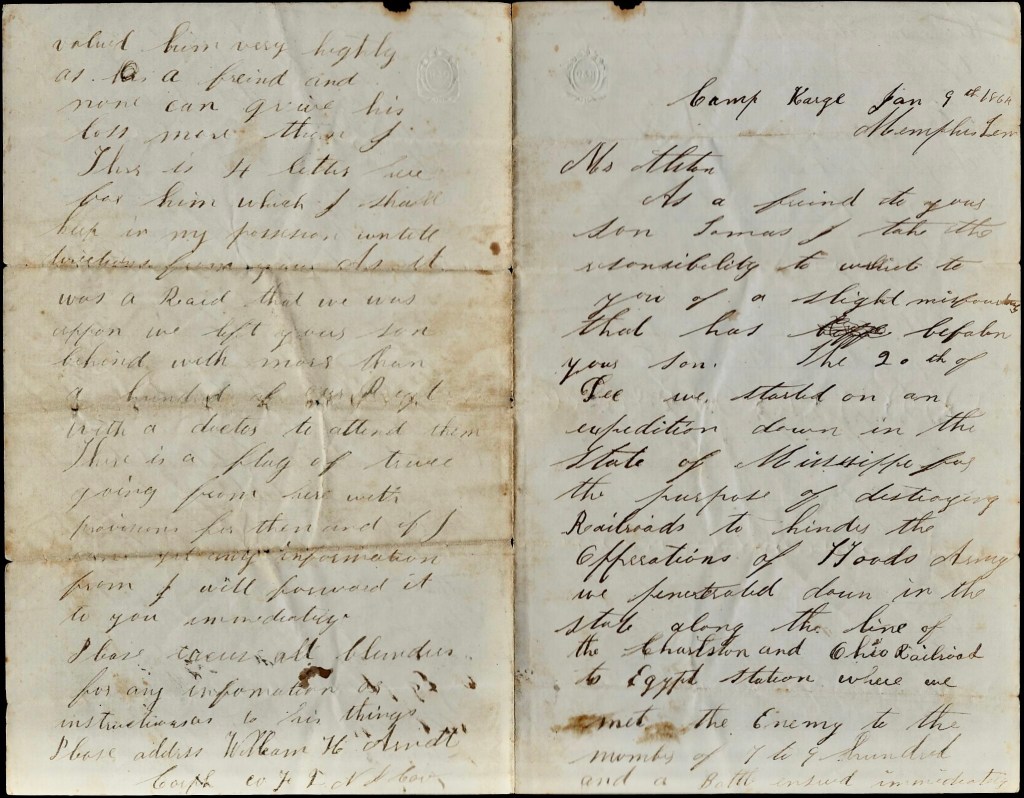
Camp Kargé, Memphis, Tennessee January 9th 1864
Mrs. Alston,
As a friend to your son Thomas I take the responsibility to write to you of a slight misfortunate that has befallen your son. The 20th of December we started on an expedition down in the State of Mississippi for the purpose of destroying railroads to hinder the operations of Hood’s army. We penetrated sown in the state along the line of the Charleston and Ohio Railroad to Egypt Station where we met the enemy to the number of 7 to 9 hundred and a battle ensued immediately.
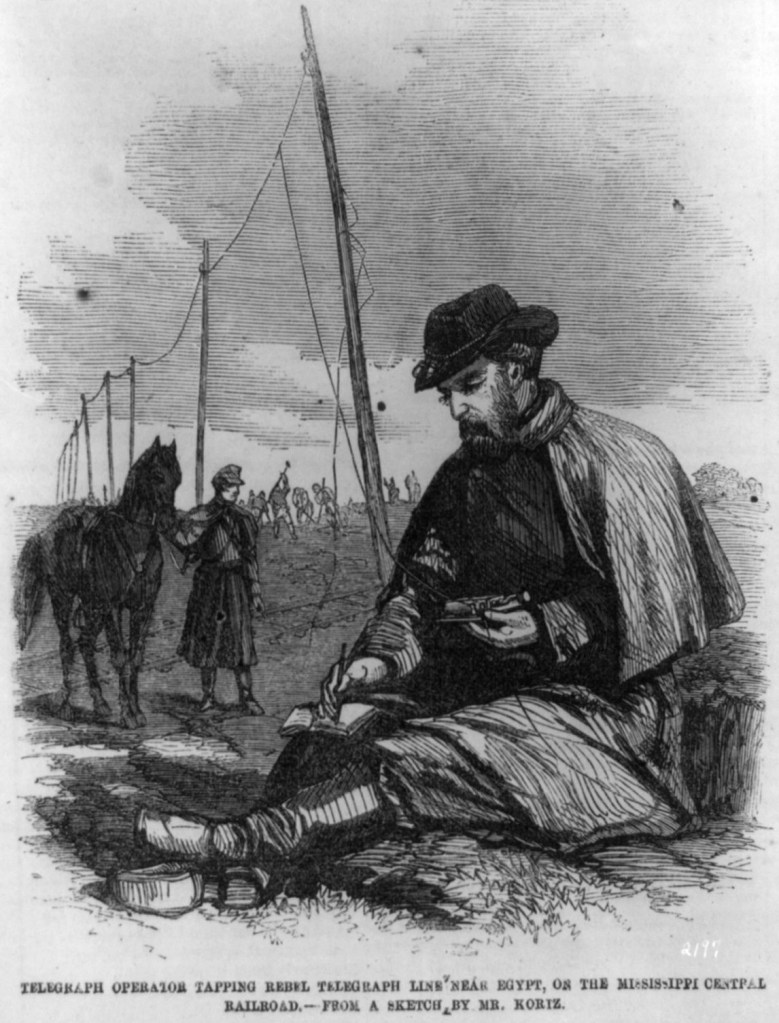
A telegraph operator tapping Rebel telegraph line near Egypt on the Mississippi Central Railroad
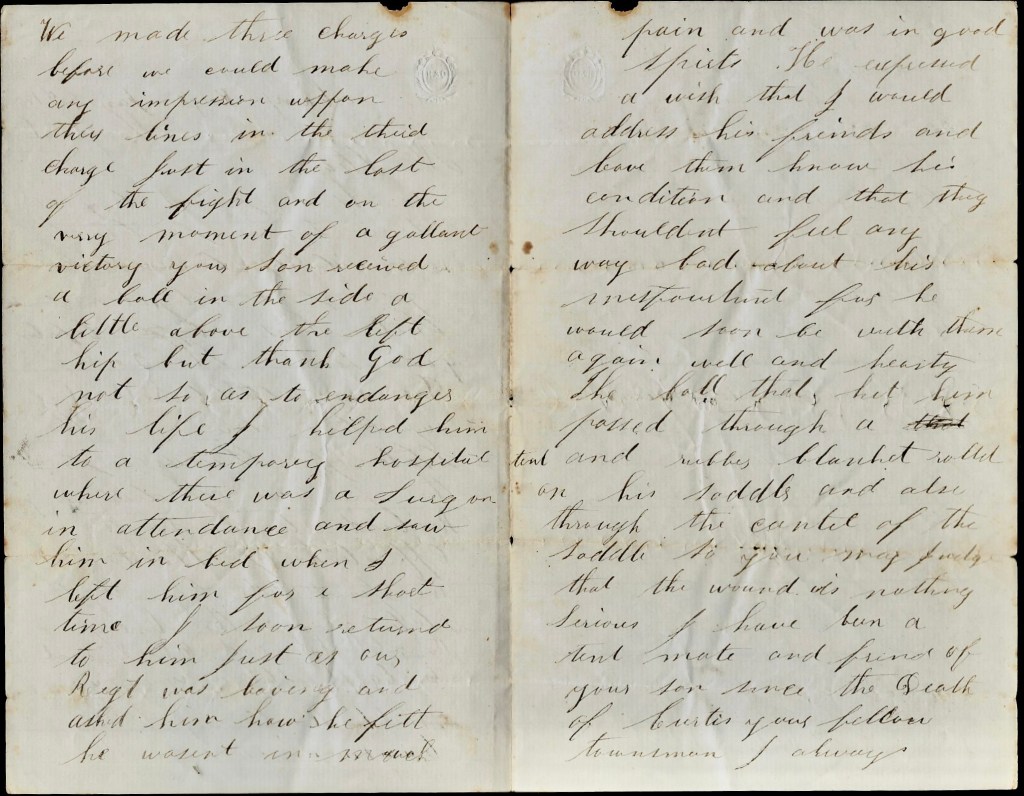
We made three charges before we could make any impression upon their lines. In the third charge, just in the last of the fight and on the very moment of a gallant victory, your son received a ball in the side a little above the left hip, but thank God not so as to endanger his life. I helped him to a temporary hospital where there was a surgeon in attendance and saw him in bed when UI left him for a short time. I soon returned to him just as our regiment was leaving and asked him how he felt. He wasn’t in much pain and was in good spirits. He expressed a wish that I would address his friends and leave them know his condition and that they shouldn’t feel anyway bad about his misfortune for he would soon be with them again, well and hearty.
The ball that hit him passed through a tent and rubber blanket rolled on his saddle and also through the cantle of the saddle so you may judge that the wound is nothing serious. I have been a tent mate and friend of your son since the death of Curtis, your fellow townsman. I always valued him very highly as a friend and none can grieve his loss more than I.
This is four letters here for him which I shall keep in my possession until directions from you. As it was a raid that we was upon, we left your son behind with more than a hundred of our regiment, with a doctor to attend them. There is a flag of truce going from here with provision for them and if I can get any information from [them], I will forward it to you immediately.
Please excuse all blunders for any information as instructions as to his things, please address William H. Arndt, Corp in Co. F, 2nd New Jersey Cavalry
This letter was written by William Russell Thomas (1843-1914) in February 1863 while a student at William College in Williamstown, Massachusetts. William was the eldest son of Chauncey Thomas(1802-1882) and Margaret Bross (1819-1856). His obituary record at Williams College states that “while he was a mere child, his parents moved to Shohola, Pennsylvania, just across the Delaware River from his birthplace [Barryville, New York]. He prepared for college in the academy at Monticello, New York, and graduated from Williams in the class of 1865. During his college course, he took some practical lessons in journalism on the Chicago Tribune, of which his uncle, Lieutenant Governor William Bross, was then chief owner. His first real assignment was the funeral of Abraham Lincoln. Wishing to push on towards the real frontier in the early spring of 1866, he journeyed to Colorado on a stage coach, before the days of western railroads. He spent that summer traveling over the Rockies with Bayard Taylor. In October 1866, he became editor of the Register-Call, a frontier daily paper published in Central City, Colorado. In May, 1867, he went to the Rocky Mountain News as traveling correspondent, in which position he spent several years riding over Colorado, New Mexico and Wyoming…He later became the managing editor, which position he held for sixteen years and helped to make it the leading paper of the West.” [Obituary Record of the Alumni of Williams College, Class of 1865]
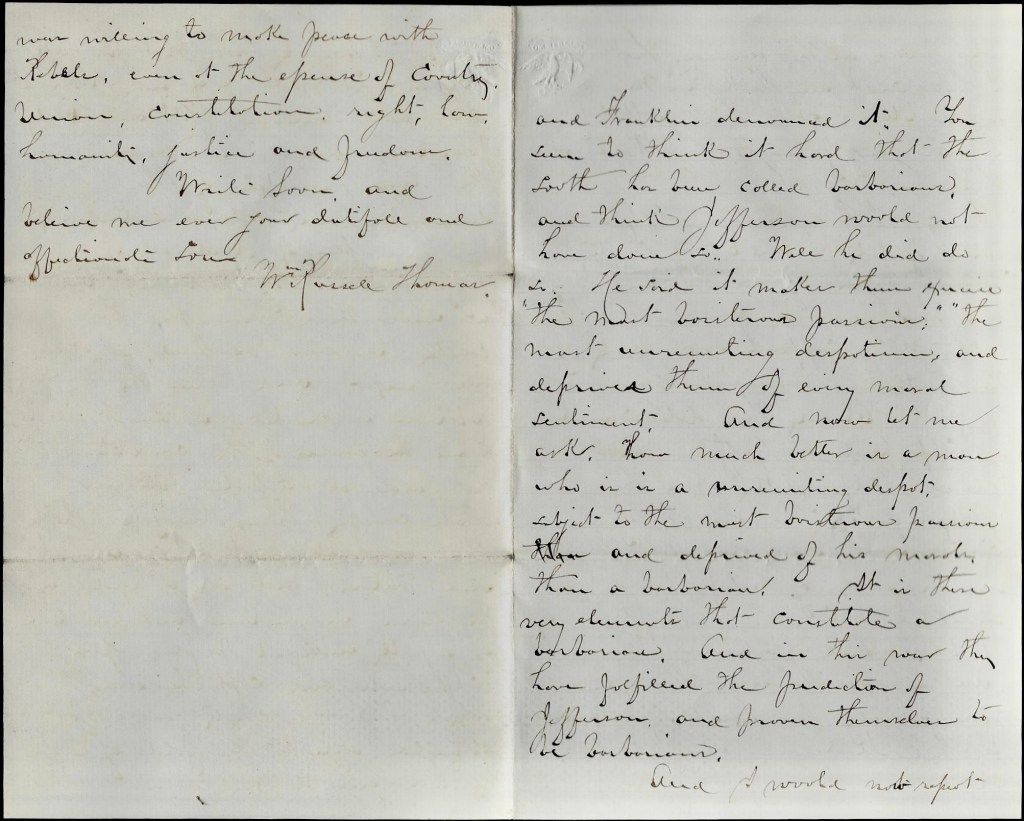
In this February 1863 letter, William attempts to dissuade his father from embracing the Copperhead movement by illustrating through the words of Jefferson, Washington, and other revolutionary leaders that slavery was a moral wrong and that, if given sufficient time, slavery would have been abolished by a democratic process.
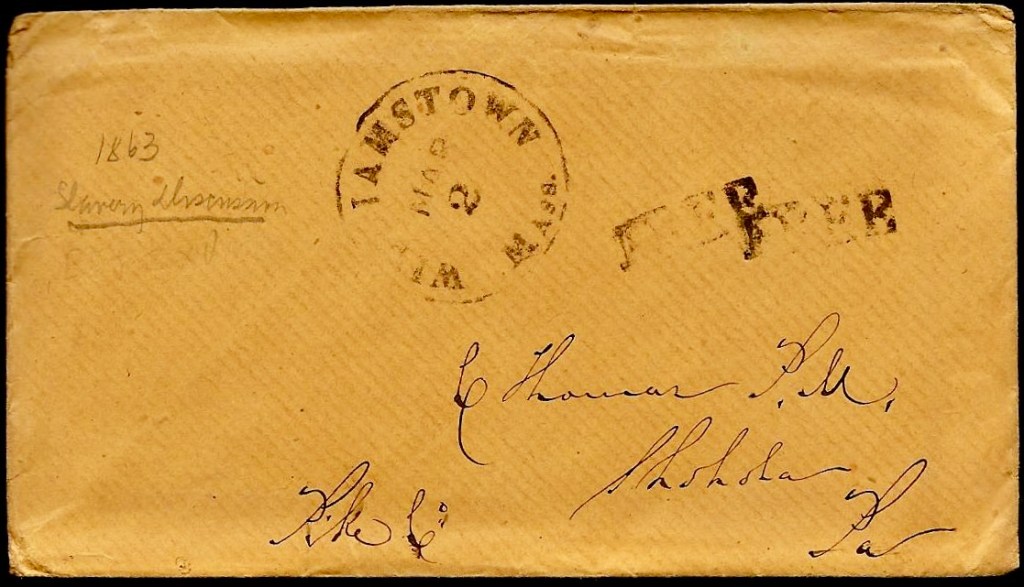
Addressed to C. Thomas, Post Master, Shohola, Pennsylvania
Williams February 28, 1863
My dear Father,
I have just received your letter and also the box by Express for which I am very much obliged. A token like that from home is always thankfully received for it reminds one that he is not forgotten at home. Aunt E___’s letter I will answer tomorrow, but yours I will answer immediately. I am sorry that you considered the letter to which you refer as a reprimand. I had no such intention and it wsa furthest from my thoughts. I wrote it as a fair and just argument, intended it should be that, and am sorry that it was not taken as such.
As to your remark on Jefferson, I would say I uphold in its fullest extent the right of free speech until it comes to treason which a government has the right to suppress. Admitting this, it leads us to this. A man has a perfect right to denounce slavery, or he has a the same right to praise it. And as long as each party keeps within bounds of the Constitution, each party has the undoubted right to extend their principles.
You try to escape the force of my argument by a quibble—that I cannot show that Jefferson ever belonged to a society to denounce the institutions of one section. Jefferson denounced slavery everywhere—North, South, East and West, as it then was, and when the North, East and West squared themselves upon the principles of Jefferson, did his denounciation of the system not apply just the same, even if it existed in one Section instead of all four? This argument would be sufficient, but to fashion it, I enclose some of his opinions on the point. See extract 1 where he considers it an honor to belong to such a society.
And now, on to [George] Washington. For his views on slavery, I refer you to extract No. 2. A man who would proclaim such sentiments now is called an abolitionist and on such we shall consider George Washington. Whose fault was it that a sectional party was formed! If the North chose to place itself upon the principle of Washington as here expressed, was it not the fault of the section that refused to come up the principles of Washington that the party became sectional! This is the point. The North said with Washington and Jefferson, we believe slavery to be wrong, and called upon the whole country to oppose the sentiments of the founders of our government. The South refused, and the party in the North became sectional by that refusal. Where was the fault? Certainly not of the North. I think the position taken by the sectional party on the mode of stopping the advance of slavery to have been wrong. I believed then—I believe now—that the principle of popular sovereignty was the fairest, most constitutional and most democratic way of stopping that advance. But I believe that every man has the right to denounce the institution of slavery. And if as I have heard you say, slavery is wrong, it is the moral duty of every man to denounce it, just as Jefferson denounced it—just as Washington and Franklin denounced it.
You seem to think it hard that the South have been called barbarians and think Jefferson would not have done so. Well he did do so. He said it makes them exercise “the most boisterous passions”—“the most unremitting despotism and deprives them of every moral sentiment.” And now, let me ask, how much better is a man who is an unremitting despot, subject to the most boisterous passions and deprived of his morals than a barbarian? It is these very elements that constitute a barbarian. And in this war they have fulfilled the prediction of Jefferson and proven themselves to be barbarious.
And I would now repeat what I said in the beginning, that if I have sau anything in my former letter, or in this, which injures your feelings, I ask to be forgiven.
I have written out of a feeling of duty I owe to my country to prevent you, if possible, and everybody else from being numbered with the Copperheaded Party of the North. Already the late convention of Copperheads of Hartford has place itself flatly upon the platform of the Old Hartford Convention, and also upon the very principles of nullification advocated by Calhoun and opposed by Webster and Jackson. Are you willing to go there and place yourself in direct opposition to where Madison and Jackson stood? I cannot believe you will. But I firmly believe that you will stand yet with Dix and Dickerson, Butler and Tremain, Holt and Andy Johnston, under whose guidance the true principles of the Democratic Party will be sustained—the principles of Madison, of Jefferson, and of Jackson. And under these principles the country has ever prospered, so it ever will prosper. And when the rebellion is crushed, as sure it will be, when the powers of the Constitution shall again be respected over our whole country, then the fate which shall be meted out to secessionists and traitors will only be equaled by the scornm indignation, and execution of a justly indignant people upon Copperheads and Copperheadism which, while the country was all but strangled beneath the folds of a wicked, gigantic, and damnable rebellion, was willing to make peace with Rebels, even at the expense of country, Union, Constitution, right, law, humanity, justice, and freedom.
Write soon and believe me ever your dutiful and affectionate son, — Wm. Russell Thomas
I could not find an image of Sidney but here is one of an unidentified Virginia Officer (Matthew Fleming Collection)
The following letter was written by Sidney Crockett Painter (1837-1890), the son of Isaac Painter (1802-1885) and Evalina Jackson Bell (1809-1892) of Wytheville, Virginia. Early in the war, Sidney enlisted in the 4th Virginia Infantry as a 1st Sergeant in Co. F. He was wounded in the Battle of Bull Run and was discharged in late October 1861. He reentered the war in May 1862 as a private in Co. B, 29th Virginia Infantry and was commissioned a lieutenant by September 1862. Later in the war he served as an Assistant Quartermaster of the regiment and on the staff of Cabell’s Confederate Artillery.
Sidney married Mary Gertrude Bitting (b. 1844) of Surry, North Carolina, in 1867.
Transcription
Headquarters Conscript Office Petersburg, Virginia March 23rd 1863
Dear Sir,
As I have not written you anything since James went home, I will give you some of our disappointments in regard to our late order which was to go west. I imagine, however, you have heard something of it before this.
First we were ordered to report to our old commands in S. W. Virginia. The 63rd, 50th and 54th went but our beautiful Lieut. Col. opposed the move and went to Richmond and got us detached from Gen. Marshall’s command and the consequence is we will have to remain here or somewhere in this country. We all wished for Col. [A. C.] Moore as we we think he would have taken us back. We held meetings to try and do something to get back but I fear it will do no good. I will send you a copy of the resolutions drafted as soon as I can see Adjt. Moore.
Our duties are just as when I wrote before. Some of our sentinels have been fighting like smoke. They have shot five or six men. They shot one yesterday and it is thought he will die. I will send a full description published in the Express. I bought me a fine suit of gray that cost me $28. The same will cost $80 to have it made up—outrageous! My intention is to have it made this week if we remain here.
My health is tolerable good though the weather is so bad I can’t do much out of the camp. I believe Lawrence wrote you by last mail and I presume he gave you all the late items. Tell Pa to keep my mule unless he can get $400 for him and that cash down. She will just suit him to ride and I want him to ride her everywhere he goes. She will keep fat on just half what it will take to keep up a horse. If he would fatten Horace, he can get $350 for him. Write me as soon as you get this.
The boys all send their love to you all. Ezra is very well. In haste. Yours, &c. — S. C. Painter
The following letter was written by Andrew Fern (1843-1919), the son of James Fern, Jr. (1806-1852) and Ann Coon (1804-1886) of Milford, Otsego county, New York. In August 1862, at the time of Andrew’s enlistment, he was a resident of Marengo, McHenry County, Illinois. As such, he enlisted as a private in Co. E, 95th Illinois Infantry. The enrolling officer recorded his description as a 5’5″ light-haired, blue-eyed farmer. He served out his enlistment, mustering out of the regiment on 17 August 1865 at Springfield, Illinois, as a corporal.
I could not find an image of Andrew but here is one of Pvt. Thomas Rees of Co. H, 95th Illinois Infantry (Ancestry.com)
The 95th Illinois had an extensive and proud record of service in the western theatre of the war, including their participation in the Battle of Nashville that took place on 15-16 December 1864—just ten days after this letter was penned. In this letter to his family back in New York, Andrew informs them that his regiment is well fortified at Nashville anticipating an attack any hour from Hood’s army and though he accurately estimated the Union strength at 55,000 men, he grossly overestimated the Confederate strength at 75,000 men. In actuality, Hood’s forces approximated only 30,000. Hood’s defeat at Nashville signaled the end for his Army of Tennessee. In six months of campaigning, they had lost nearly 75% of their fighting force and ceased to be a serious threat to the Federals. The Union victory at Nashville shattered Hood’s Army of Tennessee and effectively ended the war in Tennessee. Following Nashville, the fall of the Southern Confederacy was now only a matter of time.
Transcription
Nashville, Tennessee December 5th 1864
Brothers at Home,
I take a few leisure moments to write you a few lines. We are now at Nashville, Tennessee. The regiment is now all together with the exception of one company and that is Company K. We expect them here in a couple of days.
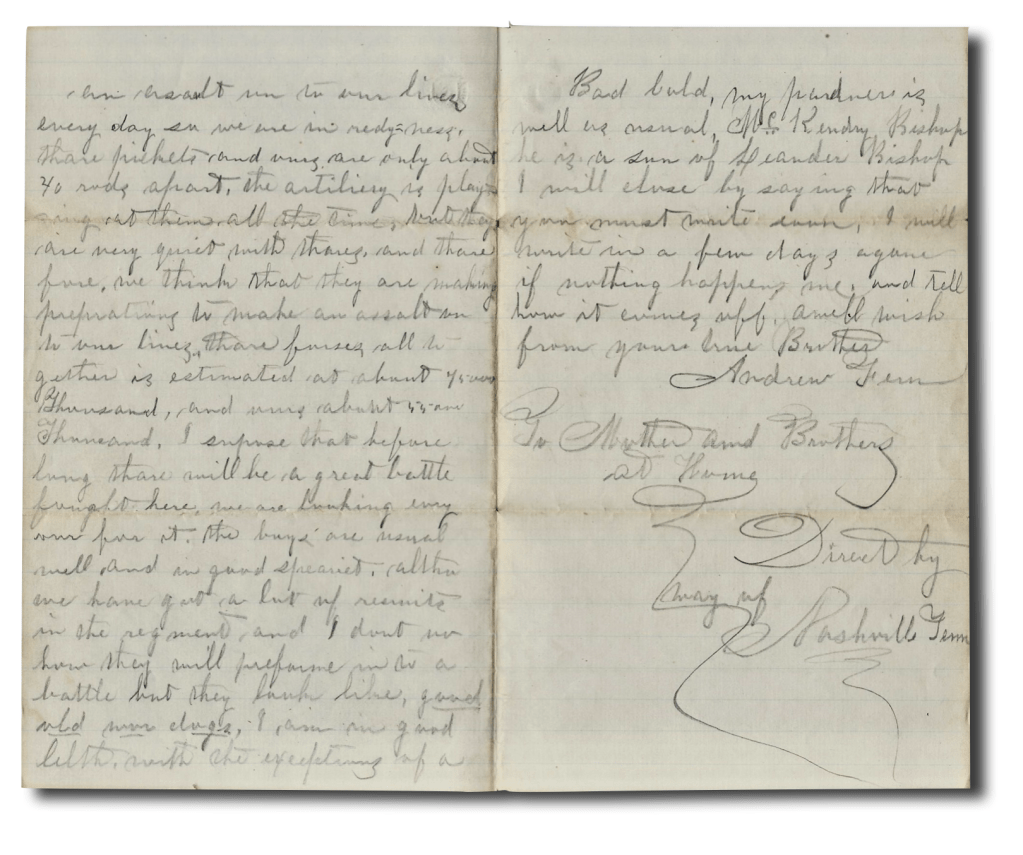
For nearly one week we have been working on two breastworks and we have got breastworks made all around the city. General Hood, Forrest, and General Bragg had had a fight with our General Thomas and have drove him into this place and Smith’s forces have been here and fortified and their intention is now to hold him here until we can get force enough to send in the rear of him. We expect that he will make an assault into our lines every day so we are in readiness. Their pickets and ours are only about 40 rods [220 yards] apart. The artillery is playing at them all the time but they are very quiet with theirs and their force, we think that they are making preparations to make an assault onto our lines. Their forces altogether is estimated at about 75,000 and ours about 55,000.
I suppose that before long there will be a great battle fought here. We are looking every hour for it. The boys are usual well and in good spirits, although we have got a lot of recruits in the regiment and I don’t know how they will perform into a battle but they look like good old war dogs.
I am in good health with the exception of a bad cold. My partner is well as usual, McKendry Bishop—he is a son of Leander Bishop. I will close by saying that you must write soon. I will write in a few days again if nothing happens to me and tell [you] how it comes off.
A well wish from your true brother, — Andrew Fern
To Mother and Brothers at Home. Direct by way of Nashville, Tenn.
I can’t be certain of the identity of the author of this letter. Only because I recently transcribed a letter by Robert Hill of Osweatchie, New York, who served in the 106th New York do I have a hunch that it may have been written by:
MILLS, FREDERICK H.—Age, 21 years. Enlisted, August 7, 1862, at Oswegatchie, to serve three years; mustered in as corporal, Co. C, August 27, 1S62; mustered out with company, June 22, 1865, near Washington, D. C.
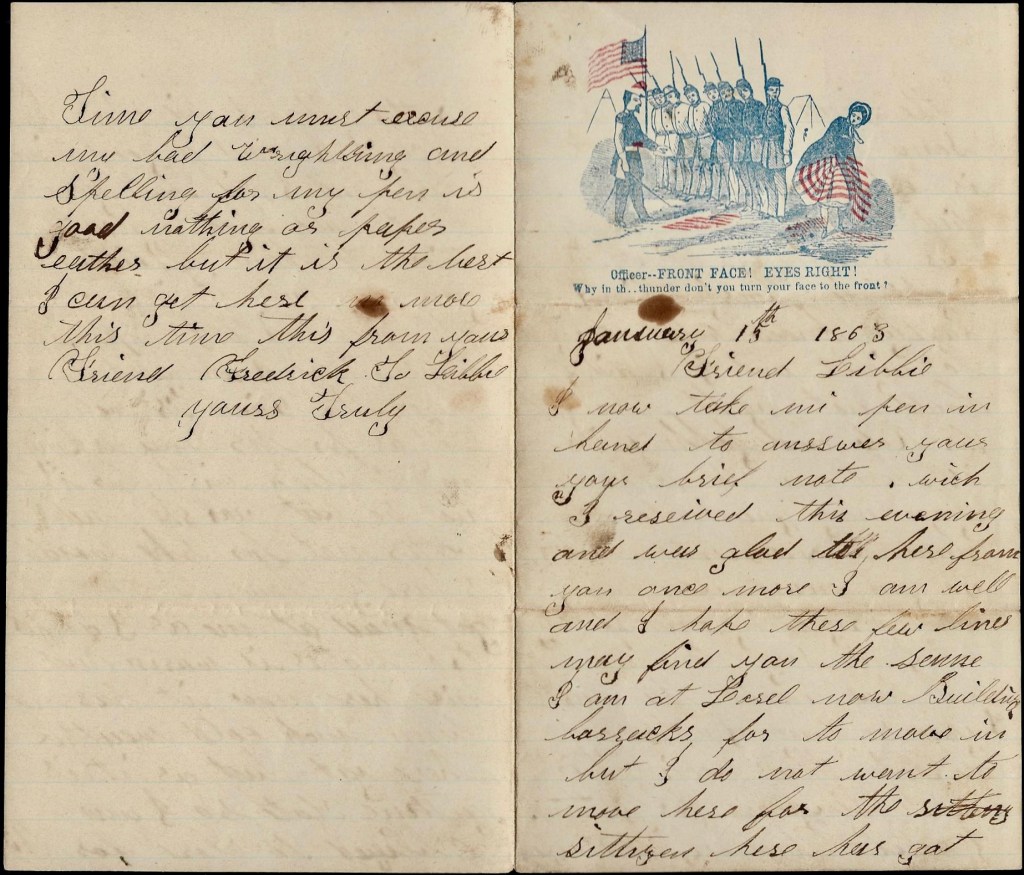
Transcription
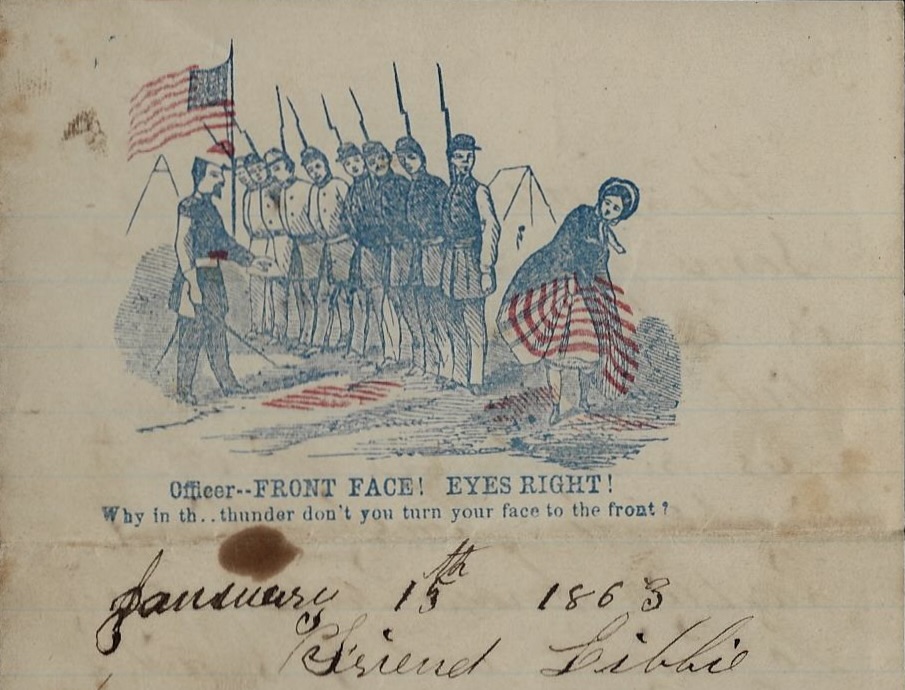
January 15, 1863
Friend Libbie.
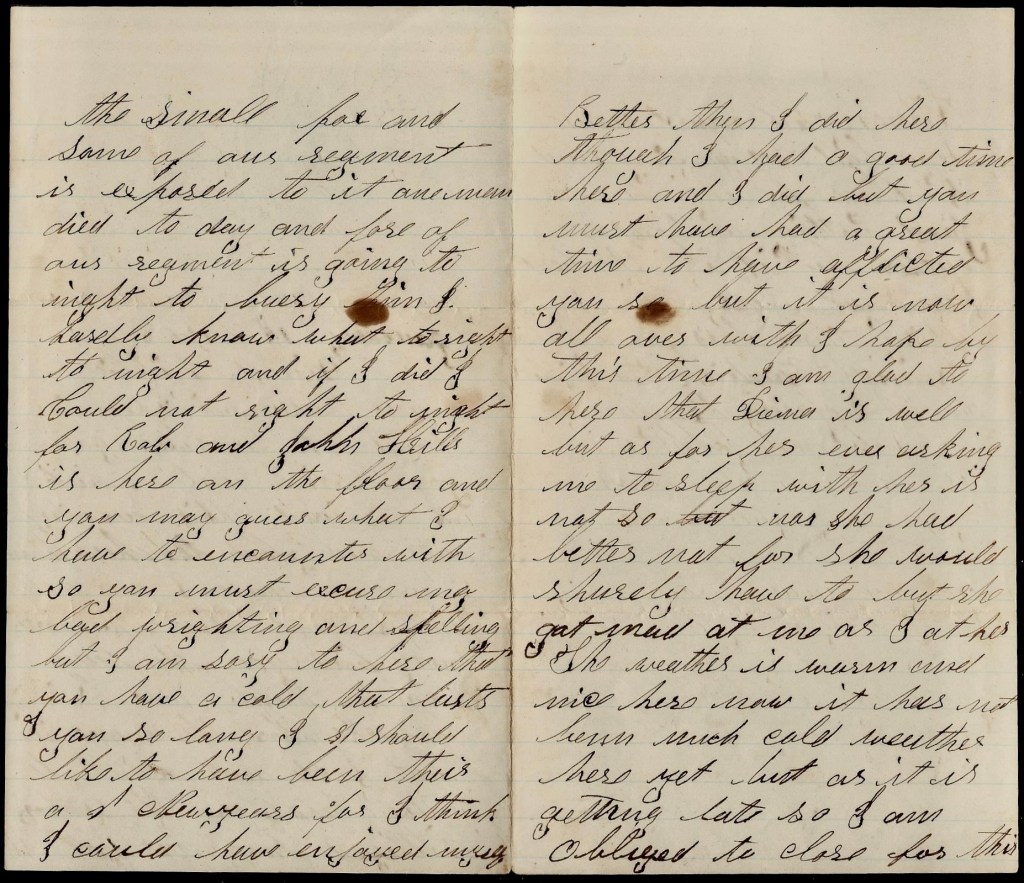
I now take my pen in hand to answer your brief note which I received this evening and was glad to hear from you once more. I am well and I hope these few lines may find you the same. I am at Larel [?] now building barracks for to move in but I do not want to move here for the citizens here has got the small pox and some of our regiment is exposed to it. One man died today and four of our regiment is going tonight to bury him.
I hardly know what to write tonight and if I did, I could not write tonight for Rob and John Hills is here on the floor and you may guess what I have to encounter with so you must excuse my bad spelling. But I am sorry to hear that you have a cold that lasts you so long.
I should like to have been there at New Years for I think I could have enjoyed myself better than I did here though I had a good time here, but you must have had a great time to have afflicted you so. But it is now all over with I hope by this time. I am glad to hear that Diana is well but as for her ever asking me to sleep with her, it’s not so. nor she had better not for she would surely have to. But she got mad at me as I got at her.
The weather is warm and nice here now. It has not been much cold weather here yet but as it is getting late, so I am obliged to close for the time. You must excuse my bad writing and spelling for my pen is good [for] nothing or paper either, but it is the best I can get here.
No more this time. This from your friend Frederick
The following letters were written by Abel Starkey (1816-1864) of Boston who enlisted on 13 June 1861 as a private in Co. F, 11th Massachusetts Infantry—one of only three Massachusetts regiments to participate in the First Battle of Bull Run. The regiment spent the early fall of 1861 helping to build fortifications around Washington. In October, the 11th was stationed at Budd’s Ferry in Indian Head, Maryland where they remained on picket duty for the winter of 1861–1862. The 11th Massachusetts Infantry saw its first combat during the Peninsular Campaign in the spring of 1862. They were heavily engaged during the Second Battle of Bull Run, participated in the Battle of Fredericksburg, and suffered severe casualties at the Battle of Chancellorsville and the Battle of Gettysburg.
Presumably Abel was with his regiments throughout these engagements and was with them as well when the regiment marched into the Wilderness in May 1864 in Hancock’s Second Corps where they were engaged heavily on the Plank Road on 5 and 6 May 1864. It was Abel’s last fight. He died of wounds on 7 May 1864.
Abel wrote these letters to his older brother, Horace Starkey (1814-1872), a farmer near Rockford, Winnebago county, Illinois.
Other letters I’ve transcribed by members of the 11th Massachusetts:
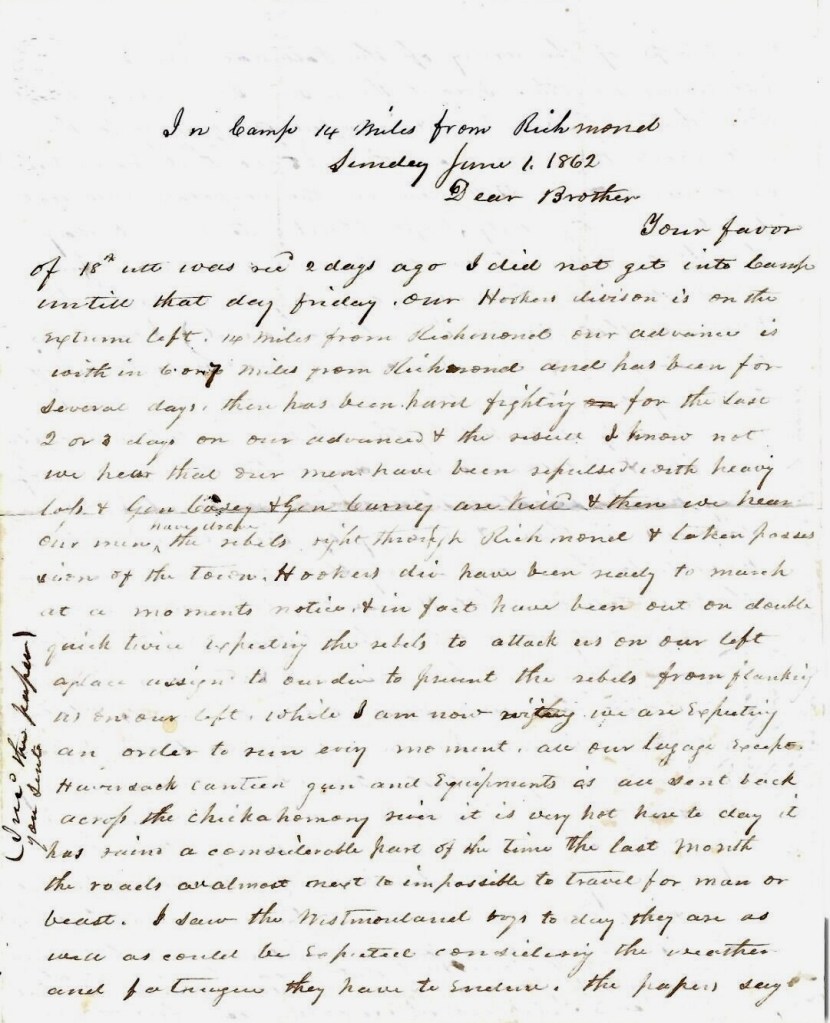
In Camp 14 miles from Richmond Sunday, June 1, 1862
Dear Brother,
Your favor of the 18th instant was received 2 days ago. I did not get into camp until that day Friday. Our (Hooker’s) division is on the extreme left, 14 miles from Richmond. Our advance is within 6 or 7 miles from Richmond and has been for several days. There has been hard fighting for the last 2 or 3 days on our advance & the result I know not. We hear that our men have been repulsed with heavy losses & Gen. Casey & Gen. Carney are killed. And then we [also] hear our men drove the Rebels right through Richmond & taken possession of the town. Hooker’s Division have been ready to march at a moments notice & in fact have been out on double quick twice expecting the Rebels to attack us on our left—a place assigned to our division to prevent the Rebels from flanking us on our left. While I am now writing, we are expecting an order to run any moment.
All our luggage, except haversack, canteen, gun and equipments, is all sent back across the Chickahominy river. It is very hot here today. It has been raining a considerable part of the time the last month. The roads are almost next to impossible to travel for man or beast. I saw the Westmoreland boys today. They are as well as could be expected considering the weather and fatigue they have to Endure. The papers say our troops of the Army of the Potomac are in excellent health. I don’t think so—to say nothing about those that have been killed or wounded on our right last week. There is more than 25,000 that have been sent home or are still in the hospitals and not fit to do any duty. Capt. Barker told me today that the 2d New Hampshire Regiment could not muster over five hundred men that were able to go into battle (He told me that Abijah French was dead).
I came in the rear from Williamsburg and was 11 days coming. Took my own time. The houses on the main road were mostly deserted by the white population excepting families & seldom I saw any of them and nearly every house vacated. There were more or less sick soldiers in them & many of them turned into hospitals.
There was nearly three thousand sick in the hospitals at White House landing and more arriving daily and taking the steamboat for Fortress Monroe, Baltimore, Philadelphia, New York &c. News has just come in that we had drove the Rebels & taken lots of prisoners. I have not heard from home since I wrote you last. Two or three letters came in my absence & were sent back to White House Landing in our Captain’s trunk. I am well & hearty. Tell [your daughter] Ella I am very much obliged to her for the letter she sent me & tell her to write again. Tell her also that Jeff Davis was not quite patriotic to hang himself. Stanton’s Michigan Regt. encamped near us at Yorktown. They are away in the advance now. I will see Lewis Webster when we come near them again. Give my regards to your family and write again. Respectfully yours—Abel Starkey.
We are Off.
Letter 2
Addressed to Mr. Horace Starkey, Rockford, Illinois
Camp Fair Oaks 6 Miles below Richmond June 21, 1862
Dear Brother,
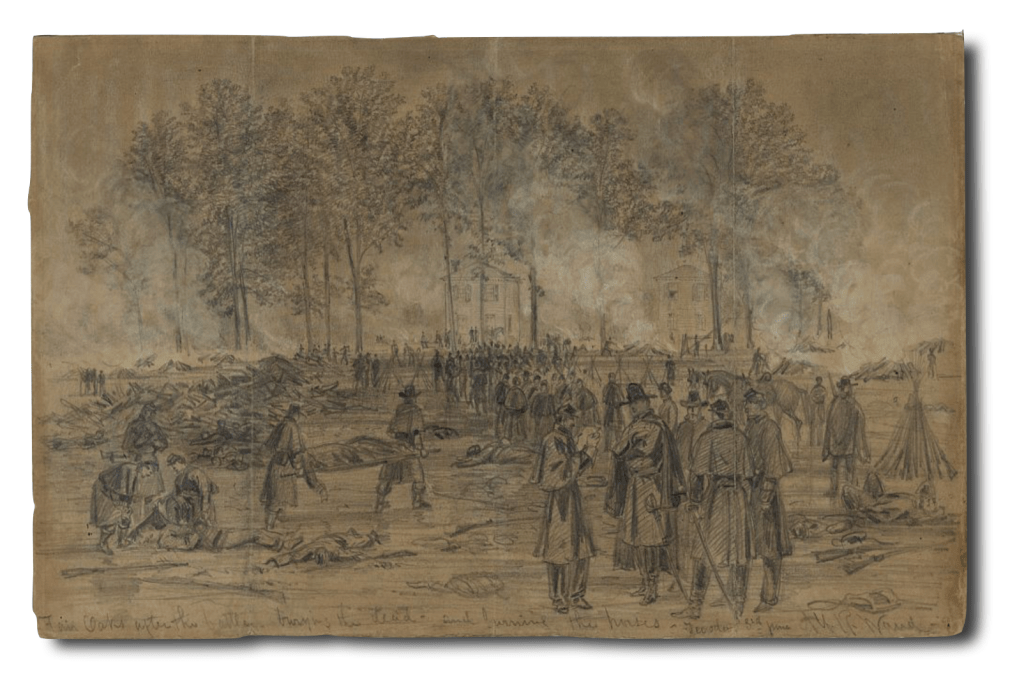
The Grand Army of the Potomac are spread out from James River to Chickahominy River & how much further I do not know, but quite a distance. Hooker’s Division is encamped on the same ground that Casey’s was at the time the battle was fought 3 weeks ago. When we came here, the ground was covered with dead men and horses, broken gun carriages, muskets, accoutrements, &c. It was 4 days after the battle. The men and horses were perfectly alive with maggots. It would make a well man spew to look at them and then the smell was enough to knock a whole regiment end ways. We covered the men over with dirt as well as we could & piled wood on the horses & burnt them. The air begins to seem fit to breathe again.
Burying the dead and burning the horses on the battlefield of Fair Oaks
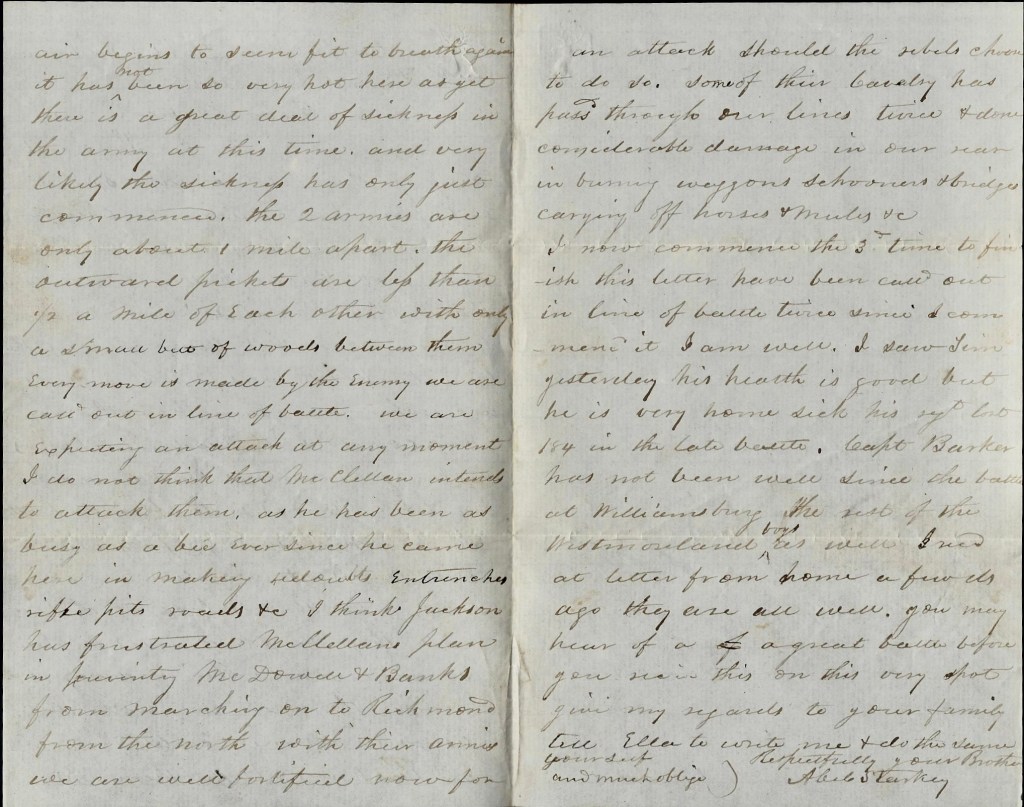
It has not been so very hot here as yet. There is a great deal of sickness in the army at this time and very likely the sickness has only just commenced. The two armies are only about 1 mile apart. The outward pickets are less than half a mile of each other with only a small bit of woods between them. Every move [that] is made by the enemy, we are called out in line of battle. We are expecting an attack at any moment. I do not think that McClellan intends to attack them as he has been as busy as a bee ever since he came here in making redoubts, entrenches, rifle pits, roads, &c. I think [Stonewall] Jackson has frustrated McClellan’s plan in preventing McDowell and Banks from marching on to Richmond from the North with their armies.
We are well fortified now for an attack should the rebels choose to do so. Some of their cavalry has passed through our lines twice and done considerable damage in our rear in burning wagons, schooners, & bridges, carrying off horses and mules, &c.
I now commence the 3rd time to finish this letter. Have been called out in line of battle since I commenced it. I am well. I saw Tim yesterday. His health is good but he is very homesick. His regiment lost 184 in the late battle. Capt. Barker has not been well since the battle at Williamsburg. The rest of the Westmoreland boys are well. I received a letter from home a few days ago. They are all well. You may hear of a great battle before you receive this on this very spot. Give my regards to your family. Tell Ella to write me & do the same yourself and much oblige. Respectfully your brother, — Abel Starkey
The following letter was written by Warren B. Ewing (1825-1876) a jeweler in Shelbyville, Shelby county, Kentucky. Born in Bourbon county, Ewing arrived in Shelbyville as a young man in the early 1840s to live and work with his brother-in-law James S. Sharrard. “Those who knew him well wrote of his refined nature, his musical talent, and his love of hunting and fishing.” In 1859-60, Ewing advertised as a goldsmith and silversmith, documenting is business of close to 20 years. Toward the end of his life, he lived in a furnished room in the rear of a hardware store on Main Street on the west side of the public square. He died a pauper on March 17, 1876, and was buried in an unmarked grave on the Atkisson lot at Grove Hill Cemetery, Shelbyville. Warren’s sister, Emeline, was the wife of James S. Sharrard who lived, by 1862, in Henderson, Kentucky.
Warren’s letter speaks of the first raid that Confederate raider John Hunt Morgan made into Kentucky in July 1862. With some 900 men, Morgan “swept in a wide arc through the state, during which he raided 17 towns, reportedly captured and paroled more than 1,200 Union troops, acquired several hundred horses, and destroyed huge amounts of Federal supplies. Morgan unnerved Kentucky’s Union military government, and President Abraham Lincoln received so many frantic appeals for help that he commented that ‘they are having a stampede in Kentucky.'” Though he was feared to be targeting Shelbyville, Kentucky, Morgan’s men rode into Paris instead and helped themselves to Federal supplies stored there and destroyed the rest. After Paris, Morgan stayed in the state just long enough to capture Winchester and Richmond.
Warren wrote the letter to 23 year-old Victoria (“Vic”) Ely (1839-1922), the daughter of William Masterson Ely (1808-1868) and Charlotte Robertson (1810-1881) of Milton, Trimble county, Kentucky. Warren’s relationship with her is unknown; perhaps she was a prior student at the Shelbyville Female College.
[Note: This letter is from the personal collection of Josh Branham and was transcribed and published on Spared & Shared by express consent.]
Transcription
Addressed to Miss Vic Ely, Milton, Kentucky
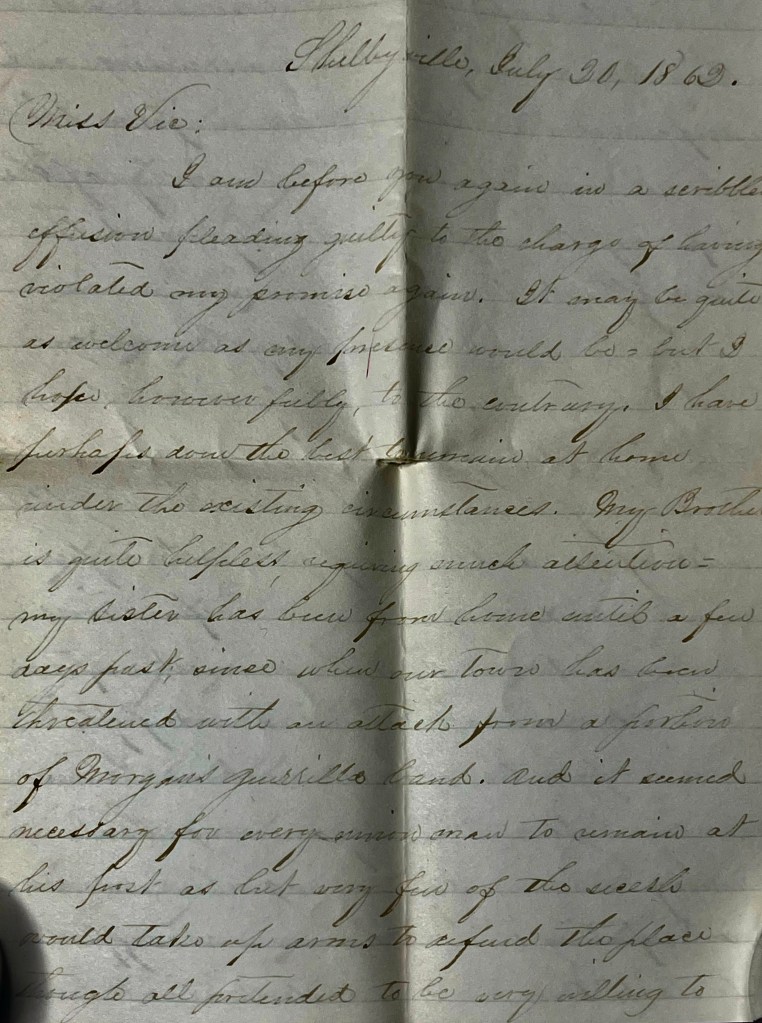
Shelbyville [Kentucky] July 20, 1862
Miss Vic,
I am before you again in a scribble effusion pleading guilty to the charge of leaving violated my promise again. It may be quite as welcome as any pretense would be but I hope, however feebly, to the contrary. I have perhaps done the best to remain at home under the existing circumstances. My brother is quite helpless, requiring much attention. My sister has been from home until a few days past since which out town has been threatened with an attack from a portion of Morgan’s guerrilla band and it seemed necessary for every Union man to remain at his post as but very few of the secesh would take up arms to defend the place though all pretended to be very willing to do so. Some of them with but their shotguns fell into the ranks and remained firm until there was no further use for their remaining under arms, and are entitled to confidence. But those who lent their aid and influence to demoralizing and dispersing the aids who came in from the neighboring villages are not worthy of the respect of the negroes whom they regard the bone of contention.
The news reached us Sunday morning that Morgan was within thirty miles of us, threatening Frankfort, Lexington, and Shelbyville. A portion of his command were within eighteen miles of us and had a fight with a few home guards near Camden. Preparations were made to give them the warmest reception we could, receiving one hundred and fifty recruits from the villages around us between Sunday night and Monday morning. That no enemy came Monday morning when we were anticipating them, the men were suffered to stack their arms and stroll about town and the consequence was that many got drunk and were so demoralized when a breathless (almost_ courier came late in the afternoon with the news that twelve hundred cavalry were within six miles of and marching on Shelbyville, that they could not be managed. Several rumors followed soon after bringing the same tidings—men, too, who had been considered reliable.
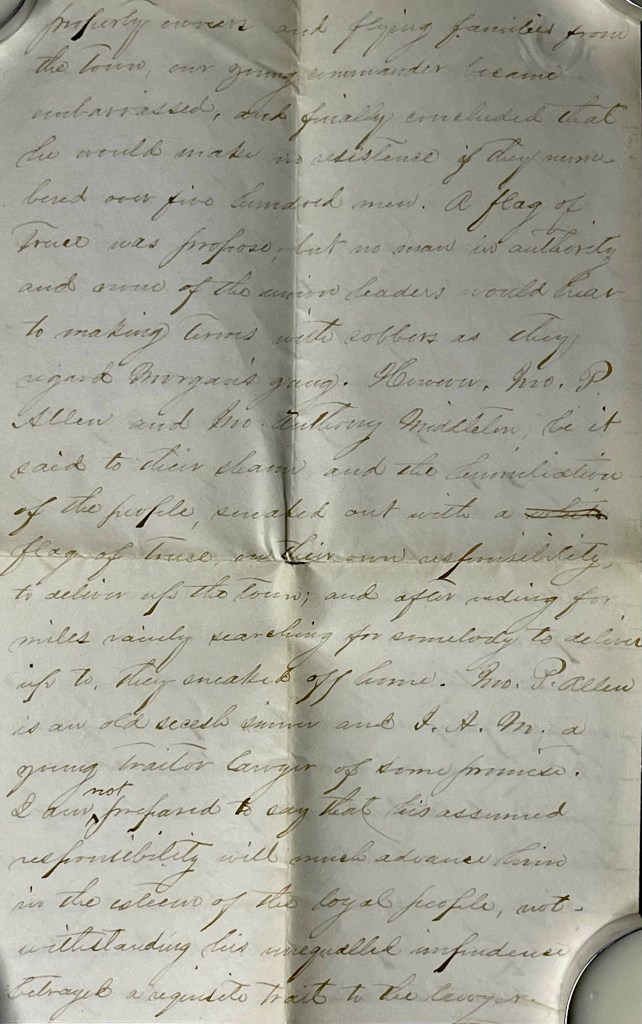
A general stampede of the hundreds of the country people who had been flocking in all day commenced. Sheer panic stricken Union men and [ ] secesh such property holders gathered about our commander imploring him to lay down his arms and save the town from destruction by an over-powerful foe. Next two companies from Mount Eden and Harrisville made a grand skedaddle, some of them leaving their arms and taking to the field and woods, leaving only our home guard and a small band from Simpsonville to meet the Allens and their Cossacks. Amid the prayers of the property owners and flying families from the town, our young commander became embarrassed and finally concluded that he would make no resistance if they numbered over five hundred men.
A flag of truce was proposed but no man in authority and none of the Union leaders would bear to making terms with robbers as they regard Morgan’s gang. However, Jno. P. Allen 1 and Jno. Anthony Middleton, 2 be it said to their shame and the humiliation of the people, sneaked out with a flag of truce on their own responsibility to deliver up the town, and after riding for miles vainly searching for somebody to deliver up to, they sneaked off home. Jno. P. Allen is an old secesh sinner and J. A. M[iddleton], a young traitor lawyer of some promise. I am not prepared to say that his assumed responsibility will much advance him in the esteem of the loyal people, notwithstanding his unequalled impudence & betrayal—a requisite trait to the lawyer.
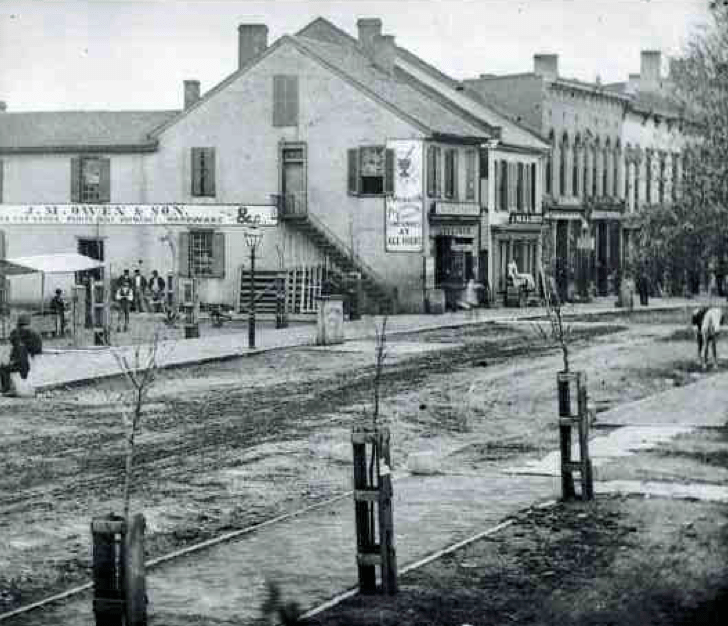
Shelbyville, Kentucky
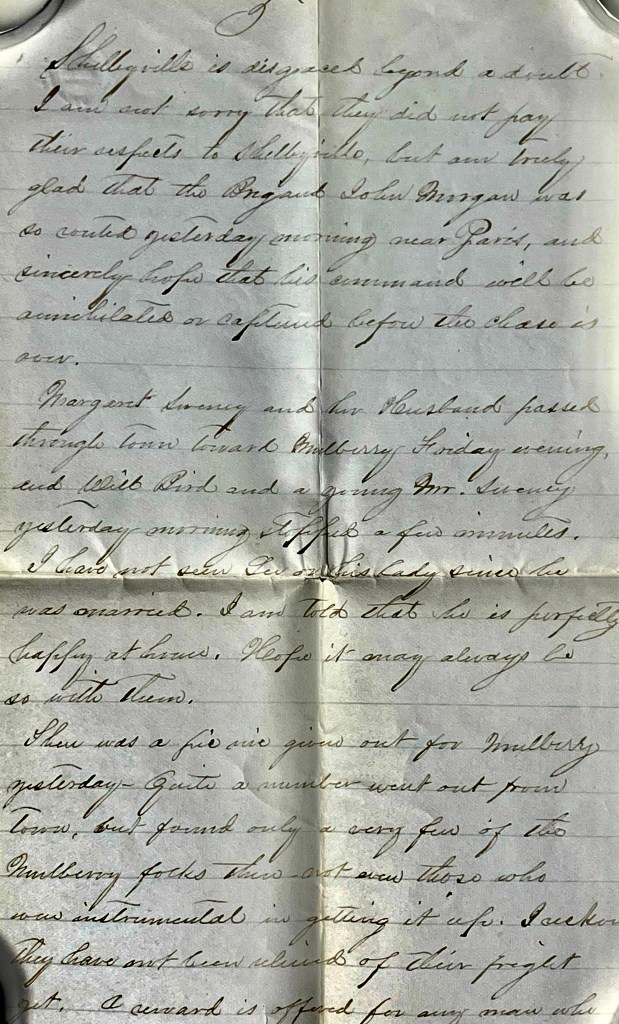
Shelbyville is disgraced beyond a doubt. I am not sorry that they did not pay their respects to Shelbyville, but am truly glad that the brigand John Morgan was so routed yesterday morning near Paris and sincerely hope that his command will be annihilated or captured before the chase is over.
Margaret Sorency and her husband passed through town toward Mulberry Friday evening and Will Bird and a young Mr. Sorency yesterday morning stopped a few minutes. I have not seen [ ] or his lady since he was married. I am told that he is perfectly happy at house. Hope it may always be so with them.
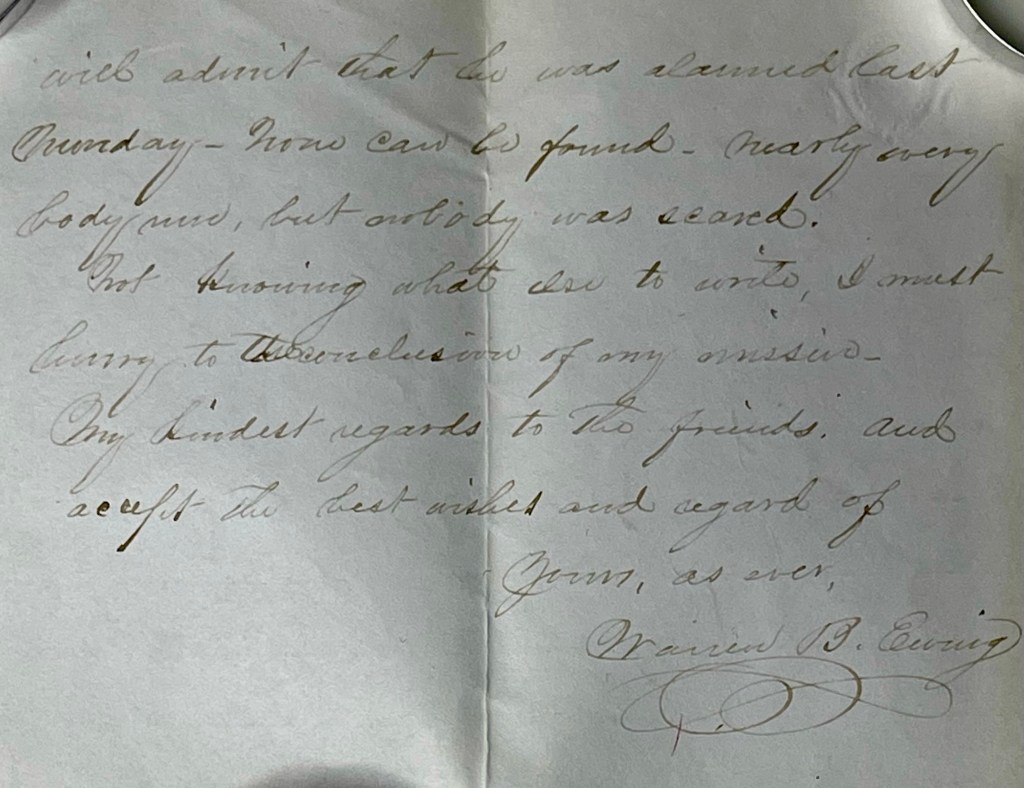
There was a picnic given out for Mulberry yesterday. Quite a number went out from town but found only a very few of the Mulberry folks there—not even those who was instrumental in getting it up. I reckon they have not been relieved of their fright yet. A reward is offered for any man who will admit that he was alarmed last Monday. None can be found—nearly everybody run, but nobody was scared.
Not knowing what else to write, I must hurry to the conclusion of my missive. My kindest regards to the friends and accept the best wishes and regard of yours, as ever, — Warren B. Ewing
1 Presumably John Polk Allen (1810-1887) of Shelbyville, Shelby county, Kentucky. In the 1860 US Census he was identified as a farmer with a Simpsonville Post office address.
2 John Anthony Middleton (1838-1883) was the son of David Fulton Middleton (1796-1878) and Elizabeth Yerkes Beattie (1805-1859) of Shelbyville, Kentucky.
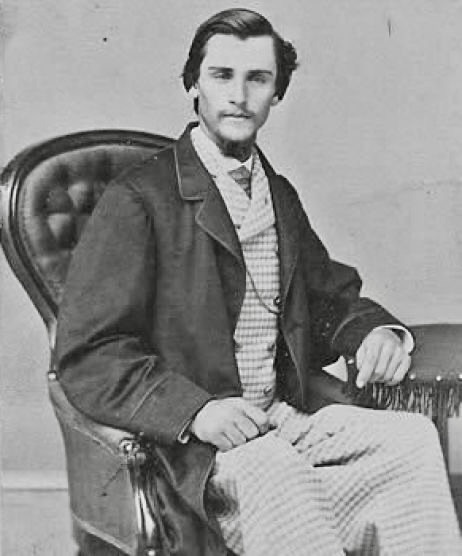
I could not find an image of Foster but here is Pvt. Allen Curtis Smith who also served in Co. I, 1st Mounted Rifles
The following letters were written by Foster C. Carl (1845-1920), the son of William C. Carl (1796-1882) and Mary Bennett (1807-1884) of Putnam county, New York. Foster enlisted in 1862 in Co I, First Regiment of New York Mounted Rifles, and served until the close of the war, when he was honorably discharged. He was only 17 years of age when he enlisted, and the consent of his parents was obtained by Capt. George H. Dean, who commanded the company and recruited it. He was a strong, healthy young man when he entered the service, and was a good soldier, always ready for duty, and never flinched. This is shown by the testimony of his captain.
He was taken sick about April 8 or 9, 1865, at Summerton, N. C., and was carried in an ambulance to the hospital at Petersburg, Va. After a few days he returned to his regiment and went from there to Fredericksburg, Va., but was not able to do any duty. He was granted a sick leave for thirty-five days, and was taken down with malignant typhoid fever, and was confined to his bed until March, 1866. He was attended by physicians whose affidavits are on file. This sickness resulted in a permanent disease of the head and air passages and throat and bronchial tubes. Matter was discharged from the ears, and the throat continually filled with phlegm. It resulted in a permanent disability in the nature of a catarrhal trouble, and a disease of the throat and general debility. The soldier seems to have suffered from a malarial poisoning, and is in a general feverish condition. The hearing and eyesight of the soldier is now seriously affected, and he suffers constantly from the same trouble of a catarrhal nature and is emaciated and physically unable to do but little work. At the time he was taken down with the sicknesses referred to he had been in the saddle with his command for 15 consecutive days. He was discharged from the service on 15 June 1865.
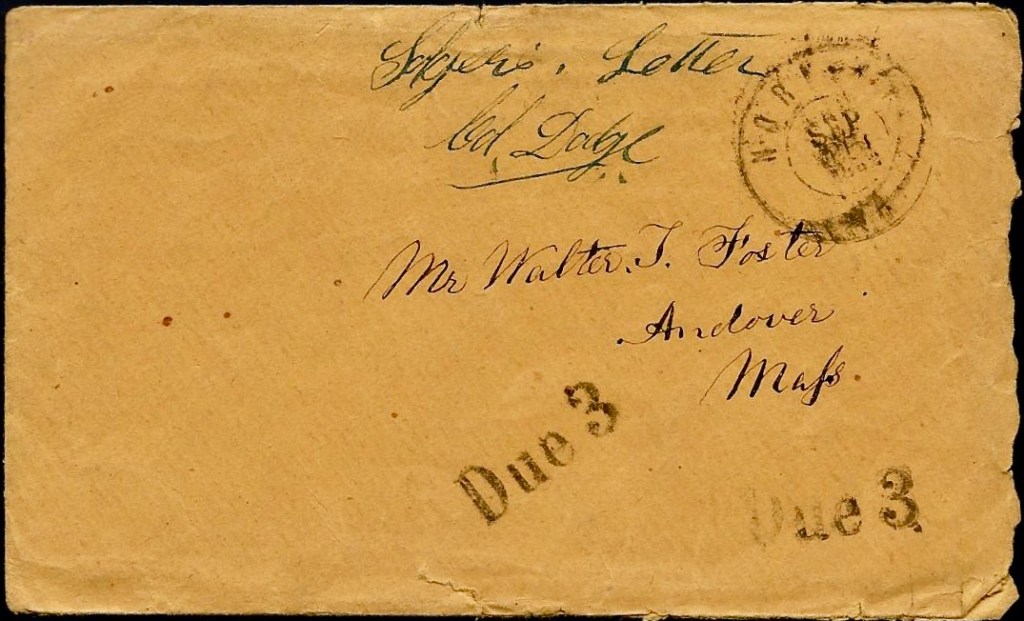
Foster wrote the letter to his half-brother, Walter Tilly Foster, the son of Tilly Foster (1793-1842) and Mary Bennett.
Camp Dodge at Suffolk, Virginia, 1862
Letter 1
Addressed to Mr. Walter T. Foster, Andover, Massachusetts
Camp Dodge [Suffolk, Virginia] September 24, [1862]
Dear Brother,
I wrote to you some time ago for some things & ain’t received the things nor letter yet. You must send them as soon as you can as I want them. There is nothing new in camp. We are preparing for a battle. I can’t write much. Capt. has come & I am taking care of his horses now & things in his tent. I feel quite at home since he came. Write soon & let me know the news. Send a paper.
From your affectionate brother, — Foster C. Carl
I just received a letter from home. They are all well.
Letter 2
Camp Suffolk, Suffolk [Va.] November 13th 1862
Dear Brother,
I received yours of the 9th inst. and hope you will obey Capt.’s wants. He says if you will come down, he will have six horses hitched up to receive you. You must act to the best of your judgment about it. I should like to see you very much, but it costs like thunder to travel now-a-days—at least I think so.
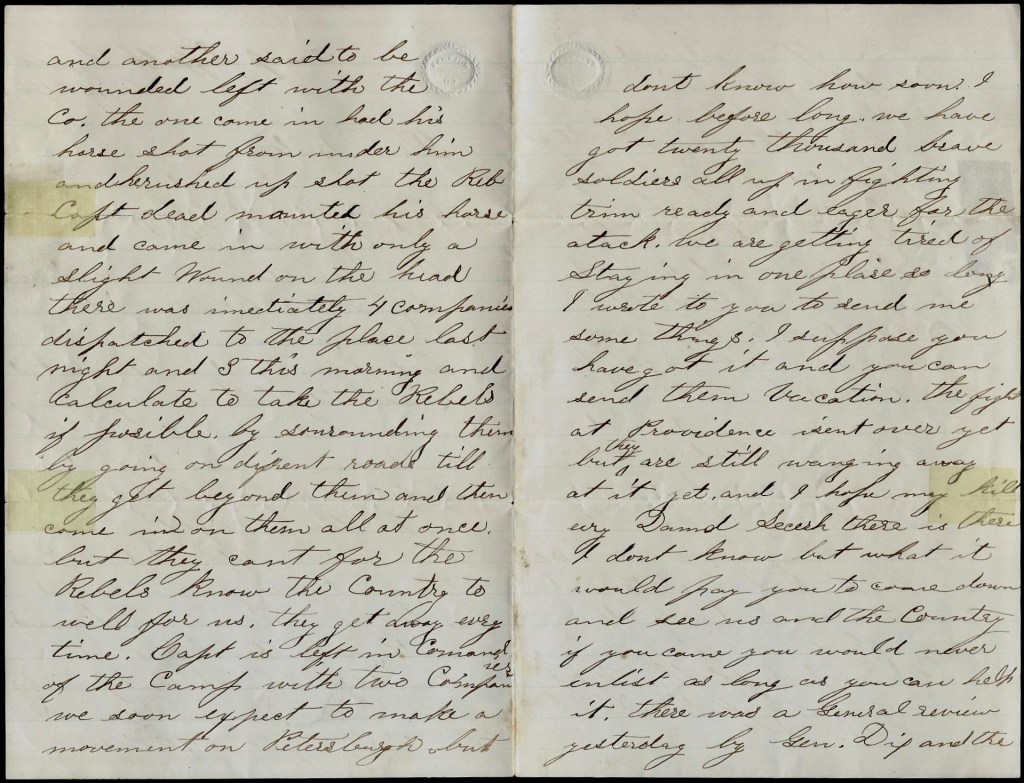
We shall soon see each other as Fighting Joe and Burnside are determined to push things right along now. Capt. [David C.] Ellis of Co. H had a skirmish with some rebels out at Providence Church about 7 miles. There was one wounded came in last night at 12 o’clock and another said to be wounded left with the company. The one that came in had his horse shot from under him and he rushed up, shot the Reb captain dead, mounted his [the Reb’s] horse, and came in with only a slight wound on the head. There was immediately four companies dispatched to the place last night and three this morning and calculate to take the Rebels if possible by surrounding them by going on different roads till they get beyond them and then come in on them all at once. But they can’t, for the Rebels know the country too well for us. They get away every time.
Capt. is left in command of the camp with two companies. we soon expect to make a movement to Petersburg but don’t know how soon. I hope before long. We have got twenty thousand brave soldiers all up in fighting trim, ready and eager for the attack. We are getting tired of staying in one place so long.
I wrote to you to send me some things. I suppose you have got it and you can send them.
The fight at Providence isn’t over yet but they are still wanging away at it yet and I hope may kill every damned Secesh there is there. I don’t know but what it would pay you to come down and see us and the country. If you come, you would never enlist as long as you can help it. There was a General Review yesterday by Gen. Dix and the men & officers appeared splendid on the review. Our regiment is still ahead of the others & the General & Staff complimented us very highly on the occasion.
We have a chaplain here now. Ned Buntlin is here. He is 4th duty sergeant. I guess you might as well see the country South now as ever. It is a solemn sight to see the deserted houses covered with turkey buzzards and wild animals in abundance such as the bear, dear, and possums. I expect still it will soon be pay day amongst us here. I can’t think of much to write. Answer soon and come down. — F. C. C.
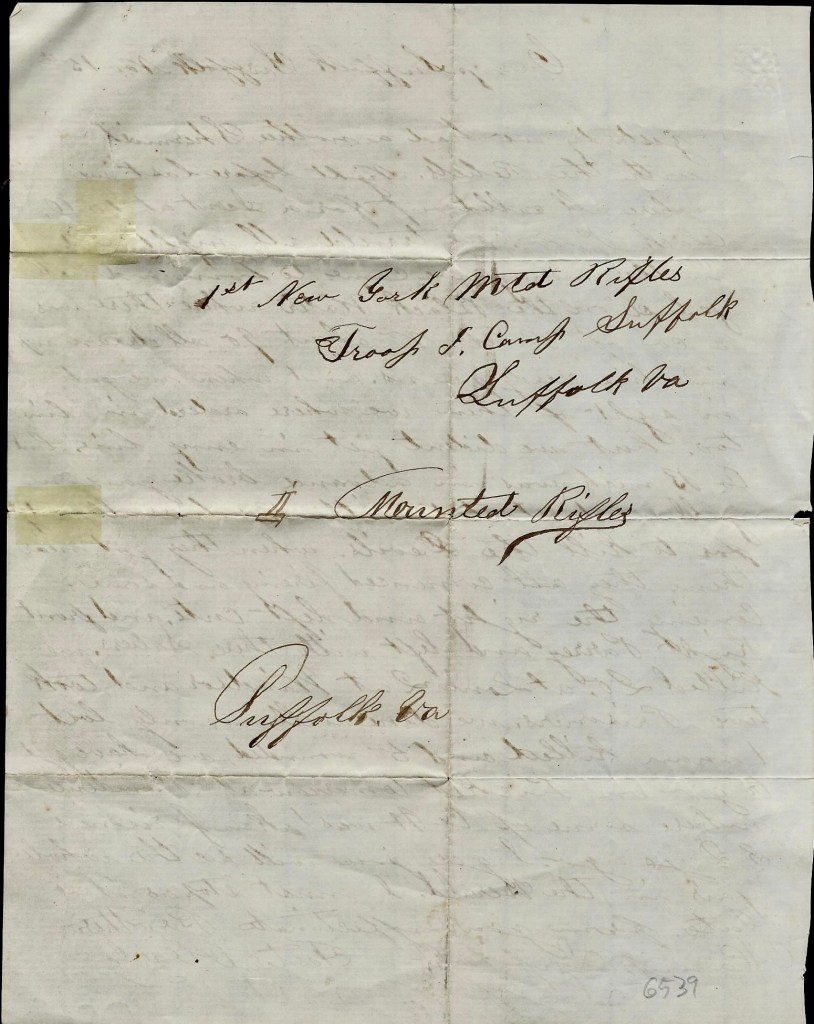
1st N. Y. Mounted Rifles, Co. I, Camp Suffolk, Suffolk, Va.
Write a good letter.
Letter 3
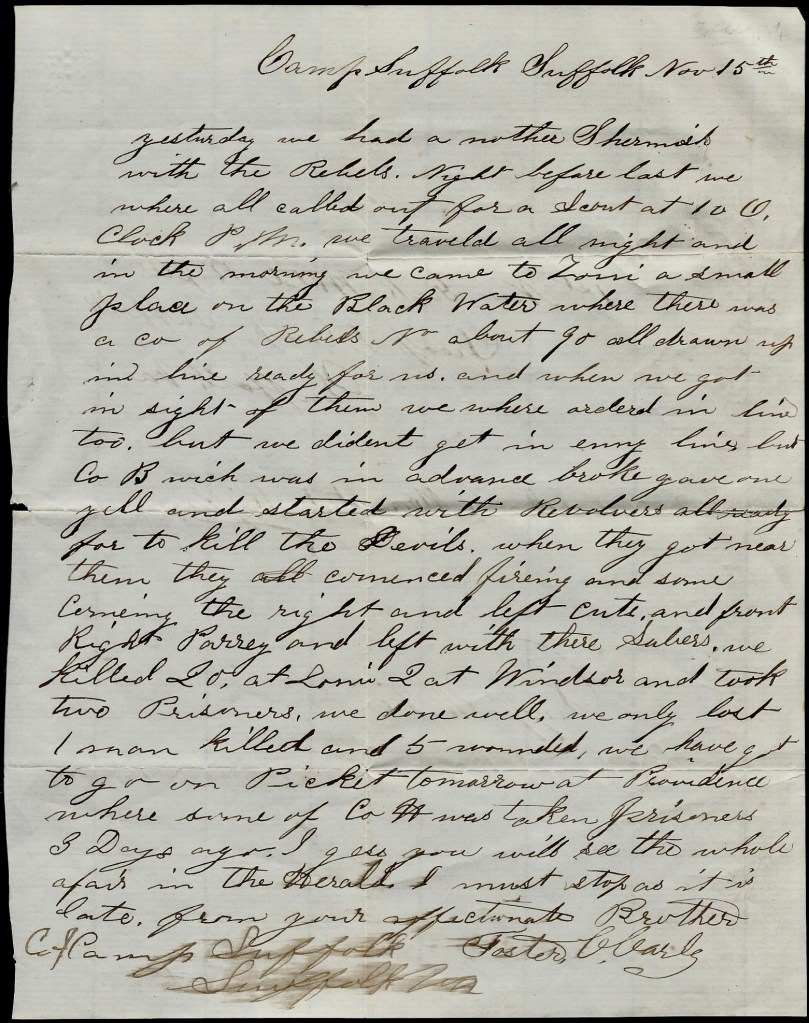
Camp Suffolk, Suffolk [Va.] November 15 [1862]
Yesterday we had another skirmish with the Rebels. Night before last we were all called out for a scout at 10 o’clock p.m. We traveled all night and in the morning we came to Zuni—a small place on the Black Water where there was a company of Rebels, numbering about 90, all drawn up in line ready for us and when we got in sight of them, we were ordered in line too. But we didn’t get in any lines but Co. B which was in advance broke, gave one yell and started with revolvers all ready for to kill the Devils. When they got near them, they commenced firing and some coming the right and left cuts, and front right Parry and left with their sabers. We killed 20 at Zuni, 2 at Windsor, and took two prisoners. We done well. We only lost 1 man killed and 5 wounded.
We have to go on picket tomorrow at Providence where some of Co. H was taken prisoners 3 days ago. I guess you will see the whole affair in the Herald. I must stop as it is late. From your affectionate brother, — Foster C. Carl
Company I, Camp Suffolk, Suffolk, Va,
Letter 4
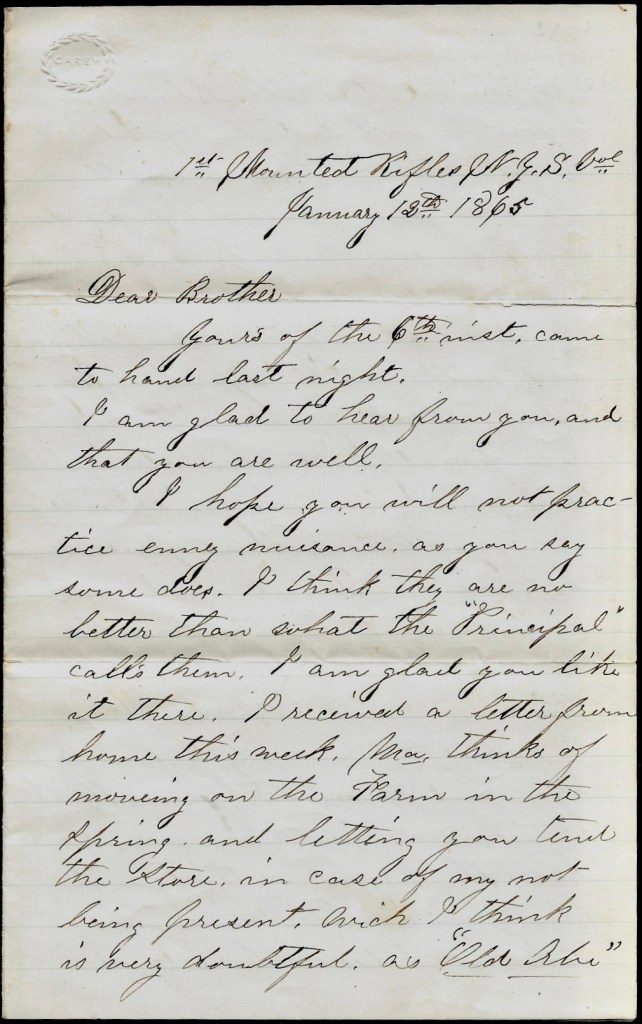
1st Mounted Rifles N. Y. S. Volunteers January 12th 1865
Dear Brother,
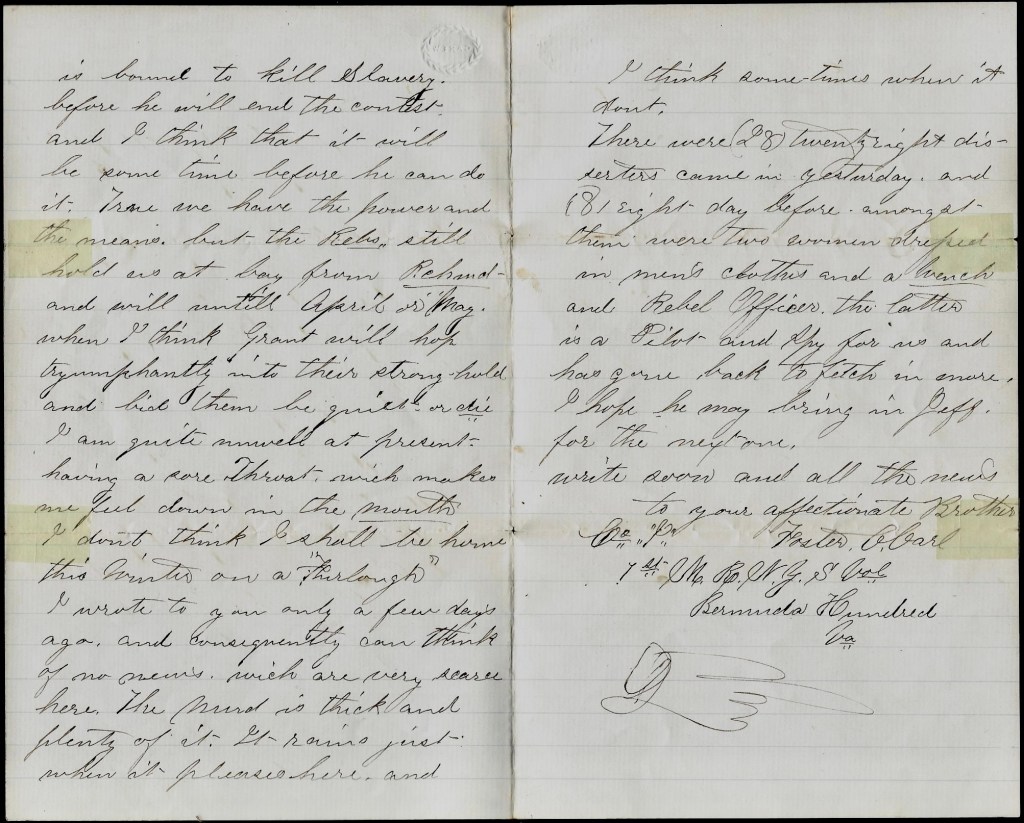
Yours of the 6th inst. came to hand last night. I am glad to hear from you and that you are well. I hope you will not practice any nuisance as you say some does. I think they are better than what the “Principal” calls them. I am glad you like it there. I received a letter from home this week. Ma thinks of moving on the farm in the Spring and letting you tend the store, in case of my not being present, which I think is very doubtful as “Old Abe” is bound to kill slavery before he will end the contest and I think that it will be some time before he can do it. True, we have the power and the means, but the Rebs still hold us at bay from Richmond and will until April or May when I think Grant will hop triumphantly into their stronghold and bid them be quiet or die.
I am quite unwell at present, having a sore throat which makes me feel down in the mouth. I don’t think I shall be home this winter on a “furlough.” I wrote to you only a few days ago and consequently can think of no news which are very scarce here. The mud is thick and plenty of it. It rains just when it pleases here and I think sometimes when it don’t.
There were 28 deserters came in yesterday and 8 day before. Amongst them were two women dressed in men’s clothes and a wench and Rebel officer. The latter is a pilot and spy for us and have gone back to fetch in more. I hope he may bring in Jeff for the next one.
Write soon and all the news to your affectionate brother, — Foster C. Carl
Co. I, 1st Mounted Regiment N. Y. Volunteers, Bermuda Hundred, Va.
I could not find an image of Henry but here is one of Joseph Browning who served in Co. H, 11th Missouri Infantry (Photo Sleuth)
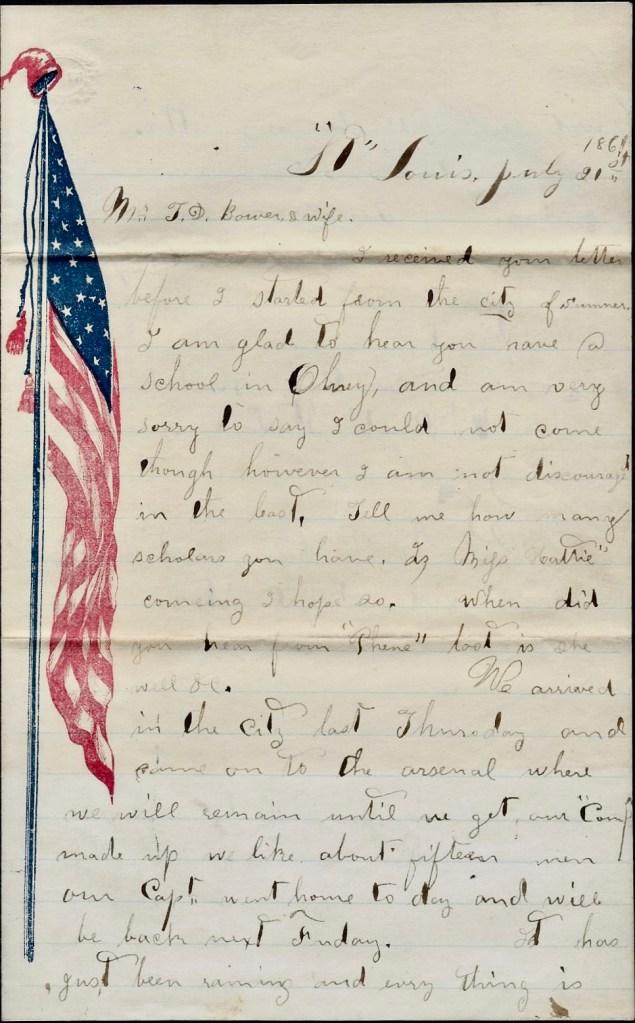
The following letter was written by Henry C. Applegate (1843-1938) of Sumner, Illinois, who enlisted as a corporal in Co. A, 11th Missouri Infantry, and was discharged as a Lieutenant, serving as the regimental quartermaster. He resigned his commission at Demopolis, Alabama, on 8 October 1865. William E. Panabaker (1822-1881), also of Sumner, Lawrence county, Illinois, served as the captain of Co. A, 11th Missouri. In his letter, Henry identified his regiment as the 7th Missouri but this was probably based on his assumption that the company would be incorporated into that regiment. The 11th Missouri wasn’t mustered into service until 16 August 1861. They were known as the “Missouri Rifles.”
Henry was the son of Joseph Coward William Applegate (1808-1885) and Zylphia Ann Potter (1811-1870) of Sumner, Lawrence county, Illinois.
Henry wrote the letter to Mr. & Mrs. T. D. Bower. My assumption is that Mr. Bower taught a select school or was a latin teacher.
Transcription
St. Louis, [Missouri] July 21, 1861
Mr. T. D. Bower & Wife,
I received your letter before I started from the city of Sumner. I am glad to hear you have a school in Olney and am very sorry to say I could not come through. However, I am not discouraged in the least. Tell me how many scholars you have. Is Miss Hattie coming? I hope so. When did you hear from “Phene” last? Is she well, &c.
We arrived in the city last Thursday and came on to the arsenal where we will remain until we get our company made up. We lack about fifteen men. Our Capt. went home [to Illinois] today and will be back next Friday.
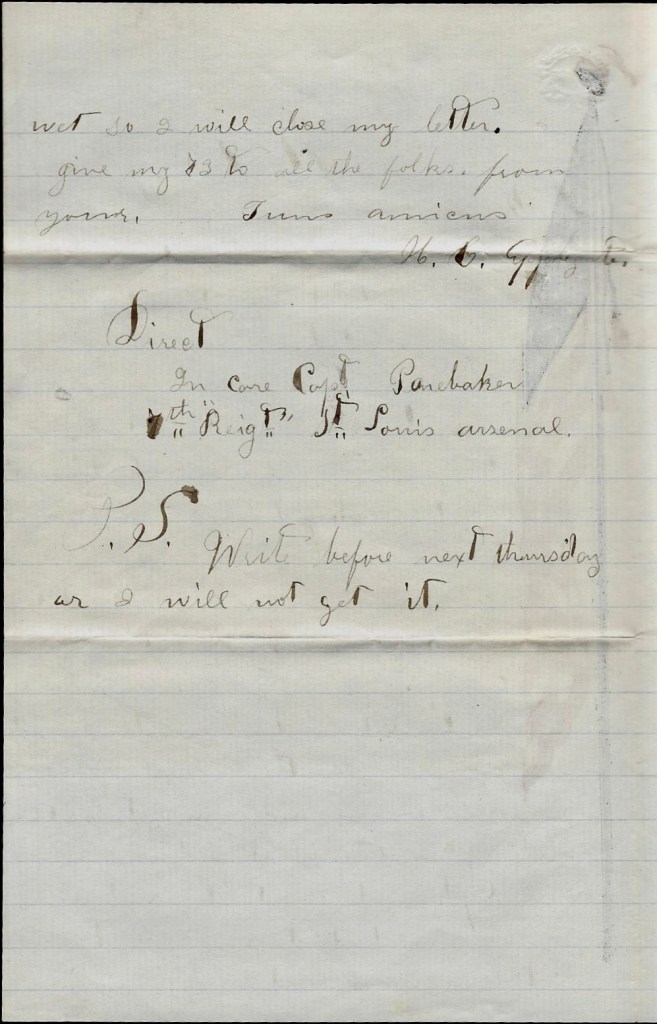
It has just been raining and everything is wet so I will close my letter. Give my [respects] to all the folks from your Tuus Amicus [Latin for “Your Friend”] — H. C. Applegate
Direct in care of Capt. [William E.] Panebaker, 7th Regt., St. Louis Arsenal
P. S. Write before next Thursday or I will not get it.
The following brief letter was penned by Edmond Simon Aubril (1813-1881), the French-born pastor of the Catholic Church in St. Augustine, Florida, to Louis Bell (1837-1900), Colonel of the 4th New Hampshire Infantry. In January 1862, a force led by Lt. Col. Bell undertook a Florida campaign during which it captured Fernandina, Jacksonville, and St. Augustine. On March 18, 1862, Bell was promoted to full colonel and became commander of the regiment. While commanding the regiment’s occupation of St. Augustine, General David Hunter had Bell arrested and relieved of his command for allegedly returning a fugitive slave to her owners. Following a half-hearted investigation, Bell was reinstated to his command in September 1862 without trial.
When St. Augustine was surrendered to Union forces without fighting in early 1862, the local citizenry gave every indication that they favored the Union occupation. But as time passed it became obvious to Bell that there were some citizens who continued to offer resistance. Perhaps to set an example for others, Bell had William Keyes and three of his neighbors arrested when they were caught harboring a Confederate sergeant in the city. All four were heavily ironed and sent to Northern prisons.
When the women of St. Augustine protested and voiced their opposition to the arrests of civilians, Bell issued an order on 7 May 1862, “declaring that certain women having conducted themselves in a manner grossly insulting to the United States forces, by assembling on the Plaza and openly proclaiming their disloyalty, thereafter it is ordered that ‘any woman who shall be guilty of any open and offensive exhibition of disloyalty shall be considered as having forfeited immunity from punishment by reason of her sex, and shall be held in strict arrest…” This order predated the one of a similar nature issued by the “Beast” Butler in New Orleans by at least a week. [See The Dover Enquirer, 29 May 1862]
The Catholic Church in St. Augustine, Florida
Transcription
Addressed to Col. L. Bell, USA, Commander at the Post of St. Augustine
St. Augustine [Florida] July 6th 1862
Col. Bell,
Sir, I learn from Mrs. Keyes that her husband is to be removed from St. Augustine in a few days to be taken to Hilton Head. This removal throws her in a grief which was already very great. My dear sir, I do implore your clemency in regard to that afflicted family—afflicted, I may say, on account of their kindness, Mr. Keyes was always respected and beloved by all who knew him on account of his benevolent and friendly disposition and industrious habits. By ameliorating his condition by returning him as soon as possible to his family—his helpless family—you will sir, you will cause a sensation throughout this community and far around which will bring about that friendship, that fraternity, so desirable amongst us and God which we ought to employ all the means in our power. I do think, as I say, the act of clemency of this kind on your part will have the effect which I wish most ardently towards which all our endeavors ought to center—the promotion of mutual friendship.
Happy I will be if I can contribute my little share in such a blessing. Hoping, dear sir, that you will take in consideration this expression of my feelings, I remain truly and respectfully yours, — Edm. Aubril
HEADQUARTERS DEPARTMENT OF THE SOUTH, Hilton Head, S. C., June 20, 1862.
Lieutenant Colonel LOUIS BELL, Commanding Post, Saint Augustine, Fla.:
SIR: In reply to your letter dated June 1, relative to the case of William Keyes and three other men who had taken the oath of allegiance, and who nevertheless were quilt of harboring a sergeant of the Confederate Army and supplying him with information, I am instructed by the major-general commanding to advise you that the prisoners in question are to be heavily ironed and sent to these headquarters, with a statement in writing, and as full as possible, of their offense. Your action in the case of Mr. Steubenmeyr, the Episcopal clergyman, is approved.
Col. Louis Bell, 4th New Hampshire
In reference to your letter dated May 29, relative to the hanging and persecution of loyal citizens by roving bands of Confederate guerrillas, the major-general commanding desires that you shall take the most rigorous and prompt measures for the suppression of such practices. All guerrillas caught you will iron heavily and send to these headquarters, with written charges accompanying them.
You will also threaten to arm, and if necessary arm, all negroes and Indians who may be willing to enter the service.
You should also at once drive out of your lines all persons, without reference to sex, who have not taken and shall refuse to take the oath of allegiance.
The general commanding, reposing much confidence in your judgment, gives you a large and liberal discretion in reference to all acts that may be necessary for the vindication of the laws within your district, and guarantees you a frank support in any acts within the limits of a reasonable discretion.
It is not his wish, however, that the death penalty should be inflicted on prisoners captured without -express orders from these headquarters. The better way will be to iron all malefactors and send them here for disposition tinder the necessary guard.
You will report frequently and fully all action taken by you under the terms of these instructions.
I have the honor to be, sir, very respectfully, your most obedient servant, CHAS. G. HALPINE, Major and Assistant Adjutant- General.



















 Spared & Shared 23