My passion is studying American history leading up to & including the Civil War. I particularly enjoy reading, transcribing & researching primary sources such as letters and diaries.
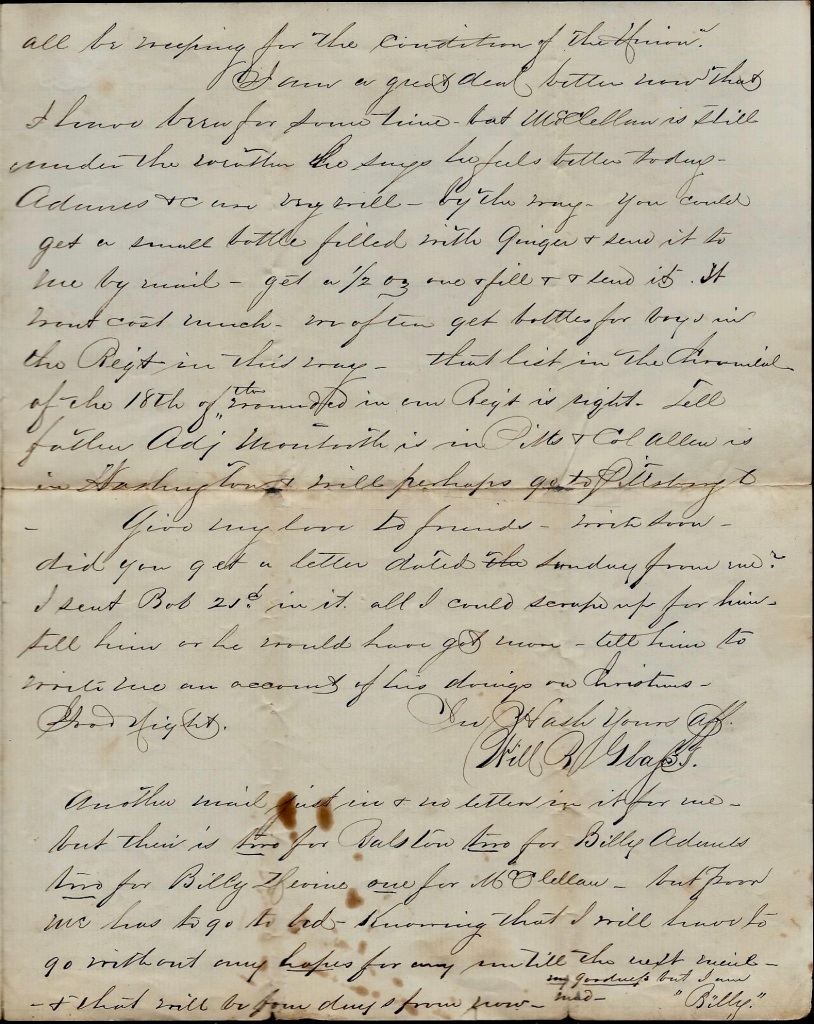
The following letter was written by William B. Glass (1843-1888) who was working as a clerk in Pittsburgh, Allegheny county, Pennsylvania, at the time of his enlistment on 22 August 1862 in Co. F, 155th Pennsylvania Infantry as a corporal. He was promoted to commissary sergeant thereafter. William wrote the letter to his sister Eliza Glass (1830-1900). I believe his father was John P. Glass (1822-1868) who enlisted in April 1861 to serve as captain of Co. A, 74th New York Infantry. He was promoted to Lieut.-Colonel of the regiment in April 1862 but resigned in December 1862.
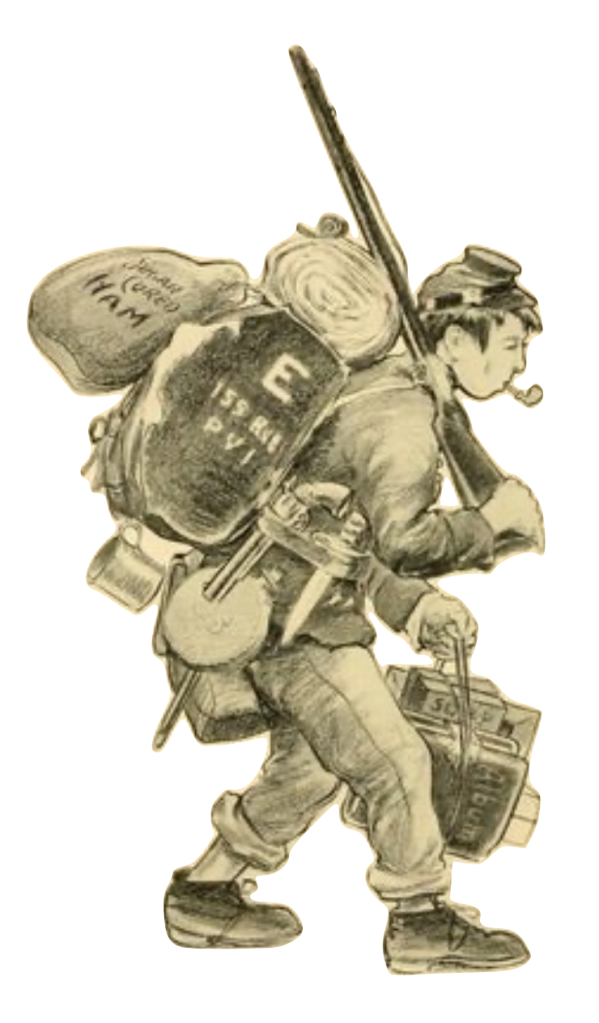
Artist’s sketch of 155th Penn Vol. private going off to war
The 155th Pennsylvania Volunteers were issued standard union attire, consisting of a dark blue forage cap, a 9- button frock/dress coat (thigh length coat) of the same color with blue piping, 4-button dark blue sack coat, and light blue trousers, and brogans. Later in the war, January 1864, they were outfitted in a Zouave uniform. When they were first organized, they were issued surplus Belgian Rifles with sword bayonets. These weapons upon inspection in Washington, D.C. were determined to be unfit for use in battle, by Captain A.T.A. Torbert, USA. The men of Co. K remarked in their history that “The guns were said to kill at 1,000 yards but on examination we found they would not be dangerous to the enemy unless we got close enough to bayonet or club him” The government then issued old style muzzle loader, “Buck & Ball”, Springfield Rifles, more known as Harper’s Ferry Rifles. These weapons only proved to be effective at very close range, not being much use to the combat of the time. After the Battle of Gettysburg, Colonel Cain who had been requesting more effective weapons for his men, collected newer 1861 Springfields from the thousands of dead union soldiers. Which they would continue to use till the end of the war.
Transcription
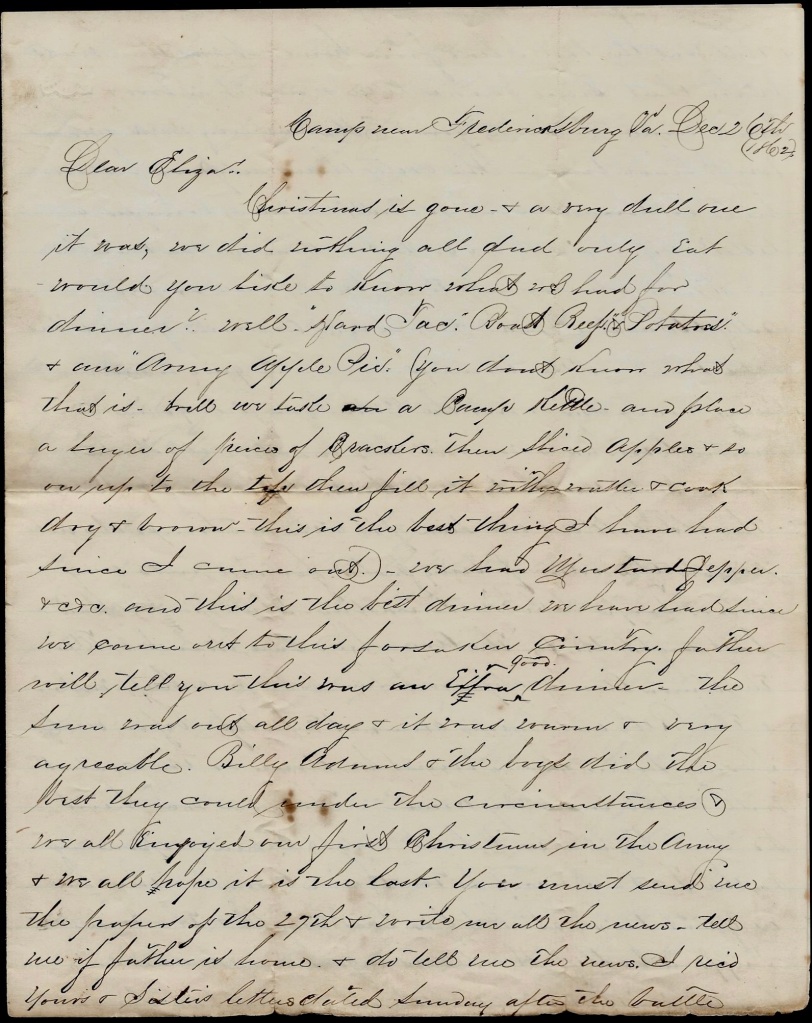
Camp near Fredericksburg, Va. December 26th 1862
Dear Eliza,
Christmas is gone and a very dull one it was. We did nothing all day—only eat. Would you like to know what we had for dinner? Well, “Hard Tac,” roast beef, potatoes, and our “Army apple pie.” You don’t know what that is. Well, we take a camp kettle and place a layer of pieces of crackers, then sliced apples, and so on up to the top, then fill it with water and cook dry and brown. This is the best thing I have had since I came out. We had mustard and pepper, &c. and this is the best dinner we have had since we came out to this forsaken country. Father will tell you this was an extra good dinner. The sun was out all day and it was warm and very agreeable.
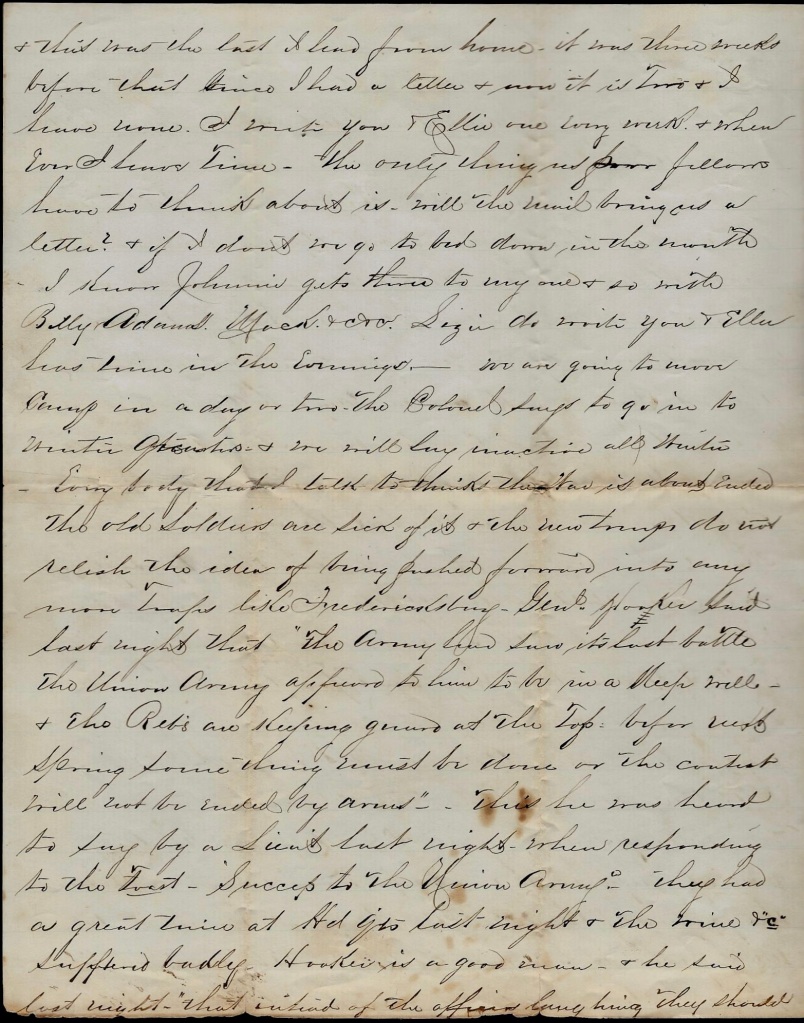
Billy Adams and the boys did the best they could under the circumstances & we all enjoyed our first Christmas in the Army & we all hope it is the last. You must send me the papers of the 27th and write me all the news. Tell me if father is home & do tell me the news. I received yours and sister’s letters dated Sunday after the battle & this was the last I had from home. It was three weeks before that since I had a letter & now it is two and I have none. I wrote you and Ellie one last week & whenever I have time. The only thing us poor fellows have to think about is, will the mail bring us a letter? And if it don’t, we go to bed down in the mouth. I know Johnnie gets three to my one & so with Billy Adams, Mack, &c. Lizzie, do write. You and Ellie has time in the evenings.
We are going to move camp in a day or two. The Colonel says to go into winter quarters & we will lay inactive all winter. Everybody that I talk to think this war is about ended. The old soldiers are sick of it and the new troops do not relish the idea of being pushed forward into any more traps like Fredericksburg. General Hooker said last night that, “The Army had seen its last battle. The Union Army appeared to him to be in a deep well and the Rebs are keeping guard at the top. Before next spring, something must be done or the contest will not be ended by arms.” This he was heard to say by a Lieutenant last night when responding to the toast, “Success to the Union Army.” They had a great time at headquarters last night and the wine, &c. suffered badly. Hooker is a good man & he said last night “that instead of the officers laughing, they should all be weeping for the condition of the Union.”
I am a great deal better now that I have been for some time, but [George P.] McClelland 1 is still under the weather. He says he feels better today. Adams &c. are very well. By the way, you could get a small bottle filled with ginger and send it to me by mail. Get a half ounce one and fill and send it. It won’t cost much. We often get bottles for boys in the regiment in this way. That list in the Chronicle of the 18th of the wounded in our regiment is right. Tell father Adj. [Edward A.] Montooth is in Pittsburgh & Col. Allen is in Washington & will perhaps go to Pittsburgh.
Give my love to friends. Write soon. Did you get a letter dated Sunday from me? I sent Bob 21 cents in it—all I could scrape up for him. Tell him or he would have got none. Tell him to write me an account of his doings on Christmas. Good night.
In haste. Yours affectionately, — Will B. Glass
Another mail just in and no letter in it for me, but there is two for Ralston, two for Billy Adams, two for Billy Devine, one for McClelland—but poor me has to go to bed knowing that I will have to fo without any hopes for any until the next mail & that will be four days from now. My goodness but I am mad. — “Billy”
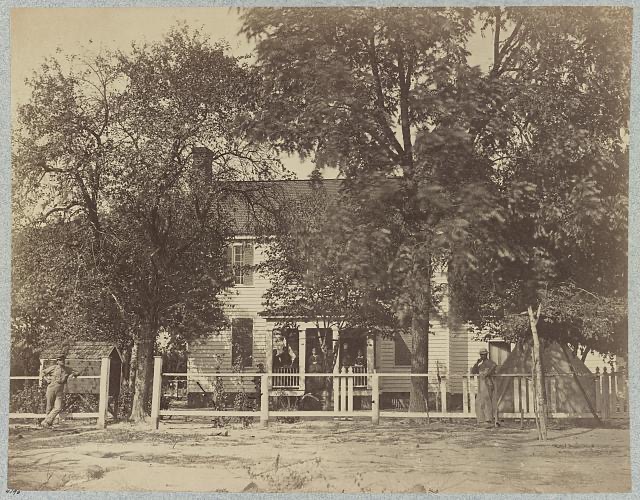
I could not find an image of Peter but here is one of Elisha Underwood who served as a private in Co. B, 152nd New York Infantry.
The following diary was kept by Peter Wandell Tallman (1832-1897), the son of Ebenezer Akin Tallman (1775-1860) and Maria Wheaton (1801-1889) of West Schuyler, Herkimer county, New York.
Peter enlisted in Co. E, 152nd New York Infantry in August 1862 and had been in the service for over a year when he began keeping this diary following the draft riots in New York City where the regiment was assigned temporary duty to maintain order. At the time of his enlistment he was described as a 29 year-old carpenter/joiner with brown eyes, dark hair, and standing at 5 and a half feet.
The 152nd New York Infantry was recruited in the counties of Herkimer and Mohawk and mustered into the U. S. service on 15 October 1862. The regiment left on the 25th and was stationed in the defenses of Washington until the succeeding April, when it was ordered to Suffolk and assigned to Terry’s-brigade, Corcoran’s division, 7th corps. After sharing in the defense of Suffolk, it served under Gen. Keyes on the Peninsula and in July was ordered to New York city during the draft riots, remaining there until October, when it joined the Army of the Potomac and was assigned to the 1st brigade, 2nd (Webb’s) division, 2nd corps. In this command it shared in the Mine Run campaign, being engaged at Robertson’s tavern. In the Wilderness campaign it fought in Gibbon’s division, 2nd corps and was active in all the series of battles ending with the surrender of Lee at Appomattox. Its heaviest losses occurred at the Wilderness, Spottsylvania, North Anna river, Cold Harbor, first assault on Petersburg, Weldon railroad, Strawberry Plains, Reams’ station and Boydton plank road. Its losses during the whole campaign amounted to a total of 303 killed, wounded and missing. Its last battle was at Farmville two days before Lee’s surrender.
[Note: This diary is from the private collection of Greg Herr and was made available for transcription and publication on Spared & Shared by express consent.]
October 1863
We left New York City for the battlefield. We went by boat and cars to Fairfax Station. Sergeant Lackey fell from the cars, hurt himself badly. We moved upon the hill, layed all night, got breakfast, started on the march.
17th, Saturday, 9 o’clock, we were at Fairfax Court House. Halted half hour. Started on. Warm and muddy. Marched all day. Encamped on the Old Battleground. Saw the fighting places. Lots of bones and the signs of the old battles.
18th, Sunday. We packed up ready for a march but did not move. Lay all day in the woods. At night our Colonel had neither rations or tents go. I made him coffee and the boys got hard tack. We built him a tent and made comfortable for the night.
19th, Monday. 6 o’clock. We started and marched to the railroad to take a battery. The Johnnies left before we got to them. 9 o’clock, a halt. Then marched to theJunction. Halted. Got dinner at 1 o’clock. N. Eckler found a pocket book with $1.85. Then moved away, halted for the night.
20th, we start on the march 8 o’clock. We waded a stream 50 feet wide, 2 feet deep. 10 o’clock we waded it again. Our adjutant fell in, horse and all. There was a frost this morning. 1 o’clock we crossed mountain. Run on a dam. Some of the men waded it. 2 o’clock we marched through Gimadge [?], halted. I roasted a piece of fresh meat again for the march. We are near Cedar Run Mountains. We have crossed the river 3 times. We are at Ourfan [?] now. Crossed the crick or river and marched on till 7 o’clock. We encamped for the night in the woods—a nice place.
21st October. We lay in the woods in sight of the battlefield of 4 days ago. We got all ready for the march but did not go. I went to look over the fighting ground. I helped a cavalry man bury his brother that was killed in the fight. Pretty rough, I thought. We did not move camp.
22nd—Lying still yet. 11 o’clock. We were all drawn up in line to see a deserter drummed out of camp. He had his head shaved and then marched at the point of the bayonet all through the division, then sent to hard labor for 18 months. So ended the day.
23rd—We march all day. I was detached to drive team. It was 6 mules—a very good team. 8 o’clock night we went and took a stack of hay for our teams. It rained hard.
24th—A cold morning. We got breakfast. Parked near Warrenton. 8 o’clock we started for Gainsville. Got there at 3 o’clock. It rained all day and all night. It was cold weather.
25th—Sunday morning. We lay at Gainsville. 10 o’clock not loaded yet. I went to the sutler’s apples 5 cents apiece. Tobacco 8 dollars a plug. Onions 10 cents apiece. 11 o’clock, we loaded and started back. Passed through Buckville, New Baltimore. Got to camp at 8 o’clock.
26th—I don’t feel well. Went to the company. I traded the team for a gun. Lay in camp all day. I saw the boys of the 121st.
27th—We lay in camp near Warrenton—a pleasant day.
28th—In camp. A fine morning. I went to the 121st. Saw all the boys that I knew. Came back and had dress parade. I have the diarrhea hard today.
29th—In camp. We go on picket today. I was put on picket at 8. A pleasant night.
30th—A cloudy morning. We are cracking walnuts.10 o’clock we started for camp. Got dinner. 1 o’clock, we was called up in line to see a man shot. He died like a sister.
The soldier executed by firing squad was John Roberts of the 15th Massachusetts Infantry. His crime was desertion.
31st—We lay in camp. We mustered for pay. I had ham for dinner. Hard tack for supper.
November 1863
November 1, 1863—Warrenton, Sunday, we had inspection. A very pleasant day. We drew 4 days rations. I made Penny Royal Tea for supper.
2nd—We had Division Drill.
3rd—I went to the village of Warrenton. I got biscuits off a wench. Payed 4 cents apiece, pickles 2 cents apiece. I got a beef heart for a half dollar.
4th—In camp. We had Brigade Drill in the afternoon.
5th—In camp. Drilled all day. We are just learning to drill.
6th—I am on guard for the first time since I have been a soldier. I stood in front of the Colonel’s tents.
7th—We started on a march. We marched all day. 4 o’clock at Kelly’s Ford, Moved in the woods encamped for the night. We have had a hard march, double quick half the time. It was a hot day. We are one mile from the Rappahannock river. We have marched 27 miles.
8th—Sunday morning, we started on the march at sunrise. Marched to the river, halted. I got a canteen of water from the river and made coffee. 8 o’clock we crossed the river and halted on the hill. Then started for the Johnnies. Take some prisoners. They left their camp just as they were getting breakfast, Marched till 4 o’clock. Halted for the night. I am on picket post 100 yards apart after they were doubled. In the night, two prisoners came in the morning.
9th—We are on picket yet. Got our coffee. It rained all day. 4 o’clock we started for camp. It was a cold night. Froze some.
10th—7 o’clock we are on a march. We passed two mills—saw mill and grist mill. They were on Bear Creek. 9 o’clock a halt in the woods. 10 o’clock we all saw a lone star in the heavens. It was a very pleasant day. It was a great wonder to all present. We marched on till we came to a rebel camp. We pitched our tents in their old camp. We are in sight of the Blue Ridge. It is all covered with snow. It is the first we have seen this fall.
11th—We are in camp fixing our tents to wait till the railroad is fixed to this place. Our shanty is one that was built by the Johnnies. There is six of us in one shanty. We had a beef heart for supper. It was good, I reckon.
12th—In camp. I done my washing. We heard the news of our last fight. It was a complete victory.
13th—In camp. I made two brooms to clean camp with.
14th—I went out to discharge my gun. I shot the largest woodcock that I ever saw. I had his for supper. The captain and I went a hunting. I shot a fox squirrel. He was a large one. I gave him to the captain.
15th—Sunday. It rained all day. We had a general inspection.
16th—In camp. A pleasant day.
17th—We drew our pay. I done my washing. We got our pay after dark. I have the diarrhea very bad.
18th—I am on picket half a mile from camp. There came to us a very nice cat. She was black and white.
19th—I came from picket and I wrote two letters home.
20th—In camp. Our company is out drilling. I stayed in camp. ad the shits. I couldn’t drill.
21st—In camp. No signs of a move yet. A wet day.
22nd—Sunday. In camp. I am sick. I was excused by the doctor.
23rd—In camp. I was sick. We got marching orders.
24th—The bugle sounded at 3:30 o’clock to pack up for a march. We all got up. Had a can of oysters for breakfast. The struck tents and started. Marched 3 miles. It rained and was muddy as usual. At daylight we turned round and moved back. We were presented with a new Lieutenant in camp. I went to the sutler’s of the 15th Massachusetts and got something. Nothing new today.
26th—At half past 3 o’clock we were roused by the sound of the bugle. All got up and got ready for the march. At daylight, I was detailed as a special pioneer. I had an axe that would weigh 7 or 8 pounds. I was weak and my load was heavy. Sunrise, we have marched 4 miles, It is a pleasant morn. We moved on and on till sundown. On our march you could see lots of drunken officers—one colonel so drunk that he fell from his horse in the mud. I was to stand guard at night. I had some catsup for supper.
27th—A bright and cold morning. We [were] ready for a start. I am left with the train. We moved on till we came to the bank of the Rapidan river. The troops crossed and are skirmishing now 3 o’clock. We are fixing our camp for the night. Fixeed my tent. Got asleep very quick.
28th—A wet and rainy day. We worked all day in the rain and snow making corduroy roads. Firing all day. Heavy cannonading at dark.
29th—Sunday, we are in the park of the baggage teams. Cold and muddy day. Heavy firing all day. I was on guard at night.
30th—We were in the park yet near the Wilderness ford on the Rapidan. I sold my boots and brought a new pair.
December 1863
1st—Tuesday. The coldest day I ever [seen] in Virginia. I traded overcoats. 9 o’clock we started back so as not to be captured if we got whipped in this charge. We moved back to where we lay when we started the first night. We didn’t sleep much for the rattle of musketry was heavy all night. We got some rations after being out three days.
2nd—We lay in camp. 9 o’clock we started for our old camp. The cavalry is out very strong. We had a hard march all day and got to camp at 8 o’clock at night, tired out I reckon.
3rd—A bright and pleasant morning. Oh God, how our boys feel this morn. We could not start a hundred men if we were to try so we lay in camp till night, then went on picket.
4th—On picket yet. Our tents are struck, ready for a march. We went to camp at night, got a loaf of soft bread. Stayed all night.
5th—We struck tents and started and marched at sunrise. Marched and halted on a hill. 9 o’clock we started on a ways. Encamped and stayed all night.
6th—Sunday. We lay in our camp. We had a fine fire and sat around. It was near Stevensburgh.
7th—We are packed up for a march—where we don’t know. 9 o’clock, all ready for a march. We moved 3 miles, stopped on a hill for winter quarters. Got our tent up. Then had to move again.
8th—I was detailed for police.
9th—I built a shanty for the officers.
10th—I worked on my shanty. We had inspection 1 mile off.
11th—Friday. I worked on my shanty. Got the cover on and fire place started. Tired out and went to bed.
12th—In camp. A dark morning.
13th—Sunday. In camp. We had inspection. I sent for a box of eatables.
14th—In camp. I am on guard. I saw a beautiful rainbow at 10 o’clock.
15th—I did not feel well. Slept most all day. I got two mackerel, cranberries, soft bread, &c. for supper.
16th—In camp. I got an ax, cup, and other things that we wanted.
17th—In camp. I fixed the bunk.
18th—I was on duty in camp.
19th—We all sat around the fire.
20th—Sunday in camp. We had inspection.
21st—We got up some wood in camp. I have the diarrhea.
22nd—A nice day. I went to build a shanty for George Crawford
23rd—John Hentze died at 11 o’clock last night. A cold morn. The first snow that we have had on us. I am detailed as an escort to bury John Hentze.
24th—I am on picket for today. We got lost going to the picket line. Found our line at 12 o’clock. Take our post. I had to stand 4 hours for my part of the duty.
25th—Christmas. A nice morn. I had some hard tack and beef for a Christmas dinner. Pretty good for a soldier. I am on the [ ]. 12 o’clock we are on the grand reserve. Miles and I went to camp about 3 miles. Got back at dark. I had 4 fried cakes that was fried in main. Oh golly, weren’t they good.
26th—On picket yet. I got up some wood for night. Went to sleep. Got up at 12 o’clock and went to the picket post again. Stood 1 hour at 7 o’clock in the morn.
27th—Sunday. On picket yet. 9 o’clock we packed up to go to camp, Got to camp at 12 o’clock. Got dinner and had the toothache like hell. Got made and went to bed.
28th—A wet day. I [got] some cheese and a comb.
29th—In camp looking for a was tub. Got none. Then went to the 125th. Got cheese and cakes.
30th—In camp. I was on duty in camp.
31st—In camp. A wet day. We mustered for pay. I mended my shirts on the last day of the year. I got a pound of butter and soft bread for supper.
January 1864
1st—In camp. A bright morn. Snow 6 inches in camp.
2nd—I was on duty in camp. I wrote a letter home. Had crackers and sausage for dinner. Soft bread for supper.
3rd—Sunday. In cap. We had inspection. I had the diarrhea harder than usual.
4th—In camp. It snowed all day.
5th—I’m on picket. Started at daylight. Went 4 miles. 12 o’clock, we got dinner. I was on guard all the afternoon and night.
6th—On the grand reserve. 4 o’clock we packed up, marched 1 mile, halted in the support again 6 o’clock. A cold night.
7th—A bright morn. We are on the picket line. Some of the boys had their canteens and haversacks stolen. I went on post. It was cold and I had to stand half the time, day and night.
8th—On picket yet. 11 o’clock, we were relieved and went to camp. Got there 3 o’clock, got something to eat and went to bed. 10 o’clock I was called up to report to the ambulance train.
9th—We went to work and built a shanty. Got the body up. Went to the old camp to stay all night. Our shanty was built of basswood—the first I ever saw in Virginia.
10th—Sunday. In camp. I worked on my new shanty. Worked all day.
11th—In camp. I was not well but we finished our shanty. Now we are watching for a stove.
12th—I am on fatigue duty in the camp.
13th—We are at work at our shanty door. That finishes the mansion.
14th—We lay in our shanty all day.
15th—We are in our shanty trying to get breakfast. We got our eats, then helped G Lieut. lay his stable floors. It is ration day. All we got was sugar.
16th—In camp doing nothing at all.
17th—Sunday. I done my washing. A very nice day.
18th—In camp. A rainy day. I wrote a letter to Bhodey. Got a letter from Schuyler.
19th—I am on duty at the Division Hospital. George Crawford died at night.
20th—In camp. I take a team to drive. I went to Brandy Station. I wrote a letter home.
21st—In camp. I change all my clothes.
22nd—We had an inspection of ambulances.
23rd—I done my washing and eat supper out of C. F.’s box. It was good, I tell you.
24th—I went to Brandy Station. Fetched Capt. Fletcher.
27th—In camp. Nothing to do. I mended my shanty. I got my box after it had been robbed.
28th—In camp. I got my boots nailed.
29th—In camp. It is my birthday. I had a good dinner—chickens, sausages, honey, cakes, crackers, jellies, soft bread, tea and sow berth.
February 1864
4th—In camp. We got a new lieutenant. It was [Horatio] Nichols of my company.
5th—In camp. We had a horse race.
6th—Saturday. Our men made a reconnoissance from our camp. I was in camp. I could hear the rattle of the guns in camp. We are ready to meet them at any point.
7th—Sunday. I went to the front to get a load of wounded. I saw the fruits of war.
8th—In camp. I left the team to take off Lieutenant’s horse.
9th—In camp. Nothing to do. Charley Fox was put in the guard house.
10th—In camp. I had a horse race. I received a letter from NY City from a lady acquaintance—one that I saw while in the city.
11th—In camp. G[eorge] Cuppernall got a hump on his back. I shan’t coax him to take it off.
12th—I went to see the 121st Regiment. They lay across the Hazel River.
22nd—I went to the 121st. We had a dance at Corps Headquarters. Vice President was there—[Hannibal] Hamlin.
23rd—In camp. I mended my clothes.
24th—In camp. We signed the pay rolls.
25th—In camp. We got our pay. I won a watch at a raffle—not a very good one but it keeps good time.
26th—In camp. Bought a pair of suspenders.
29th—We mustered for pay.
March 1864
1st—It rained in day and snowed at night.
6th—Sunday. I take the horse to exercise him. He hurt his shoulder. I then went to the signal station and round about to see the country. Came back. Our lieutenant [ ] got his shoulder broken and otherwise hurt. He was top heavy as the fashion is now here. Willard Cole had his watch stolen at 11 o’clock at night by Bion and Pillsbury [?].
7th—In camp. I done my washing—my jacket and pants.
8th—In camp. Wet day. I got some caustic.
9th—I went to Brandy Station. Came back. Drew a pair of drawers and socks. I had the boxing gloves on with the best man in the regiment. Ira Birney got his neck out of joint. He layed out all night.
10th—A rainy day. I read my book through 5 o’clock. The frogs are a peepin—it sounds like spring.
12th—I went to the 26th Michigan Regiment. Came back. Wrote a letter to John B. Crawford.
17th—Saint Patrick’s Day.
18th—We had orders to pack up so as to move at a moment’s warning.
19th—The artillery shot at a target. I got a canteen of whiskey.
20th—Sunday. We had inspection.
21st—in camp all day.
22nd—I got some wood. It was a cold day and stormed all day and night.
23rd—Clear day. The snow 1 foot deep but it thawed all day. I am on guard.
24th—A bright day. I am sick today.
25th—It rained and thawed all day.
26th—In camp. It got a crystal in my watch.
27th—Sunday. We had inspection. A nice day.
28th—In camp. Pleasant.
29th—8 o’clock, I got ready to move to Stoney Mountain. 2 o’clock, I went to my new home. I had a good shanty to go into.
30th—In camp. It rained and snowed all day.
April 1864
1st—A rainy day. I went to see the rebels from the top of Stoney Mountain. I wrote letters home.
2nd—Snow three inches deep. Snowed and rained all day. My horse got away from me.
3rd—Sunday. In camp. Lieutenant went to the old camp.
4th—Snowed and rained all day. I made a washboard and tub.
5th—In camp all day. Rained.
6th—Rainy. I done my washing.
7th—In camp. I mended my clothes, put them away. Had a game of ball. The Lieutenant lost $15 somewhere.
8th—In camp. We played ball. A fine day.
9th—In camp. I wrote a letter home.
10th—Sunday. In camp. The wagons all washed. I killed a horse by the order of Lieutenant.
11th—In camp. A nice day.
12th—Lousy weather. We had some liver for dinner.
13th—I went to the old camp. Got some money.
14th—I went to the cavalry camp. Got a box of tobacco, paper, envelopes, 1 quart of milk, and butter off an old sesech.
15th—A bright day. I got three quarts of milk. We lost the best horse we had. He broke his legs.
16th—A rainy day. I mended my boot.
17th—Sunday. In camp. Rained most all day.
18th—I went to the regiment. Got my pay. Paid my debts. Came back. Bought two geese eggs, 6 hens eggs. We had ham and eggs for supper. Eggs cost 65 cents.
19th—I went on Stoney Mountain. Saw the rebels.
20th—In camp. A cold day.
21st—I helped get a load of wood. We then got milk, eggs, and went back. I wrote a letter home.
22nd—We were to be examined for the ambulance train. I got milk and butter.
23rd—In camp, I got a present of 50 cents.
24th—Sunday. We had inspection.
25th—In camp. I washed my clothes.
26th—In camp. I killed a black snake 6 feet 4 inches, I got my daughter’s likeness and letters. Lieut. Nichols was relieved of command by Lt. Thornburgh.
27th—We had a new mess of men come to our camp.
28th—I went a fishing and frogging. Caught some and eat them. I then went to the train. Got my horse shod. I got a pair of socks. Fixed up bridle.
29th—We had a fire in our camp. One shanty burned. We moved the sick out of camp.
May 1864
1st—Sunday. I read all day.
2nd—Our horses got away from our camp and went through the picket lines and we after them, We got all of them. We were fired [on] by the rebels. No one hurt. I wrote a letter to Brother John Patrick.
3rd—We are all ready for the campaign. 5 o’clock we started. Went to the [ ]. Got there at 8 o’clock at night. Marched all night. I lost my [ ].
4th—On the march yet. 8 o’clock in the morn, ate a can of peaches, bread, and meat ready cooked. 10 o’clock we crossed the river Rapidan. 12 o’clock we are on the battle field of Chancellorsville. Passed the forts and parked for the night. I went to the Chancellor’s house. It was a large one—burnt now. I then went to the train. Went to bed. We could hear the fighting in the Wilderness.
5th—5 o’clock we are ready for march. I did not go with the train. I got two letters while we was waiting. We came on till noon. Get dinner. Crossed the creek. Went through a glass factory but they had made it into a furnace to make shells with but I stopped the fun for it did not take but one match to do the whole thing for them. 3 o’clock we got ice. 5 o’clock we get lost but came back. The old furnace was so hot that had to keep around it. 7 o’clock we got to the rest of the train, We start for the fighting ground. The first to fall was my captain [Washington W. Hulser]. He was carried to the hospital and died before [ ]. He was shot through the neck. He was killed on the 4th of May. I cared wounded till 11 o’clock at night, then went to the hospital. Slept some.
6th—We again start for the fighting ground. We went in the woods. I saw our company. we carried off wounded, worked hard. At 4 o’clock our men fell back. I left a wounded Johnny that we had on a stretcher and had to get. I reckon the rebels came over some of our breastworks but they got back faster than they came for we had 11 cannons loaded with canister shot for them. After they fell back we went up to see them. This was an awful sight for they was laying crossways and every other way. They lost a good many. Well I went to camp after dark and got permission to bury my captain [W. W. Hulser] and sergeant [William] Lackey, and Keter [George T. Kidder]. We had Devine Service by one Elder Steel. We put them all in one grave. It made me think of the burial of Sir John Moore. It was 9 o’clock at night when we buried them.
The Burial of Sir John Moore after Corunna (1817)
Not a drum was heard, not a funeral note, As his corse to the rampart we hurried; Not a soldier discharged his farewell shot O’er the grave where our hero we buried. We buried him darkly at dead of night, The sods with our bayonets turning; By the struggling moonbeam’s misty light And the lantern dimly burning.
No useless coffin enclosed his breast, Nor in sheet nor in shroud we wound him, But he lay like a warrior taking his rest With his martial cloak around him.
Few and short were the prayers we said, And we spoke not a word of sorrow; But we steadfastly gazed on the face that was dead, And we bitterly thought of the morrow.
We thought, as we hollowed his narrow bed And smoothed down his lonely pillow, That the foe and the stranger would tread o’er his head, And we far away on the billow!
Lightly they’ll talk of the spirit that’s gone And o’er his cold ashes upbraid him, But little he’ll reck, if they let him sleep on In the grave where a Briton has laid him.
But half of our heavy task was done When the clock struck the hour for retiring; And we heard the distant and random gun That the foe was sullenly firing. Slowly and sadly we laid him down, From the field of his fame fresh and gory; We carved not a line, and we raised not a stone, But left him alone with his glory.
7th—Saturday morn. We again for the field. Not much fighting this morn. 9 o’clock we had some killed and wounded. 7 o’clock we went to camp and started on a march. 11 o’clock we parked at Chancellorsville.
8th—Sunday. I saw Burnside and 2,222 prisoners. 11 o’clock, I started. 2 o’clock, we are at the church join to the front. I bought a tongue, cooked it, ate it. We marched by Todd’s Tavern. I got a piece of pork at 1 o’clock at night.
9th—We are in the woods. The troops are marching to and fro. 10 o’clock, no firing yet, I saw lots of arms and legs taken off. 1 o’clock, General Sedgwick was killed on the skirmish line. General Wadsworth was killed on the 7th. Well, we encamped for the night.
10th—7 o’clock in the morn we started. Not much firing now. I went in a swimming, cooked apples. 2 o’clock, hard fighting at one time. I would not give a cent for one inch of ground either way for the shells came thick and faster. 10 o’clock at night. They called for volunteers to go back to the field. No one would do that so they got us all in line and detailed 6 of us—two from each end and two out of the middle row. I had to go for I was in the center, Well we went and I had to go front of the skirmishers but we had five other men with us and good men they was. They lead the way till we found the man we were after. We were [with]in one hundred feet of the rebels breastworks, We put him on the stretcher and got out all safe.
11th—I am in camp. 8 o’clock our boys got badly cut [up]—1 killed and 4 wounded in my company.
12th—8 days of fighting. Hard work and all I have to do is what I pick up, I can stand it yet. 7 o’clock we are on the field again. We have 1 division and their one battery playing on them. A pretty good sight to look on.
13th—I am in camp, not well. I am tired out. Hard fighting today. Lots of our boys are coming in wounded, the hardest of all.
14th—8 o’clock in the morn we struck tents and started on a march. 6 o’clock, heavy cannonading close by. 10 o’clock we are at a halt at General’s Headquarters. 7 o’clock we move to the front. Slept in the woods.
15th—Sunday. 7 o’clock we have got to get out of this. Went over. I filled my canteen out of a spring by the side of the river at Myers Bridge. 4 o’clock we are on the road. Got to our teams in camp.
16th—8 o’clock, no firing yet. We start for the front. 4 o’clock we started for the wounded of the 5th Corps. We loaded them in, came back to camp. Slept all night.
7th—In camp. I made a supper, then slept till 4 o’clock. We are ready for a march and waiting orders. 12 o’clock at night we are hitched up waiting. Did not move.
18th—We again start for the front to carry wounded. 10 o’clock, I have carried four off the battle ground. The fighting commenced at dawn of day. Cochran’s Legion charged the rebs. Light loss on our side. The enemy charged on our boys but got repulsed badly at 3 o’clock. 7 o’clock in camp. 9 o’clock we struck tents and marched all night.
19th—We lay still most of the day. At 5 o’clock the rebels made a charge on our train. We drove them off and whipped them badly. Our [loss] 500 killed and wounded [at Harris Farm]. It was the heavy artillery [men used as infantrymen] that fought them in the fight. Philip Ewell was killed—shot through the head. If we had the old troops in there, our loss wouldn’t [be] one quarter that number. This was the first fight that they had. All the stretcher carriers was ordered out to help them take care of the wounded. I had to laughed in spite of the horrible sights that was before me to see how they complained about the fight which lasted but 40 minutes and then to see them grumble about shelter, blankets, haversacks, and all such things, but I reckon that they know better now. Well, we worked till 3 o’clock in the morn. Then went to camp, laid down, slept some.
Men from the 1st Massachusetts Heavy Artillery burying the dead at Harris Farm.
20th—8 o’clock we started for the Division. We lay in the woods all day. I wrote two letters home. At 12 o’clock at night we started our line of march. Passed the Massaponax river and church daylight.
21st—We are on the bank of the North Anna river towards Boling Green. 12 o’clock we halted. I had some onions for dinner. We moved on to Milford Station. Here the cavalry had a fight. They took 86 prisoners. Here we found the body of the guerrilla [John Singleton] Mosby packed in charcoal. He stunk like a carrion. I captured 9 shoulders and two hams for the boys. It come good, I reckon.
22nd—Sunday—8 o’clock. I went in a swimming. Then went a foraging. I saw the boys on picket.
23rd—7 o’clock. We are all ready for a move. 11:30 we have had three hours of hard marching. Halt. 4 o’clock I saw Andrew Gillette, Dodge Fields skirmishing, 6 o’clock cannonading. 5th Corps made a charge. 8:30 the 1st Division charged and found the rebel works. 10 o’clock I went to sleep. Slept all night.
24th—In camp. I made a cigar. It was a good one as I ever smoked. 3 o’clock, we went into action. I carried off 9 men, Worked till 3 o’clock in the morning, then slept.
25th—We are on the field again to get the rest of the wounded. No fighting today. I killed a copperhead snake and a shoat. He was in good order.
26th—Rainy. 12 o’clock I got the first change of clothes since the fight commenced. I wrote a letter home. Came back to the front. 7 o’clock heavy cannonading. Our boys are to charge the works but did not. 9 o’clock we crossed the river. Traveled all night.
27th—We lay back from the river. We have some shells sent over. 1 shell killed two and wounded 4 others. 12 o’clock, we started our march. Passed Concord Church. Sundown at a halt. We made coffee. Marched on till 11 o’clock. Parked. I was on guard. We lost a horse.
28th—On the march again. 10 o’clock our troops were in line of battle 2 o’clock fighting. We have just crossed the Pamunkey River. We encamp for the night. Out of all rations.
29th—Sunday. The troops in line of battle. We went to camp. Got no rations. 3 o’clock we are at the front again.
30th—7 o’clock, no fighting yet. On a march again. We passed a church with a border of graves around it. It was our cavalry. They fought yesterday. Lots of graves lay around there. 11 o’clock we are in action on the Washington Jones farm. I got a pail of flour, picked a handful of strawberries, went to the front, went on the skirmish line, saw the church. the rebels charged our boys at dark. Got badly whipped.
31st—We are to the front. Hard fighting. Last night we got our rations. Heavy fighting now. 7 o’clock. I got a turkey and cooked him. We made two charges. Got repulsed each time. This was a whiskey charge. Lieutenant [Willard A.] Musson was wounded in the thigh.
June 1864
1st—Skirmishing now, 1 killed 8 wounded. Heavy skirmishing all day. The rebels charged on Burnside’s Niggers. Got badly whipped. 9 o’clock at night, we started eastward, passed mills all on fire. Gaines mills and the old church.
2nd—7 o’clock in the morn. We have marched all night and on yet. I saw 512 prisoners that Burnsides took last night. 9 o’clock we are at a rest. 11 o’clock we are now for a fight. Had fighting 4 o’clock. I went to the rear. It rained and hailed very hard for a short time.
3rd—We made a charge. It was the worst one yet. 4 o’clock, I am caring for wounded. Most tired out. 4 o’clock the rebels charged on our boys and got drove back. N[icholas] O’Brian was killed of my company. I cared for wounded till 11 o’clock at night. This is Cold Harbor fighting ground.
4th—Some firing at 6 o’clock. 12 o’clock heavy cannonading till 5 o’clock. 7 o’clock I got some tobacco for the boys. I paid $.50 a plug. I am on the road all night. Rainy.
5th—Sunday. 7 o’clock we received orders to go to the front and stay there. Rather a hard place for a man that has no gun. 11 o’clock I fetched the aide-de-camp off the field, wounded mortally. He belonged to Gen. Owen’s staff. 1 o’clock we lost one of our stretcher carriers killed, 8 o’clock we are watching one of our boys departing this life. 9 o’clock they open on us with the most terrible fire of all the war. I was a half mile from the line of battle and more shot and shells passed over me than I ever had before altogether. I lay flat on the ground side of a big cherry tree, four of us there. Soon they opened a cross fire [and] I had to get from that [place]. I went in an earthwork nearby. Our sergeant dropped in behind me. His horse was instantly killed not a moment after he lay down behind me. The shower lasted three quarters of an hour. After the firing was over, we started to the front. Not a man was hurt there but there was a good many [hurt] at the rear around where I was.
6th—A fine morn. I went on the skirmish line for sport. Got a good gun and made some good shots. One we saw went to his long home after I fired at him. I shot a while and then a man got wounded by my side. We carried him to the rear. 11 o’clock I went out again. They showed me a man that was a long shot. None of our guns would reach him. I fired at him 3 or 4 times but couldn’t reach him so he stood there and popped away at us. He had a Sharps rifle. Soon I got tired and went to sleep.
7th—A cloudy morn. We hold the same ground. I went on the skirmish line again. Went to the same place. There he was again so I went and got a Sharp Shooter and he came with me. I showed him and he said I might try him, so I took the gun and they watched. I pulled and he came towards me, crawled about a little, and they said I had better give him another so I pulled again, there was no more balls came from that place today. 1 o’clock I went to the camp, washed a shirt, wrote a letter to sis, stayed in camp all night. We sent a flag of truce to the Johnnys to get permission to bury our dead, The boys on both sides were glad to meet each other for they shook hands and talked together like old friends.
8th—All quiet this morning. 1 o’clock, I have one of General [Joshua Thomas] Owen’s orderlies on the stretcher. Heavy cannonading.
9th—We received orders to stay in the front line of battle. Nothing but to murder the men. Well, I dug a hole in the sand and it caved in three times but I got it fixed and covered it over so it was as safe as I could be. I slept in my pit all night.
10th—In the morn we had to carry Elisha [K.] Smith off the field—shot through the head mortally wounded. I then came back and got breakfast, 10 o’clock we carried one of Co. G wounded. The rebels has just commenced to shell us with mortars, They do a great deal of damage, 12 o’clock, I had a man die on the stretcher. Shelling all the afternoon. I saw Henry [ ] yesterday. He came to visit me 10 o’clock at night.
11th—I came to camp. Done some washing. I had a sore foot. 7 o’clock cloudy.
12th—Sunday. I am a going to the front again. 11 o’clock all quiet. Some killed and wounded this morning. 5 o’clock everything is getting ready for a move. Started at dark. Moved a ways and halted till 12 o’clock. Started on march all night.
13th—We marched across the Chickahominy at 2 o’clock. Passed churches, stores, and some fine buildings. I rode till 4 o’clock, then footed it till 11 o’clock at night. Then slept till morn.
14th—In getting breakfast, all quiet this morning. Now ew lay in sight of the James River. 5 o’clock we halted at Sweeney’s Landing. The trrops crossed at 6 o’clock on transports. 9 o’clock went to bed. Slept all night.
15th—In went in swimming. 11 o’clock I crossed the river. On the south side 3 o’clock, we are passing a nice country. The people are all gone leaving good crops and nice dwellings. A hard time. I know how I should feel about such times as this. 4 o’clock, we [passed] a nice church and halted. All out of rations and hit weather and dusty marches. We marched till 3 o’clock in the morn. I was on guard.
16th—Sunrise heavy cannonading. We are lying still till 5 o’clock. Got our rations one day. Now in front of Petersburg. We charged the rebels. Our losses heavy and not much gained. I cared wounded till 3 o’clock in the morn.
17th—8 o’clock got rations. Heavy cannonading. I wrote. We laid still all day. The rebels made a dash at night and failed.
18th—Sunrise, all ready for a charge. The rebels leave as our boys advance. Our loss light. A ball passed through the stretcher, threw the thigh of a man siting close by it. We put him on the stretcher and carried him off. We made another charge, got repulsed. Our losses heavy. Our Corps lost 200 men. We couldn’t get our wounded. After dark the wanted the stretcher carriers to go and get the wounded. Some went. I wouldn’t go. One got killed and then they were satisfied.
19th—Sunday—Skirmished all day and shelled them at night. I laid in the woods all day. The lead flew over us plenty. Not much damage on our side.
20th—Cannonading all the while and skirmishing. I get 2 lb. sugar. We were relieved. We marched two miles for the night.
21st—We are again for the front. We marched 5 miles. Got the Petersburg Plank Road. I got some string beans. We got our place at night and lay under shot and shells.
22nd—We advanced our brigade. The rebels gave us plenty of fights and big ones at that. 5 o’clock the rebels made a charge, drove our men back. Took 1800 prisoners, 76 out of my regiment, among them was two captains, two lieutenants, and my chum Charley Brown, along with others of my company was taken, but our men rallied and drove them back a ways, but they got 4 cannons after they spiked though it was whiskey done this also.
23rd—We advanced and took our works and 160 prisoners and got our wounded off the field so all they got was a sore victory at last. Our brigade got relieved and taken out of the pits. They are a sorry set of fellows as ever looked on. This is the first time that the 2nd Corps was ever whipped. All was not whipped this time but if the rebels had had courage enough, they might have taken the whole corps for they were demoralized. We picked a place for the night. I saw a whippoorwill and two young ones.
24th—We are in the woods yet. 8 o’clock the enemy are a shelling us heavily. No damage. 2 o’clock, we were relieved and marched 2 miles. Encamped for the night. I have carried 206 wounded off the field since the 4th of May. I shot a guinea hen and cooked him after dark, eat him also. The provost guard was after me but no one had seen me.
25th—I wrote two letters home. It is very hot today. The mail has gone out. I went and washed myself all over. We are lying still. The rebels made an attack. Got badly whipped.
26th—Sunday. In camp. I got a letter. A few drops of rain. How much we suffer for rain.
27th—A very warm day. 12 o’clock, we started on a march. Lots of men were sun struck. We went 3 or 4 miles and halted. One brigade went on picket. Our brigade encamped for the night, I slept in a barn.
28th—In camp yet. I am not out today. Our regiment is not out so I don’t go. I made a portfolio. Wrote three letters and so on.
29th—In camp. It was a cold night. 11 o’clock I got some corn, ground it in a coffee mill, and made a [ ]. Stewed green apples and made a good dinner. 3 o’clock we are getting ready to march. The orderly shot himself accidentally. I helped him to the hospital, then went with the troops. I saw John Parks and lots of others that I knew in the 2nd New York Heavy Artillery.
30th—We mustered for pay.
July 1864
1st—In camp. A hot day. We slept most of the day.
2nd—We moved in the woods. I saw the 121st. They were in good spirits.
3rd—Sunday, I built a bough house in the woods. I lost my cup and canteen.
4th—A cloudy morn. A few drops of rain. I spent the day in writing off my memoranda book. It was a hard job.
5th—A warm day. I have the old fashion diarrhea today but I have written all day and I glad that I have done it.
6th—In camp. I got a letter from S. C. Skull. I answered it.
7th—In camp. A cool morn. McCammon shot himself in the toe.
8th—Heavy shelling this morning. I went to the train. Got my knapsack and came back to the front and mended my shirt. I took one that I brought from home to mend the other with.
9th—In camp. Some shelling this morn.
10th—Sunday. Here we got a loaf of soft bread and some onions. He had a good dinner.
11th—All quiet along the lines except the [ ] gun. 2 o’clock we got orders to pack up but we didn’t move.
12th—The troops worked all day and all night. Marched at daylight and marched all day.
13th—We are in camp ready for a march. Moved two miles. Encamped for the night.
14th—We dug a well. It was the hardest digging that I ever saw but we got good water. I done my washing in the afternoon.
15th—In camp. A cool morn. There is an order to stop all whiskey in the army but it will fail, I reckon. I went to the 5th Corps to see Henry Downs but he was wounded and gone to the rear.
16th—In camp all day. Our men are building a fort.
17th—Sunday. In camp. We are to have inspections.
18th—In camp. I mended my pants.
19th—In camp. A rainy day. I slept most of the day.
20th—In camp. I reading all day.
21st—In camp. A cold morning.
22nd—5 o’clock we started and moves three miles. Encamped for the night. Heavy musketry on the right.
23rd—5 o’clock we moved and made camp. We dug a well 10 feet deep.
24th—Sunday, in camp, We had inspection.
25th—In camp. A cold and rainy day.
26th—In camp. 4 o’clock p.m. we started on a march. We marched all night. At12 o’clock we crossed the Appomattox river, kept on and crossed the James River at daylight. There was heavy firing, some from the gun boats.
27th—Our forces charged the enemy at 8 o’clock. Captured 8 cannon and they fought all day. [See: First Battle of Deep Bottom]
28th—Our forces maneuvered around all day. We lost some prisoners.
29th—A hot morning. I went in swimming in the James River. 5 o’clock all ready for a march back to Petersburg. We marched all night. I lay down side of the road with two of our boys that was tired out. We lay till daylight and all hands was started by the explosion of the rebel’s fort by Burnsides. [See: Battle of the Crater]
30th—We are shelling the enemy heavy. We got possession of their fort but couldn’t hold it. It was the niggers and the only reason we didn’t hold it was the officers [were] cowardly and run back so we lay there all day and at 6 o’clock at night we got 5 days rations and ordered to march. We went to one of our old camps and I laid down and slept all night.
31st—In camp. I done my washing. A hot day.
August 1864
1st—We moved back to our old camp. I was relieved from the ambulance train. I was very glad of it for I was tired of it and didn’t like it.
2nd—I reported to the company for duty. We had inspection in the regiment.
3rd—I went to the ammunition train, got 40 rounds of ammunition for my gun. I have a carbine rifle. I got my hair cut. We drew codfish, one ration. We had a general inspection.
4th—In camp. We drew clothes. I got a knapsack. It was a small one—a nice one.
5th—We are up at 3 o’clock, stood in line of battle till daylight. In camp all day.
6th—I was on fatigue. We dug a well.
7th—Sunday. I went a whortleberrying, I got a quart and made them in a pudding. It was a good one too.
8th—In camp. I washed my pants.
9th— I was on fatigue.
10th—I was on fatigue. All I done was to cut 6 poles and carry them out and then lay in the shade all day.
11th—In camp. We had a new sergeant. It was Thomas Buck.
12th—In camp till 4 o’clock. Then we started for City Point. Got there at 10 o’clock at night. Laid all night. Rosell Woodhull joined the company. [Woodhull had been wounded on 12 May 1864.]
13th—I went in a swimming. 10 o’clock we went on board of the steamers and went down the river and anchored till 10 o’clock at night. Then we went up the river to Deep Bottom or Dutch Gap.
14th—At daylight we disembarked and went on the bank and bot breakfast. I missed my sugar. McCameron stole it but got catched at it. After breakfast we went to the front and maneuvered a while, massed and made a charge. It was the worst place I ever saw to make a charge against the enemy so we got repulsed and fell back to a creek and lay there till dark. Then we got out the best way we could. We lost some prisoners—some that didn’t go as far as some others at that. I had three good shots with my rifle. I saw the 88 South Carolina Regiment’s flag fall, man and all. That was the dearest shot that I ever made but came out all right after all. I made another shot after I had fell back a ways—pretty dear one, but all right. Then left for the ditch. the rebels shot my gun from my hand but I stopped and picked it up. the balls flew like hail—that is, if I know myself. So we fell back and formed a regiment. Our company all present. We lay down and slept. It rained all night. [See: Second Battle of Deep Bottom]
15th—We got breakfast and then we got 50 rounds of cartridges. 2 o’clock, the 10th Army Corps came to us, niggers and all.
16th—We lay in the woods till 5 o’clock. Then we went to the breast works. Lay all night.
Peter’s Diary entries for August 17th through 23, 1864
17th—We lay at the works all day. The rebels sent a flag of truce to get permission to get the dead body of one of their generals [Brig. Gen. Victor Girardey] that was killed yesterday. I went on picket at 9 o’clock at night.
18th—A warm day. I am on picket. Got the command of the post. Not much firing in front of us. 3 o’clock, the rebels charged on our left five times and got repulsed every time. They came on in five lines of battle and then couldn’t get through. Then they tried ours and the skirmish fire was two strong for them. We fired about 40 rounds apiece. They wounded some of our men that was getting green corn. At 9 o’clock we were relieved and came to the works. Then we moved back to our old works.
19th—We lay in our works that we built in July. It rained all day.
20th—I went to the train and got 80 rounds of cartridges. Came back and went a fishing but didn’t get any. It rained most of the time. We had two recruits to our company. At dark we commenced our march back towards Petersburg. Marched all night.
21st—We lay in our old camp. Eat breakfast and then we had to go to the front. Stayed all day, then marched towards the Weldon Railroad. We encamped near the railroad for the night. Lay all night.
22nd—9 o’clock, we are in the woods. I went after whiskey. It took me all afternoon. We lay in the woods all night.
23rd—I got a beef heart and cooked it. I wrote a letter home. 12 o’clock on fatigue. We went past the Aiken’s House. Lay most all day, then we went back and marched for the railroad. We went near the station and camped for the night near the station.
“Aiken House, in front of Petersburg, Va., near headquarters Army of Potomac” photographed by John Reekie, Feb. 1865.
24th—We got to the railroad at 8 o’clock. 10 o’clock we went on picket at Ream’s Station. I stayed on picket all day.
25th—7 o’clock we went to the regiment. They lay in the cane field. Then we advanced up on the road and the cavalry had a fight to our left and got drove in. Then we formed in line of battle and drove them rebels back. Then our brigade was drawn off and sent back to the stations. Our regiment was sent out for support for the skirmishers. 3 o’clock we lay behind the railroad. Then we were called up and we had to take the worst of the enemy’s fire. Here we lost some good men as ever shot a gun. Here we stood and fired into them till we were surrounded on three sides. Then we went every man for himself. Well, if there wasn’t some tall running then, I don’t know. Some of our regiment went to the woods and some to the breastworks but the rebels had our cannons turned on us and was driven back when General Miles came up and rallied the men, formed a line, and let them have a few rounds. And then the rebels left over the works again. Some of our men went out to the railroad three times. I went down the works to stop the men from firing at our men. Quite a panic now. At 6 o’clock, the rebels are on one side of our works and we on the other. Such a mass of men I never saw as it takes to break our lines and they did it but they left heaps of dead on the field. They lost more than we did for they came onto us and then they tried it the fourth time before they done it. It was the sorest victory that they ever got. Our adjutant [Alfred R. Quaiffe] got taken prisoner after he had got back to the works. He might as well got out as the rest of us and if ever I wished for darkness, I did then. Well, after dark, we fell back and marched all night. It rained and lightning very sharp. All the reason that we got whipped was bad generalship. Our lines wasn’t in no shape for such a fight, but some of the Johnnys say that they got the worst of it and I know they most [did]. [See: Second Battle of Ream’s Station]
26th—We lay side of the road and slept awhile. Then we moved and went into a camp. Stayed all night.
27th—I done my washing and wrote a letter and went on picket.
28th—I am on picket. It is just two years today since I enlisted. I saw some of the Ohio boys that knew Bingham’s folks. Saw some that I knew when I was out there. Mande Bingham is a major in the cavalry. Ben a Lieutenant.
29th—On picket today. I am sick but got to stand it.
30th—On picket yet. 10 o’clock, we left the line, came to the fort on the Jerusalem Plank Road, encamped in the fort at night. We went on fatigue but didn’t work. Came back to camp.
31st—In camp. We mustered for pay. We have six months pay due us. The Major took my rifle gun from me for his own use and made me draw one. I got a good one. At dark, we went on fatigue. Worked all night.
September 1864
1st—We are in camp. We had pancakes for breakfast. We lay here all day. 5:30 o’clock we was ordered to pack up but we didn’t go. At dark we went on fatigue.
2nd—We are all ready for a move but we didn’t go. We had four men come back from the hospital. It was J[ames] W. Maxwell, J[oseph] Notgrass, [Kendrick] R. Mattison, N[elson] Fort.
3rd—We are on fatigue chopping. 17 hundred of us chopped all day and came to camp at night.
4th—In camp. A wet morning. We had inspection. I wrote a letter to home. It is Sunday today.
5th—We were on fatigue today. We went to camp at 6 o’clock and packed up. Moved one mile and worked all night on breast works.
6th—We are on fatigue. A wet orning. We worked all day. It rained all night.
7th—We oved back to our old camp that we left before we crossed the James river the first time. Pitched tents and slept a while, Then went on fatigue. I didn’t work much.
8th—In camp. A pleasant morn. It was a cold night last night. I was on fatigue all the forenoon. I wrote a letter in the afternoon.
9th—In camp. All quiet this morn. 10 o’clock, all packed for a move. We moved a mile or so and encamped for the night.
10th—In camp, Cold nights. I went to the train, got two blankets. Let [Rosell] Woodhull have one. I saw 60 prisoners.
11th—Sunday. A pleasant morning. I am on guard today. we had a tempest of wind today.
12th—in camp today. Not very well. I got a letter from the widow Hulser in regards to the [ ] note.
13th—I went to get boards to build a bunk with. I wrote a letter to Miss. Hulser. Saw Andrew Gillett and so forth.
14th—On fatigue. Started at 5 o’clock. We got breakfast. Worked all day. Came to camp at night.
15th—In camp. Ready for inspections. I wrote a letter to my girl.
16th—In camp. 9 o’clock all packed ready. Laid in camp all day. At night we moved up the breast works. Laid all night.
17th—We went to work chopping timber. The rebels stole 2500 head of cattle yesterday from us. Our cavalry followed them and got whipped and 500 of them captured.
18th—Sunday. We went to work on the railroad sinking it so that the enemy couldn’t shell the cars. Worked all day.
19th—In camp all day. At night I went on picket. We got up to sign the pay rolls. Didn’t draw it though.
20th—On picket. A nice morning. Andrew Bridenbecker is an officer. He is on picket with us. 10 o’clock, signed the pay rolls. Came to camp.
21st—Daylight, we are ready for fatigue. Heavy cannonading and some musketry. We went on fatigue. I didn’t work much. I went to the front line. Got a vest and came back to the woods.
22nd—On fatigue again. I went to the 10th Corps and got some pies. Came back to the work. We were to work on the railroad. I can’t do much work as I am a soldier. Came to camp. Got my pay and paid my debts. Got shaved and so forth.
23rd—Sultry weather to work on a railroad.
24th—On fatigue. 9 o’clock there is a grand salute along the lines. It is in honor of Sheridan’s victory in the Valley. Charles Wample came to see me. I went with him to see Waite and stayed some time. I saw the troops moving. I went to camp, packed up, and moved a ways. Sundown, everything is on the move. Can’t tell where we are going.
25th—Sunday. We lay in the front line of works before Petersburg. At 10 o’clock we moved and made a camp. At 9 o’clock we moved a mile or so and went in a fort.
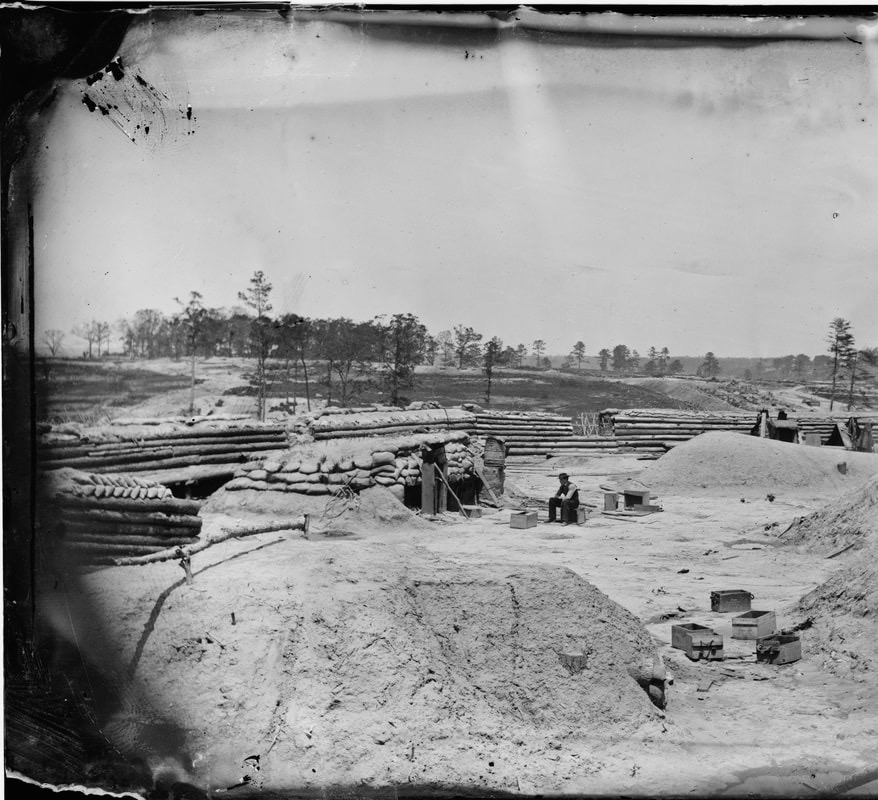
26th—In the fort. It is a warm morning. I am sick today. We lay in the fort. It is Fort Haskell, right in front of Petersburg.
Fort Haskell in front of Petersburg, Va.
27th—A hot day. I am sick today. It didn’t do any good.
28th—In the fort. I am sick today.
29th—In the fort today. All packed up on the outside of the fort. There was heavy shelling last night. I wrote a letter home.
30th—In the fort. I wrote a letter to N. J. Davis. We had an election. Mc[Clellan] had 20 majority.
October 1864
1st—We left Fort Haskell at dark. We moved to the left. We went in the works, I found a quarter pound of tobacco. 11 o’clock, we moved to the right. It rained and we got all muddy &c. At night we halted till morning.
2nd—Sunday morning. We were in the works. I got a pair of drawers of Lieut. Bridenbecker. I threw my old ones away. I wrote two letters. There was heavy fighting yesterday. It was General Warren’s Corps that done the fighting.
3rd—In the works. I went to the ambulance, Got my overcoat back. I was on a watch picket tonight.
4th—We lay in the works. Part of our company on picket. At night we moved to the left. We had hot shelling.
5th—We lay in the woods. I got a letter from Phoebe J. Bradbury and one from my girl. I got a pair of boots of George Marienous [?] I gave him 4 dollars. At night we moved to the right. Laid in the pits all night. I drew a pair of drawers and socks.
6th—I am on guard near Fort Nichols.
7th—In camp all night. I went on picket. We got lost and if we didn’t have fun, I don’t know.
8th—On picket on the reserve. At daylight Henry Cartridge got wounded in the heel. I took him to the rear. He belonged to the 170th New York. I then went back to the reserve. In the afternoon there was sharp shooting on both sides. I took one of the rifles sighted at 130 rods [715 yards], made three shots, and I couldn’t do anymore for the Colonel in command would have split his sides a laughing to see two of the rebels tumble but it wasn’t no fun for me I can assure you. At night we were relieved. I was glad of it.
9th—Sunday. We had inspection. I got a pair of boots from home. I sold a pair to R. Woodhull for 5 dollars. I wrote a letter to N. J. Davis.
10th—In camp. It is a cold morning. A white frost—the first we have had this fall. My mouth is very sore. Others the same.
11th—A nice morning. We lay in camp all day. At night there was heavy shelling.
12th—In camp all day. At night I went on picket. Stayed all night and all day.
13th—In camp all day.
14th—In camp. I had the toothache and tried to have it pulled but we couldn’t get it. I bought a pair of suspenders, done my washing and so on. The Johnnys say that they are a going to blow us up. Let it come. We are ready for them.
15th—I am on guard today. It is nice weather.
16th—Sunday. We had inspection. Clinton Starling came to see us. He is a gay fellow.
17th—In camp. We had regimental inspection by Capt. Curtis. I received tickets to vote. I voted for Abraham Lincoln. He is my man. At night I went on picket. [James] Wesley Maxfield’s gun bursted the first shot. It was a pleasant night.
18th—On picket today. We were relived at night.
19th—In camp. We drew rations. We got fish. One third of our men had to be up all night.
20th—I am on guard today. There is a rumpus in camp. Andrew Bridenbecker got a black eye.
21st—In camp all day. A man carrying a log on his shoulder for stealing a canteen of whiskey.
22nd—On picket. We were relieved at night.
23rd—Sunday. In camp. We had inspection.
24th—In camp all day. At night we moved and maneuvered all night. Stopped at Fort Bross.
25th—We got breakfast and fixed a shanty. Stayed all night.
26th—A fine morning. We are a getting ready for a long march and a fight. We have 8 days rations to carry. We started at 2 o’clock on a march, Halted at 9 o’clock. We laid down till 2 o’clock, then we got breakfast.
27th—We started on a march to the enemy’s works, assaulted and drove the enemy from their works. We deployed as skirmishers—our regiment. The rebels falling back till 2 o’clock, then we were in line of battle and advanced again on the enemy. They run again. Then it rained a hard shower but we advanced on them and had to lay down on the side hill and if it wasn’t a bad place, then I don’t know for the rebels had a battery so as to play the whole length of our brigade and there we lay for half an hour or more. Very few was hurt. Then we got orders to get up and we double quicked around the hill and came on the top of it. Our regiment and the 59th [New York] Regiment was left to support the battery on the hill. 5 o’clock Captain [Willard] Musson was shot dead by a cannon shell. It passed through his body, tore his heart clear from him. Half past 5, the enemy closed around our men and the Third Division gave way. On came the rebels after our battery but didn’t get them. Then Gen. [Thomas W.] Egan advanced on them and drove them off. Then they threw up little works and laid till dark. Then we commenced falling back, leaving our dead and some wounded on the field. At 9 o’clock at night, it rained hard and was cold. I lay down by the fence and slept awhile. Then we marched all night. [See: Battle at Boydton Plank Road]
28th—We got breakfast and marched all day and at night I was on picket in front of our brigade. It is a cold night. This fight was at Hatcher’s Run or on the [William] Burgess farm. One of our company boys * that was in the fight said that was his grandfather’s house so he ands I went in the house and he got his own likeness and his uncle’s and his family’s record out of the bible. All that I took from the house was a canteen of molasses that was made on the farm. It most looked rather hard to him. The house was riffled of everything. It was a splendid house.
* In his book, Richmond Must Fall, Hampton Newsome informs us on page 241 that the relative of William Burgess who served in the 152nd New York of Rugg’s Brigade, was likely Burgess’s grandson, Andrew W. Burgess of Watertown, New York. Andrew claimed to have retrieved the family record, some photographs, and a small powder horn of his own making that was still in the Burgess home.
29th—On picket, A nice morning. I went to camp to get breakfast. I was on picket all day. I wrote a letter to mother at night. We packed up and marched to the Avery House. Camp for the night.
30th—We lay in camp all day. I was not very well today. Tired out is all, I guess.
31st—We mustered for two months pay. We moved 3 times today and at night we go to the front. Well, this is the last day of October and we have eleven and a half [months] to serve Uncle Sam yet. Well, we have got the most of our time served but thanks to God for his mercies in sparing our lives this far. I hope I shall be spared to go home to those that I left in tears long ago. Now it is night and I am going on picket tomorrow. I am well and hoping to come home. This goes home tomorrow so good night. All is well.
John Davis and Edward Munroe, US Navy Veterans who served together on the Augusta and Cambridge.
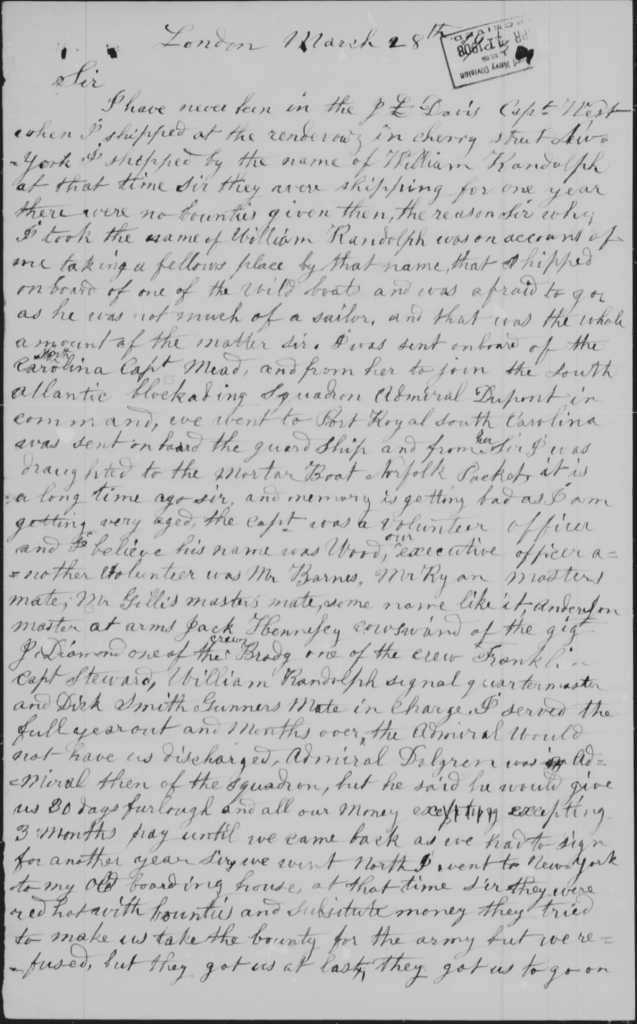
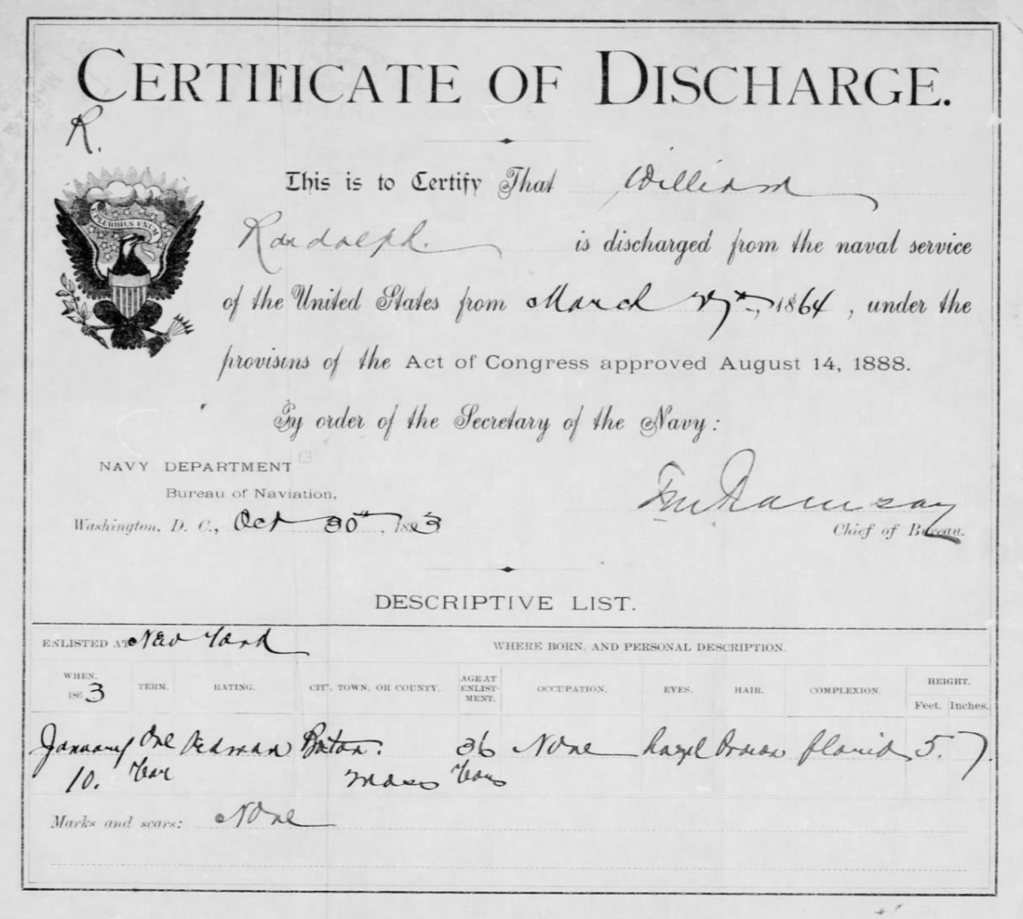
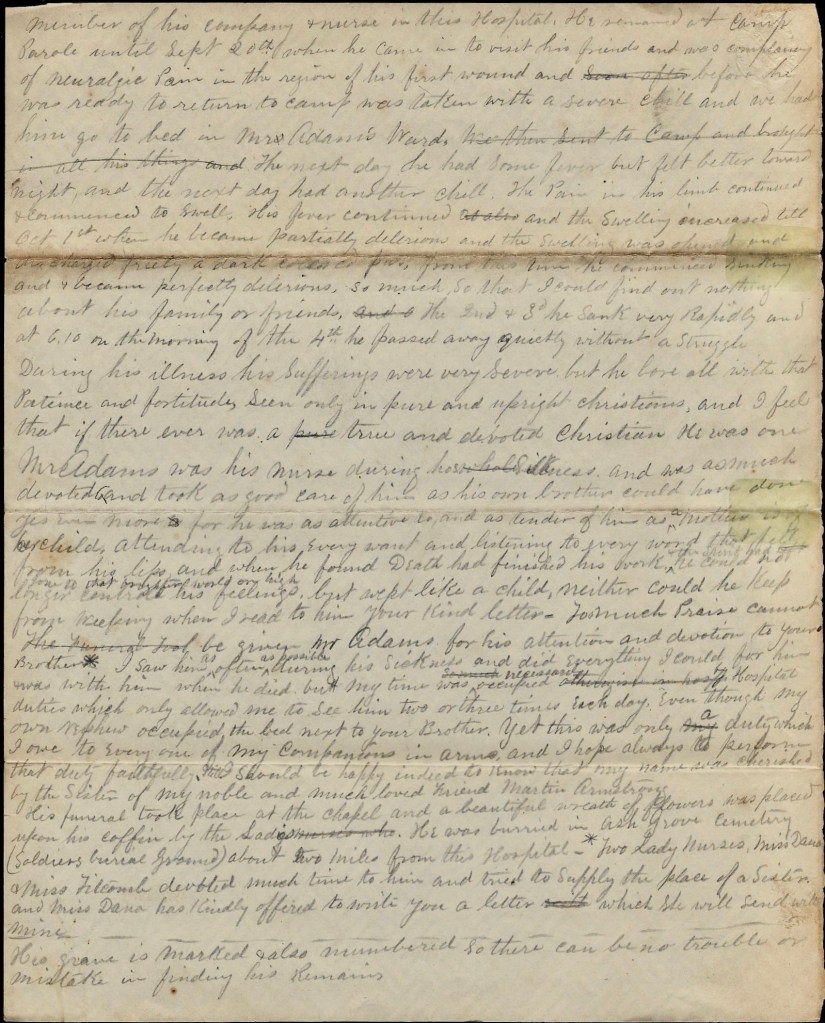
The following letter was written by Edward Munroe (1809-1915), a native of Nova Scotia, who served in the US Navy during the American Civil War. Edward lived to the ripe old age of 106 and was for many years a member of the London Branch of American Civil War Veterans. My friend and author, Gina Denham, has contributed greatly in the last several years publishing her research to preserve the memory of the Civil War veterans who lived out their days in England. She asked me to transcribe Munroe’s letter to include in the book she is currently working in which she hopes to give voice to this London Branch of veterans.
In his letter, 99 year-old Munroe, nearly blind from cataracts after years spent at sea, chronicles his service record in the U. S. Navy beginning with his initial enlistment under the name of William Randolph which he explains was done because he substituted for a man by that name who “was not much of a sailor.” Munroe’s pension file includes discharge certificates for both Randolph and Munroe. See footnotes.
Munroe also shares a wild tale of an attempt by the US Army to shanghai him into the service by drugging him while he was on shore leave in New York City.
Transcription
London [England] March 28th 1908
Sir,
I have never been in the J. L. Davis, Capt. West. When I shipped at the rendezvous in Cherry Street, New York, I shipped by the name of William Randolph. At that time, sir, they were shipping for one year. There were no bounties given then. The reason, sir, why I took the name of William Randolph was on account of me taking a fellow’s place by that name that shipped on board of one of the wild boats and was afraid to go as he was not much of a sailor and that was the whole amount of the matter, sir.
I was sent on board of the North Carolina, Capt. Meade, and from her to join the South Atlantic Blockading Squadron, Admiral Dupont in command. We went to Port Royal, South Carolina, was sent on board the guard ship and from her, sir, I was draughted to the Mortar Boat Norfolk Packet. It is a long time ago, sir, and memory is getting bad as I am getting very aged. The captain was a volunteer officer and I believe his name was Wood. Our executive officer, another volunteer, was Mr. Barnes. Mr. Ryan, master mate, Mr. Gillis, master mate, some name like it, Anderson master at arms, Jack Hennessey boatswain of the gig J. Diamond one of the crew Brady one of the crew, Franklin, Captain’s steward, William Randolph signal quartermaster and Dirk Smith gunner’s mate in charge. I served the full year out and months over. The Admiral would not have us discharged. Admiral Dahlgren was admiral then of the squadron but he said he would give us 3 months pay until we came back as we had to sign for another year, sir.
We went North. I went to New York to my old boarding house at that time, sir. They were red hot with bounties and substitute money. They tried to make us take the bounty for the army but we refused, but they got us at last. They got us to go on a pleasure party to Staten Island where they drugged us nicely and got us off from that shanghai army place and next day when I came to my proper senses, I told them that we belonged to the Navy and didn’t know what we were doing and I wrote to Capt. [Richard Worsham] Meade of the North Carolina and he sent the first lieutenant and demanded us. I had no bounty, nor have I ever got the state bounty. The people I boarded with always knew me by the name of Edward Munroe and I suppose they gave in that name at the Depot. They asked me if I wanted to be sent south to the Mortar boat or would I sooner sign for three years and join the Augusta side wheeler, Capt. T[homas G.] Corbin, then fitting out at the Navy Yard. I told them about the name and they said I had better ship by my own name—it did not matter about the name as I had done no harm, and I got my discharge from the mortar boat which I sent, sir, when we signed on the 4th of March and two letters, sir.
I was sent again on the Charleston Station. We broke down in the Mona passage 1 convoying the Aspinwall steamer North Star and she took us in tow and took us to Fortress Monroe and from there we were towed to Baltimore and put onboard of the Allegheny receiving ship and from her, sir, we were draughted to Norfolk to join the Cambridge, Capt. Nichols, and went again to the South Atlantic Squadron and was blockading along the coast. She broke her back in Ogeechee Inlet and was sent north to Philadelphia. I got a fortnight’s liberty, came back, and was put on board of the Bienville guard ship and from her sent to Norfolk to join the Malvern, Admiral [William] Radford’s flagship, where the dysentery came on me and I applied for my discharge and got it. I was sent to Philadelphia and was sick for a long while.
When I got better I shipped again at Water Street, Philadelphia. Capt. Howell had charge—I believe that was his name. I was sent on board of the Princeton where I had a fall and got double ruptured and fractured forearm. Was discharged as unfit for service. I have, sir, all my discharges from the Malvern, the Augusta, and Cambridge, on the Mortar boat, and my sick discharge, sir. I was on board of 8 or 9 guard ships and sea going vessels during the war. I sent my discharge from the Mortar Boat Norfolk Packet on the 4th of March, sir, from the Consul General’s Office with a letter and I got another letter, sir, from the Department and they are both alike, sir. I send it to you, sir, to see it. It is dated the 13th of March and mine must have been miscarried. I hope, sir, that you will have the kindness to do all you can for me, sir, as I am getting very aged and need something more than what I am getting as I have not got no friend or relations living as I know of. If you will be pleased to return an answer, please send to the US Consul General’s Office, St. Helen’s Place. The reason, sir, that write this long letter to you is that you may have the full particulars to go by, sir, and see that it is a solid case. I have one shipmate here, sir, that was in the Augusta and Cambridge with me.
Very respectfully, — Edward Munroe
P. S. I am writing my own letters. My eyes are growing very dark. I would not be here now, sir, but I am always in debt as I can do no work, I suppose I shall soon be blind. The letter I am sending you is the same as I got before, sir.
1 The Mona Passage is the strait that separates Hispaniola and Puerto Rico.
The following letter was written by James Funston (1833-1864) while serving as a corporal in Co. B, 19th Missouri Infantry. This battalion, Missouri volunteers, was consolidated with the 3rd Missouri Infantry in January 1862 and James’s company was made Co. H. In July 1862, James was placed on duty in the color guard. From August 1862 to January 1863 he was on duty as color bearer of his regiment. The regiment distinguished itself in the battle of Arkansas Post, was then in practically all the engagements of the Vicksburg campaign, was engaged in the expedition from Iuka to Tuscumbia; afterward fought at Missionary Ridge, Ringgold and Lookout Mountain.
After the battle of Missionary Ridge it was assigned to the 1st division, 15th army corps, and with this command marched with Gen. Sherman’s army to Atlanta where James received a gunshot would to the left thigh on 29 May 1864 at Dallas, Georgia. He died on 14 June 1864 at Altoona Gap, Georgia.
James was born in Carne, Donegal, Ireland, and came to this country with his parents, David Funston (1805-1853) and Elizabeth S. Virtue (1877-1877) in the mid-1840s, settling on a farm in Irish Hollow, Jo Daviess county, Illinois.
Transcription
St. Louis, [Missouri] Turner Hall November 20th 1861
Dear, I was truly glad to hear from you and to know that you are all well. I am enjoying good health at present. So is my companions that came with me, I thank God for all His mercies. I am trying to live Godly in this present world for it is a world full of sin and in this place sin appears in all its forms.
You ask me if I have been to [Sunday school] class. I have not for reason I could not get to it on Sunday. I get a pass until twelve o’clock at which time I have to be in quarters for the remainder of the day and in any of the churches I have been in, no class meets after preaching but these things do not prevent me from praying to my Savior and telling Him my experience in secret and I have many happy seasons of prayer when none but the eye of God doth see me. The friend which I spoke [of] is from Indiana. His name is A[ndrew] J. Wolf. 1 He is a good man.
Frémont has been superceded by General Halleck who is now in town. One of the sentries was on guard at the Provost Marshall’s Office. His instructions was to let no man lay his hand on the door knob. General Halleck came up to him dressed in citizen’s clothes and wanted to pass. 2 The fellow charged bayonet on him and if he had not gave back, would have run him through.
It is thought the whole western division will winter at this city. There is not ant stirring events now that I know of now except what the fleet is doing and we hear very good reports of its operations on the southern coast.
You can tell David Gray I will write to him soon as I can. I would like to write to all my friends and you can [tell] them I will pretty soon. We had a thunder storm last night which is the first since I came here. The weather is very pleasant for this season of the year.
Pray for your unworthy son who shall ever remember you with that affection which only a son can feel for a mother. If I can get to, I will [come] and see [you] soon.
— James Funston
Address
James Funston Capt. Hequembourg’s 3 Company 19th Lyon Regiment Missouri Vols. St. Louis, Mo.
1 Pvt. Andrew J. Wolf also served with James in the 19th Missouri and later in Co. H, 3rd Missouri Infantry.
2 Though it seems incredulous that Gen. Halleck would be wearing civilian clothes, he was also reported to be “dressed in impeccable civilian clothes” when he arrived at Pittsburg Landing to assume command of Grant’s army after the Battle of Shiloh. [See Siege of Corinth by Henry Halleck in 1862 on HistoryNet]
3 Alexander Hequembourg originally enlisted as a Captain in Co. B, 4th U. S. R. C. from May 8 – Aug 19, 1861. He then commanded a company in the 1st Engineer Volunteer Regiment from Sept 9, 1861 – July 2 1862, when he resigned due to health problems. He later served as the Adjutant of the 11th Prov. E. M. M. from Sept. 9-18, 1863 before being commissioned as a Lt. Colonel in the 40th Missouri Volunteers.
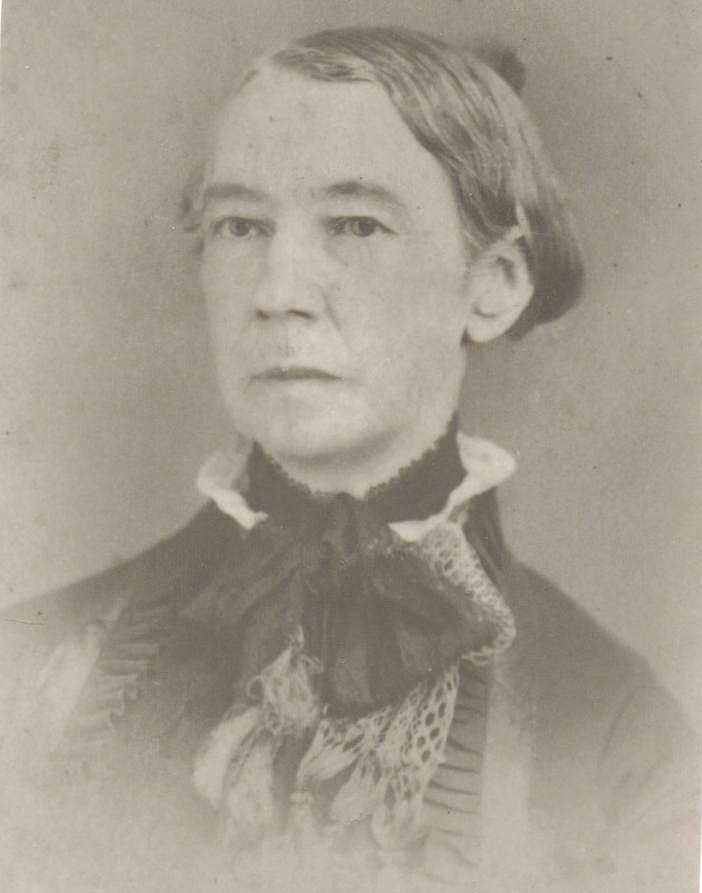
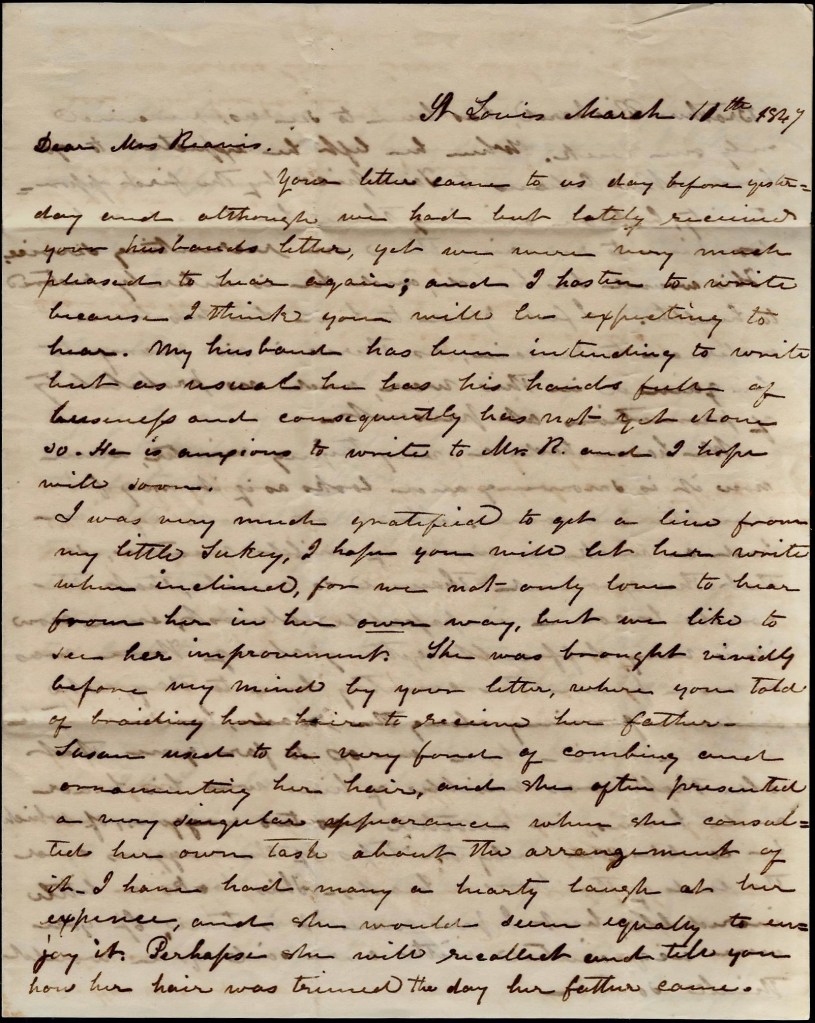
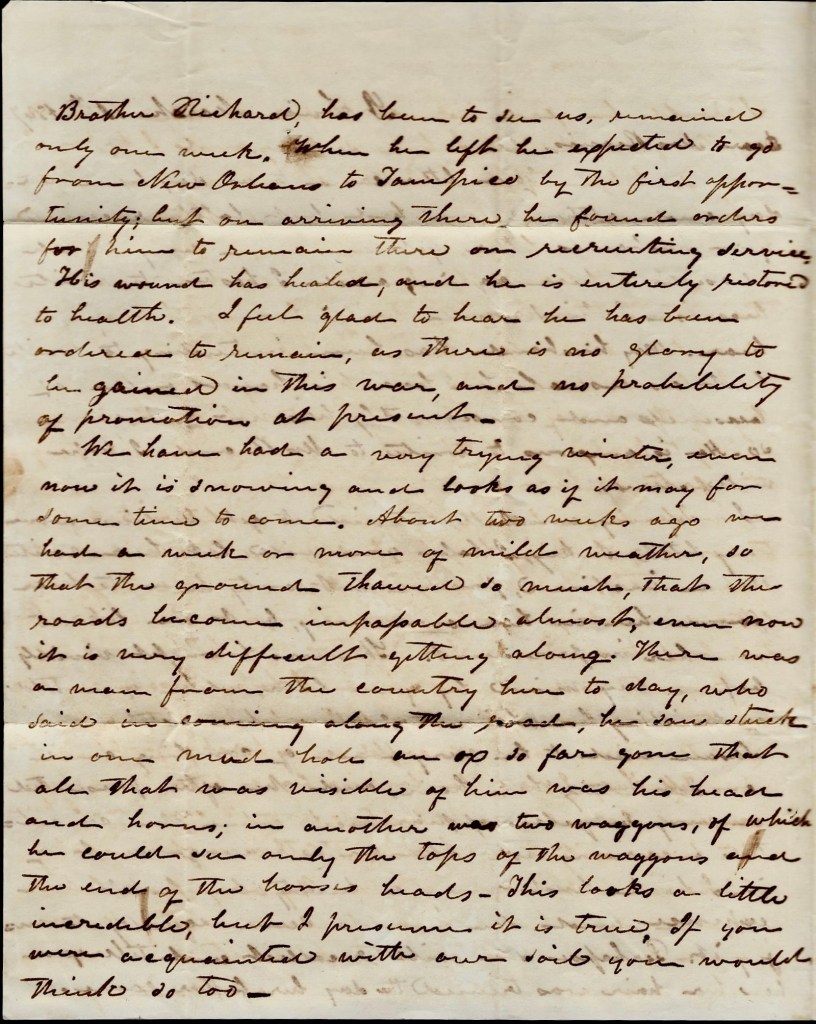
This letter was written by 35 year-old Mary Mitchell (Gatlin) Knox (1811-1890), the wife of Dr. Franklin Knox (1810-1895) of St. Louis, Missouri. Mary and Franklin had several children, all born in St. Louis: Sarah (“Sallie”) Knox (1838-1926), Emma Knox (1840-1840); Eliza Knox (1842-1842), Annie Knox (1845-1853), Franklin Knox, Jr. (1848-1848), and Richard Gatlin Knox (1851-1914).
Mary grew up in Kinston, Lenoir county, North Carolina, the daughter of John Gatlin and Susannah Caswell. She married Franklin Knox there in May 1837. In her letter, Mary mentions her brother, Richard Caswell Gatlin (1809-1896) who graduated from West Point in 1832 and served as an infantry officer in the War with Mexico (was wounded at the Battle of Monterey) and later on frontier duty in Indian Territory. In 1861, Richard resigned his commission and was appointed Colonel in the CSA. He was then promoted to Brigadier General in August 1861 and was assigned command of the Department of North Carolina and the coast defenses of the State.
Before the 1860 US Census, the Knox family had relocated to Crescent City, Del Norte, California, where Franklin worked as a physician.
Mary wrote the letter to Mary Strachan (Barret) Reavis (1812-1870), the wife of Judge Turner Reavis (1812-1872) of Gainesville, Sumter county, Alabama.
Transcription
St. Louis [Missouri] March 10th 1847
Dear Mrs. Reavis,
Your letter came to us day before yesterday and although we had but lately received your husband’s letter, yet we were very much pleased to hear again; and I hasten to write because I think you will be expecting to hear. My husband has been intending to write but as usual he has his hands full of business and consequently has not yet done so. He is anxious to write to Mr. Reavis and I hope will soon.
I was very much gratified to get a line from my little Sukey. I hope you will let her write when inclined for we not only love to hear from her in her own way, but we like to see her improvement. She was brought vividly before my mind by your letter, where you told of braiding her hair to receive her father. Susan used to be very fond of combing and ornamenting her hair, and she often presented a very singular appearance when she consulted her own task about the arrangement of it. I have had many a hearty laugh at her expense, and she would seem equally to enjoy it. Perhaps she will recollect and tell you how her hair was trimmed the day her father came.
Brother Richard has been to see us, remained only one week. When he left he expected to go from New Orleans to Tampico by the first opportunity; but on arriving there he found orders for him to remain there on recruiting service. His wound has healed and he is entirely restored to health. I feel glad to hear he has been ordered to remain as there is no glory to be gained in this war and no probability of promotion at present
We have had a very trying winter. Even now it is snowing and looks as if it may for some time to come. About two weeks ago we had a week or more of mild weather, so that the ground thawed so much that the roads became impassable almost. Even now it is very difficult getting along. There was a man from the country here today who said in coming along the road, he saw stuck in one mud hole an ox so far gone that all that was visible of him was his head and horns; in another was two wagons and the end of the horses heads. This looks a little incredible but I presume it is true. If you were acquainted with our soil, you would think so too.
I should be glad indeed to spend next winter with you, should I live so long, and I hope it may so happen that I shall spend a few weeks with you. Mr. Reavis incited me to come this spring and was kind enough to offer to meet me at Orleans, but it will not be convenient for me to leave home this summer. Should we all live until another summer, I shall feel as if I ought to go away and try if the air of another climate will do anything to keep my little Annie from sharing the fate of her other sisters of the same age.
Tell Susan I shall commence a letter to her tomorrow, it being her birthday, and send it sometime this month. Sarah is anxious to write and began a letter some days ago, but she thought it was written too bad to send. She has written very little and does not write so well as Susan. I hope Susan will write like her father. Her mother’s hand writing was no better than mine. We could never boast of good penmanship. Tell Lucy I shall be looking for a letter from her soon and I should be delighted soon to see her. I have quite a curiosity to see her—her father so often spoke of her while he was with us.
My very best love to your dear husband and receive the same from your affectionate friend. — M. M. Knox
The following letter was written by Edwin Atkins Merritt (1828-1916) to his wife, Eliza Rich. Biographical sketches of Edwin appear in Appletons’ Cyclopedia of American Biography and in the History of St. Lawrence County inform us that Edwin was born in Sudbury, Vermont, on 26 February 1828 and that he left Vermont when he was ten years of age and went to live with a married sister who resided in Westport, Essex county, New York. In 1841, with his father’s family, he emigrated to St. Lawrence county, New York, and became a surveyor in the Adirondack wilderness. He published the first map to guide tourists to this great resort.
In 1858, Edwin married Miss Eliza Rich and by her had five children, all of whom died young except Edwin A. Merritt, Jr. After holding local offices, Edwin was elected to a lower branch of the legislature as a Republican in 1859, and re-elected in 1860. At the beginning of the Civil War he became quartermaster of the 60th New York regiment, served with the Army of the Potomac, and in Sherman’s Georgia Campaign acted as commissary of subsistence with the rank of Captain.On 1 January 1865 he was made quartermaster-general of the state of New York, and he superintended the Soldier’s home in New York City. He also established free agencies for the collection of bounties, back pay, and pensions that were due New York volunteers. In 1869-70 he was naval officer of the port of New York. In 1875 he was the unsuccessful Republican candidate for state treasurer. In December 1877 he became surveyor of the port of New York, and in 1878 he was appointed collector on place of Chester A. Arthur. He was U. S. consul-general in London in 1881-85.”
What Edwin’s biographical sketches do not mention is that during his stint as Quartermaster-General on Gov. Reuben Fenton’s staff, he participated in the Lincoln funeral processions in New York City, Albany and Buffalo which are the subject of this letter dated 15 May 1865. This letter has long been a keepsake of the Merritt family descendants and it was recently offered to me for transcription and publication on Spared & Shared by Matthew Sisson, his great-great-grandson.
After transcribing the letter, I discovered that Edwin A. Merritt published an autobiography in 1911 entitled, Recollections, in which he also summarizes his eye-witness account of the Lincoln funeral processions in New York State though he does not quote this letter to his wife. In that same book he described the last time he saw the President before his assassination: “As I was passing by the White House Mr. Lincoln came out on the steps to bid farewell to a gentleman, who was dressed in the height of fashion. Mr. Lincoln was bare headed and wore a black alpaca coat and a pair of carpet slippers. A number of disabled soldiers who were in sight, seeing me talking with the President, came forward to shake hands with him and he greeted them cordially.”
Transcription
State of New York Quartermaster General’s Office Albany, New York May 15th 1865
My dear wife,
I sit me down to pen you just a few lines. It is a beautiful Sabbath day—just warm enough to be comfortable. The sun casts a genial glow over the landscape which is now full of life and beauty. The prospect from the Capitol where I now write is splendid. Away in the distance across the Hudson are the green fields and budding foliage. The parks about the Capitol are carpeted with the softest and loveliest green [ ] and the birds are singing gaily in the trees overhead. Just now the streets are thronged with pedestrians treading their way silently to the sanctuary where the sacred text will be expounded by the representatives of the various sects who are all laboring for a common end although pursuing slightly different and circuitous routes to meet at last in one common home—Heaven.
Mingled also with the devout and holy exercises of this day will be the prayer of peace as well as the prayer for it. The devine guidance will be invoked for our rulers and devout thankfulness rendered for the glorious consummation of peace which has been at last achieved by the valor, persistence, and courage of the American people. With the great sorrow for the death of our characteristic representative and Chief Magistrate Abraham Lincoln is also mingled the natural and exalted consciousness of assured hope—that this great and glorious republic is to go on and complete its mission of giving freedom to the world.
It has freely vindicated its integrity and justified the hopes and promises of its founders. the Statesmen and heroes of the Revolution. The leading and responsible traitors are to be tried and suitably punished, but the poor, misguided suffering and already punished people of the South will be forgiven on promise of future good behavior. While vindicating the law to which we and all [are] amenable, we must be magnanimous and forgiving. Let us not make their punishment greater than they can bear. Like prodigal children, they are returning to their father “Samuel’s” home where there is enough to spare. With them, side by side, come also the former millions of slaves enfranchised, holding up towards heaven their free hands from which have been struck every shackle and thanking God for their deliverance through the instrumentality of their father “Abraham” and their brothers, the patriot soldiers for the Union—the boys in blue.
Every honest American must feel prouder of his country today than at any former period in his life. It is stronger at home in the hearts of the people as evidenced by confidence in its financial ability, stronger abroad as it has shown the world that we can carry our warlike operations never surpassed in the history of the world. How proud and with what a firm step must Americans promenade the streets of London and Paris? Hoist the banner high and although it is now draped in morning, it is more glorious than ever before.
We have just received the news of Jeff Davis’ capture with his family & staff. Thus endeth the great rebellion against this benevolent and liberal government. The head of the serpent is not being effectually bruised. Amen and amen. So say all the people—and the echo is heard to the furthermost bounds of civilization.
I did not particularly write you relative to my trip from New York City to Buffalo with the remains of the late President Lincoln. The cortege arrived in New York on Monday, the 24th of April at 10 o’clock in the forenoon. The 7th Regt. N. Y. S. National Guard acted as escort and thousands of people lined the streets. The remains were taken to the City Hall. A guard was placed around it as some distance from it so as to leave an open space and inside of which and on the steps at south side and about one thousand German singers who chanted a requiem for the dead while the corpse was being conveyed with the building and places prepared for it at one side of what is called the Governor’s room. After being placed “in state” the people were allowed to view the remains. The procession for that purpose was formal on the East side and extended down Chatham Street for nearly a mile. This solemn procession continued from 1 o’clock on the 25th of April twenty-four hours without interruption. On the west side all those having passes were allowed to enter. All night long, with most remarkable patience, the [ ] persisted [ ] endeavored to get a glance at the face of the honored dead. It is said that at least 125,000 viewed the remains and probably as many more were disappointed people from the country from New England and the country adjacent to New York, Brooklyn, Williamsburgh, and Jersey City all getting into line and waiting for hours—many giving up in despair.
I cannot attempt to describe the pageant of the 25th. The newspapers have attempted it but have failed to do full justice. The procession moved at one o’clock from the City Hall up Broadway to 4th Street, then west to 5th Avenue, then up the Avenue to 34th Street, then along 34th to 9th Avenue. Thence down 9th Avenue to the Depot [at 30th Street and 11th Avenue]. The catafalque in which the coffin was placed was manufactured for the occasion and cost over $2,000. It was a most splendid affair and was drawn by sixteen gray horses covered with black broadcloth trimmed with silver fringe—the cloth extending nearly to the ground. Each horse led by a groom.
Lincoln Funeral Procession in New York City
It is said and I have no doubt with truth that over one million of people took part in and witnessed this the greatest funeral procession of which we have any account in the world. It was immense. Thirty-eight carriages only were allowed in the procession (and only one private carriage—that of the venerable Lieut. General Winfield Scott) which contained the state and city authorities and representatives of the several states who accompanied the remains from Washington and the Guard of Honor. The first carriage contained Governor [Reuben E.] Fenton, Mayor [C. Godfrey] Gunther, Generals [James B.] Swaine & [George S.] Batchelder of the Governor’ staff. The next Lieut. Governor [Thomas G.] Alvord, Judge [Henry Ebenezer] Davies of the Court of Appeals, General [Alexander W.] Harvey, Judge-Advocate-General and your husband, the Quartermaster General. Then followed the Delegates from Washington referred to with foreign consuls, &c.
We took the train for Albany at 4:30 o’clock p.m. The cars were beautifully ornamented and draped in mourning. Arrived in Albany at ten o’clock p.m. I cannot give you all the incidents along the route but it seemed like a panorama of people gathered along the road and at the several villages passing by their reverential and solemn behavior their tribute of respect to the departed emancipator. At Albany the military received and escorted the remains to the Assembly Chamber which had been prepared for its reception. At about 4 a.m. the people were allowed to enter and thus could avail themselves of this opportunity to behold him for whom the Nation was in mourning. At one o’clock on the 26th, the procession in Albany was formed and after passing through the principal streets escorted the remains to the cars which hurried off for Buffalo at 4 o’clock p.m. Arriving at St. Johnsbury, we stopped for ten [minutes], the station here being splendidly draped for the occasion. Herkimer and Utica, Rome, Syracuse, Rochester, and in fact all along the route to Buffalo were [ ] the train. The militia organizations, committee councils, choirs were out waiting for the funeral train to pass, all seeming anxious to get but a sight of the car in which the mortal remains of him in whom they had placed so much confidence and trust.
Lincoln Funeral Procession in Albany
We arrived in Buffalo at six o’clock in the morning and after partaking of a breakfast prepared for us, the remains were escorted by the military and citizens to St. James Hall where splendid arrangements had been perfected for the occasion and as the body was being brought into the building a choir of 100 voices (St. Cecil Society) chanted a funeral dirge—the most solemn and effective singing I ever heard. The arrangement for viewing the corpse was much better here than in New York or Albany. All who desired had an opportunity. I was invited to dine with Judge Advocate General [Alexander W.] Harvey which I accepted. The other guests were Maj. Gen. John A Dix, Rear Admiral [Charles Henry] Davis of the Navy, General [Robert C.] Schenck of Ohio, William Hooper of Boston, Inspector General [George S.] Batchelder, and Paymaster General [S. B.] Marvin. My associates in General Henton’s staff, Mrs. Harvey in a support [ ] presided at the table. I am thus particular because of the occasion and the historical event and the characters composing this party. I shall remember the occasion for a long time. About two hours were spent at the table, entertaining conversation being carried on by Gen. Dix, Admiral Davis, Gen. Schenck, Mr. Hooper and Gen. Harvey. I was willing to be a silent listener. The Times, the occasion, and reminiscences of the past were the topics, interspersed with spicy anecdotes filled up the time. The best of fare and served with $40 per bottle and brandy worth sixty dollars per gallon. Very little, however, was drunk as nine o’clock the remains were again removed to the cars to be conveyed to Cleveland. A splendid train was fitted up for the occasion.
Lincoln Funeral profession in Buffalo
After bidding adieu to the Guard of Honor, General Dix and the escort, we (the Governor’s staff) took the train for Albany again where we arrived at 9 o’clock in the morning of the 28th. Perhaps you will think this a long and tedious account but excuse me for feeling proud of the position temporarily occupied and regarding the occasion as great historical event, was glad to be so prominently connected with it. I regretted exceedingly that you was not with me in New York at the time. I have given you but an incidental sketch. I hope you will preserve such papers as you may have giving accounts of the affair.
I am quite well and fel really happy at the prospect of peace. Affectionately your husband, — Edwin
To Mrs. Eliza R. Merritt Potsdam, St, Lawrence county, New York
I could not find an image of Sgt. Henry French but here is Sgt. Edward Emerson of Co. C, 11th New Hampshire (Al & Claudia Niemiec Collection)
The following letter was written by Sgt. Henry French (1834-of Co. H, 11th New Hampshire Infantry. Henry enlisted as on 20 August 1862 and was mustered in as the 1st Sergeant. He was wounded on 13 December 1862 at the Battle of Fredericksburg and was reduced in ranks to a private in May 1863 but a year later was wearing sergeant’s stripes again. He survived the war and mustered out of the service in June 1865.
In his letter, Henry describes the movements of his regiment from the Rapidan to the James River in May 1864.
Henry was the son of Jesse French (1795-1892) and Ann Chamberlain (1813-1897) of Plainfield, Sullivan County, New Hampshire. Henry’s brother, Elias French (1838-1933) also served in the same company. Henry was married to Emma Smith and working as a carpenter/joiner in Plainfield, Grafton county, New Hampshire, when he enlisted. He wrote the letter to his sister-in law, Mary Amelia Smith (b. 1839).
Transcription
Headquarters 11th N. H. Vol. Infantry In line of battle between the Pamunkey and James River 15 miles from Richmond [Virginia] May 31st 1864
Sister Mary,
As I have not had a chance to send a letter yet, I will write a few more lines. The 21st we marched out in the morning to find out where the rebs were and we found them after marching bout three miles. Here we threw out pickets and then fell back to our pits again. At 4 p.m. we fell in and started to the left. We marched all night until 5 a.m. when we arrived at the Po River. At 12 M we marched again. Marched about 15 miles. Arrived at Bethel [?] Church, 30 miles from Richmond.
23rd, had orders to march at 6 a.m. We marched all day. When we halted, we was on the North Anna River 3 miles from Hanover Court House and 17 miles from Richmond.
24th, we crossed over the North Anna River and took our position in line of battle. 25th, we had a hard night. We laid in a cornfield all night and we had a very hard thundershower and we got wet through.
May 26th. Moved out of the cornfield and took our position between two lines of works. We laid here until 9 p.m. when we got orders to fall in. We fell in very still and started when the Rebs rose up and gave us a hard volley and our brigade went out in a hurry but we had no one hurt. When we had got most down to the river, we met Elias. He had just come up with 1100 other men. We marched this night until 2:30 a.m.
27th, today we marched all day until 2 a.m. 28th, file in at daybreak and marched until 11:30 marching 30 miles—the hardest march that our regiment ever had. We crossed the Pamunkey river and marched about 1.5 miles and went into camp. Elias did not come up. It was a very cold night. 29th, 6 a.m. fell in and marched about three miles and halted and commenced a line of rifle pits. Worked on them until about 12 M when we fell in and marched back about 1.5 miles and went into camp to await orders. We laid here all night and had a good time. Got a plenty of fresh meat to eat and had a good woods to sleep in. Have not seen Elias today. Do not know where he is.
30th, today we have laid in line of battle all day but have not been in but some some of the troops have been fighting some all day. Elias has not come up yet. Since I commenced writing this, we have moved to the front about one mile and now lay in the front and expect to go in soon. 31st, last night we had a good night.
May [June] 1st, last night we worked all night throwing up works. We lay about 30 rods from the Rebs works and are banging away at them all of the time. A lot of them are in a house in front of our regiment and we are trying to get them out. We shall give them a try tonight. We drove them one mile yesterday. Our regiment did not lose a man. The 9th lost a few.
Elias came up last night. He is rather hard up and in a hard place to have much done for him but I shall do all that I can. Our doctors are all away and the sick have to take care of themselves and every well man has to be at his post. At such times as these, how hard this hard time is. To continue, I do not know but one thing. We are within 12 miles of Richmond and some of our men are within 6 miles and there is terrible firing on our left and right. What it is, I do not know. We expect to march tonight. I am well and as tough as I could ask to be, — Henry
Apparently Wesley enjoyed dressing up as Uncle Sam on the 4th of Julyin his old age.
The following letter was written by John “Wesley” Ferree (1838-1910), the son of William M. Ferree (1815-1866) and Ann Haislett (1811-1883) of Mansfield, Richland county, Ohio. According to his obituary, Wesley was born in Ohio on 16 July 1838, his father having come to Richland county in 1820 from Pennsylvania. He spent his boyhood on the farm and enlisted in Co. D, 26th Ohio Volunteer Infantry (OVI) in June 1861, serving first in western Virginia and in the Army of the Cumberland. He participated in the battles of Shiloh, Corinth, Perryville and was slightly wounded in the Battle of Stone River.
Wesley wrote this letter in the midst of the Tullahoma Campaign after trudging through inclement weather for several days, informing his father that “Our good times are over.”
After he was discharged from the service in July 1864 as a sergeant, Wesley returned to Ohio and married Susan Osbun in November 1864. He was a farmer but served his civil duty as county commissioner on the Republican ticket and was always active in the GAR.
Transcription
Addressed to William Ferree, Mansfield, Richland county, Ohio
Talma [Tullahoma] at the foot of the Cumberland Mountain, Tenn. July the 5th 1863
Dear Parents and the rest of the friends,
Once more I take the opportunity of writing you a few lines to let you know how and where I am. I received your letter of the 26th of last month the first of this month. I was pleased to hear that you was all well. My health at the present time is not very good. I have not stood the marching very well since we left Murfreesboro. We left there on the 24th of last month and moved on the enemy. There was some hard fighting done on some of the roads but not on the road that we was marching on. The rebels evacuated Tullahoma where they was in force on the 30th of last month.
We have had very bad roads ever since we left Murfresboro. It has rained every day. Our clothes has been wet on our backs ever since we started. We are 45 miles from Murfreesboro. We lay in camp yesterday and today and have not much to eat, while I suppose you at home are enjoying yourselves the best kind. I cannot tell what we are going to do—that is, this army I mean. You must not expect to hear from me very often now while we are on the march for I expect we will be on the march now for some time. But I will try and let you know how we get along if you want to know very bad, but our good times are over.
I was glad to ear that you are getting along so well with your work. I was surprised to hear of Joe Harnley 1 being sent home for I had heard nothing of it before. He will get clear of some hardships by being away and I heard that the 15th was into a fight and lost some men killed and wounded. I don’t know [how] many.
Please write as you have been doing, I want to hear from home anyhow. I think I will be all right in a day or two. You may address your next letter to Murfreesboro the same as before. I will close for this time. Your son, — J. W. Ferree
P. S. We may have some fighting to do soon. I don’t know.
1 Joseph G. Harnley (b. 1838) served in Co. G, 15th OVI. He survived the war and was not mustered out of the regiment until 19 September 1864.
This letter was written by Pvt. Willis “Virgil” Wells (1841-1865), Co. D, 38th Georgia Infantry, to his older brother Lt. George “Riley” Wells (1838-1919) of the same company. The young men were the sons of Willis Lea Wells (1805-1887) and Drucilla D. Sexton (1813-1888) of Decatur, DeKalb county, Georgia.
When he penned the letter, Virgil was home on sick leave at Stone Mountain, Georgia, and his brother was at the front in Virginia. From the content of the letter we learn that Virgil feels his health will not withstand further exposures in the field and hopes to arrange a transfer to Atlanta where he might serve as a hospital nurse rather than return to the 38th Georgia. He was unsuccessful and after he rejoined the regiment, he was killed in action at the Battle of Fort Stedman near Petersburg, Virginia, on 25 March 1864—just two weeks before Lee’s surrender of the Army of Northern Virginia.
Nichols’ book, “Hurrah for Georgia!”
This letter was provided to me for publication on Spared & Shared by Dale Gary Nichols, author of “Hurrah for Georgia! The History of the 38th Georgia Regiment” who informed me that it was once part of a large cache of letters related to Lt. Riley Wells that were sold to various collectors some time ago. Nichols owns three of the letters and he used two of them in his book, but this letter was not used since it had not yet been transcribed at the time the book was published. The reason it had not been transcribed will be obvious to anyone who looks at the letter which was, in large part, written in Pitman Shorthand. Nichols believes the brothers agreed to write parts of their letters to each other in shorthand to practice their skills. It may have also been done to save on paper which was on short supply in the Confederacy. It certainly wasn’t done to convey any sensitive information in this case. In any event, we owe Ms. Tracy Harding a debt of gratitude for transcribing the shorthand and I’m reliant entirely on her for its accuracy.
Transcription
Good Morning Stone Mountain, Georgia. March 5, 1863
My Dear Brother George, I take my seat to drop you a line which leaves me in as good health as comes at present. I have no news to write at this time at all. I received your favor of 24 February; was very good to hear from you. I am sorry to hear that there was so much snow on the ground down there for I know it must be very disagreeable indeed. I guess you will keep quite warm with your new coat on. I am truly sorry that there is no chance for you to get permission to come home. I did hope that you would get to come this spring but I fear there is a bad chance for it.
Riley, I will just tell you a few things about old “Stone Mountain” as it has been a long time since you have been permitted to see the the old home spot. Things have all made a great change since you left. In the first place nearly all the people that lived near you has gone and new ones come in. Young Mr. Carr keeps up a new hotel in the large house below Mr. Bristol’s old study. Jenny also keeps up his hotel. R. B. Etheridge has bought out George B…… …… to have increased the stock some little. Mr. B…… is at work at his …… in Atlanta. Son Mr. Carr lives in …. house. Son of Mr. Livingstone lives at Etheridge’s old place. Mr. Rankin lives at Riley Bristol’s house.
Riley—(though I guess your little German [girl] has told it to you before this time)—[ ] anyhow has gone to the war. Mr. B…. lives at his father’s house. Time being has constrained and he has to go to war too; the ….. doing too. Besides this there are quite a few changes too numerous to mention. But enough of that stuff to satisfy you, I guess. I cannot comply with your request which was to write to you about your little German, for I have not heard from our nurse frau. I guess she is “all right in goons” anyhow. I will wait now till tomorrow to finish my letter. Riley, you must take mighty good care of my gold pen for I would not take the world for it. I shall send for it when I get back.
Well, I have sat myself down again to write the letter more this morning, but I had not intended mailing my letter till tomorrow anyhow. You told me to write about your German book—where it is at home. I do not think it is here for I looked on the table where all your books are [and] I could not find it any where. I believe it was the one I bought for you that you was speaking of. I do not think you left one at home at all for I think I remember your putting it in the old trunk before that, before you left home. I guess it was then taken when your trunk was moved to ….River.
Well, while I think of it, I saw Doctor B. Ellings at Stone Mountain the other day. I told him to send a word for me the next time I write to you, so you may receive his best love and kindest regards, through me. You must excuse my poor writing and bad penmanship, for when you requested that I ensure study, I have but one day in my life, you will not think strange of it at all. My whole practice has been in this letter I have been writing it to you. Say you will not think that I ought to write it very well as, the unsure thing is I have no pen that to write with. Now I am not bothering you about keeping my pen at all, I don’t want you to think so.
Mason has just come in, his family are well as common, as for myself and has made some little has gone some ….I am for myself, but not strong. If you think there will be no change, I will not reproach this time. I think I will refrain not from a list of complaints, if I do not get my time extended at that time. I will quit now till tomorrow morning and will go to Atlanta this evening. I will wait for the news for …… I will give you the benefit of it this time. You can read about that will be a plenty for you when ……
March 7th 1863
Will B….. has been and got back again. I sat him down to finish my letter. He brings no news at all worth relating. Your papers were approved all right, by Colonel Lee and Captain L…. Now it remains your Captain Rankin and Colonel Eberhardt to approve them, given that, so there’s no use to send them to the generals if they are coming in every few days and …. of just hours the ………… as this.
[Note: Pitman Shorthand ends and continues in plain English]
A Pre-war photo of Col. George Washington Lee
Col. [George Washington] Lee says that Capt. Rankin need have no apprehensions on that point at all, that is, that it might involve him in some difficulty, for he says there will be no danger at all. So if he will let us off, which I do hope he will do, I will be a thousand times obliged by him. And as we have every assurance here that it will all be right, I think he need fear nothing at all.
I will hold on to the papers a few days in hopes that I will have a chance to send by hand for I just feel like that is almost a decision between life & death for me; for you have seen that my constitution will not admit of my staying in that part and I guess I would not be as successful in getting home next time as I have been heretofore, and in Atlanta we could be sent home if sick, and would not be so exposed. So I do hope that you can get the Captain to let me off on the above grounds. The Colonel says he guesses it would be rather a bad matter to try to send them clear through.
I will close hoping & praying that I may be successful in this my last attempt to get away. I remain your unworthy brother, as ever, — Virgil
Col George Washington Lee – (B. 1831, DeKalb Co., Ga., D. 3 April 1879, Rome, Georgia.) Former Regimental Commander and Colonel of the 38th Ga. Regt. Resigned 14 July 1862, due to illness. Later appointed Provost Marshal of Atlanta, Georgia, at the time this letter written. Charged by Union Gen. William T. Sherman with war crimes in 1864, results of charges unknown.
Lt Col Robert P. Eberhart, (B. 13 Oct 1834, Madison Co , Ga., D. 17 Jan 1907, Fulton Co , Ga.) wounded right lung, Fredericksburg, Dec 13th, 1864, resigned Feb 16th, 1864. Participated in William Walker Expedition to Nicaragua in 1850s. Died Atlanta Jan 17, 1907.
Capt. John Gray Rankin, (B. 11 Dec 1815, Hampshire Co , Massachusetts, abt 1816, D. 6 Oct 1902, Stone Mountain, Georgia. Enlisted 26 Sept 1861, as 2nd Lt, in “Murphy Guards” Company. Elected Capt & Company Commander of Co. D, 38th Georgia Regiment, Jan 4th, 1862. Wounded & captured at 3rd Winchester, Sept 19th, 1864. Released Fort Delaware Jun 17th, 1865.
Lt George Riley Wells – (Born 17 Sept 1838, DeKalb Co., GA., Died 5 Jan 1919, Stone Mountain, GA.) Brother of Private Willis Virgil Wells. Enlisted as 2nd Sgt, 26 Sept 1861, elected 2nd Lt, 1 Apr 1862, wounded at 2nd Manassas , 28 Aug 1862, captured at Fischer’s Hill, Va., 22 Sept 1864, released from Ft. Delaware, 17 Jun 1865.
The following letter was written by Edgar Knapp (b. 1834) of Adrian, Michigan, who was laboring as 27 year-old physician when he enlisted as a private in the 6th U. S. Cavalry with his younger brother, 20 year-old Randolph R. Knapp in the fall of 1861. Ed enlisted as a private but with his medical training and experience, Ed was later assigned to hospital steward duties in the 6th US Cavalry and later still, for many months at the hospital in Annapolis, Maryland, where he managed several wards.
Edgar wrote the letter to Sallie E. Armstrong, the sister of Martin Armstrong (1828-1863) of Co. M, 6th US Cavalry. Martin was born in 1828 in Chester county, Pennsylvania, and, as we learn in the letter, he was wounded at the Battle of Williamsburg in May 1862 and again at the Battle of Gettysburg where he was taken prisoner and marched all the way to Richmond, Virginia, as a POW. After his exchange, he was taken to Camp Parole at Annapolis, Maryland, where he encountered Edgar working as a hospital steward. Martin died there 4 October 1863.
The letter is not dated and was most likely only a draft of the letter that he sent since it was found among his papers in later years.
The Naval Academy viewed from Annapolis Harbor showing the grounds in use as a general hospital during the Civil War.
Transcription
[Parole Hospital, Annapolis, Maryland] [Late October 1863]
Sallie E. Armstrong,
My dear Miss, your sad but very interesting letter of the 17th inst. was received yesterday on my return from an absence of a few days, and , although I feel my utter incompetency to answer so good a letter with any degree of satisfaction, I shall try to give you a history of your brother’s case as far as possible. He was a member of the same regiment with myself & although in different companies, I knew him well from often hearing his name among his associates. He was beloved by everyone who knew him and was an example to all.
Sunday evening, May 4th 1862, at the Battle of Williamsburg, Va., he was wounded by a bullet through the middle of his left thigh, and was sent to the hospital at Fortress Monroe where he soon recovered and about the middle of July, rejoined his regiment and remained with it until taken prisoner at Fairfield, Pennsylvania July 3d 1863 at which place he was wounded by a sabre cut on the left side of his head although not very severe. He walked the whole distance to Richmond, arriving there August 20th, and was paroled the same day and was delivered at City Point, Va., August 22nd and arrived here on board the steamer New York the 24th.
As I had been with the regiment only 6 months, I had not the pleasure of your brother’s acquaintance until he came to this place, but as he came from the steamer I felt confident that he belonged to my regiment & thought it must be Sergeant Armstrong and so confident was I of this that I asked him if that was not his name and you may be assured we had a very happy meeting. And having had some correspondence, we felt very well acquainted.
He was then enjoying very god health and went out to Camp Parole but visited here quite often, mostly on account of Benjamin F. Adams who is a member of his company & nurse in this hospital. He remained at Camp Parole until September 20th when he came in to visit his friends and was complaining of neuralgic pain in the region of his first wound and before he was ready to return to camp, was taken with a severe chill and we had him go to bed in Mr. Adam’s ward. The next day he had some fever but felt better toward night and the next day had another chill. The pain in his limb continued and commenced to swell. His fever continued and the swelling increased till October 1st when he became partially delirious and the swelling was opened and discharged freely a dark colored pus. From this time he commenced sinking and he became perfectly delirious, so much so that I could find out nothing about his family or friends.
The 2nd and 3rd, he sank very rapidly and at 6:10 on the morning of the 4th, he passed away quietly without a struggle. During his illness, his sufferings were very severe but he bore all with the patience and fortitude seen only in pure and upright Christians, and I feel that if there ever was a true and devoted Christian, he was one. Mr. Adams was his nurse during his illness and was as much devoted and took as good care of him as his own brother could have done—yes, even more, for he was as attentive to and as tender of him as a Mother is to her child, attending to his every want and listening to every word that fell from his lips. And when he found death had finished his work and the spirit had flown to that brighter world on high, he could not longer control his feelings, but wept like a child. Neither could he keep from weeping when I read to him your kind letter.
Emily W. Dana of Maine was one of the nurses attending to Sgt. Martin Armstrong
Too much praise cannot be given Mr. Adams for his attention and devotion to your brother. I saw him s often as possible during his sickness and did everything I could for him & was with him when he died, but my time was necessarily occupied by hospital duties which only allowed me to see him two or three ties each day, even though my own nephew occupied the ned next to your brother. Yet this was only a duty which I owe to every one of my companions in arms, and I hope always to perform that duty faithfully. Still, I should be happy indeed to know that my name was cherished by the sister of my noble and much loved friend, Martin Armstrong.
His funeral took place at the chapel and a beautiful wreath of flowers was placed upon his coffin by the ladies. He was buried in Ash Grove Cemetery (Soldier’s burial ground) about two miles from this hospital. Two lady nurses, Miss [Emily W.] Dana and Miss [Louise] Titcomb devoted much time to him and tried to supply the place of a sister, and Miss Dana has kindly offered to write you a letter which she will send with mine. His grave is marked and also numbered 1 so there can be no trouble or mistake in finding his remains.