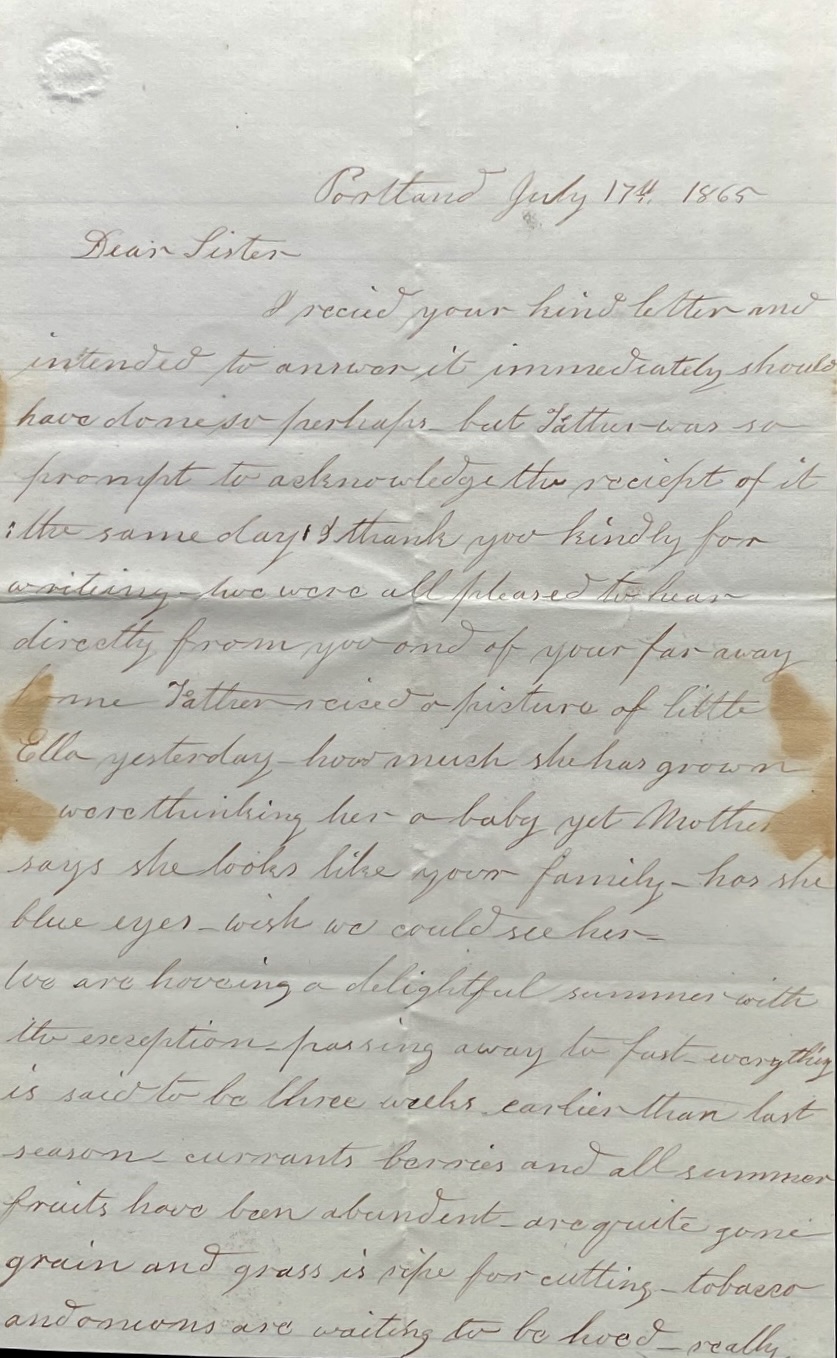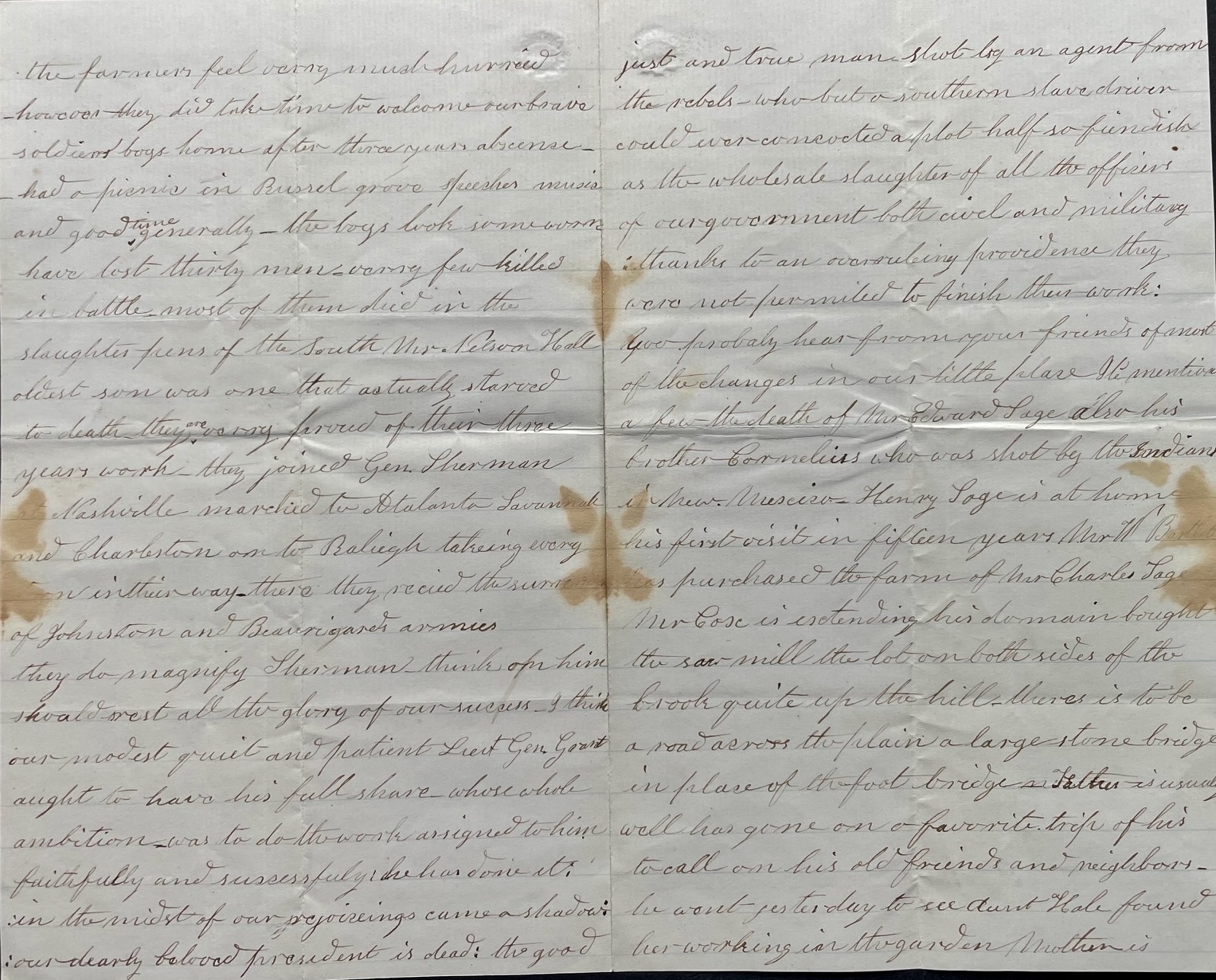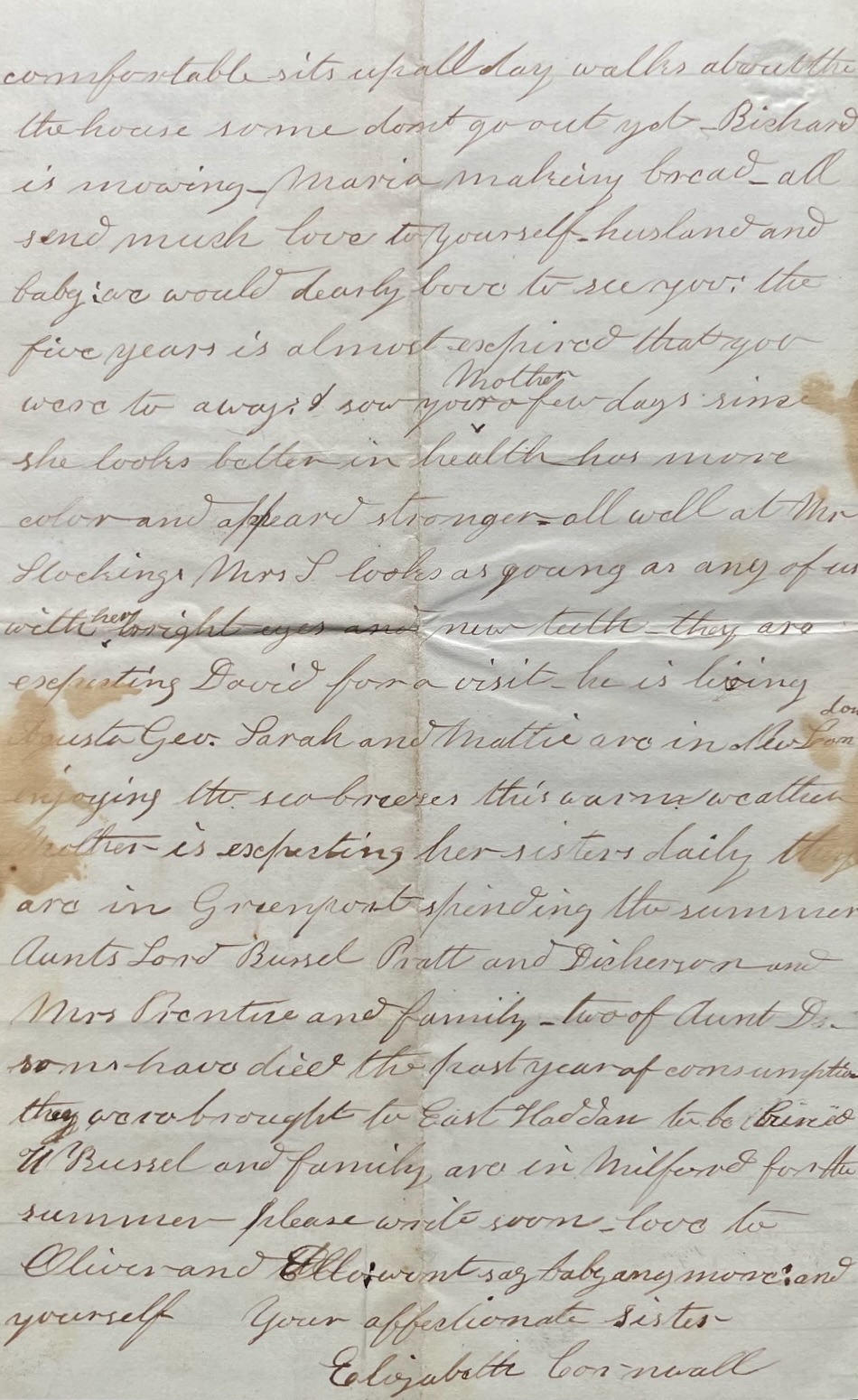
The following letter was written by Elizabeth Foote Cornwall (1821-1881), the 34 year-old daughter of David Cornwall (1790-1874) and Maria Atwood (1794-1869). She wrote the letter to her sister-in-law, Julia Ann (Stocking) Cornwall (1819-1851), the wife of her brother Dr. Nathaniel “Oliver” Cornwall (1816-1903).
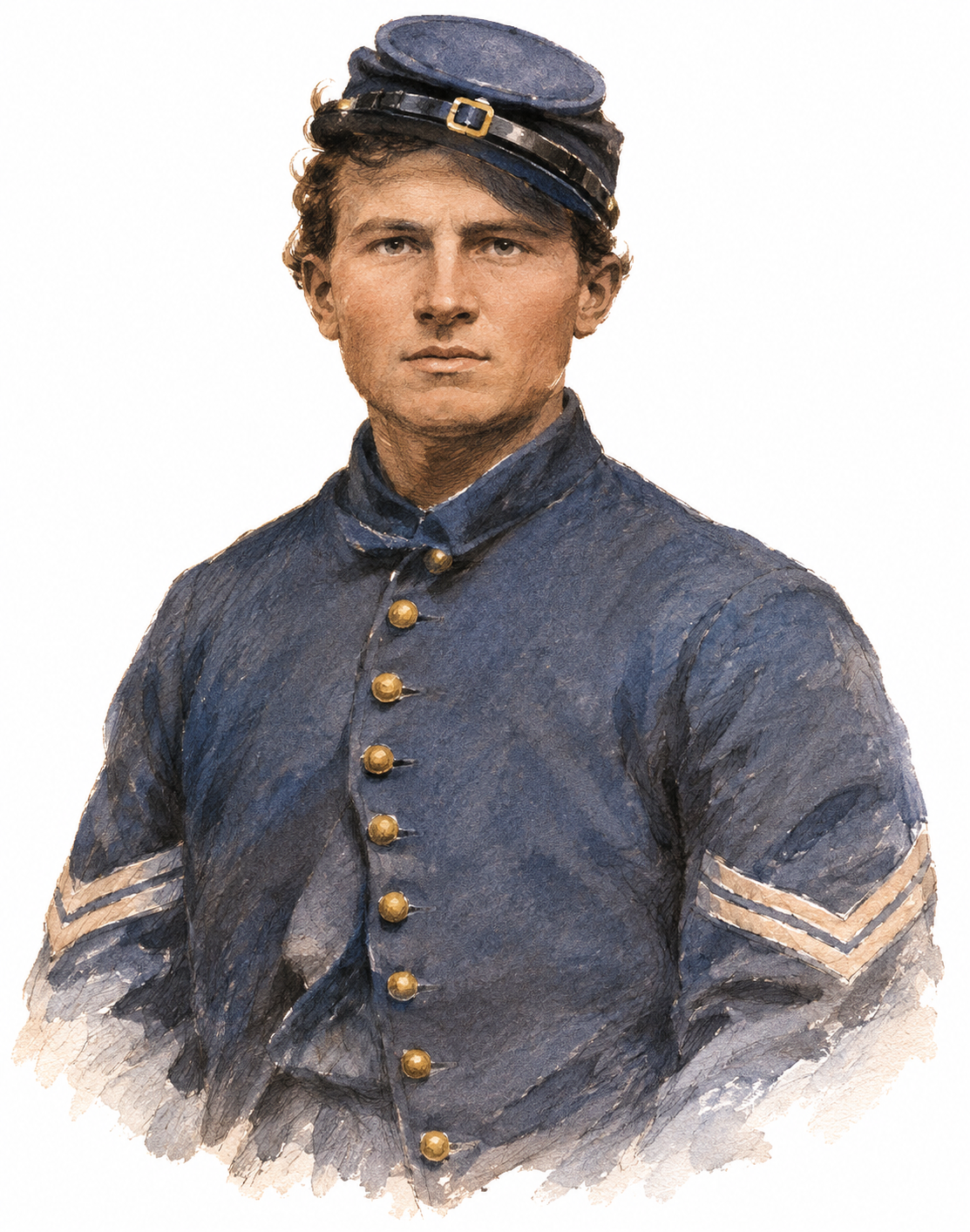
Elizabeth’s letter speaks of the celebratory return of the Boys from Co. D, 20th Connecticut Infantry—a regiment that first saw action at Chancellorsville and Gettysburg (Culps Hill) before joining Sherman’s Army on the Atlanta Campaign and the March through Georgia and the Carolinas. These Boys mustered into federal service on 8 September 1862 to serve three years. One member of this company was Corp. Henry Augustus Cornwall (1843-1898).
Her letter also speaks of the tragic news of Lincoln’s assassination in the midst of the celebration of war’s end.
[Note: This letter is from the collection of Greg Herr and was offered for transcription & publication on Spared & Shared by express consent.]
T R A N S C R I P T I O N
Portland [Connecticut]
July 17th 1865
Dear Sister,
I received your kind letter and intended to answer it immediately. Should have done so perhaps but Father was so prompt to acknowledge the receipt of it the same day. I thank you kindly for writing. We were all pleased to hear directly from you and of your far away home. Father received a picture of little Ella yesterday. How much she has grown were thinking her a baby yet Mother says she looks like your family. Has she blue eyes? Wish we could see her.
We are having a delightful summer with the exception [of its] passing away too fast. Everything is said to be three weeks earlier than last season. Currants, berries, and all summer fruits have been abundant—are quite gone, grain and grass is ripe for cutting, tobacco and onions are waiting to be hoed. Really, the farmers feel very much hurried.
However, they did take time to welcome our brave soldiers home after three years absence. Had a picnic in Bussel [Burrel?] Grove, speeches, music, and a good time generally. The Boys look some worn—have lost thirty men—very few killed in battle—most of them died in the slaughter pens of the South. Mr. Nelson Hall’s oldest son was one that actually starved to death. They are very proud of their three years’ work. They joined Gen. Sherman at Nashville, marched to Atlanta, Savannah and Charleston, on to Raleigh taking every town in their way. There they received the surrender of Johnston’s and Beauregard’s armies. They do magnify Sherman—think on him should rest all the glory of our success. [But] I think our modest, quiet, and patient Lieut. Gen. Grant ought to have his full share, whose whole ambition was to do the work assigned to him faithfully and successfully. He has done it.
In the midst of our rejoicings came shadow. Our dearly beloved President is dead; the good, just and true man shot by an agent from the rebels. Who but a southern slave driver could ever concocted a plot so fiendish as the wholesale slaughter of all the officers of our government, both civil and military? Thanks to an overruling Providence, they were not permitted to finish the work.
You probably hear from your friends of most of the changes in our little place. I’ll mention a few. The death of Mr. Edward Sage. Also his brother Cornelius who was shot by the Indians in New Mexico. 1 Henry Sage is at home, his first visit in fifteen years. Mr. W. B___ has purchased the farm of Mr. Charles Sage. Mr. Case is extending his domain. Bought the sawmill, the lot on both sides of the brook quite up the hill. There is to be a road across the plain, a large stone bridge in place of the foot bridge.
Father is usually well. Has gone on a favorite trip of his to call on his old friends and neighbors. He went yesterday to see Aunt Hale. Found her working in the garden. Mother is comfortable. Sits up all day, walks about the house some. Don’t go out yet. Richard is mowing. Maria making bread. All send much love to yourself, husband, and baby. We would dearly love to see you. The five years is almost expired that you were to be away. I saw your Mother a few days since. She looks better in health. Has more color and appeared stronger. All well at Mr. Stocking’s. Mrs. Stocking looks as young as any of us with her bright eyes and new teeth. They are expecting David for a visit. He is living in Augusta, Georgia.
Sarah and Mattie are in New London enjoying the sea breezes this warm weather. Mother is expecting her sisters daily. They are in Greenport [Long Island] spending the summer. Aunts Lord, Bussel, Pratt, and Dickerson and Mrs. Prentise and family. Two of Aunt D’s sons have died the past year of consumption. They were brought to East Haddam to be buried. Wednesday. Bussel and family are in Milford for the summer.
Please write soon. Love to Oliver and Ella—won’t say baby anymore, and yourself. Your affectionate sister, — Elizabeth Cornwall
1 Cornelius Sage was actually killed in Arizona Territory. He was serving as the first Sheriff of Yuma County when he was ambushed and shot by Yacapai Apache warriors at Willow Springs. He was the son of Henry and Lucinda Sage of Portland, Connecticut. He moved to the Southwest in 1863 to work in mining before become the sheriff (see Yuma County Sheriff’s Office Fallen Officer)