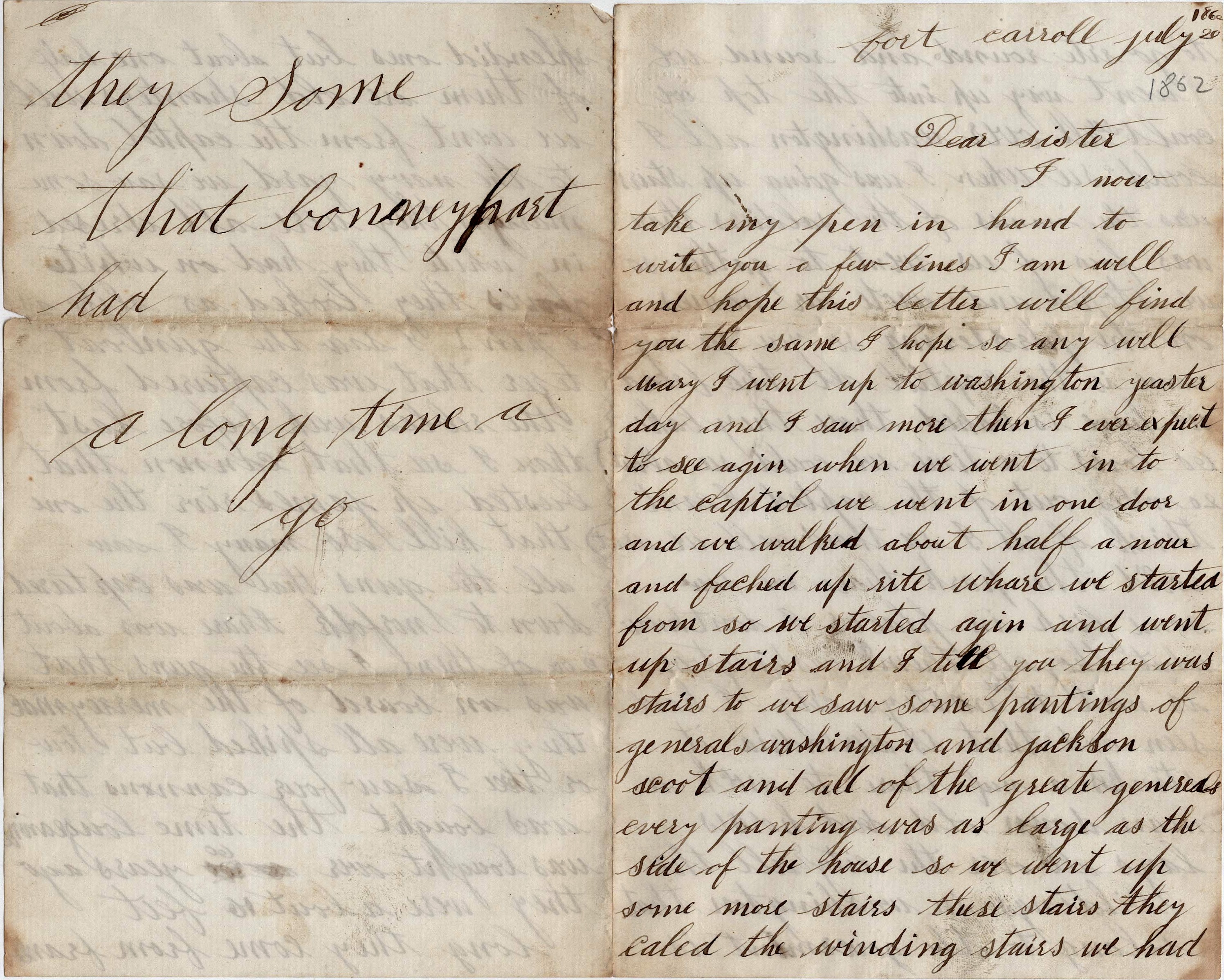
These two letters were written by Charles Edward Ballou (1843-1938) of Chepachet, Providence, Rhode Island. He was the son of Sabin A. Ballou (1818-1848) and Mary Ann Arnold (1821-1898). Charles and his brother, Henry Warren Ballou, enlisted in Co. F, 9th Rhode Island Infantry—a regiment that was raised in May 1862 for three months service to garrison the Washington D. C. forts during McClellan’s Peninsula Campaign. Company “A” was at Fort Greble, “B” at Fort Meigs, “C” at Fort Ricketts, “D” at Fort Snyder, “E” and “K” at Fort Baker, “F” at Fort Carroll, “G” at Fort Dupont, “H” at Fort Wagner, “I” at Fort Stanton and “L” at Fort Davis. Mustered out September 2, 1862. Charles wrote the letter to his sister Mary Elizabeth Ballou (1845-1927).
Letter 1
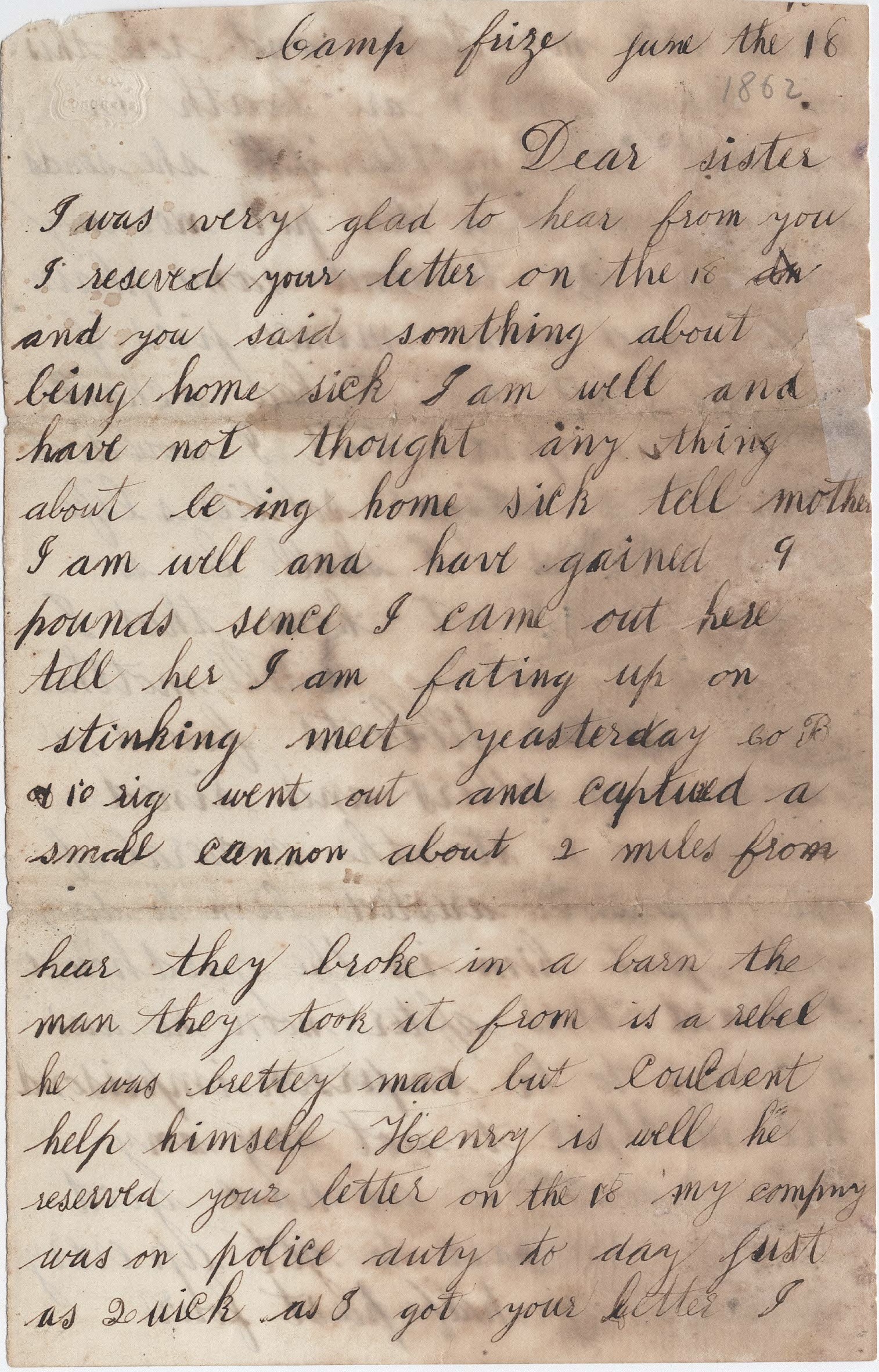
Camp Frieze [Tennallytown, D. C.]
June 18, 1862
Dear Sister,
I was very glad to hear from you. I received your letter on the 18th and you said something about being homesick. I am well and have not thought anything about being home sick. Tell mother I am well and have gained nine pounds since I came out here. Tell her I am fatting up on stinking meat.
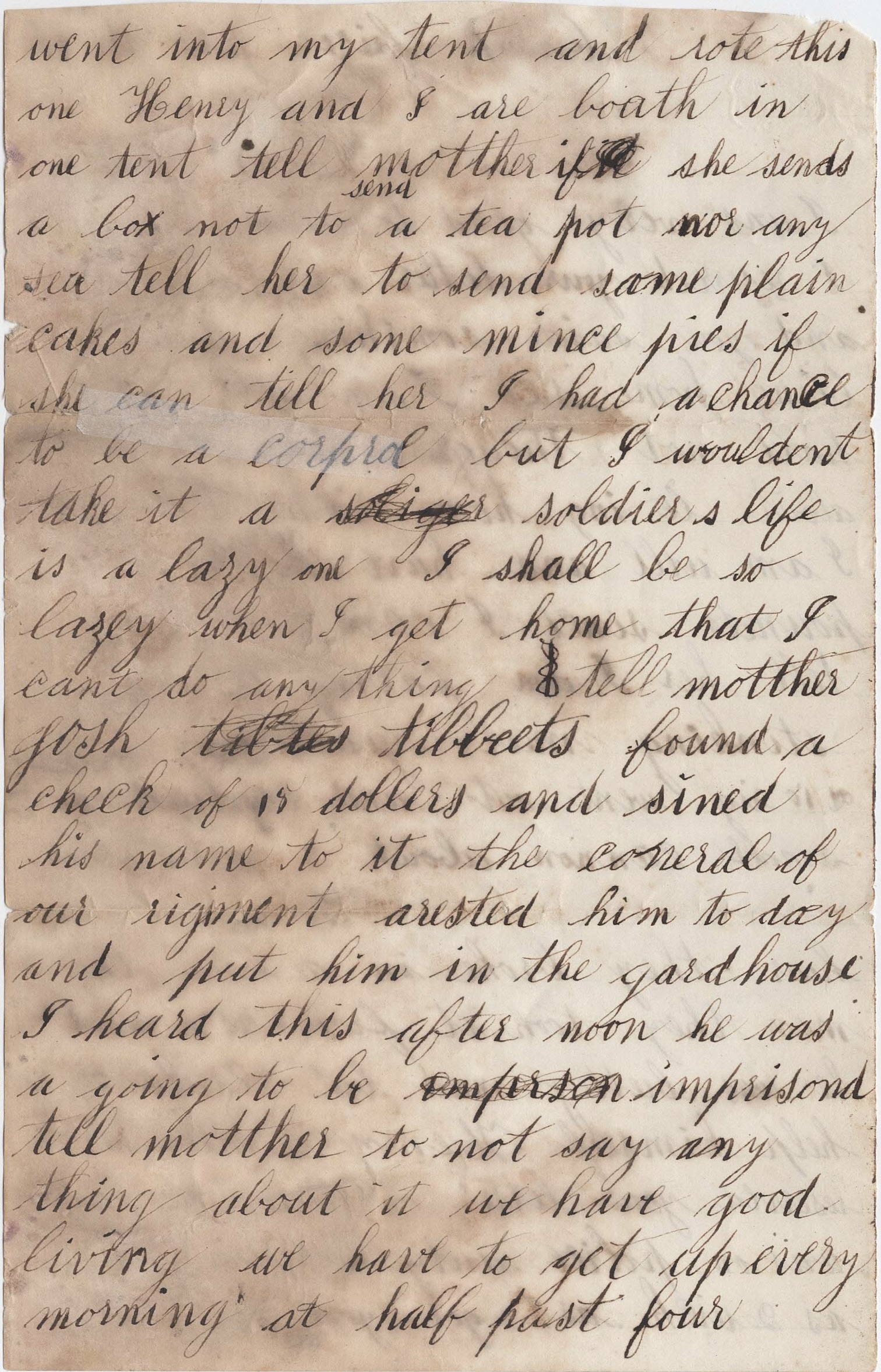
Yesterday, Co. B, 10th Regiment, went out and captured a small cannon about two miles from here. They broke in a barn. The man they took it from is a rebel. He was pretty mad but couldn’t help himself. Henry is well. He received your letter on the 18th. My company was on police duty today. Just as quick as I got your letter, I went to my tent and wrote this one. Henry and I are both in one tent. Tell mother if she sends a box, not to send a tea pot nor any tea. Tell her to send some plain cakes and some mine pies if she can. Tell her I had a chance to be a corporal but I wouldn’t take it.
A soldier’s life is a lazy one. I shall be so lazy when I get home that I can’t do anything. Tell mother that Josh Tibbets found a check of 15 dollars and signed his name to it. The Colonel of our regiment arrested him today and put him in the guardhouse. I heard this afternoon he was a going to be imprisoned. Tell mother to not say anything about it.
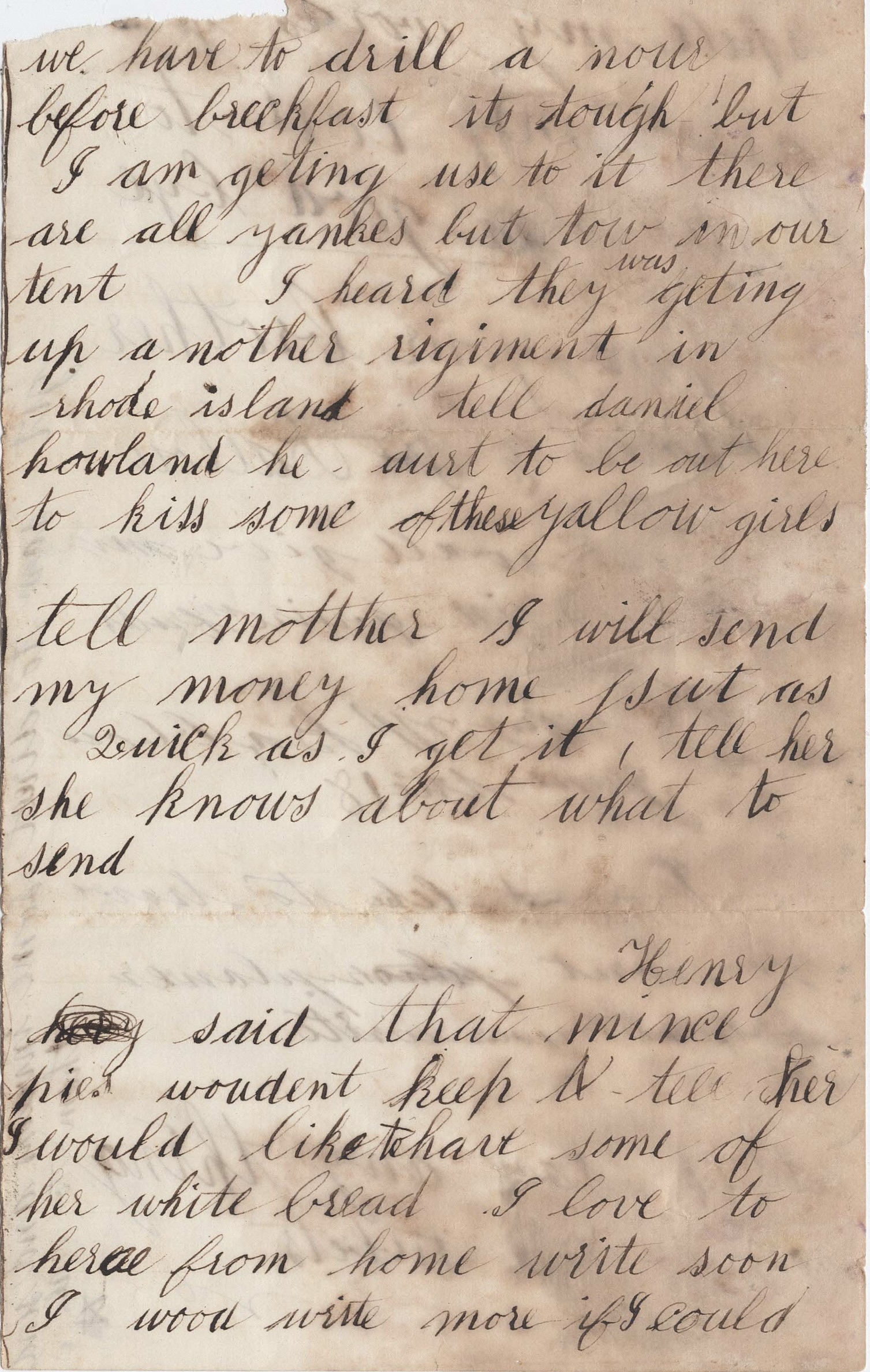
We have good living. We have to get up every morning at half past four. We have to drill an hour before breakfast. It’s tough but I am getting use to it. There are all Yanks but two in our tent. I heard they was getting up another regiment in Rhode Island. Tell Daniel Howland he ought ot be out here to kiss some of the yellow girls. Tell mother I will send my money home just as quick as I get it. Tell her she knows about what to send.
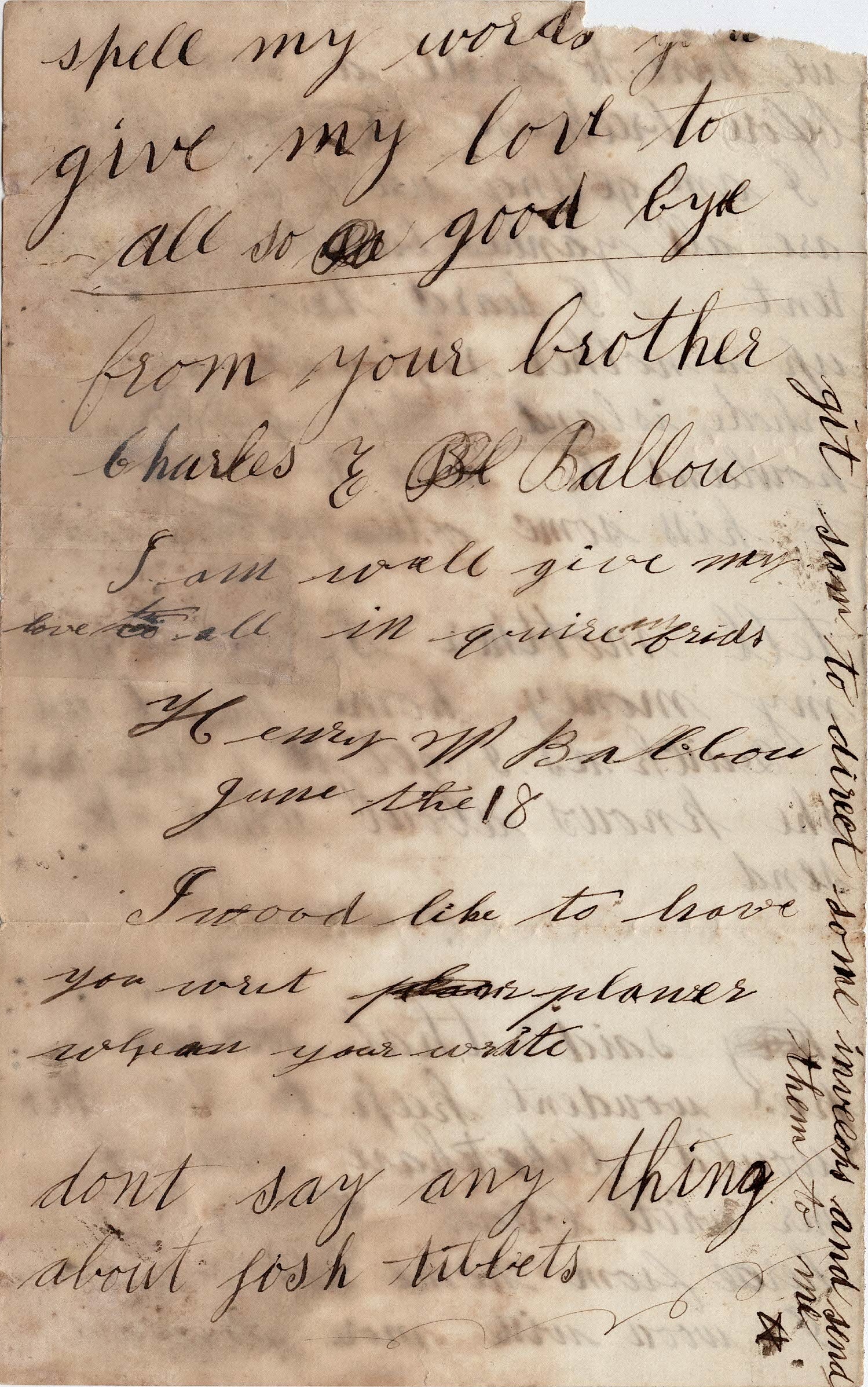
Henry said that mince pies wouldn’t keep. And tell her I would like to have some of her white bread. I love to hear from home. Write soon. I would write more if I could spell my words good. Give my love to all. So goodbye.
From your brother, — Charles E. Ballou
I am well. Give my love to all inquirers. — Henry W. Ballou, June the 18th. I would like to have you write plainer when you write.
Don’t say anything about Josh Tibbets. Get Sam to direct some envelopes and send to me.
Letter 2
Fort Carroll [Washington D. C.]
July 20, 1862
Dear Sister,
I now take my pen in hand to write you a few lines. I am well and hope this letter will find you the same. I hope so any[way].
Well, Mary, I went up to Washington yesterday and I saw more than I expect to see again. When we went into the Capitol, we went in one door and we walked about half an hour and fetched up right where we started from. So we started again and went upstairs and I tell you, they was stairs too. We saw some paintings of Generals Washington, and Jackson, and Scott, and all of the great generals. Every painting was as large as the side of a house. So we went up some more stairs. These stairs they called the winding stairs. We had to go right round and round. We went way up into the top [where] we could see all over Washington. All I could see when we was going upstairs was the [graffiti] names of the soldiers. There was four of us went together so we stopped and wrote our names on the plastering. So you see my name is [in] the Capitol. 1
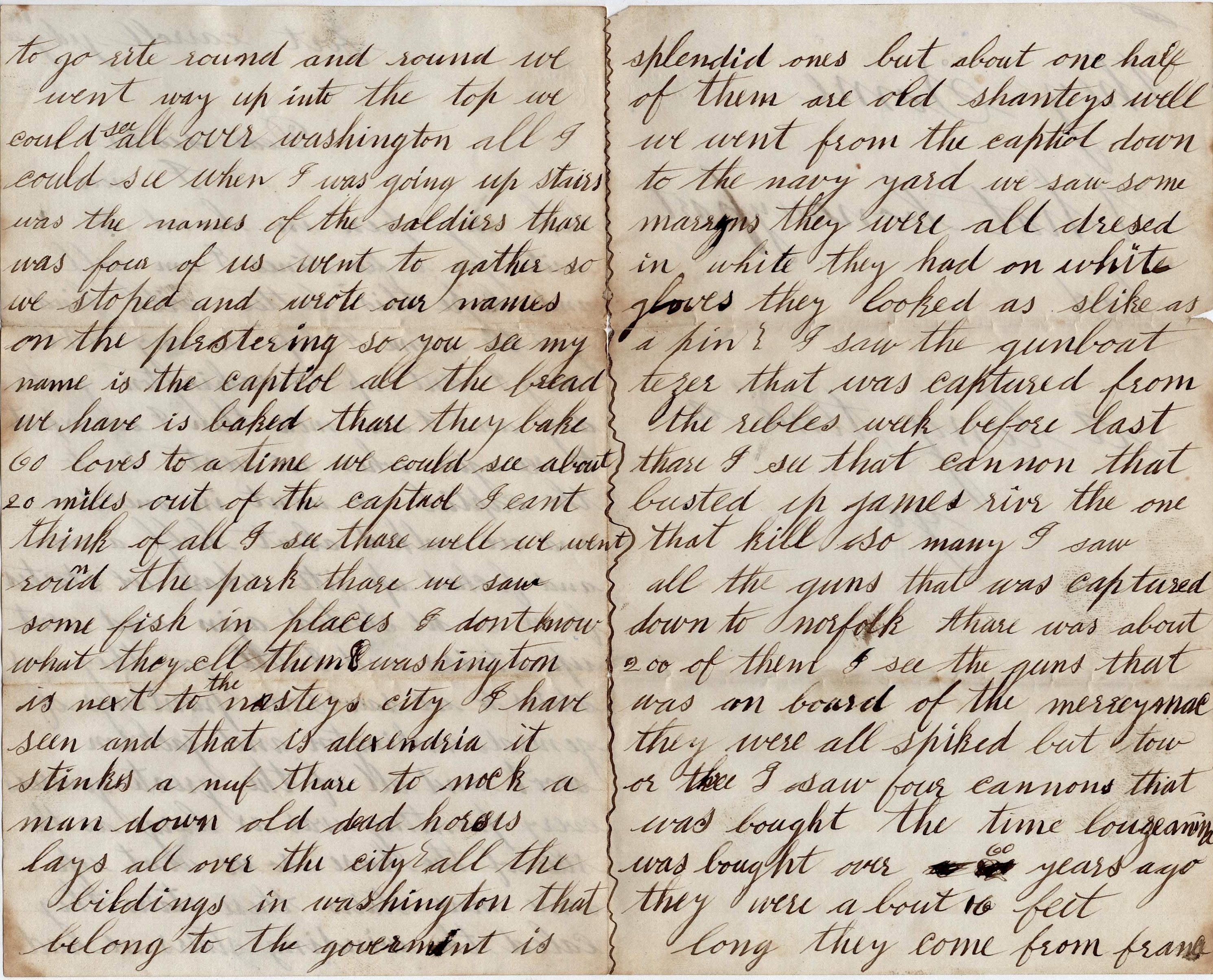
All the bread we have is baked there. They bake 60 loaves to a time. We could see about twenty miles out of the Capitol. I can’t think of all I see there. Well, we went round the park there. We saw some fish in places. I don’t know what they call them.
Washington is next to the nastiest city I have seen and that is Alexandria. It stinks enough there to knock a man down. Old dead horses lays all over the city. 2 All the buildings in Washington that belong to the government is splendid ones, but about one half of them are old shanties.
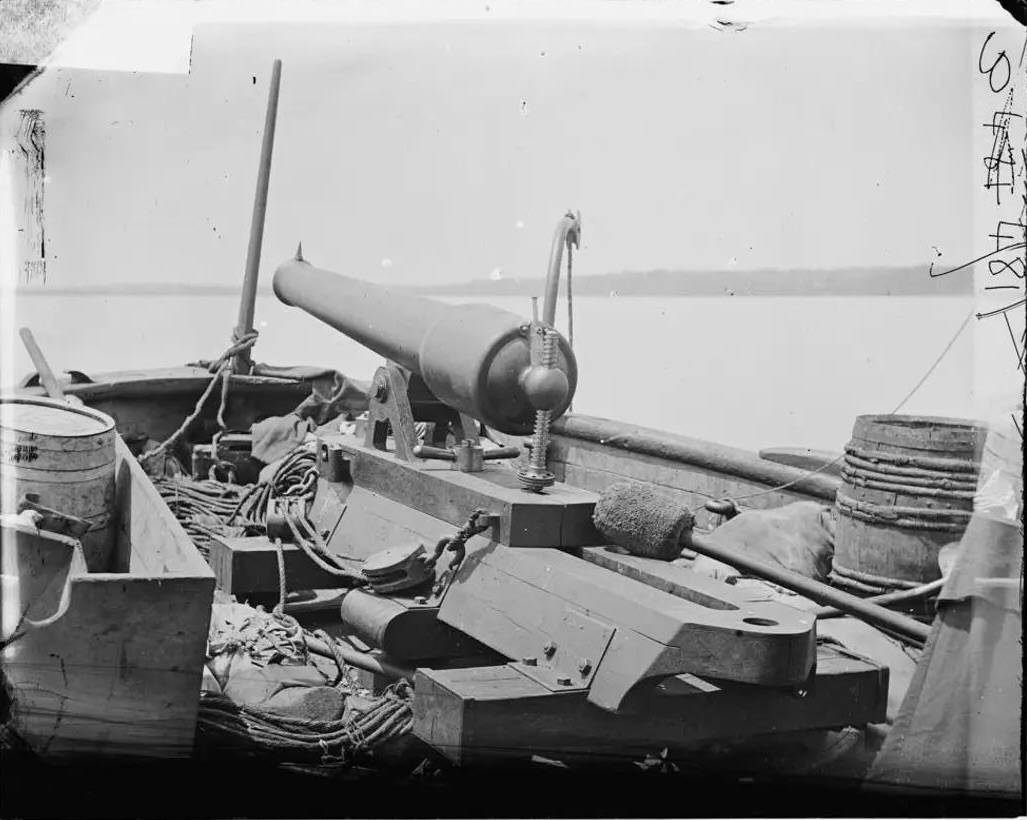
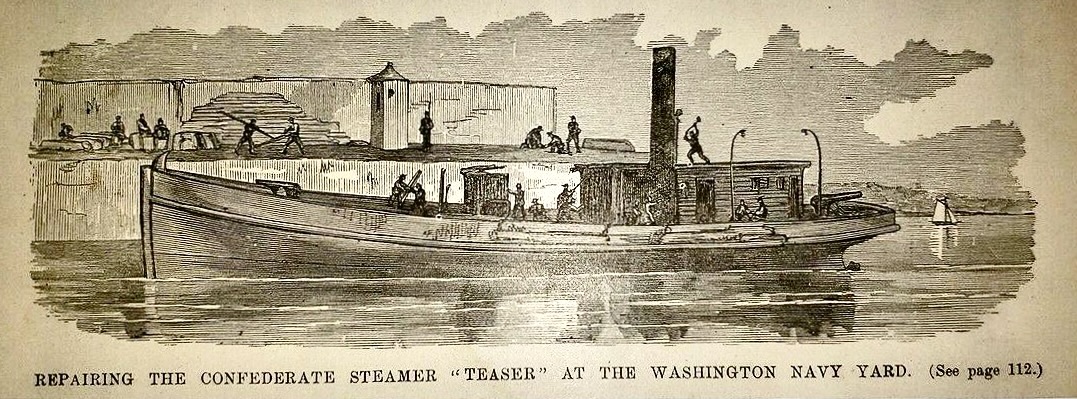
Well, we went from the Capitol down to the Navy Yard [where] we saw some marines. They were all dressed in white. They had on white gloves. They looked as slick as a pin. I saw the gunboat Teazer 3 that was captured from the rebels week before last. There I [also saw that cannon that busted up James River—the one that killed so many. I saw all the guns that was captured down to Norfolk. There was about 200 of them. I see the guns that was on board of the Merrimack. They were all spiked but two or three. I saw four cannons that was bought [at] the time Louisiana was bought over 60 years ago. They were about 16 feet long. They came from France. They [were] some that Bonaparte had a long time ago.
1 It isn’t clear from what vantage point the author of this letter was able to view the city as the top of the new US Capitol dome was not yet fully completed. It may have been to the very top where workmen were still erecting the Tholos. The Statue of Freedom was not placed at the very top until December 1863.
2 Being a major supply hub to the Union army, there was a large influx of cavalry mounts, artillery horses, and supply mules in the Quartermaster corrals. As temperatures soared in the summer of 1862, the volume of carcasses outpaced the city’s ability to burn or bury them.
3 The CSS Teaser was an armed tugboat that acted as a tender for the CSS Virginia during the Battle of Hampton Roads. The 12-pound rifled gun (pictured below) that she carried is now in the Hampton Roads Naval Museum.