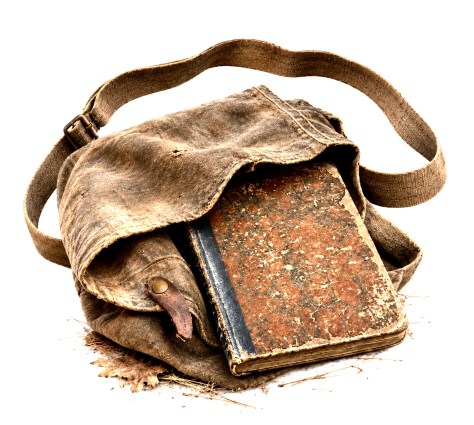
This diary was kept by Pvt. James Redlon Holt (1845-1864), a 16 year-old youngster when he enlisted on 15 November 1861 with Co. G, 12th Maine Infantry. James was the son of Rev. Dudley Barker Holt and Susan M. Redlon from Gorham, Maine, who grudgingly must have given their consent to let him collect a bounty and enter into the service.
In the sweltering heat of Louisiana, where the 12th Maine was stranded for most of its service, James poured his heart onto paper. But just as the light at the end of the tunnel seemed near, with mustering out on the horizon, fate had a cruel twist in store. The regiment was called back East, only to face the brutal carnage of the 3rd Battle of Winchester in September 1864, where James met a tragic end on 19 September 1864—“killed by a cannon ball”—just two months before completing his three-year enlistment. What a visceral reminder of the brutality of war and the fragility of life!
Serving with James and mentioned in some of his letters was his Uncle Darius Holt (1820-1875) who enlisted at the age of 42 and served several months until his health failed and he was discharged for disability. Darius was living in Minot with his wife, Mercy Ann (Lord) Holt (1828-1902) and six children when he enlisted.
This diary is from the private collection of a Holt family descendant and scans were sent to me for transcription and publication on Spared & Shared by express consent. A dozen of James’ letters were recently published on Spared & Shared from the same source. To read those letters, see—1862-64: James Redlon Holt to Dudley Barker Holt.
The first year of James’ diary can be read here: Diary of James R. Holt, Co. G, 12th Maine Infantry: 1 Nov 1861 thru 31 Oct 1862
T R A N S C R I P T I O N
Saturday, November 1, 1862—Have cold in my head. Pleasant. Went to Carrollton to get some clothes but couldn’t. They have stoves there now & live well. Live easy & have little to do.
Sunday, 2nd—Feel well. October weather. Capt. Sawyer of Co. H, 9th Connecticut, went to lake today, taking charge of the train, bringing Proctor, Armstrong, &c. & a lot of arms. Guess there’ll be better management now.
Monday, 3rd—Have slight cold & headache. Train ran today only to accommodate the boys at the lake. About 300 came here wishing to go down but couldn’t. They bother us all the time with their questions & don’t seem satisfied when we tell them we know nothing about it. Well let them go. That’s all we have to do.
Tuesday, 4th—Health & weather decent. Train ran but carried none who had not a pass from Butler. Received a letter from home & two papers. All well. Old Maine has gone ahead of all other states. She is the 1st and almost the only one to fill her quota without a draft.
Wednesday, 5th—Have slight cold. Fine day. Train is not regulated yet. It is said our regiment was paid off today.
Thursday, 6th—Health same. Cold. Wrote some. Capt. Robinson came here & paid me $26.50. Sent $16 home.
Friday, 7th—Cold no better. Fair & cold. Money most gone.
Saturday, 8th—Health & weather same. The Opelousas train which was conveying powder to Gen. [Godfrey] Weitzel blew up killing 11 & wounding 30 of the 13th Connecticut & 8th New Hampshire.
Sunday, 9th—Health & weather same. Dull times.
Monday, 10th—Feel well. Pleasant. Went to Carrollton & drew some clothing. They have mounted quite a number of heavy guns on the parapet. I have nothing to do but enjoy myself as I can.
Tuesday, 11th—Have a slight cold. Fair.
Wednesday, November 12 [1862]—Feel same. Cloudy & rainy.
Thursday, 13th—Have slight cold. Warm & rainy. Dull.
Friday, 14th—Haveslight cold in head. Rainy. Dull.
Saturday, 15th—Have bad cold. Warm & rainy. Out of 10. I kept to [ ] this time. I’ve only four left. Spent half for books so it’s not entirely lost.
Sunday, 16th—Health & weather same. Mighty dull. Since I came here I’ve read Authur Conway, Robert Oaklands, Waverley, New England’s Tale, Captain’s Ward, & Lanman’s Alleghanies.
Monday, 17th—Heath same & weather ditto. [ ]
Tuesday, 18th—Health & weather same. Lieutenant of 9th [Connecticut] goes with the train so we’ve nothing to do. Our regiment goes off tomorrow. Wish I could go too but I can’t. All of our boys are sick here.
Wednesday, 19th—Health same. Cloudy. Nothing to do. Regiment moved off somewhere.
Thursday, 20th—Health & weather same.
Friday, 21st—When I awoke this morning I felt weak & had no appetite. Have the diarrhea quite bad. Went up to the Crescent City Press & returning took a look at Reading Press where Tom is but didn’t go in. Having bought a Virgil Lexicon, I’m reading that now.
Saturday, 22nd—Diarrhea still bad. Pleasant. By Marion, we have [news that] dates to 12th November from New York. Potomac Army still progressing. Gen. McClellan has been relieved by Burnside per Presidential order. This is mean anyhow. After all he has done, he is left without command. It seems as though some dire fiend was pursuing him, depriving him of the pleasure of expected victory. It is honor enough, however, to any one man to have been so beloved by his men. His parting from them is said to have exceeded anything ever recorded in history (save that of Napoleon parting from his generals) in solemnity. But the noble young general makes no complaint, quietly submitting to his superiors. It may be just, but I look upon it as another yielding of our President to Radicals.
Sunday, 23rd—Diarrhea still continues. Pleasant [day]. When I awoke this morning, a policeman came and told us that our sergeant was in the calaboose. About 9 last night as he was walking down to the market, a policeman asked him if he had a pass. He replied in the negative. Well, says the policeman, let’s go see the clerk & he’ll give you one. He went. They shoved him in the ‘boose. We’ve got him out since though. Went to see Tom but found the [Reading] Press shut up. Heard that they had been in Parish Prison on account of some $1,000 worth of goods being stolen but they’ve since been removed as innocent.
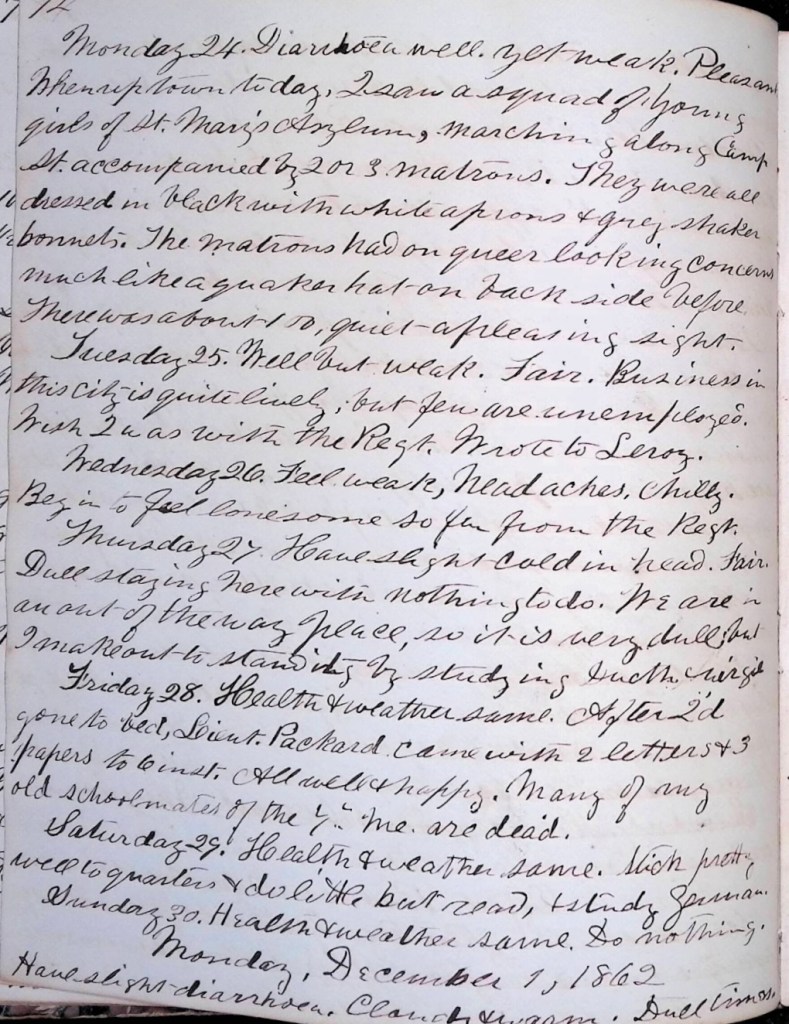
Monday, 24th—Diarrhea well, yet weak. Pleasant [day] When up town today, I saw a squad of young girls of St. Mary’s Asylum marching along Camp Street accompanied by two or three matrons. They were all dressed in black with white aprons & grey shaker bonnets. The matrons had on queer looking concerns, much like a quaker hat on back side before. There was about 100—quite a pleasing sight.
Tuesday, 25th—Well but weak. Fair [weather]. Business in this city is quite lively; but few are unemployed. Wish I was with the regiment. Wrote to Leroy.
Wednesday, 26th—Feel weak. Headaches. Chilly. Begin to feel lonesome so far from the regiment.
Thursday, 27th—Have slight cold in head. Fair. Dull staying here with nothing to do. We are in an out of the way place so it is very dull but I make out to stand it by studying Dutch [German] & Virgil.
Friday, 28th—Health & weather same. After I’d gone to bed, Lieut. Packard came up with two letters & three papers to the 6th instant. All well and happy [at home]. Many of my old schoolmates of the 7th Maine are dead.
Saturday, 29th—Health & weather same. Stick pretty well to quarters & do little but read and study German.
Sunday, 30th—Health & weather the same. Do nothing.
Monday, December 1, 1862—Have slight diarrhea. Cloudy & warm. Dull times.
Tuesday, 2nd—Health same. Cloudy all day. Rain at night. Times very dull.
Wednesday, 3rd—Feel well. Rainy. Had toothache. [Benjamin] Flanders of the 1st & [Michael] Hahn of the 2nd District, Union men are elected Representatives to Congress. Thus has this part of Louisiana escaped emancipation. This is the right way for all to do.
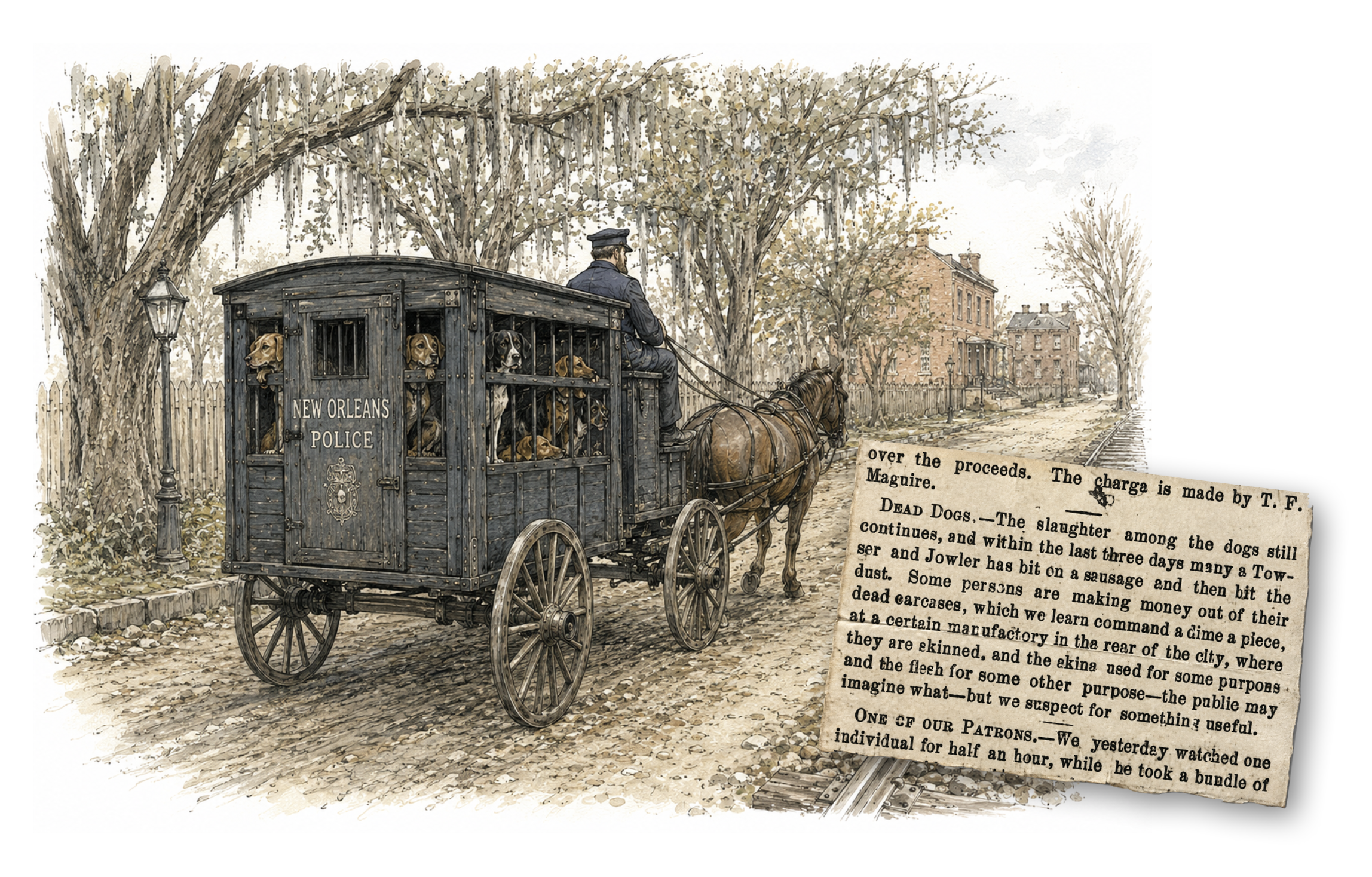
Thursday, 4th—Health & weather same. As for grub, we draw our rations & cook them ourselves, so with plenty of cero, oranges, sugar, potatoes, fish, &c. which we get for nothing, we live well. The police are beginning to put in force the regulations in regard to the dogs. Two or three loads pass here every morning. Poisoned sausage does the work but I’m afraid another kind of sausage—that is, dog meat will soon appear.
Friday, 5th—Feel well except bad toothache which keeps me awake most all night. Received one letter 7 one paper from home. All well to the 21st ult.
Saturday, 6th—Health same. Cool weather here. Dull.
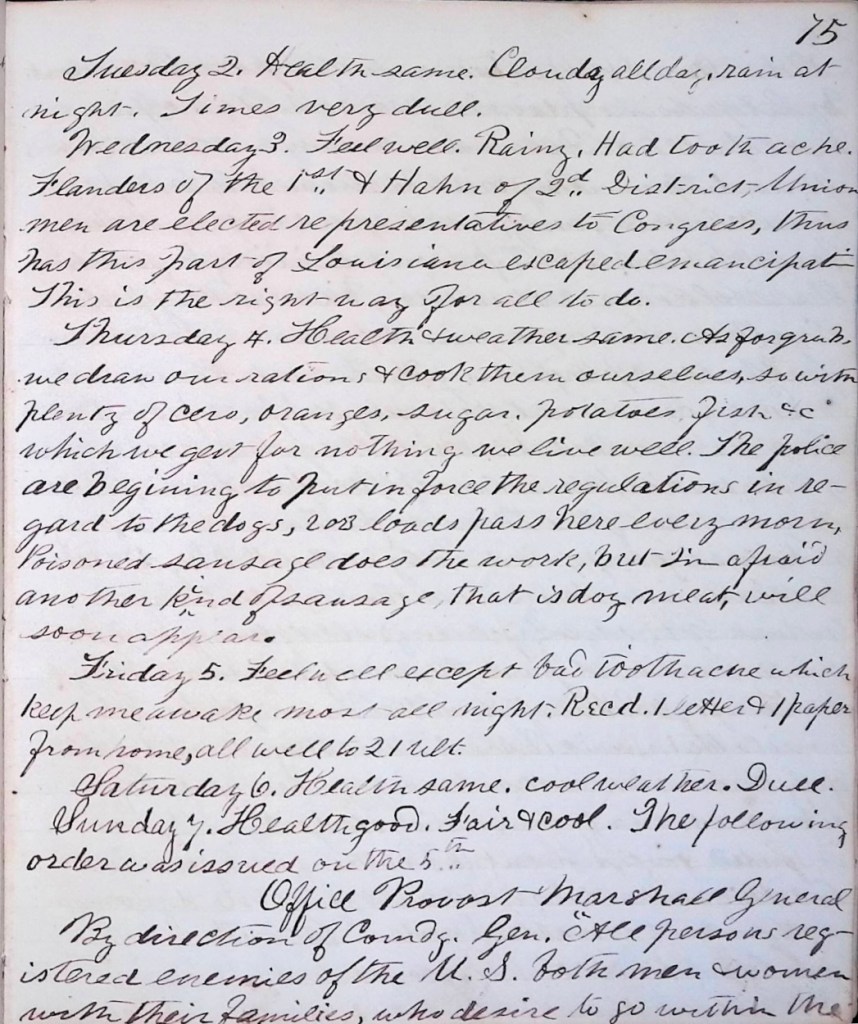
Sunday, 7th—Health good. Fair & cool. The following order issued on the 5th:
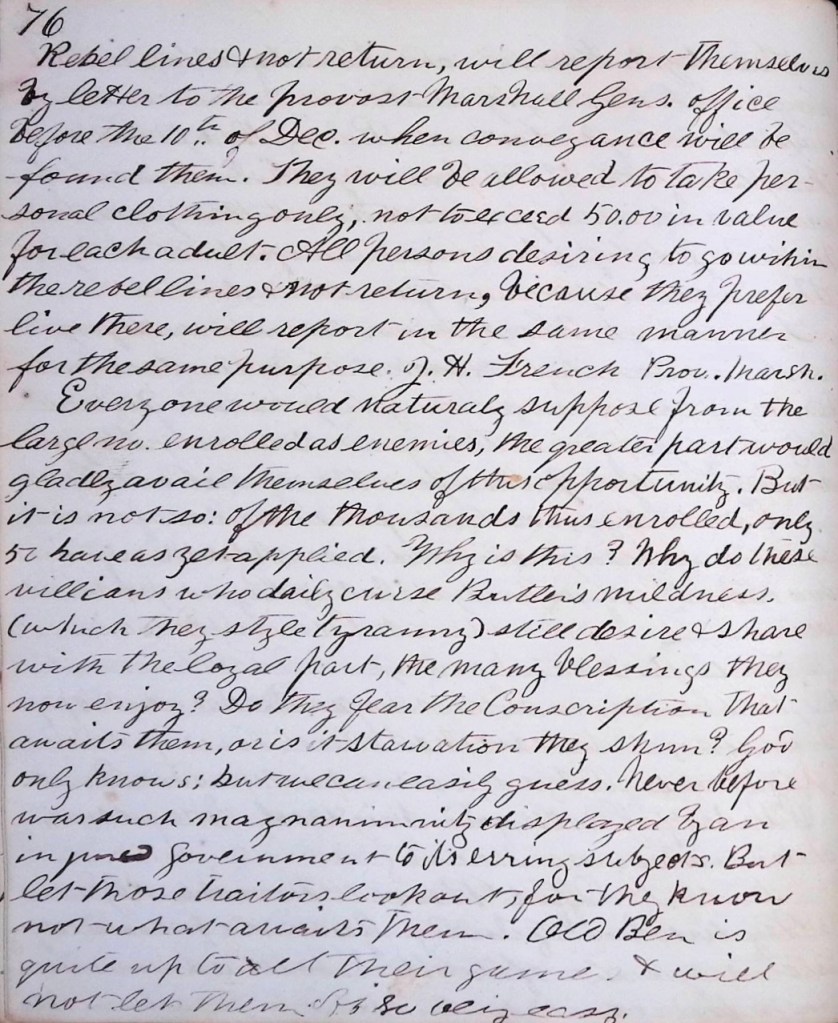
Office Provost Marshall General. By direction of Commanding General, “All persons registered enemies of the U. S., both men and women with their families, who desire to go within the Rebel lines and not return, will report themselves by letter to the Provost Marshall General’s Office before the 10th of December when conveyance will be found them. They will be allowed to take personal clothing only, not to exceed $50 in value for each adult. All persons desiring to go within the rebel lines & not return, because they prefer to live there, will report in the same manner for the same purpose. J. H. French, Prov. Marsh.
Everyone would naturally suppose from the large number enrolled as enemies, the greater part would gladly avail themselves of the opportunity, but it is not so. Of the thousands thus enrolled, only 50 have as yet applied. Why is this? Why do these villains who daily curse Butler’s mildness (which they style tyranny) still desire & share with the loyal part the many blessings they now enjoy? Do they fear the conscription that awaits them, or is it starvation they shun? God only knows, but we can easily guess. Never before was such magnanimity displayed by an injured government to its erring subjects. But let those traitors look out for they know not what awaits them. Old Ben is quite up to act their game & will not let them off so very easy.
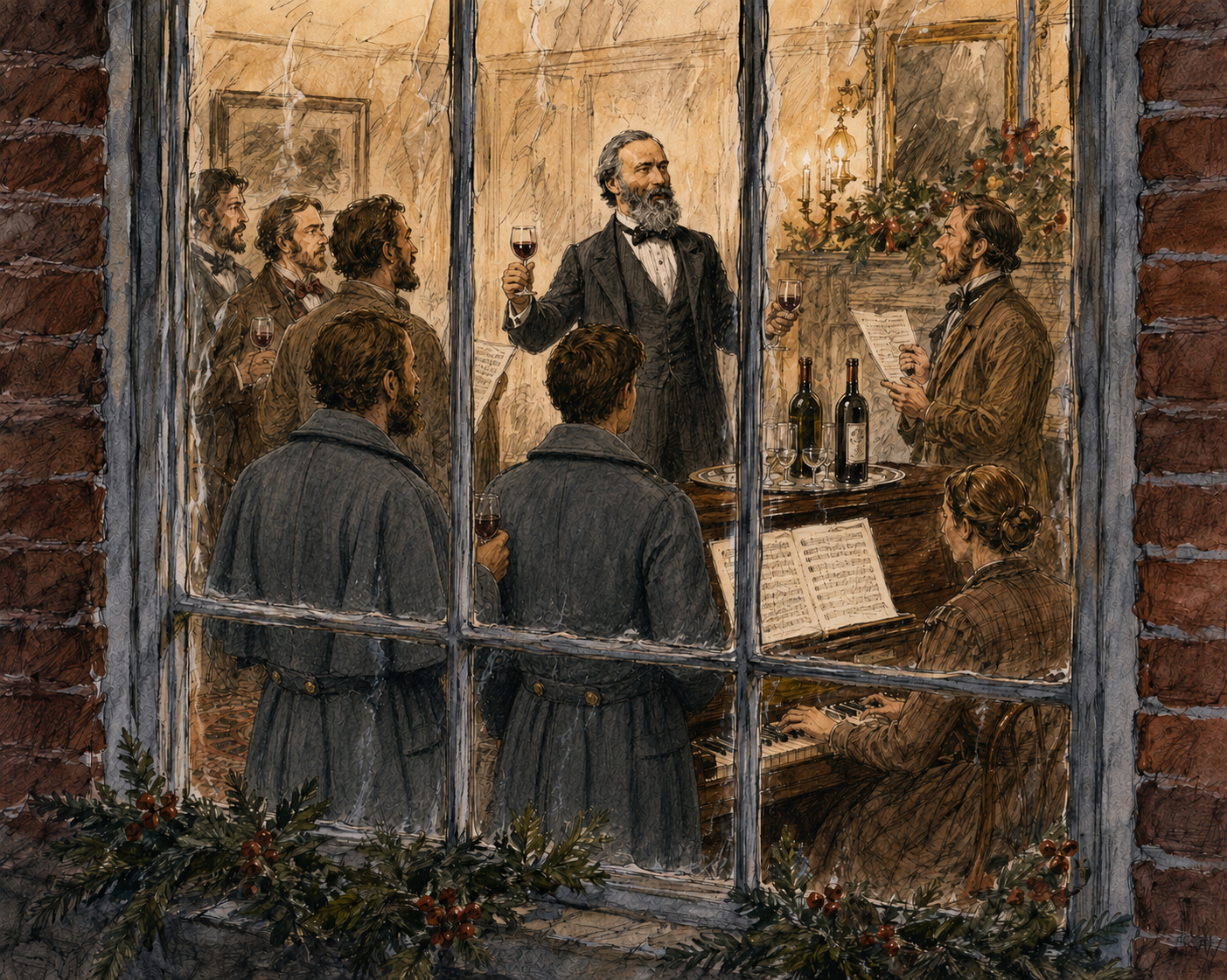
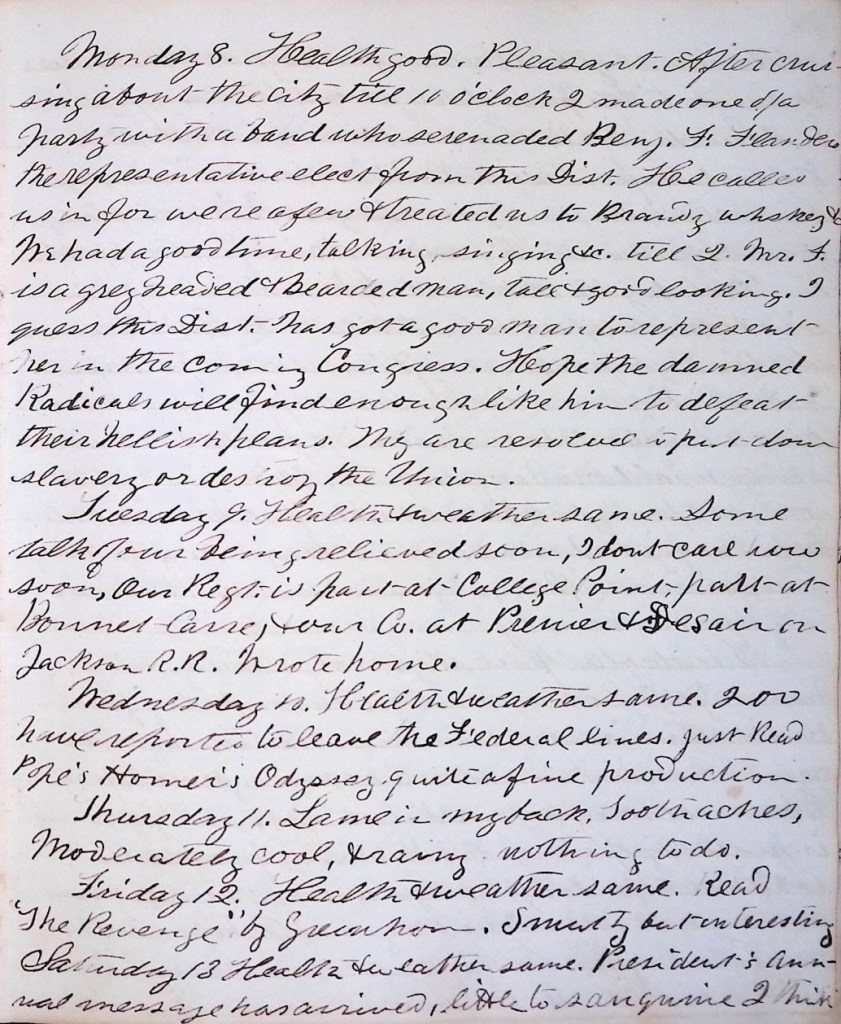
Monday, 8th—Health good. Pleasant. After cruising about the city till 10 o’clock, I made one of a party with a band who serenaded Benjamin F. Flanders, the Representative Elect from the District. He called us in, for we were few, and treated us to brandy, whiskey, &c. We had a good time talking, singing, &c. till two. Mr. Flanders is a grey headed & bearded man, tall and good looking. I guess this District has got a good man to represent her in the coming Congress. Hope the damned Radicals will find enough like him to defeat their hellish plans. They are resolved to put down slavery or destroy the Union.
Tuesday, 9th—Health & weather same. Some talk of our being relieved soon. I don’t care how soon. Our regiment is part at College Point, part at Bonnet-Carré, & our company at Prenier [Prieur?] & Desair [Desiré] on Jackson Railroad. Wrote home.
[Editor’s Note: College Point was located about 40 miles upriver from New Orleans in St. James Parish, named for the prominent bend in the river where Jefferson College and a Catholic convent school were established. Bonnet-Carré was roughly 33 to 40 miles above New Orleans on the east/north bank of the Mississippi River in the German Coast region (near present day Norco and Montz).]
Wednesday, 10th—Health & weather same. 200 have reported to leave the Federal lines. Just read [Alexander] Pope’s Homer’s Odyssey. Quite a fine production.
Thursday, 11th—Lame in my back. Tooth aches. Moderately cool & rainy. Nothing to do.
Friday, 12th—Health & weather same. Read “The Revenge” by Greenbow [?]. Smutty but interesting.
Saturday, 13th—Health & weather same. President’s Annual Message has arrived. Little too sanguine, I think, of the result of his emancipation schemes but it can do little harm to try it on, [even] if it does no good.
Sunday, December 14—Lame in back. Dull & cloudy. Nine steamers filled with Bank’s men came in tonight so it seems that wherever he goes, he’s not going to make Galveston his rendezvous as at first supposed.
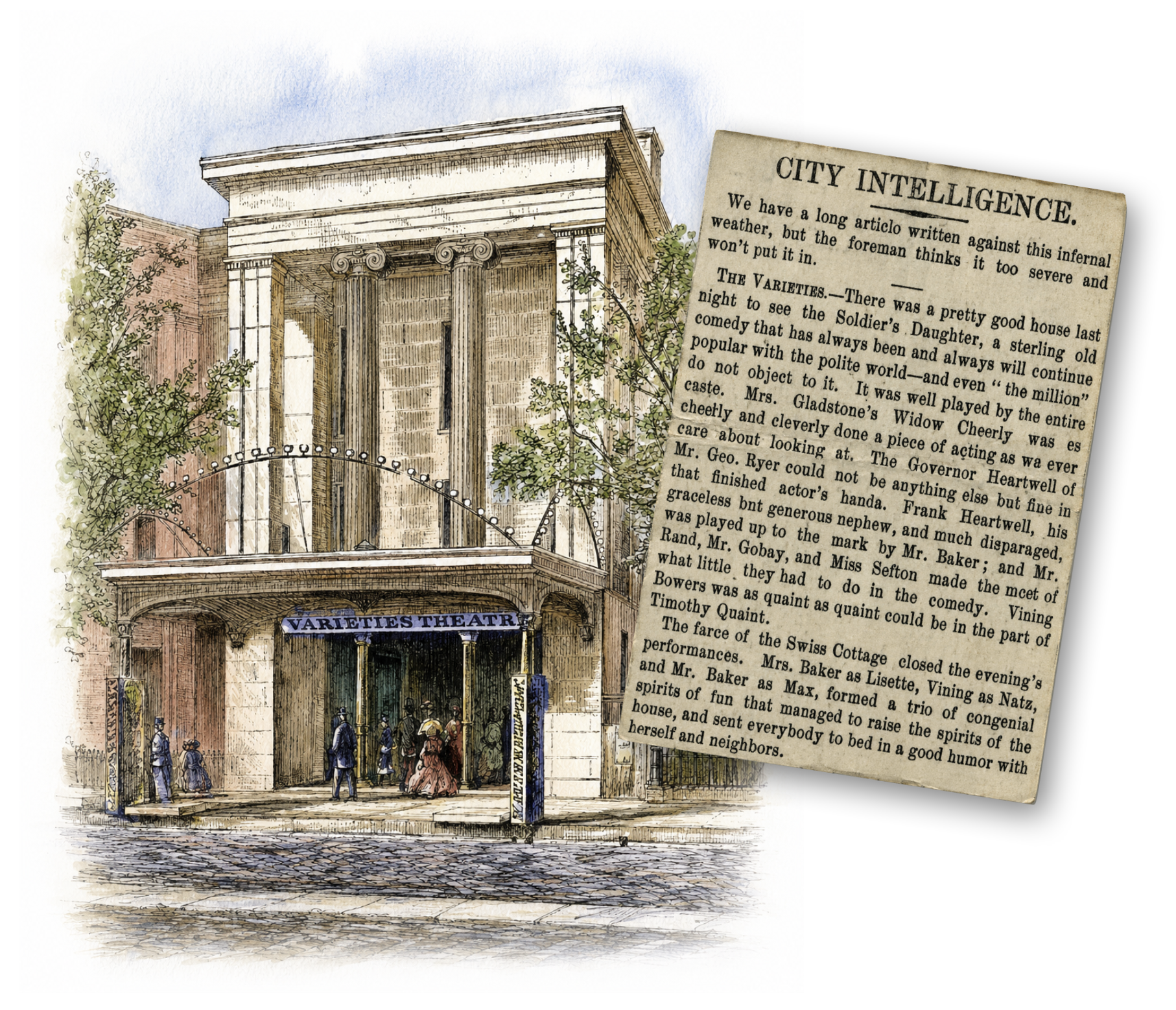
Monday, 15th—Feel well. Fair. About 10 a.m. received orders to report to Co. A to go to the regiment tomorrow. All our regiment is to be got together except perhaps Cos. H & D. Reckon will have a chance to fight soon. Went to the Varieties Theatre [on Gravier Street] last night & saw the Swiss Cottage & Soldier’s Daughter acted. Thought it quite good though perhaps I should not if it had not been the first I ever saw. At any rate, I got my quarter’s worth. I’ll go again when I can though Lord only knows when.
Tuesday, 16th—Have a slight cold. Chilly. Stayed here at Co. A’s quarters all day. At noon today, Gen. Butler committed his command to Banks, by order from Washington. All is to be changed, no doubt. What will become of us, I know not. This exchange is probably a part of the Abolition program which is to put Republican generals in all the important commands. But though they may prosper in this awhile, they’ll find out their error. Like Gen. McClellan, Butler has won a name which all the Abolitionists out of hell can’t injure. He has made out of the most important, wealthy strongholds of the Rebels, one of the quietest, best, and most loyal in the land. The Abolitionists may consign him to private life during the war, but that will only be adding the last stone to their already tottering edifice. Soon—but not too soon—Abolitionism will have its end. Gen. Butler’s fair fame cannot be tarnished by these vile beasts. He has already endeared himself to all the loyal people of the land—especially of New Orleans. Gen. Banks has heretofore done well & I hope he may still, but I can never feel for him that respect that I have for Ben. Banks seems to me to be the tool of villains who would sooner see the Union fall than lose a single plank from their vile platform. But let us trust in God & keep our powder dry?
Wednesday, 17—Have slight cold. Remained here all day.
Thursaday, 18th—Health good. Chilly & fair. Started at 8 a.m. with all our baggage on foot. It is 6 miles & as we rested but twice, it was quite hard. But we weathered it & reached there at 10. Went aboard the Laurel Hill—a large stout river boat. Billy Wilson’s boys came aboard here so we didn’t get ready to start till 9 p.m. They are a rough looking set [who were] fighting among themselves all the time, officers & men alike. It was mighty cold. At Bonnet-Carré, took in Co. C & about midnight we arrived at a place ten miles above where Cos. I & F were.
Friday, 19th—Feel rather stiff & lame. Quite warm. Having taken Cos. I & F aboard we started at sunrise. Saving that the river is lower & wider than in spring, the country looks very like that for twenty miles below New Orleans, though there are a few better mansions & more houses. It makes quite a pretty scene. The smooth, quiet, and huge river flows between two strips of cleared land about one mile wide covered with pretty villas & waving cane with a background of thick green woods.
Arrived at Jefferson College at noon where we took in the rest of the regiment. This is a pleasant little village. Billy’s boys scattered abroad, knocking down niggers, stealing all they could find & kicking up particular hell. One sergeant was shot by an officer. Nothing of consequence was seen after we left till we reached Baton Rouge at 8 p.m. Received two letters & 6 papers [from home]. All well.
Saturday, 20th—Feel well. Went into camp near the battleground one and a half miles from the river. Baton Rouge is nearly deserted. There are a few fine houses in it. It is on a bluff about 10 feet above high water. Saw the Essex [gunboat]. She is rusty so she looks like a house top covered with slate. Laid on our arms all night as it is aid the Rebels are not far off. Very cold.
Sunday, 21st—Have bad cold. Quite warm. At 4 a.m. we were awakened by the firing of three guns & fell into line of battle but no Rebels appeared. No one seemed afraid to turn out. At parade tonight, orders for two hours drill were given. We sleep on arms no more till further orders. Col. [Halbert E.] Paine [4th Wisconsin] commanding. The field we are on is about 80 rods (440 yards) square covered with grass. Close to the wood. There are graves all about here. 4th Wisconsin & two batteries came here today with 2nd Louisiana. Let the Rebels come if they will & if they don’t, we must go after them.
Monday, 22nd—Health & weather same. I went to the Penitentiary & brought off a moss mattress which makes a fine bed. One drill. 133rd New York came in here.
Tuesday, 23rd—Health same. Foggy all day & rainy at night. On brigade guard 1st time in 5 months though got some wet. Had easy time. 173rd New York came in here. Live on hard bread, coffee, salt junk & beef & poor at that. Wrote to Darius.
Wednesday, 24th—Feel well though stiff. The cavalry brought in some guerrillas & a lot of cattle & cotton. We are turned out at 10 by the New York Band beating reveille at 10 instead of 8:30. One man shot on picket tonight in the 2nd Louisiana. He saw & fired on a lot of niggers & then ran to the reserve, when a sergeant halted him & shot him as he did not answer.
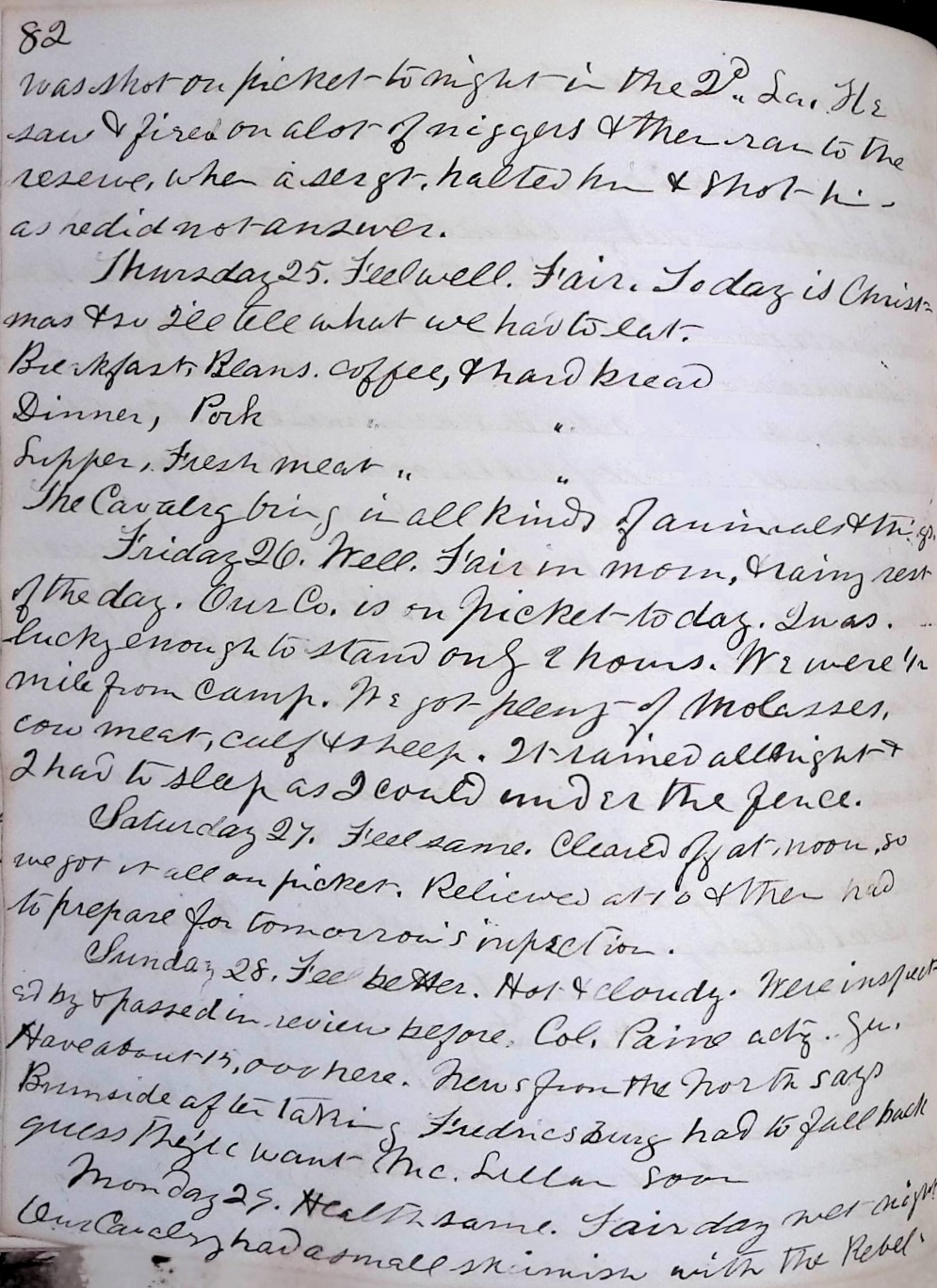
Thursday, 25th [December 1862]—Feel well. Fair. Today is Christmas & so I’ll tell what we had to eat. Breakfast—beans, coffee & hard bread. Dinner—Pork. Supper—Fresh meat. The cavalry brings in all kinds of animals & things.
Friday, 26th—Well. Fair in morning & rainy rest of the day. Our company is on picket today. I was lucky enough to stand only two hours. We were half mile from camp. We got plenty of molasses, cow meat, calf and sheep. It rained all night & I had to sleep as I could under the fence.
Saturday, 27th—Feel same. Cleared off at noon so we got it all on picket. Relieved at 10 & then had to prepare for tomorrow’s inspection.
Sunday, 28th—Feel better. Hot & cloudy. Were inspected by & passed in review before Col. Paine, Acting General. Have about 15,000 here. News from the North says Burnside, after taking Fredericksburg, had to fall back. Guess they’ll want McClellan soon.
Monday, 29th—Health same. Fair day. Wet night. Our cavalry had a small skirmish with the Rebels today, losing one and having eight wounded. Rebel loss 8. They took a team loaded with boiler for Confederate gunboat. Guess we’ll go there soon. Had a brigade drill today. We acted like the devil.
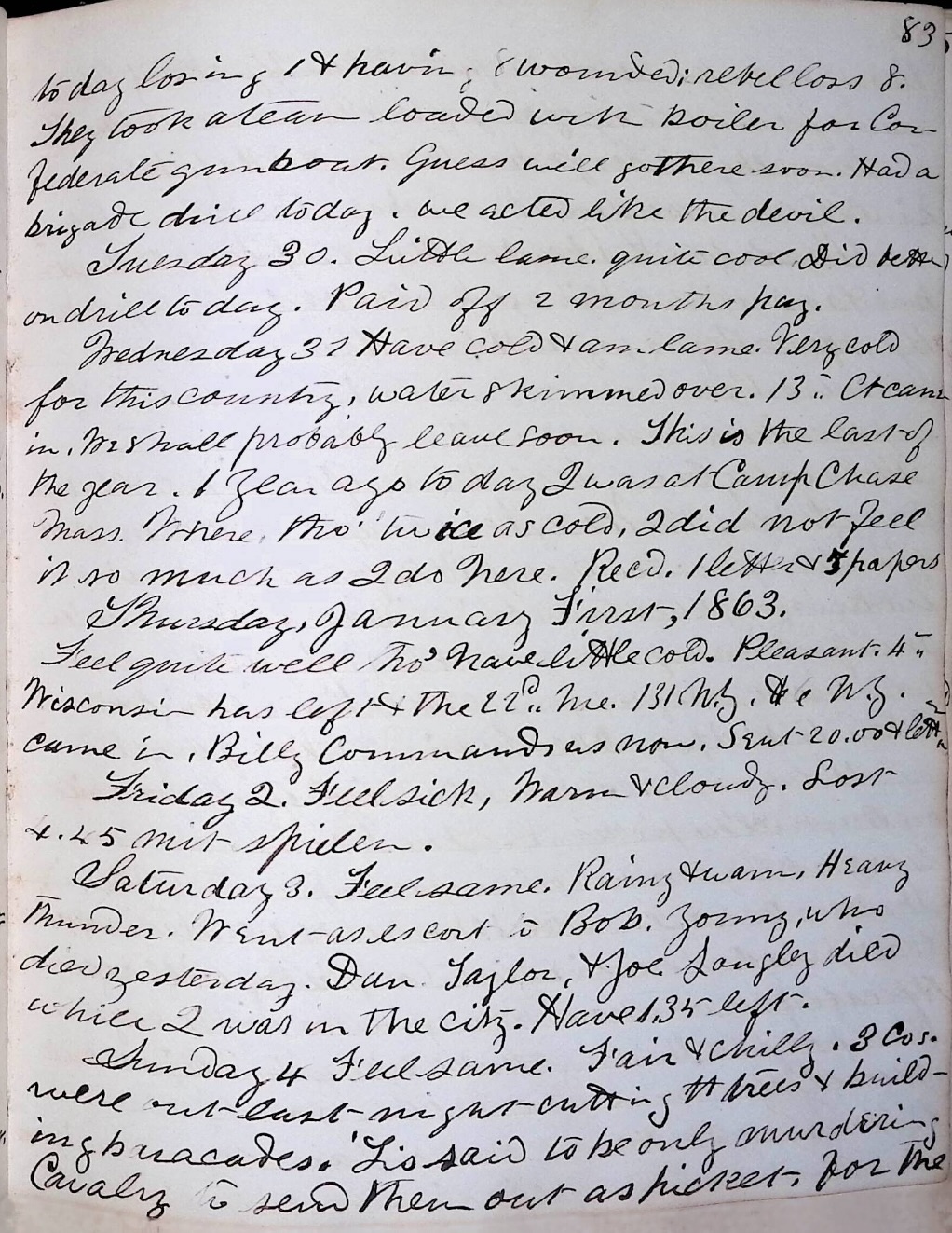
Tuesday, 30th—Little lame. Quite cool. Did better on drill today. Paid off two month pay.
Wednesday, 31st—Have cold and am lame. Very cold for this country. Water skimmed over. 13th Connecticut came in. We shall probably leave soon. This is the last of the year. One year ago today I was at Camp Chase, Massachusetts, where—though twice as cold—I did not feel it so much as I do here. Received one letter & five papers.
Thursday, January 1, 1863—Feel quite well tough have little cold. Pleasant. 4th Wisconsin has left & the 22nd Maine, 131st New York, and 6th New York came in. Billy [Wilson] commands us now. Sent $20 & lent $2.
Friday, 2nd—Feel sick. Warm & cloudy. Lost $4.45 mitspielen [gambling].
Saturday, 3rd—Feel same. Rainy & warm. Heavy thunder. Went as escort to Bob Young who died yesterday. Dan Taylor & Joe Longley died while I was in the city. Have 135 left.
Sunday, 4th—Feel same. Fair & chilly. Three companies were out last night cutting the trees & building barricades. ‘Tis said to be only murdering cavalry to send them out as picket for the Rebels lying in the woods pick them off. We send out infantry now which is much better.
Monday, 5th—Feel same. Rainy all day. All kinds of rumors are abroad about the Potomac Army.
Tuesday, 6th—Had orders to go on picket today but as we got into line, we were ordered to pack up and be ready to go on board the gunboat Albatross which took us to Plaquemine City, twenty miles down on the other side where the Rebels have lately troubled our transports. Four companies [of the[ 52nd Massachusetts are here. We camped at the Market, a few rods from the levee. Plaquemine is a fine little city of 4,000 inhabitants. It is in form of a triangle between the river & the Bayou Plaquemine which is a creek running out of the river down to Berwick’s Bay & bids fair to be one day the main channel of the Mississippi. It runs half a mile on Bayou and one-quarter on river. The houses are low except one dozen or so & nearly all wood, painted white. There are two churches, 6 or 10 stores and two or three taverns & a market. There is quite a pretty village of large plantation houses across the Bayou. The people dress coarse & plain & live mostly on corn meal & meat of all kinds but have no flour or other luxuries.
Wednesday, 7th—Feel same. Fair. While I was washing my clothes this [morning] down at the river, our company was ordered on picket so when I got back, I found them gone & followed. Was put on the bayou. Got no sleep. The niggers sold us plenty of corn bread & molasses for hard tack. The planter near us sent us just the same as he had himself for each meal. He did well for himself as he would have lost his fine lot of chickens and geese tonight if he had not done thus. I was very cold.
Thursday, 8th—Feel same except cough. Warm & fair. Rainy at night. We’ve lived well since we came here. Plenty chickens, pigs, geese, being got for nothing.
Friday, 9th—Feel better. Cough little. Rainy. Turned out at 11. Were turned out by the cavalry who reported that they had been fired upon by rebels who after firing several times, they left without crossing the bayou so we didn’t find any as we expected. Slept on arms & turned out at 2 but by false alarm. Have still plenty of plunder.
Saturday, 10th—Health same. Fair. Had baked chicken. Six men went out foraging & brought in a lot of cattle, meal, &c. so will live well enough. Cavalry took one of the Rebel signal corps today. Wrote home.
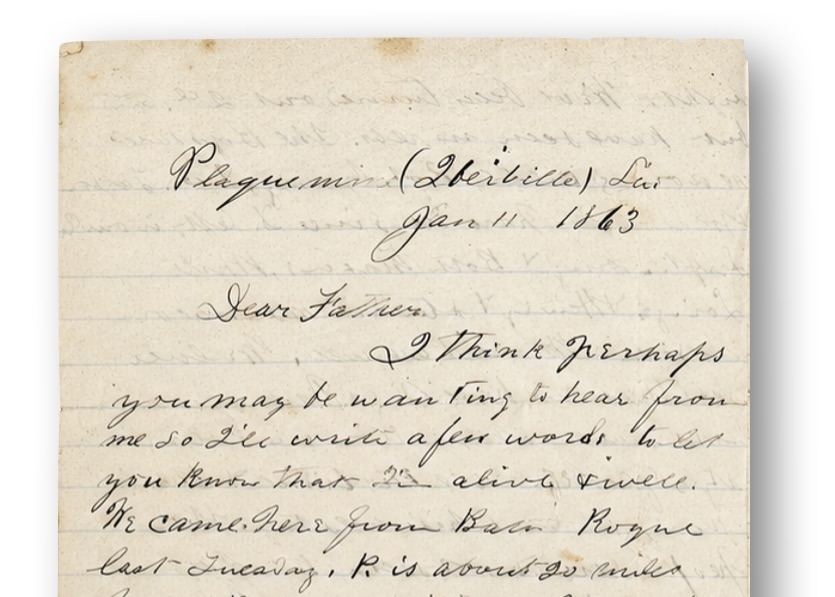
Sunday, 11th—Health & weather same. Had roasted pig. Report says Vicksburg is taken & that they are bombarding Port Hudson though it is not sure.
Monday, 12th—Health & weather same. Moved from the market to a place about ten rods from the mouth of the bayou, so we are in a corner with the bayou and [Mississippi] River and the other open, so the Rebs can come only in front. All kinds of rumors.
Tuesday, 13th—Health & weather same. On guard at quarters. had easy time. They are building barricades on all exposed streets (four in number) of logs. good for infantry and cavalry, but [of] no account for artillery. Our troops at Baton Rouge are drawing in towards the city as the Rebels are not far off. They are making embankments, &c.
Wednesday, 14th—Feel same. Rainy & warm.
Thursday, 15th—Health & weather same. Cold at night. On picket with company today. Stood 8 hours. Not paid.
Friday, 16th—Have some cold & slight cough. Very cold. Ground frozen.
Saturday, 17th. Feel same. Warm. We’ve got a lot of chickens & geese over the Bayou & as we were going after more, Capt. Robinson came along & stopped us. But we’ll do awhile.
Sunday, 18th—Heath & weather same. Received two letters & lots of papers. Rains at night.
Monday, January 19th [1863]—Feel same. Tooth aches. Rainy. Plenty of ducks &c. for a week.
Tuesday, 20th—Health & tooth same. Fair & cold. Our boys crossed the bayou today & got 40 hens, 8 ducks, 2 geese, and 1 turkey. The old planters looked blank, but, but of no use. I do but little but read except when I am helping fix things & cut wood.
Wednesday, 21st—Tooth easier. Health same. Fair days and cold nights. Little done.
Thursday, 22nd—Health & tooth same. Fair & cold. A cavalry man being across the bayou with four others was shot by one on plantation yesterday night.
Friday, 23rd—Health same. Tooth ached all night & day. On picket. Stood 10 hours. River is rising & the bayou is filled with driftwood which makes great noise. Another cavalry shot by his mate.
Saturday, 24th—Feel sick all over. Tooth uneasy.
Sunday, 25th—Got some cold. Tooth bad. Fair & mild.
Monday, 26th—Feel about sick. Hot & chilly. Tooth aches. On guard. Cold & rainy. Heard sounds like chopping wood & felling trees over bayou which I took to be Rebels preparing to cross. Since found ’twas a jam breaking.
Tuesday, 27th—Better. Tooth easy. Fair & cold. Quiet.
Wednesday, 28th—Feel same. Still cold & fair. See by papers that Gen. Butler was enthusiastically received at home & is an Abolitionist. Well so be it. As for me, I hate the niggers more & more. They are so damned saucy to privates. Many officers think more of them than us. The cavalry & one gun crew from the Albatross went down two miles & drove off Rebel picket & burnt their camp. No loss.
Thursday, 29th—Health & weather same. Had pig for dinner. Dull.
Friday, 30th—Have slight rheumatism. Otherwise well. Fair. I’ve never yet found fault with my grub but I will & I can prove all I say. Our Acting Quartermaster is Lieut. [Charles H. Buswell, Co. I. He received everything & all the government allows. But he sells beef, half hard bread, half candles, half coffee, &c to the citizens, not for best of purposes to [ ] for my pages. He & other officers take rations to pay their pleasure expenses so we get hard bread & half pound poor hog & water strained through coffee a day which is meaner than convicts get. They feed lots of niggers on our scanty rations. I wish to God they were in the lowest pit of hell on double rations of fire & brimstone.
Saturday, 31st—Health the same. Cloudy & warm. On picket. Stood 3 hours. Plenty of reading.
Sunday, February 1st, 1863—Feel same. Rainy & warm. Grub bad. There are little boys who come to get our extra bread who say the Rebs never used them so well. They lived on corn bread & meet & kept them away.
Monday, 2nd—Health & weather same. It is fun to see our officers, Captain & all, rush for the bar when the boat comes along. Lieut. Phillips was drunk—not the first time. Soldiers can get none.
Tuesday, 3rd—Health good. Cold & fair. Have & probably shall have bad grub. If one of us complains, plenty of them are ready to swear all is right as they curry favors of officers.
Wednesday, 4th—Worse. Rainy & warm. See by papers Gen. Banks has ordered all the niggers of the Department to be put to work on plantations, &c. which shows that they are getting troublesome. I suppose he is mad because one of them stole from him. He also proposes to the planters to make arrangements to pay their niggers, promising to enforce obedience & respect. I think it will go well.
Thursday, 5th—No better. Water froze tonight in our tent with fire half the night. 5,000 Rebs taken with Arkansas Post.
Friday, 6th—Health & weather same. Fair & mild. Paine’s Brigade came here today & went towards Indian Village, part by land and part by water. Got lots of chickens. We hope who got them stayed till dark as orders were given not to let them cross bayou. Had orders to go to Baton Rouge in 1st steamer.
Sunday, 8th—Better. Warm & fair. About noon the Eastern Queen came up with our Colonel & Lt. Colonel. I little thought when I saw the Eastern Queen for the first time four years ago that when I next saw her, would be on the Mississippi & I a soldier. At 6 p.m. the Merville came along & taking us on board, left at 8 in 3 hours was at Baton Rouge. Lay on board all night.
Monday, 9th—Went ashore & to camp in rear & to left of Orphan Asylum in Wilson’s Brigade with 6th & 131st New York. 22nd Maine paid two months today. Wrote home & sent $3 to father. We’ll have to drill now. Better. Warm & fair.
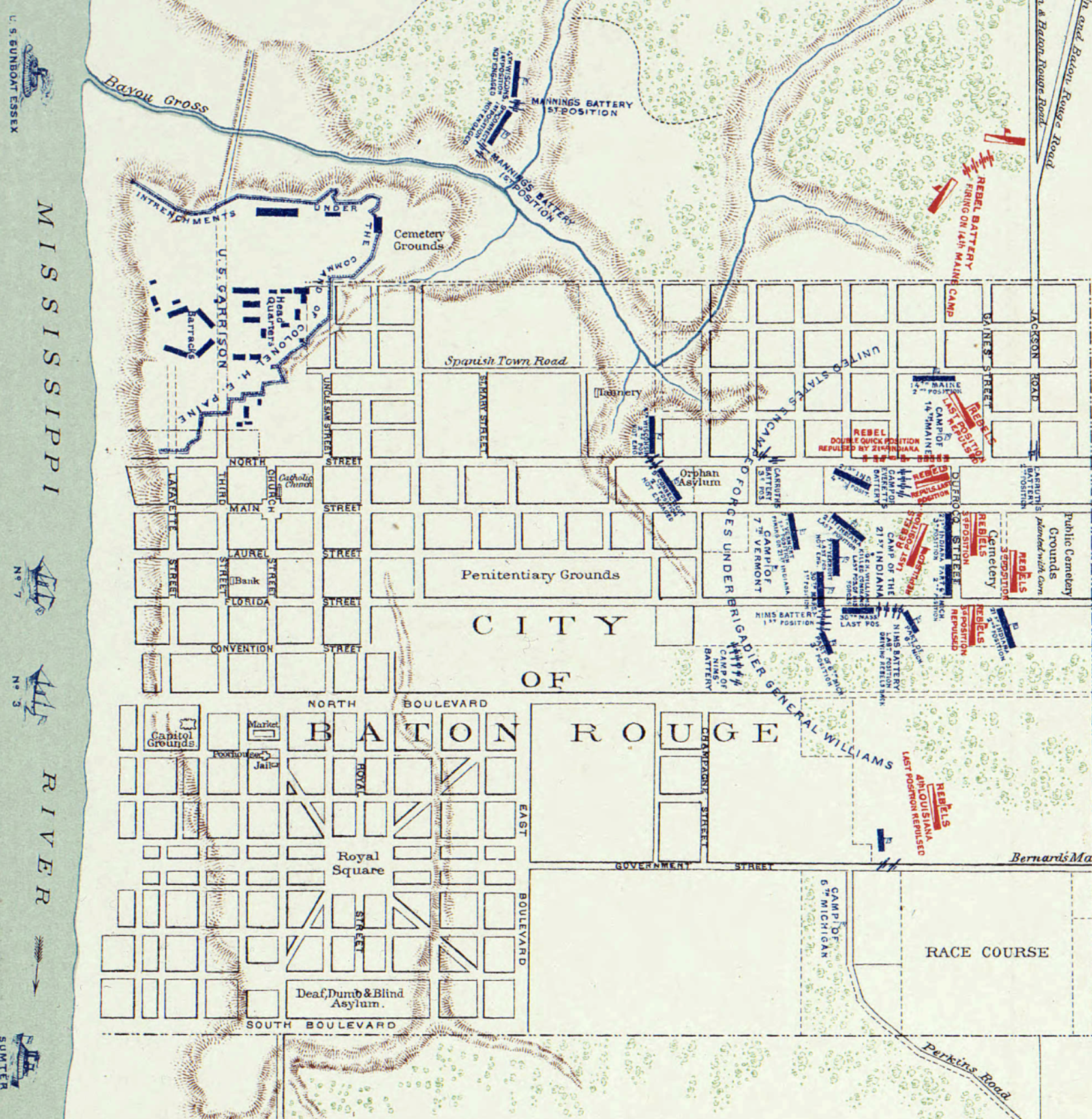
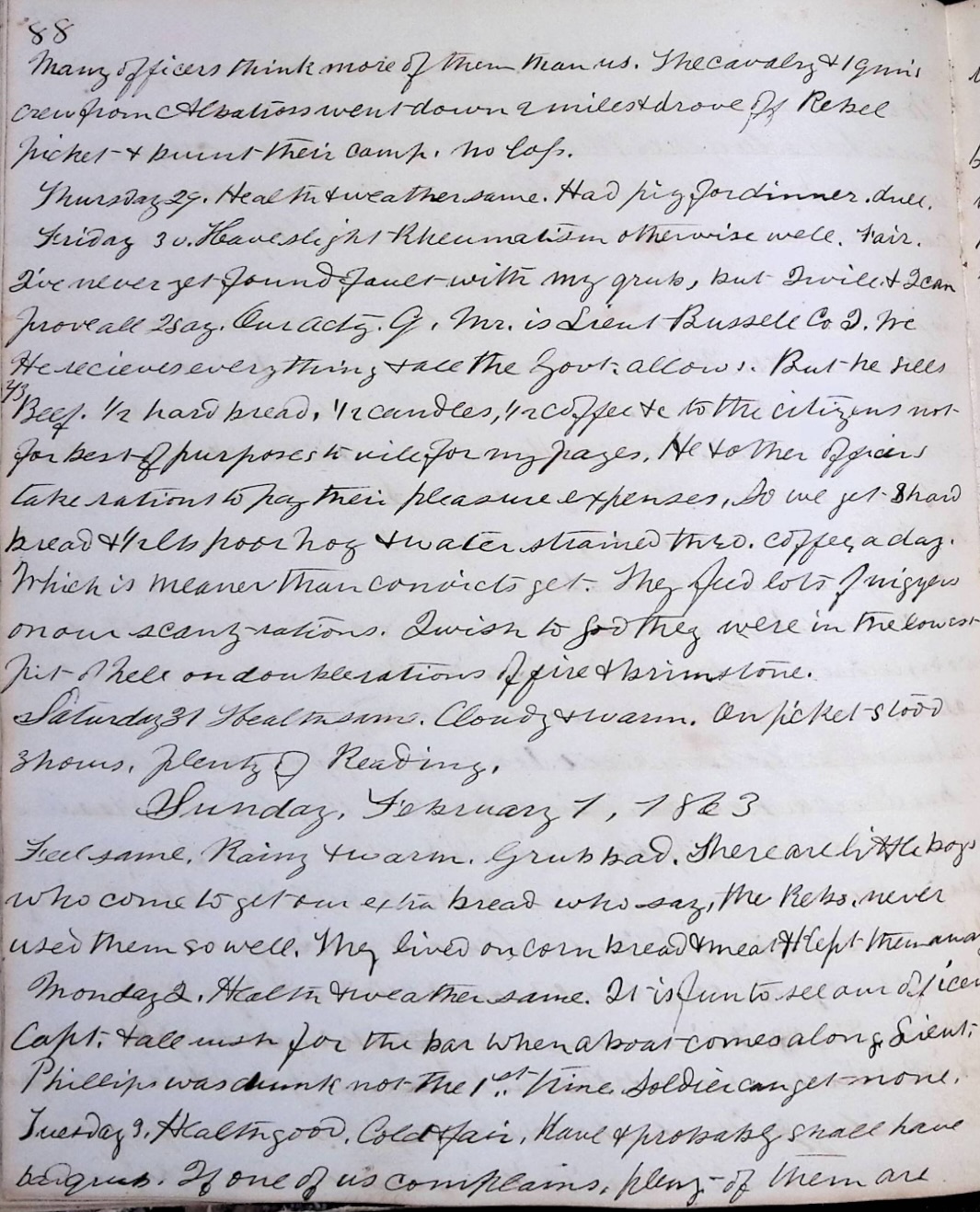
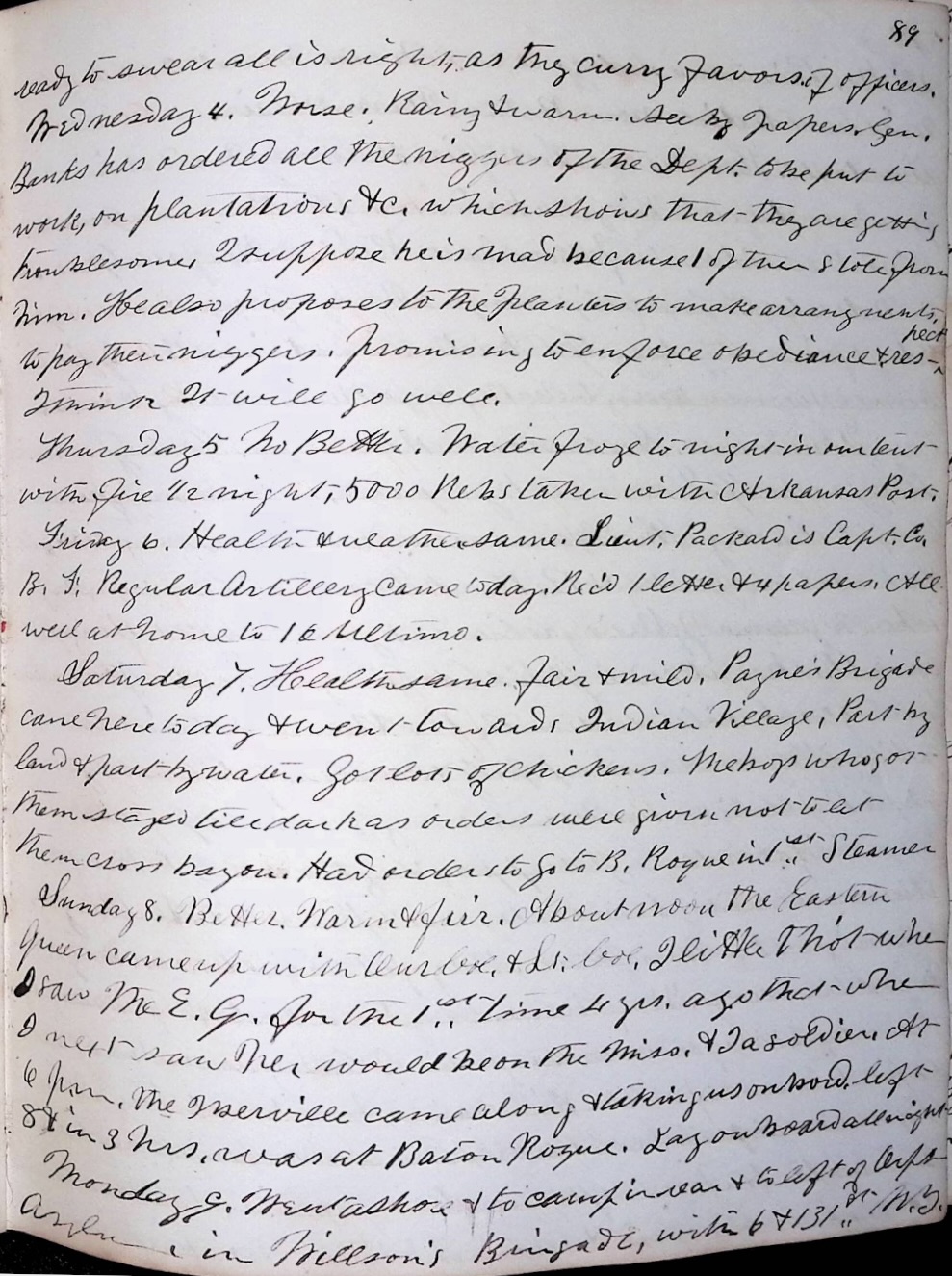
Tuesday, 10th [February 1863]— Health same. Hot & fair. Had very hard drill for so hot a day. Old Billy [Wilson] is a hard one. The Provost guard raise the devil with fellows here. Received a letter from [brother] Gran[ville Holt].
Wednesday, 11th—Have slight cough. Dewey & foggy mornings & dry & fair rest of the day. Had Battalion Drill. The officers & some of the men seem to have forgotten all they knew.
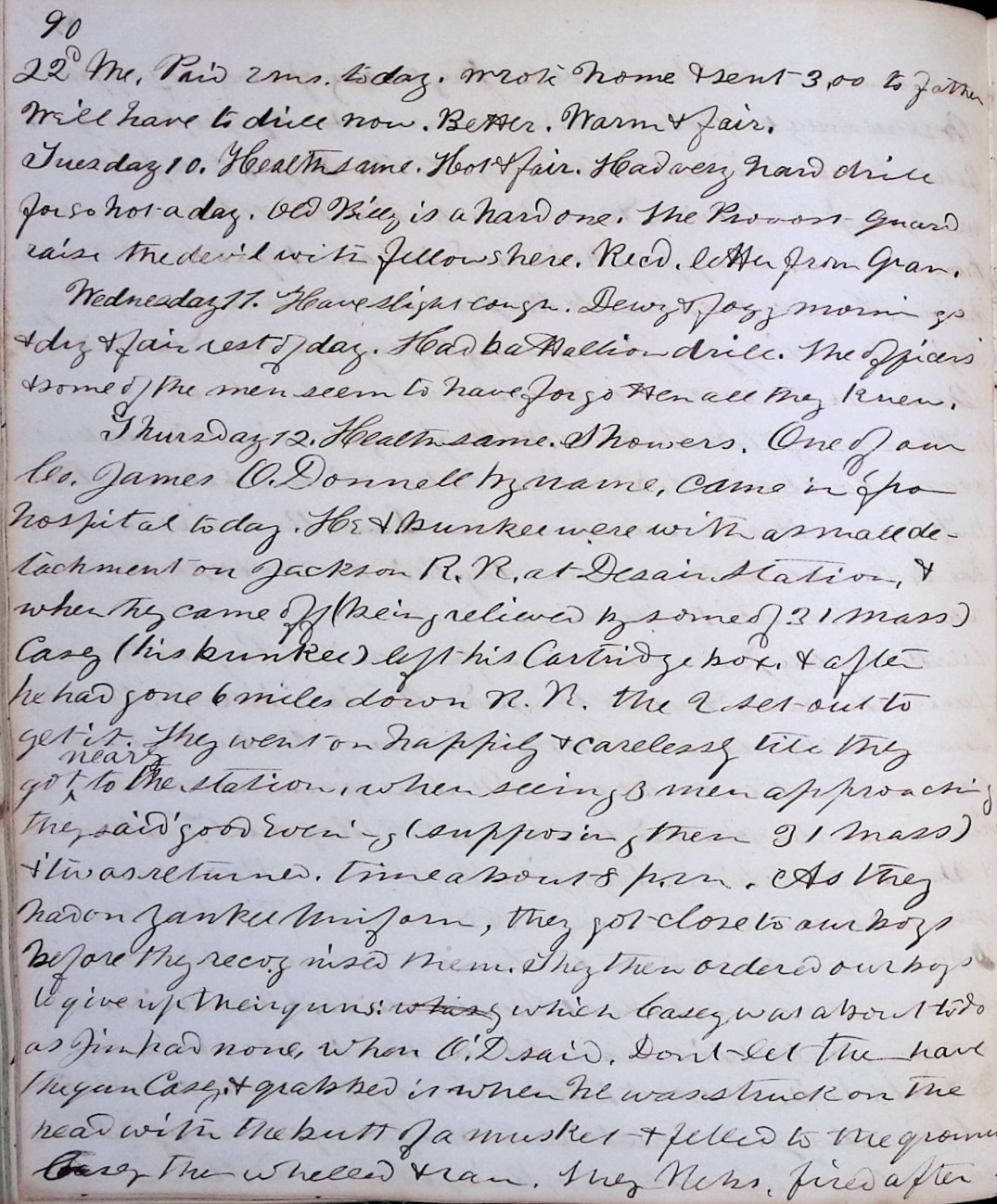
Thursday, 12th—Health same. Showers. One of our company, James O’Donnell by name, came in from hospital today. He & bunkee were with a small detachment on Jackson Railroad at Desair Station & when they came off (being relieved by some of the 31st Massachusetts), [John] Casey (his bunkee) left his cartridge box and after he had gone six miles down the railroad, the two set out to get it. They went on happily & carelessly till they got nearly to the station when seeing three men approaching, they said good evening (supposing them 31st Mass.) & [the greeting] ’twas returned. Time about 8 p.m. As they had on Yankee uniforms, they got close to our boys before they recognized them. They then ordered our boys to give up their guns which Casey was about to do as Jim had none, when O’Donnell said, “Don’t let them have the gun, Casey, & grabbed it when he was struck on the head with the butt of a musket & felled to the ground. Casey then wheeled & ran. The Rebs fired after him but missed & he got back after wandering here and there through the swamp. O’Donnell was then struck on the knee which brought him to & told to get up, which he did & was again struck on left arm. They took him a little way above on railroad. O’Donnell asked them what they were going to do with him & was told he would soon see.
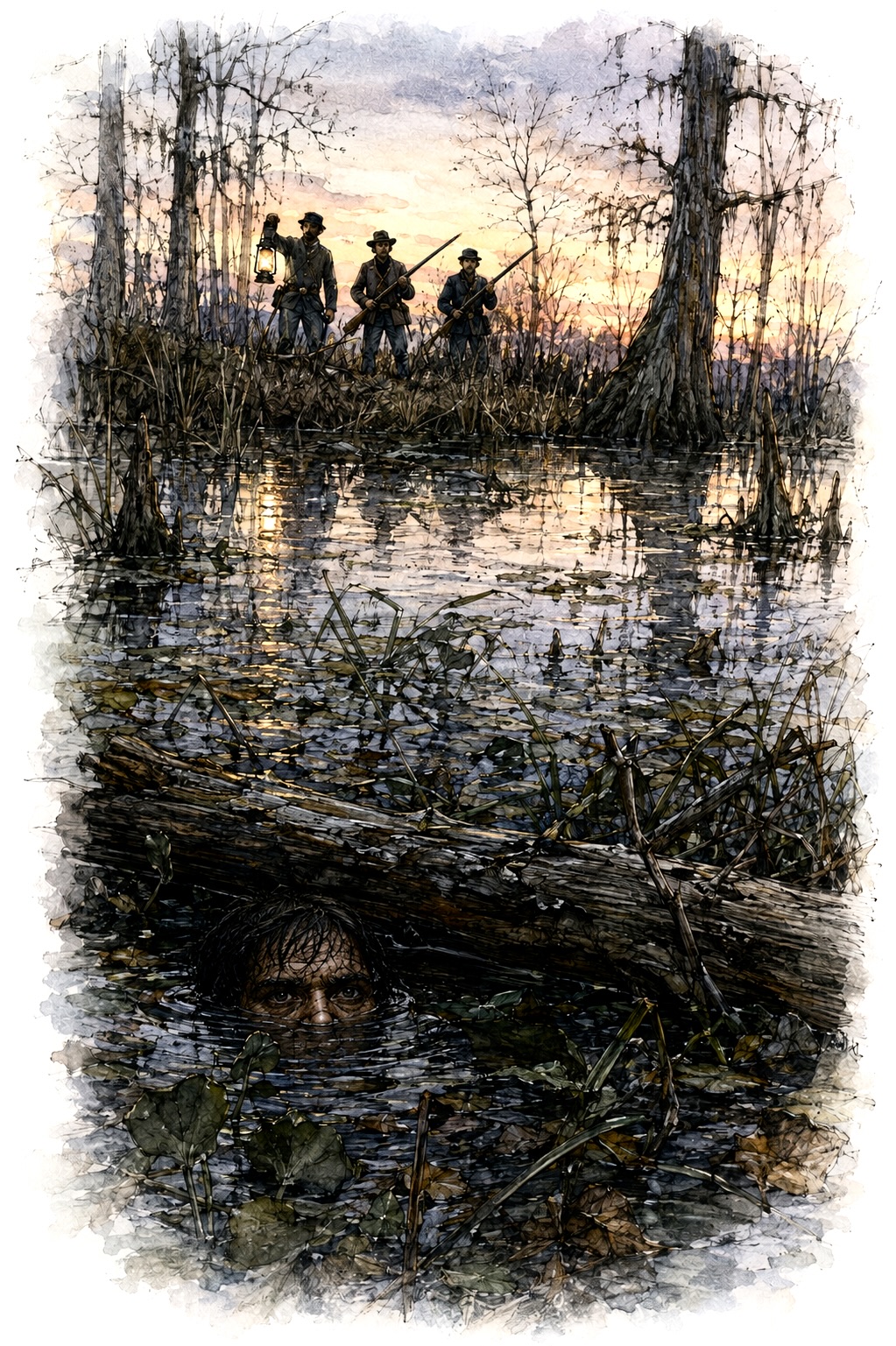
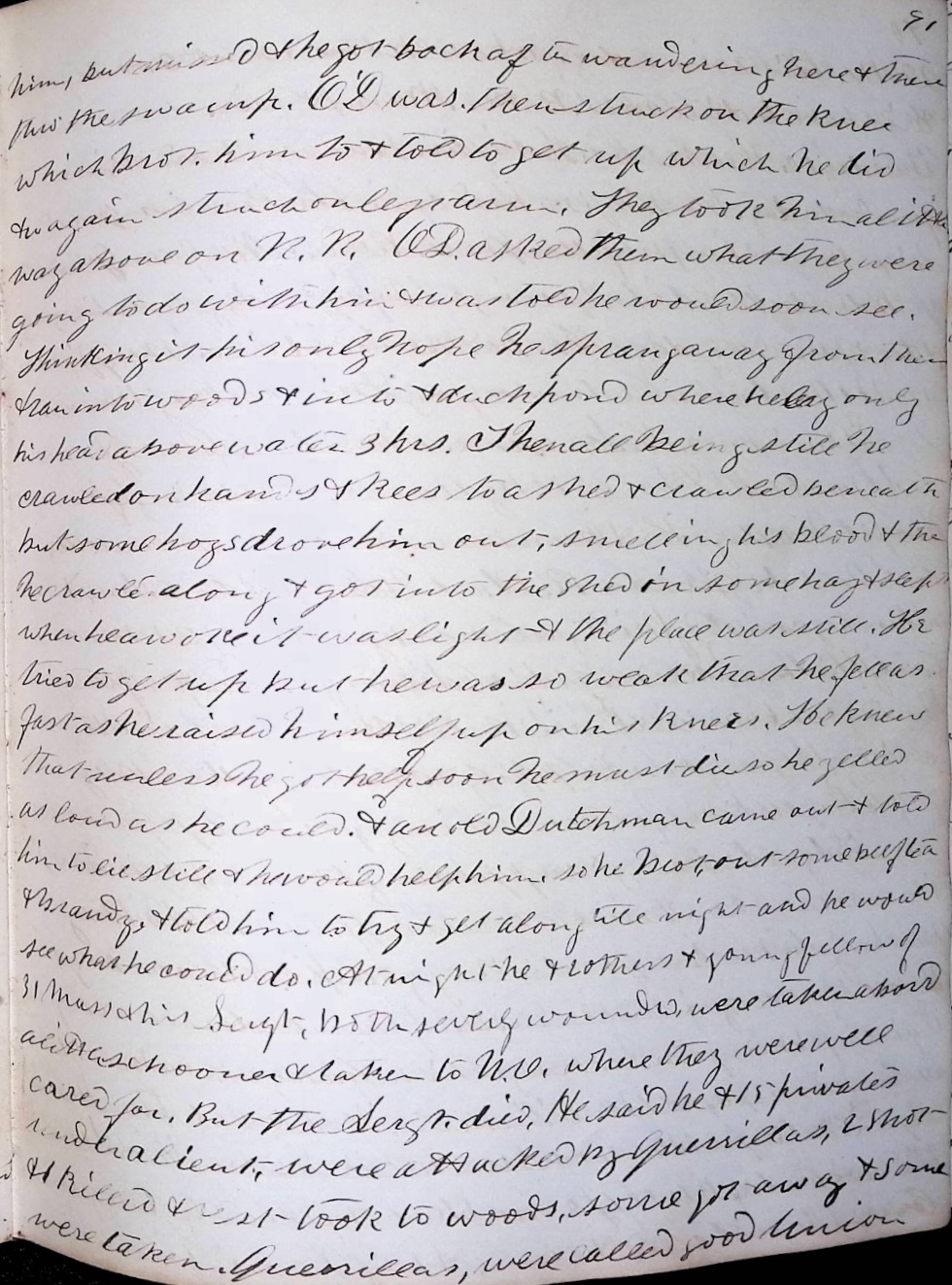
Thinking it his only he hope, he sprang away from them & ran into woods & into a duck pond where he lay—only his head above water three hours. Then, all being still, he crawled on hands and knees to a shed & crawled beneath but some hogs drove him out, smelling his blood & then he crawled along and got into the shed in some hay & slept. When he awoke, it was light & the place was still. He tried to get up but he was so weak that he fell as fast as he raised himself up on his knees. He knew that unless he got help soon, he must die so he yelled as loud as he could & an old Dutchman [German] came out & told him to lie still and he would help him. So he brought out some beef tea & brandy &told him to try and get along till night and he would see what he could do. At night, he and two others and a young fellow of the 31st Massachusetts & his sergeant, both severely wounded, were taken aboard a little schooner & taken to New Orleans where they were well care for. But the sergeant died. He said he & 15 privates under a lieutenant were attacked by guerrillas, two shot and one killed & the rest took to woods. Some got away & some were taken. Guerrillas were called good Union men Capt. Robinson when he was there & treated as such. They were very cruel to prisoners but paroled them. Baton Rouge is looking livelier.
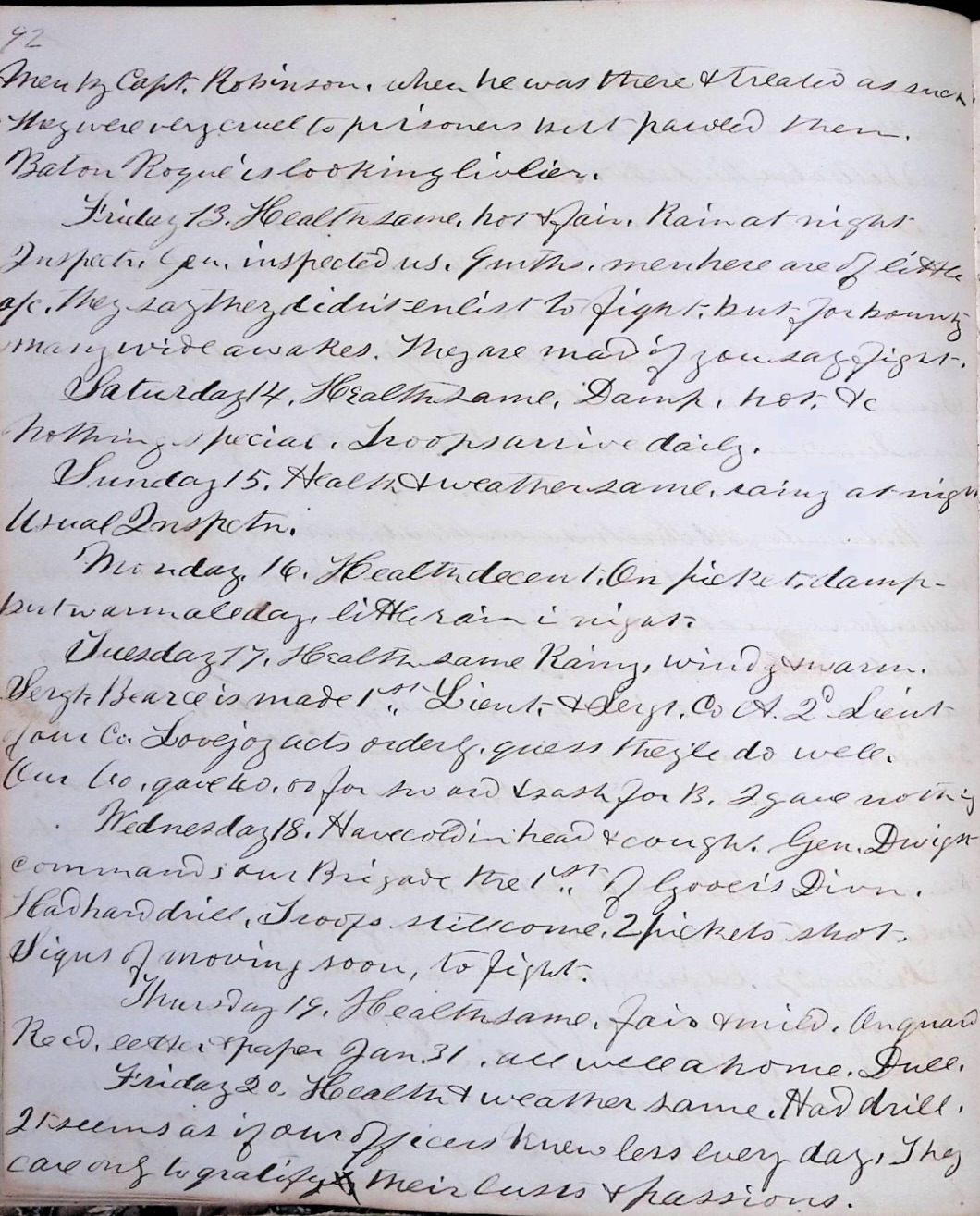
Friday, 13th—Health same. Hot & fair. Rain at night. Inspection. Gen. inspected us. Nine months men here are of little account. They say they didn’t enlist to fight but for bounty. Many Wide Awakes [among them]. They are mad if you say fight.
Saturday, 14th—Health same. Damp. Hot, &c. Nothing special. Troops arriving daily.
Sunday, 15th—Health & weather same. Rainy at night. Usual inspection.
Monday, 16th—Health decent. On picket. Damp but warm all day. Little rain in night.
Tuesday, 17—Health same. Rainy, windy, & warm. Sergt. [William] Bearce is made 1st Lieutenant & Sergt. Co. A [made] 2nd Lieutenant of our company. Lovejoy acts as Orderly [Sergeant]. Guess they’ll do well. Our company gave $40 for sword & sash for Bearce. I gave nothing.
Wednesday, 18th—Have a cold in head & cough. Gen. [William] Dwight commands our Brigade, the 1st of [Gen. Cuvier] Grover’s Division. Had hard drill. Troops still come. Two pickets shot. Signs of moving soon to fight.
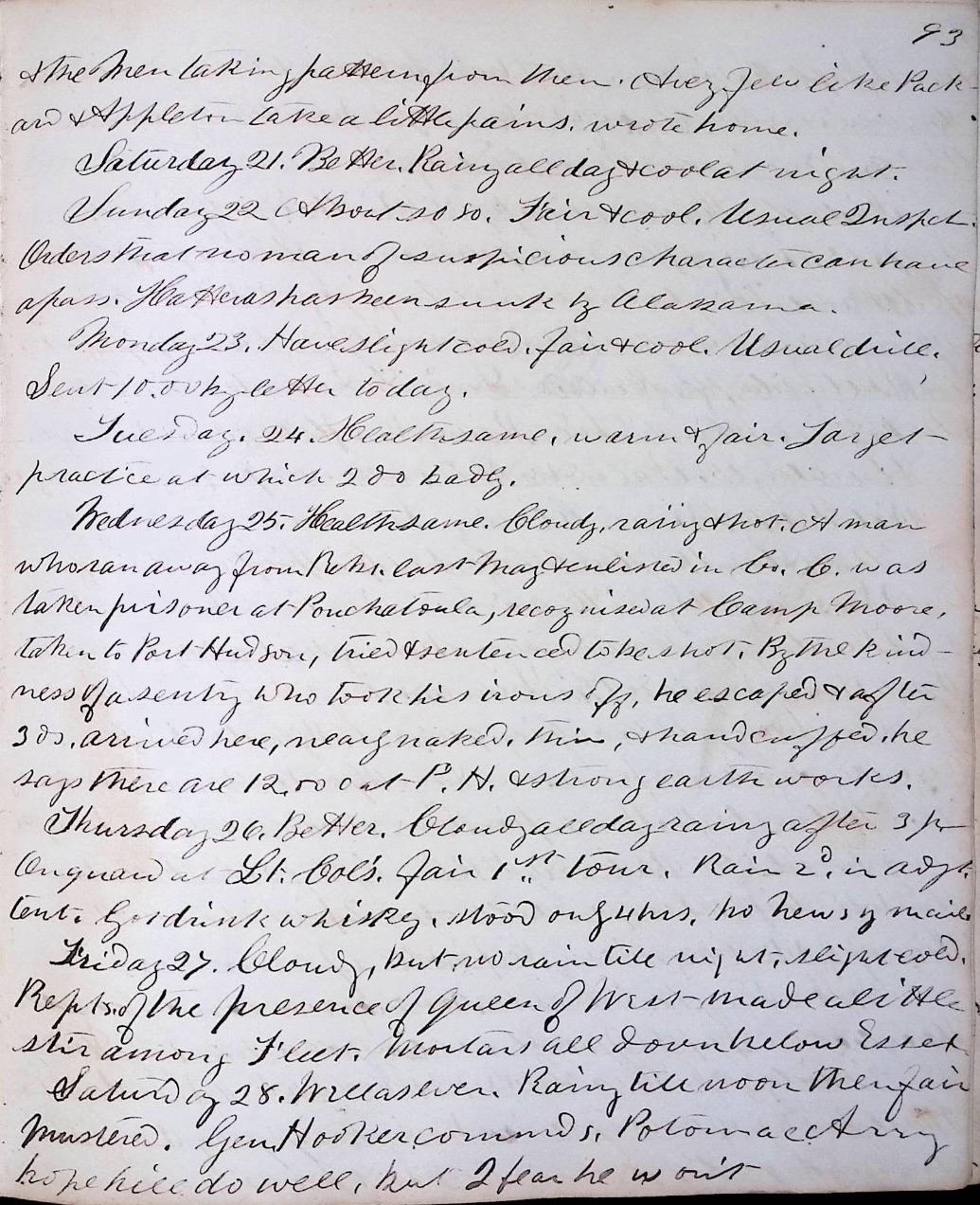
Thursday, 19th—Health same. Fair & mild. On guard. Received letter & paper of January 31st. All well at home. Had drill. It seems as if our officers knew less every day. They care only to gratify their lusts & passions & the men taking pattering from them. [only] a very few like Packarrd and Appleton take a little pains. Wrote home.
Saturday, 21st—Better. Rainy all day & cool at night.
Sunday, 22nd—About so so. Fair & cool. Usual inspection. Orders that no man of suspicious character can have a pass. Hatteras has been sunk by [Confederate] Alabama
Monday, 23rd—Have slight cold. Fair & cool. Usual drill. Sent $10 by letter today.
Tuesday, 24th—Health same. Warm & fair. Target practice at which I do badly.
Wednesday, 25th—Health same. Cloudy. Rainy & hot. A man who ran away from Rebs last May & enlisted in Co. C was taken prisoner at Ponchatoula, recognized at Camp Moore, taken to Port Hudson, tried & sentenced to be shot. By the kindness of a sentry who took his irons off, he escaped & after three days, arrived here, nearly naked, trim and handcuffed. He says there are 12,000 at Port Hudson and strong earthworks.
Thursday, 26th—Better. Cloudy all day. Rainy after three p.m. On guard at Lt. Colonel’s. Fair on 1st tour. Rain 2nd in adjutant’s tent. Got drink of whiskey. Stood only 4 hours. No newsy mails.
Friday, 27th—Cloudy but no rain till night. Slight cold. Reports of the presence of Queen of the West made a little stir among fleet. Mortars all down below Essex.
Saturday, 28th—Well as ever. Rainy till noon, then fair. Mustered. Gen. Hooker commands Potomac Army. Hope he’ll do well but I fear he won’t.
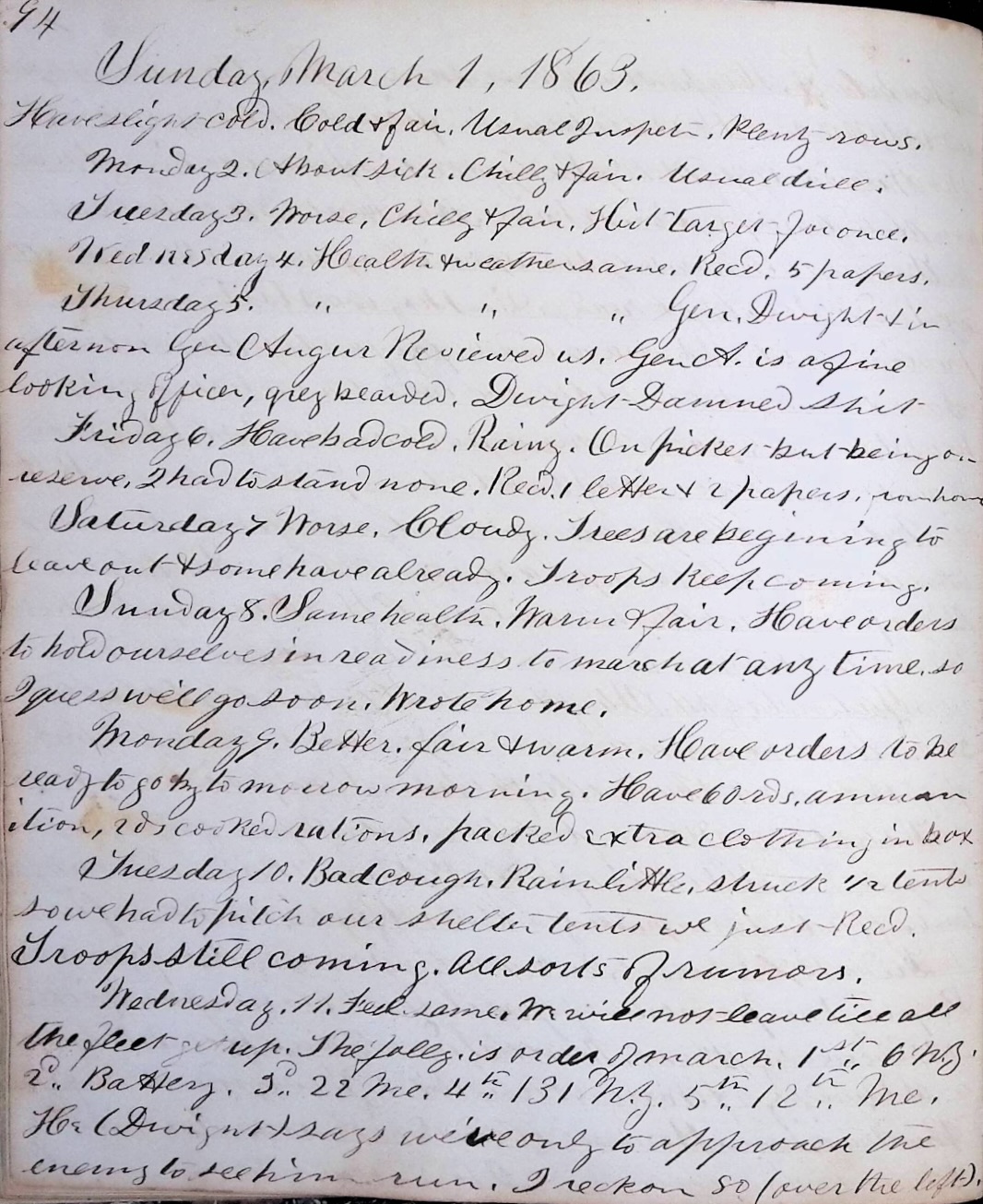
Sunday, March 1, 1863—Have slight cold. Cold & fair. Usual inspection. Plenty rows.
Monday, 2nd—About sick. Chilly & fair. Usual drill.
Tuesday, 3rd—Worse. Chilly & fair. Hit target for once.
Wednesday, 4th—Health & weather same. Received 5 papers.
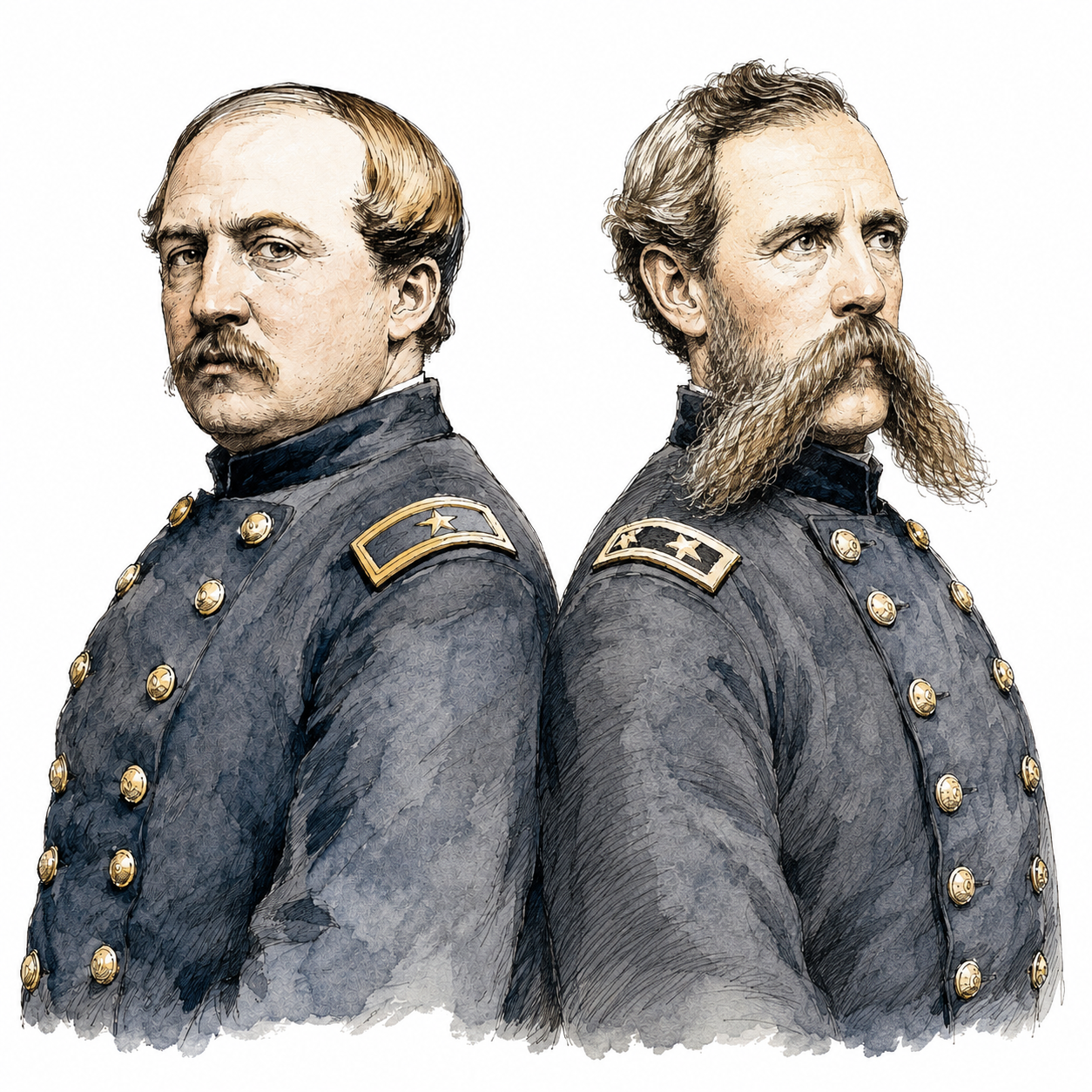
Thursday, 5th—Health & weather same. Gen. Dwight and in afternoon Gen. Augur reviewed us. Gen. [Christopher Columbus] Augur is a fine looking officer, grey-bearded. Dwight—a damned shit.
Friday, 6th—Have bad cold. Rainy. On picket but being on reserve, I had to stand none. Received one letter & two papers from home.
Saturday, 7th—Worse. Cloudy. Trees are beginning to leaf out & some have already. Troops keep coming.
Sunday, 8th—Same health. Warm & fair. Have orders to hold ourselves in readiness to march at any time so I guess we’ll go soon. Wrote home.
Monday, 9th—Better. Fair & warm. Have orders to be ready to go by tomorrow morning. Have 60 rounds ammunition, two days cooked rations, packed extra clothing in box.
Tuesday, 10th—Bad cough. Rain little. Struck half tents so we had to pitch our shelter tents we just received. Troops still coming. All sorts of rumors.
Wednesday, 11th—Feel same. We will not leave till all the fleet get up. The folly is order of march. First, 6th New York; Second, Battery third, 22nd Maine; fourth, 131st New York; fifth, 12th Maine. He (Dwight) says we’ve only to approach the enemy to see him run. I reckon so (over the left).
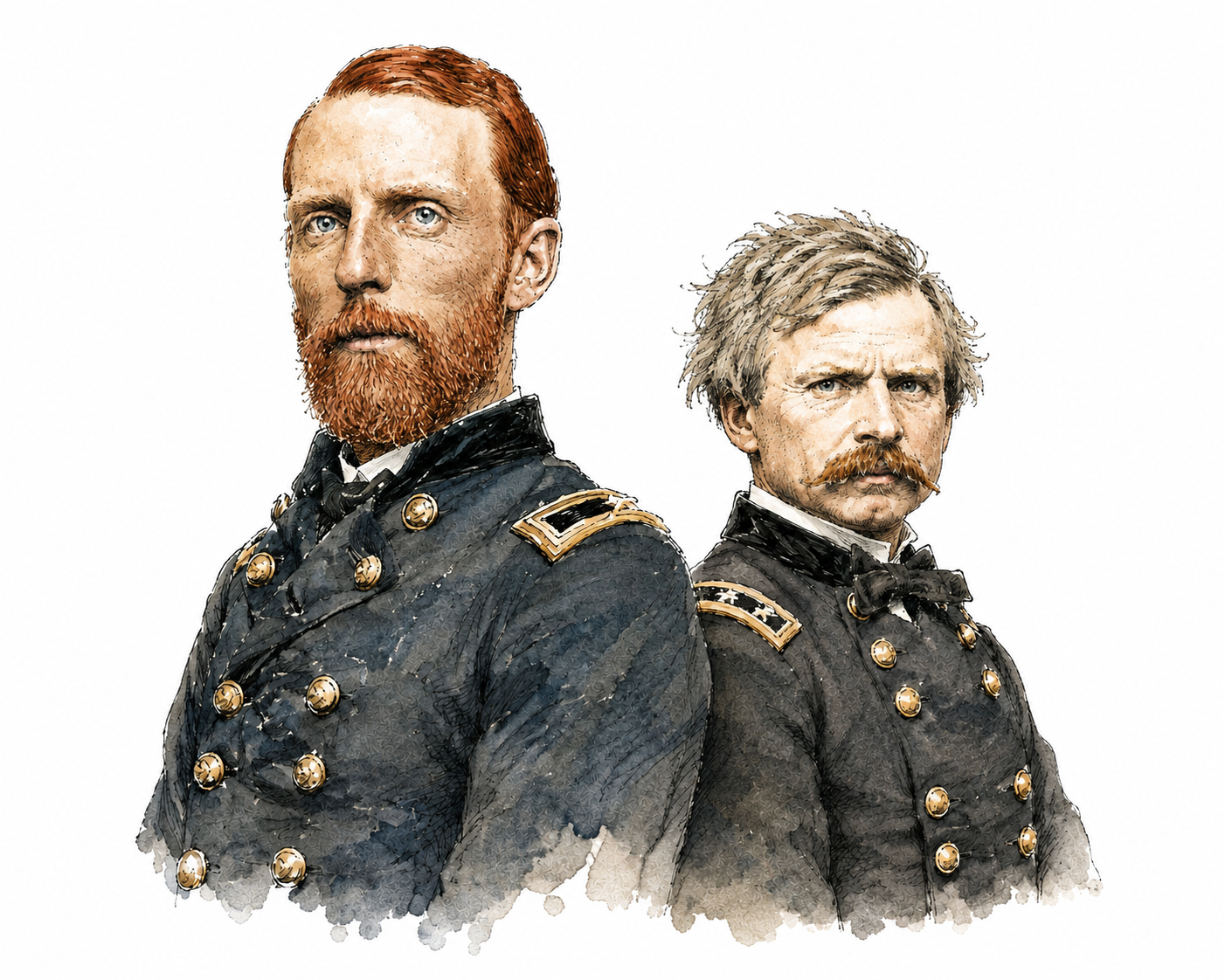
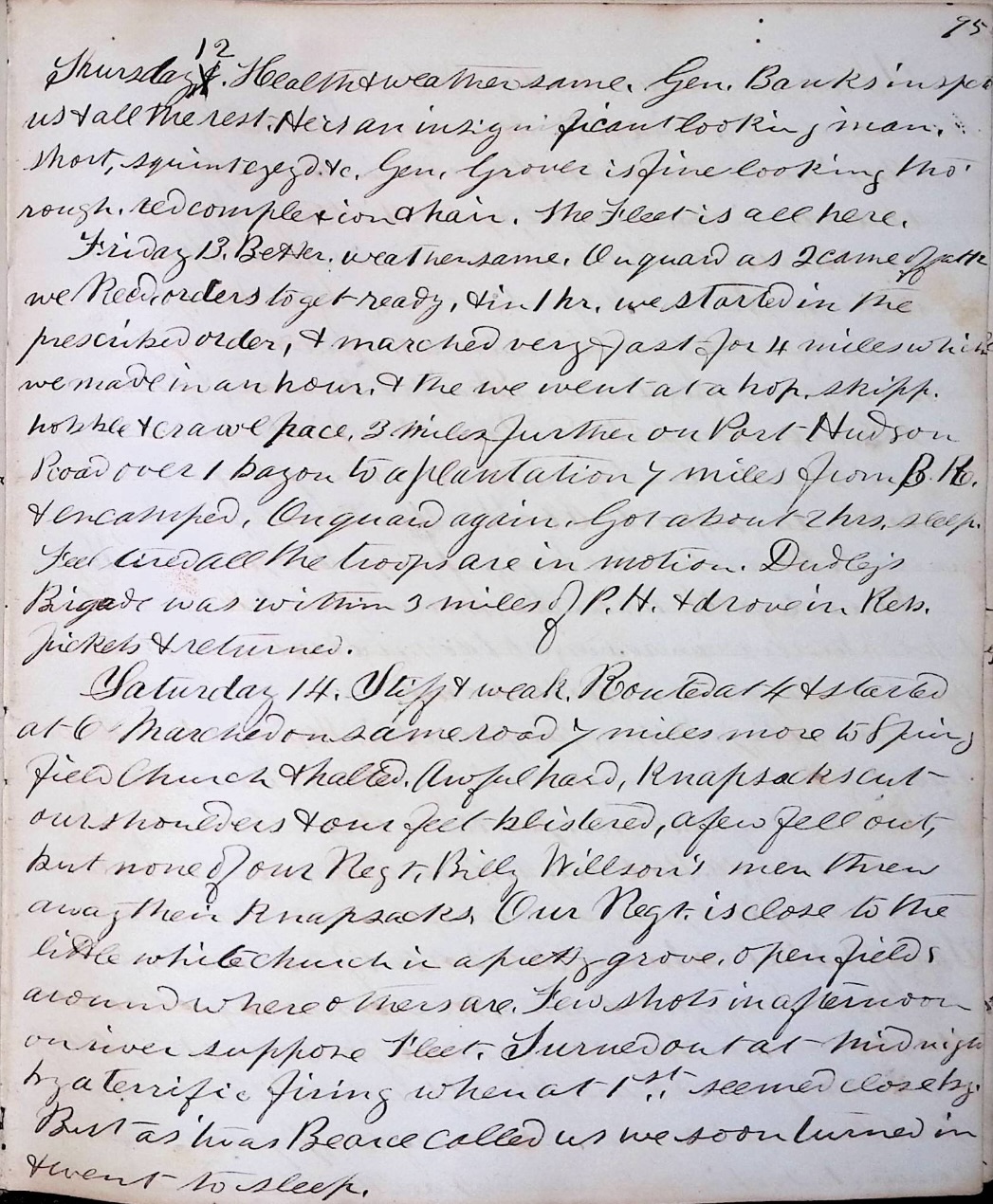
Thursday, 12th—Health & weather same. Gen. Banks inspected us & all the rest. He is an insignificant looking man—short, squint eyed, &c. Gen. Grover is fine looking though rough, red complexion, & hair. The fleet is all here.
Friday, 13th—Better. Weather same. On guard as I came off at 12, we received orders to get ready & in one hour we started in the prescribed order, and marched very fast for four miles which we made in an hour & then we went at a hop, skip, hobble & crawl pace three miles further on Port Hudson Road over one bayou to a plantation seven miles from Baton Rouge and encamped. On guard again. Got about two hours sleep. Feel tired. All the troops are in motion. Dudley’s Brigade was within three miles of Port Hudson & drove in rebs pickets and returned.
Saturday, 14th—Stiff & weak. Routed at 4 and started at 6. Marched on same road seven miles more to Springfield Church & halted. Awful hard. Knapsacks cut our shoulders & our feet blistered. A few fell out but none of our regiment. Billy Wilson’s [6th N. Y.] men threw away their knapsacks. Our regiment is close to the little white church in a pretty grove, open fields around where others are. Few shots in afternoon on river. Suppose fleet. Turned out at midnight by a terrific firing when at 1st seemed close by. But as ’twas Bearce called us, we soon turned in & went to sleep.
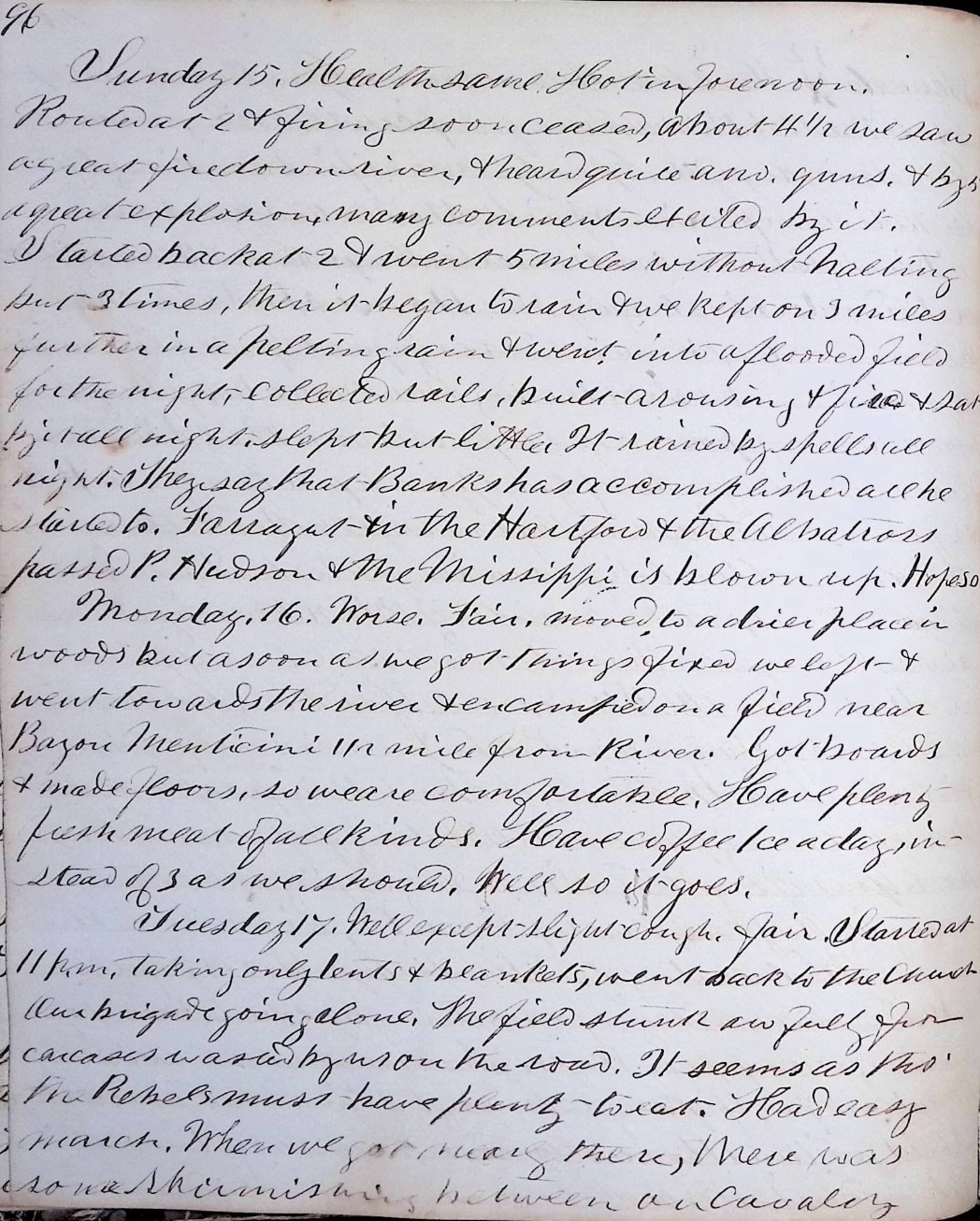
Sunday, 15th—Health same. Hot in forenoon. Routed at 2 and firing soon ceased. About 4:30 we saw a great fire down river & heard quite a number of guns & by and by a great explosion. Many comments excited by it. Started back at 2 & went five miles without halting but three times. Then it began to rain & we kept on three miles further in a pelting rain & went into a flooded field for the night, collected rails, built a rousing fire & sat by it all night. Slept but little. It rained by spells all night. They say that Banks has accomplished all he started to. Farragut in the Hartford &the Albatross passed Port Hudson & the [USS] Mississippi is blown up. Hope so.
[Editor’s Note: On the night of March 14 into the early hours of March 15, 1863, Union Admiral David Farragut attempted to run a fleet of seven warships past the heavy Confederate artillery batteries at Port Hudson, Louisiana. The midnight operation resulted in a fierce engagement where five Federal ships were disabled, and the warship USS Mississippi ran aground and was burned by its crew. Only the Hartford and the Albatross made it past the bluffs.]
Monday, 16th—Worse. Fair [weather]. Moved to a drier place in woods but as soon as we got things fixed, we left & went towards the river & encamped on a field near Bayou Menticini, half mile from the river. Got boards & made floors so we are comfortable. Have plenty fresh meat of all kinds. Have coffee one [ ] a day instead of three as we should. Well, so it goes.
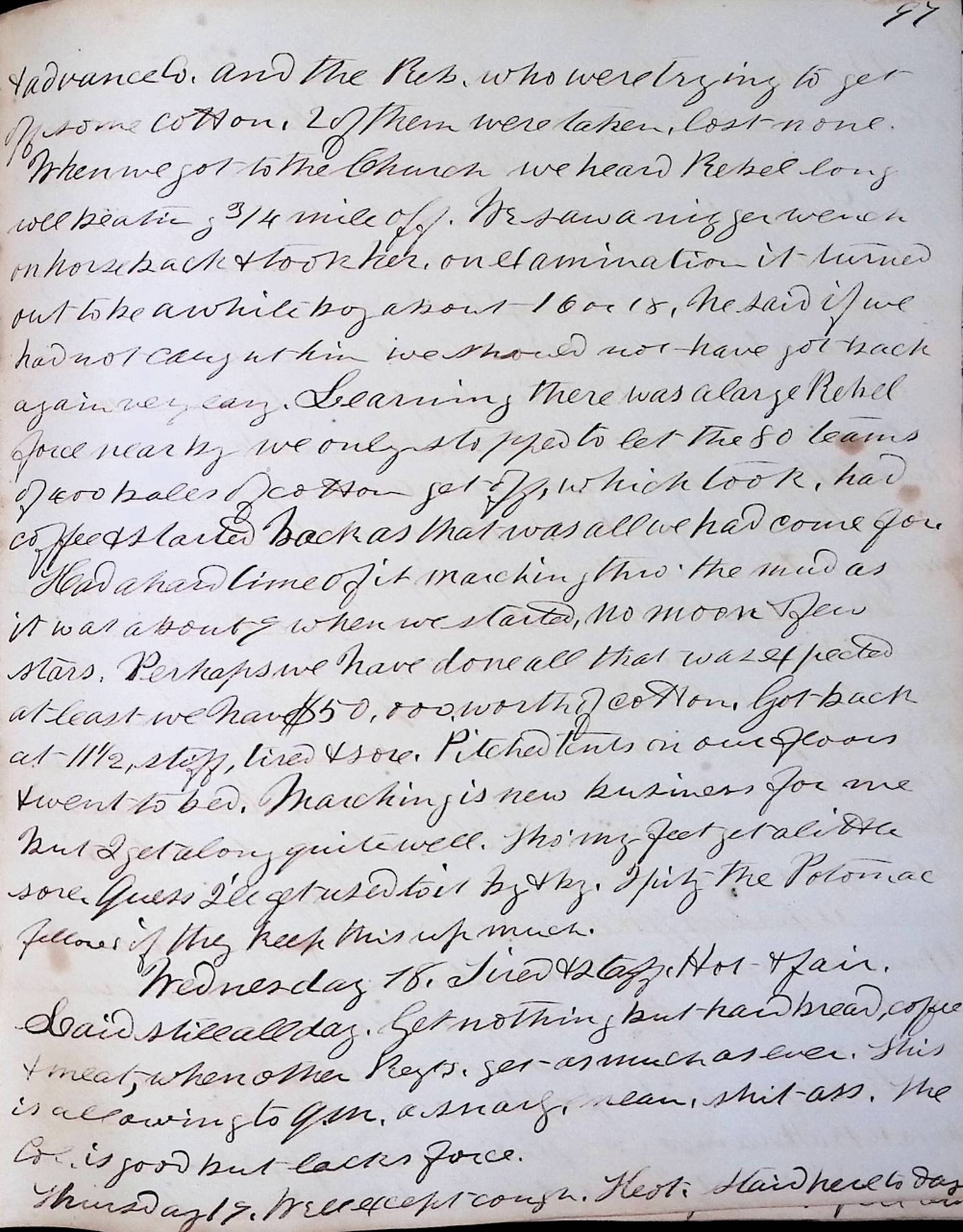
Tuesday, 17th—Well, except slight cough. Fair [weather]. Started at 11 p.m. taking only tents & blankets, went back to the church. Our Brigade going alone. The field stunk awfully from carcasses wasted by us on the road. It seems as though the Rebels must have plenty to eat. Had easy march. When we got nearly there, there was some skirmishing between our cavalry & advance company and the Rebs who were trying to get off some cotton. Two of them were taken, lost one. When we got to the church, we heard the Rebel long roll beating three-fourths of a mile off. We saw a nigger wench on horseback and took her. On examination, it turned out to be a white boy about 16 or 18. He said if we had not caught him, we should not have got back again very easy. Learning there was a large Rebel force nearby, we only stopped to let the 80 teams of 400 bales of cotton get off, which took, had coffee & started back as that was all we had come for.
Had a hard time of it marching through the mud as it was about 9 when we started. No moon and few stars. Perhaps we have done all that was expected. At least we have $50,000 worth of cotton. Got back at 11:30 stiff, tired & sore. Pitched tents on our floors & went to bed. Marching is new business for me but I get along quite well though my feet get a little sore. Guess I’ll get used to it by and by. I pity the Potomac fellows if they keep this up much.
Wednesday, 18th—Tired & stiff. Hot & fair. Laid still all day. Get nothing but hard bread, coffee, and meat when other regiments get as much as ever. This is all owing to our quartermaster—a snarly, mean, shit-ass. The Colonel is good but lacks force.
Thursday, 19th—Well except a cough. Hot. Stayed here today. Had short inspection. At parade, received congratulations of Grover & curses of Dwight, who may yet meet William’s fate [alleged to have been shot by his own men when in battle].
Friday, March 20th—Health & weather same. Left at 2 p.m. & marched to our old camp in Baton Rouge in three hours, stopping only once. Put up tents and slept all night.
Saturday, 27th—Health same. Cloudy. Went on picket on Clinton Road two miles off. Our regiment moved today with Brigade on Hamburg Road close to picket. Up nearly all night. Dark & cloudy. Guerrillas fired on our cavalry advance picket killing two and two escaped.
Sunday, 22nd—Health & weather same. Rainy night. Our Colonel is to be Brigadier General & we go with him to Thibodeaux. Hope to get rid of Dwight soon.
Just read Cooper’s The Headsman. It would be fine as a book of travels but tho’ the story & plot are good, yet the action is too much clogged with description to keep up the interest of novel readers. It is very instructive. Read also Randolph’s Cabin & Parlor, being a reply to Uncle Tom’s Cabin. I believe it is a truthful picture of & no apologist for slavery & it shows also that there is much worse slavery in North. It would be well I think for the Abolitionists to pluck the beam out of their own eye, that cleanse themselves at first & then they may talk against slavery. Wrote home. Received two papers.
Monday, 23rd—Feel same. Rainy. Better grub. It is reported that the Queen of the West & 6 Rebel transports are taken. Our ground here is low, rough, and muddy. But we [have a] decent floor.
Tuesday, 24—Feel same. Clear. Moved from our camp to one near the Gas Works, much better & drier than the other. By orders on parade, Col. Kimball assumes command of the 2nd Brigade, Grover’s Division, consisting of 12th Maine, 24th Connecticut, 52nd Massachusetts, & 41st Massachusetts. Dean is Adjutant General. Goddard is quartermaster of the Brigade, &c. Plaquemine Buswell is our quartermaster. Guess we’ll starve entirely. Old Phillips (our new adjutant) was half drunk on parade. He dropped his papers, cut corners & faced wrong. Received one letter.
Wednesday, 25th—Weather same. Health good. Received clothing we boxed up when we started for Port Hudson. Quiet.
Thursday, 26th—Health & weather same. Left at 4, having packed all but blanket, extra shirt, and knapsacks, and went in boat to Donaldsonville where the rest of the Division went today.
Friday, 27th—Health same. Hot. Went ashore and camped on Bayou Lafourche half a mile down. Pitched large tents.
Saturday, 28th—Bad cold. Chilly. On guard.
Sunday, 29th—Ditto.
Monday, March 30th [1863]—Health and weather same. Put knapsacks on teams & started at 9 a.m. and went down bayou with whole Division. Went 12 miles near to Napoleonville & camped at 2. Our regiment did well. Many others fell out.
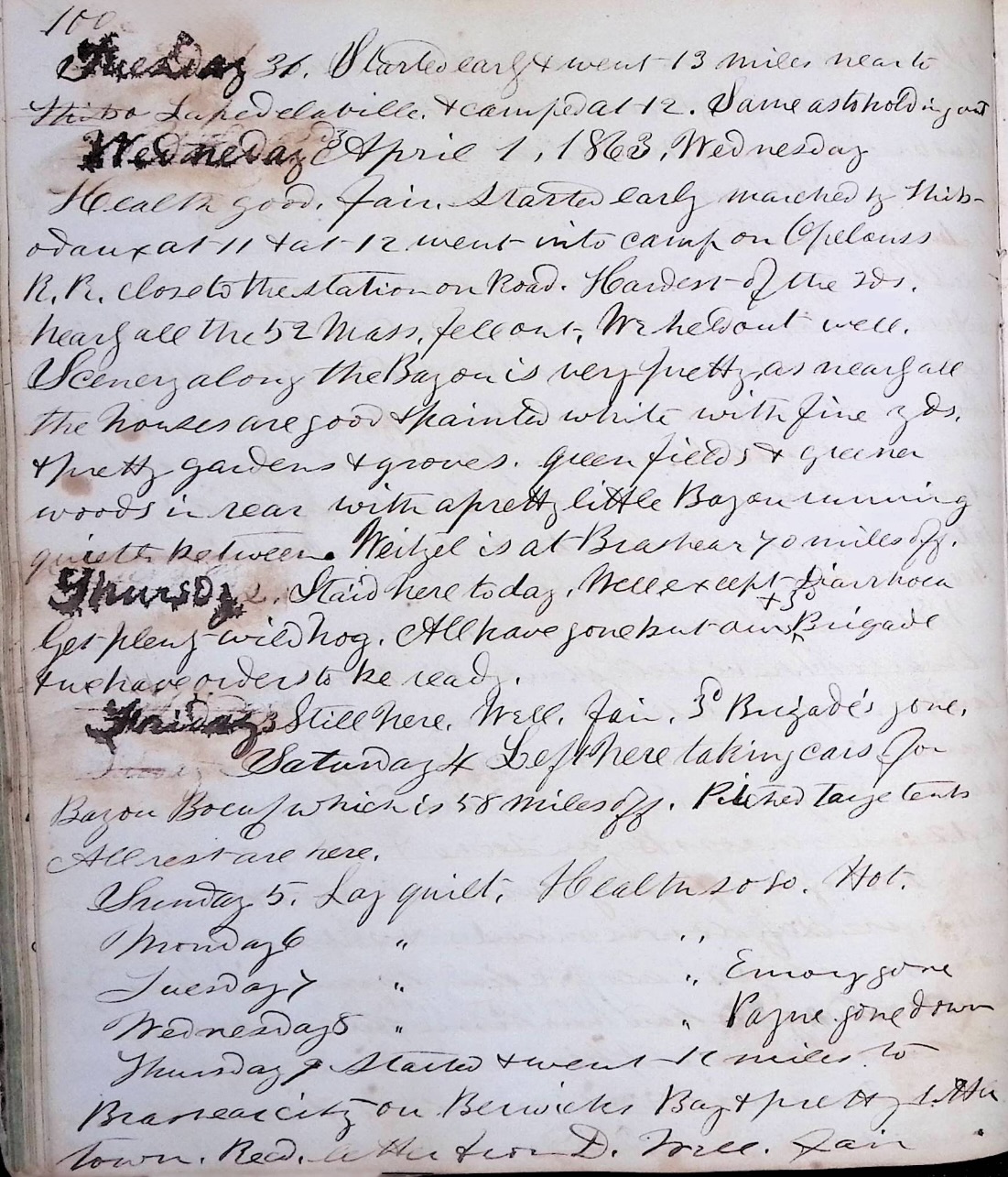
Tuesday, 31st—Started early & went 13 miles near to Labadieville & camped at 12. Same as to holding out.
Wednesday, April 1st 1863—Health good. Fair. Started early. Marched by Thibodaux at 11 & at 12 went into camp on Opelousas Railroad, close to the station on road. Hardest of the two days. Nearly all the 52nd Massachusetts fell out [but] we held out well. Scenery along the bayou is very pretty as nearly all the houses [which] are good & painted white with fine yards & pretty gardens & groves, green fields, and greener woods in rear with a pretty little bayou running quietly between. Weitzel is at Brashear 70 miles off.
Thursday, 2nd—Stayed here today. Well except diarrhea, Get plenty of wild hog. All have gone but ours & 3rd Brigade & we have orders to be ready.
Friday, 3rd—Still here. Well. Fair. Third Brigade’s gone.
Saturday, 4th—Left here taking cars for Bayou Boeuf which is 58 miles off. Pitched large tents. All rest are here.
Sunday, 5th—Lay quiet. Health so so. Hot.
Monday, 6th—Lay quiet. Health so so. Hot.
Tuesday, 7th—Lay quiet. Health so so. Emory gone.
Wednesday, 8th—Lay quiet. Health so so. [Gen.] Paine gone down.
Thursday, 9th—Started and went 12 miles to Brashear City on Berwick’s Bay & pretty little town. Received a letter from Darius. [Am] well. [Weather] fair.
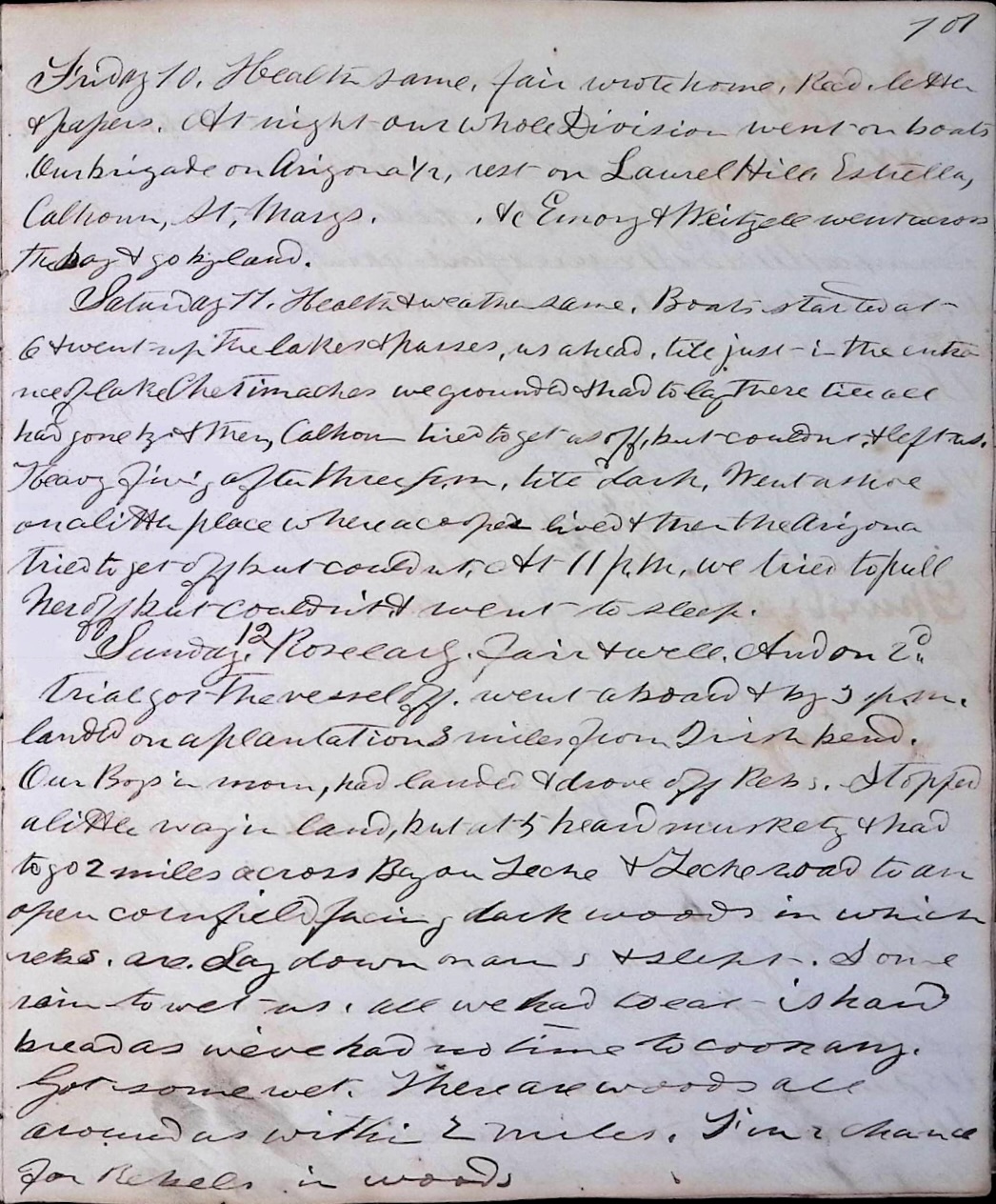
Friday, 10th—Health same. Fair. Wrote home. Received letter & papers. At night our whole Division went on boats. Our brigade, half on Arizona, rest on Laurel Hill, Estrella, Calhoun, St. Marys, &c. [Gens.] Emory & Weitzel went across the Bay and go by land.
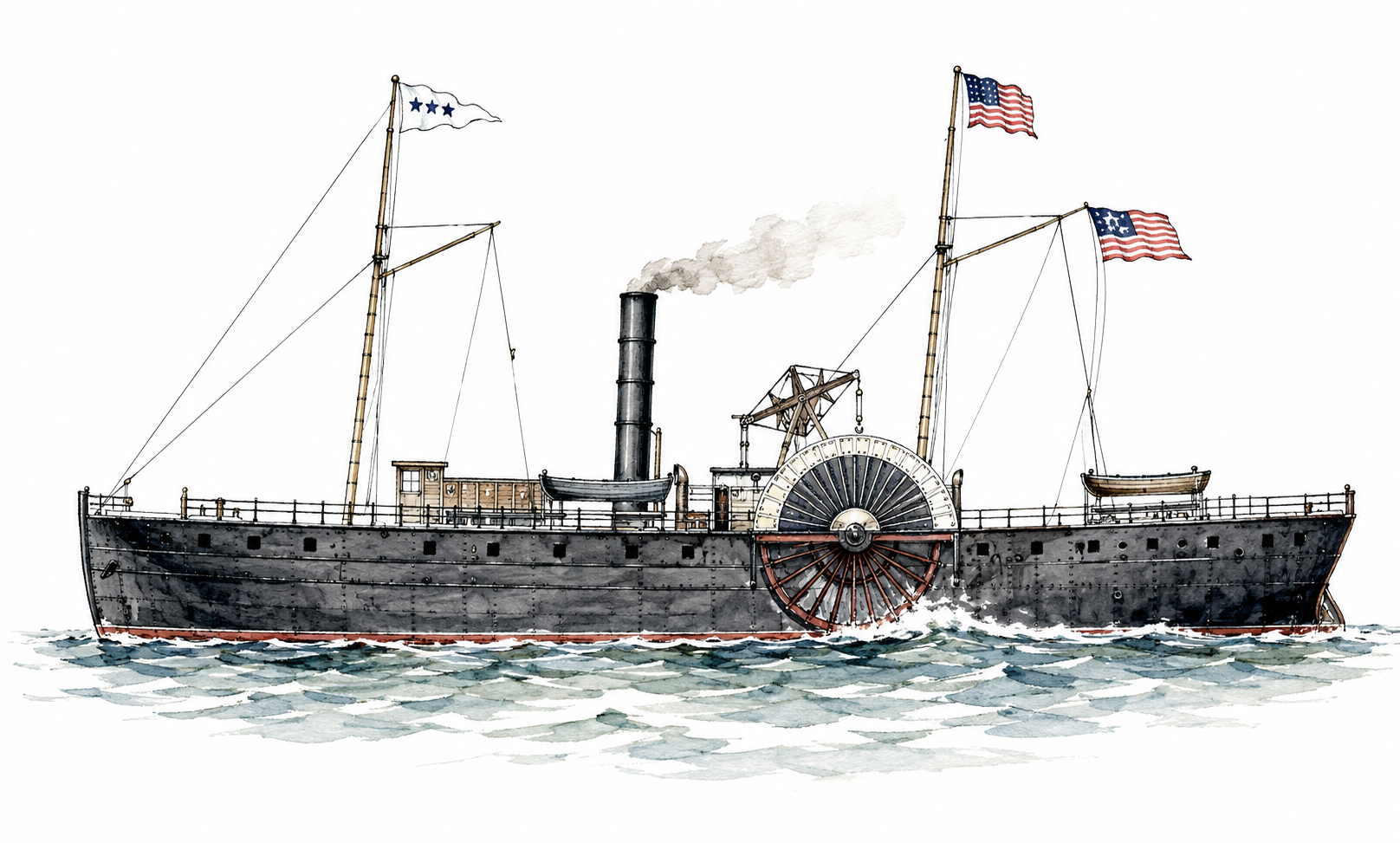
Saturday, 11th—Health & weather same. Boats started at six and went up the lakes & passes, us ahead, till just in the entrance of the Lake Chetimaches we grounded & had to lay there till all had gone by & then the Calhoun tied to get us off but couldn’t and left us. Heavy firing after three p.m. till dark. Went ashore on a little place where a cooper lived & then the Arizona tried to get off but couldn’t. At 11 p.m. we tried to pull her off but couldn’t & went to sleep.
Sunday, 12th—Rose early. Fair & well. And on 2nd trial, got the vessel off, went aboard & by 3:30 p.m., landed on a plantation three miles from Irish Bend. Our boys in morn had landed & drove off the Rebs. Stopped a little way inland, but at 5 heard musketry & had to go two miles across Bayou Teche & Teche road to an open cornfield facing dark woods in which Rebs are. Lay down on arms & slept. Some rain to wet us. All we had to ear is hard bread as we’ve had no time to cook any. Got some wet. There are woods all around us within two miles. Fine chance for Rebels in woods.
Monday, 13th—Rose early & started by 5 a.m. & went along Bayou Road. Soon heard heavy firing & musketry but a high hedge kept us from seeing it. In 30 minutes we came in sight of a large open field on which our men were (the 2nd Brigade) firing on Rebels who were posted in woods, nearly thus:

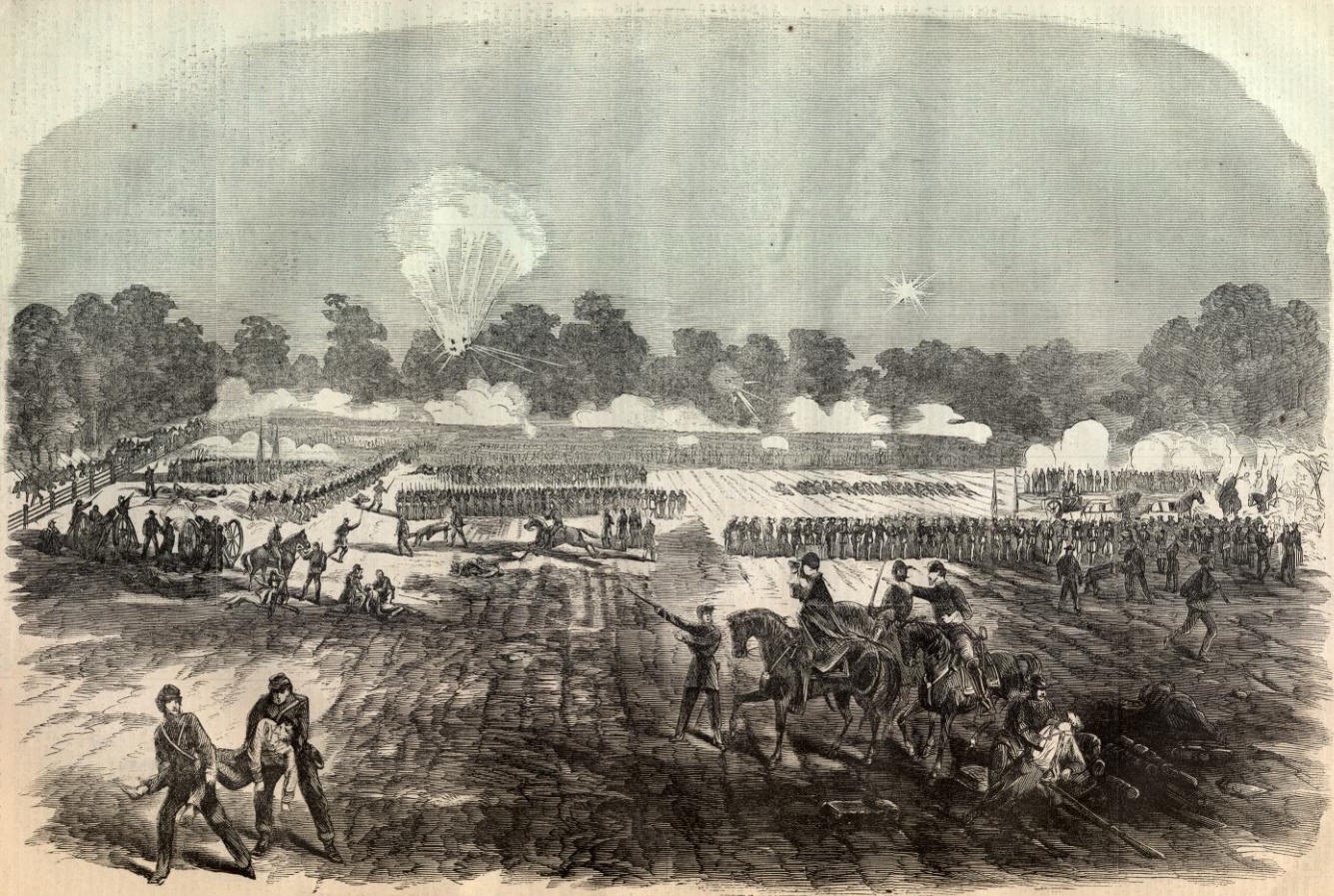
At first the 26th Maine went in with Battery with 13th [Connecticut] on the road at left. They came very near being flanked on right, when the 22nd Maine went up but fell back in disorder, & the 25th Connecticut & 159th New York took their place & all charged at once, driving Rebels. Just then we came up & joined them. We threw off our knapsacks, formed in line & rushed through the woods, but soon a conical shell came tearing through the trees a few feet ahead of us & we were ordered back & our company went down to Bayou to pick off [Confederate gunboat] Diana‘s gunners if she came along. She sent all kinds of stuff at us but hurt no one as we got behind trees. ‘Twas skittish business anyway to hear them yell, scream and whistle around.
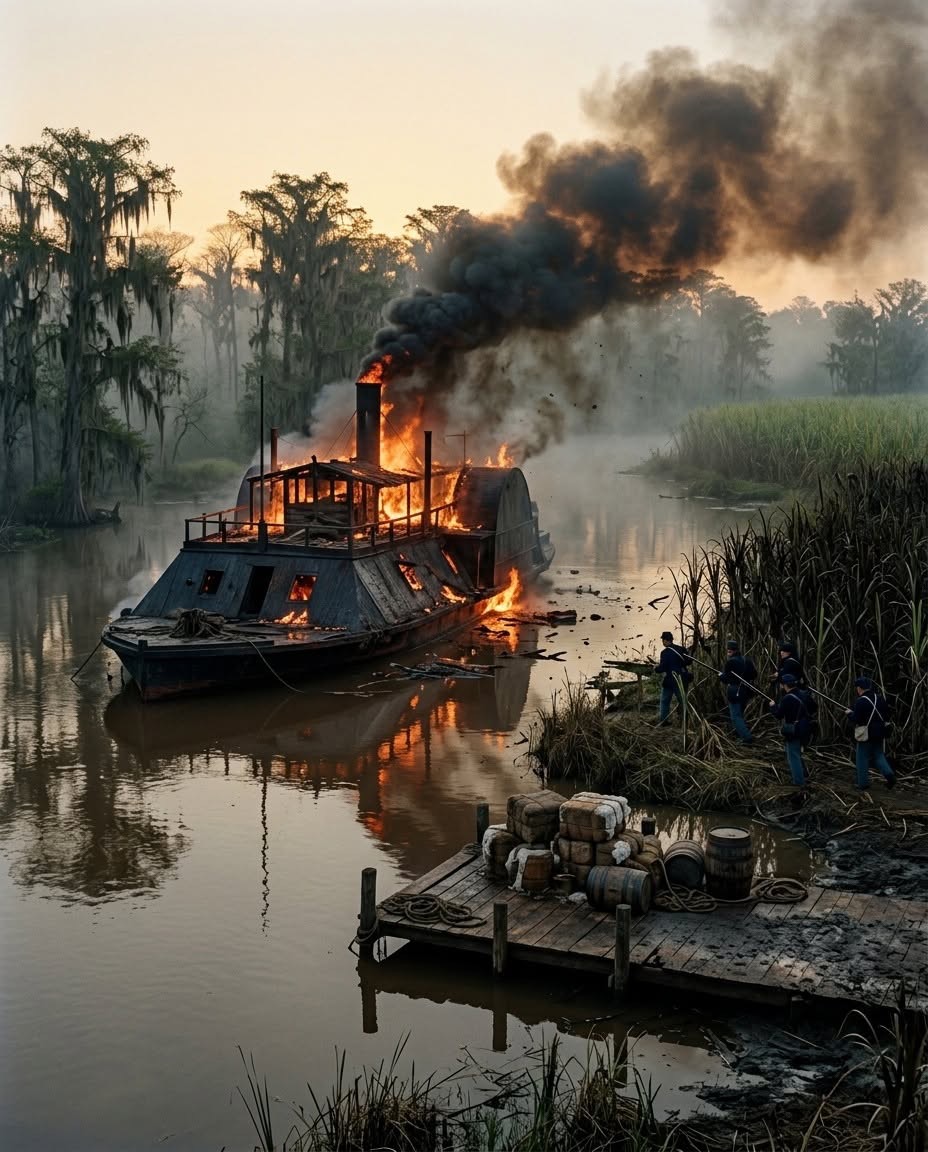
At 3 p.m., we heard a great explosion & soon learned the Diana had blown up [scuttled by retreating Rebels]. We got our knapsacks & encamped for night, just beyond the battlefield. Our loss in killed & wounded was 300 nearly. Probably rebels about 200 & 300 prisoners. Weitzel holds Franklin and Rebels are in flight.
Tuesday, 14th—Well. Fair. Started at six and went 18 miles up Teche Road near Indian Village & camped. Country low, level, and decorated with houses & woods & fertile fields. Awful tired. Ran in with many prisoners. All look well ^ dressed well. Plenty cattle & mules & corn. Our whole force is now together. Weitzel & Emory took 1,000 prisoners.
Wednesday, 15th—Started early & marched 15 miles & camped on bayou four miles from Generet. Tired & stiff. Fair. Scanty grub tho’ plenty around. We get some pig, chicken, eggs, &c. Scenery as pretty as yesterday’s. Cavalry had skirmish.
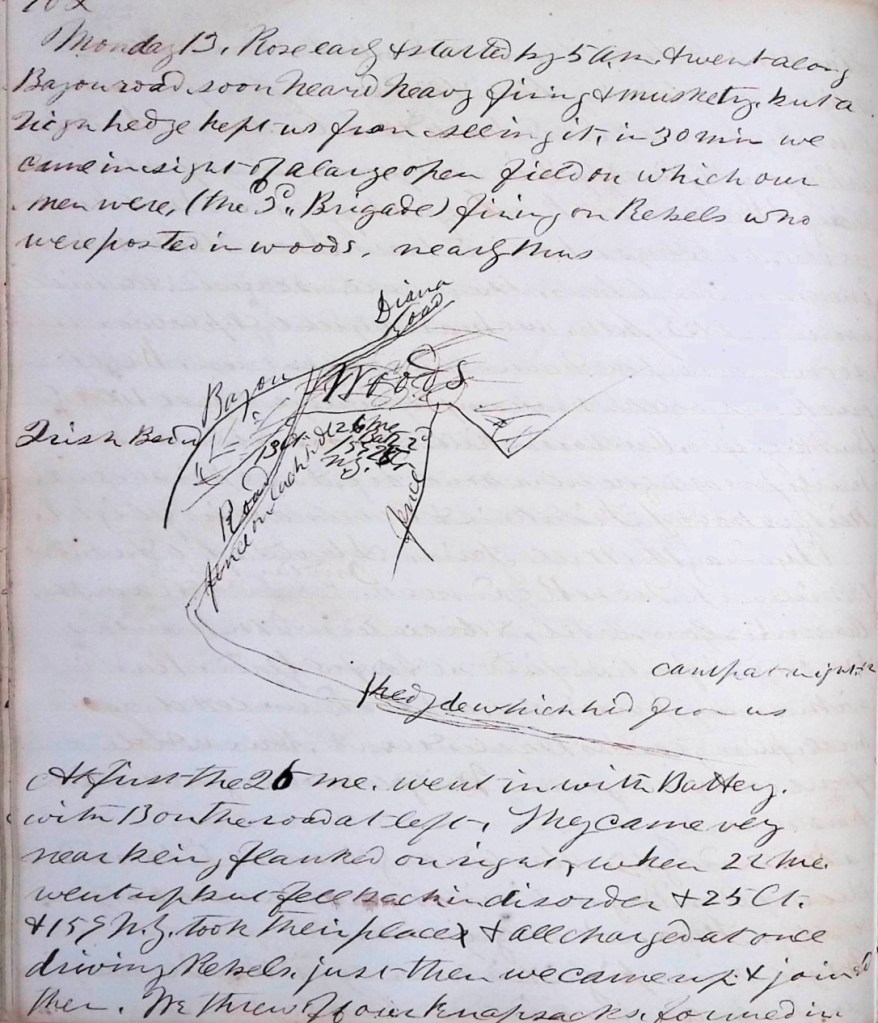
Thursday, 16th—[I’m] well. [Weather] fair. Marched 12 miles to New Iberia which we reached 3 p.m. and at 5 started with part of the 41st Massachusetts & 24th Connecticut under [W. K.] Kimball, leaving everything but rubbers, taking one and a half days rations & went one mile on wrong road, then six miles over a rough, low, boggy prairie, having several times to wade deep mud holes. We couldn’t see a house or anything else, but our road & hardly that. Encamped at 12 p.m., cold, tired, & stiff & slept.
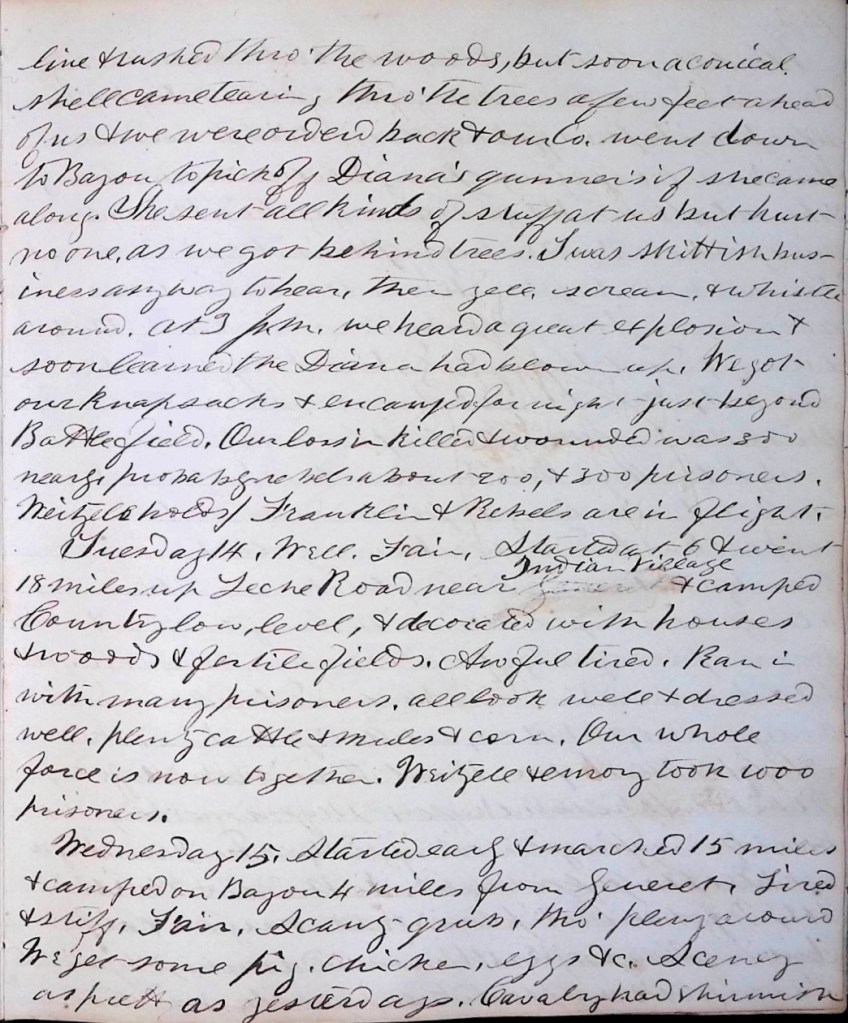
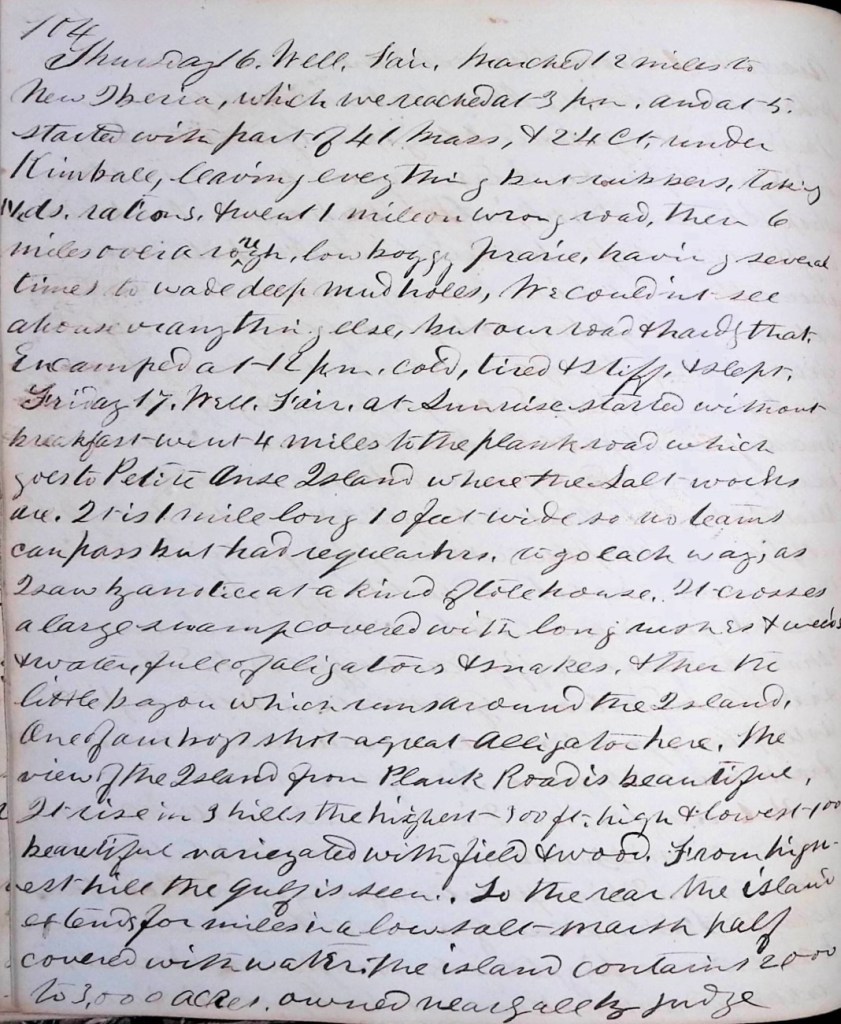
Friday, 17th—Well. Fair. At sunrise started without breakfast, went four miles to the Plank Road which goes to Petite Anse Island where the salt works are. It is one mile long, ten feet wide, so no teams can pass but had regulators to go each way, as I saw by a notice at a kind of toll house. It crosses a large swamp covered with long rushes & weeds & water full of alligators & snakes & then the little bayou which runs around the island. One of our boys shot a great alligator here. The view of the island from Plank Road is beautiful. It rises in three hills, the highest 300 feet high & lowest 100 feet, Beautiful variegated with field & wood. From highest hill, the Gulf is seen. To the rear, the island extends for miles in a low salt marsh half covered with water. The island contains 2,000 to 3,000 acres owned nearly all by Judge Avery who discovered & worked the mine which has paid him well.
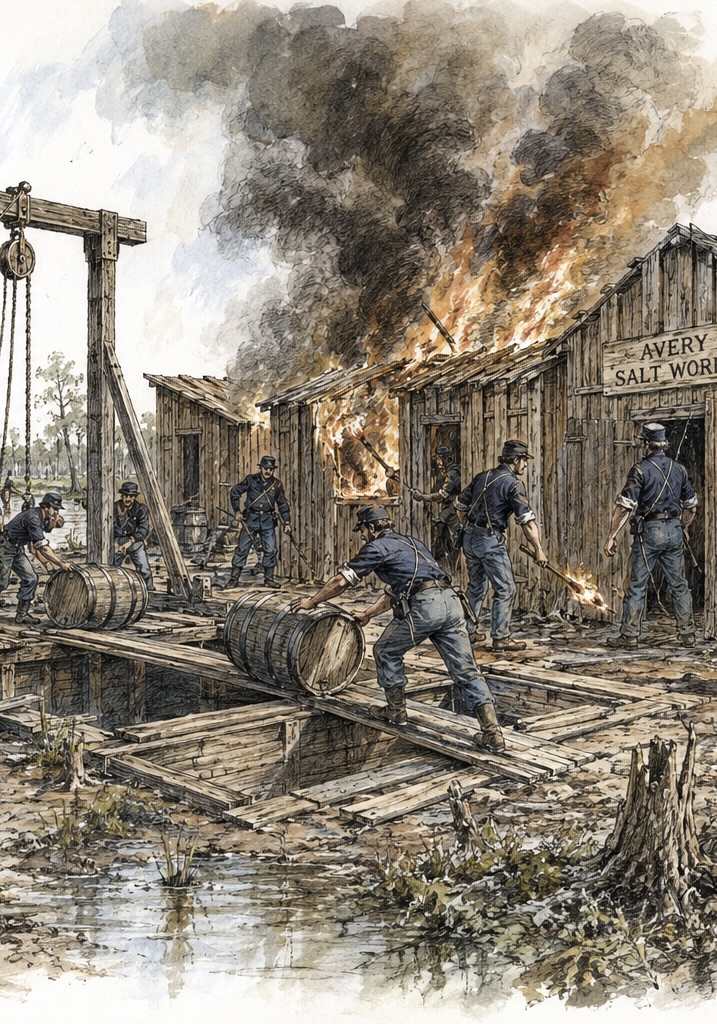
Reached the [salt] works about 9 a.m. They consist of about one dozen pits of various sizes covered with rude sheds, several houses, and one tool shop & carpenters’ shops. We burned the building and rolled all the barrels in the pits, worked about one hour. Tho’ we’ve made complete work of it, yet in a few hours, they can get salt again. After finishing up this part, we went to Judge Avery’s farmhouse & helped ourselves & got a fine meal. Plenty of all kinds. The salt looked like ice—is very good and pure. All the water here is brackish. Marched back again & reached New Iberia at 9 p.m. The place is an open prairie & has many houses, somewhat boggy. Oxen, mules, sheep & feed in abundance and in common. Many were brought off. Each officer had one and each company had a team of three mules. Feel very tired & stiff. Our grub is out so we have to do with fresh meet and mush.
[Editor’s Note: In 1863, the salt works on Petite Anse Island (now known as Avery Island, Louisiana) served as a vital, highly strategic rock salt source for the Confederacy during the American Civil War, producing millions of pounds of salt before Union forces under Colonel W.K. Kimball seized and destroyed the facility in April 1863. Transport relied on the raised plank road through the surrounding cypress swamp and salt marsh, where wagons operated on strict single-direction hourly schedules before transferring barrels onto bayou steamboats. At least 500 enslaved people were put to work manually excavating and processing the salt deposits. Union troops captured the works on 17-April 1863, burning 18 buildings, smashing mining equipment, and destroying hundreds of barrels of prepared salt.]
Saturday, 18th—Have diarrhea. Fair. Started at 10:30 & marched 8 miles by 2 p.m. & then halted one hour to get dinner. Made pig 7 potatoes—very good. Rode one hour. Started again & went 8 miles to Vermillionville where we encamped at 8. Had mush & meat. As a bridge was burned here, Grover’s and all were delayed till tonight building it. They had some skirmishing. Saw several dead cavalry horses on our route today. which lay thro’ a prairie with a few plantations. We have left the Teche & are between Black and Vermillion Bayous. Rain at night.
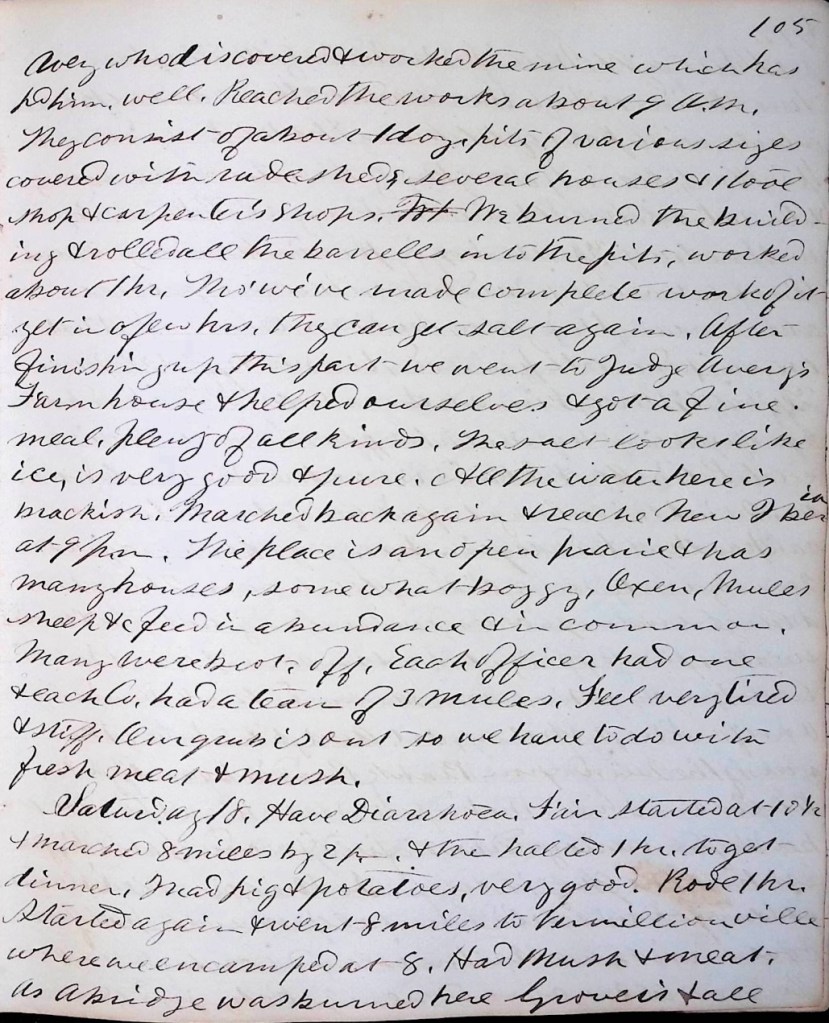
Sunday, 19th—Started at 9 in the rain. Marched thro’ Lafayette—a little village, 16 miles on Opelousas Road & encamped just over a little bayou at 5:30 a.m. Very hard marching as ’twas very muddy tho’ it is cleared off by 10. Scenery similar to yesterday, Received four hard breads & fresh grub enough but no coffee or whiskey which all others have. The trouble is we have too few teams. We march too much in middle of the day.
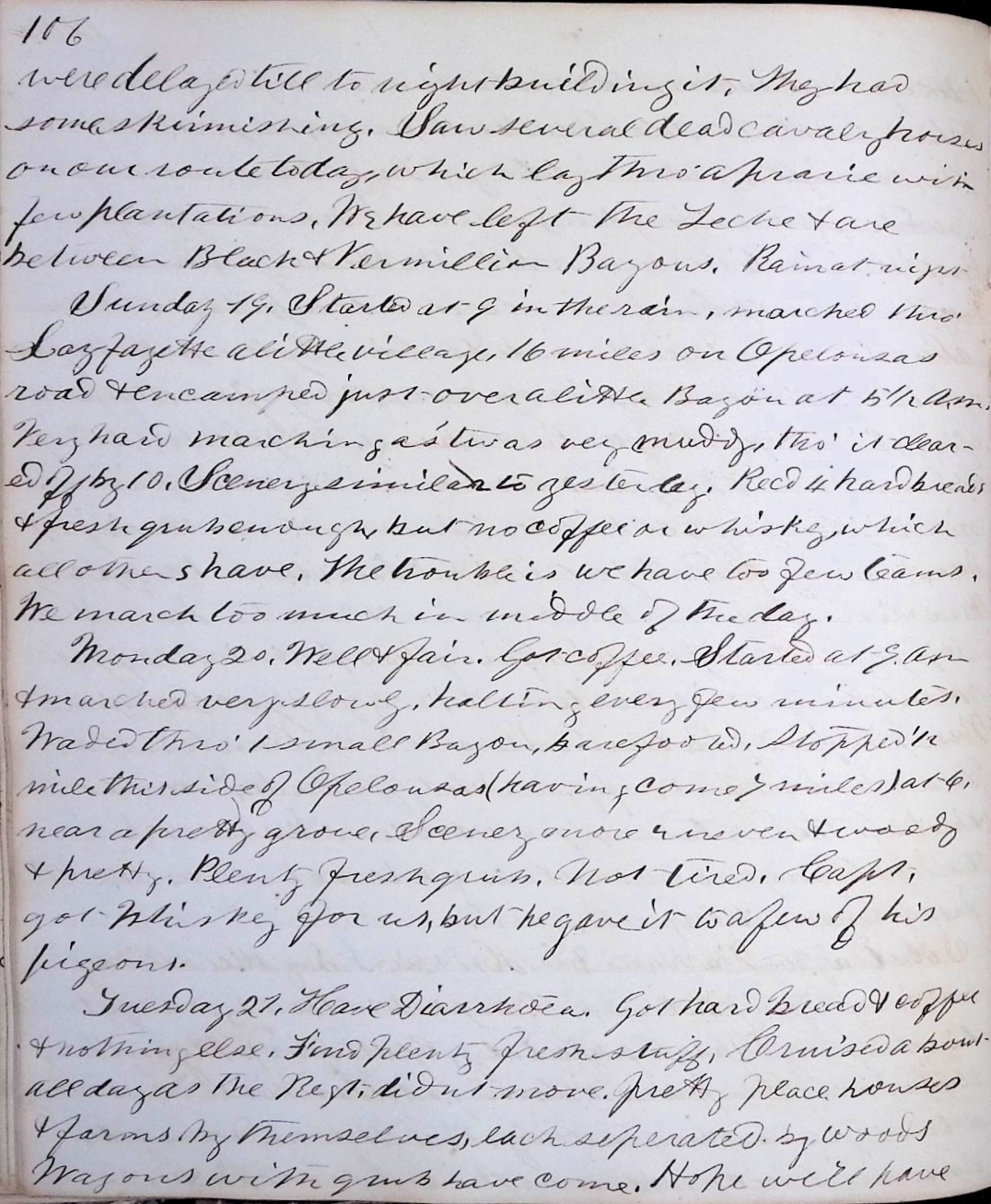
Monday, 20th—Well & fair. Got coffee. Started at 9 a.m. & marched very slowly, halting every few minutes. Waded thro’ one small bayou barefooted. Stopped half mile this side of Opelousas (having come 7 miles) at 6 near a pretty grove. Scenery more uneven & woody & pretty. Plenty fresh grub. Not tired. Captain got whiskey for us but he gave it to a few of his pigeons.
Tuesday, 27th—Have diarrhea. Got hard bread & coffee & nothing else. Find plenty fresh stuff. Cruised about all day as the regiment didn’t move. Pretty place. Houses & farms by themselves, each separated by woods. Wagons with grub have come. Hope will have better now. Our knapsacks were sent away. My other things were stolen. Blanket, tent, pants, socks, & shirt.
Wednesday, 22nd—Have diarrhea. Fair. Went to a house one and a half mile off belonging to a judge who has run off & I got Brooks’ Ovid & a little memorandum. A lot of splendid furniture is spoiled. Live well. Went on picket at 5 p.m.
Thursday, 23rd—Diarrhea bad. [Weather] fair. Got up at 4 & went to a plantation one and a half miles off & got fowl & garden stuff. It is said that Vicksburg, Charleston, & Richmond are taken & Gen. Banks says in an order that we’ll get home in three months. I guess so (over the left). Someone cut the levee at Thibodeaux, thus stopping the cars.
Friday, 24th—Diarrhea bad. Fair. Washed & went off to a plantation which is deserted where I got Campbell’s Poems, & Life of Putnam. Reviewed by Banks. Have plenty bread & fresh meat but no salt, soap, or whiskey. We need soap most as we can’t keep clean without. Some are lousy but I am not. Make tent of rubber, sleep on blanket.
Saturday, 25th—Diarrhea bad. Hot & fair. Lay still all day reading Life of Putnam & Campbell’s Poems, which I think very fine—especially Gertrude of Wyoming & Glencoe. On parade tonight. Banks orders very strict punishment against plundering, &c. Guess ’twill not work very well tho’.
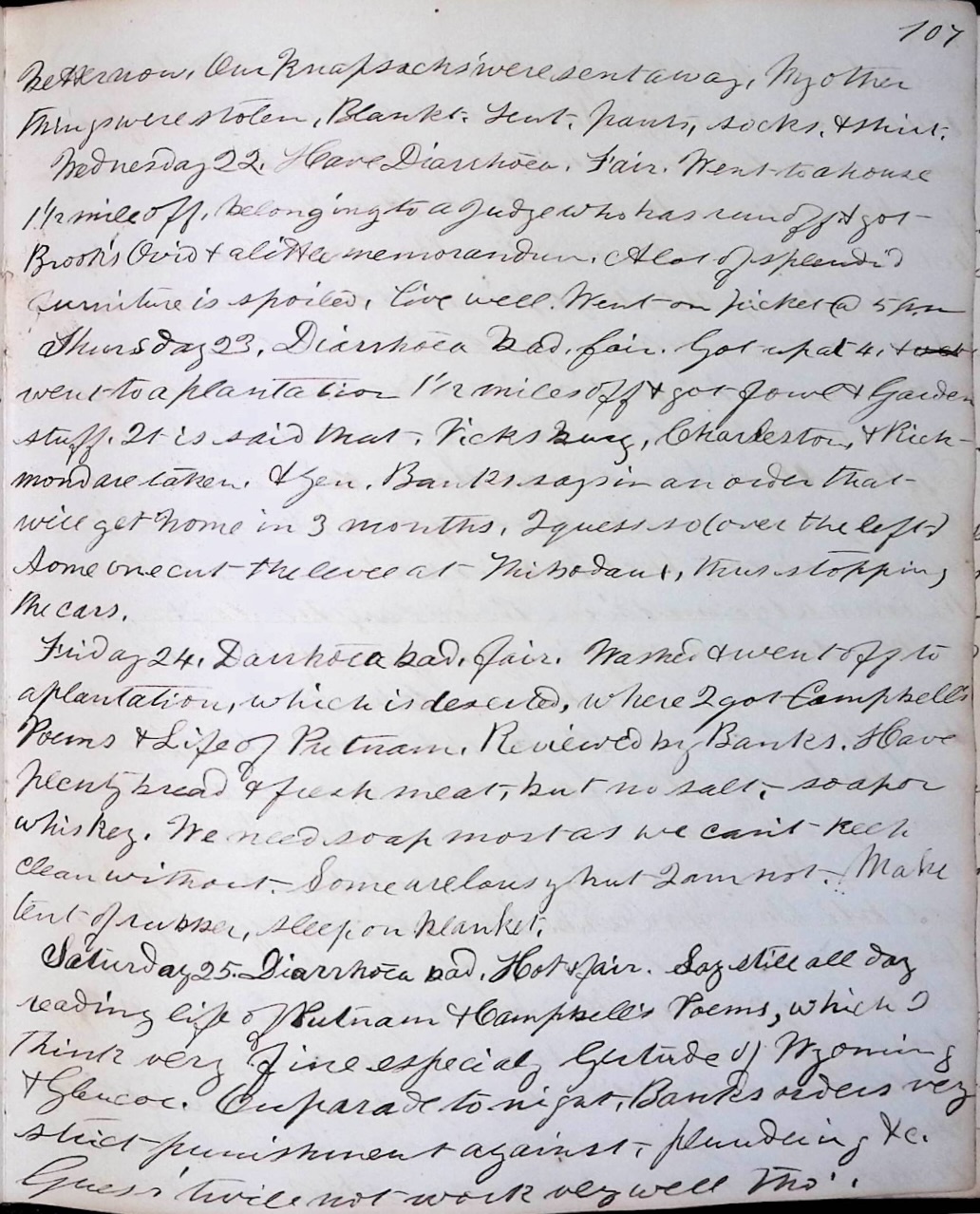
Sunday, 26th—Health better. Fair. Started at 6:30 a.m. & marched 8 miles when a bayou bridge broke under the cavalry who were crossing, killing several horses. We were delayed four hours & then went one mile further to Barres Landing on Bayou Courtableau, which we reached by 4 p.m. Got nothing but coffee and bread to eat. A great amount of cotton has been confiscated & brought here, which is being hauled in as fast as possible to be taken by bayou to New Orleans.
Monday, [27th]—About well. Some rain. Went on a foraging scout but got nothing. On picket. Slept from 10 till 4. We will remain here till all the cotton is gone. River boats are taking it off. All the boats have artillery and infantry to protect them against guerrillas. Charleston is not taken but we lost the Keokuk in the attack.
Tuesday, 28th—Well. Fair. Got badly poisoned between my legs by using leaves when I had diarrhea so I can hardly walk. Received one letter. Commenced reading Brooks’ Ovid. They are getting all the sugar and cotton they can find. Hundreds of bales and barrels are piled here and hundreds come in daily. Guess we’ll stop a month or so.
Wednesday, 29th—Well except poison. Fair. Got soap. Have plenty [ ]. Wrote home. Received letter & paper, handkerchief and stamps. News about so-so.
Thursday, 30th—Well. Fair & hot. Mustered. Over 1,000 teams are hauling here and thousands of bails are here.
Friday, May 1, 1863—Slight toothache. Pain. 13th Connecticut came in today having the Rebel flag [that] once belonged to the St. Mary’s Cannoneers, presented by ladies of Franklin and taken at Irish Bend. The niggers who follow us are the dregs of the race, the best & smartest having sense enough to stay at home. Some say they had a skirmish at Washington, Louisiana, today taking 200. Have four hours drill which is useless.
Saturday, 2nd—Have piles. Fair [weather]. Cotton still comes in.
Sunday, 3rd—Health and weather same. Inspection. Begin to feel like moving. Dull staying here.
Monday. 4th—Health & weather same. On picket. Slept after 11 as well as mosquitoes would let me. 900 cavalry arrived at Baton Rouge lately from Memphis.
Tuesday, 5th—Health good. Fair. Taken off picket at 8 a.m. & found preparations being made to leave. 3rd Brigade left at 11 and we fell in at one but started at 2:30. Only 24th Connecticut & us going in our Brigade. Marched slowly & stopped often till sunset when we reached Washington past 8 p.m. and then crossed Bayou & put on five miles & camped. Was awful tired & so were all. Passed about 600 niggers. It is said that Capt. [Howard] Dwight [younger brother of Gen. William Dwight] was shot on this road by guerrillas altho’ he surrendered. Very dusty. Land on route apparently new corn two and a half feet high & other things in proportion. Only few houses & those good except at Washington which is low & dirty & small. Read Shakespeare’s Tempest & three other pieces—very good.
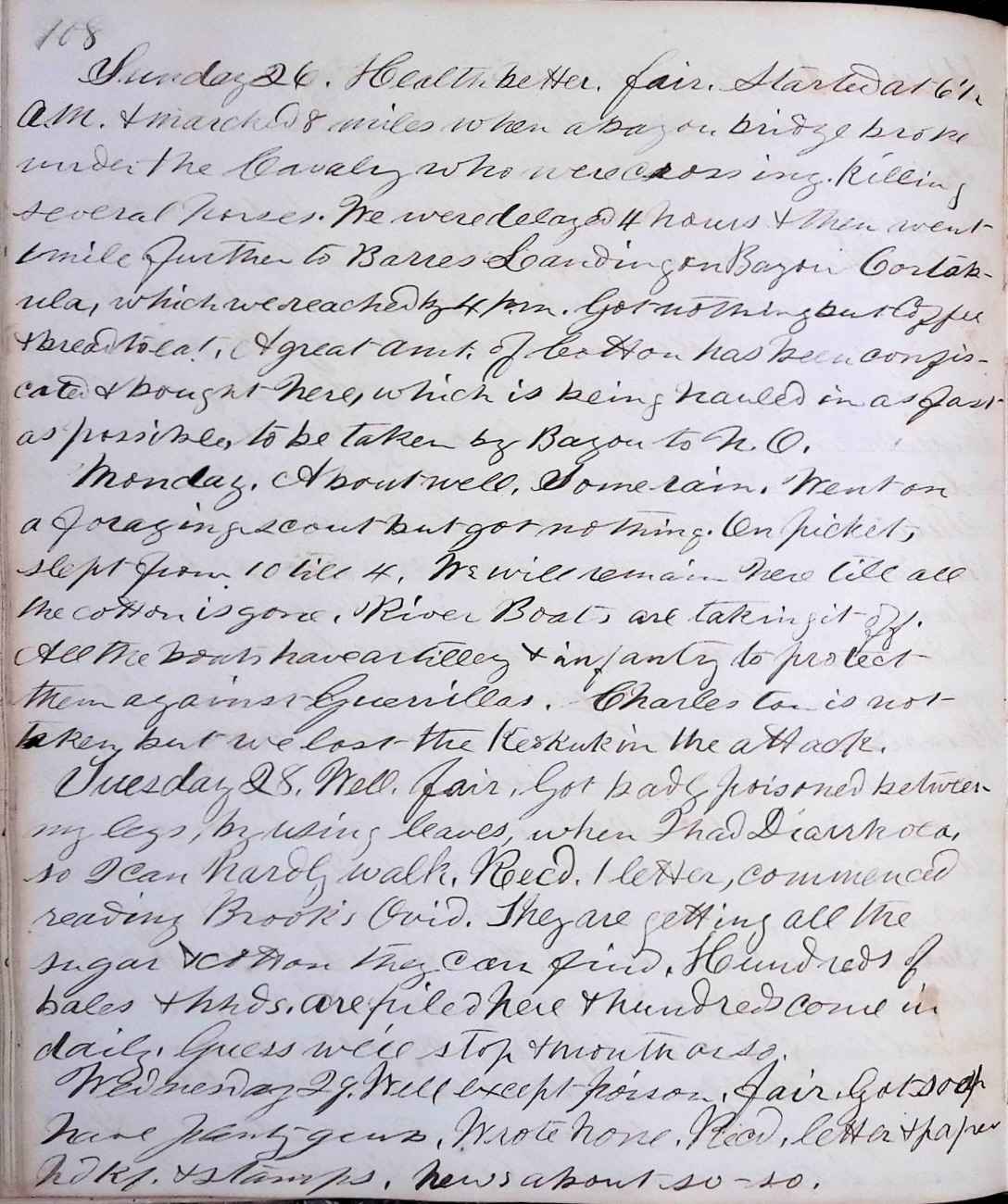
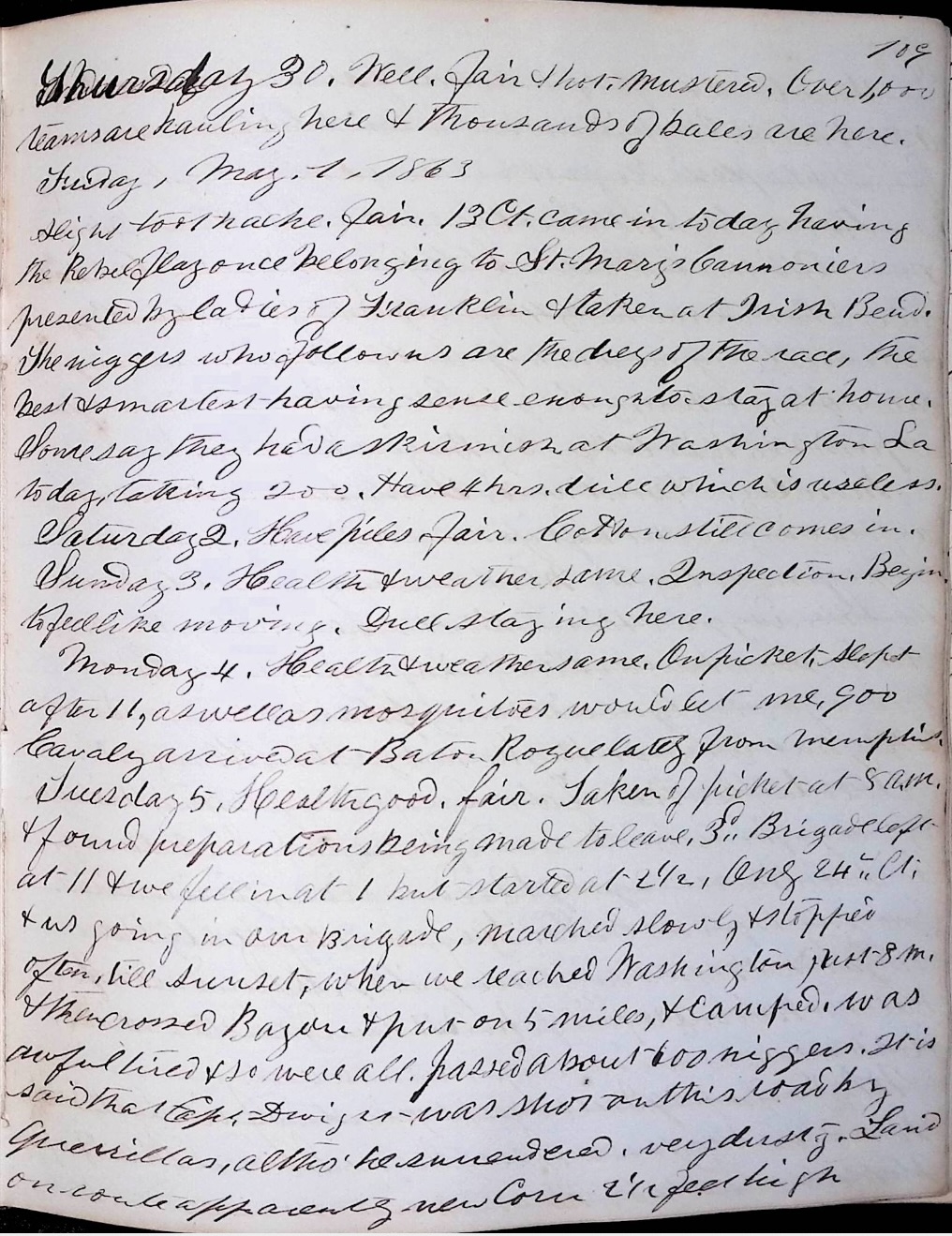
Wednesday, 6th. Well, but foot sore. Started at 5 a.m. & marched 15 miles & halted at 11 a.m. one hour to eat, and then went five miles more, going into camp at 2:30. Much cotton burnt on the way. Stopped in a cornfield after crossing Bayou Boeuf. Took the corn for bed. Not very dusty. This bayou has banks 20 feet high at high water. Cleared one mile back each side with woods in rear. Quite a number of pretty plantations averaging one or two a mile. Many slab huts.
Thursday, 7th—Well. Sore feet. Fair. Started at 6 making 15 miles by 3:30, halting 7 times. Passed thro’ a country of scattering plantations. Little cotton or sugar plantations—mostly corn. Plenty cotton in store. Some mud houses along road, being a frame filled with mud for boards. Not dusty. Passed little village of Holmesville. Quite tired. Get plenty to eat. [Generals] Dwight, Emory & Weitzel are ahead. Banks passed today. 159th New York came up with us having come from Washington 35 miles in 24 hours.
Friday, 8th—Well, but stiff & sore. Started at 5:30 a.m. and marched till 11 when halted for dinner one hour. Then started & marched til 1:30, crossing Alexandria Railroad & Bayou Boeuf & camped on Thompson’s Plantation. Same scenery as before. Bayou is very crooked & as the road follows, we’ve had to go three miles to get two ahead. Marched 15 miles. Passed through Chaneyville at ten—a pretty little village nearly deserted.
Saturday, 9th—Slight diarrhea. Stayed here all day. Heavy firing was heard after ten to the east. I guess it is at Port Hudson.
Sunday, 10th—Health & weather same. Fixed up a hut of branches & twigs. Hear firing towards Port Hudson. Getting ready to leave. Hot days and cold nights.
Monday, 11th—Started at 8 a.m. & marched four miles to Well’s Plantation on same bayou. Made a board house. At parade, orders were read against marauding. Offenders to be sent to New Orleans to clean streets. Guess it won’t work. Received six papers and one letter. All well [at home].
Tuesday, 12th—Diarrhea. Have sore heel. Fair till sunset, when it rained two hours, wetting me thro’ my boards.
Wednesday, 13th—Well, tho’ I have a boil on heel. Fixed my tent. It is said Port Hudson is taken. Well, I reckon also that Farragut is captured. Guess so. Orders to start at 4 tomorrow. Reveille to be at 3 a.m.
Thursday, 14th—Started at 4:30 & marched briskly, stopping every three miles, thro’ Chaneyville, crossed Bayou & went into camp. It began to rain when we were about halfway ^rained by spells till sunset. Marched 12 miles. Just as we fixed up a squall came up which sent the rain thro’ my tent. But little tired tho’ foot was bad. Slept well. Went with one foot bare.
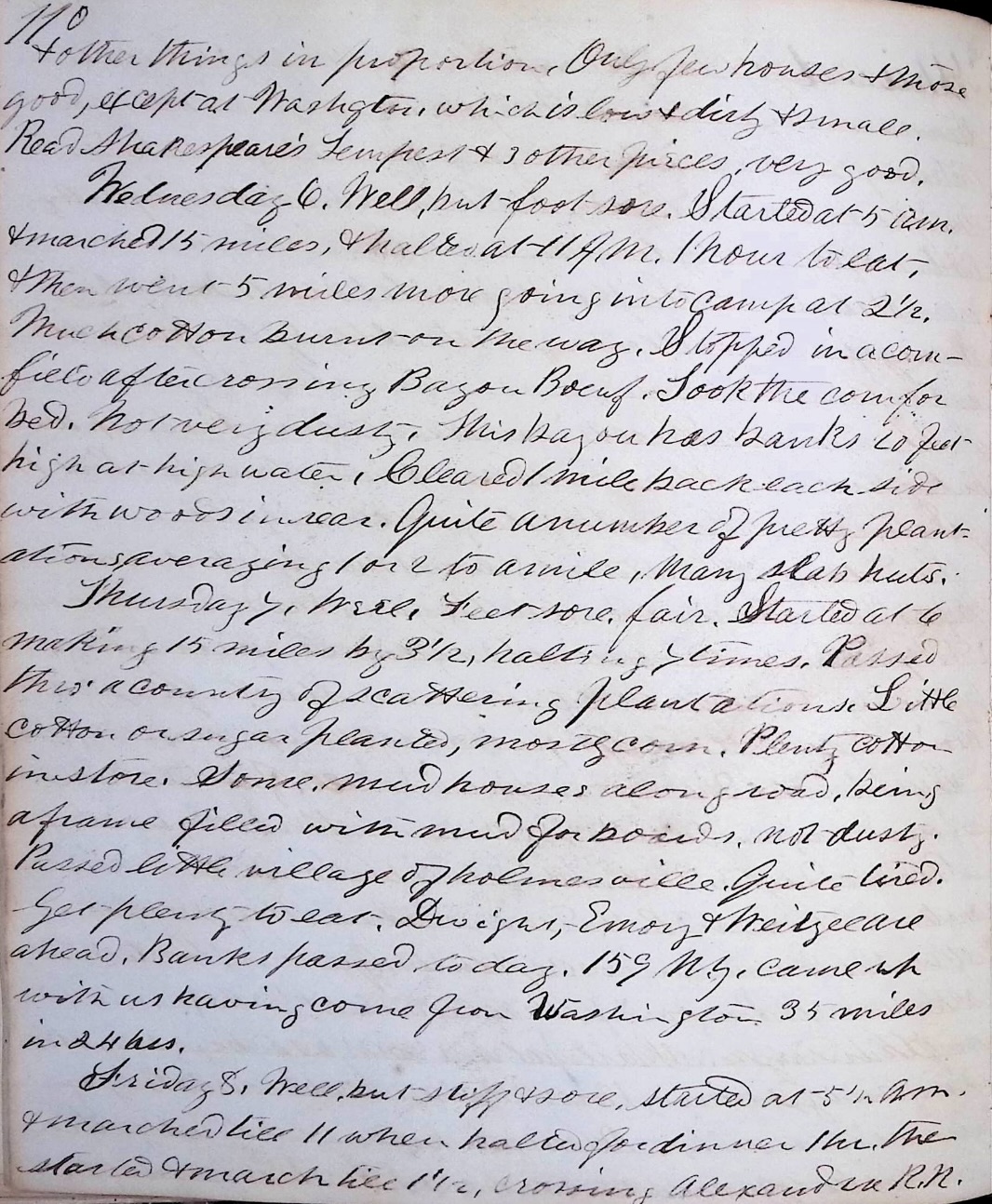
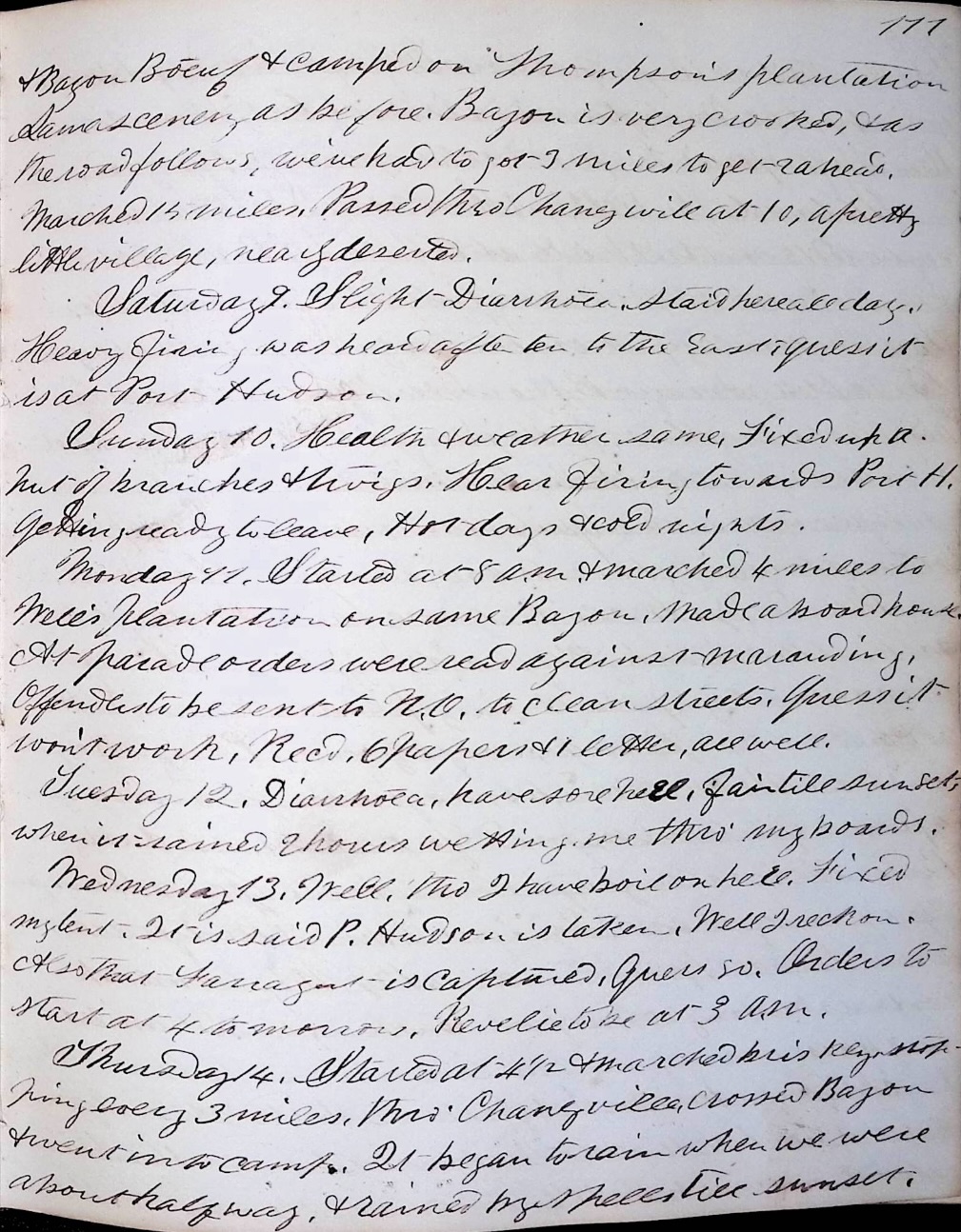
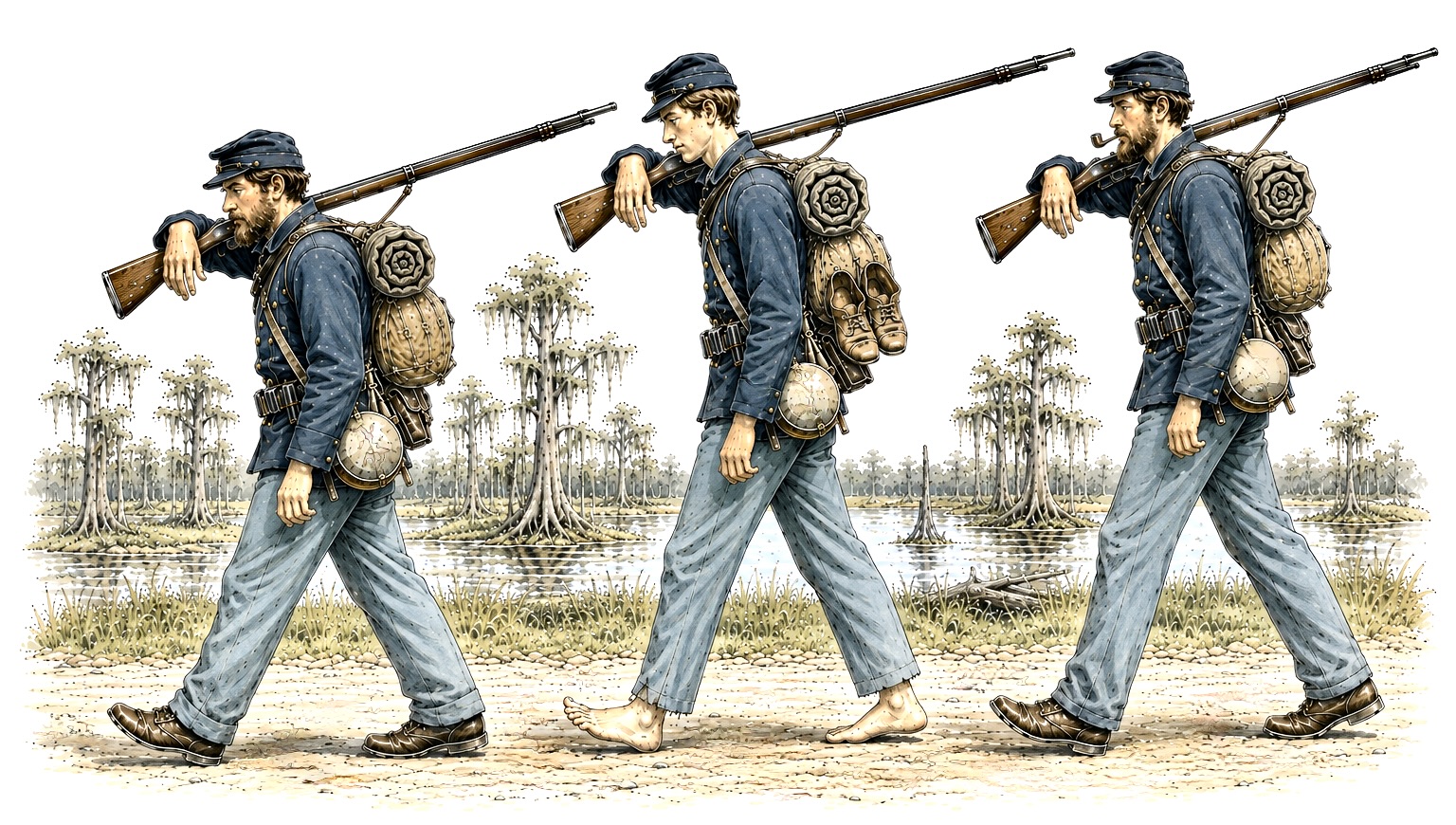
Friday, May 15th [1863]—Started at 7, tho’ the head of column left at 5 as our train is five miles long. Passed 8 miles along the bayou & then struck off to northeast & soon came to old bayou—a sluggish stream. Went 8 miles & camped. As I gad to go barefoot, the march for the last six miles was all I could endure. I was just going to the ambulance when we halted. Land here seems rough & new. Few plantations & many poor houses. Fair [weather]. [Am] well
Saturday, 16th—Foot sore. As I got socks, I wear shoes. Walked along bayou 5 miles & then left & soon struck Bayou Des Glaises—a very large stream. Houses mixed in character. Arrived at Moreauville at 11 a.m. It is a little place of six houses (1 shop & 1 coffee house). Marched 15 miles. As we go along the niggers come out & sit & stand gaping at us. No man who has a mother would ever call one of those ape-like things a man. Corn planted all about. Some cotton in field & store. As we were in advance we went very fast averaging three miles an hour. Other regiments call us devils. Feet ached badly & I was so bad off, I couldn’t look around for something good to eat so had to take government grub.
Sunday, 17th—Started at six and marched in rear to Yellow Bayou which we crossed & went one mile beyond to Atchafalaya Bayou at Simmesport which contains five houses—two being coffee houses—and one tavern. Country is rough & low & boggy. Encamped at 11 having come 12 miles. Well, but foot still sore. Some men and wagons crossed bayou on flats. Found a Rebel mail here & papers.
Monday, 18th—[Am] well, feet still sore. Crossed Bayou at 10 a.m. It is 200 yards wide. Marched one mile to a splendid plantation higher up the bayou. It has a beautiful two story wood house painted white with green trimmings, with yard of pretty trees & flowers, fine stables, & neat slave huts. We are in a pretty place just above, all surrounded with trees. So much stealing was carried [on] that we had to fall in, but Kimball interceded with Andrews, commanding general, and we stayed. Received Harpers [Weekly Magazine] of April 28th. A man who has spent the last 9 years in Shreveport and vicinity, brother to one of our company, German by birth, has just arrived from Alexandria where he had served as Engineer for Rebs. He knows Weitzel & was at school & in the army with Sigel. He says when we left Franklin, troops at Alexandria blew [up] their fort on account of a rumor that we were near. All that gives courage to the Rebels is Northern Copperheads. He has seen letters sent to our soldiers who were taken [prisoners], telling them to desert for something was soon to be done.
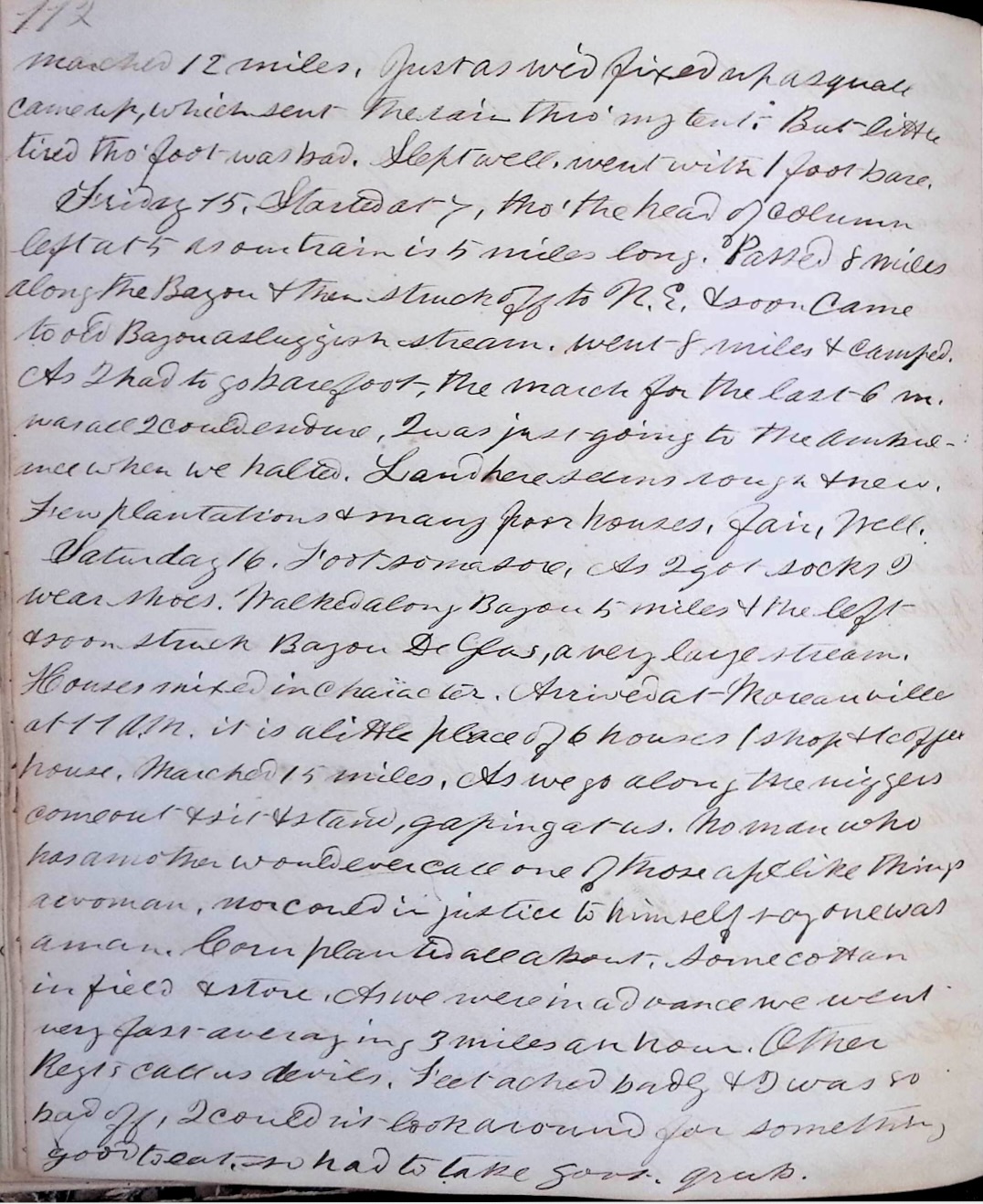
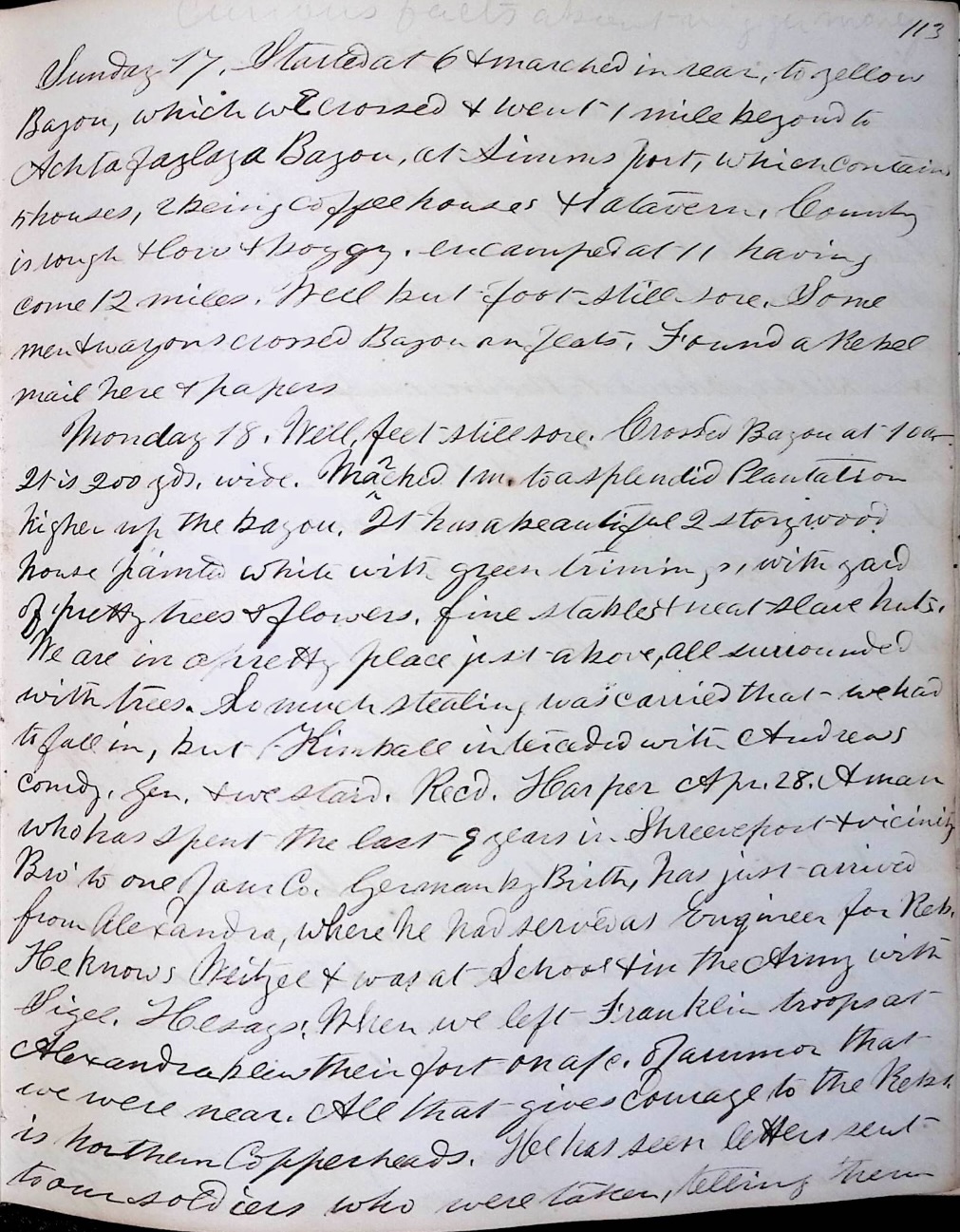
They had about 7500 men at & about Franklin. Thinks Vicksburg & Port Hudson will fall, their only hope being to reach Bragg. Flour was $125 per barrel at Alexandria. Rebels have gunboats & fortifications at Shreveport. They reported great victories just before we came along. He says every northern man at the outset had his choice to enlist or leave & as he couldn’t leave, was forced to enlist. He says he knows whole regiments of good Union men. Harpers Weekly, which I received tonight, is the best & most straight forward & honest paper I know of. Always bold & cheerful. Saw a copy of the Southern Illustrated News today. Its general reading is good but the paper is poor & only two pictures, one portrait and the other comic. Price 25 cents a number. Of the Franklin fight, Rebels say we were repulsed & that Banks has sent to New Orleans for surgeons, &c.
Tuesday, 19th—Little diarrhea. Detailed & mounted guard but didn’t go on as company was called for picket. Just as we’d got ready, we had orders not to go. Had such pain in stomach, I never slept till 2 a.m. New from North to 8th, discouraging. Hooker has received just such a repulse as Burnsides did. Yet I still have hope & put my trust in that God who rules the storm & sways the destiny of nations.
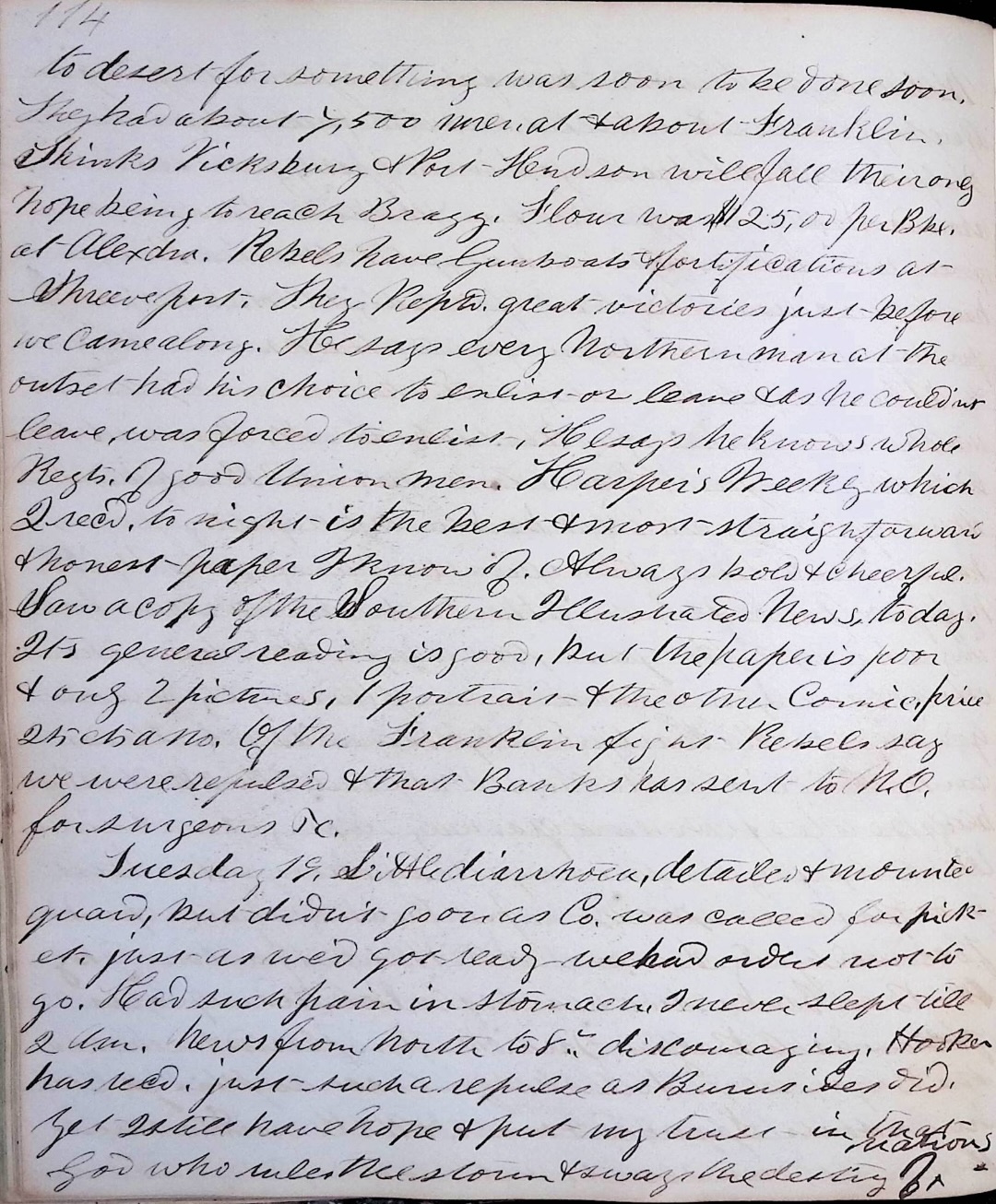
Wednesday, 20th—Diarrhea bad. Fair [weather]. On guard at Genreal’s quarters—a pretty place close to the Bayou with pretty shade trees. In front appears the Bayou with pretty green woods all around. Some firing to the southeast from 10 till 4. It seems our forces mean to keep the Rebels busy at Port Hudson. Bet we have to place ourselves between Vicksburg and Port Hudson to keep reinforcements coming there when Grant attacks.
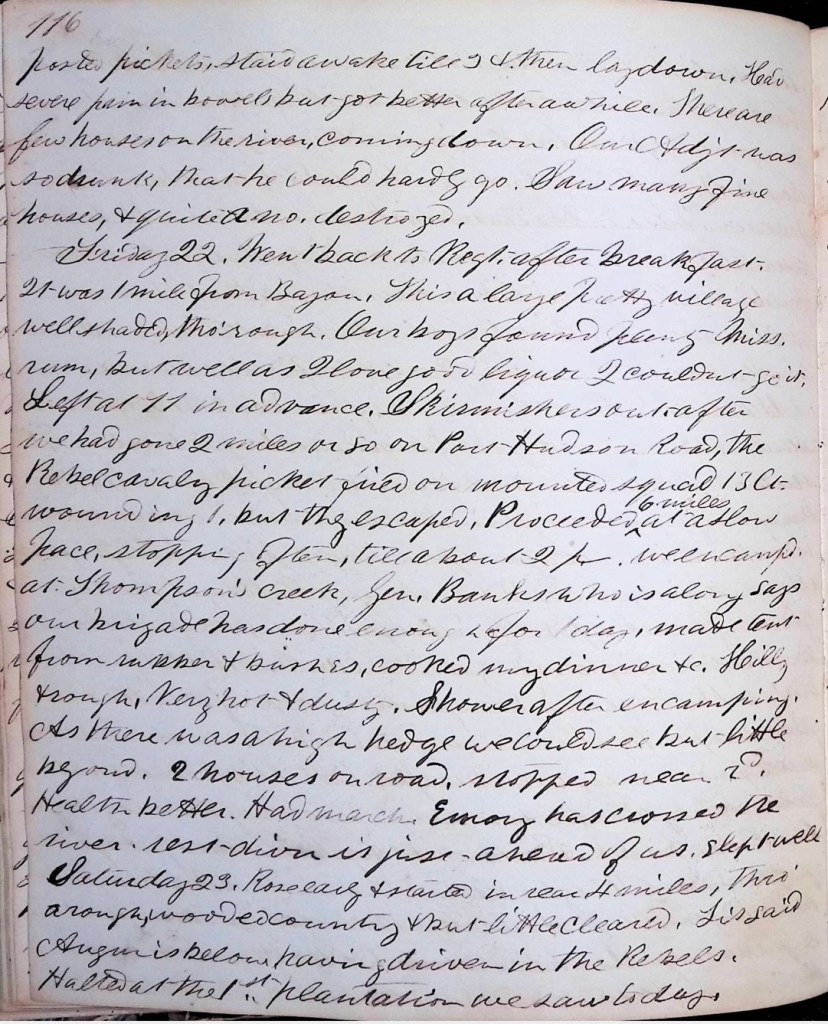
Thursday, 21st—Have slight cold. Had orders at 9 a.m. to march as soon as possible. Went aboard St. Maurice (which with the Empire Parish took Grover’s two brigades) at 12. Went up Bayou which is boarded with pretty groves six miles to Old River, the ancient channel of the Mississippi, half full of mud & willows. Then on four miles without seeing a house to the great Mississippi. Had heavy showers. As we came upon the broad bottom of the mighty yellow God, we saw the Hartford, safe and sound as ever. The land on west side is low and covered with trees. The other [side] is high bluff, 20 to 100 feet or more, gradually sloping down to the river. Several pretty houses in sight. Came close to the west side and fastened up at 4 p.m. Just then the Estrella came on followed by old Sachem with Banks, followed by the Bee. Banks came near & said, “Both transports follow us to Bayou Sara.” We then started & reached the Bayou at 9—so dark I could see nothing but river boats. Landed & our company & H & K under our Robinson, [went] on a scout, met nothing & at 12 midnight posted pickets, stayed awake till 3 7 then lay down. Had severe pain in bowels but got better after a while. There are few houses on the river coming down. Our Adjutant was so drunk that he could hardly go. Saw many fine houses & quite a number destroyed.
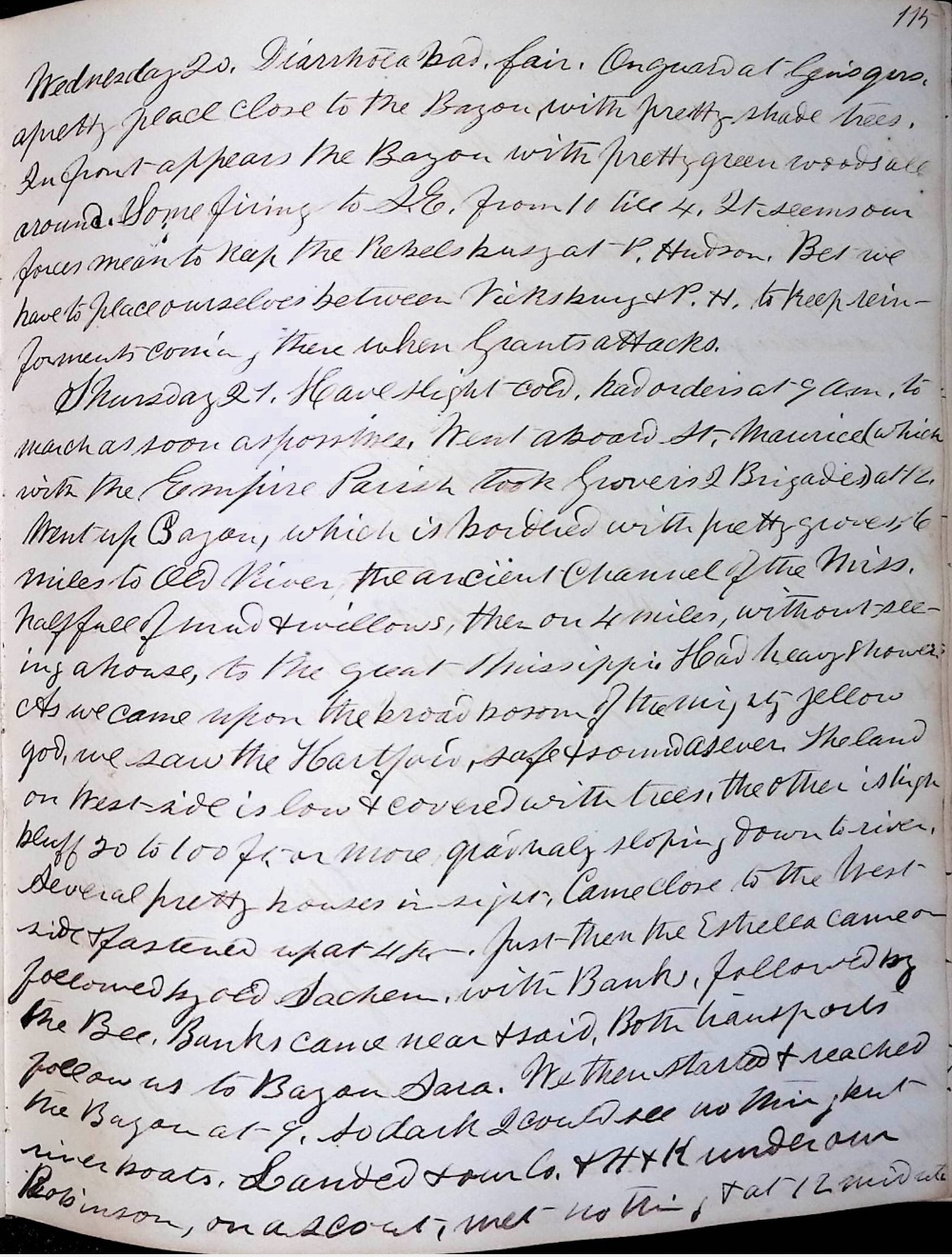
Friday, 22nd—Went back to regiment after breakfast. It was one mile from Bayou. This a large, pretty village, well shaded, tho’ rough. Our boys found plenty Mississippi rum, but well as I love good liquor, I couldn’t see it. Left at 11 in advance. Skirmishers out. After we had gone two miles or so on the Port Hudson Road, the Rebel cavalry picket fired on mounted squad 13th Connecticut, wounding one, but they escaped. Proceeded 6 miles at a slow pace, stopping often till about 2 p.m. We encamped at Thompson’s Creek. Gen. Banks who is along says our Brigade has done enough for one day. Made tent from rubber & bushes, cooked my dinner, &c. Hilly & rough. Very hot & dusty. Shower after encamping. As there was a high hedge, we could see but little beyond. Two houses on road. Stopped near 2nd. Health better. Hard march. Emory has crossed the river. REst of division is just ahead of us. Slept well.
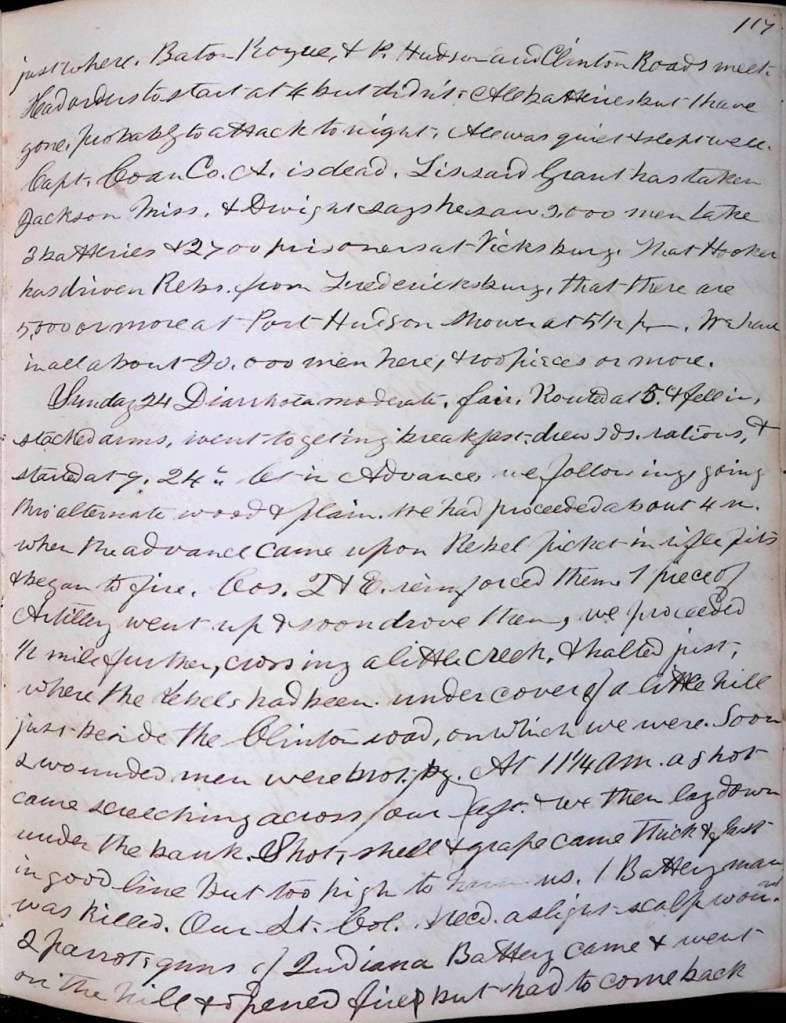
Saturday, 23rd—Rose early & started in rear four miles, thro’ a rough wooded country & but little cleared. Tis said [Gen.] Augur is below having driven in th Rebels. Halted at the 1st plantation we saw today just where Baton Rouge & Port Hudson and Clinton roads meet. Had orders to start at 4 but didn’t. All batteries but one have gone, probably to attack tonight. All was quiet & slept well. Abbott Coan, Co. A, is dead. Tis said Grant has taken Jackson, Mississippi, & Dwight says he saw 2,000 men take three batteries & 2700 prisoners at Vicksburg, that Hooker has driven Rebs from Fredericksburg, that there are 5,000 more at Port Hudson. Shower at 5:30 p.m. We have in all about 20,000 men here & 100 pieces or more.
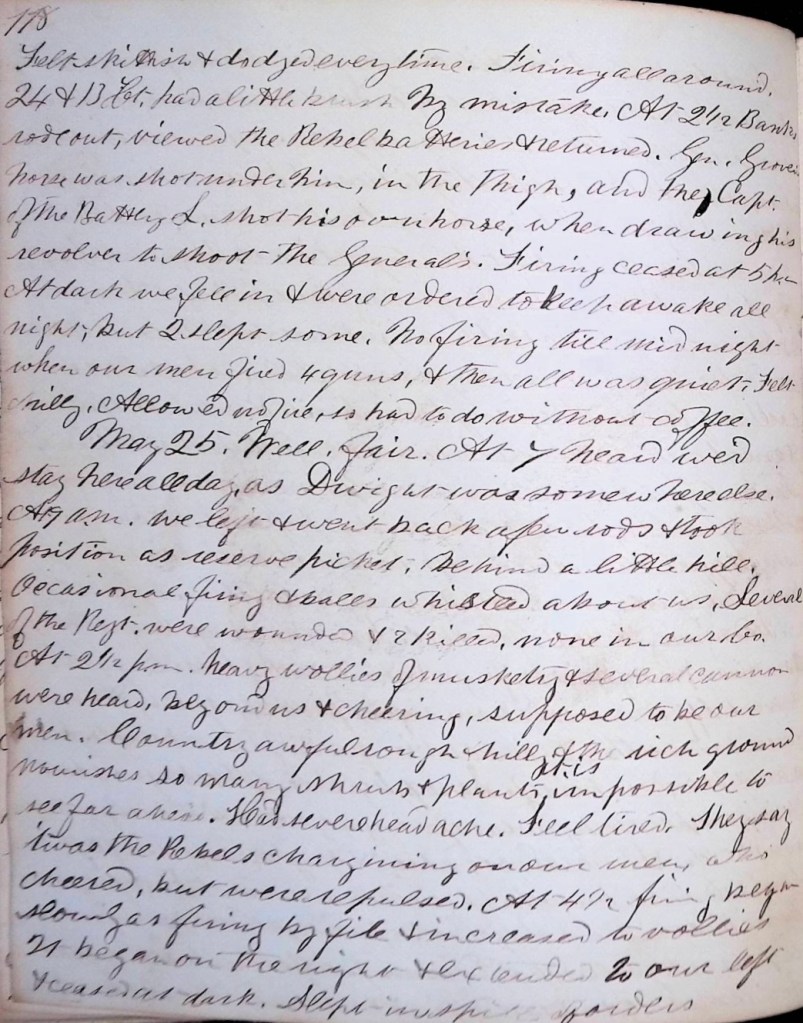
Sunday, 24th—Diarrhea moderate. Fair [weather]. Routed at 5 & fell in, stacked arms, went to getting breakfast, drew three days rations, & started at 9. 24th [Connecticut] in advance, we following. Going thro’ alternate wood & plain. We had proceeded about 4 miles when the advance came upon Rebel picket in rifle pits & began to fire. Cos. I & E reinforced them, one piece of artillery went up & soon drove them. We proceeded half a mile further, crossing a little creek, & halted just where the Rebels had been under cover of a little hill, just beside the Clinton road, on which we were. Soon two wounded men were brought by. Ay 11:15 a.m. a shot came screeching across our left & we then lay down under the bank. Shot, shell, and grape came thick and fast in good line, but too high to harm us. One battery man was killed. Our Lt. Colonel received a slight scalp wound. Two Parrott guns of Indiana Battery came and went on the hill & opened fire but had to come back.
Felt skittish & dodged every time. Firing all around. 24th & 13th Connecticut [regiments] had a little brush by mistake. At 2:30, Banks rode out, viewed the Rebel batteries & returned. Gen. [Cuvier] Grover’s horse was shot under him in the thigh and the Captain of Battery L [Capt. Henry W. Closson of US Artillery] shot his own horse when drawing his revolver to shoot the General’s [horse].
Firing ceased at 5 p.m. At dark we fell in & were ordered to keep awake all night but I slept some. No firing till midnight when our men fired four guns & then all was quiet. Felt chilly. Allowed no fire so had to do without coffee.

[Monday] May 25, [1863]—Well. Fair. At 7 heard we’d stay here all day as Dwight was somewhere else. At 9 a.m. we left & went back a few rods & took position as reserve picket behind a little hill. Occasional firing & balls whistled about is. Several of the regiment were wounded and two killed, none in our company. At 2:30 p.m., heavy vollies of musketry & several cannon were heard beyond us & cheering, supposed to be our men. Country awful rough., hilly & the rich ground nourishes so many shrubs & plants it is impossible to see far ahead. Had severe headache. Feel tired. They say ’twas the Rebels charging on our men who cheered, but were repulsed. At 4:30 firing began slowly as firing by file & increased to collies. It began on the right & extended to our left & ceased at dark. Slept in spite of orders.
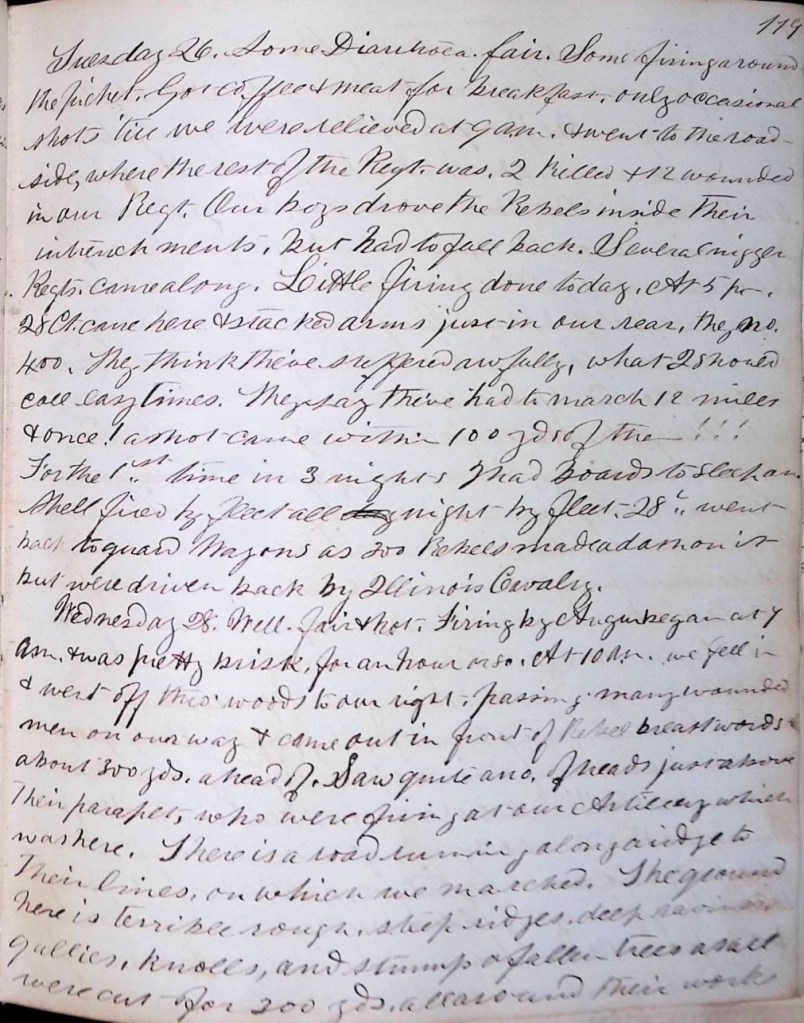
Tuesday, 26th—Some diarrhea. Fair. Some firing around the picket. Got coffee & meat for breakfast. Only occasional shots till we were relieved at 9 a.m. & went to the road side where the rest of the regiment was. Two killed & 12 wounded in our regiment. Our boys drove the Rebels inside their entrenchments but had to fall back. Several nigger regiments came along. Little firing done today. At 5 p.m., the 28th Connecticut came here & stacked arms just in our rear. They number 400. They think they’ve suffered awfully what I should call easy times. They say the’ve had to march 12 miles & once! a shot came within 100 yards of them!!! For the first time in three nights, I had boards to sleep on. Shell fired by fleet all night. 28th Connecticut went back to guard wagons as 200 Rebels made a dash on it but were driven back by [6th or 7th] Illinois Cavalry.
Wednesday, 27th—Well. Fair & hot. Firing by Augur began at 7 a.m. & was pretty brisk for an hour or so. At 10 a.m., we fell in and went off thro’ woods to our right, passing many wounded men on our way & came out in front of Rebel breastworks about 300 yards ahead of [us]. Saw quite a number of heads just above their parapet who were firing at our artillery which was here. There is a road running along a ridge to their lines on which we marched. The ground here is terrible rough, steep ridges, deep ravines, gullies, knolls, and stumps and fallen trees as all were cut for 300 yards all around their works.

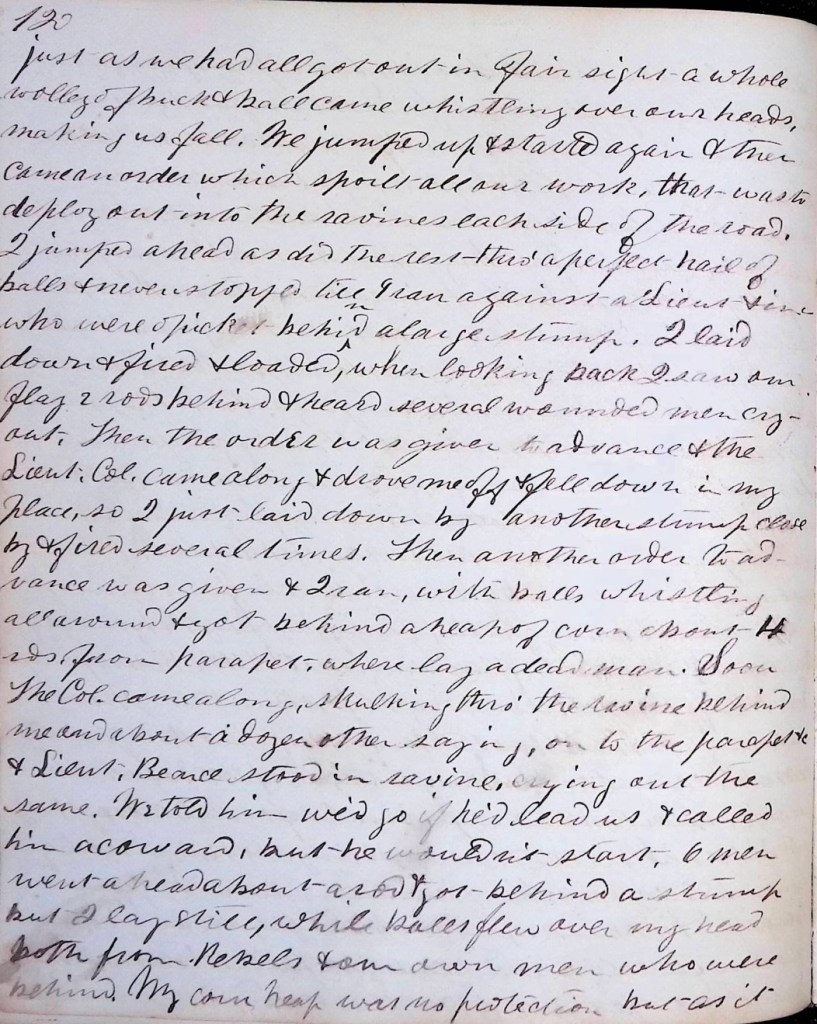
Just as we had all got out in fair sight, a whole volley of buck & ball came whistling over our heads, making us fall. We jumped up & started again & then came an order which spoilt all our work—that was to deploy out into the ravines each side of the road. I jumped ahead as did the rest thro’ a perfect hail of balls & never stopped till I ran against a Lieutenant & [ ] who were on picket behind a large stump. I laid down & fired & loaded. When looking back, I saw our flag two rods behind & heard several wounded men cry out. Then the order was given to advance & the Lieut. Col. came along & drove me off & fell down in my place so I just laid down by another stump close by & fired several times. Then another order to advance was given and I ran with balls whistling all around & got behind a heap of corn about four rods [22 yards] from the parapet where lay a dead man. Soon the Colonel came along, skulking thro’ the ravine behind me and about a dozen others saying, “On to the parapet!” &c. and Lieut. Bearce stood in the ravine crying out the same. We told him we’d go if he’d lead us & called him a coward but he wouldn’t start. Six men went ahead about a rod and got behind a stump but I lay still while balls flew over my head, both from Rebels and [from] our own men who were behind. My corn heap was no protection but as it hid me, I stuck to it, tho’ ’twas awful hard, being obliged to lie flat so long in the awful heat as my water soon gave out.
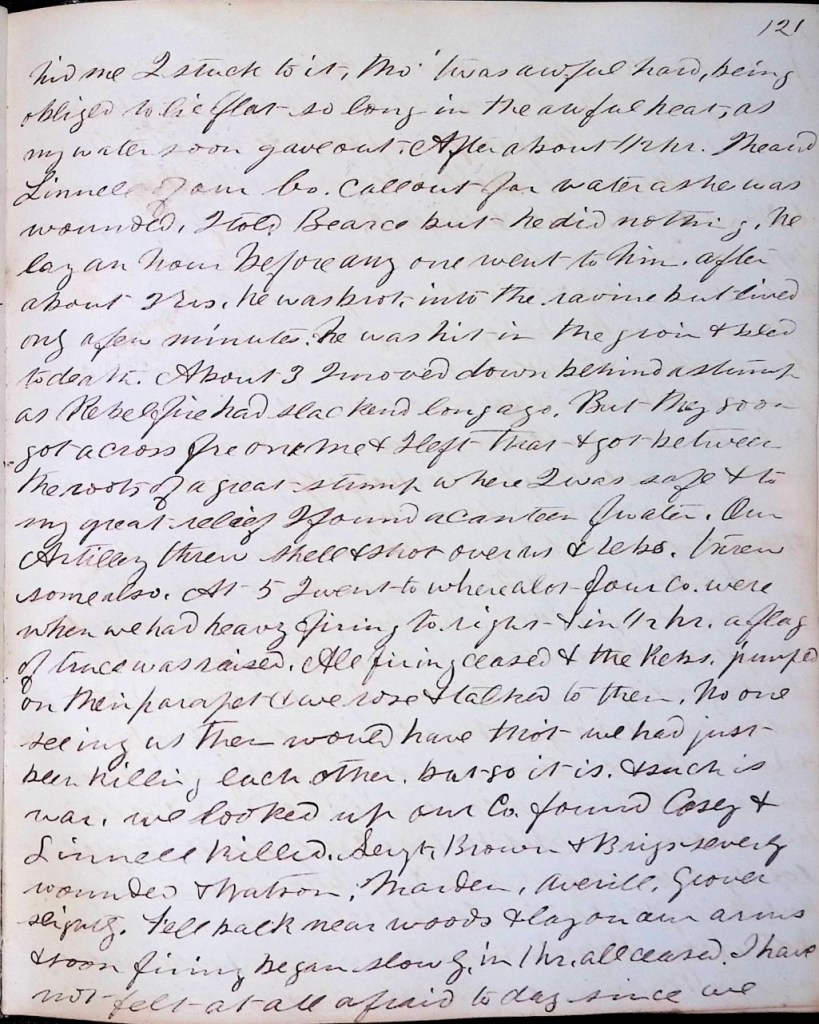
After about half an hour, I heard [George] Linnell of our company call out for water as he was wounded. I told Bearce but he did nothing. He lay an hour before anyone went to him. After about two hours, he was brought into the ravine but he lived only a few minutes. He was hit in the groin & bled to death. About three, I moved down behind a stump as Rebel fire had slackened long ago. But they soon got a cross fire on me & I left that & got between the roots of a great stump where I was safe & to my great relief I found a canteen of water.
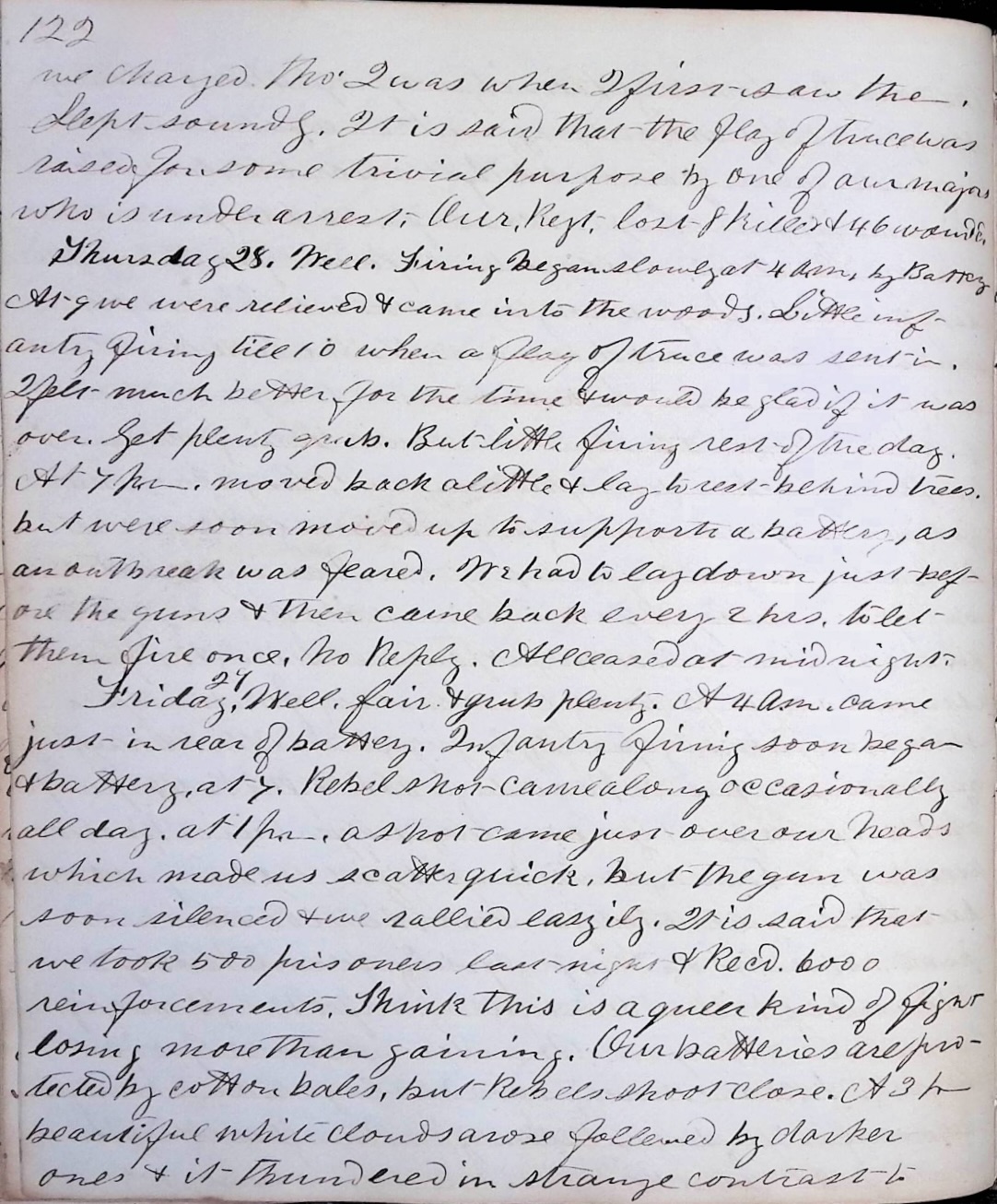
Our artillery threw shell and shot over us and rebs threw some also. At 5 I went to where a lot of our company were when we had heavy firing to right & in half hour a flag of truce was raised. All firing ceased & the Rebs jumped on their parapet & we rose and talked to them. No one seeing us then would have thought we had just been killing each other. But so it is. And such is war. We looked up our company, found Casey & Linnell killed, Sergt. [Sam’l] Brown and [Leonard] Briggs severely wounded, & Watson, [Nathaniel] Marden, [Eliab] Averill, [and Hazan] Grover [all] slightly [wounded]. Fell back near woods & lay on our arms & soon firing began slowly. In one hour, all ceased. I have not felt at all afraid today since we charged tho’ I was when I first saw them. Slept soundly. It is said that the flag of truce was raised for some trivial purpose by one of our Majors who is under arrest. Our regiment lost 8 killed & 46 wounded.
Thursday, 28th—[I’m] well. Firing began slowly at 4 a.m. by battery. At 9 we were relieved & came into the woods. Little infantry firing till 10 when a flag of truce was sent in. I felt much better for the time & would be glad if it was over. Get plenty of grub. But little firing rest of the day. At 7 p.m. moved back a little & lay to rest behind trees but were soon moved up to support a battery, as an outbreak was feared. We had to lay down just before the guns & then came back every two hours to let them fire once. No reply. All ceased at midnight.
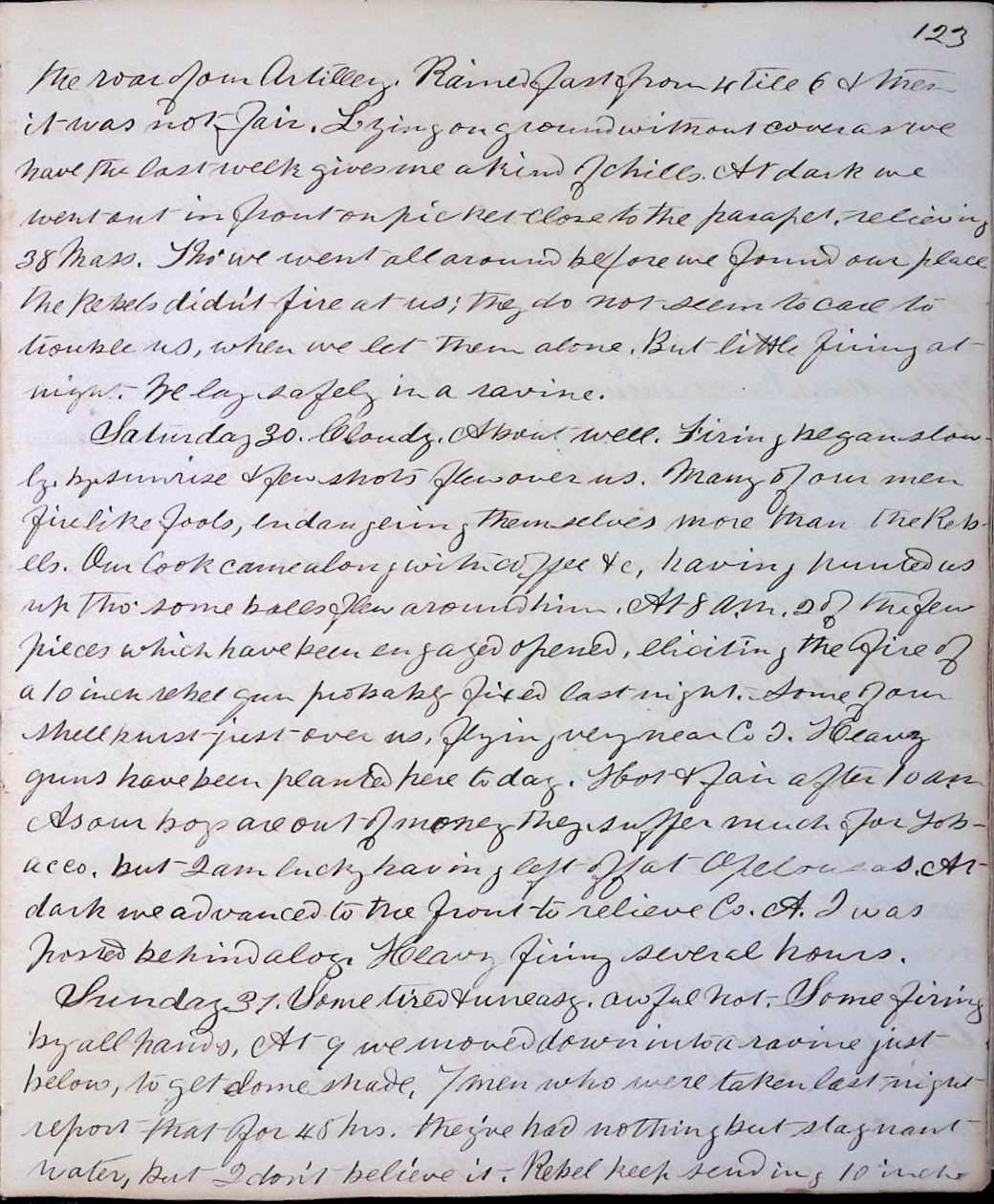
Friday, 29th—[I’m] well. Fair [weather] and grub plenty. At 4 a.m., came just in rear of battery. Infantry firing soon began & battery at 7. Rebel shot came along occasionally all day. At 1 p.m., a shot came just over our heads which made us scatter quick but the gun was soon silenced and we rallied easily. It is said that we took 500 prisoners last night and received 6,000 reinforcements. Think this is a queer kind of fight, losing more than gaining. Our batteries are protected by cotton bales, but rebels shoot close. At 3 p.m. beautiful white clouds arose followed by darker ones & it thundered in strange contrast to the roar of our artillery. Rained fast from 4 till 6 & then it was not fair. Lying on ground without cover as we have the last week gives me a kind of chills. At dark we went out in front on picket close to the parapet, relieving the 38th Mass. Tho’ we went all around before we found our place, the Rebels didn’t fire at us. They do not seem to care to trouble us when we let them alone. But little firing at night. We lay safely in a ravine.
Saturday, 30th—Cloudy. About well. Firing began slowly by sunrise & few shots flew over us. Many of our men fire like fools, endangering themselves more than the Rebels. Our cook came along with coffee, &c. having hunted us up tho’ some balls flew around him. At 8 a.m., two of the few pieces which have been engaged opened, eliciting the fire of a 10-inch Rebel gun probably fixed last night. Some of our shell burst just over us, flying very near Co. I. Heavy guns have been planted here today. Hot & fair adter 10 a.m. As our boys are out of money, they suffer much for tobacco but I am lucky, having left off at Opelousas. At dark we advanced to the front to relieve Co. A. I was posted behind a log. Heavy firing several hours.
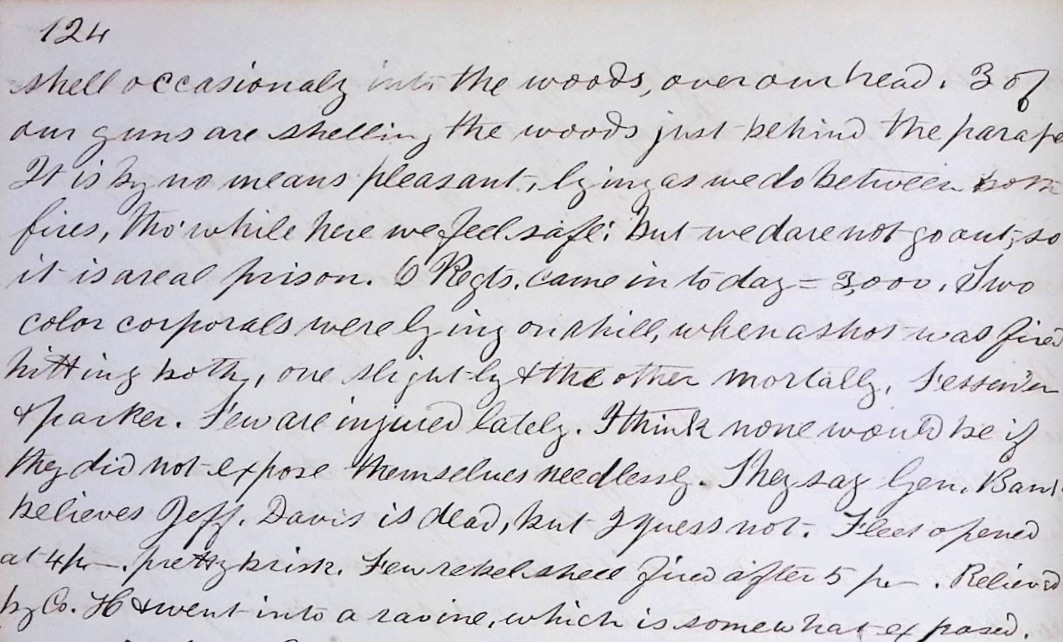
Sunday, 31st—Some tired & uneasy. Awful hot. Some firing by all hands. At 9 we moved down into a ravine just below to get some shade. Seven men who were taken last night report that for 48 hours, they’ve had nothing but stagnant water, but I don’t believe it. Rebels keep sending 10-inch shell occasionally into the woods over our head. Three of our guns are shelling the woods just behind the parapet. It is by no means pleasant lying as we do between both fires, tho’ while here we feel safe. But we dare not go out, so it is a real prison. Six regiments came inn today—3,000. Two color corporals were lying on a hill when a shot was fired hitting both—one slightly and the other mortally—Fessenden & Parker. Few are injured lately. I think none would be if they did not expose themselves needlessly. They say Gen. Banks believes Jeff Davis is dead but I guess not. Fleet opened at 4 p.m.—pretty brisk. Few rebel shell fired after 5 p.m. Relieved by Co. H & went into a ravine which is somewhat exposed.