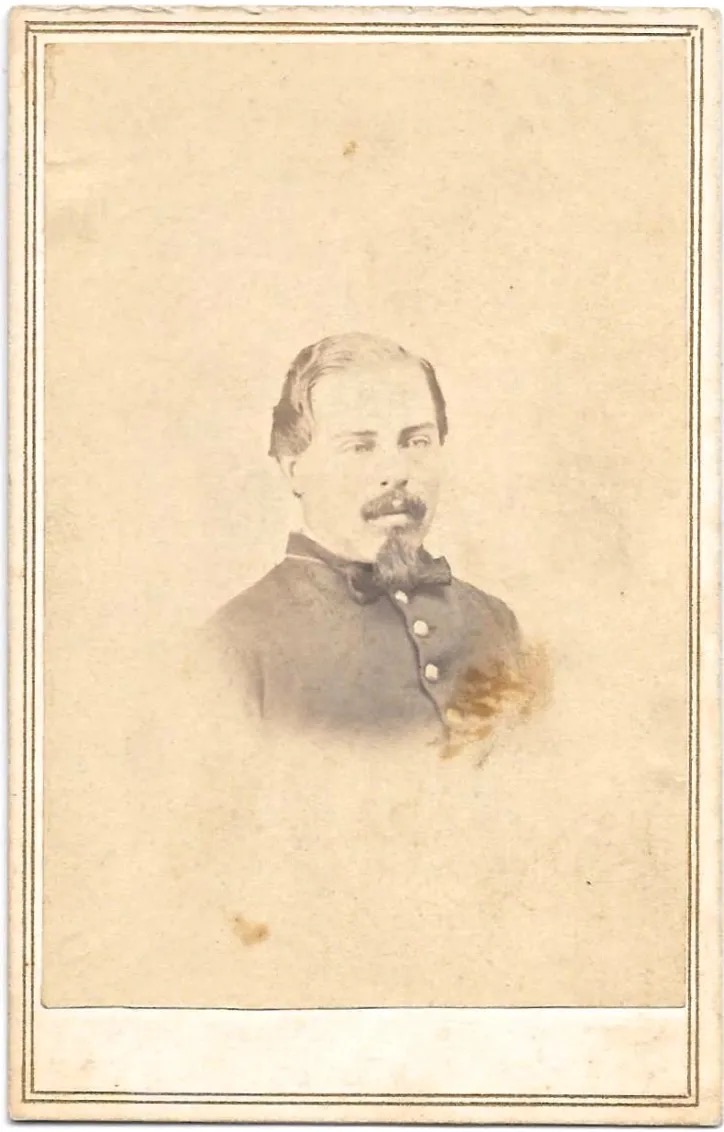
The following letter was written by Charles Dwight Chase (1840-1863), the son of Charles Chase (1803-1866) and Hannah (Chase) Chase (1807-1884) of Keen, Cheshire county, New Hampshire.
Charles was 22 years old when he accepted an enlistment bonus on 7 August 1862 and enrolled himself on the muster rolls of Co. I of the 9th New Hampshire Infantry. He entered as a private but was soon promoted to a corporal. He did not complete his three year enlistment, however. He died of disease on 20 July 1863 at Clinton, Mississippi. He was initially buried on “Wilbert’s place, two miles east of Clinton” but his body was later exhumed and taken to the Vicksburg National Cemetery (Grave 3859).
The 9th New Hampshire had an interesting service record. They were assigned to the Army of the Potomac until just after this letter was written in late February 1863. During that time they participated in the battles at South Mountain, Antietam, Fredericksburg, and Burnside’s Mud March before taking up quarters in Newport News. They were then sent to the Department of the Ohio and saw duty in Kentucky, the siege of Vicksburg, and the advance on Jackson, Mississippi, where Charles became ill and died.
T R A N S C R I P T I O N
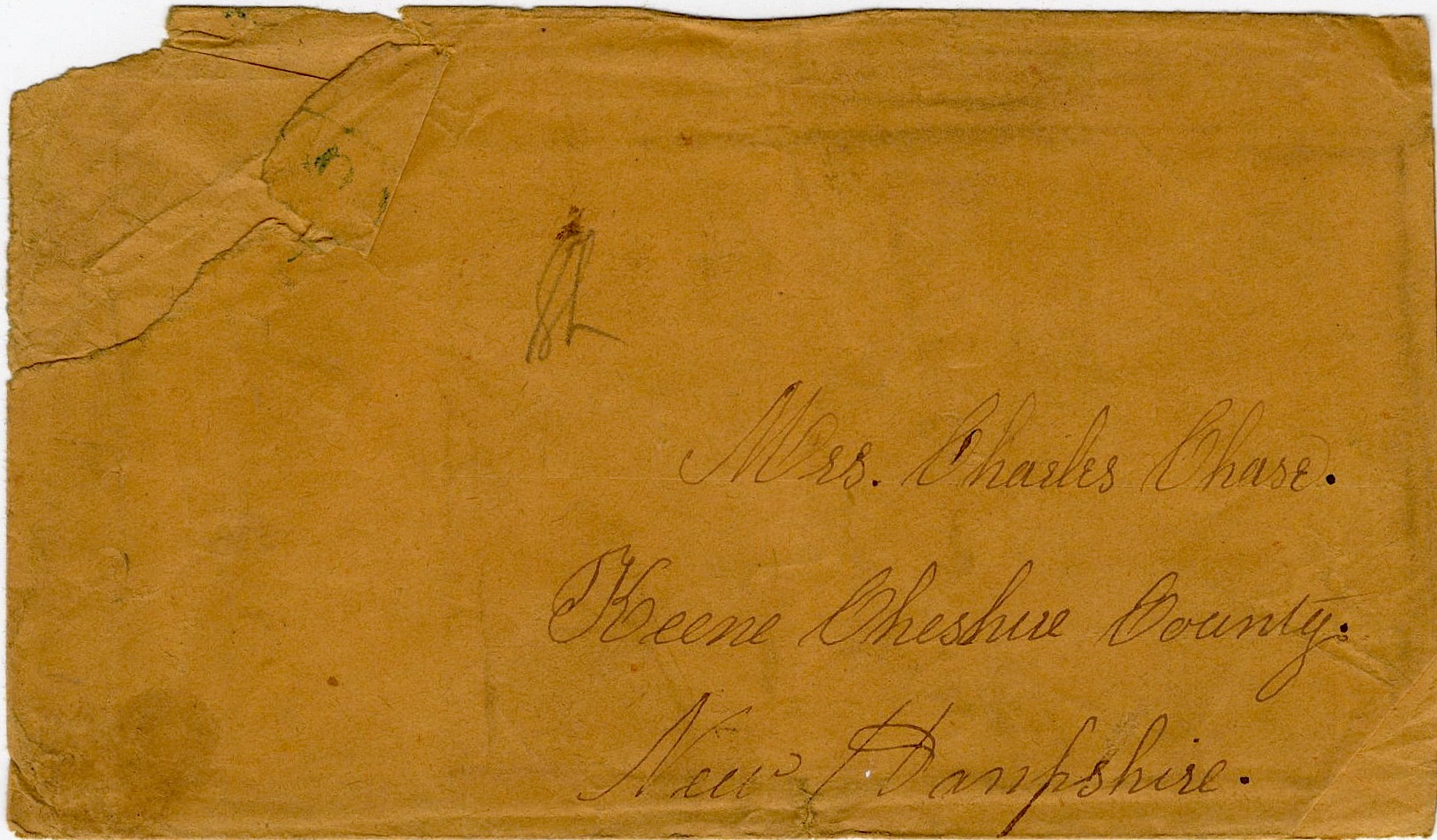
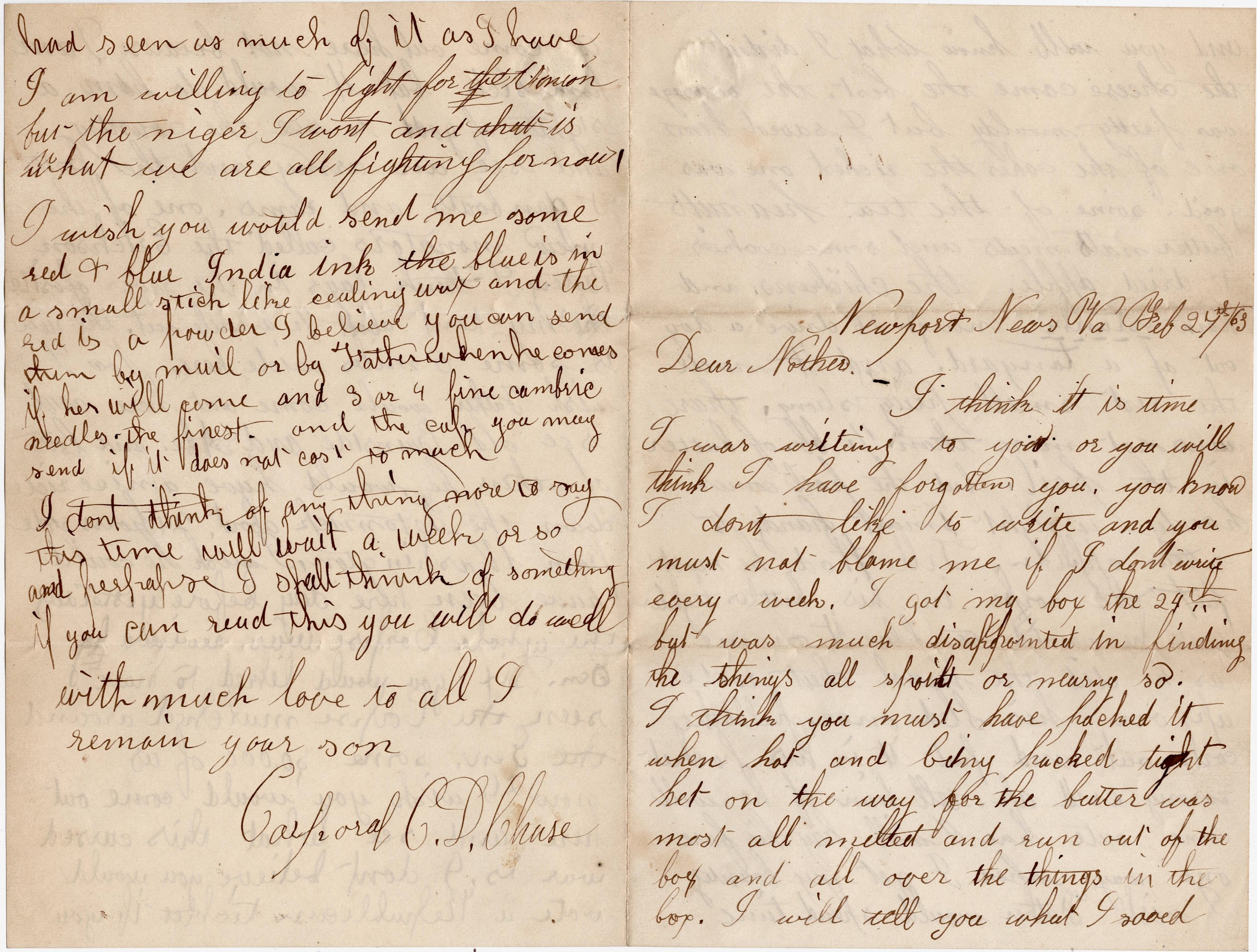
Newport News, Virginia
February 27, 1863
Dear Mother,
I think it is time I was writing to you or you will think I have forgotten you. You know I don’t like to write and you must not blame me if I don’t write every week.
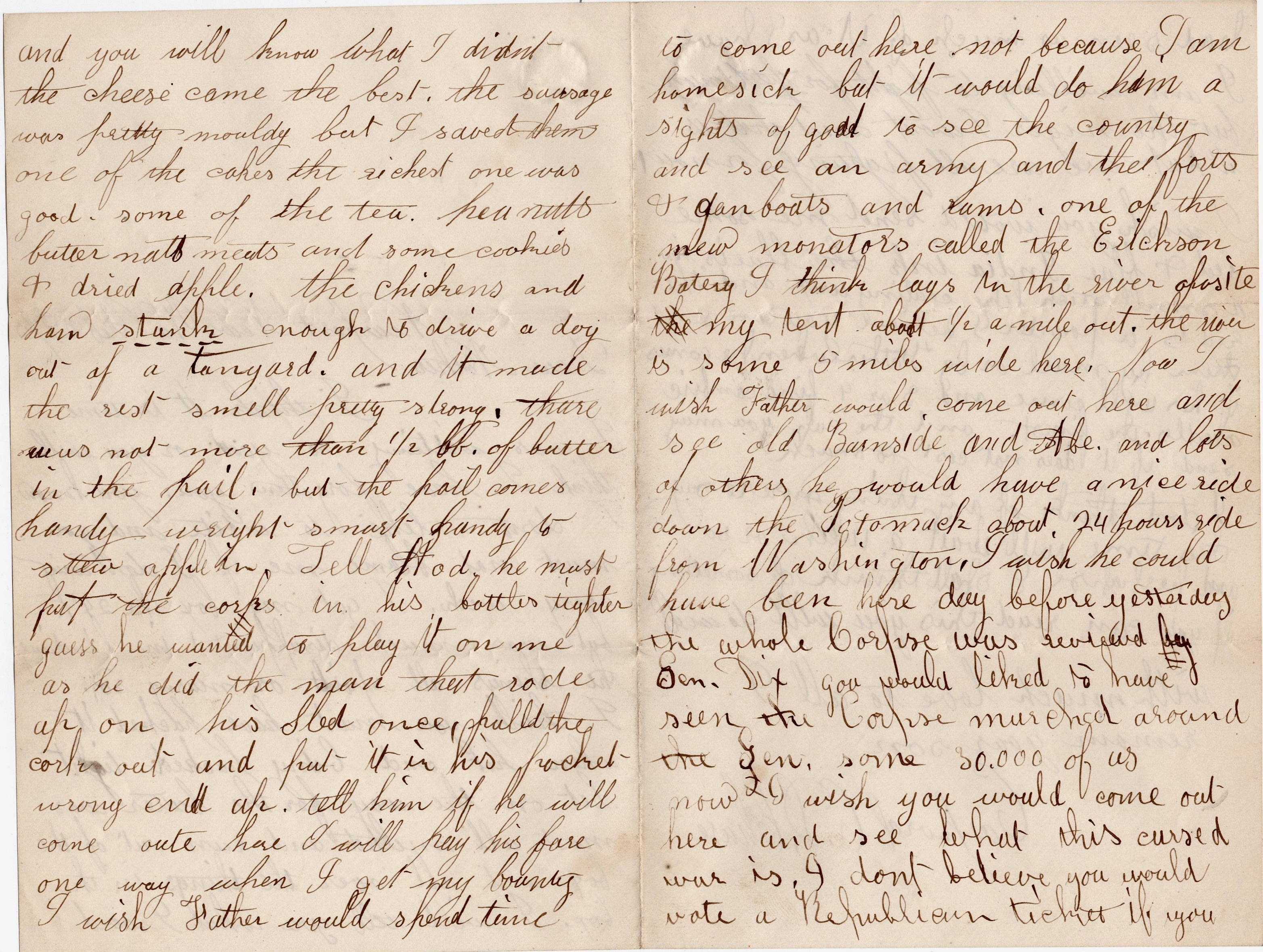
I got my box the 24th but was much disappointed in finding the things all spoilt or nearing so. I think you must have packed it when hot and being packed tight hot on the way, the butter was most all melted and run out of the box and all over the things in the box. I will tell you what I saved and you will know what I didn’t [get]. The cheese came out the best. The sausage was pretty moldy but I saved them. One of the cakes—the richest one—was good. Some of the tea, peanuts, butternuts, meats and some cooles & dried apple. The chickens and ham stunk enough to drive a dog out of a tan yard, and it made the rest smell pretty strong. There was not more than half bb. of butter in the pail but the pail comes handy—right smart handy—to stew apples in.
Tell Hod he must put the corks in the bottles tighter. Guess he wanted to play it on me as he did the man that rode up on his sled once, pulled the cork out and put it in his pocket wrong end up. Tell him if he will come out here, I will pay his fair one way when I get my bounty. I wish father would spend time to come out here—not because I am homesick, but it would do him a sight of good to see the country and see an army and the forts & gunboats and rams. One of the new monitors called the Erickson Battery, I think, lays in the river opposite my tent about half a mile out. The river is some five miles wide here. 1
Now I wish father would come out here and see old Burnside and Abe and lots of others. He would have a nice ride down the potomac—about a 24 hour ride from Washington [City]. I wish he could have been here day before yesterday [when] the whole corps was reviewed by Gen. Dix. You would like to have seen the corps marched around the General. Some 30,000 of us now.
I wish you would come out here and see what this cursed war is. I don’t believe you would vote a Republican ticket if you had seen as much of it as I have. I am willing to fight for the Union but the nigger—I won’t. And that is what we are all fighting for now. 2
I wish you would send me some red & blue India ink. The blue is in a small stick like ceiling wax and the red is a powder. I believe you can send them by mail or by father when he comes—if he will come—and three or four fine cambric needles, the finest. And the cap, you may send if it does not cost too much. I don’t think of anything more to say this time. Will wait a week or so and perhaps I shall think of something. If you can read this, you will do well.
With much love to all, I remain your son, — Corporal C. D. Chase
1 The ironclad Charles is referring to in this letter was likely the USS Sangamon. The famous USS Monitor that engaged the CSS Virginia at Hampton Roads in March 1862 was sometimes referred to as “Ericsson’s Battery” but that vessel had sunk in a storm on 31 December 1862.
2 The perspective held by Charles regarding the war objectives after Lincoln’s Emancipation Proclamation reflects a broader sentiment shared by numerous Union soldiers.