This letter was written by 35 year-old Mary Mitchell (Gatlin) Knox (1811-1890), the wife of Dr. Franklin Knox (1810-1895) of St. Louis, Missouri. Mary and Franklin had several children, all born in St. Louis: Sarah (“Sallie”) Knox (1838-1926), Emma Knox (1840-1840); Eliza Knox (1842-1842), Annie Knox (1845-1853), Franklin Knox, Jr. (1848-1848), and Richard Gatlin Knox (1851-1914).
Mary grew up in Kinston, Lenoir county, North Carolina, the daughter of John Gatlin and Susannah Caswell. She married Franklin Knox there in May 1837. In her letter, Mary mentions her brother, Richard Caswell Gatlin (1809-1896) who graduated from West Point in 1832 and served as an infantry officer in the War with Mexico (was wounded at the Battle of Monterey) and later on frontier duty in Indian Territory. In 1861, Richard resigned his commission and was appointed Colonel in the CSA. He was then promoted to Brigadier General in August 1861 and was assigned command of the Department of North Carolina and the coast defenses of the State.
Before the 1860 US Census, the Knox family had relocated to Crescent City, Del Norte, California, where Franklin worked as a physician.
Mary wrote the letter to Mary Strachan (Barret) Reavis (1812-1870), the wife of Judge Turner Reavis (1812-1872) of Gainesville, Sumter county, Alabama.
Transcription
St. Louis [Missouri] March 10th 1847
Dear Mrs. Reavis,
Your letter came to us day before yesterday and although we had but lately received your husband’s letter, yet we were very much pleased to hear again; and I hasten to write because I think you will be expecting to hear. My husband has been intending to write but as usual he has his hands full of business and consequently has not yet done so. He is anxious to write to Mr. Reavis and I hope will soon.
I was very much gratified to get a line from my little Sukey. I hope you will let her write when inclined for we not only love to hear from her in her own way, but we like to see her improvement. She was brought vividly before my mind by your letter, where you told of braiding her hair to receive her father. Susan used to be very fond of combing and ornamenting her hair, and she often presented a very singular appearance when she consulted her own task about the arrangement of it. I have had many a hearty laugh at her expense, and she would seem equally to enjoy it. Perhaps she will recollect and tell you how her hair was trimmed the day her father came.
Brother Richard has been to see us, remained only one week. When he left he expected to go from New Orleans to Tampico by the first opportunity; but on arriving there he found orders for him to remain there on recruiting service. His wound has healed and he is entirely restored to health. I feel glad to hear he has been ordered to remain as there is no glory to be gained in this war and no probability of promotion at present
We have had a very trying winter. Even now it is snowing and looks as if it may for some time to come. About two weeks ago we had a week or more of mild weather, so that the ground thawed so much that the roads became impassable almost. Even now it is very difficult getting along. There was a man from the country here today who said in coming along the road, he saw stuck in one mud hole an ox so far gone that all that was visible of him was his head and horns; in another was two wagons and the end of the horses heads. This looks a little incredible but I presume it is true. If you were acquainted with our soil, you would think so too.
I should be glad indeed to spend next winter with you, should I live so long, and I hope it may so happen that I shall spend a few weeks with you. Mr. Reavis incited me to come this spring and was kind enough to offer to meet me at Orleans, but it will not be convenient for me to leave home this summer. Should we all live until another summer, I shall feel as if I ought to go away and try if the air of another climate will do anything to keep my little Annie from sharing the fate of her other sisters of the same age.
Tell Susan I shall commence a letter to her tomorrow, it being her birthday, and send it sometime this month. Sarah is anxious to write and began a letter some days ago, but she thought it was written too bad to send. She has written very little and does not write so well as Susan. I hope Susan will write like her father. Her mother’s hand writing was no better than mine. We could never boast of good penmanship. Tell Lucy I shall be looking for a letter from her soon and I should be delighted soon to see her. I have quite a curiosity to see her—her father so often spoke of her while he was with us.
My very best love to your dear husband and receive the same from your affectionate friend. — M. M. Knox
The following letter was written by Edwin Atkins Merritt (1828-1916) to his wife, Eliza Rich. Biographical sketches of Edwin appear in Appletons’ Cyclopedia of American Biography and in the History of St. Lawrence County inform us that Edwin was born in Sudbury, Vermont, on 26 February 1828 and that he left Vermont when he was ten years of age and went to live with a married sister who resided in Westport, Essex county, New York. In 1841, with his father’s family, he emigrated to St. Lawrence county, New York, and became a surveyor in the Adirondack wilderness. He published the first map to guide tourists to this great resort.
In 1858, Edwin married Miss Eliza Rich and by her had five children, all of whom died young except Edwin A. Merritt, Jr. After holding local offices, Edwin was elected to a lower branch of the legislature as a Republican in 1859, and re-elected in 1860. At the beginning of the Civil War he became quartermaster of the 60th New York regiment, served with the Army of the Potomac, and in Sherman’s Georgia Campaign acted as commissary of subsistence with the rank of Captain.On 1 January 1865 he was made quartermaster-general of the state of New York, and he superintended the Soldier’s home in New York City. He also established free agencies for the collection of bounties, back pay, and pensions that were due New York volunteers. In 1869-70 he was naval officer of the port of New York. In 1875 he was the unsuccessful Republican candidate for state treasurer. In December 1877 he became surveyor of the port of New York, and in 1878 he was appointed collector on place of Chester A. Arthur. He was U. S. consul-general in London in 1881-85.”
What Edwin’s biographical sketches do not mention is that during his stint as Quartermaster-General on Gov. Reuben Fenton’s staff, he participated in the Lincoln funeral processions in New York City, Albany and Buffalo which are the subject of this letter dated 15 May 1865. This letter has long been a keepsake of the Merritt family descendants and it was recently offered to me for transcription and publication on Spared & Shared by Matthew Sisson, his great-great-grandson.
After transcribing the letter, I discovered that Edwin A. Merritt published an autobiography in 1911 entitled, Recollections, in which he also summarizes his eye-witness account of the Lincoln funeral processions in New York State though he does not quote this letter to his wife. In that same book he described the last time he saw the President before his assassination: “As I was passing by the White House Mr. Lincoln came out on the steps to bid farewell to a gentleman, who was dressed in the height of fashion. Mr. Lincoln was bare headed and wore a black alpaca coat and a pair of carpet slippers. A number of disabled soldiers who were in sight, seeing me talking with the President, came forward to shake hands with him and he greeted them cordially.”
Transcription
State of New York Quartermaster General’s Office Albany, New York May 15th 1865
My dear wife,
I sit me down to pen you just a few lines. It is a beautiful Sabbath day—just warm enough to be comfortable. The sun casts a genial glow over the landscape which is now full of life and beauty. The prospect from the Capitol where I now write is splendid. Away in the distance across the Hudson are the green fields and budding foliage. The parks about the Capitol are carpeted with the softest and loveliest green [ ] and the birds are singing gaily in the trees overhead. Just now the streets are thronged with pedestrians treading their way silently to the sanctuary where the sacred text will be expounded by the representatives of the various sects who are all laboring for a common end although pursuing slightly different and circuitous routes to meet at last in one common home—Heaven.
Mingled also with the devout and holy exercises of this day will be the prayer of peace as well as the prayer for it. The devine guidance will be invoked for our rulers and devout thankfulness rendered for the glorious consummation of peace which has been at last achieved by the valor, persistence, and courage of the American people. With the great sorrow for the death of our characteristic representative and Chief Magistrate Abraham Lincoln is also mingled the natural and exalted consciousness of assured hope—that this great and glorious republic is to go on and complete its mission of giving freedom to the world.
It has freely vindicated its integrity and justified the hopes and promises of its founders. the Statesmen and heroes of the Revolution. The leading and responsible traitors are to be tried and suitably punished, but the poor, misguided suffering and already punished people of the South will be forgiven on promise of future good behavior. While vindicating the law to which we and all [are] amenable, we must be magnanimous and forgiving. Let us not make their punishment greater than they can bear. Like prodigal children, they are returning to their father “Samuel’s” home where there is enough to spare. With them, side by side, come also the former millions of slaves enfranchised, holding up towards heaven their free hands from which have been struck every shackle and thanking God for their deliverance through the instrumentality of their father “Abraham” and their brothers, the patriot soldiers for the Union—the boys in blue.
Every honest American must feel prouder of his country today than at any former period in his life. It is stronger at home in the hearts of the people as evidenced by confidence in its financial ability, stronger abroad as it has shown the world that we can carry our warlike operations never surpassed in the history of the world. How proud and with what a firm step must Americans promenade the streets of London and Paris? Hoist the banner high and although it is now draped in morning, it is more glorious than ever before.
We have just received the news of Jeff Davis’ capture with his family & staff. Thus endeth the great rebellion against this benevolent and liberal government. The head of the serpent is not being effectually bruised. Amen and amen. So say all the people—and the echo is heard to the furthermost bounds of civilization.
I did not particularly write you relative to my trip from New York City to Buffalo with the remains of the late President Lincoln. The cortege arrived in New York on Monday, the 24th of April at 10 o’clock in the forenoon. The 7th Regt. N. Y. S. National Guard acted as escort and thousands of people lined the streets. The remains were taken to the City Hall. A guard was placed around it as some distance from it so as to leave an open space and inside of which and on the steps at south side and about one thousand German singers who chanted a requiem for the dead while the corpse was being conveyed with the building and places prepared for it at one side of what is called the Governor’s room. After being placed “in state” the people were allowed to view the remains. The procession for that purpose was formal on the East side and extended down Chatham Street for nearly a mile. This solemn procession continued from 1 o’clock on the 25th of April twenty-four hours without interruption. On the west side all those having passes were allowed to enter. All night long, with most remarkable patience, the [ ] persisted [ ] endeavored to get a glance at the face of the honored dead. It is said that at least 125,000 viewed the remains and probably as many more were disappointed people from the country from New England and the country adjacent to New York, Brooklyn, Williamsburgh, and Jersey City all getting into line and waiting for hours—many giving up in despair.
I cannot attempt to describe the pageant of the 25th. The newspapers have attempted it but have failed to do full justice. The procession moved at one o’clock from the City Hall up Broadway to 4th Street, then west to 5th Avenue, then up the Avenue to 34th Street, then along 34th to 9th Avenue. Thence down 9th Avenue to the Depot [at 30th Street and 11th Avenue]. The catafalque in which the coffin was placed was manufactured for the occasion and cost over $2,000. It was a most splendid affair and was drawn by sixteen gray horses covered with black broadcloth trimmed with silver fringe—the cloth extending nearly to the ground. Each horse led by a groom.
Lincoln Funeral Procession in New York City
It is said and I have no doubt with truth that over one million of people took part in and witnessed this the greatest funeral procession of which we have any account in the world. It was immense. Thirty-eight carriages only were allowed in the procession (and only one private carriage—that of the venerable Lieut. General Winfield Scott) which contained the state and city authorities and representatives of the several states who accompanied the remains from Washington and the Guard of Honor. The first carriage contained Governor [Reuben E.] Fenton, Mayor [C. Godfrey] Gunther, Generals [James B.] Swaine & [George S.] Batchelder of the Governor’ staff. The next Lieut. Governor [Thomas G.] Alvord, Judge [Henry Ebenezer] Davies of the Court of Appeals, General [Alexander W.] Harvey, Judge-Advocate-General and your husband, the Quartermaster General. Then followed the Delegates from Washington referred to with foreign consuls, &c.
We took the train for Albany at 4:30 o’clock p.m. The cars were beautifully ornamented and draped in mourning. Arrived in Albany at ten o’clock p.m. I cannot give you all the incidents along the route but it seemed like a panorama of people gathered along the road and at the several villages passing by their reverential and solemn behavior their tribute of respect to the departed emancipator. At Albany the military received and escorted the remains to the Assembly Chamber which had been prepared for its reception. At about 4 a.m. the people were allowed to enter and thus could avail themselves of this opportunity to behold him for whom the Nation was in mourning. At one o’clock on the 26th, the procession in Albany was formed and after passing through the principal streets escorted the remains to the cars which hurried off for Buffalo at 4 o’clock p.m. Arriving at St. Johnsbury, we stopped for ten [minutes], the station here being splendidly draped for the occasion. Herkimer and Utica, Rome, Syracuse, Rochester, and in fact all along the route to Buffalo were [ ] the train. The militia organizations, committee councils, choirs were out waiting for the funeral train to pass, all seeming anxious to get but a sight of the car in which the mortal remains of him in whom they had placed so much confidence and trust.
Lincoln Funeral Procession in Albany
We arrived in Buffalo at six o’clock in the morning and after partaking of a breakfast prepared for us, the remains were escorted by the military and citizens to St. James Hall where splendid arrangements had been perfected for the occasion and as the body was being brought into the building a choir of 100 voices (St. Cecil Society) chanted a funeral dirge—the most solemn and effective singing I ever heard. The arrangement for viewing the corpse was much better here than in New York or Albany. All who desired had an opportunity. I was invited to dine with Judge Advocate General [Alexander W.] Harvey which I accepted. The other guests were Maj. Gen. John A Dix, Rear Admiral [Charles Henry] Davis of the Navy, General [Robert C.] Schenck of Ohio, William Hooper of Boston, Inspector General [George S.] Batchelder, and Paymaster General [S. B.] Marvin. My associates in General Henton’s staff, Mrs. Harvey in a support [ ] presided at the table. I am thus particular because of the occasion and the historical event and the characters composing this party. I shall remember the occasion for a long time. About two hours were spent at the table, entertaining conversation being carried on by Gen. Dix, Admiral Davis, Gen. Schenck, Mr. Hooper and Gen. Harvey. I was willing to be a silent listener. The Times, the occasion, and reminiscences of the past were the topics, interspersed with spicy anecdotes filled up the time. The best of fare and served with $40 per bottle and brandy worth sixty dollars per gallon. Very little, however, was drunk as nine o’clock the remains were again removed to the cars to be conveyed to Cleveland. A splendid train was fitted up for the occasion.
Lincoln Funeral profession in Buffalo
After bidding adieu to the Guard of Honor, General Dix and the escort, we (the Governor’s staff) took the train for Albany again where we arrived at 9 o’clock in the morning of the 28th. Perhaps you will think this a long and tedious account but excuse me for feeling proud of the position temporarily occupied and regarding the occasion as great historical event, was glad to be so prominently connected with it. I regretted exceedingly that you was not with me in New York at the time. I have given you but an incidental sketch. I hope you will preserve such papers as you may have giving accounts of the affair.
I am quite well and fel really happy at the prospect of peace. Affectionately your husband, — Edwin
To Mrs. Eliza R. Merritt Potsdam, St, Lawrence county, New York
I could not find an image of Sgt. Henry French but here is Sgt. Edward Emerson of Co. C, 11th New Hampshire (Al & Claudia Niemiec Collection)
The following letter was written by Sgt. Henry French (1834-of Co. H, 11th New Hampshire Infantry. Henry enlisted as on 20 August 1862 and was mustered in as the 1st Sergeant. He was wounded on 13 December 1862 at the Battle of Fredericksburg and was reduced in ranks to a private in May 1863 but a year later was wearing sergeant’s stripes again. He survived the war and mustered out of the service in June 1865.
In his letter, Henry describes the movements of his regiment from the Rapidan to the James River in May 1864.
Henry was the son of Jesse French (1795-1892) and Ann Chamberlain (1813-1897) of Plainfield, Sullivan County, New Hampshire. Henry’s brother, Elias French (1838-1933) also served in the same company. Henry was married to Emma Smith and working as a carpenter/joiner in Plainfield, Grafton county, New Hampshire, when he enlisted. He wrote the letter to his sister-in law, Mary Amelia Smith (b. 1839).
Transcription
Headquarters 11th N. H. Vol. Infantry In line of battle between the Pamunkey and James River 15 miles from Richmond [Virginia] May 31st 1864
Sister Mary,
As I have not had a chance to send a letter yet, I will write a few more lines. The 21st we marched out in the morning to find out where the rebs were and we found them after marching bout three miles. Here we threw out pickets and then fell back to our pits again. At 4 p.m. we fell in and started to the left. We marched all night until 5 a.m. when we arrived at the Po River. At 12 M we marched again. Marched about 15 miles. Arrived at Bethel [?] Church, 30 miles from Richmond.
23rd, had orders to march at 6 a.m. We marched all day. When we halted, we was on the North Anna River 3 miles from Hanover Court House and 17 miles from Richmond.
24th, we crossed over the North Anna River and took our position in line of battle. 25th, we had a hard night. We laid in a cornfield all night and we had a very hard thundershower and we got wet through.
May 26th. Moved out of the cornfield and took our position between two lines of works. We laid here until 9 p.m. when we got orders to fall in. We fell in very still and started when the Rebs rose up and gave us a hard volley and our brigade went out in a hurry but we had no one hurt. When we had got most down to the river, we met Elias. He had just come up with 1100 other men. We marched this night until 2:30 a.m.
27th, today we marched all day until 2 a.m. 28th, file in at daybreak and marched until 11:30 marching 30 miles—the hardest march that our regiment ever had. We crossed the Pamunkey river and marched about 1.5 miles and went into camp. Elias did not come up. It was a very cold night. 29th, 6 a.m. fell in and marched about three miles and halted and commenced a line of rifle pits. Worked on them until about 12 M when we fell in and marched back about 1.5 miles and went into camp to await orders. We laid here all night and had a good time. Got a plenty of fresh meat to eat and had a good woods to sleep in. Have not seen Elias today. Do not know where he is.
30th, today we have laid in line of battle all day but have not been in but some some of the troops have been fighting some all day. Elias has not come up yet. Since I commenced writing this, we have moved to the front about one mile and now lay in the front and expect to go in soon. 31st, last night we had a good night.
May [June] 1st, last night we worked all night throwing up works. We lay about 30 rods from the Rebs works and are banging away at them all of the time. A lot of them are in a house in front of our regiment and we are trying to get them out. We shall give them a try tonight. We drove them one mile yesterday. Our regiment did not lose a man. The 9th lost a few.
Elias came up last night. He is rather hard up and in a hard place to have much done for him but I shall do all that I can. Our doctors are all away and the sick have to take care of themselves and every well man has to be at his post. At such times as these, how hard this hard time is. To continue, I do not know but one thing. We are within 12 miles of Richmond and some of our men are within 6 miles and there is terrible firing on our left and right. What it is, I do not know. We expect to march tonight. I am well and as tough as I could ask to be, — Henry
Apparently Wesley enjoyed dressing up as Uncle Sam on the 4th of Julyin his old age.
The following letter was written by John “Wesley” Ferree (1838-1910), the son of William M. Ferree (1815-1866) and Ann Haislett (1811-1883) of Mansfield, Richland county, Ohio. According to his obituary, Wesley was born in Ohio on 16 July 1838, his father having come to Richland county in 1820 from Pennsylvania. He spent his boyhood on the farm and enlisted in Co. D, 26th Ohio Volunteer Infantry (OVI) in June 1861, serving first in western Virginia and in the Army of the Cumberland. He participated in the battles of Shiloh, Corinth, Perryville and was slightly wounded in the Battle of Stone River.
Wesley wrote this letter in the midst of the Tullahoma Campaign after trudging through inclement weather for several days, informing his father that “Our good times are over.”
After he was discharged from the service in July 1864 as a sergeant, Wesley returned to Ohio and married Susan Osbun in November 1864. He was a farmer but served his civil duty as county commissioner on the Republican ticket and was always active in the GAR.
Transcription
Addressed to William Ferree, Mansfield, Richland county, Ohio
Talma [Tullahoma] at the foot of the Cumberland Mountain, Tenn. July the 5th 1863
Dear Parents and the rest of the friends,
Once more I take the opportunity of writing you a few lines to let you know how and where I am. I received your letter of the 26th of last month the first of this month. I was pleased to hear that you was all well. My health at the present time is not very good. I have not stood the marching very well since we left Murfreesboro. We left there on the 24th of last month and moved on the enemy. There was some hard fighting done on some of the roads but not on the road that we was marching on. The rebels evacuated Tullahoma where they was in force on the 30th of last month.
We have had very bad roads ever since we left Murfresboro. It has rained every day. Our clothes has been wet on our backs ever since we started. We are 45 miles from Murfreesboro. We lay in camp yesterday and today and have not much to eat, while I suppose you at home are enjoying yourselves the best kind. I cannot tell what we are going to do—that is, this army I mean. You must not expect to hear from me very often now while we are on the march for I expect we will be on the march now for some time. But I will try and let you know how we get along if you want to know very bad, but our good times are over.
I was glad to ear that you are getting along so well with your work. I was surprised to hear of Joe Harnley 1 being sent home for I had heard nothing of it before. He will get clear of some hardships by being away and I heard that the 15th was into a fight and lost some men killed and wounded. I don’t know [how] many.
Please write as you have been doing, I want to hear from home anyhow. I think I will be all right in a day or two. You may address your next letter to Murfreesboro the same as before. I will close for this time. Your son, — J. W. Ferree
P. S. We may have some fighting to do soon. I don’t know.
1 Joseph G. Harnley (b. 1838) served in Co. G, 15th OVI. He survived the war and was not mustered out of the regiment until 19 September 1864.
This letter was written by Pvt. Willis “Virgil” Wells (1841-1865), Co. D, 38th Georgia Infantry, to his older brother Lt. George “Riley” Wells (1838-1919) of the same company. The young men were the sons of Willis Lea Wells (1805-1887) and Drucilla D. Sexton (1813-1888) of Decatur, DeKalb county, Georgia.
When he penned the letter, Virgil was home on sick leave at Stone Mountain, Georgia, and his brother was at the front in Virginia. From the content of the letter we learn that Virgil feels his health will not withstand further exposures in the field and hopes to arrange a transfer to Atlanta where he might serve as a hospital nurse rather than return to the 38th Georgia. He was unsuccessful and after he rejoined the regiment, he was killed in action at the Battle of Fort Stedman near Petersburg, Virginia, on 25 March 1864—just two weeks before Lee’s surrender of the Army of Northern Virginia.
Nichols’ book, “Hurrah for Georgia!”
This letter was provided to me for publication on Spared & Shared by Dale Gary Nichols, author of “Hurrah for Georgia! The History of the 38th Georgia Regiment” who informed me that it was once part of a large cache of letters related to Lt. Riley Wells that were sold to various collectors some time ago. Nichols owns three of the letters and he used two of them in his book, but this letter was not used since it had not yet been transcribed at the time the book was published. The reason it had not been transcribed will be obvious to anyone who looks at the letter which was, in large part, written in Pitman Shorthand. Nichols believes the brothers agreed to write parts of their letters to each other in shorthand to practice their skills. It may have also been done to save on paper which was on short supply in the Confederacy. It certainly wasn’t done to convey any sensitive information in this case. In any event, we owe Ms. Tracy Harding a debt of gratitude for transcribing the shorthand and I’m reliant entirely on her for its accuracy.
Transcription
Good Morning Stone Mountain, Georgia. March 5, 1863
My Dear Brother George, I take my seat to drop you a line which leaves me in as good health as comes at present. I have no news to write at this time at all. I received your favor of 24 February; was very good to hear from you. I am sorry to hear that there was so much snow on the ground down there for I know it must be very disagreeable indeed. I guess you will keep quite warm with your new coat on. I am truly sorry that there is no chance for you to get permission to come home. I did hope that you would get to come this spring but I fear there is a bad chance for it.
Riley, I will just tell you a few things about old “Stone Mountain” as it has been a long time since you have been permitted to see the the old home spot. Things have all made a great change since you left. In the first place nearly all the people that lived near you has gone and new ones come in. Young Mr. Carr keeps up a new hotel in the large house below Mr. Bristol’s old study. Jenny also keeps up his hotel. R. B. Etheridge has bought out George B…… …… to have increased the stock some little. Mr. B…… is at work at his …… in Atlanta. Son Mr. Carr lives in …. house. Son of Mr. Livingstone lives at Etheridge’s old place. Mr. Rankin lives at Riley Bristol’s house.
Riley—(though I guess your little German [girl] has told it to you before this time)—[ ] anyhow has gone to the war. Mr. B…. lives at his father’s house. Time being has constrained and he has to go to war too; the ….. doing too. Besides this there are quite a few changes too numerous to mention. But enough of that stuff to satisfy you, I guess. I cannot comply with your request which was to write to you about your little German, for I have not heard from our nurse frau. I guess she is “all right in goons” anyhow. I will wait now till tomorrow to finish my letter. Riley, you must take mighty good care of my gold pen for I would not take the world for it. I shall send for it when I get back.
Well, I have sat myself down again to write the letter more this morning, but I had not intended mailing my letter till tomorrow anyhow. You told me to write about your German book—where it is at home. I do not think it is here for I looked on the table where all your books are [and] I could not find it any where. I believe it was the one I bought for you that you was speaking of. I do not think you left one at home at all for I think I remember your putting it in the old trunk before that, before you left home. I guess it was then taken when your trunk was moved to ….River.
Well, while I think of it, I saw Doctor B. Ellings at Stone Mountain the other day. I told him to send a word for me the next time I write to you, so you may receive his best love and kindest regards, through me. You must excuse my poor writing and bad penmanship, for when you requested that I ensure study, I have but one day in my life, you will not think strange of it at all. My whole practice has been in this letter I have been writing it to you. Say you will not think that I ought to write it very well as, the unsure thing is I have no pen that to write with. Now I am not bothering you about keeping my pen at all, I don’t want you to think so.
Mason has just come in, his family are well as common, as for myself and has made some little has gone some ….I am for myself, but not strong. If you think there will be no change, I will not reproach this time. I think I will refrain not from a list of complaints, if I do not get my time extended at that time. I will quit now till tomorrow morning and will go to Atlanta this evening. I will wait for the news for …… I will give you the benefit of it this time. You can read about that will be a plenty for you when ……
March 7th 1863
Will B….. has been and got back again. I sat him down to finish my letter. He brings no news at all worth relating. Your papers were approved all right, by Colonel Lee and Captain L…. Now it remains your Captain Rankin and Colonel Eberhardt to approve them, given that, so there’s no use to send them to the generals if they are coming in every few days and …. of just hours the ………… as this.
[Note: Pitman Shorthand ends and continues in plain English]
A Pre-war photo of Col. George Washington Lee
Col. [George Washington] Lee says that Capt. Rankin need have no apprehensions on that point at all, that is, that it might involve him in some difficulty, for he says there will be no danger at all. So if he will let us off, which I do hope he will do, I will be a thousand times obliged by him. And as we have every assurance here that it will all be right, I think he need fear nothing at all.
I will hold on to the papers a few days in hopes that I will have a chance to send by hand for I just feel like that is almost a decision between life & death for me; for you have seen that my constitution will not admit of my staying in that part and I guess I would not be as successful in getting home next time as I have been heretofore, and in Atlanta we could be sent home if sick, and would not be so exposed. So I do hope that you can get the Captain to let me off on the above grounds. The Colonel says he guesses it would be rather a bad matter to try to send them clear through.
I will close hoping & praying that I may be successful in this my last attempt to get away. I remain your unworthy brother, as ever, — Virgil
Col George Washington Lee – (B. 1831, DeKalb Co., Ga., D. 3 April 1879, Rome, Georgia.) Former Regimental Commander and Colonel of the 38th Ga. Regt. Resigned 14 July 1862, due to illness. Later appointed Provost Marshal of Atlanta, Georgia, at the time this letter written. Charged by Union Gen. William T. Sherman with war crimes in 1864, results of charges unknown.
Lt Col Robert P. Eberhart, (B. 13 Oct 1834, Madison Co , Ga., D. 17 Jan 1907, Fulton Co , Ga.) wounded right lung, Fredericksburg, Dec 13th, 1864, resigned Feb 16th, 1864. Participated in William Walker Expedition to Nicaragua in 1850s. Died Atlanta Jan 17, 1907.
Capt. John Gray Rankin, (B. 11 Dec 1815, Hampshire Co , Massachusetts, abt 1816, D. 6 Oct 1902, Stone Mountain, Georgia. Enlisted 26 Sept 1861, as 2nd Lt, in “Murphy Guards” Company. Elected Capt & Company Commander of Co. D, 38th Georgia Regiment, Jan 4th, 1862. Wounded & captured at 3rd Winchester, Sept 19th, 1864. Released Fort Delaware Jun 17th, 1865.
Lt George Riley Wells – (Born 17 Sept 1838, DeKalb Co., GA., Died 5 Jan 1919, Stone Mountain, GA.) Brother of Private Willis Virgil Wells. Enlisted as 2nd Sgt, 26 Sept 1861, elected 2nd Lt, 1 Apr 1862, wounded at 2nd Manassas , 28 Aug 1862, captured at Fischer’s Hill, Va., 22 Sept 1864, released from Ft. Delaware, 17 Jun 1865.
The following letter was written by Edgar Knapp (b. 1834) of Adrian, Michigan, who was laboring as 27 year-old physician when he enlisted as a private in the 6th U. S. Cavalry with his younger brother, 20 year-old Randolph R. Knapp in the fall of 1861. Ed enlisted as a private but with his medical training and experience, Ed was later assigned to hospital steward duties in the 6th US Cavalry and later still, for many months at the hospital in Annapolis, Maryland, where he managed several wards.
Edgar wrote the letter to Sallie E. Armstrong, the sister of Martin Armstrong (1828-1863) of Co. M, 6th US Cavalry. Martin was born in 1828 in Chester county, Pennsylvania, and, as we learn in the letter, he was wounded at the Battle of Williamsburg in May 1862 and again at the Battle of Gettysburg where he was taken prisoner and marched all the way to Richmond, Virginia, as a POW. After his exchange, he was taken to Camp Parole at Annapolis, Maryland, where he encountered Edgar working as a hospital steward. Martin died there 4 October 1863.
The letter is not dated and was most likely only a draft of the letter that he sent since it was found among his papers in later years.
The Naval Academy viewed from Annapolis Harbor showing the grounds in use as a general hospital during the Civil War.
Transcription
[Parole Hospital, Annapolis, Maryland] [Late October 1863]
Sallie E. Armstrong,
My dear Miss, your sad but very interesting letter of the 17th inst. was received yesterday on my return from an absence of a few days, and , although I feel my utter incompetency to answer so good a letter with any degree of satisfaction, I shall try to give you a history of your brother’s case as far as possible. He was a member of the same regiment with myself & although in different companies, I knew him well from often hearing his name among his associates. He was beloved by everyone who knew him and was an example to all.
Sunday evening, May 4th 1862, at the Battle of Williamsburg, Va., he was wounded by a bullet through the middle of his left thigh, and was sent to the hospital at Fortress Monroe where he soon recovered and about the middle of July, rejoined his regiment and remained with it until taken prisoner at Fairfield, Pennsylvania July 3d 1863 at which place he was wounded by a sabre cut on the left side of his head although not very severe. He walked the whole distance to Richmond, arriving there August 20th, and was paroled the same day and was delivered at City Point, Va., August 22nd and arrived here on board the steamer New York the 24th.
As I had been with the regiment only 6 months, I had not the pleasure of your brother’s acquaintance until he came to this place, but as he came from the steamer I felt confident that he belonged to my regiment & thought it must be Sergeant Armstrong and so confident was I of this that I asked him if that was not his name and you may be assured we had a very happy meeting. And having had some correspondence, we felt very well acquainted.
He was then enjoying very god health and went out to Camp Parole but visited here quite often, mostly on account of Benjamin F. Adams who is a member of his company & nurse in this hospital. He remained at Camp Parole until September 20th when he came in to visit his friends and was complaining of neuralgic pain in the region of his first wound and before he was ready to return to camp, was taken with a severe chill and we had him go to bed in Mr. Adam’s ward. The next day he had some fever but felt better toward night and the next day had another chill. The pain in his limb continued and commenced to swell. His fever continued and the swelling increased till October 1st when he became partially delirious and the swelling was opened and discharged freely a dark colored pus. From this time he commenced sinking and he became perfectly delirious, so much so that I could find out nothing about his family or friends.
The 2nd and 3rd, he sank very rapidly and at 6:10 on the morning of the 4th, he passed away quietly without a struggle. During his illness, his sufferings were very severe but he bore all with the patience and fortitude seen only in pure and upright Christians, and I feel that if there ever was a true and devoted Christian, he was one. Mr. Adams was his nurse during his illness and was as much devoted and took as good care of him as his own brother could have done—yes, even more, for he was as attentive to and as tender of him as a Mother is to her child, attending to his every want and listening to every word that fell from his lips. And when he found death had finished his work and the spirit had flown to that brighter world on high, he could not longer control his feelings, but wept like a child. Neither could he keep from weeping when I read to him your kind letter.
Emily W. Dana of Maine was one of the nurses attending to Sgt. Martin Armstrong
Too much praise cannot be given Mr. Adams for his attention and devotion to your brother. I saw him s often as possible during his sickness and did everything I could for him & was with him when he died, but my time was necessarily occupied by hospital duties which only allowed me to see him two or three ties each day, even though my own nephew occupied the ned next to your brother. Yet this was only a duty which I owe to every one of my companions in arms, and I hope always to perform that duty faithfully. Still, I should be happy indeed to know that my name was cherished by the sister of my noble and much loved friend, Martin Armstrong.
His funeral took place at the chapel and a beautiful wreath of flowers was placed upon his coffin by the ladies. He was buried in Ash Grove Cemetery (Soldier’s burial ground) about two miles from this hospital. Two lady nurses, Miss [Emily W.] Dana and Miss [Louise] Titcomb devoted much time to him and tried to supply the place of a sister, and Miss Dana has kindly offered to write you a letter which she will send with mine. His grave is marked and also numbered 1 so there can be no trouble or mistake in finding his remains.
The following lengthy letters were probably written by Edgar R. Knapp of Adrian, Michigan.
Randolph R. Knapp (Dale Niesen Collection)
Edgar was laboring as 27 year-old physician when he enlisted as a private in the 6th U. S. Cavalry with his younger brother, 20 year-old Randolph R. Knapp. Both Ed and Randolph are mentioned in the following letter though I believe Ed refers to himself in the third person. With his medical training and experience, Ed was later assigned to hospital steward duties in the 6th US Cavalry and later still, for many months at the hospital in Annapolis, Maryland, where he managed several wards.
There are at least forty letters by Edgar Knapp in the Special Collections at Virginia Tech that span the years 1862-1864 while he was working as a hospital steward at the U.S. military hospital in Annapolis, Maryland. These letters were purchased by the school in April 2002 with the following biographical note. “Lieutenant Edgar R. Knapp (b. 1834) of Adrian, Lenawee County, Michigan, was a steward at the United States military hospital in Annapolis, Maryland from 1862-1864. His brother H. Knapp was probably Henry Knapp (1813-1893), who is listed in the 1860 census as a doctor in Adrian, Lenawee County, Michigan. Randolph R. Knapp, whose death is the subject of some of the correspondence, was born in 1840 in Michigan.”
Letter 1
Early October 1861 Camp near Bladensburg
Presiding Templars,
Sisters & Brothers, I now find much time to write letters and according to promise I think the time has come to write a letter to you. Well, could I be there to talk to you, I would give you a better idea of matters than you could possibly have by reading my letter, but as this is the only medium by which we can communicate with each other at present we must be satisfied with it, and as I feel quite so, I will proceed to do the best I can to interest you a few minutes.
I will proceed to give you some idea of our trip and of camp life. Of course everyone enjoys traveling more or less and generally se a great many sights besides many sights they don’t see. I will saying nothing of our march from the recruiting office to the Depot or of leave taking of relatives and friends as you all know the particulars without me telling you. All I need say is that we went off in good spirits feeling that although we were looking upon many familiar faces for the last time, and hearing the kind and long to be remembered advice of near and dear friends, yet we were enlisted in a great and glorious cause—one in which our forefathers engaged with heart and soul, that [being] to create a government which should forever make their children and their children’s children a free and happy people, and we to preserve that government.
But as I said, we all started off in good spirits and nothing of note happened till we reached Oberlin. As soon as the cars stopped there, two little girls came to the window where I was looking out and wished me to tell the two soldiers who were in the next seat to look out, which I did of course, and as they put their heads out of the windows the little girls presented each of them with a pin cushion and said they are attending school or they would have made more of them. The boys thanked them for their kindness and promised to bring them a lock of secesh hair, provided there was no preventing Providence. Well, all this seemed very fine to the boys who received these presents but I must confess feeling very slighted in as much as I was just as much of a soldier as they were, and it was a mystery to me why they should choose those two boys and not me. But as I was dressed in citizens clothes and hat and the other boys had militia caps, of course I concluded the difference was in the caps and not the faces. Oh no! ’twas certainly not on account of looks.
We arrived in Cleveland all right and had an excellent supper and went to bed and all arose the next morning feeling first rate and had breakfast early and at 9 o’clock started on our way, rejoicing, not that we were glad we were leaving Cleveland or leaving home, but that we had been supplied with provisions enough in our haversacks to last a day or two and were not dependent on eating houses for our meals. The word haversack in our case means anything to carry provisions in and were not very uniform—[such as] newspapers, satchels, hand trunks, pockets, and your humble servant had his wrapped in his shawl. Having had all the baggage belonging to the company placed on a dray, our commanding officer sat me upon it and told me to take charge of it until we arrived in camp and thus piled up, we (baggage and I) left the New England Hotel for the Depot, while the men—poor fellows—were obliged to march down.
Nothing of note happened between there and Pittsburgh except that some of the boys became very spirited, and some little loud tales were heard but orders were given by the officer in charge of us to throw all bottles seen out the car windows & by practicing a little in that way everything soon went off smoother & nice. At Pittsburgh we changed cars and then slid along to Harrisburg where we should have arrived Friday night at 12 o’clock had not here been a collision which caused so much delay that we did not reach there until Saturday at 4 o’clock p.m. There we had a good supper and then marched back into the Depot where we had a guard posted and no man was allowed to leave without an officer went with him. I looked around the city some and then wrapped myself in my shawl and laid down on the soft side of a board and slept very comfortably until I got up which was probably half an hour after laying down. This I tried several times and as often found myself napping till at length I became reconciled to my fate [and] resigned myself to the care of Morphine (or Morpheus as some call it) in whose arms I was gently transported to the land of Nod where I was permitted to enjoy myself as best I could till three o’clock at which time I was reminded by one of the men on guard, by a slight tap on the head making me see stars, that it was time to start for Baltimore.
Well we started for Baltimore a little after three o’clock Sunday morning and before we got within 40 miles of there we found the railroad track guarded by soldiers all of whom seemed glad to see us. Between 8 and 9 a.m. we arrived in that great city of Plug Uglies and without a weapon except the revolver carried by our lieutenant, our company marched to the Washington Depot, a distance of about a mile without molestation. I followed them in about an hour alone (having attended to the baggage) and met many people—both white and black—going to church, and strange as it may seem, they looked so much like people I had seen before, I never once thought of being shot and marched along taking a good view of everything I passed, just as careless as I would have marched from the office up to the Social Temple Tuesday evening.
On arriving at the Depot, I found our company eating breakfast. I had mine at a hotel with our lieutenant and [his] wife, and a regiment of infantry on a train of freight cars ready to start for Washington and they soon started out and in a short time another regiment came marching up to the Depot and a large train was made up for the whole of us making in all about fifteen hundred men on the train and we left Baltimore about 1 o’clock. Baltimore being only about 40 miles from Washington, I took a seat on a platform car with the baggage and had a fine view of the country all the way. It was a fine Sabbath day. We saw many slaves dressed in their Sunday best. Sambo with his sweet potato Dinah would stand to the side of the road showing ivory by the quantity, and I tell you, they looked right nice, being dressed in the height of fashion. We passed many camps and the soldiers would rush to the side of the tracks and cheer us long and loud except where we found a camp of the regular Army. then we heard no noise, no cheering, or disorder among the men. Everything was perfect, orderly, and quiet.
On arriving at camp, I had orders from Lieutenant [Stephen Septimus] Balk to go into Washington with his wife and get her into good quarters, which order I did my best to obey, but found it rather a hard matter as most of the first class hotels were filled to overflowing. However, I found a place and stayed all night & the next day looked around the city some and got back to camp along two or three o’clock and found the boys had put up the tents and everything was in good order for housekeeping. I could give you many details but it would be better if you could come here and see the place for yourselves. Now, having given you a long and as it seems to me a rather dry account of our trip, I will do the best I can to give you an idea of camp life.
No doubt all of you have heard many interesting accounts of camp life, but one thing is certain, you have not all heard my account of it nor anybody’s account of our camp life, so a part at least will be new to you. In the first place, there are about 1200 men here encamped on the west bank of East Branch of the Potomac, all in tents. Each company has probably 20 to 30 tents about 7 x 9 [feet] actual measurement and four men in each tent; some contain five. Not it is quite a sight to stand on the hill to the west of camp and see so many tents arranged in such fine order and all looking so clean and neat (I say neat because they have to be kept so & are inspected every Sunday morning). But that is no sight at all compared with the one at night after dark when all the tents are lighted. then tis a splendid sight—three hundred tents lighted at one time seems quite like a village and I might say city judging from the business carried on.
Last night, for example, I went along our row of tents and looked in each one just to see what was going on (both inquisitive and impudent, wasn’t I? Just like me.), but I felt well paid for doing so. Commencing on the right, our blacksmith was just finishing up his day’s work. Each compay has a blacksmith…cleaning up the kitchens and fixing for breakfast. Our kitchen was constructed under the superintendence of your brother Randolph Knapp and is very much after the fashion of a country woodshed and is the best on the ground, being made by four crotches stuck in the ground with holes scrap and covered with boards for a roof and then two shelves around three sides with places for fire on 4th side. We leave the kitchen open on the sides to allow of free ventilation.
The first tent being the quartermaster sergeant’s, there was a little figuring going on looking up accounts to prevent the company getting cheated out of any of our rations and as we all eat our full allowance, I thought best to let them alone and went to the next tent [where I] found two of the boys writing letters, one reading, and one sewing. In the next there was about half a dozen playing Euchre. In the fourth [tent], I found a young man alone writing a letter to his sweetheart, I presume, and on enquiring where his companions were, said two had gone on errands to other tents and on eqnquiry, found his one to be Ed Kapp, an old acquaintance of mine from Adrian. In the next they were playing cards for money and swearing by note. I then proceeded more rapidly and found card playing in half of the tents, and in the other half there were some sewing, some reading, writing and talking and singing, and all seemed to be perfectly satisfied with their lot.
To give you the routine of each day’s business, it is as follows at present [but] will be different soon. The bugle sounds at sunrise for getting up which we do in double quick time, then in 10 minutes is reveille roll call which takes 15 or 20 minutes. Then we breakfast and get half a pint of hot coffee. By the time we drink that, the bugle sounds again and all fall in for drill and are kept at drill about half an hour, then dismissed till 8 o’clock. In the interval, we eat breakfast and black our boots and cover our [ ] brass fixings as Henry Ladd wore on his shoulder in Adrian, polish our sabres, revolvers, &c., straighten our jackets and brush our clothes. 1 Then at 8 we all fall in for dress parade which is about the same as dress parade in infantry, such as the 4th Regiment went through every evening while there. This takes nearly an hour and then we are dismissed till 10:15 when we have to drill an hour and then have our own time till 3:30 when we drill again from an hour to an hour and a half and then have supper at sunset, have retreat roll call, and then pass the time as we choose till 9 o’clock when we have reveille roll call and 9:15 is tattoo [when] every light in the privates’ tents must be out and no more loud talking. Thus the time passes away and I may say swiftly with me so far and very pleasantly.
Our fare is good, each man being allowed all he wants to eat. All are marched to the kitchen where each one receives his rations, which is half loaf of bread, piece of beef or bacon, rice with sugar on it, and from half to 1 pint of coffee. It would be quite a sight, to some of you at least, to see us after each meal down by the side of the river, each man with his tin cup, spoon, knife, and fork, washing and rinsing them before putting them in his tent. There are his dishes and he must keep them in good order. Saturday afternoon we do not drill but lay around in the woods and write letters and the like & Sunday all we do is to attend inspection of arms at which time our revolvers and sabres are examined and anyone who has not kept his clean has the pleasure of going to the guard house & carrying sticks of wood about three or four hours. Then we come to our quarters and are dismissed and generally one of the sergeants take 15 or 20 men down to Bladensburg one and a half mile to church which suits me very much. I have been both Sabbaths & heard very good sermons. Then in p.m., lay around in the woods on blankets and write.
You may think strange of our leaving our tents to go and write but we are all furnished with portable writing desks which make it very convenient to be out in the shade. This portable desk is a fine thing and is getting in very common use among soldiers at present. In fact, they do not think they are fully equipped without it. I can tell you how these desks are made so you can give instructions to any of your friends who make take a notion to join the army. They are made of a circular form about eight inches in diameter with about one inch of the edge around the whole circumference turned up looking very much like a tin plate and in fact these are all the tin plates we have in our regiments.
Well, I see am spinning a long yarn and one thing amounts to but little and if you all get as sick hearing it as I am reading it to myself, I really hope you won’t let me know it for I feel bad enough that I cannot write a good letter.
We hear some very heavy fighting going on—only trying their pieces. We were agreeably surprised a few days since by seeing Lieut. Braden from the 1st Michigan Regiment. They encamped about a mile from us Sunday morning, September 29th, and have been attached to Hooker’s Brigade, but I do not know how long they will stay there. They seem to be enjoying themselves right well. Such a thing as drunkenness is not known in our camp as no liquor is allowed to be sold on the camp ground except to commissioned officers, and ad only two men from each company are allowed to leave camp each day, the soldiers are from necessity temperate men, and besides, there is another inducement for a man to keep sober. If any man comes into camp drunk, he is put in the guard house. There is some gambling in camp but no disorderly conduct has arisen from it yet and we are in hopes the boys will soon get sick of it and quit. Our boys are all right so far and enjoy themselves hugely.
The railroad runs about half a mile from us. We can see every train that passes and almost everyone is loaded down with soldiers and it is thought that from three to six thousand pass here daily. This seems a large number, but the figures are not at all too high. If either way, they are too low. I have already written too much and now, hoping the Social Temple is in a flourishing condition and all my friends present to hear this read, I will close by asking an answer soon from the Temple, and if I should get letters from each of the members separately, I should be just so much the happier. Should I ever write you again, I shall give you much shorter letters and try to have it more interesting although I cannot promise. Now, wishing you all godspeed, I will subscribe myself your absent brother, — Ed
1 “Owing to the large number of volunteer units then being organized, carbines were in woefully short supply and all but one squadron of the regiment was initially equipped as Light Cavalry, with revolvers and sabers being their only weapons. Training progressed and by the end of October daily regimental and squadron drills were conducted in full marching order. The regiment continued to train and served in the defenses of Washington until March of 1862. Carbines were at last issued to the remaining squadrons and on March 10 they left the Capitol to participate in the Peninsula Campaign.” [Source: 6th US Cavalry]
Letter 2
Camp East of Capitol, Washington [Early January 1862?]
Presiding Templars Sisters and brothers,
Having received some very interesting letters from a goodly number of sisters and brothers without hearing one word from the Presiding Templar, I take it for granted they care nothing about hearing from me. Therefore, they may consider this letter addressed to them as a matter of form and not in answer to any interesting letters they may have written. I looked long and anxiously for those I did receive and they were as welcome as if they had been received a month sooner. Yet I do not wish to be understood to say that a month’s delay in answering a letter is just in accordance with my views for I think the beauty of a correspondence is writing regularly and promptly.
I ws exceedingly pleased with all of the letters but almost everyone contained one sentence too many. That sentence was, “as all the rest are writing, they will tell all the news, so I will write but little.” Now if you will leave that out of your next letters and put some news in the place of it, you will oblige your Brother Ed. It seems that some of the brothers have left for the war since we left and I am glad to hear there are others joining to fill vacancies. Tis pleasing to hear this and think what a glorious time we will have when the boys all get back. The Old Hall will ring again, But that time is far in the future, and as some few incidents have happened since I wrote to you which have changed somewhat the monotony of camp life, and may possibly be a little interesting to you, I will try to write them as I cannot be there to tell them.
When I wrote before we had not been paid off and most of the men were out of money, and at that time, a drunken man was a rare sight. But oh! what a change has taken place. The scale is turned, and since pay day, drunkenness is of common occurrence. I thought until pay day that military discipline was severely strict, and none but the most daring and willful would dare defy a law of camp. But alas, how great the power of the human appetite. It defies any and all laws, is stronger than any camp guard and even more powerful than the fear of death for men who had been without liquor two months, and were fine intelligent men too, applied for papers, after being paid off, and were allowed to leave camp to purchase clothing and other little articles necessary to make them comfortable, came back to camp drunk. Some were put in the guard house, and others, upon fair promises were allowed to continue their duties. But they had now had a taste of liquor and as they could not get another pass for a month or two, there was no way to get out of camp but to run the guard. This was practiced several nights and some men were away from camp three days and then came back drunk, but this kind of work did not suit the Colonel and he gave orders for every guard to have his revolver loaded and shoot any soldier who tried to pass him.
Under such circumstances one would think a man would sooner lie down after tattoo and go to sleep than run the risk of being shot by the guard while trying to pass him, simply for the purpose of getting a little liquor. But no, these men while sober and perhaps tired from a hard day’s drilling, or maybe sleepy from being on guard the night before, will run the risk of being killed by the guard, or of getting in the guard house in the city and being severely punished when he returns, all because they cannot resist the cravings of their appetites. One would think the punishment sufficient to prevent all such operations but every effort against it seems perfectly useless.
There are various punishments for drunkenness such as being tied to the picket line with the horses all day, or having the hand cuffs on, and a rope passed through them tied to the upper part of the stable, drawing the hands so high he can only touch his toes to the ground. Then if he talks too much, has a gag put in his mouth. Sometimes he is put on extra duty several days, or put in the guard house where he carries a log of wood weighting 15 or 20 lbs. around a ring from two hours to one day. Or perhaps he is court martialed and has to pay a fine of from 2 to 5 dollars. Now what would seem more abusive than to see a man with his hands tied together, and drawn up over his head & fastened so high he could only touch the ground with his toes, and then if he finds fault about it is gagged and given a bath by throwing a pail of cold water on him, you would ask at once why this brutal treatment? We tell you he has been drunk. But you say that seems too severe simply for that. But he has not been so once or twice only but half a dozen or more times and has as often promised to do better. But instead of keeping his promise, has again become drunk and abused his comrades and officers and is now paying the penalty. I am exceedingly sorry to say that these are scenes of almost daily occurrence.
Now Sisters and Brothers, allow me to relate one more incident and I will close the dark side of soldiers’ life in camp. There was one man who had been drunk nearly a month and finally became sober long enough to go on guard, but in the night he deserted his post, went into town, got drunk, and was put in the guard house, on his return to await the action of a court martial which would probably have resulted in giving him the sentence of death. But on the night of December 13th, he managed to escape from the guard house, went down to the city, got drunk, and came back to the Navy Yard and got in the river where the water was shallow, where he floundered around till nearly noon when he was discovered by some of the Marine sentinels and taken into their quarters and, as his clothes were frozen to him, they were obliged to cut them off, but he was still too drunk to tell the where he belonged, so they let him lay where he was. But about three p.m. they went to look after him again and found him cold and pulseless and it was only by the most active and persevering treatment that he was kept alive. But after awhile he became sensible enough to tell where he belonged and word was sent to his company commander who immediately sent for him with an ambulance and he was brought to the hospital.
That night (Friday) he rested very well although he did not sleep more than ten minutes at a time. Saturday he felt very well until afternoon when he began to see a great many sights, and at night a great many more, and often when he heard a noise he would ask who is there? But being assured that all was right, he would again be quiet but did not sleep a minute in all night. Sunday, he kept very quiet although seeing many things and having much trouble with his officers, But such a temperance lecture as he gave Sunday night by his ravings, shrieks, moans, pleadings, & prayers could never be forgotten. He would imagine that his wife or brother (both here in camp) were going to shoot him and would cry murder at the top of his voice and jump out of bed, and then beg of them to let some soldier shoot him instead, as he was not afraid to be shot but thought it would be horrible to die by the hand of his wife or brother.
After begging some time for them not to shoot him, he then asked for time to say his prayers, and being told he should have time, he clasped his hands and fixed his eyes on the spot where he thought his wife stood with a pistol, and with a most pitiful tone and look, said the Lord’s Prayer, and then, having lost sight of his wife, began to look around and soon discovered a bottle of whiskey sticking in some crack or corner of the hospital and coaxed us a long time to get it for him, and sometimes he would find a bottle hidden around his bed and work a long time with the clothes to get it so as to drink, but always before getting it he would cry murder and see his wife or brother just ready to shoot him. Thus he raved till twelve o’clock when he had a severe convulsion, after which he was determined to get up and we were obliged to tie him on his cot and then his cries were so loud that many of the soldiers collected around the hospital to find what the trouble was and so we had to gag him. Both these operations seem severe and even cruel but would not have been resorted to only as a necessity.
He continued raving until five o’clock when he had another convulsion and then kept quiet nearly all day, but as soon as night came he again commenced raving and it seemed rather different from anything before as he now became violent and ill-natured, resisting all our efforts to quiet him and becoming angry with everyone who tried to do anything for him. It now became necessary to tie and gag him, which we had to do by main strength, and then he tore in two a new silk handkerchief with which his hands were tied, just as easily as it it had been wrapping twine. But we finally succeeded in getting him tied and gagged so he was obliged to lay pretty still although he was all the time trying hard to get loose. But in the morning he became calm and we let him loose and about ten o’clock he dropped to sleep and slept so soundly that the only way to keep him breathing was to sit by his side and shake him just often enough for each breath.
He remained in this condition till three o’clock in the afternoon when he awoke and said he was glad to get out of that condition as he felt he had been very sick. We then gave him some nourishment and he sat up a short time but at four o’clock he became perfectly exhausted and died without a struggle. Thus ended the career of a man who but one short year ago was a good citizen, intelligent, industrious and temperate. Within that time be became a soldier and a drunkard, left his post as guard, the penalty for which is death, and to finish up, died the worst of deaths—delirium tremens.
But enough of this. Now we will take the other side of the picture. A private soldier has to work from daybreak till sundown, except while eating his meals, yet his work is all very easy. Then after sundown he goes into the barracks and writes, reads, or joins in such amusements as may be going on at the time, and there is generally something up to keep one in good spirits. Thus a day passes away without being noticed hardly and a man goes to bed to sleep, not to think of troubles or anything of that kind.
Of course he has to stand guard occasionally and when the weather is cold or wet, it is very unpleasant but a person will experience such hings even at home. In regard to fare and clothing,I can say there are but few families who live better than the soldiers in this regiment. They have baker’s bread, beed one day and bacon the next, and plenty of it. Then they have beans, potatoes, rice, sugar, coffee, tea, desiccated vegetables for soup, besides cakes, pies, puddings, tarts, and the like which they don’t have. Since moving into barracks, they have large cook stoves and ovens, so they have their food cooked about as well as at a hotel and in fact, much better than in some hotels. Of course they have no desert, but if you will carefully look over the dietetic rules to be observed by working men, you will find they are better off without than with such things.
The reason I speak about our fare is because some men who have been home on furlough have reported on their return that the people where they lived had an idea that we lived more like starved Indians than working white people. Now if you hear anyone telling that our fare is hard, you may refer them to what I have said—and what I have said is true, as twenty pounds gained in weight since leaving home is abundant testimony.
With regards to clothing and blankets, all a man need do is ask for things and he can have them. Your humble servant is in the hospital taking care of the sick, sometimes has plenty to do and at others, next to nothing. Often on Tuesday evening I wish I could step into the old hall and see how you get along. Then I meditate awhile, hear the gavel come down upon the desk, the Brother Usher make his proclamation, and then all the opening exercises are gone through and sometimes even an invitation generally of some young lady and I figure largely the ceremony or am initiated with her, but my reveries like all others have an end adn I find myself sitting on a camp stool or lying on a cot or the floor in the hospital and on looking at my watch, find it time to give some poor fellow a dose of castor oil. salts, pills, drops, or some other nasty stuff called medicine, and away I go and the Social is no more till I am alone again.
Now Sisters and Brothers, do not let the cause flag but make an extra effort as this is a trying time for templars, both at home and abroad. Do not let it be said that all interest ceased and therefore the meetings were stopped, but on the contrary that they made an etra effort, kept their numbers good, and continued to flourish. it is my earnest prayer that this may be the case with the temple, and while my best wishes are for the temple at home, I feel proud when I think there are templars in the army, who, though their influence may be slight, yet each may be the means of preventing one soldier, if not more, from becoming a drunkard.
But I see I am growing tedious and must bring this to a close, but first I would just say that although a detailed account of all our doings would be very tiresome, yet some of you might be glad to know how we amuse ourselves when at work. Well, we have a very good band besides many musicians in the companies and very much of our amusement is of a musical style—some playing one instrument and some another, such as violins, guitars, banjoes, accordions, &c. While others keep time by “tripping the light fantastic toe” and I reckon you would call it light if you could see and hear a soldier dancing in a pair of 3/4 inch soled government boots.
Well, there is one young fellow in the hospital who takes lessons on the guitar and is getting along finely, and in order to help him get up some good music, I concluded to take lessons on the fiddle and think I am improving fast. How I wish some of you would happen around to hear me play. I practice nearly every day and like it much. The other fellow and I do not play together yet as we have not got our instruments tuned so they exactly cord yet, but you need not be surprised at any time to hear that we are “the musicians” of the regiment.
My fiddle bow got out of order a few days ago but a man living nearby put it in order in a short time by means of a three-cornered file. My fiddle is an excellent one, as you will all know when I tell you it is made after the style of the genuine old Corporation fiddle.
We often read in papers and magazines of funny sayings and there is no reason why they would not sound well when read in a letter, and so I will put in some from this Quarter. The first was a German nearly convalescent after Typhoid Fever. When asked by the doctor how his appetite was, said he didn’t eat anymore than he could get. An Irish man who was always complaining and making a fuss from Erysipelas felt a little better one morning and when the Dr. came to him, he said, “Well Tommy, are you dead?” “No,” said he, “I’m not dead but speechless.”
But the nicest thing was a letter received by one patient from his sister. She said, “Dear brother, we fear you are worse than you told us in your letter, but if you should die before you get this letter, it is mother’s wish that you send your body home.”
The weather has been fine till within a few days since which it has been rather muddy. Hoping to hear from all of you soon ad wishing a God speed the Temple, I will subscribe myself your brother, in T S. P. and F.
The following letter was written by Francis (“Frank”) H. Burnside of Co. E, 95th Illinois Infantry. The 95th was organized at Rockford, Illinois, and mustered into the service in September 1862. Not long after they were drilled and equipped, they were ordered to participate in Grant’s Central Mississippi Campaign. The skirmish that Francis speaks of in his letter was probably the one that took place at Old River, Lake Providence, on 10 February 1863 though we learn that Frank wasn’t with his regiment but recovering from an illness at a hospital in Memphis.
Frank was born in Franklinville, McHenry county, Illinois, the son of Thomas Burnside (1816-1872) and Adelia Green (1814-1877). He was discharged for a medical disability on 26 March 1863 and his headstone indicates that he died on 16 February 1864 ant the age of 19 years and 3 months. In this letter, Frank spelled his surname “Bernside.”
Transcription
Memphis, Tennessee February 16, 1863
Dear Parents,
I have got some to write this time. Lieutenant [Asa] Farnum came up to Memphis last night with a detail of men from the 95th with 29 prisoners from Vicksburg and says that our boys went out a foraging and run right slap upon 500 rebels in their entrenchments and a skirmish commenced between the two parties—a pretty sharp one too. Thomas Cahill was wounded in the leg below the knee. He said that he did not know it until the fight was over. The wound is not serious. They licked them out in 30 minutes and took 29 prisoners. Our boys fought like tigers.
Turner Corkins [Caulkins] is dead. His father come down and took his remains home. John [E.] Best is very sick. His father is here with him. James Dele[matre] is also sick and in the hospital. Andrew Fern has got to be corporal.
February the 17th. I feel a little better today. Tomorrow I think that I shall start to go to the regiment. My Lieutenant says that the regiment is a going to be paid off and if that is the case, I want a chance and if you have not sent that money yet, you need [not] send it until you hear from me again. The regiment is 75 miles this side of Vicksburg.
You need not feel any uneasy about me. Lieut. Farnum says that he will see that I have good care until I get well. I have not much more to write so goodbye. From your affectionate son, — F. H. Bernside
Direct to the regiment.
Dear Sister, as it is getting quite late and as I start tomorrow down the river at 8 o’clock. You must excuse me this time as I have got to pack up tonight. I hope that you enjoy yourself at school. M, what shall I do if the girls gets a crying after me? I guess that I shall have to stop a getting sick, won’t I? I must stop. Keep this dark. — F. H. Bernside
“The Edgar Knapp Letters span the years 1862-1864 and are comprised of 40 letters received by Edgar Knapp while he was working as a hospital steward at the U.S. military hospital in Annapolis, Maryland.” These letters were purchased by Special Collections at Virginia Tech in April 2002 with the following biographical note. “Lieutenant Edgar R. Knapp (ca. 1836-?) of Adrian, Lenawee County, Michigan, was a steward at the United States military hospital in Annapolis, Maryland from 1862-1864. His brother H. Knapp was probably Henry Knapp (1813-1893), who is listed in the 1860 census as a doctor in Adrian, Lenawee County, Michigan. Randolph Knapp, whose death is the subject of some of the correspondence, was born in 1840 in Michigan and served with Edward in the same company/regiment.”
Letter 1
Camp Winfield Scott Apr 29th, 1862
Dear Nellie,
Yours of March 23d was gladly received and perused with much interest. Were you indeed glad to hear from me again? If you were exceedingly glad, you can understand my feelings at receiving your last. You had sleighing when you wrote but that is something I have not seen since I left Michigan except about two hours and very poor at that. I am sorry I had not the privilege of lancing your toes. Wouldn’t it have been a pleasure though? If you don’t get well by the time I write again, I will tell you how to cure it. How I would have enjoyed the surprise at Mary’s. I think I could have tried to go home with you but probably Dies would have got the start. Glad to hear Pack is getting better as he is probably about well by this time. I think I shall write to him soon.
I have had a letter from Charlie Field. He is at him home near St. Louis. He was a rebel soldier 4 months. Prisoner of war two months, & has now taken the Oath of Allegiance & gives bonds to the amount of a thousand dollars for his future conduct. He thinks fighting against Uncle Sam is very bad business. Wouldn’t I have been glad to have met you in the road when you were going to Howell after Mary. Think I would have gone there with you, but what is the use of talking. Three years will be a long time in rolling around and will probably find you married and me an old “Batch.” “Go away, trouble.” “Don’t molest a soldier.”
I am very sorry there should be the least difference between you and Mollie Curtis, but I am sure I can put confidence in your judgment as to what is best to be done in the matter and think you can settle that matter between yourselves and do the thing amicably. To tell the truth, I have had both sides of the story, all the good and bad and am satisfied you understand your business against the girl (Miss Wells) and you will do well enough. Nellie, you are enough for any of them, if I was only there, I would kiss you a few times just now. Glad to hear of the increase in the inhabitants of Linden. Will Holmes and Lilly seem to be doing their share. You will have to hurry up or they will all get their families raised before you commence.
Speaking about believing me, I am going to tell you nothing but facts connected with the war in future and those you cannot even doubt so I shall not have to ask you to believe anything I say.
With regard to your people, I guess they were much more scared than hurt & do really hope they will come to the same conclusion sooner or later.
Well, I have now answered nearly all of your letter except the part about stamps and I will tell you why I sent them. A fellow wrote to his girl & saw him put in a stand and I asked him why he did it and he said he always did so as a matter of curiosity & to insure an answer and so I told him if one insured one answer, several would bring several answers. So I sent them along. You need not think it a mistake but I would really like to have you send hem back to me but I want them on envelopes with letters from you inside.
I think my last to you was written from Camp East of Capitol and now I will give you a little history of my travels since that time. We left camp the 10th of March, went across the Long Bridge at Washington into Virginia, went 19 miles to Fairfax Court House. The next day went through Centreville, Manassas Junction, over the Bull Run battle ground and back to Centreville again and encamped for the night; the whole distance that day being about 50 miles & we were all mighty tired & hungry, I assure you when we encamped at 7 o’clock at night. The Hospital Steward was left at the camp East of Capitol so I had to be Steward and had lots of fun and the best place to sleep and best to eat—especially if the Dr. could get it for me. He liked me first rate and we had a good deal of fun.
The next day (Wednesday) we staid in camp. The whole force of cavalry out on the tramp was the 1st, 5th, 6th, part of 2nd Regiments of Regular Cavalry, 3rd and 8th Pennsylvania Cavalry, and 200 McClellan Dragoons.
Thursday at 4 o’clock we left camp and went 10 miles to Manassas Junction and encamped, drew rations for three days, and cooked them & put in haversacks for tramp. Friday morning we went about 20 miles beyond Manassas & there expected an attack but there was none, yet the men had to stand by their horses, have their hands on the bridles without camp fires till 2 o’clock yesterday morning, but at that time they had leave to build fires and then they commenced stealing chickens, ad honey from an old Secesh living close by and had high times. I did not have to steal any as the boys gave us more than I could eat.
About 6 o’clock we went forward about five miles and crossed Cedar Creek and were drawn up in line of battle expecting every minute to see the Rebels come out of the woods. But “no go,” they were afraid & let us alone. We then came back to Manassas and encamped for the night in Secesh quarters—log huts with chimneys in each one. We had ridden all day in drenching rain. Everyone wet through and through but the fires in the log huts soon dried & warmed us and all went to bed feeling fine. Staid there Sunday but Monday morning started for Fairfax Court House again and camped there that night.
Tuesday morning started again and went to Fairfax Seminary, near Alexandria, only eight miles from Washington. There we staid in camp till the 22nd when I was sent by Brigadier General Cook to the 1st Regt. U.S. Cavalry to be Hospital Steward and I have been with the 1st Regiment ever since. Our steward came on from Washington at that time.
Well the 1st was encamped near the 6th, and now we will trace the 1st instead of the 6th. The 29th we broke camp and went to Alexandria 2.5 miles and went on board the schooner Alice of New York and that night we were towed out into the middle of the river and left at anchor for the night. The next day, being Sunday, we lay at anchor all day and Monday morning (March 31st) we were hitched behind the steamer Vanderbilt and started for Fortress Monroe. We soon passed Fort Washington on Maryland side and just below it Mount Vernon on Virginia side. Then about noon we came to points on the Virginia side where the rebels had had their batteries and had been shelled out by federal troops (Cedar Point especially). Thus Monday passed away and Tuesday morning (April 1st) found us in sight of Fortress Monroe and after getting near it the steamer let go our rope and left us to drift down which we did during the day. But wasn’t it a splendid sight to see the Fortress before us with its top literally covered with heavy guns and along its sides the port holes for other guns still heavier. The walls look white as milk and show a great distance.
That day we passed down between the Fortress and Rip Raps and came into the upper Hampton Roads as they are called. As we drifted down we passed the gunboats Roanoke, Dakotah, Bazzalier, Vanderbilt, and several others, the names of which I have forgotten, and also saw the world renowned engine of war—The Monitor. But what good dies it do to see it? There is nothing in sight but a large platform on which is placed a big cheese box. It is a very inferior looking machine merely to a looker on, but is supposed to be the most powerful vessel on this continent at present. Well, we were obliged to remain on the schooner till Thursday and it was confidently expected every day that the Merrimac would make her appearance and there would be a fight between her and the Monitor. And I was very anxious they should have the battle while we were there so we could see it, but the cowardly Merrimac kept close at home and thus we missed the fun, and at latest accounts the Merrimac had not made her appearance. The gunboats I mentioned are tough looking customers.
Well, Thursday (April 3rd) we disembarked and came out about five miles & encamped on the ground occupied by the 6th. They had just left for Big Bethel. Then Friday afternoon we followed after them. I had to stay with the Hospital Wagon and Ambulance and about 6 o’clock we caught up with the Baggage Train of the 6th which had not moved more than one mile in all day. The reason of this was that there was about two thousand wagons ahead of them and there were some very bad places in the road and they would get stalled and thus be obliged to use time to get out of the mud, and from 6 o’clock till 12 at night we did not go more than half a mile and then the teamsters concluded to unhitch in the road and camp for the night which just suited me, and after eating a little hard bread and cold bacon from my haversack, I wrapped myself in my blanket, laid down by the fire and slept very comfortable till morning, and in fact I slept so well that I was sorry when morning came. But it came a beautiful Sabbath morning and after breakfast we took up our line of march again and arrived in camp near Yorktown about noon. We were within about 4 miles of Yorktown and could hear cannonading occasionally but cared as little about it as though it had been at New Orkeans instead of close to us.
Well, we staid there till Friday morning (the 11th) when we went back about three miles to camp near Cheeseman’s Landing on Cheeseman’s Creek, seven miles from Yorktown and one mile from Ship Point. There we staid till Thursday (24th_ when we came out here two miles where we have a fine camping ground and are only about a mile from Gen. McClellan’s Headquarters, at Camp Winfield Scott.
Great preparations are being made for the siege of Yorktown & the rebels are doing their best to prevent our men from getting their guns in position, but all to no purpose. Our men keep working and will soon be ready for the siege. We can hear the balls and shells at intervals from morning till night and in fat, sometimes in the night. But it is getting late and I must go to bed for the Officer of the Guard (Lieutenant Hunt) was along here at taps (8:30 o’clock) and wanted to know why my light was not out & I told him I had not got my books made out yet. If he had looked carefully at my books, he might easily have discovered the deception and told me to go to bed. I promised to retire as soon as I got them made out. “Good boy, wasn’t I?” We have to talk that way sometimes but it don’t make any particular difference for I have a right to sit up as late as I choose. Well, goodnight and pleasant dreams.
May 1st. Well, Nellie, yesterday was muster day and as the Colonel has to come around and see each one of us, I had to have the Hospital tent and my tent just more than clean and nice, so you see I did not have a chance to write any yesterday, and today I have been down to Cheeseman’s Landin (3 miles) on Hospital business so I have only just resumed the pleasant task of finishing this letter to you.
Last night I sat up pretty late making out papers &c. and then when I went to bed (for I have a bed such as it is), I thought if I could only spend an hour or two with you, I could then go to sleep with pleasant thoughts. But dear Nellie, did you or I think when we parted at Linden or when I was there that at this time we would be so far apart. “Not a bit of it.” No! No! I did not then think that the 1st of May I should be one thousand miles from you, but such is the case, and now the only chance of communication is by letter which will be rather slow but we shall be obliged to put up with it.
Now for a little description of my own house. First then I have a hospital tent 15 feet square in which I have 4 sick men. Then by the side of that I have a Sibley tent (round & large enough for 12 soldiers) which is occupied by “yours truly” and for a surgery. I have about a dozen boxes containing medicines, each box about the size of a common trunk, and these all sit around the edge of the tent except five of them which form my writing desk and seat. These are in the center of the tent and are very convenient.
Just back of my seat is my bed which is made by laying up pieces if rails (log house style) and then putting a litter on top of the whole. Then by using some hospital blankets in addition to my own, I have just as good a bed as a man can ask for at home. Possibly by looking at the bed just before I occupy it at night you might recognize the outside planet or covering, which is my old and trie traveling companion, “My old shawl.” It looks just as it used to years ago. It was given to me by my brother eight years ago.
We have a splendid camping ground in a large square field and just at one corner of it it Brig. General Emory’s Headquarters and close by his tents is the Provost Marshall’s Quarters and as my nephew is Provost Sergeant, he is there so we are close together and see each other several times a day which would not be the case if he was with his regiment (the 6th) as they are about half a mile from here. Our being so near together makes it very pleasant for us, although I presume it will not be very pleasant or interesting to you to read about it so I will close up by asking you to write again soon. Give my respects to Loll and Mary and tell me how they prosper, &c. Now Nell, I have tried to tell nothing but the truth in this letter. Yet I do not ask you to believe any of it unless you choose. I shall try to send this letter by tomorrow’s mail.
You may direct the letters to me the same as usual E. R. Knapp, Co. E, 6th US Cavalry, Washington D. C. My letters will come to Washington and then will be forwarded with all the mail for the 6th and then I get them from there. Well, good night and please accept this from your loving — Ed
Letter 2
Annapolis, Maryland November 20th 1862
Dear Brother H.
Yours of November 2nd came to hand with the box of things & was gladly received. Glad to hear that Michigan is once more coming to her senses on politics, but I see from the papers that the Republicans have again carried the day, but think if they keep improving two years more throughout the country, our next administration will be Democratic.
I am sorry you and Dr. P get along so poorly together. I really believe you & him quarrel worse than we used to, and in reading yours of the 10th, I find things are growing worse instead of better, and the exemption affair is pretty rough sure & I hardly know what to advise you about it but I think I would say nothing until I found whether he intends to make things right or not and then if he refused to do the fair thing after telling him I knew about the whole affair, then I should expose him. But still you will find that this is like all business connected with the government, there must be some dishonesty about it & the greater the scoundrel, the better he is liked & more popular he becomes. If you can do as well without him as with, you better do it than always live in a guard.
With regard to my affairs here, all I know about it is I am here enjoying myself pretty well, just as well in fact as a man with “nary a red” in his trousers, but there are distant rumors that we are to be paid either before Christmas or after, but probably not till very near that time. As to my position, rank and file, the position is a beautiful one—just right for a lazy being like me who likes to work when he can’t help it. As to rank and file, I am “high Private”—“rear rank.” Cover a great deal of ground and am still an honorary member of the Bloody Sixth US Cavalry. If you get any letters from [brother] Ran[dall], please let me know how he gets along and all about him for I have heard nothing from him in a long time although I have written to him.
I see by the papers that Pleasnton Cavalry is in the advance and of course he is with them. The weather is rather rainy and drizzly today and I can feel the chill run over me as I think of the boys out on the field without shelter, perhaps riding all day with boots full of water. I gave Rand a good overcoat which will protect him some from the rain and cold. Glad he has been paid off for a soldier never feels to well as when he has some dimes in his pockets and plenty of grub in his haversack.
I went to Washington last Friday wit h30 men for convalescent camp at Alexandria. Got to Washington about 7 at night and got receipt for the men & made arrangements for their suppers and then strolled out. Next morning went to Adjutant General’ Office on business and started back at 3 p.m. & got here about 7 p.m. and about 11 a train came in loaded with sick and wounded from the Washington Hospital & we had to stow them away and get supper for them. I had 31 in my wards. My part of the work was to get up when they came and tell how many to put in each of my wards and then go to bed again.
I do not have to touch a man, or even see him only once a day. The nurses do the rest. I put up the medicine in the dispensary & leave it there, and some of the time half the prescriptions are put up for me by men in the dispensary. I only have from now till 9 o’clock the next morning to myself unless I get through before noon, then I have more. There is no telling how long I shall stay here. Perhaps all winter or during the war, or not more than another week, just as it happens. I hope to stay some time.
Give my love to all. Write soon. — Yours &c. , — Ed
P. S. There is good news now for our army under Burnside and again we hear the old war cry of “On to Richmond.” But whether Richmond will be taken soon or not remains to be told. Still everything is in favor of it just at present.
The soldiers feel pretty bad about the removal of General McClellan, but they now think if General Burnside will lead them right through to Richmond and victory, they will all be willing to do their best.
There are certainly men enough in the field now to do something & if there is ever to be a decisive blow struck, I think it must soon be made.
The Dr.. who attends my wards at present is son of Col. Miles of Harpers Ferry notoriety. He dies not appear to be the same man that he was before his father was killed. He feels very bad. Dr. Brewer who attended my wards when I first came here lost his Mother last Sunday night. She died very suddenly in Annapolis and Dr. Brewer was in Philadelphia. He is son of Judge Brewer who has been judge for about 30 years at this place. So you see I am among notorious men, although I never expect to be one myself. Write soon, — Ed
The following brief letter was written by Nelson Bradish (1803-1875) of Adrian, Lenawee county, Michigan. It pertains to the body of his 24 year-old son, Warner C. Bradish (1837-1862), who enlisted on 17 September 1861, Co. E, 6th US Cavalry, and died on 31 January 1862 in camp east of the US Capitol in Washington City.
Transcription
Adrian [Michigan] February 24th 1862
E. R. Knapp,
Dear sir, we received a letter from you on the 7th of this month on the same day we received the body of Warner. His remains came home in a very good state of preservation and was buried the next day in the burying ground by the side of another brother and sister. We feel under obligations to you for the interest you took in his sickness and also in sending his remains back to us. Tell S. M. Hamilton we received a very kind letter from him.
I paid Dr. H. Knapp the 44 dollars on the 13th of this month. I wish to ask one or two questions whether he had any money by him, and how much there was due him at the time of his death and what time he left Adrian.
We expect you undergo many privations in camp which we know nothing about here, but the prospects seem to indicate that our war troubles will soon be over. I have a very bad cold in my head which makes me quite hard of hearing. We should be very glad to hear from you.

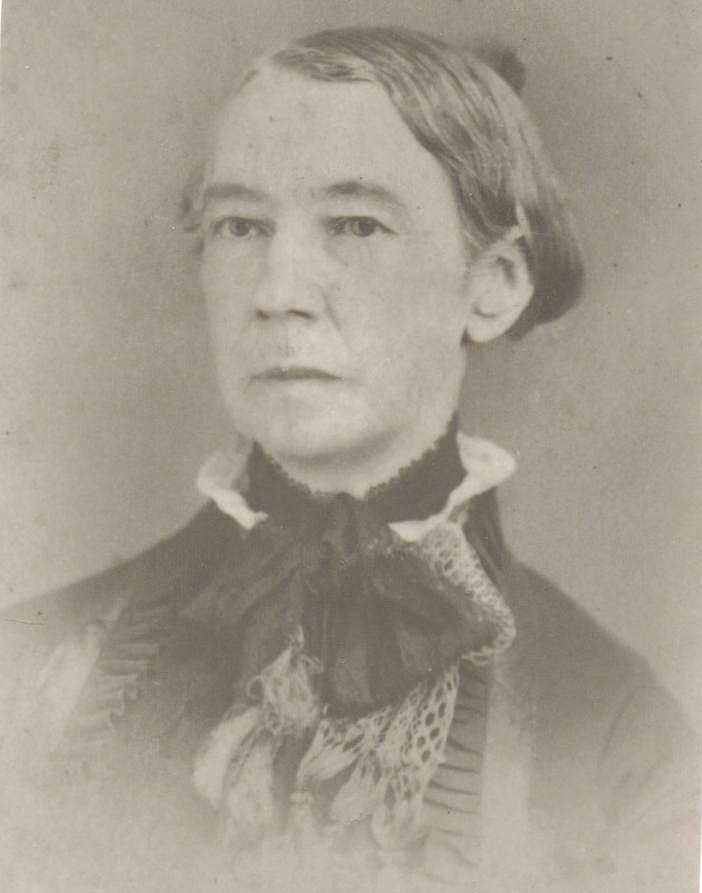
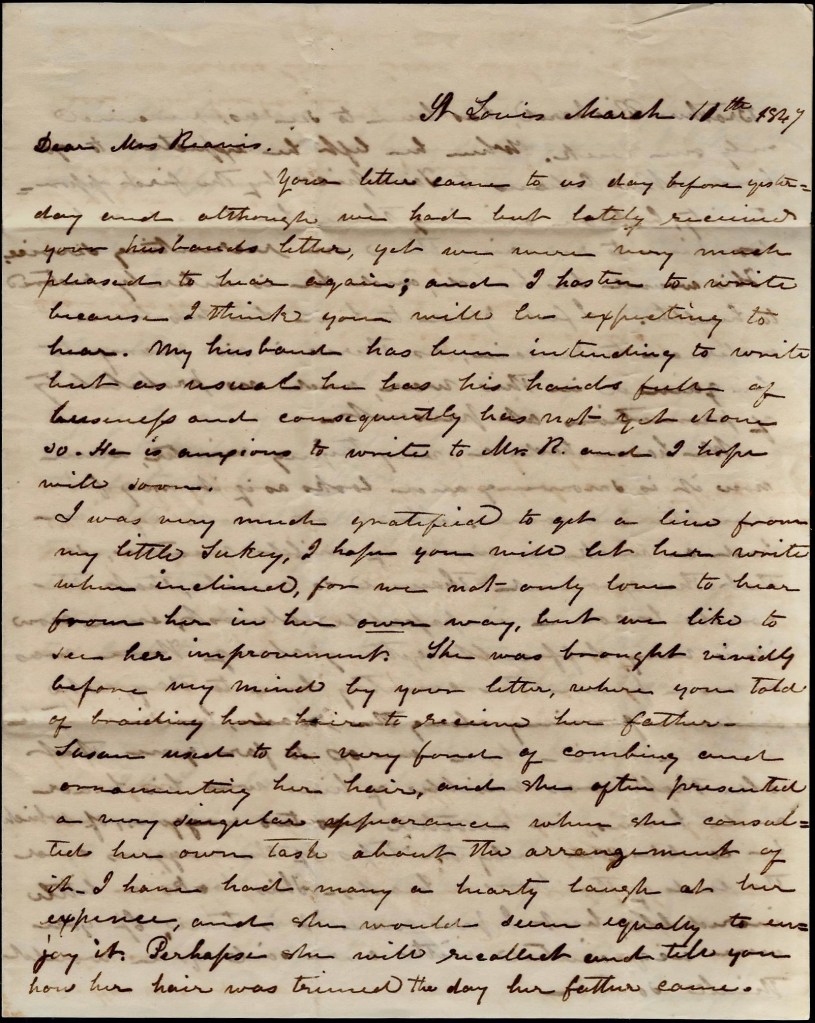
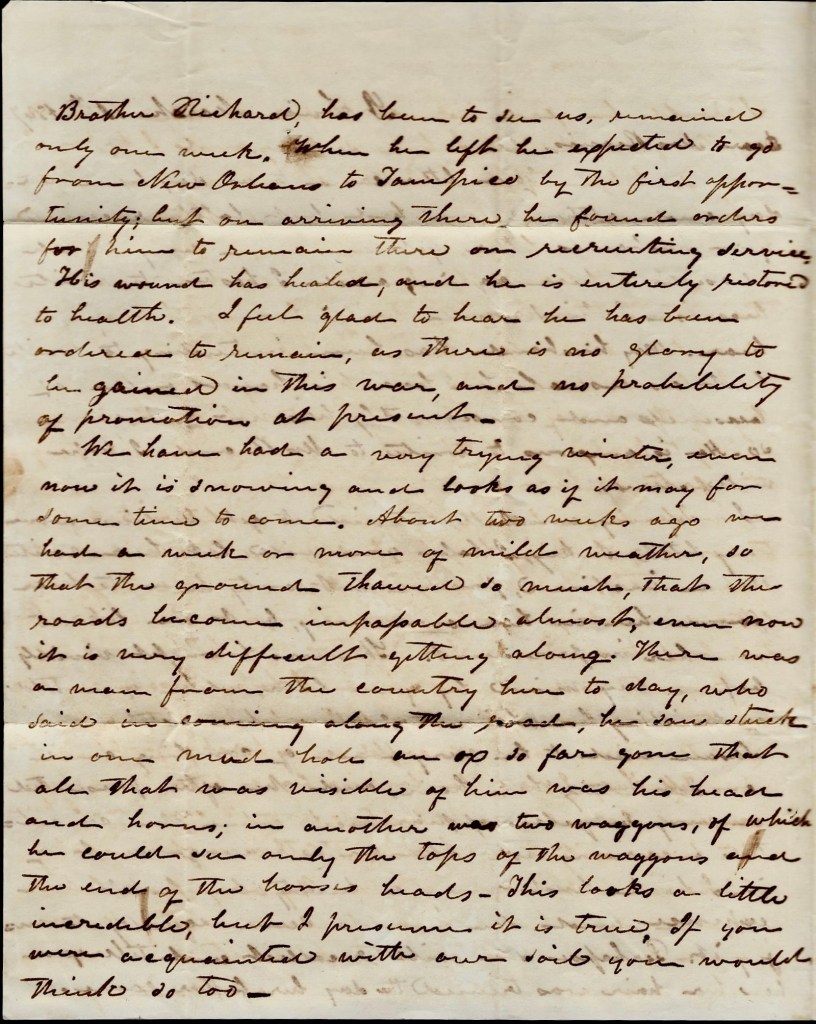


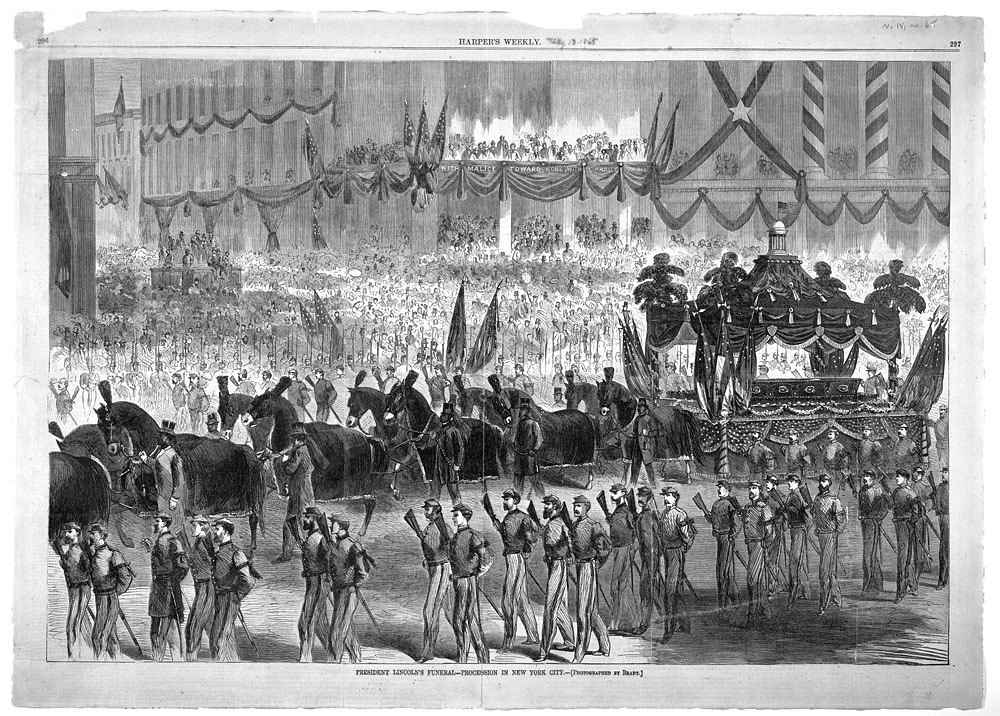

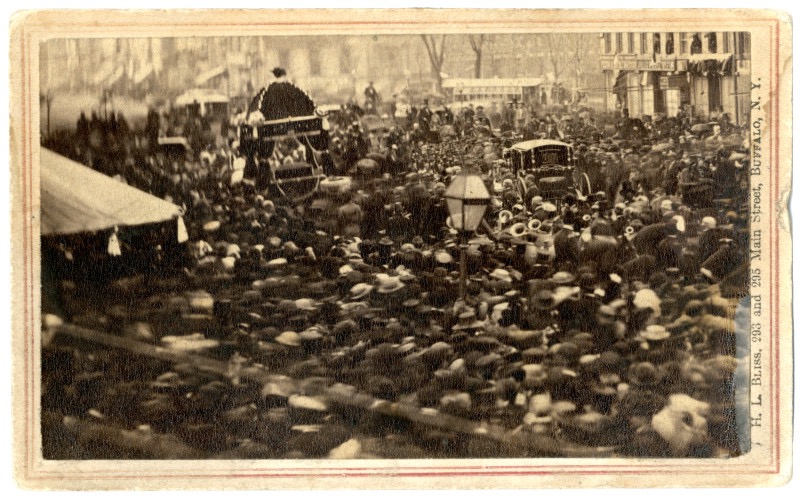
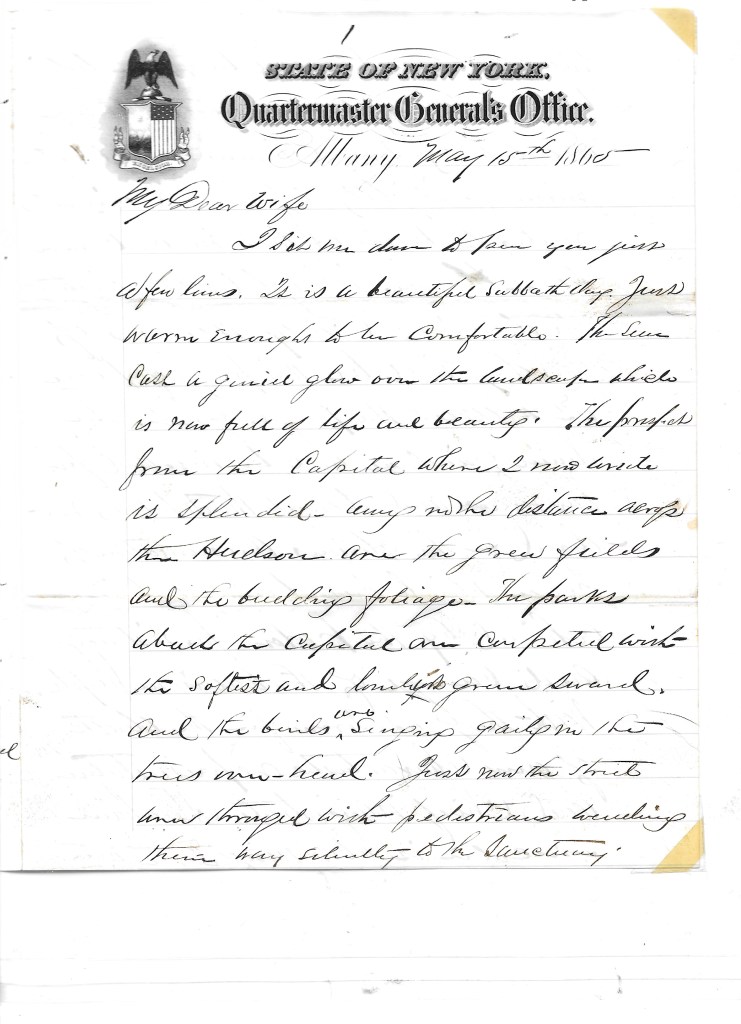


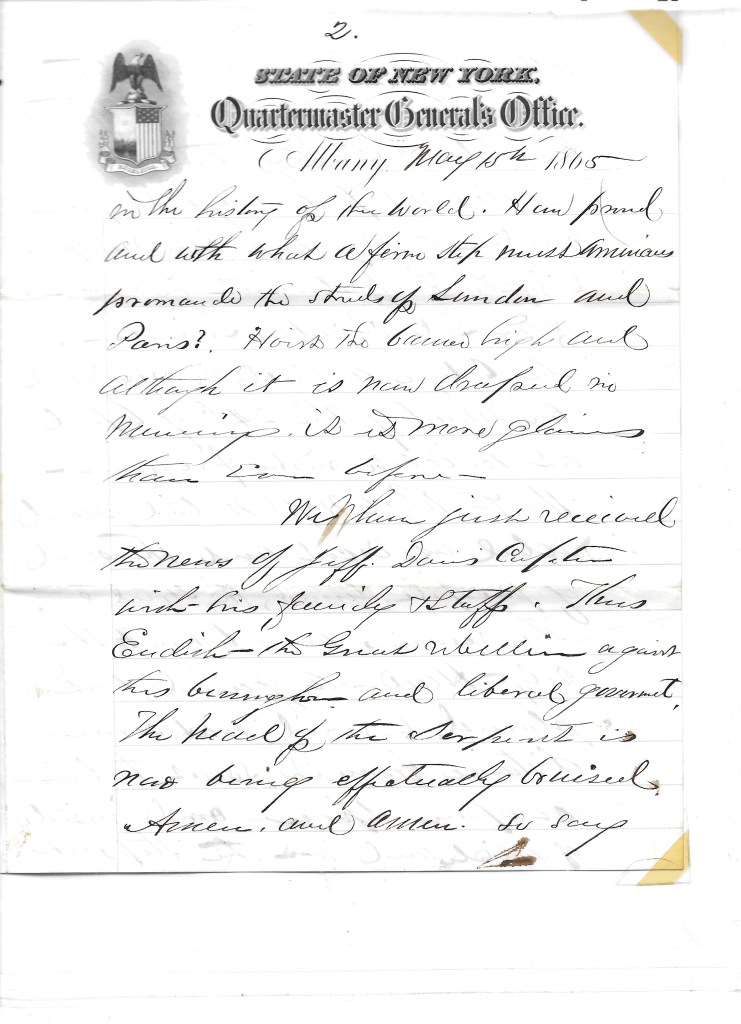

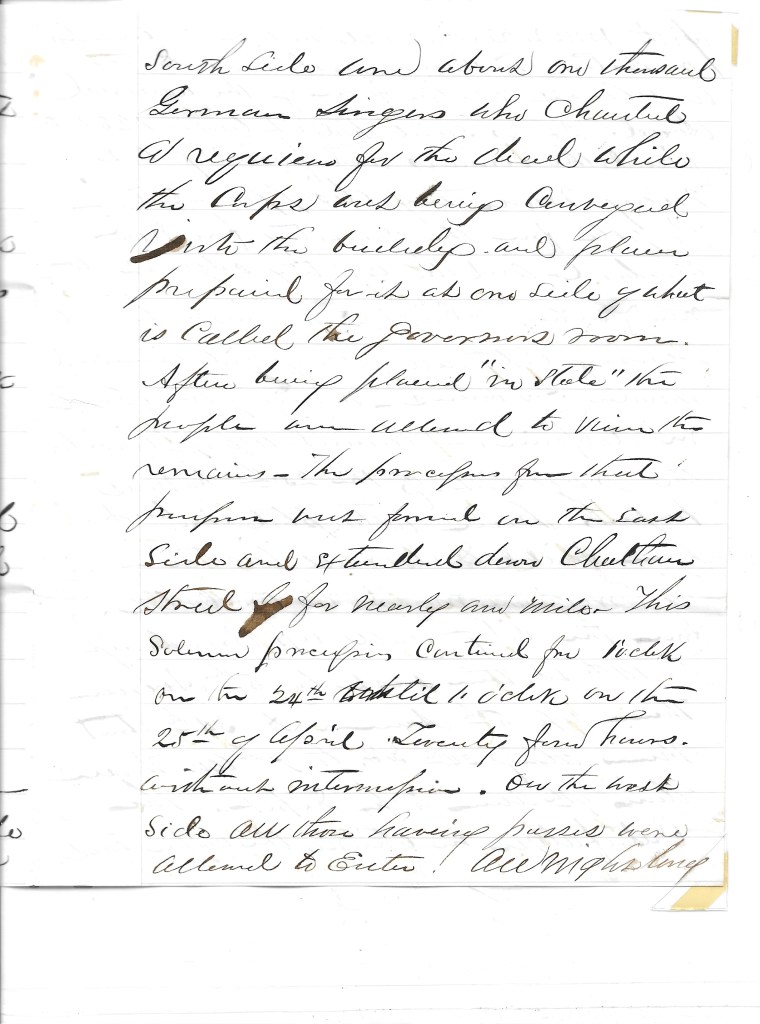
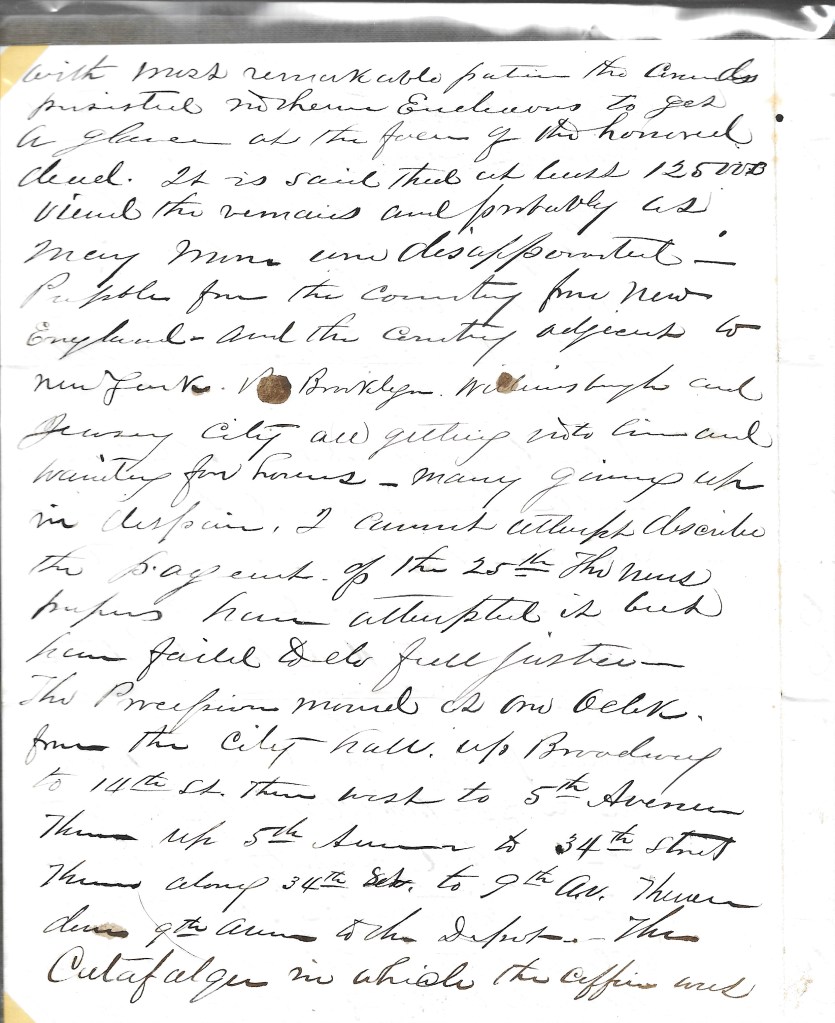
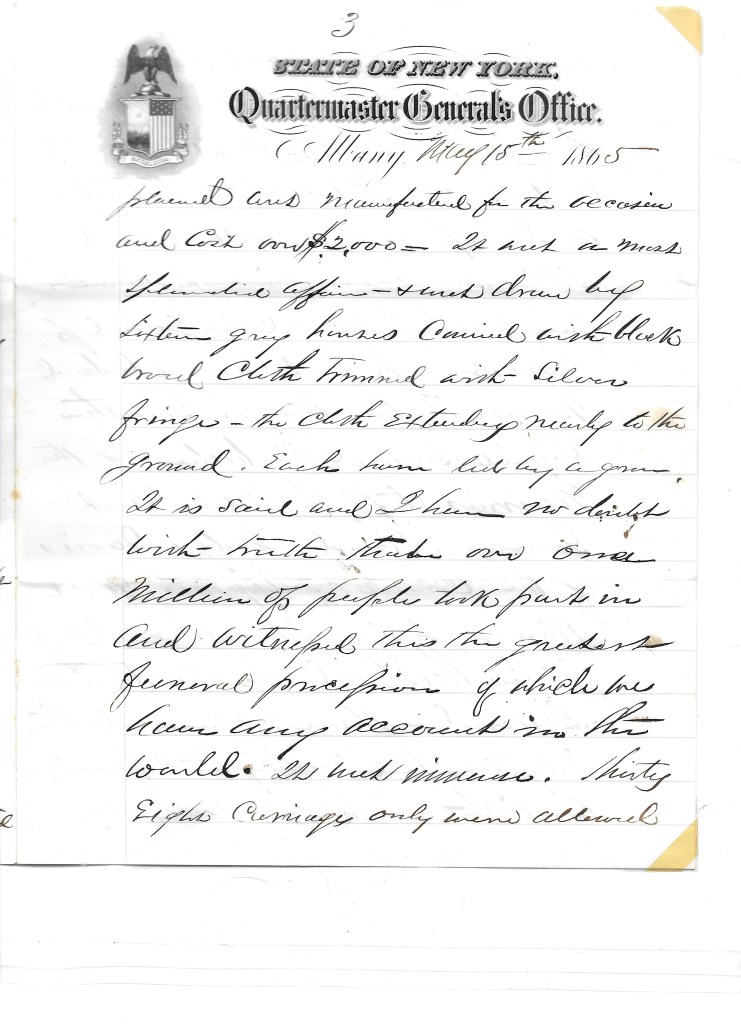
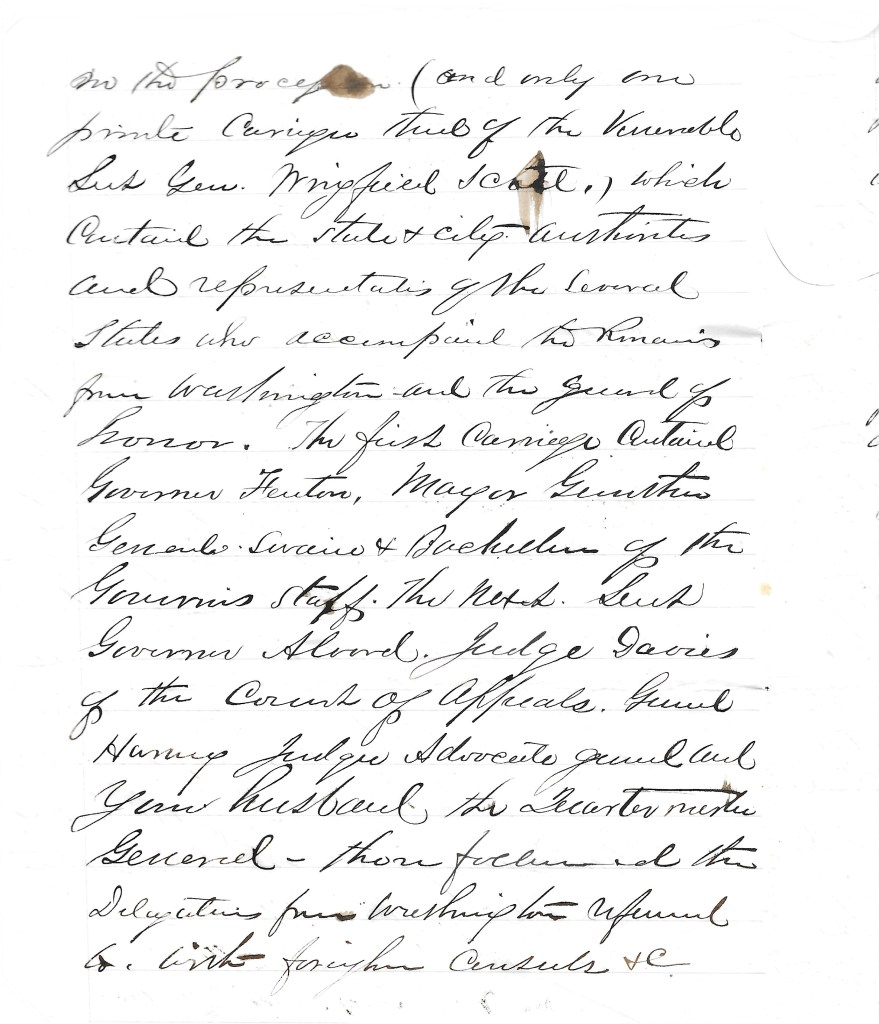
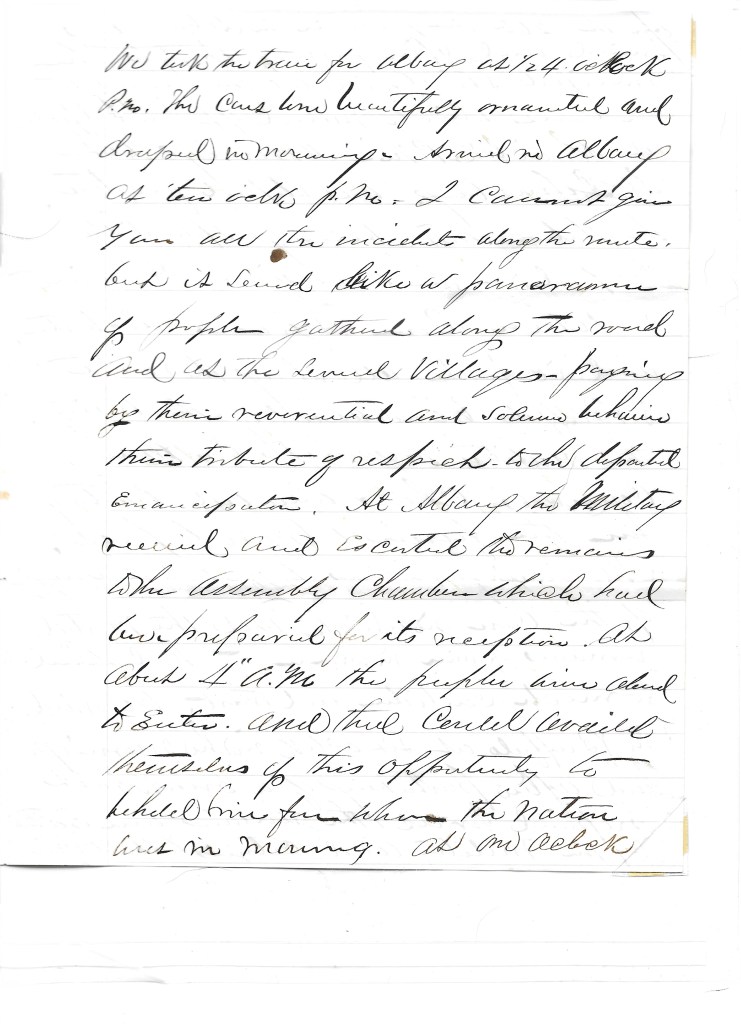
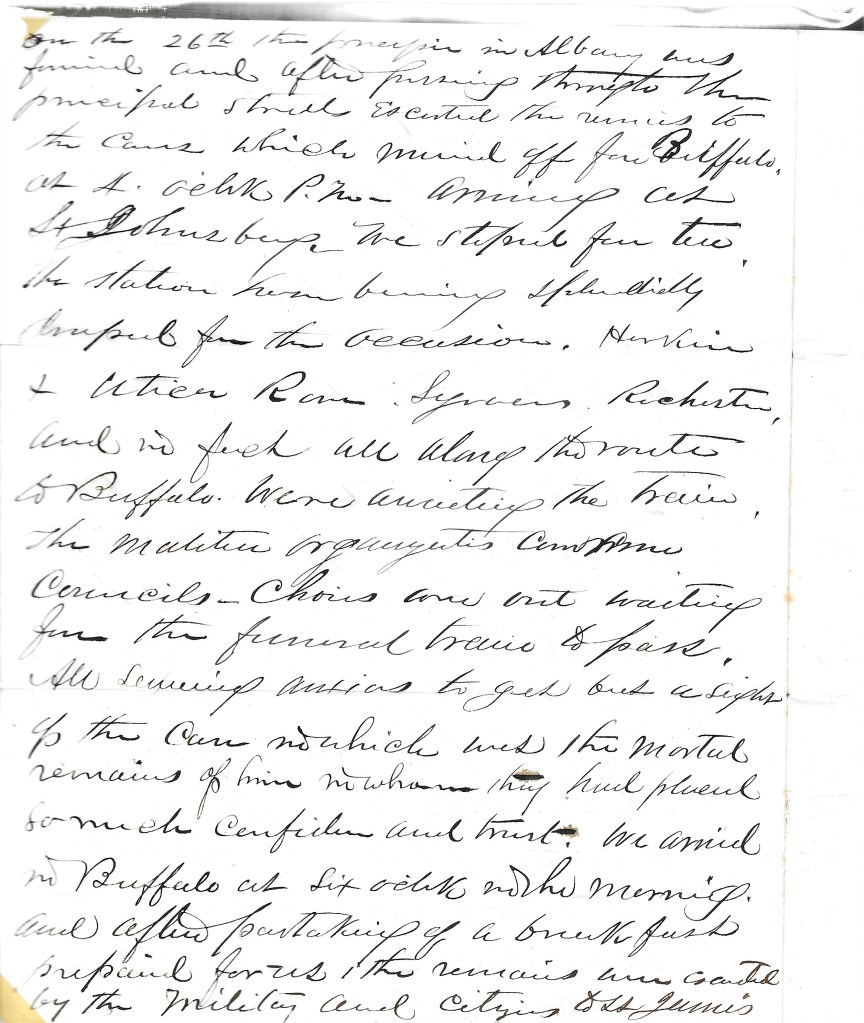

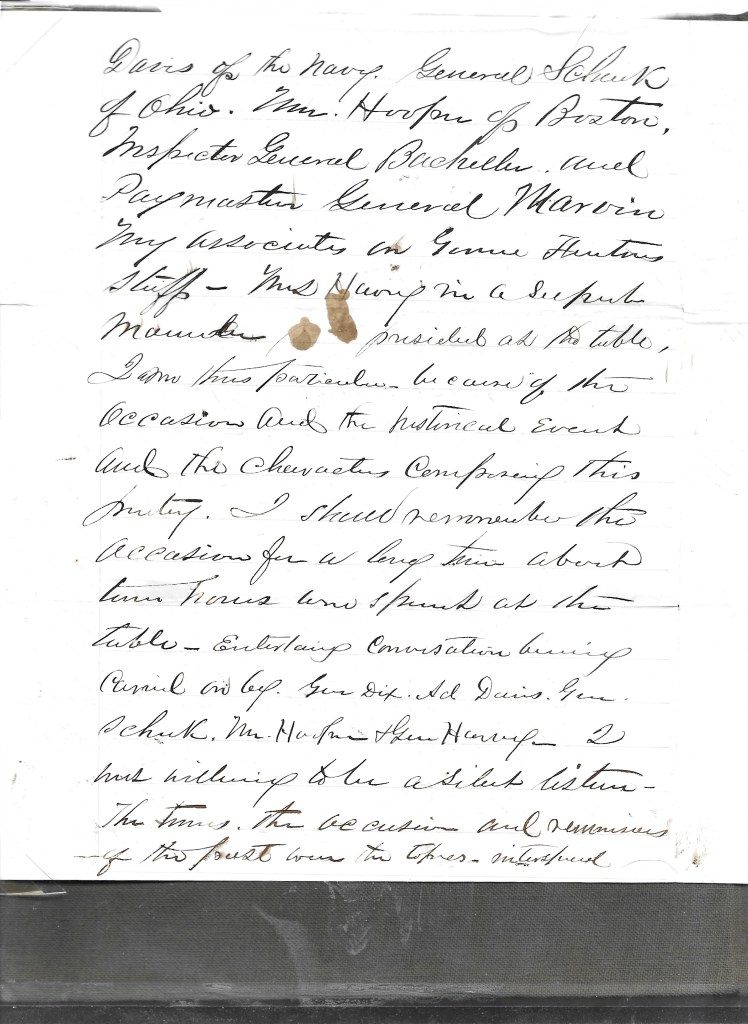

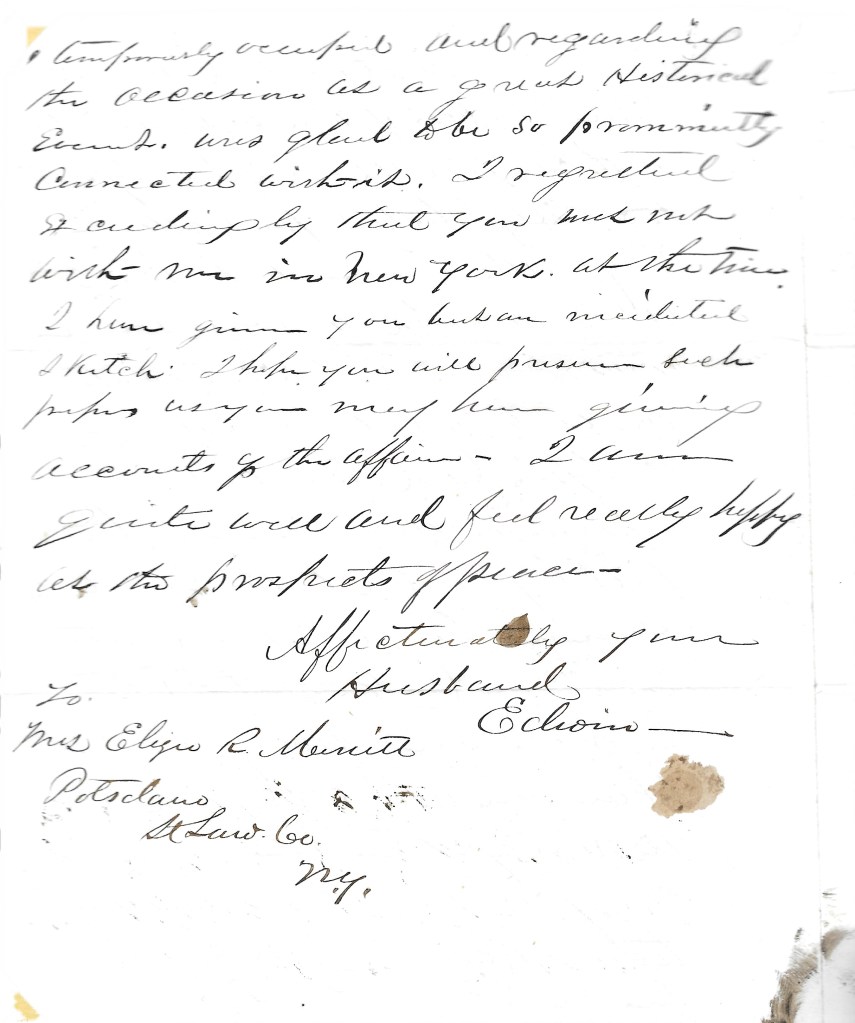
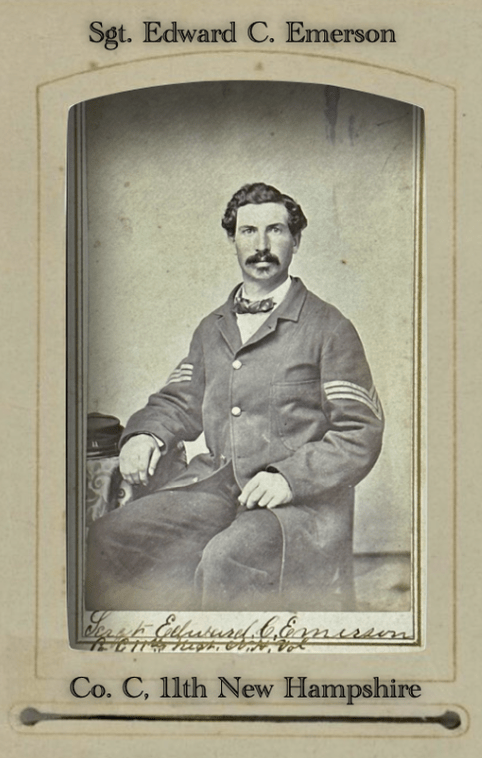
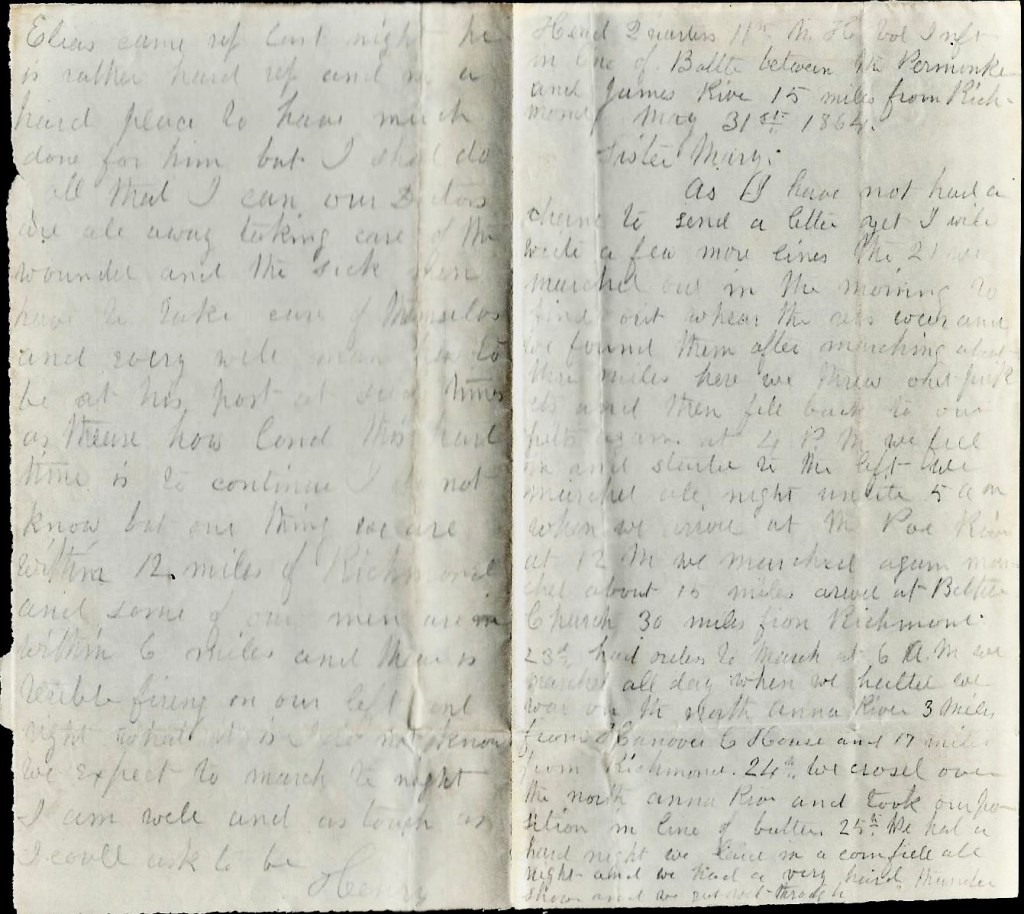


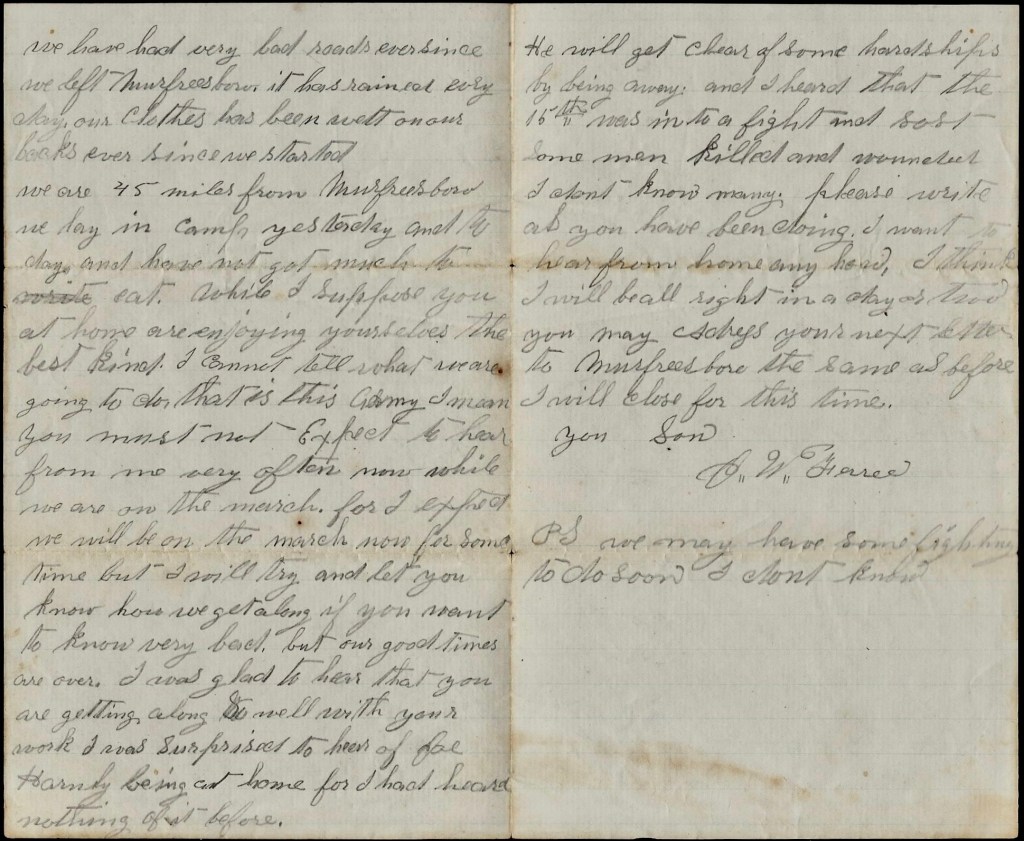


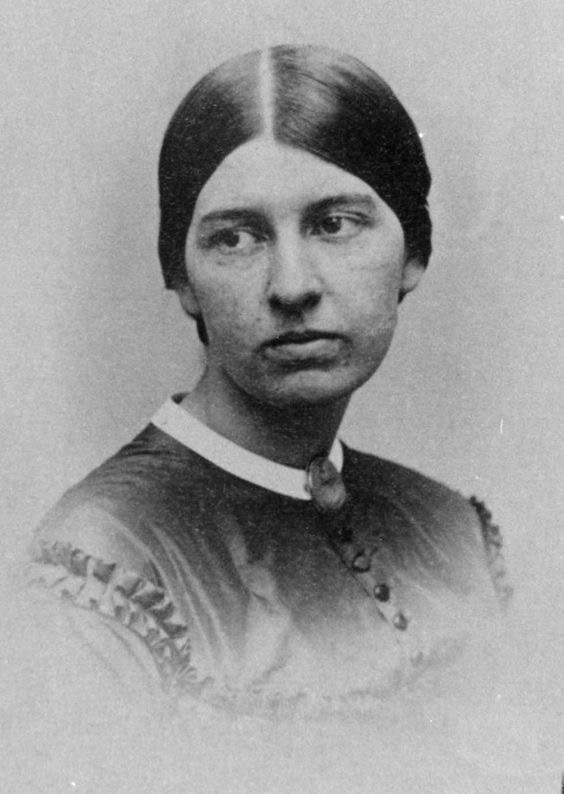

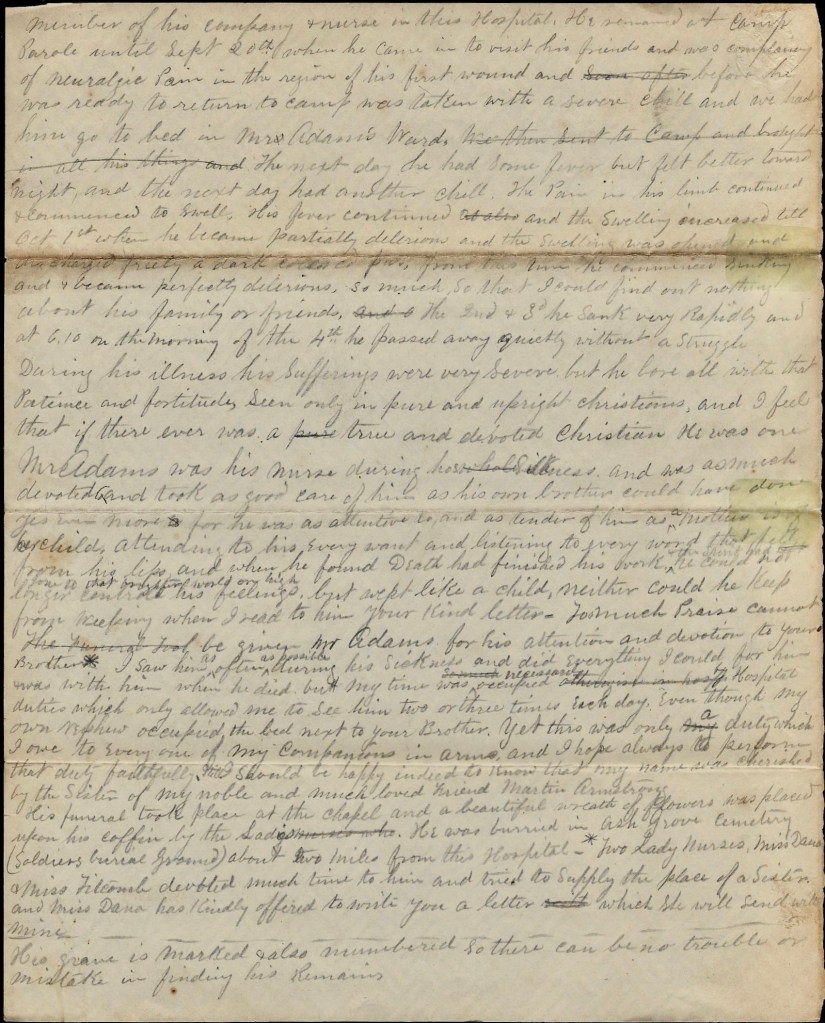
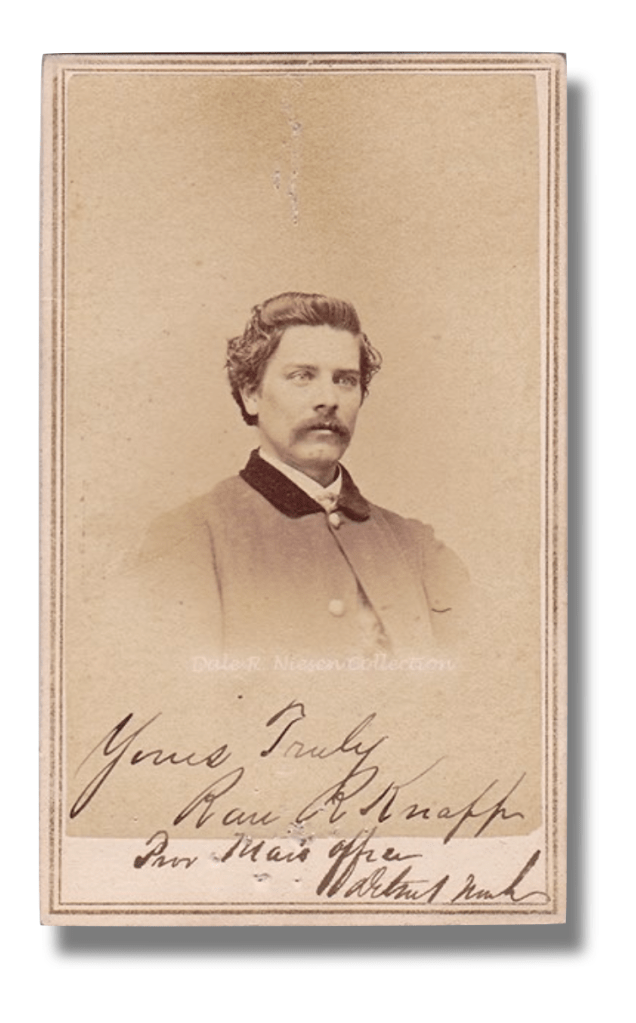
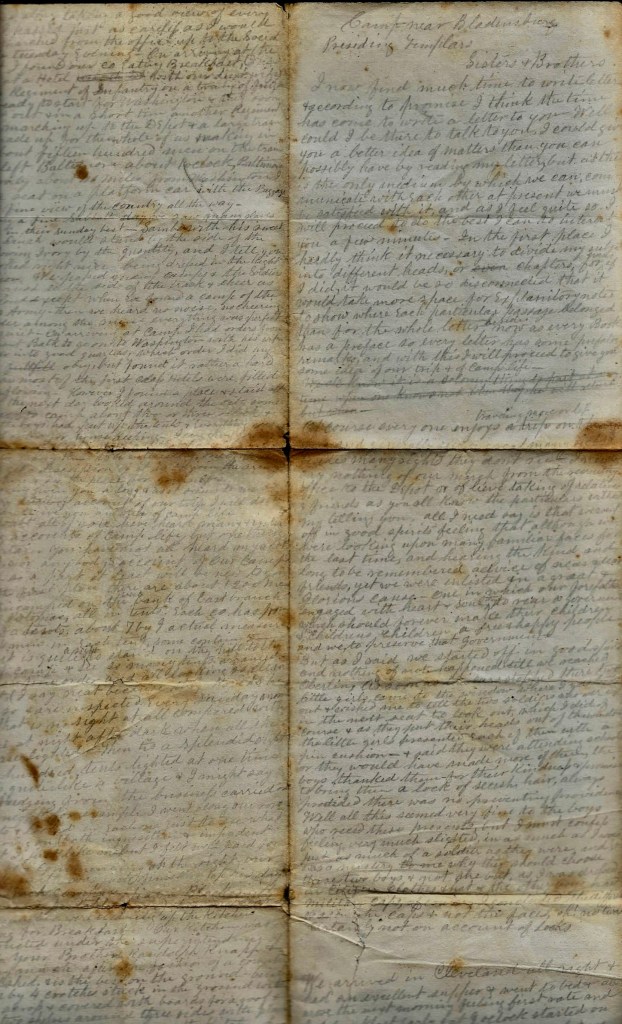

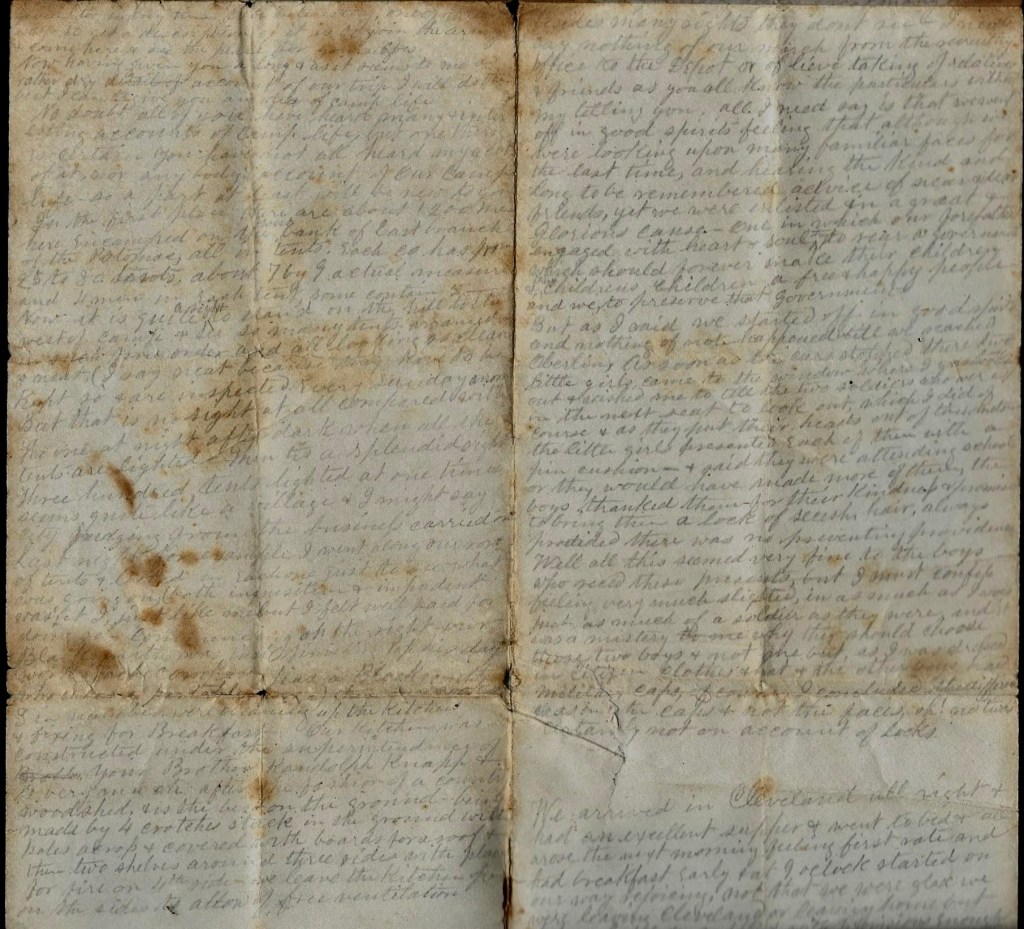


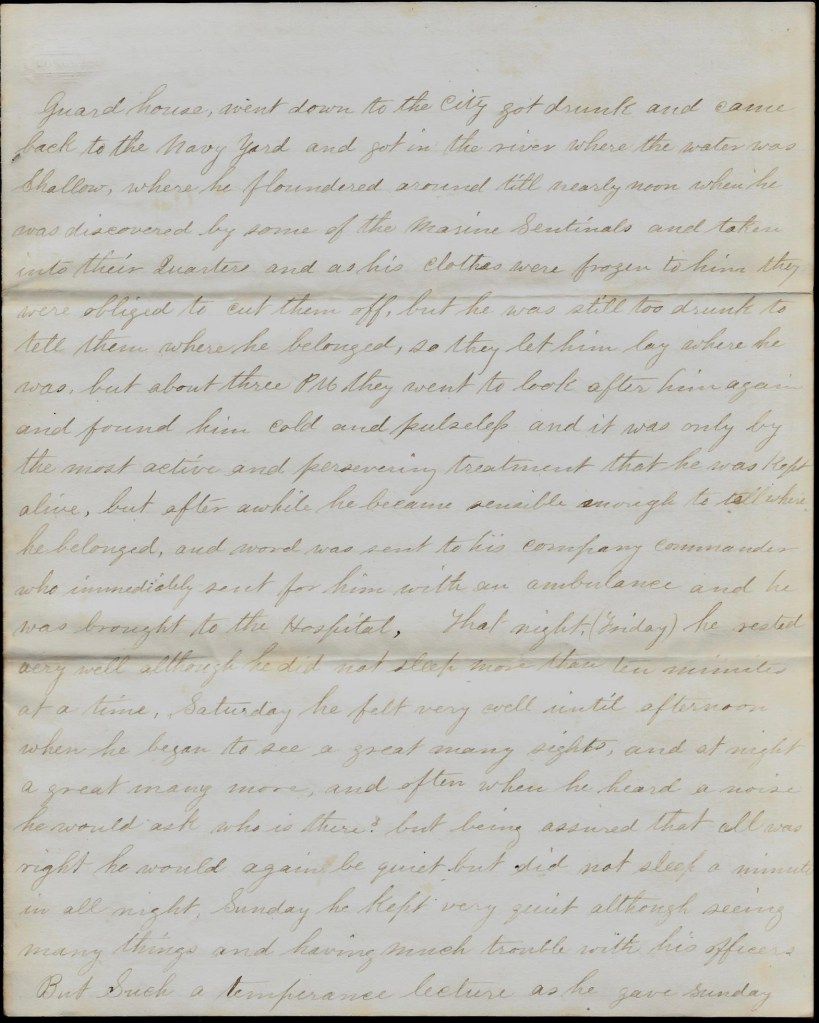


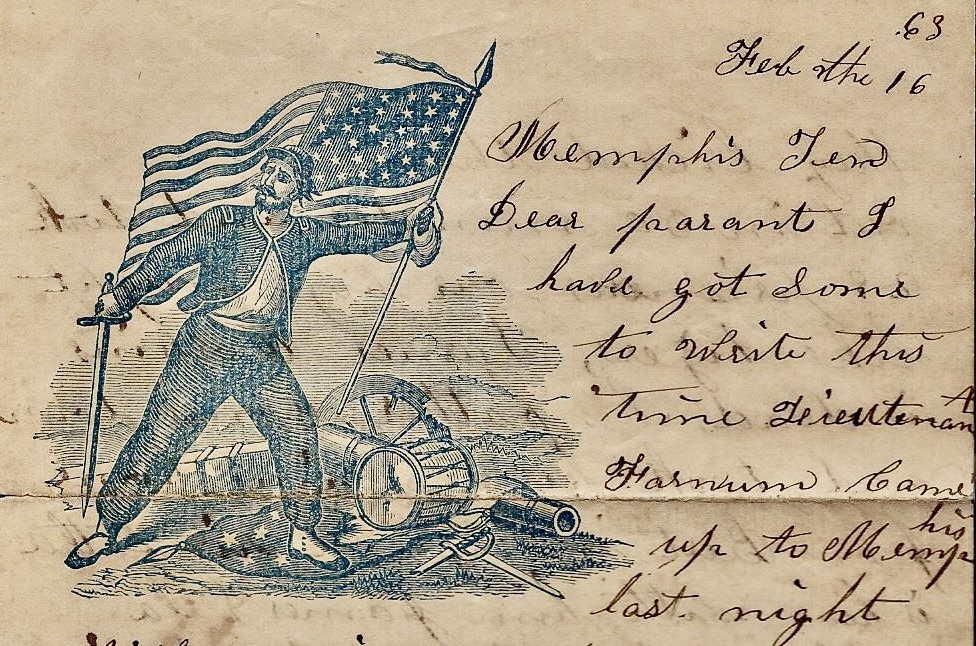

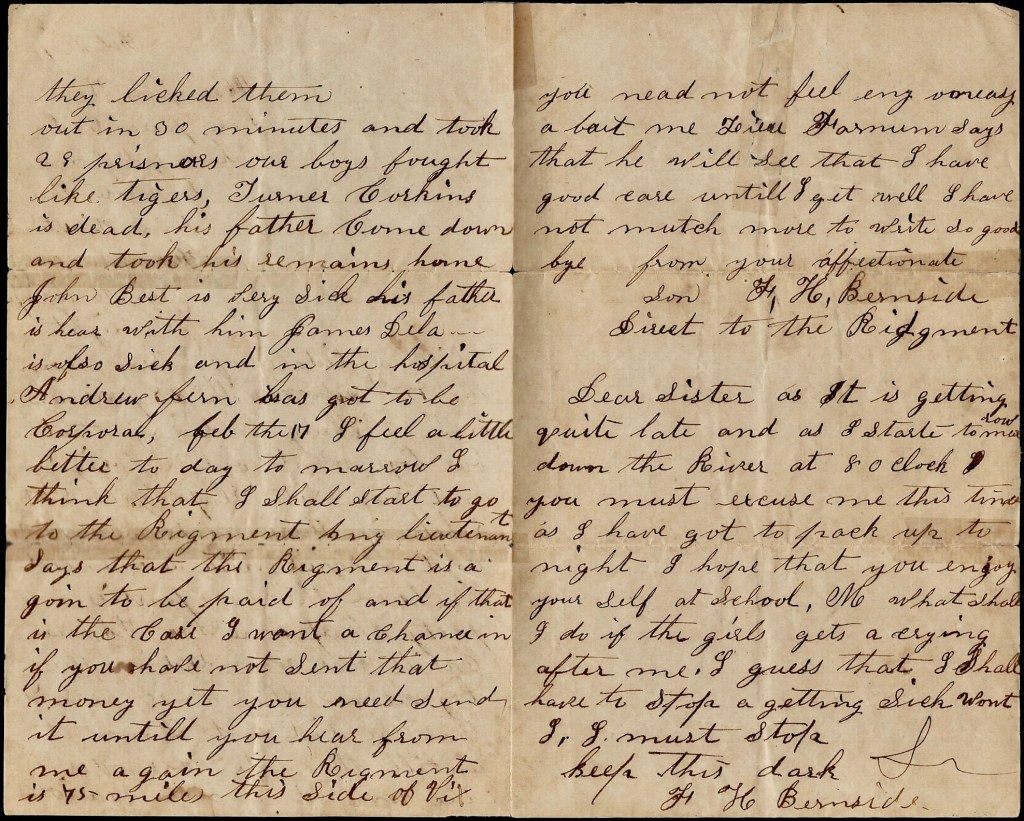




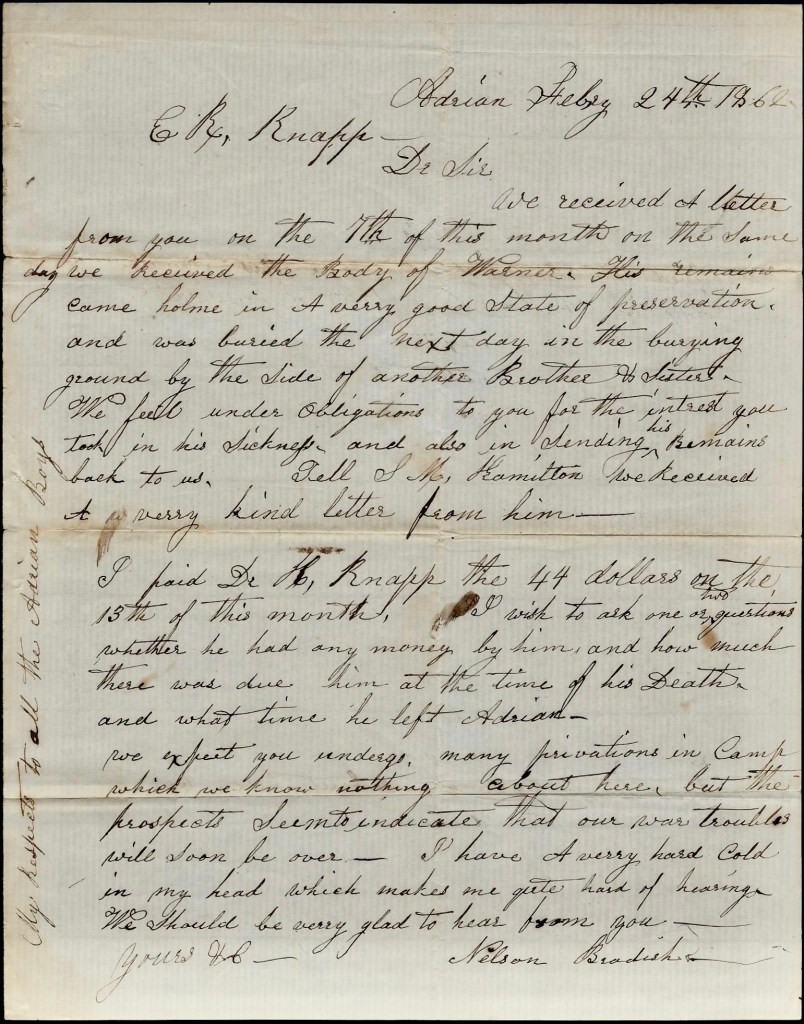
 Spared & Shared 23