This early-war letter was written by 23 year-old Sgt. George W. Stoddard (1839-1887) of Woodstock, Champaign county, Ohio. Co. A, 2nd Ohio Volunteer Infantry (OVI). George enlisted as a corporal in Co. K in April 1861 but was promoted to sergeant in Co. A in September 1861. He was elevated to 1st Sergeant in January 1863 and finally commissioned a 2nd Lt. in February 1864. He was discharged from the service in October 1864 as a 1st Lieutenant.
A very grainy image of Lt. George W. Stoddard (1864)
After the war, George married in 1875 to Hester A. Blanchard (1850-1931) of Belleville, St. Clair County, Illinois. Together they had one daughter, Fannie Arilla Stoddard, who was less than ten years old when George died in an accident, falling from the scaffold at the Presbyterian Church in Belleville.
George wrote his letter to Betsy Eleanor Ballou (1841-1935), the 20 year-old daughter of Henry W. Ballou (1812-1852) and Caroline Abigail Davis (1814-1893) of Woodstock, Champaign county, Illinois. Betsy married a man 19 years her senior named Samuel A. McAdow (1822-1904) in 1875. Samuel served in the Civil War as a sergeant in Co. H, 2nd Battalion, 18th Regular Army.
Transcription
Addressed to Miss Betsy Ballou, Woodstock, Champaign county, Ohio
Camp Jefferson, Kentucky December 26, [1861]
Good morning Betsy, glad to hear from you. Oh! I mean that I would like to hear from you. Well, Betsy, I am still alive and able to wrote or scribble just as anyone may call it. I received a letter from you some time ago and I have wrote one to you since but have not received any answer from it and I thought maybe you did not get my last letter so I have concluded to write again.
Well, Betsy, soldiering goes about the same as ever with me but it has about used some of the boys up. Ell, James Dee and Cit [Christopher] Cranston is sick and I am afraid that they are a going to be very sick. I think that Dee has got the typhoid fever. Dan[iel D.] Moore is still at Louisville in the hospital but he is about well now. [Julius] Jake Cushman is out on picket guard today. Jake gets along about as well as any of the boys.
We expect to have a big fight before many days. If we get after them again, we will make them get up and climb faster that they did up at Ivy Mountain. They run so fast there that we could of played marbles on their coat tails. But never mind, we will give them all they want anyway for we are the boys what will go for them mighty, Betsy. We are what can do it—there is no mistake about it.
Well, I guess that I will have to close for it is almost time for battalion drill. You can sing “Hail Columbia” whenever you feel like it now. Goodbye for this time. Write soon.
From ever your friend, — G. W. Stodard
to Miss Betsy Ballou
P. S. Direct your letter to Camp Jefferson, Hart county, Kentucky. Co. A, 2nd Regt. of O. V., USA
“Hail Columbia” Song Sheet published by Mumford & Co., stationers on 4th Street in Cincinnati
Unfortunately I have not been able to identify the cousins who were correspondents in this letter which was penned in Livingston county, Illinois in May 1862. I was, however, able to identify some of the people whose names were mentioned within it. More time and persistence will undoubtedly reveal more information on their identities beyond just their names.
In her letter, Dorcas speaks of the enlistment of troops from Livingston county and of soldiers particularly who served in the 20th, the 39th, and the 53rd Illinois Infantry Regiments. She tells a tale of a narrow escape by two Livingston county soldiers in Co. C, 39th Illinois who ran for their lives when they were taken by surprise on picket duty. “They run to the timber. Nary one of them got hurt—the nearest either of them came getting killed. A bullet went through Seth’s hair. The secesh stopped to a house not far from the camp and said that forty horses would not catch them two Illinois boys.”
I should note that the handwriting and spelling in this letter was difficult to decipher but I believe I was able to make out most of it correctly.
Transcription
[Pontiac, Illinois] May 3rd 1862
Mr. Edwin Adams Cousin Edwin,
It is with the greatest of pleasure that I sit down this afternoon to let you know that we are all well at the present time and hope these few lines may find you in the same health. I received your letter some time ago and have neglected to write. I have so many to write to that it takes me all the time. It has been very pretty here for the last two weeks. They are sowing wheat today. They are going to sow all this week. Next week they are going to sow ten acres of oats and they are going to plant as much corn as they can. Father can’t help plant corn very much for it will come right when he will have to be a [ ]. They put father in [ ] this year again. This will make 3 years in a succession that he has been [ ]. Father has gone to town after his book.
Mr. Donnelson is helping Dan Case sow wheat. Mr. Donnelson lived in Missouri and the secesh drove him off. You ought to be here and hear him gass. He can beat all men that I ever heard. He can beat old men to work that I ever saw. He has helped Father husk corn right smart. It is hard to get hands out here. They are all gone to the war. There is three companies gone from Pontiac and two from Fairbury. That is 5 hundred men gone out of this county that I know of and I don’t know how many more.
The first company that went from Pontiac was at the battle at Pittsburg [Landing]. There ain’t only 40 out of the whole company that is in the service. A good many of them was killed and wounded. There was a good many of the boys that got killed that I was acquainted with. There is some home on furlough that was wounded. The name of their Captain is [John A.] Hoskins. 1
Captain [Morgan L.] Payne got here about fifteen minutes after the battle was over. That was the last company [Co. G, 53rd Illinois Infantry] that went from Pontiac. They haven’t been in the service more than two months. I think they was pretty green to go in battle. I got a letter from one of the young men. He said that it was the awfullest sight that he ever saw. He found his brother there in the 20th Ohio Regiment. There was another that found his brother that went from Bloomington. They said that there was men there from all parts of the country and all sorts of men there.
I got a letter from Melvin last Monday. He said that they was all well. They got their pay. They sent 30 dollars home to father.
Cpl. Seth St. John, 39th Illinois Infantry
There is one of the 6 twin brothers sick—that is Marion Sellman. 2 They got a letter the other day and [he] was getting better. There was three went from here and two from Mr. Sellman’s and one from Mr. Saint Johns. They was all young men and they all called them[selves] the twin brothers. They was young men by the name of [John] Sellman and Seth Saint John 3—two of the twin brothers—they was on picket and there was 40 secesh came out to them before they saw them. They took after them and run them. They had fifty rods to run before they could get to the fence. All the men shot four rounds at Seth and never touched him. They come to a fence and the secesh was right onto him. Seth jumped over the fence. Marion put his hand on the fence and they shot a ball right close to his hand and broke his hold. He said that he got over the fence but did not know how. The first that they knew, he was lying on his back. One of them jumped up and shot the captain. They run to the timber. Nary one of them got hurt—the nearest either of them came getting killed. A bullet went through Seth’s hair. The secesh stopped to a house not far from the camp and said that forty horses would not catch them two Illinois boys.
You have got quite a start of children. You had better come West and buy you a large farm and go in business, If they were all boys, they could get a large farm of about two hundred acres as well as you can tend 100 hundred there in the woods. Your wife is large enough to do the work. You all write now. No more at present. Goodbye for this time. Write soon. Give my best respects to Uncle and Aunt and Anna and Perintha and John and his wife. Ed, I will send you a likeness as soon as you send me yours.
Tell John that mother is going to write a letter. Tell her that we are all well. — Dorcas E. Conners
Another picture of Corp. Seth St. John (standing third from left) with other non-commissioned officers (I presume) from the 39th Illinois when in South Carolina later in the war.
1 John A. Hoskins served as the first captain of Co. D, 20th Illinois Infantry—the first company to be raised in Pontiac, Illinois. The unit saw service at the battles of Ft. Donelson and Shiloh. They also spent time guarding bridges in Tennessee. Other actions included the siege of Vicksburg, and the Battle of Jackson, Mississippi. The 20th then joined Sherman at Kenesaw Mountain in Georgia. They later participated in Sherman’s March to Sea.
2 According to the Illinois Civil War Muster & Descriptive Rolls, Marion Sellman of Ocoya, Livingston county, Illinois, was 23 years old when he enlisted as a private in Co. C, 39th Illinois Infantry. He was described as a 5’6″, black-eyed, hazel-eyed farmer.
3 Seth Saint John (1841-1865) was a corporal on Co. C, 39th Illinois Infantry. In the 1860 census, he was living with his parents and siblings in Eppards Point Township in Livingston County, Illinois. His parents were Samuel and Margaret St. John, and his siblings living there then were William, Ada and Ruth. He died on 23 January 1865 in South Carolina. Seth’s brother, William J. St. John served in Co. G, 129th Illinois Infantry.
This letter was written by 26 year-old Elmira (“Ellie”) Ann Bailey (1838-1926), the daughter of Daniel Bailey (1802-1868) and Christiana Mumper (1808-1897) of Dillsburg, York county, Pennsylvania. Ellie married Levi Brandt (1829-1905) in November 1866. In her letter, Ellie mentions her two brothers—Samuel Nelson Bailey (1841-1903), and Mumper John Bailey (1844-1915)—neither of whom enlisted or were apparently drafted in the service during the war.
I could not find an image of Ellie but here is a CDV of a young woman that dates to Pennsylvania in 1864(eBay)
Ellie wrote the letter to her cousin “Jennie” who was Jane (Mateer) Henderson (1837-1926). The letter was addressed to Dunningsville, a small village in Washington county, Pennsylvania. We learn from the letter that Jennie had recently married Rev. Samuel McFarren Henderson (1839-1879) who was called to the pastorate of the Pigeon Creek Presbyterian Church in June 1863 where he served until late April 1867. Samuel was born in New Hagerstown, Carroll county, Ohio, and an 1859 graduate of Washington & Jefferson College. After pursuing theological studies at the Western Theological Seminary in Allegheny, Pennsylvania, he was licensed to preach by the Presbytery of Steubenville. After leaving the Pigeon Creek church, he relocated to the church at Wilkinsburg, Presbytery of Pittsburgh. After Rev. Henderson died in 1879, Jennie remarried with University of Wooster teacher, Samuel J. Kirkwood (1840-1901) in 1882. Jennie was the daughter of John Mateer (1807-1875) and Mary Nelson Diven (1816-1896).
Though written six months after the Battle of Gettysburg, Ellie informs her cousin that Lee’s invasion into Pennsylvania the previous summer had caused “an exciting time” and resulted in her brother having three of his horses taken by the Confederates. She also claimed that the cannonading at Gettysburg could be heard quite distinctly at their home 24 miles away during the 3-day battle and that great crowds of curiosity seekers were observed passing their home in Dillsburg on their way to the battlefield immediately afterward.
Transcription
Addressed to Mrs. Jennie M. Henderson, Dunningsville, Washington county, Pennsylvania
Home [Dillsburg, York county, Pa] Monday afternoon, January 18th 1864
My dear Cousin Jennie,
After looking and waiting a letter from you for more than a year, I at last receive a very surprising one the 26th of November telling me of your marriage, “your husband,” &c. I am of the same opinion as you that such a step occasions deep interest, yet Jennie I have not yet been persuaded to commit the like act, (as you surmised in your letter) [and] do not know that I will permit myself to be, yet I do think it is much the happier way of living this life, or it would not have be instituted.
I presume you feel quite at home as Mrs. Henderson by this time—also naturalized as a pastor’s wife and to what the congregation will expect of you—it is generally perfection. I wish I could have seen you the first Sabbath you went to church after you were Mrs. Henderson. I can imagine the curiosity of the congregation to see their “Minister’s wife.” No doubt you impressed them very favorably with your humility, commendable dignity, &c. I should like to see you and your husband. You recommend matrimony as a capital institution, and of course there is something in having a nice husband. You no doubt, dear Jennie, are well suited. Hope I may be as fortunate.
Mumper is at Academia, Juniata county, at school—his second sessions. Says it was not “Cap year.” The evening you & I stayed out a little late & he had one horse to put up, I was very much worried that evening. Mr. L. was very kind to offer his services if you would only stay a little longer; but Jennie we must take the bitter with the sweet in this world. I am extremely sensitive; it is a failing.
Jennie, you should have been here last June and first of July to see our friends from the South, but we did have an exciting time in constant fear; though they were all very polite & gentlemanly that stopped here. You ask me how Sam got along with his black horse when the rebels were here. Jennie, they found him and two other young horses and gave in exchange an old worn-out U. S. horse. Father had them sent down to the river but government had taken charge of things and could not get over until they would wait a few hours, but the rebels being expected there hourly, they “flew to the mountain” with six of ours, where they remained two or three days, when the mountains were searched. Yes! Sam was very much distressed that his beautiful black horse got into their hands. the other two were very pretty bays.
I saw Logans at church yesterday. They are all about as usual. Their father was very ill a short time after you left. His sight is very bad.
Saw Ellie Dunlop at Mechanicsburg Church last Sabbath. Also Maggie Lusk & Ellen Mateer (you have heard her sister died of diphtheria in the summer very suddenly). She is looking very badly. Will hardly recover her former health. Saw Dr. Youngs too. I expect to go down to see them shortly—perhaps next week.
I spent an evening and afternoon at Wolford’s a few weeks before Christmas. Mr. B & I had a very pleasant time. Saw John A. W. & sister. They are looking very well; also [Mary] “Mollie” Myers [1841-1891]. I suppose you heard her sister Alice [Louise Myers] was married to Will[iam H.] Gardner a few months since [14 October 1863 in York Springs, Adams county]. I expect to see some of Adams County tomorrow as they will likely go over to Harrisburg to see [Andrew G. ] Curtin inaugurated. I fear they will have an unpleasant time as it has been raining real hard all day.
Where did you spend your holidays? I had the pleasure of spending mine in Philadelphia. Had a very pleasant time. Came home Tuesday after New Year. Spent two Sabbaths in the city [and] heard beautiful sermons. Cousin John Bailey goes down every few weeks. I went with him. Cousin Will has been one of the surgeons in the army of the Cumberland. His regiment lays at Chattanooga. Was there at the time of battle. Was home this fall on leave of absence on account of ill health. He started back week before last and only got as far as Huntingdon (where John was practicing). He would not let him go further as he was suffering with rheumatism too much for exposure on the field.
Jennie, I have come to the end of my paper, yet I have not all said. Stayman’s are all very well. They have had another addition to their family since you were here—a sweet little girl [named] “Ida,” about eight months old. Emma & Frank are as fussy as ever. James Clark’s family have been very weak or delicate. Lucinda’s mind was very weak during the summer and their father has been right ill with heart disease for some time.
Have you heard from Calvin lately or since they arrived at their destination? I have their photographs. They are very good. Jennie, you ask me for my photograph. I do not think it would be prudent for me to send it now as you have been so delinquent in writing me. I shall, however, reserve one for you at least six months if you can within that time send me yours, & your good husband’s for my benefit, and to aid in gracing my album. I have very good ones taken in the city. Now, Jennie, I will leave it to your husband if this proposition is not fair or equal. I am very anxious to have them. Shall look for them in you next letter & you shall have mine in return.
We have had only a few days sleighing.
Grandfather [John Mumper] & Mother [Christina “Jane” (Beelman)] Mumper are both dead. He died in August [8 August 1863] and she the 4th inst. [4 January 1864], both being eighty-two years. All join in sending much love to you and your husband. Hoping to hear from you soon, I am as ever your loving cousin, — Ellen A. Bailey
We could hear very distinctly the cannonading at Gettysburg during the three days battle. You should have been here to see the crowds go up to see the fields after the battle. One morning before breakfast, no less than thirty buggies & carriages passed. Thus you have an idea. And we are twenty-four miles from the point. — Ellie
An image of Joe could not be found but this image is claimed to be Asbury Petty Welsh of Co. F, 15th OVI who was wounded at the Battle of Missionary Ridge on 25 November 1863. While his visage bears a strong resemblance to a post-war image, his record suggests he never rose above the rank of private, however.
These 14 letters were written by Joseph Edie Stewart (1841-1916), the son of William Stewart (1804-1891) and Esther Bell (1815-1843) of St. Clairsville, Belmont county, Ohio. In August 1861 when he was 20 years old, Joseph enlisted in Co. E, 15th Ohio Infantry Volunteers (OVI). He was wounded and taken prisoner on 31 December 1862 during the Battle of Stone’s River and held captive until his exchange at which time he returned to his regiment near Murfreesboro in June 1863.
Joseph wrote the letter to his cousin, Margaret (“Maggie”) Jane Stewart (1844-1928), the daughter of John Stewart (1806-1892) and Anne Belle Patton (1813-1892) also of St. Clairsville. Joseph served in the same company and regiment as Maggie’s older brother, Robert Bell Stewart.
Two Stewart cousins were raised in Belmont county, Ohio—one of the more pro-Southern counties of the Buckeye State. It was a largely agrarian county that had formed strong attachments to the South as the outlet for its goods and produce. Anti-war sentiment remained strong throughout the entire war and the St. Clairsville Gazette was one of the most outspoken Copperhead newspapers in the state. References to Belmont county politics and the conflicts between “Unionists” and “Copperheads” on the home front are sprinkled throughout Joe’s letters.
To read the 18 letters of Robert Bell Stewart (Joe’s cousin) who served with him in Co. E, 15th OVI, see:
Camp Andy Johnson near Nashville, Tennessee March 13th 1862
Cousin Maggie,
I received your letter since we arrived in this camp. I suppose you have heard where we are before this time. I am looking for a letter from home everyday. The mail has just come, but nothing from home yet. I have not had but one from home since we left Camp Wood. I got a letter today from Jane McCoy. She said that James McCoy had gone to Illinois to live and liked the country first rate. I had a letter from William Stewart. The boys were then at Paw Paw Tunnel, Morgan Co., Virginia, and had been in a little fight at Bloomery Gap. But no doubt you have heard all about it.
I suppose Bob 1 has told all about our march from Camp Wood here and it is not worth my while to tell all about it. I will quit till after dinner.
Dinner over and I will bet you could not guess what we had for dinner. It was vegetable soup. It is a composition of all kinds of vegetables. We boiled it with beef and made first rate soup. It is the first that we ever got.
We have the finest kind of spring weather here now. The nights are rather cool but the days are very warm. It rained some last night and this morning. We have had a little snow since we came but did not last long. You ought to be down here just to see the country. I have not seen any in all our travels that is anything like as nice as it is down here. I think sometimes that I would like to live here. There is some of the nicest buildings and yards here that I have yet seen. I seen some pretty nice country in Ohio but this beats all. It will pay us if we never have a fight just to see the country. I have not got to see the city of Nashville yet. We came through after night and it was so dark that we could hardly see the houses on the side of the street. We are about 4 miles south of the city on the Franklin Pike. We don’t expect to be here very long. Some say we will leave here before next Monday but where to, we don’t know.
We had some cheering news from Manassas night before last—that there had been a hard fought battle there—that our men were victorious and had taken 60,000 prisoners. If this news is true, the secesh are about played out. We hear cheering news from every side and I am beginning to think that the secesh are about played out generally.
Our pickets have had some little skirmishes since we come here. The long roll called us out last Sunday morning but we did not leave quarters. There was but about 70 or 80 of the rebel’s cavalry came up and the pickets whipped them. The citizens here are all secesh.
I have just got a Louisville Journal which gives us more good news from the West. Our men are the victors at every fight. We have a pretty large force here now. Some say there is about one hundred fifty thousand here. I have not had any pictures taken yet but expect to tomorrow or next day. I could have had a picture taken before we left Camp Wood, but I had no money. I did not get any Valentine’s sent. We left Camp Wood about the time I was going to send some. I would like to have sent Bill Hinkle a good one. I think it would be a pretty good joke to send Bill a cracker. Some of the boys did send some cracker and Valentines. I hear that Becca Gray is married to Armstrong Porter. I wish her a happy life. I was not expecting to hear of her being married. I don’t care who gets married so there is one left for me when I get home. There is some pretty good-looking women down here but I don’t think a southern lady would suit me . My love to all. Write soon and often.
1 “Bob” was Joe’s cousin, Robert Bell Stewart, who served in the same company and regiment. Bob was Maggie’s brother.
Letter 2
Camp on Battle Creek Saturday, August 16th 1862
Cousin Maggie,
Some time has elapsed since I received your letter. I would have answered sooner, but have had a great deal to do lately. I wrote one to Craig a few days ago. I received Annie’s letter a few days ago. Bob got one from Jim at the same time. We have to go on picket twice a week. We are putting up some fortifications near the mouth of Battle Creek. About half of our company is out at work on them today. I would have been out but was not able to do anything. I was in the river a few days ago and ran onto a snag and got a pretty severe hurt. But I think it will soon be well.
I can’t imagine what is the reason I don’t get any more letters from home. The last one I had was written on the 15th of July. They certainly don’t write any or else they don’t come through. I feel anxious to hear how they are getting along with their harvesting, &c.
Sunday Morning 17th
Lieutenant Danford and Sergeant Hewetson will start for home this morning at 9 o’clock to recruit for the company. I will send this with Danford. I reckon [your brothers] Jim and John have left you [to join the 98th OVI] before this time. If they had not been in so much of a hurry they would have had the chance to get into our company. You will feel quite lonesome now, more so than when we left, but I hope we may all return soon to our homes. It has been nearly one year now since we left home. The time has been very short to me but home—that dear old spot—is ever fresh upon my memory. I wonder sometimes if home looks like it used to. I will think of home a great deal more since the boys have left, wondering how father will get along by himself. I reckon there is no one that can be got now to help him as everybody will be gone to war.
I am sorry to tell you that the only field officer we had has left us and that was our Lieutenant-Colonel [William F.] Wilson. The boys all loved him and he the boys just as much. He was so sorry to leave us he could hardly speak to us when he started. We have got another man in our regiment—Colonel [Moses R.] Dickey—but we don’t call him a man. He is not liked by a [single] man in the regiment. We call him an old red-headed tyrant. He done all he could to injure Colonel Wilson. He knew the boys did not like him and that they did like Colonel Wilson. This was the reason why Wilson left. He would not be dogged round by Colonel Dickey any longer. We’re trying to get him out and I hope we will succeed. Dickey was up to Huntsville last week and I hear that he has got our regiment out of the 6th brigade and will be taken to Huntsville to guard. Dickey tried to get a promotion as Brigadier General but could not come it. Colonel [August] Willich of the 32nd Indiana got the appointment and now commands our brigade.
Our regiment all want to stay in the sixth brigade but we want to get rid of Colonel Dickey. We are building a fort at the mouth of Battle Creek. It will be called Fort McCook. I reckon you have heard that General Robert McCook was killed a short time ago by some guerrillas. I have some inscriptions taken off some tombstones in a graveyard near Battle Creek. They’re quite curiosities. I will send them just as they are on the stones. they will give you some idea of southern learning.
I have written this in a hurry to have it ready to send with Danford. Write soon. I will write to Annie soon. Ever your cousin, — J. E. Stewart
Letter 3
Addressed to Miss Maggie J. Stewart, St. Clairsville, Belmont county, Ohio
Camp Lunatic Asylum [Six miles from Nashville, Tennessee] November 26th 1862
Cousin Maggie,
It has been some time since I received your letter. I received one from Nan day before yesterday. I have not had one from home for some time. I have as good health as common. We have as good health in the regiment as ever we had. We have but one sick in our company now. Morning report gives six hundred and sixty for duty in the regiment and about sixty for duty in our company. We have the largest regiment in our division now. We are looking for Lieut. [Lorenzo] Danford and Walt Hewetson back every day with some recruits for our company.
We had a letter the other day from uncle John Bell. He was then in Camp Dennison. He wanted to get into our regiment but he could not get here unless he could get some more to come with him which he could not do. He expected to go into the 62nd [OVI] Regiment now in Virginia. I would like first rate if he could get into our company.
Well, I suppose old Davy Shatzer is satisfied now as he has got Pete home again. I would like to know what fool went as a substitute for him. I suppose Pete is happy now as he is out of the army and got himself a wife. John Howard and Pete should both be in the army. There seems to be more marriages now than there was before the war commenced. If they keep on, they will all be married that are at home. There is no one that will gain any credit for himself by acting the coward in staying at home. [If] nothing happens, we will be at home some day and you may be sure they will not have much peace. Such fellows if they ever intend to marry, they had better be about it before we get home.
This has been a very busy camp. We have something to do every day. We go on picket every fifth day, have foraging trains to guard, and drill four hours every day that we have nothing else to do. We drill company drill two hours in the forenoon and battalion drill two hours in the afternoon. It is pretty cool weather and we can stand it to be put through. It is better for us to drill some every day than to lay in camp and do nothing.
We are now camped at the Lunatic Asylum six miles from Nashville on the Murfreesboro Pike. We have a nice camp and plenty of good water but there is no telling how long we will stay here. It would be a nice place to stay all winter but I don’t suppose we will stay here very long. We have but three tents to the company and are very much crowded. We have twenty-one in our mess. Every man does his own cooking. Rob 1 and myself have a small coffee pot and a frying pan which we have carried ever since we left Louisville. Company cooks have played out and nobody is sorry for it. We can cook to suit ourselves now. While we had company cooks, no one was allowed to cook anything at all.
The cars run through to Nashville again and I think Old Morgan will not get a chance to destroy the railroad as much as he did when Old [Don Carlos] Buell had command of our army. The old traitor (Buell) was not removed any too soon. It has been reported here that Buell has gone South. If such is the case, he will get some high position in their army. It won’t do for him to show himself to us again if he don’t want his scalp taken. He has been a traitor ever since he has been in the army. 2 We were on half rations at Battle Creek and he was feeding the secesh with our rations. I don’t know how Rosecrans will get along but I hope he will do the fair thing. The army have confidence in him and he has confidence in his men.
John Todd died in the hospital in Nashville on the 17th. 3 We did not hear it till today. He had been sick ever since we left Louisville but stayed with us till we come to Nashville. When we moved here from the other side of the River, he was taken to the hospital. His disease was brought on by himself. It commenced with “home sickness”—something like he was last winter. I did not expect ever to see him again when he left us.
We have no drill this afternoon. Write soon. Give all the news. I wrote to Nan a short time ago. I must write home one of these days. My love to all. As ever your cousin, — Joe
1 “Rob” was Robert Bell Stewart, Joe’s cousin, and the brother of Maggie Stewart (the recipient of this letter).
2 Gen. Don Carlos Buell was relieved from command of the Army of the Ohio and replaced by Maj. Gen. William Rosecrans on 24 October 1862. A military committee investigated Buell’s conduct during and after Perryville, but came to no conclusions, and Buell considered his reputation vindicated as he did not compromise his principles in waging war. After his dismissal, he was ordered to Indianapolis to await future assignments, but none came. Buell earned the nickname “The McClellan of the West” for his cautious approach and desire for a limited war that would not disrupt civilian life in the South or interfere with slavery. Although he staunchly opposed secession, he was never able to reconcile himself with the Lincoln administration. Buell’s wife had owned slaves prior to the war, and their marriage, although she freed them shortly after the Confederate attack on Fort Sumter. Buell had no personal animosity towards slavery or the Southern way of life.[Wikipedia]
3 Other sources state that John A. Todd of Co. E, 15th OVI died on 10 November 1862.
Letter 4
Annapolis, Maryland Monday, February 9th 1863
Cousin Maggie,
I received your letter today and you had better think I was glad to hear from you. I have not had a letter from home yet but am looking for one every day. I did not expect to hear of John being at home. I intend to go home if ever an opportunity presents itself. Some of our boys started for home a few days ago without money and without leave. It is hard to tell how they will get through. I don’t think I would like to start without money, at any rate.
I heard this morning that we have all been exchanged. If such be the case, we will probably leave here before long. If they take us through by Wheeling, you may expect to see me at home. I like to stay here very well and will be content to stay here as long as they see fit to keep me. I am still in the hospital yet, but expect to go to Camp Parole in a few days. One side of my arm is healed up; the other is healing fast. I will not have the right use of my arm for a long time. The ball cut the main leaders in my arm and it will take some time for them to heal up so that I can have the right use of my arm.
I am sorry to hear of [John] Brown Dysart’s death [on 15 January 1863]. We were together when I was taken prisoner. I did not think that his wound would prove fatal. I am sorry too to hear that John [W.] Danford is dead. It was the report among us that there was four killed dead of our company on the field, but I am glad to hear that such was not the case and that we have lost a much less number than I expected. I never thought of getting out as safe as I did. I am glad to hear that [cousin] Robert has got through safe. I saw a list of the killed and wounded of our regiment a few days ago. Robert’s name was not mentioned and I took from that that he was not hurt. I wrote to him last week and told him to send me what letters he had for me but I don’t expect he has very many for me. Anything else, I suppose, he will keep for me.
I would like to be with the company first rate but I reckon there will be no chance to get there until they get ready to send me. I would like to have got a box from home first rate but if I had a little money, I could get anything that you could send me—everything is so plenty and cheap [here]. I hope to get home before I go back to the regiment. It is very uncertain how long we will stay here and it would be uncertain whether I would be here until a box would come. Our hospital is in the Navy Yard close to the bay. We can go down everyday to the bay and get all the oysters we want. I was down today and got all I could eat and carried some up for the other boys.
We don’t get quite as much to eat in the hospital as I would like to have. For breakfast we get bread butter and coffee. Dinner we get bread, beef soup, and potatoes. For supper we get bread, butter, and tea. Sometimes we get a little more but maybe it is better for us as we have very little exercise.
We had a hard time of it in the South. I suffered a great deal with my wound while in the South. We were starved half the time, had to lay out at night without shelter, and ride in old cars that were not fit to haul hogs on. I only hope that I will never get into their hands again. It is my opinion that they will be starved out before long—everything is an awful price. Flour was $45 a barrel and everything else in proportion. They are so bad off in some places that they’re pressing flour from the citizens for their army. Their army while fighting at Murfreesboro had nothing to eat. Some had a little flour in their haversacks.
Hoping they get home soon and talk over what has passed, I will quit at present. Write again soon. My love to all. Ever your cousin, —Joe
Direct as before to U.S. General Hospital, Annapolis, Md
Letter 5
Camp Chase, Ohio March 18th 1863
Cousin Maggie,
I suppose you have heard that I am now in Champ Chase. I have not been very well for two or three days. I have got a bad cold and sore throat. I think it will be well in a few days. I wrote a letter to Nan a few days before we left Annapolis. I told her that we were going to leave there on the 10th. We did leave on the evening of the 10th but did not come the road I expected to. If we had come through on the Baltimore and Ohio Railroad, I would have been at home before this time. We got here last Friday evening. We got into Pittsburgh about 11 o’clock at night, got our suppers, and started again about 2 o’clock. If we had come through there in daylight, I would have stopped a day or two at Layton’s. A great many of our boys stopped at Pittsburgh and went home. I thought that I would risk getting home from here. I want to get some money and clothes now before I go home.
The House passed a joint resolution last Saturday requesting the President to let us all remain at home until exchanged. Gov. Todd started for Washington City Monday morning to see about it. I hope the President will grant the request. I will stay here till the Governor comes back and if the President has not granted the request, I will go home anyhow. There is lots of boys leaves here every day without leave.
I wrote a letter home the next day after we come here. I told them not to write as I expected to start home the first of this week. I expect you will be looking pretty big for me about this time. Write as soon as you get this. Tell me if you sent any letters to me at Annapolis. If you did, I will send for them. I will step in one of these days when you are not looking for me.
We get plenty to eat. There is plenty of peddlers in camp but we have no money. But I think we will have some in a few days. Write soon as ever, your cousin, — Joe E. Stewart
Direct [to] Regiment, Co. A, 1st P. P. Camp Chase, Ohio
I must write a letter to Robert today.
Letter 6
Camp Drake Murfreesboro, Tennessee Saturday, June 13th 1863
Cousin Mag,
I suppose you have heard before this that I am again with the regiment. I have wrote one letter home since I came back which I suppose they have got by this time. We left Camp Chase on the 2nd, run down to Cincinnati on the cars, then on a boat to Louisville. We got to Louisville on Wednesday about noon, had to lay over there until Friday morning, got to Nashville on Friday night, and went to the barracks. Left Nashville on Saturday morning (this day week ago), [and] arrived here about 10 o’clock.
We were not long about finding the regiment as they are camped pretty close to the depot. We found the boys generally well and looking first rate. I don’t see any change in [cousin] Bob since the last time I saw him. He has got a letter from you and one from Craig since I come. I got one from “Dr” since I come here that was directed to Camp Chase. Tell her that my ears have not been burning any yet—only from the heat. It is awful hot here about the middle of the day. Somebody must be thinking about me nearly all the time for I can hardly keep my shoes tied. I expect it must be Liz McCoy for as Nan said in her letter, she could do nothing but think about me. I don’t think she need trouble herself thinking about me. I guess Liz was pretty bad struck but that is all the good it will do her. I am going to write to her sometime just to see what kind of an answer I will get. Don’t tell her what I have said. I suppose she is at home now. She begged the hardest kind for a photograph but she did not get one.
Our regiment has new Enfield rifles yesterday. I have got a gun, but no equipments yet. I have been out on drill two or three times. It is pretty warm work but is not very hard. We drill the skirmish drill most of the time. It comes quite natural to take hold of a musket again. The nasty flies bother me so that I can hardly write. You never saw half as many flies as we have here and such mean ones. We can’t keep them out of anything—especially when we’re eating.
Well Capt., I suppose about this time you are enjoying yourself at the mass meeting in St. Clairsville. We had the other evening what Col. Gibson calls one of General Willich’s mass meetings. Cols. Gibson and Jones were presented with a watch apiece. Capt. [Lorenzo] Danford delivered the presentation speech—and a good one it was too, after which Gibson and Jones gave us a short speech apiece. They were all good speeches but Gibson’s was rather the best. I suppose you remember the speech I read of his while at home. It was a good speech but the one the other evening was a great deal better than that one. Gibson is one of the best speakers in Ohio. The brigade was called out about the first of the week to hear a speech from Ex-Gov. Williams of Indiana.
We have good times here—plenty of fun. I feel a great deal better satisfied here than I did in Camp Chase. I felt mighty lonesome for a while in Camp Chase—hardly knew how to put the time in. I have been here now one week and the time seems shorter than three weeks did in Camp Chase. I had half a notion to go back home again [and] would have went back if we had not left there when we did. Some of the boys did go home again and are here now. We have plenty to eat here. Can get vegetables but they are most too dear to buy many. I got three bunches of onions yesterday. Paid 50 cts. for them. Was 15 onions in the three bunches. We had all the vegetables we wanted while in Camp Chase. I had some cherries and strawberries while in Cincinnati. I suppose you have plenty of them at home now. There is some talk of our brigade being mounted but I don’t know how it will turn out. I hope we will. We will have to go out on brigade drill at 3 o’clock and I will have to hurry and finish. Tell “Dr” that I will answer her letter soon. I suppose the Capt. will be over to see you before he returns. Write Soon, and give all the news. My love to all, as ever your cousin, — Joe
Letter 7
Tullahoma, Tennessee July 7th 1863
Dear cousin Mag.
I have just returned from town. Went over to get some letter paper and got the last quire that was to be had. I will now proceed to answer yours of the 24th which was received the first of July. I expect you are almost entirely ignorant as to how things are going on at present in this department. It was reported that no mail would be allowed to leave Murfreesboro for 20 days after we left. Don’t know how true it is. We get mail regular.
You have no doubt heard that we have moved from Murfreesboro and taken Tullahoma. We had no general engagement. The rebs were too fleet-footed for us and were as fast as we advanced. Our Division engaged the Rebs at Liberty Gap on the 24th and 25th. Whipped them both days and drove them out of the gap. We had 33 killed and wounded in our regiment. Capt. [Lorenzo] Danford was wounded. No other one hurt in our company. William [R.] Kirkwood, Co. B, was killed. [John E.] Ramage of Co. F was killed. Lieut. [Andrew E.] Smiley, Co. A, was killed. We marched from Liberty Gap to Manchester, then to this place. Our advance entered Tullahoma about noon on the 1st. The rebs evacuated the night before leaving 4 heavy siege funs and a lot of provision behind. Our men followed them up and I believe are still in pursuit. The most of Bragg’s army is now across the Tennessee River. We will have Chattanooga before a week. General Burnside is moving down through East Tennessee.
We have taken a great many prisoners—I believe about 5,000. We have also taken several pieces of artillery in the fight at Shelbyville. About 500 rebs were drowned in the attempt to ford Duck River. It was thought that General Wheeler was drowned but the report needs confirmation. The rebels lost one Brig. General killed. They lost several of the best men they had.
It was our luck for once to be left but I would just as leave be in the front. Our Division was left here to hold the place and I expect we will get our horses before we leave here. When we get our horses, you need not expect to hear from me again for some time for if we ever get a start, we will go all over the Southern Confederacy before stop. I would like such a trip first rate.
It will soon be peach time. The potatoes & apples are fit to use now. I expect you would like to have had some of the rain we have had since we left Murfreesboro. It commenced rain on the 24th and has rained every day but one since. It has not rained any today yet but I expect there will be before night. The roads are almost impassable. We had to wade through the mud knee deep. We look for the cars down today. I would like to see them come for we are pretty short of rations and the teams can’t get here until the roads get better. Our baggage was left behind and I would like to see it coming up.
We had a dispatch yesterday from the War Department that Meade & Lee had fought three days and that Lee had been repulsed and was in full retreat. Bully for Meade. It is also reported that a force of 50,000 is marching on to Richmond. I hope they will take it before Lee get back. It is reported that a dispatch come last night stating that Vicksburg had surrendered with 20,000 prisoners, 150 pieces of artillery and small arms. I don’t know how true it is, but believe if it is not so, it will be before very long. If all our army would be as successful as we have been, I think the fuss would soon be over. A great change is taking place in the minds of the Southern people. The tennesseans in Bragg’s army swear they will never cross the Tennessee River. They say that they will not fight for the South any longer and will desert and join our army the first chance. It is said that Bragg is turning. I should not wonder if there was something of it and that will probably account for him not fighting us. I am sure I don’t care how soon all of them turns and comes back into the Union so that we can once more return to our homes to live in peace.
I had a letter from Esther a few days ago. She sent me her’s & Narcissa McCoy’s photograph. I think they are pretty good ones, though I have not seen Narcissa McCoy for 7 or 8 years.
We are going to have a heavy rain pretty soon. I hope it will quit raining soon and dry up for a little while. I like to see rain but not so much as we have had within the last two weeks. I hear that there has been a muss in Loydetown between the Union chaps, and the Copperheads. I am glad to hear that the Copperhead boys were badly whipped. I like to hear of the Union boys being so spunky, more particular the Ladies that were engaged.
Well, you did get to see the Captain. I suppose you enjoyed yourself while he was with you? I hear that he has been promoted to Major. If he keeps on going up, I expect he will be a Brig. General yet. It is a pity indeed that I could not be at the festival at Bush Hill. I would like first rate to have been there, but other business would not let me be there. As soon as we get these rebs tended too.
Write soon Major! My love to all. as ever your cousin, — Joe
Letter 8
Camp in Alabama September 5, 1863
Cousin Maggie,
I suppose you are aware that the army here is on the move and that part of it has crossed the Tennessee River. We left Bellefont on last Sabbath the 30th and the morning of the 31st we crossed the river. Davis’ Division crossed the day before and Neglee’s the day after. We have three divisions of infantry and two of cavalry on this road. I can hardly tell you just where we are but we are not far from the Georgia line and near a little town called Lebanon. By looking at the map you can tell just where we are. Our destination, I think, is Rome, Georgia. We have Chattanooga completely flanked and when we get to Rome, we will have Bragg’s retreat cut off by railroad. We are now forty miles in the rear of Chattanooga. If Bragg don’t look sharp, he will find himself surrounded before he knows it. He has a pretty strong force but I have no fears as to the result of our expedition.
We have pretty near cavalry enough to whip half of Bragg’s army.
Crittenden’s Corps crossed the river above Chattanooga and will flank it from the east. I hope that our generals will make a good thing of it. We have crossed a range of mountains since we crossed the river called the Sand Mountains. We have the Lookout Mountains to cross yet and then we will have nice level country to operate over. We will soon be down into the country that I was in last winter while a prisoner.
Our army is in the best of health and in good spirits. We have everything to carry now. All of our teams but three ave been taken to bring up supplies. We find a great many loyal people on our march and a great many are joining our army. If Bragg retreats from Chattanooga, he will lose nearly one half of his army. They are deserting him now as fast as they can. I saw two men and a woman starting afoot this morning for Illinois. The woman was carrying a child and the men their bedding. They will have a long tramp if they walk all the way to Illinois.
We have had no mail or papers for a day or two and we can’t tell much about what is going on in other parts of the army. How long we will stay, I can’t tell. We came here last night. We go on picket in about half an hour and I will have to close up pretty soon. I don’t know when this will go out, but I will not have it ready so that it will go when the mail goes. When I write again, I hope to be able to tell you of a great victory at Chattanooga. I have no idea that we will get into a general engagement but if such is the case, I put all my trust in the God of battles to guide me safely through.
You will have to excuse these few lines at this time. My love to all. Write soon. Goodbye. Ever your cousin, — J. E. Stewart
Direct to Co. E, 15th OVI, 1st Brigade, 2nd Division, 20th Army Corps, Army of the Cumberland
Monday, September 7th. We were called out on picket before I got this started off. We got some mail Saturday night. I received a letter from home. It was written after the Puke Meeting in St. Clairsville. I am glad to hear that they are fighting among themselves. I hope they will keep it up until they are all killed off. I hear that the butternuts are going to send men to the army to electioneer for Val[landigham]. If such men want to save their bacon. They had better never come near the armies. They boys swear they will hang every one of them and they will do it too. I don’t believe we have a man in our regiment that will vote for Val. If there is any Vallandighammers, they will not dare to vote. They will be afraid of their necks. Our company would want no better from them to charge on a Copperhead meeting somewhere in the North. The boys nearly all say they expect to serve a term in the penitentiary when they get home for they will be sure to take the scalp of the first one that insults them and they will do it too.
Well, Mag, I was told in a letter a short time ago that I need not be surprised if I heard of the Capt. coming home before long to get married. How it is? Have you had your trip to Meeting? We are still in the same place yet. Don’t know when we will move. We are camped in Lookout Valley. It is a very nice place and the people are most all loyal. Write soon. — J. E. S.
Letter 9
Camp 15th OVI Chattanooga, Tennessee November 12, 1863
Cousin Mag.,
Well, I guess we have nothing to do today so I will try and fill these two pieces of sheets with something. It is the best I can do for paper—everything is so scarce and no sutlers are allowed here at present. I had to beg this from the Christian Commission. We expect to be paid off in a day or two but the money won’t do us any good here as there is nothing here to sell that I want. Stewart Adams was badly mistaken when he said that we could get things cheaper here than we could at home. We can get most anything we want when the settlers are with us, but we have to pay about three times for nearly everything and I think Adams knew it very well.
Joe Dubois got back last Sunday evening. We’re looking for Captain Glover in a few days with some more recruits. We have got three new recruits for our company. The time for the big draft will soon come around and then I hope to see some of the men that voted for old Val[ladigham] brought out here to take our places. I think we have got enough rough man to train them by the time our term of service expires. But they may take Pence and Hinckley’s place and leave the country for their country’s good. I hope all such fellows will leave our neighborhood and never come back again. I wonder what Billy Meeks thinks of his Sergeant running off.
The railroad will not be open through before Christmas. The rebs still hold the point of Lookout Mountain but I don’t think they will hold it long. We’re getting some big guns into position to shell them off and the first thing they know, they will see something drop among them.
We have got nearly all the wood used up that is inside our lines and as the weather is cold, we will soon have to invite Bragg to move his pickets back and that I expect he will refuse to do. One thing we can do—we can move them back for him. I was over to the 98th [OVI] the other day. They are all well and getting along fine. They have a little more duty to do than they had some time ago. Johnson Hammond is getting some better. Rob got a letter the other day stating that Campbell and Phema Smith were to be married the next day. Who would have dreamed of the like?
Well, Mag, there is so little going on here now and we hear so little news that I don’t know hardly what to write. We have got easier times now than we had for a while. We had to work on the fort awhile yesterday. We spend most of our time trying to get something to eat and when we can get anything to stick to our fingers, it is more than likely to stick. We generally make out to have enough to eat between us. We got nearly half a bushel of corn last night. We made a big kettle of hominy day before yesterday and we have not got that all eat yet. We have a new way of making mush. We parch our corn before we grind it. We can save our crackers by eating corn. We get three-quarters rations now. The boats are running within two miles of here.
Rob had a letter from Craig Patterson yesterday. They are at Nashville and have been on half rations too but they have a chance to get anything they want. I suppose you are at Washington [Pennsylvania] now and I will direct this there. Write soon. Give all the news and how times are about Washington. As ever your cousin, — Joe E. Stewart
Letter 10
Cleveland, Tennessee Sunday, April 17, 1864
Cousin Maggie,
It is now 5 weeks since we left home and it is about time I was writing you a line. I hear that you have had the measles since you came home. I suppose you are well by this time and the rest are having their turn.
Well, I reckon the draft is over. I would like to know who is drafted. I want to hear of Bill Hinkle being drafted. We will soon hear how this draft went.
We have not joined the brigade yet. The 49th and us are by ourselves. We will join the brigade tomorrow. Our division passed through town yesterday and camped four miles below. I suppose you have heard of the railroad accident which happened to us while coming down from Loudon. Our wounded are all doing well. Some of them are doing better than we expected. I did not expect one or two of our boys to get well. I can hardly see how we all escaped being killed. It was the first scrape of the kind that I was ever in and I hope it will be the last. To take my choice, I would about as leave go into a battle. A railroad accident does not last long—it hardly gives a fellow time to think until it is all over.
Well, I reckon the next thing on the list will be a battle. The movements within the last few days go to show that something is in the wind more than common. But I don’t think we will have much trouble in whipping Joe Johnston’s Army. He is still at Dalton, Georgia. Deserters still continue to come in. Great numbers are coming in everyday. They give some very bad accounts of the condition of the rebel army. Some say they got but three-quarters of a pound of oat meal a day and poor stuff at that. Others say that the mountains are full of deserters afraid to come into our lines. Their officers tell them hard tales to keep them from deserting, and that if they knew the true state of affairs, one half of the army at Dalton would desert before three months. Others say that Johnston will not fight us at Dalton, but that is hard to tell. I think we will have a chance to test that matter in a few days, but I have no fears as to the result. We have force enough to any amount of men the rebels can scare up. The veteran regiments have nearly all returned and nearly all full.
We have had very cool weather for the last few days—a great deal cooler than I expected this season of the year in these parts. There was a very heavy frost last night and I expect has killed all the fruit. The fruit trees are all in full bloom. It will be rather a bad job if the fruit is all killed. We were making great calculations on a heavy crop this season—especially in the peach trees. But if all things go right, we will probably get home again by winter. It is the opinion of most everyone that the war will be over again fall, but I make no such calculations. If it is over in one year, it will be more than I expect. But it is hard to tell what may turn up between this and next Christmas. I expect to stay till it is over—if I live, let it last as long as it will.
News are so scare that I hardly know what to write. General Howard has taken command of our corps. He is a good man but I would rather have had McCook back again. Howard has but one arm. He lost his right arm in the Battle of Chancellorsville. Willich is in Cincinnati sick. He is not expected to get well. He has a cancer on the lip and went there to have it cut out.
Write soon. And if you go back to Washington [Pennsylvania], give my respects to Miss Lindsey. I would like to get that photo you promised me. I had a letter from Iowa a few days ago. They were all well. My love to you all. Ever your cousin, — Joe E. Stewart
Letter 11
In front of Atlanta, Georgia Monday, July 25, 1864
Dear Cousin Mag,
Yours of the 11th was received a few days since and as I have nothing to do, will try and see what I can do at writing. I have got the worst cold that I have had for a long time and don’t feel much like writing or doing anything else. The last two nights have been cold enough for frost and the days hot enough to roast eggs. Such weather is enough to give anybody a bad cold. And our sleep being so irregular makes it worse. We are on guard every night as we have but a single line where we are. We have to be on the lookout that the rebels don’t surprise us and break our lines.
We have the strongest works now that we have had on this campaign and if the rebels want to get their[selves] slaughtered, let them come. They will not find us asleep. Our position is about two miles north of the city. Our batteries can easily shell the city. The rebel batteries do us little or no damage. Their shots all pass over us.
On last Wednesday [See Battle of Peachtree Creek, 20 July] the rebels made an attempt to break our lines by massing on Hooker and Newton’s division of our corps. The assault was made by two corps and were handsomely repulsed with heavy loss, leaving nearly all their dead and wounded in our hands. Newton’s division lost but 94 men and brought 2400 of the rebel dead and wounded off this field besides what they carried off. Hooker’s loss was between 2 & 3,000. The rebel loss was very heavy. Hooker buried over 600 of their dead on the field. Some estimate their loss as high as 11,000; others at roughly 6000. There is no doubt but what it was very heavy. The rebel Lieut. General Hood was reported killed that day, but later reports say that he was but slightly wounded and that Stevenson was killed. Hood is in command of the rebel army now.
Another hard battle was fought on Friday [See Battle of Atlanta, 22 July]. The rebels thought to break our left wing by again massing on McPherson but their scheme again failed. The loss on both sides was very heavy. I am sorry to say the Major General McPherson was killed. But to balance that, Lieut. General Hardee is reported to be mortally wounded and a prisoner. The rebels left most of their dead and wounded in our hands. I did hear that one division of the 17th Corps buried 1000 dead rebels in their front. The entire rebel loss since we crossed the river is reported to be 25,000.
The rebels will no doubt do their very best to hold the city and to do so, Governor [Joseph E.] Brown has called on every man in the state that is able to walk to report immediately to Atlanta. The place is well fortified and all we want is a little time and Atlanta will be ours. We have had no fighting to do except a little skirmishing since we crossed the river. We have had some wounded in our company—one of them severe. Co. K had two killed, Co. B one killed and one wounded, Co. I one wounded. A shell burst among Willich’s staff the day we came here and wounded Lieut. Magrath and killed his horse. Lieut. Kaler’s horse was killed and fell on him, breaking one of his legs. One of our band boys was wounded while in bed asleep.
General [Lovell] Rousseau has just returned from a raid in the rebel rear. He reports 30 miles of the West Point railroad destroyed and bridge burned at West Point. Well done for Rousseau. One more raid and they will have no railroad communication at all and their supplies will be entirely cut off. I am anxious for Atlanta to fall for I have an idea that we will get some rest then and not till then.
I hear that Capt. McCoy has got a furlough and is coming home. From reports, they must have had a pretty hard time on their trip to Lynchburg. I would have liked very much to have attended the Sanitary Fair at Wheeling. I judge it was a nice affair from what I hear of it. We spent our Fourth [of July] in camp taunting the rebels with our bands. They don’t like our music a bit. Our bands play the National airs every evening and then the boys raise a cheer which is replied by a shower of musket balls from the rebel skirmish line.
Well, Mag, I am getting tired writing. Guess I will quit. Write soon. Tell Craig to write. Love to all. As ever your cousin — J. E. Stewart
Letter 12
Camp near Galesville, Alabama October 25, 1864
Dear Cousin Maggie,
Yours of September 28th was received some two weeks ago while at Kingston, Georgia, and I hope you will excuse me for not writing sooner as we have had no time at all for writing since then, and even now I will not promise you a very long or interesting letter. I have just finished a letter home. It is very warm and I am very lazy, but I will have to write some or get behind. I always try to answer my letters as soon as I can, but this trip has got me a little behind. I have three beside this to answer before I am up to time. We have had mail but twice since we left Atlanta but they were pretty big ones. I received seven letters in the two mails. We are looking for another one soon.
You say that you received my last letter while at the [Sanitary] Fair and that quite a number of compliments were passed on the writing by the ladies, but you will not tell me who they were. But if you don’t want to tell who they were, I am sure I don’t care. But did you tell them whose writing it was! I hear that Tom Taylor and Will Taggart have furnished substitutes. I would like to know where they got so much money. Joe Taggart was tickled almost to death to hear that Will was drafted. The cops must have furnished them the money to hire substitutes.
I was very much surprised to hear of Old Belmont being so far behind on the Union ticket, but probably the soldiers’ vote will make it all right yet. Our regiment gave Bingham 86 and White nary a vote. There is no doubt but what Bingham is elected, but I am afraid of the county ticket. Old Belmont must do better than that. We are all right for Old Abe anyhow, so let the county ticket go. The main dependence of the rebels now is on the election of McClellan, but I think if they have heard the late news from Ohio, Pennsylvania, and Indiana, they will no doubt give that up and will more than likely give up their cause as hopeless. I have no idea that they will try to hold out much longer.
The rebels have failed to do anything except destroy a little railroad (which did not amount to much) and they are on their way back south again. Their main object was to recapture Atlanta but in that they have failed. Atlanta is perfectly safe. Forrest has been driven clear out of Tennessee and across the river. He did not accomplish anything. I think they will certainly give up the idea now of making raids in our rear. How long we will lay in this place, none of us knows.
The 98th [OVI] are laying close to us. [They] have just got back from a trip to Florence. The news from Sheridan of late are good. It was reported here that Longstreet had attacked Sheridan and was repulsed—driven five miles, losing 50 pieces of artillery, and 1,600 prisoners. I hope the news are true.
We are now getting but half rations and have to forage for the rest. One good thing—we are in a good foraging country. We have been getting all the sweet potatoes we could eat, but they are about played [out] now. We commenced drilling again yesterday. Have two hours drill each day. The drill however don’t amount to much. We put it in as easy as possible.
I am in hopes we will leave this place soon for I would much rather go on the march in such a country as this than be laying in camp. While on the march, we can get all the forage we want. But when we stop in camp, it does not take long to clear the country out. I hear that Capt. McCoy is about to be promoted to major. I did not think that he would stay in the service this long. I suppose John will get a commission pretty soon. Well, it is about drill time, so I will quit. Write soon and often to your cousin, — Joe E. S.
Letter 13
Sulphur Trestle, Alabama January 12th 1865
Cousin Maggie,
It has been a long long time since I received your letter and I presume you have almost given up. But I hope you will excuse me as I have had but few opportunities of writing since we left Nashville. At present, we are detached from the regiment. Our company is all that is at this place. Four other companies are down the road two miles. We are here to guard the workmen while building the trestle bridge. We relieved the 44th Colored Regiment. But worst of all was leaving our winter quarters at Huntsville. We had fixed up good quarters and were about fixed for living. But to our disappointment, we were waked up at 4 o’clock yesterday morning with orders to move at half past 5 o’clock. T’was then the general inquiry, “where are we going?” but no one could tell farther than that we were going on the cars. But after marching into town, we found that we were coming here.
We stopped in Athens last night and had a good place to stay. We expect to move to Elk River when this bridge is done. We can’t tell when we will return to the regiment again but it will not be for two or three weeks at least. I would be very well satisfied if they would let us stay here all winter. Somebody will have to guard the bridges after they are up and it might as well be us as anyone else.
We have boys out now foraging for us. We have almost quit eating government rations now and are living off the country. I was out one day at Huntsville and brought in three large shoulders and one ham. The boys are out for meat, flour, and chickens today. The only disadvantage we will have here will be getting our mail from the regiment. I don’t know when we can send mail away but I will have this ready for the first opportunity. Joe DuBois has returned; also the Chaplain with the mittens.
Well, I suppose Dave and Mary have gone to housekeeping by this time. I hear that there is to be some more weddings in the neighborhood soon and I would like to know who they are. You seem to be spited at not being invited to Dave’s wedding but don’t fret, you will probably have a chance to spite them sometime. You ask me if I won’t invite you to my wedding. I can only say that it depends altogether upon circumstances.
From last accounts, Hood was in Mississippi and still retreating. Our cavalry have captures his pontoons, 300 wagons, 2 pieces of artillery, and 300 prisoners since he crossed the Tennessee River. Nothing but the shoals saved the capture of his whole army. Our gunboats could not operate on the shoals to prevent his crossing. The late news from all parts of our army are very encouraging. I see in the papers that Sherman is already on the move from Savannah and I suppose Charleston is his destination. I can hear nothing at all lately from Grant’s army but am satisfied that he is not idle. He will catch them napping one of these days and will have Richmond before they know it. I would like first rate to be with Sherman, but we will probably have a chance yet of going to the coast in the direction of Mobile.
Rob had a letter from Jim a few days ago. I am glad to hear that they all got through safe. I’ll bet they had good times marching through Georgia. Well, I don’t know that I have anything more to write at present. Write soon and I will try and answer soon. Love to all. As Ever, your affectionate cousin, — Joe E. Stewart
Letter 14
Camp Green Huntsville, Alabama February 20th 1865
Cousin Mag,
Yours of the 4th was received a few days since. Something must be wrong for yours is the only letter either Rob or I have received from home for three weeks. My last letter from home was written on the 21st of January. There has been no little grumbling with the mails of late. I have received but three letters in this month. Now is when I would like to get the most letters—while laying in camp as we are now. I could write a letter every day and I would like to get one every day or so.
I suppose you heard at home that our division had gone to Eastport, Mississippi. We did start. Got to Nashville and were ordered back again. Since returning to camp, we have had but very little to do. We are well fixed—have plenty to eat and what more could we ask? We are now having most beautiful spring weather such as is seldom ever seen in the North this season of the year. You speak of having so much snow and good sleighing and I suppose you took the good of it. We have not had enough snow here all put together to run a sleigh. We may have a little more cool weather but the rough of the winter is past. It gets so warm about noon that I scarcely know what to do to put in the time. I get too lazy to read. The nights are very pleasant.
We had a Mr. Weaver to preach for us yesterday. He took for his text the5th-6th verses of the 137th Psalm and a better sermon I have not heard for a long time. His text suited the times so well and I could not help but think of the many days where we together with our fathers, mothers, brothers, and sisters went up to the sanctuary and united our voices in the songs of Zion. We have built a chapel for the regiment and meet every evening for worship and on Wednesday eve for prayer meeting. But I am afraid that we will not get to enjoy these good times long. There is a rumor today that we will go to Knoxville in a day or two. The main portion of Dick Taylor’s army is lying to the east and I suppose we will move in that direction to prevent him from getting into E. Tennessee.
There was also another report that peace had been declared but I don’t suppose there was any foundation for the report at all. We are getting but very little news now. About all we can see in the papers is that Sherman is still on the move through South and North Carolina. I expect soon to hear that Charleston and Wilmington are ours. It is rumored that Mobile is evacuated. I am of the opinion that the rebels are only holding on now to get a chance to make their exit out of the Confederacy. I believe it is the intention of Jeff and the leading rebels to leave the country as soon as they can and when they are safe in some foreign country, then all will be ours.
There has been so much talk of peace lately that I am wishing more and more for peace everyday. Oh how I would like to hear an order read this evening on dress parade from Secretary Stanton that peace had been declared on our own terms. But I am afraid that when peace is made here, that we will have a little job in Mexico before we can get to go home and I believe most all are willing to go to Mexico awhile and give the French a good cleaning out. But for my part, when this trouble is ended, I want to end my life as a soldier and settle down in peace and quietness.
You say that you were on a visit down to Mr. D’s in that R is all right? Of course she is. Did you ever know her to be any other way? She will be quite lonely when Jane leaves her but I guess she is old enough to stay by herself a while. Well, Meg, we will have a little drill in a few minutes and I must close and get this ready for the office. I expected to hear of some more weddings before this time, but probably they’re all waiting to see whether they will be drafted or not. Write soon. Give all the news. Love to all. Good bye. As ever your cousin — Joe E. Stewart
This POW letter was written by Robert Jennings Frost (1842-1923) who served with the 9th Michigan Cavalry, Companies M & G, during the Civil War. He was taken prisoner near Stone Mountain, Georgia, on 27 October 1864, not long after the fall of Atlanta. During this time the 9th Michigan was called upon to scout and serve as a personal escort for General Kilpatrick.
According to Robert’s obituary, Robert first entered the service of his family’s adopted country in 1856, at age 14, as a captain’s boy in the US Navy. After two years, he returned to Michigan where he worked as a clerk in the post office at Albion and taught a township school. During the Civil War, Robert joined the 9th Michigan Cavalry, mustering in as a sergeant in Co. M in April 1863, and discharged at war’s end as a 1st Lieutenant in Co. G.
Robert was born in England and came to the United States just prior to the 1850 US Census with his parents—Robert Frost (1806-1866) and Sarah Leovitte (1811-1879)—settling in Trenton, Oneida county, New York where his father worked in the shoe manufacturing business. By 1850, the Frost family had relocated to Grand Ledge, Eaton county, Michigan, and turned to farming. After the war, Robert married Frances (“Fannie”) Adaline Olcott (1846-1916) and settled in Albion, Calhoun county, Michigan where he owned a shoe store.
Robert wrote the letter to his friend Julius J. Eddy (1844-1907) of Albion, Calhoun county, Michigan. Julius was the son of Samuel Clark Eddy (1823-1878) and his first wife, Elizabeth (1824-1854). After her death, Samuel married Perlina Wade (1823-1892). Julius married Eliza (“Lide”) Ann Watson (1843-1911) in April 1866.
[Note: This letter is owned by and sent to me for transcription by C. J. Frost, great-great-grandson of the officer, with express permission to publish it on Spared & Shared.]
“Scenes In and Around the Richland Jail, Columbia, South Carolina” published in Harper’s weekly, dated 20 February 1864. The view entitled “City Hall” is a view from the east windows of the prison. in the foreground can be seen the high board fence of the jail yard. Another view represents the rear of the prison and a Sabbath service being held in the prison yard.
Transcription
Richland Jail Columbia, South Carolina December 11, 1864
Dear Eddy.
I am at length seated to inform you of my prosperity and whereabouts. Of the former, I have nothing to say but that I am well. Of the latter, I am a prisoner and confined in this jail for about three weeks. I was captured October 27th about 30 miles from Atlanta on the Augusta Railroad since which time have been to several military hotels, viz: Macon, Savannah, Charleston, and Columbia jails. I have no definite idea as to the length of time I shall stay in this place of abode—probably until our worthy “Abe” designs to look on us & declares that we may be exchanged.
Well, J. J., there seems quite a difference in my situation two years since or even a few months, but such are the fortunes of war. There are confined here several Michigan officers, this prison being for officers alone. If you see or write to the 12th, tell Fred that Capt. [Elmer] Dicey 1 of the 1st Sharp Shooters who is confined [here] sends his best wishes. There is also a cousin of Prof. Barnard here—a Lieutenant [in the] 20th Infantry.
The weather is quite fine here. The ground has not been frozen. It is a source of enjoyment [for me to] reflect on past scenes of two years, the time we went to Hillsdale, &c. &c., “and sisters must pray at home,” 2 “Thou hast learned to love another,” 3 “Oh Bob, Oh Bob.”
How does D. C. prosper in the drug “biz” and in short, give all the news. Give my respects to all that enquire—particularly to Lide, Mr. & Mrs. Watson., and Mr. & Mrs. Eddy. You may have taken to yourself a Mrs. Eddy, who knows? I should like to hear from all my friends. I will write as fast as I can get the paper. I should be pleased to write more but something forbids. And remember me to be your most sincere friend, — R. J. Frost
Prisoner of War, Columbia, S. C. (Care of Capt. [E. A.] Semple, Richland Jail)
1 Capt. Elmer O. Dicey of Grand Haven commanded the 1st Michigan Sharpshooters after the 15 July 1864 death of Capt. Levant Rhine until he was taken prisoner during the Battle of the Crater on 30 July 1864.
2 “and sisters must pray at home” is a line in the final stanza of the poem, “Brave Boys Are They, ” written by Henry Clay Work. The Library of Congress has the sheet music.
3 “Thou hast learned to love another” is the alternative name to a song entitled, “My Heart is Lonely Now“, composed by J. C. Beckel in 1853. The song sheet is in the Library of Congress.
I could not find an image of James Martin but here is an ambrotype of Pvt. John D. Fly, of the Oakachickimas Company, later in the 1st Battalion Mississippi Sharpshooters (Cowan’s Auctions)
This letter was written by James K. P. Martin (1842-1862) to his parents, John Clark Martin (1797-1867) and Jane S. (Owens) Martin (1804-1886) of Grenada, Yalobusha county, Mississippi. James’ full name was probably James Knox Polk Martin. His father, John Martin, was trained as a gunsmith and was deeply religious; a member of the Baptist Church of Christ and later ordained a minister in that church.
It is believed that James enlisted in October 1861 at the age of 19 to serve in Capt. P. Randolph Leigh’s Company of Mississippi Volunteers. The “Oakachickimas” were an independent company attached to the 15th Mississippi Infantry until 8 May 1862, when they became Co. C, 1st Battalion Mississippi Sharpshooters, Army of the Tennessee.
Muster rolls indicate that James received a gunshot wound in the thigh at the Battle of Shiloh, was taken prisoner to a hospital in St. Louis, Missouri, and that he died there on 2 May 1862.
Transcription
Nashville, Tennessee Sunday evening, December 15th 1861
Very dear and affectionate father,
I attempt to drop you a few lines to let you know that I am well at the present time and hope that this will find you all enjoy[ing] the same blessing.
Father, I started a letter to [ ] last Tuesday week and have not received answer answer from him yet. I would like to hear from him very much. Father, I met with about seventy of the 15th Regiment boys. Some of them was close friends of mine. You may be sure that I was glad to see them. They have been at Knoxville in the hospital. I saw them leave this morning on a steamboat up the Cumberland River going to hunt their regiment. They know not where they will find it. Some of them stayed with us last night.
Father, I went to the Roman Catholic church last Sunday. I was perfectly disgusted at their maneuvers.
Father, we are all lively and in fine spirits. Martin is well. He wants you to write to him. Him nor me has not heard the first word from home since we left. I hope we will hear soon.
I went to the penitentiary yesterday and went all through it. There is three hundred and 76 in there. I saw one young man put in there for three years for stealing. I felt sorry for him.
Tell Betty if she sees Elizabeth Hanomoc [?], tell her that I saw her Uncle William Curtis today and he is well.
Father, I know it is hard times with you and I feel a delicacy in asking you to send me money but I would be very glad if I could get a little. I know nothing about when we will get any money for our service. I cannot write many more letters for the want of money to buy paper. We have had to live on beef and flour, bread and coffee, and we all bought molasses and I had to pay my share for them and it took about all the money I had. I am indisposed to spend money for any unnecessary thing. Father, I feel that if I could just be with you at such a meeting as you had, I could enjoy myself better than any other place that I could mention. I hope that the day is fast approaching when we all will enjoy ourselves together, when there will be room for enjoyment.
I will come to a close as I have nothing of interest to write, Father, please answer me soon. I want to hear from you all. So nothing more at present. Give my love to other and all the family and accept the same for yourself. Your most affectionate and obedient son, — James K. P. Martin
Jasper Young sends you his respects—also to his family.
Envelope is scribed, “Soldier’s Letter, From Jas. Martin. A private in the Oakachickamas
This letter was written by Francis (“Frank”) J. Deemer (1838-1915) who enlisted In August 1862 at Scranton, PA to serve nine months in Co. K, 132nd Pennsylvania Infantry. Frank was promoted to Sergt. Major on 24 January 1863. He survived his tour of duty with the 132nd PA and went on to serve as 1st Lt. in Co. G, 187th Pennsylvania.
This letter was written just days before the Battle of Chancellorsville in which Deemer’s regiment was held in reserve for the first two days but was active at the front on May 3 and 4, losing about 50 men killed and wounded. On May 14, the regiment’s term expired and they were mustered out.
In his letter, Frank mentions receiving badges from his sister. These were probably home-made Corps Badges as were introduced by Gen. Joe Hooker, commander of the Army of the Potomac. The 132nd Pennsylvania was in the 3rd Brigade of the 3rd Division of the 2d Corps. Their badge would have been a blue trefoil.
A large albumen print of seven veterans of the 132nd Pennsylvania, taken between 17 & 24 May 1863 in Harrisburg while they waited to be mustered out of the service. The soldier at bottom left has 132 affixed to the chinstrap of his forge cap as well as a first issue Second Corps badge on top. The soldier at bottom right has a Co. K letter on the top of his forge cap. Presumably all seven soldiers were members of Co. K (Scranton Guards) who were recruited in the Borough of Scranton in the late summer of 1862. The 132nd Pennsylvania was a nine-month regiment that saw heavy combat in three major engagements as part of the Second Corps: Antietam, Fredericksburg, and Chancellorsville. Michael Passero Collection.
Transcription
Camp near Falmouth, Virginia April 15th 1863
Dear Sister,
I received yours with the badges enclosed yesterday. One I kept for myself; the other I gave to Hix Jay. We are both thankful for them.
I have no time to write much now as we expect to march tomorrow morning, Where we are going to I cannot tell—perhaps to Richmond. Before we get there, however, we will have to do some pretty hard fighting. About 15 or 20,000 cavalry left the army early yesterday morning and went up the river. They no doubt intend to make a crossing and assisted with the infantry &c. try to turn the Rebels left. We are left to cross the river and drive the Rebs in front.
“Should we cross here, we will lose a great many men as the Rebs have rifle pits and breastworks that extend for miles back into the country. I hope o get through it all safe and do not think of getting killed.”
—Frank Deemer, Co. K, 132nd Pennsylvania, 15 April 1863
This will be a dangerous as well as a hard task to perform but I think we are equal to it. Should we cross here, we will lose a great many men as the Rebs have rifle pits and breastworks that extend for miles back into the country. I hope to get through it all safe and do not think of getting killed.
You appear to have changed your opinion about Emma Goby. What is your reason for it? You also ask me whether or not I’m engaged. I can’t tell you just now but will say that I am not engaged to Emma. That was canceled some time ago. I hope she has been and always will be as happy as I have since then. I received a letter from her more that six weeks ago and to judge from the tenor of it, I would think she was not as well in mind as she might be. I did not answer it for which I’m very sorry. If you see her, tell her that I’ve had scarcely any time to write and that she must excuse me for neglecting to answer her letter. She has an old silver dollar of mine which I wish you would get and keep for me. I gave to her almost five years ago to keep for me.
I answered John’s letter last week but not Mother’s and do not think I will have time previous to our move but will write the first opportunity.
With love to all, I remain your affectionate brother, — Frank
A middle-aged, unidentified North Carolina soldier from the collection of Jason Kraucz (CW Faces)
This letter was written by Alexander McDonald(1829-1863) of Co. C (“the Moore county Scotch Riflemen”), 35th North Carolina Infantry. Alexander mustered into the regiment as a private on 6 November 1861 when he was twenty years old along with Hugh McDonald who may have been his nephew. At the time of his enlistment he was described as a 32 year-old farmer standing 5 foot, 7 inches tall. He died in February 1863 from disease.
In his letter, Alex mentions a couple of relatives which may provide clues to his ancestry. He mentions receiving a letter from brother Neill. This was probably the same Neill McDonald (1833-1862) from Moore county, NC, who served as a private in Co. H, 30th North Carolina Infantry. This regiment was mustered into service at Wilmington on 8 October 1861. Neill was wounded in the Battle of Antietam (gunshot wound to the shoulder) and later died of disease at home on 25 December 1862. Neill’s parents were Norman McDonald (1800-1880) and Sarah Catherine McNeill (1810-1883).
James W. McDonald (1830-1862) as his “cousin.” James was also a farmer from Carthage, Moore county, NC, who served in Co. C, 35th North Carolina. He enlisted at or near the same time as Alexander and he also died of disease in the service—his death occurring on 13 January 1862.
[Camp Mangum near Raleigh, North Carolina] December 11, 1861
Dear Brother and friend,
I take this opportunity of informing you all that I am well at this present time hoping these lines to find you all enjoying the same comfort. I would write home oftener than I do only there are so many passing between here and home. McBlue and some others reached our camp last night. They brought a large amount of bed clothing and provisions. They brought potatoes that was damaged by being out so long. I got my bed tick. I would [advise] you and all that anything to camp to send it in the care of the captain and the regiment. The turnips you sent me reached camp next Wednesday after they left home. All of Capt. Kelly’s company was in Raleigh that day getting arms and the men could not find any owner and he carried the turnips back to Raleigh and I have not got my turnips yet. Anything that is to be carried by a stranger must be well marked or it may get lost.
A good many of the company is complaining but none bad off—only cousin James W. McDonald. He has got the typhoid fever. It is expected that the regiment will leave here before Christmas. As to where we will go is not known.
I received a letter from brother Neill some 12 days ago of which he stated that he was well. We have the promise of overcoat and if I don’t get a coat before we leave here, I will send home for one. There are nearly three regiments in camp here. I have some letter [ ] in my trunk. I want you to send some of them to me by some person that will pass by here.
Elias Harrington was in camp here the 3rd night of this month on his way to Norfolk, Virginia, to get salt and I sent 5 dollars to get some salt. I heard since he left that a man from Raleigh came from that place and he said that 800 hundred wagons was waiting at the place so I think it is a doubtful case that I will get any at all. If he does get any, you can find out very soon. I heard that none in this regiment will not get to go home after the 20th of this month. I thought I would go home but I see a bad chance for it now.
Some think that peace will be made before two weeks and some say we will never have peace till the South go over to the North and fight there. Nothing more at present. I must close. — Alex McDonald
This letter was written by Ezra McConnell (1836-1902), the son of Michael McConnell (1801-1872) and Susan Gallagher (1795-1875) of Cadiz, Harrison county, Ohio. Ezra was commissioned a 2nd Lieutenant in Co. B, 30th Ohio Volunteer Infantry (OVI) in August 1861 and was promoted to 1st Lieutenant of Co. C on 25 October 1863. Ezra was not mustered out of the service until 10 January 1865. He was married in 1858 to Phebe Krim (1828-1894).
Ezra McConnell, Co. B, 30th Ohio Infantry
The majority of the content in this letter was devoted to a description of the desertion, arrest, court martial, and execution of Pvt. Richard Gatewood of Co. C, 1st Kentucky Infantry—the execution taking place on the date of letter, 20 December 1861. It was only the second Union soldier execution carried out by the military during the Civil War—the 7th of 267 recorded executions. From an article appearing in the Sunday Gazette-Mail of Charleston, West Virginia, written by Boyd B. Stutler and published on 4 February 1962, we learn that the 1st and 2nd Kentucky Infantry regiments attached to Gen. Cox’s command were “only nominally Kentuckians; the outfits were recruited along the waterfront at Cincinnati and were composed for a very large part of rivermen who had been idled by the suspension of steamboat traffic in the Southern waters. The men were rough and tough and did not take kindly to strict military discipline.”
Stutler’s article also informs us that the location of the execution was in the broad meadow just below the mouth of Elk River near the Kanawha river.
[Note: This letter is from the private collection of Greg Herr and is published on Spared & Shared by express consent.]
Transcription
Charleston, Virginia December 20th 1861
Dear Brother,
Here I have been detained for over a day waiting for a boat. We got to Gallipolis about 10 o’clock the night I wrote to Mother and stayed at the hotel until 6 o’clock the next morning. While there we heard that the Rebels were in Louisa near the Ohio River and that unless there was reinforcements soon, there might be trouble going down. We got in the Government boat Silver Lake and got here at 5:30 o’clock last night. The bat was hardly landed when an order came from Gen. [Jacob D.] Cox to take a company or two down to the Red House half way between here and Gallipolis as what troops were there were expecting an attack there by that lawless desperado Lt. Col. Jenkins of the Rebel army. I don’t know what they made of it.
I witnessed a solemn scene today. There was a soldier shot by a sentence of a General Court Martial. He was from Louisville, Kentucky, [and] belonged to the 1st Kentucky. He deserted and came back of his own accord. He was put under arrest and he behaved himself very badly—cursed and abused the Major, knocked down one of the guards, and today he suffered on account of it.
There was a hollow square formed consisting of the 1st and 2nd Kentucky, 12th Ohio, and a cavalry company. The ambulance containing the victim and three chaplains was driven into the center of the ground escorted by the Provost Marshal and his guards. They got out of the ambulance and took his coffin which he had been sitting on and laid it on the ground where the four knelt on it and each of the chaplains offered up a prayer for him. He seemed very penitent.
He ha his eyes bandaged. He then shook hands with the chaplains and surgeons and at the same time the guns were brought in. The Provost Marshal then went up to him and talked to him awhile 1 and the detail that was to shoot him came in. The Marshal got him to kneel on his coffin again and went forward apiece and motioned with his handkerchief and eight men came to an aim. Another wave of the handkerchief and the poor fellow fell back dead. He died without a struggle. They shot him through the heart. The surgeons went to him and took out his heart and saw that the balls had penetrated it, replaced it, put him in his coffin, and drove him off to the grave yard. 2
I hope the U. S. A. will never have occasion to do such another act. He deserved his fate. We must have discipline or we will have no success. He was a very bad man. His parents live near Louisville, Kentucky.
Farewell. Don’t forget to write. Love to all. — Ezra McConnell
Charleston, Va.
1 The article entitled “The Execution of Pvt. Gatewood,” by Boyd Stutler states that the Provost Marshal, “with merciful deception” told the prisoner he must wait a moment and he would return to him before the final order, but quickly stepping out of the range of the muskets, he gave the signal with his handkerchief and the man fell dead at the folley which sounded like a single discharge.”
2 Other accounts of the execution say nothing about the surgeons removing Gatewood’s heart from his body, examining it, and replacing it before placing the body in the coffin. If true, this seems to have been a highly unusual and unnecessary measure to establish Gatewood’s death and if it was actually done, must have been ordered only to instill greater order and discipline among the troops.
This December 1845 letter was written by Rev. Wilson L. McAlister (1803-1859), a native of Nashville, TN, and a minister in the Methodist Episcopal Church South, while serving as superintendent of the Fort Coffee Academy (school for boys) and New Hope (school for girls) located on the Arkansas River in the Choctaw Nation. The Fort Coffee Academy occupied the abandoned military post on a high bluff named Swallow Rock overlooking the Arkansas River. New Hope was located some five miles distant.
Both schools were started in 1843 under the auspices of the ME Church with the appointment of Rev. William H. Goode as the first superintendent. The abandoned military buildings were repaired and used as school and dwelling houses for the Indian pupils and missionaries. The old quarters had been built of hewed logs, had window shutters and doors of battens, stone chimneys and formed a square of a hundred feet to the side. The side facing the river was open and afforded a fine view. Henry C. Benson who wrote Life Among the Choctaws (Cincinnati, 1860) was the first teacher at Fort Coffee Academy.
The coursework for the Indian boys included instruction in agriculture and mechanical arts as well as literature and morals. The females were instructed in domestic labors. Rev. Goode left the school in March 1843 and was replaced by McAlister later in the year and began to teach the students from more conventional textbooks such as “Goodrich Readers, Ray’s Arithmetic, Kirkham’s Prose, Mitchell’s Geography, Noah Webster’s Dictionary.” These works were not of practical value and consequently not so well received by the Indian students—particularly the older ones—and McAlister voiced his objection to continuing with any students beyond the age of fifteen.
Though I could not find a complete account of his years in the ministry of the Methodist church, I know that he served for a time in Florence, Alabama in the 1830s and later at Memphis, Tennessee. McAlister’s obituary claims he was a missionary to the Indians for the last twenty years of his life. He died in 1859. His wife, Nancy (Walker) McAlister (1805-1860) died the following year.
McAlister wrote the letter to Paul M. Palmer (1804-Aft1860), a merchant and slave-owner who lived in Somerville, Fayette county, Tennessee.
Fort Coffee, artist sketch (Oklahoma Historical Society)
Transcription
Fort Coffee Choctaw Nation December 19th 1845
Mr. and Mrs. Palmer Dear Brother & Sister,
In a mood of uneasiness bordering on distress, we have waited and waited and waited an answer to ours which was written a few days after we arrived. We should have thought the letter failed to reach you, and written you again, but we put it on the same steamboat with a few others sent to your vicinity, answers to all of which we received.
Then a conjecture; I have said something—or done something which has grieved your feelings. This may appear trifling to you, but it has cost us many uneasy moments. Again we heard you had been very sick and to what extent we were unable to ascertain—but thought probably disease was continued with you, and you was not able to write. And now an exclamation, O! they will write; wait another mail. And so we have been making the best of this case we could until waiting and conjecturing have become impracticable, and I have determined we will either have an eye tooth or an answer.
Woman, in whose heart the name “Jesus: is embalmed, never fails.” Therefore we call upon Elly to relieve us. Send us a letter, though Paul may fail.
Our work, I suppose, is progressing though we are so little acquainted with such a work. We hardly conclude ourselves competent to judge. The children are certainly advancing in letters greatly for Indians and we have an occasional accession to the church. We number in the male school fifty boys and thirty in the female. Many in both branches are very interesting boys and girls. Both the teachers in the male school [Benson and Brigham] are ministers who assist me in preaching about twice a week on an average. We have regular “Class Meeting,” never introduced among them at this place till lately.
We have appointed two of the young men (students) class leaders. It would be a matter of religious amusement to you to join us in class meeting. Our circuit preacher [John Page 1] is a native Choctaw—a man of more than ordinary abilities—in our tongue—and uncommonly eloquent in his own tongue. He renders us great assistance as an interpreter. And through him we have easy access to the scholars.
The country is pleasant enough. But we have suffered very much with afflictions—through September—and down till a few days since. Wife has been dangerously ill some three times. All the children have had various attacks and in the time your humble servant has been down five times, and twice for the want of a steamer, badly salivated. And am now but just able to write though not able to eat without pain. Afflictions are serviceable in a moral sense, in which we trust we have lost nothing. To be sick, however, is unpleasant anywhere! But to be sick—a whole family sick, in a heathen land, and they for the most part strangers and care nothing whether you die, is more unpleasant.
The people in this country say they have never seen such a year for sickness here so we are hoping for better times. As we, however, live immediately on the “Arkansas River,” may look out for chills all the time—I suppose somewhat like the Hatchie river and the balance of your country.
You have upon your circuit this year my last year’s colleague—Brother Knott. You will find him a brother true and good—an excellent preacher and pious. You will please give my love. I shall write him soon. The girls are at Jackson. Send them our howdy. Buck is with Dr. W. “Peace be to his soul.” Horace and Bills and Anna and little Mc. It would be thrilling if we were able to kiss them once more.
And Mrs. Stith—we would like to give her a hearty shake hands if her afflicted hand would allow it. And your niece—be sure and remember us to her on first sight. Sister McGowen and family are not forgotten by us and we hope you will say so to her.
And what for you and Emily? Why I must wait with my family till we meet you in heaven lest what we might say for you in this lonely and weak state would make you blush. But if we should be so fortunate as to meet you in heaven, “where friends shall meet again, who have loved,” you shall have the vast records of gratitude and love now upon the tables of our hearts, spread before you for your perusal. May the counterpart of heaven be in and about you, till you have heaven complete.
What are the times in your Tennessee? Write any and everything in your hearts—fully and freely. All will interest us. Fill up your sheet. Fill it full. Let it run over. And we would have no objection to an extra sheet sent out.
We are not situated as you are. You meet with friends daily to soothe out and cheer you up and we never. So we prize letters very highly. We call them our friends and rejoice over them like you would over a friend in person because that is the best we can do. Your brother and friend, — W. L. McAlister
My address is Choctaw Agency, Choctaw Nation, Via Fort Smith, Arkansas
That will be enough to bring the letter directly. Short of that, they come by Fort Towson.
1 In his book, Outposts of Zion, Rev. William H. Goode described John Page as, “my excellent young Indian colleague…, a fine traveling companion. modest and pious, but full of innocent glee.” [page 156]

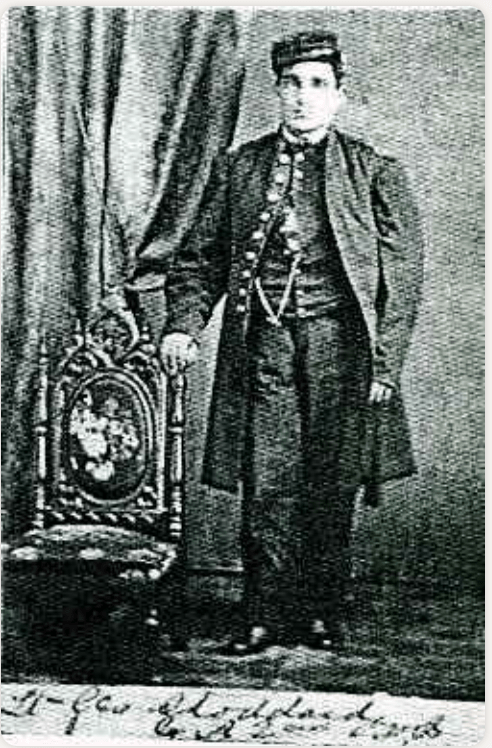


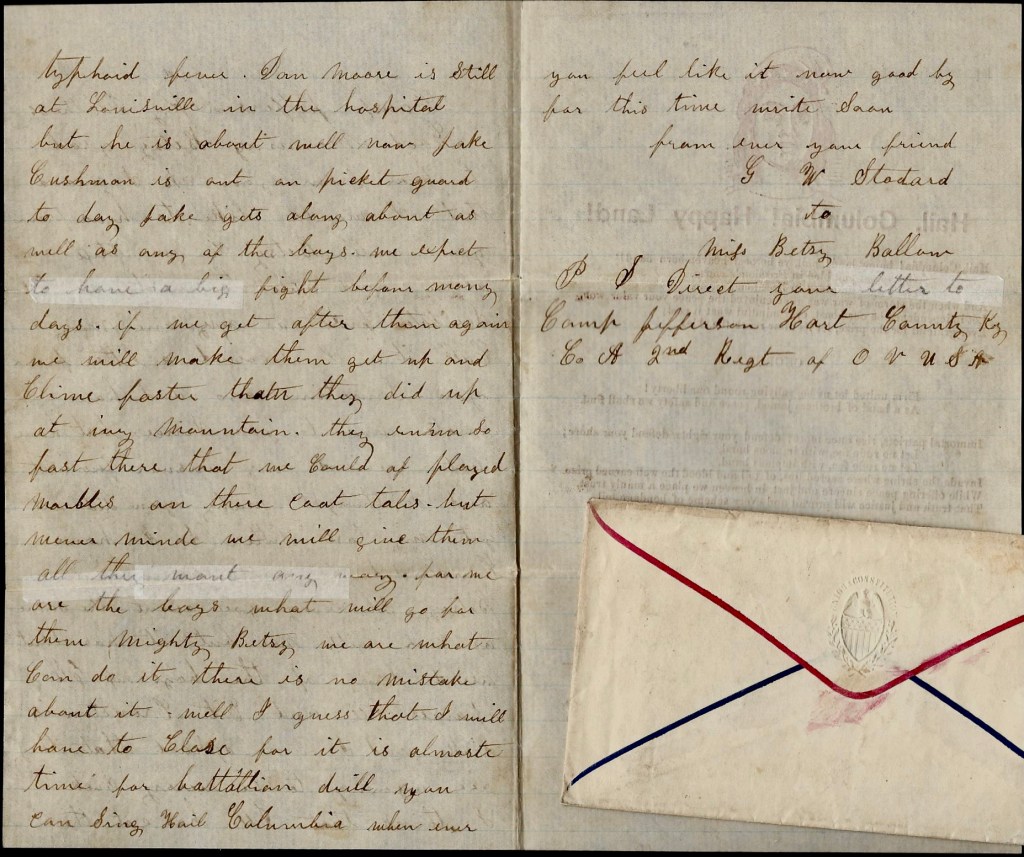


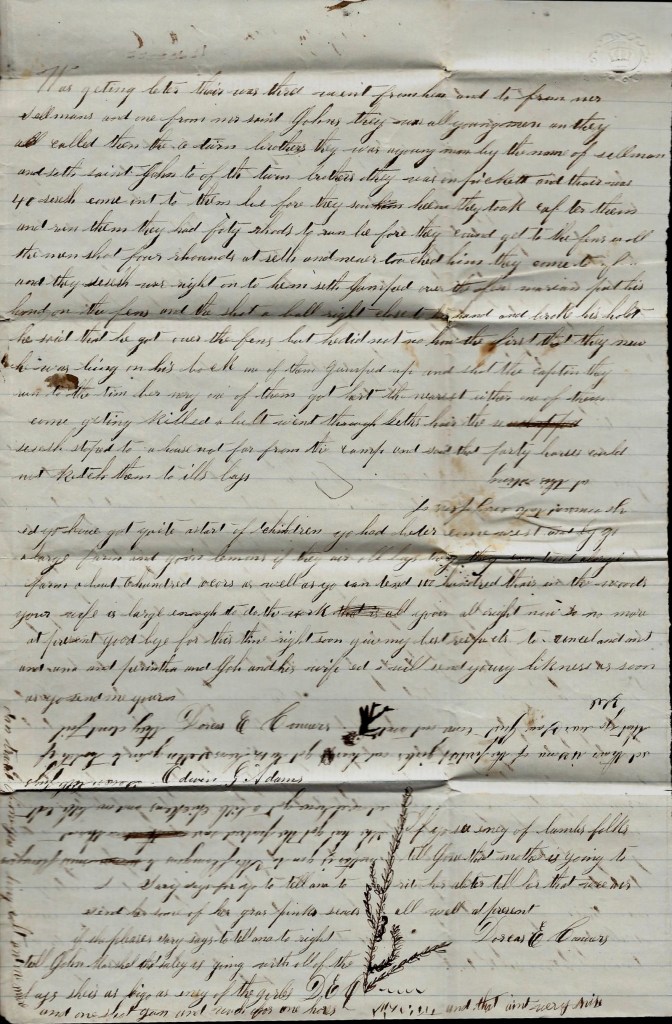

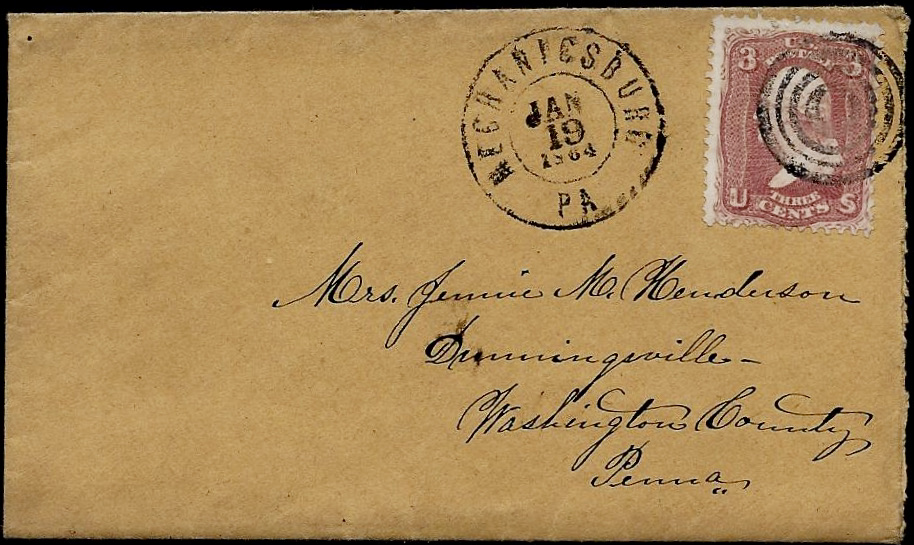


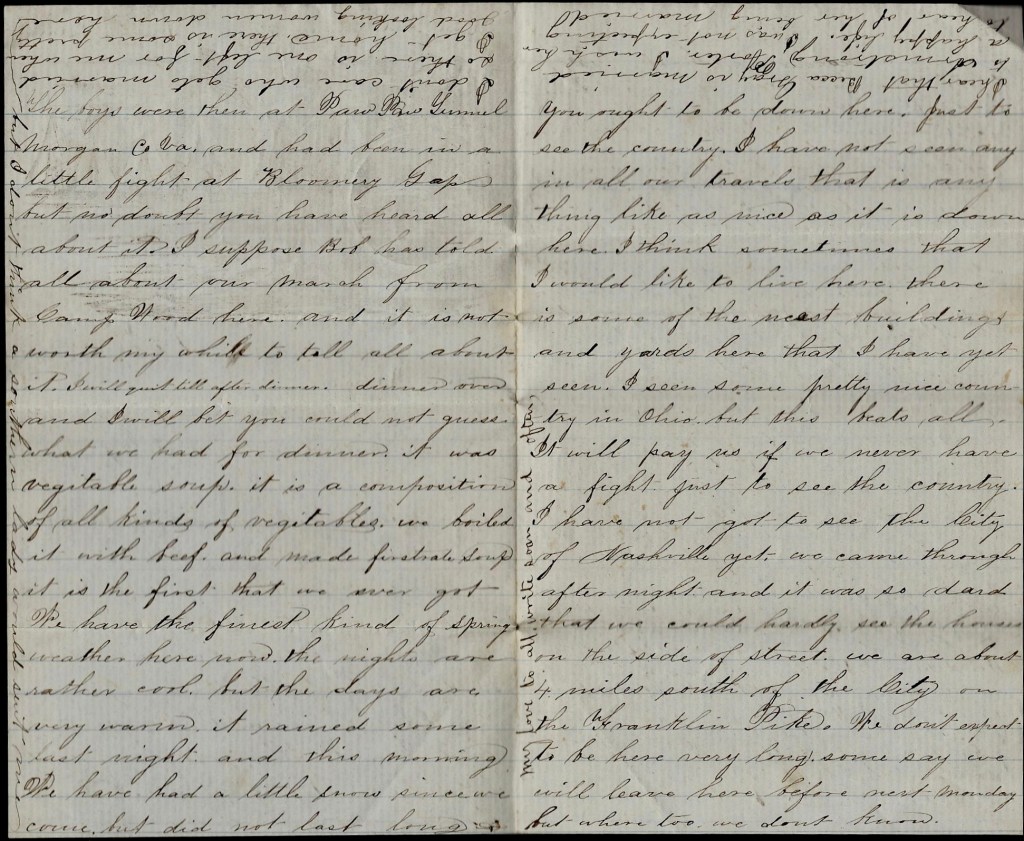

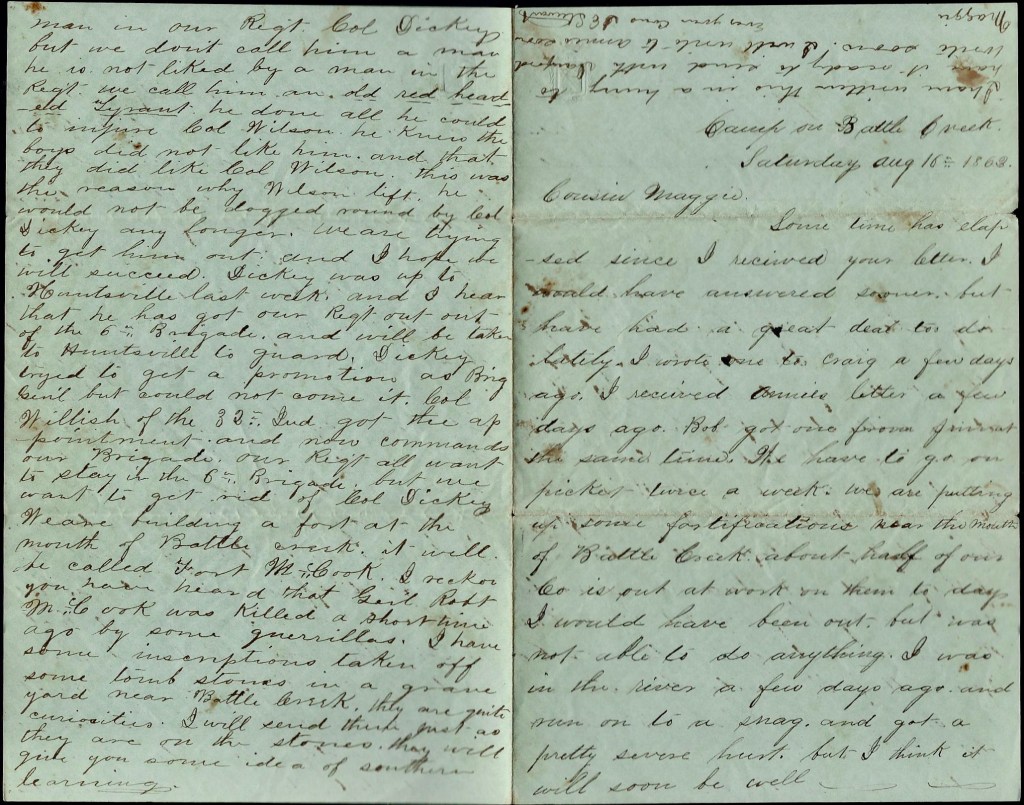


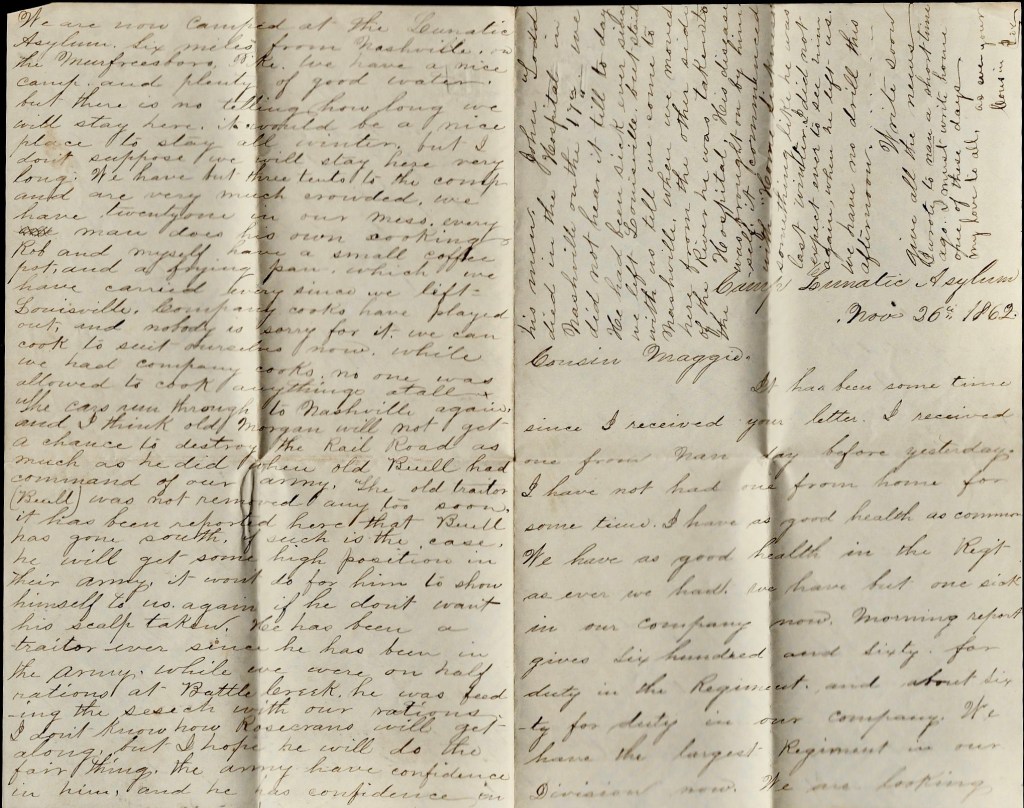


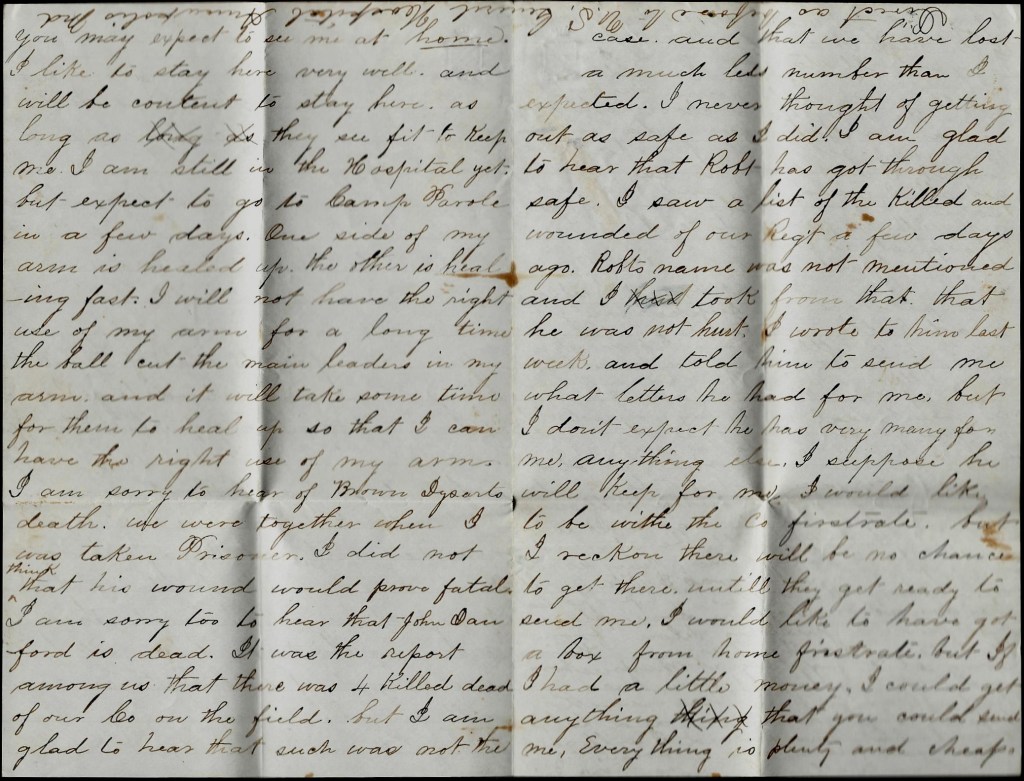


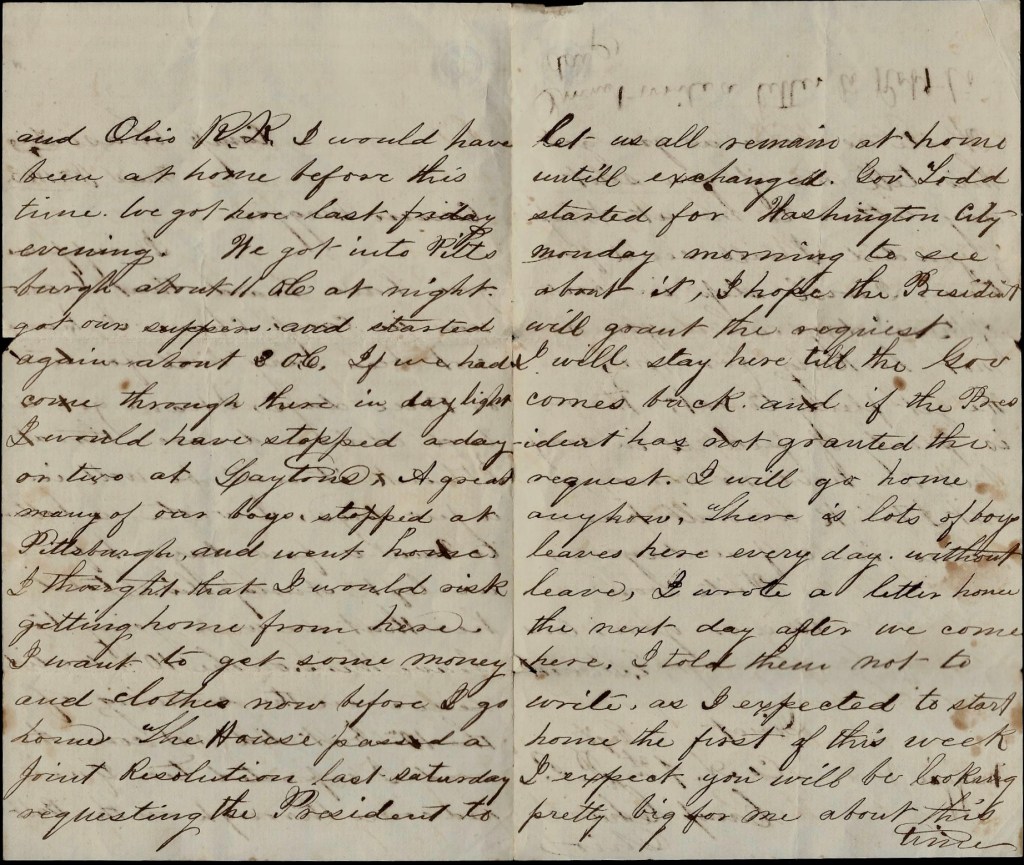
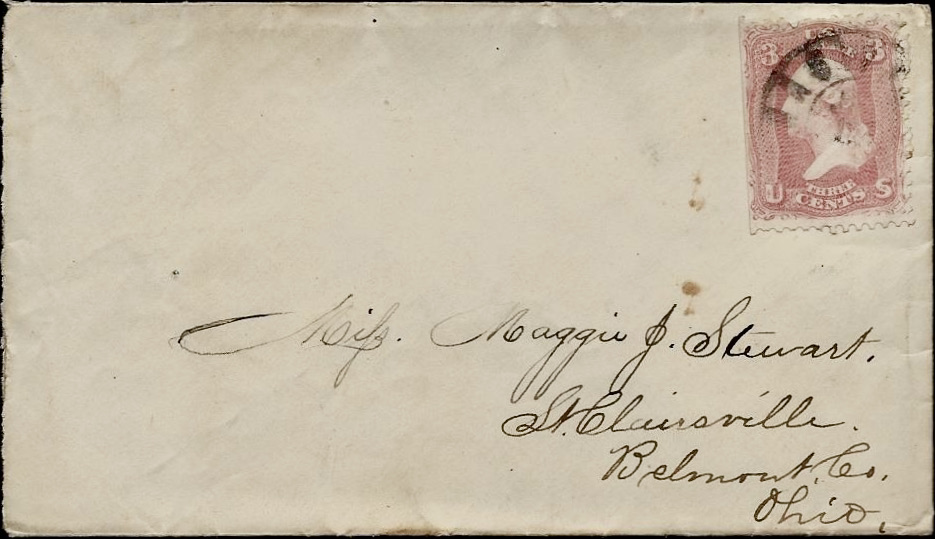


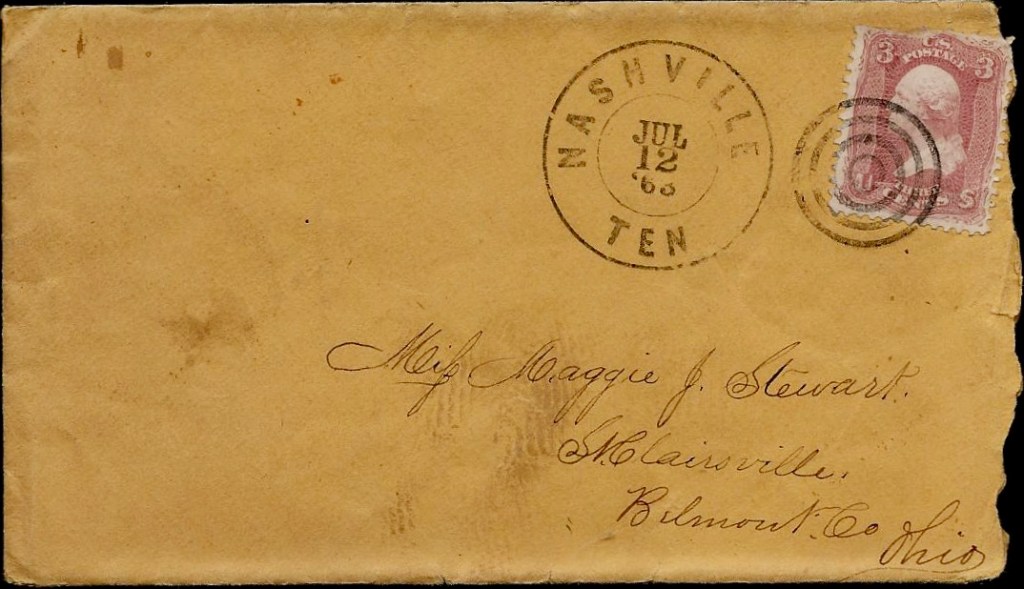
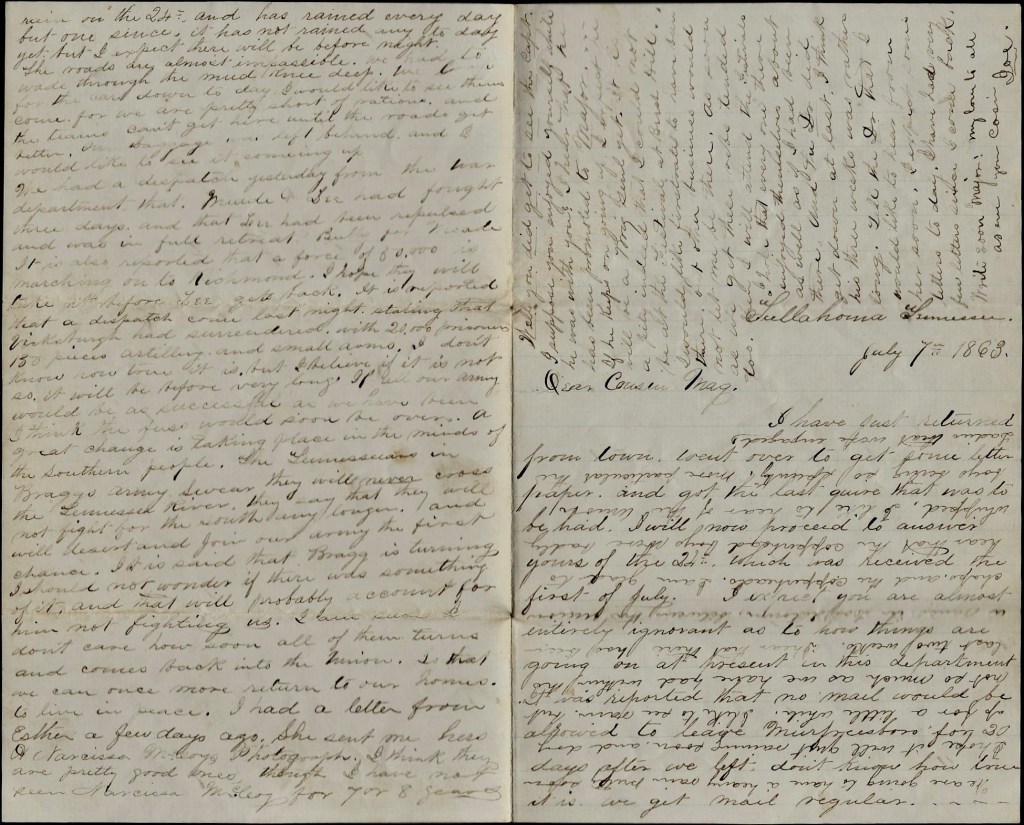


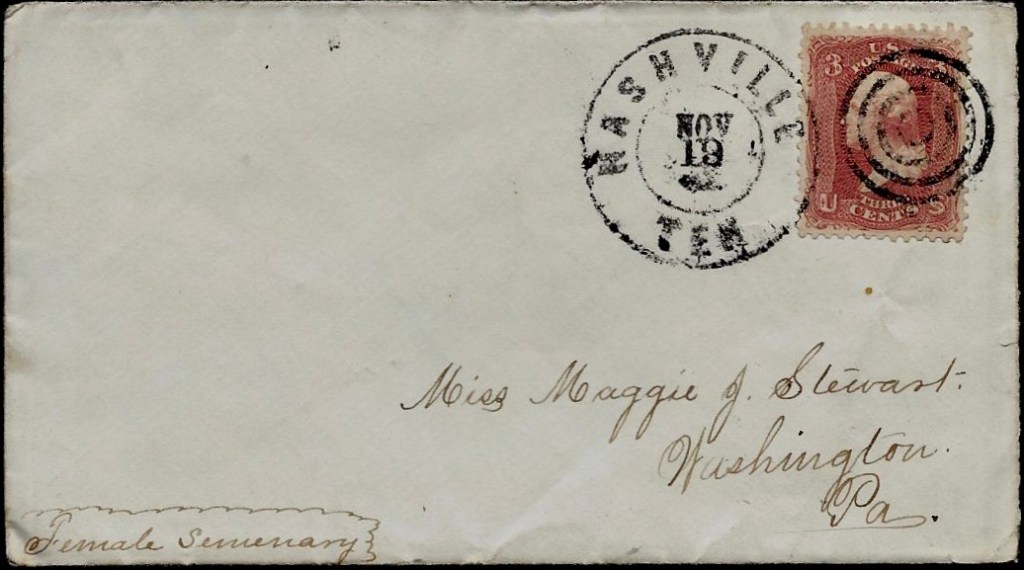


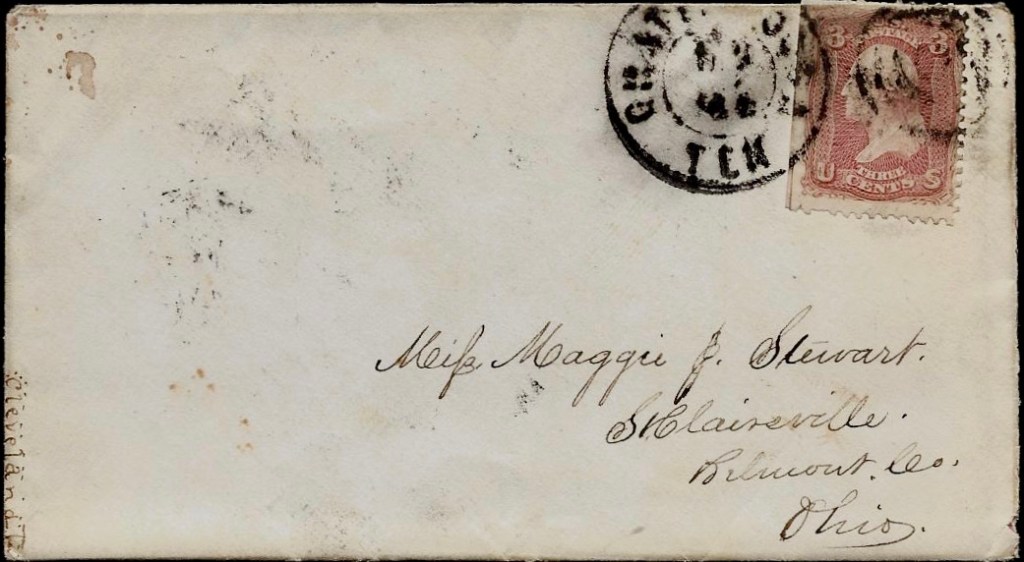
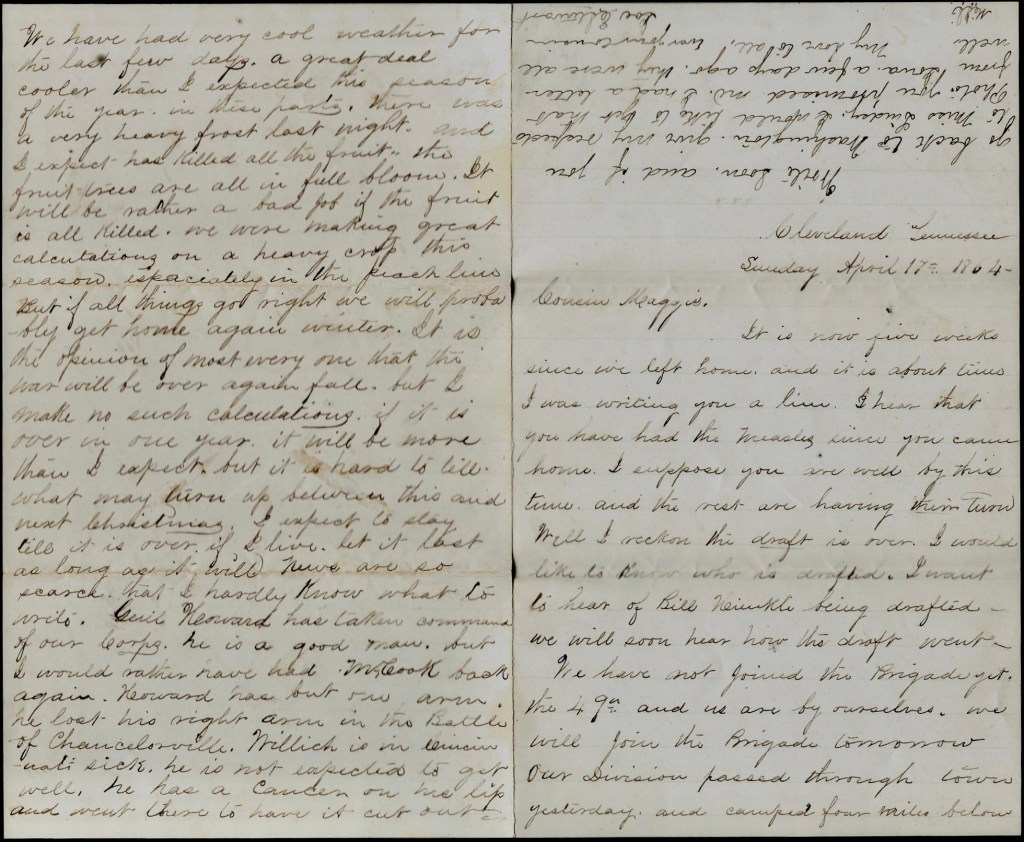
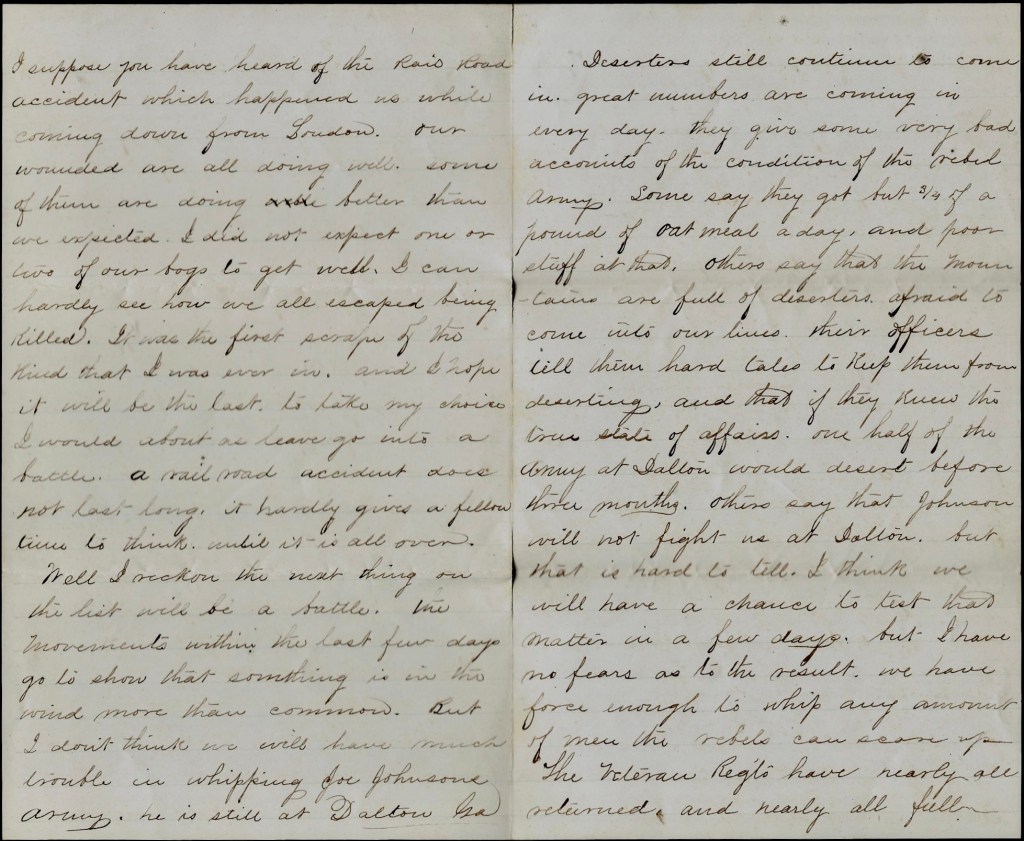

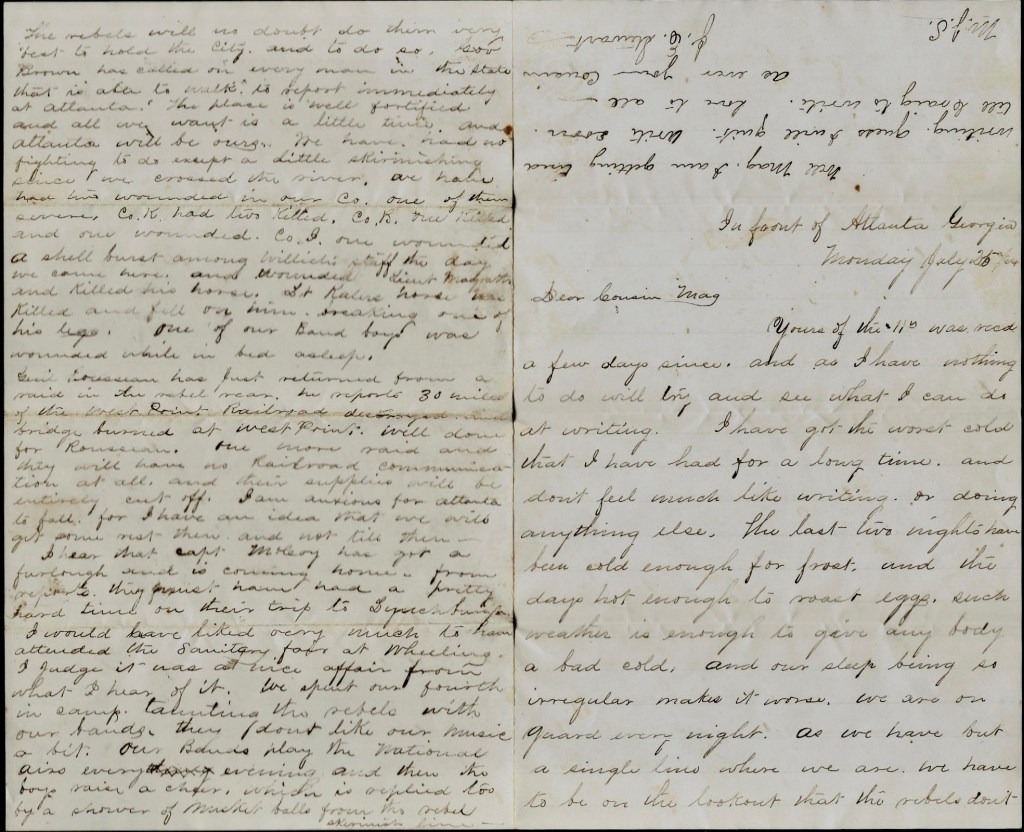
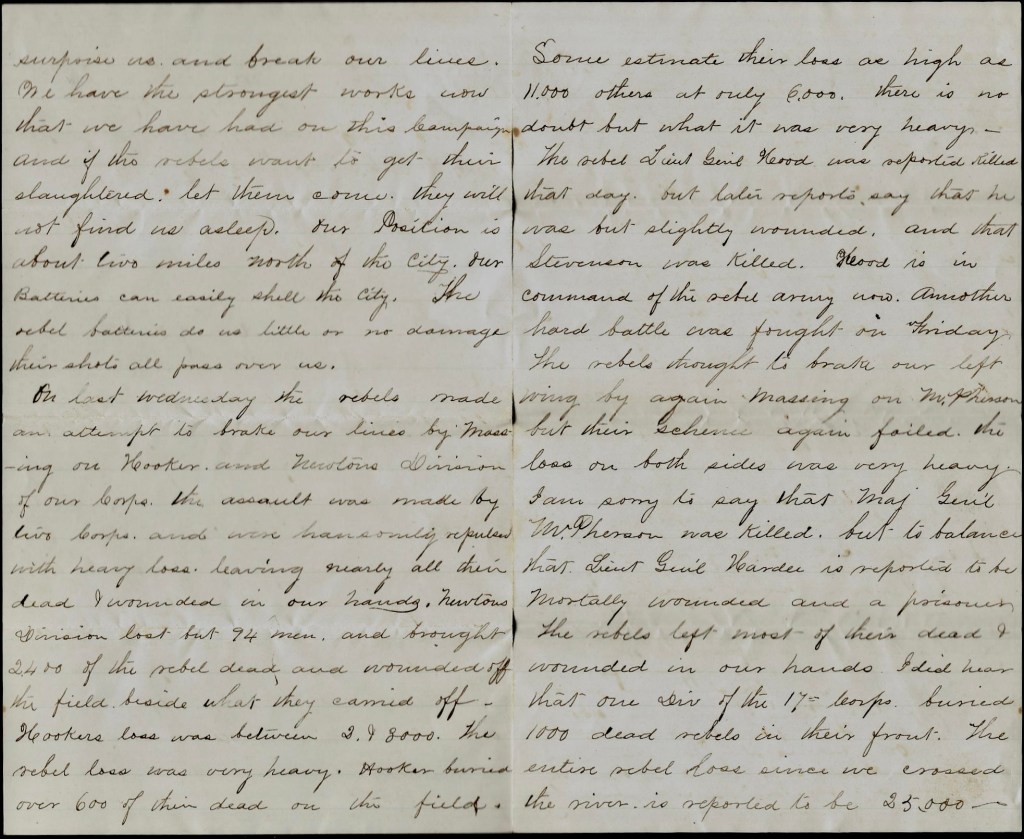


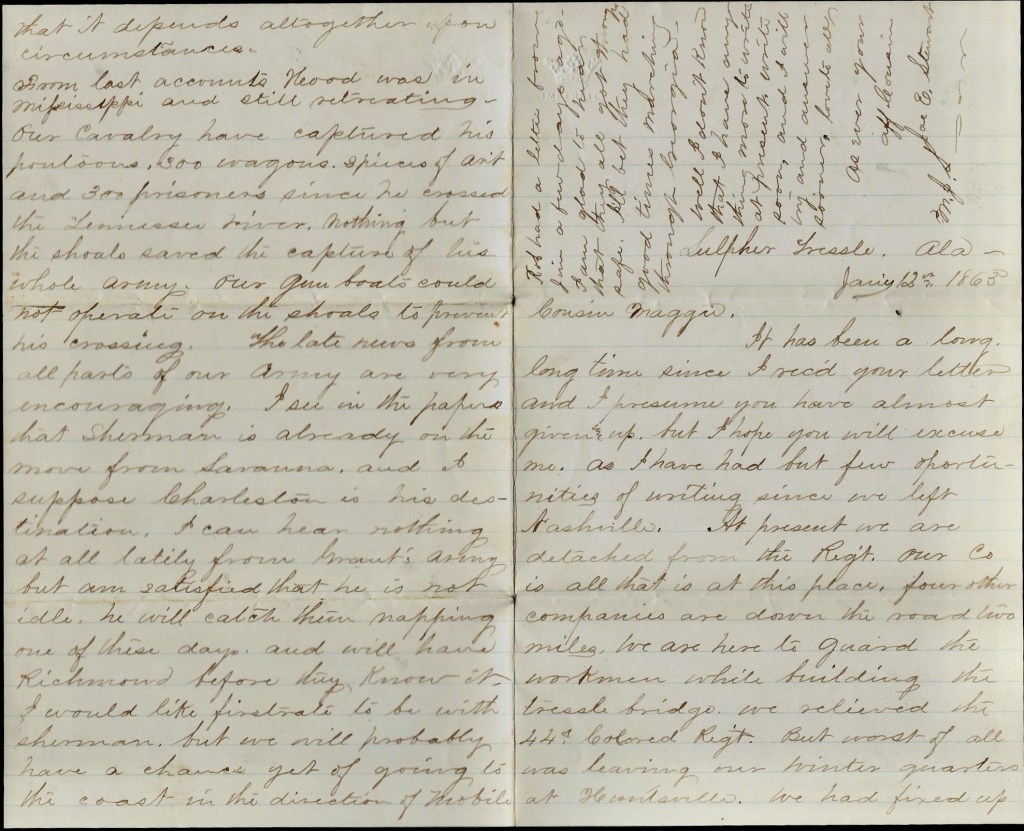
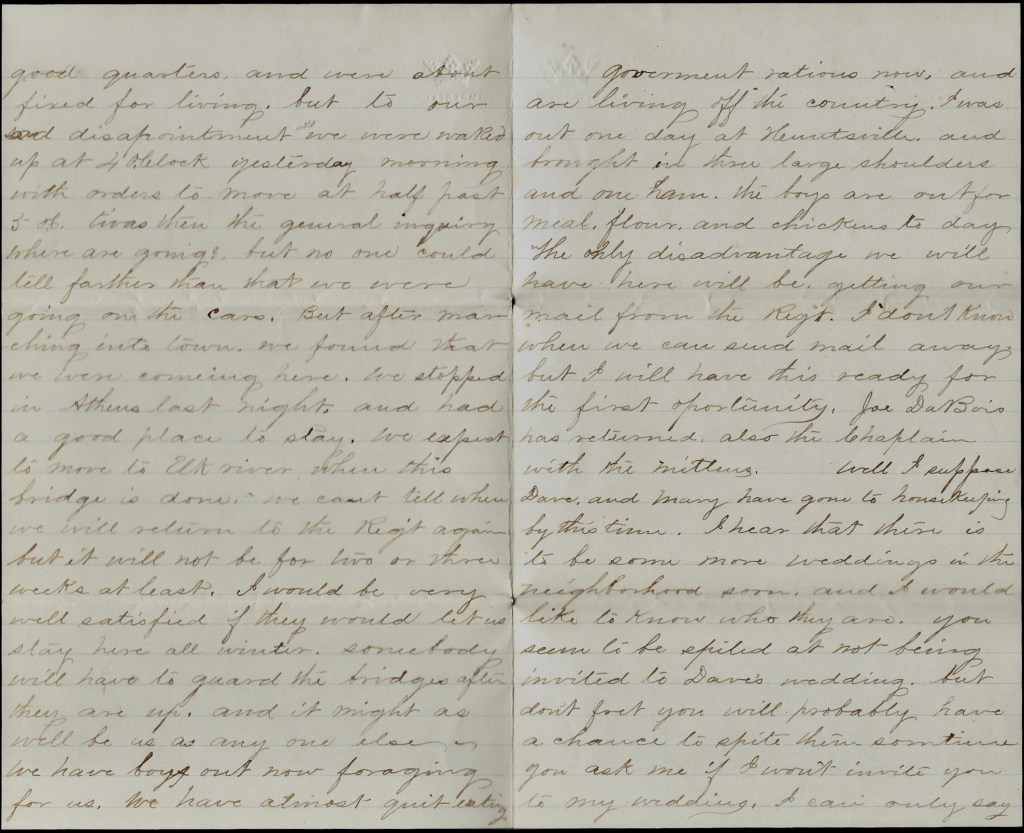


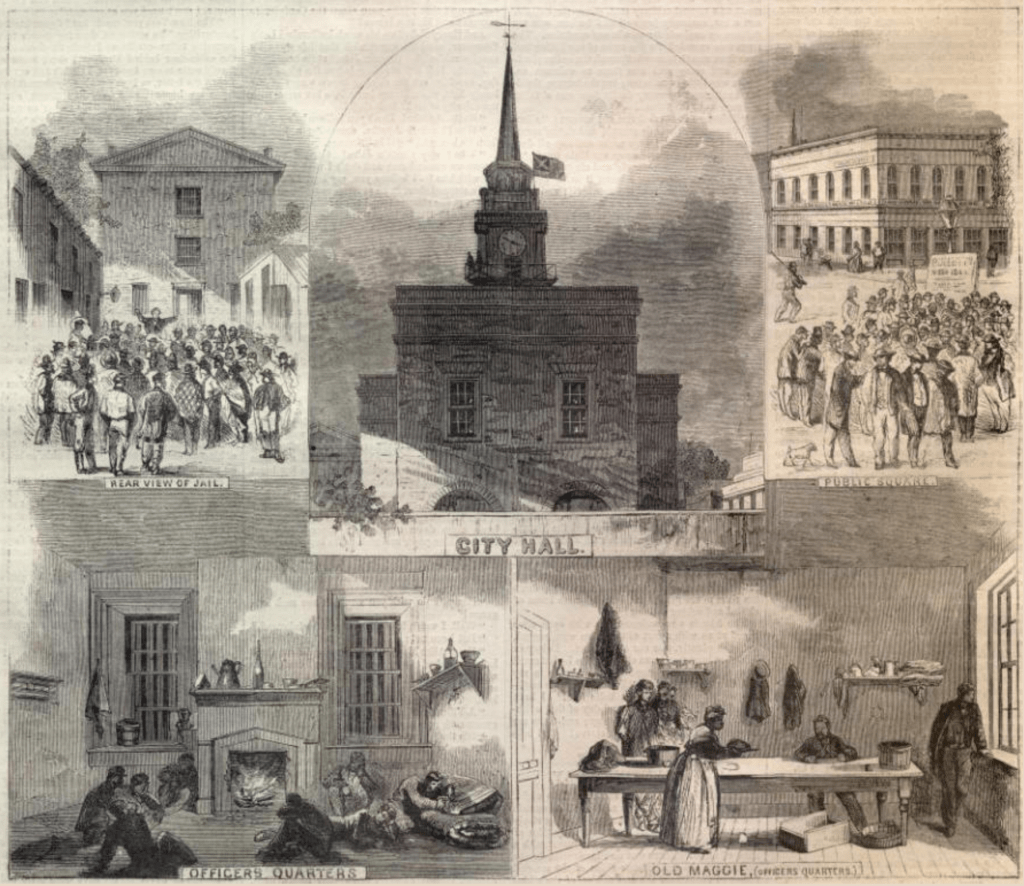
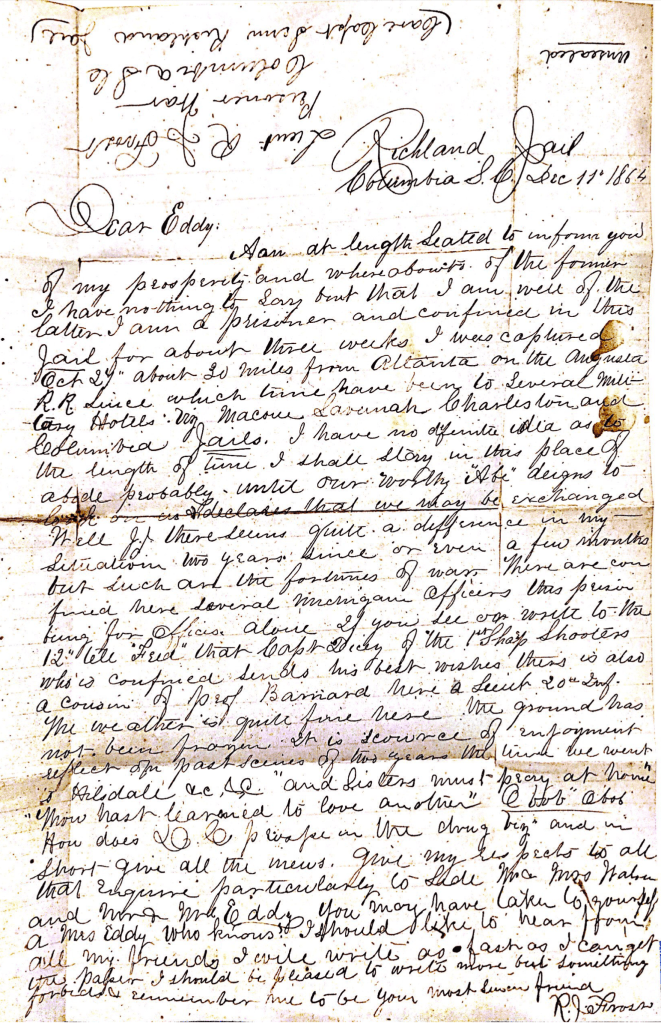

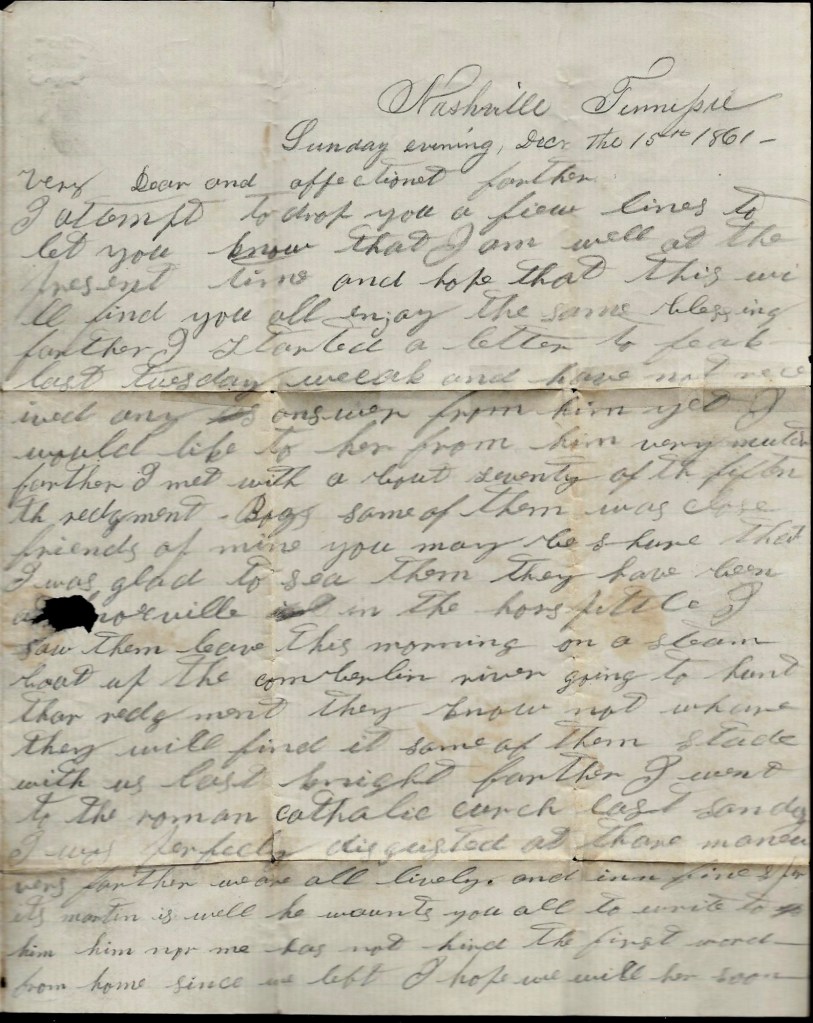
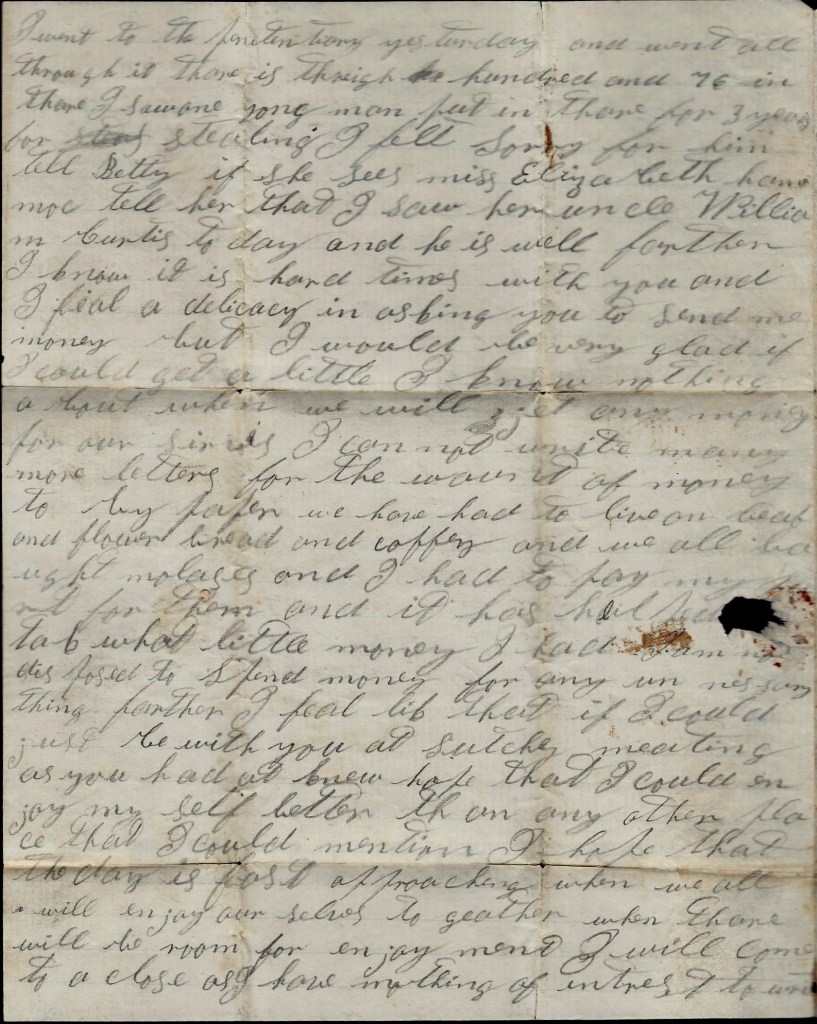

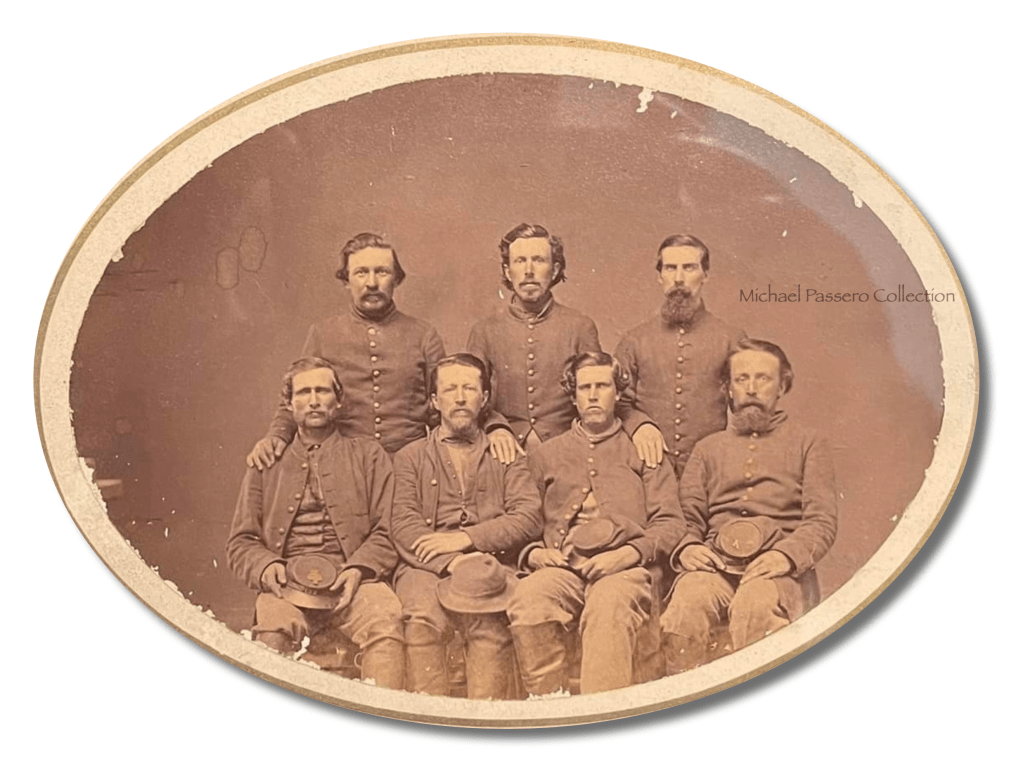

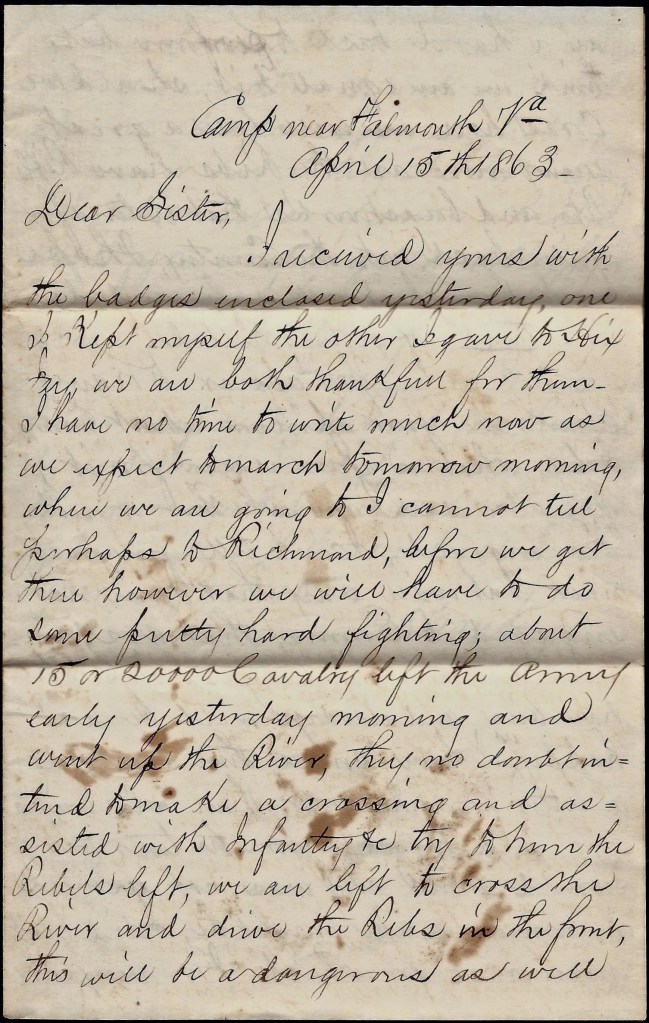


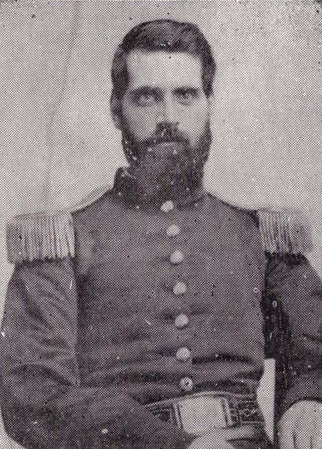
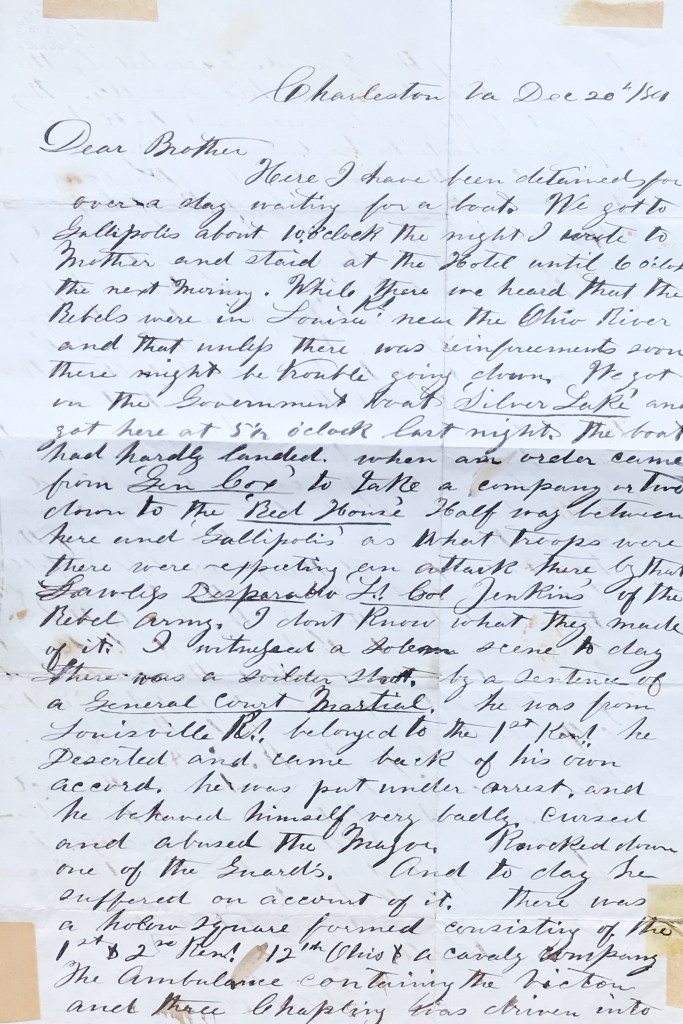
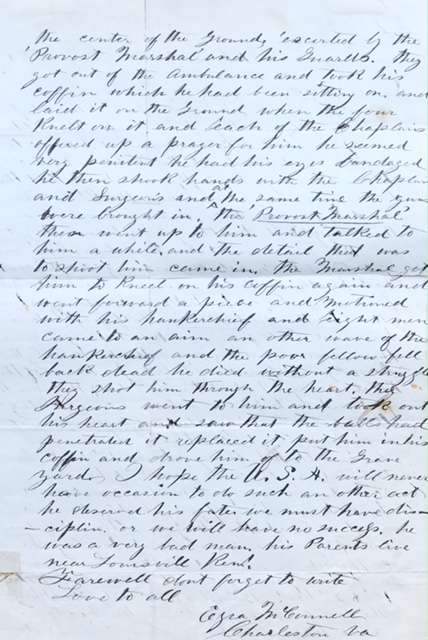
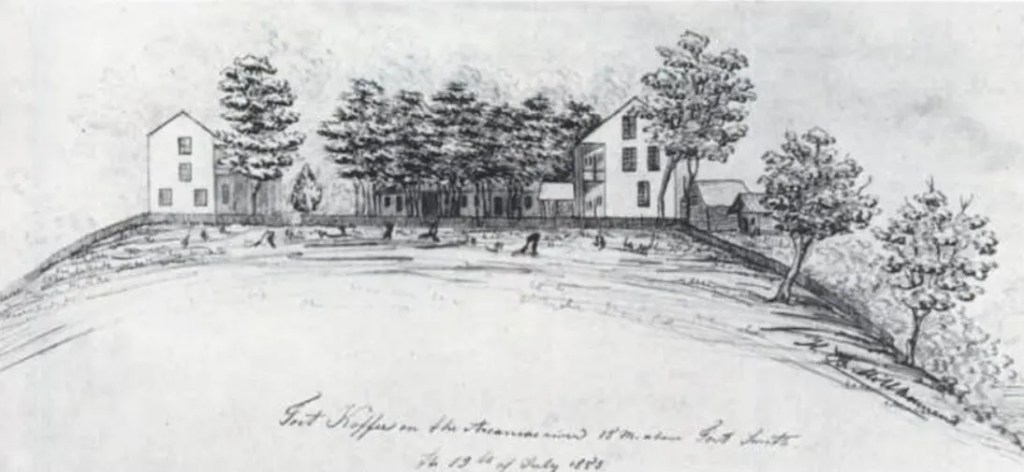
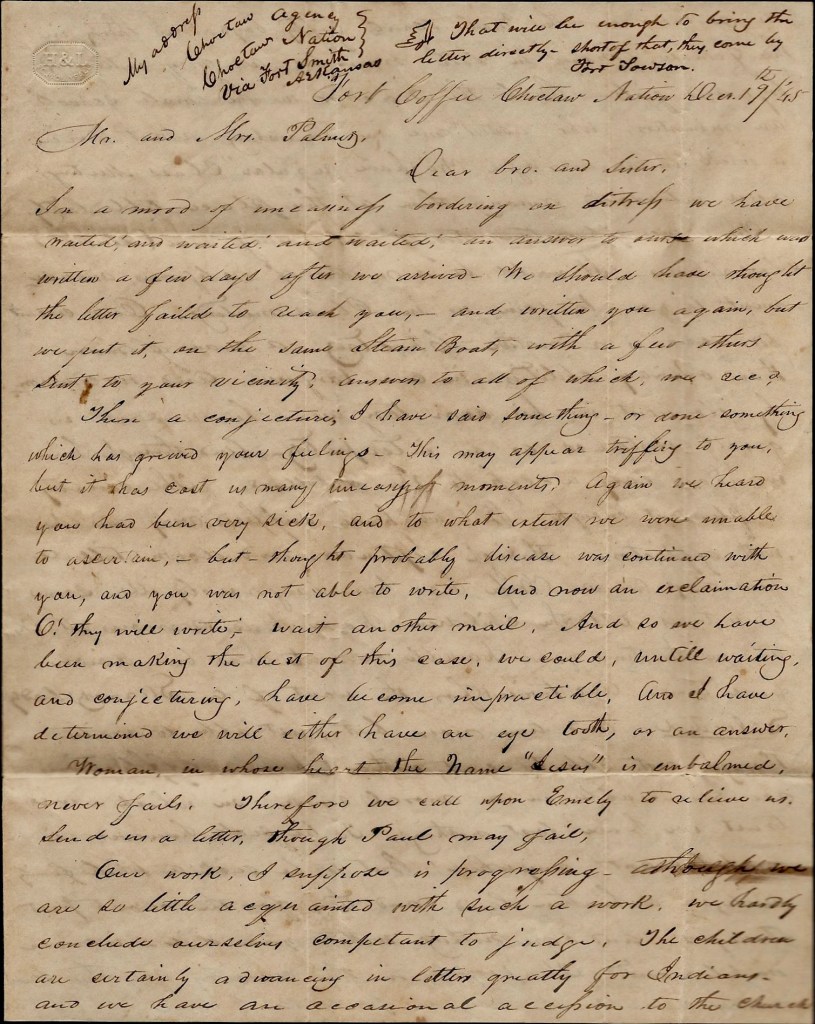
 Spared & Shared 23